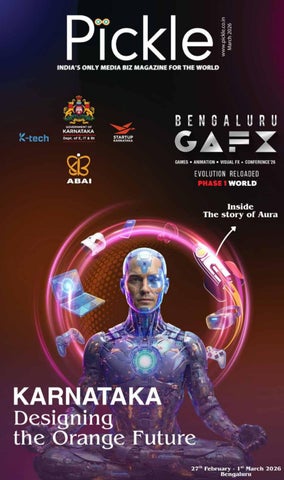
This special GAFX edition of Pickle magazine marks a pivotal chapter in the story of India’s creative economy—and we’re honored to have Biren Ghose, a guiding force in our industry, join us as Contributing Editor. With his insight and passion, Biren has helped weave together the people, ideas, and ambitions that give this GAFX volume its pulse.
GAFX is not merely an event. It is a movement. In the 2026 edition, you’ll get useful insights from global visionaries and producers who decode the anatomy of international blockbusters. You’ll discover creators at the frontier of AInative pipelines and real-time engines, and meet the buyers and sellers who are narrowing the distance between ideas and audiences. Policymakers are now aligning incentives with ambition, and—for the first time—twelve Indian states are choosing collaboration over competition.
This is GAFX.
But let’s be clear:
“GAFX is not a three-day event. It is the ignition switch for 365 days of AVGC-XR acceleration.”
Think of motorsport: the pit stop isn’t a pause—it’s a recalibration, where precision and power are reloaded. In much the same way, GAFX has become India’s annual pit stop for the Orange Economy, a space where our creative engines are fine-tuned for the year ahead.
Learning from the world means competing with the world. When global creators unpack how an animated
Biren Ghose & Nat Vidyasagar
Published by Pickle Media Private Limited
Email: natvid@gmail.com l Mumbai l Chennai No.2, Habib Complex Dr Durgabhai Deshmukh Road RA Puram CHENNAI 600 028
phenomenon or VFX spectacle achieved scale, they do more than inspire—they reveal the method behind the magic. For Indian studios and startups, this is not a distant aspiration but an applied insight, as real-time rendering, AI-assisted workflows, and cross-platform IP strategies become the new normal.
At GAFX, markets meet makers. Producers refine their slates, investors gauge scalable IP models, and buyers assess India’s export readiness.
“Visibility creates velocity. Velocity creates valuation.”
Here, competitions are about more than trophies—they surface belief.
“Confidence is the first currency of innovation.”
This year, twelve states sit at one table to multiply opportunity and build export-led creative enterprises.
“Intellectual property is industrial policy.”
GAFX is measured not in applause, but in aftermath: studios launched, startups funded, and collaborations born.
Thank you to the global leaders, sponsors, the Government of Karnataka, and every creator, policymaker, founder, and student. When imagination aligns with policy, talent, and capital, a movement becomes a market—and a market, a global force. GAFX 2026 is not a moment. It is momentum.

biren hhose Contributing Editor Pickle GAFX Issue n vidyasagar pickle media nat@pickle.co.in, www.pickle.co.in
Senior Editor : Vivek Ratnakar
Editorial Coordinators : Maitreyi Vidyasagar, Shruti Sundaranand
Design: Jose J Reegan, James, D Sharma, S Lakshmanan
Photo Editor : K K Laskar
Admin & Operations : B Rajalakshmi
Email: natvid@gmail.com
For advertising: natvid@gmail.com / pickle@pickle.co.in
Pickle Business Guide 2026 Copyright 2026 by
Pickle Media Pvt Ltd. All Rights Reserved.
Pickle is an ad supported business guide tracking the filmed entertainment business in India.
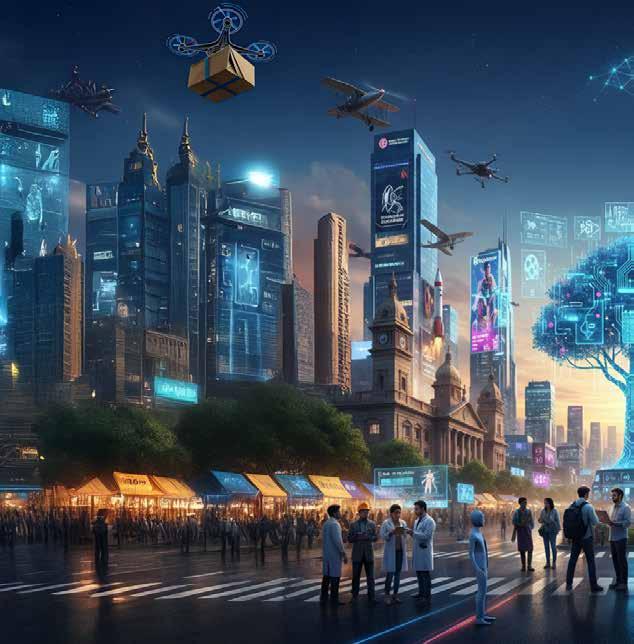

Bengaluru stands at the crossroads of imagination and engineering, where a century of innovation fuels a vibrant ecosystem driving breakthroughs across aerospace, AI, biotech, and beyond.
Ahundred years ago, few could have predicted that a temperate cantonment town on the Deccan plateau would become one of the world’s most important engines of science and technology. Yet the seeds were sown early.
The establishment of the Indian Institute of Science in 1909 created a research backbone that would quietly power generations of engineers, physicists, and dreamers. Postindependence, strategic public sector undertakings such as Hindustan Aeronautics Limited, Bharat Electronics Limited, and later the presence of ISRO transformed the city into India’s aerospace and defense nerve center.
What began as institutional gravity evolved into ecosystem velocity.
By the late 1980s and 1990s, the IT wave reshaped the city’s global identity. Infosys, Wipro, and a new generation of technology firms redefined offshore services, coding excellence, and digital infrastructure. Multinational corporations followed, establishing Global Capability Centres (GCCs) and R&D hubs that would serve markets across continents. Today, Bengaluru is not just India’s Silicon Valley—it is a global operating system for innovation.
It is a city where aerospace engineers share cafés with AI researchers, where biotech labs sit next to gaming studios, and where semiconductor design conversations blend seamlessly with climate-tech prototypes. This cross-pollination is not accidental. It is the outcome of an ecosystem that rewards curiosity, collaboration, and risk-taking across disciplines.
At the heart of Bengaluru’s success is the rise of what can only be called the innovation class—scientists, coders, designers, founders, investors, policy thinkers, and creative technologists who thrive in open, networked environments.
But talent does not flourish in isolation. It requires institutions that educate deeply, policies that encourage experimentation, infrastructure that enables scale, and culture that celebrates failure as much as success.
Before we turn to the creative-tech dimension of this story, consider the hard numbers that anchor Bengaluru’s global stature:
1. India’s Startup Capital – Over 10,000 active startups; the highest concentration in the country.
2. Unicorn Factory—More than 40% of India’s unicorns have roots or headquarters here.
3. Global Capability Centre Leader—1,500+ GCCs operate in India; a significant share are headquartered in Bengaluru.
4. R&D Powerhouse—Hosts the largest concentration of multinational R&D centers outside the US.
5. Aerospace & Space Hub—Core ecosystem supporting India’s satellite, launch vehicle, and defense aviation programs.
6. Deep-Tech Density—Strong clusters in AI, robotics, semiconductor design, climate tech, and biotech.
7. Talent Engine—Hundreds of engineering and research institutions feeding a workforce of over a million tech professionals.
8. Venture Capital Magnet—Consistently attracts the largest share of India’s VC funding annually.
9. IT Services Backbone—Serves Fortune 500 companies across digital transformation mandates.
10. Future Tech Testbed—From EV mobility pilots to urban tech solutions, the city functions as a live laboratory for emerging technologies.
Yet statistics alone do not explain Bengaluru’s staying power.
What makes the city exceptional is its interdisciplinary culture. Aerospace engineers collaborate with data scientists. Game designers experiment with AI. Architects integrate climate analytics into urban planning. Universities, startups, global firms, and government bodies increasingly co-create Centers of Excellence that bridge research with real-world application.
For the innovation class to thrive, the next chapter must deepen this ecosystem: futureready curricula, stronger industry-academia bridges, skilling in frontier technologies, incentives for R&D translation, and a creative culture that values design as much as code.
Because the next wave will not be built by engineers alone—it will be shaped by technologists who understand storytelling, designers who grasp data, and entrepreneurs who navigate policy as fluently as product.
Bengaluru’s journey from research outpost to global nerve center was never accidental. It was intentional, cumulative, and collaborative.
And as we step into the creative-tech era, it is no wonder that the very center of this city stands at a crossroads—where creativity meets technology in an ever-unfolding acceleration of ideas and outcomes.
“In Bengaluru, innovation is not an industry. It is an ecosystem. And at its heart lies the intersection where imagination and engineering collide—turning ideas into impact at a global scale.” – Biren Ghose
Bengaluru isn’t just a city; it’s a movement. At the heart of India’s Animation, Visual Effects, Gaming, Comics, and Extended Reality (AVGC-XR) revolution, the annual GAFX summit has become the bellwether for where the industry is headed. Here are ten powerful metrics—and the stories behind them—that are shaping the creative technology landscape in Karnataka and beyond.
Karnataka’s AVGC-XR policy stands out for its ambitious 16-year vision. This long-term commitment signals stability for investors, inspires confidence among industry stakeholders, and reflects a structural dedication to creative technology.
“Vision without staying power is noise. Duration creates credibility.”
200,000+ Professionals: India’s AVGC Workforce
India’s animation, VFX, gaming, and immersive technology sectors now employ over 200,000 skilled professionals. Bengaluru is home to one of the densest concentrations of CG talent in the country, with global giants like Technicolor, DNEG, 88 Pictures, Lakshya Digital, and Assemblage anchoring a thriving ecosystem.
“Talent density is competitive advantage.”
USD 3–4 Billion: India’s AVGCXR Industry Size
India’s AVGC-XR sector is valued at an estimated USD 3–4 billion and is expanding at a rapid 15–18% CAGR. With a strong export orientation, the industry is poised for its next leap: from services scale to true content ownership.
“Karnataka has services scale. The next step is ownership.”
3 4 5 6
Bengaluru’s ecosystem features over 100 animation and VFX studios— ranging from global heavyweights to dynamic startups. This cluster effect fosters collaboration, accelerates innovation, and fuels the city’s reputation as a creative-tech powerhouse.
“Clusters create velocity.”
A remarkable 70% of India’s animation and VFX revenues are generated from international markets. This underscores global trust in Indian execution—while setting the stage for a future driven by intellectual property and original content.
“Execution built credibility. IP will build sovereignty.”
India boasts over 500 million mobile gamers, making it one of the world’s largest gaming populations. The implication?
An unparalleled opportunity for homegrown IP creation and publishing success.
“Our market is not small. Our ambition should be no less.”
INDIA’S ANIMATION, VFX, GAMING AND IMMERSIVE SECTOR EMPLOYS OVER
200,000 PROFESSIONALS — WITH BENGALURU HOUSING ONE OF THE LARGEST CONCENTRATIONS OF CG AND ENTTECH TALENT IN THE COUNTRY
7 8
With the adoption of AI-enabled pipelines and real-time engines, production timelines are shrinking by as much as 40%. This technological leap is transforming cost structures and unlocking new creative possibilities.
“Technology lowers friction. Originality raises value.”
Owning IP can generate three to seven times more lifetime revenue than traditional service contracts, thanks to licensing, merchandising, streaming, and gaming extensions.
“Services are linear. IP is exponential.”
9 10
GAFX consistently attracts studios, buyers, and delegations from over ten countries, reinforcing Bengaluru’s status as a global hub for creativetech dialogue and partnership.
“Local roots. Global resonance.”
GAFX: The Premium Platform for AVGC-XR
More than just an annual event, GAFX is where policy, capital, talent, and technology converge. It’s the epicenter where conversations become collaborations, and collaborations become industrydefining movements.
“GAFX is not an event. It is ecosystem alignment in motion.”
What does the future hold?
• USD 10+ billion sector
• 500,000+ jobs
• Global IP exports doubled
• Asia’s leading creative-tech hub Bengaluru GAFX is not just measuring progress—it’s setting the pace.
GAFX becomes Asia’s leading creative-tech summit — measured by deal flow, not attendance.
Karnataka emerges as a recognised Asian creative-tech capital.
IP revenue overtakes pure services revenue in India’s AVGC sector.
India launches its first globally sustained franchise universe from Karnataka.
AI-native studios become standard, not experimental.
Dedicated creativetech funds scale and mature.
Creative Labs enter mainstream school education.
Bengaluru hosts world-class virtual production infrastructure. A content creation 1st choice.
India leads a Global South creative alliance. GAFX becomes known for transactions, not just conversations.
Source: Whiteboard sketches with the ABAI management committee

Minister for Information Technology, Biotechnology, and Tourism, Government of Karnataka

Karnataka’s creative tech sector is no longer a cultural side note—it’s a strategic engine, powering the Orange Economy with innovation, investment, and global ambition says Priyank Kharge, Minister for Information Technology, Biotechnology, and Tourism, Government of Karnataka
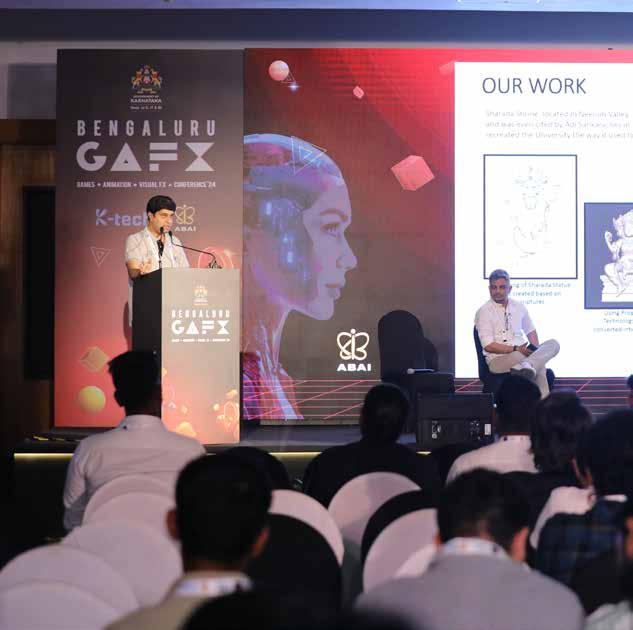
Karnataka has long been recognized as India’s technology nerve center. Under the dynamic leadership of Priyank Kharge, Minister for Information Technology, Biotechnology, and Tourism, Government of Karnataka, the state is redefining the very future of creative technology, positioning itself as a global innovation powerhouse and a turbo-charger for the Orange Economy.
Priyank Kharge is not just a policymaker—he’s a trailblazer. Known for his “CEO-like” approach to governance, Kharge has been instrumental in advancing
artificial intelligence, deep tech, and immersive technologies across Karnataka. His focus is clear: leverage technology to transform traditional sectors and align innovation with real-world needs.
Biren Ghose, President of the Association of Bangalore Animation Industry (ABAI), calls him “a truly visionary leader” for his proactive, tech-driven approach that is setting new benchmarks for what a state government can achieve.
“For decades, creative industries were viewed as cultural assets—
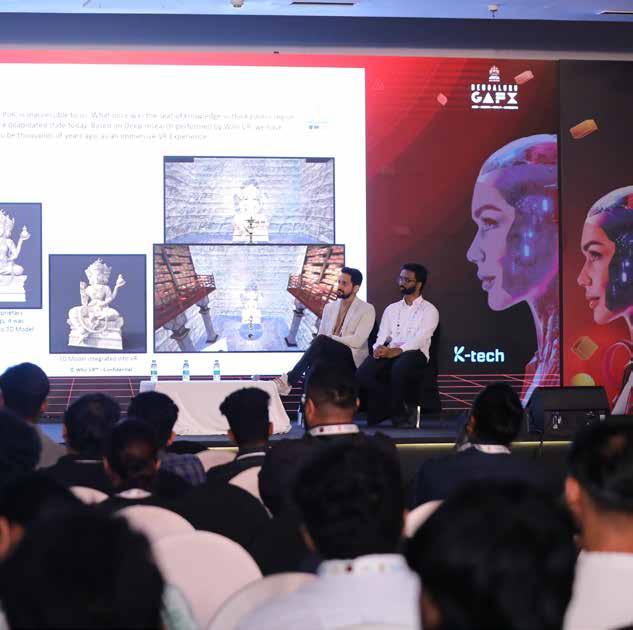
valuable, expressive, but economically peripheral. That perception no longer holds,” Kharge explains. Today, creative technology sits at the intersection of art, computation, and global commerce. Its influence extends far beyond entertainment, touching education, simulation, commerce, and even how society perceives reality.
Karnataka recognized this paradigm shift early. Animation, visual effects, gaming, comics, and immersive media (AVGC-XR) now complement and amplify the state’s strengths in information technology, artificial intelligence, semiconductors, aerospace, and defense. Together, they form a new industrial stack— one where creativity multiplies
innovation and drives economic growth.
Identified as a strategic growth sector, AVGC-XR is now in its third iteration of Karnataka’s five-year policy framework. The state’s longterm commitment is clear: a 16-year policy horizon signals to investors, studios, and talent that Karnataka is not just experimenting, but investing in the future.
Stability and continuity are at the heart of this approach. “Stability matters to investors. Continuity matters to studios. Vision matters to talent,” Kharge asserts. With intellectual property-led businesses,
recurring revenues, and global scalability, creative technology boosts export resilience and positions Karnataka as a key player on the world stage.
Unlike the past, government’s role is no longer to create content, but to build the ecosystem in which creativity thrives. Key enablers include:
Targeted incentives and grants
Infrastructure and incubation support
Skill development in line with industry evolution
Global market access and strategic partnerships
Given the high-risk, highreward environment of creative enterprises—where patient capital and tolerance for failure are essential—the state’s support mechanisms absorb early risk and allow innovation to flourish.
At the heart of this transformation is Bengaluru GAFX, a flagship event that exemplifies Karnataka’s commitment to the creative economy. Here, global studios, startups, and creative leaders converge to see policy in action and witness the state government as a true partner in innovation.
“Looking ahead to 2030, our goal is clear: Karnataka will not merely participate in the global creative economy—it should shape it,” says Kharge. True leadership, he believes, will be defined not just by scale, but by innovation, ecosystem coherence, and a sense of ownership. Karnataka is determined to ensure that creative technology is not relegated to the sidelines of economic policy, but stands front and center as a strategic engine for growth. With visionaries at the helm and a robust, forward-looking policy framework, the state is turbocharging India’s Orange Economy and setting a global example of what public-private partnership can achieve.
KARNATAKA IS DETERMINED TO ENSURE THAT CREATIVE TECHNOLOGY IS NOT RELEGATED TO THE SIDELINES OF ECONOMIC POLICY, BUT STANDS FRONT AND CENTER AS A STRATEGIC ENGINE FOR GROWTH
Karnataka’s Department of Electronics, IT, and Biotechnology (IT/BT) is transforming the AVGC XR landscape, blending policy, innovation, and industry support to drive creative technology growth and global leadership. By
Biren Ghose President ABAI stated that “Imagination flourishes when institutions provide continuity and confidence”. He requested the Secretary for Department of Electronics, Information Technology and Biotechnology, Government of Karnataka Dr. Manjula N to position the efforts of the creative sector in the context of the larger portfolio that makes the K-Tech hub a collaboration that is a great sum of parts spanning Electronics, IT, and Biotechnology (IT/BT) focuses on fostering a high-tech ecosystem through key areas including Electronics System Design and Manufacturing (ESDM), startups, biotechnology, and digital technologies.
Karnataka has long been
recognised as India’s leading technology and innovation hub, and platforms such as GAFX play a vital role in bringing together the global technology and creative communities to exchange ideas, showcase innovation, and build meaningful collaborations. Guided by the Department of IT & BT, developed in partnership with ABAI, and expertly managed by Phase 1, Bengaluru GAFX 2026 is set to elevate its scale and ambition—promising a bigger, bolder edition this year.
The Department of Electronics, IT and BT continues to focus on building a strong and futureready ecosystem that enables innovation, entrepreneurship, and investment across emerging sectors. In recent years, Karnataka has witnessed remarkable growth in the Animation, Visual Effects,

This growing AVGC-XR ecosystem is also closely linked with Karnataka’s strong presence of Global Capability Centres (GCCs). The state today hosts over 875 GCCs — the largest concentration in the country
Dr. Manjula N., I.A.S Secretary to Government Department of Electronics, IT, Bt and S&T Government of Karnataka
Gaming and Comics (AVGC-XR) sector, which is increasingly shaping the future of digital media, immersive experiences, and creative technology.
Recognising the immense potential of this sector, the Government of Karnataka introduced the Karnataka AVGCXR Policy 2.0 (2024–2029), one of the most forward-looking initiatives in the country aimed at strengthening the AVGC ecosystem. The policy focuses on enabling world-class infrastructure, supporting studios and startups, encouraging research and innovation, and building a strong talent pipeline through skilling and industry–academia collaboration. Through this initiative, the state is actively working to position Karnataka as a global hub for AVGC-XR and immersive media.
Karnataka today accounts for a significant share of India’s digital media and entertainment industry, with over 300 specialised AVGC-XR studios and a workforce of more than 15,000 professionals contributing to this dynamic sector. Complementing the policy framework, the state has also established the Karnataka AVGC-XR Centre of Excellence along with a network of 21 other Centres of Excellence across emerging technology domains to foster innovation, strengthen industry–academia collaboration, and nurture the next generation of talent.
This growing AVGC-XR ecosystem is also closely linked with Karnataka’s strong presence of Global Capability Centres (GCCs). The state today hosts over 875 GCCs — the
largest concentration in the country — many of which are evolving into global hubs for advanced engineering, product development, design, research, and digital innovation. As global enterprises increasingly integrate immersive technologies, gaming, digital content creation, and interactive media into their operations, Bengaluru’s GCC ecosystem is emerging as a key enabler for creative technology and AVGC-led innovation. This convergence is creating new opportunities for collaboration between technology companies, creative studios, startups, and talent in the state.
Through targeted initiatives supporting startups, research and development, skilling, and global partnerships, the Department continues to strengthen Karnataka’s position as a preferred destination for technology investment and innovation. Efforts are focused on enabling the growth of emerging sectors, expanding the state’s R&D capabilities, supporting the expansion of GCCs, and creating opportunities for entrepreneurs, creators, and innovators to build globally competitive enterprises from Karnataka.
Events such as GAFX reflect the powerful convergence of creativity and technology and provide an important platform for showcasing the talent, innovation, and entrepreneurial spirit that define Karnataka’s ecosystem. This edition shall further strengthen collaborations, inspire new ideas, and open new opportunities for the AVGC community and the broader technology industry.
KARNATAKA TODAY ACCOUNTS FOR A SIGNIFICANT SHARE OF INDIA’S DIGITAL MEDIA AND ENTERTAINMENT INDUSTRY, WITH OVER 300 SPECIALISED AVGCXR STUDIOS AND A WORKFORCE OF

Esports is immersive culture. It combines real-time engines, broadcast production, AR overlays, live audience engagement, and sponsorship ecosystems. Esports sits at the intersection of media, sport, and technology.
India’s future in AVGC-XR will be shaped by video gaming, esports, and collaborative ecosystems— unlocking jobs, exports, and digital creativity at scale. says Rajan Navani, Indian Digital Gaming and Esports Society (IDGES) and Chairman & Managing Director of the Jetline Group. Rajan Navani chats with Pickle
As President of Indian Digital Gaming and Esports Society (IDGES) and Chairman & Managing Director of the Jetline Group, Rajan Navani has helped JetSynthesys become a force in digital entertainment. In this exclusive interview, he shares with Pickle the transformative role of video gaming and esports in India’s AVGC-XR landscape and what it will take for the sector to reach its next level.
AVGC-XR is often discussed through the lens of animation and VFX. But video gaming and esports seem to be accelerating rapidly. How do you see their role in India’s Orange Economy?
Video gaming and esports are not peripheral to AVGC-XR—they are
central to its future. Globally, the video gaming industry exceeds USD 200 billion, outpacing film and music combined. Esports alone is projected to cross USD 2–3 billion globally, with double-digit annual growth. In India, video gaming revenues are estimated at USD 3–3.5 billion, growing at 15–20% CAGR, and there are over 500 million gamers.
Esports is one of the fastest-growing segments, with revenues projected to grow at 20–25% annually over the next five years. Video gaming is inherently immersive, blending storytelling, design, real-time technology, AI, social interaction, and competition. It is AVGC-XR in motion.
What is driving this growth in India?
Three structural factors drive this growth:
Demographics—India has one of the world’s youngest populations.
Smartphone penetration and affordable data—the mobile revolution democratized video gaming.
Cultural shift—video gaming is now mainstream entertainment, not niche.
We’re also seeing the rise of local game development studios and content creators. Indian gamers are participants, streamers, competitors, and builders. Esports, in particular, is professionalizing rapidly with structured tournaments, league formats, sponsorship models, and broadcast ecosystems. Video gaming has become a significant industry.
How do institutional collaborations accelerate this trajectory?
Ecosystems scale when institutions align. Video gaming requires coordination across developers, publishers, technology providers, investors, regulators, event platforms, and education systems. Platforms that bring these layers together act as growth vectors. When policy meets publishers, developers meet investors, and global studios meet local talent, acceleration happens. Video gaming and esports are networked industries that thrive on partnerships. Structured B2B platforms help showcase Indian studios, enable co-development, encourage distribution partnerships, and align regulatory conversations, reducing friction in scaling.
Why is alignment with global publishers so critical?
Scale in video gaming is global by design. Large multiplayer games depend on publisher muscle—marketing, distribution, monetisation frameworks, and tournament circuits. When Indian studios align with global publishers, they gain access to international markets, advanced monetisation systems, and esports ecosystems.
This catapults local IP onto global stages. Imagine Indian-developed titles entering global esports circuits, or Indian tournaments attracting international participation. That’s how video gaming becomes an economic lever.
Where does esports fit into the broader AVGC-XR narrative?
Esports is immersive culture. It combines real-time engines, broadcast production, AR overlays, live audience engagement, and sponsorship ecosystems. Esports sits at the intersection of media, sport, and technology. Esports is a natural outcome of a well-designed and engaging video game. As AVGC-XR evolves, immersive experiences will define audience engagement—and esports is already there
The production sophistication in esports tournaments rivals television broadcasts, with digital-first fan engagement and diversified revenue streams. Esports could soon become a major export vertical for India.
How should policy evolve to further support video gaming and esports?
Policy must recognize video gaming and esports as structured industries, not grey areas. Priorities include:
While India’s new legal framework provides regulatory clarity by distinguishing social (video) gaming, esports, and related segments, further policy evolution is essential to shift from mere regulation to structured industry development, global competitiveness, and ecosystem growth.
Incentives for game development—tax incentives, grants, co-development funds.
Infrastructure support—dedicated arenas, high-speed infrastructure, broadcast-ready venues.
Education and skill alignment— embedding game design, interactive storytelling, AI, and real-time engines into curricula.
International co-production agreements—facilitating partnerships with global publishers.
NOT JUST AS A PASTIME, BUT AS A PLATFORM—FOR
Video Gaming is digital manufacturing: it creates IP, jobs, exports, and soft power. Policy should reflect this scale of opportunity.
Where do you see the sector by 2030?
If executed well, India could double or triple video gaming revenues, become a major esports hosting destination, launch globally competitive game IP, and create hundreds of thousands of high-skilled jobs. But this requires coordinated growth— video gaming thrives when supported by animation, VFX, immersive tech, AI, and digital infrastructure. AVGC-XR is the umbrella; video gaming and esports are its fastest-moving limbs. Events that create narrative
clarity signal to the world that India is serious about the Orange Economy—and such signals matter in capital markets.
Final thought—what is the biggest mindset shift required?
We need to see video gaming not just as a pastime, but as a platform—for economic growth, cultural export, youth engagement, and technological leadership. When government, industry, and academia collaborate, acceleration compounds. The next wave of immersive AVGC will be playable, competitive, and global. India is ready.
Video gaming is not just entertainment. It is immersive infrastructure for the Orange Economy.
At the crossroads of art and technology, GAFX signals India’s shift from service provider to IP owner, building a creative economy that’s strategic, sovereign, and ready to lead the Global South in immersive storytelling.
By Biren Ghose
There are moments in history when industries quietly exist.
And there are moments when they declare themselves strategic.
India’s AVGC-XR sector, which encompasses animation, visual effects, gaming, comics, and immersive technologies, has transcended this boundary.
We are no longer a back-office service provider to global studios. We are no longer the silent engine behind someone
else’s intellectual property. We find ourselves at the intersection of authorship, ownership, and economic power.
And GAFX matters because it is not merely a gathering—it is a signal.
A signal that Karnataka understands the future of creative technology.
A signal that policy and imagination can co-exist.
A signal that the Orange Economy is not ornamental—it is structural.

For two decades, India built scale. We mastered pipelines. We delivered world-class execution. Bengaluru alone became one of the largest concentrations of computer graphics talent anywhere in the world. But scale is not sovereignty.
In the AI era, content is no longer linear. It is immersive. Interactive. Algorithmically enhanced. Virtual production, digital doubles, real-time engines, and volumetric capture—these are no longer ex-
perimental tools. They are industrial systems.
Creative technology now intersects with:
Artificial Intelligence
Semiconductor ecosystems
High-performance computing
Cloud infrastructure
Defense simulation
Education transformation
This is not a “soft sector.”
This is deep-tech with cultural power.
POSITIONED TO LEAD THE GLOBAL
“GAFX sits precisely at that intersection—where art meets computation, where story meets system design.”
Most industry events showcase work.
GAFX builds architecture.
It connects:
Government and studios
Policy and production
Investors and founders
Students and global buyers
It has shaped the 16-year AVGC-XR policy of Karnataka.
It has catalyzed incubation conversations.
It has positioned Bengaluru as India’s creative-tech capital.
Events come and go.
Platforms shape ecosystems.
GAFX is evolving into a platform.
We are living through the fastest technological acceleration in human history.
Generative AI can design characters.
Large language models can structure narratives.
Real-time engines can render worlds in seconds.
But here is the paradox:
Technology lowers the cost of creation.
But it increases the value of originality.
In a world where everyone can generate content, authorship becomes the premium.
This is where India must pivot—from service margins to IP multipliers.
Owning intellectual property changes economics dramatically:
Recurring revenues
Global licensing
Merchandising
Franchise expansion
Cross-platform monetization
We cannot remain perpetual co-creators in someone else’s universe.
We must build our own.
GAFX provides the meeting ground where this pivot is debated, strategized, and funded.
Policy as an Enabler of Imagination
Creative industries flourish when three forces align:
1. Talent
2. Capital
3. Policy clarity
Karnataka has demonstrated that government can move beyond tokenism.
Incentives, grants, incubation, skill-building frameworks, and institutional support through KITS and ABAI are not cosmetic gestures. They are economic multipliers.
But we must now go further. We need:
Dedicated creative-tech funds
Export acceleration frameworks
AI-compliant production pipelines
Global distribution partnerships
Tier-2 talent integration
If IT built Karnataka’s first growth wave, AVGC-XR can define its second.
And GAFX is the convening engine.
The Global South Narrative
India is not just building for itself. We are uniquely positioned to lead the Global South in culturally rooted yet technologically sophisticated storytelling.
Hollywood built scale through myth-making.
Japan built scale through manga universes.
Korea built scale through cultural strategy.
India possesses:
Civilizational depth
Demographic advantage
Technical capability
AI acceleration
But we need coherence.
GAFX creates coherence.
It allows us to ask the right questions:
How do we globalize Indian IP without diluting identity?
How do we fund risk in storytelling?
How do we create AI-native creative pipelines?
How do we train creators for immersive futures?
These questions are not theoretical. They are existential.
Services vs. IP—The Honest Conversation
Let us be clear. Services will continue to matter. They build skill. They generate cash flow. They create employment.
But services alone cannot define destiny.
The next decade must be about hybrid strength:
High-value services
Selective, scalable IP bets
Proprietary tool-building
AI-enabled efficiency
We must move from labor arbitrage to intellectual leverage.
GAFX is where this recalibration becomes visible.
The future workforce will not be linear. A creative technologist today must understand:
Story architecture
AI workflows
Real-time engines
Interactive design
Ethics and compliance
Creative Labs in schools. Incubation in colleges.
Industry-embedded curriculum.
This is not aspirational—it is urgent.
Without talent velocity, no policy survives.
Without ecosystem coherence, no industry scales.
If I had to identify the single most important structural shift required, it would be this:
We must treat creative technology as national infrastructure. Not entertainment.
Not a hobby.
Not side-sector. Infrastructure.
Because immersive media shapes perception.
AI shapes narrative.
Digital identity shapes geopolitics.
If India does not author its own digital mythologies, someone else will.
GAFX is the rehearsal space for that authorship.
Five-Year Horizon
Where could this lead?
By 2030:
Karnataka can be Asia’s leading creative-tech cluster.
India can triple its AVGCXR exports.
THE ORANGE ECONOMY IS NO LONGER PERIPHERAL. IT IS CENTRAL TO HOW NATIONS
THE 21ST CENTURY. GAFX IS WHERE KARNATAKA DECLARES THAT IT INTENDS TO LEAD. LET US NOT UNDERESTIMATE WHAT IS BEING BUILT
We can build globally recognized IP franchises.
We can become the AI production capital of the Global South.
But ambition without alignment is noise.
GAFX is alignment in motion.
When students attend, they see possibility.
When investors attend, they see a signal.
When the government attends, they see momentum.
When global studios attend, they see credibility.
That is power.
The Orange Economy is no longer peripheral. It is central to how nations shape influence in the 21st century.
And GAFX is where Karnataka declares that it intends to lead. Let us not underestimate what is being built.
This is not a festival. This is economic architecture. And architecture, when built with imagination and discipline, outlasts moments.
It becomes destiny. In the age of AI, those who own their stories will own their futures.
Building story universes is the future of Indian cinema—where ownership fuels growth, innovation, and lasting global impact beyond the screen.
By Vijay Kiragandur
A film entertains for two hours.
A universe endures for decades.
Global creative success today is driven by IP architecture—worlds that expand across formats, platforms, and generations.
Indian storytelling has depth, mythology, and emotional range. What it needs now is structural ambition. We at Hombale believe that “Ownership transforms economics.”
Beyond the film itself, it opens doors for:
Licensing & Merchandising
Gaming and transmedia extensions
Immersive experiences
Events like Bengaluru GAFX encourage creators to think beyond projects and towards platforms.
They see the “making of” blockbusters that have the vision to be more than just another film project.
Global resonance does not require imitation. It requires clarity of voice and confidence in identity. The future belongs to those who build worlds—not just stories.
We are proud to have built worlds like KGF, Kantara and Salaar. These “Titles” today are more than just a film franchise.
We see this approach as the sustainable future for content IP at a time when technology and audience habits and attitudes are changing the storytelling landscape.
We at Hombale have this as a studio philosophy: “Stories travel. Universes endure.”

We are proud to have built worlds like KGF, Kantara and Salaar. These “Titles” today are more than just a film franchise.

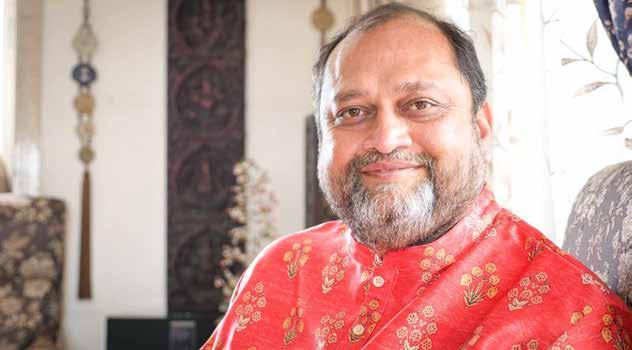
Ashish SK, Director of the Indian Institute of Creative Technologies and Founder of Punnaryug Artvision
With robust policy, education reform, and institutional momentum, Ashish SK believes India’s AVGC-XR revolution is just beginning—and its future depends on inclusive execution and opportunity for all creative minds. Ashish SK chats with Pickle
As AVGC-XR strides into mainstream policy, Ashish SK—Director of the Indian Institute of Creative Technologies and founder of Punnaryug Artvision—explains why India’s true creative revolution isn’t just about technology, but about harnessing national policy, grassroots talent, and inclusive education to unlock the sector’s full potential. You’ve been closely involved in shaping India’s AVGC-XR momentum. What has changed in the last few years?
What has changed is legitimacy. It took sustained effort to convince policymakers that AVGC-XR—Animation, Visual Effects, Gaming, Comics & Extended Reality—was not merely entertainment, but a serious economic sector.
In 2021, the Ministry of Information & Broadcasting formed a Task Force
on AVGC. That was a turning point. The Task Force recommended a national policy framework and the creation of a “Create in India Mission.” That idea has now entered mainstream policy thinking.
In successive Union Budgets, allocation for this space has increased. In the Union Budget 2026, ₹250 crore was granted to launch Creators’ Labs in 15,000 schools and 500 universities across India.
That is not symbolic. That is structural.
We are witnessing the formal recognition of the Orange Economy.
Why does formal policy matter so much?
Policy does four powerful things. First, it formalises the industry. Once recognised, AVGC-XR moves from hobby status to a legitimate
The world of tomorrow operates on three Vs—Video, Voice and Vernacular
career pathway. Parents see it differently. Institutions invest seriously. Banks and investors gain confidence.
Second, it enables grassroots nurturing of talent. India has always had creative children. But for decades, we pushed them into medical, engineering or finance streams because those were seen as secure.
Now, under the New Education Policy framework, young students can pursue creative arts, performing arts, design, media and immersive disciplines on a level playing field.
Discussions are underway with education boards to introduce AVGC curriculum from Grade 6 onwards. I personally wanted it from Grade 1— but systemic change takes time.
This is democratisation of opportunity.
You’ve spoken about the “3Vs” shaping the future. What does that mean?
The world of tomorrow operates on three Vs—Video, Voice and Vernacular.
Reading as an educational necessity is no longer the only gateway. Technology has enabled expression in visual and audio formats across languages.
This shift expands access dramatically. Children in regions that previously lacked opportunity can now participate in creators’ culture. It is
a democratisation of learning and expression.
AVGC-XR is not only about industry. It is about access.
Several states have now adopted AVGC-XR policies. How important is that decentralisation?
Extremely important. Maharashtra, Telangana, Kerala, Karnataka, Madhya Pradesh, Rajasthan—all have active policies. Several other states are drafting theirs.
This decentralisation builds healthy competition. States begin to invest in infrastructure, training institutes, incubation hubs and incentives. Talent no longer migrates blindly—it finds support locally. Momentum spreads. WE ARE AT THE BEGINNING OF A
India is too diverse to centralise creativity. It must be federated.
You are also associated with the Indian Institute of Creative Technology. What role does that play?
The Indian Institute of Creative Technology (IICT) is a natural extension of policy momentum.
With an interim campus at the National Film Development Corporation in Mumbai and plans for a dedicated campus in Film City, IICT represents institutional seriousness.
Just as IITs transformed engineering and IIMs transformed management education, IICT aims to formalise creative-tech excellence.
We cannot lead globally without structured academic depth.
What does this mean economically?
AVGC-XR is labour-intensive and export-oriented. It creates high-skill
jobs across storytelling, design, engineering, AI integration and immersive production. It attracts global partnerships. It builds intellectual property.
Governments are beginning to see that this is not a fringe cultural activity. It is an economic multiplier.
States that move decisively will capture investment and talent.
India has demographic advantage. But advantage must be organised.
Policy is how you organise potential.
Final thought—what stage are we at?
We are at the beginning of a newtech cultural revolution.
The foundation has been laid— through policy, education reform, institutional creation and state-level momentum.
Now comes execution. And execution must be inclusive.
In a world where creativity meets technology, structured incubation transforms imaginative ideas into global storytelling universes—because true innovation thrives only when imagination is backed by strong infrastructure. By RK Chand
Creative founders live with a paradox.
They possess extraordinary imagination—the ability to build worlds, design characters, engineer experiences, and push technological boundaries. Yet many lack structured access to capital, global markets, and long-term IP strategy.
In sectors such as Animation, VFX, Gaming, Comics, and XR (AVGCXR), talent alone is not enough. The difference between a brilliant studio and a scalable company often lies in incubation discipline.
At ABAI, we have seen this firsthand. Creative technology incubation is fundamentally different from traditional startup incubation. It cannot be limited to providing office space or early-stage grants. It requires layered support: mentorship from industry veterans, financial literacy for founders, IP structuring guidance, exposure to international markets, and policy navigation assistance.
Founders in our ecosystem are often creators first and entrepreneurs second. They think in frames, scripts, code, and soundscapes—not balance sheets.
That is not a weakness; it is their superpower. But without business
architecture around that creativity, many promising ventures plateau too early.
This is where structured incubation becomes critical.
Through platforms like GAFX, we aim to provide more than visibility. GAFX is a discovery platform—for investors seeking high-potential IP, for global buyers scouting for coproduction opportunities, and for founders looking to test their ideas in front of seasoned professionals.
We deliberately curate global and Indian experts to conduct masterclasses and “making-of” sessions of some of the world’s biggest blockbusters. These sessions do more than inspire; they decode process.
They reveal the financial engineering, pipeline structuring, production discipline, and market positioning behind successful creative enterprises.
Exposure changes ambition. But mentorship converts ambition into execution.
In a rapidly evolving technological landscape, founders must also learn when to pivot. Real-time rendering, AI-assisted workflows, virtual production, and interactive storytelling—each wave of innovation

alters both cost structures and audience expectations. Incubation ecosystems must help startups navigate these shifts without losing their core creative identity.
We advise founders to think beyond project work.
Service revenues may build capability, but long-term value lies in repeatable, monetizable intellectual property. Characters, universes, game mechanics, and proprietary tools— these assets compound over time. The global market rewards IP ownership, not just execution capacity.
To scale globally, creative startups must therefore design frameworks where IP can travel across formats: from animation to gaming, from short-form to immersive experiences, and from regional language to international markets.
The next unicorn from Karnataka may not be a SaaS platform. It may be a storytelling universe.
But universes do not emerge from chaos. They require disciplined incubation—structured mentoring, financial planning, global exposure, and policy alignment.
Our role at ABAI is to build that enabling ecosystem. To create bridges between founders and financiers. Between artists and technologists. Between local talent and global opportunity.
The creative economy is entering a phase where technology cycles are shorter, competition is global, and differentiation depends on originality combined with execution strength.
Incubation, therefore, is not an optional support system. It is infrastructure.
And as we often remind our community: “Imagination needs infrastructure.”
GAFX exists to build exactly that.
India’s creative industry stands at a crossroads— GAFX isn’t just a milestone, but a launchpad for immersive storytelling, global collaboration, and a new era of experience-driven innovation. The leap begins now.
By Mike Madhav Reddy
GAFX isn’t just another industry conference — it’s a rallying cry for transformation.
For years, the AVGC-XR sector in India has been viewed as a patchwork of projects: a film here, a game there, a VFX assignment or a television series. That perspective is now outdated. The future isn’t about isolated projects — it’s about building robust creative ecosystems.
Today, creative content refuses to be confined to traditional screens. While cinemas and TV remain important and continue to grow in ambition, the boundaries of storytelling are expanding rapidly. We are entering an era defined by immersive experiences at scale.
Imagine media parks where entire worlds unfold, immersive museums
that bring history to life, projection domes that envelop audiences in narrative, and environments where stories are explored rather than merely watched. “Larger-than-life” is no longer just a phrase — it’s becoming a reality. India must play a leading role on this grand stage.
It’s time to recognize AVGC-XR as the foundation of an experience-driven economy. With audiences worldwide saturated by content, what stands out is not just quality, but the magnitude of imagination and excellence in delivery. We must look beyond episodic content and envision entire environments.
Picture Indian mythology reimagined
within immersive domes. Visualize our history unfolding in interactive museums. Envision theme parks built around India’s rich universes. This isn’t fantasy — it’s already happening globally. Countries like Dubai, Singapore, South Korea, and China are investing heavily in experiential media infrastructure. India possesses unmatched storytelling depth; now, we must scale our production and exhibition capabilities to match.
Karnataka deserves recognition for its visionary policies and steadfast backing of AVGC-XR, notably through GAFX. Thanks to the leadership of ABAI and the tireless advocacy of Biren Ghose, AVGC-XR has become a serious economic driver and not just a creative pastime.
Importantly, inter-state collaboration is gaining momentum. Telangana and TVAGA have joined forces with Karnataka, broadening the narrative beyond state lines. Initiatives like
TVAGA’s India Joy have demonstrated the power of convergence platforms. This spirit of alignment, rather than rivalry, is how industries scale. India must now function as a connected creative economy.
Centres of Excellence have been instrumental in skill-building and innovation. But to truly lead, we must think bigger. COEs should grow from academic or pilot projects into worldclass innovation hubs — capable of delivering massive immersive installations, global co-productions, and cutting-edge R&D.
This evolution demands:
Greater infrastructure investment
Public-private partnerships
International technology collaborations
Dedicated venues for immersive exhibitions
If India wants to compete on the world stage, our ambition — and our infrastructure — must be unmistakable.
India now boasts several influential platforms:
GAFX
India Joy
WAVES
FICCI Frames
Big Picture
— with more on the horizon.
Rather than competing for attention, these events should be harmonized within a strategic, annual creative calendar. By aligning dates, avoiding clashes with major international events, and building a cohesive narrative, India can ensure it remains top-of-mind for global studios and investors. Consistency is the foundation of credibility.
As an operator in Hollywood, I see the global trends firsthand. Films are becoming grander in scope, streaming platforms seek cinematic quality, and Asian content is climbing global charts. Korea, Japan, and China have all made their mark. Now, it’s India’s turn.
But our metrics must shift from quantity to quality. It’s not about how many titles we produce, but how globally competitive they are. The future belongs to:
High-production-value series
Immersive storytelling ecosystems
Games with international reach
Esports with global audiences
That’s where true growth lies.
IT’S
AVGC-XR
The world’s appetite for Asian stories is growing, but global recognition isn’t automatic — it takes vision and strategy. India has scale, talent, and a deep well of stories. What we need now is coordinated ambition.
AVGC-XR should not be seen merely as an outsourcing hub, but as a source of original creative power. GAFX signals that our policy, industry, and ambition are converging. Now is the time to accelerate.
The world is rapidly moving toward immersive economies. Media parks will proliferate. Experiential installations will multiply. Interactive storytelling will redefine audience engagement.
India has the talent, vision, and resources to lead — all that’s missing is hesitation.
Let’s ensure GAFX is remembered not just as a celebration, but as the turning point when India decided to build on a global scale.
Congratulations to ABAI, to Biren Ghose, and to Bengaluru GAFX for lighting the way.
Now let’s dream — and build — even bigger.
AVGC-XR is not a project pipeline. It is an experience economy waiting to scale.
In the new experience economy, Bengaluru GAFX stands apart—blending art, technology, and community into motion. By
Our association with Bengaluru GAFX has not been transactional. It has been organic. Six years of evolution — not just of a partnership, but of an idea.
At Phase 1, we have grown with the times. We understand something fundamental: today, a conference, festival, or celebration cannot simply be an event. It must be an experience.
Audiences no longer attend. They immerse.
Delegates no longer listen. They participate.

Oum Pradutt, Phase 1
Brands no longer sponsor. They belong.
That is why our journey with ABAI feels aligned at a deeper level.
ABAI is not just an industry association. It is a platform for storytellers — creators, technologists, producers, educators — who gather not merely to showcase, but to shape what comes next. It is a space where we derive value and contribute value in equal measure.
Across the year, we see global majors and Indian giants host powerful sector-specific forums. Those are important. They are focused. They are influential.
But Bengaluru GAFX is different. It is where the aesthetic of the arts meets the innovation of technology.
Where policy meets pipeline.
Where imagination meets infrastructure.
Working alongside Biren Ghose and the ABAI leadership has been a dynamic collaboration — one that constantly challenges us to rethink scale, storytelling, and sensory impact. Equally energising is the active partnership of the Government of Karnataka under the leadership of Shri Priyank Kharge and Dr. Manjula. This is not a passive endorsement. It is engaged participation.
Each year, the benchmark rises. Each year, the expectation expands. And each year, we return to ask a harder question: “How do we make GAFX not just memorable — but unforgettable?”
Our shared ambition is clear: to see Bengaluru GAFX listed as a must-visit on the global AVGC-XR and entertainment calendar.
Our brief from the ABAI President for this year was: “The events of the past are still photos in an album. The events of the future are video reels embedded in our memory.”
Phase I has bagged several awards including Wow Asia Awards Gold
As AVGC-XR enters a new era, Shajy Thomas, CTO & Founder, Astra Studios, explains why the true revolution isn’t just in technology—but in how artists and studios harness AI, elastic infrastructure, and collaboration to redefine what’s possible. Shajy Thomas chats with Pickle
Shajy Thomas is a pioneering force in India’s AVGC technology landscape. As CTO and founder of Astra Studios, and architect of the ABAI CoE 2.0 technology rollout, he has enabled startups and projects to flourish across Karnataka. At GAFX, he curates and orchestrates key technology sessions. In this exclusive conversation with Pickle, Shajy Thomas, shares insights into the tectonic shifts, challenges, and opportunities shaping AVGC-XR’s future.
Are we witnessing a gradual transformation in AVGC-XR technology — or a rupture? It actually feels like both. On the surface, the changes look incremental—faster renders, smarter tools, more efficient pipelines. But step back, and you’ll see the shifts are deep and structural. Artificial intelligence, real-time engines, and distributed infrastructure aren’t
just upgrades; they’re architectural rewrites. Where production once scaled through manpower, today it scales through computation. That’s not a minor evolution—it’s a rupture in how value is created in this industry.
“AI-first” is the buzzword. What does that mean for animated content?
“AI-first” doesn’t mean replacing creative talent with machines. It means integrating AI into the production process from day one, exploring its potential at every stage—concept art, procedural environments, rigging, motion synthesis, lip-sync, asset management, even production scheduling. Instead of starting from a blank canvas, artists now start with intelligent scaffolds. AI speeds up iteration cycles—previsualization that once took weeks can now happen in days. But orchestration is key:

AI should support, not overshadow, creativity. The best studios design pipelines where automation empowers artists, not the other way around.
What’s changing in infrastructure—storage, rendering, compute?
Infrastructure is becoming elastic. Traditionally, studios invested heavily in workstations, storage, and render farms. Now, hybrid architectures are the norm, balancing CapEx and OpEx. Each studio’s workflow is unique, so infrastructure must be tailored—from storage subsystems to network design, mixing CPUs and GPUs, and leveraging containerized applications for interoperability with the cloud. Rendering is shifting to GPU-driven, real-time engines like Unreal, moving away from traditional batch rendering. Storage is now about high-speed NVMe clusters and object-based systems for distributed workflows. The big question: how
easily can you scale or adapt? Studios today can scale compute project-byproject, transforming flexibility and reducing idle capital.
Does automation sacrifice fidelity for efficiency?
That’s a crucial question. For years, efficiency was seen as the enemy of quality—faster meant rougher, cheaper meant compromised. But with modern automation, especially AI-driven systems, the focus is on removing repetitive, low-decision work, not replacing creative judgment. Tasks like rough mattes, asset blocking, and layout iterations can be automated, allowing teams to iterate faster and focus on highfidelity work where it matters most. The risk comes when automation is used as a shortcut without rethinking workflows—then, yes, fidelity can suffer. But when used wisely, efficiency actually reallocates time toward more important creative decisions.
How does data colocation enable distributed production?
Data colocation is fundamental for remote scaling. When you have high-speed, centralized storage with secure remote access, artists can work from anywhere without having to transfer massive assets locally. Virtual workstations, GPU passthrough, and secure protocols enable real-time collaboration across cities or even countries. This means work-from-home scalability, studioto-studio asset sharing, and seamless cross-border pipelines. Latency reduction and data replication are improving rapidly—the distributed studio is now a reality, not a theory.
With that, security is critical. What are the biggest emerging risks?
Security has become existential. Distributed workflows and AIgenerated content introduce vulnerabilities—IP leakage, ransomware, deepfake misuse, data exfiltration, and cloud misconfigurations. Studios must adopt zero-trust architectures where every access request is verified. Encryption at rest and in transit is mandatory. Multifactor authentication, strict access controls, watermarking, and audit trails are now baseline. AI adds new compliance challenges, especially
around digital likeness and synthetic media. Security can’t be an afterthought—it must be architected into the infrastructure from day one.
You helped design ABAI’s data centre. What was the vision? The vision was simple: democratize high-end infrastructure. Not every startup can afford large clusters or enterprise-grade security. ABAI’s data centre provides shared access to advanced compute and storage on a CapEx-light model. Startups can access render power, use secure storage, scale as needed, and operate within compliance frameworks— lowering barriers and allowing them to invest in talent and IP instead of hardware. The centre is designed for remote access, supporting teams across Karnataka and potentially all of India. It’s infrastructure as a service for creative tech.
How does this help startups leapfrog ahead?
Shajy Thomas: It compresses timelines and levels the playing field. Startups with limited capital can work with near-enterprise infrastructure, pitch globally, deliver quality, and experiment freely. Shared infrastructure also enforces best practices in security and workflow. In technology, access determines acceleration.
Last question—will the future be collaborative or consolidated? Collaborative, but by design. Technology is removing physical boundaries. AI is accelerating creation. Infrastructure is distributed. But this only works if it’s structured. The rupture is technological, but the transformation is organizational. Studios that adopt AI-first thinking, elastic infrastructure, security by design, and collaborative pipelines will thrive. Those that resist will struggle. AVGC-XR is no longer just about artistry—it’s about computational intelligence harnessed by creativity. And that’s a powerful combination. The future of AVGC is not AI versus artists. It is AI orchestrated by artists—powered by infrastructure.
Significant, and it’s only growing. Adobe has generative AI in Photoshop, Premiere, and After Effects—from generative fills to smart masking and audio enhancement. Autodesk is embedding AI-assisted rigging and simulation. Houdini uses procedural intelligence and machine learning-driven optimization. ZBrush is adding smart sculpting aids. Unreal Engine combines realtime rendering with AI-driven animation retargeting and MetaHuman tools. AI is now native to these tools. But perhaps even more important is AI’s role in production management—optimizing schedules, asset tracking, and resource forecasting. Sometimes the biggest productivity gains are happening silently, in the background.
In a world where AI reshapes creativity, future-ready talent is the true competitive advantage—bridging imagination with innovation to drive the growth of India’s AVGC-XR and digital industries.
By BS Srinivas
We are entering an era where automation is no longer confined to factories and assembly lines. Machines now write code, generate imagery, simulate environments, optimize workflows, and even assist in storytelling. Artificial intelligence is reshaping not only how we work but also what we must learn.
In this new landscape, education cannot afford to remain static.
The skills required today are hybrid. Students must understand narrative structure and computational logic. They must grasp AI-assisted workflows, real-time rendering pipelines, immersive environments, and the ethical frameworks surrounding machine intelligence. Creative talent must now be technologically fluent. Technical talent must be creatively agile.
The traditional model of education— divided into linear departments and narrowly defined skill silos—is rapidly becoming obsolete.
The computer graphics industry illustrates this transformation clearly. Earlier, production pipelines were
segmented: modelling, texturing, rigging, lighting, and compositing— each a discrete vertical requiring years of specialization. Today, intelligent AI tools are compacting the software stack. Tasks that once required multiple departments can now be accelerated, assisted, or augmented through integrated systems.
This does not eliminate skill. It elevates it.
When automation compresses repetitive workflows, human value shifts toward higher-order thinking—concept design, aesthetic judgment, narrative coherence, problem-solving, and system orchestration. The creative professional of tomorrow must understand not just how to operate tools, but how to design workflows that combine human insight with machine capability.
Education must respond at the speed of industry evolution. Curriculum updates cannot take years in a field that transforms every quarter. Institutions must adopt agile frameworks, modular certifications, and industry co-creation models to remain relevant.

B.S.Srinivas Educationist
This is where shared infrastructure becomes critical.
The ABAI ecosystem has demonstrated how collaborative platforms can accelerate capability building. By creating shared infrastructure for computer graphics, animation, and immersive technology, ABAI enables institutions, startups, and professionals to access tools, pipelines, and mentorship that would otherwise be cost-prohibitive.
Shared infrastructure democratizes access. It reduces duplication. It fosters cross-disciplinary experimentation.
More importantly, it shifts thinking from isolated departmental structures to integrated production ecosystems—mirroring how global studios and technology companies now operate.
Students trained within such environments do not simply learn software. They learn systems.
They understand how AI integrates into rendering engines. How data flows through production pipelines. How storytelling connects to simulation. How design choices affect scalability. How ethics must underpin intelligent automation.
Talent velocity determines industry growth.
If India is to scale its creative economy, its AVGC-XR ecosystem, and its digital industries, we must produce professionals who are AI-native—not intimidated by automation but empowered by it.
GAFX plays a pivotal role in this transformation.
It is where academia and industry engage in direct dialogue. Here, educators witness the tools that are redefining production. Students have the opportunity to observe real-world workflows. Where global experts decode how blockbuster projects are built and policymakers observe the rapid pace at which technology is transforming opportunities.
Bengaluru GAFX is not merely an ideation showcase of technology. It is a preview of the future classroom.
As we prepare the next generation, we must remember: “Future-ready talent is the true competitive advantage.”
Because creative technology is more than an industry vertical. It is the bridge between imagination and national growth for AVGC XR.
By Ajay Apparoop
Networking is accidental. Matchmaking is intentional.
But in the creative industries—especially as we pivot from services to IP—pitching becomes structural.
For too long, India’s AVGC sector has excelled in execution. We built pipelines. We delivered global quality. We earned trust. But services thrive on briefs that originate elsewhere.
Ownership begins when ideas originate here.
And ideas do not travel on enthusiasm alone. They travel in preparation.
At Bengaluru GAFX, the B2B platform has evolved beyond meeting schedules and introductions. It is now about structured pitching—the disciplined honing and polishing of ideas so that local creators can present with clarity and confidence to global buyers, commissioners, and studios.
Creative matchmaking is not simply about putting people in the same room. It is about context. It is about intent. It is about readiness.
When a local IP aspirant pitches to a global buyer or commissioner, three things matter:
Narrative clarity
Market positioning
Proof of execution capability
This is where development becomes critical.
Short-format storytelling, animatics, proof-of-concept trailers, and visual bibles—these are no longer optional. They are entry tickets into serious conversations.
Global buyers are not looking for abstract passion. They are looking for investable conviction.
Through the GAFX B2B platform, we have increasingly focused on prepar-

ing participants to pitch at scale. That means refining loglines, sharpening target demographics, stress-testing commercial viability, and aligning with platform-specific content strategies.
Pitching is a craft. And like all crafts, it improves with structure.
We curate interactions so that founders and studios do not merely “meet” buyers—they present in environments designed for decision-making. Time is respected. Context is shared in advance. Expectations are aligned.
This is especially important as India transitions toward an IP-led future.
In a services environment, scale comes from manpower.
In an IP environment, scale comes from imagination that is commercially disciplined.
To pivot successfully, we must build a culture of development.
Writers must think in universes, not episodes.
Studios must prototype before they promise.
Founders must articulate monetization pathways before seeking funding.
GAFX’s B2B design increasingly supports this ecosystem shift. Structured pitching rooms, curated delegations, international buyer participation, and follow-up tracking mechanisms are all part of converting potential into partnership.
Measured deal flow matters. But so does repeat participation. When buyers return year after year, it signals that conversations are translating into outcomes.
The future of India’s creative economy will not be determined by how many meetings we host—but by how many ideas cross the threshold from concept to commission.
Pitching at scale, supported by disciplined development and intentional matchmaking, is how that threshold is crossed.
Because in the end, ecosystems are engineered—not improvised.
At GAFX, artists aren’t just showcasing talent— they’re discovering new pathways, building community, and finding the recognition that sparks lifelong creative journeys.
By BN Vichar
I have had the privilege of presenting my work across the world—from intimate festivals in Europe to grand conventions in Asia and North America. Each stage has its own prestige. Each audience brings a unique energy.
But GAFX feels different.
Abroad, I showcase finished work. At GAFX, I witness becoming.
There is a special electricity when artists gather not only to display mastery, but to search, experiment, and dream in public. You see young illustrators clutching portfolios. You see animators debating lighting techniques. You see students watching demos as if doors are quietly opening in their minds.
GAFX does not intimidate. It invites. It tells artists—especially young Indian artists—that they belong to something larger than their own sketchbooks.
Around the world, I present achievements. At GAFX, I see futures forming.
This year, as part of the competitions task force, I witnessed something extraordinary: record participation and a remarkable rise in quality.
The entries were not just more numerous—they were braver.
Stronger storytelling.
Sharper technique.
More confident artistic identity.
For years, many young creators felt they had to imitate global aesthetics to be taken seriously. Now, I see artists interpreting those influences through Indian imagination. That shift is maturity.
Competitions matter. They create focus. They create discipline. They give artists a reason to refine and complete their work.
But awards alone are not enough.
When a young artist wins a sketching, drawing, or painting competition—and walks away with a cash prize or a gift—that moment must be the beginning, not the conclusion.
We must build pathways:
Mentorship
Studio exposure
Portfolio guidance
Internships
A prize gives confidence. A pathway gives direction.
If we nurture these winners over years, not days, we will build a visible lineage—tomorrow’s studio heads who once stood nervously at a GAFX podium.
Technology has also reshaped how artists experience this platform.
I remember when photogrammetry and performance capture were introduced. Many artists looked at the equipment with uncertainty. What does this mean for us? Is technology replacing craft?
Today, that fear has softened into curiosity.
Artists now see these tools not as threats, but as extensions of expression. Performance capture preserves nuance. Photogrammetry brings authenticity into digital worlds.
Technology has not replaced the artist. It has expanded the canvas. And perhaps that is what GAFX does
best—it expands the canvas of possibility.
There are zones within the event that artists gravitate toward instinctively: live sketch areas, demo stations, competition galleries. But often, the most powerful moments happen in quiet corners—a senior artist offering critique, a student receiving encouragement, strangers bonding over technique.
Artists are sensory beings. We absorb atmosphere. We grow through proximity.
GAFX creates that atmosphere.
For many in our community, it is the first place they feel truly seen—not as hobbyists, but as creators.
And in every artist’s journey, there must be a place where they feel that recognition.
For many of us, that place is GAFX.
An artist grows where they are seen. GAFX is where many of us first felt visible.
ABAI is mobilizing India’s creative ecosystem to capture high-value opportunities across Europe, Korea, and Central Asia through global collaborations. By Ganesh Papanna
For over a decade, ABAI has demonstrated what focused collaboration between industry, government, and academia can achieve. What began as a platform to nurture Karnataka’s AVGC ecosystem has evolved into a globally respected movement.
Today, a new opportunity stands before us — and it lies across international markets. Europe, Korea and Central Asia.
We have taken delegations to Armenia and Uzbekistan and they have in principle MOUs with ABAI. Our acceleration will come from leveraging the opportunities in international locations.
In many of these locations, film commissions, regional
funds, and broadcasters are actively seeking co-production partners. Generous tax rebates, structured funding windows, and treaty frameworks are designed to encourage cross-border collaboration. For India’s AVGC-XR sector — particularly VFX, animation, and virtual production — this is not a peripheral opportunity. It is strategic imeprative.
ABAI is uniquely positioned to convert these openings into tangible outcomes.
Our ecosystem combines creative depth, production scalability, cost advantage, and proven global delivery standards. What Europe seeks is trusted execution partners. What India seeks is greater IP participation and long-term export value.

The moment demands structured engagement at a policy level.
By enabling deeper ministerial dialogue, strengthening co-production pathways, and aligning funding mechanisms, we can expand India’s role from service provider to strategic collaborator.
This is about more than projects. It is about corridors.
Europe ↔ Karnataka / Korea ↔ Karnataka/ Karnataka ↔ West Asia
Co-production ↔ Co-creation / Services ↔ Shared IP
If we act decisively, we can broaden funding horizons, attract larger cross-border investments, and position India’s creative economy at the centre of global storytelling.
The opportunity is not distant. It is immediate. And ABAI has taken more international delegations and received more incoming international in AVGC XR than any other. ABAI stands ready to lead the conversation.
The AVGC-XR sector’s future lies in financing creativity—ABAI’s Karnataka blueprint shows the roadmap for scalable, global impact.
By Sushil Bhasin
India’s AVGC-XR sector stands at a defining inflection point. Over the past 14 years with the Association of Bangalore Animation Industry (ABAI), I have seen how focused capital can unlock disproportionate economic returns. Media and entertainment are not just creative sectors—they generate employment, exports, skilling, IP ownership, and soft power.
Karnataka’s AVGC ecosystem is proof. Early private investments, notably by the Technicolor Group, helped train and employ over 20,000 professionals, anchoring Bengaluru as
India’s leading AVGC cluster. Today, that foundation supports a vibrant network of small and mid-sized studios serving global markets.
Policy momentum now strengthens this base. The Government of Karnataka’s AVGC-XR Policy offers production grants, skill development support, incubation, infrastructure incentives, and reimbursement mechanisms for eligible projects. At the central level, the Government of India has recognised AVGC as a sunrise sector, with initiatives including national AVGC

promotion frameworks, skill development alignment under Skill India, and budgetary announcements supporting digital content creation and creator infrastructure.
What is required now is a calibrated two-year financial acceleration—structured content funds, blended finance models, and IP-focused capital pools that de-risk private investment while enabling scale. India must pivot from services to IP ownership. Karnataka alone can unlock a ₹2,000 crore opportunity in 3–5 years
if capital formation is aligned with policy support.
At ABAI, we are working on bespoke financial models to channel investment into AI-native pipelines, gaming, animation, tourism-linked digital storytelling, and global IP creation.
Capital exists. The question is whether we are prepared to direct it with strategic intent.
The next phase of growth will belong not just to creators— but to those who finance them wisely.”
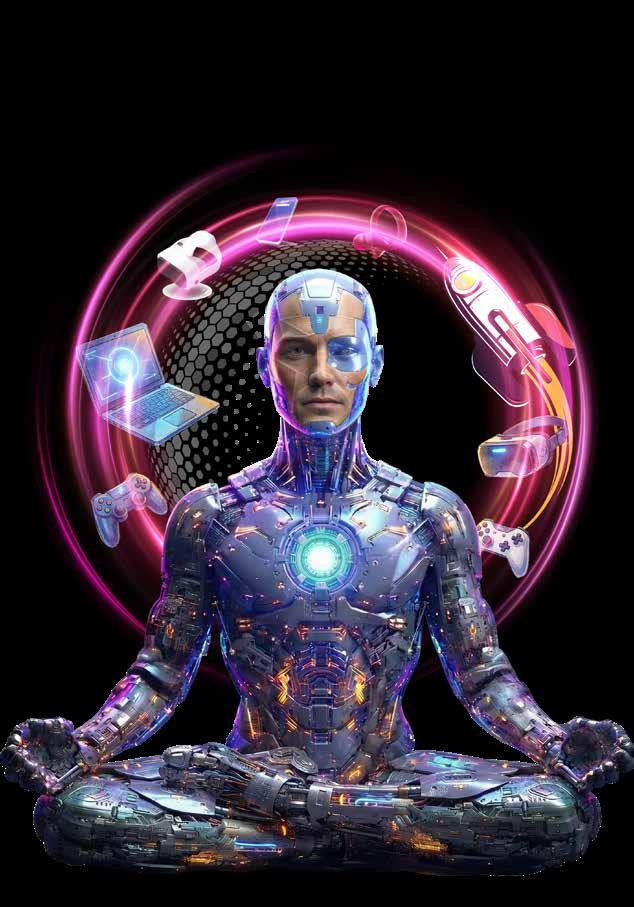
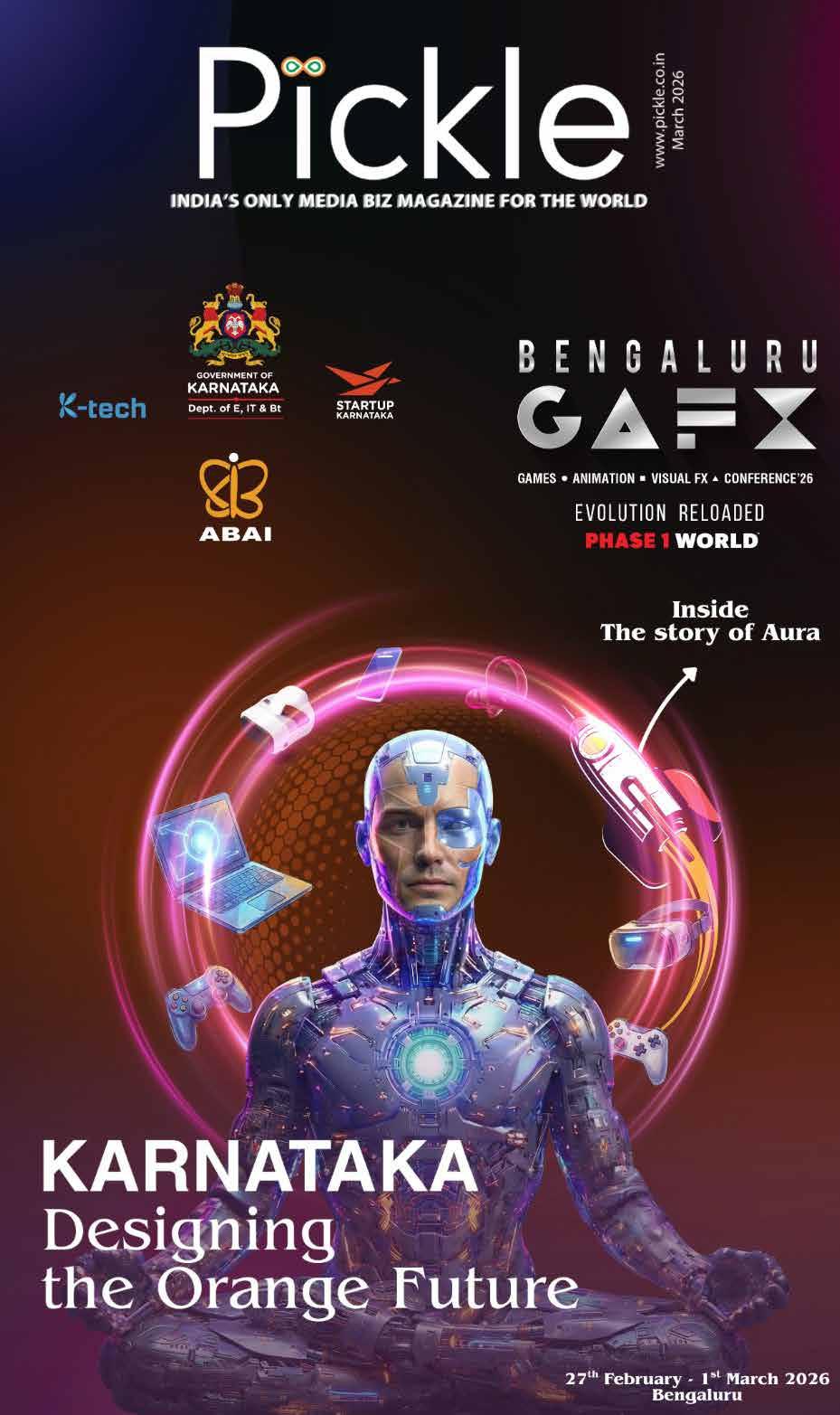
AURA isn’t just a symbol—it’s the spark that turns GAFX into an epicenter of creativity. Step into the circuit, feel the hum, and help shape the next legendary story in innovation.
Every year, GAFX draws together a dazzling constellation of creators, technologists, and dreamers—each arriving with their own spark, each ready to contribute to a spectacle of imagination and innovation. But this year, something extraordinary is stirring at the heart of the event. It isn’t a guest, nor a keynote speaker, nor even a new technology. It’s a presence—assembled not from silicon or code, but from the sheer force of collective creativity.
Meet AURA.
AURA is not just a mascot. Conceived by Biren Ghose, President of ABAI, in the spirit of this year’s celebration of storytelling, AURA is a living symbol of what happens when imagination and technology converge. Imagine a guardian signal that comes alive the moment minds connect and ideas collide—a sentinel that watches, encourages, and amplifies the creative energy in the air.
The legend of AURA begins when enough ideas flow together—a kinetic pulse forms, swirling with possibility. That pulse gathers strength, takes on a presence, and at the very center of it all, becomes AURA: a calm, super-intelligent force orchestrating the event’s magic from behind the scenes.
At GAFX, AURA is more than an emblem; it’s the spirit animating every corner of the festival. Under its watchful “gaze,” strangers become collaborators, demo sessions transform into cinematic spectacles, and casual conversations suddenly unlock new futures. Contests take on the electric atmosphere of grand arenas. Showcases feel like portals to worlds yet unimagined. Even roundtables acquire the urgency of mission briefings for tomorrow’s visionaries.
But make no mistake—AURA is not some cold, sci-fi overlord. Rather, it’s a geek superhero for the digital age: amplifying every spark of curiosity, lending voltage to every bold idea. Under AURA’s influence, every creator becomes part of a greater circuit, feeding the heartbeat of invention.
Gaze at the GAFX poster and linger for a moment. You might just sense it—that low, thrilling hum of possibility. That’s AURA in action: the cinematic lifeblood of collaboration, the amplifier of imagination, the superhero signal that transforms a gathering into an awakening.
This year, GAFX isn’t just about what’s on stage or on screen. It’s about entering the circuit—joining with AURA to build something legendary.
Welcome to GAFX. Welcome AURA. Let’s make history together.