Hotelschool The Hague
Hospitality Research Centre
Hotelschool The Hague
Hospitality Research Centre
When the Research Centre of Hotelschool The Hague published its first Yearly Overview in 2018, the aim was to create a consistent and transparent account of our research activities and ambitions. Eight editions later, it is encouraging to see how this tradition has contributed to a stronger and more cohesive research culture within our institution. The expansion of our research portfolio, together with the growing involvement of our students, shows how research has become integral to HTH’s identity. This year was also significant as Hotelschool The Hague had the privilege of hosting the EuroCHRIE Conference in November 2025, welcoming scholars, educators, and industry partners to our campuses.
Our research agenda continues to evolve in response to developments that shape the future of hospitality. Recent work has addressed robotics, food waste reduction, ESG, circularity, and the changing relationship between hospitality, urban environments, and local communities. These themes reflect both broader societal questions and the strategic priorities of an industry undergoing rapid transformation. Throughout this work, we remain committed to a balance between academic rigour and professional relevance, contributing to scholarly discourse while supporting the needs of students, alumni, and industry partners.
Looking ahead, we anticipate that digitalisation, sustainability transitions, and the social impact of hospitality organisations will increasingly inform our priorities. Practice-oriented research within universities of applied sciences is also gaining importance nationally. In this context, we are pleased to participate in the Dutch pilot for the Professional Doctorate in the Leisure, Tourism and Hospitality domain. The programme prepares professionals to act as ‘change agents’ in complex industry challenges, and two candidates have begun their Professional Doctorate trajectory at HTH, a meaningful step in our contribution to applied research in the Netherlands.
A further strength of HTH is the close connection between research and education. Students are increasingly involved in research projects, often in collaboration with hospitality organisations, strengthening their development as reflective practitioners and problem solvers. This integration ensures that research enhances the learning environment while contributing to the innovative capacity of the sector.
Thank you for your interest in this overview of our research activities in 2025. I welcome colleagues, students, alumni, and partners to share their perspectives as we continue shaping the future direction of our research agenda. You are invited to reach us at research@hotelschool.nl.
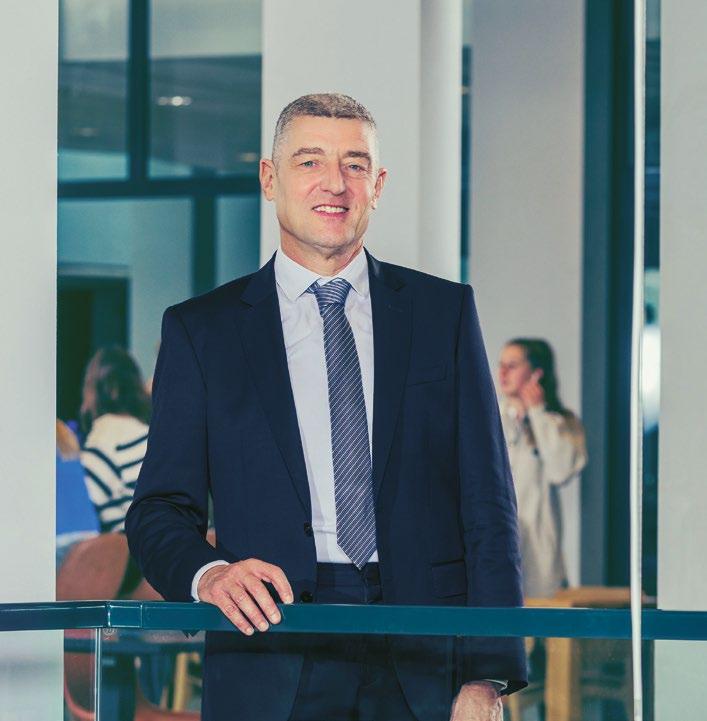
Dr. Rogier Busser Dean and member of the Board of Directors
Hotelschool The Hague

Yasemin Oruc Marketing & Innovation Lecturer and Research Fellow
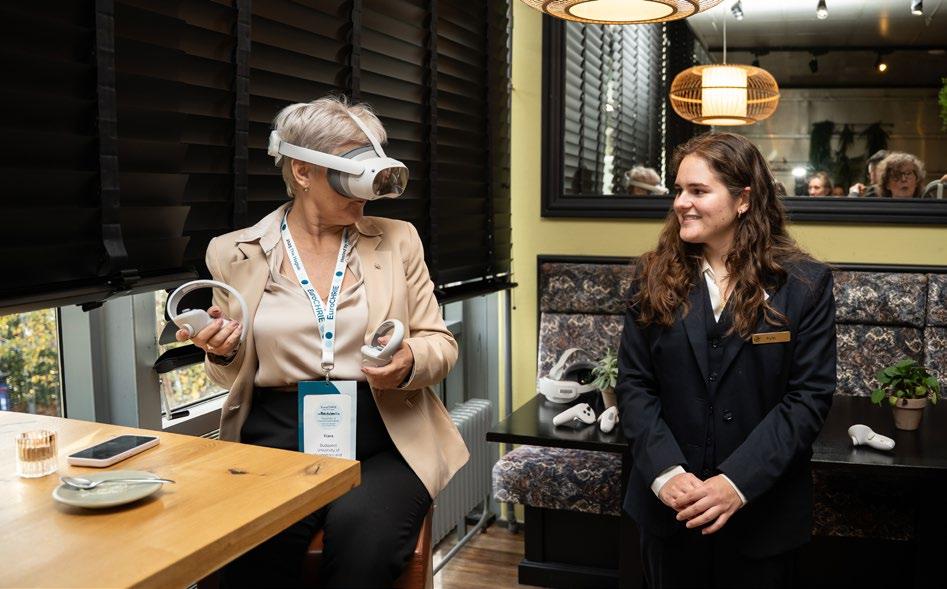
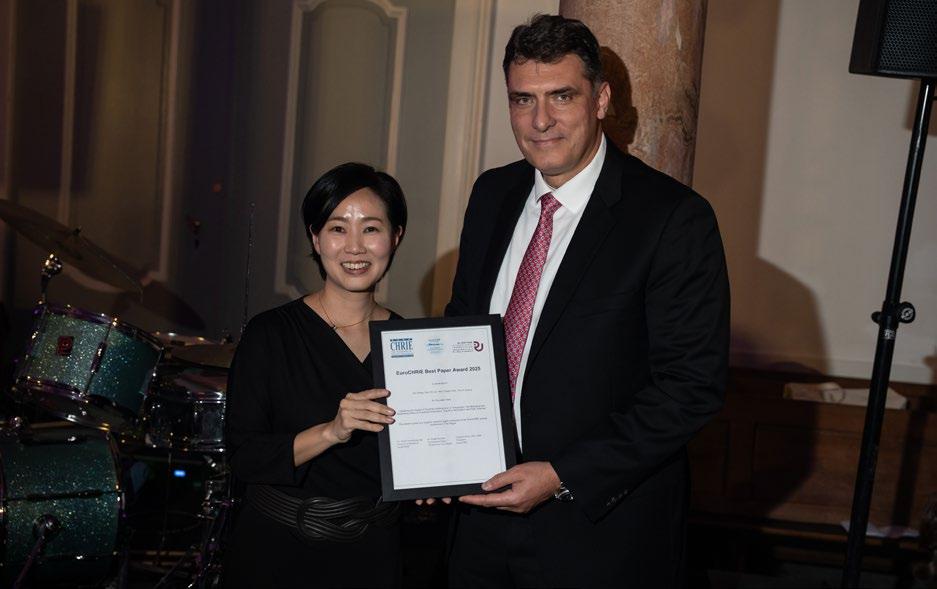
In November 2025, Hotelschool The Hague proudly hosted the EuroCHRIE 2025 Conference — a landmark event that brought together over 220 international delegates from 25+ countries, representing more than 100 academic institutions and industry organisations.
Under the theme “Hospitality & Tourism Innovation: Exploring Inspiration Across Industry Lines”, the conference created a dynamic platform for connection, knowledge-sharing, and forwardthinking dialogue. Researchers, educators, students, and industry professionals explored some of the most timely developments in our field: the rise of AI, the shift towards regenerative tourism, ethical leadership, and the future of hospitality and tourism education.
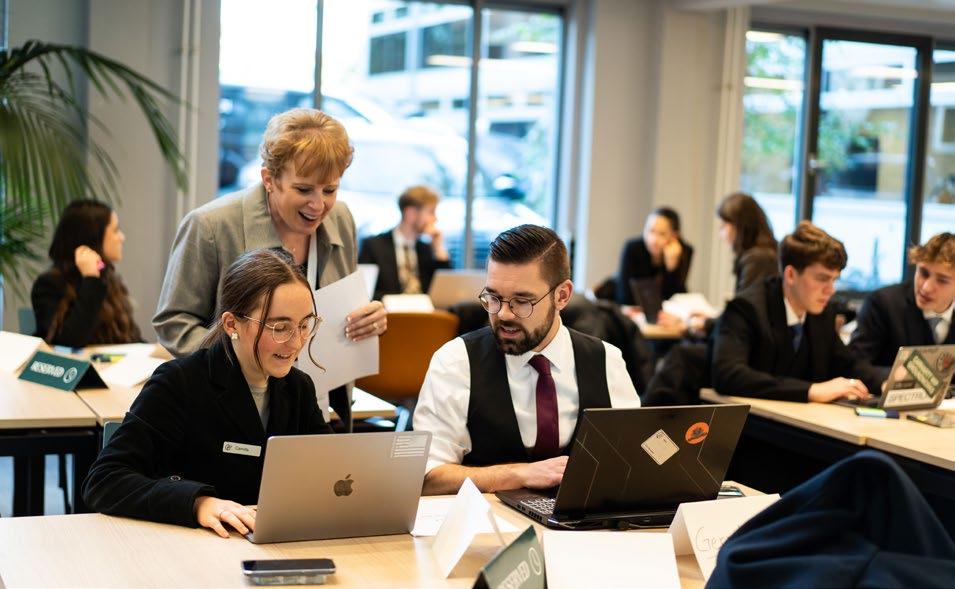
What made this edition of EuroCHRIE truly exceptional was its full integration into our Hotelschool The Hague ecosystem. For the first time, an entire conference was embedded within our educational programming:
• Keynote sessions were live-streamed into classrooms;
• Students engaged in conference-themed assignments;
• Faculty members hosted sessions and roundtables;
• Our campus became a living lab of hospitality learning in real time.
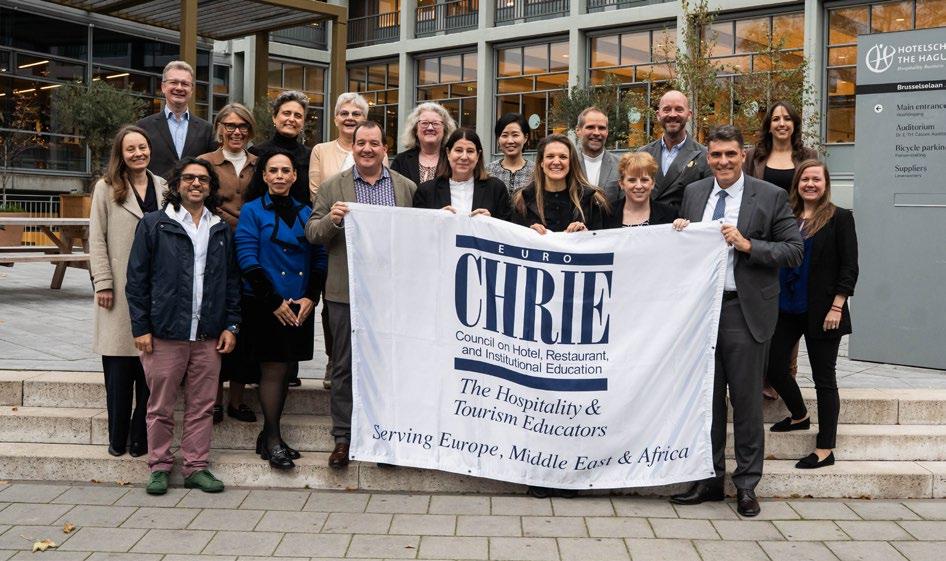
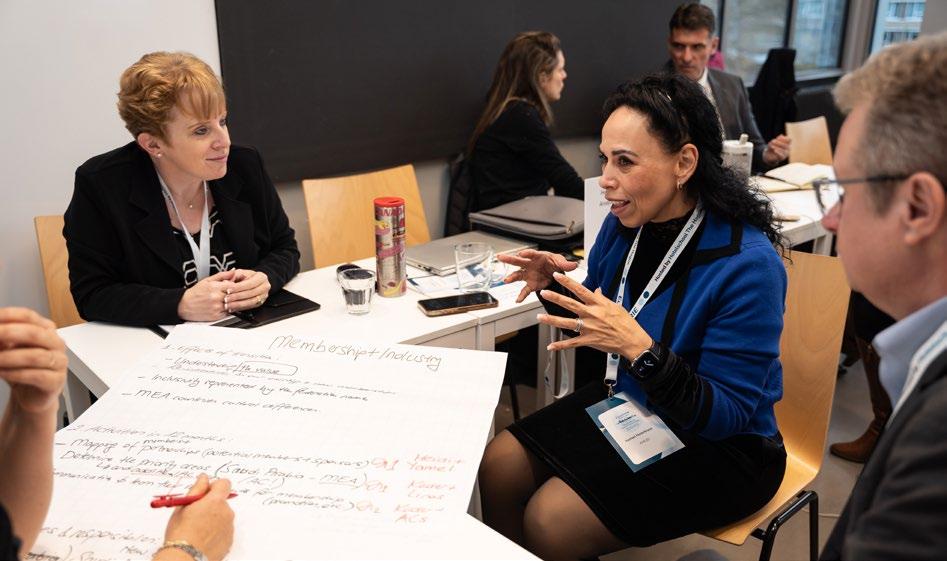
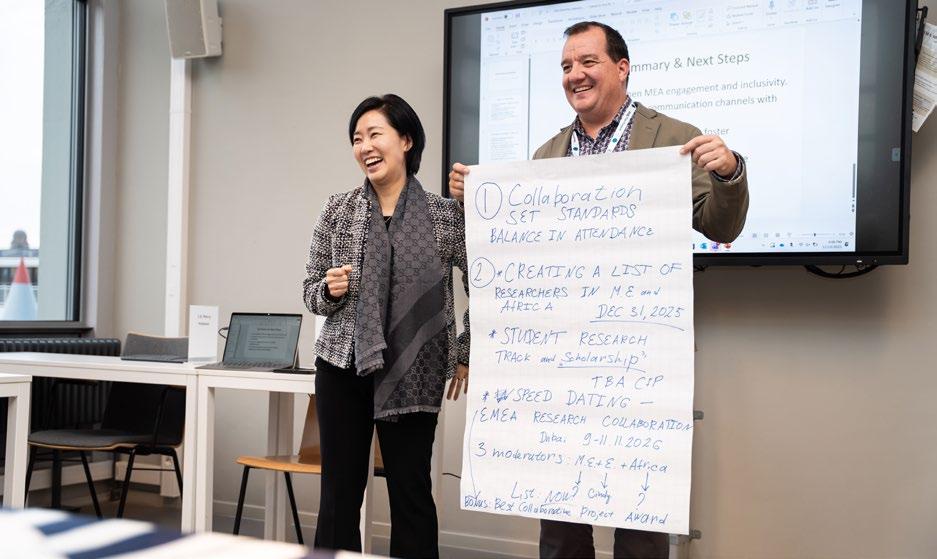
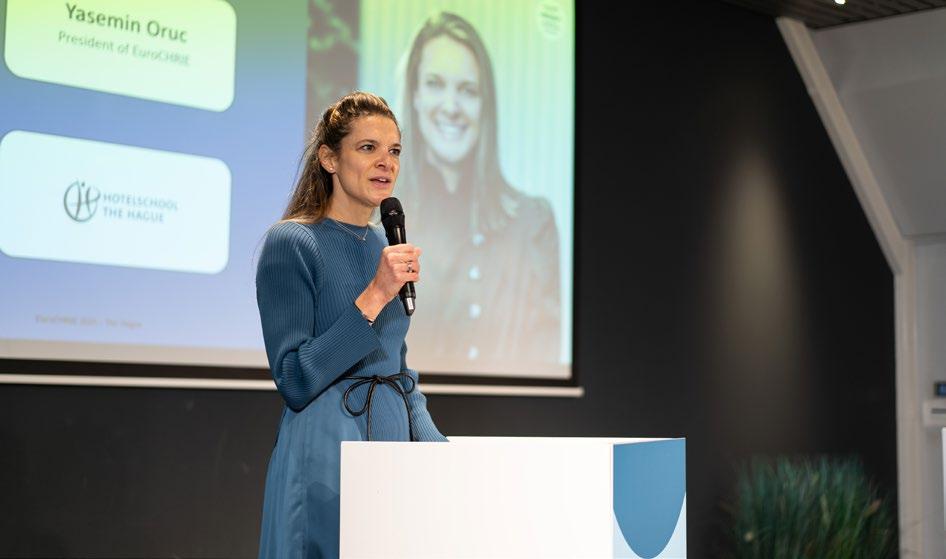
The event marked a significant transition in the global federation’s identity — being the final conference under the EuroCHRIE flag before evolving into EMEA CHRIE, strengthening its regional reach and ambitions. As President of EMEA CHRIE, Yasemin Oruc shared in her opening address:
“This is more than a conference. It’s a celebration of what hospitality and tourism connections can bring and contribute to our classrooms, our research and our communities: purposeful encounters, constructive reflections, and the co-creation of knowledge that strenghtens both academic practice and professional impact, rooted in kindness and care.”
Two guiding legacies framed the entire experience:
• Innovation —through technology, and moreover in how we teach, collaborate, and lead;
• Community Involvement — placing hospitality’s social, cultural, and emotional dimensions at the heart of the conversation.
The EuroCHRIE 2025 conference positioned Hotelschool The Hague as a key connector in shaping the academic dialogue around future-oriented hospitality and tourism. With a transdisciplinary program and active integration into the institute’s curriculum, the event reinforced the importance of embedding timely global themes—such as the ethical integration of rapidly advancing technologies in hospitality, regenerative hospitality development, educational innovation, and shifting workforce values—into hospitality research, teaching and industry collaborations. The conference outcomes will continue to inform ongoing faculty projects, educational development, and institutional partnerships.
As we move forward, the conference leaves behind a meaningful legacy — one that will continue to inform future curricula, research collaborations, and the role of academic institutions in shaping a more thoughtful, inclusive, and impactful hospitality and tourism industry.
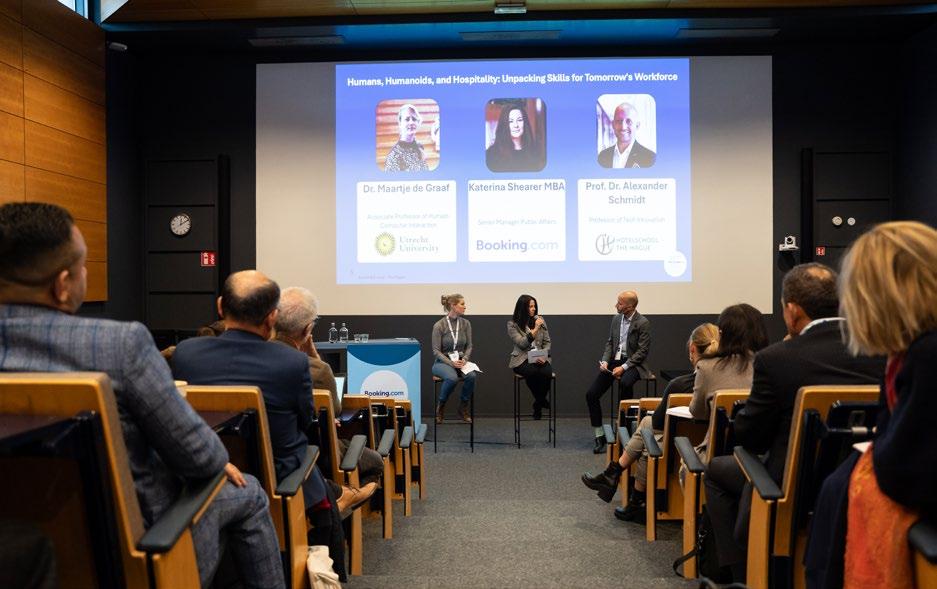

Alexander Lennart Schmidt Professor of Technological Innovation in Hospitality
Artificial intelligence is not coming to hospitality—it's already here. But the critical question remains: how can the industry, particularly independent hotels and SMEs, harness AI to create genuine value rather than just chasing technological trends? We are actively exploring this transformation through multiple research streams.
Professor Alexander Lennart Schmidt's participation in high-level panels alongside EU Commission, OpenAI and Booking.com has revealed that barriers to AI adoption are more cultural than technical. Low digital skills, uncertain return on investment, and limited leadership engagement are slowing progress across European hospitality SMEs.
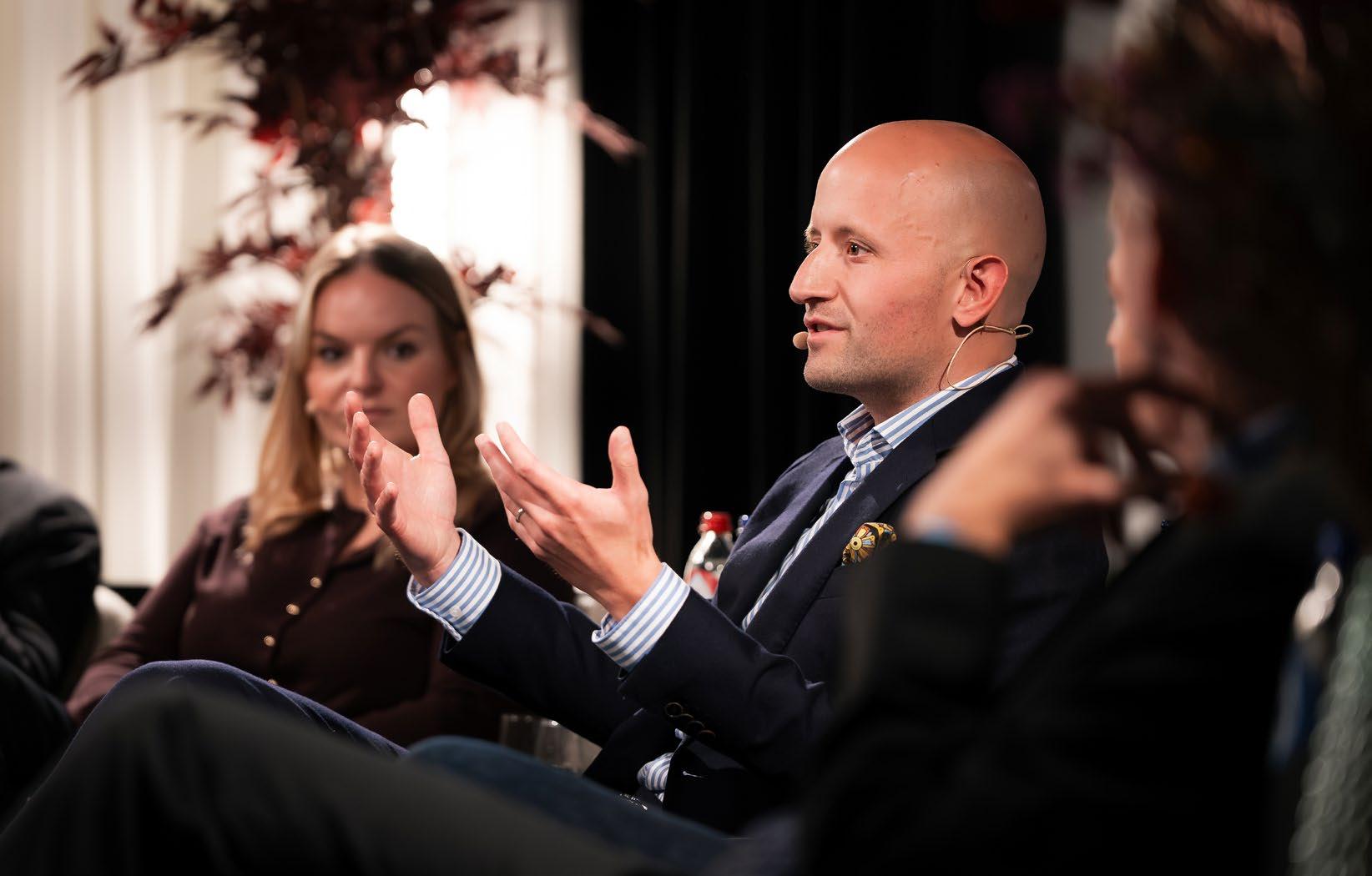
At the European Forum Alpbach 2025, Dr. Schmidt joined Google and a European group of tourism experts on the panel "Digitally limitless? AI between travel trends and reality". The discussion cut through the hype to examine how far AI can realistically transform tourism and hospitality.
The challenge is clear: hospitality must look beyond efficiency. AI's potential extends far beyond cost reduction. In a future driven by AI, hospitality leaders need to reimagine value creation through AI-driven personalisation, dynamic service design, and human-robot collaboration. Our funded research project AI Agents for Efficient and Sustainable Hospitality Workforce demonstrates how practical AI solutions can enhance hospitality operations while contributing to a sustainable workforce.

HTH partners with global technology experts and hospitality thought leaders to shape the future of AI
Drawing on our research initiatives combined with insights from global thought leaders in technology and AI developments, we will launch a hands-on outlook paper about the future impacts of AI on hospitality. Set for release in early 2026, this research will provide hospitality professionals with actionable frameworks for navigating AI-driven transformation.

Karoline Wiegerink Professor of City Hospitality & City Marketing
The Hospitable City is a broad and inspiring concept — one in which well-being and a sense of belonging are essential parts of how people experience their surroundings. In 2025, this vision took shape through the project Healthy Placemaking, a collaborative initiative led by Inholland University of Applied Sciences, in which Hotelschool The Hague participated together with HZ University of Applied Sciences and the Hart van Zuid Foundation.

The shared goal was to explore how local interventions can strengthen both well-being and hospitality in the neighbourhoods around Rotterdam Zuidplein. Through workshops, student research, and cocreative design sessions, residents, artists, and students worked together to make the area more vibrant and welcoming. From a large mural symbolising connection and pride to playful, participatory art at Carnissepoort, each initiative invited people to move, meet, and recognise themselves in their neighbourhood.
The intervention Carnissepoort in Motion — developed with local partners, artists, and students — transformed a busy urban crossing into a colorful, meaningful place. Hopscotch paths, portraits, and neighborhood stories encouraged play and reflection, showing how art, participation, and hospitality can merge into a healthier, more inclusive city experience.
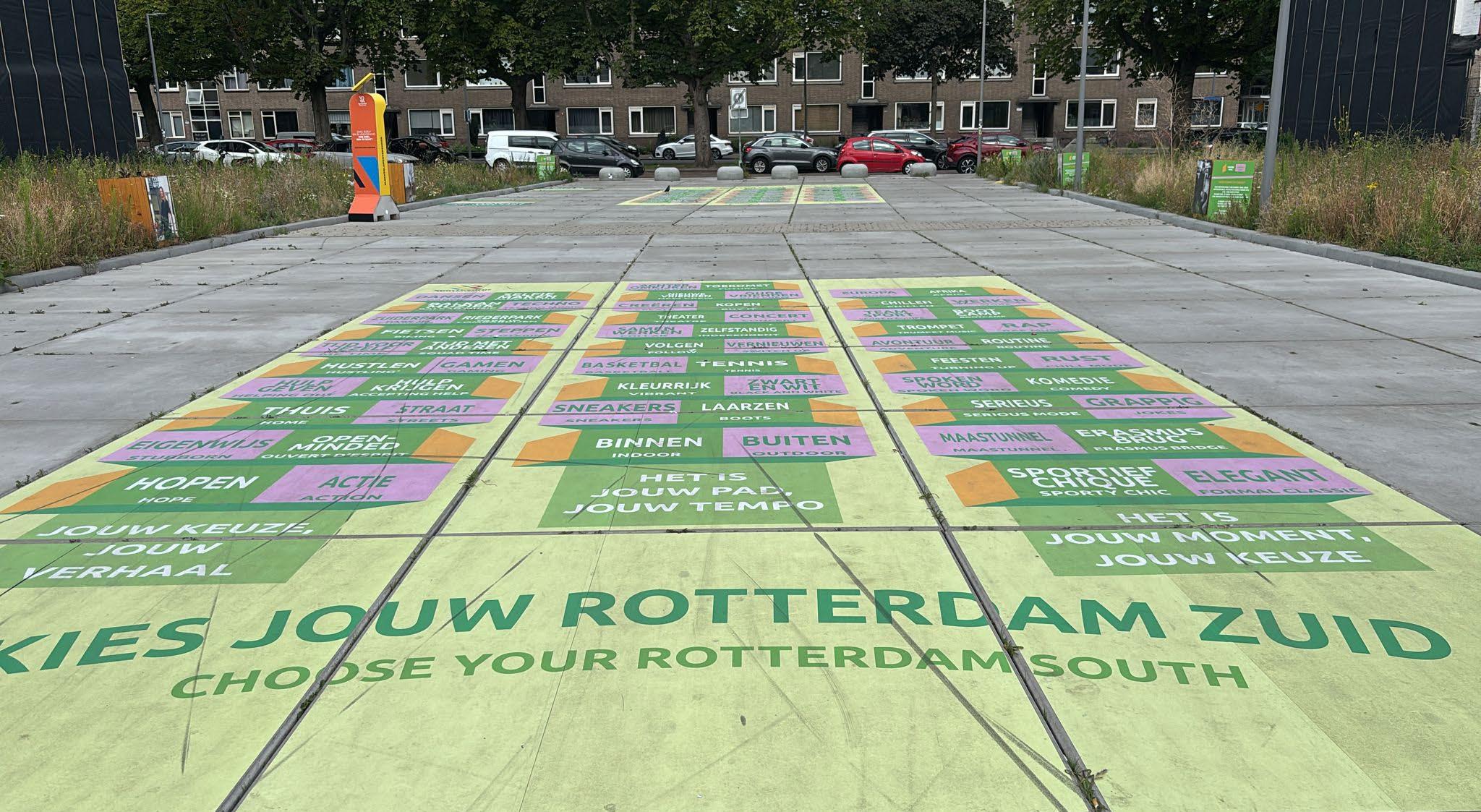
A highlight of the year was the presentation of the Research Team at the World Leisure Congress in Breda, where we brought the Carnissepoort case playfully to life with a 3D video. Participants were invited to experience the hopscotch themselves — literally moving and discussing while hopping — embodying what Healthy Placemaking is all about: connecting body, mind, and community through joyful interaction.
In essence, Healthy Placemaking shows how hospitality and health can reinforce each other — how small creative gestures can open hearts, strengthen local identity, and build bridges between people and place.

Dr. Anna de Visser Amundson
HTH Professor Responsible Consumption
In 2025, Hotelschool The Hague continued to strengthen its applied research agenda through a series of innovative experiments addressing key challenges in the hospitality industry. Each project demonstrates how academic inquiry and industry collaboration can lead to tangible improvements in wellbeing, learning, and sustainability. From advancing employee training via immersive Virtual Reality, to enhancing housekeepers’ physical health through the DuvetLifter innovation, and motivating hotel guests to act more sustainably through customised programs, these studies exemplify the school’s commitment to responsible and future-oriented hospitality practices. Together, they showcase how Hotelschool research translates directly into better workplaces, more effective learning, and more sustainable guest experiences. Curious to find out more? Please contact Anna de Visser-Amundson, Professor Responsible Consumption.

Dr.
Praneschen Govender
Lecturer & Researcher AR/VR in Hospitality
The hospitality industry faces issues of high staff turnover creating a need for effective training on standard operating procedures (SOP). The study sought to develop a 360 video virtual reality experience to train staff on check-in procedures using headmounted display and assess performance in real-world post immersive training. Two pre-tests were conducted with (N=26 and N-20) comparing VR (experimental) and 2D video (control) training experiences with the main study sample consisting of 19 frontline employees within a Dutch hotel chain all experiencing the VR training. Participants were exposed to two VR experiences, an immersive SOP job shadow illustrating the correct procedure to check-in a guest and an assessment in VR followed by a real-life check-in of a guest. Participants were assessed using an observational checklist rubric testing sequence of task completion.
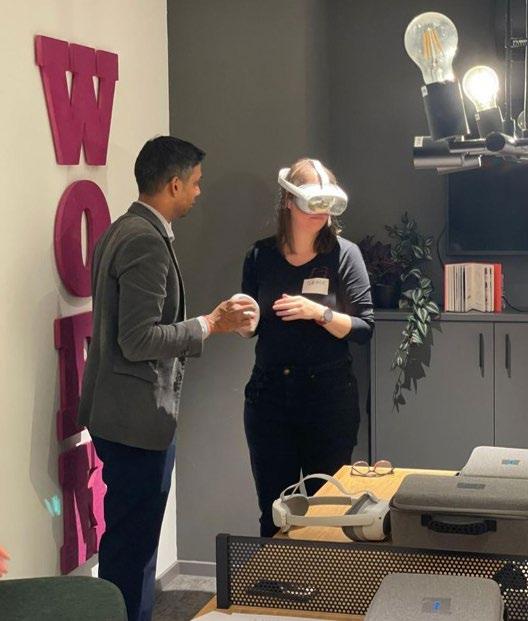
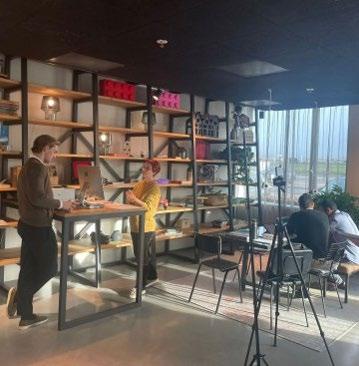
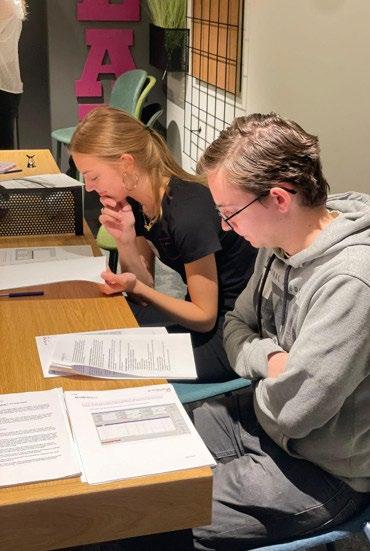
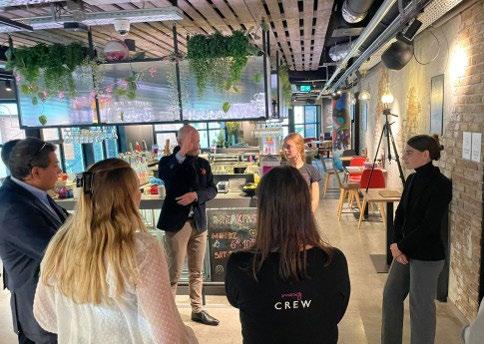
Participants completed a knowledge test and engagement questionnaire as well as participating in think-aloud interviews after the intervention. Pre-test findings revealed a 17% reduction in error rates with the VR group in comparison to 2D video. VR training was found to be engaging and participants had higher level of knowledge retention when perceiving training as interesting, detailed and having adequate examples.
The small differences between their knowledge test scores and role play scores of experienced and inexperienced employees indicate a small knowledge-application gap between these groups. In addition, participants requested more corrective feedback to understand reasons for their errors. Based on findings the study presents two conceptual frameworks, a Hybrid VR SOP training procedure and a Post-training Self-directed VR Learning Procedure. The study is currently being prepared for a journal submission.

Klaas Koerten Professional Doctorate Candidate & Research Fellow
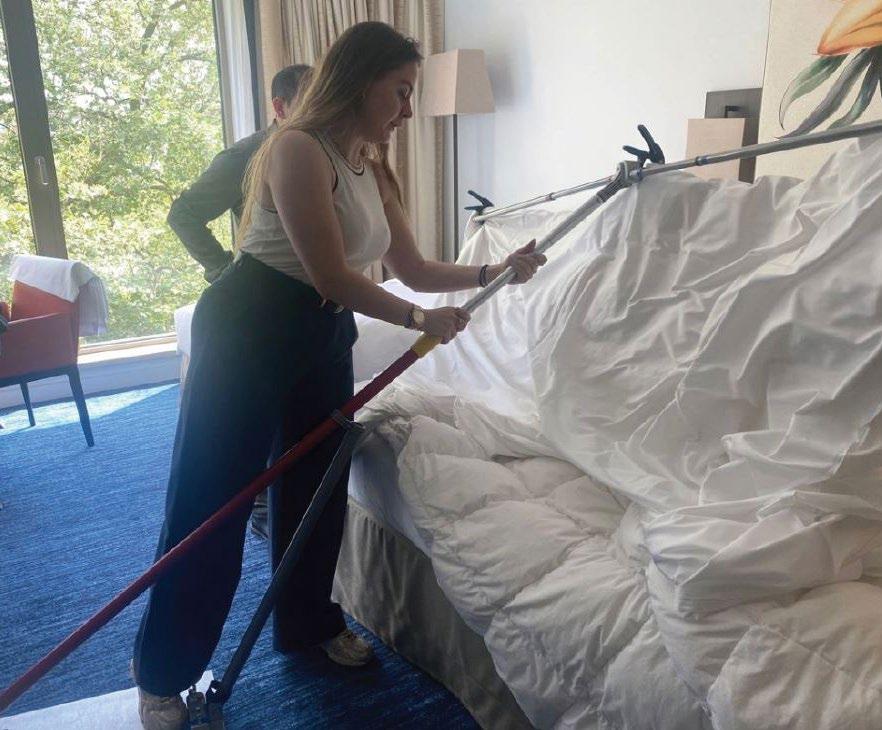
One of the most physically exhausting jobs in hospitality is housekeeping. Within this job, bed making is often pointed out as the most painful task. The task of making a bed exposes housekeepers to unhealthy positions for a long time. Ines Schneider, a master student from the Hotelschool The Hague has centered her thesis project around improving wellbeing for housekeepers during bed making operations. She built a tool called the DuvetLifter, based on the design work from Marilise Berrens from the TU Delft. This DuvetLifter suspends a duvet, thereby taking away the effort that housekeepers normally make when shaking a duvet in its cover. The tool was tested in the Hyatt Recency hotel in Amsterdam, where an experiment was set up where eight housekeepers were asked to make at least 10 beds with the DuvetLifter over the course of two weeks. Before using the tool, participants were asked to indicate their occupational pain and work stress. When using the tool, housekeepers adopted a healthier posture when changing duvet covers. This was noted both by the housekeepers themselves reporting lower pain, but also by the observing researcher. The master thesis work was written into an article together with Hotelschool researcher Klaas Koerten and Craig Webster. The article was published in 2025. For more information, find a publish article about this study here.
Dr. Anna de Visser Amundson HTH Professor Responsible Consumption
In collaboration with Master of Leading Hotel Transformation alumna Bruna Fagundes Fontes, Professor Anna de Visser Amundson, and Hilton Amsterdam, this study examined how the design of sustainability programs and incentive types can influence guest engagement and willingness to act sustainably during their stay. Many hotels promote environmental initiatives, yet these are often generic and fail to turn good intentions into real participation.
To address this, the study compared a standard sustainability program—where guests followed one fixed initiative (limiting showers to five minutes)—with a customisable program that allowed guests to choose among three actions: saving water, reusing towels, or skipping daily room cleaning. Two types of incentives were also tested: a pro-self incentive (a refillable Hilton water bottle) and a pro-social incentive (a donation of 20 litres of clean water per day to communities in need).
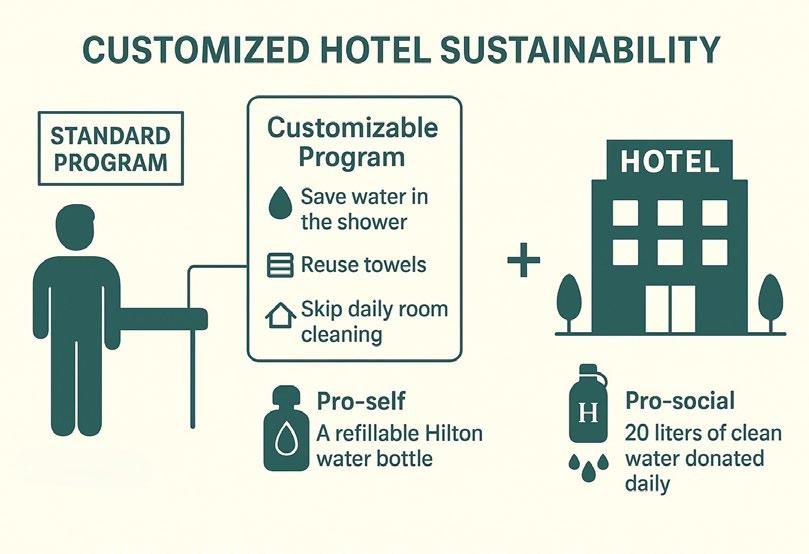
The quasi-experimental field study took place at Hilton Amsterdam with 209 guests, who were randomly assigned to one of four conditions combining customisation level and incentive type. Participants then completed a short survey on their willingness to participate, booking intention, and willingness to pay more for a sustainable stay.
Results showed that customisation significantly increased participation and booking intention, confirming that offering guests choice is a stronger motivator than external rewards. The incentive type did not make a meaningful difference. Managerially, the study underscores that hotels should design simple, customisable programs that give guests autonomy while keeping participation easy—enhancing both sustainability impact and brand engagement.


Alexander Lennart Schmidt Professor of Technological Innovation in Hospitality
Hotelschool The Hague has secured one of the largest research grants for applied research.
The €750,000 RAAK-PRO subsidy from Regieorgaan SIA (Dutch Research Council) will fund Embrace IT: Co-creating Human-Centered Hospitality with AI, Automation, and Augmentation a groundbreaking four-year research initiative running from 2025 to 2029.
Most ambitious cross-sector collaboration in Dutch hospitality technology research
Leading a consortium of 21 partners, HTH brings together universities such as NHL Stenden, Breda University of Applied Sciences, TU Delft, Tilburg University, VU University Amsterdam and Haaga Helia University of Applied Sciences; major hotel groups and hospitality businesses including Postillion Hotels, Quality Lodgings, W Amsterdam, Sea Palace Restaurant; technology innovators Mews Systems, Dalco Robotics, Welbo, RoboValley; and industry bodies such as NBTC.

The project directly addresses critical challenges facing the Dutch hospitality sector, which represents the nation's eighth-largest economic contributor and employs over half a million workers. With persistent staff shortages, rising labour costs, and increasing operational pressures, Embrace IT will explore how technology can enhance rather than replace human talent across three core operational areas: housekeeping, food services, and reception
“Being in the lead of such a strong consortium is a tremendous opportunity for Hotelschool The Hague,” says Professor Alexander Lennart Schmidt. “This collaboration ensures that the future of hospitality remains both human and high-tech”.
By testing innovations in real-world environments, the project moves hospitality from reactive problem-solving to sustainable digital transformation—setting new standards for integrating human-centred technology across the sector.


Dr. Anna de Visser Amundson
HTH Professor Responsible Consumption
Food choices play a major role in the environmental impact of the hospitality industry. With growing interest in sustainability—and increasing pressure to reduce carbon emissions— restaurants are exploring how menu design and labelling can nudge guests toward climatefriendlier dishes. Yet surprisingly little is known about how these labels work in real-life restaurants, where guests make quick, low-involvement decisions rather than carefully reading sustainability information.
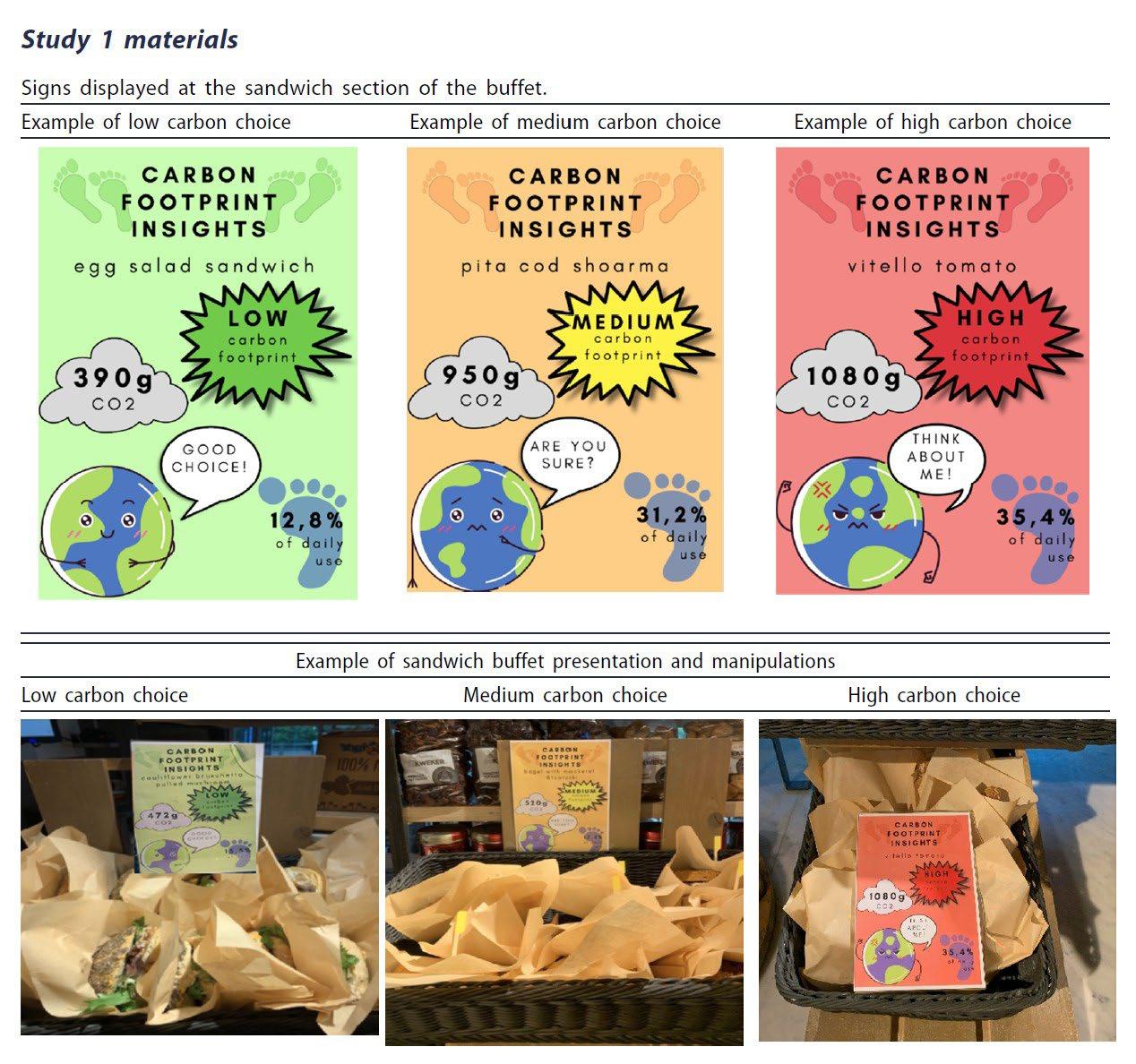
Overall, the findings show that:
To address this gap, Dr. Anna de VisserAmundson, Professor Responsible Consumption at Hotelschool The Hague, together with Dr. Viachaslau Filimonau from the University of Surrey, conducted two extensive field experiments. Rather than relying on self-reported intentions, this research measured actual consumer behaviour using real sales data—offering rare and valuable insights into how diners genuinely respond to carbon information.
Across the two field studies, the results provide a clear message for hospitality practitioners: how you frame carbon information matters—and can either support or undermine your sustainability goals.
• Warning-style carbon labels (e.g., red “high-carbon” indicators) can unintentionally reduce sales across an entire food category. Instead of guiding guests toward greener options, these labels may create negative associations that spill over onto other items—even those with low carbon footprints.
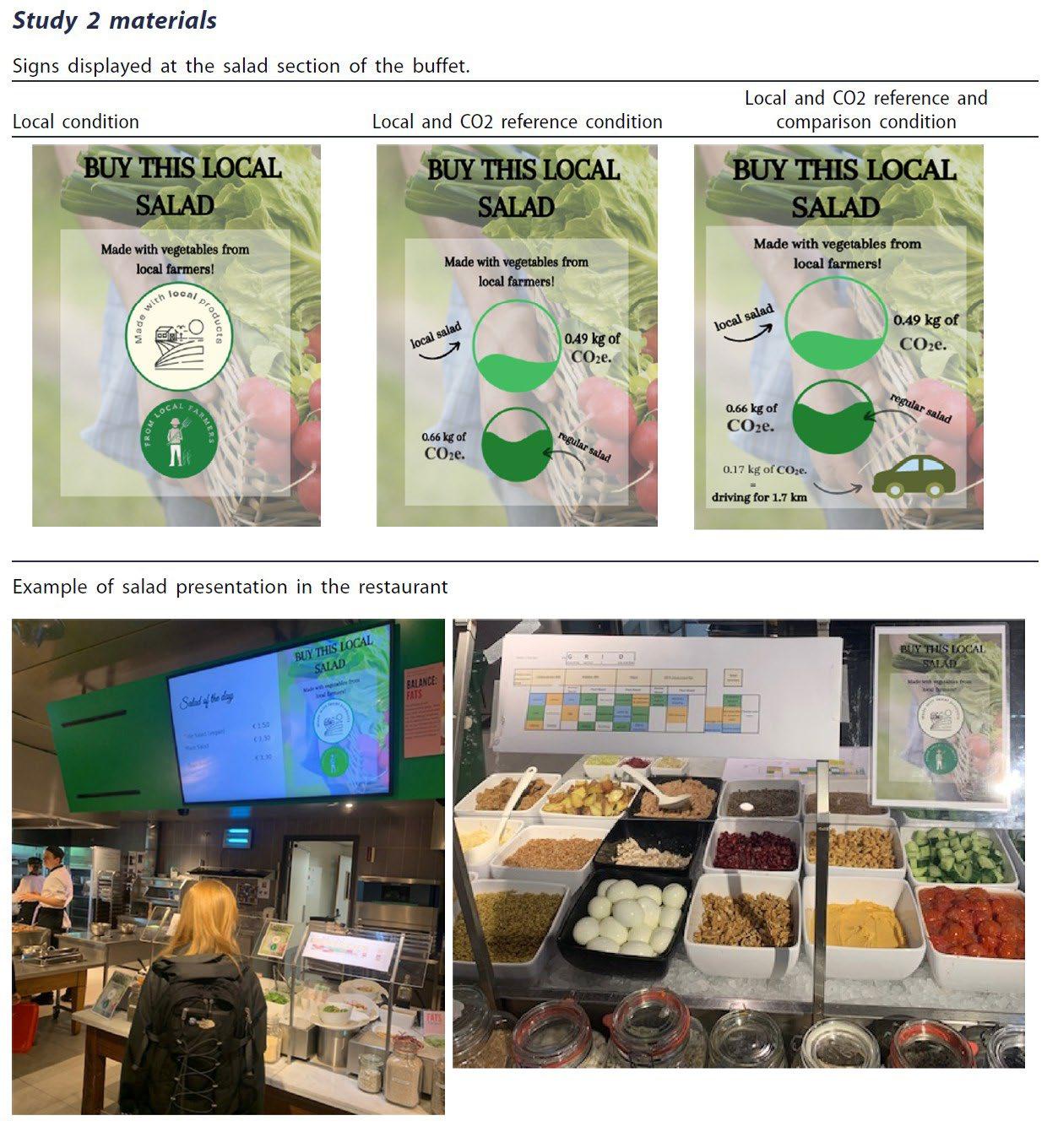
• Value-based labels (e.g., green highlighting local ingredients) lead to more positive guest responses and increased sales of more climate-friendly options. When sustainability cues are framed positively and simply, customers are far more receptive.
It is well established that sustainability information can influence behaviour, but the format of the message plays a critical role. The research suggests that guests are less likely to respond well to red “warning” cues but are open to choosing more sustainable alternatives when those options are presented value adding cues.
For restaurants and foodservice providers aiming to reduce their environmental impact while maintaining guest satisfaction and business performance, this research offers actionable guidance:
• Be careful with red “high-carbon” warning labels, such as those used in traffic-light systems where red signals “bad” and yellow/green signal “better.” These labels can trigger subconscious negative reactions, discouraging guests from choosing not only the redlabelled item but also nearby alternatives.
• Focus on positive framing. Labels that emphasize environmental value—such as sourcing local ingredients, reducing food miles, or highlighting low-carbon choices—can increase guest uptake without unintended negative effects.
• Real-world testing is essential. By measuring actual behaviour instead of intentions, the study highlights that interventions successful in lab settings do not always translate to restaurants. Practitioners should therefore test labels in their own context before rolling them out widely.
Sustainability labels have the potential to steer diners toward more climate-friendly options, but hospitality operators must choose their approach carefully. Positive, value-oriented labelling strategies work best, while warning-based approaches can backfire. For restaurants looking to contribute to climate goals without compromising customer experience, this research provides a practical, evidence-based roadmap.

Melinda Ratkai Professor of Hospitality Business
Over the past year, Dr Melinda Ratkai’s contributions with over 11 articles to HospitalityNet have focused on clarifying some of the most pressing and misunderstood aspects of sustainability in the hospitality sector. Through two complementary formats – the Mythbusting series and the What You Always Wanted to Know series – she aimed to cut through confusion, challenge misconceptions, and provide practical insights for professionals navigating an increasingly complex regulatory and sustainability landscape.
The Mythbusting series takes a direct approach by tackling widespread misunderstandings around European sustainability legislation. In “Mythbusting: CSRD and SMEs,” she addressed the common belief that all small and medium-sized enterprises must comply with the Corporate Sustainability Reporting Directive (CSRD). In reality, only certain categories of companies are in scope, but SMEs may be indirectly affected through possible supply-chain reporting and due to some banks’ financing requirements. The article emphasises that while not always mandatory, sustainability reporting can provide smaller firms with credibility, competitiveness, resilience and market advantage. In another article, she challenged the notion that the CSRD and the Sustainable Finance Disclosure Regulation (SFDR) are interchangeable. While both are integral parts of the EU’s sustainability framework, they serve distinct purposes: the CSRD sets out corporate reporting obligations, while the SFDR governs transparency requirements for financial market participants. By drawing these distinctions, the piece highlighted how the two frameworks complement one another in steering business and capital flows toward sustainable outcomes and sustainable financing. She also added the Green Claims Directive to the mix, along with other rules and regulations.
The What You Always Wanted to Know series complemented the mythbusting work inspired by recent global political changes by offering accessible explanations of complex economic topics that hospitality professionals often find daunting, such as the notions of comparative and competitive advantage. These articles focus on translating technical frameworks and principles into clear and actionable insights, making them approachable for managers, educators, and practitioners alike. Where the mythbusting series dismantles false assumptions, the What You Always Wanted to Know pieces provide the foundational knowledge and context to understand challenges with confidence. Together, these two series form a coherent effort to empower the hospitality sector with clarity, practicality, and strategic foresight. In a time when businesses face both regulatory uncertainty and increasing stakeholder expectations, separating fact from fiction and offering trustworthy explanations has never been more important. Looking ahead, this dual approach will remain essential to helping hospitality leaders not only comply with evolving standards but also seize sustainability as a driver of innovation and business resilience.

Daphne Dekker Professor of Hospitality and Hospitable Behaviour
The research line Hospitality and Hospitable Behaviour focuses on the interactions and behaviors between host and guest in a professional context. Central to this inquiry is the question of what guests perceive as hospitable and which forms of behavior contribute to that perception. The underlying psychological processes shaping these experiences are also examined.
A key focus is guest experience: how guests perceive hospitality and which factors contribute to a positive and meaningful encounter. Equally important is employee well-being, which strongly influences service quality and thereby the overall guest experience.
This research line addresses current developments such as the use of digital technologies and robotics in the hospitality sector. It explores how these innovations alter the host–guest relationship and how employees themselves experience these changes. The ultimate aim is to improve both guest experience and employee well-being in a sector that is dynamic and continuously evolving.
Below, I highlight three recent studies conducted within this framework over the past year, carried out in collaboration with colleagues and students from Hotelschool The Hague as well as students from VU Amsterdam.
Together with our colleague Yan Xia, we developed a conceptual paper exploring how guests attribute responsibility when service failures involve robots. Whereas failures caused by human employees are often attributed to the individual worker, failures involving robots are more frequently blamed on the company itself: leading to reputational damage, negative reviews, and loss of trust.
Drawing on the Attribution Theory, we theorise that perceptions of warmth and competence shape whether guests place blame on themselves, the robot, or the firm. We argue that the integration of generative AI can make robots appear more competent and autonomous, thereby reducing firm-level blame. For hospitality managers, this underscores the importance of robot design in safeguarding brand trust.
This conceptual study was presented at EuroCHRIE 2025.
Jasper Weegink, Master’s student in Work and Organizational Psychology at VU Amsterdam, investigated how acceptance of robots influences customer satisfaction in a fully robotised restaurant. Using survey data (N=94), results showed that robot service acceptance strongly and positively correlates with customer satisfaction, partially mediated by perceived service quality. These findings suggest that acceptance of robotic services directly enhances satisfaction and indirectly does so by improving quality perceptions. This emphasizes the need for robots that not only deliver efficiency but also contribute to perceived service excellence.
Mino Psyllakis, also a Master’s student in Work and Organizational Psychology, focused on employees rather than guests. A survey of 205 hospitality employees across Europe revealed that AI integration was unexpectedly associated with higher turnover intentions, particularly in contexts of severe staff shortages. In such situations, AI may be perceived more as a replacement threat than as supportive assistance. This underscores the importance of transparent communication and employee involvement to ensure that AI adoption strengthens rather than destabilises workforce stability.
Conclusion
These studies highlight the psychological dynamics of robotics and AI in hospitality. Both guest and employee perspectives are critical: while robot acceptance and can enhance customer satisfaction, employees may feel increasingly pressured under conditions of technological change. By placing warmth, competence, and trust at the centre of robot design and implementation, organisations can find the right balance between technological innovation, guest experience, and employee well-being.

Alexander Sassen Research Fellow in Finance and ESG
The world has seen some significant events and changes in the past year. Both the sustainability agenda and the hospitality sector were and continue to be affected. One of the major changes was the election of Donald Trump as President of the United States. Already brewing resentment about sustainability regulations now got governmental backing. Trump also decided to, again, pull the USA out of the Paris Agreement. Many net-zero coalitions have paused or failed, with notable examples including the Net-Zero Insurance Alliance, the Net-Zero Asset Managers Initiative, the Net-Zero Banking Alliance, and the Glasgow Financial Alliance for Net-Zero. These groups have faced member exits, rebrands, and the suspension of their activities.

Beside these political changes, the Trump administration also decided to frequently use tariffs to reach economic, political or even geopolitical goals. This has sent shockwaves through the globalised economic system.
At the same time, and in part because of the changing economic and geopolitical landscape, the EU gave Mario Draghi the assignment to draw up a report on how to improve the economic competitiveness of the Union. Presented in September of 2024, the Draghi report quickly led to the formulation of the Omnibus packages. These Omnibus bills were full of possible measures that can be taken to improve competitiveness and innovation within the EU. From this, proposals were made to significantly reduce the scope of the EU sustainability regulations,
so as to lessen the administrative burdens on businesses. While the Omnibus bills are not yet approved by EU Parliament as negotiations are still ongoing, it is clear the impact will be significant. For example, the CSRD (Corporate Sustainability Reporting Directive) that made it mandatory for 50.000 companies to report on E, S and G factors (called ESRSs) looks to be reduced to 10.000 companies or less even (some proposals hint to 3.000 companies). Also, the ESRSs on which must be reported look to be halved, and accountants only will need to give limited assurance instead of reasonable assurance. Furthermore, softening legal recourse on ESG matters and a limitation on the amount of ESG data from out-of-scope companies, have all significantly reduced the future impact of the EU’s sustainability agenda.
Against that backdrop, it was deemed interesting to find out if attitudes about sustainability have changed in the hospitality sector, and in that respect, determine what the future of sustainability could look like. By doing a string of interviews with key decision makers and advisors, we tried to determine if the above mentioned changes had led to changes in corporate strategy re sustainability/ESG.
From that, four possible scenarios were drafted in a 2x2 matrix depicting 4 possible futures. Instead of trying to predict what the future will look like, the 2x2 matrix depicts possible futures, the drivers behind it, and possible consequences (see below). These were in turn determined by a literature review and the aforementioned interviews.
The Green Crunch scenario: a rapid and potentially disruptive transition towards sustainability. This scenario sees increased demand for energyefficient buildings and a decline in the value of "brown" assets, coupled with high retrofitting costs and potential labor shortages in the sustainability sector.
Green Abandonment scenario: The economy is putting pressure on consumers, businesses and governments. This creates a forceful backlash and could slow down the green transition as sustainable investments and regulations are pared back. Green finance, will lose its favored status, and no cost of capital advantages for green real estate.
Green Growth Scenario: creating an environment conducive to long-term sustainable growth. This situation fosters increased investment in green technologies and energy-efficient infrastructure and buildings, leading to a decline in reliance on fossil fuels and a corresponding reduction in carbon emissions, while stable energy costs support economic activity and affordability.
Green Complacent scenario: leading to a weakening of the drive towards sustainability, with a focus on maintaining current consumption and investment patterns and less pressure for radical changes in energy production or building efficiency. Investments in sustainable solutions may slow down, and the transition to a greener economy loses momentum.
As reactions by interviewees so far has been positive on the 2x2 matrix as a way of dealing with uncertainty, and the fact that most hospitality businesses are not applying this technique yet, it would be great to make several of this 2x2 matrices with different drivers (x- and y-axis) and have an industry wide round table discussion on them. Something which we at HTH intend to do.
Let’s talk about the future of sustainability in hospitality! The world is changing fast, and so is our industry. Alexander Sassen invites students to explore how sustainability is evolving in hospitality and to share their own vision for the future.
This initiative will begin with student sessions and will later expand into round-table discussions with leading industry professionals.
Stay tuned; more details will be announced soon.
Design-Based Research Inspired Curriculum to Prepare Hospitality Students for Times of Uncertainty. Oskam J., De Visser Amundson, A. A In book: Rethinking Hospitality and Tourism Education (pp.233-245). https://doi. org/10.2307/jj.23996209.22
This chapter examines a curriculum reform designed to address the growing uncertainty and rapid technological change shaping the hospitality industry. Traditional hospitality education has long struggled to balance vocational relevance with academic rigor, while neither paradigm sufficiently prepares graduates for increasingly volatile professional environments. In response, a hospitality management institute implemented a Design-Based Research (DBR) approach in 2019, integrating design science principles to equip students as “field problem solvers.” The reform emphasizes actionable, evidence-based knowledge and the iterative DBR cycle to address complex professional challenges. The chapter reports on the outcomes of this approach for student research, highlighting enhanced inquiry skills and increased recognition of research relevance among students and industry partners.
Human Versus Robot: Comparing Service Agents in Hospitality Settings— Insights From a Field Study. Schmidt A. L., Koerten K., Tuomi A., El‐Manstrly D., Wiegerink K. Strategic Change: Technology-Enabled Experiences and Competitiveness in Hospitality. https://doi.org/10.1002/jsc.2637
This study investigates the effects of human versus robotic service agents on guest experiences in a real-world hotel
setting. Through a field experiment with 200 participants at the information provision touchpoint, we compare hospitality perception, satisfaction, and revisiting intentions. Results indicate no significant differences between human and robotic agents, suggesting that service robots can effectively complement human staff, reduce labor demands, and maintain guest satisfaction. These findings highlight the practical potential of integrating robots for routine hospitality tasks and provide insights for addressing personnel shortages. Limitations include the focus on a single touchpoint, and future research should examine diverse interactions and factors influencing guest preferences.
From Feedback to Framework: Exploring a Student-Centric Development Process for Low-End Immersive AR/VR Learning Content in Hospitality Education. Schmidt A. L., Govender P., Oskam J., Burbach R., Dunlea D., Hussey J., O’Connor C., King D., Tuominen P., Loijas J., Moilanen T., Laatikainen E., Cortés D., Bermejo B., Juiz C. Journal of Hospitality & Tourism Education. https://doi.org/10.1080/10963 758.2025.2453744
This article examines the integration of low-end immersive AR/VR content into hospitality education to embed learning in real-life contexts and enhance student engagement. Using a design-based research (DBR) approach centered on student feedback, qualitative focus group data were triangulated with survey data from four European universities offering hospitality programs. Findings propose a three-stage development framework for immersive learning content, highlighting three key decision-making dilemmas:
identifying application scenarios, selecting technology solutions, and designing immersive content. The study underscores the importance of student involvement, continuous experimentation, and educator upskilling, offering practical guidance for evolving hospitality education through the effective implementation of immersive technologies.
The Human-Robot Ensemble: Designing Expressive Movements for Restaurant Service Robots. Lee, H., Cila N., Koerten K., Bleeker M., Rozendaal M. ACM/IEEE International Conference on Human-Robot Interaction (HRI). https://doi.org/10.1109/ HRI61500.2025.10973838
This paper investigates the design of expressive movements for service robots in fine-dining restaurants using a performative approach. Drawing on dramaturgical principles, we conducted three research and design activities—speculative enactments, scenario building, and extended reality (XR) simulations—to examine how robotic movements and their contextual deployment shape experiences of guests, staff, and managers. We introduce the concept of robots as “ensemblists,” capable of adopting multiple roles and collaborating with humans within a broader choreography of service. The study highlights the potential of performative approaches in human-robot interaction (HRI) and emphasizes moving beyond traditional one-on-one interaction models to consider robots’ integration in complex, dynamic service environments involving multiple actors.
How carbon warning and value labels influence menu choices in real-world settings. De Visser Amundson A., Filimonau, V. Journal of Sustainable Tourism. https://doi.org/10.1080/09669 582.2025.2487048
This paper investigates the impact of carbon footprint labelling on food choices in real-world restaurant settings. Drawing on two experimental field studies, Study 1 finds that combining carbon warning (red) and carbon value (green/yellow) labels can unintentionally reduce sales across all menu categories, as aversive responses and cue interactions decrease even low- and medium-carbon choices. Study 2 demonstrates that using a single carbon value label, with local food as a proxy for climate-friendly options, mitigates these effects and promotes sustainable choices. The findings provide empirical guidance for foodservice providers, highlighting how carefully designed carbon labels can effectively encourage environmentally sustainable menu selections without triggering negative consumer responses.
Go with the flow: How changing the default can drive consumer choice for climate friendly menu options. De Visser Amundson A., De Vos J., Gallicano R. Food Quality and Preference. https://doi.org/10.1016/j.foodqual. 2025.105546
This paper examines how default options can nudge restaurant customers toward climate-friendly choices. In a buffet restaurant field study, setting a vegetarian option as the default—requiring customers to request meat— more than doubled vegetarian sales compared to a meat-default condition. While confirming the effectiveness of
default nudges in a novel context, the study also reveals potential drawbacks: overall sales at the buffet station decreased by 30.1%, although customer satisfaction remained unchanged. These results suggest that the decline reflects ease of selecting alternatives elsewhere rather than dissatisfaction with the default. The findings highlight that default strategies can promote sustainable choices but require careful design to avoid unintended business losses.
A low-tech innovation and its positive impact upon housekeeping in hotel staff. Koerten, K., Schneider I., Webster C. Journal of Qualitative Research in Tourism, Elgar Online. https://doi.org/10.4337/ jqrt.2025.0021
This study investigates the effectiveness of the Duvetlifter, a low-tech bed-making tool designed to reduce physical strain for hotel housekeeping staff. Eight employees at a five-star Amsterdam hotel used the tool, reporting on occupational health, stress, and work experience, while researchers also observed its use and interviewed the executive housekeeper. Findings indicate that housekeeping staff face substantial physical stress and health challenges, and the tool offers notable benefits, improving employee well-being and suggesting areas for design improvement. However, the Duvetlifter may increase task duration, highlighting a trade-off between efficiency and staff well-being. These results provide practical insights for hotel management on supporting housekeeping staff through ergonomic interventions.
Book review: Handbook of Tourism Entrepreneurship. Ratkai, M. International Journal of Tourism Policy. https://www.inderscience.com/info/dl. php?filename=2025/ijtp-8619.pdf
As the tourism industry continues to evolve, The Handbook of Tourism Entrepreneurship stands out as a significant contribution, offering to explore contemporary entrepreneurial challenges and opportunities. Divided into five chapters and comprising 29 individual studies, this book bridges theoretical concepts with diverse real-world perspectives, equipping readers to meet the multifaceted demands of tourism entrepreneurship.
The Role of FFP Regulation on Spanish Clubs’ Road to the UEFA Championships. Calahorro-Lopez A., Ratkai M., Dimitropoulos P.E., Vena-Oya J. International Journal of Sport Finance. https://doi. org/10.32731/IJSF.202.052025.03
This study examines the impact of Financial Fair Play (FFP) in Spanish football, focusing on three objectives: (1) the probability of qualifying for European competition, (2) the relationship between sporting outcomes and club finances, and (3) changes in financial-accounting structures. Using 176 observations from 13 clubs between 2004–2019, results indicate that qualifying for European competition is influenced by specific financial factors, with higher pre-FFP intangible assets increasing participation likelihood. FFP also prompted a shift toward financial efficiency, reflected in earnings before interest and taxes (EBIT) and personnel expenses relative to operating income. These findings suggest FFP has fostered professionalisation and innovation in football financial management.
Technology Enabled Competitiveness and Experiences in Hospitality: Strategic Change in a Digitally Transformed Service Landscape. Michopoulou E., Pappas N., Oskam J. Strategic Change: Technology-Enabled Experiences and Competitiveness in Hospitality. https://doi. org/10.1002/jsc.2681
This special issue examines how technology is reshaping hospitality strategy, highlighting empirical and theoretical contributions on digital transformation, sustainability, guest experience, and human–technology collaboration. The articles demonstrate that technology has evolved into a strategic cornerstone, enabling agility, competitiveness, and more sustainable operations. Contributions explore AI-driven HR, smart supply chains, behavior-based sustainability tools, gamified guest engagement, and service robotics, illustrating how technological adoption redefines both operational practices and customer experiences. Several papers apply systems and behavioral perspectives to capture the complexity of technological change in hospitality. Collectively, the issue underscores the importance of human–tech synergy, adaptive strategy, and ethically grounded innovation in shaping the future of resilient and personalised hospitality.
The Social Hub: Hotels and Community, Exploring Strategies. Huizing, J. Journal of Hospitality & Tourism Cases: An International Case Journal. https://doi. org/10.1177/21649987251347000
This paper examines The Social Hub’s hybrid hospitality concept, which integrates accommodation, social spaces, and community engagement. Built on strong organisational values, The Social Hub seeks to position itself not merely as
a hotel but as a platform that empowers changemakers and fosters interaction among diverse user groups. While its current strategy prioritses cultivating an on-premises community, the organisation is increasingly exploring ways to enhance engagement with local residents and businesses. This transition presents both challenges and opportunities for generating social and economic value. The study highlights the strategic importance of community integration in hybrid hospitality models and outlines pathways for strengthening The Social Hub’s broader societal impact. The teaching case supports practitioners, students and educators.
Can robots substitute human receptionists? Results from a field experiment. Koerten, K. Robonomics The journal of the Automated Economy. https://journal.robonomics.science/ index.php/rj/article/view/79
Hospitality companies increasingly explore service robots to address personnel shortages and high staff turnover. Although research on service robots has expanded, most studies rely on hypothetical guest evaluations, limiting understanding of actual human–robot interactions. Responding to calls for real-world experimentation, this study deployed a service robot in a hotel lobby, allowing 166 guests to choose between interacting with the robot or human reception staff. Results show that, while perceived social presence was lower for the robot, there were no significant differences in the number of resolved requests or in guests’ experienced hospitality. These findings indicate the potential of reception robots to support frontline service, though full automation remains constrained by tasks that cannot yet be robotsed.
After the Hype: Managerial Impacts of Planned (Dis)continuance of Service Robot Usage. Tuomi A., Schmidt A.L. , Ashton M., Chao Ling E. Cornell Hospitality Quarterly. https://doi.org/10.1177/ 19389655251346383
AI-powered devices such as service robots are expected to transform the hospitality sector, yet little is known about how strategic decision-makers evaluate whether to continue or discontinue their use after implementation. Using a phenomenon-driven, bottom-up approach grounded in the Technology–Organisation–Environment (TOE) framework, this study investigates the determinants of planned (dis)continuance of service robots in hospitality settings. Semi-structured interviews with robot suppliers (n = 8) and strategic decision-makers (n = 10) identified six categories of influencing factors, including adoption drivers and barriers, organisational strategy, user experience, technical capabilities, and economic considerations. Building on these findings, the study proposes an extended TOE model that advances theoretical understanding and offers practical guidance for managing long-term service robot integration.
Human chefs’ perceptions towards robot chefs. Vatan, A., Akif Şen M., Baydan S. Tourism and Hospitality Management. https://doi.org/10.20867/thm.32.1.6
This study explores human chefs’ perceptions of robot chefs and identifies the challenges associated with their adoption from a professional culinary perspective. Using a qualitative research design, semi-structured interviews were conducted with 30 chefs, and the data were analysed through thematic analysis. The findings reveal substantial concerns, including fear of job loss, expectations of
lower product quality, potential guest dissatisfaction, and anticipated difficulties in human–robot collaboration. Chefs also expressed worries that robotisation may reduce creativity and threaten the future of the culinary profession. Positive views emphasized cost reduction, efficiency, standardisation, and improved workplace safety. This study contributes to the limited research examining how chefs perceive shifts in their roles and autonomy in response to emerging robotic technologies.
The service robot customer experience (SR-CX): a matter of AI intelligences and customer service goals. Larivière, B., Verleye, K., De Keyser, A., Koerten, K., Schmidt, A. L. Journal of Service Research. https://doi.org/10.1177/10946705241296051
This research develops a nuanced understanding of service robot customer experiences (SR-CX). It (1) empirically examines how mechanical, thinking, and feeling AI differentially influence SR-CX— its strength and dimensionality—and their downstream effects on overall service experience and usage intentions, and (2) investigates the moderating role of hedonic versus utilitarian service goals. Across two field studies and two online experiments, the findings show that SR-CX, shaped by distinct AI intelligences, significantly affects service outcomes. More advanced AI intelligences enhance outcomes for customers with hedonic goals by strengthening SR-CX and activating a broader set of SR-CX dimensions. For utilitarian customers, however, the influence of SR-CX varies by context. These insights highlight how organisations can strategically match robot intelligence to customer goals along the service journey.
Conference report: Digital Transformation in Hotel Technology Conference. Schmidt, A. L. Journal of Tourism Futures. https://doi.org/10.1108/JTF-06-2025-319
The Digital Transformation in Hotel Technology Conference explored the transformative power of technology in redefining the future of hospitality, from AI-driven guest personalisation to tech-enabled sustainability solutions. Around 70 experts, ranging from hotel operations, technology and academia, emphasised that technology adoption is no longer optional, it is a fundamental pillar for driving service productivity, sustainability, and future guest experiences.
Oskam, J. Hospitality Management. Non-financial reporting: Hotelscholen The Hague & Maastricht helpen u door de bomen het bos te zien. https://www.hospitality-management.nl/non-financial-reporting-hotelscholen-thehague-maastricht-helpen-u-door-de-bomen-het-bos-te-zien
Chapman, A., Crone M. and Oskam, J. NRIT Trendrapport. Student: Vegan Go Gome! Gastronomische Gentrificatie in Amsterdam. https://www.nrit.nl/trendrapport/capita-selecta/49337/vegan-go-home
Koerten, K., Vatan, A. NRIT Trendrapport. Hospitality Robotics en Medewerkers. https://www.nrit.nl/trendrapport/capita-selecta/49335/hospitality-robotics-enmedewerkers
Landman A., Koerten, K. HotelVak. De Kloof Dichten Tussen Mens en Machine. https://hotelvak.eu/hoteltech/de-kloof-dichten-tussen-mens-en-machine
Wiegerink, K.,Oruc, Y. NRIT Trendrapport. Bewonerspersona’s in beeld. https://www.nrit.nl/trendrapport/capita-selecta/49332/bewonerspersonas-in-beeld
Ratkai, M. HospitalityNe. EU Green Deal: A Growth Strategy for New Economic and Business Models.
https://www.hospitalitynet.org/opinion/4126041.html
Koerten, K. Hotel Yearbook. The Hospitality Paradox: Embracing Automation While Protecting Jobs.
https://www.hotelyearbook.com/article/122000428/the-hospitality-paradoxembracing-automation-while-protecting-jobs.html
Ntregka, S. Money Tourism.
τουρισμό. https://money-tourism.gr/epanaprosdiorizontas-toys-koinochristoys-choroys-stonastiko-toyrismo
Popova, H. De Restaurant Krant. Student: Crisisbestendig fine dining: wat de sector kan leren van Restaurant 212**.
https://www.derestaurantkrant.nl/crisisbestendig-fine-dining-wat-de-sector-kan-lerenvan-restaurant-212
Schmidt, A.L. Hotel Yearbook. A Vision for Hospitality Business Schools: Bridging Technology and Tradition.
https://www.hotelyearbook.com/article/122000424/a-vision-for-hospitality-businessschools-bridging-technology-and-tradition.html
Wiegerink, Groot de, Visser, Klijs, Heuvel van den, Nijland, Huizing, e.a. NRIT. Wegwijzer voor het meten van bewonersprofijt.
https://www.nritmedia.nl/kennisbank/48899/wegwijzer-voor-het-meten-vanbewonersprofijt/?topicsid=
Sassen, A. Econolicy Africa. How AI adoption may stall Africa’s net-zero target. https://www.econolicyafrica.com/home/categories/artificial-intelligence
Oruc, Y. Telegraaf. Hotel geboekt? Niets zo lekker als een ontbijtje op bed: deze maaltijden kun je beter wel en niet bestellen bij de roomservice | Reizen - Telegraaf. https://www.telegraaf.nl/lifestyle/vakantie/jezelf-verwennen-met-roomservicebedenk-goed-wat-je-kiest-deze-gerechten-kun-je-beter-niet-bestellen/64060279.html
Ratkai, M. HospitalityNet. Part 1: Lodging Stock Market Volatility in the Wake of Trump-Era Tariffs. https://www.hospitalitynet.org/opinion/4126708.html
Oskam, J. Hospitality Management. Klaar voor de storm? De gevolgen van de handelsoorlog voor de Nederlandse gastvrijheidssector. https://www.hospitality-management.nl/klaar-voor-de-storm-de-gevolgen-van-dehandelsoorlog-voor-de-nederlandse-gastvrijheidssector
Mulder, N. Misset Horeca. Student: Gepersonaliseerde well-being initatieven in hotels sleutel tot succes.
https://www.missethoreca.nl/408319/gepersonaliseerde-well-being-initatieven-inhotels-sleutel-tot-succes
Ratkai, M. HospitalityNet. Part 2. What you were always afraid to ask. https://www.hospitalitynet.org/opinion/4126826.html
De Visser Amundson, A. Hotelschool The Hague. Changing the default option on restaurant menus. https://www.hotelschool.nl/blog/research/boosting-climate-friendly-menu-optionswhile-maintaining-guest-satisfaction
Vatan, A. HospitalityNet. The Financial Impact of Service Robots in Hospitality: An Employee-Centric Perspective.
https://www.hospitalitynet.org/opinion/4127798.html
Ratkai, M. HospitalityNet. Part 3. What you were always afraid to ask. https://www.hospitalitynet.org/opinion/4127150.html
De Visser Amundson, A. Misset Horeca. Hoe laat je de gast kiezen voor vegetarische optie? ‘Je kunt gedrag subtiel beïnvloeden’.
https://www.missethoreca.nl/408819/hoe-laat-je-de-gast-kiezen-voor-vegetarischeoptie-je-kunt-gedrag-subtiel-beinvloeden
Ratkai, M. HospitalityNet. Balancing quantity with relevance. https://www.hospitalitynet.org/opinion/126002735.html
Vatan, A. Green Lodging News. Sustainability in Action: How Three Hotel Brands Are Redefining ESG.
https://www.greenlodgingnews.com/sustainability-in-action-how-three-global-hotelbrands-are-redefining-esg
Sassen, A. HospitalityNet. Is Trump Torpedoing His Own Hospitality Sector?
https://www.hospitalitynet.org/opinion/4129043.html
Wiegerink,K. Pretwerk. Hoe meet je bewonersprofijt van toerisme?
https://pretwerk.nl/recreatie-actueel/hoe-meet-je-bewonersprofijt-van-toerisme/92696
Hotel & Wetenschap Hospitality Management
A great deal of scientific research is conducted in and about the hospitality industry. But how does this knowledge translate into the daily reality of hoteliers? In the Hotel & Science series, researchers from Hotelschool The Hague bridge this gap by transforming academic insights into practical, actionable knowledge for the hospitality sector. Each month, you can explore a new article offering fresh perspectives and relevant insights. https://www.hospitality-management.nl/hotel-wetenschap
HospitalityNet Viewpoint - Expert View
Hospitality Net’s thought-leadership platform brings together leading industry voices and academics who share their insights, reactions, and perspectives on key issues shaping the global hospitality sector. Researchers from Hotelschool The Hague contribute regularly with expert views on topics such as digital transformation, technology, sustainability, and AI. https://www.hospitalitynet.org/school/17008659.html

Jeroen Oskam Director Research Centre

Anna de Visser-Amundson Research Fellow in Consumer Choice Behaviour

Arjan van Rheede Senior Research Fellow in Research Methodology

Melinda Ratkai Professor of Hospitality Business

Stefania Ntregka Research Fellow

Dr. Praneschen Govender Lecturer & Researcher AR/VR in Hospitality

Yasemin Oruc Marketing & Innovation Lecturer & Research Fellow

Klaas Koerten Research Fellow

Karoline Wiegerink Professor of City Hospitality & City Marketing
Alexander Schmidt Professor of Technological Innovation in Hospitality

Alexander Sassen Research Fellow in Finance and ESG

Jan Huizing Research Fellow in City Hospitality & City Marketing

Daphne Maria Dekker Professor of Hospitality and Hospitable Behaviour

Dana Jiménez Herrera Professional Doctorate Canidate & Lecturer Organisational Behaviour

Ahmet Vatan Visiting professor
Hospitality Research Centre Yearly Overview
Hotelschool The Hague
The Hague Campus
Brusselselaan 2 2587 AH The Hague
The Netherlands
Hotelschool The Hague
Amsterdam Campus
Jan Evertsenstraat 171 1057 BW Amsterdam
The Netherlands
www.hotelschool.nl research@hotelschool.nl
Copyright © Hotelschool The Hague, The Netherlands All rights reserved. No part of this publication may be reproduced, stored in a retrieval system, or transmitted, in any form or by any means, electronic, mechanical, photocopying, recording, or otherwise, without the prior written permission of the Hotelschool The Hague.