Keywords: artificial intelligence, hospitality industry, future of hotels, technology innovation, future of hospitality
Disclaimer
The authors of this report wish to clarify that the scenarios presented herein are not claimed to be accurate or exhaustive. They are intended to support strategic processes and stimulate debates about potential futures. However, the authors do not accept any legal liability for incorrect strategic or investment decisions that may be made based on the content of this report. Readers are encouraged to use their judgment and examine the specifics of each situation when making such decisions.
1. Executive summary
While the conceptual roots of Artificial Intelligence (AI) extend back to 1956, the recent launch of generative AI marked a pivotal “democratization moment,” shifting the technology from the hands of data scientists to the general public. This “GenAI shock” is not merely a technological trend but a universal productivity shock, comparable to the arrival of the smartphone, driving a tectonic shift in the global economy. The specialized computing capacity for AI has doubled approximately every 6 to 10 months since 2020, signalling that developments are moving at an exponential pace. However, this speed creates major uncertainties for industries trying to adapt, forcing every sector to reimagine its operating model or risk obsolescence.
Despite this global acceleration, the hospitality industry is currently trailing behind. While AI adoption in sectors like information and communication has surged, hospitality remains one of the lowest adopting sectors, with only approximately one in ten Dutch hospitality firms utilizing AI. This creates a structural gap: firms using AI already account for half of the total business turnover in the economy, whereas in hospitality, this figure is significantly lower. As demand for travel recovers and surpasses pre-COVID levels, there is a risk that value creation will shift away from hotel operators toward external tech intermediaries who better weaponize AI for yield optimization and targeting.
To navigate the uncertain future of what AI brings to the sector, this Hospitality Outlook presents five distinct scenarios:
The ‘baseline scenario’ for AI in hospitality, labelled the Reality Check (2026–2028), envisions a near-term future where AI acts as a digital assistant rather than a transformer. In this path of least resistance, the industry sees a rapid proliferation of AI tools drafting marketing materials and handling routine queries. However, adoption remains additive rather than structural; hotels use AI to do the same things faster— focusing on “low hanging fruits” and cost control—without revolutionizing the guest experience. Consequently, the sector remains dependent on external “black box” tools from US tech giants, lacking true digital sovereignty.
While the baseline projects a future of incremental efficiency, the “Funnel of Plausibility” maps four divergent scenarios that could radically reshape the industry over the next decade. These scenarios illustrate that the future is not a single inevitability but a spectrum of possibilities ranging from platform dominance to human empowerment. The direction the industry takes depends heavily on whether professionals choose to actively strategize or merely allow these technologies to happen to them.
The Platform Power Shift scenario envisions a future where the balance of power shifts decisively to AI-driven intermediaries. Just as OTAs captured distribution previously, advanced “AI travel agents” capture the entire guest relationship, owning the interface via voice and multimodal interaction. In this future, hotels risk becoming commodified “fulfilment centers” for beds and amenities, while the AI dictates the guest’s loyalty and preferences, squeezing margins and stripping operators of their strategic autonomy.
In the Customer AI counterforce scenario the industry’s use of generative AI to create mass marketing content—”slop”—triggers a powerful counterforce: the AI enabled guest. As trust in online content collapses due to synthetic noise, consumers deploy personal AI agents to filter marketing and verify reality. This neutralizes traditional persuasion techniques, forcing hospitality businesses to compete solely on authenticity. In this environment, the competitive advantage lies not in the best algorithm, but in offering a verifiable, genuinely human experience that can withstand the scrutiny of consumer AI filters.
The Nightmare of Modern Times explores the dark side of algorithmic optimization, where AI is deployed solely for relentless efficiency. Driven by real time monitoring, staff are scheduled in fragmented micro shifts, eliminating the “slack” required for genuine hospitality. This approach engineers the soul out of the industry, resulting in a sterile, technically flawless operation where staff burnout soars and the “human touch” becomes a performative checklist item.
Conversely, the Worker-Empowering Path offers a transformative alternative where AI serves as a “co pilot” to elevate the workforce. In this scenario, technology handles repetitive administrative burdens, and the time saved is explicitly reinvested in highvalue human work like mentorship and guest connection. By treating AI as a tool for dignity rather than displacement, this path turns service roles into knowledge-enhanced professions, justifying higher wages and fostering a “human premium” that distinguishes the brand.
In response to these uncertainties, hospitality professionals must recognize that more AI requires more hospitality, not less. The strategic imperative is to avoid a “race to the bottom” in efficiency and instead strategize for “High Touch” reinvestment, ensuring that productivity gains are redirected into guest facing roles. Furthermore, to avoid becoming passive “takers” of foreign technology, the industry must advocate for digital sovereignty and governance that prioritizes human centric design. Ultimately, the future of AI in hospitality will be defined by the choice between using technology to automate the human out of the loop or using it to amplify the unique qualities of human hosts.
2. Introduction and reading guide: The choice is yours
Welcome to the second edition of the Hotelschool The Hague Yearly Outlook. Following our inaugural analysis of business travel, this year we turn our gaze to the most transformative force of our generation: Artificial Intelligence.
The central premise of this report is simple yet urgent: The future of AI in hospitality is not a predetermined path laid out by Silicon Valley. It is a series of choices.
Too often, AI is presented as an inevitable tidal wave—a force that simply “happens” to industries. This report intends to challenge that view. We argue that while the technological capability of AI is accelerating exponentially, its societal and operational impact remains up for debate. Whether AI becomes a tool for relentless efficiency that hollows out hospitality, or a “co pilot” that elevates human dignity and service, depends entirely on the governance, ethics, and strategies we adopt today.
How to use this report
To help you navigate these choices, we utilize Strategic Foresight. We do not offer predictions, as the future is inherently uncertain. Instead, we map a “Funnel of Plausibility” containing distinct scenarios:
• The Baseline: A “Reality Check” where AI acts merely as an assistant.
• The Risks: Futures where “Platform Power Shifts” strip hotels of their guest relationships, or where algorithmic management creates a “Nightmare of No Slack”.
• The Opportunities: A “Worker Empowering” path where technology is deliberately designed to amplify human potential.
Your responsibility
We invite you to read these scenarios not as forecasts to be passively awaited, but as a call to action. All readers—from students to CEOs—must take responsibility for thinking about how they want AI to evolve.
Use this report to identify early warning signals and to formulate opinions that go beyond the “black box” solutions offered by big tech. The goal is to ensure that as we integrate machine intelligence, we do not lose the human essence that defines true hospitality.
3. A brief Introduction into AI (For those, who need it)
While artificial intelligence (AI) has dominated recent headlines, its conceptual roots extend back to the 1956 Dartmouth Summer Research Project, where the field was formally founded. For decades, AI remained an academic pursuit or a hidden layer in enterprise systems, from revenue management algorithms to credit card fraud detection. However, the launch of ChatGPT marked a pivotal “democratization moment”, shifting AI from the hands of data scientists directly to the public. Suddenly, powerful generative capabilities were accessible via a simple chat interface, accelerating adoption at a pace unseen since the arrival of the smartphone.
Defining AI
To ground this report, we adopt the widely accepted definition by the OECD, which also serves as the basis for the European Union’s AI Act:
“An AI system is a machine based system that, for explicit or implicit objectives, infers, from the input it receives, how to generate outputs such as predictions, content, recommendations, or decisions that can influence physical or virtual environments. Different AI systems vary in their levels of autonomy and adaptiveness after deployment.”
The spectrum of artificial intelligence
It is crucial to distinguish between three evolutionary stages of AI to understand both current realities and future risks: Artificial Narrow Intelligence (ANI), Artificial General Intelligence (AGI), and Artificial Super Intelligence (ASI). Today, we are “only” able to navigate within the lowest level of AI, i.e., “Artificial Narrow Intelligence”.
Artificial Super Intelligence (ASI)
Artificial General Intelligence (AGI)
Artificial Narrow Intelligence (ANI)
A theoretical state where machine intelligence far surpasses human cognitive abilities across all fields, from creativity to social skills.
A hypothetical future system with human like cognitive flexibility, capable of learning and solving problems in any environment. As noted in the Millennium Project report, AGI represents a shift from “tool” to “entity,” with experts debating its arrival timeline from mere years to decades.
The AI we use today. It excels at specific tasks—playing chess, recognizing faces, or forecasting hotel occupancy—often better than humans, but it cannot operate outside its defined domain.
The “GenAI shock” is effectively a universal productivity shock, forcing every industry to reimagine its operating model.
The exponential engine
AI is not just another tech trend; it is a “general purpose technology” driving a tectonic shift in the global economy. This impact is fuelled by exponential growth in computing power. Since 2020, the specialized computing capacity for AI has doubled approximately every 6 to 10 months.
Economically, this translates into profound productivity gains. Goldman Sachs estimates that generative AI could add 7% annually to the global GDP.
Cross-sectoral impact
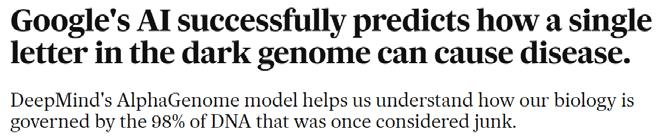
Crucially, this disruption is sector-agnostic. In healthcare, AI is folding proteins to discover new drugs; in finance, it is rewriting risk models; and in hospitality, it is poised to decouple revenue growth from labour intensity. As highlighted by the multiple experts we interviewed for this report, the “GenAI shock” is effectively a universal productivity shock, forcing every industry to reimagine its operating model or risk obsolescence.
Critical perspectives
There is a risk that value will be extracted by only a few tech giants rather than shared for broad societal welfare.
However, this exponential trajectory invites critical scrutiny regarding who ultimately controls and benefits from these advancements. As Johnson and Acemoglu highlight in Power and Progress, technological improvement does not automatically guarantee shared prosperity; true progress depends on whether AI is deployed merely to displace human labour, or to increase the workforce’s capabilities and economic output. If left solely to the strategic interests of large technology firms, there is a risk that value will be extracted by only a few tech giants rather than shared for broad societal welfare. Consequently, critical scholars like Morozov emphasize that the path of technological development is not inevitable but requires active societal control and political governance to ensure it serves the broader public interest.
4. Mind the gap:
Why AI can’t wait in hospitality
What changed after the “ChatGPT moment” is the radical democratization of AI.
Only around one in ten hospitality businesses structurally adopt AI, placing accommodation and food businesses among the lowest adopting sectors.
Artificial intelligence is not new to hospitality. Revenue management systems, recommendation engines, and automated distribution have been part of the toolbox for years, particularly on the OTA and platform side. What changed after the “ChatGPT moment” is the radical democratization of AI: intuitive, low code tools suddenly became available to frontline staff, small operators, and independent managers, not just to large chains or tech vendors.
Hospitality sector is one of the lowest AI adopting sectors
In most (service) industries, the “ChatGPT moment” has triggered a visible, sectorwide acceleration in AI experimentation and deployment. Hospitality, however, is not keeping pace. Recent Dutch figures show that while nearly a quarter of companies use at least one form of AI, only around one in ten hospitality businesses structurally adopt AI, placing accommodation and food businesses among the lowest adopting sectors. At the same time, AI use in information and communication or financial services is several times higher, underscoring how far other service industries have moved ahead.
Figure 1 Use of AI technology (Source: CBS 2024, own illustration)
For hospitality leaders, the question is therefore not whether to adopt AI, but how fast and on what terms.
This AI adoption gap matters because the demand side is healthy. Dutch tourism volumes and hotel turnover have recovered and, in many segments, surpassed pre-COVID levels. Growing guest numbers and higher nominal revenues create an environment in which productivity, pricing discipline, and margin management become decisive. If hospitality underutilizes AI while adjacent sectors and platforms weaponize it for yield optimization, targeting, and automation, value creation risks shifting further away from operators toward intermediaries and tech providers.
AI-related economic power centralizes outside of hospitality sector
This is not only an adoptionproblem; it is a revenue problem. Nationally, firms that use AI already account for roughly half of total business turnover, whereas in hospitality only about a quarter of sector revenue is generated by AI using companies, signalling a widening structural gap in where digital margin capture occurs. Thus, AI generated economic power centralizes outside traditional hospitality businesses.
At the same time, research on generative AI in tourism and hospitality points to a broad opportunity space—from marketing content and service recovery to personalization and decision support—while also flagging familiar concerns around privacy, transparency, and trust. Studies similarly report benefits in marketing and sales, but they warn of reputational risks and ethical blind spots when AI is used for opaque persuasion or surveillance. For hospitality leaders, the question is therefore not whether to adopt AI, but how fast and on what terms: whether to allow the sector’s AI gap to deepen, reinforcing dependence on external platforms, or to build in house capabilities and governance that translate rising guest volumes into sustainable average daily rates (ADR), flow through, and loyalty without sacrificing guest control and trust.
Key takeaways
• AI adoption in Dutch hospitality is structurally behind other service sectors, with only about one in ten firms using AI while other service sectors’ adoption is several times higher, creating a competitive gap.
• Firms that do use AI capture a disproportionately large share of revenue in the Dutch economy, but hospitality lags badly here too, meaning value is shifting toward AI-enabled players outside the sector.
• With hospitality demand already robust after Covid 19, hospitality cannot afford to delay: closing the AI gap (under clear governance) is central to protecting margins, bargaining power, and guest trust.
5. Current state of AI in hospitality
This section brings together the latest insights to answer one simple question: what does AI mean for hospitality over the next decade? We discuss four clear themes, showing how AI is moving from basic automation to emotionally aware systems, how AI is reshaping efficiency and guest experience, how AI will transform jobs and skills, and where the ethical red lines and uniquely human strengths remain. Together, these four themes offer a practical roadmap for turning AI from a buzzword into concrete competitive advantage.
5.1 The evolution from automation to empathy
The hospitality industry is witnessing a fundamental shift in the definition of Artificial Intelligence. We are moving from the era of “Mechanical AI”, systems designed for repetitive physical tasks and basic data processing, to the emergence of “Thinking AI” and, crucially, “Feeling AI.”
The new technological landscape
While tangible service robots (e.g., BellaBot, Keenon) and basic chatbots represented the first wave of automation, the current frontier is defined by sophisticated systems capable of contextual understanding and emotional intelligence. Industry reports and academic studies alike highlight a progression toward “AI agents” that do not merely execute commands but actively solve problems.
• Mechanical & Thinking AI: Used for operational backbone tasks, such as smart building energy management, predictive maintenance, and churn prediction.
• Feeling AI: Capable of decoding complex human emotions and simulating empathy. In some contexts, these systems can now validate human feelings more effectively than human staff by removing ego from the interaction.
Figure 2 Themes driving the future of AI in hospitality
Ethics and the irreplaceble Human Role
The Evolution from Automation to Empathy
The Workforce Transformation: Displacement vs. Augmentation
The Efficiency & Experience Engine
Future trajectory
The interface of the future is moving rapidly away from text-based inputs toward voice, video, and holographic projections. Experts predict that within five years, humanoid robotics will become commercially feasible, and AI agents may achieve capabilities that allow them to generate their own training data, bypassing current data scarcity bottlenecks.
The “wow” factor of simple robots is fading. The next competitive advantage lies in “Feeling AI” that can build rapport in digital channels, though human oversight remains critical for complex emotional nuances.
5.2 The efficiency & experience engine
AI adoption is divided into two distinct value drivers: Growth & Profits (speed, accuracy, revenue) and Ease & Comfort (guest experience, service fluidity).
Operational excellence
On the backend, AI is a productivity engine. It automates tedious tasks, allowing for high speed data processing that drives precise guest segmentation and cost optimization. In food and beverage, predictive modelling is already reducing daily food waste significantly. The democratization of these tools means that accurate demand forecasting, once the domain of niche data scientists, is now accessible to smaller hotel operators without extensive programming knowledge.
Hyper-personalization
For the guest, AI acts as a “personal concierge” capable of omnipresence. By analysing heterogeneous data streams (such as booking patterns, social sentiment, on-property behaviours), systems can offer hyper personalized recommendations and dynamic pricing in real-time.
• The Novelty Effect: Currently, AI interactions often serve as “excitement factors.” However, as these technologies normalize, they will become baseline expectations.
• Service Tier Differentiation: There is a clear divergence in guest expectations. In low cost/ efficiency segments, guests prefer the speed of mechanical AI. In luxury/full service contexts, the demand for human connection remains paramount, though AI can silently augment this by equipping staff with better data.
Efficiency is the baseline, but the real opportunity lies in “Personal AI” that increases share-of-wallet through timing and relevance.
5.3 The workforce transformation: Displacement vs. augmentation
The impact of AI on the hospitality workforce is the most controversial and critical theme. Predictions range from distinct optimism about “augmented super staff” to severe warnings about mass displacement.
The displacement risk
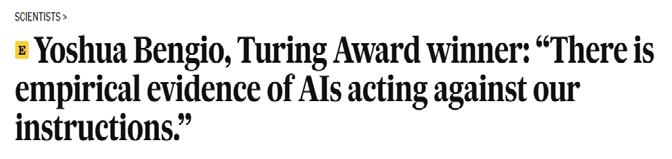
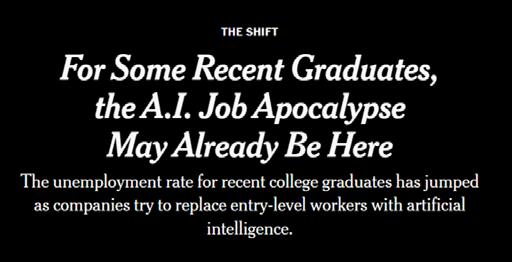
Economic reality suggests that organizations prioritizing “fast, cheap, reliable AI” may outcompete those relying solely on human labour. Forecasts warn that a significant portion of entry-level (administrative) roles could be eliminated or radically altered. There is a tangible fear of “cognitive obsolescence,” where human skills weaken due to over reliance on automated decision-making.
The collaborative model: “Human-AI dyads”
Despite these risks, the consensus points toward a “blended” future. The most successful organizations will be those that treat AI as a “Consultant” rather than a “Dictator.”
• Shift in Skills: The role of the hospitality professional is shifting from operational execution to direction. Success will depend on “architectural judgment”, knowing what to ask the AI and how to verify its output, rather than manual processing.
• The Hybrid Approach: To mitigate bias and error, “meta algorithmic judgments” are emerging as a standard, where human experts validate AI suggestions before final decisions are made.
Prepare for a skills gap. Reskilling programs must focus on “AI literacy” (how to direct agents) and “human-centric skills” (what agents cannot do), rather than fighting the adoption curve.
5.4 Ethics and the irreplaceable human role
As AI capabilities expand, the unique value of human interaction becomes clearer, even as ethical risks increase.
The trust and privacy challenge Trust and privacy remain major barriers. Guests and employees experience “algorithm anxiety”, including worries about surveillance, deepfakes, and unclear data use. There is also a risk of “empathy washing,” where companies use AI to simulate care, which can quietly damage real brand trust. On top of this, the classic “garbage in, garbage out” problem is becoming more serious: demand for high quality human data is rising, and systems trained on weak or biased data can harm hospitality experience, including amplified discrimination.
What AI cannot do
At the same time, there are clear limits to what AI can do. While AI has strong calculation and pattern-recognition abilities, it lacks genuine judgment and common sense. It cannot truly engage in moral reflection or think through “what if” scenarios in the way people do. Most importantly for hospitality, AI cannot offer reciprocity. Real hospitality requires a conscious investment of time and energy, a mutual exchange that gives the encounter its dignity. Because AI has no “self,” its empathy can be helpful in a functional sense but remains one sided and emotionally shallow.
Automate the transaction, while elevating the interaction. Let AI handle routine logistics so that human staff can focus on the moments that demand judgment, real empathy, and creative problem-solving.
6. AI future for hospitality: Scenarios from growth to collapse
The future of AI in hospitality is not a single inevitability but a spectrum of possibilities ranging from the highly probable to the dangerously disrupting. To navigate this uncertainty, we map five distinct scenarios onto a “funnel of plausibility” (Figure 3). This strategic tool separates the near term baseline from deeper structural shifts. At the funnel’s mouth lies the Reality Check, the path of least resistance where AI acts merely as a digital assistant. But as we look further, the funnel widens into divergent futures: the Platform Power Shift, where algorithms capture the guest relationship; the Transparency Arms Race, where customers use their own AI to fight back; the No Slack Left nightmare of algorithmic burnout; and finally, the transformative Worker Empowering Path. Each scenario is not a prediction but a provocation, challenging leaders to decide: will AI be a tool for efficiency, a weapon for dominance, or a catalyst for human dignity?
Figure 3 illustrates the choices ahead. Without deliberate intervention, the hospitality industry’s “path of least resistance” leads from the near term Reality Check (A) directly toward the Platform Power Shift (B) or the Nightmare of Modern Times (D)—futures driven by external tech dominance and unchecked cost optimization. In contrast, achieving the transformative outcomes of the Customer AI counterforce (C) or the Worker Empowering Path (E) requires active strategy: intentional investments in governance, human-centric design, and digital sovereignty to break the gravitational pull of efficiency and dependence.
Figure 3 Cone of Plausibility
TODAY
AI Futures Baseline: Reality Check (A)
Platform Power Shift (B)
Business as Usual Baseline Future
Customer AI counterforce (C) Workerempowering Path (E) Nightmare of Modern Times (D)
Wildcards
Wildcards
6.1 AI futures baseline: reality check
Assistants everywhere, 0% market share gained
6.1.1 The experience
It is 2027, and Sarah, a business traveller, is packing for her trip to Rotterdam. She doesn’t download a hotel app or search for a confirmation number. Instead, she simply speaks to her phone while folding clothes: “Hey, ask the hotel if I can check in early at 10 AM, and show me the gym facilities.”
Immediately, a warm, natural voice responds—not a robotic text to speech, but a fluid conversational agent. It doesn’t just say “yes”; it instantly generates a personalized 10 second video clip showing the treadmill with a view of the Maas river, confirming her early arrival has been approved based on real-time housekeeping data.
Behind the scenes, the hotel’s operations are humming with quiet efficiency. The General Manager, lying in bed, glances at a dashboard. There is no chaos. The AI Revenue Management System has already adjusted rates for the remaining three rooms based on a sudden rain forecast and a local concert. The housekeeping schedule was auto generated and re optimized when Sarah’s early check in was approved, seamlessly moving a cleaner to Room 402 without human intervention. Invoice reconciliation, once a monthly headache for the finance team, happened automatically overnight.
AI generated
(Nano Banana Pro)
6.1.2 The strategic reality
Sarah arrives, her phone unlocks the door, and the room is perfect. It is a flawless, frictionless experience. And she is entirely unimpressed. Why? Because the hostel down the street offers the exact same seamlessness. The luxury chain next door does too. In 2027, “frictionless” is not a luxury; it is the minimum requirement to even exist in the market. The hotel has successfully implemented the entire operational roadmap—automated admin, voice agents, dynamic pricing—and yet, they haven’t gained a single point of market share. They have simply avoided going out of business.
The lesson
80% of hoteliers will implement the full AI operational playbook by 2028—and gain zero market share. Efficiency becomes the new normal, the price of admission.
6.1.3 Reflections 1
In this near‑term future (2026 – 2028), AI enters the daily operations of hospitality but does not yet revolutionize its core business model. The industry sees a rapid proliferation of “AI assistants” across almost every department: AI agents drafting marketing materials, chatbots handling routine guest queries, and revenue managers using enhanced forecasting tools. As Kappa observes, “AI is already used in revenue management systems for years... [but now] the democratization of AI makes these tools accessible to everyone,” meaning even smaller hotel operators begin to adopt them for efficiency. However, AI adoption remains largely additive rather than transformative. Hotels use AI to do the same things faster, not to do new things.
The focus is on operational “low hanging fruits” and cost control. As Iota notes, “companies will look for the easiest things to automate first... routine administrative tasks, basic customer service,” driven by a pragmatic need to manage labour shortages and protect margins. Yet, true structural change is absent. Legacy systems and fragmented data prevent the seamless, end to end automation often promised by technology providers. Gamma points out a critical bottleneck: “We have no sovereignty in Europe when it comes to AI... we depend entirely on US tech giants,” suggesting that hospitality firms remain users of external black box tools rather than architects of their own AI destiny.
While staff start using ChatGPT for ad hoc tasks, management struggles to scale these experiments into coherent strategy. As Lambda warns, “without explicit ethical design and training, AI will just reinforce existing managerial logics,” meaning the technology is deployed to tighten existing KPIs rather than to rethink the guest experience or empower the workforce. The result is a hospitality sector that looks very much like today’s, just slightly faster, more digitally mediated, and increasingly dependent on tech vendors for its basic operating rhythm.
Strategy questions for managers and executives
How much of my revenue is now vulnerable to fully automated competitors? Which 3 guest interactions still require a human (and why)? When competitors match my AI stack, what remains “unautomatable” in my brand?
1 Reflections are based on in depth expert interviews conducted with cross sector leaders (IDs Alpha through Zeta) representing AI research, public policy, education, entrepreneurship, and hospitality strategy. For details, see Chapter “Method approach”.
6.2 Platform power shift: The AI‑intermediary Ttakeover: When
the interface owns the guest
6.2.1 The experience
It is 2028. David, a freelance architect, adjusts his smart glasses as he walks out of a meeting. He doesn’t pull out his phone. He doesn’t open the Marriott or Hilton app. He doesn’t even browse Booking.com. He simply says: “I need a room in Berlin for next Tuesday. Somewhere quiet with good light, under €250. Handle it.”
In his pocket, his Personal AI Agent goes to work. It does not look at photos of smiling concierges or read the hotel’s poetic description of its “artisanal breakfast.” Instead, it initiates a high-speed negotiation with thousands of hotel API endpoints.
6.2.2 The negotiation
The Agent queries the digital market. It ignores the “Superior King” marketing label and instead verifies square footage and cross references the hotel’s noise levels with public sentiment data from the last 48 hours. It identifies three suitable hotels and pings their Revenue Management Bots directly. “My user has a high probability of booking if you drop the rate to €235 and guarantee a courtyard view,” David’s Agent signals. Two hotels decline. The third, an independent boutique hotel whose occupancy forecast just dipped, accepts. The transaction is completed in 300 milliseconds. David receives a subtle notification in his glasses: “Booked. Hotel V, Berlin. €235. Check in code is in your wallet.”
6.2.3 The strategic reality
For the hotel, this looks like a victory—they sold a room. But strategically, it is a crisis.
AI generated
(Nano Banana Pro)
The hotel has been demoted from a Brand to a Sleeping Utility,
They have no email address for David, only a relay alias for his Agent. They couldn’t upsell him a spa package because his Agent blocked all “unsolicited marketing offers” as spam. They couldn’t impress him with their brand story because he never visited their website. David’s loyalty? To the Agent that saved him €50. The spa upsell? Auto blocked as spam. The hotel’s Instagram campaign? Never seen. The hotel is now a €235 utility supplier.
The hotel’s carefully curated Instagram presence and loyalty program points are irrelevant because software doesn’t have eyes to see beauty, nor a heart to feel loyalty.
The lesson
In the Era of Agents, the “customer” is a rational, ruthless algorithm. If your value proposition is based on “vibes” and marketing fluff rather than verified data and digital accessibility, you don’t just lose the booking—you become invisible.
6.2.4 Reflections
The hotel has been demoted from a Brand to a Sleeping Utility, while the AI interface manages the guest’s loyalty and preferences. Epsilon notes that “AI will know the guest best and guide their experience,” implying that the entity with the best data—likely a platform, not the hotel—will dictate choices. Guests trust their personal AI agents to find the best value and filter out marketing noise, effectively making traditional hotel branding and direct marketing obsolete. As Theta remarks, “it becomes difficult to see what is real... people will start to not believe anything online anymore,” driving them further into the arms of trusted, centralized AI intermediaries that promise to curate reality for them.
For the hospitality industry, this means a loss of strategic autonomy. Margins are squeezed as platforms charge for “AI visibility,” and operators struggle to access their own guest data. Gamma’s warning about “sovereignty” rings true here: hotels have no control over the algorithms that determine their occupancy, leaving them vulnerable to the strategic whims of a few dominant global tech players. The “hospitality” is delivered by the hotel, but the “relationship” is owned by the AI.
Strategy questions for managers and executives
How much of my average daily rate is leaking to AI agents negotiating 10% below rack? What 3 guest data points does my hotel own vs the platform?
When my occupancy is controlled by algorithms I can’t see, what’s my Plan B?
marketing budget becomes invisible)
6.3 Customer AI counterforce: Slop vs. agents: The transparency arms race (…your
6.3.1 The experience
It is 2029. Elena opens Instagram (or what’s left of it) to find a hotel for her honeymoon. Immediately, she is bombarded with perfection. She sees a video of a golden sunset over a Balinese infinity pool, the water shimmering in sync with the music, the petals on the bed arranged with mathematical precision. It is breathtaking. It is also fake.
Elena knows that the “sunset” was rendered by Sora v6. She knows the “reviews” praising the “soulful atmosphere” were generated by a bot farm in 3 milliseconds. She knows the “personalized offer” landing in her inbox, “Elena, this room was designed for you!”, is just a statistical prediction model maximizing click through rates.
The internet has become a “Dead Internet” of AI Slop. Every hotel website looks like a masterpiece, every email reads like poetry, and none of it can be trusted. The cost of generating “perfect” marketing has dropped to zero, so the volume of noise has risen to infinity.
6.3.2 The counter-measure
Elena doesn’t click “Book.” She toggles a plugin on her smart glasses called “Truth Goggles” (or “Reality Check”)
Instantly, the shimmering sunset video is greyed out, replaced by a warning: “Synthetic Content Detected (99% probability).” The glowing reviews are collapsed into a single summary line: “85% of positive sentiment appears bot generated.” Her AI filter strips away the marketing layer entirely. It presents her with the only data it trusts: a 3D scan of the room taken by a previous guest’s glasses 48 hours ago, and a blockchain verified log of the noise levels at 2:00 AM.
In an ocean of synthetic perfection, the only luxury left is the truth.
6.3.3
The strategic reality
The hotel marketing team is panicking. They are spending millions on hyper personalized, generative AI campaigns—creating millions of unique ad variations per day. But their conversion rates are plummeting.
Why? Because they are fighting an Arms Race of Noise. They are using AI to shout louder and more perfectly, while guests are using AI to put on noise-cancelling headphones. In this scenario, the hotel that wins isn’t the one with the best AI generator. It’s the hotel that proves it is real. The new competitive advantage is “analogue verification”: verified human staffed helplines (no bots allowed), unedited live stream feeds of the pool, and “Zero AI” certification stamps.
The lesson
When AI makes “perfection” cheap and abundant, it becomes worthless. In an ocean of synthetic slop, the only luxury left is the truth. If your marketing feels like a hallucination, your guests will treat it like one—and block it.
6.3.4 Reflections
In this scenario, a new dynamic emerges where the hospitality industry’s use of AI to generate mass marketing content—the so called “slop”—is met by an equally powerful force: the AI enabled guest. As hotels and OTAs flood the digital space with synthetic reviews, optimized imagery, and algorithmic pricing, consumers deploy their own personal AI agents to filter, verify, and negotiate. In other words, in an ocean of synthetic perfection, the only luxury left is the truth. Theta warns of the catalyst for this shift: “It becomes difficult to see what is real and what is fake... people will start to not believe anything online anymore,” leading to a collapse in trust that forces consumers to rely on technological shields.
The result is a “transparency arms race.” On one side, companies use generative AI to maximize conversion; on the other, guests use personal AI to strip away the marketing veneer. As Epsilon suggests, “AI will know the guest best,” but in this future, the guest owns that intelligence, not the brand. These personal agents automatically compare prices across thousands of channels, flag potentially fake reviews, and even negotiate rates in real time, effectively neutralizing the persuasive power of traditional revenue management.
This forces a radical return to authenticity. Marketing “slop” becomes ineffective because it is blocked by consumer AI filters before it ever reaches human eyes. To break through, hospitality businesses must offer verifiable value and genuine human connection—qualities that Lambda emphasizes as the ultimate differentiator: “AI enhances human creativity... and interpersonal connection,” suggesting that in a world of synthetic noise, only the deeply human signal cuts through. Here, the competitive advantage lies not in who has the best algorithm to sell, but in who has the most authentic reality to offer when the algorithm strips everything else away.
Strategy questions for managers and executives
What % of my €2M marketing budget targets AI filters, not humans? Which 3 “proof points” can my hotel verify with human witnesses? When guests block all synthetic content, what’s my “Zero AI” authentic offer?
6.4 Nightmare of modern times: No slack left Algorithmic optimisation in hotels
6.4.1 The experience
It is 2030. Maria is a “Guest Experience Coordinator” at a mid scale hotel chain. Or rather, she is an organic component of the property’s operating system. She wears an earpiece that directs her movements with the precision of an air traffic controller. As she walks through the lobby, the AI whispers: “Room 302 is approaching the elevator. Smile and say, ‘Good morning, Mr. Chen.’ You have 4 seconds.”
Maria smiles. She says the line. She doesn’t stop to ask Mr. Chen how his conference is going because the algorithm knows that would delay her arrival at the breakfast station by 12 seconds, causing a cascade of inefficiency that would lower the morning’s “Labour Utilization Score.”
6.4.2 The operation
The hotel is a masterpiece of optimization. There is zero “slack.” No staff member ever stands idle. No food is ever wasted. The workforce has been reduced by 40%, yet output is up 20%. The AI forecasts demand so perfectly that staff shifts are cut into 15 minute micro blocks. If the lobby is quiet at 10:15 AM, three staff members are automatically clocked out until 10:45 AM. But the hotel feels... haunted.
Guests move through the corridors like packages on a conveyor belt. They get exactly what they paid for—a clean room, a hot meal, a fast check-in—but they feel entirely invisible. There is no spontaneity. There is no “connective labour”—no moment where a human truly sees another human. The staff are too busy executing tasks to care, and the guests are too alienated to ask.
(Nano Banana Pro)
AI is deployed solely to optimize the business to death, creating a highpressure environment that squeezes every ounce of “slack” from the workforce.
6.4.3 The strategic reality
The hotel’s Gross Operating Profit (GOP) is higher than ever. Wall Street loves the stock. But down on the ground, the soul of the business has rotted away. The staff turnover rate is 85% per year because the work is robotic and relentless. The guests, sensing the hollowness, have zero loyalty. They treat the hotel purely as a commodity, switching to a competitor for a price difference of €1. By squeezing out every second of “non productive” time, the hotel squeezed out the only thing that created value: humanity. They optimized the business to death.
The lesson
Efficiency is dangerous. In hospitality, “waste” is often where the magic happens. The five minutes a concierge spends chatting with a lonely guest is “inefficient” on a spreadsheet, but it is the entire product in reality. If you use AI to eliminate all slack, you don’t just cut costs—you cut the connection.
6.4.4 Reflections
This scenario envisions a hospitality future where AI is deployed solely to optimize the business to death, creating a high pressure environment that squeezes every ounce of “slack” from the workforce. Driven by near perfect forecasting and real time monitoring, managers—or the algorithms themselves—schedule staff in fragmented, high intensity micro shifts, eliminating downtime and the informal moments that sustain genuine hospitality. As Kappa warns, “it’s not about replacing people... it’s about freeing them,” but in this darker turn, the “freedom” is illusory; instead, AI systems “fail to grasp contradictions in human behaviour,” treating staff as purely functional units to be optimized rather than people to be supported.
The result is a brittle, exhausted workplace. Iota notes that “AI will kill jobs this is obvious,” but for those who remain, the work intensifies. Every interaction is measured, scripted, and nudged by software. The “idle time” that once allowed for a chat with a guest or a moment of recovery is identified as inefficiency and eradicated. Epsilon’s vision that “AI and humans are best of friends” inverts here into a relationship of surveillance, where the machine dictates the pace and the human struggles to keep up.
This hyper optimization erodes the very essence of service. Staff burnout soars as the “human touch” becomes a performative task on a checklist rather than a natural impulse. Lambda cautions that without ethical guardrails, AI “reinforces existing managerial logics” of control and cost-cutting. In this nightmare scenario, the hotel runs with mechanical perfection —occupancy is maximized, costs are minimized, and labour is fully utilized—but the soul of hospitality is engineered out of existence, leaving behind a sterile operation that is technically flawless and emotionally empty.
Strategy questions for managers and executives
What’s my “human slack budget” % of payroll I protect from AI optimization? Which 3 staff moments create loyalty that algorithms can’t measure? How do I hire for my “anti optimization” culture?
6.5 Worker- empowering path: Productivity with dignity: AI that lifts work (not just output)
6.5.1 The experience
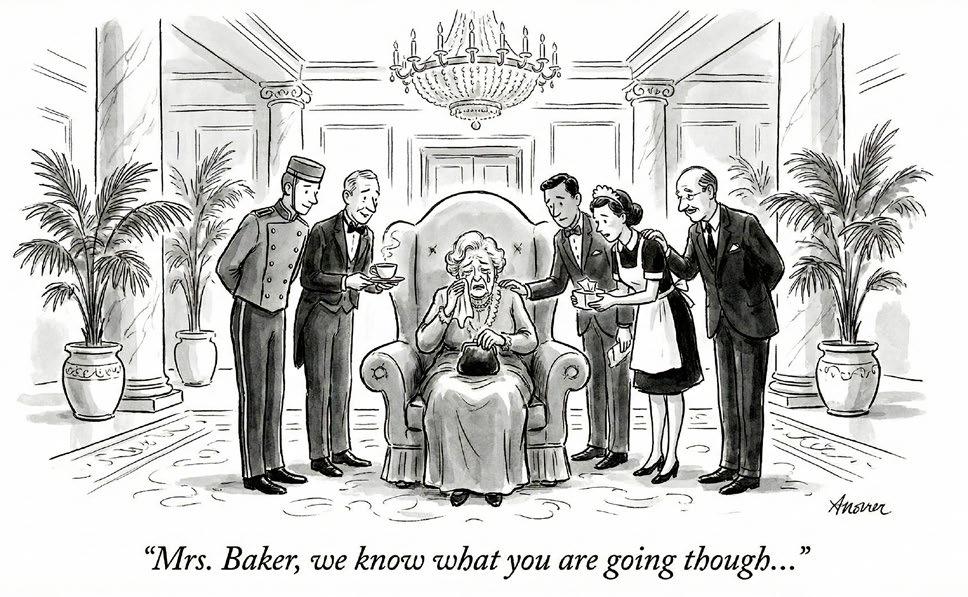
It is 2031. Carlos, the Front Office Manager at a bustling city hotel, sees a guest, Mrs. Baker, walk in. She looks devastated. Her flight was cancelled, her luggage is lost, and she is missing her daughter’s rehearsal dinner.
In the old days (2024), Carlos would have been stuck behind a computer screen, frantically typing, clicking through five different software tabs to check availability, rate codes, and billing authorization, while muttering “Just a moment” to a crying woman.
Today, Carlos doesn’t even look at a screen. He steps out from behind the desk.
“Mrs. Baker, I know about the flight. I am so sorry,” he says, looking her directly in the eye. He guides her to a velvet armchair in the lobby and pours her a glass of wine.
The Augmentation: While he sits with her, his AI Copilot is furiously working in the background, triggered by the biometric stress signals and the flight data feed.
• It automatically re optimizes the room inventory to assign her the quietest suite available.
• It pings a local courier to pick up emergency toiletries tailored to her preferences.
• It drafts a refund authorization for her missed night and queues it for the GM’s approval.
Carlos didn’t have to type a single keystroke. The AI handled the “accountant work” (as Bret Taylor predicted for Exce), liberating Carlos to do the “human work.” He listens to her vent. He offers genuine empathy. He is not a processor of transactions; he is a host.
AI generated
(Nano Banana Pro)
AI is the catalyst for automating the bureaucracy, ultimately unleashing elevated human hospitality.
6.5.2
The strategic reality
The hotel is operating at peak efficiency, but it feels slower, calmer, and more personal. Staff turnover has plummeted because the “robotic” parts of the job—the data entry, the scheduling, the compliance checks—have been outsourced to the machine. What remains is the “Connective Labour” (as defined by Allison Pugh). The staff are no longer hired for their ability to use software; they are hired for their emotional intelligence. They are not “replaced” by AI; they are supercharged by it. Because the machine handles the complexity of the logistics, the human can handle the complexity of the emotion.
The lesson
True augmentation isn’t about using AI to run the hotel with fewer people. It’s about using AI to let your people be more human. The competitive advantage isn’t the software; it’s the fact that your staff has the time to care.
6.5.3 Reflections
In this transformative scenario, AI is the catalyst for automating the bureaucracy, ultimately unleashing elevated human hospitality. Following the logic of “Power and Progress,” technology is used to create new tasks and expand the capabilities of staff, leading to what Lambda describes as “communal forms of society, supported by AI rather than undermined by it.” Here, AI handles the repetitive work—automating complex rostering, inventory, and administrative burdens—but the time saved is explicitly reinvested in higher-value human work: mentorship, creative service design, and genuine guest connection.
Instead of surveillance, AI tools function as “co pilots” that empower employees with knowledge and autonomy. A front-desk agent is not scripted by a machine but supported by real time insights that allow them to make confident, personalized decisions. Kappa emphasizes this potential: “It’s about freeing them to do better things,” shifting the focus from efficiency to effectiveness and quality. This approach turns low wage service roles into skilled, knowledge-enhanced professions, justifying higher wages and improving retention. Crucially, this path requires active governance and ethical commitment. As Gamma argues, we need “publicly funded and organized infrastructure” and regulations to ensure technology serves societal well-being, not just capital accumulation. In this future, hotels that treat AI as a tool for dignity and empowerment outperform competitors because they retain the best talent and deliver the most authentic service. As Epsilon envisions, “AI and humans are best of friends,” working in a symbiosis where the machine amplifies the unique, irreplaceable qualities of the human host.
Strategy questions for managers and executives
Which % of my staff time is “accountant work” that AI can eliminate?
How do I hire for “connective labour”?
What’s my “human time budget” minimum % of shifts protected from optimization?
7. Conclusions and recommendations
7.1 The human premium: More tech equals more hospitality?!
AI adoption risks a “race to the bottom” where efficiency erodes the very essence of hospitality. As seen in the Nightmare scenario, hyper optimization can strip away the “slack” needed for genuine connection, leading to sterile, transactional experiences. However, in a world flooded with synthetic content and automated interactions, authentic human connection becomes the ultimate luxury. The paradox is that more AI requires more hospitality, not less. The competitive advantage will shift to those who use AI to remove friction (admin, processing) specifically to reinvest that time in high-touch, empathetic service.
Recommendation
Strategize for “High Touch” Reinvestment: Do not bank AI efficiency gains solely as cost savings. Explicitly redirect “freed up” hours into guest facing roles. Measure success not just by Revenue per available Room (or square meter), but by Time Spent with Guest.
7.2 The entry-level crisis: Bridging the “transversal skills” gap
A critical, often overlooked threat is the disappearance of entry-level jobs, the traditional training ground for essential “transversal skills” like communication, problem solving, and adaptability. As AI agents take over junior tasks (scheduling, basic correspondence, data entry), the learning ladder is broken. Junior staff cannot “learn by doing” if the machine does the doing. This creates a skills gap where workers are expected to handle complex, high-stakes situations without having mastered the basics, threatening the hospitality industry’s future talent pipeline.
Recommendation
Integrate “Hospitality Skills” into Core Education: Since entry level “doing” is vanishing, emotional and social intelligence must be taught explicitly. Collaborate with educational institutions to make “Applied Hospitality” a mandatory module across disciplines (not just in hotel schools) to teach the empathy and resilience that AI cannot simulate.
Create “Shadowing” & Mentorship Programs: Replace lost “learning by doing” tasks with structured mentorship where juniors shadow senior staff in complex decision making, ensuring knowledge transfer persists even when tasks are automated with AI.
7.3 The sovereignty & investment dilemma
There is a dangerous disconnect between capital and governance. Venture capital (VC) is aggressively funding an AI future based on the belief of infinite scaling (e.g., Growth scenario), while governments often lack the technical expertise to regulate effectively. Meanwhile, Europe’s reliance on US-based tech giants for AI infrastructure creates a sovereignty risk— European hospitality data is fuelling models owned by foreign monopolies, turning local operators into “takers” rather than “makers” of their digital destiny.
Recommendation
Advocate for European Digital Sovereignty: Lobby for and invest in open source or European governed AI infrastructure to reduce dependency on “black box” US models.
Diversify Tech Partnerships: Don’t just buy off the shelf from the (US) “Big Tech” menu. Partner with European startups and academic hubs to build tools that respect privacy norms and keep data value within the (local) ecosystem.
7.4 The “efficiency paradox” and the trust crisis
The “Efficiency Paradox” underpins that short term AI productivity gains lead to immediate staff reductions, but this hollows out organizational resilience. We “trust” new jobs will appear, but the transition is brutal. Furthermore, as AI models are trained on past data, they are inherently backward-looking, making them unreliable for navigating unprecedented future crises. Reliance on purely rational AI decision-making fails to capture the irrational, emotional complexity of human behaviour in hospitality contexts, leading to a “trust crisis” where guests retreat to human agents to verify reality.
Recommendation
Adopt “Human in the Loop” Decision Making: Do not fully automate strategic decisions. Use AI for forecasting (data processing) but keep humans for decision making (contextual judgment).
Audit for “Reality”: Establish a “Truth & Authenticity” standard for your content and experiences. Clearly label AI generated images or text. Brand your human verification as a premium assurance of true hospitality quality and safety.
8. Method approach
8.1 In-depth interviews with experts
To navigate the complex and rapidly evolving landscape of artificial intelligence in hospitality, this report adopts a multi-methodological foresight approach. The core of our analysis rests on a series of in depth expert interviews conducted with a diverse panel of eleven cross sector leaders (IDs Alpha through Zeta). These participants were deliberately selected to break the “hospitality echo chamber,” representing perspectives from high tech AI research, public sector policy, education, entrepreneurship, and operational hospitality strategy.
Position
Head of AI Research and Principal Data Scientist
Professor of Emerging Technologies and International Management
AI Specialist, Education and Public Sector Solutions
Founder AI Innovation Studio and Talent Academy
Chief Executive Officer AI Food Waste Scale Up
Advisor on Public Sector AI and Emerging Technologies
Head of AI Operations Iota
Advisor, Hospitality Technology Strategist Kappa
Professor of Marketing and Psychology of AI Technology Lambda
Chief Executive Officer AI Education and Automation Platform Theta
Professor Artificial Intelligence Zeta
Table 1 Overview of interview participants
8.2 Academic literature search
We performed a semantic search using the query “What is the future of artificial intelligence within the hospitality sector over the next 5 years?” through the Elicit AI model. We applied the following filters: journal quartile Q3 or better. After retrieving the 500 papers most relevant to the query, we filtered for Future Oriented Perspective, AI Technology Focus, Business Application Focus, and Hospitality Relevance. The model processed 80 sources to give an indicative overview of the academic landscape.
8.3 Grey literature search
For the grey literature, we conducted a targeted scan of recent reports, news articles, thinkpieces, and expert interviews from global business media, consulting outlets, and technology leaders. We focused on sources published in the past 3–5 years and used keywords related to AI futures, workforce impact, and service industries, with a particular emphasis on hospitality and tourism.
8.4 Scenario building
We employed the Shell Scenario Method combined with Dator’s Alternative Futures Framework to structure these qualitative insights into coherent strategic narratives. Crucially, to assess the likelihood and strategic timing of these futures, we used the Framework Foresight method to propose a ‘funnel of plausibility’. This method allowed us to arrange our scenarios along a gradient of probability, distinguishing the baseline future (the “expected” path) from plausible, possible, and wildcard outcomes over a ten year horizon. This primary research was further triangulated with a targeted literature review and horizon scanning (e.g., Millennium Project, CBS adoption data) to validate the “width” of the funnel.
9. References
Academic references
Al Lily, M. 2025. The AI president: a country governed by artificial intelligence. Foresight, Vol. 27, No. 1, pp. 133 146. https://doi.org/10.1108/FS 04 2023 0059
Bhardwaj, S., Jain, V., Mahapatra, D., & Sindhwani, R. (2025). Exploring the Dark Side aof AI and Its Influence on Consumer Emotion. Journal of Consumer Behaviour, 24(2), 529–544. https://doi.org/10.1002/cb.2431
Bojic, L. 2024. AI alignment: Assessing the global impact of recommender systems. Futures, Vol. 160, pp. 103383. https://doi.org/10.1016/j.futures.2024.103383
Castelli, M., Costa Pinto, D., Shuqair, S., Montali, D., & Vanneschi, L. (2022). The Benefits of Automated Machine Learning in Hospitality: A Step By Step Guide and AutoML Tool. Emerging Science Journal, 6(6), 1237–1254. https://doi.org/10.28991/ESJ 2022 06 06 02
Chitranshi, J., Chopra, K. & Banerjee, P. 2025. Impact of artificial intelligence in transforming and replacing traditional learning and development of employees. Foresight, Vol. 27, No. 3, pp. 524 542. https://doi. org/10.1108/FS 05 2024 0109
Gil de Zúñiga, H., Goyanes, M. & Durotoye, T. 2024. A scholarly definition of artificial intelligence (AI): Advancing AI as a conceptual framework in communication research. Political communication, Vol. 41, No. 2, pp. 317 334. https://doi.org/10.1080/10584609.2023.2290497
Hines, A. (2020), “Evolution of framework foresight”, Foresight, Vol. 22 Nos 5/6, pp. 643 651. https://doi.org/10.1108/FS 03 2020 0018
Hines, A. and Bishop, P.C. (2013). “Framework foresight: exploring futures the Houston way”, Futures, Vol. 51, pp. 31 54. https://doi.org/10.1016/j.futures.2013.05.002
Jeremiah, F. 2025. The human AI dyad: Navigating the new frontier of entrepreneurial discourse. Futures, Vol. 166, pp. 103529. https://doi.org/10.1016/j.futures.2024.103529
Johnson, S. and Acemoglu, D., 2023. Power and Progress: Our Thousand Year Struggle Over Technology and Prosperity. Hachette UK.
Larivière, B., Verleye, K., De Keyser, A., Koerten, K., & Schmidt, A. L. (2025). The Service Robot Customer Experience (SR CX): A Matter of AI Intelligences and Customer Service Goals. Journal of Service Research, 28(1), 35–56. https://doi.org/10.1177/10946705241296051
Law, R., Lin, K. J., Ye, H., & Fong, D. K. C. (2024). Artificial intelligence research in hospitality: A state of the art review and future directions. International Journal of Contemporary Hospitality Management, 36(6), 2049–2068. https://doi.org/10.1108/IJCHM 02 2023 0189
Ling, E. C., Tussyadiah, I., Liu, A., & Stienmetz, J. (2025). Perceived Intelligence of Artificially Intelligent Assistants for Travel: Scale Development and Validation. Journal of Travel Research, 64(2), 299–321. https://doi.org/10.1177/00472875231217899
Liu, S. Q., Vakeel, K. A., Smith, N. A., Alavipour, R. S., Wei, C., & Wirtz, J. (2024). AI concierge in the customer journey: What is it and how can it add value to the customer? Journal of Service Management, 35(6), 136–158. https://doi.org/10.1108/JOSM 12 2023 0523
Mabwe, K., Aminu, N., Ivanov, S. H. & Dimov, D. 2025. Generative artificial intelligence chatbots in investment decision making: a phantom menace or a new hope? Foresight, ahead of print. https://doi.org/10.1108/FS 06 2024 0122
Mariani, M., & Borghi, M. (2021). Customers’ evaluation of mechanical artificial intelligence in hospitality services: A study using online reviews analytics. International Journal of Contemporary Hospitality Management, 33(11), 3956–3976. https://doi.org/10.1108/IJCHM 06 2020 0622
McKinsey Global Institute. (2017). A FUTURE THAT WORKS: AUTOMATION, EMPLOYMENT, AND PRODUCTIVITY. https://www.mckinsey.com/~/media/mckinsey/featured%20insights/digital%20 disruption/harnessing%20automation%20for%20a%20future%20that%20works/mgi a future that works full-report-updated.pdf
Morozov, E., 2022. Critique of techno feudal reason. New Left Review, (133), pp.89 126. doi.org/10.64590/13n
Morozov, Evgeny, 2014. To Save Everything, Click Here. Technology, Solutionism, and the Urge to Fix Problems that Don’t Exist. London: Penguin.
Palrão, T., Rodrigues, R. I., Madeira, A., Mendes, A. S., & Lopes, S. (2023). Robots in Tourism and Hospitality: The Perception of Future Professionals. Human Behavior and Emerging Technologies, 2023, 1–12. https://doi.org/10.1155/2023/7172152
Roumbanis, L. 2025. On the present future impact of AI technologies on personnel selection and the exponential increase in meta algorithmic judgments. Futures, Vol. 166, pp. 103538. https://doi. org/10.1016/j.futures.2025.103538
Schmidt, A. L., Govender, P., Oskam, J., Burbach, R., Dunlea, D., Hussey, J., O’Connor, C., King, D., Tuominen, P., Loijas, J., Moilanen, T., Laatikainen, E., Cortés, D., Bermejo, B., & Juiz, C. (2025). From Feedback to Framework: Exploring a Student Centric Development Process for Low End Immersive AR/VR Learning Content in Hospitality Education. Journal of Hospitality & Tourism Education, 1–13. https://doi.org/10.1080 /10963758.2025.2453744
Schmidt, A. L., Koerten, K., Tuomi, A., El‐Manstrly, D., & Wiegerink, K. (2025). Human Versus Robot: Comparing Service Agents in Hospitality Settings—Insights From a Field Study. Strategic Change, jsc.2637. https://doi.org/10.1002/jsc.2637
Sharma, S. 2024. Benefits or concerns of AI: A multistakeholder responsibility. Futures, Vol. 157, pp. 103328. https://doi.org/10.1016/j.futures.2024.103328
Tan, K., Lim, W. M., Tan, S., & DuBos, L. (2025). Turning Hindrances Into Challenges: Transformational Leadership Enhances Employees’ Competitive Productivity in an Artificial Intelligence‐Driven Hospitality Industry. International Journal of Tourism Research, 27(4), e70076. https://doi.org/10.1002/jtr.70076
Toscani, G. 2025. Future Proofing Expertise: AI as a Power Up, Not a Takeover. Futures, Vol. 175, pp. 103728. https://doi.org/10.1108/FS 09 2023 0188
Vukolić, D., Gajić, T., Cabral, Ó., Veljović, S., & Knežević, S. (2025). Revolutionizing the hospitality industry: The impact of AI technologies on efficient food management and reduction of food waste. Journal of Tourism Futures, 1–29. https://doi.org/10.1108/JTF 02 2025 0033
Wirtz, J., Patterson, P. G., Kunz, W. H., Gruber, T., Lu, V. N., Paluch, S., & Martins, A. (2018). Brave new world: Service robots in the frontline. Journal of Service Management, 29(5), 907–931. https://doi.org/10.1108/ JOSM 04 2018 0119
Wu, D., & Ma, Q. (2025). AI assisted customer behavior analysis and hotel loyalty strategy optimization. Future Technology, 4(3), 97–106. https://doi.org/10.55670/fpll.futech.4.3.10
Yang, Y., Lu, P., Niu, Y., & Yuan, G. (2024). Research on Unmanned Smart Hotels Resistance from the Perspective of Innovation Resistance Theory. Sage Open, 14(3), 21582440241281570. https://doi. org/10.1177/21582440241281570
Web references
Altchek, A. & Perkel, S. 2025. Anthropic CEO says AI could wipe out half of all entry level white collar jobs. Business Insider, May 28, 2025. https://www.businessinsider.com/anthropic ceo warning ai could eliminate jobs 2025 5 [Accessed May 29, 2025].
Barr, A. 2025. Google just fired the first shot of the next battle in the AI war. Business Insider https://www.businessinsider.nl/google just fired the first shot of the next battle in the ai war/ [Accessed April 24, 2025].
Belcher, D. 2025. Climbing the High Summits: Why Every Leader Must Master Human Skills to Get the Most Out of AI. Harvard Business Review, November 10, 2025. https://www.harvardbusiness.org/insight/ climbing the high summits why every leader must master human skills to get the most out of ai/ [Accessed January 20, 2026].
Catà Figuls, J. 2025. Oriol Vinyals (Google DeepMind): “Sería mejor ir más despacio en la IA, pero el mundo va muy rápido, y es muy emocionante”. El País, November 27, 2025. https://elpais.com/tecnologia/ 2025 11 27/oriol vinyals google deepmind seria mejor ir mas despacio en la ia pero el mundo va muy-rapido-y-es-muy-emocionante.html [Accessed November 27, 2025].
Centraal Bureau voor de Statistiek. 2025. Gebruik kunstmatige intelligentie (AI) door bedrijven neemt toe. https://www.cbs.nl/nl nl/nieuws/2025/09/gebruik kunstmatige intelligentie ai door bedrijven neemt-toe [Accessed January 26, 2026]
Di Battista, A., Grayling, S., Játiva, X., Leopold, T., Li, R., Sharma, S. & Zahidi, S., 2025. Future of Jobs Report Geneva: World Economic Forum. https://reports.weforum.org/docs/WEF_Future_of_Jobs_Report_2025. pdf [Accessed January 27, 2026].
Duvenaud, D. 2025. Better at everything: how AI could make human beings irrelevant. The Guardian, May 4, 2025. https://www.theguardian.com/books/2025/may/04/the big idea can we stop ai making-humans-obsolete [Accessed May 5, 2025].
Eliot, L. 2025. HBR’s Top 10 Uses Of AI Puts Therapy And Companionship At The No. 1 Spot. Forbes, May 14, 2025. https://www.forbes.com/sites/lanceeliot/2025/05/14/top ten uses of ai puts therapy and companionship at the 1 spot/ [Accessed January 26, 2026].
Goldman Sachs. 2023. Generative AI could raise global GDP by 7%. https://www.goldmansachs.com/ insights/articles/generative ai could raise global gdp by 7 percent [Accessed December 10, 2025]
Jackson, S. 2025. Sam Altman’s predictions on how the world might change with AI. Business Insider, January 18, 2025. https://www.businessinsider.com/openai sam altman predictions how ai could change the world 2025 1 [Accessed January 19, 2025].
Jericó, P. 2025. ¿Nos está apagando la mente la inteligencia artificial? El País, July 17, 2025. https://elpais.com/eps/2025 07 17/nos esta apagando la mente la inteligencia artificial.html [Accessed January 26, 2026].
Jiménez Cano, R. 2018. “A la inteligencia artificial le falta sentido común”. El País, February 19, 2018. https://elpais.com/retina/2018/02/12/innovacion/1518418382_028711.html [Accessed January 26, 2026].
Lester, T. 2025. AI Is Making the Workplace Empathy Crisis Worse. Harvard Business Review, August 20, 2025. https://hbr.org/2025/08/ai is making the workplace empathy crisis worse [Accessed January 26, 2025].
Malik, N. 2025. With ‘AI slop’ distorting our reality, the world is sleepwalking into disaster. The Guardian, April 21, 2025. https://www.theguardian.com/commentisfree/2025/apr/21/ai slop artificial intelligence-social-media [Accessed April 21, 2025].
Markets and Markets. 2025. AI Chip Market Size, Share & Industry Trends, 2032. https://www.marketsandmarkets.com/Market Reports/artificial intelligence chipset market 237558655.html [Accessed January 26, 2026]
OECD. 2024. Explanatory Memorandum on the Updated OECD Definition of an AI System. OECD Publishing https://oecd ai.case api.buddyweb.fr/storage/policy initiatives/Jul2025/ fu_5cmhi7vawuipwaf.pdf [Accessed December 10, 2025]
Pérez Colomé, J. 2025. Investigadores en IA no creen que los modelos actuales lleven a alcanzar la inteligencia humana. El País, April 17, 2025. https://elpais.com/tecnologia/2025 04 17/investigadores en ia no creen que los modelos actuales lleven a alcanzar la inteligencia humana.html [Accessed April 17, 2025].
Pugh, A. 2025. I set out to study which jobs should be done by AI – and found a very human answer. The Guardian, January 21, 2025. https://www.theguardian.com/commentisfree/2025/jan/21/ai jobs human work relationship tech?CMP=Share_iOSApp_Other [Accessed January 22, 2025].
Rodríguez, Ó. 2019. Las personas son la fuerza motriz de la inteligencia artificial. El País, October 3, 2019. https://elpais.com/retina/2019/10/03/innovacion/1570082194_573723.html [Accessed January 26, 2026].
Silver, D. & Sutton, R. S., 2025. Welcome to the Era of Experience. Mountain View, CA: Google. https://storage.googleapis.com/deepmind media/Era of Experience%20/The%20Era%20of%20 Experience%20Paper.pdf [Accessed January 26, 2026].
Thompson, B. 2025. An Interview with Meta CEO Mark Zuckerberg About AI and the Evolution of Social Media. Stratechery, May 1, 2025. https://stratechery.com/2025/an interview with meta ceo mark zuckerberg about ai and the evolution of social media/ [Accessed May 7, 2025].
Velasco, L. E. 2025. La IA empieza a trabajar sola: bienvenidos a la era de los agentes. El País https://elpais.com/proyecto tendencias/2025 06 11/la ia empieza a trabajar sola bienvenidos a la era-de-los-agentes.html [Accessed June 11, 2025].
Webb, E. 2025. OpenAI’s chair is ‘optimistic’ about how AI will change work, and pointed to Excel to explain why. Business Insider, April 17, 2025. https://www.businessinsider.nl/openais chair is optimistic about how ai will change work and pointed to excel to explain why/ [Accessed April 21, 2025].
Hotelschool The Hague
P.O. Box 84359 2508 AJ The Hague
The Netherlands
Campus The Hague
Brusselselaan 2 2587 AH The Hague
Campus Amsterdam Jan Evertsenstraat 171 1057 BW Amsterdam