The COVID-19 pandemic caused a sudden disruption in the development of international business travel, with over 90% of global companies suspending all non-essential travel, leading to a significant drop in international travel arrivals. Businesses successfully transitioned to online meetings. Many expected that this would lead to a permanent reduction in business travel volumes. Nevertheless, by 2024, international travel arrivals surpassed 2019 levels by 2%, indicating a full recovery in the sector.
Based on research in Amsterdam, the full recovery of the business travel sector is attributed to a lower total number of business travellers staying longer. In 2023, the number of business visitors was 13% lower than in 2019, but the total number of overnight stays fully recovered. The average length of stay for international business guests increased from 2.34 days in 2019 to 2.71 days in 2023. Furthermore, there was a significant increase in total overnight stays in 3-star establishments, indicating a shift in accommodation preferences. Significant shifts in the markets of origin were also observed due to external disruptions.
The ‘baseline scenario’ for business travel in 2035, derived from survey outcomes, envisions a future ‘without surprises’, where current trends and events continue to evolve. There are signs of a full recovery of business travel, with shifts in the countries of origin for business guests, an increase in short haul business travel, and a change in accommodation preferences. AI and technology will be integral, handling booking journeys based on traveller preferences and environmental impact, and facilitating trip preparation. The nature of meetings will evolve, blending online and offline interactions. Business travellers will prefer those destinations that offer a balance between work-related opportunities and leisure activities. Sustainability will be a key factor in business travel decisions, with a shift from air to train travel for shorter business trips. Hotels will adapt by focusing on personalisation, digitalisation, and sustainability. The ideal business travel experience in 2035 will be a seamless journey from start to finish, making business travel a pleasure rather than a chore.
The baseline scenario’s evolution is contingent on the absence of major disruptions that could significantly alter future projections. The Delphi panel examined four potential disruptions that could impact this trajectory: 1) Socio-political shifts that could reverse the current trend towards sustainability and Environmental, Social and Governance, 2) The potential for Artificial Intelligence to adversely affect travellers’ control over their plans and time, 3) The possibility of the ‘bleisure’ trend leading to a decrease in travel to less attractive destinations, and 4) The influence of geopolitical tensions. These disruptions, if they occur, could significantly reshape the landscape of business travel in 2035.
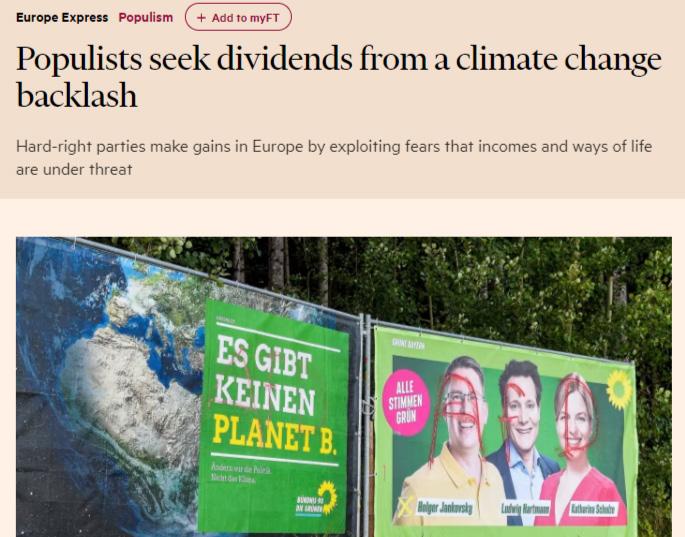
The first disruption, ‘Decreased support for sustainability/ESG’, envisions a future where the rise of populist and nationalist movements by 2030 erodes the global consensus on climate change and environmental issues, leading to a sharp decline in support for ESG regulations. This shift increases costs for ESG measures, prompting businesses and consumers to opt for cheaper, less sustainable alternatives. The travel and accommodation industries are severely impacted, with a decrease in business travel demand and a reduction in sustainable
travel options. Many companies cut their travel budgets and switch to virtual meetings, while many service providers reduce their ESG initiatives or cease operations. The relaxation or abolition of standards and regulations leads to a deterioration in the quality and safety of services. Consequently, the sector loses its competitive edge, innovation potential, and customer loyalty, facing increased risks such as environmental degradation, social unrest, and ethical dilemmas.
The effects of the ‘AI control of travel’ disruption could be significant. AI prioritising efficiency and cost over personal preferences in travel arrangements could lead to a perceived loss of control over business travel decisions, resulting in disappointment and stress among travellers. The strategic response should be multifaceted. Understanding and catering to employees’ needs through profiling, improving the AI system by taking reviews into account, and providing guidance to support employees in using AI properly could be effective strategies. It would also be important to continue investing in AI and to consider the potential impact of AI on the travel industry. Focusing on employee satisfaction and engagement, refining the algorithm to better cater to individual needs, and the importance of user feedback should also be considered.
The ‘Business travel preferences’ disruption could lead to significant challenges for cities lacking in cultural, natural, and lifestyle appeal. By 2030, as business travellers become more selective, these cities could see a decline in business travel demand. This could result in a decrease in accommodation options and a deterioration in the quality and diversity of services. Strategic responses could involve brand building, community involvement, service innovation, and strategic focus to regain attractiveness for hotels in these cities. However, the effectiveness of these strategies would depend on the specific circumstances and characteristics of each city.
The ‘Geopolitical insecurity’ disruption could lead to significant challenges by 2030. Escalating geopolitical tensions and conflicts could make business travel more difficult, risky, and costly. Isolation of certain countries and hostility with Western powers could disrupt trade and travel flows, increasing costs and barriers for doing business. This could negatively impact the travel and accommodation sector, leading to a loss of a significant market and increased security and regulatory challenges. In regions with escalating violent conflicts, frequent disruptions in oil supply could cause chaos and uncertainty, decreasing business travel demand. Increased pressure and competition in certain regions could lead to increased uncertainty and diversity in the travel and accommodation sector, but also opportunities for innovation and competitiveness. Strategic responses should involve security and risk management, business strategy and operations, brand and product development, employee and supplier management, portfolio diversification and self-sufficiency, safety training and skills, service provision and pricing, and collaboration and network expansion.
In response to evolving trends and uncertainties, hospitality businesses and professionals should focus on two overarching strategies: personalising services and monitoring early warning signals. Personalised services should cater to changing preferences of business travellers, combining leisure and sustainability aspects. Monitoring early warning signals will enable businesses to adapt to disruptions and leverage opportunities in a timely manner.
Introduction
HTH Outlook
We are pleased to present the first in what is envisioned as a series of annual Yearly Outlook reports from Hotelschool The Hague. This year, our focus is on the future of business travel, a topic of strategic relevance and interest in our ever-evolving industry.
At Hotelschool The Hague, we are deeply committed to continuous learning and innovation. Our dedication to research on emerging trends and developments in our industry is a testament to this commitment. We believe that by staying ahead of the curve and understanding the trends that shape our industry, we can provide our community — comprising students, alumni, faculty, and industry professionals — with insights that are not just relevant, but also timely.
In recent years, the hospitality industry has been undergoing rapid changes, driven by external disruptions, technological advancements, and a growing emphasis on social and environmental responsibility. Recognising these shifts, Hotelschool The Hague has strategically integrated research into its core activities.
Hotelschool
The Hague strives to equip students with inquisitive skills to enable them to navigate a volatile future.
Our primary goal is to stay ahead of these changes and to prepare our students not just for the demands of the profession today, but also for the challenges of tomorrow. This forward-thinking approach is reflected in our education, where we strive to equip our students with the skills and knowledge they will need to navigate the future landscape of the hospitality industry.
Our research strategy is twofold. Firstly, we strive to stay ahead of the curve by identifying pressing questions in the hospitality industry, even before they arise. Secondly, we are committed to making our knowledge accessible and visible to a wide audience. To achieve this, we not only publish our findings in academic journals, contributing to the body of scholarly knowledge, but also share our insights through trade journals, ensuring that our research reaches professionals in the industry. This dual approach allows us to bridge the gap between academia and industry, fostering a culture of continuous learning and innovation.
Our goal is to add value to our community and the wider industry by providing timely and relevant insights. This commitment to thought leadership is a key part of our strategy to navigate the rapidly changing landscape of the hospitality industry. We invite you to explore this report and welcome your feedback. We are open to suggestions for future editions of this Yearly Outlook as we continue this exciting journey of discovery and learning together.
Strategic Foresight
Strategic Foresight serves as our compass to navigate potential future developments. Of course, we do not pretend to predict the future, but instead we strive to identify current assumptions and key uncertainties that may lead to unexpected outcomes in the years ahead. This approach is particularly crucial given the rapid changes in the hospitality industry, driven by external disruptions, technological advancements, and the growing emphasis on social and environmental responsibility.
Scenarios are not predictions; they are meant to identify uncertainties that may lead to unexpected events in the future.
Scenario planning, a key technique in Strategic Foresight, offers a way to anticipate qualitatively different outcomes of current developments and uncertainties. Unlike quantitative forecasting, which often assumes a future much like today, scenario planning embraces the unpredictability of the future. First employed commercially by Royal Dutch Shell to navigate the volatile oil market of the 1970s, it has since gained traction as a tool for developing strategic response capacity and building resilience to external disruptions.
Our method begins with the analysis of a ‘baseline future’, defined as the most probable future with no surprises. We take a snapshot of the current situation and, armed with an inventory of changes, trends, and constants, we set that picture in motion to project the future landscape. By identifying and challenging the main assumptions behind this baseline future, we can construct plausible alternative future scenarios. These scenarios serve as strategic tools to anticipate potential developments, enabling professionals to recognise emerging alternative courses of events and formulate effective responses.
Business travel
This first Yearly Outlook focuses on the recent evolution and potential futures of business travel. Business travel holds significant importance for the hospitality industry, accounting for an estimated 11% of international travel arrivals, according to the UNWTO (2023); the revenue business travellers generate for airlines and hotels exceeds that of other segments. Business travel also contributes directly to GDP, fosters international trade and innovation, and significantly impacts business revenues.
However, the evolution of business travel has recently been disrupted, most notably by the Covid pandemic. This disruption led to a suspension of all non-essential travel by over 90% of global companies, causing a significant drop in international travel arrivals. The successful transition to online meetings during this period sparked expectations of a permanent reduction in business travel volumes.
After the Covid-pandemic, a permanent reduction of business travel was generally expected.
In 2024, international travel arrivals are projected to surpass 2019 levels by 2%, indicating a full recovery in the sector. However, the future evolution of business travel remains uncertain, influenced by various factors such as health concerns, work-life balance, and environmental considerations.
Before the Covid pandemic underscored the vulnerability of business travel, it had experienced significant growth against the backdrop of globalisation, which is now confronting strong countertrends. Furthermore, technological advancements and Environmental, Social, and Governance (ESG) considerations are emerging as potential challenges that could shape the future evolution of business travel. As we move forward, these factors will play a crucial role in determining the trajectory of this important segment of the hospitality industry. This report aims to explore these uncertainties and provide insights into the potential future pathways of business travel.
How to use this report
The scenarios are meant to inspire strategic anticipation. We therefore invite the readers of this report to understand how to interpret and apply the scenarios presented.
Firstly, it is crucial to remember that scenarios are not predictions. They are not definitive forecasts of what will happen, but rather, they depict potential outcomes based on current uncertainties. These scenarios provide a range of possibilities that could occur in the future, given certain conditions and variables.
Even if some scenarios seem undesirable, it is important to acknowledge that they may still occur. The future is inherently uncertain, and a wide range of outcomes is possible. Therefore, it is not advisable to single out one preferred or most probable outcome.
Scenarios are roadmaps that show the potential futures.
Instead, consider these scenarios as a roadmap. They provide a guide to navigate the potential twists and turns that the future of business travel might take. They can help us prepare for a variety of eventualities and make informed decisions in the face of uncertainty.
Early warning signals, or indicators of change, are crucial in this process. They provide indications of the direction in which we are heading and can help us anticipate and respond to changes effectively.
Finally, it is important to note that all hotel businesses and professionals may be affected by these potential future scenarios. Therefore, it is crucial for everyone in the industry to engage in the discussion about how to react if any of the alternative futures occur. By doing so, we can collectively navigate the challenges and opportunities that the future of business travel may bring.
Disclaimer
The authors of this report wish to clarify that the scenarios presented herein are not claimed to be accurate or exhaustive. They are intended to support strategic processes and stimulate debates about potential futures. However, the authors do not accept any legal liability for incorrect strategic or investment decisions that may be made based on the content of this report. Readers are encouraged to use their judgment and examine the specifics of each situation when making such decisions.
Background
Covid impact
In the early stages of the Covid-pandemic, when as mentioned more than 90% of global companies suspended all non-essential travel, the impact was dramatic: in the United States, the number of international business tourist arrivals went down by 78,8% in 2020 and continued to decline in 2021, reaching a drop of 87,4% compared to 2019. The domestic business travel spending in the United States also dropped by approximately 66% in 2020. International business arrivals to the UK were, in 2021, 14% of what they had been in 2019. Europe lost 190,5 billion USD in business travel spend in 2020; the heaviest impacted destination was China, with a loss of 404 billion USD.
Inbound tourism - Arrivals for business and professionals
Many predicted that online meetings would continue to replace a substantial part of business travel after Covid. Academics argued that environmental awareness would lead to a “reset” of travel.
It seems ages ago, but at those moments nobody dreamt of a recovery in business travel. The news headings from early 2020 show a generalised pessimism. The Economist wrote: “Imagine the post-pandemic misery of business travel”, an airline industry blog discussed the end of business travel, although admitting that “it’s perhaps too early to sound the death knell just yet”, and the general expectation was that the impact on business travel and on airlines in particular would be substantial and prolonged. Technological utopism became part of this vision, when Bill Gates predicted that more than 50% of business travel would disappear in the postcoronavirus world. McKinsey estimated a recovery to 80 percent of prepandemic levels by 2024, because of a permanent replacement of travel by Zoom meetings, the American Hotel and Lodging Association doubted whether large managed corporate travel would return as before, and Deloitte saw a re-evaluation of business travel for its impact on the bottom line and the environment.
Also, in the academic world, many hoped for or advocated a “reset” of travel. This perspective saw the crisis as a wake-up call, an opportunity for the transformation of tourism. The pandemic was associated with consumerism, globalisation, and the growthparadigm, leading to calls for a more sustainable, mindful, and local model of tourism. Some assumed a shift in consumer preferences to support this transformation, often inferred from subtle societal changes. However, others cautioned against wishful thinking, noting that a true transformation would require coordinated international efforts and would not be the most obvious outcome of the crisis.
Business travel revenue loss in 2022
Business Travel Reveue Loss in 2020
Source: GBTA, Statista
In a joint study by Hotelschool The Hague and PACE in 2022, business travel was envisioned to initially decrease by 15-30%, with a shift in the type of and reasons for travel. Periodical get-togethers with colleagues were expected to complement virtual contacts and become key for employee morale. Technological innovations in hotels facilitated contactless transactions, but the effects of this were uncertain. A shift in consumer priorities from “experiences” to hygiene and safety was expected, but the longevity of this change was considered uncertain.
Nevertheless, by 2024, international travel arrivals were again expected to reach 2% growth above 2019 levels, with business travel accounting for a substantial part of these arrivals. Despite the successful switch to online meetings, the expectation that business travel volumes could be permanently reduced had not materialised. Instead, the crisis highlighted a knowledge gap in the understanding of actual customer needs and purposes for travel, suggesting a need for further research into industry recovery scenarios.
Top 15 Business travel spending markets - Recovery (%) in 2023
Post-Covid Recovery: a study by Hotelschool The Hague and PACE Dimensions
Source: GBTA, 2023a
What does academic literature say?
If we look at academic studies of business travel, the main topics can be categorised into three broad areas: demographic shifts and travel habits, the impact on health and work-life balance, and the evolution of travel choices. Firstly, business travel was traditionally dominated by mid to late-career male professionals, particularly from larger manufacturing firms in urban areas. However, this trend has shifted due to ‘travel normalisation’, which has made business travel more common among a wider range of employees, including early career professionals and those from Small and Medium Enterprises. These changes have also influenced travel choices, with a focus on budget-conscious decisions.
Business travel has been “normalised”, meaning that employees across the organisational hierarchies participate in business travel.
While face-to-face meetings have been the norm, technological advancements have prompted a reevaluation of this practice. Despite the preference for face-to-face meetings in certain situations, many professionals also perceive business travel as a source of social prestige. However, the personal and professional benefits of business travel contrast with its toll on travellers and their social environment. Health hazards range from jet lag and sleeplessness to serious mental problems, and feelings of guilt due to absence from home and the sacrifices required from partners are also common.
Reduction in business travel is driven by stress, work-life balance considerations, and climate concerns. The Covid-19 crisis catalysed the shift from in-person to online meetings, particularly for routine discussions. However, a positive correlation exists between the frequency of virtual meetings and business travel, indicating that frequent flyers also engage in online meetings.
Business travel is associated with unhealthy lifestyles and stress. One response is to incorporate leisure activities into business trips; this trend is known as ‘bleisure’.
There is a reported dissonance between individuals’ intentions or company policies and actual travel decisions. This discrepancy is particularly evident among frequent flyers and those in senior positions. To avoid travel fatigue, some travellers combine professional and leisure activities during their trips, a practice known as ‘bleisure’. This strategy is seen as an efficient way to reduce leisure travel. The attractiveness of a city destination and its leisure offerings influence business travel experiences and decisions. The ‘consumerisation’ of business travel is facilitated by new digital tools designed to reduce stressors and dissatisfiers. These tools range from multimodal booking processes to real-time information about changes and delays, virtual communication with family, and post-travel reporting.
In summary, there is a shift in business travel demographics and an evolution in travel choices, driven by health, work-life balance, and environmental concerns. These changes have been facilitated by technological advancements. Despite temporary disruptions due to the Covid-19 pandemic, the underlying dynamics seem to evolve in a similar direction as before.
Other views
Business research and consultancy reports project a promising future for the business travel industry. Global business travel expenditure is predicted to recover to pre-pandemic levels by the end of 2024, indicating a resilient rebound from the impact of the Covid-19 pandemic. This recovery is expected to continue, with global business travel spending forecasted to reach a staggering USD 1,8 trillion by 2027, according to the Global Business Travel Alliance (GBTA).
The market size of Global Business Travel is projected to reach multimillion USD by 2031, with projections of CAGR ranging from 4,3% to 13,3% in different reports (Global Business Travel Strategic Market Report 2023-2030, Business Travel Market Analysis, Skyquest Global Business Market Analysis), resulting in a market size that would range from USB 928 billion by 2030 to almost 3.000 billion in 2031.
Business travel is on a trajectory of robust growth and recovery.
Post-lockdown, an increase in business travel is anticipated as companies resume regular operations and international collaborations. This resurgence is reflected in the expected bookings, which are projected to reach 92% of 2019 levels in 2023 and exceed 2019 levels by at least 6,2% in 2024 (Advantage and Travelogix Global Business Travel Review). These projections highlight the industry’s adaptability and its crucial role in global business operations. The future of business travel, therefore, is foreseen by these researchers to be on a trajectory of robust growth and recovery.
Also in these reports, remote work is considered to remain a constant factor; specifically, with a 3,2 times higher number of days compared to before the pandemic (Deloitte Insights). This trend may potentially drive a growth in business travel, as sales activities and team meetings continue to be preferably face-to-face, although the number of short, repetitive trips may drop (Skift, Mastercard). Some reports foresee further advancements in online and virtual meetings (Booking), but there is also a consensus that being face to face with clients is preferable to remote working for sales meetings and pitches (American Express)
Although in studies earlier on in the pandemic, hygiene standards and safety were the core elements of traveller well-being, comfort, convenience, and personal time emerge as leading factors in 2023-2024 (Travelport). The rise of ‘bleisure’ travel, combining business with leisure activities, is noted (Forenom, GBTA). Personalisation and tailored services enhance well-being (Amadeus). AI-managed guest comfort in smart hotels and robot room service are emerging (Booking.com for Business).
Corporate travel policies are modernising to reflect new work arrangements and traveller needs (Travelport). This includes the adoption of digital payments and corporate credit cards (GBTA), and the use of AI for policy and budget management (GBTA, Mastercard). There is an emphasis on real-time data for policy making (Skift + TripActions), and non-hotel accommodations are being incorporated into policies (Deloitte). Policies are expected to shift from cost to value and direct bookings (tClara), as well as flexibility (Citi). Companies have tightened their travel budgets, but this has not affected recovery; however, stronger attention to Return On Investment has prioritised e.g. sales trips over occasional travel, such as to company events and conferences (BCD Travel, Skift).
Profile of Business Travellers in the USA
Sustainability is getting more attention in business travel policies.
Sustainability is gaining attention, with an increased focus on sustainability initiatives (GBTA), transparency on environmental impact (Travelport), and a significant 90% of travel companies having a strategy to reach environmental sustainability objectives (Globetrender and Cytric Easy by Amadeus). There is a strong emphasis on carbon footprint reduction, from cutting business travel emissions (Forenom) to shifting from planes to trains in Europe (Forbes), and evaluating trips for climate impact (tClara). Innovative solutions are emerging, such as zero-emission aircraft and net-zero hotels, along with AI to reduce food waste (Booking. com for Business). All these efforts contribute to a greater emphasis on eco-friendly practices (Citi).
The rise of super commuting and the need for policies to accommodate infrequent but longer office visits are other notable trends (Travelport). There is a shift towards self-booking by travellers, especially millennials (Forenom). Technological innovations are expected to play a crucial role, optimising product performance and increasing application in downstream markets (Business Travel Market). This is further emphasised with the growth of metaverse applications in business travel (BCD Travel), and the increasing role of Generative AI in travel (Morning Consult).
In conclusion, while there are differing perspectives on the future of business travel, there is a general consensus on its robust growth and recovery. The industry has shown remarkable resilience and adaptability in the face of unprecedented challenges, and its future trajectory will likely be shaped by a combination of demographic shifts, technological advancements, and evolving travel habits. Despite the challenges, the industry’s importance in the global economy remains undiminished.
What do the data say?
To assess the evolution of business travel in Amsterdam, we used data obtained from VisitorData, a platform that provides real-time market data to its partners and aids hotels in The Netherlands in adhering to local regulations for maintaining a night registry. The database encompasses 55% of hotels in Amsterdam, accounting for 60% of all hotel beds in the city, which equates to 57.193 out of 92.329 beds. The dataset is comprehensive, with 9.521.455 observations spanning the years 2019, 2022, and 2023. The anonymised observations contain seven variables: the type of lodging, the star rating of the lodging, the number of guests, the guests’ country of origin, the purpose of their stay, and their check-in and check-out dates. For the purposes of this study, the data were refined to include only those guests who identified their stay as business-related. This resulted in a total of 2,070,160 observations being used in the analysis.
Data for Business Travel to Amsterdam
In 2023, the number of business visitors was 13% lower than in 2019, but the total number of overnight stays has fully recovered. The origins of business visitors, however, showed significant differences.
Table 1 provides an overview of overnight business stays in Amsterdam per continent:
Table 1 Overnight business stays in Amsterdam per continent
The total number of business visitors to Amsterdam is lower, but they stay longer.
The data suggests that business guests are staying longer. The average length of stay (LoS) for international business guests increased from 2,34 days in 2019 to 2,71 days in 2023. This increase was particularly noticeable for countries with travel restrictions, such as Russia, where the LoS increased from 2,73 to 5,93 days.
Furthermore, there was a significant increase in total overnight stays in 3-star establishments, from 585.204 to 960.135. In contrast, changes in 4-star and 5-star establishments were not significant. The average length of stay increased across all lodging star categories between 2019 and 2022, with 3-star hotels seeing the most significant increase of approximately 1,1 days.
In conclusion, while the number of business visitors has decreased, the length of their stay has increased, leading to a full recovery in the total number of overnight stays. This trend is particularly evident in certain countries and in 3-star establishments.
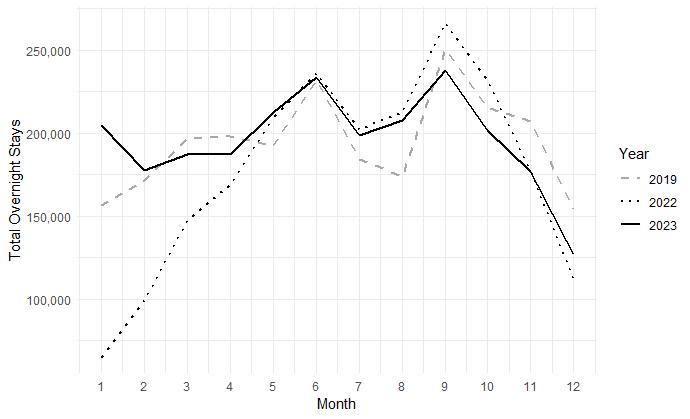
The last Covid lockdown in The Netherlands extended until January 2022. If we compare six-months periods, we observe a convergence in overnight stays, particularly in the latter halves of the year (Figure 1):
Figure 1 Total overnight stays for business guests in Amsterdam
Travel restrictions during Covid and because of international conflicts have affected travellers from regions around the world in different ways
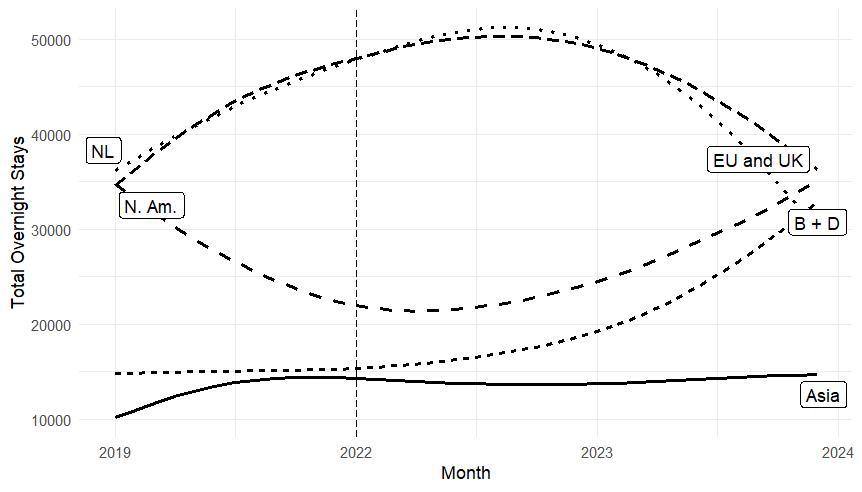
Applying the Hodrick-Prescott filter to our dataset, a method that identifies a smooth, long-term trend, we observed several patterns. Domestic business guests showed an increase from January 2019 to September 2022, followed by a decrease by December 2023. Business stays from other EU countries and the UK followed a similar pattern, with the exception of Belgium and Germany, which showed substantial growth. Visits from North America fully recovered, and Asia continued to grow (Figure 2):
From this analysis, we can draw the following conclusions:
1. Recovery from the Pandemic: Despite the impact of the Covid lockdown that lasted until January 2022, the hospitality industry in Amsterdam has shown resilience. The total number of overnight stays by business guests in 2023 has recovered to pre-pandemic levels.
2. Change in Visitor Origins: There is a shift in the countries of origin for business guests. While there was a decrease in visitors from some regions like Russia, other regions like North America showed a full recovery. Notably, domestic business guests and those from Belgium and Germany have increased.
3. Longer Stays: Business guests are staying longer in Amsterdam. This is indicated by the decrease in the number of visitors but an increase in the total number of overnight stays.
4. Preference for 3-Star Establishments: There’s a significant increase in total overnight stays in 3-star establishments, suggesting a change in accommodation preferences among business guests.
Figure 2 Hodrick-Prescott filtered overnight stays for business guests in Amsterdam, selected origins (B + D = Belgium and Germany)
The scenario process
The research project employed the Delphi method, a structured communication technique that relies on expert consensus. Two surveys were conducted targeting professionals at executive and senior management level in the HTH community. The first survey, with openended questions, explored current travel behaviour and visions of business travel in 2035 —including the role of AI, sustainability, and work-life balance—, the choice of online vs. face-to-face meetings and specific implications for hospitality companies. The second survey, with more closed questions, aimed to assess consensus on future changes in business travel, decision-making processes, sustainability, and hotel strategies. The process was iterative, with experts encouraged to revise their answers based on anonymised summaries of previous round responses, aiming for convergence towards a consensus.
On February 22, 2024, a Delphi session was held with 20 members of the HTH Industry Advisory Board to whom the outcomes of round 2 were presented as the ‘baseline future’ for business travel; that is, the generally expected future without any surprises. The session explored alternative scenarios around four key assumptions: the impact of ESG regulations, the influence of AI on travel plans, destination choices, and international security. Each scenario was evaluated on its likelihood and potential impact. Simultaneously, a parallel session was conducted with 16 hotel management students. The sessions concluded with a joint discussion between the expert and student panels to share findings and opinions.
Function Level / Seniority
Founder
CEO
Co-Founder & CEO
Managing Director
Co-Founder & Managing Director
Founder & Director of Operations
Managing Director
Owner & Chairman
Senior Advisor and Consultant
CEO
Co-Founder & CEO
General Manager
Area Vice President & GM
VP Corporate Social Responsibility
Area President
Chief Operating Officer
Managing Director
Head of Hospitality
Chairman Advisory Board
CEO & Head of Hotels
Type of Company / Industry
Customer Experience Consulting
Entrepreneurship Center
Financial Services
Hospitality
Hospitality
Hospitality & Real Estate
Hospitality Consulting
Hospitality Consulting
Hospitality Consulting
Hospitality Technology
Hospitality Technology
Hotel
Hotel
Hotel
Hotel Chain
Hotel Chain
Hotel Chain
Investment Firm
Non-profit Organization
Real Estate Services
Table 2 Hotelschool The Hague Industry Advisory Board
Survey outcomes
Despite sustainability being ranked as the least important factor in business travel decisions, respondents see the future of business travel as more sustainable, efficient and personalised.
The first survey reveals that the majority of respondents are executives aged 35 and above, predominantly from the hospitality and consultancy/research industries. In comparison to pre-Covid times, most respondents travel less frequently or just as often for business, with the duration of trips remaining similar. On average, respondents took around 21 business trips in 2023, spending approximately 53 days on these trips. When making travel decisions, the top three considerations are the destination, personal connections with people they will meet, and the professional status of those individuals. Sustainability was ranked as the least important factor. Respondents envision a future where business travel is more sustainable, efficient, and personalised. They anticipate increased use of AI and technology, a shift towards virtual meetings, and a focus on work-life balance. Sustainability initiatives and ESG regulations are expected to influence business travel decisions.
Age groups survey respondents
Professional level survey respondents Industry of survey respondents
20,43
business trips (av.) in 2023
52,96 days on a business trip (av.) in 2023
Survey - first round
Considerations when making (business) travel decisions, ranked for importance (most important element at the top and least important at the bottom):
destination
Compared to 2019 (pre-Covid), do you travel more or less often for business?
Compared to 2019 (pre-Covid), do you travel more or less often for business?
Survey - first round
Compared to 2019 (pre-Covid), are your business trips longer or shorter in duration?
Compared to 2019 (pre-Covid), are your business trips longer or shorter in duration?
The preference between online and offline meetings depends on the nature of the meeting. Face-to-face meetings are preferred for relationship building, important decisions, and when cultural factors are significant. However, routine processes and technical discussions can be conducted online. Geopolitical concerns, health and safety issues, and changes in traditional business travel patterns are expected to influence business travel. The increasing importance of sustainability and the impact of regulations and market trends are also significant factors. Hotels are expected to focus on personalisation, digitalisation, and sustainability. They may need to adjust their services and offerings, invest in technology, and focus on local sourcing and community engagement. The importance of measuring and reporting sustainability efforts was also highlighted. Some key trends and developments that will shape the future of business travel include regional airports and point-to-point travel, comfort and convenience in-flight, and efficiency in airports. The ideal business travel experience in 2035 will likely have seamless connectivity, personalised services, and efficient and convenient processes.
The results of the second survey indicate that respondents anticipate significant changes in business travel by 2035. They expect higher volumes of travel, increased spending, longer stays, and a greater concentration in selected destinations. More regional trips and fewer intercontinental trips are also anticipated. In terms of decision-making, respondents believe that while the destination and people involved will continue to be key factors, there will be a shift towards more autonomous decision-making by the travellers themselves. AI is expected to play a significant role in this, giving both businesses and individual travellers more control over their travel decisions and facilitating trip preparation.
Respondents expect higher volumes of travel, increased spending, longer stays, and a greater concentration in selected destinations, as well as more regional, and fewer intercontinental trips.
Shorter Longer Similar Much shorter
Strongly
Neither
Survey - second round
Whilst business travel today is quite similar to pre-Covid, I expect important changes towards 2035:
Whilst business travel today is quite similar to pre-Covid, I expect important changes towards 2035
I expect the importance of sustainability to be as follows: I expect the importance of sustainability to be as follows
Sustainability is predicted to become a crucial factor in business travel. Respondents expect that sustainability initiatives and ESG regulations will influence travel decisions, with individual choices, company policies, and governmental regulations all playing a role in promoting sustainable business travel. The use of AI and technology is seen as a means to reduce the environmental impact of business travel, and there is an expectation that shorter business trips will shift from air to train travel.
Other factors such as the preference for online meetings for routine matters, the impact of geopolitical insecurity on the number of future business trips, and the preference for
Individual travellers’ choices will have a significant
Company policies will play a crucial role in promoting sustainable business travel.
Governmental regulations will be effective in reducing the carbon footprint of business travel.
Sustainability will become a top priority when making business travel decisions.
Business trips under 800 kms. will be done by train rather than by air travel.
The use of AI and technology can help reduce the environmental impact of business travel.
Neither agree nor disagree
destinations that offer a balance between work-related opportunities and leisure activities are also highlighted.
In terms of hotel strategies, respondents expect that ESG compliance will correspond with higher revenue from business travellers. The offer of online meeting facilities and the anticipation of ‘bleisure’ demand are also expected to correspond with higher revenues.
Strongly
I expect the importance of other factors to be as follows
I expect the importance of other factors to be as follows: Routine meetings will preferably be conducted online. Geopolitical insecurity will have a negative impact on the number of business trips in the future.
between work-related opportunities and leisure activities.
I expect the following changes in how travel decisions are made:
I expect the following changes in how travel decisions are made
I expect hotel strategies to be impacted as follows:
I expect hotel strategies to be as follows
Survey - second round
Baseline scenarios
The survey outcomes have led to a baseline scenario for business travel in 2035, which was presented to the panel members. The baseline scenario describes a future ‘without surprises’, in which trends and events continue to evolve in the direction we can detect currently.
Business Travel 2035: A Sustainable, Personalised Journey
Despite predictions that business travel would be partly replaced by online meetings, a replacement that would be motivated by saving costs and reducing carbon emissions, we have already seen clear signs of a full recovery of business travel. There may be shifts in the countries of origin for business guests, with an increase in short haul business travel and clear symptoms of deglobalisation in the reduction of travel from specific origins. There is a trend towards business guests staying longer, and a growing interest in 3-star establishments, suggesting a change in accommodation preferences among business guests.
The Role of AI and Technology in Decision Making
By 2035, AI and technology will be integral to business travel. AI assistants will handle booking journeys based on traveller preferences and environmental impact, making travel decisions more autonomous and personalised. These AI systems will also facilitate trip preparation, making the process more efficient and less time-consuming.
The Evolution of Meetings
The nature of meetings will evolve, with a preference for online meetings for routine matters and face-to-face meetings for relationship building and important decisions. This will result in a blend of online and offline interactions, making business operations more flexible and efficient.
Geopolitical Concerns and Health & Safety
Geopolitical concerns and health & safety issues will continue to influence business travel. Travellers will prefer destinations that offer a balance between work-related opportunities and leisure activities, contributing to the concept of ‘bleisure’ travel.
Sustainability in Business Travel
Sustainability will be a key factor in business travel decisions. Companies will adopt sustainability initiatives and comply with ESG regulations, promoting sustainable business travel. The shift from air to train travel for shorter business trips will be a significant step towards reducing the environmental impact of business travel.
Hotels and Accommodation
Hotels will adapt to the changing landscape by focusing on personalisation, digitalisation, and sustainability. They will offer co-working spaces, local food, networking opportunities, and exploration experiences, catering to the evolving needs of business travellers.
ESG compliance will correspond with higher revenue from business travellers, incentivising hotels to adopt sustainable practices.
The Ideal Business Travel Experience
The ideal business travel experience in 2035 will be a seamless journey from start to finish. Travellers will enjoy smooth and secure airport experiences, comfortable and carbon-neutral flights, and sustainable hotels that adapt to their needs and preferences. Every step of the journey will be an experience, making business travel a pleasure rather than a chore.
Alternative scenarios
Four baseline assumptions were identified that would be required for this baseline scenario to play out. First, it is assumed that business travel will become more sustainable due to a combination of regulatory measures and customer motivation. Second, AI is expected to give travellers more control over their travel plans. Third, it is assumed that business travellers will travel wherever there are profitable opportunities. Lastly, it is assumed that geopolitical developments will have a limited effect on travel volumes. The panel then was presented four alternative assumptions that would lead to different future outcomes:
1. Decreased support for sustainability/ESG
In this first alternative scenario, by 2030, the rise of populist and nationalist movements has eroded the global consensus on climate change and environmental issues, leading to a sharp decline in support for ESG (Environmental, Social, and Governance) regulations. This shift has resulted in increased costs for ESG measures, prompting businesses and consumers to opt for cheaper, less sustainable alternatives. The travel and accommodation industry has been severely impacted, with a decrease in business travel demand and a reduction in sustainable travel options. Many companies have cut their travel budgets and switched to virtual meetings, while many service providers have reduced their ESG initiatives or ceased operations. The relaxation or abolition of standards and regulations has led to a deterioration in the quality and safety of services. Consequently, the sector has lost its competitive edge, innovation potential, and customer loyalty, facing increased risks such as environmental degradation, social unrest, and ethical dilemmas. The industry has failed to adapt to market changes, becoming irrelevant and obsolete.
How plausible and impactful did our panels find this scenario?
The Advisory Board panel responded strategically to the challenges of this scenario:
Understanding and Adapting to Market Changes: The panel highlighted the importance of understanding what guests want and are willing to pay for. They suggested that companies should be prepared for increased activity from pressure groups and should be ready to adapt to the new scenario. They predicted more polarisation and questioned whether people would be willing to pay for the high cost of ESG.
Strategic Focus and Alliances: They proposed creating new customer segments and forming strategic alliances with other industries or competitors. They also discussed the possibility of moving away from ESG to focus on new opportunities.
Leadership and Internal Alignment: They emphasised the need for new leadership and internal alignment. The panel suggested that companies should not be too drastic in their measures, should read the signs, and choose their battles based on their values. They also mentioned the influence of owners in this process.
Advocacy and Long-term Acceptance: They expressed concerns about the scenario’s long-term acceptance, particularly by the younger generations. They suggested a refocus on these demographics, with an emphasis on flexibility and new concepts. They also advocated for lobbying for public advocacy.
The response of the second panel, composed by undergraduate hospitality students, were more ideologically driven:
Motivation and Responsibility: The panel proposed uniting against the government and offering incentives to foster intrinsic motivation. They suggested speaking to the individual responsibility of each guest and questioned how to get the majority on board.
Industry Standards and Environmental Awareness: The students proposed sector associations to provide incentives and rules for the industry to act environmentally friendly. They also suggested a loyalty programme for guests, marketing ESG, being transparent to guests, and spreading environmental awareness.
Investment and Competition: The students discussed the importance of investment in R&D, regulating competition, and the long-term benefits of these actions. They also suggested creating their own board of investors for funding.
Employee Engagement and Risk Mitigation: The students suggested hiring intrinsically motivated employees for ESG, and mitigating the risk of competitors not adhering to ESG, which could make them cheaper.
2. AI control of travel
In this second alternative scenario, Carol, a marketing manager, experiences a challenge to the assumption that AI gives travellers more control over their travel plans. She needs to travel to London for a product launch and uses her company’s AI-powered travel platform to make arrangements. Contrary to her expectations, the AI makes decisions that prioritise efficiency and cost over her personal preferences. It schedules her flight to avoid peak hours and assigns her to a budget hotel on the city outskirts. This leaves Carol feeling disappointed and stressed, as she feels she has lost control over her business travel decisions. She questions whether the AI truly considers her needs and those of the company, or if it merely prioritises cost and efficiency. Carol wishes for more flexibility and quality in her business trip planning, and for the AI to respect her as a professional, not just as a traveller.
How plausible and impactful did our panels find this scenario?
ADVISORY BOARD ADVISORY BOARD
STUDENTS
STUDENTS
This scenario was seen as much more nearby than the imaginary 2030 time horizon. In general, the Advisory Board approached AI as an evolving innovation, whereas the students seemed to speak of AI in its current form and shape. According to the Advisory Board:
AI and Employee Wellbeing: The importance of employee wellbeing was discussed, and they suggested profiling as a way to better understand and cater to employees’ needs. AI programming was seen as a way to take into account the personal preferences of employees. Taking reviews into account was suggested as a way to improve the AI system. They proposed adding filters and providing multiple options to the requester, as well as providing guidance to support employees in using AI properly. Finally, this panel mentioned the need for standards and guidelines to programme the AI. Investment and Competition: The Advisory Board highlighted the importance of continuing to invest in AI. They also discussed the potential for price wars, with hotels possibly posting lower prices for AI to “see”.
Impact on the Industry: The potential impact of AI on the travel industry was discussed, including more lean operations and changes in the role of travel planners. They also mentioned the potential for AI to buy booking platforms, leading to new online travel agencies.
The student panel reacted as follows:
AI and Employee Wellbeing: The students’ panel underscored the need to focus on employee satisfaction and engagement. They proposed refining the algorithm to better cater to individual needs and using augmented AI to beat the existing AI, and training users in giving assignments. Also the students’ panel noted that losing control could lead to negative reviews, indicating the importance of user feedback.
Investment and Competition: They highlighted the importance of continuing to invest in AI and suggested killing competition as a possible outcome.
Impact on the Industry: They discussed the potential impact of AI on the travel industry, including reputation damage and changes in the role of travel planners.
3. Business travel destinations
By 2030, the business travel landscape has transformed significantly. Virtual meetings and events have replaced routine trips, and business travellers have become more selective, demanding personalised, flexible, and diverse options. However, not all cities have benefited from this shift. Frankfurt, despite its ample business opportunities, particularly in the financial and banking sectors, has seen a decline in business travel demand due to its lack of appeal in terms of culture, nature, and lifestyle. This has led to a decrease in accommodation options and a deterioration in the quality and diversity of services, as many providers have closed down or relocated due to lack of profitability and competitiveness. Conversely, cities like Lisbon, while having limited business opportunities, have become appealing to travellers due to their attractive leisure offerings, demonstrating that the profitability of a destination is not the sole determinant of its attractiveness for business travel.
How plausible and impactful did our panels find this scenario?
The reactions to this scenario were more similar. Both groups envisioned defensive moves to regain attractiveness for hotels in unpopular cities, although the proposed solutions differed. The Advisory Board panel saw the following opportunities:
Brand Building and Storytelling: The Advisory Board suggested making the city more appealing (“sexy”) through brand building and storytelling. They also mentioned the importance of highlighting the city’s unique selling points (USPs).
Community Involvement: They emphasised the need to collaborate with and involve local residents and communities. They also suggested collaborating with citizens and using influencers and ambassadors to promote the city.
Service Innovation: They proposed introducing surprising concepts in hotels and organising impactful events. They also mentioned the need to cater to hybrid workers and create weekend attractions.
Strategic Focus: They suggested focusing on the city’s strengths, expanding the radius of attractions, and highlighting connection hubs. They also mentioned the importance of the city centre and mentioned other cities as examples (Vienna, Munich).
The students came up with the following ideas:
Partnerships and Networking: The students suggested partnering with local places to offer discounts and networking sessions. They also proposed partnering up with the local government and joining more distribution channels.
Travel Experience: They suggested enhancing the travel experience by offering wellness facilities (yoga, spa massages, meditation, health food), creating a travel buddy system, and focusing on internal facilities. They also proposed enhancing loyalty programmes and offering package deals.
Reassessment and Development: They proposed reassessing the mentality of business travellers and allocating more budget to room development. They also suggested focusing on internet facilities.
4. Geopolitical insecurity
By 2030, escalating geopolitical tensions and conflicts have led to global insecurity, making business travel more difficult, risky, and costly. The isolation of Russia and hostility with Western powers have disrupted trade and travel flows, leading to increased costs and barriers for doing business. This has negatively impacted the travel and accommodation sector, which has lost a significant market and faced increased security and regulatory challenges. In the Middle East, escalating violent conflicts have led to frequent disruptions in oil supply, causing chaos, uncertainty, and a decrease in business travel demand. This has affected the operations and profitability of the travel and accommodation sector, which has also faced increased ethical and social issues. Meanwhile, the ambiguous position of China has created a situation of increased pressure and competition in the region. This has led to increased uncertainty and diversity in the travel and accommodation sector, but also opportunities for innovation and competitiveness.
How plausible and impactful did our panels find this scenario?
At the moment when the Delphi panels were held, pessimism prevailed about the probability of these scenarios. In general, we can say that the Advisory Board members focused on business strategy, whilst students tended to look for operational answers to increased insecurity.
Advisory Board:
Security and Risk Management: The Advisory Board suggested that security requirements could be a reason not to travel. They proposed increasing technology security, building in resilience, and handling conflicts. They also mentioned the opportunity for safe areas and the need for exit clauses in case of disasters.
Business Strategy and Operations: They suggested reviewing and changing the supply chain, decreasing the fixed cost base, and focusing on local demand in different markets or segments. They also proposed negotiating
leases and avoiding overleveraging airlines.
Brand and Product Development: They suggested reconsidering the brand, not developing new products, and highly specialising. They also proposed packaging as a way to diversify offerings.
Employee and Supplier Management: They mentioned the roles of employees and suppliers, indicating a focus on managing relationships and expectations.
Students’ Panel:
Portfolio Diversification and Self-Sufficiency: The students suggested diversifying the portfolio through packages and pushing for renewable energies to do away with oil dependency, thereby becoming self-sufficient. They suggested adjusting values/mission (safety, etc.), providing longstay services/offers as more of a core product, and increasing technology skills offers (re: digital events).
Safety Training and Skills: They proposed safety training for employees and providing situational training skills.
Service Provision and Pricing: They suggested dedicating floors to companies including business facilities, providing info/services for guests, ensuring safety i.e., transport to meetings, and offering package pricing for guests/from suppliers. They also mentioned maintaining rate parity of contracts so that volume is kept.
Collaboration and Network Expansion: They proposed expanding the guest journey stakeholder network and collaborating with insurances, travel agents, etc. They also suggested forming partnerships with local hotels.
Early warning signals
The idea of ‘Early Warning Signals’ in scenario planning is explained as follows: Early warning is all about early identification of signs of changes, trends and trend breaks in relation to the scenario work that has been carried out. They make it possible to check the prevailing direction over the years. Has a certain scenario become more or less likely? How will it be affected by other trends? In order to make these judgements as unbiased as possible it is good to identify a number of indicators; that is, changes in the environment that increase or decrease the probability of each of the scenarios. With the help of these indicators it is possible for the business intelligence function to follow the development in a structured manner and form an opinion on the probability for the different scenarios (Lindgren and Bandhold, p. 94).
In other words, anticipating the different potential outcomes in the future of business travel entails monitoring business data and external events for signs of such changes. The following are, non-exhaustive, lists of what those Early Warning Signals might be:
Scenario 1: Decreased Support for Sustainability/ESG
Early Warning Signal
Reduced adoption of sustainable travel practices
Erosion of global consensus on climate change and environmental issues
Decline in support for ESG regulations
Increased costs for ESG measures
Shift towards cheaper, less sustainable alternatives
Importance Events or Press Articles to Monitor
High (+++)
High (+++)
High (+++)
Moderate (++)
High (+++)
• Industry reports on declining interest in eco-friendly travel options.
• Trends in companies opting for conventional travel modes over sustainable alternatives.
• Updates on international climate negotiations and agreements.
• Reports on shifts in public opinion regarding climate action.
• Budget allocations for sustainability initiatives.
• Rising expenses related to eco-friendly practices (e.g., renewable energy, waste reduction).
• Changes in travel booking patterns (e.g., preference for budget airlines, non-eco-certified accommodations).
• Companies reducing travel budgets and opting for virtual meetings.
Scenario 2: AI Control of Travel
Early Warning Signal
Lack of flexibility and quality in AI-controlled travel
Reduced focus on quality and safety of services
Industry losing competitive edge and innovation potential
Increased risks related to behavioural analytics and security measures
Lack of transparency in AI decision-making
Importance
High (+++)
Moderate (++)
High (+++)
Moderate (++)
Moderate (++)
Events or Press Articles to Monitor
• Reports of traveller dissatisfaction with rigid AI-driven travel platforms.
• Inflexible booking options and lack of personalisation.
• Incidents where AI decisions compromise safety or service quality (e.g., accidents, subpar accommodations).
• Declining market share, missed opportunities, or lack of disruptive technologies in the travel industry.
• Innovations by competitors.
• Privacy concerns, data breaches, or misuse of AI surveillance.
• Legal challenges and public debates.
• Discussions on transparent AI systems, explainability, and accountability.
• Reports on biased algorithms.
Scenario 3: Business Travel Destinations
Early Warning Signal
Decline in appeal of certain business travel destinations
Shift in demand for personalised travel experiences
Impact of virtual meetings on traditional business travel
Quality and diversity of accommodation options
Economic and political stability of business travel hubs
Importance
High (+++)
Moderate (++)
Moderate (++)
High (+++)
Moderate (++)
Events or Press Articles to Monitor
• Reports on reduced interest in specific cities or regions for business travel.
• Declining tourism and investment.
• Trends in tailored travel options, local immersion, and customised itineraries for business travellers.
• Surveys on traveller preferences.
• Rise of virtual conferences, webinars, and remote collaboration.
• Reduced demand for physical travel due to digital alternatives.
• Changes in hotel availability, standards, and variety.
• Closures, renovations, and emerging trends in accommodation services.
• Geopolitical risks, economic fluctuations, and regulatory changes in key destinations.
• Stability assessments and government policies.
Scenario 4: Geopolitical Insecurity
Early Warning Signal
Geopolitical disruption and rising inflation
Shifts in global political landscape
Social unrest and productivity impact
Polarisation and high-risk locations
Economic and political challenges in specific destinations
Importance
High (+++)
Moderate (++)
Moderate (++)
High (+++)
Moderate (++)
Events or Press Articles to Monitor
• Articles discussing geopolitical uncertainty and its impact on business travel.
• Reports on rising tensions and inflationary pressures.
• Changes in international relations, alliances, and conflicts.
• Diplomatic tensions, sanctions, or military movements.
• Reports on protests, strikes, or civil disturbances affecting business operations.
• Local news and labour market analyses.
• Discussions on global and local polarisation.
• Regions with heightened political divisions, potential violence, or instability.
• Assessments of economic and political risks in areas like the Middle-East, Eastern Europe or Taiwan.
• Country-specific news and analyses.
Conclusions and recommendations
1. Impact of Disruptions and Uncertainties
• Due to recent disruptions and the uncertainties that follow, forecasts may not be accurate. In 2024, we have seen a full recovery of international business travel.
• In uncertain times, especially when travel restrictions are in place due to pandemics or international conflicts, short haul travellers are a more stable market than intercontinental travellers.
• In times of international crisis, travellers will look for safety. Just like the increased focus on hygiene during Covid, cybersecurity and other safety measures may become more important during international conflicts.
• Keeping operations flexible and maintaining a low fixed cost base will continue to be key advantages in the face of disruptions to international travel.
• There are certain assumptions underlying our expected future. Hospitality businesses and professionals should carefully monitor any changes that could challenge these assumptions.
Recommendation: Businesses should closely monitor the Early Warning signals and adjust their strategies accordingly to stay ahead of the curve. Businesses should aim to build resilience and flexibility in their operations to adapt to changing situations. They should also invest in security measures to ensure the safety of their customers.
2. Changing Preferences of Business Travellers
• We are witnessing a trend where business travellers are looking at more than just the business objective of their trip. They might be interested in leisure offers, longer stays, and could be more sensitive to price. They might be less interested in meeting facilities, including online meeting facilities.
• Decision making for travel is becoming more decentralised in many organisations. This means that individual preferences, like comfort and leisure offers, are becoming more important.
• Hotels that mainly cater to business travel will need to pay more attention to the needs of individual travellers.
Recommendation: Businesses should keep an eye on the changing preferences of business travellers and adjust their offerings accordingly. Offering more personalised services to cater to individual preferences will be key for future business travellers.
3. Sustainability and ESG Compliance
• Even if business travellers express their concerns about climate change and other sustainability issues, we can expect a certain dissonance between opinion and behaviour.
• However, complying with ESG will encourage more sustainable choices among travellers, or limit their choices for less sustainable alternatives.
• The growing acceptance of sustainability and ESG is among the baseline assumptions that could be challenged. A social and political trend in the opposite direction could undermine this trend, leading to a situation where sustainable measures and policies lose their incentives, or even become discouraged.
Recommendation: Businesses should aim to align their operations with ESG standards and promote sustainable practices. They should also keep an eye on social and political trends that could impact the acceptance of sustainability and ESG.
4. Advancements in AI and Connectivity
• The main advantage we expect from advancements in AI is the offer of ‘seamless’ experiences, particularly freeing the (business) traveller from the hassle of dealing with multiple suppliers for their journey.
• Travellers will want point-to-point travel. During the trip, they will expect uninterrupted connectivity.
• The empowering effects of AI constitute another assumption that could be challenged. Even though it is easy to see how travellers may use and benefit from AI, travel and hospitality businesses, as well as the organisations that business travellers work for, will also want to benefit from AI. These benefits could counteract or reduce the advantages for travellers. We need to keep a close eye on how AI is evolving to understand where things are going.
Recommendation: Businesses should use AI to improve the customer experience and provide seamless services. They should also ensure uninterrupted connectivity for their customers and closely monitor the development of AI.
5. Importance of Face-to-Face Meetings
• Face-to-face meetings are seen as especially useful, and are preferred over virtual meetings, when meeting new contacts, making important decisions, and when cultural issues could affect conversations or negotiations.
Recommendation: Hotel companies should understand their business guests’ motivations and facilitate formal and informal settings for these face-to-face encounters.
Sources
Data sources
China Travel News (2022), Critical business travel statistics: 2021/2022 spending & concerns analysis, https://www.chinatravelnews.com/article/162427
Statista (2022), Business travel spend revenue loss due to the coronavirus (COVID-19) pandemic worldwide in 2020, by region. https://www.statista.com/statistics/1103930/coronavirus-business-travelrevenue-loss/
Statista (2023), Business travel in the UK - statistics & facts | Statista. Business travel in the UK - statistics & facts | Statista. https://www.statista.com/topics/9789/business-travel-in-the-united-kingdom/
Statista (2023), Business travel in the U.S. - statistics & facts. https://www.statista.com/topics/1832/ business-travel/
Statista (2023), U.S. domestic business travel spending 2019-2026 | Statista. https://www.statista.com/ statistics/1195416/domestic-business-travel-spending-us/
VisitorData. (2024). Gemeente: Amsterdam. Retrieved from https://www.visitordata.nl/ municipalities/1?from=01-02-2024&till=29-02-2024&lodging_size_filter_ id%5B%5D=27&per=&partial=&zoom_level=&only_id=&commit=Pas+filters+toe&ajax=true
World Tourism Organization (2023), All Countries: Inbound Tourism: Arrivals by main purpose 1995 - 2022 (12.2023). Tourism Statistics - Basic data and indicators. Series 1.18: Inbound tourism - Arrivals for business and professional – Thousands. https://www.e-unwto.org/doi/book/10.18111/9789284424160
News articles and consultancy reports
American Hotel and Lodging Association in collaboration with Accenture (2022), The Year of the “New” Traveler. https://www.ahla.com/sites/default/files/AHLA%20SOTI%20Report%202022%201.24.22.pdf
Anthony, J. (2024). 105 Critical Business Travel Statistics: 2024 Spending & Concerns Analysis. Finances Online Reviews for Business. Retrieved from https://financesonline.com/business-travel-statistics/
Arena, Lauren (2024), Business travel volumes in 2024 to outpace pre-pandemic levels, says Advantage. Business Travel News Europe, February 2, 2024. https://www.businesstravelnewseurope.com/ Management/Business-travel-volumes-in-2024-to-outpace-2019-levels-says-Advantage.
BCD Travel (2022), BCD Travel report: The metaverse and business travel. https://www.bcdtravel.com/ blog/bcd-travel-report-the-metaverse-and-business-travel/
Booking.com (2023), Business travel trends and behaviors of small to mid-sized companies, https://business.booking.com/en-us/business-travel-resources/articles/smb-travel-trends/
Booking.com (2023), The Future of Business Travel, https://business.booking.com/en-us/business-travelresources/articles/the-future-of-business-travel/
Bouwer, Jaap; Saxon, Steve and Wittkamp, Nina (2021), Back to the future? Airline sector poised for change post-COVID-19 | McKinsey April 2021. https://www.mckinsey.com/~/media/McKinsey/Industries/ Travel%20Logistics%20and%20Infrastructure/Our%20Insights/Back%20to%20the%20future%20Airline%20 sector%20poised%20for%20change%20post%20COVID%2019/Back-to-the-future-Airline-sector-poisedfor-change-post-COVID-19_vF.pdf
Bureau of Transportation Statistics (2011), U.S. Business Travel. https://www.bts.gov/archive/ publications/america_on_the_go/us_business_travel/entire
Business Travel Market (2024), Insights Report 2024. https://www.linkedin.com/pulse/business-travelmarket-insights-2024-anticipating-bmrof/
Calmblay, Shubham (2021), Business Travel Statistics. https://appsthatdeliver.com/insights/businesstravel-statistics/
Caputo, Peter; Soderberg, Matt; Crowley, Eileen & Daher, Michael (2023), Navigating toward a new normal: 2023 Deloitte corporate travel study. https://www2.deloitte.com/xe/en/insights/focus/transportation/ corporate-travel-study-2023.html
Citi Treasury & Trade Solutions (2020), What Does the Future of Global Business Travel Look Like? https://www.citibank.com/tts/sa/flippingbook/2020/What-Does-the-Future-of-Global-BusinessTravel-Look-Like/
CNBC (2020), Bill Gates: More than 50% of business travel will disappear in post-coronavirus world (17/11/2020). https://www.youtube.com/watch?v=nby6KervPxQ.
CWT GBTA (2024), Global Business Travel Forecast, https://www.mycwt.com/global-business-travelforecast/
Forenom (2022), Forenom Business Travel Trend report 2023, https://www.forenom.com/blog/forenombusiness-travel-trend-report-2023/
Gaskell, Adi (2020), The Future of Business Travel. Forbes, December 29, 2020. https://www.forbes.com/ sites/adigaskell/2021/12/29/the-future-of-business-travel/?sh=1e4ae5922e09
GBTA (2023a), Global Business Travel Industry Forecast is for Accelerated Rebound, Spending to Reach $1.8 Trillion by 2027. https://www.gbta.org/global-business-travel-industry-forecast-is-for-acceleratedrebound-spending-to-reach-1-8-trillion-by-2027/ (retrieved May, 30, 2024; page removed).
GBTA (2023b). 2023 Business Travel Index™ Outlook. https://www.gbta.org/wp-content/uploads/ GBTA-BTI-2023_Executive-Summary-FINAL.pdf
Gillespie, Scott (2021), Business Travel Has Peaked. Here’s Our Future. Business Trael News, January 22, 2021, https://www.businesstravelnews.com/Management/Business-Travel-Has-PeakedHeres-Our-Future
Globenewswire (2023), Global Business Travel Strategic Market Report 2023-2030 - New Services Emerge as Competitors to Travel Management Companies, https://www.globenewswire.com/newsrelease/2023/11/29/2787595/0/en/Global-Business-Travel-Strategic-Market-Report-2023-2030-NewServices-Emerge-as-Competitors-to-Travel-Management-Companies.html
Globetrender (2020), The Future of Business Travel. https://www.amexglobalbusinesstravel.com/ content/uploads/2020/12/Globetrender-The-Future-of-Business-Travel-Infographic.pdf
Morgan Stanley (2022), 2023 Outlook: Business Travel Bounces Back, https://www.morganstanley.com/ ideas/business-travel-trends-2023-outlook
Rowan Kelleher, Suzanne. How Covid Changed Business Travel Forever. Forbes 12/03/3022. https://www.forbes.com/sites/suzannerowankelleher/2022/03/12/covid-changed-business-travel/
Rukandema, T. (2016). The value of international business travel. https://ukevents.org.uk/research-andpublications/research/the-value-of-international-business-travel/download
Satair (2021), Is this the end of business travel? Satair, 09/06/2021. https://www.satair.com/blog/ knowledge-hub/is-this-the-end-of-business-travel
Sciaudone, Christiana (2024), Business Travel Rebounds Even as Companies Cut Costs. Skift, 02/07/2024. https://skift.com/2024/07/02/business-travel-rebounds-even-as-companies-cut-costs/
Seymour-Taylor, Joanna (2024), 2024 business travel trends unveiled by Globetrender and Cytric Easy by Amadeus, https://amadeus.com/en/insights/press-release/2024-business-travel-trends-unveiled-byglobetrender-and-cytric-easy-by-amadeus
Skift & Tripactions (2020), Five Trends That Will Define the Future of Business Travel. https://skift.com/wp-content/uploads/2021/06/TripActions-Report-2021.pdf
Skyquest (2023), Global Business Travel Market. https://www.skyquestt.com/report/business-travelmarket
STR (2022), Will business travel ever completely return? https://str.com/data-insights-blog/willbusiness-travel-ever-completely-return-aug2022
The Economist (2020), Imagine the post-pandemic misery of business travel. The public announcements could be worrying, at the least. The Economist 02/05/2020. https://www.economist.com/ business/2020/05/02/imagine-the-post-pandemic-misery-of-business-travel
UNWTO. (2023). International Tourism Highlights, 2023 Edition – The Impact of COVID-19 on Tourism (2020–2022). Revised and updated, October 2023. https://www.e-unwto.org/doi/ abs/10.18111/9789284424986
UNWTO (2023). Impact assessment of the COVID-19 outbreak on international tourism. https://www.unwto.org/impact-assessment-of-the-covid-19-outbreak-on-international-tourism
UNWTO. (2024). UNWTO World Tourism Barometer and Statistical Annex, January 2024. https://www.e-unwto.org/doi/abs/10.18111/wtobarometereng.2024.22.1.1
Wallace, Chad (2024), Reimagining business travel, without all the baggage. Mastercard, January 23, 2024, https://www.mastercard.com/news/perspectives/2024/the-future-of-business-travel/.
WTTC (2021), Business Travel Spend Set to Reach Two Thirds of Pre-Pandemic Levels by 2022, Reveals New Report From WTTC. https://wttc.org/news-article/business-travel-spend-set-to-reach-two-thirdsof-pre-pandemic-levels-by-2022-reveals-new-report-from-wttc
Zink, Nicki (2023), 2024 Travel Trends: Expect More Business Travel and AI. Morning Consult, December 18, 2023, https://pro.morningconsult.com/analysis/travel-trends-2024-ai-business-travel
Academic studies
Aguiléra, A., & Proulhac, L. (2015). Socio-occupational and geographical determinants of the frequency of long-distance business travel in France. Journal of Transport Geography, 43, 28-35.
Aldao, C., Blasco, D., Espallargas, M. P. & Rubio, S. P. 2021. Modelling the crisis management and impacts of 21st century disruptive events in tourism: the case of the COVID-19 pandemic. Tourism Review, 76(4), 929-941.
Baggio, R., & Sainaghi, R. (2011). Complex and chaotic tourism systems: towards a quantitative approach. International Journal of Contemporary Hospitality Management, 23(6), 840-861.
Becken, S., & Hughey, K. F. (2021). Impacts of changes to business travel practices in response to the COVID-19 lockdown in New Zealand. Journal of Sustainable Tourism, 30(1), 108-127.
Brouder, P. 2020. Reset redux: Possible evolutionary pathways towards the transformation of tourism in a COVID-19 world. Tourism Geographies, 22(3), 484-490.
Chen, H. S. (2017). Travel well, road warriors: Assessing business travelers’ stressors. Tourism Management Perspectives, 22, 1-6.
Cohen, S. A., Hanna, P., & Gössling, S. (2018). The dark side of business travel: A media comments analysis. Transportation Research Part D: Transport and Environment, 61, 406-419.
Espino, C., Sundstrom, S., Frick, H., Jacobs, M., & Peters, M. (2002). International business travel: impact on families and travellers. Occupational and Environmental medicine, 59(5), 309-322.
Everingham, P. & Chassagne, N. 2020. Post COVID-19 ecological and social reset: Moving away from capitalist growth models towards tourism as Buen Vivir. Tourism Geographies, 22(3), 555-566.
Falk, M. T., & Hagsten, E. (2021). Determinants of CO2 emissions generated by air travel vary across reasons for the trip. Environmental Science and Pollution Research, 28(18), 22969-22980.
Goding, L., Andersson-Franko, M., & Lagerkvist, C. J. (2018). Preferences for bio jet fuel in Sweden: the case of business travel from a city airport. Sustainable Energy Technologies and Assessments, 29, 60-69.
Gössling, S. & Schweiggart, N. 2022. Two years of COVID-19 and tourism: what we learned, and what we should have learned. Journal of Sustainable Tourism, 30(4), 915-931.
Gössling, S., Scott, D. & Hall, C. M. 2020. Pandemics, tourism and global change: a rapid assessment of COVID-19. Journal of Sustainable Tourism, 29(1), 1-20.
Gustafson, P. (2014). Business travel from the traveller’s perspective: Stress, stimulation and normalization. Mobilities, 9(1), 63-83.
Hall, C. M., Scott, D. & Gössling, S. 2020. Pandemics, transformations and tourism: be careful what you wish for. Tourism Geographies, 22(3), 577-598.
Harris, L. C., & Pressey, A. (2021). The myth of business tourist idiosyncrasy. Annals of Tourism Research, 91(C).
Hernandez, M., Xu, S., Toh, L., & Attwood, A. (2021). Buisness air travel and climate: Changing behaviours before, during, and beyond the COVID-19 pandemic. World Resources Institute https://doi. org/10.46830/wriwp, 20.
Hovhannisyan, N., & Keller, W. (2015). International business travel: an engine of innovation? Journal of Economic Growth, 20, 75-104.
Jooss, S., Conroy, K. M., & McDonnell, A. (2022). Discretion as a double‐edged sword in global work: The perils of international business travel. Human Resource Management Journal, 32(3), 664-682.
Leiper, N., Witsel, M., & Hobson, J. (2008). Leisure travel and business travel. Asian Journal of Tourism and Hospitality Research, 2(1), 1.
Lenz, T., Gewald, H., & Coccorullo, S. (2015). Concept for a multimodal business travel portal: Identification of a holistic business travel process and the required functional building blocks. Paper presented at the 2015 48th Hawaii International Conference on System Sciences.
Lichy, J., & McLeay, F. (2018). Bleisure: motivations and typologies. Journal of Travel & Tourism Marketing, 35(4), 517-530.
Lindgren, M., & Bandhold, H. (2003). Scenario planning. The link between future and strategy London: Palgrave.
Lubbe, B. (2020). Business travel: a perspective paper. Tourism Review, 75(1), 113-116.
Mäkelä, L. (2016). Work-life Interaction among International Business Travelers. University of Tampere, Tampere.
Millán, A., Fanjul, M. L., & Moital, M. (2016). Segmenting the business traveler based on emotions, satisfaction, and behavioural intention. Psychology & Marketing, 33(2), 82-93.
Müller, A., & Wittmer, A. (2023). The choice between business travel and video conferencing after COVID-19–Insights from a choice experiment among frequent travelers. Tourism management, 96, 104688.
Niessen, C., Müller, T., Hommelhoff, S., & Westman, M. (2018). The impact of preventive coping on business travelers’ work and private life. Journal of Organizational Behaviour, 39(1), 113-127.
Niewiadomski, P. 2020. COVID-19: from temporary de-globalisation to a re-discovery of tourism? Tourism Geographies, 22(3), 652-656.
Oskam, J. and Davis, T., 2023. The Covid-pandemic has ended. Again. Journal of Tourism Futures, 9(1), 4-20.
Poom, A., Orru, K., & Ahas, R. (2017). The carbon footprint of business travel in the knowledge-intensive service sector. Transportation Research Part D: Transport and Environment, 50, 292-304.
Prideaux, B., Thompson, M. & Pabel, A. 2020. Lessons from COVID-19 can prepare global tourism for the economic transformation needed to combat climate change. Tourism Geographies, 22(3), 667-678.
Radojevic, T., Stanisic, N., Stanic, N., & Davidson, R. (2018). The effects of traveling for business on customer satisfaction with hotel services. Tourism management, 67, 326-341.
Rattrie, L., Kittler, M. G., Cohen, S., & Chen, J. L. (2022). Does Job Demands-Resources Theory work for international business travel? Journal of Transport & Health, 26, 101366.
Roby, H. (2014). Understanding the development of business travel policies: Reducing business travel, motivations and barriers. Transportation Research Part A: Policy and Practice, 69, 20-35.
Saarenpää, K. (2018). Stretching the borders: how international business travel affects the work–family balance. Community, Work & Family, 21(1), 1-16.
Sigala, M. 2020. Tourism and COVID-19: Impacts and implications for advancing and resetting industry and research. Journal of business research, 117, 312-321.
Thaller, A., Schreuer, A., & Posch, A. (2021). Flying High in Academia—Willingness of University Staff to Perform Low-Carbon Behaviour Change in Business Travel. Frontiers in Sustainability, 2, 105.
Tsaur, S.-H., & Tsai, C.-H. (2023). Bleisure travel experience: Scale development and validation. Journal of Travel & Tourism Marketing, 40(1), 21-37.
Unger, O., Uriely, N., & Fuchs, G. (2016). The business travel experience. Annals of Tourism Research, 61, 142-156.
Von Wolff, R. M., Hobert, S., & Schumann, M. (2022). Designing process-based chatbots in enterprises: The case of business travel organization considering the users’ perspective and business value. AIS Transactions on Human-Computer Interaction, 14(4), 578-623.
Wack, P. (1985). Uncharted waters ahead. Harvard Business Review, September-October 1985, 73-89.
Walsh, P. R., Dodds, R., Priskin, J., Day, J., & Belozerova, O. (2021). The corporate responsibility paradox: A multi-national investigation of business traveller attitudes and their sustainable travel behaviour. Sustainability, 13(8), 4343.
Wang, D., Nicolau, J. L., & Deng, Z.-M. (2023). Videoconferencing continuance and business trip reduction in the post-pandemic age. Tourism management, 101, ref. 31.
Willis, C., Ladkin, A., Jain, J., & Clayton, W. (2017). Present whilst absent: Home and the business tourist gaze. Annals of Tourism Research, 63, 48-59.
Ye, T., & Xu, H. (2020). The impact of business travel on travelers’ well-being. Annals of Tourism Research 85, 103058.
Hotelschool The Hague
P.O. Box 84359 2508 AJ The Hague The Netherlands
Campus The Hague Brusselselaan 2 2587 AH The Hague
Campus Amsterdam Jan Evertsenstraat 171 1057 BW Amsterdam