Responsible + Respectful Sharing: Children’s Data and Social Media Use in Education
RESEARCH-INFORMED PRINCIPLES TO GUIDE SOCIAL MEDIA USE IN EDUCATION
AUTHORS
Dr Karley Beckman
Senior lecturer, University of Wollongong
Dr Tiffani Apps
Associate Professor, University of Wollongong
Ryan Elwell
Director, Digital Education, Digital Pedagogies & Online Safety Education, ACT Education Directorate
Sarah Darcy
Assistant Director, Digital Education, Online Safety (eSafety) Education, ACT Education
CO-AUTHORS
Dr Rebecca Ng, Dr Claire Rogerson, Dr Kristy Corser, Dr Madeleine Dobson, and Associate Professor Anna Bunn
CONTRIBUTORS
Ariana Kurzeme, Director, Policy & Prevention, Alannah & Madeline Foundation
Anna Doré, Deputy Principal - People and Culture, The Lakes College
Australian Curriculum, Assessment and Reporting Authority (ACARA), including Melanie Hughes, Curriculum Specialist,
Charmaine Greenwood, Assistant Director, GoodStart Red Hill
Dr Natalie Day, Senior Research Specialist, Parenting Research Centre
Paul Short, Communications & Engagement, ACT Education Directorate
Renee Mitchell, Centre Director, GoodStart Red Hill
Sophie Shugg, Head of Digital Citizenship, Alannah & Madeline Foundation
Tobias O’Connor, President, SA Primary Principals Association
ACKNOWLEDGEMENTS
This document was supported by the Australian Research Council Centre of Excellence for the Digital Child (grant #CE200100022). The Centre and authors acknowledge the First Nations owners of the lands on which we gather and pay our respects to the Elders, lores, customs, and creation spirits of this country.
SUGGESTED CITATION
Beckman, K., Apps, T., Elwell, R., Darcy, S., Ng, R., Rogerson, C., Corser, K., Dobson, M. and Bunn, A., (2026), Responsible and respectful sharing: Children’s data and social media use in education, ARC Centre of Excellence for the Digital Child
DOI http://doi.org/10.5204/eprints.263362
KEYWORDS
social media, education, school, children, digital rights, data
The sharing of children’s data on social media should prioritise children’s data privacy and empower their right to have a say about how their digital data is shared.
The Research-Informed Principles to Guide Social Media Use in Education presents a collective stance from researchers and industry bodies on the responsible and respectful use of children’s data on social media and online communications within education settings. As digital platforms become increasingly embedded in educational practice, schools and education institutions must navigate complex responsibilities around children’s data privacy, digital rights, and online representation.
Fostering communications about children’s learning and school activities is an important aspect of the role of a school in communities. Australian schools routinely use social media, predominantly Facebook and Instagram, as one way to strengthen connections with families and the wider community1. This practice increases the workload of educators and has implications for children’s data and right to participate in digital environments.
Children’s data (their information, image, video, etc.) is a primary consideration in schools’ use of social media. Schools are subject to a range of policies in relation to their use of social media, as set by their respective Department of Education or overarching school authority. However, research shows that school policies and procedures provide insufficient guidance on the capture, management and sharing of children’s data2,3
Drawing on current research and professional expertise, these principles have been developed to advocate for a shared understanding of the key issues regarding the sharing of children’s data on social media and the implications for children and their families. The principles apply to different stakeholder groups to establish clear, informed procedures and strategies that guide responsible and respectful social media sharing
Given the significant concerns about social media use across the nation, the following five principles are key to the responsible and respectful sharing of children’s digital data on social media:
1. Model responsible and respectful social media use
2. Prioritise intentional social media use balanced with other communications
3. Openly communicate and obtain consent from all involved
4. Minimise personal information when sharing on social media
5. Plan for the life cycle of data generated for social media
The Research-Informed Principles to Guide Social Media Use in Education outlines the principles, practical steps and resources to inform action. These are designed to extend existing policy and procedure to encompass respectful and ethical practices that honour children’s rights and model responsible digital citizenship for students, educators, and the wider school community.
1 Apps, T., Beckman, K., Pawlicka, N., & Kidson, P. (2025). The nature of connection: Parents’ experiences with school social media. Learning, Media and Technology, 0(0), 1–16. https://doi.org/10.1080/17439884.2025.2541714
2 Beckman, K., Apps, T., & Bennett, S. (2024). Schoolfeeds: A study of principals’ governance of school social media pages and students’ data, privacy and treatment. Computers and Education Open, 7, 100213. https://doi.org/10.1016/j.caeo.2024.100213
3 Bessant, C. (2024). School social media use and its impact upon children’s rights to privacy and autonomy. Computers and Education Open, 6, 100185. https://doi.org/10.1016/j.caeo.2024.1001
2. Aims of the Principles
These principles present a set of ResearchInformed Principles to Guide Social Media Use in Education, developed to support teachers, schools, education departments, and school communities in making more ethical, respectful, and informed decisions about sharing children’s data on social media. These principles are designed to complement or update existing policies and procedures by embedding practices that uphold children’s rights, promote responsible digital citizenship, and reduce unnecessary burdens on teachers.
The aims of these principles are twofold:
• To raise awareness of key issues regarding the sharing of children’s data on social media and the implications for children and their families; and
• To provide evidence-informed actions to guide responsible and respectful social media sharing.
Who should use the principles?
This resource is intended for adults and educational institutions who capture, use, and share children’s data on social media. This includes:
• Teachers and school leaders, who may manage school social media accounts and make decisions about what is shared and how.
• Education departments and policymakers, who shape the frameworks and expectations around digital communication in schools.
• Parents and carers, who provide permission for their children’s data to share on social media and are the primary audience for social media communications.
While the principles are directed at adults, they are grounded in a commitment to children’s rights and interests. These principles do not claim to override the rights of parents or schools, but rather to ensure that children’s perspectives and privacy are meaningfully considered in decisions that affect them.
How should the principles be used?
The principles are designed to guide reflection and inform action across multiple levels:
• Individual practice: Teachers and parents can use these principles to reflect on their own social media practices that involve children, foster discussion and facilitate more informed choices about sharing children’s data.
• Whole-School Approach: Schools may use these principles to review and revise existing policies, procedures, and communication strategies to ensure they align with respectful and responsible practices.
• Policy Development: Education departments and school authorities can draw on these principles to update and strengthen policies related to the publication of children’s data and the use of social media.
• Sector-Wide Change: Prompt broader conversations about digital ethics in education, encouraging systemic change that better protects children’s privacy, wellbeing and rights.
We recognise that educational change is not straightforward4. The principles are accompanied by a series of actionable steps ranging from little actions to support individual reflection, discussion and small changes to existing practices, through to bigger actions that schools or education departments may choose to implement through a more formal school plan.
4 Aldridge, J. M., & McLure, F. I. (2024). Preparing Schools for Educational Change: Barriers and Supports – A Systematic Literature Review. Leadership and Policy in Schools, 23(3), 486–511. https://doi.org/10.1080/15700763.2023.217143
3. Social Media Use in Education
Strong connections between school and home play a vital role in enhancing students learning and wellbeing. In recent years, social media has emerged as a popular platform for facilitating these connections, offering immediacy, visibility, and promising a sense of community. While the intention is to enhance engagement, the use of social media in school settings introduces complex ethical, legal, and practical challenges that require careful consideration.
Schools have long shared student achievements and learning experiences with families and communities, traditionally through newsletters, assemblies, conversations, and print materials. Schools now use apps and platforms (including social media) to push out real-time updates, showcase events, and curate a public image. These include school management apps (e.g. Compass, Sentral), and learning experience platforms (e.g. SeeSaw), which are often used in combination with commercial social media platforms (e.g. Facebook and Instagram). Social media platforms like Facebook, Instagram, TikTok, and YouTube are particularly appealing due to their visual nature and interactive features. Yet, this shift towards digital forms of communication has led to an increase in the quantity and frequency of children’s data being shared online - often in the form of images, names, and locations. While school management and learning platforms often include social interactions and communications, the private or closed setting of these platforms mean the associated risks, harms and/or benefits are different from the public sharing of children’s data on social media. These principles
6 Rosenberg, J. M., Borchers, C., Burchfield, M. A., Anderson, D., Stegenga, S. M., & Fischer, C. (2022). Posts About Students on Facebook: A Data Ethics Perspective. Educational Researcher, 51(8), 547–550. https://doi.org/10.3102/0013189X221120538
focus specifically on public sharing on social media such as Facebook and Instagram.
According to the Online Safety Act 2021, social media is defined as an electronic service whose primary purpose is to enable online social networks and interaction and allow users to link, interact, and post material on the service5. Commonly used social media platforms include Facebook, Instagram, X (formerly Twitter), TikTok, Snapchat and YouTube.
Schools’ use of social media, specifically Facebook and Instagram, is more widespread in Australia than might be expected. Our research shows that many schools across all states and education sectors (government, Catholic and independent) have publicly visible Facebook pages. In the United States alone, it is estimated that around 4.9 million online posts feature children’s faces, with more than 700,000 of these images identifiable by both first and last name, as well as location6.
Emerging research shows that parents are overwhelmed and unclear of the parameters around the use of social media for communication1. For example, some parents mistakenly believed their school’s Facebook page was private and restricted to the school community.
4. Key Issues
Before outlining the key issues associated with the sharing of children’s data on social media within education, we will first define some key concepts that underpin these principles: digital data and children’s rights.
SCHOOL
River Sound Primary School
Parliament House
LOCATION
FACES NAMES AGE
River Sound Primary School What an amazing opportunity for our debating team! They recently visited Parliament House, where they engaged with community leaders on issues that matter.
Huge congratulations to Maya Smith and Liam Chen from Year 6, whose dedication and teamwork have been exceptional. We’re so proud of what you’ve achieved!
Simulated illustrative post highlighting visible data.
What is digital data?
Digital data is information that is collected, shared or generated with the use of digital technologies or internet-connected devices. In education contexts, this can include:
• Personal information: names (full name or first name in post text or visible names on awards, projects, or clothing), age, and identifiable photos of individuals that show their face or school uniform or logo
“The purpose of [Facebook and Instagram sites] is really to show pictures of smiling, happy children, doing good things.”
- School Principal2
• Multimedia information: Photos, videos, and student work (e.g. which may or may not include personal information or identifiable locations)
• Biometric information: voice patterns and facial features
• Technical information: geo-tagged location, IP addresses and device usage patterns
• Metadata: embedded information in posts such as time, location, and device type
What are children’s rights?
When we think about children’s rights, we might think about their rights to safety, education, and freedom of expression. But in a world that often involves digital technologies, these rights extend to digital environments that involve children and the use of their data. In 2021, the United Nations Convention on the Rights of the Child (UNCRC) outlined specific rights that apply to children in digital environments7. This was a call to action for governments, teachers, parents, and tech companies to work together to create a digital world that respects and protects children’s rights.
Some of the key articles related to the use children’s data on social media include:
• Right to have their best interests taken into account as a primary consideration (Article 3): This means that any decision, policy, or action that affects children, including those involving digital technologies and data sharing, must prioritise what is best for the child or children in question.
• Right to express views in matters that affect them (Article 12): This means children should ideally have a say about whether their data is shared and where. They should also have clarity about what data is being collected/ shared, how it is used (especially on social media platforms), and a right to challenge misuse or ask for the erasure of their data.
• Right to privacy (Article 16): This means children’s personal information (on social media, posts, images, profile data) should be handled in ways that respect their dignity, autonomy, evolving capacity, and safety.
These principles use the United Nations definition of a child as birth to eighteen years.
What are the key issues?
Increased demands on teacher workloads
Beyond the ethical, legal, and practical issues associated with children’s data, the use of social media in schools has contributed to the intensification of teacher workloads. Teachers are increasingly expected to generate and curate narratives about school life to promote the school and connect with school families and the wider community. This labour adds to existing administrative burdens on teachers. Teachers report they are working longer hours and in more complex ways8. While the intensification of workload of teachers has been long established, there are new contextual challenges that are presented by departmental requirements and community accountability related to social media. The intensification of work and extension into personal spaces, such as social media, has resulted in negative consequences over time, with teachers noting their frustration with increased administrative and reporting work9.
The suggestions made in this guide seek to acknowledge the current state of teacher workloads by offering practical actions and resources to help reduce additional labour that is currently associated with maintaining school social media.
Policy and procedures are insufficient to uphold children’s rights
The evolution of digital technologies has fundamentally changed how schools communicate with families and communities. Social media platforms, in particular, have introduced new ways to share student experiences, achievements, and school events. However, these platforms also bring new risks, especially in an era of data scraping, algorithmic profiling, and AI-generated content10. The implications of sharing children’s data online are far-reaching and not yet fully understood, making ethical and informed decision-making more critical than ever.
Schools are required to comply with privacy legislation when collecting and sharing children’s data. Government schools are subject to state-based privacy laws, while non-government schools fall under the federal Privacy Act 1988. These laws mandate that schools notify families about data collection and, in some cases, obtain explicit consent before publishing student information. This includes where children’s information is published for educational purposes as well as for promotional purposes, such as school newsletters, school year books, school website, within educational platforms and apps, and social media. The publication or sharing of children’s data across these purposes has widely different implications for children’s data privacy.
8 Creagh, S., Thompson, G., Mockler, N., Stacey, M., & Hogan, A. (2023). Workload, work intensification and time poverty for teachers and school leaders: a systematic research synthesis. Educational Review, 77(2), 661–680. https://doi.org/10.1080/00131911.2023.2196607
9 Heffernan, A., Bright, D., Kim, M., Longmuir, F., & Magyar, B. (2022). ‘I cannot sustain the workload and the emotional toll’: Reasons behind Australian teachers’ intentions to leave the profession. Australian Journal of Education, 66(2), 196-209. https://doi. org/10.1177/00049441221086654
However, consent forms, often embedded in enrolment paperwork, are typically broad and lack specific references to social media platforms or the risks involved2. This consent is generally sought from parents, with varying involvement of older children.
Existing policies and procedures related to the use of social media guide schools on appropriate uses of social media to promote the school and/or education department and generally require schools to minimise the written information shared about children (e.g. do not share full names). However, school policies and procedures lack clear detail about the capture, management or minimisation of children’s data online. This lack of consistent, evidence-informed guidance leaves schools, teachers and children vulnerable.
Children are banned but visible
As of December 2025, Australian children under the age of 16 are banned from holding social media accounts, as part of a national effort to protect their wellbeing and privacy11. Yet, children are frequently featured on social media, often by their own schools and parents. Parents
routinely post images and updates about their children, and schools use social media to showcase student achievements and events. This creates a clear tension: while children are officially restricted from participating in social media, their digital presence is still being shaped and shared by adults, often without their informed consent or understanding.
Data exploitation and risks on social media
Social media platforms are not neutral toolsthey are designed to collect and monetise user data. When schools post images or information, that data is shared not only with the school community but also with platform owners (e.g. Meta) for commercial use.
Digital data, particularly personal and biometric information, can make a child identifiable not just to their school community, but to platforms, advertisers, and potentially harmful actors. What may seem like a simple post can contribute to long-term profiling, exposure to targeted content, and loss of control over personal information. Children’s data can be collated and aggregated over time to create
profiles of them which can then be used to influence their digital engagement and other interests. For example, research has shown that Facebook has previously used data collected from underage users to profile them based on risky interests, such as gambling, smoking, alcohol, or extreme weight loss12. In other words, data shared about children can be used against them now and in the future to influence what they see and how they are profiled online.
Large scale data scraping of publicly visible data is increasingly common in an age of artificial intelligence (AI). In 2024, Facebook confirmed that it scraped publicly available images from Australian pages, including school accounts, to train its AI systems with no optout mechanism available13. This means that even well-intentioned posts by schools or parents can be repurposed in ways that are invisible, unregulated, and potentially harmful. For example, the availability of these scraped images fuels the creation of harmful synthetic media. The risk of AI-generated deepfakes, including highly realistic sexualised and abusive content, is a growing concern for law enforcement and child safety organisations14.
Beyond deepfakes, the sharing of identifiable images can lead to other safety, privacy and wellbeing risks. These include cyberbullying, online harassment, and sexual extortion. The Australian Federal Police annually warn families against sharing photos of children in school uniforms, as details like logos and identifiable backgrounds can provide crucial information about a child’s location and routine.
Why are changes to the use of social media needed?
The widespread shift to school communications on social media has occurred in a digital environment that is continually and rapidly evolving. This introduces new and often unintended consequences that are not always well understood within education or the wider community. Despite this, or perhaps because of it, current education policies do not adequately account for the implications of using platforms designed to harvest and monetise user data, nor do they provide clear guidance on how to protect children’s rights in these digital spaces leaving schools, teachers and children vulnerable
Given this, there is a pressing need for a unified, evidence-informed approach guided by principles focused on raising awareness and supporting ethical and respectful engagement with children’s data.
12 Profiling Children for Advertising: Facebook’s Monetisation of Young People’s Personal Data. (2021, April 26). Reset Tech Australia. http://au.reset.tech/news/profiling-children-for-advertising-facebooks-monetisation-of-young-peoples-personal-data/
Given the significant concerns about social media use across the nation, the following five principles are key to the responsible and respectful sharing of children’s digital data on social media:
Model responsible and respectful social media use
Prioritise intentional social media use balanced with other communications
Openly communicate and obtain consent from all involved
Minimise personal information when sharing on social media Plan for the life cycle of data generated for social media
PRINCIPLE
1
Model responsible and respectful social media use
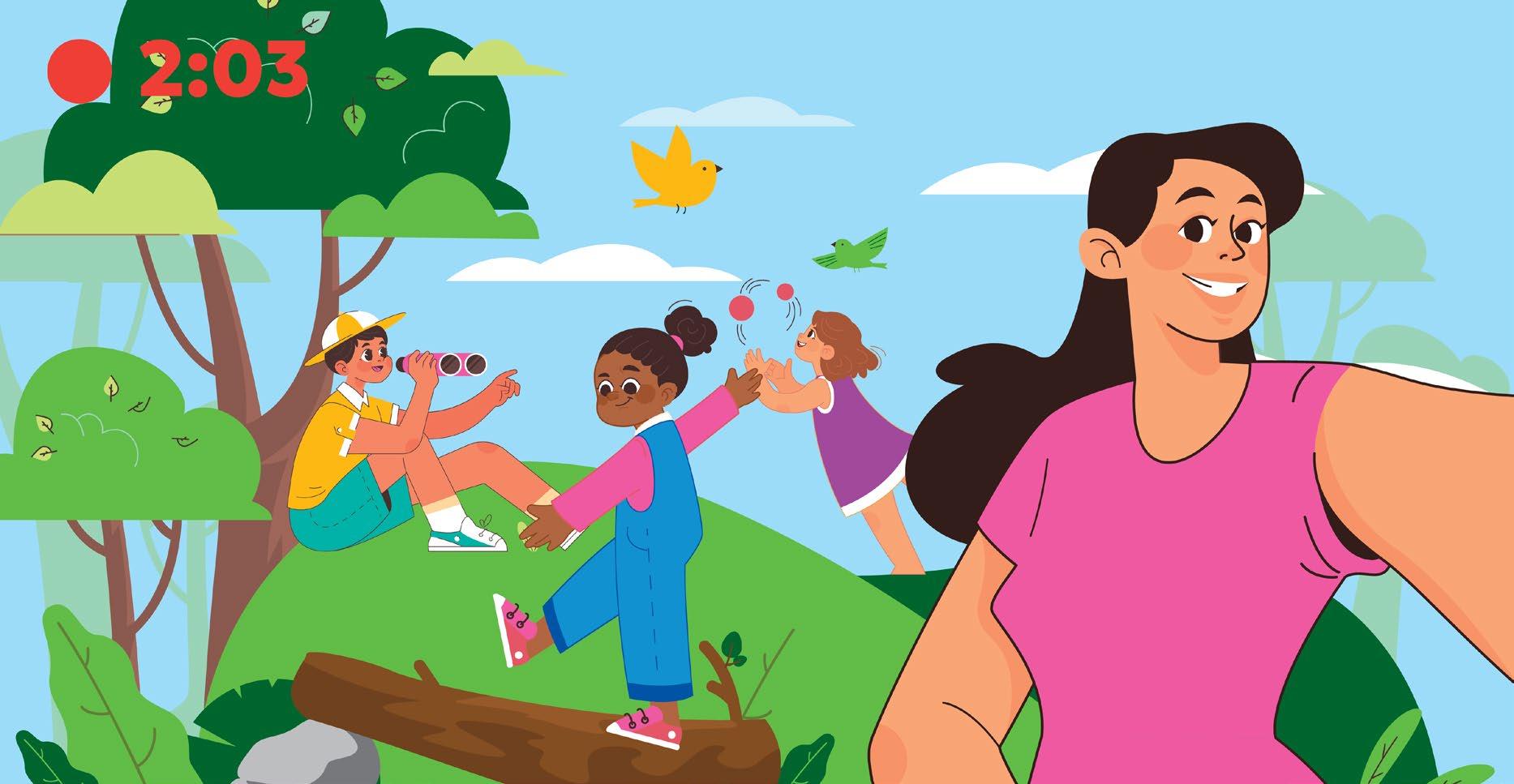
Parents and school communities may have a culture of sharing posts about children on social media. The use of social media by parents and schools sets a visible standard for what might be considered acceptable or normal digital sharing behaviour. These standards shape children’s understanding about their own agency, autonomy, and consent, as well as digital or social media literacy.
What this looks like in practice…
Schools, and adults, can model and promote responsible and respectful social media use within their school community. When applying this principle, consider:
Public or private? Remember that school social media pages are largely public. This means the digital information shared with the school community is also shared with others on the internet, as well as the social media platform itself. Schools can consider moving the posting of information about children to more private platforms, while still using social media for general communications about school events and reminders.
Engage children: Engage children in deciding what kinds of narratives and data they want to share. This is an opportunity for developing children’s digital literacy and agency. This activity maps to key Australian curriculum outcomes and provides an opportunity to
explore issues of data, digital footprints, and consent. For example, schools could develop a term roster allowing each class to decide on what to share while minimising teacher’s work. Building children’s digital literacy to support their own engagement in digital environments is central in preparing them to safely navigate digital environments with increasing awareness and independence.
Model respectful capture of data: This is particularly important at the point of collecting data. Asking children for consent with a simple question (for example, Can I take your photo for the school Facebook page?) signals to children their autonomy and consent matter. It also lays the foundation for a more agentic relationship with digital data. Minimising or avoiding the use of personal devices for capturing photos also models appropriate device use in daily activities with children.
Extend these practices to your school community: Communicate directly with families and the school community about the school’s focus on promoting responsible and respectful social media use. Schools can display the print and digital resources from the Smart Social Media School Promotion Materials to share a clear standard for the school community.
What actions can be taken?
Little Actions
☑ Parents and teachers can raise awareness about the school’s approach to responsible and respectful social media use with the school community
☑ Teachers can ask children about the kinds of information they would like the school to share (and not share) on social media
☑ Schools can encourage parents and communities to adopt responsible and respectful practices when visiting school activities and events. The Smart Social Media School Promotion Materials resources can help schools to communicate this message.
Big Actions
☑ Schools can plan for social media communications using the School Social Media Annual Planner to ensure regular responsible and respectful sharing while streamlining teacher workload and reducing the overall frequency of posts and minimising personal information shared
☑ Schools can opt to use more private platforms or groups to communicate children’s learning with families
PRINCIPLE 2
Prioritise intentional social media use balanced with other communications
Engaging with parents to enhance their involvement in their children’s learning is an important component of the work of schools15. Many schools use multiple channels of communication to meet the needs or preferences of diverse parents and communities. Multiple channels and duplicated communications may have benefits and challenges.
One benefit of using multiple channels of communication is that it allows parents and community to see communications in their preferred or convenient platforms. However, the cost of this convenience is that the same data is then shared across multiple digital platforms, increasing the quantity and spread of children’s information shared online (for
example cross-posting across Facebook and Instagram). Additionally, while some parents may be comfortable moving between different platforms, others may be overwhelmed with multiple forms of communication which may lead to confusion and potentially missing important information. It is therefore necessary to review the purpose of social media platforms and balance them with other communications.
What this looks like in practice…
It is ideal to (1) have a clear communication strategy where specific platforms, particularly social media platforms, are used for specific purposes, and (2) communicate these purposes to families in an accessible way.
Review the purpose of using social media: Review current school social media posts to reflect the intended purpose of posts. Are they well aligned with the needs of parents and in the best interests of children? Is the information shared about children and other members of the school community necessary or well aligned with achieving the purpose?
Limit duplication of children’s data shared: How are children’s images and personal information shared on social media? Ensure personal information of children is minimised on social media platforms, for example by removing duplicates or similar images (see more about minimising data in Principle 4). Crossposting (duplicating posts across platforms) also creates duplication of the data shared.
Prioritise modes that enhance parent-school communications: In the process of reviewing the use of social media along other channels of communications, schools may explore which modes of communication foster and enhance parent and school two-way communications. Schools should consider how social media communications enhance (or detract from) parent and school communications and involvement in their children’s learning. Platforms or modes that facilitate sharing of learning and meaningful communications between parents and school should be prioritised.
What actions can be taken?
Little Actions
☑ Parents and teachers can share these principles with the school
☑ Schools can review the purpose of social media platforms and clearly communicate the use of each communication channel to all teachers and school community
☑ Teachers and schools can focus on generating school social media communications that align with the school’s purpose
Big Actions
☑ Everyone can advocate for responsible and respectful social media sharing with your school community, school, education and government departments
☑ Schools can get clear about what the school and school community want to share (or not share) and why. By:
∙ Conducting an audit or review of current social media posts
∙ Surveying families around the best ways to communicate with social media Developing a communication strategy for the use of all platforms, including social media platforms, with plans to review and commit to reducing the sharing of children’s data
∙ Clearly communicate the ongoing strategy to families
PRINCIPLE 3
Openly communicate and obtain consent from all involved
Consent is a foundational principle in the responsible and respectful sharing of children’s data. The five elements of consent are that it is voluntary, informed, specific, current and the individual has capacity to understand the consent16. In education settings, this means that schools should ensure that consent is not only obtained but also clearly understood. Importantly, schools should consider who consent is obtained from. Usually, consent is sought only from parents, regardless of the age of the student. But as children become more capable of understanding the implications of the publication of their digital data, schools can also consider seeking consent from children directly to educate and empower them.
Informed: Families must be given clear, accessible information about what is being shared, where it will be shared, who can view it, and what will happen after it is shared. This is important because sharing children’s data on different platforms for different purposes has different implications. For example, the visibility of personal information shared in a closed learning platform like SeeSaw is more private than when shared on a public social media page.
Voluntary and specific: Consent should never be assumed or bundled into general school agreements. Families must have the option to opt out of specific uses without pressure or consequence. This means they can choose to opt out of sharing their children’s data on social media but agree to the sharing of their children’s data on education focused platforms.
Empowering children by recognising their capacity: Research shows that children want to be involved and have a say about the capture and use of their digital data, especially photos and videos. Children should be involved in conversations about their digital data. This helps build awareness and respect for their own data rights. All children can be involved in conversations about the use of their data through asking them for verbal consent.
“The [teachers] should ask. Because if they [children] don’t want to, they don’t have to [have their photo taken]”
- 8 years old
What actions can be taken?
Little Actions
☑ Parents and teachers can talk to children about their experiences of providing permission for their data to be captured. For example, Do you get your photo in class or in the playground? Do they ask or tell you before they take the photo? How does it make you feel?
☑ Teachers can get into the practice of asking children for consent at the point of capture. This small action is powerful as it minimises teacher workload and images collected for sharing while empowering children to develop their capacity for consent. For example, Would you like to have your picture taken for the school Facebook page?
Big Actions
☑ Parents, teachers and schools can review the consent procedure and permissions. All parents and teachers should have access to this form
☑ Schools can add a statement to the consent form that encourages parents to talk with children about what, when and why their information and photos/videos of them are shared online as part of the consent process
☑ Schools or education departments can use the Social Media for School Communications Policy Proforma as a guide to change the school’s consent procedure
PRINCIPLE 4
Minimise personal information when sharing on social media
Embracing the first three principles may generate fewer social media posts and ensure that those that are generated share children’s data in a responsible and respectful way. This is not to say that schools should not continue to promote and celebrate significant achievements and events. Important celebrations of school life, good news stories and the achievements of children can still be shared in more creative, considered and intentional ways while minimising data. A data minimisation approach also reduces teacher workload and sets clear parameters around what is acceptable when sharing information about children online.
Data shared on social media (and online, generally) can include personal information. This is information that identifies you or could be used to identify you and can include information such as names, date of birth, phone number, address, school information, email
address, and photos or videos. In photos and videos, details that can identify a specific child or person (such as clear shots of faces) should be minimised.
What this looks like in practice…
Consider the personal information that may shared in the school social media posts. When applying this principle, consider:
Purpose: When capturing children’s images and videos to share on social media platforms it is useful to first consider the purpose. Having a clear idea of what will be shared and why will ensure the capture of photos/videos is both streamlined and purposeful. The capture of photos/videos should also aim to minimise the capture of personal information. The goal is to shift the narrative from “Look who did this” to “Look at what our school is doing.”
Quantity vs quality: When sharing photos and videos on social media platforms, less is best. Select a small number of images that convey the intended meaning. Reducing frequency of sharing to regular and consistent intervals can also foster better and more purposeful communication practices while reducing teacher workload and personal information shared.
Minimise personal information: Limiting the sharing of personal details such as full names in written posts is something that many parents, teachers and schools are aware of. However, more personal information may be shared unintentionally. Personal information may also be shared through details about location naming or tagging, year groups or ages, or full names displayed in photos (e.g. on certificates).
River Sound Primary School
Mayspring Theatre
A
Simulated post.
What actions can be taken?
Little Actions
☑ Parents, teachers and schools can commit to reducing the number of images shared in social media posts. A post with one or two safer captured images can convey the same message as a post with ten images
☑ Everyone can follow Safer Image Capture Practices that protect privacy through minimisation of personal information:
∙ Focus on the activity, not the face
- Take photos of children’s hands engaged in a science experiment, the back of a group of heads watching a performance, or a side-profile shot of a student focused on their artwork
∙ Use group shots from a distanceCapture the energy of a sports carnival or assembly from afar, where individual faces are not clearly distinguishable
∙ Leverage angles and obstructions
- Take photos from behind, above, or where the central focus is on the project or action, with individuals playing a supporting role in the frame
∙ Use digital tools to obscure identity - If a close-up is necessary, use blurring tools or strategically placed emojis to cover faces before posting
∙ Focus on teachers or symbolic imagery
- Share photos of teachers preparing an activity, a finished class project (without names), or use graphics and text to describe an event
Big Actions
☑ Schools or education departments can encourage and schedule dedicated time to upskill teachers and relevant staff on safer image capture practices
River Sound Primary School We are thrilled to announce that our recent music concert was a resounding success!
huge thank you to our dedicated music teachers for their hard work and to all the parents who came out to support our young musicians.
PRINCIPLE 5
Plan for the life cycle of data generated for social media
Planning for the life cycle of an image
Capture: What device(s) are children’s images captured on?
Storage: Are images and video stored in a central secure location?
School social media posts frequently share photos and videos of children. This digital data generated by schools and shared on social media is viewed for a short time by school communities but remains visible long after it has been shared - we commonly refer to this as a digital footprint.
To protect children’s data, the management of children’s data should be considered across a ‘lifecycle’ from creation through to disposal. Between collection and disposal, schools are responsible for the transfer, storage, access, and management of consent for photos and video collected over time. While this may initially appear as additional work for teachers and schools - embracing these principles means that schools would potentially be minimising the capture of images using fewer devices and ultimately generating less data to manage.
Access: Who has access to image storage? What is the procedure for access and sharing with staff?
Disposal & retirement: When and how is students data removed?
What this looks like in practice…
When applying this principle, consider:
Capture: Schools currently capture digital photos and videos of children on a range of digital devices including teachers’ personal devices. The more devices used to capture data, the increased risk of incorrect handling or mishandling. Schools can reduce risk and streamline the work associated with capturing digital images by using a school device or devices of a small number of teachers who are familiar with the relevant policies and procedures to capture digital images and video.
Storage: Photos of children and the school community are personal information. Photos should either be deleted in a timely manner or, if needed, should be stored securely, and in the same ways we securely store any other personal details. If the school has use for the image after its initial use, it should store images in a single, secure location. This may include local servers or cloud-based servers with appropriate protections in place.
Access: Schools are able to store, secure and maintain data and images responsibly, with appropriate records kept, ensuring this information is stored, shared, and retired in accordance with school or system policies and guidelines. Meeting this expectation means that only specific individuals with an identified need have permission to access their storage location.
Disposal: The final stage in the life cycle of an image is its disposal. Once an image has reached the pre-determined end of its life cycle, it is no longer required and it’s important that it’s disposed of correctly. This ensures the image isn’t used once it becomes out of date and protects the school and child from unintentional misuse.
Image retirement and disposal also support schools to manage consent over time. As children age, their views about consent and use of their images and video will evolve. Therefore, it is not appropriate to use or continue to allow any collected images to remain published over an extended period. For images shared on social media, this means reviewing and disposing of images stored on local or school-based servers, as well as deleting publicly visible posts on social media platforms.
What actions can be taken?
Little Actions
☑ Teachers can review and dispose of children’s photos and videos stored on personal devices
☑ Schools can remind children, parents and carers about their right to adjust their consent permission
Big Actions
☑ Schools and education departments can plan and communicate expectations about the management of children’s images
Identify a single secure location for the storage of images
∙ Identify teachers responsible for managing access to images including transfer, storage and disposal
∙ Provide and reinforce clear guidance for teachers about the capture and storage of images and video on personal devices
Consider adopting a policy that prohibits the capture of images of children on personal devices, or encourage the use of school managed devices only
∙ Conduct data disposal annually
☑ Schools and education departments can update policy drawing the on Social Media for School Communications Policy Proforma
Summary
The key takeaways and actions are presented here for each stakeholder group involved in the sharing of children’s data on social media.
At the core of these actions is an understanding of the benefits and risks of school social media.
Children are at the centre of this practice. While not directly involved in how schools share their data on social media, the actions aim to empower their involvement to learn about and have a say in how their data is shared online.
Further context and detail for actions are outlined in the principles.
PARENTS
Key Takeaway
Advocate for the best interests of children and the protection of children’s data
Actions to Take
Little Actions
☑ Talk to children about their experiences of providing permission for their data to be captured
☑ Talk about the school’s approach to responsible and respectful social media use with your school community
☑ Share these principles with your school
☑ Parents can also implement changes in personal social media use when sharing children’s data.
Big Actions
☑ Advocate for responsible and respectful social media sharing with your school community, school, education department and government
TEACHERS
Key Takeaway
Advocate for school-based changes
Modify professional practice
Actions to Take
Little Actions
☑ Talk to children about their experiences of providing permission for their data to be captured
☑ Get into the practice of asking children for consent at the point of capture
☑ Reduce the number of images shared in social media posts
☑ Follow safer image capture practices that protect privacy through minimisation of personal information
☑ Review and dispose of student photos and videos stored on staff personal devices
☑ Consider using a school managed device for the capture of children’s images
☑ Ask children about the kinds of information they would like the school to share (and not share) on social media
☑ Talk about the school’s approach to responsible and respectful social media use with your school
Big Actions
☑ Advocate for responsible and respectful social media sharing with your school community, school, education department and government
SCHOOLS
Key Takeaway
Lead school-based change and advocate for departmental action
Actions to Take
Little Actions
☑ Commit to reducing the number of images shared in your social media posts
☑ Follow safer image capture practices that protect privacy through minimisation of personal information
☑ Remind children, parents and carers about their right to adjust their consent permissions
☑ Consider the purpose of social media platforms in school communications and clearly communicate this to all staff and your school community
☑ Focus on generating school social media communications that align with this purpose
Big Actions
☑ Lead change by implementing responsible and respectful social media sharing
☑ Review the consent procedure within the school
☑ Use the policy proforma as a guide to change the school’s consent procedure
☑ Plan and communicate expectations about the management of children’s images
☑ Upskill staff on safer image capture practices
☑ Develop an annual social media communication plan
☑ Get clear about what your school and the school community want to share (not share) and why
EDUCATION DEPARTMENTS
Key Takeaway
Lead change and support for schools, teachers and parents
Actions to Take
Little Actions
☑ Commit to reducing the number of images shared in your social media posts. A post with one or two safer captured images can convey the same message as a post with ten images
☑ Follow safer image capture practices that protect privacy through minimisation of personal information community
☑ Share these principles with your school
Big Actions
☑ Lead change by implementing responsible and respectful social media sharing
☑ Review the consent procedures across the department
☑ Add a statement that encourages parents to talk with children about what, when and why their information and photos/ videos of them are shared online as part of the consent process
☑ Use the policy proforma as a guide to change consent procedure and management of digital data
☑ Upskill staff on safer image capture practices
Social Media for School Communications Policy Proforma - An adaptable template to inform the review and update of school or education department-based policy guiding school social media use
School social media annual planner template - A template for school use to plan and schedule intentional social media communications.
Safer Image Capture Practices Guide - Advice and example photos
Smart Social Media School Promotion Materials - Digital content including social media badge, banner and tiles/posts; and print materials to display and share with parents.
1 T. Apps, K. Beckman, N. Pawlicka, and P. Kidson. 2025. “The Nature of Connection: Parents’ Experiences with School Social Media,” Learning, Media and Technology 0: 1–16, https://doi.org/10.1080/17439884.2025.2541 714
2 K. Beckman, T. Apps, and S. Bennett. 2024. “Schoolfeeds: A Study of Principals’ Governance of School Social Media Pages and Students’ Data, Privacy and Treatment,” Computers and Education Open 7: 100213, https://doi.org/10.1016/j.caeo.2024.100213
3 C. Bessant. 2024. “School Social Media Use and Its Impact upon Children’s Rights to Privacy and Autonomy,” Computers and Education Open 6: 100185, https://doi.org/10.1016/j. caeo.2024.1001
4 J. M. Aldridge and F. I. McLure. 2024. “Preparing Schools for Educational Change: Barriers and Supports—A Systematic Literature Review,” Leadership and Policy in Schools 23(3): 486–511, https://doi.org/10.1080/15700763.2023.2171 43
6 J. M. Rosenberg, C. Borchers, M. A. Burchfield, D. Anderson, S. M. Stegenga, and C. Fischer. 2022. “Posts About Students on Facebook: A Data Ethics Perspective,” Educational Researcher 51(8): 547–50, https://doi. org/10.3102/0013189X221120538
7 United Nations Committee on the Rights of the
Child, “General Comment No. 25 (2021) on Children’s Rights in Relation to the Digital Environment.” Accessed 2025, https://www. ohchr.org/en/documents/general-commentsand-recommendations/general-commentno-25-2021-childrens-rights-relation
8 S. Creagh, G. Thompson, N. Mockler, M. Stacey, and A. Hogan. 2023. “Workload, Work Intensification and Time Poverty for Teachers and School Leaders: A Systematic Research Synthesis,” Educational Review 77(2): 661–80, https://doi.org/10.1080/00131911.2023.2196 607
9 A. Heffernan, D. Bright, M. Kim, F. Longmuir, and B. Magyar. 2022. “‘I Cannot Sustain the Workload and the Emotional Toll’: Reasons behind Australian Teachers’ Intentions to Leave the Profession,” Australian Journal of Education 66(2): 196–209, https://doi. org/10.1177/00049441221086654
10 Office of the Australian Information Commissioner, “Global Expectations of Social Media Platforms and Other Sites to Safeguard against Unlawful Data Scraping,” https://www. oaic.gov.au/news/media-centre/globalexpectations-of-social-media-platforms-andother-sites-to-safeguard-against-unlawfuldata-scraping
11 Parliament of Australia, “Online Safety Amendment (Social Media Minimum Age) Bill 2024,” https://www.aph.gov.au/ Parliamentary_Business/Bills_Legislation/ Bills_Search_Results/Result?bId=r7284
12 Reset Tech Australia, “Profiling Children for Advertising: Facebook’s Monetisation of Young People’s Personal Data”, April 26, 2021, https:// au.reset.tech/uploads/resettechaustralia_ profiling-children-for-advertising-1.pdf
13 ABC News, “Facebook Confirmed It Scraped Publicly Available Images…,” September 11, 2024, https://www.abc.net.au/news/2024-0911/facebook-scraping-photos-data-no-opt-
out/104336170
14 Australian Federal Police, “AFP Warns Parents over Rise in AI-generated Child Abuse Material,” https://www.afp.gov.au/news-centre/mediarelease/afp-warns-parents-over-rise-aigenerated-child-abuse-material
15 Australian Institute for Teaching and School Leadership (AITSL), “Strengthening Parent Engagement to Improve Student Outcomes,” June 2024, https://www.aitsl.edu.au/ research/spotlights/strengthening-parentengagement-to-improve-student-outcomes
16 Information and Privacy Commission NSW, “Fact Sheet—Consent,” https://www.ipc.nsw.gov. au/resources/fact-sheet-consent