
Growing up digital in Australia
Acknowledgement
The Australian Research Council Centre of Excellence for the Digital Child acknowledges the First Australian owners of the lands on which we gather and pay our respects to the Elders, lores, customs, and create spirits of this country.
The Centre recognises the examples we set in diversity and inclusion will support young children to respect and celebrate differences in all people. We embed diversity, inclusivity, and equality into all aspects of the Centre’s activities and welcome all people regardless of race, ethnicity, social background, religion, gender, age, disability, sexual orientation, and national origin


DIRECTOR’S MESSAGE
As children’s lives become ever more entwined with digital technologies, our work in 2025 has been a year of growth, influence and impact for the ARC Centre of Excellence for the Digital Child. Our work continues to expand Australians’ understanding of children’s digital experiences and shape how these experiences are governed, supported and enriched.
Research That Shapes Children’s Digital Lives
Our research progressed strongly across all programs. In 2025, we produced more than 100 research outputs, including major reports on social media, generative AI, and platform‑based environments such as Roblox. Each offer practical insights for families, educators, and policymakers.
The ACODA longitudinal study moved its third year, completing Wave 2 and initiating a new suite of nested studies. ACODA is rapidly becoming a landmark dataset, illuminating how children’s digital practices intersect with family contexts, culture, and access.
Across our three research programs, our work took distinct yet connected forms:
The Healthy Child program deepened the evidence base on healthy digital engagement and secured substantial NSW Government investment to examine wellbeing, learning and screen time.
The Educated Child program advanced national thinking on digital play, AI literacy, children’s rights and their perspectives on digital literacies, and early childhood learning policy, strengthening its profile through international presentations and collaborations.
The Connected Child program generated pivotal insights into the platformisation of family life and children’s rights, including flagship outputs such as The Platformization of the Family and new principles for responsible school social‑media use.
The Centre’s commitment to advanced Indigenous‑led and Indigenous‑informed research also strengthened. New frameworks for Indigenous research, work on strengths‑based approaches in Indigenous education, and projects focused on language revitalisation and digital inclusion highlighted with Aboriginal and Torres Strait Islander knowledge and priorities across the Centre.
Partnerships with Purpose
Our partnerships network grew in depth and reach. Collaborations with UNICEF Australia, Netsafe New Zealand, ABC Education, ACECQA, UNU Macau, the Alannah & Madeline Foundation and ACMI translated our evidence into new guides, professional learning and classroom materials and policy resources spanning online safety, media literacy and ethical video game design.
A key highlight was the Digital Childhoods Summit 2025, which brought together more than 72 stakeholders from government, regulatory bodies, industry, community organisations and research. Together, participants articulated 10 Digital Priorities for Australia, outlining a shared national agenda for supporting children’s wellbeing and safety in an increasingly digital world.
People, Culture and Capability
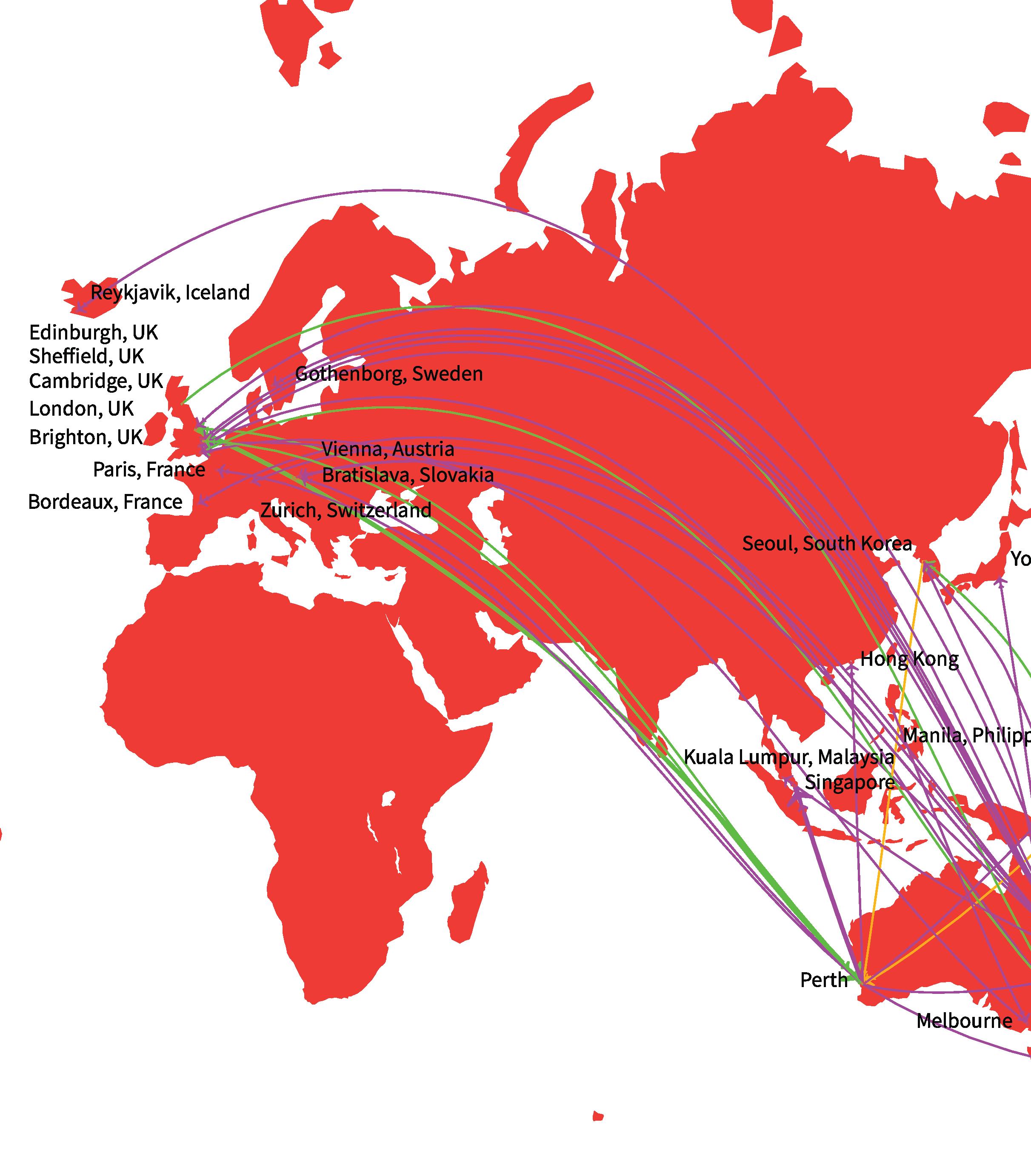
Our Centre community remains one of our greatest strengths. DCAM 2024 in Wollongong gathered 104 members and partners for three
days of keynotes, panels, collaboration and celebration through the Digital Child Awards. Spotlight sessions, Winter School and regular node meetings continued to foster connection across our six universities and fostered new collaborations.
Investment in our people continued to grow. Centre schemes provided $52k in travel, caregiving support, professional development and project funding. Members secured over $1.26 million in external competitive grants, including ARC DECRAs, NHMRC funding, Priority Grants, ARC Discovery funding and scholarships, advancing research on sleep and screen use, digital gaming and wellbeing, school‑based digital learning and digital health.
Our HDR and ECR Clubs delivered workshops, writing retreats, methodologies training and peer‑learning activities that built skills, strengthened networks and supported cross‑node connections and supported emerging leaders.
Our members also stepped into influential roles across universities, government and industry, with numerous appointments, academic promotions, advisory positions and awards that recognised the Centre’s expertise in media literacy, online safety and children’s digital wellbeing.
Reaching Families, Educators and the Public
Communication and outreach remained central to how we translate research for real‑world use. Across 2025, we produced accessible resources that included factsheets, checklists, reports, seminars and digital‑literacy tools that supported families, educators and policymakers to make informed decisions and navigate children’s digital lives.
Collectively, our channels now reach more than 62,000 followers and active users to generate 594,867 impressions and 21,516 interactions across social media, our website, email and Issuu. Key reports such as Children and Generative Artificial Intelligence (GenAI) in Australia: The Big Challenges and ROBLOX: A Rapid Analysis attracted strong readership and wide uptake.
Across Queensland, Western Australia and New South Wales, Our Children’s Technology Spaces
hosted 54 events and sessions, welcoming more than 1,300 children to play‑based workshops, school holiday programs, excursions and research activities. These living play spaces offer joyful, research‑rich environments where children could explore digital technologies creatively and confidently alongside researchers, educators and families..
Social Media, Safety and Global Debate
Australia’s proposed social media minimum‑age legislation drew national and global attention in 2025. The Centre contributed evidence through submissions, explainer materials, classroom resources and a major report capturing young Australians’ perspectives on the proposed ban.
Our experts were widely consulted by the media, with coverage across ABC, SBS, The West Australian, The Australian and The Conversation, as well as international outlets including BBC News, CNN, CNA, the Financial Times, Reuters and China Daily. These engagements positioned Australian policy developments within a global policy context and reinforced the Centre’s role as a source of nuanced, child‑centred analysis on online safety and children and young people’s digital rights..
Looking Ahead ‑ 2026
The achievements of 2025 reflect a Centre that is confident in its purpose and increasingly influential in shaping national and international conversations about children’s digital futures. As we move into 2026, we will continue to strengthen partnerships, enhance the translation and impact of our research and place children’s digital wellbeing, rights and voices at the centre of everything we do.
Thank you to our members, partners, collaborators and communities. Your expertise, generosity and commitment underpin our shared mission: creating positive digital futures for all children.
DISTINGUISHED PROFESSOR
SUSAN DANBY FASSA
Director, Australian Research Council Centre of Excellence for the Digital Child
ABOUT THE DIGITAL CHILD
Children are growing, learning, and connecting with digital technology. The rapid pace of growth and change in this space means that there is an urgent and compelling need to create positive digital childhoods for all Australian children: this is the mission of the Australian Research Council Centre of Excellence for the Digital Child.
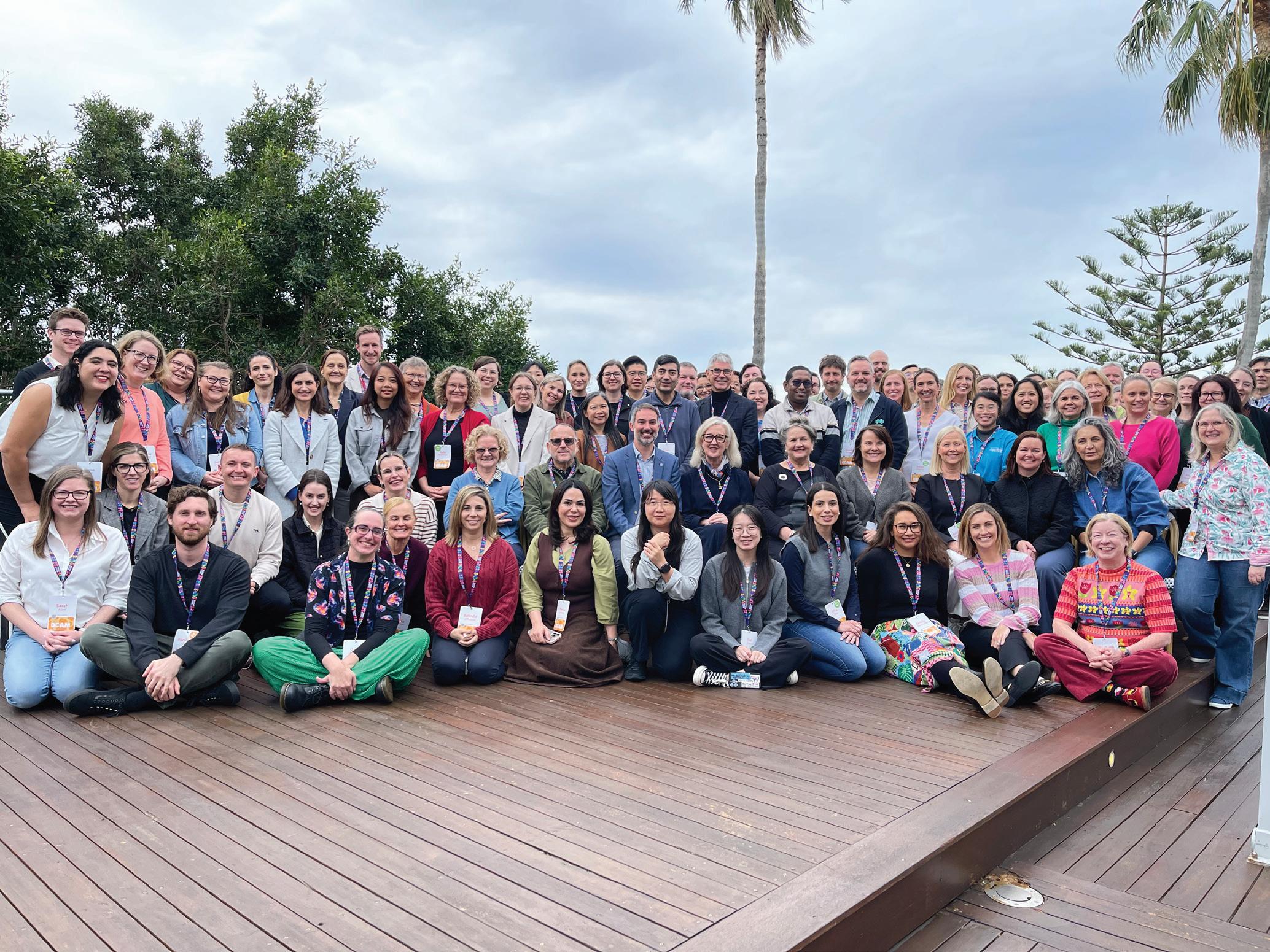
INTERNATIONAL TRAVEL
DOMESTIC TRAVEL
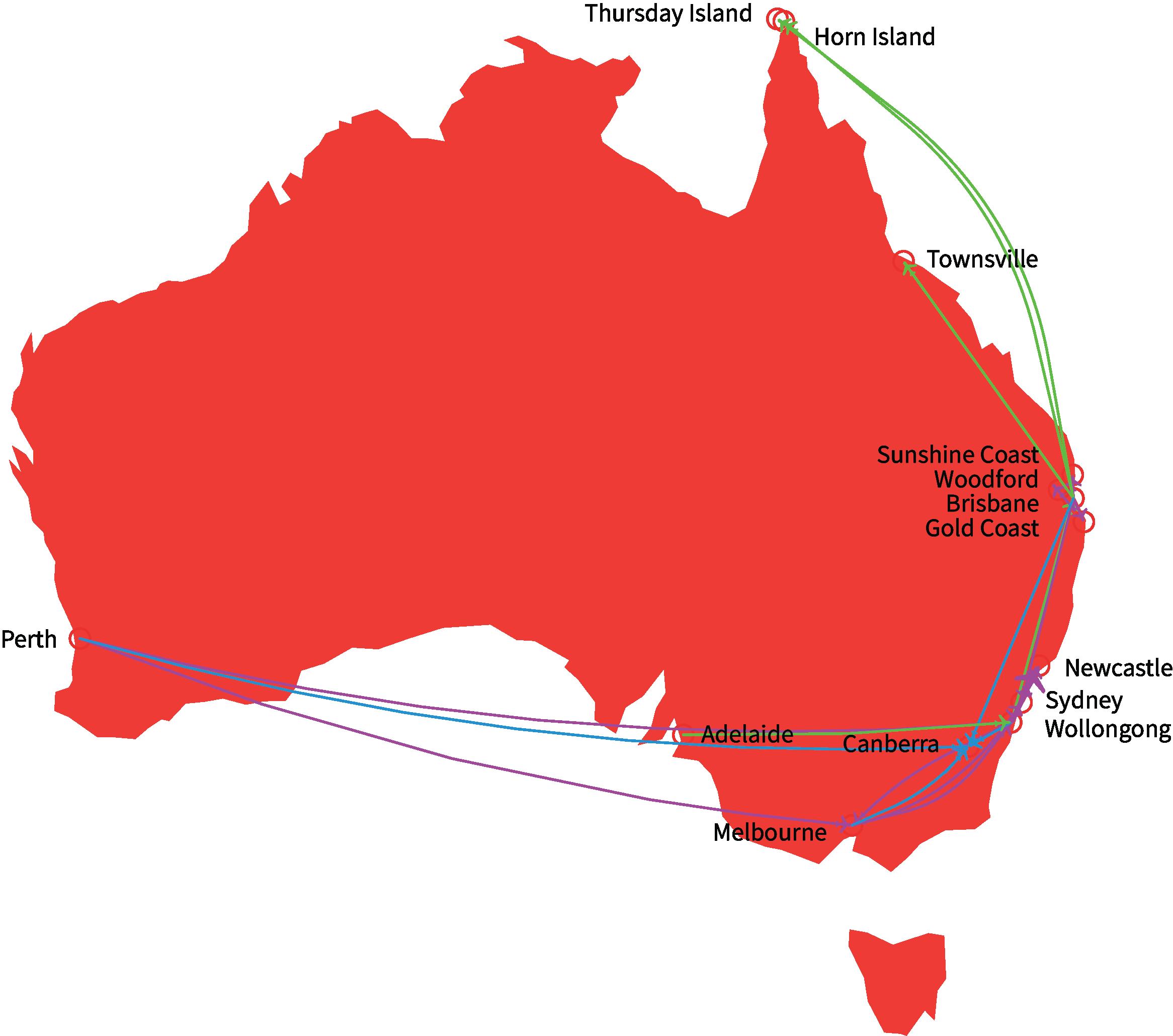
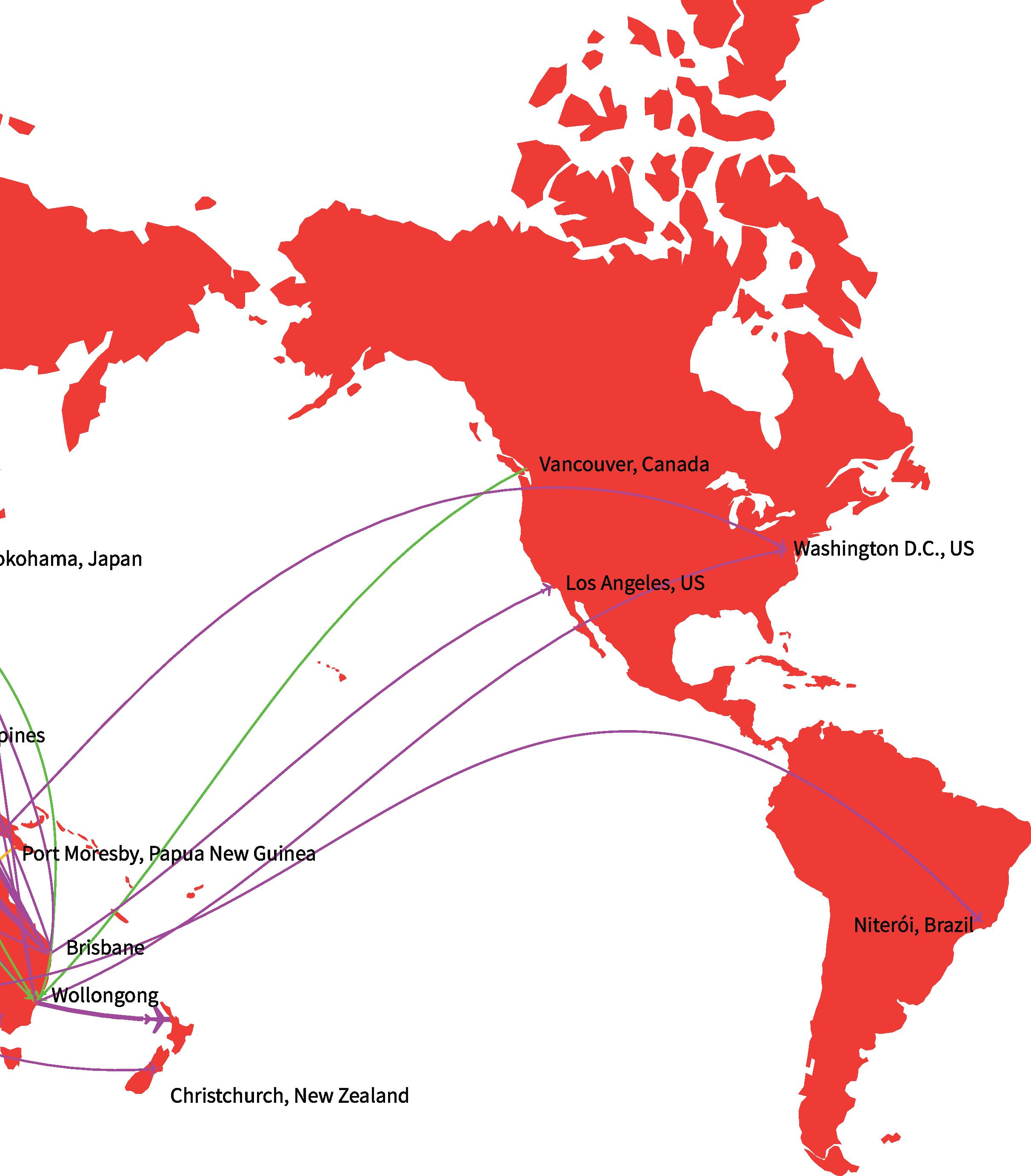
Conference
Policy
Collaboration
Community
Professional Learning LEGEND
Member news in 2025
Graduations
Two of our members celebrated major academic milestones this year. At Curtin University, Stephanie Milford completed her PhD through ECU, marking a significant achievement in her research journey. She also commenced a Centre Research Fellow Appointment for six months, continuing her growing contribution to the Centre. Kimberly (Kim) Maslin also graduated with her PhD, adding new insights into children’s digital learning.
Major Awards & Recognition
Members across the Centre were recognised for their outstanding contributions at both the university level and on the national stage.
Professor Crystal Abidin was named among The Australian Top 250 Researchers 2026, recognised as the top researcher in Communication within the Humanities, Literature and Arts category. This national acknowledgement highlights her leadership in the field.
More information: The Australian Top 250 Researchers 2026.
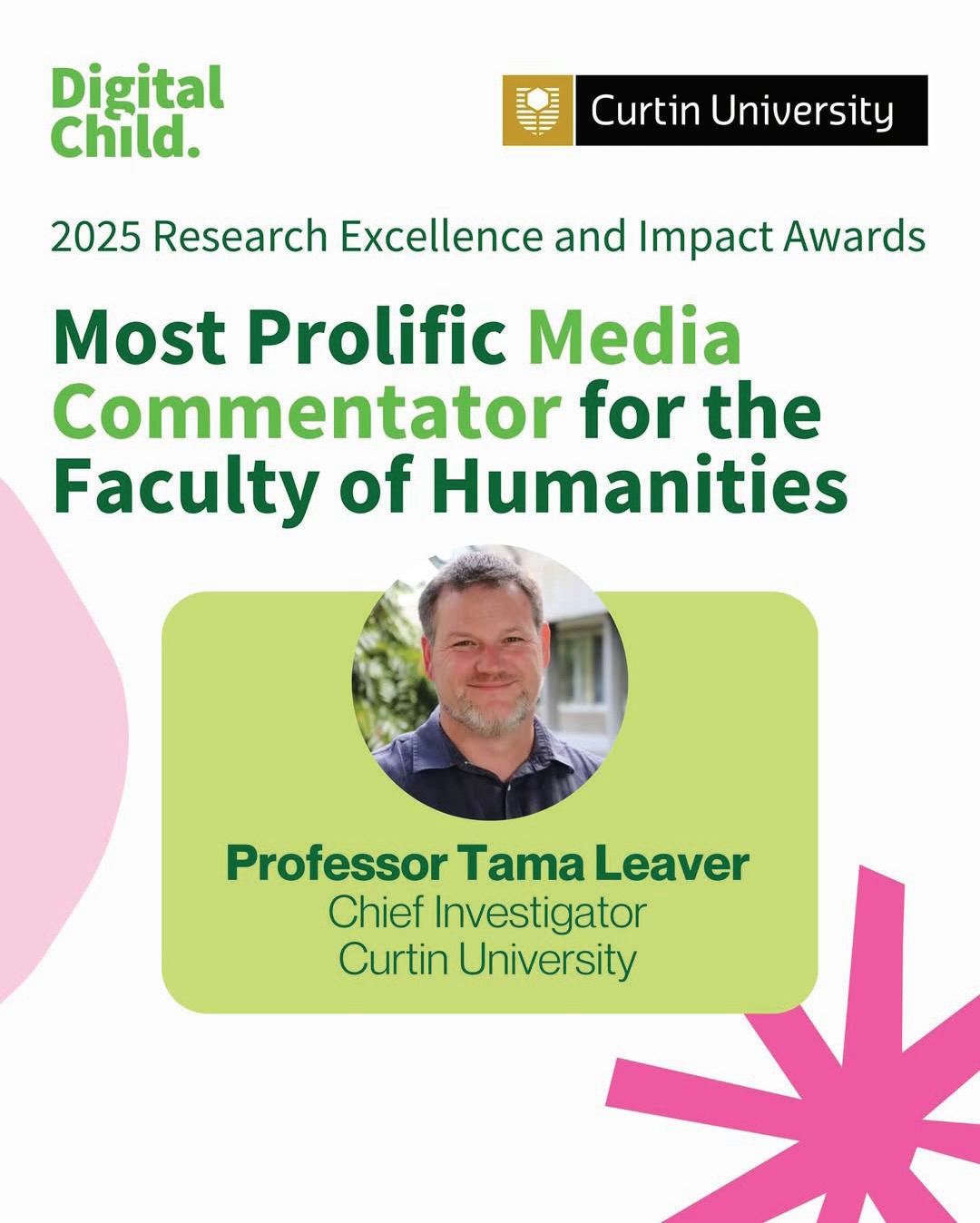
At Curtin, Professor Tama Leaver was honoured as the 2025 Most Prolific Commentator and, together with Dr Suzanne Srdarov, received a Research Excellence and Impact Award for their publication Generative Imaginaries of Australia: How Generative AI Tools Visualize Australia and Australianness in Oxford Intersections: AI in Society
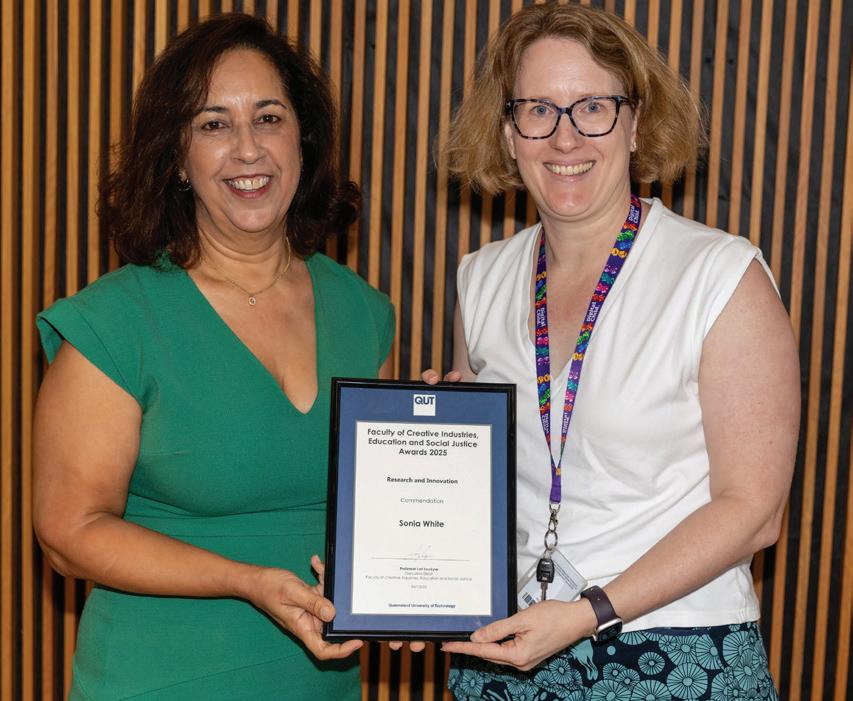
Also, Associate Professor Sonia White received a Commendation for Research and Innovation in the 2025 CIESJ Faculty Awards by QUT, recognising her outstanding contribution to advancing innovative approaches within her field.
ARC DECRA Success
Two members from the University of Wollongong secured highly competitive ARC DECRA Fellowships for 2026:
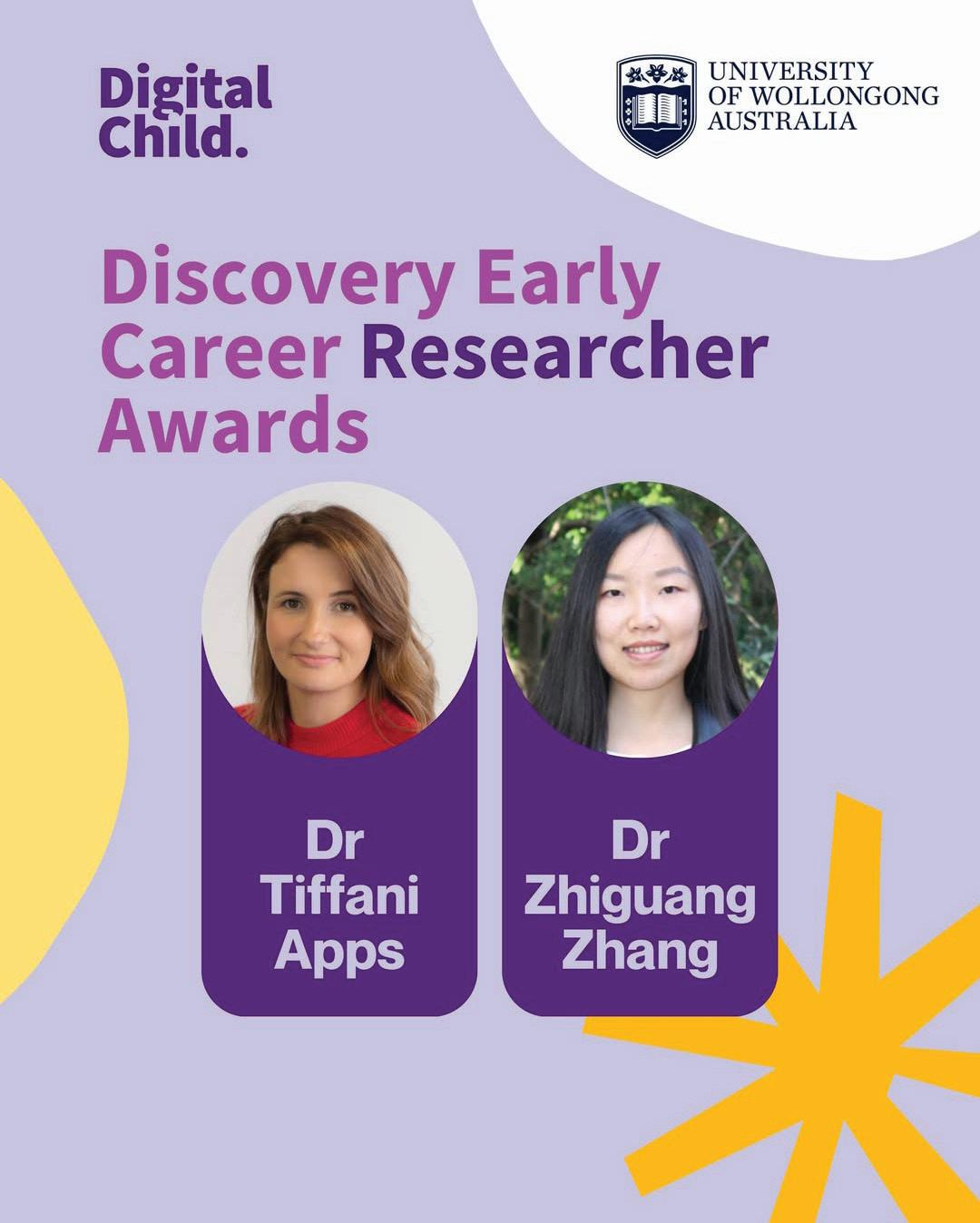
Dr Zhiguang Zhang will lead From Pixels to Pillow: Optimising Screen Use for Healthier Sleep, a project offering new evidence on how young children’s screen habits can coexist with healthy sleep.
Dr Tiffani Apps will lead Navigating Social Media Experiences within Australian Families, exploring how social and technical factors shape children’s online lives — work with direct relevance in a shifting regulatory environment.
Dr Myrto Mavilidi, Associate Investigator at Southern Cross University, was awarded a Discovery Early Career Researcher Award (DECRA) grant of $487,974 to lead an innovative project on enhancing young children’s learning through high quality digital experiences. Her research focuses on designing school based physical activity interventions to improve cognitive, learning, and psychosocial outcomes.
New Roles & Appointments
At the University of Queensland, Professor Simon Smith joined the Editorial Board of the Digital Health journal, strengthening the Centre’s contribution to international digital wellbeing research.
At Deakin University, Dr Tebeje Molla joined an international consortium funded through the prestigious Marie Skłodowska‑Curie Actions under the EU Horizon program. The consortium’s project, The Democratic Roles of Universities (DRU), explores how universities can model and strengthen democratic values around the world. The initiative is supported by €1.59 million in funding and will run from January 2026 to December 2029, coordinated by the Faculty of Psychology and Education Sciences at the University of Porto through its Centre for Research and Educational Intervention.
Digital Child members continued shaping national discussions around media literacy, online safety, and children’s digital wellbeing. At QUT, Professor Michael Dezuanni was appointed Chair of the Australian Media Literacy Alliance, reinforcing the Centre’s leadership in the development of national media literacy policy. His appointment announcement can be viewed here.
Professor Michael Dezuanni and Dr Amanda Levido are also two of a number of media literacy experts serving on a Media Literacy Advisory Group, providing specialist guidance to the National Film and Sound Archive’s media literacy schools program. Their involvement supports the creation of high‑quality, evidence‑informed resources for teachers and students across Australia.
Additional contributions across the Centre strengthen national and sector‑wide engagement. Dr Elizabeth Heck joined the Expert Reference Group for the Fair, Inclusive Learning Dashboards project, while Dr Nicole Hayes was appointed to the Editorial Board of Child: Care, Health and Development and invited to serve as an expert reviewer for the Health Research Council of New Zealand Research Fellowships.
Professor Daniel Johnson collaborating with Mettlesome and the Social Research Centre on digital media classification, and presenting insights for the Dolly’s Dream Advisory Board.
Dr Andy Zhao was appointed to the eSafety Commissioner’s Parent Advisory Group, serving as the primary representative for the Deakin node and contributing to national parent‑focused online safety initiatives.
Professor Julian Sefton‑Green was appointed to the national e‑Safety advisory group reviewing the proposed social media ban. Read the full article here.
Transitions & Farewells
Some of our members transitioned into new roles across the sector this year. We farewelled Professor Annette Woods, who moved from QUT to UNSW, and Professor Steven Howard, who departed the University of Wollongong for a new position in the Department of Education at the University of Oxford.
Senior Professor Sue Bennett commenced a significant new appointment as Deputy Vice‑Chancellor (Academic) at La Trobe University — her announcement is available here. We also said farewell to our research fellow Dr Kellie Vella, who has now joined the Attorney General’s Office as a Data Policy Officer.
This year also saw Professor Lisa Kervin AM move into a new role at Monash University as Professor of Early Childhood and an ARC Future Fellow, continuing her longstanding leadership in early childhood and digital literacy research. More about her appointment can be found here
Midterm review update
Our mid term review was conducted by the Australian Research Council in November 2024.
The feedback from the review indicated the Centre is exceeding expectations (or performing at an outstanding level) in five areas.
Below is an update on our progress regarding the recommendations for which the Australian Research Council requested a status report.
Recommendation #1
The Panel recommends that the Centre gives attention to increasing their academic outputs.
The ARC requires an update on progress to increasing academic outputs in the Centre’s next annual report.
Update:
The Centre increased its academic outputs in 2025 with a 64% increase in outputs since 2024.
Recommendation #2
The Panel recommends that the Centre develop a coherent approach to the international research reputation of the Centre, including systematic benchmarking of research outputs.
The ARC requires information on international benchmarking of the Centre’s research outputs to be included in the Centre’s next annual report.
Update:
The Centre works with the QUT Library to benchmark our publications internationally.
According to SciVal, the Centre’s Field‑Weighted Citation Impact (2020 2025) is 1.67 indicating Centre research outputs are above the global average for number of citations.
The Centre’s work is well recognised. This is reflected by the presence of our research outputs in top citation percentiles with the Scopus database. For example:
• In the social sciences, 21.2% of our outputs are in the top 10% of all cited articles. This is above the world average of 10%.
• In psychology, 24.2% of our outputs are in top 10% of all cited articles. This is above the world average of 10.9%.
• In computer science, 16.9% of our outputs are in the top 10% of all cited articles. This is above the world average of 10.7%
The Panel recommends that a research audit of the scope of the Centre in the next stage be undertaken to determine the need for consolidation.
The ARC requires a brief report on the strategy to be used for consolidation in the Centre’s next annual report.
Update:
The Centre undertook a scoping and audit of our research at the CI retreat in March 2025. Based on that meeting, the decision was made that the Centre would pivot and focus on impact and translation for Centre projects. Following this decision, the Centre established the Translation and Impact sub committee which coordinates and supports translation initiatives across all nodes.
The Panel recommends that the Centre clarify trends and the role of AI in the research programs going forward. The ARC requires the Centre succinctly report on the role of AI across its programs of research in the Centre’s next annual report.
Update:
Our research examines AI across its health, education, and connectedness research programs, focusing on how generative and data‑driven technologies shape children’s wellbeing, learning, and online experiences. This work highlights both opportunities—such as creativity, digital participation, and emerging AI‑enabled learning tools—and significant risks, including bias, privacy concerns, emotional attachment to AI agents, online safety threats, and issues like Indigenous data sovereignty.
The need for AI literacy, ethical design, and stronger child‑focused protections while providing evidence‑based insights to guide policymakers, educators, and families navigating children’s evolving digital worlds.
Recommendation #4
Recommendation #6
The Panel recommends that the Centre assess the suitability of the three core programs in its strategic planning for the next phase of its operations.
This recommendation was directed at preparing for the evolution of the Centre beyond its current funding cycle. The ARC recommends that the Centre undertake a strategic review of its core research programs as it considers suitable priorities for its next phase of operations.
Update:
The Centre assessed the suitability of its three core programs during 2025. The outcome of this process was a decision to keep the three core programs with the addition of heavier focus on translation and impact. This strategic focus on translation and impact is directed towards core Centre audiences, including children and families, industry, NGOs, and government. It seeks to demonstrate the ongoing value of the Centre’s research area in preparation for when current funding ceases.
The Panel requests further information on the Centre’s hiring practices and workforce plans.
The ARC requires the Centre to draft a workforce plan and share this report with RF and student members, so this planning is transparent for all Centre members.
Update:
Our workforce plan was published on the Digital Child intranet for use by all members in March 2026.
Recommendation #7
Recommendation #12
2026 ACTIVITY PLAN
RESEARCH
• Complete year 3 of ACODA longitudinal data collection and analysis; commence year 4 data collection. Update ACODA data display with new data when available.
• Hold at least two in person Chief Investigator meetings; holding at least one additional virtual Chief Investigator meeting.
• Add time for research collaboration with a focus on authoring academic outputs within the Centre research and research training calendar
GOVERNANCE
• Enact changes based on recommendations made in Mid Term Review according to set deadlines
• Convene at least two Advisory Committee meetings
• Review progress of research projects
MENTORSHIP AND CAPACITY BUILDING
• Deliver training for HDR student and ECR members
• Review and deliver next edition of Future Leaders program for HDR and ECR members
• Collaborate with HDR and ECR clubs to understand future training requirements
PARTNERSHIPS AND COLLABORATIONS
• Deliver at least one event with a strategic Centre partner
• Build domestic and international collaborations with research and wider stakeholders
• Create resources with a strategic Centre partner
CENTRE CULTURE AND CONNECTION COMMUNICATIONS, TRANSLATION AND ENGAGEMENT
• Hold in person Digital Child Annual Meeting in Queensland
• Review and deliver Digital Child Spotlight virtual meeting series
• Conduct annual Centre equity, diversity, and inclusion survey
• Build Centre library of public facing resources for core audiences; children, parents and carers, educators, and policymakers
• Hold third Digital Childhoods Summit to continue building connections amongst policy, NGOs, and other stakeholders
• Support Centre researchers to communicate about their research and engaging with stakeholders
GOVERNANCE
The Digital Child’s governance structure includes committees that provide expert advice and oversight on Centre work.

Advisory Committee Executive Committee
The Advisory Committee is responsible for adding value and critical input to guide the Centre in delivering its mission. The committee met with the Centre Director and Centre Directorate two times in 2025.
Chair
Taryn Marks
Members
Emeritus Professor Paul Chandler
Professor Barbara Comber AM
Megan Mitchell AM
Centre Director
Distinguished Professor Susan Danby
Centre Directorate
Deputy Director Professor Louise Paatsch
Chief Operating Officer Lisa Walker
The Executive Committee oversees the Centre’s strategic direction and performance against the objectives of the ARC Centre of Excellence scheme and agreed performance targets.
The Committee ensures that the Centre’s resources are allocated effectively to achieve Centre aims. In addition, the Executive Committee acts as the formal authorising committee for the Centre budget, strategic plan, research projects, project and partnership agreements, and applications for Associate Investigator (AI) status.
Chair
Centre Director Susan Danby
Other members include the Centre Deputy Director, Chief Operating Officer, and Node Representatives.
Translation and Impact Subcommittee Research Committee
The Research Committee manages and reviews the progress of the Centre’s research.
The Committee drives initiatives to ensure that the Centre’s research is transdisciplinary and cross nodal, strongly aligned with the Centre’s research programs, responsive to the needs of partners, and provides opportunities for co design of new projects with partners.
Chair Professor Michael Dezuanni
Other members of the committee include the Co leads for the Healthy, Connected, and Educated research programs, the Australian Child of the Digital Age (ACODA) Longitudinal Study Co Leader representative, Indigenous Advisor, and a member of the Centre Directorate.
The Translation and Impact Program supports activities and outputs that are designed to translate research outcomes and create impact for the Centre.
Centre members can pitch novel impact focused activities for the Digital Child.
Chair
Professor Julian Sefton Green
Other members include Professor Michael Dezuanni, Dr Kate Mannell, Chief Operating Officer Lisa Walker, and Dr Tara Roberson.
RESEARCH

In 2025, the ARC Centre of Excellence for the Digital Child continued to build a strong and influential research agenda that deepens national understanding of how children engage with digital technologies across their everyday lives. Offering guidance for families, educators, policymakers, and industry. The Centre also enhanced its commitment to open research practices, invested in innovative cross‑node collaborations, and expanded Indigenous‑led and Indigenous‑informed research that promotes cultural capability, strengths‑based approaches and meaningful community engagement. Together, this work reflects the Centre’s growing impact on digital childhoods in Australia.
Highlights
Generated over 100 research outputs in 2025, including journal articles, reports and book chapters, contributing new evidence on children’s digital experiences across Australia and internationally.
Released significant new research outputs such as:
• Exposure to and Use of Social Media in Childhood: A Scoping Review
• Children and Generative Artificial Intelligence (GenAI) in Australia: The Big Challenges
• ROBLOX: A Rapid Analysis
These outputs illuminate emerging issues in social media exposure, GenAI literacy and platform‑based risks in children’s lives.
Eight open access publication grants awarded to enhance visibility and reach of Centre‑aligned research. Grants supported a mix of journal articles and books spanning digital childhoods, learning, health, media use, and behavioural research.
Funded four strategic, cross‑node projects to amplify impact:
• Game Changers (building resilience to deceptive design through Giggle Scribbles)
• Screen Insight (a co‑designed app to support evidence‑informed digital parenting)
• EYLF V2.0 Educator Digital‑Intent Guide (supporting early childhood digital learning)
• Influencer Toolkit Project (improving the quality of child‑technology guidance online
Strengthened Indigenous research and engagement, through:
A new cultural capability framework (Researcher cultural capability for Indigenous research: a meta narrative review), the landmark book Strengths‑Based Approaches in Indigenous Education, and Professor Grace Sarra’s leadership as a judge for the 2025 Narragunnawali Awards, recognising excellence in reconciliation in education.
Research Outputs
Exposure to and Use of Social Media in Childhood: A Scoping Review
This review aims to map the evidence currently available pertaining to the exposure to social media platforms (i.e., indirect and secondary involvement through parents/ carers, siblings and peers) and the use of platforms (i.e., direct, active and intentional engagement) enabling content creation, consumption and interaction for children aged between 5 12 years.
Children and Generative Artificial Intelligence (GenAI) in Australia: The Big Challenges
GenAI tools are great at reproducing what probabilistically comes next, but these models produce all kinds of errors because there is no understanding, no intelligence. It is vital that these tools are used carefully and critically.
This report highlights nine of the most urgent challenges and issues in terms of everyday use of GenAI tools, especially when children might be using these systems. All of these are in urgent need of greater research, including hearing more from children and young people about how they use, and how they wish to (or don’t wish to) use these tools in the future. Educators, policy makers, NGOs, parents and anyone thinking about the uses of GenAI tools would be well served keeping these issues in mind, too.
ROBLOX: A Rapid Analysis
This rapid analysis provides an overview of Roblox a creative game based platform popular among children, with 32.1 million daily active users under the age of 13. In the second quarter of 2024, Roblox generated revenue of over US $893 million, largely through the sale of digital assets and experiences.
Roblox has had a wide impact on children’s popular culture and is highly popular as YouTube content. The platform has been controversial due to how its in platform currency, Robux, is used; and due to child safety concerns.
Open Access Funding
In 2025, the Centre awarded eight open access grants to support the dissemination of high‑quality research outputs aligned with the Centre’s objectives. Grants were awarded to Kate Mannell, Myrto Mavilidi, Cassandra Pattinson, Pip Amery, Rebecca Ng, Charlotte Rasmussen, Lelia Green, and Leon Straker. These grants supported a mix of book publications and journal articles across key research areas, enabling authors to publish in reputable and discipline‑appropriate outlets. This support helped to enhance the visibility, accessibility, and impact of Centre‑related research and to promote the timely publication of collaborative work across universities and research teams.
An evaluation of Evolve Education’s Digital Safety and Wellbeing program
This report provides evidence to illustrate the potential for learning provided by Evolve Education to improve digital safety and wellbeing.
The purpose of this evaluation is not to measure learning outcomes resulting from Evolve Education’s programs. Rather, the evaluation aims to determine the quality of the programs in terms of the potential they provide for impact and change leading to Awareness, Capability and Action, 3 inter related elements found in the Theory of Change Framework provided in this evaluation.
Read the publication
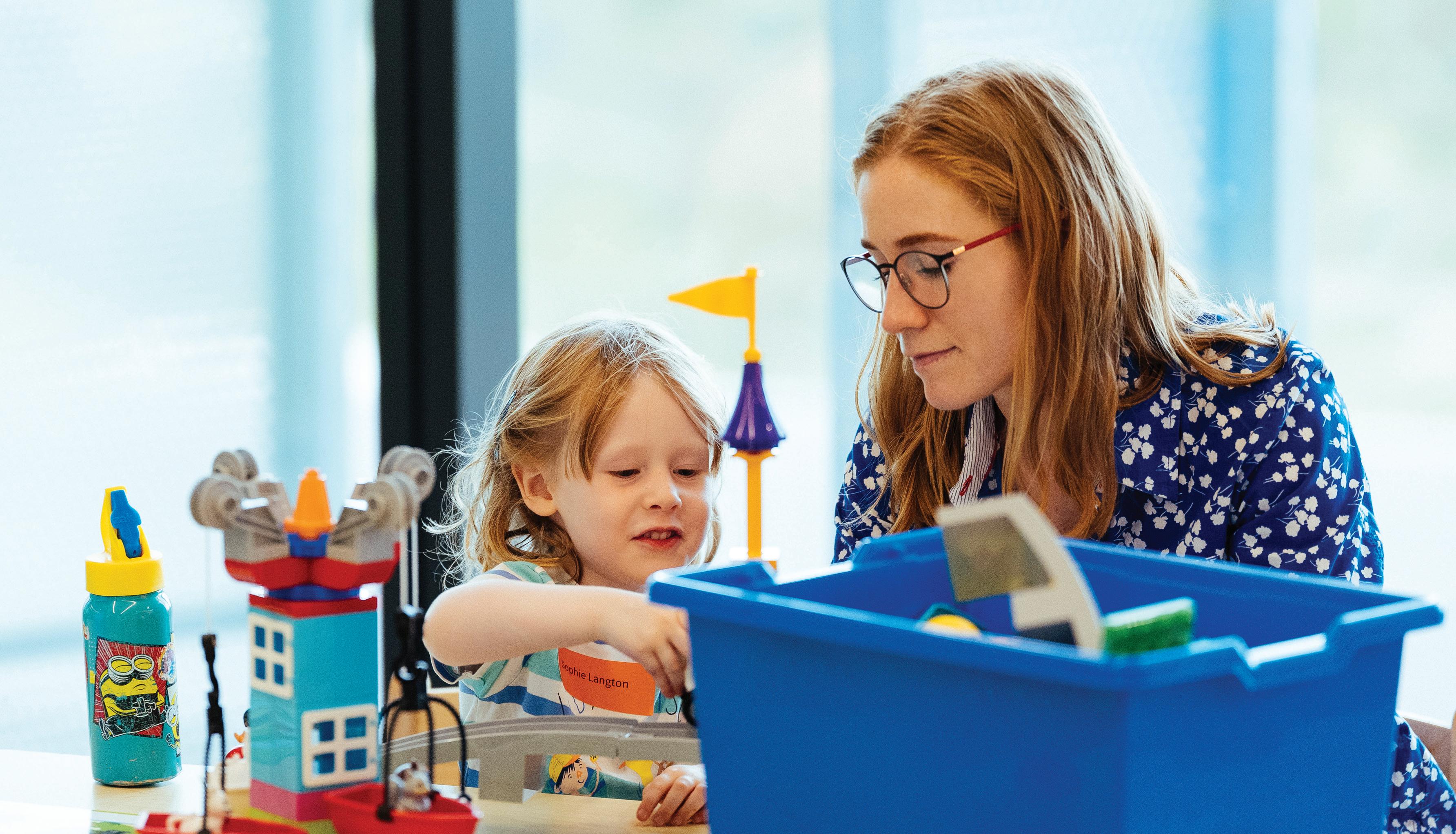
Strategic Research Funding
In 2025, the Digital Child funded four new innovative and strategic research projects. These projects bring together research from across nodes and programs to amplify impact and aim to reach audiences that have had less opportunity to engage with Centre outcomes.
The successful projects in 2025 were: Game Changers: Strengthening Children’s Resilience to Deceptive Design
Enhancing the Giggle Scribbles storymaker app to help children recognise and resist deceptive digital design patterns, supporting greater digital self‑regulation during everyday play.
Screen Insight: A Co‑Designed App for Evidence‑Informed Digital Parenting
Developing a proof‑of‑concept app that tracks and visualises children’s screen‑use patterns, providing personalised, research‑based guidance and connecting families to Digital Child resources.
Educator’s Guide to the Digital Intent of EYLF V2.0
Creating a practical guide and supporting resources to build educator capability, confidence and preparedness in delivering safe, equitable and developmentally informed digital learning.
Enhancing Child‑Technology Messaging with Knowledge Influencers
Working with professional “knowledge influencers” to improve the quality of social‑media content about children’s technology use, including the development of an evidence‑based content‑creation toolkit.
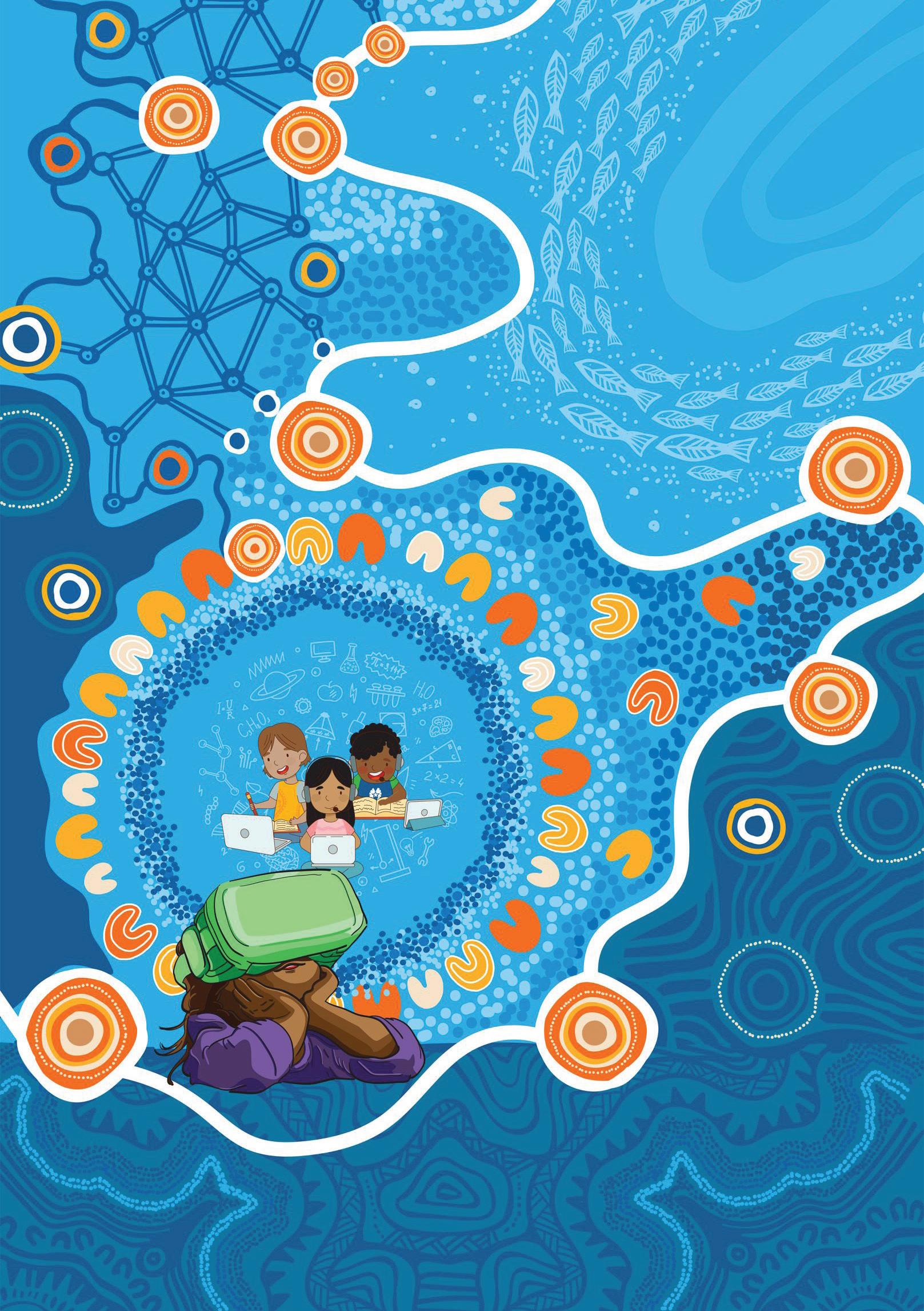
Created by Elaine Chambers Hegarty, our new Digital Child Indigenous artwork tells a story of Aboriginal and Torres Strait Islander people coming together with a focus on children, digital technologies, and connections. The design shows people coming together. There are little nodes representing digital technologies and their connections. Children are central to the design – and to our Centre research.

Indigenous research and engagement
Strengths‑Based Approaches in Indigenous Education: Research and Practice
By Marnee Shay and Grace Sarra (with contributing authors)
Professor Grace Sarra and Professor Marnee Shay have co authored a significant new scholarly work that brings together Indigenous thinkers and Western theoretical frameworks to advance a strengths based approach to knowledge production in Indigenous education. The book synthesises existing scholarship to reframe long‑standing deficit narratives and proposes a robust theoretical model to guide educators, researchers and policymakers in recognising and amplifying the strengths, capital and expertise within Aboriginal and Torres Strait Islander communities. Positioned as the first comprehensive exploration of strengths based approaches across the field, this work presents compelling arguments for reimagining Indigenous education and offers an essential resource for transformative, culturally responsive practice.
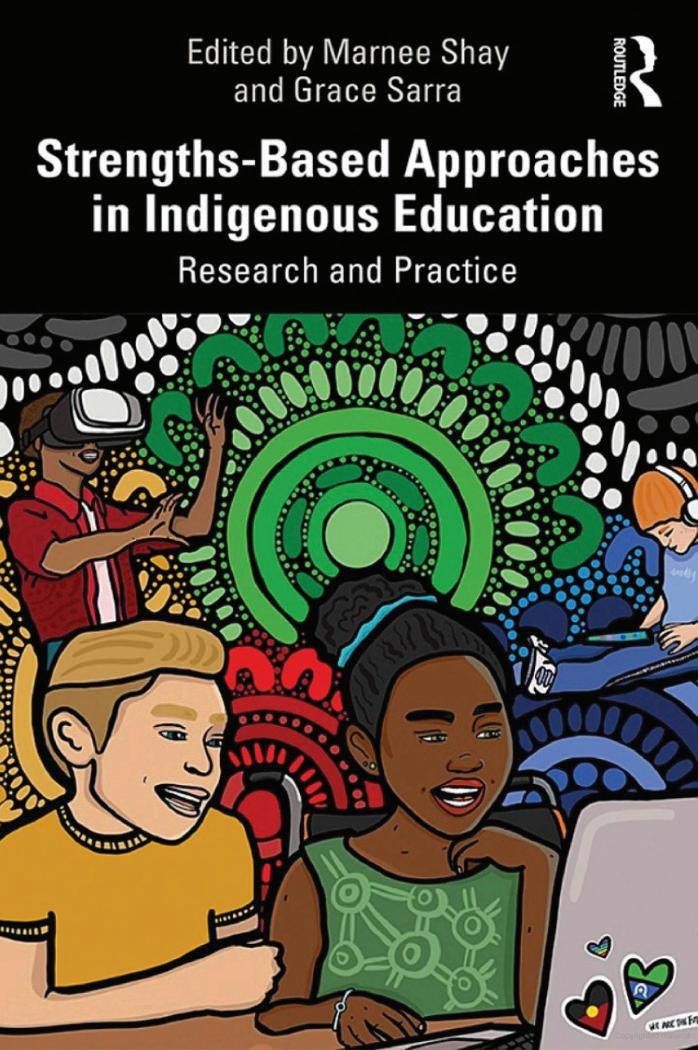
The full resource may be viewed here.
Researcher cultural capability for Indigenous research: a meta narrative review
By Naomi Fillmore, Marnee Shay, Grace Sarra & Susan Danby
This meta‑narrative review examines how researcher cultural capability is understood in the context of Indigenous research in Australian higher education. The authors analyse existing literature to propose a new model that positions cultural capability as a multi‑level process, occurring at the individual, project, and institutional levels. This aligns with established cultural competence frameworks, such as Cross et al. (1989), but is adapted specifically to the needs and expectations of Aboriginal and Torres Strait Islander communities.
The full resource may be viewed here.
Recognising Excellence: Grace Sarra as Judge for the 2025 Narragunnawali Awards
Professor Grace Sarra served as one of three First Nations judges for the 2025 Narragunnawali: Reconciliation in Education Awards, joining fellow educational leaders Sharon Davis and Professor Joe Sambono in selecting six outstanding Australian schools and early learning services recognised for their commitment to reconciliation. As a judge, Professor Sarra helped identify finalists demonstrating meaningful relationships with Elders and communities, strong engagement with First Nations cultures and histories, and a commitment to truth‑telling within their educational settings. Her contribution reflects her ongoing leadership in advancing reconciliation in education and supporting schools and early learning services to embed culturally respectful and community‑centred practices.
From Screen to Spirit: The Wakka Wakka Language App as a Tool for Cultural Vitality
Digital Child CI Professor Grace Sarra and AI Associate Professor Marnee Shay along with Frederick Cobbo (UQ), Robin Shields (UQ), and Professor Margaret Kettle (CQU) received funding from the 2025 UQ Indigenous Research Engagement and Partnerships Fund for the project “From Screen to Spirit: The Wakka Wakka Language App as a Tool for Cultural Vitality”.
This project will co design a Wakka Wakka language and culture app — a powerful step toward strengthening culture through language revitalisation across Wakka Wakka Country.
Uplifting Digital Connections for Young Minds
Led by Professor Grace Sarra (QUT), this Telstra Foundation–funded project focuses on strengthening digital inclusion and literacy among children in low‑socio‑economic and culturally diverse communities. Working in partnership with families, carers and community organisations, the project is co‑designing a digital device loan and connectivity program to help adults better understand and support children’s everyday digital experiences. By combining community knowledge with research expertise, the initiative aims to build confidence, improve access and empower families to navigate their children’s evolving digital worlds.
longitudinal study
Dr. Juliana Zabatiero
Prof. Grace Sarra
ACODA is now in its third year of data collection, with Wave 2 successfully completed in early 2025.
In April 2025, ACODA launched a “top up” cohort, recruiting new participants who met specific demographic characteristics. This targeted cohort focuses on remote and regional Australian families, First Nations families, and low socio‑economic households. Participants joining through the top‑up recruitment will complete three years of the ACODA study and will merge with the main cohort at Wave 3
The second round of nested studies opened in August 2025, receiving six applications from Digital Child members. Researchers were invited to apply for access to de‑identified ACODA data for secondary analysis or to recruit a subset of the existing cohort for further study. Of the six applications, two data studies and four recruitment studies were approved, all commencing in early 2026. The first round of nested studies is progressing well, with several teams close to publishing journal articles and presenting findings at international and national conferences.
The third Wave of ACODA was launched in October 2025 with two planned tranches of fieldwork.

Prof. Daniel Johnson
• The first tranche, for participants who completed their initial survey between October and December 2023, closed on 8 December 2025.
• The second tranche, for those who completed their first survey between January and April 2024, will commence in February 2026, and will include participants from the new top‑up cohort.
As part of the Wave 3 launch, a letter was mailed to all ACODA families, inviting them to continue participating in the study. This communication included an update on progress to date and shared key data insights emerging from the first two waves of data collection.
The team welcomed Dr Julian Matthews in October 2025 as a second ACODA Research Fellow. Dr Matthews will work closely with the team to manage and analyse the growing dataset.
In 2025, the ACODA team also began drafting the ACODA Cohort Profile Paper, which outlines the methodology used in Wave 1, describes the cohort’s demographics, and provides an overview of digital technology use and related variables. Future profile papers will summarise each ACODA wave as they are completed.
CO LEADS:
Key developments in 2025
Several key achievements were made by the ACODA study in 2025.
MARCH
Wave 2 fieldwork closed on 30 March.
APRIL
“Top up” cohort was launched, targeting specific demographic groups.
MAY
ACODA presented at the Digital Child Partner Network Group Forum.
JULY
ACODA presented at the Digital Child Annual Meeting.
AUGUST
Round 2 nested study applications opened for Digital Child members.
SEPTEMBER
Ethics approval granted for Wave 3 of the study.
OCTOBER
Wave 3 (tranche 1) of the study launched. Invitation letter and infographic mailed to families, inviting them to join the third Wave of the study. ACODA Research Fellow Dr Julian Matthews appointed to manage and analyse the longitudinal data.
NOVEMBER
Round 2 nested study applicants notified of outcome. Six applications approved.
DECEMBER
Wave 3 (tranche 1) survey closed, 92% completion rate. Tranche 2 to be launched in February 2026.
What did our ACODA families tell us in the second wave of data collection?
Comparing children’s top three devices
ACODA kids are a year older and the proportion of kids using devices has increased.
WAVE 1
WAVE 2
used a mobile phone
used a mobile phone
How long did children use devices in the week before the survey?
On average, ACODA kids used devices for longer as they got older.
Televisions were used for 24 mins longer
Mobile phones were used for 48 mins longer
Tablets were used for 1 hr 15 mins longer
Comparing how many children used devices on their own in the last year
WAVE 1
34.5% used the television on their own
12.7% used a mobile phone on their own
27.2% used a tablet on their own
WAVE 2
40.8% used the television on their own
14.4% used a mobile phone on their own
33.8% used a tablet on their own
What did children use television for?
Comparing how many children used devices with a caregiver in the last year
WAVE 1
83.9% used the television with a caregiver
38.9% used a tablet with a caregiver
37.9% used a mobile phone with a caregiver
59% of children used televisions for learning
89% of children used televisions for entertainment
WAVE 2
88.5% used the television with a caregiver
45.9% used a tablet with a caregiver
39.5% used a mobile phone with a caregiver
What did children use tablets for?
13% of 1 yr olds and 55% of 5 yr olds used tablets for learning
17% of 1 yr olds and 54% of 5 yr olds used tablets for entertainment
8% of 1 yr olds and 41% of 5 yr olds used tablets for playing games
Healthy Child
In 2025, the Healthy Child program continued working closely with families, communities and partner organisations to ensure our research makes a meaningful contribution to children’s health and wellbeing. The program generates high‑quality evidence about the impacts of young children’s digital technology use and examines how these technologies can be supported, shaped and navigated in everyday life.
CO LEADS:

Assoc Prof. Sonia White
DEPUTY CO LEAD
Dr Cassandra Pattinson

Assoc Prof. Dylan Cliff
Highlights
Expanded positive tech–nature experiences through the Nature Play WA collaboration, co‑designing a new session and developing a resource pack to be launched in 2026.
Advanced digital health literacy with Children’s Health Queensland, delivering hands‑on Digital Play activities that supported families during hospital visits.
Strengthened evidence on healthy screen use through the Healthy Bytes project, co‑facilitating focus groups with caregivers and developing tools to guide young children’s digital habits.
Positioned children as wellbeing‑focused game designers, completing three child‑led games and advancing a fourth through monthly co‑design Game Jam workshops.
Secured $978,192 in NSW Government funding for three major projects on gaming, screen time and digital learning, plus a $10,000 PhD scholarship supporting healthy screen‑use research.
Nature Play
Amber Beynon, Sarah Stearne, Danica Hendry, Charlotte Lund Rasmussen, Kristin Zed, Amity Campbell, Juliana Zabatiero, Leon Straker, Janelle Mackenzie, Kelsie Prabawa‑Sear (Nature Play WA), Sarah McGowan (Nature Play WA)
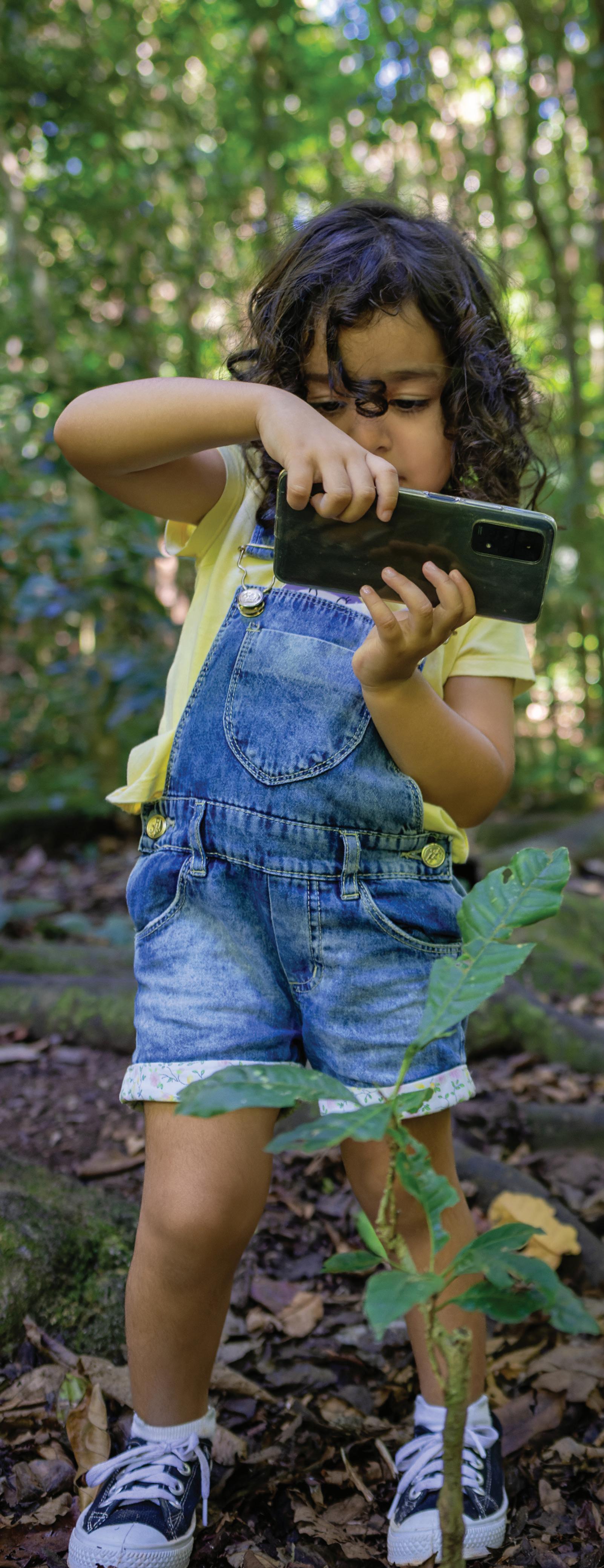
In 2025, the Healthy Child team strengthened its collaboration with Nature Play WA to explore how digital technologies can be used positively in natural environments. Supported by a Digital Child Future Leaders grant, the team is co‑designing a new session on positive technology use for Nature Play WA’s Nature Play in the Park program.
Throughout the year, team members attended several Nature Play in the Park sessions to observe practice, gather insights, and trial ideas. Amber Beynon also met with the Nature Play WA team to shape the co‑designed workshop. Drawing on research evidence, the team has begun developing a resource pack demonstrating practical and constructive ways technology can support children’s experiences in nature. The co‑designed session and supporting resources will be further developed and implemented in 2026
Healthy Bytes
Featuring William Tregea (PhD Candidate, UOW) · Dylan Cliff · NSW Health South Western Sydney (SWS) Health Promotion Service
The Healthy Bytes project is a partnership between UOW researchers and the NSW Health South Western Sydney (SWS) Local Health District Health Promotion Service, focused on understanding how young children aged 3–5 use screens at home, and what support caregivers need to promote healthy digital habits.
In 2025, the team collaborated with the SWS Health Promotion Unit to develop a population survey, along with focus group and co‑design workshop protocols, designed to explore children’s screen use and caregiver preferences for resources and guidance. As part of this work, William Tregea completed focus group training with SWS Health Promotion staff and co‑facilitated discussions with 20 diverse caregivers, gathering rich insights into family experiences across the region.
Findings from the Healthy Bytes project will inform the design of evidence‑based resources to support families in navigating young children’s digital engagement in ways that promote health, connection and wellbeing.
Children’s Health Queensland Hospital and Health Service
Featuring: Sonia White · Nicole Hayes · Children’s Health Queensland Hospital and Health Service
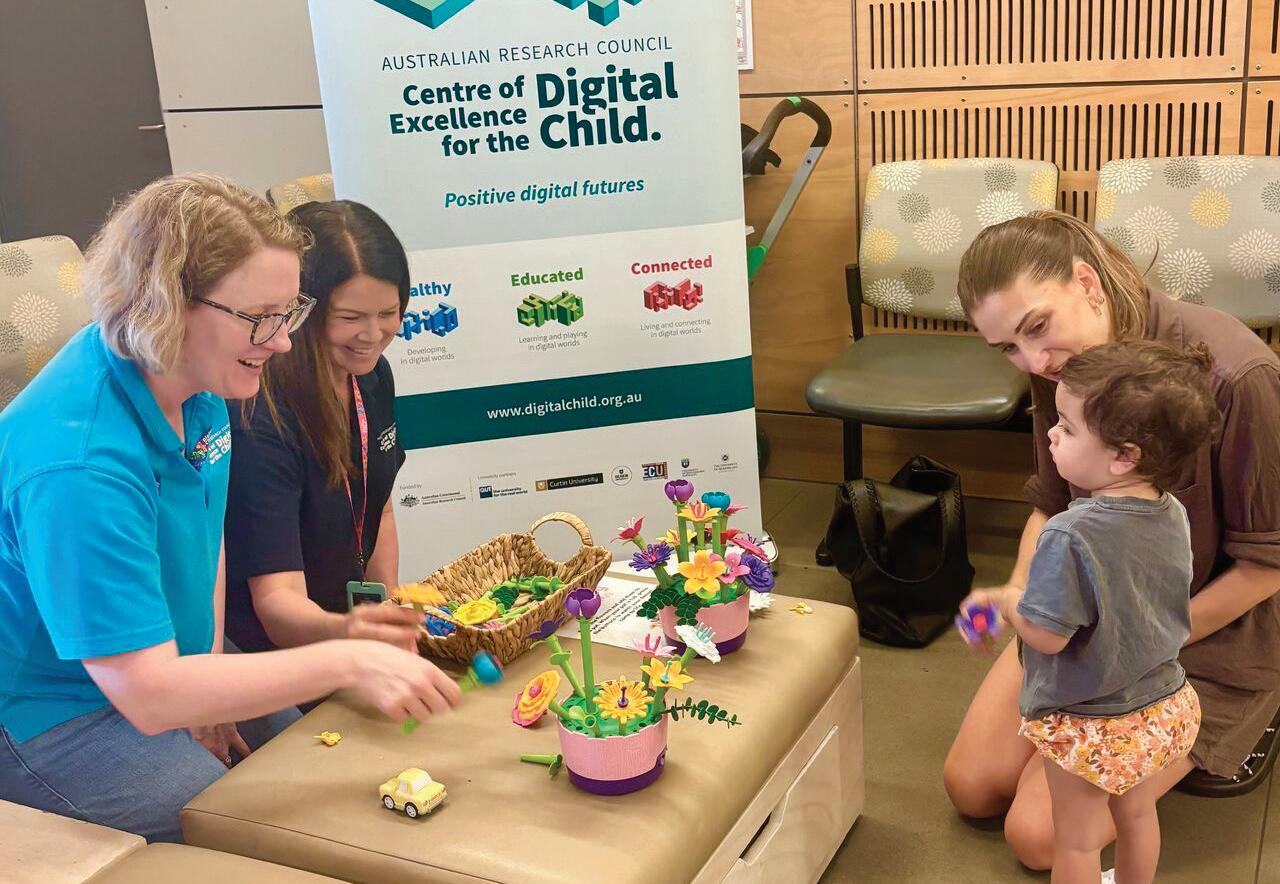
In 2025, the Healthy Child team established a new partnership with Children’s Health Queensland Hospital and Health Service to support children, young people and families in developing stronger digital health literacy. This collaboration focuses on helping families navigate health information in ways that are accessible, meaningful and supportive of wellbeing.
On 25 & 26 November, the Digital Child team partnered with Children’s Health Queensland to deliver hands‑on Digital Play experiences for children and families in hospital settings. These sessions created moments of joy, curiosity and calm during what can often be stressful experiences, offering playful and mindful digital engagement while waiting for appointments.
Children explored AR jungles, coded mini robots, played gesture‑based games, and created digital sounds, patterns and even digital pizzas. These activities showcased the potential for thoughtful digital experiences to enhance comfort, creativity and connection within healthcare environments.
This ongoing collaboration is a key part of the program’s work in digital health literacy, aiming to empower families with the knowledge, confidence and tools to navigate health information in an increasingly digital world.
Learn more about the research project here
Game Jams
Featuring: Madison Klarkowski, Janelle Mackenzie, Daniel Johnson, Lisa Kervin, Louise Paatsch, Gameloft Australia, Freelance Co‑design Developers
The Game Jams project brings together researchers, industry partners and children to design video games that explore wellbeing from a child’s perspective. In 2025, children collaborated with researchers to create early game concepts, with support from Gameloft, who provided four professional game developers to mentor each child‑led team. To carry the projects forward, the team then engaged four additional freelance developers who continued building the games through monthly co‑design meetings with the children.
This ongoing collaboration has resulted in significant progress: three of the four games are now complete, with the fourth in its final development stage. Through the design process, children explored complex themes such as family connection, gaining independence and competence, exercise and healthy living, environmental care, and supporting vulnerable friends. Parents and children reported that the Game Jams offered meaningful opportunities for creativity, collaboration and expressing ideas about wellbeing in playful and imaginative ways.
The team will next be interviewing the co‑design developers to understand the effectiveness of game jams as a research methodology for working with children in digital design.
Research Communication
CIs Dylan Cliff and Juliana Zabatiero chaired a high‑profile debate between CI Leon Straker and Professor Anthony Okely on the topic “Children’s Screen Use Guidelines should be separated from 24‑Hour Movement Guidelines” at the International Society for Behavioral Nutrition and Physical Activity Conference in Auckland, held 11–14 June 2025. The session generated lively discussion and highlighted the Centre’s leadership in shaping national and international conversations around screen use, physical activity and children’s health.
New funding for research on healthy digital engagement for children
Digital Child researchers at the University of Wollongong secured $978,192 in NSW Government funding across three projects focused on improving outcomes for children and young people through healthier digital engagement. The grants support research into video gaming and wellbeing, best‑practice screen use in education, and children’s screen time and developmental outcomes, with each project involving national and international collaborators. This investment recognises UOW’s leadership in digital childhood research and will directly benefit children, adolescents and school communities across NSW. A $10,000 scholarship was also awarded to Digital Child PhD student William Tregea for formative research supporting healthy screen use in young children.
Get all the details on the award here
Plans for 2026
The Healthy Child program will host a major national event in 2026 — The Healthy Digital Child Forum: Disentangling “Digital Health” to Support Children and Families — to be held on 10 August 2026. This one‑day, peak gathering will be delivered in partnership with QUT, UQ , and UOW.
The forum will bring together leaders from government, health agencies, education, industry and philanthropy who have responsibility or influence over children’s digital health and wellbeing.
Together, these discussions aim to shape a national agenda that supports healthier digital futures for all Australian children.
Educated Child
The Educated Child program advances evidence‑informed understandings of how young children engage creatively, socially and critically with digital technologies. The program foregrounds play, wellbeing and learning, and strengthens pedagogical guidance for educators and families.
CO LEADS:
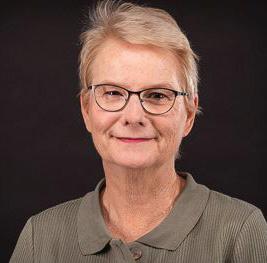
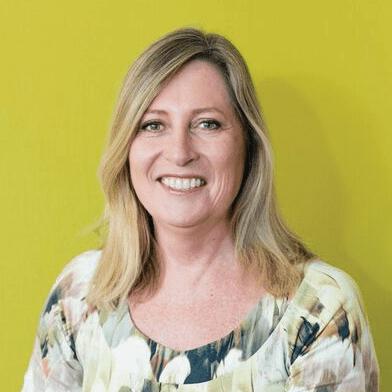
Prof. Karen Murcia
DEPUTY
CO LEAD
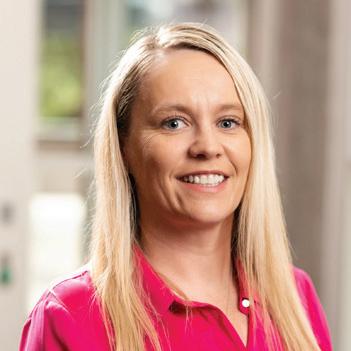
Dr Kristy Corser
Highlights
Digital play in the early years: The project explores current research in the field of digital play to identify gaps and under theorised areas.
Children as Designers of Positive Digital Games: This project is a multi stage research study that will position children as designers and developers of positive digital video games.
Informed national policy and regulatory conversations through Curtin University’s work on children’s digital safety in ECEC, including peer‑reviewed publications, a publicly available policy report, and direct consultation with Western Australia’s Minister for Early Childhood Education and Child Protection.
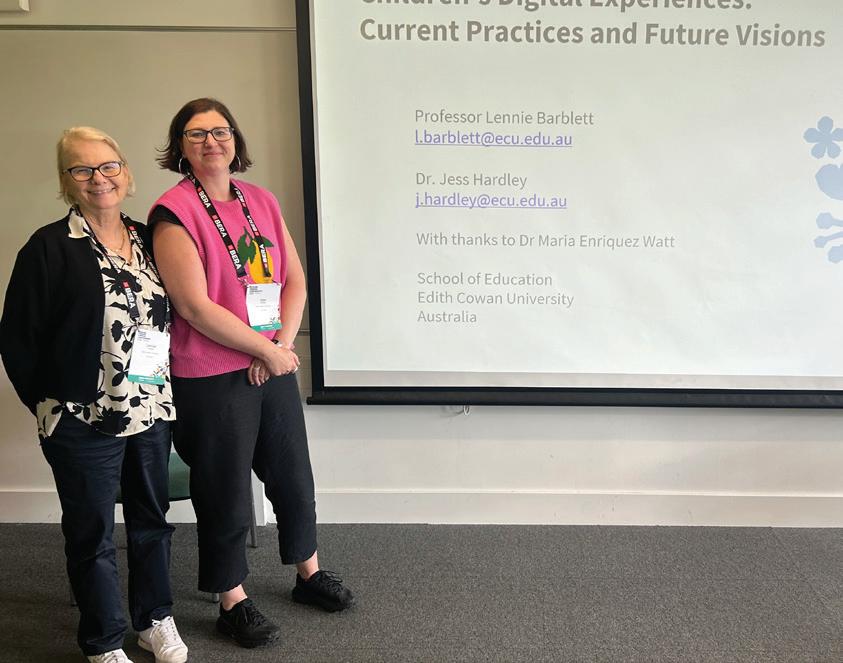
Strengthened international research visibility and collaboration through team participation in major conferences including EECERA, BERA and Cambridge events, showcasing the Centre’s leadership in digital play, early childhood technologies and children’s agency.
Prof. Lennie Barblett
Children’s World Café — Exploring Digital Childhoods Through Participation
Lead Facilitators: Lisa Kervin, Steven Howard, Lois Peach & Kate Lewis
A half‑day participatory Children’s World Café was held at the Children’s Technology Play Space (UOW) with 11 children (aged 6–11) and three 12‑year‑old co‑researchers. Using arts‑based, embodied and dialogic practices, children explored the question:
“Where, when and how do digital technologies fit into your childhood?”
Working in small groups led by co‑researchers, participants created artefacts, voted on scenarios, iterated ideas and collectively produced 18 recommendations about children’s digital experiences. These were later refined through at‑home voting with parental support, ensuring children’s voices remained central to the analysis. Findings are currently being prepared for release.
The team will next be interviewing the co‑design developers to understand the effectiveness of game jams as a research methodology for working with children in digital design.
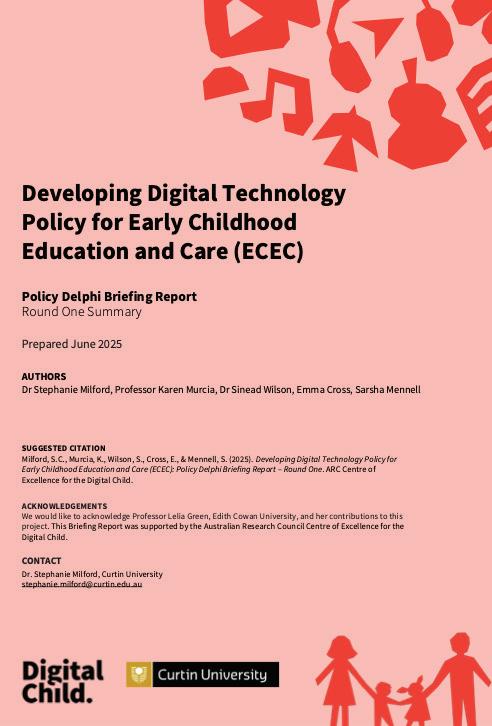
Policy impact: Children’s digital safety in ECEC
Curtin University’s policy project generated significant national impact in 2025. The team produced peer‑reviewed publications, a publicly available report — Developing Digital Technology Policy for Early Childhood Education and Care (ECEC): Policy Delphi Briefing Report— and policy briefs that informed national conversations on child safety and digital regulation.
Team members were also invited by Western Australia’s Minister for Early Childhood Education and Child Protection, the Hon. Sabine Winton MLA , to advise on regulatory frameworks for child digital safety. This invitation demonstrates the project’s credibility and the growing trust in Digital Child researchers at government level.
The kids are alright ‑ Unpacking some fears about the digital lives of children
Featuring: Dr Aleesha Rodriguez, Professor Daniel Angus, and Philippa Amery
At the Woodford Folk Festival, researchers from the QUT Digital Media Research Centre (DMRC) and the ARC Centre of Excellence for the Digital Child led a public conversation exploring online safety, the future of cinema, and the digital lives of children. The session invited audiences to examine common fears and myths surrounding children’s growing online presence, and to consider what a healthy, connected and informed digital life can look like for young people.
DMRC Director Professor Dan Angus explained that the festival’s digital‑themed sessions would explore pressing questions about online safety, responsibility and Australia’s media landscape — alongside the cultural anxieties that shape public perception of children’s online activities.
Researchers from the QUT DMRC and the Digital Child also presented across the festival, contributing to broader conversations about online safety, cinema futures, and the evolving digital lives of young people
Critical studies of education and technology … reasons to be hopeful?
Featuring: Kristy Corser, Tiffani Apps, Karley Beckman, Susan Danby, Melissa De La Cruz, Rebecca Ng, Luci Pangrazio, Xinyu (Andy) Zhao, Chris Zomer
Digital Child researchers contributed to the CSET2025 Global Report: Critical Studies of Education and Technology … Reasons to Be Hopeful?
Their collective contribution highlights the importance of critical scholarship in navigating datafication, platformisation and power relations in education. The report shows how child‑centred, ethically grounded approaches can shape more just and socially responsive digital education futures.
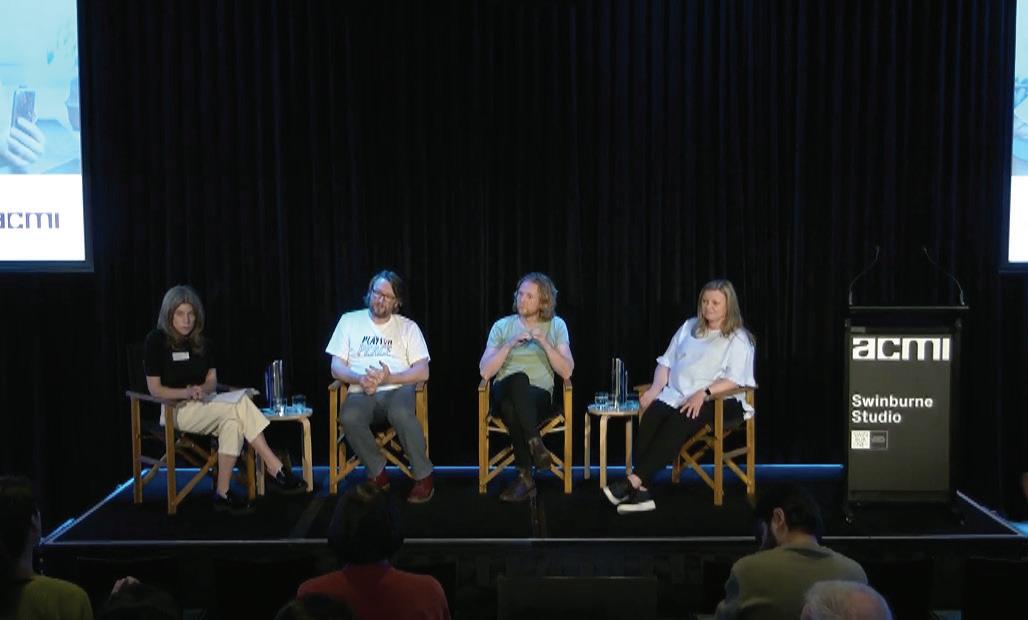
Can schools achieve informed consent with digital technology?
Convened by Associate Professor Luci Pangrazio (Deakin University), this seminar — part of the Digital Child x ACMI Seminar Series— examined the ethical, legal and pedagogical challenges of informed consent in increasingly data‑driven school environments. The seminar fostered interdisciplinary dialogue on transparency, agency, and accountability in educational technology use, with particular attention to children’s rights and institutional responsibilities.
Participants explored the realities of digital platforms in schooling, the difficulties educators face in understanding third‑party data practices, and the implications for children and families. The panel included Duane Cox (Schoolbox CIO), Koren Irving (St Joseph’s College, Geelong), Simon Elvery (ABC journalist) and Associate Professor Anna Bunn (Curtin University).
“We decided on this topic after working in schools and childcare centres...and realising how little support there is for educational institutions and educators to both know the data processing practices of third party edtech products, and to [be able] to communicate these to the school community.”
Associate Professor Pangrazio
For other seminars, visit here.
Watch the recording
Conference highlights
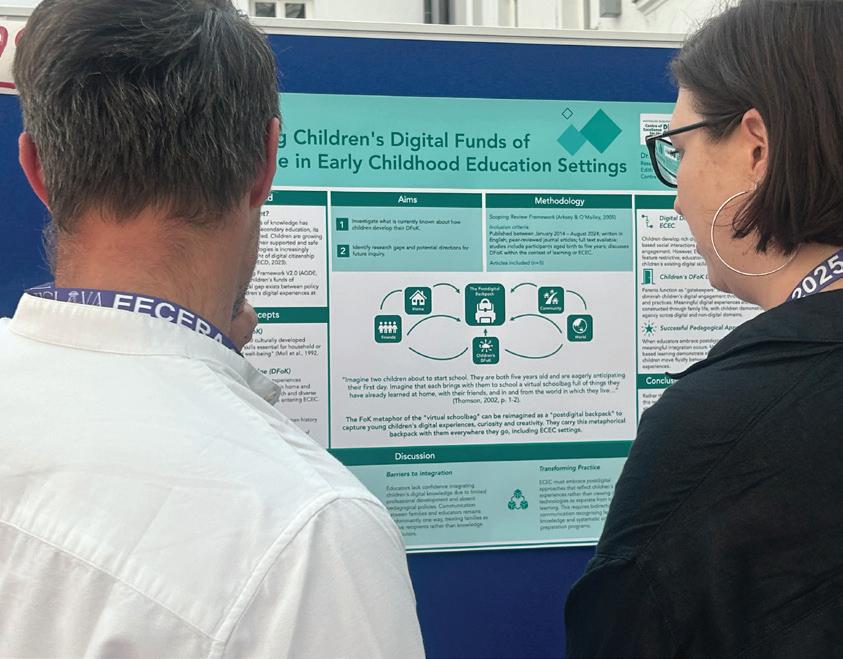
Members of the Educated Child team were active across several leading international and national conferences in 2025, sharing emerging research on children’s digital play, learning and wellbeing. Team representatives presented work at EECERA, BERA, and events hosted at Cambridge, contributing to global conversations about early childhood education and digital technologies. These engagements strengthened international partnerships, showcased the Centre’s research excellence, and provided valuable opportunities for collaboration and knowledge exchange.
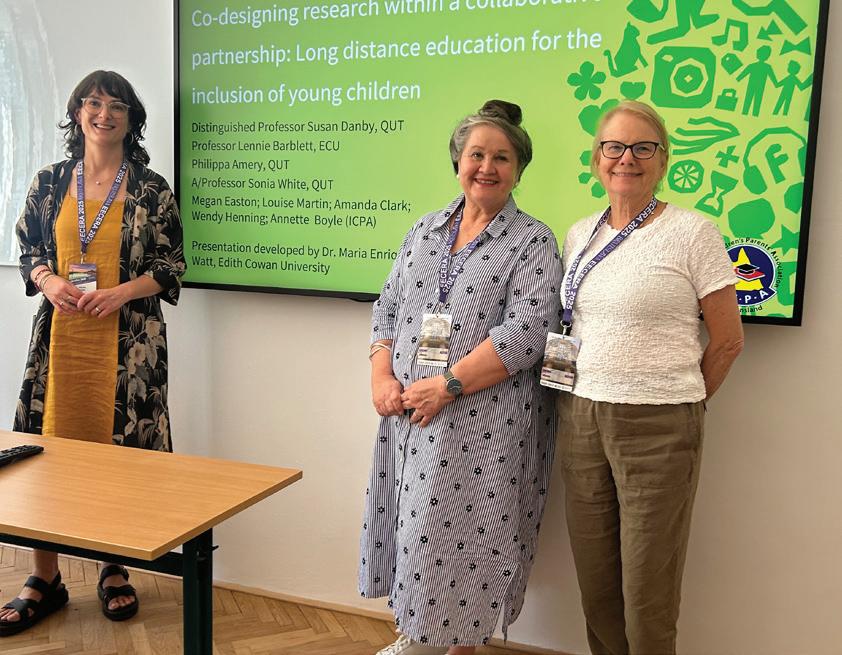
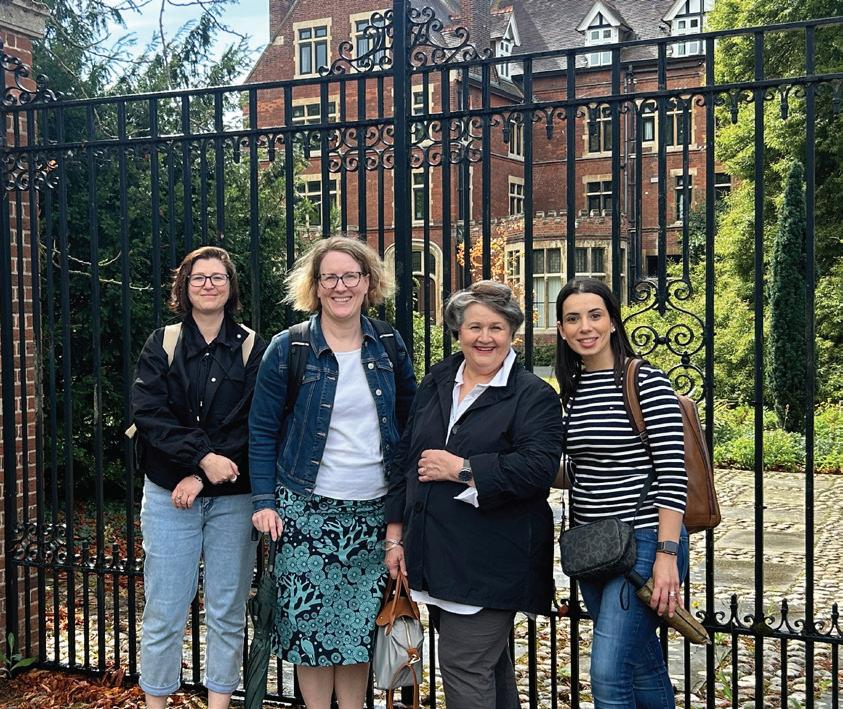
Photos from the year capture team members including Jess Hardley, Professor Susan Danby, Professor Lennie Barblett, Philippa Amery, Sonia, Irina, and others participating in these events and representing the Digital Child on the world stage.
Plans for 2026
The Educated Child program will:
• Continue research translation to support children, families, teachers and policymakers to understand and use digital technologies with confidence.
• Strengthen partnerships with industry, ensuring evidence‑based design, implementation and governance of digital tools in educational settings.
Connected Child
This program explores how digital platforms shape family life, how parenting practices adapt to digital environments, and how children’s rights can be protected in increasingly datafied childhoods.
CO LEADS:


DEPUTY CO LEAD

Highlights
Launched major research outputs, including The Platformization of the Family, released to 140 attendees from 24 countries, advancing global conversations on how platforms shape family life.
Advanced cultural and parenting research with Dr Kate Mannell’s forthcoming book Screen Time and the Impossibility of Modern Parenting, offering a breakthrough lens on why screen‑time anxieties persist.
Strengthened understanding of parenting technologies through Dr Katrin Langton’s Baby App Studies, examining the political and social implications of fertility, pregnancy and baby‑tracking apps, alongside public seminars and a professional webinar delivered internationally.
Developed research‑informed principles for school social‑media use, in partnership with the ACT Education Directorate, integrating insights from teachers, parents, principals and children; principles to be released publicly in early 2026.
Dr. Rebecca Ng
Prof. Julian Sefton Green
Prof. Michael Dezuanni
Screen Time and the Impossibility of Modern Parenting
Lead: Dr Kate Mannell
Dr Kate Mannell’s forthcoming book examines why “screen time” continues to dominate parenting culture, despite longstanding critiques that the concept oversimplifies children’s digital media use. Instead of debating whether screens are “good” or “bad,” the book investigates the discourse itself — analysing social media conversations, news coverage, and interviews with parents to understand how cultural norms, academic narratives and media commentary shape beliefs about screen time.
The work offers a new explanation for the persistence of screen‑time anxieties, revealing how talk about screens intersects with broader ideals of “good parenting,” gendered labour, and fears about modern childhood. The book reframes screen time not as a measure of digital risk, but as a powerful cultural myth parents must constantly negotiate.
Parenting Technologies and Baby App Studies
Lead: Dr Katrin Langton
Dr Katrin Langton’s book Baby App Studies: The Power Dynamics Behind Everyday Parenting Technologies explores the political, commercial and social forces shaping widely used fertility, pregnancy and baby‑tracking apps. Drawing on app walkthroughs and 28 interviews with Australian parents — and comparative insights from the UK and Canada — the book uncovers how baby apps shape expectations of “good parenting,” collect sensitive data, and mediate intimate aspects of family life.
Designed for researchers across childhood studies, media, sociology, digital health and communication, the book establishes an emerging interdisciplinary field centred on the governance, cultures and lived experiences of baby‑tracking technologies.
Dr Langton also delivered a 1‑hour professional webinar for international health organisation Breastfeeding Conferences on “Mobile Apps in Infant Feeding: Usefulness & Limitations,” and organised a public ACMI seminar Baby Apps: (Mis)Understandings of Data-Driven Care bringing together researchers, industry and parents to discuss data, care and digital design.

Platforms in Families and the Messy Everyday
Lead: Dr Katrin Langton
The Platformization of the Family, edited by Deakin University’s Professor Julian Sefton‑Green and Dr Kate Mannell, together with Professor Ola Erstad from the University of Oslo, is the result of a collaboration between the ARC Centre of Excellence for the Digital Child and the European research project Platforming Families: Tracing Digital Transformations in Everyday Life Across Generations.
Launched online to an audience of 140 attendees from 24 countries, the event featured presentations by Professor Sefton‑Green, Dr Mannell and contributor Professor Sonia Livingstone (London School of Economics and Political Science). With contributions from researchers in Australia, Norway, the United Kingdom, Spain and Estonia, the book explores how digital platforms shape family relationships, communication patterns, domestic routines and intergenerational practices.
During the launch, Professor Livingstone questioned how digital platforms align with families’ values, and whether families resist, adapt to or grapple with the realities of datafied domestic life. The collection draws on domestication theory to examine how families “tame” technologies — and how, in turn, technologies reshape the everyday lives of families.
“We wanted to look both at the practice of platforms in families — at the messy everydayness...but also to reflect in a more ambitious way on the significance of what it means to talk about family life in terms of being platformed.”
Professor Sefton Green
The book is open access and available to global audiences.
Read the book
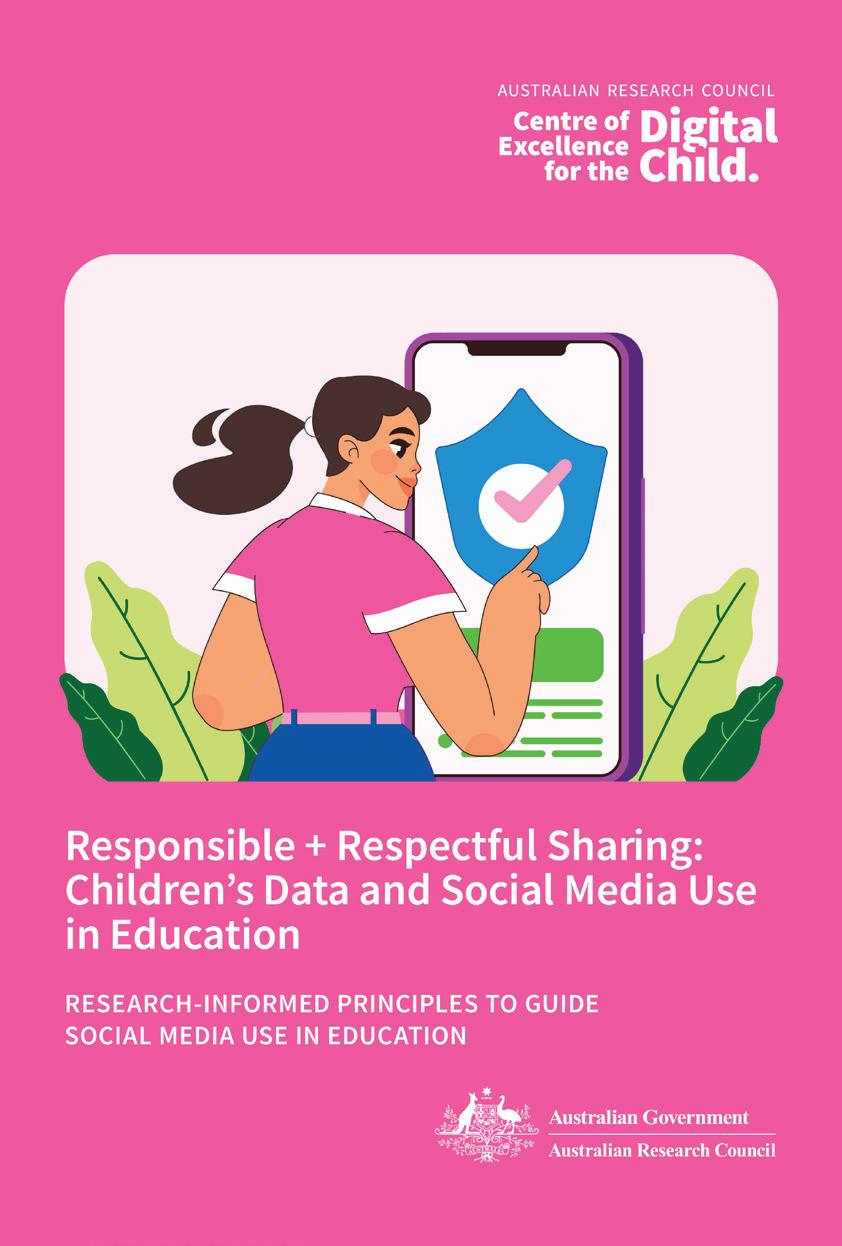
Research‑Informed Principles for Social Media Use in Education
Lead: Dr Karley Beckman & Dr Tiffani Apps
The UOW Connected Child team collaborated with the ACT Education Directorate to develop research‑informed principles to guide responsible social media use in schools. Drawing on insights from teachers, parents, principals and primary‑aged children, the principles emphasise:
• child‑centred consent practices
• data minimisation and management
• responsible modelling of social media use
• balancing school communication needs with children’s rights
These principles were further refined during consultations in December 2025 with schools, non‑profit organisations and government bodies such as the Office of the Australian Information Commissioner (OAIC). They will be publicly released in early 2026
Plans for 2026
The Connected Child program enters 2026 with an expanded agenda:
1. OAIC Children’s Online Privacy Code
Digital Child researchers will co‑develop primary‑school learning resources and support children’s participation during the national consultation period.
2. Day in the Life of Children’s Data — Public Output
A web‑based resource and parent seminar series will help families understand how children’s data is generated, tracked and used.
3. UNICEF & EdTech Database Collaboration
Deakin researchers will contribute papers and public outputs reviewing UNICEF’s EdTech for Good framework.
4. Digital Migrant Families Project Working with migrant community organisations and government partners, the team will deliver community seminars explaining Australia’s internet governance landscape and providing practical digital family guidance.
5. Media Literacy Initiatives
Professor Michael Dezuanni will present at the ABC Media Literacy Summit (March), strengthening national conversations on media literacy and children’s digital wellbeing.
PARTNERSHIPS & COLLABORATIONS

As a centre we strengthened our national and international impact through a diverse range of strategic partnerships and collaborative initiatives. Working alongside leading organisations across government, education, industry, and the global research community, the Centre contributed expert knowledge, co‑designed practical resources, and helped shape different approaches to children’s digital wellbeing.
UNICEF: Video Games and Children: A Guide for Parents
The Digital Child partnered with UNICEF to produce Video games and children: A guide for parents, an accessible, research‑informed resource designed to help families navigate children’s gaming in safe, balanced and positive ways. Drawing on expert insights from Professor Daniel Johnson, Chief Investigator at the Digital Child and leader of QUT’s Games Research and Interaction Design Lab, the guide explains not only the educational, cognitive and social benefits of video games, but also the risks families may encounter — including online interactions, unhealthy engagement patterns, dark design techniques and toxic communities. It offers practical strategies to help parents build trust, engage meaningfully with children’s gaming interests, and make informed decisions that support wellbeing, creativity and healthy digital habits.
The full resource may be accessed here.
Netsafe New Zealand: Trans‑Tasman Partnership on Children’s Online Safety
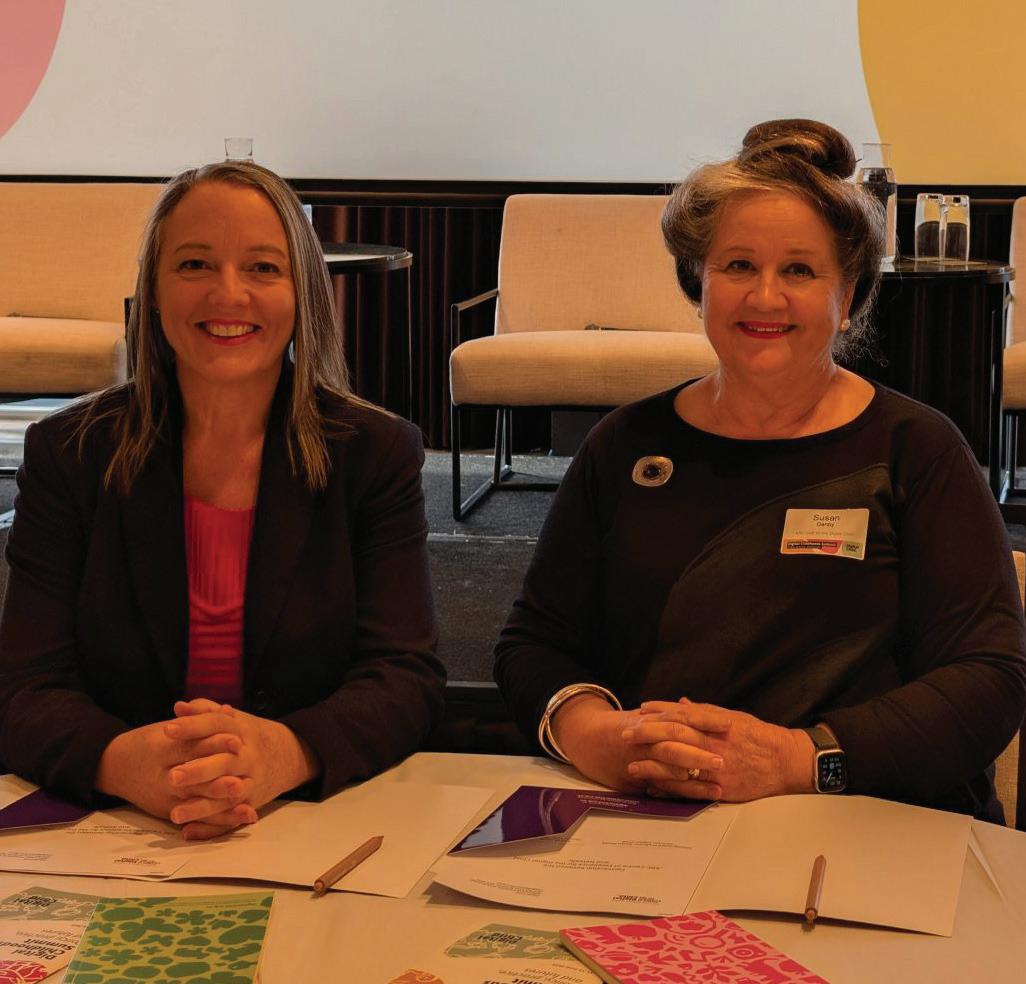
The ARC Centre of Excellence for the Digital Child has formed a new trans‑Tasman partnership with Netsafe New Zealand, announced by Distinguished Professor Susan Danby and Netsafe Deputy CEO Andrea Leask at the Digital Childhoods Summit in Canberra. This collaboration brings together Netsafe’s world‑leading expertise in online safety education and harm reduction with the Digital Child’s research into children’s engagement with digital technologies, enabling both organisations to jointly address the complex opportunities and risks young people face online. Through this partnership, the two organisations will work to strengthen digital wellbeing across Australasia, informed by evidence‑based approaches and centred on the voices and experiences of children and families.
Learn more about the partnership here.
UNU Macau: Levelling Up Ethics: Video Game Design and Global Responsibility
A partnership between the United Nations University Institute in Macau (UNU Macau) and the ARC Centre of Excellence for the Digital Child
The research brief Levelling Up Ethics: Video Game Design and Global Responsibility — authored by Auxane Boch (Institute for Ethics in Artificial Intelligence, Technical University of Munich), Dr Jaimee Stuart (Senior Researcher, UNU Macau) and Professor Daniel Johnson (Chief Investigator, ARC Centre of Excellence for the Digital Child) — examines how ethical video game design can support global commitments to autonomy, cooperation, inclusion and representation. Bringing together expertise in cyberpsychology, cultural and developmental psychology, and technology‑related wellbeing, the authors analyse how the rapidly growing global games industry can align with the Global Digital Compact to create safer and more equitable digital futures. The brief outlines practical, ethical design recommendations for developers, emphasising the importance of avoiding manipulative mechanics, enabling prosocial gameplay, and ensuring culturally informed and inclusive representation.
Access the full research brief here.

ABC Education: Media Literacy Video Series for Educators
As part of our ongoing partnership with ABC Education, the ARC Centre of Excellence for the Digital Child contributed expertise to a four‑part media‑literacy video series designed specifically for educators. Featuring Professor Michael Dezuanni, Chief Investigator and Program Leader for Digital Inclusion and Participation, the series translates Digital Child research into practical insights that help educators better understand and support children’s digital experiences. The videos — A Better Future for a Children’s Internet, Teaching Media Literacy in the Australian Curriculum, Developing Literacy Skills Through Media‑Making, and Media Literacy Classroom Interventions That Work — explore key concepts such as child‑centred digital design, media literacy, online safety, and the role of creative media‑making in supporting children’s wellbeing and critical understanding.
ACECQA: Supporting Young Children’s Safe and Informed Internet Use
The ARC Centre of Excellence for the Digital Child partnered with the Australian Children’s Education & Care Quality Authority (ACECQA) to contribute expert guidance to its feature article Young children using the internet, authored by Dr Kristy Corser and Distinguished Professor Susan Danby. This collaboration supports educators and families to better understand how very young children engage online, why digital experiences matter in early learning, and how safe, supervised and developmentally appropriate internet use can strengthen children’s learning, play and wellbeing. The article draws on Digital Child research to highlight national data on early internet use, practical recommendations from the eSafety Commissioner, and evidence‑informed guidance aligned with the Early Years Learning Framework.
Read the full article here.
Watch the full series here.
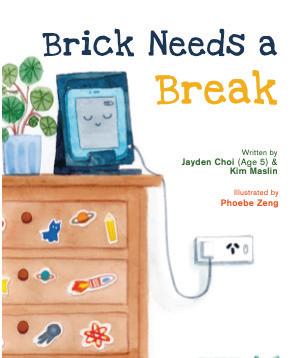
Alannah & Madeline Foundation’s: “Brick Needs a Break”
As part of our partnership with the Alannah & Madeline Foundation’s eSmart program, the Digital Child contributed research‑informed content to a new educator resource built around Brick Needs a Break, the winning eBook from the Digital Child’s Stories by Digital Children competition (5–6 age category), co‑authored by Jayden Choi and Kim Maslin. The lesson supports educators to teach healthy tech habits by helping children recognise the physical and emotional signs of excessive device use and identify positive ways to balance screen time with other activities. Through guided storytelling, discussion and simple wellbeing strategies, the resource equips teachers to foster safe, responsible and developmentally appropriate technology use in early years settings.
ACMI: Media and Digital Literacy for Teachers
As part of our ongoing collaboration with ACMI, the ARC Centre of Excellence for the Digital Child contributed research expertise to a four‑part professional learning webinar series designed to support educators in exploring an increasingly complex media and digital landscape. Led by Professor Michael Dezuanni (QUT) and Dr Amanda Levido (Southern Cross University), the series explored key topics including Digital Literacy and Critical Thinking in English, Early Years Media Literacy, Media Literacy for Years 4–8, and Media Literacy in the Age of AI. Offered free to teachers across Australia, these sessions provided evidence‑based insights, curriculum connections, and practical strategies to help educators strengthen children’s critical understanding, wellbeing and safe engagement in digital environments.
Explore the lesson here.
Explore the webinar series here.
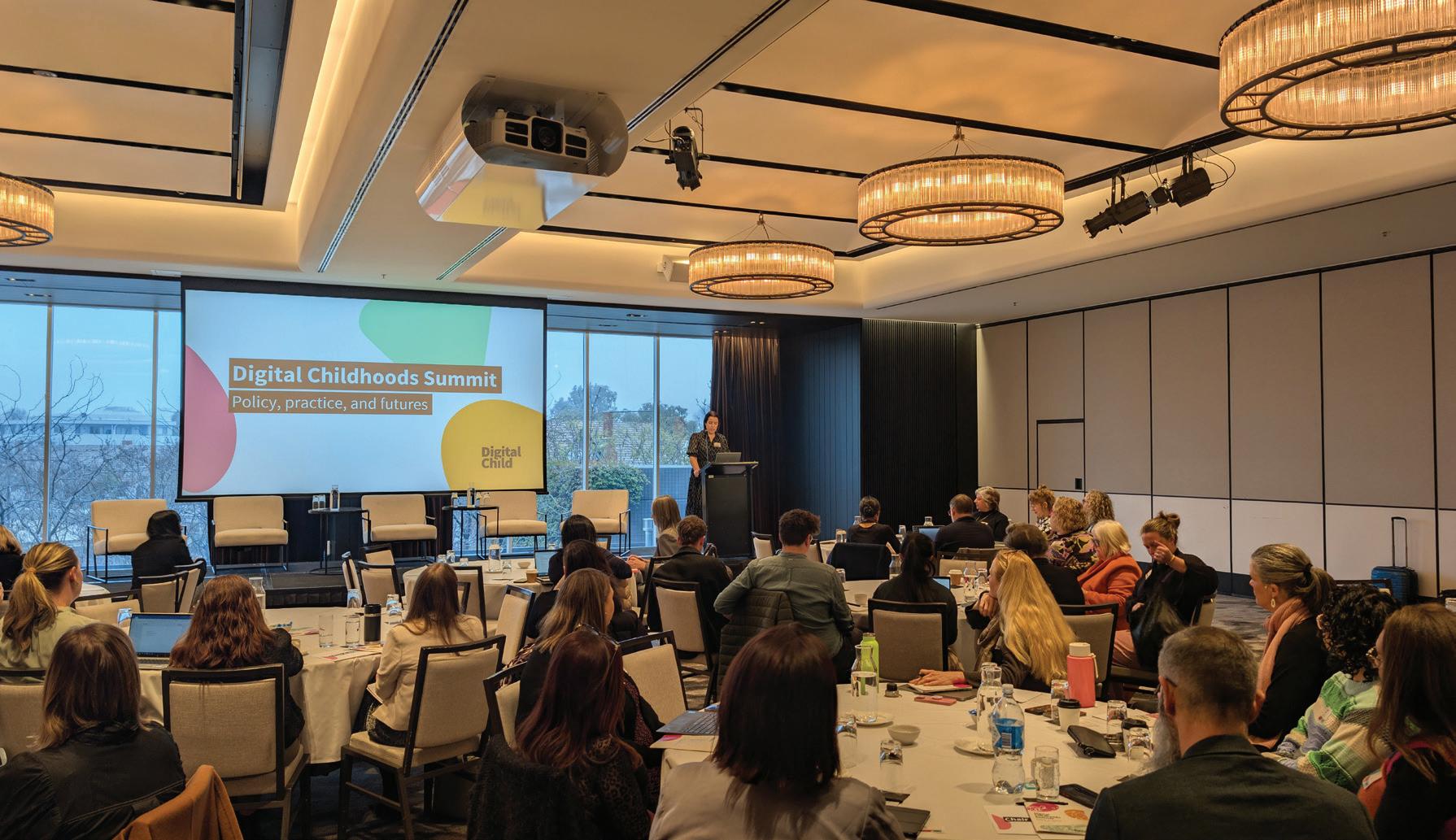
Digital Childhoods Summit 2025
The Digital Childhoods Summit 2025 brought together more than 72 attendees from government, regulatory bodies, industry, community organisations and research institutions to address how policy, practice and futures thinking can better support children’s wellbeing and safety in an increasingly digital world. Held on 11–12 June in Canberra, the Summit provided a vital platform for cross‑sector dialogue on issues such as screen use, online safety, and the needs of young Australian children from birth to 12 years. Through panel discussions and roundtables, participants collaborated to identify shared priorities and actionable strategies, culminating in the release of a post‑event report outlining 10 Digital Priorities for Australia — a collective roadmap for future collaboration.
MENTORSHIP & CAPACITY BUILDING

This year, our researchers stepped boldly into new professional spaces, deepening their expertise through international presentations, cross‑disciplinary dialogue, and hands‑on scholarly exchange. With members successfully securing Centre and external funding to expand our impact across diverse digital‑child research areas— and supported by the active leadership of the HDR and ECR Clubs—our community continued to grow skills, confidence, and collaborative strength, fostering a vibrant culture of mentorship and research excellence.
Highlights
48 Digital Child members are actively engaged in mentoring relationships through Mentorloop, strengthening internal capacity, supporting career development, and fostering cross‑node collaboration across the Centre.
The Centre grants enable international travel, professional development, caregiving support, and new research and translation projects. A total of $52,694.62 was granted to our members.
Digital Child researchers secured more than $1.26 million in external competitive funding, strengthening national leadership in digital wellbeing, screen‑use research, child health, and digital learning futures.
The ECR Club supported early career researchers with professional development, mentoring, and community‑building activities that enhanced research capability, collaboration, and readiness for competitive research pathways.
The HDR Club strengthened research writing and peer connection through targeted development initiatives, including a successful Writing Retreat that equipped candidates with practical communication skills and focused time for academic progress.
Our members actively represented the Centre at major national and international conferences, sharing impactful research and contributing to global conversations on digital childhoods, equity, design, and early learning.

Centre
Fundings Capacity Building Awards
The Centre expanded its internal capacity building by welcoming the inaugural Deputy Co‑Leads for the Healthy Child Program — Dr Nicole Hayes and Dr Cassandra Pattinson — who contributed to strategic leadership and program development throughout the year.
Future Leaders funding
The Centre’s Future Leaders Funding program supports the career development of emerging researchers including Research Fellows, HDR students and Research Assistants. The scheme enables early career researchers to pursue innovative research ideas and develop new pathways for impact through projects that may be research‑focused or applied in real‑world settings.
Building Futures: Exploring creative methodologies for higher degree and early career researcher reflective practice
This project explored how creative participatory methodologies—particularly an adapted Lego Serious Play approach— can support HDRs and ECRs to articulate their professional needs, challenges, and aspirations. Conducted during Winter School 2025 at UOW’s Innovation Campus, the workshop invited participants to “think with their hands,” using metaphor‑based building, storytelling, and group reflection to examine their research journeys and emerging academic identities.
Across the session, 23 participants used models, poems, songs, and shared narratives to express their experiences and aspirations in new ways, opening deeper conversations with peers and supervisors and generating rich insights into the developing identities of early‑career researchers. The reflections were captured in a collaborative slideshow and showcased at DCAM 2025. Next steps include analysing the data for potential journal articles and producing non‑traditional outputs such as a blog post or podcast.
External Successful Funding
DECRA Grants
Two Digital Child researchers were awarded prestigious ARC DECRA grants in 2025, strengthening early‑career leadership within the Centre.
• Dr Zhiguang Zhang — “From Pixels to Pillows”
Investigates how screen use can coexist with healthy sleep in preschoolers, deepening the Healthy Child program’s evidence base around sleep and digital wellbeing.
• Additional DECRA researchers (RF Pattinson and AI Mavilidi) commenced their DECRA funded research programs in 2025, expanding capacity within the node.
National Health and Medical Research Council (NHMRC) Ideas grant — $199,942
Lead Investigators: Dr Tiffani Apps & Dr Karley Beckman (UOW)
Project: Identifying the Links Between Video Game Play and Wellbeing
This project examines how videogame play influences adolescents’ health, cognition, learning and wellbeing, addressing a national gap in youth gaming research. Working with 1,000 Year 9 students, the team analyses gaming behaviours using telemetry data to identify markers of problematic play, then co‑designs wellbeing‑focused gaming resources with students, teachers and families.
“We know most young Australians play video games regularly, but little is known about the specific links between screen use related to gaming and adolescent wellbeing”
Dr. Beckman
Priority Grant — $341,307
Lead: Dr Taren Sanders (ACU)
Digital Child CI: Associate Professor Dylan Cliff
Project: Seeing the Bigger Picture: Exploring Children’s Screen Time and Outcomes
This interdisciplinary project investigates how different patterns of children’s screen use relate to health, developmental and learning outcomes, using collaborative data analysis across several Australian universities. Findings will contribute to national guidance on healthy digital engagement in early and middle childhood.
UOW PhD Scholarship — $10,000
Recipient: William Tregea (UOW) Project: Healthy Bytes
This scholarship supports formative research with families in south‑western Sydney to understand screen use in early childhood and identify what information or support caregivers need to foster healthy digital habits in young children.
“These projects reflect UOW’s commitment to addressing real world challenges that affect the wellbeing of young Australians”
Dr. di Pietro
Best Practice in Screen Use for Education — $426,943
Lead: Professor Matt Bower (Macquarie University)
Digital Child Researchers: Dr Tiffani Apps & Dr Karley Beckman
This major cross‑institutional project develops evidence‑based screen‑use guidelines for schools, empowering students, teachers and school communities to make informed decisions about digital learning. The project draws on expertise across 10 universities to produce practical frameworks for healthy, effective technology use across educational settings.
HIVE Summer Internship Scholarship — $7,000
Chief Investigator: Professor Crystal Abidin Intern: Alden Wongso
Project: Is There a Typical Influencer “Face”?
This Curtin‑funded project investigates visual patterns in influencer culture by analysing how “influencer aesthetics” are constructed and circulated online, contributing to emerging scholarship on digital identity and youth media literacies.
ARC Discovery Grant — $279,981
Chief Investigator: Professor Crystal Abidin Co investigator: Dr Jin Lee
Project: Mapping the Influencer Aspirations and Literacies Among Australian Children
This Discovery project explores how Australian children understand, aspire to, and learn from influencer culture, providing new insights into commercial, social and creative digital literacies. The findings will inform future guidance for families, educators and policymakers on children’s engagement with influencer platforms.
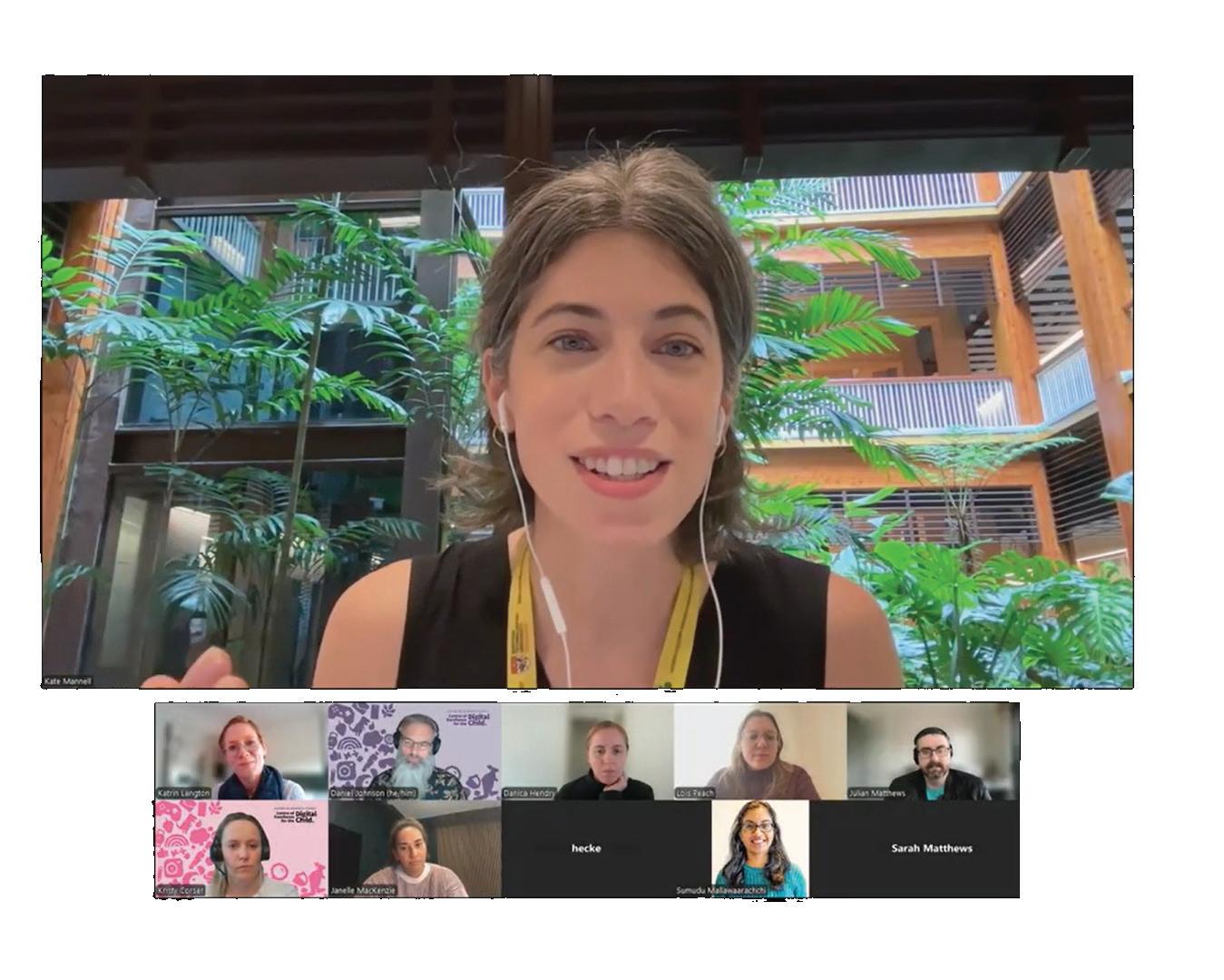
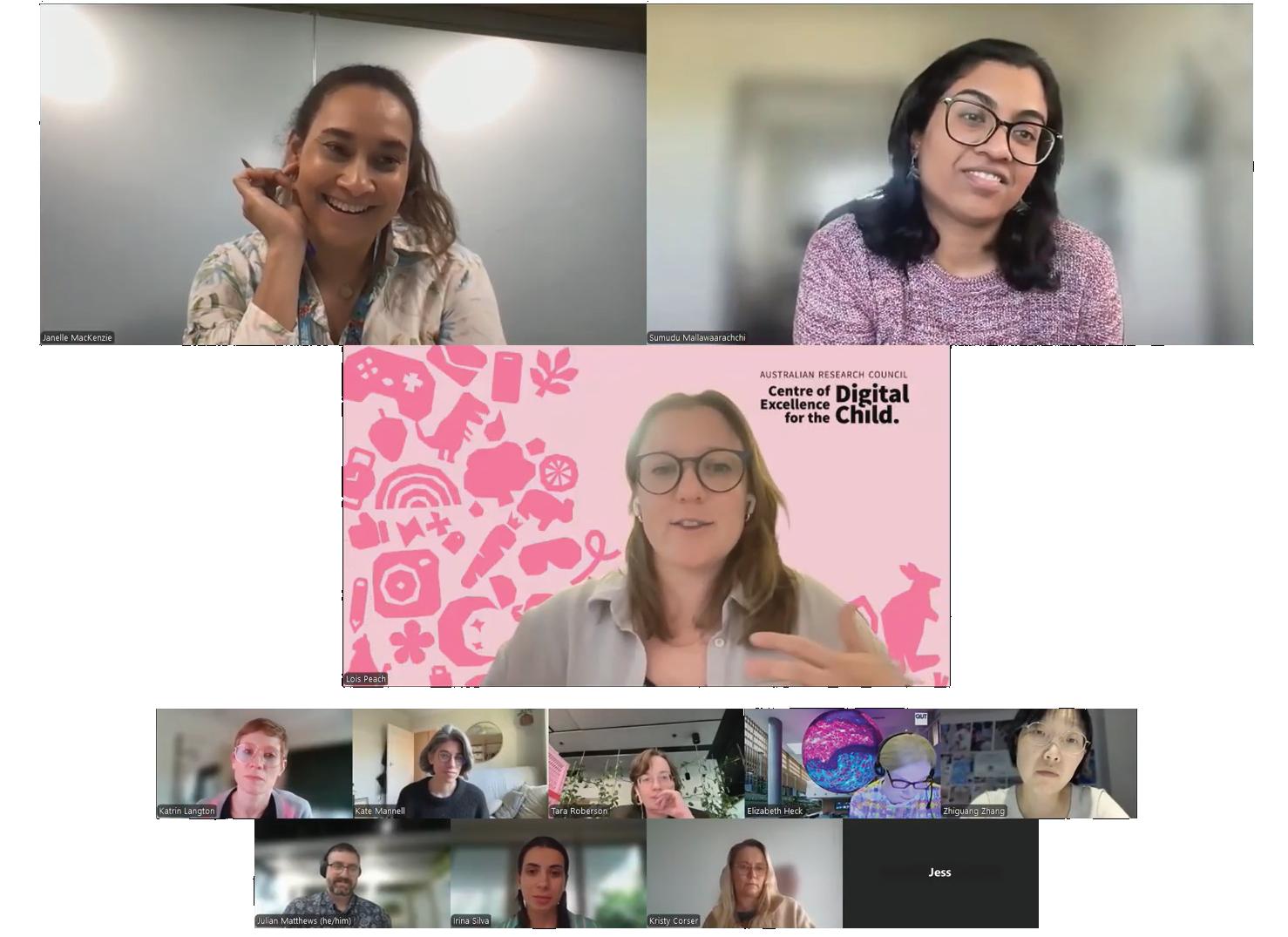
ECR Club: Reinvention and 2025 Activities
Written by: Danica Hendry, Janelle Mackenzie, Katrin Langton and Lois Peach.
Early Career Researcher (ECR) Club was revitalised through a new four‑member leadership team representing nodes across the Centre: Danica Hendry (WA), Janelle Mackenzie (QLD), Katrin Langton (VIC) and Lois Peach (NSW). Building on the foundation established by Sarah Matthews, the re‑formed ECR Club shifted from a single‑lead model to a collaborative structure, enabling shared planning, diverse perspectives and better support for the Centre’s growing ECR community. Throughout the year, the Club delivered a series of interactive, skills‑focused sessions designed to strengthen research capability, foster confidence, and cultivate peer connection across early‑career researchers.
2025 Sessions and Initiatives
Building Your Research Narrative
Facilitator: Katrin Langton; Guest Speakers: Kate Mannell, Daniel Johnson
This session focused on helping ECRs craft purposeful research narratives, drawing insights from two Centre researchers at different stages of their academic careers to provide practical guidance on shaping a coherent research identity.
Talking to the Tech‑Averse Facilitators: Lois Peach & Janelle Mackenzie; Guest Speaker: Distinguished Professor Susan Danby
Responding to ECR experiences of engaging with sceptical or tech‑averse audiences, this discussion offered strategies for effective communication in challenging settings. The session provided a confidential space for open conversation, strengthening trust and peer connection.
TIP x ECR Impact Incubators (Two Workshops
Guest Speakers: Tara Roberson & Kate Mannell
These workshops supported ECRs to translate their research for broader audiences and prepare strong pitches for the Centre’s Translation and Impact Program (TIP). Participants explored how to develop impactful, audience‑specific initiatives that extend the reach of their work.
Across the year, the ECR Club created meaningful opportunities for collaboration, mentorship and collective learning— strengthening the Centre’s early‑career research culture and building sustained capacity for future leadership.
HDR Club: 2025 Activity Recap
Written by Michelle Gregory and Melissa De La Cruz
In 2025, the HDR Club continued to foster a connected, supportive, and academically vibrant environment for emerging scholars across the Centre. Under the leadership of Melissa De La Cruz (HDR Liaison for most of the year) and Michelle Gregory (who stepped into the role in September), the Club delivered initiatives that strengthened scholarly skills, encouraged cross‑node collaboration, and built a strong sense of community within the HDR cohort. Activities throughout the year provided opportunities for shared learning, professional development, and reflective practice that supported HDR candidates at all stages of their candidature.
2025 Sessions and Initiatives
Journal Club
The Journal Club remained a central feature of the HDR community, providing regular opportunities for candidates to critically engage with current research, share perspectives across disciplines and build confidence in academic discussion. Participation continued to grow across the year, with many sessions shaped by HDR‑led themes and collaborative dialogue.
HDR Writing Retreat (Brisbane)
The Brisbane HDR Writing Retreat offered Higher Degree Research students dedicated, distraction free time to advance their writing in a supportive and collaborative environment. A full day Persuasive Writing Workshop led by communication specialist Karyn Gonano provided participants with practical strategies to strengthen academic writing and research communication. The retreat promoted focused productivity, peer connection, and professional development, supporting early career researchers across the Centre to build confidence and momentum in their research writing.
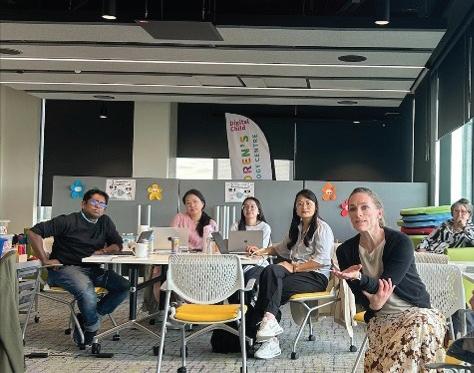
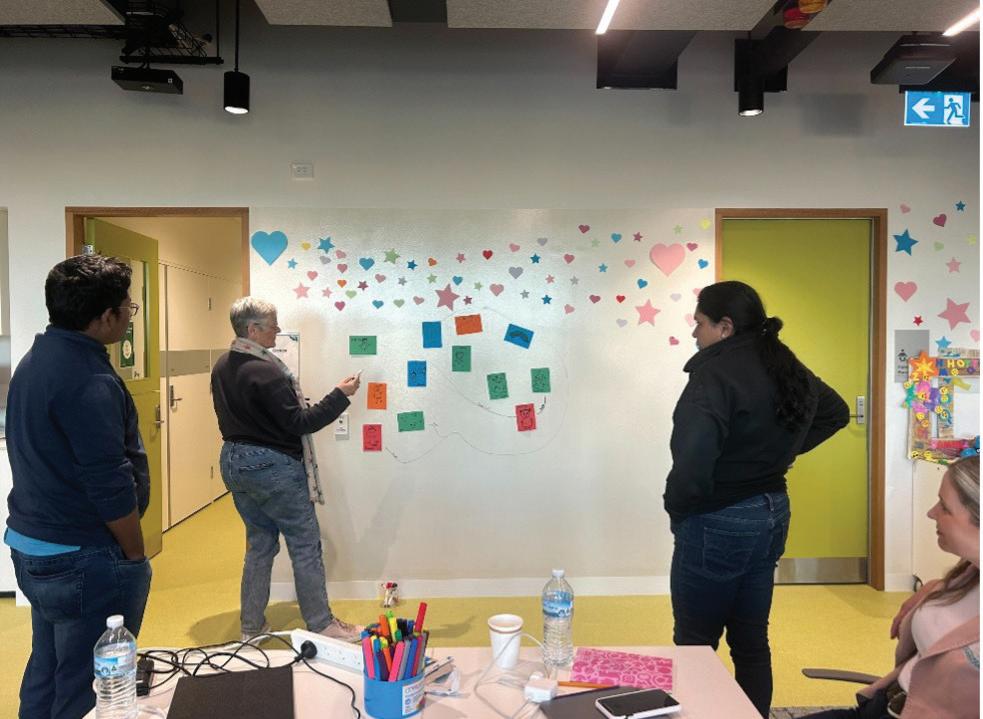
Winter School — Innovative Methodologies
During the DCAM Winter School, HDRs engaged with hands‑on workshops exploring creative and multimodal research methodologies, including the use of LEGO as a reflexive tool for investigating digital childhoods. These sessions encouraged playful experimentation and highlighted the value of imaginative approaches to digital child research.
Together, these activities contributed to a thriving HDR culture, supporting emerging scholars to refine their research practice, strengthen peer networks and build confidence as the next generation of digital childhood researchers.
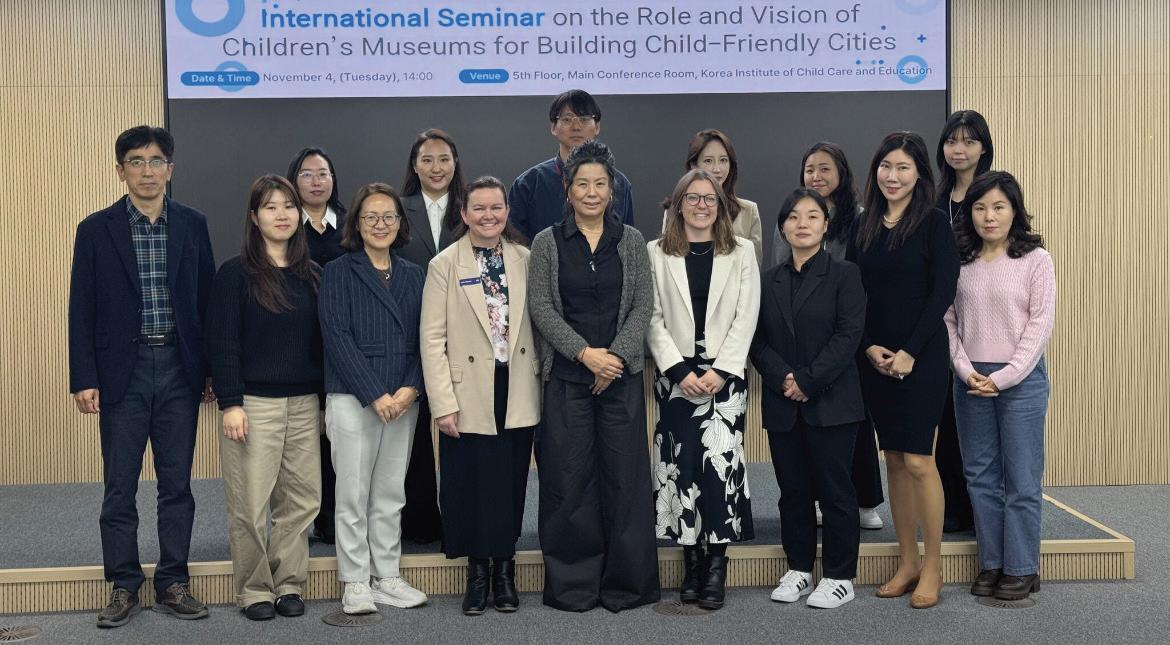
Conference & Seminar
Participation by Centre Members
AJEC Research Symposium 2025
Location: Perth, WA
Participant: Birgitta Puspita (PhD Candidate, ECU)
Date: October 2025
Birgitta represented the Centre at the AJEC Research Symposium, engaging with rich discussions on dialogic methodologies, equity in early childhood programs, and the digital lives of young children. Highlights included a keynote by Prof. E. Jayne White, exploring dialogic research as a way of “attending to all voices, no matter how small,” and a series of sessions examining diversity, inclusion, and children’s digital funds of knowledge.
International Seminar on Children’s Museums
Location: Seoul, South Korea
Invited Speaker: Professor Lisa Kervin (UOW)
Date: November 2025
Professor Lisa Kervin was invited to speak at this international seminar hosted by the Korea Institute of Child Care and Education. The event brought together researchers, museum leaders, and policymakers to explore the role of children’s museums in shaping child friendly cities. Lisa presented insights from the Children’s Technology Play Space, demonstrating how innovative design supports playful learning.
During their visit, Lisa and Research Fellow Lois Peach toured children’s play spaces across Seoul and met with early childhood teachers, strengthening international connections and gathering inspiration for future work.
“The knowledge and networking gained at this symposium were very useful for me personally. The discussions were excellent—academics and practitioners critically examined early childhood education programs and the presence of digital technology in ECEC classrooms. The dialogic methodology and insights into Australian ECEC practice will certainly be beneficial for my PhD journey.”
Birgitta
International Collaboration Discussions
Location: Capital Institute of Pediatrics, China
Presenters: A/Prof Dylan Cliff, Dr Zhiguang Zhang (UOW)
Date: December 2025
Dylan and Zhiguang each presented Centre research on children’s technology use, physical activity, sleep, and health to a visiting delegation from Beijing. The sessions supported meaningful dialogue about potential collaborations in early childhood health and digital wellbeing.
European Conference on Critical EdTech Studies
Zurich, Switzerland
Participant: Dr Andy Zhao (Research Fellow, Deakin)
Date: June 2025
Andy presented Centre research on the political economy of children’s edtech apps, receiving constructive global feedback that will directly strengthen a forthcoming journal article and the design of an interactive online database.
The conference also enabled valuable networking with leading scholars in critical edtech, supporting Andy’s academic trajectory and the visibility of a special issue he is co editing.
“I have met with leading researchers in the field of critical edtech studies, including contributors to the special issue I am co editing. Hearing their presentations keeps me updated on emerging projects and studies in the field and supports my career trajectory as an early career researcher.”
Andy
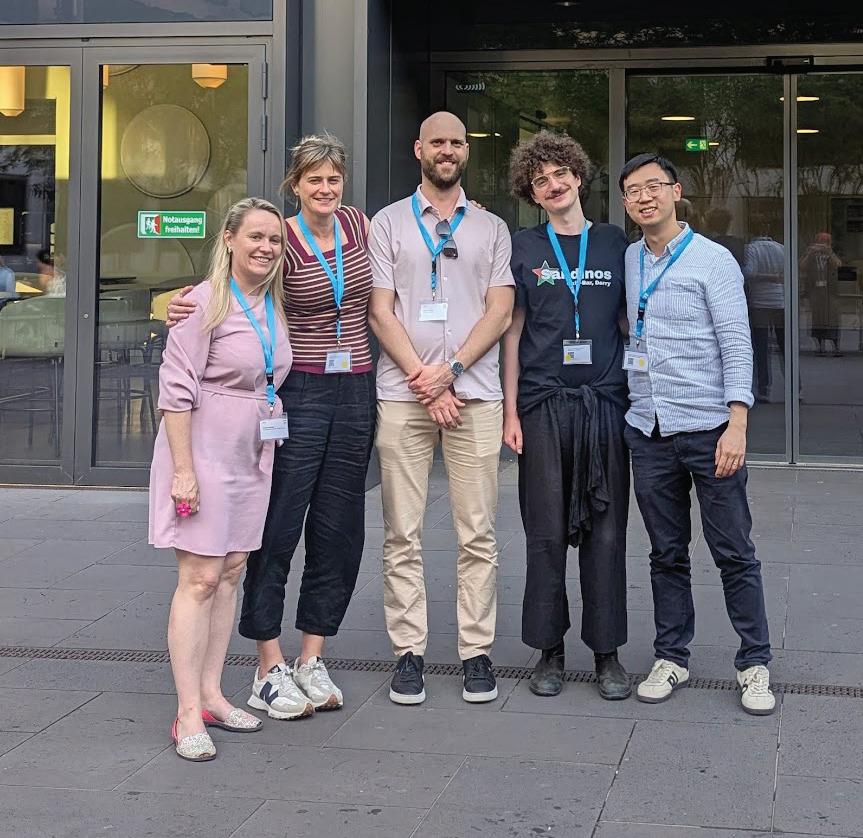
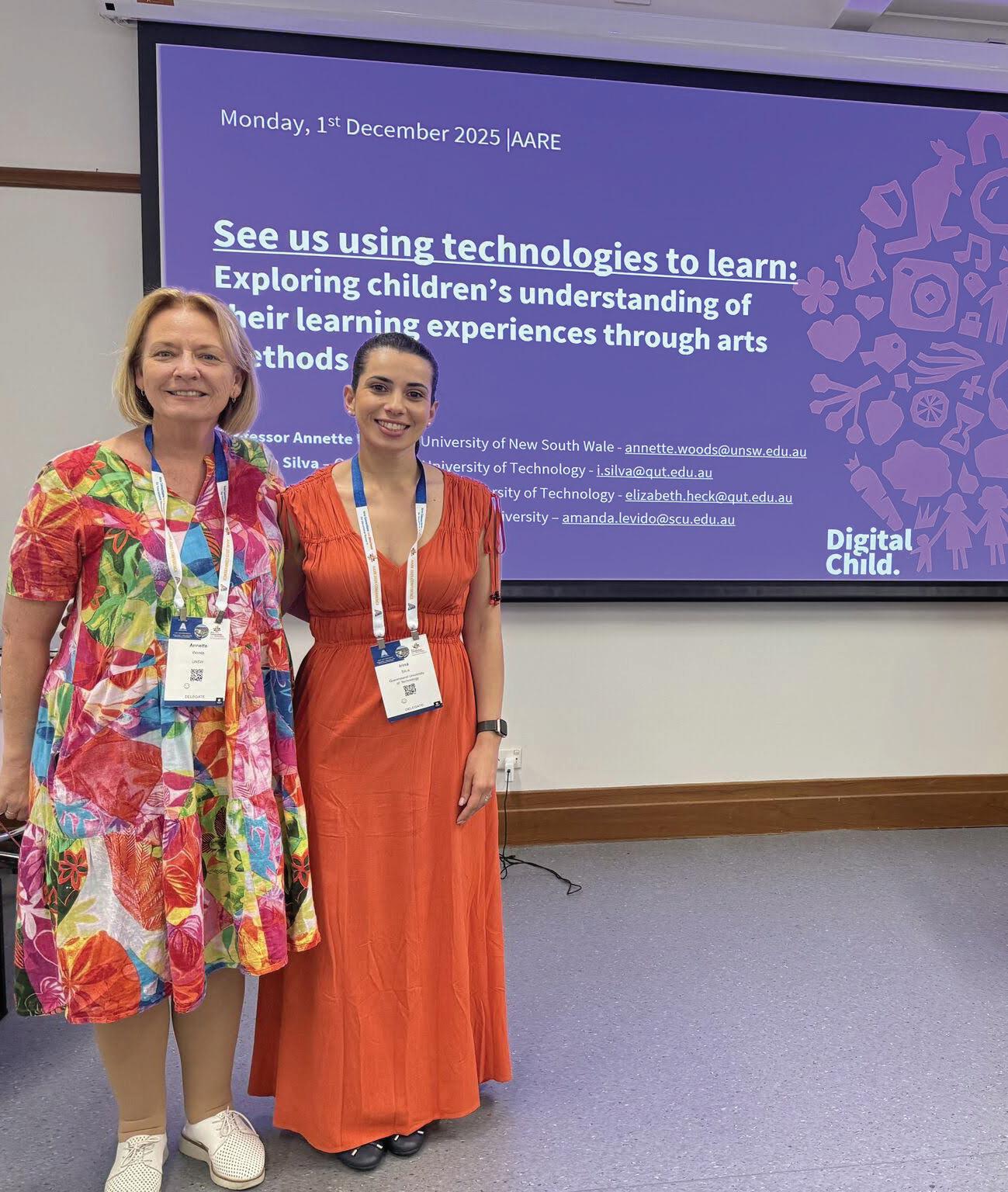
Interaction Design and Children (IDC) 2025 – Reykjavík, Iceland
Participant: Chimi Om (PhD Candidate)
Date: June 2025
Chimi presented a full paper titled “Storying Roleplay: A Co design Method Supporting Young Children to Understand Environmental Problems” at IDC — the world’s leading conference on child centred design. The event featured nine full paper sessions (including extensive work on AI literacy), two influential keynotes, and vibrant discussions on shaping hopeful digital futures for children.
Chimi also joined a full day workshop on computational empowerment, contributing to a shared manifesto for children’s digital agency.
“Attending IDC was both professionally enriching and personally inspiring. It reminded me of our collective responsibility in designing hopeful futures for and with children.”
Chimi
CENTRE CULTURE & CONNECTION

In 2025, we strengthened our Centre’s culture through diverse formats that kept our six university nodes connected and engaged. Highlights included the Annual Meeting, Winter School for emerging researchers, and in person node gatherings that foster collaboration. Our Spotlight sessions gave researchers a platform to share current projects, sparking questions, fresh perspectives, and opportunities for knowledge sharing and joint initiatives. A dynamic mix of virtual and face to face events ensured our community remained vibrant and collaborative throughout the year.
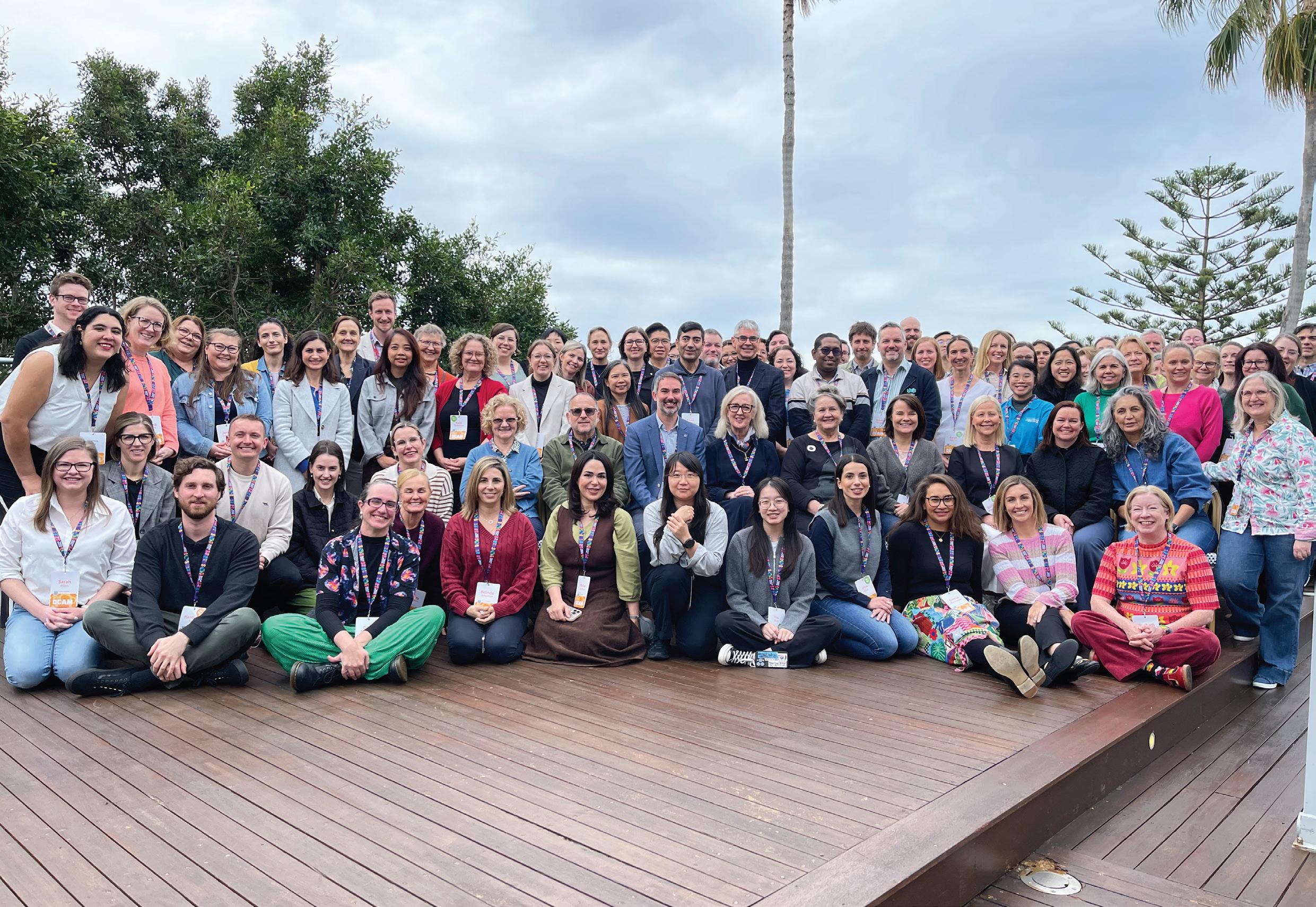
Meeting 2025
Held in Wollongong, our 2025 Annual Meeting brought together 104 attendees from across all Digital Child nodes and Centre partners, creating one of our most vibrant and collaborative gatherings for the centre this year. Over three days, members explored the evolving landscape of childhood in a connected world — from digital play and persuasive design to children’s rights in the age of AI.
The program included:
• Welcome to Country by Aunty Barbara Nicholson and opening remarks from Distinguished Professor Susan Danby, Professor Peter Kelly, and Associate Professor Dylan Cliff
• Three keynotes, including two international speakers from Finland and Scotland, who explored the evolution of play in a connected world, children’s rights in the age of AI, and the delicate balance between engagement
AI and childhood, screen guidance, and persuasive design
• Collaboration sessions, round table discussions, and ACODA updates
• A showcase of highlights from the Winter School
• A public event on digital technologies in early childhood, hosted at the University of Wollongong
• A lively Night at the Museum at the Early Start Discovery Space, including Boombox Bingo and a pizza night
• Presentation of the DCAM Awards celebrating outstanding contributions
• A formal DCAM Dinner at the Novotel
Closing remarks and annual awards from Distinguished Professor Susan Danby
International Keynote Speakers at DCAM 2025
Professor Kristiina Kumpulainen (University of British Columbia) explored The Evolution of Play, highlighting how digital, physical, and social worlds merge in children’s everyday lives. She emphasised digital play as a meaningful, culturally situated practice and showcased work where children create immersive stories, characters, and augmented reality experiences.
Gregory Metcalfe (Children’s Parliament) delivered a keynote on Children’s Rights and AI, urging meaningful involvement of children in decisions about technology. Drawing on research into children’s views on privacy, safety, fairness, and AI literacy, he highlighted both emerging risks — such as deepfakes and data scraping — and the importance of empowering children with clear, honest information.
“I enjoyed seeing how well the work of the Healthy stream aligned between nodes and between projects. It engendered a really nice sense of belonging to something that was important and impactful. Specifically, I very much enjoyed seeing my former PhD student, Sumudu Mallawaarachchi, present her work. It’s wonderful to see how well she is supported to continue her great work with the Wollongong node.”
Sharon Horwood
Associate Investigator
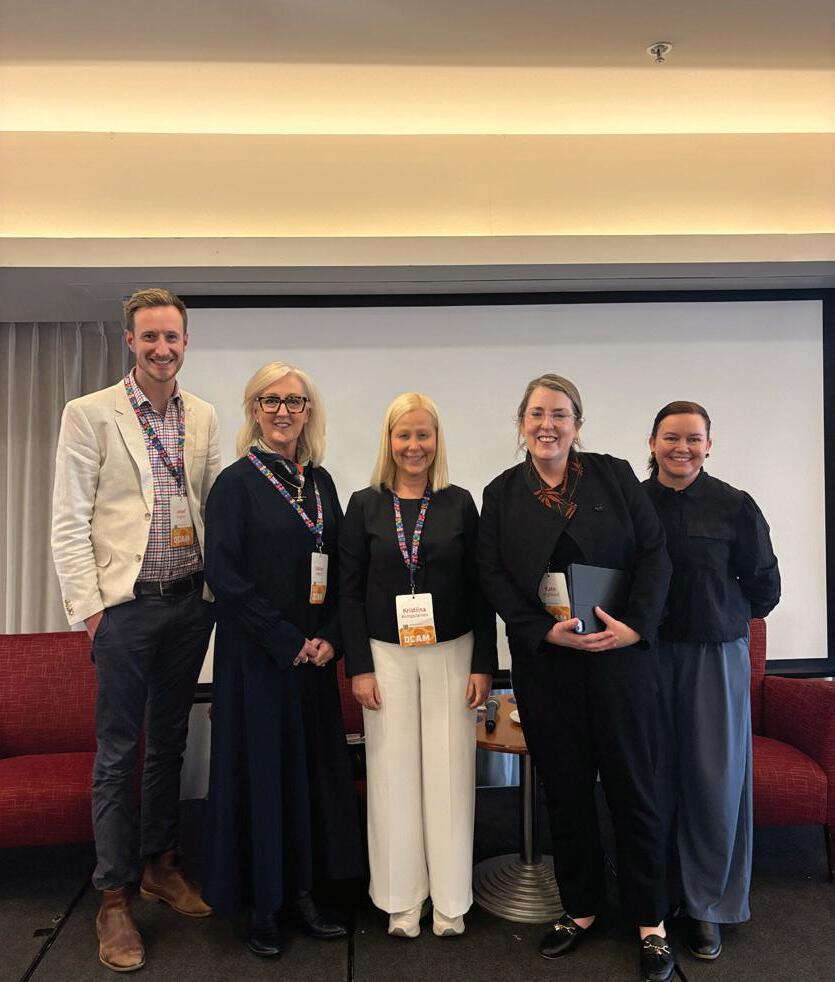
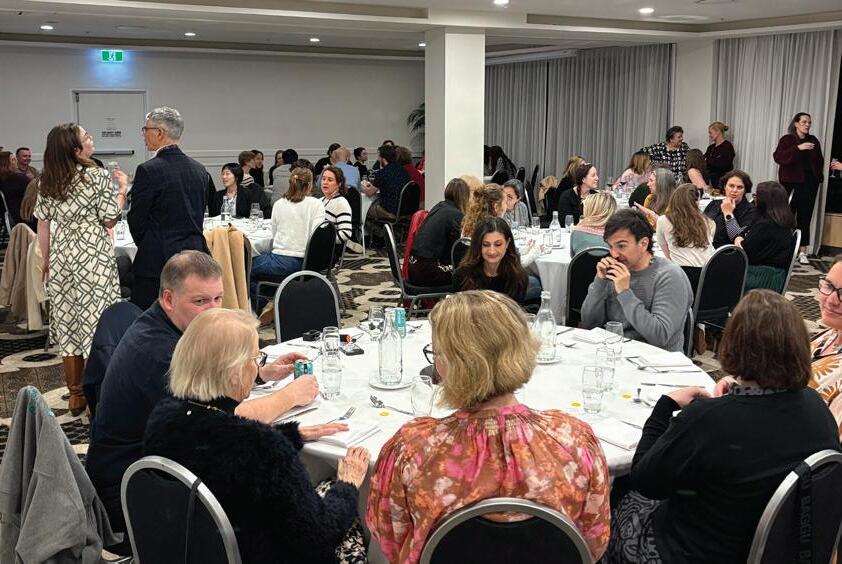
“It was a privilege to take part in DCAM and learn alongside researchers across diverse disciplines in such an open, collegial environment. Our panel on The Evolution of Play offered a memorable space to explore how children’s play shifts across contexts, technologies and cultures, and the insights shared will continue to shape my research and collaborations.”
Kristiina Kumpulainen International Keynote Speaker
¨Seeing presentations where innovative child focused and creative methodology was discussed galvanised my future focus on methodology. It sparked my thinking about a possible future edited book publication about creative methods as a contribution to Digital Child research outcomes, which I discussed with several DC researchers.”
Dr. Kylie J. Stevenson Associate Investigator
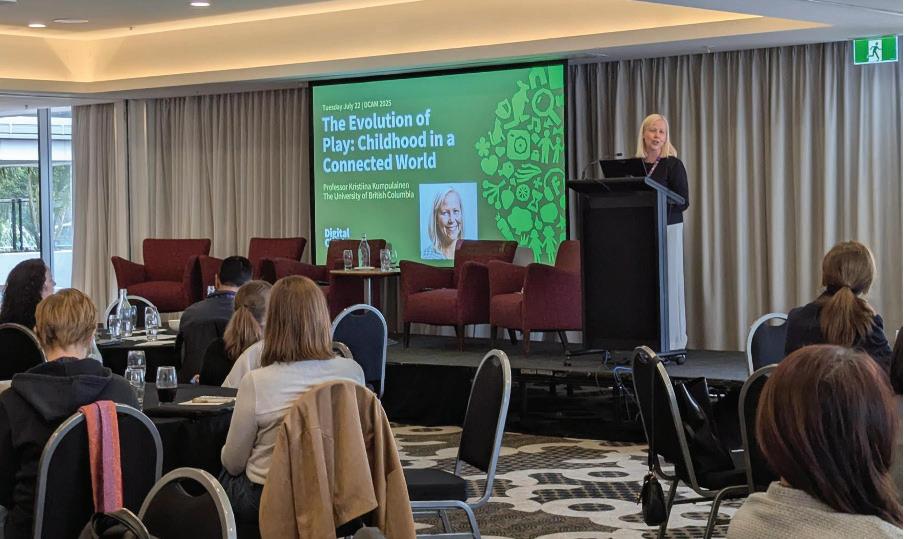
Digital Child Awards 2025
Before closing DCAM 2025 we came together to recognise the outstanding achievements of our members. The Digital Child Awards 2025 celebrated the creativity, leadership, and impact that continue to shape our Centre.
Director’s Award – Kristy Corser and Andy Zhao
• Kristy Corser demonstrated exceptional leadership and engagement through impactful research, coordination of major events, and knowledge translation initiatives bridging research and practice.
• Andy Zhao was recognized for pioneering research on digital media, migration, and family life, shaping public discourse and policy while fostering inclusive, ethical digital practices.
Outstanding Performance and Professionalism Award – Narelle Low
• Commended for exemplary professionalism and leadership as Business Manager, Narelle ensures seamless operations across six nodes, delivering strategic planning, accurate reporting, and fostering collaboration that strengthens the Centre’s culture.
HDR Student Excellence in Engagement Award – Simon Daniele
• Simon advanced the Centre’s visibility through leadership, collaboration, and global outreach. His contributions include transmedia expertise, industry partnerships, and international engagement supported by a Future Leaders Grant.
Research Fellow Excellence in Engagement and Impact – Jess Hardley
• Jess is celebrated for exceptional engagement and global collaboration, leading research initiatives, representing the Centre at key conferences, and driving high impact partnerships with international institutions.
Thank you to everyone who contributed their insights, energy, and enthusiasm throughout DCAM 2025. You can access the complete DCAM 2025 program here. We look forward to gathering again in Queensland for DCAM 2026.
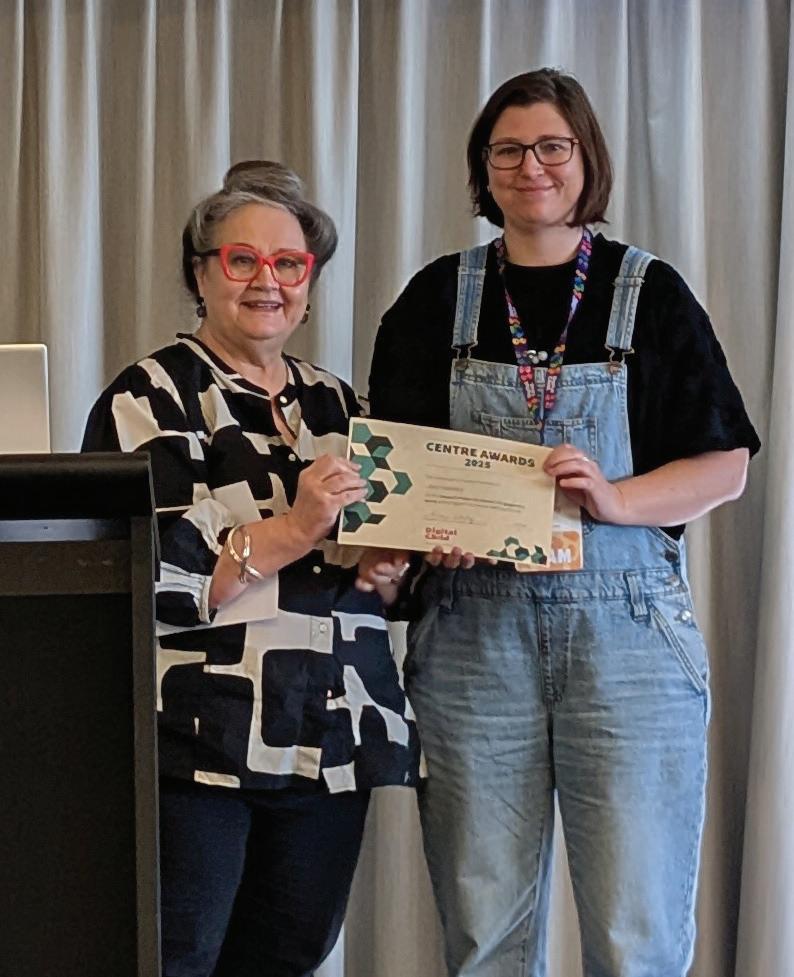
Winter School 2025
The 2025 Digital Child Winter School featured SMARTER Day, a full day professional development workshop for HDRs and ECRs held on July 21 at the UOW Innovation Campus in Wollongong.
Bringing together current and recent PhD students from across the Centre, the event offered a dynamic program of guest speakers, networking, and knowledge exchange. Attendees learned from internationally renowned scholar Prof. Kristiina Kumpulainen (University of British Columbia), international keynote Gregory Metcalfe (Scottish Children’s Parliament), and local experts, gaining insights into research practices and collaboration opportunities.
With 33 participants, SMARTER Day strengthened connections across nodes and supported the career development of emerging researchers, reinforcing our commitment to building a vibrant and engaged research community.
Spotlight Sessions
Digital Child Spotlight series continued to strengthen collaboration and knowledge sharing across our six university nodes. These fortnightly sessions provided a platform for researchers to present their projects, share insights, and spark new ideas.
Key Features:
• 16 Spotlight meetings throughout the year, with each node hosting one session.
• Presentations showcased updates on node specific projects, offered deeper insights into our longitudinal study ACODA, and included a dedicated feedback session on DCAM 2025 to refine future directions.
• Sessions concluded with node reflections, encouraging discussion, questions, and opportunities for collaboration.
• The final session and feedback survey revealed that members valued the Spotlight series, appreciating the opportunity to stay informed about projects and node activities, the overall response was positive, with strong support for continuing these sessions as a way to maintain connection and awareness across the Centre.
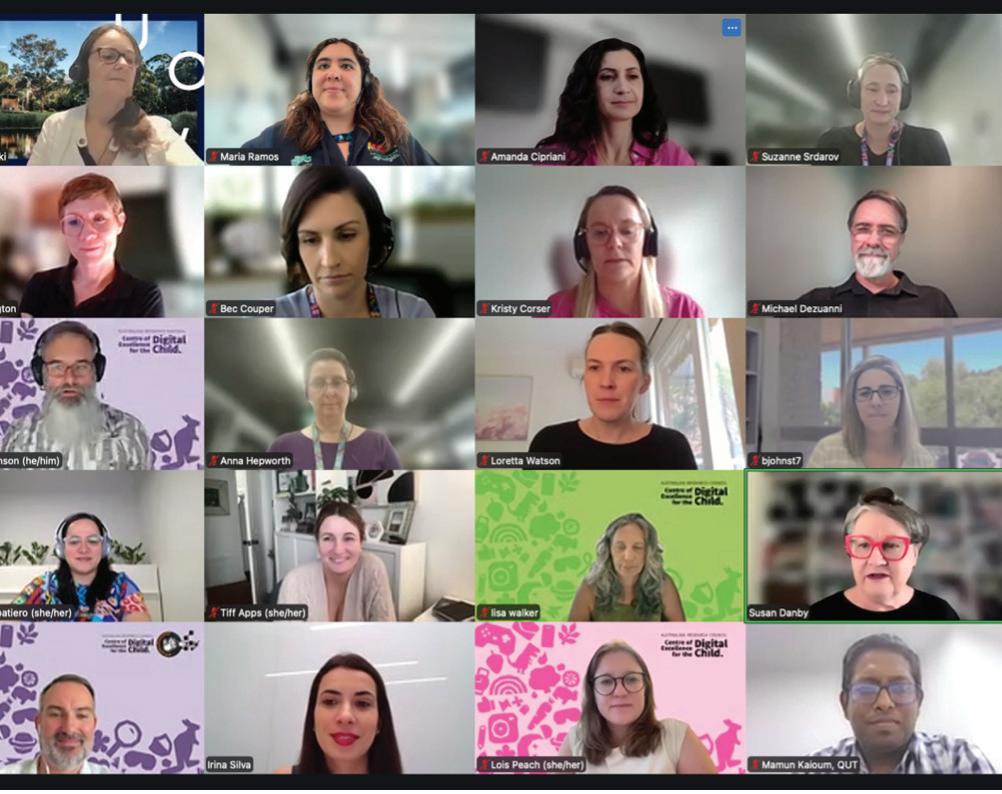
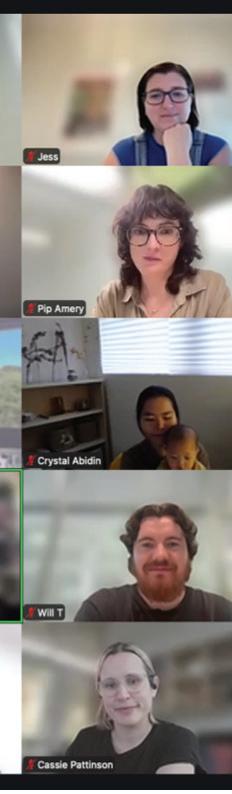
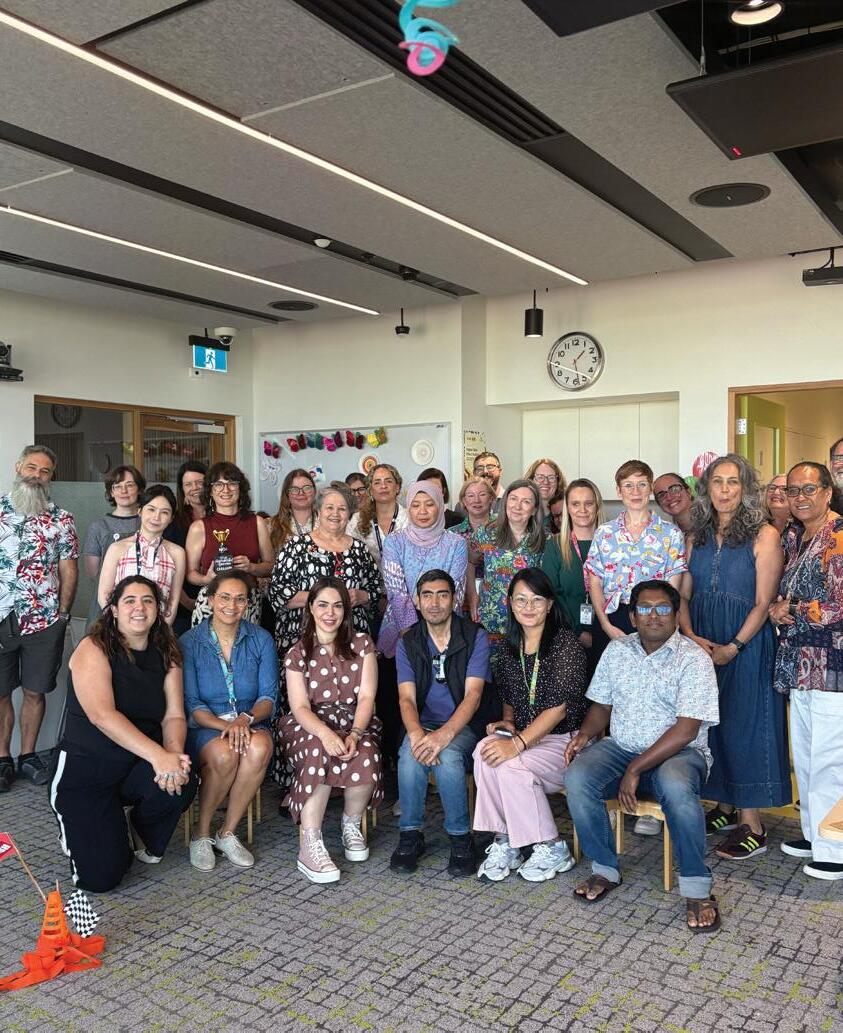
Node Meetings
Regular Node Meetings continued to play a vital role for our members. In person with an online option, these meetings provided a space for node members to share updates on ongoing projects, discuss upcoming events, and exchange ideas.
They also served as an important forum for seeking support and building networks to strengthen their current projects. By combining regular updates with open dialogue, Node Meetings helped maintain transparency, encourage feedback, and nurture a sense of community.
COMMUNICATION, TRANSLATION, & IMPACT
Communication and outreach remained central to how we connect the Centre with our diverse audiences—families, educators, policymakers, industry, and young people themselves.
Translating complex research into real‑life impact through accessible articles, podcasts, events, workshops, and public engagement initiatives.
Our researchers transformed their findings into accessible, actionable knowledge that supports everyday decision making across different contexts. With this we ensure our work extends beyond academia to create meaningful impact in daily life for the communities we serve.
As part of our mission to translate research into real world impact, the Digital Child continues to develop accessible, evidence based resources tailored to the needs of families, educators, and policymakers. These materials help bridge the gap between research and practice, supporting safer and more informed digital experiences for children
RESOURCES FOR PARENTS
Our parent focused factsheets break down key topics—such as online gaming, search habits, and image sharing—into accessible insights and practical advice. These tools are designed to spark conversations at home and build digital confidence across the family.
FACTSHEET
Five Things to Understand: Children Playing Online Games

Read the publication
FACTSHEET
Five Things to Understand: Children searching online

Read the publication
FACTSHEET
Five Things to Understand When Children Research Online
Read the publication

RESOURCES FOR EDUCATORS
Educators play a vital role in shaping children’s digital skills, wellbeing, and learning experiences. Our educator resources translate research into classroom ready tools, checklists, and professional learning supports that help early childhood and school based practitioners integrate digital technologies with clarity and confidence with their students in their everyday lives.
Checklist for Digital Tech
The Digital Child’s easy to use checklist will help staff working in Early Childhood Centres (ECCs) to assess the consequences of using digital apps and platforms.
Educator Workload
Data Privacy
Making Connections
STEM Modules
This package explores STEM/STEAM across disciplines and settings. It draws on the expertise of academics in the ARC Centre of Excellence for the Digital Child and practitioners (classroom teachers, educators and consultants) locally and internationally who are recognised by their peers as interested and expert in STEM and or STEAM pedagogies. MODULE 1
The arts in STEM
Connecting, planning and assessing in STEAM
RESOURCES FOR POLICYMAKERS
Through rapid reviews, explainers, and formal submissions, we provide clear guidance on emerging issues—from platform design to online safety and children’s data privacy. These materials help ensure that children’s rights and wellbeing remain at the centre of digital policy conversations in Australia.
Submissions
Digital Child contributes formal submissions to government and regulatory bodies on key issues affecting children’s digital experiences. These submissions provide research insights and practical recommendations.
Internet Search Engine Services
Online Safety Code
Read the submission
Productivity Commission: Data & Digital
Read the submission
Roblox ‑ A Rapid Analysis

Children’s Online Privacy Code — Issues Paper Submission
Read the submission
Submission to Education and Workforce Committee
Read the submission
BLOGS
Throughout the year, our researchers and collaborators have continued to share timely, evidence based insights through our blog platform. These posts explore how children and families learn and adapt to the digital world—offering practical guidance, raising critical questions, and highlighting children’s own perspectives.
How is family life being ‘platformized’ and why does it matter?
Written by: Kate Mannell

From Play to Picture: Capturing joyful moments safely
Written by: Tamara Gulic Phoenix, Clara Rivera, Jessica Mantei & Lisa Kervin
From digital parenting and media literacy to safe image sharing, play, and AI, each blog contributes to a deeper understanding of childhood in the digital age. Below is a selection of key pieces published this year, written by members of our Centre and partners across Australia.
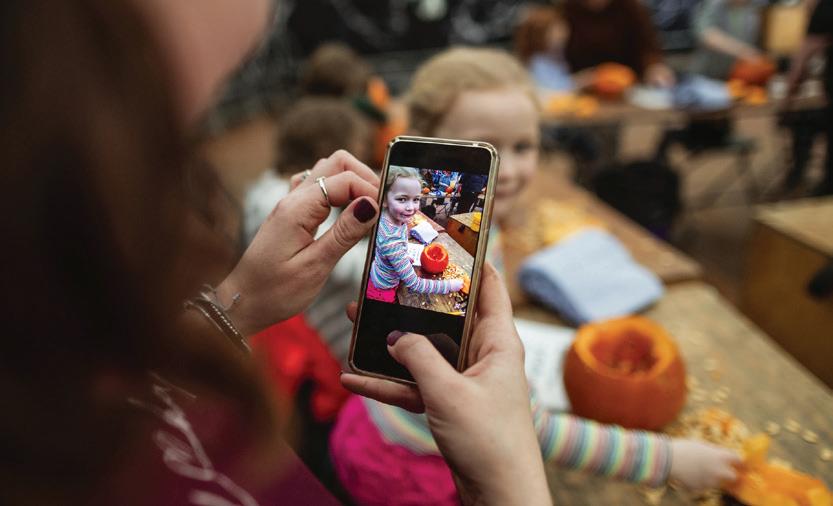
Schools need parent permission to put students’ photos on social media – 3 questions to ask before you say yes
Written by: Karley Beckman & Tiffani Apps
Read blog
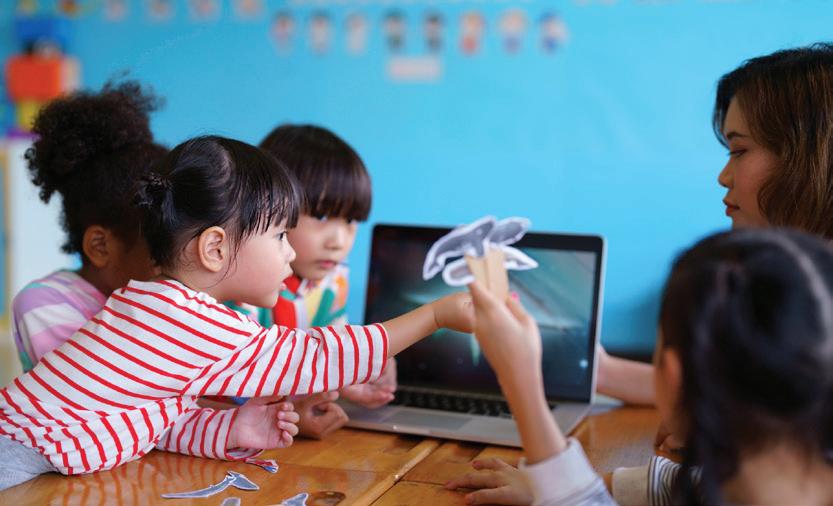
The everyday use of media literacy in early childhood education
Written by: Tammy White & Michael Dezuanni
Are children spending enough time playing outside or are screens taking over?
Written by: Alma Lagerbon Rasmussen, Marie Engelst Hjort, Leon Straker, Juliana Zabatiero & Amber Beynon
As digital technology becomes part of everyday life even for infants, parents and researchers are increasingly asking whether screen time is replacing the rich developmental benefits of outdoor play. Early findings from an ongoing study in Western Australia suggest the relationship is more complex than a simple trade off: while excessive screen use may affect aspects of infant development, outdoor play consistently supports communication, motor, problem solving and social skills and, importantly, screen time does not appear to reduce time spent outside. Instead, factors such as parents’ attitudes toward nature play a stronger role in shaping infants’ routines, highlighting that a healthy balance of “screen time” and “green time” can support children’s early development.
Read blog


Young voices take the lead in getting the balance right with digital technologies
Written by: Kristy Corser, Elizabeth Heck, Amanda Levido, Annette Woods & Michael Dezuanni
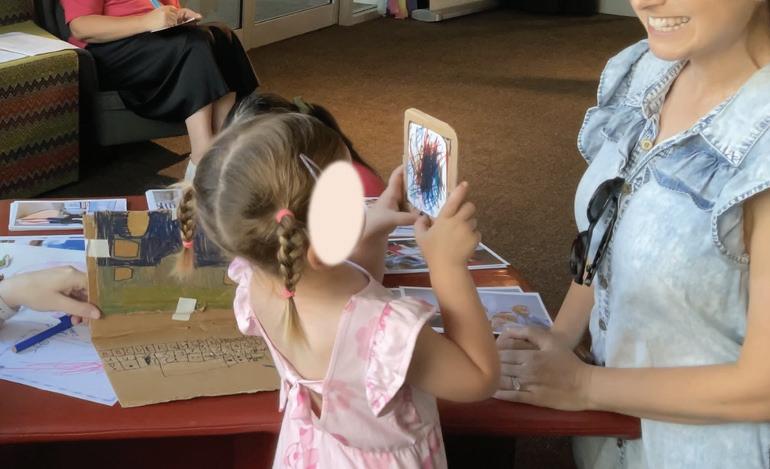
Children’s Forums: Exploring digital technology through children’s perspectives
Written by: Irina Silva & Susan Danby
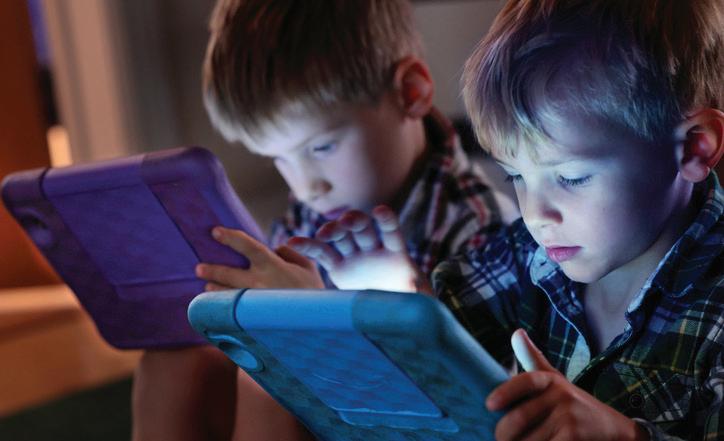
Why some children really struggle to switch off screens (and what design has to do with it)
Written by: Sumudu Mallawaarachchi & Steven J. Howard
BLOG

‘Australiana’ images made by AI are racist and full of tired clichés, new study shows
Written by: Tama Leaver & Suzanne Srdarov
The Chinese approach to digital parenting: The Mum Jury experiment in Beijing
Written by: Jian Xu & Xinyu (Andy) Zhao

Which is a better way to measure screen use by children: Wearable camera or Fixed room video?
Written by: Amber Beynon, Charlotte Lund Rasmussen, Amity Campbell & Leon Straker
Nature isn’t just a screen time substitute, it’s a digital health strategy
Written by: Marina Torjinski
Ways to measure screen use by children
Written by: Amber Beynon, Charlotte Lund Rasmussen, Amity Campbell & Leon Straker
Read blog
Read blog
Read blog
INTERNATIONAL PERSPECTIVES BLOGS
International Perspectives blog series showcased the expertise of guest partner investigators from across the globe, each offering a unique lens on how children’s lives are shaped by digital technologies. Contributors from the United Kingdom, Denmark, and the United States examined the digital child across historical, social, and developmental contexts—from early internet cultures and digital play to welfare technologies, datafication, and the emergence of the digital child even before birth.
Playing the Archive: From the Opies to the Digital Playground
John Potter — United Kingdom
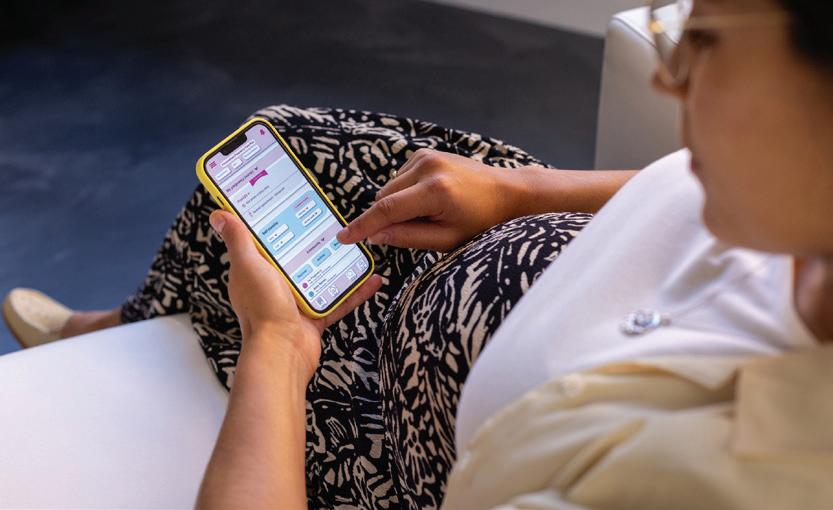
Pregnancy Apps and the Digital Child Before Birth
Josie Hamper — United Kingdom
How Did It All Begin? Children and the WWW in the 1990s and early 2000s
Helle Strandgaard Jensen — Denmark

How Parent Daycare App Aula Is Transforming Care in Denmark’s Welfare System
Victoria Andelsman Alvarez — Denmark

Digital Labour in Parenting: A New Type of Gender Inequality in Families
Yinni Peng — United States

Parents Talking Algorithms: Navigating Datafication and Family Life in Digital Societies
Ranjana Das — United Kingdom
EVENTS
Our events program brought researchers, families, educators and community members together across Australia and online. By offering both in person and hybrid options, we reached diverse audiences and strengthened connections. From public lectures and seminars to hands on workshops, school holiday activities and major community festivals, these events created accessible opportunities for people of all ages to engage with our research on children’s digital lives. In total, our events welcomed 983 attendees across the year.
AI for kids ‑ Friend or foe?
State Library QLC and Online
Presented by the Digital Child, supported by the State Library of Queensland
Attendance: 439
Artificial Intelligence is rapidly becoming part of children’s everyday lives—from unlocking devices to supporting schoolwork. To explore what this means for young people, the Digital Child hosted AI for Kids: Moving Beyond Fear and Hype on 28 October at the State Library of Queensland. With 439 attendees across in person and online participation, the event brought strong public interest to a timely discussion.
Facilitator: Professor Michael Dezuanni
Rather than asking whether AI is “good or bad,” the panel encouraged audiences to consider how we can shape AI to work in the best interests of children. Speakers highlighted AI’s potential to empower young people through
creative problem solving, personalised learning, and opportunities to discuss fairness and ethics in everyday digital experiences. Children, they noted, often see AI simply as part of life—an attitude that invites adults to learn alongside them.
At the same time, the panel addressed real concerns. Children are increasingly turning to generative AI for mental health guidance, despite these tools not being designed to provide safe or appropriate support. The rise of emotional attachment to AI companions, along with the escalation of deepfakes and image based abuse, underscores the need for thoughtful safeguards.
The discussion called for intentional, responsible AI design supported by education, regulation and digital literacy. By combining insights from learning sciences, ethical practice and adaptive technologies, Australia can build an AI ecosystem that protects and supports children’s wellbeing.
Full event recording available on YouTube.
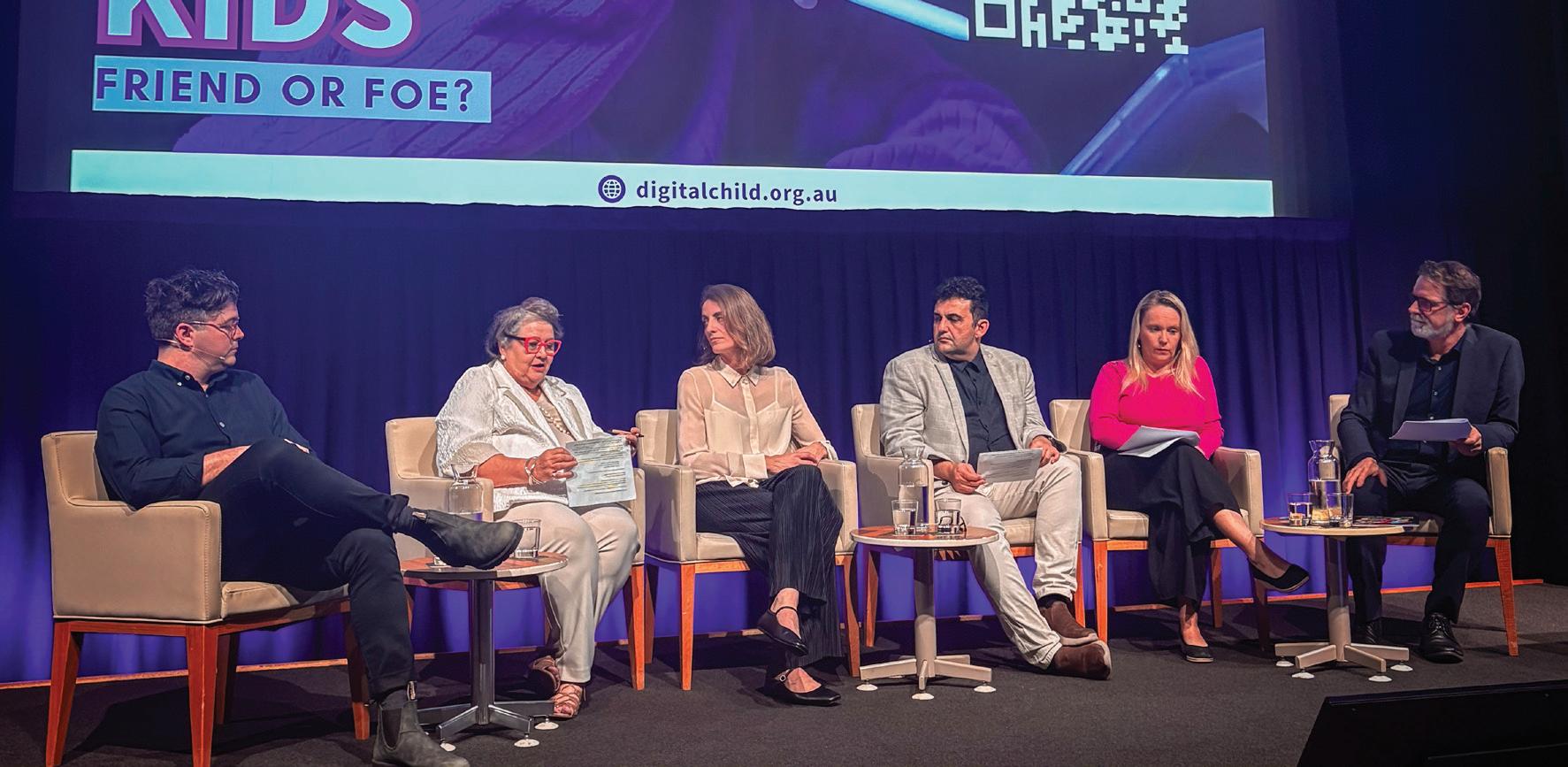
Across Queensland, the Centre delivered a vibrant program of public engagement, research translation, and child focused activities that brought families, educators, and community members into conversation about children’s digital lives. Highlights included public lectures, seminars, panels and the AI for Kids – Friend or Foe? event at the State Library of Queensland, alongside hands on school holiday workshops on media literacy, future technologies, and creative digital play. Children’s Forums and interactive sessions such as Exploring Nature with Technologies and Stay and Play – Blocks & Bots further strengthened community participation.
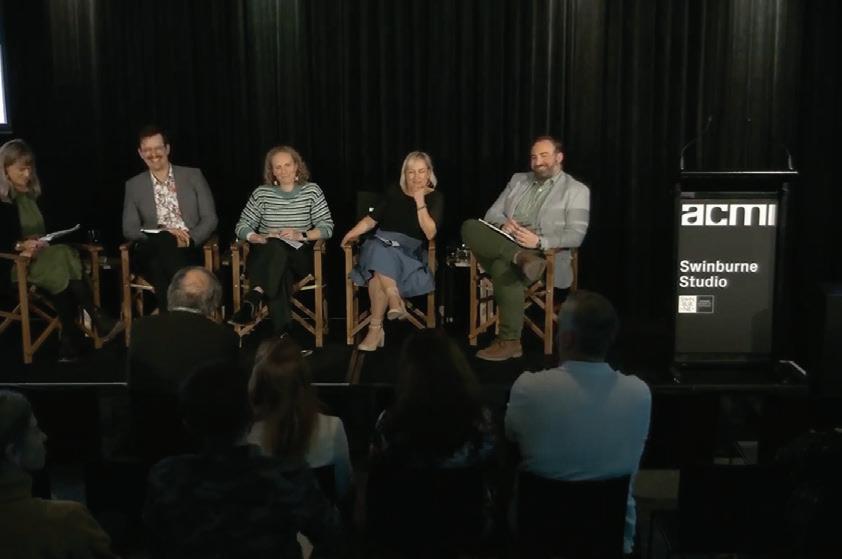
In Melbourne, the Centre partnered with ACMI to deliver two high impact public seminars that drew strong in person and online engagement. The first, Baby Apps: (Mis)understandings of Data Driven Care, attracted more than 100 attendees and explored how infant focused apps shape contemporary parenting. The second seminar, Can Schools Achieve Informed Consent with Digital Technology?, brought together 120 participants to examine the challenges schools face in navigating data, consent, and digital governance. These events strengthened the Centre’s public outreach and fostered critical dialogue on children’s rights, data practices, and digital wellbeing.
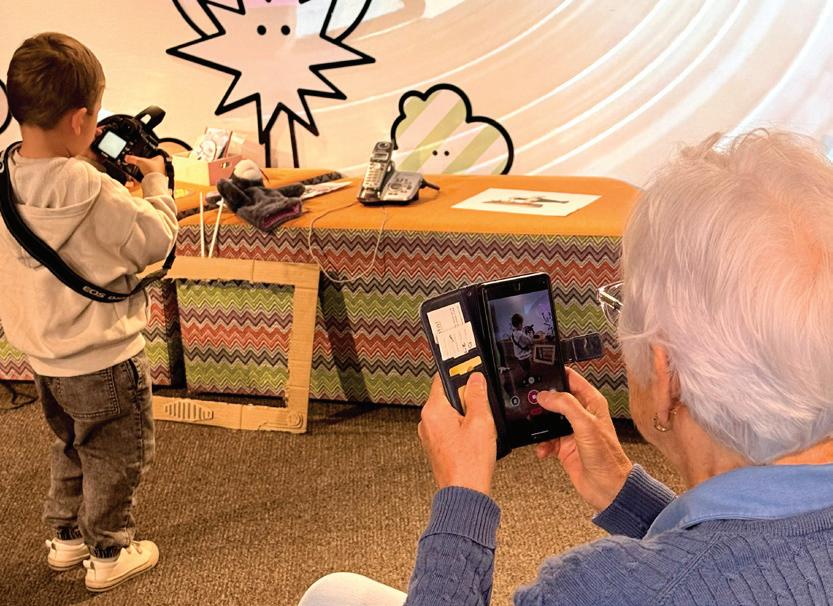
Across Perth and Wollongong, the Centre delivered a focused series of events that deepened community engagement with children’s digital experiences. In Perth, sessions explored public concerns around AI through Can ChatGPT Be Trusted With Our Kids? and examined family practices in Parents, Young Children, and Digital Media. In Wollongong, the Digital Technologies in Early Childhood seminar and the Future Funded Project: Digital Literacies advanced conversations on early learning and digital capability. The national reach of the program was further strengthened through the standalone online Digital Child Partner Network Symposium: Screen Use & Young Children, which brought together 67 participants from across Australia.
CHILDREN’S TECHNOLOGY SPACES
Three living laboratories. One national impact.
Across UOW, Curtin and QUT, our Children’s Technology Spaces continued to bring research, play and community engagement together — supporting children, families, educators and partners to explore digital technologies in meaningful and creative ways.
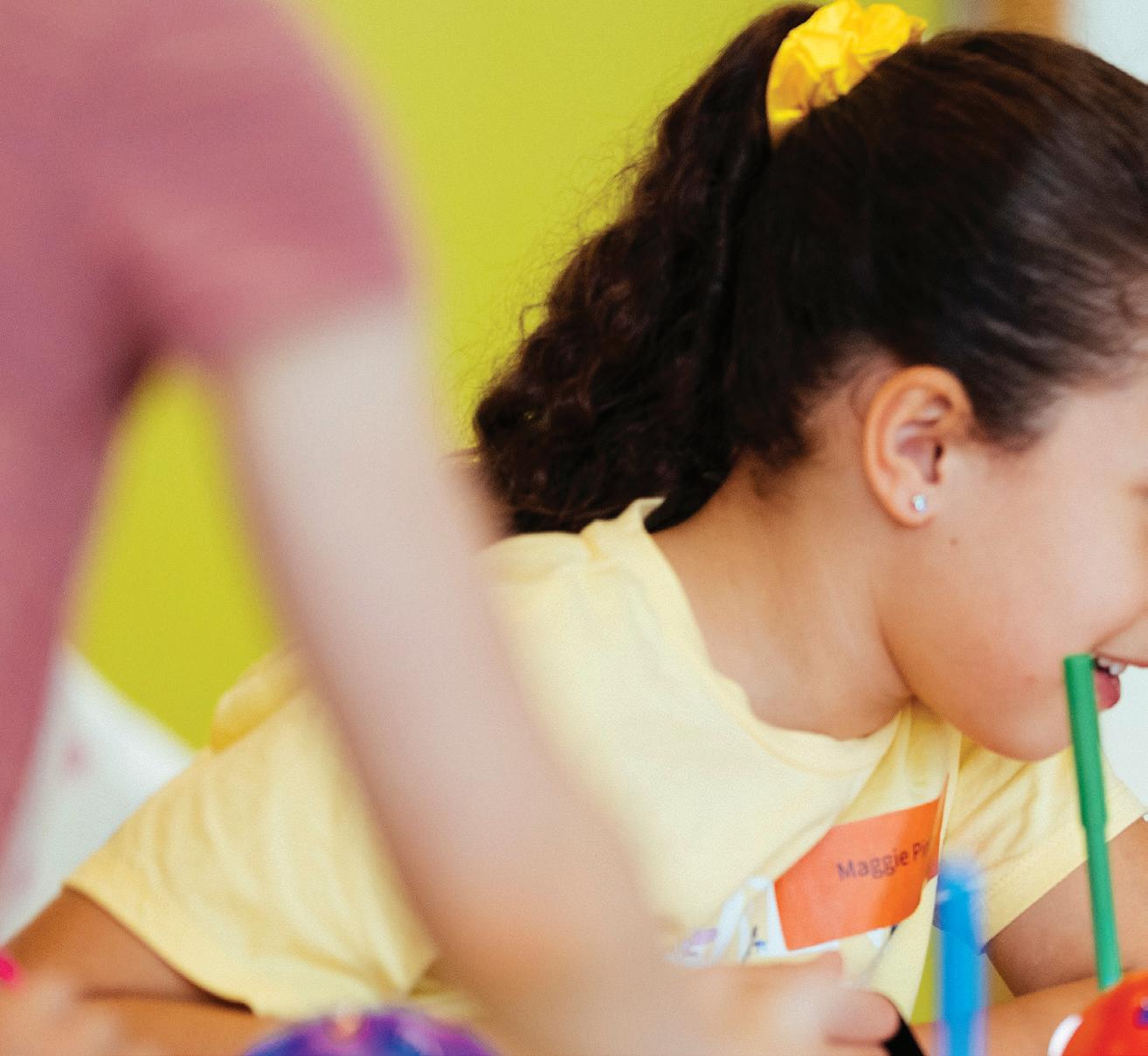
University of Wollongong — Children’s Technology Play Space (CTPS)
Drawing families from across the region, the CTPS has become a place where children explore digital technologies through hands‑on, imaginative experiences supported by researchers, educators and artists. In 2025, the Play Space deepened its role as a living laboratory — a place where meaningful cultural engagement, collaborative inquiry, and early digital literacies intersect in ways that genuinely enrich children’s learning.
• 275 children participated in 32 Digital Discoveries sessions in 2025.
• Since 2022, CTPS has welcomed over 750 families and supported research with 1,012 children
• Activities spanned digital storytelling, AR world‑building, sound‑making, arts‑based tech play and early digital literacies.
• Delivered major projects including Giggle Scribbles (565 children), Digital Literacies research (31 children, 30 adults), Children’s World Café, and Social Labs.
• Hosted Digital Discoveries with Country, led by Aboriginal colleagues and artists.
Curtin University — Children’s Technology Cove (CTC)
Curtin’s Children’s Technology Cove offered a dynamic, high‑engagement environment throughout 2025, welcoming children, families, educators, international delegations, and sector partners into a purpose‑built digital learning space.
• Delivered 17 events across 2025.
• Reached 248 participants — including children, educators, parents, PNG teachers, CEWA teachers, preservice teachers and sector leaders.
• Hosted researcher visits, international delegation workshops, kindergarten Stay & Play programs and media filming days.
• Ran multi‑week digital play programs for babies, toddlers and 4‑year‑olds.
• Led sector outreach with SCSA and delivered family engagement through Café Conversations.
Throughout 2025, the CTC offered a broad mix of public events, innovative play‑based programs, school excursions, sector workshops, and extensive research activity — reinforcing its position as a cornerstone for digital learning and child‑centred inquiry in Queensland.
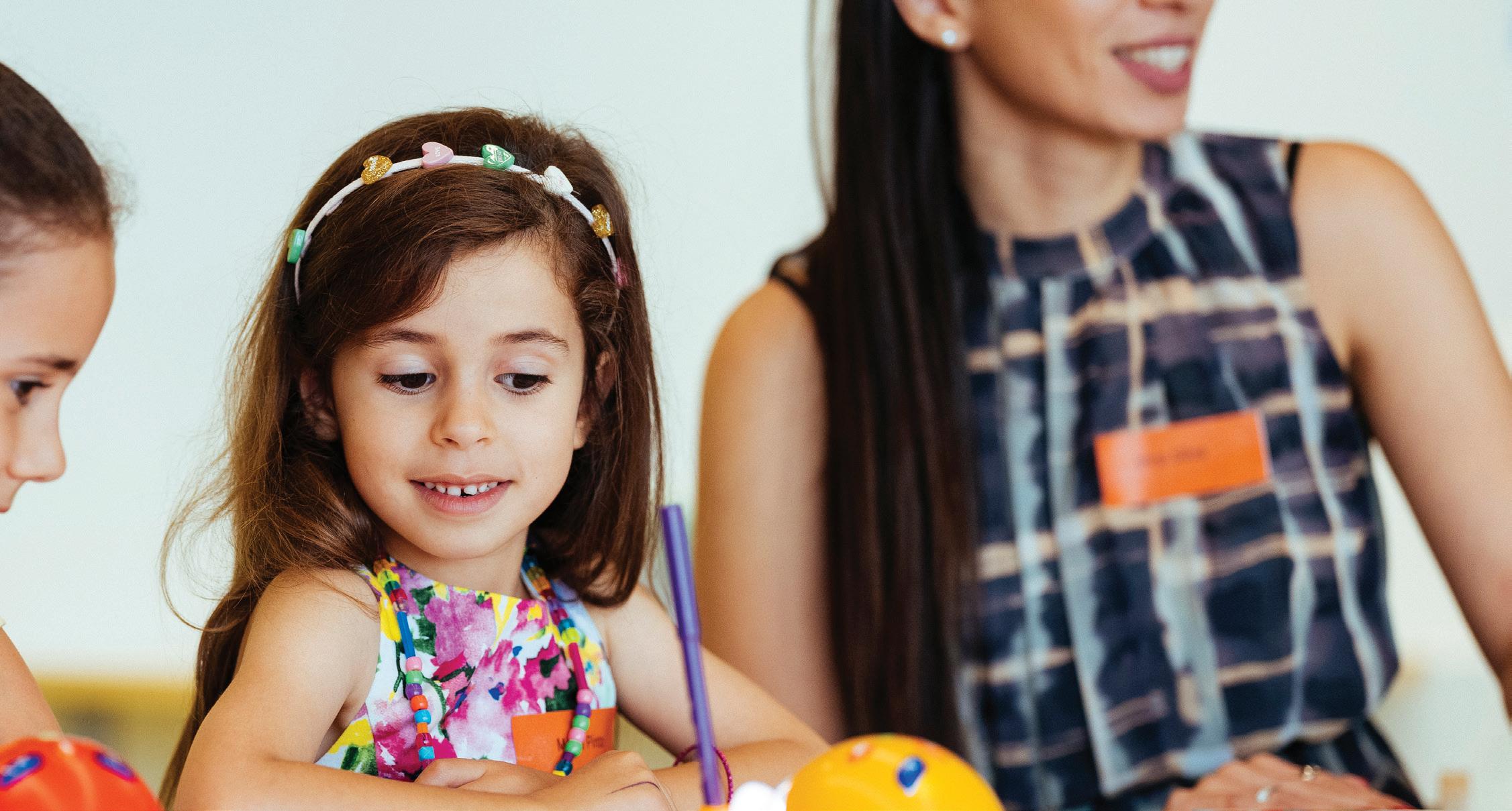
QUT — Children’s Technology Centre (CTC)
At QUT, the Children’s Technology Centre continued to operate as one of the Centre’s most active and high‑impact digital learning sites. Throughout 2025, the CTC offered a broad mix of public events, innovative play‑based programs, school excursions, sector workshops, and extensive research activity — reinforcing its position as a cornerstone for digital learning and child‑centred inquiry in Queensland.
• Delivered 22 structured events and hosted 92 research sessions in 2025.
• Welcomed ~811 participants, including children, parents/carers, educators, preservice teachers, early childhood professionals
• Offered excursions, incursions, digital learning experiences, school‑holiday programs, book launches and sector networking.
Together, our Children’s Technology Spaces delivered a powerful year of activity across three states, contributing to the Centre’s mission of supporting children’s positive digital futures.
Across 2025, the three sites collectively engaged:
• 54+ major sessions and events across UOW, Curtin and QUT
• 1,300+ children through playgroups, research, learning programs and digital activities
• Thousands of families, educators, preservice teachers and community members across all forms of engagement
• Strong cross‑sector partnerships, connecting industry, early learning, schools, arts organisations, health settings and communities
Individually distinctive yet united in purpose, these living laboratories continue to build a national ecosystem where children can explore, create, question and imagine their digital worlds — supported by research, community and playful discovery.
DIGITAL CHILD ONLINE PERFORMANCE
In 2025, the ARC Centre of Excellence for the Digital Child delivered a multipronged communications and outreach strategy designed to broaden reach, strengthen engagement, and position the Centre as a national and international thought leader in digital childhood research. Our communications work focused on increasing visibility, translating research into accessible formats, and meaningfully connecting with our key audiences across sectors and platforms.
Throughout the year, the Centre produced a diverse suite of content, including photos, videos, carousels, blog posts, PDF resources, newsletters, infographics and short form reels, ensuring our work remained engaging and approachable for a wide audience. These materials were shared across a broad multichannel ecosystem, spanning Instagram, Facebook, LinkedIn, Bluesky, email newsletters (for partners and the public), the Digital Child website, and Issuu. This coordinated approach ensured consistent communication with the Centre’s core audiences — policymakers, parents, educators, industry partners and media — strengthening the Centre’s voice across Australia and beyond.
Community Growth and Reach
By sharing research in accessible, engaging formats and targeting key stakeholder groups, the Centre significantly expanded its online community. Collectively, the Centre’s platforms reached a total audience and followers of 62,247 users, with 2,358 new followers gained across social media channels during the year. Channel Total # of followers New
The Centre generated a total of 594,867 impressions and 21,516 interactions, indicating strong audience visibility and meaningful engagement with content.
Channel Impressions Interactions
65,993 1,572
238,541 4,447
130,285 3,621
Downloads 133,322 2,573 Issuu PDF 26,726 9,303
594,867 21,516
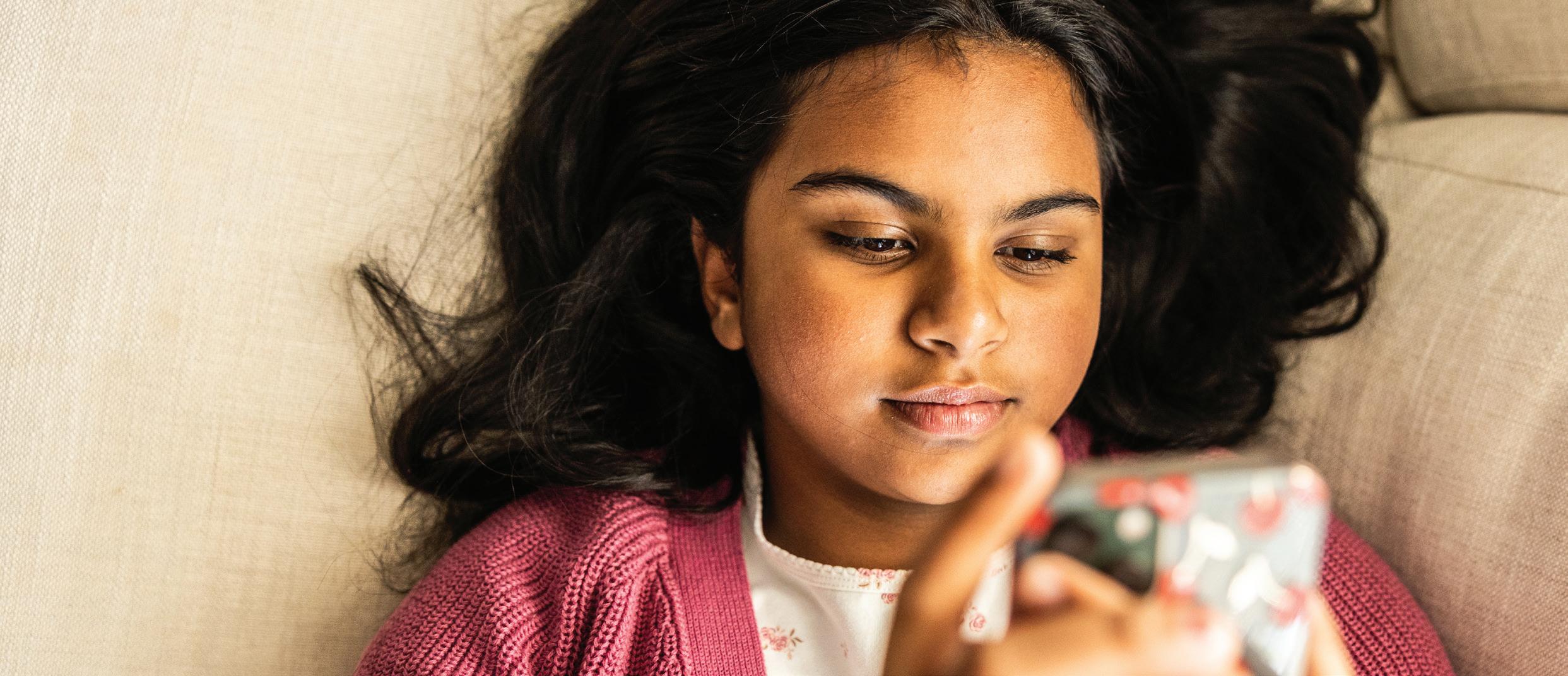
FEATURE
SOCIAL MEDIA DELAY
TIMELINE HIGHLIGHTS
MARCH
1/03 Contributed to explainer paper on social media delay
APRIL AUGUST
Expert commentary in media coverage and podcasts
SEPTEMBER
22/09 Submission to the Internet
Search Engine Services Online Safety Code inquiry
25/09 Joined eSafety group evaluating social media delay
NOVEMBER
19/11 Spoke at the Statewide Forum: The Social Media Ban & Multicultural Young People
26/11 Joined eSafety inaugural Parent Advisory Group
DECEMBER
1/12 Released study on young people’s perspectives on social media delay
4/12 Released lesson plan for primary school teachers to help young children understand the social media delay
10/12 Legislation comes into effect. Answered questions from the Australian public via ABC live blog
RESOURCES & REPORTS
This year, we focused on translating complex research into clear, practical resources that help communities understand the social media minimum‑age legislation from every angle. Our materials were designed to inform and support families, educators, policymakers, and young people as they navigated the fast‑approaching changes. Together, these resources form a suite that breaks down the delay from multiple perspectives—educational, legislative, developmental and social— ensuring that the community is equipped with trusted, evidence‑based information at a pivotal moment.
Lesson Plan: Empowering kids across the social media delay
Digital Child researchers talked with kids about the social media delay and their questions and concerns.
The teaching and learning materials have been developed to support primary school kids and their teachers to have a chat about the delay, explore the impacts, and take action.
Young Australians’ perspectives on the social media minimum age legislation
This report captures young Australians’ perspectives just before the Australian Government’s Online Safety Amendment (Social Media Minimum Age) Act 2024— known as the social media delay for under 16s—comes into effect.
MAKING HEADLINES — OUR MEDIA PRESENCE
Our members have played a central role in shaping national and international conversations about children’s digital lives. Throughout the year, their expertise appeared across television, radio, podcasts, news media, and online platforms. These
UNITED KINGDOM
BBC Breakfast
Tama Leaver discussing Australia’s under‑16 social media ban live to UK audiences.
PressReader / Euronews English Edition (France‑based but UK‑focused story) Experts, including Sonia Livingstone, comment on misogyny and online harms.
Metro UK
“Denmark bans social media for under‑15s: Could it happen here?” featuring Fiona Scott.
FRANCE
FRANCE24
Catherine Archer spoke about the first teen social media ban.
contributions ensured that the Centre’s research reached the public when it mattered most, helping families, educators and policymakers make sense of complex digital changes.
In total, our researchers were represented in 34 media features across 24 outlets in 7 countries, with 18 Centre members contributing as expert commentators on the under‑16 social media ban. This broad engagement reflects the Centre’s role as a leading voice in explaining the legislation, translating complex policy issues for the public, elevating young people’s perspectives, and shaping national understanding through research‑driven commentary and participation in high‑level advisory groups.
CHINA
China Daily Julian Sefton Green interviewed for an article on Australia’s social media ban.
China News Service Coverage of the ban including interviews with Julian Sefton Green and Tama Leaver.
SBS Radio Mandarin (Mandarin language international audience) Xinyu ‘Andy’ Zhao interviewed about the upcoming social media ban.
Morning Wave, Busan Julian Sefton Green interviewed about the upcoming social media ban.
SINGAPORE/PAN-ASIA
CNA (Channel News Asia) Asia First, Singapore Tama Leaver interviewed on the concerns of teens and whether their voices were considered in designing the ban.
SOUTH KOREA
INTERNATIONAL MEDIA PLATFORMS
The Centre’s voice travelled well beyond Australia, influencing global policy debates and public understanding across Europe, Asia, and the Pacific. International journalists consistently turned to our members for authoritative commentary on the world’s first large‑scale rollout of a social media minimum age.
GLOBAL
Reuters interviewed Tama Leaver for its global coverage of Australia’s ban—highlighting how governments worldwide were watching the policy closely.
Metro UK explored global comparisons and implications in “Denmark bans social media for under‑15s: Could it happen here?” featuring insights from Centre researchers.
Reuters — Global wire coverage quoting Tama Leaver on the ban. (Distributed internationally, including USA, UK, Asia.)
SBS News — While Australian, several stories (e.g., the TikTok ban piece) were distributed internationally via wire and partner networks.
UNITED STATES
CNBC
Coverage of Australia attempting the first teen social media ban, featuring expert input from Tama Leaver.
NEW ZEALAND
TVNZ 1
Coverage of Australia’s social media ban featuring Centre experts (not directly quoted in snippet but included in media list).
34
24
7
18 media features outlets in with countries Centre members as expert commentators across
NATIONAL MEDIA PLATFORMS
Across Australia, our researchers helped families stay informed about the fast‑moving landscape of online safety. Their insights appeared on ABC, The Conversation, SBS, and widely read newspapers, where they broke down emerging research, debunked myths, and provided evidence‑based guidance in accessible language.
Featured examples:
On ABC Radio Perth – Perth Drive, Tama Leaver explained what families should expect as Australia’s Social Media Minimum Age legislation came into effect, offering clarity during a major national policy rollout.
In The Conversation, our experts unpacked the limitations and privacy challenges of age‑verification technologies in “A trial is testing ways to enforce Australia’s under‑16s social media ban. But the tech is flawed.”
Podcasts and Audio
Audio platforms played a powerful role in connecting our research with everyday listeners. Whether on the school run, at home or commuting, audiences tuned in as our researchers translated complex issues—like AI, youth safety, platform design, and age verification—into meaningful, practical advice.
The Future Of (Podcast) featured Tama Leaver discussing the technical limitations and privacy risks of age‑verification reforms, offering critical insight at a pivotal national moment.
ABC Radio National – Life Matters invited one of our experts to explore the ethics of parents accessing their teenagers’ social media histories—a conversation that resonated with families navigating digital boundaries.
PERFORMANCE
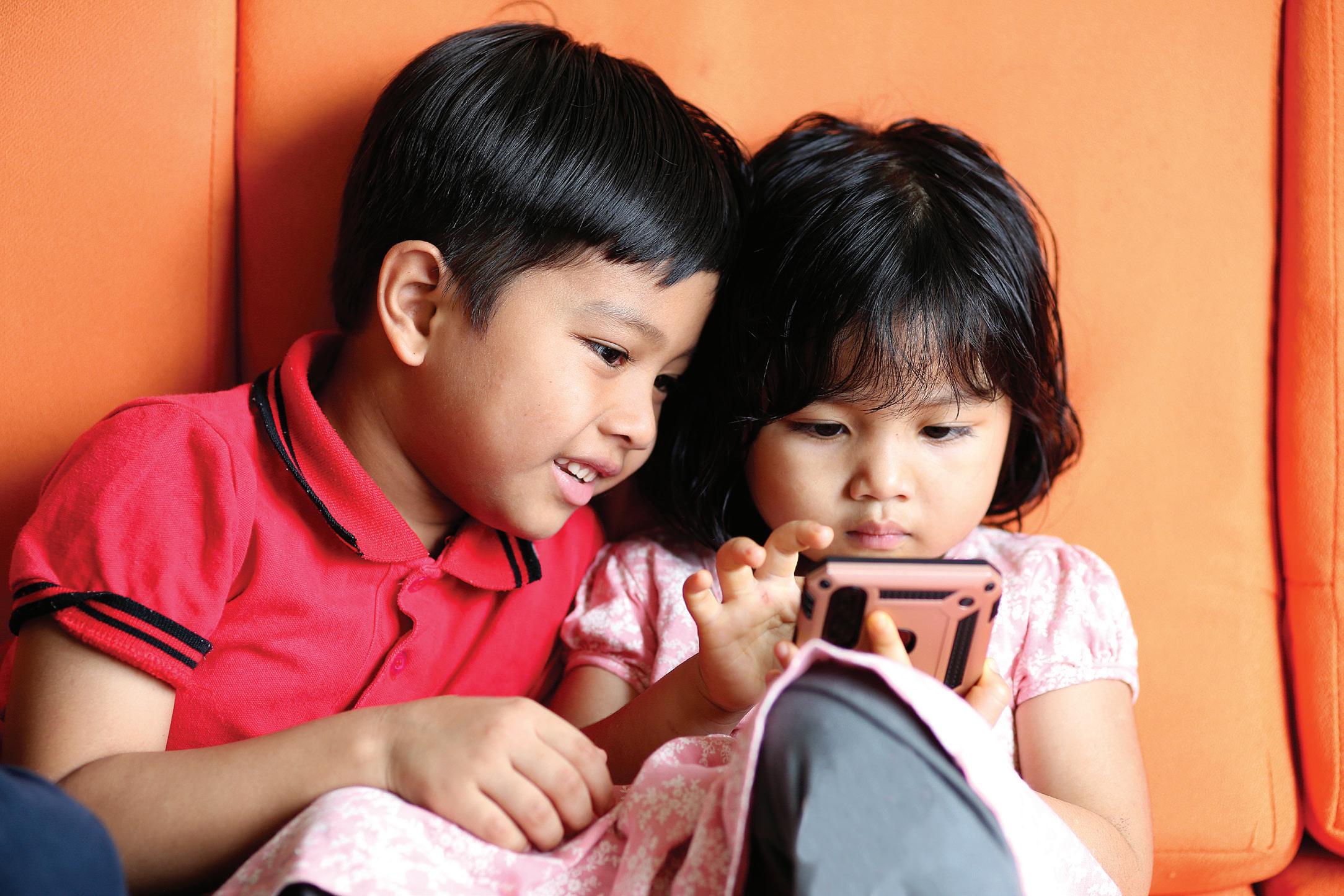
Publications
Book
Shay, M., & Sarra, G. (2025). Strengths Based Approaches in Indigenous Education : Research and Practice. (1st ed.). Taylor & Francis Group.
Edwards, S., and Straker, L. (Eds) (2025). Young Children in Digital Society : Now and into the Future, Routledge.
Book Chapters
Leaver, T., and Srdarov, S., (2025) ‘Generative Imaginaries of Australia: How Generative AI Tools Visualize Australia and Australianness’, in Philipp Hacker (ed.), Oxford Intersections: AI in Society
Murcia. K., Mennell, S., Cross, E., Maslin, K. (2025). AI literacy and early years education: Teacher competencies for critical and creative learning design integrating AI and Smart Coding Tools. Teaching with Artificial Intelligence: A Guide for Early Educators. Unlocking Potential: AI Applications in Preschool and Primary Schools. Springer Series Advances in Artificial Intelligence in Education.
Pangrazio, L., Langton, K., Siibak, A. (2025). How the Family Makes Itself: The Platformization of Parenting in Early Childhood. In: Sefton Green, J., Mannell, K., Erstad, O. (eds) The Platformization of the Family. Palgrave Macmillan, Cham. https://doi.org/10.1007/978 3 031 74881 3_4
Livingstone, S., Sefton Green, J. (2025). The Platformization of the Family. In: Sefton Green, J., Mannell, K., Erstad, O. (eds) The Platformization of the Family. Palgrave Macmillan, Cham. https://doi. org/10.1007/978 3 031 74881 3_2
Mannell, K., Hegna, K., Stoilova, M. (2025). The Home as a Site of Platformization. In: Sefton Green, J., Mannell, K., Erstad, O. (eds) The Platformization of the Family. Palgrave Macmillan, Cham. https://doi. org/10.1007/978 3 031 74881 3_3
Sefton Green, J., Livingstone, S., Mannell, K., Erstad, O. (2025). Introduction. In: Sefton Green, J., Mannell, K., Erstad, O. (eds) The Platformization of the Family. Palgrave Macmillan, Cham. https://doi. org/10.1007/978 3 031 74881 3_1
Mannell, K., Sefton Green, J., Erstad, O. (2025). Conclusion: Towards Further Research into the Platformization of the Family. In: Sefton Green, J., Mannell, K., Erstad, O. (eds) The Platformization of the Family. Palgrave Macmillan, Cham. https://doi.org/10.1007/978 3 031 74881 3_6
Biddle, SJH, Andriyani, FD., Thomas, G. (2025), Screens, health, and sedentary lifestyles: The need to recognise complexity, function, and context. Routledge Handbook of Digital Technologies in Sport, Exercise and Physical Education (pp. 36 51), CRC Press. DOI: 10.4324/9781003411758 4
Murcia, K., M. Dobson, G. Aranda, T. Wijesinghe, E. Cross, and S. Mennell. (2025). Starting Early: Ethics and AI in Education. In Teaching with Artificial Intelligence A Guide for Primary and Elementary Educators, 19 31
Owen, S., Dobson, M., Baca., E., Heseltine, L., and Owen, A. (2025). The Power of the Intimate: Autoethnographic Reflections on Intimate Connections with Taylor Swift, In McCann, H., Faichney, E., Trealease, R., & Whatman, E. (Eds.). Taylor Swift : culture, capital, & critique. Routledge. https://doi.org/10.4324/9781003509271
Nicholas, Maria; Rouse, Elizabeth; Rawolle, Shaun (2025). International Comparisons and Reading Education Policies. Deakin University. Chapter. https://hdl.handle.net/10779/DRO/ DU:29367689.v2
Abidin, Crystal. 2025. Child Influencers, In Child Influencers: How Children Become Entangled with Social Media Fame. Polity Press
Abidin, Crystal. 2025. KidTok, In Child Influencers: How Children Become Entangled with Social Media Fame. Polity Press
Abidin, Crystal. 2025. Family Influencers, In Child Influencers: How Children Become Entangled with Social Media Fame. Polity Press
da Cruz Pereira, G., Guedes B. L, Sampaio, I. V., Cavalcante, A. P. P., (2025), Crianças, adolescentes e telas no Brasil: enunciados de uma Consulta Pública sobre riscos e oportunidades dos usos de dispositivos digitais, in Sampaio, I. V., and Guedes, B., Children, adolescents, and youth in digital culture’, Pimenta Cultural, https:// www.pimentacultural.com/en/livro/criancas adolescentes jovens/
Conference Proceedings
Atabey, A., Wilson, C., Manches, A., Hinrichs, U., Brewster, S. A., Ramirez, A. A., Perera, D., Kaufmann, D. B., Wang, G., Ploderer, B., Good, J., & Vines, J. (2025). Grasping Data: Exploring interdisciplinary approaches for investigating children’s interactions with their personal data. 24TH ANNUAL ACM INTERACTION DESIGN AND CHILDREN CONFERENCE, IDC 2025, 1249–1252. https://doi. org/10.1145/3713043.3735579
Matthews, S., Danby, S., Westwood, S., Theobald, M., & Wyeth, P. (2025). Designing for Transactional Moments: Features of Tools for Child centred Speech Language Teletherapy. In K. Yatani, X. Ding, M. Chetty, V. Evers, N. Yamashita, B. Lee, & P. Toups Dugas (Eds.), CHI 2025 Proceedings of the 2025 CHI Conference on Human Factors in Computing Systems (No. 646). ACM. https://doi. org/10.1145/3706598.3713394
Wilson, C., Manches, A., Atabey, A., Hinrichs, U., Brewster, S. A., Ploderer, B., & Wang, G. (2025). Grasping Data: Mapping Out HCI Methods for Children and Young People’s Interactions with their Personal Data. In N. Yamashita, K. Yatani, X. Ding, & V. Evers (Eds.), CHI EA 2025 Extended Abstracts of the 2025 CHI Conference on Human Factors in Computing Systems (No. 784). ACM. https://doi. org/10.1145/3706599.3706726
Langton, K., & Ng, R. (2025). “Tracking the Trackers” of children’s first personal data in mobile applications: Using static analysis and privacy policy evaluation to explore the data sharing capabilities and practices of baby apps. In B. Tag, S. Yoo, H. Davis, M. Boden, N. Pantidi, J. Fredericks, J. Rahman, J. Andres, H. Zhu, J. Harman, T. T. Minh Tran, T. Hoang, M. Hoggenmueller, & G. Caldwell (Eds.), OZCHI 2025 Proceedings of the 37th Australian Conference on Human Computer Interaction (pp. 845–859). ACM. https://doi. org/10.1145/3764687.3769936
Om, C., Vella, K., Dema, T., Ploderer, B., Li, Y., Murcia, K., & Brereton, M. (2025). Designing for Children’s Nature Play and Place Attachment: An Observational Study in Early Childhood Education Centre. In B. Tag, S. Yoo, H. Davis, M. Boden, N. Pantidi, J. Fredericks, J. Rahman, J. Andres, H. Zhu, J. Harman, T. T. Minh Tran, T. Hoang, M. Hoggenmueller, & G. Caldwell (Eds.), OZCHI 2025 Proceedings of the 37th Australian Conference on Human Computer Interaction (pp. 455–468). ACM. https://doi.org/10.1145/3764687.3764721
Om, Chimi, Vella, Kellie, Dema, Tshering, Ploderer, Bernd, Murcia, Karen, & Brereton, Margot (2025) Storying Roleplay: A Co design
Method Supporting Young Children to Understand Environmental Problems. In IDC ‘25: Proceedings of the 24th Interaction Design and Children. Association for Computing Machinery (ACM), United States of America, pp. 465 478. DOI 10.1145/3713043.3728842
Vella, K., Dobson, M. & Brereton, M. (2025). ‘Hello, Mr Tree’: Toying with Playful Conversational AI in the Early Years. CHI EA ‘25: Proceedings of the Extended Abstracts of the CHI Conference on Human Factors in Computing Systems, Association for Computing Machinery (ACM).
Langton, K., Ng., R., 2025, “Tracking the Trackers” of children’s first personal data in mobile applications: Using static analysis and privacy policy evaluation to explore the data sharing capabilities and practices of baby apps, OZCHI ‘25: Proceedings of the 37th Australian Conference on Human Computer Interaction Pages 845 859 https:// doi.org/10.1145/3764687.3769936
Matthews, M. Nicholas, L. Paatsch, L. Kervin, P. Wyeth. 2025. Embeddables: Designing Physical Digital Manipulatives for Young Children, in Proceedings of the Nineteenth International Conference on Tangible, Embedded, and Embodied Interaction, Bordeaux, France, March 2025, https://doi.org/10.1145/3689050.3705972
Matthews, M. Nicholas, L. Paatsch, L. Kervin, P. Wyeth. 2025. Wobblies: Designing Intentional Playthings with Young Children, in Proceedings of the Nineteenth International Conference on Tangible, Embedded, and Embodied Interaction, Bordeaux, France, March 2025, https://doi.org/10.1145/3689050.3705972
Journal Articles
Abidin, Crystal, Claire Gartland, and Kathryn Grant. 2025. “TikTok & Children: TikTok Cultures Research Network & TikTok Fireside Chat.” International Journal of Cultural Studies 28(5): 1014–1027. DOI: 10.1177/13678779241307972.
Alruthaya, J Mantei, S White, L Kervin, (2025), Evaluating Picturebook Complexity Through Children’s Eye Movement and Miscue Analysis. International Journal of Educational Methodology. https://doi. org/10.12973/ijem.11.3.297
Alruthaya, S, Mantei, J, White, S, & Kervin, L (2025). Moving towards a more comprehensive understanding of multimodal text complexity. Australian Journal of Language and Literacy. https://link.springer.com/article/10.1007/s44020 025 00079 9 Publication with cross node supervision HDR student (Salma Alruthaya) – UoW and QUT – published 30 April 2025
Altena, S., Ng, L. E. (Rebecca), & Hinze, M. (2025). Who are learning designers in post pandemic Australasian universities? Higher Education Research and Development, 44(7), 1589–1607. https://doi. org/10.1080/07294360.2025.2482797
Amery, P., Danby, S., & Brereton, M. Weaving smartphones into mother–infant interaction: Digital disruptions or participatory possibilities? Children & Society, n/a(n/a). https://doi.org/https://doi. org/10.1111/chso.12938
Amery, Philippa, Danby, Susan and Theobald, Maryanne. “Mothering in a digital age – a first time mother’s account of using an infant tracking application” Text & Talk. https://doi.org/10.1515/text 2025 0031
Apps, T., Beckman, K., & Ng, R. (2025). Special Issue: Datafied by default: Examining the intersect between children’s digital rights and education. Computers and Education Open, 9, Article 100237. https://doi.org/10.1016/j.caeo.2024.100237
Archer (2025) Coming of age with, in and on social media: A critique of how politicians are responding to children’s social media
engagement, Journal of Children and Media, 19:1, 58 64, DOI: 10.1080/17482798.2024.2438688
Barblett, L., Enriquez Watt, M., Collins, P. R., Boylan, F., Roberts, P., & Costello, L. (2025). Digital Provision, Educators’ Attitudes and Use in Early Learning Settings: Ready to Implement the EYLF V2.0? Australasian Journal of Early Childhood, 0(0). https://doi. org/10.1177/18369391251376710
Bild, E., Rossa, K. R., Edmed, S. L., Pattinson, C. L., Mann, D. L., Sullivan, K. A., Salmon, P. M., Gadam, S., Srinivasan, A. G., & Smith, S. S. (2025). Effects of Smartphone Use on Sleep and Mental Health in Young Adults: Going Beyond Self Report. Depression and Anxiety, 2025(1), Article 3249012. https://doi.org/10.1155/ da/3249012
Binks, N., Walsh, K., Hayixibayi, A., Eivers, A., & Kelly, A. B. (2025). Depression Symptom Trajectories Following Child Maltreatment: A Systematic Review of Longitudinal Studies from Adolescence to Young Adulthood. Trauma, Violence & Abuse, 15248380251361050. https://doi.org/10.1177/15248380251361050
Bourke, M., Harrison, Z., Fortnum, K., Thomas, G., O’Flaherty, M., Mulcahy, S. K., Gomersall, S. R., Alsop, T., Trost, S. G., Koplin, J. J., Bruijns, B. A., Phillips, S. M., Vanderloo, L. M., Tucker, P., Hesketh, K. D., Kwan, M. Y. W., & Cairney, J. (2025). Association between 24 hour movement behaviors and adiposity in children and adolescents: A compositional data meta analysis. Obesity Reviews, 26(5), Article e13884. https://doi.org/10.1111/obr.13884
Bourke, M., Wang, H. F. W., McNaughton, S. A., Thomas, G., Firth, J., Trott, M., & Cairney, J. (2025). Clusters of healthy lifestyle behaviours are associated with symptoms of depression, anxiety, and psychological distress: A systematic review and meta analysis of observational studies. Clinical Psychology Review, 118, Article 102585. https://doi.org/10.1016/j.cpr.2025.102585
Bunn, A. (2025). Educational Technology (EdTech) in Australian schools: A case for better practice. The University of New South Wales Law Journal, 48(3), 871–912. doi:10.3316/informit. T2025101300004500537155149
Carpendale, E. J., Green, M. J., Dix, K. L., Tzoumakis, S., Williams, K. E., White, S. L. J., Carr, V. J., & Laurens, K. R. (2025). An exploratory evaluation of universal social emotional learning programs delivered during elementary school to Australian students. Journal of School Psychology, 110, Article 101447. https://doi.org/10.1016/j. jsp.2025.101447
Carpendale, E. J., Green, M. J., White, S. L. J., Williams, K. E., Tzoumakis, S., Watkeys, O. J., Harris, F., O’Hare, K., & Laurens, K. R. (2025). Middle childhood social emotional competencies mediate the effects of school entry literacy and numeracy skills on secondary school reading and numeracy attainment. Learning and Individual Differences, 124, Article 102778. https://doi.org/10.1016/j. lindif.2025.102778
Carpendale, E. J., Green, M. J., White, S. L. J., Williams, K. E., Tzoumakis, S., Watkeys, O. J., Harris, F., O’Hare, K., Carr, V. J., & Laurens, K. R. (2025). Promoting effective transitions: Primary school social–emotional competencies predict secondary school reading and numeracy achievement. British Journal of Educational Psychology, 95(2), 496–512. https://doi.org/10.1111/bjep.12735
Corser, K., Manolev, J., & Danby, S. (2025). Problematising ClassDojo as a digital tool for behaviour management and home school communication. Learning, Media and Technology, 1–17. https://doi. org/10.1080/17439884.2025.2553184
Davey, R. J., Campbell, A., Beynon, A., Rasmussen, C. L., Hendry, D., Stearne, S., Harris, C., Straker, L., & Zabatiero, J. (2025). Parental Perspectives on the Use of Smartwatch Activity Trackers by Young Children: Qualitative Study. JMIR Pediatrics and Parenting, 8, e79851. https://doi.org/10.2196/79851
Davey, R. J., Zabatiero, J., Beynon, A., Wood, G., Sy, S., Rasmussen, C. L., Hendry, D., Stearne, S., Harris, C., Straker, L., & Campbell, A.
(2025). It is Feasible for 3 to 5 Year Old Children to Use Smartwatch Activity Trackers: A Systematic Review. ACTA PAEDIATRICA, 114(9), 2133–2147. https://doi.org/10.1111/apa.70137
Edmed, S. L., de Waal, L., Rossa, K. R., Pattinson, C. L., Salom, C., Gadam, S., Lorimer, N., & Smith, S. S. (2025). Sleep Health in People Experiencing Homelessness: A Scoping Review. Health & Social Care in the Community, 2025(1), Article 8766803. https://doi.org/10.1155/ hsc/8766803
Edmed, S. L., Huda, M. M., Alam, M. A., Pattinson, C. L., Rossa, K. R., Shekari Soleimanloo, S., & Smith, S. S. (2025). Housing well being and sleep in Australia. Sleep Health, 11(4), 506–514. https://doi. org/10.1016/j.sleh.2025.02.001
Ekberg, S., Danby, S., Watts, J., Weinglass, L., Cooke, R., Nelson, M., Pitt, E., Ekberg, K., Bluebond Langner, M., Langner, R., Bradford, N., Yates, P., Delaney, A., Duffield, J., Orr, A., Fleming, S., Scully, M., Ryan, S., & Herbert, A. (2025). Involving Nonspeaking and Speaking Children in Clinical Encounters: An Observational Study of Real World Clinical Encounters. Journal of Paediatrics and Child Health. https://doi.org/10.1111/jpc.70253
Fielding, K., Murcia, K., Dobson, M., & Lowe, G. (2025). Navigating consent and dissent in early childhood research: An Australian perspective. Issues in Educational Research, 35(1), 142–159.
Fillmore, N., Shay, M., Sarra, G., & Danby, S. (2026). Researcher cultural capability for Indigenous research: a meta narrative review. Higher Education Research and Development, 45(1), 100–117. https://doi.org/10.1080/07294360.2025.2541645
Gray, C., Paris, L., Lowe, G., Perry, A., & Warwick, L. (2025). Belongingness, trust and connection: Arts teachers in Western Australian schools create safe learning spaces. Issues in Educational Research, 35(2), 590–610.
Harverson J, Anglim J, Paatsch L, Horwood S. Ecological Momentary Assessment Study of Digital Technology Use and Child Well Being. JAMA Pediatr. 2025 Nov 17:e254709. doi: 10.1001/ jamapediatrics.2025.4709. Epub ahead of print. PMID: 41247750; PMCID: PMC12624454.
Harverson J, Zomer C, Chu C, Horwood S, Horwood M, Nicholas M, Paatsch L, 2025, Children’s Engagement with Digital Technology in Educational Spaces: A Scoping Review Computers & Education 240:1 22, doi.org/10.1016/j. compedu.2025.105454
Harverson, J., Paatsch, L., Anglim, J., & Horwood, S. (2025). Digital Technology Use and Well being in Young Children: A Systematic Review and Meta analysis. Computers in Human Behavior, 108660. https://doi.org/10.1016/J.CHB.2025.108660
Hayes, N., White, S.L.J., Berthelsen, D., Burley, L., & Cliff, D. Longitudinal associations between child, parenting, home and neighbourhood factors and children’s screen time through 4 to 7 years of age. BMC Public Health 25, 1623 (2025). https://doi. org/10.1186/s12889 025 22866 2
Healy, G. N., Melendez Calderon, A., Kaab, S., Bongers, N., Heseltine, K. A., Yue, C. H., Thomas, G., & Clark, B. K. (2025). Development, validation, acceptability and usability of a device based system to measure sit stand desk usage. Applied Ergonomics, 126, Article 104490. https://doi.org/10.1016/j.apergo.2025.104490
Howard, S. J., Hayes, N., Mallawaarachchi, S., Johnson, D., Neilsen Hewett, C., Mackenzie, J., Bentley, L. A., & White, S. L. J. (2025). A meta analysis of self regulation and digital recreation from birth to adolescence. Computers in Human Behavior, 163, Article 108472. https://doi.org/10.1016/j.chb.2024.108472
Kervin, L., Mantei, J., Rivera, M. C. S., & Peach, L. (2025). Looking more closely at the Children’s Technology Play Space: Bringing space, bodies, materials and knowing together through investigation with microscopes. Journal of Early Childhood Literacy, 25(4), 1011 1026. https://doi.org/10.1177/14687984251380651 (Original work published 2025)
Kilgariff, L. Jessica Mantei, & Lisa Kervin. (2025). What is critical digital literacy: And how can we work with children in their first years of school to develop it? Practical Literacy, 30(1), 32–35.10.3316/ informit.T2025021000003590075112627
Kilgariff, L., Kervin, L., & Mantei, J. (2025). Exploring young children’s research practices as they engage as research partners. International Journal of Qualitative Methods. DOI 10.1177/16094069251371798
Langton, K., Jayakumar, E., See, H. W., Archer, C., & Woodley, G. (2025). Balancing digital presents and futures: understanding first time parents’ practices, plans and perceptions of ‘quality’ and risk in young children’s digital engagements. Media International Australia, 0(0). https://doi.org/10.1177/1329878X251330298
Leaver, T., & Srdarov, S. (2025). Generative AI and Children’s Digital Futures: New Research Challenges. Journal of Children and Media, 19(1), 1–6. https://doi.org/10.1080/17482798.2024.2438679
Lee, Jin, Crystal Abidin, and Tama Leaver. 2025. “TikTok and Children: An Introduction.” International Journal of Cultural Studies 28(5): 893–906. DOI: 10.1177/13678779251340419.
Levido, A., Matthews, S., Amery, P., & Cross, E. (2025). Parent Perspectives of Digital Media for Learning at Home. Children & Society. https://doi.org/10.1111/chso.12979
Levido, A., Rodriguez, A., Dezuanni, M., & Woods, A. (2025). Developing children’s algorithmic literacies through curatorship as media literacy. Learning, Media and Technology, 1–17. https://doi.or g/10.1080/17439884.2025.2495603
Mallawaarachchi, S. R., Anglim, J., & Horwood, S. (2025). Types and contexts of child mobile screen use and associations with early childhood behavior. Early Childhood Research Quarterly, 70, 274–286. https://doi.org/10.1016/j.ecresq.2024.10.010
Mallawaarachchi, S., Cliff, D. P., Neilsen Hewett, C., White, S. L., Radesky, J., Horwood, S., .Kervin, L. & Howard, S. J. (2025). Effects of Persuasive App Design and Self Regulation on Young Children’s Digital Disengagement. Human Behavior and Emerging Technologies, 2025(1), 8187768. DOI 10.1155/hbe2/8187768
Mannell, K., Boyle, E., Kennedy, J., & Holcombe James, I. (2025). ‘Taking the router shopping’: How low income families experience, negotiate, and enact digital dis/connections. New Media & Society, 27(7), 4109–4126. https://doi.org/10.1177/14614448241234941
Mannell, Kate, Zhao, Xinyu, Sefton Green, Julian, & Dezuanni, Michael (2025) What Australian research offers the study of digital childhoods: A scoping review of digital media use by families with young children. Media International Australia, Article number: 1329878X251337831. DOI 10.1177/1329878X251337831
Mantei, J. and Kervin, L. (2025), “The pleasure and power of playful problem solving through storytelling”, Qualitative Research Journal, Vol. ahead of print No. ahead of print. https://doi.org/10.1108/QRJ 09 2024 0196
Marshall, A., Michael Dezuanni, Aimee Hourigan, Defining digital mentoring to advance adult digital inclusion, Community Development Journal, 2025;, bsaf021, https://doi.org/10.1093/cdj/ bsaf021
Maslin, K., & Murcia, K. “It’s Science Everywhere!”: Affordances of Online Science Shows and Workshops for Children. Journal of Museum Education, 1 13. DOI 10.1080/10598650.2025.2572233
Matthews, M. Nicholas, L. Kervin, L. Paatsch, and P. Wyeth. 2025. Computational thinking tools for early years education: a design study. Educ Inf Technol. https://doi.org/10.1007/s10639 025 13468 x
Matthews, M. Nicholas, L. Kervin, L. Paatsch, and P. Wyeth. Social and Curious: Lessons in Designing Digital Manipulatives for Young
Children. International Journal of Child Computer Interaction. https://doi.org/10.1016/j.ijcci.2025.100725
Matthews, S., Kaiser, K., Lum, R., Moran, G., Richards, M., Bock, S., Matthews, B., & Wiles, J. (2025). Unearthing the latent assumptions inscribed into language tools: the cross cultural benefits of applying a reflexive lens in co design. CoDesign, 21(1), 1–33. https://doi.org/1 0.1080/15710882.2024.2339500
Matthews, S., Nicholas, M., Paatsch, L., Kervin, L., & Wyeth, P. (2025). Social and curious: Lessons in designing digital manipulatives for young children. International Journal of Child Computer Interaction, 44, Article 100725. https://doi.org/10.1016/j.ijcci.2025.100725
Mavilidi, M. F., Vazou, S., Lubans, D. R., Robinson, K., Woods, A. J., Benzing, V., Anzeneder, S., Owen, K. B., Álvarez Bueno, C., Wade, L., Burley, J., Thomas, G., Okely, A. D., & Pesce, C. (2025). How physical activity context relates to cognition across the lifespan: A systematic review and meta analysis. Psychological Bulletin, 151(5), 544–579
Mavilidi, M. F., Zou, L., Li, J., Cliff, D. P., Pesce, C., Abdeta, C., Paas, F., & Howard, S. J. (2025). Adherence to 24 hour movement guidelines: Cognitive effects in Australian preschoolers. Mental Health and Physical Activity, 29, Article 100712. https://doi.org/10.1016/j. mhpa.2025.100712
Mavilidi, M.F., Zou, L., Li, J., Cliff, D., Abdeta, C., Pesce, C., Paas, F., & Howard, S. J. (2025). Longitudinal associations between adherence to 24 hour movement behavior guidelines and self regulation, executive function, and school readiness in preschool children. Mental Health & Physical Activity. https://doi.org/10.1016/j. mhpa.2025.100712
Molster, C., Irvine, J., Devine, A., Wallace, R., Barblett, L. and Costello, L. (2025) Digital tools to promote or measure health literacy in children aged 3 5 years: scoping review. Health Promotion International , DOI 10.1093/heapro/daaf093
Ng, R., Rogerson, C., & Bennett, S. (2025). Digital dilemmas of families with young children – An exploratory study on a day in the life of Australian children’s data. Journal of Children and Media, 1–25. https://doi.org/10.1080/17482798.2025.2589398
Nicholas, M., Rawolle, S., & Skourdoumbis, A. (2025). Teacher agency and student diversity in reading education: What do Australian teachers think?: Teacher agency and student diversity in reading education. Australian Educational Researcher, 52(5), 3263–3285. https://doi.org/10.1007/s13384 025 00851 3
Ólafsdóttir, S. M., Danby, S., & Theobald, M. (2025). Making connections with children: children’s rights, ethics and research methods. European Early Childhood Education Research Journal, 33(5), 746–759. https://doi.org/10.1080/1350293X.2024.2437777
Paatsch, L., Chu, C., Zomer, C., Horwood, S., Nicholas, M., Harverson, J., Thomson, M., Mogensen, C., Horwood, M., & Evely, C. (2025). Exploring children’s meaning making as they interact with digital artworks through play at a museum exhibition. Journal of Early Childhood Literacy, 25(4), 968 992. https://doi. org/10.1177/14687984251380090 (Original work published 2025)
Pangrazio, L., & Zomer, C. (2025). Domesticating data generating technologies in Australian homes. Journal of Children and Media, 19(4), 735–754. https://doi.org/10.1080/17482798.2025.2464833
Roberts, P., Boylan, F., Collins, P. R., & Barblett, L. (2025). Co Designing Health Related Digital Tools with Children: A Scoping Review of Current Practice. Education Sciences, 15(6), 671. https:// doi.org/10.3390/educsci15060671
Scott, F., Chesworth, L., Kontovourki, S., Murcia, K., Murris, K., Balnaves, K., Bannister, C., Christofi, A. M., Kuria, D., Maditsi, K., Menning, S. F., Neokleous, T., Peers, J., Roscoe, S., Samuels, V., Scott, C., Caetano Silva, G., Tsoukka, A., Wang, Y., … Trzebiatowski, C. (2025). ‘I just go headbutt a tree or something’: Children’s contextualised digital play drivers and subjective well being in the
United Kingdom, South Africa, Australia and Cyprus. New Media & Society. https://doi.org/10.1177/14614448251406245
Sefton Green, J., & Zhao, X. (2025). Children, media, and the state: envisioning a good childhood in a good society. Communication Research and Practice, 11(3), 434–440. https://doi.org/10.1080/2204 1451.2025.2553421
Silva, I., Danby, S., & Saggers, B. (2025). Exploring Young Autistic Children’s Family and Independent Digital Experiences at Home. Children & Society. https://doi.org/10.1111/chso.12987
Sim, S., Zabatiero, J., Bear, N., Beynon, A., Thomas, G., Srinivasjois, R., Jongeling, B., Silva, D., & Straker, L. (2025) Longitudinal associations between maternal and child screen use at 1 year of age and child behaviour and development at 3 years of age. BMC Pediatr 25, 791 DOI: 10.1186/s12887 025 05701 w.
Spina, N., Spooner Lane, R., Seager, E., Gallagher, J., & Danby, S. (2025). Datafication in the First Year of Schooling. Australasian Journal of Early Childhood, Article 18369391251358010. https://doi. org/10.1177/18369391251358010
Stearne SM, Beynon A, Lund Rasmussen C, Zabatiero J, Paatsch L, Johnson D, Straker L, Campbell A. (2025) Augmented Reality Playgrounds to Promote Physical Activity in Young Children: Feasibility Study Using a Repeated Measures Laboratory Design. JMIR Pediatr Parent. 8:e75302. doi: 10.2196/75302. PMID: 41066617; PMCID: PMC12510435.
Stevenson, K. J., See, H. W., & Jayakumar, E. (2025). Guiding principles for stakeholder engagement in supporting children’s digital citizenship: the 4A model. Communication Research and Practice, 1–22. https://doi.org/10.1080/22041451.2025.2567091
Torjinski, M., & Horwood, S. (2025). Nuances of balance; parental perspectives around screen use and nature exposure in middle childhood. BMC Psychology, 13(1), Article 1398. https://doi. org/10.1186/s40359 025 03552 9
Wang, H. F. W., Smith, S. S., O’Flaherty, M., Trost, S. G., Thomas, G., Walker, J. L., Fortnum, K., McNaughton, S., Cairney, J., & Bourke, M. (2025). Associations Between Screen Time, Sleep Quality, Diet Quality and Food Selectivity Among School Aged Autistic Children. Journal of Autism and Developmental Disorders. https://doi. org/10.1007/s10803 025 07064 8
Wilson, S., Murcia, K., & Leaver, T. (2025). ‘Switch that off!’: the influence of digital parenting and mediation practices on young children’s engagement with digital technologies in the home. Early Child Development and Care, 1–18. https://doi.org/10.1080/030044 30.2025.2518300
Woods, A. (2025). Critical conversations: the importance of educators and families talking, reading and writing with young literacy learners. Qualitative Research Journal, 25(1), 109–115. https://doi. org/10.1108/QRJ 10 2024 0239
Xu, J., & Zhao, X. (2025). Digital parenting as internet governance: The case of China’s ‘Mum Jury.’ Journal of Children and Media, 19(3), 673–678. https://doi.org/10.1080/17482798.2025.2535801
Agren, Y., Amery, P., & Danby, S. (2025). Children and Families: Everyday Digital Media Culture. Children & Society. https://doi. org/10.1111/chso.70003
Zgambo M, Anyango E, Arabiat DH, Ngune I, Mörelius E, Zhang M, Whitehead LC. Effect of Digital Safety Interventions on Parental Practices in Safeguarding Children’s Digital Activities: Systematic Review and Meta Analysis. JMIR Pediatr Parent. 2025 Oct 10;8:e70745. doi: 10.2196/70745.
Zhao, X. (2025). Overseas Chinese parent wanghong on Douyin: Discursive constructions of diasporic parenthood. Global Media and China, 10(3), 294–311. https://doi.org/10.1177/205943642412780
Zomer, C., Zhao, X., De La Cruz, M., & Sefton Green, J. (2025). Edutainment 2.0 or eduwashing? The production of educational legitimacy for children’s apps. Discourse: Studies in the Cultural Politics of Education, 1–13. https://doi.org/10.1080/01596306.2025 .2599750
Zou, L., Zhang, Z., Mavilidi, M., Chen, Y., Herold, F., Ouwehand, K., & Paas, F. (2025). The synergy of embodied cognition and cognitive load theory for optimized learning. Nature Human Behaviour, 9(5), 877–885. https://doi.org/10.1038/s41562 025 02152 2
Finances
KPIs
Key Performance Indicators
KPI 2 2. Quality of
KPI 3 3.
KPI 5 5.
The Digital Child investigates children’s use of digital technologies and produces evidence based resources that support young children growing up in a digital world.
digitalchild.org.au