



As the year draws to a close, the African financial landscape stands at a pivotal crossroads of transformation. In this edition, we turn our lens toward the horizon with our theme: “Fintech Frontiers: Innovation, Investment, and Inclusion in Africa’s Digital Economy.”
The continent is currently witnessing a historic wave of technological innovation and strategic investment that is doing more than just updating legacy systems—it is fundamentally redefining the DNA of financial services. From the bustling tech hubs of Lagos and Nairobi to the emerging digital corridors in Tunis and Victoria, fintech has become the primary engine reshaping how individuals and businesses access, move, and manage capital.
In this Winter edition, we delve into the key forces driving this evolution. We examine the surge in strategic investment that is fueling a new generation of African “soonicorns” and the groundbreaking technological frontiers—from AI-driven credit scoring to the expansion of blockchain-enabled cross-border payments—that are making the impossible possible.
Central to our exploration is the theme of Inclusion. We believe that the true measure of a frontier is not just how far it reaches, but who it brings along. This edition highlights the innovators who are leveraging digital tools to foster inclusive and sustainable growth, ensuring that the digital economy serves the underserved and empowers the unbanked.
Inside, you will find a curated collection of expert analyses and thought-provoking perspectives from the industry’s leading voices. We examine how these “Fintech Frontiers” are creating a more resilient financial ecosystem and what the emerging opportunities mean for your strategic foresight in 2026 and beyond.
We trust that the insights within these pages will provide you with a clear roadmap for navigating this exciting, high-velocity era of African finance.
Warm regards,
The Digital Banker Africa Team
THANK YOU TO OUR CONTRIBUTING WRITERS IN DBA WINTER 2025
AIJAZ SHALLA
Chief Operating Officer
SBM Bank Kenya
ANDREW KEY
Executive Director at enza
DAYALAN GOVENDER
Managing Executive: Product Design and Innovation - Personal and Private Banking
EMILY ODINDO
Growth and Operation Lead
Lume Solutions
NEERAJ ANAND Head of IT Governance
SBM Bank Kenya
ROOSEVELT OGBONNA FCA, CFA
Cheif Executive Officer, Access Bank PLC
VINOD SHARMA
Cheif Technology Officer
Mpesa Africa
Editor:
Anthony Bempong
Executive Editor: Noel Morrison
Deputy Editor: Henry Scott
Art Director: Pritesh Patel
Layout Designer
Abdhesh Kumar Jha
Chief Sub:
Kwabena Mensah Bonsu
Head of Online Development: Lee-Anne Doughlin
Online Development:
Gerald Hutchfull, Paulette Davidson
Subscription Manager: Stephen Rock
Marketing Manager: Siobhan Copland
Marketing Assistant
Jason Hall, Nikki Jadine
Circulation manager: Nathan Asare
Head of Sales: Michael Scott
Production Editor: Rebecca Turner
Business Development: James Walters, Lloyd Quansah, Paul Da
Associate Producer: Dean Kirby
Head of Accounts: Wayne Sykes
Publisher:
Percival Marshall
ISSN 2752-4485
www.digitalbankerafrica.com
Images by www.istock.com
All information contained in this publication has been obtained from sources the proprietors believe to be correct, however no legal liability can be accepted for any errors. No part of this publication can be reproduced without prior consent from the publisher.

Beyond the Hype Building Resilient and Inclusive Ecosystems in Africa’s Digital Economy 12 16 20 24
Fintech Frontiers Innovation, Investment, and Inclusion in Africa’s Digital Economy
The Maturation of a Movement: Navigating Africa’s New Fintech Frontiers

How Access Bank is Empowering SMEs through Innovative Financial Solutions



Time to Scale Fintech in Africa is a Story of Success but It’s Time to Mature
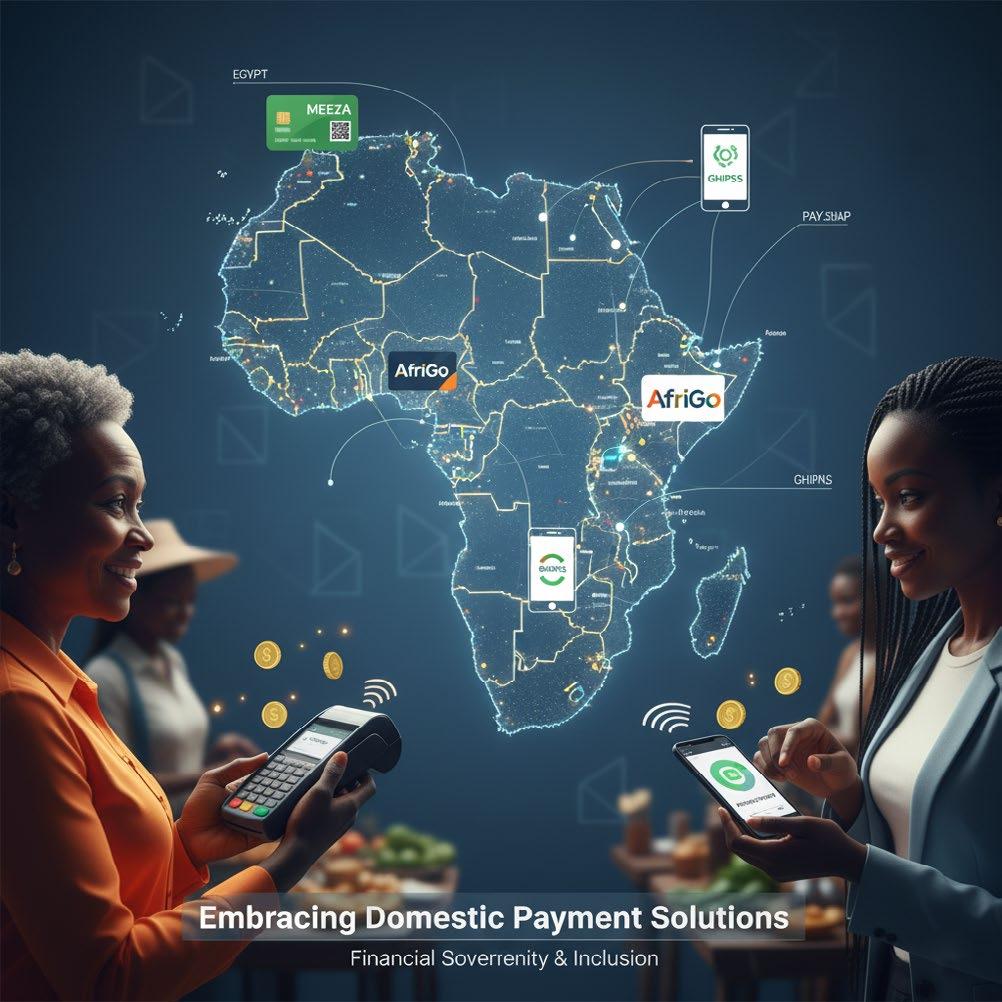
Embracing domestic payment solutions The path to financial sovereignty & inclusion


In the race to reshape global finance, Africa has become the unlikely front-runner. With inventiveness forged from necessity, the continent’s digital finance sector delivers broad-based inclusion at a scale unmatched elsewhere. This is not simply evolution; it is a leap, and the African fintech model is now being studied as a template for the world’s journey towards inclusive, sustainable growth. If the world is searching for a blueprint, Africa is offering it.

Yet, this revolution has not been without challenge. The most pressing is regulatory fragmentation: with 54 countries each operating their own licensing regimes and compliance frameworks, fintechs face a complex patchwork of jurisdictional hurdles whenever they expand regionally. This lack of harmonisation amplifies costs, slows innovation, and makes cross-border payments difficult. But amidst these challenges, African innovators, investors, and regulators are forging new paths, aligning standards, building interoperable platforms, and often leading the way in regulatory agility.
Africa’s fintech tapestry is woven from local vision. Landmark platforms, from mobile money giants to nimble lending and insurtech start-ups, have transformed financial access and
leapfrogged legacy limitations. For millions, a phone – not a bank branch – opens the door to credit, savings, and security.
My own experience launching market-disrupting digital products, such as a salary-advance solution delivered in under two months, underlines how datadriven innovation stands ready to meet ordinary lives at speed. Africa’s model is not theoretical; it is live, inclusive, and expanding.
Last year alone, African fintechs attracted over $3 billion in funding, a thirteen-fold growth projected to reach $65 billion by 2030. While this capital often concentrates in fintech hubs, forward-thinking investors now
target diverse geographies and social enterprises, elevating founders and ideas who drive the real inclusion agenda.
Steering technology strategies for major banks, I have seen how disciplined investment, careful cost optimisation, platform partnership, and targeted talent acquisition magnifies impact well beyond the boardroom. Today, bold vision and fiscal agility go together.
Banks in Africa no longer watch the fintech wave; they ride it. My tenure leading core banking modernisation and cloud-based infrastructure migration for major institutions proved that tradition and technology, together, can

deliver rapid transformation and operational resilience.
Collaboration now outpaces competition. Through open banking, API-driven platforms, and shared data strategies, banks and fintechs together extend genuine financial inclusion to segments previously excluded. Their partnerships model a future where service, trust, and innovation coexist.
Regulatory Innovation: Sandboxes and Digital Compliance
Regulatory agility is Africa’s secret weapon. Sandboxes allow realworld trials while safeguarding consumers. Yet, regulatory fragmentation, conflicting rules, and patchy compliance remains a formidable challenge. Africa’s fintech leaders and policymakers are actively harmonising frameworks and embracing unified data standards, promising a future of frictionless cross-border adoption.

Having led governance, AI risk management, and compliance initiatives, I affirm that trust, transparency, and digital ethics remain foundational to enduring innovation.
Interoperable payment systems and continental settlement platforms now dissolve the barriers that once divided Africa’s markets. My experience directing integration programmes across thousands of branches in a major government bank merger confirms how vital scaled, secure

infrastructures are for economic unity.
Today, entrepreneurs and enterprises in Africa move money and opportunity at a pace that rivals the most advanced regions, forging truly borderless trade.
Emerging Technologies: AI, Blockchain, and Digital Identity Artificial intelligence, blockchain, and digital identity tools are not on the horizon; they are here. My work introducing AI-driven lending and compliance in banking has produced not only greater efficiency but demonstrably lower risk. Blockchain now streamlines remittances, regulatory reporting, and consumer protection; digital identity solutions bring underserved populations rapidly into the economic fold.
In Africa, technology is never for its own sake; it is always in service of genuine transformation.
Financial Inclusion: Vision, Reality,
Financial inclusion is Africa’s fintech story, and it is no longer anecdotal; it is quantifiable. Mobile money and digital banking have
lifted account ownership across Sub-Saharan Africa from 34% in 2014 to 49% in 2021, with leaders like Kenya seeing access rates above 80%. Most importantly, there is mounting evidence that fintech adoption correlates positively with wider GDP growth ($r = 0.7$), and even with poverty reduction in key markets, where mobile money innovations have decreased per capita poverty rates by up to 10%.
These outcomes prove that inclusive fintech models drive not just financial access, but tangible economic and social gains.
The Road Ahead: Africa’s Global Lesson
Africa’s fintech ecosystem now demonstrates what is possible when necessity, vision, and collaboration combine. The world’s next digital lesson will be written, not in Silicon Valley, but in Nairobi, Lagos, and Cape Town. The way forward is clear:

Prioritise inclusion and empowerment in every innovation.
Invest in local talent and sustainable ecosystem growth.
Harmonise regulatory frameworks to enable seamless, secure expansion.
Use technology as a lever for broad prosperity and never just for profit.
Measure success by lives and opportunities transformed.
Honoured as Fintech Leader of the Year, I am committed to advancing Africa’s leadership as the world’s reference for inclusive, trustworthy digital finance.

Africa’s fintech revolution is not merely about technology; it is about rewriting the social contract of opportunity and inclusion. By leading with agility, ethics, and purpose, Africa now lights the path for the global financial future.

Neeraj Anand is an awardwinning digital banking executive and visionary CIO, celebrated for over 25 years of transformative leadership across Africa’s financial and technology landscape.
Currently serving as Head of IT Governance at SBM Bank Kenya, he previously spearheaded IT Applications & Operations at the institution, orchestrating core banking modernisation, cloudbased infrastructure adoption, and the deployment of advanced technology governance and AI risk frameworks.
Neeraj was honoured as Fintech Leader of the Year 2025 and also received the Excellence in Digital Banking Innovation Award 2025, recognising his commitment to purpose-driven innovation, regulatory excellence, and breakthrough digital platforms. Beyond his achievements, his legacy is defined by his passion for nurturing homegrown fintech talent and driving responsible digital stewardship, which continues to expand financial inclusion and shape the future of African banking.

The initial gold rush of African fintech is giving way to a more considered approach. This article delves into how robust infrastructure, strategic regulation, and a focus on financial literacy are crucial for ensuring innovation, investment, and inclusion translate into sustainable economic growth across the continent.
The narrative of Africa’s digital economy often conjures images of rapid innovation, burgeoning startups, and a youthful population embracing technology with enthusiasm. While these elements are undeniably present and powerful, a deeper look reveals that for the promised dividends of fintech to truly materialise into widespread, sustainable economic growth, attention must shift from mere acceleration to robust foundation building. This edition’s theme, "Fintech Frontiers: Innovation, Investment and Inclusion," prompts us to examine not just what is being built, but how it is being built to last.
The challenge now is to move beyond the hype and cultivate resilient, inclusive ecosystems capable of weathering global economic shifts and serving the diverse needs of Africa’s over 1.4 billion people. This requires a concerted effort across three critical pillars: infrastructure, regulation, and financial literacy.
Connectivity and access remain the bedrock upon which any digital economy is built. While mobile penetration rates are high across Africa, the quality, affordability, and reach of internet access—especially broadband—vary significantly. The 'digital divide' is not a
binary state but a spectrum, where disparities exist not just between urban and rural, but also in terms of device ownership and data costs.
The ongoing expansion of fibre optic networks, both terrestrial and subsea, is critical. Projects like Google’s Equiano cable and Liquid Intelligent Technologies’ extensive fibre backbone are dramatically increasing bandwidth and reducing latency, enabling more sophisticated digital services. However, last-mile connectivity remains a challenge, often tackled by innovative solutions such as satellite internet (e.g., Starlink’s expanding presence) and community networks, which can bypass traditional infrastructure limitations.
Beyond mere internet access, the underlying digital public infrastructure (DPI) is equally vital. This includes digital identity systems, instant payment platforms, and data-sharing frameworks. Countries like Nigeria and Kenya have made strides in developing national digital ID systems, which are fundamental for onboarding individuals into formal financial services, verifying creditworthiness, and combating fraud. Similarly, real-time payment systems are essential for the smooth flow of capital, enabling faster transactions and reducing settlement risks. Investment in these foundational technologies is less glamorous than funding the next unicorn, but it is infinitely more critical for long-term systemic stability.
For a rapidly evolving sector like fintech, regulation often struggles to keep pace. Yet, effective regulation is not an impediment to innovation; it is its indispensable guardrail. A well-calibrated regulatory environment fosters trust, protects consumers, and provides the clarity investors need to deploy capital confidently. African regulators are increasingly grappling with how to balance innovation with stability. We are seeing a shift from reactive legislation to proactive, adaptive frameworks. Regulatory sandboxes, now prevalent in markets such as Kenya, South Africa, and Ghana, allow fintechs to test innovative products in a controlled environment, reducing the time-to-market and allowing regulators to understand new technologies before formulating comprehensive rules.
The rise of digital currencies and assets also presents a significant regulatory frontier. While some central banks have adopted a cautious approach, others are exploring Central Bank Digital Currencies (CBDCs) as a means to enhance financial inclusion and improve payment efficiency. Nigeria’s eNaira is a pioneering example, though its full impact is still unfolding. The challenge lies in developing frameworks that harness the potential benefits of these technologies while mitigating risks related to financial
stability, money laundering, and consumer protection.
Crucially, regional harmonisation of regulatory standards is vital. Fragmented rules across 54 distinct jurisdictions create significant barriers to scaling for pan-African fintechs. Initiatives by regional bodies to develop common principles for digital payments, data protection, and cross-border remittances are essential to unlock the full potential of regional economic integration.
Technology alone does not guarantee inclusion; people must be equipped to use it effectively and safely. This brings us to the crucial role of financial literacy and digital skills. In many African markets, a significant portion of the population is transitioning directly from a cash-based economy to digital finance, often without prior exposure to formal financial concepts.
Financial literacy programmes must be integrated into the deployment of fintech solutions. This goes beyond simply showing someone how to use a mobile money app; it involves educating them about the benefits of saving, the risks of borrowing, the importance of budgeting, and how to protect themselves from digital fraud. These programmes should be culturally sensitive, delivered in local languages, and leverage
channels that resonate with target communities, including community leaders, mobile agents, and even edutainment.
Furthermore, the growing digital economy demands a skilled workforce. There is a pressing need to invest in digital skills training, from basic computer literacy to advanced coding, data science, and cybersecurity. Universities, vocational training centres, and private sector initiatives are playing a vital role in closing this skills gap. Building a local talent pipeline ensures that the innovation and value
creation from the digital economy remain within the continent, fostering self-reliance and reducing dependence on expatriate expertise.
The "Fintech Frontiers" are not just about new technologies or investment rounds; they are about consciously constructing a future where financial services genuinely empower every African. This requires foresight and coordinated action across multiple fronts.
By diligently investing in robust digital infrastructure, by crafting adaptive and harmonised regulatory frameworks, and by prioritising widespread financial and digital literacy, Africa can build not just a thriving digital economy, but one that is resilient, truly inclusive, and capable of delivering sustainable prosperity for generations to come. The promise is immense, but its realisation depends on the strength of the foundations we lay today.


As the initial rush of the digital finance boom settles into a phase of strategic maturity, Africa’s fintech ecosystem is evolving. We explore how targeted innovation, disciplined investment, and a renewed focus on genuine inclusion are redefining the continent’s economic horizon.
The narrative surrounding African fintech has long been dominated by the metaphor of ‘leapfrogging’. It was a compelling story: a continent bypassing legacy infrastructure to jump straight into a mobilefirst future. However, as we move deeper into this decade, that narrative is becoming insufficient to capture the nuance and scale of what is happening on the ground. We are no longer merely observing a leap; we are witnessing the construction of entirely new financial foundations.
Africa’s digital economy is entering a pivotal phase of maturation. The initial, somewhat frenetic explosion of payments startups is giving way to a deeper, more structural integration of technology into everyday economic life. The frontier is shifting from basic access to sophisticated utility. This edition’s theme, “Fintech Frontiers: Innovation, Investment and Inclusion,” reflects this critical juncture. It is a recognition that while the transformative wave is well underway, its ultimate direction depends on the interplay of smart capital, regulatory foresight, and technology that solves genuine, deeply rooted problems for the continent’s $3 trillion economy. Here, we explore the key forces driving this evolution and the opportunities emerging for sustainable growth.
For a decade, payments have been the glittering gateway to African fintech, spearheaded by mobile money giants that redefined financial inclusion globally. While payments remain the essential plumbing of the digital economy, the innovation frontier has moved on. The most exciting developments today are happening at the intersection of finance and the 'real economy', solving specific frictions for businesses and consumers.
The current wave of innovation is characterised by depth and specialisation. We are seeing the rapid rise of embedded finance, where non-financial platforms— from e-commerce aggregators to logistics providers—are integrating financial services directly into their customer journeys. This is democratising access to credit and insurance, placing financial tools exactly where commerce happens, rather than requiring users to seek them out separately.
Furthermore, the application of Artificial Intelligence and Machine Learning (AI/ML) is moving from buzzword to operational reality, particularly in credit scoring. In a continent where traditional credit bureau data is often sparse, fintechs are utilising alternative data points—from smartphone metadata to transaction histories
Simultaneously, the evolution of Open Banking frameworks across key markets like Nigeria, Kenya, and South Africa is set to catalyse the next wave of product innovation. By securely mandating the sharing of customer data (with consent) between banks and thirdparty providers, Open Banking promises to break down data silos, fostering competition and allowing for hyper-personalised financial management tools.
The global technology sector has faced headwinds over the last eighteen months, with rising interest rates and geopolitical uncertainty leading to a tightening of venture capital purse strings globally. Africa has not been immune to this ‘funding winter’. The era of mega-rounds driven by ‘Fear Of Missing Out’ (FOMO) and growth-at-all-costs metrics has come to an abrupt halt.
However, this recalibration should be viewed as a healthy maturation process for the African ecosystem, rather than a crisis. The investment landscape is shifting from hype to fundamentals. Investors—both international VCs and increasingly with suppliers—to build robust risk profiles. This is unlocking capital for millions who were previously ‘invisible’ to the formal banking sector.
prominent domestic players—are scrutinising unit economics, paths to profitability, and sustainable governance structures with renewed vigour.
This new reality is driving consolidation. We are entering an active period of Mergers and Acquisitions (M&A), where wellcapitalised players are acquiring smaller, product-focused startups to broaden their offerings across borders. It is also spurring strategic partnerships between incumbent banks and agile fintechs. The adversarial narrative of “banks versus startups” is largely obsolete; the frontier is now defined by collaboration, where banks provide the regulatory umbrella and balance sheet, while fintechs provide the user experience and technological agility.
Furthermore, the nature of capital is diversifying. We are seeing a rise in debt financing for lending-focused fintechs, reducing dilution for founders. There is also a growing recognition of the need for ‘patient capital’— investments willing to withstand the longer horizons and unique infrastructural challenges of building in African markets.
Despite the headline successes of mobile money, the job of financial inclusion is far from complete. True inclusion is not merely about having a mobile wallet; it is about the ability to use financial tools to improve one’s economic wellbeing, manage shocks, and build wealth.
The most significant frontier for inclusive growth remains the Micro, Small, and Medium Enterprise (MSME) sector. MSMEs are the backbone of Africa’s economy, accounting for the vast majority of employment. Yet, they face a staggering credit gap, estimated at hundreds of billions of dollars annually.
Traditional banks have historically viewed MSMEs as too risky and costly to serve. Fintechs are bridging this gap through digitised supply chain finance. By digitising the interactions between retailers, distributors, and manufacturers, fintech platforms can gain visibility into cash flows, allowing them to offer instant, low-risk


working capital. Supporting these businesses is not just about finance; it is about fuelling the engine of job creation across the continent.
Moreover, the inclusion conversation is shifting towards wealth creation and resilience. We are seeing a surge in ‘investtech’ and ‘insur-tech’ platforms aimed at the retail market. These platforms are allowing everyday Africans to invest in fractionalised assets, saving in foreign currencies to hedge against inflation, and access micro-insurance products to protect against health or climate emergencies. This shift from mere transactional access to financial health tools is critical for longterm economic stability.
It would be disingenuous to discuss the frontiers without acknowledging the significant Navigating the Friction
friction that remains. The regulatory environment across the continent’s 54 fragmented markets is complex and often unpredictable. While some regulators are proving highly progressive with sandbox environments and clear licensing regimes, others lag behind, creating uncertainty that dampens investment. Harmonisating regulations across regional blocs like the EAC or ECOWAS remains a pressing priority to unlock true scale.
Infrastructure also presents ongoing challenges. Reliable connectivity, affordable data, and robust identity verification systems are prerequisites for a thriving digital economy. Furthermore, as digital adoption grows, so does the threat surface. Cybersecurity is no longer an IT issue but a critical systemic risk that requires significant investment and pan-African cooperation.
The theme of “Fintech Frontiers” is ultimately an optimistic one. It acknowledges that Africa is not merely adopting global technologies but adapting them to create unique solutions that the rest of the world may soon study.
The period of easy money and simple solutions is over. The next phase requires grit, governance, and a relentless focus on solving real problems. By coupling technological innovation with strategic, disciplined investment and keeping inclusion at the centre of the agenda, Africa’s financial ecosystem is poised not just for growth, but for deep, structural transformation. The frontier is open, and the work of building a robust, inclusive digital economy is well underway.

Small and Medium-sized Enterprises (SMEs) are the heartbeat of every thriving economy. Across the world, they serve as engines of innovation, creators of employment, and critical enablers of inclusive growth. In Nigeria, the story is no different. SMEs account for more than 80 percent of jobs and contribute nearly half of national GDP. They provide livelihoods, nurture local value chains, and help to keep communities resilient.
Yet, despite their importance, SMEs continue to face enormous challenges. Many entrepreneurs have access to finance due to stringent collateral requirements, underdeveloped credit infrastructure, and relatively high borrowing costs. Others grapple with insufficient capacity in areas such as record-keeping, taxation, digital adoption, and regulatory compliance. For many, access to reliable markets and opportunities to scale remain limited. The result is that while Nigeria is endowed with abundant entrepreneurial energy, too many small businesses remain trapped at subsistence level, unable to grow, unable to employ, and unable to contribute fully to national economic transformation.
At Access Bank, we believe that solving these challenges is a matter of corporate responsibility and an economic necessity. A strong and resilient SME sector translates directly into national prosperity. Our role, therefore, is to create an enabling ecosystem where entrepreneurs can thrive. Over the years, we have placed SMEs at the heart of our strategy, deploying innovative financial solutions, technology-driven platforms, and capacity-building programmes that address the unique challenges they face.
Perhaps the greatest hurdle for SMEs in Nigeria has been access to finance. Traditional banking models, reliant on heavy collateral requirements and manual credit assessments, have excluded millions of small businesses. We set out to change that by leveraging technology to democratise credit access.
Through the Access Bank Digital Lending Platform, entrepreneurs can now secure instant, collateral-free loans in a matter of minutes. By applying artificial intelligence and alternative credit scoring models that analyse transaction histories, mobile usage patterns, and other nontraditional data points, we have been able to extend credit to businesses previously deemed “unbankable.” To date, more than ₦200 billion has been disbursed to SMEs through these digital channels, empowering thousands of entrepreneurs to expand operations, increase production, and hire more workers.
Another innovative product, SwiftPay, goes beyond payment. It enables small merchants to accept digital payments seamlessly and, over time, build transaction records that qualify them for financing. Linked with our Merchant Loan product, SwiftPay allows even informal traders, who make up a significant portion of Nigeria’s economy, to participate in formal credit systems. This is a powerful way to bring more entrepreneurs into the financial mainstream.
We also recognise that finance alone is insufficient if SMEs lack access to markets. Many small businesses can produce goods and services but struggle to find buyers beyond their immediate environment. To address this, we created DIGA (Digital Innovation for Growth of
Africa), a platform that connects SMEs with larger value chains and opens doors to both local and international markets.
DIGA digitises the marketplace, helping entrepreneurs showcase their offerings, network with potential partners, and plug into regional and global supply chains. For example, a fashion designer in Lagos can now connect with distributors in Nairobi, or an agro-processor in Kano can access buyers in Accra. In doing so, we are breaking down geographical barriers and enabling Nigerian businesses to participate in global commerce.
For SMEs, knowledge is as critical as finance. Too many entrepreneurs are constrained not by a lack of ideas but by gaps in capacity, whether in bookkeeping, taxation, regulatory compliance, or digital marketing. To bridge these gaps, we launched the SMEConnect Portal, a one-stop platform offering training modules, mentorship programmes, advisory services, and business tools.
Through SMEConnect, entrepreneurs can access resources on how to structure businesses, manage finances, and adopt digital technologies. Complementing this, our SME Clinics, held in cities across Nigeria, bring together policymakers, industry experts, and entrepreneurs for practical sessions that tackle real-world business challenges. These clinics are not just about imparting knowledge; they are about creating communities of learning and collaboration.
We also partner with international development agencies, professional bodies, and business associations to extend the reach of our capacity-building initiatives. By doing so, we are helping SMEs not just survive but thrive in an increasingly competitive and digitalised world.
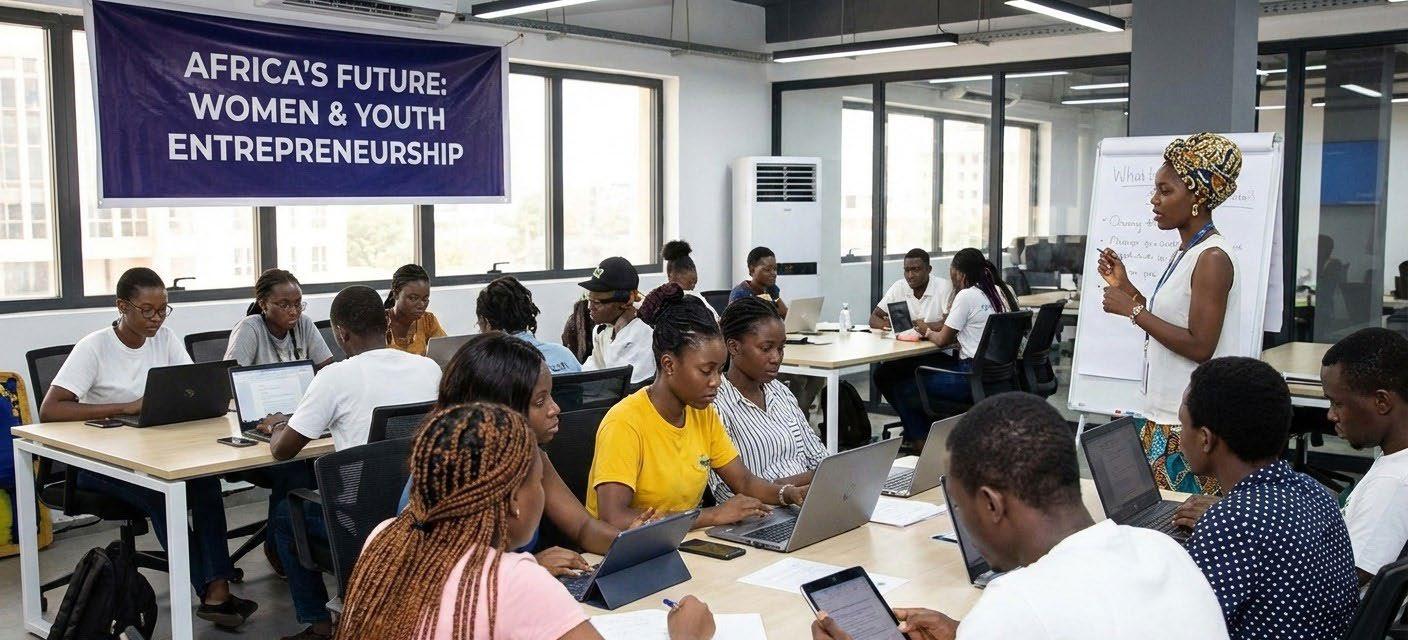
Inclusive growth demands that no group be left behind. At Access Bank, we pay particular attention to women and young entrepreneurs, who often face additional barriers in business. Our W Initiative provides women-owned SMEs with access to finance, business training, and networking opportunities. Through tailored loan products and mentorship, we are helping women entrepreneurs scale their businesses and create more inclusive value chains.
Similarly, our focus on youth entrepreneurship recognises the demographic realities of Nigeria, where young people make up the majority of the population. By equipping young entrepreneurs with the tools and resources they need, we are unlocking the potential of a new generation of innovators who will define the future of our economy.
The impact of these initiatives is visible. Thousands of SMEs have accessed finance that would have been unavailable to them a decade ago. Businesses have adopted digital platforms to expand their reach and efficiency. Women and youthled enterprises are emerging as dynamic players in multiple sectors. Collectively,
these businesses are creating jobs, reducing poverty, and boosting national GDP.
During the pandemic, for instance, our digital lending platforms became lifelines for SMEs facing liquidity challenges. In difficult macroeconomic environments, our interventions have helped stabilise small businesses and preserve livelihoods. These outcomes underscore a fundamental truth: when SMEs are empowered, societies become more resilient.
The journey, however, is far from over. The challenges facing SMEs are evolving, shaped by rapid digital transformation, climate change, and global economic uncertainty. At Access Bank, we are committed to staying ahead of these shifts. Our investments in fintech partnerships, artificial intelligence, and green financing are designed to futureproof Nigerian SMEs and position them for sustainable growth.
We will also continue to advocate for enabling policies, around infrastructure, taxation, and regulations, that complement our interventions. No single institution can transform the SME landscape alone; it requires a coordinated effort between government, private sector, and civil society.
Nigeria’s economic resilience depends on the strength of its entrepreneurs. SMEs are not peripheral; they are central to our collective future. At Access Bank, our philosophy is simple: when small businesses succeed, nations prosper.

That is why we remain unwavering in our commitment to empower SMEs with innovative financial solutions, digital tools, and knowledge platforms. By breaking down barriers, connecting markets, and building capacity, we are helping to unlock the full potential of Nigerian entrepreneurs.
The future we envision is one where SMEs are not just surviving but thriving; where they are not just local actors, but global competitors, where they are not just creating jobs but shaping the next chapter of Nigeria’s growth story. This is the future Access Bank is working towards; one innovative solution at a time.
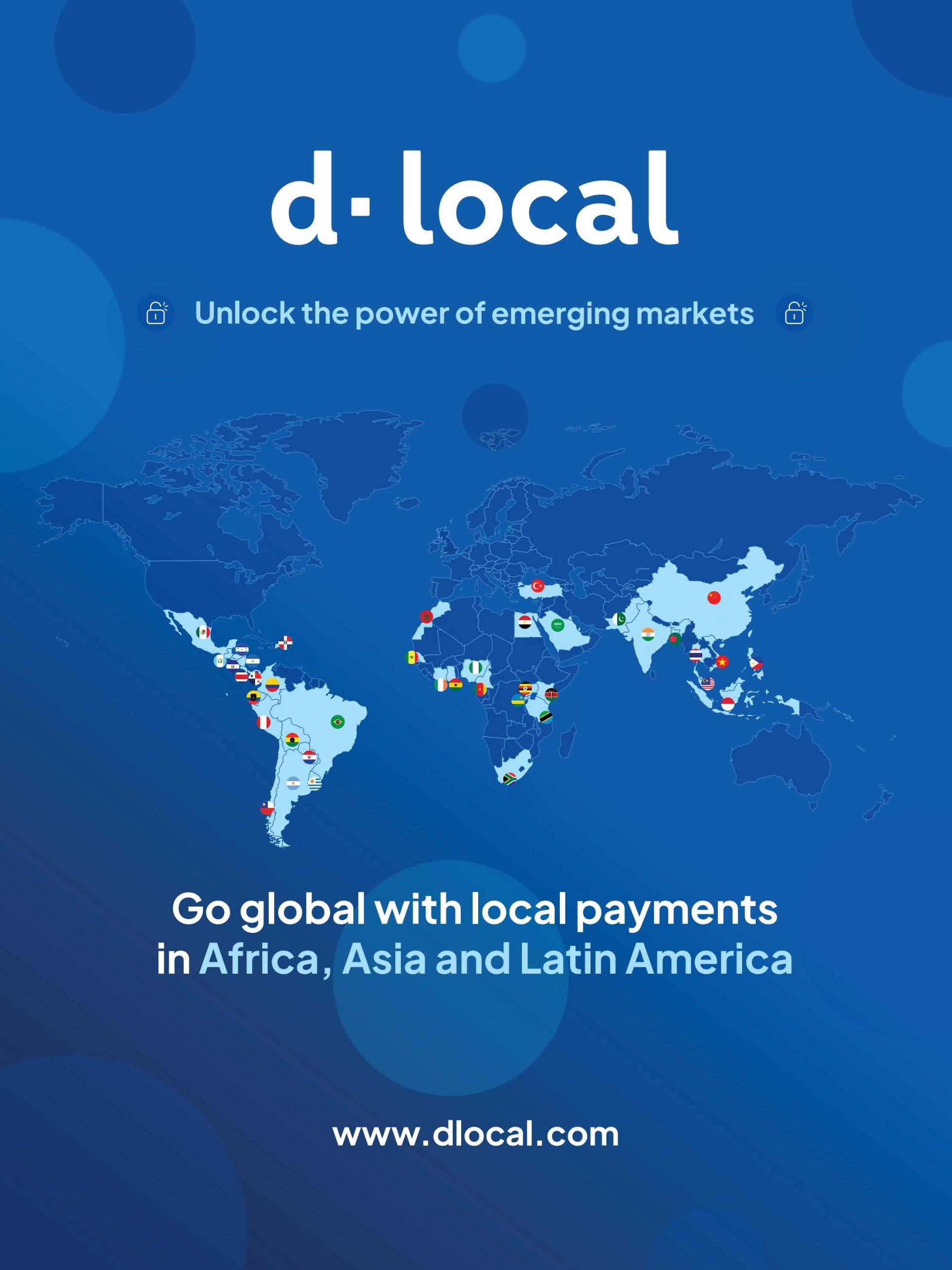

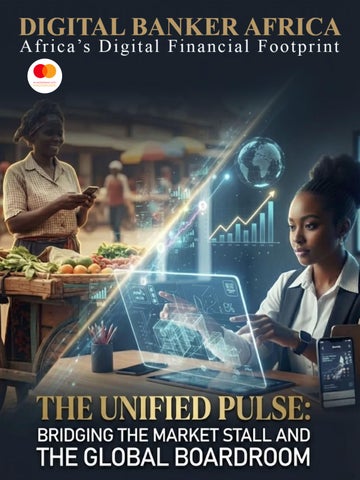
Across the African continent, a silent revolution is being written in code and currency. As 2025 draws to a close, the historical divide between the local marketplace and global financial infrastructure is finally collapsing, giving way to a unified digital frontier where innovation meets inclusion.
For decades, the African financial landscape was defined by two parallel worlds that rarely touched. On one side was the vibrant, sun-drenched reality of local commerce—the market trader managing daily turnover in cash, operating largely outside the formal banking system. On the other was the high-tech boardroom, where analysts navigated global capital flows through complex data and realtime analytics.
The image of this era is no longer one of separation, but of a singular, integrated ecosystem. Today, the “Fintech Frontier” has become the bridge that connects these spheres. Innovation, investment, and inclusion are no longer merely aspirations; they are the active gears turning local entrepreneurial energy into a force of global economic significance.
Small and Medium-sized Enterprises (SMEs) have long been the heartbeat of the African economy. In nations like Nigeria, they account for more than 80 per cent of jobs and contribute nearly half of the national GDP. They are the primary providers of livelihoods, the nurturers of local value chains, and the bedrock of community resilience.
However, for years, a paradox existed: the very businesses responsible for economic stability were the ones most excluded from the financial systems designed to support growth. Traditional banking models, reliant on heavy collateral requirements and manual credit assessments, effectively locked out millions of entrepreneurs. These businesses remained trapped at a subsistence level, unable to scale, employ more workers, or contribute fully to national economic transformation.
The “Great Convergence” we see today is driven by the realisation that a strong SME sector translates directly into national prosperity. By leveraging technology to democratise credit access, the industry is finally aligning the digital pulse of the boardroom with the economic heartbeat of the market stall.
Perhaps the greatest hurdle for African SMEs has been the “collateral curse.” Without land titles or significant physical assets to pledge, even the most innovative small businesses found the doors of traditional finance closed. The solution has arrived not through physical branches, but through the smartphone.
Through advanced digital lending platforms, entrepreneurs can now secure instant, collateral-free loans in minutes. This shift is powered by sophisticated artificial intelligence and alternative
credit scoring models. Rather than looking for a deed to a building, these models analyse transaction histories, mobile usage patterns, and other non-traditional data points to assess creditworthiness.
This methodology has allowed institutions to extend credit to businesses previously deemed “unbankable”. The scale of this impact is staggering; for example, Access Bank alone has disbursed more than ₦200 billion to SMEs through these digital channels, empowering thousands to expand operations and increase production. This isn’t just about lending; it is about providing the liquidity required for a market trader to become a wholesaler.
Finance alone is insufficient if SMEs lack the avenues to reach customers. Historically, a trader’s market was defined by the distance they could physically travel. A farmer in a rural province or a textile designer in a local hub could produce world-class goods but remained invisible to buyers in the next country—or even the next city.
The fintech frontier is dismantling these geographical barriers. Platforms like DIGA (Digital Innovation for Growth of Africa) are digitising the marketplace, connecting small businesses with larger value chains. These platforms serve as a “Digital Silk Road,” allowing an agroprocessor in one region to access buyers in another across the continent.
By breaking down these barriers, African businesses are no longer just local actors; they are becoming participants in global commerce. The professional in the boardroom, using holographic data and global maps, is now directly linked to the fashion designer in Lagos, helping them find distributors in Nairobi or Accra. This connectivity ensures that innovation in one corner of the continent can find its market in another.
A critical component of this evolution is the inclusion of the informal sector. In many African economies, informal traders make up a significant portion of economic
activity but operate without formal records. This lack of data has historically excluded them from credit systems.
Innovation in payment solutions is changing this dynamic. Products like SwiftPay go beyond simple transaction processing. They enable small merchants to accept digital payments seamlessly, which, over time, builds a digital transaction record. These records then qualify the merchant for financing through dedicated products like Merchant Loans.
By bringing informal traders into the formal credit system, fintech is ensuring that the digital economy is truly inclusive. It provides a pathway for the smallest enterprise to enter the financial mainstream and build a resilient future.
The “Fintech Frontier” is as much about human capital as it is about financial capital. For many entrepreneurs, the constraint is not a lack of ideas, but a gap in capacity regarding bookkeeping, taxation, regulatory compliance, and digital adoption.
To bridge these gaps, the industry is moving toward “one-stop” digital portals that offer more than just a bank balance. Platforms like SMEConnect provide training modules, mentorship programmes, and business tools that help entrepreneurs structure their businesses for the modern age.
Furthermore, physical initiatives like SME Clinics complement these digital

tools by bringing together policymakers, experts, and entrepreneurs to tackle realworld challenges. This holistic approach ensures that when an SME receives funding, they also possess the strategic foresight and operational knowledge to use it effectively.
Inclusive growth demands that no demographic be left behind. Strategic focus is increasingly turning toward women and young entrepreneurs, groups that often face the highest barriers to entry.
Programmes such as the W Initiative provide women-owned SMEs with tailored loan products, business training, and networking opportunities. Similarly, a focus on youth entrepreneurship recognises the demographic reality of the continent, where young innovators are the primary drivers of the digital economy. By equipping these groups with the tools they need, the financial sector is unlocking a new generation of leaders who will define the future of the economy.
As we look toward 2026, the surge in strategic investment in African fintech is moving toward “future-proofing.” This involves deep investments in artificial intelligence, green financing, and fintech partnerships designed to help SMEs
navigate global economic uncertainty and climate change.
Investors have recognised that the most sustainable growth comes from a resilient SME sector. In difficult macroeconomic environments, these digital interventions have served as lifelines, stabilising small businesses and preserving livelihoods. This underscores a fundamental truth: when SMEs are empowered, the entire society becomes more resilient.
Conclusion: A Unified Horizon
The journey of the African digital economy is far from over, but the direction is clear. The fintech frontier is not merely about the speed of a transaction or the complexity of a boardroom algorithm. It is defined by the moment a market trader receives a life-changing loan on her phone, and the moment a digital architect sees that loan translate into a thriving local business.
The future we are building is one where the market stall and the boardroom are part of the same story. By breaking down barriers, connecting markets, and building human capacity, we are helping to unlock the full potential of African entrepreneurs. In this new era, SMEs are not just surviving; they are thriving as global competitors, shaping the next chapter of the continent’s growth story.


When we speak about financial inclusion in Africa, one image has long dominated the conversation, the “mama mboga”, the informal vegetable vendor. Research, policies, innovation, and funding have largely centred on this representation of access.
But the face of enterprise is changing. Today’s MSME is just as likely to be a young entrepreneur running an online store, a developer coding for global clients, or a small team managing logistics for events entirely through digital platforms.
In this article, I focus on one specific group within this evolving landscape — the youth. Africa’s population is strikingly young: about 65% is under 35, and nearly 70% in sub-Saharan Africa is under 30. This is not a niche demographic; it is the continent’s economic engine. They represent a generation that is digitally connected, yet structurally underserved.
I’ve seen this up close. Two young entrepreneurs I know run an events business in Nairobi — organising concerts, hiring out sound and lighting, managing logistics. On paper, they look successful: always booked, and paid through digital channels. Yet behind the rush and the noise lies a constant struggle with cash flow.
When major events arise, they need funds months in advance
to secure venues and equipment. Traditional banks rarely recognise them as “credit-ready”: irregular income, limited paperwork, and no collateral. As a result, they often turn to informal lenders at painful rates.
As one of them once said, “I have a digital credit limit on my phone, but it doesn’t speak to my business needs. It just gets me into debt for the sake of it.”
That, to me, is the access illusion being financially connected but not financially empowered.
Many young entrepreneurs operate businesses through WhatsApp and Instagram, freelance across borders, and earn money digitally — yet their access often ends at the transactional level. They can transact, but not transform. They can borrow, but not build. They can earn globally, yet struggle to receive globally.
Kenya — and much of Africa — has made tremendous progress in digital access. Mobile money connected millions, agency banking brought services to remote towns, and digital credit unlocked credit at scale.
The transformation has been profound.
But zoom in, and a persistent gap emerges between access and financial health.
Financial health is the ability to save, plan ahead, absorb shocks, and pursue growth. It asks a deeper question: How meaningfully does inclusion support progress?
This is the gap that Inclusion 2.0 rises from.
For me, Inclusion 2.0 is the shift from counting users to strengthening outcomes. It is about turning access into empowerment, and empowerment into stability.
It rests on three interconnected foundations: Trust, Tools, and Touchpoints — or in simpler terms: Mindset, Infrastructure, and Delivery.
Young people engage confidently with financial systems when they understand how those systems work and feel protected while using them.
Strengthening trust can look like:
• Embedding financial literacy into digital platforms through short, gamified content and real-time guidance.
• Credit bureaus, fintechs, and associations collaborating to run credit clinics that educate users before issues arise and even when they arise.
• Digital platforms offering clear data practices and strong cybersecurity safeguards.
Trust turns financial access into informed participation — the foundation of financial health. It makes digital tools secure, inclusive, and human-centred.
For youth entrepreneurs and digital workers, inclusion becomes meaningful only when tools reflect the realities of their business journeys. Some ways this can be realised:
Most digital loans today are personal and short-term, designed around instant liquidity rather than business growth. Yet many youth-led MSMEs operate in ecosystems where value is visible — bookings, orders, invoices, supplier payments, customer reviews — but this information rarely translates into creditworthiness.
Contextual credit bridges this gap by grounding lending in real business behaviour.
Imagine a ticketing or logistics platform working with fintechs and financial institutions so that verified bookings and payment histories become the basis for preevent or working capital financing. In this model, the ecosystem becomes the collateral, lowering risk and opening the door for fairer pricing.

When credit reflects the actual rhythm of a business — not old assumptions about formality — borrowing becomes a tool for growth, not survival.
A freelancer in Nairobi can complete a project for a client in Berlin or Dubai, yet receiving payment can be slow, expensive, or uncertain. Global work is increasingly digital; global payments have to keep pace.
Emerging blockchain-based payment rails and compliant digital wallets offer faster, lower-cost options for receiving international income. When used responsibly and supported by transparent regulations, they remove friction and allow young professionals and MSMEs to participate more fully in the global economy.
Cross-border earning opportunities already exist; what’s missing is receiving power. Fixing this is as important to inclusion as credit or savings.
Inclusion becomes meaningful when it supports not just earning or borrowing, but accumulation and growth. Yet many young entrepreneurs operate with tools that manage transactions but do little to help them build financial resilience.
A more holistic approach integrates simple, practical wealth-building features into everyday financial tools:
• Automated savings tied to cash flow, allowing a small portion of each payment to be set aside.
• Goal-based saving options
to help plan for equipment, expansion, or operational needs.
• Micro-investment pathways that enable users to start investing with small, consistent contributions.
• Cash-flow visibility and insights that help entrepreneurs understand their financial patterns and plan ahead.
When saving, planning, and smallscale investing become part of the same digital journey, young people can shift from surviving cashflow pressures to actively building stability. This is where inclusion begins to translate into long-term financial health.
Real inclusion meets people in their digital lives.
Today’s MSME may operate entirely on WhatsApp, TikTok, or a digital marketplace — not in a banking hall or bank app. Embedding financial tools — from credit workflows to invoicing bots to savings nudges — into these familiar spaces makes finance intuitive, relevant, and accessible.
Delivery matters as much as design.
— and when payments, savings, and literacy reinforce one another.
Achieving this requires alignment across the ecosystem:
• Fintechs designing for longterm value, not just downloads.
• Financial institutions moving from gatekeepers to enabling partners.
• Regulators offering agile, protective frameworks that balance innovation with safety.
• Educators and associations viewing financial capability as a foundational skill.
When these elements align, inclusion becomes sustainable.
No single actor can deliver Inclusion 2.0 alone. Real progress depends on collaboration — innovators, lenders, regulators, associations, and educators working toward shared outcomes.
Kenya’s ecosystem shows real promise: more open dialogue, stronger data protection, and diverse fintech models.
Whenever I see young teams setting up for events — cables, lights, sound checks, anticipation — I am reminded of how much potential lives within this generation. They are innovative, entrepreneurial, and relentless. If our financial systems could truly see them — not as risks but as builders; not as data points but as partners — we would unlock a different kind of prosperity.
That is what Inclusion 2.0 is really about: inclusion that goes beyond access, beyond numbers, and toward dignity, resilience, and financial health.

Emily Odindo is a Certified Fintech Practitioner based in Nairobi, Kenya, with experience in banking and fintech across business growth, operations, and ecosystem capacity building. She leads growth and operational strategy at Lume Solutions and oversees fintech capacitybuilding programmes through the Association of Fintechs in Kenya (AFiK). She also offers fractional operations support to microfinance institutions and fintechs working toward regulatory compliance and operational efficiency.
Financial health emerges when credit builds rather than burdens
But the next phase of inclusion will not come from digitising more services — it will come from integrating them.
She is passionate about digital financial inclusion, compliant innovation, and strengthening capacity within the fintech ecosystem.

The past year has witnessed a remarkable acceleration in digital banking adoption. From the sophisticated integration of Generative AI to the expansion of cross-border payment rails, financial institutions have embraced technology to: Streamline operations and reduce friction. Enhance security through advanced fraud detection. Provide seamless customer journeys that bridge the gap between physical and digital touchpoints.
The 2025 award winners represent the pinnacle of this evolution, showcasing a steadfast commitment to innovation, customer-centricity, and financial inclusion.
As the world becomes increasingly interconnected, the demand for agile solutions that address the evolving needs of African consumers has never been greater. This year’s winners have demonstrated a keen understanding of these requirements, leveraging cutting-edge technologies to deliver personalised, secure, and efficient banking services. From the ubiquity of contactless payments to the mainstreaming of biometric authentication, these institutions are setting new industry benchmarks.
In an era where digital transformation is fundamentally reshaping the financial landscape, the Digital Banker Africa Awards continue to recognise and celebrate the institutions driving innovation and delivering exceptional customer experiences.
As As we progress through a transformative new year, the 2025 Digital Banker Africa Awards honour the pioneers who are actively redefining the future of banking across the continent.
The 2025 Digital Banker Africa Awards recognise organisations that are not merely adapting to the digital age but are actively shaping its trajectory. By embracing emerging technologies such as Artificial Intelligence, Blockchain, and Decentralised Finance (DeFi), these institutions are unlocking new opportunities and creating a more robust, inclusive financial ecosystem.
As we honour this year’s winners, we celebrate their remarkable achievements and look forward to the continued growth, resilience, and ingenuity of the African banking industry.
Best Digital Bank: Banco Keve
Best Mobile Banking App: Banco Millennium Atlantico (ATLANTICO)
Best Financial Inclusion Service Provider: Unitel Money (powered by Unitel)
Best Digital Bank: Access Bank Botswana
Best Mobile Banking App: First National Bank Botswana (FNBB)
Best Financial Inclusion Service Provider: Orange Money Botswana
Best Digital Bank: Afriland First Bank
Best Mobile Banking App: Ecobank Cameroon
Best Financial Inclusion Service Provider: Orange Money Cameroon
Best Digital Bank: Commercial International Bank (CIB)
Best Mobile Banking App: National Bank of Egypt (NBE)
Best Financial Inclusion Service Provider: Vodafone Cash
Best Digital Bank: Ecobank Gambia
Best Mobile Banking App: Trust Bank Gambia (TBL)
Best Financial Inclusion Service Provider: Access Bank Gambia
Best Digital Bank: Zenith Bank Ghana
Best Mobile Banking App: GCB Bank PLC
Best Financial Inclusion Service Provider: Zenith Bank Ghana
Best Digital Bank: Equity Bank Kenya
Best Mobile Banking App: KCB Bank Kenya (New KCB Mobile)
Best Financial Inclusion Service Provider: Safaricom (M-PESA)
Best Digital Bank: Absa Bank Moçambique
Best Mobile Banking App: Millennium bim (Smart IZI)
Best Financial Inclusion Service Provider: Vodacom (M-Pesa Mozambique)
Best Digital Bank: First Bank of Nigeria
Best Mobile Banking App: Access Bank
Best Digital Banking Services: Access Bank
Best Financial Inclusion Service Provider: First Bank of Nigeria
Best Digital Bank: Absa Bank Seychelles
Best Mobile Banking App: MCB Juice Seychelles
Best Financial Inclusion Service Provider: Absa Bank Seychelles
Best Digital Bank: United Bank for Africa (UBA) Sierra Leone
Best Mobile Banking App: Sierra Leone Commercial Bank (SLCB) - MiYone SLCB
Best Financial Inclusion Service Provider: Orange Money
Sierra Leone
Best Digital Bank: Nedbank
Best Mobile Banking App: Nedbank
Best Financial Inclusion Service Provider: Nedbank
Best Digital Bank: National Bank of Commerce (NBC)
Best Mobile Banking App: CRDB Bank (SimBanking)
Best Financial Inclusion Service Provider: Vodacom (M-Pesa Tanzania)
Best Digital Bank: Banque de Tunisie (BT)
Best Mobile Banking App: Al Baraka Bank Tunisia (Banecti)
Best Financial Inclusion Service Provider: La Poste Tunisienne (D17)
Best Digital Bank: I&M Bank Uganda
Best Mobile Banking App: Stanbic Bank Uganda (Stanbic App / FlexiPay)
Best Financial Inclusion Service Provider: Centenary Bank
Best Digital Bank: Zambia National Commercial Bank (Zanaco)
Best Mobile Banking App: First Capital Bank Zambia
Best Financial Inclusion Service Provider: Airtel Money Zambia
Best Digital Bank: CBZ Bank
Best Mobile Banking App: NMB Bank Zimbabwe (NMBConnect)
Best Financial Inclusion Service Provider: EcoCash (TN CyberTech)
In an era defined by digital disruption and unprecedented financial transformation across Africa, traditional banks are reimagining their roles in a fast-evolving ecosystem. At the forefront of this shift is Nedbank, a financial institution that has embedded innovation not just into its technology stack, but into its core strategy and culture. In this exclusive interview, Digital Banker Africa speaks with Dayalan Govender, Managing Executive of Product Design and Innovation in Personal and Private Banking at Nedbank Ltd, to unpack how the bank is pioneering digital platforms, collaborating with fintechs, and harnessing technologies such as AI, blockchain, and open banking to drive meaningful financial inclusion. Govender shares insights on Nedbank’s API Marketplace, the transformative power of embedded finance, and how the institution is playing a catalytic role in shaping a connected, inclusive, and future-ready financial landscape for South Africa and beyond.

DBA: From your perspective at Nedbank, what are the most significant technological innovations currently reshaping retail and business banking in South Africa and the broader African continent? Can you provide examples of how Nedbank is leveraging or responding to these innovations?
DG: Nedbank is leading digital transformation in Africa through a mobile-first strategy and innovative technologies. The Nedbank Money app and Avo app offer clients seamless access to banking, lifestyle, and business services. With over 2.7 million active users, the Money app provides zero-rated access, budgeting tools and personalised financial advice, promoting financial inclusion.
Nedbank’s API Marketplace, the first in Africa aligned with PSD2 standards, enables secure thirdparty integrations. It supports real-time payments, embedded lending, and open banking with over 43 billion in transaction volumes and 73 active partners. AI is central to Nedbank’s strategy− Enbi, Nedbank’s AI-powered assistant, has handled 22 million queries from 1.5 million users, helping enhance service and financial literacy.
Innovation is embedded as a culture, not just technology. Nedbank’s Innovation Studio rapidly tests emerging technologies like AI, blockchain, and embedded finance in agile sprints before scaling. This approach accelerates implementation and ensures relevance. Through these efforts, Nedbank is democratising access, improving client experience, and positioning itself as a digital leader in Africa’s financial ecosystem.
DBA: The theme highlights the rise of homegrown fintech start-ups. How does Nedbank as a traditional bank approach collaboration or competition with these agile newcomers? Are there particular areas where you see the most synergistic opportunities?
DG: Nedbank views fintechs not as competitors, but as strategic partners in building a more inclusive financial ecosystem. Our approach is rooted in open banking and ecosystem integration.
Nedbank API Marketplace: Africa’s first PSD2-aligned platform, enabling fintechs to access real-time payments (Payshap), embedded lending, account data and more.
Over 73 active integrations: Creating a dynamic space for co-creation and innovation. Payment facilitator and service provider partnerships: Extending last-mile payment solutions to informal businesses and SMEs, bridging service gaps in underbanked communities.
PayShap request feature: Enables instant payments with automated reconciliation integrated into mobile accounting tools.
These innovations are especially impactful in areas with limited traditional banking infrastructure.
Small and medium enterprises (SMEs) enablement and financial inclusion: Platforms like SimplyBiz and the Nedbank Business Hub support over 318 000 business clients with tailored digital tools.
Fintech support: Strategic funding, incubation, and codevelopment opportunities.
By combining Nedbank’s scale, trust, and regulatory expertise with fintech agility, we’re fostering a collaborative ecosystem that accelerates innovation, expands access, and delivers meaningful client value across Africa.
DBA: Nedbank has been proactive in digital transformation. Could you elaborate on how your team identifies and integrates emerging technologies like AI, blockchain, or advanced data analytics into your product design and innovation strategy? What are some of the practical applications you’re currently exploring or have implemented?
DG: Nedbank’s digital transformation is driven by a deliberate strategy to identify, test, and scale technologies that enhance agility, personalisation, and inclusion.
Managed Evolution (ME): Modernised core systems, digitised 80%+ of client journeys, and enabled 140+ digital services.
Enbi, our AI assistant:
• Delivers 24/7 financial education and transactional support.
• Reduces live chat volumes by 70%, boosting efficiency.
• Powers fraud detection, behavioural analytics, and personalised wellness.
• Enables real-time, contextual engagement and predictive credit decisioning.
Blockchain: Explored for secure cross-border transactions and smart contracts.
API Marketplace: Facilitates embedded finance − third parties integrate instant payments, loans, and account data.
These technologies are integrated into a cohesive, purpose-led ecosystem. By combining AI, blockchain, alternative data, and humancentred design, Nedbank delivers seamless, secure, and personalised experiences that meet the evolving needs of clients and communities.
DBA: Africa’s fintech landscape is attracting significant investment. How does Nedbank view this influx of capital, and does it influence your internal innovation budgets or partnership strategies?
DG: The influx of capital into Africa’s fintech sector is a powerful signal of the continent’s digital potential. At Nedbank, we view this investment surge not as a threat, but as a catalyst for innovation and collaboration. It validates our strategic focus on open banking, embedded finance, and digital ecosystems.
Rather than competing with fintechs, we align our internal innovation budgets to complement this momentum, ensuring we remain agile and responsive to market shifts. Our API Marketplace is a prime example of this alignment. It enables seamless integration with third-party platforms, allowing fintechs to embed Nedbank services such as PayShap, direct EFT, and personal loans into their offerings. This has opened new revenue streams and enhanced client experiences across sectors.
The rise in fintech investment also informs our partnership strategy. We are actively seeking out fintechs that align with our purpose-led approach, with a
high focus on financial inclusion, SME empowerment, and digital payments. These partnerships allow us to co-create solutions that scale rapidly and address real-world challenges.
Internally, this environment has encouraged a culture of experimentation and rapid iteration. We have increased our investment in digital infrastructure, AI, and cloud capabilities to support faster integration and innovation. The result is a more dynamic, collaborative, and inclusive financial ecosystem − one where traditional banks and fintechs work together to unlock Africa’s economic potential.
DBA: The role of traditional banks is evolving. Beyond direct competition, how do you see Nedbank’s ongoing role in nurturing or contributing to the wider fintech ecosystem in South Africa and beyond? Are there specific initiatives or partnerships that exemplify this approach?
DG: The role of traditional banks like Nedbank is indeed evolving rapidly, moving beyond direct competition with fintechs to actively participate in and nurture the wider fintech ecosystem in South Africa and beyond. Nedbank’s approach can be seen as shifting from a traditional pipeline business model to a more platform-based one, seeking to embed banking solutions into client lifestyles and journeys. Some specific initiatives that exemplify this include:
Embracing a platform business model and open banking
• API Marketplace: Nedbank has been an early adopter of openbanking principles, launching the API Marketplace to allow fintechs to access specific capabilities.
• Avo by Nedbank: Nedbank is positioning itself as a ’platform curator’, aiming
to aggregate banking and beyond-banking services into one integrated client journey.
Partnering with fintechs
• Nedbank continues to partner with fintechs to co-create disruptive solutions and support specific initiatives aimed at addressing the evolving needs of clients.
Supporting financial inclusion and economic development
• Nedbank is actively working towards driving financial inclusion for underserved individuals and SMMEs by providing multiple touchpoints and leveraging our financial expertise to do good.
• Nedbank continues to collaborate with regulators and fintechs on key industrywide initiatives including the payment ecosystem modernisation that is being led by the South African Reserve Bank (SARB).
Focus on digital payments
• Digital payments are a core strategy for Nedbank, and we are deeply involved in the evolving payments landscape in South Africa. We are actively leading initiatives like PayShap, which aims to provide real-time payment services to South Africans.
Support beyond tech
• Co-development, incubation, and strategic funding.
• Platforms like SimplyBiz and the Nedbank Business Hub offer digital tools, financial education, and market access.
• The Green Economy Strategy supports entrepreneurs in renewable energy, agriculture, and waste management.
• Policy engagement
• Active participation in regulatory sandboxes and ESG forums to shape innovationfriendly, consumer-safe environments.
Nedbank leads by example, combining infrastructure, purposeled strategy, and digital enablement to drive inclusive growth and build a resilient financial ecosystem across Africa. Nedbank recognises that the future of banking lies in collaboration and innovation in a broader ecosystem.
DBA: Looking at the broader financial ecosystem, where do you see the most promising areas for further investment and collaboration between traditional financial institutions, fintechs, and even venture capitalists in Africa?
DG: The most promising collaboration opportunities between traditional banks, fintechs, and venture capitalists in Africa centre on inclusion, innovation, and infrastructure. Embedded finance is a key frontier, enabling seamless integration of financial services into non-financial platforms. Nedbank’s API Marketplace supports this by allowing third parties to embed payments, lending, and data services.
Digitising small businesses − Africa’s economic backbone − is another high-impact area. By combining fintech agility with Nedbank’s scale, tailored solutions like invoice discounting and instant credit are being delivered via platforms like SimplyBiz and the Nedbank Business Hub, already serving over 318 000 clients.
Cross-border payments are ripe for transformation, especially under the African Continental Free Trade Area (AfCFTA). Mobile-first solutions and strategic partnerships are helping reduce costs and improve transaction speed. AI-driven personalisation
is also gaining momentum, enhancing financial wellness, fraud detection, and client engagement through real-time analytics. Lastly, RegTech is emerging as a vital area, simplifying compliance amid evolving regulations. Collaboration on digital identity, KYC, and automation will be key.
Together, these initiatives form a roadmap for a more inclusive, efficient, and innovative financial ecosystem across Africa.
DBA: Financial inclusion is a critical aspect of Africa’s digital economy. How is Nedbank’s product design and innovation strategy directly contributing to deepening financial inclusion, particularly for underserved populations or SMEs? Could you share some success stories or key challenges in this area?
DG: Financial inclusion is central to Nedbank’s purpose-led strategy. We are committed to ensuring that all South Africans, especially underserved individuals and SMEs, have access to meaningful financial services. Our approach combines digital innovation, ecosystem partnerships, and inclusive product design. The Nedbank Money app offers USSD functionality, ensuring reach even in datascarce environments. It includes budgeting tools, financial education, and personalised advice, helping clients manage money better. Our value-added services platform supports over 1.59 million users with prepaid utilities, LOTTO tickets, vouchers, and instant cash send services, processing over 158 million transactions annually.
For SMEs, platforms like SimplyBiz and the Nedbank Business Hub provide tailored banking, invoicing,
and cash flow tools. We had supported over 318 000 businesses, disbursed R5.4 billion in asset payouts, and launched instant smallbusiness loans via the Money app by December 2024. Our PayShap request feature enables micro-entrepreneurs to receive instant payments with automated reconciliation. Success stories include a 25% improvement in SME cash flow and a 30% increase in digital transaction volumes. We’ve also reached over 15 000 rural individuals through financial education workshops and rehabilitated over 1.68 million clients through debt relief programmes.
Challenges remain, particularly in digital literacy and infrastructure, but our multi-channel strategy, gamified education, and community partnerships are bridging these gaps. Nedbank is not just expanding access; we are transforming lives through inclusive, accessible, and empowering financial solutions.
DBA: Cross-border payment systems are vital for Pan-African trade. How is Nedbank contributing to or leveraging advancements in this space to facilitate smoother and more affordable transactions across borders for its retail and business clients?
DG: Cross-border payments are essential for driving Pan-African trade, diaspora remittances, and financial inclusion. Nedbank is advancing this space through digital platforms, strategic partnerships, and mobile-first solutions that make international transactions faster, more affordable, and accessible. Our collaboration with Western Union enables clients to send and receive money across 200+ countries via Nedbank’s digital channels, offering real-time processing and multiple payout options − especially benefiting migrant workers, small businesses, and families.
We’re also exploring blockchain and distributed ledger technologies to
boost transparency, reduce costs, and accelerate settlements. These innovations align with our support for the AfCFTA, helping facilitate intra-African commerce. For SMEs, our digital platforms provide tools for managing foreign exchange, international payments, and trade finance, with plans to integrate multi-currency and multi-language features to support regional growth. Our commitment goes beyond technology − it’s about inclusion. By simplifying access to global financial networks, we empower individuals and businesses to engage in the broader economy. Whether it’s a trader in Lusaka or a family in Johannesburg sending money to Harare, Nedbank is dedicated to making cross-border payments secure, affordable, and inclusive.
DBA: From your experience, what are the primary barriers to achieving widespread financial inclusion through digital platforms in Africa, and what innovative solutions is Nedbank exploring to overcome them?
DG: Achieving financial inclusion in Africa requires overcoming barriers like limited digital literacy, infrastructure gaps, affordability, and trust. Nedbank addresses these through a holistic strategy blending technology, education, and partnerships. To tackle digital literacy, we’ve embedded financial education into our Money app and introduced gamified learning tools.
Infrastructure challenges are met with 574 self-service kiosks, 398 branches, and 145 partner stores − ensuring 85% of South Africa’s bankable population is within 30 km of a Nedbank outlet. Mobile lockers and 24/7 card collection further enhance access. Affordability is addressed through zero-rated digital services, USSD banking, and lowcost offerings like MiGoals accounts and MobiMoney wallets, with over 2.2 million accounts opened.
Trust is built through personalised services, inclusive design, and community engagement. Collaborations with fintechs and NGOs help us reach underserved groups, including women, youth, and informal traders. By combining innovation with empathy, Nedbank is not just removing barriers − we’re reshaping inclusive banking across Africa.
DBA: Regulatory innovation, such as sandboxes, is crucial for fostering a thriving fintech environment. How does Nedbank engage with regulators to ensure that innovation can flourish while maintaining stability and consumer protection?
DG: Nedbank maintains a proactive, collaborative relationship with regulators—recognising that regulatory innovation is key to building a resilient, inclusive fintech ecosystem.
• We engage through structured forums, bilateral consultations, and regulatory sandboxes to co-develop frameworks for open banking, digital identity, cybersecurity, and financial inclusion.
• We work closely with SARB, Financial Sector Conduct Authority (FSCA) and the Prudential Authority to shape policies that support innovation while ensuring financial stability and consumer protection.
• Sandbox participation has enabled safe testing of technologies like PayShap, API-based lending, and digital onboarding, aligned with SARB’s goals for modernising payments and expanding access.
• Internally, governance bodies like GRCMC and GTSEC oversee ESG integration, ethics, and compliance − ensuring innovation is pursued responsibly.
• We’ve implemented robust digital compliance frameworks, including OAuth 2.0 for secure API authentication and advanced data privacy protocols.
• Our Ethics and Human Rights Management Plan ensures all innovations uphold integrity, fairness, and sustainability.
By aligning innovation with regulatory collaboration, Nedbank is helping shape a future-ready financial system where technology and trust go hand in hand.
DBA: Looking ahead, what do you believe are the biggest opportunities and challenges for the African digital economy in the next 3 to 5 years, particularly from a financial services perspective?
DG: Over the next 3 to 5 years, Africa’s digital economy will be shaped by rapid innovation in payments, embedded finance, and financial inclusion. One of the most transformative trends is the rise of real-time payments and account-to-account (A2A) transfers. These systems are disrupting traditional payment value chains by offering merchants lower costs and immediate fund availability. Nedbank is at the forefront of this shift, leveraging PayShap and programmable payment infrastructure to support low-cost, multi-rail, real-time transactions using any credential.
Data-driven financial inclusion and personalisation will accelerate. With limited traditional credit history for many Africans, alternate data (mobile data, payments data, utility data, etc) will be leveraged to assess creditworthiness, enabling greater
access to loans and other financial products. Data analytics will be utilised to create highly personalised financial products and services tailored to the specific needs and behaviours of African consumers and SMEs.
Digital wallets are also accelerating, gaining traction in South Africa and becoming the dominant global payment method. Nedbank’s Avo and Money apps are evolving into ubiquitous wallets, offering hyperpersonalised, secure, and seamless payment experiences. Meanwhile, the digitisation of remittances presents a major opportunity. With cross-border payments still heavily cash-based and expensive, Nedbank is investing in cost-efficient inbound and outbound remittance services to simplify access and reduce costs.
However, challenges remain. Infrastructure disparities, regulatory fragmentation, and digital trust gaps must be addressed. Cash, while declining, will continue to play a role in many economies. Building trust through proactive fraud detection, decentralised identity, and ethical data use is essential. Nedbank is responding with AI powered fraud mitigation, embedded trust frameworks, and strategic partnerships with fintechs and third-party providers. By combining innovation with inclusion and security, we are well-positioned to lead Africa’s digital transformation.
DBA: Finally, as someone at the forefront of product design and innovation, what is your ultimate vision for a ‘connected and inclusive financial future’ for the African continent, and what role do you see Nedbank playing in achieving that vision?
DG: Nedbank envisions a financially connected Africa where every person and business can thrive in the digital economy, regardless of location or income. This future is
built on 5 pillars: universal access, real-time payments, data-driven empowerment, embedded trust, and inclusive credit. We’re developing a fully digitised, interoperable, mobile-first ecosystem that supports everything from peer to-peer transfers to cross-border remittances and business solutions, empowering users to transact, save, borrow, and grow confidently. This ecosystem will support SMEs as engines of job creation, facilitate trade, and drive sustainable economic growth.
Trust is central to this vision. We’re investing in advanced fraud detection, decentralised identity systems, and ethical AI to ensure secure, responsible financial experiences. Strategic partnerships with fintechs, telcos, and tech providers are accelerating innovation and expanding access. Our API Marketplace and open banking infrastructure enable seamless integration. Nedbank’s role is to be the enabler of Africa’s next economies − ones that are inclusive, sustainable, and digitally empowered. Through connected finance, we’re not just imagining the future, we’re actively building it.
Managing Executive: Product Design and Innovation - Personal and Private Banking




Africa’s fintech ecosystem is buzzing with innovation. Kenya’s M-Pesa redefined mobile money; Nigeria’s Flutterwave and Paystack proved African tech can scale globally; and South Africa’s TymeBank reshaped digital banking. Yet, for every success, dozens of fintechs fade quietly. The issue isn’t a lack of creativity; it’s a lack of discipline and structure. A glance at a few statistics reveals the challenge:
Startup failure rate:
According to the Startup Graveyard Africa 2024 Report, over half (54%) of fintech startups in Africa shut down within their first three years due to regulatory hurdles, funding gaps, and operational inefficiencies.
Profitability challenge: McKinsey estimates that less than 20% of African fintechs are profitable, with most relying heavily on venture capital to sustain operations.
Fintech penetration:
Excluding South Africa, fintech penetration across the continent remains between 3–5%, highlighting both the untapped potential and the structural barriers to scale.
Many founders approach fintech with a start-up mindset, racing to build MVPs, attract investors, and scale rapidly. But fintech is not just another digital business; it deals with money, trust, and regulation. When speed overshadows prudence, cracks appear, from compliance lapses to operational fragility. Africa doesn’t merely need more fintechs; it needs mature fintechs, institutions built on operational resilience, regulatory depth, and consumer trust. The continent’s next phase of fintech growth must be defined not by hype, but by responsible scalability.
A critical misstep across Africa’s fintech landscape is the assumption that a fintech is just a start-up with a payments app. The start-up playbook, “move fast, break things, raise capital,” doesn’t translate well to a sector anchored on financial integrity.
Speed & disruption
Productmarket fit
Rapid iteration
User acquisition
Fintech Focus
Safety & regulation
Compliancemarket fit
Controlled evolution
Trust & risk management
This confusion often leads to early-stage failures. Many fintechs underestimate the complexity of licensing, the cost of compliance, or the rigour of AML/KYC and data protection obligations. A payments or lending platform might launch with a strong product idea, but without proper regulatory alignment, data governance, or risk oversight, it soon faces barriers that innovation alone cannot overcome. In fintech, discipline is innovation.
Stage Name Description
Across East Africa, regulators such as the Central Bank of Kenya (CBK), Bank of Uganda (BoU), and Bank of Tanzania (BoT) have modernised their stance: introducing sandboxes, digital charters, and open banking consultations. Rwanda’s National Fintech Strategy and the AfCFTA Digital Trade Protocol are two landmark initiatives driving regulatory harmonisation and fintech maturity across Africa. Both aim to foster innovation while ensuring financial integrity and inclusion. Yet, a crucial gap remains: the absence of a standardised maturity guidance for fintechs.
The founders, investors, regulators, and customers are a well-interconnected ecosystem with unique interests and expectations. Each stakeholder has different expectations:
Investors seek governance and sustainability, not just user metrics.
Regulators demand compliance, consumer protection, & systemic stability.
Conceptual
Foundational
Operational
Institutional
Ideation & Validation
Regulatory & Risk Grounding
Building Core Systems
Problem-solution fit, early prototyping
Establishing licensing or sandbox partnerships
Deploying secure infrastructure, onboarding customers
Investor & Market Confidence
Transformational Scale & Inclusion
Five-Stage Fintech Maturity Model: A draft model contextualised for East Africa’s dynamic but regulated environment with further development for adoption should have the basic stages as enumerated hereunder:
Customers expect reliability, security, and transparency.
Founders want agility, innovation, and growth.
A Fintech Maturity Model bridges these expectations, offering a shared language that balances innovation with accountability. It defines the path from a brilliant idea to a resilient, trusted institution, ensuring Africa’s fintechs are built to last, not just to launch.
Regulatory awareness, basic AML/KYC understanding
Initial compliance setup, data protection readiness, governance charter
API security, uptime SLAs, segregation of duties, internal audit trails
Achieving financial sustainability and steady growth
Regional expansion and impact on financial inclusion
Risk management frameworks, governance boards, regulatory reporting discipline
Interoperability, ESG metrics, cross-border compliance readiness
Foundational
Operational
Institutional
Transformational
M-Pesa’s success wasn’t born of rapid iteration, but from disciplined scaling, regulatory collaboration, and infrastructure reliability. Flutterwave’s evolution from a payments start-up to a regulated, cross-border player demonstrates how governance maturity unlocks investor and market confidence.
Fintech maturity, therefore, is not linear growth: it’s institutional evolution, where trust becomes the true currency.

Operating
Beyond stages of maturity, every fintech must anchor itself on five operational pillars:
Regulatory Readiness: Continuously aligning business models with emerging digital finance laws, consumer protection guidelines, and cross-border payment standards.
Risk & Compliance Culture: Treating AML/KYC, fraud prevention, and cybersecurity not as checkboxes, but as organisational values.
Data Integrity & Infrastructure: Building secure, scalable, and
auditable technology stacks that protect customer data and ensure uptime.
Capital & Liquidity Discipline: Practising prudent financial management, transparent reporting, and liquidity buffers to survive market shocks.
Customer Trust & Inclusion: Embedding ethical innovation, transparent pricing, and robust dispute resolution mechanisms to build lasting relationships.
These pillars convert fintechs from fast movers into trusted financial institutions, able to scale sustainably and integrate with national payment ecosystems.
Aijaz Shalla

Africa’s fintech story will be defined not by how fast we innovate, but by how responsibly we scale.
From Reactive to Responsible Innovation
Africa’s fintech revolution is unstoppable, but its sustainability depends on prudence, maturity, and structure. Regulators must move beyond rule enforcement to co-create maturity benchmarks. Investors should look beyond user growth to reward governance excellence. Founders must embrace frameworks that balance agility with accountability.
As the ecosystem evolves, one principle should guide Africa’s next fintech wave:
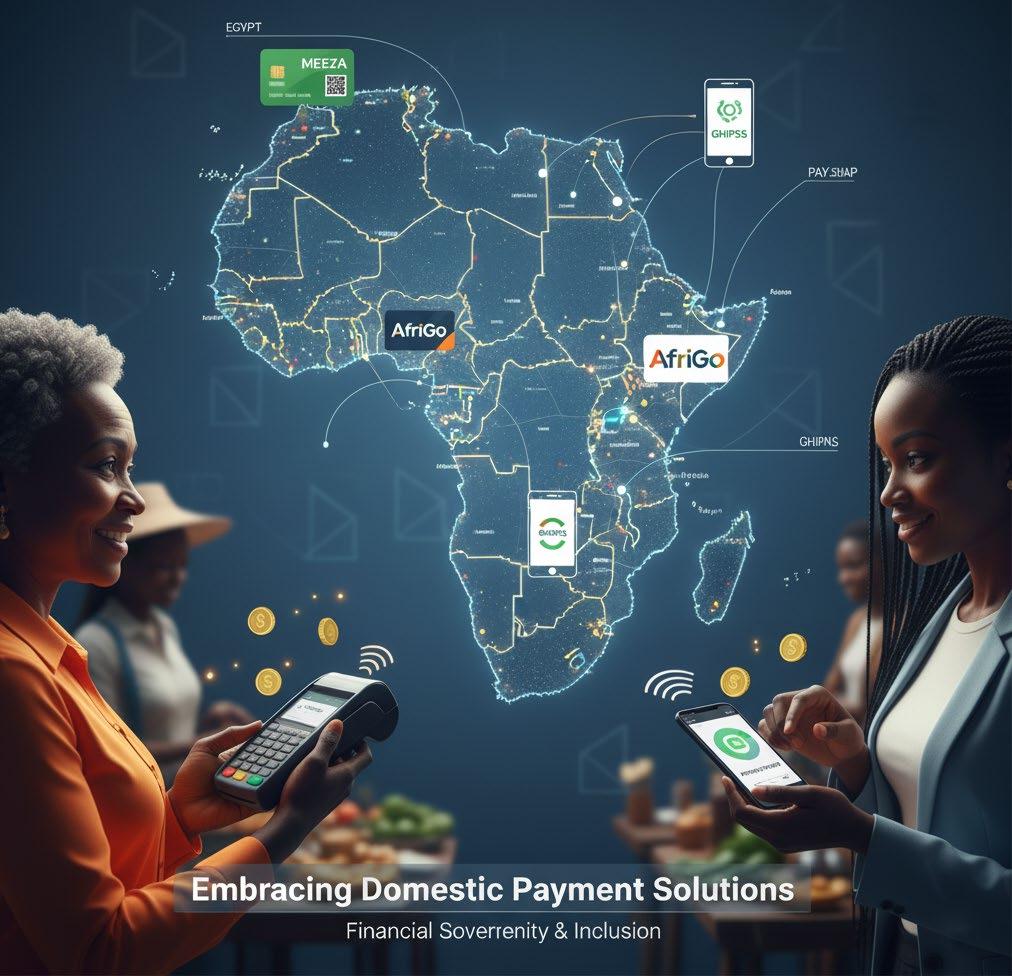
Africa’s financial landscape is transforming as countries develop national payment infrastructures tailored to their unique needs while strengthening sovereignty and control. For forward-thinking banks and fintechs, this evolution presents a clear pathway to greater market relevance, enhanced value creation, and deeper market penetration.
The global landscape is experiencing unprecedented geopolitical and economic turmoil. This vulnerability has prompted countries to refocus on national sovereignty and independence from systems controlled by private interests or foreign governments. For African nations, domestic payment solutions mean greater economic autonomy, reduced dependence on foreign systems and costs, plus increased control over national currency flows.
For instance, since its launch in early 2019 by the Central Bank of Egypt and local banks, Meeza has rapidly expanded Egypt’s domestic payment infrastructure. In its first four years, Meeza issued millions
Andrew Key Executive Director at enza

of cards and enabled over twenty wallet providers, connecting tens of thousands of ATMs and POS terminals nationwide.
Transaction volumes have tripled, as both consumers and merchants adopt contactless and QR-based payments for everyday purchases.
Egypt’s approach extends beyond Meeza to include the Instant Payment Network (IPN), launched in 2022 to connect all operating banks within a single national infrastructure. This dual-system approach reinforces Egypt’s commitment to payment sovereignty, ensuring that domestic transactions remain within nationally controlled networks while providing multiple pathways for financial inclusion.
Domestic payment solutions serve as powerful tools for financial inclusion. On a continent where many remain unbanked, these systems can bring more people into the formal financial ecosystem by providing accessible and affordable digital payment options.
Nigeria’s AfriGo, launched in January 2023 through a public-private partnership led by the Central Bank of Nigeria and NIBSS, was developed with financial inclusion as a central goal. AfriGo’s simple onboarding and affordable fees have drawn in previously unbanked populations, accelerating financial inclusion. In just over a year, millions of AfriGo cards had been distributed, with major fintech outlets and banks partnering to broaden reach even deeper into semi-urban and rural communities.
Likewise, Ghana’s GhIPSS Instant Pay processes over 17.9 million monthly transactions through 55 financial institutions, with accessibility across mobile banking, internet banking, and USSD channels.
Consequently, more value stays within the domestic economy, regulators retain clear oversight over payment flows, and small merchants and consumers benefit from stable, low-cost access to digital-first solutions – whether through cards, mobile wallets, QR codes or USSD.
Domestic payment solutions reduce transaction costs by eliminating international processing fees.
For instance, South Africa’s PayShap shows how domestic payment solutions can stimulate
economic activity by reducing transaction friction and costs. With its R3,000 transaction limit and proxy payment capabilities using mobile numbers, PayShap allows small merchants and informal traders to accept digital payments without complex banking details. This simplified payment process benefits South Africa’s ecommerce sector and micro-enterprises.
Being able to receive instant payments via a mobile number can transform cash-dependent businesses into digitally-enabled operations, expanding their customer reach and transaction capabilities.
These systems support ecommerce and MSMEs that form the backbone of African economies, enabling business expansion and economic growth.
The continent already boasts numerous successful domestic payment implementations. As of June 2024, 26 out of 54 African countries have established domestic, national-scale instant payment systems.
In Nigeria, Verve, owned by Nigerian company Interswitch, has operated as a domestic scheme since 2009, issuing over 70 million cards and expanding into other African countries. Verve, like
Afrigo, is complemented by the NIBBS Instant Payment System, whose adoption has also made a significant contribution to the digitisation of payments in Nigeria.
Rwanda’s eKash, operated by RSwitch, provides domestic payment capabilities adapted to local needs, while Malawi’s Natswitch serves as a national payment switch enabling interoperability between financial institutions.
Countries and central banks have adopted various regulatory approaches to domestic payment solutions:
1 Market-led approaches that allow domestic solutions to develop with minimal intervention, letting adoption follow consumer and business demand
2 Tighter mandates that dictate the use of domestic systems
3 Hybrid models that balance national priorities with international compatibility
Solutions co-badge with international payment platforms, enabling domestic use of the national system while maintaining international functionality when travelling. This flexibility allows
banks to choose the approach that best fits their markets’ needs and regulatory environment.
The digital-first nature of domestic payment systems creates opportunities for innovation beyond what traditional card-based systems offer. These solutions can be designed around local consumer behaviours rather than following established international models. Domestic payment solutions enable entirely new use cases and free institutions to create locally designed services, representing exciting opportunities to reimagine payments.
While national payment solutions are vital, the real potential lies in connecting these systems across borders. Just as the premise of international payment platforms is their universal acceptance, connecting domestic payment
solutions can create a powerful network across Africa.
The Pan-African Payment and Settlement System (PAPSS) represents a step toward this vision, aiming to facilitate cross-border payments in local currencies. Imagine an AfriGo user from Nigeria paying seamlessly in Egypt via the Meeza system, and vice versa, without needing international payment platforms for reconciliation.
Continental interoperability would encourage African trade and travel while reducing global financial dependencies.
Implementing domestic payment solutions isn’t without challenges:
1 Legacy infrastructure integration: Many bank systems may not be modern enough to connect directly to new payment solutions.
2 Connectivity across multiple systems: Establishing connections with various domestic solutions can be complex and resourceintensive.
3 Relationship management: Managing multiple relationships with different domestic solutions requires significant effort.
4 Building consumer trust and awareness: New payment brands need time to gain recognition and trust.
For traditional banks, domestic payment solutions represent an opportunity to grow with their market – as financial inclusion increases, so does the potential customer base. By embracing these solutions, banks can position themselves at the forefront of Africa’s financial evolution.
The future of African payments is being built today. By embracing domestic payment solutions, traditional banks can play a pivotal role in creating an independent, inclusive, and interconnected financial ecosystem for the continent.
Egypt Instant Payment Network (IPN), Meeza Cross domain; Card based
Ghana GhIPSS Instant Pay (GIP), Mobile Money Interoperability (MMI)
Nigeria
NIBSS Instant Payment (NIP), AfriGo Domestic Card
Cross domain; Mobile money interoperability
Cross domain; Domestic Card
South Africa Real Time Clearing (RTC), PayShap Bank led real time; Cross domain
Egyptian Banks Company & Central Bank of Egypt
Ghana Interbank Payment and Settlement Systems Ltd (GhIPSS)
NIBSS (owned by CBN & banks); Afrigopay Financial Services Ltd
BankservAfrica (operator of RTC & PayShap); SARB (oversight)
Are your payment capabilities holding you back from opportunities for growth?
enza’s innovative payment solutions deliver the flexibility and agility traditional banks need to grow with their markets. Our expertise connects your existing infrastructure to modern domestic payment systems through a single integration, ensuring compliance with local regulatory requirements while reducing implementation complexity.
By partnering with enza, you can position your bank at the forefront of Africa’s financial evolution. We provide marketleading acceptance solutions that enable you to embrace domestic payment schemes, increase your potential customer base, and develop new revenue streams with unmatched speed-to-market.
Talk to enza about liberating your payments – it’s time to play a pivotal role in creating an independent, inclusive, and interconnected financial ecosystem for the continent while unleashing your full business potential.
enza empowers Africa’s financial institutions with the innovation they need to compete, liberating the world of payments for more inclusive, opportunity-led commerce.
Founded in 2023, enza is headquartered in Abu Dhabi, with regional offices in Egypt, Nigeria and South Africa. It is led by the most successful and experienced team in African payments.
enza’s innovative payment solutions deliver the flexibility and agility needed to increase competitiveness, capitalise on new markets, and develop new revenue streams through better serving consumer and business customers across Africa.
enza is liberating the world of payments for a more prosperous, financially-inclusive Africa, are you ready to join us?
www.enzagroup.global sales@enzagroup.global


The African continent, known for its rich cultural diversity, breathtaking landscapes, and unique wildlife, is also gaining recognition for something less conventional but equally remarkable: its rapid advancement in the field of financial technology (FinTech).
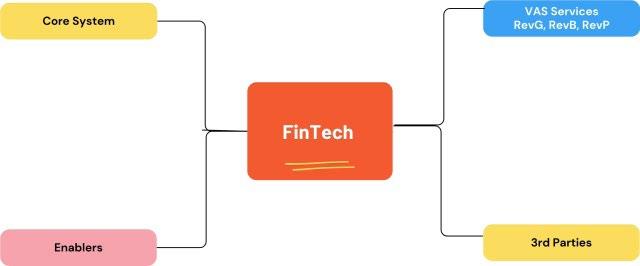
In a world characterised by technological disruption, Africa is emerging as a pioneer of innovation in financial services, challenging traditional banking models and democratising access to financial resources. This blog post explores the growth, impact, and future potential of African FinTech as it reshapes the financial sector. Being part of the FinTech/Mobile Financial Services arena since 2008, I’ve had the chance to continuously focus on exploring, experimenting, expanding and exploiting FinTech and its Value Added Services (VAS).
The Rise of African FinTech
Before we embark further, I would recommend you read about modern and current trends in FinTech, such as embedded finance and the four basic quadrants of mobile financial services, i.e., FinTech.
Mobile phone penetration is soaring and creating huge potential for expanding financial access at a lower cost than through brick-and-mortar branches, also keeping in mind our three FinTech models that are critical determinants of success or failure.
At its core, the profound success of African FinTech is born of necessity. With limited access to traditional banking services in many regions, the continent’s burgeoning FinTech sector emerged as a response to a fundamental need—the need for accessible, affordable, and secure financial solutions.
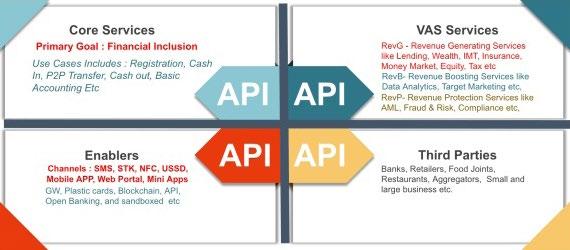

The African FinTech journey is like a heartfelt story that touches my soul. It began with the beautiful idea that everyone, regardless of who they are, deserves access to financial services. They received some initial help, but soon realised they needed to adapt to keep moving forward. That’s when the real magic started to happen. African FinTech began to soar, bringing fresh ideas and progress in the financial world. They were on a mission, as I see it, to ensure everyone had an opportunity. And they’ve truly made an impact, showing just how much we can accomplish when we join forces.
Driven by a strong commitment to overcoming challenges, it has become a beacon of hope for fostering financial inclusion and empowering communities.
The inception of FinTech in Africa was initially driven by agentdriven mobile financial services, promoting financial inclusion. Subsequently, the emphasis transitioned to the payments market, fostering the development of merchant-driven FinTech solutions. Eventually, the journey culminated in a blended strategy: the financial VAS services, striving to offer all-encompassing financial services to empower and enhance lives. This transformative path was essential, especially considering traditional banking institutions’ limited or ignorant visibility into the financial needs of specific communities.
Now, we are entering another level of FinTech VAS: “Embedded Financial Services.”
The journey reflects resilience, adaptability, and a strong desire for economic empowerment. It tackled the issues of traditional financial structures in Africa, where limited banking facilities and low access rates posed significant obstacles to economic progress and inclusion. In response, a wave of innovative start-ups and entrepreneurs emerged to address these challenges.
The driving force behind FinTech in Africa is the pressing need for financial solutions that significantly benefit the lives of its people. The fusion of need, innovation, and a focus on improving lives defines the dynamic relationship between FinTech and Africa.
Mobile money solutions in Africa are fully comparable; that is, a fusion of blockchain applications and digital lending platforms are transforming the way individuals and businesses access financial services. Its pioneers have harnessed mobile technology to unlock new possibilities.
The rise of African FinTech not only signifies the continent’s adaptability and resilience but also its unwavering determination to usher in a brighter, more inclusive economic future for all.
African FinTech –Financial Inclusion as a Driving Force
African FinTech companies recognised that the key to sustainable economic development lay in providing financial services to those who had previously been excluded from the formal banking system.
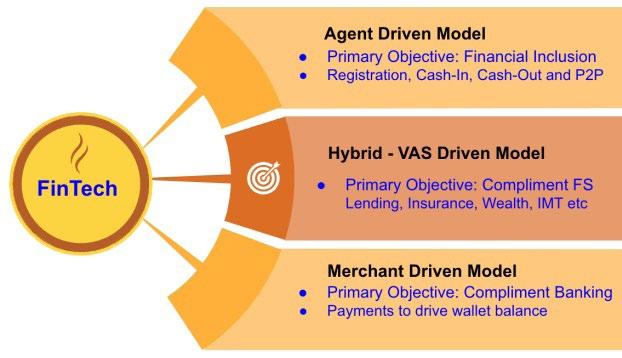
Financial Inclusion Focus: African FinTech prioritises financial inclusion, targeting those excluded from traditional banking.
Mobile Technology Advantage: Leveraging widespread smartphone use, FinTech provides accessible, affordable financial solutions.
Empowering Marginalised Communities: By fostering financial inclusion, African FinTech empowers marginalised communities and fuels broader economic growth.
Bank’s evolution: Originally NIM-driven, earning from interest spreads, then transitioning to transaction fees, and now increasingly monetising service-based revenues like API-driven payments and collections.
FinTech’s starting advantage: Unlike banks, FinTechs began with flexibility, scalability, and user-centric design built into their models from day one.
Strategic contrast: Banks are adapting legacy frameworks; FinTechs leverage inherently agile architectures to capture modern financial opportunities faster and more efficiently. With the advent of mobile technology and the widespread use of smartphones, they seized the opportunity to create accessible and affordable financial solutions.
Financial Inclusion to Intelligent Growth
FinTech in Africa has evolved through three distinct stages: Financial Inclusion, Financial Health, and now Financial Nirvana. These stages coexist, adapting to regional demand and maturity. For instance, in Central Africa, the emphasis remains on Financial Inclusion, ensuring access to basic financial services.
In contrast, East Africa is advancing toward Financial Health and Financial Nirvana, focusing on optimising financial well-being and creating seamless, intelligent financial ecosystems for users.
At the core, every mature FinTech and bank now recognises that jargon like AI, Data Intelligence, and similar technologies are supporting tools, not their mainstream business. These innovations empower them to operate smarter, faster, and more securely, but they are enablers,
not the essence of what they do. For payment providers, the distinction is even clearer: many originate from deep tech industries (Apple, Google and more) or have roots in the financial and banking ecosystem, allowing them to blend technological agility with financial discipline seamlessly.
One of the most remarkable success stories in African FinTech is the mobile money revolution. Services have enabled millions of people to send, receive, and store money securely using their mobile phones.
The three pivotal models of FinTech that can significantly impact the trajectory of a business are:
Revenue Generative Services: In the financial sector, services such as lending, insurance, wealth management, global payments, and international
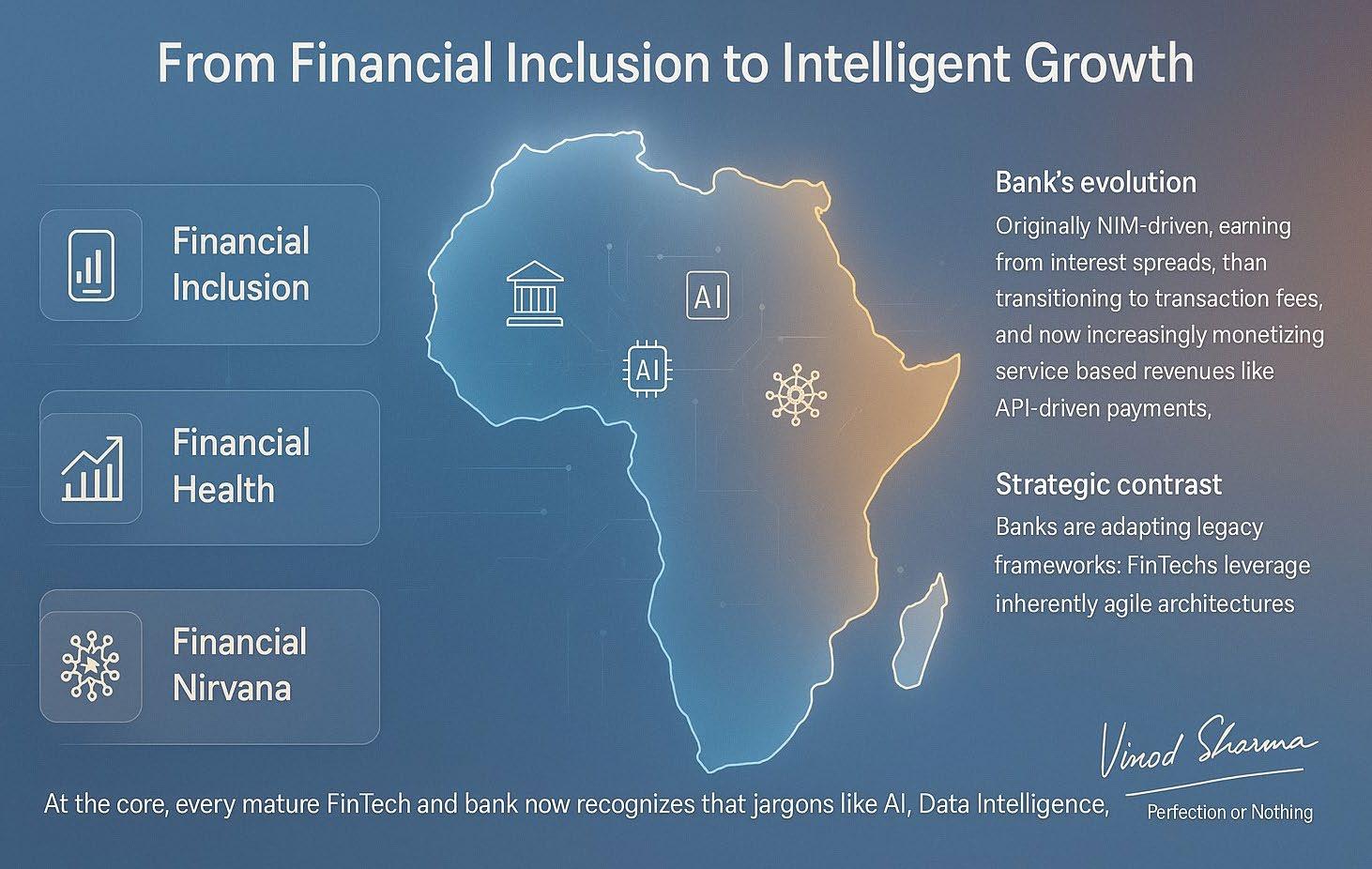
remittances serve as primary sources of income for financial institutions. These services involve facilitating transactions, managing investments, and providing financial security, generating revenue through various fees, interest, and premiums.
Revenue Boosting Services:
These services, which include data analytics, personalised customer support, and targeted marketing campaigns, contribute to enhancing customer experiences and improving business operations. By leveraging customer data and insights, financial institutions can tailor their services, optimise customer engagement, and drive additional revenue through improved customer satisfaction and loyalty.
Revenue Protecting Services:
This category involves critical areas that play a crucial role in safeguarding the financial institution’s operations and customers from potential risks and threats. These services encompass information security measures, anti-money laundering protocols, regulatory compliance procedures, sanction screening, and risk and fraud management strategies. By ensuring compliance with regulations and implementing robust security measures, financial institutions can protect their revenue streams
and maintain their reputation and trustworthiness in the market.
This innovation has transformed financial services in rural and underserved areas, empowering individuals and small businesses.
African FinTech promotes entrepreneurship and aids Small and Medium-sized Enterprises (SMEs) by facilitating access to capital through digital lending and crowdfunding platforms.
The integration of FinTech by microfinance institutions enables the extension of credit and savings services to rural populations, fostering financial inclusion.
Beyond personal banking, the African FinTech sector plays a critical role in driving economic growth and empowering local businesses to thrive.
The African FinTechs encounter challenges related to regulatory adaptations to incorporate digital financial services and the escalating risks associated with cybersecurity threats.
Despite these obstacles, opportunities for collaboration emerge among governments, the private sector, and innovators, leading to the development of comprehensive strategies to address these challenges.
Striking a balance between regulatory compliance and fostering innovation is key to ensuring sustainable growth and resilience within the African FinTech landscape.
The Global Stage
African FinTech gains global recognition, attracting investments from international stakeholders keen on supporting promising start-ups across the continent.
Collaboration with global partners and the integration of financial services into nonfinancial platforms foster unprecedented convenience, personalisation, and efficiency within the African FinTech sector.
This expansion not only highlights the sector’s global significance but also contributes significantly to the ongoing discourse on financial innovation and inclusive economic development.
Blockchain and Cryptocurrency
Africa is increasingly adopting blockchain technology and cryptocurrencies to address challenges in transparency, security, and cross-border payments.
Start-ups in countries like Nigeria and South Africa are leading the way in utilising blockchain for purposes beyond cryptocurrencies, including supply chain management and identity verification.
These technologies are paving the way for innovative solutions, improving operational efficiency, and ensuring secure transactions in various sectors.
Big data and advanced analytics, along with machine learning, work at the foundational level to give more power to FinTech engines.
Machine Learning applications in African FinTech are driving financial inclusion by providing tailored solutions for underserved communities and promoting access to banking services.
Advanced analytics in African FinTech are enabling predictive risk assessment, enhancing fraud detection capabilities, and fostering secure digital transactions, thus ensuring
financial stability and customer trust.
Leveraging Machine Learning and advanced analytics, FinTech companies in Africa are optimising credit scoring models, facilitating micro-lending, and enabling personalised financial guidance, thereby contributing to economic growth and empowerment in the region.
Let’s explore how Krishna, a small business owner running a photography business, has harnessed African FinTech innovations, aligning with our blog above.
Krishna operates a small photography studio in Lagos, Nigeria. As a photographer, he faced several financial challenges common to small business owners in Africa.
These included difficulties in accessing capital for equipment upgrades, managing finances efficiently, and expanding his client base.
Krishna’s journey with African FinTech began when he embraced digital payment solutions. He signed up for a mobile money account, which allowed his clients
to make payments securely using their smartphones. This eliminated the need for cash transactions, making it convenient for both him and his clients.
Krishna also adopted digital invoicing and recordkeeping tools offered by FinTech companies. These tools helped him create professional invoices, track payments, and maintain financial records.
This digital transformation not only improved his financial management but also enhanced his credibility as a professional photographer.
One of the most significant benefits Krishna reaped from African FinTech was access to microloans. Through a FinTech lending platform specialising in supporting small businesses, Krishna secured a microloan. He used this loan to invest in high-quality camera equipment and lighting gear, which significantly improved the quality of his work.
Krishna expanded his reach and visibility through digital platforms. He created an online portfolio and used social media to showcase his photography work. Additionally, he utilised online advertising services offered by FinTech companies to target potential clients, particularly those seeking
photography services for events and special occasions.
Digital Savings and Investment: Recognising the importance of financial planning, Krishna began using digital savings and investment platforms offered by African FinTech companies. He set up automatic savings, gradually building a financial cushion for unexpected expenses or future business expansion. These platforms also offered investment options tailored to small business owners, allowing him to grow his wealth.
Access to Business Training and Resources: Krishna benefited from the educational resources provided by African FinTech companies. He accessed webinars, tutorials, and articles on financial management, marketing strategies, and business growth. These resources helped him refine his business skills and stay competitive in the photography industry.
Business Expansion and Increased Revenue: As Krishna continued to leverage African FinTech innovations, his photography business expanded. The combination of improved equipment, efficient financial management, digital marketing, and access to microloans led to increased revenue. He diversified his services to include photography for corporate events, weddings, and local businesses.

By embracing digital payment solutions, accessing microloans, adopting efficient financial management tools, and leveraging online marketing, he not only improved his business operations but also enhanced his financial well-being. This highlights how innovation and accessibility in financial services can empower small business owners, foster business growth, and contribute to economic development in Africa
“African FinTech: Pioneering Innovation in Financial Services” is a story of resilience, creativity, and the determination to create a better future. Africa’s journey into the FinTech realm transforms the way financial services are delivered, empowers individuals, drives economic growth, and positions the continent as a global leader in innovation. As African FinTech continues to evolve, it promises to be a source of inspiration and collaboration, demonstrating that innovation knows no boundaries and that technology can be a powerful force for positive change, even in the most challenging environments.