DO THE UNBANKED WANT TO BE BANKED?
ACCESS OPPORTUNITIES IN FINTECH AND INNOVATION WITH AFRICA FINTECH FOUNDRY

DIGITAL DISRUPTION & TRANSFORMATION: WHAT YOU NEED TO KNOW
DIGITAL OR BUST: WE ARE PAST THE POINT OF DEBATE

DO THE UNBANKED WANT TO BE BANKED?
ACCESS OPPORTUNITIES IN FINTECH AND INNOVATION WITH AFRICA FINTECH FOUNDRY
DIGITAL DISRUPTION & TRANSFORMATION: WHAT YOU NEED TO KNOW
DIGITAL OR BUST: WE ARE PAST THE POINT OF DEBATE
























Access Opportunities In Fintech And Innovation With Africa Fintech
All Eyes On Instant Payments For Greater Financial Inclusion In Africa


Banking In The Times Of A Covid-19 Epidemic: Business Continuity And Operational Resilience In Egypt 26 58 60 30 40 48 50 54 36
IDENTITY CONFIRMATION IN UNDER 30 SECONDS: HOW BIOMETRICS BECAME LIGHTNING FAST & ACCURATE
UKHESHE TECHNOLOGIES LEADING THE RACE TO PERFECT CHAT COMMERCE
Digital Banker Africa FINTECH 50 2022
Do the unbanked WANT TO BE BANKED?
DIGITAL FINANCE SOLUTIONS FOR SMALLHOLDER FARMERS: TAKING A MULTISECTORAL APPROACH TO SUCCEED
Cryptocurrency scams are on the rise in SA: How crypto cons work and how to protect yourself

Welcome to the Spring 2022 edition of Digital Banker Africa. We are pleased to present an edition filled with wonderful contributions from leaders from across the Digital Banking industry, bringing you all the latest news and opinions in Africa’s digital journey.
Featured on the front cover is Mr Bola Asiru of Mastercard who we recently interviewed, he shared his thoughts on how Mastercard continue to deliver innovative solutions to aid financial inclusion, while sharing how Mastercard have managed to impressively bring 500 million financially excluded individuals into the digital economy. Mr Uzoma Dozie, CEO of Sparkle gives us a fascinating insight into his journey from working within a traditional bank to now presently heading up one of the biggest
Digital Banks in Nigeria and the significant benefits transforming to digital provides. Brian Richardson, CEO of Wizzit Digital asks the thought provoking question “Do the unbanked, want to be banked?”
In this edition we are also pleased to present to you Digital Banker Africa’s Fintech 50. The listing is created to recognise companies of all sizes that are prominent in particular areas of expertise and excellence within the African fintech community.
We enjoy bringing the latest activity from the African digital banking landscape to our offline and online readership and as always we are keen to hear your thoughts on how we can continue to improve and what you would like to see in the future. Happy reading!
THANK YOU TO OUR CONTRIBUTING WRITERS IN DBA SPRING 22
BRIAN RICHARDSON
CEO, Wizzit International
BOLA ASIRU
Principle; Business development, MasterCard Advisors, SSA Division
CHARITY LUCHEMBE CHIKUMBI
Director-Policy & DFS, FSD Zambia
FAHEEM ALI
Financial Inclusion, FinTech and Digital Transformations Expert
JACQUELINE JUMAH
Technical Expert, Inclusive Payments, AfricaNenda
JESSICA CHISOMPOLA
Head of Brand and Marketing, OPay Zambia
LANCE FANAROFF
Co-Founder and Chief Strategy Officer, iiDENTIFii
ROOSEVELT OGBONNA CEO, Access Bank PLC
SABINE MENSAH
Deputy CEO, AfricaNenda
UZOMA DOZIE CEO, Sparkle
YASSER AHMED
Head of Digital Banking, Arab Investment Bank
Editor: Anthony Bempong
Executive Editor:
Noel Morrison
Deputy Editor: Henry Scott
Art Director: Pritesh Patel
Layout Designer
Abdhesh Kumar Jha
Chief Sub:
Kwabena Mensah Bonsu
Head of Online Development: Lee-Anne Doughlin
Online Development:
Gerald Hutchfull, Paulette Davidson
Subscription Manager: Stephen Rock
Marketing Manager: Siobhan Copland
Marketing Assistant
Jason Hall, Nikki Jadine
Circulation manager:
Nathan Asare
Head of Sales:
Michael Scott
Production Editor: Rebecca Mcglynn
Business Development: James Walters, Lloyd Quansah, Paul Da
Associate Producer: Dean Kirby
Head of Accounts: Wayne Sykes
Publisher:
Percival Marshall
ISSN 2752-4485 www.digitalbankerafrica.com
Images by www.istock.com
All information contained in this publication has been obtained from sources the proprietors believe to be correct, however no legal liability can be accepted for any errors. No part of this publication can be reproduced without prior consent from the publisher.

Abstract
Digital financial services (DFS) have become the leading driver of inclusion for the unbanked around the world, particularly in developing countries, (Internet 1a). DFS has become an important driver of financial inclusion in a growing number of countries.
Some of the biggest bottlenecks to the expansion of digital financial services in Africa are due to rigorous and uncooperative regulatory frameworks which often hinder the growth and uptake of digital financial services. The legal and regulatory frameworks which govern DFS play a critical role in creating an enabling environment for low income and unbanked populations to become financially included.
While strict regulatory processes set out to ensure privacy for consumers and account security, regulation that allows for experimentation in innovative applications and other technologies can foster enabling environments where diverse digital financial solutions can thrive, a strong eco-systems in just as important. (Internet 3). One important aspect within regulation is how the rights and interests of consumers are protected and promoted. Consumer trust is the foundation for achieving sustainable uptake and active usage of DFS, (Internet 4).
This paper looks at the several factors that need to be implemented if digital financial inclusion is to grow in a country. The assumption is that creation of an enabling regulatory environment could increase access and usage of digital financial services that leads to increased financial inclusion, but success will depend on having a proper regulatory framework that does not stifle innovation, as well as strong commitment, support, and coordination from other regulatory bodies.
Focussing on regulation of digital finance, this article supplies a discussion on digital finance and explores the impact of regulation
The main objective of this study is to evaluate how the Key factors of regulation address a specific aspect of creating an enabling and safe regulatory framework for DFS. The five key enablers in discussion are Nonbank E-Money Issuance, (2) Use of Agents (3) Customer Due Diligence and KYC (4) Consumer Protection and (5) Awareness.
for digitised financial inclusion as will be addressed in the literature. It picks out five (5) key areas of regulation that, if well implemented, can help DFS grow to promote financial inclusion. At a conceptual level, the discussions also address benefits of digital finance, digital financial inclusion, and financial inclusion.
To ensure that DFS grows financial inclusion, the following regulatory requirements need to be achieved:
(i) A legal basis is necessary for different service providers to assist the underserved and unserved, using alternate delivery channels. Such
Charity Luchembe Chikumbi Director - Policy & DFS FSD Zambia

3.1 Non-bank E-Money Issuance: Clear definition, creating a specialised licensing window for nonbank providers to issue stored-value accounts, adapted prudential risk rules. E-Money Policy Model is to provide guidance on developing proportionate key regulatory and policy measures for enabling, promoting, and enhancing the use of e-money services and products in a country, (Internet 4b). There is a need to create a special licensing
channels range from banks, nonbanks to third party providers including agent networks.
(ii) Regulation provides guidelines for dealing with the industry e risks that DFS pose to customers and the financial system.
(iii) DFS-specific rules need to be developed that, when implemented and utilised, can (and should) not stifle innovation but promote it and ensure the safety of financial services. The ideal is a balanced or proportionate regulatory system regarding cost of providing the service, cost of the regulator overseeing the systems and the risks inherent in the provision of DFS.
window for non-bank financial service providers that can issue electronic money.
3.2 Use of Agents: The goal of regulation is to prevent and investigate fraud, keep markets efficient and transparent, and make sure customers and clients are treated fairly and honestly. The financial regulator should clearly stipulate the operations of e-money agents by an Act that defines agent regulation. The substantial number of agents is a challenge for the regulator. Risks cannot be avoided but mitigated. Customers need to feel safe when dealing with agents and therefore,
Supervisors assess providers’ systems for monitoring agents. Another issue of concern to regulators is setting eligibility standards – who can become an agent (or a certain type of agent) and what qualifications are needed.
3.3 Risk-Based Customer Due Diligence (CDD) and Know Your Customer (KYC):
Adopting risk-based and proportionate due diligence CDD and KYC as well as anti-money laundering requirements. Regulation at this level will help the SP to understand the type of customer with whom they are dealing. CDD involves performing background assessments and other screening on the customer to ascertain that they are appropriately risk-checked before being onboarded. The
Regulatory bodies are established by governments or other organisations to oversee the functioning and fairness of financial markets and the firms that engage in financial activity.
4.1 The Role of the Central Bank
We find that as the primary regulator of DFS, the model of licensing and regulation the central bank addresses provision of services that will impact the success of DFS provision. In most markets, central banks have evolved from a more restrictive bank-based (institutional) model to an open (functional) ‘enabling’
system works to prevent financial crimes like money laundering, terrorist financing, human and drug trafficking, and fraud. Supervisors should be aware that potential DFS risks should be accorded the same attention as other financial channels
3 .4 Consumer Protection:
A consumer protection approach that recognises the nuance in the range of DFS providers and products, while providing an appropriately designed approach to the margin of safety (‘risk-based’ approach). The six main pillars of consumer protection should address issues such as (1) redress and dispute resolution mechanisms (2). Fraud prevention (3). data protection and privacy (4)
regulatory model, where an entity is licensed or authorised to provide services and then regulated according to whether its operations by law or regulation (oversight). (Internet 10b). In line with proportional ‘enabling’ regulations, the role provides the most promise for growing national financial inclusion per planned targets.
4.2 The role of the Telco Regulator
The mobile phone has evolved from its basic telecommunications utility to take on a new enhanced role as a ubiquitous payment and value transfer instrument in the economies of developing countries. For
information disclosure and transparency (5). Protection of funds and (6.) encourage Competition.
3.5 Awareness:
The importance of increasing DFS-specific knowledge is crucial for spurring adoption, and the benefits that come from having access to formal financial services. Demand-side challenges such low awareness and trust in DFS, and limited digital and financial literacy are also barriers to effective adoption and usage of DFS. Increased awareness and understanding of DFS are also needed by the consumers to ensure their digital rights (such as right to online privacy) in the rapidly changing digital environment.
telecommunications regulators in particular – the need to ensure that SPs offer a Quality of Service, cybersecurity and that consumers’ data privacy is upheld is of paramount importance among other matters.
4.3 Collaboration of the key Regulators and Service Providers
It is evident that stakeholder engagement and cooperation is critical to tackling capacity gaps and creating an enabling environment for DFS to thrive and grow.
Technological innovations in financial services (fintech) are progressively altering the way financial services are provided. This revolution opens prospects for low-income populations accessing low-cost financial services but also presents potential risks to consumers and investors.
Inclusive DFS ecosystems and a clear regulatory framework with access to information- is what is referred to as an enabling environment. This will offer end-users great benefits through various products and services that lead to financial inclusion. The benefits include:
• Access to affordable financial services, critical for poverty reduction and economic growth.
• Access to and use of basic financial services—can reduce poverty, increase resilience, and improve the lives of the poor. Financial services help boost earning capacity by enabling investments in education, health, housing, businesses and smooth consumption that bolster resilience to products and remittances and other basic services, (Internet 12).
• The underserved and unserved
will get access to financial services like cash payments, savings, and credit, etc.
• Confirmation of transactions through electronic notifications.
• Reduction in cash economy as more money is brought into the banking ecosystem
• Promotes the habit of saving, thus increasing capital formation in the country, leading to an economic boost.
• Since interoperability was implemented in most jurisdictions like Zambia, transfers to beneficiary bank accounts, instead of physical cash payments are now possible.
• Availability of credit from formal financial service channels can support prosperity in the countryside.
DFS can facilitate the growth of financial inclusion in a country. SPs offer DFS for financially excluded and underserved populations, building on the digital approaches that improve access channels for those already served by the formal financial sector. As a result, millions of formerly excluded and underserved poor customers are moving from exclusively cash-based transactions to formal financial services — payments, transfers, savings, credit, insurance, and even securities — using a mobile phone or other digital technology to access these products and services.
We must underscore that providing an enabling regulatory environment is critical to the expansion of DFS and financial inclusion.
To drive financial inclusion, DFS must cultivate trust and reliability, and this in turn depends on effective financial consumer protection rules. The approach taken in developing DFS-specific rules built and implemented can (and should) support innovation while encouraging safety. The ideal is a balanced or proportionate regulatory system that facilitates protection but circumvents enforcing undue compliance costs on (often low margin) DFS providers.
1. Internet: https://www.fsdzambia.org/ financial-inclusion-is-digital-theanswer/-
2. Internet 1b: https://www.itu.int/ dms_pub/itu-d/opb/pref/D-PREF-BB. REG_OUT02-2016-PDF-E.pdf
3. Internet 1c: https://www.worldbank.org/ en/topic/financialinclusion/overview#1
4. Internet 2: https://www.bis.org/publ/ bppdf/bispap117.pdf
5. Internet 3: https://www.bis.org/fsi/publ/ insights23.pdf
6. Internet 4: https://www.itu.int/en/ publications/Documents/tsb/2017-DFSConsumerExperienceProtection/files/ basic-html/page12.htm
4B. https://www.afi-global.org/sites/ default/files/publications/2019-09/ AFI_DFS_Emoney_AW_digital_0.pdf
7. Internet 5: https://www. mastercardcenter.org/insights/covid19shows-small-businesses-the-benefitsof-digital-financial-services
8. Internet 6: https://www.cgap.org/ sites/default/files/publications/ slidedeck/2022_02_Slide_Deck_DFS_ Consumer_Risks.pdf
9. Internet 7: https://sptf.info/ responsible-digital-financial-services
10. Internet 8: https://www. centerforfinancialinclusion.org/ research/consumer-protection
11. Internet 9: https://sptf.info/responsibledigital-financial-services
12. Internet 10 http://www. citicolumbia.org/wp-content/ uploads/2018/11/Role-of-telcoregulator-in-DFS-for-publication.pdf
13. Internet 11: https://nextbillion.net/ regulating-dfs-emerging-markets/
14. Internet 12: https://pubdocs. worldbank.org/en/230281588169110691/ Digital-Financial-Services.pdf

My career started in traditional, corporate banking. Over many years, Diamond Bank built a solid reputation for being trustworthy and being business-friendly; providing credit for and supporting businesses across Nigeria as they scaled; and we scaled with them, growing a loyal, predominantly corporate customer base. We were forward thinking in the types of banking products and services we offered them, but business was still conducted in the Diamond Bank banking halls [quite a lot of them] and via in-person relationship managers. This was the best of banking as most people knew it at the time and we saw strong, steady growth as a banking entity.
Not content with accepting a traditional approach to banking, Diamond Bank was one of the early pioneers of developing digital products and services. In addition to our mission and vision of building trust and being transparent, we also wanted to eradicate the noise [paper] and bureaucracy [paper + in-person decision making] and swap it with simplicity. We were early adopters of digital and invested time and resources into technology-enabled processes and transactions across the entire business - internally and for our customers too.
To give some context; in 2014, Diamond Bank had 4.4M customers. It had taken us over 20 years to get to that number. By 2018, having embedded digital processes into our infrastructure, fundamentally changing how we approached banking and removing physical presence to become a customer as a barrier to entry, our customer number had grown to 15.5M. Triple digital growth in just four years; the ultimate growth hack.
This 252% increase in customer growth cannot be attributed solely to an increase in marketing spend. Nor was it a case of millions more people simply deciding to become financially ‘included” and sign up to a bank. It was our adoption of digital; removing many of the barriers to entry, and the in-person decision making, and the complex onboarding processes, and the forests of paper administration,
replacing all of this with scalable and repeatable tech-enabled processes which meant we could open our doors to millions more people. Literally. Fintech platforms call it “banking the underbanked” these days. Between 2014-2018, we called it digital.
Whatever it was called, it was not done independently. We didn’t build without partners and no scalable platform in Nigeria, in fact in Africa, will build in a silo, in the late noughties, or today. At Diamond Bank, we built out our digital banking platform with MTN
Uzoma Dozie Sparkle CEO

- a telco partner who had invested heavily in telecommunications digital infrastructure across Nigeria, and who subsequently gave us access to many millions of customers countrywide. They developed the mobile network and gave people power at their fingertips; through digital banking, we prioritised financial services for them as part of that power play.
And to complement our private partnerships, we also worked tirelessly to build alongside the public sector, ensuring that regulators understood and bought into every single step we took. No traditional bank, or digital banking app or fintech platform will scale, in any meaningful way [and by meaningful I mean both crossborder across the continent and
in terms of servicing millions of customers] without Government buy-in and collaboration; securing the right licences, ensuring robust regulatory compliance and so forth. It’s simply not possible. At Diamond Bank, we knew that when we had 4.4M customers, and we still knew it when we had 15M+ customers. Scale didn’t allow us to forgo regulatory standards. In business, in fact in all walks of life, no [wo]man is an island; the same for banking, be it traditional or banking. Collaboration led to deeper insights which led to better understanding of and access to market and coupled with innovation and technology, led to us being able to scale at a rate that very few [if any] financial institutions would be able to replicate in the same time frame, today.
If you look at, study and genuinely understand the vast and geographically diffuse population of Nigeria, it won’t take you long to conclude that physical banking for us is not only problematic, it is totally unrealistic. Physical cash is frustrating; it’s [actually] dirty, it’s hard and expensive and slow to move around; it’s unreliable. Even having in-person discussions about cash in Nigeria is expensive [in terms of time] and, sadly, completely biased. You could be an excellent “prospect” in banking terms due to prompt payment of loans or the amount of cash deposits you have - but if a customer relations manager
doesn’t like your tie or doesn’t take to you, you are at the mercy of someone’s bias. You are excluded. This is not only unfair, it’s just bad business and completely unscalable.
Digital solves this by removing the bias; digital gives us data and data makes decision making simpler and more transparent, at scale, without bias. Data sees and scrutinises what’s essential. Are you a good banking prospect? Are you, as a business, processing a lot of transactions? Does the data show us your business is sound and growing? Did you repay your last loan? So many questions that can be answered, with data.
Digital is the present, and it is the future; but we cannot ignore some of the traditional approaches to banking that have brought us to where we are today. Yet we also need to move on and learn from traditional banking in Africa. We need to understand the benefits of, embrace, rely upon and roll out digital, not just as a nice to have but as an essential. In 20+ years of banking, I’ve gone from traditional, to traditional + digital to digital-first. I’ve seen the changes in how people interact with, how they engage with money; I cannot remember the last time
someone gave me a 1000 Naira note, can you? In fact - I don’t even recall the last time I saw physical dollars. My children and their peers - the future of Africa - certainly seem at odds with notes and cash. But beyond the individual, I’ve also, importantly, seen how businesses engage with money. Cash transactions are becoming increasingly anathema to them.
There are 20M+ SMEs in Nigeria, a growing percentage of whom are building online; Instagram stores + social commerce-led businesses for what would’ve once been described as one-[wo]man-bands are now scaling, thanks to digital. Hypertalented artisan tailors in towns and villages across Nigeria, with skills to match any Parisian atelier, are now able to set up their own website or marketplace, promote and sell and receive good money for their craft, and in turn, they can employ more people [which leads to financial inclusion at scale] and build businesses around their skill, because they can grow and business building is simpler. Nigeria’s SME market is becoming increasingly more influenced by and reliant upony digital, fundamentally changing how commerce in our country is conducted. For all the financial literacy programs, banking the underbanked and banking the unbanked “programs” to inspire people out of poverty… in my experience, nothing actually inspires people out of poverty more
than seeing credit alerts pinging on a mobile phone thanks to better access to market, better access to opportunity, a simple way of doing business with trusted partners.
Data has become a critical asset for digital banks, for SMEs, for any individual conducting business. It is totally reshaping commerce in Nigeria. Digital is allowing us what should essentially be a dichotomy; banking and financial services at scale that is also hyper personalised; you are part of the millions, but you are also spoken to and given banking support totally tailored to you. But it is no longer at odds with the norm, it is the norm. Data-first finance platforms will soon subsume traditional banking, because they can move faster than their incumbents when it comes to building products and delivering services for the future of Nigerian commerce. It’s scary for traditional banks as they now have to scramble to adapt, yet it is equally scary for businesses like my own, Sparkle, as we try to keep up with our own momentum and do what we need to do to build digital financial infrastructure for a nation of entrepreneurs and business builders.

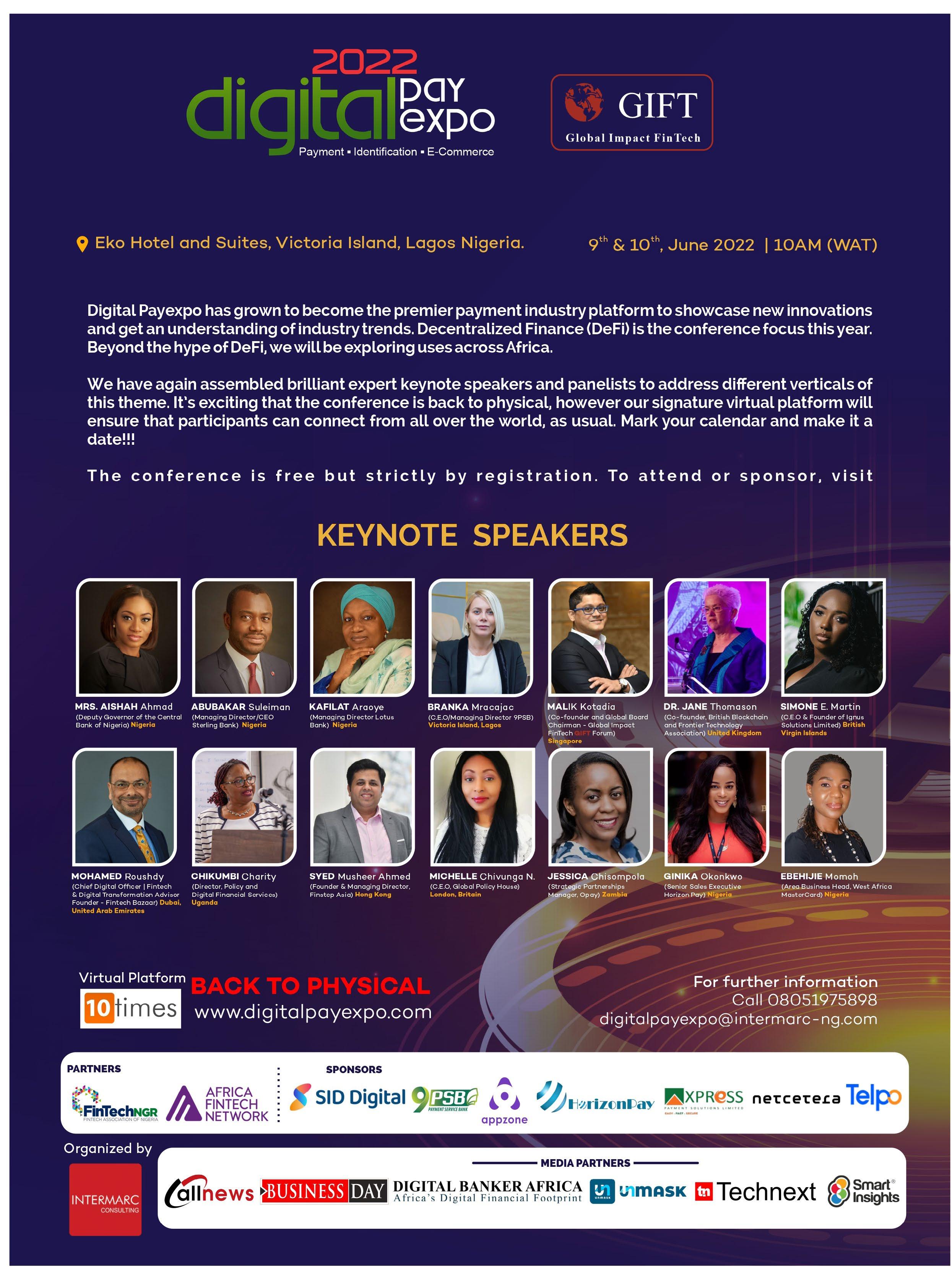
As the new digital age produces new players who are keen to co-create and innovate, Mastercard has opened its doors to fintech companies that wish to build, launch and grow. Mastercards priority has been to provide a single point of entry to technology, products and partnerships as well as provide flexibility, while taking both an organic and inorganic approach to growth. Combined with aggressive expansion of home-
YOU HAVE BEEN A STRONG ADVOCATE OF FINTECH’S POTENTIAL TO TRANSFORM THE NIGERIAN FINANCIAL SERVICES INDUSTRY, WHERE DO YOU BELIEVE WE CURRENTLY ARE WITHIN THE TRANSFORMATION PROCESS?
Over the last few years, Fintechs have accelerated positive disruption in the financial services sector, contributing to the rapid digital transformation of products and services that are making lives more convenient, simpler and rewarding. Mastercard has long recognised the significant value Fintechs add to both consumers and businesses. We have been actively engaging with them to strengthen the digital payments landscape and bring together an ecosystem of key

grown services, it’s clear that Mastercard’s platform presents a rich suite of capabilities for partners to innovate. It’s now easier than ever to build with Mastercard. We caught up with Bola Asiru to discuss and gain further insight into everything from his views on what Fintech can do for the Nigerian financial services industry to the role Mastercard is playing to help fintech companies to achieve financial inclusion.
players at different touchpoints. But other key stakeholders such as telcos, e-tailers, and banks also play a critical role. And when we bring them all together, we can empower millions of people across Nigeria by delivering innovative digital solutions that have a farreaching impact, and unlock the true potential of inclusive growth.
Government is also doing a good job responding to the rapid changes in the industry. However, there are certain areas that industry players are looking to the government
Bola Asiru Principal ; Business Development Mastercard Advisors, SSA Division

to provide practical guidance on how to proceed – One example is the acceleration of payment innovation via contactless devices.
Contactless payment options have
become increasingly important in the COVID-19 era.. We have seen several Central Banks globally and also in Africa increase the CVM limits to encourage more contactless payments
Unfortunately, many Issuers in Nigeria still have a zero CVM limit for contactless payment devices and cards. Some more regulatory guidance towards increased CVM limits would grow contactless transactions in a safe and convenient way; thereby giving consumers more choice and alternatives with regards to payments
The Central Bank of Nigeria has also taken a lead in Africa by issuing the e-Naira (a Central Bank Digital Currency). It is a step in the right direction towards driving a digital economy in which Fintechs can thrive.
OR WILL START-
The relationship between the banking community and fintechs does not have to be a zero-sum game. According to the World Fintech Report 2020, for banks to remain appealing and competitive in the shifting landscape, they need to transform into agile and customer-centric organisations embracing technology. The simplest way to do this is for banks to partner with fintech players, integrate fintechs into their infrastructure and simultaneously drive innovation.
An offering such as Mastercard’s Fintech Express is a bridge connecting fintechs with traditional players such as banks. The programme supports digital payment innovators by making it simple to collaborate with Mastercard and its partners to launch new fintech products. It is designed for fintechs looking to add payment solutions to their suite of products, tech-savvy startups looking at serving a new segment as well as established players with ambitions to innovate through partnerships.
At Mastercard, we believe that fintechs are contributing to the rapid digital transformation that makes lives more convenient, simpler, and rewarding. Many fintech services and products create enhanced competitiveness and have a real impact on consumers and small businesses, and this fintech innovation is bringing us closer to financial inclusion.
Mastercard is playing a key role in making fintech partnerships a reality as a single technology provider. Mastercard StartPath our
global startup accelerator program, provides fintech startups with access to our global network of innovators and partners that enable start-ups to scale, building the future of commerce. Many of the startups that went through the Mastercard StartPath program contribute to financial inclusion in Africa today
Hello Tractor, for instance, is revolutionising mechanisation services in Nigeria and Kenya by bringing together tractor owners and

smallholder farmers through Internet of Things technology and allowing farmers to access affordable tractor services, plant on time and increase yields. Ukheshe, a digital banking platform provider in South Africa, helps unbanked informal traders, street vendors and casual labourers (without bank accounts or smartphones) to accept digital payments and to get paid in real-time via an uKheshe card, which features a QR code linked to their cellphone number.
There’s MAX, a Nigeria-based motorcycle-share company providing digital payment capabilities and instalments for typically unbanked riders, who can purchase motorcycles and, as a result, build their credit profiles. NetPlus has worked with Mastercard to introduce a secure e-commerce solution that removes the need for consumers to carry cash for online purchases.
Kasha on the other hand, is an ecommerce platform for women’s health, personal care and beauty in Kenya and Rwanda. Built for urban and rural areas with or without internet access, Kasha empowers women to confidentially and affordably purchase the products they need, while enabling manufacturers to reach those women. Then there’s Lidya, a Nigerian business loan platform that lets SMEs register online for loans and get that credit within 24 hours. This process helps SMEs build a credit history for the first time.
ONE OF THE CHALLENGES FOR FINTECHS REMAINS FUNDING, THOUGH INCREASING IN AVAILABILITY, IT IS STILL IN SHORTER SUPPLY THAN IS NECESSARY, HOW DO WE CHANNEL MORE RESOURCES TOWARDS FINTECHS?
When you say resources, it is natural to think of just capital, but Fintechs need various types of resources to flourish – including funding, access to technology to drive innovation, harmonised regulatory environment, a supportive ecosystem, and appropriate talent.
As mentioned previously, the Mastercard Start Path is a leading accelerator which invites laterstage start-ups to participate in a 6-month program, providing opportunities to scale and secure strategic investments. More than 250 companies have participated in the Start Path’s program since its founding in 2014 and those companies have collectively gone on to raise $3B in capital.
We value our partnerships with fintechs, and launched Mastercard Accelerate, a global initiative that simplifies the way that Mastercard works with fintechs, giving them access to everything they need to grow quickly. Offering a simple, single entry-point to our company’s wide portfolio of specialised programs, Mastercard Accelerate gives start-ups and emerging brands support and assistance for every stage of their growth and transformation, from market entry to global expansion.
For our financial institution partners and customers,
Mastercard Accelerate provides access to the next generation of innovators, with a portfolio of start-up partners and fintechs ready to co-create and collaborate on new experiences. Accelerate comprises a range of awardwinning programs that have helped participants all over the world including Nigeria access and benefit from Mastercard’s ecosystem, customers and innovations.
Accelerate programmes include: Mastercard Fintech Express which provides easy access to a customised set of rules, relevant resources and digital-first services designed to address the unique needs of fintechs and enable program launch and global expansion with speed.
Mastercard Engage on the other hand, connects fintechs to a broad base of Mastercard technology partners, making it quicker and easier to work together. We launched this in Lagos and Nairobi in 2019 with dozens of fintechs already signed to our platform.
And lastly, Mastercard Developers provides APIs for everything, empowering engineers with the ability to access Mastercard payment, security and analytics services via simple, user-friendly documentation, SDKs and sample code for the top programming languages.
In 2015, Mastercard made a commitment to bring 500 million financially excluded individuals into the digital economy. We achieved this goal in 2020 by focusing on helping millions of micro and small merchants (MSMs) connect to the digital economy by enabling them to accept electronic payments. By making it easier to accept electronic payments, along with greater access to other opportunities, including credit, Mastercard is providing businesses with the tools they need to grow and thrive.
We had deployed market product solutions designed to achieve three key objectives – first is the need to grow acceptance especially for micro-payments in rural areas. Second, is cost effective merchant payments (near zero cost) for domestic payments, and finally to achieve instant settlement for all merchants regardless of mode of payment or acceptance.
We delivered these objectives via market product solutions like Mastercard QR which enables consumers to pay via their mobile devices by snapping a photo of a QR code sticker or poster presented by merchant, and Tap on Phone solutions that allow a merchant to turn their mobile phone into a contactless acceptance device. Our Mastercard Payment Gateway Service enables acquiring banks
to offer e-commerce payment solutions to small merchants via our Simplify system.
In 2020, we also extended our global financial inclusion commitment, pledging to connect a total of 1 billion individuals to the digital economy by 2025. Bringing in another 500 million people into the digital economy will be achieved through a broad range of efforts including: ongoing work on government disbursement solutions, digitising pay for private sector workers, expanding partnerships with mobile network operators, providing money management and payment solutions for gig workers, scaling up efforts with Fintechs, digital platforms and digital wallets/apps, addressing needs of the financially vulnerable and expanding the CityKey and Community Pass programs.
Mastercard technology makes it possible for more people and more businesses to accept electronic payments. This includes a suite of solutions that reduce both the cost of and the barriers to acceptance.
MASTERCARD ADVISORS HAVE PLAYED A MAJOR ROLE IN CREATING DIGITAL BANKS IN BRAZIL, TELL US HOW YOU ENVISAGE THIS SUCCESS BEING REPLICATED IN AFRICA?
Mastercard’s latest study, “Digital Banking in Latin America” outlines four key trends that are driving future payments and provides a best practices roadmap to replicating this transformation in Africa.
The first trend is that consumers are demanding better alignment with their needs and values. In a digitally connected world, this translates to efficient and instant access to financial services. The second trend is the pressure on financial institutions to refresh their onboarding and overall ease of use. More than ever, consumers want 100% digital bank accounts with zero barrier to entry. Improved customer service is the third trend, which is driving banks to implement artificial intelligence capabilities that help provide a more customised interaction while keeping costs low. Finally, the fourth trend challenges banks to create one simple, digital interface such as an all-in-one app that streamlines the banking experience and digital services like mobile phone top-ups, food delivery apps and others.
Post COVID, there is a real need for both new and traditional banking partners to better support communities everywhere. The most innovative banks understand that they must embody the values that consumers identify with and create a user experience that reflects their needs.
We see significant opportunities for digital banks in Africa and our global experience in this space makes it exciting for us to support our African partners on this journey.
Today’s digital technologies are causing massive upheaval in every industry. Businesses from banking to education to retail are experiencing some sought of digital disruption and those who have taken advantage of it have achieved sustained relevance and are guaranteed success in the future.
Let’s talk about how to use digital strategy to transform your core company. We’ll look at how to digitise your products and services, key points on why digital disruption matters, and all other aspects of the value chain.
Disruption is a critical element of the evolution of technology. Each of the four elements of digital disruption has the potential to change the way businesses’ function.
• Technology: Includes things like invention, usage, design, etc.
• Business: Covers marketing, development, delivery pricing, etc.
• Industry: Involves customers, methods, processes, standards, etc.
• Society: Encompasses movements, culture, habits, and so on.

Every industry is being disrupted by digital disruption at a much quicker rate than any previous technology in the past, be it the steam engine, electricity, telephone, computers, or even the Internet It seems incredible, yet it’s nearly probably true. The disruption is significant in two respects. One, it is comprehensive, affecting every aspect of the business model, including what you make, how you make it, how you buy, how you sell, your relationships with customers, suppliers, and other partners, and how you manage the













firm internally. Two, everything is moving at a dizzying speed. Either you ride a tiger, or you are crushed by one. Given the magnitude and speed of this disruption, business leaders must beware of the digital lipstick syndrome.
The answer to two key questions is business strategy. First and foremost, what game do you wish to play? That is, the potential space in which the organisation sees itself. Second, how do you intend to play that game? That is, how the business expects to compete in this market. Answers to both issues are upended by digital disruption.
Take a five-year look back at your industry. How will the industry’s structure and dynamics evolve from those of today? What will the major characteristics of the rising winners’ tactics be five years from now?
When companies see disruptive technologies as a threat rather than an opportunity, they get into problems. Those who choose to ride the tiger have a much greater chance than those who do not. When companies see it as a gift rather than a problem, they have a much higher chance of surviving and succeeding.
Only a decade ago, the car industry was dominated by companies like GM, Ford, and Toyota. These companies now compete with entrants like Uber, Bolt, and Lyft, who provide transportation services – rather than cars. Retail, finance, education, and even construction are all seeing similar trends. Digital disruption makes things happen, especially in agile businesses. As a company expands, both the internal and external workings of the organisation might get more complicated, and the demands and requirements that keep the whole thing running alter as well. The digitisation of business processes – which is a component of digital disruption – is critical for making a company more efficient, cost-effective, productive, and customer-friendly.
What will divide the winners from the losers in your sector as a result of digital disruption?
Dropbox is an excellent example of a highly successful digital-only product and service. Let’s examine this situation through the prism of three obstacles that each founding team must overcome in order to prosper. Identifying a client need, implementing a technical solution, and formulating a business strategy
are all steps in the process. Dropbox was developed by Drew Houston, an MIT alumnus, one year after he graduated from college. Drew was hell-bent on making Dropbox as easy, dependable, and smooth as possible. Users that were overjoyed were eager to assist spread the information virally. The firm has several million users within two years. By 2016, the figure had risen to 500 million. The takeaway? The better your idea, the larger the herd of copycats. Survival and success demand that you must figure out how to create and sustain a competitive advantage.
Customers nowadays are a very different crop than customers in the past. They are more knowledgeable and discriminating, and they know what they want. Many clients have minimal brand loyalty and choose to shop with the company that best suits their needs. Brands that can foresee trends and client behaviour, as well as provide excellent pre- and post-sale customer service, are having a lot of success. Advanced analytics and big data enable a deeper knowledge of consumers by providing previously unavailable insights into customer behaviour and other patterns. This is why, despite having no physical stores (save for Whole Foods), companies like Amazon have witnessed exponential growth over the years.
Take a look at some examples from today’s reality. Rear-facing cameras, satellite navigation, and Bluetooth connectivity are all likely features in your vehicle. Do you have a cheque to deposit? Simply open your bank’s app on your phone and take a picture of it. Are you planning on staying in a hotel? Check in with your phone, which may also serve as your electronic key. Today, no sector can avoid the need to begin digitising every product and service. I’ve come up with five recommendations for doing so within your own organisation.
First and foremost, digitalisation should never be pursued for its own sake. Instead, concentrate on the value of the consumer. Second, move backwards from user behaviour to rethink products and services. Third, experiment, experiment, and experiment. This is especially crucial if you wish to be the first mover in digital innovations. The hope for customer value may turn out to be elusive, or the technology may end up being full of bugs and not yet ready for primetime. Consider digitisation to be a never-ending adventure. Fourth, basic technologies such as artificial intelligence, block chains, quantum computing, 5G, and others are rapidly advancing. New possibilities will continue to emerge. Finally, learn how to work together. Working with a partner that has deep-rooted experience can help your team deliver the right disruption, faster and more seamlessly than going it alone. This ensures that the right actions are
in place to make your innovation successful and add value to your users. The collaboration can occur in many ways
One of the keys to a successful business operation is the ability to have a harmonious team and workplace that runs like a welloiled machine. Using the most up-to-date workflow management systems, for example, allows teams and leaders to make better use of time and resources, resulting in increased efficiency.
Digital technologies are like a cyclone, destroying the structure and dynamics of every business, from automobiles to finance to education to retail. Here are a few crucial points to remember.
• Consider digital disruption a gift rather than a problem.
• Keep an eye out for the digital lipstick syndrome. Rather of cautiously and half-heartedly embracing digitalisation, embrace it wholeheartedly.
• Customers nowadays are a very different breed than customers in the past. They are more knowledgeable and discriminating, and they know what they want.
• Make customer focus and increasing customer value the most important guiding principles for your digital strategy creation.
• Look for opportunities to expand the digital content of your products and services, create new, purely digital products
and services, and digitise every activity in your company’s value chain.
• Leverage the wisdom of crowds to speed up the pace of innovation.
• Continually improve the organisation’s agility. Move quickly while making smart decisions.
• Experiment, experiment, experiment. If the idea fails, figure out why and try a diverse approach. If it works, figure out why and scale up.
Financial Inclusion, FinTech and Digital Transformations Expert

Faheem has a strong management background in the Inclusive Finance and Banking domain with insightful understanding of the financial sector in various markets in Central Asia, Asia Pacific, and Africa.
He has extensive experience in financial digital product development, Process Automation to accelerate every business function, corporate and product marketing strategies formulation, digital transformations, data analytics, DevOps, cybersecurity, and FinTech / FinServ operations.
He also delivers workshops, training, consulting and executive coaching services to support this work including to support a culture (change agent) that encourages people to think differently, take action, and focus on the customer to drive the business growth. He is an international speaker and trained more than 35,000+ delegates across the globe.

In 2002, Access Bank started a Digital Transformation Journey, spearheaded by a forwardthinking executive management team. Our internal transformation journey coupled with the imperative to serve our customers digitally led to the creation of a digital Banking unit in 2014. Upon realisation of a potential value that could be added to the African technology landscape, Africa Fintech Foundry was founded in 2017 to discover opportunities in the Fintech and innovation ecosystem with the mandate to support pan African start-ups to scale and to become the next unicorn.
Africa FinTech Foundry (AFF) is an Access Bank initiative that aims to nurture, fund, and accelerate the growth of digitally led industry agnostic start-ups in Africa through its mentoring and accelerator programs by rapidly monitoring their growth and maturity to deliver specific business solutions and enable financial services to be more available to the financially excluded across the continent.

The accelerator programme grants start-ups in every industry access to mentorship, thought leadership and business guidance from leading industry experts. Africa Fintech Foundry also connects start-ups in our accelerator program to interested Venture Capitalists that can help provide funding for their business.
At the commencement of our accelerator programme, we call Start-ups to apply for the programme. During the last cohort application process, over 1,000 startups applied and after undergoing a very rigorous selection process, 10 start-ups with potentials to scale were selected to join the accelerator program. These start-ups are subjected to an intensive 12-week training and mentorship session designed to promote business knowledge for scale, sustainability, and resilience. The program also creates a partnership
opportunity between start-ups, Access Bank, and its customers.
Currently, 6 of the 10 start-ups have caught the interest of highly influential investors and have finalised pre-seed offers.
The Women in Tech initiative is aimed at driving diversity in the African Tech Industry held in June 2021. It was a virtual event that featured prominent women in the tech space, speaking on their experiences in a male dominated industry alongside sharing insights with the aim of encouraging young women to be a part of the digital revolution journey. A digital conference where insightful and engaging topics such as emerging technologies, social entrepreneurship, technology in the media, arts, and entertainment industry, leveraging cloud infrastructure, investments and customer centricity were discussed. The event had 8 speakers and over 800 registrations across 30 countries.
Through the conference, Africa Fintech Foundry has piqued the interest of Women focused initiative in the United Nations and has positioned Access Bank for foreign loans and grant disbursement given by the UN and Goldman Sachs for women.
AFF Roundtable Conference
The AFF Roundtable is an expertled FinTech innovation virtual conference held every quarter with the aim of discussing emerging trends in the FinTech and innovation industry. The roundtable brings together subject matter experts, Startups, Venture Capitalists, Tech enthusiasts and other ecosystem
participants to share their thoughts about resilience while reflecting on the global effect of the COVID-19 pandemic on the ecosystem. More so, the roundtable includes discussions about virtual working, emerging technologies, and paramount issues facing the ecosystem and the role they will play in this digital revolution.
Roosevelt Ogbonna CEO Access Bank PLC

We also organise Hackathons regularly. The objective of a Hackathon is to harness technology talents to provide innovative ideas for different problem statements across different industries. The Objectives of the Hackathon are
• To foster the innovation drive of the Bank
• To encourage and maximise the talents of the youth in our nation
• To enable the youth, access a professional network and improve their visibility
• To garner innovative solutions that will positively impact on the industry
At our hackathons, we utilise the creativity and talent of a large community of developers and experts to propose problems to be solved and presented as working prototypes. The last hackathon was a Microsoft Azure hackathon to upskill 20 developers for Kubernetes and Containerised deployment of applications. Most of the solutions have since been integrated as existing solutions to Access Bank and respective partners.
In alignment with AFF’s mission to enable digital technology innovators on the continent meet and exceed their potential for commercial benefit of stakeholders, the AFF Summer Camp was introduced. The program is created to nurture and build foundational skills in young people from an early age that will instil abilities necessary to function and compete in the rapidly evolving technology world we live in.
Campers are taught how to create innovative solutions using Robotics Technology and apply them to solving everyday challenges among other activities including but not limited to graphics design and automation, game development, 3D modelling and 3D printing, Internet of Things, Virtual Reality games and drone design.
In a bid to provide a combined mobile application for customers of the combined entity after the defunct Diamond Bank merged with Access Bank Plc, Access Bank launched a revamped super mobile banking application called Access More in March 2020. Access More is focused on delivering experiences beyond traditional mobile banking and this requires understanding and integrating customers’ needs and lifestyle to banking.
This NextGen Mobile App is aimed at delivering an unparalleled mobile banking experience to our over 40 Million customers and the smartphone users in Africa by providing deep integration to lifestyle features, advanced analytics and future proof
technologies and features. As the name implies, the platform provides ‘More’ than regular mobile banking services.
The features include:
• Nearby Payments (QR, Face Pay and contactless).
• Instant loans (No documentation, no collateral)
• Access Africa- transfer to our African subsidiaries
• Instant account opening
• Funds transfer (Intra and Interbank)
• International Funds Transfer
• Biometric Authentication for login and transactions
• Airtime purchase
• Flight booking
• Dubai Visa application
• Schedule payments
• Bill payments
• Purchase of Movie and Event Tickets
• Account Officer’s details
• Debit Card Request
• Self-activation using debit card
• Self-activation via facial authentication
• Cheque management
• Credit card repayments
• Investments
• Beneficiary Management
• Transaction limit settings
• Quick Transfers and Airtime
• Generate receipts and statements
• More personalisation on the App- Theme settings, Dark theme, profile picture
• Call centre contact info, FAQs, user guides.
Between January and December 2021, Access More contributed to the Bank’s digital revenue by achieving the following:
This impressive performance is due to the benefits customers derive from using the application and the drive on the part of the Bank to migrate customers to self-service channels, especially following the emergence. The migration journey for customers to the mobile banking application is continuous. Different strategies are deployed to increase downloads and actual application usage. Some of the strategies include targeted customer processes that are both traditional and digital in nature such as e-flyers, branch communication, SMS and social media engagement.
The first of its kind digital instant reward and loyalty program in Africa that incentivises customers to make payments with the Access More app. This is done by enabling customers earn points that can be redeemed on the Mobile App. The rewards platform increases customer engagement and utilisation of digital channels through gamification.
The go-live date was December 2020, and it has been innovative as there are not many reward and loyalty schemes that have been able to deliver seamless loyalty programmes like Access Rewards. From November to date, over six hundred and ninety thousand (690,000) users have subscribed to the platform, over six (6) million points have been awarded, approximately 35 million have been redeemed and transaction count has increased by 20.71% while transaction value has increased by
109.12% on Access More especially on instant interbank transfers, bill payment, airtime purchase.
AFF Tech Show
The AFF Tech Show is the first of its kind in Africa, a series that showcases the discussions into the happenings of the Tech industry and how it affects every fabric of the society. It is a vibrant, fresh, and entertaining discussion featuring policy makers, tech giants and innovators to discuss the forlorn issues regarding technology and Africa, covering tech trends, debates, uncovering tech myths and lots of laughter. It brings the regulators to the table, making them a key party instead of having them play catch-up.
The tech show also aims to demystify certain topics surrounding the tech industry as well as educate tech and non-tech savvy individuals and businesses to broaden their horizon in order to catch up with the digital revolution.


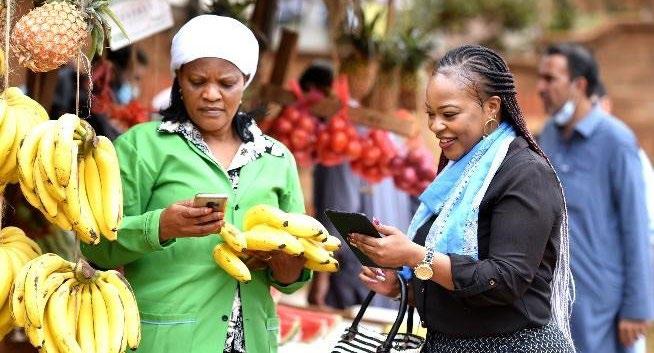
In Africa, the spotlight is on the evolution of digital payments as the beacon for the post-COVID-19 pandemic economic recovery. How do these digital payments support job creation, promote efficiency in service delivery, and facilitate financial inclusion for the youth and women. Payments, especially retail payments, are integral to our daily lives. It, therefore, makes sense to challenge the status quo by developing fast and flexible means of digital payments.
Technological advances have brought to light the need to make financial services inclusive, useful and valuable. Inclusive systems unlock value for a stronger and more resilient economy, financial benefits for individuals and businesses, lower inequality , and access to other economic and social support systems. As public and private investment flow to the development of new financial infrastructure across the continent the needs of the poor must be not only considered but prioritised.
Africa is in its second decade of the growth of digital financial services (DFS) – thanks to innovation and technological advancements. The expansion of these services was mainly driven by the high adoption of mobile money in the continent, enabling financial inclusion for hundreds of millions of previously excluded Africans, especially those from lowincome households. As of 2021, Africa leads the global growth of DFS, experiencing a tenfold increase since 2012. 1 The continent registered 621 million accounts, of which 184 million accounts are active.Financial inclusion provides tools and opportunities for building financial health, resilience ,and well being among our people while providing financial stability by deepened capital markets and improved transparency.
Over time, digital financial services have evolved from single offerings to product and services stacks. The increasing complexity of customer needs has influenced the evolution of DFS solutions across Africa. Providers now compete to introduce use cases that are relevant and useful to targeted market segments, fostering innovation.
Concentrated market power among DFS providers has triggered the current phase of the digital payments journey in Africa to be steered by a shift in regulation, intentional innovation, and a clear mission for inclusion.
The regulatory environment is dynamic, with a wide range of reforms to minimise barriers that hinder the development of digital payments systems and drive greater financial inclusion.
There has been an expansion of licensing payment regimes, predominantly led by markets where the traditional telco-led model was pioneered:
Kenya: In 2021, parliament debated the legal separation of the mobile money business from the core telecommunications business of telcos2
Tanzania: Legally separated mobile money business from the core telecommunications business of telcos in 20173
Tunisia: In 2019, the Central Bank of Tunisia brought mobile money services under its regulatory purview.
Nigeria: In 2021 and 2022, the Central Bank of Nigeria granted approvals to Payment Service Bank (PSB) applicants, which were telcos, with the optimism that these developments in Nigeria will stimulate the rapid adoption of mobile payments.
There have also been efforts to embed mobile money services within national payments infrastructures. A few countries have directly incorporated mobile money into national payments infrastructures through the development of national interoperability projects and payment switches.4
Although the objective of regulation is to mitigate risks in the sector without stifling market innovation, some interventions inhibit the proliferation of digital payments. Specifically, taxation on digital transactions could reverse the adoption of digital payments, reduce financial inclusion gains and undermine the robustness of payments infrastructure. The other emerging regulatory challenge is the introduction of restrictions on the flow of data across borders. While national data privacy concerns are legitimate, data localisation laws often lack contextualisation for financial services, increasing infrastructure costs for
1 GSMA, State of The Industry Report on Mobile Money, 2022
providers, restricting new entrants, and increasing costs for consumers.
Below we consider innovations in digital payments in three stages following the growth and prevalence of low-value – high-volume transactions.
The first stage (circa 2006 – 2010) spread in parallel with telco companies’ mobile money distribution capabilities – leveraging the advantages of adapting fast-moving consumer good distribution metrics 5 to disrupt the financial services by developing basic innovative digital banking and payment solutions. As telcos built agents networks, individuals were able to top-up, transfer minutes as value, and pay bills via assisted transactions.
The second stage (circa 2010 – 2018) involved more agile fintech entities leveraging mobile payment systems, among other early advancements, to develop products and services that targeted the bottom of the pyramid and focused on the financially excluded population. Here, providers led by and in partnership with fintech entities adopted innovative approaches to risk assessment, distribution, payments, administration, and product design to achieve the scale required to service the mass market. The key enabler in this stage was the rapid adoption of mobile phones in Africa and providers recognising the dominance of feature phones for individuals to self-serve their accounts via core mobile technology like USSD shortcodes.
In the current third stage (from around 2018), there is the convergence and aggregation of financial services prompted by the creation of platforms as marketplaces 6 for providers to offer a host of products and services to an aggregated customer base, enabled by partnerships and increased interoperability.
Despite these advancements, a significant proportion (57%) of African adults remain formally financially excluded 7, due to persistent barriers such as low relevance of solutions offered, and unaffordability of solutions, access barriers, safety and security
2 Business Daily, February 2021, MPs review Bill seeking M-Pesa, Safaricom split
3 GSMA, State of the Industry Report on Mobile Money, 2019
concerns, among others. Even among the population with accounts usage lags significantly because of the limited digital ecosystems.
A clearer mission for inclusion - making financial services inclusive, useful, and valuable to all.
Inclusive financial systems facilitate economic growth and lessen inequality in offering financial services. However, in the early days of the market evolution in Africa, the role and power of inclusive financial systems were overlooked. During the last few years, African governments and multinationals have moved towards a consensus that a well-functioning and inclusive financial system facilitates commerce, economic growth, financial stability, and security for all individuals, businesses, and communities. A leading component of inclusive financial systems is the retail financial infrastructure, which includes underlying instruments such as payments, credit and savings, among others.
Large swaths of the African population originating from low- or no-income households can no longer be
left out of the financial infrastructure. Their spending drives demand-side economic growth, and the small and micro-businesses create supply-side multiplier effects. Providing them tools to enable safe liquidity creates a more resilient economy, lowers inequality and provides access to other economic and social support systems. Therefore, the case for instant and inclusive payments systems for developing inclusive financial systems has been recognised as an underlying component that facilitates the actualisation of the above benefits.
Remember when it took days or weeks to move money from one place to another through friends or family travelling, or the bus driver with lots of risks ! Now that mobile money is so prevalent in sub-Saharan Africa, one can send and receive digital funds in realtime. High-income Africans are now in the generation of immediacy where one can text, tap, wave, and swipe to pay and get paid. Ubiquity and seamlessness are the new norms in payments. Yet, speed is not the only
4
5
6
7
factor in instant payments. Uniquely, they must have the convenience of 24/7/365 and the irrevocability of the transaction (the receiver has immediate access to the funds and they cannot be pulled back without consent).
Jacqueline Jumah
Technical expert, inclusive digital payments
AfricaNenda
Sabine Mensah Deputy CEO
Instant and Inclusive Payment Systems, “IIPS are characterised by interoperability and continuous, realtime availability, ensuring that, in addition to being able to pay anyone, customers can make payments quickly and at any time.”8 At AfricaNenda, we believe that scaling up IIPS can play a pivotal role in accelerating universal access to financial services for many financially excluded adults in Africa. We also believe that for IPS to be the steppingstone on the financial inclusion journey of the poor, they need to be designed with clarity on the needs of the poor, women , and other disadvantaged groups. The Level One Project design principles embrace this approach.9 Instant and Inclusive Payment Systems (IIPS) aligned with Level One Principles promote interoperable openloop systems, real-time push payments, pro-poor governance practices, and shared investment in core functions such as fraud detection. IIPS also operates on a not-for-loss or cost-recovery plus investment basis where payments are priced as a utility.10
AfricaNenda


million by 2025, in other words, 50% of the region’s population 11. Turning those mobile phones into the default instant payments devices could rapidly catalyse the cash to digital conversion for the financially excluded. Mobile money has already shown its ability to drive the financial inclusion of the poor in Africa. Impressively after ten years of life, it continues to have double-digit growth. Based on GSMA data12 There was a 17% increase from last year in mobile money accounts.
Instant Payment Systems (IPS) create the fundamental rails upon which digital financial service providers can build customer-centric, value-added services. They tend to bring inclusion to the last mile through mobile phones. The GSMA estimates that mobile subscribers in Sub-Saharan Africa will reach 615
The competition for IIPS is cash. The new systems need to transcend the experience and convenience of cash. Interoperability of digital payments systems at the national level offers the alternative to pay and get paid anywhere and at any time. “These features replicate the liquidity of cash while providing users with additional security and a digital footprint that accelerates formal financial inclusion and transaction safety.13” At the cross border and pan-African levels, interoperable payments systems have out-sized potential in facilitating lowvalue cross border trade and remittance payments. Instant payments systems are growing in Africa, national schemes, and regional ones alike. Schemes, like the Ghana Interbank Payment and Settlement Systems Limited (GhIPSS) and the SADC Transaction Cleared on Instant Basis (TCIB)14 , are altering the payment landscape on the continent and introducing new dynamics. the ‘”Ghana Quick Response code” ( GhQR code) is an interoperable solution that allows customers to either send or receive payments by scanning a QR code on a smartphone or by dialling a USSD code provided by a payments service provider“ “15 . Today, TCIB is enabling cross border low-value instant payments across the SADC region.
8 AfricaNenda, The State of Instant and Inclusive Payments in Africa: Progress and Prospects, 2021
9 BMGF, Level One Project Guide, 2019
10 BMGF, Level One Project Guide, 2019
11 GSMA, The Mobile Economy Sub-Saharan Africa, 2021
12 GSMA, State of The Industry Report on Mobile Money, 2022
13 AfricaNenda, The State of Instant and Inclusive Payments in Africa: Progress and Prospects, 2021
14 https://www.bankservafrica.com/website/services/transactions-cleared-on-an-immediate-basis
15 Ghana Interbank Payment and Settlement Systems Ltd, External newsletters


The Covid-19 pandemic has been one of the most disruptive events worldwide. Africa Generally and Egypt especially are no stranger to its ripple effect. It has caused a multitude of changes in people’s lives; transforming how they learn, work, exercise, travel, as well as how - and what - they purchase.
Consumer behaviour is changing fast and these new patterns are becoming the new normal. Specifically, digital adoption
in Egypt has been accelerated by COVID-19 in a way that was unexpected, online shopping and entertainment are strongly impacted as a result, and digital banking has been drastically affected by that new normal.
Before going through the changed faces of Egyptian behaviour during the pandemic, it is a must to first define digital, What defines digital transformation? What defines digital banking? What defines digital champions?
Digital Transformation is the outcome of IT-enabled change that is aligned with business objectives and driven by a well-planned strategy.
Digital Banking is the digitisation of all the traditional banking services that were historically only available to customers when physically inside of a bank branch.
Digital Champion offers a wide range of functionalities relevant for customers and a compelling User Experience.
Yasser Ahmed Head of Digital Banking Arab Investment Bank

The disruption in financial business even before the pandemic has affected the banks in Egypt, as banks are facing multiple changes as they lose access to customers, as people switch to non-banking Channels (Fintech Companies). In addition, banking products and services are being unbundled, as customers choose better experiences from a single service provider. Banks worldwide and in Egypt are struggling to differentiate themselves, as customers can compare banking products online with higher transparency. Finally, banks are losing brand awareness and becoming invisible, as customers can access financial services without knowing the brand (Open Banking).
Based on the massive disruption of the financial services, and the changes that face banks in Egypt, in order for banks to be digital champions they need to focus on the below key elements of the digital transformation:
Customer Experience: Banks need to focus on the customer and their preference not to sell the products, customers are looking for seamless customer journey of on boarding and minimal clicks to get the service done. 72% of Egyptians surveyed said they had become more digital in the last 6 months, compared to 57% of their global peers, perhaps a reflection of them catching up with their international counterparts who have already migrated to a more digital lifestyle in recent years. Mobile shopping is also growing in popularity with 49% of consumers indicating that they shopped using their phones weekly or daily - a trend consistent with other Middle East markets
Process Reengineering: Banks shouldn’t claim that they are digitally enabled or define themselves as digital champions because they are providing mobile and internet banking channels while they are capitalising on these obsolete processes. Banks need to recognise that they are racing with the fintech companies, which are paces ahead because of the innovative and flexible processes that they have.
Business Model & Integration: Banks need to be more resilient and flexible, if they cannot compete with the disruptors they should align and integrate with them. Integrating with payment aggregators, API & web services’ providers, and other fintech companies will support the banks’ plan to boost their digital transformation. Also banks need to focus on the business model they need to propose as they have been offering the same kind of products and services for the same segments for decades, it is the time to offer a
unique business model taking into consideration the uprising trend of the tech-savvy customers and the demanding young generation.
Banks in Egypt in their quest of building a full digital transformation plan, need to get rid of the common digital transformation myths.
“Adopting technology for the sake of it” is one of the great myths, as most bankers believe that they need to update all the bank systems to get the state of the art of the technology to be able to define themselves as a digital champion. Nevertheless, the real importance of digital to a business is not in the emergence of new technology, the importance is the shift in customer behaviour, thus the banks’ top management and CIO need to recognise that IT Innovation is aligned with the business goals.
Minor adjustment for the existing processes, and considering shortterm tactics or one time fixes are one of the myths which are hindering the implementation of the digital transformation. The digital disruption indicates the need for a fresh customer service strategy. As banks need to consider new innovative business models aligned with a holistic digital banking strategy. The new business model should focus on three main pillars:
Upgrade the core banking system to be ready for the upcoming digital changes.
Changing both bank internal and external culture to believe in the change: use the data comprehensively and focus on the customer by providing seamless

on boarding and integrated services and products.
Digitise the bank’s operations internally to convey the bank culture. SMES, Mortgage, treasury, Finance, and other bank sectors should automate their operation processes by reengineering the processes and leverage the related technology.
The government and Central bank of Egypt have been making big strides towards digitalisation. In 2021 and 2022, they raised public investment allocations for the information and communication technology (ICT) sector by an unprecedented 300%, according to budget plan data, to push digital transformation forward. A national Instant Payment Network (IPN) has also been recently launched

to cover necessary needs of the realtime transfer and payments.
CBE spent EGP 8 billion pounds during the pandemic to encourage and boost the digital transactions, CBE granted 11 banks the licence of the QR code to facilitate the payment, also 5 banks asked for native comprehensive digital bank licence.
The mobile wallet subscribers jumped during the pandemic to be 25 million with 27% growth rate compared to 2020, the number of the transactions over the mobile wallets reached 227 million transactions with the value of 233 billion pound during 2021.
Customer behaviour during the pandemic paved the way for the banks to accelerate their plans of the digital transformation, as the banking system in Egypt during the fiscal year of 2021-2022 managed 1 billion digital banking transactions with the value of EGP 2.8 trillion pound, with the growth rate of 49%.
In addition, the digital banking transfer during the fiscal year of 2021-2022 reached EGP 1.4 trillion pounds, compared to EGP 825 billion pounds during 2019, with a growth rate of 70%. Along with this, the number of POS increased as a direct result of CBE initiative to reach 700 Thousand compared to 200 thousand POS, with a growth rate of 250%.
Various statistics showed an increase in percentages of digital transformation and an increase in internet use ranging between 5070% compared to pre-pandemic levels. There is also a growing consumption of digital content by citizens, with the onset of the pandemic, internet usage rates in Egypt increased by 100%, while peak hours increased from three to 16-18 hours.
The Government is working with the UN’s International Telecommunication Union, the World Bank, and the Bank for International Settlements’ Committee on Payments and Market Infrastructures to further its Financial Inclusion Global Initiative. Launched in 2019, the three-year program aims to accelerate digital financial inclusion in developing nations. As part of the plan, Egypt targets an increase in the number of active mobile payment accounts in the country from roughly 20m in 2019 to 40m in 2021. At the business level, in January 2021 the Egyptian Financial Regulatory Authority launched the Digital Financial Inclusion 2021 initiative to boost the rate of non-cash payments in the economy, especially among smaller enterprises.
While technology has long been at the heart of efforts to transition away from cash and improve financial inclusion, the uptake of electronic payments was catalysed by the pandemic. Leveraging technology to improve access to the formal economy and reducing red tape will encourage healthy competition and boost Egypt’s attractiveness to foreign and local investors alike. Without doubt, the leap of the digital banking transactions led by the pandemic of Covid-19, along with the significant efforts by CBE and the government to turn Egypt into a cashless community, with more plans yet to be considered and other plans already in the pipeline to flourish the future of Egyptian banking system.



In recent years, Africa has emerged as one of the epicentres of fintech in general, attracting more investment than any other sector on the continent. This is understandable given that 66 percent of Sub-Saharan Africa (SSA) is unbanked. To meet the growing demand for financial

services, these new innovative financial companies have proliferated far and wide.
According to the United Nations, Africa will account for more than half of global population growth until 2050, owing to the continent’s fastest growing population. While nearly 65 percent of the population
is under the age of 35, this is a key demographic that is more tech-savvy than others. Fintech in Africa is a burgeoning industry with numerous opportunities, particularly in Nigeria, Egypt, South Africa, and Kenya.
The rise of Fintech not only increases access to financial

services, but it also alters the competitive landscape by catalysing innovation in other industries ranging from agriculture and retail to transportation and insurance.
African FinTech startups raised over $4 billion in funding in 2021, which according to TechCabal end of the year report was three times the amount raised in 2020 and 2019.
African fintech firms demonstrate that necessity is the mother of invention; one such example is the Kenyan company M-Pesa, which saw massive demand from

people who did not have access to traditional banks and disrupted traditional financial services with mobile technology, capturing a previously untapped market.
The company was hugely successful, providing more than 41 million people with financial inclusion as well as a safe and affordable way to send and receive money, top up airtime, pay bills, get paid, and even get short-term loans.

stories that have shook the financial world. According to an International Monetary Fund (IMF) report, these fintech businesses are challenging traditional structures and creating efficiency gains by making financial services available to the masses.

M-Pesa is one of many success
Africa has over 400 FinTech companies that enable payments, fund transfers, loans, and even wealth management. Nigeria, Kenya, and South Africa are the continent’s main FinTech hubs, accounting for the greatest
proportion of fintech companies and attracting the greatest share of investment.
African fintech companies were able to weather the pandemic’s year-long storm, as they became the primary financial services that people relied on when they were locked down, strengthening their market position. The pandemic has served as a catalyst to demonstrate that this industry is the future of Africa’s financial sector, with no signs of abating anytime soon. With this new market position, they will be able to establish and follow the industry’s latest financial trends.
And from the performances and trends we have noticed, we have been able to come up with our Digital Banker Africa Fintech 50 for 2022.
Africa Fintech Foundry (AFF) is an Access Bank initiative that aims to nurture and accelerate the growth of Fintech startups in Africa thus fast-tracking their growth and maturity to deliver relevant solutions to the market, providing greater access to financial services to the financially excluded across the continent.
AFF seeks to shore up the business capacity of startups, support business development, and facilitate access to capital, markets, customers and global innovation partners.
Bright On Capital is an online lender that provides affordable working capital solutions of up to R1 million to small and emerging businesses with sustainable growth prospects. Bright On Capital gives you the confidence to pursue bigger orders, explore bigger opportunities and to grow your business.
ALAT is Nigeria’s first fully functional digital bank. ALAT is designed to deliver tomorrow’s banking to today’s customer. You can open an account and manage your money without ever going to a branch. This award-winning app also gives you access to exclusive group and personal savings, a free debit card, lifestyle benefits and up to 4% annual interest.
Branch is a company that creates deep connection technologies for attracting and retaining app users. Its deep linking technology is used to create user-to-user referral programs with features such as incentivised referrals, content sharing, deep-views, download banners, and personal onboarding that allow users to customise their entire app experience, making app discovery and content discovery easier.
from Baxi Box/pos, BaxiPay, B2B channels and RIMS. Their objectives and vision is to have a retail presence on every street and a digital presence in every household in Nigeria. With designed products leveraging technology through innovation to deliver value to the last mile.
Cellulant is a prominent African international payments corporation with a mission to digitise payments for the continent’s top economies. Businesses and customers can make and accept digital and mobile payments using the company’s one-stop shop payment technologies.
ChapChap offers you a digital payments solution that can centralise all your mobile money transactions. With a view to improve the livelihoods of lowincome individuals and businesses by addressing market failures that result in exclusion of lowincome persons from participating in productive financial activities. ChapChap leverages versatile innovation, digital and mobile technology to unlock access to; gainful employment, trade, affordable credit facilities and low-cost financial services thereby enabling last mile low income consumers access goods and services
Capricorn Digital is a fully digital company with products ranging
Chipper Cash is a financial services startup with a software application
platform that makes free crossborder mobile money transfers in Africa as simple as sending a text message. The firm was established in 2017 and is based in San Francisco, California.
Crowdyvest is an impact-driven financial technology platform that creates financial solutions for a community of individuals and organisations that are committed to long-term growth and financial freedom.
Eversend is a one multi-currency app for all of your money needs If it involves money, it involves Eversend. From crossborder transfers to crypto and investments, Eversend gives you efficiency and peace of mind in spending and managing your money.
FairMoney is an emerging market credit-driven mobile bank. The company was founded in 2017 and currently operates in Nigeria and India, with funding from Tiger Global, DST, and Flourish Ventures. France, Nigeria, and India are among the company’s locations.
Fawry is a pioneering Electronic Payment Network that provides financial services to individuals and companies via over 65 thousand locations and several platforms. It provides a simple and secure way to
pay bills and other services across numerous platforms (online, using ATMs , mobile wallets and retail points)
Flash International (“Flash”), is the largest fintech and payments aggregator in the Democratic Republic of Congo (“DRC”) and with operations in the Republic of Congo (“ROC”) and Cote d’Ivoire. Flash, through its network of 3,500 agents and network of 90 branches, serves more than two million customers and holds a significant market share of digital financial services in the DRC and ROC. Through its mobile application “FlashApp” and branches, Flash provides remittance services, payments services, merchant payment services, and a growing number of value-added services
Payroll integration, employee access, financial education, effective reporting, payment, and training are all services provided by FloatPays. The organisation is helping its employees to attain financial well-being and go from debt to savings through access, budgeting, and training. The company is situated in Cape Town, Western Cape, and was created in 2019.
Flutterwave is a payment solution for retailers and payment service providers all around the world. It provides technology, infrastructure, and services to
enable global merchants, payment service providers, and banks and enterprises to establish secure and seamless payment solutions for their clients by facilitating fund transfers.
FYNIXWAVE LIMITED
Fynixwave develops digital financial solutions to enable small organisations. Along with continuing to build fintech solutions targeting the unbanked communities in Africa.
Interswitch is an Africa-focused integrated digital payments and commerce enterprise that enables quick and reliable electronic money circulation as well as value exchange between individuals and organisations.
Julaya is a fintech company that gives African businesses a digital account via which they can make payments to their employees, suppliers, and own their own virtual and physical prepaid cards.
JUMO provides financial services infrastructure to partners such as eMoney operators, mobile fintech platforms, and banks, as well as savings and loan solutions to entrepreneurs in emerging economies.
KLASHA and a variety of additional crossborder digital payments services in addition to mobile remittance.
Klasha is a FinTech company that is regarded as Africa’s cross-border commerce solutions.
Kuda is a digital-only full-service bank on a mission to bank every African in the world. Babs Ogundeyi and Musty Mustapha created Kuda in 2019 and it is based in London.
Lidya is a financial services platform that aims to improve credit and finance access in frontier and emerging countries, with a focus on Nigeria. They enable small and medium businesses to open accounts online in 15 minutes, manage funds, and get the credit they need to expand their enterprises and plan their futures by combining mobile-first technology with a good customer experience and unique credit scoring algorithms. In addition, they’ve developed dashboards and tools to assist businesses in managing their receivables and cash flow in order to improve credit scores and gain access to bigger credit limits and lower rates.
MFS Africa is Africa’s largest mobile money interoperability hub, with a single API connecting mobile network operators across the continent. The MFS Africa API supports merchant payment, bulk payment, bank-to-wallet transfers,
every day to transfer and receive money, pay bills, and place food and grocery orders.
MNT-Halan is a microfinance lender and payment service provider.
Mono is a technology startup with a mission to enable Africa’s digital economy by employing open banking as a layer for financial data, identity data, and business bank transfer payments.
M-Pesa is a fast, safe, and convenient mobile payment service provided by Vodafone.
Onefi develops tailored digital solutions to improve payment, billing, lending, and credit report services.
OPay is a consumer platform and mobile payment service that allows users to send and receive money, pay bills, and purchase meals and groceries. By delivering smart financial services, it empowers and enables people to do more with their money. It’s a onestop smartphone platform for payments, transportation, food and grocery delivery, and other essential services in daily living. OPay is used by millions of people
Paga is a mobile payment service provider. We’re establishing an environment that will allow anyone to send and receive money digitally, making financial access simple for everyone. Our goal is to make money accessible and usable for one billion people. Paga, the leading mobile payment firm in Nigeria, is our first market.
PalmPay is a rewards-based payment app that is simple and secure. This software allows you to send money to pals quickly and pay for airtime and utilities. This company was founded in 2019 with the goal of becoming Africa’s largest financial services platform.
Payflex is an online payment option that allows customers to shop now and pay in four equal payments afterwards.
PayHippo makes financing small and medium-sized enterprises in Africa easier. Nigeria alone requires $158 billion in finance for SMEs. To begin, PayHippo assists SMEs in properly accessing and using lender funding. The PayHippo co-founders used their domain expertise and founding experience to exceed their 2020 goal by 50% during their first full operating year in 2020.
Paymob is a regional digital payments enabler that develops payment infrastructure technology to provide financial services to the underserved. Paymob is closing the financial inclusion gap in the Middle East and North Africa area by allowing businesses of all sizes to benefit from the power of digital payments and the opportunities it provides. Paymob is based in Cairo, Egypt, and was formed in 2015.
science business based in emerging markets. Tala’s smartphone app, which provides rapid credit scoring, lending, and other tailored financial services in emerging economies, has helped more than 2 million people borrow.
Piggyvest is a service that allows Nigerian debit card users to save small sums of money frequently and with little effort. Piggyvest is a financial management tool that makes it simple for individuals and organisations to save and invest.
Sparkle is a lifestyle and financial ecosystem providing seamless solutions to Nigeria’s retailers, SMEs and individuals.
Leveraging technology and data, Sparkle is leading a new generation of digital only businesses licensed by the Central Bank of Nigeria.
Sparkle’s mission is to help Nigerians fulfil their potential by democratising access to valuable solutions for their business and personal needs.
Stitch is an API fintech firm that helps businesses in Africa design, optimise, and grow financial solutions more rapidly and easily. Stitch provides data and payment solutions that significantly minimise the time and effort required for businesses to connect to their users’ financial accounts and enable bank-to-bank payments without having to leave the existing app experience. KYC and onboarding, personal and company financial management, financing, wallet top-ups, e-commerce checkouts, and more are all supported by their infrastructure-led strategy. Stitch was founded in February 2021 and currently has operations in Cape Town, Johannesburg, and Lagos, Nigeria.
By reimagining the demands of consumers, businesses, and the financial industry, TeamApt is a financial technology firm focused on producing Digital Banking, Digital Business solutions, and running Payments Infrastructure. TeamApt was founded in 2015 with the goal of bringing financial happiness to organisations and individuals via the development of solutions and tools.
TELDA
With the slogan “Pay everywhere. Get paid by everyone.” Telda is a financial brand built for Millennials and GenZ to take the pain out of peer-to-peer payments. Egypts first money app aims to bring a better way to send, spend and save to anyone who has ever sought an alternative to the traditional banking system.
TymeBank is a South African investment organisation that is entirely owned and operated by black people. It is a fully digital retail bank with the goal of making banking accessible and inexpensive to all South Africans so that they can participate in, grow, and benefit from the country’s economy.
Ukheshe Technologies is a global, digital-first financial services enabler. Partnering with banks, telcos and financial service providers, Ukheshe’s unique Eclipse API enables their partners to pursue financial inclusion for their customers with tailor made payment solutions.
Tala is a financial services-focused mobile technology and data
Union54 is a fintech and corporate debit card issuing API. Union54 enables any software company to issue debit cards to their consumers without using the services of a bank or credit card processor.
BIN sponsorship, transaction processing, and settlement are all provided. Union54 is situated in Lusaka, Zambia, and was founded in the year 2020.
Wari provides a variety of financial and commercial services to make daily transactions simple and secure. Payments, local and international money transfers, airtime top-ups, transportation, services, marketplaces, bill payments, and communications are all made possible by the company.
Wave Mobile Money is a financial program that allows you to save, transfer, and borrow money. Wave Mobile Money is working to make Africa the world’s first cashless continent.
YELLOW CARD
FINANCIAL
Without a bank account, Yellow Card is the simplest and most convenient way to purchase and trade Bitcoin and other cryptocurrencies. Over 13 African countries have it.
YOCO
Yoco is the market leader in Africa for small business payments, with over 200,000 small businesses in its home market of South Africa using its payments, software, and capital offerings.
Zeepay Ghana Limited is a wholly owned Ghanaian mobile financial services company that focuses on providing integrated mobile payments services with mobile wallets to the unbanked and banked populations, with the goal of bringing the unbanked into the financial system while making payments and collections easier for the banked.
Established in 2020, 9 Payment Service Bank (9PSB) is Nigeria’s first Payment Service Bank operating under approval of CBN to provide financial inclusion services and initiatives for the underbanked, unbanked, as well as innovative services to individuals with bank accounts.
9PSB operates as a fully digital bank and runs its own agent banking network. 9PSB is for everybody and offers seamless access to online & offline digital banking experience. Their mission is to leverage digital financial technology and innovation to provide simple, accessible, efficient, and inclusive payments, services, and banking solutions that are most secured and trusted in sub-Saharan Africa.
Depending on which research you read there are somewhere between 2 and 3 billion people without access to financial services, including the small, medium and microenterprises (SMME) segment of the market. In the USA, this market segment on its own paid $189 Billion in fees to alternative suppliers. With the move to digital this segment of the market will become even more marginalised and will aggressively seek out alternatives.
There is no question, despite protestations from certain quarters, that cash is on the decline as we move rapidly towards an increasingly cashless world. IN the UK as an example, over the last period 6000 ATM’s have been closed. There has been a 38% decline in cash withdrawals. 50% of branches across Europe have been closed.
Cash represented 13% of in store purchases and this is predicted to reduce to 7% by 2023.
It is predicted however that there will be a 9000% increase in digital transactions by 2022 representing an increase in volume in digital

transactions of 400 billion which will be worth $7 trillion.
Bringing this to Africa, research by Mastercard estimates that 50% of Africans are e-commerce enabled and that there is 60% smartphone penetration. However, Bank payment revenue is expected to be displaced to the
tune of $280 billion as alternative payment providers enter the scene. The E-commerce market, all facilitated by digital payments, is estimated to be worth $15 trillion by 2029.

All of this begs the questions as to what is going to happen to what we

traditionally called the unbanked, as they increasingly face signs in stores that say
Cash not accepted here
David Birch, the internationallyrecognised thought leader in digital identity and digital money, believes that typical bank products designed in the 18 century, simply cannot satisfy the needs of today’s market. The result is a situation where some of the banked, most of the underbanked and all of the unbanked are turning to alternative providers because the traditional banks cannot or will not deliver services that customers actually want and need. One only has to look at the number and growth of money transfer services to illustrate this point.
People perhaps want payments – not banking and it would appear that most innovation and disruption comes in the payments landscape.
We all know that payments involve both issuing and acceptance but the lines between the two are becoming increasingly blurred. We also know that SMME’s are the backbone of every economy and they need to be able to accept digital payments if they are to be included as part of economic society. Innovations such as Tap-On-Phone provide merchants with a very cost effective and secure way to accept payments with no investment in hardware or associated maintenance costs.
There is an enormous opportunity out there as we gallop along this digital express way, but we have to ensure that everyone is on board and catered for.
Small and medium enterprises (SMEs) play a significant role in most economies, particularly in developing countries. SMEs account for most businesses worldwide and are important contributors to job creation and global economic development. They represent about 90% of businesses and more than 50% of employment worldwide. Africa is home to over 30 million small and medium enterprises who are an important driving force towards economic growth. In SubSaharan Africa these businesses are heavily involved in agricultural activities and contribute largely to the food supply and retail industry. Notably, smallholder farmers feed the world – it is estimated that 70% of the food consumed in Sub-Saharan Africa is produced by smallholder farmers. However, in most African countries, less than five percent of net bank lending goes to agriculture which leaves many smallholder farmers particularly underserved. If these farmers had easier, better access to financial products and services,
Jessica Chisompola Head of Brand and Marketing OPay Zambia

they would be able to save, borrow, and transfer money more easily, safely, and economically.
Notably, over the last few years, we have seen reputable international non-governmental organisations, development organisations, fintechs and financial institutions making strides to unlock the potential of smallholder farmers through heavily funded financial inclusion initiatives. Whilst these investments are prominent, we need to ask whether these efforts have significantly driven financial inclusion in Sub-Saharan Africa. Therefore, in addressing the important role of financial inclusion, it is necessary to address the investments involved, challenges faced by smallholder farmers and opportunities in rural agriculture finance.

The Mastercard Foundation has spent millions of Dollars to find, support, help to scale up, and learn from innovative ideas that expand financial inclusion to smallholder farmers and other economically disadvantaged people living in rural Africa. In 2015, the foundation launched a US$50 million challenge fund to improve the lives of smallholder farmers in Africa by enabling businesses to begin or expand financial services in rural areas of Sub-Saharan Africa. As a result, in 2017 Mercy Corps, in partnership with the Mastercard Foundation, launched the AgriFin Accelerate in Zambia, one of three countries in Africa where the program operated. AgriFin Accelerate focused on helping to close the gap in access to

financial and information services experienced by smallholder farmers, especially women and youth. The US$25 million, sixyear initiative which ended in 2021 benefited over one Million smallholder farmers in Zambia, Kenya, and Tanzania. Most financial players have no clear business cases to serve the unbanked and underserved smallholder farmers, and as a result have had little interest in providing custom-tailored services for them.
The challenges are immense on the smallholder and small enterprise side. Most of these farmers depend solely on agriculture for their livelihood and as an income earner. Consequently, they experience challenges during pre- and post-harvest seasons,
which have proven to be stumbling blocks to increasing their incomes and productivity levels. The main challenges faced include unanticipated financial needs such as lack of access to a wide variety of financial solutions including, payments, savings, and lack of capital due to insufficient credit history thus limiting their abilities to grow their businesses and scale up. The lack of access to premium and stable markets, post-harvest technologies, storage facilities, quality inputs, skills development, accurate information on weather, and insurance are further inhibiting the growth of these “unsung heroes.”
Technologically powered solutions have the power to eradicate
the barriers that smallholder farmers face. Today, digital finance solutions have driven financial inclusion across various regions of Sub-Saharan Africa with an increase in mobile money penetration, mobile wallet usage and agency banking to meet their financial needs. However, despite the milestones smallholder farmers continue to be neglected or underserved because they do not offer commercial viability to Financial Service Providers (FSPs) especially banks, mobile network operators (MNOs) and fintechs. In comparison to other sectors such as retail and E-commerce, the cost of development, deployment, and service delivery of these solutions to rural areas is very high. In addition, many smallholder farmers lack expertise and knowledge in the usage of financial products, which increases the costs of onboarding them.
Despite these challenges Africa continues to record significant growth in terms of the number of digital finance solutions targeted at smallholder farmers. On the other hand, these solutions are mostly private sector led with support from donors and are focused on temporarily addressing the common pain points through the provision of low cost or zerorated financial services. In the short-term donors help to design and develop solutions, and may subsidise the financial costs, but in the long run these solutions become unsustainable for the FSPs who cannot continually offer concessionary rates to farmers. As a result, the mismatch between smallholder farmers’ needs and FSP’s abilities to provide viable solutions turn out to be unprofitable.
One of the greatest enablers for financial inclusion is technology and innovations. For the smallholder businesses to thrive we must encourage lower costs through interoperability among industry players including banks, MNOs, agriculture organisations, information hubs, donor organisations, grant-aided institutions, and third-party industry partners.
Amidst the global pandemic of COVID - 19 which has seen the proliferation of cashless services, there is need for collaboration between government, FSPs, and industry players through provision of shared solutions, platforms, networks, and infrastructure which can reduce barriers to financial inclusion, and subsequently
the cost of doing business for smallholder farmers, including the costs of sending and receiving money.
In due course, availability of infrastructure should help with easing market penetration for smallholder farmers especially those in hard-to-reach areas. Other enhancers include:
Support with regulation compliance through a relaxed regulatory approach to allow for delivery of alternate channels for affordable (low cost) solutions that help smallholder farmers.
Adoption of digital finance solutions and services to streamline farming, business and financial processes which are important in addressing various challenges that smallholder farmers face from pre to post harvest.
Access to data on smallholder farmers to help provide more customercentric products and valueadded services suited for smallholder farmers such as payments, savings, loans, crop and weather index insurance, market prices, and best practices.
Today Fintechs are rapidly changing the dynamics of the financial services sector. They have the required impetus to help boost
financial inclusion by reducing costs, customising services down to the individual level, and widening the range and outreach of providers. Therefore, leveraging on bank and fintech Partnerships can help SMEs digitise their businesses and build a platform for sustained development.
A holistic digital proposition targeted at smallholder farmers and Agri-SMEs can enhance payments acceptance options and unlock their business growth potential by enabling them to tap into diverse opportunities brought about by the digital payment ecosystem. The Zambia National Commercial Bank (Zanaco), the leading commercial bank in Zambia partnered with the Mastercard Foundation funded Mercy Corps’ AgriFin Accelerate Project to design and develop the first bank-led digital financial services (DFS) product specifically designed for smallholder farmers in Zambia. The AgriPay account is a holistic customer value proposition that provides a suite of financial services including payments, peer to peer transfers, bill payments, savings, and lending, access to markets, and free learning.
Other partners that supported the initiative include financial sector deepening Zambia who provided funding for onboarding of women and youth onto the platform, Musika who provided financial support for training, marketing, and a business development Consultancy, and the United Nations Capital Development Fund (UNCDF) who funded the go-to-market strategy through the booster model programme.
AgriPay is currently helping more than 7,000 smallholders in Zambia with access to affordable financial services, and valueadded services such as the Learn component that enables farmers to access financial literacy and agronomic information on their feature phones via a USSD platform. Zanaco also partnered with Zambian Breweries, a subsidiary of AB InBev and paid out over 1,000 sorghum farmers through BanQu, a blockchain-based platform that provides farmers with access to digital payments and technology by recording all transactions to improve sustainability and productivity across the supply chain thus giving the farmer a digital identity.
In addressing the lack of access to markets, the World Food Programme, Digital PayGo and Zanaco partnered to develop a virtual marketplace for smallholder farmers called Maano. Maano is an agriculture trading platform that provides access to premium markets, pricing, logistics services, weather index insurance and corporate bulk payments services among other services. So far Digital Paygo has managed to onboard 13,000 smallholders out of a total target of 50,000 at the end of 2022.
It is such approaches that target the entire ecosystem and smallholder value chains that can help solve the problems that smallholder farmers and Agri-SMEs face through the provision of blended services using a holistic approach.

The outbreak of the COVID-19 pandemic has heightened consumer and regulatory preferences for cashless payment platforms, even though many small businesses do not have the resources and infrastructure to facilitate these kinds of transactions. Therefore, through the deployment of innovative and secure solutions by Banks, MNOs and Fintechs, the underserved smallholder farmers and AgriSMEs will be able to pivot their businesses, whereas aligning them to growing consumer needs to use digital payments and do so safely and conveniently.
Today, both smallholder farmers and Agri-SMEs have an outsized impact on the economy, providing a livelihood for many, while advancing inclusive growth to reduce poverty and boost prosperity. There is an urgent need for industry crosscutting solutions that will solve problems faced by underserved populations, as most of the challenges are multi-sectoral and require an ecosystem approach to solve for the entire value chain. In the future, these solutions should also embed value-added features such as invoicing, procuring and logistics, transaction management, cash registration, and ecommerce among others, to make it easier for smallholder farmers and SMEs to increase their productivity and income levels, and contribute to sustainable economic growth.
1. https://www.worldbank.org/en/topic/smefinance
2. https://www.ifad.org/thefieldreport/
3. https://www.mercycorpsagrifin.org/wp-content/uploads/2021/03/4th_Annual_Learning_Event_2019_Report-SP.pdf
4. https://www.uncdf.org/article/5431/agripay-brings-digital-banking-to-thousands-of-zambian-farmers
5. https://www.musika.org.zm/headlines/zanaco-agripay-digital-banking-platform-poised-to-support-growth-of-smallholder-farmers/

The digital gold rush is here. As more people attempt to make money from cryptocurrencies, criminals and con artists aren’t far behind. Make sure you know how to recognise the biggest schemes that want to separate you from your digital coins, says Carey van Vlaanderen, CEO of ESET South Africa.
The world seems to have gone ‘crypto-mad’. Digital currencies like bitcoin, Monero, Ethereum, and even Dogecoin, are all over the internet. Their soaring value promises big wins for investors (if you’re “buying the dip”, that is). And the ‘fortunes’ to be made by mining for virtual money have echoes of gold rushes that formed the first mining towns in South Africa back in the 1800s. Or at least, that’s what many, including a long list of scammers, will have you believe.
In reality, if you’re interested in cryptocurrency today, you’re quite possibly at a major risk for fraud. In many respects, in this new unregulated world, bad actors often have the upper hand. In 2021, South African-based Africrypt was reportedly hacked, effectively wiping out a staggering R51 billion of investors’ money. While the apparent hack made global headlines, the founders of Africrypt vanished as international investigators scrambled to piece together what happened in what is now suspected to be a completely fraudulent cryptocurrency investment platform.
The good news is that normal rules of fraud prevention apply too. Everything you read online should be carefully scrutinised and fact-checked. Don’t believe the hype, or buy into something that seems too good to be true, and you’ll stand a great chance of staying safe.
Fraudsters are masters at using current events and buzzy trends to trick their victims. And they don’t come much more “zeitgeist-y” than cryptocurrency. Headlines and social media posts are partly to blame, creating a feedback loop that only adds to the hysteria over virtual currencies.
There are few if any regulations governing the cryptocurrency market for investors, versus the traditional stock market Huge media interest makes it a regular hook for phishing and scams
Soaring cryptocurrency prices attract consumers dreaming of getting rich quick
Social media helps to amplify the buzz, real or fictional
There’s also the lure of mining coins for money which phishers can use as a hook
If you have virtual money safely stored in a cryptocurrency
exchange, it may be at risk from hackers. On numerous occasions threat actors have successfully managed to extract funds from these businesses, sometimes making off with hundreds of millions. However, usually the breached companies will promise to recompense their blameless customers. Unfortunately, there are no such assurances for the victims of crypto fraud. Fall for a scam and you may be out-of-pocket for a lot of money.
It pays to understand what these scams look like. Here are some of the most common:
Ponzi schemes: This is a type of investment scam where victims are tricked into investing in a nonexistent company or a “get rich quick scheme,” which in fact is doing nothing but lining the pocket of the fraudster. Cryptocurrency is ideal for this as fraudsters are always inventing new, unspecified ‘cutting edge’ technology to attract investors and generate larger virtual profits. Falsifying the data is easy when the currency is virtual anyway.
Pump and dump: Scammers encourage investors to buy shares in little-known cryptocurrency companies, based on false information. The share price subsequently rises and the fraudster sells their own shares, making a tidy profit and leaving the victim with worthless stocks or coins.
Fake celebrity endorsements: Scammers hijack celebrity social media accounts or create fake ones, and encourage followers to invest
in fake schemes like the ones above. In one ploy, some $2m was lost to scammers who even name-dropped Elon Musk into a Bitcoin address in order to make the ruse more trustworthy.
Fake and copycat exchanges: Fraudsters send emails or post social media messages promising access to virtual cash stored in cryptocurrency exchanges. The only catch is the user must usually pay a small fee first. The exchange doesn’t exist and their money is lost forever. Copycat sites offer what appears to be legitimate wallet services. Users are encouraged to download wallets which then install malware on the user’s device. In these instances, iOS devices have been compromised where in the past the problem was limited to Android.
Impostor apps: Cybercriminals spoof legitimate cryptocurrency apps and upload them to app stores. If you install one it could steal your personal and financial details or implant malware on your device. Others may trick users into paying for non-existent services, or try to steal logins for your cryptocurrency wallet.
Phishing: Phishing is one of the most popular ways fraudsters operate. Emails, texts and social media messages are spoofed to appear as if sent from a legitimate, trusted source with an urgent request for payment in cryptocurrency.
The best weapon to fight fraud is a healthy dose of scepticism. With that in mind, try the following to avoid getting scammed:
Never provide your personal details to an entity that makes unsolicited contact with you, via email, text, or social media. It may even appear to be your friend, but in reality could be a hacker who has hijacked their email or social account. Check with them separately via another contact method
If something is too good to be true it usually is. Take any investment scheme with a heavy pinch of salt
Switch on two-factor authentication for any cryptocurrency account you have
Dismiss any investment ‘opportunity’ which requires an up-front payment
Never use unofficial app stores
Download anti-malware software from a reputable provider to your PC and mobile devices
The world may have gone cryptocurrency-crazy. But you don’t need to join in. Keep a cool head and ride out the hype while making good returns.
For more than 30 years, ESET® has been developing industryleading IT security software and services to protect businesses, critical infrastructure and consumers worldwide from increasingly sophisticated digital threats. From endpoint and mobile security to endpoint detection and response, encryption and multifactor authentication, ESET’s high-performing, easy-touse solutions unobtrusively protect and monitor 24/7, updating defences in realtime to keep users safe and businesses running without interruption. Evolving threats require an evolving IT security company that enables the safe use of technology. This is backed by ESET’s R&D centres worldwide, working in support of our shared future.
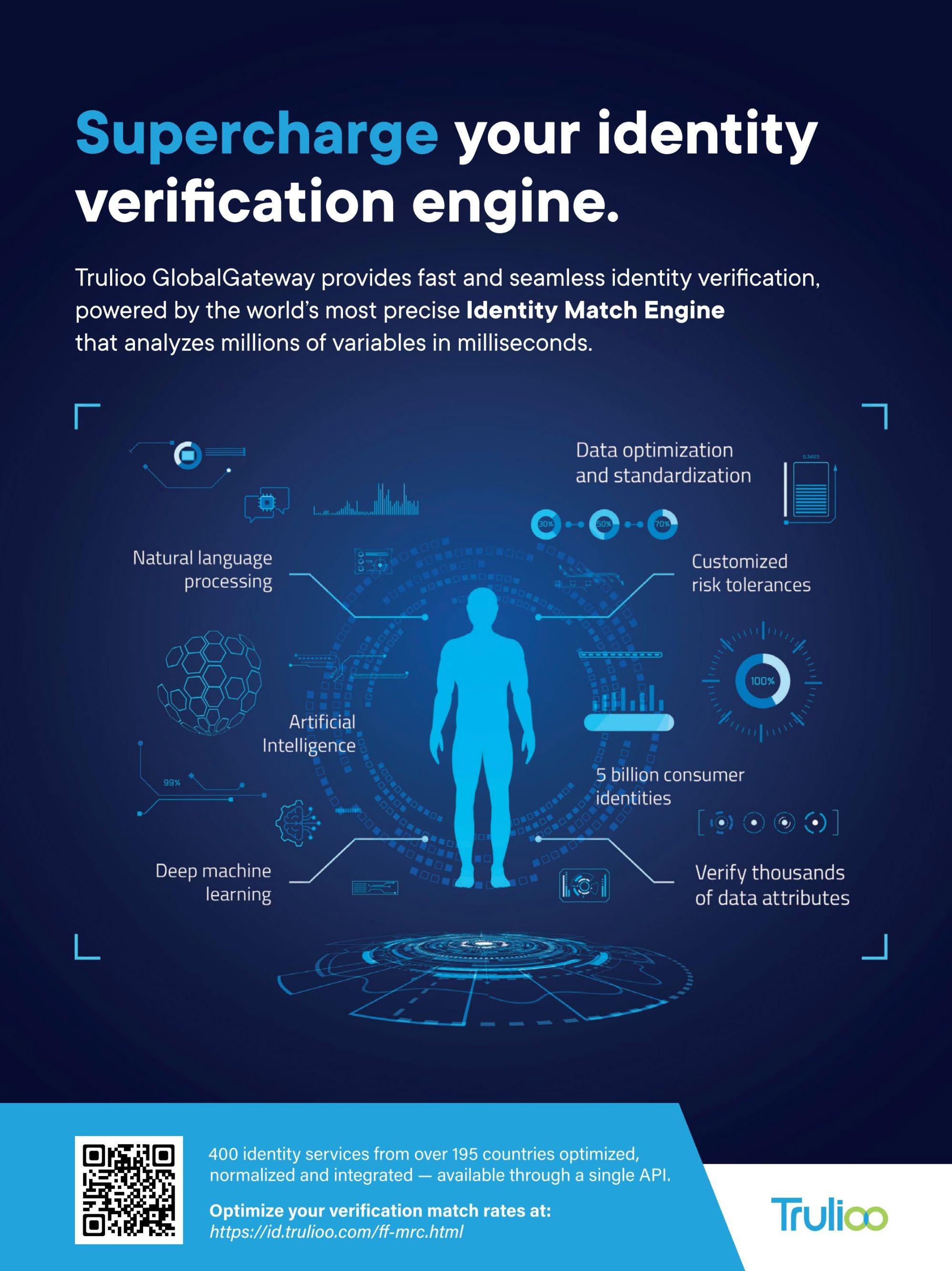

How do you trust someone you can’t meet in person? It’s a question organisations have been grappling with in the age of the internet, KYC requirements, and the rapidly escalating costs and consequences of identity fraud.
“Enter biometrics with liveness detection, a state-of-the-art solution that onboards customers securely, easily, and quickly,” says Lance Fanaroff, Co-Founder and Chief Strategy Officer, iiDENTIFii – leader in remote biometric digital facial authentication and automated onboarding technology.
Traditional facial recognition methods have been rendered almost obsolete as fraudsters use sophisticated spoofs that exhibit human traits including photos, videos, deepfake puppets, masks, and dolls. “Even authentication processes with gesture and motion requirements to overcome this problem can be thwarted. Blinking your eyes and moving your head is inadequate and can still be spoofed,” says Fanaroff.
Artificial Intelligence (AI) has emerged as a powerful weapon in the fight against identity fraud which increased by a staggering 337 percent in 2020 according to the Southern African Fraud Prevention Service (SAFPS) and cost the South African government R1 billion in bogus Covid-19 relief claims.
“The most effective way to close the glaring identity gap is through AI biometrics which uses liveness detection to determine that it is interfacing with a genuine, physically present human being before they are even asked to present a valid ID document which
is a big deterrent to fraudsters who do not want their real face on camera,” notes Fanaroff.
He adds that identity fraud has historically been difficult to detect and even harder to combat as fake identities look just like real customers. “Gaps in fraud prevention capabilities partly stem from human error as well as an absence of source data to verify individual identities. AI can proactively mitigate fraud with real-time detection far quicker and more accurately than any human can. iiDENTIFii’s own remote biometric digital authentication technology can verify and automatically on-board a person in under 30 seconds.”
And innovations in remote digital identity authentication technology are only getting better. “Identity fraud can now be significantly reduced. This creates a safer world where everybody, everywhere and on any device, has an authenticated face and a name. This pioneering technology has already been extensively tried, and stress-tested at scale in South Africa. 4d liveness™ as we refer to it at iiDENTIFii, at this point in time, is the most spoof-resistant method of remote digital biometric authentication.”
Fanaroff says remote authentication and verification is fast becoming part and parcel of doing business as the world, along with its communications, customers and commerce, moves exponentially online. “Not being able to efficiently spot bad actors leaves a company and its customers open to significant losses. These losses are not only financial. Fraud carries legal risks together with the
possibility of severe reputational damage and loss of public trust and is a risk most organisations simply cannot afford to take.”
“By comparing the user’s selfie and ID document data with relevant government databases, iiDENTIFii’s 30-second triangulation technology accurately authenticates someone’s identity. In the time it takes to snap a selfie, advanced algorithms and AI stops fraudsters in their tracks.”
Co-Founder and Chief Strategy Officer
iiDENTIFii

iiDENTIFii is a worldleading remote biometric digital authentication and automated onboarding technology platform. It fulfils the needs of customer-focused organisations that are required to authenticate and onboard customers. Using a frictionless and non-invasive automated proven process, that meets customer intelligence, risk and compliance goals, iiDENTIFii ticks all the boxes from a governance and legislative perspective.
https://iidentifii.com/
Chat commerce is undoubtedly the way of the future, according to Pieter de Wet, President Business Development: International Markets at leading panAfrican fintech enablement partner Ukheshe Technologies. “Ukheshe’s own Eclipse Chat Commerce solution offers everything a business needs – not only now, but also as an organisation grows.”
Consumers are making a rapidly increasing portion of their purchases through chat commerce channels. Juniper Research estimates that sales made via chat commerce channels like chatbots, digital voice assistants and messaging will grow more than seven-fold from $41 billion in 2021 to $290 billion by 2025.
Gartner research also estimates that by the end of 2022, 70 percent of all customer interactions will involve emerging technologies such as chatbots and mobile messaging (up from 15 percent in 2018). Messaging apps like WhatsApp, Facebook Messenger and WeChat now have over 5 billion monthly active users, and people use them even more than social networks.
It makes sense, then, that commerce would follow on these channels and that companies need to get in on the action as soon as possible. But with a multitude of platform offerings on the market, how do you choose the perfect partner?

Companies need to recognise that customers want to experience convenience on these channels, says De Wet. “Customers are looking for conveniences such as improved customer support and a commerce platform that doesn’t require a payment device or an alternative app to make or receive payments. They want all these services through a single device or application.”
That’s why, with the predicted exponential growth on these channels, jumping in head over feet could be a mistake. “Companies need to make a considered choice when partnering with a chat commerce platform. Chat commerce enables merchants to manage their businesses on the go with minimal difficulty – but only if their enablement partner operates from a digitalfirst perspective, with solutions that are quick to market and help

merchants through a seamless process.”
Future needs and capabilities should also be factored in, as teaming up with a platform that only meets your current needs will soon become obsolete – costing you more money in the long term and hurting your sales in the process. Simple payments links, for example, and especially when these are limited to only certain platforms or channels, aren’t enough. Similarly, a platform that only offers one payment provider or card issuer will mean losing out on customers and sales.
De Wet says organisations need to find a well-rounded solution that offers vast capabilities on multiple channels, is inclusive of multiple payment channels and schemes, and can be easily expanded as your needs grow.
Ukheshe’s Eclipse Chat Commerce solution is an inclusive digitalfirst payments solution that can be executed or delivered on multiple channels. “Ukheshe hosts a vast SME-in-a-box offering. This suite includes virtual card issuing, QR and person-to-person transfers through MCQR and VQR, ecommerce tokenisation to protect sensitive data, VAS vending (for airtime and data), money transfers, payroll HR, invoicing, tap-on-glass payment facilities (softpos) and mPOS,” says De Wet.
When it comes to chat commerce, the Eclipse API allows organisations to view and pay bills via QR codes, cards and digital wallets; create virtual cards and

pay with them; transfer money through WhatsApp or any other chat bot solution; and get paid through QR codes. Customer support chats can be done through multiple chatbots.
Ukheshe Technologies enabled the first Mastercard virtual card to be used in WhatsApp, an African-first, through customer Telkom Pay. Ukheshe has also partnered with both Mastercard and Visa and aims to be schemeagnostic and inclusive of all payment methods and issuers. There is great opportunity for chat commerce – especially in emerging markets, with Africa having 650 million mobile users, surpassing the number in the USA and Europe, believes De
Wet. “Africa has the possibility to become the leader in digital banking adoption if more unique and seamless experiences are created for consumers looking to trade using a digital device.
“Providing a cost-effective, safe and efficient solution for merchants that allows them to transact in multiple ways is the golden thread when it comes to financially including populations that wouldn’t necessarily have access to this kind of technology and banking. Chat commerce closes the gaps we see in financial inclusion by providing multiple solutions from a single channel best suited for the merchant. The possibilities are endless with digital-first payment solutions.”
Ukheshe Technologies is a market leading fintech enablement partner. With a legacy in enterprise platform delivery in banking and telco sectors, Ukheshe has created an extensive range of micro services that enable rapid digital transaction propositions for clients. Striving for transformation and innovation in the payment industry, Ukheshe adapts and creates components that are scalable, secure and ready to deploy in market leading digital-first propositions.