



Dear Colleagues,
It is my pleasure to talk to you from this platform. As we approach the last quarter of 2024 we also take a bit of time to reflect on where we are and what we can still achieve in the remaining 4 months of the year.
Looking back we can now clearly see the impact of the pandemic. COVID-19 has rapidly accelerated the process of digital transformation, and in a mere 4 months achieved a degree of digital adoption that would usually have taken years to reach. However, while this is a positive development, it has the unintended consequence of further marginalising those who already suffer from digital exclusion. The Covid19 pandemic has highlighted the fact that the African digital economy allows participation of a minority of the population while the majority is excluded due to lack of access to connectivity, high data costs and access to devices.
It is well accepted that the digital divide widens the gap between rich and poor, polarising people within countries, enlarging the gap between developed countries and developing countries, hindering the development of developing countries, and leads to digital supremacy.
Further, the gap in access to and use of technology and the internet – is both a cause and effect of poverty. Those with financial means and that are educated are more likely to have access to digital resources, and those with limited online access options tend to be lower-income and less educated.
A primary issue influencing the digital divide is its effect on further marginalising especially youth from disadvantaged communities. The potential of individuals living in under-served areas are therefore limited, because Internet access is not as obtainable as it is in more affluent areas. This results in a vicious cycle of children from poorer families not being able to transcend their circumstances as they simply do not have access to the technology that will enable them to access the educational content on the world wide web that wealthier youth can. Therefore, overcoming this dilemma remains a key imperative for countries who wish to stimulate vital economic transformation.
In addition, selecting a technology should be fit for purpose: According to a ITU paper themed Financing Universal Access to Digital Technologies and Services [of which I was co-author] Regardless of technology choice – and the choices are many, ranging from wireless broadband to fibre and satellite and beyond – infrastructure is a long-term investment. Beyond the initial financial outlay required to build out networks, additional ongoing investments are required to maintain and upgrade infrastructure. In addition, digital readiness needs to be considered – making investment risk even higher as uptake is not guaranteed.
The cost of closing the infrastructure gap in Africa by 2030 is USD 100 billion. Nearly 1.1 billion new unique African users must be connected to achieve universal, affordable, and good quality broadband internet access by 2030 at a cost of about USD 100 billion over the next decade. Approximately USD90 million of that amount would be required to fund Sub Saharan Africa alone. Nearly 250,000 new 4G base stations and at least 250,000 kilometres of fibre across would have to be deployed across the region, alongside satellite and Wi-Fi based solutions to reach the nearly 100 million that live in remote areas that are currently out of reach of traditional cellular mobile networks. The assumption for this costing is that good quality broadband internet is an average download speed of at least 10 Mbps and is technology neutral.

The world requires 428 billion dollars to close the digital gap from 2020 to 2030. Of that, Africa needs 100 billion dollars to provide connectivity. Africa will also need 500’000 kilometres of fibre over the next ten years. The approach to building this new architecture will be different to the last mile of the 20th century. The architecture of the last mile must consider the latest developments in Edge Cloud, and Edge compute.
Edge server infrastructure and accessories will be more than five times bigger than hyper-scale public cloud. Therefore, the language of the last mile must transform to edge because of the 50 billion IoT devices to be connected to the new infrastructure. Funding this unique ecosystem will also be driven by blockchain hence the need for a different funding model.
Also, the Telco edge cloud or last mile will need to be decoupled from the traditional network. Regulators will need to liberalize the edge network because of the quantum and complexity of IoT devices and architecture that will cut across Agri, Health, Education, Manufacturing, Auto and many other sectors. The introduction of wifi6 is another compelling issue for deregulation. For example, funding connected cars will be different from the traditional model of funding the last mile. There must be a consideration for fractional ownership and tokenisation models of the last mile. This means putting the ownership of the last mile on the blockchain to facilitate fractional ownership. This approach exposes the last mile asset to blockchain funds placed on initial Coin offerings (ICOs) and Security Token Offerings (SCOs).
The funding and financing of the last mile will benefit from a market-creation perspective that addresses non-consumption. Globally 3.7 billion people don't have internet access; in Africa, more than 700 million people lack stable and affordable electricity, and 258 million youths and adolescents are not in school. These digitally excluded populations are ready for Market creation. The exponential growth of the internet of things and the billions of devices connect to the internet point to the last mile of the digital era. The last mile represents the IoT proliferation on the Edge. Edge is the modern reconfigured last mile and a foundation for the next-generation internet. The last mile is changing from basic internet connectivity to a place of significant value add with new applications leading to the creation of new markets. The last mile is no longer just about traditional communication networks but about the emerging Edge ecosystem.
In framing the funding and financing of the last mile, it is clear the unit of analysis has shifted. Advances in technology make it possible to focus on Edge high-performance compute, storage, and network beyond human communication. This results in a lower cost of data transport, decreased latency, and local data compliance. The focus shifts from voice to enable next-generation applications of connected machines. This age of the internet and the internet of things provides new opportunities. Last-mile connectivity is a disruptive tool allowing access to products and services beyond human communication that were once out of reach.
The last mile is about unlocking markets with sustainable long-term impact. The last mile of the internet of things era is about unlocking and connecting education with Edtech, increasing yields for food security with Agritech, universal health with Healthtech, mitigating climate change with green energy microgrids and reducing Carbon dioxide emissions with connected auto. Enabling the Edge for all is redefining the last mile.
Furthermore, Edge computing and networking space has seen growing Open-Source projects to enable organizations to deploy edge applications at a fraction of the cost and limit the risks of vendor lock-in while facilitating standardization across the industry.
The report updates the thinking of UA financing but maintains that, as has always been the case, public funding should be complemented by non-financial interventions to close these gaps. It also argues that, borrowing from the blended finance framework, public funding should seek to demonstrate additionality – it should bring private capital that would otherwise not have been interested in developmental-oriented projects, to the table. This is part of a holistic approach to financing universal access to digital technologies and service, which bears some pertinent matters in mind.
Read the Full Report here
Kind Regards,
“CONEXT: a relationship in which a person or thing is linked or associated with someone or something else.”
In a world that is becoming increasingly digital, it is important to ensure that ongoing engagement takes place. The Digital Council Africa strives to remain in contact with its members, and to provide its members with ongoing communication about its activities. Conext is the answer to staying engaged. Member engagement is encouraged through participation in events and working groups and through the distribution of the Conext Newsletter.
The DCA strives to offer members opportunities to network and collaborate and discuss best practice frameworks that is in the best interest of all, solving complex issues through dialogue and policy recommendations and we encourage dialogue between government and private sector from a platform that is independent and product agnostic. Conext belongs to the members of the Digital Council Africa. We welcome and encourage submissions from our members in the form of conversations related to the development of the digital economy as well as thought leadership articles you have written or would like to share, advertorials, adverts and any information that may be of interest to the ICT sector as a whole.
Contributions can be sent to Nadene Reignier at nadene@digitalcouncil.africa
Social media is a fast, effective way to reach our target audience and create awareness of not only the Digital Council and our work but also for our members and as a means to share relevant industry news and updates. We have close to 6000 followers across our 3 platforms and had an organic reach of over 3000 on LinkedIn over the last 3 weeks alone. We plan to keep increasing our social media reach and leveraging it to grow awareness of the work of the Council and its members.
This publication is a free platform for the members of the Digital Council Africa. We welcome and encourage submissions from our members in the form of conversations related to the development of the digital economy as well as thought leadership articles you have written or would like to share, advertorials, adverts and any information that may be of interest to the ICT sector as a whole.
Next Issue: October 2024
Contributions can be sent to Nadene Reignier at nadene@digitalcouncil.africa
By joining the Digital Council Africa members have a competitive advantage because they become informed members of their industry as the council actively engages and represents its members at government level. Council members who lead busy professional lives can depend on the organisation to represent and brief them on important industry trends, new legislative rulings, and advances in technology. The main platform the Digital Council Africa (DCA) uses for this is through its annual conference. This event aims to attract C-level speakers and best of breed OEM’s and distributors to keep industry informed and updated on the latest trends in technology and legislation. To find out more visit our website.
As people come and go, it's important to keep our database up to date. Please take a moment to update your contact information so we can stay connected. Your updated details ensure you receive the latest news and updates from Digital Council Africa. Thank you for helping us keep our community strong!
Updated contact details can be sent to Nadene Reignier at nadene@digitalcouncil.africa
The Digital Council invites all members to participate in upcoming webinars, which will focus on key topics pertaining to the industry. These webinars will be held on an ad-hoc basis via the collaboration platform and will be communicated via the member mailing list. Please note that members may also request to host a webinar, provided that the content is relevant and informative.
Please contact Reesha Iyer at reesha@digitalcouncil.africa.


Dear Members,
We are excited to announce the launch of our new Member Market Platform, hosted on the Digital Council Africa website! This easy-to-use platform is designed to help our members showcase and promote their products to the broader telecommunications sector.
The Market Platform will be featured in our bi-monthly Conext Newsletter, ensuring that your products gain maximum visibility among our engaged audience.
We'd like to invite you to submit your product information to be included in the Market Platform. By participating, you will have the opportunity to:
• Showcase your products to a broad audience
• Connect with potential customers and partners
• Support and collaborate with fellow members
TO LIST YOUR PRODUCTS, PLEASE FOLLOW THIS LINK TO THE SUBMISSION FORM.
We look forward to featuring your offerings in our Member Market Platform and helping you connect with new opportunities.

We are excited to announce the expanded Conext Connect 2024—now a two-day event that promises to be more impactful and insightful than ever before, in a setting where we’ve removed the frills to focus on what really matters.
Our Conext Connect Member Summit last year was a huge success! This exclusive event, designed for our members and partners, provided a platform for meaningful dialogue, engaging conversations, and networking in a relaxed setting.
This year's gathering is crafted to unite the sector, offering a one-of-a-kind opportunity to connect, network, and build relationships while directly engaging with and gleaning insights from industry luminaries.
DAY 1 will feature a series of FOCUSED TECHNICAL SOLUTION SESSIONS aimed at discussing three key sectors in the digital infrastructure space: Fibre Focus, Datacenter Dialogues, and Tower Talk. These sessions are designed to address the pressing challenges and opportunities within each sector, offering a deep dive into the latest advancements, strategies, and technologies shaping our industry.
DAY 2 is an EXCLUSIVE MEMBER-ONLY LEADERSHIP SUMMIT AND ANNUAL GENERAL MEETING. Gain first-hand market research exclusively conducted for our members and partners, and catch a glimpse of their visionary future plans. Prepare to be inspired as you hear directly from these experts. Round the day off with an exclusive invitation to Connexion - the party not to be missed. This day is tailored to unite our esteemed members, providing them with a unique opportunity to directly engage and learn from top CEO’s and leaders from the infrastructure sector. Together, we will share strategies, market perspectives, and future visions—making this an unparalleled platform for exchanging ideas and enjoying an evening of networking. As always the invitation extends to government and partners.
We invite you to join us in Johannesburg for an unforgettable experience at Conext Connect 2024!
We look forward to seeing you there.



We extend a HUGE thank you to all those who joined us for the Digital Council Africa annual Golf Day. What an amazing day under a winter-blue sky. The weather was perfect - Gauteng winters never let us down!
Much fun and laughter were had during the prize-giving ceremony with Comedian Dave Levinsohn, making the day even more special. Your presence and participation contributed to the success of the event.
CONGRATULATIONS TO OUR WINNERS:

1st Place: Africa Data Centres


2nd Place: Dark Fibre Africa
3rd Place: FibreUP
SPECIAL ACCOLADES ALSO GO TO:

Longest Drive: Delano Kotze, FibreUP (Hole 2) and Andrew Heuvel, Platinum Broadband Solutions Ltd (Hole 15)

Nearest to the Pin: Delano Kotze, FibreUP (Hole 8) and Hendrik van den Berg, Intelsat (Hole 17)
We look forward to hosting you again in 2025.
Watch this space for more details!

Hole-in-one Prize - R100,000
Spot Prize - Audi experience at Kyalami Racetrack






















Morwesi Ramphenyane Chief Administration Officer, Openserve
Can you share a bit about your journey to becoming the Chief Administration Officer at Openserve? What were some of the key milestones along the way?
As part of the Telkom Group, I've had the opportunity to explore various roles across its companies and business units, which has given me a broad perspective of the telecom environment. I started as an Executive for Network Procurement and later led regional operations in key provinces like KZN, Free State, and Northern Cape. These roles not only deepened my understanding of the technical aspects of the business but also honed my people management and skill development abilities. These experiences have been pivotal in my journey, ultimately leading to my appointment as the Chief Administration Officer at Openserve, where I now oversee HR, Procurement, and Legal operations nationally.
With over eight years at Openserve, what are some of the key projects or initiatives you are most proud of?
I must highlight that the learning I have got has been immense. One of the true highlights has been the opportunity to work with diverse set of highly skilled individuals. As far as key projects are concerned, I was given the opportunity to lead the implementation of the Openserve’s new operating model along with other key projects that ranged from improving Openserve’s regional delivery and focusing on the best experience through operational, technological, and financial excellence while I was leading both the procurement and regional operations respectively.
As we celebrate Women’s Month, can you tell us about any women who have significantly influenced your career or personal development?
The first woman I would recognise to have significantly influenced my career and development is my mother. She maintained that if there are two things that no one can take from you are your education and skill and that once you get into your comfort zone at work it means your role and contribution are becoming stagnant and therefore time to seek new opportunities or challenges. She encouraged me to further my studies and was always interested in what I do at work and would even do role play in preparing me for job interviews as she had conducted many in her own career.
Throughout my career, I've also encountered many women with whom I've shared informal coaching relationships. We supported each other in navigating workplace challenges and finding a balance between work and personal life.
What initiatives or programs does Openserve have in place to support and promote women in the workplace?
Openserve has several leadership and skills development programs specifically aimed at empowering women. We also have intentional succession planning to increase the number of women in leadership roles, with a preference for female candidates in recruitment wherever possible.
In the past five years, Openserve has invested over R35 million in upskilling female talent through tailor-made, industry-specific programs in partnership with institutions like UCT Graduate School of Business (UCT GSB), Duke CE, Experiential Technologies (ET), and Afri Training. These programs target women at different levels within the organisation, equipping them with personal and professional competencies to support their career growth and success. Key programs include the Manager of Managers Programme and Foundational Managers Programme offered by UCT GSB, the Female Leadership Development Programme, Openserve Women in Operations by ET, and Digital Skills training by iFundi, to name but a few of our key programmes.
How does Openserve plan to adapt to the increasing demand for faster and more reliable internet services?
At Openserve, we're commited to driving wholesale connectivity solutions across South Africa, which allows us to address both reach and speed demands, especially as content and data is shared and consumed at an ever-increasing pace. Part of our strategy is to ensure that our robust network continues to evolve and ensure that our core, aggregation, and access network can cater for the increasing demand. We are confident that along with our multiple different products & solutions supported by Openserve’s national network, we are well positioned to drive both national and international traffic across our network.
Can you discuss the importance of sustainability in your operations and how Openserve is addressing environmental concerns?
Over the last few years, Openserve has embarked on network simplification, i.e. reducing legacy networks whilst improving our energy mix (increasing lithium-ion batteries and solar deployments and reducing generators fleet). This has had a positive impact on the environment with the reduced carbon emissions. In fact, we were just awarded the Moonshot catalyst award for the best project focusing on ‘Sustainable Telco by Green Network evolution’ by TM Forum.
As a leader in the telecommunications industry, what do you believe are the key factors for driving innovation and maintaining a competitive edge?
My experience has taught me that innovation is here to stay and its up to us to ensure we leverage technology to improve and drive sustainable growth both for ourselves as well as for the companies we may work for.
At Openserve, innovation is at the heart of everything we do and we are very proud of the continuous improvements we are making. Using digital and process reengineering Openserve has been recognised as a leader in innovation and trust, winning numerous awards for its innovative Connect app which has transformed the way customers interact with our network.
What personal qualities do you believe have been most instrumental in your success as a leader?
The personal qualities that have been instrumental to my success as a leader are the ability to engage with, influence and be influenced by others; the ability to adapt and respond to change with enthusiasm; and the ability to listen to people at different levels in organisations and take into consideration their input on what they deem important for consideration in the success of the organisation. I also continuously seek to improve my knowledge by reading articles and engaging with other industry stakeholders.
How do you balance the demands of your high-profile role with personal and family commitments?
Over the years, I have learned to manage my time in such a way that I dedicate time for work, self and family. When time does not allow, I make use of support systems around me to achieve some amount of work and life balance.


Fiber-optic technology is the silent hero of the data centre, enabling the swift, efficient, and dependable flow of data across the globe. As we find ourselves amidst a data consumption boom, fuelled by bandwidth-hungry innovations like artificial intelligence (AI), the race to construct modern and reliable data centres has never been more urgent. Data centre operators who fail to keep pace with their competitors risk losing customers, market share and growth opportunities.
Yet, the journey to delivering a fully functional data centre is laden with obstacles, with the certification of fibreoptic cabling standing out as a particularly steep challenge. Data centre certification involves a series of validations to ensure that the fibre cabling meets predefined standards and specifications for reliability and performance. This phase is critical because it lays the groundwork for all subsequent operations of the data centre. It's here that rigorous and efficient optical testing proves itself indispensable in ensuring new centres meet the gold standards of performance readiness and certification.
For installation teams and contractors, the dash to data centre completion is a balancing act of precision and pace. The fibre-optic cabling, the very backbone of data transmission, demands testing that's both swift and surgically accurate. Any hiccup or delay not only nudges project timelines but can also inflate budgets, placing immense pressure on project managers to orchestrate a symphony of construction processes and critical cable testing.
Effective test procedures are crucial yet developing them is a complex task. In a high-density fibre cabling environment, factors like cable identification, test settings, and data management must be carefully considered. Proper documentation not only verifies that the installation meets performance standards but also aids in troubleshooting post-activation.
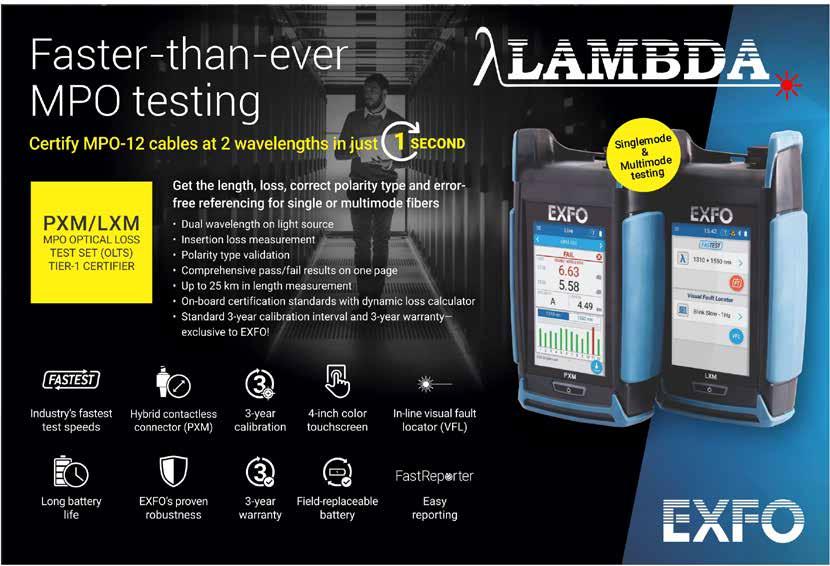
The solution to this conundrum? Enter the realm of cloud-based centralized test data management systems such as EXFO Exchange. The latter offers a bird's eye view of project quality and progress in real-time, simplifying the monitoring, management and reporting of construction milestones and testing outcomes. This streamlined approach doesn't just facilitate certification and enforce compliance but ensures every stakeholder remains in the loop on project vitals.
At the core of the data centre certification process lies a suite of critical tests designed to uphold the network's reliability and operational excellence. This includes the meticulous testing of internal high-density fibre cabling—a key player in connecting the digital dots between racks, servers, and storage units within the centre. Adhering to structured cabling norms, these cables are typically organized into fixed cabling for permanent infrastructure and patching cables for active devices.
The certification of these cables to industry benchmarks or customer-specific requirements is performed using optical loss test sets (OLTS) such as PXM/LXM (MPO OLTS) or OTDRs like the MaxTester 720D. This phase of certification is essential to ensure that each fibre in the network can handle peak performance, especially as the industry moves towards supporting higher speeds like 400G and 800G systems. The cables may include several hundreds of fibres, terminated in connectors that house 2, 8, 16, or 24 fibres, depending on the design requirements. Given the increasing fibre count and the stringent loss/reflectance limits required, inspecting these connectors has become increasingly vital.
The challenge, however, doesn't end there. For sprawling data centres, external fibre cabling introduces an added layer of complexity, making it vulnerable to environmental adversities. In these scenarios, the precision of OTDRbased testing becomes paramount, safeguarding network performance and swiftly identifying any installation snags.
The expansion of data centres navigates a tightrope between the urgency for growth and the imperative for unwavering quality and performance. This delicate equilibrium highlights the pivotal role of thorough testing and certification in fibre-optic cabling. Armed with robust procedures and versatile testing equipment, installation teams and contractors can confidently address the challenges of today, ensuring the delivery of data centres that not only pop up swiftly from the ground but also adhere to the highest standards of operational excellence.
Interested in a deep dive into how to best certify data centres? Watch this on-demand webinar on Certifying high density data centre fibre cabling to TIA-568.3E standard
For more information on EXFO products, contact Lambda Test at support@lambdatest.co.za.



Roshene McCool
Senior Market & Technology Development Manager, Corning
Congratulations on your recent appointment as President of the FTTH Council Europe. What are your key priorities for the organization in the coming year?
I want to continue the excellent work of my predecessor Raf Meersman and to support the sustainability initiatives of the Council, including the reporting platform for Product Carbon Footprint FTTH Eco Platform | FTTH Council Europe. Also, we need to continue to provide advice on important topics for the industry, such as Copper Switch Off and fibre coverage and adoption. To achieve the objectives of the Digital Decade 2030 policy programme, which aims to transform society digitally and to provide the full advantages of fibre connectivity to all, all stakeholders need to work together in finding the best path forward.
With over 30 years of experience in the telecommunications industry, what has been the most significant change you've witnessed in the field of fibre optics?
I think the revolution in in-home broadband and the role that connectivity has played in that has been the biggest change. When I started in the industry fibre was only used in long distance links between large exchanges in telecoms networks. Today it is a pervasive technology that connects into people’s homes. Overcoming the engineering challenge of that amount of connectivity has been the biggest change.
You've led diverse teams throughout your career. What strategies do you employ to ensure effective collaboration and team success?
Providing a safe environment for collaboration is one of the key aspects to the success of a team. In engineering one of the most important aspects of effective execution of a goal is the ability to hear people’s ideas and concerns. Everyone needs to know their voice is valid and will be heard. Simply managing meetings in a way that all participants have a say is a way of ensuring effective collaboration. Not everyone will always agree on decisions taken, but everyone needs to understand why those decisions have been made.
As a Senior Market and Technology Development Manager at Corning, what are some of the exciting developments or innovations in fibre optics that you're currently working on?
I mentioned earlier that the advances in connectivity have been the biggest changes I have seen in the industry. This is driving the need for more fibre, but in the same amount of space. We call that density. Corning is working on developments that can increase the amount of fibre pathways available to customers in the same amount of space, giving higher density cable and connectivity. These developments are exciting because the more connectivity, the more people, homes and things can be connected with high bandwidth and high-quality data.
How can organisations in the telecommunications sector better support and promote gender diversity and inclusion?
The two biggest things the sector can do to support and promote diversity and inclusion are on one hand to create a safe space for all employees to bring their full selves to work. That means making it clear that employees are people with lives that should be accommodated, for example; it’s OK for parents to shift their work time to accommodate children, its OK for employees to celebrate their cultural or religious holidays. That safe space
needs to be protected by organisations with clear codes of conduct and reporting procedures and a clear articulation of company values that are lived by leadership.
Secondly, to enable opportunity. It is a fact of life that women face greater barriers to progression than men. This can be because of career breaks for children or unconscious bias in the distribution of promotions, high profile projects or training. It is important for companies to counter-act this with active programmes to develop pipelines of female talent, both internally and externally via universities and colleges and back-to-work organisations; and to grow that talent with opportunity.
Who are some of the women who have inspired you throughout your career, and what impact did they have on your professional journey?
Dr. Merrion Edwards has been a friend, a colleague, and a leader throughout my career. She has taught me what being fearless looks like in the context of a career and how to demonstrate empathy and respect in the context of a professional relationship. She continues to be a leader in the field of optical communications, and I am very grateful that she is a mentor. I have been the only woman in the room for much of my career, but I have been fortunate to work for men who have set a bar of excellence and expected me to jump it. These men have treated me equally and my gender has not been part of the equation. Often the issue for women is not that their male bosses are actively preventing their progress, but that their bosses do not have high expectations of progress of their female staff. I have worked for men who have treated me equally and have demanded high quality. This is where growth and opportunity come from.
What initiatives or programs would you like to see implemented at FTTH Council Europe to support and mentor women in the industry?
At the FTTH Council we have a DE&I committee and that is providing opportunities for the sharing of best practice and measurement of progress in the industry. Recently we released a Women in Fibre initiative providing visibility to women in the industry Women in Fibre | FTTH Council Europe. Allowing visibility and a voice to minorities in our workforce is important.
How do you see the role of fibre optics evolving in the next decade, especially with the rise of new technologies like AI and the Internet of Things (IoT)?
AI seems to be is the next big frontier in communications. If you look at the speed it is developing with, it is going to be a very exciting time for the industry. I expect to see higher density of connectivity and fibre in cable. I expect to see new fibre technologies and solutions to support that. In general, I expect to see a lot of innovation to take place in a short time to meet the demands of AI and IoT together.
What are some best practices for deploying fibre to the home (FTTH) in rural and underserved areas?
Rural areas are often diverse and the challenges of providing internet connectivity are many, ranging from regulatory restrictions to difficult access and low density. The industry is working hard to deliver products that facilitate the efficient connection of rural subscribers.
For example, Africa is home to more than 3,000 ethnic groups that speak over 2,000 different languages, but this diversity extends beyond cultural and ethnic differences. Networks are deployed in all kinds of environments, from booming metropolises to isolated, rural towns which may have underdeveloped civil infrastructures. Since civil costs can account for up to 80 percent of an overall network build, it is essential to use existing infrastructure. This means flexibility is key. Across Africa, a wide variety of methods are in use, from aerial to underground, deployment in ducts, or burial directly in the ground. The best resource for looking at best practices in this area is the #Broadbandguys who you can find on LinkedIn. Recent innovations in preconnectorised solutions means that there are products out there that can reduce time & skill in deployments making it easier to connect the unconnected.
How can the industry address the current challenges in fibre deployment, such as cost, infrastructure readiness, and regulatory hurdles?
Good policy and regulation can support investment, which is key to starting deployments. This can mean reducing barriers to shared infrastructure and planning procedures. The user experience once connected is also key to driving adoption and the availability of spectrum for the next generation of Wi-Fi technologies is important to this. The FTTH Council Europe has committees focused on Policy and Regulation, Investment, Deployment and Operations, In Home Broadband Excellence and Open Access that provide advice and an industry voice for advocacy. Sustainability is another key challenge the industry must meet and the Council is doing excellent work via it’s Sustainability committee to support the industry in ‘going green’.

8 August 2024 | 8:30 for 9:00 until 11:30
Irene Country Lodge
Nellmapius Dr, Irene, Pretoria
RSVP by 1 August to confirm your attendance, including dietary requirements, to reesha@digitalcouncil.africa
Regret by Invitation Only


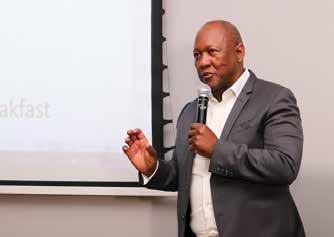
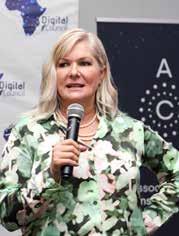
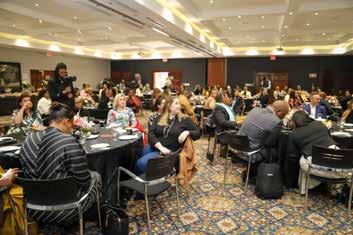
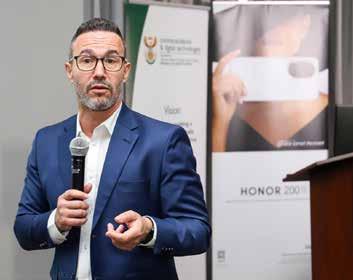
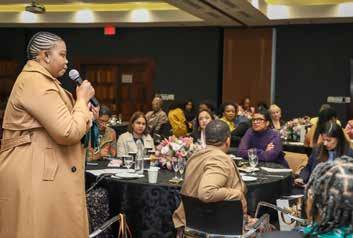
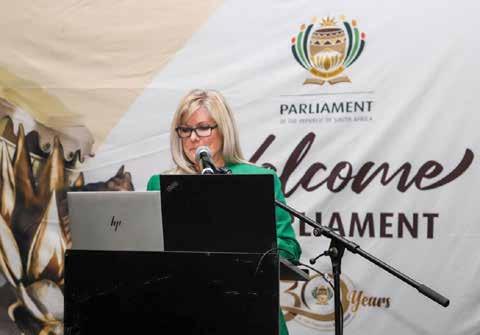
On August 8th, the DCDT, in collaboration with the Digital Council Africa (DCA) and ACT, hosted a vibrant Women's Breakfast at Irene Country Lodge, Pretoria. The event gathered leaders and innovators from the digital and communications sectors to celebrate and empower women. Inspiring speeches were delivered by notable figures such as Ms. Nonkqubela Jordan-Dyani, Director-General of the DCDT; DCA President Dr. Andile Ngcaba; and Cell C CEO Jorge Mendes. The presence of male speakers underscored the significance of their role in supporting gender equality, demonstrating that the dialogue around gender equality is most powerful when it includes them.
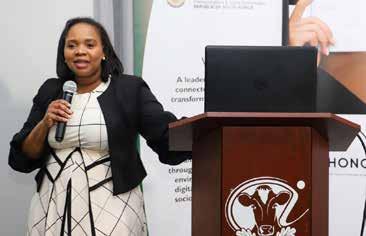
Above Left: Ms Nonkqubela Jordan-Dyani, Director-General in the Department of Communications & Digital Technologies, delivered a warm opening address at the Women's Breakfast.
Above Right: DCA President Dr Andile Ngcaba explored the transformative role of AI over the past three decades and its impact on gender dynamics in the industry in his insightful discussion '30-Year Evolution: The Impact of AI and Gender'.
Left: DCA CEO, Juanita Clark, led an insightful and thought-provoking discussion around the topic of Celebrating 30 Years Of Democracy Towards Women's Development.



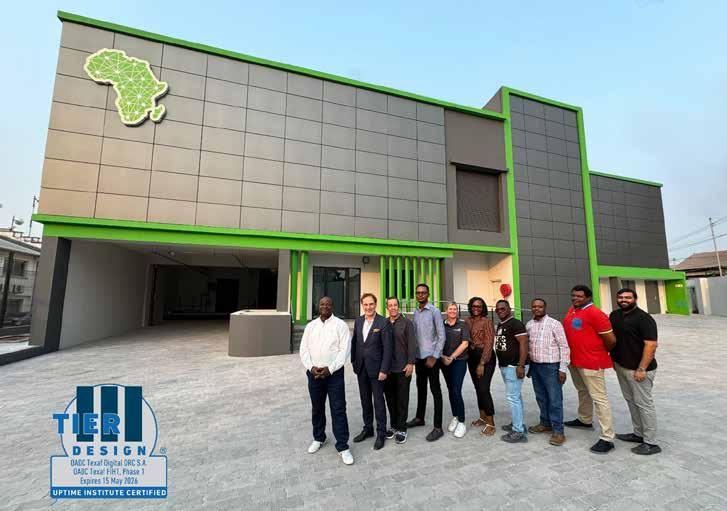
The first phase of OADC Texaf Digital - Kinshasa, a joint venture between Open Access Data Centres (OADC) and TEXAF, is now live. OADC Texaf Digital is establishing a vibrant digital ecosystem supporting Internet Exchanges, content providers, cloud operators, carriers, telcos and Internet Service Providers (ISPs) in offering a wide range of digital products and services to business and domestic customers in the Democratic Republic of the Congo (DRC).
The 2MW-capable facility is the DRC’s first live open-access, carrier-neutral and Uptime Institute Tier-III certified data centre, with ISO27001 post live certification on track for Q3 2024. Clients are already establishing and installing in the facility and all major fibre network providers are present to provide vibrant interconnect to tenants. The facility offers integrated core digital infrastructure solutions comprising tailored colocation services together with a wide range of reliable connectivity and peering options. Power to the data centre is fed from utility sourced from
hydro generation ensuring environmentally sustainable power generation in tandem with low Power Utilisation Effectiveness (PUE). The facility underpins and is accelerating the country’s digitalisation and ICT capabilities, enabling clients to cost-effectively, flexibly and securely grow their operations within the DRC.
With a population of more than 16 million, Kinshasa is at the epicentre of demand for digital connectivity services within the DRC and the region. OADC Texaf Digital - Kinshasa, located within TEXAF’s SILIKIN VIL-
LAGE digital hub, is operated by the award-winning WIOCC Group company OADC, Africa’s fastest-growing data centre company. Configured with 1,500 square metres of IT white space to accommodate more than 550 racks, it delivers colocation, interconnect and peering services to support the colocation needs of enterprise clients, content distribution networks, local and international cloud providers. This enables them to improve efficiency, expedite digitisation initiatives, and more effectively service business and customer needs.
This infrastructure, with its white space architecture and the interconnect and peering ecosystem, is ideally suited to the large international Content Distribution Networks, global content companies and cloud providers that will be able to invest in the DRC.
Mohammed Bouhelal, Managing Director of OADC Texaf DRC, commented: “OADC Texaf Digital - Kinshasa is central to boosting many sectors of the DRC’s economy, creating rich and vibrant digital ecosystems, and providing content distribution networks and cloud content providers with access to a quality peering location in the country.”
He added: “We already have over 12 leading national and international carriers connected, with the banking sector being the leading adopter of OADC Texaf Digital - Kinshasa solutions. The open-access, carrierneutral facility is set to transform the country’s digital infrastructure by creating a comprehensive, vibrant interconnection and peering ecosystem involving multiple carriers, ISPs, content providers and Internet Exchanges.”
The facility embodies carrier-neutral principles, maximising interconnection opportunities for all clients. Increased competition and improved operator cost-efficiencies will contribute to the expected decrease in the cost of internet connectivity for the Congolese people and companies, serving as a major enabler for expansion of the DRC’s digital ecosystem. It will not only offer businesses a viable alternative to selfbuild and self-manage data centre facilities, with all the benefits of dedicated resource, expertise, management time and costs that come with that, but also support the cloud infrastructure and content needs of a wide range of businesses and enterprises. Carriers will benefit too, as OADC Texaf Digital - Kinshasa offers them both additional connectivity revenue opportunities and the opportunity to extend their service portfolios to include managed colocation services.
OADC and TEXAF have partnered in creating this essential building block of the DRC’s digital transformation. This fully validates TEXAF’s strategy of attracting international industry leaders such as OADC into the country and specifically into the new SILIKIN VILLAGE digital hub.
Christophe Evers, Chairman of OADC Texaf’s board of directors, said, “Establishing a strategic partnership to build a data centre in the DRC is crucial for driving digital transformation and economic growth in the region. By leveraging the joint strengths and expertise of OADC and TEXAF, we are not only enhancing digital connectivity and infrastructure but also creating opportunities for businesses to thrive in a rapidly evolving digital landscape. This collaboration underscores our commitment to delivering world-class data centre services that meet the growing demands of enterprises and support the broader objectives of economic development in the DRC. It is a cornerstone of the DRC’s National Digital Plan announced by the President of the Republic.”
– http://www.openaccessdc.net/ Africa’s fastest-growing data centre company, Open Access Data Centres (OADC), a WIOCC Group company, is implementing a world-class, openaccess, carrier-neutral, pan-African data centre footprint that delivers an unparalleled client experience, offering expert assistance and support, partnership in tailoring bespoke solutions and leading-edge information systems to support client business decision-making. OADC is deploying its open-access, Tier-III hyperscale data centres at major cable landing locations and in key business hubs throughout Africa.
OADC EDGE data centres are being deployed into smaller locations, serving the ongoing need to support service providers in extending network reach, and the rapidly growing requirement for content storage, processing, and delivery at the network edge. OADC is an environmentally responsible company and as such is pursuing a wide range of environmental and sustainability management accreditations.
Since 2008, WIOCC Group, Africa’s converged open-access digital infrastructure (CODI) leader, has been helping transform Africa’s digital landscape by introducing client-centric innovations.
WIOCC Group is the parent company of WIOCC, Africa’s digital backbone, and Open Access Data Centres (OADC), Africa’s fastest-growing data centre company. It is pioneering and accelerating Africa’s digital transformation: creating an environment in which all Africans can take advantage of world-class technology developments to build better lives, better businesses and a better world, by deploying CODI across Africa; infrastructure that is expediting and underpinning Africa’s digital transformation.
ABOUT
– www.texaf.be
Established in 1925, TEXAF is the only listed company with all its activities in the Democratic Republic of the Congo (DRC). Currently, these are concentrated on real estate and quarrying, although TEXAF is beginning to develop a new branch of activity in the digital field and aims to become a major player in this sector.
This listing on the stock exchange and the resulting obligations of good governance and transparency constitutes a major asset for the group's development and for the promotion of the formal sector in the DRC.
For further information contact: greg.sellars@wiocc.net


We're absolutely thrilled to announce that our second group of learners—aka the unstoppable FemaleForce Network crew—has successfully completed their Optic Fiber training at Letlhakga Projects (Pty) Ltd! Starting their journey on January 18, 2024, they've conquered the course with flying colours.
The Digital Council Africa, together with our fantastic partners at MICT SETA, couldn't be prouder of these trailblazers. Their resilience and perseverance have not only earned them new skills but also opened doors to exciting opportunities in the digital economy. They're now ready to help bridge the digital divide and drive transformation across Africa.
A huge shoutout to MICT SETA and Letlhakga Projects for the incredible support they’ve provided to our learners. Your dedication has made all the difference!
To the FemaleForce crew, we wish you nothing but success in your future adventures. Go out there and shine!
Visit SAYouth.mobi to access the FemaleForce crew CV's.







Join the Digital Council Africa at the C2C Summit 17th & 18th of September in Arusha, Tanzania
We can’t think of a more inspiring backdrop than the breathtaking Mount Meru. Hosted at the Gran Melia Hotel, nestled between the Serengeti and Kilimanjaro National Parks, this stunning location will inspire us as we work together to advance meaningful connectivity in Africa.
Alongside Tanzania's Ministry of Communication and Information Technology, 300 thought leaders and key stakeholders will gather to drive the region's connectivity agenda forward. Engage in discussions, build strategic partnerships, and explore innovative solutions for a connected, sustainable future in Sub-Saharan Africa.
Recent advances in ICT connectivity have driven digital transformation across the region. This summit offers a unique platform to dive into these developments, explore the latest trends, and understand their impact on fostering sustainable ecosystems and economic growth.
KEY THEMES:
• State of the Industry: Gain insights into the current landscape and emerging trends in the ICT sector
• Outsourcing and Partnerships: Discover the power of strategic collaborations in driving growth and innovation.
• Sustainable and Thriving Ecosystems: Learn how to build innovative ecosystems that promote sustainability and inclusivity.
• Digital Resilience: Explore effective strategies to enhance digital resilience in the face of evolving challenges
• Robust Broadband Networks: Understand the importance of robust broadband infrastructure in enabling seamless connectivity
WHY ATTEND?
• Network with industry leaders and decision-makers
• Participate in insightful panel discussions and keynote sessions
• Build strategic alliances and partnerships
• Explore the latest innovations and best practices in ICT connectivity
View the Draft Agenda for the Summit.
For more information or to register, visit https://extensia.tech/summits/connect-2-connect-2024/.

At m4a, we pride ourselves on being industry leaders in plastic injection and composite thermoset moulding, extrusion, mould-making, design and prototyping. Harnessing the latest in technology, we deliver high -quality solutions that meet the exact needs of our customers. Here's how we excel in each discipline:
Design
Our design team uses the latest CAD and FEA software and innovative design methodologies to bring your ideas to life. We collaborate closely with you to ensure that every aspect of the design meets your requirements and expectations. From concept to final product, our design services integrate seamlessly with our manufacturing processes, ensuring a smooth transition from design to production.
Prototyping
Our prototyping services leverage the latest in 3D printing and rapid prototyping technologies. This allows us to create accurate, functional prototypes quickly, helping you to visualize, test, and refine your designs before full -scale part or mould production. Our prototyping capabilities enable faster innovation and reduce the risk of costly errors.
Mould-making and Machining
Our mould-making and machining expertise is powered by cutting -edge CAD/CAM software and advanced machinery. We design and manufacture custom tools that are robust, durable, and tailored to your specific production needs. Our experienced team ensures that each tool is engineered to the highest standards, enhancing the efficiency and quality of the production processes.
Plastic Injection & Composite Thermoset Moulding
Our state-of-the-art moulding facilities utilize the latest in automation and precision technology. This ensures consistency, quality, and efficiency in producing parts ranging from simple components to complex assemblies. Our injection moulding services are designed to accommodate various materials and production volumes, making us the ideal partner for projects of any scale.
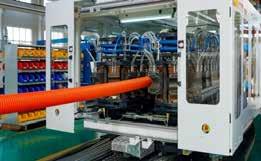
Our plastic extrusion plant is equipped with advanced technology to produce a variety of high -quality products, including micro-ducts for the fibre -optic industry, plastic corrugated pipes up to Diameter 315mm and high - pressure water pipes. Our pipes carry an application in civil, electrical, municipal, telecoms and high -pressure environments. Our expertise in plastic extrusion ensures that each product meets rigorous standards for durability and performance.
Embracing Sustainability: Taking Carbon Back
Key Advantages:
• Cutting-edge technology in all disciplines
• Expertise and experience in diverse industries
• Tailored solutions to meet specific client needs
• Commitment to quality and customer satisfaction
• Sustainable practices and eco -friendly materials


Everite Factory Premises, Heidelberg Road (R550), Klipriver, South Africa
Everite Factory Premises, Heidelberg Road (R550), Klipriver, South Africa
Tel: +27 11 903 7023 l Email: info@m4a.co.za
Tel: +27 11 903 7023 l Email: info@m4a.co.za www.m4a.co.za
www.m4a.co.za



The Digital Council Africa, in collaboration with Nedbank Corporate and Investment Banking, invites you to the upcoming Digital Infrastructure Investment Summit. Join us as we discuss connectivity from the oceans to the sky.
The Digital Council Africa, in collaboration with Nedbank, hosted the Digital Infrastructure Investment Summit (DIIS) on 22 August in Rosebank. The summit explored the evolving investment landscape in the digital sector, reassessing the financial models and market dynamics that have significantly changed over the past 15 years since the inception of fibre infrastructure. This meeting of innovative minds provided a snapshot of current trends and future projections in digital infrastructure, noting the growing demand for robust and scalable ICT infrastructure to support technological advancements.
Date: 22 August
Venue: 54 on Bath, 54 Bath Ave, Rosebank, Johannesburg (Location on Google Maps)
Times: Arrival & Registration -12:00 (light lunch will be served)
Summit begins - 13:00 Dinner, Le Petit Chef - 18:00
Industry leaders discussed the business case and how it has evolved, with particular focus on expanding into lowerincome areas and addressing the ongoing challenge of closing the digital divide. With 12 million households still viable for deployment, the summit examined the realistic opportunities and explored the technologies and methodologies needed to achieve comprehensive coverage.
Kindly RSVP by 15th August to confirm your attendance, including dietary requirements, to reesha@digitalcouncil.africa
Please note: This event is by Invite Only. Should you want to extend this invitation kindly contact us by return mail.
The event focused on the fibre optic network and data centre markets, providing insights into what the future holds for both. This summit was a key moment to shape the future of digital infrastructure investment, offering attendees valuable insights and strategic networking opportunities. The event concluded with a fabulous Le Petit Chef dinner and show at 54 on Bath.

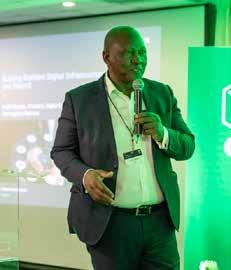


Neili brings over 20 years of extensive experience in designing, deploying, and managing FTTX & Telecom projects across diverse regions of the African continent. Having joined Tunisie Telecom in 2021, he was able to quickly move up the chain of responsibilities within the fixed networks management department where he ended up occupying the position of FTTX Project Director consolidating the position of the historic telecom’s operator in Tunisia as a technological leader in the high-speed bandwidth market.
In 2014, he joined the giant MTN as a senior consultant for the launch of an FTTH project in the Ivory Coast. Neili joined NETIS Group in 2018, a leading service provider in over 15 African countries, where he was a key player in managing the setup and development of FTTH solutions and projects in over 7 countries in senior management positions. He has been an integral part of the
design, deployment and maintenance of infrastructure that connects more than 200k customers via FTTH across Africa.
Neili remains deeply passionate about the evolution of the telecom sector and actively contributes to the success of innovative projects. He is a telecom engineer from ESPTT in Tunis. In addition to this, he has undertaken multiple training programs that include the designing and planning of a variety of networks including GSM, NGN, FTTX and FTTH-FTTB.
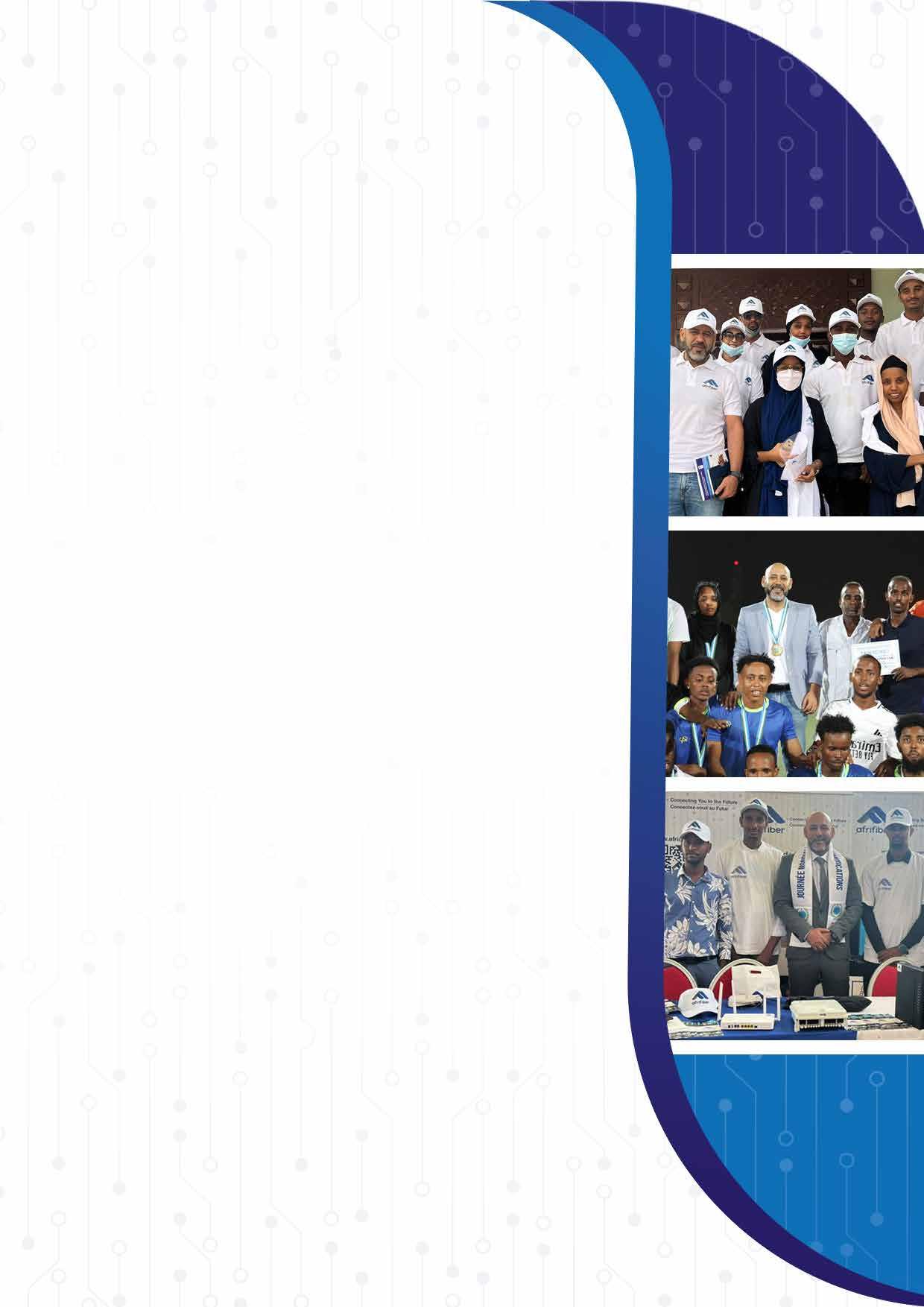
The Government of Djibouti, under the leadership of His Excellency the President, is executing Vision 2035. At afrifiber, we are aligned with this vision to create a culture of digital inclusion and accessibility for all Djibotians.

+253 21 341 610
info@afrifiber.com

Workshop for the Portfolio Committee on Communications and Digital Technologies planned for 20,21 & 22 August 2024.
The intended and primary objective of the workshop was to familiarise Members of the Committee with the ICT ecosystem through an induction and orientation of the sector. This also included deliberations on how business, civil society, academia and research bodies partner and collaborate with legislators on ensuring that there is agile legislation and policies emanating from the work of the Committee. Juanita made a presentation to the Committee on behalf of the DCA.
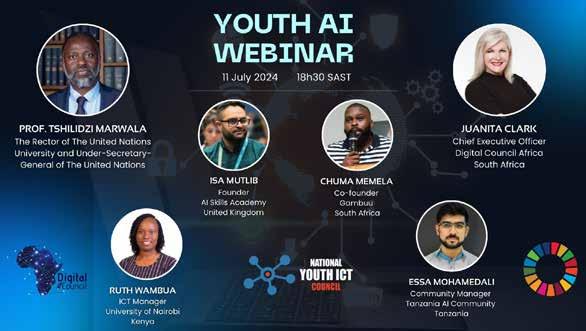

Juanita Clark was a speaker at the Youth AI Webinar. The webinar investigated the future of work in the context of AI's impact on skills development, jobs, and opportunities for entreneurs in Africa.
To view a recording of the conversation visit: https://youtu. be/2jdSTs8Mkhs
Key Discussions at Pan African Data Centres and Cloud Solutions Africa Event
Juanita Clark participated in the Pan African Data Centres and Cloud Solutions Africa event on the 16th and 17th of July in Johannesburg.
She contributed to both the Data Centres and Cloud streams, engaging in panel discussions on "Investment Opportunities in the African Data Centre Market" and "Unlocking Africa’s Potential: Defining a Cloud Ecosystem to Empower Tomorrow’s Africa."

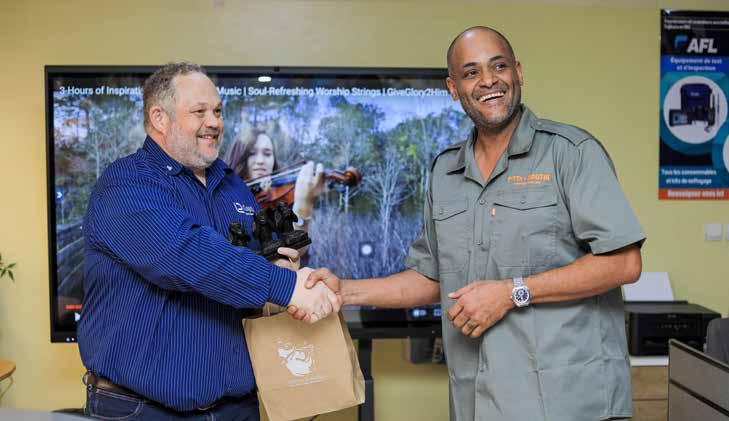
IC Logistix (ICL) proudly announces the opening of Central Africa's first-ever Fujikura Service Lab in the Democratic Republic of the Congo (DRC). This significant expansion marks a pivotal milestone for IC Logistix, reinforcing its dedication to delivering unparalleled aftersales service and cutting-edge technological support across Africa.
As the sole accredited Distributor and Calibration & Repair Centre for premier brands including Fujikura, AFL, Softing, and Plumettaz in Southern Africa and now the DRC, IC Logistix is poised to enhance the optical fibre industry by providing reliable support to both urban and remote areas.
The Fujikura lab, which officially opened on July 1, 2024, is the result of a strategic partnership between IC Logistix and Ingekora Groupe, forming IC-Kora. This collaboration is set to expand splicer repair services across Central Africa, offering enhanced accessibility to Fujikura products and dependable servicing in the region.
“Philippe Ilunga, an ICL-trained technician from the DRC, plays a pivotal role in this venture, bringing invaluable local expertise to enhance connectivity across the region,” said a spokesperson from IC Logistix.
Central to IC Logistix’s philosophy is YUSHU, the Japanese philosophy for excellence. The company's unwavering commitment to exceptional aftersales service is reflected in its state-of-the-art calibration and repair laboratory. Staffed by highly trained technicians, the lab is designed to provide comprehensive services, including:
• Calibration: Maintaining splicers, cleavers, OTDRs, and other optical fibre tools to factory standards to reduce signal loss and ensure optimal performance.
• Servicing: Tailored maintenance schedules to extend equipment lifespan and prevent unexpected breakdowns, complete with accredited calibration certificates.
• Repairs: Efficiently addressing malfunctions using genuine parts and adhering to manufacturer guidelines.
IC Logistix's exclusive status as the only accredited calibration and repair centre for leading brands in the region emphasizes the quality and reliability of its services. The company proudly honours all manufacturer warranties, ensuring clients receive the highest standard of support and service continuity.
Clients benefit from IC Logistix's deep commitment to customer satisfaction, which starts from the moment of purchase. The company offers personalized support, including technical assistance, service agreements, and training, enhancing every aspect of the customer experience. Testimonials from satisfied customers highlight the significant operational improvements attributed to IC Logistix’s efficient and reliable services.
ICL specializes in importing and supplying advanced technology to Southern, Western, and Central Africa. Since entering the fibre-optic telecom market in 2011, ICL has secured sole accredited distribution for Fujikura’s splicing equipment and AFL’s test-and-inspection equipment. Their comprehensive product range and services provide a turnkey solution for installing and maintaining optic fibre networks.
IC Logistix and IC-Kora are dedicated to providing premium calibration, servicing, and repairs for optical fibre equipment, ensuring that businesses in Southern Africa and the DRC receive top-tier support. With an exclusive lab, robust manufacturer partnerships, and a customer-first approach, IC Logistix and IC-Kora stands out as the trusted solution for optical fibre operations.
For Further Information, Please Contact:
South Africa:
345 Main Ave, Ferndale, South Africa, 2194
Web: www icl co za
Email: lab@icl co za
WhatsApp: +2773 707 1398
Tel: +2711 521 2380
Social Media: @iclogistix
Kinshasa, DRC:
Office Block 1, 145 Ave, Wangata Commune de Kinshasa, Kinshasa, DRC
Web: www icl co za
Email: lab@ic-kora com
WhatsApp: +243 999 661 316
Tel: +243 995 535 990
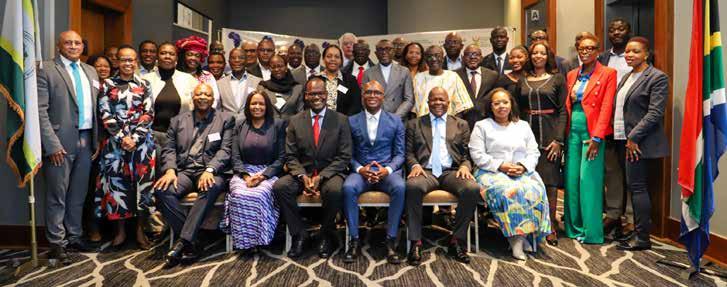
South Africa hosted the 3rd and final ATU preparatory meeting for WTSA-24 from 12-16 August 2024 in preparation for the ITU World Telecommunications Standardization Assembly (WTSA-24), scheduled to take place from 15-24 October 2024, New Delhi, India. Juanita was invited to deliver an address during the farewell dinner which took place on Thursday 15 August 2024.

DCA CEO Juanita Clark and DCA President Dr. Andile Ngcaba were featured speakers in the "EmpowHer: AI through a Gender Lens" webinar, hosted by Convergence Partners and SolCon Capital in honor of South Africa's Women's Day. The event delved into the ethical, societal, and gender-related implications of Artificial Intelligence (AI), with a focus on fostering an inclusive digital future.
Dr. Andile Ngcaba discussed the need for a nuanced understanding of AI’s risks and opportunities, stressing the importance of developing digital literacy frameworks to protect society, especially children, from the manipulative potential of algorithms while Juanita Clark emphasised the importance of addressing gender bias in AI and highlighted the significance of male participation in gender equality discussions, expressing appreciation for the event's inclusive approach.
The webinar was a critical platform for advancing informed discussions on AI’s impact, and both leaders expressed their gratitude to Convergence Partners and SolCon Capital for facilitating such meaningful dialogue.















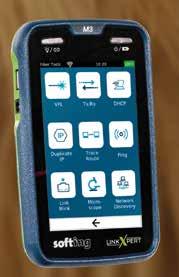





































DID YOU FIND THEM ALL?

2. An abbreviation for fibre to the home.
4. Your premium Fibre Optic Test Equipment Supplier.
6 Abbreviation for passive optical network.
8. The outer layer of an optical fibre, which surrounds the core and helps to confine the light within the core by reflecting it back into the core.
9. A specialised tool used to precisely cut optical fibres cleanly and squarely.
10. A thin, flexible strand of glass or plastic capable of transmitting light signals over long distances by confining and guiding light within its core.


11. A very strong, very light, synthetic compound which is used to strengthen optical cables.


1 The process of permanently joining two optical fibres together to create a continuous optical path for transmitting light signals.
2 The Market Leader in Splicers.
3. An instrument that measures the amount of optical power present at the end of a fibre or cable.
5 The central part of an optical fibre that carries light.
7. An instrument that measures transmission characteristics by sending a short pulse of light down a fibre and observing back-scattered light.






THANK YOU FOR TAKING PART IN OUR CROSSWORD PUZZLE.







"that's where the future lies, in the youth of today."- willie stargell






South Africa faces a crisis of youth unemployment. Of the 1.2 million young people who enter the labour market each year, approximately two thirds remain outside of employment, education or training
and plan Ramaphosa
to address unemployment challenge
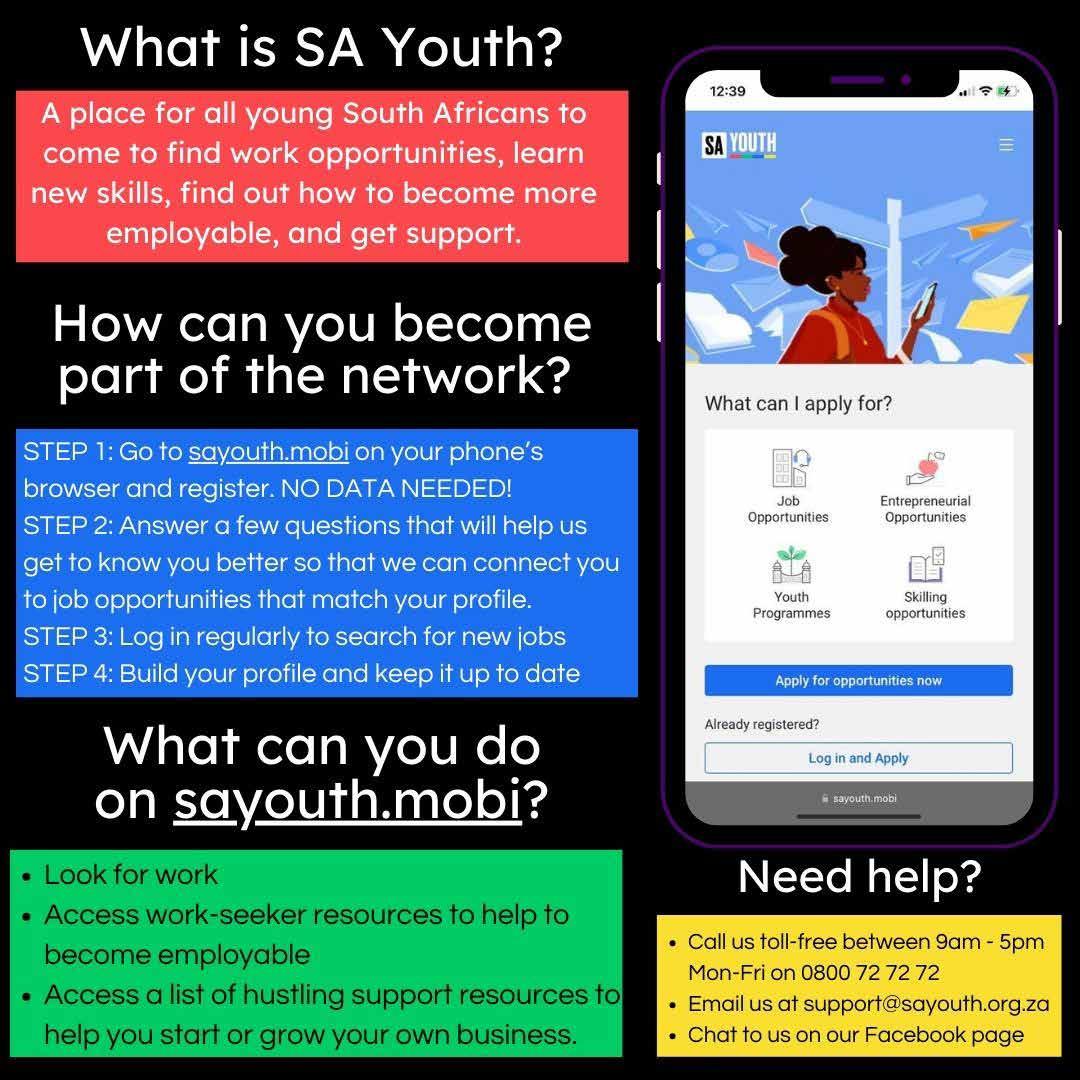
• The NPMN is one of the initiatives under the Presidential Youth Employment Intervention (PYEI)
• It is a network of partners across government, business and civil society that work together to:
• Create, stimulate and aggregate income earning and learning opportunities for young work-seekers
• Match and connect young people to these opportunities
• Drive systems change to support inclusive hiring
Inclusive access to the economy opportunities for youth, at scale
To find out more:
Online platform connecting partners to engaged work-seekers
• Click on the following link https://sayouth.me/3zsKdRH or
• Find us on Facebook and search for "What is SA Youth?" on the content tab
To access resources you will need to be registered on SAYouth.mobi first


Dear Colleagues,
Welcome to Conext, the official Newsletter of the Digital Council Africa and its members.
August was a busy month for the DCA team as we celebrated Women and the incredible role and contribution they make to the telecommunications industry.
Notably, there is a substantial divide between men and women in internet access and use globally, as the majority of the 2.9 billion people who remain unconnected are women and girls. This divide limits the potential of women to contribute meaningfully to the ICT sector and stops us from achieving gender equality, women’s rights and digital rights for women and girls.
Despite progress, the digital access gap in Sub-Saharan Africa remains significant, with a 37% disparity, according to the World Bank. This is the second highest in the world, behind South Asia. Bridging this gap is essential to achieving gender equality and empowering all women and girls.
We remain committed to our vision of a South Africa where everyone is empowered by the opportunities that connectivity brings.
We are truly excited to be bringing you the Digital Council Africa Market Platform, hosted on the Digital Council Africa website! This platform is designed to support our loyal members by providing them with a platform to showcase their products. It will serve as a ‘one-stop-shop’ where you can find the latest available technologies for all things telecommunications networks, as well as contact details of suppliers. List your product here.
In closing. A reminder and an invitation to join me at Connect2Connect in the first week of September in Arusha at the base of the spectacular Mount Meru, Tanzania as we partner with Extensia Limited and the Ministry for Telecommunications Tanzania to host an event focussed on connectivity and digital infrastructure in the East Africa region. This region poses tremendous opportunity, and this event will delve into the prospects it holds in the digital infrastructure space! Find more information on this in the pages of the newsletter or reach out to me for more information.
Remember, Conext belongs to you, our members. We invite you to use this platform to share thought leadership insights, updates about your company, or product information that may benefit other members.
Thank you for your ongoing support. Together we are creating a truly transformed Africa, one in which all can participate equally.
Stay safe,




Juanita Clark CEO
juanita@digitalcouncil.africa

Reesha Iyer
Member Services
reesha@digitalcouncil.africa
Sipho Makhalema
Events Manager
sipho@digitalcouncil.africa
Nadene Reignier
Stakeholder Communications
nadene@digitalcouncil.africa
The Digital Council Africa respects your right to privacy and we aim to ensure that we comply with the POPI Act (Act 4 of 2013), which regulates the manner in which we collect, process, store, share and destroy any personal information which you have provided to us. Your personal information is strictly confidential and we will notify you immediately should we become aware of any unauthorised use, disclosure or processing of your personal information. Kindly note that you may choose to opt out at any time from all marketing and other communications by contacting Reesha Iyer at reesha@digitalcouncil.africa
The Digital Council Africa has an Equipment Monitoring page on its website. The aim is to curb theft of equipment.
To view a list of stolen equipment, you can access the list here
We encourage members to regularly send through the serial numbers of stolen equipment, and inform us when equipment is recovered to ensure that the information remains up to date and accurate.
Information can be sent to Reesha Iyer at reesha@digitalcouncil.africa
In addition, it remains the responsibility of the industry to regularly do spot checks against the serial numbers of contractor equipment to ensure that stolen equipment is identified and that culprits are eradicated from the industry. Companies wishing to purchase second hand equipment should compare the equipment serial numbers against those listed on the website.