End-to-End Payment Tracking
According to Statista, global inward remittances are projected to hit $1 42 trillion by 2030!
And the volume has never been higher. With globalization deepening and families becoming more international, banks and money transfer providers now process billions in cross-border remittances each year.
But here’s the challenge
Today’s customers expect more than just money delivery They want real-time updates and complete visibility on where their funds are at every stage
Traditional, opaque systems simply don’t meet this demand anymore. If your platform doesn’t support end-to-end payment tracking, you’re already behind the curve.
In this article, we’ll unpack what inward remittances mean, why end-to-end tracking is vital, and how businesses can stay competitive in a financial ecosystem that thrives on speed, compliance, and transparency
What Are Inward Remittances and Why Do They Matter?
Inward remittances are funds transferred by someone abroad to a recipient in their home country The money typically lands in a bank account or mobile wallet
For example:
A Bangladeshi worker in the UAE sends part of his monthly salary back home through a remittance app. His wife instantly receives it in her mobile wallet and uses it to pay tuition fees and household bills.
That’s inward remittance in action fast, digital, and essential
Common Types of Inward Remittances
● P2P Transfers: Individuals sending money directly to family for everyday expenses
● Business Payments: Cross-border settlements for invoices or suppliers
● NGO & Aid Transfers: Donations or grants sent to nonprofits in developing regions
● Digital Wallet Transfers: Instant wallet-to-wallet payments across borders
Why They’re Crucial
In many emerging economies, remittances are a lifeline. People depend on them to:
● Fund children’s education
● Cover urgent healthcare needs
● Start or sustain small businesses
For banks and fintechs, it’s more than just money movement it’s a pathway to financial inclusion A seamless remittance process can turn a single transaction into a lasting customer relationship
In fact, the World Bank notes that remittances form a significant share of GDP in nations such as India, Nigeria, the Philippines, and Kenya.
The Problems With Traditional Remittance Systems
Despite tech progress, old-school remittance processes still cause friction, mainly due to limited transparency.
Here’s what often goes wrong:
● Too many intermediaries: Each transaction passes through multiple banks and switches, creating delays and extra costs
● No real-time updates: Once sent, customers lose sight of the money’s journey leading to anxiety and lost trust
● Hard-to-manage support: Without proper tracking tools, support teams spend hours chasing transaction statuses
● Compliance issues: Lack of visibility raises fraud risks and attracts regulatory penalties
In short, without end-to-end tracking, you and your customers are in the dark.
What Is End-to-End Payment Tracking?
End-to-end payment tracking means tracing a transaction from the moment it’s sent until it reaches the recipient Every stage is logged, monitored, and visible
This creates a predictable, secure, and transparent remittance flow
It typically includes:
● Timestamps at initiation, processing, settlement, and payout
● Cross-party visibility across banks, fintechs, wallets, and MTOs
● Real-time dashboards & alerts
By adopting this, businesses move from reactive firefighting to proactive control, aligning with international standards like SWIFT GPI and ISO 20022
Why Payment Tracking Is Non-Negotiable
Consumers today expect the same clarity for money transfers that they get from food delivery or ride-hailing apps Regulators, too, are enforcing stricter transparency
And for internal teams, visibility translates to fewer escalations, faster resolutions, and reduced costs
Impact by Sector
● Banks: Customers demand both safety and speed. If you can’t show real-time updates, they’ll switch providers.
● Fintechs: Quick transfers aren’t enough users also want assurance. Tracking cuts down support queries and boosts loyalty.
● Money Transfer Operators (MTOs): Managing multiple corridors requires real-time oversight. Tracking ensures accountability and protects brand reputation.
Bottom line: Transparency is no longer optional it’s fundamental.
Core Benefits of End-to-End Tracking
Implementing full transaction tracking drives measurable improvements across the board:
● Builds Trust: Real-time visibility reassures customers, reduces anxiety, and boosts retention
Minimizes Fraud Risks: Suspicious activity can be flagged instantly, supporting AML compliance
● Enhances Efficiency: No more endless calls to partners chasing updates teams resolve issues faster
● Improves Experience: Predictability matters When customers know when funds will arrive, confidence grows
● Data-Driven Insights: Tracking unlocks corridor analytics, partner performance monitoring, and cost optimization
Why High-Remittance Regions Need It Most
● Africa: Heavy reliance on mobile money, but poor digital infrastructure makes tracking essential for trust and smooth payouts.
● Asia: Busy corridors like Gulf–India demand speed and reliability. Tracking helps reduce failure rates.
● MENA: Strict compliance and fragmented networks make real-time visibility vital to safeguard reputation.
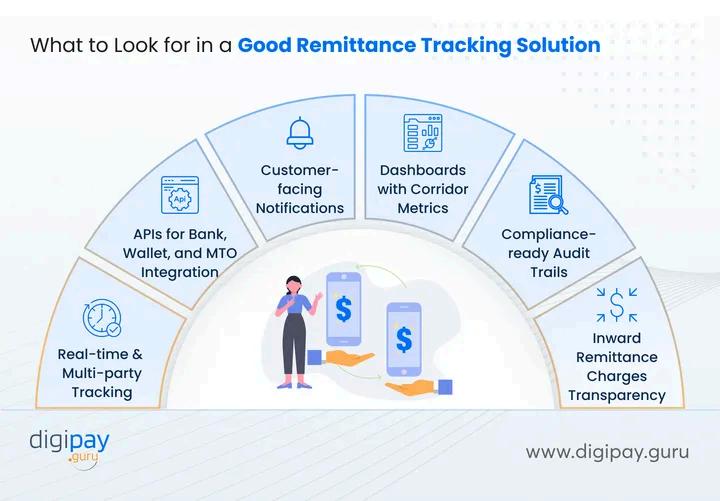
What to Look for in a Reliable Tracking Solution
When assessing a remittance tracking system, prioritize features that address real-world pain points:
● Real-time multi-party tracking across banks, wallets, and partners
● Seamless APIs for integration with existing systems
● Customer-facing notifications (SMS, email, app alerts)
● Ops dashboards with corridor performance metrics
● Compliance-ready audit logs (ISO 20022, SWIFT GPI support)
● Transparent fee breakdowns to boost credibility
How DigiPay.Guru Delivers Seamless Tracking
At DigiPay.Guru, we believe remittances aren’t just about moving money they’re about moving it with trust and visibility
Our platform empowers remittance businesses with:
● End-to-End Real-Time Visibility: Track transactions from sender to recipient
● Operational Dashboards: Support and compliance teams get instant insights
● Easy API Integrations: Works smoothly with banks, wallets, and payout networks
● Built-in Compliance Support: Ready for SWIFT GPI, ISO 20022, and AML checks
The Results
Clients using DigiPayGuru report:
● 45% fewer “Where’s my money?” queries
● Faster dispute resolutions
● Stronger corridor reliability
Conclusion
Inward remittances today aren’t just about whether money arrives. They’re about how quickly, through whom, and with what transparency.
Customers expect clear updates, regulators demand traceability, and your teams need visibility to perform effectively
If you’re a bank, fintech, or MTO, real-time end-to-end tracking isn’t a luxury—it’s a necessity
And DigiPay.Guru equips you with the tools to deliver trust, speed, and seamless control across global payment corridors.
Ready to modernize your remittance experience? Let’s make it happen.
Note - This content originally posted on - Importance of End-to-End Payment Tracking for Inward Remittances
Reach
Us Today
- hello@digipay.guru Social Media