Closed-Loop
Closed-loop payments are powerful loyalty and revenue drivers, but the ideal format wallet or card depends on your audience, infrastructure, and goals Here's how to decide
What Is a Closed-Loop Wallet?
A closed-loop wallet is a digital payment solution tied to a specific brand or business, usually within a mobile app or website. Think of prepaid balances, loyalty credits, in-app rewards usable only within your ecosystem.
These wallets let businesses automatically apply offers, track spending, reward purchases in real time, and integrate seamlessly into a digital experience. Examples include Starbucks Rewards, Uber Cash, and Amazon Pay balance
Ideal Uses for Wallets
● Frequent small purchases: Coffee shops, quick-service restaurants, transit systems
● App-first businesses: Delivery, ride-share, gaming or e-commerce platforms
● Instant incentives: Real-time discounts, rewards, and loyalty awards
What Is a Closed-Loop Card?
A closed-loop card is a brand digital that only works within a business’s network. These olled spending limits, and be issued for specific use cases l ore credit.
When Cards Shine
● Gifts or prepaid use: Retail, restaurants, entertainment venues
● Offline environments: Locations without reliable mobile coverage
● Memberships and access control: Gyms, campuses, clubs issuing prepaid or time-limited access passes
Key Differences at a Glance
User access
Mobile app or browser
Infrastructure needed Requires app support
Brand experience
Campaign flexibility
Digital, dynamic
Very high
Accessibility Requires smartphone
Personalization
Physical or digital card
Works standalone
Tangible, visible
Moderate
Open to all, no app needed
Rich data-driven insight Basic usage tracking
Benefits Unique to Wallets
1 Always accessible – Integrated into the app users already have
2 Behavioral insights – th opportunities for push notifications, gamificati
3. Rapid deployment – N ns can change on the fly
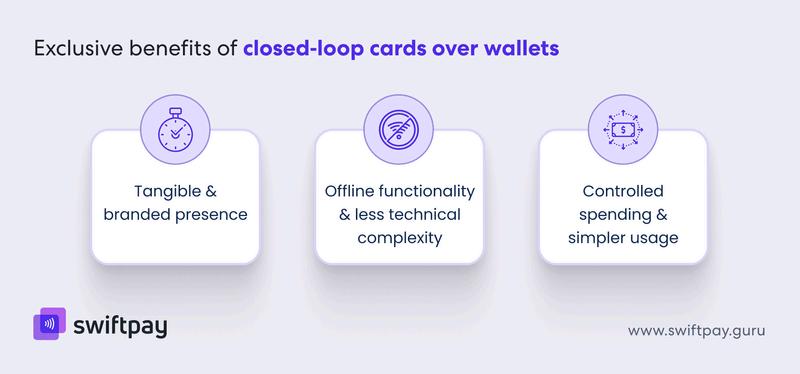
Advantages of Closed-Loop Cards
1 Physical branding – A card in a wallet or clipped to a lanyard serves as a tangible reminder
2 Works anywhere offline – No smartphone or internet required
3. Spending control – Ideal for preset allowances or parental/staff budgets
When to Use Each
Choose Wallets If:
● You have an existing mobile app
● Your audience is digitally savvy
● You want real-time offers and deep analytics
● You handle frequent, low-value transactions
Choose Cards If:
● You want branded, physical tokens
● Your audience may not use smartphones often
● You operate in offline environments like parking lots or student campuses
● You need capped spen
Can You Use Both?
Absolutely and many businesses do For example:
● Issue cards as gift items or for offline use
● Offer wallets for app-engaged customers
● Employ both closed-loop payment solution to cover different user needs and stages
Final Thoughts
Closed-loop wallets offer agility, data insights, and frictionless digital engagement. Closed-loop cards offer tangible presence, offline ease, and controlled spending
Each supports loyalty and rewards and repeat visits your choice depends on your audience, usage environment, and marketing strategy. Some businesses benefit from implementing both and capturing the advantages of each
If you'd like help selecting the right approach, SwiftPay's closed-loop payment solution can guide you. Whether it's a card, a wallet, or both, we'll tailor the system to complement your customer experience and support lasting loyalty
This blog was originally published at - Closed-Loop Payments: Wallets vs. Cards Explained
- hello@digipayguru
Number - +91 9662923845