FOOD FOR THOUGHT
Ade Ardhana
Ainur Kaheqsi
Alexandra Tuit
Ade Ardhana
Ainur Kaheqsi
Alexandra Tuit
Alodia Yap
Amran Rizky
Aphrodita Wibowo
Diandra Lamees
Dimas Hussein
Era Premakara
Eunice Nuh Tantero
Friski Jayantoro
Gitta Amelia
Ho Bin Kim
I Gede Sukarya
I Gusti Ngurah Agung Dalem Diatmika
Ibob Hariyatmoko
Ipang Cahyo
Jayanto Tan
Josh Gondo
Kevin “Ple” Aditya
Leka Putra
Mahendra Pampam
Mandy CJ
Michelle Sutanto
Miranda Pranoto
Morris Hork
Mukhammad Syaifullah
Mulyana (Mangmoel)
Nadhief Ashr
Naufal Abshar
Ricky Wahyudi
Sifa Adni Qolby
Sillyndris
Suyatno
Syagini Ratna Wulan
Veronica Liana
Widi Wardani Purnama
WISMA
Reydo Respati
Youngsook Park
Catalog for Unserious Series #1
Food for Thought D Gallerie, Jakarta Feb 2026
Writer Wina Luthfiyya Ipnayati
Published by D Gallerie, Nov 2025 Jl. Barito I No.3, Kebayoran Baru Jakarta 12130 +62 21 739 9378 dgalleriejakarta@gmail.com dgalleriejakarta.com
Designed by Kotasis 333 Surabaya, Indonesia www.kotasis.com
PRINTED IN INDONESIA
Ada sesuatu yang selalu kita konsumsi tanpa benar-benar kita sadari: prosesnya.
Makanan hadir sebagai hasil akhir, sementara kerja di baliknya kerap luput dari perhatian. Hal yang sama terjadi dalam seni rupa: yang terlihat adalah karya, bukan bagaimana ia dipilih, diolah, diuji, dan diberi nilai.
Food for Thought bekerja pada dua ranah sekaligus. Pertama, ia membaca praktik seni rupa sebagai proses transformasi dari bahan menjadi bentuk. Kedua, ia menempatkan konsumsi sebagai lensa untuk melihat bagaimana makna dan nilai diproduksi serta diterima.
Struktur pameran ini mengikuti alur pengolahan tersebut: Ingredient, Appetizer, Main Course, Dessert, Plating, dan Aftertaste. Pembagian ini bukan sekadar permainan istilah kuliner, melainkan pendekatan kuratorial untuk membaca tahapan transformasi dalam praktik artistik.
There is something we constantly consume without fully recognizing it: the process.
Food appears as a final product, while the labor behind it often goes unnoticed. The same occurs in visual art: what is visible is the artwork, not how it is selected, processed, tested, and assigned value.
Food for Thought operates on two levels at once. First, it reads artistic practice as a process of transformation from material into form. Second, it positions consumption as a lens through which meaning and value are produced and received.
The structure of the exhibition follows this trajectory of preparation: Ingredient, Appetizer, Main Course, Dessert, Plating, and Aftertaste. This division is not merely a playful borrowing of culinary terms, but a curatorial framework for understanding the stages of transformation within artistic practice.
Pameran ini dimulai dari bahan.
Karya-karya pada lapisan awal memperlihatkan kedekatan dengan materialitasnya. Tekstur yang masih terasa mentah, lanskap yang menyimpan waktu, objek domestik yang merekam kerja repetitif. Yang ditonjolkan adalah asal-usul dan potensi.
Seperti ingredient dalam dapur, material belum sepenuhnya dipadatkan oleh narasi besar. Ia menyimpan kemungkinan. Di sini, perhatian diarahkan pada jejak sentuhan dan proses yang belum selesai.
This exhibition begins with materials.
The works in the opening layer reveal a close proximity to their materiality. Textures that still feel raw, landscapes that hold time, domestic objects that record repetitive labor. What is emphasized here are origins and potential.
Like ingredients in a kitchen, the materials have not yet been solidified by a grand narrative. They hold possibility. Here, attention is directed toward traces of touch and processes that remain unfinished.
Michelle Sutanto Morris Hork
Plastic paint and acrylic on canvas
100 x 65 cm
2025
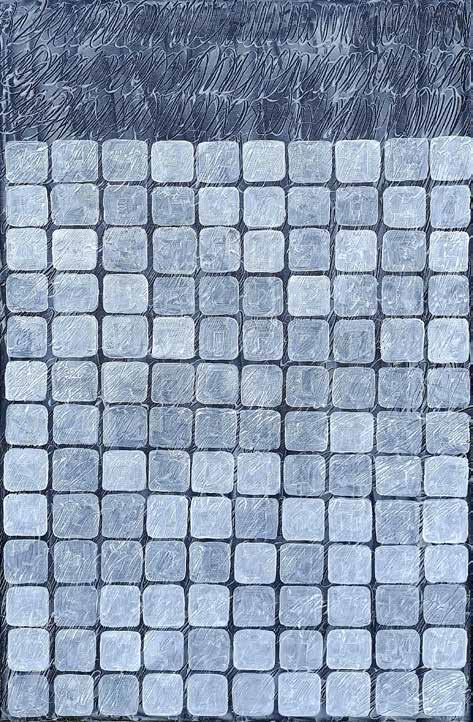
Melalui susunan petak tambak dan bidang warna yang teratur, karya ini menghadirkan garam sebagai hasil dari proses yang perlahan dan berulang. Retakan tanah serta kilau putih kristal garam membentuk ritme visual yang tenang namun konsisten. Dalam konteks Ingredient, garam dibaca sebagai bahan dasar—sesuatu yang lahir dari kesabaran dan kerja waktu.
An arrangement of salt pond plots and orderly fields of color, this work presents salt as the product of slow, repetitive labor. Cracked earth and the white gleam of crystallized salt build a visual rhythm that is quiet but insistent. In the context of Ingredient, salt is read as a foundational material — something born from patience and the work of time.
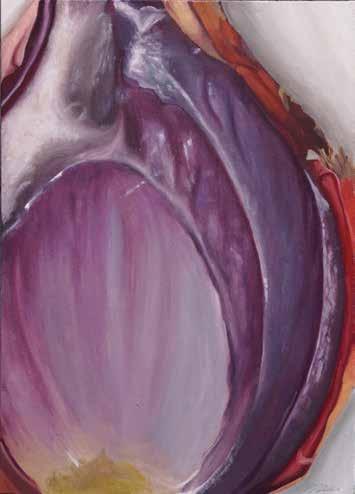
Bawang Merah
Oil on Canvas
70 x 50 cm
2020
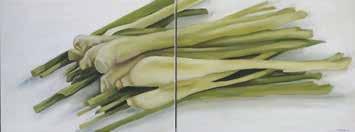
Sereh
Oil on Canvas
30 cm x 80 cm
2020
Melalui penggambaran bawang merah secara dekat dan detail, karya ini menempatkan bahan dapur sebagai penanda identitas dan ingatan. Sapuan halus dan komposisi sederhana menegaskan kedekatan pada material serta keseharian. Dalam konteks Ingredient, bahan ini dibaca sebagai titik awal— sesuatu yang tampak biasa, namun menyimpan hubungan antara tubuh, rumah, dan pengalaman migrasi yang membentuk rasa dan memori
Rendered in close, attentive detail, shallots become carriers of identity and memory rather than mere kitchen staples. Gentle brushwork and an uncluttered composition affirm intimacy with material and with the everyday. In the context of Ingredient, these foods are read as a point of origin — things that appear unremarkable yet hold deep connections between body, home, and the migratory experience that shapes both taste and memory.
Mungkin Ibu Marah
Oil on canvas
20 cm x 30 cm
2024
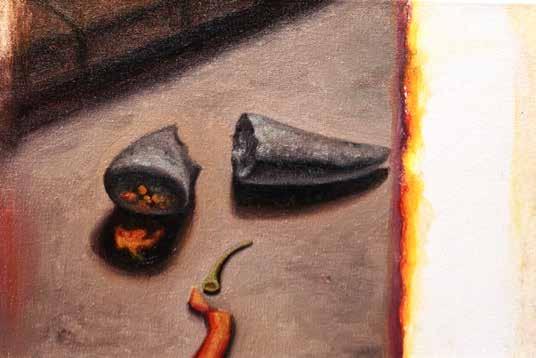
Melalui pendekatan still life, karya ini menempatkan objek domestik sebagai pusat intensitas visual, bukan ilustrasi cerita. Komposisi yang terkontrol dan ruang yang lengang menegaskan jeda sebagai strategi formal. Retakan dan sisa menjadi penanda proses yang tertahan. Dalam konteks pameran, karya ini berada pada tahap Ingredient—fase kedekatan dengan material, ketika bentuk masih menyimpan potensi sebelum makna dipadatkan.
Working through still life, this work positions domestic objects as centers of visual intensity rather than narrative illustration. Its controlled composition and sparse negative space assert pause as a formal strategy. Cracks and remnants become markers of a process held in suspension. Within the exhibition’s structure, the work occupies the Ingredient stage — a phase of closeness to material, when form still holds potential before meaning has fully set.
Dari bahan, perhatian bergerak menuju relasi.
Skala membesar, detail mendekat, pengalaman menjadi lebih intim. Makan dibaca sebagai tindakan berbagi, sebagai kerja perawatan, sebagai bahasa perhatian yang sering kali tak terlihat.
Seperti appetizer, tahap ini tidak dimaksudkan untuk mengenyangkan, melainkan untuk membuka. Ia membangun hubungan awal antara karya dan penonton.
From material, attention shifts towards relation.
Scale expands, details come closer, and the experience becomes more intimate. Eating is read as an act of sharing, as labor of care, as a language of attention that often goes unseen.
Like an appetizer, this stage is not meant to satisfy, but to open. It establishes an initial relationship between the work and the viewer.
Ade Ardhana
Aphrodita Wibowo
Gitta Amelia
Miranda Pranoto
Reydo Respati
Widi Wardani Purnama
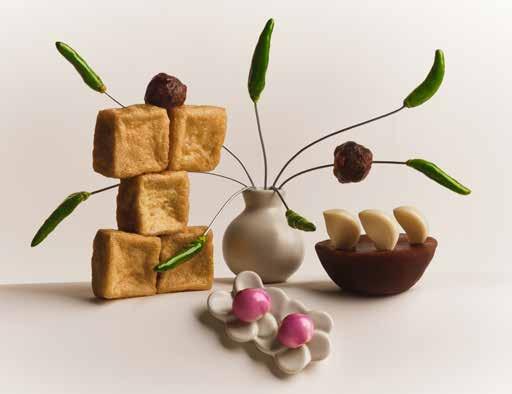
Printed on coated paper
78 x 60 cm 2025
Melalui representasi tahu gejrot yang disusun tegak dan frontal, karya ini menekankan kesederhanaan sebagai strategi visual. Kontras antara bentuk kubus tahu dan elemen sambal yang cair membangun ketegangan komposisi yang langsung dan lugas. Dalam konteks appetizer, tahu gejrot dibaca sebagai gestur pembuka—informal, spontan, dan tanpa pretensi—menghadirkan pengalaman visual yang segera terasa sebelum makna mengental lebih jauh.
Presented frontally and without decoration, tahu gejrot is stripped of any romanticization. The contrast between the clean geometry of the tofu and the fluid sambal creates a compositional tension that is immediate and unpretentious. In the context of Appetizer, the dish operates as an opening gesture — informal, spontaneous, and entirely without pretense — offering a direct visual hit before meaning accumulates further.
Kumimpikan Dulu Sarapanmu Esok Hari!
Paper Cutting Collage on Watercolor Paper, Water Colors & Pencil Colors
27,5 x 102,5 x 5 cm 2026
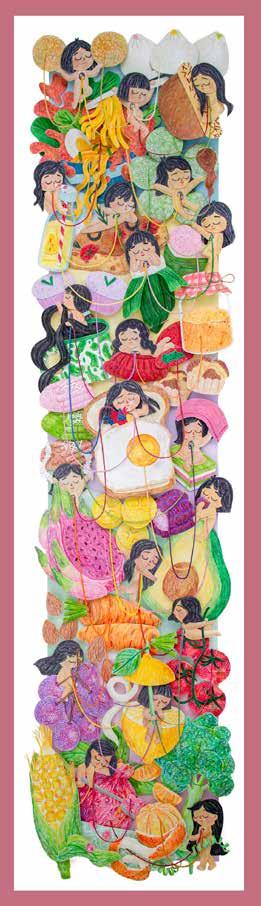
Melalui komposisi vertikal yang padat dan bertumpuk, karya ini menempatkan sarapan sebagai gestur yang berulang sekaligus personal. Potongan gambar dan warna yang saling bertaut membangun ritme visual yang intim. Dalam konteks appetizer, sarapan dibaca sebagai pembuka hari—bukan sekadar asupan energi, tetapi bentuk perhatian dan kerja yang terus berlangsung, sering kali hadir tanpa sorotan namun menentukan arah pengalaman selanjutnya.
Dense, vertically stacked, and tightly interlocking, the composition positions breakfast as a gesture that is at once repetitive and deeply personal. Fragmented images and interwoven color build an intimate visual rhythm. In the context of appetizer, breakfast is read as the opening of the day — not merely fuel, but a form of care and ongoing labor that often passes without acknowledgment, yet quietly shapes everything that follows.
Acrylic on canvas
50 x 70 cm 2026
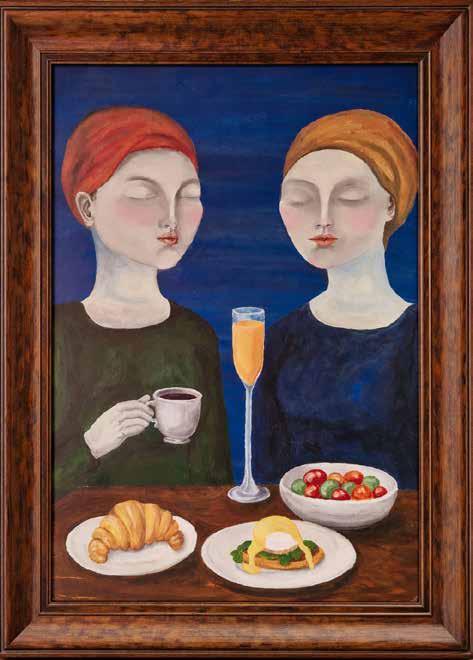
Melalui komposisi simetris dan pencahayaan lembut, karya ini menghadirkan pertemuan Maria dan Maria Magdalena sebagai ruang hening yang terkontrol. Kehadiran still life di hadapan mereka menjembatani yang sakral dan yang sehari-hari. Dalam konteks appetizer, percakapan sunyi ini menjadi pembuka yang intim—mengundang refleksi sebelum gagasan mengental, menghadirkan spiritualitas sebagai pengalaman yang tenang dan personal.
A symmetrical composition and soft, even light render the meeting of Mary and Mary Magdalene as a space of deliberate stillness. A still life placed between the two figures bridges the sacred and the domestic. In the context of appetizer, their quiet exchange functions as an intimate opening — an invitation to reflect before ideas solidify, presenting spirituality as something calm and unhurried.
Oil on canvas
50 x 80 cm 2026
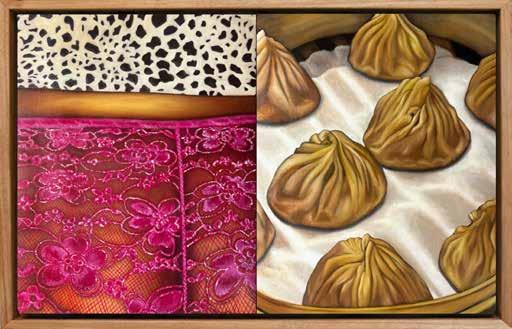
Melalui penggabungan citra dumpling dan potongan kain, karya ini memanfaatkan humor visual untuk membicarakan tubuh dan hasrat. Bentuk bulat dumpling yang repetitif dibaca sebagai metafora kebutuhan fisik yang sering disembunyikan. Dalam konteks appetizer, karya ini berfungsi sebagai pembuka yang ringan namun provokatif—menghadirkan selera, identitas, dan keinginan secara langsung, sebelum pembacaan menjadi lebih kompleks.
Pairing dumpling imagery with cutouts of fabric, this work uses visual humor to speak about the body and desire. The repetitive, rounded forms of the dumplings read as a metaphor for physical need — something ordinary, persistent, and often left unspoken. In the context of appetizer, the work functions as a light but pointed opener: presenting appetite, identity, and longing directly, before the reading grows more complex.
Mixed media on paper
70 x 61 cm 2025

Terinspirasi dari The Last Supper, karya ini memindahkan fokus dari citra sakral ke dinamika yang terjadi di meja makan. Garis gestural dan komposisi berlapis menghadirkan suasana yang padat dan bergerak, seolah percakapan belum selesai. Dalam konteks appetizer, makan bersama dibaca sebagai momen pembuka—ruang pertukaran yang belum sepenuhnya jelas arahnya, ketika makna masih dalam proses terbentuk.
Drawing from The Last Supper, this work redirects attention from sacred iconography to the dynamics that animate the space around a shared table. Gestural lines and a layered composition conjure an atmosphere that feels crowded and unresolved, as though the conversation is still mid-sentence. In the context of appetizer, the shared meal becomes an opening moment — a space of exchange whose direction has not yet been determined, where meaning is still being negotiated.
Acrylic on canvas
47,5 x 55 cm 2026
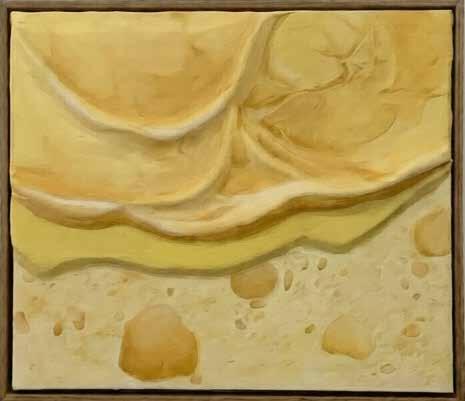
Melalui pembesaran detail dan penekanan pada tekstur roti, karya ini mengubah objek sehari-hari menjadi pengalaman visual yang intim. Permukaan yang lembut dan berlapis menghadirkan kesan dekat dan personal. Dalam konteks appetizer, roti dibaca sebagai gestur pembuka—sederhana namun bermakna— menghadirkan perhatian dan kedekatan emosional sebelum pengalaman bergerak ke lapisan yang lebih padat.
Magnified detail and an emphasis on the bread’s layered texture transform an everyday object into something intimate and immediate. The soft, yielding surface draws the viewer in close. In the context of appetizer, bread operates as an opening gesture — unassuming yet meaningful — establishing emotional proximity before the experience deepens into denser territory.
Intensitas kemudian meningkat.
Pada bagian ini, karya-karya mengolah isu konsumsi, kelas, migrasi, ekonomi simbolik seni, hingga konstruksi nilai. Material diperlakukan secara eksperimental—dikosongkan, dibakar, dipoles, disusun ulang, atau diparodikan.
Seperti main course, lapisan ini menjadi pusat kepadatan visual dan konseptual. Representasi tidak lagi netral; ia dipertanyakan.
The intensity then increases.
In this section, the works engage with issues of consumption, class, migration, the symbolic economy of art, and the construction of value. Materials are treated experimentally— emptied, burned, polished, rearranged, or parodied.
Like a main course, this layer becomes the center of visual and conceptual density. Representation is no longer neutral; it is put into question.
Ainur Kaheqsi
Ho Bin Kim
I Gede Sukarya
I Gusti Ngurah Agung Dalem Diatmika
Kevin “Ple” Aditya
Leka Putra
Mahendra Pampam
Mandy CJ
Mulyana (Mangmoel)
Naufal Abshar
Nadhief Ashr
Ricky Wahyudi
Sillyndris
Suyatno
WISMA
Youngsook Park
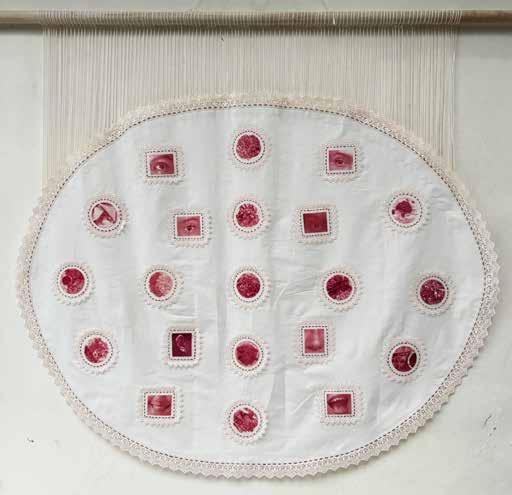
Photolithograph on fabric
150 x 150 cm 2026
Melalui dokumentasi hidangan yang disusun terpusat, karya ini menempatkan memasak sebagai tindakan yang sarat makna. Pengulangan bentuk dan jarak yang terukur membangun komposisi yang tenang namun intens. Dalam konteks main course, makan dipahami bukan sekadar konsumsi, melainkan praktik relasional—ruang di mana perhatian, waktu, dan kerja emosional terwujud secara nyata melalui proses memasak dan berbagi hidangan.
Dishes documented centrally and with measured spacing, this work approaches cooking as an act laden with significance. The repetition of form and careful composition build a mood that is restrained yet quietly intense. In the context of main course, eating is understood not as simple consumption but as relational practice — a space where care, time, and emotional labor are made visible through the act of preparing and sharing food.
Video installation, color, sound, 6’17 6 min 18 sec 2023
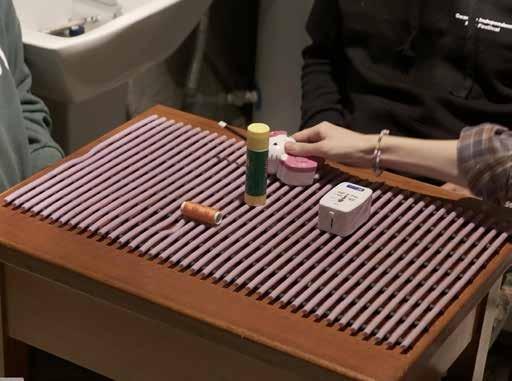
Melalui format video instalasi, karya ini menghadirkan meja sebagai ruang interaksi yang terus berubah. Pergerakan objek-objek domestik dan ritme bunyi mesin cuci membangun struktur yang repetitif sekaligus absurd. Dalam konteks main course, makan dan aktivitas rumah tangga dibaca sebagai praktik bertahan—siklus yang berulang, penuh negosiasi, di mana makna terbentuk dari tindakan sehari-hari yang tampak sederhana namun menentukan.
Presented as a video installation, this work positions the domestic table as a space of continuous, shifting interaction. The movement of household objects and the rhythmic sound of a washing machine build a structure that is at once repetitive and faintly absurd. In the context of main course, eating and domestic activity are read as practices of survival — recurring cycles full of negotiation, where meaning accumulates through the labor of the everyday.
135 x 150 cm
2026
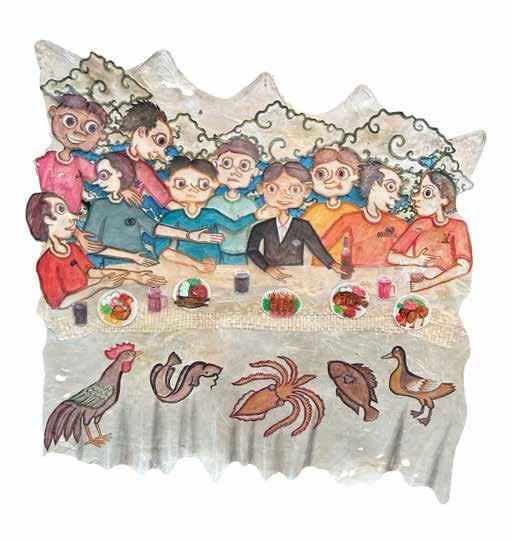
Melalui Jamuan Awal, Sukarya menafsir ulang The Last Supper ke dalam konteks kebersamaan yang lebih akrab dan membumi. Hidangan lalapan menggantikan simbol sakral dengan pengalaman makan yang egaliter. Dalam konteks main course, karya ini menempatkan jamuan sebagai ruang relasi— tempat percakapan, ingatan, dan pertemuan sosial berlangsung tanpa hierarki, dalam suasana yang cair dan sehari-hari.
In Jamuan Awal, Sukarya reimagines The Last Supper within a context of togetherness that is familiar and grounded. Lalapan replaces the sacred symbolism of ritual bread with the egalitarian experience of everyday eating. In the context of main course, the work positions the meal as a space of relation — where conversation, memory, and social encounter unfold without hierarchy, in an atmosphere that is easy and unhurried.
100 x 150 cm 2026
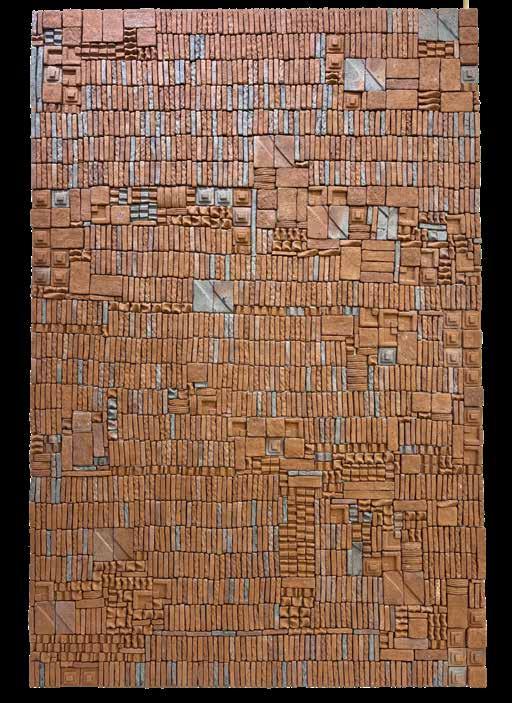
Melalui pengolahan tanah liat dan repetisi bentuk yang menyerupai tekstur makanan, karya ini merujuk pada praktik ampo sebagai ingatan budaya. Permukaan yang terstruktur dan pola berulang menegaskan hubungan antara tubuh, tanah, dan konsumsi. Dalam konteks main course, tanah liat dibaca bukan sekadar material, melainkan medium refleksi—menghadirkan kembali praktik makan yang berada di antara tradisi, kebutuhan, dan simbol kehidupan.
Working with clay and the repetition of forms that echo food textures, this work draws on the practice of ampo as a site of cultural memory. The structured surface and recurring patterns trace the relationship between body, earth, and consumption. In the context of main course, clay is not merely material — it becomes a medium for reflection, returning to a practice of eating that exists between tradition, necessity, and the symbolism of life itself.
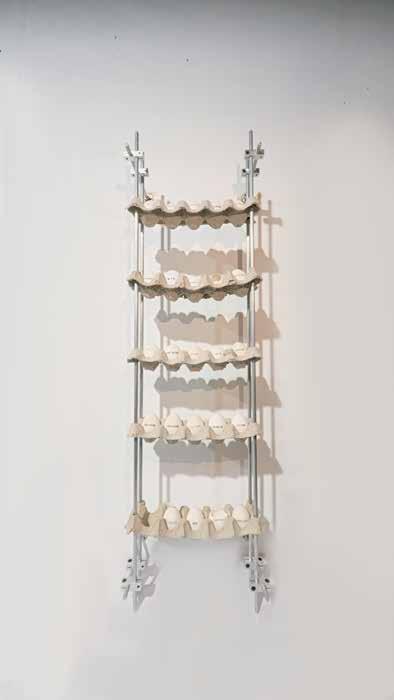
Post-Colonial Poached Egg with Global North Garnish
24 white egg shell, egg tray, and steel
30 x 100 x 20 cm 2025
Melalui susunan cangkang telur putih yang kosong dan terstruktur vertikal, karya ini menghadirkan ironi tentang nilai dan kemewahan. Tulisan pada tiap cangkang membenturkan istilah seni dengan konsumsi sehari-hari. Dalam konteks main course, telur yang telah dikosongkan menjadi metafora sistem yang memoles permukaan namun menghilangkan isi—menyisakan struktur yang rapi, bersih, dan rapuh sekaligus.
An arrangement of empty white eggshells, structured vertically and inscribed with text, sets up an irony about value and prestige. Art world terminology collides with the language of everyday consumption. In the context of main course, the hollowed-out eggs become a metaphor for systems that perfect the exterior while gutting the content — leaving behind something neat, polished, and quietly precarious.
Acrylic on canvas
50 x 80 cm
2026
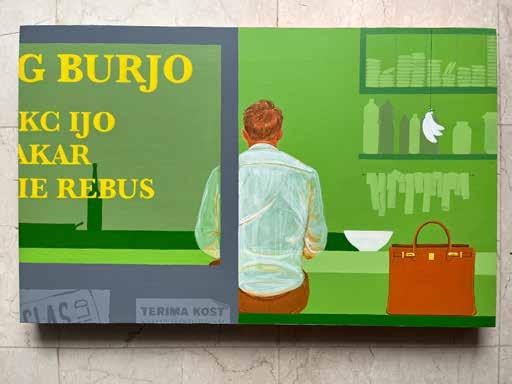
Melalui citra Burjo sebagai ruang yang akrab dan terjangkau, karya ini membaca warung makan sebagai penanda kelas dan perubahan posisi sosial. Komposisi yang sederhana dengan figur membelakangi penonton menegaskan jarak dan refleksi diri. Dalam konteks main course, burjo hadir bukan sekadar tempat makan, melainkan ruang negosiasi identitas—di mana ingatan, mobilitas ekonomi, dan rasa memiliki saling berkelindan.
Treating the Burjo as both a familiar setting and a social marker, this work reads the neighborhood food stall as a register of class and shifting position. A spare composition with a figure seen from behind emphasizes distance and self-reflection. In the context of main course, the Burjo is not simply a place to eat — it is a space of identity negotiation, where memory, economic mobility, and a sense of belonging are in constant, quiet conversation.
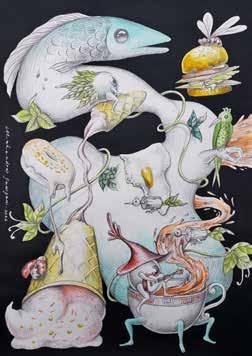
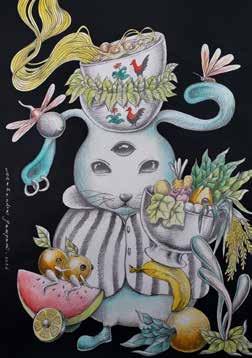
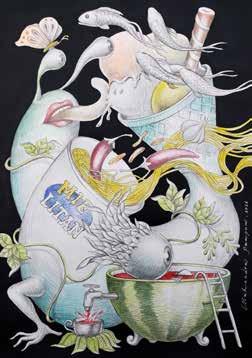
Pencil, acrylic on paper
42 x 29,7 cm
2026
Melalui seri Eatlusion, karya ini memadukan citra tubuh, makanan, dan elemen fantasi dalam komposisi yang padat dan sureal. Detail yang berlapis membangun kesan berlebihan sekaligus ambigu. Dalam konteks main course, konsumsi dibaca sebagai ilusi—ruang di mana batas antara sehat dan tidak, benar dan salah, menjadi cair. Makan tidak lagi sekadar kebutuhan, melainkan arena tafsir dan konstruksi makna.
The Eatlusion series layers imagery of the body, food, and fantasy into compositions that are dense and surreal in equal measure. Accumulated detail generates a sense of excess that remains genuinely ambiguous. In the context of main course, consumption becomes illusion — a space where the line between healthy and harmful, right and wrong, grows fluid. Eating is no longer need alone; it becomes an arena of inteIDRretation and the production of meaning.
Acrylic on canvas
80 x 90 cm
2026
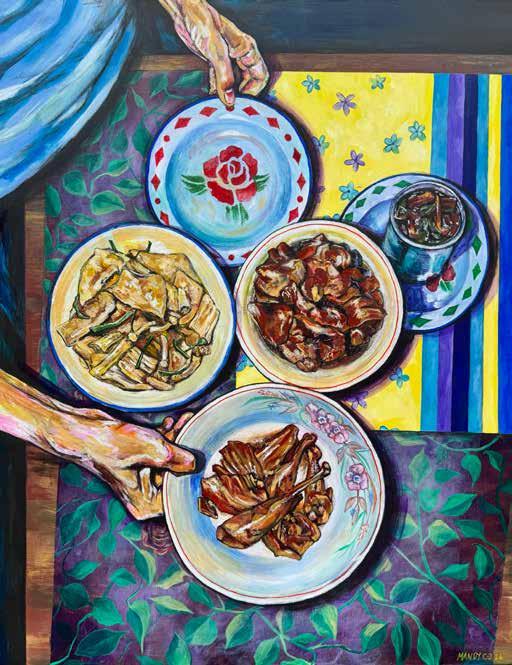
Melalui Pho Pho, hidangan di atas meja dibaca sebagai arsip emosi yang diwariskan. Komposisi tampak hangat dan teratur, namun menyimpan jejak kecemasan dan pengalaman kelangkaan. Dalam konteks main course, makanan tidak sekadar menjadi asupan, melainkan medium ingatan—ruang di mana trauma, kasih, dan kebiasaan bertemu, lalu diteruskan dalam ritual sederhana seperti menghabiskan makanan.
In Pho Pho, the food on the table is read as an archive of inherited emotion. The composition is warm and orderly on the surface, yet carries traces of anxiety and scarcity beneath it. In the context of main course, food is not merely nourishment — it becomes a medium of memory, a space where trauma, love, and habit converge and are passed on through rituals as quiet as finishing what is in your bowl.
Acrylic on canvas
Diameter 100 cm
2025
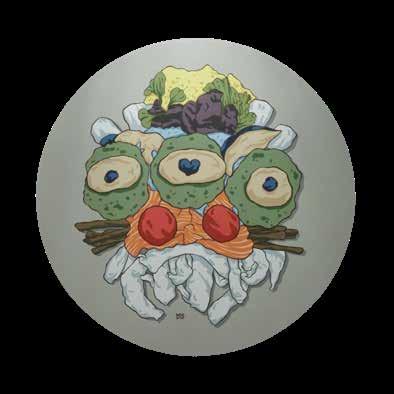
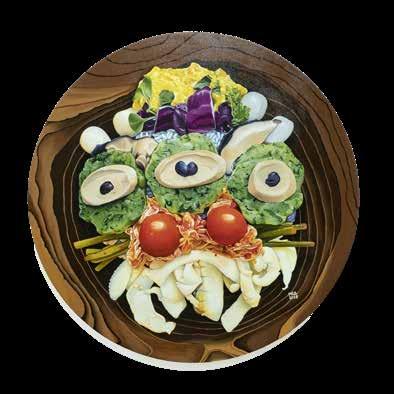
Melalui Nenek Mamasa, Mulyana menghadirkan hidangan tradisional dalam bentuk yang jenaka dan antropomorfik. Komposisi melingkar menyerupai piring menegaskan keterhubungan antara penyajian dan identitas. Warna yang cerah dan susunan bahan membangun karakter yang hidup. Dalam konteks main course, karya ini membaca makanan sebagai warisan—medium yang membawa cerita keluarga, ingatan daerah, dan rasa kebersamaan lintas generasi.
In Nenek Mamasa, Mulyana presents traditional dishes in anthropomoIDRhic form — playful in tone, affectionate in register. A circular composition that echoes the shape of a plate connects presentation to identity. Bright colors and an arrangement of ingredients bring a character to life. In the context of main course, this work reads food as inheritance — a medium that carries family stories, regional memory, and the feeling of belonging across generations.
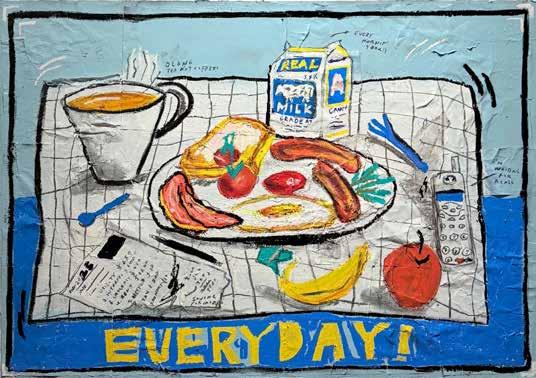
Melalui adegan sarapan yang tampak sederhana—teh hangat, roti, buah, dan susu—karya ini merekam ritme keseharian yang berulang. Gaya visual yang kasar dan spontan menegaskan kesan jujur sekaligus monoton. Dalam konteks main course, sarapan dibaca sebagai inti rutinitas: momen yang terlihat biasa, namun justru membentuk pola hidup, kenyamanan, dan kelelahan yang hadir setiap hari.
A warm cup of tea, bread, fruit, milk — the scene of an ordinary breakfast captures the rhythm of days that repeat without variation. The raw, spontaneous visual style carries equal measures of honesty and monotony. In the context of main course, breakfast becomes the core of routine: a moment that looks unremarkable, yet forms the underlying pattern of daily life — its comfort, its habits, and its accumulated fatigue.
Roasted Image of a Chicken
Mixed media, graphite on shrink paper, mounted on cutting board
2,5 x 41 x 56 cm 2026
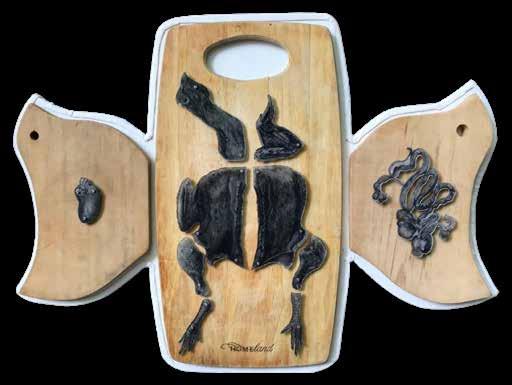
Melalui teknik pembakaran pada medium dan citra ayam, karya ini menempatkan proses sebagai bagian dari makna. Ayam panggang tidak dihadirkan sebagai objek konsumsi biasa, melainkan sebagai hasil pengolahan yang mengaburkan batas antara imaji dan objek nyata. Dalam konteks main course, karya ini menegaskan kepadatan gagasan—ketika representasi diuji dan proses “memasak” menjadi strategi konseptual.
Working with a burning technique applied directly to the medium, this work positions process as inseparable from meaning. The roasted chicken is not offered as a simple object of consumption, but as something transformed — a representation in which the boundary between image and material object has been deliberately blurred. In the context of main course, the work asserts the density of its ideas: where representation is put under pressure and the act of “cooking” becomes a conceptual method.
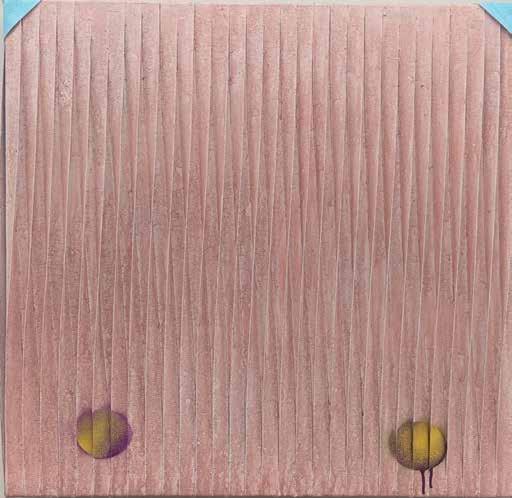
60 x 60cm 2026
Melalui bidang yang terstruktur dan ritme garis vertikal, karya ini merujuk pada bentuk bento sebagai sistem penyajian yang teratur. Tidak ada detail makanan yang eksplisit, melainkan penekanan pada susunan dan pembagian ruang. Dalam konteks main course, bento dibaca sebagai metafora keteraturan— bagaimana makan, fungsi, dan kebiasaan sehari-hari dibingkai dalam struktur yang rapi dan terkontrol.
Structured fields and a rhythm of vertical lines reference the logic of the bento without depicting food explicitly. The emphasis falls on arrangement and the division of space. In the context of main course, bento becomes a metaphor for order — for the way eating, function, and daily habit are contained within structures that are neat, controlled, and quietly load-bearing.
Since You Left, I Cured
Wood, polyphropilene plastic, wheat paste
20 x 17 cm 2025

Melalui citra babi yang dibingkai menyerupai daging olahan, karya ini menghadirkan kontras antara yang diterima dan yang ditolak. Permukaan merah yang padat dan framing dekoratif menegaskan bagaimana sesuatu dapat “diproses” agar lebih mudah dikonsumsi secara visual. Dalam konteks main course, karya ini menyoroti produksi nilai—bagaimana ingatan, tubuh, dan citra dipilih, dibersihkan, atau disingkirkan dalam sistem sosial.
An image of pork framed to resemble processed and packaged meat, this work sits with the contrast between what is accepted and what is excluded. The dense red surface and decorative framing ask how things are “processed” to become more palatable — visually, socially, symbolically. In the context of main course, the work turns on the production of value: how bodies, memories, and images are selected, sanitized, or quietly removed from the frame.
Acrylic on panel
34 × 98 cm (Each)
Triptych (3 panels)
2026
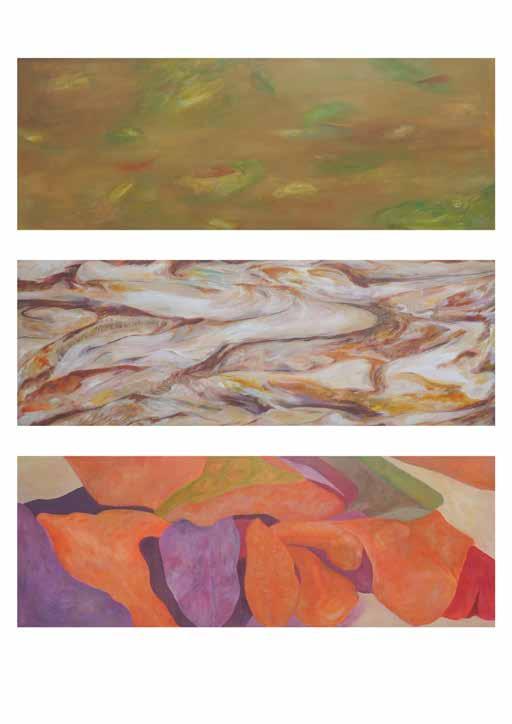
Melalui tiga panel yang membangun ritme warna dan tekstur, karya ini menerjemahkan sayur asem, ikan asin, dan sambal ke dalam bahasa visual yang menyerupai lanskap. Sensasi rasa diolah menjadi komposisi yang padat dan berlapis. Dalam konteks main course, makanan tidak lagi hadir sebagai objek konsumsi, melainkan sebagai medan pengalaman—tempat identitas, musim, waktu, dan ingatan saling berkelindan.
Across three panels that develop a rhythm of color and texture, sayur asem, salted fish, and sambal are translated into a visual language closer to landscape than still life. The sensation of taste becomes something layered and spatial. In the context of main course, food no longer appears as an object of consumption — it becomes a field of experience in which identity, season, time, and memory are woven together.
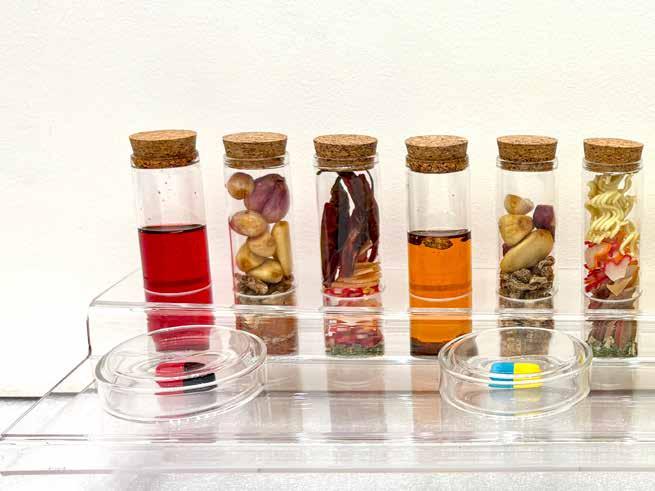
Test tubes, petri dish, capsule, and acrylic
51 × 15 × 11 cm 2026
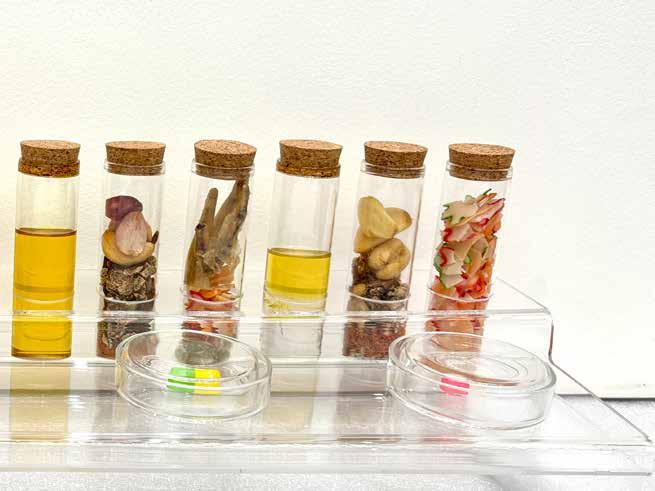
Melalui instalasi tabung dan material terpisah, karya ini membaca seblak sebagai simbol budaya konsumsi yang serba cepat. Struktur yang menyerupai laboratorium menegaskan bagaimana makanan diproses menjadi klaim dan citra. Dalam konteks main course, seblak tidak hanya dipahami sebagai pangan, tetapi sebagai komoditas sensasi—di mana rasa, urgensi, dan identitas urban dirangkai dalam logika produksi dan konsumsi kontemporer.
An installation of tubes and separated materials reads seblak as a symbol of fast-consumption culture. The laboratory-like structure underscores how food is processed into image and claim. In the context of main course, seblak is understood not only as sustenance but as a commodity of sensation — where flavor, urgency, and urban identity are assembled within the logic of contemporary production and consumption.
Korean paints, hemp cloth on canvas
30 x 30 x 5 cm
2026
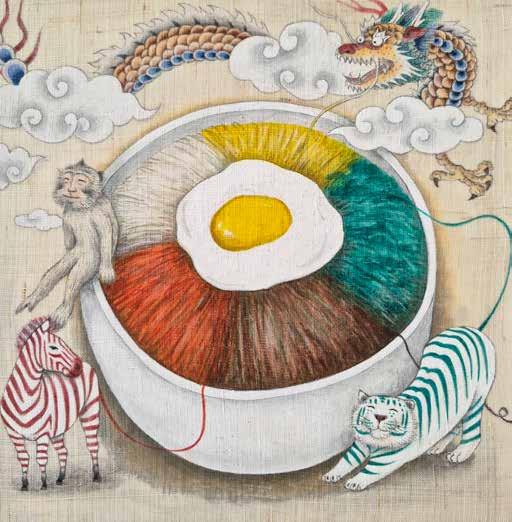
Melalui citra bibimbap yang dipadukan dengan figur hewan dan simbol kosmologis, karya ini menghadirkan makanan sebagai metafora harmoni. Warna-warna yang terpisah namun menyatu di dalam mangkuk menegaskan gagasan koeksistensi. Dalam konteks main course, bibimbap dibaca sebagai struktur visual tentang pertemuan—di mana perbedaan tidak dilebur sepenuhnya, melainkan dirangkai menjadi kesatuan yang seimbang dan bermakna.
Bibimbap imagery set alongside animal figures and cosmological symbols presents food as a metaphor for harmony. Distinct colors held together within a single bowl assert an idea of coexistence. In the context of main course, bibimbap becomes a visual structure for encounter — where difference is not dissolved but assembled into something balanced and whole.
Setelah kepadatan, tempo berubah.
Warna menjadi lebih cerah, bentuk lebih repetitif, citra lebih menggoda. Namun manis di sini bukan sekadar estetika ringan. Ia berbicara tentang nostalgia, hasrat, tubuh, dan bagaimana citra membentuk keinginan.
Seperti dessert, ia memberi jeda namun tetap menyimpan refleksi.
After the density, the tempo shifts.
Colors become brighter, forms more repetitive, images more alluring. Yet the sweetness here is not merely light aesthetics. It speaks of nostalgia, desire, the body, and the ways images shape longing.
Like dessert, it offers a pause while still holding reflection.
Ade Ardhana
Alexandra Tuit
Alodia Yap
Era Premakara
Gitta Amelia
Ibob Hariyatmoko
Ipang Cahyo
Josh Gondo
Sifa Adni Qolby
Syagini Ratna Wulan
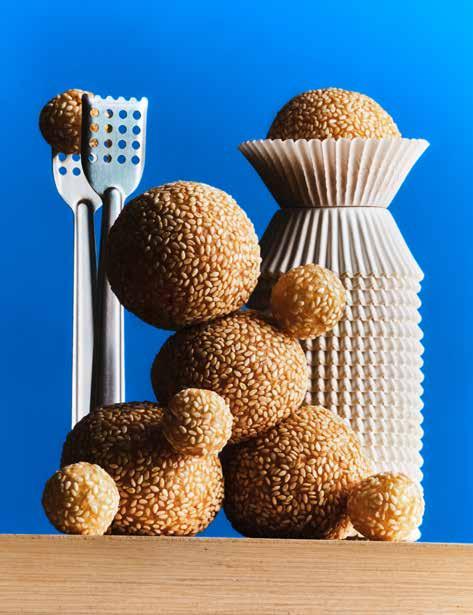
Onde-Onde, Never Just One
Printed on Coated Paper
Wood Frame
60 x 78 cm 2025
Melalui Onde-Onde, Never Just One, manis hadir dalam nada yang tenang dan intim. Bulatnya yang sederhana menyimpan pusat yang cair—sebuah kejutan kecil yang hanya terbuka ketika disentuh. Dalam konteks dessert, karya ini tidak berbicara tentang kemewahan, melainkan tentang repetisi domestik dan ingatan generasional. Yang tersisa bukan sekadar rasa manis, tetapi kehangatan ritual kecil yang diwariskan dan terus berulang.
In Onde-Onde, Never Just One, sweetness arrives in a quiet and intimate register. Its unassuming roundness conceals a molten center — a small surprise that only reveals itself when broken open. In the context of dessert, the work is less about indulgence than about domestic repetition and generational memory. What lingers is not merely sweetness, but the warmth of a small ritual passed down and perpetually renewed.
Milk
Mixed media 28 x 28 cm 2024
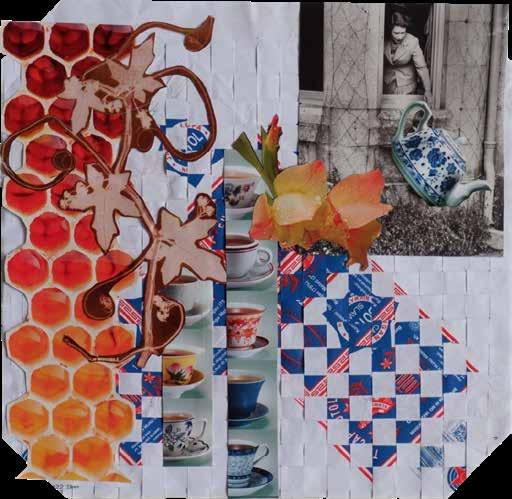
Melalui lapisan citra teh, susu, dan madu yang disusun berulang, karya ini menghadirkan rasa manis sebagai metafora relasi. Repetisi pola dan material yang bertumpuk membangun kesan hangat dan intim. Dalam konteks dessert, manis tidak dibaca sebagai penutup yang ringan, melainkan sebagai ruang jeda—tempat percakapan, perhatian, dan kebersamaan tumbuh perlahan melalui gestur sederhana.
Digitally processed and fragmented images of pomegranate, lemon, and tomato offer a visual experience that is enticing and subtly unsettling in equal measure. Organic forms collide with digital glitch, pressing on the tension between the natural and the artificial. In the context of dessert, color and visual appeal serve as an entry point — yet beneath the surface lies a question about the body, technology, and how health is constructed and consumed within contemporary culture.
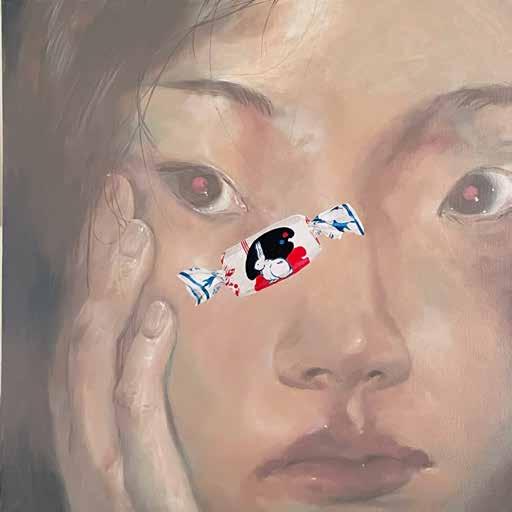
Give Me Candy
Acrylic on canvas
60 x 60 cm 2026
Melalui citra White Rabbit candy yang ditempatkan pada wajah figur, karya ini menghadirkan permen sebagai simbol ingatan dan hasrat masa kecil. Skala dan fokus visual menegaskan nilai emosionalnya, bukan sekadar rasanya. Dalam konteks dessert, manis dibaca sebagai nostalgia—sesuatu yang jarang dimiliki namun terasa istimewa, di mana keinginan bekerja melalui jarak, pemberian, dan kenangan yang terus melekat.
Placing a White Rabbit candy over a figure’s face, this work treats the candy less as a taste than as an emblem of childhood memory and longing. Its scale and visual weight speak to emotional value rather than flavor. In the context of dessert, sweetness becomes nostalgia — something rarely held but always felt as precious, where desire operates through distance, through the act of giving, and through memories that refuse to fade.
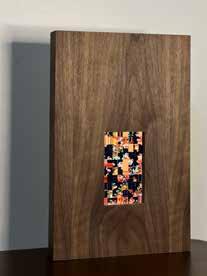
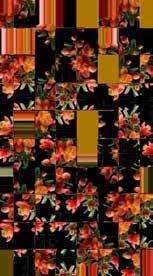
Feeding The Senses — Pomegranate
AI and coded video in wood frame
18,8 x 45 x 8 cm 2026
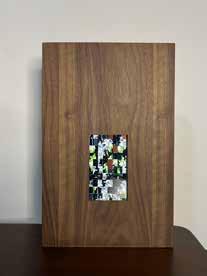
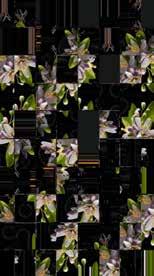
Feeding The Senses — Lemon
AI and coded video in wood frame
18,8 x 45 x 8 cm 2026
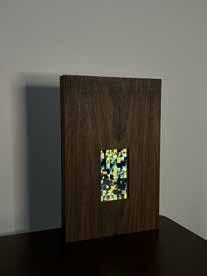
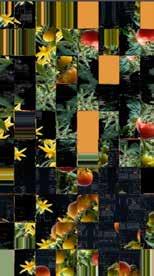
AI and coded video in wood frame
18,8 x 45 x 8 cm 2026
Melalui citra delima, lemon, dan tomat yang diproses secara digital dan terfragmentasi, karya ini menghadirkan sensasi visual yang menarik sekaligus mengganggu. Perpaduan bentuk organik dan glitch digital menegaskan ketegangan antara alami dan artifisial. Dalam konteks dessert, warna dan daya tarik visual menjadi pintu masuk—namun di baliknya tersimpan pertanyaan tentang tubuh, teknologi, dan cara kita memahami kesehatan dalam budaya kontemporer.
Digitally processed and fragmented images of pomegranate, lemon, and tomato offer a visual experience that is enticing and subtly unsettling in equal measure. Organic forms collide with digital glitch, pressing on the tension between the natural and the artificial. In the context of dessert, color and visual appeal serve as an entry point — yet beneath the surface lies a question about the body, technology, and how health is constructed and consumed within contemporary culture.
Acrylic on canvas
120 x 150 cm
2026
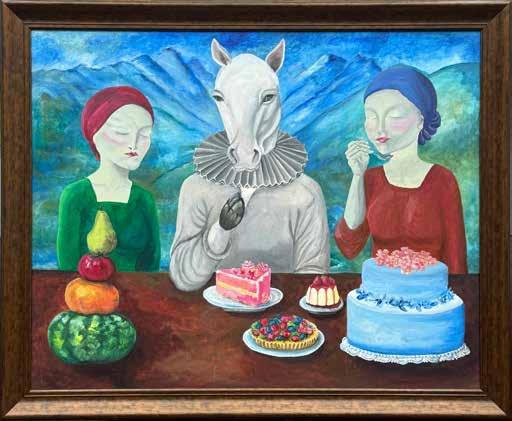
Melalui tafsir ulang Last Supper, karya ini menghadirkan Kristus, Maria, dan Maria Magdalena dalam suasana yang lebih intim dan kontemplatif. Kehadiran kue dan buah menggantikan kesederhanaan roti ritual dengan citra manis yang lembut. Dalam konteks dessert, manis dibaca sebagai bentuk perayaan dan kehadiran—ruang di mana spiritualitas, kasih, dan kebersamaan diterjemahkan melalui simbol penyajian yang hangat dan personal.
A reinterpretation of the Last Supper places Christ, Mary, and Mary Magdalene in an atmosphere that feels intimate rather than monumental. Cake and fruit replace the austerity of ritual bread with something softer and sweeter. In the context of dessert, sweetness becomes a mode of celebration and presence — a space where spirituality, love, and togetherness are expressed through the warmth of what is placed on the table.
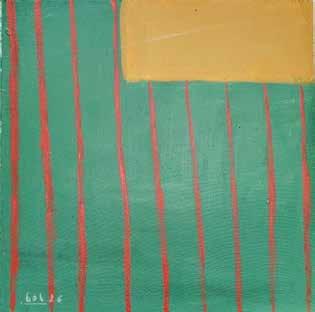
Bolu Pandan Lapis #2
Acrylic on canvas
60 x 60 cm
2026
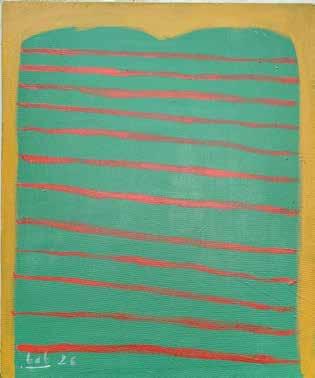
Bolu Pandan Lapis #3
Acrylic on canvas
50 x 60 cm
2026
Melalui bidang warna hijau berlapis dan ritme garis yang sederhana, karya ini merujuk pada bolu pandan lapis sebagai ingatan visual tentang rumah. Tidak ada detail realistis, melainkan penyederhanaan bentuk yang menekankan struktur dan repetisi. Dalam konteks dessert, manis hadir sebagai nostalgia yang tenang—kenangan domestik yang terasa ringan, namun menyimpan kehangatan dan kedekatan yang menetap.
Through layered fields of green and a simple rhythm of lines, this work evokes pandan layer cake as a visual memory of home. There is no realistic detail — instead, form is reduced to structure and repetition. In the context of dessert, sweetness arrives as quiet nostalgia: a domestic memory that feels light, yet carries a warmth and closeness that stays.
Oil on canvas
100 x 70 x 4,7 cm
2026
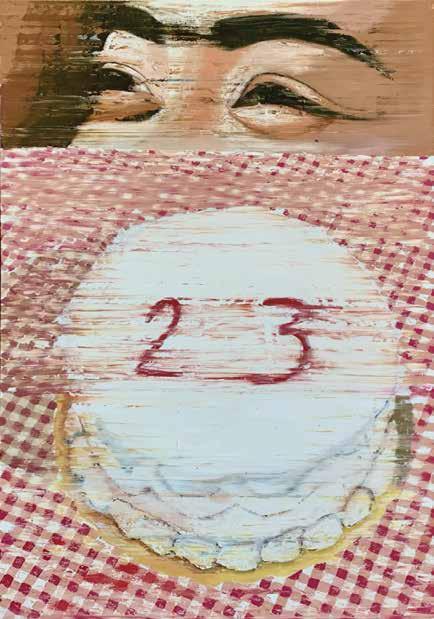
Melalui citra kue ulang tahun yang sederhana dengan angka “23”, karya ini menghadirkan perayaan sebagai ruang kehilangan. Permukaan yang lembut dan ekspresi figur di atasnya membangun suasana intim dan reflektif. Dalam konteks dessert, manis tidak lagi sekadar simbol kebahagiaan, melainkan medium ingatan—tempat cinta, rindu, dan kesunyian bertemu dalam momen yang seharusnya dirayakan.
A birthday cake marked with the number “23” — the image is tender but quietly weighted with loss. The soft surface and the expression of the figure within the work create an atmosphere that is intimate and reflective. In the context of dessert, sweetness no longer signals happiness alone. It becomes a medium of memory — the place where love, longing, and solitude meet inside a moment that was meant to be a celebration.
Oil on canvas
30 x 40 cm 2026
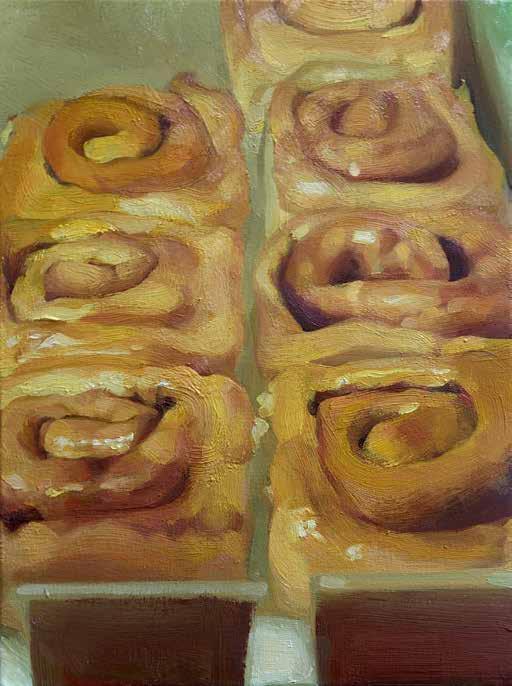
Melalui Last Batch, deretan cinnamon rolls dihadirkan dengan sapuan yang tebal dan hangat, menekankan tekstur serta aroma yang hampir terasa. Sementara itu, pengamatan terhadap kaleng permen herbal menghadirkan dialog antara benda lama dan konteks baru. Dalam konteks dessert, manis tidak sekadar suguhan akhir, melainkan ruang refleksi—tentang ingatan, kebiasaan, dan bagaimana benda sehari-hari menyimpan lapisan waktu.
In Last Batch, a row of cinnamon rolls is rendered in thick, warm brushwork that makes texture and aroma feel almost tangible. Alongside them, an observation of a tin of herbal candy opens a dialogue between an old object and a new context. In the context of dessert, sweetness is not a final offering but a space for reflection — on memory, on habit, and on how ordinary things quietly accumulate layers of time.
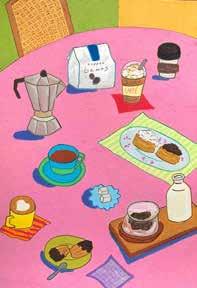
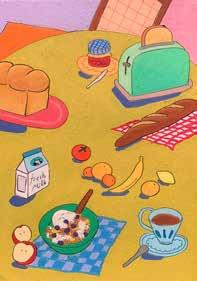

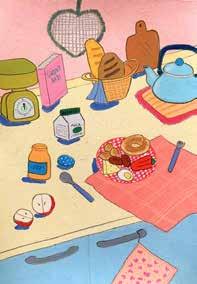
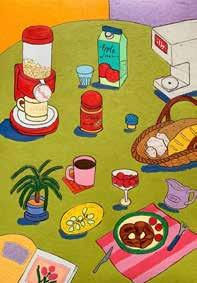
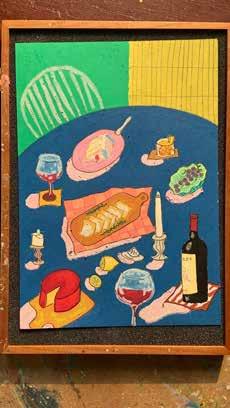
Table Pattern
Oil pastel on paper
21 x 30 cm (each) 2024
Melalui Table Pattern, meja makan dihadirkan dalam bidang-bidang warna cerah dengan gaya naif yang ringan dan imajinatif. Objek-objek tersusun tanpa perspektif kaku, membangun suasana riang dan akrab. Dalam konteks dessert, manis dibaca sebagai perayaan sederhana—ruang untuk melambat dan menikmati kebersamaan. Karya ini menegaskan bahwa kebahagiaan dapat tumbuh dari ritual kecil yang sering kita anggap biasa.
In Table Pattern, the dining table is rendered in bright color fields and a playful, naïve visual style — objects arranged without rigid perspective, building an atmosphere that is cheerful and familiar. In the context of dessert, sweetness is read as simple celebration — a space to slow down and enjoy being together. The work reminds us that happiness can grow from the small rituals we so often take for granted.
Poison Study
Oil paint on canvas 15 x 20 cm 2026
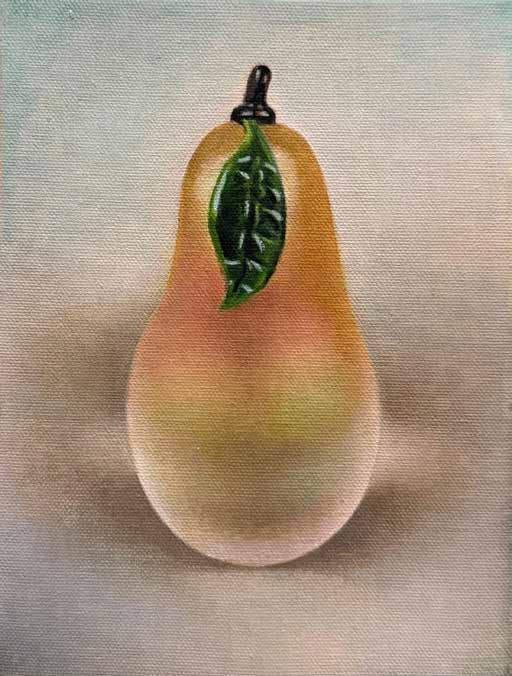
Poison Study menghadirkan buah pir sebagai citra yang lembut dan hampir melayang, dengan kilau halus yang menekankan kesan rapuh sekaligus menggoda. Dalam konteks dessert, manis tidak tampil berlebihan, melainkan hadir sebagai godaan yang tenang dan elegan. Permukaan yang berkilau dan bentuk yang sederhana mengingatkan bahwa kenikmatan sering muncul dari hal yang paling halus—momen kecil ketika rasa, cahaya, dan perhatian bertemu secara perlahan.
Poison Study presents a pear as a soft, almost floating presence, its subtle sheen emphasizing both fragility and allure. Within the context of dessert, sweetness appears not as excess but as a quiet temptation. The luminous surface and simple form suggest that pleasure often emerges from the most delicate moments—when light, texture, and attention meet gently, inviting viewers to linger on the understated beauty of small indulgences.
Semua yang telah diolah akhirnya disajikan.
Ruang pamer menjadi bagian dari komposisi. Penempatan karya, jarak antar objek, dan pertemuan media membentuk ritme visual. Seperti plating dalam hidangan, penyajian menentukan pengalaman.
Tidak ada pusat tunggal. Mata bergerak, memilih, dan menyusun sendiri urutannya.
Everything that has been processed is ultimately presented.
The exhibition space becomes part of the composition. The placement of works, the distances between objects, and the encounters between media form a visual rhythm. Like plating in a dish, presentation shapes the experience.
There is no single center. The eye moves, selects, and constructs its own sequence.
Diandra Lamees
Eunice Nuh Tantero
Jayanto Tan
Mulyana (Mangmoel)
Sillyndris
Veronica Liana
Upaya Pengarsipan dan Pencarian Kerapu 1
Ceramic & pencil, ink, and watercolor on paper
60 x 50 x 14 cm
2026
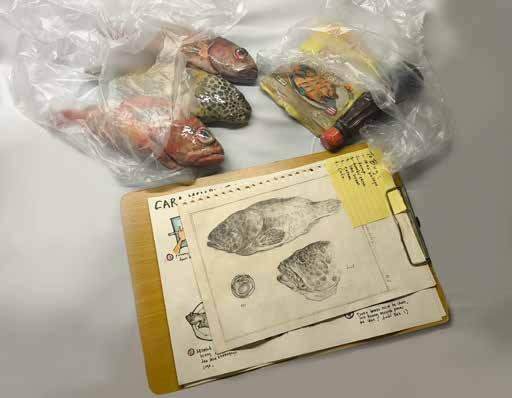
Melalui penyajian keramik berbentuk kerapu yang dibungkus plastik dan ditempatkan berdampingan dengan catatan arsip, karya ini menegaskan relasi antara makanan dan memori. Penyajian menjadi bagian penting—bukan sekadar tampilan, melainkan strategi mengawetkan ingatan. Dalam konteks plating, kerupa (kerapu) dibaca sebagai medium identitas: hidangan yang ditata ulang sebagai arsip personal dan jejak genealogis.
Presenting ceramic grouper fish wrapped in plastic placed alongside archival notes, this work asserts the relationship between food and memory. Presentation here is not merely aesthetic — it becomes a strategy for preserving what would otherwise be lost. In the context of plating, kerupa (kerapu) is read as a medium of identity: a dish restaged as personal archive and genealogical trace.
Candy Crush
Installation: glass jars and packaged candy
140 x 40 cm 2026
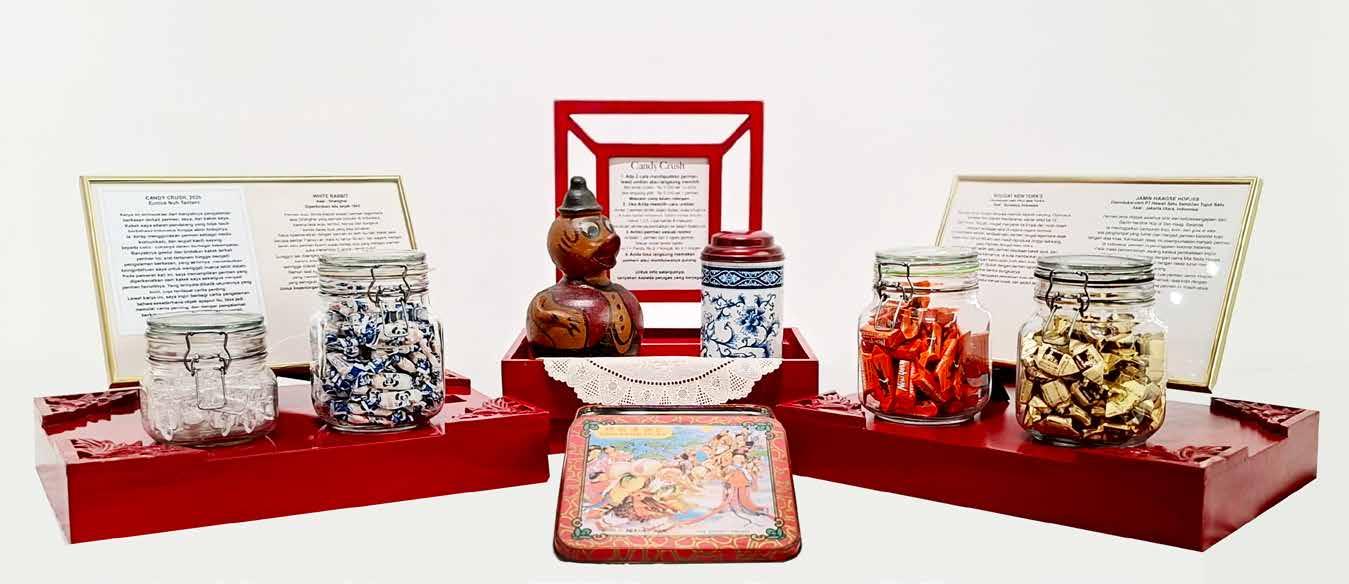
Melalui Candy Crush, permen dihadirkan bukan sekadar objek manis, melainkan medium komunikasi dan kasih sayang lintas generasi. Penataannya yang terstruktur—dalam toples, bingkai, dan susunan simetris—menegaskan bagaimana memori dikurasi, disimpan, dan diwariskan. Dalam konteks plating, manis dibaca sebagai praktik penyajian ingatan: sebuah upaya menata afeksi, bahasa, dan jarak ke dalam bentuk yang dapat dilihat, disentuh, dan dikenang kembali.
In Candy Crush, candy appears not simply as something sweet, but as a medium of communication and intergenerational affection. Its structured arrangement — in jars, frames, and symmetrical compositions — underscores how memory is curated, stored, and passed on. In the context of plating, sweetness is read as a practice of presenting remembrance: an effort to arrange affection, language, and distance into a form that can be seen, touched, and recalled.
Mini La Lunar Party
Ceramic, lustre, glazed
Ice cream (15x16x14 cm)
Macaron (14x15x14 cm)
Liquorice (9.5x5x95 cm)
Red tortoise cake (5.5x4x6.5 cm)
Fortune cookies on bowl (11x15x14 cm)
2025
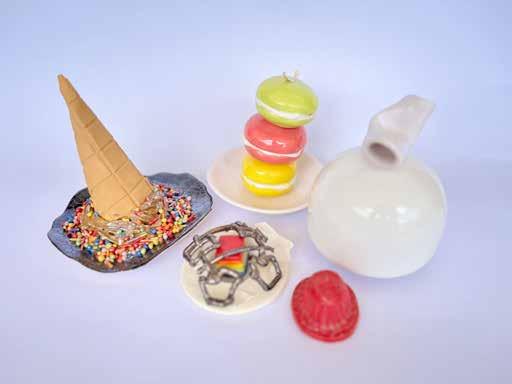
Melalui Mini La Luna Party, rangkaian objek seperti es krim, makaroni, kue kura-kura merah, dan fortune cookies ditata sebagai perayaan kecil yang intim. Keramik berlapis glasir menegaskan detail dan kesan ritus yang personal. Dalam konteks plating, penyajian menjadi ruang arsip—tempat memori keluarga dan tradisi dirangkai ulang, tidak sebagai nostalgia semata, melainkan sebagai bentuk penghormatan dan penerusan cerita.
In Mini La Luna Party, an arrangement of objects — ice cream, macaroni, red turtle cake, fortune cookies — is staged as an intimate, private celebration. Glazed ceramics emphasize detail and a sense of personal ritual. In the context of plating, presentation becomes a space of archiving — where family memory and tradition are reassembled not merely as nostalgia, but as an act of honoring and continuing a story.
Food Monster 20
Yarn, dacron, plastic net, wood plate
Diameter 33 cm
2022
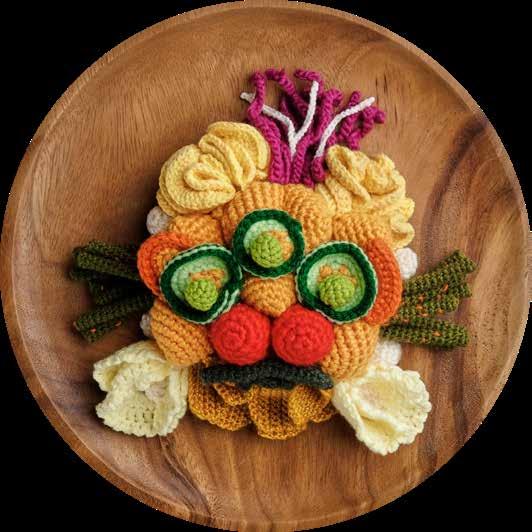
Melalui Food Monster, makanan dirangkai ulang menjadi bentuk rajutan yang hidup dan jenaka. Susunan di atas piring kayu menegaskan pentingnya penyajian—bagaimana komposisi menentukan cara kita melihat dan merasakan. Dalam konteks plating, karya ini menunjukkan bahwa makna tidak hanya terletak pada bahan, tetapi juga pada cara ia ditata. Penyajian menjadi strategi visual yang mengubah keseharian menjadi peristiwa estetik.
In Food Monster, food is remade as knitted form — animated, affectionate, and openly playful. The arrangement on a wooden plate draws attention to presentation itself: how composition shapes the way we see and what we feel. In the context of plating, meaning is shown to live not only in ingredients but in how they are put together. Presentation becomes a visual strategy, one capable of transforming the ordinary into something worth pausing over.
Hard plastic, polyphropilene plastic, cardboard, plywood 30 x 30cm 2025
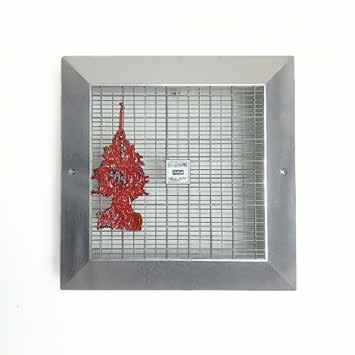
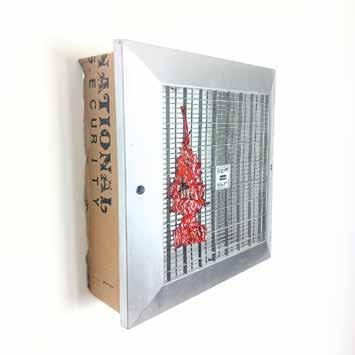
Melalui instalasi yang menampilkan bentuk menyerupai daging dengan aroma bacon, karya ini membicarakan janji yang tidak pernah benar-benar terpenuhi. Bau menjadi elemen penting—menghadirkan sensasi tanpa kehadiran nyata.
Dalam konteks plating, karya ini menyoroti bagaimana hasrat dapat diproduksi dan dipelihara tanpa pemenuhan, sehingga konsumsi berubah menjadi mekanisme kontrol yang bekerja pelan namun terus-menerus.
Presenting forms that resemble meat while releasing the scent of bacon, this work circles the idea of promises that are never quite fulfilled. Smell becomes the central element — conjuring sensation without substance, presence without delivery. In the context of plating, the work examines how desire can be generated and sustained without satisfaction, turning consumption into a mechanism of control that operates slowly and without announcement.
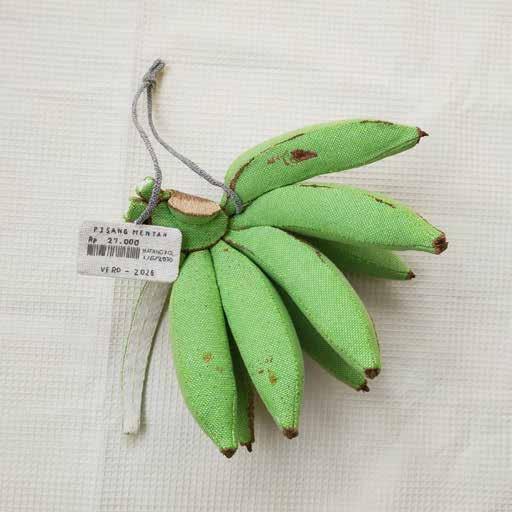
What Left From The Unripe
Recycled fabric, synthetic polyester, bre, sewing threads 35 x 24 x 15 cm 2026
Melalui bentuk pisang yang dijahit dari kain daur ulang, karya ini menghadirkan buah sebagai metafora eksploitasi dan konsumsi. Tekstur jahitan yang tampak menegaskan kerja tangan dan jejak proses. Dalam konteks plating, penyajian tidak lagi netral—ia memperlihatkan bagaimana produk alam dibingkai sebagai komoditas, sekaligus membuka refleksi tentang kerja, limbah, dan relasi kuasa dalam sistem produksi kontemporer.
Shaped from recycled fabric and stitched together by hand, the banana in this work becomes a metaphor for exploitation and consumption. The visible seams and texture of the stitching affirm the labor and the trace of process. In the context of plating, presentation is no longer neutral — it reveals how natural products are framed as commodities, opening a reflection on labor, waste, and power within contemporary systems of production.
Dan akhirnya, yang tersisa adalah residu.
Beberapa karya bekerja lebih sunyi dan atmosferik. Ia tidak menawarkan jawaban, melainkan meninggalkan kesan. Seperti aftertaste, pengalaman visual berpindah dari permukaan ke ingatan. And in the end, what remains is residue.
Some works operate more quietly and atmospherically. They do not offer answers, but leave impressions. Like an aftertaste, the visual experience shifts from the surface into memory.
Amran Rizky
Dimas Hussein Habibullah Mukhammad Syaifullah
Acrylic on Canvas
90 x 100 cm
2026
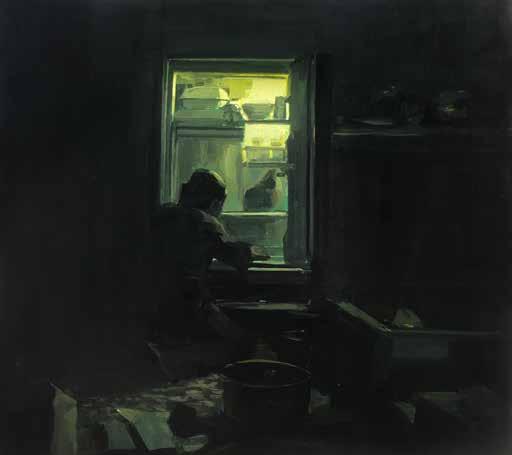
Melalui The Quiet Taste of an Ordinary Night, ruang gelap dan cahaya dari lemari es membangun suasana hening yang melambat. Sisa makan malam menjadi penanda waktu yang telah lewat. Dalam konteks aftertaste, rasa hadir sebagai residu—bukan lagi tentang konsumsi, melainkan tentang ingatan dan kesunyian. Karya ini meninggalkan kesan tipis namun bertahan, seperti rasa yang tetap tinggal setelah malam usai.
In The Quiet Taste of an Ordinary Night, a darkened room and the light spilling from a refrigerator build an atmosphere of stillness and slowed time. The remnants of a meal become a marker of hours already passed. In the context of aftertaste, flavor appears as residue — no longer about consumption, but about memory and solitude. The work leaves a thin but lasting impression, like a taste that remains when the night is over.
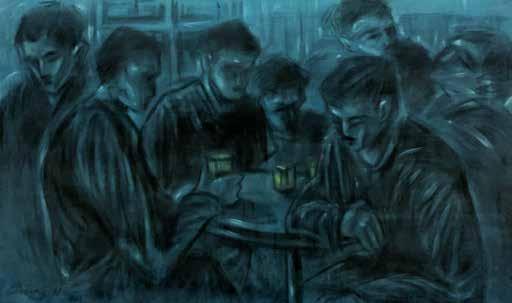
2025
Melalui dominasi warna biru dan komposisi figur yang saling merapat, karya ini menghadirkan suasana kebersamaan yang sunyi dan reflektif. Tidak ada pusat perhatian tunggal; yang terasa justru atmosfer kolektif yang pelan namun kuat. Dalam konteks aftertaste, karya ini bekerja sebagai residu emosional—kesan yang tertinggal setelah pertemuan usai, ketika keheningan, rindu, dan kehadiran bersama masih mengendap dalam ingatan.
A dominant blue palette and a composition of figures drawing close together evoke a quietness that lingers. There is no single focal point — what registers instead is collective atmosphere, slow-moving and persistent. In the context of aftertaste, this work operates as emotional residue: the impression that remains after an encounter has ended, when silence, longing, and the fact of having been together still settle somewhere in the body.
Momen Yang Dibutuhkan
Oil on canvas
60 x 80 cm 2025 - 2026
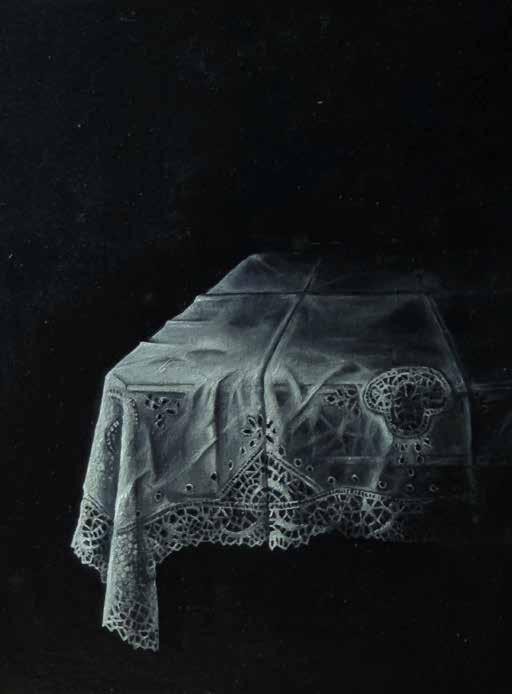
Melalui Momen yang Dibutuhkan, meja makan hadir dalam kesunyian yang pekat. Taplak yang menjuntai tanpa piring dan gelas menegaskan absennya pertemuan. Dalam konteks aftertaste, yang tersisa bukan lagi hidangan, melainkan kekosongan—ruang refleksi tentang jarak emosional dan momen yang terlewat. Karya ini meninggalkan kesan sunyi yang mengendap, seperti rasa yang tertinggal setelah kebersamaan perlahan menghilang.
A dominant blue palette and a composition of figures drawing close together evoke a quietness that lingers. There is no single focal point — what registers instead is collective atmosphere, slow-moving and persistent. In the context of aftertaste, this work operates as emotional residue: the impression that remains after an encounter has ended, when silence, longing, and the fact of having been together still settle somewhere in the body.
Melalui enam lapisan ini, Food for Thought membaca seni rupa sebagai praktik pengolahan dan produksi nilai.
Apa yang kita konsumsi sebagai citra? Bagaimana sesuatu diberi makna? Dan siapa yang menentukan rasanya?
Melihat karya, seperti makan, bukan hanya soal rasa. Ia adalah tindakan memilih, menerima, dan memaknai.
Through these six layers, Food for Thought reads visual art as a practice of processing and producing value.
What do we consume as an image? How is something assigned meaning? And who determines its taste?
To look at an artwork, like eating, is not merely a matter of taste. It is an act of choosing, receiving, and making meaning.
Wina Luthfiyya Ipnayati
ADE ARDHANA (b. 1994) is an Indonesian-born photographer based in Bali, specializing in stilllife photography, particularly product and food imagery. Known for his meticulous attention to detail and refined sense of composition, he masterfully orchestrates light, texture, and form to transform everyday objects into evocative visual narratives.
Since developing an interest in still-life photography in 2015 during his college years, Ade has explored the genre as a contemplative practice—one that reflects on perception, subjectivity, and the layered meanings embedded in ordinary things. For him, still life reveals how individuals can encounter the same object yet inteIDRret it through distinct perspectives.
One of his notable achievements is his solo still-life exhibition, BUAH MEMORI, held at Uma Seminyak, Bali, in 2022.
AINUR KAHEQSI (b. 1999) is a visual artist and printmaker based in Yogyakarta. She earned her Bachelor’s degree in Fine Art, majoring in Printmaking, from the Indonesia Institute of the Arts (ISI) Surakarta (2017–2022), and is currently completing her Master’s degree in Fine Art Creation at the Postgraduate Program of ISI Yogyakarta (2023–2025).
Her practice stems from an exploration of everyday experiences as a space for selfreflection, focusing on simple objects, domestic activities, and slowed rhythms of life as a response to the pressures of modernity. Through printmaking and mixed media approaches— combining print techniques, photography, installation, and everyday materials—she emphasizes simplicity of form, traces of process, and the involvement of body and time in constructing meaning.
Her works have been presented in various exhibitions in Yogyakarta, Surakarta, and Jakarta, and she was awarded 1st Prize at the Prabangkara Award in 2020.
ALEXANDRA TUIT (b. 1996) works with fragments as a means of tracing lived experience. Her assemblages bring together materials that have traveled, been handled, or forgotten—each bearing its own quiet history. Through these collected remnants, she explores how individuals shape one another over time, forming shared narratives while simultaneously becoming part of her own story as she rearranges them into personal constellations.
Having lived away from her home country for many years, Alexandra’s practice is deeply informed by movement and the condition of living between cultures. Her works layer references that coexist without resolution, echoing the fluid and overlapping nature of memory. She received a Bachelor of Art Education from Calvin University and is currently based in Indonesia, where she works as both an artist and art teacher.
ALODIA YAP (b. 1995) is an Indonesian artist of Chinese-Indonesian descent whose practice centers on the female figure intertwined with wild plants as metaphors for identity, spirituality, and the human relationship with nature. Her works explore themes of suffering, liberation, and transformation, viewing wounds as symbols of resilience while opening spaces for cross-cultural dialogue beyond social boundaries.
Her works have been presented in numerous exhibitions across Indonesia and internationally, including Art Jakarta, Art Jakarta Garden, and World Art Dubai. She has held several solo exhibitions, including Ambang (2025) and Swara Terubus (2024). Alodia lives and works between Jakarta and Yogyakarta.
AMRAN RIZKY (b. 2001) is a young artist born in Surabaya, Indonesia, currently based in Yogyakarta, where he actively develops his artistic practice. Alongside building his exhibition profile, he participates in various art initiatives and is a member of Titik Kumpul Forum, an art collective dedicated to exploration, discussion, and collaborative projects that expand networks and foster creative dialogue.
His practice explores themes of memory, lived experience, contemplation, and the social realities of everyday life. Working through a personal and emotive approach, Amran creates reflective spaces that examine the relationship between individual life and its surrounding environment, bridging intimate narratives with broader universal concerns.
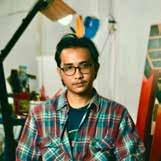
APHRODITA WIBOWO (b.1985) is a self-taught, multidisciplinary artist whose practice bridges personal narrative and material exploration. With an academic background in International Relations and early artistic influences drawn from both of her parents, Wibowo approaches art as a site of dialogue—between memory and imagination, intimacy and collectivity.
Working across paper cutting, hand embroidery, soft sculpture, and digital painting, she constructs tactile environments animated by vibrant color and playful, organic forms. She tells stories from the perspective of her “inner child,” guided by spontaneity, honesty, and emotional warmth. Her works often begin with personal memories and imagined narratives, which she develops into tactile, cheerful compositions. In doing so, she creates intimate yet relatable experiences that invite viewers to connect with the tenderness and universality within her stories.
Wibowo has exhibited widely in Indonesia and internationally, with presentations in Bali, Jakarta, Yogyakarta, Bandung, and New York, continuing to cultivate art as a joyful space for shared storytelling and connection.
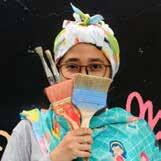
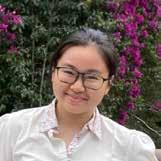
DIANDRA LAMEES (b. 2003) is a visual artist born in Tangerang, Indonesia. She recently graduated from the Faculty of Art and Design, Bandung Institute of Technology (ITB), majoring in Ceramic Art. Her practice centers on themes of identity and culture, particularly shaped by her experience as a Chinese-Indonesian.
Through ceramic and visual art practices, Diandra explores memory as a form of archiving— collecting fragments of personal and cultural narratives as a way to understand, question, and learn. Her works often reflect quiet observations of lived experience, transforming intimate memories into material form. She has presented her works in various exhibitions in Indonesia and internationally, including Kuala Lumpur and Melbourne.
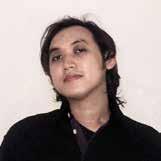
DIMAS HUSSEIN (b. 2001) is an Indonesian artist based in Yogyakarta. He studied Fine Art at ISI Surakarta (2019–2022) and has been a member of the collective Penjarah Kosan since 2019.
His practice emerges from close observation of overlooked everyday experiences, which he transforms into spaces of psychological reflection. Working across painting, printmaking, and drawing, Dimas examines the relationship between body, memory, and emotion— encompassing desire, hope, vulnerability, loss, and melancholy. The figures in his works function not merely as physical representations, but as sites of interior expression, where ordinary moments shift into intimate and contemplative encounters.
His works have been presented in various exhibitions, including Art Jakarta (2025), as well as group exhibitions in Bandung, Yogyakarta, and Tulungagung.
ERA PREMAKARA (b. 1995) is a multidisciplinary artist whose practice spans design, visual storytelling, and cultural research. With over seven years of experience in the global design industry across New York, London, and Jakarta, she brings an international perspective that bridges conceptual rigor with a strong visual language. She holds a BFA from Parsons School of Design, New York, and an MA from University College London. Her works have been exhibited at venues including the Design Museum (London), Samsung Experience Store King’s Cross (London), and Hong Kong Business Week.
As the founder of A Better Conversation Design (ABCD) Studio, Era integrates technology as both medium and message. Her practice explores identity, memory, and socio-political life through formats that merge the tactile and the digital. Her work has been featured in The New York Times, Tatler Malaysia, Harper’s Bazaar Indonesia, and AXIS Japan.

EUNICE NUH TANTERO (b. 1979) is a visual artist based in Jakarta, Indonesia. A graduate of Visual Communication Design from Trisakti University, she began her career in 2006 with character design works across various media, including designer toys, while simultaneously developing her own pattern explorations.
Between 2012 and 2022, her practice expanded into drawing and fiction writing, resulting in four published fiction books comprising poetry, short stories, and sketches. She has also contributed visual works for Indonesian musicians, including album artwork for Danilla’s Lintasan Waktu, as well as projects for Sore Band and Rumasakit.
Since 2021, she has returned to visual art through paper-based works, exploring process, memory, and consciousness through abstract and collage compositions. Her solo exhibition Wishful Thinking (Jakarta, 2023) marked this renewed phase of her practice.

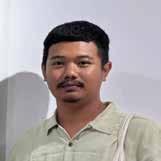
FRISKI JAYANTORO (b. 1997) is an Indonesian artist currently based in Batu, East Java. He holds degrees in Fine Arts Education from Universitas Negeri Malang (UM) and Universitas Pendidikan Indonesia (UPI). Actively engaged in the East Javanese art scene, Friski is a founding member of the collective Pintu Belakang, initiated in 2019.
Working primarily in abstract painting, and occasionally installation, Friski cultivates a visual language marked by minimalism and quiet elegance. Embracing restraint and clarity, his visual language reflects both aesthetic discipline and an introspective disposition.
As an introvert, he approaches contemporary art as a space for listening and observing rather than speaking. For Friski, visual art becomes a medium through which he expresses his patterns of thought and contemplates life’s journey. Drawing wisdom from personal and social problematics, he distills these experiences into contemplative compositions that invite viewers to encounter meaning through stillness and attentive reflection.

GITTA AMELIA (b. 1995) is an Indonesian entrepreneur and synesthetic painter whose work explores emotion, femininity, power, and quiet symbolism. Professionally known as the Founder & CEO of Filmore Health Group, she brings the same emotional precision, sensitivity, and clarity from the healthcare field into her visual practice.
Since the age of five, she has translated her emotional synesthesia onto canvas. A selftaught artist, Gitta reinterprets the notion of soft power through a contemporary female lens. In her works, horses emerge as symbols of divine strength and the courage to transcend fear, while female figures stand as central narrators of sacred and personal mythologies. Through layered color and intuitive composition, she constructs intimate visual spaces where vulnerability and resilience coexist.
HO BIN KIM (b. 1996) is a novelist and multidisciplinary artist working across video, performance, and installation. His practice examines migration, media, and institutional systems, with particular attention to residency structures and global art infrastructures. He is currently developing a long-term project titled “Reality Sandwich.”
His work has been presented at the 15th Gwangju Biennale (German Pavilion), the 2nd Seoul Art & Tech Festival, the 7th Bangkok Experimental Film Festival, and the 24th Forum Film Dokumenter, among other solo and group exhibitions. He has also participated in the UNESCO Media Art Residency and the Swatch Art Peace Hotel Residency in Shanghai, as well as various international residency programs.
Through these residency experiences, Kim has engaged in cross-cultural exchange with artists from diverse contexts, expanding his research and continually challenging the boundaries of his own practice.
I GEDE SUKARYA (b. 1995) was born in Bulian, Buleleng. His early interest in portrait art led him to participate in painting competitions as a child, reaching the provincial level. To develop his artistic skills, he moved to Gianyar and Denpasar while attending vocational high school and later pursued a Fine Arts degree at the Indonesian Institute of the Arts (ISI) Denpasar on a scholarship.
Sukarya explores a variety of mediums, drawing inspiration from daily life, customs, and culture. During his explorative studies, he discovered Seni Tatah, a traditional Balinese art form seen in Barong, Rangda, and Wayang costumes. These discoveries led him to use cowhide as a medium as it connects with the evolution of imagery in Seni Tatah, which originally served as wearable or commissioned art, into fine art. By inheriting the inlay technique, he consistently depicts hedonistic forms adorned with Balinese ornaments. In Sukarya’s eyes, this approach creates a simpler form that resonates with today’s reality. Each detail in his work invites the viewer to engage their imagination, creating space for imaginary illusions and deeper experiences.
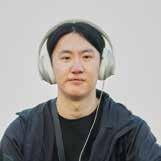
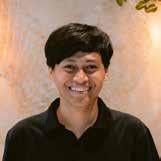
I GUSTI NGURAH AGUNG DALEM DIATMIKA (known as GUSTI DALEM, b. 1996), is a Balinese artist whose practice centers on ceramic materiality. Born into a family deeply rooted in ceramic art, his early immersion in the medium formed a genealogical foundation that later converged with academic inquiry during his studies in Ceramic Craft at ISI Denpasar, beginning in 2015. This encounter affirmed his commitment to exploring and expanding the possibilities of clay.
Questioning conventions within the craft discipline—particularly the rigid division between function and expression—Gusti Dalem positions his work within contemporary craft discourse, seeking to dissolve these boundaries into a more personal and conceptual language. His practice unfolds through persistent inquiry, with each work emerging from ongoing experimentation with the inherent character of ceramic material.
He is especially attentive to the clay of his birthplace, Bali, reflecting on its cultural significance and its role within civilization, rearticulated through a contemporary lens.
IBOB HARIYATMOKO (b. 1996, Banyumas), commonly known as Bob, is an Indonesian artist whose journey into art emerged through lived experience rather than formal training. He first encountered the visual arts in 2022 while working as a groundskeeper at an artist’s home in Yogyakarta. Immersed in this environment, he developed a passion for painting and became an artisan in the studio until mid-2023.
After gaining confidence in his independence, Bob established his own studio practice. In addition to painting, he works as a tattoo artist and batik maker, broadening his engagement with image-making across diverse cultural forms. In 2024, he returned to formal study at the Indonesian Institute of the Arts (ISI) Yogyakarta, Faculty of Fine Arts and Design (FSRD), where he is currently in his fourth semester.
Bob’s trajectory reflects a self-driven commitment to artistic growth, shaped by hands-on practice, continual learning, and a dedication to expanding his creative horizons.
IPANG CAHYO (b. 2003), known as Ipang, was born in Indonesia and raised in a farming family on the outskirts of Bantul, Yogyakarta. His encounter with visual art began in secondary art school, where he was first introduced to the field through Visual Communication Design. Diverging from many of his peers who pursued design professionally, Ipang chose to continue his studies in painting at the Indonesian Institute of the Arts (ISI) Yogyakarta, where he remains active as a student.
Ipang’s creative practice is rooted in an interest in liminal space—the meeting point between past emotion and present reality. He seeks to capture the friction between these temporalities and translate it into sensory visual experiences. Drawing from personal digital archives, including photographs he has taken as well as images sourced from the internet, he constructs painterly compositions that bridge shifting fragments of affective memory.
JAYANTO TAN (b. 1969) is a Gadigal/Sydneybased visual artist originally from North Sumatra, Indonesia. He blends mythology, personal narrative, and cultural tradition to create works that engage with themes of identity, hierarchy, gender perspective, colonialism, and belonging. His practice spans ceramics, installation, and performance, often reflecting on his experience as a “minority within a minority” as an immigrant artist.
Through his distinctive creative language, Jayanto seeks to amplify voices from communities that are often marginalized within mainstream society, positioning his work as both personal expression and cultural advocacy.


JOSHUA L.G.S (b. 1999, Hong Kong) is a Jakartabased representational artist whose practice is rooted in drawing and painting. Having cultivated a strong interest in drawing from an early age, he pursued studies in Sequential Arts at the Savannah College of Art and Design. During his time there, he was mentored by painters Thomas Dang Vu and Kalok Ng, who introduced him to academic painting practices and helped shape his enduring commitment to the medium.
Following graduation, Joshua initially sought a career in the comic book industry before redirecting his focus toward painting. This shift marked the beginning of his engagement with fine arts as a professional pursuit, making his debut at Art Jakarta Gardens 2025. Joshua’s current practice aims to reaffirm the relevance of representational art within contemporary artistic discourse and to expand its presence in the art market.
KEVIN “PLE” ADITYA (b. 1997) is an Indonesian multidisciplinary artist and art director whose practice operates between art, design, and activism. Working across photography, video, installation, text-based works, zines, found objects, and public interventions, he treats everyday materials as critical entry points into larger structures of power. Through these modest forms, Ple exposes class tensions, bureaucratic absurdities, and the quiet violence embedded within cultural and civic systems.
Satire, irony, and humor function in his work as strategic tools rather than stylistic gestures. By destabilizing authoritative narratives through subtle disruption, he maintains accessibility without diluting critique. Positioned simultaneously within the creative industry as an art director and outside it as an artist, Ple embraces this contradiction as material. His practice resists fixed conclusions, instead insisting on friction, movement, and residue. For Ple, art is not merely representational; it is an act of intervention—an active negotiation with the systems it inhabits and challenges.
LEKA PUTRA (b. 1989, Sanggau, West Kalimantan) is a visual artist and luxury artisan painter currently based in Jakarta, Indonesia. His practice is shaped by a trajectory that bridges artisanal craftsmanship and contemporary art. He previously served as the first in-house painter for Louis Vuitton Indonesia, a position he held for two years before continuing his career independently as both artist and artisan.
Leka’s personal practice centers on the exploration of dualities that structure lived experience. Drawing from his background in a small town and his subsequent immersion in an urban metropolis, he reflects on the tensions between periphery and center, intimacy and spectacle. His works further examine contrasts between wealth and poverty, as well as shifting configurations of gender and power.
Through a meticulous painterly approach informed by his artisan training, Leka constructs visual narratives that navigate these oppositions, positioning painting as a space where social disparity and personal history intersect.
MAHENDRA PAMPAM (b. 1984) was born in Kediri, East Java, and pursued his art education at the Indonesian Institute of the Arts (ISI) Yogyakarta from 2004 to 2011. He is currently based in Yogyakarta and has been actively engaged in the art scene since his university years, participating in exhibitions, art fairs, workshops, and community-driven cultural initiatives.
Working across painting, printmaking, sculpture, and installation, Mahendra’s practice is marked by a surrealistic visual approach. His works emerge from personal anxieties and contemplations, exploring psychological, theological, and philosophical questions, as well as the paradoxes and relationships between beings. Through layered imagery and symbolic compositions, he constructs reflective spaces that probe identity and human interconnectedness.
Beyond his individual practice, Mahendra is an active initiator of artistic networks and communities, including Komporseni, Tanirupa, Grafis Canda, and Sekawanan.

MANDY CJ is an artist and creative storyteller who works at the intersection of painting, fashion, and culture, weaving these disciplines into a distinctive expression of identity. Her practice celebrates diversity, empathy, and boldness, grounded in a mission to inspire others to embrace their own narratives through courageous creativity and authentic self-expression.
Her paintings merge realism with conceptual depth, allowing familiar forms to carry layered reflections on faith, identity, and human connection. Each work balances aesthetic sensitivity with deliberate storytelling, inviting viewers to engage both visually and emotionally.
This sensibility extends seamlessly into her approach to fashion, where eclectic colors and rich textures mirror the visual intensity of her artworks. Boldness operates as a unifying principle across both art and style, becoming not merely an aesthetic choice but a declaration of presence—an affirmation of individuality shaped by openness, dialogue, and cultural awareness.

MICHELLE SUTANTO (b. 2000) is a Jakartabased artist whose practice explores the space between realism and abstraction across painting, quilting, and drawing, using close observation as a central approach. By magnifying fragments of ingredients,tangled earphones, and objects from her immediate surroundings, she transforms the familiar into ambiguous fields of line, texture, and form. In extreme proximity, realism begins to dissolve; what first appears representational shifts toward abstraction. Through this process, insignificant or mundane materials are elevated, inviting viewers to reconsider the value of what is typically ignored.
Underlying these works is the notion of entanglement—both physical and psychological. Knots, overlaps, and layered structures echo the complexities of early adulthood, reflecting confusion, vulnerability, and growth. Through labor-intensive and meditative processes, she approaches making as an act of careful unraveling. The work does not dramatize entanglement but instead creates an experience of gradual untangling, encouraging slow looking, introspection, and quiet contemplation.
Michelle received a Bachelor of Fine Arts in painting and drawing from The School of the Art Institute of Chicago (SAIC). She is currently based in Jakarta, Indonesia.
MIRANDA PRANOTO (b. 1999) is an interdisciplinary Indonesian artist living and working in Bogor, Indonesia. Her works contemplate the realities of womanhood in the modern day. Through photography and painting, Miranda raises questions surrounding power, autonomy, and censorship.
Drawing from personal memorabilia, pop culture and mass media, Pranoto’s works emerge as a blend of traditional realistic painting and contemporary photography. Her paintings fall between an intimate peek into a young woman’s camera roll, versus images we often see circulated in social media and newspapers alike. Who draws the line between the personal and political?
MORRIS ALIQSAN PIERO (known as MORRIS HORK b. 2002), is an artist from Yogyakarta currently pursuing his studies at Institut Seni Indonesia Yogyakarta. Since mid-2018, he has developed a focused engagement with portraiture, expanding his practice to encompass suburban landscapes and everyday objects as sites of reflection.
Working through a supple and organic realist approach, Morris positions the female figure and the suburban landscape as points of convergence between visual events and spatial consciousness. Space, in his paintings, is not a passive backdrop but an active field—shaping and shaped by presence. Figures and environments dissolve into one another, forming fluid constellations of memory, atmosphere, and lived time.
For Morris, painting is a process of rereading circumstances: landscapes and objects become projections of layered narratives where past recollections collide with present realities. His works construct moving cartographies of experience, suspended between memory and possibility, silence and transformation.
MUKHAMMAD SYAIFULLAH (b. 2002) is an Indonesian artist who merges the disciplined ethos of pesantren education with a contemporary aesthetic sensibility. A graduate of LEMKA Sukabumi, he began his creative journey in the rigorous and highly structured tradition of Islamic calligraphy, later transforming it into a reflective and contextually engaged visual language. Since elementary school, Syaifullah has actively participated in numerous art competitions, earning awards from regional to national levels. These formative experiences have shaped his consistency, deepened his creative process, and strengthened his commitment to artistic practice.
Raised within a pesantren culture, he brings spiritual depth to his exploration of Javanese philosophy and mythology. For Syaifullah, art is a space of acculturation—where inherited traditions are reactivated through inclusive dialogue with contemporary realities. Through his work, he seeks not merely to depict but to rearticulate Javanese history and local wisdom, positioning each gesture as a bridge between ancestral values and the visual language of the present.
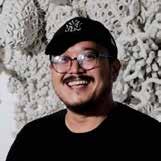
MULYANA (known as MANG MOEL, b. 1984), is an Indonesian visual artist based in Yogyakarta, widely recognized for his intricate crochet installations. Through labor-intensive, modular constructions, he builds immersive, imaginative worlds often inhabited by underwater-inspired characters—most notably his octopus alter ego, Mogus.
Rooted in traditional handcraft techniques yet situated within a contemporary art context, Mulyana’s practice bridges vernacular making and conceptual inquiry. By repurposing leftover yarn and discarded fabric, he foregrounds sustainability as both material strategy and ethical position. His tactile environments invite participation, encouraging viewers to reflect on ideas of identity, transformation, and community through playful interaction.
Mulyana’s work has been exhibited internationally, including presentations in New York, Tokyo, Shanghai, and Jakarta, expanding the reach of his distinctive visual language. Across these varied contexts, his practice continues to evolve as a participatory ecosystem—one that intertwines craftsmanship, imagination, and collective experience into a shared, speculative universe.
NADHIEF ASHR (b. 2000, Jakarta) is a visual artist based in Depok, Indonesia. He studied Fine Arts at the Jakarta Institute of Arts from 2019 to 2024 and has been exhibiting actively since 2020. His practice centers on painting, frequently extending into multi-panel and mixed-media presentations of two-dimensional work.
The conceptual foundation of his work lies in the interplay between representation and repetition. He frequently constructs two-dimensional compositions from multiple, sometimes conjoined yet deliberately separated segments, allowing the overall narrative to unfold through fragmented chapters. Repetition manifests both visually— through symmetrical forms and the physical structure of the work—and symbolically.
Through recurring motifs, such as the reimagined cat with nine lives, Nadhief explores perceived truths in representation and questions how repetition can gradually erode meaning. His works reflect on the futility of repeated actions and habits, while contemplating themes of death, renewal, and reincarnation.
NAUFAL ABSHAR (b. 1993) is among the most prominent voices of his generation in Indonesian contemporary art. Over the past decade, he has cultivated a rigorous and distinctive practice that has garnered both critical recognition and a strong international collector base.
Naufal has participated in numerous group exhibitions across Singapore, Hong Kong, Taiwan, Venice, Washington, D.C., New York City, and Lithuania. In 2019, he received the AMI (Anugerah Musik Indonesia) Award for Best Graphic Design for the album Mantra–Mantra by Kunto Aji, underscoring his fluency across visual art and design.
Recognized as one of Indonesia’s most widely collected contemporary artists, Naufal’s works are held in significant private and blue-chip collections both locally and internationally.
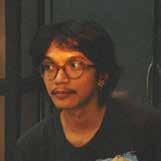


RICKY WAHYUDI (b. 1974) is an Indonesian visual artist born in Payakumbuh, West Sumatra, and currently based in Bantul, Yogyakarta. He studied Informatics Engineering at Universitas Persada Indonesia YAI, Jakarta, a background that informs his structured and analytical approach to visual composition. A self-taught artist, Ricky has developed an independent artistic language through years of sustained exploration and practice.
Since the early 2000s, he has exhibited both nationally and internationally. His works have been featured at major platforms including Art Jakarta and Art Moments Jakarta, as well as exhibitions in Malaysia, Singapore, and London. In 2024, he was selected as a finalist for the Grey Art Award in Bandung, Indonesia.

Through an intuitive yet deliberate approach, his works explore identity, transition, and the dialogue between tradition and contemporary expression. He is an active member of the Sakato Art Community.
SIFA ADNI QOLBY (b. 1994) is an artist whose practice spans more than two decades, grounded in a sustained exploration of traditional media, including oil pastel, acrylic, watercolor, and oil paint. Her recent focus on oil pastel signals a search for intimacy and immediacy, enabling her to convey emotion through layered textures and tactile mark-making.
Working from a naïve art perspective, Sifa addresses contemporary issues through a visual language that is candid yet evocative. Her compositions are characterized by vibrant color palettes, intricately layered backgrounds, and finely articulated lines that shape both form and narrative—elements that have become central to her artistic identity.
Embedded within a broader inquiry into memory and perception, her works invite viewers to return to a childlike mode of seeing. In doing so, they create a contemplative pause, gently releasing the audience from the pressures of everyday life while opening space for reflection and quiet emotional resonance.
SILLYNDRIS (b. 1993) is an Indonesian installation artist and creative director whose practice interrogates the cultural logic of consumption. A 2015 graduate of Universitas Pendidikan Indonesia, where he majored in Resort and Leisure Management, he later expanded his artistic inquiry through a course at MoMA, New York, in 2019.
Working primarily with installation, Sillyndris transforms everyday objects and elements of food culture into playful yet critical mythologies, revealing how quiet, habitual acts subtly shape human behavior. For him, consumption extends beyond the fulfillment of need; it is a process through which identity is continuously constructed. Food cans, detergent packaging, and household tools are approached not as neutral items, but as markers of ongoing social transformation. By deconstructing the narratives embedded in these objects, he invites viewers to reconsider their relationship to the things they routinely overlook.
SUYATNO (b. 1996) is a visual artist from Purworejo, Central Java who has been actively exhibiting since 2015. He works primarily in painting, employing an observational approach to nature while remaining open to collaborative and interdisciplinary practices.
His artistic practice begins with attentive observation of the natural world as a continuous space of learning. Through painting, Suyatno seeks to understand feeling, atmosphere, and the experience of seeing at a measured pace. Recognizable forms serve as points of departure, grounding his work in the honesty of observation while allowing room for diverse visual translations.
Process occupies a central role in his methodology. For Suyatno, painting is a means of developing a visual language that grows from lived experience rather than imitation. Each work unfolds gradually, shaped by sustained looking and personal reflection, positioning nature not merely as subject matter but as an active partner in the formation of meaning.
SYAGINI RATNA WULAN (known as CAGI, b. 1979) is a Bandung-based artist whose interdisciplinary practice interrogates perception, materiality, and the ontology of objects. She holds a Bachelor of Fine Arts from the Bandung Institute of Technology (2001) and a Master’s in Cultural Studies from Goldsmiths, University of London (2005). Trained in printmaking, Cagi works across painting, sculpture, installation, and participatory projects, with “thingness” at the core of her inquiry. A temporary sensory loss following a road accident profoundly shaped her practice, prompting a shift toward visual experimentation — since 2015 she has treated color as both a physical and mathematical phenomenon, emphasizing rhythm, translucence, and materiality across two- and three-dimensional media. After regaining her sense of smell in 2021, she further investigated vision through layered lenticular lenses, exploring light refraction and perspective. She has also served as a facilitator of Titicara: An Annual Women Artists Exhibition.
VERONICA LIANA (b. 1990) earned her Bachelor of Fine Arts from the Faculty of Fine Art at the Indonesian Institute of the Arts (ISI) Yogyakarta in 2018. Her practice critically engages with issues of women’s rights and domesticity, examining the socio-cultural structures that shape women’s lived experiences.
In 2025, Liana initiated a new phase of material and visual experimentation through fabric-based sculptural works, marking a departure from her earlier focus on realist painting. In her practice, fabric operates as a historically and culturally gendered material, while sewing functions not only as a technical process but also as a conceptual framework closely tied to women’s labor.
That same year, she was selected as a recipient of the ARTJOG Young Artist Award for her installation Rupa Tan Matra, composed of fabricmade everyday objects. Her works have been presented in national and international exhibitions and are held in both local and international collections.
WIDI WARDANI PURNAMA (known as Widwar, b. 1998), is an emerging Indonesian artist. He earned his Bachelor of Fine Arts from Universitas Pendidikan Indonesia (UPI) and is currently pursuing a Master of Fine Arts at the Bandung Institute of Technology.
Widi’s practice engages with the concept of relativity in painting, approached through processes of re-reading and deconstructing the materials and methods traditionally associated with the medium. By interrogating these conventions, he seeks to uncover alternative possibilities for painting—ones that resist established frameworks yet remain deeply rooted in the medium’s expressive capacity.
Through his artistic understanding of relativity in painting, Widi invites both audiences and practitioners to approach and reconsider painting itself, opening broader, more fluid ways of seeing and interpreting art beyond conventional boundaries.
WISMA is an art collective formed by three individuals — WALID, ISMA, and IHSAN. The name WISMA, an acronym derived from their initials, also signifies a shared space: a site of convergence where ideas, practices, and perspectives intersect. While each member comes from a distinct disciplinary background, they are united by a mutual interest in art, material experimentation, and social readings of public space.
The collective emerged from close observation of street food culture, particularly seblak, understood not merely as an object of consumption but as an urban cultural practice embedded with social exchange, class signification, collective memory, and microeconomic relations. From this inquiry, WISMA developed an artistic approach that combines everyday materials, visual systems, and experimental media as a critical framework for examining popular culture.
Their inaugural work operates at the intersection of installation, material exploration, and conceptual practice, transforming banal objects into systems of meaning, visual archives, and symbolic structures that register the dynamics of urban life.
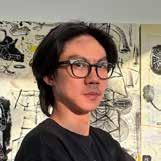
REYDO RESPATI (b. 1989) is a Jakarta-based visual artist and graphic design lecturer. He holds a Bachelor’s degree in Graphic Design from Universitas Trisakti and a Master’s degree in Design from Institut Teknologi Bandung. His artistic practice combines drawing and painting through a mixed-media approach, treating drawing not merely as a medium but as a way of thinking, sensing, and responding to reality.
His work reflects the paradox of contemporary humanity, situated between the remnants of the sacred and secular systems saturated with signs, symbols, and images that remain open to interpretation. Through strategies of juxtaposition, repetition, and fragmentation, Reydo constructs visual narratives that articulate ambiguity, tension, and quiet absurdity. His work has been exhibited at Art Jakarta, Art Moments, Selasar Sunaryo (Bandung), and Studio Kalahan (Yogyakarta). In 2025, he was a finalist in the 15th UOB Painting of the Year.
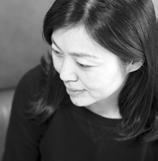
YOUNGSOOK PARK is a Korean painter based in Jakarta, Indonesia. Her practice is grounded in the belief that art should restore a sense of genuine freedom within a society saturated by ideas and concepts. For Park, beauty lies in discovering and fulfilling one’s own unique pattern while remaining in harmonious relation with others.
Her work reflects a pluralistic aesthetic that acknowledges alterity, extending beyond human subjects to animals and nature. Shaped by her upbringing in Korea and formative experiences in South Africa, where she encountered nature intimately, her paintings draw upon Eastern philosophy and its emphasis on harmony, connection, and coexistence.
Working in oil while embracing Korean aesthetic principles, Park reinterprets sansuhwa (landscape painting) as an expression of spirit rather than literal depiction. Mountains become maternal, life-embracing forms, within which she integrates multi-perspective animal motifs. Through fluid black lines, spacious margins, and subtle humor (haehak), she creates contemplative fields that weave patterns of interdependence, affirming coexistence and shared vitality.
WINA LUTHFIYYA IPNAYATI (b. 1996), also known as Defiyya Moon, is a multidisciplinary artist working across sculpture, drawing, printmaking, writing, and performance. Born in Majalengka, she has been based in Jakarta since 2014, where she continues to develop her practice within Indonesia’s contemporary art landscape.
Between 2015 and 2019, Wina was involved with Regu Kerja Didi Petet and Sena Didi Mime, deepening her engagement with acting and theatre—an experience that later informed the performative dimension of her visual practice. She earned her Fine Art degree from the Jakarta Institute of the Arts (2017–2021), which further strengthened her cross-disciplinary approach.
Her final project focused on Marni, a traditional pesinden (Javanese female vocalist) from Majalengka. Through an archival exhibition and the realization of a totem at Taman Sejarah Majalengka, Wina reactivated Marni’s cultural legacy while authoring its historical context. The project functioned as both preservation and recognition of a significant local cultural figure.
Currently, Wina serves as a member of the Visual Arts Committee of the Jakarta Arts Council (2023–2026), teaches in the Fine Arts Program at the Jakarta Institute of the Arts, works at D Gallerie Jakarta, and is pursuing a Master’s degree in Arts Management at the Graduate School of the Jakarta Institute of the Arts. She is also a member of the Galeri Saku collective and serves as an advisor to Kosarupa.
Through artistic practice, collective work, and arts management, Wina remains committed to preserving cultural narratives and strengthening the contemporary art ecosystem in Indonesia.