• Free Quotes Contact Lance at hugla64@gmail.com Or 214-356-9002
2026ACS DFW Executive Committee
Chair: Jonathan Dannatt, PhD
Chair-elect: Rajani Srinivasan, PhD
Past Chair: Denise Lynn Merkle, PhD
Treasurer: Martha Gilchrist, MS
Secretary: Celyna Rackov, PhD Councilors:
Mary E. Anderson, PhD (2025-2026)
Kirby B. Drake, JD (2025-2027)
Linda D Schultz, PhD (2026-2028)
Rebecca Weber, PhD (2025-2027)
Alternate Councilors:
Daniela Hutanu, PhD (2025-2026)
Trey Putnam, PhD (2026-2028)
Daniel Tran, PhD (2025-2027)
Yunxiang Li, PhD (2025-2027)
SOUTHWESTRETORT
SEVENTY-NINTH YEAR April 2026
Published for the advancement of Chemists, Chemical Engineers and Chemistry in this area published by
The Dallas-Fort Worth Section, with the cooperation of five other local sections of theAmerican Chemical Society in the Southwest Region.
Vol. 79 (8) April 2026
Editorial and Business Offices: Contact the Editor for subscription and advertisement information.
Editor: Connie Hendrickson: retort@acsdfw.org
Copy and Layout Editor: Lance Hughes: hugla64@gmail.com
Business Manager: Martha Gilchrist: Martha.Gilchrist@tccd.edu
The Southwest Retort is published monthly, September through May, by the Dallas-Ft. Worth Section of the American Chemical Society, Inc., for the ACS Sections of the Southwest Region.
'And Another Thing..., Another Volunteer Edition'
April 10, 2026
Denise Lynn Merkle, PhD,ACSF
Suppose there are scientists who have advanced their careers to the point where they make $500 per hour. For a 40-hour work week (a what?) and 52 weeks of the year, such scientists would gross over $1,000,000 per year. Subtracting taxes would significantly reduce the net, of course, but if these scientists drive beat up old cars, that's a lifestyle choice and not a necessity. Now suppose there are early-stage scientists who make $25 per hour. These scientists would gross $52, 000 year. Not as comfortable as the later-career colleagues, but not the $15/hour of a big box store employee.
For the purposes of most of this 'AAT...', a hypothetical scientist (HypoSci) will make $50 per hour, grossing $104,000 for a 52-week year comprised of 40 hour weeks. Next - and importantly for this article, HypoSci will think, 'Oh, I'd like to contribute to the world’, and take on a volunteer role intended to support the sciences, or stray animals, or a political campaign, or even a project at work. Maybe HypoSci agrees to make a few phone calls to recruit more volunteers to the cause, whatever the cause happens to be. For approximately an hour of interaction, HypoSci has effectively donated $50. It's a small chunk of time, but even without hidden expenses, such as time away from family, or the cost of not taking care of something else, HypoSci gave the equivalent of a tank of preHormuz gas by volunteering. So then, maybe, HypoSci gets drawn into the cause, and a little more involved, and adds in other contributions - like organizing a dinner meeting, with a speaker.
Now, don't get the idea here that 'And Another Thing... ' is anti-volunteerism - It's definitely not.
Back to volunteerism - in the form of setting up an event for attendees. HypoSci devotes some time to ensuring the audience will enjoy the program, and has Set the date, secured a speaker (proverbially - no duct tape required), arranged location, food, sign-up, advertising across platforms, e-blasts (preferably by saying to the Public Relations volunteer: please arrange the signup, the advertising, the e-blasts), addressed the on-site details ( guest checklists, people to work the door, AudioVisual equipment (sooo much easier than back-in-theday), speaker gifts). Whatever is needed for a professionally organized meeting is handled. It's obvious that HypoSci has spent more than an hour on volunteer activities, and in fact probably used more than 5 hours for the required tasks. So the baseline amount HypoSci has donated to the cause is more than $250. One person - not counting everyone else who spent time to ensure a great event, gave a minimum of $250 of time. While HypoSci's efforts are
From the ACS Press Room
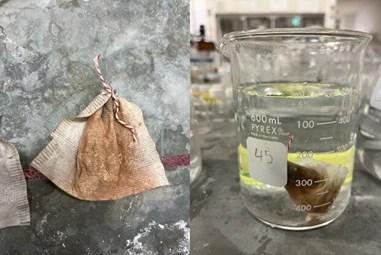
These teabags aren’t for making tea — they remove arsenic
“Detection of Arsenic at Micromolar Concentrations and Remediation of Arsenic from Drinking Water with a Bemliese Teabag”
ACS Omega
Arsenic contamination in drinking water is a global issue, with over 200 million people estimated to be at risk. While water treatment plants remove the metal, the problem persists in low-resource areas or undertreated well water. So, researchers reporting in ACS Omega have designed a simple solution: an arsenic-removing teabag. The system is inexpensive, costing around 7 cents to clean a liter of water, and highly effective, removing over 90% of the arsenic ions present.
Clean drinking water should not depend on access to expensive infrastructure." Vick Tan These specialized teabags aren’t for making tea they are an inexpensive and effective way to remove arsenic from drinking water. Adapted fromACS Omega 2026, DOI:
“Clean drinking water should not depend on access to expensive infrastructure. Our research shows that simple low-cost materials can be engineered into scalable solutions for arsenic remediation from drinking water, one of the world’s most urgent public health crises,” explains Vick Tan, a high school student intern and author on the paper.
The World Health Organization (WHO) has set a limit for safe drinking water of 10 micrograms of arsenic per liter. However, due to natural leeching from certain minerals or from human activities like mining, the arse-
nic concentrations in groundwater can exceed this limit, often requiring high-tech removal systems like reverse osmosis. In regions without wide-scale water treatment, such as parts of Southeast Asia, arsenic exposure remains high. This has led to high rates of arsenic poisoning and health problems related to long-term arsenic exposure, including cancer and childhood developmental issues.
Tan, with a team of researchers led by Adam Braunschweig, proposes a method of removing arsenic ions from drinking water that’s as simple as making a cup of tea. Previously, it had been discovered that heavy metals like arsenic naturally stick to some teabags during the brewing process. So, these researchers wanted to create a teabag that was specially designed for removing arsenic ions. The team took cellulose-based teabags, embedded them with magnetic iron oxide nano-
Continued on page 18
These specialized teabags aren’t for making tea they are an inexpensive and effective way to remove arsenic from drinking water.
From the ACS Press Room
A stretchy, heat-activated skin patch could be a surgeryfree melanoma
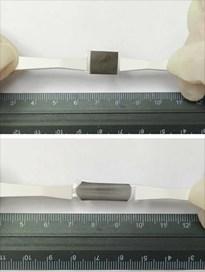
Melanoma is a deadly form of skin cancer that is typically removed surgically. Now, researchers publishing in ACS Nano report they have developed a potential noninvasive treatment for melanoma in the form of a stretchy, heat-activated patch similar to a bandage. When activated, the patch releases copper ions that kill the underlying cancer cells and prevent them from spreading. In tests with mice, the researchers say the patch reduced melanoma lesions without damaging surrounding tissue.
This bandagelike patch could someday be part of an effective and noninvasive treatment for melanoma.
Adapted from ACS Nano 2026, DOI: 10.1021/ acsnano.5c2110 2
Melanomas typically form in the outermost and middle layers of the skin. That makes it challenging to kill cancer cells while leaving the surrounding healthy tissue unscathed. Recent advancements in nanotechnology could result in a gentler, more targeted option for skin cancer therapy. One example is laser-induced graphene (a laser-etched po-
treatment
rous carbon material). Researchers Xin Li, Shi Chen, Meijia Gu and Ruquan Ye took this material and filled the pores with copper (II) oxide and embedded it in a stretchy silicone polymer to create a skin patch for targeted melanoma therapy.
On its own, the patch is soft, stretchy, breathable on the skin, and chemically inert. But the researchers hypothesized that by gently heating the patch, it would release copper ions that interact with cancer cells' DNA and kill them through oxidative stress. This pathway should also trigger an immune response that would inhibit tumor cell migration into other parts of the body (metastasis).
To test the concept, the researchers placed the patch over melanoma cells cultured in the laboratory. They warmed the patch to 108 degrees Fahrenheit (42 degrees Celsius) with a low-power laser. In its now-activated state, the patch released copper ions into the melanoma cells directly beneath it. The team found that the copper ions killed most of the cultured melanoma cells and slowed cell movement.
In a preliminary 10-day animal study, they placed patches on mice with melanoma. On days 1 and 5, the patches were activated with a laser for one hour. The treatment reduced melanoma lesions by 97%. As predicted, tissue samples showed that cancer cells had not migrated beyond the tumor borders, and copper ions had not accumulated in the organs or blood.
Continued on page
no less valuable in effect than those of higher paid scientists, if more established scientist/ volunteers are involved the relative monetary donation heads into the thousands-of-dollars range. So, volunteers donated Hundreds to thousands of dollars - for one event.
'What is the point of all this?', you ask. It's not, as it may seem, to knock volunteering, or to imply that some volunteers are worth more than others, or even to say organizations should pay their volunteers, but to emphasize that volunteerism is valuable. Seriously valuable. And everyone -especially those in management of organizations- should recognize this. The idea that a volunteer's time, energy, contributions - whatever- are less critical than those of employees or contractors is just wrong. Are the roles of volunteers different than those of employees? Yes, of course. Are there benefits to being a volunteer that are not inherent to being an employee? Yes, to this as well. It's easier for a volunteer to walk away from an unpleasant situation, for one thing (or it should be). But - take a look at the organizations that rely on volunteers. Would they survive if suddenly those who provided their time and skills were paid what they're worth? Hmmmm.
Volunteers are key to the success of nearly every venture, from handing out snacks in preschool rooms and during rec sports leagues to providing course safety to motorsport enthusiasts to organizing scientific meetings that attract thousands of presentations.
Volunteers usually aren't out for recognition. Many of them will brush off a thank you or even be surprised at acknowledgement. Regardless of whether you witness kudos and praise - or not - keep in mind what's actually being provided by the volunteers, and where we'd be without them.
And, of course - volunteer.All these worthy causes really need you.
From the ACS Press Room
Snail-derived compound could be a safer anticoagulant compared to heparins
“A Snail Galactosed Glycosaminoglycan Inhibits Thrombosis without Affecting Hemostasis via Disruptng FIXa FVIIIa Complex Generation”
ACS Central Science
For more than a century, heparin has been the go-to anticoagulant to prevent harmful blood clots in blood vessels or the heart from forming or getting larger. However, a major side effect is an increased risk of excessive bleeding, even from minor injuries like small cuts on the skin. In ACS Central Science, researchers report the discovery of a snailderived compound that blocks clot formation while still preserving bleeding control in mouse models.
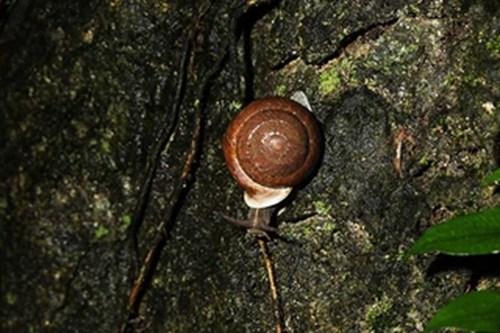
Acompound found in anAsian land snail, like the one shown here, could prevent dangerous blood clots without increasing bleeding risks.
Pavaphon Supanantananont/Shutterstock.com
Blood clots are natural temporary bandages that seal wounds and stop bleeding. These helpful clots called hemostatic clots speed healing to injuries like cuts to the skin. But a harmful type of clot called a thrombus can form inside blood vessels and the heart,
blocking blood flow and causing severe pain and tissue damage. Deep vein thrombosis (DVT) occurs when these long-lasting clots form in the legs and don’t dissolve like they should. If they break away and move to other parts of the body, thrombi can cause strokes, shortness of breath and possibly death. Although heparin and other blood thinners help prevent thrombi, these anticoagulants also interfere with normal clotting (hemostasis) and raise the risk of excessive bleeding. So, Mingyi Wu and colleagues looked for a safer, naturally occurring anticoagulant that only targets thrombus formation.
After analyzing numerous mollusk compounds, the researchers identified CCG, a new glycosaminoglycan (a type of complex sugar) from the snail Camaena cicatricosa. Although part of CCG’s molecular structure is similar to heparin, the sugar sequence that heparin uses to attach to one of its binding partners is missing in CCG. The researchers hypothesized that these differences could make CCG a safer anticoagulant.
In tests with human plasma, CCG inhibited thrombus formation and had no effect on hemostasis. In mouse models of DVT, CCG administered by injection also reduced the incidence of thrombi DVT and, unlike heparin, did not increase bleeding risk. Further testing revealed that CCG prevents the assembly of an enzyme (iFXase) that is active in thrombus formation but not hemostasis.
Although more research is needed, these ini-
Continued on page 19
DFWACS MEETING-IN-MINIATURE (MIM)
McFadden Science Center
Post-docs, grad, and undergrad students will present their research in a 10-12-minute oral presentations.
From the ACS Press Room
Stopping algae blooms with bacteria-busting buoys
“Algaecide-Releasing Buoys for Sustained Harmful Algal Bloom Control”
ACS ES&T Water
Algae blooms make a pond’s surface shine in mesmerizing green hues. But if the microorganisms responsible are cyanobacteria, they can also release toxins that harm humans and wildlife alike. So, a team reporting in ACS ES&T Water has designed a “set it and forget it” system for distributing algaecide using specialized buoys tethered at the site of a bloom. In tests, the buoys removed nearly all cyanobacteria without the need for frequent reapplication.
Algae blooms occur when extra nutrients in the water likely from fertilizer runoff cause tiny microorganisms like algae and cyanobacteria to proliferate. In 2014, one such algae bloom in Lake Erie near Toledo, Ohio, rendered drinking water unsafe for hundreds of thousands of residents. And now, a team of researchers from the University of Toledo are looking to create an algaecide treatment system that puts a stop to a bloom before it has even started. The team, including Umberto Kober, Hanieh Barikbin, Youngwoo Seo, Yakov Lapitsky and colleagues, designed a system that releases algaecide steadily over a period of weeks or months, making it less expensive and more efficient than existing options that require frequent reapplication.
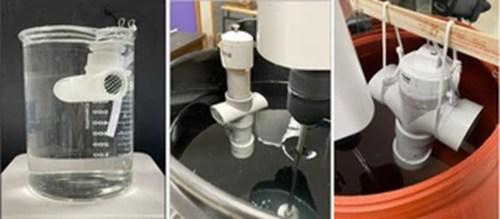
The team constructed small, medium, and large-sized buoys out of PVC pipes, forming either a “T” or cross shape. Hydrogel disks were inserted into the pipe openings to control the diffusion of the liquid algaecide into
the surrounding water. The buoys were then filled with a commercial hydrogen peroxidebased algaecide, which, upon immersion, slowly diffused through the hydrogel disks. The buoys were also engineered so that once the algaecide was gone, the buoy fell to its side, visually indicating that a refill was needed.
Adapted fromACS ES&T Water 2026, DOI: 10.1021/ acsestwater.5c01257
To test their performance, the small, algaecide-loaded buoys were put in a beaker with 1 liter of cyanobacteria-containing water collected from Lake Erie and monitored for two weeks. Every day a small portion of water was replaced with new lake water to ensure the buoys were continually exposed to fresh cyanobacteria. This way, the team could evaluate whether the buoys provided sustained algicidal activity rather than killing the cyanobacteria early in the process. Researchers found that the cyanobacteria were almost entirely eliminated within a week, and other microbes remained largely unscathed. Researchers estimate that their buoys could reliably release algaecide for at least four consecutive release cycles, each lasting 35 days. Though further research is needed, including
Continued on page 20
These algae bloom-busting buoys come in small, medium and large sizes (left to right), allowing for efficient and targeted algaecide treatment.
From the ACS Press Room
Combining algae and oyster shells for biodiesel born in the bayou
Visit the ACS Spring 2026 program to learn more about this presentation.
ATLANTA, March 25, 2026
Biodiesel is a renewable fuel and offers a sustainable and potentially carbon-neutral alternative to petroleum products. Yet production costs remain a hurdle to its widespread use. Now, researchers have developed an inexpensive way to make biodiesel from materials found along the banks of their Louisiana bayou: algae and oyster shells.
The researchers will present their results at the spring meeting of the American Chemical Society (ACS). ACS Spring 2026 is being held March 2226; it features nearly 11,000 presentations on a range of science topics.
Samia Elashry scoops algae from a ditch in Louisiana for the first ingredient in the team’s algae-oyster biodiesel. Ana Elashry
Biodiesel is manufactured and used around the world, but its production is not without challenges. The plants, such as soy and rapeseed, that provide the initial oils require vast areas of land that could otherwise be used for food crops, and in some regions, expanding farms can damage and destroy valuable natural ecosystems. Production can also be expensive because of the high cost of components such as calcium oxide-based catalysts. These two challenges were key motivators for Bello Makama and his research group at Nicholls State University, who turned to their local environment for solutions. From a ditch near the lab, they harvested algae rather than traditional crops and oyster shells to produce the catalyst.
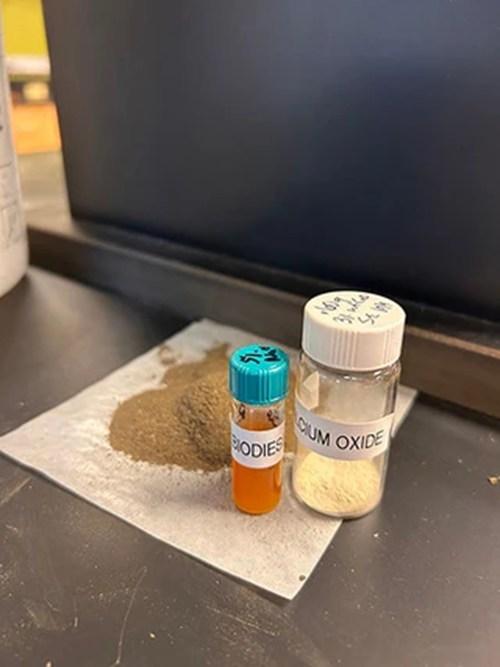
Researchers from Nicholls State University in Louisiana combine processed algae (brown powder) and calcium oxide from oyster shells (white powder) to create a locally sourced biodiesel (orange liquid).
“As a chemist, I sat down and started thinking about projects I could do with my students,” recounts Makama. “Looking at southern Louisiana, where you have an abundance of algae growing in the ditches and the bayou, we wondered what if we could take something that
From the ACS Press Room
poses an environmental and logistical issue and add value to it?”
So, Makama and Samia Elashry, an undergraduate researcher in his lab, worked together to create a new biodiesel. First, they crushed algae collected from a ditch near the university to extract their oils. Next, they combined the oil with methanol and a chemical catalyst under heat, generating glycerin and biodiesel. The chemical catalysts usually used in this process, such as quicklime or caustic soda, are expensive. For a cost-effective alternative, the researchers developed their own catalyst from the locally sourced calcium-rich oyster shells. They put powdered shells in a furnace and converted the shells’ calcium carbonate to calcium oxide. Makam’s initial cost modeling suggests that the oyster-based catalyst reduced the price of their biodiesel production by about 70–85% compared to commercially available calcium oxide catalysts.
At the meeting, Elashry will present the results of the team’s efforts to optimize the algaeoyster biodiesel’s yield and quality by varying production parameters such as catalyst concentration and methanol-to-oil ratios. She will also present preliminary testing data determining whether their biodiesel meets international standards, as well as cost efficiencies. Critical to the success of this effort will be evidence demonstrating the energy balance of algae biodiesel; that is, does it require less energy to produce the final product than the energy generated by its combustion?
“One of my colleagues at Louisiana State University told me that energy balance is one of the things killing biodiesel,” recounts Makama. “You put in more money than you get out.” Now, the researchers are partnering with a company in Louisiana to expand their standards testing efforts, such as cold-weather utility and flammability.
“Where we live, we have all these renewable resources that are not being taken advantage of,” says Elashry. “Going out into the field, collecting the algae and seeing the algae become biodiesel showed me how we need to work more towards bettering our environment and creating more sustainable resources.”
The biodiesel processes they developed are not restricted to Louisiana, Makama stresses. “Algae grow in almost every corner of the globe; it has a high lipid content, and it does not compete with arable lands,” he says, adding that oyster shells are similarly ubiquitous and are otherwise landfill waste.
Makam says he will be happy if this research can be used by people around the world to economically produce biodiesel with their local resources.
The research was funded by a Nicholls State University Research Council grant.
Visit the ACS Spring 2026 program to learn more about this presentation, “Converting southern Louisiana algae to biodiesel using waste oyster shell:derived catalysts,” and other science presentations.
From the ACS Press Room
Surgical stitches loaded with anti-inflammatory medications
Visit the ACS Spring 2026 program to learn more about this presentation.
ATLANTA, March 24, 2026 Deep cuts from accidents or surgeries require stitches, typically followed by oral anti-inflammatory medications like ibuprofen. While these medications help with pain, they don’t act specifically on the wounds. Consequently, the site of the stitches can get inflamed, which could slow healing and lead to scarring. Now, researchers at Ouachita Baptist University are creating stitches loaded with anti-inflammatory drugs to deliver the medication directly to the injury.
Mieya Kirby, an undergraduate researcher working with chemist Sharon K. Hamilton, will present her results at the spring meeting of the American Chemical Society (ACS). ACS Spring 2026 is being held March 22-26; it features nearly 11,000 presentations on a range of science topics.
When Kirby was a child, her mother went through breast reconstruction surgery. The procedure involves anastomosis, or the suturing together of blood vessels. “If there’s inflammation at the site of suture, that can quickly close up that blood vessel, and those sutures can fail,” says Kirby. This can cause scars, reopening of wounds, infections or, as in the case of breast reconstruction surgery, death of surrounding tissue. Her mother’s experience inspired Kirby to look for alternatives that would minimize the inflammation of sutured vessels.
In Hamilton’s laboratory, Kirby works with electrospun polymers, which have emerged as an attractive material for wound-healing technologies. Under high voltage, polymer solutions are drawn into delicate nanofibers that can be molded into different shapes, including dissolvable stitches, and provide a surface for regenerating tissues.
Take, for instance, polydioxanone, a polymer already used for dissolvable surgical sutures. The material does not interact with living tissues and maintains its strength for weeks. After the wound heals, these sutures break down, turning into simpler biomolecules that are metabolized by the body or passed in urine.
In previous work, scientists have coated polydioxanone sutures with anti-inflammatory drugs by dipping the strands in solutions containing these medications. But the drug molecules don’t hold on to the polymers tightly, which isn’t ideal for wounds that take longer to heal. And the dipped strands release the anti-inflammatory drug quickly in the body, which can interfere with the synthesis of collagen the protein that provides tissues with the scaffolding required to heal the wound. “New collagen is laid down between the two- and four-week mark,” says Kirby. “So, you need something that won’t be released immediately.”
From the ACS Press Room
The researchers mitigated the quick-release problem by blending polydioxanone with another polymer that binds anti-inflammatory drugs during the electrospinning process. The drugs are attached to the new polymer by covalent bonds. The bonds break down gradually, ensuring that the attached antiinflammatory drug is released into the wound slowly over weeks.
The team is experimenting with different polymers, probing how fast they release drugs and how adjustable those release rates are. These new stitches could eliminate the need to remember to take oral pain medications. Moreover, by reducing inflammation and limiting scars, they could increase the success rates for anastomosis procedures.
In the future, the researchers plan to scale up their solution from thin electrospun polymers to a fiber that is sufficiently strong and flexible for surgeons to stitch with. The team is seeking collaborations that would allow them to test the new stitches in animal models This would be a critical step toward commercialization, as it would test how the drug-release rate changes with scale and whether any preexisting conditions could hinder its use in certain patient groups.
The researchers are also looking at electrospinning other biomedical polymers into sutures. Blending in an antibacterial polymer, for example, could make the stitches resistant to bacterial infections. Likewise, “We could combine the drug-loaded polymer with other materials to make not just an anti-inflammatory suture, but something that helps rebuild the collagen even quicker,” says Hamilton.
The research was funded by the Arkansas IDeA Network of Biomedical Research Excellence program through a grant from the National Institute of General Medical Sciences and a grant from the National Institutes of Health.
Visit the ACS Spring 2026 program to learn more about this presentation, “Development and characteristics of ester-linked NSAID-polymer conjugates towards limiting suture site inflammation,” and other science presentations
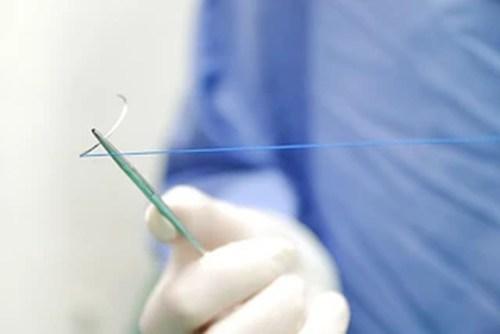
Surgical stitches with nonsteroidal anti-inflammatory drugs are designed to deliver medication directly to an injury.
From the ACS Press Room
Prototype breath tests spot bacterial infections in minutes
“Detecting Bacteria in Their Mammalian Hosts Using Metabolism- Targeted [13C] CO2 Breath Testing”
ACS Central Science
Infectious diseases are a major cause of death worldwide, and diagnosing bacterial infections remains a challenge in medicine. And doing so reliably is more important than ever, given the increasing frequency of antibiotic resistance. Now, research published in ACS Central Science could help healthcare professionals non-invasively diagnose bacterial infections, using breath-based tests. Initial experiments demonstrated the approach in animals with pneumonia and infections in the bloodstream, muscles and nes.
“In designing this study, we were motivated by a developing trend in clinical practice, whereby patients and providers want answers right away that will inform treatment decisions,” says David Wilson, a corresponding author of the study. “If a patient visits the Emergency Room or Acute Care clinic, we hope that he or she can be diagnosed with an acute bacterial infection as efficiently as possible."
Doctors currently rely on blood tests, imaging, cultures and molecular diagnostics to identify the cause of infections, but these tools are limited because they are slow, nonspecific or expensive. The start to a potential solution could be the long-used breath test for Helicobacter pylori, a bacterium that causes a common stomach infection. The original test works when a person drinks a liquid containing traceable substances metab-
olized by H. pylori. Then the person exhales into a device that measures labeled carbon dioxide in their breath, indicating the infection is present. Inspired by this test, Wilson, Kiel Neumann, Marina López-Álvarez and colleagues set out to expand the technology’s capabilities to detect a broader range of bacterial infections.
For their prototype, the team tested sugar and sugar alcohols tagged with carbon-13, a traceable form of carbon that bacteria metabolize but human cells largely ignore. In lab experiments, the researchers identified several of these compounds that bacteria convert into carbon-13-labeled carbon dioxide. Then they analyzed the labeled gas using a simple technique called nondispersive infrared spectroscopy.
When mice with infections such as pneumonia and bone, muscle, or blood infections received intravenous injections of these tagged compounds, the animals’ breath quickly showed elevated levels of the labeled carbon
Continued on Page 21
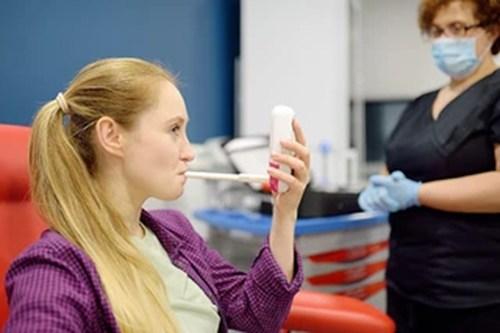
The simplicity of this breath test for Helicobacter pylori bacterial infection inspired researchers to develop a version to test for additional infectious bacteria.
Maria Sbytova/Shutterstock.com
Around the Area
UT Dallas
Assistant Professor Alistair Sterling was granted a $110K ACS Petroleum Research Fund Doctoral New Investigator award for Post-Polymerization
Functionalized Polyolefins in Solution and the Solid State, and also GPU resources from the Nvidia Academic Grants Program for AI-Accelerated Condensed-Phase Polymer Upcycling Simulations on GPUs. Assistant Professor Connor Delaney was granted a $110K ACS Petroleum Research Fund Doctoral New Investigator award for Demystifying the Roles of Silver in PdCatalyzed C–H Activation Reactions. NanoTech Institute Research Assistant Professor Mengmeng Zhang was granted a $120K STTR award with Solidion Technology Inc. for Advanced Flexible CNT FiberBased Batteries for Structural Power in Military Textiles. Professor and Distinguished Chair in Natural Sciences and Mathematics Jie Zheng was granted a $900K CPRIT award for High-Contrast Fluorescence Imaging of Non-Enhancing Brain Metastases. Former Chemistry Professor and VP of Research Bruce E. Gnade was elected to the National Academy of Engineering for the Advancement of Electronic Materials and Semiconductor Device Technologies. Assistant Professor and CPRIT Scholar Filippo Romiti was an invited speaker at the Symposium for the Ernest Guenther Award in the Chemistry of Natural Products to Brian Stoltz at the ACS Spring National Meeting.
From the ACS Press Room continued
Snail-derived compound
Continued from page 7
tial results suggest that this snail-derived compound could be developed into a safer anticoagulant compared with heparins, the authors say.
The authors acknowledge funding from the Strategic Priority Research Program of the Chinese Academy of Sciences (CAS), the National Natural Science Foundation of China, Yunnan Fundamental Research Projects, the State Key Laboratory of Phytochemistry and Natural Medicines, Kunming Institute of Botany CAS, the Science and Technology Plan Project of Yunnan Province, the Yunnan Clinical Research Center for Obstetric and Gynecological Diseases, and the Yunnan Revitalization Talent Support Program "Young Talent" Projects.
From the ACS Press Room
continued
These teabags aren’t for making tea
Continued from page 6
particles, and filled the bags with pulverized eggshells two ingredients that are good arsenic adsorbers. Experiments showed that:
• One teabag could remove at least 90% of the arsenic ions from water, and in one 6-hour test, more than 98% of arsenic was removed from 50 milliliters of contaminated water.
• In a sample representative of well water in Bangladesh, one teabag reduced the arsenic content to below the WHO’s drinking water limit.
• A used teabag could be rinsed, washed in alkaline solution, dried, and then reused up to five times, though the teabag’s arsenic removal efficiency dropped by about 20% with each reuse.
• The cost to treat one liter of water with the teabags is about 7 cents considerably less than water treatment by reverse osmosis.
The researchers say that this work demonstrates a new, scalable and cost-effective solution to a global health problem, and their future work will focus on making this innovation ready to bring to those who need it.
The authors acknowledge funding from the Army Educational Outreach Program, the Stockholm Junior Water Prize, the Air Force Office of Scientific Research, and the National Science Foundation.
A stretchy, heat-activated skin patch
Continued from page 9
These early study results, combined with the patch’s reusability and ease of administration, led the research team to conclude that the technology could someday be used for targeted, safe and efficient melanoma treatment in humans.
The authors acknowledge funding from the National Natural Science Foundation of China, National Key Research and Development Program of China, and the Shenzhen Key Laboratory of Microbiology in Genomic Modification & Editing and Application.
Stopping algae blooms
Continued from page 11
enhancements to prevent microbe growth on the buoy’s surface, the researchers say that this work overcomes challenges in sustained and targeted algaecide treatment.
“If successfully scaled up, this concept could enable early mitigation of harmful algal blooms without the need for labor-intensive repeated algaecide applications,” says Lapitsky.
The authors acknowledge funding from the U.S. Army Corps of Engineers. The algaecide used in these experiments was provided by the SePRO Corporation, an algaecide manufacturer.Authors Yakov Lapitsky, Umberto Kober and Youngwoo Seo have filed a patent
application on this research.
Prototype breath tests
Continued from page 18
dioxide. Although the breath testing protocol was not optimized in this study, the researchers say they typically saw elevated carbon-13 -labeled breath signals in infected animals within the first 10 minutes of metabolite administration and breath sampling. In contrast, the breath of healthy mice showed little to no carbon-13.
In one infection model for E. coli, the amount of labeled carbon dioxide in the breath decreased during antibiotic treatment as bacterial levels went down, suggesting the method could also be used to monitor how well treatments are working.
Because breath-test instruments are portable and breath signals appear within minutes after the traceable carbon-13 is administered, the test could potentially deliver results faster than current methods. In addition, the sugar and sugar alcohols used are considered safe for humans, and the researchers say this approach could eventually become a tool for diagnosing bacterial infections. The authors acknowledge funding from the National Institutes of Health and the Cystic Fibrosis Foundation.
The authors have filed a U.S. patent related to this work.
From the ACS Press Room
Initial tests find lead in children’s fast-fashion clothing
Visit the ACS Spring 2026 program to learn more about this presentation.
ATLANTA, March 23, 2026
Fast fashion is an inexpensive way to dress rapidly growing kids. But preliminary research has found that the fabric in some of these items contains an unwanted, toxic ingredient: lead. After testing several shirts from different retailers, undergraduate researchers found that all samples exceeded U.S. federal regulatory lead limits. They also estimate that even briefly chewing these fabrics (which young kids tend to do) could expose children to dangerous lead levels.
The researchers will present their results at the spring meeting of the American Chemical Society (ACS). ACS Spring 2026 is being held March 22-26; it features nearly 11,000 presentations on a range of science topics.
Kamila Deavers, the principal investigator of the project, began studying lead contamination after her young daughter briefly showed elevated levels of lead in her blood from toy coatings, which happened before today’s strict federal lead limits were in place. The U.S. Consumer Product Safety Commission currently has a 100-parts-permillion (ppm) lead limit for children’s products like toys and clothing. So now, Deavers and undergraduate researchers in her chemistry lab at Marian University focus on identifying heavymetal-exposure risks in everyday life and sharing the results with the local community.
“I started to see many articles about lead in clothing from fast fashion,” says Deavers. “And I realized not too many parents knew about the issue.”
Previous studies have found high levels of lead in the metal parts in some children’s clothing, such as zippers, buttons and snaps, which has led to product recalls. But lead has also been reported in adult fast-fashion textiles. Deavers says that some manufacturers use lead(II) acetate as an inexpensive way to help dyes stick to the materials and produce bright, long-lasting color.
Cristina Avello and Priscila Espinoza, who are both on pre-medicine tracks at Marian University, joined the project because they wanted to investigate the potential impact of fast fashion on the pediatric population. They saw working in Deavers’ lab as an opportunity to combine meaningful scientific research with community education on an overlooked health issue.
Lead exposure is considered harmful at any level, potentially causing behavior problems, brain and central nervous system damage as well as other negative health effects. Children under 6 years old are considered most at risk from exposure, according to the U.S. Environ-
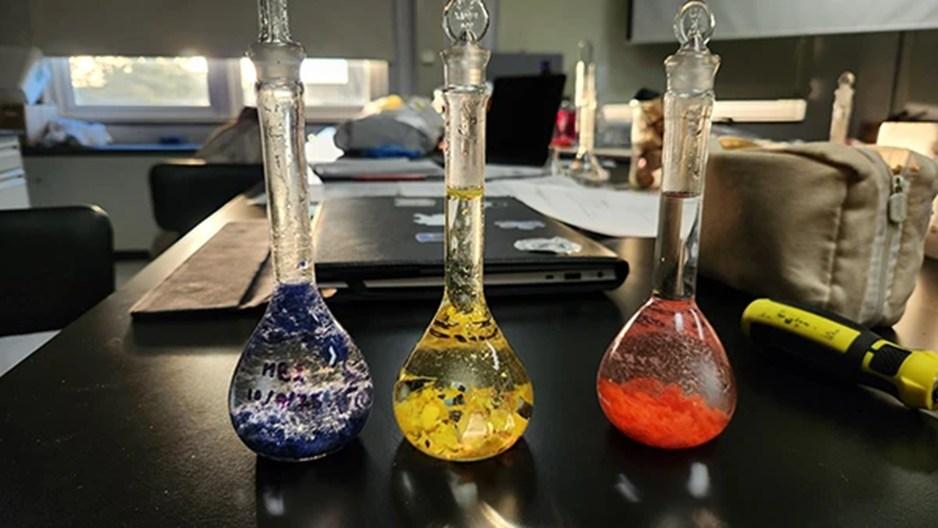
Fabric from brightly colored shirts, like the yellow (middle) and red (right) samples shown here, tended to release more bioaccessible lead from textiles than muted colors.
CristinaAvello and Priscila Espinoza
From the ACS Press Room
mental Protection Agency. “Not only are children the most vulnerable to the effects of lead, but they’re also the population that is going to be putting their clothes in their mouths,” says Avello.
The team tested 11 shirts that spanned the rainbow red, pink, orange, yellow, gray and blue from four retailers, including fast-fashion and discount companies. “We saw that the shirts we tested were all over the allowed limit for lead of 100 ppm,” says Espinoza. No matter the brand, brightly colored textiles, like red and yellow, tended toward higher amounts of total lead than muted colors. Additionally, Avello recognizes that it’s not feasible to test all children’s clothing items; but from what the team sampled so far, none followed U.S. federal lead regulations.
In a second experiment, the researchers simulated stomach digestion, calculating potential lead exposure and absorption from the tested items. The analysis estimates the maximum lead bioaccessibility within gastric acid, and the researchers used that data to model the potential transfer during mouthing behavior (e.g., sucking, holding or chewing on fabric). The findings suggest that such exposure would exceed the daily lead ingestion limit for children, a safety benchmark set by the U.S. Food and Drug Administration. These bioaccessibilty calculations are likely conservative, says Deavers. Regardless, the data suggest frequent chewing over time could increase a child’s blood lead levels to a point where clinical monitoring is recommended.
Next, Avello and Espinoza will study more shirts and examine their data to see if there is a relationship between the fabric’s lead levels and what children could absorb. They would also like to explore how laundering affects the lead(II) acetate, including whether washing contaminated clothing could spread it to other garments and how different detergents interact with it. For example, it could create a lead-containing scum inside the washing machine that would need to be removed to avoid releasing the contamination into wastewater. The researchers want these initial results to encourage more thorough screening of clothing items being sold and push the textile industry to find safer replacements to lead(II) acetate during the dyeing process. Alternatives already exist to fix dyes to fabrics and keep them vibrant, including natural mordants from plants with high tannin contents such as oak bark, pomegranate peel and rosemary, and alum, an environmentally safe mordant. “But if you want to change the clothing industry’s technology, that will cost a lot of money,” says Deavers. Without consumer or policy pressure on textile manufacturers to explore safer dyeing methods, there’s little incentive to switch.
Ultimately, the team’s goal is to raise awareness and educate consumers on the potential risks of lead exposure from children’s fast fashion, so people can make informed choices. Avello concludes, “Everything that we’re doing is only important and helpful if we talk about it.”
The research was funded by internal grants from Marian University and Sigma Zeta.
Visit the ACS Spring 2026 program to learn more about this presentation, “Lead contamination in fast fashion children’s clothing,” and other science presentations.
From the Editor
The academic year is almost over! Next issue we’ll have the results of the Meeting in Miniature from Texas Wesleyan.
Be sure and read Denise Merkle’s column on volunteerism...the most important facet of theACS, and particularly the local sections.
This month’s articles have several extremely interesting topics: researchers have developed an inexpensive way to make biodiesel from materials found along the banks of their Louisiana bayou: algae and oyster shells.
A snail-derived compound could be a safer anticoagulant compared to heparins...who thought to look at a snail?
These teabags aren’t for making tea they remove arsenic when filled with crushed eggshells and magnetic iron oxide...one bag can purify a liter of water.