Solutions
ISBN: 9781394326488
ISBN: 9781394326488
Whetheryouareperformingday-to-dayoperations,borrowingmoneyforastart-upor expansion,restructuringyourorganization,planninganewavenueofoperations,ordeciding topurchaseorlease,youneedtohaveaccountinginformationthatwillhelpyoumakethe bestdecisions.
1. Definefinancialaccountingandunderstanditsrelationshiptoeconomicdecision-making.
2. Identifythemainusersoffinancialaccountinginformationandexplainhowtheyusethis information.
3. Describethemajorformsofbusinessorganizationandexplainthekeydistinctions among them
4. Explainthethreecategoriesofbusinessactivitiesandidentifyexamplesoftransactions relatedtoeachcategory.
5. Identifyandexplainthecontentandreportingobjectivesofthefourbasicfinancial statementsandthenotestothefinancialstatements.
1. Define financial accounting and understand its relationship to economic decisionmaking.
Coverthedefinitionoffinancialaccountingfromthetextbook: “Financialaccountingistheprocessbywhichinformationonthe transactionsofanorganizationiscaptured,analyzed,andusedtoreportto decisionmakers outside oftheorganization’smanagementteam.”
Indicatethatfinancialstatementsandrelatedaccountinginformationwillbeusedbyavariety offinancialstatementuserswithspecificgoals.Guidelinesmustthereforebesetinorderto maketheinformationprovidedunderstandableandhelpfultothevariousneedsoftheir financialstatement(FS)users.
Summarizethetwomaintypesofaccountinginformation:
• Reportsforinternaluseonly(forusebymanagement):Thisisknownasmanagerial accounting.Itspurposeistoinformdecisionmaking.
• Reportsforexternaluse(forusebyothersoutsidetheorganization):Thisisknownas financialaccounting.Itspurposeistohelpexternalusersmakedecisionsandisthefocus ofthiscourse.
2. Identify the main users of financial accounting information and explain how they use this information.
Describethevarioususers(stakeholders)offinancialinformationanddiscusswhythefinancial informationisusefultoeachparticularuser.
UsersofFinancialStatementInformation:
Internalusers:
Management
Externalusers:
Shareholders,theboardofdirectors,and potentialinvestors
Creditors(forexample,financial institutionsandsuppliers)
Regulators(forexample,astock exchange)
Taxingauthorities(forexample,the CanadaRevenueAgency)
Othercorporations,including competitors
Securities(stock)analysts
PurposeofFinancialStatementInformation
Decisionmaking
Assessperformanceandstewardshipof company’smanagement
Assessingcreditworthiness
Ensuringcompliancewithregulations
Verifytaxespaid
Researchandreportcompetitiveintelligence
Analyzetrendsandassessthestrengthsand
Credit-ratingagencies
Labourunions–tohelpnegotiate contractsfortheirmembers
Journalists–tovalidateandsupplement informationthatisreportedtoreaders
weaknessesofcompaniesforinvestors
Reportonacompany’screditworthiness
Researchtoprovidesupportincontract negotiations
Validateandsupplementinformationthatis reportedtoreaders
Youmightdecidetoelaborateontheinternalusersdescribedabove.Differentmanagers(i.e.,HR, MarketingExecutive,FinanceExecutive,Entrepreneur)wouldallberequiredtomakedecisions basedonfinancialstatementsandtherelatedinformation.Forexample,anHRdirectormayneed todecideifabonusispaidoutinagivenyearbasedontheperformanceofthecompany.The marketingdepartmentmaytrytoevaluatetheimpactofanadvertisingcampaigntodecideifmore advertisingisnecessary.Financeexecutiveswillmakedecisionsonhowtostructurethecompany, toissuesharesorissuemoredebt.Theentrepreneurwillneedtounderstandthefinancial accountinginformationinordertomonitortheperformanceofthecompanyandmakecritical businessdecisionsbasedonsuchinformation.
3. Describe the major forms of business organization and explain the key distinctions among them.
UseExhibit1.4fromthetextbooktocompareandcontrasteachtypeofbusinessform.
Exhibit1.4KeyDistinctionsbetweentheFormsofBusiness Distinguishing
Numberof owners Canbeasingle ownerormultiple owners Singleowner Multipleowners
Separatelegal entity?
Owner(s) responsiblefor debtsofthe business?
Taxed?
Yes,personalassets ofshareholders are not atriskinthe eventoflegalaction againstcompany No,personal assetsofowner are atriskinthe eventoflegal action
No,partners’personal assets are atriskinthe eventoflegalaction
Onlytoextentof investment Yes Yes
Yes,taxedseparately No,profitstaxed inhandsofowner
No,profitstaxedin handsofowners
Coststoestablish Mostexpensive Leastexpensive Moderatelyexpensive
Costtomaintain Mostexpensive Leastexpensive Moderatelyexpensive
Mustmaketheir financial information available
Yes,onaquarterly andannualbasis No No
• Preparealistoffictitiouscompaniessuchastheonebelow.Askthestudentstoindicate whattypeofcorporationwouldbemostfittingforthecompanydescribedinthetable.Ask studentstopreparetheiranswerandpossiblyallowthemtodiscusstheiranswerswithin smallgroups.Askstudentswhytheysuggestedaspecifictypeofcorporation.Youcanuse thisopportunitytoreviewkeyfeaturesofthevarioustypesofcorporationsandexplainwhy theyarebestsuitedinaspecificscenario. Note the table given to students should not include the grey cells. The grey cells are suggested solutions.
Mario’sDryCleaning:MarioownsasmalldrycleaningbusinessinOttawa.Marioisthe founderofthebusinessandhehas2 employees.
RogersGibsonStein:Amediumsize accountingfirmoperatinginEdmonton.John Rogers,MichelleGibsonandSimonSteinare theownersandtheyhave32employees.
JuniperBerries:Anorganicfoodcompany thatspecializesinfrozenmealsthataremade fromorganicproducts.Thebusinesshasbeen doingverywellinCanadaandtheU.S.Leena, thefounder,islookingtoexpandinEurope.
ElementGames:Alargemultinationalvideo gamedesignandproductioncompanythat operatesoutofMontreal.Theyhave730 employeesandhavebeensuccessful internationally.
BumblebeeKids:Shannonoperatesa daycarefromherhomeinKelowna.Hersister worksforherasanearlychildhoodeducator andthereare9kidsthatattendthedaycare.
Proprietorship
Possible reason: one owner, less expensive and less complicated than a corporation
Partnership
Possible reason: more than one owner, less expensive to form than a corporation
Corporation
Possible reason: need to limit liability as a food producer, international growth
Corporation
Possible reason: due to the size and international business
Proprietorship
Possible reason: one owner, less expensive than a corporation (note: some students may suggest a partnership due to the sister’s involvement, but since the sister works for Shannon, she is more an employee than a part owner).
4. Explain the three categories of business activities and identify examples of transactions related to each category.
Therearethreetypesofbusinessactivities:
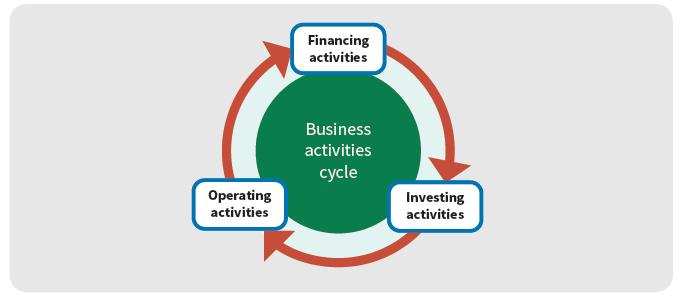
Theactivitiesthatfallunderthesethreetypesareasfollows: FINANCINGACTIVITIES
Inflows: Borrowingmoney
Issuingshares
Outflows: Repayingloanprincipal
Payinginterest
Payingdividends
Repurchasingshares
Inflows: Proceedsfromthesaleofproperty,plant,andequipment
Proceedsfromthesaleofsharesofothercompanies
Receiptofinterestanddividends
Outflows: Purchaseofproperty,plant,andequipment
Purchaseofsharesofothercompanies
Inflows: Salestocustomers
Collectionsofamountsowedbycustomers
Outflows: Purchasesofinventory
Paymentsofamountsowedtosuppliers
Paymentsofexpensessuchaswages,rent,andinterest
Paymentsoftaxesowedtothegovernment
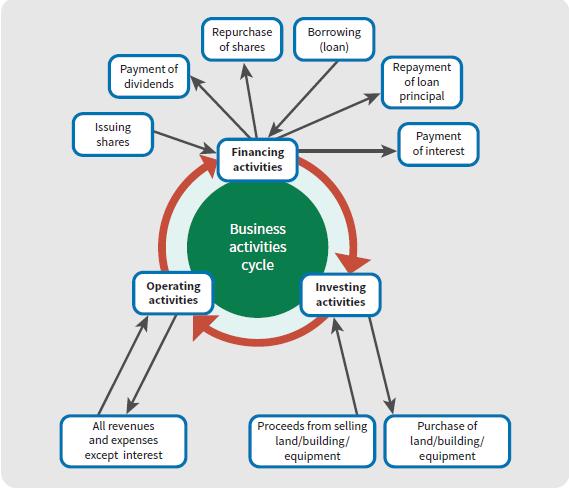
Exhibit1.9TheThreeCategoriesofBusinessActivities:KeyInflowsandOutflows
• Selectacompanyandaskstudentswhattypeofoperating,financingandinvesting activitiestheywouldexpectthiscompanytohave.Onceyouhavegatheredthe suggestionsfromthestudents,presentthecashflowstatementofthatcompany.The operating,financing,andinvestingactivitiesofthatcompanywillbefoundinthecashflow statement Thisstatementcanbecomparedtothesuggestionsgatheredfromthe students.
• Note:youmightchoosetolookatDollaramaInc.Thecashflowstatementisprovidedin AppendixAofthetextbook.
5. Identify and explain the content and reporting objectives of the four basic financial statements and the notes to the financial statements.
Therearefivecomponentsoffinancialstatements:
Statementofincome
Statementofchangesin equity
Statementoffinancial position(BalanceSheet)
Presentstheresultsofacompany’soperatingactivitiesovera periodoftime.
Measuresthechangesintheequityofacompanyoveraperiod oftime,differentiatingbetweenchangesthatresultfrom transactionswithshareholdersandthoseresultingfromthe company’soperations.
Measurestheresourcescontrolledbyacompany(assets)and theclaimsonthoseresources(bycreditorsandinvestors)ata givenpointintime.
Statementofcashflows Measuresthechangeincashflowthroughoperating,financing, andinvestingactivitiesoveraperiodoftime.
Notestothefinancial statements
Notesprovidedetailsandadditionalinformationthatareleft outofthemainreportsbutareusefultousersoffinancial informationsuchasthevarioustypesofinventoryheldbythe companyanddetailsonitslong-termassets.
Explorethestatementofincomeandthestatementoffinancialpositioninmoredetail.
COMMONSTATEMENTOFINCOMEITEMS(Exhibit1.14)
Salesrevenues
Otherincome
Costofgoodssold
Selling,general,and administrative expense
Depreciation expense (amortization expense)
Interestexpense
Incometaxexpense
Thetotalamountofsalesofgoodsand/orservicesfortheperiod.
Varioustypesofrevenuesorincometothecompanyotherthan sales,includinginterestorrentalincome.
Thecostoftheinventorythatwassoldduringtheperiod.
Thetotalamountofotherexpenses(suchassalariesandrent) duringtheperiodthatdonotfitintoanyothercategory.
Theallocationofpartofthecostoflong-liveditemssuchas equipmentorapatent.
Theamountofinterestincurredonthecompany’sdebtduringthe period.
Thetaxesleviedonthecompany’sprofitsduringtheperiod.
(provisionfortaxes)
StatementofFinancialPosition
COMMONASSETS(Exhibit1.21)
Current assets Cash
Short-term investments
Accounts receivable
Non-current assets
Theamountofcurrencythatthecompanyhas, includingamountsinbankaccounts.
Short-terminvestmentsinsharesofother companies.
Amountsowedtothecompanybyitscustomersas aresultofcreditsales.
Inventory Goodsheldforresaletocustomers.
Prepaid expensesand deposits
Property, plant,and equipment
Right-of-use assets
Intangible assets
Goodwill
Amountsthathavebeenpaidbythecompanybut theunderlyingservicehasnotyetbeenused. Commonexamplesincludeinsurancepremiumsor rentpaidinadvance.
Land,buildings,equipment,vehicles,andsoon thatthecompanypurchasestousetogenerate revenuesinthefuture;theyare not purchasedto resell.
Land,buildings,equipment,vehicles,andsoon thatthecompanyisleasingorrentingtouseto generaterevenuesinthefuture. Licences,patents,trademarks,copyrights, computersoftware,andotherassetsthatlack physicalform.Thesearealsoacquiredtogenerate revenuesinthefuture.
Apremiumthathasbeenpaidontheacquisitionof anothercompanyrelatedtofactorssuchas managementexpertiseandcorporatereputation thatwillresultinhigherfutureearnings.
COMMONLIABILITIES(Exhibit1.23)
Current liabilities Bank indebtedness
Accounts payable(trade payables)
Deferred revenue
Dividends payable
Amountsowedtothebankonshort-termcredit.
Amountsowedtosuppliersfromthepurchaseof goodsonaccount(oncredit.
Amountsowedtocustomersforadvancepayments untiltherelatedgoodsorserviceshavebeen provided.
Amountsowedtoshareholdersfordividendsthat havebeendeclaredbytheboardofdirectors.
Non-current liabilities
Accrued liabilities
Incometaxes payable
Notespayable
Amountsowedrelatedtoexpensesthatarenotyet due,suchasinterestandwarrantyexpense.
Amountsowedtotaxingauthorities.
Amountsowedtoacreditor(bankorsupplier)that arerepresentedbyaformalagreementcalleda note (sometimescalleda promissory note).Notes payableoftenhaveaninterestcomponent,whereas accountspayableusuallydonot.
Long-termdebt
Deferred incometaxes
Amountsowedtocreditorsduebeyondoneyear.
Amountsrepresentingprobablefuturetaxesthe companywillhavetopay.
Sharecapital
Retained earnings
Representsthesharesissuedbythecompany, usuallystatedasanamountequaltowhatthe companyreceivedfrominvestorsontheinitial issuanceoftheshares.Therecanbedifferenttypes ofshares(commonsharesandpreferredshares). Therecanalsobedifferentclassesofshares;in otherwords,sharesthathavedifferentrightsand privileges.
Thecompany’searnings(asmeasuredonthe statementofincome)thathavebeenkept (retained)andnotpaidoutasdividends.Ifretained earningshasanegativebalance,itisreferredtoas adeficit.
Discussthelinksbetweenthefinancialstatementsbyreviewingtheexhibitinthechapteras shownbelow:
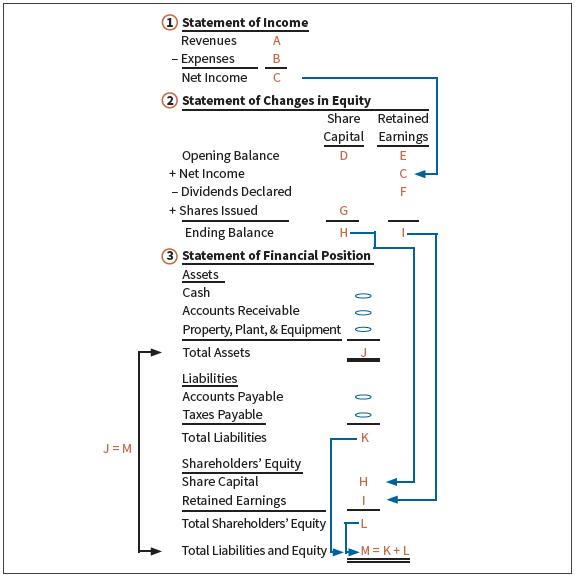
Exhibit1.25InformationFlowsbetweentheFirstThreeFinancialStatements
Classifythefollowingitemsaccordingtowheretheywouldappearinthefinancialstatements:
a. Debtowingtoasupplier(accountspayable)
b. Salesrevenuefromsaleofaproduct(salesrevenues)
c. Landandbuildingusedtoproducetheproduct(property,plant,andequipment)
d. Short-terminvestmentinthesharesofanothercompany(short-terminvestments)
e. Advancepaymentsfromcustomersforservicestobeprovidedlater(deferredrevenue)
f. Paymentofinterestonaloanowedtoabank(accruedliabilities)
g. Valueofcommonsharesissued(sharecapital)
h. Loanpayablein5years(long-termdebt)
i. Equipmentusedinproductionofproduct(property,plant,andequipment)
j. Monthlycostforcellphonecharges(selling,general,andadministrativeexpense)
k. Suppliesusedthismonth(selling,general,andadministrativeexpense)
l. Cashcollectionsfromcustomersthattheyowedonaccount(accountsreceivable)
m. Dividendspaidtoshareholders(dividendsdeclared)
Havestudentscreate“studentfinancialstatements”.Usethefollowingformatsfora statementofincomeandstatementoffinancialposition.
StatementofIncome
Income:Wages
Gifts
Other
Expenses:Rent
Tuition
Food
Other
Profit
StatementofFinancialPosition
Currentassets:Cashinbank
Otherassetslastinglessthanoneyear
Non-currentassets:Computer
Car
Clothing
Copyright
Other
Totalassets
Currentliabilities:Loans(lessthanoneyear)
Creditcarddebt
Non-currentliabilities
Long-termliabilities:Studentloans
Totalliabilities
Shareholders’equity(differencebetweenassetsandliabilities)
Totalliabilitiesandshareholders’equity
Youcanaskthefollowingquestionstohelpstudentscompletetheirfinancialstatements:
1. Whathaveyouspentmoneyonthisyear? Students will give a variety of answers and many will represent expenses: Rent expense, food, entertainment, travelling etc. Be careful when students discuss spending money on things like tuition, clothing or computers. These would represent assets, as they are good for a longer period of time. These items would affect the balance sheet.
2. Whathaveyouearnedthisyear? Salary from summer jobs or part time jobs, money from parents, gifts. Most of the answers here would represent revenues that affect the income statement.
3. Whatdoyouownthathasvalue? The suggestions here should mostly relate to assets and the statement of financial position. Students will often suggest things like electronic goods, investments, cars (be careful that it is not a rental car), clothing, etc These all represent assets. You can also ask students about their knowledge, skills and other things that will make them very valuable in the job market. This is an interesting way to introduce the concept of intangible assets. Although a full discussion on that topic is not suggested at this point, it should be noted that this is the type of challenge that accountants often face when it comes to capturing the value of certain things and representing them fairly in the FS. It can be noted that this topic will be covered in more depth later in the semester.
4. Doyouowemoneytoanyone? The suggestions would mostly represent liabilities: credit card debt, student loans, loans from a friend.
5. Hasanyonegivenyoumoneywithnoexpectationsofgettingitback? This question is meant to introduce the concept of equity. Parents may be paying for tuition or simply have given money and paid for expenses over the years. Scholarships can also be a good example. This represents someone investing in the student, hoping that the student will be successful and provide a good return to society / parents.
Inordertoconcludeonthistopic,youcanshowthefullsetoffinancialstatementsfor
I. How to Use This Guide
II. How to Get the Technologies for Your Course
III. General Bootcamp Format
IV. Where to Find and How to Assign
a. Preset from Wiley Library
b. Editing
c. A la Carte (customizability of Interactive tutorial)
V. Excel
a. TOC & Estimated time to completion
VI. Power BI
a. TOC & Estimated time to completion
VII. Tableau
a. TOC & Estimated time to completion
VIII. Alteryx
a. TOC & Estimated time to completion
IX. SQL
a. TOC & Estimated time to completion
X. Grading
XI. Use Cases
a. Set it and forget it
b. Module by Module
c. As needed
This document has been created to provide information and guidance pertaining to the Data Analysis Technology Bootcamps. We provide instructions on how to view and assign the bootcamps in a few different ways, ideas to consider for how to use the bootcamps, as well as a detailed list of the topics covered for each technology tool and the estimated time it would take a student to complete each module. Additionally, we know that technology is ever-evolving and that there are limitations when it comes to usage on specific device types. Therefore, we have provided a section dedicated to information on how you and your students go about gaining access to these tools. Please note that as a publisher, Wiley cannot provide any technology licenses.
For additional questions about WileyPLUS, please reach out to your local Digital Learning Executive and Customer Success Manager.
We recommend that you consider asking your college’s IT staff for guidance and to know what functionalities are included in their virtual servers as well as when virtual server updates will happen.
A. Excel
Most students have all the functionalities needed through Office 365. To use the Power Query Excel tool, MAC users will need to use the Boot Camp Assistant to install the Microsoft Windows operating system. While operating in the Microsoft Windows operating system, they will have all the Power Query functionality. If they do not have Boot C amp, they will need access to a virtual server or a PC computer in the university computer labs.
Check your virtual server to make sure that it has Excel Pro 2019 or the current Office 365 version. These versions provide the needed Power Query functionality for viewing column statistics.
B. Power BI Desktop
It can be downloaded for free by both instructors and students, no license is required. Power BI Desktop runs in a Microsoft Windows operating system. MAC users will need to use the Boot Camp Assistant to install the Microsoft Windows operating system and then Power BI Desktop. An alternative is to have access to a virtual server or a PC computer in the university computer labs.
C. Tableau
Instructors can apply for a semester license and then pass the codes to their students, or students individually can apply for a license on their own for a year license. Instructors need to clarify which approach will be used in their syllabus. Getting the approval may take a few days, so start early, and work with your IT staff if it will be on a virtual server.
• Tableau: https://www.tableau.com/academic/teaching
D. Tableau Public
It is a possible solution but has the following significant restrictions: students’ work is publicly shared, and they will not be able to download their solutions (they could take a screenshot which they could submit as evidence of their work). Tableau Online (now called Tableau Cloud) does not have the same functionality as a downloaded Tableau student license or a university server license.
E. Alteryx
Can be downloaded for free by both instructors and students. Like Power BI, Alteryx runs on a Windows Operating system. MAC users will need to have an alternative solution if they do not have Bootcamp to be able to run Alteryx, such as a college server, or a PC computer in a computer lab. Alteryx works great on a virtual server, and they are willing to work with your
IT department to help with the installation. Alteryx is planning to trial a cloud version of their academic access to Alteryx within the next year.
• Alteryx: https://www.alteryx.com/sparked/educators
F. SQL Lite
Students can access the website here: https://sqliteonline.com/
G. MS Access
It can be downloaded for free by both instructors and students, no license is required. MS Access runs in a Microsoft Windows operating system.
G. Mac Users
The Power Query functionalities in Excel and using Power BI Desktop may be a challenge if you do not have a dual operating system (both Mac OS and Microsoft Windows). If your college has this software loaded on a virtual server or on PCs in the university labs, you will be able to access both the Power Query tools in Excel and Power BI Desktop. Another option for Mac users is to join Microsoft’s Insider or Beta channel for access to the same Power Query functionality as Windows users.
Each of the data analysis technology bootcamps follow the same general structure:
• Overview Video
• 10+ Topics o 1 How-To Video per Topic o 5-10 Multiple Choice questions per topic o 1 Application Exercise per topic
o 1-2 Follow up Questions to the Application Exercise o 1
Solution Walkthrough video per topic:
The solution walkthrough videos will only automatically appear to students as question feedback to the 1-2 follow up questions of the Application Exercise. If these questions are removed, the solution walkthrough videos will not be available to students wi thout manual grading.
Wiley’s Data Analysis Technology Bootcamps live within WileyPLUS. They can be found in the following US courses (represented below are the latest editions):
• Dzuranin, Data and Analytics in Accounting 1e
• Savage, Accounting Information Systems 1e
• Farmer, Cost Accounting 1e
• Johnson, Auditing 2e
• Kieso, Intermediate Accounting 19e
• Weygandt, Managerial 10e
• Weygandt, Financial 12e
• Weygandt, Financial and Managerial Accounting 5e
• Weygandt, Accounting Principles 15e
• Kimmel, Financial Accounting 10e
• Kimmel, Accounting 8e
• Kimmel, Survey of Accounting 3e
• Kimmel, Financial Accounting for Managers 1e
• Rainer, Introduction to Information Systems 10e They can be found in the following Canadian courses:
• Moroney, Auditing 4CE
• Kieso, Intermediate Accounting 14CE
• Burnley, Financial Accounting 3CE
• Weygandt, Managerial Accounting 6CE
• Kimmel, Financial Accounting 9CE
• Weygandt, Principles 9CE
• Rainer, Introduction to Information Systems 5CE
• Weygandt Managerial 6CE with Burnley, Understanding Financial Accounting 3CE There are three ways you can access and assign the data analysis technology bootcamps. The following sections outline each of the three ways in detail.
Within the Wiley Library of assignments, you can easily assign the full bootcamp. To access the Wiley Library, follow the steps below.
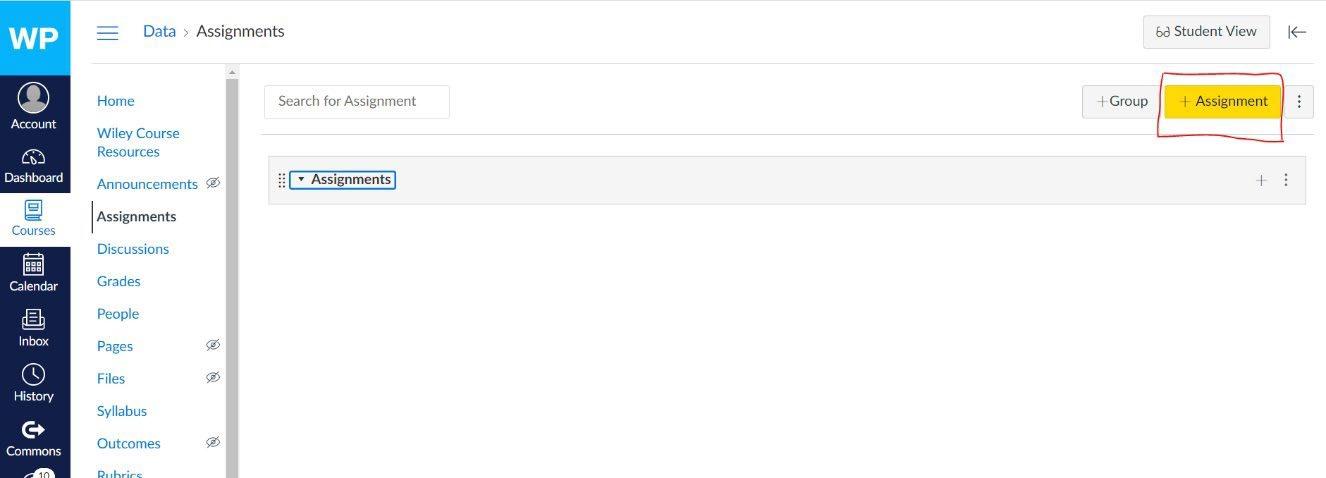
Step 1: Click on the “+ Assignments” button.
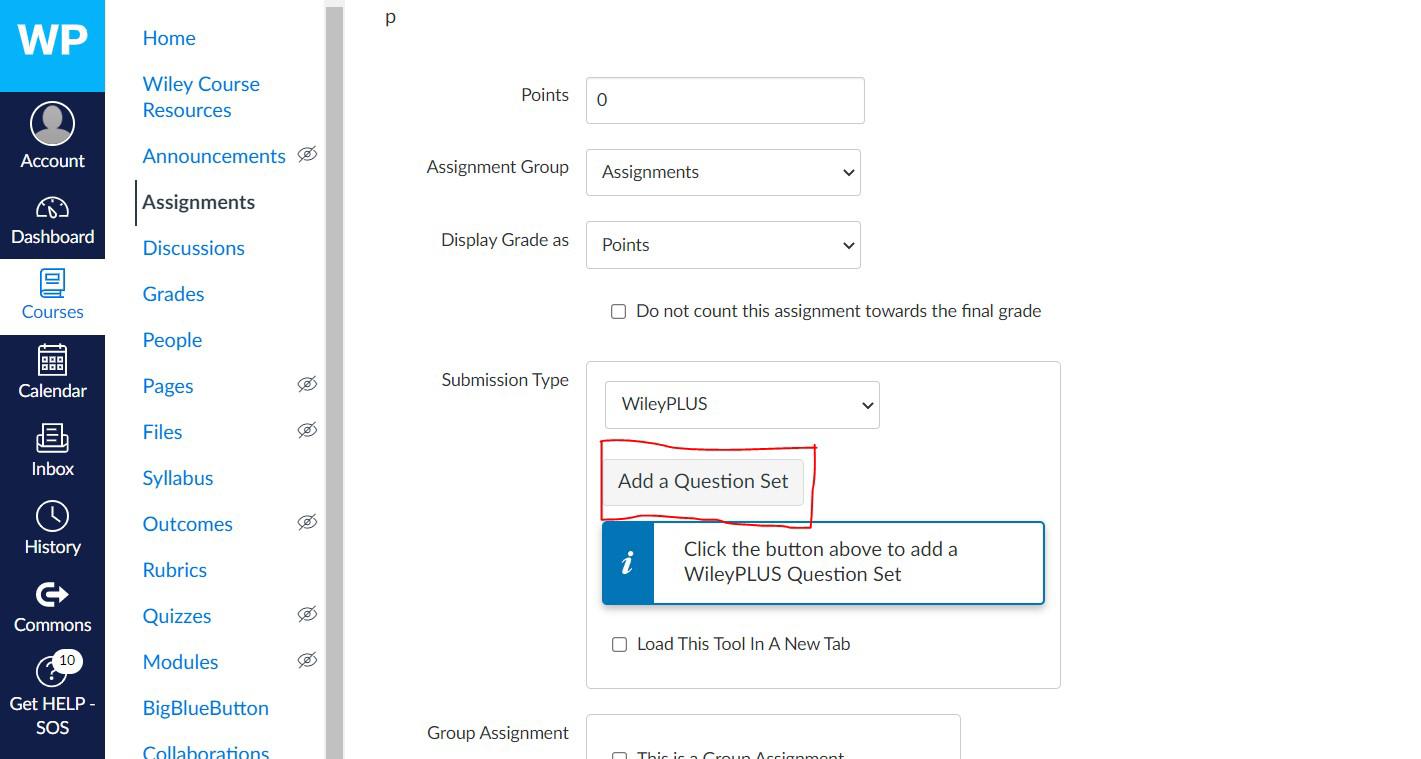
Step 2: Click on “Add a Question Set. “
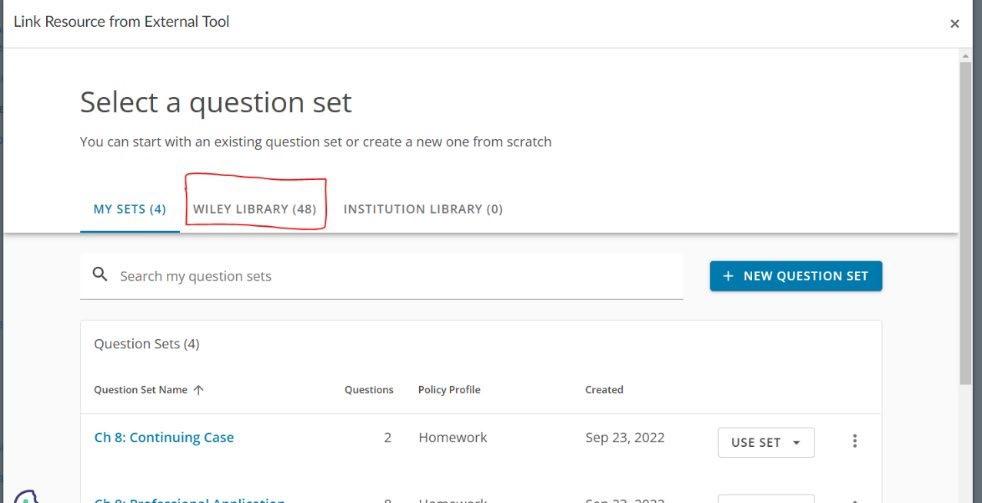
Step 3: Click on “Wiley Library”
Step 4: Locate the Data Analysis Technology Bootcamps by scrolling all the way to the end of the list.
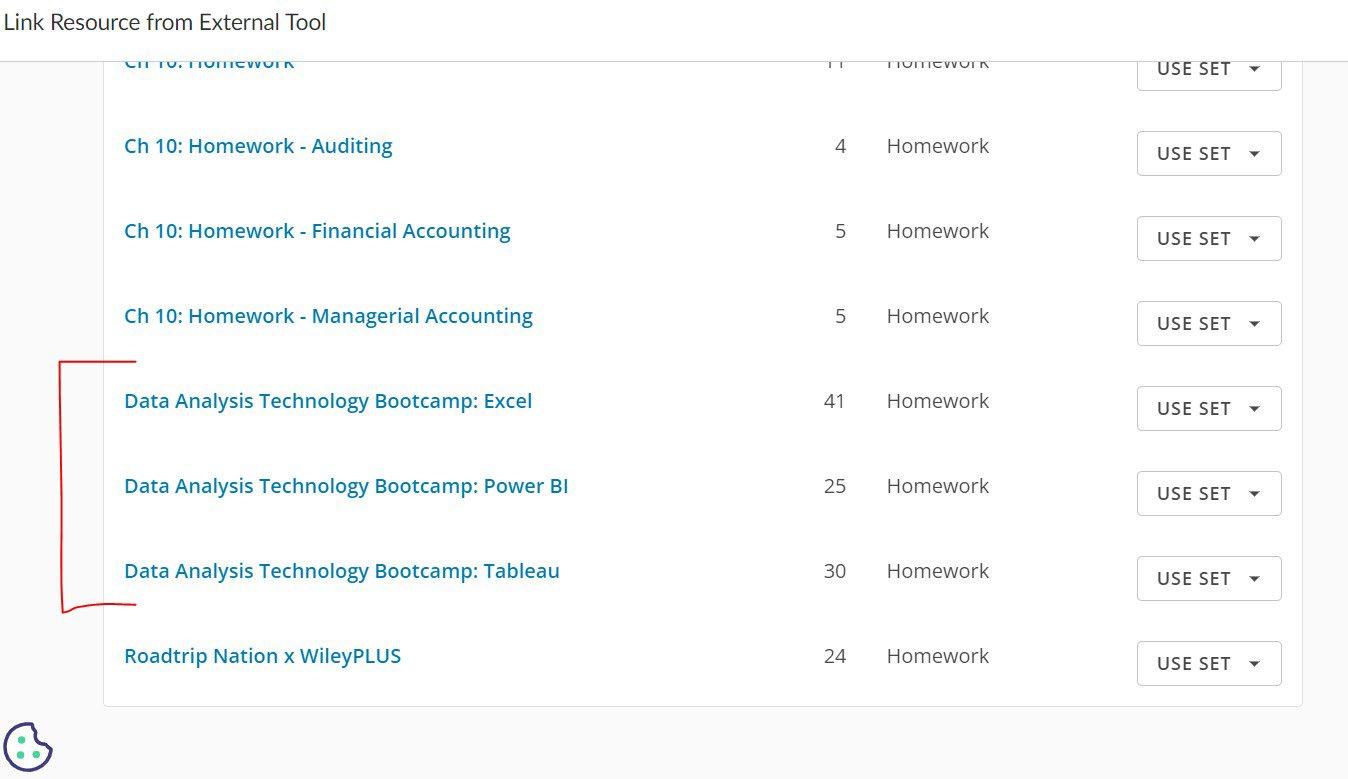
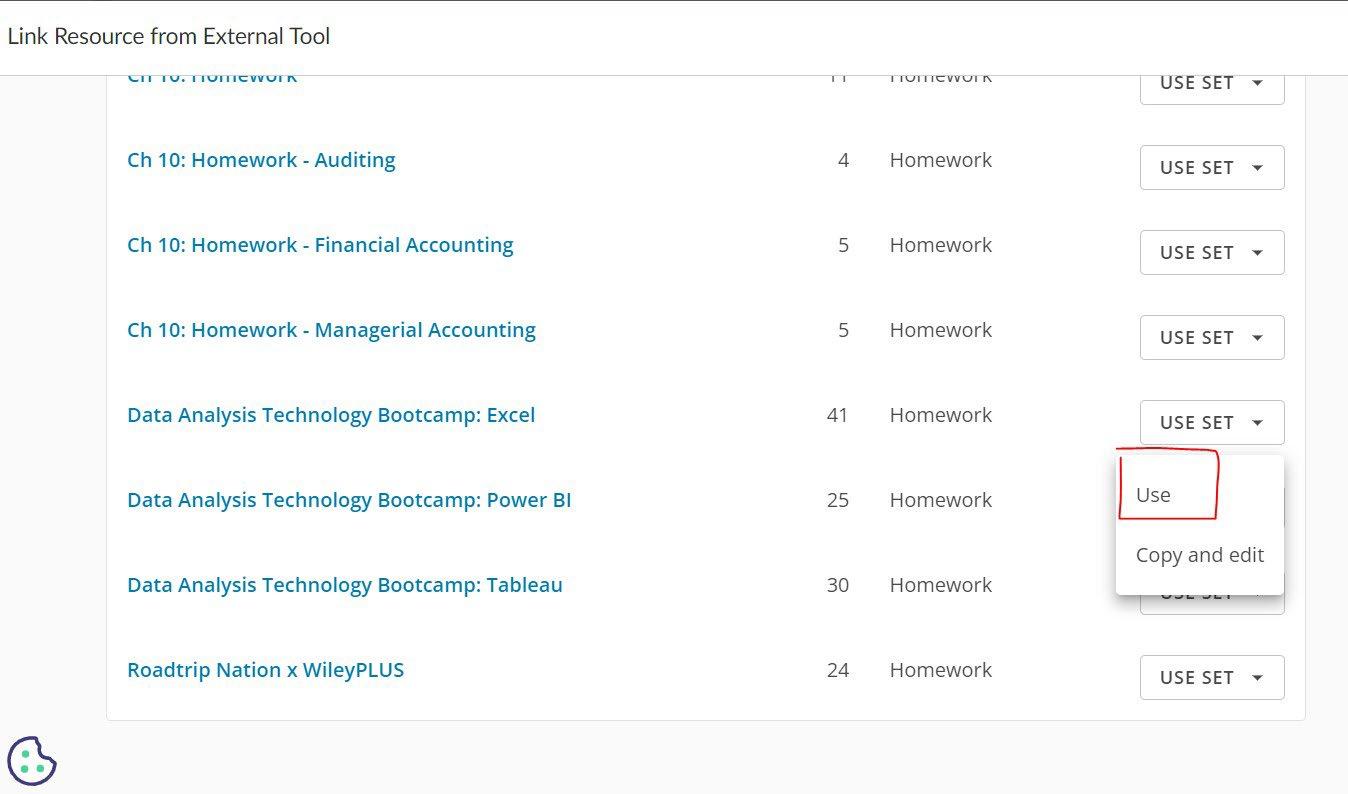
Step 5: Click on “Use Set” and select “Use.” This allows you to assign the full bootcamp and make your typical assignment adjustments like due dates, making it available and visible to your students, etc.
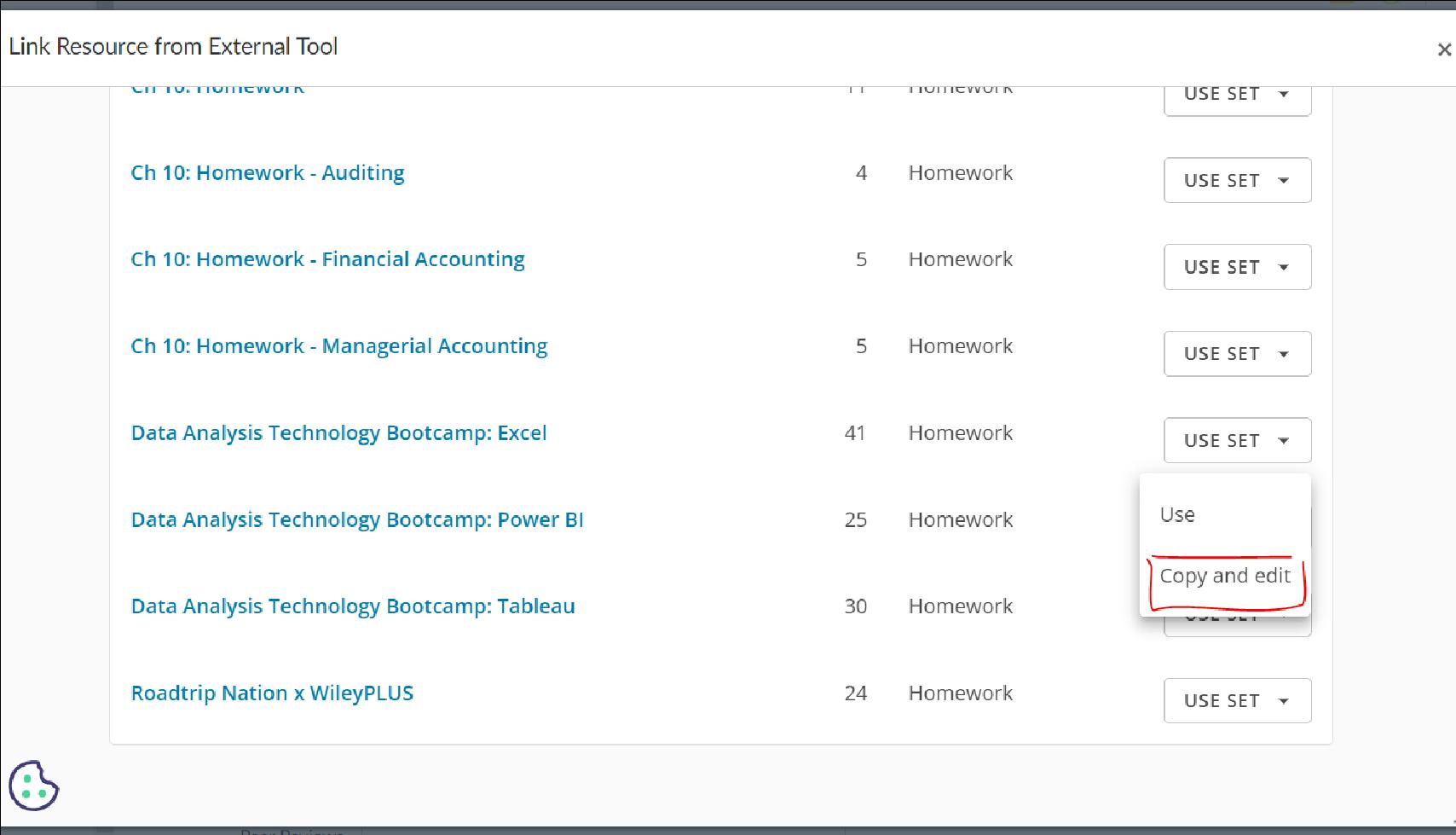
You may also want to use the Data Analysis Technology Bootcamps, but edit portions or parts to more align with your course objectives. Just like any other pre-created assignment in the Wiley Library, you are able to copy and edit the bootcamps as well following the steps below.
Step 1: When in the Wiley Library, after locating the Data Analysis Technology Bootcamp you want to assign, click on “Use Set” and “Copy and edit.”
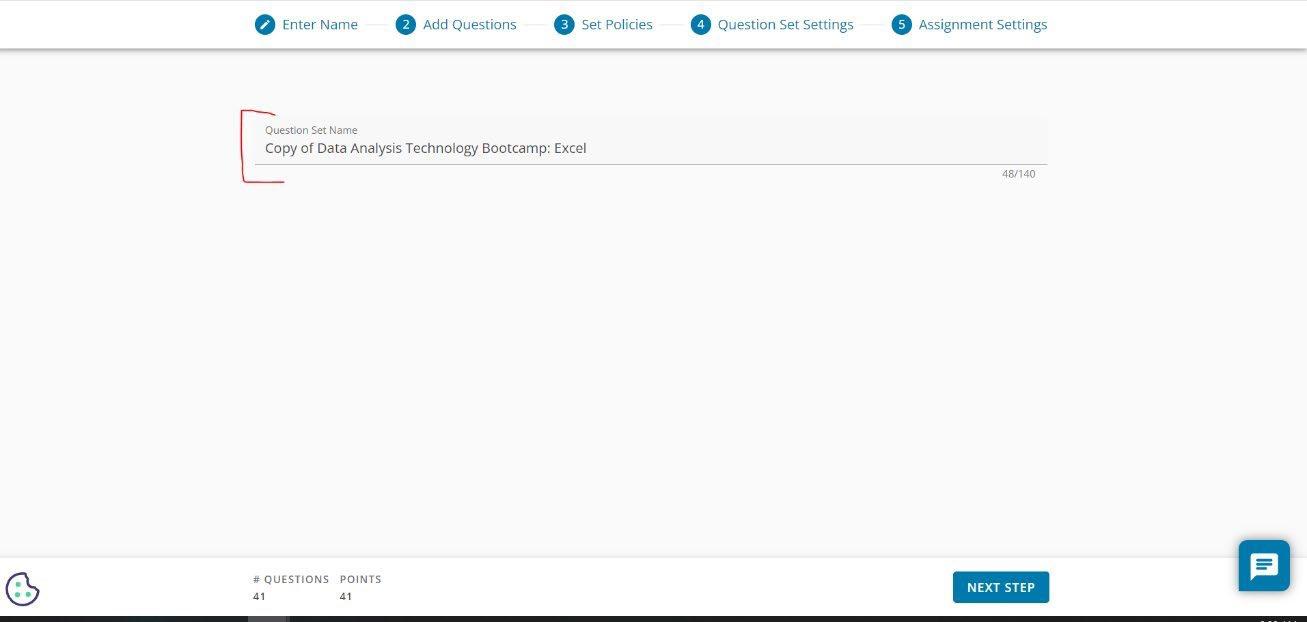
Step 2: You will be prompted to edit the name of the assignment if you choose and then click on “Next Step.”
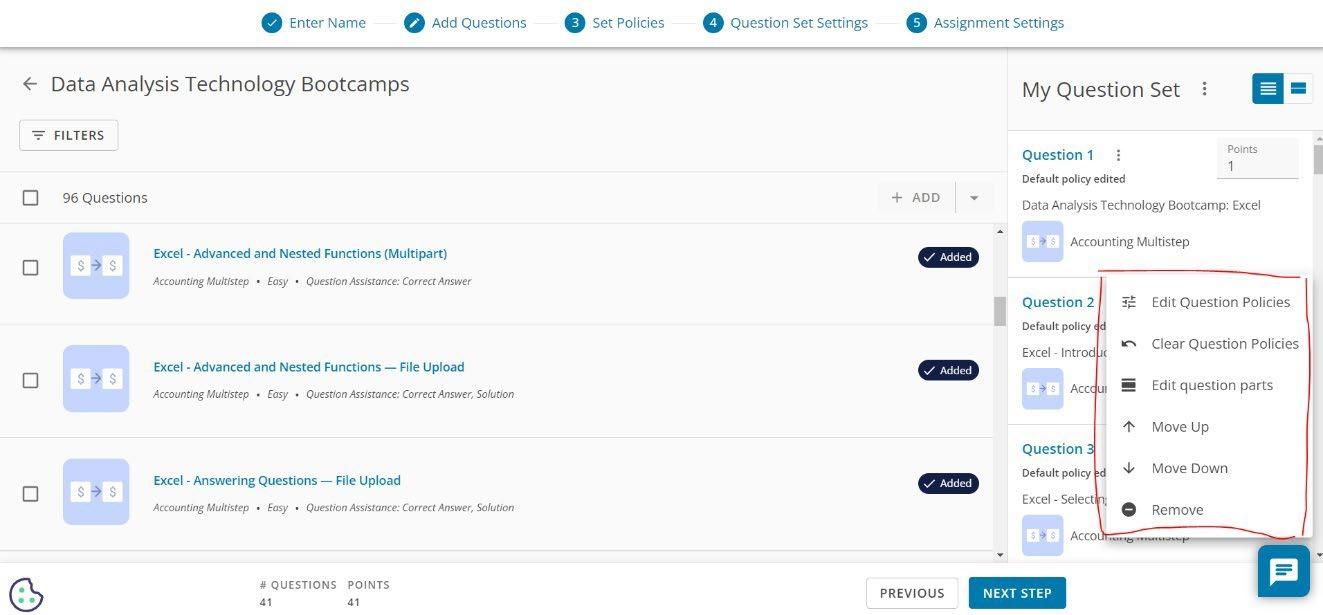
Step 3: Click on the three dots to access the question settings.
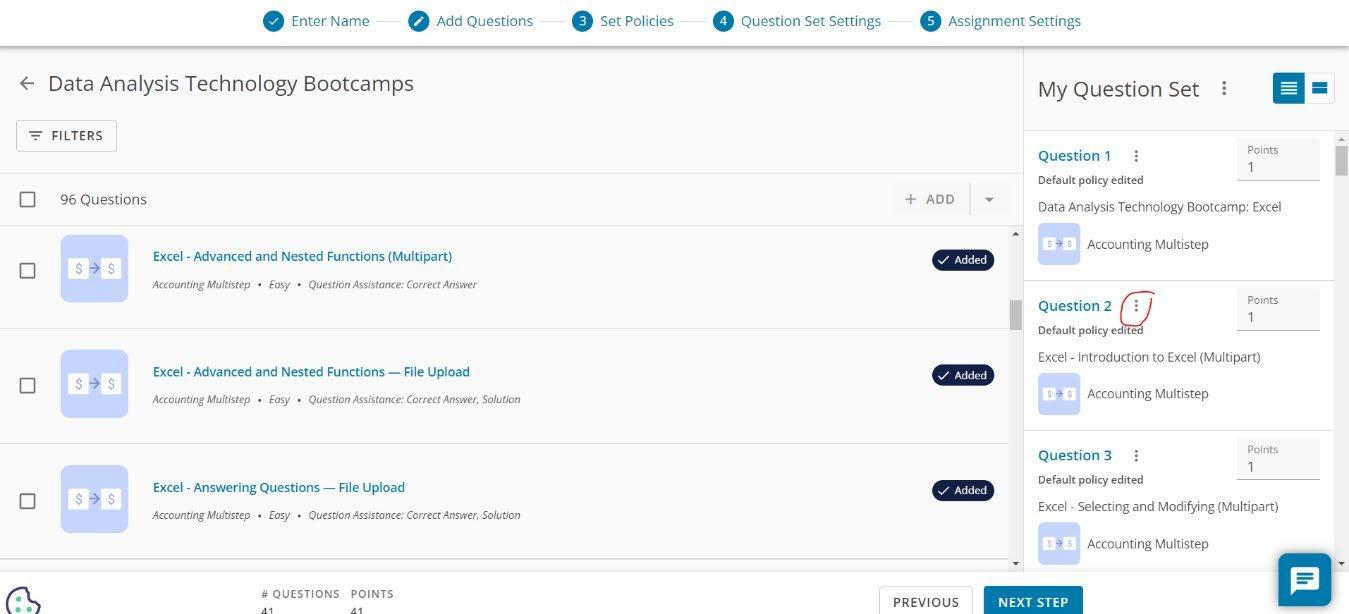
Step 4: Upon clicking on the three dots, you will see a menu of options to further edit the question. You can edit question policies, clear policies, edit specific question parts (like removing specific multiple-choice questions within that set), move the questions, or completely remove the question altogether.
There may be instances where you want to assign a specific module (topic) within the bootcamp as opposed to assigning the full bootcamp. To do this, you would set up the bootcamp like any other assignment. Use the following steps as a guide.
Step 1: Click on the “+ Assignments” button.
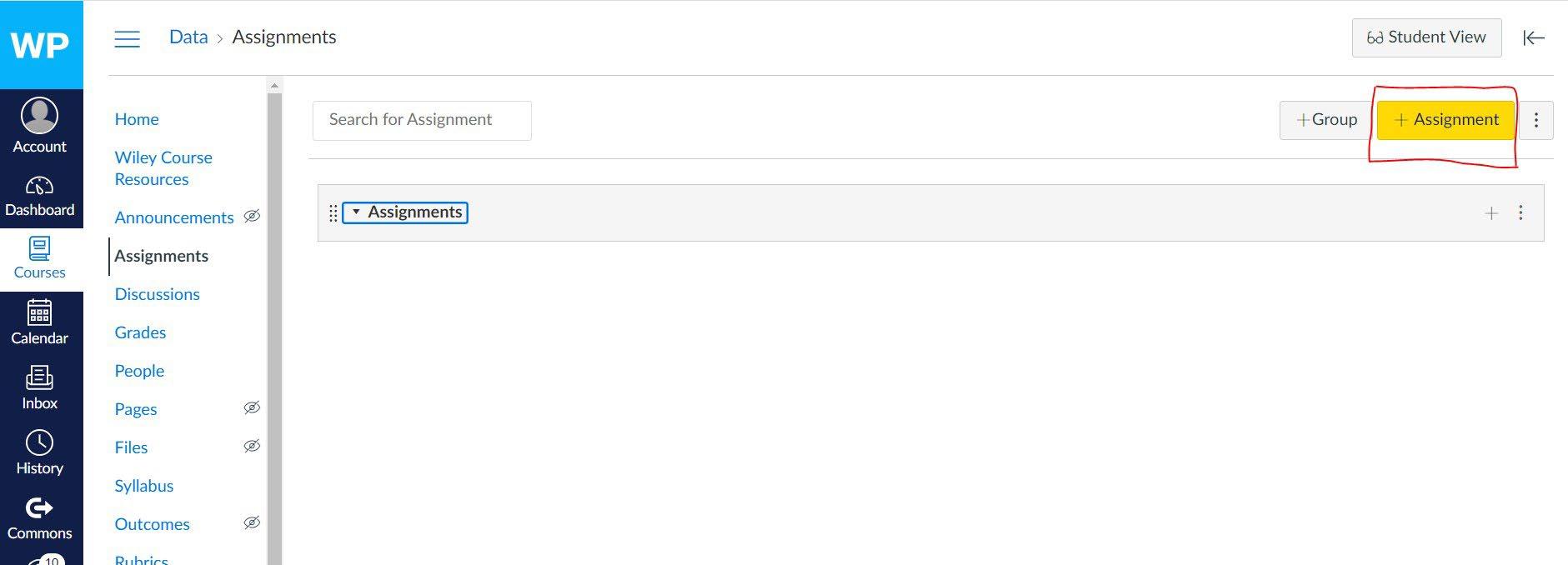
Step 2: Click on “Add a Question Set. “
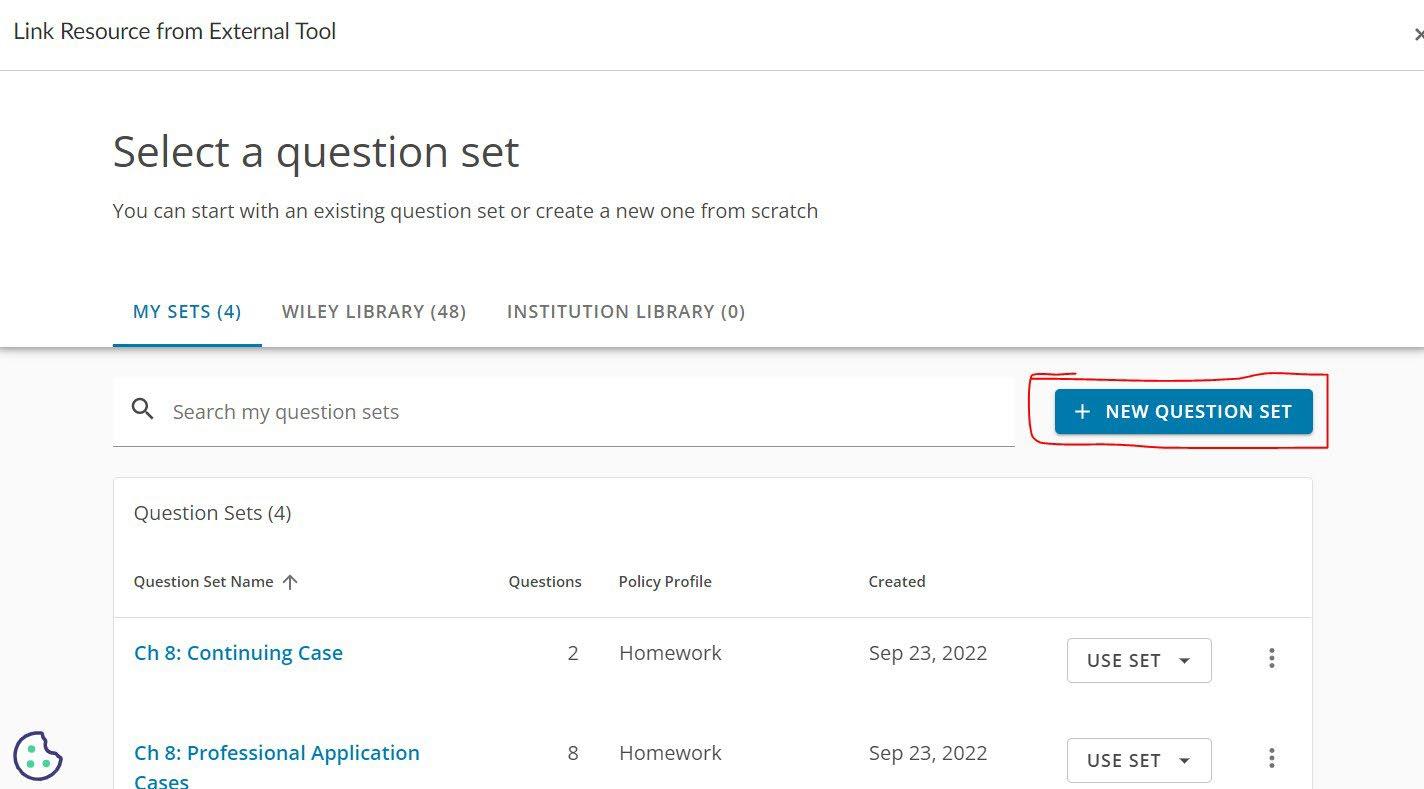
Step 3: Click on “+ New Question Set.”
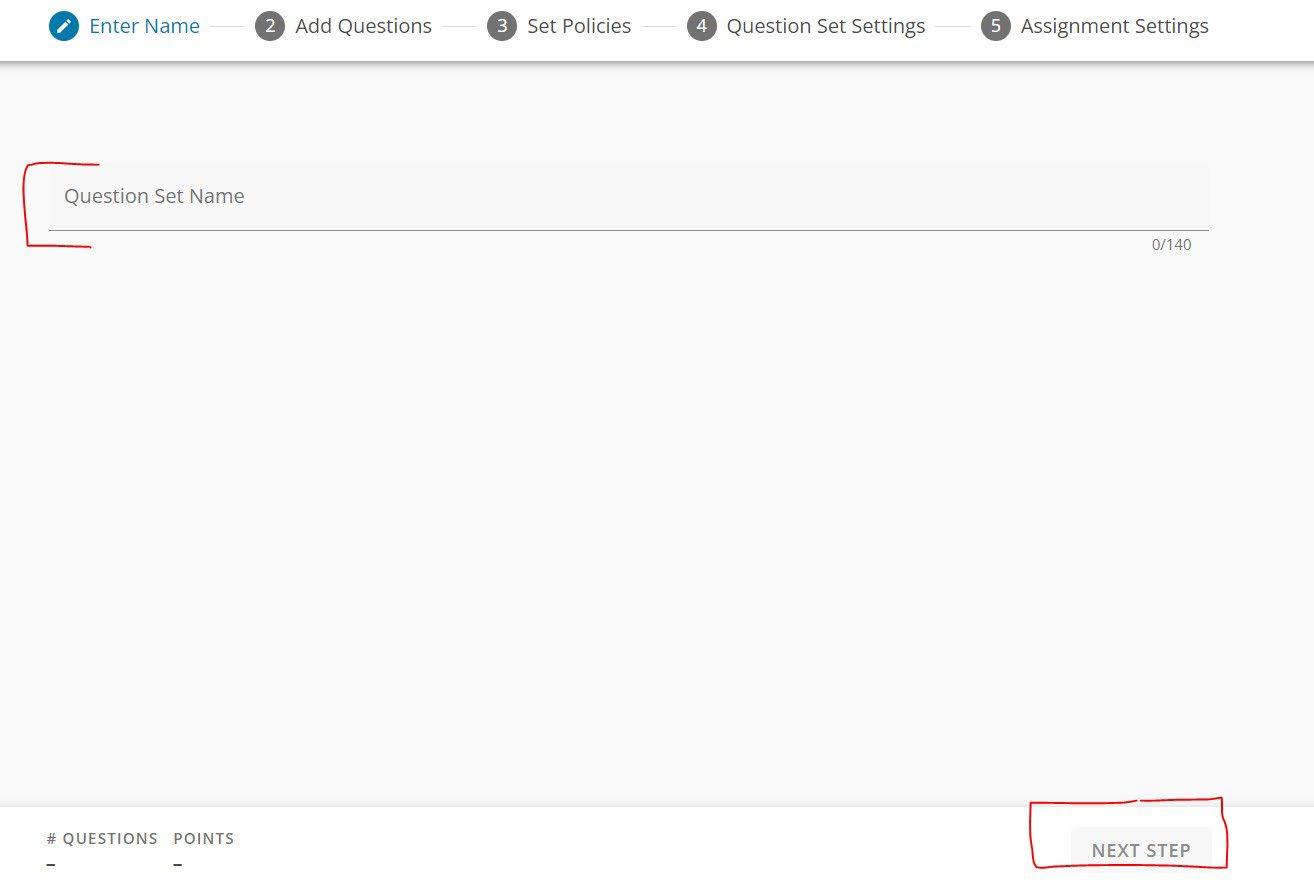
Step 4: You will be prompted to provide an assignment name. Upon doing so, click on “Next Step.”
Step 5: Scroll all the way to the bottom and locate the “Data Analysis Technology Bootcamps” section and click on the link.
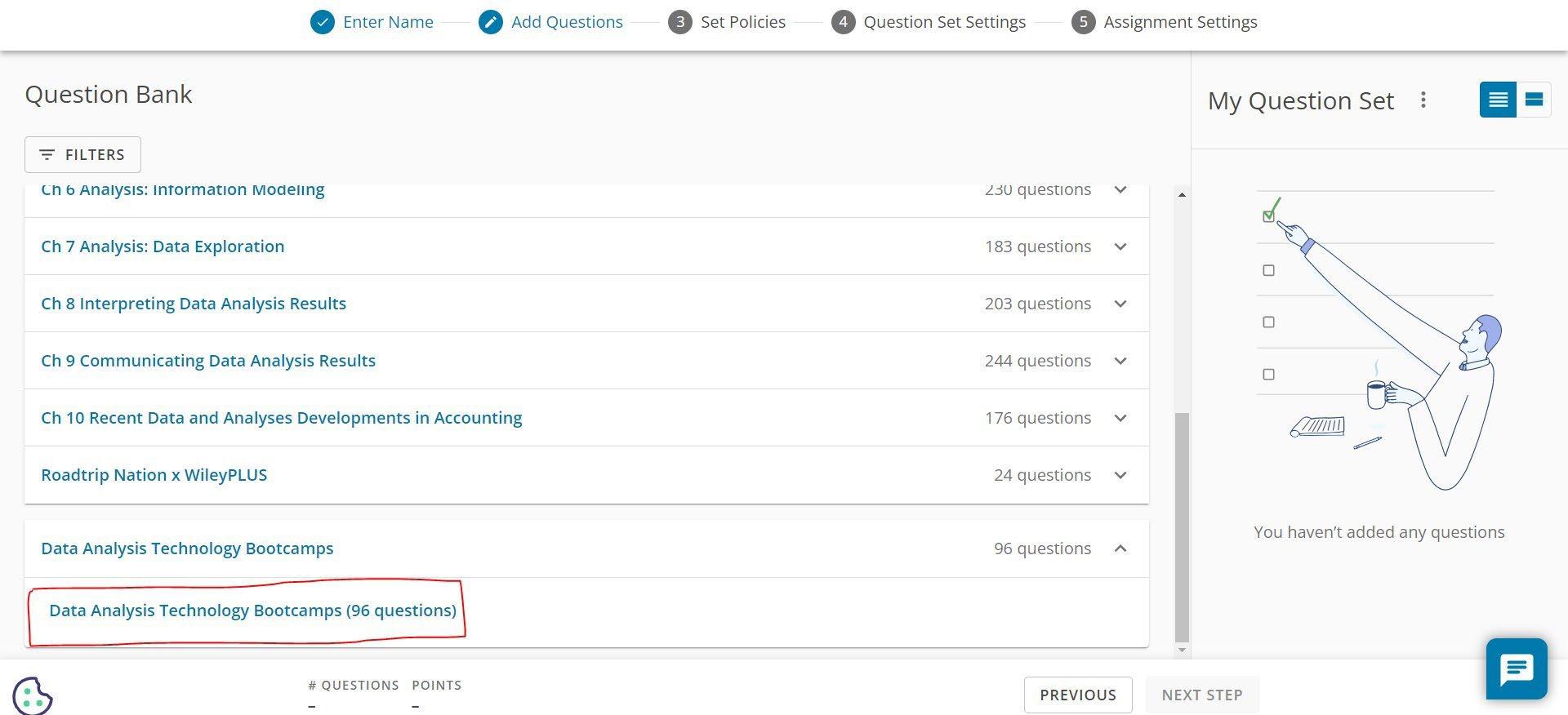
Step 6: In order to see the questions associated to one specific technology, click on the “Filters” button.