Solutions Manual for Matter and Interactions 5th Edition by Chabay, Sherwood, Titus, Spicklemire
ISBN: 9781119805151
ISBN: 9781119805151
1.1-Q-01
Byinspection,youcanseethatthenumberofneutronsincreasesfasterastheatomicnumberincreases.
1.2-Q-01
B,C,D,E,andFshowevidenceofaninteraction.InthecaseofB,speedchanges(andthereforevelocitychanges). InthecaseofCthroughF,directionofmotionchanges(andthereforesodoesvelocity).InthecasesofA,velocityis constantandthereforenonetinteractionisindicated.
1.2-Q-02
Hereisaqualitativedescriptionofthediagram.Duringthefirst4minutes,thedotsareevenlyspacedsincethe car’sspeedisconstant.Duringthenext4minutes,thedotsaresuccessivelyfartherapartsincethecar’sspeedincreases duringeachminute.Duringthenext4minutes,thedotsareevenlyspaced(approximatelytwiceasfarapartasduring thefirst4minutes)sincethecar’sspeedisnowconstantonceagain(butadifferentconstantthanbefore).Duringthe
last4minutes,thedotsaresuccessivelyclosertogethersincethecar’sspeedisdecreasing.Thedotsmustgetcloser togetherfasterthantheygotfartherapartwhenthecarfirstacceleratedbecausethespeedisdecreasingatagreaterrate thanitincreasedbefore.
1.3-Q-01
Reasons1,3,and4aretrue.Reason2isirrelevant.Reason5iscorrectonlyifoneassumesthatthespaceship isindeedeffectivelyinfinitelyfarawayfromallothersourcesofgravitationalattractionandisthusreallyonlyan approximation,butaverygoodapproximation.
1.3-Q-02
Observers2,4mayseesomethingthatappearstoviolateNewton’sfirstlawbecausetheyareinreferenceframes thatareacceleratingrelativetoEarth.Thesearenotinertialreferenceframes,andNewton’sfirstlawdoesn’tholdfor suchnoninertialframes.Observers1,3,and5haveconstantvelocity(magnitudeanddirection,relativetoEarth)and arethusininertialreferenceframessotheywillseeNewton’sfirstlawasnotbeingviolated.
1.3-Q-03
Whileyouarewalkingandholdingthebook,theballmoveswithaconstantvelocity(relativetoanobserverwhois standingatrest).Whenyoustop,theballcontinuesmovingwithaconstantvelocityasitrollsacrossthebookbecause thereisnonetforceontheballtochangeitsvelocity,untilitrollsoffthebookandthenthenetforceontheballisthe gravitationalforcebyEarthwhichchangesitsvelocityasitfalls.
1.3-Q-04
Becausenothinginteractswiththespaceship,itwillcontinueinastraightlineandataconstantspeedof 1×10⁴ m∕s.
1.4-Q-01
a,c,anddarevectors.bisascalar.
1.9-Q-01
Statements1and5arecorrect.Statements2,3,and4areincorrect.
1.10-Q-01
(a) �� isascalarquantity.
(b) Theminimumpossiblevalueof �� is1.
(c) Theminimumvalueisreachedwhentheobject’sspeedislow,specificallywhenitiszero.
(d) Thereisnomaximumvaluefor �� .
(e) �� becomeslargewhenanobject’sspeedishigh.
(f) Theapproximation �� ≈1 applieswhenanobject’sspeedislow.
1.10-Q-02
Theapproximateformulaformomentummaybeusedfor(1),(2),(3)and(5)becauseinallofthesecases,the objectorparticleismovingwithaspeedmuchlessthan 3×10⁸ m∕s.Incase(5),theelectron’sspeedisone-hundredth thespeedoflight.Ifahighlyprecisecalculationisnotneeded,theneveninthiscase,theapproximateformulafor momentummaybeused.Asaruleofthumb,ifanobject’sspeedislessthanabout10%ofthespeedoflight,thenthe approximateformulamaybeused,exceptincaseswherehighprecision(i.e.manysignificantfigures)isneeded.
1.4-P-01
Addthevectorcomponents.
1.4-P-02
(a) Themagnitudeofavectorisindicatedbythelengthofthearrowrepresentingthevector.Thearrowsthathave thesamemagnitudeas # a havethesamelengthas # a .Countinggridlinesshowsthat | # a | =10units(Notethatwe don’tknowwhattheunitis,anditdoesn’tmatterforansweringthisquestion.).So # b , # c , # d , # e ,and # f havethe samemagnitudeas # a .You’llneedtousethePythagoreantheoremtoprovethisfor # b and # d .
(b) Equalvectorsmusthaveboththesamemagnitudeandthesamedirection.So # a , # c ,and # f aretheonlyones meetingthesecriteria.
1.4-P-03
1.4-P-04
# a= ⟨5, 3, 0⟩ m # b= ⟨6, −9, 0⟩ m
c= ⟨−10, 3, 0⟩ m
1.4-P-05
Extractcomponentsbycountinggridlines.
(a) # a = ⟨−4, −3, 0⟩
(b) # b = ⟨−4, −3, 0⟩
(c) Thestatementistrue. # a and # b havethesamecomponents,sothetwovectorsmustbeequivalent.
(d) # c = ⟨4, 3, 0⟩
(e) Thestatementistrue.Eachcomponentof # c istheoppositeofthecorrespondingcomponentof # a sotheactual vectorsareopposites.
(f) # d = ⟨−3, 4, 0⟩
(g) Thestatementisfalsebecausecorrespondingcomponentsof # c and # d arenotopposites.
1.4-P-06
(a) Seedrawing.
(b) Seedrawing.
1.4-P-07
1.4-P-08
(a) # d= ⟨−6, 3, 2⟩ m (b) # e=− # d=−⟨−6, 3, 2⟩ m= ⟨+6, −3, −2⟩ m
(c) Takethepositionofthevector’stailandaddthevector # d
(d) Takethepositionofthevector’stailandaddthevector
1.4-P-09
Call ̂ n thedirectionofanarbitraryvector,thenforthefirstvectorwehave
andforthesecondvectorwehavethefollowing.
Thesedirectionsarethesame!Howcanthatbe?They’rethesamebecauseonevectorisamultipleoftheother. ⟨3, 3, 3⟩ = 3 2 ⟨2, 2, 2⟩.Ofcourseyoucouldalsowrite ⟨2, 2, 2⟩ = 2 3 ⟨3, 3, 3⟩.Whentwovectorsaremultiplesofeach other,theirdirectionsmustbeeitherparallel(ifrelatedbyapositivemultiple)oropposite(ifrelatedbyanegative multiple).
1.4-P-10
(a) Seefigure.
(b) Seefigure.

(c) Themagnitudeof 2 # f willbetwicethemagnitudeof # f
(d) Thedirectionof 2 # f isthesameasthatof # f
(e) Seefigure.
Plain Graph Paper from http://incompetech.com/graphpaper/plain/

(f) Themagnitudeof # f∕2 ishalfthatof # f .
(g) Thedirectionof # f∕2 isthesameasthatof # f
(h) Yes,multiplyingavectorbyascalarchangesthemagnitude,assumingthescalarisneither0nor ±1 (i)
Plain Graph Paper from http://incompetech.com/graphpaper/plain/
Notethatyoumustnotattempttosolvefor �� bydividingbothsidesby # f becausedividingbyavectorisnot defined.Instead,whatyouarereallydoinghereissolvingtheequationbyvisualinspection.Youmayhavenever thoughtofthisasalegitimatewayofsolvinganequation,butthisisavectorequationandtherulesofordinary algebradonotalwaysapplytovectorequations.Untilyoulearnhowtocorrectlysolvevectorequationsusingthe rulesofvectoralgebra(hopefullyyourinstructorwillshowyou),visualinspectionisaperfectlylegitimatewayof solvingthem.
1.4-P-11
Theconceptofwritingavectorasamagnitudemultiplyingadirectionisimportantandwillappearmanytimesin laterchapters.Italsoforcesyoutothinkabouteachpart,magnitudeanddirection,individually.
1.4-P-12
(a) Seefigure.
(d) Seefigure.
(b)
Notethat
1.4-P-15
Onewayofthinkingaboutthearrowrepresentationofavectoristhatthecomponentstellyouhowtogetfromthe tailtothehead.Thisisequivalenttothepositionoftheheadrelativetothepositionofthetail.
(a)
1.4-P-16
Ahelpfulhintistorememberthatthenotation # r AB is thepositionofArelativetoB,whichisequivalenttosaying standatBandtellmehowtogettoA.Thenyouhavesimply # r AB = # r A #
B ,withthesubtractiondoneintheorder inwhichtheindicesappear. (a)
1.4-P-17
Ahelpfulhintistorememberthatthenotation # r AB is thepositionofArelativetoB,whichisequivalenttosaying standatBandtellmehowtogettoA.Thenyouhavesimply
,withthesubtractiondoneintheorder inwhichtheindicesappear.
(a)
1.4-P-18
Nounitisgiven,soassumeanarbitraryunitinyourowncalculation.
1.4-P-20
Bysymmetry,thediagonalmakesthesameanglewitheachcoordinateaxis,soitdoesn’tmatterwhichoneweuse. Let’susethe ��-axis.
1.6-P-01
(b) Averagespeedisnotalwaysequaltothemagnitudeofaveragevelocityunlessthemotionislinear.Wecanproceed withthisassumption.
1.6-P-02
1.6-P-03
��1 =200s∶ ̂ v= ⟨1, 0, 0⟩
��2 =300s∶ ̂ v= ⟨cos (45 ◦ ) , 0, cos (45 ◦ )⟩
Usethepositionupdateequationforeachtimeinterval.
=200s∶
⟨0, 0, 0⟩ + (2m∕s) ⟨1, 0, 0⟩ (200s)
⟨400, 0, 0⟩ m+ (2m∕s) ⟨cos (45 ◦ ) , 0, cos (45 ◦ )⟩ (300s)
⟨824, 0, 424⟩ m
⟨824, 0, 424⟩ m+ (2m∕s) ⟨cos (60 ◦ ) , 0, cos (30 ◦ )⟩ (150s) = ⟨974, 0, 684⟩ m
(b) Thetotaldurationoftimeis 200s+300s+150s=650s
1.6-P-04
Youcannotdividevectors,so
Youmayuse
Oryoumaywritethevelocityincomponentformanduseanyoneofthecomponents.Forinstance,
Thismethodgives
−380m−200m −20m∕s =29s
=100m∕s (d)
⟨−20, −90, 40⟩ m∕s 100 5m∕s
⟨−0.2, −0.9, 0.4⟩
(a) From �� =6 3s to 6 8s:
�� =6 8s−6 3s =0 5s
r i = ⟨−3 5, 9 4, 0⟩ m
r f = ⟨−1 3, 6 2, 0⟩ m 1-16
(b) From �� =6.3s to 7.3s:
(c) Thebestestimatefor # v at �� =6 3s istheaveragevelocityduringthesmallestpossibletimeintervalthatincludes �� =6 3s.Thus,thetimeintervalfrom �� =6 3s to 6 8s givesthebestpossibleestimateinthiscaseforthe instantaneousvelocityat �� =6 3s
(d) Assumethatthebee’saveragevelocitybetween �� =6 3s and 6 33s isapproximatelyconstant.From �� =6 3s to 6 33s:
�� =6 33s−6 3s =0 03s
Wearegiventhelater(final)position,andweneedtocalculatetheearlier(initial)position.Thetimeintervalis2 s.Usethedefinitionofaveragevelocity.
1.7-P-02
1.7-P-03
(b) Now,forthistimeintervalof 5×10⁻⁶ s,theinitialpositionoftheelectronisitspositionattheendoftheprevious 2×10⁻⁶ s interval.
�� =5×10 −6 s
⟨
, 9×10 5 ,
5
r f = # r
+
v��
⟨
02, 1 84, −0
⟩
(⟨
,
5 ,
5⟩ m∕s)(5×10 −6 s) = ⟨0 02, 1 84, −0 86⟩ m+ ⟨0, 4 5, −2⟩ m = ⟨0 02, 6 34, −2 86⟩ m
Anotherwaytosolveitistoconsiderthetotaltimeintervalof 2×10⁻⁶ s+5×10⁻⁶ s=7×10⁻⁶ s.Inthiscase, # r i istheelectron’spositionatthebeginningofthe 2×10⁻⁶ s interval.
# r i = ⟨0.02, 0.04, −0.06⟩ m Δ�� =5×10 −6 s
# r f = ⟨0.02, 0.04, −0.06⟩ m+ (⟨0, 9×10 5 , −4×10 5⟩ m∕s)(7×10 −6 s)
= ⟨0.02, 0.04, −0.06⟩ m+ ⟨0, 6.3, −2.8⟩ m
= ⟨0.02, 6.34, −2.86⟩ m
whichagreeswiththesameanswerobtainedusingthe 5×10⁻⁶ s timeinterval.
1.7-P-04
(a) Assumethathisvelocityisinthe +�� direction.Then
�� = Δv �� Δ�� = # v fx # v ix
�� = 70m∕s−140m∕s 0 6 =−117m∕s2 | # a | ≈−120m∕s2
(b) Since �� ≈10m∕s2,then | # a | ≈120∕10=12 g’s.
1.7-P-05 # r i = ⟨7, 21, −17⟩ m Δ�� =3s
v avg = ⟨−11, 42, 11⟩ m∕s �� f =?
r f = # r i + # v avg Δ�� = ⟨7, 21, −17⟩ m+ (⟨−11, 42, 11⟩ m∕s)(3s) = ⟨7, 21, −17⟩ m+ ⟨−33, 126, 33⟩ m = ⟨−26, 147, 16⟩ m
So �� f =147m
1.7-P-06 # r i = ⟨0 06, 1 03, 0⟩ m
v avg = ⟨17, 4, 6⟩ m∕s Δ�� =0 7s
Usethepositionupdateequation.
r f = # r i + # v avg Δ�� = ⟨0 06, 1 03, 0⟩ m+ (⟨17, 4, 6⟩ m∕s)(0 7s) = ⟨11 96, 3 83, 4 2⟩ m
Thus,theball’sheightafteratimeintervalof0.7sis3.83m.
1.7-P-07
(a)
(b) From �� =1 0s to �� =2 0s,assumingittravelswithaconstantvelocityof ⟨22 3, 26 1, 0⟩ m∕s,
(c) # r atpointCis ⟨40.1, 38.1, 0⟩ m whichisnotthesameaswhatwepredicted.Weassumedconstantvelocitywhen makingourprediction;however,inrealitythevelocitywasnotconstant,butwasdecreasinginboththexand ydirections.Anapproximationofconstantvelocityisonlyvalidforsmalltimeintervals.Forthisprojectile, Δ�� =1 0s wasnotasmallenoughtimeintervaltoreasonablyassumeconstantvelocity.
1.7-P-08
Assumethatthebutterflytravelswithaconstantvelocity.Calculateitsvelocity.
Nowcalculateitspositionat �� =8 5s,ifitstartsat �� =6 0s
1.8-P-01
(a) 3
(b) 6
(c) 1
(d) 5
(e) 2and4
1.8-P-02
(a) 4
(b) 1
(c) 6
(d) 3
(e) 7
1.8-P-03
Graph1
1.8-P-04
Graphs2and4
1.8-P-05
Graphs2,3,4,and5
1.8-P-06
Graphs3,4,and6
1.9-P-01
| # v | <<�� therefore
1.9-P-02
# p | =
| # v | = (0.155kg)(40m∕s) =6.2kg m∕s
Note: | # v | <<�� �� =0 4kg # v= ⟨38, 0, −2⟩ m∕s
p= ��
v = (0.4kg)(⟨38, 0, −2⟩ m∕s) = ⟨15.2, 0, −10.8⟩ kg m∕s | # p | = √(15.2)2 + (0)2 + (−10.8)2 kg m∕s =18 6kg m∕s
1.9-P-03
Note: # v <<��
1.9-P-04
Note: # v <<��
1.9-P-05
1.9-P-06
�� =1000kg
| # v | = (500mph) ( 1m∕s 2 2369mph ) =224m∕s
# p | =
| # v | = (1000kg)(224m∕s) =2 24×10 5 kg ⋅ m∕s
�� =155g =0 155kg
| # v | = (100mph) ( 1m∕s 2 2369mph ) =44 7m∕s
# p |
v | = (0 155kg)(44 7m∕s) =6 93kg ⋅ m∕s
1.9-P-07
(a) Drawasketchofthesituation,liketheoneshowninthefigurebelow..
Sketchthechangeinmomentumvectorbydrawingtheinitialandfinalmomentumvectorstailtotailanddrawing thechangeinmomentumfromtheheadoftheinitialmomentumtotheheadofthefinalmomentum,asshownin thefigurebelow..
Thechangeinmomentumisinthe �� directionwhichisconsistentwiththepicture. (b)
Note |Δ # p | ≠ Δ| # p |
1.9-P-08
Theball’svelocityinthe �� and �� directioniszerobeforeandafterthebounce.Inthe ��-direction, v ���� =+5m∕s and v ���� =−5m∕s.Thechangeinvelocityduetothecollisionis
Usingthelow-speedapproximationformomentum,then
1.9-P-09
Ithelpstosketchthevelocityvectorforthebasketballbeforeandafterithitsthefloor.
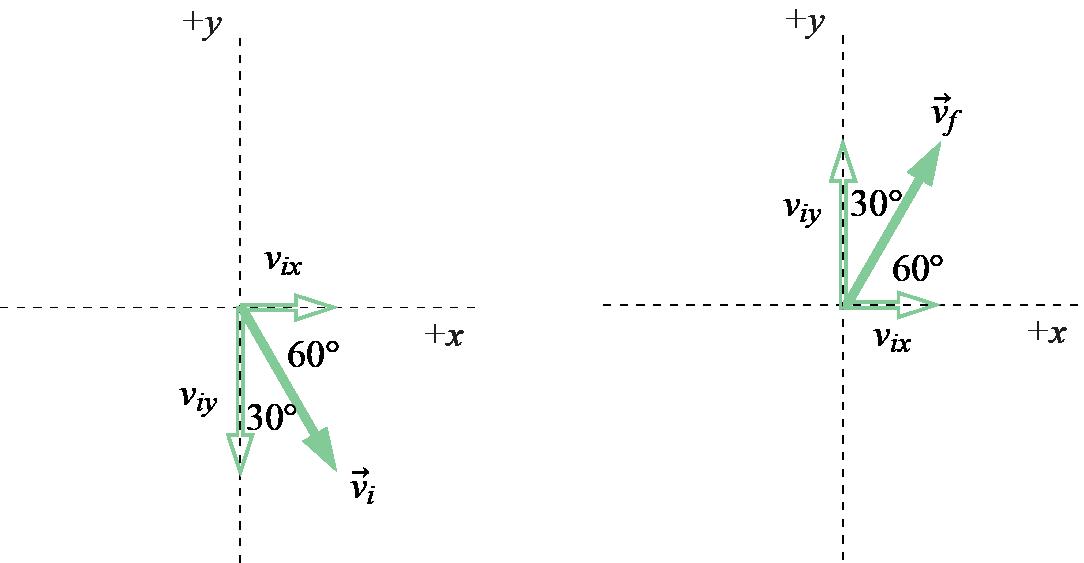
Theangleofthevectorwiththe +�� axisis 30 ◦ ,andtheanglewiththe +�� axisis 60 ◦ .Thevector’scomponents canbeeasilycalculatedusingthecosineofeachoftheseangles.Thus
Aftertheballbounces,
.Thechangeinvelocityis
Usingthelowspeedapproximationformomentum,thechangeinmomentumis
1.9-P-10
Accelerationisavector, #a=Δ # v∕Δ�� = ( # v f # v i ) ∕Δ��.Notethatingeneral, # a
��.There isaveryimportantdifferenceinthesetwoequations(oneofwhichiscorrect).Therefore,assumethattherocketis travelingvertically,andexpressthegivenspeedoftherocketasavelocityvectorinthe +�� direction.
Theaccelerationis
Since �� ≈10m∕s2,thentheaccelerationoftherocketisapproximately 14∕10=1 4 g’s.
1.9-P-11
Ingoingallthewayaround,inonerevolution, # p f isthesameas # p i .Thus, |Δ # p | =0.
Ingoinghalfarevolution(180 ◦ ),sketch # p i and # p f atoppositesidesofthecircle,asshownintheexampleinthe figurebelow.(Youmaychooseanytwopointsonthecircle,aslongastheyareonoppositesidesofthecircle.Also, youmayassumeeithercounterclockwiseorclockwiserotation.Yourchoiceofpointsordirectionofrotationdoesnot affectthefinalanswerforthemagnitudeofthechangeinmomentum.)
rotation



Tofindthechangeinmomentum,sketch # p f and # p i tailtotail. Δ # p isthevectorfromtheheadof # p i tothehead of # p f .Seethefigurebelow..
Asyoucansee, Δ # p=2 # p f .Thus,

| | | Δ # p BC | | | isgreatestbecauseboth Δp �� and Δp �� aregreatest(inmagnitude)fortheintervalfromBtoC.
1.9-P-13
Since | # v | <<��,then # p≈ �� # v .
�� =3kg
# p= ⟨60, 150, −30⟩ kg m∕s
v≈
p �� = ⟨60, 150, −30⟩ kg ⋅ m∕s 3kg ≈ ⟨20, 50, −10⟩ m∕s
1.9-P-14
(b) Tosketch Δ # p BC ,sketch # p C tail-to-tailatthelocationof # p B andsketch Δ # p BC fromtheheadof # p C totheheadof # p B .Dothisforeachoftheothervectorsaswell.Theresultsareshowninthefigurebelow.. pC
�� =1500kg
# r i = ⟨300, 0, 0⟩ m
# p= ⟨45000, 0, 0⟩ kg m∕s Δ�� =10s # r f =?
Since | # v | <<��,then # p≈ �� # v . # v≈ # p �� = ⟨45000, 0, 0⟩ kg ⋅ m∕s 1500kg ≈ ⟨600, 0, 0⟩ m∕s
Tofindthefinalposition,usethepositionupdateequation.
r f = # r i + # v��
⟨300, 0, 0⟩ m+ (⟨600, 0, 0⟩ m∕s)(10s)
⟨600, 0, 0⟩ m
1.9-P-15
r i =? Since | # v | <<��,then # p≈ �� # v
Inthiscasewewanttofindtheinitialposition(i.e.thepositionbeforethe 0 4s timeinterval).Usetheposition updateequationandsolvefortheinitialposition.
Sincethevelocitywasinthe ��-directiononly,thenthe ��-positionand ��-positiondidnotchange.
1.9-P-16
�� =400kg
# r i = ⟨0, 3×10 4 , −6×10 4⟩ m # p= ⟨6×10 3 , 0, −3 6×10 3⟩ kg ⋅ m∕s
�� =2min=120s
# r f =?
Since | # v | <<��,then # p≈ �� # v .
Tofindthefinalposition,usethepositionupdateequation.
1.10-P-01
1.10-P-02
1.10-P-03
1.10-P-04
54×10 −17 kg ⋅ m∕s
(a)
(b) Since | # v | isnotsmallcomparedto ��
1.10-P-05
Since # p isproportionalto # v ,thentheirunitvectors ̂ p and ̂ v arethesame.Thus,
1.11-P-01
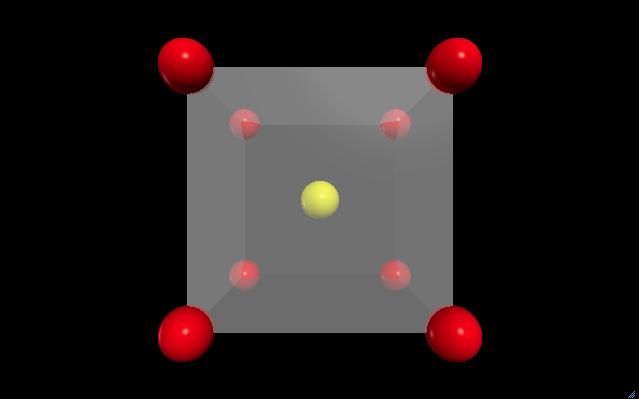
Lines8-12arenewlinesofcodewhichwereaddedtothecodegiveninSection1.11.2.Theprogramwaswritten toruninWebVPython.
1 WebVPython3.2
2
3 box(pos=vector(0,0,0),length=2,width=2,height=2,opacity=0.4)
4 sphere(pos=vector(0,0,0),color=color.yellow,radius=0.2)
5 sphere(pos=vector( 1, 1,1),radius=0.2,color=color.red)
6 sphere(pos=vector( 1, 1, 1),radius=0.2,color=color.red)
7 sphere(pos=vector( 1,1, 1),radius=0.2,color=color.red)
8 sphere(pos=vector( 1,1,1),radius=0.2,color=color.red)
9 sphere(pos=vector(1,1,1),radius=0.2,color=color.red)
10 sphere(pos=vector(1,1, 1),radius=0.2,color=color.red)
11 sphere(pos=vector(1, 1,1),radius=0.2,color=color.red)
12 sphere(pos=vector(1, 1, 1),radius=0.2,color=color.red) Ascreencaptureoftheoutputisshownbelow.
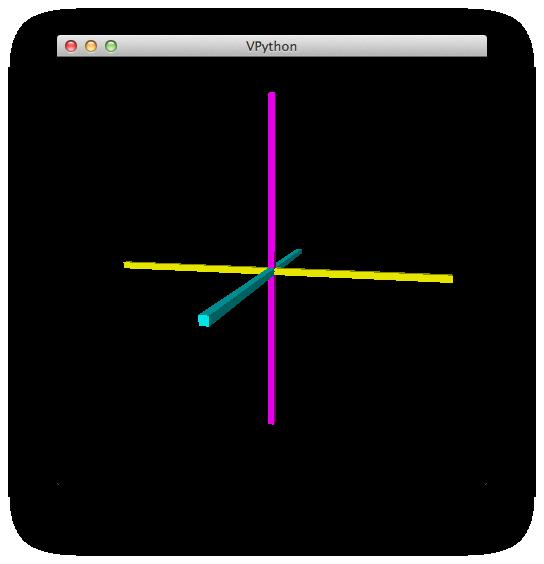
1.11-P-02
Thisprogramisonepossiblesolutiontotheproblem.
1 WebVPython3.2
2
3 #lengthofthebox
4 a=1
5
6 #width
7 w=a/50
8 9 #xaxis
10 box(pos=vector(0,0,0),size=vec(a,w,w),color=color.yellow)
11 #yaxis
12 box(pos=vector(0,0,0),size=vec(w,a,w),color=color.magenta)
13 #zaxis
14 box(pos=vector(0,0,0),size=vec(w,w,a),color=color.cyan)
Ascreencaptureoftheoutputoftheprogramisshownbelow.
1.11-P-03
Examinetheprogrambelow.It’susefultodefinevariablesforthelengthofthesideofabox,thelengthofanaxis, andthenumberofboxesalongtheaxis.Thespacebetweenboxescanbecalculatedfromthelengthoftheaxisandthe numberofboxesalongtheaxis.
1 WebVPython3.2
2
3 #lengthoftheaxis
4 a=1
5
6 #widthofabox
7 w=a/100
8
9 #Numberofboxesonanaxis
10 n=20
11
12 #xlocationofabox
13 x= a/2
14
15 #spacebetweenboxes
16 dx=a/(n 1)
17
18 #boxesonx axis
19 while x<a/2:
20 box(pos=vec(x,0,0),size=vec(w,w,w),color=color.yellow)
21 x=x+dx
22
23 #ylocationofabox
24 y= a/2
25
26 #spacebetweenboxes
27 dy=dx
28
29 #boxesony axis
30 while y<a/2:
31 box(pos=vec(0,y,0),size=vec(w,w,w),color=color.magenta)
32 y=y+dy
33
34 #zlocationofabox
35 z= a/2
36
37 #spacebetweenboxes
38 dz=dx
39
40 #boxesonz axis
41 while z<a/2:
42 box(pos=vec(0,0,z),size=vec(w,w,w),color=color.cyan)
43 z=z+dz
Theoutputisshownbelow.
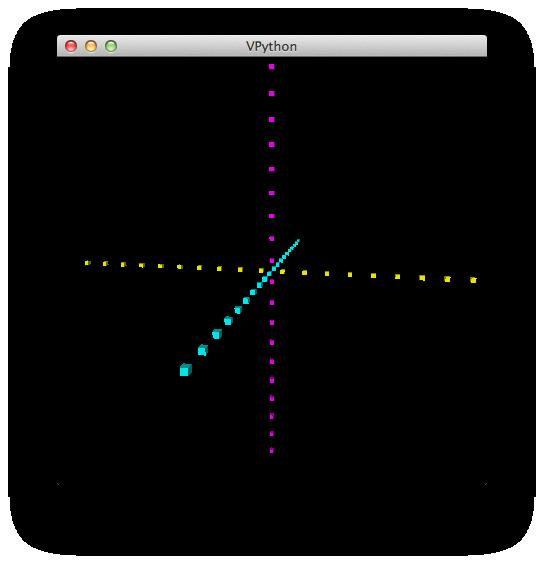
Note:therearemanywaystosolvethisproblem.Inthesampleprogrambelow,wedraw �� boxesonanaxis.So forthreeaxes,our while looprequires 3�� iterations.Usingan if statement,wechecktoseehowmanyboxeshave beendrawn,andweusethisvaluetodeterminetheaxisonwhichwewilldrawthenextbox.It’simportanttoresetthe valueof �� forthepositionofthefirstboxwheneverstartinganewaxis.
1 WebVPython3.2
2
3 #lengthoftheaxis
4 a=1
5
6 #widthofabox
7 w=a/100
8
9 #Numberofboxesonanaxis
10 n=20
11
12 #xlocationofabox
13 x= a/2
14
15 #spacebetweenboxes
16 dx=a/(n 1)
17
18 #Thereisatotalof3*nboxes.
19 #Afternboxesonthex axis,thencreateboxesonthey axis.
20 #Afteranothernboxesonthey axis,thencreateboxesonthez axis
21 boxnum=1
22 while boxnum<3∗n+1:
23 #xaxis
24 if (boxnum<n+1):
25 box(pos=vec(x,0,0),size=vec(w,w,w),color=color.yellow)
26 #yaxis
27 elif (boxnum<2∗n+1 and boxnum>n):
28 box(pos=vec(0,x,0),size=vec(w,w,w),color=color.magenta)
29 #zaxis
30 else :
31 box(pos=vec(0,0,x),size=vec(w,w,w),color=color.cyan)
32 #havetoresetthevalueofxto a/2whenstartinganewaxis
33 if (boxnum==n or boxnum==2∗n):
34 x= a/2
35
36 x=x+dx
37 boxnum=boxnum+1
(a) Assumethattheunitofdistanceismandtheunitoftimeiss.
1. Theinitialvelocityoftheparticleis ⟨0 5, 0, 0 5⟩ m∕s
2. Wewillassumethat“infront”and“behind”referstothe �� direction.Theboxisinitiallyat �� =−1m,andthe particleisinitiallyat �� =−5m.Thus,theparticleisinitiallybehindthebox.
3. Thislineupdatesthepositionoftheparticle. particle.pos=particle.pos+v ∗ delta_t
4. Thetimestepis 0 05s
5. Theparticlehasaconstantvelocity.Thereisnocodethatcausesthevelocityoftheparticletochange.
(b) Theanswersinpart(a)arecorrect.
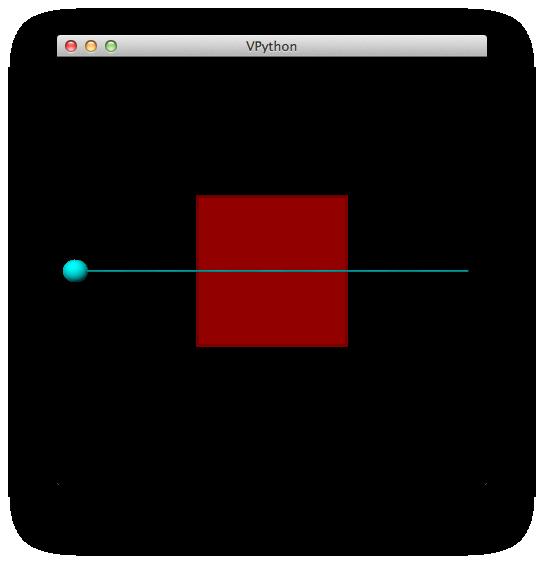
(c) Changetheinitialpositionoftheparticle,andchangethevelocityoftheparticle.Here’sanexampleprogramthat solvestheproblem.
1 WebVPython3.2
2
3 box(pos=vector(0,0, 1),size=vec(5,5,0.5),
4 color=color.red,opacity=0.4)
5 particle=sphere(pos=vector(5,0,2),
6 radius=0.3,color=color.cyan,
7 make_trail=True)
8 v=vector( 0.5,0,0)
9 delta_t=0.05
10 t=0
11 while t<20:
12 rate(100)
13 particle.pos=particle.pos+v ∗ delta_t
14 t=t+delta_t
Hereistheoutput.
(a) Assumethattheunitofdistanceismandtheunitoftimeiss.
1. Theinitialvelocityoftheparticleis ⟨0 5, 0, 0 5⟩ m∕s
2. Wewillassumethat“infront”and“behind”referstothe �� direction.Theboxisinitiallyat �� =−1m,andthe particleisinitiallyat �� =−5m.Thus,theparticleisinitiallybehindthebox.
3. Thislineupdatesthepositionoftheparticle.
particle.pos=particle.pos+v ∗ delta_t
4. Thetimestepis 0.05s.
5. Theparticlehasaconstantvelocity.Thereisnocodethatcausesthevelocityoftheparticletochange.
(b) Theanswersinpart(a)arecorrect.
(c) Changetheinitialpositionoftheparticle,andchangethevelocityoftheparticle.Here’sanexampleprogramthat solvestheproblem.
1 WebVPython3.2
2
3 box(pos=vector(0,0, 1),size=vec(5,5,0.5),
4 color=color.red,opacity=0.4)
5 particle=sphere(pos=vector(5,0,2),
6 radius=0.3,color=color.cyan,
7 make_trail=True)
8 v=vector( 0.5,0,0)
9 delta_t=0.05
10 t=0
11 while t<20:
12 rate(100)
13 particle.pos=particle.pos+v ∗ delta_t
14 t=t+delta_t
Hereistheoutput.
1.11-P-05
Changethevelocityto velocity=vector(-2,0,0).HereisaWebVPythoncompleteprogram.Notethat thelinenumbersdonotmatchthelinenumbersinthecodefromthetextbooksincethisprogrambeginsonline3.
1 WebVPython3.2
2
3 ball=sphere(pos=vector(0, 10,0))
4 velocity=vector( 2,0,0)
5 deltat=0.1
6 while ball.pos.y<10:
7 rate(60)
8 ball.pos=ball.pos+(velocity ∗ deltat)
1.11-P-06
WhenyouruntheprogramgiveninChapter1,itprintsthevelocityofthedrone.(Afterrunningtheprogram,scroll thetextboxtothetopinordertoseethefirstlinethatwasprinted.)Thevelocityofthedroneis ⟨1 16667, 0 666667, 0 5⟩
Let’smakethedronetravelalongthex,y,andzdirectionsseparately.Thisisnottheonlysolutiontotheproblem, butitmightbeinterestingtowatchittravelalongthex-direction,y-direction,andz-directionindependently.
First,modifythevelocitytobe ⟨1.16667, 0, 0⟩,andruntheloopwhilethex-positionofthedroneistotherightof thex-positionofthetarget.
Then,resetthevelocitytobeinthey-direction ⟨0, 0 666667, 0⟩,andrunaloopwhilethey-positionofthedroneis belowthey-positionofthetarget.
Then,resetthevelocitytobeinthez-direction ⟨0, 0, 0 5⟩,andrunaloopwhilethez-positionofthedroneis “behind”thez-positionofthetarget.
Here’sthecompleteprogram.
1 WebVPython3.2
2
3 drone=sphere(pos=vector(3, 2, 1),radius=0.3,
4 color=color.cyan,make_trail=True)
5 target=box(pos=vector( 4,2,2),length=1,
6 width=1,height=1,opacity=0.4)
7 light=sphere(pos=vector( 1,0.7,0.5),
8 radius=0.5,color=color.yellow)
9 deltar=target.pos drone.pos
10 totalTime=6
11
12 #travelalongthex axis
13 velocity=vec( 1.16667,0,0)
14 print ("velocity␣=",velocity)
15 deltat=0.1
16 while drone.pos.x>target.pos.x:
17 rate(100)
18 drone.pos=drone.pos+velocity ∗ deltat
19 print ("position␣is",drone.pos)
20
21 #travelalongthey axis
22 velocity=vec(0,0.666667,0)
23 while drone.pos.y<target.pos.y:
24 rate(100)
25 drone.pos=drone.pos+velocity ∗ deltat
26 print ("position␣is",drone.pos)
27
28 #travelalongthez axis
29 velocity=vec(0,0,0.5)
30 while drone.pos.z<target.pos.z:
31 rate(100)
32 drone.pos=drone.pos+velocity ∗ deltat
33 print ("position␣is",drone.pos) Here’sascreencapture.