Test Bank for Applied Marketing Analytics Using Python 1st Edition by Yildirim
ISBN: 9781529684179
Yildirim & Kübler, Applied Marketing Analytics Using Python SAGE Publishing, 2025
ISBN: 9781529684179
Yildirim & Kübler, Applied Marketing Analytics Using Python SAGE Publishing, 2025
Multiple choice questions
1. Which of the following best defines marketing analytics?
a. Marketing analytics is the process of analysing datasets in a systematic way to improve sales outcomes with the help of machine learning models.
b. Marketing analytics is the process of collecting and analysing datasets in a systematic way to improve sales outcomes with the help of analytic tools and techniques.
c. Marketing analytics is the process of analysing datasets in a systematic way to draw conclusions on customer acquisition and retention strategies with the help of analytic tools and techniques.
d. Marketing analytics is the process of collecting and analysing datasets in a systematic way to draw conclusions on marketing strategies and improve business outcomes with the help of analytic tools and techniques.
e. Marketing analytics is the process of collecting and analysing datasets in a systematic way to improve business outcomes with the help of text mining and image analytics tools.
Ans: D
2. The diagram below illustrates the typical five-stage process that marketing analytics applications go through, but it lacks the names of these stages.
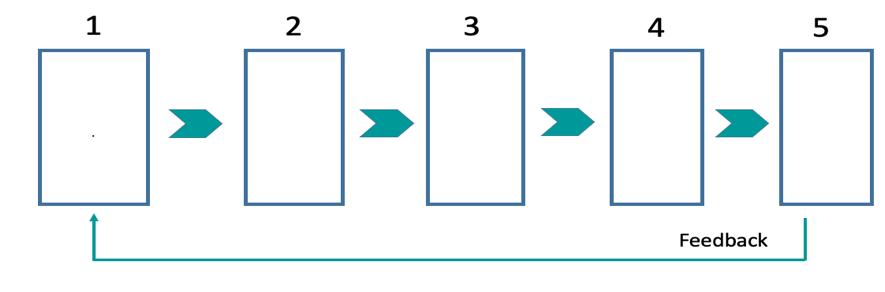
Which of the following captures the process best?
Yildirim & Kübler, Applied Marketing Analytics Using Python SAGE Publishing, 2025
a. 1: Analytic models, 2: Insights, 3: Action, 4: Cloud storage, 5: Data
b. 1: Data, 2: Analytic models, 3: Cloud storage, 4: Action, 5: Insight
c. 1: Cloud storage, 2: Analytic models, 3: Data, 4: Insights, 5: Action
d. 1: Insights, 2: Cloud storage 3: Action, 4: Data, 5: Analytic models
e. 1: Data, 2: Cloud storage, 3: Analytic models, 4: Insights, 5: Action
Ans: E
3. Incorporating the results of quantitative models into intuition-led decision-making is referred to as:
a. Face validity
b. Quantification
c. Quantitative intuition
d. Content validity
e. Predictive analytics
Ans: C
4. You have observed that the model-based recommendations align with your knowledge on the topic and intuition-led recommendations regarding the direction of change for your marketing decisions. In marketing analytics, this phenomenon is known as:
a. Data mining
b. Face validity
c. Quantification
d. Logical thinking
e. Market trend analysis
Ans: B
5. The model precisely indicates the extent to which each marketing action should be increased or decreased. This is known as:
a. Quantification
Yildirim & Kübler, Applied Marketing Analytics Using Python SAGE Publishing, 2025
b. Data integration
c. Intuition-led decision-making
d. Market research
e. Data accuracy
Ans: A
6. Which of the following is less of a challenge in implementing the marketing analytics projects in an organization?
a. Disconnect between departments
b. Not knowing which one to prioritize – speed or quality
c. The absence of ‘data culture’
d. Real-time reporting
e. Not having the relevant data for the problem at hand
Ans: D
7. Which of the following does not represent a pitfall for marketing analytics?
a. The use of inappropriate tools and methods
b. Data quality
c. Data processing and data matching
d. Confirmation bias
e. Well-defined data collection strategy
Ans: E
Open-ended questions
8. You have been hired as a marketing analyst by a fashion retailer and tasked with delivering a presentation to your colleagues in the marketing department on how the business can benefit from marketing analytics. Explain and give examples of marketing analytics applications that the business can utilize to enhance its business outcomes.
Ans: Students are expected to discuss the applications of consumer profiling, text mining, real-time targeting, media planning, measuring return on marketing investment and
Yildirim & Kübler, Applied Marketing Analytics Using Python SAGE Publishing, 2025
predicting future demand. Some students with a background in analytics or data science could give examples of customer analytics tools such as recency-frequency-monetary and customer lifetime value.
9. A chief marketing officer of a car rental company states, ‘We have allocated a significant portion of our marketing budget to analytics in recent years. However, I must say that some of our analytics projects remain incomplete and some have failed to meet our expectations. We have not observed a significant improvement in how analytics contribute to our company’s performance really’ . What are the common reasons behind the failure of marketing analytics applications? Please discuss your answer briefly.
Ans: Students should discuss the following points in their answers:
Marketing analytics fails if:
• you do not define the business problem clearly
• the model and data do not map to the business problem
• data collected by different systems is disjointed
• you neglect unobserved factors
• you do not apply the model correctly
• you focus on performance metrics that do not matter
• you do not have the right talent to leverage marketing analytics
10. You are being interviewed for the position of marketing analytics director at a fintech company that has not previously had a marketing analytics team. The role entails building a successful analytics team. Which factors or key players would you consider when forming such a team?
Ans: The marketing analytics director (MAD) is a leadership role that requires strong domain knowledge as well as strategic decision-making skills. Building a successful analytics team requires careful consideration on the following factors:
Yildirim & Kübler, Applied Marketing Analytics Using Python SAGE Publishing, 2025
1. Mindset. The team members must have the right mindset and embrace the fact that analytics and AI-supported tools can resolve marketing issues and/or unearth new opportunities for growth. The MAD should consider the following essential roles for her team:
Data analyst. People working in this role are typically in charge of (i) collecting, integrating and maintaining large-scale datasets and (ii) developing algorithms, executing analytical models and preparing data visualizations. This role is quite technical and requires advanced data, software and programming skills.
Data translator. This role plays a bridging role between data analysts and data directors. Data translators help analysts (i) look at the right marketing problems and how to approach them, (ii) define the scope of a project and outline the deliverables and (iii) interpret the results and determine the next best course of action. Also, they generate project reports and communicate the results to marketing analytics directors. These people should have training in marketing analytics and possess some strong team and communication skills.
How big the team should be, of course, depends on the size of the organization, the longterm needs and other financial constraints. To be able to get analytics projects up and running, the team should have access to data analytics software such as R, Python, MATLAB or SAS along with high-powered computers.
Instructor
Learning objectives
The first chapter of the book provides students with the opportunity to comprehend the foundations of marketing analytics and learn how to evaluate and value data as a strategic asset in marketing. This teaching plan showcases an approach to deliver the content of the first chapter in an exciting and interactive manner, ensuring an engaging session for the students.
It begins by highlighting the increasing availability of big data and emphasizing the significance of connecting data to marketing decisions. It then provides an overview of the importance of studying marketing analytics for both students and practitioners.
The hands-on activity on what marketing analytics is about forms the heart of the discussion. It allows students to uncover insights about the role of analytics in marketing decision-making.
In addition, teaching this chapter encompasses discussions on the advantages that firms and consumers derive from marketing analytics, as well as an exploration of the challenges and potential pitfalls, along with strategies for firms to avoid them. The chapter also outlines the common factors contributing to the failure of successful applications of marketing analytics.
Instructor Resources, Yildirim & Kübler, Applied Marketing Analytics Using Python, SAGE Publishing, 2025
The computer-supported section facilitates students in installing the software Python, and undertaking various fundamental tasks within the program. This prepares students for the subsequent chapters of the book that involve practical applications of Python.
The first chapter and the accompanying teaching guide can be used in a marketing analytics course as an introductory session. It can also be utilized in other related courses such as applied machine learning or data analytics.
The specific learning objectives include:
• To define marketing analytics and its process
• To describe potential areas of marketing analytics
• To explain the common mistakes in implementing marketing analytics and methods to avoid them
• To install the software (Python) and run some of the basic functions with Jupyter Notebook.
Teaching the chapter
There are seven main pastures that the session on ‘Introduction to Marketing Analytics’ should cover. Table 1 outlines those pastures and includes what to cover specifically, that is hands-on activities, discussions or highlights. It also shows the corresponding slide numbers from the deck, and the suggested time allocation. Depending on the program type (e.g. MBA or MSc), the instructor may want to combine some of these pastures and/or present fewer topics, or even shorten the time allocated to each pasture.
Pasture
Activity/Discussion/Highlights Slide
Suggested time allocation
1. Importance of data in marketing and course objectives
2. Why study marketing analytics?
3. What is marketing analytics?
- Emphasize the age of data abundance with recent statistics
- How to act on available data?
- What are the common hurdles to using marketing analytics?
- Explain the primary reasons as to why studying marketing analytics is important
- Hands-on exercise: What is marketing analytics about?
- Discuss quantitative intuition
- Define marketing analytics and its process
4. What can a firm achieve with marketing analytics?
How do consumers benefit from marketing analytics?
5. What are the challenges and pitfalls?
When do marketing analytics
fail?
- Discuss the real-world applications of marketing analytics for firms
- Hands-on exercise: How AI-supported analytical models can predict human characteristics and behaviour?
- Discuss the potential benefits of marketing analytics to consumers by using real-world examples
- Talk about the common challenges of
-
Instructor Resources, Yildirim & Kübler, Applied Marketing Analytics Using Python, SAGE Publishing, 2025
6. Software installation - Hands-on exercise: students download the software and learn how to perform basic tasks
7. Summary - Wrap up the session with the main takeaways
44–45 30 mins
47 5 mins
The instructor can begin the lecture by providing recent statistics on the increasing availability of big data (slides 4–5) and emphasizing the importance of linking data to marketing decision-making (slide 6). The discussion can revolve around the following points
Many firms indeed possess abundant information about their customers’ profiles and choices, including demographics, location-based real-time data, clickstream data, social media conversations, likes, comments, retweets, clicks, in-store visits, online and offline purchases. However, only a small fraction of them possess the knowledge and capability to effectively leverage and utilize data to support their decisions. Addressing all these questions through quantitative approaches is at the core of marketing analytics. Therefore, the objective of this course is to connect data to insights and actions.
If the cohort consists of executives or MBA students, the instructor may want to conduct a quick poll to understand the basis of these students’ marketing decisions (slide 7). Students at this level of experience typically cite the following hurdles to embracing analytics in practice (slide 8):
• Lack of understanding of how to utilize analytics to improve the business
• Fear of getting fired if analytics-based decisions go wrong
• Internal skills shortage within the line of business
• Concerns regarding the data
• Uncertainty about where to begin
Instructor Resources, Yildirim & Kübler, Applied Marketing Analytics Using Python, SAGE Publishing, 2025
The instructor can then state that the course also aims to address all these obstacles. The first part of the lecture concludes by presenting what students will learn throughout the course (slide 9).
Pasture 2: Why study marketing analytics?
This section is used to explain the primary reasons why studying marketing analytics is important. Slides 11 and 12 can be utilized to discuss the expectations of recruiters from fresh marketing or management graduates. The central message to convey here is that if students are well-trained in marketing analytics, meaning they possess a strong background in marketing knowledge, statistical skills and programming skills, their profile will be highly sought after in the job market.
For MBA students or executives, the instructor may also want to emphasize that they should explore better ways to extract value from their data and outperform their competitors. It is crucial for them to recognize that companies that leverage marketing analytics tend to outperform those that do not. Therefore, having a solid foundation in marketing analytics will enable them to make evidence-based decisions and achieve better performance.
Pasture 3: What is marketing analytics?
Hands-on exercise:
In this pasture, students are provided with a dataset from an apparel brand in an Excel file named ‘fourtex_data_example.xlsx’ (slide 15). The dataset encompasses diverse marketing variables such as Google AdWords, Facebook, TV and Radio spending, as well as Traffic performance (slide 16). Students are tasked with assuming the role of the company’s marketing manager and determining the appropriate actions to take regarding their marketing actions. The instructor may pose the following questions (slide 17):
• Should you keep pushing on with Google AdWords and Facebook ads?
• Should you stop or maintain advertising on TV and radio channels?
• Which of these actions – increase, decrease, maintain – would you take for each marketing variables to boost the web traffic performance?
Instructor Resources, Yildirim & Kübler, Applied Marketing Analytics Using Python, SAGE Publishing, 2025
Students typically generate simple bar charts or line plots and calculate pairwise correlations to offer insights into what actions they should take – reducing some, increasing others or maintaining the same levels.
After the class discussion on this activity concludes, the instructor provides feedback to the students and presents (i) the current budget allocation of the brand (slide 18), (ii) a regression model output that quantifies the impact of marketing on web traffic performance and suggests an optimal budget allocation (slide 19). Subsequently, the instructor compares the current allocation with the optimal allocation and suggests actions to be taken for each marketing variable (slide 20).
Slides 21–22 summarize this activity, highlighting the main takeaways. Students are typically pleased when they observe that the model aligns with their own recommendations regarding the direction of change. This phenomenon is known as ‘face validity’. By employing an analytical model, individuals can gain confidence in their beliefs or intuitions. The instructor then poses the question, ‘What does the model provide you that goes beyond your own analysis?’ The answer lies in ‘quantification’: the model precisely indicates the extent to which each marketing action should be increased or decreased. It offers an objective assessment of the necessary modifications to the decision variables. The instructor can further discuss that marketers should first establish their objectives and then develop a model or tool to explore the insights provided by the model. At this point, the class discussion may shift towards the concept of ‘quantitative intuition’ (slide 22). The instructor can gather different perspectives from the students and conclude the activity with the following key takeaway:
Effective marketing decision-making involves combining human intuition with data, rather than replacing it. Incorporating the results of quantitative models into qualitative narratives or intuition-led decision-making is referred to as ‘quantitative intuition’ . To conclude this section, the instructor can build upon the outcomes of the activity and provide the definition of marketing analytics using slide 23.
Instructor Resources, Yildirim & Kübler, Applied Marketing Analytics Using Python, SAGE Publishing, 2025
Marketing analytics is the process of collecting and analysing datasets in a systematic way to draw conclusions on marketing strategies and improve business outcomes with the help of analytic tools and techniques.
Next, the instructor can talk about the essential stages involved in marketing analytics applications (slide 24).
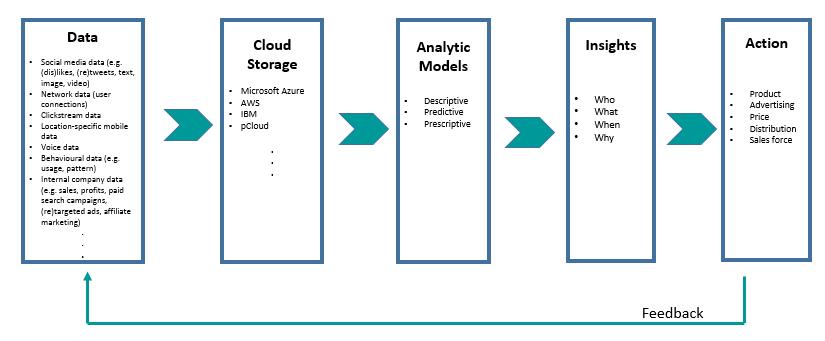
Finally, the knowledge on the definition of marketing analytics is reinforced by restating the following:
Marketing analytics allows firms to make sense of consumer data, assess the effectiveness of their marketing actions, reach accurate insights on consumer behaviour, inform strategic marketing decisions and eventually improve top- and bottom-line financial performance. It is important to note that the ultimate goal of marketing analytics is to help firms create value for their customers, clients, partners and the society they are a part of. Thus, marketing analytics applications should not be seen as a standalone activity, rather as an important constituent of a value creation process of a firm. They should be performed continuously and in a structured way using the right toolkits.
Pasture 4: What can a firm achieve with marketing analytics? How do consumers benefit from marketing analytics?
In the first half of this pasture, covering slides 26–33, the instructor discusses the real-world applications of marketing analytics. These applications include understanding consumer profiles, enhancing customer engagement and lead generation, implementing real-time
Instructor Resources, Yildirim & Kübler, Applied Marketing Analytics Using Python, SAGE Publishing, 2025
targeting, addressing customer dissatisfaction by providing prompt (real-time) responses to consumer complaints, measuring return on marketing investment, forecasting future demand and predicting customer churn. The emphasis is placed on how these applications can benefit firms.
Hands-on exercise:
During the discussion on consumer profiling, a mini activity can be conducted. Students will be asked to scan the QR code provided on slide 27 to explore how AI-supported models can provide insights about individuals based on their own facial data. This activity is often perceived as enjoyable and captivating by students.
In the second half of this section, the instructor delves into the potential advantages of marketing analytics for consumers, utilizing real-world examples from slides 35 to 36. In the event that instructors feel that students may not be acquainted with those specific company examples, they can seek out similar examples from their respective countries.
Pasture 5: What are the challenges and pitfalls of marketing analytics applications? When do marketing analytics applications fail?
This pasture focuses on two main aspects: (i) the common challenges and pitfalls encountered when implementing marketing models and (ii) the typical reasons for marketing models to fail.
We suggest that the instructor allocates more time to certain challenges listed on slide 40, depending on the composition of the student audience. For instance, elaborating on the reasons behind marketing problems would be more engaging for individuals interested in understanding the root causes. Some students may express a desire to learn more about the challenges specific to analytics applications in B2B firms. If marketing executives are the audience, they might be particularly interested in the role of intangible metrics in marketing models. Challenges related to organizational culture and interdepartmental disconnect could attract students with a social science background.
Instructor Resources, Yildirim & Kübler, Applied Marketing Analytics Using Python, SAGE Publishing, 2025
After explaining the challenges to the students, the instructor can proceed to discuss potential pitfalls and offer recommendations on how to avoid them (slide 42), followed by a discussion on the common causes of failure in marketing analytics (slide 43).
The aim of this pasture is to familiarize students with the software and prepare them for the data applications covered in the next chapters. Therefore, this part of the lecture primarily focuses on hands-on learning. The instructor may prefer a flipped classroom teaching approach for this pasture. Prior to the class, students are required to review the section titled ‘Getting Started with Python’ in the first chapter of the book and acquire a basic understanding of the software.
The instructor should ensure that students have access to the required files for this session, such as Jupyter Notebook file (i.e. ipynb), data files and HTML output files. All the teaching materials are accessible on the book’s website. Once students have downloaded the files for this session onto their computers, they should follow the step-by-step instructions provided in the book to learn how to:
• install Python,Anaconda, and Jupyter Notebooks
• install and load Python libraries
• create a simple Jupyter notebook document
• import (export) data to (from) Python.
The instructor emphasizes the following key points to be taken away from the lecture:
• Marketing analytics serves the purpose of making informed decisions that lead to enhanced business outcomes.
Instructor Resources, Yildirim & Kübler, Applied Marketing Analytics Using Python, SAGE Publishing, 2025
• It is essential to view marketing analytics as an integral part of a firm’s value creation process, rather than a standalone activity.
• It is important to incorporate the results derived from quantitative models into your decision-making process guided by intuition. We call this ‘quantitative intuition’
• Marketing itself is a combination of art and science, requiring a balance between creative thinking and data-driven analysis.
• It is vital to be mindful of the limitations and challenges associated with marketing analytics. By considering the common hurdles and pitfalls, you will be better equipped to leverage marketing analytics for improved business performance while being aware of its complexities.