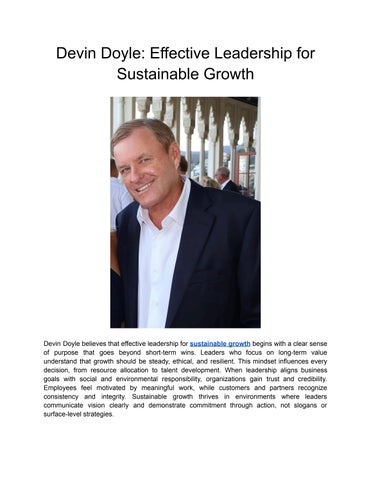
Devin Doyle: Effective Leadership for Sustainable Growth

Devin Doyle believes that effective leadership for sustainable growth begins with a clear sense of purpose that goes beyond short-term wins Leaders who focus on long-term value understand that growth should be steady, ethical, and resilient. This mindset influences every decision, from resource allocation to talent development When leadership aligns business goals with social and environmental responsibility, organizations gain trust and credibility Employees feel motivated by meaningful work, while customers and partners recognize consistency and integrity Sustainable growth thrives in environments where leaders communicate vision clearly and demonstrate commitment through action, not slogans or surface-level strategies
Strong leadership also plays a vital role in shaping organizational culture A healthy culture encourages collaboration, accountability, and openness to new ideas. Leaders who listen actively and respect diverse perspectives create workplaces where people feel valued and empowered. This sense of belonging increases engagement and productivity over time. Sustainable growth depends on people willing to invest their energy and creativity in shared goals When leadership sets the tone for fairness and transparency, it becomes easier for teams to navigate challenges and stay focused during periods of change.

Adaptability is another defining trait of effective leadership for sustainable growth. Markets evolve, technologies shift, and customer expectations change rapidly Leaders who remain flexible and curious are better prepared to guide organizations through uncertainty Instead of reacting with fear, they view disruption as an opportunity to learn and improve. This approach encourages innovation while reducing resistance to change Sustainable growth is not about rigid plans but about thoughtful adjustment Leadership that balances stability with adaptability helps organizations remain competitive without losing their core identity.
Ethical decision-making strengthens sustainable growth by protecting long-term interests Leaders face constant pressure to deliver results, but shortcuts often create hidden risks. Effective leadership considers the broader impact of decisions on employees, communities, and stakeholders. Acting with integrity builds lasting relationships and reduces reputational harm. Over time, ethical consistency becomes a competitive advantage. Organizations led by principled leaders are more likely to attract loyal customers and committed partners who share similar values. Trust, once earned, supports steady growth even in challenging economic conditions

Clear communication is essential for aligning teams around sustainable goals. Leaders who explain not only what needs to be done but also why it matters help employees see the bigger picture This clarity reduces confusion and builds confidence When people understand how their work contributes to sustainable growth, they are more likely to take ownership and act responsibly Open communication also allows feedback to flow upward, enabling leaders to identify risks early and adjust strategies Growth becomes a shared journey rather than a top-down demand.
Investment in people is a cornerstone of effective leadership for sustainable growth Training, mentoring, and skill development prepare teams for future challenges. Leaders who prioritize
learning create organizations that evolve with their industries This investment signals long-term commitment and reduces turnover. Employees who see growth opportunities are more engaged and loyal Sustainable growth relies on strong internal capabilities, not constant external fixes Leadership that nurtures talent lays a foundation for innovation, resilience, and consistent performance.

Effective leadership for sustainable growth is about balance. It blends ambition with responsibility, innovation with stability, and performance with purpose. Leaders who embrace this balance create organizations that endure Growth achieved through thoughtful leadership feels steady rather than forced. It reflects trust, shared values, and a willingness to think beyond immediate gains In a world of constant change, sustainable growth becomes possible when leadership remains grounded, forward-looking, and deeply connected to the people it serves