



Mariangela Sonstegard and Gabriela Marquez SMCHA Co-Presidents - 2025
The colors of fall make it a beautiful time of year. Although the days are beginning to get shorter, the weather is still warm, allowing us to spend quality time with our horses while enjoying vibrant and picturesque trail rides. SMCHA has had some fun-filled equestrian events this fall. One of our most popular events was the Free Fall Riding Clinic. This event was held at the Mounted Patrol on Sundays from September 14 to October 5, from 10:00 a.m. to 12:00 p.m. The clinic offered riders and horses a unique opportunity to learn from local, respected trainers, enhancing their skills and building confidence. We also held an Overcoming Fear and Building Trust Clinic.
Instructors Lisa Calder and JP Dyal provided insight into the horse's nervous system and vision when approaching obstacles, as well as the importance of using our breath to support both our own and the horse's nervous systems. Our community of supporters came together for two Dine and Donate Events at Crouching Tiger in September and Celia's Mexican Restaurant in November. A share of the proceeds were donated to SMCHA. Please keep an eye on our calendar for future Dine and Donate events. It's a great opportunity to support SMCHA, meet fellow equestrians and board members, and enjoy lunch or a night out without having to cook.
We continue to encourage our members to support, participate, share their thoughts, ideas, and provide feedback. Your voice matters!
We sent out a membership survey to identify areas for improvement and plan events and activities that best serve our equestrian community. We will use your feedback to guide improvements, shape upcoming events, and make enhancements within our organization.
Working together is how we will make a difference in the equestrian community. Happy Trails! Don't forget: Life is Better at the Barn! Mariangela Sonstegard and Gabriela Marquez, SMCHA's 2025 Co-Presidents
SAN MATEO COUNTY HORSEMEN’S ASSOCIATION 2025 OFFICERS
PRESIDENTS
Gabriela Marquez and Mariangela Sonstegard
1st VICE PRESIDENT
Cary Oberti
SECRETARY
Ceci Ellis
TREASURER
Cheryl Basin
COMPLIANCE OFFICER
Maria Fonseca
2025 BOARD OF DIRECTORS
Cheryl Basin
Bonnie Bertetta
Sharon Butler
Colleen Daley
Don DeFranco
Ceci Ellis
Maria Fonseca
Adeline Forrest
Christine Friis
Susan Jakubowski
Jenny Mize
Lucia Mokres
Carey Lee Oberti
Elizabeth Ouellette
Marcy Rosenberg
Karen Rowley-Shawback
Tasha Summers
Deborah Vasquez
Carin Zeller
Honorary Board Member
Noel Moody
P.O. Box 620092
Woodside, CA 94062-0092
Visit our website at www.smcha.org
By Amy Young and Dr. Carrie Finno
(Reprinted with permission from UC Davis Center for Equine Health)
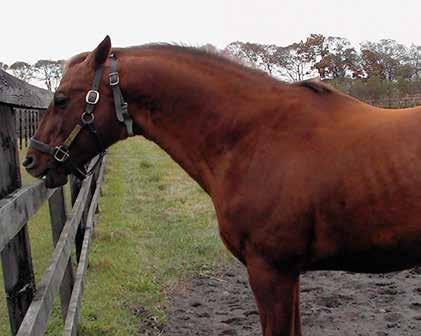
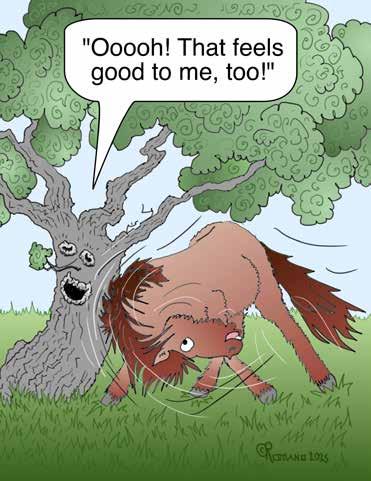
Cribbing, or crib-biting, is a stereotypy exhibited by some horses. Stereotypies are repetitive behaviors that lack an apparent goal or function, often induced by stress, frustration, and/or dysfunction of the central nervous system. Cribbing involves the horse grasping a fixed object, such as a fence, stall door, bucket, or feeder, with its front teeth (incisors), contracting the neck muscles and pulling back, usually producing a characteristic audible grunting sound. Despite appearances, horses don’t actually swallow much air when they perform this behavior. The behavior has been well documented in domesticated horses, with an estimated 5-15% prevalence. Cribbing has also been reported in some captive wild horses, such as the Przewalski horse, but has not been observed in wild, or feral, free-ranging horses. It is uncommon in donkeys and mules.
Horses that crib have been reported to exhibit weight loss and overall poor condition, abnormal development of muscles in the neck, and excessive wear on their teeth. Cribbing can interrupt their daily routine, occupying several hours per day. Links, but no causal relationships, have been made between cribbing and colic, specifically epiploic foramen entrapment and colonic obstruction, distension colic, as well as gastric ulcers. Cribbing has also been identified as a risk factor for temporohyoid osteoarthritis
Cribbing is considered an undesirable stable vice and can result in a significant negative impact on the perceived monetary value of a horse. There is also stigma around the behavior that can result in refusal to board the horse at some facilities. Horses that crib may cause significant damage to trees, fences, walls, and other surfaces.
Horses that crib have been shown to have higher levels of the stress hormone cortisol than non-cribbers. They also exhibit higher levels of the “feel good” hormones endorphins, making it difficult to determine if horses crib to combat frustration, or if it is more of an addiction.
A number of causes have been suggested, and many investigated. Unfortunately, the reasons behind why horses crib remain frustratingly elusive. It is likely that multiple factors are responsible for the behavior. It has been linked to altered brain function, gastrointestinal irritation, feed consisting of too much concentrate and not enough forage, breed, sex of the horse, trauma associated with weaning, and housing in individual stalls without enough time spent outside the stable or in contact with other horses. Surveys and studies of owners and others who care for horses have reported the perceived main cause(s) of cribbing as boredom, stress, or habit.
An underlying genetic predisposition to cribbing has been suggested as some breeds, and even families, have exhibited a higher prevalence for stereotypies. The identification of genetic causes for compulsive behaviors in other species, such as flank sucking in Doberman pinschers, has advanced the field of behavioral genetics. However, to date the mode of inheritance for
• Cribbing (crib-biting) in horses is a stereotypy, or repetitive behavior that does not have an apparent goal or function.
• When horses crib, they grasp a solid surface with their front teeth and pull back, contracting the neck muscles and emitting a characteristic grunting sound.
• Horses that crib may exhibit weight loss, overall poor condition, abnormal muscling in the neck, and excessive wear on the teeth, among other undesirable consequences. Cribbers are also thought to be at higher risk for colic, gastric ulcers, and temporohyoid osteoarthritis.
• A number of causes for cribbing have been proposed and studied, but to date there are no definitive answers. It is likely that multiple factors are responsible for the behavior.
• Prevention may not be fully possible for some horses. Work with your veterinarian to address any underlying medical conditions and examine possible alterations to management practices.
cribbing has not been established, and efforts to identify specific causal genetic factors, including investigations of leptin, ghrelin, and dopamine-receptor genes, have come up empty-handed. There is also the seemingly age-old question of whether horses copy cribbing by watching or interacting with other horses. Studies to date have revealed conflicting data. It is possible that this is due to the fact that environmental factors act as important triggers, so it is difficult to separate exposure to common management factors, especially those demonstrated to be associated with cribbing, from other potential causes. It has been suggested that dominance and hierarchies between horses may influence learning by observation. There is currently no scientific evidence supporting isolation of cribbers from stablemates.
Cribbing behavior is difficult to stop once it has become established. Since the underlying cause(s) for the behavior is
Continued on Page 36
We offer color advertising. See below for pricing chart and ad sizing. Please submit a camera-ready ad in either a PDF or .jpg format in RGB mode at 300 dpi. Interested? Email us at SMCHA@smcha.org.
x
Ad size (in inches) without bleed (.5 inch margins)
x 4.75
Ad size (in inches) with bleed (no margins)
One Full Page 8.75 x 11.25 (inches)
spread 17.5 in.
x 11.25 inch
San Mateo County Horseman Magazine welcomes article submissions from the community. All submitted articles are subject to modification and editing by Magazine Staff for content, style, length, accuracy, and clarity to fit our publication standards and to maintain consistency with our editorial voice. All articles must include proper citations (if applicable), author identification, and meet publication deadlines
paid political or religious advertisements will be accepted; all articles submitted are subject to editing; all articles or items reprinted from another source must be cited as to source and permission to reprint; items or articles submitted for publication that are not printed will not be returned to the author or persons submitting them.
As I step down from my role as Chief Editor of the award-winning SMCHA Magazine, I want to share my heartfelt thanks to everyone who has made this journey such a joy. It has been a wonderful experience filled with creativity, collaboration, and connection. I’ve had the pleasure of meeting so many inspiring people and working with an exceptional team—including Marcy Rosenberg, Cherie Hammer, Colleen Combes, the SMCHA Board of Directors, as well as our dedicated contributors and advertisers—all of whom care deeply about our horse community.
Although I’m sad to leave this position, I’m excited to dedicate my energy fully to my new business venture, Best Life Ever Coaching (www.bestlifeevercoach.com), where I’ll continue supporting others in creating lives of clarity, confidence, and purpose.
I’ll remain on the SMCHA Board of Directors and look forward to staying involved in new and meaningful ways. My gratitude extends to all our contributors and readers who have kept the magazine vibrant through the years.
We are now seeking a new Chief Editor to carry forward the tradition and spirit of the SMCHA Magazine. If you know anyone who enjoys gathering articles, news, and photos from our community and collaborating with our brilliant editing team, please reach out! I’m confident the publication will continue to thrive in the hands of our dedicated community.
Want to know more about this exciting position?
Contact Marcy Rosenberg at mrosenb51@gmail.com or (408) 560-8074.
Reprinted with permission from Facebook Group, The Society of Sidesaddle Storytellers
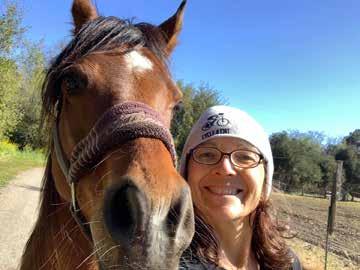

Elizabeth Ouellette blecoachingnow@gmail.com 650-248-3409 www.bestlifeevercoach.com
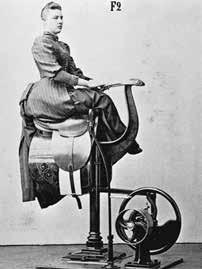
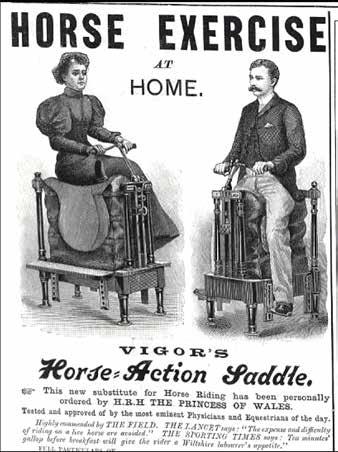
The Victorians had some pretty nifty gadgets back in the day! This image shows a woman using a Zander mechanical exercise machine, specifically designed to simulate horseback riding! Of course, she is a lady, so naturally the machines for women featured a sidesaddle. These contraptions, developed by Swedish physician Gustav Zander in the late 19th century, were part of a larger system of exercise therapy machines used in institutes and spas for passive exercise and rehabilitation. I think they have a lot of good points listed on there; they help you stay fit and in tip-top shape but without the expense of keeping a horse alive. (Being a “complete safeguard against obesity and hysteria” is my favorite.) Not gonna lie, I’d love one for my house. Sign me up!
By Karen Rowley
Our 4-session Free Fall Riding Clinic was a success with 40-plus participants registered to take part in the class offerings. From beginning/re-entry riders up through more advanced riders, there was something for everyone. I want to thank our instructors for their participation and planning: Joan McLaren, Noel Moody, Gaby Bullock, Chris Ellsworth, Chris Friis, and Kristi Eifert, whose expertise and teaching skills keep this clinic possible.
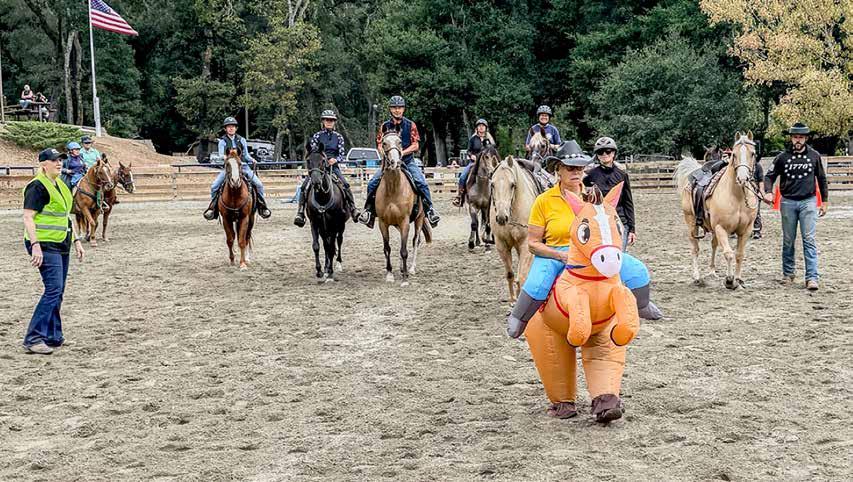
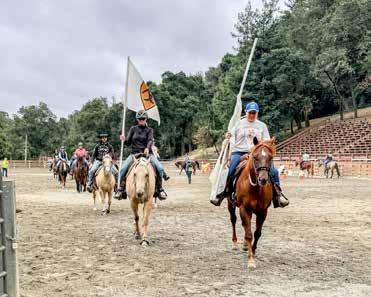
Our obstacle clinic was well-received last year, and Chris Friis and Kristi Eifert returned with an even better, more extensive program this year. The primary goal of this clinic was to ensure participants left the arena feeling more connected to their horses and equipped with new knowledge and skills. Again, riders paraded out of the arena with flags, riding 2 x 2, accompanied by music and big smiles as they success-
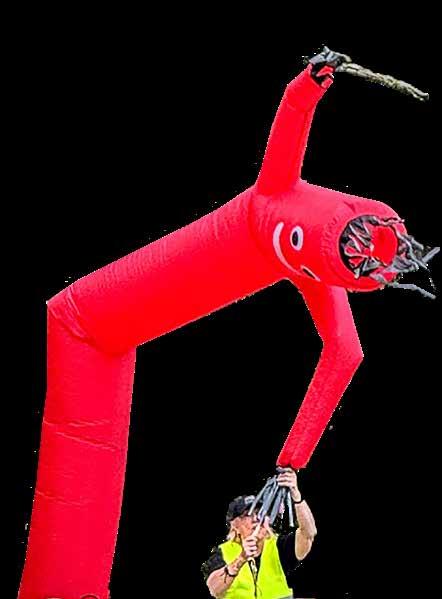
fully finished the first part of the sensory class. There was a second class that featured an inflatable horse and rider, the Muffler Man, and a drone for those who wanted a more challenging experience.
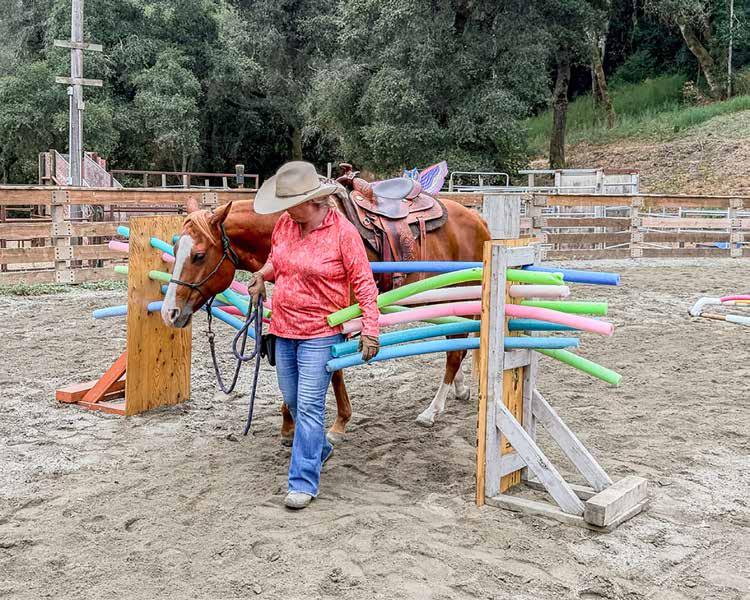
I want to recognize the obstacle clinic “guides”Christine Friis, Jenny Mize, Caprice Tennefoss, Kristi Eifert, Cherie Hammer, and Bob Rosenberg, who kept everyone safe.
Support for this event was provided by the Mounted Patrol Foundation and WHOA, whose financial contributions were appreciated to continue this enduring and historic event.
If you attended the 2025 clinic and are not a member of SMCHA, consider joining the club and supporting events like our Free Clinic. Come ride with us!
Lastly, thank you to Lee Reed for managing the registration desk and Karen Rowley who provided “goodies” for both horse and rider.
A quote from Chris Ellsworth—“The greatest teachers about riding, about life and all— are horses.”
By Rebekah Witter
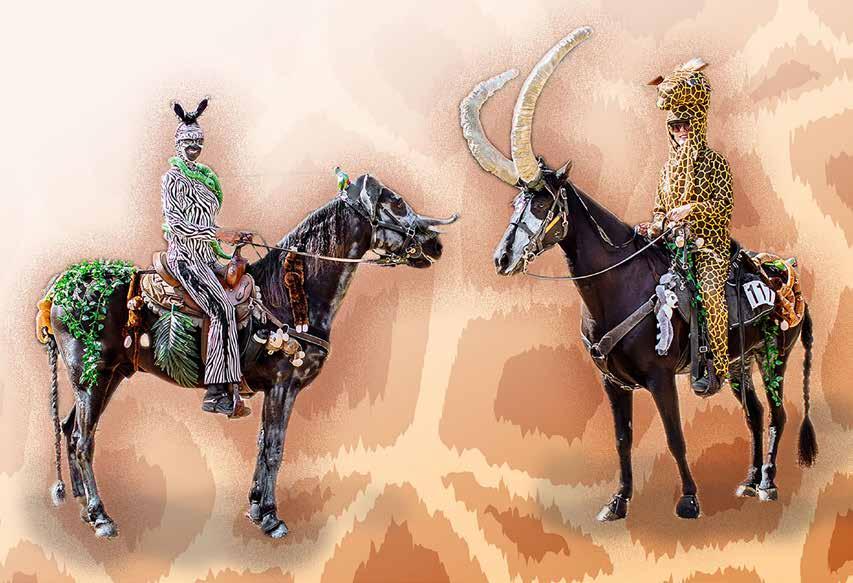
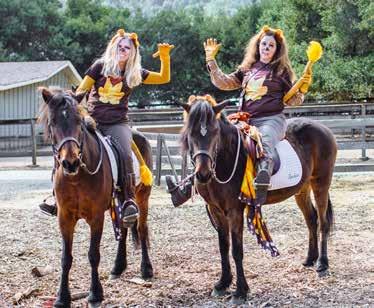
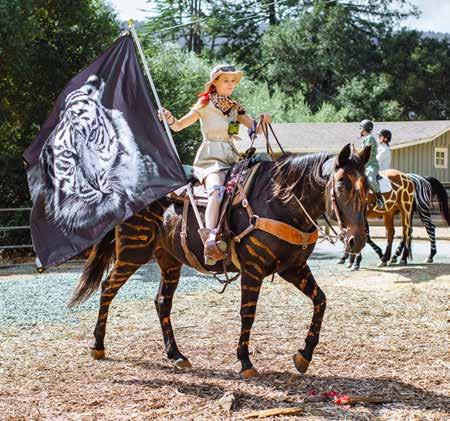
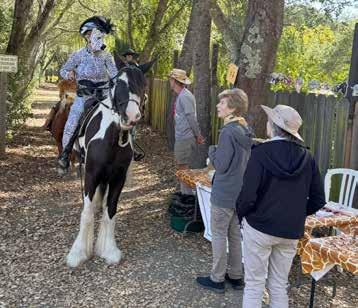
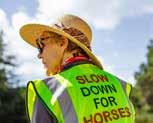
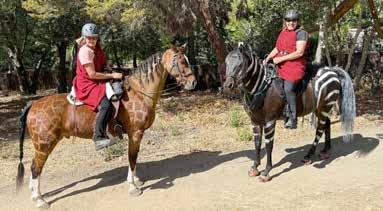
Once again, the weather gods smiled warmly as equestrians took exotic African mounts into the Wilds of Woodside for the 21st Day of the Horse celebration trek through town!
Reticulated Giraffes, Impalas, Leopards, Lions, slinky Pythons, Safari Guides, and a plethora of Zebras were spotted to the delight of all seeking the thrill of a most memorable photographic Safari!
The intrepid trekkers were able to visit 14 African-themed hospitality stations offering cookies, apple and carrot treats for all to enjoy - with a mid-safari oasis at Buck’s tie racks for sandwiches and lemonade fortification.
Then, wonderful rations were also available at the ‘End of the Trail” party sponsored by the Woodside Horse Park where safari-goers were also entertained with exciting demonstrations of Polo and the Woodside Vaulters, plus a marketplace with a variety of enticing and artistic vendors.
Continued on Page 25

By Marcy Rosenberg
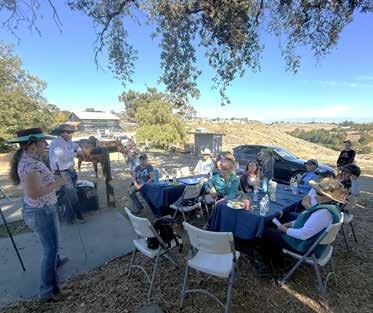
Twelve eager students and a few auditors gathered on Sunday, Nov. 2, at Portola Pastures to learn from trainers Lisa Calder and JP Dyal. The day started with a lovely breakfast of bagels and fruit provided by Gaby Marquez. JP and Lisa asked each student what their biggest challenge was with their horse. JP then discussed the nervous system of the horse and how the eyesight of the horse works with obstacles, and how our nervous system plays a role in the outcome. Lisa focused on how riders can use their breath to communicate with their horse when working on obstacles. The first session in the arena was groundwork to move the horses at the rider’s bidding.
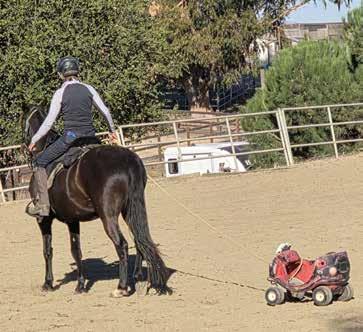
After a lovely lunch, riders saddled up and entered the arena. Horses were ridden around the arena to accustom themselves to the objects on the edges of the arena. Lisa brought out a wheeled kiddie car, and the horses followed it, then learned to come up next to it.
Continued on Page 14
Building Trust Continued from Page 13
After that fun, riders moved outside the arena to the obstacle area. The clinic had obstacles of every kind: a bridge, a teeter-totter, a giant ball, objects to drag, things to open and close, and things you would run into on a trail, like a water pit. Thanks to Gaby Marquez for her tremendous job organizing and feeding participants and to her helpers, Brianna Boscacci, Susan Jakobowski, and Cyrus.
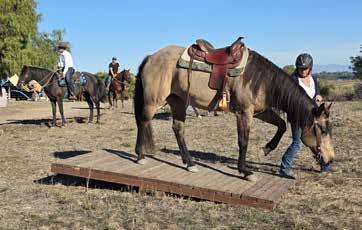
At left: Sharon leads Breezy over the teeter totter.

By Bob Garcia
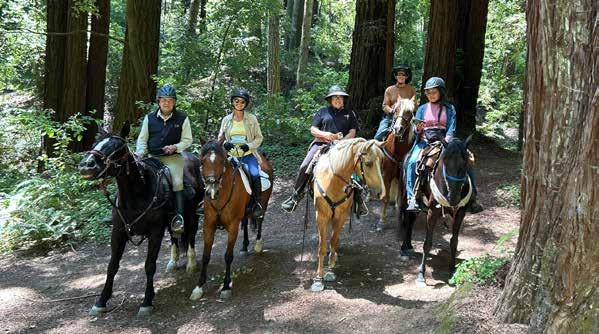
It's right in our backyard! In July, Los Viajeros campers enjoyed a three-day camp-out at the Santa Cruz County Horseman's Association equestrian showgrounds. The showgrounds in Santa Cruz are immediately adjacent to Henry Cowell Redwoods State Park. This was a unique campout for LV as we did a few things that we generally don't do! The first was a self-catered event. The ride leaders prepared a wonderful meal for each day, and this trip was an opportunity for LV to invite our four-legged canine friends to spend the weekend with us.
Because the SCCHA facility allows well-behaved, leashed dogs on the grounds, we decided to try a dog-friendly campout. The results were very positive; the dogs lived up to their side of the bargain by behaving. LV may consider doing this again.
The food was great, and the chefs did not disappoint! Friday featured Vilmos Palko's famous BBQ'ed lamb chop lollipops, tri-tip and chicken, Hildy Licht's green and potato salads, cookies by Hildy and Marcy Rosenberg. Saturday morning was Faye Brophy's turn to show off her culinary skills with a special French toast, bacon, fresh fruit, and OJ.
Saturday's dinner was Chef Bob's seafood cioppino, Marcy's lasagna, and Diane's Caesar salad. Dessert was brownies and ice cream.
The Santa Cruz County Horsemen's Association (SCCHA) Showground on Graham Hill Road has ample parking for dozens of horse trailers and campers. The Showgrounds are approximately 20 acres, with two competition arenas, 2 round pens, a large campground, separate day-use parking, and a spacious clubhouse overlooking the grounds. SCCHA has recently added two new features: Obstacle Trail Course and Trotting Tracks. Members and guests can enjoy bridges, gates, tires, logs, trenches, plus a covered wagon and cowboy curtain on the Trail Course. The Trotting Tracks include a very large figure-8 as well as an oval, allowing riders to circle the trail course on a sanded track
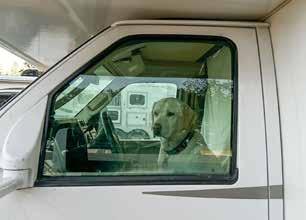
Are we there yet?
with room for many horses. SCCHA's campground offers 45 pipe-panel corrals, plenty of shade, plus unlimited access to trails in Henry Cowell State Park.
Bathrooms and showers are in the Clubhouse. The Clubhouse has a full kitchen as well as large seating areas both inside and outside. An outdoor kitchen is also available next to the group picnic area. Immediately adjacent in Henry Cowell State Park, the trails take riders through the deep redwoods, the San Lorenzo River Valley, and an ecologically unique "sand hills" ecosystem of stunted oaks and plants found nowhere else. There were some stunning stream crossings, and the trails could be easy or challenging at the rider's option. The Roaring Camp railroad steam trains echoing in the distance made for a ride that seemed to be set in the 1800s. Evenings were spent in camp or around the firepit—good friends, great conversation!
It is a great venue and resource for all equestrians. LV will be doing this ride again!
By Anna Stanek. Reprinted by permission from Horsey Hooves.
From stunning beaches to charming cities, Portugal is a beautiful country. This picturesque country also has some of the most exquisite horse breeds.
Portugal is home to a handful of beautiful horse breeds, many of which have long, rich histories and share close ties to Spain. These incredible horses are an important part of Portugal’s culture. The native Portugese horse breeds include the Lusitano, Sorraia, Alter Real, Garrano and Terceiria.
Here are the five stunning Portuguese horse breeds.
Lusitano
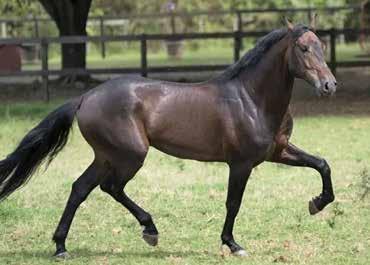
The pride of Portugal, the Lusitano is one of the earliest saddle breeds in the world. With a riding history tracing back 5,000 years, these majestic horses were once noble war mounts.
Since around 20,000-30,000 BC, horses have lived in the Iberian Peninsula. As civilizations rose and fell, these ancient horses were influenced by horses across the world. By 800 BC, the Iberian people relied on their horses as fierce war mounts.
Iberian horses soon become popular for bullfighting and were a favorite among the wealthy. As the art of classical dressage blossomed in Europe, they were considered the superior mount of choice. In Portugal, the breeding of these horses focused on dressage, cattle work, and mounted bullfighting. However, in Spain, breeding focused on a more flashy, elevated horse.
The Lusitano shares the same heritage as it Spanish counterpart, the Andalusian. In fact, until the 1960s, all Iberian horses in both Spain and Portugal were Andalusians. It wasn’t until 1966 that the Portuguese and Spanish stud books split, and the Portuguese strain of the Iberian horse became the Lusitano.
Powerful yet elegant, Lusitanos are a ‘baroque’ type of breed, with a well-muscled body, arched neck, and powerful hindquarters. They are famous for their intelligence and bravery, allowing them to excel at many things such as dressage, driving, working equitation, and much more.
Lustanios generally stand around 15-16 hands tall and can come in any solid color.
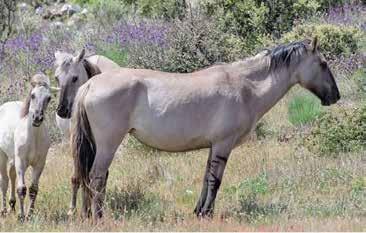
Named after the Sorraia river which flows in the lowlands of Spain, the Sorraia is an ancient horse breed. They are direct descendants of the indigenous South Iberian wild horse of Portugal. Though their true origins are unknown, there are many theories as to how these unique horses came to be. Images of horses with a distinct likeness to the Sorraia have been discovered in Palaeolithic art. Scientists are currently studying these horses to see their relation to other wild horse breeds.
It was believed that the Sorraia breed was extinct until 1920 when zoologist and paleontologist Dr. Ruy d’Andrade encountered the horses while on a hunting trip in the Portuguese lowlands. After his finding, d’Andrade began a breeding program with five stallions and seven mares. While closely studying the horses, it became clear they played a large role in the development of the Lusitano and Andalusian.
Today, there are only around 200 Sorraia horses. These hardy horses have a convex profile, deep chest, and stout legs. They stand around 14 hands tall and are dun or grulla in color with primitive markings.
The Alter Real is a specific strain of Lusitano horses. Developed in the 18th century, these special horses were a favorite among royalty. The word ‘Real’ translates to royalty in Portuguese and ‘Alter’ refers to Altér do Chão, a town in the Alentejo province of Portugal. In 1748, the House of Braganza in Villa do Portel developed the Alter Real horse as a carriage and classic equitation horse for the Royal Stables at Lisbon.
In 1756, 300 Andulisian mares were introduced into the breeding stock. When Napoleon invaded Spain in the early 19th century, Arabian, Thoroughbred, Spanish-Norman, and Hanoverian blood was introduced into the breed. However, this led to the breed deteriorating, which led to the introduction of Andalusian blood again. After the dissolution of the Portuguese monarchy in 1910, the breeds numbers fell once again. Fortunately, Dr. Ruy d’Andrade stepped up to preserve the Alter Real and save them from extinction. Today, all Alter Real horses come from the Alter Real State Stud.
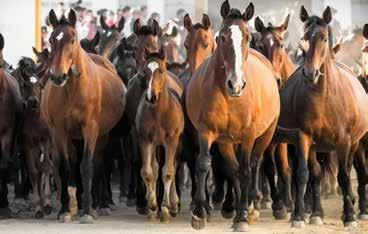
The Portuguese School of Equestrian Art exclusively uses Alter Real horses for Classical Riding. Today, these elegant horses are a favorite for dressage and driving. They have a build similar to Lusitanos, though they have a straight profile, smaller heads, and tend to be more animated. Alter Real horses are either bay or brown in color and stand around 15-17 hands tall.
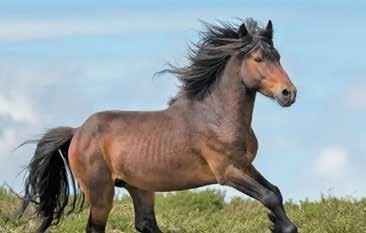
An ancient breed, the Garrano pony has remained largely unchanged for thousands of years. In fact, they are believed to be the horses depicted in Northern Iberian Paleolithic cave paintings.
The Garrano has long held a close relationship with the people of the Minho region. The people relied on these hardy ponies for farm work and transportation through the steep local terrain. Throughout history, the Portuguese Army has even utilized Garrano ponies, including in WWII.
For centuries, they have lived in wild and semi-wild herds. Garrano ponies have influenced other breeds including the Galicia Mountain Pony and Cirillo. In the 20th century, Arabian blood was introduced into the ponies.
Today, most Garrano ponies live in the wild in the mountainous regions of the Minho and Trás-dos-Montes of northern Portugal. They have a thick neck, muscular body, and strong hooves. They generally stand around 13 hands tall and are often bay, brown, dark chestnut, or grey.
Native to the Terceira island of the Azores Islands in Portugal, the Terceira Pony is a newly recognized breed. Originally known as
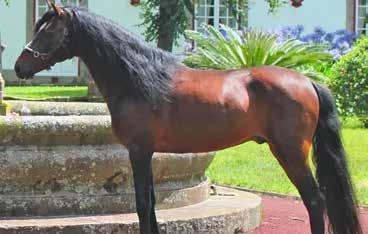
Azores horses, they were an important part of the colonization of the island.
Though not much is known about their background, it is believed that Alter Real and Lusitano horses imported to the island during British colonization played a role in their development. However, despite this, there is very little formal documentation and the analysis of the breed is still unclear.
Today, Terceira ponies are popular tourist attractions on the islands. The locals also use them for driving and riding. Their sturdy builds have allowed them to adapt to island living.
Terceira ponies have a sturdy build with high-spirited yet reliable temperaments. They generally stand around 11-12 hands tall and are often bay in color. Though they are pony size, their conformation is similar to that of a lean, athletic horse.

By Caroline Mameesh
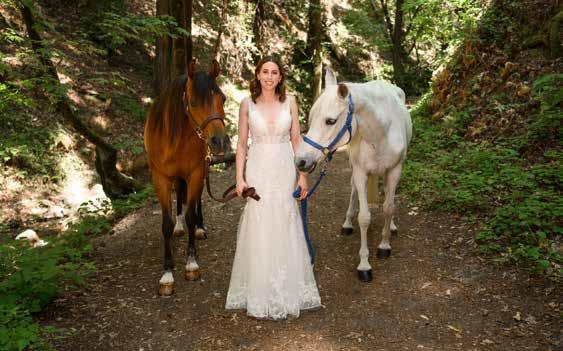
When I was a little girl – and this is largely still true today – only one topic occupied my mind: horses. I spent hours working at the barn every day, anything that came “horseified” was mine (think pens, binders, pajamas, sweatshirts, you name it), and, although I was not artistically inclined, I did perfect a pretty decent horse doodle with which I could fill the edges of my notebooks during class. With the amount of brain space horses took up, it didn’t leave time for much else, let alone dreaming about my wedding or future husband. Who cares? I had horses to ride! But, there was one thing I’d known for certain since I could conceive of what a wedding was: I would ride a horse down the aisle. Fast forward to the summer of 2024. After being engaged for four years, my wedding date was finally on the horizon: June 6th, 2025. It was time to get to work making a lifelong dream come true. It was an adventure that I didn’t know if I could pull off: we had a horse to train, a wedding dress to possibly alter or add on to, a sidesaddle to find, and many neigh-sayers. So, what happened?
Step one: secure the equine. Thankfully, my best friend and Matron of Honor, Elizabeth Ouellette, has a pretty nifty little Arabian named Cantaro whom many of you know. I’d been riding him for five years and was deeply in tune with him—still am!—and I knew he could do it. Elizabeth had practically been prepping him for this already with all her clicker training. He could cha-cha, fist bump, stand on stumps, and wear a hula hoop, so certainly he could walk a bride down a crowded wedding aisle at a busy wedding venue with loud music, flowers, bright colors, and a long dress over his back… right? Next up, secure a saddle. My chosen wedding dress style was form-fitting with a long train— because why make this easy?— which, for those of you who didn’t see the mental picture, meant I could not separate my legs. This meant my regular English saddle was out because there was no way to sit astride a horse. I posted on Facebook asking if anyone had a sidesaddle I could
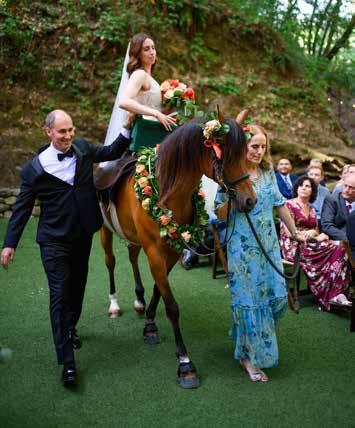
borrow. The response was overwhelming, but although many different people thought it was an awesome idea, they hated to break it to me that even with a sidesaddle, you have to be able to straddle a little. There’s a block you place your right leg over, so your legs do ultimately separate. Who knew?

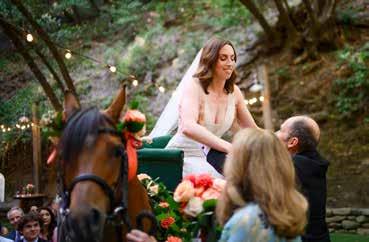
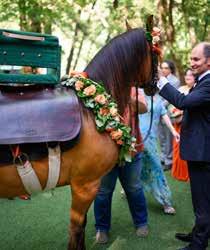
Well, that’s it; dream over, right? Not quite! I was fortunate enough to meet Anita Riesinger. An avid lover of sidesaddles, a passion passed down from her mom, Anita knew more about sidesaddles than I knew such knowledge could even exist. She was the one person to tell me: “If you want it badly enough, we’ll find a way,” and so my vigor was reinstated.
Elizabeth and I went to her home one warm evening to try sidesaddles. She had one great option that was still rideable and fit me—this amalgamation of leather and stitching from decades ago held my dream in its clutches! I, as most traditional riders might be, was very uneasy about the idea of sitting over the left side of the horse’s body. But this was my dream, so I hopped on her equine motion trainer anyway to try out this whole sidesaddle thing. To my surprise, it wasn’t too bad! So we took it to the barn and tried it on my noble steed. For those who don’t know, Cantaro drew the short straw in life and is, although our very special boy, extremely sensitive to life. He gets itchy, uncomfortable, and out of sorts easily. Turns out he hated this sidesaddle: it bridged on his back and he was not having it (understandably).
Crestfallen, I resigned myself to simply walking Cantaro down the aisle with me instead, but Anita reminded me not to give up and got to work on a solution. She reached out to her vast sidesaddle network and got connected with Jacquellyn Holly, owner of Equine Jeweled Designs and a VP at the International Side Saddle Organization. In her free time, Jacquellyn had recently designed—from scratch—a planchette, the precursor to the sidesaddle, when a woman spreading her legs that tiny bit to ride sidesaddle was considered improper (gasp!). The beauty of a planchette is that you sit on it almost like a sideways couch, which means no leg separation is necessary. It would definitely work for my dress, but would it work for my horse? Jacquellyn was incredibly generous and offered to ship the saddle to us to try, but she warned us: she’d designed it to fit mules. Shoot!
Before having Jacquellyn ship the massive planchette from Idaho to California, I dropped everything I was doing that day—at this point, being about two months out from my wedding, I was running against the clock— and ran to take tracings of Cantaro’s back. I dropped those off with Anita, who shared them with Jacquellyn, and, amazingly, she said: “The planchette should fit!” Who knew that our wide, flat-backed, witherless Arabian’s shape would come in handy like that? If it fits a mule, it fits Cantaro! The planchette arrives, and now it’s time to practice. I was skeptical that it would actually fit Cantaro, but it did. After a few minutes of: “Whoa, why does this feel so weird!?”, he settled down and tolerated the saddle well. Elizabeth brought a huge poofy white skirt for me to wear—which she’d already spent months getting him used
to—to mimic my wedding dress. Breath held, I donned the skirt and got on Cantaro, Elizabeth clutching his lead rope for dear life.
We took one step, then another, Cantaro figuring out how to move with all my weight on one side. Slowly, he figured it out. But then… the saddle started slipping, since all my weight was on one side. I was heading straight for the dirt. Panicked, I dismounted immediately, and looked at Anita in terror: Is Cantaro TOO flat-backed?
Time to get creative (notice a trend?). We needed more hands, so it was time to recruit my parents, who’d planned to walk alongside Cantaro anyway and take me down the aisle. Their love and support allowed my passion for horses to flourish, but nobody knew where this passion came from. All that’s to say: they don’t have a clue about horses. So yes, let’s have them actively handle a mildly spazzy Arabian wearing a weird saddle with a bride on his back… what could go wrong? But they were up for the challenge.
This challenge was two-fold: one of them had to lead Cantaro, and the other had to grip the top of the planchette to stop me from sliding to my demise. Mom took up the challenge of leading the horse, and Dad gripped the planchette. We got to practicing, walking up and down the Webb driveway, devising silent signals to communicate to my dad: “HELP!!! I’m slipping!” that would not alert onlookers on the big day. Mom worked on teaching Cantaro to walk slowly so my time down the aisle would take longer than five seconds. Everything started to pull together.
We’d already taken Cantaro and his pasture buddy and emotional support horse, Basia the bombproof Arabian, to the venue a couple of times, and they were comfortable with it. The last step was to ride Cantaro down the aisle in a practice run that mirrored the actual day as much as we could. We did that two weeks ahead of time, and it went well! Might we actually pull this off?
Miraculously, my ride down the aisle went off without a hitch. Elizabeth continued to trust her horse and me, never once wavering (though shedding many tears); Jenny Mize got Cantaro and Basia cleaned up, trailered over, and ready for a prompt 5 p.m. start time; Anita got Cantaro saddled and comfortable; my parents were practiced and executed their roles flawlessly; and I sat up there feeling a blend of terror (it’s scarier when you’re up there in your real dress on the real day!) and sheer glee for having realized my childhood dream of over 20 years. Clutching onto my bouquet, I took a breath, smiled at my supportive team, and waited for my cue.
June 6th, 2025 went by in a flash. It was one of the highlights of my life, and I’ve never danced and laughed so much in one evening. I pulled off something that so many people deemed impossible, but this experience reinforced a critical lesson for me: with a team of people who believe in you, and an unwavering belief in yourself, you can do just about anything.
My deepest gratitude to Elizabeth Ouellette, Anita Riesinger, Jenny Mize, Liz Carey, my parents, and Jacquellyn Holly, without whom this would not have been possible.
By Chris Friis

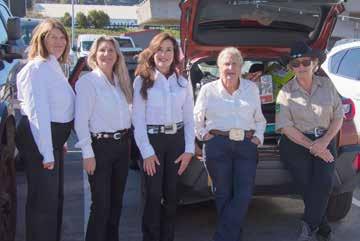
On October 4th, the Cow Palace proudly hosted the third annual Women of Rodeo event, a celebration that not only highlighted the incredibly talented women athletes who competed but also acknowledged the invaluable contributions of women equestrians to the Cow Palace's rich history. The opening ceremonies were particularly moving, as the Cow Palace honored "Equestrian Women First Responders." This heartfelt tribute included 41 remarkable women from seven distinguished agencies within California. Some of these extraordinary women rode their steady horses with pride, while others unfurled the Giant American flag as the National Anthem was beautifully sung.
Among the honorees were some of our local heroes, including the San Mateo County Sheriff's Mounted Search and Rescue (MSAR) unit, the San Mateo County Volunteer Horse Patrol (VHP), and the San Mateo County Large Animal Evacuation Group (LAEG). Additionally honored were representatives from the Alameda County Sheriff's Mounted Posse, the San Joaquin County Sheriff's Mounted Unit, Stockton Police Mounted Unit, and the Napa County Sheriff's Mounted Posse.
These proud women belong to elite units that are specially trained and certified in emergency response throughout California. Their expertise supports both urban and rural communities in various roles such as mounted search and rescue, patrol, law enforce-
ment, emergency evacuation services, community events, ceremonial gatherings, and parades. Through these activities, they foster connections and promote safety within our communities. These women truly serve as the Guardians of our communities, and we are grateful for their unwavering dedication and service. I'd like to extend my gratitude to the San Mateo County Horsemen's Association for their contribution to creating such a generous hospitality table for all the opening ceremony participants. SMCHA's commitment to our horse community is invaluable, and we are so grateful for their support. Additionally, I would like to express my sincere appreciation to Joseph Troche for his contribution as the photographer for the day/evening. His talent and hard work captured the spirit of our event, and we are truly thankful for him chasing us around all day! And of course, a big thank you to Jeff Roth, formerly of the SFPD Mounted Unit. Jeff’s invaluable experience and knowledge were instrumental in ensuring the success of our portion of the opening ceremonies.
For more information, feel free to contact ChristineFriis@Outlook.com

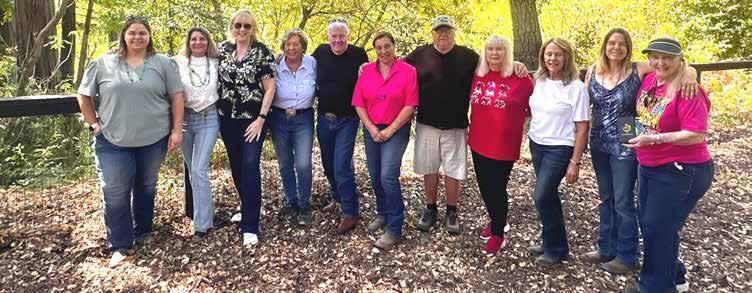
One of SMCHA’s favorite events is the Honoring of our Past Presidents. This long-standing tradition is one we are always thrilled to continue, and this year was no exception.
The celebration took place among the beautiful redwood trees in Woodside, at the home of Carin Zeller. Despite recently suffering an injury that required over a week in the hospital, Carin returned home just a few days before the event and transformed her home into a stunning Mardi Gras festival!
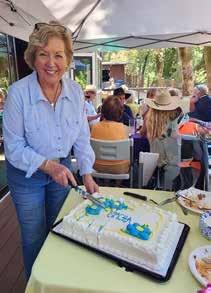
We had a great turnout of Presidents this year—both past and current. In attendance were Jenny Mize, Sharon Butler, Chris Friis, Cheryl Basin, Bill Ashton, Gaby Marquez, Bruce Baker, Doris Lantz, Nancy Kouchekey, Deborah Vasquez, and Noel Moody. This amazing group has played such an integral role in shaping SMCHA into what it is today. We thank you all for your hard work and dedication over the years!
This year, 15 riders enjoyed a beautiful trail ride through the Woodside and Portola Valley trails before joining the festivities. A big thank-you goes out to our ride leads, Alison White and Jiji Mellon, for safely guiding everyone back to continue the celebration.
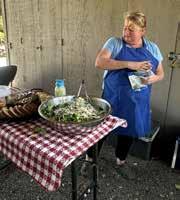
The luncheon was catered by Cowboy Paella, and Jennifer and her daughter cooked up a delicious feast of paella, salad, and bread that everyone loved. Big shout-out to you ladies—if you’d like to hire them for your next event, call 209-482-5914—you won’t be disappointed!
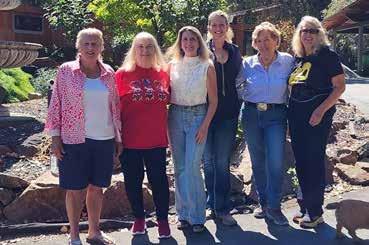
A heartfelt thank you also goes out to the committee who made this special afternoon possible. Carey Oberti, our event chair, did an outstanding job leading the team and ensuring everything came together perfectly. Once again, a huge thank you to Carin for opening your home to SMCHA and decorating it so beautifully in festive Mardi Gras colors.
Our wonderful “worker bees” this year were Adeline Forrest, Cheryl Basin, and Sharon Butler—thank you for all your help and hard work!
We’d love to hear your ideas for next year’s President’s Ride locations, so please reach out with your suggestions.
Happy trails, and stay safe!
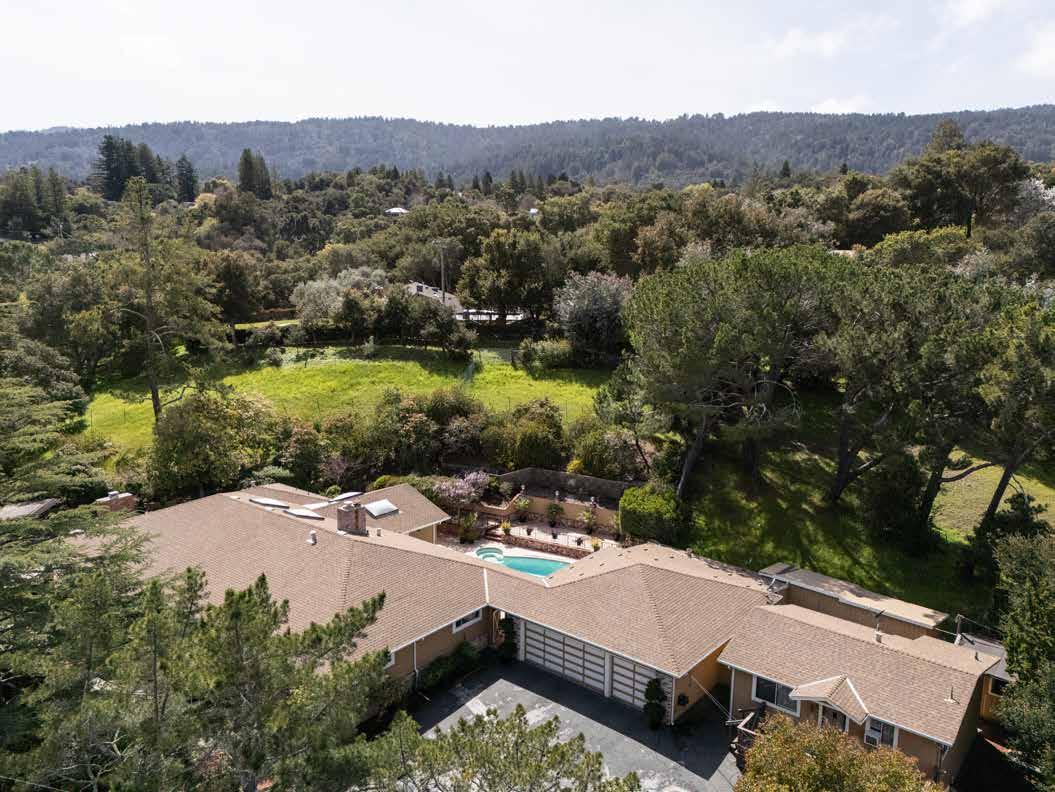
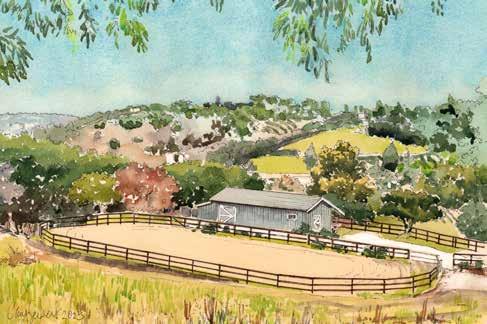
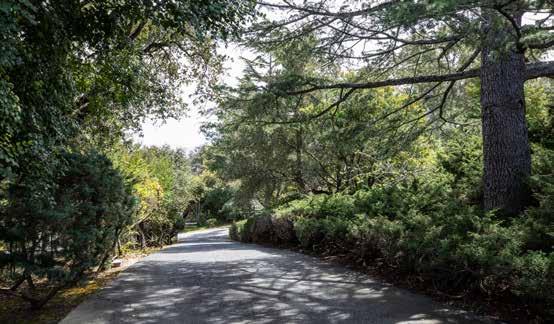

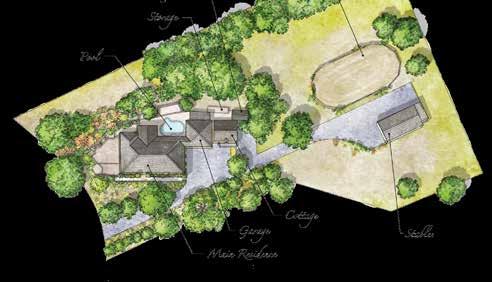
We were determined to find the perfect buyer for this 3-acre property in the heart of Woodside’s Horse Country.
With a strong marketing strategy, expert staging, and relentless presentation, we achieved success.
Custom floor plans, aerial renderings, videos, equestrian magazine ads, and branded open houses.
Partnered with GiGi Park for world-class staging, transforming the home and barn into showpieces.
Constantly evaluated competition and pricing to ensure maximum value.
Weekly open houses, refreshed online photos, and creative outreach until the right buyer emerged.
Sold to a local equestrian family who valued the acreage, lifestyle, and future potential.
OUR PROMISE
We deliver trust, creativity, and disciplined marketing to every client – by hand, by heart, in person, on purpose.
It would be a privilege to serve you and your real estate needs.




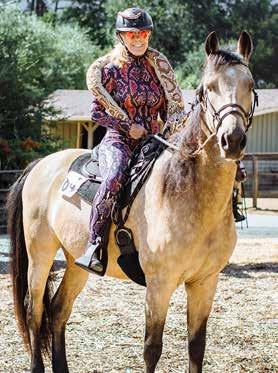
Sunday’s Horse Fair saw record numbers as families filled Town Center to learn more about the joys of horses and local resources for horse owners. As usual, the pony rides took top attendance along with horseshoe-cookie decorating, a barrel racing contest, face-painting, and carrot cake for all.
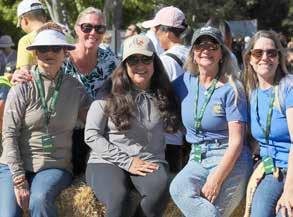
Day of the Horse’s annual multi-day celebration is Woodside’s largest and most complex community event that would not happen without a multitude of enthusiastic volunteers, generous sponsors, supportive vendors, local exhibitors and community service support that make it possible.
So, a huge ‘Asante kwa washiriki na wachangiaji wote’ (Thank you to all participants and contributors) for a fabulously successful Safari Into The Wild! DOTH Continued from Page 11
By Pam Daley
Jennifer Rice has headed up Equine Balance in Motion, an equine bodywork business. She received her certification in Equine Bodywork from the Masterson Method in 2019. After completing the certification, Jennifer served as a Mentor and Coach for the Masterson Method.
She owns Penny, a Quarter Horse mare at Portola Pastures, and practices her bodywork with a multitude of horses ranging from paddock pals to eventing and show horses. While focusing locally on the Peninsula, Jennifer has worked with clients throughout the Bay Area and is available to travel by arrangement. She was born and raised in Woodside, where she participated in the Woodside Pony Club as a junior rider and showed Hunter-Jumpers throughout high school.
Jennifer's work incorporates not only the Masterson Method but
also additional modalities, including acupressure, Cranial-Sacral techniques, Reiki/energy work, traditional massage, and Tellington T-Touch. These techniques are non-invasive and are done working below the horse's 'brace' response.
This helps the horse feel safe and allows it to soften into the work. Jennifer's goal is to assist the horse to move into the parasympathetic nervous system (the relaxed state vs. the sympathetic or 'fight/flight/freeze' state), allowing healing to take place. She encourages deep relaxation for the horse's body to soften and release, promoting increased circulation and enervation. Horses often respond with slower, deeper breathing, softening of the eyes, lowered heads, snorts, licking, chewing, yawning, and dropping of each hip. Occasionally, horses lie down and sleep. Once a horse has been able to
Continued on Page 36
Hope you are enjoying The Water Trough (a rider’s version of the Water Cooler!). Let us know what’s new and exciting in your lives. Let’s bring our community together by sharing news, fun facts and information! Got something to share? Send your info to me, Elizabeth Ouellette @ elizabetho@outlook.com
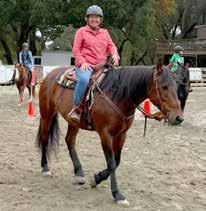
Meet Bailey a lovely Quarter Horse/Draft cross, about 10 years old. Thanks to a referral from Joan McLaren, Cheryl connected with the owner in Paso Robles, and with Odette Riegman’s approval, Bailey officially joined the family!
Cheryl is now living her dream with this wonderful mare—calm, steady, and completely unfazed by the usual Woodside chaos.
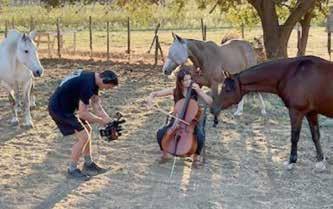
In collaboration with Dr. Beverley Kane, filmmaker and horseman Sean Fee brought his documentary Rekindle to Webb Ranch and Stanford University to explore the timeless bond between humans, horses, and nature. In one powerful scene, a Stanford Symphony cellist performs among horses, creating a contemplative moment that reflects the film’s mission to reconnect us with the natural world through harmony and presence.
Horse Tricks 101 isn’t just about teaching your horse tricks—it’s about transforming your relationship. Through fun, reward-based training, you’ll unlock deeper trust, confidence, and connection with your horse while keeping every session playful and stress-free. With step-by-step lessons, inspiring videos, and a supportive community, Horse Tricks 101 helps you turn ordinary moments into magic and create the partnership you’ve always dreamed of. Learn more: www.HorseTricks101.com
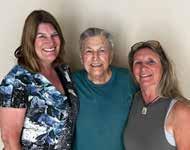
Susan Jakubowski and Sharon Butler visited Guido Nannini to wish him well on his big move from Redwood City to Idaho, where he’ll be living with his son and daughter-in-law and will be closer to his daughter. Guido has been a long-time and valued member of SMCHA, and we will miss him dearly. Wishing Guido, Paul, and Adrianna all the best as you settle into your new home in beautiful Idaho. May this next chapter be filled with happiness, comfort, and new adventures!
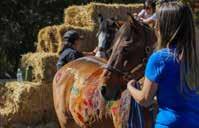
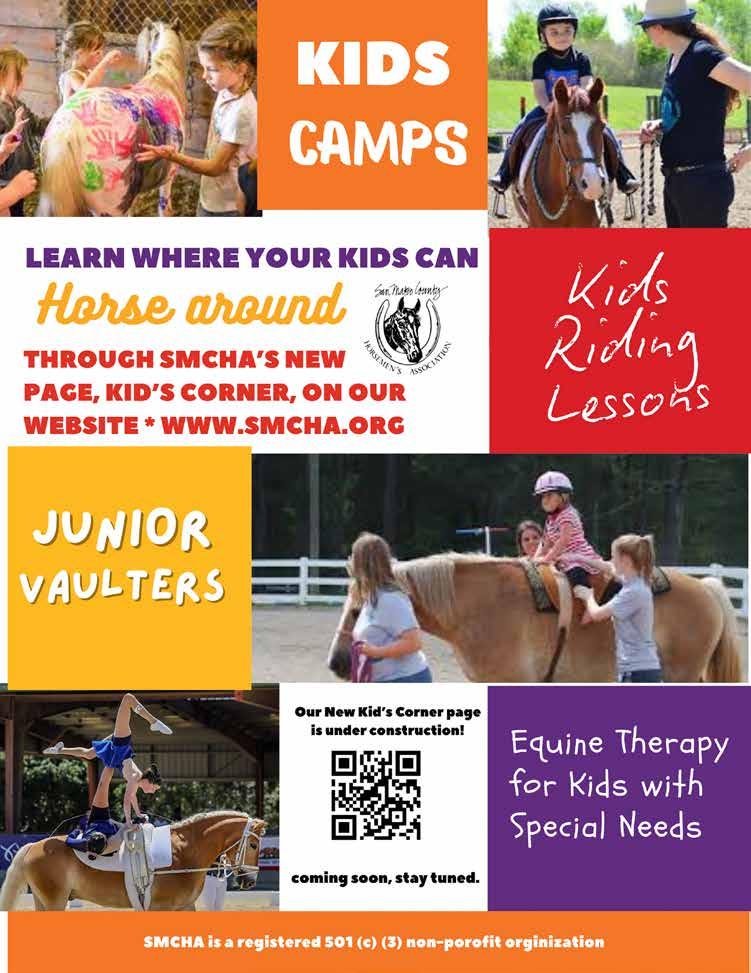
Once again, Snickers patiently stood while kids painted his fur with non-toxic horse paint at SMCHA’s booth at Day of the Horse. A big thank you to Kristen Olsen and Laura Stevens from Heather Hill Riding Academy for letting us borrow Snickers for this fun event!
By Jill Tobia, Vice President, Wild Horse Sanctuary Board of Directors
Nestled in the serene foothills of Northern California lies a haven for one of America's most iconic symbols of freedom: wild horses. The Wild Horse Sanctuary in Shingletown, California, is a place where these majestic creatures roam free, protected and cherished. For more than four decades, this sanctuary has been committed to preserving the legacy of America's wild horses, offering visitors a unique opportunity to connect with nature and witness the beauty of these animals up close.
The Wild Horse Sanctuary was founded in 1978 with a mission to provide a safe environment for wild horses that have been displaced from their natural habitats. Over the years, encroaching development and land-use conflicts have threatened wild horse populations, leading to their removal from public lands. The Wild Horse Sanctuary stepped in to offer these horses a new lease on life. Spanning over 5,000 acres of rolling hills, meadows, and forests, the Sanctuary provides the horses with ample space to roam freely, mimicking the landscapes they once called home.
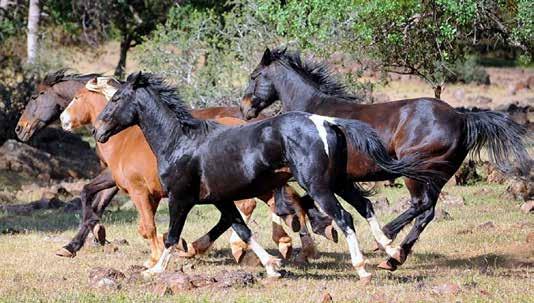
Geldings on the go!
Visitors to the Wild Horse Sanctuary are often struck by the sight of these magnificent creatures living as nature intended. The Sanctuary is home to almost 300 wild horses and burros, each with their own story. Many of the animals are rescued from government roundups or other situations that threatened their survival. Here, they live out their days free from human interference, forming herds and living as they would in the wild.
While the Sanctuary offers tranquility and breathtaking views, it's also a fantastic destination for group adventures. Families looking for unique bonding experiences can enjoy guided tours by day and night around the campfire, giving everyone—from young children to grandparents—a chance to connect with nature and learn about the history of wild horses. The Sanctuary also welcomes corporate groups for retreats, providing a peaceful setting for team-building activities and a refreshing break from the office grind. The serene environment fosters creativity, collaboration, and relaxation, making it a great choice for companies seeking to re-energize their teams.
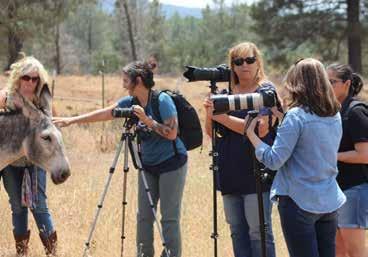
For youth groups like Boy Scouts and Girl Scouts, the Sanctuary is an ideal destination to learn about wildlife conservation and environmental stewardship. The hands-on educational programs allow kids to interact with the horses safely while understanding the importance of protecting these animals and their habitats. School field trips are also popular, offering students an opportunity to explore the Sanctuary's vast landscape, observe the horses in their natural environment, and engage in interactive lessons about ecology and animal welfare. For horsemen and women, the Sanctuary occasionally hosts horse clinics, where participants can deepen their understanding of horse behavior, care, and riding techniques. Photography enthusiasts will also find inspiration here, as the Sanctuary offers photography clinics that provide tips and opportunities to capture stunning images of the
horses in their element—whether they're grazing in open meadows or galloping across a picturesque landscape.
One of the most anticipated events at the Wild Horse Sanctuary is its annual open house. This free, special event invites the public to celebrate the Sanctuary's mission, meet the horses, and learn more about the people dedicated to their care. The open house features wild horse walks, live demonstrations, educational talks, music, a vendor fair, and fun activities for visitors of all ages, making it the perfect time to experience everything the Sanctuary has to offer.
The Wild Horse Sanctuary is deeply committed to educating the public about the importance of preserving wild horses and their habitats. Wild horses are often misunderstood, and there is ongoing debate about how best to manage their populations. The Wild Horse Sanctuary advocates for humane solutions and raises awareness
Continued on Page 33



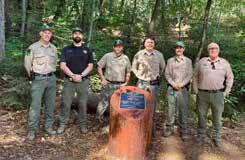


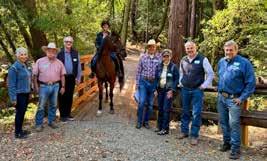
The Greer Road Bridge serves as a crucial connection for equestrians, linking the Kings Mountain Trail to Huddart Park. Unfortunately, erosion caused by creek flow over the past two years has severely compromised the bridge’s footings. We raised funds from the community to fund construction of a new 45-foot bridge with reinforced footings. Construction began on June 16 and was completed in July.
The beloved Bear Creek Stables were at risk of closing, but thanks to Friends of Bear Creek Stables and a dedicated group of volunteers working with Midpen, a plan is now in place to preserve, improve, and expand them for the future. The Mounted Patrol Foundation (MPF) has already donated $10,000 and is helping raise further funds by matching donations, up to $10,000, from outside donors—a wonderful opportunity to double your impact and help make this vision a reality. Your support truly makes a difference!
Please donate at www.MountedPatrolFoundation.org to take advantage of the matching gift. Learn more about the project at www.FriendsofBearCreekStables.org.
Through our Horses for Heroes program, military veterans referred by the Palo Alto VA enjoy trail rides and lessons at Jasper Ridge Farm. These rides provide a meaningful way for veterans to connect with nature and experience the therapeutic benefits of working with horses. Your support can make a real impact.
We’re honored to host horse riding activities for youth from the Sheriff’s Activity League. For many participants, it’s their first time ever on a horse—an unforgettable experience! Visit our website to see their photos and read their stories.
You can donate for either of these projects at: www.mountedpatrolfoundation.org/DonateNow.htm
Learn more about our grant history or donate at
A 501 (c)(3) organization supporting and promoting equestrian activities www.MountedPatrolFoundation.org
Continued from Page 31
about the value of these animals as part of America's heritage. By visiting the Sanctuary, guests not only enjoy the beauty of nature but also contribute to a cause that ensures the survival of wild horses for generations to come.
Whether you're planning a family getaway, a corporate retreat, or a memorable field trip, the Wild Horse Sanctuary in Shingletown offers something for everyone. Learn more at www.wildhorsesanctuary. org. Schedule a tour or inquire about opportunities for a customized experience by calling 530-474-5770 or emailing info@wildhorsesanctuary.org


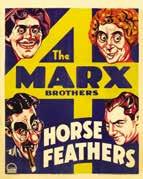
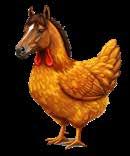
Horsefeathers! – An exclamation of disbelief or derision.
The word horsefeathers—often used to mean nonsense—was coined in the 1920s by cartoonist Billy DeBeck. He dropped it into his popular Barney Google comic strip as a lighthearted expletive.
The humor, of course, lies in the impossibility: horses don’t have feathers! Much like saying “when pigs fly,” the phrase was an absurd but playful way to call something ridiculous.
It soon caught on in everyday speech, even lending its name to the Marx Brothers’ 1932 comedy Horse Feathers


hard to establish and remedy, “treatments” are largely unable to affect the root of the problem. In some cases, the behavior becomes so deeply ingrained that it persists even after the primary cause has been removed or addressed.
Physical preventions for cribbing include the use of a cribbing collar, strap, or muzzle. It is important to ensure that these devices fit properly to avoid rubbing on the head and face.
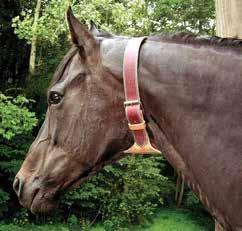
Removal of horizontal surfaces that horses might crib on, use of electric wire or fence, or the application of unpleasant tasting substances on surfaces are also common approaches. It has been suggested, though, that cribbing is a type of coping mechanism, so being prevented from performing the behavior may create more stress. Horses often exhibit more frequent cribbing activity when the restriction is removed. Blocking the behavior without providing an alternative outlet may result in frustration for the horse.
Surgical approaches have been developed as more permanent solutions to cribbing, with inconsistent rates of success. The
modified Forssell’s procedure was developed to remove certain muscles in the neck, with variable success. Surgical placement of “crib rings”, small steel rings that are implanted into the horses’ gums between the upper teeth are reportedly effective at decreasing cribbing, but long-term effectiveness is uncertain as loss or damage of the rings leads to a return to the behavior. The application of these approaches has also raised welfare concerns. Pharmacological treatments have reportedly been successful in treating stereotypic behaviors, but additional research on potential side effects and toxicity of specific agents is required. These pharmacological agents also must be administered regularly, which increases labor and costs.
Recommended management approaches, either alone or in combination with other treatment strategies, include increasing forage and reducing concentrate in the diet, providing more turnout time and increased social interaction. Ultimately, a combination of approaches tailored to individual horses may be the most successful for addressing the behavior.
Since there is no consensus on what exactly causes cribbing, it is difficult to know what to do to prevent it. Prevention for some horses may not be fully possible. Importantly, underlying medical conditions such as gastric ulcers should be identified and treated. Efforts to provide a calm, low stress environment with increased turnout and forage intake may be beneficial. If possible, provide social contact with other horses. Reduce the amount of concentrate and/or sweet feed in the diet. In young horses, it is important to institute management changes as soon as the behavior is observed to prevent it from becoming a habit.
move into the parasympathetic nervous system, they will seek it again because relaxation feels good! They learn to access the feeling more easily.
Jennifer has a deep compassion for horses and believes in bodywork that promotes overall health. Her efforts help support improved circulation and reset the nervous system, as outlined in the polyvagal theory. Many owners of clients report increased softness, more confidence and steadier demeanor.
Jennifer Rice
Equine Balance in Motion
Equinebalanceinmotion@gmail.com 408-439-0831
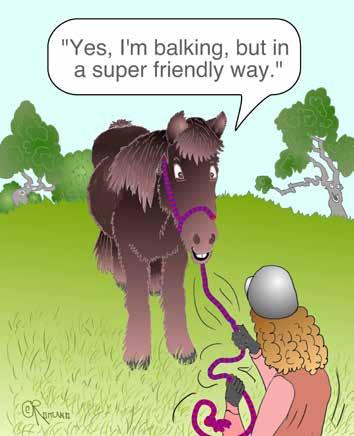
At NCEFT, horses are more than animals—they’re teachers, guides, and mirrors. NCEFT is partnering with Sequoia Union High School District to provide equine-assisted mental health programs to at-risk youth populations to help them build confidence, resilience, and hope. In these workshops, students step into a world where challenges like anxiety, depression, and trauma can be explored in a safe, supportive environment.
Grooming a horse. Leading it through an obstacle course. Feeling its strength and calm. These handson experiences spark self-discovery and connection. Students practice mindfulness, journaling, and therapeutic art while forming deep, authentic bonds with other students and our herd. Trust, empathy, and responsibility aren’t just lessons—they’re lived experiences at NCEFT.
Each workshop blends human psychology, horse behavior, and the restorative power of the outdoors – giving participants practical tools to manage emotions, communicate more effectively, and cope with life’s challenges. Each session provides young people the opportunity to uncover their strengths and imagine new possibilities for a brighter future.
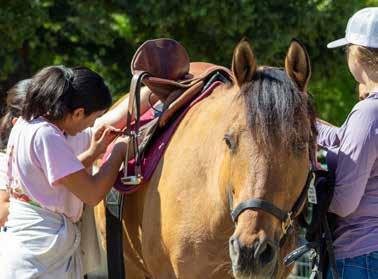
Did you know that NCEFT is a non-profit organization that depends on the generosity of donors like you? Please support our winter campaign goal of $250,000 with a gift that will help sustain our life-changing programs. Visit nceft.org to learn more and donate!


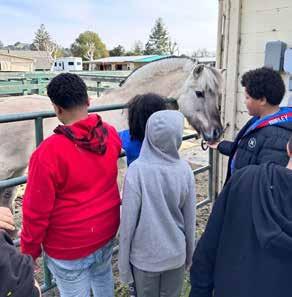
"It was one of the best experiences in my life because I got to touch, be with and ride a horse for the first time. This program is great for my self-esteem and helped me relax. I am very thankful for the program and for having the opportunity to participate and so thankful for the horses.” -- High School Student

Instructions: Fill in the blanks in the story at right with the requested types of words before reading the story aloud. The sillier, the better!
“A Day at the Barn” Adjective: ____________ 1. Animal: ____________ 2. Verb ending in -ing: ____________ 3. Noun: ____________ 4. Adjective: ____________ 5. Verb: ____________ 6. Type of food: ____________ 7. Sound: ____________ 8. Emotion: ____________ 9. Celebrity name: ____________ 10. Type of weather: ____________ 11. Body part (plural): ____________ 12. Exclamation: ____________ 13. Adverb: ____________ 14. Place: ____________
It was a (1) morning at the barn, and my horse was acting like a (2).
Before I could even start (3), he grabbed my (4) and tossed it into the mud.
“What a (5) creature,” I sighed, trying to (6) him back into the stall.
For breakfast, he demanded (7) instead of hay, then made a loud (8) to show his satisfaction.
I felt (9) but couldn’t help laughing—he strutted around like (10) in a movie.
Just then, the sky turned (11) and the wind whipped through my (12).
“(13)!” I shouted as he galloped (14) across the paddock toward (15).
Some days, I wonder who’s training whom—but that’s life with horses!


(Sent in by Sarah Rivers)
A mangle of uneaten apples underneath the McIntosh tree, the most we’ve ever grown.
Too many to enjoy, despite my pleas to come pick. We have thousands, when a
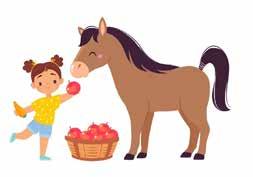
few would do. Cobblers, pies, sauce, never enough time to roll the dough, pick a hoof, bake, sit, marvel.
The daily stroll with my mending horse, who spends his idle time longing for this small red planet, balanced on my palm.
~ Julia Wendell Come to the X (Galileo Press, 2020).
Check our website for updates: www.smcha.org
DECEMBER
6 – Los Viajeros Holiday Party 13 – SMCHA Holiday Party, Horse Park
Backcountry Horsemen of California: bchcalifornia.org
Bay Area Equestrian Network: bayequest.com
Bay Area Horse Archers: bayareahorsearchers.com
Bay Area Lyme Foundation: bayarealyme.org
Bay Area Players: facebook.com/BayAreaSavvyPlayers
BLM Wild Horses & Burros, California: blm/gov/whb
California Dressage Society: california-dressage.org
California State Horsemen’s Association (CSHA): californiastatehorsemen.org
Caring Cowgirl: caringcowgirl.org
Community Horse Advocacy Program (CHAPS): facebook.com/chapsmc
Disabled Equestrians: disabledequestrians.org
Equestrian Legacy: equestrianlegacy.com/home
Equestrian Trail Riders' Action Committee (ETRAC): etrac-equestrian.com
Horse Park at Woodside: horsepark.org
Horsensei: horsensei.com
Jasper Ridge Farm: jasperridgefarm.org
Los Altos Hills Horsemen’s Association: lahha.org
Los Viajeros Riding Club: losviajeros.org
San Mateo County Horseman | Fall 2025
Monterey Bay Equestrians: montereybayequestrians.org
Mounted Patrol Foundation: mountedpatrolfoundation.org
Mounted Patrol of San Mateo County: mpsmc.org
National Center for Equine Facilitated Therapy (NCEFT): nceft.org
Portola Valley Pony Club: portolavalley.ponyclub.org
San Martin’s Horsemen’s Association: smhorse.org
San Mateo County Horsemen's Association: smcha.org
San Mateo County Large Animal Evacuation: smclaeg.org
San Mateo County Parks Volunteer Horse Patrol: smcvhp.org
San Mateo County Sheriff’s Mounted Search & Rescue: smcmsar.org
San Ramon Valley Horsemen’s Association: srvha.weebly.com
Santa Clara County Horsemen’s Association: horsemens.org
Santa Cruz County Horsemen’s Association: sccha.wildapricot.org
Summit Riders Horseman’s Association: summit-riders.com
The BOK Ranch: bokranch.org
The Square Peg Foundation: squarepegfoundation.org
Wild Horse Sanctuary www.wildhorsesanctuary.org
Woodside-area Horse Owners’ Association (WHOA!): whoa94062.org
Woodside Pony Club: woodside.ponyclub.org

Would you like to meet new people who share your passion for horses? Do you have a unique talent or an idea for an activity/ride to share? Maybe you’ve always wanted to put on your own event but needed the support of an equestrian committee. Now is the time to bring your ideas to the forefront. The SMCHA wants to hear from you! If you’d like to join our team, have fun and make your dreams come true, send us an email so we can bring your vision to life!
Email: SMCHA@smcha.org
Don DeFranco @ 415.722.7259
Elizabeth Ouellette @ 650.248.3409
Butler @ 650.720.0513
Cheryl Basin @ 650.722.0606
Advertise your business to a broad array of readers in our popular magazine, The San Mateo County Horseman. Advertising with SMCHA is a great way to reach potential customers four times a year! We’ll not only print your ad, but also make mention of our business on our website — smcha.org
Email: SMCHA@smcha.org
Elizabeth Ouellette @ 650.248.3409
Marcy Rosenberg @ 408.560.8074
Cherie Hammer @ 650.219.7917
Cherie Hammer @ 650.219.7917
Cheryl Basin @ 650.722.0606

THE SAN MATEO HORSEMAN
P.O. BOX 620092
WOODSIDE, CA 94062
www.smcha.org
ADDRESS SERVICE REQUESTED
PUBLISHED BY SAN MATEO COUNTY HORSEMEN’S ASSOCIATION
Founded in 1940
A Registered Non-Profit 501 (c) (3) Organization
Tax Id # 23-7076143
Presidents: Mariangela Sonstegard & Gabriela Marquez