WORLD LANGUAGES (LOWER SCHOOL)
My World Cultural Explorations (PK3 – Junior Kindergarten)
Cultural awareness is the recognition of one's own and other cultures In Pre-Kindergarten and Junior-Kindergarten classes, children learn that they participate in and are guided by the values and practices of their cultural communities My World explorations are an investigation of cultural settings that influence the development of each child and each classroom community My World is an integrated, project-based curriculum that asks children and families to think about and discuss their unique culture and the cultures of others who make up the Detroit Country Day School community while recognizing diversity, inclusion, equity and belonging My World topics include each child’s unique: name, family, home, siblings, pets, friends, neighborhood, school, religion, travel, family traditions, world languages, beliefs, and values Classroom discussions on these topics are child-centered and family-focused The teacher follows the interests and ideas of the children about their own culture and the culture of their classmates
Spanish (Kindergarten – Grade 3)
World Languages are an important part of the academic curriculum at Detroit Country Day School. Language specialists realize that learning a language in a non-immersion program requires years of study and review before the learner attains proficiency. Current studies show that young children learn languages easily and more readily than any other age group. Children happily mimic the teacher’s speech, learning pronunciation and intonation experimenting with new sounds in playful activities. Teaching in the target language is crucial in these beginning years so that the children acquire Spanish in a naturalistic manner.
In the Lower School, the language specialist teaches Spanish through project-based learning that incorporates song, movement and playful interactions within an integrated curriculum. The Spanish teacher partners with the homeroom teacher on projects to develop vocabulary and topic knowledge.
Page 39 II Back to Table of Contents
Cultural studies foster an understanding of people of the world and develop positive attitudes toward linguistic and global diversity.
Kindergarten through Grade 3 Lower School children meet three times within a scheduled rotation for Spanish class. Review is incorporated into each grade level to extend mastery of basic vocabulary and to facilitate the success of new children who enter the school each year.
CO-CURRICULAR INFORMATION (LOWER SCHOOL)
Learning Support And Tutorials
Lower School teachers provide individualized assistance, as needed during the day and before and after school
LIBRARY SERVICES (LOWER SCHOOL)
Our Values - We believe:
ǁ That intellectual freedom is a fundamental right for all.
ǁ That literacy is an essential skill across all platforms and disciplines
ǁ That reading for personal information and enjoyment leads to lifelong learning
ǁ That respect for intellectual and creative property is everyone’s responsibility.
Our Mission - Teach, Inspire, Explore
The Lower School Library supports the reading and information needs of all students in PK3-3rd grade with a diverse collection of materials in print and digital formats In addition, through regular instruction, students develop a respect for materials, become comfortable with library procedures, understand how books are organized, and begin to locate materials to investigate ideas
Information literacy skills are taught at each grade level, and students often leverage technology to accomplish their tasks Students are encouraged to check out books that support their enjoyment and educational reading needs, and they can also check out additional materials to support their classroom projects They are guided to become lovers of reading, independent library users, and life-long learners
Page 40 II Back to Table of Contents
AFTER SCHOOL PROGRAMS (LOWER SCHOOL)
The Lower School offers the following after school programs:
ǁ Beyond the Bell Program
ǁ Junior Jackets Sports Program
ǁ PM Enrichment Program – (Grades 1 - 3)
ǁ Eisenhower Dance classes
PM Enrichment classes are optional after school activities offered for Grades 1 - 3, to meet the growing interests of children beyond the normal academic day There are three nine-week sessions which meet during the fall, winter, and spring, Tuesday through Friday, from 3 - 4:00 pm Registration slips are sent home one week before the start of each session, and are honored on a first- come, first-served basis and space availability Certain activities, such as art, may be limited to participation in one session only
An Early Risers before school program is also offered at the Lower School Please refer to the website (wwwdcdsedu) for detailed information
MIDDLE SCHOOL
INTRODUCTION
The Middle School academic program recognizes the unique needs of the age group while preparing students for the Upper School curriculum. The first academic priority is the development of thinking and writing skills. Study skills such as organization, methods of study, cooperative review, note taking, time management and reflection are emphasized. These skills are applied to the basics of English, languages, history, mathematics, performing arts, visual arts and science.
Honors and/or advanced level courses are designed to meet the needs of those students that achieve at the highest level so that they are appropriately challenged in courses in science, English, languages and mathematics. These courses represent the foundation for Honors and Advanced Placement classes at the Upper School.
Page 41 II Back to Table of Contents
The Middle School offers a number of coordinated and interdisciplinary activities that contribute importantly to a liberal arts education, such as extended field trips to, Walled Lake Outdoor Education Center (Grade 5), Camp Miniwanca (Grade 6), Washington, D.C. (Grade 7), and Boston (Grade 8) and inter-departmental units featuring such things as a day in the life of a Civil War soldier. Faculty also conduct local field trips to community resources that relate to the curriculum, such as visits to the Rouge River Factory Tour, Belle Isle, Detroit Historical Society, Detroit Institute of Arts, and Detroit Symphony Orchestra. Students are prepared for, and encouraged to, participate in area and statewide mathematics, design, and robotics contests, science fairs in the metropolitan area, area and statewide language festivals, regional and state instrumental and vocal festivals, area-wide fine arts juried exhibitions, area-wide writing contests, the State Forensics Tournaments, and spelling bees at the local, state and national levels Through these rich learning experiences beyond the classroom, DCDS Middle School students are encouraged to explore their interests, discover new passions, and thoughtfully connect what they learn at school to the wider world around them
At Detroit Country Day School’s Middle School, we believe learning does not stop when the day ends Thoughtful, purposeful homework is designed to reinforce classroom learning, spark curiosity, and help students build strong habits as learners Teachers post assignments whereby students and families feel informed and connected to what is happening in the classroom Grades and updates are posted regularly through our online system to support open, ongoing communication Our teachers are deeply prepared for each day and bring best practices in teaching to every lesson Just as important, they continue to grow as professionals attending conferences, visiting other schools and classrooms, and pursuing advanced study in their fields A strong sense of professionalism, care, and commitment to students defines the work of every Detroit Country Day Middle School teacher
At Detroit Country Day School, assessment is an important and supportive part of how students learn and grow A significant part of the educational process here is working with students to reflect on what they have learned and develop a deeper understanding of their courses Teachers use a variety of assessment methods to honor different learning styles and to give students meaningful opportunities to demonstrate their thinking, creativity, and progress whether through writing, problem solving, projects, or presentations
PERFORMING ARTS (MIDDLE SCHOOL)
Detroit Country Day School recognizes the important role that the performing arts can play in a child’s life and commits itself to numerous opportunities for student participation Colleges view engagement in the arts and performing arts as a valuable experience that broadens students’
Page 42 II Back to Table of Contents
understanding and appreciation of aesthetics, creativity, collaboration, and expression across diverse artistic disciplines.
Our primary goal is to provide excellent performing arts experiences through instrumental music (band and orchestra), choral music, dance, and theatre Through its multi-level structure, these programs offer beginning students accessible entry points into performance while providing advanced students with the appropriate environment to further develop their technical skills, artistic voice, and creative independence All Middle School performance groups present multiple concerts and performances each year Each ensemble, class, and performance opportunity offers a unique experience that supports students’ growth as performers and collaborators, as well as expand their creative perspective beyond the classroom
GENERAL AND VOCAL MUSIC (GRADE 4 & 5)
All Grade 4 & 5 students experience general and vocal music Grade 4 music builds upon our recorder skills from Grade 3 (left hand notes) and completes our study of the lower, right hand notes while learning to play independently and within an ensemble The study of the various instrument families and the characteristics of the instruments within them enrich their knowledge of the traits and characteristics of each instrument, exploring what speaks to them Also, Grade 4 work on singing as an ensemble Grade 4 works on singing with proper posture, projection, and emotion Musicians in Grade 5 continue their application of basic instrumental skills with drumming ensemble and expressing rhythms. Adding pitched note reading in the octave bells builds upon deciphering notation. In addition, 5th grade begins the study of music history, Renaissance through Contemporary Eras, analyzing the traits of each era and comparing/contrasting with the same periods of art and historical events. We increase our musical literacy skills through our study of music theory. We also continue work to improve posture, proper vocal usage and projection, and learn part work with harmony and/or descant harmony in addition to singing melody in two part harmony. Grade 5 begins to incorporate solfege syllables and hand signs. Solfege and hand signs help students 'see' and 'feel' the music with their hands, making it much easier for them to sing in tune and learn to read music on their own.
In Grades 4 & 5, students are exposed to listening to and singing both Western and Non-Western music selections from past and present day with cultural and historical connections. Students learn performance and audience etiquette while honing their skills, reflecting on their own progress and improving toward the goal of formally performing for an audience in our Winter Concert in the Seligman Performing Arts Center.
Page 43 II Back to Table of Contents
TrebleMakers Choir (Grade 4 - 6)
Students meet for Choir twice a week, before and after school, for a total of 90 minutes Children work on singing tone, breathing technique, solfeggio and rhythmic reading, balance and blending of voices, and singing in parts The Choir holds performances several times each year for school and community audiences including off campus connections, as well as “Celebrate the Arts”
Concert Choir (Grades 6-8) - MCR6RT
Prerequisite – none
This choir offers a very safe and nurturing environment for Middle School students to discover the beauty of music and self-expression Students explore beginning and intermediate music theory concepts, fostering the recognition and understanding of the printed score Sight reading skills are also a cornerstone of the choral experience, teaching young musicians to be intelligent music readers Unique to the vocal musician, the choir analyzes and reflects upon the texts that are performed throughout the school year The choir gives 3 school performances per year (Fall, Festival & a Spring Pops Concert) as well as participates in MSVMA Choral/Solo & Ensemble Festivals
Blue Band (Grades 4 & 5)
Blue Band: Prerequisites - none
The Blue Band is open to students in Grades 4 and 5 with no previous band experience. We develop fundamental performance skills, such as tone production, articulation, and note and rhythm reading through the use of a variety of teaching strategies, technologies, and methodologies. Students enrolled in the Blue Band will be able to select from flute, clarinet, trumpet, or baritone. Additional choices will be available in Gold Band or 6th Grade. This ensemble performs at least two major concerts per year, and meets after school.
Gold Band (Grade 5)
Gold Band: Prerequisites - none (Blue Band preferred)
The Gold Band is open to students in the 5th Grade who have completed Blue Band, or have previous wind instrument experience. We continue to build on the fundamental skills learned through General Music and the Blue Band, and expand them to include work with sight reading, concert preparation, and musical independence. In addition to the instruments students started in Blue Band (flute, clarinet, trumpet, baritone), Gold Band members may also switch to oboe, alto saxophone, F horn, trombone, or percussion. This ensemble performs at least two major concerts per year, and meets after school.
Page 44 II Back to Table of Contents
Campus Band (Grades 6-8)
Prerequisite: None
This class is offered to any incoming or returning student, in grades 6 through 8, who is new to the band and has a desire to play an instrument, or would like to learn a different instrument. Students will receive guided instruction to develop musical skills including proper playing techniques, music reading, ensemble teamwork, intonation, and articulation. This ensemble will perform on at least two major concert dates during the school year, and meets during the school day
Symphony Band (Grades 6-8) - MBD0IT
Prerequisite: Placement by Audition
This performance group is open to students in the sixth through eighth grades who have grasped the skills covered in the Campus Band class or have at least one year of playing experience Emphasis is placed on the mastery of daily assignments that develop technical skills, note-reading, tone quality, proper position and basic knowledge of music theory and maintaining a consistent practice regimen The group performs two major concerts each year and participates in school events The grade in this class is not averaged into the GPA but may still affect honor roll status
Wind Ensemble (Grades 6-8) - MBD0AT
Prerequisite: Placement by Audition
This performance group is open to students in the sixth through eighth grades who have mastered the skills covered in Campus Band and Symphony Band. Each group is exposed to music literature from various periods of music history, as well as the study of basic theory. Individual students participate in the Michigan School Band and Orchestra Association Solo and Ensemble Festival. The Wind Ensemble, as a performance group, participates in the MSBOA District and State Festivals. The group prepares two major concerts each year and performs for school events and various off-campus functions. The grade in this class is not averaged into the GPA but may still affect honor roll status.
Beginning Strings (Grades 4 & 5)
Beginning Strings is for students in Grades 4 and 5 who are trying a string instrument for the first time or have limited experience on their instrument. Students may choose between violin, viola, cello or double bass. Students engage in the course two to three times a week after school from 3:15-4:00pm twice a week. This course focuses on the development of a strong foundation of technique and musicality and individual and group performance skills. Students will participate in at least 2 major performances per year. Page 45 II Back to
Intermediate Strings (Grades 4-5)
Intermediate Strings is for students in Grades 4 and 5 who are continuing to learn their chosen instrument and for students that are incoming and have played for at least one year Students engage in the course twice a week Classes take place after school This course focuses on the development of technique, musicality, part reading, and group performance skills Students will participate in at least 2 major performances per year
String Orchestra (Grades 6 - 8) - MOR0BT
Prerequisite: None
String Orchestra is offered for students in grades 6, 7, and 8 who have not studied a string instrument, who have had minimal training on their instrument, or students who need review of the basic foundations of string playing The students have a choice of studying the violin, viola, cello or double bass Emphasis is placed upon basic techniques such as instrument hold, left hand position, bow hold, tone production and note-reading Each student is responsible for renting an instrument from an area string shop for home practice Cello and Double bass students are required to rent an instrument for home practice, but would have the opportunity to use a school instrument during the school day to avoid transporting such a large instrument to and from school The String Orchestra performs two major concerts per year and participates in school events Placement into this class will be determined by the Middle School Strings Director The grade in this class is not averaged into the GPA but may still affect honor roll status
Symphony Orchestra (Grades 6-8) - MOR0IT
Prerequisite: Placement by Audition or Recommendation
The Symphony Orchestra is open to all students in grades 6, 7 and 8 who have at least one year of experience on their instrument. This ensemble is intended for intermediate players. Emphasis is placed on the mastery of daily assignments that develop technical skills, note-reading, tone quality, posture and basic knowledge of theory. The Symphony Orchestra performs in three major concerts each year and participates in school events. The grade in this class is not averaged into the GPA but may still affect honor roll status.
Chamber Ensemble (Grades 6 - 8) - MOR0AT
Prerequisite: Placement by Audition
The Chamber Ensemble is open to select students in Grades 6, 7, 8 who have reached an advanced level of proficiency on their respective instruments. These students are exposed to music literature from various periods of music history, as well as the study of basic theory. Students enrolled in this class will have the opportunity to participate in the Michigan School Band and Orchestra Association Solo and Ensemble Festival. This group also participates in the MSBOA District and State Orchestra
Page 46 II Back to Table of Contents
Festivals. The Ensemble also prepares two major concerts each year and performs for school events and various off-campus functions. The grade in this class is not averaged into the GPA but may still affect honor roll status.
Level 1 Dance (Full Year) (Grades 6 - 8) - MDA0BT
Prerequisite: None
This beginner dance course will focus on proper dance technique such as body placement, isolations of the body and foot work Students will learn classical jazz and ballet dance techniques and terminology within the structure of a proper dance class including a warm-up, across the floor and various center movement combinations Students will also be collaborating with one another in the creative process as we work to develop skills in inventing and structuring movement by creating solo and group studies Reading, writing, and viewing assignments inform these creative activities There are two major dance concerts each school year, along with three smaller concerts all taking place on campus Attendance at all performances is mandatory, as they are an essential part of the dance curriculum and performance experience
Level 2 Dance (Full Year) (Grades 6 - 8) - MDA0IT
Prerequisite: None
This intermediate level dance course will take a deeper look into the foundations of jazz dance technique. Students will focus on suspension and release, fall and recovery as well as the use of momentum and how breath supports all of this. Dancers will explore new ways of moving in combinations, floor work and partnering, and also in various methods of improvisation. Students will also be collaborating with one another in the creative process as we work to develop skills in inventing and structuring movement by creating solo and group studies. Reading, writing, and viewing assignments inform these creative activities. Students will work together as we continue to cultivate an environment that supports and celebrates all bodies in motion! There are two major dance concerts each school year, along with three smaller concerts all taking place on campus. Attendance at all performances is mandatory, as they are an essential part of the dance curriculum and performance experience.
Honors Dance (Full Year) (Grades 6, 7, 8) - MDA0AT
Prerequisite: Teacher recommendation or audition only
This advanced dance course will have students engaged in both the technical and artistic training of jazz, ballet, modern and contemporary styles of dance. Students will work to refine their dance technique as well as explore new ways of moving both in across the floor work as well as partnering and various methods of improvisation. Students will work on the development of dance-making skills through composition classes and workshops that will have the students creating and choreographing Page 47 II Back to Table of Contents
their own body of work. These various class explorations will have the students making personal connections to oneself as well as with the greater world around them. Students will work together as we continue to cultivate an environment that supports and celebrates all bodies in motion!There are two major dance concerts each school year, along with three smaller concerts all taking place on campus. Attendance at all performances is mandatory, as they are an essential part of the dance curriculum and performance experience.
Grade 6 Theatre - MSW6DT
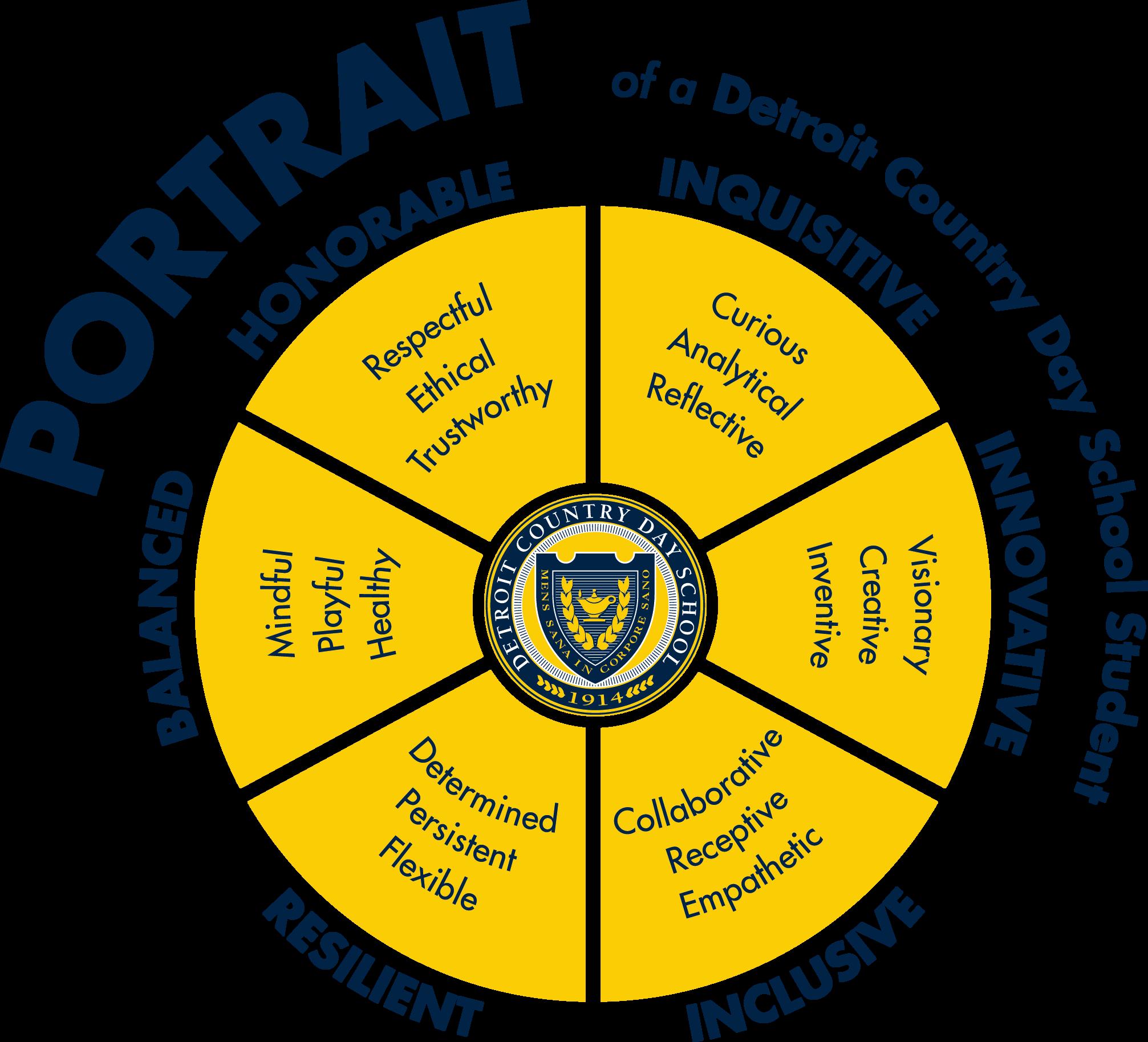
The Grade 6 Theatre elective guides students in an exploration of playful performance, theatre, and public speaking Through this work, students will develop communicative, creative, interpretive, and interpersonal skills consistent with the Portrait of a Country Day Student This course is divided into three parts The first section is devoted to short, skill-building activities designed to introduce students to the elements of a quality public speaker During the second part of the class, we work on individual acting skills such as mime and voice acting Finally, we conclude the class learning the teamwork necessary to be a part of an acting ensemble Students will practice team improvisation and will participate in many group acting projects to learn the importance of working together in the theatre
Grade 7 Theatre - MXS7DT
The Grade 7 Theatre elective guides students in an exploration of playful performance, theatre, and public speaking. Through this work, students will develop communicative, creative, interpretive, and interpersonal skills consistent with the Portrait of a Country Day Student. This course is intended for students who may have taken Theatre in 6th Grade or are just starting their theatrical journey. This course is divided into three parts. The first section is devoted to short, skill-building activities designed to introduce students to the elements of a quality public speaker. During the second part of the class, we work on individual acting skills such as mime and voice acting. After some individual acting work, students explore the backstage elements of theatre including lighting, sounds, costumes, prop, and set design. Finally, we conclude the class learning the teamwork necessary to be a part of an acting ensemble while also adding in the technical elements for our class performances.
Grade 8 Advanced Theatre - MDR8RT
The Grade 8 Advanced Theatre course is intended for students who plan on taking Theatre in the Upper School. This course is designed to guide experienced 8th-grade students in exploring the power of narrative as they participate in public speaking and theatre projects. Also, this course is intended to guide students in preparation for participation in Upper School Theatre productions and acting opportunities. Through this work, students will develop communicative, creative, interpretive,
Page 48 II Back to Table of Contents
and interpersonal skills consistent with the Portrait of a Country Day Student. In the first half of the year, students will be focused on individual acting skills and enhancing the performer's tools (body, voice, and imagination). Then, students will have the opportunity to continue this practice through ensemble performances. After these performances, students will have the opportunity to explore an area of theatrical design that they are most interested in through a Capstone project. At the end of the year, the class will work together to produce, design, and perform a short play to further develop their skills as a communicator and collaborators. All of these experiences will provide a theatrical overview to help students determine which avenues of Theatre they are interested in pursuing further at the Upper School
VISUAL ARTS (MIDDLE SCHOOL)
The Middle School visual arts department offers arts instruction for all students. In fourth and fifth grade, all students experience art as part of the regular schedule each week. In sixth, seventh, and eighth grade, students can choose to take a full year of art.
Classes are enriched with short videos, art reproductions, teacher demonstrations and presentations, the Scholastic Art magazine, visiting artists, and field trips. Classes address the National Standards for the Visual Arts as established by the National Art Education Association.
The Middle School Art Program embodies creativity in a collaborative, safe, approachable environment. The focus is to create artists and this is done by instilling the eight Studio Habits (Studio Thinking: The Real Benefits of Visual Arts Education, 2007).
ǁ Develop Craft
ǁ Engage & Persist
ǁ Envision
ǁ Express
ǁ Observe
ǁ Reflect
ǁ Stretch & Explore
ǁ Understand (Arts) Community
The art classroom fosters an instructional climate where students can express artistic talent, develop creative thinking, and find multiple solutions to art problems Through varied studio experiences, the students gain the ability to produce, read and interpret visual symbols, and learn to evaluate their own productions as well
Page 49 II Back to Table of Contents
While skill achievement and historic appreciation are stressed, emphasis on the fun and enjoyment of learning is an important element of Middle School art education.
Art & Design (Grade 4 & 5)
Students meet in the art studio for 45 minutes every other day They focus with persistence on each piece of artwork for a sustained period of time, play with a variety of mediums, explore and develop new techniques, show individual uniqueness, create personal vision and meaning, embrace the opportunity to overcome mistakes with multiple solutions, learn and navigate the art studio respectfully, create and talk about art while expanding interactions with other artists and classmates in the broader community, learn about current and past artists and art history, and learn to critique art with a discerning eye. Students proudly display their work in the school, public venues, and at “Celebrate the Arts.”
Year-Long Art & Design (Grade 6, 7 & 8) - MAR0RT
The year-long course is offered to individuals who exhibit a special interest and the desire to grow as an artist. Through in-depth two and three-dimensional projects, students will practice Studio Habits that expand prior knowledge from earlier art education. Assessment of understanding, craftsmanship, creativity, effort, and participation is held at a higher standard. In order to assist with personal growth, students are encouraged to take risks and required to document their progress. Throughout the year, students participate in peer-to-peer, teacher-student, and class critiques.
In an effort to help students further explore their own ideas and interests, brainstorming, project planning, and sketching is required and assessed throughout each goal. It is highly encouraged for students to have taken an art course in sixth or seventh grade prior to taking year-long art in 8th grade.
ENGLISH LANGUAGE ARTS
English (Middle School)
“Language is the blood of the soul into which thoughts run and out of which they grow.” ~ Oliver Wendell Holmes
The command of language is basic to thinking and learning in all disciplines Language enables us to form concepts, to organize thoughts, to communicate ideas, impressions, feelings, values, and desires Through language we share our experiences and share in the experiences of other people, both past and present Indeed, skillful use of language may be the single most important means of realizing the
ultimate goal of education: the development of informed, thinking citizens able to communicate and function effectively.
The Detroit Country Day Middle School English program focuses primarily on the development of reading, writing, speaking, and listening skills. The program also seeks to foster the enjoyment of language, the appreciation of literature, the expression of creativity and the development of logical, critical thinking.
Middle school language arts teachers employ a variety of student-centered approaches to create activities designed to further develop students’ abstract, logical, and critical thinking skills:
ǁ Independent reading projects
ǁ Whole group novel study and book clubs
ǁ Emphasis on active reading, including directed reading activities, annotation, and reader response journals
ǁ Use of online reading discussions to share thoughts about literature
ǁ Use of Google Docs to facilitate the writing process, particularly reader response and revision
ǁ Presentation of textual evidence in literature paragraphs and essays
ǁ Combining research evidence and personal reflection to defend a thesis
English Language Arts (Grade 4)
The Grade 4 ELA program provides engaging texts and explicit, systematic instruction grounded in the Science of Reading and Writing By blending shared learning experiences with opportunities for individual choice, we meet students where they are and support them in developing strong literacy skills, thinking critically, and communicating their ideas with confidence Above all, we strive to cultivate a genuine love of reading, writing, and learning The curriculum centers on several key components, beginning with whole-group novel studies in which students read Fish in a Tree by Lynda Mullaly Hunt and Lion of Mars by Jennifer L Holm Through these texts, literary elements, literary devices, fluency, and vocabulary in context are explicitly taught, and students practice applying these skills to strengthen comprehension Students also participate in Book Clubs, selecting novels from a teacher-curated collection and engaging in thoughtful discussions that build on the strategies introduced during whole-group studies
Independent reading is prioritized throughout the year, with dedicated classroom time each week and regular library visits that encourage students to discover new titles and foster lifelong reading habits To further support comprehension, students work through the STARS: Strategies to Achieve Reading Success workbook for direct instruction in research-based reading strategies Vocabulary
Page 51 II Back to Table of Contents
development is enriched through Wordly Wise, where each lesson introduces fifteen new words and helps students understand their meanings and relationships. Grammar instruction focuses on the parts of speech and is reinforced through spiraled review and independent writing, allowing students to apply grammar and mechanics skills in authentic contexts.
Our fourth-grade spelling program emphasizes Orton-Gillingham phonics to build strong foundational decoding and encoding skills, while weekly handwriting instruction helps students learn to read and write in cursive with increasing fluency. Writing instruction is woven throughout the curriculum as students respond to their novels, analyze how characters change and grow, and apply their understanding of plot structure to craft personal and imaginative narratives Through the revising and editing process, students refine their work and produce polished final drafts that reflect their developing skills as confident, capable writers
English Language Arts (Grade 5)
The Grade 5 ELA program immerses students in high-quality literature while providing clear, structured instruction aligned with the Science of Reading and Writing Through a thoughtful combination of collaborative learning and purposeful student choice, instruction is tailored to support each learner’s growth in literacy, critical thinking, and effective communication At its core, the program seeks to inspire lasting curiosity and enthusiasm for reading, writing, and learning Students explore two anchor texts Wilderlore by Amanda Foody and The View from the Very Best House in Town by Meera Trehan while engaging in direct study of literary elements, author’s craft, fluency, and vocabulary to deepen understanding In addition, students join Book Clubs where they choose from a curated selection of novels, participate in meaningful dialogue, and extend their thinking through claim, evidence, and reasoning
Independent reading remains a cornerstone of the program, supported by regular classroom reading time, monthly library visits, and the expectation that students bring books home each day To strengthen comprehension skills, students use the STARS: Strategies to Achieve Reading Success workbook for focused strategy practice Vocabulary instruction is enhanced through Wordly Wise, with each lesson introducing fifteen new words and guiding students to apply them accurately within context Grammar instruction centers on the parts of speech and is continuously reinforced through cumulative review, authentic writing opportunities, and the editing process Students also develop fluency in cursive through weekly practice and increasingly incorporate it into their grammar work
Writing instruction is integrated across the curriculum as students reflect on their reading, compose original narratives, and use five-finger retells to demonstrate their understanding of plot while examining theme and its influence on the protagonist Throughout the year, students grow more
adept at analyzing story structure with insight and clarity, and their significant writing pieces are gathered in a portfolio that highlights their progress and accomplishments.
English (Grade 6) - MEN6RT
Grade 6 English seeks to build upon the foundation in the basics of English established in the fifth grade The main focus of the course is the development of more thoughtful, in-depth reading, writing, and thinking skills through the study of short stories, novels and poetry Teachers employ a wide variety of techniques to accomplish these objectives Directed reading activities help with prediction skills, drawing conclusions, and reading for meaning Independent Reading encourages students to read literature they truly enjoy, fostering a lifetime reading habit Podcasts encourage students to visualize, and therefore, gain more meaning
During the course of the year, students write poetry, paragraphs, and a narrative podcast, utilizing the writing process: prewriting, drafting, revising, editing, and publishing Students are encouraged to include descriptive language, add supporting details, and include writing tricks
Vocabulary study stresses proper usage of words and the effective utilization of context clues both to convey and to interpret meaning Grammar study emphasizes parts of speech, the complete sentence, capitalization and punctuation – elements necessary for the development of proofreading skills Students utilize mentor sentence study to enhance grammatical understanding
Writing Workshop (Grade 6) - MWW6DT
In the Writing Workshop class, Grade 6 students begin to acquire the skills necessary to write thoughtfully developed, organized prose. Students examine five traits of good writing: ideas, organization, word choice, voice, and sentence fluency. From there, students apply these traits when writing creative journals which focus on vivid descriptions. Transitioning from the creative to analytic, students are exposed to informational texts and practice writing persuasive paragraphs equipped with a clear topic/claim, evidence, and reasoning to make an argument and prove a position. As an adjunct to persuasive writing, students practice how to read a text and summarize its main idea into their own words and own understanding. Throughout the course, students apply “magic tricks” and grammatical concepts, including parts of speech and comma usage during the revision stages of their writing as a way to practice skills learned in English 6.
English (Grade 7) - MEN7RT, MEN7AT
(Regular or Advanced)
In Grade 7 English, students explore a wide range of literary genres, concentrating on the short story, novel, and play. At the beginning of the year, students focus on the basic elements of the short story as well as various literary concepts. Students learn to recognize the structure of the story, to make Page 53 II Back to Table of Contents
inferences, and to formulate simple statements of theme based on the resolution of conflict. In addition, students develop independent reading skills, creating a multi-genre project presentation on one of their novels for Independent Reading. Analytic and expository writing assignments provide the main vehicle for the development of composition skills. Writing instruction targets the development of tighter focus, more specific language and more sophisticated sentence structure. Vocabulary study stresses proper usage of words to convey and to interpret meaning. Grammar instruction focuses on two fundamental areas: identification of parts of speech and parts of the sentence. More extensive reading and analytical writing are required of students in the honors class.
Expository Writing (Grade 7) - MEX7DT
In the Expository Writing class, Grade 7 students strengthen foundational writing skills while developing their unique narrative voices Students concentrate on the development of their writing skills through personal expressive writing, focusing on the selection of concrete “showing” details and the use of specific language The students then learn to apply these writing skills to expository paragraphs, developing specific claims supported by evidence and argued effectively Students move through each major stage of the writing process from brainstorming to revision in order to take their ideas and transform them into cohesive, purposeful writing
English (Grade 8) -
MEN8RT, MEN8AT
(Regular or Advanced)
The primary objective of the Grade 8 English program is to develop the reading, writing, speaking, and thinking skills students need to succeed in the Upper School English program. Literature selections reflect age-appropriate language, style, and conflicts, and literature study emphasizes in-depth interpretive and analytical reading. Students learn to analyze language, literary structure, and point-of-view; make inferences and interpret meaning; and formulate statements of theme. Each goal students practice their independent reading skills and share responses through written prompts.
Students continue to develop their creative writing skills through poetry and short story assignments. The primary writing focus, though, is on the further development of skills in analytical and persuasive writing. In particular, students learn to present textual evidence to support their thesis in essays.
Vocabulary study reviews roots, prefixes, as well as suffixes, and continues to stress the proper usage of words in their variant forms, not simply definitions and synonyms. Grammar study emphasizes an understanding of sentence structure and the development of editing skills that students can utilize in their writing. Through understanding clauses, students learn to create and punctuate a variety of sentence types.
Page 54 II Back to Table of Contents
Students in the advanced course undertake more challenging reading and do more extensive, in-depth analytical writing.
HEALTH EDUCATION and INTERDISCIPLINARY STUDIES
Sampler Class (Grade 6) - (M6SAMPLE)
(All 6th graders will take 6 weeks of each of these classes during the same block)
Health & Social Emotional Learning: This course will be taught using the comprehensive, evidence-based health education curriculum, the Michigan Model for Health, which is known for building essential life skills and promoting healthy behaviors in students The class will help students to identify and develop skills of self-awareness, social awareness, relationships, interpersonal communication, and decision-making Students will learn how to manage strong feelings and stress, resolve conflicts, problem-solve, and maintain positive relationships Health topics through the Michigan Model for Health cover the importance of sleep, nutrition and personal hygiene, and an awareness of the risks of drugs and alcohol In addition to the sampler health and SEL class, students will have a separate session during their flex time that is dedicated to puberty and human development For this session, students are separated by gender
Art: The art sampler is the perfect opportunity for 6th graders to dive into creativity in a fun and supportive environment no experience needed! Whether students are already passionate about making art or simply curious to try something new, this class offers hands-on experience with different forms of artmaking. Along the way, we’ll explore and reflect on the 8 Studio Habits of Mind, which help guide students in becoming thoughtful, independent artists.
EveryBody Move: This class is taught through the lens of creative movement. Whether you’re an athlete or artist, or just someone who is interested in just finding out what goes on in the dance studio, this class invites students to explore movement and dance as a way to express themselves and connect with the world around them. We will be exploring movement through the lens of personal interests, athletics, and classroom subjects through cross-curricular collaborations. By exploring subjects like English and Science through a kinesthetic sense, students will have the opportunity to bring their learning to life. All 6th grade students will have this class unless they select Dance as their full-year elective.
Music: The 6th Grade Sampler Music class will explore music history, music analysis, and will learn basic chords on the ukulele. The class culminates with a song writing project and a performance in class
Page 55 II Back to Table of Contents
Physical Education: Students are evaluated on their health-related fitness levels in three areas: cardiovascular endurance, muscular strength, and agility. The students complete a combination of six tests that include: mile run, pacer test, shuttle run, sit-ups, pull-ups, and push-ups. Instructionally, the course will cover a variety of units that culminate in a one day tournament format. These units consist of the following sports: basketball, flag football, ultimate frisbee, badminton, paddle tennis, soccer, and Wiffle ball. All 6th grade students will have this class unless they select PE as their full-year elective.
STEAM: The 6th grade STEAM Sampler is a hands-on, project-based class where students gain exposure to the engineering design process and act as creative problem solvers Students will also have the opportunity to learn about and use a variety of technologies which may include 3D printing, laser cutting, and coding All 6th grade students will have this class unless they select STEAM as their full-year elective
Theater: The Grade 6 Theatre sampler guides students in an exploration of playful performance, theater, and public speaking Through this work, students will develop communicative, creative, interpretive, and interpersonal skills This course is divided into three parts The first section is devoted to short, skill-building activities designed to introduce students to the elements of a quality public speaker During the second part of the class, we work on individual acting skills such as mime and voice acting Finally, we conclude the class by learning the teamwork necessary to be a part of an acting ensemble
Learning Essentials (Grade 6)
This course is designed to equip students with foundational academic study skills and executive functioning strategies. Through hands-on application, students develop a personal toolkit of strategies for planning, starting and completing tasks, communicating with teachers, studying effectively, and managing digital tools all while building self-awareness and a growth mindset. By connecting these skills directly to the material that students are learning in their core content classes, the course provides intentional, real-world strategies for middle school success.
HIVE 360 (Grade 8) MLEADER
This interdisciplinary course equips 8th-grade students with essential skills to thrive in high school and beyond. Blending topics such as data analytics, leadership development, digital and ethical literacy, social-emotional learning, life skills, and health education, students will explore real-world challenges and reflect on their roles as responsible individuals and community members. Through engaging projects, collaborative activities, and guided discussions, students will strengthen their critical thinking, build confidence, and practice meaningful decision-making. The course emphasizes personal growth, empathy, effective communication, and the ability to analyze and use data ethically
Page 56 II Back to Table of Contents
to make informed choices. By the end of the year, students will have a stronger sense of self, purpose, and the tools needed to lead with integrity in an ever-changing world.
HISTORY (MIDDLE SCHOOL)
The goal of the Middle School history department is for students to develop a sound understanding and appreciation for people, places and events that have shaped the world in which they live today The department also focuses on building the skills that will help prepare students for future academic successes and civic responsibility
The history department believes that in order to foster and reinforce academic growth a variety of learning techniques must be utilized. Skills strongly emphasized and practiced throughout the history curriculum are: technical reading, identifying main ideas, note-taking formats, structured paragraph writing, interpretive analysis and oral expression. Historical information and academic skills are explored through cooperative learning exercises, interdisciplinary activities, individual research projects, audio-visual aids, gamification, and simulated activities. We are striving to develop students who will be able to take factual material and apply it to formulate thoughts, ideas and conclusions of their own.
We understand that the Middle School serves as an important transition between elementary school and high school. We strongly believe that through the implementation of these varied teaching strategies and applied skills, students will master the essentials to be productive learners and develop an appreciation for history and the world around them.
Social Studies (Grade 4)
Our fourth grade curriculum introduces informational reading skills and we practice with informational text on the Midwest Region. We also introduce the Social Studies Alive! textbook. We focus on developing strong map skills, encompassing cardinal directions, map keys and the compass rose. Students demonstrate an understanding of these concepts, showcasing their ability to navigate and interpret maps effectively. We learn about five regions of the United States, as well as the location of all fifty states on the United States map and their capitals. We explore different aspects of the economy, natural resources, tourism, geography and history of each of the states. For our study of the Midwest region, students choose a state to research, collect information and present their State in a Bag project to the class. This project is an opportunity for students to practice their informational research skills, employ their creativity, and become a bit more comfortable presenting in front of a group. For our study of the Northeast region, the students choose a historical landmark, collect information and create a mini model. The study of the West Region ends with a project that allows students to choose a national park to research and create an informational and eye-catching poster.
Page 57 II Back to Table of Contents
Finally, the students research and create a travel brochure showing off their selected state. The students learn all of the states and capitals, and we end the year with a Jeopardy game reviewing everything we learned in Social Studies this year.
Social Studies (Grade 5)
At the fifth grade level, this course begins with teaching nonfiction through studying the geography of the United States and how it has changed over time This serves as a study in early American history, focusing on the Indigenous People and the Age of Exploration History lessons attempt to link past and present in ways that make sense for all students Artifacts, readings, videos and hands-on activities enrich the curriculum Students demonstrate their understanding through cross-curricular culminating unit projects with a focus on writing, speaking, and listening skills
Global Studies (Grade 6) - MHS6RT
During the first part of the year, students are provided with foundational knowledge and tools which enable them to begin to think like historians, geographers, cartographers and anthropologists. Throughout the remainder of the year, they apply that understanding to the continents of the world thus becoming more empathetic, connected, 21st century global citizens. Through studying human patterns and culture resulting from adaptation to landforms, natural disasters, climate and interaction with other nation-states, students begin to see the world as an interconnected web. Their discoveries and understanding are also applied through experiences such as the Trailblazer Project, a regional newscast, and the culminating capstone project, the Global Village Experience. The course also focuses heavily on student voice, critical thinking, applying understanding at a higher level, and a great deal of teamwork and collaboration. Technology and research skills are developed in combination with tangible, real-life experiences to give students a deeper comprehension of the content. Students will leave Global Studies with a greater understanding and appreciation of the continents along with the people and cultures within them.
OurStory: World History in Action (Grade 7) - MHS7RT
This seventh-grade world history course explores the rise and fall of world powers from ancient civilizations to modern nations. Students examine how leadership decisions and the actions of citizens have shaped societies across time. Through case studies of empires, dynasties, and countries, students analyze cause and effect, bias, and historical perspective, guided by the driving understanding that every action has a reaction. Throughout the year, students actively strengthen essential historical and academic skills through reading, writing, note-taking, research, and presentations. By connecting past events to present-day issues, students develop a deeper understanding of their personal connection to history and the role they play as leaders and citizens in shaping the future.
Page 58 II Back to Table of Contents
History of The United States (Grade 8) - MHS8RT
The 8th grade American History course takes a chronological approach to studying the history of the United States Starting from Pre-Revolutionary America and ending in 1865 at the conclusion of the Civil War, students study the physical, political, and social growth of our nation and are challenged to find connections between our rich past and our current status Through the study of the facts, students are able to see the relationships between individuals, groups and ideologies that have shaped the history of the United States However, it is also important to present concepts that help students to understand the cause and effect of events that have influenced the American experience
This survey course focuses on the American Revolution, the Constitution, Westward Expansion, and the Civil War, emphasizing the theme of revolution and what it means to be revolutionary Students will assess the revolutionary nature of our nation's founding documents and principles They additionally explore how these principles have been invoked to support both historical and contemporary revolutions The course focuses on paragraph writing, analysis of primary sources, note taking strategies, analytical writing, reading comprehension, collaboration with classmates, and multiple research-based projects
MATHEMATICS (MIDDLE SCHOOL)
The Middle School Mathematics department offers a rich variety of courses to meet students' individual needs. Emphasis is placed on applying computational skills to quantitative situations. Within each course, technology is utilized to enrich the curriculum. It is our aim to present concepts in a manner that engages students and enables them to think critically while developing mathematical understandings and connections. By encouraging our students to problem solve, inquire, and reason, our curriculum reflects the ideology of current best practices in mathematics education.
For students who complete the Middle School mathematics sequence early, Advanced Geometry and Advanced Algebra II are offered. Students may also be enrolled in higher level high school math courses as needed. The department provides numerous opportunities for students to compete in mathematics contests at the school, regional, state, national and international levels.
Mathematics (Grade 4)
The fourth-grade math program revisits basic algorithms, adding to the application of multiplication and division. Foundations of Grade 4 Math, Math 4, and Math 4 Honors are offered to fourth graders. All students use an online game-based math program by Explore Learning for multiplication and division fact fluency and developing foundational fraction skills. Multi-digit multiplication up to three digits and division of two- and three-digit numbers are studied. Place value, customary and metric
Page 59 II Back to Table of Contents
measurement, graphs, mental math, and problem solving are explored. Addition and subtraction of fractions with like and unlike denominators are studied, and decimals up to the thousandths place and operations with decimals as well. All students participate in Michigan Math League (MML) competitions. Our approach and textbook are Common Core Compliant. We encourage inquiry and understanding as well as supporting the development of skill mastery. Online practice materials and after school enrichment opportunities are offered.
Mathematics (Grade 5)
The fifth grade math program builds on the preceding third and fourth grade programs and emphasizes a balance between computation & problem solving -- stressing the importance of reasonableness and the ability to explain thinking steps Foundations of Grade 5 Math, Math 5, and Math 5 Honors are offered to fifth graders Students practice the four basic operations of addition, subtraction, multiplication, and division with whole numbers, fractions, and decimals Students are introduced to key concepts in geometry and measurement The foundation of algebraic thinking is explored through practice of variables and expressions Students learn the importance of applying math knowledge to real-life situations They explore and use a variety of techniques and strategies for problem solving All students have the opportunity to participate in Continental Mathematics League (CML) and Michigan Math League (MML) competitions Our approach and textbook are Common Core Compliant We encourage inquiry and understanding as well as supporting the development of skill mastery Students use supplementary materials, including manipulatives and math games, to enhance their learning
Foundations of Mathematics (Grade 6) - MMA6TT
This is a course for students who need additional time and practice with foundational skills related to math fluency, time is spent focusing on strengthening math automaticity, accuracy, and delving deeper in foundational topics. The course builds on elementary skills, focusing on ratios, rates, fractions, decimals, and integers, while introducing basic algebra (expressions, equations) and geometry (area, volume, surface area), plus foundational statistics (mean, median, mode) and data analysis (box plots, histograms) to prepare for higher math with real-world problem-solving and conceptual understanding. Reinforcement of skills is done through financial projects and real-life applications throughout the year. Enrollment is determined by recommendation based upon departmental criteria.
Mathematics (Grade 6) - MMA6RT
The math program includes a gradual expansion of students’ knowledge of number systems. The course emphasizes mathematical structure, development of equations, solutions to equations, graphing, geometry, metric system, fractional numbers, decimal numbers, percents and integers.
Page 60 II Back to Table of Contents
Estimation, problem solving, and the algebraic process are key components throughout the course. Reinforcement of skills is done through financial projects and real-life applications throughout the year.
Advanced Mathematics (Grade 6) - MMA6AT
This demanding Grade 6 course is for the students who have not only excelled in mathematics, but are able to think critically and apply the concepts to related topics Students are presented new concepts in a more abstract manner requiring the use of the algebraic process to determine solutions Core Grade 6 topics are integrated throughout the course Enrollment is determined by recommendation based upon the departmental criteria
Foundations of Pre-Algebra (Grade 7) - MMA7TT
This is a course for students who need additional time and practice with foundational skills related to math fluency, time is spent focusing on strengthening math automaticity, accuracy, and delving deeper in foundational topics. This course emphasizes solving equations algebraically, thereby strengthening arithmetic skills and developing the necessary, traditional pre-algebra concepts. Work with positive and negative rational numbers, variables and exponents is stressed. Elementary geometry concepts are studied.. Number theory, introduction to graphing linear equations and word problems are also studied.
Pre-Algebra (Grade 7) - MMA7R
This course emphasizes solving equations algebraically, thereby strengthening arithmetic skills and developing the necessary, traditional pre-algebra concepts. Work with positive and negative rational numbers, variables and exponents is stressed. Elementary geometry concepts are studied.. Number theory, introduction to graphing linear equations and word problems are also studied.
Advanced Pre-Algebra (Grade 7) - MMA7AT
In the advanced course, the approach is more abstract and theoretical than in the regular pre-algebra course. The same traditional pre-algebra topics are presented as in the Grade 7 Pre-Algebra course. In addition, more in-depth emphasis is placed on number theory, graphing equations, functions, strategies for solving word problems, exponents, real numbers, varied base numbers, geometry and elementary algebra. The algebraic method is used in equation solving throughout the year. Enrollment is determined by recommendation based upon the departmental criteria.
Algebra Fundamentals (Grade 8) - MMA8TT
This is a course for those students who will benefit from additional pre-algebra mathematics before taking Algebra I in 9th Grade Emphasis is placed on strengthening arithmetic skills, introducing Page 61 II Back to Table of Contents
geometric concepts and providing the student with a stronger understanding of the properties of the number system. Topics are taught so that their relationship with algebraic concepts is stressed. Special emphasis is placed on providing the students with opportunities to be successful in mathematics. Topics studied in depth include operations with integers and rational numbers, equations, problem solving, area and volume, and graphing. The goal of this course is to provide a smooth path from arithmetic to algebra and from the visual world and arithmetic to geometry.
Algebra I - MMA8RT
(Fulfills one high school credit)
This high school level course is designed for those students who have mastered the topics discussed in Pre-Algebra Both the structure of algebra and the development of computational problem-solving skills are stressed The course of study includes working with real numbers, equations and inequalities, systems of equations, coordinate geometry, quadratic equations, polynomials and rational equations Throughout the course, topics are integrated and reviewed
Advanced Algebra I - MMA8AT
(Fulfills one high school credit)
In this advanced course, more in-depth work is assigned and more rigor required The same topics covered in Grade 8 Algebra I are studied and integrated Additional topics that are introduced in an Algebra I course and expanded in the Upper School mathematics courses are also studied Such topics could include probability and statistics, sequences, permutations, combinations and others Graphing with technology (calculators and Desmos) supplements the course work Enrollment is determined by recommendation based upon the departmental criteria
Advanced Geometry - MMA8GT
(Fulfills one high school credit)
This advanced level course is for those Middle School Students who have successfully completed the Advanced Algebra 1 Course. The geometry concepts are introduced visually, analytically, inductively and deductively. The course integrates topics from both algebra and geometry. Emphasis is placed on the development of logical reasoning with the mathematical systems studied. The basic postulates and theorems of Euclidean geometry are developed and the concept of formal proof is studied in depth. In addition to the traditional topics of geometry, basic concepts of logic, set theory, groups and graph theory, and the unit circle are studied.
Page 62 II Back to Table of Contents
PHYSICAL EDUCATION (MIDDLE SCHOOL)
The mission, philosophy and purpose of the Detroit Country Day Middle School physical education program reflect the school’s motto Mens Sana in Corpore Sano (a sound mind in a sound body) The Middle School physical education program strives to develop within each student an understanding of how to achieve and maintain a sound mind in a strong body The Middle School physical education program also strives to challenge students to achieve their individual potential, while encouraging the attainment of lifetime skills and health and wellness values
Desired goals of the middle school physical education program are:
ǁ An appreciation of fitness as a lifetime pursuit
ǁ The development of a diligent work ethic
ǁ A commitment to teamwork
ǁ The integrity to play by the rules and exhibit good sportsmanship
ǁ The development of a positive self-image and a respect for others
ǁ To build an understanding of personal responsibility for one’s fitness and health
ǁ The ability to win graciously and lose with dignity
ǁ To develop and maintain a tradition of excellence
ǁ To maintain a safe athletic environment
The physical education and athletic departments present the “Corpore Sano: Elite Achiever” Award to Grade 6, 7 and 8 students who attain elite achievement in interscholastic athletics and physical education. To be eligible for the yearly award, students must meet the criteria set forth in the areas of:
ǁ Athletic Sport Participation - Successful completion of more than the minimum interscholastic / on campus sport requirement for each grade level
ǁ Individual Fitness Testing – An average of the 85th percentile in the Mile Run, Pacer, Shuttle Run, Pull-Ups, Push-Ups and Sit- Up tests based on gender and age
PE (Grade 4 - 5)
The school motto, Mens Sana In Corpore Sano (A Sound Mind in a Sound Body) is the cornerstone of the Middle School physical education program The hallmark of this approach is a nurturing, non-competitive learning environment that allows students to experience the joy of efficient movement in a non-threatening setting Students are able to explore a wide range of activities that encourage the development of gross motor coordination, visual motor coordination, muscle strength, endurance and social skills
Page 63 II Back to Table of Contents
Students are evaluated on their health-related fitness levels in three areas: cardiovascular endurance, muscular strength, and agility. The students complete a combination of six tests that include: mile run, pacer test, shuttle run, sit-ups, pull-ups, and push-ups. Instructionally, the course will cover a variety of units that culminate in a tournament format. These units consist of the following sports: basketball, flag football, ultimate frisbee, badminton, paddle tennis, soccer, volleyball, floor hockey, and wiffle ball.
Grade 4-5
ǁ Specialized sport skills
ǁ Lead-up sports games and activities
ǁ Fitness testing
PE (Grade 6) - MPE6RT
The structured physical education curriculum includes an in-depth fitness evaluation of each student in the fall and retesting of each student in the spring of each school year Students are evaluated on their health-related fitness levels in four test areas: cardiovascular endurance, muscle strength, and agility The students complete a battery of tests that include: mile run, pacer test, shuttle run, sit-up, pull-ups, push-ups
Students are evaluated on their health-related fitness levels in three areas: cardiovascular endurance, muscular strength, and agility The students complete a combination of six tests that include: mile run, pacer test, shuttle run, sit-ups, pull-ups, and push-ups Instructionally, the course will cover a variety of units that culminate in a tournament format These units consist of the following sports: basketball, flag football, ultimate frisbee, badminton, paddle tennis, soccer, volleyball, floor hockey, and wiffle ball
PE (Grade 7) MPE7RT
The structured physical education curriculum includes an in-depth fitness evaluation of each student in the fall and retesting of each student in the spring of each school year. Students are evaluated on their health-related fitness levels in four test areas: cardiovascular endurance, muscle strength, and agility. The students complete a battery of tests that include: mile run, pacer test, shuttle run, sit-up, pull-ups, push-ups.
Students are evaluated on their health-related fitness levels in three areas: cardiovascular endurance, muscular strength, and agility. The students complete a combination of six tests that include: mile run, pacer test, shuttle run, sit-ups, pull-ups, and push-ups. Instructionally, the course will cover a variety of units that culminate in a tournament format. These units consist of the following sports:
Page 64 II Back to Table of Contents
basketball, flag football, ultimate frisbee, badminton, paddle tennis, soccer, volleyball, floor hockey, and wiffle ball.
PE and Strength (Grade 8) MPE8RT
Students enrolled in the year-long Physical Education and Strength course will engage in a comprehensive, activity-based course that focuses on fitness, sport skills, and personal development Students are evaluated on their health-related fitness levels through six fitness tests, which include the mile run, pacer test, shuttle run, sit-ups, pull-ups, and push-ups Emphasis is placed on cardiovascular endurance, muscular strength, agility, and maintaining a balanced, active lifestyle Cardiovascular conditioning is reinforced through regular gameplay, including activities such as full-court basketball, ultimate frisbee, and soccer
Students will receive thorough weight room training, learning proper form and safety procedures using bodyweight and light free weights They will explore the benefits of each movement and begin developing personal exercise programs Instructional units are organized around a variety of team and individual sports basketball, flag football, badminton, paddle tennis, soccer, volleyball, floor hockey, and wiffle ball many of which culminate in tournament-style play Students will also participate in a Project Adventure climbing unit, learning proper climbing and belaying techniques while emphasizing teamwork, responsibility, and determination Students choose their own wall challenges based on comfort and skill level
SCIENCE (MIDDLE SCHOOL)
The intent of the Middle School science curriculum is to engage Middle School students in a wide variety of topics and to provide a meaningful context for their science education at a personal, local, and global level All classes are student-centered with an emphasis on science process skills and hands-on, minds-on activities Cooperative learning is used extensively in the classroom and students are challenged to think critically as well as creatively Students at all levels will develop reading and writing skills for the content area through the use of relevant and current resources from a variety of sources and will implement technology to aid in their understanding and application of topics
Science (Grade 4)
Grade 4 science offers students a year of in-depth exploration of topics in earth science, physical science, and life science. At the end of each unit, students use the knowledge and understanding they have gained to complete a STEAM (Science, Technology, Engineering, and Mathematics) project that allows for deeper investigation. Fourth Grade scientists explore the world around them by first investigating the role of plants. In this first unit of study, students focus on making observations and asking investigative questions. Students then move on to a study of how organisms interact with each
Page 65 II Back to Table of Contents
other through our unit on ecosystems. In this unit, students develop and use models, analyze and interpret data, and construct explanations. Students continue to use these skills in their study of energy. Air and weather are the culminating units in Grade 4 science. Within these units, students gather information from experiments and other resources to provide evidence and construct scientific explanations.
Science (Grade 5)
Grade 5 science offers students a year of in-depth exploration of topics in earth science, physical science, and life science At the end of each unit, students use the knowledge and understanding they have gained to complete a STEAM (Science, Technology, Engineering, and Mathematics) project that allows for deeper investigation Fifth Grade scientists explore the world around them by first investigating our changing Earth In this first unit of study, students develop and complete experiments, make observations, and develop questions to further their understanding of how rocks are formed and classified Students then move on to a study of the human body Students develop and use models, analyze and interpret data, and construct explanations as they complete the following units of study: digestion and respiration, circulation and excretion, and muscles, bones, and nerves Flight and space exploration are the culminating units in Grade 5 science Within these units, students focus on obtaining, evaluating, and communicating information using evidence collected from experiments, text, simulations, and models
Science (Grade 6) - MSC6RT
The theme of the 6th-grade science curriculum is “Our Living World”. Students will use an inquiry-based approach to explore the living elements of topics such as human health, food safety, and water quality. Students will become community scientists by using resources from the Cornell Lab of Ornithology and the Rouge Education Project to study bioindicators of the environment while utilizing the natural areas on campus. Skills threaded throughout the year include: qualitative and quantitative observations, using evidence to make inferences and predictions, data organization and analysis, argumentation, modeling, classification, critical thinking, and research.
Science (Grade 7) - MSC7RT
The unifying theme for the Grade 7 curriculum is “Our Moving World.” Students will explore the concepts related to forces, Newton’s Laws of Motion, Astronomy, and energy. Students will learn how speed, acceleration, forces, gravity, and energy are involved in their daily lives. Scientific methods/processes are further developed and implemented during class activities and projects. Students will design and complete their own projects both individually and within groups. Students will learn to think critically about science, using a claim, evidence, and reasoning format. In addition, the 7th-grade students will participate in the Rouge River Education Project.
Page 66 II Back to Table of Contents
Science (Grade 8) - MSC8RT
In this course, students investigate the fundamental components that shape our world, from the building blocks of life to large-scale environmental systems Guided by the central question, “What Makes Up the World Around Us?” students delve into topics such as climate change, density, weather and natural disasters, atoms and molecules, and an introduction to genetics Through interactive labs, collaborative projects, and critical analysis of current events, students develop essential scientific skills and explore the real-world impact of scientific discoveries Emphasis is placed on understanding the student’s role in the global community, highlighting how individual choices can influence both local and global environments As students progress, they engage in increasingly independent problem-solving activities, fostering the analytical thinking and learning strategies necessary for success in the Upper School’s rigorous academic environment
Honors Science (Grade 8) - MSC8AT
Prerequisite: Teacher recommendation
In the 8th Grade Honors Science class, students will explore a wide range of scientific concepts and practices, building upon the foundational knowledge and processes that students have gained in their previous science classes while increasing pace and rigor for students who are ready for greater challenges in the sciences In addition to classroom lectures and discussions, students will engage in hands-on laboratory experiments, scientific inquiry projects, and research-based investigations, including participation in outside competitions These activities will allow students to apply scientific principles to real-world problems, develop critical thinking skills, practice public speaking and collaboration, and gain a deeper understanding of the scientific process By the end of the course, students will have gained a comprehensive understanding of the scientific concepts covered and will be well-prepared for future science courses in high school and beyond They will also have developed a strong foundation in scientific inquiry and critical thinking that will serve them well in any academic or professional pursuit
STEAM (MIDDLE SCHOOL)
STEAM stands for science, technology, engineering, art and math. The mission, philosophy and purpose of the Detroit Country Day Middle School STEAM education is to foster a learning environment in which students solve problems and create new designs using concepts and skills from math, science and technology and integrating the Engineering Design Process.
Yearlong STEAM (Grade 6) - MST6RT
This course is a full-year, student-led course for students who enjoy creative thinking, solving problems, and learning to use new technology Students explore different areas of engineering and Page 67 II Back to Table of Contents
engage in authentic design experiences through hands-on projects and a range of technologies such as 3D printing, laser cutting, computer programming, and robotics. With a strong emphasis on resilience, innovation, and perseverance, students learn to embrace failure as a valuable part of growth. This course fosters essential skills such as collaboration, communication, critical thinking, and adaptability that students can apply across all academic subjects, future careers, and lifelong learning. The 6th grade STEAM course is appropriate for all levels of technical skill, from beginner to experienced.
Yearlong STEAM (Grade 7) - MST7RT
7th grade STEAM provides opportunities for students to explore engineering and design with a wide variety of technologies, including 3D printing, computer programming, and robotics With a focus on building technical skills through creative expression, students will study topics and engage in hands-on projects in the areas of structural engineering, physical computing, materials science, and sustainability 7th Grade STEAM may include field trips, guest speakers, and participating in local or national competitions relevant to STEAM based topics This course is adaptable to all levels of technical ability, from beginner to experienced
Yearlong STEAM (Grade 8) - MST8RT
8th grade STEAM provides opportunities for students to explore engineering and design with a wide variety of technologies, including 3D printing, computer programming, and robotics. With a focus on building technical skills through creative expression, students will study topics and engage in hands-on projects in the areas of structural engineering, manufacturing processes, physical computing, and AI and machine learning. Students will gain expertise in design and engineering skills that will permit more independent and individualized project development through the course of the year, culminating in a final design project based on each student’s interest. 8th Grade STEAM may include field trips, guest speakers, and participating in local or national competitions relevant to STEAM based topics.
WORLD LANGUAGES (MIDDLE SCHOOL)
Middle school students study French, Latin, or Spanish. These courses strengthen communication skills, cultural awareness, and preparation for future academic and career opportunities Students who enter the school with prior language experience may be required to take a placement exam to ensure enrollment in the most appropriate course level Completion of the middle school language program fulfills the first-year upper school language requirement
Page 68 II Back to Table of Contents
World language courses follow a natural, communicative approach in which students learn through meaningful, authentic communication. Instruction emphasizes the development of accuracy, confidence, and cultural understanding while building strong grammatical foundations and first-year vocabulary. Students also develop analytical skills by examining word origins, recognizing language patterns, and making connections between the target language and English.
Grades 4-5:
Spanish instruction introduces foundational vocabulary and cultural themes such as holidays, music, and traditions High-frequency verbs, cognate recognition, and themes like family, meals, and school life are emphasized Students engage with the language through conversation, stories, songs, games, and cultural connections Comprehensible Input is the primary teaching method
Grades 6-8:
Students develop reading, writing, listening, and speaking skills along with cultural topics Students read Comprehensible Input novels
Spanish 6 - MSP6BT
This introductory course focuses on building basic communication skills in Spanish through high-frequency vocabulary and meaningful, real-world topics Students learn to discuss everyday themes such as greetings, weather, school materials, and personal descriptions Grammar instruction begins with foundational structures, including noun-adjective agreement, subject pronouns, and regular –ar verb conjugations Cultural exploration introduces students to traditions, daily life, and perspectives from a variety of Spanish-speaking countries, helping students connect language learning with global awareness
Beginning Spanish 7 And/Or Beginning 8 - MSP7BT, MSP8BT
Develops fundamental speaking, reading, and writing skills. Vocabulary includes telling time, numbers, body parts, hobbies, adjectives, and regular verb conjugations. Grammar concepts cover subject pronouns, articles, noun-adjective agreement, and common irregular verbs.
This course introduces students to the fundamentals of the Spanish language and Hispanic culture. Students begin developing basic speaking, reading, and writing skills through the use of high-frequency vocabulary and simple sentence structures. Vocabulary and grammar are integrated to support meaningful communication, with an emphasis on everyday topics such as school routines, food and fitness, making plans with friends, family life, sports, and hobbies. By the end of the course, students are able to communicate simple ideas and respond to familiar questions in Spanish.
Page 69 II Back to Table of Contents
Spanish 7 - MSP7IT
Prerequisite: Spanish 6
Spanish 7 expands on Spanish 6 with new vocabulary and grammar, including possessive adjectives, ser vs. estar, and additional irregular verb conjugations. Cultural studies include quinceañera and Día de los Muertos.
This course is designed to strengthen and expand upon the linguistic and cultural foundation established in Spanish 6 Students continue developing their ability to use Spanish for both oral and written communication, progressing from isolated words and phrases to complete sentences and short exchanges Vocabulary and grammar are taught in an integrated way to support more complex expressions and help students communicate in everyday social situations Course themes reflect the interests of middle school students and include topics such as food and fitness, clothing and shopping, and making plans with friends
Spanish 8 - MSP8IT
Prerequisite: Spanish 7
This course builds on the skills developed in Spanish 7 by expanding vocabulary, strengthening grammar, and increasing students’ ability to communicate in complete sentences and short conversations Key language focus areas include sports, saber vs conocer, the preterite tense, and practical communication related to technology, social media, and travel
Students continue developing both oral and written communication skills, moving toward more fluid expression in everyday situations Instruction emphasizes using language in meaningful contexts rather than memorization alone, helping students describe past experiences, share opinions, and navigate real-world scenarios Cultural exploration remains an important component of the course, with themes and content designed to reflect middle school interests and support authentic, relevant communication
Spanish 8 HONORS - MSP8AT
Prerequisite: Spanish 7 and Recommendation
The honors course follows the same core curriculum as Spanish 8 while incorporating greater linguistic depth, faster pacing, and higher expectations for accuracy and independence. Students engage in more extended speaking and writing tasks, analyze language patterns more closely, and use Spanish in more creative and interpretive ways. Additional enrichment may include longer
Page 70 II Back to Table of Contents
readings, open-ended cultural discussions, more complex grammar applications, and expanded performance-based assessments.
This course is designed for motivated students who are ready for a greater academic challenge and who demonstrate strong work habits, curiosity about language, and a willingness to take risks communicating in Spanish.
French 6 - MFR6IT
Prerequisite: None
This introductory course is designed to spark curiosity and build a strong foundation in the French language and Francophone cultures Students develop basic communication skills in listening, speaking, reading, and writing through age-appropriate, interactive activities such as songs, games, dialogues, and short readings Throughout the course, students learn to communicate about familiar topics including greetings, family, school, daily activities, and personal preferences Emphasis is placed on meaningful communication rather than memorization, encouraging students to use French in real-world contexts from the very beginning Cultural understanding is an integral part of French 6 Students explore traditions, customs, and daily life in French-speaking countries and make comparisons between their own culture and those of the Francophone world, fostering global awareness and respect for cultural diversity
French 7 - MFR7IT
Prerequisite: French 6
French 7 builds upon the foundational skills introduced in French 6 and deepens students’ ability to communicate in French with greater confidence and independence Students continue developing listening, speaking, reading, and writing skills through interactive, proficiency-based activities that emphasize real-world communication.
At this level, students expand their vocabulary and grammatical structures to communicate about a wider range of familiar topics such as daily routines, school and leisure activities, food, travel, and descriptions of people and places. Students engage in short conversations, interpret authentic and adapted texts, and present information in spoken and written formats appropriate to the novice level. Cultural exploration remains a central component of the course. Students examine traditions, celebrations, and everyday life in French-speaking countries while making meaningful comparisons to their own culture. These cultural connections help students develop intercultural competence and a broader global perspective.
Page 71 II Back to Table of Contents
French 8 - MFR8IT
Prerequisite: French 7
French 8 continues to build students’ proficiency and confidence in the French language as they expand upon the skills developed in French 6 and French 7. The course emphasizes meaningful communication in listening, speaking, reading, and writing, with a focus on practical language use in familiar and age-appropriate contexts.
Students broaden their vocabulary and grammatical understanding to communicate about topics such as past experiences, future plans, travel, daily life, and cultural traditions Students engage in short conversations, interpret readings, and create spoken and written presentations appropriate to the Novice Mid proficiency level As part of the course, students read the novel Les Nuits mystérieuses à Lyon, which supports the development of reading comprehension skills, vocabulary acquisition in context, and cultural understanding of the city of Lyon and French daily life Guided discussions and written activities help students demonstrate comprehension and express ideas clearly in French
Cultural exploration remains a central component of French 8 Students examine traditions, celebrations, and everyday practices of French-speaking cultures while making meaningful comparisons to their own culture Through the novel and other resources, students gain a deeper appreciation for the connection between language and culture
French 8 Honors - MFR8AT
Prerequisite: French 7 and Recommendation
French 8 Honors is an accelerated and enriched course designed for motivated students who demonstrate a strong interest and aptitude in language learning Building on the skills developed in French 6 and French 7, this course emphasizes increased accuracy, complexity, and independence in communication while continuing to develop proficiency in listening, speaking, reading, and writing
Students engage with more challenging vocabulary, grammatical structures, and authentic or semi-authentic texts as they communicate about a broader range of topics such as past events, future plans, personal experiences, travel, and cultural traditions A key component of the course is the reading and study of the novel Les Nuits mystérieuses à Lyon, which allows students to strengthen reading comprehension, expand vocabulary in context, and analyze characters, setting, and plot while gaining insight into French culture and the city of Lyon Classroom discussions and written responses connected to the novel promote deeper comprehension and more detailed expression in French
Page 72 II Back to Table of Contents
Cultural study in French 8 Honors moves beyond surface-level exploration to include a deeper examination of Francophone cultures, perspectives, and global issues. Through the novel and other authentic resources, students analyze cultural products and practices, make thoughtful comparisons with their own culture, and reflect on how language and culture are interconnected.
Latin 6 - MLA6BT
This course introduces students to the Latin language through engaging readings drawn from Roman mythology and everyday life during the reign of Emperor Nero Students build a strong foundation in Latin grammar and vocabulary as they learn noun declensions, verb conjugations, and the structure of sentences
Alongside language study, students explore the vibrant culture of ancient Rome, including daily life, chariot races and public games, Roman religion and mythology, and the famous public baths By combining language learning with history and culture, this class brings the ancient world to life while developing critical thinking, reading skills, and an appreciation for classical civilizations
Latin 7/Beginning Latin 7 - MLA7IT
Prerequisite: Latin 6
This course expands students’ understanding of Latin by introducing additional noun cases, verb tenses, pronouns, prepositions, and adjectives, strengthening their ability to read and understand more complex Latin texts. Students continue developing their grammatical skills while applying them in meaningful, contextual readings.
Cultural study focuses on the expansion of the Roman Empire into Britain. Students examine the differences between Roman and British forces, explore life in Iron Age Britain, and learn how Roman influence shaped daily life through new foods, customs, and towns such as Aquae Sulis. Mythology remains an integral part of the course, allowing students to connect language, history, and storytelling as they deepen their understanding of the ancient world.
Latin 8 - MLA8AT
Prerequisite: Latin 7
This course further develops students’ Latin skills by introducing advanced grammatical structures such as additional noun cases, relative clauses, new verb tenses, and indirect statements. As students encounter increasingly complex texts, they sharpen their ability to read, analyze, and interpret Latin with accuracy and confidence.
Page 73 II Back to Table of Contents
The cultural focus centers on the expansion of the Roman Empire into Gaul and the major political and historical events of Emperor Nero’s reign. Students explore daily life and dramatic moments of the ancient world through studies of sea travel, Roman theater, cooking and cuisine, wedding customs, and the Great Fire of Rome. Throughout the course, critical thinking and close text analysis are emphasized, helping students make thoughtful connections between language, history, and culture.
CO-CURRICULAR INFORMATION (MIDDLE SCHOOL)
Learning Support Program
The Learning Support class (LSP) is run by learning support consultants, staffed with grade level faculty and provides individualized, academic support aligned with the core curriculum for eligible students who have documented needs Students enrolled in LSP opt out of the middle school world language requirement In the Learning Support class, students engage in regular practice to strengthen executive functioning skills as well as effective study and test-taking skills Additionally, students receive targeted academic support with completing assignments and managing challenging content
Study Hub and Tutorials
Study Hub, a faculty supervised environment for quiet study, is offered before and after school on a drop in basis Tutorials with specific teachers can be set up by appointment before or after school A study hall option during recess is also available during the week for students to complete academic assignments
LIBRARY SERVICES (MIDDLE SCHOOL)
Our Values - We believe:
ǁ That intellectual freedom is a fundamental right for all.
ǁ That literacy is an essential skill across all platforms and disciplines.
ǁ That reading for personal information and enjoyment leads to lifelong learning
ǁ That respect for intellectual and creative property is everyone’s responsibility
Our Mission - Teach, Inspire, Explore
Page 74 II Back to Table of Contents
From students conducting research or quietly reading to faculty members working collaboratively with the librarian, the Library is a hub of activity in the Middle School. The Library is open to all students before, during, and after school. Students draw from a continually growing, diverse collection of print and digital materials, and Destiny Library Catalog gives access to the library’s print collection as well as to Sora eBooks. The Middle School Library website provides access to online reference databases from multiple vendors, which offer thousands of expert resources. Special programs such as a book fair, visiting authors, and other book-related activities help students further develop their love of reading.
A crucial mission of the Library program is to collaborate with each department to support the curriculum All students are given “just-in-time” instruction to meet their academic needs, and instruction focuses on several areas:
Reading – Through book talks, displays, reading lists, emails about new books and special programs, students frequently hear about and see books that may be of interest to them
Research skills and information literacy – Students are taught how to use print and digital resources effectively and how to decide which resources are created by experts
Responsible use of resources – Students receive instruction on the importance of giving credit to their research sources, how to create a list of works cited, how to avoid plagiarism, and how to use technology and all resources responsibility
AFTER SCHOOL PROGRAMS (ATHLETICS) (MIDDLE SCHOOL)
Students in Grade 7 are required to successfully complete one season of athletic participation each year. Students in Grade 8 are required to successfully complete two seasons of athletic participation each year. One of the athletic sport activities must be an on- campus interscholastic sport. The second sport requirement may be satisfied by participating in an intramural or non-team sport or physical education class or silver point activity (theater) for 8th graders.
The Middle School athletic program is designed to provide every student an opportunity to participate at his/her appropriate level, offering competitive and intramural options.
Please refer to the website (www.dcds.edu) for current sports offerings Page 75 II Back to Table of Contents
After School Programs (Grades 4 & 5)
PM Enrichment classes are optional after school activities offered for Grades 4 & 5, to meet the growing interests of children beyond the normal academic day There are three eight-week sessions which meet during the fall, winter, and spring, Tuesday through Friday, for one hour Registrations are sent electronically to parents one week before the start of each session, and are honored on a first-come, first-served basis and space availability Certain activities, such as art, may be limited to participation in one session only
CLUBS (MIDDLE SCHOOL)
The Clubs program is designed to offer socialization, as well as to allow students to explore interests, discover passions, and develop responsibility. Students may select from among competitive, academic, athletic, craft, artistic, hobby, performance and service options.
Please refer to the website (www.dcds.edu) for detailed information.
Page 76 II Back to Table of Contents
UPPER SCHOOL
INTRODUCTION
Detroit Country Day School offers academic programs that contribute to the liberal arts education of students By designing additional intellectual, ethical, aesthetic, and social activities beyond the classroom, students learn to think in several arenas of knowledge and to apply a tough, discriminating intellect to the information they obtain
Assessment may take many forms, including project-based assessment, research, written work, collaborative work, in-class oral examinations, and written examinations Larger summative assessments require students to develop a course perspective and to reflect on acquired knowledge Students also prepare for two-hour midyear and final examinations or significant culminating projects/papers; this comprehensive assessment is necessary for a proper education as well as preparation for college/university practices
Detroit Country Day School is also committed to the psychological, social, athletic, and aesthetic development of the student To this end, students are required to earn White Points for service to others, Gold Points for activities, Blue Points/Mission Points for athletics and for fine and performing arts credit The co-curricular point system ensures student involvement and self-growth The school believes that this goal of total involvement leads to the complete realization of individual potential
ACADEMIC GRADUATION REQUIREMENTS (UPPER SCHOOL)
Students must satisfy academic and co-curricular (athletic / nonathletic, skill development and self-discovery, and service and volunteerism) requirements for graduation.
Academic Graduation Requirements
ǁ Arts(Visual/Perf) - 1 year*
ǁ English - 4 years
ǁ Health - ½ year (freshmen)
ǁ History - 3 ½ years (Ancient and Modern World, American History, Amer Gov)
ǁ Mathematics - 3 years (including through Algebra II)
ǁ Communications- ½ year (sophomores)
ǁ Science - 2 years (1 life science/1 physical science)
Page 77 II Back to Table of Contents
ǁ World Language - 3 years (through Level III)
*One-half credit is required of students who enter in Grades 10, 11, or 12. AR101/AR102 must be completed by the end of sophomore year.
Credit Hour Requirements
All students must be enrolled in a minimum of five courses each semester. A student who fails to meet the following minimum course credit requirements may be dismissed from the school. Freshmen (5 5 credits); sophomores (11 5 credits); juniors (16 5 credits); seniors (22 0 credits)
MUSIC (UPPER SCHOOL)
The ancient Greek philosopher, Plato, extolled the benefits of music on the human being. He said: “Education in music is most sovereign because more than anything else rhythm and harmony find their way to the inmost soul and take strongest hold upon them, bringing with them and imparting grace if one is rightly trained.” Detroit Country Day School values music as an important part of a young person’s development. Musical involvement has been shown to improve a student’s self-discipline, dexterity, coordination, self-esteem, thinking skills, listening skills, creative ability, and personal expression. In addition, many colleges view participation in the arts and music as a valuable experience that broadens students’ understanding and appreciation of the world around them. Detroit Country Day School recognizes the important role musical instruction can play in a student’s life and commits to numerous opportunities for student participation. The department’s emphasis is on performance, as well as the study of the intellectual, aesthetic, historical, and emotional aspects of music.
The primary goal of the Upper School Music offerings is to provide excellent musical experiences through performance in instrumental (orchestra and band) and choral music. All musicians will participate in the Michigan School Vocal Music Association and Michigan School Band and Orchestra Association festivals. We also emphasize individual growth by encouraging additional private study and participation in solo and ensemble festivals. We encourage students to continue their study of music through music history and theory classes. These courses provide our students with knowledge of our musical past, music of other cultures, and the mechanics and form of music.
Fundamentals Of Music Theory - UMU311, UMU312 (½ Credit)
Prerequisite: none
Page 78 II Back to Table of Contents
Students will learn how to read notes in multiple clefs, read rhythms in both simple and compound meters, sight-sing using solfege, and how to build triads and seventh chords. Students will be graded based on in class assignments, homework, quizzes and tests.
AP Music Theory (Honors) - UMU433H (AP) (1 Credit)
Prerequisite: Fundamentals of music theory OR music theory placement test
Students will gain an in-depth understanding of standard chord progressions, voice leading, harmony, form and counterpoint Students will explore solfege and its relation to harmony and 18th and 19th century counterpoint Other topics covered include melodic, harmonic and rhythmic dictation, sight-singing, and figured bass analysis
Concert Band - UBD413 (1 Credit)
Prerequisite: At least 1 year instruction on a musical instrument
The Concert Band plays three major concerts a year, performs at all home football games, at the commencement ceremony, and participates in the Michigan School Band and Orchestra Association festivals Members are graded on class participation, daily preparation, concert performance, Smart Music assignments,and in-class playing tests Students will develop the fundamental skills on their instrument necessary to perform the highest level literature available to a young high school band
Jacket Big Band - UBD403H (1 Credit)
The Jacket Big Band is an auditioned-based jazz ensemble that performs multiple concerts and performances throughout the year. The group performs at school concerts as well as gigs outside of school. Past performances have included Cliff Bell's Jazz Club in Detroit and Zal Gaz Grotto in Ann Arbor. The Jacket Big Band is a zero hour class and will meet Wednesday mornings from 8:15- 9:00 am and every Monday and Thursday during lunch. Members will be graded on class participation, playing assignments, discussion topics, and in-class playing tests. Students will learn multiple styles of jazz music (swing, blues, latin, etc.) and learn both basic and advanced improvisational techniques.
Concert Choir - UCR413 (1 Credit)
Prerequisite: Tone-matching and voice placement audition
Concert Choir is a mixed choir of students who enjoy singing and can pass a simple tone matching and voice placement audition. Three major concerts are given during the year, with occasional off-campus appearances and collaborative performances with local professional groups. This choir performs mostly collegiate level choral literature. Detroit Country Day School choirs participate in all Michigan School Vocal Music Association (MSVMA) Choral and Solo & Ensemble Festivals.
Page 79 II Back to Table of Contents
Bella Voce - UCR403HA (1/2 Credit)
Prerequisite: Tone-matching, sight-reading and voice placement audition
Bella Voce is a choir of students selected via placement audition Three major concerts are given during the year, with occasional off-campus appearances and collaborative performances with local professional groups This choir performs elite collegiate level choral literature Detroit Country Day School choirs participate in all Michigan School Vocal Music Association (MSVMA) Choral and Solo & Ensemble Festivals
Concert Orchestra - UOR413 (1 Credit)
Prerequisite: Played string instrument (violin, viola, cello or bass for a minimum of two years )
The Concert Orchestra is offered to all violin, viola, cello, and bass students The orchestra plays two major concerts a year, the commencement ceremony, performs at Celebrate the Arts, and participates in the Michigan School Band and Orchestra and Solo and Ensemble festivals Members of the orchestra are graded on in class participation, weekly practice assignments requirements, playing assignments on Canvas, and concert performances
Honors Symphonic Strings - UOR443H and Honors Wind Symphony UBD423H (1 Credit)
Prerequisite: Audition for Directors
The Honors Symphonic Orchestra is an audition-based ensemble consisting of the finest string, wind and percussionists at the Upper School. The orchestra performs the highest level repertoire available including many professional level works. This course is an honors level class, and the workload is comparable to any other honors level class at the Upper School. The Honors Symphonic Orchestra is one of the top five full orchestras in the state of Michigan and in District 4 the HSO is in the top three in the district. The Honors Symphonic Orchestra is an honors class and students receive one honors credit for this course.
Honors Chamber Music Ensemble - UOR403H (½ Credit)
Prerequisite: By audition
The Honors Chamber Music Ensemble is a small ensemble of four to eight instrumentalists and meets three times per week. Chamber ensembles provide the students with the following benefits: students have some control over what they perform and learn how to work together both on a musical and a personal level. Students learn about different genres of chamber music and the performance practice
Page 80 II Back to Table of Contents
of each genre studied. The ensemble(s) perform two school concerts per year, MSBOA Solo and Ensemble Festival and travel off campus for charitable performances for major organizations in the Southeastern Michigan area. Some performances include the CATCH Night of Champions. Students receive a 1/2 honors credit.
Honors Woodwind Quintet - UBD (½ Credit)
Prerequisite: By audition
This is an advanced course and will require students to form chamber groups and work in an independent study environment Instructors will be available during class to help guide the chamber groups through the rehearsal process These chamber groups will perform at school concerts, outside gigs and events, solo and ensemble festivals and other events and concerts that may come up throughout the course of the school year Grades will be based on both individual and ensemble recordings, rehearsal skills and performances
THEATRE & COMMUNICATION ARTS (UPPER SCHOOL)
The Theatre & Communication Arts Department offers students the opportunity to explore their creativity in a nurturing and supportive setting. Each course engages students in technique exploration, practical performance opportunities and a research component reflective of our global cultural community.
Detroit Country Day School students are required to complete a ½ credit of communications in order to graduate. This requirement equips students with the experience of public speaking and interpersonal skills essential for college-level work and professional leadership.
Communications In A Digital World - UCM201, UEN202 (½ Credit)
Prerequisite: None
The course objective is to train the student in practical methods for development and delivery of the informative and persuasive public speech, including theoretical bases for speech development, composition and delivery. Exercises and applications include extemporaneous and impromptu speaking; information, persuasion, and introduction speeches; and speeches with visual aids. Students will be evaluated by the instructor as well as by other students. Discussions cover topics such as listening, contemporary speech makers, and proper audience behavior. Skills required for development of the public speech, such as expository writing style and research methods, have cross applications to other core courses. In addition, speaking before an audience prepares the student for
Page 81 II Back to Table of Contents
collegiate and business presentations. This class meets the graduation requirement for communication.
Forensics - UCM221 (½ Credit)
Prerequisite: None
The course objective is to provide students with the skills necessary to express ideas through public speaking and literary performances The course will be modeled after the competitive forensic activity but students are not required to compete as a part of the course Students will have the opportunity to learn the skills of informative and persuasive speaking including both composition and delivery of presentations Students will also learn the skills involved in the oral interpretation of literature The focus of interpretation skills will be on proper choice of literature, interpretation of author’s intent along with physical and vocal performance of literature In addition, performing before an audience provides students with skills and confidence that are necessary outside of the classroom This class meets the graduation requirement for communication
Debate - UCM222 (½ Credit)
Prerequisite: None
The course objective is to provide students with the skills necessary to express ideas through analytical debate and argumentation Although the course will teach some of the aspects of competitive academic debate, students are not required to compete as a part of the course Students will have the opportunity to learn how to analytically approach the subject of communication through constructive argument Assignments will focus on the oral presentation of a variety of argumentative forms including political debates, academic debates, Lincoln-Douglas style debates and other forms of persuasive argument The skills students will learn include persuasion, persuasive language use, argument structure/presentation, critical analysis of argument and audience, research, logical thought and fallacies of reasoning. Students will also learn the skills necessary to persuasively present their argument before an audience. This course will provide the students with skills that will help them prepare for collegiate courses and the business world. This class meets the graduation requirement for communication.
Broadcasting - UCM231/UCM232 (½ Credit)
Prerequisite: None
Discover the dynamic world of media and live communication in an engaging Broadcasting class. Broadcasting no longer means a job as a television anchor or a radio show host, broadcasting has exploded with opportunities which include Podcasting, Vodcasting, Blogging, Sports, News, Shout
Page 82 II Back to Table of Contents
casting etc. Students will gain the skills and knowledge of public speaking through the creative and collaborative aspects of producing and presenting content for television, radio, internet, and other digital platforms. Course content will include instruction in the verbal and non-verbal skills necessary for successful presentations along with experience in a variety of broadcasting platforms. Whether you're aspiring to a career in the media or just looking to explore a new creative outlet, the Broadcasting class will prepare you for success in today’s digital landscape. No prior experience is required, just bring your enthusiasm and creativity! This class will meet the communication requirement for graduation This class meets the graduation requirement for communication
Social Media Marketing - UCM401/UCM402 (½ Credit)
Prerequisite: UCM201, UEN20
Students are on social media every day for their personal use, but they may not know the potential of social media as a persuasive/marketing tool This course will focus on using social media to promote individuals, events, companies, organizations, and campaigns The objective is to introduce social media as a tool for information dissemination and persuasion Individuals who are young interns or employees for companies are often assigned the task of managing the organizational social media presence Technical knowledge to use media is different from manipulating social media as a tool for message dissemination Units in this course will focus on a person’s individual social media footprint, successes and pitfalls of social media, in addition to analyzing and developing successful social media campaigns During the course, students will gain the knowledge and the skills to manage their own presence on social media Students will also learn the skills necessary to provide and/or contribute to social media management for companies, events, organizations, and campaigns Pre-requisite: Communication in a Digital World
Introduction to Theatre - UTH111/112 (½ Credit)
Prerequisite: none
Providing a thorough overview of the theatre from both theoretical and practical perspectives, this semester course provides student experiences as actors, directors, designers, and researchers. Curricular experiences include improvisation, acting basics, script analysis, design foundations, and basic world theatre history. Evaluation of students is based on classroom participation, prepared classroom presentations, and written materials developed through research.
This course meets the Communication Requirement and is not intended for students interested in advanced study in theatre.
Page 83 II Back to Table of Contents
Theatre Production I: Stagecraft - UTH121, UTH122 (½ Credit)
Prerequisite: none
This course will cover the fundamental aspects of theatre production. Students will learn scenery construction and painting techniques as well as basics of stage management and props construction.. Alongside learning the basics in theatre production, students will study and implement theatrical and tool safety practices. In addition to classroom work, students will have a chance to apply their knowledge to several hands-on projects in the theatre and scene shop.
Acting in Theatre & Film I - UTH151/1 (½ Credit)
Prerequisite: Eighth Grade Full Year Theatre or Instructor Approval
Students In this course will learn foundations of acting for stage and film They will develop movement and voice skills while also learning script analysis and how to actively pursue an objective Scene work will encompass a range of material and students will analyze, rehearse and present scenes and monologues in the classroom setting Evaluation of students is based on preparedness for daily work, artistic growth over the semester and commitment to the process Memorization of multiple scripts will be required Recommended for freshman and sophomores who took Eighth Grade Full Year Theatre or have previous acting experience
Theatre Production II: Lighting & Sound - UTH221/222 (½ Credit)
Prerequisite: UTH121/122 or Instructor Approval
This course will cover the fundamental aspects of theatrical lighting and sound Students will learn how to hang and focus lighting instruments, set up sound equipment, and run the associated boards Alongside learning the basics of lighting and sound, students will study and implement theatrical safety practices. In addition to classroom work, students will have a chance to apply their knowledge to several hands-on projects.
Acting in Theatre & Film II - UTH251/252 (1 Credit)
Prerequisite: Acting in Theatre & Film I or Instructor Approval
Student actors will develop skills in physical and vocal range and control while also working on following physical and vocal impulses. Contemporary and classic playwrights will be used to explore various acting skills. Evaluation of students is based on preparedness for daily work, artistic growth over the semester and commitment to the process. Memorization of multiple scripts will be required. Recommended for sophomores.
Page 84 II Back to Table of Contents
Acting in Theatre & Film III - UTH351/352 (1 Credit)
Prerequisite: Acting in Theatre & Film II or Instructor Approval
This course will build on the tools developed in previous courses to develop skills in accessing organic emotion and characterization. Contemporary and classic scripts will be used to apply the skills developed in class. Evaluation of students is based on preparedness for daily work, artistic growth over the semester and commitment to the process. Memorization of multiple scripts will be required. This course is recommended for juniors.
Theatre Design - UTH323 (1 Credit)
Prerequisite: UTH121/122, UTH221/222, or Instructor Approval
This course is an intensive introduction to Theatrical Design with an emphasis on teaching the students all aspects of creating and implementing a Design for the stage The students will explore the art of Design through readings, classroom projects, classroom discussions, and journaling, which will help build the foundational skills necessary to become a Theatrical Designer In addition to the classroom work, students will have an opportunity to choose an area of design to focus on and create and execute their design for Theatre Showcase in conjunction with the acting classes giving them the chance to apply what they've learned in a practical setting with the guidance of their instructor
Acting Studio - TH463 (1 Credit)
Prerequisite: Acting in Theatre & Film III or Instructor Approval
Students in this course develop advanced performance skills by applying the skills from previous classes to more advanced and complex material Students in this class will also develop material appropriate to university and professional auditions Evaluation of students is based on preparedness for daily work, artistic growth over the semester and commitment to the process Memorization of multiple scripts will be required. This course is recommended for seniors.
Advanced Theatre Design Practicum - UTH453 (1 Credit)
Prerequisite: UTH323 and Instructor Approval
This course is a continuation of the course of study in Theatrical Design. Building on the theoretical and practical work done in the Design and Technical courses, students will take on more practical design opportunities, while continuing to work on classroom projects that expand their knowledge beyond foundational skills.
Page 85 II Back to Table of Contents
Theatre Directed Study - UTH513 (½ Credit)
Prerequisite: UTH413 or 453 and Instructor Approval
This course will be designed to allow students to focus on furthering their studies in Performance, Directing, Stage Management, or Theatrical Design and will be based on the area of study chosen by the student and their experience level. It is intended for Theatre Conservatory students who wish to pursue a course of study in Theatre at the collegiate level.
VISUAL ARTS (UPPER SCHOOL)
The Upper School fine arts department offers instruction for all students in grades nine through twelve with a sequential program that gradually expands the knowledge base and skill development of students. Visual arts classes include four major components:
1. Aesthetic perception
2. Creative expression and production
3. Art History
4. Critical analysis
. In presenting art education, we look at the experience in its broadest context. We introduce the student to the historical foundations of the art form. We study art as an experience of creation through an artist’s eyes and as a link to culture. Students become familiar with the critical study of the art form itself and learn to critique their own productions as well. Studio time allows the students hands-on experiences with art principles and elements, techniques, and media. Through varied experiences, the student develops a rich understanding of the background in visual arts.
While the visual arts program also includes Film, we collaborate with our Performing Arts and English departments for the development of film acting and screenwriting.
Friends of the Arts sponsor the Celebrate the Arts Festival and numerous other unique events that extend and enrich student experiences in the fine, performing and communication arts.
Foundations Of Studio Art - UAR101, UAR102 (½ Credit)
This semester course will prepare students for all studio art classes offered at DCDS: Painting, Drawing, Ceramics, Sculpture, Photography, Computer-Graphics, Mixed Media Exploration, Jewelry, Metals, Fashion Research and Design. The course is based on a college level foundation course with an emphasis on the Elements and Principles of Art and Visual Design. It is a project based class with a cultural and historical framework that will provide students with a better understanding of the building blocks of art.
Page 86 II Back to Table of Contents
This course will be a requirement for all students new to DCDS, and any student coming from the Middle school who has not taken the full year Fine Arts course either in 7th or 8th grade.
If an incoming freshman from our middle school has completed the full year of Fine Art, they may register for any introductory studio courses offered. Painting, Drawing, Fashion Research and Design, Ceramics, Sculpture, Photography, Computer Graphics, Jewelry.
Introduction To Drawing - UAR111, UAR112 (½ Credit)
Prerequisite: UAR101 or UAR102
This course emphasizes observational drawing, technical skill development, and visual analysis Students learn to see accurately and translate what they observe through line, value, proportion, composition, and color theory Drawing is approached as a disciplined practice that strengthens visual literacy, problem-solving, and conceptual thinking Students will work from direct observation and reference, explore a range of drawing media and techniques, and develop an understanding of how formal elements communicate meaning Critiques, written artist statements, and group discussion will be used to evaluate work based on technical execution, conceptual intent, and expressive quality Experimental approaches are incorporated to expand creative thinking while reinforcing foundational skills
Advanced Drawing - UAR211,
UAR212 (½ Credit)
Prerequisite: UAR111 or UAR112
This course builds upon foundational drawing skills and focuses on the development of individual voice, conceptual depth, and intentional visual problem-solving Students expand their understanding of formal elements, materials, and processes while refining perceptual awareness and technical control. The course emphasizes the evolution of ideas through sustained investigation, experimentation, and critical reflection. Students are encouraged to take creative risks, respond to feedback, and engage in self-directed inquiry as they develop work rooted in personal interests and concepts. Ongoing critiques play a central role in evaluating progress, articulating intent, and strengthening both technical and conceptual outcomes. Through this process, students learn to embrace revision and discovery as essential components of artistic growth.
Introduction To Painting - UAR171, UAR172 (½ Credit)
Prerequisite: UAR101 or UAR102
Page 87 II Back to Table of Contents
This course focuses on developing technical skills, visual awareness, and conceptual thinking through the exploration of paint as a medium. Students learn to observe carefully and understand how color, value, composition, and surface work together to communicate ideas and meaning. Emphasis is placed on understanding paint handling, material processes, and the relationship between technique and expression. Students evaluate their work through group critiques and guided discussion, using appropriate visual art vocabulary to analyze both process and outcome. Research, planning, experimentation, and documentation of ideas, techniques, and class instruction are emphasised.
Advanced Painting - UAR271, UAR272 (½ Credit)
Prerequisite: UAR171 or UAR172
This course builds on foundational skills in painting while emphasizing personal voice, conceptual development, and intentional experimentation with materials and processes Students expand their understanding of formal elements, perceptual awareness, and paint application as they develop work that reflects individual interests and ideas The course encourages risk-taking, exploration, and critical response as students investigate themes through varied and experimental approaches to paint Emphasis is placed on the evolution of ideas, with the understanding that practice and revision are essential to creative discovery Group critiques remain central to the course, providing structured feedback and supporting artistic growth Students are also encouraged to conduct visual and contextual research, including the use of digital resources, to inform their work and connect to contemporary practices
Introduction To Ceramics - UAR121, UAR122 (½ Credit)
Prerequisite: UAR101 or UAR102
Students are introduced to clay from the process of construction through the completion of finished pieces. Students will build both functional and non-functional forms using basic hand-building techniques and the potter’s wheel. Students will be exposed to a wide variety of surface decoration through their use of both materials and processes. Alternate firing techniques will be explored.
Advanced Ceramics - UAR221, UAR222 (½ Credit)
Prerequisite: UAR121 or UAR122
The course continues the work from Beginning Ceramics involving hand-building and wheel techniques to explore both functional and sculptural forms. Students will continue their exposure to a wide variety of surface decoration through their use of both materials and processes. Continuing examination of alternate firing techniques will be explored. Page 88 II Back to Table of Contents
Introduction To Sculpture - UAR131, UAR132 (½ Credit)
Prerequisite: UAR101 or UAR102
Students are introduced to traditional and modern sculpture through slide lectures, demonstrations, and hands-on material work. There will be multiple projects throughout the semester. Each project will touch on some history of sculpture pertaining to that specific style. The course will emphasize aesthetics and learning about materials to produce sculptures safely with hand and power tools. Students will be responsible for all information covered in the course including the history of sculpture, digital images, and art vocabulary
Advanced Sculpture - UAR231, UAR232 (½ Credit)
Prerequisite: UAR131 or UAR132
Students will work with the instructor's guidance in individually directed assignments based on student skill, technique level, and personal interest
Introduction To Photography - UAR141, UAR142 (½ Credit)
Prerequisite: UAR101 or UAR102
This course provides a comprehensive introduction to the tools, materials, and processes of digital photography Students will learn the mechanics of digital cameras and post-production software while developing a critical eye for visual aesthetics The curriculum emphasizes the Elements of Art and Principles of Design as the foundation for successful composition
Advanced Photography - UAR241, UAR242 (½ Credit)
Prerequisite: UAR141 or UAR142
This course extends beyond technical instruction to explore the conceptual intentions behind photographic work. Designed for students who have a strong understanding of camera operation and exposure, Advanced Photography emphasizes the shift from technical control to creative vision. Students move from simply recording what they see to interpreting ideas, emotions, and perspectives, using photography as a medium for narrative, expression, and social commentary.
Introduction To Computer Graphics - UAR161, UAR162 (½ Credit)
Prerequisite: UAR101 or UAR102
This course moves beyond basic software instruction to examine the conceptual purpose behind digital creation. Designed for students who are ready to advance past foundational image editing, the
Page 89 II Back to Table of Contents
course emphasizes the transition from technical proficiency to intentional artistic expression. Adobe Photoshop is approached as a primary creative medium rather than a functional tool, supporting drawing, painting, and complex image manipulation. Students use digital processes to explore personal vision and visual storytelling through projects such as logo design, comics, layered digital paintings, and narrative-based compositions. Emphasis is placed on concept development, experimentation, and the thoughtful use of digital tools to engage with contemporary practices in digital and visual art.
Advanced Computer Graphics - UAR261, UAR262 (½ Credit)
Prerequisite: UAR161 or UAR162
This course is designed to expose students to a real life design studio environment Students work on design challenges utilizing the technology experience gained in Beginning Computer Graphics and Digital Photography Design challenges include corporate identity, poster design, package design, and an introduction to computer animation
Mixed Media Exploration - UAR321, UAR322 (½ Credit)
Prerequisites: AR141, AR142 (Intro to Photo) or AR161, AR162 (Intro to Computer Graphics)
This semester course will introduce alternative materials to explore varied approaches to photography Beginning with exercises to introduce fluid media into photography, the class will advance into methods for incorporating drawing materials, collage and stencils into drawn and photographic compositions Issues of craftsmanship as well as narrative and formal content will be addressed In addition, the class will engage in group discussions of current mixed-media trends in contemporary art
Introduction To Jewelry And Metals - UAR151, UAR152 (½ Credit)
Prerequisite: UAR101 or UAR102
This course will introduce to the students, through a series of lectures, demonstrations and assigned projects, the basic metal working techniques utilized in the fabrication of jewelry. This course will also deal with some of the unique design challenges inherent to jewelry when trying to strike a balance between form, function and imagery.
Advanced Jewelry And Metals - UAR251, UAR252 (½ Credit)
Prerequisite: UAR151 or UAR152
Page 90 II Back to Table of Contents
This course builds upon the set of techniques learned in Introduction to Jewelry and Metals and adds the processes of Lost Wax Casting, Carbon Casting, 3-D printing and CAD. The techniques are introduced through a series of lectures, demonstrations and assigned projects. Casting is one of the oldest processes for making jewelry and dates back thousands of years. This course will also deal with some of the unique design challenges inherent to jewelry when trying to strike a balance between form, function and imagery.
Introduction to Fashion Research And Design - UAR291, UAR292 (½ Credit)
Prerequisite: UAR101 or UAR102
Introduction to Fashion Research and Design introduces students to the fundamentals of fashion through hands-on design, research, and making Students explore the elements and principles of design while learning basic fashion illustration, textiles, and construction techniques Emphasis is placed on visual research, sketching, and experimenting with materials to develop original design ideas The course builds foundational skills in creative thinking, craftsmanship, and design process
Advanced Fashion Research And Design - UAR341,
UAR342 (½ Credit)
Prerequisite: UAR291, UAR292
Advanced Fashion Research and Design builds on foundational skills through more focused research, design development, and construction Students refine their ability to plan, design, and create original fashion work while exploring materials, techniques, and personal style in greater depth Emphasis is placed on thoughtful design choices, craftsmanship, and presenting work in a clear and professional manner Projects are more independent and complex, preparing students for advanced study or portfolio development
Directed Study - UAR411, UAR412 (½ Credit)
Directed Study is an advanced, independent studio course for students who have completed at least one year of studio art. The course is designed to support focused exploration of a chosen medium, style, concept, or subject area. Students pursue self-directed projects that encourage experimentation, problem-solving, and conceptual growth. Projects are challenge-based and may involve testing new processes, developing unfamiliar techniques, or investigating personal interests in depth. Depending on scope and complexity, works may be completed over several weeks or extend across the full semester. All areas of visual art are open for exploration within this course.
Portfolio Development - UAR441, UAR442 (½ Credit)
Portfolio Development is a studio-based course focused on building a cohesive body of work centered on a chosen theme, medium, technique, or style. Students develop and refine their portfolios through Page 91 II Back to Table of Contents
sustained studio practice, with a minimum of three completed works expected by the end of the semester. Emphasis is placed on research and professional practice, including digital research, engagement with galleries and museums, and communication with other artists through digital platforms. The course supports intentional artistic growth and prepares students for advanced study or portfolio review.
Honors Studio Art - UAR451H (½ Credit)
Honors Studio Art is an advanced, portfolio-based course for highly motivated students focused on developing college-level artwork Students engage in sustained investigation, experimentation, and refinement of ideas while building a cohesive body of work The course requires a greater time commitment than a typical art class and emphasizes originality, risk-taking, and independent problem-solving Students complete a series of finished works for digital portfolio submission and curate a final exhibition as part of Celebrate the Arts, gaining experience in professional presentation and critique
AP Art and Design - UAR443H (1 Credit)
AP Art and Design is an advanced, college-level studio course designed for highly motivated students interested in developing a sustained body of work through inquiry, experimentation, and critical reflection The course integrates 2D, 3D, and drawing-based practices and centers on the College Board’s Sustained Investigation model Students develop a cohesive body of work driven by a personal question or concept, demonstrating growth through practice, experimentation, revision Emphasis is placed on artistic decision-making, material exploration, and the intentional development of ideas over time Rather than focusing solely on finished products, students document and analyze their creative process, showing how their work evolves through problem-solving and risk-taking
In addition to the sustained investigation, students prepare a selection of finished works that demonstrate technical skill, conceptual depth, and synthesis of materials and ideas. The course requires a high level of independence, time commitment, and self-motivation and is intended for students serious about pursuing advanced study in the visual arts.
AP Art History - UAR463H (1 Credit)
Prerequisite: Open to juniors or seniors or with department head approval or UAR101, UAR102 Art & Design. This course does not fulfill a history department graduation requirement.
AP Art History is a year-long course and covers the history of visual art and artifacts from the dawn of civilization to the present day, including the art of several non-Western cultures. Art has never existed within a vacuum. Art and its societies and cultures have always been closely intertwined. Art will be Page 92 II Back to Table of Contents
examined as a reflection of the societies within which they existed. What was the political climate like? What forms of artmaking benefited from the rise of new technologies? What was the significance of certain forms of art to the daily lives of people? By analyzing art in terms of the historical, political, and economic context from which it came, it is possible to better understand that period of history. The content of the course is intended to cover the information that will be tested on the Advanced Placement exam in the spring and is designed to be an equivalent to a college level introductory course.
Introduction to Architectural Design UAR181, UAR182
Prerequisite: Foundations of Art or 8th grade full year art/approval of Department Chair
Architectural design focuses on the art and practice of designing structures that are intended to interact with people These structures could be intended for shelter and protection or leisure and contemplation Both the internal space and external space are areas which demand attention to how they influence and affect people and their interaction and reaction to the physical space they carve out of empty space The course will involve both individual as well as collaborative projects and scale model projects will become realized through the use of CAD software, 3D printers, Laser cutters and hand fabrication
Foundations Of Film Making - UFM 211/212 (½ Credit)
In an era defined by a rapidly growing demand for both short- and long-form video content, understanding the fundamentals of writing, planning, capturing, and editing media has never been more essential. Foundations of Filmmaking provides students with a comprehensive introduction to the world of content creation and cinematic storytelling through a blend of hands-on learning, technical demonstrations, and classroom lectures. Students will gain practical on-set experience and be introduced to the foundational mechanics of camera operation, location sound, and lighting equipment. Furthermore, the curriculum covers the essential post-production workflow; as such, all students are required to have a personal device capable of running DaVinci Resolve or comparable editing software.
Intermediate Filmmaking - UFM 221/222 (½ Credit)
Prerequisite: Students Foundations of Filmmaking – UFM 211/212
As a continuation of the technical and creative groundwork established in Foundations of Filmmaking, Intermediate Filmmaking engages students in a more rigorous exploration of cinematography, sound design, lighting, screenwriting, and post-production. This course is specifically designed for students seeking a deeper challenge and a more comprehensive understanding of the cinematic process. Page 93 II Back to Table of Contents
Through increasingly complex projects, students will move beyond basic mechanics to explore the nuances of visual storytelling and technical execution. The curriculum emphasizes the integration of these individual disciplines, challenging students to refine their creative voice while managing the collaborative demands of a film production. As with the introductory course, students must have a working device capable of running DaVinci Resolve or comparable professional software to support their editing workflows.
Film Directed Mentorship - UFM311 (½ Credit)
Rooted in the philosophy that the mastery of a craft is best achieved through the instruction of others, Film Directed Mentorship offers dedicated students a unique opportunity to develop high-level leadership and teaching skills In the professional film industry, clear communication and hierarchical management are essential; this semester-long course prepares students for those demands by placing them in mentorship roles within the Foundations and Intermediate Filmmaking classrooms
Available to students who have successfully completed Intermediate Filmmaking, this course is designed for serious filmmakers seeking growth in a more flexible and responsible environment Students will gain invaluable experience overseeing entire production teams, responsible for addressing technical inquiries, demonstrating specialized techniques, and providing creative guidance to younger peers This elective is highly recommended for Film Conservatory students and those aspiring to top-tier leadership positions within the program
Film Studio Productions - UFM 323 (1 Credit)
Prerequisite: Faculty approval.
Designed for the dedicated filmmaker, this year-long intensive mirrors professional industry standards by immersing students in the full lifecycle of cinematic production. Building upon the technical skills established in previous courses, students will work collaboratively to brainstorm, script, capture, and edit a series of sophisticated, high-impact projects. The curriculum emphasizes advanced screenwriting techniques and provides hands-on experience with the department’s most sophisticated cinema equipment. To bridge the gap between the classroom and the professional film community, students are required to produce and submit at least two original films to regional or national film competitions. This rigorous studio environment challenges students to refine their unique artistic vision while mastering the logistical and creative complexities of high-level filmmaking. Page 94 II Back to Table of Contents
Film Independent Study - UFM411 (½ Credit)
Reserved exclusively for senior Film Conservatory students, Film Independent Study is a semester-long course designed for those who have successfully completed Film Directed Mentorship. This elective provides a specialized platform for the program’s most dedicated filmmakers to further refine their leadership capabilities while focusing on the technical and creative advancement of their existing bodies of work.
Rather than initiating new projects, this course allows students to dedicate high-level effort to the refinement of current films, focusing on advanced disciplines such as intricate color grading, sophisticated screenwriting, or complex sound architecture Within this flexible yet rigorous environment, seniors are expected to balance their independent artistic development with continued leadership roles and mentoring opportunities within the department
Advanced Film Studio Production (Honors) - UFM423H (1 Credit)
As the senior-only capstone for the film curriculum, Advanced Film Studio Production is a high-level honors course designed for the program’s most committed filmmakers This curriculum serves as the culmination of a student’s cinematic education, requiring the mastery and synthesis of skills developed throughout the preceding years of study
Students in this honors-track studio are expected to operate with a high degree of autonomy, taking leadership roles in the conceptualization and execution of sophisticated, portfolio-quality work In addition to advanced technical precision, students are required to produce and submit at least two original films to regional or national competitions Furthermore, students will prepare their work for the annual Celebrate the Arts event, where they will present their films to the public and engage in a professional defense of their artistic choices This capstone experience challenges students to refine their unique creative voice while demonstrating readiness for film study at the collegiate or professional level
Film Portfolio Development (Honors) - UFM431H (½ Credit) - First Semester Only)
Reserved exclusively for senior Film Conservatory students, Film Portfolio Development is a specialized course for those intending to pursue cinema studies at the collegiate level. This intensive honors level elective focuses specifically on the rigorous requirements of film school admissions, providing dedicated time and faculty guidance to navigate the competitive application process.
The curriculum is centered on the production and refinement of the creative portfolio. Students will engage in advanced screenwriting, essay composition, and the development of creative supplements tailored to specific institutional requirements. By focusing on both the narrative and technical quality
Page 95 II Back to Table of Contents
of their submissions, students will curate a professional-grade body of work that reflects their unique artistic voice and readiness for higher education film programs.
COMPUTER SCIENCE (UPPER SCHOOL)
The computer science curriculum serves several groups of students while adapting to fast-paced technological change For students new to Detroit Country Day, we have an interdisciplinary orientation course, which includes lessons on available technologies Students in our introductory classes will experience a variety of coding languages For our most interested students, the computer science curriculum includes AP Computer Science or Machine Learning. Post-AP courses are also available.
Intro To Programming - UCS111, UCS112 (½ Credit)
Prerequisite: none
In this beginning course, students will learn computer programming by studying the structure of programs before learning the syntax of a computer language. Starting with applications that allow students to program visually, students will finish the semester able to design and implement an algorithm which can be translated to a computer programming language.
Introduction To Python - UCS141, (½ Credit)
Prerequisite: none
Python is a high-level, general-purpose programming language with a simple syntax. It is an interpreted language, with a rich programming environment, including a robust debugger and profiler. While it is easy for beginners to learn, it is widely used in many scientific areas for data exploration. This course is an introduction to the Python programming language for students without prior programming experience. It covers the fundamentals of computer programming as well as some advanced features of the Python language. The course is structured to benefit students who are interested in building simple console-based games.
Introduction To C - UCS232 (½ Credit)
Prerequisite: Algebra 1
This course is a one-semester course Students in this course learn the basic syntax of C including data types, expressions, and control statements The course begins with an overview of the C programming language and an introduction to compiling and running C programs Next, students learn how to use the assignment operator with variables of integer and Boolean data types The course then covers
Page 96 II Back to Table of Contents
basic control statements such as if statements, if/else statements, switch statements, and for statements. Students learn how computer hardware is organized to help them understand the behavior of computer programs.
Introduction To Game Development Using Python And Pygame - UCS242 (½ Credit)
Prerequisite: UCS141
This is an introductory programming course that will motivate programming through the creation of video games using the Pygame framework (also called the Pygame library) in the Python programming language Students will learn the basics of programming in Python and then quickly move to creating games with 2D graphics New programming concepts will be introduced as a means to further game creation Basic concepts in video game design such as setting up a graphical display and handling events, skills that are essential for any game will also be introduced This is a project-based course and students are expected to demonstrate the techniques taught in class through their projects The class combines lectures and short projects No previous programming experience is required
Machine Learning - UCS331H
Prerequisite: UCS141
Machine Learning provides a comprehensive exploration of computational learning techniques, covering theoretical foundations and practical applications of key algorithms including neural networks, decision trees, and deep learning at the core of Artificial Intelligence Students will develop these skills with Python and will learn to implement industry-standard libraries Through hands-on projects and case studies, participants will learn to preprocess data, engineer features, evaluate model performance, and apply machine learning solutions across domains such as image recognition and predictive analytics.
Computer Science A - UCS433H (AP) (1 Credit)
Prerequisite: UCS141 or UCS232
As an Advanced Placement class, the goal of the class is comparable to introductory college level courses in computer science and computer engineering.
The course outline includes object-oriented program design, program implementation, program analysis, standard data structures, standard algorithms, and computing in context (software and hardware components, and ethical and social implications).
Page 97 II Back to Table of Contents
Programming applications are used to develop student awareness of particular algorithms and data structures. This course provides a comprehensive background in computer science; we especially recommend it for students wishing to pursue careers or degrees in computer science, engineering, physical sciences, or mathematics. The course uses the Java language.
Data Mining - UCS472H
Prerequisite: UCS433H
Data Mining lets students explore cutting-edge techniques for extracting valuable insights from complex datasets Students will learn to transform raw data into meaningful knowledge through comprehensive training in data preprocessing, statistical analysis, machine learning algorithms, and predictive modeling Students will develop practical skills in handling real-world datasets, implementing data mining algorithms, and addressing ethical considerations in data analysis
Advanced Topics In C++ - UCS441/UCS442 (½ Credit)
Prerequisite: UCS433H
This class covers the more advanced aspects of object-oriented programming and the C++ programming language Techniques including subjects such as file access, abstract data structures, class inheritance, and other advanced techniques The following C++ programming topics are covered: classes, objects, function and operator overloading, inheritance and dynamic polymorphism, templates, exception handling, standard template library, data structures, complex input/output standard and file handling techniques, program documentation, bit manipulation and other advanced C++ techniques
ENGLISH (UPPER SCHOOL)
Language skills empower intellectual, personal, and social growth. Recognizing this essential feature for individual development, our English faculty engages students in both formal and personal thought and expression to instill in them an awareness of the personal responsibility and social implications of speaking and writing.
Our teachers of language further recognize their own arduous responsibility in meeting objectives in relation to individual learning strengths. To that end, we establish a foundation in vocabulary and grammar to promote active reading skills and thoughtful expression in speaking and writing. We offer a variety of compositions analytical, expository, responsive, and creative with the emphasis on guiding the young writer to find his/her voice.
By varying classroom practice to include student-centered as well as teacher-directed activities, we further the student’s rhetorical abilities through daily discussion, group work, and oral presentations. By assigning homework on a nightly basis, we encourage the continual involvement in language, literature, and ideas, emphasizing active reading practices such as highlighting, note-taking, and reading journals. Classroom lessons foster critical thinking through various interpretive approaches from personal response to formal analysis. In electives, we offer critical studies ranging from New Criticism to feminism to postmodernism.
As instructors of young writers, we devote ourselves daily to their exploration of avenues of expression We particularly pride ourselves in providing individual writing tutorials in:
ǁ Developing a specific and debatable thesis
ǁ Structuring the rhetoric of a valid argument
ǁ Organizing smooth transitions in composition
ǁ Considering the appropriate choice of language
ǁ Integrating research and/or reflections from experience
ǁ Contextualizing quotations as supportive evidence
ǁ Compiling a Works Cited page in the proper Modern Language Association (MLA) format
Literature, Speech, Composition & Grammar (Freshmen English) - UEN113, UEN113H (1 Credit)
Prerequisite: none
This course in literature, speech and composition emphasizes methods of effective writing paragraph development, syntax, organization, and vocabulary building all leading toward analytical, expository, responsive, and creative composition The course integrates grammar and language studies in order to increase the effective development of the student’s individual voice in speaking and writing The literature program introduces the genres fiction, non-fiction, oration, poetry, epic, and drama and teaches the active reading skills necessary for an in-depth enjoyment of literature More extensive writing and comprehensive study are required of students in the honors section, which prepares the students for the AP program
American Themes In Literature - UEN203 (Sophomore English) (1 Credit)
Prerequisite: Freshman English and Teacher Recommendation
Students explore themes found in American literature from colonial to modern times and consider their relevance to contemporary life. In this way, students achieve a general knowledge of their literary heritage and make meaningful connections to their lives. Increased emphasis is placed on
Page 99 II Back to Table of Contents
composition, building upon the skills learned in Grade 9 so that the student functions proficiently in three areas of writing: argumentation, analysis, and personal response. Vocabulary building is continued. UEN203 students will continue to develop close reading, language and composition skills using research based instructional strategies.
American Literature, Grammar And Composition (Sophomore English) - UEN213, UEN213H (1 Credit)
Prerequisite: Freshman English (Department Approval for Honors)
Students survey major periods and authors in American literature from colonial to modern times In this way, students achieve a general knowledge of their literary heritage Increased emphasis is placed on composition, building upon the skills learned in Grade 9 so that the student functions proficiently in three areas of writing: argumentation, analysis, and personal response Vocabulary building is continued More extensive writing and in-depth study are required of students in the honors section, which prepares the students for the AP program
Creative Writing - UEN303 (1 Credit)
Prerequisite: Sophomore English (or concurrent with soph English, with department approval)
Creative Writing empowers students to create worlds, to use rhetoric and sentence level writing skills to build arguments, to experiment with language and structure in poetics, and to envision a written project come to life in script writing Each goal, students delve into a large genre (fiction, poetry, nonfiction, and scriptwriting) of writing through readings, critical analysis, craft essays, and personal responses, with an eye toward how each text can be used as an example of authorial agency In every text we read, we will examine how the author accomplishes their themes and effects through a close look at structure, sentence-level writing, tone, and style After exploring a wide array of different classic and contemporary texts, students will draft, revise, workshop and edit their own creative work in that genre. The workshop style classroom allows students to work collaboratively as authors and editors, to receive a detailed critique during the editing process, to develop as writers, and to help each other achieve their goals. Students will be graded on response/craft analysis essays, workshop participation (quality), deadlines for drafts, and final product.
Honors World
Literature - UEG313H (1 Credit)
Prerequisite: Sophomore English and Department recommendation
Honors world literature students will refine their applications of formal literary concepts as well as initiate explorations of various other critical theories, with an emphasis on cultural and personal contexts. By doing so, students will work to discover meaning in their readings and to justify their
Page 100 II Back to Table of Contents
interpretations. Assigned texts include novels and dramas representing the canon of western literature as well as various works by modern authors from around the world. In this course, students will compose many analytical essays, including extemporaneous pieces; compose creative writings; undertake research for and engage in several oral presentations; study textual, literary, and collegiate-level vocabulary; and select for supplemental study poems and short stories from international sources.
Narrative Techniques In Literature And Film - UEN323 (1 Credit)
Prerequisite: Sophomore English
Each day we encounter a staggering amount of texts, and not all of them are literary Many are visual; and if we are not trained to see meaning and motive in visual representations be it film, television, Internet, comics, or advertising then we run the risk of being manipulated, being deceived, or at the very least remaining ignorant of the signs that cry out for interpretation by critical thinkers This course will give you a working vocabulary and context for both literary and film analysis (excerpted from Understanding Movies, Seventh Edition, by Louis Giannetti) - that is, it will help you to be conscious of how and why a story is told in a particular medium, how to pick up on the tricks and subtleties of good writers and directors, and how to read the text of books and films and peel away the layers of discovery, empowering you as a critical decoder of cultural signs
Composition And Literary Form - UEN333 (1 Credit)
Prerequisite: department recommendation
An anthology of essay models comprises the literary focus of this course in which the primary goal is to improve students’ analytical writing abilities Through the study of models, students will practice the techniques of expository writing and will learn to recognize specific organizational structures in their reading. Most compositions will allow students freedom to express their views as they work with specific forms of exposition such as argument, description, comparison and contrast, and narration. Revisions of papers and revision exercises will serve as the basis for the study of the conventions of English, which depend on both the knowledge of grammar and its practice.Regular vocabulary units and study skills are included throughout the course.
Humanities - UEN343 (1 Credit)
Prerequisite: Sophomore English
In this course, students learn how art, architecture, history, literature, philosophy, and music provide ideas, specifics, and details that cut through the artificial barriers that separate people. The course deals with the basic questions raised in humanities: “Who am I?” “What is the purpose of life?” “Why
Page 101 II Back to Table of Contents
do I act as I do?” “Why do I think the way I do?” Three time periods are studied in depth through representative art and literature, history, and language: Greek, Medieval and Renaissance, and Modern. Extensive research, oral reports, team teaching, projects, and analytical papers will be the format of the course.
Love, Money, And The Pursuit Of The American Dream In 20th Century American Literature - UEN353 (1 Credit)
Prerequisite: Sophomore English
This course will explore the characters, plots, and themes of several important novels, poems, plays and short stories of the 20th Century that deal with wealth, poverty, and the nature of success and failure in America This exploration will move from the turn of the 20th century into progressively more contemporary surroundings and will reflect increasingly diverse voices Students will be expected to complete daily reading and/or writing assignments The class will largely be discussion based, and students will be evaluated using a variety of assessments, including both impromptu and prepared essays, presentations, quizzes, and exams The course will cover works by F Scott Fitzgerald, Ernest Hemingway, Arthur Miller, Richard Yates, Sam Shepard, Stephen Crane, Edward Albee, Joyce Carol Oates, and others
American Diversity, American Identity - UEN373 (1 Credit)
Prerequisite: Sophomore English
American Diversity/American Identity is an interdisciplinary course that provides an opportunity for students to explore diversity and examine the forms of oppression that impact our social systems and their own lives The study of contemporary fiction by American authors from various cultural and ethnic backgrounds will provide an important lens through which we examine realities across the spectrum of American experiences. Students will be expected to analyze a variety of texts, and to engage in self- assessment with an eye toward making more conscious choices about how they utilize the influence they have on the communities in which they live. Thematic questions that we will consider include: What are the promises of America? What is the “American Dream”? Is there a contrast between the rhetoric of America’s promises and the reality faced by various groups of Americans? Who or what determines the identity of an individual, group or society? How can individuals and groups act as agents of change in the pursuit of social justice? We will explore these questions in addition to the ones that are raised through our critical thinking, reading, writing, and discussion.
Literature & Composition Shakespeare / Drama (Honors) - UEN423H (AP) (1 Credit)
Prerequisite: Sophomore English and Department recommendation
This course is a study of drama, with the primary focus on the study of some of the greatest Shakespearean plays and moving toward modern drama, watching how the genre has evolved and continues to evolve We will begin by examining two of Shakespeare’s most famous tragedies, a beloved comedy, and a history that shares elements from both genres We will move in a roughly chronological order, moving from Shakespeare to the development of modern drama and ending with late 20th century drama and the Theatre of the Absurd During the year, students will also study poetry, beginning with Renaissance poetry and progressing to modern poetry throughout the year Students will write a variety of essays, including analytical, reader response, and impromptu essays Students will also periodically answer Advanced Placement English test essay questions as composition assignments In addition, students will read selections from critical theory texts and apply the ideas presented to the texts that we study Class will be run primarily as discussion Students will be expected to complete regular daily reading and writing homework
African American Literature - UEN433 (1 Credit)
Prerequisite: Sophomore English
African American literary voices have evolved over time in response to shifting socio-political landscapes and historical movements This course will focus on the theme of migration literal and figurative We will study literature that documents the journeys of people of African descent from the Transatlantic slave trade through the Black Lives Matter Movement Our study will focus on tales of the African American experience and how those experiences have shaped and been shaped by their literature. We will study a variety of genres including fiction, nonfiction, film, music, and visual art. Units of study will include: slavery, the Civil War and Reconstruction, the Great Migration, the Harlem Renaissance, the Civil Rights Movement, the Black Arts Movement, “Post- racial” America and the Black Lives Matter Movement.
The American Novel - UEN443 (1 Credit)
Prerequisite: Sophomore English
The American novel has been one of our most popular and meaningful literary modes. Some offer entertainment: others illuminate the human experience. This course gives students the opportunity to examine the individual visions of many great American novelists. Students study each writer’s view of reality, use of character, point of view, plot, theme, and style. This course includes an examination of
Page 103 II Back to Table of Contents
the historical context and significant literary movements that shaped the novelists and their world. The creative and expository essay will form an important part of the course.
AP Literature and Composition: Masks and Mirrors: Identity, Performance, and SurvivalUEN453H AP (1 Credit)
Prerequisite: Sophomore English and Department recommendation
Who are you when no one is watching? Who must you become to survive, to succeed, or to belong? This course examines how identity is discovered and constructed, exploring characters who perform versions of themselves for audiences both external (society, family, institutions) and internal (their own fractured sense of self) Through close reading of canonical and contemporary literature, students will interrogate the costs of performance, the violence of forced authenticity, and the question of whether a "true self" even exists beneath the masks we wear Sub-themes include class and social mobility, family legacy and inherited trauma, and the performance of gender and belonging Readings span pre-20th century and contemporary works, including drama, longer fiction, poetry, short fiction, and graphic novels Potential texts include works by Emily Brontë, Sarah DeLappe, Khaled Hosseini, Alan Moore & Dave Gibbons, Celeste Ng, William Shakespeare, and Colson Whitehead, among others Students will write a variety of essays, including analytical, reader response, and impromptu essays, and will periodically answer Advanced Placement English test essay questions as composition assignments In addition, students will read selections from critical theory texts and apply the ideas presented to the texts that we study Class will be run primarily as discussion Students will be expected to complete regular daily reading and writing homework
Crime, Corruption, Systems, And Cycles - EN463 (1 Credit)
Prerequisite: Sophomore English
The stories we read and lessons we learn are often created from sources of privilege and power, rather than a diversity of authentic perspectives. As a result, the “truth” can often become a carefully constructed narrative to align people with a society’s hegemonic thoughts and beliefs. In this course, students will be expected to grapple with this dynamic within literature and other cultural texts, as a means of thoughtfully reflecting on how their own beliefs, biases, and perspectives have been formed. Sub-themes include institutional bias, the criminal justice system, and organized religion. Readings will focus on fiction, non-fiction, and graphic novels as accounts of these experiences.
Page 104 II Back to Table of Contents
Monarchs and Monsters - UEN483 (1 Credit)
Prerequisite: Sophomore English
Paths to glory are paved with monstrous challenges ... and monsters themselves. This course will examine the external and internal conflicts of heroes and antiheroes, both epic and tragic, as they confront monsters in the world and within themselves. We’ll meet characters and kings of many different domains who battle literal and figurative beasts on their way to power, glory, infamy, and/or redemption. We will read authors from Sophocles, Homer, and Shakespeare to Doris Lessing, Kelly Link, and Edgar Allan Poe We’ll also watch films by Roman Polanski, The Coen Brothers, Robert Zemeckis, and Justin Kurzel Classroom activities and assessments will include Socratic seminars, Harkness discussions, presentations, compositions, and projects
Science Fiction - UEN503 (1 Credit)
Prerequisite: Sophomore English
Subtitle: Cyborgs, Cyberpunks, and Selves Stories about technological wonders, alien civilizations, time travel, artificial intelligence, immortality, the end of the world, and the nature of consciousness can be found in nearly every culture and time period This course will focus on texts from The Golden Age of Science Fiction (1938–1946), The New Wave aka Cassette Futurism (1960s & 70s), and The Modern Era (2000–present), including novels, short stories, plays, and films by authors and directors such as Cixin Liu, Karel Čapek Ursula K Le Guin, Stanislaw Lem, Arthur C Clarke, Isaac Asimov, Ray Bradbury, Andrei Tarkovsky, Steven Soderbergh, Philip K Dick, William Gibson, and more! We’ll also study the scientific theories, concepts, and philosophies behind these great works (eg , the Fermi Paradox, quantum entanglement, general and special relativity, the risks and rewards of AI, free will vs determinism, etc ) Course assessments will include reading comprehension quizzes, Harkness discussions, literary analysis and argumentative essays, presentations, projects, and mini-research assignments
Mythology In Contemporary Literature: The Hero’s Journey - UEN523 (1 Credit)
Prerequisite: Sophomore English
In 1949, author Joseph Campbell published a work that would change the study of comparative mythology as the world knew it. Through his exploration of the “monomyth,” Campbell studied, analyzed, and argued that all mythic narratives are ultimately the same innate story. Today, we commonly refer to Campbell’s model as simply, “the hero’s journey.” This course will explore literary depictions of expeditions as both external and internal events. Whether it is an inward journey, an adventurous quest, a homeward voyage, or an imposed exile, each path provides a traveler with challenges that test, shape, and ultimately reveal one’s true character. Through a sweeping lens that
Page 105 II Back to Table of Contents
ventures across generations, genders, and genres the course will explore how an ever-changing landscape can affect our humanity.
Short Fiction - UEN543 (1 Credit)
Prerequisite: Sophomore English
Each semester of this course will examine the development of the short story and novella from conventional story to experimental tale Students will respond to the works of writers from various cultures whose works explore important themes of the modern world Through research and class discussion, students will develop the skills necessary for literary analysis and apply these skills in both subjective and objective critical approaches Analytical essays, oral presentations, and original creations and presentations will articulate their understanding of the human condition, as well as their own values and belief system Supplemental study of critical and general vocabulary, the writing process, and the philosophy and psychology of modern and postmodern movements will broaden student expression Ultimately, the goal of the course is to foster appreciation for the precision of short fiction so that students may independently enjoy this genre of literature
AP Literature & Composition: The Antihero in Literature and Drama - UEN553H AP (1 Credit)
Prerequisite: Sophomore English and Department recommendation
This discussion-based course studies significant texts, both classic and contemporary, that prominently feature an antihero (a protagonist or notable character who lacks traditional heroic characteristics) Students will encounter many different types of antiheroes, including outcasts, criminals, tortured souls, manipulators, underdogs, those "we love to hate," those who are "evil but impressive," and more Additionally, the course will include the study of poetry selections and critical theory in preparation for the AP exam. Major assessments include oral presentations, papers, tests, and in-class essays. Possible texts include Yellowface, Where the Crawdads Sing, Gone Girl, Revolutionary Road, Death of a Salesman, A Doll's House, A Streetcar Named Desire, Othello, and more.
Rhetoric, Composition, Innovation And Creativity (Honors) - UEN573H (1 Credit)
EN573H is an honors course in rhetoric geared toward writers. Students will learn an advanced style of rhetorical analysis and look at a variety of textual styles. In examining and analyzing a variety of textual styles, students will be able to identify rhetorical strategies and fallacies, analyze the efficacy of an argument, examine the strengths and weaknesses of various rhetorical strategies and styles, and apply these valuable lessons to their own writing. The course will be divided into units based on a particular sub- genre of nonfiction writing. Each unit will encourage students to study the sub-genre
Page 106 II Back to Table of Contents
via textual readings and complete analytical writing assignments in the style of rhetorical analysis. Students will then produce a creative piece of writing in the sub-genre they are studying in the style of a peer edited creative writing course. The sub-genres include: memoir, investigative journalism, vivid description, "lyric essay", personality profile/biography, satire, short-form argument, researched argument, popular review, long-form criticism, advertising, visual argumentation, speeches, documentary and blogging. Through study and use of the various styles of non-fiction writing, students will gain an understanding of the nuanced and complex forces language and logic are capable of achieving
Honors Approaches to Knowledge - UEN683H (1 Credit)
Prerequisite: sophomore English and department recommendation
Approaches to Knowledge accentuates critical inquiry in the study of Ways of Knowing, pursuing such questions as, “What counts as knowledge? What are its limits? Who owns knowledge? What is the value of knowledge? What makes ATK distinctively different from standard academic disciplines is its process - at the center of the course is the student as knower, articulating perspectives such as “What do I claim to know about (x) and am I justified in doing so?” in conjunction with their own experience and their understanding of knowledge as a human construction Unit papers integrate reflective research and response theory in order to encourage students to link their personal justifications with their understanding of existing knowledge claims, counter claims, and alternative justifications
In ATK, students will explore the influence of politics and religion through various lenses and perspectives In class one focus of study is the role of logical fallacies, fallacious reasoning, and how these aspects manifest in modern life and permeate social media, sometimes masquerading as propaganda Selected readings include Plato's Republic (Book 7), Huxley's Brave New World, Ayn Rand's Anthem, Hobbes Leviathan (1651), specifically in Part I, Chapter XIII, Hesse’s Siddhartha, and contemporary articles on intercultural perspectives and philosophical belief systems
Literary And Cultural Perspectives On Sports - UEN613 (1 Credit)
Prerequisite: Sophomore English
Contemporary culture places extraordinary value on sports: we devote a great deal of energy, money, emotion and other resources to sports. Through a series of literary pieces – epic, drama, novel, short story and poetry – this course will examine sports as a metaphor for meaningful relationships and values passed down through generations, from Homer to August Wilson. Papers, projects, tests and quizzes will provide students with opportunities to hone their skills relative to formal analysis, reader response, research, and oral presentation.
Page 107 II Back to Table of Contents
Irish Literature - UEN633 (1 Credit)
Prerequisite: Sophomore English
Ireland boasts of one of the great literary cultures of the world. It is full of moving stories, beautiful poems, heartbreaking non-fiction, and profound plays. Irish literature also stands out because Irish artists have played such a central role in defining new forms, genres, and styles of writing – influential across the globe. The class will survey Irish literature from various genres: short stories, poetry, drama, non-fiction and novels. We will explore the literature in a chronological manner, appreciating the link between literature and contemporary events and ideas The course will concentrate on four core analytic skills: developing the skills of close literary analysis; the tracking of connections between texts and their social/historical contexts; the writing of persuasive critical essays and personal response papers; and developing the skills necessary for effective oral presentations
AP Literature & Composition: Survey Of English Literature (Honors) - UEN7233H (AP) (1 Credit)
Prerequisite: Sophomore English and Department recommendation
The course is designed to introduce students to the breadth and depth of English literature Students study major writers of various periods and discuss significant narrative elements, social patterns and ideological movements that influenced the writers of each age Analytic papers and presentations require a working comprehension and application of critical assumptions and methods of New Criticism, New Historicism, Reader Response, Feminism, and Marxism The authors and texts studied may include: Beowulf, selections from Chaucer’s Canterbury Tales, Marlowe’s Dr Faustus, Shakespeare’s King Lear or The Tempest, key passages from Milton’s Paradise Lost, Bronte’s Wuthering Heights, Stevenson’s Doctor Jekyll and Mr Hyde and the poetry of Donne, Blake, Wordsworth, Coleridge, Shelley, Keats, Tennyson, Barrett-Browning and W B Yeats
These elective courses do not count toward the English graduation requirement:
Introduction to Screenwriting - UWR301
(½ credit)
Prerequisite: FM211 or 212; EN113
This foundational screenwriting course teaches industry-standard formatting and core storytelling elements including three-act structure, character development, dialogue, and visual storytelling. Students will develop multiple short screenplays while studying dramatic structure through theoretical learning and hands-on writing exercises. Through peer workshops and screenplay analysis, students practice essential techniques and build a portfolio of work. The course provides a comprehensive foundation for advanced screenwriting studies, equipping aspiring writers with the
Page 108 II Back to Table of Contents
fundamental skills needed for writing for the screen. This course must be taken in tandem with a year-long English course.
Advanced Screenwriting - UWR302 (½ credit)
Prerequisite: WR301
This advanced course guides experienced writers through the development of a complete feature-length screenplay (60-90 pages) while refining their unique creative voice Students explore complex narrative techniques including sophisticated dialogue, multiple storylines, and symbolic storytelling through intensive workshop sessions in a writers' room environment The course combines theoretical study with practical application, emphasizing professional development through peer review and pitch preparation This course must be taken in tandem with a year-long English course
Workshop in Creative Writing - UWR401/402 (½ credit)
Prerequisite: Department Approval
Advanced, independent study in a chosen genre This course must be taken in tandem with a year-long English course
HEALTH EDUCATION (UPPER SCHOOL)
Health - UHE131, UHE132 (½ Credit)
Prerequisite: none
The Upper School Health class is a one-semester class required for graduation. Most students will take health in Grade 9. The course is designed to assist students in making healthy choices. The four content areas covered in the course are: cardiopulmonary resuscitation (CPR); nutrition and fitness and their effect on acute and chronic illness; drug education and substance abuse prevention; and reproductive health and issues related to sexuality. The course emphasizes the importance of well-being and making informed choices for optimal health.
In the Upper School, all students have access to a nurse, counselor, and athletic trainer at all times. They all provide individualized health education as needed.
Page 109 II Back to Table of Contents
HISTORY AND SOCIAL SCIENCES (UPPER SCHOOL)
The study of history and the social sciences, including political science and economics, endows students with skills that extend well beyond the classroom Through sustained engagement with primary and secondary sources, students learn to read critically, evaluate evidence, and analyze competing perspectives They develop the ability to communicate complex ideas clearly and persuasively in both written and oral forms, while also practicing collaboration and problem-solving Just as importantly, students will be challenged to examine histories that raise difficult questions about power, responsibility, injustice, and human dignity Examining these histories with care and scholarly rigor encourages historical empathy, ethical reflection, and a deeper understanding of the forces that shape our complex and interconnected world
To achieve these goals, students complete three and a half years of departmental coursework, including a required two-year sequence in World History that reflects the school’s mission to cultivate informed and engaged global citizens In ninth grade, students study Ancient and Non-Western Civilizations, developing a broad global foundation and examining how societies across regions organized power, belief systems, and economic life. In tenth grade, students build on this foundation in Modern World History, where they analyze global interactions, revolutions, imperialism, ideological conflict, and movements for independence and human rights. Together, these courses emphasize global relationships and the shared challenges of humanity across time and place. In the junior year, students select from a range of American History courses that challenge them to grapple with the complexities, contradictions, and enduring debates of the American experience. Seniors complete a semester of Government and may choose from a variety of electives. At every level, students may pursue accelerated pathways, including Honors and Advanced Placement courses, which emphasize depth of inquiry, analytical rigor, and independent thinking.
Ancient And Non-Western World - UHS113 (1 Credit)
Prerequisite: none
After establishing a foundational understanding of the concepts of culture and civilization, this survey of the ancient and non-western world seeks to develop an appreciation of the cultural traditions, governmental structures, and belief systems that have shaped the modern experience. This course begins with a study of Mesopotamia and includes analysis of Egyptian, Indus, Greco-Roman, Persian, Chinese, and early Islamic societies. Students also learn effective research techniques and develop the ability to evaluate primary and secondary sources.
Honors Ancient And Non-Western World - UHS113H (1 Credit)
Prerequisite: department recommendation.
Page 110 II Back to Table of Contents
Students should have strong reading comprehension, critical thinking skills, and writing skills. After establishing a foundational understanding of the concepts of culture and civilization, this survey of the ancient and non-western world seeks to develop an appreciation of the cultural traditions, geo-political structures, and the belief systems that have shaped the modern experience. This course begins with a study of Mesopotamia and includes analysis of Egyptian, Indus, Greco-Roman, Middle Eastern, Chinese, and early Islamic societies. Students also learn effective argumentative writing and discussion techniques, research strategies, and develop the ability to evaluate primary and secondary sources
Modern World History - UHS223 (1 Credit)
Prerequisite: None
This class is designed to deepen understanding of the values and institutions characteristic of the contemporary world We explore the age of industrialization and its impacts, the New Imperialism of the 19th century, World War I, the Great Depression and the rise of totalitarian leaders, World War II, and the Cold War The course finishes with modern studies of several key regions of the world
Through our studies, students develop the skills necessary to be lifelong learners They practice critical thinking, enhance reading comprehension, develop research skills, and practice analytical thinking through oral and written expression Students practice effective research using a variety of sources
Honors Modern World History (Honors) - UHS223H (1 Credit)
Prerequisite: Department recommendation
This advanced course is designed to deepen understanding of the process and events that led to the development of the values and institutions characteristic of the contemporary world The content is similar to that of UHS223, covering from the Industrial Revolution to modern day. This course features about 50% more reading. The text is at a higher level than the college prep course and will be supplemented with additional readings. Students choosing this course should be active learners as the course expectations include entering with strong reading and writing skills and a spirit of active participation. While students will practice study techniques, critical thinking, and research skills, the emphasis will be on critical reading of sources, learning to analyze documents and write DBQ responses, and analytical essay writing.
European History AP (Honors)--UHS233H (AP) (1 Credit)
Prerequisite: Department recommendation
AP European History is a rigorous, year-long, college-level survey course that examines the political,
Page 111 II Back to Table of Contents
economic, social, cultural, and intellectual development of Europe from approximately 1450 to the present. Designed in accordance with the Advanced Placement guidelines of the College Board, the course introduces students to Europe’s rich historical legacy while emphasizing the analytical skills necessary to understand how European ideas, institutions, conflicts, and innovations have shaped the modern world.
AP European History places strong emphasis on historical thinking skills. Students learn to analyze primary and secondary sources, evaluate historical context, identify causation and continuity and change over time, and make meaningful comparisons across regions and periods Course materials include written documents, political cartoons, works of art and architecture, maps, statistical data, and other visual and quantitative sources, mirroring the types of evidence encountered on the AP exam and in college-level history courses Students are expected to express their historical understanding through a variety of written formats, including short-answer questions, analytical essays, and Document-Based Questions (DBQs) Independent reading, sustained writing, and active participation in discussion are essential components of the course As a demanding and fast-paced class, AP European History requires strong reading, writing, and study skills, and students are encouraged to have prior experience in advanced or honors-level history coursework
By the end of the course, students will have developed a deep and nuanced understanding of five centuries of European history and its global impact, along with the critical thinking, analytical writing, and research skills necessary for success on the AP European History examination in May and in future college-level humanities courses
American Studies–UHS313 (1 Credit)
Prerequisite: None
American Studies is a chronological, interdisciplinary survey of United States history from the tumultuous 1850s through the advent of World War II The course begins by examining the political, economic, social, cultural, and constitutional crises that fractured the nation in the decade before the Civil War, including sectionalism and debates over federal versus state authority Students then study the Civil War as a defining moment in American history, followed by Reconstruction and the nation’s contested efforts to reunify, redefine citizenship, and secure civil rights From there, the course traces the transformation of the United States during the late-nineteenth and early-twentieth centuries as it evolved into an urban, industrial, and increasingly global power American Studies emphasizes historical thinking skills alongside content mastery Students develop as analytical writers, critical readers, and thoughtful discussants by working with primary and secondary sources, engaging in structured discussions, and evaluating multiple historical interpretations Central to the course is the understanding that history is complex, contested, and open to interpretation As a capstone
Page 112 II Back to Table of Contents
experience, students complete a required library-based research paper, building skills in research, argumentation, and evidence-based writing while demonstrating their ability to synthesize historical knowledge across eras.
Struggle For Rights: The Equal Experience In America - UHS323 (1 Credit)
Prerequisite: None
Is the Promise of America upheld for all in America? Students will begin the year with a study of the Declaration of Independence and the Constitution By analyzing America’s guiding principles, students will be able to analyze whether the American Experience truly allows citizens and residents to experience a “Land of Opportunity” The course is designed to challenge students to consider what it means to be a minority or marginalized group in America in the 20th Century Through a survey of traditional American History topics, we will explore how various groups were impacted by the same time period and events Minority group focus: African-Americans, Native Americans, Immigrants, Women, Children, religious minorities, the Poor Students will be required to read regularly from the textbook and outside sources and learn to utilize images and documents to make connections Students will complete various projects and assignments, such as web quests, cooperative group work, and oral presentations to encourage exploration of topics in our studies Students will also focus on traditional argumentative historical writing through a term paper
20th Century American Foreign Policy - UHS343 (1 Credit)
Prerequisite: None
How did the place of the United States in the world evolve over the course of the 20th Century? To what extent and why did we get involved in various conflicts and other missions throughout the world? While doing an overview of American History in the 20th Century, this course will focus on the United States’ involvement in global affairs from 1898 to the present. Some points of focus will be: the rise of United States Imperialism, U.S. involvement in World Wars, the U.S. role in the United Nations, the Cold War with specific emphasis on Korea and Vietnam, and we’ll end the year looking at the United States’ role in current global affairs. Students will use the material to strengthen writing, verbal and research skills in a variety of assessments throughout the year.
Great Trials in Recent American History - UHS322 (1 Credit)
Prerequisite: None
Utilizing University of Missouri Law Professor Douglas Linder’s prolific website “Famous Trials”, we will explore those cases that captured the public’s attention and have a unique place in our history. Students will initially investigate the structure and process of the U.S. criminal justice system in order
Page 113 II Back to Table of Contents
to examine these cases. Students will be expected to research, compose, and present a paper on a case not covered in class. In addition, students will be given an opportunity to meet with criminal justice professionals.
Modern American History Through Sports - UHS403 (1 Credit)
Prerequisite: None
In this inquiry-based course, students will use sports as an entry point into social, cultural, and political transformations in US history from the 1870’s to the present In each unit students will take a deep dive into the story of an athlete, team, or event that encapsulates significant themes of its era, like Joe Louis v Max Schmeling, the 1936 Berlin Olympics, Muhammad Ali against the military draft, and much more Students will learn to formulate their own inquiries and complete guided research that will develop their understanding of American cultural history This course will emphasize reading, writing, source acquisition, and argumentative communication
US History Topics in Depth (Honors) - UHS413H (1 Credit)
Prerequisite: Department Recommendation
This is an advanced course providing an in-depth look at four topics covering several decades of US history The topics studied are chosen by students at the beginning of the course Students spend an entire goal on each topic Units will feature inquiry-driven learning, emphasizing critical thinking and historiographical analysis Students will evaluate diverse perspectives, uncover the interplay between historical forces and individual agency, and develop skills in research, essay writing and structured argumentation This course encourages an appreciation for the complexities of history and their relevance to understanding the current challenges facing our country Students selecting this course should be strong readers and proficient writers who have mastered the basics of the five paragraph essay. Major assessments are written only.
United States History AP (Honors) -
UHS313H (AP) (1
Prerequisite: Department recommendation
Credit)
United States History AP is designed to be the equivalent of an introductory college course. This year-long class prepares students for the Advanced Placement exam in the spring. The course traces the basic themes in American history from the colonial era through the 1980’s. After an initial examination of the dynamics of the slavery issue in early America, the nature of the American Revolution, the development of the Constitution and the emergence of political parties in the new republic, America’s nationalism and expansionism as well as the rise of sectional discord are surveyed. The early economic development of the nation and the rise and impact of the industrial age are
Page 114 II Back to Table of Contents
explored. Reform movements like Jacksonian democracy, Popularism, progressivism and the New Deal are examined and related to similar efforts made in the 1960’s and 1970’s. Special attention is given to the challenges and progress of women and minorities. Students are expected to read assignments independently and spend class time exploring historical perspectives, working with primary source material and engaging in investigative web activities.
American Government - USS471, USS472 (½ Credit)
Prerequisite: None, Required of all seniors
This semester course examines the U S Constitution and the functioning of the American government Units of study include constitutional principles, political behavior, the three branches of government, and state and local government Special attention is given to researching and writing about current events and solving problems in our society Students are given opportunities to attend field trips and engage with public servants This course does not have a traditional exam, but rather a significantly researched policy proposal that prepares students to write college level research papers
AP United States Government & Politics (Honors)–USS473H (1 Credit)
Prerequisite: Department recommendation
AP United States Government and Politics is a rigorous, year-long, college-level course equivalent to an introductory political science class The course examines the institutions, processes, and principles of the American political system, with a focus on constitutional foundations, political behavior, policymaking, and Civil Liberties and Civil Rights Following the College Board’s AP framework while often extending beyond standard AP expectations through research-based and applied learning the course emphasizes deep understanding of how the United States government functions in theory and in practice
Students study the constitutional underpinnings of American democracy; political beliefs and participation; political parties, interest groups, and mass media; and the roles of Congress, the presidency, the federal courts, and the bureaucracy in the policymaking process. The course also explores United States Supreme Court interpretation and landmark cases shaping individual rights and liberties. Throughout the year, students develop essential political science skills, including data analysis, source interpretation, argumentation, and comparison of political systems. Learning is reinforced through civic-based projects, multimedia presentations, current events analysis, and experiential opportunities. By the end of the course, students are prepared for the AP exam and for advanced study in political science, law, and civic leadership.
Page 115 II Back to Table of Contents
Economics & Sustainability - USS422 (½ Credit)
Prerequisite: Junior/Senior course
This semester elective course is designed to look at issues of sustainability and resource management through the lens of economic theory. How do individuals, businesses, and societies make decisions about scarcity when specific attention is given to externalities and natural resources? How does the market reflect or impact this decision making? What role does the government play? Are efficiency and sustainability at odds with each other? This course will include the basics of macro and micro economic theory and case studies on specific sustainability issues
Honors Introduction To Microeconomics - USS441H (½ Credit)
Prerequisite: Senior Only, Algebra II, Any HS300 level course
This senior course introduces students to the concepts relevant to the study of microeconomic theory Students will develop an understanding of scarcity and the problem faced by individuals and firms Students will study the market model and the concepts of supply and demand and how these are derived The course will include quizzes along with small and long team projects
Honors Introduction To Macroeconomics - USS442H (½ Credit)
Prerequisite: Senior Only Algebra 2 any HS300 level course
This senior course is intended to introduce students to the significant concepts related to the study of macroeconomic theory In developing an understanding of society's economic problem, students will learn the basic approach to growth models, the cause and measurement of inflation, unemployment, and fiscal versus monetary policy This course will include quizzes along with small and large team projects
History Of Detroit - UHS512 (½ Credit)
Prerequisite: None
The History of Detroit is a semester survey of the city’s history from its founding to the 21st Century. Themes of the course include its early history, role in the War of 1812 ,key in the Underground Railroad, impact of the Great Migration and New Immigration on the city’s demography and the evolution of the automobile industry. Prohibition’s influence, racial conflict, Motown’s mark, the decline of the auto industry and sports as part of the city culture will be further examined as well. In exploring Detroit's history, students will analyze a variety of sources including video, music, and oral histories. Field trips will be planned to the Detroit Historical Museum, the Motown Museum and the Rouge Plant Tour.
Page 116 II Back to Table of Contents
Entrepreneurial Problem Solving - USS532
Prerequisite: None
This course is for students who would like to understand the business planning process. We will require you to understand the “building blocks” of successful ventures. You will learn from real-life entrepreneurs and investigate actual case studies. The characteristics of successful entrepreneurs and various business models will also be explored. We also discuss sales stages, opportunities and strategies, planning, budgeting, and interpersonal communication in the workplace. As your semester project, you will be on a team, which seeks a business solution for an issue confronting Metropolitan Detroit Country Day alumni entrepreneurs will initially visit class to elaborate on suggested areas ie job creation, affordable housing or vacant land use The team will identify a concern or problem, then, as your entrepreneurial challenge, create a business plan that provides a solution; additionally, you will have to develop a three-minute “rocket pitch” video to tell the story of your opportunity
Sports Psychology - SS 452
Prerequisite: Senior Only
This second semester introductory course is designed to look at the field of sport psychology How does the mind play a role in sports performance? Topics include motivation, confidence, burnout, and mental toughness Applicable areas such as goal setting, handling pressure and emotional regularity will also be covered Beyond homework assignments and quizzes for mastery of the concepts, assessments will include case studies, role-play assignments and presentations in addition to a critical self-reflection project Students will also learn how to do research in the field of sports psychology and demonstrate these skills with small inquiry-based projects of interest
AP Seminar: Global Studies - SS513H (1 Credit)
Prerequisite: History/English Department Recommendation
This Global Studies course is designed to enhance student’s abilities to examine both historical and contemporary geopolitical issues through a multitude of perspectives. Using an inquiry framework and a discussion-based format, students will practice reading and analyzing articles, synthesizing information, developing a claim based on multiple perspectives, and working on assignments collaboratively. Through this course students will develop a deeper understanding of the world, specifically on the complex relationships and power dynamics between nations. This course will examine East Asia as a framework. Students in this course will participate in the AP Seminar Assessments that is the first step in the AP Capstone designation. As a result, all students will complete the two AP required performance tasks and will be required to take the AP Exam.
Page 117 II Back to Table of Contents
AP Research: Humanities - SS553H (1 Credit)
Prerequisite: Successful completion of AP Seminar. (Earning a 3 or higher)
This course is designed for students who are eager to deepen their understanding of academic research. This class is part of the AP Capstone program, and can only be taken following successful completion of AP Seminar. AP Research provides students with the opportunity to engage independent, sustained research on a topic of personal interest. Students will develop the skills necessary to design, plan and conduct a research project, culminating in a scholarly academic paper and a presentation with an oral defense The course emphasizes the development of critical thinking, time management and effective communication skills
Independent Study In History - UHS511, UHS512 (½ Credit)
In exceptional circumstances and with the permission of a faculty member and the Department Chair, a rising senior student may undertake a rigorous program of History Independent Study (HIS) designed to explore a subject or subject area not currently being taught or to expand upon regular offerings; in consultation with supervising faculty member, the student creates a syllabus of reading and writing assignments appropriate to proposed focus of study
MATHEMATICS (UPPER SCHOOL)
The mathematics department at Detroit Country Day School emphasizes critical and creative thinking in the study of mathematics and attempts to foster precision, orderliness, and clarity of thinking. The knowledge, understanding, and application of mathematical concepts developed in the Upper School years are extremely important for our students so that they may be better prepared to meet the demands of the future. Of utmost significance are the character, values, and confidence that students build during these years. We feel that it is extremely important that students have a positive perception of their ability to work successfully with mathematics.
Toward the accomplishment of these goals, the mathematics department offers courses for students of varying levels of ability and interest. The basic required sequence for graduation is Algebra I, Geometry, and Algebra II. Additional courses are available for the student in Precalculus, Statistics, Finite Math, Calculus I/II/III, IV, Linear Algebra, Discrete Mathematics, Number Theory, and Advanced Topics in Mathematics. In some cases, it is possible to study Geometry and Algebra II concurrently. Graphing calculators are used extensively and are required of each student in Algebra II and beyond. Laptop computers, a variety of software programs (such as Desmos, Microsoft Excel, and WeBWorK), and online resources (such as MyMathLab and DeltaMath) are used in the mathematics classrooms to enhance these courses. Page 118 II Back to Table of Contents
Algebra I - UMA103 (1 Credit)
Prerequisite: Pre-Algebra
This is a one-year course designed to provide the student with a strong foundation for subsequent secondary mathematics courses. Course content includes solving equations and inequalities, linear functions, systems of linear equations, polynomials and factoring, quadratic functions, exponents and exponential functions, and data analysis.
Inductive Geometry
- UMA 133 (1 Credit)
Prerequisite: Algebra I and Department Recommendation
This course integrates topics from geometry and algebra and includes an introduction to plane and spatial geometry Emphasis is placed on the exploration of standard geometric topics in concrete ways Students will use manipulatives, projects, and technology to understand the theorems, definitions, postulates, and properties of geometry along with their applications The focus of this course is to develop functional proficiency with skills involving the study of shapes It is followed in the math sequence by Intermediate Algebra and/or Algebra II Students study concepts of length and measure, congruence, similarity, ratios and proportions, quadrilaterals, right triangles, polygons, circle and angle relationships, areas and perimeter of polygons, and volumes and surface area of solids
Geometry - UMA123 (1 Credit)
Prerequisite: Algebra I
This course integrates topics from plane geometry and algebra and includes an introduction to three-dimensional geometry The emphasis is on the development of logical and sequential reasoning within the structure of a geometric system, and the development of the basic postulates and theorems of Euclidean geometry. Students study concepts of formal proof, congruence, similarity, indirect proof, ratio and proportions, trigonometry, quadrilaterals and polygons, circle and angle relationships, areas and perimeters of polygons, and volumes and surface area of solids.
Honors Geometry-
UMA123H (1 Credit)
Prerequisite: Algebra I and Department recommendation
This course integrates topics from both algebra and geometry. Emphasis is placed on the development of logical reasoning within the mathematical systems studied. The basic postulates and theorems of Euclidean geometry are developed and the concept of formal proof is studied in depth. In addition to the traditional topics of geometry, basic concepts of logic, set theory, graph theory, right triangle trigonometry and transformational geometry are studied.
Page 119 II Back to Table of Contents
Intermediate Algebra -
UMA213 (1 Credit)
Prerequisite: Algebra I and Department recommendation
This second year algebra course is designed for those students who have taken Algebra I but need to have the basic skills of that course reinforced. The emphasis will be on developing an understanding of the structure of algebra so that students have the mathematical tools and the self-confidence to utilize mathematics successfully. The graphing calculator will be used and students will be taught to apply mathematics to real-life situations. The syllabus will include all of the topics that are studied in a traditional Algebra II course (see MA223 course description) Successful students will be encouraged to enter either Algebra II, Precalculus or Statistics/Finite Math
Algebra II
- UMA223 (1 Credit)
Prerequisites: Algebra I and Geometry
This second year algebra course builds on foundational algebraic concepts and emphasizes both graphical and algebraic reasoning and problem solving Topics include linear and absolute value equations and inequalities and systems of linear equations before advancing to the study of quadratic, radical, higher-order polynomial, exponential, logarithmic, and rational equations, functions and graphs These topics as well as transformations of these functions, permutations, combinations, and probability prepare students for precalculus and calculus Students learn how to use a graphing calculator and apply those skills to solve real-world applications throughout the course
Honors Algebra II -
UMA233H (1 Credit)
Prerequisite: Algebra I and department recommendation
This course is a demanding second year algebra course with emphasis on preparing the student for the Honors and Advanced Placement program in mathematics. Course content is approached through algebraic reasoning, problem-solving, and graphical interpretations. Topics studied include polynomial, rational, radical, exponential, and logarithmic equations, inequalities, and functions including transformations. Systems of equations with matrices, conic sections, probability, combinatorics, sequences and series, and right and circular trigonometry are topics covered in the second semester. Students analyze functions and use their mathematical knowledge to solve real-life applications, which is enhanced by using a graphing calculator.
Statistics - UMA311 (½ Credit)
Prerequisite: Algebra II
This one-semester course is designed to stimulate student interest in statistics while connecting statistical concepts to real-world applications. Students will study the foundational principles of statistics including statistical vocabulary, data collection methods, data representation techniques, measures of central tendency, measures of variation, correlation and probability.
Finite Mathematics - UMA312 (½ Credit)
Prerequisite: Algebra II
This course is offered in the second semester and is the sequel to the first semester statistics course Probability is presented in an intuitive, experience-based manner relying on a laboratory approach involving the use of computer programs Simulations, a method of exploring and understanding processes by doing experiments that model real life situations, are presented Additional topics included are the mathematics of finance, linear programming, sets, digraphs, networks, and minimal spanning trees
Precalculus - UMA313 (1 Credit)
Prerequisite: Algebra II
This course is intended for those students who are planning to study calculus Topics from Algebra II are reviewed and an emphasis is placed on graphing functions and exploring the behavior of functions using a graphing calculator Real-world applications are used to introduce and reinforce key concepts and skills Topics studied include polynomial functions, circular and trigonometric functions, graphs of trigonometric functions and their inverses, analytical trigonometry, exponential and logarithmic functions, solving a system of equations, sequences/series, combinatorics and probability.
Advanced Precalculus - UMA363H (1 Credit)
Prerequisite: Algebra II and Department recommendation
This demanding course provides students with an opportunity to strengthen and expand their ability to analyze functions and solve real-world applications. The first quarter topics include sequences and series, combinatorics, probability and continue with a more in-depth study of the functions and equations studied in algebra. The remainder of the course focuses on right and oblique triangle trigonometry and applications, graphing the six trigonometric functions and transformations, verifying identities, and solving equations. Trigonometry continues with vectors and trigonometric forms of complex numbers and operations. The course concludes with systems of equations, partial
Page 121 II Back to Table of Contents
fractions, parametric and polar equations. Students will solve and analyze more complex application problems by utilizing a graphing calculator.
Honors Precalculus - UMA 373H (1 Credit)
Prerequisite: Honors Algebra II and Department recommendation
This is the first course in a demanding two-year sequence in preparation for the AP Calculus BC examination Honors Precalculus is a fast paced course that covers the traditional precalculus concepts in three quarters The fourth quarter begins with a preview of BC Calculus The course begins with a re-examination of polynomial, rational, exponential, and logarithmic functions This review is followed by an in depth study of trigonometry and vector algebra Additional precalculus topics include matrices and determinants, sequences and series, combinatorics and probability, and parametric and polar equations The calculus preview consists of the limit and the derivative Topics are presented in the context of real world problems to enhance students’ understanding of the material
History Of Math 1 - UMA351 (½ Credit)
Prerequisite: Algebra II
This course teaches mathematics within the context of its historical progression Some major themes in mathematics will be discussed, researched, and analyzed, such as counting, number systems, development of bases, the mathematics of war, Pythagorean topics, and Platonic Solids In addition to studying the writings of various mathematicians and investigating historical problems, students will solve problems using past and present methods, conduct experiments, and research topics and mathematicians
Mathematics transcends culture, time, race, and gender. Students will discuss how social, cultural, and historical factors influenced the development of mathematics, and how mathematics contributed to society and culture.
History Of Math 2 - UMA352 (½ Credit)
Prerequisite: Algebra II
This course teaches mathematics within the context of its historical progression. Some major themes in mathematics will be discussed, researched, and analyzed; such as geography, navigation, astronomy, graph theory, complex numbers, mathematics of forensic science, and differential and integral calculus. In addition to studying the writings of various mathematicians and investigating historical problems, students will solve problems using past and present methods, conduct
Page 122 II Back to Table of Contents
experiments, and research topics and mathematicians. Mathematics transcends culture, time, race, and gender. Students will discuss how social, cultural, and historical factors influenced the development of mathematics, and how mathematics contributed to society and culture.
Applications in Calculus and Statistics - UMA403 (1 Credit)
Prerequisites: Precalculus or Advanced Precalculus
This course provides students with an introduction and overview of Calculus and Statistics Mathematics and technology play an increasing role in society in a diverse range of fields in a data rich world Topics studied in Calculus include derivatives and integrals with a focus on their applications Students will learn basic derivative and integration techniques, related rates, optimization, graphical analysis of functions, and area methods Topics studied in Statistics include an introduction to probability and statistical inference methods Students will study basic statistical vocabulary, measures of center and spread, data collection and representation, experimental design, and inference methods including confidence intervals and significance tests
Calculus - UMA413 (1 Credit)
Prerequisite: Precalculus and Department recommendation
This introductory course in calculus lacks the rigor of the AP calculus program and uses an intuitive approach to the applications and concepts of calculus The course is intended to strengthen the student’s understanding of secondary mathematics, to increase the student’s capability of working with mathematical expressions and to prepare the student to take a formal course in calculus in college A review of algebra and trigonometry is included, and the basic concepts of calculus are introduced using the graphics calculator and available technology Topics studied are: analytical geometry, limits, curve sketching, differentiation and its applications, the integral and its applications, composite functions, transcendental functions, and basic integration techniques.
AP Calculus AB - UMA453H (1 Credit)
Prerequisite: Advanced Precalculus and Department recommendation
This course is intended to prepare the students to take the AP Calculus AB examination. The syllabus of the AP Calculus AB course is followed. Topics studied include elementary functions, limits, curve sketching, the derivative and its applications, the antiderivative, techniques of integration, and the definite integral and its applications. Each student must have a graphing calculator.
AP Calculus BC - UMA463H (1 Credit)
Prerequisite: Honors Precalculus or AP Calculus AB and Department recommendation Page 123 II Back to Table of Contents
This course is intended to prepare the student to take the AP Calculus BC examination. The syllabus of the Advanced Placement BC course is followed along with additional topics. Calculus topics studied are a review of functions, limits, differentiation and its applications, integration techniques and applications of the definite integral, polar coordinates, parametric and polar functions and infinite series. Each student must have a graphing calculator. In addition, advanced integration methods are explored by non-seniors after the BC Exam.
AP Statistics - UMA473H (1 Credit)
Prerequisites: Precalculus and Department recommendation (or concurrent with Honors Precalculus)
This year-long course is intended to prepare students to take the AP Statistics examination in May The syllabus of the AP Statistics course is followed, which will introduce students to the major concepts and tools for collecting, analyzing, and drawing conclusions from data Students will explore data using graphing calculators and numerical techniques and will learn how to develop a plan so that valid information is obtained They will also produce models using probability and simulation and will learn statistical inference techniques that will confirm their models
Discrete Mathematics (ADV) S1 - UMA511H (½ Credit)
Prerequisite: Honors Precalculus and Department recommendation
This is a one-semester course intended for students who have an interest in mathematics and in problem solving It is designed to bridge the gap between algebra and more abstract topics and will provide students with an appreciation of the beauty, extent and vitality of mathematics Topics studied will include formal proof, number theory, more advanced probability and counting techniques, recurrence relations and graph theory An emphasis will be placed on problem solving using various mathematical techniques.
Linear Algebra (ADV) S2 - UMA522H (½ Credit)
Prerequisite: Honors Precalculus and Department recommendation
This is a one-semester college level course intended for students who have an interest in mathematics and in problem solving. Course topics include solving systems of linear equations and matrices, determinants, vectors in 2-space and 3-space, vector spaces, linear transformation, eigenvalues and eigenvectors. In addition, application of linear algebra to problems of approximation, systems of differential equations, Fourier series and quadratic surfaces may be studied by non-seniors.
Page 124 II Back to Table of Contents
Number Theory (ADV) S1 - UMA541H (½ Credit)
Prerequisite: AP Calculus BC and Department recommendation
This is a one-semester college level course intended for students who have an interest in the study of mathematics. Number Theory deals with the properties of integers and is perhaps the oldest subject in mathematics (with many modern day applications). The course will analyze concepts from both theoretical and current applications approaches. Theoretical work will include formal proof and problem solving. Application of concepts will focus on computation and code writing/code breaking.
Advanced Topics In Mathematics (ADV) S2 - UMA512H(½ Credit)
Prerequisite: AP Calculus BC and Department recommendation
This is a one-semester college level course intended for students who have an interest in the study of mathematics Course topics may include dynamical systems (Fractals and the Mandelbrot Set), non-Euclidean geometry, conditional probability, random variables, game theory, mathematics contest problem solving, and other topics of interest to the students enrolled
Multivariable Calculus (ADV) S1 - UMA551H (½ Credit)
Prerequisites: AP Calculus BC and Department recommendation
This semester course in multivariable calculus uses all of the concepts taught in BC calculus in the framework of three dimensional vectors Derivatives and integrals, as well as vector functions lead to the important Green, Stokes’ and Divergence theorems
Further Mathematics (ADV) S2 - MA572H (½ Credit)
Prerequisites: AP Calculus BC and Department recommendation
This course is a one-semester college level course intended for students who have an interest in the study of mathematics. Course topics may include (depending on the background of the students enrolled): graph theory, abstract algebra, advanced geometry and construction, and complex analysis.
Advanced Linear Algebra And Its
Application
To
Multivariable Calculus And
Differential Equations (ADV) S2 - UMA552H (½ Credit)
Prerequisite: Linear Algebra (ADV) S2 and/or Department recommendation
This is a one-semester college level course that begins with a review of the Gram-Schmidt Process covered in Linear Algebra (ADV) S2. Applications explored include: vectors and rotation of objects and relations in 2- and 3-Space, solving systems of differential equations, exploring fractals defined by
Page 125 II Back to Table of Contents
matrix transformation in 2- and 3-space. The full range of topics covered during the semester depends on each class’ background and experience.
Differential Equations (ADV) S1 - UMA561H (½ Credit)
Prerequisite: AP Calculus BC and Department recommendation
This is a one-semester college level course that expands on the techniques used in BC Calculus and Linear Algebra Students examine methods of solution (exact and approximate), existence and uniqueness results, some qualitative theory, and applications Some proofs will be discussed in class The students will study a variety of methods to solve linear first and second order differential equations and higher order differential equations The course then circles back to use power series to solve the above concepts
SCIENCE (UPPER SCHOOL)
Detroit Country Day School offers a science curriculum taught by an energetic and dedicated faculty who are committed to the honest pursuit of excellence.
In a time of rapidly developing achievements in science and technology, the Detroit Country Day science department is committed to meeting the intellectually diverse needs of its students. The science department offers a wide range of challenging semester and year-long courses which allow students to explore topics in greater depth. The core of our students’ scientific knowledge is built on a strong traditional foundation of courses in freshman biology, sophomore chemistry, and junior level physics. This base provides students the necessary skills to flourish within a broad range of elective course work that is also offered: astronomy, human genetics, organic chemistry, cell biology, microbiology, and environmental science. Students may also elect to take honors and college-level courses in biology, physics, chemistry, psychology, environmental science, and research.
Detroit Country Day School offers the opportunity for students to pursue personal interests in science beyond the classroom. The faculty of the science department encourages research projects wherein students become actively involved in the exploration of scientific thought. Country Day students have realized personal gratification as the problem solving and analytical skills taught in the classroom are given a legitimate platform for application. In addition, Country Day has had a long tradition of excellence in local, state, and national science competitions. Page 126 II Back to
BIOLOGY
Introductory Biology - UBY103 (1 Credit)
Prerequisite: none
This introductory course places emphasis on reading and study skill development, using biological science as means to focus on the improvements necessary for success in future studies and coursework in the fields of science. Topics covered include: biology as a science, the chemistry of living organisms, cell structure and function, photosynthesis and respiration, Mendelian and molecular genetics, plant and animal development, major animal phyla, and the ten systems of the human body.
Biology - UBY123 (1 Credit)
Prerequisite: none
This modern introductory course follows the historical development of major advances in biology with emphasis on laboratory skill development Topics covered include: biology as a science, the chemistry of living organisms, cell structure and function, photosynthesis and respiration, reproduction, Mendelian genetics, evolution, plant and animal development, taxonomy This course may serve as a first course in the two-year sequence of the Advanced Placement biology program
Honors Biology - UBY123H (1 Credit)
Prerequisite: department recommendation
History of early biological work is studied in a sequential pattern to give to those students capable of doing honors work the background of both the atomic and molecular basis of life and the advances of recent years Emphasis is placed on the molecular, cellular, tissue, and organ systems structure of living organisms Topics studied include cytology, molecular genetics, Mendelian genetics, population genetics, energy transformations and transfers (fermentation, cellular respiration, photosynthesis), reproduction (plant and animal)This course serves as a first course in biology for the two year sequence of the Advanced Placement biology program
Human Genetics - UGE311 (½ Credit)
Prerequisite: Biology
The latest theories in genetics as they apply to the human organism are explored in this semester course. Topics to be covered include: the physical basis of heredity, organogenesis, variations in gene expression, developmental genetics, the determination of sex, immunogenetics, blood genetics, chromosomal aberrations, and genetic engineering.
Page 127 II Back to Table of Contents
Microbiology And Parasitology - USC332 (½ Credit)
Prerequisite: Biology
The goal of this course is to provide a basic understanding of the impact of microorganisms on human affairs and how parasites interact with their hosts. The study of microbiology will include learning about how microorganisms live, reproduce, grow, and are controlled, understanding microbe-host interactions, and finally how microbes are used for human benefit. During the parasitology study, students will learn how over 1 billion people worldwide are infected by parasites such as those causing malaria, African sleeping sickness, or intestinal worms Students will explore the significant impact these parasitic diseases have on both the physical and economic health of a large portion of the world’s populations A great deal of time in this course is spent on lab work Therefore, developing laboratory skills appropriate to both a microbiology and parasitology lab will be emphasized including: learning proper care and handling of microscopes, sterile technique and above all, careful handling of potential hazardous materials
Stan-X Research in Genetics - UGE413H (1 Credit)
Prerequisite: Biology, Chemistry, concurrent with at least Algebra II, Application Required
This course will allow students to experience authentic research while performing and mastering practical lab skills and techniques Students will be applying their understanding of genetics, DNA, mitosis and meiosis from past biology classes to the fundamentals of genetic research Students will be working with drosophila melanogaster, to create genetically unique fruit fly lines Those lines, that will be accessible to researchers all across the country Students will then perform DNA analysis to locate specific traits within the fly genome The course emphasizes both theoretical understanding and practical lab skills, preparing students for advanced research opportunities Students will apply to join this class in April and will receive acceptances in May
Anatomy And Physiology - UAN343 (1 Credit)
Prerequisite: Biology
Human anatomy and physiology is the study of the structure and functions of the human body. The course covers cell physiology and histology. It delves into detailed studies of the body including: integumentary, skeletal, muscular, nervous, endocrine, digestive, respiratory, circulatory, and reproductive systems. To better understand the concepts, a comparative dissection of the cat is performed throughout the year. Medical terminology, clinical applications, guest lecturers, and a field trip related to the course are offered.
Page 128 II Back to Table of Contents
Intro to Neuroscience - UBY343
(1 Credit)
Prerequisite: Biology, Chemistry, Geometry
Introduction to Neuroscience is for students who are interested in advancing their knowledge and understanding of the human nervous system. This course will provide a foundation to the study of the human nervous system, with an emphasis on the structure, function, and organization of the systems that control movement, sensory processing, and learning and memory. Case studies will be used to demonstrate the relationships between structure and function. In addition, the course will include a study of neurodegenerative diseases, current treatments, and the research being done to understand the causes and mechanisms leading to these diseases
AP Biology- UBY433H
(1 Credit)
Prerequisite: 80 average in first year biology & chemistry, two years of English
This introductory college-level course prepares the student for the AP exam in biology Topically, the course includes units on the chemistry of life, cell energetics including a detailed analysis of photosynthesis, glycolysis, respiration, the materials and mechanisms of genetics, and a taxonomic survey of living organisms, followed by a detailed consideration of the biology of plants and animals The year concludes with a study of population biology, including the theory of evolution and the principles of ecology Labs will be conducted to illustrate the major concepts of this course
AP Psychology - UBY453H
(1 Credit)
Prerequisite: Biology, Chemistry and Algebra 2
Biological psychology is a course that seeks to examine the biological underpinnings to human behavior. Students will study how the brain, nervous system, genetics, fetal development, hormonal systems, and the environment play a role in shaping human behavior. The course begins by examining the field of biological psychology. Areas of study include: the organization of the human nervous system, fetal and adolescent nervous system development, Piaget and brain development, how neurons function and the effects of medication on the human nervous system, sensory systems and their role in human behavior, regulation of internal states, the biology of emotion, memory, and learning, and finally brain disorders and their treatment. Biological psychology is designed to give students the background necessary for taking the AP Psychology exam. Students’ grades are based on multiple choice and essay exams, a research paper, and labs. Page 129 II Back to Table of Contents
Advanced Topics in Psychology I - UBY451H (½ Credit)
Prerequisite: Senior year only
This course focuses on human development with an interdisciplinary emphasis covering biology, psychology, and anthropology from conception to old age Open to all seniors without prerequisites, the course will cover the nuances and intricate processes shaping individuals throughout their lifespans Students will delve into the biological, psychological, and cultural factors influencing human development, gaining insights from prenatal influences and societal factors' impact on aging This inclusive class aims to equip seniors with a holistic perspective on the complexities of the journey from womb to tomb
Advanced Topics in Psychology II - UBY452H (½ Credit)
Prerequisite: Senior year only
The course will address the fundamental question of what consciousness is, probing the philosophical and scientific perspectives surrounding this enigmatic concept Students will critically examine the intriguing question of non-human animal consciousness, evaluating existing evidence supporting or challenging this notion The course will explore the complexities of human consciousness, examining its functions, limitations, and the role of free will in decision-making Lastly, students will delve into the cutting-edge discourse surrounding machine consciousness and artificial general intelligence systems, contemplating the feasibility of imbuing machines with consciousness
CHEMISTRY
Chemistry In The Community - UCH203 (1 Credit)
Prerequisites: Any 9th grade biology and at least a 70 in Algebra 1.
Chemistry in the Community (ChemCom) is a course designed by the American Chemical Society to meet the needs of students who plan to pursue careers in fields other than science. The course includes the major concepts, vocabulary, thinking skills, and laboratory techniques expected in an introductory chemistry course. The program, however, contains a greater number and variety of student-oriented activities than the regular chemistry course.
Page 130 II Back to Table of Contents
Chemistry - UCH213 (1 Credit)
Prerequisite: Completion of Geometry with an 80 or above or teacher recommendation. Concurrent enrollment in Algebra II is recommended.
This course is designed to lead the student to an understanding of the basic concepts behind the facts, formulas, and principles of chemistry while developing the critical thinking and problem-solving skills necessary at the introductory level. Through lectures, lab work, and student group problem-solving sessions, the course develops concepts of matter and energy, the structure of the atom, wave nature of electrons, chemical formulas, chemical reactions and equations, the gas laws, thermochemistry, and chemical bonding
Honors Chemistry - UCH223H (1 Credit)
Prerequisite: 85 in Honors Math or 95 in regular geometry and department recommendation
This course involves the study of matter and its interactions It includes a historical development of atomic structure and a discussion of chemical bonding including the study of properties of ionic, covalent, metallic, and macromolecular compounds Chemical and physical properties based on differences in intermolecular forces are emphasized Stoichiometric relationships and the study of gasses, liquids, and solutions complete the first semester The second semester covers the principles of thermochemistry, kinetics, and equilibrium including acid/base chemistry and solubility relationships, oxidation-reduction reactions, and electrochemistry An organic chemistry unit completes the course
Honors Organic Chemistry - UCH333H (1 Credit)
Prerequisite: 85 or above average in first year Chemistry
Organic Chemistry is a year-long course in which students learn the relationship between the structure and function of molecules, major classes of reactions, reaction energetics and mechanisms, synthesis of organic compounds, and how to identify, characterize, and purify substances using various techniques. Units of study include resonance, nomenclature, chemical and physical properties, stereoisomerism, acids and bases, reaction mechanisms, common functional groups, and organic synthesis. An important aspect of any chemistry class is the laboratory experience. Students will participate in micro-scale labs in which they will safely perform a variety of experiments to learn lab techniques common to an Organic Chemistry Lab.
AP Chemistry - UCH443H (1 Credit)
Prerequisite: For rising juniors: 93 or above in general chemistry and regular algebra II; 87 or above in honors chemistry and honors algebra II; For rising seniors, 90 in regular physics and pre-calculus.
This course reviews the topics covered in the first year class, but in much greater detail. The first semester involves an in-depth discussion of stoichiometry, thermochemistry, atomic structure, molecular geometry, interparticle interaction, gas/liquid/solid, solution chemistry, and kinetics. The second semester covers the study of thermodynamics, equilibrium including acids, bases, and buffers, hydrolysis and complex ion formation, and electrochemistry. Laboratory experiences include qualitative analysis, synthesis and quantitative analysis of various compounds. Open-ended experiments are emphasized where appropriate Successful completion of this course should prepare the student for the Advanced Placement exam in chemistry
EARTH AND ENVIRONMENTAL SCIENCES
Ecology and Ecosystems - UES311 (½ Credit)
Prerequisite: Any Biology, Chemistry
In this course students will develop a deep understanding of ecological principles of interactions among organisms and their environments Students will explore population dynamics, food webs, energy flow, biogeochemical cycles, biome formation, and ecosystems Throughout the course students will learn to take physical, chemical, and biological measurements, develop critical thinking and data analysis skills to work towards conservation and sustainability strategies
Environmental Science: Challenges and Solutions - UES312 (½ Credit)
Prerequisite: Any Biology, Chemistry
In this course students will investigate the impact of human activities on the environment; including pollution and waste management, land and resource use, and renewable energy sources Environmental policies, sustainable practices, and ethical considerations will be examined and explored Throughout the course students will develop critical thinking skills to evaluate and propose solutions to real-world environmental problems
AP Environmental Science - UES423H (1 Credit)
Prerequisite: 90 average or above in regular biology, 85 average or above in honors biology. At least one completed honors class in English or History.
Students will develop a better understanding of the ecological principles of our planet leading to helping them to make intelligent, informed decisions regarding its use. During the first semester students will study the natural environment, the major ecosystems, biotic and abiotic components of
Page 132 II Back to Table of Contents
those ecosystems, nutrient cycles, energy flow, population dynamics, and biome formation. During the second semester, students will turn to the human impact on the natural environment, including such topical issues as water resource use and pollution, mineral extraction, energy production, air pollution including acid rain, climate change, and ozone depletion, human health, waste management, and urbanization. Students conduct many short- and long-term lab investigations to model topics as they are considered in class. This course prepares the student for the Advanced Placement exam in Environmental Science.
PHYSICS AND ASTRONOMY
Conceptual Physics: Understanding the World Through Athletics - UPH303 (1 Credit)
Prerequisite: Any level of Geometry
The goal of this class is to use examples from athletics to guide students through the main topics in physics: Mechanics, waves, fluids and electricity With experience and data to guide intuition, the mathematics in the course will be attainable for all students
Physics - UPH313 (1 Credit)
Prerequisite: Geometry, Algebra I; Corequisite: Enrollment in Algebra II
The goal of this class is to provide students with a challenging environment in which they begin to analyze the world with new eyes The apparent chaos of the physical world provides our table of contents: motion - kinematics and dynamics, gravity, momentum, energy and work, heat, waves, light, sound, optics, electricity, magnetism, and nuclear physics Extensive lab investigations, demonstrations, and design projects provide stimulating “hands-on” points through which understanding is begun or reinforced A solid mathematical component complements our investigations throughout the year
Honors Physics - UPH323H (1 Credit)
Prerequisite: Geometry, Algebra II; 90 or greater average in Honors Algebra II or 93 or greater in regular Algebra II. Concurrent enrollment in precalculus or above.
Honors physics presents first year students with a mathematically sophisticated investigation of the everyday world. Topics of study include: motion–kinematics and dynamics, gravity, momentum,energy and work, heat, waves, light, sound, geometric and physical optics, electricity, magnetism, special relativity and modern physics. Though similar in topic to the introductory course, honors physics utilizes a higher level of mathematics in modeling and problem solving. Laboratory work and classroom demonstrations provide opportunities that enliven and challenge students through every Page 133 II Back to Table of Contents
unit of study. This is the preferred first year course for students planning to continue with Advanced Placement physics.
Astronomy (Stars And Galaxies) - UPH321 (½ Credit)
Prerequisite: Algebra I, Geometry
The goal of this class is to introduce students to astronomy in three ways: as an introduction to what objects reside in the universe, as an introduction to how these objects evolve into their current states, and as an introduction into how scientists made these discoveries The content of this course will cover the universe outside of the solar system, including stars, stellar evolution, black holes, galaxies,and cosmology Laboratory exercises will illustrate how astronomers link astronomical observations to astrophysics and web-based research will help students stay current with recent happenings in the field
Astronomy (The Solar System) - UPH322 (½ Credit)
Prerequisite: Algebra I, Geometry
This course examines our local neighborhood - the solar system An in-depth look at how we have come to understand how objects move in the solar system will be followed by an examination of the physics and geology behind the sun and the planets, moons, asteroids, and comets that make up the solar system Data from ground-based telescopes and planetary missions will be used to learn about each planet The discovery of planets around other stars and the properties of these new solar systems will be examined
AP Physics C: Mechanics and E&M - UPH433H (1 Credit)
Prerequisite: Honors Physics or regular Physics with instructor recommendation. Concurrent enrollment in calculus.
A calculus-based study of mechanics, electricity and magnetism are the areas covered in this college-level course. This course is recommended to students who wish to pursue an intensive and intellectually detailed study of the three major topics of physics. Specific aims of the course are to develop students' abilities in reading, understanding, and interpreting physical information(verbal, graphical, and mathematical), formalizing steps of problem-solving, utilizing basic mathematical reasoning including calculus, and analyzing laboratories and demonstrations. Upon completion of the class, students will be prepared to take the Advanced Placement Physics C examination. This course serves as a solid foundation for study in the physical sciences or engineering.
Page 134 II Back to Table of Contents
Intro To Astrophysics I (Advanced) - UPH541H (ADV) (½ Credit)
Prerequisite: Honors physics Corequisite: BC Calculus
The content of this one semester course will cover the universe outside of the solar system, including stars, stellar evolution, black holes, galaxies, and cosmology. For students with an advanced mathematics background, a more detailed look at the celestial sphere, magnitude systems, stellar structure and cosmology shows students how to apply their math and physics skills to creating a better understanding of how the universe works.
Intro To Astrophysics II (Advanced) - UPH542H (ADV) (½ Credit)
Prerequisite: Honors physics Corequisite: BC Calculus
For students with an advanced mathematics background, a more detailed look at the properties of planets and orbital dynamics of our solar system leads to two major topics: the evolution of our solar system and how our solar system compares to other planetary systems in the Milky Way
Stellar Astrophysics (Advanced) - UPH551H (ADV) (½ Credit)
Prerequisite: Honors physics, Intro to Astrophysics I Corequisite: BC Calculus
For students who have taken Intro to Astrophysics I, the physics of stars can be examined in more detail Radiative transfer, stellar atmospheres, nuclear fusion and stellar evolution will be covered
Modern Physics - UPH562H (ADV) (½ Credit)
Prerequisite: AP Physics, BC Calculus
This course explores the experiments and theory that moved physics from a classical to quantum outlook. Our understanding of light, electrons, atoms and spacetime changed drastically in the early twentieth century. Students with a knowledge of Physics and Calculus can take a more in-depth look at relativity and the development of quantum mechanics.
ENGINEERING AND RESEARCH
Experimental Design and Data Collection - USC231 (½ Credit)
Prerequisite: none
In a highly hands-on environment students explore the different types of data that can be used to answer scientific questions Learning what makes a good data set in many fields of study is the goal of this course
Page 135 II Back to Table of Contents
Independent Research Methods - USC232 (½ Credit)
Prerequisite: USC231, any Intro to Computer Science or Pre Engineering course
Students will learn what goes into starting a good research project; from conception to literature review to prototyping to scaling up Trying this out and learning how others have started, failed, and restarted projects will give students a chance to create an experiment they are passionate about The goal of this course is to end with a hypothesis and a well-designed experimental protocol so that this can become a future science project
Pre-Engineering: Design Thinking USC111 (½ credit)
Prerequisite: none
Engineering is a transformative discipline that profoundly impacts human lives and the world around us This student-centered course engages students in authentic engineering experiences through a hands-on, project-based environment While the first semester course will emphasize design-thinking, students will engage in collaborative, student-directed projects and design challenges The course provides an overview of engineering fields, enabling students to develop transferable abilities in critical thinking, systematic problem-solving, and creative design This course and USC112 can be taken independently or a student may enroll in both This course is based on the Engineer Your World Program in partnership with the University of Texas
Pre-Engineering: Systems USC112 (½ credit)
Prerequisite: none
Engineering is a transformative discipline that profoundly impacts human lives and the world around us. This student-centered course engages students in authentic engineering experiences through a hands-on, project-based environment. While the second semester course will emphasize design-thinking, students will engage in collaborative, student-directed projects and design challenges. The course provides an overview of engineering fields, enabling students to develop transferable abilities in critical thinking, systematic problem-solving, and creative design. This course and USC111 can be taken independently or a student may enroll in both. This course is based on the Engineer Your World Program in partnership with the University of Texas.
Engineering I - USC391, USC392 (½ Credit)
Prerequisite: Must be a junior or senior. Corequisite: Any level of Physics
Page 136 II Back to Table of Contents
This one semester course emphasizes how engineering impacts the development of products used by society. The curriculum will provide the student with the task of evaluating the economic and sustainability cost/benefit issues which arise from the development of technology. Students will need to critically evaluate and apply engineering principles at each stage of the development process. This class will be an experiential rather than a theoretical endeavor; students will be expected to complete a number of construction projects and white papers throughout the semester. Lecture will not be the mode of learning, independent research and collaborative project creation will be the main vehicle throughout the learning experience Safety will be a strong emphasis in the shop The Engineering course will follow the “learn – design – build – evaluate” process throughout the semester
Engineering II - USC392 (½ Credit)
Prerequisite: Engineering I or one year of robotics club; Corequisite: Any level of Physics
This course builds on the skills learned in Engineering I, adding in the use of coding to create solutions for community-based problems Using the Dartmouth Engineering cycle to refine critical thinking skills, students will gain the confidence needed to create satisfying solutions to real engineering problems
AP Research - USC513H (1 Credit)
Prerequisite: AP Seminar
AP Research is designed for students who are eager to deepen their understanding of academic research This course is part of the AP Capstone program, and can only be taken following successful completion of AP Seminar AP Research provides students with the opportunity to engage in independent, sustained research on a topic of personal interest Students will develop the skills to design, plan, and conduct a research project, culminating in a scholarly academic paper and a presentation with an oral defense. The course emphasizes the development of critical thinking, time management and effective communication skills.
Advanced Research - USC533H (1 Credit)
Prerequisite: A silver point in science research, USC232, or teacher recommendation
For students who have already done a science project, this class will give them the time and mentorship needed to work on new studies and prepare for various competitions. Mentorship by faculty, alumni and their fellow peers will help students refine their presentation skills. (Reminder, a student enrolled in this class may not earn a Science Fair Silver Point)
Page 137 II Back to Table of Contents
WORLD LANGUAGES (UPPER SCHOOL)
World language study offers students the unique opportunity to widen their world Those who learn and master another language open the door to knowledge and an in-depth understanding of other cultures It can also lead to more enjoyable travel and to expanded career opportunities Moreover, the study of world languages engages the mind in stimulating intellectual activity and hones it for the pursuit of knowledge in other fields, including a deeper understanding of one’s native language
Because Detroit Country Day School recognizes the value of world languages, successful study of at least one world language through a Level III course is a requirement for graduation Students may begin or continue the study of Latin, French, Spanish or Chinese through advanced levels Honors courses are offered in all languages, but not necessarily at all levels One of the major objectives of all advanced language classes is to prepare students for Advanced Placement and college placement examinations
Upper School world language study provides a time of great opportunity to achieve a high degree of oral and written fluency, to read the great literature of other cultures in the original language, to enter national language contests, and to take cultural field trips. Additionally, students have the opportunity to participate in homestay exchange experiences in Spain and France.
French I - UFR113 (1 Credit)
Prerequisite: none
This course introduces students to basic grammatical concepts, vocabulary, verb forms, and French culture. Development of listening and speaking skills is stressed. Accurate pronunciation and intonation are critical. French is used whenever practicable, although not to the absolute exclusion of English. Audio files complementary to the text are used regularly.. By the end of the year, students will have acquired a working, active vocabulary appropriate for the first level.
French II - UFR123 (1 Credit)
Prerequisite: French Level I
This course continues and expands the principles of grammar, vocabulary building, and speaking begun in French I. Oral French is emphasized along with continued work on reading, listening comprehension, and writing skills. Learning new verb forms and tenses is an integral part of the course. The text expands upon the grammatical concepts and cultural material presented in French I.
Page 138 II Back to Table of Contents
Honors French II - UFR123H (1 Credit)
Prerequisite: French Level I (department recommendation for honors)
This course continues and expands the principles of grammar, vocabulary building, and speaking begun in French I. Oral French is emphasized along with continued work on reading, listening comprehension, and writing skills. Learning new verb forms and tenses is an integral part of the course. The text expands upon the grammatical concepts and cultural material presented in French I. Students in the honors course work at a faster pace, study supplementary grammar, supplementary readings, and address a greater variety of cultural topics
French III UFR233 (1 Credit)
Prerequisite: French Level II
Students will review, refine, and expand the grammar presented in French Levels I and II The emphasis is placed on the structures and vocabulary suitable for conversation, informal writing, and the reading of contemporary French literature and news articles Audio files complementary to the text are used to develop listening comprehension skills, build vocabulary, and increase oral facility
Honors French III - UFR233H (1 Credit)
Prerequisite: French Level II (honors) or department recommendation
Students will review, refine, and expand the basic grammar presented in first and second year French Literary verb tenses are taught for recognition purposes A goal of this course is to complete the study of all basic French grammar There is a major emphasis on building both conversational and literary vocabulary Le Petit Prince is used as an introduction to the study of literature and literary analysis Further reading comprehension skills are developed during the year Work in this course is required for preparation toward the AP exam.
French IV - UFR343 (1 Credit)
Prerequisite: French Level III
This course offers students the opportunity to work toward proficiency in the French language through the study of French films, short stories, French music, podcasts and other contemporary media. Students will work through one film per goal. Class periods will involve portions of French media for listening comprehension, discussions and theatrical skits for speaking practice, and reading and writing activities related to the media of each unit. Vocabulary and grammar support will be provided by the instructor as-needed. All of the instruction and materials such as text documents,
Page 139 II Back to Table of Contents
films, music, etc. in this class will be presented in French. This class will provide students the opportunity to practice and improve their French skills (reading, writing, listening and speaking).
Honors French IV - UFR443H(1 Credit)
Prerequisite: French Level III (Honors) + department recommendation
The French IV (H) course begins to prepare students for the AP French class, introducing more cultural lessons and strengthening students' communication in French Students will gain experience in the language through authentic reading, listening, and speaking experience Strong emphasis is placed on building a solid grammatical foundation in addition to fine-tuning students' abilities in interpretive, interpersonal and presentational communication
Quebec: History, Culture And Traditions - UFR451 (½ Credit)
Prerequisite: French Level IV
In this semester-long course, students will learn how Quebec became a predominantly French-speaking province in the predominantly English-speaking continent of North America An in-depth overview of Quebec history, culture and traditions will include an overview of the French dialect in Quebec and the impact of language attitudes on the Quebec region All of the instruction and materials such as text documents, films, music, etc in this class will be presented in French This class will provide students the opportunity to practice and improve their French skills (reading, writing, listening and speaking) while learning the rich history and culture of Quebec French grammar and vocabulary will not be taught explicitly in this course, and it is recommended that students take this course alongside French V or French V (H) After successful completion of this course, students will be able to understand traditions and perspectives of the inhabitants of Quebec, practice French through the study of culturally relevant authentic resources, gain an understanding of the historical events that have led to current laws and practices in Quebec, and identify and better relate to the unique challenges of linguistic minorities.
French V - UFR453 (1 Credit)
Prerequisite: French Level IV
This course offers students the opportunity to continue building proficiency in the French language through the study of French films, short stories, French music, podcasts and other contemporary media. Students will work through one film per goal. Class periods will involve portions of French media for listening comprehension, discussions and theatrical skits for speaking practice, and reading and writing activities related to the media of each unit. Vocabulary and grammar support will be provided by the instructor as needed. All of the instruction and materials such as text documents,
Page 140 II Back to Table of Contents
films, music, etc. in this class will be presented in French. This class will provide students the opportunity to practice and improve their French skills (reading, writing, listening and speaking).
AP French Language & Culture V (Honors) - (1 Credit)UFR553H (AP)
Prerequisite: French Level IV (Honors) + department recommendation
The AP French V (Honors) course is the most advanced French class offered at DCDS It is conducted entirely in French and it is designed for students who wish to pursue their study of the language at a higher level The students will not only learn the listening, writing, grammatical and speaking skills required for the AP examination but they also cover the history and culture of many francophone countries They engage in discussions about the perspectives on the cultural influences they have adopted and they evaluate the validity of their opinions as well as question their assumptions Their level of critical thinking also increases through many discussions, debates and papers
German III - UGR233H (1 Credit)
Prerequisite: German Level II
Students in this course encounter German as it is used in a wide range of topics and forms They learn to read contemporary German from short stories, fables, and famous legends and sagas from the German-speaking regions of Europe Through study and discussion of these selections, students learn to comprehend narrative and conversation, and to develop an ability to communicate orally and in writing on topics of general interest The course fosters increased active and passive vocabulary and emphasizes the refinement of grammatical skills and vocabulary
Honors German IV - UGR443H (1 Credit)
Prerequisite: German Level III Honors
In this course, students continue to refine and polish the skills developed in the third level and prepare for the AP German Language examination. Reading, critical analysis, and discussion of the works of some important German authors. Students undertake the study of at least one of the following: a drama, a work of poetry, a novel or novella, or a work of nonfiction. They also research and discuss an aspect of German life and civilization.
AP German Language & Culture V - UGR553H(AP) (1 Credit)
Prerequisite: German Level IV Honors
This advanced course is designed for those students who wish to deepen their preparation for Advanced Placement examinations. Students continue the study of authors, works, and themes and
enrich their understanding of German life and civilization through further research topics. Works to be read and skills to be emphasized will be determined by the teacher and the student after analysis of the student’s strengths and weaknesses in the AP language, literature, and culture requirements.
Latin I - ULA113 (1 Credit)
Prerequisite: none
This class is offered to freshmen and other students with no previous experience in Latin Grammar study will include nouns and adjectives of the first, second, and third declensions, numerals, personal, demonstrative, and relative pronouns, most tenses of the four verb conjugations in active and passive voices, complementary and objective infinitives, imperatives, and common irregular verbs Vocabulary study will emphasize those words that appear frequently in major Roman authors and those useful for English derivatives Students will read and translate substantial connected passages in Latin integrated with grammatical topics
Roman history, mythology, and culture will also be examined in readings and lectures
Honors Latin II- ULA123H (1 Credit)
Prerequisite: Latin Level I or equivalent
Latin II Honors will integrate review of material covered in Latin I with a progressive introduction to the remaining elements of grammar and syntax necessary for reading authentic Latin Grammar study will include the fourth and fifth declensions, the indirect statement, deponent verbs, the subjunctive mood, subordinate subjunctive clauses, and gerunds and gerundives Vocabulary study will emphasize those words important for major Roman authors; towards the year’s end, short passages from Roman literature will be introduced Examination of Roman culture will be continued, with emphasis on daily life, but also including areas such as geography and literary history.
Honors Latin III - ULA233H (1 Credit)
Prerequisite: Latin Level II or equivalent
Latin III Honors will focus on the development of advanced reading skills. The course will start with a survey of selections adapted from Roman authors, such Livy and Pliny; elements of grammar not previously covered, such as conditionals, will be introduced in connection with specific readings. The main section of the course will focus on excerpts from Caesar’s Gallic Wars, with particular emphasis on material that will appear on the AP exam. The closing weeks of the course will feature a close examination of excerpts from Cicero’s First Catilinarian, with attention to literary and rhetorical devices, as well as examples of modern rhetoric based upon Cicero’s style.
Page 142 II Back to Table of Contents
Honors Latin IV - ULA443H
(1 Credit)
Prerequisite: Latin Level III or equivalent
Latin IV Honors will cover selected poems of Horace and Catullus The course will emphasize not only further development of translation skills, but also recognition and scansion of a variety of meters, analysis of poetic devices, and using the poems as windows on the political and social history of the late Roman Republic The course will conclude with a short introduction to ancient Greek, highlighting its grammatical and lexical similarities to Latin Those who start Latin I in their freshman year may, with instructor permission, elect to take AP Latin in the fourth year instead
AP Latin V (Honors) - ULA553H (AP) (1 Credit)
Prerequisite: Latin Level IV or equivalent, or Latin Level III with instructor permission
Latin V Honors/AP will cover the Latin AP syllabus, which features readings from Pliny and Vergil Students will increase their speed and facility at reading with nightly translation assignments of progressively greater length; class time will chiefly be devoted to sight reading In addition to review of all previous grammar and syntax, with infrequent grammatical constructions not previously encountered addressed as needed, students will also concentrate on writing analytical essays covering the stylistic, thematic, and historical issues underlying the course texts
Spanish I - USP103 (1 Credit)
The first course of Spanish offered in the Upper School is based on the belief that the purpose of learning Spanish is to communicate with the people who speak it and to understand their cultures. The ultimate goal of the class is to have students use the Spanish language for oral and written communication. Both vocabulary and grammar study are integrated in the development of communicative ability. Themes of the course have been chosen to reflect what students want and need to talk about. Creative projects are included.
Spanish II - USP123 (1 Credit)
Prerequisite: Spanish Level I
Second year Spanish continues the development of communicative ability. Authentic avenues to communication and culture are continued. Students engage in authentic communicative tasks using pair and group activities. Vocabulary and grammar initially learned in the first level are reintroduced and each review allows students to expand to new levels of achievement so that their language becomes more refined, more elaborate and more complex.
Page 143 II Back to Table of Contents
Honors Spanish II - USP123H (1 Credit)
Prerequisite: Spanish Level or department recommendation from middle school instructor.
Honors Spanish emphasizes an interactive, communicative approach to learning Spanish. This class will develop students’ speaking, listening, reading, and writing skills and will encourage them to speak in Spanish also so that they will be capable of expressing their own ideas with confidence when they need to communicate in real-life situations. Ninety percent of all vocabulary tests will be Spanish to Spanish questions. Advanced rules of grammar will be taught. Cultural knowledge is an integral part of the class The everyday lives of Spanish speakers will be introduced as well as the different countries and regions of the Spanish-speaking world All students will sit for the National Spanish Exam as a prelude to AP classes during the junior and senior years of high school
Spanish III- USP233 (1 Credit)
Prerequisite: Spanish Level II
During the third level of Spanish, language learners not only construct their own understanding of new concepts, but they also help themselves be successful learners Problem-solving strategies are put to use in the target language By this state of language acquisition students are effective listeners, readers and writers Reading selections are stressed along with communicative practice Grammar is still a major part of the class
Honors Spanish III - USP233H (1 Credit)
Prerequisite: Spanish Level II + department recommendation
This class provides a contemporary design with a focus on language, literature and film The class has a cohesive two-part structure with an emphasis on grammar and reading SP233H is an ideal resource for Advanced Placement examination preparation. A modern, integrated video contextualizes material presented. Authentic readings and literary selections by well- known Hispanic authors are included in the course. New vocabulary is introduced that develops communicative competence.
Spanish IV - USP343 (1 Credit)
Prerequisite: Spanish Level III honors or non-honors
This class is designed to help students become functionally proficient in the Spanish language and familiar with common Hispanic customs and traditions. The materials used in this program are designed and organized around the three principles of communicative proficiency: function, content, and accuracy. Students use the language in realistic contexts(function), communicate with each other Page 144 II Back to Table of Contents
on topics relevant to their lives and interests (content), and develop their skill in using lexical and grammatical features of Spanish (accuracy).
Honors Spanish IV - USP443H(1 Credit)
Prerequisite: Spanish Level III Honors + department recommendation
Students continue to develop their Spanish language skills, as well as their understanding and appreciation of the customs and cultures of Spanish-speaking people The four major areas of language development (reading, writing, listening and speaking) will be addressed in such a way as to prepare for the Advanced Placement Class and Exam in 5th year At the heart of course content in this two year study will be six themes that promote exploration of the language in context These six themes are: Global Challenges, Science and Technology, Contemporary Life, Personal and Public Identities, Families and Communities, and Beauty and Aesthetics As students develop an understanding of the target culture, they will be able to use the language in real-life settings The major style of writing studied is realismo mágico Writing will be based on the readings, as well as the previously mentioned themes Students will continue to fine-tune listening and speaking skills via a variety of exercises using authentic resources In addition, students are expected to speak Spanish 100% of the time in class
Latin American History, Culture And Traditions - USP451/452 (1/2 Credit)
Prerequisite: Successful completion of SP343H or teacher recommendation
This course will provide an overview of the main historical, economical, geographical, political, and cultural aspects of Latin American and the Latinos in the US The course will start by studying first the historical and ethnic background of this region of the world in order to later on examine its present economic, cultural and socio-political condition This course will also analyze the significant challenges and struggles that face Latin America during this era of globalization, including its relationship with the United States, examining several contemporary issues such as immigration and the role of the Latinos in the US. All of the instruction and materials such as text documents, films, music, etc. in this class will be presented in Spanish. This class will also provide the students the opportunity to practice and improve their Spanish skills (listening, verbalization, and written) while learning the rich history and culture of Latin America.
Spanish V - USP453 (1 Credit)
Prerequisite: Spanish Level IV honors or non-honors
This is the last course in the sequence of non-honors Spanish classes. The course is designed so that students will gain practice in speaking, listening, reading, and writing skills. Students will have a concise review of the major points of Spanish grammar. Page 145 II
Vocabulary acquisition will be stressed and students will be encouraged to perform Spanish skits to enhance their vocabulary and speaking skills. Writing will involve short Spanish compositions based on the in-class readings and other topics. The class will be taught in Spanish. Students are expected to communicate in Spanish as much as possible in order to develop proficiency and communication skills.
AP Spanish Language & Culture V (Honors) -(1 Credit)USP653H (AP)
Prerequisite: Spanish Level IV honors + department recommendation
This year, students will continue to build on the skills they have developed in the previous 4 years in the areas of reading, writing, listening and speaking At the heart of course content will be six themes that promote exploration of the language in context These six themes are: Global Challenges, Science and Technology, Contemporary Life, Personal and Public Identities, Families and Communities, and Beauty and Aesthetics As students develop an understanding of the target culture, they will be able to use the language in real-life settings There will be occasional grammar review, but the majority of the curriculum content will focus on authentic sources (= by Spanish-speakers for Spanish speakers) Students will continue to work on listening and speaking skills on a daily basis Students will prepare for the AP examination in the spring
Mandarin Chinese I - UMC113 (1 Credit)
This is a beginning Chinese class intended for students with no prior knowledge of any Chinese dialect or written Chinese The course will help students to develop basic listening, speaking, reading, and writing skills in modern standard Chinese, using pinyin and simplified characters In addition, this course will cover computer skills not only with Chinese programs, but as a means for using computers as a learning technique to study Chinese
Honors Mandarin Chinese II - UMC123H (1 Credit)
Prerequisite: Chinese I or successfully pass placement test
This course is a continuation of Chinese I with a review of grammar and further development of reading and writing skills in Chinese A supplemental introduction to Chinese culture will also be included The course will further emphasize Chinese pronunciation, the pinyin system, the Chinese character writing system, and sentence composition This course will also continue to enhance computer skills with Chinese programs
Page 146 II Back to Table of Contents
Honors Mandarin Chinese III- UMC233H (1 Credit)
Prerequisite: Chinese II or successfully pass placement test
This course is designed for students interested in a continuation of Chinese II, with a review of grammar and a further development of reading and writing skills in Chinese. The course is conducted mostly in Chinese. Students in the honors course work at a faster pace, study supplementary grammar, supplementary readings, and address a greater variety of cultural topics. The class has a two- part structure with an emphasis on Chinese language and Chinese culture Computer skills with Chinese programs will be reinforced
Honors Mandarin Chinese IV - UMC443H (1 Credit)
Prerequisite: Chinese III or successfully pass placement test
This course is a continuation of Chinese III (honors) The course is designed to enhance the students’ fluency in speaking and writing Conversation and composition skills are emphasized The course is conducted mostly in Chinese Chinese IV (Honors) is an ideal resource for Advanced Placement and International Baccalaureate examinations Students will start to develop more complex conversational skills with greater exposure to authentic Chinese materials of both spoken and written varieties Emphasis will be placed upon practical use of Chinese, so that students experience the world of real communication among the Chinese people
Students will not only learn to read and write at an advanced level, but will also gain the ability to understand, and speak Chinese in a variety of situations This course will continue the advancement of computer skills with Chinese programs
AP Mandarin Chinese Language & Culture V (Honors) (1 Credit) - UMC553H
Prerequisite: Chinese IV or successfully pass placement test
This course is a continuation of Chinese IV (honors). This course is specifically designed to prepare students for the AP Chinese Language and Culture examination. It provides AP students with a solid foundation in the four language skills: listening, speaking, reading, and writing with the help of technology. The broad scope of the class is to develop the necessary skills to communicate proficiently in Chinese and to appreciate the elements of diverse Chinese culture. It is conducted entirely in Chinese.
Page 147 II Back to Table of Contents
ELECTIVE STUDIES
The Elective Studies program is designed to complement our core academic curriculum by providing students with the opportunity to explore specialized interests and develop practical life skills. While these courses focus on personal growth and experiential learning rather than traditional academic theory, they are structured classroom environments led by dedicated instructors. These offerings allow students to round out their schedules, discover new passions, and apply their learning in creative, hands-on ways. These courses, unless otherwise stated, do not count toward the required 4 academic credits per semester for students.
AP Business with Personal Finance – UES303H (1 Credit)
Prerequisite: Algebra 2
This year-long course aligns closely with a college-level introduction to business course and is intended to prepare students for the AP Business exam in May. Students will explore entrepreneurship, marketing, management, and business finance and accounting. In addition, students will learn about personal finance including saving, borrowing, budgeting, and investing. This course will include real-world business applications and case studies. Students can expect to experience project based assessments in addition to more traditional forms of assessment.
AP Cybersecurity- UES213H (1 Credit)
The course outline includes object-oriented program design, program implementation, program analysis, standard data structures, standard algorithms, and computing in context (software and hardware components, and ethical and social implications) Programming applications are used to develop student awareness of particular algorithms and data structures This course provides a comprehensive background in computer science; we especially recommend it for students wishing to pursue careers or degrees in computer science, engineering, physical sciences, or mathematics The course uses the Java language
ADVANCED COURSES OF STUDY (UPPER SCHOOL)
Upper School Advanced Placement Program (AP)
Detroit Country Day School offers an extensive Advanced Placement (AP) program The AP curriculum includes courses of disciplined and orderly inquiry The program is designed to challenge gifted students and develop in them the ability to master complex knowledge AP exams are given nationwide and in American schools abroad in May and may qualify students for college credit and in some cases, sophomore standing upon entering college Examinations are graded by a corps of
Page 148 II Back to Table of Contents
examiners from around the country on a scale of 1 (no recommendation) to 5 (extremely well qualified).
DCDS administers AP exams in the following subjects:
ǁ Art History
ǁ Art & Design 2D
ǁ Art & Design 3D
ǁ Biology
ǁ Calculus AB
ǁ Calculus BC
ǁ Chemistry
ǁ Chinese Language & Culture
ǁ Computer Science A
ǁ English Literature & Composition
ǁ Environmental Science
ǁ European History
ǁ French Language & Culture
ǁ German Language & Culture
ǁ Latin
ǁ Music Theory
ǁ Physics C: Electricity & Magnetism
ǁ Physics C: Mechanics
ǁ Psychology
ǁ AP Research
ǁ AP Seminar
ǁ Spanish Language & Culture
ǁ Statistics
ǁ U S Government and Politics
ǁ United States History
CONSERVATORY OF VISUAL, PERFORMING, & COMMUNICATION ARTS (UPPER SCHOOL)
Introduction
Page 149 II Back to Table of Contents
The Detroit Country Day School Conservatory provides focused, advanced study for students seeking rigorous preparation in the fine and performing arts. Designed for students with strong interest and ability in their chosen discipline, the Conservatory emphasizes artistic growth, technical skill, and disciplined practice within a college-preparatory environment. Students are mentored by experienced faculty artists and guided in preparing for higher education and professional pathways in the arts.
By clearly defining the Conservatory as a distinct course of study, Detroit Country Day School supports students who wish to pursue advanced training and competitive college admissions in visual, performing, or communication arts The program fosters both creative development and academic excellence, preparing students for the demands of top-tier art schools, conservatories, and university programs
The Conservatory faculty are practicing artists and educators who bring professional experience, industry knowledge, and mentorship into the classroom Through their guidance, students gain exposure to professional standards, creative expectations, and real-world artistic practices that extend beyond the school setting
Detroit Country Day School’s commitment to the arts is further supported through a range of professional and enrichment opportunities that enhance student learning These experiences may include collaborative projects, visiting artists, performances, workshops, and other opportunities that connect students to the broader arts community and support their continued artistic growth
A College Preparatory Approach
Within Detroit Country Days’ college preparatory curriculum, students in the Conservatory, with the guidance of the faculty are able to customize a plan of study that ensures advancement in their artistic pursuits Depending on scheduling options, students may take advantage of electives within the AP (Advanced Placement) and Honors course offerings Although the same basic graduation requirements of DCDS will apply to Conservatory students, an emphasis on a student’s artistic development for portfolio and audition readiness will be a major capstone of the program
Student Qualifications For The Conservatory
Freshman and sophomore students who articulate their desire to pursue the Conservatory program in their discipline of study will be considered as having pre-Conservatory status It is during these two years (Grades 9 and 10) that faculty will mentor and guide students in building their capabilities within the curriculum Prior to entering the student’s junior year (Grade 11), a meeting will be scheduled with parents, the student and respective faculty to assess the pre-conservatory experience, evaluate the pros and cons of the Conservatory program, and, if applicable, chart a course of study for the junior and senior years
Page 150 II Back to Table of Contents
Each curricular area will develop a recommended course of study for students with pre-Conservatory status. It is recommended that students during this period explore a variety of courses in their respective arts discipline, as well as, fully engaging in the academic curriculum so that all DCDS graduation requirements are met and a well-rounded education is at the core of the four-year DCDS experience.
The Conservatory Program has the flexibility to customize a course of study depending on each individual’s goals In each arts discipline, however, there will be core curricular experiences that will be required In the Fine Arts department, AP Art History and AP Art and Design will be at the center of the Conservatory experience In the Theatre Department the two-year series of Theatre Arts and Advanced Theatre Arts will be at the center of the Conservatory course of study in Theatre
Even though each student will have a major focus in their work, additional arts experiences will be encouraged As an example, a theatre student should be encouraged to join the choir and/or take a class in music theory A vocalist should seriously consider a theatre course in anticipation and preparation for performance opportunities A fine arts student who has a passion for sculpture would benefit from understanding life drawing or another medium, such as metals To that end, the AP Art History course has far reaching applications for all students in the Conservatory program
CONSERVATORY OF FILMMAKING (UPPER SCHOOL)
Vision
The Film Conservatory Program develops well-rounded artists in filmmaking to prepare for either successful admittance to university programs offering B A & B F A degrees in Film/TV Production, Screenwriting, or Creative Producing; or successful, lifelong pursuit of filmmaking as a hobby or passion The coursework and experiences of the conservatory program focus on film analysis, composition, camera usage, lighting and sound technique, screenwriting, advertising, and editing technique
Students wishing to participate in the Conservatory program are expected to show consistent leadership in class and on set
Student Expectations
For the student who wishes to pursue a career in film or acting for film, the Conservatory program focuses on: film techniques, film analysis, and editing techniques as well as actor training and directorial experiences Students wishing to participate in the Conservatory program are expected to fully engage in the school Film Festival and show consistent leadership in class
Page 151 II Back to Table of Contents
Course Requirements - Production Track
3 credits (minimum) in Filmmaking from the following courses:
ǁ ½ credit - Foundations of Filmmaking
ǁ ½ credit - Acting Techniques for Film I
ǁ ½ credit - Intermediate Filmmaking
ǁ ½ - Directed Study Film
ǁ 1 credit - Film Studio Productions
ǁ 1 credit - Advanced Film Studio Productions
ǁ ½ credit - Independent Study Film
ǁ ½ credit - Portfolio Development Film
ǁ 1 credit in English - Film & Literature OR Creative Writing, Rhetoric (H), Antihero in Literature and Drama (AP)
Course Requirements - Performance Track
3 credit of required courses:
ǁ ½ credit - Theatre I
ǁ ½ credit - Theatre II
ǁ ½ credit - Acting Techniques for Film I
ǁ ½ credit - Acting Techniques for Film II
ǁ 1 credit -Acting Studio for Film
Additional Requirements For Both Tracks:
ǁ Enter a minimum of two films in Scholastic Art and Writing Awards, MIPA, and DAFT in junior and senior years
ǁ The student’s role in these entries must be significant, including director, director of photography, sound engineer, gaffer, or editor
ǁ Prepare a senior portfolio of four films for presentation to an authentic audience at Celebrate The Arts in late April
ǁ The student’s role in these films must be significant, including director, director of photography, sound engineer, gaffer, or editor
ǁ Participate in ONE Silver Point Film Production per year, junior and senior year
■ Fall Season - A Series of Shorts
■ Winter Season - A Feature Film
Page 152 II Back to Table of Contents
CONSERVATORY OF VISUAL ARTS (UPPER SCHOOL)
Vision
The Visual Arts component of the Conservatory of Fine and Performing Arts is designed to challenge students who are passionate about visual art and committed to developing their talent Through a cohesive, sequential plan and guidance from professional artist-educators, students are supported in setting personal artistic goals and achieving growth over four years at Detroit Country Day School The program recognizes and honors dedication, creativity, and the pursuit of excellence in visual arts
Student Expectations
Minimum of 8-10 credits in Visual Arts classes Completion of AP Art History (strongly recommended) Work is consistently of high quality Shows an imaginative, inventive, and confident articulation of the principles of design Demonstrates higher level thinking Evidence of confidence and of verse addresses fairly complex visual and/or conceptual ideas
Student Requirements
By senior year, students must:
ǁ Artist statements for all pieces
ǁ Compete and exhibit outside of school
ǁ Be a role-model to underclassmen
ǁ Complete a daily log of ideas, design, images and thoughts
ǁ Six pieces for Scholastic portfolio in a special medium or a theme
ǁ Complete a senior show at Celebrate the Arts
ǁ Show a body of their best work 15-25 pieces
ǁ Participate in the installation of their own artwork
ǁ Artist statement that reflects their four years of art
ǁ Be present the entire Celebrate The Arts (CTA)
ǁ Speak articulately of their work to viewers
ǁ Uses materials effectively, technique is generally excellent
ǁ May show successful engagement with experimentation and/or risk taking
ǁ Demonstrates informed decision making
ǁ Maintain a visual log of their work
Fine Arts: Range of 8-10 semesters of art classes Strongly recommend AP Art History junior or senior year (2 semesters) AP Art and Design required senior year (2 semesters)
Page 153 II Back to Table of Contents
CONSERVATORY OF MUSIC (UPPER SCHOOL)
Vision
The ancient Greek philosopher, Plato, extolled the benefit of music on the human being: “Education in music is most sovereign because more than anything else, rhythm and harmony find their way to the inmost soul and take strongest hold upon them, bringing with them and imparting grace if one is rightly trained” The Detroit Country Day School Conservatory of Music fully embraces the value and importance of training in music, and offers an enriched course of study for those students who are particularly dedicated to the pursuit of music scholarship and performance Through extensive academic training and concert experience, the DCDSConservatory of Music student will be fully prepared to continue their musical journey at the collegiate level
Student Expectations
It is the student that is eager to pursue every musical experience possible that is a candidate for the Music Conservatory Students wishing to participate in the Conservatory of Music program are expected to fully participate in the performance area of their choosing and show consistent leadership in rehearsal and on the stage To fully prepare for the competitive nature of the pursuit of the performing arts, the Conservatory student must consistently be willing to strive for their very best This includes private study as well academic music classes and ensemble participation
Student Requirements
ǁ 4 credits (all four years / grades 9-12) of a curricular (choir, band or orchestra) performance class
ǁ Successful Completion of Fundamentals of Music Theory (minimum requirement) OR APMusic Theory (preferred) UMU513H and the AP Exam
ǁ Participate in MSVMA/MSBOA Solo & Ensemble (or equivalent festival for pianists) OR study their chosen instrument with a private teacher at least junior and senior year
ǁ Audition for an advanced ensemble (Jazz Band, String Ensemble, and Bella Voce) junior and senior year
ǁ Senior Conservatory Showcase- performance for their peers in music classes during the school day
ǁ Participate in at least one musical theatre production in each of the junior and senior years (pit orchestra, chorus, or crew)
It is also recommended for students to take additional coursework in the arts, such as independent study, theatre, visual arts, etc Some of these activities can also fulfill the school’s blue/white and/or gold point requirements
Page 154 II Back to Table of Contents
CONSERVATORY OF THEATRE (UPPER SCHOOL)
Vision
A training program that develops well-rounded theatre artists in preparation for successful auditions resulting in admittance to the finest of University Conservatory programs offering B A & B F A degrees in theatre
Student Expectations
For the student who wishes to pursue a career as a theatre artist, the Conservatory program focuses on; actor training, directorial experiences, theatre production and design, and a global view of theatre as it is reflected in unique ways around the world Students wishing to participate in the Conservatory program are expected to fully engage in school productions and show consistent leadership in rehearsal and on-stage To fully prepare for the competitive nature of the pursuit of the performing arts, the Conservatory student must consistently be willing to strive for their very best; challenging themselves rather than competing with others In most cases this will include private study in preparation for university auditions
Student Requirements
ǁ 3 – 4 credits in the theatre curriculum which include:
ǁ Theatre 1 – Semester class in 9th grade
ǁ Theatre 2 – Semester class in 10th grade
ǁ Studio Theatre Ensemble – Full year class in 11th and 12th grades
ǁ Theatre Production – Semester class in 11th grade
ǁ Theatre Design – Semester class in 12th grade
ǁ 1-2 credits within the music curriculum should be seriously considered as the actors' understanding of their vocal capabilities through choir and/or music theory are important tools for the working actor
ǁ Audition for school productions all four years and commit to working on-stage, with the technical crew or support production efforts through stage management and student assistant director assignments
ǁ Student initiated and designed/ directed senior recital featuring monologues, scenes and musical selections if appropriate
ǁ Participate in Celebrate the Arts performances junior and senior year
ǁ Prepare appropriate theatrical selections for college auditions and, if required, produce an audition portfolio
Page 155 II Back to Table of Contents
GLOBAL SCHOLAR PROGRAM (UPPER SCHOOL)
The mission of the Global Scholar Program (GSP) is to inspire students to become well-equipped leaders and productive world citizens by developing an appreciation, understanding, and knowledge of the global community The GSP is consistent with our school’s Strategic Plan and Instructional Plan goal of growing the global perspective of our students and our instructional programming
In the second semester of their sophomore year, students declare their intention to participate Students choose from classes which have a global perspective and participate in activities which emphasize global studies/issues Upon completion of course and activity requirements, students will qualify for a Global Scholars Certificate or a Global Scholars Certificate with Distinction at graduation
CO-CURRICULAR INFORMATION (UPPER SCHOOL)
College Counseling Program (Upper School)
The college counseling program focuses on building a student’s foundation for college success beginning in Grade 9. The program focuses on the student’s choices of academic and elective courses, extracurricular and community service activities.
Grade 9
ǁ Choice of academic and elective courses
ǁ Choice of extracurricular activities
ǁ Review of standardized college entrance exams and timeframe
ǁ Administration of the PLAN test (a curriculum based achievement test) which assesses a student’s interest and how those relate to academic and career areas
ǁ Freshman College Night- a comprehensive program presented by College Counseling office professionals each year, tailored for freshmen students and their parents.
ǁ Lunch workshops presenting information and activities focused for this grade level
Freshman Acceleration Program:
This seminar is for Grade 9 students who are new to Detroit Country Day School and is designed to increase student success at DCDS. Topics include time management, note and test taking, computer applications, critical thinking skills, college planning, DCDS culture and expectations, and how to participate in the DCDS community.
This course will teach students how to:
Page 156 II Back to Table of Contents
ǁ Take personal responsibility for shaping their high school experience
ǁ Identify resources that are available to assist students in their academic and personal growth
ǁ Describe and use specific methods to read textbooks with improved retention, take effective notes, and prepare for and take tests in all subject areas
ǁ Interact effectively with faculty
ǁ Locate and utilize a variety of media services and resource materials
ǁ Identify the essential elements of critical thinking and apply those elements to issues both inside and outside the classroom
ǁ Manage time more effectively
Classes will use a variety of formats: lectures, small group discussions, guest speakers, exercises, questions and answers, and opportunities to express what students are thinking and feeling Competency assessments will be given to be certain the students have mastered these urgently needed skills
For those freshmen who have been part of the DCDS community and have come from our Middle School, the Freshman Lunch Program takes place in the fall semester of freshman year The program involves gathering small groups of students for lunch meetings with the Coordinator for Early High School Success to talk about freshman classes and experiences to date, to answer questions or allay concerns, to provide information on what freshmen can be aware of about the college process at such an early point of their Upper School career, and as a forum for the counselor to get acquainted with the students on an individual basis The meetings are valuable also as a means to reinforce the support systems in place for our young students
Both the Leadership class for new students and the Freshman Lunch Program for our continuing Middle Schoolers are intended to ease and shorten the transition period to the Upper School
Grade 10
Administration of the “practice” PSAT/NMSQT (Preliminary Scholarship Aptitude Test/ National Merit Scholarship Qualifying Test) which measures the students educational skills and gives them a chance to qualify for the NMSC (National Merit Scholarship Corporation) scholarship programs
ǁ Sophomore College Night- a comprehensive program presented by College Counseling office professional teacher, tailored for sophomore students and their parents
ǁ Lunch workshops presenting information and activities focused for this grade level
Grade 11
ǁ Individual personalized counseling begins Page 157 II Back to Table of Contents
ǁ Administration of PSAT/NMSQT(Preliminary Scholarship Aptitude Test/ National Merit Scholarship Qualifying Test) which measures the students educational skills and gives them a chance to qualify for the NMSC (National Merit Scholarship Corporation) scholarship programs
ǁ Junior College Night - addresses college entrance tests, scholarships and financial aid, and factors in selecting a college. Each family also receives a comprehensive Junior College Counseling Handbook on this night. Attendance is mandatory.
ǁ Opportunity to meet with visiting college admission representatives
ǁ Naviance, a college research and application management system, is introduced Students register and begin utilizing this tool for their research and application process
ǁ Lunch workshops presenting information and activities focused for this grade level
Grade 12
ǁ Individual personalized counseling continues
ǁ Senior College Night - reviews college application procedures, specific deadlines for various college-related materials, college interviews and a range of other college application and admission topics Each family also receives a comprehensive Senior College Counseling Handbook
ǁ Counseling on college choices, application essays critiques and deadline monitoring
ǁ Inform students of potential scholarship and financial aid opportunities
ǁ Small group discussion on transition from high school to college
ǁ Opportunities to meet with visiting college admission representatives
ǁ Workshops focused on college applications, essays, interviews and other pertinent topics
Throughout the senior year, college counselors continue to review student progress and monitor the application process Students are made aware of potential scholarship and financial aid opportunities and are assisted with the related federal and college forms In the second semester, seniors will attend a series of small group sessions that address the transition from high school to college
Topics include college acceptances, deposits and enrollment, scheduling classes, time management, college offices to go to for assistance once at college, residence halls and roommates, personal values, safety and security on campus, and banking
Coffee with the College Counselors - Informational Coffees are offered monthly on topics that address the various aspects of the college preparation planning, application, and admission process
College Representatives at DCDS - Students are encouraged to meet with college admission officers who visit DCDS Upcoming visits from college representatives are listed in Naviance, our college research and application management system Seniors should inform teachers if they will miss class Page 158 II Back to Table of Contents
due to meeting with a college representative. Students are not permitted to attend sessions for which they have not signed up. In some cases, juniors may be allowed to meet with college representatives provided they will not miss a class and they have permission in advance from the director of college counseling.
Student Visits to College Campuses - Students who will miss school to visit a college campus must submit a pre-arranged absence form.
LEARNING SUPPORT, TUTORIALS, AND STUDY HALLS (UPPER SCHOOL)
The Upper School has Learning Consultants who work with students during the school day in order to provide one-on-one, specialized learning support The following three programs have been able to help students become more academically successful Each program creates a constructive learning environment informed by educational research We work together with students to address learning challenges by tapping their own learning strengths
The Tutorial Assistance Program (TAP) operates during the school day on Monday through Thursday Upper School Learning Consultants direct the program as Upper School teachers from each academic discipline (English, History, Math, Science, and World Languages) tutor students in a room in the Student Learning Center Through this program, all students have access to one-on-one or small group tutorials during the school day from teachers TAP is an excellent resource for all students who want to increase their understanding and confidence in a given subject area Additionally, TAP will help meet the academic needs of students who are transitioning into the school for the first time or who are returning after an extended illness This program meets immediate and long-term educational needs Learning how to access all resources available is a vital skill necessary for students , during their years at DCDS, in college, and beyond
The Academic Enrichment Program (AE) is designed with the same goals as the TAP program described above Academic Enrichment meets after school Monday through Thursday from 3:30 to 4:30 The AE program is directed by the Learning Consultants and is staffed by Upper School faculty members from the Math, English, World Languages, History, and Science departments Academic Enrichment serves as an after school drop-in learning support for all Upper School students As a college preparatory school, we want students to learn to work with teachers while preparing for tests, quizzes, writing papers, or pursuing an intellectual question with faculty This experience will encourage students to learn to draw on all academic resources when they attend college The Academic Enrichment program also provides a constructive approach to support students who need academic support
Page 159 II Back to Table of Contents
The Peer Tutorial Program draws on students’ expertise and provides another avenue for student academic assistance. The peer tutors from the DCDS Peer Tutor Board volunteer their time to tutor students during mutually free periods, including Academic Enrichment times, to encourage fellow students’ understanding of academic material being learned at the Upper School.
Study Halls may be available to students in grades 9-12. Graduation requirements, and the large number of electives offered, will determine whether a student has a study hall. For Grades 9-12 attendance is mandatory for assigned students In the Upper School, juniors and seniors are generally exempt from study hall unless they are not making satisfactory academic progress In some cases, juniors or seniors may be assigned study hall because of disciplinary issues
Exceptions to study hall requirements may be made for Grade 9 and 10 students based on their achievement of honor roll status The evaluation period is the student’s preceding end-of-year honor roll status or the first semester honor roll status Freshmen and sophomores excused from study hall may study in the library, student center, or hallways but may not congregate or study in stairwells or locker rooms Excused freshmen and sophomores with a first period study hall must sign in at the Attendance Office by 8:00 a m Juniors and seniors with a first period study hall must sign in at the Attendance Office by 8:00 a m
LIBRARY SERVICES (UPPER SCHOOL)
Our Values - We believe:
ǁ That intellectual freedom is a fundamental right for all
ǁ That literacy is an essential skill across all platforms and disciplines
ǁ That reading for personal information and enjoyment leads to lifelong learning
ǁ That respect for intellectual and creative property is everyone’s responsibility
Our Mission - Teach, Inspire, Explore
The Upper School Library is centrally located on campus and staffed with a professional librarian It is designed to meet a variety of informational needs and learning styles of the students and faculty There are places for quiet and small group study, classes and relaxed reading The resources mirror the developing curriculum and technology components of the school; support the mission of the school and the specific goals of the Upper School program
Print and online collections are reviewed and updated on a continual basis The available reference and research materials support the curricula and research projects, from the simplest of definitions to those projects requiring in-depth expert authority Digital resources are available for all subject areas The library website provides easy access to all of these resources anytime, anywhere
Page 160 II Back to Table of Contents
The primary focus of the Library program is to collaborate with departments to support the curriculum. Students are provided project specific and general instruction to meet not only their immediate academic needs, but to prepare them for research at the collegiate level. Instruction focuses on two primary areas:
Research skills and information literacy – Students are taught how to locate and use print and online resources; and how to use a variety of filters and evaluation tools to identify which resources best meet their needs
Responsible use of resources – Students receive instruction on the importance of giving credit to their research sources, how to create a list of works cited in a variety of formats; how to avoid plagiarism, and how to use technology and all resources responsibility
Additionally, the library encourages the appreciation of reading for pleasure and personal learning The young adult and adult fiction collections provide opportunities for students, faculty and staff to enjoy well known and emerging authors of all genres
SENIOR PROJECT
Detroit Country Day School has been offering a Senior Project Program since 1968. The Senior Project is the ultimate experiential and participatory learning experience, connecting a student’s studies with his or her career explorations. The program is a capstone experience for the learner at DCDS, an opportunity for seniors to experience, enhance, and cultivate their knowledge with a professional interest.
Preliminary discussions with each student’s advisor should begin to take place during the senior year. A detailed proposal for the Project is due in March. If a senior would like help in finding a sponsor or to see descriptions of previous Projects, he or she can meet with the Senior Class Dean or Director of Alumni Relations.
In order to qualify for Senior Project, a student must have completed all white points, gold points, and be eligible to complete blue points by the completion of the school year. Additionally, eligibility is contingent upon a passing grade in all classes, and eligibility for graduation. The official start date of the Senior Project is in May.
Each senior will display his/her Senior Project in a fair-style event at the Upper School. Students will prepare presentations of their Projects via print or digital mediums. This
Page 161 II Back to Table of Contents
representation of the Senior Project experience must be reflective of the quality of work expected of a DCDS graduate. Each senior should be able to explain, in detail, the ideas and experiences which were formulated during the project.
In order to graduate, seniors who elect a Senior Project must:
ǁ successfully complete the Senior Project;
ǁ attend the Senior exit interview on the Monday after projects end;
ǁ present at the Senior Project fair a project which is submitted along with a written
ǁ evaluation acceptable to the Senior Project Director;
ǁ comply with all other graduation requirements mentioned in this handbook
CO-CURRICULAR GRADUATION REQUIREMENTS (POINTS)
ǁ Mission - 8 points: athletic (Blue) and non-athletic (Silver)
ǁ Blue - 4 points minimum, 1 per year (athletic)
ǁ Silver - No minimum (non-athletic activity)
ǁ Gold - 8 points (activities such as clubs which develop skills and self-discovery)
ǁ White - 10 Hours (service, 5 hours of volunteerism/service to others are required for each white point)
Mission Points - Athletic And Non-Athletic Options
Required over 4 years; students must earn a total of 8 mission points. 4 mission points must come from blue point athletic activities. The remaining 4 mission points may be earned from blue (athletic) and/or silver (non-athletic team activity.
Mission - Blue Points - Athletic Requirements
Required over 4 years; students must earn one blue point per year in grades 9, 10, 11, and 12.
All physically able students in grades 9-12 are required to participate in athletics. One blue point is awarded for each season of athletic participation and must be satisfied by participation on a DCDS sponsored interscholastic sport team. An off-campus sport not offered by DCDS or national caliber sport may also qualify for a maximum of 1 point per year and must meet committee approval. An interscholastic sport team is defined as a school funded athletic team representing Detroit Country Day School that competes against other high school teams. A season is defined as commencing with the first day of required try-outs or practice, encompassing all subsequent games and practices, and concluding with the team banquet following the final game or meet. Students are expected to attend
Page 162 II Back to Table of Contents
their team’s practices and games, unless expressly excused by the athletic director upon a physician’s medical recommendation.
Mission - Silver Points Non-Athletic Options
A mission point can also be earned by participating in other after school non-athletic team activities (eg theatre productions, debate, forensics, science fair, robotics) which meets on a daily basis at a time when a student would otherwise participate in the athletic program A national caliber activity may also qualify for a maximum of 1 point per year and must meet committee approval
Gold Points - Activities Requirements
Required over 4 years; students must earn two gold points per year
The gold point requirement emphasizes skills development and self-discovery and may be earned for each semester of participation in a club or activity 80% attendance is required The Clubs Program allows students to explore interests, discover passions, and develop responsibility Students may select from among competitive, academic, athletic, artistic, performance and service options
White Points - Service Requirements
Required over 4 years; 5 hours of service = 1 white point; students must earn 2 white points per year through 10 hours of service/volunteerism
The white point requirement emphasizes selfless service to others and provides students with the opportunity to broaden their service and volunteerism. White points may be earned for approved in-school and out-of-school service projects. Grades 9 and 10 may complete all hours participating in on-campus activities. Grade 11 must complete at least three hours in off-campus activities. Grade 12 must complete at least five hours in off-campus activities. White points may be earned during the summer or school year. Completing a job for payment is not community service.
If the volunteer activity is off campus, the student must acquire a letter of verification from the sponsor of the activity including title of the activity, date it was performed, number of hours involved, and a brief description of the activity itself. All paperwork should be submitted to the White Point Coordinator. Documentation of any white point hours earned during the summer must be submitted by September 30.
Throughout the year, the Community Service Club sponsors a number of on and off campus service opportunities.
Page 163 II Back to Table of Contents
Examples of on-campus community service activities may include: admissions open house host/hostess, class board (5 hours max), peer tutor, athletic assistant (ballperson, ticket sales, scorekeeper, etc.) Examples of off-campus community service activities may include: assist the elderly (repairs, yard work, etc.), food banks, park clean-up, or soup kitchens.
A student who fails to meet the minimum point requirements at the end of the school year will be denied all privileges normally accorded to the student’s grade until the deficiency is made up. By the end of the first semester, seniors are required to have completed the required semester gold point and full-year white point service hours to qualify for senior project
Page 164 II Back to Table of Contents