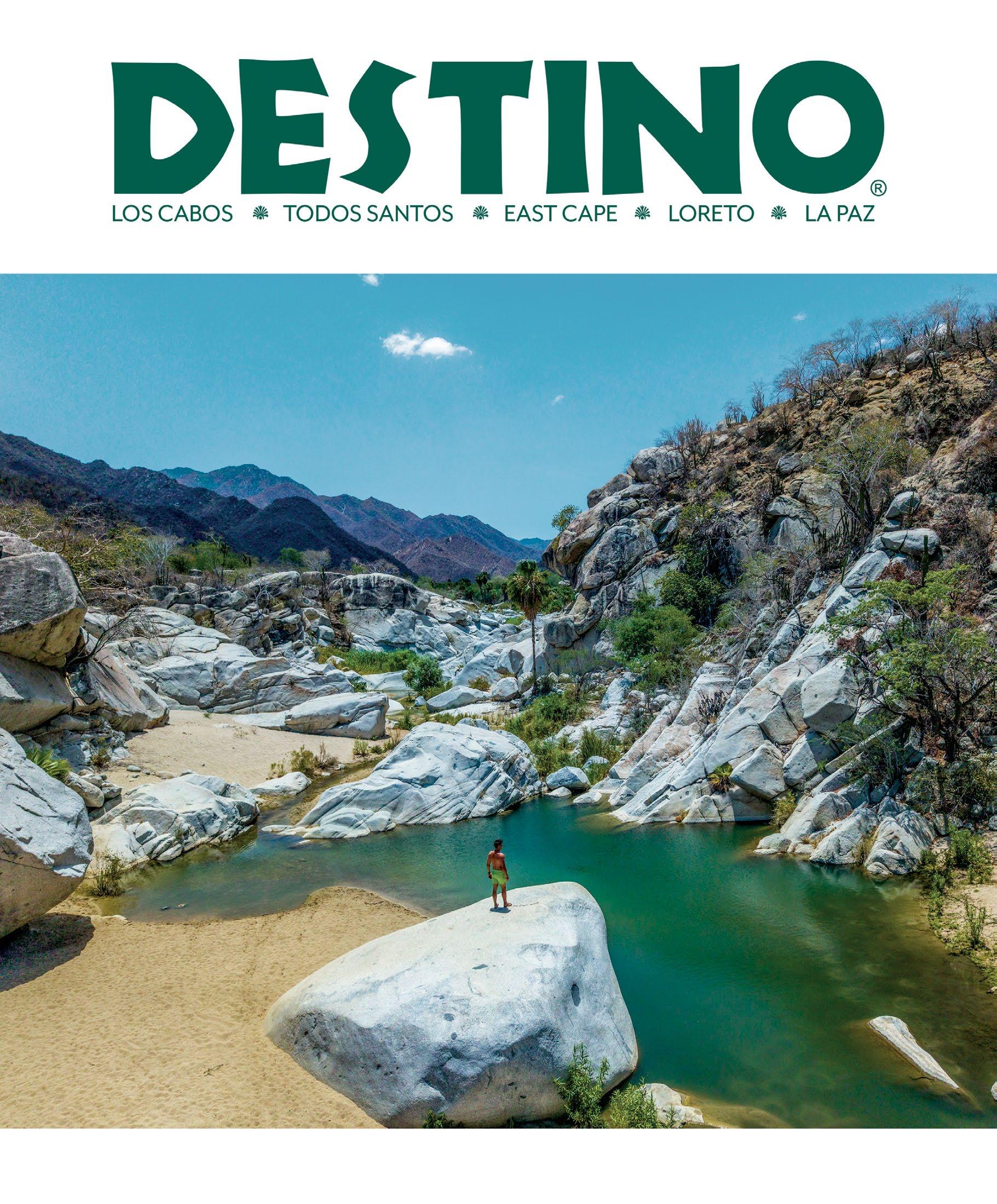




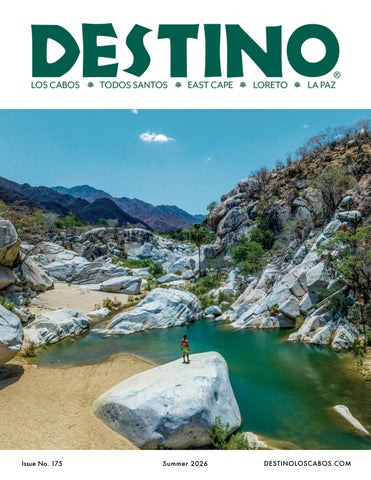
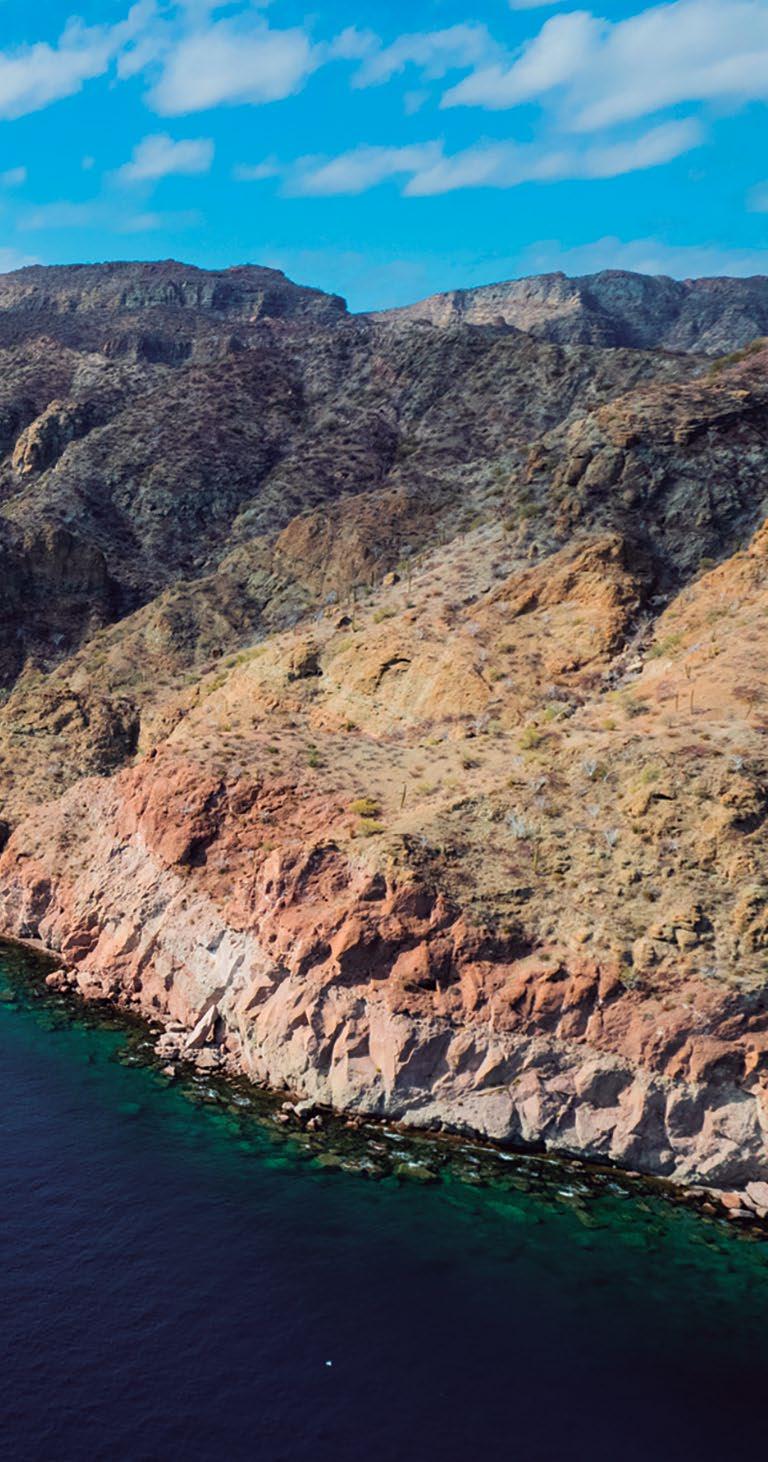
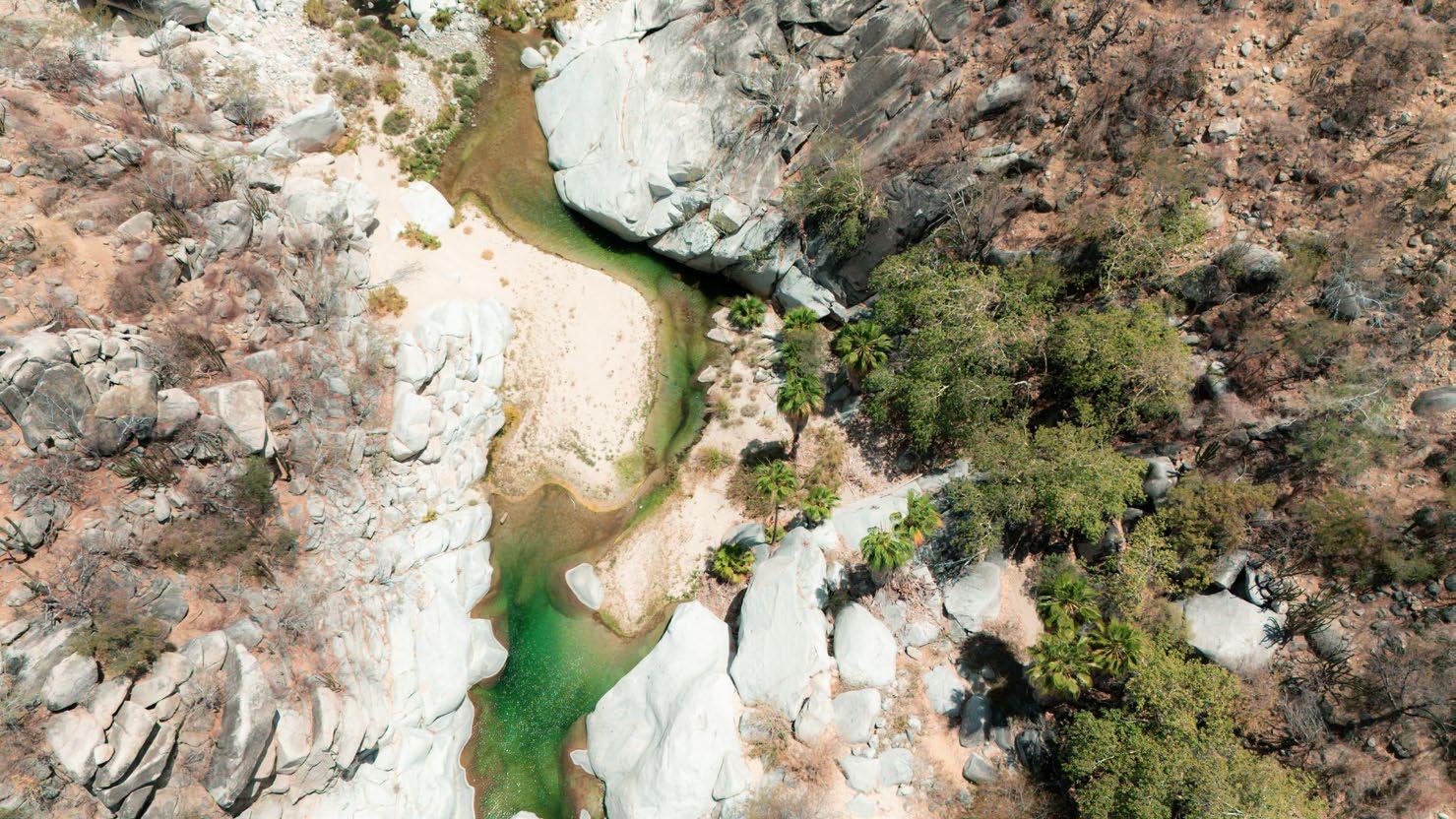
This issue’s cover features a canyon pool in the Sierra de la Laguna. We chose it because its many contrasts illustrate what makes Baja California Sur so distinctive. Life here gathers in pockets, and one of the most dramatic is the pools and waterfalls that form in the mountain range that cuts the peninsula’s cape region from the East Cape to the southern Pacific.
Baja is a land of vast, beautiful, unforgiving spaces: the sky, the desert, and the ocean lose themselves into one another, three infinities. And then suddenly, an improbable beach cove that people travel around the world to enjoy, a palm orchard around an oasis, a mission church from the 17th century, or a reef teeming with marine life.
Much of what’s in this issue, if you read between the lines, relates to that. We feature entrepreneurs who chose to develop their projects slowly, in places that, on paper, could accommodate much more. People preoccupied with water, with density, with what a reef or mountain range can bear. Questions like how we should enter the water with an animal like the orca, if at all, and how our encounters shape not only our own economy but the orcas’ own social culture.
A good life is a life built around thoughtful limits. Here in Baja, the land itself demands that we stay keenly mindful of how far it’s wise to develop and activate it economically, and how. Having this conversation in a spirit of reverence and dialogue is the very thing that keeps the bounty from undoing itself.
Welcome to the Summer 2026 edition, Alejandro Ehrenberg
PUBLISHER
Owen Perry
EDITOR IN CHIEF
Alejandro Ehrenberg
INVESTMENT MANAGER
Lance Niederhaus
COMMERCIAL LEAD
Frida Ludwika Rodríguez GRAPHIC DESIGNER
Rebeca Beltrán CONTRIBUTORS
Carly Miller
Fletcher Wheaton
Victor Rivas
Victor Suárez
DIGITAL TEAM
Erika Coatzin – Social Media Manager
Victor Suárez – Content Strategist WEBMASTER
Edgar Valdez DISTRIBUTION
Christian Jiménez
SALES EXECUTIVES
Christian Jiménez
Yoselin Hideroa
EDITOR’S CONTACT
alejandro@destinoloscabos.com COVER PHOTO
Canyon Pool, Sierra de la Laguna
Alejandro Méndez Martínez de Escobar @alex.fpv2
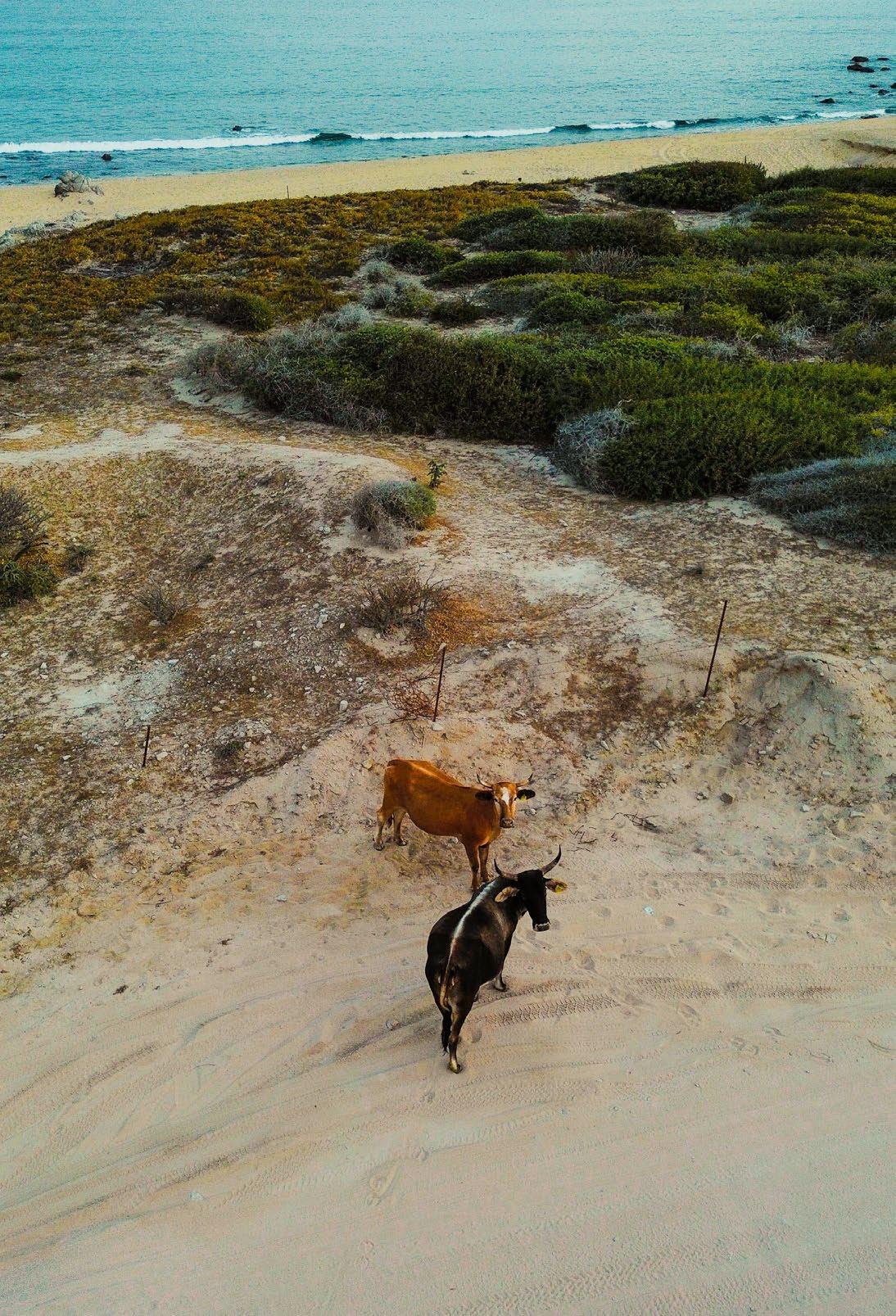
East Cape Photo: Lia Hernandez Instagram: @liaframe
+52 (624) 105-9700 Contact us: frida@destinoloscabos.com INTERESTED IN ADVERTISING? Follow us: @destinomagazine
DESTINOLOSCABOS.COM

Sunset Restaurant Guide
Dining spots across Baja California Sur where the sunset is part of the meal.
A seasonal calendar of festivals, tournaments, and events across South Baja.
Days by the Sea
A guide to Baja's beaches, from Los Cabos to Loreto.
Give Back: Ways to Support Baja Sur Local nonprofits strengthening healthcare, education, and environmental conservation.
Buying Pre-Construction Real Estate in Los Cabos
What buyers need to understand before signing — risk, contracts, and due diligence.
Does the Bank Own My Property?
By Victor Rivas. How the fideicomiso works, and why it's more secure than most buyers assume.
Three Views of Loreto
Three people who live and work in Loreto on what the market looks like from inside.
Building a Blue Zone in Cerritos
How one couple is building an intentional community on the
coast.
Nathalia Collins @nathaliacollins
Lia Hernández @ liaframe
A Closer Look at La Ventana
A real estate professional on the market, the land, and what makes the pueblo rare.
The Invitation
A PGA professional on the game that captured her, and the golf coaching model she's building in Cabo.
Beyond the Beaches: Healthcare Reimagined in Los Cabos
How one innovative medical network is building infrastructure for visitors and residents alike.
Orca Tourism is Moving Faster Than Science and Regulation
On the boom in orca watching, the new regulations, and what they don't yet cover.
The Other Face of Los Cabos
On the Sierra de la Laguna and what gets lost when you never leave the corridor.
The Family Behind the Super Bowl of Sport Fishing
Jordyn Bisbee on forty-five years of tournaments in Los Cabos and what comes next.
A professional surfer on the women's surf scene in Baja, and what's being built now.
Beyond the Baseline: Ten Years of the Los Cabos Tennis Open
The ATP 250 returns for its tenth edition, with a roster of top-20 players and a decade of local roots behind it.
Alejandro Méndez @alex.fpv2
Andrés Navarro @el.navass
Noah Duethman @gringoncontentco
Dining spots across Baja
California Sur where the sunset is part of the experience.
Sunset Monalisa
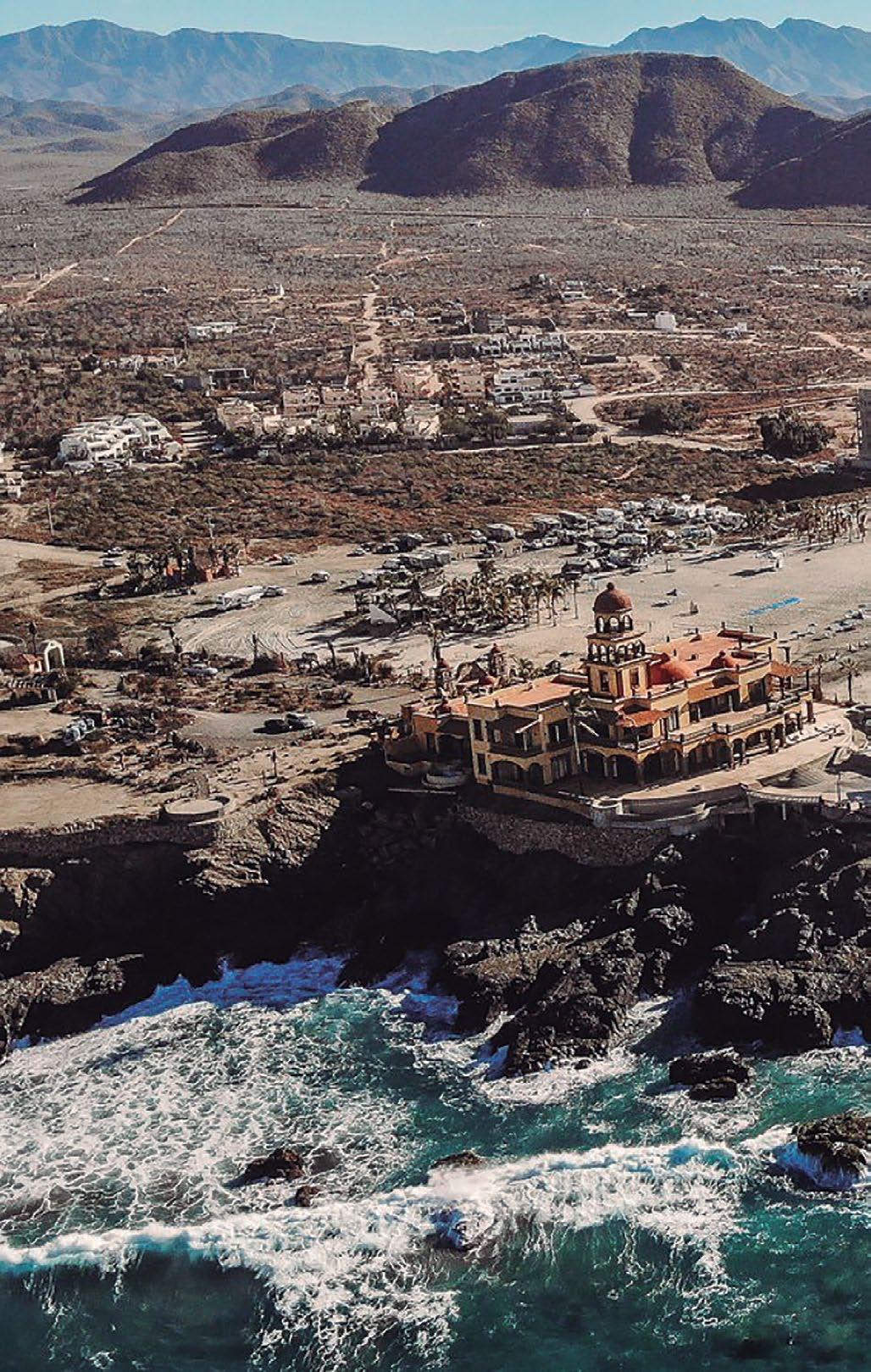
Built into the cliffs overlooking Monuments Beach, this is one of the most famous restaurants in Los Cabos, with terraces that drop toward the water. The kitchen is Mediterranean, serving seafood and risotto, or the longer tasting menus at a formal pace that doesn’t go stiff. It faces west, and they time dinner to the light.
El Farallon
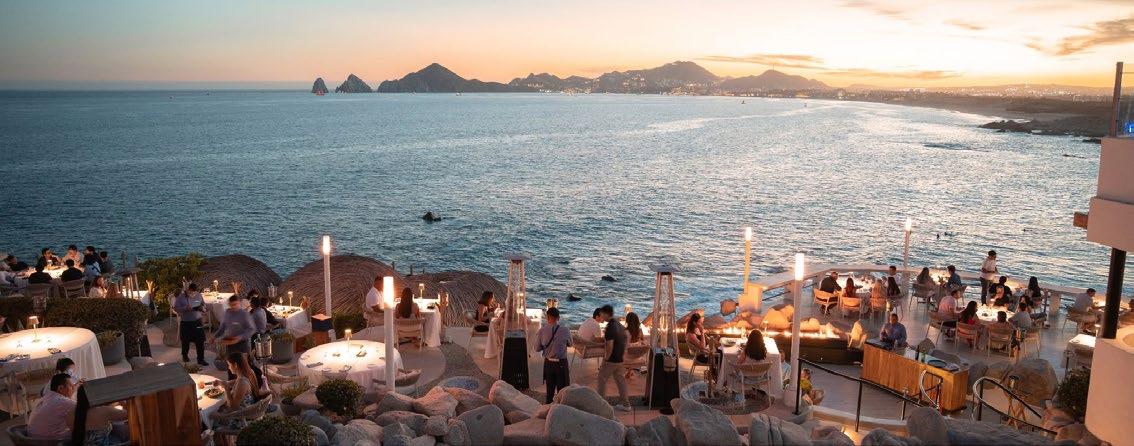
El Cardonal golf course, offering stunning views of the open Pacific Ocean. Since this is on the west side of the cape, you can watch the sun set directly into the sea.
SUR Beach House
SUR is a beach club in daylight and a sharper dining room after dark, with a wide seafood menu of ceviche and grilled fish, plus tacos by the dozen and cocktails throughout. The afternoon stays loose; the evening tightens up. Land there for lunch and you can easily still be there at dinner.
the kind of meal a surfer wants. Nothing about it stands on ceremony. Roll in wet from the afternoon session and nobody blinks.
San Jose
Set within a 19th-century farmhouse, Los Tamarindos grows nearly everything it serves. The menu features dishes that rotate weekly, defined by the fields of tomatoes, herbs, and citrus. Expect rustic plates with elegant restraint: seasonal fish, grilled vegetables, handmade pasta.
Part of the Waldorf Astoria Los Cabos Pedregal, El Farallon is an open-air seafood restaurant set on the rocks above the Pacific. The day’s catch is laid out market-style each evening, so you build the meal around what came in. With candlelit tables and the sound of surf below, the town feels miles away.
Jazz on the Rocks
A cliffside restaurant and lounge where the live jazz sets the pace, poured alongside cocktails and a seafood menu of small plates and sushi. The terraces are the room; the mood is social and relaxed.
Enrique Olvera’s Manta is the main restaurant at The Cape: a glass box that frames the Pacific and the Arch beyond. The cooking starts Mexican and turns Peruvian and Japanese, raw fish to wood-fired plates, built on Baja ingredients. Every table is angled at the water, and dinner runs late enough to catch the color going out of the sky.
The Woods Cabo
This restaurant at Diamante is described as a sports bar, but it offers a menu that rivals a steakhouse, featuring Wagyu, sushi, wood-fired pizza, and an extensive wine list, all created by Chef Larbi Dahrouch. The terrace overlooks the
Tabasco Beach
A family-run establishment located on Medano Beach, Tabasco offers a casual setting where you can enjoy the sand between your toes. They serve wood-fired pizza, tacos, seafood, and cold beer at tables shaded by umbrellas. The deck provides a view of the bay and Land’s End. Open from breakfast through a long, leisurely happy hour.
Cielomar Rooftop / The Corridor
On the roof of the Viceroy Hotel, Cielomar has a seafood-led menu and a full cocktail list under the open sky. Low light and lounge seating mean dinner can dissolve into drinks whenever you let it. People tend to stay well past the last plate.
Talavera / The Corridor
Talavera, the dining restaurant at Hilton Los Cabos, grills its seafood and steaks on an openair terrace facing the Sea of Cortez. Service is calm and the tables aren’t rushed. It’s the kind of resort dinner you can stretch over two hours without anyone hovering.
7 Seas / San Jose
Attached to Cabo Surf Hotel, 7 Seas takes after the break out front: seafood, Baja plates, and
Benno / Todos Santos
At Hotel San Cristobal, Benno is at the intersection of Baja and the Mediterranean, building its menu around local seafood, vegetables, and simple preparations. The patio faces Punta Lobos and the Pacific, where fishing boats share the horizon with the evening light. The atmosphere is relaxed and open-air, making it as much a place to linger over a bottle of wine as it is to sit down for dinner.
Part of the Guaycura group, El Mirador sits on a cliff outside Todos Santos, serving seafood and modern Mexican plates alongside a wellcrafted cocktail list. Being out of town means that the pace slows and the ocean takes over the windows.
Jazamango / Todos
Javier Plascencia’s farm restaurant builds its menu off what’s growing on the property, so it turns over with the harvest: wood-fired cooking, handmade pasta, seasonal vegetables, Baja seafood. The setting is open and rural, not resort-polished.
The Green Room / Todos Santos
Out past town on La Pastora beach, The Green Room is one of the few Todos Santos spots actually on the sand, with dishes named for surf breaks and a barefoot-welcome door policy. Lanterns and fire pits keep it going after dark. Get there early for the sun going into the Pacific, then drift back into town for dinner.
Mas Olas Restaurants / El Pescadero
At this hotel the kitchen works with produce from the property’s gardens and seafood from Baja waters, building a menu rooted in the region. The dining rooms open toward the Pacific, where the landscape does much of the talking. It feels remote in the best way, with desert, ocean, and evening light carrying equal weight with the food.
Barracuda Cantina / Cerritos
A beach bar and seafood shack right on Cerritos Beach, known for Baja fish tacos, ceviche, shrimp by the plate, and cocktails. It stays informal and surfdriven, live music going, locals filtering through all afternoon and into the night. Being right on the sand makes it one of the best places in Cerritos to watch the sun go down.
Azotea
Azotea looks out over the city from a rooftop, pairing cocktails with small plates in one of the sharper-looking spaces in La Paz. The music and the seating set the tone here; the food plays backup. Come to drink and graze rather than sit down to a proper dinner.
Quemadero centers its menu on live-fire cooking, turning out grilled meats, seafood, and vegetables with a focus on smoke, char, and straightforward flavors. The room is relaxed and unpolished in the best sense, with craft beer on tap, communal tables, and a crowd that mixes locals and visitors. It feels Baja: casual, social, and more interested in good food than ceremony.
Cardon
Set at one of the highest vantage points overlooking La Paz Bay, Cardon combines contemporary Mexican cooking with wide views of the Sea of Cortez. The menu moves between local seafood, grilled meats, and dishes designed for sharing, while the terraces keep the focus on the landscape. Arrive before sunset and plan to stay through dinner.
Mozza Baja / Costa Palmas
Nancy Silverton’s Mozza Baja is on the Costa Palmas Marina Village, doing wood-fired pizza and handmade pasta alongside whatever the boats and farms send in. The menu moves with the day’s catch and harvest. It’s easy and open-air, dressed down for all its pedigree.
SHADE at La Fortuna / La Fortuna
SHADE sits right on the beach under a run of palms, keeping to seafood and cocktails. The landscape does the decorating. Drop in for lunch, stay for an easy dinner, leave sandy.
Lateral / La Fortuna
A few steps off the sand at La Fortuna, Lateral keeps a casual beachfront menu built on seafood, with the Sea of Cortez right in front of you. Plenty of people split the day between a table here and the break out front.
Romanita Baja Kitchen
On the Salvatierra walkway in the old center, Romanita mixes regional Mexican ingredients with Mediterranean technique across an open-air courtyard. The service is attentive, there’s live music most nights, and it feels polished but not stiff.
Del Carmen at Hotel Oasis
The restaurant at Hotel Oasis is an open-air space right on the Loreto beach, cooking seafood and regional Mexican food at no particular hurry. It keeps things simple where places farther south sometimes reach for grandeur.
Los Olivos at La Mision
Los Olivos, inside the La Mision Loreto hotel, sets Baja seafood and steaks on a raised terrace overlooking the water. The pace is traditional and unrushed, made for an evening that runs long. It’s resort cooking with none of the resort din.
Villa del Palmar
South of town at Danzante Bay, the Villa del Palmar resort runs several restaurants, with the steakhouse-and-seafood Danzante as the one worth dressing for: fine cuts and fresh fish, a long list of Mexican wine. The rest covers a buffet-style international room and the casual pool and beach bars. It’s a world set up for a stay built around the golf and the islands.

Summer is South Baja’s slow season, though you wouldn’t know it from the marlin tournaments, the ranch-town fiestas, and the south swell that brings the surfers down.
Mexican Independence Day / Sept 15–16
The celebrations culminate in El Grito on the night of the 15th, when crowds fill the main plazas for a reenactment of the 1810 call to arms, followed by fireworks and music. The 16th brings parades. Restaurants and hotels across the region mark the holiday with traditional dinners and live music.
Mifel Tennis Open / July 25–Aug 1 / Tourist Corridor
The ATP tournament returns as one of the region’s biggest international sporting events, drawing professional players and crowds to the Cabo Sports Complex close to Solaz Hotel. Matches run in the evening, when the summer heat eases. The 2026 edition marks the tournament’s tenth year.
Surf Season at Costa Azul / July–Sept / San Jose del Cabo
Summer is peak surf on the Sea of Cortez side of Los Cabos, when southern and tropical swells hit the breaks clustered at Costa Azul. Acapulquito keeps a mellow right-hander for longboarders and beginners, and The Rock picks up speed for intermediates. Zippers is the one with the reputation: a fast, consistent reef break for advanced surfers.
Country Splash Festival / Sept 4–6 / Tourist Corridor
A new festival arrives at Hotel Paradisus on Labor Day weekend, built around live country music, pool parties, and beach programming. The debut edition brings Riley Green, Jon Pardi, and Tucker Wetmore to the bill.
Espiritu Santo & Los Islotes / July–Sept / La Paz
The day boats out of La Paz run to Espiritu Santo Island all summer, where calm water and pale beaches make for easy snorkeling and island landings. The sea lion colony at Los Islotes is a popular draw, though it remains closed during the June–August breeding season and reopens in September.
Rancho Cacachilas Summer Camp / July / Sierra de las Cacachilas
Up in the Sierra de las Cacachilas behind La Paz, this working eco-ranch turns the July school break into week-long camps for kids and teens. The days run on ranch and desert craft, like making cheese, tending the orchards and the goat corrals, learning map-and-compass across the backcountry. Phones stay behind.
San Bartolo Traditional Feasts / Late August / San Bartolo
San Bartolo is the orchard town on the highway up from Los Cabos, known across the state for the preserves its families bottle from the surrounding huertas. The patronsaint fiesta is at the end of August, near the feast of San Bartolome on the 24th, when processions fill the streets, and the band plays in front of the church into the night.
Los Barriles Fishing Tournaments / July–Sept / Los Barriles
Van Wormer’s resorts at Los Barriles host the East Cape’s busiest run of summer fishing. The marquee event is the one-day Dorado Shoot Out on July 18, which pulls teams from both sides of the border out onto the Sea of Cortez. A women’s tournament for the Cruz Rosa breast-cancer foundation runs the same week, and the Tuna & Wahoo Shoot Out follows in September.
The Sierra Foothill Fiestas / Mid–late July / Miraflores & Santiago
Through the back half of July, the ranch towns in the Sierra de la Laguna foothills hold their patron and harvest fiestas. Miraflores goes first, around the 19th, with the state’s oldest pitahaya festival, a charreada and a cactus-fruit harvest contest. Santiago is followed by the 24th to the 28th for the feast of its patron saint, when a dawn
cabalgata rides out from the Las Cuevas bridge, and bands play in the plaza late into the night. Both are ranch culture at full tilt, the Sudcaliforniano identity the foothills have kept alive.
Bisbee’s East Cape Offshore / July 28–Aug 1 / Buena Vista
Bisbee’s puts on the richest sportfishing tournaments in Baja, and the East Cape Offshore at Buena Vista is where the season opens. Teams chase marlin and tuna across the warm offshore water, fishing the last weekend of July, while the famous big-money finale waits in Cabo come October.
Cabo Pulmo
The reef at Cabo Pulmo is the only hardcoral reef in the Sea of Cortez and one of the ocean’s great conservation comebacks; it dives best in late summer, when the water warms and the visibility runs deep. Calm seas open up the offshore pinnacles, and the protected reef stacks up the marine life the park is famous for, the spinning columns of bigeye jack above all.
TODOS SANTOS / PESCADERO / CERRITOS
Todos Santos Mango Festival / Late July / Todos Santos
The region’s largest mango celebration takes place on the weekend in July when the harvest reaches its peak. During this time, local restaurants create special menus featuring mango dishes, ranging from mango ceviche to chile-dusted mangonadas. The downtown square is filled with a craft corridor and live music. A shore-fishing tournament at La Bocana de las Tunas typically coincides with the festivities.
Workshops at the Modern Elder Academy / El Pescadero
Part retreat, part classroom, MEA’s programs focus on life transitions and leadership grounded in purpose. The beachfront campus, just south of Pescadero, hosts multiday workshops that blend conversation, wellness, and community.
Cerritos Summer Surf Season / July–Sept / Cerritos
Cerritos, located on the Pacific coast below Pescadero, experiences the same gentle summer south swells as the nearby reefs

across the cape region. However, it offers a sand-bottom beach break that is ideal for longboard beginners while also accommodating more experienced surfers. Surf schools are commonly found in the area, and the beach bars remain lively well past sunset.
Loreto Bay Island Excursions / July–Sept
The islands near Loreto are located within a national marine park. Coronado is known for its white-sand beach and a shallow turquoise lagoon, perfect for swimming. Danzante is ideal for snorkeling, while Del Carmen offers a rewarding full-day experience. The warm water and calm mornings make summer one of the best times to explore these islands.
Feast of Our Lady of Loreto / Aug 30–Sept 8
Loreto was the first mission in the Californias, founded in 1697 and still called the mother of the chain that runs all the way up to Sacramento. Its patron feast closes the summer: from the end of August, the image of the Virgin is carried through the neighborhoods in nightly processions, building to September 8, when the Mass outgrows the old mission church and spills into the atrium.

The beaches of Baja California Sur define much of its rhythm and character. Each one offers something distinct: places to swim, surf, explore, or pause and take in the changing light.
Los Cabos is home to many of Baja’s most accessible and swimmable beaches. Calm bays, soft sand, and clear water invite long swims, while others are better for quiet walks and wide views.
Lovers' and Divorce Beach
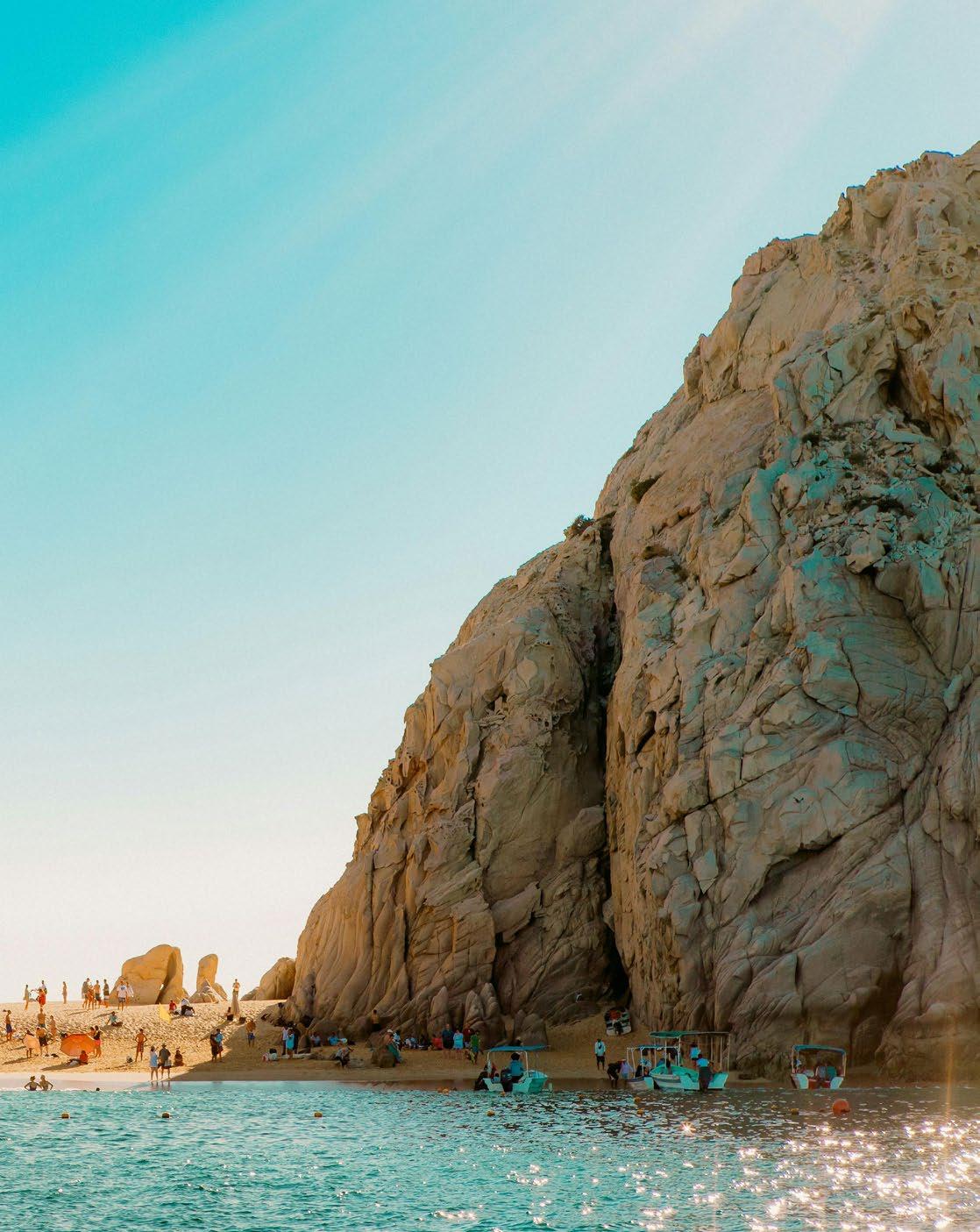
Located at the Land's End rock formations, these iconic twin beaches are accessible only by water taxi from Cabo's marina. Lover's Beach faces the calmer Sea of Cortez, while Divorce Beach opens to the rough Pacific.
El Medano
The main beach in Cabo San Lucas is one of the most active in the region. Its long stretch of swimmable water is lined with restaurants, beach clubs, and water sports operators. From quiet mornings to lively afternoons with music and activity, El Medano offers something for everyone.
Las Viudas
A lesser-known spot along the Corridor, Las Viudas features dramatic rock formations and tide pools that attract photographers and explorers. While the surf is too strong for swimming, it's a striking place to enjoy the coastline's raw beauty.
Santa Maria
A horseshoe-shaped bay surrounded by rocky cliffs. The marine sanctuary here attracts a variety of colorful fish, and its sheltered waters make it a favorite destination for families and kayakers.
Chileno Bay
A Blue Flag-certified beach between Cabo San Lucas and San Jose del Cabo. Its calm waters and coral formations make it one of the area's best spots for snorkeling and swimming.
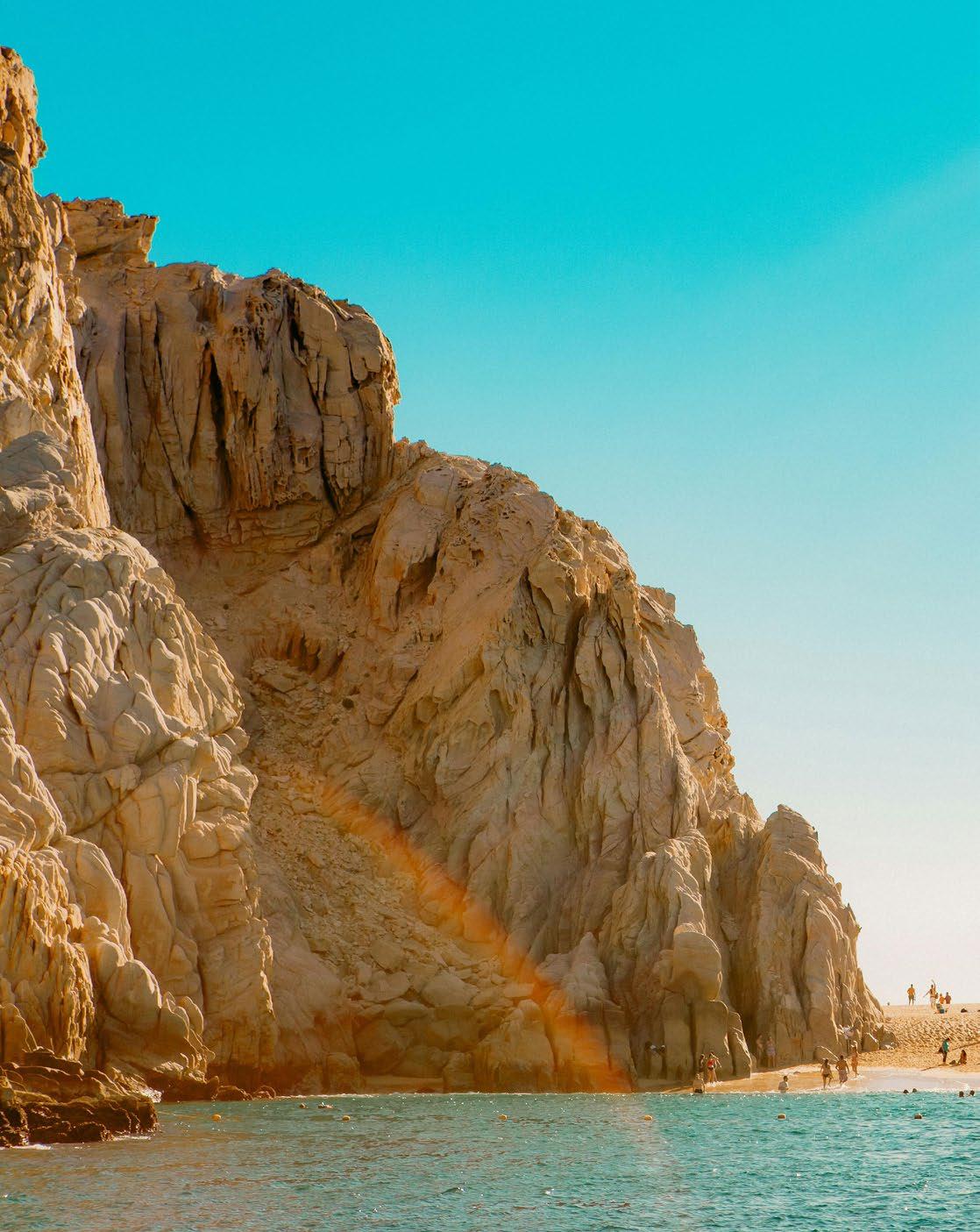
A favorite among locals, this protected bay on the outskirts of San Jose offers calm waters and a family-friendly setting. Palmilla's soft sand and gentle surf also make it one of the most swimmable beaches in the region.
Costa Azul
A hub for surf enthusiasts, with consistent breaks and a lively atmosphere near San Jose. The beach's access to cafés and surf schools makes it a convenient choice for beginners and experienced surfers.
Veleros and El Ganzo Beach
Located next to the Puerto Los Cabos Marina, this is one of the few swimmable spots in the area. Visitors can freely walk in with their own umbrellas or reserve a spot at the Veleros Beach
Club. Two man-made rock barriers frame the bay, providing shelter for the waters.
The East Cape stretches for miles north toward La Paz, but the beaches listed here are the ones easiest to reach from San Jose del Cabo. Known for surf breaks, clear water, and open views, they offer a quiet contrast to the area's resort life.
Nine Palms Beach
A world-class surf break with a laid-back atmosphere. The long right-hand wave attracts both surfers and spectators, especially in the morning when the winds are calm.
Shipwrecks Beach
Remote and scenic, this beach is a favorite for
off-road travelers and surf seekers. The dirt road leading to the beach creates a distinctive sense of isolation, and the views of the Sea of Cortez are unmatched.
La Fortuna Beach
A tranquil stretch of clear waters meets untouched desert. The surf can be moderate, making it suitable for both swimming and paddleboarding when conditions are calm.
The Pacific side feels raw and untamed, with strong currents and expansive views. Most beaches are best for walking or watching waves, though Cerritos stands out as a safe swimming spot. Sunsets here are unforgettable — the sun drops straight into the sea.
Las Palmas
Tucked south of Todos Santos, Las Palmas feels like one of the area's quiet secrets. The path to reach it winds through a hidden palm oasis, fed by an underground spring.
San Pedrito
Known for its consistent surf and quieter setting, San Pedrito in El Pescadero draws experienced surfers and sunset watchers. Access is by a short dirt road from Pescadero. Perfect for long meditative walks.
Cerritos
A favorite for beginners and longboarders, Cerritos offers reliable waves and surf schools year-round. The scene is relaxed, with cafés and small beach bars.
LA PAZ
La Paz has some of the world's most beautiful beaches. Shallow turquoise water and soft white sand make them perfect for swimming or wading with children, while reddish hills frame the city's luminous coastline.
Balandra
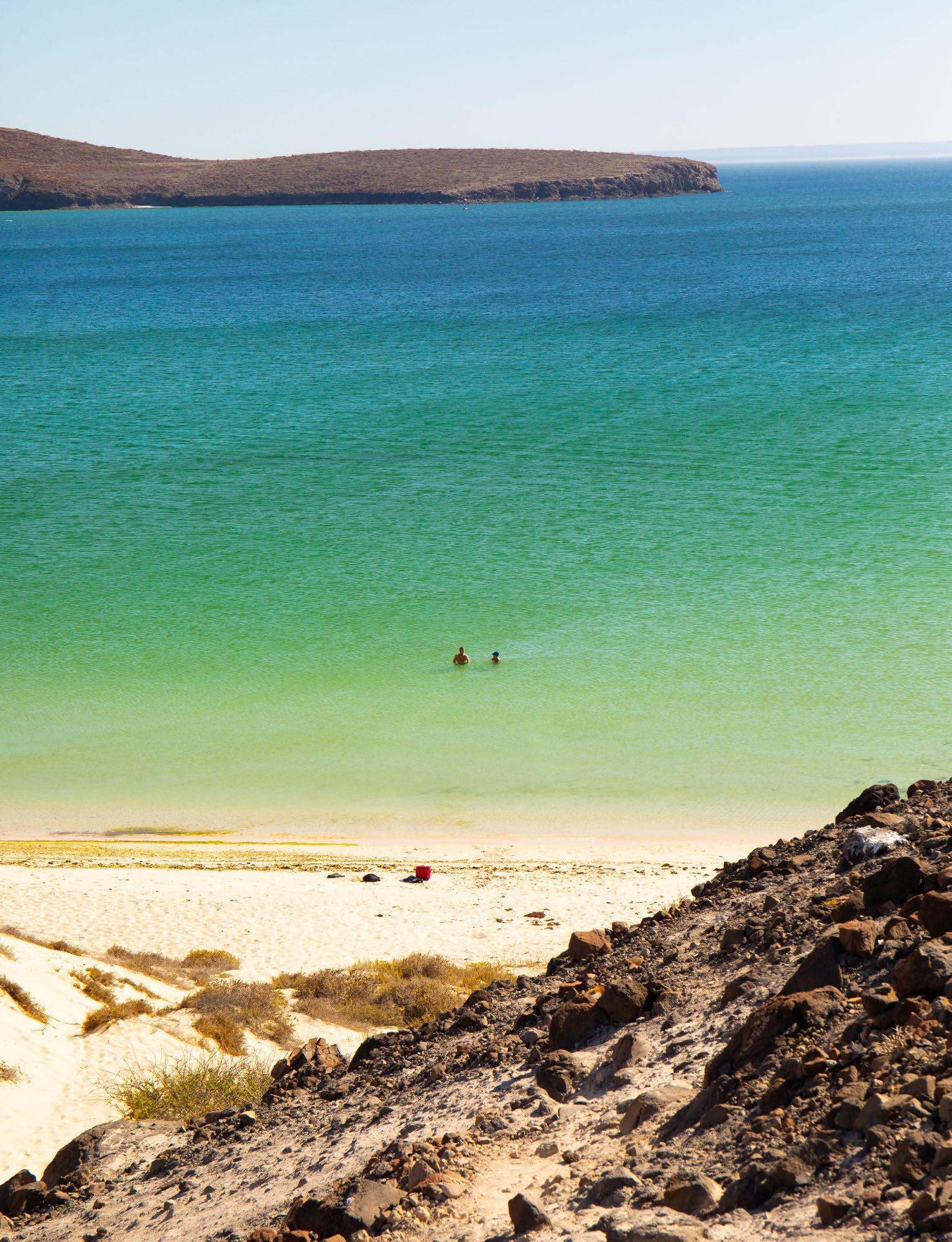
Famous for its turquoise lagoon and shallow bay, Balandra remains one of Baja's most photographed natural sites. Ideal for kayaking and paddleboarding, it is protected as a natural area with limited daily access to preserve its beauty.
Located just beyond Balandra, Tecolote offers restaurants, beach bars, and boat rentals for day trips to Isla Espiritu Santo. Its gentle waves and long shore make it perfect for families and groups.
One of the closest beaches to downtown La Paz. Recently renovated with piers and shaded palapas, it's popular among locals for early morning swims and evening walks.
Loreto's coastline brings sea and mountains within close sight of each other. Calm, lifefilled waters surround volcanic islands, while the Sierra de la Giganta rises just beyond the bay, creating one of Baja Sur's most dramatic landscapes.
A wide, family-friendly beach just south of Loreto, lined with palms and calm water ideal for paddleboarding. Locals jog the shoreline at sunrise as the islands glow pink across the bay.
Juncalito, cherished for its simplicity, is where Loreto residents go to relax. Campers and day visitors set up along the sandy shore, facing the unbroken horizon. The shallow waters stretch far into the sea, creating a sense of infinite calm.
Ensenada Blanca, where the resort Villa del Palmar is located, offers a secluded stretch of white sand bordered by turquoise waters. Often used as a launching point for snorkeling or kayaking trips, it embodies the serenity that defines Loreto.
Nonprofits across Baja Sur strengthen community health, education, and conservation through direct, local impact.
Amigos de los Niños – Los Cabos
Provides specialized medical care for children in vulnerable situations, including cardiology, dental surgery, audiology, and vision support. The program connects families with medical teams that deliver treatment without financial barriers.
How to get involved: Donate, participate in fundraising events, or offer professional support.
Los Cabos Community Blood Bank – Los Cabos
The closest blood bank to Los Cabos has long been in La Paz, two hours away. This nonprofit, backed by local foundations including Cabo del Sol's Heart and Sol, now has a mobile unit that runs donor drives at hotels and businesses across the municipality, collecting, processing, and storing blood for patients in the region.
How to get involved: Donate blood at a mobile drive, make a financial contribution, or volunteer.
Casa Ramé – Los Cabos
Dedicated to improving the lives of individuals with neurodevelopmental disabilities through therapeutic programs, education, and family support.
How to get involved: Contribute to program growth or volunteer at community activities.
Cero Basura BCS – Todos Santos, Pescadero, Cerritos
An initiative focused on diverting hazardous waste from landfills and converting it into productive uses, this organization empowers the peninsula’s communities through education, recycling programs, and local stewardship.
How to get involved: Donate to wastereduction programs, volunteer at compost or recycling initiatives, or adopt sustainable habits in your home or business.
Corazón de Niño – La Paz
Supports children with congenital heart conditions by coordinating diagnosis, surgery logistics, and long-term recovery assistance for families across Baja Sur
How to get involved: Sponsor medical care, attend benefit events, or assist families during treatment.
Eco-Alianza Loreto – Loreto
Protects the marine ecosystem of Loreto Bay through community education, scientific research, and conservation initiatives focused on long-term ocean health.
How to get involved: Join educational programs, support research, or donate to preservation efforts.
Environmental Defense Fund – La Paz
Advances sustainable fisheries and ocean policy across the peninsula, collaborating with coastal communities, researchers, and environmental leaders.
How to get involved: Support initiatives, engage with advocacy efforts, or adopt sustainable travel practices.
Fundación Sarahuaro – Los Cabos
Promotes community development, education, and resource management programs designed to strengthen families and expand economic opportunity.
How to get involved: Volunteer, collaborate on sustainability initiatives, or offer financial support.
International Community Foundation –La Paz & Loreto
A grant-making organization connecting donors with environmental and social programs, amplifying local impact through long-term partnerships.
How to get involved: Donate to targeted initiatives or partner through philanthropic strategy.
Padrino Children’s Foundation –Todos Santos
Provides access to medical care, mental health services, and holistic support for children and families in the Todos Santos corridor.

How to get involved: Sponsor care programs or volunteer specialized expertise.
PET Los Cabos – Los Cabos
An animal-welfare nonprofit focused on responsible pet ownership, accessible spay/neuter campaigns, adoptions, and fostering in the Los Cabos region. How to get involved: Adopt a pet, volunteer for campaigns or runs, donate to support care and transport programs.
Red Autismo – Los Cabos
Supports children with Autism Spectrum Disorder through individualized therapies focused on communication, social development, and inclusive education.
How to get involved: Donate to therapy programs or volunteer with academic or clinical skills.
Shriners San José del Cabo – Los Cabos
Helps children requiring specialized surgery or advanced medical treatment by coordinating transportation, lodging, and family care.
How to get involved: Support travel funding, contribute lodging or services, or assist with logistics.
Sinades A.C. – El Pescadero
Environmental education with a hands-on approach. Programs teach recycling, gardening, and sustainable habits that cultivate responsible young citizens. How to get involved: Volunteer in school workshops or provide materials and resources.
VIFAC Los Cabos – Los Cabos
Offers shelter and support to pregnant women in vulnerable circumstances, helping mothers and children build stable futures.
How to get involved: Donate supplies, volunteer time, or support vocational training.


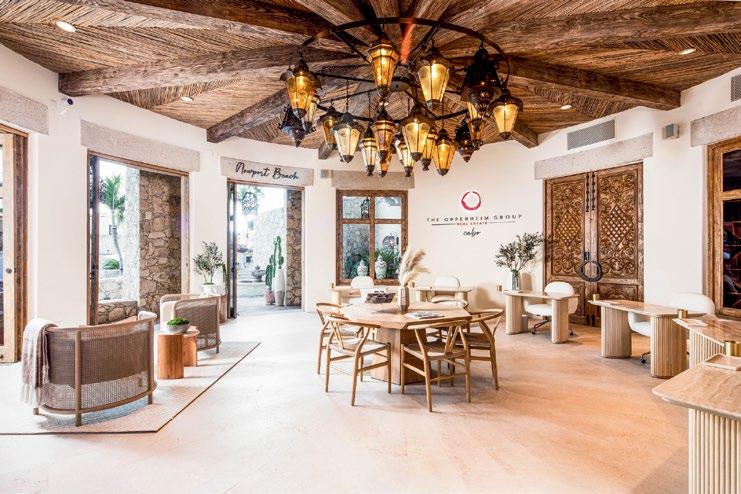
The Oppenheim Group is a premier luxury real estate brokerage representing buyers and sellers throughout Cabo San Lucas, Mexico and Southern California. With more than $5.3B+ in total sales, the firm closes hundreds of transactions annually and has represented many of the region’s most significant residential sales, including numerous record-breaking properties.
Originally founded in Southern California on the iconic corner of Sunset Blvd. and Sunset Plaza Dr. in Los Angeles, The Oppenheim Group has expanded its footprint with offices in Newport Beach, San Diego, and Cabo San Lucas. Today, O Group Cabo serves as a cornerstone of the brand’s international presence, ideally located within the exclusive Hacienda Beach Club on Medano Beach.

By Fletcher Wheaton, real estate broker fletcher@remexico.com
he best pricing in any project comes with the most uncertainty. Whether that trade still makes sense depends on what you know before you sign.
In Los Cabos, pre-construction has become one of the most common ways for foreigners to purchase vacation homes, rental properties, and investment real estate. The appeal is obvious: lower entry pricing, flexible payment structures, modern amenities, and the possibility of significant appreciation before the property is even delivered.
The reality is more complicated. Preconstruction is fundamentally a risk-versusreward equation. The earlier you buy, the greater the potential upside — but also the greater the risk. Buyers who purchase at the launch phase often rely on renderings, floor plans, promises, and timelines that may change during construction. In return for taking on that uncertainty, they are typically rewarded with the best pricing in the project.
In strong markets, that strategy can work extremely well. Many buyers in Cabo purchased pre-construction condos years ago and saw their values increase dramatically before delivery. However, when markets slow, financing tightens, or developers miscalculate demand, the same projects can be delayed, partially completed, or financially strained.
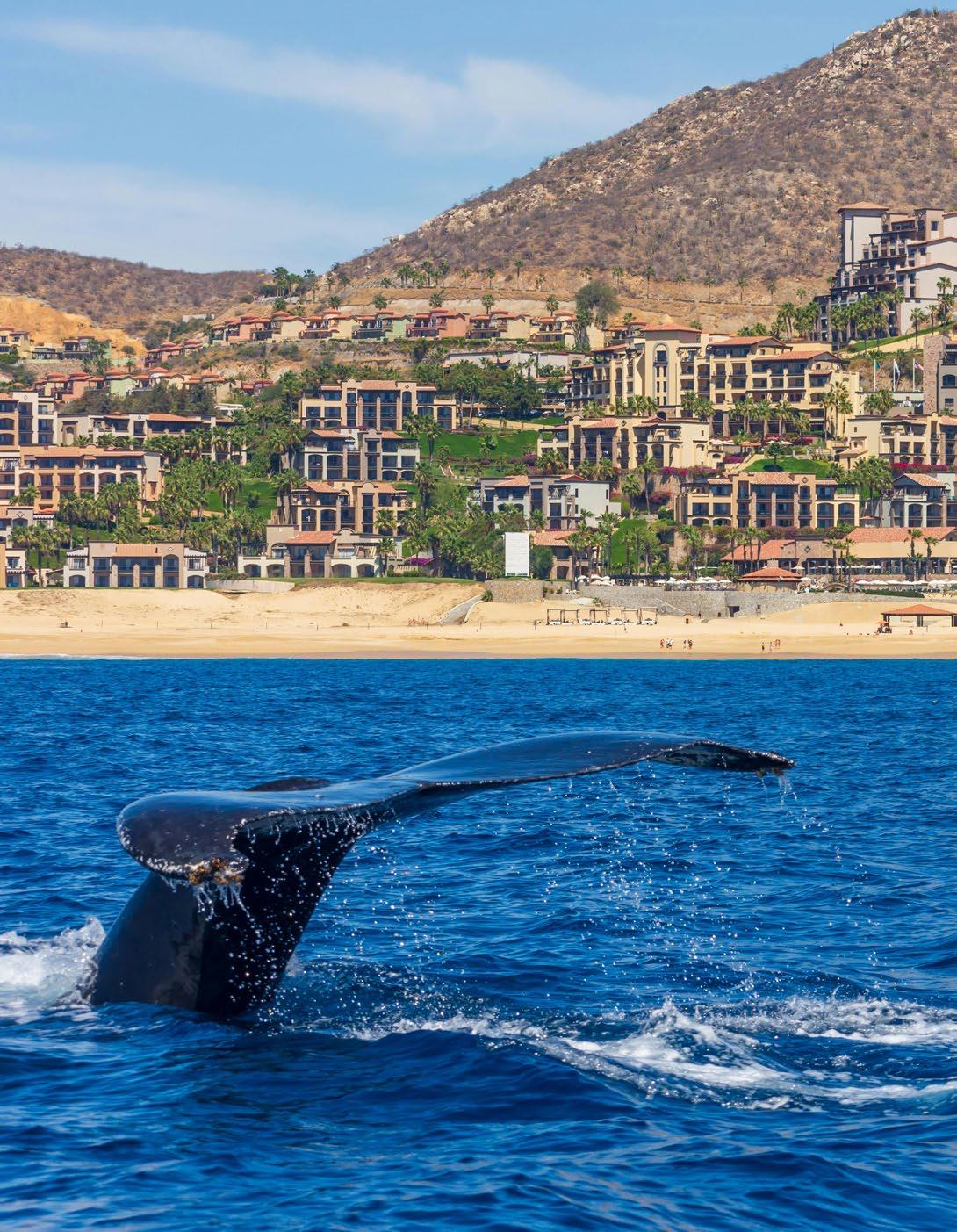
One of the biggest mistakes buyers make is assuming all developers operate the same way. They do not. A developer’s track record matters enormously. Buyers should investigate previous projects, speak with past owners, review online feedback, and, whenever possible, physically visit completed communities. A beautiful rendering means very little if the developer has a history
of delays, unfinished amenities, or poor construction quality.
The sales structure matters as well. In many cases, the developers’ in-house sales team is highly incentivized to push inventory, which sometimes can create conflicts of interest. A strong independent buyer’s agent provides an extra layer of protection by helping vet the project, negotiate terms, and identify red flags before money is committed.
Another major factor buyers often overlook is sales velocity. In Mexico, many developments rely heavily on ongoing sales to fund construction. If sales slow significantly, projects can quickly run into trouble. Buyers should pay attention not only to the project itself, but also to broader market conditions.
In Los Cabos today, many buyers are beginning to question whether the risk of pre-construction is justified when completed resale inventory is available at similar pricing. In some cases, fully furnished resale properties can now be purchased for the same price or less than pre-construction units, without the uncertainty of waiting years for delivery.
Contracts are another area where buyers must be extremely cautious. In Mexico, most developers use their own purchase agreements, which heavily favor the developer unless properly negotiated. Every detail should be reviewed carefully by a qualified closing attorney. Buyers should ensure that unit dimensions, finish packages, parking, storage, amenities, warranties, and timelines are clearly set out in the contract. If it is not in writing, it effectively does not exist.
Payment structures are equally important. Buyers should always try to negotiate milestone payments tied to actual construction progress instead of fixed calendar dates. Payments based on completed foundations, structural work, roofing, and finish stages help create accountability and reduce buyer exposure.
One area that confuses many foreign buyers is the distinction between possession and title delivery. In Mexico, it is common for buyers to take possession of a property before receiving the official title, especially in condo projects waiting for the condo regime to be finalized. This is known as a “soft close” or early possession agreement. While common, it creates additional risks if not structured properly. Buyers should strongly consider holding back a portion of funds in escrow until the title is fully delivered.
Pre-construction can absolutely work. Many buyers have done extremely well investing in projects early. But success in Mexico requires proper due diligence, realistic expectations, and strong representation throughout the process. The biggest mistake buyers make is assuming that because a project looks impressive online, it is automatically a safe investment.
By Victor Rivas, attorney at law
The first question most American and Canadian buyers ask me about the fideicomiso, or trust, is whether the bank owns their property. Technically, yes. The bank holds the title. But you are the beneficiary, and all the rights are yours.
Mexican law does not permit foreigners to hold property directly in restricted zones. Los Cabos, due to its proximity to the coastline, is one of those zones. The trust is how you acquire property here.
You can sell or rent the property whenever you choose. It passes to your heirs as any other asset would. The bank has no authority to act on its own: it cannot sell your property or take any step you have not authorized. If you decide to switch to a different trustee bank, that is your right as well.
The cleanest path to setting up the trust is to do so as an individual. You’ll need your passport and basic personal information. You will also designate a beneficiary substitute, typically a spouse or child, who will inherit the trust rights directly, without probate proceedings in either country. That clause matters more to most buyers than they realize on the day they sign.
Carrying out the process through a Mexican corporation is another option, but it only makes sense if you are acquiring multiple properties for commercial purposes, such as shortterm rentals. For a single home, the individual fideicomiso is the right structure. The obligations are fewer, and the procedure is simpler.
The fideicomiso has been the standard instrument for foreign property ownership in Mexico for decades. When structured correctly and the closing handled properly, your investment is as secure as any other.
For a closer look at how the fideicomiso works in practice, Victor Rivas and the team at Rivas & Rivas are available to guide foreign buyers through the closing process in Los Cabos.
victor.rivas@rrlflaw.com andres.rivas@rrlflaw.com
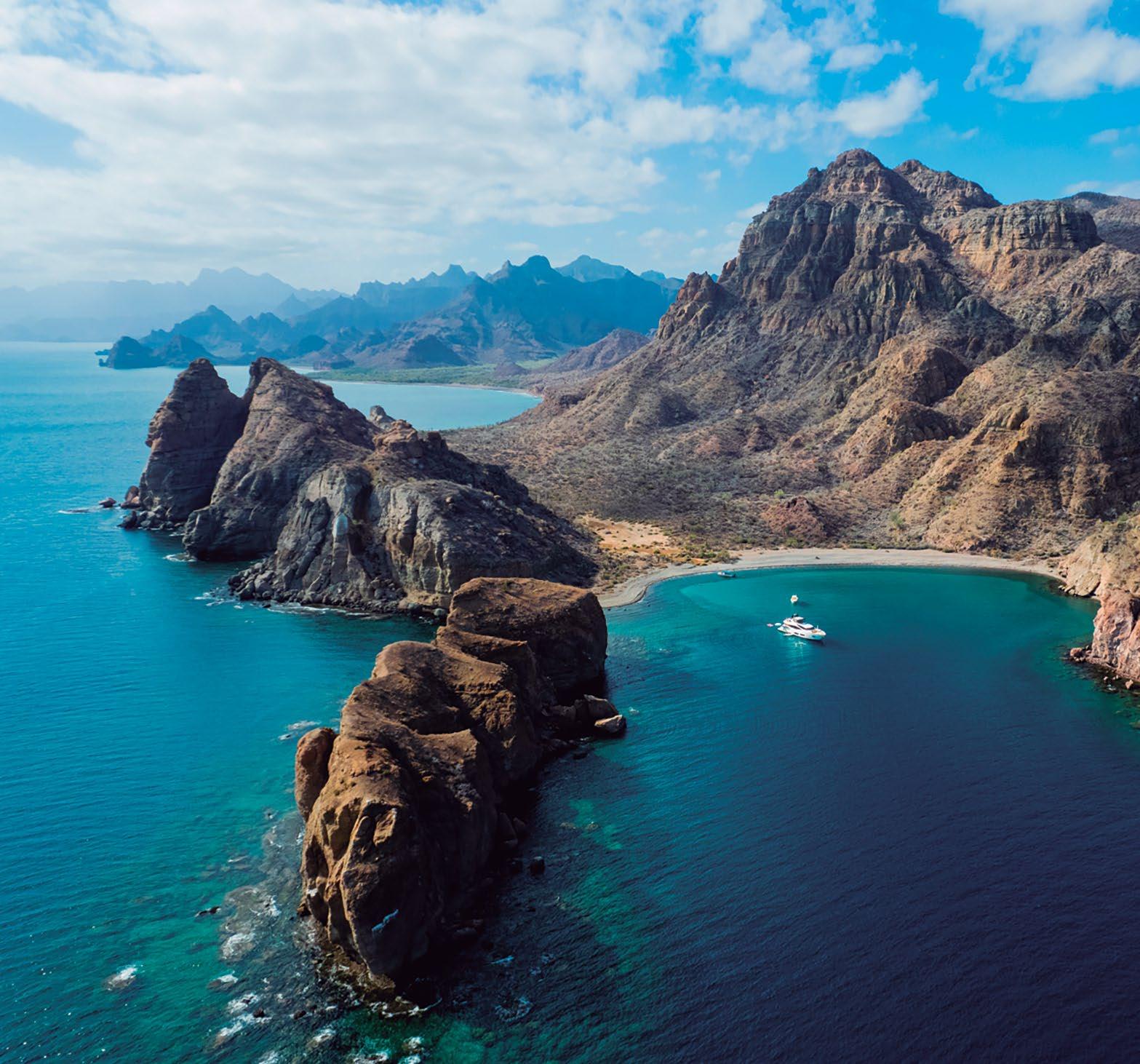
The figures point to a market in motion. Three people who live and work in Loreto explain what that looks like from inside.
he active inventory of homes and condos in Loreto on the state MLS has increased from around US$35 million in late 2024 to approximately US$77 million today. Average monthly listing prices have ranged from US$650,000 to US$800,000, with an outlier near US$880,000 last October.
Those figures should be read with caution, as part of Loreto still trades off the MLS, and a rising share of activity simply reflects more brokers putting more listings into the system. But the direction is clear enough. After years on the verge, Loreto is starting to stir. We asked three people who know the ground what that movement looks like up close.
Danny Garcia, Senior Head Golf Professional, TPC Danzante Bay
We’re surrounded by the Sierra de la Giganta mountains. They’re hugging us all the way around, except where the ocean is. We’re one of the few golf courses in the world that has a desert, valleys, mountains, ocean. It takes you out into the desert in the beginning, then it takes you up the mountain slowly, very gently. Then you play a par three that goes over the canyon and you see the majesty of the mountain right in front of you. And then you come back down and play off the mountains, back toward the ocean.
Everybody who’s buying real estate right now at Danzante Bay is very happy. It’s becoming more exclusive, a little more elite. We’re building homes ready to live in, so if you don’t want to wait, you can come in and purchase one we’re finishing up.
When I came here, going on my ninth year, there was nothing other than maybe four holes growing in. I went out to 17 with the manager, and I told him: If I make this putt and birdie the signature hole, that means 17 wants me to come work here. I looked at the line, and I hit it. Went in dead center. After that, we shook hands. I think I’m going to join you here.
The reason we’ve been able to retain this charm, this Loreto look and feel, is that we have a lower density. You’re not going to see these huge, massive resorts. There’s a restriction on height, for the most part four stories, and on the malecon in town, it’s only three. You can’t be above the mission church. In the last year, the government designated hundreds of hectares of land as parkland. And we’re in a marine park, so we don’t get the jet skis, the parasailers, all those things that take away from relaxing on the beach.
Our newest development is Alta Baja, right on the beach, a true gated community, with about 30,000 square feet of amenities for homeowners. Beachfront homes start around US$2.5 million, are mostly one-level, and are over 4,000 square feet. We even work with the Puerto Escondido group, where you could buy a lot, build a custom home, and have a dock slip right in front for your own yacht.
Many people come here with no intention to buy. They’ve come to rent for one week, and instead of going home with a bottle of tequila and a Mexican blanket, they buy a house. And this happens very often.
Harry Schikora, Broker, Zenith Cabo Realtors
More people are looking for that spot of Baja that Cabo was 30 years ago. Loreto already has the infrastructure to support growth: an airport, medical facilities, larger grocery stores, not the little momand-pop operations.
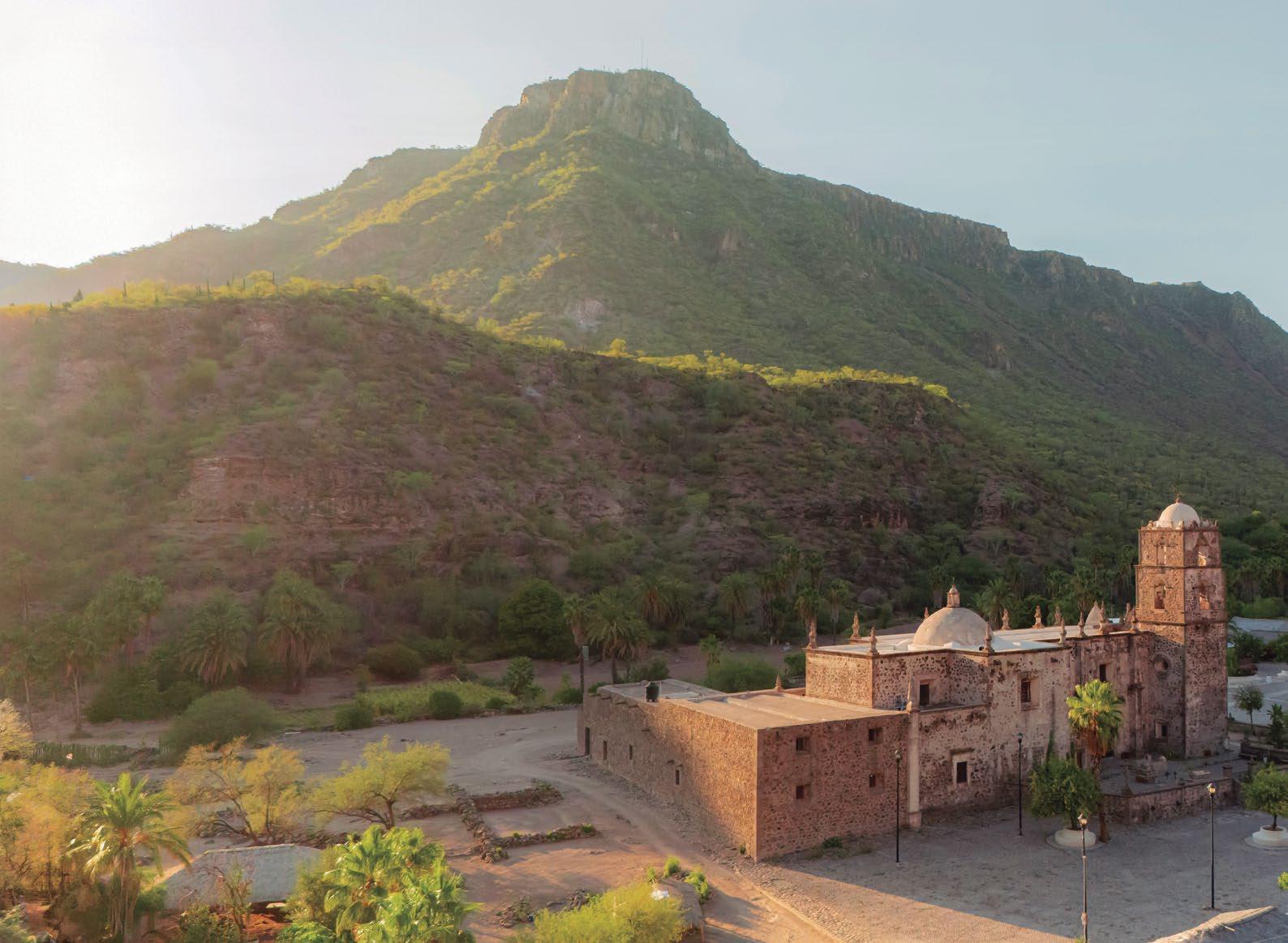
Loreto was founded in 1697, the first successful mission in all of the Californias. It served as the provincial capital for almost a century; it then remained as the capital of the Baja California province until the aftermath of the 1828 hurricane, when it was moved to La Paz. It keeps that old feel of Mexico, what people are after when they’re trying to get away from day-to-day life. There was an albino blue whale sighted up here just this year. The diversity of the wildlife is incredible.
I don’t think an explosion of growth would be good for Loreto. It needs to be steady and paced, so the infrastructure can be developed as it goes. If it experienced explosive growth, there would be issues to overcome. We've seen that in Los Cabos.
Right now, I’m developing something around a marina, with homes at different price points and some commercial zones, because it’s really close to downtown Loreto.

Karina Christensen and her husband Ron Sprengeler are the couple behind Contigo Cerritos, a small beachfront development on Baja’s Pacific coast. We talked with them about intentional living, the Blue Zones, and what’s drawing people here.
Contigo Cerritos started because you couldn’t find a community you fully wanted to be part of. What were you looking for that you weren’t finding? Ron and I had fallen in love with this area. We looked around for a while, but we never found a community that matched what we wanted. So when we found this oceanfront property in Cerritos, we realized we had a chance to create it ourselves, something shaped around how we want to live and the kind of community we want to be part of.
“Intentional community” covers a lot of ground. How do you define it, and where does Contigo fall?
For us, it comes down to shared values. Not politics, but how people want to live their lives. We wanted to create a place that encourages connection, wellness, and a sense of belonging. A lot of that comes from design. Creating spaces where people naturally gather, whether that’s around a shared meal, a fitness class, a sunset, or a conversation with neighbors. The goal is to attract people who value community as much as they value a beautiful home.
You built Contigo around the five pillars from the Blue Zones: movement, nourishment, community, stewardship, purpose. Why those, and how do they show up in the design?
Years before we found this property, Ron and I became fascinated by Dan Buettner’s work on the Blue Zones. He studied communities around the world where people live longer, healthier, and happier
You and Ron interview people before they buy. What are you listening for, and who is Contigo not right for?
We want to make sure people share similar values and are looking for the same kind of lifestyle. These aren’t homes spread miles apart. We’re creating a community with shared spaces and plenty of opportunities to connect. If you don’t want to know your neighbors, Contigo probably isn’t the right fit.
When someone expresses interest, we start with a conversation. We want to understand what they’re looking for and what matters to them. Sometimes you meet people and just know there’s a connection, the same way you know you’re going to become friends with someone new. In the end, there will only be fifteen homes, and we have just eight left to sell, so finding the right neighbors matters.
As foreigners living in Mexico, we must be mindful of the culture and traditions that were here long before us.
lives and found they shared several common traits. People moved naturally throughout the day. They had strong social connections, a sense of purpose, and a deep connection to the place where they lived. They nourished both body and mind and acted as stewards of their communities.
Those ideas really resonated with us because that’s how we wanted to live ourselves. So when we created Contigo, we used those principles as our guide. And honestly, I think that’s one of the reasons people are drawn to Pescadero and Cerritos. In many ways, this area is already its own Blue Zone.
Stewardship in Baja means something specific. How does that shape the way you build?
Living in Baja teaches you very quickly that resources matter. Water is precious, so we decided to generate our own rather than place additional strain on local resources. The power grid is also under pressure from the growth here, so we incorporated enough solar to power our common areas. But stewardship goes beyond infrastructure. It’s about caring for the land, respecting the community we’re joining, and, as foreigners living in Mexico, being mindful of the culture and traditions that were here long before us.
Baja Sage in Pescadero is doing something parallel. What are you seeing across the area? Is this becoming a real pattern, and what’s driving it?
Our friends Jeff and Rachel created Baja Sage in Pescadero, which is another wonderful example of intentional community. What started around regenerative farming grew into something much bigger. People came for the lifestyle, but they stayed for the friendships, shared experiences, and sense of belonging that developed along the way.
I think we’re seeing a broader trend, not just here in Baja but around the world. Since COVID, people have been rethinking what really matters. You can buy a beautiful house almost anywhere, but more and more people are looking for connection, purpose, and a more intentional way of living.
We recently toured Contigo with a couple from Chicago, and as we described the vision, you could see their faces light up. They said, “This is exactly what we've been looking for.” Not just an oceanfront home, but a place where life feels richer, healthier, and more connected. I think that’s why intentional communities are resonating right now, and why we’re so excited about what we’re creating at Contigo.



Real estate professional Ana María Carranza has lived and worked in La Ventana since 2013. She walks us through the real estate market and what keeps the pueblo a pueblo.
How would you describe La Ventana to someone who has never been, and what has changed the most since you arrived in 2013?
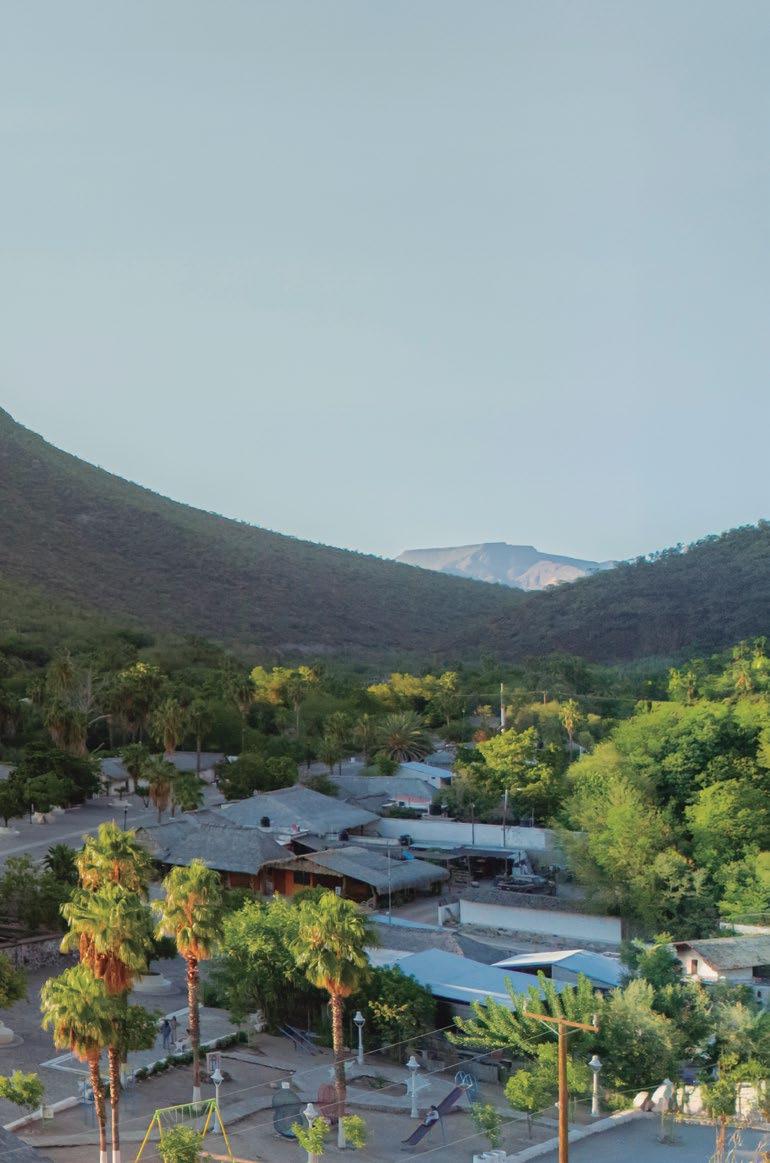
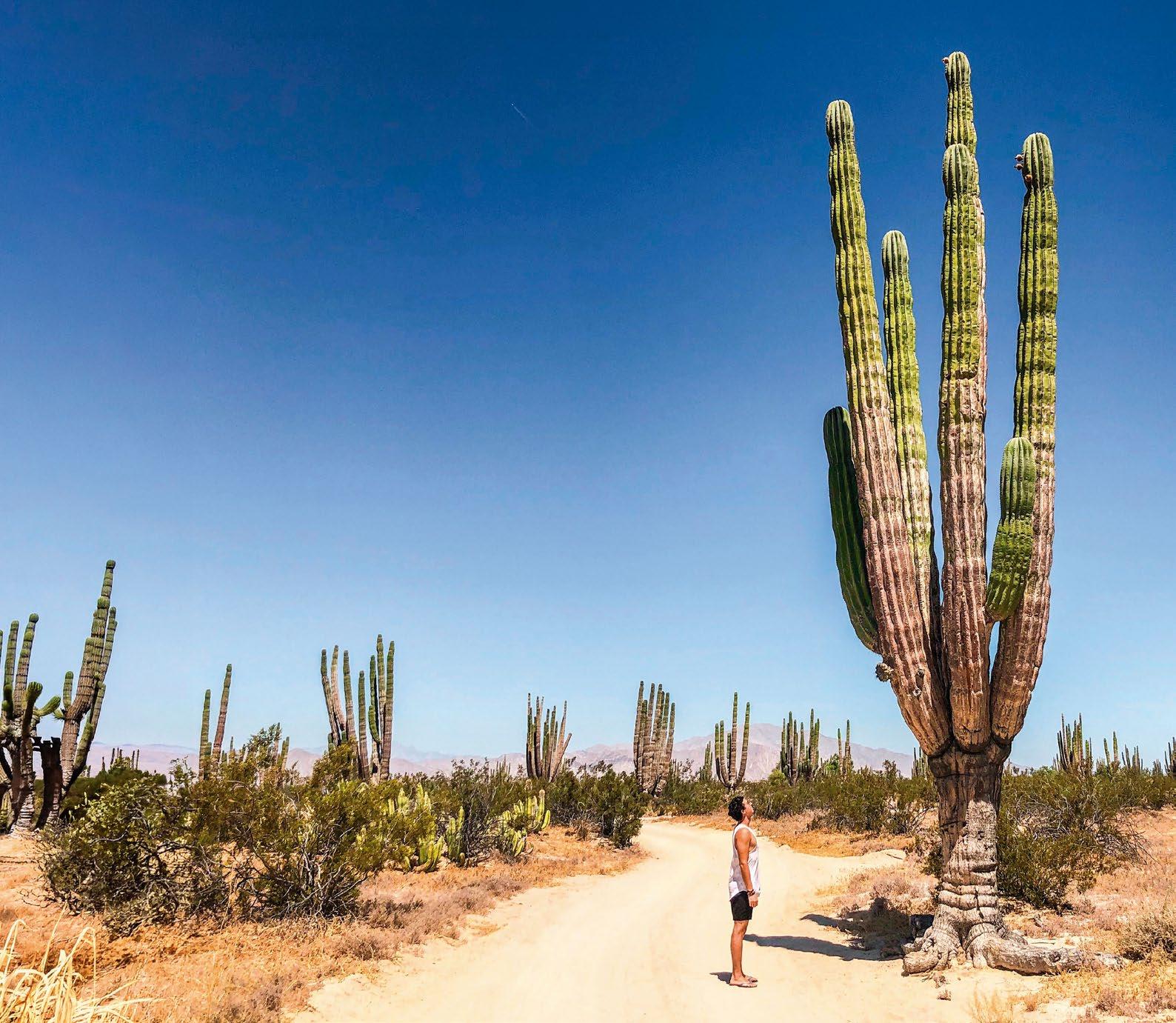
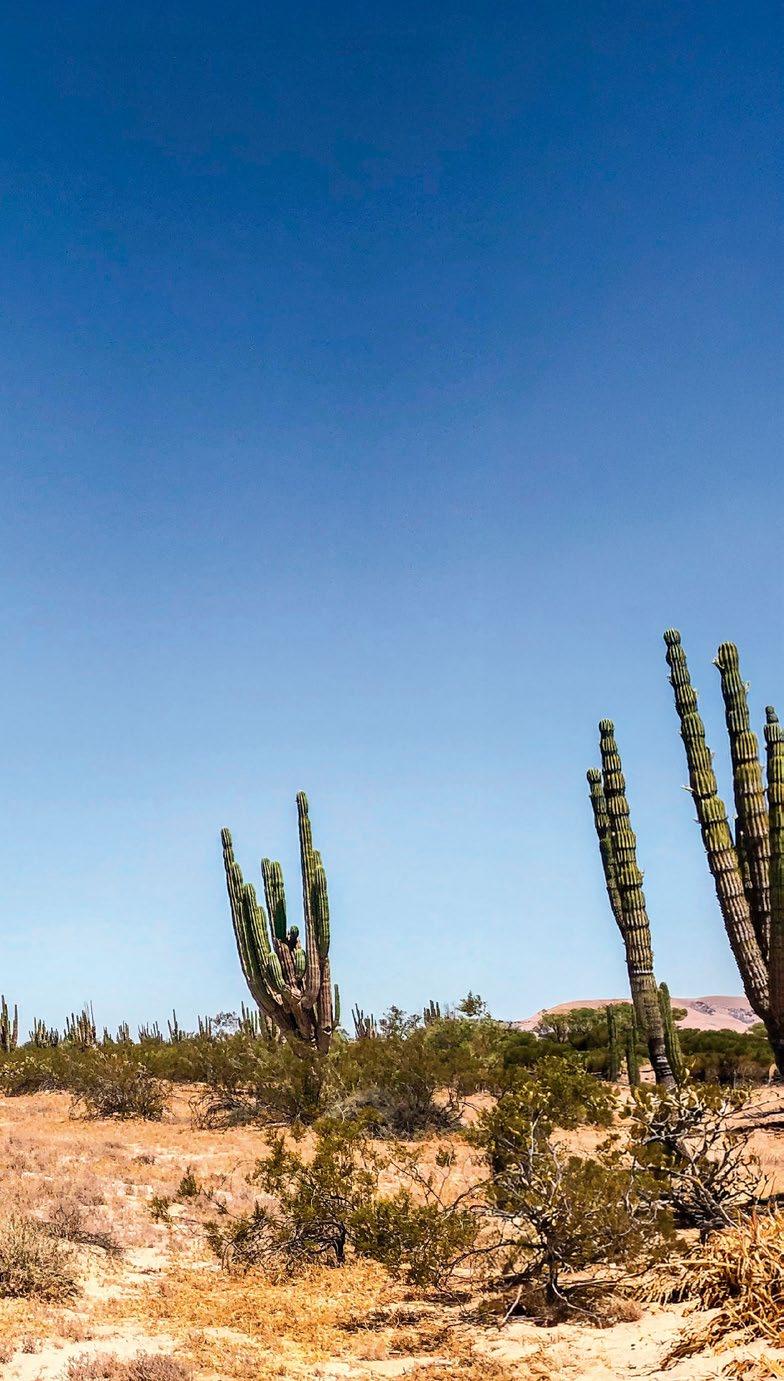
La Ventana is a small fishing village located about 40 minutes south of La Paz. Right across the bay is Cerralvo Island. During the winter, there are consistent north winds, which the locals call “coyas.” These winds make this spot one of the top wind sports destinations in the world. From the shore, you’ll see a sky full of colorful kites while kiteboarders, windsurfers, foilboarders, and wingfoilers all share the water and wind together. During the summer, the wind dies down, and the sea goes still, becoming a beautiful turquoise mirror; it’s quite common to see orcas, whales, dolphins, mobula rays, tortoises, and whale sharks.
Since I arrived in 2013, there has been steady growth, bringing better services to the community. Back then, there were only three restaurants, and two of them closed in the summer. Now there is a wide variety of choices and another level of food. There are now pharmacies, doctors, dentists, and a small Montessori school.
Land in La Ventana has listings in the US$120–170K range over the last three years, and finished homes and condos in the US$425–600K range. What are buyers getting at each price point?
In lots, that range gives you access to well-located land, close to the beach and often with water and mountain views, and the potential to build exactly what you want.

In the finished product range, you’re looking at well-built homes and condos that are turnkey or nearly so. These properties are designed for the local lifestyle with outdoor spaces and natural ventilation. The market at this level has grown a lot in the last few years. Everything on the MLS at those prices is already titled and legally transferable.
A lot of land in the area is off the MLS. What should buyers understand about ejido land?
All of this was ejido at some point. Titling happened gradually, starting with the beachfront and moving inland toward the mountains. Everything on the MLS today is titled. But if you go far enough back from the water, there is still a lot of ejido land, and those lots can be bought for a fraction of the price of titled property.
Ejido land can’t be legally sold. What buyers get is a constancia ejidal signed by the comisariado, not a title. When the title eventually comes through, it has to go through the derecho del tanto and a derecho de preferencia before government agencies,
both of which require a bank appraisal. However, there’s no telling how long it will take for the title to get issued. I know of some people who have waited twenty years for their title to come through. The practical consequence is that you can’t sell it for market value.
You have listings in the US$1 million–US$2 million range. What does the high end of this market look like, and how much beachfront inventory is left?
The high end is small but real, and the properties at that level are specific; each one justifies its price for a concrete reason.
One of my listings, at US$1.75 million, is a beachfront on one of the most beautiful beaches in El Sargento. It has a beach storage building right at the water’s edge for all the water gear you can imagine: windsurf sails, kites, foil boards, paddleboards. It also has a shaded rooftop terrace and a full bathroom. Nearby, there are hot springs, and at night you can enjoy an extraordinary night sky thanks to the low light pollution.
One of my other listings, priced around US$900,000, is a completely different experience. It sits at the top of a hill with views that take in everything: the Cardon cactus forest, the town to the north, and the whole bay extending out to Punta Arena. The view alone is extraordinary, and the house is architecturally striking. It’s a turnkey property for someone who wants to arrive and not have to resolve anything.
What’s the one thing about La Ventana that shouldn’t change?
The feeling that everyone knows your name. That’s what makes La Ventana truly rare. Over the years, something genuinely special has formed between the local families who have been here for generations and the foreign families who chose to make this place their home. They’ve built a community together and take care of each other when things get hard. For me, that’s the soul of La Ventana and the one thing worth protecting above everything else.


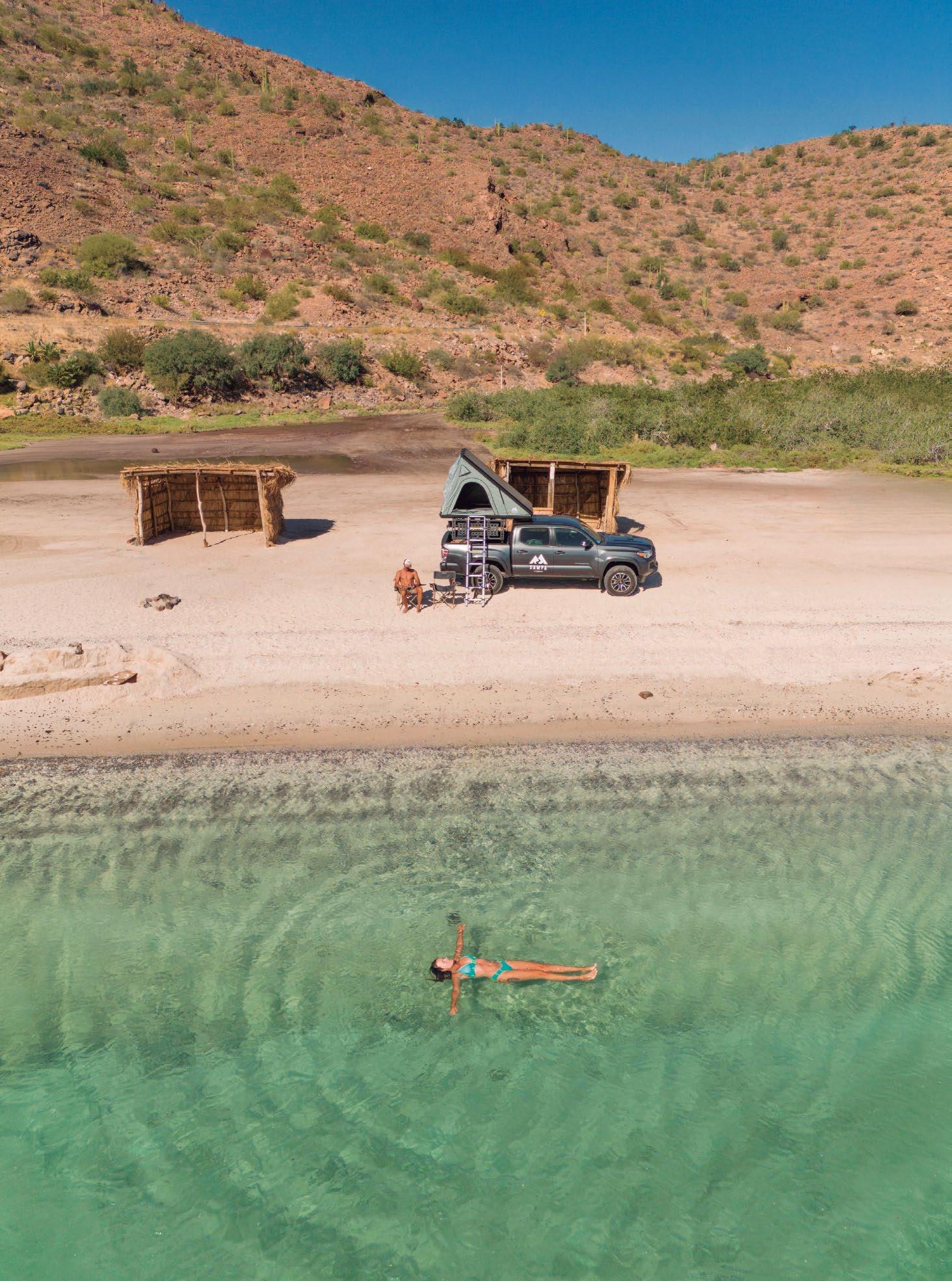


Golf has a strange way of capturing people. It has mastered intermittent reinforcement better than casinos, ex-lovers, and dogs. One afternoon, out of nowhere, you strike an iron so perfectly that the sound alone could heal childhood wounds, and before you know it, you’re reorganizing your entire life around tee times.
One of my first memories of the game was just like that. I was at the golf course with my father. I remember holding a Callaway Big Bertha onewood that felt slightly adult in the hands of a kid still trying to understand what a golf swing even was. The club itself seemed enormous then; this was when metal woods were becoming more popular. The wood felt like a piece of industrial farming equipment disguised as sporting goods. I swung without much understanding, only instinct and enthusiasm, and somehow the ball left the face with a kind of purity I didn’t know I could produce. Everything had aligned. Then, just as quickly, on the next shot, it was gone. If you’ve played the game, you’ve felt this before.
Something magical happened in my life after that. That’s the genius of the game. It doesn’t promise you anything. It simply suggests that something extraordinary might be accessible, and then leaves you to chase it, willingly, for the rest of your life.
This chase carried me into years of competitive golf, through a Division I university scholarship, where the game became less of a charming pastime and more of a long psychological audit conducted in soft spikes. At that level, enthusiasm is not enough. You need discipline. Endurance. Tolerance for uncertainty. The ability to remain composed while every insecure, ambitious, overthinking part of you is holding a committee meeting in your rib cage.
Words by Carly Miller @ctmmiller
Photos by Andres Navarro @el.navass
Wardrobe by Archive by Kate @archivebykate



Because golf, especially competitive golf, exposes you. Not just your swing, though it will certainly drag that into the daylight too, but your habits. Your reactions. Your thresholds. How you behave when things stop working out. How long you can remain steady. Golf is both mirror and magnifying glass, and it rarely flatters, except occasionally in a very well-tailored outfit.
Those years shaped me in ways that had very little to do with numbers on a scorecard. They taught me hard work. And somewhere in that process, my relationship with the game deepened. Golf stopped being something I played and became something I studied. I began to study the game, motor learning, technique, and biomechanics with sustained curiosity that has now bordered on obsession.
My attention moved away from my own outcomes and toward people and patterns. Why improvement may unfold easily for some while others resist. Why the
same piece of instruction produces entirely different results for different people. Over time, it became clear: improvement cannot be achieved through one formula. It is a map unique to the person holding the club.
This perspective followed me to Cabo, where my passion for growing the game and making it more accessible to the community became my purpose. Living in Cabo is like a study in elemental contrast: desert meeting ocean with a clarity so uncompromising it becomes its own form of truth. The sun is vibrant. The wind has a presence. The landscape strips things down to what is essential. And perhaps because Cabo is a place defined by horizon, I found myself thinking, again and again, about what comes next.
We are currently living in a moment, or an era, where time behaves differently. It’s accelerating. The distance between intention and outcome is narrowing. Technology,

especially AI, is quietly restructuring how we live our lives. I see this acceleration not as something separate from my coaching, but as something that will enhance it.
What if my coaching didn’t stop when the lesson ended? What if improvement was not something a student visited occasionally, in the contained hour of instruction, but something continuous, responsive, and alive to the actual conditions of a person’s life?
That question became the beginning of what I am building now in my career: a way to use technology not to make golf colder or more mechanical, but to make learning more personal, more accessible, and more sustained. To help players feel less lost between lessons. To give them a clearer understanding of where they are, what matters most, and what to do next.

In many ways, it reflects the same values that first drew me to the game: the desire to hit better shots, to understand myself more deeply, and, just as importantly, to have fun. I still think about that solid shot with the Big Bertha. My game wasn’t perfect then, but it was enough to show me something worth pursuing. It was the game’s invitation. My capture.
I have been following it ever since. Consider this yours.
Carly Miller, PGA Golf Instructor, Coach, and Writer. Golf Magazine Teacher to Watch 26-27 Cove Club at Cabo Del Sol & PGA National Resort Director of Player Development at WhyGolf Substack: substack.com/@carlytmmiller
How one medical network in Los Cabos is building infrastructure for visitors and residents alike
os Cabos is a young city. Most of what millions of tourists enjoy every year as a destination did not exist 40 years ago. The five-star hotels, the scenic corridor, the airport traffic, and the constant construction arrived within the lifespan of a single generation.
Infrastructure has been slow to catch up. The local health system is in a liminal stage between improvisation and innovation, and the work of figuring it out is done by professionals willing to take on more than one front at a time. We’ll Assist Health is among them. Led by Dr. Mauricio Reyesmorales, the company runs a medical tourism operation for visitors and a primary care network for residents.
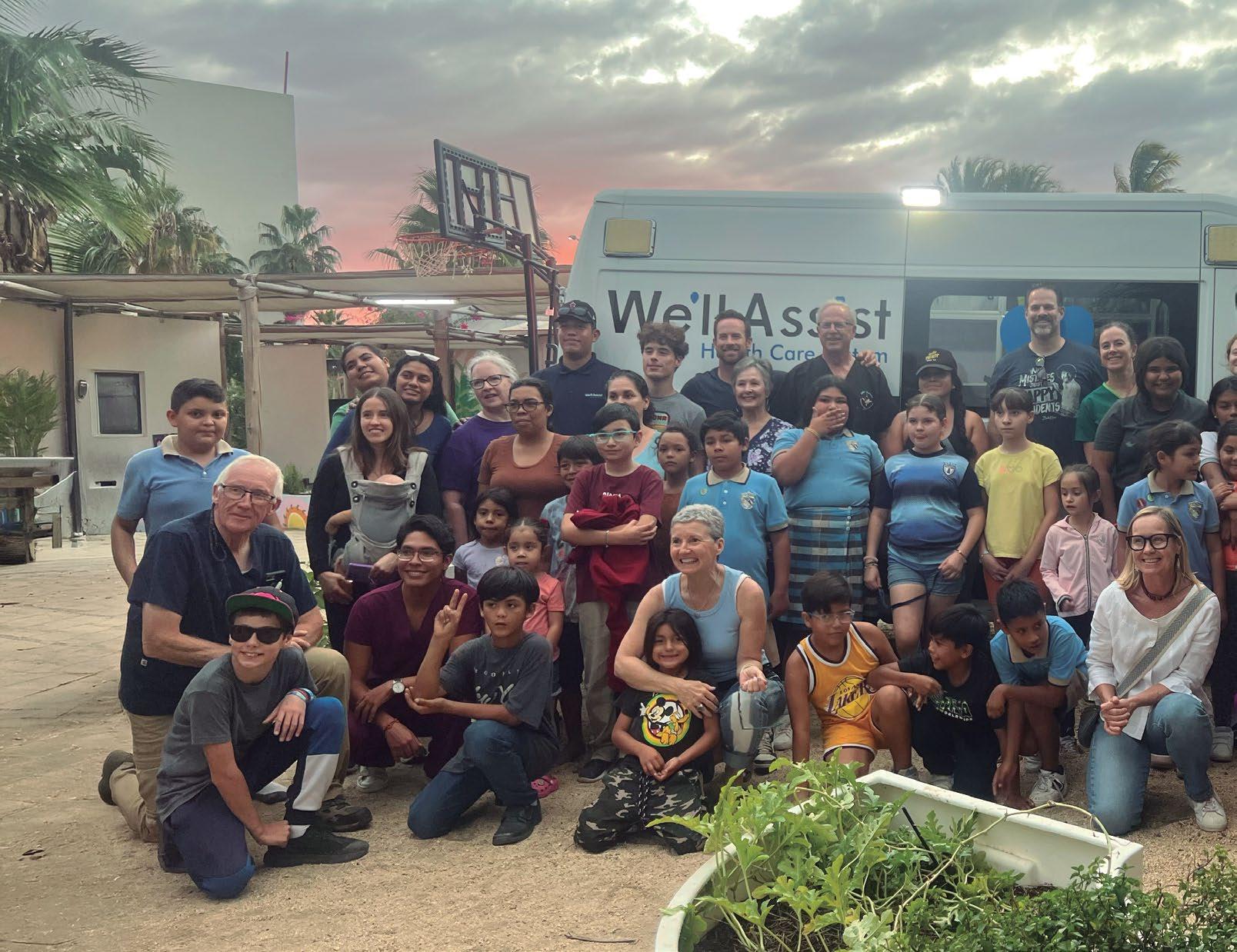
The medical tourism industry is one of the largest growth sectors in global healthcare. Towards Healthcare Research & Consulting, a research firm, puts its current value at US$48.5 billion, with projections of a three- to fourfold increase by the early 2030s.
Mexico is the second-largest destination in the world, after Thailand, and most of the activity is concentrated in border cities and Cancun. Los Cabos doesn’t appear in the standard accounts yet, but it has enormous potential, not least due to the several direct flights connecting it to the U.S. and Canada.
One key element that has been lacking is the ability to leverage that connectivity and coordinate with several prestigious healthcare providers and develop a cohesive industry. We’ll Assist is addressing this gap. Their model differs from the traditional approach; while their prices are not significantly higher than those of other medical tourism destinations, they are not the main point in their value proposition.
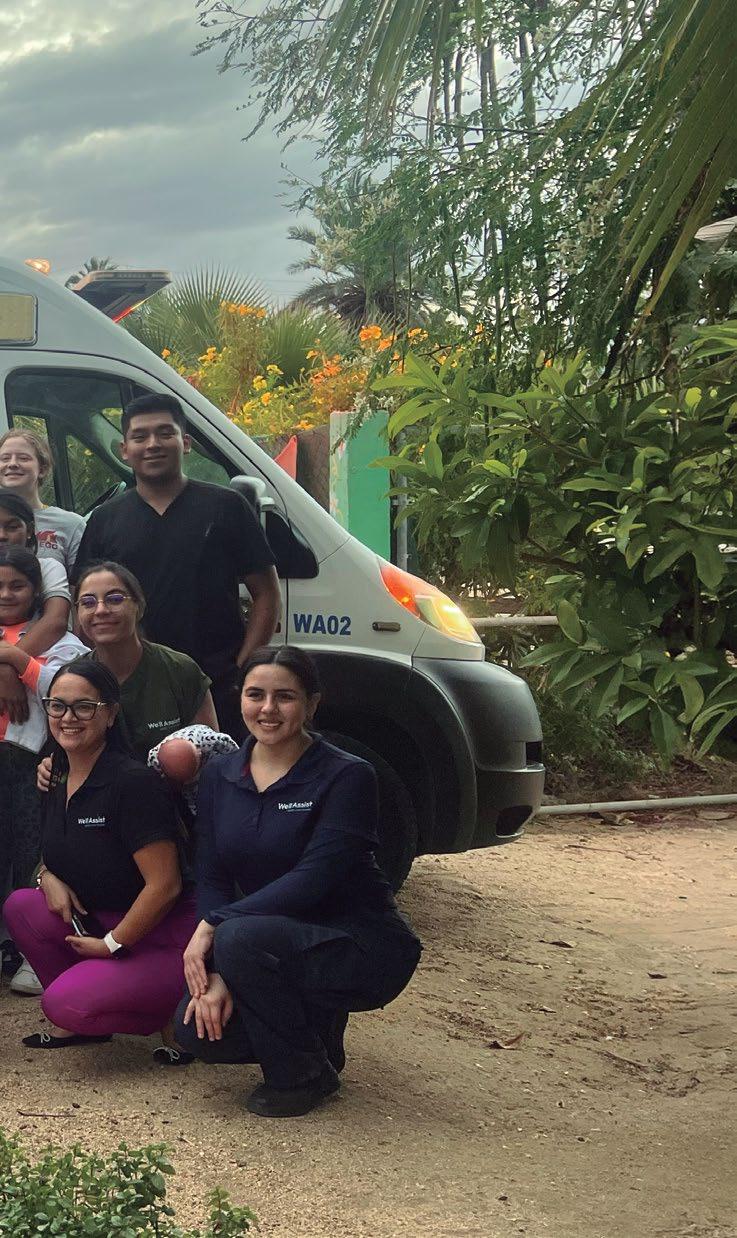
One of the main differentiators is the post-surgery support and care patients receive. According to the Medical Tourism Association, post-treatment follow-up is patients’ top concern before traveling. It is the single highest-ranked barrier, above safety or cost.
“Every day, a physician, a specialist, a nurse is going to your room to check your wounds, to check your recuperation, the physiotherapy, lymphatic massage, a hyperbaric chamber, whatever is needed. The recuperation is a lot better. They get a better outcome, and we can control how they are getting these post-op treatments,” says Mauricio.
Patients may remain at a partner hotel for 10 days to eight weeks to recover from surgery, rather than in the hospital. The physician goes to the patient for treatment. For certain types of procedures that require specialized skills (i.e., spinal surgery, complex orthopedic procedures), We’ll Assist will bring in the best surgeons available anywhere in Mexico.
The trust model is carefully thought out. There are no surprise fees; surgeons are chosen for performance and experience; every patient has a medical concierge assigned from the first phone call until they return home; and there’s an established infrastructure to support patients if something goes wrong.
“It’s a massive responsibility. How do you tell the family that their family came to Mexico trusting you to get a facelift and then she had a complication and you weren’t prepared to deal with it?”
Mauricio thinks Los Cabos will be a top medical tourism destination within ten to fifteen years, and the cluster he’s helping to organize, including hospitals, the hotel association, and government tourism bodies, is part of how that gets achieved.
The medical tourism business is the public half of what We’ll Assist does. The local work is arguably more consequential. The same network that flies a surgeon in from Mexico City for a spinal procedure also handles the line cook with a cut hand at the resort, the family in San Jose who doesn’t need a hospital visit for a fever, and the part-time resident from California who doesn’t know who to call when they suffer a fall and need some expert advice and an X-ray.
Structural insufficiencies define the local medical services. For a long time, the primary care system was very limited in Los Cabos for individuals who were experiencing health problems such as fevers, minor injuries requiring stitching, or abdominal pain in the early morning hours. The options available were the government-run health center, usually understaffed or closed, or private-sector hospitals whose fees are determined by the cost of running such large facilities.

“There was no first contact medical service. Everything was taken to the subsequent level. You were at a BBQ at your house, you cut yourself with your knife and needed three stitches, and you were taken to a hospital. That creates a problem for the general population because it gets very expensive.”
Below the Hospital, Above the Clinic
We’ll Assist operates as the missing layer. Its emergency room operates 24 hours, with on-site laboratory, X-ray, and imaging services. Patients who need more — appendicitis, fractures requiring surgery — get moved through the network to a second-level facility. The model is also structured around corporate clients. Hotels, cruise ships, and tour operators contract We’ll Assist to provide medical services for their employees and guests.
“We work with a network. A hotel knows its workers can access any hospital and have their needs met. 95% of those clients, when they need a medical service, need a primary care medical service. Normally, it’s a migraine, traveler's diarrhea, or stitches. It’s not common to have a brain hemorrhage on vacation. So they don’t need to go to the biggest hospital with the best installations in the world if they just need a couple of stitches."
First-contact medical attention, unlike medical care coordinators like We’ll Assist, whether in Mexico or elsewhere, typically operates on a commission basis with the hospitals it refers patients to. The structure means the patient’s destination is influenced by the operator’s financial interest. We’ll Assist doesn't do that. “We would be exchanging the patient’s health for money. Our policy is to strictly forbid commission-based relations,” says Mauricio.
The same logic applies to pricing. A consultation at We’ll Assist costs the same whether the patient is a hotel guest from Newport Beach or a construction worker from La Paz. “It shouldn’t be more expensive just because you’re coming from the U.S.”
Community Clinics East of San Jose del Cabo
The community programs started in 2022. Consulta con Causa (Consultation with Cause) launched in partnership with Hotel El Ganzo and the Centro Comunitario La Playita (La Playita Community Center), providing free medical consultations seven days a week and a twentyfour-hour ambulance service to five communities east of San Jose del Cabo: La Choya, San Vicente, Las Animas, La Playa, and Rincon de la Playa. These are the working communities around Puerto Los Cabos that most visitors rarely see.

In 2024, the work expanded to include a second program, Vida Sana (Healthy Life), implemented in elementary and secondary schools. Population census, psychological orientation, preventive checkups, and workshops. The aim is generational.
“We started this program thinking of seeing the results in decades and were surprised by the actual speed. We’re aiming to nurture a new generation. We focus on the kids because we aim to educate them. First, we try to find their needs and tend to them in the moment. Then we give them tools, such as visual-aid glasses, so they can focus on their education. Then we educate them on how to have a healthy life, so when they grow up and have their own children, they can pass this on to them.”
Los Cabos became a world-class tourism destination in a single generation. The next generation of work is happening below the surface, in the parts of the system that determine whether the destination holds together, including how it cares for the people who live, work, and travel here. LOCATION
Blvd. Mijares & P. Finisterra, Plaza Misión,
Local 8 San José Del
IN TOUCH
US Toll Free +1 (888) 617-5911
Los Cabos +52 (624) 510-0911
blueconcierge @wellassistmed.com
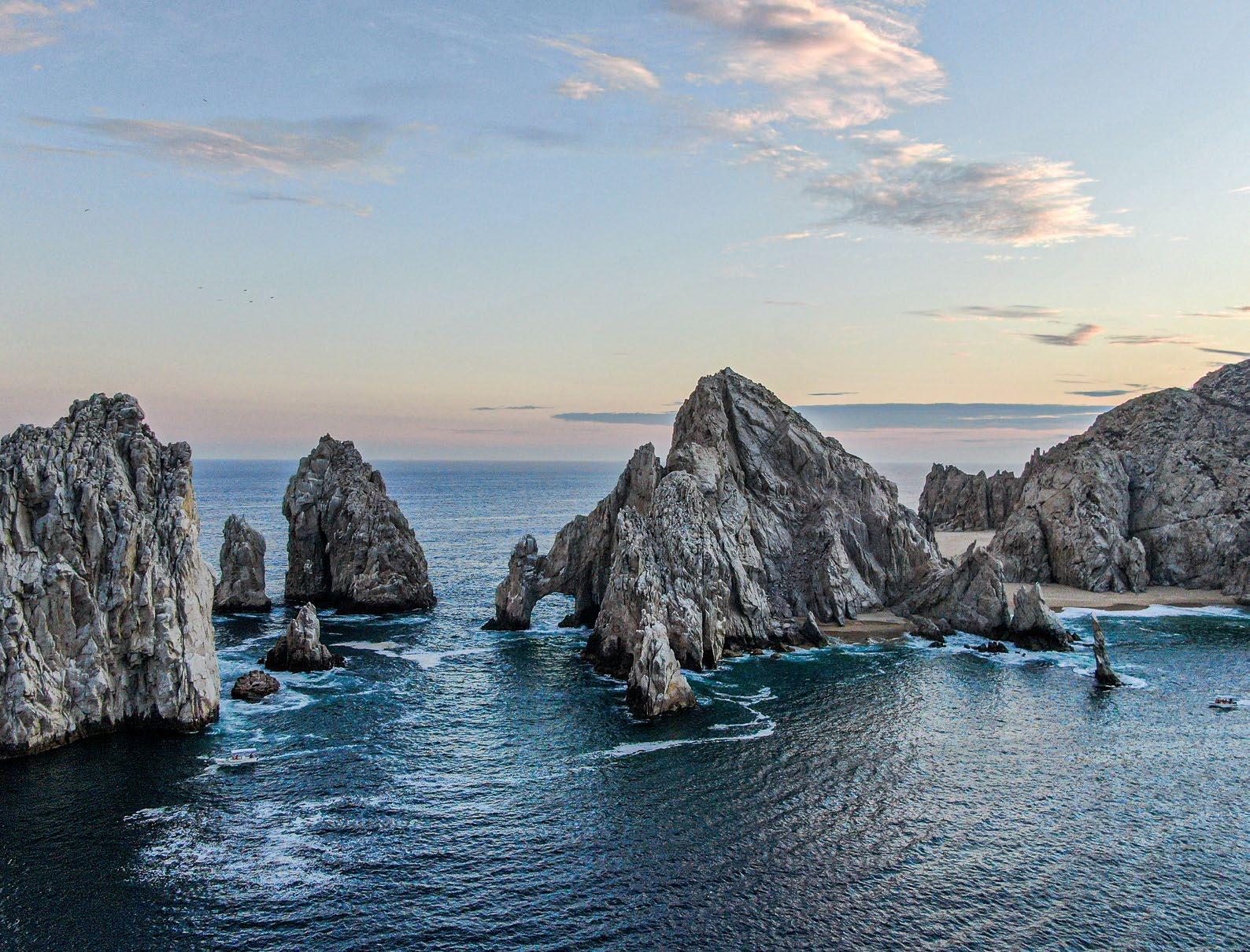

As of 2026, La Ventana is one of only two locations worldwide where people can legally swim with orcas. The regulations have already been set in place, but research into the impacts of orca tourism on wild populations continues as scientists work to catch up.
Afelandra Gonzalez Cibrian (Instagram: afelandrina) a La Paz-based marine biologist and tour operator who has been diving in the Gulf of California for the last two decades, notes that in Baja California Sur, she has seen orca-watching expand from very sporadic offshore encounters to what she characterizes as a huge boom. For the first time in 2026, regulations are in place for this activity. However, both regulations and scientific studies lag behind tourism, and the development of responsible orca watching in Baja is still an ongoing effort.
Afelandra says that the intensification of interest in orcas is recent. “There’s been an immense increase since the COVID pandemic, and it feels like every month it gets more acute. A lot of people are in love, are interested, or are even obsessed with these animals.”
When she first began her work in marine tourism in Baja California Sur, it involved diving and seeing various wildlife during specific seasons throughout the year. Orcas were not really on people’s radars. In fact, until recently, almost everyone thought of orcas mainly as dangerous predators feeding on marine life and wanted to see them from a safe distance, from stadium-style seats, as they do at Sea World.
But then some friends jumped into the water to swim with them, which led to videos going viral. “It’s also important to consider that there are only two places in the world where it’s currently legal to swim with orcas. One is Norway, where the conditions are extreme: freezing water, drysuits. And the other is here.”
Despite their massive size, very little is known about the orcas that come into the Gulf of California. “It’s interesting because it’s a huge animal, you’d think it would be easy to find them, but the truth is we don’t know that much about them. They live in all oceans, from the tropics to the poles, all over the world, and it appears that the orcas in Baja California Sur range widely.”
Sightings have been reported as far north as California and as far south as the Galapagos Islands and Costa Rica, but the animals seen in La Ventana could be the same animals returning to the area or different ones passing through. Essentially, the long-term tracking of sighted animals is conducted by informal networks of tour guides who compare notes.
“We’d say, ah, she’s in such-and-such place, now she’s here, now she’s over there, like a family,” Afelandra recalls. One orca, Ketzaly, became recognizable across the Gulf for the
distinctive notches on her dorsal fin. Guides followed her movements between Bahia de los Angeles, Loreto, La Paz, La Ventana, and Cabo Pulmo. A La Paz-based NGO called Marea is building a photoID catalog, partly through citizen science: guests on tours can submit images that help researchers piece together the larger picture.
The First Regulated Season
“The boom attracted attention, and the state government said, look, this is happening and we have to regulate it, because it’s really getting out of control.” She remembers some seasons in 2023 and 2024 when 30+ boats would gather in one spot around a single pod. There were swimmers jumping in from all different directions. In the fall of last year, the captains and guides went through training to prepare for the upcoming season, and as a result, the activity will be conducted with formal rules for the first time.
There will be a limit on the number of vessels allowed near the animals at the same time, and on the number of swimmers (four, in addition to a guide) allowed in the water at any time. A rotation system for the boat operators will be implemented, whereby two vessels will interact with the animals and, once they are finished, step aside for the next two vessels. There will continue to be limits on the number of vessels permitted in the area daily.
The design used has reservations from Afelandra: “Most of the people who wrote the rules worked before with other species, some of them with whale sharks. If you look at the rules, they’re very similar to the whale shark ones. But orcas are a very different species. They should have different rules.”
What the Rules Don’t Reach
Afelandra is mostly concerned with behavior that is not captured by the rules. The most concerning behavior to her is the use of apnea; guests diving to take a closer look at orcas for a photograph while they are hunting or traveling. “It’s like someone filming you while you’re eating,” she says. “Move, why are you filming me, let me eat, let me hunt.” Her point is that, generally, there is enough opportunity to observe the whales from the surface.
The push to move past the acceptable limit is often instigated by visitors themselves, as Baja Wild Encounters, a tour operator, recently pointed out. “Permits permit usability, but do not ensure that what we are doing has benefits for the animals.”
Afelandra poses a more subtle question about the orca as an intelligent mammal with its own social culture: as adults teach young how to behave, she wonders what the increasing number of people entering their surroundings each year is teaching them about humanity. The answer is something only the orcas will know.

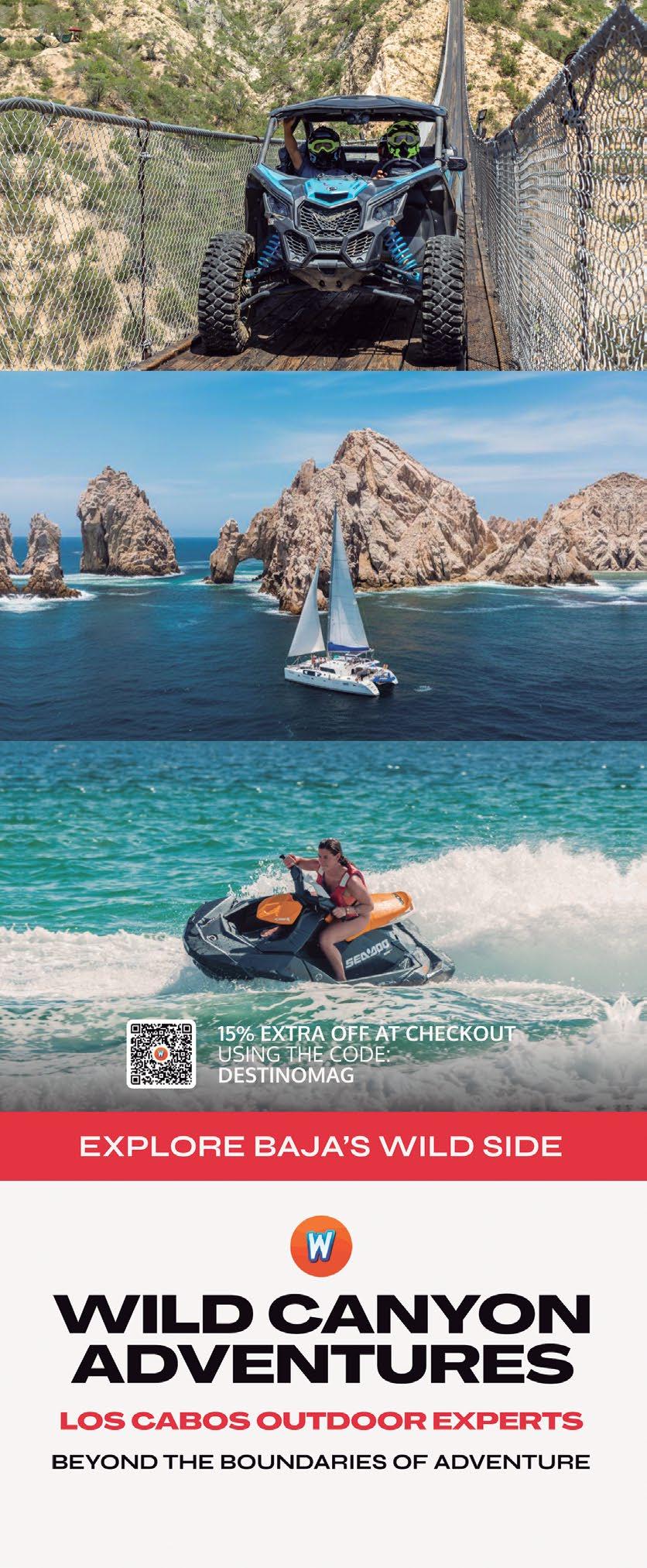
Leon Robles, founder of Wild Canyon Adventures, on the mountain range that supplies a significant part of the region’s water, holds species found nowhere else in Baja, and sits an hour from the beach corridor most visitors never leave.
Imagine someone who spent a week in Los Cabos without leaving the corridor: beach, restaurants, hotel. What did they miss?
The other face of Los Cabos. The Sierra de la Laguna is a mountain range with valleys, sharp granite peaks, freshwater rivers, waterfalls, natural pools you can swim in. In some areas, the granite formations could remind you of parts of Spain, or somewhere completely unexpected for Baja. And all of that is about an hour from San Jose. The average tourist with four to six days here doesn’t make it a first stop. It’s more for someone who’s already been and is exploring further. What’s up there isn’t like the rest of Baja; there are species you only find on these mountains, and a few that only exist here and in places like Nayarit, from when the Cape region was a separate island.
If someone makes the full ascent, from desert at the base to pine forest at the top, what are they going to see along the way? There are different ways to experience the Sierra. You can go for the day. Enter through Miraflores, visit a rancho like Don Cata’s at El Refugio in San Dionisio, hike to a swimming pool in the river, eat the food they make themselves. Or you can do the full expedition, three or four nights, sea to sea. You enter through San Dionisio on the Sea of Cortez side, climb to the valley at the top, summit El Picacho, and descend toward Todos Santos and the Pacific.
I prefer the San Dionisio ascent. It’s greener, and you get more shade on the climb. The Todos Santos side is shorter, you can do it in a single day, but it’s much steeper. From San Dionisio, you’ll spend the first night around six hours in, at a place called Poza de Pepe. A swimming pool right there, the guides cook for you. The second day, you reach the valley itself, set up camp, and from there you can do another four-to-six-hour trip up to El Picacho. From the peak, you get a 360-degree view: Los Cabos to La Paz, La Ventana, the Sea of
Cortez, and the Pacific. Two things to watch out for. Rattlesnakes, so wear good boots and stay alert. And wild bulls, feral cattle that escaped or were released from ranches at some point and formed their own community in the mountains
You mentioned Don Cata and the family at Rancho el Refugio. What’s the relationship between these families and the Sierra, and what does their continuity mean for the place?
Don Cata is in his seventies now. He spent fifty or sixty years climbing the Sierra — he still goes up on horseback sometimes. His family lives in a rural environment with their cattle, their mangos, their orchards, their water. What strikes me most is the love his children have for the place. They’ve taken on the work of guiding people up to the valley and to El Picacho, and they do it well.
The rural tourism aspect is what makes the encounter. Being received by them, eating what they make, and watching how they live with the land. They cook for you. The handmade flour tortillas, the machaca tacos
from their own cattle, their cheese, their mangos. Most of the people who go to them are local visitors, Mexicans who already know where they’re going. But for anyone coming from abroad, it’s a different kind of contact with Baja.
There have been attempts to build permanent installations in parts of the Sierra: cabins, tourism infrastructure. Where do you think tourism in the Sierra is headed, and what worries you?
I don’t want to get into politics, but there have been news items about zones in the Sierra where people want to build cabins or facilities to provide tourism services. I disagree with that direction. The remote natural environment of the Sierra is its value, as much for Los Cabos as for all of Baja California Sur. Our tourism offer today is contact with nature. If we neglect that, we change the balance of why people come here. A five-star hotel can be anywhere in the world. The nature here can’t.
The way the locals have managed the Sierra up to now has value. The moment a large company arrives and tries to mass-produce the experience, that’s when you get contamination and saturation. For people who really want to explore, there’s always somewhere to walk a little further down the river and find a place that’s just yours. A lot of us locals know pools that we’re not going to tell you about. There are still many access points to rivers, with swimming and bouldering on the rocks.
Wild Canyon sits along the Tourist Corridor, but in a canyon, on the mountainside. It’s the edge of the Sierra. What do you want someone to take away from a day there?
We’re the entry point to the Sierra de la Laguna. Our arroyo is born from the Sierra. The mountain chain extends down to us. So when people come to Wild Canyon, what I want them to encounter is the desert, the mountain, the dry arroyos, the waterfalls, our oasis. A taste of what the Sierra is. We don’t have the big rivers — those only come in the rainy season — but it’s a taste, a “probadita.”
What I want people to take away is the satisfaction of having done something different with their family, having pushed past their comfort zone. I want them to be surprised by the service. And I want them to leave knowing more than they came with. That there’s a mountain, an arroyo, a deer, a fox, all the bird life. One last thing. To anyone who’s been to Cabo before: explore. What we sell here is contact with nature, in a very low-tourism, low-population-density setting. We’re surrounded by unique places. The Sierra de la Laguna is the spine of all of it.
We recently had the chance to sit down with Jordyn Bisbee, third generation, and talk about forty-five years of tournaments in Los Cabos and what comes next.
Your grandfather started this in 1981 with six boats. What did he see in Cabo that others didn’t?
He saw the potential. The fishing in Cabo San Lucas has always been incredible, and it wasn’t that far from Southern California, as we were all in Newport Beach and Costa Mesa at the time. I think he just fell in love with Mexico, fell in love with fishing, and then it all went from there. Looking back, he clearly had a vision. The tournaments built on each other year after year, Cabo grew, and the tournament grew with it.
After 45 years, what do the tournaments give to Los Cabos, and what does Los Cabos give back to the tournaments?
When you think of Bisbee’s, you think of Cabo San Lucas, they’re synonymous. We wouldn’t be anything without Cabo. Each year, we have teams from every U.S. state and 15 different countries traveling there to fish. It’s a premier destination, the fishing is top-notch, and when you add Bisbee’s into the mix, it’s a perfect storm. That pours into jobs, hotels, restaurants, the whole local community. A few years ago, we read that Bisbee’s brings in upwards of US$100 million over a two-week period. A hundred million dollars to any community is amazing.
The East Cape Offshore has a reputation for feeling like what Cabo used to be. How do you describe it?
That’s exactly how I describe it. Los Barriles is Cabo twenty-five, thirty years ago. It’s more laid back, the vibe is more relaxed, and I love that we kick off our tournament season there. There’s still serious money on the line, usually around US$2 million, but the energy is different. We as a family actually get to engage with our anglers. Everyone stays at the Buena Vista Beach
Resort, so we’re on site. And it’s three species instead of one: marlin, tuna, and dorado.
It’s nostalgic for me. I’m not quite forty, but I remember Cabo as a kid, coming down to see my grandpa and my dad during the tournaments. I’ve watched the shift from then to now. East Cape reminds me of what it used to be. I actually bring my own daughters to that one, because Black & Blue and Los Cabos Offshore are big, and I can’t be in mama mode and tournament mode at the same time. East Cape lets me do both.
Loreto keeps coming up as the next frontier in Baja. Is a Bisbee’s tournament there on the table?
We get asked all the time. My brother and I are the third generation, so we’re young, we’re hungry, we love Mexico, and we love the different fishing in different cities. So I’d say it’s always plausible that there could be other tournaments around the area.
Loreto is beautiful. It’s building, and our real estate group is already involved: my partner Harry is working on the marina being built there right now. That’s going to bring more

boats, more tourism, and more fishing to the city. I love Loreto. I think it’s still kind of a hidden gem. I almost hope it doesn’t get too discovered. But yes, I do see Bisbee’s expanding to other parts of Mexico when the time is right.
It’s interesting that someone who runs fishing tournaments is also very committed to conservation. How do you reconcile those two things?
People do find it interesting. But what they don’t realize is that fishermen and hunters are some of the biggest conservationists on the planet. Offshore recreational sportfishing has no bearing whatsoever on the ocean’s fisheries. The plight of the world’s fisheries is due to pressures from large commercial fishing fleets, which can do more damage to fish stocks in a week than recreational boats could in a lifetime.
Our tournaments take the general sport fisherman’s conservation mindset even further by implementing strict minimum fish weights. If a fish doesn’t meet the minimum weight, it gets released. This considerably lowers the fish mortality rate at the Los Cabos port on tournament fishing days. We also donate every fish that does come in to local charities. Last year, we provided over 47,000
meals to the underprivileged people of Los Cabos through Hope for Los Cabos. Fishing ethically and sustainably is the right way to do it. We want these animals to thrive and be there for years to come.
For someone in Southern California who’s never been to a Bisbee’s tournament, what do you tell them?
Sports Illustrated once called us the Super Bowl of sport fishing, and I think that’s the best line we’ve ever gotten. You’ve got hundreds of anglers from every state and fifteen countries, competing for the richest tournament in the world, against the backdrop of Cabo San Lucas. When you mix money, location, and the energy of everyone who shows up, it’s an experience. It’s honestly hard to explain unless you’ve been. We’re known as a bucket list event. Whether you fish with us for years or just cross it off the list once, I don’t think anyone leaves disappointed.




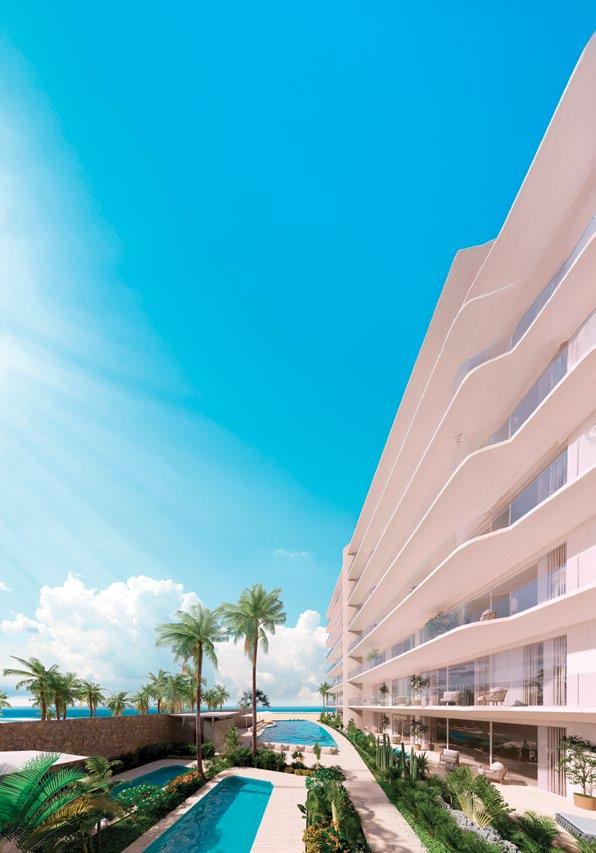

Daniela Ramos arrived in Baja California Sur nine years ago to find a handful of women in the water. The Puerto Escondido-born surfer, coach, and ISA-certified judge on what’s happened since.
What was the women's surfing scene like when you first arrived?
When I arrived in San Jose del Cabo, there were very few local women in the water, and there really wasn’t a strong competitive scene for girls in surfing. I come from a fishing community in Puerto Escondido, Oaxaca. From a very young age, I grew up in a competitive environment, so when I arrived in Baja California Sur, I immediately noticed a lack of spaces and opportunities for girls in surfing.
About five years ago, I started teaching surfing to girls as young as three in Cabo San Lucas. Today, there’s a new generation of girls competing in Los Cabos, and that makes me very proud. Currently, about seven girls are actively involved in competitive surfing, and many more are becoming interested in the sport thanks to role models like María Méndez and Xaviera Pérez.
I started coaching María Méndez when she was 10 years old and worked with her for several years in shortboard. From a young age, she showed great intelligence in the water, speed, and excellent competition strategy. Today, María continues to grow in surfing and is currently also developing in the longboard discipline alongside Moana Bonilla, which has been very positive for her evolution as an athlete. She has also attended surf camps in California, El Salvador, Brazil, Costa Rica, and other places.
Why does surf matter so much in Baja California Sur?
This is important because surfing is the state's second most successful sport in terms of medals won. Baja California Sur has waves year-round, and from March to November, more swells arrive from the south, which benefits Los Cabos. From November to February, the waves on the La PazMulegé-Comondú side of the state work very well. So, we can surf in both cold and warm water within the same state, sometimes even in the same week.
For me, Los Cabos is magical because its landscapes are so unpredictable. I mean, if you go to the east, you disconnect from the internet, since there's no signal in that area, and for me, that's what makes it magical because you're more present and connect better with the waves and the scenery. When I first arrived, I was blown away to see donkeys walking on the beach, cows resting on the sand. In winter, you can be surfing and suddenly, just a few meters away, there are families of whales. At the same time, you're surfing very consistent and perfect waves. The other thing
is the community. The locals pull you up. They see you in the water and they start putting you on bigger waves, introducing you. That's how you progress here.
Tell us about the Reina Calafia all-female surf tournament. How did it all begin, and what is it now?
Reina Calafia was born from an idea within the Baja California Sur surf association. I remember that, in a meeting with the board of directors, Mónica Olivares and I were there to discuss other matters when the question arose: “When will there be a women’s surf tournament?” Mónica and I looked at each other and said, “Okay, let’s do it,” thinking it would be a small, local event.
As the project grew, Alejandra Castellanos, a businesswoman, and María Echeverría joined. María has been key in building Reina Calafia’s visual identity, developing everything from the festival’s graphic design to the creative content and designs that represent the project. Little by little, we formed the team that brings the festival to life today.
When we opened registration for the women’s surf tournament, competitors from other states and even other countries began to register. That’s when we understood that it was no longer just a local event; it was becoming an international women’s surf festival. In 2025, we had around 60 to 70 competitors across various categories.
One of the most important categories for us is the children's category, because from the beginning, Reina Calafia's goal has been to promote new generations of women surfers in Baja California Sur. We also created the softtop category, designed to encourage more women to try surfing and to build a community. In this category, you don't need to be a professional; you can come with a friend, enter the heat, and simply enjoy the experience.
What's still needed? What would further promote female surf in the state?
We need sponsors, mainly so that the girls don't have to worry about traveling to surf tournaments throughout the year and so that athletes can have professional surf equipment for their competitions. I’d really like to see more women certified by the International Surfing Association. They’re supporting more women with scholarships, so it’s important to check their website for opportunities to join their professional certification programs.
What would you say to a woman or a girl who’s thinking about getting into surfing?
Give it a chance. Come closer. There are a lot of women instructors now. Sometimes we hold back because the lineup feels like men’s territory, but there are schools, there’s a community, you can find a way in. The ocean is incredible. You can paddle out stressed and the sea takes all of it. It’s a beautiful space to share. And come to Reina Calafia. You’ll see how big the network is here in Cabo, how much support there is. If you don’t know anything yet, grab a board and come anyway.



The tournament has also become a stage for Mexico’s best.
The ATP 250 returns for its tenth edition in July, with a roster including top-20 players and a decade of local roots behind it.
It started with a storm. “Our first tournament in 2016?” recalls Geoffrey Fernandez, director of the Mifel Tennis Open by Telcel Oppo. “It rained so hard we couldn’t play on Monday. Then a tornado hit the next year.”
Ten years later, the rain and the tornado are part of the story he likes to tell. “It's not mainly about numbers,” he says. “You look back and realize what this tournament has delivered to the city.”
The tournament returns for its tenth edition from July 27 to August 1 at the Cabo Sports Complex. What washed out in 2016 is now a fixture on the ATP Tour, an ATP 250 that draws the world’s best to Baja every summer.
This year’s edition opens with a strong field. Among the first players confirmed are Jiri Lehecka, ranked No. 14, fresh off a final at the Miami Open. Karen Khachanov, No. 16, returns to Mexico chasing a way back into the top ten. Francisco Cerundolo, No. 20, arrives after winning his home tournament in Buenos Aires. Cameron Norrie, a regular in Los Cabos, won the first title of his career here in 2021. And Denis Shapovalov comes back to defend the title he took in 2025. Rafael Jodar rounds out the early names. The 19-year-old Spaniard won his first ATP title weeks ago on the clay in Morocco.
The tournament has also become a stage for Mexico’s best. Rodrigo Pacheco, the country’s top-ranked man, and Luis Carlos Alvarez have both competed here.
The clearest sign of change is on the court itself. “When we started, only about 30 percent of the ball kids were from Baja California Sur,” Geoffrey says. “Now it's 100 percent.” Kids come to watch, and some of them stay close to the game. The tournament works with local clubs and keeps the young ones connected once they start to play. “We’ve seen a real increase in the number of people playing tennis in Baja. That’s one of the legacies we care about most.”
The week makes room for more than tennis. The qualifying weekend, July 25 and 26, opens the gates free to local families for Family Day and Kids Nite. Family Day brings hundreds of people to the venue for a mix of sport and practical help, including health services and activities for children. “It’s a day that really leaves a mark,” Geoffrey says.
After ten years, Geoffrey measures the tournament by something other than rankings and attendance. “For me, personally? It’s a success when we see the kids playing. Even if they don’t know tennis, even if it’s their first time here, when they leave with a smile and want to come back, that’s what matters.”
The trophies and the top-20 names matter too. But the tournament keeps coming back to the same test. “It has to mean something to the people who live here.”
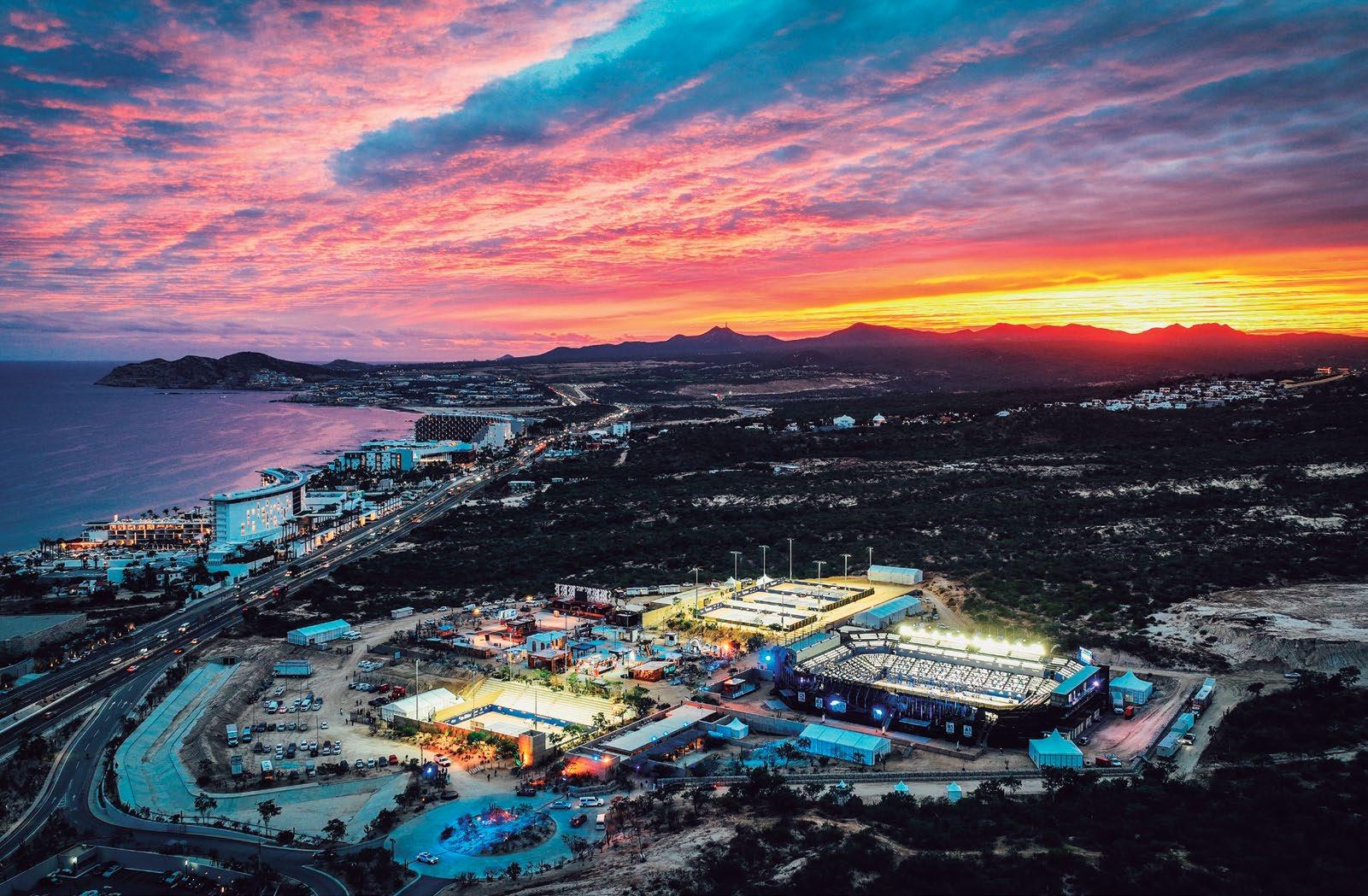
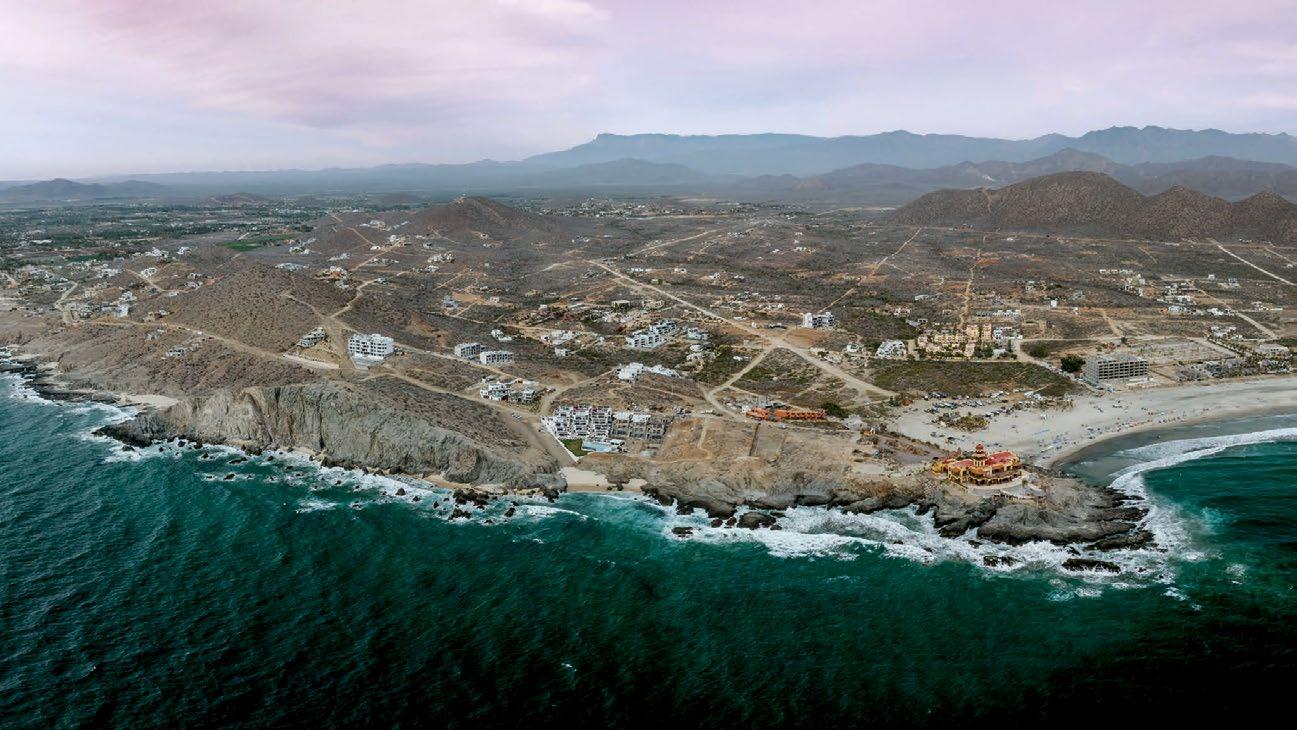


We specialize in providing comprehensive support throughout every stage of the property buying and selling process. Our personalized service is designed to meet each client’s unique needs, whether purchasing a new home, selling their current one, or exploring vacation and investment properties.


Serenity at Cerritos is an exclusive development of 15 luxury units, designed for those seeking privacy, comfort, and a closer connection to nature. Located in Cerritos Beach, Baja California Sur, and with units starting at US$645,000, the project offers a balanced approach to coastal living, combining modern, spacious, and functional architecture with high quality finishes. Set within a private community, residents enjoy shared amenities that include a heated pool, firepit, jacuzzi, and terrace, creating an environment defined by tranquility, understated elegance, and a privileged location near the beach. Serenity at Cerritos serenityatcerritos.com