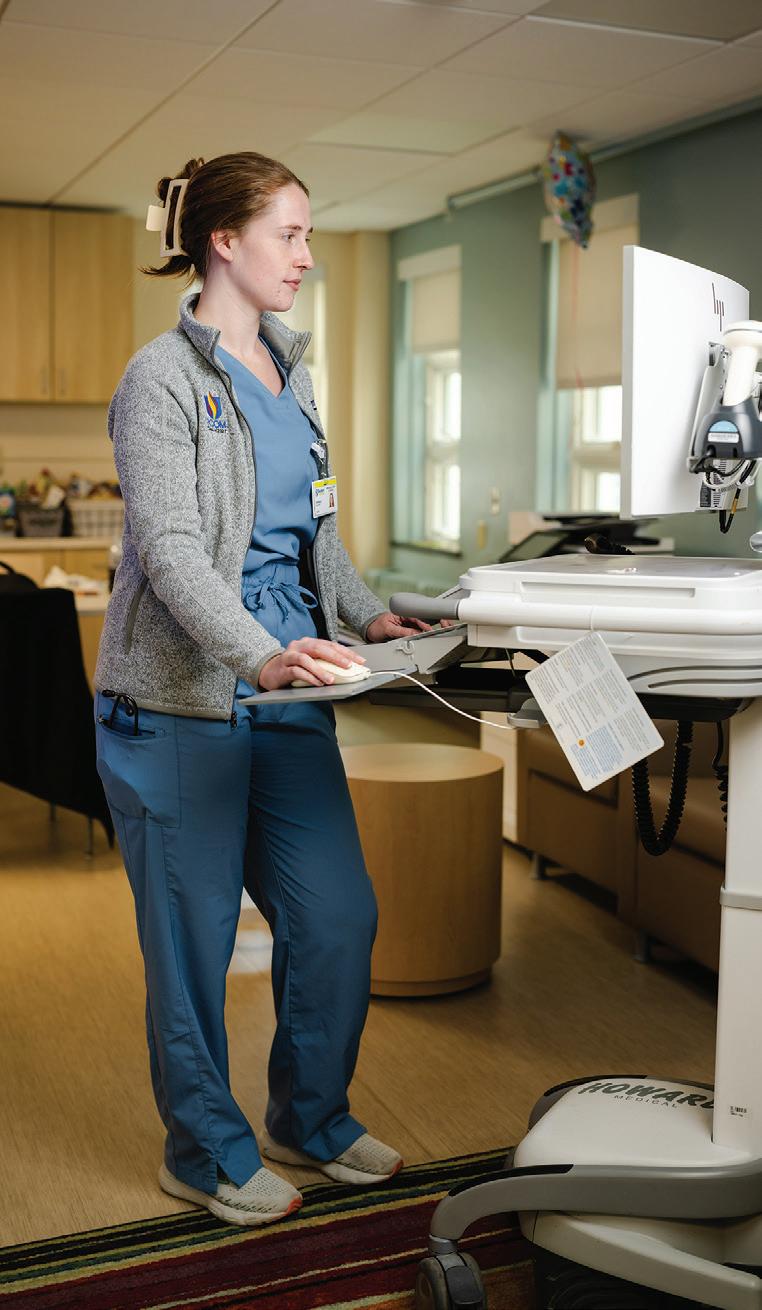
The Bayhealth Heart & Vascular Institute is a comprehensive cardiovascular center of excellence located in the heart of our region. This is where you’ll find a team of great minds with an incredible commitment to helping your heart last a long, healthy lifetime. To know more about all the ways we help prevent and treat heart disease visit Bayhealth.org/HVI. To learn more, or make an appointment call 302-310-8484.
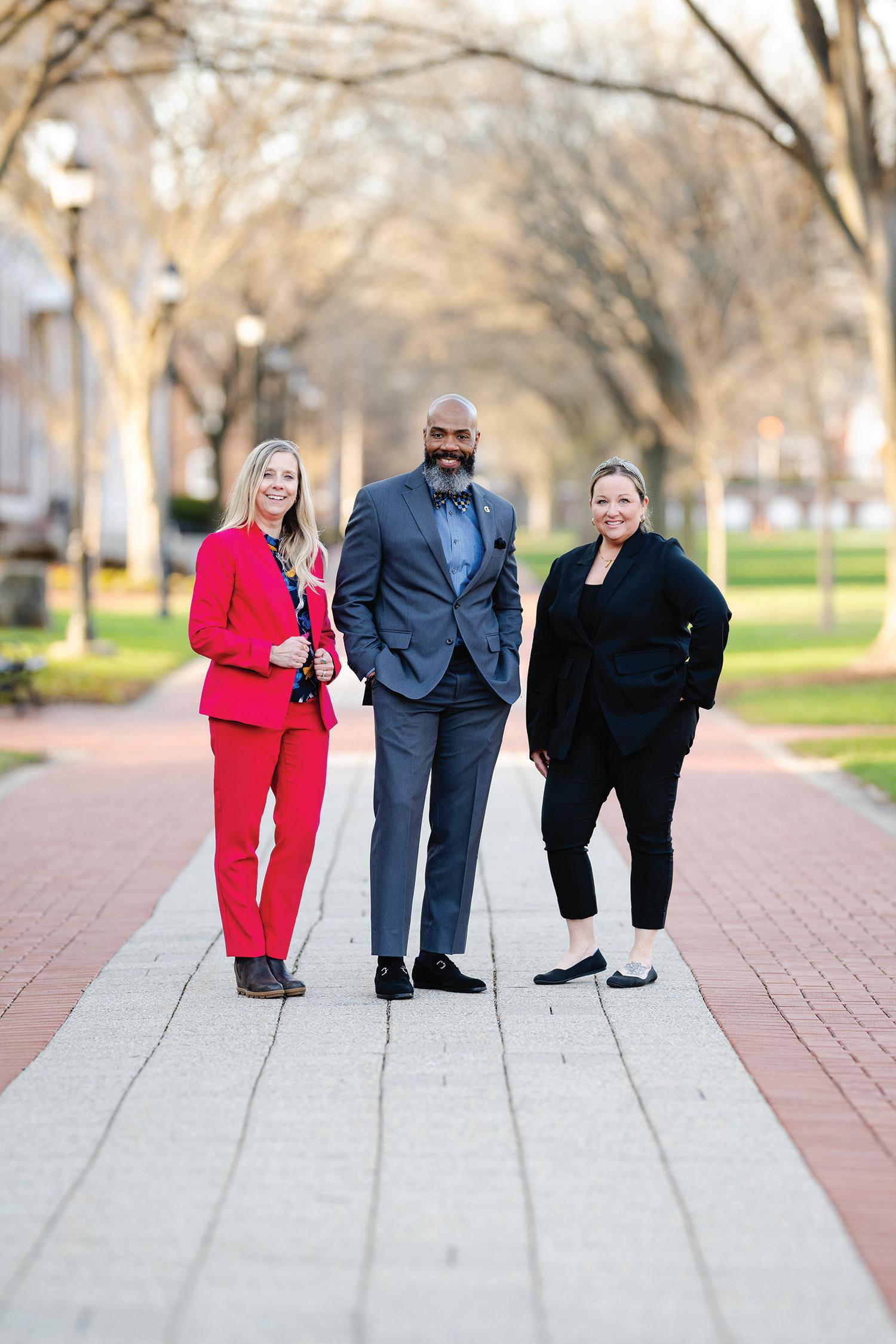
Beebe Healthcare, Provider Leadership Academy University of Delaware, Principal Preparation Program New Castle County
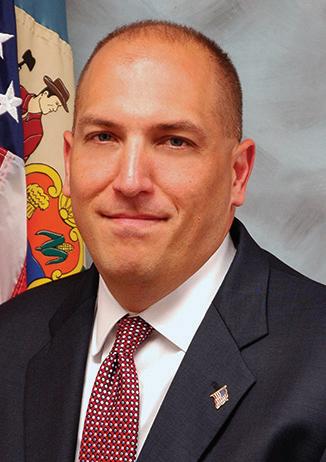
John H. Taylor, Jr.
Christen Linke Young
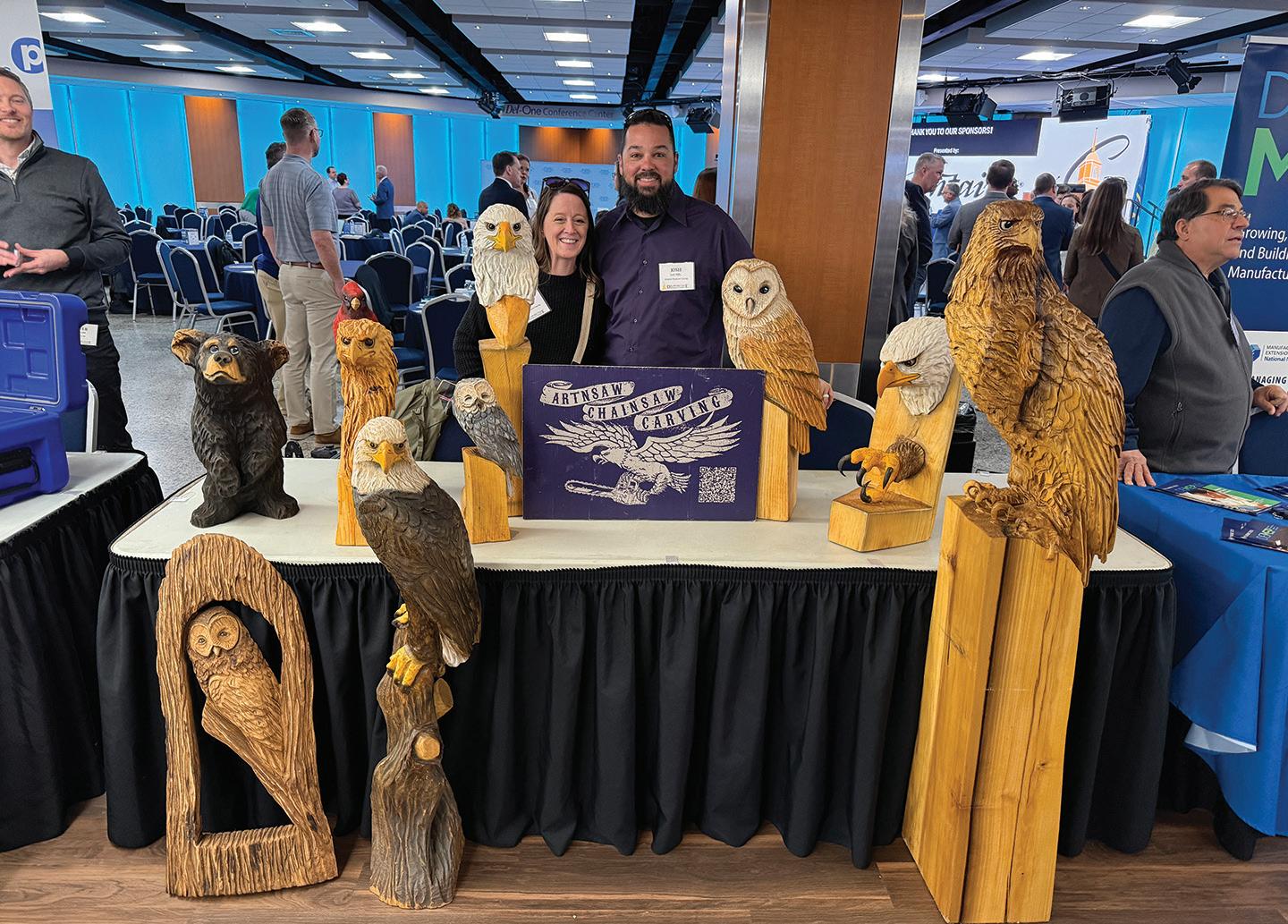
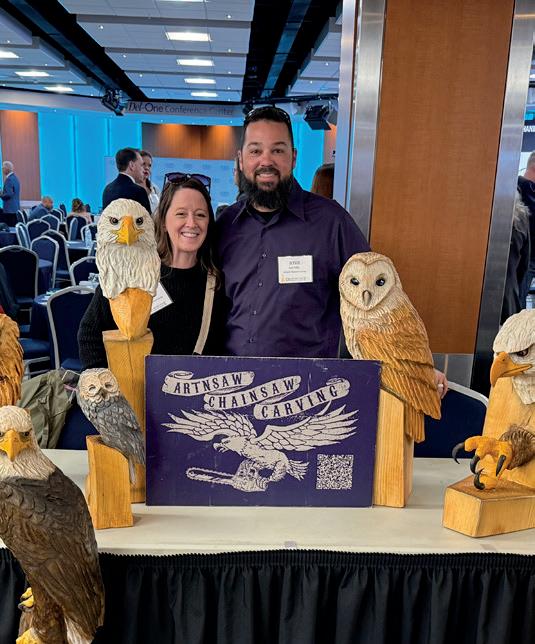
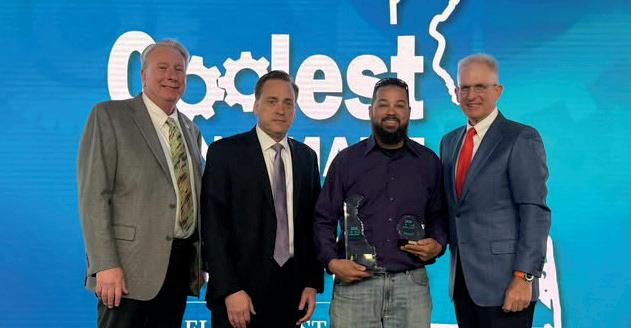
Artnsaw Chainsaw Carvings was named the 2026 Coolest Thing Made in Delaware at the Spring Manufacturing & Policy Conference in late March. Pictured is owner Josh Miller and his wife Colleen.
Message from the President
Before joining the State Chamber in April 2018, I was lobbying in Washington, D.C., for a large, multi-client government and public affairs firm. Our clients ranged from large banks, retailers, social media platforms, student loan lenders, foreign governments, and, in one instance, an organized religion. It’s interesting work, and while 90% of government and public affairs is defensive in nature, it was fascinating to plot out strategies to advance the public policy interests of different clients. State government lobbying is not too different, but there are a few meaningful distinctions. For example, state legislators serve on a part-time basis, whereas serving in Congress is a full-time responsibility.
The tools of influence used in Dover and Washington, D.C., are largely the same, but the issue and practice specialization in Washington is typically not found in state capitals. While some businesses hire firms to represent their interests in the capitol, many others rely on associations like the State Chamber or “in-house” government affairs professionals to represent company interests in federal, state, or local government venues. However, the single most important step any company leader can take is to establish relationships with elected officials long before an issue or crisis emerges. Inviting elected representatives to your business for a one-hour discussion that covers what your business does, who buys your goods or services, who you employ, and what barriers are holding you back from doing more is helpful information to convey. Learning about the priorities of your elected representatives is equally important.
These relationships are like any other business relationship: invest the time and effort early, and when you need assistance or want to express support or concern about a proposal, you won’t have to start the conversation with an introduction followed by, “I think this idea is terrible.”
If you need help getting started, contact Evan Park on our team at epark@dscc.com and ask about our member-
David A. Tam, MD, MBA, CPHE, FACHE Beebe Healthcare
Bridget Therriault
AstraZeneca
Rod Ward CSC
Ciro Poppiti
Freeh Sporkin & Sullivan LLP
Chip Rankin
MilliCare
Michael Ratchford W. L. Gore & Associates, Inc.
Dr. Rob Rescigno Collaborative Consulting LLC
Lloyd A. Ricketts
Wilmington University
Robert “Rob” Rider, Jr. O.A. Newton
Bettina Tweardy Riveros ChristianaCare
Jake Ruddy
PCS
Rhett Ruggerio
Ruggerio Willson Watson
Dennis M. Salter
Edinburgh Capital Management LLC
Chris Schell
Schell Brothers
Albert Shields University of Delaware
Robert S. Smith
Santora CPA Group
Jonathan Starkey
Delaware State University
Mark Stellini
Assurance Media
Mike Tatoian
Dover Motor Speedway
Jim Taylor
Saul Ewing LLP
Ivan Thomas
DETV
Jana Tidwell
AAA Club Alliance
Vera Holmes Toliver DuPont
Michael S. Uffner
AutoTeam Delaware
Mike Vanderslice Montrose Environmental Group
Robert W. Whetzel
Richards, Layton & Finger
Ed Winslow
Citizens Bank
Kevin M. Wolfgang Evergreen Apartment Group
+Treasurer
^Counsel
*Immediate Past Chair
Kerri Welcher
Director, Delaware State
Chamber Foundation
Tori Will
Manager, Administrative & Member Support
Michael J. Quaranta
LEGISLATIVE PRIORITY Balancing Innovation With Regulation
BY EVAN R. PARK
DESPITE CONCERNS from some corners that Delaware’s policy environment related to businesses has become more restrictive, some recent legislative activity signals that the state remains focused on strengthening its position as a national leader in financial services and corporate innovation.
As of this writing, two bills introduced by State Sen. Spiros Mantzavinos — Senate Bill 16 and Senate Bill 19 — have been released from committee, marking early progress in a broader effort to modernize Delaware’s banking laws. For businesses in financial services, fintech, and corporate governance, these proposals are worth close attention.
UPDATING BANKING FOR TODAY’S ECONOMY
Senate Bill 16, the Delaware Banking Modernization Act, aims to align state law with how the banking industry operates today. A key provision formally recognizes digital assets, such as cryptocurrency, within banking and fiduciary activities, giving institutions clearer legal footing in a rapidly growing area.
jurisdictions. At the same time, it introduces new compliance responsibilities that firms will need to manage.
Together, Senate Bills 16 and 19 signal Delaware’s intent to remain competitive by embracing innovation while maintaining strong oversight. The State Chamber supports both of these bills and is continuing to monitor the broader banking modernization package as it develops.
ONGOING DEBATE OVER CONSTRUCTION POLICY
Alongside these financial initiatives, another proposal is generating significant discussion within the business community.
Senate Bill 272, introduced by Sen. Jack Walsh, would require project labor agreements, or PLAs, for public school construction projects exceeding $1 million. PLAs are pre-negotiated contracts that establish wages, work rules, dispute resolution processes, and safety standards for a project.
The bill also introduces greater flexibility in governance, allowing banks and trust companies to adapt more easily to evolving business and regulatory needs. It seeks to attract new investment by lowering certain barriers for out-of-state banks looking to relocate or expand into Delaware.
In addition, the proposal expands the authority of the state bank commissioner, equipping regulators with more tools to respond to industry changes. It also encourages increased competition in the trust sector by removing certain restrictions, potentially leading to improved services and pricing.
CREATING CLARITY FOR DIGITAL ASSETS
Senate Bill 19, the Payment Stablecoin Act, focuses specifically on digital assets. It would establish a clear regulatory framework for companies issuing stablecoins or offering related services in Delaware.
The bill sets licensing requirements, capital standards, and reserve expectations, while also requiring safeguards such as anti-money laundering protocols and data protections. These measures are intended to build trust and stability in the market.
For businesses, the primary benefit is clarity. A defined regulatory structure reduces uncertainty and helps companies operate more confidently, both within Delaware and across state and federal
Under this bill, construction work would generally be performed by members of the Delaware Building and Construction Trades Council, unless only one bid is received for a specific scope of work.
Supporters argue that PLAs can improve efficiency, safety, and labor stability. However, opponents, including the State Chamber, have raised concerns about reduced competition and the potential for increased project costs.
Discussions are ongoing about possibly raising the threshold for PLA requirements from $1 million to $5 million. Senate Bill 272 was released from the Senate Labor Committee on April 16 and will continue moving through the legislative process.
WHAT IT MEANS FOR DELAWARE BUSINESSES
These developments reflect a broader theme in Delaware’s policy landscape: balancing innovation with regulation.
On the financial side, the state is taking proactive steps to modernize its legal framework, support emerging technologies, and attract new investment. On the construction side, policymakers are weighing competing priorities around labor standards, cost, and market access.
These bills have the potential to shape Delaware’s competitive position, influence investment decisions, and impact how companies operate across multiple sectors. As legislative session continues, business leaders should remain engaged and informed. Contact me at epark@dscc.com if you have any questions.
•
Member news&Notes
NONPROFIT SPOTLIGHT:
End Community Violence Now
BY COLIN HEFFINGER
››It’s indisputable that the cycle of community gun violence isn’t something that can be broken overnight. It takes consistent dedication from a growing team of innovative leaders in health care, government agencies, philanthropic organizations, local businesses, and especially the communities themselves to advance real impact. As the first community-based gun violence prevention program in the country, End Community Violence Now is Delaware’s strategic groundbreaker, working to build a unified community gun violence reduction system that fosters safer communities.
Formally started in 2024 as a publicprivate partnership with the State of Delaware, ChristianaCare, and leading philanthropic organizations like the Longwood Foundation, Jessie Ball duPont Fund, and the Welfare Foundation, End Community Violence Now’s mission is focused on coordinated action to reduce gun violence. Building on decades of gun violence trend research by Wilmington leaders, the nonprofit hit the ground running to establish an ecosystem of best practices to address gun violence. Its strategic plan focuses on seven core functions: strategy, coordination, fundraising, grantmaking, advocacy, education, and research and evaluation to achieve population-level impact.
Lauren Footman, executive director, highlights how tackling gun violence will take the whole community.
“To confront this at all facets, we need to collaborate with leaders in every sector,” Footman explains. “It’s essential to ensure our hospitals are able to engage in prevention and support for victims, that our businesses and workforce management teams are able to support public and private sectors for economic development, and that our government and private investors can fund the work we are putting into making a difference.”
“What helps motivate our team and board is the commitment that we know gun violence is something we can reduce and prevent if we all work together,” Footman continues. “We’ve already seen a huge impact in the town of Laurel, which has now gone over a year without a shooting or homicide. Wilmington has also been experiencing a decline in gun violence. The fact that we’re able to actively see positive change and make the community feel empowered, with their voices heard, is what keeps us going each day.”
For those looking to take action with
End Community Violence Now, there’s thankfully a variety of options. Businesses can join their ever-growing ecosystem to continue amplifying evidence-based approaches for promoting safety and healing. Businesses and individuals able to contribute financially can either invest or donate to strengthen existing efforts and foster long-term impact. With some federal funding set to expire in December, it’s more important than ever to continue investing in the ecosystem.
Footman reflects on what made Delaware the best choice for starting this new program. “With Delaware’s unique size, accessibility to its government leaders, and rich business community, there couldn’t have been a more perfect place to start our initiative,” states Footman. “The ongoing commitment to reducing gun violence from the First State not only shows a constant willingness to invest in gun safety but also how Delaware was built on such an innovative, community-led office.”
Delaware State University hosting the 2025 Community Violence Intervention Summit
Member news&Notes
BUSINESS SPOTLIGHT:
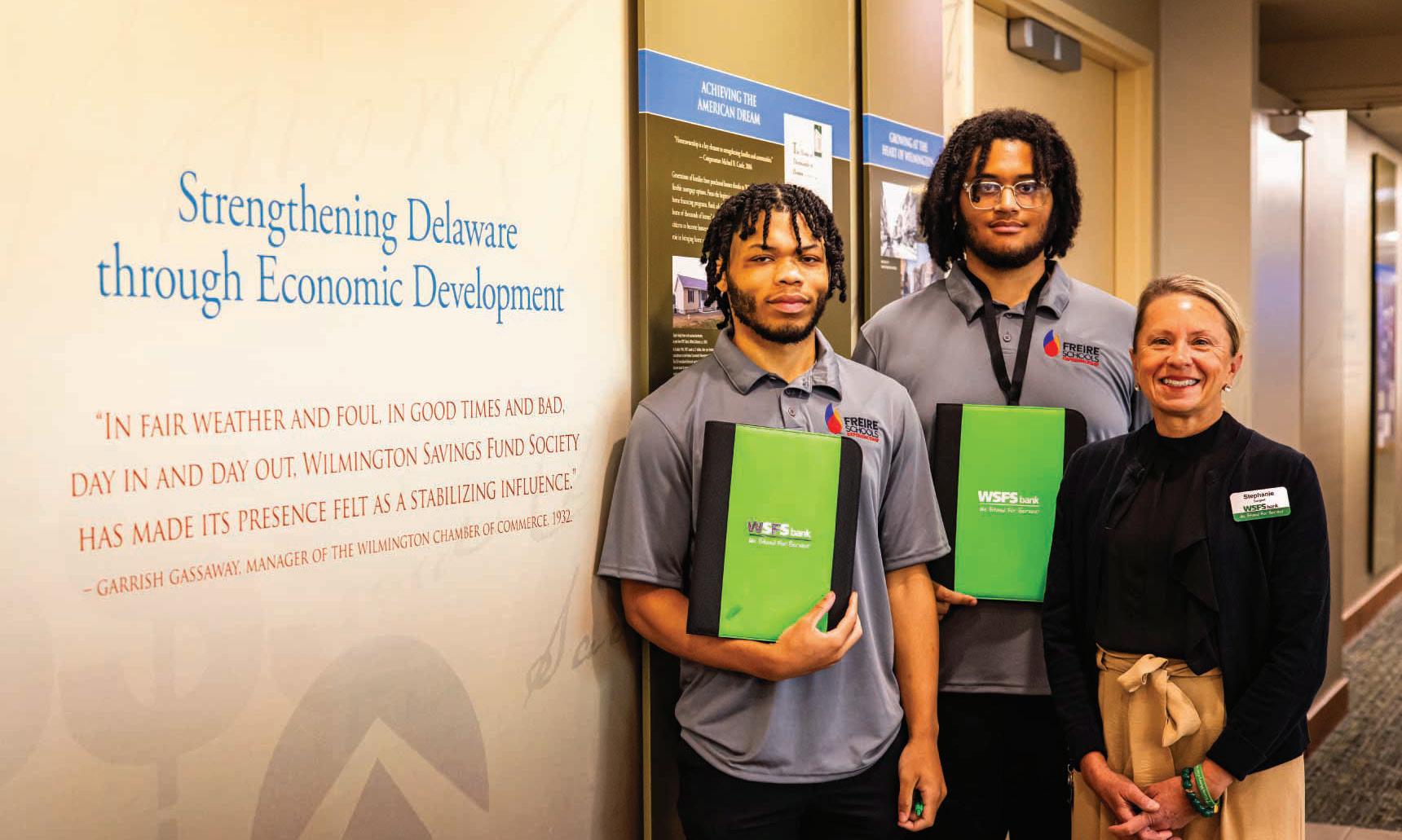
Freire Schools
››When it comes to a charter school, you typically wouldn’t expect their logo to be a fierce fire-breathing dragon, no uniform regulations in place, or that teachers are addressed by their first name. But for Freire Charter School Wilmington, these unique features mean the world to the students. As a school with an unwavering commitment to ensuring every young person has access to highquality education, Freire Wilmington prides itself on including input from students to shape their everyday learning experiences. Wielding a challenging, fulfilling five-year college and career prep curriculum that emphasizes graduation even beyond high school, Freire is well-
BY COLIN HEFFINGER
equipped to provide each student with the education to succeed in college and beyond.
Freire Schools began 26 years ago in Philadelphia, eventually launching three locations throughout the city. Twelve years ago, then-Gov. Jack Markell reached out to Freire Schools with a bold idea: to replicate its success by bringing a new location to Wilmington. Today, Freire Wilmington has become a crucial part of its community by providing hands-on learning experiences, scholarship opportunities, and an array of additional resources, including academic and emotional supports.
Melaine Reiser, Freire Schools’ chief advancement officer, explains what
makes its academics uniquely impactful.
“Our college prep programs are specifically designed to expose students, as they enter high school, to hands-on, authentic learning experiences that help them get excited about understanding their full potential,” Reiser says.
“Students start our programs in eighth grade to get a jumpstart on building selfawareness and realizing how they can use our tools to help them move forward with their lives.”
Aside from curriculum, Freire Schools also has a highly active college counseling program. “Counseling staff support students by helping them find the best schools to align with their passions, apply to those schools,
Students at a Freire Schools career day.
and build habits around going after scholarships,” says Joseph Hennelly, director of career exploration. “The Class of 2026 has already earned $6.2 million in scholarships and counting.”
“Additionally, we recently launched our experienceship program in Wilmington,” explains Hennelly. “This creates a holistic approach where students gain invaluable, on-the-job experience while being paid through a stipend. Some of our students participate in job shadowing in fields they didn’t know anything about and end up pursuing those fields for their future studies. We’re on track to have 75 students and 30 business partners, with the program continuing to grow.”
With new CEO Paul Ramirez leading the network, continued expansion of the experienceship program, and a steadfast dedication to refining and growing the school’s vision, Freire Schools has a lot of excitement ahead. For the Wilmington location specifically, construction was recently completed on a brand-new gymnasium, a critical space for bringing everyone together. The school also used this space to host its ninth annual Blackout event — a student-led celebration of Black history, including a fashion runway, live performances, and Black-owned food vendors from throughout the community.
“When you’re invited to start a new school, you don’t always know how it’s going to turn out,” reflects Reiser. “There can be a variety of challenges. Fortunately, our Wilmington campus has become an active member of its community. Our whole team is excited to continue evolving education and advancing equity for all our students.”
COMMITTEE SPOTLIGHT: Small Business Alliance
BY EVAN R. PARK
››The Delaware State Chamber of Commerce strengthens the state’s economic landscape by supporting small businesses through its Small Business Alliance (SBA) — one of several key resources the State Chamber offers to help small businesses grow and succeed. The SBA is focused on ensuring the voices of small business owners are not only heard but taken seriously in the policymaking process, where critical decisions are made.
Bringing together entrepreneurs, executives, and leaders from a wide range of industries, the Small Business Alliance creates a unified platform to represent shared interests. By collaborating and exchanging ideas, members are able to identify common challenges and opportunities, which the SBA then communicates directly to state legislators. This collective approach helps ensure that
policies reflect the real-world needs and experiences of Delaware’s small business community.
A strong emphasis is placed on job creation and retention, recognizing the essential role small businesses play in driving employment and economic stability across the state. The Small Business Alliance supports and celebrates that impact through initiatives like the Superstars in Business program, which recognizes Delaware’s top small businesses and the teams behind them. Nominations are open through July 9. Meeting on a quarterly basis, the group provides members with regular opportunities to connect, share insights, and stay informed about evolving issues. Through these ongoing efforts, our Small Business Alliance continues to be a powerful advocate and support system for small businesses statewide.
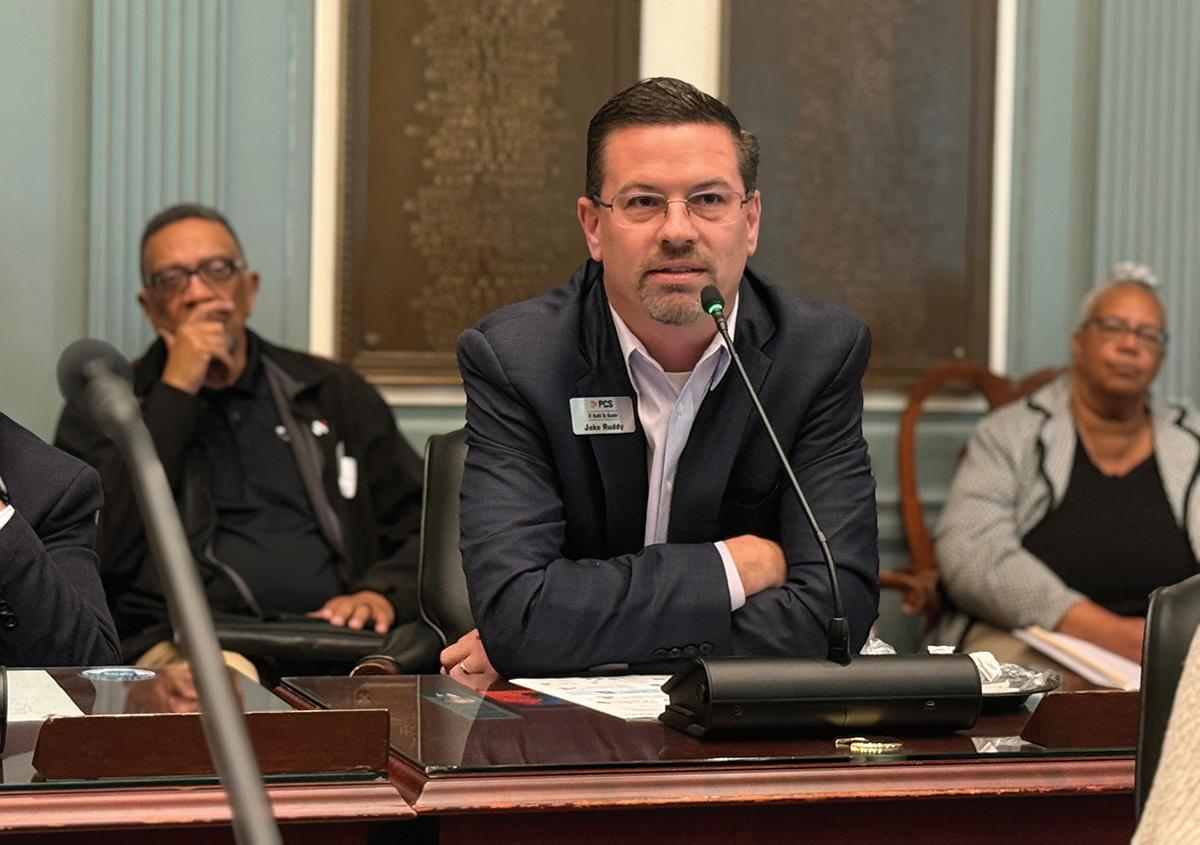
The Small Business Alliance brings small business owners to Legislative Hall each year for the House Small Business Caucus meeting.
Preparedness Is Good Business
BY A.J. SCHALL JR.
››New competitors, staffing shortages, power outages, or a cyber incident: all challenges your organization faces. What you may not realize is that when you respond to these issues, you are already applying the core principles of emergency management.
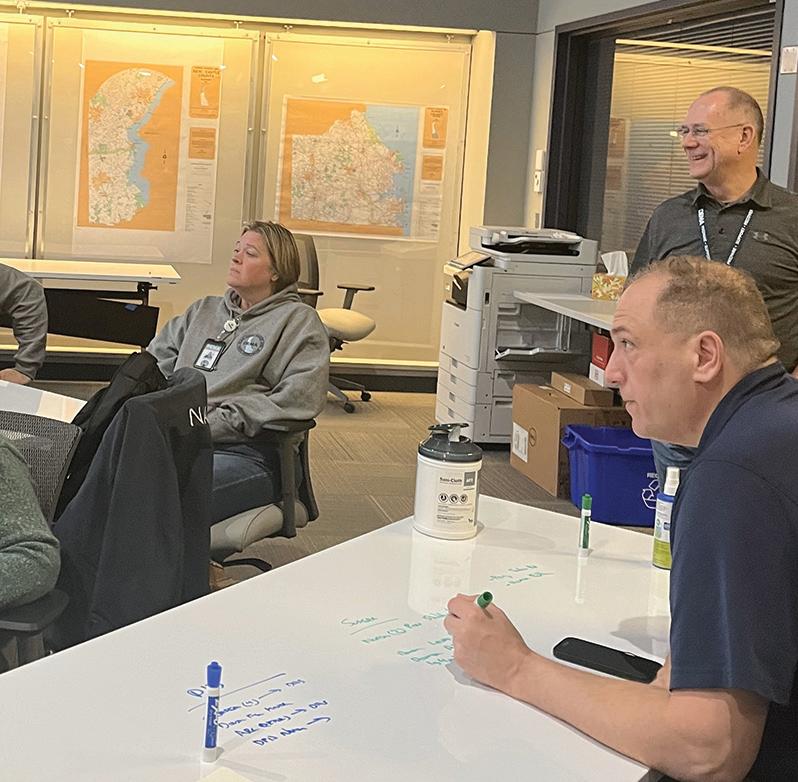
At the Delaware Emergency Management Agency (DEMA), our vision is built on three simple but impactful words: Prepare, Support, Recover. These principles guide our work 365 days a year as we strive to reduce risk across the state. They are the same principles that help organizations not only thrive, but at times survive.
A critical first step is understanding the hazards that exist in Delaware and those specific to your organization. Once identified, you can begin preparing for them.
RISK IN DELAWARE
Through our planning efforts, DEMA identifies and prepares for risks across several categories, including natural hazards, technological hazards, infrastructure failures, public health emergencies, terrorism, transportation incidents, and social and civil emergencies.
As history dictates, Delaware’s greatest hazard is water. From coastal storms, inland flooding, or even frozen pipes, water-related events can threaten lives and damage infrastructure. However, we plan for a wide range of scenarios, as both natural and human-caused events can disrupt our way of life. In the last few months, we have experienced major snow events, communication outages, frigid temperatures, transportation incidents, and senseless acts of violence.
HAZARDS TO YOUR BUSINESS AND WHAT YOU CAN DO
Just as you regularly review your insurance coverage, it is equally important to review both the internal and external risks facing your organization. Cyber incidents, for example, are increasing at an alarming rate. These events can impact not only your bottom line, but also your reputation, your employees, and, most importantly, your customers.
It is easy to assume “it won’t happen to us” or to push planning off until tomorrow. However, when disruptions occur, time is the one thing you cannot get back. The best time to prepare is now.
Many organizations have a business continuity plan, but when was the last time you reviewed it? Is it up to date? Does it include a crisis communication strategy?
If your email system goes down, can you still reach your employees? Do you have current phone numbers or alternative contact methods? These are simple questions, but they can make a significant difference during a crisis.
Emergency management is often about expecting the unexpected. While we all hope to avoid major disruptions, experience tells us they will happen. Taking time now to identify your risks and ensure your plans are accurate and actionable is one of the most valuable
investments you can make.
There are also many resources available to support you, including guidance from the Cybersecurity and Infrastructure Security Agency and the U.S. Small Business Administration.
Finally, remember that when disasters strike, they impact not only organizations, but entire communities. Your business is part of that community. In times of crisis, you may need help, but a well-prepared business can also be part of the solution.
A.J. Schall Jr. is a director and homeland security advisor at the Delaware Emergency Management Agency.
Chair Message
BY JOHN C. GOODEN
››At M. Davis & Sons, we recently promoted a team member who began as a high school co-op student, completed an apprenticeship, advanced through supervisory and project management roles, and now holds a top leadership position. Another peer, who joined us through an engineering program at the University of Delaware, also contributes at the same level. Both reached management through different but equally valuable paths.
Their stories demonstrate an important lesson: there is more than one path to achieving a rewarding career.
Apprenticeships, internships, and co-op programs offer a powerful alternative pathway that combines education with on-the-job training and, in many cases, provides direct entry into the workforce.
All of these programs can provide an immersive learning environment where individuals gain practical skills while working alongside experienced professionals. The time spent learning from seasoned professionals and craftspeople accelerates the development of technical expertise and critical-thinking skills. They can face real-world challenges early in their careers and quickly learn how to make decisions, solve problems, and understand consequences.
Delaware has long benefited from strong vocational education and apprenticeship programs. The millwright program at Paul M. Hodgson Vocational Technical High School, once led by respected instructor Stan Studinski,
consistently produced graduates who were ready for the workforce. At its peak, the program achieved nearly 100% placement for eligible senior co-op students, often with employers competing to hire them before graduation.
This type of success demonstrates the impact of strong partnerships between educators and employers. When businesses open their doors to internships, co-ops, and apprenticeships, they are actively building the workforce of the future.
By growing these programs and extending apprenticeship-based learning into other high-demand fields such as health care, education, and biotechnology, we can create new pathways. These programs also help Delaware retain talented workers and attract employers seeking a skilled and stable workforce.
Apprenticeships are a key solution to the workforce challenges facing our state today and in the years ahead. Recent initiatives by Gov. Matt Meyer, including
expanding the use of apprenticeship programs and revitalizing workforce development initiatives, represent an important step forward. Strengthening the Governor’s Advisory Council on Apprenticeship and creating a more coordinated workforce development strategy signals growing recognition of the role these programs play in economic growth.
The next step is to ensure the resources are in place to support that vision. Expanding apprenticeships requires sustained investment. Attempting to stretch already limited funding will not deliver the results our workforce and employers need.
Now is the time to act. Delaware must fully commit to apprenticeship funding to strengthen our talent pipeline, open doors for the next generation of workers, and guarantee businesses across the state have the skilled workforce required for growth. Let’s prioritize investment in these programs and secure our economic future together.
Then-presidential candidate George W. Bush delivered the keynote at the Annual Dinner in 2000, pictured with Suzanne Moore and John Burris.
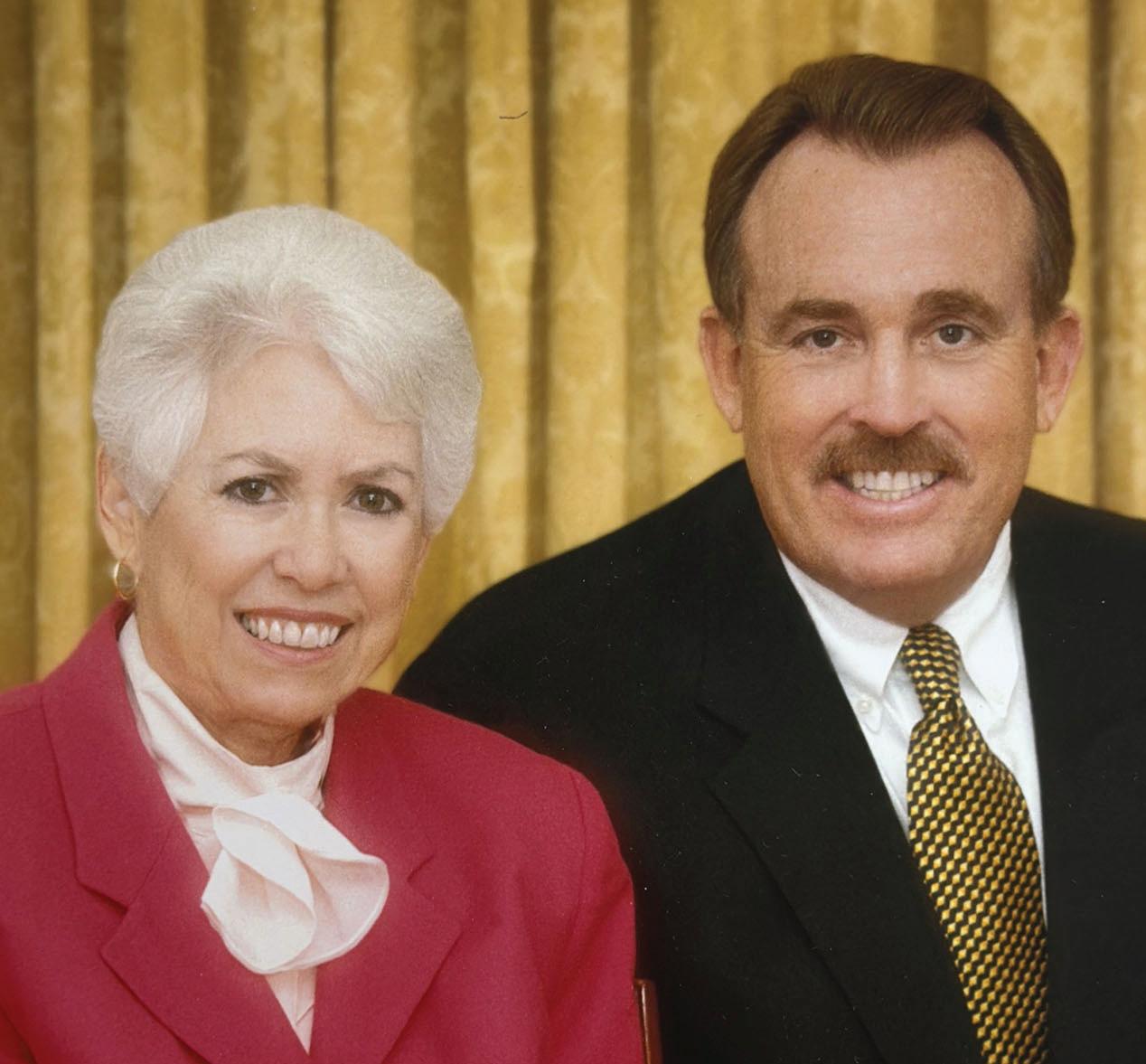
Suzanne and John Burris during his tenure as president of the State Chamber.
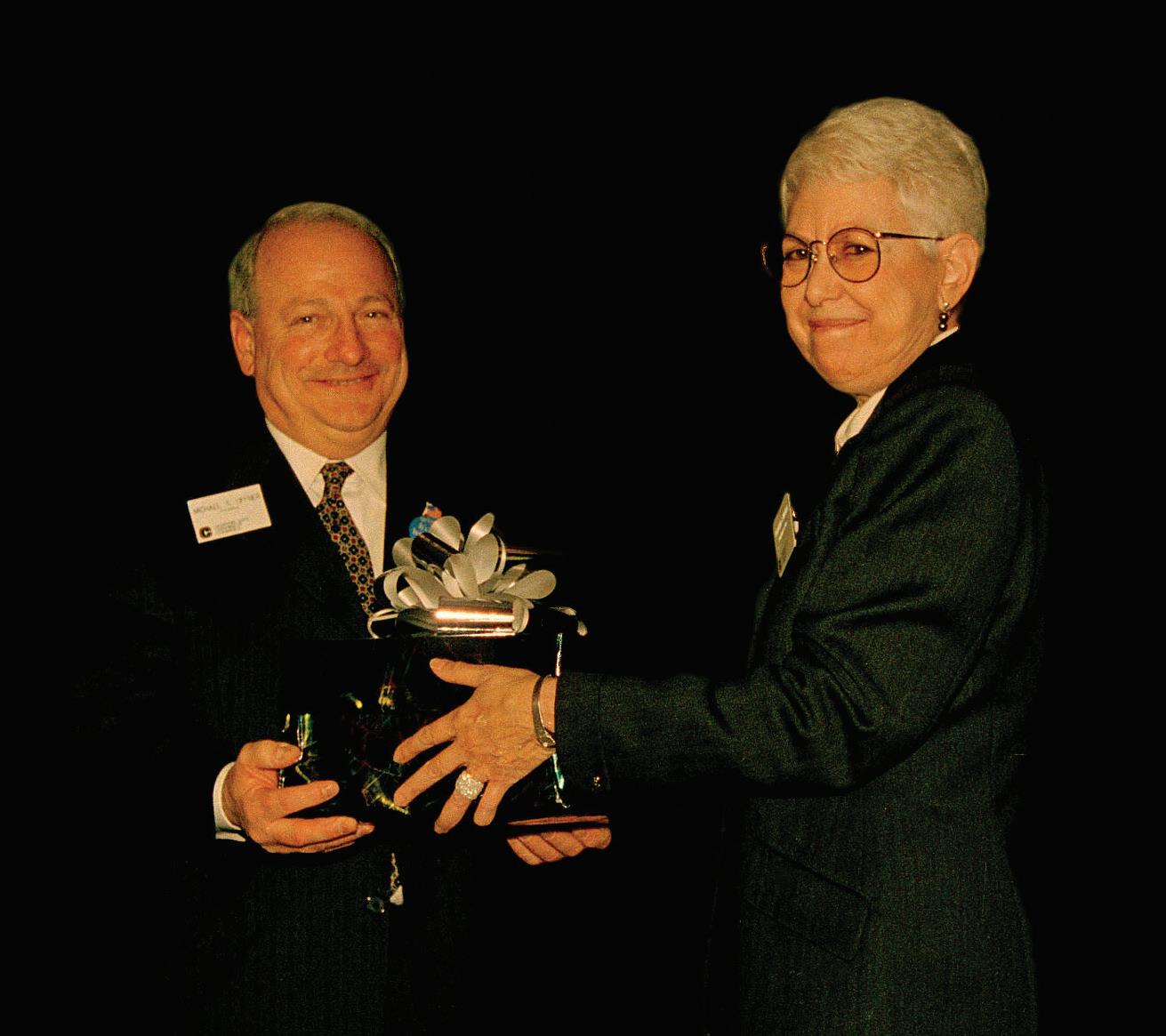
Suzanne giving Mike Uffner a gift for his service as chair of the State Chamber.
A Force for Change
REMEMBERING SUZANNE C. MOORE, DSCC’S FIRST FEMALE PRESIDENT
BY REGINA DONATO | PHOTOS BY DICK DUBROFF / FINAL FOCUS PHOTOGRAPHY
››Long before conversations around representation in leadership became commonplace, Suzanne C. Moore was breaking barriers in Delaware’s business community.
In 2001, Moore became the first woman to serve as president and CEO of the Delaware State Chamber of Commerce — one of only two women to ever hold the role. It was a historic milestone, but for Moore, it was never about recognition. It was about making a difference.
Before stepping into the role, Moore served as senior vice president of communications and executive vice president, helping shape the State Chamber’s voice and overseeing implementation of its strategic plan.
During her tenure as president, Moore helped further sharpen the State Chamber’s role as a leading voice for business in public policy. She worked to build stronger alignment between the organization and its members, advancing policies that reflected the real needs of employers across the state. She also emphasized the State Chamber’s affiliate model — a structure still in place today through the Delaware Manufacturing Association and Delaware Retail Council. At the same time, Moore served as
president of the Delaware Public Policy Institute, where she championed a more data-driven approach to policymaking. Through research, public forums, and collaboration with leaders across business, government, and education, she helped elevate thoughtful, solutionsoriented dialogue in Dover.
“Suzanne was a leader who understood how to bring people together around shared goals,” said Michael J. Quaranta, current president of the Delaware State Chamber of Commerce. “Her work strengthened the State Chamber’s voice in Dover and helped position our organization as a trusted partner in shaping Delaware’s future. We continue to build on the foundation she created.”
Moore retired from the State Chamber in 2005, but her work was far from over. In 2015, she joined the national effort to advance the Equal Rights Amendment and founded ERANow Delaware. She later launched Ready 2 Run Delaware, a training program to support women pursuing public service. The program’s early classes helped reverse a decades-long decline in women serving in Delaware’s General Assembly. Moore passed away Feb. 26, 2026, in Greenville, Del., with her husband by her side. Though humble by nature, her influence was far-reaching — a steady, determined force who helped shape the State Chamber and Delaware’s business and policy landscape. Her legacy continues to guide the work ahead.
Community Solar for Delaware
HOW DELAWAREANS CAN CUT ELECTRIC BILLS WITHOUT ROOFTOP PANELS OR UPFRONT COSTS CONTRIBUTED BY COMMON ENERGY
››Many Delawareans are not aware of or benefiting from their state’s Community Solar Program. With a $0 down, subscription-based model, residents and small businesses can access clean energy while continuing to use the same utility, the same wires, and the same reliable service. The only noticeable difference is a reduced total on their monthly electric bill, thanks to a clean energy discount typically of about 10%.
For many, traditional rooftop solar is out of reach. Whether due to a roof that cannot support solar panels, renting instead of owning, or the upfront cost of installation, these barriers exclude a significant portion of the population. Community solar was created to address this gap, expanding equitable access to renewable energy for all who wish to participate in the clean energy transition, regardless of
their property type or financial status.
The way it works is both simple and efficient. Instead of installing panels on individual properties, solar developers build large-scale solar farms within the local utility’s service area. These farms generate clean electricity that flows directly into the grid, reducing reliance on fossil fuels. When you subscribe, you are allocated a share of that energy production. Your utility then applies solar credits to your existing bill based on the energy your share produces. These credits translate into consistent savings, all without changing how you receive or use electricity.
This model delivers meaningful value for both households and small businesses across the First State. Whether you are managing a home budget or controlling operating expenses, lowering electricity costs can have an immediate and lasting impact.
At the same time, participating in community solar supports broader environmental, social, and governance (ESG) goals and demonstrates a commitment to sustainability — something that matters to families, customers, and communities alike. Because the program is tied to your utility account rather than a specific property, it remains flexible. If you move within the same utility territory, your savings and benefits move with you.
Companies like Common Energy play a central role in making this process seamless. Acting as the bridge between customers and solar farms, Common Energy manages enrollment, coordinates with utilities, and ensures solar credits are applied accurately and transparently.
As Delaware builds a cleaner, more resilient energy future, community solar provides a practical way to save money while supporting a sustainable grid.
CHAMBER SCENE
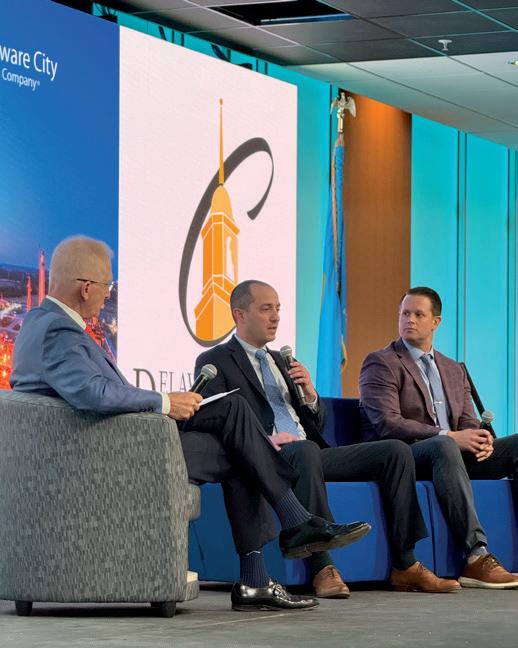
1. The annual State of the Guard address, hosted by the Joint Military Affairs Committee, brought together more than 200 leaders from Delaware’s business community.
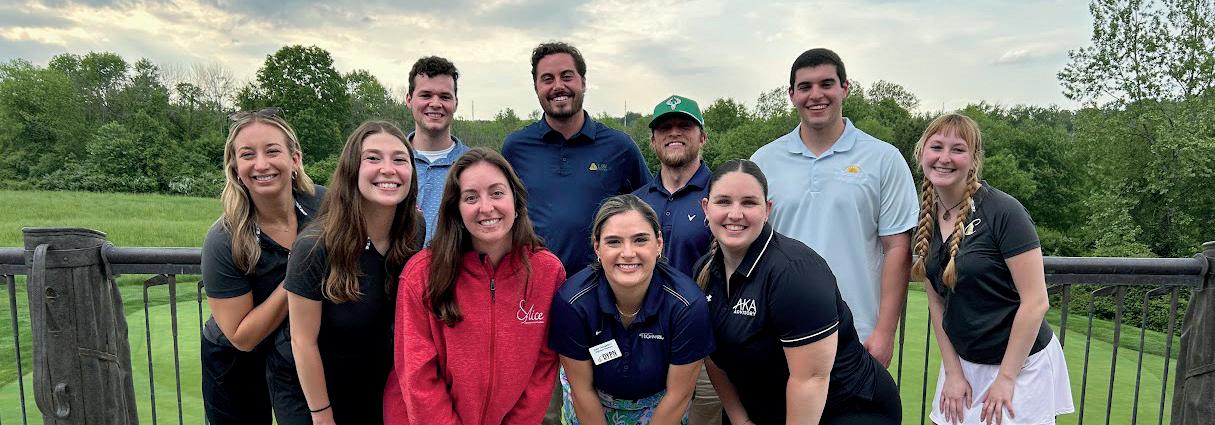
2. The Delaware Young Professionals Network hosted a Speed Networking and Happy Hour at The Chancery Market in downtown Wilmington.
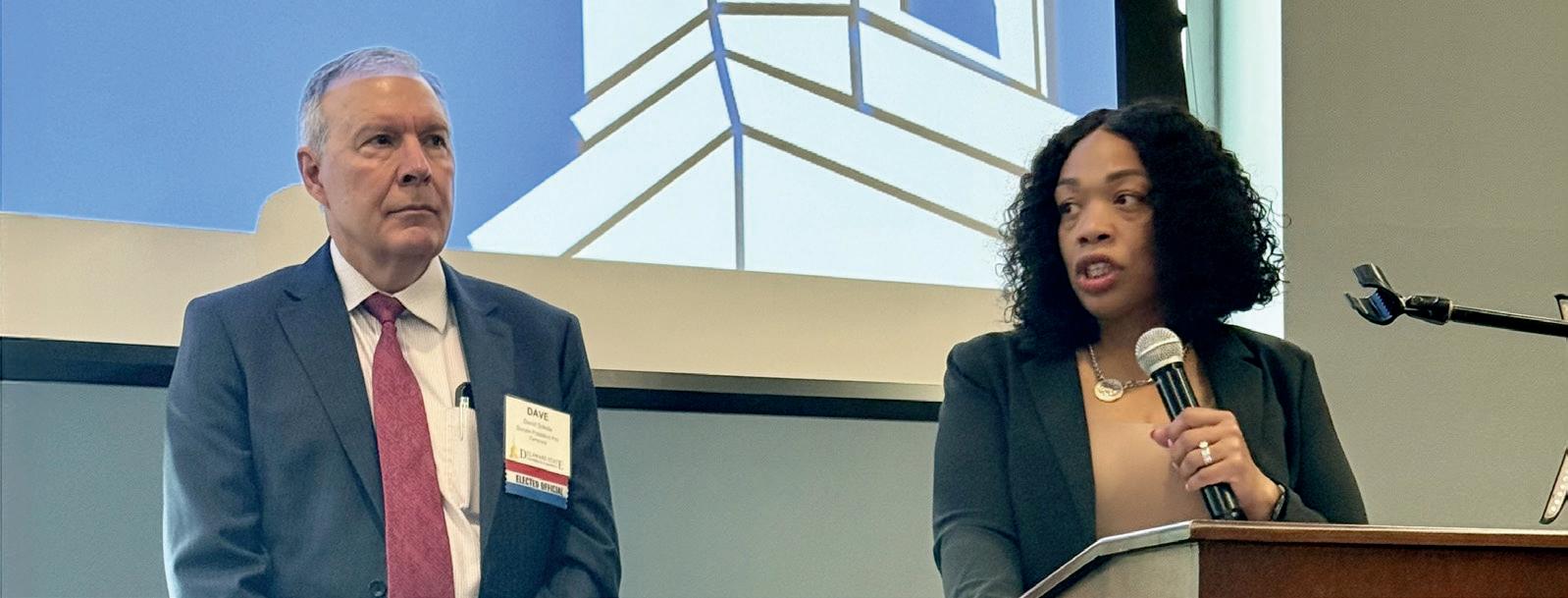
3. Jasmine Yu, chief investment offcer at Bryn Mawr Trust, served as a featured keynote at our Spring Manufacturing and Policy Conference and analyzed the effects of the Iran War on the U.S. economy.
4. Artsnsaw Chainsaw Carvings was named the 2026 Coolest Thing Made in Delaware.
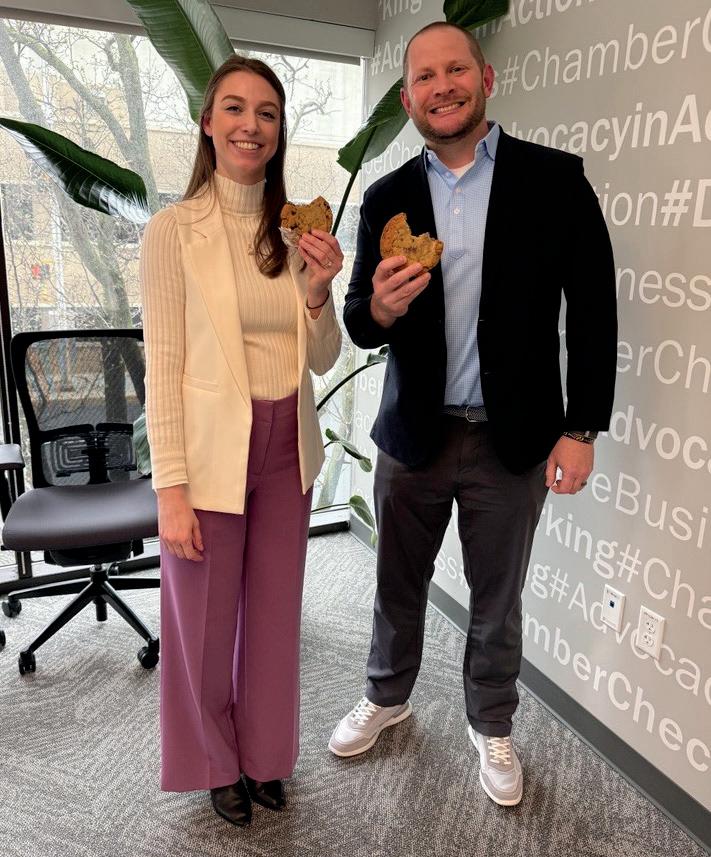
5. DSCC’s Kelly Basile and M&T Bank’s Mark Hutton recorded an episode for the "Delaware Deep Dive" podcast and tried some local cookies.
6. Our April Networking Breakfast was hosted by the Small Business Development Center located on UD’s Star Campus.
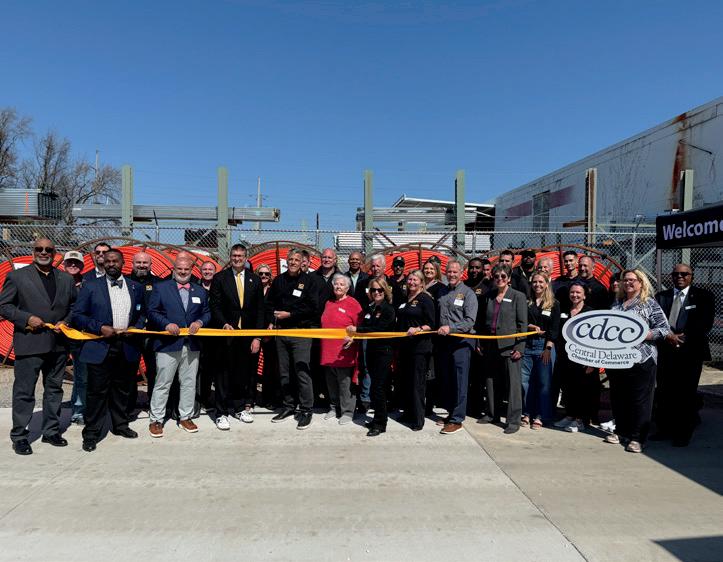
7. DSCC celebrated new member IQ Fiber’s ribbon cutting on its Dover facility, marking the company’s fifth state and a major investment in Delaware’s future.
WELCOME New Members
BREW HAHA!
www.brewhaha.com (302) 427-2739
1013 Centre Rd., #104 Wilmington, DE 19805
Brew HaHa! is a women-owned coffee company with multiple cafe locations across northern Delaware. Established as a community gathering place, locals and visitors alike can enjoy expertly crafted coffee, specialty espresso drinks, lattes, and cold brews, all rooted in quality and care.
CITROSUCO NORTH AMERICA
www.citrosuco.com (302) 652-8763
1000 Ferry Rd., Wilmington, DE 19801
Citrosuco North America operates the largest bulk juice storage terminal in North America at the Port of Wilmington, with a total storage capacity exceeding 10 million gallons.
DAWN CAREER INSTITUTE
www.dawncareerinstitute.edu (302) 273-3560
252 Chapman Road, Ste. 100 Newark, DE 19702
Dawn Career Institute is a private postsecondary school offering campusbased and online, career-focused diploma programs that lead to professional certifications and licenses in health care, trades, and wellness fields, including practical nursing, medical assisting, certified nursing assisting, advanced esthetics, and heating, ventilation, and air conditioning.
HEALTHY FOODS FOR HEALTHY KIDS
www.hfhk.org
(302) 690-6535
221 W. 10th St., 3rd Fl., #28 Wilmington, DE 19801
Healthy Foods for Healthy Kids supports Delaware educators by bringing the lifelong benefits of gardening and nutrition education to students. The organization serves 68 schools statewide, reaching more than 28,000 students through its “Education Cultivation” program.
IQ FIBER
www.iqfiber.com (800) 495-4775
631 Ridgely St., Dover, DE 19904
IQ Fiber recently opened a new facility in Delaware, marking its fifth state and a $150 million investment that will create at least 50 jobs and expand high-speed fiber access in Kent and Sussex counties. The company provides 100% fiber-optic internet with transparent pricing and a focus on reliable service and customer experience.
LOGISTICS PROPERTY COMPANY
www.logisticspropco.com (301) 906-7111
223 Long Point Rd., Crownsville, MD 21032
Logistics Property Company LLC is a real estate operating company and investment manager focused on acquiring, developing, and managing modern logistics properties in key North American markets. Headquartered in Chicago, the company owns or is developing 27 million square feet of logistics facilities across 14 U.S. markets.
MAVEN STRATEGIES
www.mavenstrat.com (302) 545-0903
P.O. Box 394
Rockland, DE 19732
Maven Strategies is a Delaware-based government relations and public affairs
firm providing lobbying, policy research, and strategic advice to clients engaging with state government. Its team brings experience across government, politics, labor, and business to help clients address complex strategic challenges.
MCDONALD’S
www.mcdonalds.com/us/en-us (914) 951-1681
110 North Carpenter St., Chicago, IL 60607
Founded in 1954 by Ray Kroc, McDonald’s has grown from a single restaurant in California into one of the world’s largest restaurant chains, with more than 36,000 locations in over 100 countries.
NORFOLK SOUTHERN CORPORATION
www.nscorp.com (202) 675-8207
1 Constitution Ave. NE, #300 Washington, DC 20002
As a leading transportation provider, Norfolk Southern operates 19,500 route miles in 22 states and D.C.; supports international trade with service to every major Eastern seaport, 10 river ports, and nine lake ports; and operates the most extensive intermodal network in the East.
THE DELAWARE CONTEMPORARY
www.decontemporary.org (302) 656-6466
200 S. Madison St., Wilmington, DE 19801
Founded in 1979, The Delaware Contemporary is Delaware’s only contemporary art museum. It is an art space that brings contemporary art and creativity into the community through compelling exhibitions, dynamic educational experiences, and access to the artistic process.
Navigating Delaware Pathways
An Education & Workforce Development Summit
THANK YOU TO OUR GENEROUS SPONSORS:
*Sponsors as of 4/21/26
Leadership:
Gold:
Bronze:
Silver:
Coffee:
Friend: Maria Taylor & Family
Superstars in Education
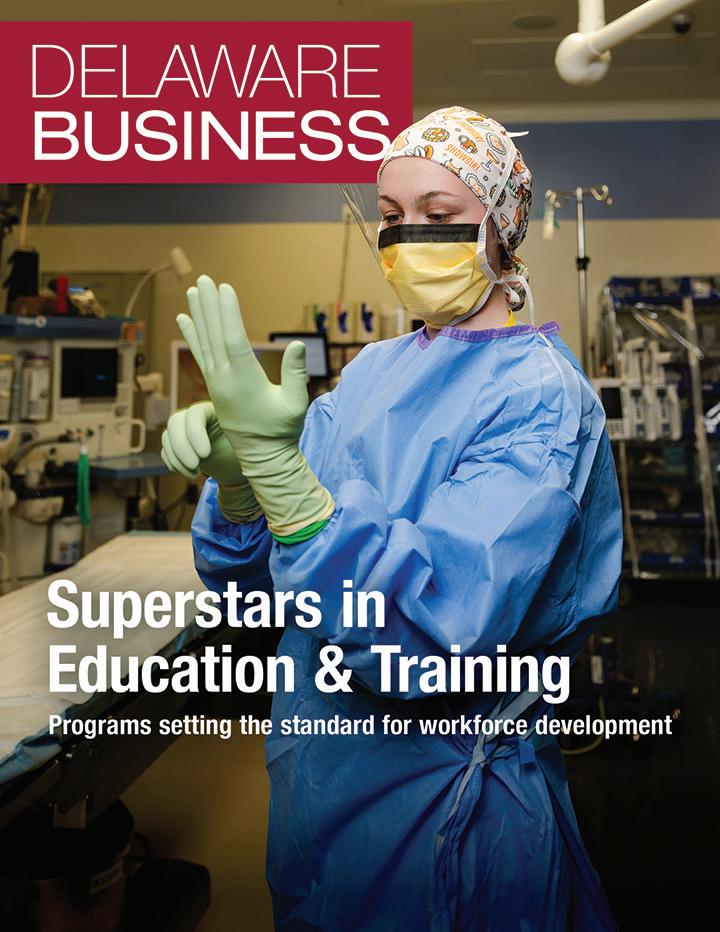
Superstars in Education & Training
The
Delaware State Chamber Foundation
is
pleased to announce the 2026 Superstars in Education & Training award winners
PHOTOS BY NICK WALLACE PHOTOGRAPHY
THE FUTURE of Delaware’s economy will be shaped by how well its workforce is prepared. In an era of rapid technological change and shifting industry demands, success requires both readiness and leadership — cultivated through forward-thinking education and workforce development programs. States that invest in developing, attracting, and retaining a skilled workforce position themselves for long-term, sustainable growth.
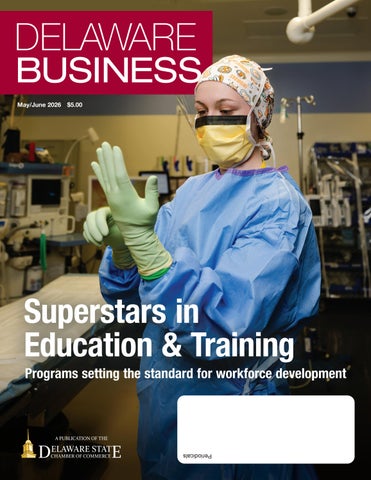
The Superstars in Education and Training program recognizes innovative and impactful education and training initiatives across Delaware. While many programs complete the rigorous application process, only four are named Superstars each year: one independent training or certificate provider, one higher education program, one corporate training program, and one Delaware high school. Awards of Excellence are also presented to additional deserving programs.
The 20 members of our selection committee met to choose our honorees in February. The rigorous process included reading and scoring applications, meeting to discuss the merits of each application, and finally, making site visits for a firsthand look at the finalists in action. Our selection committee returned full of excitement and stories from the site visits.
The 2026 Superstars in Education and Training award winners — all of which exemplify creativity and efficacy in workforce development initiatives — are the Delaware Restaurant Foundation, Beebe Healthcare, University of Delaware, and New Castle County Vo-Tech School District. Dover High School and Goldey-Beacom College were also named as Award of Excellence recipients. The winners were recognized during an awards luncheon at the Navigating Delaware Pathways Summit at Bally’s Dover Casino Resort at the end of April.
2026 WINNERS
DELAWARE RESTAURANT FOUNDATION
Independent Training and Certificate
Provider
The Delaware Restaurant Foundation (DRF) serves as the statewide workforce intermediary for Delaware’s hospitality industry, connecting education, industry-recognized credentials, and employers to build a skilled and inclusive talent pipeline. Through job-ready training, work-based learning, and clear pathways to advancement, DRF prepares students and adult learners for long-term careers in hospitality. Serving a diverse population ranging from middle and high school students to adult learners, apprentices, and justice-involved individuals, DRF’s programs respond directly to industry demand and align with statewide workforce priorities, ensuring graduates enter the workforce credentialed, confident, and employer-connected.
BEEBE HEALTHCARE, PROVIDER LEADERSHIP ACADEMY
Corporate Training Program
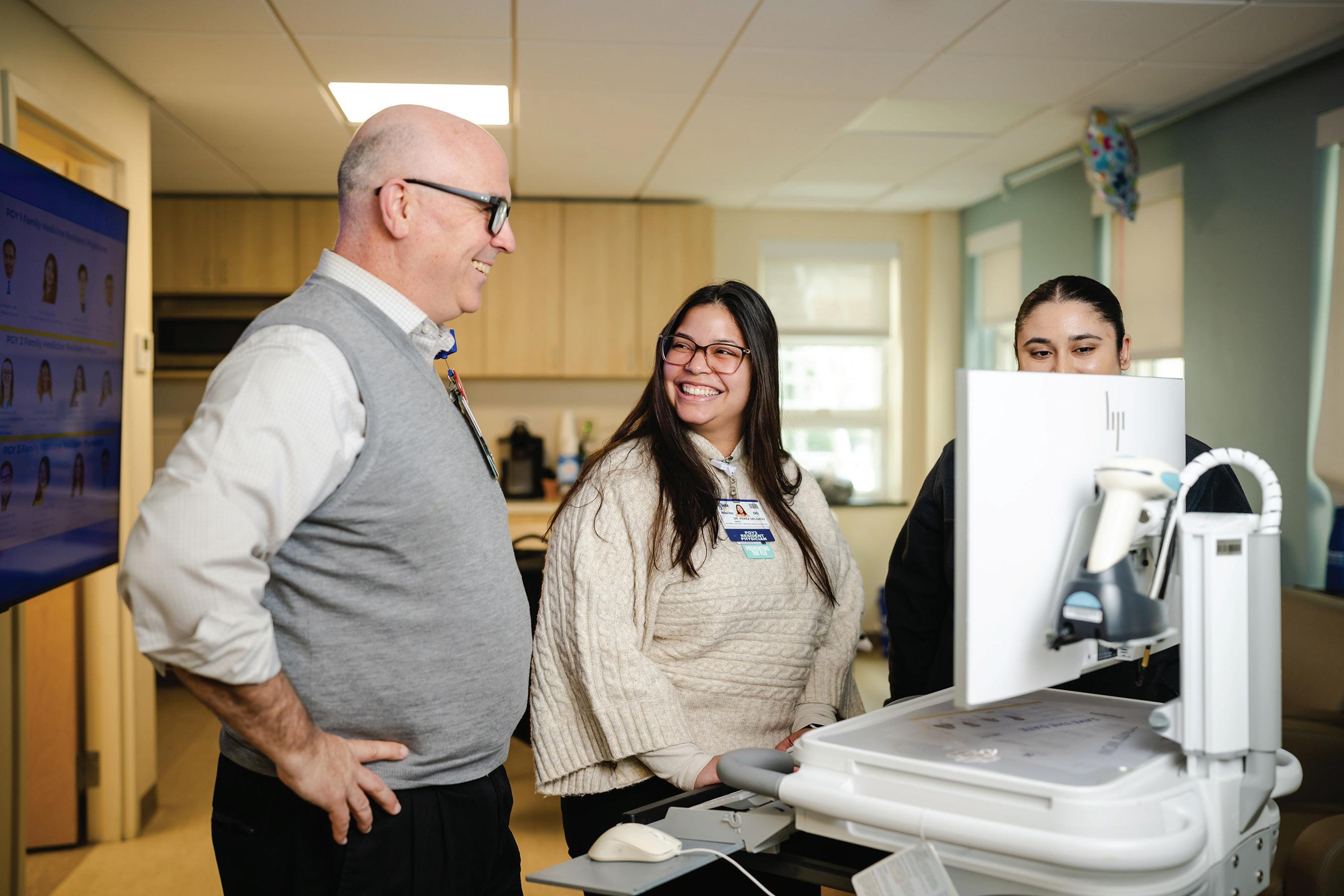
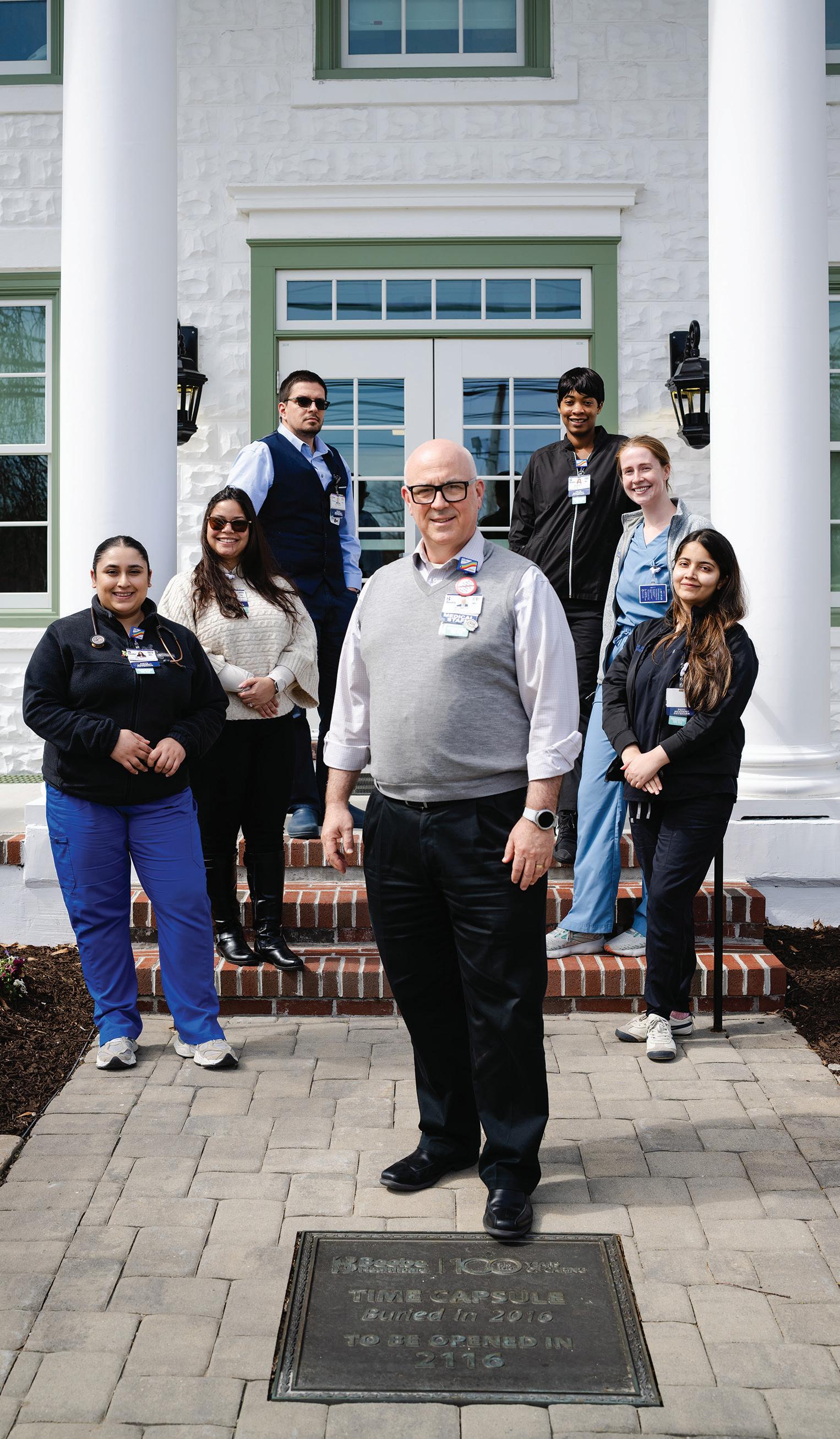
Launched in 2015, Beebe Healthcare’s Provider Leadership Academy strengthens its medical staff by equipping clinicians with leadership skills not usually taught in traditional medical training. The yearlong program brings together physicians, nurse practitioners, and physician assistants for monthly interactive sessions focused on communication, collaboration, accountability, and leading change. Supported by individualized assessments and one-on-one coaching, participants apply lessons directly to their roles, helping advance strong provider leadership and high-quality care across the health system.
UNIVERSITY OF DELAWARE, PRINCIPAL PREPARATION PROGRAM
Higher Education Program
The University of Delaware Principal Preparation Program (UD PPP) is an alternative pathway to school leader certification that prepares
2026 Selection Committee
Jon Bell
First State AI Institute at University of Delaware
Patrick Best
WSFS Bank
Fayetta Blake Pathways to Success
Nathan Elton University of Delaware
Tierra Fair United Way of Delaware
Gigi Gaul Goldey-Beacom College
Jessica Jordan Siemens Healthineers
Rick Konysz
Delaware Department of Education
Anna McDermott Food Bank of Delaware
Dr. Michelle Kutch Brandywine School District
experienced educators to step confidently into leadership roles across Delaware. Designed and led by award-winning University of Delaware faculty and experienced school leaders, the program combines practicebased coursework with a supervised school leader internship in Delaware public schools, with more than 90% of graduates currently serving in Delaware schools and districts. Today, UD PPP graduates lead in all three counties, across 16 of Delaware’s 19 school districts and eight of 23 charter schools, strengthening schools, communities, and the state’s future workforce.
NEW CASTLE COUNTY VO-TECH SCHOOL DISTRICT, WORKFORCE PIPELINE DEVELOPMENT PROGRAM
High School Program
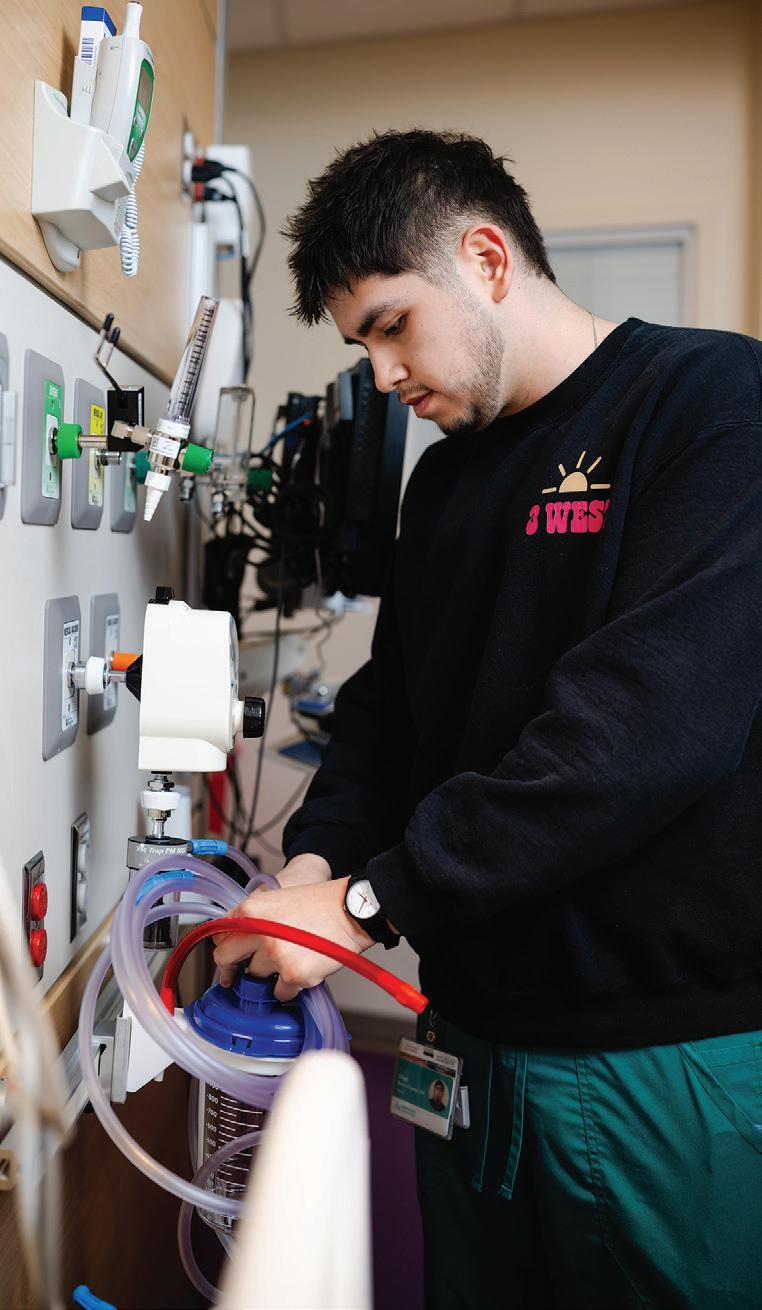
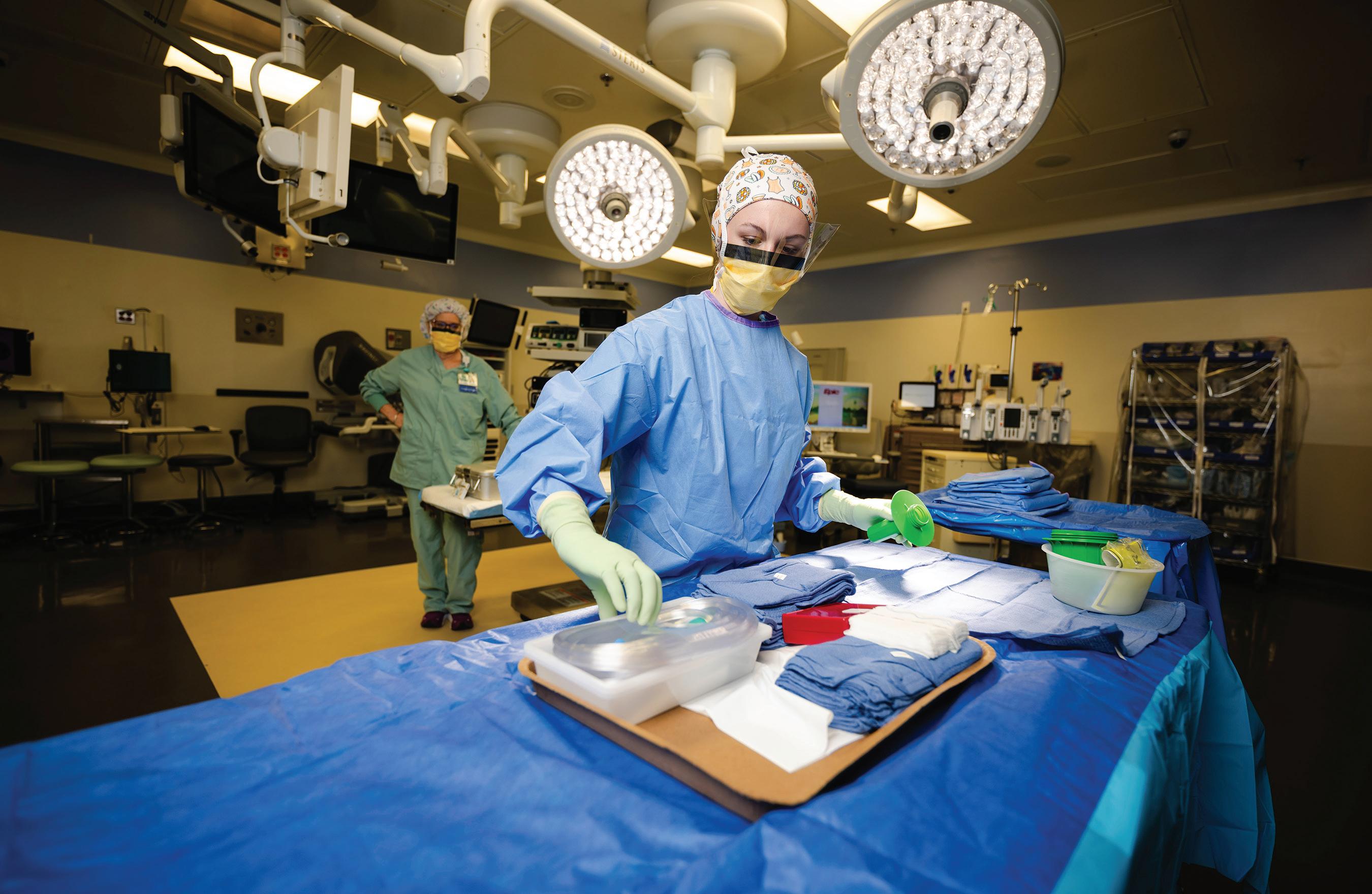
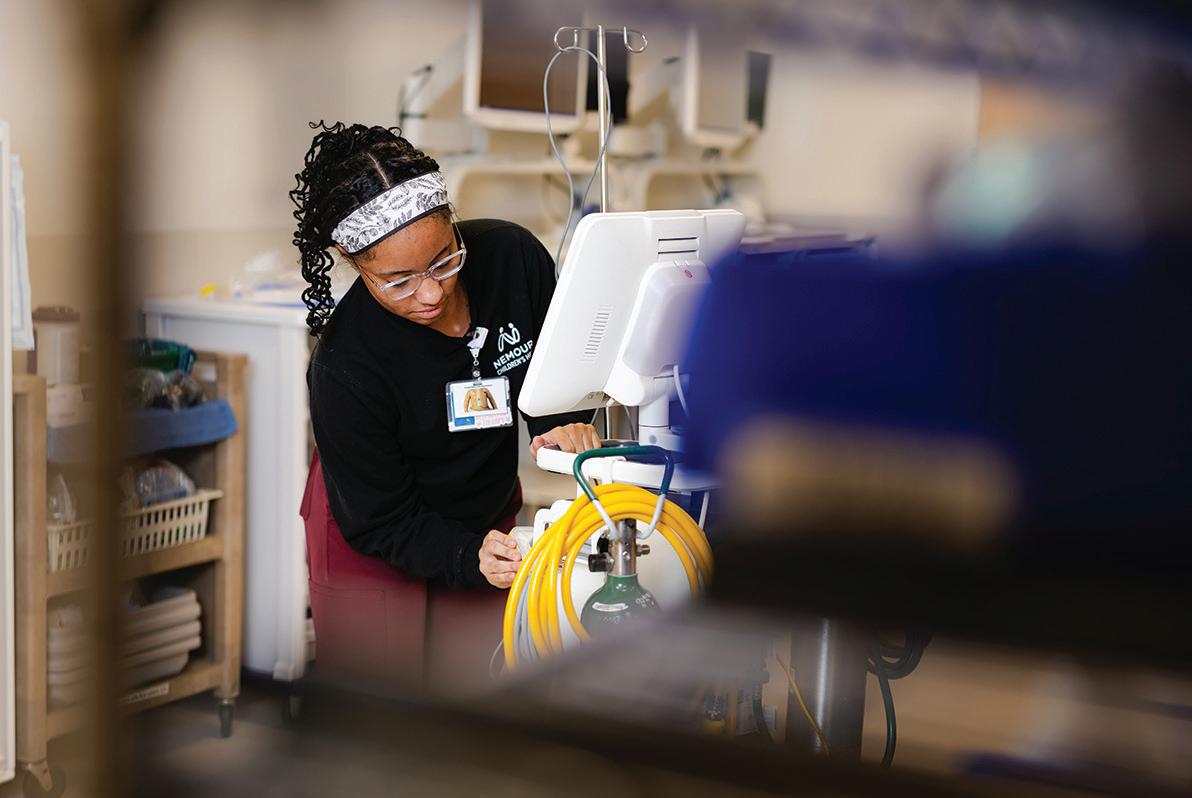
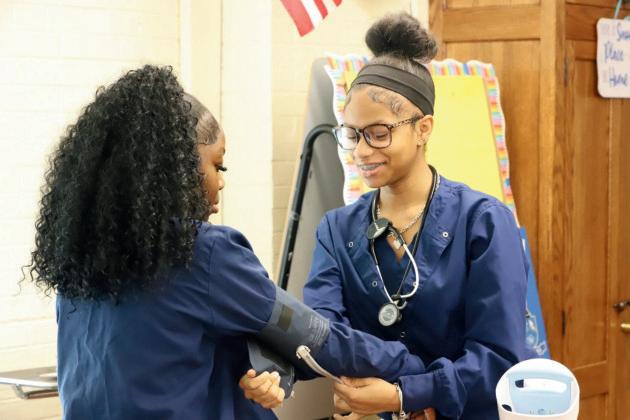
The Workforce Pipeline Development Program is a partnership between Nemours Children’s Health and the New Castle County Vocational Technical School District (NCCVT). The program creates work-based learning opportunities in pediatrics for students pursuing nursing technology, medical assisting, surgical technology, dental assistant, and emergency medical services, allowing them to apply classroom learning in real clinical settings while exploring potential health care careers. Since its launch, the program has expanded to all four NCCVT high schools, with plans to add HVAC, plumbing, and physical therapy pathways in 2026-27, strengthening Delaware’s future healthcare and skilled trades workforce.
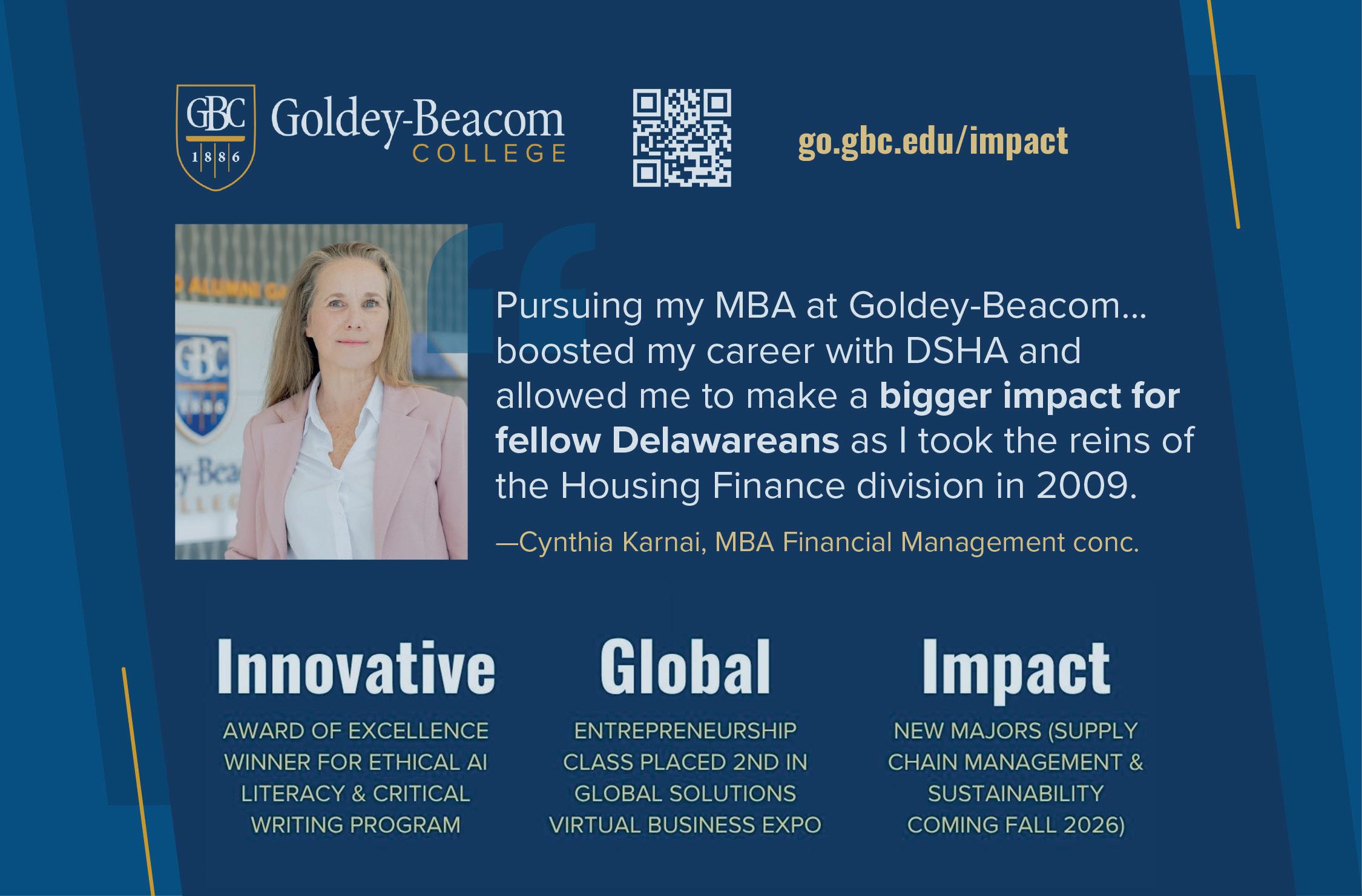
AWARD OF EXCELLENCE RECIPIENTS: GOLDEY-BEACOM COLLEGE, ETHICAL AI LITERACY & CRITICAL WRITING PROGRAM
Higher Education Program
DOVER HIGH SCHOOL, CERTIFIED NURSING ASSISTANT PROGRAM
High School Program
Dr. Katie Lakofsky BioConnect DE
Donna Long Delaware Department of Labor
Monterry Luckey Delaware Workforce Development Board
Kendall Massett Delaware Charter Schools Network
Dr. Christopher Moody
Delaware Technical Community College
Michelle Ray Blackwell HR
Dr. Rob Rescigno Collaborative Consulting, LLC
Luke Rhine Rodel
Deb Stevens
Delaware State Board of Education
Rachel Turney
Delaware Department of Health and Social Services
Superstars in Education
A Head Start in Health Care
Expanding access to real-world clinical experience through partnership
BY AMANDA SCHIMMEL | PHOTOS BY NICK WALLACE PHOTOGRAPHY
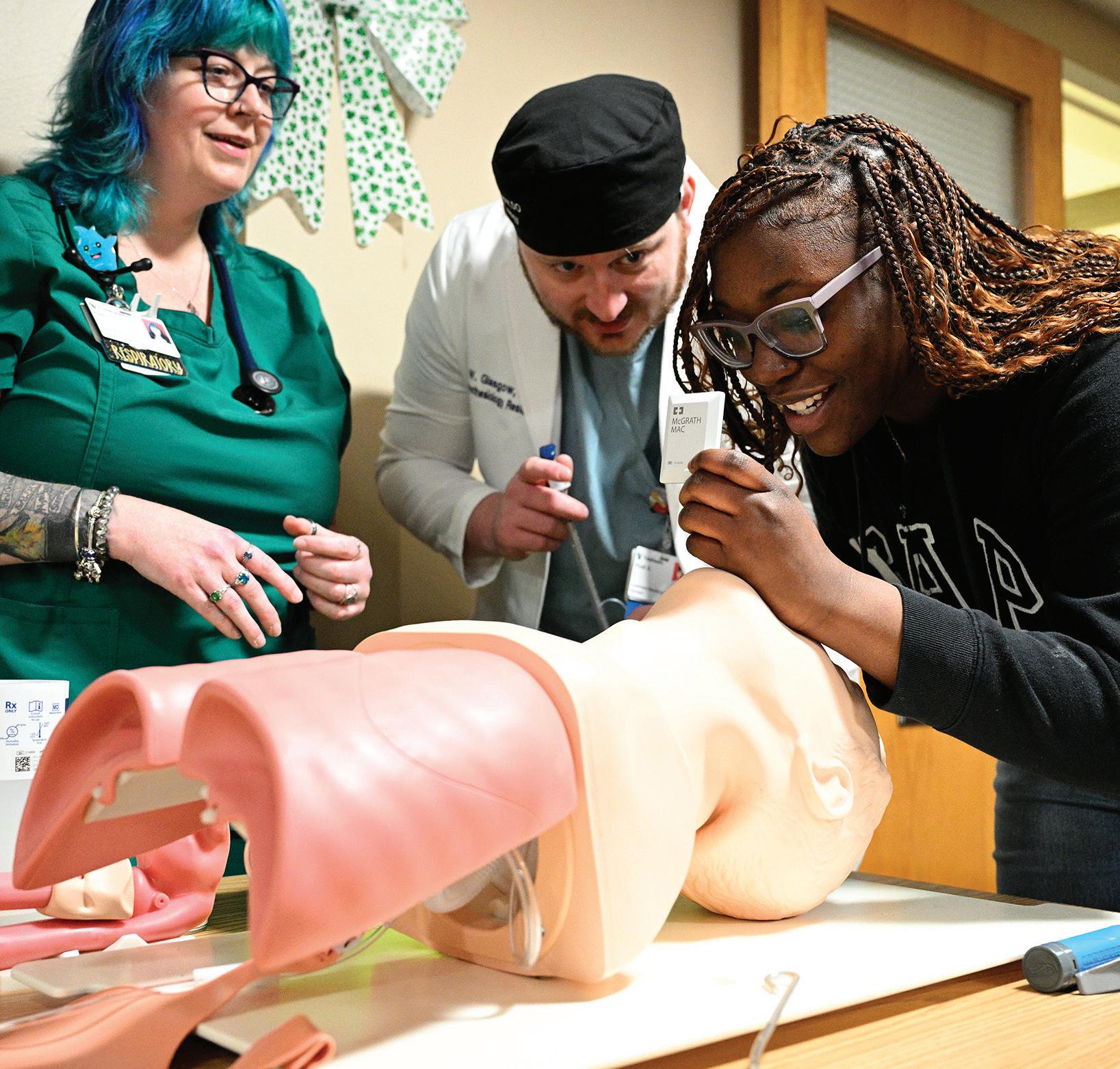
FOR MANY HIGH SCHOOL health programs, clinical experience comes later. In the New Castle County Vocational Technical School District (NCCVT), it’s already part of the path. Through a partnership with Nemours Children’s Health, the Workforce Pipeline Development Program integrates academic instruction with real-world clinical experience for high schoolers, creating high-quality, work-based learning opportunities.
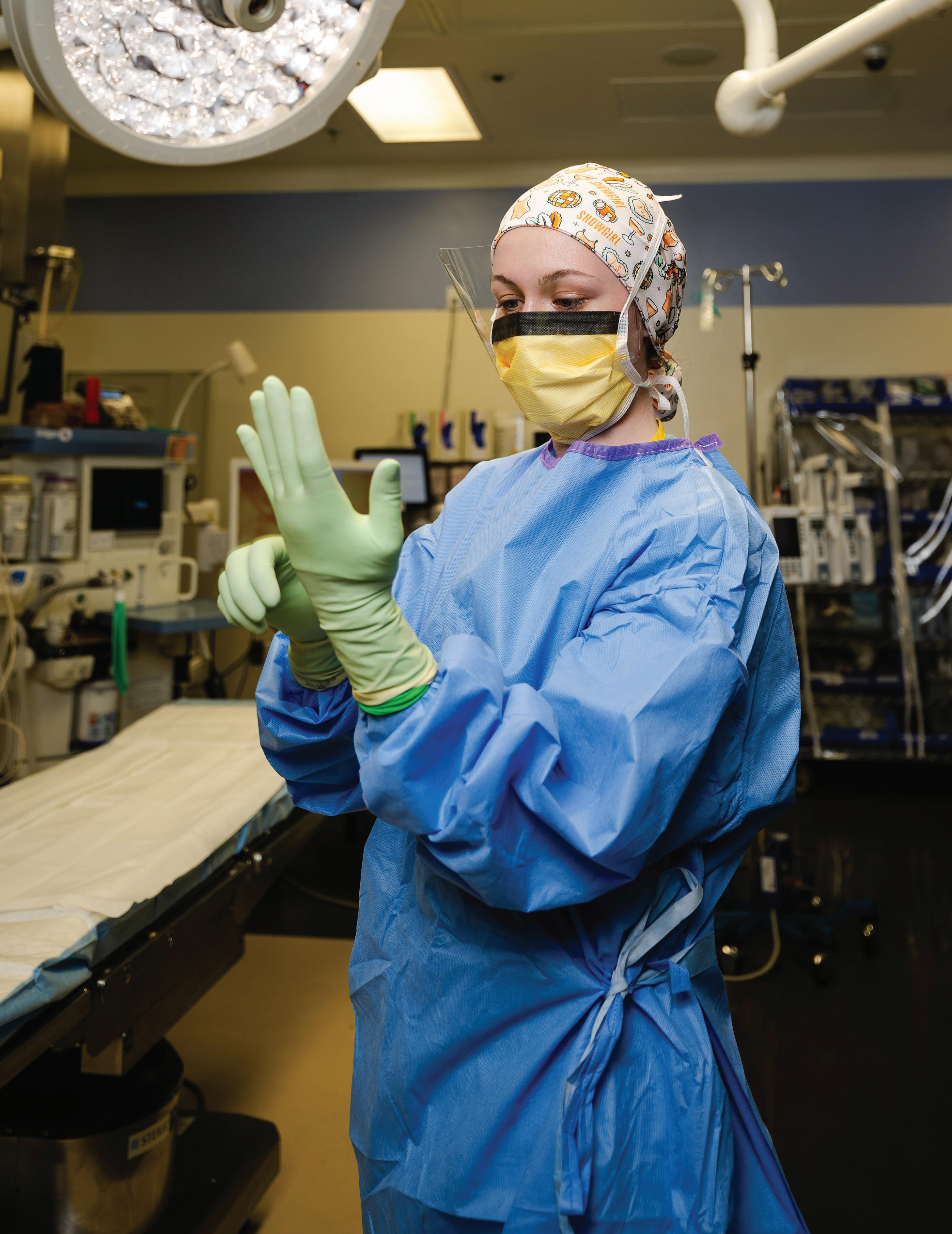
Launched in 2022 with just six students, the program now spans all four NCCVT high schools and multiple career pathways. Traditionally, hospital-based clinical experiences are reserved for postsecondary nursing students, while high school students are limited to assisted living or skilled nursing facilities. The Workforce Pipeline Development Program expands access to these opportunities, allowing students to volunteer at Nemours
Children’s Health beginning in 10th grade and, in 11th grade, participate in clinical shadowing alongside certified nursing assistants and nurses.
Following the shadowing experience, interested students can apply for paid, senior-year cooperative employment (co-op) positions.
Superintendent Joseph Jones explains, “A hallmark of an NCCVT education is the opportunity for students to participate in a co-op during their senior year, with placements aligned to their career pathways. This partnership with Nemours Children’s Health is a natural fit, bringing together the state’s largest provider of career and technical education and Delaware’s only pediatric hospital.”
The program opens doors for students across a range of health-focused disciplines, including Nursing Technology, Medical Assisting, Surgical Technology, Dental Assisting, and Emergency Medical Services, allowing
them to apply their training in clinical settings while building practical skills and exploring future careers.
“And we are actively growing the program. By 2027, it will include students in skilled trades like HVAC and plumbing, as well as physical therapy, allowing us to reach and support an even broader group of NCCVT students,” Jones adds.
Health care career programs are among the district’s most in-demand fields.
As of 2022, Delaware only employed approximately 11,490 registered nurses to serve a population of over 1 million, a reality that underscores the growing need for employer-led, early-career pathways like the Workforce Pipeline Development Program.
To meet this demand, NCCVT aligns its programs with local health care needs. For example, the Nursing Technology program prepares students to earn certified nursing assistant credentials through a combination of classroom instruction, lab-based learning, and clinical experience. Similarly, the Medical Assisting program develops both clinical and administrative competencies — such as phlebotomy, EKG administration, and medical
office procedures — while offering industry certifications, including First Aid, CPR, AED, and Certified Clinical Medical Assisting, as well as dual-enrollment college credit opportunities.
Students who complete their professional education are also positioned to return to Nemours Children’s Health as qualified health care professionals, strengthening long-term workforce stability while meeting the
pediatric health care needs of the local community.
“The Workforce Pipeline Development Program’s success speaks for itself: Nearly 90% of past participants are currently employed by Nemours Children’s Health in some capacity, and all but one of them are also pursuing higher education,” Jones concludes. “This program is delivering measurable success and a replicable model for health care development, transforming early exposure into long-term opportunity and empowering students to enter the workforce as skilled professionals.” n
2026 SUPERSTAR IN EDUCATION
NEW CASTLE COUNTY VOCATIONAL TECHNICAL SCHOOL DISTRICT
groundbreaking partnership with Nemours Children’s Health is one of
Superstars in Education
Leading the Way
The University of Delaware’s Principal Preparation Program is preparing educators to lead across Delaware
BY REGINA DONATO | PHOTOS BY NICK WALLACE PHOTOGRAPHY
IN 2015, the Delaware Department of Education projected that approximately 50% of school leaders would be eligible for retirement between 2020 and 2025, creating an urgent need for experienced educators prepared to step into leadership roles without delay. The challenge was clear: Delaware needed a stronger pipeline of school leaders who could move into these roles ready to lead on day one.
The University of Delaware’s Principal Preparation Program (UD PPP), housed in the College of Education and Human Development’s School Success Center, was designed with that urgency in mind. As an alternative pathway to certification, the program prepares experienced educators to transition into leadership roles efficiently, without sacrificing the rigor or real-world experience required to succeed.
“The University of Delaware Principal Preparation Program is a certificate program that prepares educators to step confidently into school leadership roles across Delaware,” says Dr. Alison Travers, assistant director of the Delaware Academy for School Leadership department in the University of Delaware’s School Success Center. “Designed and led by University of Delaware faculty and staff who are award-winning experienced school leaders, the program builds a strong, ready-to-lead pipeline for schools statewide.”
That focus on readiness is central to the program’s design. Participants are not new to education. They are experienced educators who already hold advanced degrees and are ready to take the next step. UD PPP provides a structured, accelerated pathway that allows them to build leadership skills while remaining in the field.
Through a combination of practice-based coursework and supervised internships, participants apply leadership theory directly in Delaware schools. Case studies, problem-solving scenarios, collaborative discussions, and reflection are paired with ongoing feedback from program staff and school-based mentors. The curriculum is intentionally aligned to the core responsibilities of school leadership, balancing instructional leadership with school operations and helping participants shift from classroom experience to leading at the systems level. “Graduates continue to report feeling prepared for the complexity of leadership from their first day on the job,” remarks Travers.
The program’s cohort-based model brings together educators from public, charter, and private schools across the state, creating opportunities to learn from diverse experiences while building a statewide professional network.
A key component of the program is its emphasis on problem-solving in real time. Participants complete applied action research projects that require them to identify challenges within their own schools, analyze data, implement strategies, and assess results. “This process develops the skills needed for continuous improvement, evidence-based decisionmaking, and organizational problem solving,” explains Travers.
The program’s impact is already evident across the state. Since launching in 2015, UD PPP has prepared 145 educators for certification, with cohorts of 12-18 at a time. Over 70% of graduates have been hired into leadership positions, often within six months of completing the program, and more than 90% currently serve in Delaware schools and districts in some capacity.
“District and charter leaders consistently report that UD PPP graduates demonstrate strong readiness to supervise staff, lead instruction, make effective decisions, and manage complex school operations from their first day on the job,” says Travers.
That level of readiness is reinforced through strong partnerships. The program works closely with local education agencies, including school districts and charter schools, to support recruitment, provide internship placements, and connect participants with experienced principal mentors.
The Delaware Department of Education also plays a key role, providing oversight and strategic support, including funding to expand access and reduce costs for participants. UD PPP is approved by the Delaware Department of Education and the State Board of Education as a certification program, ensuring alignment with state standards and workforce needs. Within the university, UD PPP collaborates across programs to support curriculum alignment and streamline the connection between professional certification and their graduate degree program.
Today, graduates of the University of Delaware’s Principal Preparation Program lead in all three counties, across 16 of Delaware’s 19 school districts and eight of 23 charter schools, working in a wide range of school settings and communities. They lead in classrooms, manage operations, and shape school culture, often in roles that require immediate results. As Delaware looks to the future, a strong and competitive education system will play a critical role in setting the state apart. UD PPP is helping make that possible. n
“District and charter leaders consistently report that UD PPP graduates demonstrate strong readiness to supervise staff, lead instruction, make effective decisions, and manage complex school operations from their first day on the job.”
—Dr. Alison Travers, assistant director of the Delaware Academy for School Leadership department in the University of Delaware’s School Success Center
Superstars in Education
A Full-Service Workforce
The Delaware Restaurant
the
Foundation is strengthening
state’s hospitality talent pipeline
BY REGINA DONATO | PHOTOS BY NICK WALLACE PHOTOGRAPHY
AS DELAWARE’S HOSPITALITY INDUSTRY continues to grow, so does the need for a workforce that is not only job-ready, but positioned for long-term success. Representing approximately 11% of the state’s total workforce and employing more than 52,000 individuals, the industry is a major driver of Delaware’s economy. But like many sectors, it faces ongoing challenges when it comes to workforce readiness, retention, and career advancement.
The Delaware Restaurant Foundation (DRF) is working to address that issue by strengthening the connection between education and the hospitality sector. By bringing together educators, employers, and training partners, DRF is building a more coordinated talent pipeline that not only creates entry points into the industry, but helps participants navigate long-term career growth.
That work is reflected in the breadth of its programs, which serve a wide
range of participants, including middle and high school students, adult learners, incumbent workers, apprentices, justice-involved individuals, and people with disabilities. The program structures are flexible by design, allowing participants to enter at different stages and build skills that support both immediate employment and long-term career growth.
“Our programs are intentionally structured to meet participants where they are, offering early career exposure, job-ready training, and pathways to advancement across the hospitality sector,” says Meghan Gardner, vice president of the Delaware Restaurant Association and the Delaware Restaurant Foundation.
That structure is especially important in an industry that is often misunderstood. For many students, hospitality is their first job, but it can feel limited to a narrow set of roles. In reality, it includes careers in
“We bring industry into the system, ensuring education and training align with real workforce needs and that participants understand how credentials, experience, and education translate into growth.”
—Meghan Gardner, vice president
operations, management, marketing, finance, human resources, and entrepreneurship. Without early exposure to those pathways, many individuals disengage before fully understanding what the industry has to offer.
DRF works to close that knowledge gap by integrating handson learning opportunities and direct employer engagement into its programs. “We bring industry into the system, ensuring education and training align with real workforce needs and that participants understand how credentials, experience, and education translate into growth,” Gardner explains.
A key part of that effort is the expansion of work-based learning opportunities in partnership with the Delaware Department of Education. Through catering projects, events, and hands-on learning experiences, participants are able to apply their skills in real-world settings, gaining both technical ability and confidence.
The impact of that approach speaks for itself. DRF’s programs currently engage more than 6,000 participants statewide. Credential attainment remains a central focus, with 100% of high school program completers earning at least one nationally recognized certification. Through the Restaurant Ready curriculum, delivered in partnership with communitybased organizations, more than 900 individuals have completed training in hospitality fundamentals, professionalism, and life skills, all while earning industry-recognized credentials that signal readiness to employers.
“Approximately 85% of participants across our programs enter employment, continue education, or advance within the hospitality industry following completion,” Gardner says.
Beyond initial placement, DRF is also focused on long-term career growth. Through registered apprenticeships and post-secondary partnerships, participants can continue building their skills and advancing within the industry. One example is the Hospitality Leadership Advancement Certificate, developed in partnership with Goldey-Beacom College, which helps prepare participants for supervisory and management roles.
This work is all supported by a strong network of partners. DRF collaborates closely with the Delaware Workforce Development Board, the Delaware Department of Labor, and employers throughout the state through the Delaware Restaurant Association. Local nonprofits, including
the Food Bank of Delaware and West End Neighborhood House, extend the program’s reach even further by providing wraparound support that helps participants complete training and transition into the workforce.
“Employers remain engaged because programs produce job-ready, credentialed candidates who understand workplace expectations and demonstrate growth potential,” Gardner said.
At a time when workforce challenges persist across industries, that kind of alignment is not just valuable, but necessary. And for the Delaware Restaurant Foundation, it’s how a stronger hospitality workforce in Delaware is built. n
A New Standard for Provider Leadership
How Beebe Healthcare is investing in its people to strengthen care, collaboration, and outcomes
BY AMANDA SCHIMMEL | PHOTOS BY NICK WALLACE PHOTOGRAPHY
IN 2011, Beebe Healthcare recognized a critical gap in traditional medical training: while clinical expertise is essential, leadership skills are often left undeveloped. Determined to strengthen provider leadership and build a more engaged, effective medical staff, the organization took a deliberate step forward with the launch of its Provider Leadership Academy in 2015. For community-based systems like Beebe Healthcare, success depends on operating as a highly reliable organization, one in which safety, quality, and continuous improvement are driven by those closest to the work. But too
often, providers are expected to lead teams, influence workflows, and drive outcomes without ever receiving formal leadership training.
“They lead patient care teams and influence workflows, yet leadership skills — communication, conflict resolution, change management — are rarely taught in medical education,” Director of Medical Education Jeffrey Hawtof, MD, explains. “This gap can lead to inefficiencies, frustration, and burnout, which is especially critical in a region with limited provider and staffing capacity.”
“At its core, the program reflects a simple yet powerful vision: empowering providers as leaders to elevate care, strengthen collaboration, and drive meaningful impact across the health system and the community it serves.”
— Jeffrey Hawtof, MD, Director of Medical Education
In the Provider Leadership Academy, each participant first completes individualized leadership and communication assessments to identify strengths and growth opportunities. A dedicated coach works oneon-one with participants, using these assessments to guide their development. Monthly classes not only cover each leadership topic but also incorporate real-world challenges participants face in their roles. This approach allows the group to learn from both the structured content and the practical application of concepts.
Delivered in collaboration with MEDI, a recognized leader in health care management coaching, the Academy engages multiple internal teams at Beebe, including the Finance, Patient Experience, Quality, Population Health, Nursing, Executive Leadership, and Organizational Development departments. While MEDI facilitates leadership development through coaching and training in areas such as communication, conflict management, and psychological safety, the internal leaders provide critical insight into health care operations, strategy, and decision-making.
“This dual approach not only equips participants with practical leadership tools but also strengthens relationships and trust across departments. It ensures that emerging leaders are better prepared to collaborate effectively within the organization,” Hawtof adds.
The Academy itself has evolved significantly to meet the needs of its participants. What began as a series of standalone conferences for the Beebe team was redesigned into a more structured, yearlong program in 2015. Participants now commit to at least 90% attendance for the monthly sessions, with many electing to join optional coaching sessions in addition to the regular programming.
Participant feedback is also collected after each session and used to refine content, delivery, and focus areas, with nearly every topic updated since the program’s inception. Since its launch, nine cohorts have graduated, totaling 79 providers. Building on this momentum, Beebe introduced a Graduate Level Academy to further develop high-potential alumni through advanced coaching and applied leadership projects.
The Academy has also contributed to workforce stability in a region where retention is critical, with 90% of graduates remaining in the community, exceeding state benchmarks and supporting continuity of care. At the same time, it has strengthened Beebe’s leadership pipeline, as many retained graduates subsequently stepped into leadership roles such as department chiefs, committee chairs, and practice leaders.
“At its core, the program reflects a simple yet powerful vision: empowering providers as leaders to elevate care, strengthen collaboration, and drive meaningful impact across the health system and the community it serves. We are honored to be recognized as a 2026 Superstar in Education and Training,” Hawtof finishes. n
Superstars in Education
Behind the Lens
Filmmaker Sharon Baker uses storytelling to educate, inform, and inspire
BY PAM GEORGE
AS A CHILD, Sharon Baker often accompanied her mother to bring her father home from his job at the Russell Senate Office Building. Robert Kelly was the administrative assistant to U.S. Sen. J. Allen Frear, and his career, which also included broadcast journalism, shaped her early interest in public affairs. The oldest of six children, she recalls watching the evening news with her parents.
Baker, an avid reader with a fondness for biographies, turned her curiosity about “what makes people tick” into a career as an award-winning writer, director, and producer. Her work has aired on American Public Television,
PBS, The History Channel, Nickelodeon, Bravo, and National Geographic. She has received nine regional Emmy Awards and the 2014 Governor’s Award for the Arts. This year, she received the Delaware State Chamber of Commerce’s John H. Taylor Jr. Education Leadership Award, an honor made more meaningful by her collaboration with Taylor on issues-oriented projects.
MORE THAN A MEDIUM
Despite an early exposure to Capitol Hill, Baker’s story remains rooted in Delaware. Like her mother, Baker went to Ursuline Academy. She
felt at home. “I hated grammar school and middle school, but when I got to Ursuline, the teachers were so smart, and the subject matter was so diverse. They were very service-oriented. I thought, ‘Man, this is it,’” Baker recalls. “I lived in the art room. I participated in theater, and I was always up for a debate.”
At the University of Delaware, Baker briefly considered changing her theater major to prelaw to defend people and make a difference. She realized it wasn’t a good fit when she couldn’t defend a clearly guilty hypothetical client. Baker found greater fulfillment writing a narrative film on the Vietnam War and the immorality of U.S. involvement.
Six months after graduation, Baker married her husband, Frank, and soon became the nightly host of a talk show on WILM radio. “Because I have a deep voice, no one realized I was 24,” Baker says. “Being young and naïve, I thought nothing of standing up to callers.”
She vividly remembers being on the air on Aug. 17, 1975, when John Bailey shot 13-year-old Sheila Ferrell in the back. The child was fleeing from a peach tree in his yard at 35th and West streets with a peach. “It blew up the Black community,” recalls Baker, who was on the air. There were concerns that the incident would lead to civil unrest akin to the 1968 riots. That night, Baker heard a bang on the radio station doors. A group of area residents, including Rev. Otis Herring, wanted to address listeners. “I said, ‘Come in, here’s the microphone,’” she says. The incident taught her that radio was more than entertainment.
PURSUING A PASSION
Her experience at WILM led to a job at WHYY. However, she had three young children at home, and the commute was grueling. Baker realized it was time to run her own show. With Frank’s assistance, she started Teleduction in 1980, and it quickly expanded from radio into television and film. It wasn’t easy; equipment costs soared to nearly $50,000, necessitating a loan.
As Teleduction grew, Baker landed clients such as DuPont and banks that found a home in Wilmington, but she gravitated toward nonprofit work. “I loved their stories,” she explains.
One of her favorite projects is “Whispers of Angels: A Story of the Underground Railroad,” which explores how figures such as Thomas Garrett, William Still, and Harriet Tubman — along with their allies — created a “corridor of courage” through Delaware and the region.
“What About Our Kids” is a 55-minute documentary that examines teen mental health and the effects of technology and social media. She interviewed more than 10 students with diverse backgrounds who were honest about their experiences.
In 2005, she helped create a film studies program at Delaware State University. It was inspiring, she says, to work with students — and listen to them. “You get more than you give if you’re willing to be present.”
HEARTS AND MINDS
To support her socially focused projects, Baker founded Serviam Media, a nonprofit that uses film and digital storytelling to engage and educate the community. Serviam does business as Hearts and Minds Film.
In the nonprofit’s early days, she tapped John Taylor for advice. The conversations led to an interview series featuring Taylor and his guests at cultural institutions. The series started before free online content was ubiquitous. As YouTube and other services expanded, finding funding was challenging.
Baker, however, never stopped exploring important topics such as community legal aid, the ACLU, and arts organizations. Taylor remains an inspiration. “He had values,” she says. “He was not going to step aside if he thought something was important. That’s the way I was raised. I wish he were still here writing editorials; John was the antithesis of alternative facts.”
It is fitting, then, that Baker is this year’s John H. Taylor Education Leadership Award recipient. Like Taylor, she has used her voice, platform, and convictions to inform the public and to push for a stronger Delaware. n
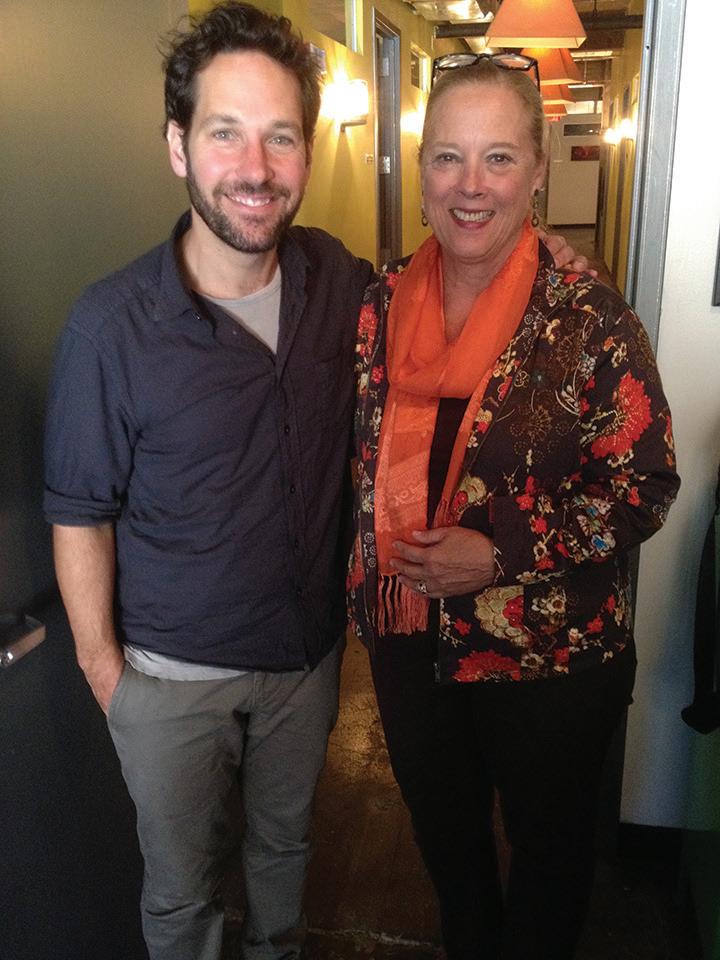
Left: Sharon Baker and Paul Rudd. Right: Sharon Baker interviewing Sen. Lisa Blunt Rochester for a video for Humane Animal Partners’ 150th Anniversary Gala.
IS YOUR BUSINESS OR NONPROFIT SUPER?
The Marvin S. Gilman Superstars in Business Awards celebrate businesses and nonprofits that demonstrate exceptional achievement and serve as models of excellence in management and leadership— recognizing the vital role small businesses play as the backbone of Delaware’s economy.
Think your business fits the bill? Winners will be recognized at the 28th Annual Superstars in Business Awards Ceremony on Thursday, October 29.
Apply now:
Deadline to submit applications is Thursday, July 9 at 11:59 PM. For more information, please contact Kerri Welcher at kwelcher@dscc.com.
Internships & Apprenticeships
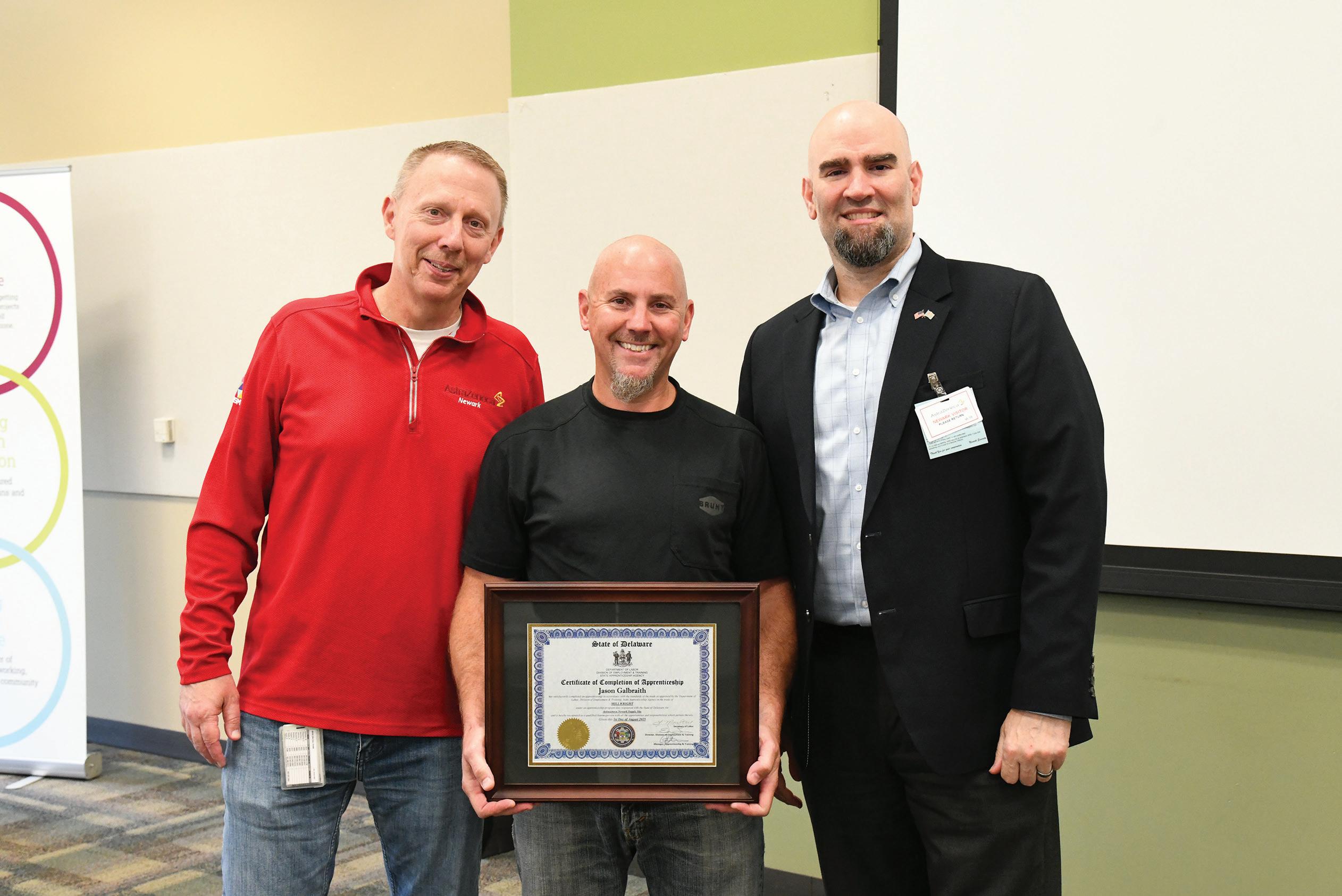
Celebrating Jay Galbraith’s 2025 graduation from the Newark Mechanic Apprenticeship Program is Pat String, director of Newark Site Engineering & Facilities Management and Joe Olivere from the Delaware Department of Labor Apprenticeship Office.
Apprenticeships that Power Production
Building Delaware’s next generation of manufacturing talent
BY PAT STRING
FOSTERING CAREER PATHWAYS that connect learning with meaningful work is central to how we support our people and our communities. In Delaware, the home state of AstraZeneca’s U.S. headquarters, many employers are navigating shifting labor dynamics as experienced tradespeople near retirement. Increasing automation across production environments is also driving the need for skills to operate alongside smart technologies. At AstraZeneca’s Newark site, where we produce, formulate, and package 26 different medicines for global distribution, apprenticeships help us meet patient needs while addressing these market realities. By developing skills that matter on the floor today, our apprentices are opening doors to long-term careers.
DELAWARE MECHANIC APPRENTICESHIP: EARN WHILE YOU LEARN
Launched in 2019, our Delaware state-registered maintenance mechanic apprenticeship focuses on developing talent for a role that is foundational to reliable, compliant pharmaceutical manufacturing operations. Mechanics support three areas — oral solid dose tablet formulation; packaging; and site maintenance, facilities, utilities, and warehouse — to ensure equipment operates efficiently and in accordance with the Food and Drug Administration and other regulatory standards. The program combines paid, on-the-job training with structured instruction over four years, pairing apprentices with experienced managers and mentors who model safe, consistent, high-quality work.
Internships & Apprenticeships
“When we invest in people, we see stronger retention and growth across our Delaware network. Apprentices work side by side with experienced leaders and mentors who help them identify strengths, navigate career options, and develop both professionally and personally. By learning as a cohort, they gain a connected community that encourages continuous learning.”
Through the apprenticeship, participants build core capabilities and are responsible for multi-craft maintenance activities in one of the three assigned functional areas. They also practice disciplined documentation under standard operating procedures, safety, health and environment standards, and good manufacturing practices, while contributing to equipment installations and qualifications. As their proficiency grows, apprentices collaborate across teams and coach peers, strengthening the culture of continuous improvement that keeps production moving. By the numbers, the Newark program is building momentum and has already produced skilled graduates who have earned a Journeyperson Certificate from the Delaware Department of Labor and are making meaningful contributions on-site. We have four active Delaware Mechanic Apprentices and four recent graduates, all of whom we are proud to say remain with AstraZeneca.
COMPLEMENTARY PATHWAY: AUTOMATION AND CONTROLS TECHNICIAN APPRENTICESHIP
As production technologies advance, we are introducing a complementary, U.S. Department of Labor-registered apprenticeship for Automation and Controls Technicians. Managed through Delaware Technical Community College as our instruction partner, this competency-based program builds skills in the basics of factory automation. Our inaugural cohort of three began at the end of April this year with three internal hires — two operators and one mechanic — reflecting strong interest from current employees seeking to grow into automation roles. Because the model is competency-based and transferable, it can scale across a multistate footprint while creating a laddered progression for Delaware talent.
IMPACT FOR DELAWARE’S WORKFORCE AND BUSINESS COMMUNITY
Apprenticeships remain a practical way to align education with the needs of industry. They create “earn while you learn” opportunities that upskill incumbent workers and welcome new entrants, while helping employers address hard-to-fill roles. For a regulated manufacturing environment like ours, the benefits are clear: stronger equipment reliability, fewer unplanned interruptions, and a resilient pipeline of technicians and mechanics ready to step into critical positions. As the workforce continues to evolve, collaboration with education partners and state agencies is essential.
WHAT’S NEXT
We will continue to scale the Delaware Mechanic apprenticeship based on demand and mentoring capacity, and evaluate expanding the Automation and Controls Technician program as our lines digitize. Alongside these pathways,
we will continue engaging early career talent through BioConnect DE and our summer internships, supporting exposure to regulated manufacturing and providing pathways into full-time roles.
Our commitment is to nurture lifelong learning and inclusion in building the right skills and technical knowledge while creating sustainable career pathways. By investing in development today, we can grow and retain talent across our U.S. footprint and continue to support the vitality of Delaware’s life sciences sector. n
Pat String is the director of Newark site engineering and facilities management at AstraZeneca’s Newark Supply Site.
Unlocking Talent
How Workforce Pell is reshaping Delaware’s talent pipeline
BY JOANNA STAIB
ACROSS DELAWARE and the nation, employers continue to face a persistent challenge in finding skilled talent in a rapidly evolving economy. At the same time, many individuals are seeking pathways to good-paying careers but cannot commit to traditional two- or four-year degree programs.
Workforce Pell Grants represent a significant opportunity to close that gap. Beginning in 2026, this federal expansion now allows Pell Grants to support high-quality, short-term training programs, many of which can be completed in as little as eight to 15 weeks. These programs are designed to align directly with in-demand occupations and reflect a meaningful shift in how financial aid can support workforce readiness by recognizing that skills-based training plays a critical role in today’s economy.
For decades, federal financial aid has primarily supported longer-term academic programs, while short-term workforce training has relied on a patchwork of funding sources such as the Workforce Innovation and Opportunity Act (WIOA) and career and technical education programs. Workforce Pell begins to bridge that divide by bringing education and workforce systems into closer alignment.
This shift is particularly important for Delaware. Workforce Pell creates new opportunities for working adults, parents, and career changers to access training without taking on additional debt. It also provides a mechanism to better align training investments with industries experiencing real talent shortages, including healthcare, information technology, advanced manufacturing, and the skilled trades.
Just as importantly, Workforce Pell supports a more modern approach to career pathways. Short-term credentials are not endpoints but entry points, designed to build toward additional education and higher wages over time. This approach recognizes that career advancement often happens in stages, and that individuals benefit from opportunities to continue learning while they are working.
Workforce Pell is more than a funding expansion. It represents a structural shift that will require thoughtful design and coordination at the state level. Much of the responsibility for defining high-demand, highwage, and high-skill occupations, as well as determining which programs qualify, rests with the state. This creates an opportunity for Delaware to
take a leadership role in shaping how this new model is implemented.
To fully realize the potential of Workforce Pell, Delaware must ensure that training programs are aligned with priority industries, lead to credentials that are recognized by employers, and demonstrate strong outcomes in completion, employment, and earnings. These programs must also connect to longer-term education pathways so that individuals can continue to build their skills and advance in their careers.
Successful implementation will depend heavily on data, coordination, and shared accountability across systems. Delaware has already made important investments to support this work. Through the Workforce Data Quality Initiative grant and the creation of the Office of Workforce Development, the state is building the infrastructure needed to connect education and workforce data. This work will allow Delaware to link training programs to employment outcomes, wages, and long-term career progression.
These data systems will help ensure that Workforce Pell investments are directed toward programs that deliver real value. They will also provide greater transparency for individuals making decisions about training and careers, and for employers seeking a skilled workforce.
Employers will play a central role in shaping the success of Workforce Pell. Training programs must reflect real-world skill needs, and that only happens through strong partnerships. Employers can help define the skills that matter most, validate credentials, and provide work-based learning
opportunities that ensure individuals are prepared to succeed on the job.
At the same time, collaboration across workforce, education, and economic development partners will be essential. Aligning funding, program approval processes, and data systems will allow Delaware to build a more cohesive and responsive workforce system.
Workforce Pell represents a pivotal moment in how we think about education and workforce development. It challenges us to move beyond siloed systems and toward a more integrated approach that prioritizes outcomes, values multiple pathways to success, and responds directly to labor market demand.
In Delaware, the foundation for this work is already in place. The focus now is on aligning systems, strengthening partnerships, and ensuring that this new opportunity delivers meaningful results for individuals and employers alike.
If implemented effectively, Workforce Pell has the potential not only to expand access to training but to fundamentally reshape how Delaware prepares its workforce for the future. n
Joanna Staib is the director of the Division of Employment and Training and the Office of Workforce Development.
SITE READINESS FUND
Solving Today’s Workforce Challenges
Expanding work-based learning, apprenticeship degrees, and short-term credentials can better align college with opportunity
BY LUKE RHINE
FOR MANY OF TODAY’S YOUNG PEOPLE, breaking into the workforce is getting harder, not easier.
Recent high school and college graduates are feeling that reality firsthand. Young workers face higher unemployment rates than older workers, and nearly half of recent college graduates are underemployed — working in roles that do not match their level of skill. At the same time, many entry-level jobs that once served as stepping stones are evolving, as employers raise experience requirements and technologies like artificial intelligence reshape early-career work.
The result is a growing disconnect: younger workers are often more educated than previous generations but lack the work experience needed to launch their careers with confidence.
Higher education remains one of the most powerful drivers of economic
mobility in our country. But the question is no longer whether it matters — it does. The question is whether it is designed for a labor market that is harder to enter and changing in real time.
At its best, higher education builds knowledge, critical thinking, and opportunity. But for too many students, the connection between education and employment is still unclear, too slow, or too disconnected from real-world demand. At a time when the first rung of the career ladder is becoming less accessible, this gap has real consequences.
Closing this gap requires a fundamental shift: students must be able to build both education and experience at the same time — not one after the other.
One of the most immediate ways to do this is by scaling postsecondary work-based learning, including cooperative education and apprenticeships. Colleges should not treat work experience as an add-on — it should be a
core design feature. Embedding internships, co-ops, and apprenticeships into degree programs allows students to build skills, networks, and confidence while they are still enrolled, making them more competitive in a job market that increasingly demands experience. It also gives employers a more direct role in shaping talent.
Apprenticeship degrees represent the next step in this evolution. By integrating registered apprenticeship into degree pathways, these models create a seamless experience where students can earn a wage, gain experience, and make steady progress toward a credential and degree. At a time when students are questioning the return on investment of traditional pathways, this “earn-and-learn” approach delivers both economic and career value. It is also a scalable solution for high-demand sectors like health care, advanced manufacturing, and education.
At the same time, Workforce Pell — expected to roll out this July — creates a new opportunity to rethink how higher education delivers value. By extending Pell Grants, traditionally used to support low-income students in degree programs, to include high-quality, short-term programs, institutions can offer more flexible entry points into both education and the labor market. For students navigating an uncertain economy, this means earlier access to credentials with real labor market value. For incumbent workers, it creates pathways to upskill and re-enter education without starting over.
The opportunity is not to replace degrees, but to redesign a higher education system where short-term credentials, apprenticeships, and degrees function as part of a flexible, stackable pathway — one that allows learners to move in and out of education as their careers evolve.
To get there, higher education must embed work-based learning, deepen employer partnerships, and build flexible, stackable pathways. Done well — through apprenticeship degrees and Workforce Pell — higher education can remain a cornerstone of opportunity and a stronger engine of economic growth.
We are beginning to see what this can look like. Through career pathways, stronger employer partnerships, and investments in data systems that track outcomes, Delaware is building a more connected education-toworkforce system.
But this moment calls for acceleration. Success should no longer depend on choosing between learning and doing, but rather on systems that integrate both. As the labor market grows more competitive and uncertain for young people, education systems and employers must do more than prepare students — they must position them for success. n
Government Relations | Public Affairs
(302) 345-8468
(302) 542-6278
(302) 278-9934
Luke Rhine is vice president of Rodel.
Building Talent and Strengthening Community
The impact of the University of Delaware’s Lerner Co-op Program at The WRK Group
BY KRISTIN REAUME, SHRM-CP
At The WRK Group, our mission is rooted in creating pathways of opportunity for the communities we serve in Wilmington. Through our integrated approach focused on high-quality housing, education, workforce development, and community health, we are constantly looking for ways to strengthen both our programs and our people. One of the most impactful ways we’ve been able to do that is through our partnership with the University of Delaware’s Lerner Co-op Program.
Over the past year, The WRK Group has had the opportunity to host co-op students across several functional areas, including human resources, marketing, and finance. Each student has brought a high level of professionalism, dependability, and subject-matter knowledge that has made a meaningful contribution to our day-to-day operations. These are not students who simply observe; they actively engage, take ownership of their work, and add value to our teams.
In human resources, our co-op student has supported key initiatives such as recruitment coordination, onboarding processes, and employee engagement efforts. In marketing, students have contributed to content creation, branding initiatives, and community outreach strategies that help us better tell our story. Within finance, co-op participants have assisted with data tracking, reporting, and operational support that strengthens our financial processes. Across each department, these students have demonstrated the ability to apply their academic knowledge in real-world settings while adapting quickly to the pace and complexity of a missiondriven organization.
A critical component of this success has been our partnership with Brandon White, the Lerner co-op program coordinator. Brandon has
been an exceptional partner. He is responsive, thoughtful, and deeply knowledgeable about his students’ strengths and career goals. His ability to match The WRK Group with high-quality candidates who align with our organizational needs has made the process seamless and effective. It is clear that the program is intentional not only about student development, but also about ensuring meaningful alignment between students and host organizations. Beyond the immediate operational support, the co-op program also plays a key role in building a strong talent pipeline. In today’s competitive market, this program provides organizations like ours with the opportunity to invest in emerging professionals while also giving students hands-on experience in environments that are purpose-driven and community-focused. For The WRK Group, this partnership is not just about short-term support; it is about cultivating future leaders who understand and are committed to the work we do.
As we continue to grow, partnerships like the UD Lerner Co-op Program will remain an important part of our strategy. They allow us to expand our capacity, bring in fresh perspectives, and contribute to the development of the next generation of professionals. We are proud to be a participating organization and look forward to continuing this impactful collaboration. n
Kristin Reaume, SHRM-CP, is an HR generalist at The WRK Group.
Legal, Government Affairs, and Incorporating Services
Preparing for What’s Next
Delaware’s next chapter demands national reach and local fluency
BY LAUREN VELLA AND SEAN COIT
FOR NEARLY HALF A CENTURY, Delaware’s economy has been powered in large part by what are known here as the Four Cs: chemicals, chickens, corporations, and credit cards. Of course, the state’s economy has always been more diverse than that, with auto manufacturing, health care, tourism, and other industries playing significant roles. Still, this legacy is critical to understanding Delaware’s unique economic, political, and policy landscape as we enter another period of transition in the First State and across the globe.
That’s partly because Delaware represents an important microcosm of the opportunities and challenges facing our national economy, and once again, this small but mighty state has a chance to be a real national and even global leader across key industries.
For Delaware communities and businesses, navigating an increasingly complex landscape requires real reach and expertise at the federal level. But as always, authentic relationships up and down the state of Delaware and fluency in the unique ways the state operates are non-negotiable.
That’s why last year, Cornerstone Government Affairs, a bipartisan public affairs and government relations firm that helps organizations navigate complex political, regulatory, and reputational environments, made a long-term commitment to expand its work in the state of Delaware. The firm added a new Delaware office to complement its Washington, D.C., headquarters and its other full-service offices in 14 states across the country, including several here in the Mid-Atlantic.
Delaware is poised for an era of historic investment and economic innovation, from manufacturing, health care, and logistics to energy, digital infrastructure, and financial services. Seizing these opportunities won’t happen automatically, though. It will require experience, expertise, and relationships in Legislative Hall, across the state, in Washington, and around the world.
Political and regulatory dynamics aren’t the only challenges, either. To succeed today, Delaware communities, businesses, and industries need state and local media and public affairs strategies that are fully integrated with government relations efforts. These strategies won’t succeed in silos — they must go hand in hand.
Cornerstone’s approach is to deliver that kind of integrated strategic counsel — combining insight into the political and media landscape with on-the-ground engagement — to help clients anticipate risk, shape policy outcomes, and build durable relationships with key decisionmakers.
Our work is powered by an experienced, bipartisan group of federal government relations professionals in Washington, alongside a dynamic public affairs and strategic communications team, and decades of state and local government relations expertise nationwide, including in Dover, Annapolis, and throughout the region.
Throughout its history, many of Delaware’s successes as a state have been a product of its enduring pragmatism and legacy of community investment from both the public and private sectors. That has made Delaware a natural fit for Cornerstone and allowed our team to immediately make an impact for our clients as we grow our presence up and down the state. n
Lauren Vella (left) is a principal in Cornerstone’s Delaware office. Sean Coit (right) is a principal on the Cornerstone public affairs and strategic communications team.
Canada Is Part of Delaware’s Value-Chain
BY TOM CLARK
AS THE CONSUL GENERAL of Canada in New York, I’m often asked, “What are you doing here?” It’s the kind of question where interpretation (and inflection) matters. I’ve learned to interpret the query as arising not out of suspicion — “What are you doing here?” — but out of curiosity: “Why is Canada interested in Delaware? Why should Delaware be interested in Canada?” And I’m always happy to answer, given how important our bilateral relationship is and how deep our economic and people-to-people ties go. Especially at a time when national politics and the U.S.-Mexico-Canada Agreement (USMCA) review dominate headlines, it’s valuable to zoom in with a more local focus.
Canada is one of Delaware’s top customers, with more than $1 billion in goods and services from the First State making their way north every year. Canada also invests in Delaware, with some 6,600 employees at Canadianowned businesses across the state. Add to that the 38,300 employees supported by trade with Canada, ranging from chemical manufacturers to business services, and we see a meaningful impact that plays out day in and day out. But numbers only tell part of the story.
Delaware and Canada also share a common outlook when it comes to innovation, sustainability, and the rule of law. Our companies operate seamlessly
across the border because our systems are compatible by design, and we’ve built long-term trust. That’s true whether your sector is financial services, including banking, energy, life sciences, manufacturing, or agriculture.
Looking to expand your Delaware business operations? Consider Canada and its host of advantages: a skilled workforce, political stability, cost competitiveness, geographic proximity, supply chain integration, and shared values. Our 10 provinces and three territories have also recently made major commitments to ease friction across internal borders, so you can have confidence that the only business difference between Nunavut and Newfoundland is what time the clock shows.
At the end of the day, the partnership between Canada and Delaware isn’t about a trip to Wilmington by a Canadian diplomat or pitting our lobster against your crab. It’s about jobs and shared prosperity at the community level. Whether you’re a Delaware exporter looking north, a business considering international expansion, or a policymaker focused on competitiveness, Canada is already part of your story. My role here is simply to strengthen those ties, make new connections, and ensure that this mutually beneficial relationship continues to deliver for Delaware businesses today and well into the future. n
$146
$138
$99
$37
$34
$33
$29
$27
$24
$22
Robert L. Byrd, Partner (302)530-4531 · Robert.Byrd@byrdgomes.com
Legal, Government Affairs, and Incorporating Services
The Transparency Trend
How expanding disclosure requirements reshape corporate compliance
BY TRENT BAVARO
CORPORATE COMPLIANCE
has entered a new era of transparency. From state legislatures to federal regulators, there is an increasing demand for businesses to share who they are, what they do, and who benefits. The message is clear: The age of minimal disclosure is nearing an end.
Delaware, long celebrated as the gold standard of corporate formation for its flexibility and business-friendly legal framework, has also moved in this direction with recent amendments to its Delaware General Corporation Law. For the first time this year, corporations formed in Delaware must provide a non-generic “nature of the business of the corporation” on their annual report (i.e., annual franchise tax report), due annually on or before March 1. Businesses can select from 18 predetermined options or use up to 60 characters to describe their purpose in their own words. This regulatory change shifts the historically accepted use of “any lawful purpose,” as commonly listed on formation documents, and now requires businesses to articulate the actual nature of their operations with greater precision.
This shift is significant, as Delaware processes more than 50,000 new corporate formations each year and has roughly 400,000 active corporations on record with the Delaware Secretary of State. There are more than two million active entities in Delaware across all entity types, primarily dominated by limited liability companies, and it remains to be seen whether similar regulations will surface in Delaware’s Limited Liability Company Act in the future. The new requirement signals that America’s most popular corporate domicile is aligning itself with a broader national and global push for corporate transparency.
Delaware is hardly alone. Across the country, both state and federal governments have enacted or expanded disclosure requirements that impose new obligations on businesses and their owners.
At the federal level, the Corporate Transparency Act (CTA), which took effect Jan. 1, 2024, and is enforced by the Financial Crimes Enforcement Network, introduced sweeping beneficial ownership reporting requirements for the first time in the United States. Although the CTA has faced a
multitude of legal challenges and was ultimately scaled back by the U.S. Department of the Treasury to exempt domestic, U.S.-formed businesses and U.S. persons from reporting, it represents a fundamental transformation in how corporate ownership is collected and used in the United States.
Similarly, the New York LLC Transparency Act, which was modeled after the CTA, took effect Jan. 1, 2026. Originally intended to include all LLCs formed or registered in the state of New York, its current scope requires out-ofcountry domiciled entities that register to do business in New York as an LLC to file an ownership disclosure report, or an attestation of exemption, within 30 days of registering and annually thereafter. Although current enforcement has been narrowed, the regulations are written with a broad scope that could allow regulators to expand disclosure requirements in the future.
Underlying these requirements is a common theme: The use of opaque corporate structures is being slowly peeled back to help address money laundering, tax evasion, and other financial crimes. For legitimate businesses, this means that anti-money laundering compliance is no longer solely the concern of financial institutions. Corporations and other entities must now understand and grapple with disclosure requirements.
For businesses facing this shifting regulatory environment, the complexity can be overwhelming. Tracking overlapping state and federal requirements — where noncompliance carries real consequences — demands specialized attention. As transparency expectations expand, organizations that fail to keep pace risk increased scrutiny, enforcement exposure, and compliance gaps, making it critical to stay informed. CSC continues to monitor these developments, helping organizations navigate evolving requirements with confidence. n
Trent Bavaro is director of product management, corporate transparency, and annual reports at CSC.
The State of Health Care
Q&A with Christen Linke Young, Secretary of the Delaware Department of Health and Social Services
SWORN IN LAST OCTOBER, Christen Linke Young leads the Delaware Department of Health and Social Services at a consequential time for the state. A nationally recognized health policy leader with more than 15 years of experience in federal and state government, she now oversees one of Delaware’s largest agencies, which plays a central role in the well-being of communities across the state. We caught up with her to discuss her role and the work ahead.
You stepped into this role at a pivotal time for Delaware’s health care system. What are your top priorities for the Department of Health and Social Services in the year ahead?
Health care should be a right, not a privilege — but for too many Delawareans, access to the health care they need is out of reach. Whether it is high and rising health care prices, federal policy changes that are causing Americans to lose health insurance, or a lack of accessible primary care providers, Delaware families face burdens in getting the care they need.
To address these challenges, the Delaware Department of Health and Social Services is grounded in three priorities:
• Responding to and mitigating federal policy changes — to help Delaware families keep their health insurance and benefits amid new restrictions.
• Innovation and excellence in our services — to continue to drive efficiency and high-quality outcomes for those with complex health and social needs with whom we interact every day.
• Lowering the cost of health care — because Delaware families, businesses, and our state budget are burdened by high costs, and policy change is necessary to drive greater value and accountability in our health care system. Across all of this, our goal is to build a system that is more sustainable, more coordinated, and better aligned with the needs of the people we serve.
Delaware was recently awarded federal Rural Health Transformation Grants aimed at expanding care in underserved communities. What impact do you hope these funds will have for providers and patients?
This is a generational opportunity to strengthen health care across the state. First and foremost, we are using these funds to rapidly expand the state’s health care workforce, launching Delaware’s first-ever four-year medical school, and building new training pathways for nonphysician clinicians that are needed in all three counties. We are also investing in nontraditional access points for health care services through mobile units, schools, and libraries, while taking targeted steps to address the upstream drivers of chronic disease. Investments in new technology will also allow us to ease administrative burdens that plague today’s health care system.
At its core, this is about partnership. When employers, providers, payers, and the state are aligned, we can create a system that supports lower costs, economic growth, and better health outcomes for Delawareans.
For providers, these investments are designed to reduce fragmentation and support long-term sustainability, particularly as the system continues to shift toward value-based care. For patients, the impact should be clearer access points, more coordinated care, and better health outcomes over time.
How do we make health care more affordable for Delawareans?
Per capita health care costs in Delaware are among the highest in the nation, and concentrated markets mean that Delawareans pay health care prices that are too high. For decades, the health care economy has rewarded the provision of more services at higher prices. While there has been some incremental change over the last 15 years, reforms do not go far enough or fast enough to provide relief to Delaware families and businesses.
To disrupt an unsustainable status quo, Delaware must change the way we pay for health care services. Health care stakeholders should face unambiguous financial incentives to deliver the best quality care at the lowest possible price for all of their patients, and there should be clear accountability when they fail. Health care payment should be linked to holistic improvements in health for a population, not to billing for as many discrete services and diagnoses as possible. At the Department, we are committed to moving toward that vision using every tool at our disposal.
At its core, this is about partnership. When employers, providers, payers, and the state are aligned, we can create a system that supports lower costs, economic growth, and better health outcomes for Delawareans.
Many health care systems are placing greater emphasis on prevention and community-based care. How is Delaware approaching preventive health to improve outcomes and reduce long-term costs?
We know that improving health outcomes and controlling costs starts long before someone enters a hospital or emergency department. Delaware is taking a comprehensive approach to prevention by investing in community-based care, strengthening primary care, and addressing the underlying drivers of health. That includes expanding access to services like screenings, vaccinations, and chronic disease management, while also connecting individuals to supports such as food, housing, and behavioral health services. n
From primary to emergency care, Beebe Healthcare delivers safe, quality services you can trust, with the compassion you deserve. Our teams combine advanced medical expertise with a deep commitment to the communities we serve, listening closely and caring fully. Every visit. Every patient. Every day.
Primary Care Pays Off
How ChristianaCare is rethinking care teams and deploying technology to meet rising demand
BY PRIYA DIXIT-PATEL, M.D.
DELAWARE IS GROWING and aging at the same time. The state ranks among the top 10 nationally for population growth and fifth for median age. That combination puts pressure on primary care, where the demand for providers already outpaces the supply. Many independent practices have shifted to concierge models, serving fewer patients. Others have closed. For a growing number of Delawareans, finding a primary care provider has become increasingly difficult.
At ChristianaCare, we’ve responded with targeted investments in access and capacity. Over the past year, we’ve hired nearly 50 primary care clinicians, including a record-high 10 residents from our own training programs. We’ve opened a new practice in Milford to serve Sussex County and begun building a multidisciplinary health center in Middletown, scheduled to open in spring 2027. We’ve expanded telehealth and virtual visit options so patients can connect with their care team from home or on the go.
In 2025, our primary care practices saw a 16% increase in visits year over year, with new patient volume growing by 30% and wait times dropping significantly.
THE WORK BEHIND THE VISIT
Recruiting more clinicians is critical, but we also need to tackle administrative complexity and the burnout it creates. Studies show that providing guideline-recommended care for a typical patient panel would require 27 hours per day. For every hour a physician spends with a patient, there are roughly two hours of documentation, lab reviews, prior authorizations, and patient portal messages — what many of us in medicine call “pajama time” because it follows clinicians home at night. In our primary care practices alone, we receive 35,000 patient-initiated messages every month. To keep good clinicians in the workforce, we have to address what the work actually looks like day to day.
MEET THE INBOXOLOGIST
That has led us to rethink how care teams operate. One example is a role we’ve developed called the Inboxologist. These are experienced nurse practitioners who work full time managing the clinical desktop for a group of providers. When a physician is seeing patients, the Inboxologist is triaging portal messages, reviewing lab and imaging results, coordinating medication refills, and making sure nothing urgent is missed.
Other health systems have tried variations using part-time staff or automation. We’ve chosen to dedicate experienced advanced practice clinicians to this work exclusively so they develop real familiarity with each provider’s style and each patient’s history. Each Inboxologist learns how their providers prefer to handle different clinical situations — when to act independently, when to flag, and when to schedule a visit.
The results so far have been encouraging. Patients receive faster responses to their concerns. Clinicians tell us their stress levels and cognitive load have dropped meaningfully. We’ve seen our primary care physician retention reach its highest level in years. We started with six Inboxologists across our primary care network and have since funded five more positions. Specialties like endocrinology and neurology have asked to adopt the model for their own teams.
TECHNOLOGY THAT GIVES TIME BACK
We’re complementing this with AI-powered ambient documentation technology that handles clinical note-taking during patient visits, saving more than 45 minutes per clinician per day. As one of my colleagues put it, “It lets the human experience shine.” These tools give physicians more time
to be present with the person in front of them, which is why most of us went into medicine in the first place.
Sustaining this progress requires investment — the ability to recruit competitively, train new providers, and test new care models. There are upfront costs, and not every approach will work on the first try. But when a new primary care physician begins practicing in Delaware, the benefits extend beyond any single organization. Additional capacity eases pressure across the state, including for independent practices. My own husband is an independent practice physician, and we talk about this regularly: more providers in the pipeline help everyone, regardless of where they practice.
The pressures on primary care in Delaware are not going away. Our population will keep growing and aging. What has changed is how we are meeting that demand, with new roles, new technology, and a different way of organizing the work. None of this is the work of any one organization; health systems, independent practices, and policymakers all have a part to play. For employers thinking about the long-term health of their workforce and their state, this is worth paying attention to. From where I sit, this is the most encouraging shift I have seen in years. n
Priya Dixit-Patel, M.D., is the physician executive for core and advanced primary care at ChristianaCare.
Supporting Delaware’s Aging Population
HomeWell Care Services is expanding access to in-home care and workforce training
BY JENNIFER MYERS
WITH THE SIGNIFICANT GROWTH in Delaware’s population over the past two decades, particularly the 92% increase in residents aged 65 and older, comes a greater need to support an aging population and workforce. In-home care is one type of support most older adults require.
In-home care includes companionship and assistance with activities of daily living, such as bathing, dressing, meal preparation, housekeeping, and transportation. For a large number of people who need this type of care, it falls on a family member to provide it to their loved one. While this can
be a rewarding experience, as it keeps family members together and allows the person who needs care to age in place and remain at home, it can take a toll on the caregiver. In many cases, these family caregivers must make considerable changes to their daily routines, often requiring them to give up their own careers so they can care for their loved one.
What many caregivers do not realize is that there are resources to help them navigate this journey and support them with their in-home care needs. For example, the person requiring care may qualify for Long-Term Services and Supports (LTSS), a waiver program under Medicaid. This
HomeWell Care Services cut the ribbon on their new Onboarding and Training Center in Georgetown earlier this year.
program can fund in-home care services, where a third party, such as a home care agency, can help both the family caregiver and the person receiving care. In some cases, the family caregiver may be hired by the home care agency, which allows them to be paid to provide the care they were already giving to their loved one. Additionally, the agency can send aides into the home to give the family caregiver the respite they need.
If LTSS is not an option, long-term care (LTC) insurance may be. LTC policies help pay for in-home care and other services related to aging that are not usually covered by standard health insurance or Medicare.
If these or other payment methods are not available, families can pay for in-home care services out of pocket, often referred to as “private pay.”
HomeWell Care Services is one of many home care agencies serving communities throughout Delaware. HomeWell not only supports Delaware’s aging population with customized in-home care services, but it also employs these residents. Nearly 100 of HomeWell’s caregivers are aged 65 and older.
For these and all its other caregivers, HomeWell is committed to workforce development and training. One example of how HomeWell is investing in training for its current and future employees is the company’s recent expansion in Georgetown. HomeWell’s new Onboarding and Training Center opened earlier this year, with a ribbon-cutting and grand opening event on March 20. This new facility houses equipment to help caregivers improve their skills, as well as experienced staff who conduct the training. It is also where new hire orientation and state-mandated annual training are held. Along with its employees, HomeWell offers this training to the public. If you or someone you know is interested in learning more, reach out to HomeWell to get started. n
Myers is the senior marketing coordinator at HomeWell Care Services.
Jennifer
Wellness and Health
Meeting People Where They Are
Imagining the future and seizing opportunity through the Rural Health Transformation Program
BY KATHLEEN S. MATT, PH.D.
WITH THE RECENT AWARDING of the Rural Health Transformation Program, we now have an incredible opportunity to change health care in a way that improves the lives and health of all Delawareans. We can best capitalize on this opportunity by focusing on expanding and strengthening our health care workforce at all levels. This will improve access to health care and decrease the time to receive care, whether in an emergency room or when scheduling a doctor’s visit. We can also use these funds to realize Delaware’s dream of having its own medical school, which will help to further enhance the health care workforce and create an economic engine for growing biomedicine in the state.
As a state of neighbors, and the eighth-fastest-growing state in the country,
with the sixth-oldest population in the nation, we need to work together to improve health for everyone. This must start with expanding our health care workforce in a thoughtful, intentional, and purposeful way to deliver comprehensive, patient-centered care. It is important to build a workforce at all levels, from technicians to physicians, and across all disciplines and specialties. All types of health care workers need to be trained as teams to deliver accessible, affordable, and results-driven health care.
We need to create career pipelines that help individuals enter the health care profession at any stage, from high school through technical training, colleges, and graduate school. Education and training of health care professionals are expensive, and costs can be a barrier to those who wish to
join the workforce. Therefore, we need to make it more affordable through the development of scholarship funds and loan repayment programs to ensure this training is available to all.
We could also build our workforce by collaborating better with neighboring states. We could encourage more health care professionals to come to our state, and we could enhance our participation in compact agreements with neighboring states. As we look for short-term and longterm solutions to our health care workforce shortages, let’s focus on training, retraining, recruiting, and retaining. Hospitals, clinics, and academic institutions throughout the state need to work together to offer educational programs and clinical training that are focused on the future of health care. There are distinct needs in primary care, behavioral health, and women’s health, particularly in rural areas. We should meet people where they are and expand services through on-the-ground clinics and by using innovative technology, including telehealth.
Delaware has dreamed of building a medical school for years. These funds provide the opportunity to do that. A medical school can be built on the biomedical framework we already have in our state, with an eye toward training the doctors of the future. With the five-year funding opportunity provided by the Rural Health Transformation Program, we should make thoughtful investments across our entire state, reaching those in rural and other underserved areas. A medical school attracts high-caliber physicians and health care professionals. Medical schools are very important in enhancing the development of strong biomedical research. This research can lead to new clinical treatments and spin out companies and diversify economic streams. Let’s design a medical school with a curriculum that educates, trains, and cultivates the skill sets for the physician and health care workforce of the future and that drives innovative health care research. We should focus on disease prevention and health promotion. That is the path to cutting health care costs and improving outcomes. Investments in health can also strengthen economic development by lowering health care costs for businesses and promoting a healthy, resilient workforce that is more effective, efficient, and innovative.
With careful investments of these Rural Health Transformation Program funds, we can bring about the changes that are needed in our state. As a state of neighbors, we need to be a state of mentors, cultivating and creating opportunities for our children in Delaware. Our state is a microcosm of the country, and we can be the model that shows how it can be done. We are a rich state in so many ways. Let’s enhance that richness and bring it all together to create a true culture of health and wellness. The future is now. The opportunity is here. n
Paving
The Bonadio Group, formerly Cover and Rossiter, is committed
Kathleen S. Matt, Ph.D., is co-chair of the Health Care Workforce Committee of the Delaware Health Care Commission and serves as the Delaware health care commissioner. She is professor emeritus and former dean of the College of Health Sciences at the University of Delaware.
Newsbites
Corteva Cuts Ribbon on Downtown Wilmington Office
Buccini Pollin Group, Inc., welcomed Corteva, a global agriculture company, to its new corporate office at 1000 N West in downtown Wilmington with a ribboncutting ceremony held March 31. Corteva signed a long-term lease in October 2025 to occupy 45,000 square feet across two floors of the 18-story building.
“Corteva and our heritage companies have been part of the fabric of Delaware for more than 200 years,” said Jennifer Johnson, senior vice president and chief legal and public affairs officer for Corteva. “And so I am certain that, as our company looks to its separation later this year, Delaware and Wilmington will also be an important part of both of our new companies’ futures.”
“It’s clear that Wilmington is a place where business and innovation can thrive,” said Mayor Carney. “Corteva is an important component of Delaware’s economy and workforce. We’re proud to welcome them to our downtown community, and we’re committed to building on the momentum taking shape across the city.”
The addition of Corteva continues a trend of major corporations relocating to and reinvesting in downtown Wilmington. Most recently, Cross River Bank established a Delaware presence with a new branch at 1000 N West, and anchor tenant WSFS Bank signed a long-term lease renewal for 74,000 square feet at 500 Delaware Ave.
Delaware Prosperity Partnership (DPP), the statewide economic development organization, has announced the
following staff promotions: Megan Kopistecki has been promoted to director of business development. Since joining DPP in 2019, she has supported numerous high-profile attraction, expansion, and retention projects, including Agile Cold Storage,
Aldi, Corteva Agriscience, DuPont and Qnity, and Sun Chemical. She also has organized DPP events that showcase Delaware, including SelectUSA and its regional spinoff events; statewide familiarity tours; and visits tied to major activities such as the 2022 BMW Championship.
Bryan Mack has been promoted to senior manager of existing business engagement. Mack joined DPP in 2022 and has worked on attraction, expansion, and retention projects for companies such as BlindSight Delaware, CP Cases, and Fishers Popcorn. He also has managed numerous Site Readiness Grant applications and conducted dozens of on-site visits as part of DPP’s existing business outreach. In his new role, Mack will lead existing business visitation and work to strengthen relationships between Delaware companies and statewide workforce partners.
Earlier this year, DPP promoted Erica Crell, who has been with the organization since 2022, to senior manager of innovation. Her promotion follows that of Noah Olson, who joined DPP in 2019 and was named vice president of innovation in late 2025.
Affordable Housing Project Breaks Ground on North Market Street
A new chapter of investment and revitalization is underway along
Megan Kopistecki
Bryan Mack
the North Market Street corridor.
The project, developed by Nasr Mohamed, a graduate of the Jumpstart Wilmington developer training program, will convert a previously vacant lot into a three-story, 7,200-square-foot mixed-use building featuring affordable housing and neighborhood-serving commercial space.
Located on a site previously owned by the Wilmington Land Bank, the development responds directly to strong demand for family-sized housing and accessible commercial amenities in the surrounding neighborhood.
“This project is an example of how community-centered investment can deliver both housing stability and economic opportunity to a community,” said Dionna Sargent, vice president and tri-state market lead at Cinnaire. “By supporting local entrepreneurs like Nasr and pairing training with access to capital, we can transform vacant spaces into vibrant assets for Wilmington families. This project reflects a practical, scalable model for equitable development, one that strengthens neighborhoods, supports small businesses, and creates lasting impact block by block.”
The project is supported by Jumpstart Wilmington and Cinnaire, organizations committed to expanding access to capital and training for emerging developers, and strengthening communities through equitable development. The groundbreaking ceremony took place Thursday, March 19, at the project site.
Explore Rural Medicine Event Offers Students Unique Opportunities
In one room at TidalHealth Nanticoke, students suited up to enter the operating room. In another, they practiced CPR. Nearby, students took their peers’ vital signs while others explored the TidalHealth mobile mammography van.
About 40 Sussex County high school students learned about medical careers Saturday, March 28, as part of Explore Rural Medicine: A Hands-On Skills Day for High School Students, hosted by the Delaware Institute for Medical Education and Research’s Committee on Rural Health.
“It’s essential that we engage early with the next generation,” said Joseph H. Kim, DO, FAAFP, executive medical director of TidalHealth Primary Care and chair of the DIMER Committee on Rural Health. “At this event, local high school students really got to see what a future medical career could look like, especially in the rural environment where they live.”
Attendees heard from Dr. Ariella Alexander, a Seaford native, and medical student Clarice Elline Pamplona, a Delmar native, about the journey to becoming a physician. Penny Short, president of TidalHealth Nanticoke, and Gov. Matt Meyer also spoke. Residents from TidalHealth, along with medical students from Philadelphia College of Osteopathic Medicine and Sidney Kimmel Medical College, taught CPR, intubation, EKG, and vital sign assessment.
Newsbites
Terry and Sandy Strine to Receive Pete du Pont Freedom Award
The Pete du Pont Freedom Foundation announced Terry and Sandy Strine as the 2026 recipients of the Pete du Pont Freedom Award, honoring their role in building one of Delaware’s most influential leadership networks.
In 2008, alongside Gov. Pete du Pont, the Strines co-founded Leadership Delaware, an ambitious effort rooted in a simple but powerful idea: Delaware’s future depends on investing in people with the integrity, vision, and courage to lead.
What began as a bold concept has grown into one of the state’s most influential leadership pipelines. Through its flagship fellowship program, Leadership Delaware has graduated nearly 400 leaders, creating a powerful and expanding network of changemakers across business, government and the nonprofit sector.
Today, that alumni network continues to drive meaningful impact, supporting organizations across the state, strengthening communities and shaping Delaware’s future through collaboration, civic engagement, and service.
The 2026 Pete du Pont Freedom Award ceremony will be held on Thursday, Sept. 24, 2026, from 6:00 p.m. to 8:30 p.m. at the Hotel du Pont in Wilmington, Del.
Nemours Children’s Health Names Delaware Valley President
Nemours Children’s Health recently announced the appointment of Laura Kowal, MPT, JD, as president of Nemours Children’s Health, Delaware Valley. Kowal has more than a decade of leadership experience at Nemours Children’s Health, serving as interim Delaware Valley president since July 2025 and as the organization’s executive vice president, general counsel, and corporate secretary since 2020.
“Laura offers a distinctive combination of clinical experience, business acumen,
and legal expertise that will have a tangible impact on pediatric health care in the Delaware Valley and beyond,” said Mark Mumford, executive vice president and chief operating officer for Nemours.
“Drawing on her significant leadership experience with Nemours and deep understanding of the region, Laura will drive growth and best-in-class care for generations of children.”
Prior to joining Nemours in 2014, Kowal practiced health law in the business and finance practice at Ballard Spahr LLP. She earned her bachelor’s degree from Vanderbilt University and a Master of Physical Therapy degree from Drexel University. Before becoming an attorney, Kowal worked
as a physical therapist and certified wound care specialist for 12 years in hospital and post-acute settings. She received her Juris Doctor from the University of Maryland School of Law, with a certification in health law. She is a member of the American Health Law Association and assisted in the development of the AHLA Health Law Curriculum Manual.
Lisa DeRose Named Forbes Best-in-State CPA
Whisman Giordano & Associates LLC (WGA) is proud to announce that Lisa DeRose, CPA, CGMA, managing director, has been named to Forbes’ Best-in-State CPAs list for the second consecutive year, reinforcing her status among the nation’s most respected accounting professionals.
The Forbes Best-in-State CPAs list recognizes practicing CPAs across the United States who demonstrate technical excellence, leadership within the profession, and service to the public interest. Honorees are selected through a rigorous, multistage editorial process and evaluated across 10 weighted categories, including achievements, professional honors, influence on the profession, performance, thought leadership, and community service, with particular emphasis on recent accomplishments.
Reflecting on the recognition, DeRose said, “I was genuinely surprised the first time, and I’m just as grateful now. However, I can’t, and don’t, do this alone. Our team works incredibly hard for our clients and our community, and it’s an honor to know that the work is seen.”
Lisa DeRose
Laura Kowal, MPT, JD
In addition to leading WGA and managing the firm’s tax practice, DeRose is deeply involved in the community. She is a founding member of the Delaware chapter of the ACE Mentor Program and serves on the boards of the Construction Financial Management Association of Delaware, the Better Business Bureau of Delaware, and the Cecil County Chamber of Commerce.
Food Bank of Delaware Receives $75,000 Gift from Barclays
The Food Bank of Delaware announced a $75,000 donation from Barclays to support the expansion of its culinary training facility at the Newark campus, including the completion of additional hands-on kitchen space and the addition of a dedicated classroom equipped with new computers.
The Food Bank of Delaware relocated to its 80,000-square-foot facility in Newark in 2019. At the time, one kitchen was fully outfitted to meet the immediate needs of the organization’s Culinary School and onsite café and catering operations, while a second space remained unfinished due to funding constraints.
With support from Barclays, the Food Bank has transformed the open space into a dedicated training area for its growing Kitchen School program. The Kitchen School, developed in
IQ Fiber Launches in Delaware with $150M Investment
In March, IQ Fiber marked a significant milestone in its Eastern U.S. expansion, officially opening for business in Delaware, the company’s fifth state. The Floridabased provider of 100% fiber-optic internet service launched in Kent County, the first community in Delaware to be served by IQ Fiber’s all-fiber network.
“Delaware residents have had limited options when it comes to internet service, and that’s exactly why we’re here,” said Ted Schremp, CEO of IQ Fiber. “Our approach is simple: build a modern 100% fiber network and power it with great people who live and work in the markets we serve. We offer straightforward pricing, no contracts, and support from real people who understand the importance of having a consistent, reliable internet connection.”
The Kent County launch marks the beginning of a more than $150 million investment by IQ Fiber in Delaware. The network deployment is expected to continue for the next 18 to 24 months and create more than 50 permanent jobs in the state.
IQ Fiber will participate in the new Priority Broadband project designation under Gov. Matt Meyer’s Permitting Accelerator, a program designed to fast-track infrastructure projects that expand connectivity and drive economic growth. The designation coordinates review across state agencies, cutting through red tape to accelerate permitting and connect communities faster.
partnership with the Delaware Restaurant Association, provides culinary training and job placement opportunities for adults with disabilities.
“This investment from Barclays comes at a critical time as we continue to grow our workforce development programs,” said Food Bank of Delaware President
and CEO Cathy Kanefsky. “By completing the training space and adding a dedicated classroom, we are creating more opportunities for individuals, especially adults with disabilities enrolled in our Kitchen School, to gain the skills and confidence needed to secure meaningful employment in the food industry.
Newsbites
Delmarva Corrugated Packaging Unveils Rooftop Solar Array
Delmarva Corrugated Packaging announced the commissioning of a 2.2-megawatt rooftop solar installation at its Dover, Del., facility — the largest net-metered rooftop solar array in the state. The project was made possible through funding from Energize Delaware and builds on the company’s broader participation in Energize Delaware programs, including Commercial Property Assessed Clean Energy (C-PACE) financing and a low-interest commercial energy efficiency loan.
The newly completed system is expected to generate about 30% of the facility’s annual electricity demand. The 100% clean energy derived from the sun will lower carbon emissions and
reduce operating costs. By leveraging net metering, Delmarva Corrugated Packaging can offset its energy use while contributing clean power back to the grid.
“This project represents a major milestone for our company and for clean energy in Delaware,” said Dennis Mehiel, chairman of Delmarva Corrugated Packaging. “From the initial design of our facility to this solar installation, we’ve prioritized efficiency and sustainability. Our work with Energize Delaware across multiple programs has helped us accelerate that vision.”
“Delmarva Corrugated Packaging is a strong example of how businesses can take a comprehensive approach to energy management,” said Drew Slater, executive director of Energize Delaware. “By combining energy efficiency investments with on-site solar and
ChristianaCare Announces Leadership Transition
The ChristianaCare Health System Board announced in April that Janice E. Nevin, M.D., MPH, will retire after more than 23 years with the health system, including 12 years as president and CEO, effective Sept. 1, 2026.
Following a thorough process — drawing on industry insights, reviewing best practices, and assessing internal and external talent — the board selected Jenn Schwartz as the next president and CEO, effective Sept. 1, 2026.
Nevin joined ChristianaCare in 2002 as chair of family and community medicine and later served in a series of leadership roles, including executive director of the Wilmington campus and chief medical officer, before being named president and CEO in 2014. During her tenure, ChristianaCare has grown into one of the nation’s most respected health systems, advancing innovative models of care, strengthening academic partnerships, and expanding access to health services across the region.
Janice E. Nevin, M.D., MPH
innovative financing tools like C-PACE, this project delivers long-term economic and environmental benefits while reducing operating costs.”
DANA Launches New Health Insurance Initiative
Delaware nonprofits will have access to a health insurance program created exclusively for them and designed to address the unpredictable rate increases many organizations face each year.
DANA, the Delaware Alliance for Nonprofit Advancement, announced the public launch of Care for Good, a health care program designed to provide a sustainable alternative for nonprofit members with 10 or more enrolled employees to secure coverage at a stable and predictable cost.
In recent years, DANA has heard from members about the unpredictability of health insurance rates and the challenges it creates. To address the issue, DANA engaged stakeholders to identify the problem, explore options, and develop a solution: Care for Good.
“Serving this community and working alongside our extraordinary caregivers has been the greatest honor of my career,” Nevin said. “Together, we have built an organization defined by love and excellence, and by an unwavering commitment to improving the health and well-being of those we are privileged to serve. I am profoundly grateful to our caregivers, our partners, and our neighbors for the trust they place in us every day.”
“DANA’s mission is to empower nonprofits to amplify their impact throughout Delaware. Identifying a solution to an issue that affects so many of our members is central to our alliance,” said Sheila Bravo, president and CEO of DANA, who also serves as president of Care for Good. “Throughout this process, we have heard from members facing double-digit insurance rate increases, which present significant challenges for nonprofits that operate with limited resources and often cannot absorb unexpected costs.
WHAT’S NEXT?
Chamber Calendar
MAY 12, 2026
14th Annual DYPN Golf Outing
The Delaware Young Professionals Network will hit the greens for an afternoon of golfing and mentorship. Foursomes will include three young professionals and one industry leader for the nine hole outing. Afterwards, they will reconvene for a happy hour at the Deerfield Pub & Grille.
Golf & Happy Hour: $65 Member | $75 Future Member
Happy Hour Only: $20 Member | $30 Future Member
WEDNESDAY, MAY 20
End-of-Session Policy Conference
The End-of-Session Policy Conference will highlight key bills before the General Assembly, with first-hand insights from the policymakers who introduced and sponsored them. Additionally, Speaker of the House
Melissa Minor-Brown and Senate President Pro Tempore David Sokola have been invited to provide a legislative wrap-up and share priorities their respective chambers are considering as the General Assembly inches closer to adjournment on June 30.
Join us on May 20 and become a part of the conversation….
$75 Member Admission | $100 Future Member Admission
Sponsorship opportunities are available.
Join us at our next event!
Fill up your calendar and see our upcoming events by scanning here:
TUESDAY, JUNE 9
Networking Breakfast at Armco Aquatics
Join us for a networking breakfast at Armco Aquatics, a local small business specializing in designing, installing, and maintaining commerical and residental aquariums in the TriState Area and beyond.
FREE for Members
$15 Future Member Admission
Didn’t catch us online? Here are some recent highlights from people talking about the Delaware State Chamber on social media...
@Delaware State Chamber of Commerce
@DelawareStateChamber
@DEStateChamber
Josh Miller: Well I can say that y’all are amazing! You came out in overwhelming numbers to vote. What a cool contest put on by the Delaware State Chamber and I was honored to even be included let alone make it to the Top 4.
To be voted as the “Coolest Thing Made in Delaware” is a true honor amongst so many other products manufactured here in the First State. Thanks to everyone who voted, shared, commented, and generally just put up with my daily posts about this. You guys are AWESOME! Thank you!
Taryn Dalmasso: David Hoeker and I spent yesterday at the Spring Manufacturing & Policy Conference; it was nice to be surrounded by other manufacturers and hear from the Governor about the importance of manufacturing in Delaware.
More than 25,000 people work in manufacturing across Delaware and it really puts into perspective the impact our industry has on our communities and future workforce.
It was also fun to start showing up as Essity (who was one of the event sponsors!) and begin building connections as part of a broader manufacturing network.
ICYMI
IN CASE YOU MISSED IT
Jaclyn Cantler: I had a great conversation with Kelly Basile, IOM on the Delaware State Chamber of Commerce’s “Delaware Deep Dive” podcast about something that’s top of mind for many Delawareans right now: what’s driving high energy costs and what Delmarva Power is doing to address it.
The more our neighbors understand what’s driving bills and what’s being done to help, the better.
Chimes: March is Developmental Disabilities Awareness Month! Chimes is proud to offer a vast array of dynamic resources to people with developmental disabilities across the region.
THANK YOU to the Delaware State Chamber of Commerce for featuring Chimes in their Nonprofit Spotlight in the most recent issue of Delaware Business Magazine!
Nick Moriello: Serving on the Delaware State Chamber of Commerce’s board of directors is a privilege. I am proud to support the important work being done on behalf of the Delaware business community.
Thank you Michael J Quaranta, John Gooden, and the full board of directors and board of governors for all that you do!
Kelly Basile, IOM; Amanda Schimmel; Evan Park
Gold: Bronze:
CONNECT WITH US
The State Chamber of Commerce staff works for you, serving our member companies and organizations statewide. This State Chamber staff directory lists phone numbers and email addresses, as well as individual areas of responsibility.
If you need business assistance or information, please don’t hesitate to call or email.
Michael J. Quaranta President (302) 576-6585 mquaranta@dscc.com
Tori Will Manager, Administrative & Member Support (302) 576-6576 twill@dscc.com
Danielle Blake Vice President, Member Engagement (302) 576-6571 dblake@dscc.com
Damon Howard Manager, Digital & Print Advertising (302) 576-6579 dhoward@dscc.com
Facebook: DelawareStateChamber
X: DEStateChamber
Linkedin: Delaware State Chamber of Commerce
YouTube: DEStateChamber
Instagram: DEStateChamber
MAKES IT DOABLE.
FREE TUITION OPTIONS
Cost doesn’t have to keep you from going to college. Delaware’s Student Excellence Equals Degree (SEED) scholarship provides FREE tuition for Delaware high school graduates of any age to attend Delaware Tech. The scholarship applies to associate degree, credit diploma, credit certificate, and workforce training programs.*
We’ve helped millions
of kids grow
strong and healthy, with millions more still to come.
Since opening our doors in 1940, we’ve grown to be one of the preeminent children’s hospitals in the country, serving millions of kids along the way. As Delaware’s only children’s hospital, we provide care in more than 100 pediatric specialties and counting. Some may say it’s an amazing journey. We say, it’s just the beginning. Learn more at Nemours.org.