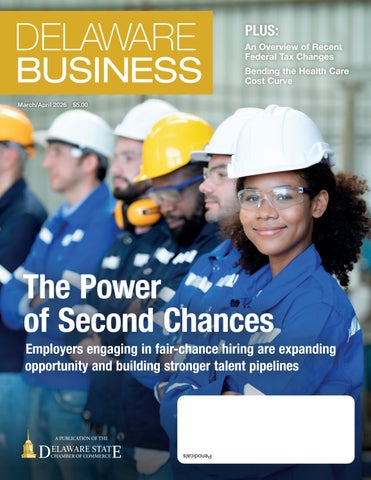

The Power of Second Chances
Employers engaging in fair-chance hiring are expanding opportunity and building stronger talent pipelines

MAKES IT ACHIEVABLE.
FREE TUITION OPTIONS
Cost doesn’t have to keep you from going to college. Delaware’s Student Excellence Equals Degree (SEED) scholarship provides FREE tuition for Delaware high school graduates of any age to attend Delaware Tech.The scholarship applies to associate degree, credit diploma, credit certificate, and workforce training programs.*
Message from the President
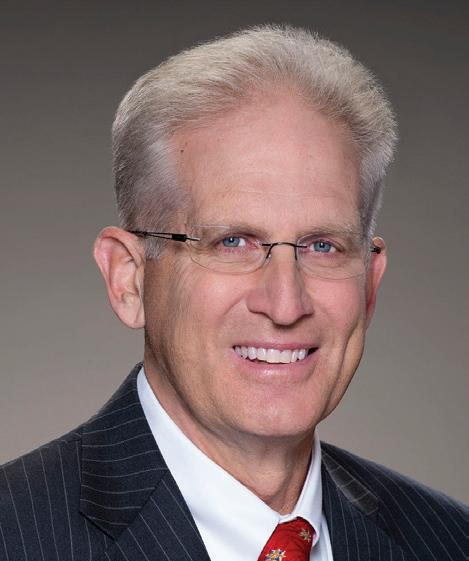
From time to time, the subject of tax increases comes up in the General Assembly, and we in the business community typically find ourselves pitted against any proposed increase. Let me take a moment to explain why that is an almost reflexive reaction from my office. The truth is that elected officials spend precious little time looking retrospectively at existing government programs they fund and asking the very questions you ask yourself when managing your own finances: Is this worth the money? Did this work? Did this provide good value? The conversation, therefore, is almost always missing the other half of the discussion. We don’t run our personal finances like that, and businesspeople don’t run their businesses like that, so why should the public sector not follow suit?
Now, of course, that’s a very broad series of statements for me to make, and what I said doesn’t apply equally to everyone. But the history is there for anyone to read. Go back and review years of committee hearings, floor debates, and bills sponsored, and you will find that the vast majority of time is dedicated to “new ideas” and spending. We allocate almost no time to digging through the billions we already spend and asking, “How’s that working out for us? Did we improve lives and have an impact? What are the facts and what does the data tell us?”
We have already reached the point where a substantial portion of our population is older, retired, and not earning income, and birthrates are declining. Revenue streams are going to substantially shrink. So, please, before we ask for more from an ever-shrinking pool of payers, let’s start by looking at how effective our spending is and whether we are actually changing lives in meaningful ways.

DELAWARE
EDITORIAL STAFF
John C. Gooden Chair
BUSINESS
Michael J. Quaranta President Regina Donato
BOARD OF DIRECTORS
CHAIR
John C. Gooden
M. Davis & Sons, Inc.
Catherine M. Bassett
Mountaire Farms
Scott Baylis
WSFS Bank
Andrew Cottone, Ph.D. Aternium
Terry Glebocki
Delaware Park Casino
Natalie Keefer
Bank of America
Colleen Perry Keith, Ph.D.
Goldey-Beacom College
Robert McGuckin
Verizon
BOARD OF GOVERNORS
Michael A. Albero, CPA, MST+
AKA Advisory, LLC
Tony Allen, Ph.D.
Delaware State University
Pierre Anderson
Artesian Water Company, Inc.
Steve Baccino
Chesapeake Utilities
Christopher W. Baker
George & Lynch, Inc,
Greg Ballance
Diamond Technologies
Marcus L. Beal
Delmarva Power
Mike B. Berardi
Wohlsen Construction Co.
Adam Blackford
Agilent Technologies
Robert A. Book II
Delaware Electric Cooperative
Jennifer Gimler Brady
Potter Anderson & Corroon LLP
Dr. Mark T. Brainard
Delaware Technical Community College
Beth G. Brand University of Delaware
Desa Burton
Zip Code Wilmington
Darren Buseman
B&M Meats, Inc.
Robert L. Byrd
ByrdGomes
Patrick Callihan
Tech Impact
Christopher Carroll Comcast
Stuart Comstock-Gay Delaware Community Foundation
Charlie Copeland
Associates International, Inc.
Pam Cornforth
Ronald McDonald House
Charities of Greater Delaware
Jason Danner
Kelly Benefits Strategies
Rick Deadwyler
Corteva Agriscience™
Ernest Dianastasis
The Precisionists, Inc.
Brian DiSabatino
EDiS Company
STAFF
Michael J. Quaranta
President
Kelly Basile
Chief Operating Officer
Danielle Blake
Vice President, Member Engagement
Editor Christina Jones Graphic Design
Michael A. Meoli
The Meoli Companies
Nicholas A. Moriello, RHU
Healthcare Innovation Acceleration, LLC
Greg Smith
The Chemours Company
Lisa M. Donlon, PE
VanDemark & Lynch
Janet Dougherty
Fulton Bank, N.A.
Thère du Pont
Longwood Foundation
Jerry Esposito
Espo Enterprises, LLC
John C. Fannin III
Harvey, Hanna & Associates
G. Kevin Fasic, Esq.
Offit Kurman
Jennalee Fede, PE Verdantas LLC
Brian Frazee
Delaware Healthcare
Association
Donald T. Fulton
Weiner Benefits Group
Martha S. Gilman
Cornell Property Management Corp.
Joseph V. Giordano
Whisman Giordano & Associates, LLC
Jason D. Gonzalez
Qnity™ Electronics, Inc.
Jeff Gosnear
Grotto Pizza
Lorri H. Grayson
GGA Construction
Dr. LaVerne T. Harmon
Wilmington University
Paul N. Heath
Richards, Layton & Finger
Logan S. Herring, Sr.
The WRK Group
Kirsten Higgins
Tidewater Utilities, Inc.
Marie Holliday, CPA*
The Bonadio Group
Tom Horne
JPMorganChase
Michael Houghton
Morris, Nichols, Arsht & Tunnell, ret.
Tim Houseal^
Young Conaway Stargatt & Taylor, LLP
Jessica Hunt
Siemens-Healthineers
Mark Hutton
M&T Bank
LeVar Johnson
Novo Nordisk
Melissa Brayman
Director, Administration & Finance
Regina Donato Director, Communications
Damon Howard
Manager, Digital & Print Advertising
Cathy Kanefsky
Food Bank of Delaware
Julia B. Keleher, Ed.D, MBA, PMP
First State Educate
Melissa Kenny ShopRites of Delaware
Apollo Khine
Barclays US Consumer Bank
Matthew Lantange
TD Bank
Alan Levin
SoDel Concepts
Mike Little
Allen Harim Foods, LLC
Andy Lubin
Delaware Financial Group
Mac Macleod
Carvertise
Scott Malfitano
CSC
William E. Manning
Saul Ewing LLP
Paul M. McConnell
McConnell Development, Inc.
Katie McEvoy
AT&T Delaware
Gregory Miraglia
PNC Bank
Jeff Mitchell
Siegfried Advisory
Jonathan D. Moll, CPA
Belfint, Lyons & Shuman
Chad Moore
Beacon Hospitality
Colleen Morrone
Goodwill of DE & DE County
Terry Murphy
Bayhealth Medical Center
Janice Nevin, M.D., MPH ChristianaCare
Chris O’Neill
PSCI
Jed Patterson
LabWare
Chris Perdue
Perdue Farms
Robert W. Perkins
Brandywine Public Strategies
Mike Petka
Bancroft Construction Company
Dae’Shawn Nixon
Director, Delaware State Chamber Foundation
Evan R. Park
Vice President, Government Relations
Amanda Schimmel
Manager, Marketing & Strategic Programs
David A. Tam, MD, MBA, CPHE, FACHE Beebe Healthcare
Bridget Therriault
AstraZeneca
Rod Ward
CSC
Ann B. Wayne SUN Behavioral Delaware
Ciro Poppiti Freeh Sporkin & Sullivan LLP
Chip Rankin MilliCare
Michael Ratchford W. L. Gore & Associates, Inc.
Dr. Rob Rescigno
Collaborative Consulting LLC
Lloyd A. Ricketts
Wilmington University
Robert “Rob” Rider, Jr. O.A. Newton
Bettina Tweardy Riveros ChristianaCare
Jake Ruddy PCS
Rhett Ruggerio
Ruggerio Willson Watson
Dennis M. Salter
Edinburgh Capital Management LLC
Chris Schell
Schell Brothers
Albert Shields
University of Delaware
Robert S. Smith
Santora CPA Group
Jonathan Starkey
Delaware State University
Mark Stellini
Assurance Media
Mike Tatoian
Dover Motor Speedway
Jim Taylor
Saul Ewing LLP
Ivan Thomas
DETV
Jana Tidwell
AAA Club Alliance
Vera Holmes Toliver DuPont
Michael S. Uffner
AutoTeam Delaware
Mike Vanderslice Montrose Environmental Group
Robert W. Whetzel
Richards, Layton & Finger
Ed Winslow
Citizens Bank
Kevin M. Wolfgang Evergreen Apartment Group
+Treasurer
^Counsel
*Immediate Past Chair
Kerri Welcher
Director, Events
Tori Will
Manager, Administrative & Member Support
Michael J. Quaranta
LEGISLATIVE PRIORITY
Entering the Second Leg: Key Issues Before the 153rd General Assembly
BY EVAN R. PARK
AS THE SECOND LEG
of the 153rd General Assembly reconvenes following the fiveweek Joint Finance Committee recess, several measures advancing in Dover could significantly affect Delaware’s business climate. Across labor policy, infrastructure planning, taxation, and emerging technologies, lawmakers are considering proposals with meaningful implications for employers statewide. The Delaware State Chamber of Commerce remains actively engaged to ensure legislation promotes economic growth, regulatory balance, and long-term competitiveness.
Among the most significant developments early in the session was the General Assembly’s January override of Gov. Matt Meyer’s veto of Senate Bill 63, which makes general contractors jointly and severally liable for subcontractors’ failures to properly classify employees under Chapter 35 of the Delaware Code. General contractors may now be responsible for restitution and penalties tied to misclassification violations. Supporters argue the measure strengthens enforcement and worker protections, while opponents contend compliance responsibility should rest solely with subcontractors. The override signals continued legislative support for organized labor priorities and introduces heightened compliance expectations across the construction sector.

Energy and infrastructure policy are also drawing significant attention as Delaware evaluates the potential growth of highenergy-use industries. Senate Bill 205, sponsored by Sen. Stephanie Hansen, would require any entity using 100 megawatts or more of electricity to obtain a Certificate to Operate from the Public Service Commission, while existing facilities increasing usage to 30 megawatts or more would also trigger review.
Labor policy remains an active area of legislative focus. House Bill 234, sponsored by Rep. Frank Burns, represents the first leg of a proposed constitutional amendment establishing a fundamental right for employees to organize and bargain collectively. While collective bargaining is already permitted under Delaware law, placing those rights in the state constitution would mark a significant policy shift with long-term implications for employers and the state’s competitiveness. The State Chamber is closely monitoring the bill as it moves through the House Administration Committee.
Widely viewed as targeting large-scale data center projects, the proposal could influence both current and future high-energy-use investments. The State Chamber has formally opposed the bill and urged lawmakers to pause its advancement in favor of a structured dialogue among legislators, regulators, utilities, and the business community, emphasizing that policy solutions should avoid discouraging economic development.
A related measure, House Bill 233, also sponsored by Rep. Burns, would require utilities to establish separate electric rate structures for large energy-use facilities to ensure infrastructure costs are not shifted to residential and small-business customers. Questions remain regarding how “large energy-use facility” would be defined and how new rate classifications could influence Delaware’s ability
Legislative Priority
to attract major employers, and The State Chamber continues to evaluate the proposal’s potential economic impacts.
Tax policy developments are also being closely monitored. Senate Bill 228, sponsored by Sen. Dan Cruce, would provide New Castle County additional time in 2026 to conduct quality control reviews of nonresidential property reassessments before finalizing tax bills due Dec. 31, 2026. Given the financial implications for commercial property owners, the State Chamber is tracking the measure as it moves toward consideration by the full House of Representatives.
Lawmakers are also beginning to address emerging technology policy. Rep. Cyndie Romer is preparing legislation requiring businesses to disclose when consumers are interacting with artificial intelligence chatbots during retail transactions. Of particular concern to employers is draft language that could create a private right of action for individuals who believe they were unaware they were engaging with AI systems. The State Chamber has met with the bill’s sponsor and stakeholders and will remain engaged as the legislation is introduced.
Beyond monitoring individual bills, the State Chamber continues advancing initiatives focused on workforce participation and fiscal sustainability. The State Chamber supports the Tri-Share child care model, which helps families who exceed Purchase of Care eligibility by sharing child care costs among employees, employers, and the

state, strengthening workforce recruitment and retention while remaining straightforward for participating businesses.
The State Chamber is also prioritizing research into the future use of underutilized public school and state-owned facilities. Approximately 20 percent of Delaware public schools operate at 65 percent or less building capacity, with several below half full. Maintaining underutilized facilities carries long-term costs, and strategic consolidation and capacity planning could redirect public resources more efficiently while maintaining educational quality.
With the override of SB 63, continued debate over energy-intensive industries, and an election-year legislative dynamic, the business community can expect sustained policy activity in the months ahead.
The Delaware State Chamber of Commerce remains committed to constructive engagement to advance solutions that support economic growth, protect ratepayers and taxpayers, strengthen workforce participation, and ensure Delaware remains a competitive place to do business.





















Member news&Notes

NONPROFIT SPOTLIGHT:
Chimes Delaware
›› What began in 1947 in the basement of a Baltimore church, inspired by a mother’s desire for more enriching days for her child with developmental disabilities, has grown into a broad network of support. Nearly 75 years later, that vision continues through programs helping people of differing abilities and behavioral health needs build skills, gain confidence, and pursue independence.
BY AMANDA SCHIMMEL
Expanding into Delaware in 1994, Chimes now serves almost 375 adults with intellectual disabilities and autism across the First State. “Our goal here is simple: that every participant feels seen, valued, and supported. We work to understand who they are, meet their needs, keep them engaged, and ensure their daily life is filled with meaningful experiences,” explains Director of Day and Vocational Services Amy Gruszka.
With funding from the Delaware Department of Developmental Disability Services, Chimes Delaware offers programming in four distinct areas: day programs, employment services, behavioral support, and residential homes. Participants have the flexibility to access any combination of these services, ensuring support is available to individuals of all backgrounds.
At both the Newark and Millsboro sites, day programs are fully customiz-
able, blending structured activities, skill-building opportunities, and social engagement. Participants might enjoy chair yoga, sing along at karaoke, or enjoy a paint-and-sip session with juice and snacks, while receiving behavioral support as well.
“We also have life skills rooms that include a mock hotel room, kitchens, a laundry area, and a simulated store. We use these spaces to help individuals build daily living and employment skills,” Gruszka adds. “At other times, the focus is simply socialization. A recent favorite has been indoor kickball games, and we organize weekly outings into the community, such as bowling, trips to the library, or visits to the beach.”
Building on the skills and confidence developed through its day programs, Chimes also offers supported employment services for individuals who qualify. Community collaboration is central to their approach, with longstanding partnerships that include Wawa, Staples, the University of Delaware, and Deluxe Bank, where participants often remain in their roles for years. Chimes also partners with the State of Delaware through A&D contracts, providing custodial services in several government buildings for more than two decades.
Many individuals live in Chimes’ residential homes, which span the state and accommodate one to four residents. Options range from fully supported homes with 24-hour care to semi-independent arrangements, all matched carefully to individual needs.
Division Director Chuck Budd adds, “We currently have 43 group homes

and are adding two more, which is really exciting. This growth allows us to serve more individuals across Delaware and expand opportunities for independent living.”
The strength of Chimes lies in its people. From leadership to direct support staff, everyone shares a deep commitment to helping participants grow, learn, and thrive. Many team members have been with Chimes for decades, drawn by a passion for making a difference.
“It takes a very special person to provide support to the men and women who choose Chimes for their services,” Budd concludes. “No matter their role, everyone understands how their work connects to our mission and to the people we serve.” Because of this dedication and the collaboration of community partners, Chimes Delaware continues to grow, ensuring that individuals across the state have access to meaningful programs, opportunities for independence, and a supportive community to call home.
Member news&Notes

BUSINESS SPOTLIGHT: TAI
››With more than 35 years of proven performance, TAI is a vertically integrated solutions partner bringing engineering, construction, systems integration, on-site services, and technical expertise together under one roof. Serving industries such as advanced manufacturing, pharmaceutical and life sciences, food and beverage, chemical processing, consumer goods, power generation, and mission critical, TAI designs, builds, operates, and maintains complex facilities and infrastructure nationwide. From concept through completion and ongoing operations, the firm delivers through every phase of a project’s lifecycle.
Originally founded as a local engineering firm in Maryland, TAI has steadily evolved into a national organization while maintaining a strong regional presence. The firm expanded into Delaware more than 20 years
BY AMANDA SCHIMMEL
ago and continues to strengthen its engineering capabilities across the Northeast. Over the past decade, TAI has strategically broadened its geographic footprint, establishing operations in Phoenix, Ariz., and Dallas, Texas. Within the last year, the firm has also opened offices in Tampa, Fla., and is currently securing space in Northern Virginia. In addition to the geographic expansions, TAI recently announced the formation of TAI Construction, a new full-service general contracting and construction management company. This comes as a result of a merger with WBCM Construction and strengthens TAI’s ability to deliver design-build and general contracting services across diverse markets.
“While we had long offered technical services out of Delaware, we recently recognized a strong opportunity to expand our engineering presence
and build a local team of experienced professionals. “Having a local team allows us to be more responsive to our clients’ needs, visit project sites easily, and maintain a consistent on-site presence,” explains Principal and Director of Business Development Adam Soutar.
TAI’s approach is built around supporting clients throughout the full lifecycle of their facilities, from initial planning through long-term operation and maintenance. Engagements typically begin with early conversations led by the business development team, where TAI works to understand a client’s needs, project goals, and operational challenges. Once a project is awarded, a local project manager is assigned to serve as the primary point of contact, coordinating scope, schedule, and budget while aligning internal teams to deliver a successful project.
Whether the work involves the design and construction of a greenfield facility, a renovation or expansion, or ongoing maintenance and operational support, TAI remains closely engaged. The firm is focused on long-term relationships and positioning itself as a value-added partner.
“A significant portion of our work comes from long-term client relationships, many of which span 15, 20, 25, and even more than 30 years. The longevity of those working relationships speaks to the trust we build and the ongoing, collaborative nature of the work we do with our customers,” Soutar adds.
As TAI continues to grow as a reputable mid-sized firm with roughly 350 employees, it still functions like a small business, with an open-door policy and a collaborative culture. Staffed by professionals who have spent years working directly in industry, team members bring practical, realworld insight to every engagement. Having worked on both the owner and consultant sides, they understand firsthand what works, what doesn’t, and what clients need.
Josh Dube, operations and engineering manager for the Delaware region, adds, “As we build out the Delaware office, it’s important to build a diverse team of industry professionals with a strong focus on delivering engineering excellence and ensuring the delivery of successful projects for our ever-growing client base in this region.”
“At the end of the day, you are only as good as the people on your team. That’s why hiring highly skilled, experienced professionals is what truly sets us apart,” finishes Soutar.
COMMITTEE SPOTLIGHT: DSCC Announces Three New Policy Committees
BY EVAN R. PARK
››With Delaware’s business landscape continuing to evolve, the Delaware State Chamber of Commerce is proud to announce the creation of three new policy committees focusing on agriculture, health care, and transportation and infrastructure in the First State, guided by priorities and feedback from our members.
For more than three centuries, agriculture has helped shape Delaware’s economy, communities, and way of life, with farm families continuing to play a central role in the state’s economic strength. As one of Delaware’s top sectors, the Agriculture Committee will prioritize strategic modernization that supports long-term sustainability, food security, and economic growth for this vital industry.
Similarly, health care remains a critical driver of Delaware’s well-being and economy, emphasized by Gov. Meyer and his administration’s recent investments to improve and enhance both health care services and health care outcomes for all Delawareans. Our Health Care Committee will include

health care providers and facilities, biotechnology and pharmaceutical companies, health insurance providers, PBMs, and other organizations across the sector. The committee will provide expertise on controlling costs, streamlining regulations, and fostering an environment that supports innovation.
Transportation and infrastructure are also vital to Delaware, facilitating the low-cost movement of goods and labor essential for economic growth throughout our state. This committee will bring together leaders from business, construction, the trades, and other stakeholders to strengthen Delaware’s transportation system and ensure it can support growing industries.
With the addition of these new policy committees, working alongside our nine other existing committees, the Delaware State Chamber of Commerce remains steadfastly committed to leading the conversations that address Delaware’s biggest challenges with practical, forward-thinking solutions to create jobs and increase prosperity for all Delawareans.
If you are interested in joining any of our policy committees, whether new or existing, please visit dscc.com/ policycommittees to learn more.
A New Phase of Growth
BrightFields’ strategic merger with Terraphase Engineering expands environmental services in Delaware and beyond CONTRIBUTED BY
››Business transitions are inevitable. When approached with intention, they are powerful catalysts for growth, strengthening companies, expanding opportunities for employees, and deepening community impact. For BrightFields, an awardwinning environmental consulting and remedial services firm based in Wilmington, a merger with Terraphase Engineering marks a strategic milestone.
Founded in 2003 by Marian Young and Mark Lannan through the purchase of WIK Associates Inc., BrightFields has grown into a team of 50 scientists, engineers, and remediation professionals. The firm has earned a reputation for technical excellence, client service, innovation, and community engagement.
BrightFields’ trajectory mirrors Delaware’s broader economic development efforts, where environmental remediation plays a critical role in unlocking land for redevelopment, job creation, and longterm community investment.
Young and Lannan’s most meaningful professional achievement is BrightFields’ role in the investigation, remediation, and construction support of Wilmington’s Christina Riverfront. Once a polluted industrial corridor filled with hulking warehouses, a debris-strewn shoreline, and brownfields, the Riverfront has been transformed into a thriving mixed-use destination. Working alongside the State of Delaware, the City of Wilmington, the Riverfront Development
BRIGHTFIELDS, INC.
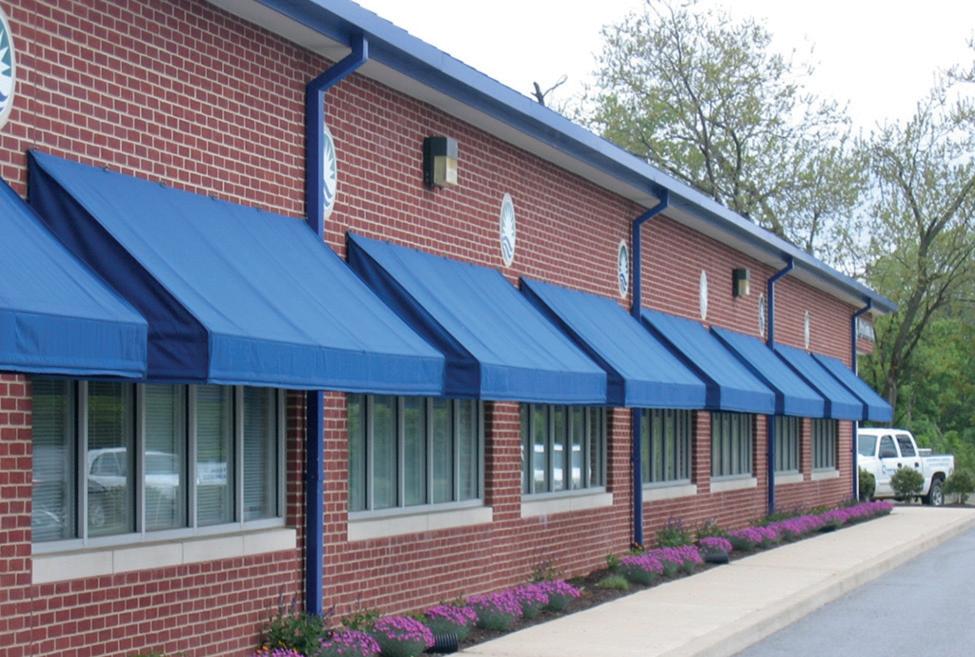
BrightFields’ 15,000-square-foot headquarters on Wilmington’s 7th Street Peninsula was built in 2005 on a former city landfill, demonstrating the company’s commitment to brownfield redevelopment. Solar panels on the roof provide about one-quarter of the company’s electricity.
Corporation, developers, engineers, architects, contractors, attorneys, nonprofit organizations, and community stakeholders, BrightFields helped lay the environmental foundation for that revitalization.
Additional notable projects include environmental assessment and cleanup at the former General Motors Assembly Plant — now Amazon’s MTN1 Fulfillment Center — demolition of the former Seaford Power Plant, remedial investigations supporting mixed-use development along the Nanticoke River,
and comprehensive environmental management at the Chestnut Run Innovation & Science Park (CRISP).
The company’s yellow-iron remediation division specializes in tank removal, building demolition, large-scale earthwork, dam removals, sediment remediation, and ecological restoration. The firm also provides asbestos, lead, and indoor air quality services, industrial permitting, and environmental compliance support. As client needs have evolved, demand has steadily
increased for expanded services and broader geographic reach.
Behind that client loyalty is a leadership team known for collaboration and continuity. BrightFields’ managers and technical leaders have built longterm client relationships while actively mentoring the next generation of environmental professionals.
Over the past decade, Young and Lannan have focused on preparing BrightFields for its next phase. Their goal was to align with a larger environmental firm that shared their values while preserving BrightFields’ culture and commitment to client service. After a nationwide search and vetting process managed by Falcon Capital Partners and supported by Santora CPA Group, that vision became reality in November 2025, when BrightFields merged with Terraphase Engineering. The merger expands Terraphase’s Mid-Atlantic footprint and positions BrightFields for its next phase of growth in remediation, environmental compliance, building services, and water supply.
BrightFields continues to operate under its established brand and leadership team, with its Wilmington office serving as a regional hub. For employees, the transition opens new opportunities for professional growth. For clients, it delivers broader capabilities supported by the same trusted local expertise.
“This merger is more than a business transaction — it’s a partnership built on shared values,” said Young. “It positions us to grow thoughtfully, serve our clients at an even higher level, and continue contributing to sustainable development across our region.”

Chair Message
BY JOHN C. GOODEN
››Across Delaware, employers are seeking dependable, skilled workers who can grow their careers. Talent comes in many forms, and a person’s past should not prevent them from pursuing long-term success. Traditional recruitment alone cannot fill the labor gap that continues to grow. It is time to consider second-chance hiring and offer meaningful, career-building opportunities to individuals who have faced barriers to employment, including those returning to society after incarceration.
Through a partnership with the Food Bank of Delaware’s L.O.G.I.C. training program, M. Davis & Sons has welcomed several graduates into career pathways in construction. These team members entered L.O.G.I.C. through a work-release program with the Delaware Department of Correction. They received comprehensive training in warehouse operations and safety and earned nationally recognized credentials, including Certified Logistics Associate and Certified Logistics Technician.
One M. Davis team member who participates in these outreach efforts shares simple advice to students. He asks them to think seriously about whether they want just a job or a career. Focusing on long-term career growth provides a different perspective. As a business leader, I prefer to offer not just a job but a path to a long-term career, including steering them towards a stateregistered apprenticeship that supports lasting success.

The results speak for themselves. L.O.G.I.C. program participants describe it as life-changing; they gain structure, self-confidence, and skills that lead to a sustainable income. I regularly engage with the Food Bank of Delaware and its L.O.G.I.C. classes by attending and speaking at graduation events.
Second-chance hiring is not a charitable act. It is good business. By opening doors to motivated workers who are ready to grow, employers gain loyal and capable team members, while communities benefit from increased economic participation and reduced recidivism. When people are given a real opportunity to succeed, they rise to the challenge. When companies invest in potential, the entire workforce grows stronger.
The Food Bank of Delaware’s L.O.G.I.C. Training Program was a 2022 Superstar in Education & Training winner. Photo by Nick Wallace Photography

Soft Skills: A Different Perspective
››Every day I see some type of discussion about the lack of soft skills among high school students and recent graduates. Over time, I have learned to pause, step back, and reflect on why this challenge persists — especially given the current commitment to workforce readiness.
Society has changed. Family structures have evolved. Demographics have shifted. Many of the interpersonal and character-based skills once modeled and nurtured naturally are no longer consistently developed.
So, what’s the cause? The easy answer is to point to schools: “They don’t teach soft skills.” The quick solution? “Let’s require a semester-long course in soft skills before graduation.” If only it were that simple.
Soft skills cannot be taught the same way we teach content like financial literacy. They are not a checklist of lessons, but a set of habits and dispositions cultivated over time.
Researchers use a range of terms — soft skills, durable skills, success skills, non-technical skills, and employability skills — but they all refer to the same foundational abilities:
• Communication
• Teamwork and collaboration
• Problem-solving and critical thinking
Yet these skills do not develop in isolation. They grow from deeper, often overlooked qualities: speaking clearly, listening to other perspectives, showing respect, being punctual, demonstrating self-discipline, exhibiting a strong work ethic, working well with others, being creative, making eye contact, shaking hands, and valuing diversity of thought. These qualities must be practiced and nurtured over time. The skills we value are outcomes — reflections of internalized principles. Principles are the bedrock. As Stephen Covey reminds us, circumstances may change, but principles are enduring.
A single course cannot produce a well-rounded, workforce-ready graduate. Soft skills cannot be compressed into a semester or taught through isolated lessons. They must be intentionally cultivated throughout a student’s K-12 education and beyond. They should be woven into daily classroom experiences, projects, and assessments — not treated as an “add-on,” but as an essential part of learning itself.
BY DR. ROB RESCIGNO
Today, the line between education and career has blurred; they are part of one continuum. Schools and businesses must work together — advising, planning, and holding each other accountable — to ensure that students develop not only technical proficiency, but also the interpersonal and ethical grounding that modern workplaces demand.
There is no quick fix or magic bullet. Developing soft skills requires a longterm commitment to nurturing the qualities and principles that shape thoughtful, capable, and compassionate individuals. If we want a workforce ready for the challenges ahead, we must start by building a culture — at home, at school, and in our communities — where those principles are lived, modeled, and reinforced every day.
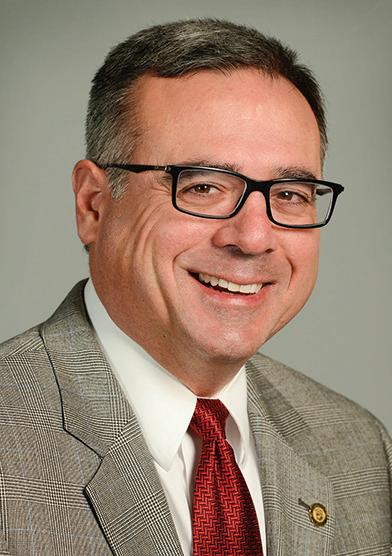
Dr. Rob Rescigno is the president and founder of Collaborative Consulting, LLC.
Carrying the Mission Forward
Mission AI Consulting and EDiS Company honored as Warrior Friendly Businesses
›› The Joint Military Affairs Committee (JMAC) of the Delaware State Chamber of Commerce and the New Castle County Chamber of Commerce has named Mission AI Consulting and EDiS Company as the 2026 recipients of the Delaware Warrior Friendly Business Award. The award recognizes businesses that demonstrate a strong commitment to supporting service members, veterans, and military families through meaningful workplace initiatives.
MISSION AI CONSULTING
Mission AI Consulting is a veteranfounded technology consulting firm based in Wilmington, Del., that helps organizations modernize enterprise systems through ServiceNow and Oracle platforms. Serving clients in regulated industries and the federal sector, the firm draws on more than two decades of combined experience in digital strategy, operational excellence, and program management.
Veteran hiring is central to Mission AI’s model, with every full-time employee having served in the military. The company reinforces this commitment through partnerships that support training and career transitions. Mission AI helps veterans build technology careers by providing upskilling and certification through ServiceNow’s RiseUp program, supporting service members transitioning to civilian life through the Department of Defense SkillBridge program, and partnering with ZipCode Wilmington to
connect talent to Delaware’s growing tech workforce.
“As a former service member, I understand the weight of putting the mission before yourself. That mindset — mission-driven, execution-focused — is the foundation of how we built Mission AI Consulting. This award is not just a recognition of our commitment to veterans, it’s a reflection of the value we see in them every day,” said Matt Kuchera, chief executive officer of Mission AI Consulting. “Veterans don’t just get the job done; they own the outcome. They adapt, they lead and they execute under pressure. At Mission AI, we’re not just creating jobs, we’re building a platform where veterans can thrive, grow, and lead the next wave of digital transformation. We’re proud to carry this banner forward and honored to be recognized as a Warrior Friendly Business.”
EDIS COMPANY
At EDiS Company, supporting the military community is visible in both leadership and daily operations. CEO Brian DiSabatino has a personal connection to military service through his family and his son, an active-duty Army officer, and he co-founded VetFest and the 22in22 initiative to raise awareness and support for veterans statewide. VetFest also partners with Stop Soldier Suicide to help fund critical services for veterans in crisis. This commitment is reflected in company leadership as well.
President Chris McCone, a U.S. military veteran, advanced within EDiS through a culture focused on mentorship and longterm career growth.
EDiS employs veterans across the organization and supports them as they translate military experience into construction careers. When possible, EDiS partners with veteran-owned firms on projects, including Delmarva Veteran Builders on the Rehoboth Beach Patrol project. The company also supports training programs that strengthen education-to-career pathways across Delaware, creating opportunities for veterans, military families, and the broader workforce to access stable, long-term employment.
“I’m grateful that the EDiS team understands the responsibility we share to support our veteran community, inside our company through meaningful employment and outside it through our collective fight against veteran suicide,” DiSabatino said. “As the father of an Army captain and the father-in-law of a U.S. Navy service member, I’ve been given a firsthand view into both the strength veterans carry and the challenges they often face after the uniform comes off.”
The honorees were recognized at JMAC’s State of the Guard Address on Feb. 19, which included the annual State of the Guard briefing to the community on the current missions, operations, and people of the Delaware National Guard.
WELCOME New Members
314TH
RECRUITING SQUADRON (267) 678-3094
3 Terri Ln. Burlington, NJ 08016
The 314th Recruiting Squadron, commanded by Lt. Col. Jacinta F. Anderson, is one of nine recruiting squadrons within the 360th Recruiting Group. The squadron is responsible for inspiring, engaging, and recruiting future Airmen to deliver airpower for America.
ALLSTATE INSURANCE COMPANY
THE TANYA PARRIS AGENCY allstate.com/tanyaparris (302) 223-0225
Kent County, DE
Tanya Parris is a licensed insurance specialist providing coverage for automobile, homeowners, renters, umbrella, and life insurance products.
BERGER COMMUNITIES
rentberger.com (302) 668-1854
70 Court Dr. Wilmington, DE 19805
Berger Communities is a fullservice real estate company that owns and manages more than 11,000 apartments across PA, OH, DE, and MD. Founded in 1972, Berger has maintained a positive 40-plus-year track record through multiple real estate cycles.
BLUE HEN ANALYTICS
bluehenanalytics.com (302) 381-1718
P.O. Box 506
Milford, DE 19963
Blue Hen Analytics is a Delawarebased analytics and automation
consulting firm that helps small and midsize businesses turn data into actionable insights.
CASELLA WASTE SYSTEMS
casella.com (207) 570-0346
604 Cannery Ln. Townsend, DE 19734
Casella, headquartered in Rutland, Vt., is one of the largest recyclers and most experienced fully integrated resource management companies in the eastern United States, delivering services to residential, commercial, municipal, industrial, and institutional customers.’
CHIMES
chimes.org (410) 358-6400
4815 Seton Dr. Baltimore, MD 21215
Chimes is a nonprofit organization supporting people of differing abilities and behavioral health needs through personalized care, innovative programs, and pathways to independence.
COMCAST SPECTACOR
comcastspectacor.com (215) 422-2506
3601 S. Broad St. Philadelphia, PA 19148
With deep roots in South Philadelphia, Comcast Spectacor is connected to and inspired by the technology and creative spirit of Comcast NBCUniversal. Its teams, including the Philadelphia Flyers and Wings, build strong relationships, pursue championship success, and generate value through entrepreneurship and collaboration.
CONSULATE GENERAL OF CANADA
international.gc.ca (212) 596-1611
466 Lexington Ave., 20th Fl. New York, NY 10017
The Consulate General of Canada in New York advances and strengthens Canada-U.S. relations across trade, investment, innovation, education, and cultural exchange. The consulate is accredited to DE, NJ, NY, PA, CT, and Bermuda.
DELAWARE
EMERGENCY MANAGEMENT AGENCY
dema.delaware.gov (302) 659-2320
165 Brick Store Landing Rd. Smyrna, DE 19977
The Delaware Emergency Management Agency (DEMA) is the lead state agency coordinating comprehensive emergency preparedness, training, response, recovery, and mitigation services to save lives, protect Delaware’s economic base, and reduce the impact of emergencies.
DELAWARE SOLID WASTE AUTHORITY
dswa.com (302) 270-5486
601 Energy Ln. Dover, DE 19901
The Delaware Solid Waste Authority (DSWA) was established in 1975 to bring order to a fragmented waste management system. DSWA operates modern landfills, transfer stations, recycling programs, and environmental education centers that serve the entire state.
FIRST STATE ORTHOPAEDICS
firststateortho.com (302) 731-2888
4745 Ogletown Stanton Rd., Stes. 225 & 238 Newark, DE 19713
First State Orthopaedics is Delaware’s largest orthopaedic group practice and the only orthopaedic practice with convenient office locations in all three counties statewide.
PROVIDENCE STRATEGIES
providence.llc (410) 343-9340
77 Maryland Ave. Annapolis, MD 21401
Providence Strategies specializes in the strategic design, implementation, and management of multifaceted public affairs initiatives. The firm serves clients on state and local public policy matters related to technology, agriculture, environment, procurement, capital appropriations, transportation, land use, and public-private partnerships.
SUMURI LLC
sumuri.com (302) 570-0015
40 S. Main St., P.O. Box 121 Magnolia, DE 19962
SUMURI LLC, based in Magnolia, Del., is a global leader in digital forensics solutions, providing specialized hardware, advanced software, and expert training. At the core of SUMURI’s innovation is the TALINO line of forensic workstations.



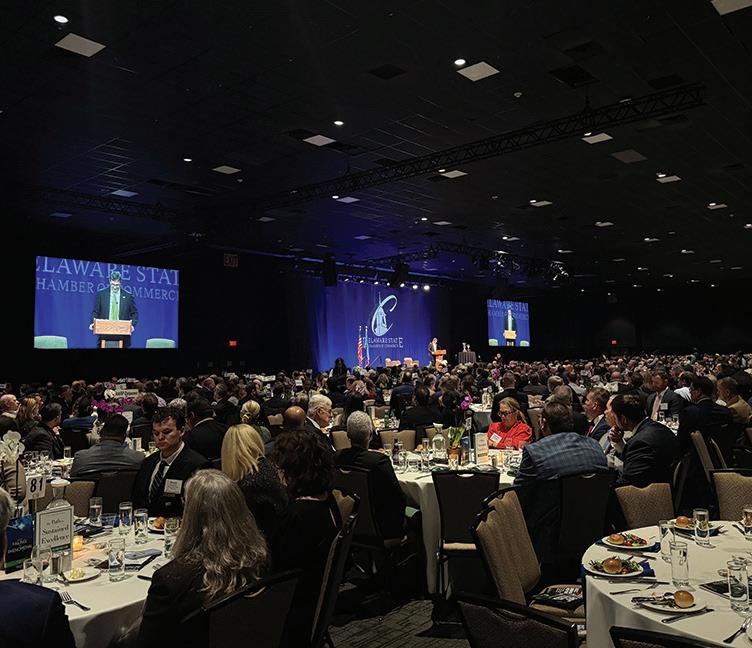
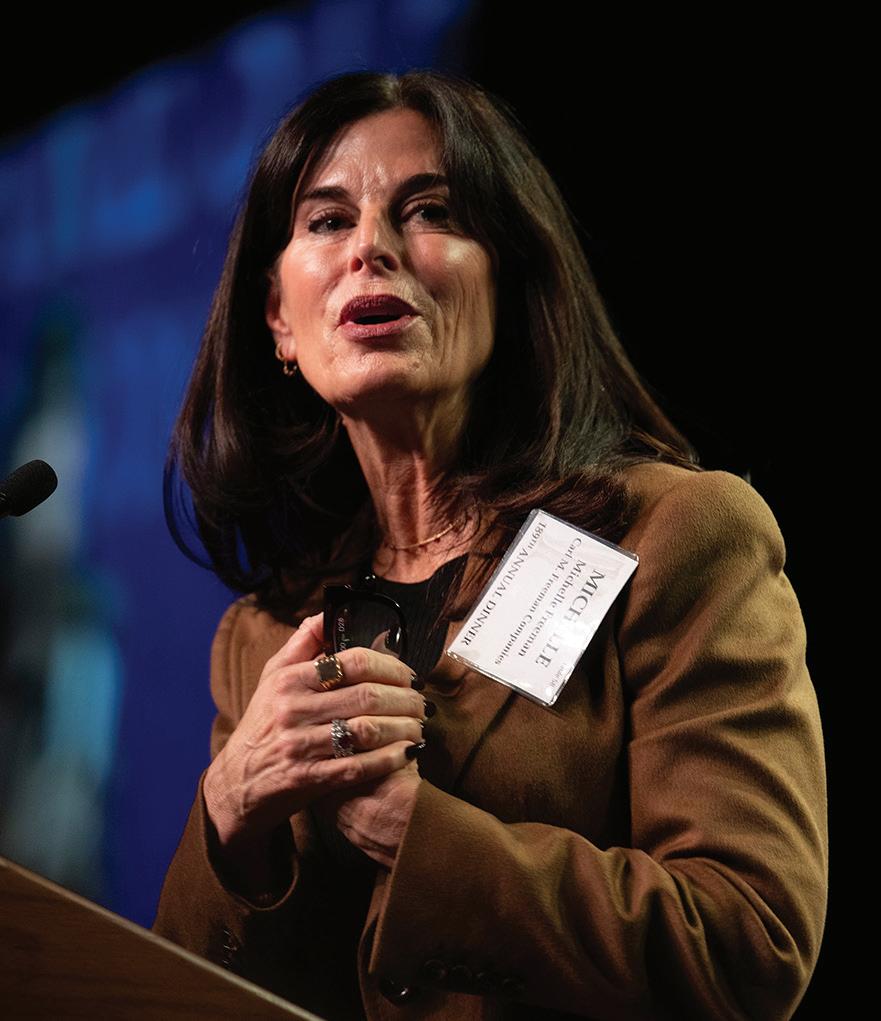
The Delaware State Chamber of Commerce’s 189th Annual Dinner brought nearly 1,200 business, community, and government leaders together for an evening of connection and conversation. Hosted at the Chase Center on the Riverfront, the event allowed Delaware’s business community to come together and engage on the ideas and priorities shaping our state’s future. We thank our sponsors, speakers, and distinguished guests for making our signature event a success.
PHOTOS BY DICK DUBROFF / FINAL FOCUS PHOTOGRAPHY
Annual Dinner
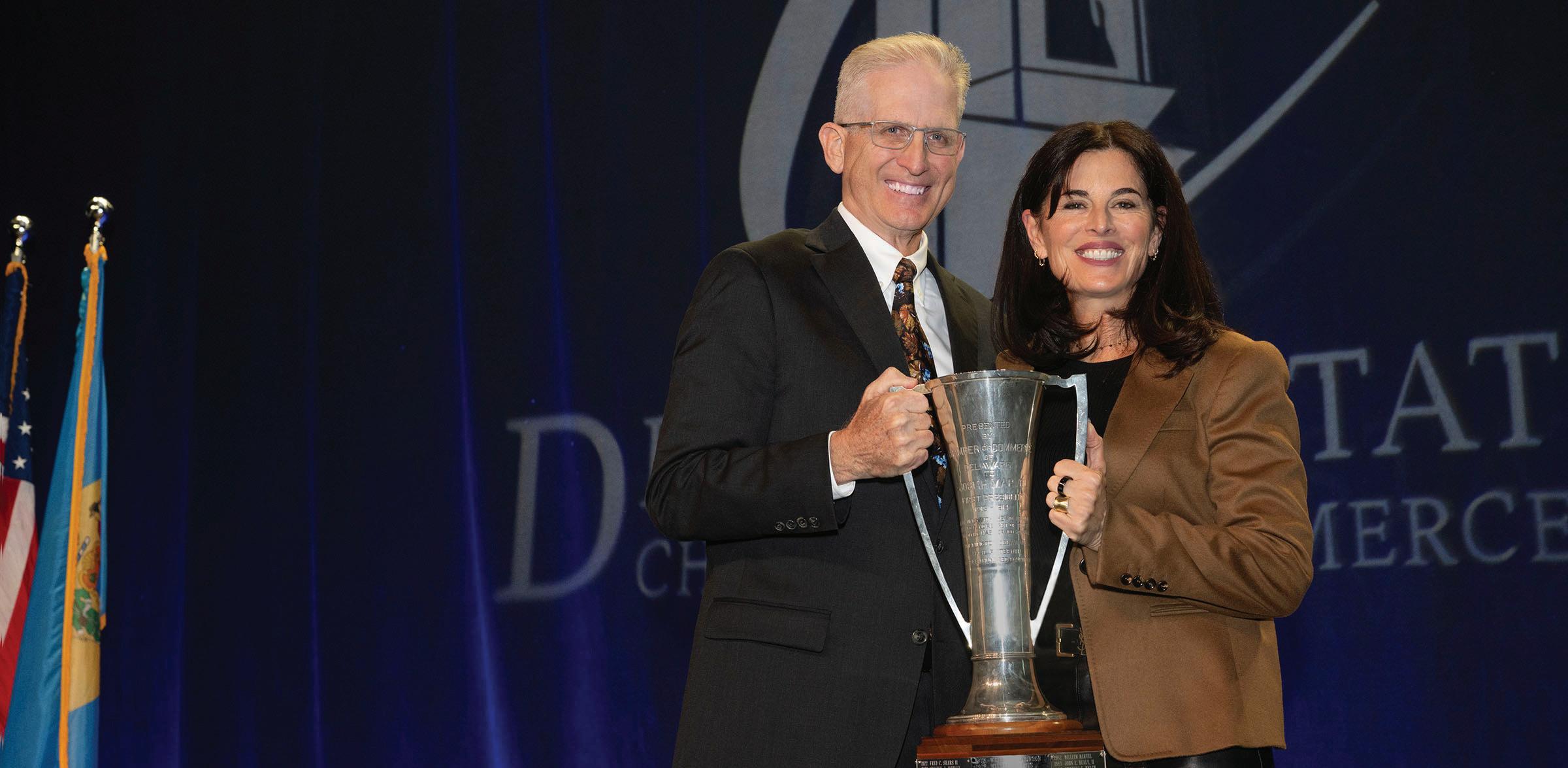
Michelle DiFebo Freeman Honored with Josiah Marvel Cup
“When you meet someone who is authentic, smart, enthusiastic, determined, and gets things done, that’s an incredible combination. Michelle represents all those qualities.”
— Former Delaware Governor Jack Markell
THE DELAWARE STATE CHAMBER of Commerce
awarded its prestigious Josiah Marvel Cup to Michelle DiFebo Freeman. Established in 1951, the Marvel Cup honors a Delawarean who has made an outstanding contribution to the state, community, or society. The State Chamber’s highest honor is named in memory of the Honorable Josiah Marvel, who reorganized and served as the first president of the State Chamber in 1913. As a tradition, the recipient of the Marvel Cup is kept secret until the night of the dinner.
Michelle DiFebo Freeman is the owner and chief executive officer of the Carl M. Freeman Companies, a real estate company established in 1947 that specializes in land acquisition, land planning, development and redevelopment, and the management of amenity-rich residential communities, neighborhood shopping centers, commercial properties, and golf courses. Under her leadership since 2009, the company has expanded its portfolio across Delaware, Maryland, and Virginia.
“She has a vision for Sussex County that is beyond what any of us could ever have imagined for the spaces in the area,” shared Sara M. Bluhm, executive director of the Sussex County Land Trust. “There are easy roads she could take to fulfill that vision. But for the benefit of the community and those who reside in her developments, Michelle chooses to take the one that’s less traveled every time.”
Freeman serves as president and chairman of the Carl M. Freeman Foundation, which has awarded more than $60 million in grants since
1960 to organizations in the communities where her employees live, work, and play. She also serves as founding chair of the Joshua M. Freeman Foundation, which expands access to the arts and arts education to create opportunities that elevate the human spirit. Among her most notable initiatives is the Freeman Arts Pavillion, an entertainment venue near the beach that brings high-quality arts and music programming into schools and communities that might otherwise go without.
A founding member of Venture Philanthropy Partners, Michelle serves on the Board of Halcyon Foundation of Georgetown and Georgetown University Entrepreneurship Advisory Group at McDonough School of Business. She has also chaired AfterDark@THEARC in SouthEast D.C. for several years and annually participates in Covenant’s House Executive Sleep-Out. She is an active member of the Young Presidents’ Organization. Freeman is a minority partner in Monumental Sports and Entertainment which owns Capital One Arena, the Washington Capitals, Wizards, Mystics, and Valor Football. She is one of 13 female NBA team owners. Additionally, Freeman is an investor in the Washington Spirit women’s soccer team.
“The sky truly is the limit with Michelle,” said Patti Grimes, executive director of the Freeman Arts Pavilion and Carl M. Freeman Foundation. “She is resilient, principled, and unwavering in her commitment to doing what’s right. Michelle says what she means and means what she says — and that integrity is reflected in everything she builds and every community she touches.”
KEYNOTE SPEAKER
Banking on Community
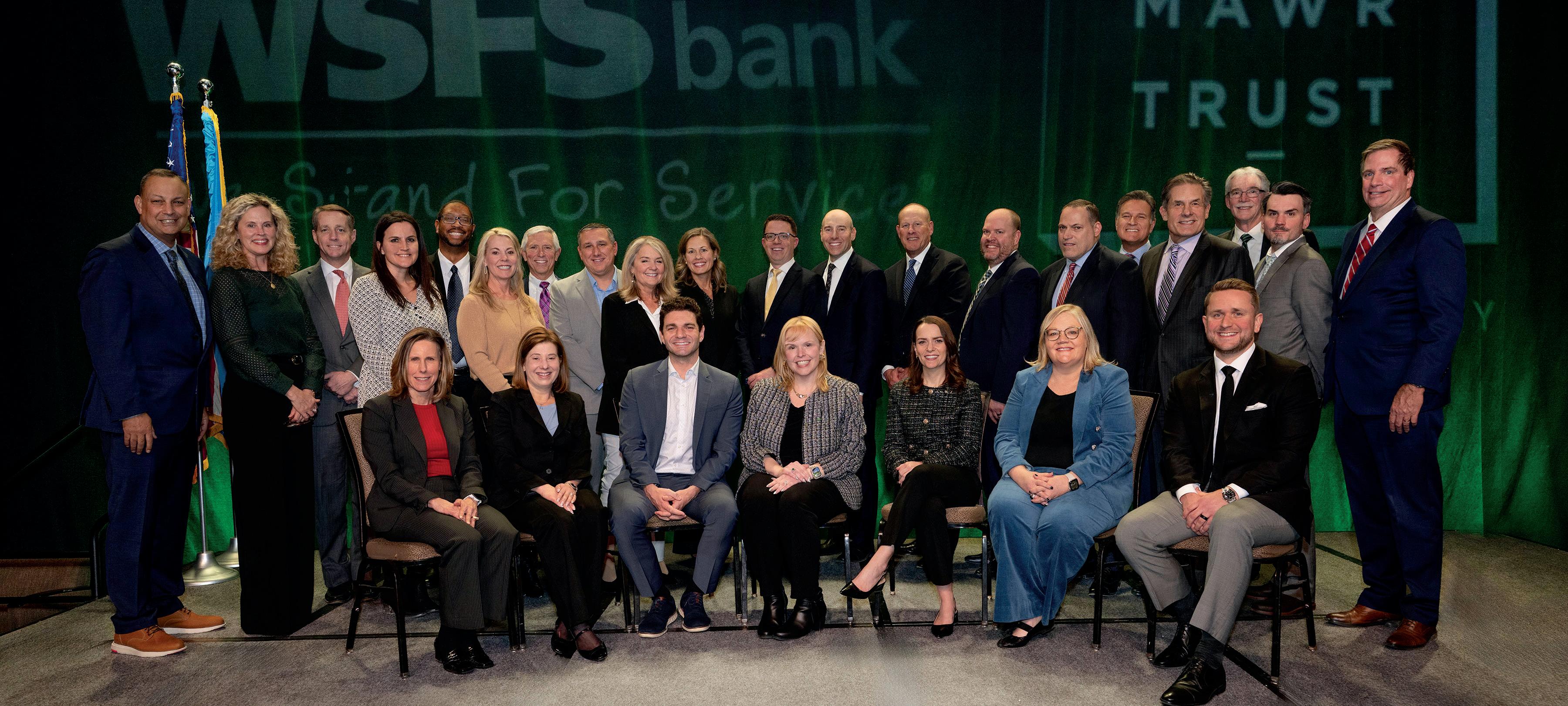
RODGER LEVENSON, president, chairman, and CEO of WSFS Financial Corporation, opened his remarks by emphasizing the power of long-term commitment and shared progress. “Tonight, I’m excited to share the WSFS story, and the vital role partnerships play in fostering prosperity,” Levenson said, speaking on behalf of WSFS, Bryn Mawr Trust, and the company’s 2,300 associates. Now the nation’s fourth-largest bank-owned wealth and trust business, excluding the big banks, WSFS has maintained deep roots in the communities it serves. Levenson thanked the Delaware State Chamber for nearly 200 years of service to the state’s business community, noting that the Annual Dinner is “only five years younger than WSFS’ 194 years.”
Levenson then stepped back to WSFS’ founding in 1832, when the organization was still known as the Wilmington Savings Fund Society. “At that time, Delaware’s few savings institutions only served affluent landowners and businesses,” Levenson remarked. “Nothing met the banking needs of Wilmington’s working class.”
Founder Willard Hall saw an opportunity, and the Wilmington Savings Fund Society was created to allow Delawareans a safe place to deposit funds, no matter the size of their assets. Almost two centuries later, Hall’s community focus still defines the organization. “Today, WSFS remains a community bank, not just in category, but in philosophy,” Levenson said. “That is what we mean when we say, ‘We Stand for Service.’”
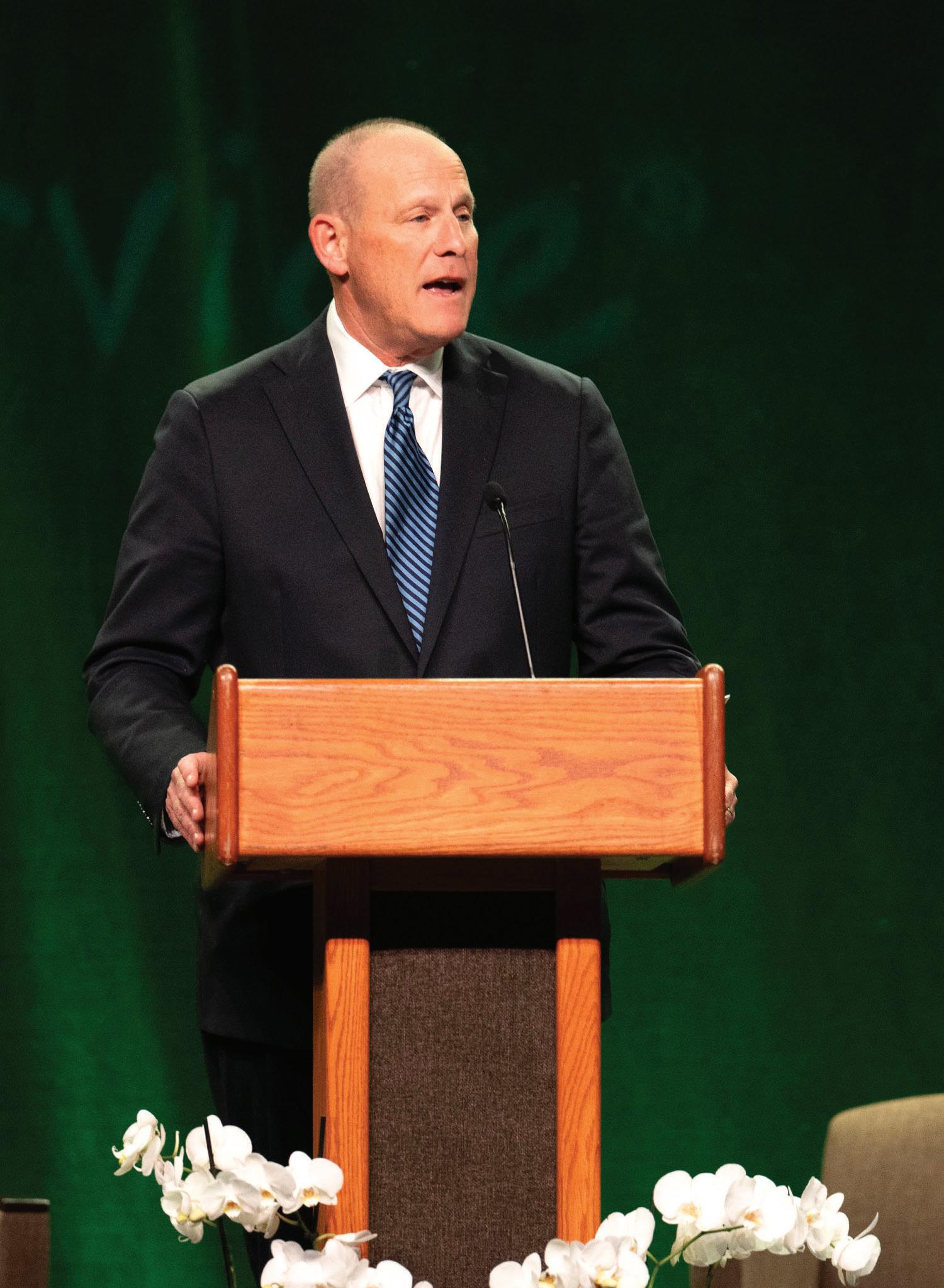
Levenson highlighted WSFS’ investment in service and civic partnership, noting that associates volunteered more than 38,000 hours last year and WSFS and the WSFS CARES Foundation contributed more than $3 million in 2025 to support workforce development, affordable housing, food security, and other community needs. “We believe that giving back doesn’t have to compete with achieving business goals,” Levenson emphasized. “It is a business goal.”
Levenson also reaffirmed WSFS’ commitment to Wilmington through a planned renovation and long-term lease renewal for its headquarters at 500 Delaware Ave. “Our goal is to remain independent and an influential fixture in Delaware and this region for many years to come,” Levenson added.
As he looked to the future, Levenson called on Delaware’s business community to keep building together through innovation and collaboration. “Today, we are living during a period of rapid change driven by technological development,” Levenson noted. “Artificial intelligence, blockchain, and many other technologies are literally changing the way we work and serve clients.” Levenson encouraged the room to meet the moment with shared values and ambition. “Let us all be careful, principled, learned, and trustworthy partners and leaders,” Levenson said. “And through this, let’s be bold.”
Levenson closed with a forward-looking charge rooted in partnership and momentum. “Together, we have a once-in-a-generation opportunity to provide a launch pad to another extended period of growth and prosperity for Delaware,” Levenson said. “I cannot think of a better way to honor Willard Hall’s legacy than a future when we can all say we were partners in this next wave of innovation and prosperity.”
Annual Dinner
GOVERNOR Progress, Not Promises
IN HIS SECOND ANNUAL DINNER ADDRESS,
Gov.
Matt Meyer opened by thanking State Chamber leadership and sponsors, offering special recognition to President Mike Quaranta, who had announced his upcoming retirement just minutes earlier. Meyer praised the State Chamber as a key force in uniting Delaware’s business community around shared priorities. “Thanks for your tremendous leadership,” Meyer said. “Your hard work with your team in marketing Delaware to the nation and to the world has been tremendous. And you’ve taken a business community that is often in competition and helped it collaborate on initiatives that create jobs and grow Delaware’s economy for generations to come.”
Meyer pointed to progress made over the past year. “We’ve taken historic steps forward in protecting our corporate franchise, and we’ve added clarity to Delaware corporate law,” Meyer remarked. He emphasized the state’s continued strength as the nation’s incorporation capital. “We saw nearly 280,000 new entities incorporated here in Delaware just in the first ten months of last year,” Meyer said. “That’s 14% more than the same period in 2024.”
He also highlighted investments aimed at supporting growth and affordability statewide, including workforce development, housing supply, and streamlining government services. Gov. Meyer pointed to the launch of the Office of Workforce Development to better align state resources
with the jobs of the future, along with the groundbreaking of Merck’s $1 billion state-of-the-art manufacturing facility in Wilmington.
While Gov. Meyer emphasized that recruiting and retaining major employers remains important, he said the state is also focused on helping startups scale. “We are clear eyed about where the next wave of growth is coming from,” Meyer said. “From innovation, from startups, and from people who are willing to take a risk on an idea and build something new right here in Delaware. That’s why we’re sharpening the focus of the Delaware Prosperity Partnership to do more than recruit and retain big business.”
Looking ahead, Gov. Meyer said his administration plans to launch a digital permitting interface to make housing approvals easier across agencies. Meyer outlined a “deregulate and innovate” agenda centered on making government faster and more responsive to employers and residents, urging business leaders to share with his office what slows growth down. “That means we don’t just celebrate that Delaware is a great place to incorporate a business. It means Delaware is a great place to do business.”
Meyer closed with a message of accountability and follow-through. “We don’t make promises. We make plans,” Meyer finished. “Then we turn those plans into progress.” As he put it plainly, “Empty political promises mean nothing. We say how we’re going to deliver for people, and then we do it.”
“In the year ahead, we’re going to push a deregulate and innovate economic agenda that is practical, that is measurable, and that is driven by real feedback from the people who actually use the systems.”
— Governor Matt Meyer

DSCC Welcomes New Board Members in 2026
THE DELAWARE STATE CHAMBER OF COMMERCE has welcomed new members to its Board of Directors and Board of Governors. Marie Holliday has concluded her term as chair, and John Gooden has been named the State Chamber’s new chair.
Members joining the Board of Directors are:
Terry Glebocki, Delaware Park Casino
Scott Baylis, WSFS Bank
Dr. Colleen Perry Keith, Goldey-Beacom College
Rod Ward, CSC
The following business leaders were elected to the State Chamber’s Board of Governors:
Jennalee Fede, Verdantas LLC
Darren Buseman, B&M Meats
Jonathan Starkey, Delaware State University
John C. Fannin III, Harvey Hanna & Associates
Rob Rescigno, Collaborative Consulting LLC
Jake Ruddy, PCS
Albert Shields, University of Delaware
Colleen Morrone, Goodwill of Delaware & Delaware County, Inc.
Lorri H. Grayson, GGA Construction
Paul N. Heath, Richards, Layton & Finger
Jeff Gosnear, Grotto Pizza
Jason Gonzalez, Qnity Electronics, Inc.
Mike Little, Allen Harim Foods, LLC
Vera Holmes Toliver, DuPont
Marcus L. Beal, Delmarva Power
Mike Petka, Bancroft Construction
Ciro Poppiti, Freeh Sporkin & Sullivan LLP

“The
business community has no choice but to fully engage in workforce training and education outcomes like never before.We need to be at the table for education and workforce readiness discussions because we no longer have the luxury of a seemingly unlimited supply of labor.” — Chair John Gooden
Board Member
of the Year
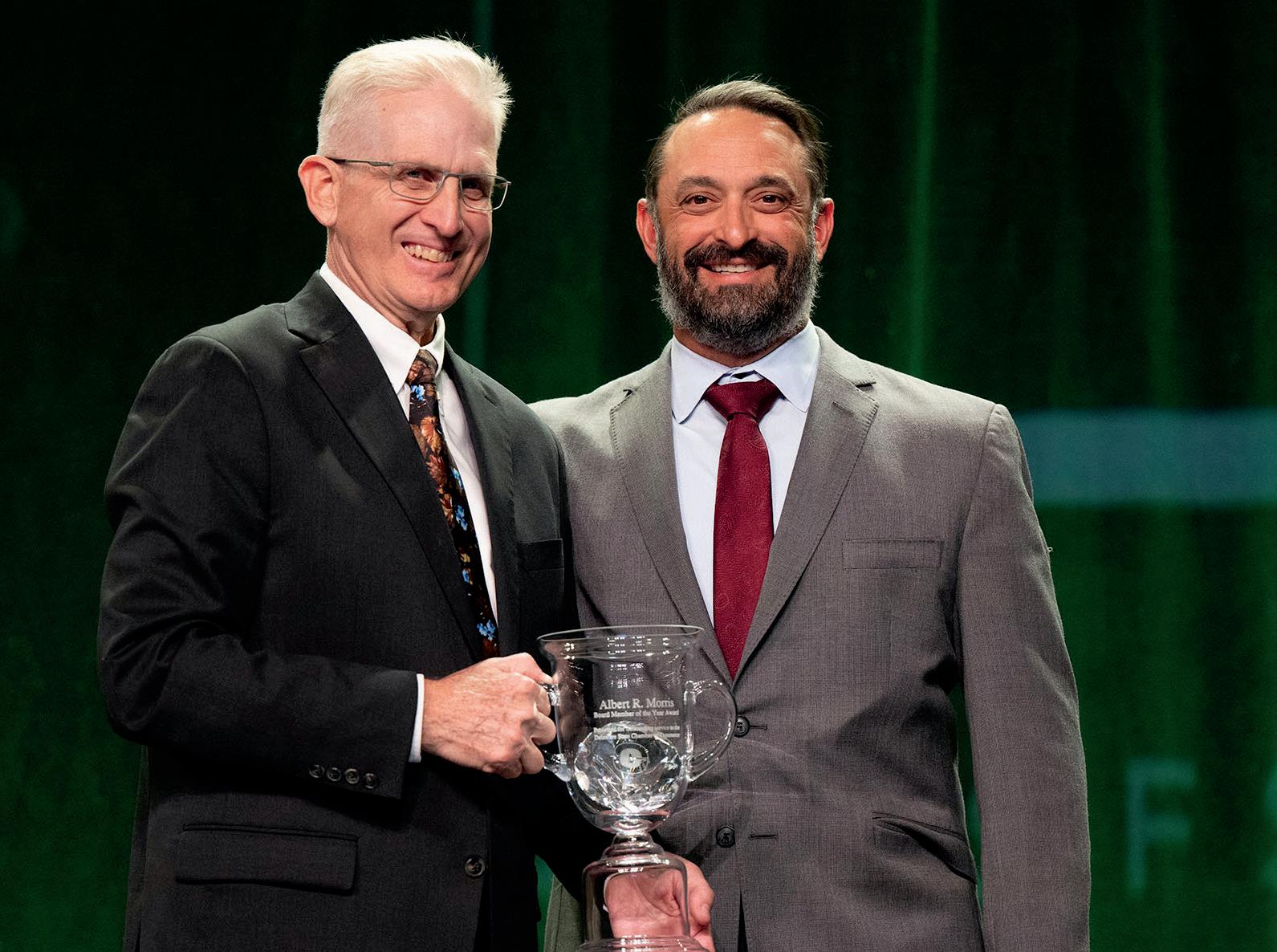
EACH YEAR, a board member is recognized by State Chamber staff as Board Member of the Year. This year, Andrew Cottone III, founder of Aternium, Inc., was chosen as the honoree for his exceptional contributions to the organization. Andrew joined the State Chamber’s Board of Governors in 2020 and the Board of Directors in 2023, and he also serves on the nominating committee.

THANK YOU TO OUR 189TH ANNUAL DINNER SPONSORS
Presenting

Reception
Chairman












THANK YOU TO OUR 189TH ANNUAL DINNER SPONSORS





























Action Unlimited Resources
Affinity Energy Management
Assurance Media, LLC
Belfint, Lyons & Shuman, CPAs
Big Brothers Big Sisters of Delaware
Blackwell HR
The Bonadio Group
BrightFields, Inc.
Brown Advisory
Capital Bank
Colonial Parking, Inc.
Cornell Property Management
DE Cadillac, DE Subaru & Kia of Wilmington
Delaware City Refining Company
Delaware Electric Cooperative
Diamond Technologies, Inc.
Easterseals DE & MD’s Eastern Shore
Gunnip & Company
Horizon Farm Credit
milliCare Floor & Textile Care
Montrose Environmental Group
New Castle Insurance





O.A. Newton
PhRMA
Placers Staffing
Promo Victory
Ronald McDonald House Charities of
Greater Delaware
Santora CPA Group
We Work for Health
Whisman Giordano & Associates, LLC
Wohlsen Construction
Your Part-Time Controller

A New Tax Landscape
How the One Big Beautiful Bill Act changes deductions, incentives, and planning for individuals and businesses
BY JEFFREY W. MITCHELL, JR., CPA, MT
ON JULY 4, 2025, the One Big Beautiful Bill Act (OBBBA) permanently extended and expanded several provisions from the 2017 Tax Cuts and Jobs Act (TCJA). Aimed at long-term tax relief and simplified compliance for both individuals and businesses, the legislation seeks to support economic growth and sustained investment across the U.S. economy.
For individuals, OBBBA introduces permanent changes that reduce taxable income and broaden access to key benefits. Income tax rates are lowered and the standard deduction is permanently increased. The child tax credit is expanded, while the SALT deduction cap rises from $10,000
to $40,000 for tax years 2025-2029, subject to phaseouts. The estate and gift tax exemption increases to $15 million, and new deductions include up to $12,500 in overtime pay ($25,000 for joint filers) and up to $10,000 in auto loan interest for U.S.-assembled vehicles purchased between 2025 and 2028. Expanded 529 plan rules now allow funds to cover tutoring, books, and similar expenses, with annual limits raised to $20,000 per beneficiary.
Businesses receive significant advantages as well. Companies may now claim 100% bonus depreciation for qualifying property placed in service after January 19, 2025, and the Section 179 deduction limit increases
State-Level Impact of OBBBA Tax Law Changes
Pennsylvania Decouples – federal bonus depreciation must be added back
New Jersey Conforms to 100% bonus depreciation
Delaware Decouples – 40% (2025), 20% (2026), 0% (2027); remainder depreciated
Decouples – must be amortized over 5 years
Generally conforms, but decouples from international provisions
Decouples – domestic R&E amortized over 5 years
Conforms to revised federal EBITDA-based limitation
Conforms to modified limitation
Allowed, but cannot create/increase a loss; limited to business & farm income
conforms
Generally conforms Conforms – up to $2.5M
Maryland Decouples for 2025 Decouples for 2025 Decouples –requires addback of depreciation/ amortization
to $2.5 million. Domestic research and experimental (R&E) costs can be immediately expensed, while foreign R&E costs must be amortized over 15 years. The Section 163(j) interest limitation calculation now uses EBITDA, increasing potential deductions, and enhancements to the Qualified Business Income (QBI) deduction provide further savings for pass-through entities and sole proprietors.
Regional State Impact
These federal reforms carry significant state-level implications, as not all states automatically conform to federal tax law. Many states — Pennsylvania, Delaware, Maryland, and Virginia — do not align with federal rules related to bonus depreciation, R&E expensing, and updated interest limitations. Because depreciation and R&E are among the most decoupled areas, taxpayers may experience material differences between federal and state taxable income. Interest limitation rules also vary widely, adding complexity for multistate taxpayers. Given frequent conformity changes, especially in Maryland and Delaware, ongoing monitoring is essential. Businesses operating across multiple states should model statespecific impacts before applying federal tax planning strategies to avoid unexpected liabilities.
Generally conforms, subject to annual review


We hope this summary helps you prepare for the upcoming tax season. n
Jeffrey W. Mitchell, Jr., CPA, MT, is senior vice president at Siegfried Advisory.

Get Ahead Early
New federal rules mean some employees will no longer have a pre-tax option for catch-up contributions, making early planning critical for employers
BY CHRISTOPHER J. CIMINERA, CPA, QKA®
THE SECURE 2.0 ACT, in Section 603, has changed the way certain retirement plan participants can elect to make catch-up contributions. The change mandates that highly paid individuals — those with FICA wages in the prior year of $150,000 or more — who are age 50 or older contribute catch-up amounts in Roth dollars. For plan sponsors and participants alike, the change affects how catch-up dollars must be withheld, tracked, and reported moving forward.
Prior to the SECURE 2.0 Act, participants could contribute catch-up contributions as pretax deferrals or as Roth dollars, if the plan permitted Roth contributions. Section 603 requires that catch-up eligible, highly paid individuals contribute catch-up amounts on a Roth basis. The legislative change was enacted by Congress as a revenue-raising provision to help pay for other benefits in the Act.
While the rule is clear in concept, the timeline for implementation has shifted to allow plan sponsors time to adjust. Initially, Section 603 was effective for years beginning after Dec. 31, 2023. On Aug. 23, 2023, the IRS issued Notice 2023-62, which provided a two-year administrative transition period related to this section. As a result, the requirement is effective for plan years beginning after Dec. 1, 2025.
401(k), 403(b), and 457(b) plans are covered under this requirement. Section 603 does not apply to SEP or SIMPLE IRA plans.
Even with the delay, compliance will require coordination across payroll systems, plan recordkeepers, and participant elections. On its face, the requirement is straightforward, and that’s likely what Congress assumed. Any highly paid individual who is age 50 or older and electing a catch-up contribution must have it applied as a Roth source. In
practice, however, many administrative issues may arise during the first year of implementation. For example, an individual may make elective deferrals to two or more plans during a taxable year, including plans with unrelated employers. In that case, Notice 2023-62 provides that elective deferrals are aggregated for determining whether the individual’s elective deferral limit is exceeded.
The IRS also indicated additional guidance is coming. That guidance is expected to clarify that the requirement will not apply to eligible participants who had no FICA wages from the plan sponsor in the prior calendar year. It is also expected to confirm that plan sponsors may treat a participant’s pre-tax catch-up election as an election to make designated Roth contributions. Finally, it will address plans maintained by more than one employer, including multiemployer plans, and confirm that FICA wages from one participating employer would not be aggregated with wages from another when determining whether a participant is a highly paid individual.
Section 603 is now in place, so plan sponsors should work with their payroll provider and plan administrators to ensure processes are in place to implement the regulation. Plan documents must be amended by Dec. 31, 2026. n
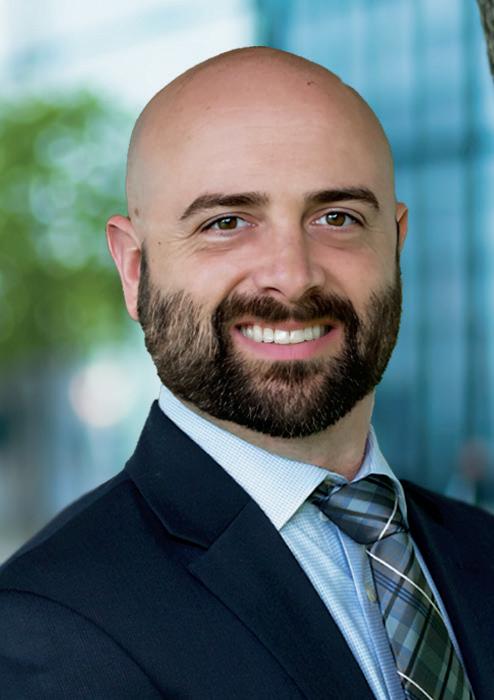
Christopher J. Ciminera, CPA, QKA®, is a principal of accounting and auditing and retirement plan services at Belfint, Lyons & Shuman, CPAs.
LOCAL. TRUSTED. PROVEN.
S erving our community since 1973.

Whisman Giordano believes in combining technical expertise with a passion for building extraordinary relationships. We understand that behind every number is a dream, a mission, a purpose.
Your business matters. You matter.

Is Fraud Loss TaxDeductible?
Stay informed and proactive to protect your financial future
BY REBECCA M. DIEROLF

HAS THIS HAPPENED TO YOU?
One minute you’re enjoying your day, and the next, you receive a notification and log into your account to see transfers or withdrawals you did not authorize. Panic sets in as you realize your account may be compromised. You might find yourself speaking with someone claiming to be from your bank, unsure whether they are legitimate. In other cases, fraud unfolds more slowly, where unsolicited investment advice becomes attractive over time, and trust is gained through deceptive means.
Many individuals fall prey to bad actors who dedicate hours each day to defrauding victims. If this has happened to you, you are not alone. Consumers reported more than $12.5 billion in fraud losses in 2024, according to the Federal Trade Commission (FTC). Investment scams accounted for a significant share of those losses, with $5.7 billion reported to the FTC and an additional $6.5 billion reported to the FBI, much of it tied to cryptocurrency-related schemes.
Investment fraud and Ponzi schemes have become increasingly common. With so much financial activity now online, many investors unknowingly become victims of fraudulent schemes. Fortunately, the Internal Revenue Service (IRS) offers relief through Internal Revenue Code Section 165, which allows taxpayers to deduct certain losses on investments entered into profit on their tax returns.
Under IRC Section 165(c)(2), taxpayers may deduct a theft loss if it arises from a transaction entered for profit. This rule applies to situations in which funds are invested with the expectation of earning a return, such as in a brokerage account or an investment fund. The loss must be reported in the year that it occurred or was discovered, and recovery was unlikely.
This deduction does not cover scams without a profit motive. For instance, money lost in a romance or kidnapping scam does not qualify. In those cases, although the individual was defrauded, these losses are
considered personal and non-deductible. Let’s walk through a couple scenarios that may be considered a deductible theft loss on your tax return.
Pig Butchering Scam
John receives an unsolicited email about a cryptocurrency investment promising large profits. After testing the service with a small deposit and successfully withdrawing funds, he becomes convinced, invests more, and ultimately transfers his entire retirement savings. When he attempts to withdraw again, he is unable to do so and cannot reach customer service. John contacts police and learns his savings are unrecoverable.
Phishing Scam
Bob receives an official-looking email claiming his investment account was compromised, with instructions to call a fraud protection representative. He follows the prompts and provides the scammer with his brokerage login credentials. The following week, Bob finds his accounts emptied and learns from police that recovery is impossible.
If you have experienced any of these types of investment fraud, document everything. Keep all records, emails, receipts, account statements, correspondence, and any interactions with law enforcement or the IRS. These documents help prove that a theft occurred and support your deduction claim if questioned. Consult a qualified tax adviser, as deductibility under Section 165(c)(2) depends on the specific facts of each case. Stay informed and proactive to protect your financial future. n
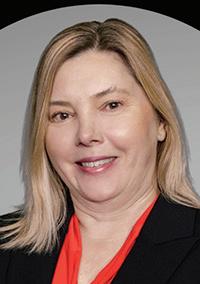
Rebecca M. Dierolf is a tax manager at Maillie LLP.






Understanding New Provisions
An overview of recent federal tax changes affecting individuals and businesses
BY MARIE HOLLIDAY, CPA
THE RECENTLY ENACTED One Big Beautiful Bill Act brings sweeping updates to federal tax policy, including changes affecting the taxability of certain income and deduction items. At first glance many taxpayers were very excited about this legislation due to perceived reports about no tax on tips and overtime pay, but the “devil is in the details.” Eligibility for these tax law changes is subject to phaseouts based on income thresholds and filing status requirements. I highly recommend you consult with a tax professional regarding your eligibility before you file a return with these deductions.
Let us review several of the changes effective for 2025: No Tax on “Qualified” Overtime Pay: Single taxpayers may deduct up
to $12,500 of overtime pay, and married couples filing jointly may deduct up to $25,000 of overtime pay (married taxpayers are ineligible for the deduction if they file separately) starting in 2025. Income limitations for the deduction are $150,000 for single taxpayers and $300,000 for married couples filing jointly. Only the Fair Labor Standards Act (FLSA) premium portion (extra “half-time”) is deductible — which is the amount paid above the regular rate. More formal reporting requirements will be phased in for employers in 2026.
No Tax on Tips: Up to $25,000 in tips can be treated as taxdeductible in 2025. Phaseouts of eligibility begin at $150,000 for single taxpayers and $300,000 for married couples filing jointly (married
Eligibility for these tax law changes is subject to phaseouts based on income thresholds and filing status requirements. I highly recommend you consult with a tax professional regarding your eligibility before you file a return with these deductions.
taxpayers are ineligible for the deduction if they file separately). To qualify for deductibility, the tips must be voluntary by the customer (not mandatory charges), reported on a W-2 or 1099, and paid in an occupation that customarily receives tips.
Car Loan Interest Deduction: The legislation allows for a deduction of up to $10,000 in car loan interest. The deduction phases out at single incomes of $100,000 and $200,000 for married couples filing jointly, and taxpayers must report the VIN of the vehicle on their tax return. To qualify for the deduction on a personal use vehicle, the loan must have originated after Dec. 31, 2024, final assembly must occur in the United States, and the vehicle must be secured by lien.
Enhanced Senior Deduction: The law provides a deduction of $6,000 per eligible individual who is older than 65 on the last day of the taxable year. The deduction phases out for single taxpayers over $75,000 and married couples filing jointly over $150,000. It is in addition to the additional standard deduction for seniors and is available to both itemizers and non-itemizers.
100% Bonus Depreciation: The law provides a deduction of $6,000 per eligible individual who is older than 65 on the last day of the taxable year. The deduction phases out for single taxpayers over $75,000 and married couples filing jointly over $150,000. It is in addition to the additional standard deduction for seniors and is available to both itemizers and non-itemizers.
Section 199A Small Business Deduction: This deduction was made permanent and will enable more high-income pass-through owners to benefit. The phase-in range for limitations expanded to $75,000 ($150,000 for married couples filing jointly), and a new minimum deduction of $400 for active QBI of at least $1,000, indexed for inflation, was established. These changes apply to tax years beginning after Dec. 31, 2025.
Trump Accounts for Children: A new account can be set up for a child who has not attained age 18 before the close of the year in which the election to establish the account is made. The child must be a U.S. citizen and have a valid Social Security number before the date of election to establish the account. Contributions cannot be accepted until July 4, 2026. Under the pilot program, there is a $1,000 federal contribution if a child is born after Dec. 31, 2024, and before Jan. 1, 2029.
Higher State and Local Tax Deduction: The state and local tax deduction increases from $10,000 to $40,000 in 2025. However, this deduction phases out at income levels greater than $500,000 in 2025 ($250,000 for married filing separately), and the phaseout cannot reduce the deduction below $10,000. The expansion of the deduction is temporary from 2025 to 2029 and will be subject to indexing during that period.
I recommend that businesses that have employees subject to either
the Tips or Overtime Pay Deduction review their 2026 payroll systems to make sure they are “in compliance” with the new documentation requirements for their employees. The 2025 tax year was a transitional period of implementation for these new rules, and reporting by employers was not required. However, further clarity will be required in 2026. Understanding these provisions early will help both employers and taxpayers plan ahead and avoid compliance surprises as the rules continue to be implemented. n

Marie Holliday, CPA, is the regional managing partner for the Mid-Atlantic region at The Bonadio Group.




Paving the way for Your Success & More.
The Bonadio Group, formerly Cover and Rossiter, is committed to paving the way for a new era of public accounting and advisory services.
We deliver a full spectrum of services curated to meet your unique needs: • Assurance
Tax
Small



Bending the Health Care Cost Curve
Why transparency, value-based care, and data-driven reforms matter
BY NEIL HOCKSTEIN, M.D.
DELAWARE’S HEALTH CARE affordability challenge has become a defining issue for employers across the state. Rising health insurance premiums are no longer a background concern; they are a recurring constraint on wages, hiring, benefit design, and long-term competitiveness. Each renewal cycle forces employers to make tradeoffs that directly affect their workforce and growth plans. Simply put, health care costs are not rising because any single sector is failing. They are rising because the system remains complex, fragmented, and insufficiently aligned around value. And, as a result, premiums continue to rise as the total cost of health care grows faster than wages and the broader economy. Until that underlying cost curve bends, employers will continue to face pressure regardless of plan design or carrier choice.
When Gov. Matt Meyer appointed me chair of the Delaware Health Care Commission, he emphasized that health care affordability is among his administration’s highest policy priorities. Addressing cost growth is essential not only for families, but for the economic vitality of Delaware’s business community.
Delaware closely monitors health care spending through a statewide cost growth benchmark. The most recent data shows per capita health care spending of $10,588, reflecting 9.1% year-over-year growth — well above sustainable levels. Total health care expenditures reached $10.9 billion. Looking ahead, Delaware’s Economic and Financial Advisory Council has approved a 4.9% benchmark for 2026, signaling that health care costs are projected to continue outpacing both inflation and wage growth.
Benchmarks alone do not solve cost challenges, but they provide a shared scorecard. That scorecard sends a clear message: health care cost growth is a material and escalating issue for all Delawareans.
Several interconnected factors are driving this trend. Demographic shifts and rising rates of chronic disease are increasing demand, while hospital pricing, pharmaceutical spending, and long-term care costs continue to rise.
Prescription drug spending is growing faster than every other segment of health care costs, with direct implications for premiums and affordability. In Delaware, prescription drug benefits after rebates total more than $2 billion annually. Employers experience this through higher pharmacy claims, increased stop-loss exposure, and growing pressure to redesign benefits to manage risk — often amid rapid adoption of high-cost specialty therapies.
Hospital services represent a significant share of total health care spending and are particularly impactful in the commercial market. Delaware’s data show that inpatient and outpatient hospital care account for a substantial portion of overall expenditures. National analyses, including RAND hospital price transparency studies, indicate that Delaware hospital prices are high relative to national benchmarks. For employers, higher commercial prices translate directly into higher premiums — especially for small and midsize businesses with limited negotiating leverage.
At the same time, long-term care costs are rising as Delaware’s population ages. Health care spending for individuals older than 65 is nearly 2.5 times higher than for working-age adults. Even when Medicare is the primary payer, these pressures strain workforce availability, hospital utilization, and public budgets, with downstream effects that ultimately reach the commercial insurance market.
These dynamics are already visible in premium trends. Projected rate increases for 2026 reflect sustained cost momentum, with small businesses and nonprofit organizations often experiencing the greatest volatility when even a single unfavorable claims year can distort rates.
If sustained cost growth is the challenge, transparency must be the starting point. Employers cannot manage what they cannot see. Historically opaque pricing and utilization patterns have limited the ability of both employers and policymakers to respond effectively.
Delaware has made meaningful progress through its all-payer claims database and CostAware, which provide insight across payers and care settings. The next step is moving beyond aggregated service costs to understanding episodes and bundles of care. Applying these data to policy- and employer-facing analytics is an important part of that effort. In parallel, the recent signing of SB 213 and the reform of the Diamond State Cost Review Board represent meaningful steps toward greater transparency and accountability, ensuring that major system-level decisions are evaluated through an affordability and value lens.
Transparency, however, must be paired with payment reform. Delaware continues to build the infrastructure for value-based care, with particular emphasis on strengthening primary care, which is consistently associated with lower total cost of care, better chronic disease management, and fewer avoidable hospitalizations.
Technology also plays a critical role in reducing cost and friction. The convergence of Delaware’s hospitals on a common electronic health record
platform improves interoperability, reduces duplication, and strengthens care coordination. A modern data infrastructure — anchored by the Delaware Health Information Network — enables more efficient sharing and analysis of clinical and claims data, allowing employers, plans, and policymakers to respond to cost and utilization trends in near real time rather than years later. Emerging applications of artificial intelligence offer additional opportunities to reduce administrative burden and redirect resources toward patient care.
Delaware’s path forward is not about shifting costs among employers, employees, or taxpayers. It is about bending the cost curve through transparency, accountability, value-based payment, and thoughtful use of technology. If successful, employers will see the impact where it matters most: more predictable premiums, sustainable benefits, and a health care system that supports — rather than constrains — economic growth.
That is the reform agenda Delaware’s business community should care about — and one we are committed to advancing. n
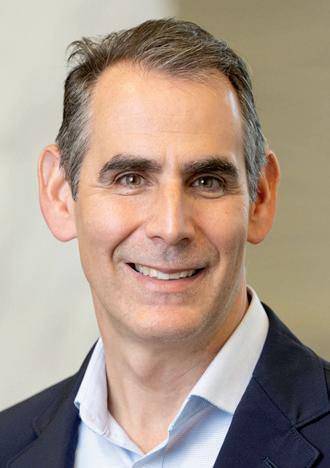
Neil Hockstein, M.D., is chair of the Delaware Health Care Commission and chief medical officer of ENT and Allergy of Delaware and Parallel ENT & Allergy.
DELAWARE Deep Dive




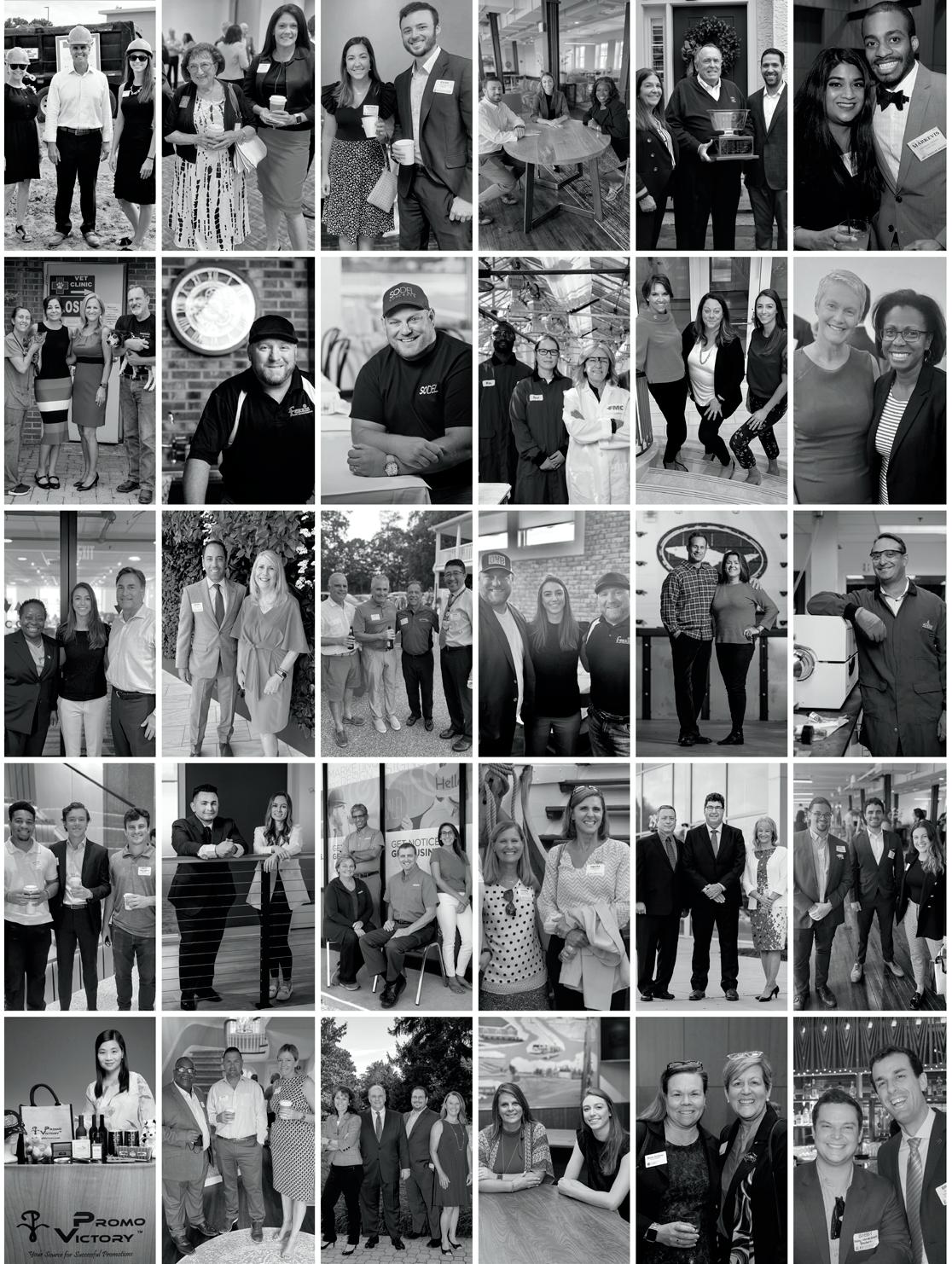


The Hidden Safety Risk
How diabetes and obesity shape workplace performance
BY ELZBIETA DZIEKONSKI BSN, RN
DIABETES AND OBESITY are two of Delaware’s most pressing public health challenges, with significant implications for individuals, employers, communities, and the state’s economic competitiveness.
According to the Delaware State Chamber of Commerce’s 2024 Competitiveness Bluebook, Delaware ranks fifth nationally in per capita health care spending at $11,987 — well above the U.S. average of $9,747. Chronic diseases drive much of this cost, making them not only health care concerns but also workforce and business issues that require coordinated action.
The 2023 Delaware Behavioral Risk Factor Survey reports that about 110,000 adults of the state’s population have diabetes, with roughly 4,800 new diagnoses each year. Another 14.5% — more than 99,000 adults — have prediabetes. Nearly three in 10 Delaware adults are living with diabetes or prediabetes, and many more may be undiagnosed. Over the past 20 years, diabetes prevalence in the state has nearly doubled, rising from 7.7% in 2003 to 13.3% in 2023, reflecting national and global trends.
Diabetes and obesity significantly increase the risk of cardiovascular disease, disability, and other costly complications. For employers, the impact is substantial: rising health care spending, increased safety risks, higher absenteeism and presenteeism, lost productivity, and growing disability claims. These pressures affect wages, business investment capacity, and longterm workforce sustainability.
Communities also feel the strain. Areas with limited access to affordable healthy foods, safe places for physical activity, and culturally responsive care experience higher rates of diabetes and obesity. These disparities burden local
health systems, deepen inequities, and place emotional and financial stress on families across the state.
Proven Strategies: A Holistic Approach
Pharmacological treatments — especially GLP-1 receptor agonists — are receiving national attention and show strong promise for weight management and glycemic control. However, medication alone is not a complete solution. Sustainable progress requires addressing behavior, lifestyle, environment, and social determinants of health through coordinated employer and community strategies.
Two evidence-based, cost-saving programs employers should consider include:
• National Diabetes Prevention Program (NDPP): Reduces the risk of type 2 diabetes by up to 58% through structured lifestyle changes focused on nutrition, physical activity, and longterm behavior support.
• Diabetes Self-Management Education and Support (DSMES): Helps individuals with diabetes manage their condition effectively, improving outcomes and reducing complications and hospital utilization.
Employer coverage and active promotion of these programs significantly increase participation and return on investment.
Employers as Engines for Change
Employers have a powerful role in shaping health behaviors through workplace culture, benefit design, and access to wellness and safety programs. Expanding coverage and leveraging digital and community-based resources




The Heart of our Work
AmeriHealth Caritas Delaware’s whole-person care approach
BY EMMILYN NESMITH
AT AMERIHEALTH CARITAS DELAWARE, we have an internal mantra that the only thing constant in our business is change. We entered the Medicaid managed care organization space in the First State at the start of 2018. Since then, we have expanded our product offerings to include AmeriHealth Caritas VIP Care, a Medicare dual eligible special needs plan; as well as AmeriHealth Caritas Next, a marketplace exchange health plan.
As we’ve grown and adapted to the many changes in our landscape, however, one thing has remained the same: the focus on living our mission in the work we do every day — to help people get care, stay well, and build healthy communities.
We approach that work holistically, compassionately, and with a keen eye on results, with the starting point always being how we work with and alongside our members to improve their health outcomes. Our Care Coordination and Long-Term Services and Supports Case Management programs bring an integrated, whole-person approach to support our members’ physical and behavioral health needs. These can include disease-specific interventions such as diabetes management programs, maternal health initiatives, and more, all of which have proven effective in improving member health outcomes.
I’m proud to say that AmeriHealth Caritas’ focus on whole-person care goes beyond the doctor’s office, urgent care center, or emergency room. Addressing vital social determinants of health as part of a member’s care plan is key, as access to healthy housing, fresh food, transportation to appointments, and more are crucial in leading a healthy life.
By collaborating with community partners such as food banks, housing agencies, faith groups, advocacy networks, and other local organizations,
we leave no stone unturned when attempting to remove these barriers. Add in our AmeriHealth Caritas health fairs, vaccination and screening events, nutrition programs, and a variety of healthy programs and activities hosted in our Community Wellness Center in Bear, and it’s easy to see that our commitment to our members and the communities in which they live drives everything we do.
Through volunteerism and educational initiatives, we’re fostering strong, healthy communities across Delaware. In 2025, AmeriHealth Caritas associates in Delaware volunteered more than 6,000 hours, supporting 129 community organizations. These included clean-up and food bank events, work in community centers, and so much more.
We’re also dedicated to improving education for our members, as it very much impacts their health and opportunity in the world. For eight years, our Mission GED program has assisted our members in obtaining their GEDs by covering testing costs and offering coaching to enrollees. This has enabled dozens to earn their high school diplomas, again, removing barriers and empowering individuals to pursue new career paths and better support their families.
We’re proud to serve the residents of the First State and will continue to meet our members where they live, ever evolving to understand and address the unique health care needs of the communities we serve. n
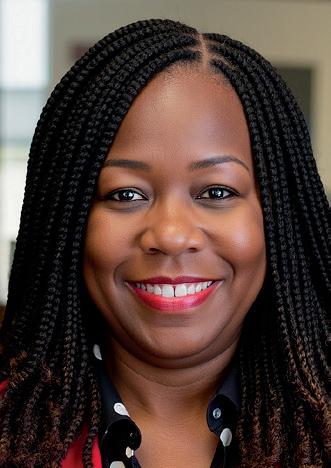
Emmilyn Nesmith is the market president of AmeriHealth Caritas Delaware.

HIGH CHOLESTEROL? HIGH BLOOD PRESSURE?
From Early Signs to Full Recovery, We’re With You.
Concerned about your heart health? Early signs like high cholesterol, high blood pressure, fatigue, or shortness of breath can be unsettling.
At Beebe Cardiology Lewes, we offer personalized, comprehensive general cardiology care to understand your unique health journey. From initial screenings and medication management to lifestyle education and ongoing support, we partner with you every step of the way.
As part of the Beebe Cardiovascular Institute, Beebe Cardiology Lewes is proud to collaborate within an integrated, evidence-based team of over 30 skilled physicians and advanced practice clinicians.

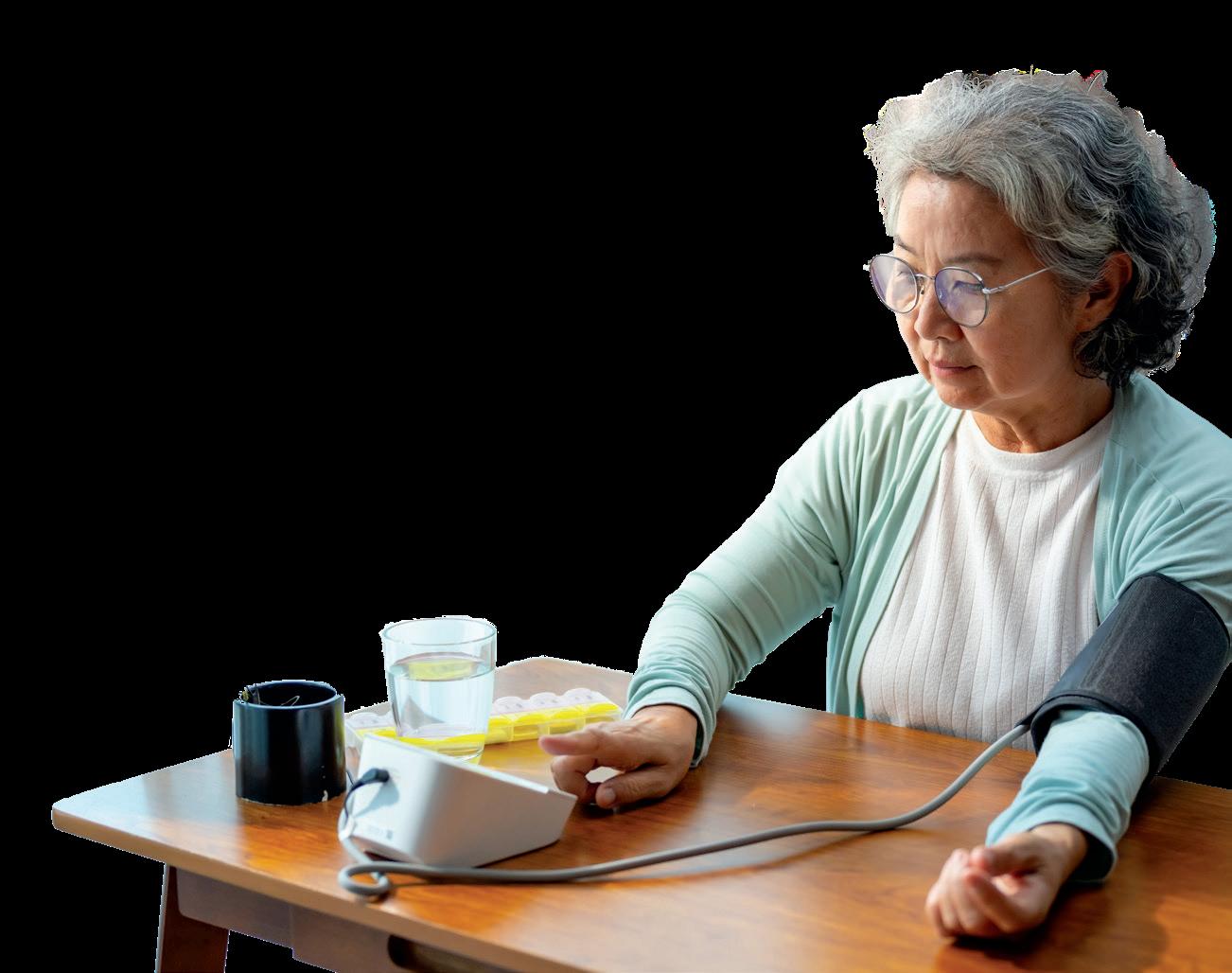
The journey to a healthier heart starts here. Call to schedule an appointment.
Beebe Cardiology Lewes | 431 Savannah Road, Suite C, Lewes

A Clearer Path to Affordability
With Senate Bill 213 providing unprecedented transparency into hospital finances, now is the time to come together for affordability solutions
BY BRIAN FRAZEE
FOR THOSE FOLLOWING Delaware’s House Bill 350, the bill that first created the Diamond State Hospital Cost Review Board, health care costs have been in the public eye for the better part of two years. After much debate and an agreement reached to settle litigation over the law, Senate Bill 213 puts Delaware on a better path to address health care affordability.
There are many challenges facing health care both at the national level and here in Delaware. Recent federal policy changes will affect the Medicaid program and could lead to more uninsured Delawareans. Without health insurance coverage, people tend to avoid preventive care, and their conditions worsen, leading to more trips to the hospital emergency department, which impacts wait times, strains our health care workforce, and results in more unreimbursed care.
At the same time, health care costs continue to move in an unsustainable direction. Health care costs across the country are expected to rise by as much as 9% in 2026 due to inflationary pressures, necessary labor investments, pharmaceutical drug costs, and behavioral health utilization. In Delaware, we are home to both the sixth-oldest and sixth-fastest-growing populations in the country, as well as higher rates of chronic diseases and conditions. This also contributes to high health care costs in our state.
Delaware hospitals are already collaborating with stakeholders and legislators to drive down costs and improve health outcomes. These investments are making progress. The First State is first in the nation for hospital quality, according to U.S. News & World Report, signifying a commitment to high-quality care for all Delawareans. With a uniquely growing and aging population, we are also focused on strengthening the
health care workforce to ensure we have the caregivers available to meet our state’s increasing health care needs.
Delaware hospitals are working to improve the accessibility and availability of care. Not only are they open 24/7/365, hospitals provide more than 30,000 jobs in the state and continue to expand the state’s physician and health care workforce pipeline through graduate medical education and other programs. In fact, Delaware’s Economic Advisory Council indicates that health care is one of the only sectors projected to grow the economy. It is critical to support policies that will strengthen our health care workforce, not hinder its long-term sustainability.
That’s why it has been essential to resolve House Bill 350. Throughout the House Bill 350 debate, the Delaware Healthcare Association has shared the same goals as policymakers — high-quality, accessible, affordable health care for all Delawareans. House Bill 350 was not the right approach, and with Senate Bill 213 enacted, we now have a chance to move forward together.
The new legislation does a few key things to ensure transparency, which we have supported all along. Under Senate Bill 213, Delaware hospitals will provide an unprecedented level of financial transparency to the Diamond State Hospital Cost Review Board so the board can examine whether hospital growth is below the health care spending benchmark, identify the cost drivers contributing to growth within the hospital sector, make policy recommendations based on its findings, and work
collaboratively with hospitals toward benchmark compliance.
Importantly, the new law removed the ability of the board to approve or modify hospital budgets. While other health industry sectors are not held to a similar review mechanism, this is an opportunity for hospitals to lead on transparency and collaboration to improve affordability. Diamond State Hospital Cost Review Board meetings began in February, and we look forward to engaging with the board and with state and federal government partners on collaborative policies that will build a better health system that works for all of Delaware.
You know what is said about Delaware — we like to be first. And for Delaware hospitals, our goal is for the First State to be first in health. It’s going to take all of us working together — hospitals, businesses, insurers, pharmaceutical companies, and more — to achieve that vision. We’re excited for the opportunity to lead on solutions and ask our stakeholders to join us. We want Delaware to be a national model for health care solutions. Let’s build on our progress together. n
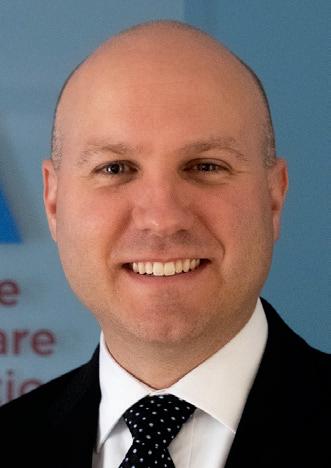

Brian Frazee is president and CEO of the Delaware Healthcare Association.
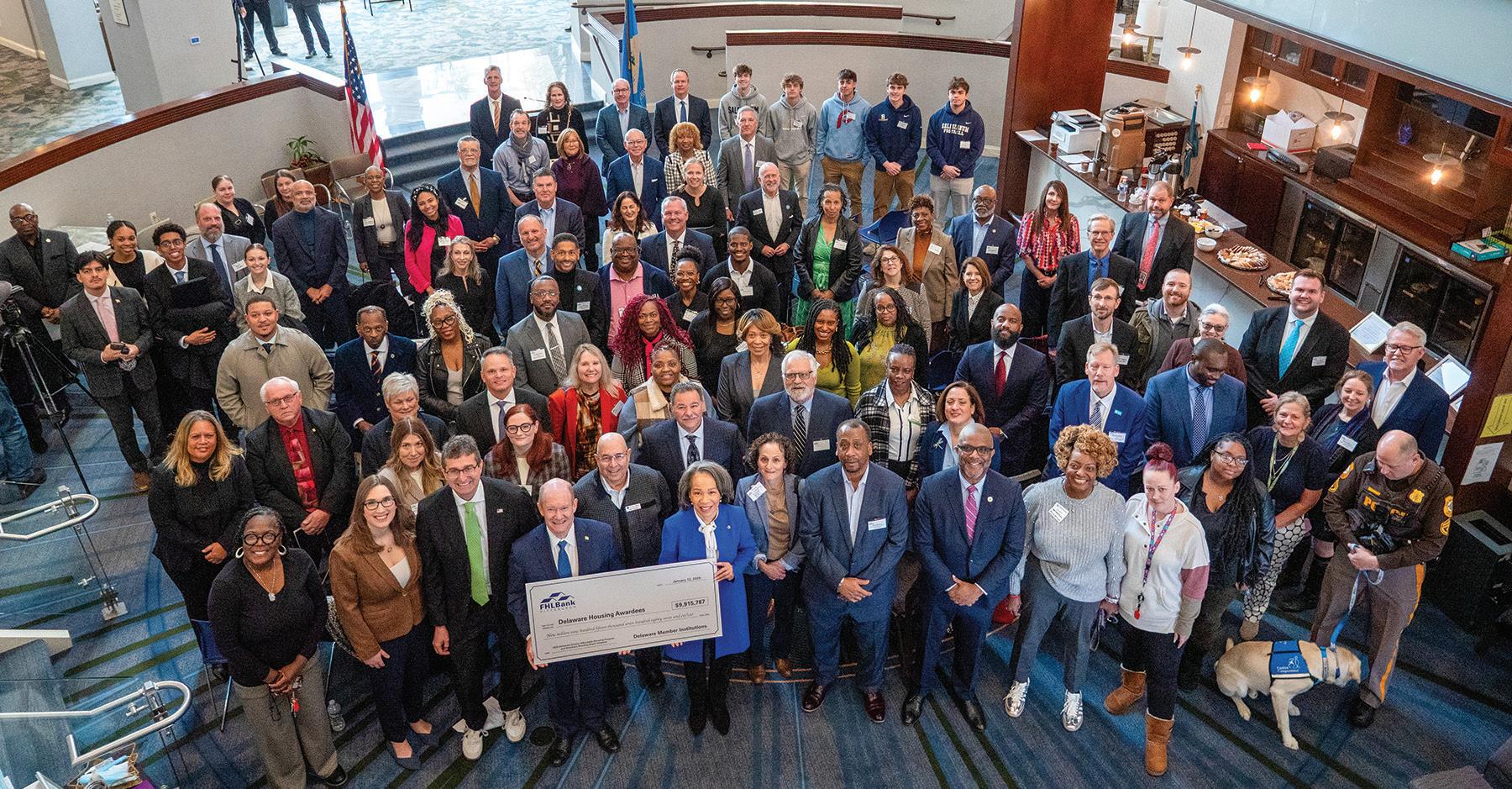
Laying Foundations
$10 Million grant announced to expand affordable housing in Delaware
CONTRIBUTED BY THE FEDERAL HOME LOAN BANK OF PITTSBURGH
THIS WINTER, Gov. Matt Meyer, U.S. Sens. Chris Coons and Lisa Blunt Rochester, and U.S. Rep. Sarah McBride joined the Federal Home Loan Bank of Pittsburgh during a ceremony at the New Castle County Hope Center Shelter to announce nearly $10 million in 2025 Affordable Housing Program grants and Voluntary Housing Grant Initiative awards in Delaware. These grants, made in partnership with five member institutions, will support more than 350 affordable homes. This funding will support new homes, as well as renovations and repairs for seniors and local residents. Local organizations also leveraged more than $47 million from Congress, the Delaware State Housing Authority Housing Development Fund, HOME funds, and Low-Income Housing Tax Credits to support 10 projects.
FHLBank is part of a larger Federal Home Loan Bank System created by Congress that provides reliable liquidity and support for affordable housing and community development. Each year, each FHLBank must set aside at least 10% of its prior year’s net income to fund the Affordable Housing Program. This program is funded entirely through FHLBank earnings, and grants are available only through FHLBank members. The Voluntary Housing Grant Initiative is an additional voluntary pool of funding that is separate and distinct from FHLBank’s statutory AHP and is provided to address the critical housing needs within FHLBank’s district.
“Housing is not an abstract issue — it is dignity, stability, and a real chance to rebuild,” said Gov. Meyer. “This is what collaboration looks like, when the private, public, and nonprofit sectors work together to make life a little easier and a little more affordable for the Delawareans who need it most.”
“Every Delawarean deserves safe, decent, affordable housing,” said Sen. Coons. “Today’s announcement by FHLBank Pittsburgh and their member organizations of nearly $10 million for over 350 affordable living spaces across Delaware is what smart, locally driven policy across federal, private, and nonprofit partners looks like.”
“I am so grateful to join FHLBank Pittsburgh today to announce new investments in affordable housing in Delaware,” said Sen. Blunt Rochester. “With funding that will support more than 350 homes across our state, this investment will pay dividends for years to come. I will continue doing all I can to chart a new way home on housing policy and ensure every Delawarean has a safe and affordable roof over their head.”
“[This] announcement is an important step in the ongoing work to ensure every Delawarean has access to safe, stable, and affordable housing,” said Rep. McBride. “This investment will make a real difference for seniors, families, and individuals facing housing insecurity. I’m grateful for the partnership with FHLBank Pittsburgh and our local housing partners, and I look forward to continuing this work together.” n


A Predictable Path
As development activity increases, coordination among regulatory layers becomes more critical
BY MARNIE OURSLER
DELAWARE’S ECONOMIC GROWTH over the past decade has been steady and broad-based. Population gains, job creation, and sustained private investment have positioned the state well across industries ranging from health care and education to manufacturing, logistics, and professional services. As Delaware plans for its next phase of growth, one factor will increasingly shape outcomes statewide: predictability in the development process.
Marnie Custom Homes is a custom home builder based in Sussex County, where we design and build oceanfront and oceanside homes. Operating exclusively in Sussex County, the company has generated between $37 million and $40 million in annual revenue over the past three years and currently has more than $41 million in homes under construction, with contractual commitments extending through 2027. While our work is concentrated in Sussex County, the regulatory and market dynamics that we navigate reflect challenges and opportunities present across Delaware.
Statewide, Delaware has experienced meaningful population growth since 2010, with Sussex County leading that trend and Kent and New Castle counties continuing to evolve alongside changing workforce and housing needs. Across multiple administrations and political compositions, state and local leaders have supported responsible growth as a means of strengthening the economy, expanding the tax base, and supporting communities. As growth continues, consistency in how development is reviewed and approved will become increasingly important.
Navigating Layered Requirements
Residential development in Delaware involves multiple layers of oversight. Projects must comply with federal requirements such as FEMA floodplain standards, state environmental and regulatory reviews, county land-use and building codes, local municipal ordinances, and, in many cases, homeowners’ association and architectural review guidelines. Each layer plays an important role in protecting public safety,
Marnie Custom Homes, Photo by Dana Hoff
environmental resources, and community character. As development activity increases, coordination among these layers becomes more critical. Predictability in permitting timelines, sequencing of reviews, documentation requirements, and points of decision help ensure that regulatory complexity does not translate into uncertainty.
In Sussex County, where coastal conditions add considerations around resiliency and floodplain compliance, early clarity on requirements and coordinated agency review are especially valuable. The same principle applies statewide: when expectations are well defined from the outset, projects can be designed to meet standards efficiently and responsibly.
Planning with Confidence
As Delaware grows, development becomes more sophisticated. Infrastructure coordination, environmental stewardship, and community engagement all play central roles. In this environment, reliability in process matters as much as the rules themselves.
Defined permitting pathways, transparent review timelines, and consistent interpretation of regulations help developers, lenders, and public agencies align expectations. When review sequences and approval milestones are clear, projects can move from approval to construction more efficiently, reducing delays that add cost and slow housing delivery.
For employers across the state, certainty in housing delivery also matters.
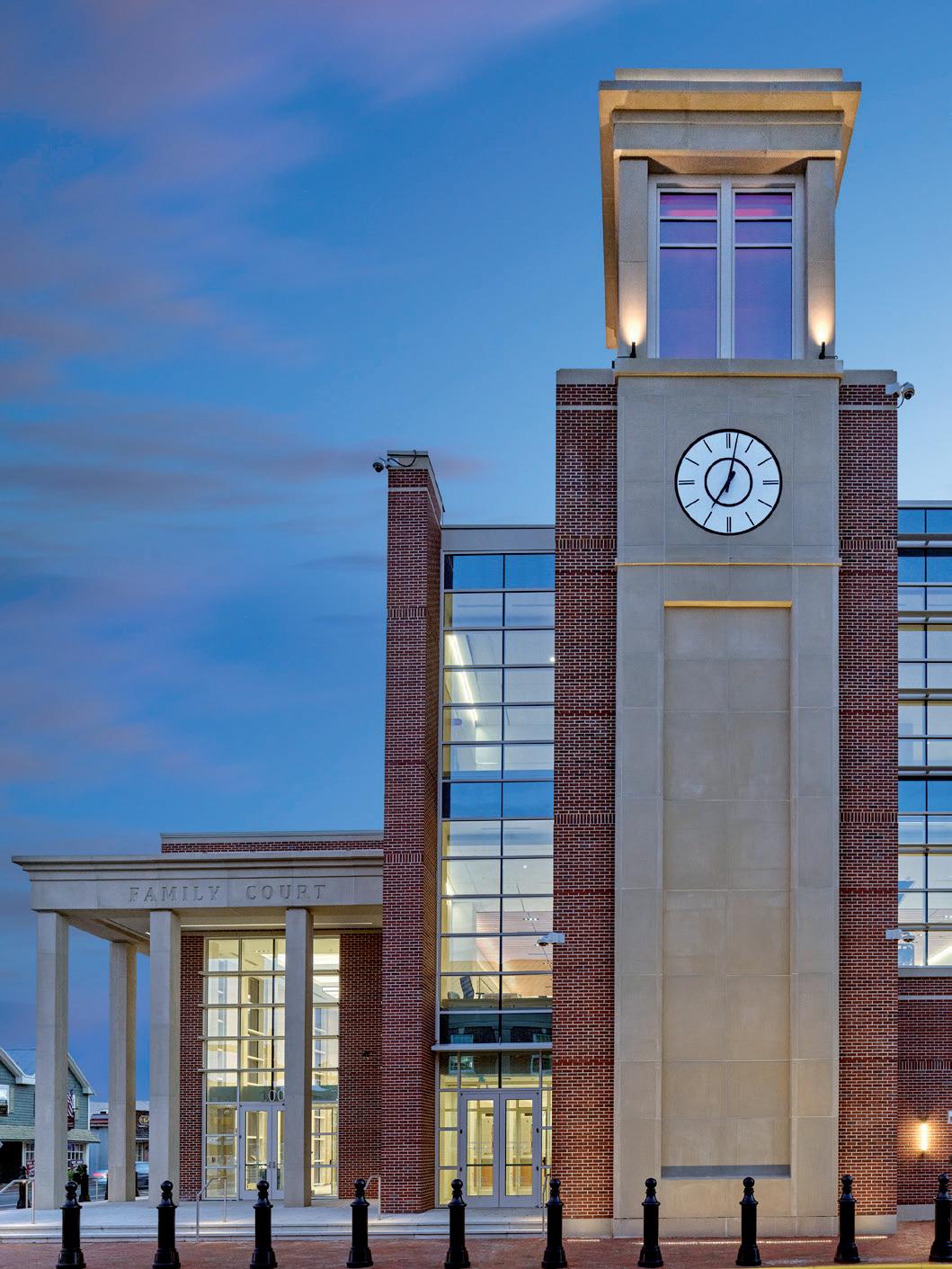
When timelines can be anticipated with confidence, businesses are better positioned to recruit and retain workers locally, supporting workforce stability and regional competitiveness.
A Competitive Advantage for Delaware
Clear and consistent development processes expand the range of housing options that can be delivered and allow projects to move from approval to completion more efficiently. As populations change, communities require a variety of housing types rather than a one-size-fits-all approach. Well-defined rules and dependable timelines reduce risk for more complex projects, including infill development, adaptive reuse, and integrated residential uses, making them more feasible to pursue.
Looking ahead, clarity and consistency in permitting, review, and approvals can serve as a competitive advantage for Delaware — supporting employers, attracting long-term investment, and helping ensure that growth remains economically resilient across all three counties. n
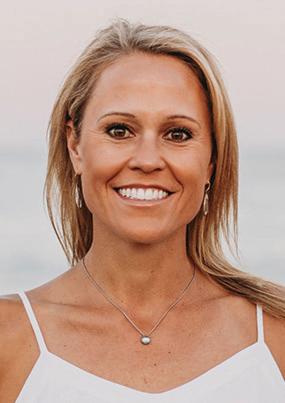
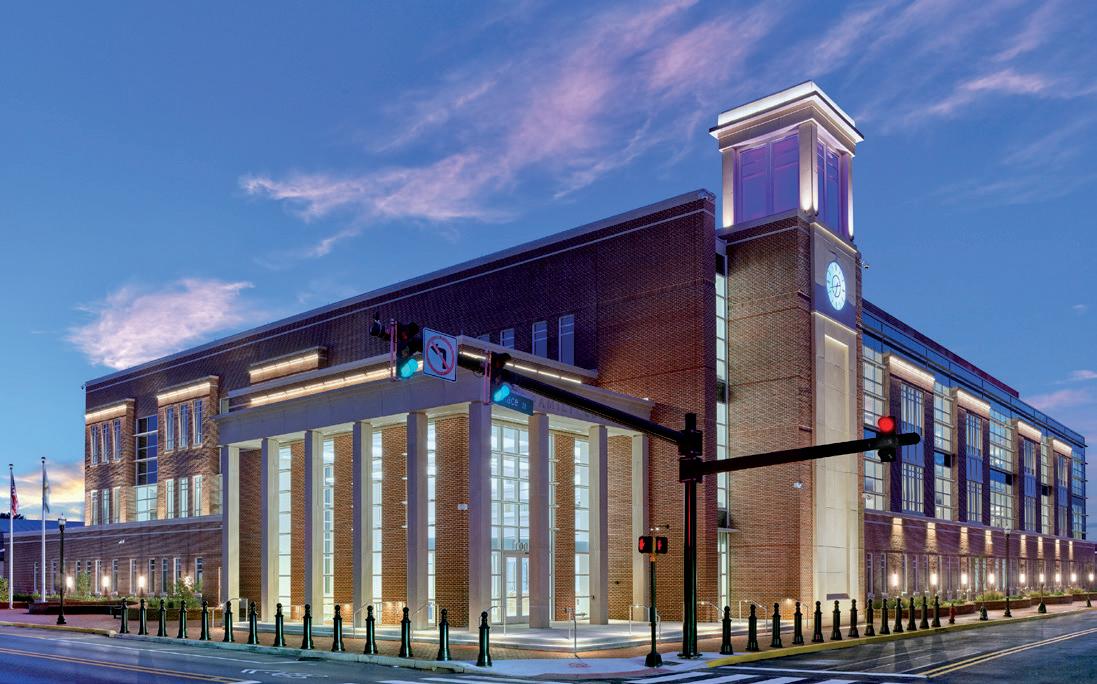

Marnie Oursler is the president and owner of Marnie Custom Homes.
CREATIVE DESIGN LEADERSHIP
Sussex County Family Court | Georgetown, Delaware

Building with Certainty
Stability in policy and permitting supports responsible development and long-term economic growth
BY SEAN MATTHEWS
SINCE LEAVING THE GENERAL ASSEMBLY, I have been at the Delaware Contractors Association (DCA) for a little over a year. Just as the best part of being an elected official is talking with and helping constituents, the best part of my current role is interacting with the companies and stakeholders who build and maintain Delaware.
Aside from an overarching concern among some businesses about the decline of a more balanced political and policy environment, I often hear about the business community’s need for consistency and stability.
Agencies like the Delaware Department of Transportation have done a great job on initiatives such as permitting reform, and we look forward to continued efforts to evaluate processes and timelines across all agencies and levels of government to accelerate development while also protecting the public.
One of our committees at DCA is the Human Resources Committee. This group sometimes feels like it is on an endless, fast-moving treadmill, reacting to new policies and legislation. Many of the proposals are well-intentioned, but the sheer speed and volume of new proposals can sometimes overwhelm businesses and distract them from their efforts to help grow Delaware’s economy.
Another of our committees is the Government Affairs Committee, which reviews new legislation and discusses its impact on the construction
and broader business community. Again, there are many well-intentioned proposals, but often these committee meetings consist of reading through lists of proposals that raise concerns instead of cheers.
One of the construction industry’s big priorities is responsibly welcoming investment in Delaware. Large commercial and industrial projects create jobs, grow our economy, and benefit our people. Delaware ranks 49th in the nation for net power generation, and we hope policymakers can advance policies that promote the energy-rich, job-rich, environmentally safe Delaware that we all want.
In headlines, on cable news, and on social media, things can seem hopelessly divided. I sincerely believe that everyone involved in Delaware’s public policy arena wants what is best for Delaware — even when they disagree on methods or priorities. My hope is that stakeholders across Delaware can increase collaboration, listen to one another, and work to create the policy environment that leads to prosperity for Delaware’s workforce. n
Sean Matthews is the executive director of the Delaware Contractors Association.
Workforce Development
Activating the Hidden Workforce
JPMorganChase seeks to match skilled workers with Wilmington employers
CONTRIBUTED BY JPMORGANCHASE
DELAWARE HAS TOO MANY OPEN JOBS without the workers to fill them. Wilmington has too many residents who are unemployed, under-employed, and seeking stable jobs that pay livable wages.
Jac Rivers struggles with that paradox every day as a vice president program officer on JPMorganChase’s Global Philanthropy team. JPMorganChase has made second-chance programs, focused on providing resources and support for individuals impacted by the criminal justice system, a cornerstone of its philanthropic efforts for years.
These programs are sorely needed as one in three Americans has a criminal record.
“That is a statistic that we can’t ignore,” Rivers said. “Criminal record or not, we have to work collaboratively to build an ecosystem in Delaware where everyone can participate and work to take care of themselves and their families.”
But past programs haven’t fully succeeded in bridging the gap between employers and the available workforce, even in a state with only 63 workers available for every 100 open jobs.
“So we really had to think differently about our approach,” Rivers said. “My goal was to figure out real and sustainable bridges to employment. I had to figure out how to spur the business community in concert with local partners. When building an inclusive economy, everybody has to play their part, and it’s important that businesses, community members and policymakers come together to collaborate on solutions.”
The result: the Delaware Equitable Hiring Initiative (EHI), designed to help employers unlock the enormous potential of Wilmington’s “hidden workers” — a diverse group that includes caregivers, veterans, immigrants, individuals who have been justice-impacted, and more — with a threepronged program that includes employer recruitment, talent development, and community engagement through credible messengers.
To be clear, these workers aren’t actively hiding; but rather, they may have been overlooked by employers with traditional hiring practices.
“Our workforce development community partners are doing the work to upskill talent and prepare them for jobs paying sustainable wages that lead to careers with mobility,” Rivers said. “There’s a disconnect for some job seekers however, to make connections to the myriad of job opportunities at middle- to large-sized employers. There’s also a need for pre-application support, such as résumé-building and interview preparation, which are all critical to career development.”
“Delaware has skilled talent, but there are still some challenges connecting that talent to employers paying a sustainable wage,” Rivers said.
To participate in EHI, employers must pay at least $18 an hour and offer benefits. “That’s really the only way to build an equitable economy,” Rivers remarked.
Many Delaware employers agree that it’s the right thing to do for the community and it makes good business sense, however there are still barriers at the hiring level. JPMorganChase set out to learn why this was happening and supported extensive research to identify the need to adjust the way companies interpret criminal background reports, approach their hiring practices, and use tools that often disqualify candidates who may have the right skills but the “wrong” work experience.
Rivers looked at “fair-chance” hiring models to identify best practices that work to transform employer behaviors. Participating employers will receive personalized technical assistance to identify and address hiring barriers focused on skills-based hiring, best practices for individualized assessments, connections to workforce resources and opportunities for peer-to-peer learning.
“Although initially powered by JPMorganChase, EHI was intended from the very beginning to be a local community effort — informed by community and run by community,” Rivers said.
EHI will be housed within a local foundation with a governing board comprised of local leaders and of course, the credible messengers representing the community voice.
For businesses, the value proposition is simple.
“Through EHI, we are going to help employers recruit and retain skilled local and reliable talent,” Rivers said. “EHI is going to serve as a critical talent pipeline provider. It will identify local talent, work with employers to develop a robust training curriculum that meets their needs, and present the employers with a pool of qualified, trained candidates from which they can hire.”
The Delaware Transit Corporation (a division of the Delaware Department of Transportation) and the Delaware Department of Human Resources joined the project as its first partner employers in 2024. Momentum seems to be building, Rivers said.
As an employer focused on building equitable and inclusive economies, JPMorganChase has hired over 500 individuals with criminal backgrounds in Delaware from 2019 through October 2024. n
To learn more about the Delaware Equitable Hiring Initiative and get involved, go to: www.hiredelaware.org

Second Chances, Stronger Teams
How Delaware’s restaurant industry turns opportunity into impact
BY MEG GARDNER
AS DELAWARE PREPARES to observe Second Chance Hiring Month in April, restaurants across the state are proving that inclusive hiring isn’t just good policy, it’s good business.
When employers talk about workforce challenges, the restaurant and hospitality industry is often at the center of the conversation. As one of Delaware’s largest private-sector employers, restaurants offer accessible entry points to employment, flexible schedules, and opportunities for advancement. They are also uniquely positioned to lead on second-chance hiring, providing meaningful employment to individuals who may face barriers to reentering the workforce.
Across Delaware, restaurants are demonstrating that second-chance hiring is not about charity or risk mitigation, but about talent, potential, and long-term workforce sustainability.
The Delaware Restaurant Association, together with its nonprofit workforce development arm, the Delaware Restaurant Foundation, supports employers who believe in hiring for skills, attitude, and growth potential. Through partnerships with workforce agencies, communitybased organizations, and education partners, the restaurant industry is
helping individuals with justice involvement reenter the workforce with dignity, structure, and opportunity.
For many individuals, a restaurant job is more than a paycheck. The experience is a chance to rebuild routines, gain confidence, and develop transferable skills — communication, teamwork, time management, and leadership — that are essential in any industry. For employers, secondchance hiring expands the talent pool while strengthening workplace culture and retention.
Just as importantly, second-chance hiring can transform workplace culture. Teams that embrace inclusive hiring often experience stronger collaboration, greater empathy, and a deeper sense of shared purpose. When employees see their workplace investing in people and growth, it builds trust and loyalty across the entire team. Beyond the workplace, these practices ripple outward, supporting families, strengthening neighborhoods, and reinforcing the role of local businesses as anchors within their communities.
Historically, the restaurant industry has supported these efforts through initiatives such as the Hospitality Opportunities for People (re)Entering
Society program (HOPES). While the structure of workforce programming has evolved, the commitment has not. Today, second-chance hiring is embedded within broader workforce development strategies that emphasize job readiness, credential attainment, and alignment with real career pathways.
A key component of this approach is ensuring that training leads somewhere. Industry-aligned credentials earned through workforce programs are intentionally connected to employment, registered apprenticeships, and advancement opportunities. This alignment helps employers develop talent from within while giving workers clarity about how entry-level roles can lead to supervisory and management positions over time.
Restaurants are particularly well-suited for this work because of their ability to offer structured environments, clear expectations, and immediate application of skills. Employees can see progress quickly, moving from training to work-based learning, from part-time to full-time roles, and from frontline positions into leadership. When employers invest in training, mentorship, and advancement, second-chance hires are more likely to stay, grow, and succeed.
“Inclusive hiring isn’t just good policy, it’s good business.”
Second-chance hiring also strengthens Delaware’s broader economy. When individuals successfully reenter the workforce, communities become more stable, families gain financial security, and employers benefit from a more reliable and skilled workforce. Business leaders and policymakers increasingly recognize that inclusive hiring practices are essential to meeting workforce demand across sectors.
The Delaware Restaurant Association continues to encourage employers to view second-chance hiring as a strategic workforce solution rather than a standalone initiative. Successful efforts share common elements: aligned credentials, clear advancement pathways, supportive partnerships, and a commitment to long-term employee development. When these pieces are in place, second-chance hires are not exceptions; they become valued members of the team and future leaders.
As Delaware marks Second Chance Hiring Month this April, the restaurant industry offers a powerful example of how opportunity, accountability, and workforce alignment can work together. Restaurants are not only serving meals; they are strengthening teams, supporting communities, and turning second chances into lasting success. n
Meg
Gardner is the vice president of the Delaware Restaurant Association and Delaware Restaurant Foundation.
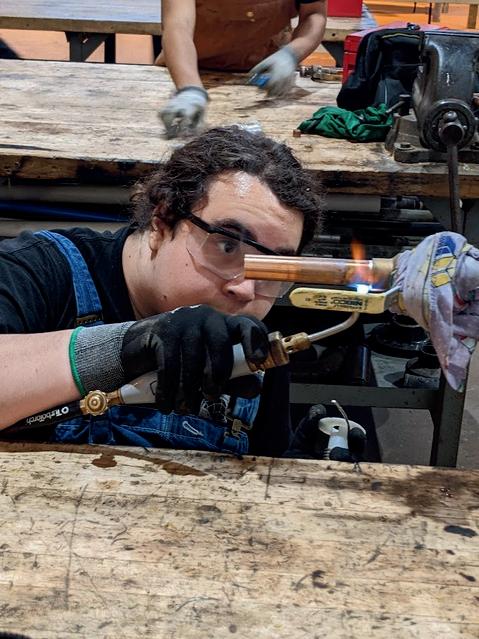
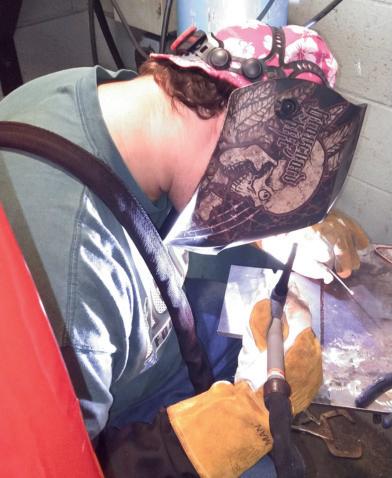


IN NCCVT
All eight of New Castle County Vo Tech’s construction trade career program areas are now registered Pre-Apprenticeship Programs with the State of Delaware.
Carpentry - Electrical Trades - Plumbing - Masonry - HVAC - Welding - Sheet Metal - Industrial Mechanics/Millwright
Pre-apprenticeships offer industryaligned training, multiple certification opportunities, employer engagement, hands-on experiential learning, and opportunities to earn advanced placement into NCCVT’s Adult Education Apprenticeship program after graduation.
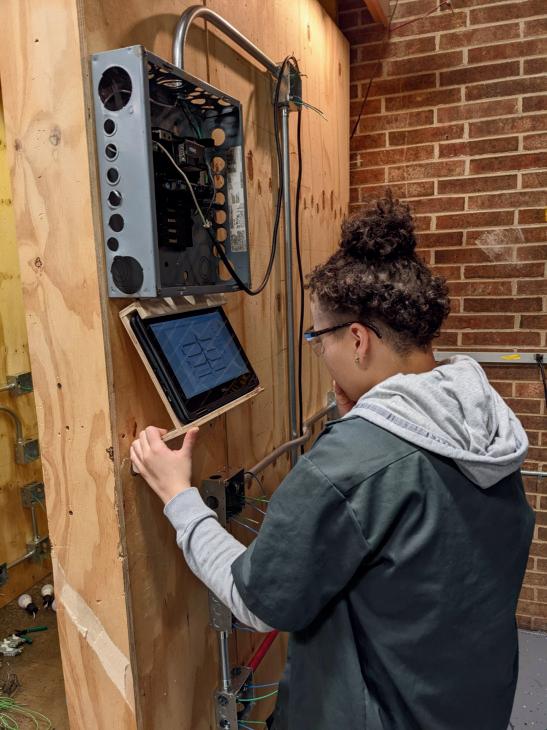


Workforce Development
Expanding Opportunity is a Workforce Strategy
Investing in fair chance hiring to build a more resilient, inclusive, and prosperous Delaware
ACROSS DELAWARE, from the tech hubs in Wilmington to the poultry plants of Sussex County, the refrain from the business community is the same: we need a reliable, skilled workforce to sustain growth. While traditional recruitment channels are often exhausted, a significant pool of talent remains sidelined. As we observe Second Chance Hiring and Fair Chance Month this April, it is time to recognize that economic restoration through employment is not just a social mission; it is a robust workforce solution for the First State.
Beyond the Barrier:
Why Second Chances Matter
For the Delaware Center for Justice (DCJ), our work has shown that justice involvement is often a reflection of a person’s past, not a predictor of their professional potential. When employers overlook justice-involved individuals, they lose out on a demographic characterized by high retention rates and deep loyalty.
BY ALONNA BERRY
services, they create a safety net that allows the employee to focus entirely on job performance and professional growth.
A Culture of Inclusion: Second-chance hiring is most effective when it is woven into a company’s broader efforts. Training frontline managers to lead with empathy and clear expectations ensures that new hires feel valued and integrated into the company culture from day one.

Research consistently shows that justice-involved employees stay in their jobs longer than those without justice involvement, reducing the high costs associated with turnover. In a tight labor market, these individuals represent a motivated, untapped resource ready to contribute to Delaware’s economic vitality.
The Blueprint for Success
Building a successful fair chance initiative requires more than just “opening the door.” It requires a strategic approach that benefits the individual, the employer, and the community at large. Based on our work with local partners, three key pillars stand out:
Practical Insights for Employers: Success begins with intentionality. We encourage businesses to review their HR policies to remove “blanket bans” on justice-involved applicants. Instead, adopt an individualized assessment that allows companies to find the right person for the right role.
The Power of Wraparound Supports: Retention is strengthened when hiring is paired with support. At DCJ, we see the difference that stable housing, reliable transportation, and mentorship make. When employers partner with community organizations to provide these wraparound
A Stronger Delaware
The benefits of these initiatives extend far beyond the balance sheet. When we provide pathways to gainful employment, we directly reduce recidivism, lower the burden on our legal system, and strengthen the family unit. A working parent is a parent who can provide; a working neighbor is a neighbor who can invest back into the local economy.
As Delaware continues to position itself as a leader in innovation and industry, we cannot afford to leave talent on the sidelines. Investing in fair chance hiring is an investment in a more resilient, inclusive, and prosperous Delaware.
Join the Movement
This April, we challenge Delaware’s business leaders to look at their hiring practices through a new lens. Economic restoration through employment is not a gamble; it is a proven strategy for long-term success. At the Delaware Center for Justice, we stand ready to partner with you to turn these opportunities into reality, ensuring that every Delawarean has the chance to contribute to our state’s bright future. n
Alonna Berry is the executive director of the Delaware Center for Justice.
Photo by Becca Mathias


Smart Strategies
How inclusive hiring, AI-enabled
training, and
community investment build lasting workforce success
BY LEAH B. WILLIAMS
FINDING RELIABLE, motivated talent in a competitive labor market is not a challenge unique to Delaware employers. At Goodwill of Delaware & Delaware County, we see that challenge as an opportunity, one met by pairing inclusive hiring with structured support, modern technology, and clear pathways to long-term success.
Through our Work A Day Earn A Pay program, delivered in partnership with and funded by the Delaware Department of Transportation (DelDOT), individuals with justice system involvement gain immediate paid work experience while rebuilding confidence, skills, and momentum.
But the work does not stop with a paycheck. Participants are connected to the Goodwill Opportunity Hub, where they receive career navigation,
skills training, and personalized support designed to move them from transitional work to sustainable employment.
One participant, James, entered the program facing significant barriers after repeated rejections tied to his past. Through Work A Day Earn A Pay, James gained structure, stability, and daily proof of his capabilities. With ongoing coaching and access to employment resources, James turned that second chance into a full-time role with a private sector employer, earning a living wage and continuing to receive follow-up support as he advances in his career.
Stories like James’s reflect a broader, evidence-backed trend. Research, including findings from the SHRM Foundation’s Getting Talent Back to

Work initiative and the UNC School of Government’s Second Chance Hiring Successes compilation, shows that workers with justice system involvement often perform as well as or better than their peers when given the right support structures. These studies document strong retention, reliability, and advancement outcomes among second-chance hires.
“The Opportunity Hub is about more than job placement; it’s about preparing people for the future of work,” said Colleen Morrone, president and CEO of Goodwill of Delaware & Delaware County. “By combining paid work experience with coaching, industry-aligned training, and AI-powered tools, we’re helping individuals and employers build lasting success.”
“Inclusive hiring, paired with modern training and technology, is how second chances become long-term success.”


That future-facing approach includes Goodwill Connect, a digital platform that blends human guidance with technology. Through Goodwill Connect, anyone seeking employment or looking to advance their skills can explore career pathways, build resumes, strengthen digital and AI literacy, and track progress, all at no cost and with the support of a dedicated Goodwill Career Navigator. This ensures second chances are paired with 21st-century skills.
Another participant, Julian, began in a transitional role and leveraged training, coaching, and opportunities within Goodwill to move into a retail team lead position, demonstrating how second-chance pathways also cultivate talent and leadership from within.
“Our mission sits at the intersection of people, planet, and prosperity,” said Board Chair Kalimah Z. White, J.D. “When people are given opportunity and support, the ripple effects strengthen families, businesses, and communities.”
That mission is fueled by everyday actions. Donations and shopping at Goodwill stores fund workforce programs while advancing reuse by extending the useful life of donated goods. Public-private partnerships, including support from DelDOT and other funding partners, help make this work possible at scale. n
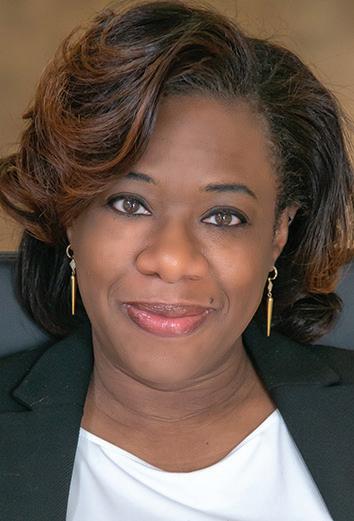
Leah B. Williams is the vice president of brand and community engagement at Goodwill of Delaware & Delaware County.
Bally's Dover Casino Resort 1131 North DuPont Highway, Dover Register: Tuesday, April 28, 2026 9:00 AM - 3:30 PM


Approvals/Permits Land Surveying
Construction Services
ENVIRONMENTAL SCIENCES
Phase I/II ESA
Wetland/Forest Delineations
Forest Conservation Plans
Habitat Value Assessments
Environmental Permits
Brownfield/Remediation


Sikora Wells Appel
Newsbites
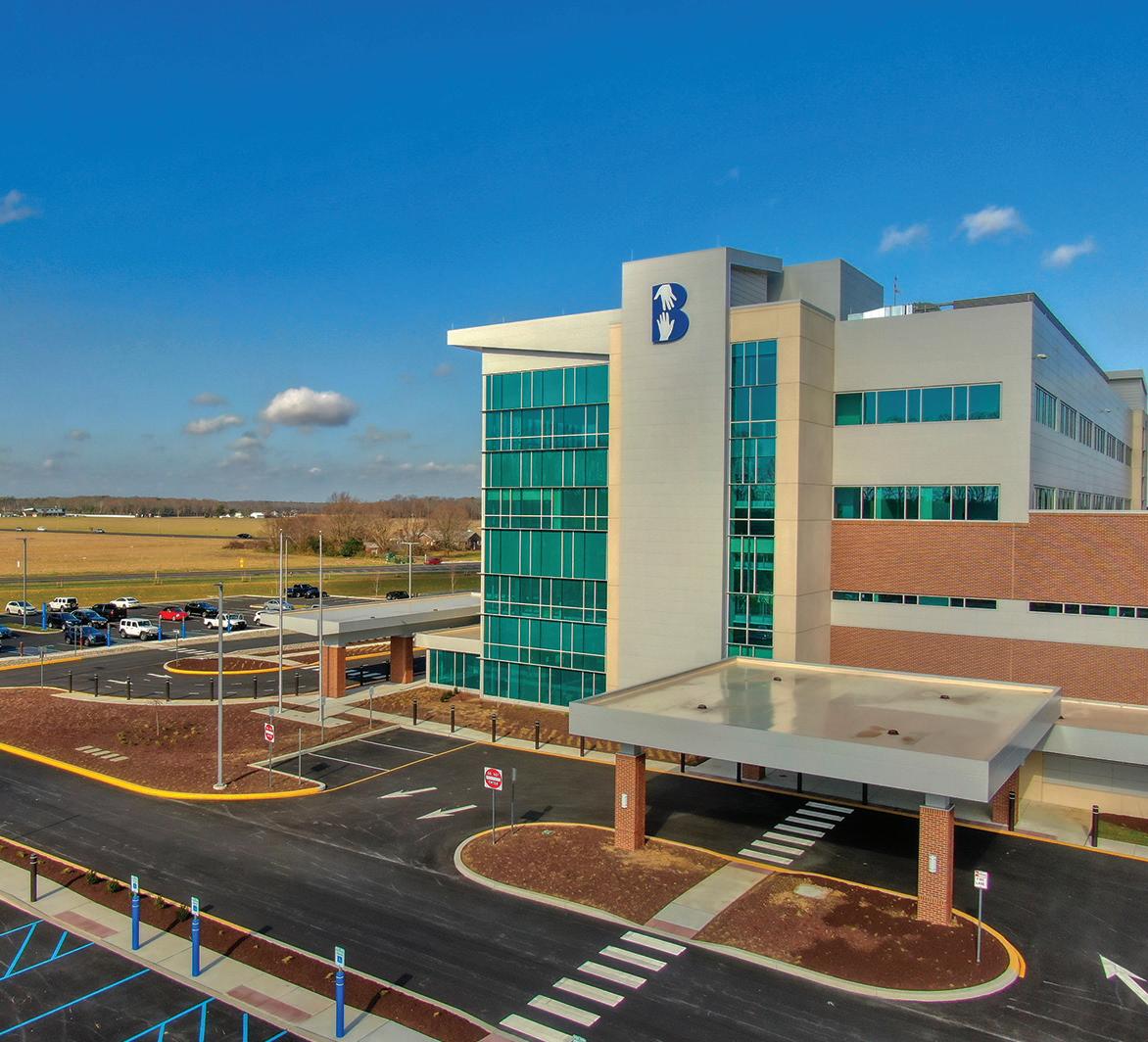
Beebe Healthcare Hospital Named Top Rural Hospital
For the second consecutive year, Beebe Healthcare’s Specialty Surgical Hospital has been named a Leapfrog Top Rural Hospital. The award recognizes an elite group of hospitals across the United States for excellence in patient care quality and safety.
Leapfrog honored 156 Top Hospitals, including 16 rural hospitals. Beebe was the only hospital recognized in Delaware and on Maryland’s Eastern Shore.
“Every member of our surgical services team has played an important role as we have worked to optimize our quality and safety protocols, with consistent processes and collaborative systems in place to guide how we care for every patient who requires surgery,” said Troy Schmit, vice president and chief quality officer at Beebe. “We are incredibly proud to receive this designation from Leapfrog for the second straight year. We want our patients and our community to know that Beebe is a hospital they can rely on for comprehensive care over the course of a lifetime, and that our commitment to quality and safety will be evident when they choose us for their care.”
Quality and safety have long been a top organizational priority at Beebe, and that commitment carried forward when the organization opened its Specialty Surgical Hospital in 2022. The four-story facility, located in Rehoboth Beach on the Abessinio Health Campus, has created a “destination for surgical care” in Sussex County, with space to accommodate up to 20 procedures per day.
DPP Announces Leadership and Staff Updates
Gov. Matt Meyer added more than a dozen new members to the Delaware Prosperity Partnership (DPP) Board of Directors in 2025 to support an expanded focus on innovation and entrepreneurship. Leading the expanded board are Rob Herrera of The Mill and Rodger Levenson of WSFS Financial Corp., who succeeded longtime co-chair Rod Ward of CSC, whose final board term concluded in December, and the governor, who selected Herrera as his designee.
Following the departure of longtime DPP President and CEO Kurt Foreman in December, Vice President of Business Development Becky Harrington has been serving as interim president and CEO. She will continue in that role until a new president and CEO is hired through the nationwide search currently underway.
During Harrington’s interim tenure, Senior Manager of Business Development Megan Kopistecki is serving as the primary contact for business development. In other staff updates, Noah Olson was promoted to vice president of innovation, enterprise and expansion, and Erica Crell was promoted to senior manager of innovation earlier this month.
Delaware Department of Labor Partners with William Penn High School
The Delaware Department of Labor’s Division of Industrial Affairs recently announced a new partnership with the William Penn High School Media Center

to create a dynamic, real-world learning experience for students interested in media, storytelling, and communications careers within state government.
By integrating youth talent into meaningful projects, the partnership reinforces Delaware’s commitment to youth workforce development by providing hands-on learning opportunities. Through the collaboration, William Penn student media teams will gain experience in event photography and videography; professional media production; communications and public relations environments; and engage with state leaders, community partners, and public audiences.
“We are excited to welcome William Penn High School students into this important work,” said LaKresha Moultrie, secretary of the Delaware Department of Labor. “This partnership reflects the core mission of Gov. Matt Meyer’s Executive Order No. 1 by opening real pathways for young people to gain hands-on experience, build confidence, and explore future careers. These students bring energy, creativity, and professionalism to our events, and we are proud to help develop the next generation of Delaware’s workforce.”
Allen Harim Invests in Lower Delaware Communities
Allen Harim announced donations totaling $6,100 in December 2025 to support schools, nonprofits and first responders across Lower Delaware. The contributions benefited organizations that touch everyday life in the region — from schools and libraries to fire departments and community nonprofits — with the
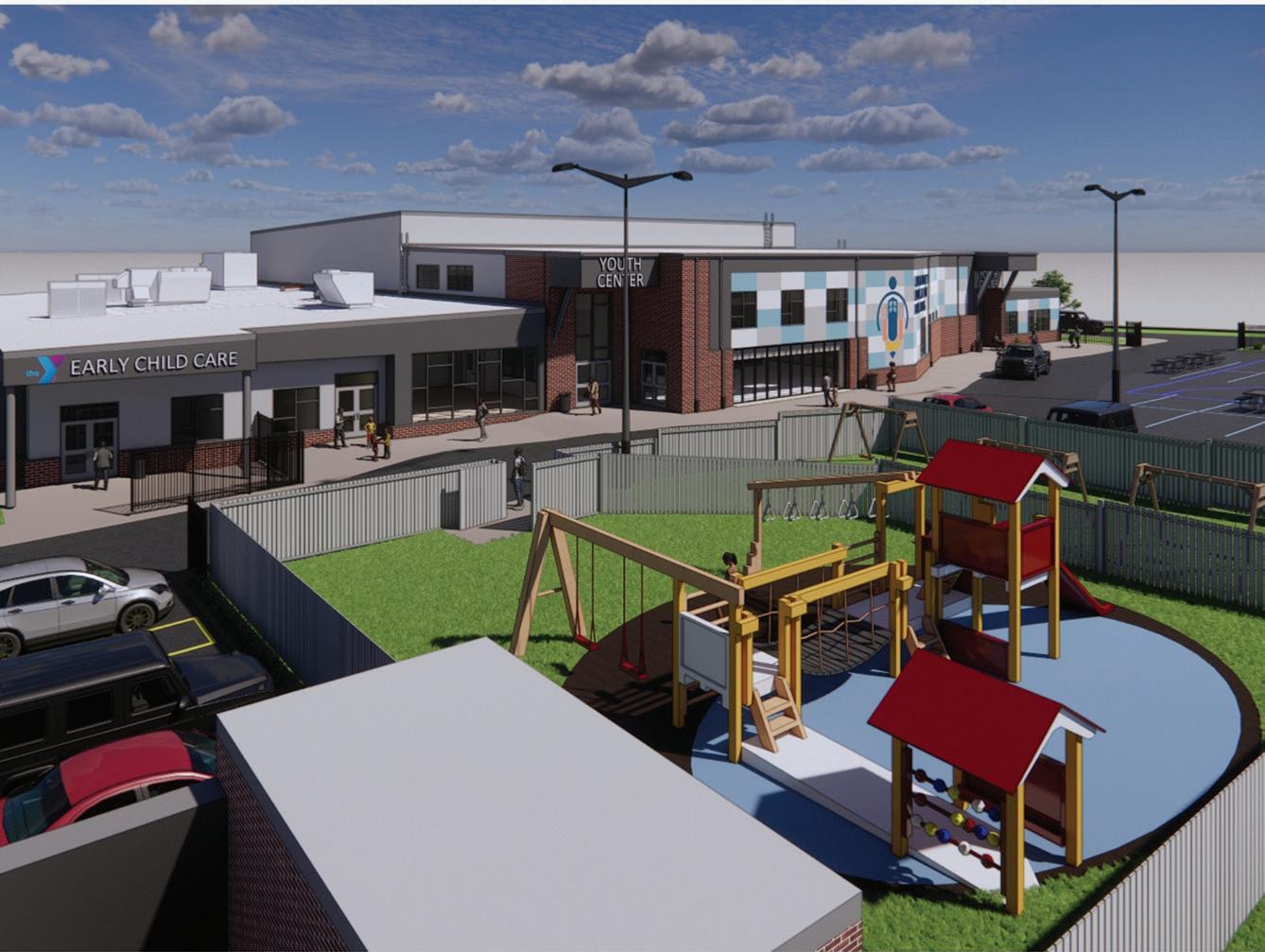
Community Education Building and YMCA to Launch Early Learning Academy
The YMCA of Delaware is expanding access to high-quality, affordable child care in Wilmington with the opening of the YMCA Early Learning Academy.
Launching in spring 2026 at the Community Education Building’s (CEB) new Youth Development Center on Wilmington’s East Side, the academy will offer high-quality, inclusive early childhood education for children from infancy through pre-K, serving up to 100 children.
Located at 12th Street and Clifford Brown Walk, the YMCA Early Learning Academy will be housed within the CEB’s nearly completed 11,000-square-foot Youth Development Center, a community-driven space designed to support children and families through education, enrichment, and wraparound services.
Opening in spring 2026, the YMCA Early Learning Academy will focus on nurturing academic readiness, social-emotional development, and lifelong confidence during the most critical years of child development. The program is rooted in an evidence-based curriculum and guided by the YMCA’s commitment to ensuring every child has a strong start in life.
“The first five years of a child’s life shape the foundation of how they learn, connect, and thrive,” said Jai Posey, senior child development director of the YMCA Early Learning Academy. “This work is especially vital in Wilmington, where access to affordable, high-quality early education remains a barrier for many working families. Studies show that children who participate in strong early learning programs are more likely to thrive academically, graduate high school, and develop the confidence and resilience needed for lifelong success.”
Newsbites
Rick R. Suarez appointed AstraZeneca U.S. President
AstraZeneca has named Rick R. Suarez senior vice president, U.S. president, and head of the U.S. biopharmaceuticals business unit.
Suarez will lead execution of the company’s previously announced $50 billion U.S. investment in research, development, and manufacturing, including construction of a $4.5 billion manufacturing facility in Virginia, AstraZeneca’s largest single manufacturing investment globally.
The investment supports AstraZeneca’s goal of generating $80 billion in total revenue by 2030, with half expected to come from the U.S., the company’s largest market.
“We are operating at a moment of unprecedented scientific opportunity,” Suarez said. “Our responsibility is to translate that science into results for patients and for the U.S. health care system. By strengthening our U.S. manufacturing and R&D footprint, we will expand access to innovative medicines, create highly skilled jobs, and deliver long-term value.”
Suarez brings more than 20 years of experience in the U.S. health care sector, with leadership roles spanning commercial, medical, and market access functions at AstraZeneca. He returns to the U.S. after serving as country president for Spain since 2020, where he led one of AstraZeneca’s strongest-performing European markets, expanded Spain’s role in global clinical development, and positioned Barcelona as a strategic hub for innovation.

goal of giving back to the people and places that have supported the company over the years.
“Giving back is not something we do once a year — it’s part of who we are,” said Mike Little, CEO of Allen Harim. “Our employees live in these communities, our families are part of them, and it’s important to us that we support the organizations that make our region a great place to live, learn and work.”
One recipient, the Bridgeville Public Library, received a $1,000 donation to support public programming and help fund upgrades to the library’s 16-year-old HVAC system.
Unstoppable Joy Co. will invest its $500 donation in the organization’s Path to Prevention initiative, which focuses on self-care and wellness education for individuals and families impacted by cancer. The initiative provides educational resources such as guides, workshops and webinars, along with holistic support centered on nutrition, stress reduction, mindful living, physical activity and community connection.
Diamond Technologies Partners With First State AI Institute
Diamond Technologies, a technology consulting and managed services provider, announced a strategic partnership with the First State AI Institute (FSAII) at the University of Delaware to collaborate on initiatives

designed to strengthen Delaware’s AI ecosystem and prepare the next generation of technology professionals.
“Our customers aren’t looking for AI hype — they’re looking for outcomes,” said Greg Ballance, CEO of Diamond Technologies. “This partnership allows us to pair real-world business experience with advanced AI research so organizations can adopt AI in ways that are responsible and genuinely useful. Together with the First State AI Institute, we’re focused on turning innovation into impact.”
The First State AI Institute is an interdisciplinary center dedicated to advancing AI research, education and real-world applications, with work spanning machine learning, natural language processing, data governance and emerging AI frameworks, along with a strong emphasis on ethical and responsible AI deployment.
Through the Research Software Engineer training program, Diamond Technologies will provide case studies drawn from authentic business challenges, giving students hands-on experience applying AI and machine learning techniques in practical contexts. The firm’s participation as an industry judge in the Ignite AI Challenge will also help evaluate projects through a professional lens, offering feedback that bridges academic learning and workforce readiness.
“Partnerships like this are essential to our mission,” said Sunita Chandrasekaran, director of the First State AI Institute. “Diamond Technologies understands that building a strong AI ecosystem means connecting students and research to real-world challenges
Rick R. Suarez
and solving actual industry problems. Their commitment reflects the kind of engaged partnership that will help Delaware lead in AI.”
Richard Mulá Joins Wohlsen Construction Company
Wohlsen Construction announced that Richard F. Mulá Jr., AIA, NCARB, HCC, LEED AP, has joined the firm to lead design collaboration with architectural partners on design-build projects. He also will lead health care initiatives and strengthen strategy across all regions, ensuring the company’s continued commitment to the health care industry and its clients.
Mulá brings more than 26 years of experience in architecture, planning and programming, and project management. Throughout his career, he has led multidisciplinary teams for both architectural and engineering firms, as well as health care organizations.
“Richard’s expertise enhances our ability to support our design partners and clients from day one,” said Brett Stevens, vice president of revenue strategy. “His leadership strengthens our commitment to the plan, design, and build collaborative mindset and health care excellence.”
“Wohlsen’s partner-first culture aligns with how I’ve led teams my entire career,” Mulá said. “Great outcomes begin with strong alignment and authentic collaboration with our architecture and engineering partners. I look forward to building solutions together that deliver long-term value for the communities we serve.”

Sports Tourism Capital Investment Funding Awarded
The Delaware Tourism Office (DTO) announced awards to seven Delaware sports facilities through the Sports Tourism Capital Investment Fund. Established through the fiscal year 2024 Bond and Capital Improvements Act, the fund provides financial support to new and existing sports facilities that host events throughout the year to attract out-of-state visitors and contribute to the state and local economy.
The seven facilities receiving funding through Round Three of the Sports Tourism Capital Investment Fund are:
• Chase Fieldhouse ($760,000), for a Jumbotron/digital board inside the facility and 1,000-seat bleachers at an outdoor turf field (New Castle County).
• Dave Marshall Tennis & Pickleball ($1 million), to expand the facility to 12-18 courts, making it eligible to attract national tournaments (Sussex County).
• DE Turf ($4.15 million), to add a 13th field that will be domed to enable yearround tournaments and additional playing space (Kent County).
• Dover Motor Speedway ($1 million), to continue facility upgrades, including elevator improvements, HVAC systems, paving in multiple areas, and critical roofing repairs (Kent County).
• Game On Sports Complex ($2.3 million), to support Phase Two expansion of the family-friendly sports complex, adding full turf and hard-court spaces to host multiday soccer, field hockey, basketball, and pickleball events (Sussex County).
• Georgetown Speedway ($400,000), to assist with facility modernization designed to expand seating capacity, improve accessibility, and enhance the guest experience, including grandstand and suite expansion and upgraded lighting (Sussex County).
• River Soccer Club ($390,000), to improve and expand parking facilities, increasing capacity from 500 to 990 spaces (Sussex County).
Richard F. Mulá Jr.
Didn’t catch us online? Here are some recent highlights from people talking about the Delaware State Chamber on social media...


@Delaware State Chamber of Commerce
@DelawareStateChamber


Delaware Hispanic Commission:
Last night marked the 189th Annual Delaware State Chamber dinner, an event that remains a cornerstone of Delaware’s business community year after year. The Delaware Hispanic Commission was proud to represent the interests of our community at such a dynamic and impactful gathering.
@DEStateChamber
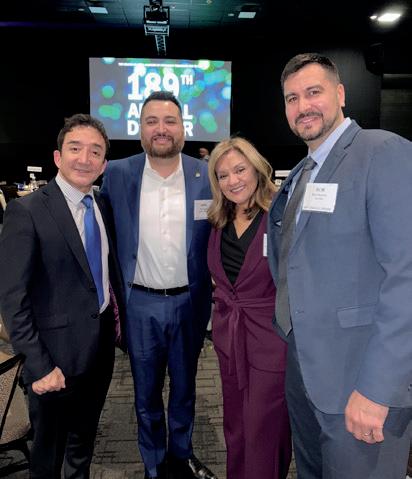

Congratulations to Michael Quaranta on his retirement from the Chamber, and thank you for your many years of dedicated service to the State of Delaware. We wish you all the very best in your next chapter.
FHL Bank Pittsburgh:
Congratulations to the @DEStateChamber on their 189th Annual Dinner celebration! It was a pleasure to hear from @WSFS Bank Chairman, President and CEO
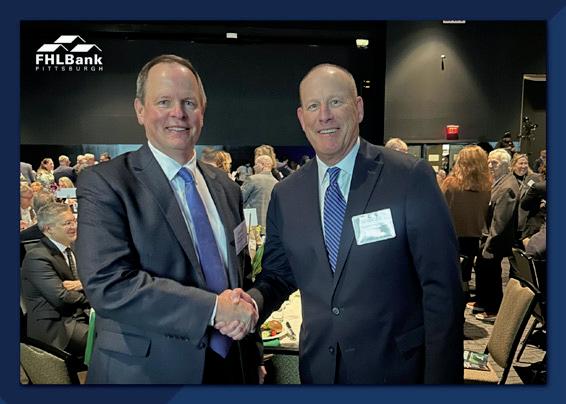

Rodger Levenson, who delivered this year's distinguished keynote address. This event was an opportunity to join our statewide member financial institutions and many others in Delaware's business community who are making a positive economic impact.
Jessica Jordan, MSM:

Yesterday I had the good fortune to spend time with Deborah Stevens, Tierra Fair, MPA, CVA, Katie Lakofsky, and Patrick Best as we reviewed candidates for Delaware State Chamber of Commerce’s annual Superstars in Education & Training awards, ‘…recognizing excellence in education and training.’ ��

Each year I look forward to supporting this work and learning about ways Delaware’s communities are celebrating our future by innovating now. ��
Thank you to Amanda Schimmel and Dae’Shawn Nixon for coordinating, hosting, leading our discussion… and for the delicious cookies ��
ICYMI IN CASE YOU MISSED IT
M. Davis & Sons: We’re proud to congratulate John Gooden on his appointment as Chair of the Delaware State Chamber of Commerce (DSCC) Board of Directors, serving a twoyear term.
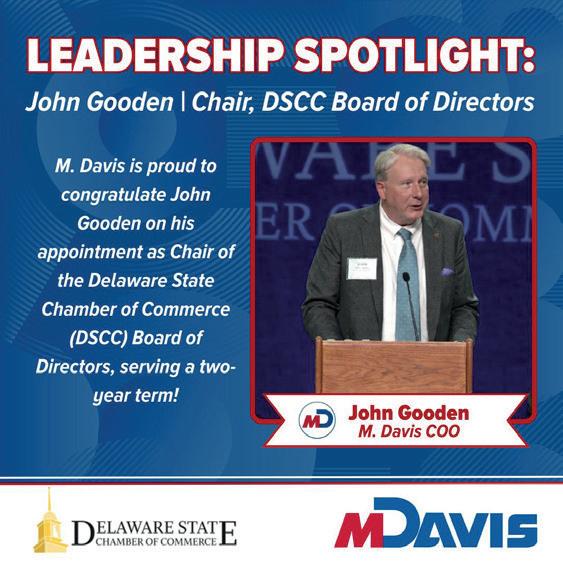
John’s leadership and dedication to Delaware’s business community will help guide the Chamber’s mission to support strong jobs, economic growth, and a high quality of life across the state. We’re excited to see the impact of his leadership in this role and are honored to support his continued service.
Congratulations, John, and thank you Delaware State Chamber for your ongoing commitment to our business community!
Michelle Freeman: I was incredibly honored to be recognized by the Delaware State Chamber with the Josiah Marvel Cup at the Delaware State Chamber of Commerce Annual Dinner last night. Thank you to the Chamber and its Board, my peers, and colleagues who are making meaningful impacts across Delaware. You inspire me to keep pushing, and to keep trying to do things differently in every field that I am privileged to work in every day!

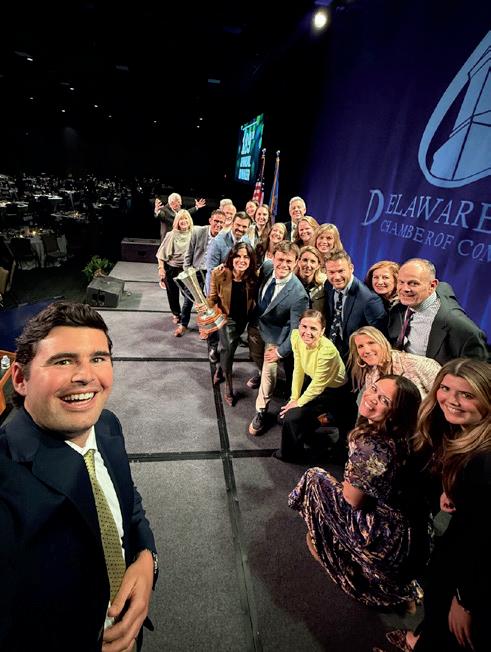
This recognition is not a solo achievement. It takes a remarkable team of creatives, strategic thinkers, problem-solvers, and driven leaders to build a company and foundations that truly care about how people live. Together, we don’t take the easy road—we imagine something better. ...
Grateful to be part of such a dynamic community and proud to do this work in Delaware! We are a small state, but we are one of the best places to live, raise our families and start businesses!
WHAT’S NEXT?
Chamber Calendar
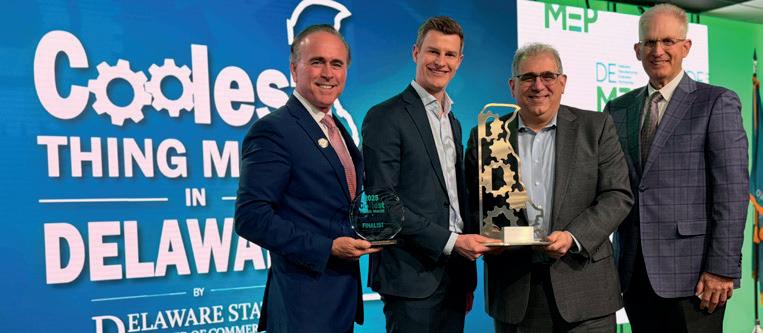
THURSDAY, MARCH 26
Spring Manufacturing & Policy Conference
Join the Delaware Manufacturing Association for the Spring Manufacturing & Policy Conference, where industry leaders, policymakers, and workforce partners will examine the investment trends, policies, and talent pipeline strategies shaping the future of Delaware manufacturing. The highly anticipated 2026 Coolest Thing in Delaware winner will also be announced.
$75 Member Admission | $100 Future Member Admission

TUESDAY, APRIL 28
Navigating Delaware Pathways Summit
This full-day summit is an immersive experience designed to unite educators, higher education professionals, and employers in a comprehensive exploration of education and workforce development. Keynote speaker Vicki Phillips, CEO of the National Center on Education and the Economy, will draw on global research and lessons from the world’s highest-performing systems to outline what it takes to build a future-ready talent pipeline. The day will also feature the Superstars in Education and Training awards luncheon, honoring exceptional workforce development programs.
$100 Member Admission | $125 Future Member Admission Sponsorship opportunities are available.

THURSDAY, APRIL 16
Networking Breakfast at Delaware SBDC
Join us for a networking breakfast designed to connect entrepreneurs, startups, and established business leaders at the Delaware Small Business Development Center (SBDC). Learn how the Delaware SBDC’s no-cost consulting, training programs and strategic resources help businesses grow and thrive.
FREE for Members
Join us at our next event!
Fill up your calendar and see our upcoming events by scanning here:

CALL THE CHAMBER
The State Chamber of Commerce staff works for you, serving our member companies and organizations statewide. This State Chamber staff directory lists phone numbers and email addresses, as well as individual areas of responsibility. If you need business assistance or information, please don’t hesitate to call.
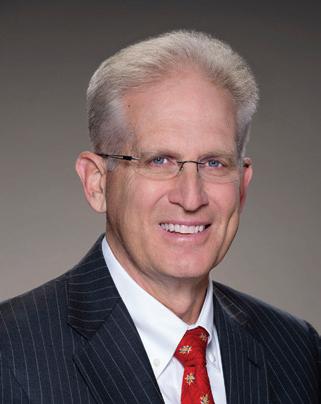
Michael J. Quaranta President (302) 576-6585 mquaranta@dscc.com

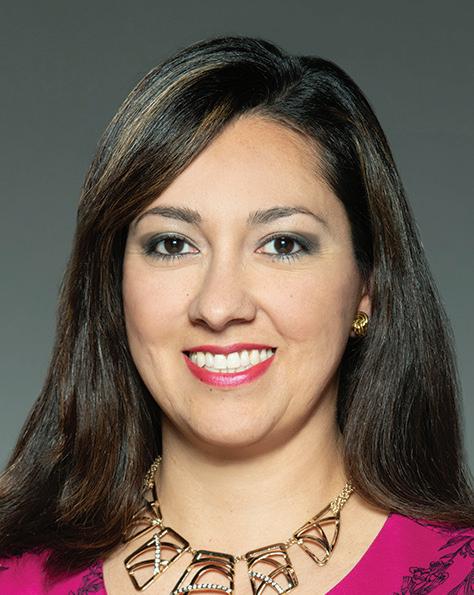
Melissa Brayman Director, Administration & Finance (302) 576-6572 mbrayman@dscc.com

Dae’Shawn Nixon Director, Delaware State Chamber Foundation (302) 576-6575 dnixon@dscc.com
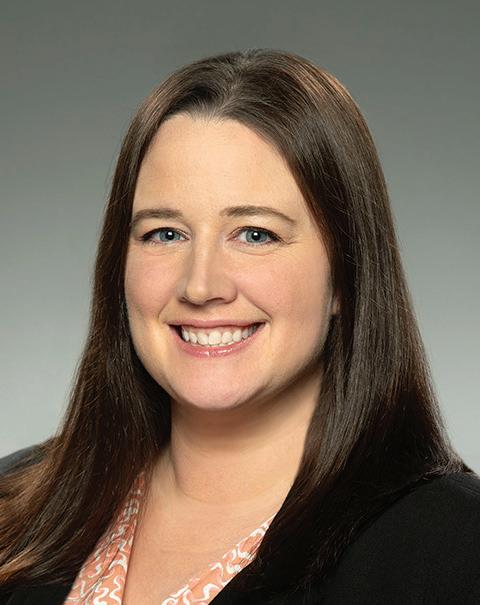
Kerri Welcher Director, Events (302) 576-6566 kwelcher@dscc.com

Kelly Basile Chief Operating Officer (302) 576-6564 kbasile@dscc.com
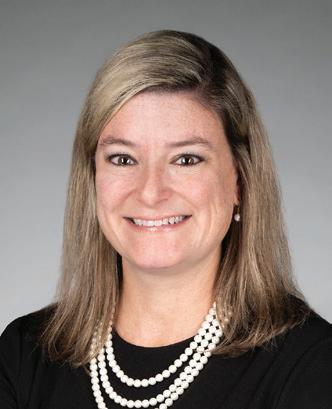
Regina Donato Director, Communications (302) 576-6567 rdonato@dscc.com
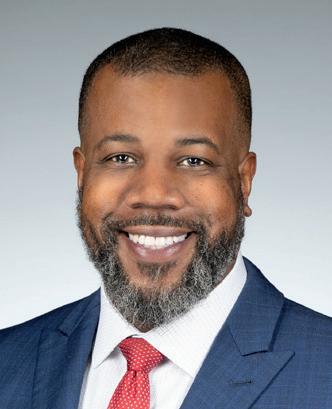
Evan Park Vice President, Government Relations (302) 576-6590 epark@dscc.com
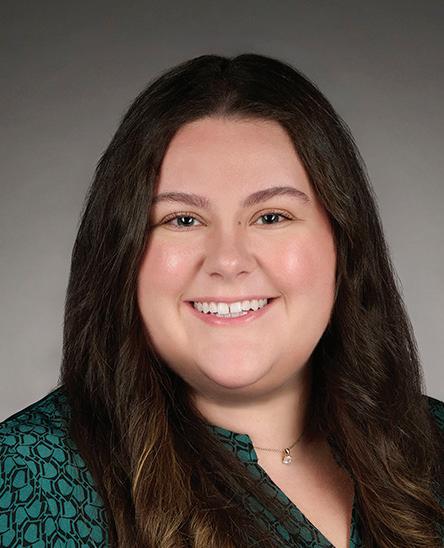
1201 N. Orange Street, P.O. Box 671
655-7221 www.dscc.com
Danielle Blake Vice President, Member Engagement (302) 576-6571 dblake@dscc.com
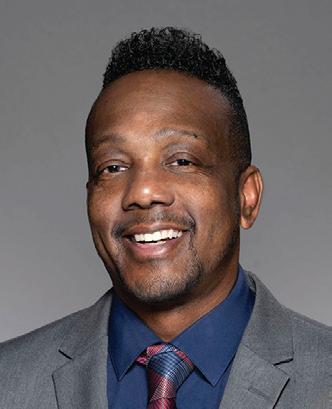
Damon Howard Manager, Digital & Print Advertising (302) 576-6579 dhoward@dscc.com
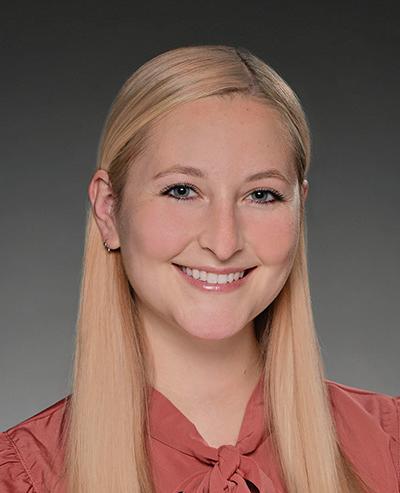
Tori Will Manager, Administrative & Member Support (302) 576-6576 twill@dscc.com
Amanda Schimmel Manager, Marketing & Strategic Programs (302) 576-6560 aschimmel@dscc.com
Facebook: DelawareStateChamber X: DEStateChamber
Linkedin: Delaware State Chamber of Commerce
YouTube: DEStateChamber
Instagram: DEStateChamber






The Bayhealth Heart & Vascular Institute is a comprehensive cardiovascular center of excellence located in the heart of our region. This is where you’ll find a team of great minds with an incredible commitment to helping your heart last a long, healthy lifetime. To know more about all the ways we help prevent and treat heart disease visit Bayhealth.org/HVI. To learn more, or make an appointment call 302-310-8484.