
& BEYOND 250

MAKES IT POSSIBLE.
IN-DEMAND CAREERS, AFFORDABLE TUITION
Delaware Tech offers a wide variety of credit programs of study — bachelor’s degrees, associate degrees, certificates and diplomas — designed to prepare you to enter the workforce, continue your education, or both. We also offer developmental and general education programs that provide foundational skills needed to succeed in academic degree and workforce training programs.

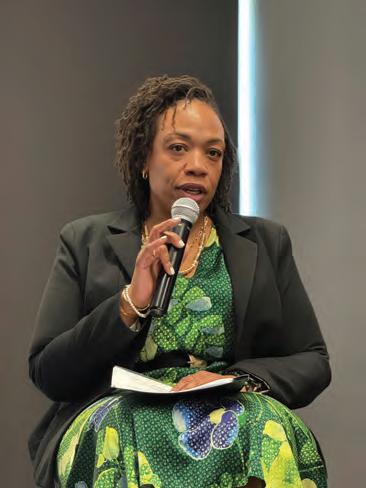
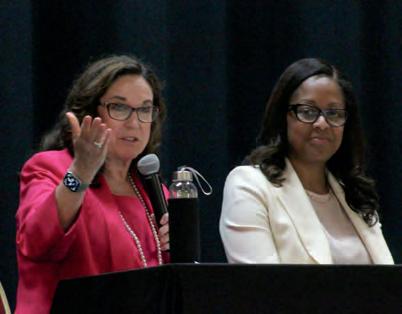
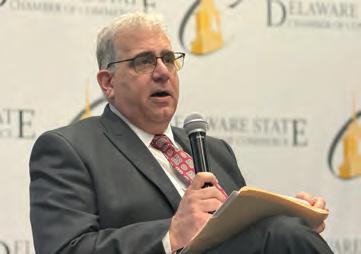
Senate President Pro Tempore David Sokola and Speaker of the House Melissa Minor-Brown discussed several prominent topics affecting the General Assembly at the End-of-Session Policy Conference in May.
Message from the President

With the 250th celebration of our nation and state at hand, the hospitality and tourism industry around the First State stands to benefit greatly. Between our historic sites, museums, beautiful beaches, river towns, and vast open spaces, Delaware offers tourists a wide array of experiences. Supporting all of that is a retail sector that includes large national brands, as well as one-of-a-kind shops that give a distinctly local flair to the shopping experience. Add to that a burgeoning restaurant scene and a thriving accommodations sector that is growing to serve a rising statewide population and a steadily increasing number of visitors, and you have multiple healthy business sectors combining to strengthen Delaware’s tourism economy. The number of hotel rooms in Delaware has increased to meet demand from tourists visiting the First State.
With a rich colonial-era history, Delaware holds a unique place in the founding of our nation. From the competing claims of Maryland and Pennsylvania, to Separation Day in New Castle and the events that led Delaware to separate from both Pennsylvania and the British Crown before the formal signing of the Declaration of Independence, our state’s story is deeply woven into America’s beginnings. I encourage all of you to take in some of the historic reenactments and celebrations planned throughout the coming months, dine out, and maybe even pack a bag and enjoy a “staycation” here at home during the celebrations!
This edition of our magazine highlights several unique ways to celebrate our nation’s 250th anniversary, not only this month, but throughout the year ahead. I cannot think of a better way to live, learn, and support our local businesses while taking part in a once-in-a-generation celebration of our state and nation’s history.

DELAWARE
EDITORIAL STAFF
John C. Gooden Chair
BUSINESS
Michael J. Quaranta President Regina Donato Editor Christina Jones Graphic Design
BOARD OF DIRECTORS
CHAIR
John C. Gooden
M. Davis & Sons, Inc.
VICE CHAIR
Nicholas A. Moriello, RHU Healthcare Innovation Acceleration, LLC
Catherine M. Bassett
Mountaire Farms
Scott Baylis
WSFS Bank
Andrew Cottone, Ph.D. Aternium
Terry Glebocki
Delaware Park Casino
BOARD OF GOVERNORS
Michael A. Albero, CPA, MST+
AKA Advisory, LLC
Tony Allen, Ph.D.
Delaware State University
Pierre Anderson
Artesian Water Company, Inc.
Steve Baccino
Chesapeake Utilities
Christopher W. Baker
George & Lynch, Inc,
Greg Ballance
Diamond Technologies
Marcus L. Beal
Delmarva Power
Mike B. Berardi
Wohlsen Construction Co.
Adam Blackford
Agilent Technologies
Robert A. Book II
Delaware Electric Cooperative
Jennifer Gimler Brady
Potter Anderson & Corroon LLP
Dr. Mark T. Brainard
Delaware Technical Community College
Beth G. Brand
University of Delaware
Desa Burton
Zip Code Wilmington
Darren Buseman
B&M Meats, Inc.
Robert L. Byrd
ByrdGomes
Patrick Callihan
Tech Impact
Christopher Carroll
Comcast
Stuart Comstock-Gay Delaware Community Foundation
Charlie Copeland
Associates International, Inc.
Pam Cornforth
Ronald McDonald House
Charities of Greater Delaware
Jason Danner
Kelly Benefits Strategies
Rick Deadwyler
Corteva Agriscience™
Ernest Dianastasis
The Precisionists, Inc.
Brian DiSabatino
EDiS Company
Michael
J. Quaranta
President
Kelly Basile
Chief Operating Officer
Danielle Blake
Vice President, Member Engagement
Lisa M. Donlon, PE
VanDemark & Lynch
Janet Dougherty
Fulton Bank, N.A.
Thère du Pont
Longwood Foundation
Jerry Esposito
Espo Enterprises, LLC
John C. Fannin III
Harvey, Hanna & Associates
G. Kevin Fasic, Esq.
Offit Kurman
Jennalee Fede, PE Verdantas LLC
Brian Frazee
Delaware Healthcare
Association
Donald T. Fulton
Weiner Benefits Group
Martha S. Gilman
Cornell Property Management Corp.
Joseph V. Giordano
Whisman Giordano & Associates, LLC
Jason D. Gonzalez
Qnity™ Electronics, Inc.
Jeff Gosnear
Grotto Pizza
Lorri H. Grayson
GGA Construction
Dr. LaVerne T. Harmon
Wilmington University
Paul N. Heath
Richards, Layton & Finger
Logan S. Herring, Sr.
The WRK Group
Kirsten Higgins
Tidewater Utilities, Inc.
Marie Holliday, CPA*
The Bonadio Group
Tom Horne
JPMorganChase
Michael Houghton
Morris, Nichols, Arsht & Tunnell, ret.
Tim Houseal^
Young Conaway Stargatt & Taylor, LLP
Jessica Hunt
Siemens-Healthineers
Mark Hutton
M&T Bank
LeVar Johnson Novo Nordisk
Melissa Brayman
Director, Administration & Finance
Regina Donato
Director, Communications
Damon Howard
Manager, Digital & Print Advertising
Natalie Keefer Bank of America
Colleen Perry Keith, Ph.D.
Goldey-Beacom College
Robert McGuckin
Verizon
Michael A. Meoli
The Meoli Companies
Cathy Kanefsky
Food Bank of Delaware
Julia B. Keleher, Ed.D, MBA, PMP
First State Educate
Melissa Kenny
ShopRites of Delaware
Apollo Khine
Barclays US Consumer Bank
Matthew Lantange
TD Bank
Alan Levin
SoDel Concepts
Mike Little
Allen Harim Foods, LLC
Andy Lubin
Delaware Financial Group
Mac Macleod
Carvertise
Scott Malfitano
CSC
William E. Manning
Saul Ewing LLP
Paul M. McConnell
McConnell Development, Inc.
Katie McEvoy
AT&T Delaware
Gregory Miraglia
PNC Bank
Jeff Mitchell
Siegfried Advisory
Jonathan D. Moll, CPA
Belfint, Lyons & Shuman
Chad Moore
Beacon Hospitality
Colleen Morrone
Goodwill of DE & DE County
Terry Murphy
Bayhealth Medical Center
Janice Nevin, M.D., MPH ChristianaCare
Chris O’Neill
PSCI
Jed Patterson
LabWare
Chris Perdue Perdue Farms
Robert W. Perkins
Brandywine Public Strategies
Mike Petka
Bancroft Construction Company
Ciro Poppiti
Freeh Sporkin & Sullivan LLP
Greg Smith
The Chemours Company
David A. Tam, MD, MBA, CPHE, FACHE Beebe Healthcare
Bridget Therriault
AstraZeneca
Rod Ward CSC
Chip Rankin
MilliCare
Michael Ratchford
W. L. Gore & Associates, Inc.
Dr. Rob Rescigno
Collaborative Consulting LLC
Lloyd A. Ricketts
Wilmington University
Robert “Rob” Rider, Jr. O.A. Newton
Bettina Tweardy Riveros ChristianaCare
Jake Ruddy PCS
Rhett Ruggerio
Ruggerio Willson Watson
Dennis M. Salter
Edinburgh Capital Management LLC
Chris Schell
Schell Brothers
Albert Shields
University of Delaware
Robert S. Smith
Santora CPA Group
Jonathan Starkey
Delaware State University
Mark Stellini
Assurance Media
Mike Tatoian
Dover Motor Speedway
Jim Taylor
Saul Ewing LLP
Ivan Thomas DETV
Jana Tidwell
AAA Club Alliance
Vera Holmes Toliver
DuPont
Michael S. Uffner
AutoTeam Delaware
Mike Vanderslice
Onterris
Timothy L. Vessel
Highmark Blue Cross Blue
Shield Delaware
Robert W. Whetzel
Richards, Layton & Finger
Ed Winslow
Citizens Bank
Kevin M. Wolfgang Evergreen Apartment Group
+Treasurer
^Counsel
*Immediate Past Chair
Kiley Michulka
Events Manager
Evan R. Park
Vice President, Government Relations
Amanda Schimmel
Manager, Marketing &
Strategic Programs
Kerri Welcher
Director, Delaware State
Chamber Foundation
Tori Will
Manager, Administrative & Member Support
Michael J. Quaranta
LEGISLATIVE PRIORITY
At Session’s End: The 153rd General Assembly Adjourns
BY EVAN R. PARK
DURING THE FINAL WEEKS of Delaware’s legislative session, several bills moved through the General Assembly with significant implications for employers, contractors, restaurants, financial institutions, and businesses that rely on consumer data and artificial intelligence.
As lawmakers worked toward adjournment on June 30, the Delaware State Chamber closely monitored a number of proposals that could reshape operating costs, compliance requirements, and legal risks.
One of the most closely debated measures this session was Senate Bill 272, which would require Project Labor Agreements (PLAs) on public school construction projects exceeding $5 million. Supporters say PLAs help coordinate large projects and reduce labor disruptions. Opponents, including many business groups and the State Chamber, argued that the requirement could discourage non-union contractors from bidding, reduce competition, and potentially increase costs for taxpayers.
Restaurants were also at the center of legislative discussions through House Bill 417. The proposal would significantly increase the Gross Receipts Tax (GRT) deduction available to restaurants, potentially eliminating GRT liability for roughly half of Delaware restaurants that currently pay the tax. While restaurant operators may welcome the relief, critics, including the State Chamber, argued that tax reform should benefit all small businesses rather than a single industry.
Meanwhile, businesses that collect or process consumer data closely followed House Bill 380, a measure that would substantially expand Delaware’s Personal Data Privacy Act. The bill lowers the thresholds that determine which companies must comply with the law, meaning many more businesses could become subject to privacy regulations.
The legislation would impose stricter requirements for handling sensitive data, require more robust vendor contracts, expand consumer protections related to artificial intelligence and automated decision-making, and lower the threshold for mandatory data protection assessments. If enacted, the changes would not take effect until 2027, giving businesses time to review their data practices and compliance obligations.

Artificial intelligence continued to receive legislative attention this year. House Bill 306 would require businesses to clearly disclose when customers are interacting with AI rather than a human representative. The goal is to improve transparency as chatbots, virtual assistants, and other automated tools become increasingly common.
Another closely watched proposal impacting the restaurant industry was House Bill 315, which would prohibit interchange fees on the gratuity portion of credit and debit card transactions. Supporters argue the change would reduce costs for restaurants and hospitality businesses. However, banks and payment networks warn that payment systems are not currently designed to separate tips from the rest of a transaction for fee purposes. They argue that implementing the change could require costly system upgrades, create compliance challenges, and potentially shift costs elsewhere within the payments ecosystem. They also note that interchange fees help fund fraud protection, cybersecurity, transaction processing, and other services that businesses and consumers rely on every day. The State Chamber was opposed to this bill.
Amendments added to the bill are stated to create a safe harbor for businesses that clearly inform customers at the start of an interaction that they are communicating with a computer system. Another amendment clarifies damages available in lawsuits, allowing successful plaintiffs to recover either actual damages or $1,000 in statutory damages, whichever is greater. While we support transparency around AI use, the State Chamber had concerns about potential litigation risks and how certain provisions would be interpreted and enforced.
The bills highlighted reflect the broad range of policy issues that shaped debate during the 153rd General Assembly. Any bill that did not receive final passage before adjournment will need to be reintroduced in the 154th General Assembly in 2027 in order to continue moving through the legislative process.
Editor’s Note: This article was written on June 15, 2026, prior to the adjournment of the 153rd General Assembly. References to pending legislation reflect bill status at the time of writing.
We’ve helped millions of kids grow strong and healthy, with millions more still to come.


Since opening our doors in 1940, we’ve grown to be one of the preeminent children’s hospitals in the country, serving millions of kids along the way. As Delaware’s only children’s hospital, we provide care in more than 100 pediatric specialties and counting. Some may say it’s an amazing journey. We say, it’s just the beginning. Learn more at Nemours.org.
1940
Here for Delaware’s Kids Since
© 2026. The Nemours Foundation. Nemours Children’s Health® is a registered trademark of The Nemours Foundation. All rights reserved. MC21586 (01/26)
Member news&Notes
NONPROFIT SPOTLIGHT:
The Delaware Celebration of Jazz
›› A common misconception about Delaware beaches is that the fun ends after Labor Day weekend. The weather cools slightly, and summer visitors head back to their hometowns after a season of playing local. But that’s far from the truth. Each fall, a different kind of energy begins building along the coast, gearing up for a week of celebration and music.
Produced by The Delaware Celebration of Jazz Inc., a 501(c)(3) nonprofit organization, the Rehoboth Beach Jazz Festival has been an annual cultural highlight on Delaware’s coast for more than 37 years. Over the course of several days in October, the festival presents 23 shows featuring 35 artists across five venues in four days, attracting people from all over the MidAtlantic region and showcasing the power of jazz music.
“What surprises many attendees is the caliber of artists we bring in,” explains Vice President of Marketing Larry DeFrancisco. “These are internationally known, Grammy Award-winning performers who travel the world yearround. Many fly in from across the country and overseas to perform at the festival.”
Not only does the festival bring an incredible level of talent to the beach, but roughly 20,000 additional visitors also flock to the area, generating an estimated $10 million in economic impact for the county, along with significant tax revenue for the state.
BY AMANDA SCHIMMEL

The planning team is also made up entirely of volunteers. “We’re proud of what we’ve been able to build as an entirely volunteer-run organization. People often don’t realize the scale of the festival and its impact until they see everything that goes into it. We are driven by volunteers and our great sponsors who are simply passionate about the festival and the community,” adds DeFrancisco.
President Denny Santangini has managed and directed the annual festival for more than 32 years and has been the driving force behind supporting the designated beneficiaries, primarily Beebe Healthcare’s Oncology Department and the Tunnell Cancer Center. The festival recently added Children’s Beach House as another beneficiary after learning more about its mission and the impact it has on children across Delaware.
Another key component of the festival is the Music in Tune with Education program, an initiative that connects Sussex County students with professional jazz musicians. Each year, festival
headliners participate in clinics, master classes, webinars, and workshops, sharing their expertise directly with the next generation of musicians. The program also helps provide instruments and lessons at no cost to children who might not otherwise have access to them.
“I think what the Board of Directors, Denny, Kas, Bing, and I are most proud of is being able to bring nationally and internationally recognized artists to a small beach town and seeing the impact it has on both the local economy and the community as a whole. People come here to have fun, enjoy the music, and see performers they’ve followed for years. When the festival wraps up, we’re able to take those proceeds and give back through our nonprofit efforts,” DeFrancisco says.
This year’s Rehoboth Beach Jazz Festival will take place October 15-18. Tickets can be purchased at www.rehobothjazz.com.
Member news&Notes
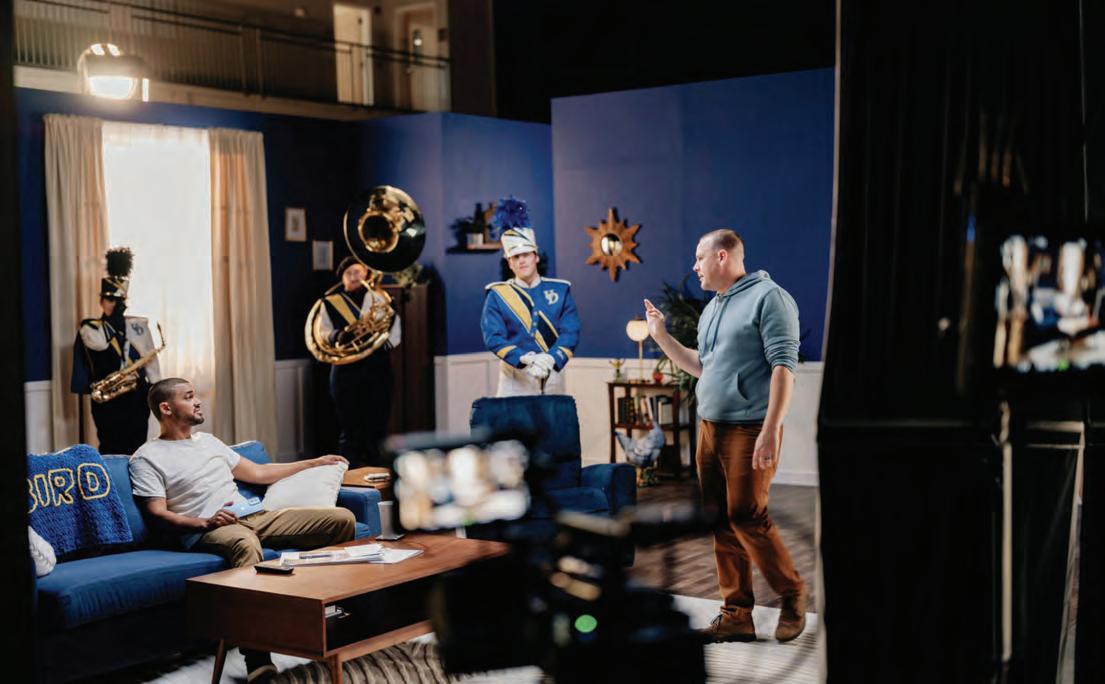
BUSINESS SPOTLIGHT: 1440 Film Co.
››Describing his childhood self as someone who turned every school project into an excuse to make videos with friends, it’s only fitting that Mike Pfeifer launched 1440 Film Co. in 2019 after choosing to pursue his dreams in the film industry.
“It’s funny, I’ve had a camera in my hand since I was a kid, but I never thought this could be an actual career path,” Pfeifer explains. “I was in the industry for about 10-ish years, working with and learning from some great people, but it got to the point where I was ready to start out and do my own thing.” In 2019, Pfeifer did exactly that.
For seven years, 1440 Film Co.
BY AMANDA SCHIMMEL
has provided full-service video production, specializing in commercials, documentaries, and branded content, and building a dedicated client base in the Delmarva region. Some notable clients include DuPont, Nike, Wawa, and Barclays Bank, but small nonprofit documentaries and projects are equally as important for Pfeifer. “When you’re doing a project that’s going towards a good cause and hopefully doing some good in the world, it does make the work feel that much more meaningful and special.”
Each project is tailored to the needs of the client, with no two works following the same creative process. The first question that leads the initial discovery
phase with a client is always, “What are the goals of this piece?” From there, Pfeifer works backward and digs into the “why” of the client, doing research and homework before presenting concepts. Sometimes the answer is straightforward — an authentic branded piece that communicates a company’s mission. Other times, the goal is to create something bold, energetic, and attentiongrabbing.
“What I love about this work is that every day is different,” Pfeifer explains. “You’re always adapting to the medium, working through the messaging, and then making sure what you’re doing on set reflects that vision.”
The company operates with a lean, industry-standard model consisting of Pfeifer and a full-time editor. All other workers are hired as freelancers depending on the needs of the set. On a bigger shoot, they might employ 30 people for the day, ranging from camera operators, hair and makeup people, art directors, lighting technicians, sound mixers, and more. For Pfeifer, the flexibility of this structure provides a major competitive advantage by keeping overhead costs low.
Even with a fluid team, work culture is still top of mind, both on set and in the studio office. “For my team, we believe that the two most important things in this business are producing great work and how you treat others in the pursuit of it, whether it’s cast, clients, or crew. It’s my responsibility to set the expectation and the tone every day, and you can’t do great work at the expense of maltreatment,” Pfeifer reflects.
At the end of the day, it takes time and commitment to build a network, and running your own business isn’t something to take lightly. “It’s hard when you’re an entrepreneur, and you’re always pushing for the next thing. I’m definitely my own toughest critic, but I have to remind myself to look back at where I was 10 years ago and at my work. It really is something to be proud of.”

Amanda Schimmel is the manager of marketing and strategic programs at the Delaware State Chamber of Commerce.
COMMITTEE SPOTLIGHT:
Energy and Environment Committee
BY EVAN R. PARK
››When it comes to energy and environmental policy in Delaware, the Delaware State Chamber of Commerce (DSCC) Energy and Environment Committee helps ensure the business community has a voice in the conversation. Bringing together leaders from utilities, manufacturing, development, legal, and other industries, the committee meets quarterly and increases its engagement during legislative session, when many of the issues affecting employers are actively being debated.
At its core, the committee functions as a vital bridge between the business community and state government. Members work directly alongside Gov. Matt Meyer’s administration, the Department of Natural Resources and Environmental Control (DNREC), other key state agencies, and members of the Delaware General Assembly to tackle
the issues that matter most to Delaware businesses and residents alike.
Topics range from energy reliability and affordability to renewable energy, land use, water quality, site remediation, permitting, and environmental regulations. The committee also reviews and provides feedback on legislation that could impact Delaware employers and employees.
One recent example is House Bill 402, legislation that would extend Delaware’s Title V operating permit program and establish a long-term fee structure to support permitting operations.
Committee members worked closely with DNREC and policymakers throughout the process, helping provide industry perspective and feedback as the legislation was developed.
In a state where business and environment must move forward together, DSCC’s Energy and Environment Committee is where that conversation starts.


Your Secret Weapon for Government Contracting
BY LINDSAY PENNINGTON
››If you’re a Delaware business owner who has ever wondered how to break into government contracting — or how to grow your existing government business — there’s a resource right here in our state you need to know about: APEX Accelerators Delaware.
WHAT IS APEX ACCELERATORS DELAWARE?
APEX Accelerators, formerly known as Procurement Technical Assistance Centers, help businesses compete successfully for federal, state, and local government contracts. Established in 1999, Delaware APEX is one of 96 programs nationwide funded through a cooperative agreement with the Department of Defense. Its mission is simple: helping Delaware businesses navigate government contracting at no cost.
APEX Accelerators Delaware is housed
at the University of Delaware as a unit of the Office of Economic Innovation and Partnerships.
In 2025 alone, APEX clients secured more than $142 million in federal and state contract awards. That includes 151 Delaware businesses winning work with the Department of Defense, federal agencies, and state government. The organization also provided 701 hours of one-onone counseling to 525 unique clients.
REAL CONNECTIONS
In February, Delaware APEX hosted Matchmaking Day at the University of Delaware’s STAR Campus, bringing together government buyers and Delaware businesses in an innovative speednetworking format. Rather than relying on traditional vendor fairs with booths and presentations, the event focused
on creating opportunities for meaningful conversations. Buyers from county, city, state, and federal agencies — including the Department of Defense — sat at round tables while vendors rotated through 30-minute sessions.
Joe Scarpa of the Delaware National Guard summed up the impact of the event: “We met more businesses mature enough to enter the Department of Defense ecosystem in one day than we met all last year.”
The event wasn’t just about making government connections. Businesses also discovered opportunities to work with one another. From commercial door repair and precision-machined components to management support services and innovative cooking robots, the event showcased the diversity and ingenuity of Delaware’s business community.
HOW APEX CAN HELP YOUR BUSINESS
Whether you’re just getting started with government contracting or are an experienced contractor looking to expand, APEX Accelerators Delaware offers free expert assistance with:
• Registration assistance in government vendor databases for Delaware cities, counties, and the state, as well as federal registration through SAM.gov
• Government market research
• A free bid-matching service that sends relevant contracting opportunities directly to your inbox
• Understanding solicitation requirements
• Navigating certification programs, including State of Delaware certifications, WOSB, SDVOSB, and HUBZone
Already experienced with government contracting? APEX can help prime contractors connect with qualified Delaware subcontractors actively seeking opportunities.
The organization also offers one-on-one counseling, group training sessions, and matchmaking events throughout the year. Upcoming events can be found on the APEX events page.
YOUR NEXT STEP
Government contracting can seem complicated, but Delaware businesses do not have to navigate it alone. APEX Accelerators Delaware is available to guide companies through every step of the process.
Lindsay Pennington is a government procurement business analyst at APEX Accelerators Delaware.

Chair Message
BY JOHN C. GOODEN
››As communities across the country gear up for America’s 250th birthday, we’ve been doing a bit of reflecting ourselves. M. Davis & Sons turns 156 this year, and the parallel isn’t lost on us.
Our story and America’s story have a lot in common. Both are built on grit, on the work of one generation setting up the next for growth and success, and on the belief that what you build today matters well beyond your own time.
We got our start in 1870, just five years after the Civil War ended. The country was piecing itself back together, industries were taking shape, infrastructure was expanding, and the people willing to roll up their sleeves had a real opportunity ahead of them. That founding spirit is still woven into how we operate today, now in our fifth generation of family leadership.
A lot has changed in America over this time, and I believe that ability to adapt with a changing country is one of the factors that has helped keep us in business. The foundation for our company was paper and steel mills. If those were our only markets today, we would not be in business. I have a vivid memory of Bethlehem Steel going bankrupt and being thankful that we had diversified our company prior to that day. That same diversification can be seen across our state today in the industries we serve. How amazing is it that our small state has two billiondollar pharmaceutical projects under construction, has a major presence
in food production, is rooted in new science and technology, and has a multitude of manufacturers across the state. Being able to provide support for these industries, as well as continuing to take care of the remaining heavy industry in our state, is the secret sauce that keeps us thriving.
Market diversification isn’t the only thing that has kept us going across 156 years. It comes down to our corporate values: craftsmanship, character, commitment, opportunity, innovation, and legacy. Those aren’t words on a wall; they are the standard each generation of M. Davis leadership inherits and is expected to uphold. It’s the same idea as the Constitution, really: a framework built to endure, passed forward with the expectation that each generation will protect it and build upon it.
I’ve been thinking about that a lot this year in my role as chair of the Delaware State Chamber. The State Chamber is celebrating 189 years this year and will host its 190th Annual Dinner in January. Like M. Davis, it has endured by evolving with the people and businesses it serves while staying true to its purpose.
At M. Davis, and through my work with the Delaware State Chamber, I’m proud to mark 2026 alongside the rest of the country. Not just to look back, but to look ahead. There’s still a lot to build, and we plan to be part of it.
Here’s to 250 years of American resilience, and to the institutions, businesses, and people who continue building what comes next.
Where Innovation Meets Institutional Excellence
BUILDING TOMORROW’S ECONOMY ON 230 YEARS OF BUSINESS LEADERSHIP
BY CHARUNI PATIBANDA-SANCHEZ
››Delaware has always punched above its weight. With just over 1 million residents, we host more than 2.2 million business entities — a historic high that underscores our enduring role as America’s corporate capital. In 2025, Delaware formed 334,461 new business entities, and an extraordinary 69% of U.S. IPOs chose Delaware incorporation. Nearly 68% of Fortune 500 companies were incorporated in Delaware in 2024. These numbers represent market validation. Despite media narratives about corporate departures, Delaware had a net gain of companies in 2025. Our more than $2 billion in corporate franchise revenue — the state’s second-largest source of income — allows us to continually reinvest in the legal infrastructure and expertise that keeps Delaware ahead.
But our story isn’t just about Fortune 500 boardrooms. From bootstrapped garage operations to cutting-edge fintech disruptors and biotech trailblazers, Delaware is a launchpad where audacious ideas take root. Delaware remains the gold standard for business formation by cutting through the noise, offering founders straightforward processes, dependable infrastructure, and lightning-fast execution. In the First State, incorporation takes hours, not weeks or months. We keep pace with modern business. But speed without substance is meaningless. Our Court of Chancery sets Delaware apart by delivering legal certainty alongside efficiency and effectiveness. Other jurisdictions have sought to
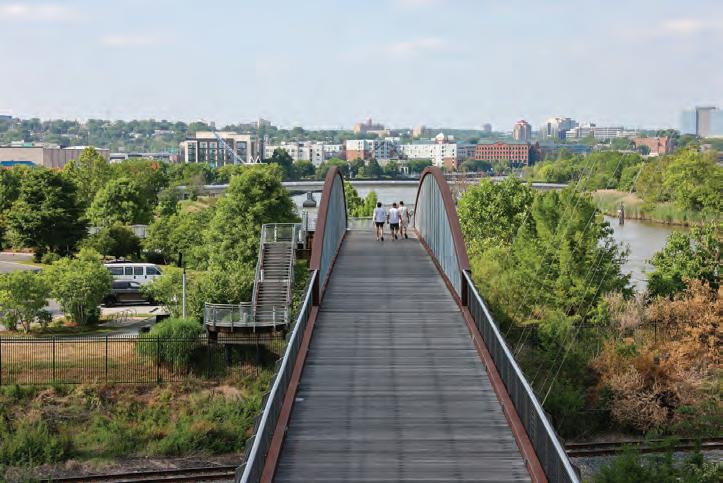
From bootstrapped garage operations to cutting-edge fintech disruptors and biotech trailblazers, Delaware is a launchpad where audacious ideas take root.
model their business courts after ours, but with more than 230 years of specialized expertise in corporate law, the Court of Chancery is inimitable. While judges in some states serve terms as short as two years, Delaware’s Court of Chancery judges serve 12-year terms, allowing them to develop deep expertise in corporate law. When your venture’s at stake, you want judges with decades of experience, not someone learning on the job.
This institutional knowledge makes a real difference for the innovation economy. The unicorns that choose to incorporate in Delaware are not just following the crowd, but making a calculated choice rooted in more than two centuries of corporate law leadership. This is because venture capitalists and institutional investors are well-versed in our legal framework. Our case law is taught in law schools
nationwide, cited in boardrooms globally, and relied upon by businesses of every size. That familiarity matters. It creates a common language that smooths out the challenges that arise when companies undergo transitions, ranging from funding rounds to partnerships and pivots. With less energy spent navigating legal unknowns, business leaders can invest their energy in building and growing their ventures.
Our entrepreneurial ecosystem is about more than just corporate law. Through strategic partnerships with universities, including the University of Delaware, Delaware Technical Community College, and Wilmington University, we’re developing talent pipelines in highgrowth sectors such as life sciences, advanced materials, and fintech. Notably, the Horn Entrepreneurship program at
the University of Delaware has garnered national recognition, ranking among the top 10% of entrepreneurship programs in the country. Outside the classroom, aspiring entrepreneurs can take advantage of the FinTech Innovation Hub and the Delaware Technology Park to gain access to laboratories, mentorship, and funding. Similarly, through public-private collaborations — including partnerships between DuPont, the state, and our universities — we systematically bridge the gap between breakthrough research and market-ready products. We’re creating an environment where innovation grows from concept to commercialization, right here in Delaware. Looking ahead, my vision for Delaware is straightforward. We will remain the jurisdiction where innovation and institutional excellence converge. That means maintaining our commitment to legal certainty while adapting quickly to emerging business models. It means supporting entrepreneurs at every stage, from formation through IPO. Whether you are a solo founder or a Fortune 100 executive, Delaware provides the proven legal framework for your ambitions. Delaware’s competitive advantage is dynamic. We’re building the corporate law framework for 2050 while our competitors are still catching up to where we were decades ago. For entrepreneurs and innovators, that’s not just reassuring; it’s essential.

Charuni
PatibandaSanchez is Delaware’s Secretary of State.
Meet Kiley Michulka, DSCC’s Events Manager
››The Delaware State Chamber of Commerce welcomes its newest team member, Kiley Michulka, who joined the organization this week as events manager. Kiley will oversee the State Chamber’s full calendar of events, helping to deliver programming that brings together business leaders, policymakers, educators, and community partners from all across Delaware.
Where are you from?
I am from North Wilmington, Del. I graduated from Concord High School in 2022.
The State Chamber hosts everything from networking receptions to large-scale conferences. What do you enjoy most about planning and managing events?
I enjoy the organization and problemsolving that happens behind the scenes. I spent time as a wedding planning assistant, so I understand the level of detail and work required to put on events of all sizes. It’s very rewarding to see an event come together after months of work.

You just earned your degree in hospitality business management from the University of Delaware. What originally drew you to the program, and what made you decide to stay in Delaware after graduation?
I was drawn to the University of Delaware’s hospitality program because of its hands-on approach and strong reputation. It aligned well with my passion for planning, organization, and creating memorable experiences. One of the most valuable parts of the program was the opportunity to gain real-world experience working in Vita Nova, the student-run restaurant on campus. I chose to stay in Delaware after graduation because it’s home, and I love the state and everything it has to offer. I’m also currently pursuing my MBA through the University of Delaware’s 4+1 program.
What do you love most about Delaware?
What I love most about Delaware is having easy access to the beaches while still being close to major cities. I also enjoy supporting the state’s many locally owned coffee shops and small businesses. My personal favorite coffee shop is Cafeneo Bakery in Newark. I lived right behind it when I lived in Newark as a student.
What’s something people might be surprised to learn about you?
I am one of six kids. It just so happens that I share a birthday with my younger brother, but I am exactly 11 years older.
If you could attend any event in the world, past or present, what would it be? I’d have to say either Oktoberfest in Germany or New Year’s Eve in Sydney, Australia.
Member news&Notes

MEET THE ARTIST:
Emily Hershman
BY VICTORIA ULRICH
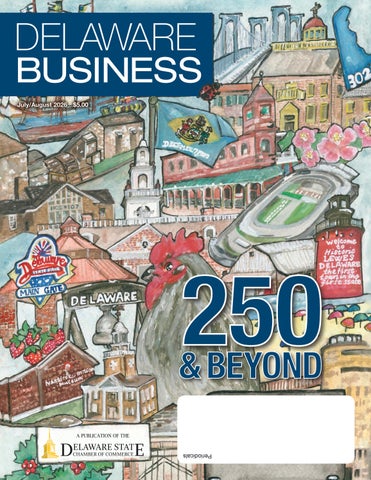
››For Emily Hershman, creating the cover artwork for this issue of Delaware Business magazine was an opportunity to celebrate the state she has called home her entire life.
A Delaware native, Hershman served as communications director for former Gov. John Carney and First Spouse Tracey Quillen Carney. During her time in the Governor’s Office, she traveled throughout the state, working with communities, businesses, and organizations while gaining a deeper appreciation for Delaware.
“Throughout my time in the Governor’s Office, I had the opportunity to reintroduce myself to my home state,” Hershman said. “I met so many amazing people and had a great time learning more about the industries,
cultures, and communities that create the patchwork of the First State.”
Hershman played a key role in communicating some of the administration’s major initiatives, including public outreach efforts during the COVID-19 pandemic, as well as work focused on trauma-informed care, early childhood services, and literacy.
Hershman is the proud illustrator of “Books for Blue,” an original children’s book written by Tracey Quillen Carney, encouraging Delaware families to visit their local library.
Shortly after illustrating the book, she launched an art studio with her mom, Two Hens Studio, whose art focuses on the joy Delaware brings. Hershman and her mom, Lisa, sell original pieces that range from postcards, landscape paintings, renditions
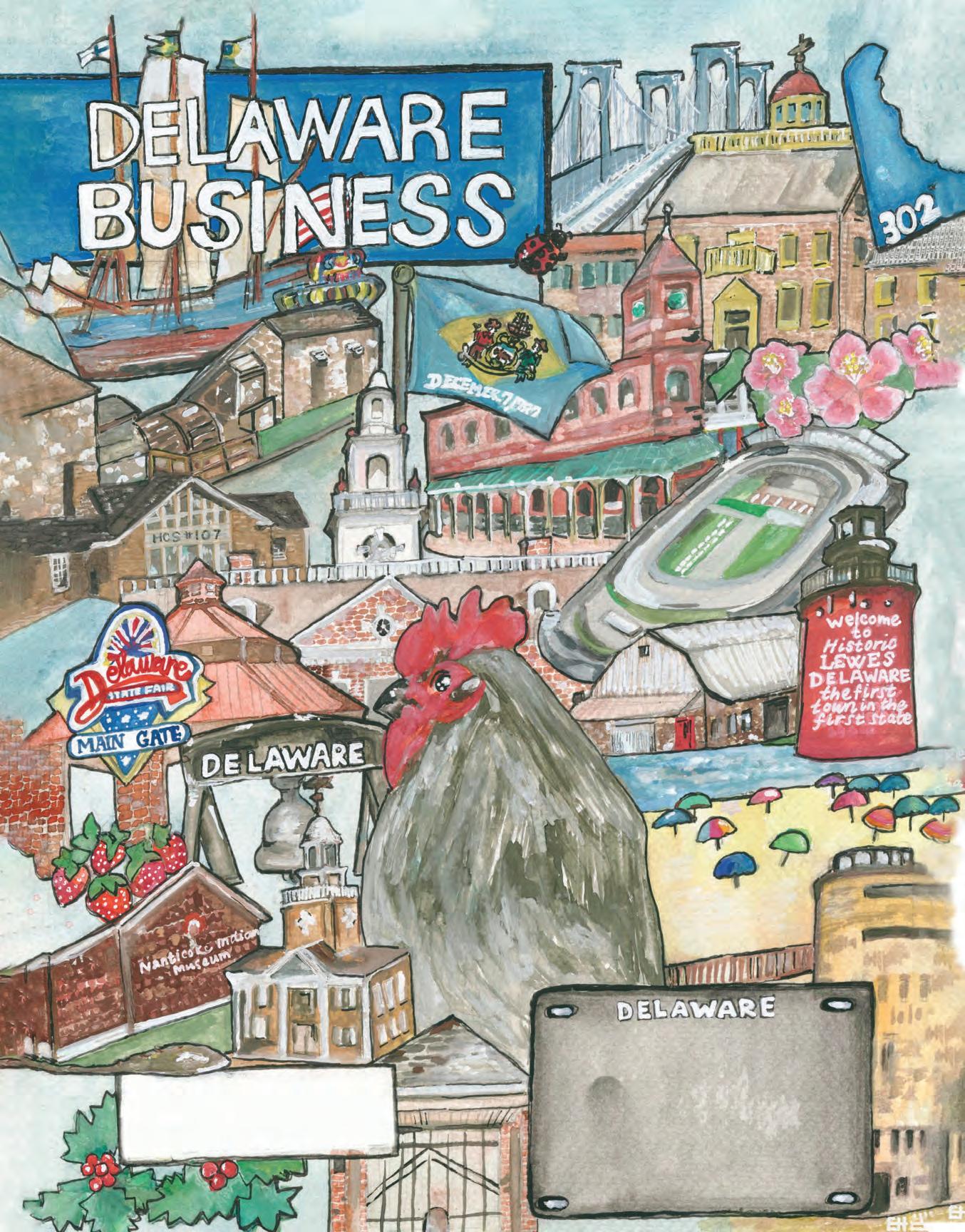
of local landmarks, or a 52-card deck inspired by locations throughout the state. That connection to Delaware is reflected in the cover illustration for this issue, which brings together landmarks, industries, and symbols representing the First State’s past, present, and future as we commemorate the nation and Delaware’s 250th anniversary.
Learn more about Blue Hens Studio at www.twohensstudio.com.

Victoria Ulrich serves as a communications and policy intern for the Delaware State Chamber of Commerce.
Local expertise, Local decision making.
With over 10,000 local employees and twelve branches, Chase is committed to helping small and mid-sized businesses across Delaware achieve their goals.
For insights that will help take your business to the next level, visit chase.com/business and jpmorgan.com/commercial-banking.
Timothy W. Boyle
Vice President, Commercial Banking (215) 640-3562
timothy.w.boyle@jpmorgan.com
©2026 JPMorgan Chase & Co.
Tyler Shrewsbury Officer, Business Banking (302) 485-4172
tyler.shrewsbury@chase.com
Kyle Sulecki Officer, Business Banking (302) 274-3110
kyle.sulecki@chase.com

WELCOME New Members
ACCELERATORS DELAWARE
www.delawareapex.org (302) 312-4194
591 Collaboration Way Newark, DE 19713
APEX Accelerators is a nationwide program dedicated to helping businesses successfully compete for and win government contracts. Whether a company is new to government contracting or an experienced contractor looking to expand, APEX Accelerators provides the
expertise and resources needed to succeed in the public-sector marketplace.
ATLANTIC SANDS HOTEL & CONFERENCE CENTER
www.atlanticsandshotel.com (302) 227-2511
1 Baltimore Ave. Rehoboth Beach, DE 19971
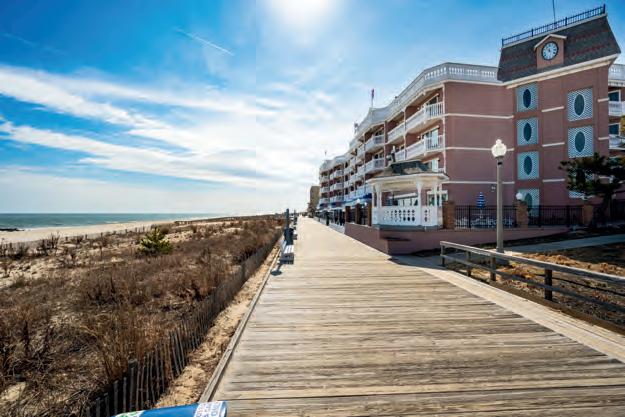
Atlantic Sands Hotel & Conference Center offers oceanfront accommodations on Rehoboth Beach’s boardwalk.



Paving

COMPILED BY VICTORIA ULRICH
From temporary lodging to conferences and wedding parties, the hotel provides accommodations and event space for a variety of needs.
DELAWARE COMPENSATION RATING BUREAU
www.dcrb.com (215) 568-2371
30 S. 17th St., Ste. 1500 Philadelphia, PA 19103
The Delaware Compensation Rating Bureau is a nonprofit data collection organization serving as a trusted, essential and objective resource that supports a healthy workers’ compensation system in Delaware.
ESSITY
www.essity.com (610) 499-3700
185 Saulsbury Rd. Dover, DE 19904
Essity is a leading global hygiene and health manufacturing company shaping the future for the planet, businesses and society. Operating in more than 150 countries, the company is committed to making a positive impact through its products and operations.
GRADBRIDGE
www.gradbridge.com (877) 427-5123
800 N. King St., Suite 304 3596
Wilmington, DE 19801
GradBridge provides secondlook private student loans for
students who narrowly miss traditional approval criteria, helping undergraduate and graduate students secure education financing and stay on track to graduate.
TOTAL CARE PHYSICIANS
www.totalcarephysicians. com
(302) 798-2562
405 Silverside Rd., Suite 111
Wilmington, DE 19809
Total Care Physicians of New Castle County is a primary care medical group specializing in family medicine, internal medicine, and comprehensive primary care services, including the treatment of conditions such as diabetes, obesity, and hypertension.
WESTERN GOVERNORS UNIVERSITY
www.wgu.edu (202) 792-6112
80 M St. SE, Ste. 902 Washington, DC 20003
Western Governors University (WGU) is a private online university based in Millcreek, Utah. The university uses a competency-based online learning model, providing advanced education for working professionals. Degrees awarded by WGU are accredited by the Northwest Commission on Colleges and Universities.

CHAMBER SCENE
1. The Delaware Young Professionals Network (DYPN) hosted a candid, high-energy conversation with Delaware legislators in Dover.
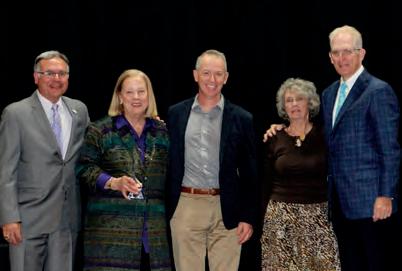
2. Sharon Kelly Baker was named the 2026 John H. Taylor, Jr. Education Leadership Award winner.
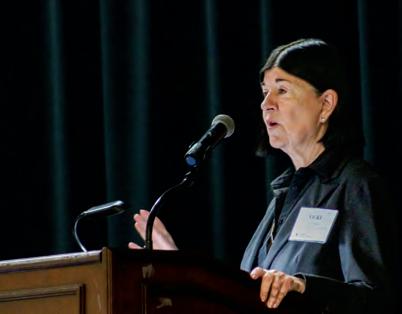
3. Vicki Phillips, CEO of the National Center on Education and the Economy, served as a featured keynote at this year’s Navigating Delaware Pathways Summit. Photography by Hannah Paliath.
4. The DYPN held its 14th Annual Golf Outing at Deerfield Country Club.
5. Policymakers and business leaders, including Senate President Pro Tempore David Sokola and Speaker of the House Melissa Minor-Brown, came together at the End-of-Session Policy Conference to discuss key issues before the 153rd Legislative Session concludes.
6. Our June Networking Breakfast was hosted by Armco Aquatics, a local small business specializing in designing, installing, and maintaining aquariums.
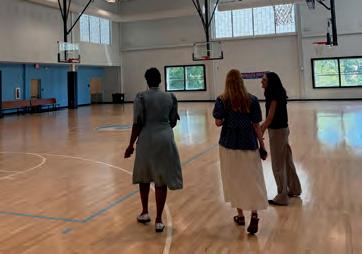
7. The DSCC communications team visited Freire Charter School Wilmington to learn about the school’s impact in downtown Wilmington.


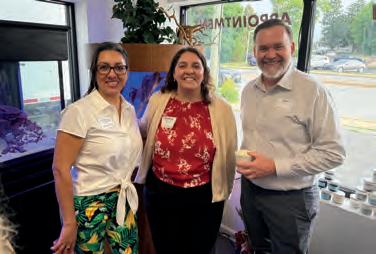

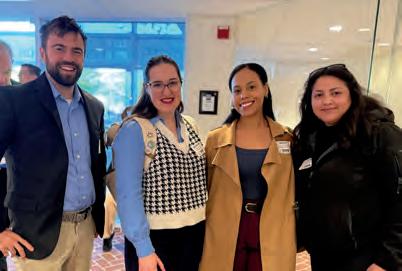
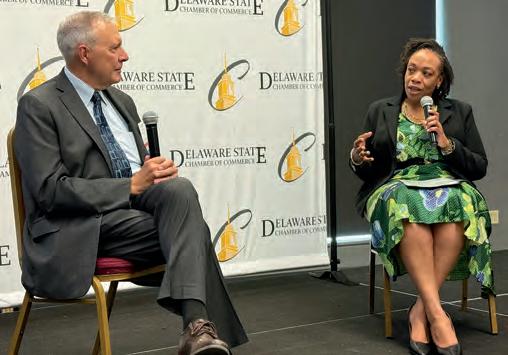
250 and Beyond
Through history, tourism, and statewide partnerships, Delaware’s semiquincentennial will resonate long after the fireworks fade BY ANDREW SHARP
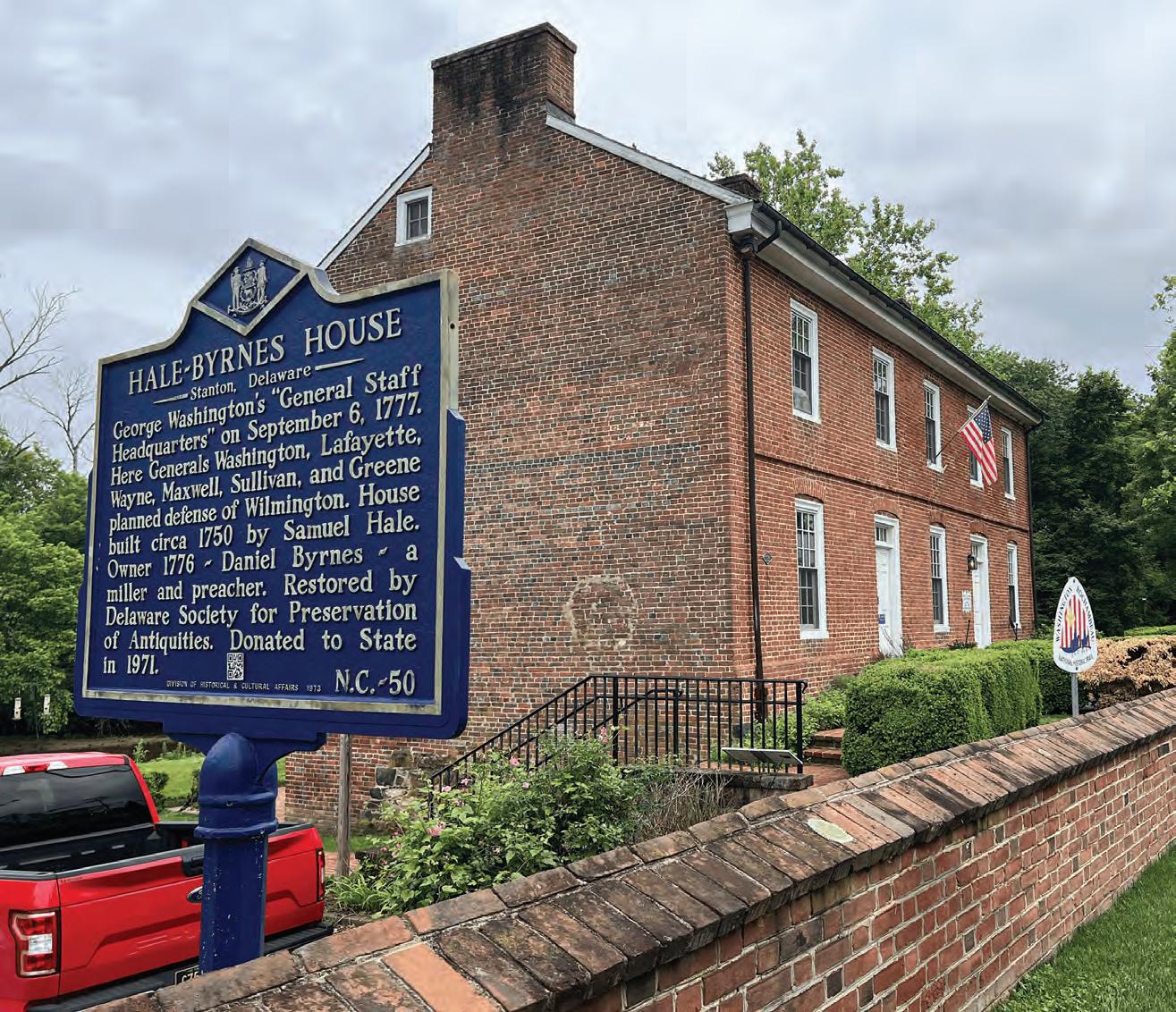
AS THE NATION CELEBRATES its 250th birthday, an even older living relic quietly persists year after year outside a graceful brick home in northern Delaware. The nearly 300-year-old sycamore tree was standing on the riverbank property when George Washington and his staff, including the newly arrived Marquis de Lafayette, borrowed the home’s kitchen from its Quaker owner for a conference of war just before the Battle of Brandywine.
The site between Stanton and Christiana, known as the HaleByrnes House, has seen an increase in visitors this year, many of whom accidentally stumble across the site while detouring around I-95 road work, says historian Kim Burdick.

State and local leaders, along with tourism boosters, would like to reduce that kind of surprise about Delaware’s historic gems, embracing the opportunity presented by the 250th anniversary celebration to introduce visitors and residents alike to Delaware’s merits in ways that ripple beyond 2026.
“We’d like to convert [250th tourists] to return visitors, so they come to experience the history, and then they see our dining scene, our cultural attractions, outdoor activities you can do here, and they come back,” says Jennifer Boes, executive director of the Greater Wilmington Convention and Visitors Bureau.
Scott Thomas, executive director of Southern Delaware Tourism, agrees. When powerful stories draw people in, they can get hooked on the area, he says. “These stories are business generators.”
Delaware 250 organizers are using the anniversary to tell those stories, with events planned throughout the year. Of course, the Fourth of July was a focal point, but the 250th theme started months before. Separation Day on June 15, when the state celebrates cutting ties with both the king of England and the state of Pennsylvania, was a prominent chance for a party. Later this year, a key event will be Return Day, a Sussex County tradition since the 1800s, when political opponents meet to literally bury a hatchet after elections.
“Here’s this once-in-a-lifetime opportunity to really promote our [amenities], so let’s take advantage of it,” is the message from Erik Raser-Schramm, chair of Delaware 250.
The state certainly has its share of revolutionary history, with a border only miles from the heart of the nation’s birthplace in Philadelphia. The state’s capital was relocated to Dover from New Castle in part to put legislators further out of harm’s way. George Washington held his conference in that Delaware Quaker’s kitchen because he was trying to prevent the British from capturing Philadelphia after the Battle of Cooch’s Bridge in Newark a few days before. The turmoil also included naval clashes in the Delaware Bay and the occupation of Wilmington by the British.
“I myself learned so much about Delaware history through this process,” Boes says. “We learned a lot that we
can continue to promote and share after this is all over.”
All three of Delaware’s counties are happy to use the 250th anniversary to showcase not only their history but also their other strengths.
New Castle County has excellent museums, Boes says, along with multiple famous du Pont gardens, the Wilmington Riverfront, a vibrant dining scene, arts venues like The Queen and The Grand Opera House, and beautiful state parks.
Catherine Jenkins, executive director of Kent County Tourism, points to the ratification of the Constitution in Dover and the nearby John Dickinson Plantation, home of the “penman of the Revolution,” which is getting a new visitors center. A pedestrian trail connects the Dickinson site to the St. Jones Reserve and its hiking trails and wetlands. People can enjoy a range of history here in a less crowded setting, Jenkins says.
“Parking downtown [in Dover] is easy, it’s walkable ... a lot of our attractions, especially museums and things downtown, are free, so we’re definitely an affordable destination.” Sightseers can visit the Biggs Museum of American Art, the Delaware Agricultural Museum, the Delaware State Police Museum, and the Air Mobility Command Museum, or get outdoors at Bombay Hook National Wildlife Refuge on the coast.
Getting locals interested is also valuable, Jenkins says. “The more people that know what’s in their own backyard, the better,” she says. Word of mouth can bring in even more visitors. “We have the Air Force base here. They’re always going to have their friends and family visit.”
Sussex County’s Thomas points to the area’s growing reputation as the “Culinary Coast,” along with museums, a chance to paddle rivers that once hid pirates, and the Nanticoke tribe’s annual powwow. “It’s like a nearby faraway destination,” he says. “You feel farther [away] than what you traveled.” The county’s 25 small towns are its jewels, he adds, and visitors love their distinct personalities.
The promotional momentum could continue. The Fourth of July celebration on Wilmington’s Riverfront offered a glimpse of that potential, drawing a crowd of about 20,000. The event also showcased the capacity of the Riverfront space for future uses, Raser-Schramm notes. Organizers also invested in a large jumbotron screen that will be available for future events and, as a bonus, was installed in time to showcase World Cup matches.
“It’s great for Delaware 250, but I would say it’s just as important for the future of tourism and economic development for Delaware that all these entities are working together at such a magnitude,” Raser-Schramm says. “Who knows what other national events you could then try to bring in.”
The Delaware Heritage Commission has been heavily involved in 250th events. Chair Richard Carter points out that it’s an example of the kind of ongoing benefit celebrations like these can create. The commission was originally founded to celebrate the 1976 Bicentennial and has been promoting Delaware history ever since.
The combined 250th effort has strengthened Delaware’s already robust local collaboration, organizers say.
Raser-Schramm notes that the private business community has already stepped up in a big way to raise money for the 250th anniversary celebration. It’s a testament, he says, to the idea that Delaware is celebrating the past, but that this is also the beginning of the next chapter. n

Where History Lives On
America 250 leaves a lasting legacy in New Castle County
BY JENNIFER BOES
THE FIREWORKS and the big July 4 celebrations may have wrapped up, but the America 250 celebration is far from finished.
Over the past several weeks, New Castle County and communities across Delaware delivered incredible semiquincentennial celebrations filled with family fun, concerts, reenactments, and patriotic events. From the state’s signature July 4 celebration on the Riverfront to the City of Wilmington’s Rumble on Rodney to hometown festivities across the region, the energy surrounding Delaware 250 has been remarkable to witness.
These celebrations were the culmination of years of planning and collaboration among state and local governments, community organizations, attractions, businesses, and countless other partners. Seeing so many people come together with a shared purpose has been one of the most inspiring aspects of this celebratory time.
While Independence Day has passed, there are still historic experiences waiting to be discovered throughout New Castle County. And the best part is that this history is not going anywhere.
Two weeks before the Declaration of Independence was signed in Philadelphia, Delaware took the first step toward independence. On June 15, 1776, Delaware officially separated from both Great Britain and Pennsylvania. That moment is celebrated every year during Separation Day in Historic New Castle. While the mid-June festivities are over for
this year, visitors can experience that history year-round by exploring the town’s cobblestone streets, touring its historically significant buildings, and enjoying a meal at a colonial-themed tavern.
That connection continues throughout Northern Delaware, where museums and attractions are building on the momentum of the semiquincentennial well beyond July 4. At the Delaware Art Museum, “Living Indigenous” celebrates the creative contributions of Indigenous artists living in and connected to Delaware. Throughout Hagley Museum and Library’s 235 acres, story panels reveal the untold stories of the people and products that made America. On select days through November, the Delaware History Museum is hosting an immersive learning experience in Historic New Castle to discuss the history and culture of the generations of Black families who lived and worked there.
One of the most meaningful outcomes of the anniversary will be the lasting legacy it leaves behind. In Wilmington, a series of new murals created as part of the city’s Delaware 250 initiative will beautify public spaces for years to come. The city is also advancing efforts to permanently recognize the First Rhode Island Regiment to highlight the contributions of Black soldiers in the fight for American independence.
Across Northern Delaware, Delaware 250 grants have supported museum exhibits, interpretive projects, preservation efforts, archival research, and visitor-ready improvements at historic sites.
©Moonloop Photography

©Ryan Griffith
For Delawareans themselves, this moment has served as a reminder of the incredible historical and cultural assets sitting right in our own backyard.
For Delawareans themselves, this moment has served as a reminder of the incredible historical and cultural assets sitting right in our own backyard. From Historic Odessa, located along a key Colonial transportation route, to the Hale-Byrnes House, where Washington and his officers held a key strategy meeting in September 1777, to Old Swedes Church, used to house troops during the Revolution, there is much to discover and explore.
The semiquincentennial may have centered around a single anniversary, but its impact will continue long after 2026. In New Castle County, it has helped shine a brighter light on a region where history is preserved and still very much alive. n

Jennifer Boes is the executive director of the Greater Wilmington

Convention and Visitors Bureau.
©Moonloop Photography

The Center of the Celebration
From Revolutionary-era landmarks to community celebrations, Kent County is honoring Delaware’s 250th anniversary
BY RACHEL ROHM
DELAWARE RATIFIED THE CONSTITUTION
before anyone else. Now Dover is making sure the country remembers it.
As the nation marks the 250th anniversary of American independence, Delaware’s capital city continues to commemorate the milestone with special exhibits, events, and historic experiences throughout the year. One of the highlights was Dover’s Independence Day celebration on July 4, an all-day festival featuring a parade, live music, fireworks, and several readings of the Declaration of Independence. But the capital city has even more to offer in this celebratory year.
In the heart of downtown Dover, the John Bell House Interpretive Center of First State Heritage Park hosted free games and crafts, a founding father costume contest, and a free revolutionary Dover walking tour on July 4. Woodburn, the Governor’s Mansion, and Legislative Hall were also open for tours that day.
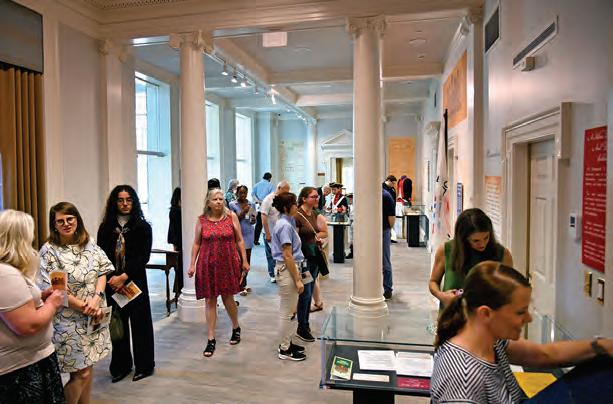
Located across from Legislative Hall and around the corner from the Old State House, Delaware’s original state capitol, the Biggs Museum of American Art is a must-see for anyone wanting to celebrate the 250th anniversary. Drawing from objects in its permanent collection, the Biggs has a special exhibition, “Reflections: 25 Objects for 250 Years of Delaware History,” on view through Jan. 3, 2027. The exhibition was curated entirely by members of the Delaware community, whose written responses explaining their choices appear on exhibit labels. The Biggs hosted a silent fireworks display and other family activities on July 2 and was also open on July 4 with special programming.
Steps away from Legislative Hall, the Delaware Public Archives hosts “Revolutionary Lives: 1776 to Tomorrow.” The exhibit explores how Delawareans have shaped, experienced, and commemorated the American Revolution across 250 years and is free and open to the public during regular Delaware Public Archives operating hours through the end of July.
The Archives will host a special program on Saturday, July 11, at 10:30 a.m., featuring a brief presentation of “Independence or the Bayonet,” as well as the premiere of “Caesar Rodney’s Ride: The Story of Delawareans and the Declaration of Independence,” presented by the Delaware Heritage Commission.
Outside downtown Dover, don’t miss the Air Mobility Command Museum and the John Dickinson Plantation. Home of the “Penman of the Revolution,” the John Dickinson Plantation offers living history programming and tours and is expected to feature a new visitor center with historic information about the entire St. Jones Neck area.
Other cities and towns in Kent County are hosting events throughout the remainder of the year. One notable upcoming event is Harrington Heritage Day on Aug. 22, highlighting the history of the railroad town. The Delaware State Fair will also be full of patriotic fun, running July 23-Aug. 1. Milford’s Riverwalk Freedom Festival on Sept. 19 will culminate in a dazzling fireworks display.
As America turns 250, visitors will have no shortage of places to mark the occasion. The historic and cultural sites of Kent County are ready to showcase Delaware’s role in shaping the last 250 years. n

Rachel Rohm is the visitor services manager for Visit Central Delaware.

A Season of Opportunity
Major events, strategic partnerships, and year-round attractions are creating new opportunities for tourism in Sussex County
BY TINA COLEMAN
THE SOUTHERN DELAWARE TOURISM (SDT) team is consistently seeking, evaluating and creating opportunities to expand our reach to potential visitors, as well as current visitors who may not be familiar with all Sussex County has to offer.
Exciting new opportunities are emerging as the nation prepares to celebrate its 250th anniversary in 2026, and many events and tourism partners throughout Sussex County are adding a 250th-anniversary twist to their offerings. Examples include Georgetown’s Return Day this November. Return Day is always popular, but this year will feature special
250th-anniversary programming and opportunities to share the rich heritage stories that define Sussex County.
Additionally, Georgetown Speedway will host an old-fashioned Sussex County Fourth of July celebration, featuring an extended weekend of carnival rides, truck and tractor pulls, freestyle motocross, live music, fireworks, antique tractors, and classic cars. Southern Delaware Tourism is also spotlighting Sussex County’s history and heritage through promotions highlighting the region’s historic sites, attractions, and stories in recognition of this milestone anniversary.
Another significant opportunity this year is the expected influx of soccer fans traveling to the region for the 2026 FIFA World Cup, with many visitors expected to extend their stays in Southern Delaware. Additionally, several Sussex County sports facilities, including River Soccer Club in Frankford, Dave Marshall Tennis & Pickleball in Lewes, and Game On Sports in Millsboro, have received state grant funding to help strengthen sports tourism throughout the county.
SDT has also expanded its outreach to the local community by offering a free Tourism Ambassador program for residents and hospitality employees. To date, more than 250 ambassadors have completed the program and become certified ambassadors. This training equips participants to provide visitors with the best possible information, recommendations, and guidance about Southern Delaware’s attractions, experiences, and amenities.
We actively promote Southern Delaware as a year-round destination thanks to many tourism partners that maintain vibrant calendars of events throughout the seasons including festivals and entertainment, welcoming accommodations, and year-round delectable dining options. We work closely with local restaurant partners to highlight our unique Culinary Coast™ restaurant scene and the many collaborations that exist between local chefs and producers.
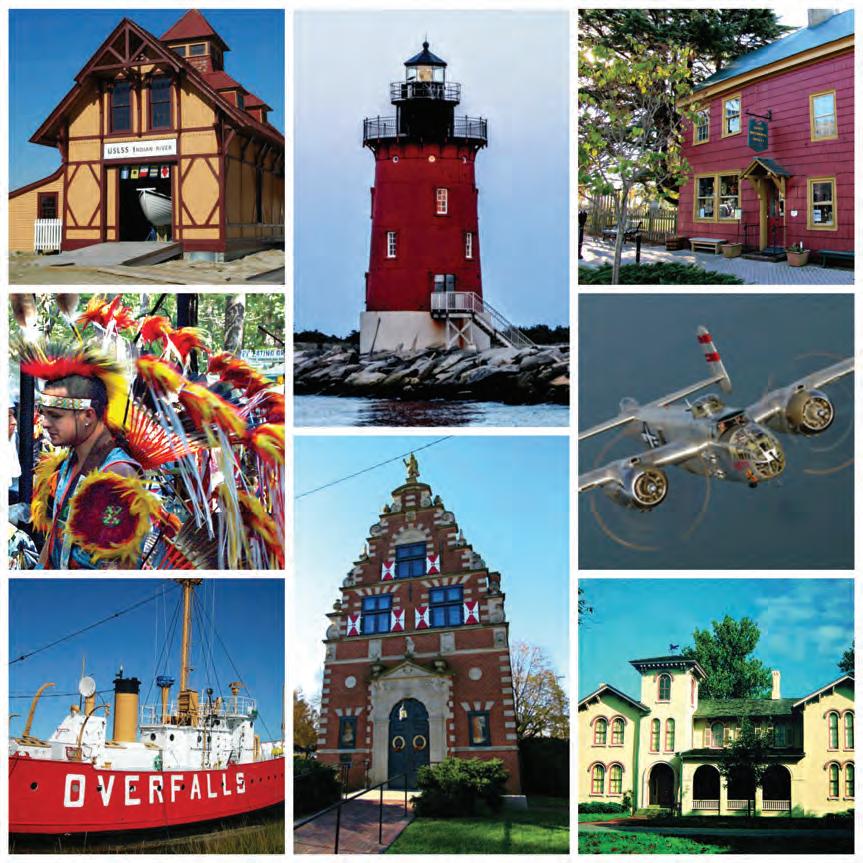
This bucolic area has long been a popular and welcoming resort destination with abundant natural resources, active and innovative tourism partners, and scenic beauty.
This bucolic area has long been a popular and welcoming resort destination with abundant natural resources, active and innovative tourism partners, and scenic beauty. It’s also a mid-Atlantic agriculture and aquaculture hub. In combination, these create countless avenues for promotion by SDT that encourages visitation and subsequent positive, long term economic impact.
In fact, with more than $3 billion in visitor spending annually, tourism is second only to agriculture as a driver of revenue generation in Sussex County. More than 26,000 Sussex County residents are employed in jobs supported by tourism. The industry also helps attract businesses to the
area, creating additional employment opportunities. As a result of visitor spending, each Sussex County household pays approximately $1,826 less in taxes annually. Additionally, for every $1 spent directly by a visitor, another $1.20 is generated in indirect sales throughout the local economy.
SDT’s mission is to support and encourage the identification, development, and promotion of sustainable, yearround tourism in Sussex County that contributes to economic growth and enhances quality of life. n

Tina Coleman is the communications manager for Southern Delaware Tourism.

Delaware’s Opportunity in a Global Sports Moment
BY JESSICA WELCH
WITH THE FIFA WORLD CUP 2026™ in nearby Philadelphia drawing hundreds of thousands of visitors and millions of viewers from around the globe, the eyes of the world are on our region. The Delaware Tourism Office hopes some of those eyes are looking our way. While Delaware is not a host state, it is uniquely positioned to benefit from one of the largest sporting events ever held in North America.
And those benefits go far beyond soccer. The World Cup is a global showcase that drives tourism, supports hospitality businesses, and introduces travelers to destinations they may not have otherwise considered visiting. For Delaware, it represents an opportunity to welcome new visitors, strengthen the tourism economy, and elevate the state’s profile on an international stage.


Today’s travelers increasingly seek experiences beyond the host city. They want to explore the surrounding region, discover authentic local culture, and make the most of their time while visiting. Delaware offers exactly that: awardwinning beaches, vibrant downtown districts, rich history, outdoor recreation, acclaimed restaurants, and tax-free shopping — all within easy reach of Philadelphia.
Over the past year, the Delaware Tourism Office has worked to position the First State as an attractive extension of a World Cup trip. The office has developed itineraries, digital content, and international marketing efforts designed to introduce visitors to the experiences available across Delaware. With many international visitors expected to spend several weeks in the region, Delaware offers memorable opportunities between matches and beyond the stadium.
Whether exploring Wilmington’s cultural attractions, spending a week at the Delaware beaches, or enjoying a culinary tour through one of the state’s historic communities, visitors can make Delaware an essential part of their Mid-Atlantic experience.
The benefits extend well beyond tourism attractions. Visitors spend money in hotels, restaurants, retail shops, transportation services, and entertainment venues. Those expenditures support jobs, generate tax revenue,
and create economic activity that reaches communities throughout the state.
Perhaps even more important are the long-term benefits. Tourism is often someone’s first introduction to a destination. A visitor who spends time in Delaware during the World Cup may return later for a family vacation, recommend the state to friends, or consider future business opportunities here. The visibility generated by a global event can create awareness that lasts long after the final match.
Delaware has spent decades investing in tourism promotion, visitor experiences, and sports tourism development. The World Cup provides another opportunity to build on that momentum.
While no one can predict exactly how many visitors Delaware will welcome as a result of the tournament, one thing is certain: major international events create opportunities for destinations that are prepared to tell their story. With the world knocking at our doorstep, Delaware is ready to show visitors why the First State is a destination worth discovering. n

Jessica Welch is the director of the Delaware Tourism Office.
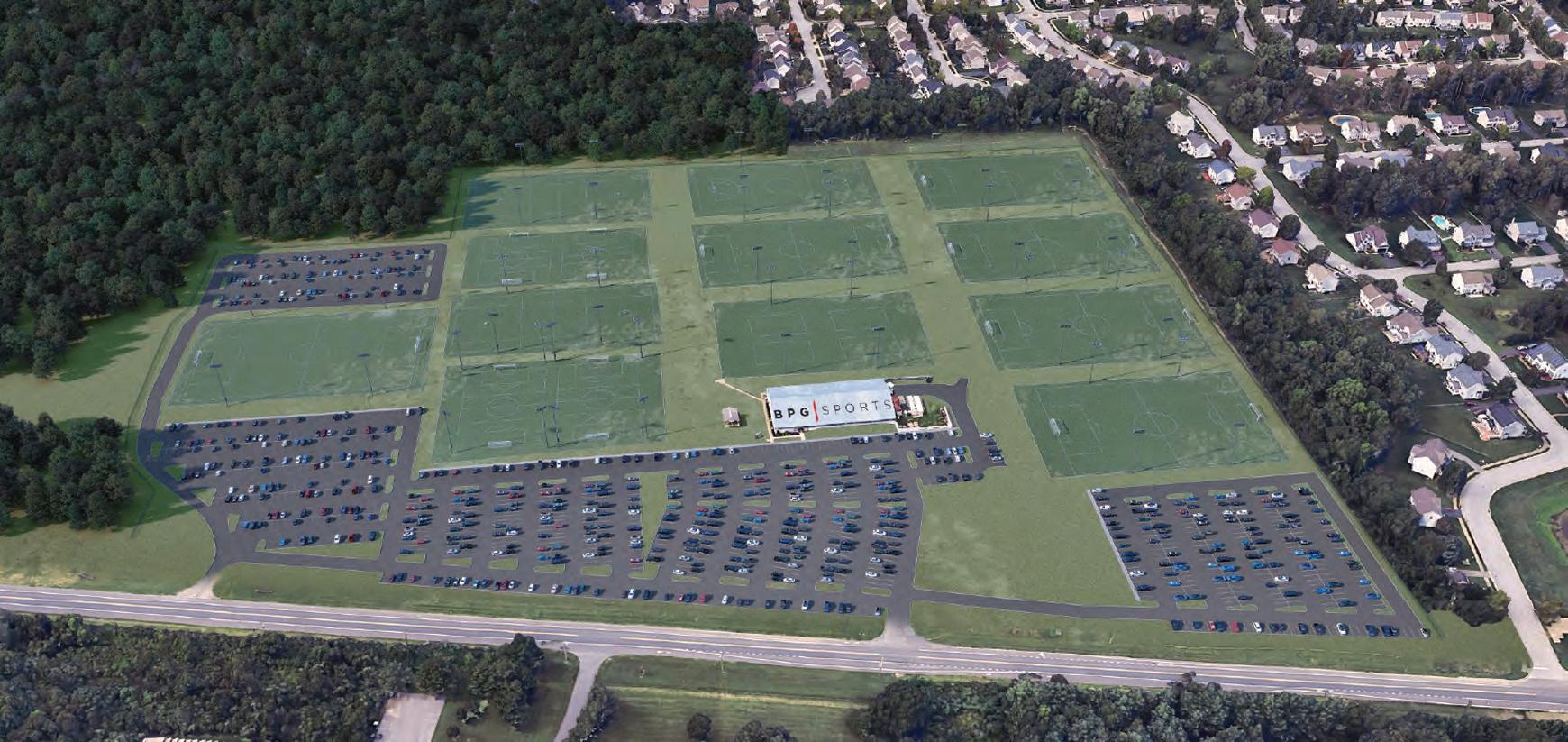
Open for Play Strategic investments are helping transform Delaware into a year-round destination for youth, amateur, and professional sports
BY STEVE CAVALIER | PHOTO BY FAITH ROBINSON
WHEN BPG|SPORTS OPENED Chase Fieldhouse in Wilmington in 2019, the goal was straightforward: create a world-class facility that would bring out-of-state visitors to Delaware on weekends, filling hotel rooms, driving restaurant traffic, and generating economic activity that multiplies well beyond the playing field. That logic proved correct, and it has since guided a broader strategy that is reshaping Delaware’s identity as a sports tourism destination.
Sports tourism is one of the fastest-growing segments of the travel industry, and states that invest in the right infrastructure are reaping significant rewards. Delaware’s location between Philadelphia, Baltimore, and Washington, D.C., puts millions of potential visitors within a twohour drive. What was missing was the caliber of facilities needed to attract large-scale tournaments and recurring events. That gap is closing.
A centerpiece of this momentum is the Delaware Sports Tourism Capital Investment Fund, a forward-thinking public initiative that has provided critical support for multiple major projects across the state and helped catalyze investment that would otherwise have taken years longer to materialize.
BPG|SPORTS has been proud to serve as a key partner in that effort.
From our foothold at Chase Fieldhouse, we’ve grown a portfolio that now spans the length of Delaware, with each facility purpose-built to attract out-of-state visitors, generate overnight stays, and strengthen the state’s reputation as a premier sports destination.
At Kirkwood Sports Complex in New Castle, a $10 million capital improvement project is underway at the 65-acre facility. With support from a $4 million state grant, BPG|SPORTS is converting grass fields to all-weather synthetic turf, upgrading lighting, renovating the indoor arena, and improving parking. The result will be a year-round destination for the 1.5 million visitors who pass through Kirkwood annually and a stronger
platform for the 15 large-scale tournaments held there each year.
In central Delaware, our management partnership with DE Turf in Frederica has been bolstered by $4.15 million in state investment to build an indoor dome facility on the already popular campus, extending the competitive season and expanding the range of events the 12-field, 2,000-seat-plus complex can host.
Down in Sussex County, Sports at the Beach in Georgetown adds yet another dimension. The 16-field travel baseball complex accommodates up to 100 teams and 10,000 visitors per event, drawing families from across the Mid-Atlantic and extending Delaware’s sports tourism footprint to the southern end of the state.
One of the most unique initiatives is Indoor Track Delaware, a new facility planned for the Chase Fieldhouse campus and backed by $6 million from the Capital Investment Fund. It will feature a 200-meter permanent banked competition track, the first of its kind in Delaware since 2013, with convertible infield surfaces for basketball, volleyball, and wrestling. Demand is already strong, with more than 20 groups expressing early interest.
Taken together, these investments form a statewide sports infrastructure network stretching from Wilmington to Sussex County, capable of hosting millions of visitors and generating hundreds of millions of dollars in annual economic activity. Delaware has always had a passion for sports. Now, it has the facilities to match. n
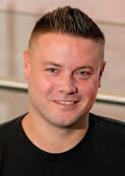
Steve Cavalier is the senior vice president and general manager of BPG|SPORTS.

DELAWARE Deep Dive




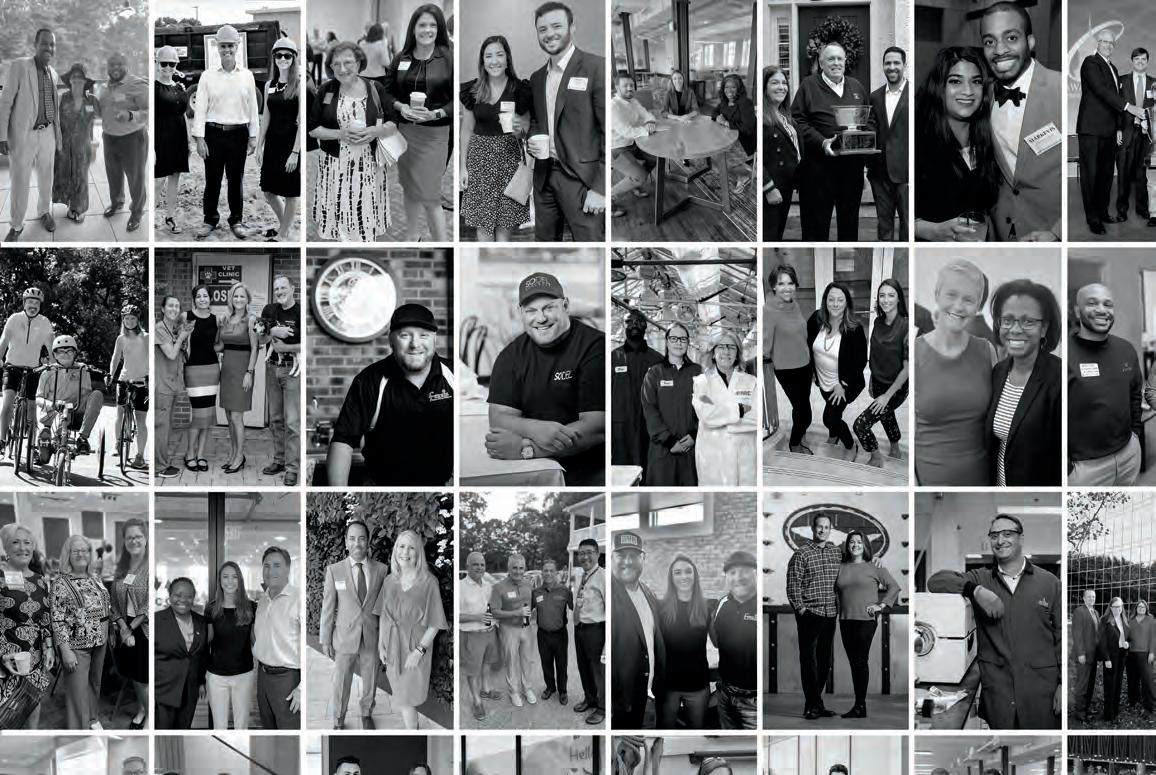


75 Years of Gathering
Winterthur offers Delaware’s business community a world apart
BY CHRIS STRAND
YOU KNOW THAT MOMENT at the start of a great offsite, when people walk in, look around, and visibly exhale? When the evergrowing inbox, pinging notifications, and feeling of everyday sameness fall away and something shifts?
That experience begins with the power of place. Our conference and event spaces transport guests to a setting where beauty abounds, curiosity leads, and innovation follows — much as it did when founder Henry Francis du Pont lived and worked on the estate.
Du Pont believed this place, including the garden, landscape, and 175room house-turned-museum, should be a source of education and inspiration for all time. That’s also a perfect brief for a great corporate retreat.
We know nature has proven benefits, and Winterthur has 1,000 acres of it. Where else can you step out of your breakout session and into one of the great naturalistic gardens in America?
Winterthur is also home to one of the largest collections of American decorative arts, exceeding 90,000 objects from the United States and around the world, not to mention our expansive library collection. Researchers say viewing art lowers stress, restores cognitive energy, and boosts creative problem-solving.
BUILT FOR BUSINESS
Our café provides boxed lunches for daytime events and meals for groups, whether it’s a half-day leadership retreat, full-day conference, or evening reception to reward and inspire your team.
PARTNER WITH WINTERTHUR
For organizations that want more than a one-time rental, we are relaunching the Winterthur Business Associates (WBA) program this fall. Membership ranges from $1,500 to $25,000, with every tier delivering value: from corporate access cards for estate visits and discounted use of rental spaces, to complimentary private tours of the house and garden for groups of up to 20, and a 10% discount on Winterthur memberships for employees.

Winterthur’s venue portfolio is purpose-built for corporate gatherings of every scale. Copeland Lecture Hall seats up to 340 for keynotes and presentations. The Brown Center, flooded with natural light, pairs with the adjacent Hawkes Center for retreats and team building. The Visitor Center Café, with its glass walls framing the garden, is a natural choice for luncheons and receptions.
For evening events, the Galleries Reception Area becomes a grand setting. With advance planning, and as budget permits, we can tailor events by adding after-hours gallery access, private garden tram tours, and behind-the-scenes experiences that can turn a company dinner into a lasting memory.
Corporate clients can layer in a full menu of curated experiences: private house tours through spaces not on the general admission route, conservation lab tours, expert-led garden walks, and themed lectures from our curatorial staff. Every engagement is tailored. There are no off-the-shelf packages here because no two groups are the same. Some options require booking one to two months in advance.
At our top tiers, WBA members receive access to private events with Winterthur’s senior staff. Imagine your team gathered for an evening while one of our curators walks them through objects most visitors never get to see up close, or a horticulturalist shares the story of our wild garden.
Think of the cultural equivalent of a great Lectures on Tap event, but entirely private, off-script, and uniquely Winterthur. The top membership also grants general admission to Winterthur for all employees who show a company identification badge.
A DESTINATION LIKE NO OTHER
Staffed by 175 full-time and 150 part-time employees, along with more than 200 volunteers, including Delaware Master Naturalists who help steward our natural lands, Winterthur welcomes about 150,000 guests each year. Artisan Market, now in its seventh year, attracts more than 7,000 people over three days and was recently named to the American Bus Association’s 2025 Destinations Best of the Best.
We also invite local corporations and nonprofits to explore this exceptional place of beauty and history. Our “At Home at Winterthur” exhibition, which marks the museum’s 75th anniversary, tells the full story of this landscape, home, and world-renowned center for decorative arts, scholarship, and conservation. n

Chris Strand is the director and CEO of Winterthur Museum, Garden & Library.
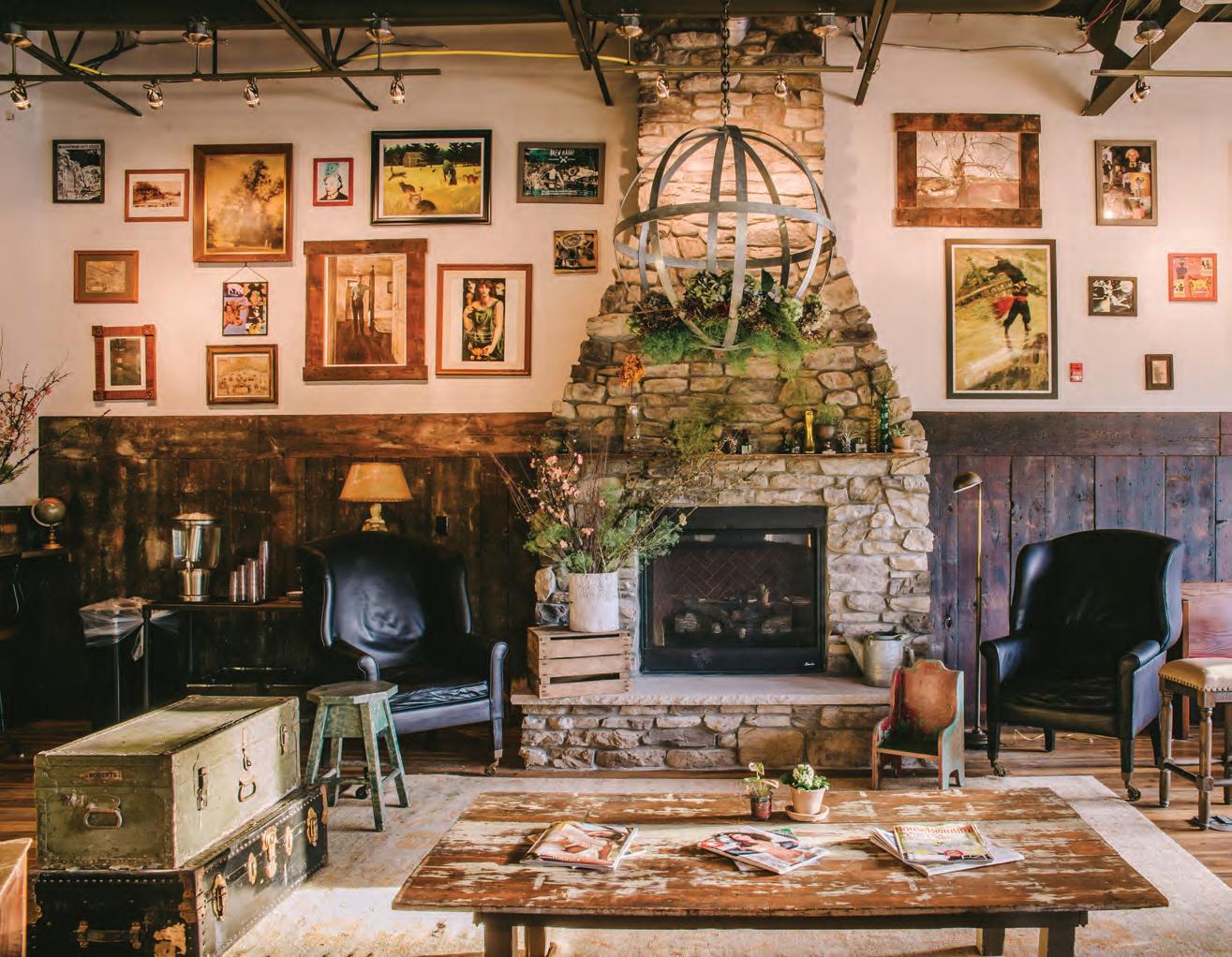
The Art of Delaware Coffee
Three decades of investing in community
WHEN ALISA MORKIDES OPENED Brew HaHa! in 1993, her vision was to transport the espresso bar culture she discovered while traveling throughout Italy to her home state of Delaware. It was important to bring back not only exceptional coffee, but also spaces where people could gather, connect, and create. In 2015, her vision expanded when Brandywine Coffee Roasters began roasting in our Trolley Square café. Now in its third
BY JILLIAN BRUCE-WILLIS
decade of business, our model combines roasting, wholesale distribution, e-commerce, and retail operations under the same umbrella.
Like a majority of hospitality operators, we’re used to tight margins. The challenges of normal operating costs have only been exacerbated by credit card swipe fees, increased insurance costs, rising utility bills, shipping costs, and tariffs. Margins continue to shrink in both companies, but the demand

for community is stronger than ever. Amid an ever-changing business landscape, one thing that remains constant is the art of a good cup of coffee and the connection it creates.
We find it beautiful that specialty coffee is both global and hyperlocal at the same time. We nurture relationships with farmers and producers around the world, uphold their efforts by meticulously roasting their harvests, and then skillfully serve the coffee to our local customers. Along the way, genuine connections are made between our producers, roasters, staff, and guests. Our cafes aren’t just a place to buy coffee, they are a place to catch up, share ideas, create, work, and relax.

Brew HaHa! strives to provide a space for inspiration and growth. Our team members navigate busy shifts to pour tiny works of art that fuel their neighbors. Brandywine Coffee Roasters, now roasting in its own warehouse in Wilmington, provides coffee to more than 500 wholesale customers, along with a growing online retail program. The people who make up these teams are our company’s most important asset, which is why we work so hard to offer them competitive wages, benefits, and a working environment that challenges them to grow. Despite shrinking margins, investing in the people who make our businesses run every day always provides great returns. Whether moving up in our company or sharpening their skills for other career paths, we pride ourselves on developing our team members.
I know firsthand about growing as a professional within our company. More than 15 years ago, I joined Brew HaHa! as a cashier, and since then, I have worked in almost every role within the business. Company founder Alisa Morkides mentored me through management and leadership roles. When it came time for her to retire in 2022, she had the opportunity to sell to the highest bidder, but instead she handed over the reins to me. Not because I could offer her the most compensation, but because she’d invested in me. Her returns are knowing that her values are still intact within the company, and that her protégé has the chance to improve upon a Delaware institution. Now it’s my life’s work to keep investing in our community and to keep growing Delaware coffee. n



CHAMBER CHASE GOLF TOURNAMENT
WEDNESDAY, SEPTEMBER 9, 2026



Jillian Bruce-Willis is the owner of Brew HaHa! and Brandywine Coffee Roasters.

Running a Chef-Driven Restaurant Group
Creating memorable dining and managing the changing food and beverage industry
BY SCOTT KAMMERER
RUNNING A CHEF-DRIVEN restaurant group is one of the greatest joys of my life. Since SoDel Concepts was founded in 2004, we have experienced tremendous growth, change, and evolution. Yet through the busy summers, the second seasons, and the shifting food and beverage trends, there is one thing that has remained constant: our commitment to our three guiding principles — cooking beautiful, simple food, developing the people we work with, and trying every day to make the world a better place.
These principles are not slogans. They are the foundation of our culture and the reason we have been able to thrive in Southern Delaware for more than two decades.
At the heart of a chef-driven restaurant group is a belief in culinary excellence. We have always empowered our chefs and fostered a collaborative environment where culinary creativity and operational expertise work hand in hand. Our chefs are the driving force behind every concept we create.


The joy of running a chef-driven restaurant group is the joy of watching people grow, of seeing guests connect over a meal, of building community through food, and of knowing that every day brings a new opportunity to create something meaningful.
Consistency is one of the most underrated joys of this business. Every restaurant has access to the same suppliers, the same products, the same talent pool, and the same design trends. What sets us apart is the experience we deliver from the moment a guest pulls into our parking lot. Hospitality is not a single interaction; it is a sequence of thoughtful moments: a warm greeting, the confidence of a well-trained team, the reliability of a perfectly executed dish, and the feeling of being genuinely cared for.
To deliver that level of consistency, we must take care of our people. That means ensuring our teams have the tools they need to be successful. Those needs can range from functioning equipment to hands-on training, mentorship, and a supportive environment where they can grow. When our employees feel valued and equipped, they create extraordinary experiences for our guests.
I am grateful to be a small business owner in Delaware. The camaraderie within our industry is special. Fellow restaurant owners, local
partners, and the communities we serve have supported us in countless ways. In return, we are committed to giving back — not because it is good business, but because it is the right thing to do. Making the world a better place starts in our own backyard.
The joy of running a chef-driven restaurant group is the joy of watching people grow, of seeing guests connect over a meal, of building community through food, and of knowing that every day brings a new opportunity to create something meaningful. It is a privilege I never take for granted. n

Scott Kammerer is the CEO of SoDel Concepts.

Powering Innovation in Agriculture
BY RICK DEADWYLER
AT CORTEVA, we’re dedicated to solving some of the toughest challenges facing the world today and leveraging new tools to help farmers become more resilient amid changing growing conditions, produce more food while conserving resources, and contribute to a thriving global economy.
Corteva and its heritage companies have been part of the fabric of Delaware for more than 200 years. We’re proud to have deep roots in Delaware, an innovation hub with a storied tradition in agriculture. We recently celebrated our return to downtown Wilmington and look forward to our future in the First State, providing the products and services needed to meet the demands of the global food system.
With crop protection solutions that work with nature and help sustain

it, we are driving the next generation of technology in agriculture to ensure farmers have the critical tools required to feed a growing planet and do so in ways that are more sustainable than ever before.
Crop protection tools are the backbone of agriculture, and we are proud to have built a business that is home to market-leading innovation. All farmers need to manage weeds, diseases, and pests that can affect their crop yields — even organic farmers. Corteva works with all types of farmers and supports their ability to choose the tools they feel are best for their farms.
For example, two of our products — Reklemel™ active and Rinskor™ active — have won awards for their sustainability advantages.
Utrisha™ N, part of our nature-based biologicals portfolio, is a natural bacterium that enhances a plant’s use of nutrients, including nitrogen,
As a leader in global agriculture, we are focused every day on making a difference for farmers around the world and in the communities where we live and work.
which improves crop productivity throughout the growing season. This, combined with additional work focused on biodiversity, is helping us maintain our 25 million-acre biodiversity goal.
These are the kinds of leading solutions that help farmers do more with less. They increase the amount of food farmers can grow so we can feed more people more affordably while reducing the amount of land, water, and energy needed to grow food.
As we look ahead to our future and the company’s planned separation later this year, our legacy of innovation will continue with Corteva as a market-leading crop protection and nature-inspired technologies business and Vylor™ as an advanced seed and genetics company anchored in elite germplasm and biotechnology.
As a leader in global agriculture, we are focused every day on making a difference for farmers around the world and in the communities where we live and work.
Corteva is proud of its commitment to strengthening communities through strategic partnerships, philanthropic investments, and employee volunteerism focused on food security, agriculture-focused STEM education, and developing the next generation of agricultural and community leaders.
Through key partnerships in our region with organizations including the Food Bank of Delaware, Healthy Foods for Healthy Kids, Boys & Girls Clubs of Delaware, and United Way of Delaware, Corteva and its employees help address food insecurity, expand access to hands-on science and nutrition education, and create opportunities for youth to thrive and succeed. Guided by the Corteva Grows employee volunteer initiative, our company empowers employees to contribute their time, expertise, and resources to build stronger, healthier, and more resilient communities where we live and work.
With our company’s Corporate Business Center move to the city of Wilmington, we are proud of our commitment to Delaware and its innovators, farmers, and organizations that are shaping a more sustainable future, here and around the world. n

Rick Deadwyler is the director of government and industry affairs for Corteva’s U.S. East Region.
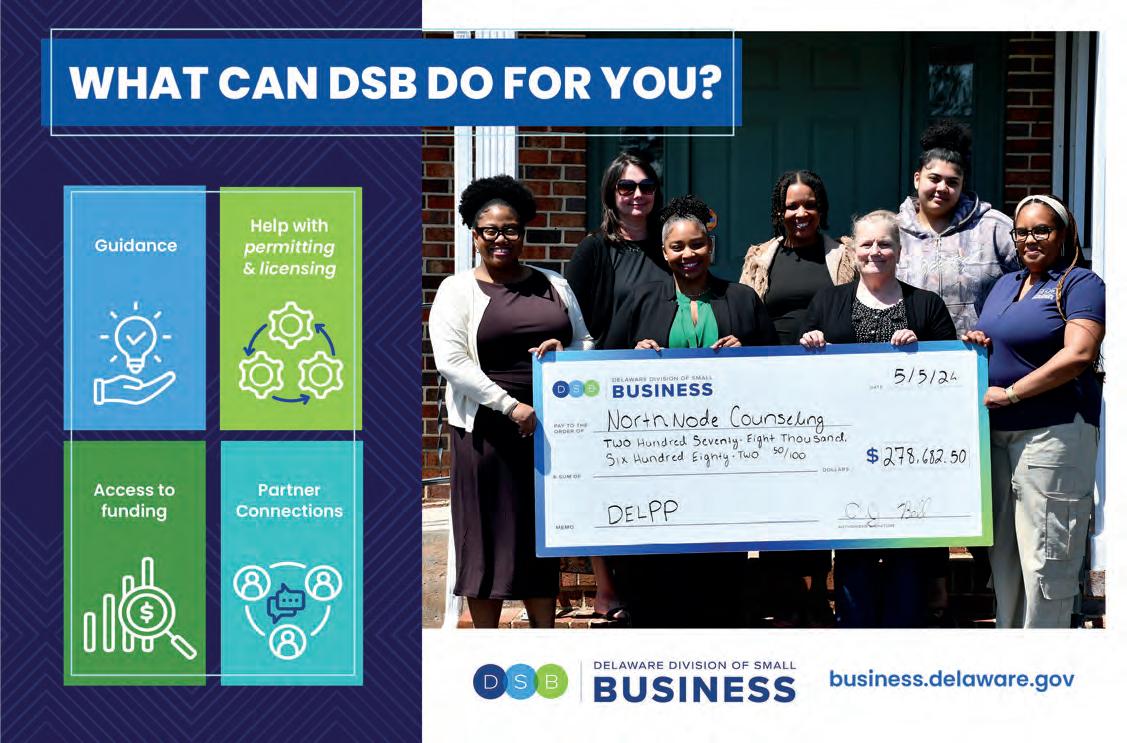
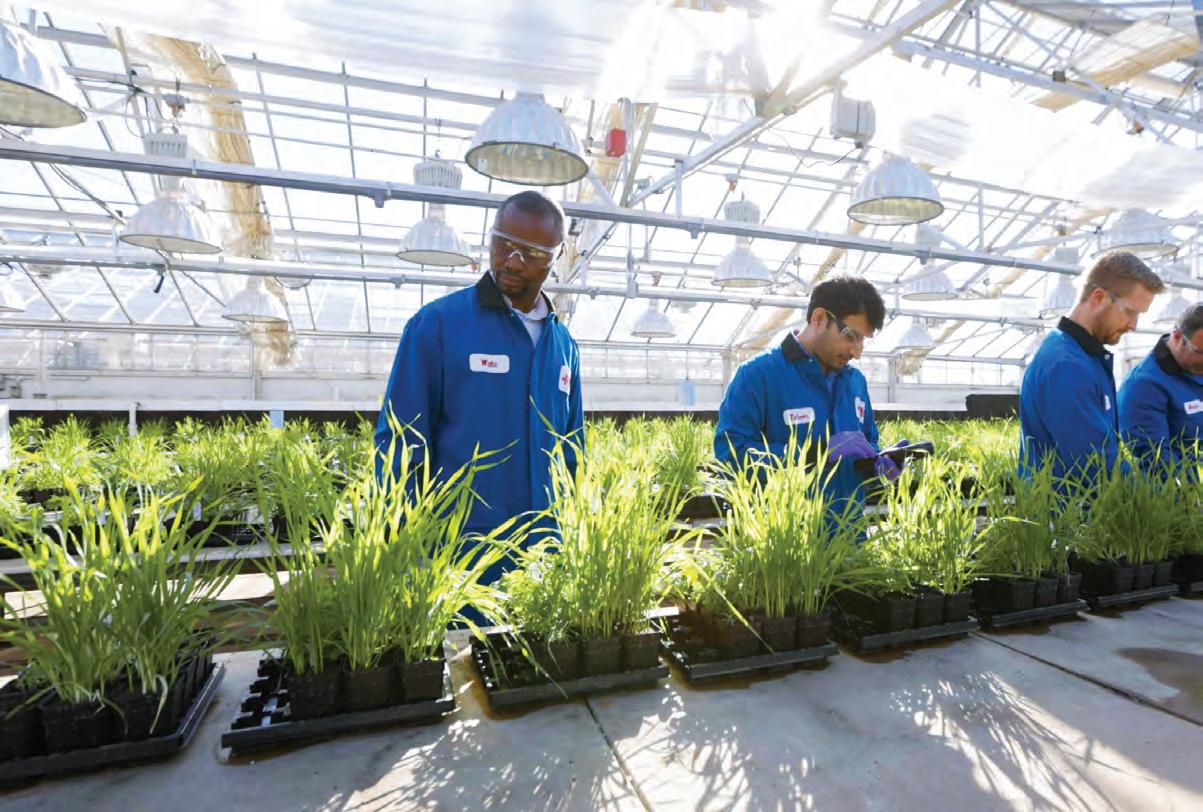
Fueling Agricultural Breakthroughs
A culture of innovation at FMC’s Stine Research Center
BY SEVA ROSTOVTSEV, PH.D.
INNOVATION IN CROP PROTECTION has always required patience. The science is complex, the regulatory pathways are rigorous, and the stakes are high. But the challenges growers face often evolve faster than the pace of innovation. Pest resistance develops quickly, climate variability is increasing, and the need for effective, sustainable solutions has never been greater.
At FMC’s Stine Research Center in Newark, Del., our scientists are determined to close that gap. Our team is engaged in some of the earliest and most consequential stages of discovery, identifying the most promising
molecules and making the critical decisions about which technologies will advance to development.
That determination has produced impactful results. In recent years, FMC has brought to market innovations that address some of growers’ most pressing challenges. For example, Dodhylex™ active is a novel herbicide mode of action discovered and developed at Stine that controls resistant grass weeds in rice. For more than 30 years, limited access to new modes of action has constrained growers’ ability to effectively manage these weeds, resulting in significant yield losses and increased production complexity.

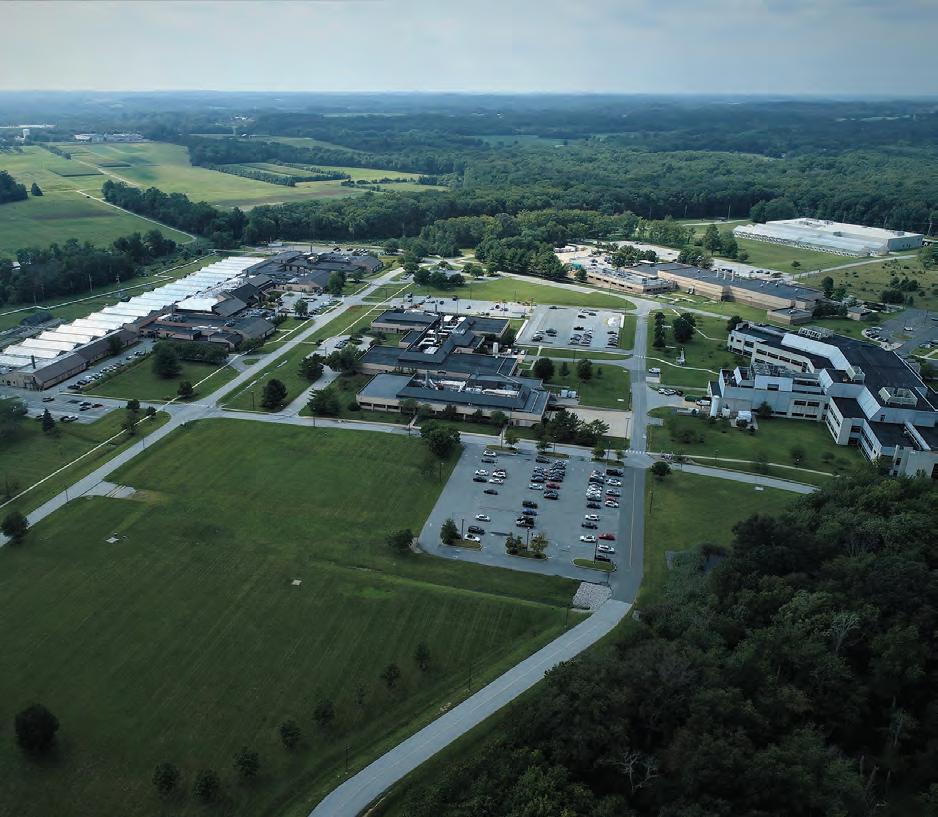
Rimisoxafen is another example of a novel mode of action — and the first-ever dual mode of action — herbicide discovered and developed by FMC. The dual mode of action makes it far more difficult for weeds to survive and adapt, providing a critical new tool in the fight against herbicide resistance.
These outcomes reflect the unique organizational culture at Stine, a culture that allows for rigorous scientific discovery while also moving efficiently and effectively. We have deliberately worked to reduce friction in how decisions are made, focus resources on the highest-potential opportunities, and bring teams together earlier in the process so programs can advance more efficiently. Breaking down structural barriers between chemists, biologists, and development teams promotes collaboration and supports team members’ professional development as they expand their skill sets across disciplines.
Our culture of collaboration extends across our global network and to growers. Teams at Stine work in close coordination with field biology, regulatory, and regional experts from the beginning of a program, helping ensure that what is discovered in the lab can ultimately be deployed effectively in the field. Understanding the challenges growers face in real conditions and across diverse geographies helps us prioritize where discovery efforts are most needed and ensures the solutions we develop are
relevant to the people who depend on them.
Dodhylex™ active demonstrates FMC’s ability to translate innovation into real-world impact for rice growers by addressing one of the industry’s most persistent challenges: herbicide-resistant grass weeds.
Looking ahead, the demands on agricultural innovation will only continue to grow. FMC’s response is grounded in continued investment in research and discovery at critical sites like Stine, as well as in the systems and culture that allow that discovery to translate into impact. Clarity in decision-making, strong cross-functional integration, and a consistent focus on outcomes allow us to move with both speed and purpose.
The goal is to deliver solutions that are effective, practical, and sustainable on timelines that are meaningful to the growers we serve. That is the standard we hold ourselves to, and it is the work we are committed to advancing. n

Seva Rostovtsev, Ph.D., is the executive vice president and chief technology officer at FMC Corporation.
More Than Poultry
Allen Harim’s commitment to community and growth
CONTRIBUTED BY ALLEN HARIM
FOR GENERATIONS, poultry production has been deeply woven into the fabric of Delaware’s economy, and Allen Harim continues to play a significant role in that story. With more than 2,000 employees across its facilities and more than $500 million spent annually with vendors, suppliers, and service providers, the company’s impact reaches far beyond its processing plants and farms.
Processing approximately 90 million chickens each year, Allen Harim remains an important link between Delmarva’s farming community, food supply chain, and regional economy. From local manufacturers and fabricators to electricians, welders, and transportation providers, the company supports a broad network of businesses throughout the region.
According to CEO Mike Little, those partnerships are an important part of Allen Harim’s long-term commitment to Delaware and the Delmarva Peninsula.
“We are proud to be part of the local economy and part of the local community,” Little says. “Our business depends on strong relationships — with employees, farmers, vendors, and the communities where we operate.”
That relationship with the agricultural community remains especially important. Allen Harim purchases local grain and works directly with area farmers who raise chickens for the company, creating year-round economic stability for many family farms regardless of seasonal growing conditions.
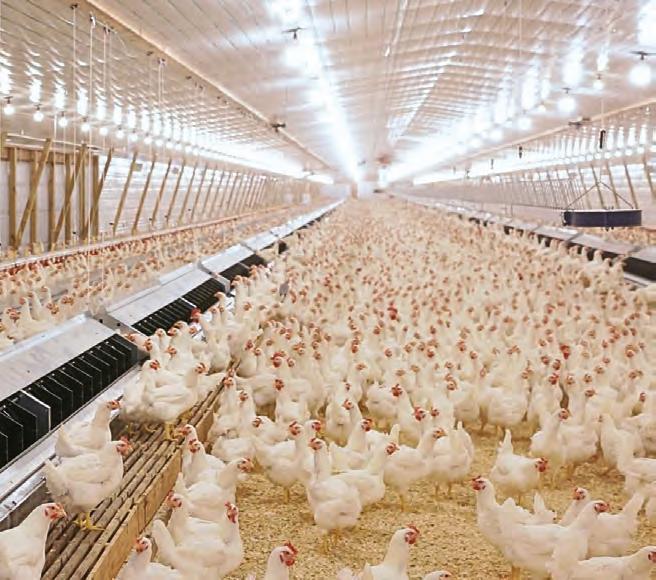
“Everyone is important,” Little says. “Our employees are essential to everything we do.”
“Even when traditional growing seasons fluctuate, poultry farming provides farmers with a reliable source of income,” Little says. “That consistency matters to families and communities across Delmarva.”
Allen Harim’s commitment to Delaware also extends to its workforce. The company invests in opportunities for employees at every level, from internships and management training partnerships with regional colleges and universities to hands-on skill development programs that help team members grow within the organization.
“We believe in promoting from within whenever possible,” Little says. “Someone may start in an hourly position and continue building a career as they move up through the company.”
That people-first mindset is reflected in the company’s approach to employee support and recognition, including competitive benefits, retirement programs, service awards, and initiatives that recognize employees for their contributions and long-term commitment to the company.
Like many manufacturers and food producers, Allen Harim faces ongoing challenges tied to workforce shortages and rising operational costs, including fuel, grain, and packaging expenses. While the company continues investing in automation where appropriate, Little emphasized that people will always remain central to the poultry industry.
“There are areas where technology can help us operate more efficiently, but this industry will always depend on dedicated employees,” he says.
Allen Harim also remains focused on educating consumers about poultry production and addressing misconceptions within the industry. “In the United States, no chicken producers use added hormones,” Little says. “That’s an industrywide fact, and we believe transparency and education are important.”
As a member of organizations including the Delmarva Chicken Association, National Chicken Council, and USA Poultry & Egg Export Council, Allen Harim continues to stay engaged in industry advocacy while maintaining its roots as a company built on local relationships, family legacy, and community support. n

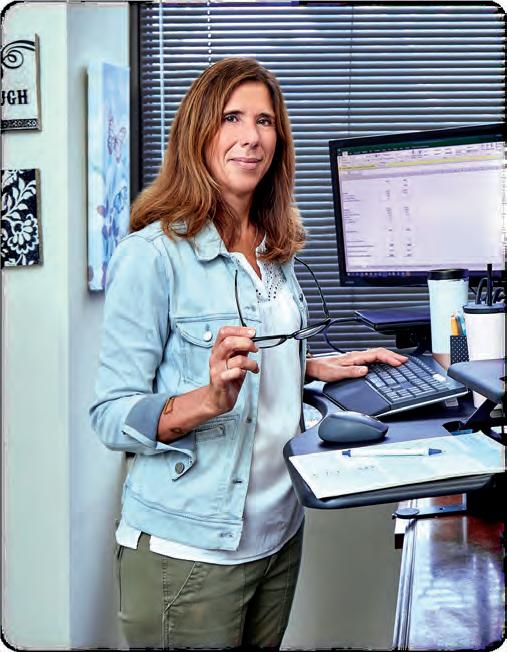

Addressing Agriculture’s Next Big Challenges
BY DEVIN BONNER
AGRICULTURE IS CHANGING QUICKLY, with farmers, researchers, and communities facing growing pressure from climate change, crop disease, food security concerns, workforce demands, and the rapid growth of new technology. At Delaware State University (DSU), those challenges are shaping a growing body of research, technology-driven training, and hands-on student experiences designed to prepare the next generation of agricultural leaders.
Through its College of Agriculture, Science and Technology, DSU is connecting classroom learning with real-world research that addresses some of the most pressing issues facing agriculture in Delaware and beyond. That work includes climate-resilient agriculture, global field experiences, robotics, emerging technology, and expanded access to advanced scientific tools.
A major part of that effort is the new Agilent Hub for Agriculture, Innovation, and Extension, which opened in September 2025. The 10,500-square-foot facility expands DSU’s capacity for research, innovation, student training, and industry collaboration. The project was supported through a public-private partnership that includes Agilent Technologies, the USDA National Institute of Food and Agriculture, and the State of Delaware.
The Hub connects to a broader investment in DSU students and research infrastructure. Agilent Technologies has invested $10 million in the College of Agriculture, Science, and Technology, including scholarships, instrumentation, and support for the University’s first endowed professorship. University leaders have described the facility as a space where students, faculty, and partners can work together on research and solutions tied to food, agriculture, and innovation.
That work is already taking shape through faculty research, student training, and field-based learning across the University.
In April, DSU researchers announced a new discovery related to strawberry disease resistance. The research focused on anthracnose, a fungal disease that can damage strawberry plants and contribute to crop losses. A

Beyond the lab and classroom, students are gaining field experience in places where climate, sustainability, and food systems intersect.
DSU research team studied 31 strawberry genotypes and found that certain leaf hairs, known as trichomes, were closely linked to how well strawberry plants resisted the disease. The findings could help breeders develop strawberry varieties that are more naturally resistant to anthracnose and reduce the need for chemical treatments.
Research tied to crop protection is expanding through major grant funding as well. Earlier this year, Dr. Vincent Fondong, a professor of biological sciences, received a four-year, $1.13 million USDA research grant to study Potato Virus Y, a virus that affects potato farming. His work adds to DSU’s growing research in plant health, crop protection, and agricultural sustainability.
Technology is becoming another major piece of the University’s agricultural work. This summer, DSU will offer six robotics internships focused on the deployment of emerging technologies in agriculture, giving students hands-on experience with tools and systems that are expected to play a larger role in farming, research, and food production.
Beyond the lab and classroom, students are gaining field experience
in places where climate, sustainability, and food systems intersect. In Belize, students conducted field research across rainforest and marine ecosystems, collecting and analyzing data on water quality, air conditions, and chlorophyll levels. The experience gave students direct exposure to environmental research, sustainability, and the connections between land, water, and agricultural systems.
That global perspective extends to Senegal, where a DSU team studied climate-resistant agriculture, food security, and the value chain of fonio, a drought-resistant West African grain. The work reflects the University’s commitment to helping students understand agriculture through both local and international challenges.
Together, these efforts show how Delaware State University is addressing agriculture’s changing future through research, technology, and workforce development. As farmers and communities face new environmental and economic challenges, DSU is preparing students to help develop practical solutions with local, national, and global impact. n

POLICY FOR A PATH FORWARD
END-OF-SESSION POLICY CONFERENCE
















Devin Bonner is the communications director at Delaware State University.
Supporting Delaware’s Growth
Farmers of Salem celebrates 175 years
FOR NEARLY TWO
CENTURIES, businesses and homeowners have sought stability in an unpredictable world. Since 1851, Farmers of Salem has answered that call. As we mark our historic 175th anniversary this year, our commitment to protecting what matters most remains as deeply rooted as ever.
Founded during the era of horsedrawn fire engines, Farmers of Salem has outlasted economic depressions, devastating natural disasters, and shifting regulatory landscapes. Today, we stand as one of the oldest mutual insurance companies in the region. This milestone year is not only an opportunity to reflect on our rich history, but also to celebrate our continued evolution. Over the decades, we have successfully blended timehonored financial discipline with modern, user-friendly digital tools to better serve our policyholders and dedicated independent agent partners.
BY KIM LORENZINI, CPIA
designed for individuals who rent or lease properties and includes protection for personal property and liability.
Our longevity stems from a simple philosophy: provide superior service with personal attention while offering comprehensive coverage tailored to the unique risks facing our communities. To support the growing needs of local businesses and homeowners, Farmers of Salem offers a robust suite of specialized insurance products, including:
• Businessowners coverage: Comprehensive protection for main street businesses, including retail, office, service, and mixed-use operations.
• Commercial auto: Coverage for commercial vehicles used by contractors, retailers, and service providers.
• Homeowners insurance: Flexible protection for homes, personal property, and liability, with customizable coverage options designed to fit individual lifestyles.
• Habitational insurance: Coverage solutions for apartment buildings, condominium associations, rental properties, and mixed-occupancy risks.
• Renters insurance: Also known as tenant insurance, this coverage is
As a proud mutual company, we operate solely for the benefit of our policyholders, not Wall Street investors. This structure ensures our incentives remain aligned with the long-term financial security and peace of mind of the people and businesses we serve.
As we look ahead to the next 175 years, Farmers of Salem remains committed to innovation, investing in regional talent, and strengthening the economic fabric of Delaware, while continuing to serve customers throughout New Jersey, Pennsylvania, and Maryland. n

Kim
Lorenzini, CPIA, is the vice president of marketing and business development at Farmers of Salem.










Building a Culture of Employee Appreciation
BY CHERI WHEELER
A RECENT GALLUP SURVEY reinforces something many employers already understand: Employees who feel engaged and recognized are more likely to stay with their current employer than those who do not. While this might not come as a surprise, it raises an important question: How can employers demonstrate appreciation in a meaningful and consistent way? The answer often comes back to culture.
Company culture plays a central role in shaping the employee experience. It influences how work gets done, how people interact, and how supported employees feel in their roles. According to Gallup research, organizations with engaged employees tend to see higher productivity and well-being, along with stronger retention and lower absenteeism. Employers looking to reinforce appreciation throughout the year can focus on several key areas:
Consistent recognition and appreciation: Recognition should extend beyond annual reviews. Regular, genuine acknowledgment of employee contributions goes a long way. This can take many forms, from formal programs to small, everyday gestures of gratitude or reward.
Financial well-being: Supporting employees’ financial health is another
meaningful way to show appreciation. Benefits such as student loan repayment assistance, financial counseling, and 401(k) retirement savings plans provide resources that can help employees feel more secure.
Voluntary benefits: Voluntary benefits give employees access to additional services that may not be part of a traditional benefits package. Options like discounted pet, home, and auto insurance can be both practical and cost-effective while also demonstrating an employer’s broader understanding of employee needs.
Support across life stages: Many employers have historically offered health and wellness benefits to complement employees’ health insurance coverage. However, younger employees are future-focused and look to work for companies that provide expanded non-health care offerings, such as paid maternity leave, child and elder care support, and additional PTO.
Supporting a multigenerational workforce: Today’s workplaces often span multiple generations, each with its own distinct values, preferences, and expectations. A one-size-fits-all approach to benefits may not meet the diverse needs of a workforce. For instance, younger employees with student loan debt may value repayment assistance,
whereas older employees may not. Striking this balance helps reduce friction and foster a more inclusive environment.
Work-life balance: Flexible work arrangements are an easy way to align with employees’ lifestyles. Hybrid schedules, alternative workweeks, and other scheduling structures are just a few ways to support employees’ worklife balance, which can lead to greater productivity overall.
Opportunities for growth: Professional development signals a longterm investment in employees. Providing opportunities to build skills and grow within an organization strengthens engagement and supports retention. For many employees, especially those earlier in their careers, growth opportunities are a key factor in choosing where to stay.
Creating a culture that reflects ongoing appreciation is not about a single initiative. It requires a consistent, intentional effort to support employees across multiple areas of their work and lives. Organizations that take this approach are better positioned to retain talent and foster a more engaged workforce. n





A Shared Responsibility
Why public-private partnerships and data sharing matter more than ever
BY JONATHAN POLK
OVER THE COURSE OF
MY CAREER, I’ve worked across both the public and private sectors, from the Federal Reserve Bank of New York to global financial institutions. One lesson has remained constant: the most complex risks do not sit neatly within one organization. They cut across industries, geographies, and regulatory boundaries.
Today, that reality is becoming more pronounced.
Businesses and public entities are navigating economic uncertainty, shifting customer expectations, and a risk landscape that is both broader and more dynamic than it was just a few years ago. At the same time, financial crime is becoming more organized and more scalable, making coordination across the ecosystem more important than ever.
In this environment, no single institution can manage risk in isolation. Stronger public-private partnerships, supported by responsible, legally compliant, and appropriately scoped data sharing, are essential.
A MORE CONNECTED, MORE COMPLEX RISK LANDSCAPE
The forces shaping financial services today are interconnected. Economic volatility, geopolitical tension, and evolving regulatory frameworks are
changing how institutions assess risk and allocate capital. At the same time, digital transformation has made financial systems more connected, increasing both opportunity and exposure.
For insurers, this complexity appears in new ways. Customer expectations are shifting toward more personalized, responsive products. At the same time, risks such as climate-related losses and cyber threats are becoming harder to predict and more costly to manage.
For financial institutions more broadly, the challenge is not just managing individual risks, but understanding how those risks interact across the system. When systems are interconnected, vulnerabilities can move quickly from one part of the ecosystem to another. That makes coordination a necessity, not a choice.
WHY PARTNERSHIP IS CRITICAL
Public-private collaboration is increasingly central to how the financial system manages risk and protects consumers.
Over the past decade, partnerships between government agencies and financial institutions have expanded, particularly in areas such as
fraud prevention and anti-money laundering. These partnerships enable information sharing that goes beyond standard reporting requirements and improves the quality of insights available to both sides.
The value of these partnerships lies in the combination of capabilities. Governments set the rules of the road and bring enforcement authority. Private-sector institutions contribute scale, innovation, and real-time data. When these strengths are appropriately aligned, the broader ecosystem becomes more resilient and responsive.
THE ROLE OF DATA SHARING
Effective partnership depends on the ability to share information in a way that is both secure and useful. These partnerships must be grounded in strong governance, clear purpose limitations, and compliance with applicable privacy, data protection, and competition laws.
Data sharing has become a central driver of innovation in insurance and financial services. It enables better risk modeling, more targeted products, and stronger fraud detection. The shift toward more open financial ecosystems, where payments, credit, and insurance services are increasingly connected, is accelerating this trend.
At the same time, there are real challenges. Privacy, security, and regulatory compliance must remain front and center. Data sharing only works if it is grounded in trust and supported by clear governance.
Getting this balance right is critical. The goal is not simply to share more data, but to enable targeted, purpose-driven sharing while protecting individuals and institutions.
FROM RISK MANAGEMENT TO OPPORTUNITY
Public-private partnerships and data sharing are often framed as defensive tools, but they can also serve as drivers of growth.
Institutions that invest in collaboration are better positioned to identify emerging risks early, adapt to change, and deliver products that meet evolving customer needs. They are also better equipped to build trust, which remains one of the most important currencies in financial services.
For business leaders, policymakers, and nonprofit partners, the path forward is clear: We need to continue strengthening these partnerships, modernizing how we share data, and aligning around common goals.

The risks facing the financial system are not getting simpler. But with the right level of collaboration, we can make the ecosystem more resilient, more inclusive, and better prepared for what comes next. n
Jonathan Polk is the regional risk officer for Visa North America.
Higher Learning
A University for Delaware
How the University of Delaware is responding to critical workforce challenges across the state
BY DR. LAURA CARLSON
FOR MUCH OF THE PAST YEAR, I’ve been thinking about how we define ourselves as a university.
The traditional pillars of higher education — teaching, research, and service — are often used as a defining framework, but this doesn’t always explain why we work as we do or how we measure success. That is why we have formulated a new set of university declarations, challenging us to think beyond activity and to focus instead on impact.
The declarations have prompted an important question: How can we be more intentional in addressing the state’s most pressing needs?
For generations, the University of Delaware (UD) has strengthened Delaware through the graduates we educate, the discoveries we make, and the partnerships we build. This impact on our state cannot simply be a byproduct of our work; it must be a deliberate focus of our mission. Communities are asking for help, and as the state’s flagship university, it is our duty to listen and respond.
Take health care. As reported by the Maternal and Child Death Review Commission, in Kent County, 67% of pregnant women who experienced a stillbirth or infant death had late or no access to prenatal care. In Sussex
County, the figure is closer to 50%, in an area with three birthing hospitals but no neonatal intensive care units. Babies born before 36 weeks often require transfer to Kent and New Castle counties, separating mothers from their newborns at a crucial moment for both. These statistics point to a stark reality: Too many Delawareans lack access to the care they need.
UD is committed to addressing these workforce shortages and improving health outcomes. For example, fueled by the governor’s vision for a medical school in Delaware and supported with funds from the Rural Health Transformation Initiative, we are proud to work with Sidney Kimmel Medical College at Thomas Jefferson University and a statewide consortium of partners to launch the Delaware Medical School, with phase one classroom training taking place at UD.
In fall 2025, UD’s Institute for Community Mental Health launched a master’s program in clinical psychological science that will provide a pipeline of licensed practitioners to serve Delawareans throughout the state. In fall 2026, UD’s School of Nursing will launch the state’s first nurse-midwife master’s program and post-graduate certificate, supported by a $1 million state investment.
Now, take education. Across the state, and especially in our rural communities, schools face an urgent and growing teacher shortage. At UD, preparing First State teachers has long been part of our mission. Now, we are expanding access, enabling more students to pursue this calling without having to leave the communities they know and love.
Our effort to expand UD’s Elementary and Middle School Teacher Education program in Southern Delaware builds on our Associate in Arts program in Georgetown. The goal is to create a full two-plus-two pathway in Sussex County, where aspiring teachers gain meaningful experience close to home and build the professional relationships that keep great educators in high-need Delaware schools.
This work is about more than filling vacancies. It’s about preparing teachers who understand our communities and reflect the promise of their students, helping Delaware’s children imagine and achieve what comes next.
That future is being built intentionally and collaboratively in classrooms, laboratories, studios, startups, hospitals, small businesses, and advanced manufacturing facilities across our state.
At UD, we are working alongside government, industry, and community partners to align education with economic need. On our STAR Campus, projects such as the SABRE Center will help prepare students and workers for careers in biopharmaceutical manufacturing and other high-growth fields. Investments in engineering, chemistry, fintech, and entrepreneurship
are expanding pathways for our students in fields that are central to our innovation economy.
Workforce development is not only about advanced degrees or emerging technologies. It is also about meeting communities where they are. When business leaders in Southern Delaware raised concerns about filling seasonal positions in hospitality and tourism — key economic drivers — without the need for new housing, the conversation led to innovative solutions.
A pilot project between UD, the Rehoboth-Dewey Chamber of Commerce, and Cape Henlopen High School gives young adults the opportunity to gain meaningful work experience and earn competitive wages at four local businesses while receiving three college credits. If successful, the program could expand to additional companies and schools, creating a scalable model for industry-aligned academic pathways.

To me, these initiatives represent UD’s future: a future in which we are the University of Delaware, for Delaware. n
Dr. Laura Carlson is president of the University of Delaware.

Higher Learning
Building the Blueprint
Connecting education with workforce needs
BY GIGI GAUL
DURING THE MOST RECENT Navigating Delaware Pathways Summit, we were presented with an important question: “What will it take to build a more connected, responsive talent development system in Delaware so that all learners, both school-aged and adult, are prepared for what comes next?”
Delaware, as a state, is filled with innovation, growth, and historical roots. These qualities highlight the Delaware Way, where collaboration and interconnectedness make it an ideal place to build and strengthen a talent development system, one committed to the cycle of lifelong learning at all levels. From the foundations of pre-K through higher education and workplace training, the value lies in seeing talent development as a lifelong process that prepares Delaware residents and the workforce to continue learning. Building a more connected and cohesive system requires strong alignment between education and the workforce, accessible learning options, and meaningful collaboration with industry partners.
As an institution with 140 years of history in the state, Goldey-Beacom College (GBC) has developed talent for decades. One of the strongest ways colleges can contribute to a talent development system is by aligning educational programs with workforce needs. Through employer and program advisory boards, as well as faculty and adjunct instructors with career-focused experience, course offerings are designed with the end in mind, linking knowledge to practice. One example is GBC’s redeveloped general education requirements, which focus on the soft skills needed for a successful career foundation. These courses highlight core pillars, including critical thinking, innovation and problem-solving, effective communication, information literacy, ethics and cultural awareness, professional identity, and meaningful collaboration.
Another way colleges can contribute to a responsive system is by building pathways to education that are attainable and strengthened by real-world learning. Offerings such as flexible formats, stackable
In today’s workforce, employers that invest in their employees’ educational goals are more likely to see higher satisfaction, growth, and retention.
college credits, and recognition of prior learning, as GBC recently did with Zip Code Wilmington, can reduce barriers to entry and provide the alignment learners need. Real-world learning in the classroom positions higher education as a collaborative partner as employers train and develop their employees. In today’s workforce, employers that invest in their employees’ educational goals are more likely to see higher satisfaction, growth, and retention.
Finally, strengthening a talent development system in Delaware that values lifelong learning at every stage requires partners across the state to continue having conversations about program effectiveness using clear, honest data. These conversations and cross-network collaborations foster a willingness to innovate and evaluate what is and is not working. An innovative program responds quickly to a need, reduces barriers to learning, and measures effectiveness across both the classroom and industry. Across the board, we should be asking: What does success look

like? When rooted in workforce needs, flexibility, and forward-thinking collaboration among key partners, Delaware has the opportunity to become a blueprint for an efficient and ever-evolving talent development system. n

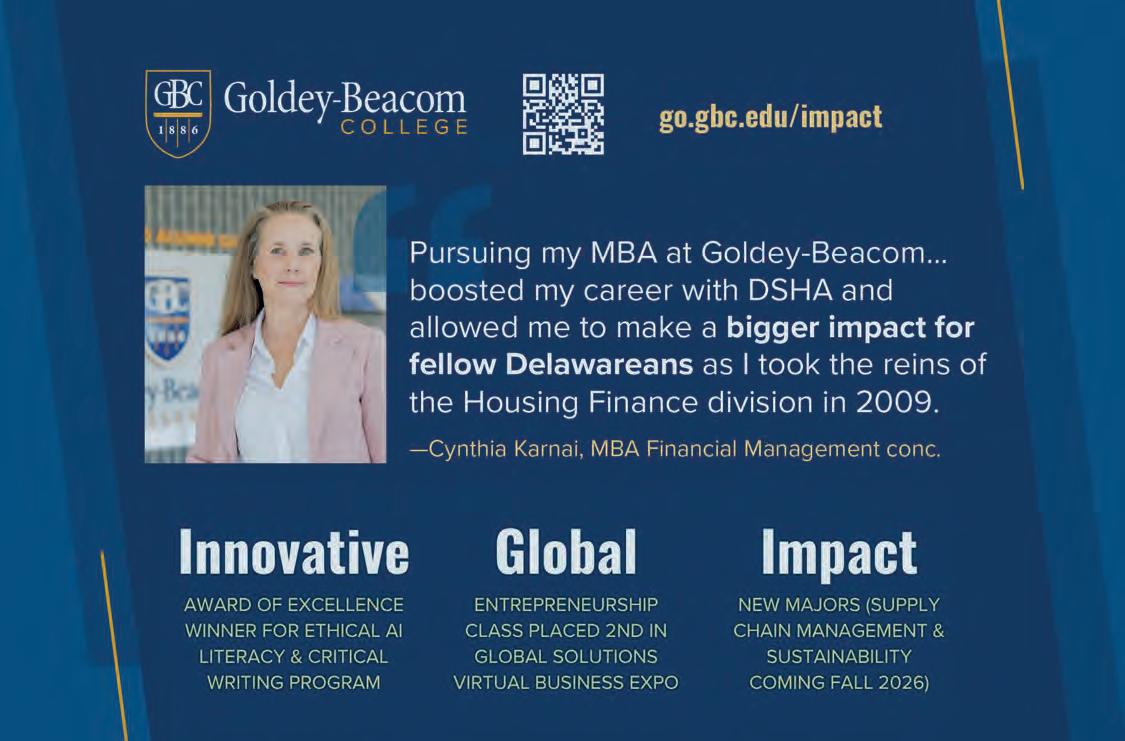
Gabrielle (Gigi) Gaul, MBA, is the assistant director of graduate admissions at GoldeyBeacom College.
CHigher Learning Investments in Delaware’s Health are Workforce Pay Off
CONTRIBUTED BY DELAWARE TECHNICAL COMMUNITY COLLEGE
NEARLY 25 YEARS have passed since former Delaware Gov. Ruth Ann Minner allocated tobacco settlement funds to Delaware Technical Community College (Delaware Tech) for a nursing program expansion designed to help address the state’s nursing shortage.
Since then, the college has produced 4,236 more nursing graduates than it would have without support from the state’s Health Fund. Thanks to ongoing support from Delaware governors and the General Assembly, state funding totaling $4.5 million continues to help Delaware Tech provide additional nurses to address critical job vacancies statewide.
This reflection is timely as Gov. Matt Meyer has successfully spearheaded a bold, comprehensive plan to establish a medical school in Delaware, providing an opportunity to better address the medical needs of rural communities in Kent and Sussex counties.
“The vast majority of Delaware Tech nursing graduates stay in the state, filling critical roles in hospitals and other healthcare facilities statewide,” said Delaware Tech President Mark T. Brainard. “Delaware’s healthcare providers rely heavily on us to help them meet their workforce demands, and that’s exactly what our nursing expansion program continues to do 25 years later.”
The most recent expansion, in 2025, grew the Delaware Tech nursing program by another 48 students through $1.3 million in funding that supports adjunct salaries, simulation lab resources that can count toward students’ clinical hours, and lab space. In spring 2026, Delaware Tech had 805 students enrolled in its Associate Degree in Nursing and Licensed Practical Nursing programs, more than double the 354 students enrolled prior to the expansion. The college also awarded 376 ADN and LPN diplomas in May 2026, compared with 195 awards in May 2002, a 92% increase.
The higher enrollment and graduation numbers in Delaware Tech’s nursing program are much needed based on recent statistics showing future workforce demand. The Delaware Department of Labor projects that demand for registered nurses in the state will grow by 16% between 2022 and 2032, while demand for licensed practical nurses is expected to grow by 17% during the same period. This contributes to the National Center for Health Workforce Analysis’ projection that Delaware will have 20% fewer nurses than it will need by 2038, according to a report released in December 2025.
Impending retirements are also exacerbating the problem. In May 2026, the American Association of Colleges of Nursing reported that approximately 40% of registered nurses nationwide said they plan to retire or leave nursing over the next five years. This comes in addition to the approximately 100,000 registered nurses who left the profession because of stress and burnout during the COVID-19 pandemic.
Kelly Davis, collegewide nursing instructional director for Delaware Tech, said that nationally, one-third of nurses quit the profession within their first two years.
“When you’ve got a nursing shortage [the problem] intensifies because you need someone to work your shift with you,” she said. “When you’re working not just three 12-hour shifts, you’re working four or five … the burnout is significant.”
In addition to its associate degree and diploma programs in nursing, Delaware Tech added a Bachelor of Science in Nursing program in 2017 at the request of employers to further meet the needs of the state’s health care providers. Enrollment in that program increased from 59 students at its inception to 443 students in spring 2026. A total of 182 BSN students graduated from the program in May 2026.
“As the higher education institution producing the most nursing graduates in Delaware, we are committed to ensuring we have the resources to help address the state’s nursing shortage,” Brainard said. “The strategic investments made by Gov. Minner continue to pay off years later, and we greatly appreciate the support of our governors and members of the General Assembly who have made it possible over the years for Delaware Tech to support our state’s healthcare providers fill critical positions that will continue to benefit the people of our state.” n

Higher Learning
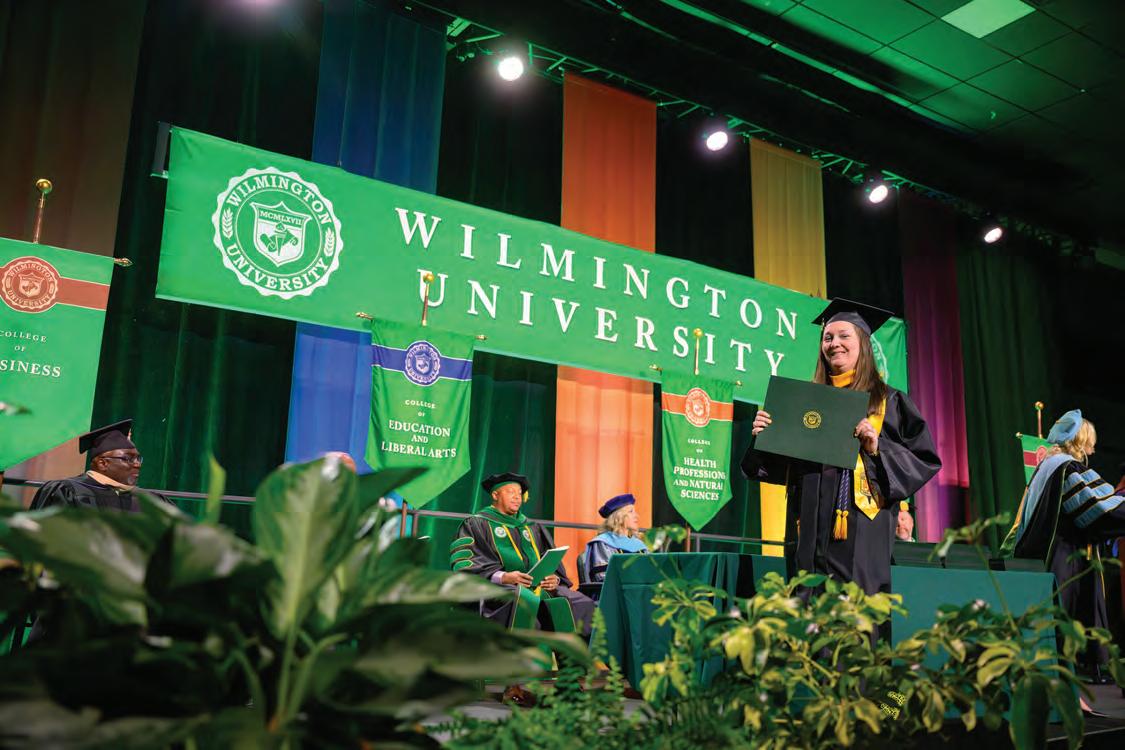
Developing Our Future Workforce
Expanding education pathways for Delaware’s changing economy
BY VIRGINIA GOULD
AS DELAWARE EMPLOYERS ADAPT to changing technologies, evolving industries, and shifting workforce demands, conversations about the role of higher education increasingly center on one question: how can education systems respond quickly enough to prepare people for what comes next?
The challenge extends beyond traditional college students. Adults changing careers, employees building new skills, trades professionals seeking advancement, and businesses facing talent shortages all need flexible education pathways that connect to workforce needs and remain accessible at different stages of life.
Across Delaware, that reality is reshaping how colleges, employers, and
state agencies think about workforce development.
At Wilmington University (WilmU), that shift has influenced program design, transfer partnerships, and workforce training initiatives. The University’s approach reflects a growing recognition that career preparation no longer follows a single academic route. Students increasingly move between work and education, often balancing jobs, families, and financial responsibilities.
WilmU’s Smart Transfer Enrollment Program, known as STEP Path™, reflects a practical approach to degree completion for students who bring prior learning, transfer credits, work experience, or trade-based training with them. The program gives students a way to have that experience
reviewed as part of their path toward a degree, reducing barriers such as time, cost, work schedules, and uncertainty about how experience will count. Through an agreement with the Delaware Department of Labor,
remain another important part of the equation. WilmU’s network includes regional and national partners such as ChristianaCare, Incyte, WSFS Bank, Amazon, CSC, and BAYADA, along with ongoing work
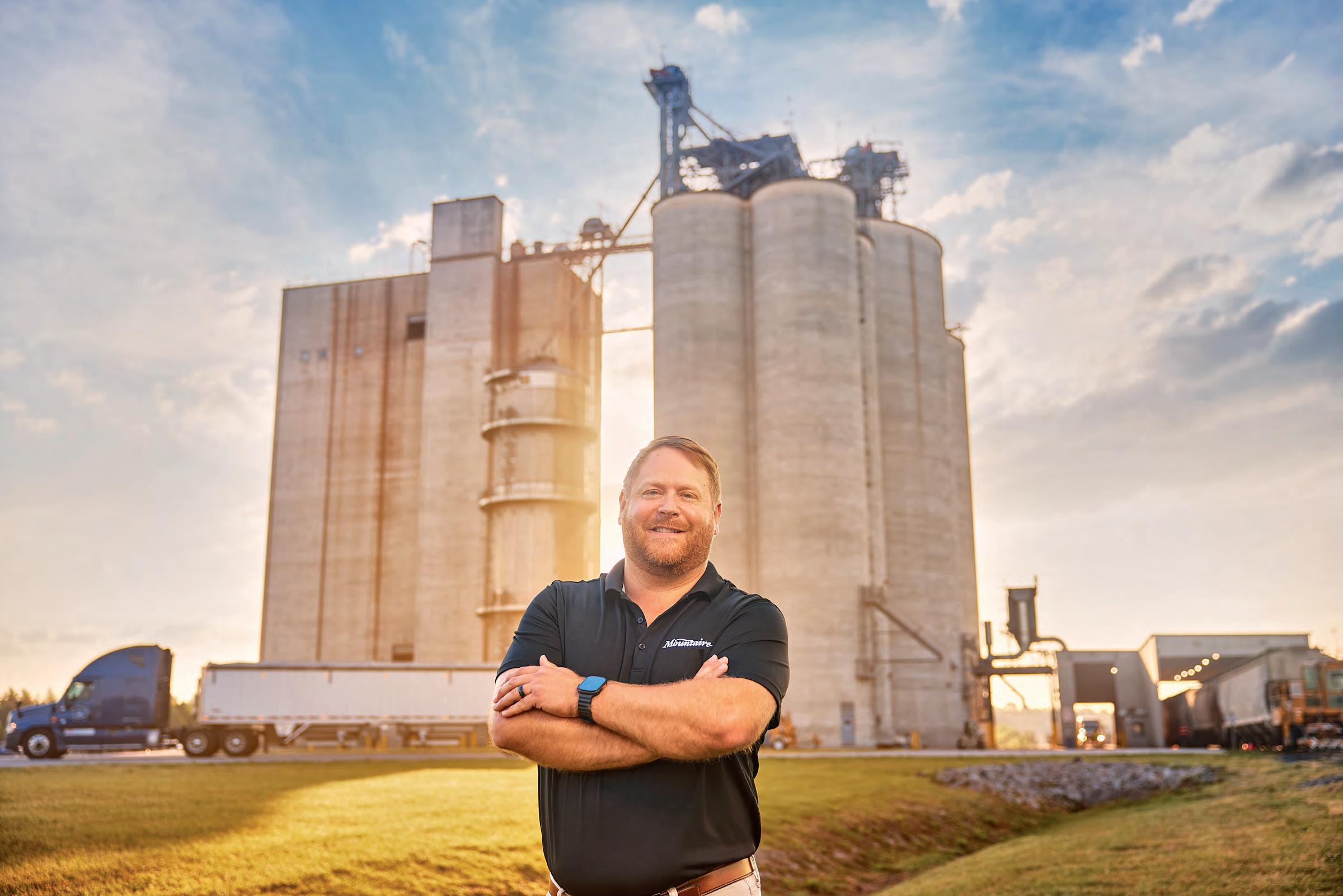

Virginia Gould is a marketing content specialist at Wilmington University.
Higher Learning A New Chapter
Delaware Law’s relocation deepens its role in supporting Delaware’s legal and corporate community
BY TODD J. CLARK
WALKING THROUGH downtown Wilmington, I see opportunity — opportunity that has gained new momentum since Widener University President Stacey Robertson and I announced Delaware Law School’s planned relocation to the heart of the city’s business and legal district. Our future home at 1020 N. French St., soon to undergo significant renovation, sits steps from the institutions that define Delaware’s legal identity. In conversations with partners and community leaders across the city and state, a shared commitment is clear. This move is not simply a change of address; it is a strategic investment in Delaware’s future.
The relocation places Delaware Law within walking distance of the Leonard L. Williams Justice Center, the J. Caleb Boggs Federal Building, the U.S. Bankruptcy Court, and Lawyers Row, embedding our students in one of the nation’s most influential legal ecosystems. It also reflects a broader shift in higher education as institutions rethink how to connect students more directly to careers, employers, and real-world experience. For us, the downtown campus, expected to open during the 2027-28 academic year, creates a modern, purpose-built environment designed for the courtrooms and legal careers of the future.
Delaware Law has long served as the state’s only law school, and the move downtown represents an evolution of that legacy. By relocating to the heart of the corporate capital of the world, we are placing our students at the intersection of global business law and local community impact. Being in Wilmington’s legal and corporate district will allow students to observe proceedings, meet practitioners, and engage with organizations advancing justice and economic mobility. It is a model of legal education rooted in presence, partnership, and purpose.
With more than 150 externship placements available, many of them located in Wilmington, students regularly gain hands-on experience in the city’s courts, firms, and agencies. The city’s legal and corporate sectors continue to grow, supported by sustained investment in innovation corridors and community development. Our new location also places us at the center of a statewide education pipeline. Widener’s programs, from early childhood initiatives to undergraduate pathways, graduate degrees, and professional programs, now align more closely with Wilmington’s communities, creating a continuum of opportunity that strengthens families and the region. Community partners consistently note that our students bring energy and purpose, and that their daily presence downtown will expand what is possible for the organizations they serve. That perspective reflects what we see in our classrooms: students who are ambitious, service-driven, and eager to learn by doing. The move downtown makes experiential learning a daily reality, not an occasional opportunity.
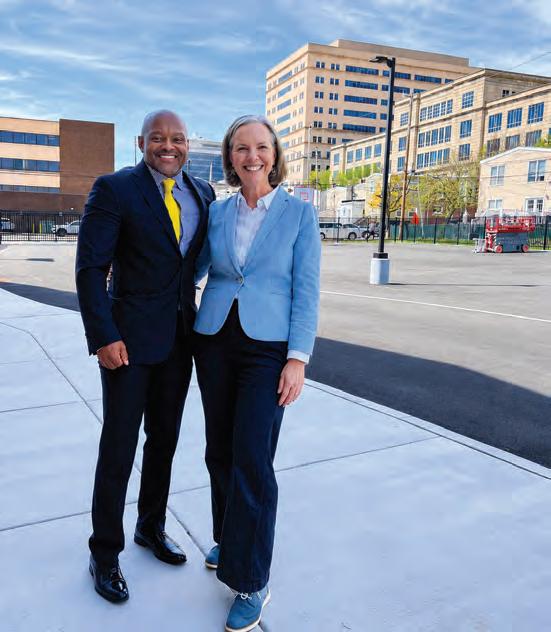
This relocation is a strategic investment in the next generation of Delaware lawyers and deepens Widener’s broader commitment to Wilmington and the First State. As we continue the work of bringing Delaware Law downtown, I am energized by what this moment represents for our students, Wilmington, and the legal profession. Law schools do not often uproot themselves and move directly into the communities they serve, but Delaware Law is choosing a different path. The move is more than a milestone; it is an opportunity to help write a new chapter in legal education. n

Todd J. Clark is the dean of Widener University Delaware Law School.
Dean Clark and President Robertson at the official announcement and press conference for Delaware Law School.
WHAT’S NEXT?
Chamber Calendar
THURSDAY, JULY 16
Evening Mixer at Faithful Friends Animal Society
Join us for an evening mixer at Faithful Friends’ state-of-theart Sharon Struthers Animal Adoption & Community Center in New Castle. Spend your evening networking, learning about their life-saving mission, and meeting some new furry friends!
$25 Admission
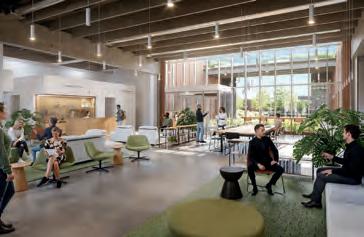
THURSDAY, AUGUST 13
Networking Breakfast at The Mill Seaford
Meet us at The Mill Seaford to learn more about one of Sussex County’s most significant redevelopment projects.
Located within the revitalized Nylon Capital Center, The Mill is transforming a long-vacant property into a modern coworking and office space.
FREE for Members
$15 Future Member Admission

WEDNESDAY, SEPTEMBER 9
Chamber Chase Golf Tournament
The Chamber Chase Golf Tournament benefits the Delaware Employers and Employees Voter Education Fund, a 501(c)(4) affiliate of the Delaware State Chamber of Commerce. The Fund educates voters about key issues and candidates, produces voter education tools like the Delaware Competitiveness Bluebook and Legislative Roster, and distributes informational materials on state and local elections.
$350 Golfer | $1,400 Foursome
Sponsorship opportunities are available. Contact Kiley Michulka at kmichulka@dscc.com to learn more.
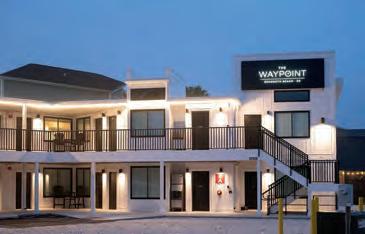
TUESDAY, SEPTEMBER 8
Evening Mixer at The Waypoint Rehoboth
Held the evening before the Chamber Chase Golf Tournament, join us on Rehoboth Avenue for a networking mixer at Waypoint Rehoboth. Connect with fellow attendees and enjoy an evening of conversation in a relaxed coastal setting.
$15 Admission

Newsbites
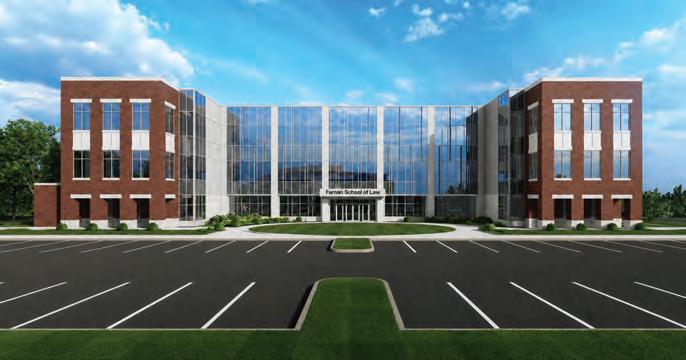
Wilmington University Names Farnan School of Law
Wilmington University formally named its law school the Farnan School of Law on May 1, 2026, recognizing The Honorable Joseph J. Farnan Jr. for more than five decades of service that have helped shape the University and guide the creation of its law school.
The dedication acknowledged Judge Farnan’s influence on Wilmington University across generations and featured remarks from several speakers who reflected on his service, leadership, and lasting impact on the University. His connection to the institution began in 1970, when he joined then-Wilmington College as a faculty member in political science. In the years that followed, he served in academic and student life leadership roles, established the College’s Criminal Justice program, provided legal counsel on significant institutional matters, and helped extend educational opportunities to traditional and nontraditional learners.
Judge Farnan continued that service through the Wilmington University Board of Trustees. He joined the Board in 2001 and was elected vice chair in 2012. He became chairman in 2014, a role he continues to hold today. During his tenure, he has helped lead the University with care, sound judgment, and a deep commitment to its mission.
“Judge Farnan has helped shape Wilmington University through years of thoughtful leadership and dedication,” says Wilmington University President Dr. LaVerne Harmon. “His belief that higher education should be accessible, affordable, and open to all aligns with our mission. Naming the law school in his honor reflects his lasting commitment to our students and to Wilmington University.”
Spotlight Delaware Named News Organization of the Year
Spotlight Delaware has been named a 2025 News Organization of the Year by the Maryland-Delaware-DC Press
Association, thanks to a strong showing in regional journalism awards announced this month.
Spotlight shares the award with the Baltimore Beat in Division D after the two publications won the most first- and

second-place prizes in the annual contest honoring excellence in local coverage.
Spotlight Delaware’s nonprofit newsroom also won three firstplace awards in the Delaware Press Association’s 2026 Communications Contest, marking an especially rewarding spring for the startup that launched just over two years ago.
“These awards confirm something that more and more people in Delaware already know: that Spotlight Delaware is seen as a must-read source of free and fair local news,” said Spotlight’s founder, CEO, and publisher, Allison Taylor Levine.
The MDDC contest judges also named Spotlight reporter Nick Stonesifer “Rookie of the Year” for his “wellresearched, well-written and important work.” The judges praised Stonesifer’s impressive use of Freedom of Information Act requests, as well as his “focused work ethic.”
In total, Spotlight’s entire staff earned awards in the MDDC or DPA contests.
Montrose Environmental Group Is Now Onterris
Earlier this spring, Montrose Environmental Group rebranded to Onterris. The new, unified brand reflects the company’s purpose and broader role in tackling complex environmental challenges with scientific rigor, operational quality, and precise execution. It also aligns expertise and market awareness to position the company for its next phase of growth. Founded 14 years ago and operating across the U.S., Canada, and Australia, the company is a leading pure-play environmental solutions provider.

“Onterris is more than a new name. This brand reflects our company’s evolution and role in solving some of the defining environmental challenges of our time,” said Vijay Manthripragada, president and CEO of Onterris. “Our clients operate at the intersection of environmental responsibility, evolving regulatory frameworks, and operational performance. By uniting our expertise across science, engineering, data, and consulting, Onterris facilitates economic progress without compromising environmental stewardship, an approach that is especially meaningful as we celebrate Earth Day.”
Onterris unites the company’s environmental consulting, testing, and treatment expertise under one global identity. The transition brings together brands including Montrose Environmental in the U.S. and Canada, as well as ECT2, CTEH, and Enthalpy Analytical in the U.S., and Epic Environmental in Australia, creating a clearer and more consistent experience for clients and partners across regions and services. The company said the change will strengthen alignment, enhance client engagement, and support continued long-term organic growth.
Carvertise Announces Partnership with Azira
Carvertise, America’s leading rideshare advertising company, today announced a strategic partnership with Azira, a leader in location intelligence and attribution technology, to deliver real-world visitation measurement and campaign attribution

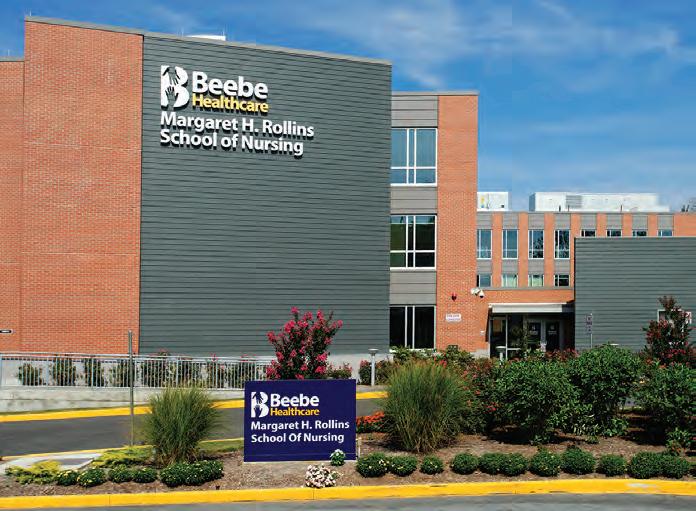
Margaret H. Rollins School Ranked No. 1 Nursing Program
Beebe Healthcare’s Margaret H. Rollins School of Nursing has been ranked the No. 1 nursing program in Delaware by Nursing Explorer.
The ranking is based on the number of nurses who passed the National Council Licensure Examination over a three-year period. The NCLEX is the national exam nurses must pass to become licensed for clinical practice.
According to data published by the Delaware State Board of Nursing, Beebe’s overall pass rate, grouping all nursing pathways together, was 99.17%.
“We are incredibly proud to see the Margaret H. Rollins School of Nursing at the top of Nursing Explorer’s state rankings,” said Karen Pickard, DNP, MSN, RN, CNF, NEA-BC, director of the Margaret H. Rollins School of Nursing at Beebe Healthcare. “This recognition underscores the quality of the educational program we offer and the pathways it provides for new-to-practice nurses to be successful. This ranking puts our program in the spotlight in a tremendously positive way and gives prospective students new reasons to consider Beebe for nursing school.”
In the past year, Beebe’s School of Nursing was also named a 2025 Center of Excellence in Nursing Education by the National League for Nursing, an honor earned by only 21 other schools nationwide.
for destination marketing organizations, tourism boards, and travel brands.
The partnership allows tourism marketers to move beyond traditional awareness metrics and better understand how mobile out-of-home advertising influences traveler behavior, visitation,
and economic impact.
By combining Carvertise’s nationwide fleet of branded Uber, Lyft, and deliverydriver vehicles with Azira’s location intelligence platform and attribution capabilities, destinations can now measure how many consumers exposed
Newsbites
to a rideshare advertising campaign later visited the promoted destination.
“This partnership represents a major step forward for destination marketers and the future of measurable out-ofhome advertising,” said Mac Macleod, CEO of Carvertise. “Our campaigns have always delivered strong visibility and real-world audience engagement, but destination marketers today want
deeper attribution and clearer ROI measurement. By partnering with Azira, we can now help destinations understand not only how many people saw their campaign, but how many actually visited. It bridges the gap between awareness and measurable outcomes, bringing a new level of intelligence and accountability to tourism advertising.”
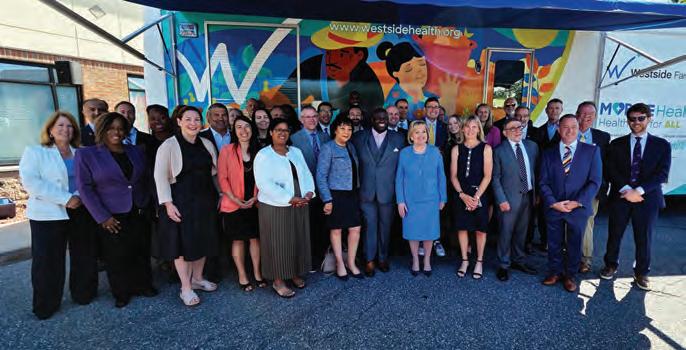
Partnership Brings First Medical School to Delaware
In early June, Gov. Matt Meyer announced a partnership with Thomas Jefferson University to establish a regional campus of Sidney Kimmel Medical College, creating the first four-year medical school in Delaware’s history and a major investment in the future of health care access across the state.
Delaware is currently one of only three states in the nation without a medical degree-granting institution. The Delaware Medical School Consortium will change that, providing students with the opportunity to complete their entire medical education in Delaware while creating a stronger pipeline of physicians to serve communities throughout the state.
“Today marks a transformational moment for health care in Delaware,” Meyer said. “For too long, aspiring physicians have had to leave our state to pursue a medical degree, and too often, they never come back. … The Delaware Medical School will help us grow our health care workforce, expand access to care, and give more Delawareans the opportunity to stay here, train here, and ultimately serve the communities that raised them. …”
Led by Sidney Kimmel Medical College at Thomas Jefferson University, the Delaware Medical School Consortium, consisting of Delaware-based academic institutions and health care systems and supported by the state’s Rural Health Transformation Program, will collaborate in a coordinated statewide effort to train and retain physicians.
DANA Announces New CEO to Lead Alliance
The Delaware Alliance for Nonprofit Advancement (DANA) has named Melissa Hopkins as its new chief executive officer, promoting one of the organization’s longest-serving staff members to the role. Hopkins, who most recently served as executive vice president and chief external affairs officer, assumed her new position June 1.
DANA Board Chair
Kathleen Hawkins said Hopkins’ experience in Delaware’s nonprofit sector, including the past nine years with DANA, makes her well-positioned to lead the organization as it enters its fifth decade of service.

“Melissa has been a trusted and respected leader in the nonprofit community for more than a decade. She is an extremely thoughtful, empathetic and effective advocate who has produced results at every level during her time with DANA,” Hawkins said.
Hopkins joined DANA in 2017 and brings extensive experience in public and community service, including positions with New Castle County, the State of Delaware and the Rodel Foundation of Delaware. She has also volunteered with the YMCA’s Youth in Government program for more than a decade.
“DANA has a strong legacy of serving and strengthening Delaware’s nonprofit community, and I am honored to lead the organization into its next chapter,” Hopkins said. “As nonprofits face increasingly complex challenges, DANA has an opportunity to bring organizations, funders, policymakers and community partners together around
Melissa Hopkins
shared solutions that strengthen our communities and amplify nonprofit impact.”
AAA Partners with Feeding America®

As food insecurity continues to affect communities across the country, AAA is launching a nationwide giving and volunteer campaign in partnership with Feeding America to help address the growing need. Beginning June 8, the grassroots effort aims to provide at least 4.5 million meals to individuals and families facing hunger through local partner food banks nationwide.
“This effort is about more than a meal. It is about bringing comfort, dignity and hope to people facing difficult circumstances,” said Tom Wiedemann, CEO of AAA Club Alliance. “Now in its second year, this effort reflects the power of our associates and members coming together to support our neighbors and help build a future where no one has to wonder where their next meal will come from.”
With thousands of associates and nearly 58 million members nationwide, AAA aims to raise awareness, generate donations, mobilize volunteers, and engage local communities in the fight against hunger.
In Delaware, AAA associates will volunteer at the Food Bank of Delaware in Newark. “We can end hunger when we work together,” said Elizabeth Pettengill, interim vice president of corporate and foundation partnerships at Feeding America. “Through the Fuel Hope, Fight Hunger campaign, together we will help provide meals and ensure more neighbors have access to the food and resources they need to thrive.”
Families across the country continue to face rising costs and limited access to food. According to Feeding America,
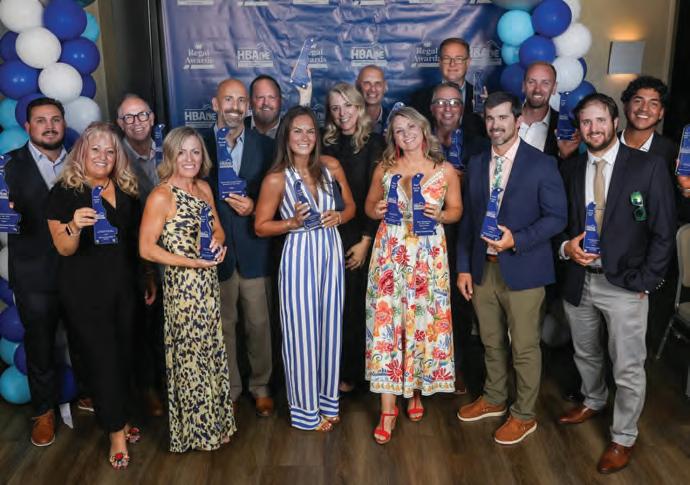
Marnie Custom Homes Wins 16 Regal Awards
Marnie Custom Homes earned 16 awards at the 2026 Regal Awards from the Home Builders Association of Delaware, including a sweep of all major “of the year” honors: Custom Home Builder of the Year, Designer of the Year, Delaware Custom Home of the Year, and Marketing of the Year. The total marks the most awards the company has ever won in a single year.
For more than three decades, the Regal Awards have recognized outstanding achievement in Delaware’s homebuilding industry. Winners are selected by a panel of expert judges and evaluated based on design, craftsmanship, and the quality of their submissions.
“Sixteen awards is a milestone we’re incredibly proud of, but what means the most is sweeping the ‘of the year’ categories,” said Marnie Oursler, president and founder of Marnie Custom Homes. “These awards belong to every single person on our team — our project managers, superintendents, designers, and marketing team — everyone who shows up every day and pours themselves into this work. We’re honored to be recognized as the best in Delaware.”
This year’s recognition builds on the company’s national momentum. In 2023, Marnie Oursler became the first woman and first Delaware-based builder to receive the National Association of Home Builders’ Custom Home Builder of the Year award, the highest honor in the custom homebuilding industry.
nearly 47 million people, including 13.8 million children, experienced food insecurity in the United States. In Delaware, more than 134,000 people face hunger, including nearly 38,000 children.
The summer months can be especially challenging for children who rely on school meals, making community-based efforts during this time particularly important. To learn more about how to get involved or to donate, visit AAA.com.
Newsbites
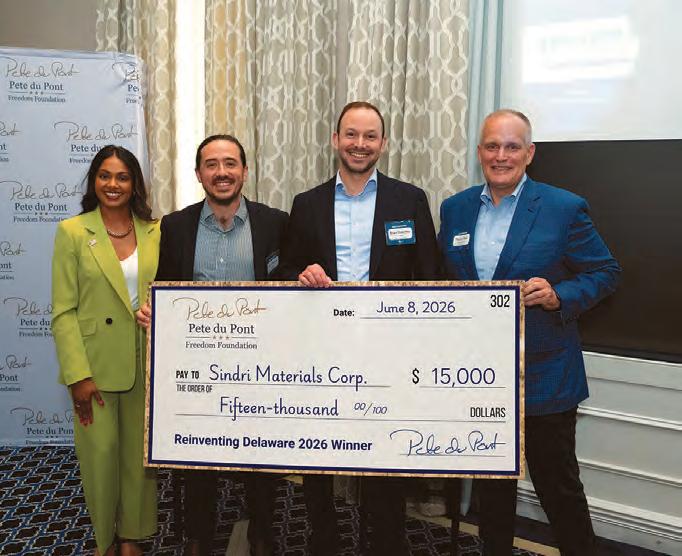
Sindri Materials Named 2026 Reinventing Delaware Winner
The Pete du Pont Freedom Foundation (PDFF) announced that Sindri Materials, led by Dr. Christopher DiMarco and Brian Checchio, has been named the 2026 Reinventing Delaware Top Idea Winner. The announcement was made during the foundation’s annual reception and CEO Spotlight Series on June 8 at DuPont Country Club.
Sindri Materials was recognized for addressing a key challenge in advanced technology manufacturing: producing next-generation materials with the purity and consistency required for commercial applications. The company has developed a process capable of manufacturing 100% pure graphene, a material with potential applications in electronics, sensors, batteries, and other emerging technologies.
The team’s long-term vision includes establishing an Advanced Materials Innovation Lab in Delaware to provide shared infrastructure for scientists and startups. The proposed hub would support research, commercialization, and collaboration while helping to strengthen Delaware’s innovation economy.
As the 2026 Reinventing Delaware Top Idea Winner, Sindri Materials will receive a $15,000 grant from PDFF to support startup operations.
“Reinventing Delaware is about more than identifying great ideas. It’s about building the infrastructure, partnerships, and strategic support necessary to help transformative ideas take root and grow here in Delaware,” said Stephanie Johnnie, executive director of PDFF. “This year’s top ideas represent the kind of bold, forward-thinking innovation that can strengthen our economy, solve real challenges, and create long-term impact for communities across our state.”
GradBridge Chooses Delaware for Headquarters
A Delaware-founded financial technology startup and private student lending platform has selected a property in Newark’s Iron Hill Corporate Center as the site of its headquarters and next phase of growth, where it plans to create 49 high-paying jobs.
GradBridge LLC is a venture-backed startup and second-look private student lending platform designed to serve more than 1 million near-approval borrowers who are declined annually because they fall just outside traditional credit criteria. The company selected a 9,321-squarefoot location on Prides Crossing after evaluating multiple markets, including Philadelphia. Company leaders cited Delaware’s financial services legal framework, access to industry talent, and the presence of established institutions, including Barclays, JPMorgan Chase, WSFS, and Sallie Mae, as key factors in the decision.
GradBridge had four full-time employees in Delaware at the end of 2025 and plans to add 49 fulltime positions in the state over the next five years. The positions will be salaried, benefit-eligible roles, and nearly all will pay more than $110,000 annually. The company plans to invest up to $250,000 to update and fit out its new headquarters space. State officials said the project aligns with efforts to grow Delaware’s innovation economy, particularly in the financial technology sector.
“We are passionate about removing financial barriers to higher education,” said GradBridge CEO Jen O’Donald. “With this support, we will build more than a headquarters. We will create economic opportunity by investing in local talent and helping more students nationwide reach graduation.”
Missed us on social? Here are some recent highlights from people talking about the Delaware State Chamber online...


@Delaware State Chamber of Commerce
@DelawareStateChamber

BioConnect DE: BioConnect DE was proud to be part of the Navigating Delaware Pathways Summit held on April 28th at the Bally’s Dover Casino Resort. ��
Hosted by the Delaware State Chamber of Commerce, the event brought together leaders across education, business, government, and community organizations. Our Executive Director, Katie Lakofsky, moderated a panel on the ways collaboration across sectors fuels talent pipelines, focusing on BioConnect’s successful strategy to funnel talent into Delaware’s growing industries.

@DEStateChamber
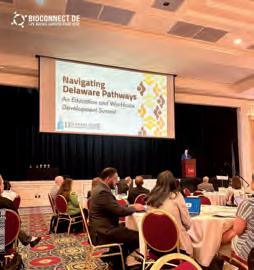

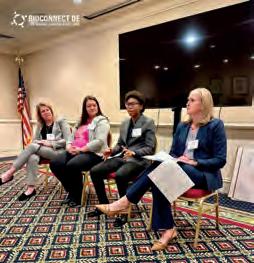
... Collaboration between industry, government, and education creates direct pathways into meaningful life science careers by removing barriers to training and employment.
Melissa Brayman: The Delaware State Chamber of Commerce networking breakfast this morning was at Armco Aquatics on Kirkwood Highway, Wilmington.

This local business is a perfect example of a successful company that started from nothing and has grown now to supply residential and commercial clients throughout the state of Delaware while also providing unique employment opportunities. We really enjoyed our visit! ������
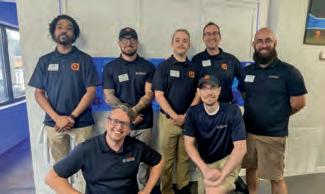
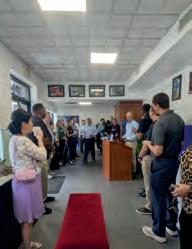
ICYMI
IN CASE YOU MISSED IT
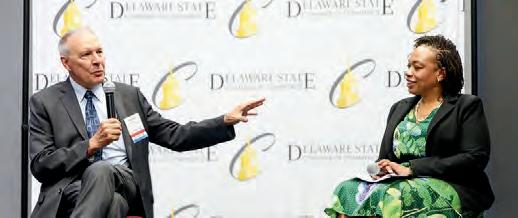

Rep. Melissa Minor-Brown: It was great to talk to business leaders from across the state at the Delaware State Chamber of Commerce’s annual end-of-session policy conference.
Over the last two years, we’ve worked hard to create policies that support both Delaware workers and Delaware businesses while continuing to invest in building a strong economy where businesses can grow and thrive. ...
Thank you to the Chamber for inviting us to your event again this year and for all of your work advocating on behalf of the businesses that provide our communities excellent goods, services and great-paying jobs.

BelfintCPAs: The BLS team was well represented at the @DEStateChamber Young Professionals Golf Outing at Deerfield! They even managed to grab a photo in front of our sign!

Whisman Giordano & Associates: Thank you to Kelly Basile, IOM and the Delaware State Chamber of Commerce for hosting the Delaware Deep Dive podcast. Our own Joseph Giordano joined Jake Ruddy and Evan Park to share a small business perspective on policy and working with lawmakers. Conversations like these matter. When business owners engage and share their experiences, it leads to better understanding and outcomes for Delaware.

CONNECT WITH US
The State Chamber of Commerce staff works for you, serving our member companies and organizations statewide. This State Chamber staff directory lists phone numbers and email addresses, as well as individual areas of responsibility. If you need business assistance or information, please don’t hesitate to call or email.

Michael J. Quaranta President (302) 576-6585 mquaranta@dscc.com


Melissa Brayman Director, Administration & Finance (302) 576-6572 mbrayman@dscc.com

Kiley Michulka Events Manager (302) 576-6575 kmichulka@dscc.com

Kelly Basile Chief Operating Officer (302) 576-6564 kbasile@dscc.com

Danielle Blake Vice President, Member Engagement (302) 576-6571 dblake@dscc.com
Regina Donato Director, Communications (302) 576-6567 rdonato@dscc.com


Kerri Welcher Director, Delaware State Chamber Foundation (302) 576-6566 kwelcher@dscc.com

Evan Park Vice President, Government Relations (302) 576-6590 epark@dscc.com
Damon Howard Manager, Digital & Print Advertising (302) 576-6579 dhoward@dscc.com

Tori Will Manager, Administrative & Member Support (302) 576-6576 twill@dscc.com
Amanda Schimmel Manager, Marketing & Strategic Programs (302) 576-6560 aschimmel@dscc.com
Facebook: DelawareStateChamber
X: DEStateChamber
Linkedin: Delaware State Chamber of Commerce
YouTube: DEStateChamber
Instagram: DEStateChamber