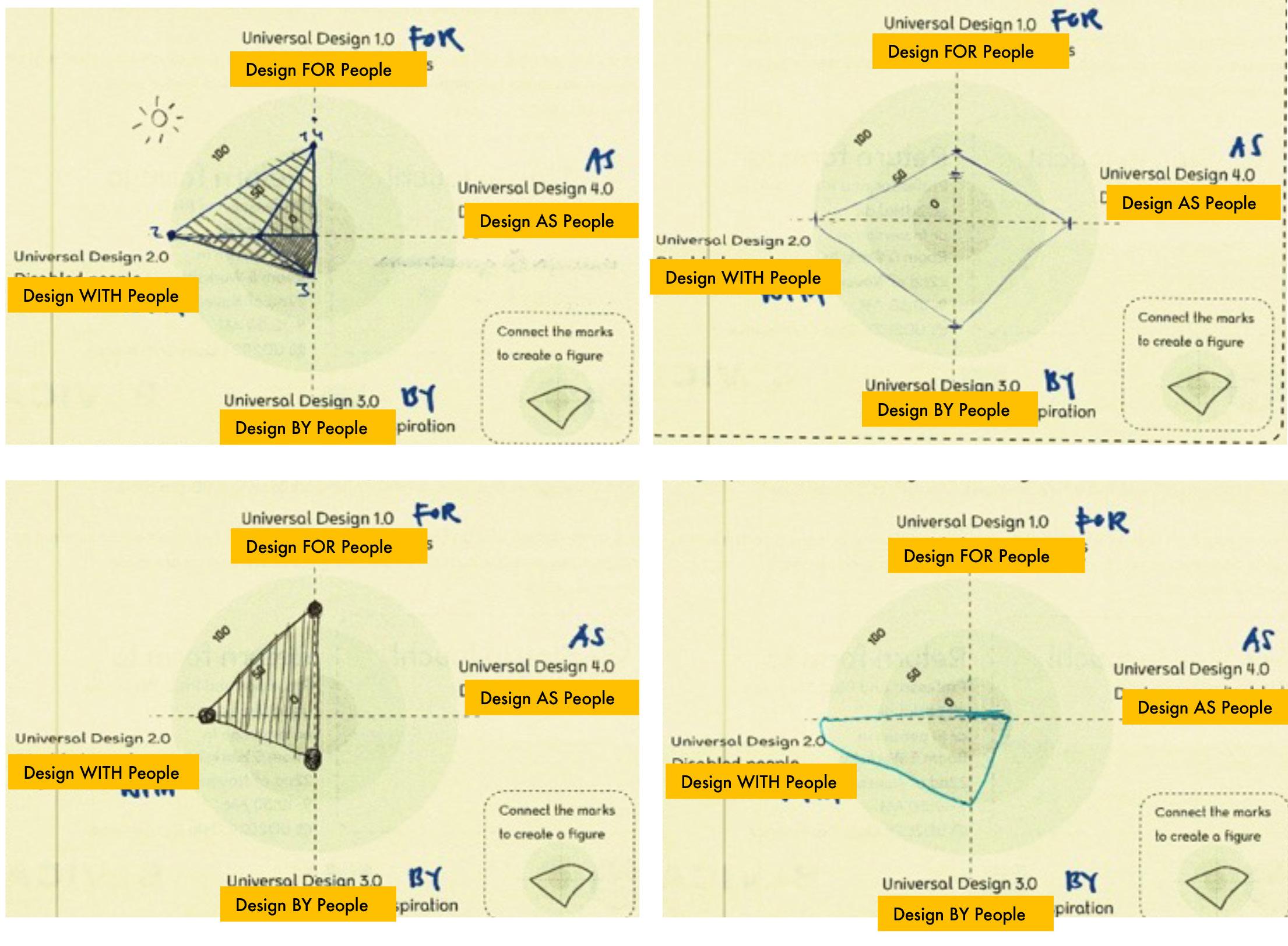
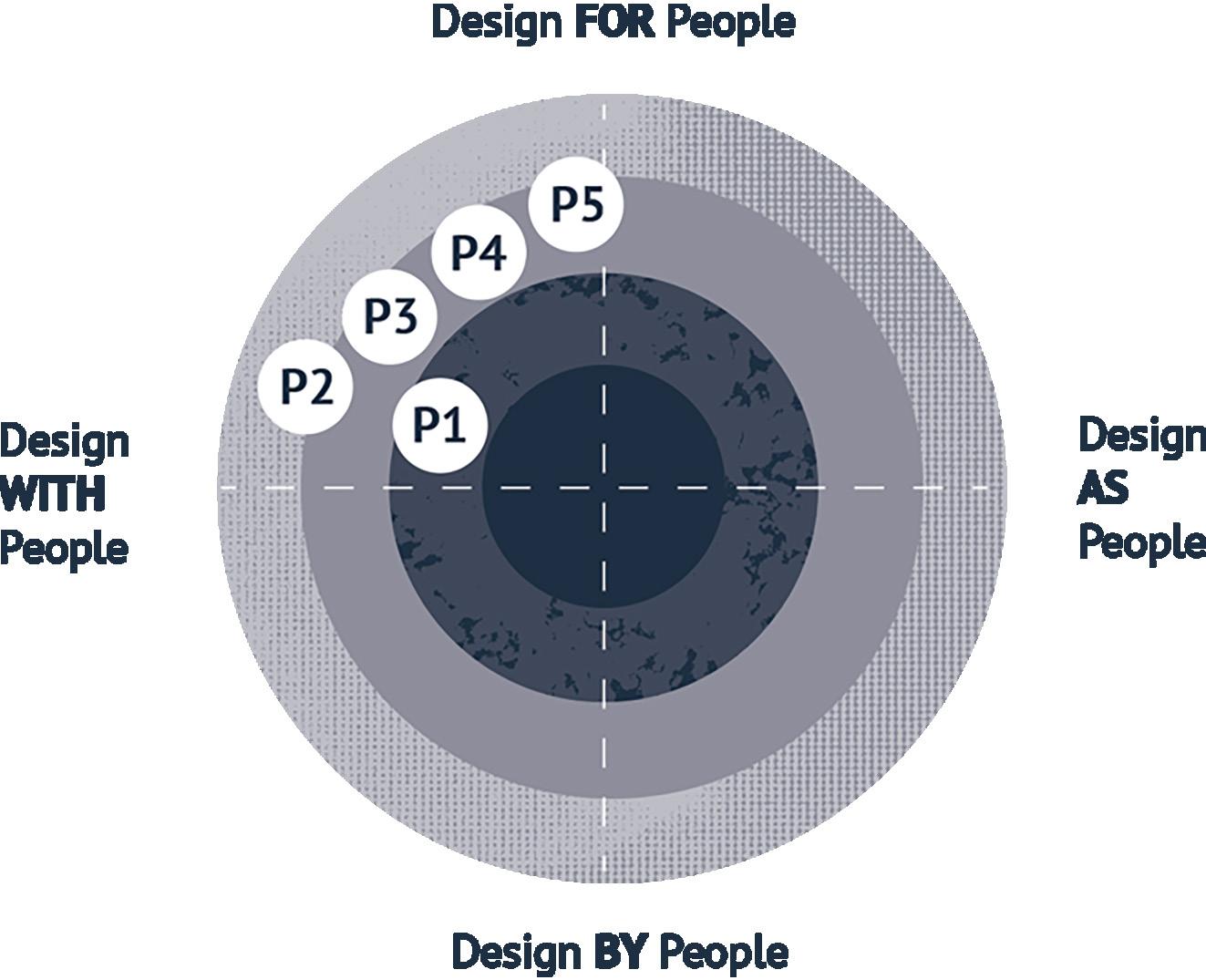
Universal Design is not a single solution, but a practice of evolving possibilities. Seventy years after Henry Dreyfuss’s 1955 classic Designing For People, design researcher and social innovator Yanki Lee advances a new framework of designing FOR, WITH, BY, and AS people.
‘Through powerful cases by the Kolding School of Design community and the visionary gaze of Yanki Lee, Designing AS People challenges us to reimagine design as a shared practice of connection, care, and co-creation, revealing how inclusive environments can be created and realised.’
•Carina Christensen, Rector at Kolding School of Design since 2025.
‘Designing AS People explores how a design school can play a transformative role in the education and formation of future generations of designers.’
• Lene Tanggaard, PhD, Professor, Aalborg University; Rector, Kolding School of Design (2019–2025).
‘The collection of projects showcases years of societal and collaborative design work and research by Kolding School of Design, discussed through a contemporary Universal Design lens.’ • Anne Louise Bang, PhD, Associate Professor, VIA University College; Acting Head and Director of Research & Development, Kolding School of Design (2016–2019).
‘In Designing AS People, Yanki Lee not only provides a thorough presentation of what Universal Design is and what it offers, but – more importantly – sets out a methodology for practising Universal Design. This methodology is grounded in a deep understanding of the concept
…This book is a must-read for anyone who wishes to incorporate Universal Design into their own practice.’ • Camilla Ryhl, PhD, Research Director, Bevica Foundation, and Head of the Universal Design Hub.
Designing AS People Yanki Lee
Designing AS People • Beyond
Ableism • Practising Universal Design Otherwise • Yanki Lee
Kolding School of DesignDSKD Lab for Social Design • Louise Aagaard • Canan
Akoglu • Christel Arnevik • Line Gad
Christiansen • Kathrina Dankl •
Kerstin Bro Egelund • Anne Katrine
G.Gelting • Richard Herriott • Marie
Kremer • Joan Pedersen • Laila Grøn
Truelsen • StudentsDSKD • Mudita Agarwal
Samiah Bilal • Mirabel De Guzman •
Camilla Fuccelli • Marie Ping Ping
Mosegaard Holm • Caroline Lehtonen
Kildall • Marek Kuźmiński • Tutte
Murmann • Mariagiulia Sardu • Marco
Sidoli • Intercolators • Eva Brandt • Roger Coleman • Jasmien Herssens •
Eva Knutz • Thomas Markussen • Mette Mikkelsen • Janice Rieger
P13 • Citizen’s Journey in Psychiatry • Anne Corlin • Kerstin Bro Egelund • Anne-Line Holdgaard Lunding
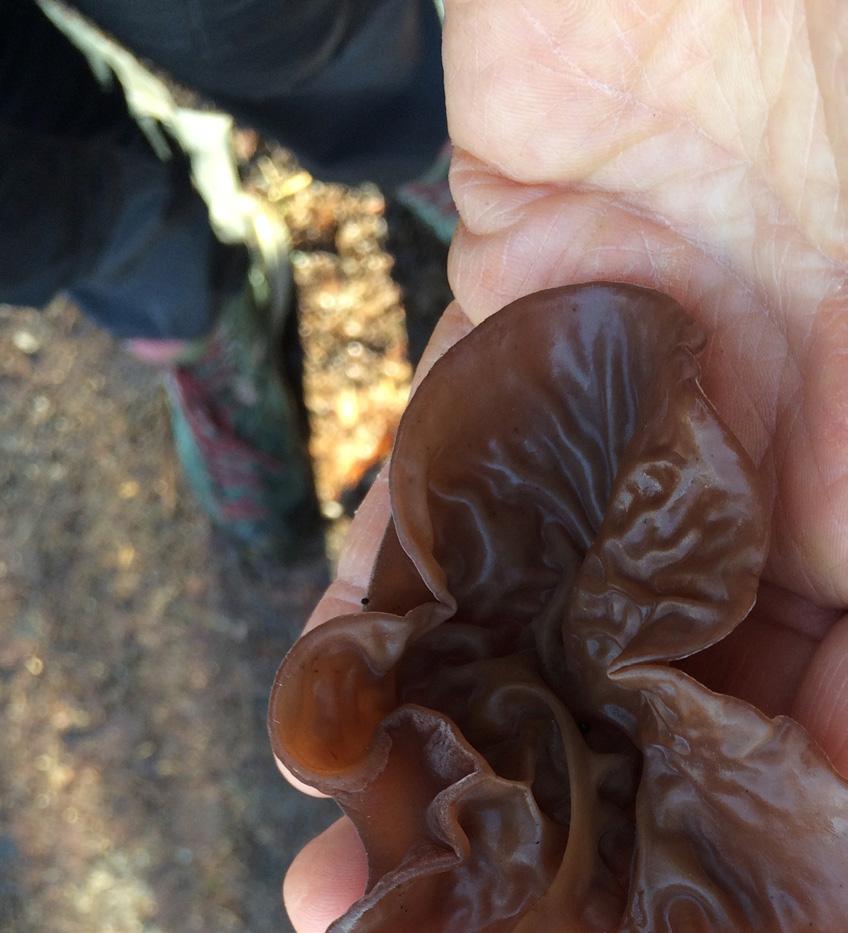
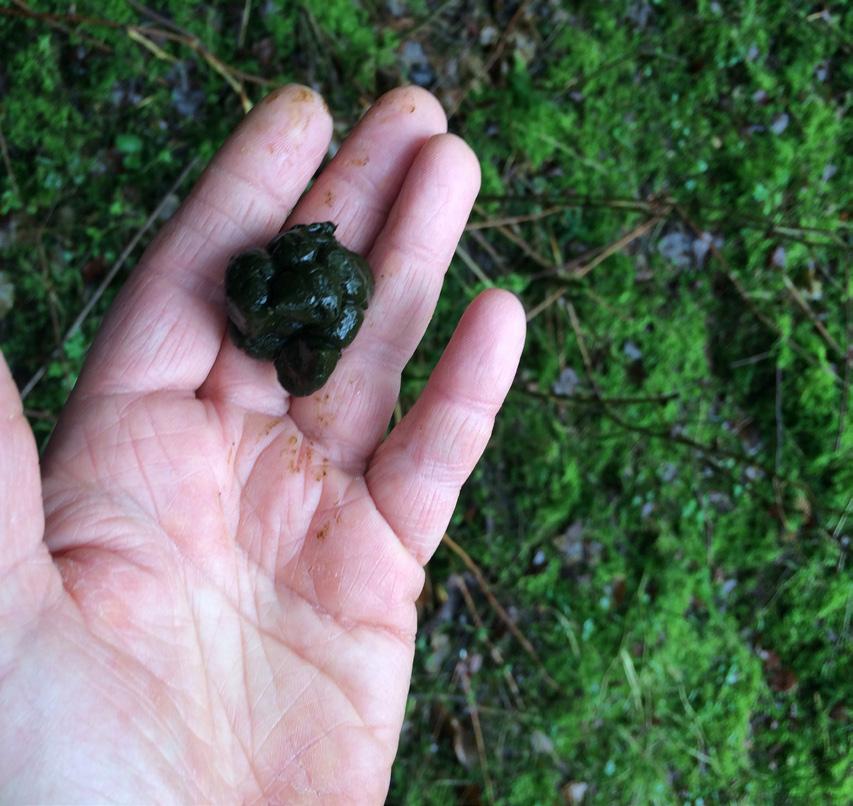
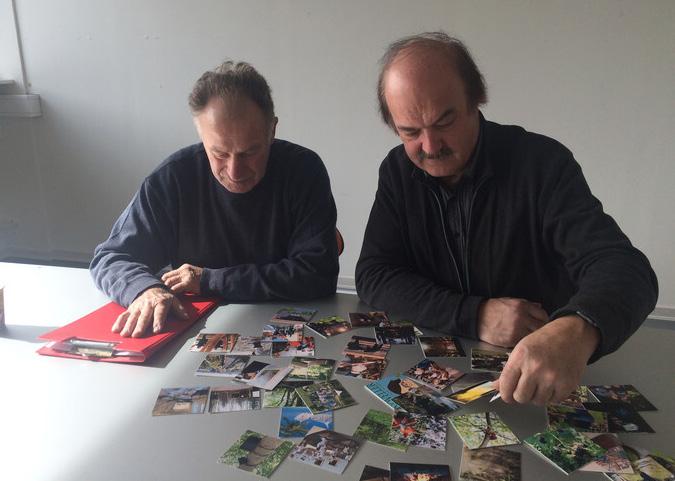
P14 • Project Troldhedestien: Space for All • Joan Pedersen • Laila Grøn Truelsen
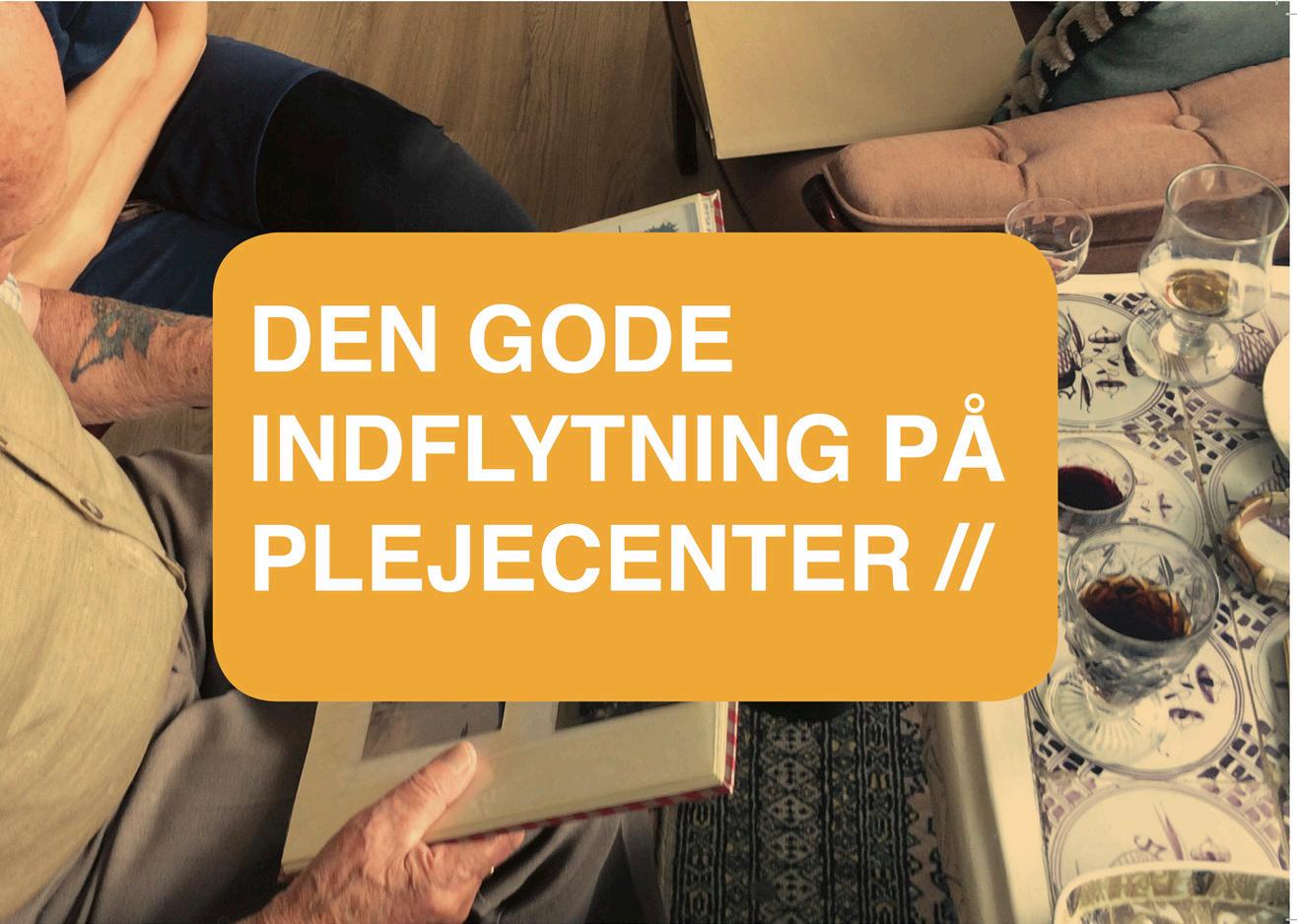
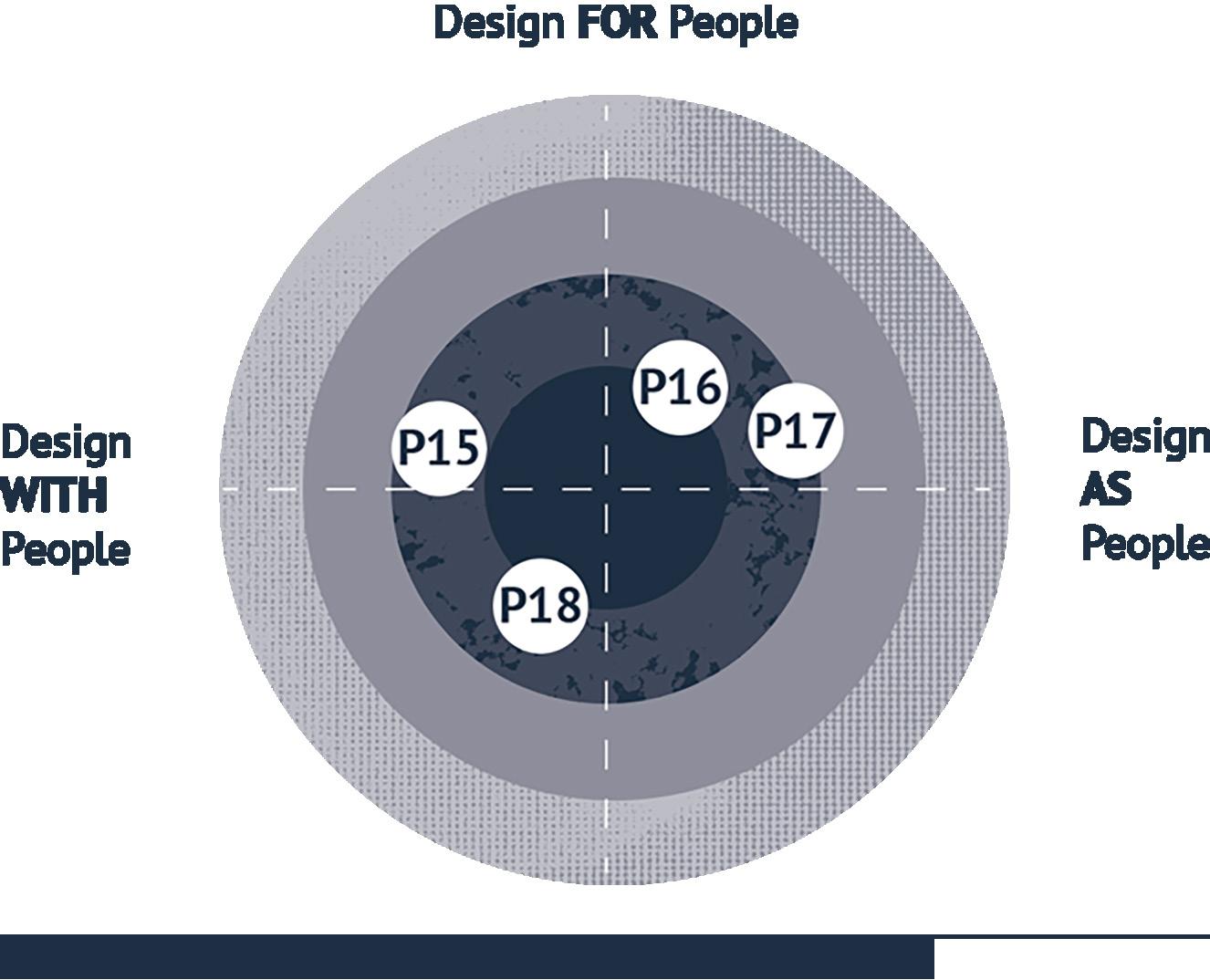
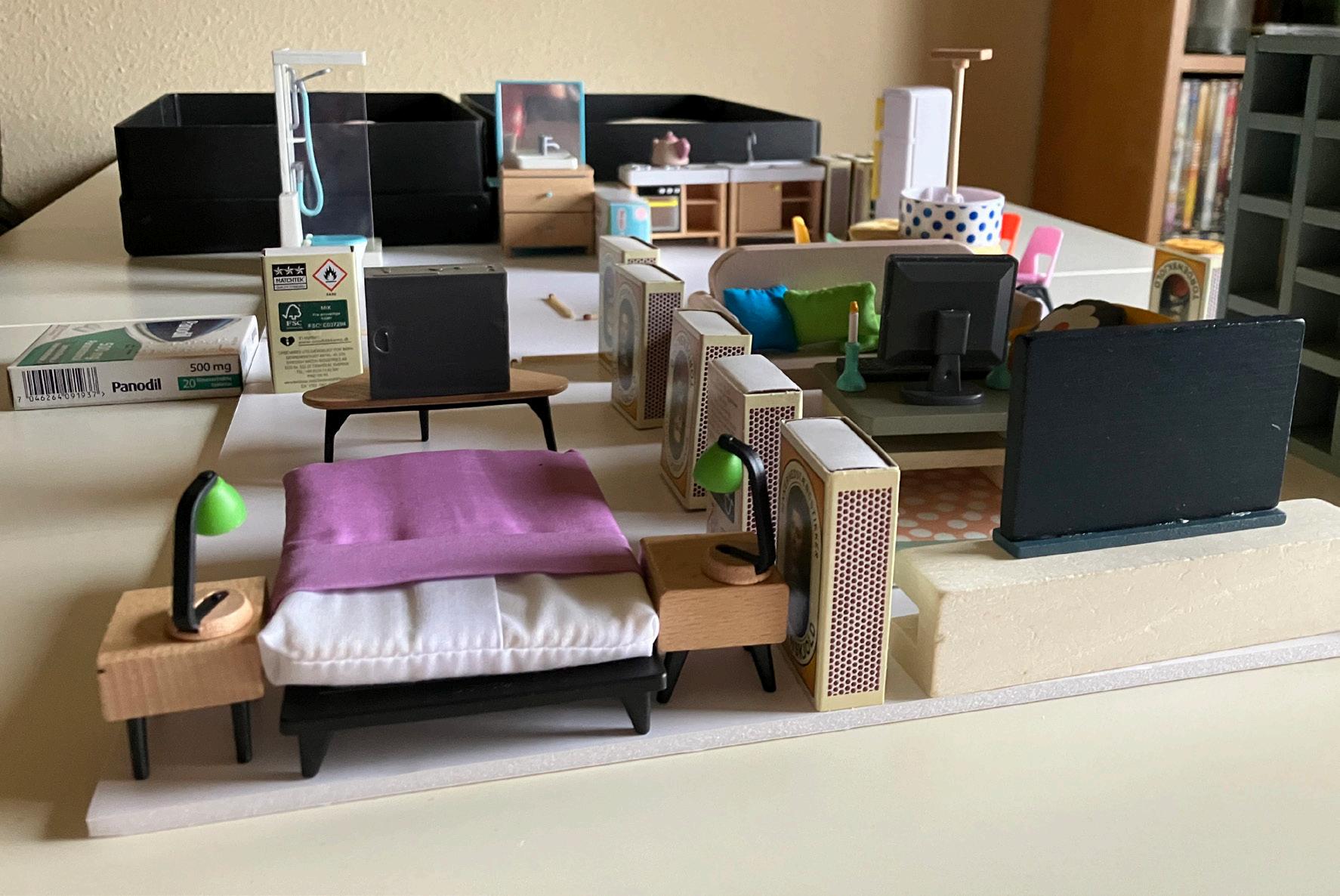
P15 • The Good Move-in: Enhancing Voice and Participation in Transitions to Supported Housing • Line Gad Christiansen • Maria Foverskov • Joan Pedersen
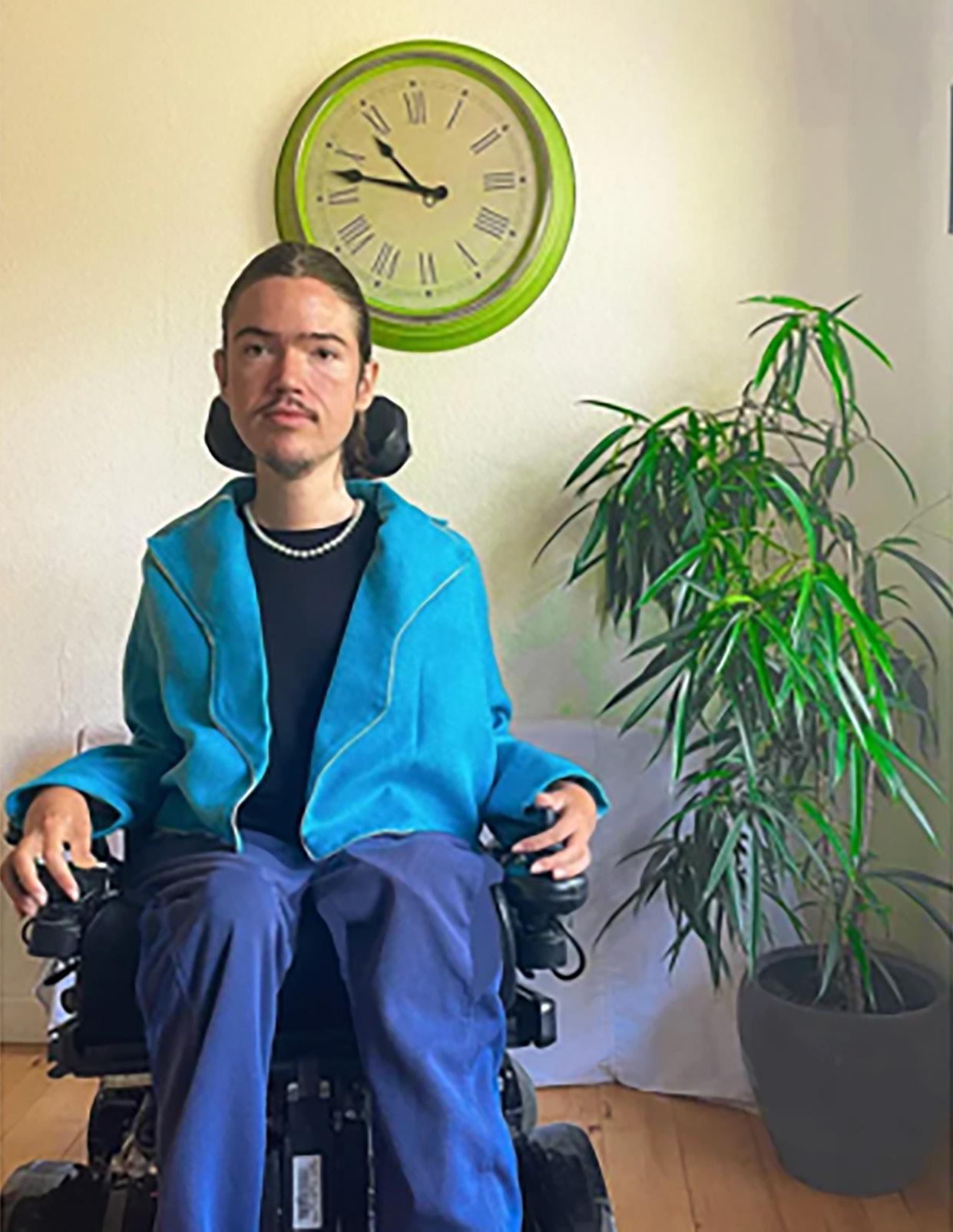
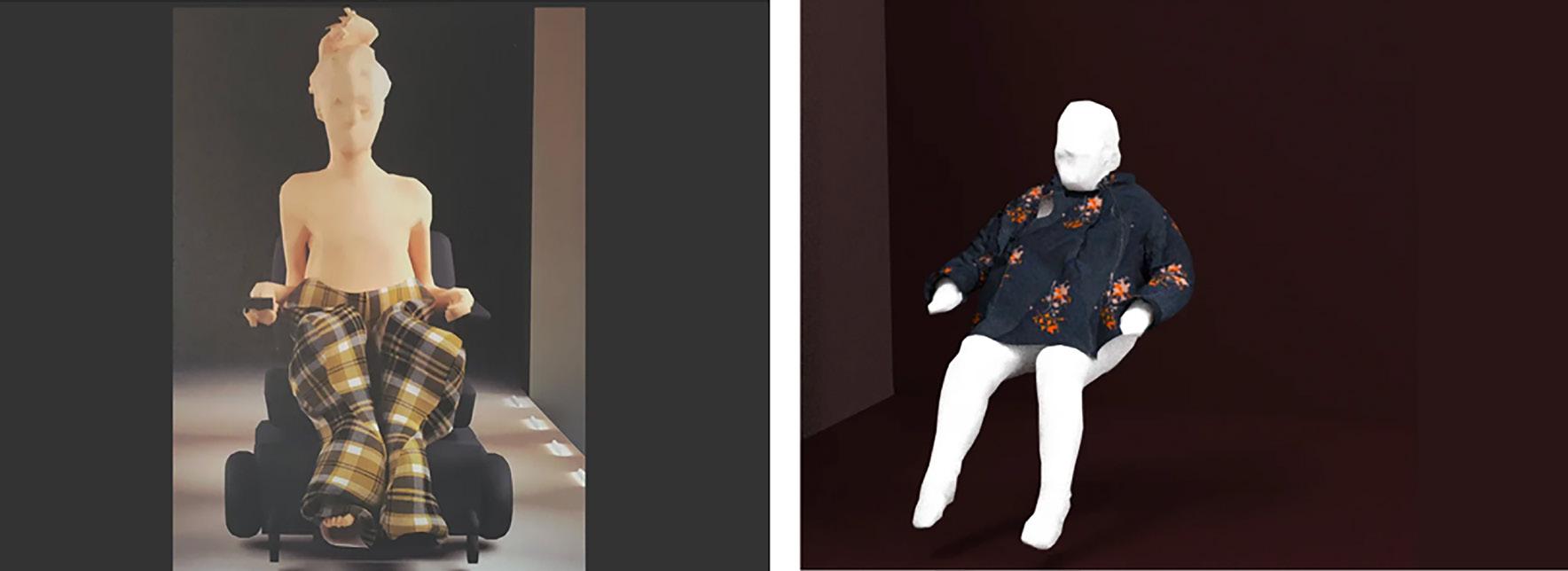
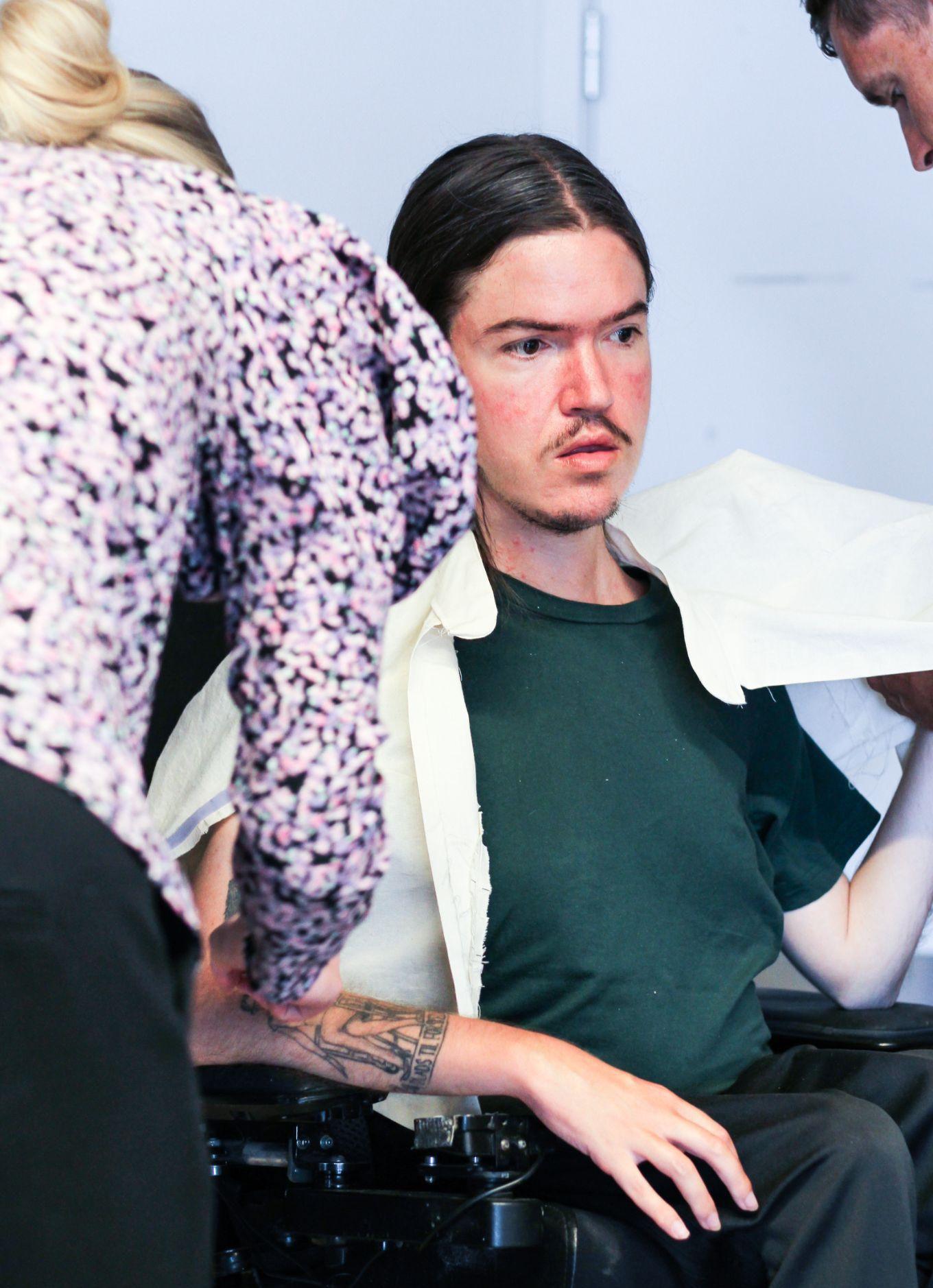
P16 • ME-YOU-US: Building digital 3D competences in fashion education for diversity, inclusion, and a green transition • Christel Arnevik • Tiia Jaakkola • Ulla Ræbild
P17 • Project FLUKS: Exploring Voluntarism and Communities through Cultural Events • Canan Akoglu • Maja Ibsen Brammer • Joan Pedersen • Louise Aagaard
P18 • 4D PICTURE: Designing for Cancer Patient Journey • Canan Akoglu • Kathrina Dankl • Marie Kremer
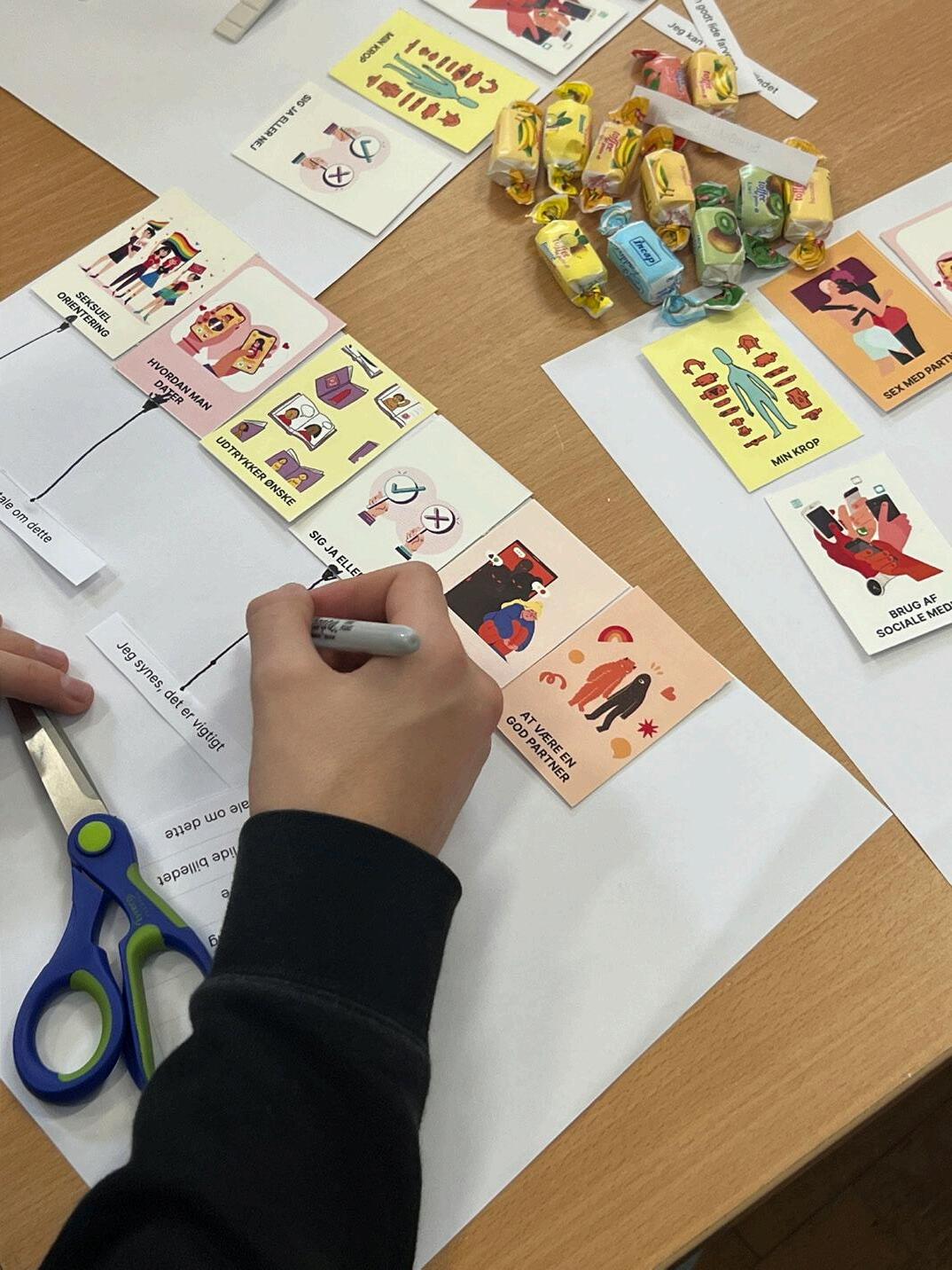
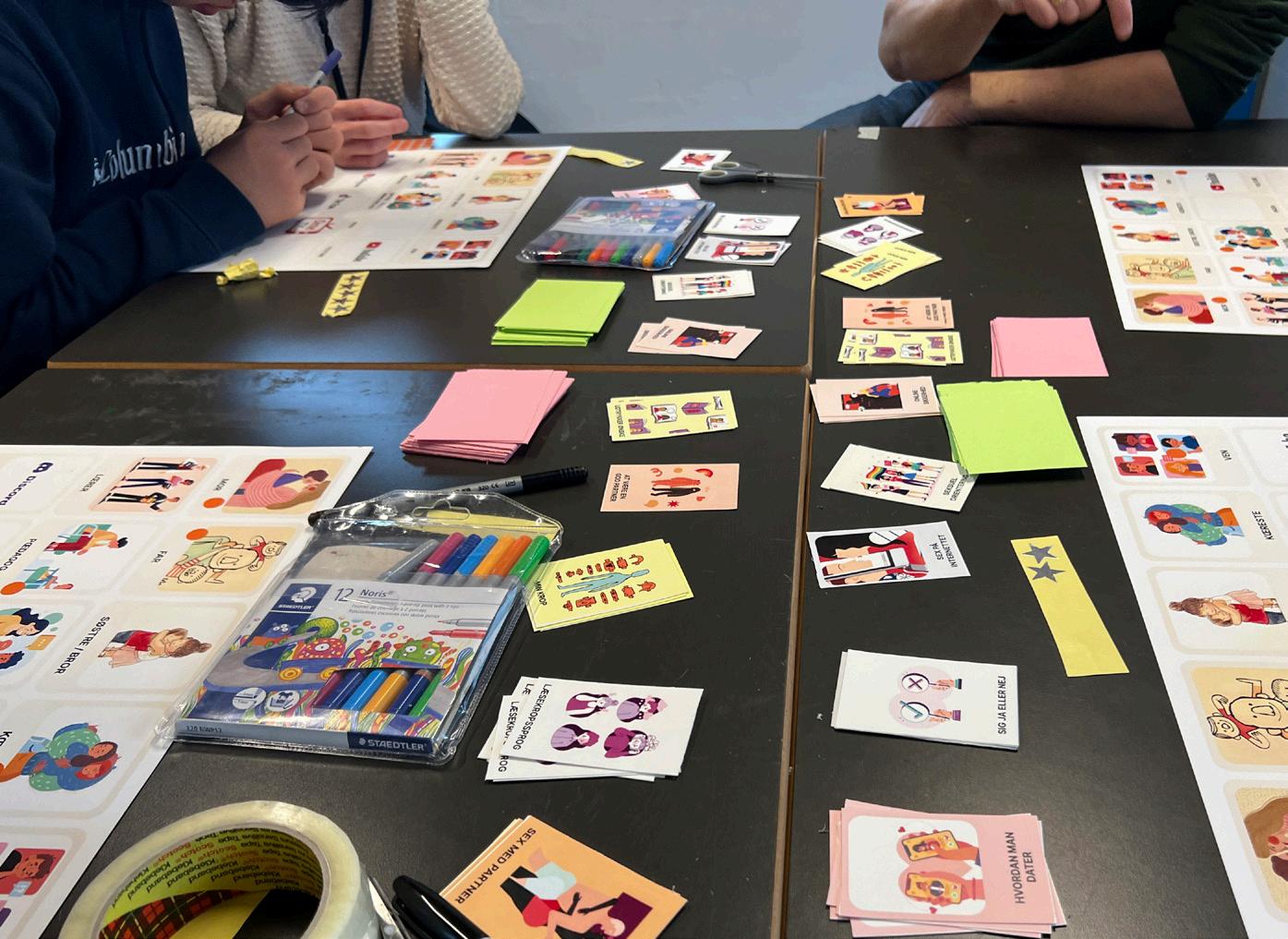
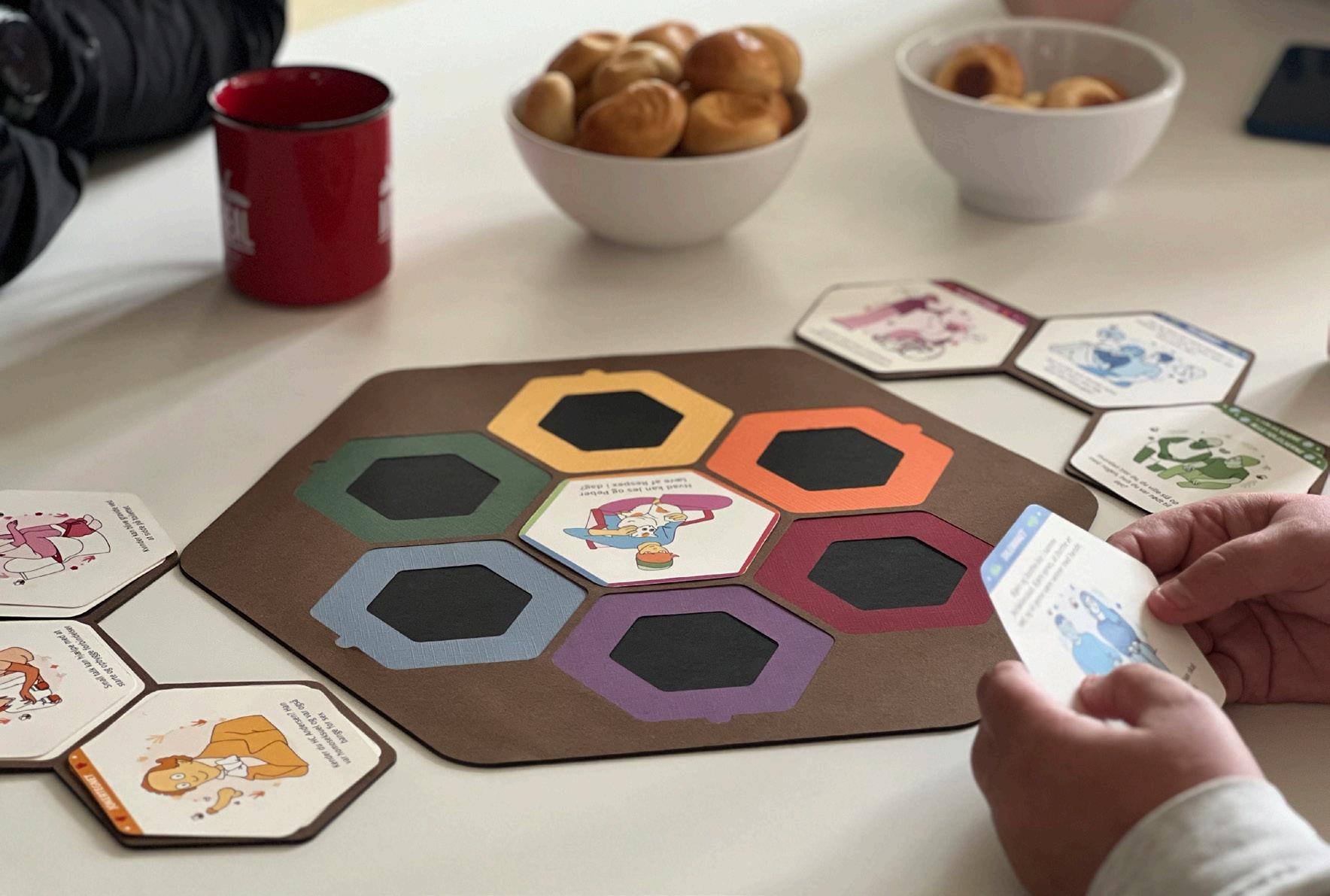
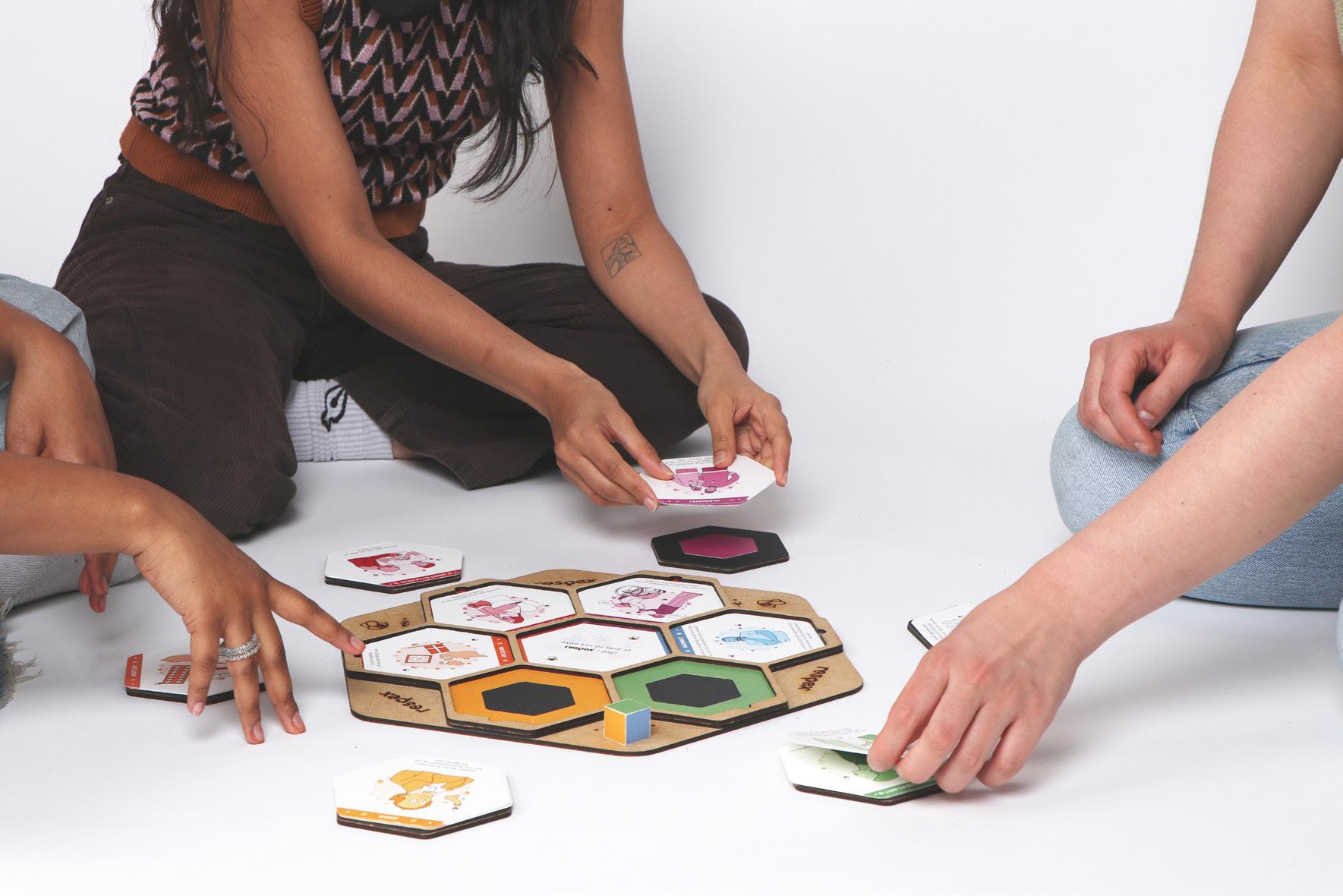
A • Respex: Sex Education for All • Mudita Agarwal
B • Roleplaying Friendships • Samiah Bilal
C • Psychology in Fashion • Mirabel De Guzman
D • COLORIS AI: Inclusive Art through Data • Camilla Fuccelli
E • Inclusive Healthcare Technologies by All • Marie Ping Ping Mosegaard Holm
F
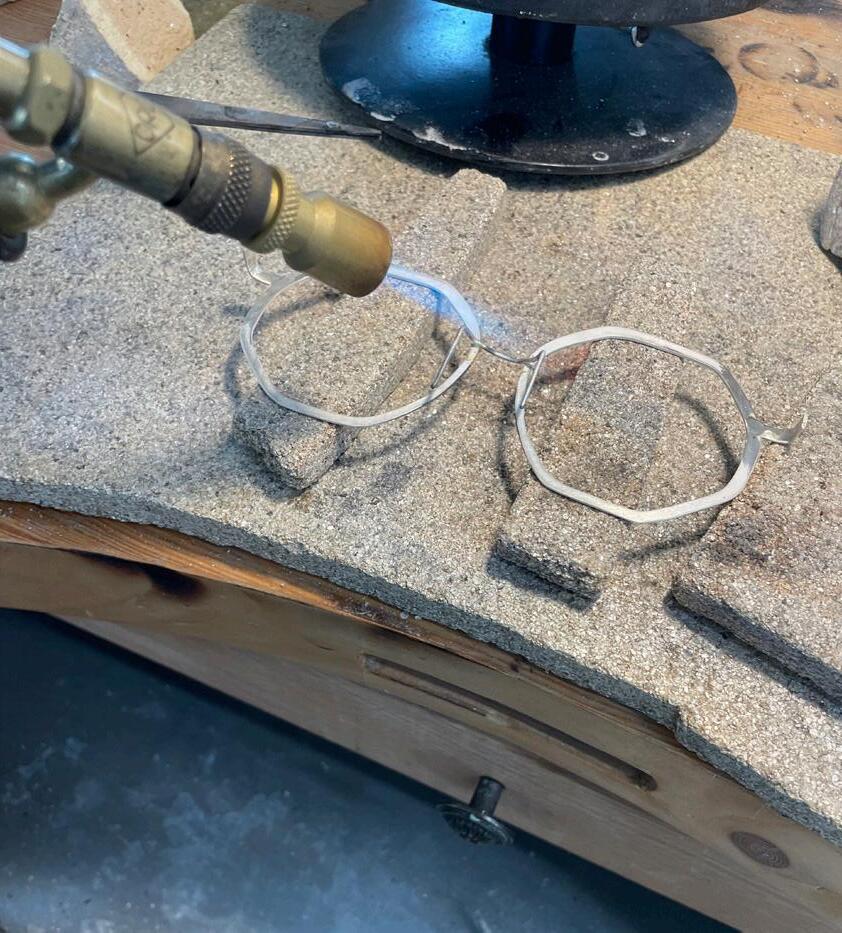
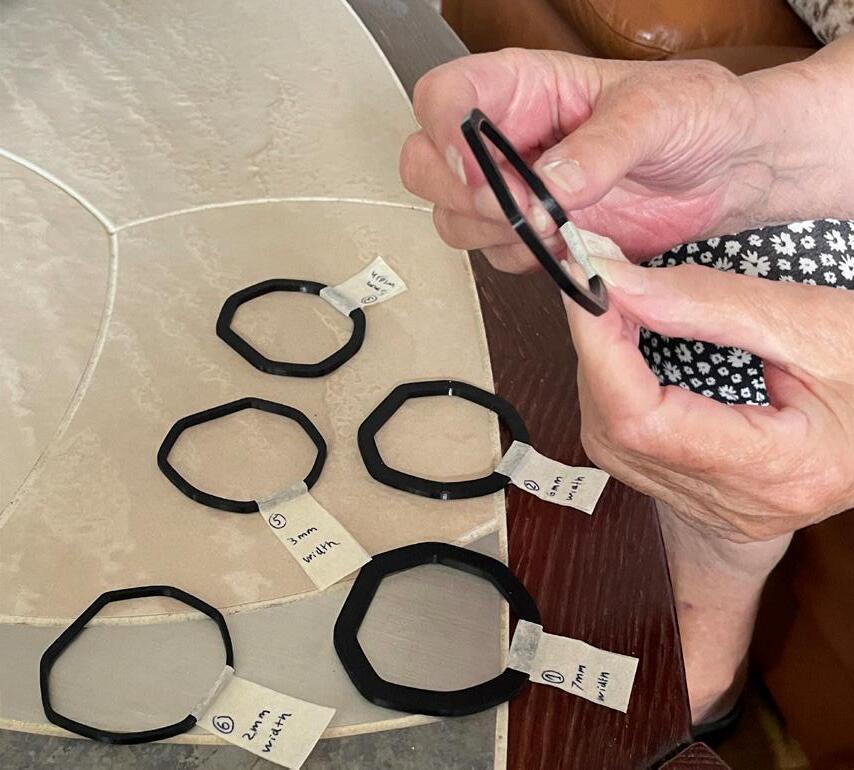
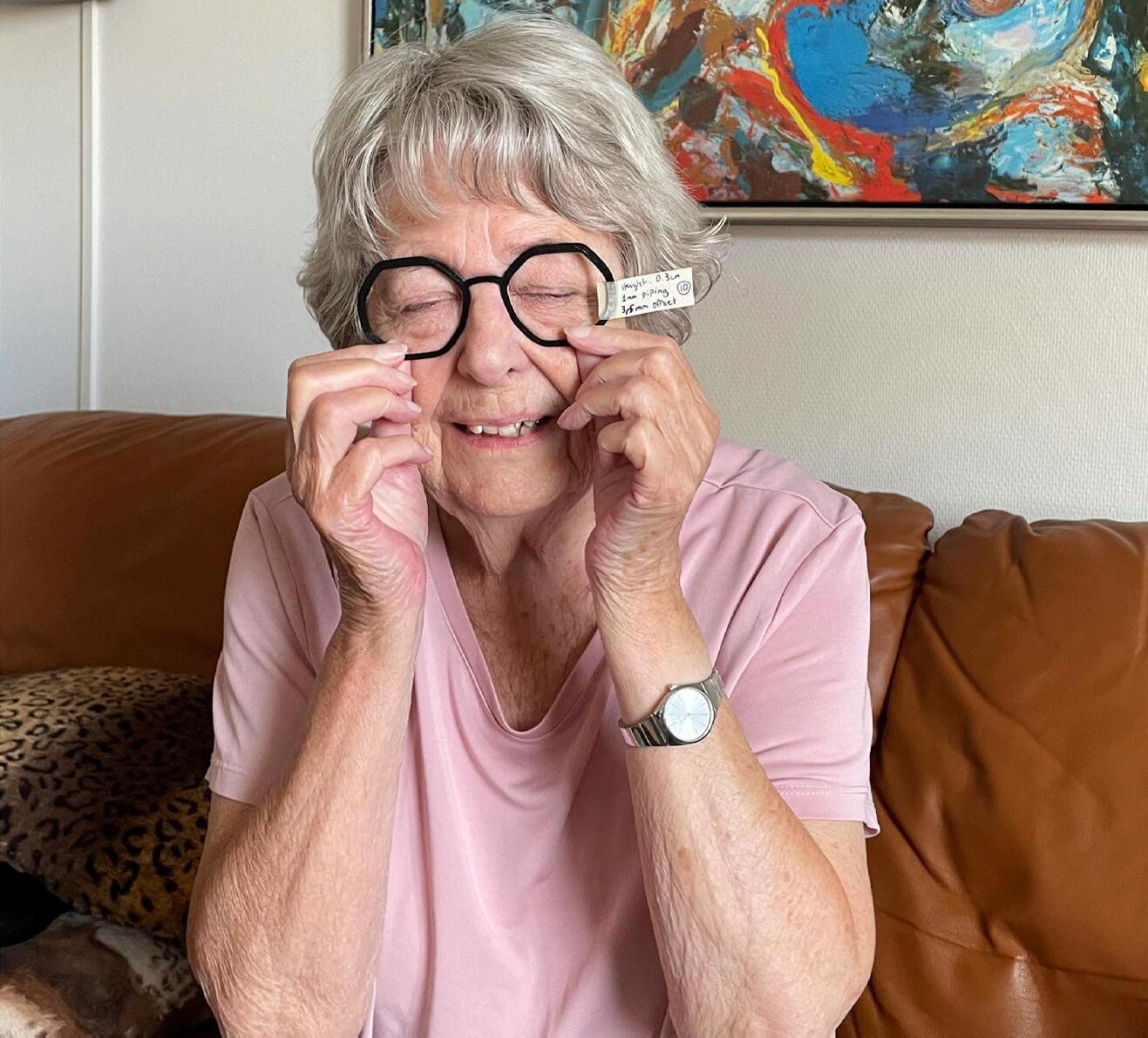
• Identity in Glasses • Caroline Lehtonen Kildall
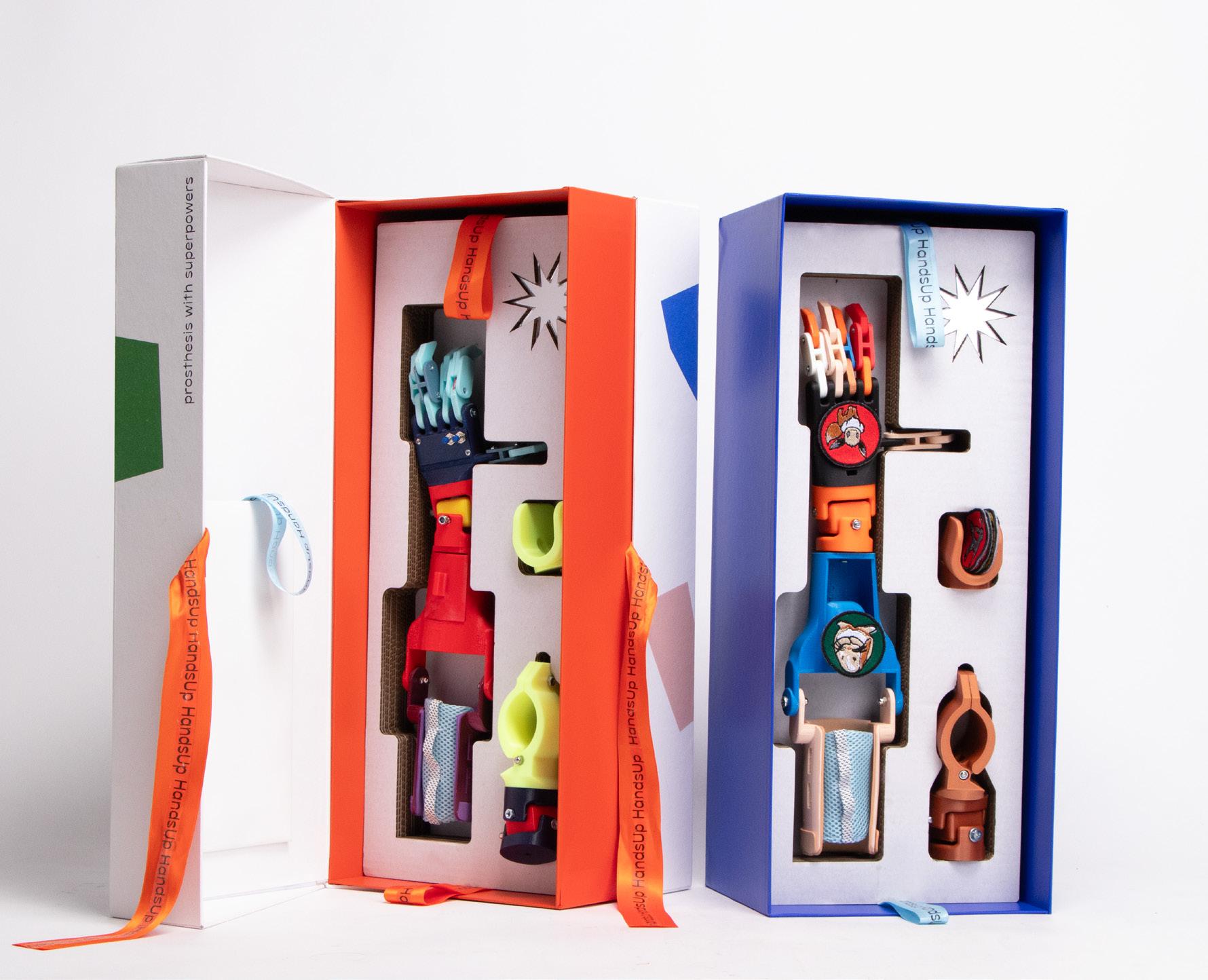
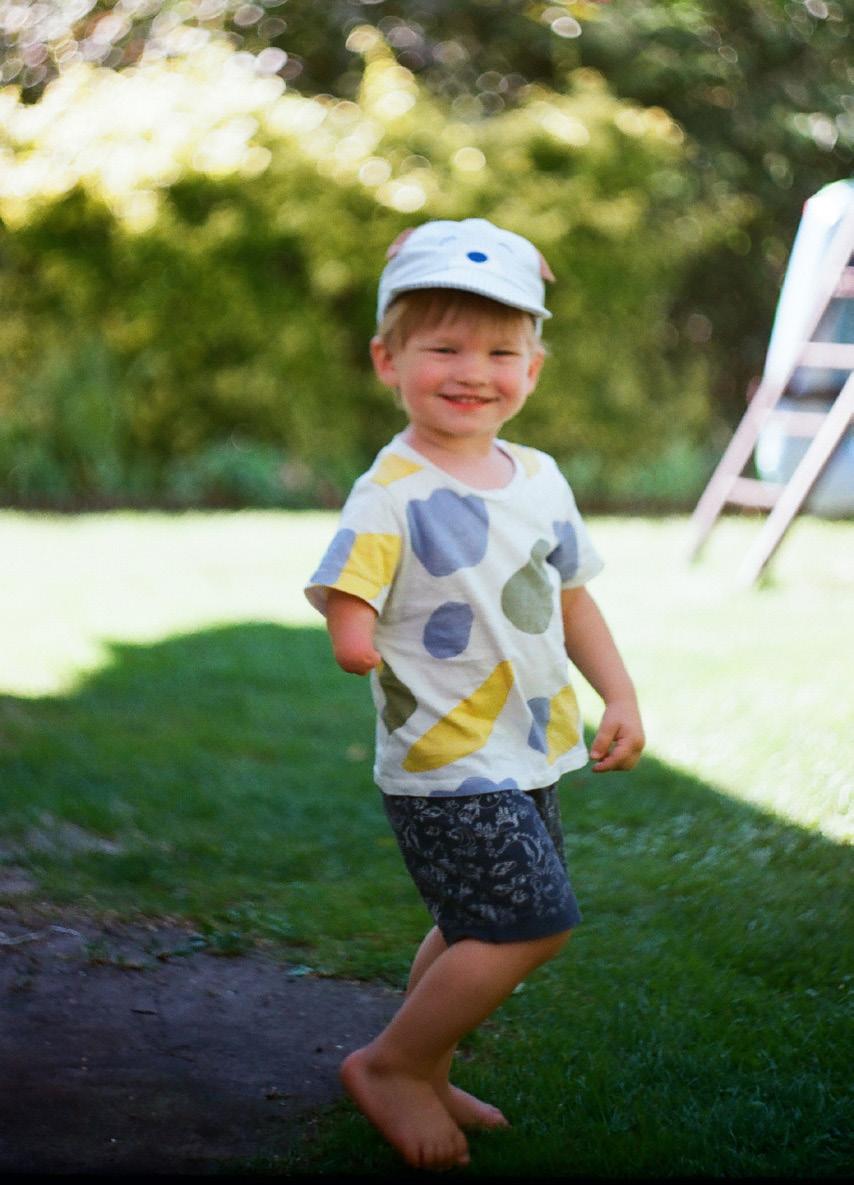
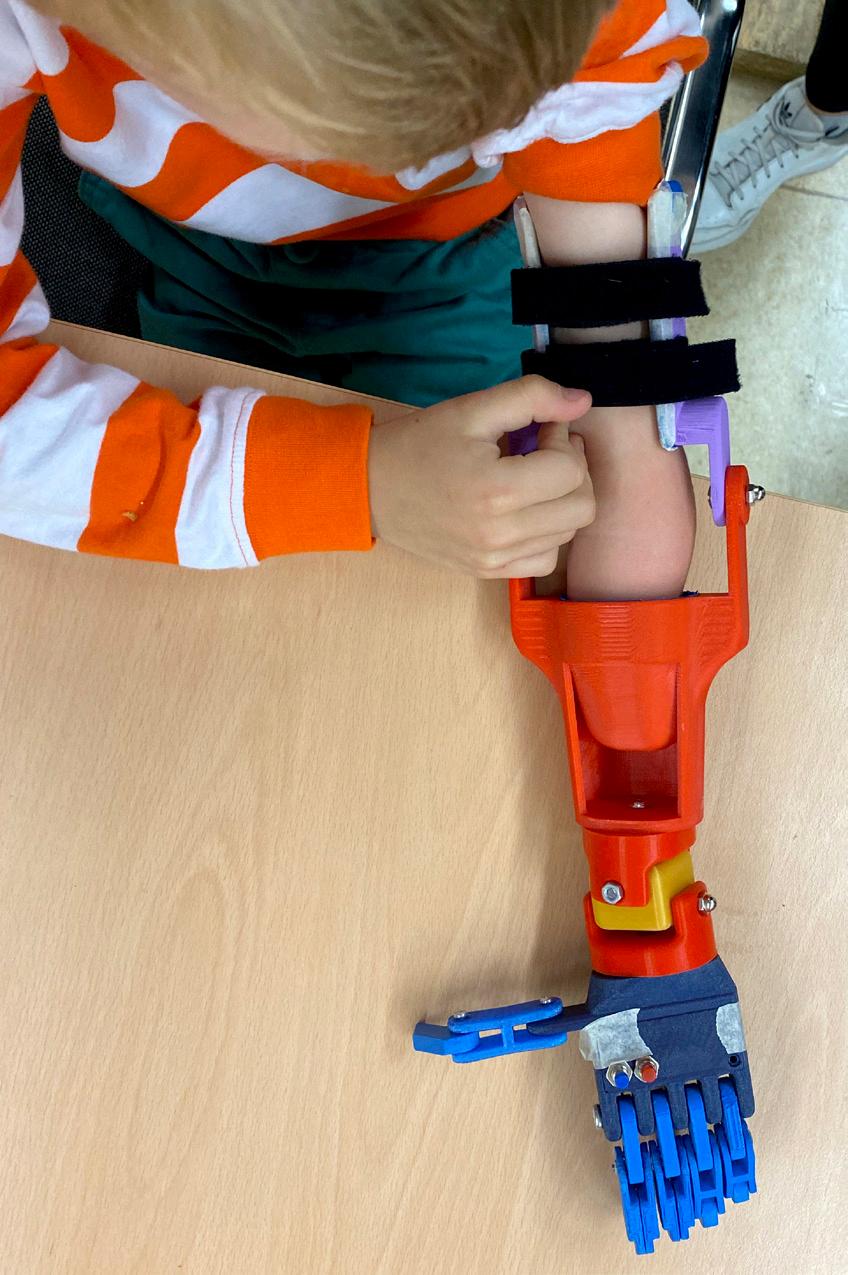
G • HANDSUP: Design For Children With CULA • Marek Kuźmiński
H
• Sexual Pleasure Without Physical Effort • Tutte Murmann
I • Play and Education for All Children • Mariagiulia Sardu
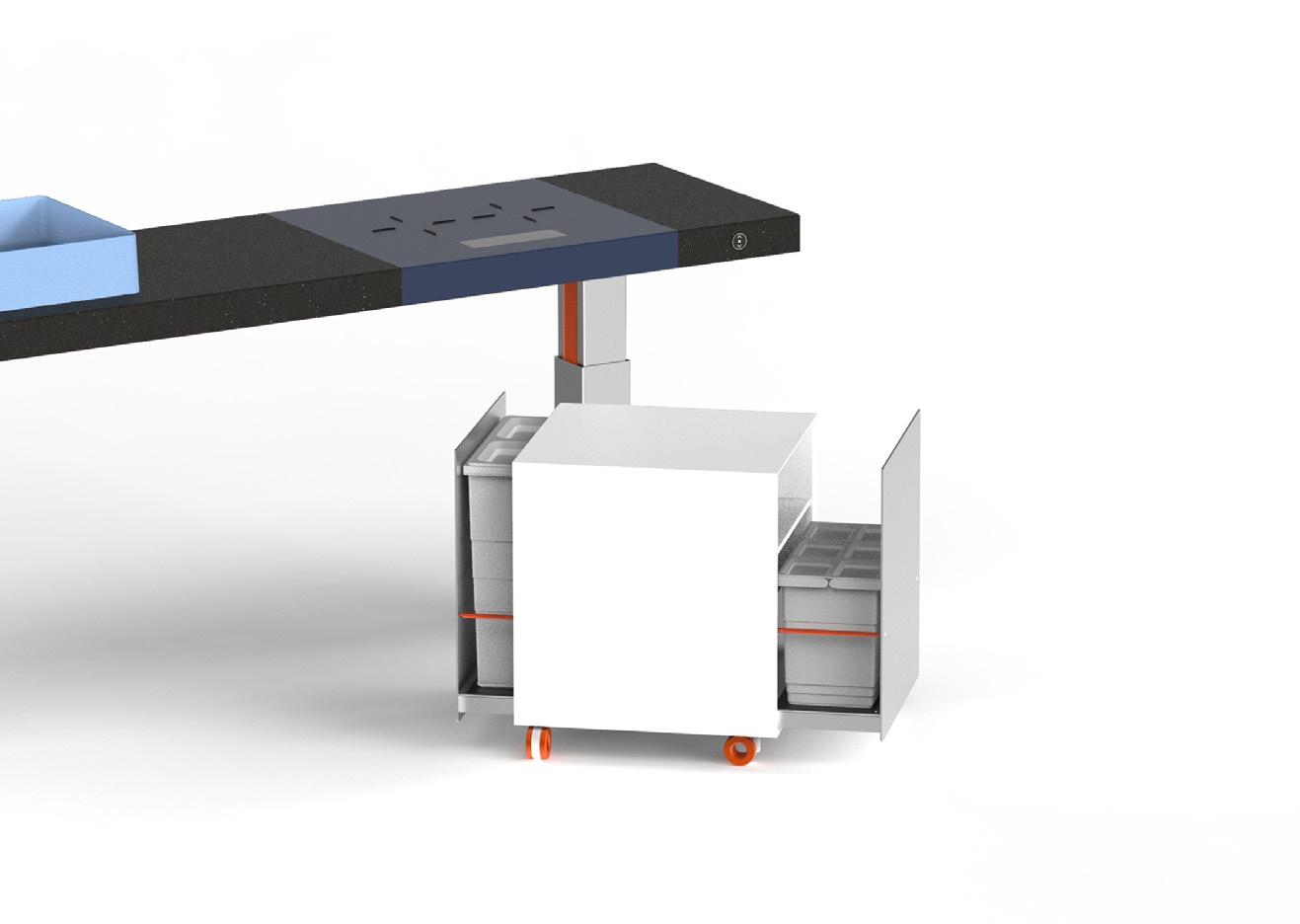
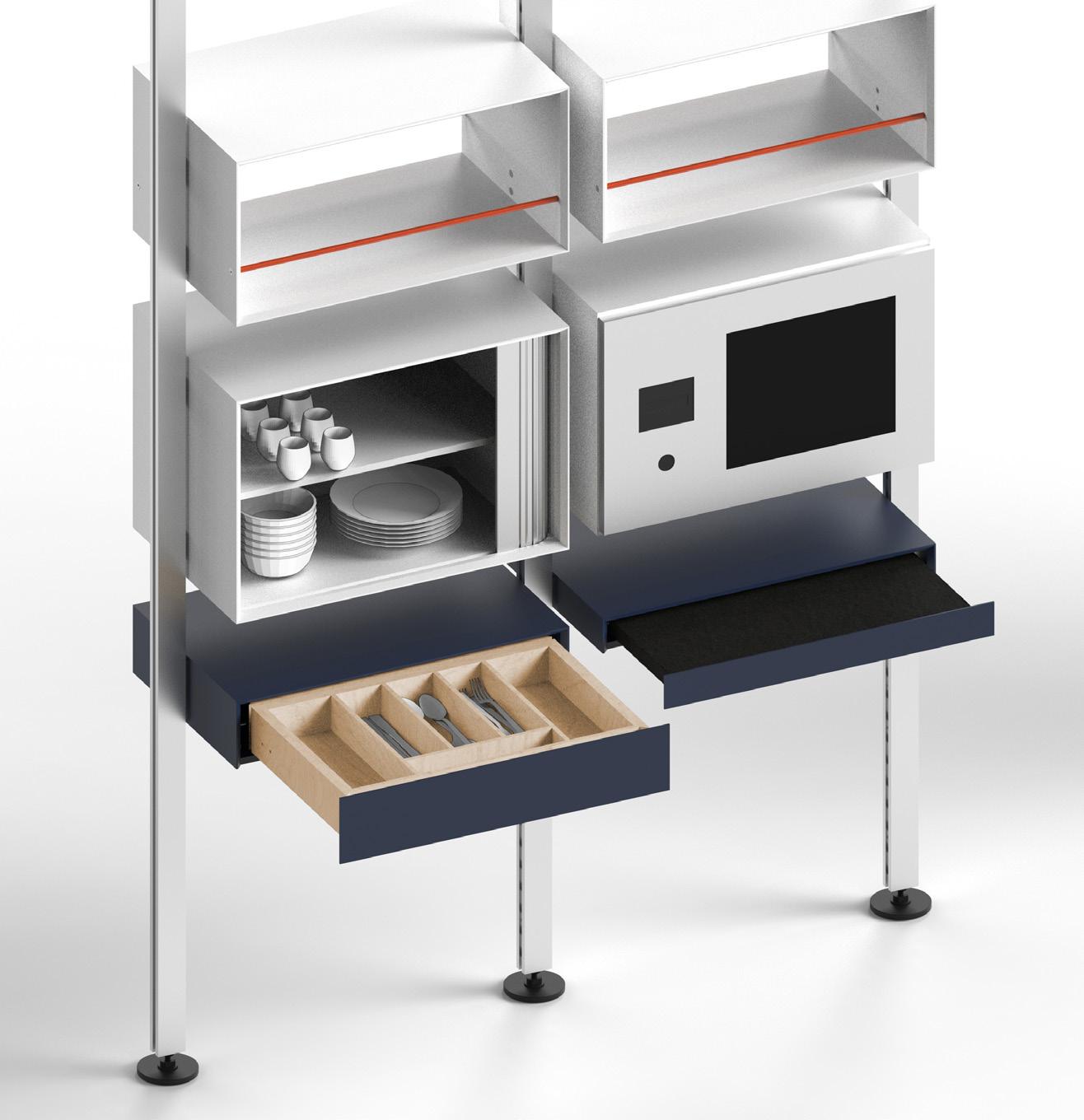
J • NOTA KITCHEN : Inclusive Kitchen For All • Marco Sidoli List of Cases by DSKD Students
Preface
I have known Yanki Lee for over twenty years, mainly through the Helen Hamlyn Centre for Design at the Royal College of Art, London, and later through our shared involvement in the international DESIS (Design for Social Innovation and Sustainability) network. Over that time, our conversations have ranged widely – across Participatory Design, Inclusive and Universal design, Social Innovation, and the shifting ethical responsibilities of designers working in complex social contexts. Yanki ‘learns through doing’. What has always struck me about her practice is her outspoken refusal to take any design category – or indeed any design orthodoxy – for granted. She treats design not as a settled discipline, but as an experimental, practice-led inquiry that must remain open to challenge, discomfort, and rethinking.
This sensibility is clearly evident in Designing AS People. The book builds on familiar narratives in human-centred, participatory, and universal design, but it does not simply rehearse them. Instead, it interrogates their limits and blind spots, particularly where participation risks becoming ethically complacent – or worse, procedural and tokenistic. Yanki acknowledges established modes of designing ‘for’, ‘with’, or ‘by’ people, yet situates them historically and relationally, showing how each reflects particular distributions of power, responsibility, and voice.
What she introduces – and what makes this book timely, useful, and challenging – is the category of designing ‘as’ people. At first glance, ‘as’ might appear to be a modest conceptual shift. In practice, it is the most demanding orientation of all. Designing AS People asks designers to recognise their own entanglement in the social, cultural, and material worlds they seek to change. It foregrounds embodiment, lived-experience, and positionality not as claims to authority, but as ethical conditions that shape
how design practice unfolds, who it serves, and who it may inadvertently exclude.
This question of designing ‘AS’ people resonates strongly beyond the field of design. We live in a moment when lived experience is increasingly invoked as a source of legitimacy, yet also fiercely contested – whether in debates around gender identity, disability, professional expertise, or social role. Some argue that how one feels or identifies (what pronouns are used) should be decisive; others, including myself, insist that biology, biography, and power also matter. Yanki’s contribution cuts across these polarities and enters difficult territory. Designing AS People is not an argument for uncritical identification, nor for collapsing difference into sameness. Nor is it a licence for almost colonial styles of appropriation. Rather, it is a call for designers to work from within relationships of accountability, care, and ethical constraint –recognising cultural differences while refusing detachment – and taking ideas about relational empathy into new, more rigorous and ethically demanding domains.
This framing is deeply informed by social innovation practice, particularly as articulated within the DESIS network, where design is understood not as problem-solving from above, but as a relational, situated, and collective endeavour. Here, collaboration, power redistribution, and co-design are not add-ons; they are the crux. Yanki’s work exemplifies this ethos while also challenging it. The eighteen projects by Kolding School of Design (DSKD) staff members and ten cases by its students documented in this book, developed through her Visiting Professorship at DSKD, show how designing AS people emerges only through long-term engagement, mutual vulnerability, and a willingness to let practice reshape theory, rather than the other way around. Some may find ‘as’ controversial; I see it as a complex yet logical and ethical progression of co-design for the generations she has been teaching and learning with.
On a more personal note, having collaborated with Yanki on research and writing – including our short paper on Authenticity
in Participatory Design (2026), which she led – I have seen at close hand how seriously she takes the ethical implications of participation. She is attentive to moments when participation feels genuine, and equally to moments when it does not. Such reflexivity runs throughout this book. Designing AS People is not identity politics, nor does it offer a manifesto or checklist. Instead, it provides a framework for thinking and practising – one that asks designers, educators, and researchers to stay with complexity, resist easy resolutions, and treat design as relational work with real ethical consequences.
In this sense, the book is both generous and demanding. Designing AS is not the same as designing FOR. It invites us to reconsider what it means to practise universal design and to engage in social innovation as forms of ethical reckoning. Authenticity here emerges through the lived and the felt, and through relational and ethical accountability. Ultimately, this book challenges us not only to design for a better world, but to design fairly and ethically as part of the worlds and communities we already inhabit together.
Lorraine Gamman PhD, Professor of Design, Central Saint Martins, University of the Arts London, UK
Jan 2026
Yanki Lee, PhD, is a Hong Kong – and London – trained architectural designer (MA Architecture, 2000, RCA) specialising in design research and social innovation.
Her work explores participatory and inclusive design as tools for social transformation, with a focus on ageing, disability, and collective wellbeing. She coordinated the MFA Design + Change programme at Linnaeus University, Sweden (2020–2025), and is Visiting Professor of Universal Design at Kolding School of Design (DSKD), Denmark (2021–present).
As founder of the Design for Social Innovation and Sustainability (DESIS) Lab at the Hong Kong Design Institute (HKDI) and of Enable Foundation (HK/UK) – an education charity and social design collective – she has led international projects that connect research, practice, and policy. Designing AS People continues her long-standing inquiry into how Universal Design can evolve beyond ableism, towards design as a shared human practice.
A New Framework FOR Design Practice
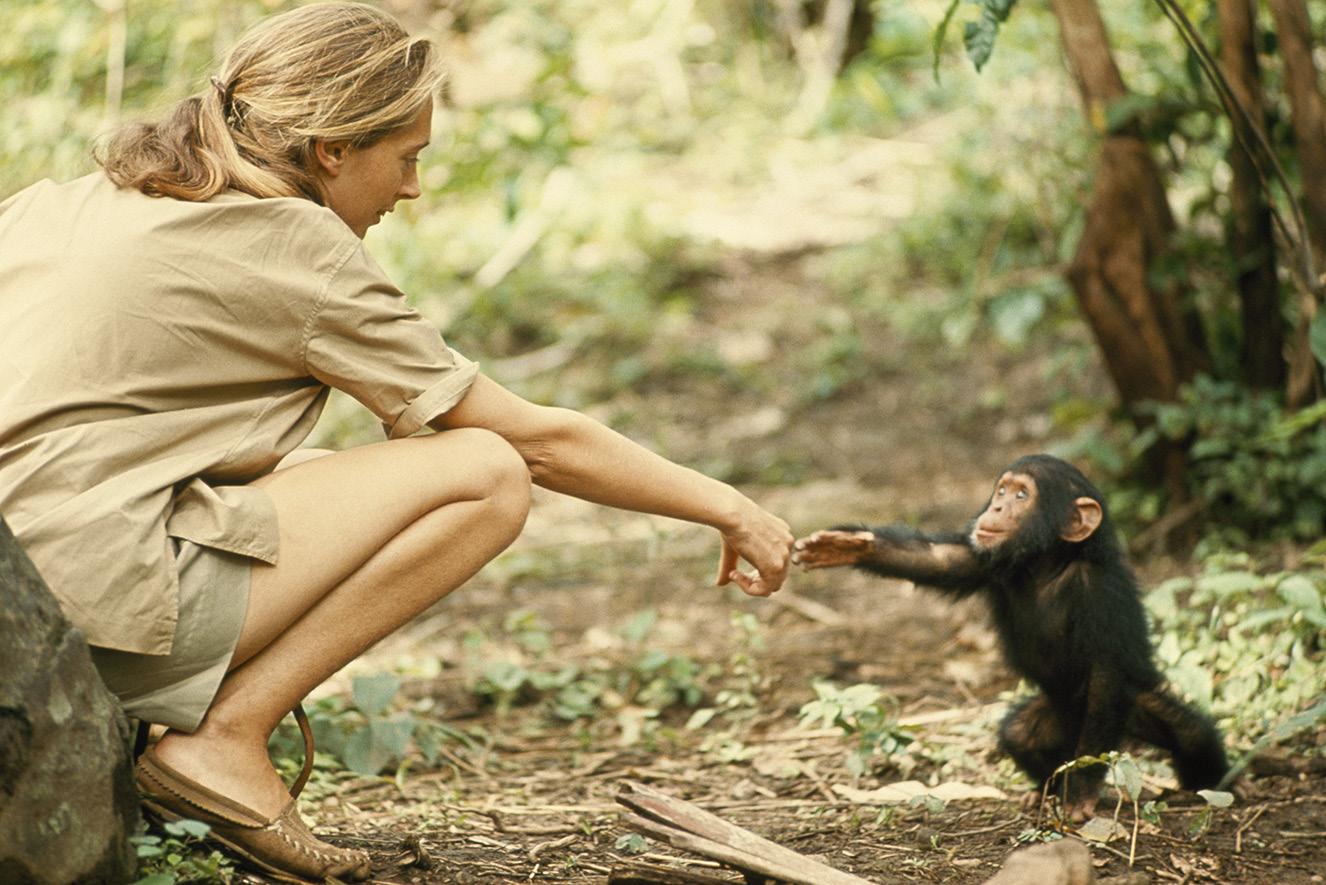
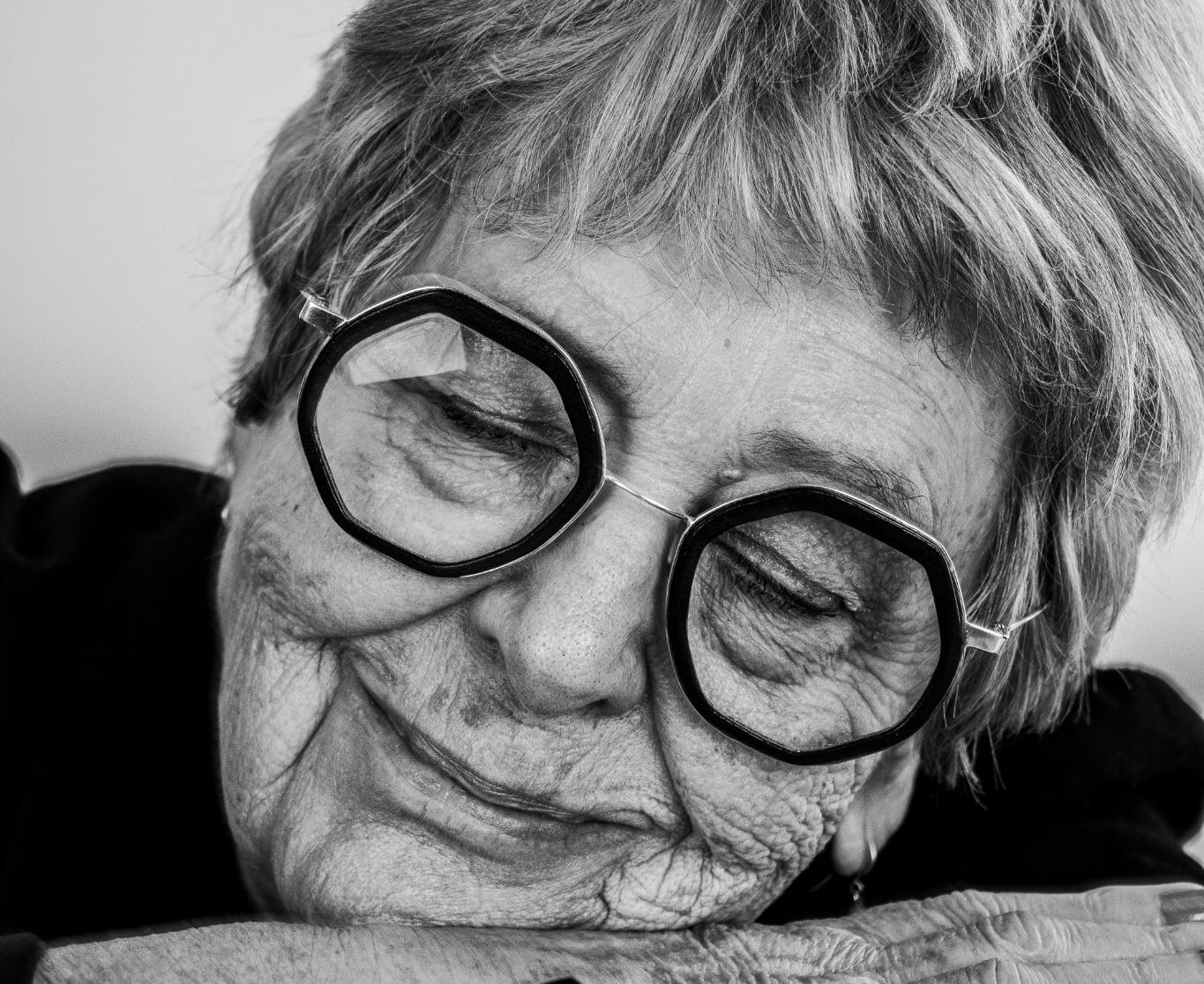
Dr Jane Goodall, the world-renowned primatologist and anthropologist, transformed the study of chimpanzees through an unprecedented immersive approach. She lived within their habitat, seeking to understand their complex society as a neighbour rather than a distant observer, adopting a participant-observer stance to gain insights from within their world (see Figure 0.1). In other words, she sought to research ‘as’ a chimpanzee.
Similarly, Designing AS People proposes a shift, from understanding to identification, from simulation to co-existence. It invites designers to see themselves not as service providers or problem-solvers, but as participants in the same ecological, social,
and emotional conditions they seek to transform. To design ‘as’ is to act from a position of shared humanity, acknowledging that our vulnerabilities, capacities, and environments are interconnected.
From Design WITH Empathy to Design AS
What is the difference between design ‘with’ empathy and design ‘as’? This question, simple on the surface, has followed me since I first introduced the idea at the heart of this book. It opens a deeper inquiry into how designers understand, relate to, and act with others.
For decades, designers have been taught to design with empathy: to imagine what it feels like to be someone else, to sense their frustrations and aspirations, and to translate that emotional understanding into design decisions. Empathy, in this framing, is a bridge or a way to reach across differences and to care about people we do not yet know.
Yet as user-, human-, and people-centred design practices have matured, a paradox has emerged: empathy can also distance. It positions the designer as an interpreter of others’ experiences rather than as a participant within shared systems of life. To design ‘with’ empathy is often to stand outside looking in, to simulate otherness rather than inhabit it. The empathetic stance still implies a subtle hierarchy: the designer who understands, and the user who is understood. It marks an important step in the evolution of ethical design but it is not enough.
The Origins of a New Mode
This reframing arises from more than two decades of user-, human-, and people-centred design practice, including Participatory Design (PD) and Universal/Inclusive Design (UD/ID) research and from my continuing engagement with one question: Who are we designing FOR, WITH, BY, and AS?
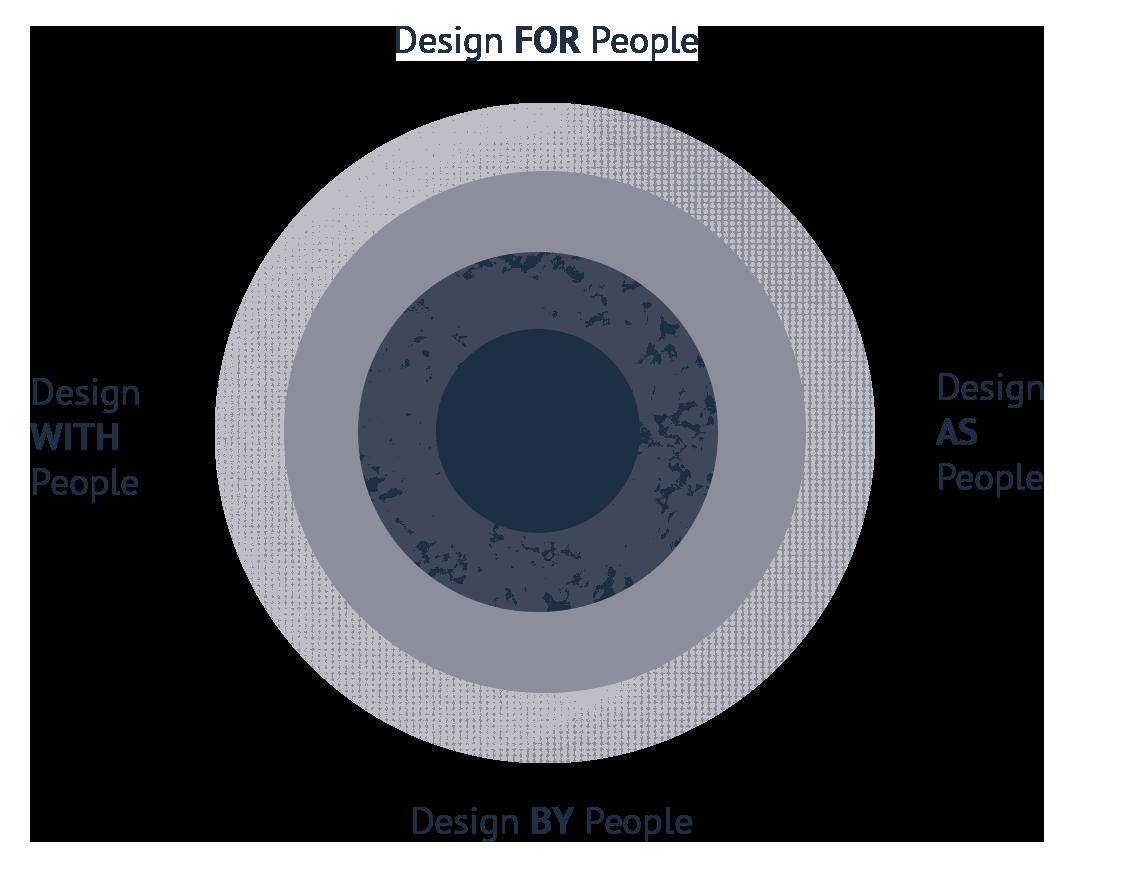
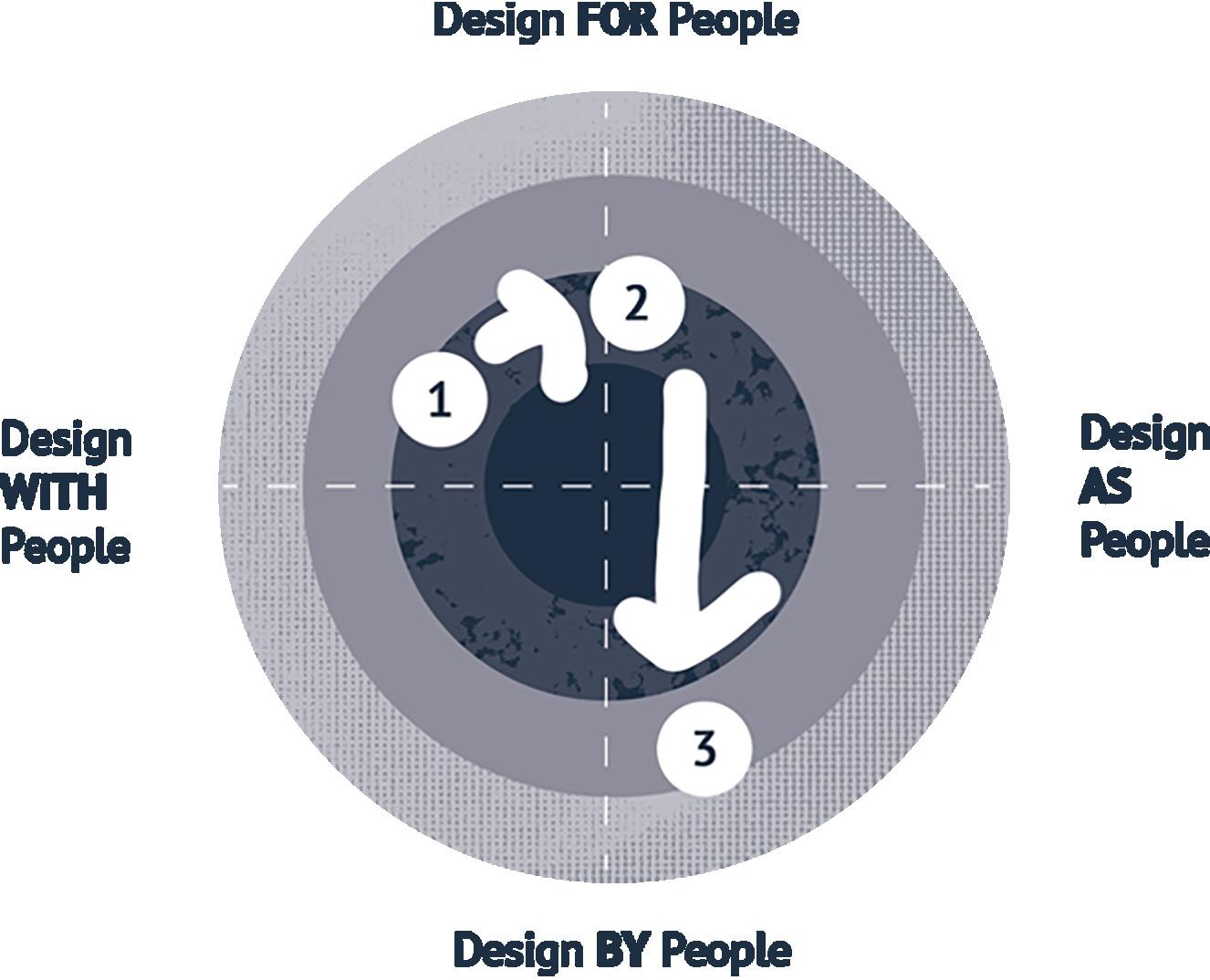
Through this exploration, the Design FOR/WITH/BY/AS People framework emerged, not as a hierarchy of practice but as a set of relational orientations marking the evolving roles of designers. Each mode reflects a distinct historical and philosophical moment in design’s social trajectory:
1. Design FOR People sought to serve and protect, a modernist project grounded in expertise and functional problem-solving.
2. Design WITH People introduced collaboration, empathy, and participation, expanding the designer’s role to that of facilitator and listener.
3. Design BY People went further, positioning non-designers as active creators of their own solutions and advocates for their communities.
4. Design AS People, the focus of this book, represents a contemporary turn, one that dissolves the boundary between designer and user and calls for an integrated, lifecentred practice.
Why We Need a New Mode
The world in which design now operates is more complex, interdependent, and uncertain than ever before. The challenges of ageing populations, ecological crisis, technological acceleration, and social fragmentation have exposed the limits of design that is merely for or with. Empathy as simulation is no longer sufficient; what we need is co-existence as an approach.
At its core, Designing AS People calls on designers to locate themselves within the systems they shape – to recognise that design is not something we do to others but something we do as part of others. It signals a necessary epistemic shift in design research: from representation to relationality, from observation to embodiment.
To design as people is to embrace the fragility, difference, and imagination that make us human. It acknowledges that design is never neutral: every line, surface, or system embeds assumptions about who matters and who is excluded. Designing ‘as’ requires ongoing reflection on those assumptions and the humility to unlearn the hierarchies that persist within design education and practice.
A Decade of Practice: Reframing Universal Design
This book is grounded in the work of the Lab for Social Design at the Kolding School of Design (DSKD) in Denmark and in my Visiting Professorship (2021–2025) developed in collaboration with the Bevica Foundation to advance Universal Design in research and teaching. Here, UD is not treated as a checklist or compliance framework but as a transformative practice connecting accessibility with the Sustainable Development Goals’ ethos of ‘leaving no one behind.’
Across fifteen years of case studies, dialogues, and pedagogical experiments, Designing AS People documents how students, staff, and partners have explored Universal Design through design practice. The book presents twenty-seven projects (2010–2025), each positioned within the four modes of Design FOR/WITH/BY/ AS. From healthcare innovations and community partnerships to cultural collaborations and educational experiments, these projects collectively reveal a shift: from designing solutions ‘for’ others toward designing as part of the collective life-world we share.
Toward a More Human Design
To design ‘as’ people is to treat uncertainty and care as core design materials. It asks us to recognise the everyday acts of interdependence that sustain human and ecological life. In this sense, Universal Design is not a static ideal but a living inquiry, a
continual process of re-examining how we relate to one another and to the environments we inhabit.
This book is not a manifesto but a tool, a guide to practices, conversations, and reflections that reveal how Universal Design can evolve beyond ableism, beyond compliance, and toward a more responsive, inclusive, and compassionate future.
As designers, educators, and citizens, we are all participants in making that future. Designing AS People is therefore not only about Universal Design, it is about designing as a universal act of being: attentive, collaborative, and profoundly human.
Developing a New Framework
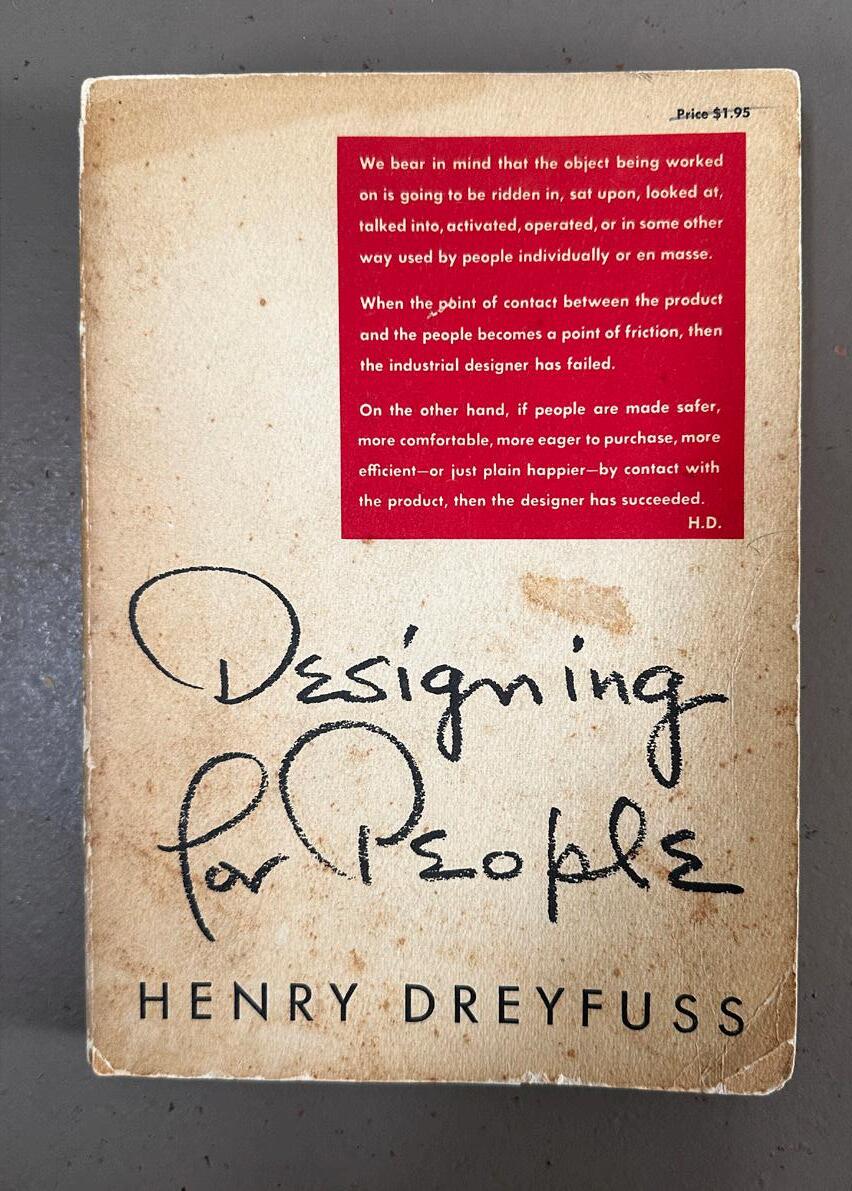
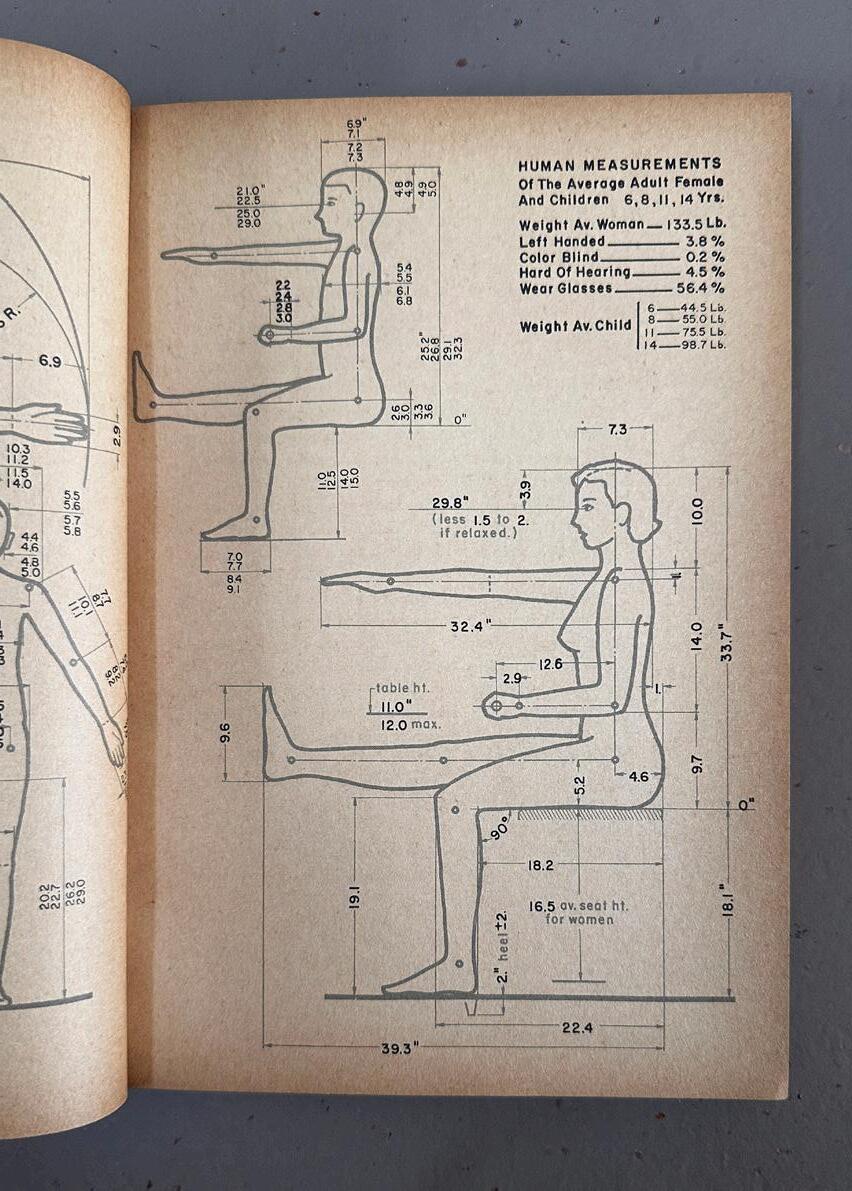
This book is the outcome of an inquiry, rooted in over two decades of my design-research experience. My first reference is undoubtedly Designing for People (Dreyfuss, 1955; see Figure 0.2), a seminal work in industrial design that foregrounded user-centred practice. Dreyfuss, a pioneering American industrial designer, emphasised
the integration of ergonomics and human factors into product development to ensure that designs are not only functional but also intuitive and comfortable. Through anthropometric models such as ‘Joe’ and ‘Josephine’, which represented average human dimensions, he guided designers to create products able to accommodate a wide range of users. His approach revolutionised the field, prioritising user experience over aesthetics and laying the foundation for modern user-centred design.
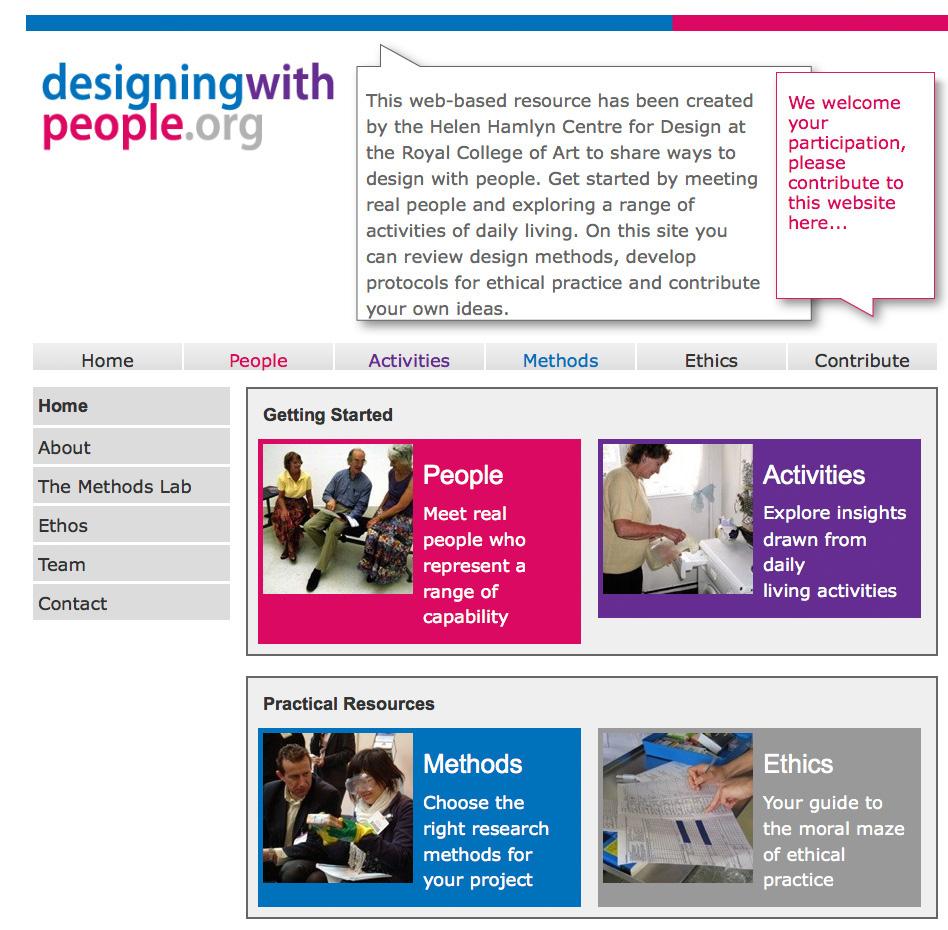
Yet Dreyfuss’s vision, revolutionary for its time, still positioned designers as experts creating solutions ‘for’ users rather than ‘with’ them. This distinction became central to my own journey. In 2012, building on this foundation but seeking a more collaborative approach, I created a website (see Figure 0.3; Designing with People, n.d.), emphasising a shift from ‘designing “for”’ to ‘designing “with”’ people. This collated progressive practices that emerged through the 1980s and 1990s in response to ageing populations and the need for industrial and engineering solutions that addressed diversity. These came from Participatory Design (PD),
Figure 0.3 Screenshot of the research website Designing with People (www. designingwithpeople.org).
rooted in the Scandinavian tradition of the 1980s and Inclusive Design (ID) practices, that emerged in the United Kingdom during the 1990s. The website offered a toolkit including personas representing diverse abilities, inclusive design methods, and ethical guidelines for respectful engagement.
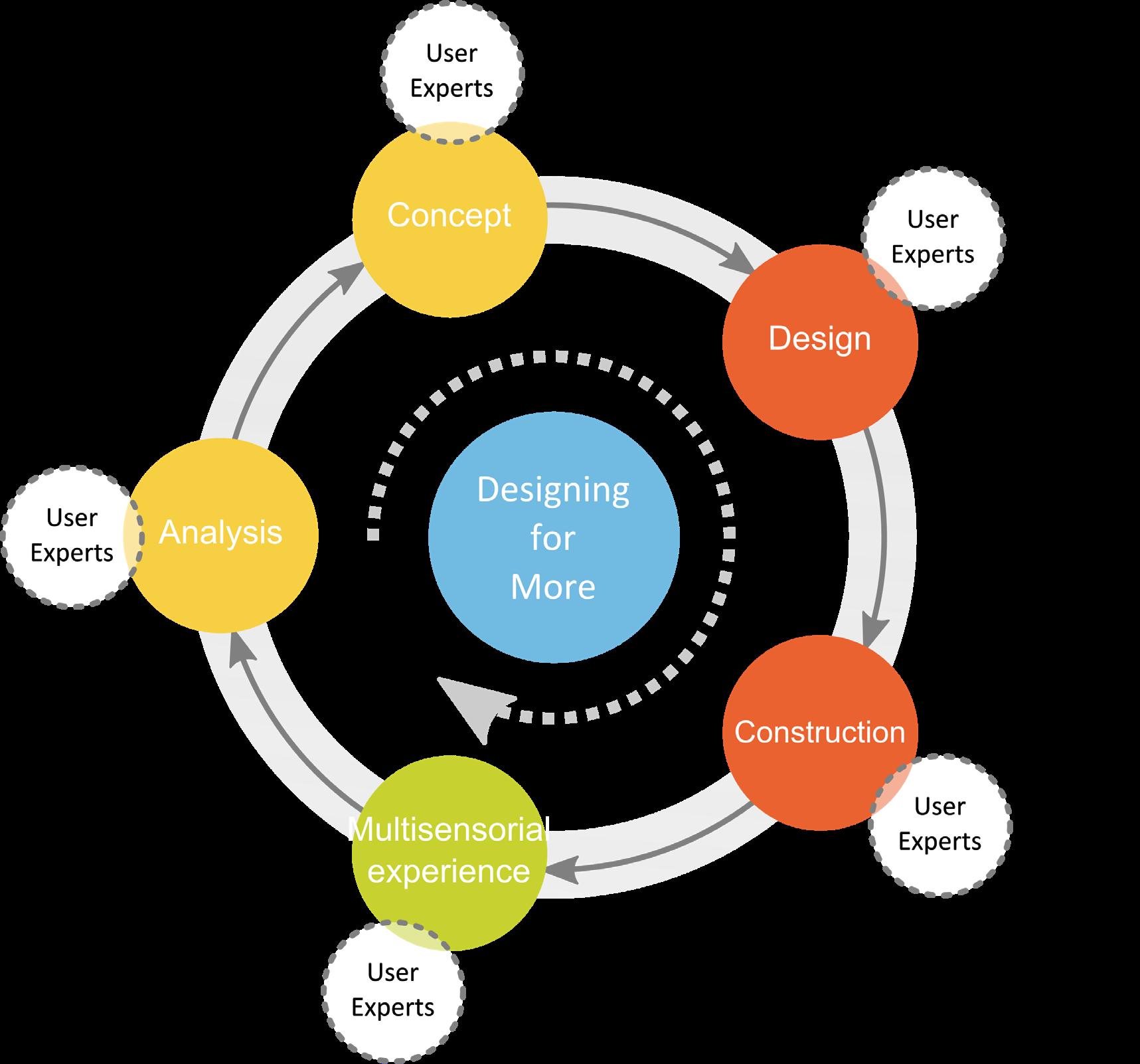
Over the past five years, I have worked with staff and students at Kolding School of Design (DSKD) in Denmark, exploring what it means to practise Universal Design (UD) in a way that is participatory, relational, and ethically grounded. I call this approach UD 4.0 (Authenticity Participatory Design – APD): a framework mapping four designer–people relationships: FOR, WITH.
Beyond Ableism - Lab for Social Design @ DSKD
To reintroduce UD meaningfully, it is essential to understand its evolution and confront the ableism embedded in traditional design practice. Ableism, the assumption that certain bodies and minds are more valuable, efficient, or ‘normal’ than others, shapes everything from design processes to how success is measured. The Bevica Foundation Universal Design Hub (Ryhl et al., 2021, Figure 4) notes that user needs extend beyond physical ability to include sensory, cognitive, and psycho-emotional dimensions. Three tactical approaches illustrate this shift beyond ableist assumptions:
1. Provide choices. The Seven Restrooms – One Universal Design Solution at the Disabled People’s Organisation of Denmark’s headquarters in Høje Taastrup exemplifies inclusive flexibility.
2. Create equal access through diverse experiences. The café at Tate Modern in London demonstrates that all visitors can enjoy the same view of the Thames and skyline, each from a distinct spatial experience.
3. Develop equity through equal solutions for all. The social enterprise and microbrewery People Like Us provides an
inclusive workplace where employees with various disabilities can perform their jobs fully and safely.
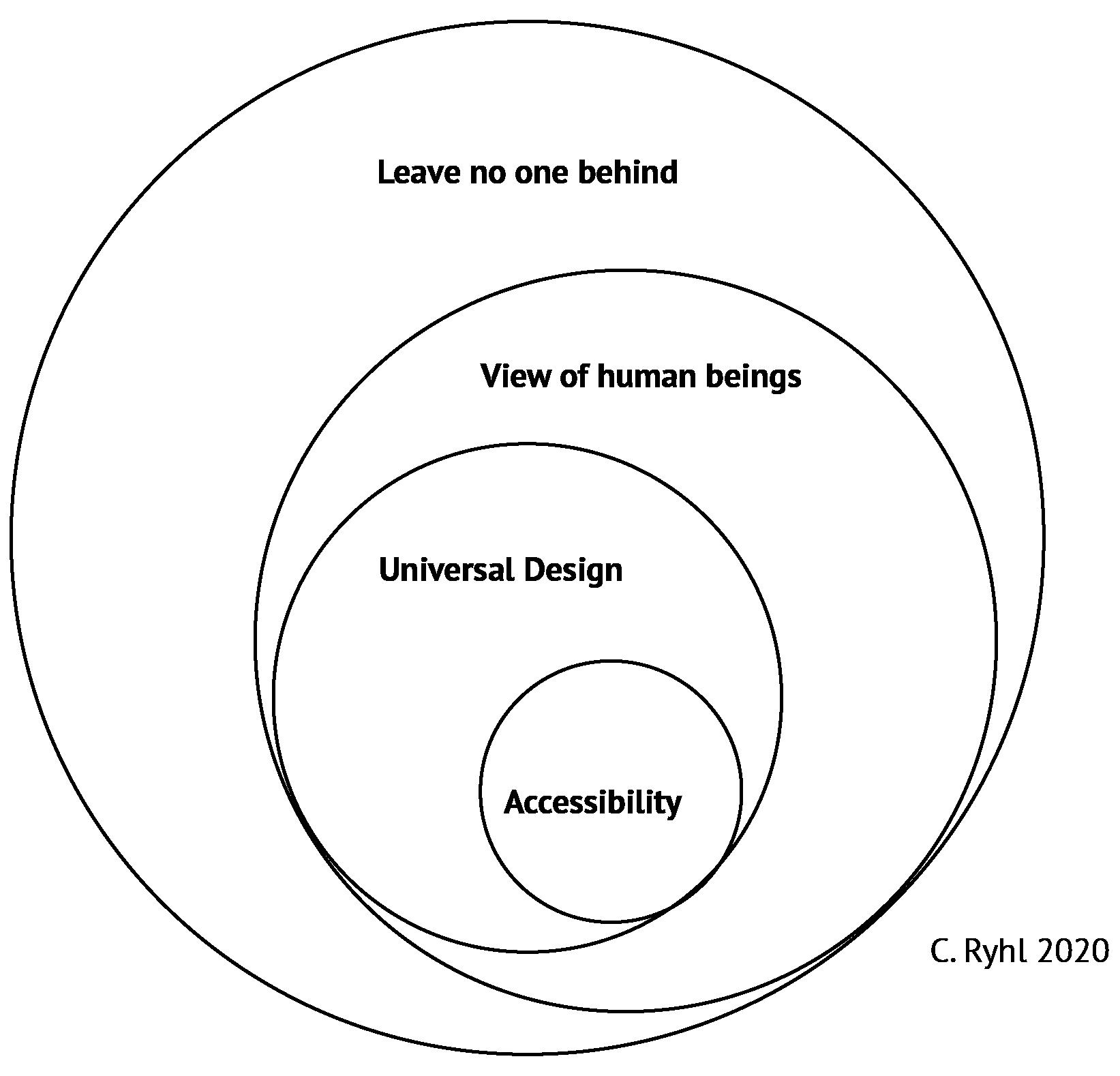
This model supports reflective, situated practice, helping designers navigate between technical skill, worldview, and collaboration. This evolution echoes Bevica’s vision of UD as a bridge between accessibility and the UN Sustainable Development Goals agenda of ‘leaving no one behind’ (see Figure 0.4). Rather than a chronological sequence, UD 1.0 - UD 4.0 represent situational roles that designers may adopt, an idea developed from my earlier doctoral research (Lee, 2008).
These examples show that contemporary UD extends beyond standards or compliance; it prioritises genuine user involvement and aligns with my emphasis on designer positionality and crossdisciplinary collaboration for social change. Building on Sanders and Stappers’s (2008, 2014) work on participation, I expand the
Figure 0.4 Diagram from the Bevica Research Hub illustrating a new purpose for Universal Design practice.
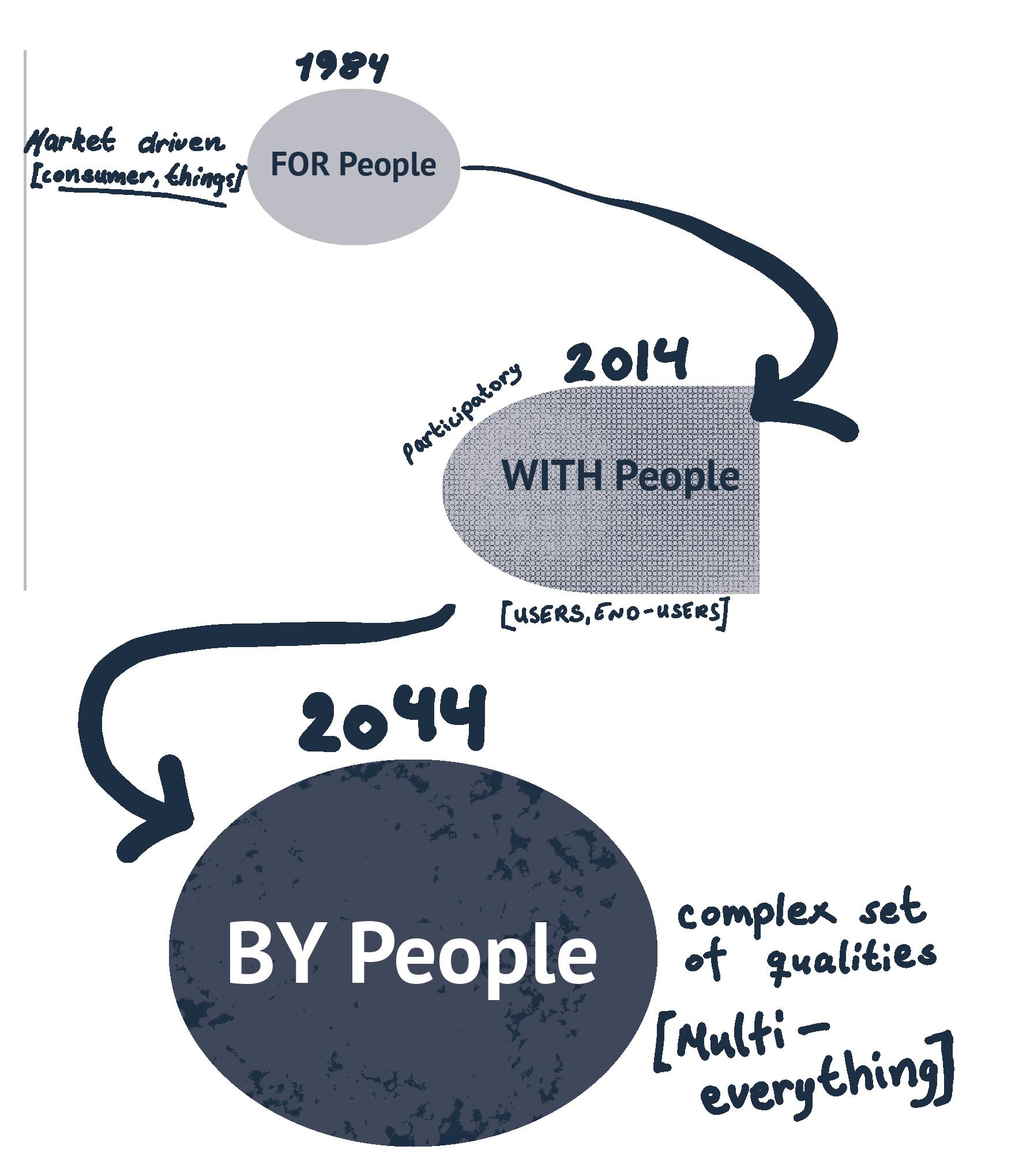
timeline of Designing FOR/ WITH/ BY (see Figure 0.5) with a fourth mode: Design AS:
1. Designing FOR People (pre-1990s): expert-led solutions for excluded groups.
2. Designing WITH People (late 1990s – 2000s): co-design processes engaging users.
3. Designing BY People (2000s – present): empowering users to lead design.
4. Designing AS People (2010s – present): a holistic, ecosystembased approach to well-being, sustainability, and shared futures.
This publication investigates authenticity in UD practice through the lens of work produced between 2010 and 2025 at Kolding School of Design, using the Design FOR/WITH/BY/AS People framework (see Figure 0.6) as its methodological foundation. The framework was refined through three iterative Action Research (AR) stages (2024–2025) within educational and community projects. AR mirrors PD’s participatory epistemology: knowledge emerges through reflection-in-action and dialogue rather than detached observation.
Stage 1 – UD Workshops: explored empathy tools and simulation. Participants recognised that designing for others often reproduced distance; authenticity required shared vulnerability and collective rethinking of UD practice (Lee, 2024).
Stage 2 – Reflexive Pedagogy: engaged design students in analysing when participation felt genuine. Authenticity appeared as attunement or trust built through time and uncertainty.
Stage 3 – Mapping Social Innovation: involved 50 educators evaluating projects through the framework. Authenticity was strongest during role transitions, when expectations were renegotiated (see Figure 0.7).
The framework functions both as a theoretical lens and as a participatory mapping tool, offering a vocabulary to interrogate the depth and integrity of engagement, especially where relational dynamics drive innovation. These modes are not linear stages but practical orientations, tools for reflection that help designers build deeper, more responsive relationships with the people they work with.
My appointment in 2021 as Visiting Professor of UD at Kolding School of Design provided an opportunity to revisit this historically significant concept through three values guiding my practice since doctoral research (2002–2007):
1. Positionality – recognising designers’ roles in responding to societal change.
2. Rationality – understanding how design choices interact with global worldviews.
3. Authenticity – ensuring participation is transformative, not tokenistic.
Towards Universal Design Otherwise
Throughout these years, I have become increasingly aware of how ableism has embedded itself in design’s foundations. From personas and pathologies to prototypes and performance metrics, many processes unconsciously reinforce ideas about which bodies and minds are considered desirable, efficient, or worth designing for.
Designing AS People moves beyond inclusion, access, and empathy. It recognises the entanglement of designer and
participant, viewing design not merely as problem-solving but as a shared medium through which people co-create meaning, care, and futures.
The book offers a provocation: to practise UD otherwise. ‘Otherwise’ signals a refusal to accept business-as-usual logics that privilege independence, neutrality, and control. It opens space for interdependence, friction, joy, and situated knowledge. It invites designers to unlearn ableist ideals and rehearse new ways of designing that are deeply human, contextual, and collaborative.
Section 3 reviews DSKD student projects through this framework, analysing their creative processes WITH others and creating opportunities for reflection along the way.
To practise otherwise is not to abandon UD but to reclaim it, to return to its radical roots in civil-rights activism, community expertise, and design justice. Section 2 examines DSKD’s research and development projects since 2010 under Rector Elsebeth Gerner
Figure 0.7 Testing of the FOR/WITH/BY/AS People framework (2024–2025).
Nielsen, former Danish Minister of Culture, whose political insight brought new stakeholders into the field of design.
How to use this book
Approach Designing AS People as an open framework. Read it linearly or dip into the cases, dialogues, and tools that speak to your context. Adapt the FOR/WITH/BY/AS orientations to your own setting; test, remix, and extend them with others. Treat these pages not as prescriptions but as prompts for practising Universal Design Otherwise - together.
This book is both reflection and offering: a collection of cases, conversations, and concepts developed through years of experimentation at DSKD. It moves from frameworks to pedagogies, from lived practice to speculative futures, anchored in the belief that UD is not static but evolving, and that its future must be coauthored by those it serves.
references
Designing with People. (n.d.). An inclusive design resource [Website]. Helen Hamlyn Centre for Design, Royal College of Art. https://www.designingwithpeople.org
Lee, Y. (2008). Design participation tactics: The challenges and new roles for designers in the co-design process. CoDesign, 4(1), 31–50.https://doi.org/10.1080/15710880701875069
Lee, Y. (2024). UD 4.0: Design as disabled? In Proceedings of the Seventh International Conference on Universal Design (UD 2024) (p. 33). November 20–22, Oslo, Norway.
Lee, Y. C. and Gamman, L. (2026). Exploring Authenticity in Participatory Design (APD): Towards a framework of lived experience & relational ethics in co-creation. In Proceedings of the ACM Participatory Design Conference (PDC ’26). ACM, Milan, Italy.
Ryhl, C., Eiriksson, M., & Overby Sørensen, R. (2021). Universal design – Introduction to a design principle that challenges the idea of being human. Universal Design Hub.
Sanders, E. B.-N., & Stappers, P. J. (2008). Co-creation and the new landscapes of design. CoDesign, 4(1), 5–18. https://doi. org/10.1080/15710880701875068
Sanders, E. B.-N., & Stappers, P. J. (2014). From designing to codesigning to collective dreaming: Three slices in time. Interactions, 21(6), 24–33. https://doi.org/10.1145/2670616
1 • Conversations in Practice
Design FOR Society • Mette Mikkelsen
Co-Designing and Beyond • Eva Brandt • Eva Knutz • Thomas Markussen
Designing from Equality to Equity • Canan Akoglu • Kathrina Dankl
6C Model meets UD Methodologies • Anne Katrine G. Gelting • Richard Herriott
Design FOR Society • Mette Mikkelsen
When reading the interview notes with Mette Mikkelsen, a renowned textile designer and educator at Kolding School of Design (DSKD), it became clear how deeply her philosophy of design is rooted in the idea of designing ‘for’ people. Mikkelsen’s career illustrates how design can evolve from a technical skill into a tool for social change.
From 2012 to 2016, Mikkelsen served as Vice Dean (Prorektor) and Head of Development at DSKD. During her tenure, she played a key role in shaping the school’s direction, embedding design ‘for’ people within its curriculum and supporting events such as the REDO Cumulus Annual Conference hosted in Kolding in 2017. Her leadership fostered several groundbreaking initiatives, including the Design Relations Project and other programmes aimed at cultivating socially engaged design practice.
From Guidelines to Involvement: The Shift to Universal Design
Mikkelsen admits she was not immediately convinced by Universal Design (UD). ‘I’ll be honest – when I first heard about it, I thought, “If you design for everybody, you design for nobody.” I wasn’t sure how that would work in real life,’ she said with a smile. Over time, however, her perspective shifted. Through collaboration with the Bevica Foundation and direct engagement with UD projects, she began to appreciate its potential: ‘What I hadn’t understood was that UD isn’t about making one design that fits everybody equally,’
Mikkelsen clarified. ‘It’s about creating something that everyone can use, but still offering choices. And that’s where the beauty lies.’
Empowering Users: From FOR People to WITH People
For Mikkelsen, the key to successful design lies in collaboration, she expressed, ‘I always say that designing for yourself is a hobby, but designing for others is a position in the world.’ This philosophy guided her teaching at DSKD, where she encouraged students to look beyond their own needs and consider how their work could truly serve others. While leading the school’s design labs, she ran projects exploring the limits and possibilities of design through the principle of ‘doing is thinking’. Her praxis-based approach aimed to identify real-world opportunities in products, services, and systems while collaborating with stakeholders across public, private, and political sectors. ‘Design has to be about collaboration … you can’t just sit in your studio and assume you know what people need. It’s about talking to people, understanding their lives, and bringing them into the process.’
Mikkelsen’s shift from Design FOR People to Design WITH People has become central to her teaching. ‘I often tell my students, “You’re not the expert in someone else’s life. Your job is to understand them and co-create with them.”’ The Designing Relations Project (Project 1) exemplifies this collaborative ethos. The project engaged residents of institutional settings, such as halfway homes, to co-design more supportive environments. ‘This project involved collaborating with users from various backgrounds, especially those with disabilities, to co-create environments that were not just functional but emotionally supportive…It was about helping people feel that they belonged, that the spaces were designed for them, by them.’
Reflecting on the evolution of UD, Mikkelsen highlighted the Design BY People mode: ‘It’s amazing to see users becoming cocreators in the design process. When people with disabilities or other marginalised groups take the lead, that’s when you truly start seeing impact. We’re no longer the ‘experts’ telling people what they need, we’re partners in the process.’
A Holistic Approach to Design
Looking ahead, Mikkelsen is particularly drawn to UD 4.0, which she views as a holistic, life-centred approach. ‘It’s about thinking beyond just the user. Design needs to consider the environment and the ecosystem. It’s about creating solutions that are not only good for people but also good for the planet.’
For her, Design AS People embodies shared responsibility: ‘Design isn’t just for the user, it’s for the world. Designers must think about sustainability, social justice, and equity. How does your design fit into the larger system? How does it contribute to a more sustainable future?’
From Textile Design to Social Innovation
Mikkelsen began her career in textile design, focusing on commercial projects before moving decisively into social innovation. ‘I’ve always loved textiles, but over time I realised I wanted to use my skills to make a more direct impact,’ That realisation led her to work on electric-vehicle projects in Denmark, integrating sustainable design with wind-power and energystorage systems: ‘What fascinated me most was how we engaged people early on. Design wasn’t just about the car itself; it was about how people interacted with it and how it fitted into their lives. That’s when I understood the true power of user-driven design.’
Her work, both in the classroom and in practice, reflects her belief that design is a tool for social change. ‘Design is about making a difference. If your design doesn’t improve people’s lives or contribute to a better future, then what’s the point?’ Through her teaching and projects at DSKD, Mikkelsen demonstrates that Universal Design is about more than accessibility: it’s about empowering people to shape their own experiences and futures. ‘I’ve always believed that design has the power to shape the world … But it’s not just about creating pretty things, it’s about creating things that actually make life better for people.’
Her vision led her to establish 56NB (Figure 1.1), where she ‘puts together interdisciplinary teams from task to task, ensuring our competencies fit the challenge we face’.
references
Kolding School of Design. (2025, April 21). Design som forandringskraft [Design as a force for change]. https://www. designskolenkolding.dk/en/the-school/news/design-somforandringskraft
Kolding School of Design. (2025, April 21). Meta with Mette: Exploring the role of design and designers in an evolving world. https://www.designskolenkolding.dk/en/research-development/ projects-publications-and-podcasts/22-meta-with-mette-exploringthe-role-of-design-and-designers-in-an-evolving-world
Otter.ai. (2025, April 11). Online interview with Mette Mikkelsen [Audio transcript]. https://otter.ai/u/pjciESvglz4-xN1fMgjLzxqEFGw
Studying the work of Eva Brandt, Eva Knutz, and Thomas Markussen makes clear that co-design is not simply an approach. In their hands, it becomes a way of being in design, one that shifts the designer’s role from expert problem-solver to situated collaborator. Their longstanding engagement with participatory design, social innovation, and design in sensitive or emotionally charged contexts (Halse et al., 2010; Brandt et al., 2012; Knutz & Markussen, 2020) demonstrates how co-design can transform not only project outcomes but also the designers and participants involved in the process.
Project Snapshots at DSKD
All three have worked at DSKD at various points, and several formative projects emerged from a research seminar held at the school in 2010 (Kolding School of Design, 2014). The following examples illustrate their situated, relational approach to co-design.
Patient Democracy
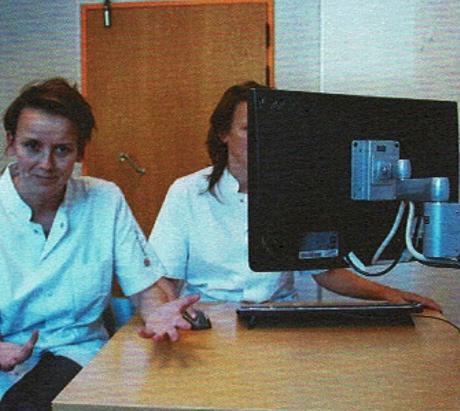
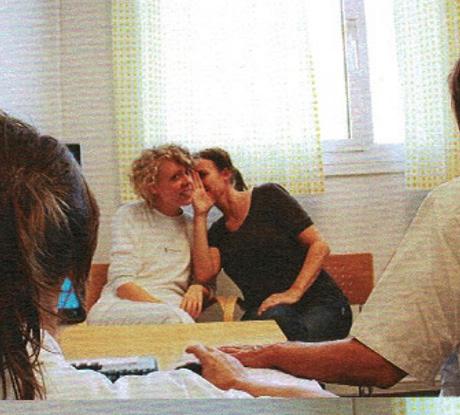
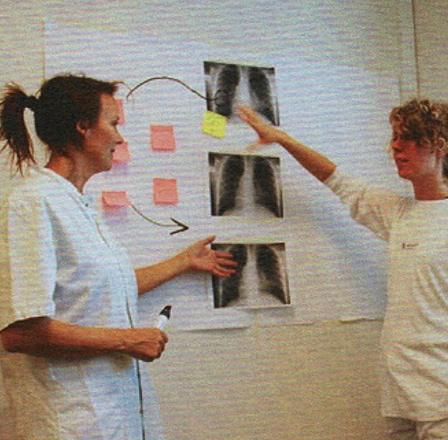
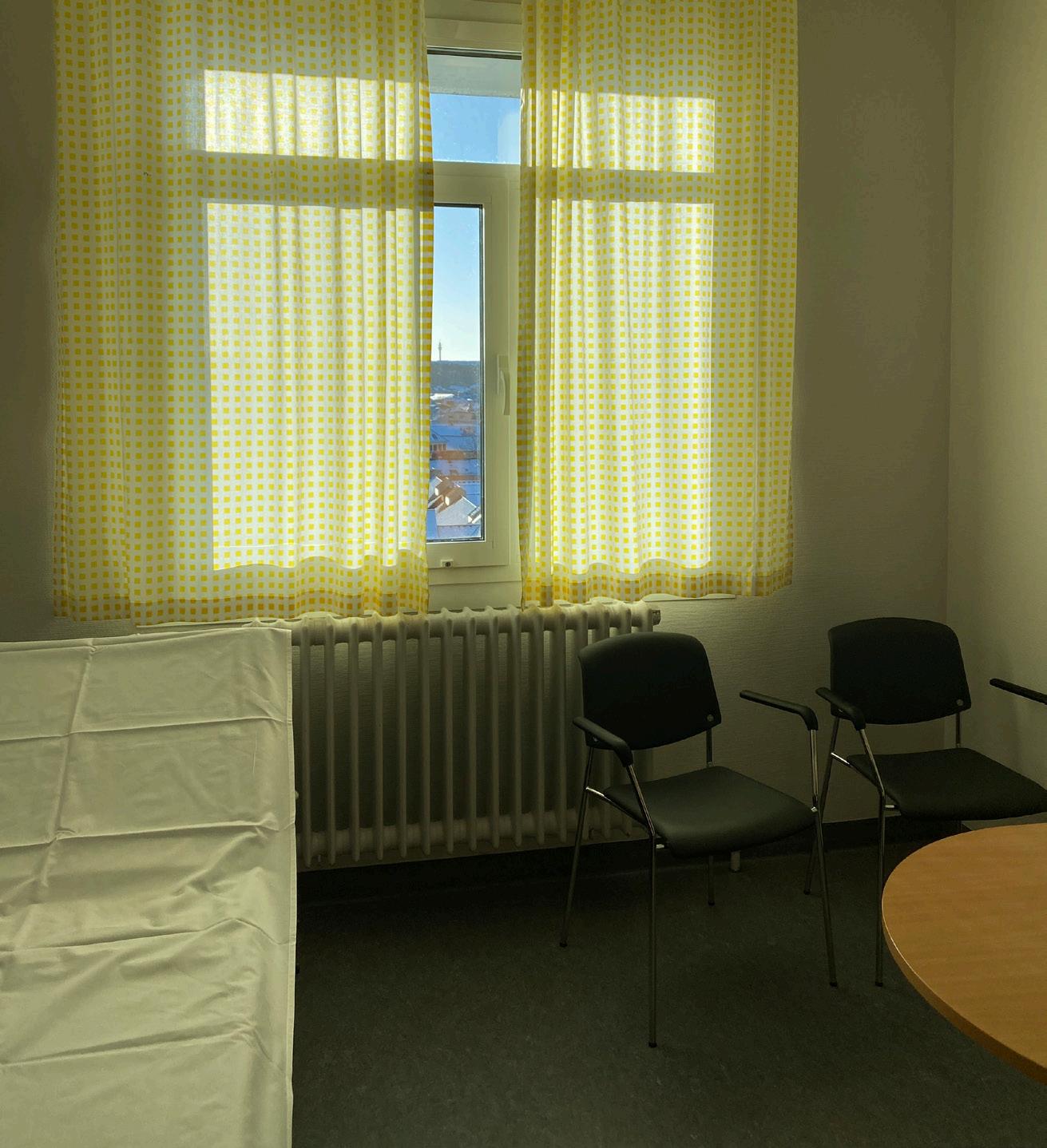
In the Patient Democracy (Figure 1.2) project at Vejle Hospital, Knutz role-played as a doctor to understand patient experience. The computer’s placement on the desk blocked eye contact and hid records/MR-scan results, undermining shared decisions. Reorienting
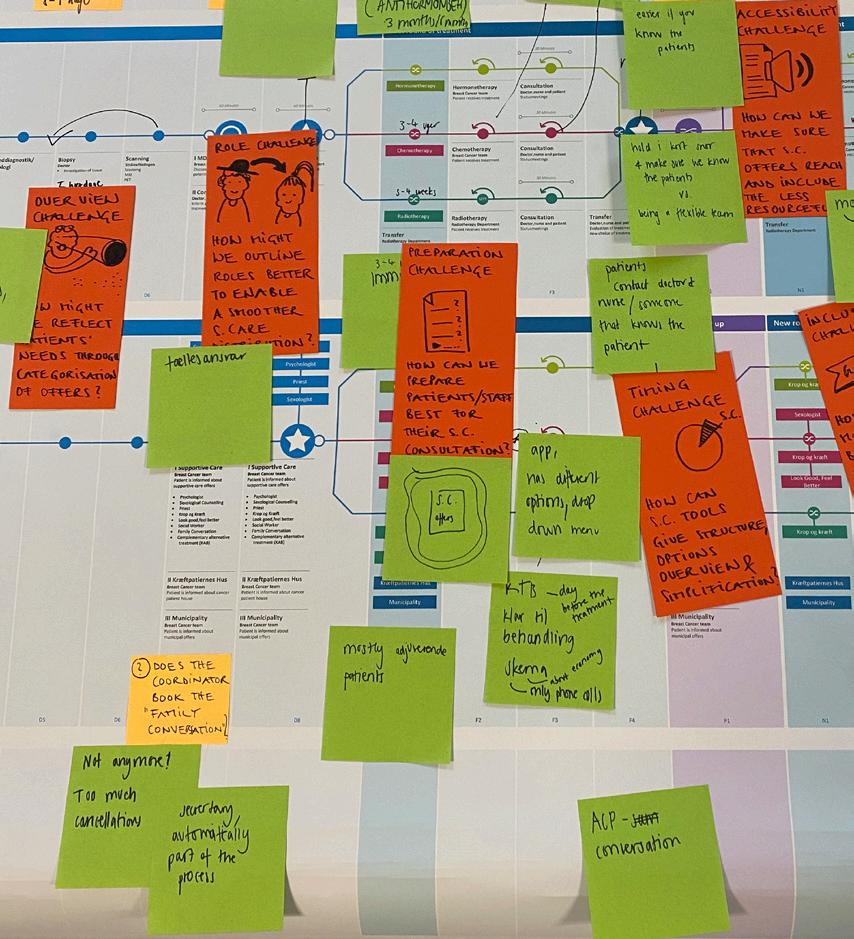
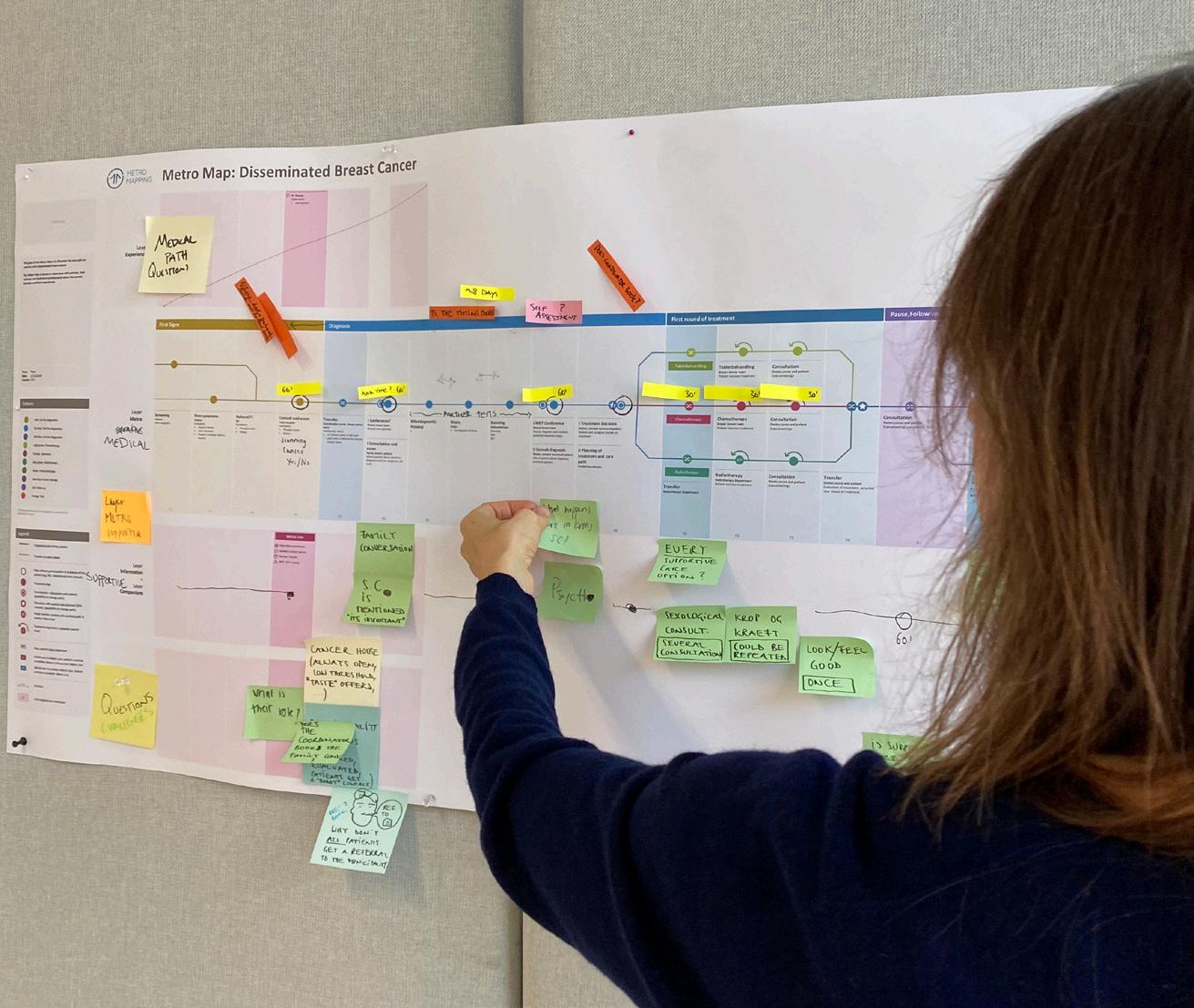
the screen and adjusting furniture positions made information visible to both parties, aligning practice with the hospital’s goals of Patient Democracy. The change exposed a gap between managerial rhetoric and everyday practice, while improving transparency, rapport, and participation. The project included design ethnographic field work at the hospital as well as probe-studies in people’s homes and revealed that cancer patients valued alternative support such as acupuncture, home help, and personal conversations over the expensive wigs provided by the healthcare system. The insight shifted design efforts away from improving products to rethinking how care resources are allocated (Knutz et al., 2014).
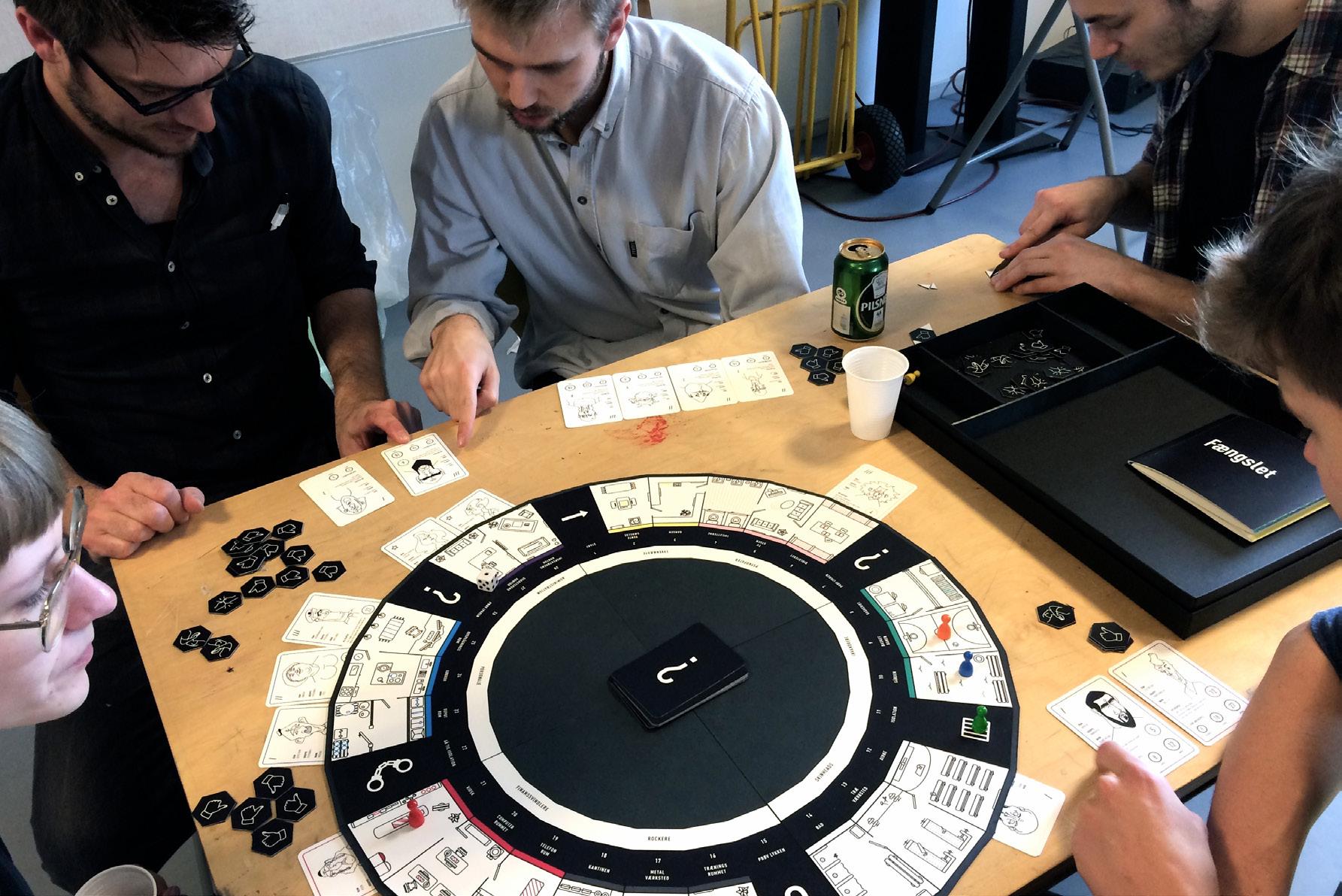
In a series of game design courses at DSKD, Knutz and Markussen invited the Danish Prison and Probation Service to take part in educational modules to address the serious realities of children with a father in prison (Figure 1.3). These game design courses were combined with a research seminar in 2010, to explore how board games could be developed to strengthen family connections during incarceration. These activities enabled students to approach game design through narrative and emotional lenses, while fostering a deeper social understanding of the experience of being an imprisoned parent to a child (Knutz et al., 2012).
Beyond WITH: From Thinking to Acting in Co-Design
For Brandt et al. (2012), co-design has always been about opening space for others to shape the design language. In the same spirit, Markussen wrote in an email exchange: ‘We take relationships to matter not only between us as design researchers and participants, but also within the design research team itself. The insights are a collaborative achievement, not only involving Eva and me, but also design students, our partners from the Danish Prison and Probation Service…’ (T. Markussen, personal communication, November 10, 2025). This was not a designer handing over a template; it was a genuine exchange.
This sensibility resonates with Brandt and Grunnet’s (2000) early work on drama and props in user-centred design, which showed how staging and enactment allow participants to imagine and rehearse future worlds together. Props become not only ‘things to think with’ but also ‘things to act with’, shifting designers from orchestrators to co-actors. This perspective is elaborated in more recent work by Brandt and Foverskov (2024), who describe codesign as a performative practice unfolding through modes of rehearsing and performing. Rather than one-off workshops, they show how looping (iterative rehearsals of possible futures) and tuning (increased sensitivity to relations between stakeholders)
generate sustainable change in real-world living labs. Here, designers are not external facilitators but situated participants, embodying roles alongside others and slowly cultivating collective ownership.
Co-Design as a Shared Future
Across their projects, Brandt, Knutz and Markussen show that codesign is not about following a fixed method but about building relationships that can involve and sustain complexity, emotion, and change. It is about design (research) practices in which the designer is one of many voices, and where the process itself is as valuable as the product. Perhaps what makes their approaches so compelling is how they challenge the very notion of design expertise. In their hands, co-design becomes not just a way of making better things. It is a way of making new and better relationships between designers and communities, between problems and possibilities, between who we are and who we might become.
Brandt, E., Binder, T., & Sanders, E. B.-N. (2012). Tools and techniques: Ways to engage telling, making and enacting. In J. Simonsen & T. Robertson (Eds.), Routledge international handbook of participatory design (pp. 145–181). Routledge.
Brandt, E., & Foverskov, M. (2024). Rehearsing and performing in design and living labs: Situated, relational, and embodied participatory design roles and actions in partnerships. In Proceedings of the Participatory Design Conference 2024 (PDC ’24 Vol. 1) (pp. 98–111). ACM.
Brandt, E., & Grunnet, C. (2000). Evoking the future: Drama and props in user centered design. In Proceedings of the Participatory Design Conference 2000 (Vol. 1, pp. 11–20).
Kolding School of Design. (2014). Annual report.
Halse, J., Brandt, E., Clark, B., & Binder, T. (Eds.). (2010). Rehearsing the future. The Danish Design School Press.
Knutz, E., & Markussen, T. (2020). Politics of participation in design research: Learning from participatory art. Design Issues, 36(1), 59–76.
Knutz, E., Markussen, T., Desmet, P., & Visch, V. (2012). Designing narrative games for a serious context. In J. Brassett, J. McDonnell, & M. Malpass (Eds.), Proceedings of the 8th International Design and Emotion Conference. Central Saint Martins.
Knutz, E., Markussen, T., Mårbjerg Thomsen, S., & Ammentorp, J. (2014). Designing for democracy: Using design activism to renegotiate the roles and rights for patients. In Proceedings of DRS
2014. Design Research Society. script]. https://otter.ai/u/pjciESvglz4xN1fMgjLzxqEFGw
Conversation 3
Designing from Equality to Equity • Canan Akoglu • Kathrina Dankl
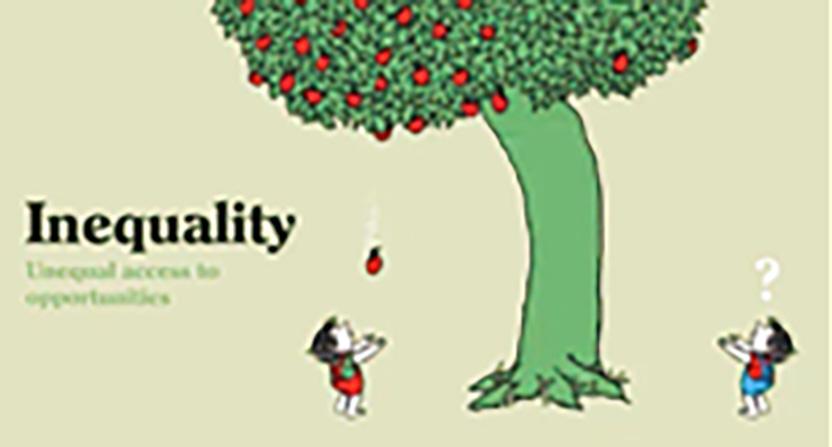
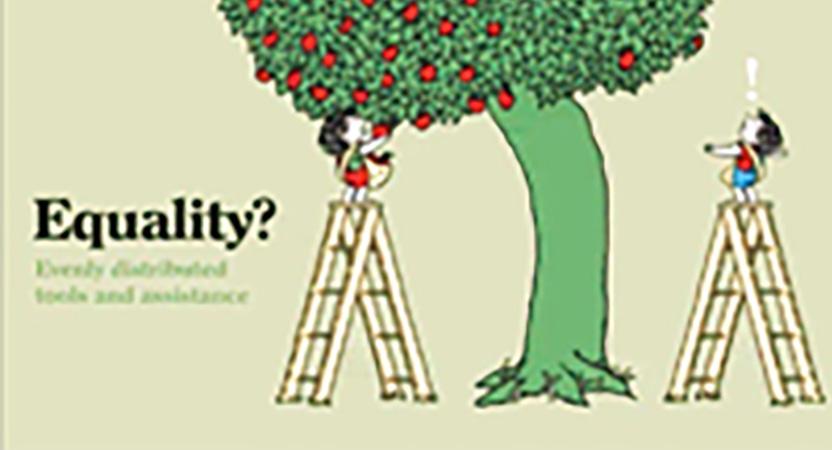
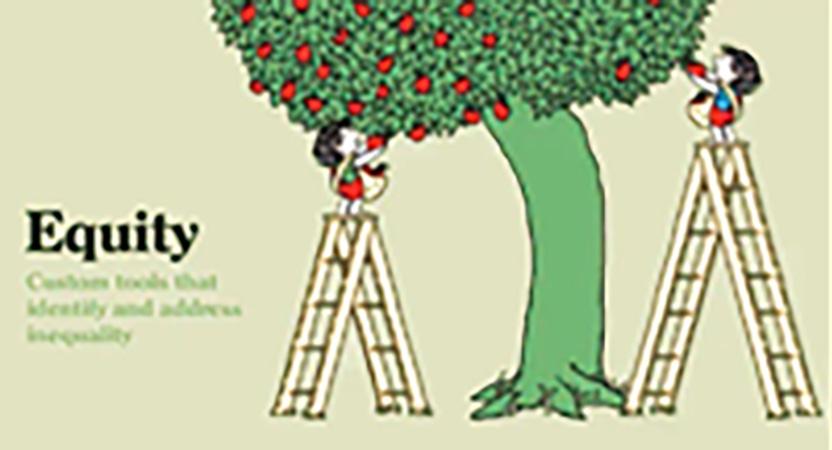
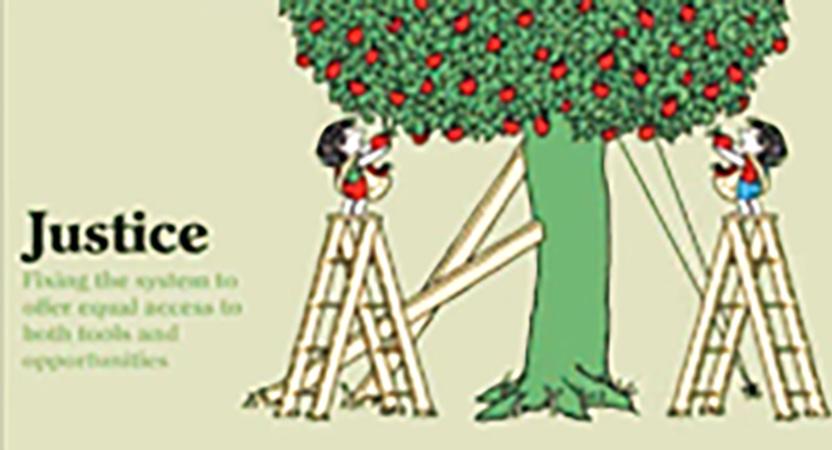
The shift from equality to equity marks a significant transformation in contemporary design education. As explained in figure 1.4, while equality assumes that everyone benefits from the same resources, equity recognises that people begin from different socio-material conditions and therefore require different forms of support. For designers, this shift demands not only new methods but new forms of reflexivity, attunement, and responsibility. This paradigm change has become especially visible at DSKD through the renaming and reframing of the MA course once called Empathy and Equality, now Empathy and Equity.
My conversations with Associate Professor Canan Akoglu and Associate Professor Kathrina Dankl illuminate how this shift is unfolding across teaching, research, and practice. Their reflections offer important insights into how equity can inform Universal Design (UD) Otherwise and the FOR/WITH/BY/AS framework.
From Equality to Equity: Why the Distinction Matters
When discussing her early encounters with UD, Akoglu recalled that her architectural education reduced UD to questions of ‘ramps, lifts, and accessibility checklists’, a technical and narrow interpretation (Akoglu, 2025). This limited understanding framed accessibility as a matter of structural neutrality rather than social complexity. As she
put it: ‘Equality sounds fair, but it assumes sameness. And people are not the same.’
The renaming of the MA course therefore became more than a cosmetic change. It signalled a pedagogical commitment to acknowledging differences and power relations. As Akoglu explained: ‘Empathy alone is not enough. It risks becoming a projection. Equity requires positionality, understanding where you stand and how you enter the relationship.’ Her work on socially sustainable urban design reinforces this position. In recent research, she and her colleagues argue that designers must navigate social frictions and culturally diverse publics with care, sensitivity, and reflective awareness (Akoglu & Corlin, 2024).
Equity as Layered, Situated, and Sensory
For Dankl, the shift toward equity is tied to how designers understand ageing, life transitions, and sensory experience. In her interview, she described equity as a set of ‘colourful layers’ that resist simplification: ‘People’s needs are not fixed; they shift over time, through transitions.’ Her longstanding research on ageing challenges deficit-based models.
As she summarised: ‘Ageing is not a decline narrative. It’s rich with contradictions, humour, and personal meaning.’ Dankl’s publications support this position. In earlier work, she demonstrated how design representations of later life reinforce stereotypes and limit agency (Dankl, 2014). Later, in Design Studies, she argued for a participatory transformation of ageing imaginaries, centred on collaboration, reciprocity, and lived experience (Dankl, 2017). For Dankl, equity therefore means designing with the richness of everyday contexts rather than seeking universal categories.
Empathic Equity: Moving from Simulation to Relational Methods
Both Akoglu and Dankl cautioned against empathy as a simulation, using empathy suits or second-hand scenarios to ‘experience’ difference. Akoglu was clear: ‘Empathy becomes a fantasy of understanding. It keeps the designer outside the experience.’ Dankl similarly warned: ‘Students think empathy means “feeling what the other feels”. But you cannot. Equity asks for accountability, not imitation.’
This is where their joint pedagogical work becomes crucial. In a recent collaborative publication, Dankl, Akoglu, and Kremer (2024) propose an ‘Academy of Life’ that reframes design education around life-course perspectives and equity-focused encounters. Their work argues that learning must take place ‘with’ people, not just ‘for’ them, cultivating long-term relationships rather than momentary ‘insights.’ Their collaboration can also refer to Project 18 in Section 2. Equity thus becomes a relational method grounded in ongoing engagement and shared meaning-making.
Connecting Equity to the FOR / WITH / BY / AS Framework
The dialogues with Akoglu and Dankl make clear that designing from equality to equity is not a semantic adjustment but a methodological and ethical reorientation. It requires designers to recognise structural inequalities and lived differences, cultivate positionality and reflexive awareness, build long-term, relational engagements, work across and within FOR/WITH/BY/AS relational modes and design as part of the collective life-world, not from outside it.
Equity, then, becomes a practice of responsibility, attunement, and imagination, a commitment to designing not for sameness, but for the flourishing of diverse ways of being.
Otter.ai. (2025, Oct 30). Zoom interview with Canan Akoglu. [Audio transcript]. https://otter.ai/u/yxw-XZsM0fwAylUtDFocNWnZZU?utm_source=copy_url
Akoglu, C., & Corlin, A. (2024). Navigating socially sustainable urban design projects. Nordic Journal of Architectural Research, 1, 13–32.
Dankl, K. (2014). Design for later: Considerations on the contemporary status of ageing and design. In Design Diversity: Produktkultur abseits von Beige, Best und Gold (pp. 10–22).
Dankl, K. (2017). Design age: Towards a participatory transformation of images of ageing. Design Studies, 48, 30–42. https://doi.org/10.1016/j.destud.2016.10.004
Otter.ai. (2025, Oct 24). Zoom interview with Kathrina Dankl. [Audio transcript]. https://otter.ai/u/yHL0JWFxNw2K47sZfdzFiDszBk?utm_source=copy_url
Dankl, K., Akoglu, C., & Kremer, M. (2024, June 27). Towards an Academy of Life: Exploring future design pedagogies for broadening the discourse on ageing. Abstract presented at Design4Health 2024: Equilibrium in a time of permacrisis.
‘How are Equity and Equality Different?’ Just Health Action, 2010. Accessed 14 Feb 2026 http://justhealthaction.org/wp-content/ uploads/2010/05/JHA-Lesson-Plan-3-How-are-equity-andequality-different-final.pdf
Conversation 4
6C Model meets UD Methodologies • Anne Katrine G. Gelting • Richard Herriott
Design education constantly negotiates between creativity, knowledge, and social responsibility. At DSKD, this negotiation takes tangible form through the 6C Model. A framework developed to help students understand knowledge generation in design that has shaped teaching and practice since 2011.
The Origins of the 6C Model
The 6C model was originally co-developed by Silje Friis and Anne Katrine G. Gelting in 2011 within the context of an MA course on the applied philosophy of science at Kolding School of Design (DSKD). Subsequently, the model was adapted for a BA-level design methods course, where it informed the development of a co-create method collection. This collection supported students in understanding how different design methods function across stages of the design process and how best to apply these methods within international collaborative projects including design students in Ghana and China. It was all about making design students more method aware. The model is not a rigid, linear process, but a toolset of methods that can be combined and adapted for different projects. The ‘6C’ stands for six areas:
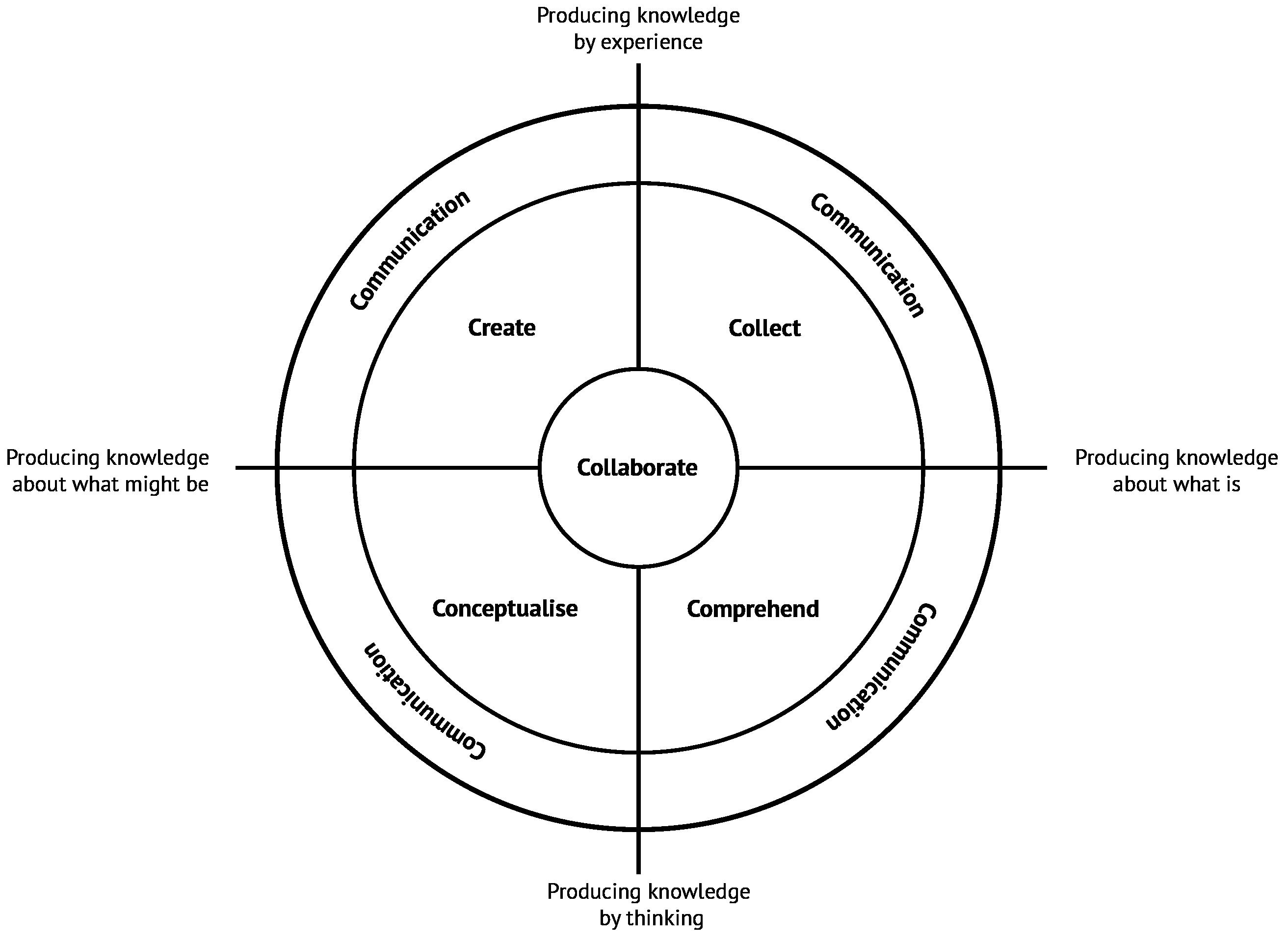
• Collaborate: Methods that support teamwork and interaction with stakeholders throughout the process.
• Collect: Methods for gathering data and information, such as interviews.
• Comprehend: Techniques to analyse and understand the collected data, like creating personas.
• Conceptualise: Brainstorming and ideation methods, such as rapid sketching.
• Create: Methods for building prototypes and final outcomes.
• Communicate: Techniques for presenting and communicating the design process and results to others.
The 6C Model emerged from teaching design students how to identify and structure the types of knowledge they generate throughout a design process. At a recent interview, Associate Teaching Professor, Gelting (2025) shared her observation that many students did not see themselves as knowledge workers, believing that the 6C model sought to change this by giving them a vocabulary for reflection.
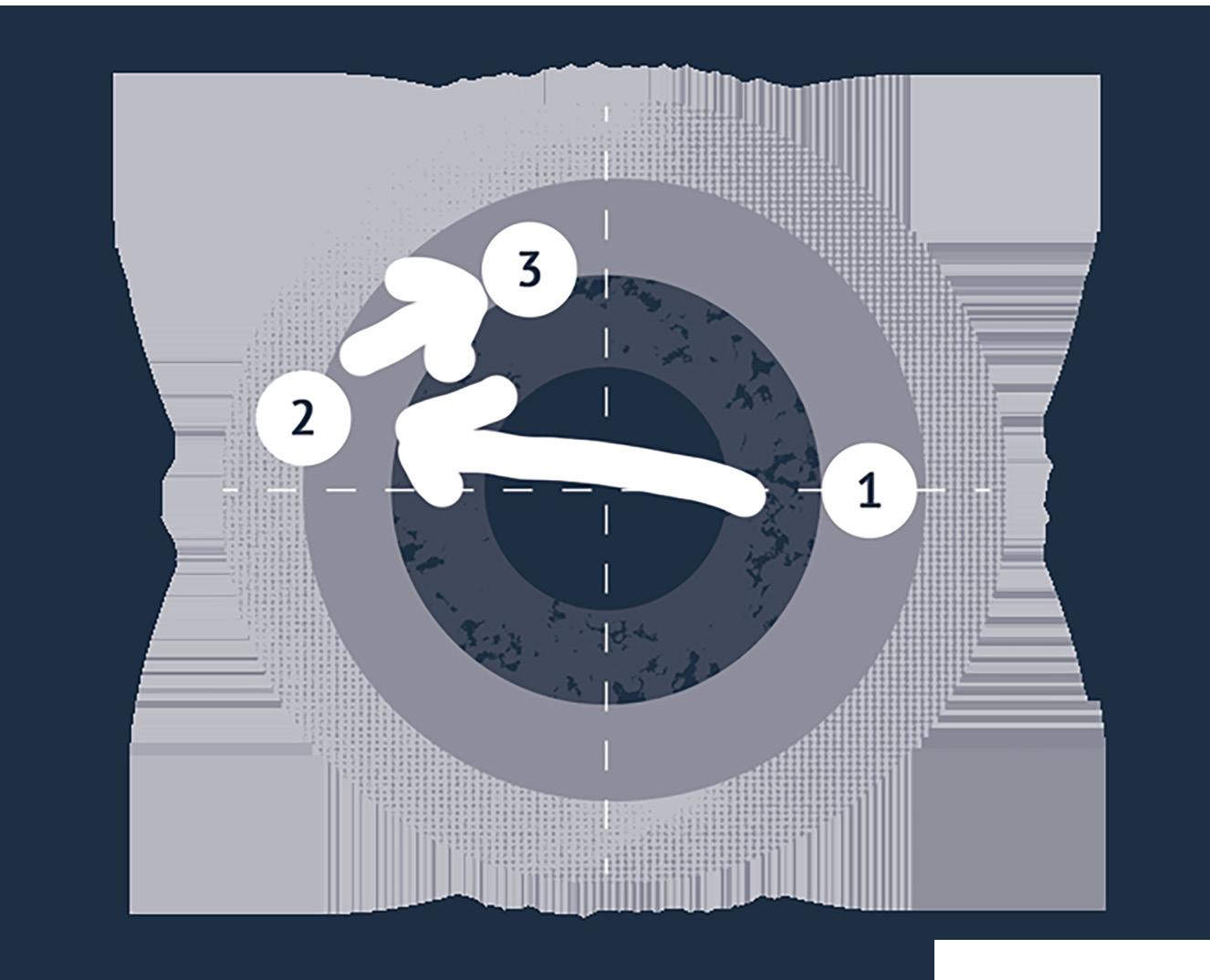
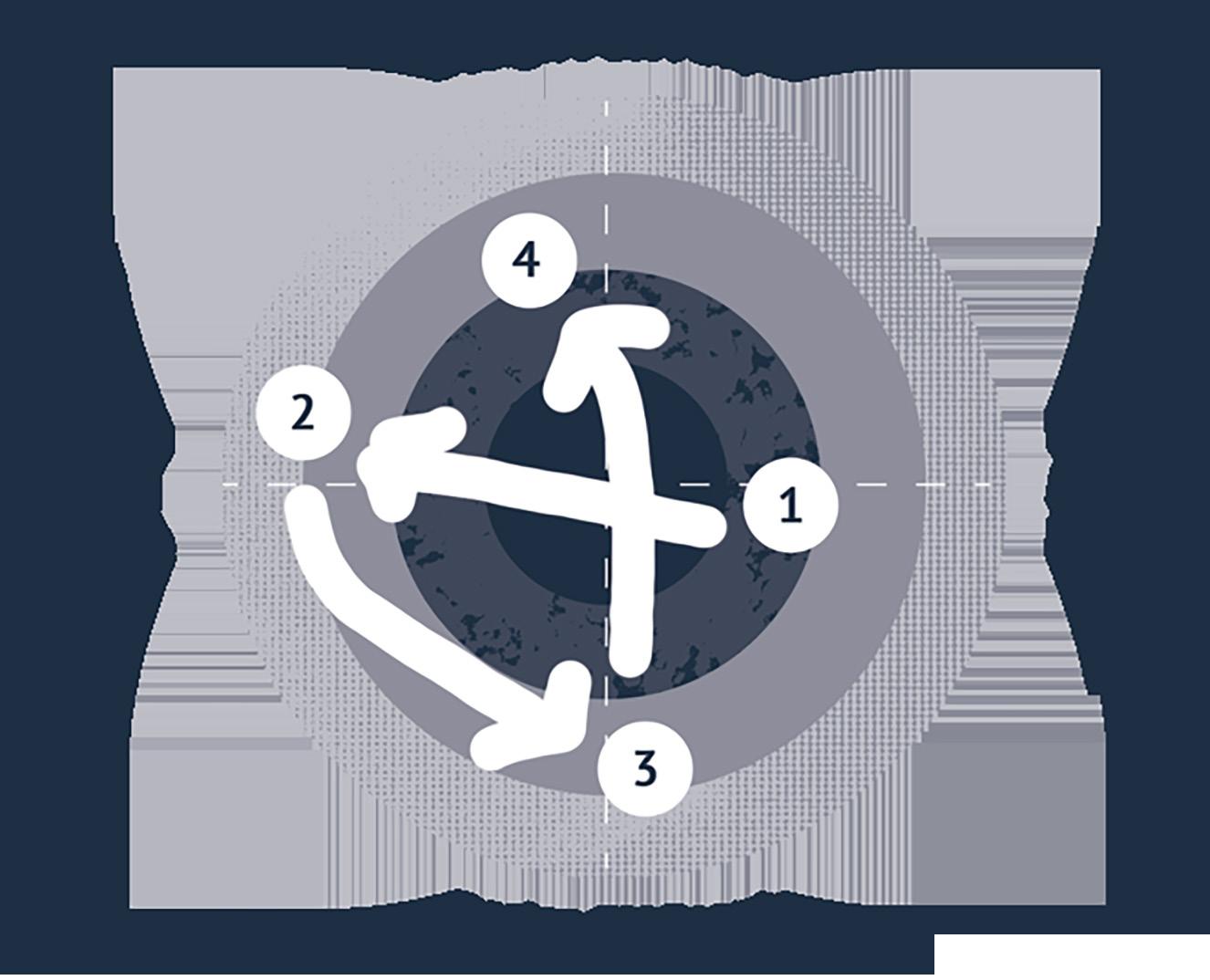
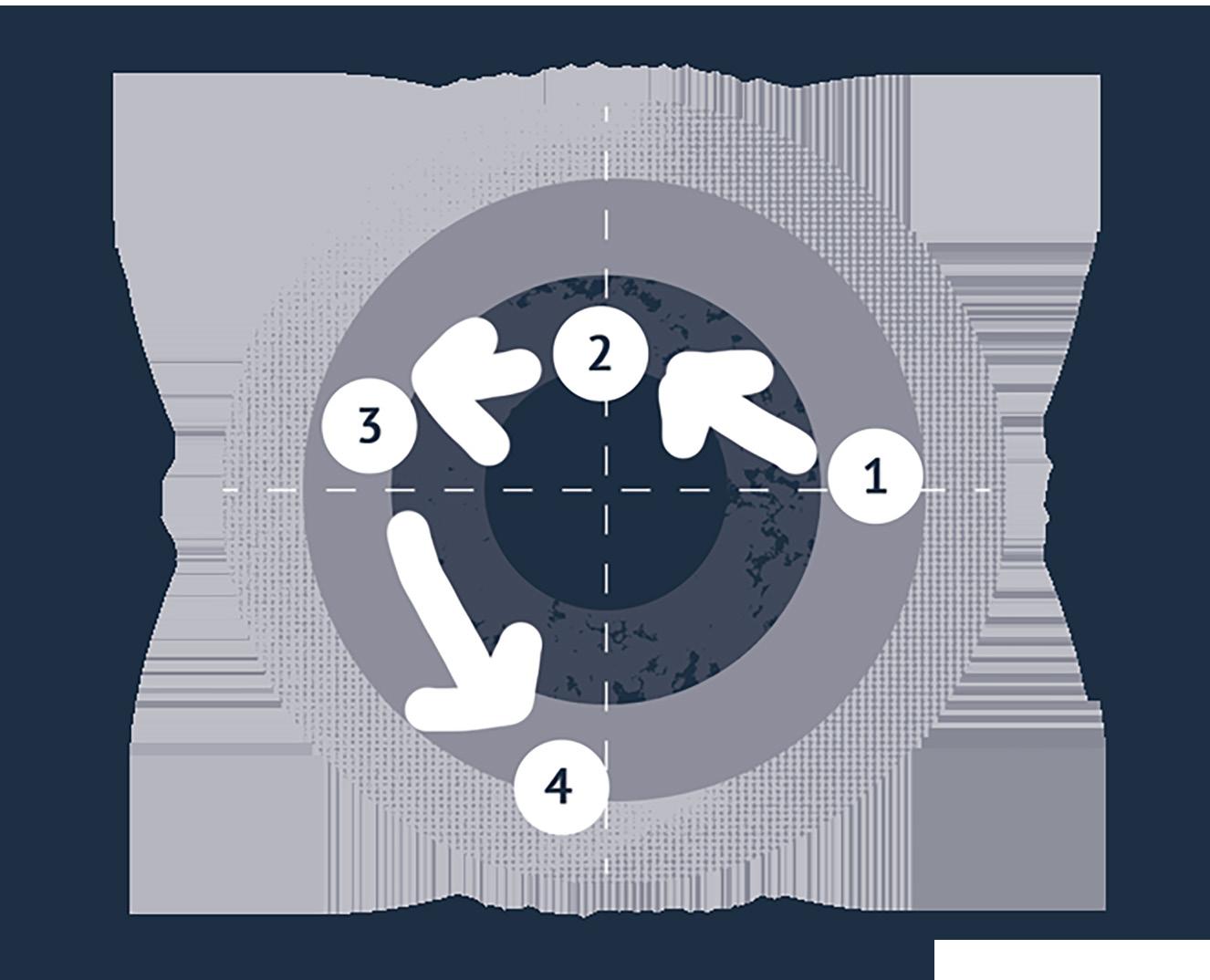
Rooted in applied science and creativity theory, the model identifies six interdependent phases of learning and action. Together, these six ‘C’s’ map how designers move from understanding the existing world toward envisioning and constructing what does not yet exist. The strength of the model is its way of visualizing the different approaches to knowledge that are mapped by the two axes (figure 1.5). The collection of cards is a way of making methods tangible and making a connection between methods and approaches to knowledge. It also helps students see that knowledge in design is constructed through iteration, reflection, and interaction with users and contexts.
From Knowledge to Empathy: A Bridge to Universal Design
Universal Design (UD) – particularly as advanced as it is at DSKD through its partnership with the Bevica Foundation – shares the 6C Model’s concern with awareness and engagement. Universal Design (UD), particularly as advanced as it is at DSKD, through its partnership with the Bevica Foundation, shares the 6C Model’s concern with awareness and engagement. UD begins from the principle that environments, products, and systems should be usable by all people, regardless of age, ability, or background. In Gelting’s teaching, however, UD is not merely a checklist, it becomes a mindset. As she explains, UD ‘resides at many levels, from product design to teaching philosophy and to our social responsibility as educators’.
The connection between UD and the 6C Model lies in how designers gain and apply knowledge. Collect and Comprehend,
mirror UD’s emphasis on understanding diverse users, not as categories but as individuals with lived experience. Conceptualise and Create, link to UD’s generative phase: transforming understanding into inclusive solutions. Finally, Communicate and Collaborate, correspond to UD’s social ethos: design is never complete until it is shared and adapted with others.
This alignment transforms UD from a static ideal into a situated methodology, one that values process as much as outcome. The 6C Model therefore bridges knowledge creation and social inclusion.
Methodological Parallels
Where design thinking often presents a linear progression from empathy to ideation to prototyping, the 6C Model emphasises alternation – students move back and forth between phases, reassessing what they know and how they know it. This resonates with UD’s iterative ethos, where accessibility is re-evaluated throughout the process.
Furthermore, each ‘C’ aligns with UD methodologies:
• Collect: User engagement and ethnographic research (Herriott, 2015).
• Comprehend: Synthesising insights and reflecting on inclusion criteria.
• Conceptualise: Ideation informed by empathy, ethics, and accessibility.
• Collaborate: Co-creation dissolving hierarchies between designers and users.
Figure 1.5 The 6C Model illustrates different approaches to knowledge production in design processes (Friis & Gelting, 2014).
Recent studies (Herriott, 2023, 2024a) reinforce that tools, methods, and games can embody this oscillation by translating UD theory into situated, participatory practice. In classroom experiments (Herriott, 2024b), card-game formats have successfully made UD principles tangible and social, aligning with the 6C emphasis on Collaborate and Communicate.
The 6C Model thus serves as a meta-framework, a pedagogical scaffold that supports UD’s ethical and methodological aims.
Beyond the Classroom: A Living Methodology
The 6C Model’s influence has extended beyond Denmark, to workshops in international collaborations, demonstrating adaptability across cultures. This flexibility parallels UD’s global relevance: in its ability to respond to different bodies, infrastructures, and values while retaining a core commitment to equality and participation.
Herriott’s (2024a) review of UD literature found that while theory is frequently invoked, it is rarely articulated explicitly or comprehensively. The 6C Model addresses this gap by giving educators and students a structured way to name and reflect on their theoretical assumptions. Both frameworks therefore embody a distinctly Scandinavian design ethos, democratic, socially engaged, and humanistic.
Designing Otherwise
When the 6C Model meets Universal Design, the outcome is more than pedagogical alignment, it is a philosophical synthesis. Both positions are designed as learning ‘with’ others rather than producing ‘for’ them. The 6C Model lends UD its reflective structure; UD lends the 6C Model ethical depth. Together, they cultivate what Gelting calls ‘a more socially inclusive mindset’, equipping students to navigate complex, interdependent futures.
UD becomes a living, relational process that connects knowledge, empathy, and responsibility. The 6C Model reminds us that inclusion is not achieved through compliance but through continual reexamination of how we know, what we value, and whom we include. This, ultimately, is Universal Design Otherwise, where design education itself becomes the most inclusive act of all.
references
Herriott, R. (2023). The Relation of Design Tools to Universal Design Theory. Journal of Accessibility and Design for All, 13(2), 216-249.
Herriott, R. (2024a). The incidence of theoretical content in universal design research. The International Journal of Designed Objects, 18(2), 139–156.
Herriott, R. (2024b). The use of card-game design to teach universal design theory. In Studies in Health Technology and Informatics: Universal Design 2024 – Shaping a Sustainable, Equitable and Resilient Future for All (Vol. 320, pp. 166–173). IOS Press.
UX Design Best Practice. (n.d.). What is the 6C model? http://uxdesign-best-practice.dk/home/what-is-the-6c-model/
Otter.ai. (2025, October 21). Online interview with Anne Katrine G. Gelting [Audio transcript]. https://otter.ai/ u/1zF5acoPESh7P3FJB0_ZWLFefbE
2 • Beyond Ableism
P1–5 • Starting to Design FOR Societies • 2010 – 2015
P6–14 • Continuing to Design WITH / BY Others • 2016 – 2020
P15–18 • Exploring to Design AS People/Humans • 2021 – 2025
Projects from the Lab for Social Design @ DSKD
The Lab was founded in 2013 (originally as the Design Lab for Social Inclusion), the Lab for Social Design explores how design can support vulnerable and under-represented groups. Its work is grounded in Welfare Design, Participatory Design, Social Innovation, and, subsequently, Universal Design (UD). The Lab emerged in response to an ageing population and the growing need for accessible, user-centred solutions. Staff established a collaborative research environment at Kolding School of Design (DSKD) that brings together designers with healthcare professionals, policymakers, and local communities to create inclusive design outcomes and foster social impact.
Methodology: Beyond Ableism
Beyond Ableism is an important value influencing the Lab’s practices. It challenges the tacit assumption that some bodies and minds are more ‘normal’ or functional than others, assumptions that often permeate products, services, and systems. Rather than designing ‘for’ disabled or marginalised communities, the Lab designs ‘with’ them, foregrounding participation and co-creation. The aim is to develop designs that reflect the diversity of human experience, promoting interdependence, dignity, and social belonging, not only accessibility. This orientation invites designers to question foundational assumptions about what constitutes an ‘inclusive’ space, service, or product.
Over time, the Lab’s projects cluster around three purposes, plus a methodological theme on UD practice:
1. Citizenship & Agency – The Lab supports active citizenship, from policy shaping to everyday practices that embrace diversity. Work spans re-designing systems and services (e.g. care pathways, decision-making in cancer treatment), shifting roles and work cultures, and advancing the social inclusion of marginalised groups (e.g. disabled people, students facing barriers).
2. Togetherness & Well-being – Focusing on community building, the Lab designs environments and tools that
nurture interaction, belonging, and interdependence, such as makerspaces and activity rooms in libraries and cultural centres, and design tools that support holistic care and well-being.
3. Ongoing-ness & Relational Design – Projects address life transitions and continuities, coping with illness, moving from childhood to adulthood, navigating retirement, parenting, or disability. Emphasis is placed on products, services, and systems that sustain relationships and community wellbeing over time.
4. Universal Design (UD): Methodology & Practice – In collaboration with the Bevica Foundation, DSKD strengthens UD research and education by aligning practice with contemporary disability studies and policy. This includes research on implementing UD theory effectively in studio and classroom contexts.
The following section reviews development projects by Lab staff across its timeline, illustrating how these themes translate into situated practice and analyses them using Action Research stages:
1. Plan – Identify a real-world problem
2. Act – Try out an intervention or change
3. Observe – Collect evidence about what happens
4. Reflect – Analyse results and refine understanding
5. Repeat – Improve the action and learning in the next cycle
Members of the Lab for Social Design, 2025
Louise Aagaard, PhD • Assistant Professor, Lab for Play Design. Participatory design, social innovation, sustainability, and play. Former Concept & Design Lead, LEGO Education (2011–2018).
Canan Akoglu, PhD • Associate Professor; Head of the MA Programme, Design for People. Leads inclusive, people-centred design practice and community engagement.
Line Gad Christiansen, PhD • Assistant Professor. Designs and researches for and with children and young people; child-and youth-centred approaches; design facilitation and interaction design.
Kathrina Dankl, PhD • Associate Professor. Integrates social sustainability and inclusion into design, with a focus on welfare and community-centred projects.
Kerstin Bro Egelund • Head of Continuing Education. Textile designer and social design practitioner; design thinking, co-design, and facilitation.
Anne Katrine G. Gelting, PhD • Teaching Associate Professor. Industrial design background; design education since 2005; curriculum and knowledge development in design methods and design thinking.
Richard Herriott, PhD • Associate Professor. Transport design and Inclusive Design; research on usability and inclusion across aesthetics, production, and accessibility.
Marie Kremer • Research Assistant. MA in Design for People (Industrial Design).
Joan Pedersen • Teaching Associate Professor. Welfare design; key contributor to inclusive, sustainable systems in social care.
Laila Grøn Truelsen • Teaching Associate Professor; Head of Communication Design (BA). Significant contributions to designing with older people.
reference
Kolding School of Design. (2025). Lab for Social Design https://www.designskolenkolding.dk/en/research-development/ labs-and-hubs/social-design#section-89985
‘We as designers could facilitate the change process, but the employees had to change themselves and also the culture and operation of the institution. The designers translated requests and opportunities into solutions and designs and set a high innovation level while all the time ensuring that the staff were on board’.
P1–5 • Starting to Design FOR Societies • 2010 – 2015
This statement aligns with the five projects presented in Section 2.1. These represent early explorations of the design school’s social responsibilities toward local communities, from working FOR those in need to collaborating WITH institutional actors. Across these projects, the processes were clearly organic, and the relationships between researchers and those being researched were in the process of being redefined.
Laila Grøn Truelsen, Head of Communication Design (BA), in Kolding School of Design - 50 Years 50 Voices of Design (2017)
Designing Relations • Mette
Mikkelsen • Joan Pedersen • Laila
Grøn Truelsen*in conversation with
Project 1
Year 2012–2013
Designing FOR a Disability Institution
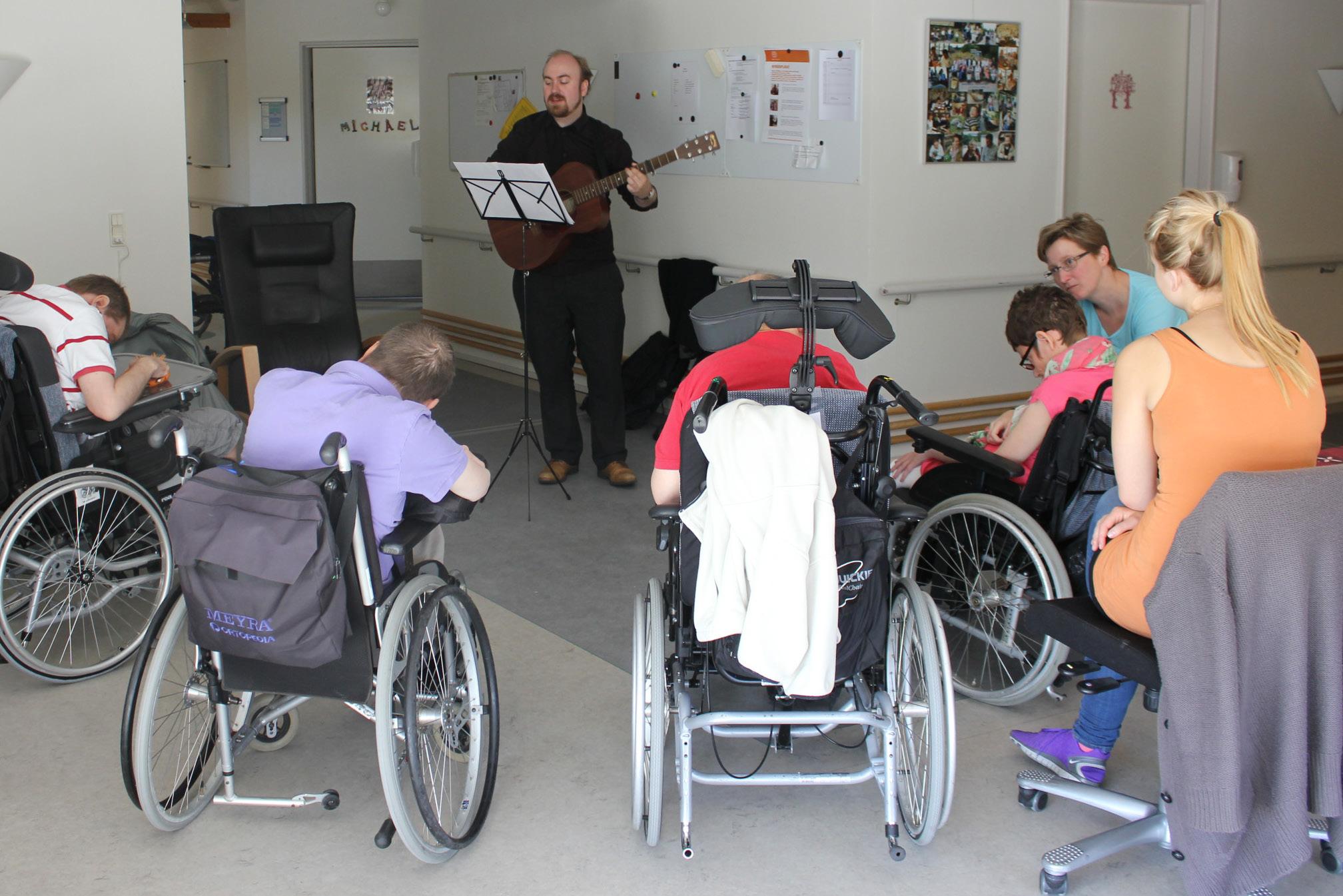
Where Skansebakken disability institution (care home), Vejle Municipality, Denmark
Awards Winner, KL Innovation Award 2013
P1.1 Project Background
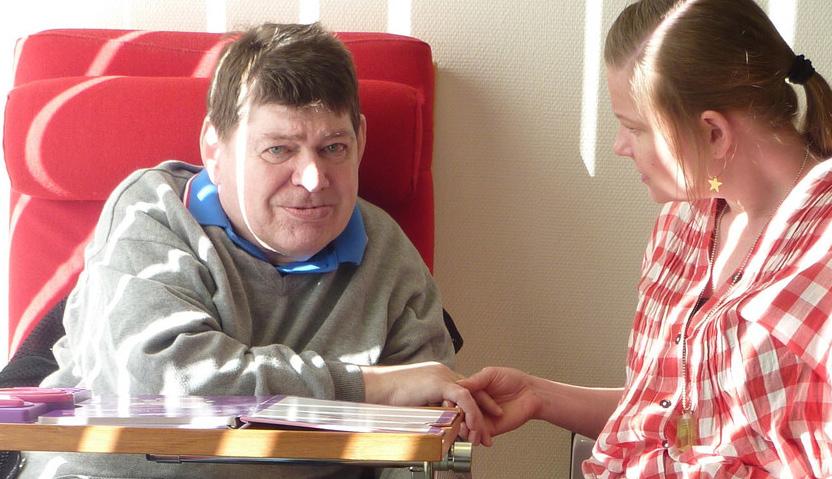
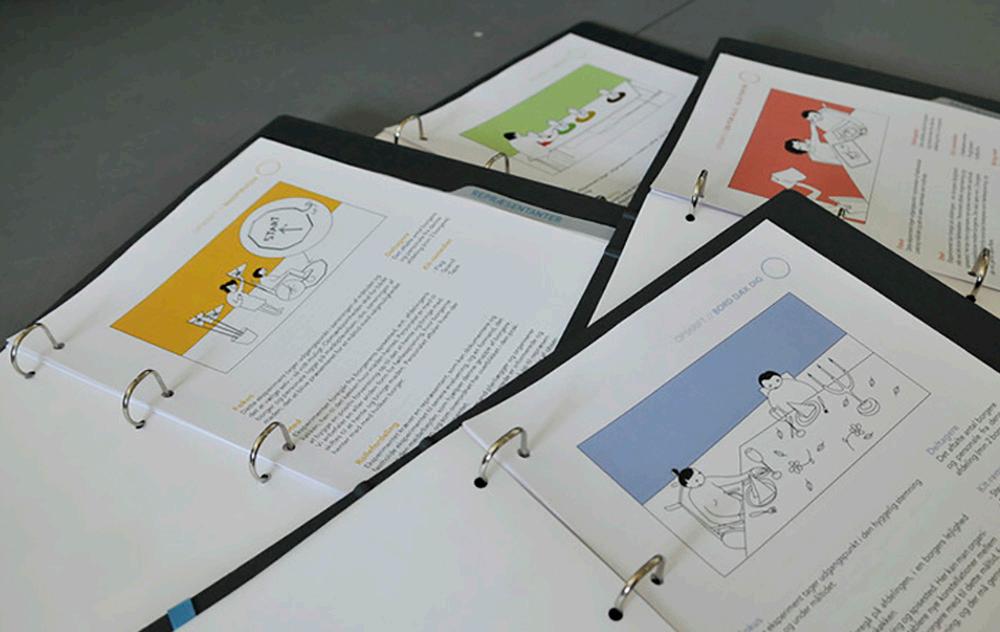
Designing Relations used design as a practical tool to strengthen social relationships for residents at Skansebakken who have severe physical and mental disabilities. The project was developed through a collaboration between Kolding School of Design (DSKD), Vejle Municipality, and the National Board of Social Services. Rather than treating social relationships as something ‘delivered by the state’, the project aimed to mobilise the wider community – neighbours, relatives, friends, and volunteers – so that residents’ social lives could be supported by a broader ecosystem, not only by institutional staff.
The challenge
Residents’ social relationships were often limited to:
• professional carers and staff,
• immediate relatives,
• scheduled institutional activities.
The team identified two related gaps: Limited relationships beyond the institution (few connections to everyday community life). A weak sense of shared community, even when some relationships existed (e.g. family ties without wider belonging or participation).
The ambition
To help residents develop more and better relationships with the surrounding community, and to make Skansebakken:
• part of the community, and
• a place where the community could confidently participate.
P1.2 Process: Action Research + Social Prototyping
The project followed an action research cycle, using design interventions as testable, real-world experiments.
Through initial scoping and field engagement, the team mapped:
• residents’ limited social networks,
• institutional routines and constraints,
• and the wider community’s uncertainty about how to engage with residents whose disabilities required different forms of interaction.
Stage 2. Act — Try out interventions
The team conducted deep immersion and broad stakeholder involvement:
• residents, staff, relatives,
• municipal officials and organisations,
• students and potential community participants.
They developed iterative ‘social prototypes’ – trial activities, scenarios, and interactions designed to help outsiders participate in residents’ lives in ways that were meaningful and feasible. A key framing emerged as an overarching concept: ‘The Feast’ – How to receive guests, and how to be a good guest at Skansebakken. This concept reframed social connection as a shared practice of hosting and visiting, rather than a service transaction. Staff were invited to test hosting scenarios (‘social prototyping’) to learn what it takes to welcome guests and volunteers – practically, emotionally, and organisationally.
Stage 3. Observe — Gather evidence
Testing surfaced important operational realities. For example:
• but staff sometimes struggled to support these moments, especially when they fell outside routine plans.
These observations made visible a ‘readiness gap’: not just whether volunteers could come, but how staff and systems could support unpredictable, relationship-led encounters.
Stage 4. Reflect — Refine the understanding
A central learning was that ‘designing with’ in contexts of severe disability requires expanding the definition of the user:
• not only the residents,
• but the surrounding support ecosystem (staff, relatives, neighbours, volunteers).
Staff capability – especially hosting practices – became a core design focus, not a background implementation issue.
Stage 5. Repeat — Next-cycle development
The collaboration continued into follow-up projects at Skansebakken (e.g. Kitchen Stories, Project 2), representing a clear next-cycle move:
• from the broad theme of ‘relationships’,
• into concrete everyday domains (like meals) where relationships can be built through routine participation.
P1.3 Design Results and Impact
After a month of field studies – following residents and staff to understand daily life, needs, desires, and constraints – the team developed and refined the ‘Feast’ concept into three practical solution areas:
1. Resident communication tool (iPad-based). A tool enabling residents – many without spoken language – to introduce themselves, express preferences, and invite interaction. By carrying the iPad, residents could initiate contact more
autonomously and participate in social exchange on their own terms.
2. Activity and interaction guidance for guests + staff. A tool for employees and visitors outlining:
• suitable activities,
• supportive interaction formats,
• and alternatives to conventional ‘coffee-cakechat’ socialising.
This addressed a common barrier: visitors wanting to connect, but lacking confidence or knowledge about how to engage meaningfully with residents’ abilities and communication styles.
3. Volunteer mobilisation and participation model. The project established pathways for volunteers to:
• take residents to community activities,
• organise activities at Skansebakken,
• and help make community involvement routine rather than exceptional.
Designing Relations is described as a success story for using design to improve social relations across organisations and professional domains. Reported outcomes include:
• More relationships for residents, especially through a growing volunteer network,
• Residents participating more in community life – and community members participating at Skansebakken,
• More staff time is freed for residents who need intensive support, because volunteers could support additional social and community activities,
• Partner organisations (Vejle Municipality and the National Board of Social Services) gaining transferable knowledge and practical tools for work with people with disabilities and other vulnerable groups.
This project is notable for treating social relationships as something that can be:
• intentionally shaped,
• prototyped and tested,
• and supported through tools, practices, and capability-building.
It reframes inclusion as a shared civic responsibility, enabled by design – not a closed institutional duty.
references
Kolding School of Design project page (English): https://www. designskolenkolding.dk/en/research-development/projectspublications/design-af-relationer-2
Kolding School of Design project page (Danish) https:// www.designskolenkolding.dk/forskning-og-udvikling/projekterog-publikationer/designing-relationships-accessibility-andinclusive-design
Otter.ai. (2025, October 6). Zoom interview with Laila Grøn Truelsen [Audio transcript]. https://otter.ai/u/ kh4Ix5RRokGhE04baElwu38cHZw?utm_source=copy_url
Kitchen Stories • Jane Kloster • Joan Pedersen • Laila Grøn Truelsen*in
conversation with
Project 2
Year 2014
Designing FOR a Disability Institution
Where Skansebakken disability institution (care home), Vejle Municipality, Denmark Context Follow-on collaboration after Designing Relations (Project 1- 2012–13), shifting from ‘relationships in general’ to everyday-life.
Awards Winner, KL Innovation Award 2013
P2.1 Project Background
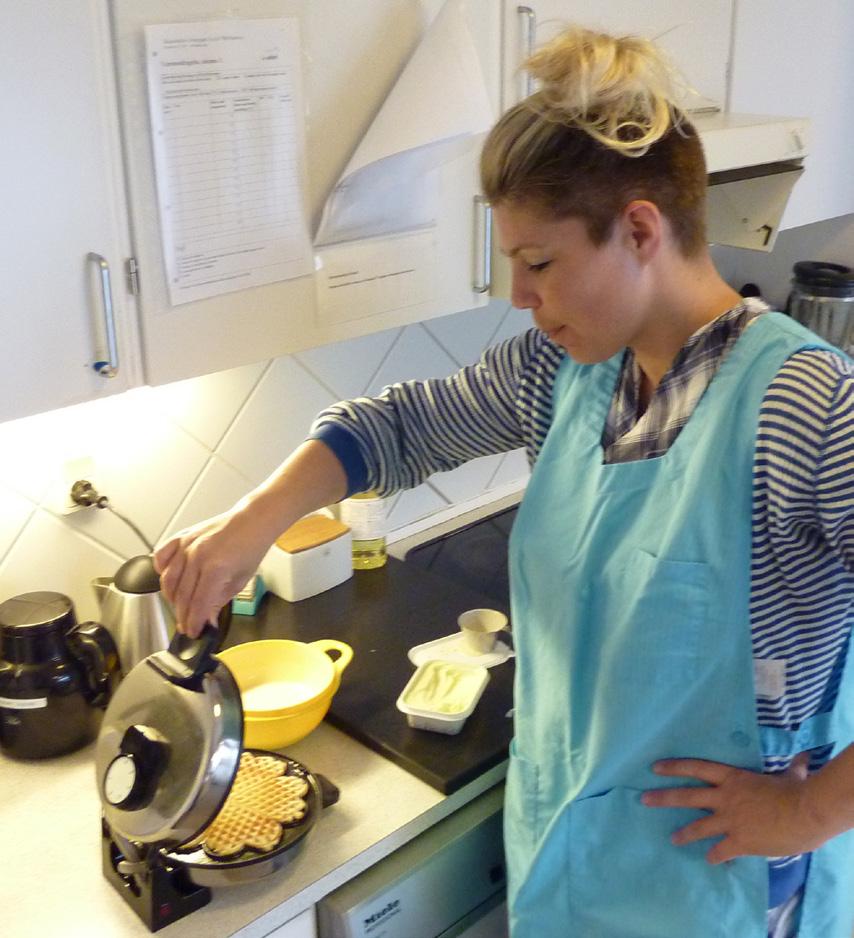
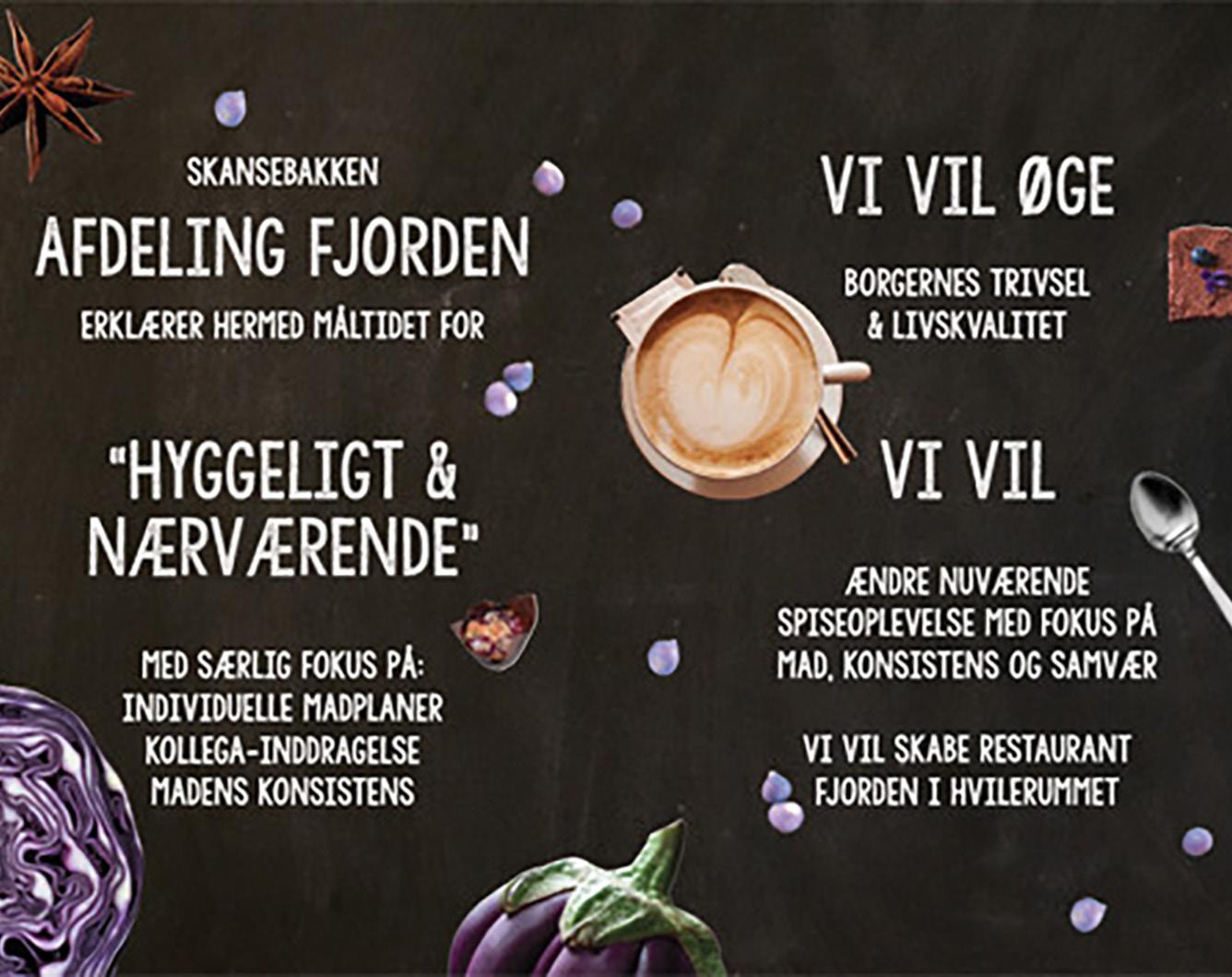
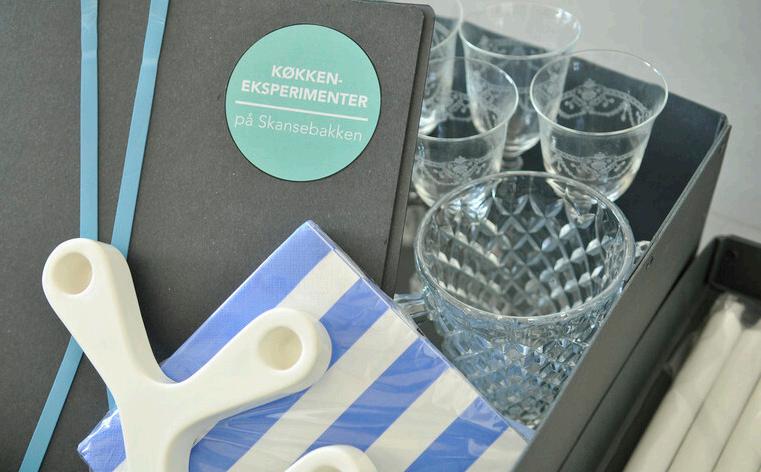
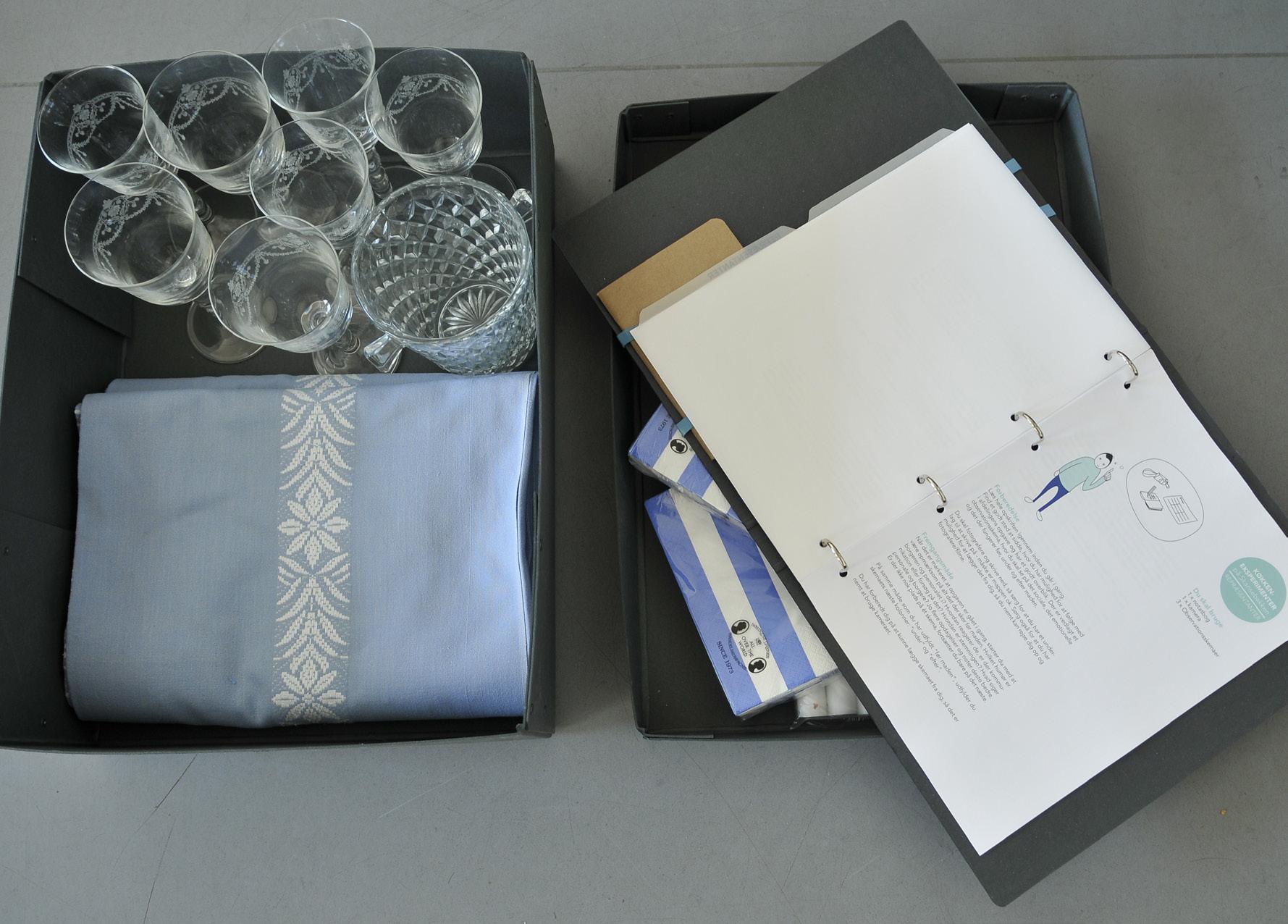
Kitchen Stories examined how food, atmosphere, routines, and roles around mealtimes could be revisited and reinvented at Skansebakken – where many residents are severely disabled and cannot eat ‘regular’ food, often requiring blended or tube-fed meals.
The project asked a deceptively simple question: what happens to dignity, participation, and social connection when eating becomes primarily clinical and task-based?
The Lab for Social Design set out to develop positive stories and relationships anchored in everyday life, with the dining experience as a concrete, repeatable setting for change.
The challenge
• Many residents eat blended food or receive food via a feeding tube, changing the sensory and social nature of meals.
• Staff face time pressure and operational constraints; meals risk becoming a workflow problem rather than a shared social moment.
The ambition
To move from ‘feeding efficiently’ toward meals as:
• a source of wellbeing and liveability,
• a social anchor for everyday routines,
• and a setting where staff practice, cross-disciplinary collaboration, and institutional culture can shift in visible, testable ways.
P2.2 Process: Action Research + Social Prototyping
The project explicitly took a holistic approach – studying interactions before, during, and after meals, and looking for meaning and coherence across Skansebakken’s different kitchens/ departments. Work was organised through:
Initial framing surfaced a common institutional pattern: kitchen issues were often described as technical (time, equipment, routines), while the deeper need concerned meal culture – how staff priorities, environment, and roles shape residents’ experience of eating and being together. The project set out to examine both resident experience and staff workflows/interaction.
Stage 2. Act — Try out interventions or changes
The project kicked off with a workshop that brought together a wide mix of roles – kitchen staff, pedagogues who serve meals, relatives, and designers – signalling from day one that ‘the meal’ is a shared responsibility and design space.
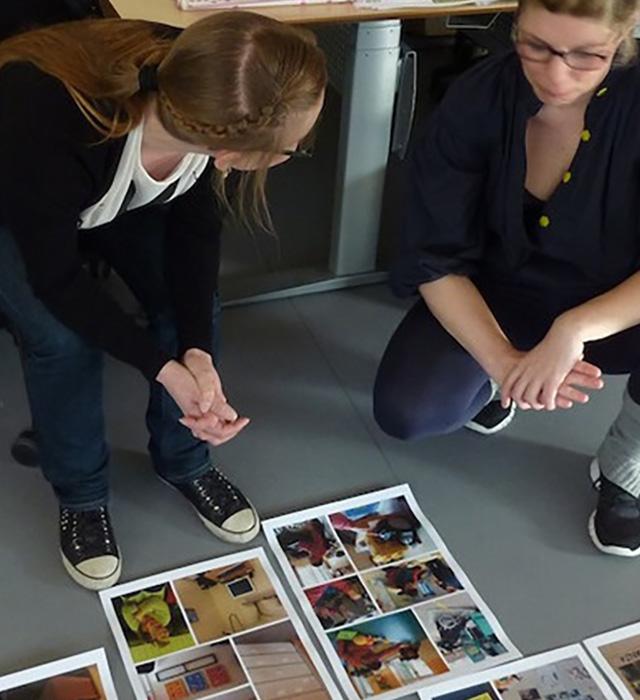
From there, the team supported iterative experiments (practices, atmospheres, routines) to explore how small changes could unlock different participation and care dynamics. The designers’ role included observing and developing proposals over the following months.
Stage 3. Observe — Collect evidence about what happens
Field examples in the public reporting show how microadjustments can change outcomes:
• In one case, sensory-motor guidance (e.g. adjusting the helper’s position in the resident’s visual field; adding sensory grounding) led to immediate changes in eating engagement.
• Over summer and autumn, staff conducted observations, gathered visual material, and ran experiments as part of an active design process.
Stage 4. Reflect — Analyse results and refine understanding
A key conclusion of the project was a shift away from designing isolated solutions to narrowly defined problems – such as queueing to blend food – towards developing meal guidance grounded in holistic, system-level thinking. This reframing foregrounded cross-disciplinary collaboration and attention to the entire eating situation, rather than addressing individual challenges in isolation.
The project also highlighted a common action-research dynamic: the ‘real change’ often crystallises late – once the team identifies the core of what positive change could be – after which implementation becomes the main work.
Stage 5. Repeat — Improve the action and learning in the next cycle Implementation was explicitly positioned as something Skansebakken itself must carry – supported by leadership that can facilitate change across routines, staff habits, and priorities. A concrete example of ‘next-cycle learning’ was peer inspiration: staff and designers visited another institution (Lynghuset, Nørrebro) that had made the meal a central organising principle – helping Skansebakken staff translate practice through professional-to-professional learning rather than external persuasion.
P2.3 Design Results and Impact
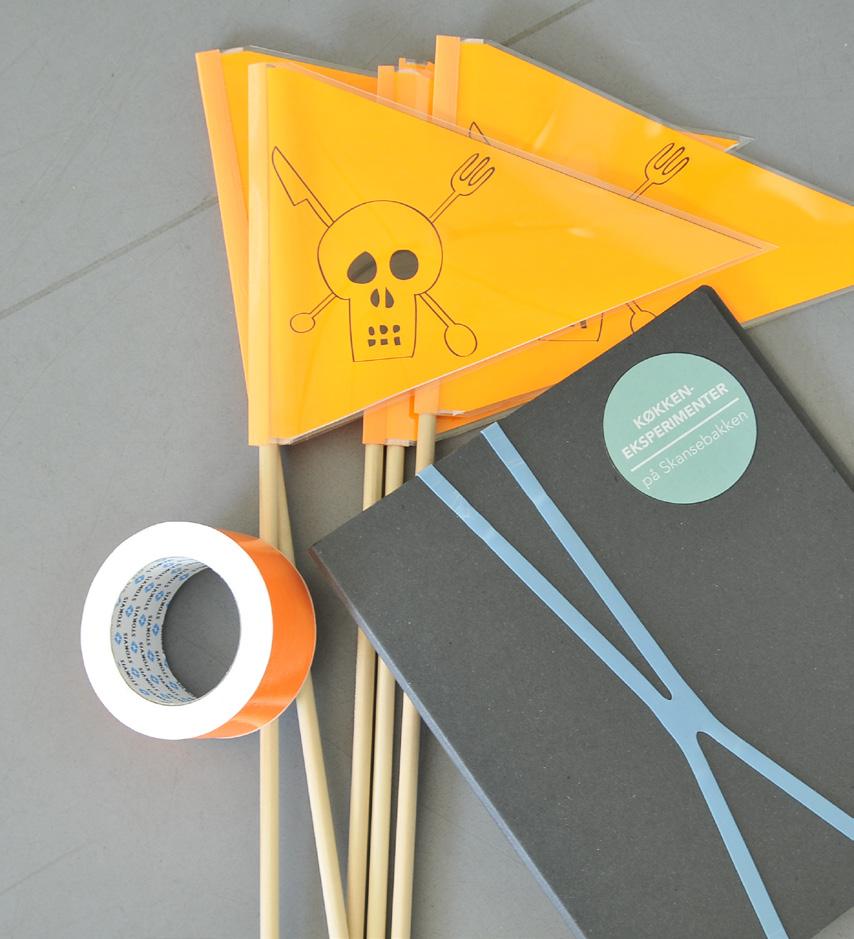
Rather than a single product, Kitchen Stories produced a cultural and practice shift toolkit, including:
• A mapped understanding of meal interactions (before/during/ after eating) across functions, activities, and relationships.
• Prototypes and experiments for meal settings and routines (atmosphere, serving practices, interaction patterns), developed through workshops + observation/interviews.
• Department-led goals and ‘meal advice’ that reframed meals as a holistic care domain (not just nutrition logistics).
Publicly reported outcomes include:
• Residents now experience better meals, according to the compiled project report and reflections.
• The project evolved from an operational story (‘blender queues’) to holistic meal advice supported by crossdisciplinary thinking.
• Staff ownership was central: implementation requires substantial work by employees and, importantly, enabling leadership that can facilitate the process.
• The broader collaboration model – designers + care professionals + kitchen staff + relatives – was reinforced as a repeatable way to improve everyday life in high-support disability settings.
Kitchen Stories shows how ‘care culture’ can be redesigned by treating everyday routines – especially meals – as relationship infrastructure. It shifts the design object from food alone to the entire mealtime ecology: roles, atmospheres, sensory supports, workflows, and shared meaning.
references
Kolding School of Design Project page: Køkkenfortællinger https://www.designskolenkolding.dk/forskning-og-udvikling/ projekter-og-publikationer/koekkenfortaellinger
Related news: project launch workshop (10 Apr 2014) https:// www.designskolenkolding.dk/en/the-school/news/designerepaedagoger-og-kokke-sammen-om-koekkenfortaellinger
Related news: ‘Meal advice with quality and immersion’ (9 Dec 2014) https://www.designskolenkolding.dk/skolen/nyheder/ maaltidsraad-med-kvalitet-og-fordybelse
Otter.ai. (2025, October 6). Zoom interview with Laila Grøn Truelsen [Audio transcript]. https://otter.ai/u/ kh4Ix5RRokGhE04baElwu38cHZw?utm_source=copy_url
Where The residential areas of Sædding, Fourfeldt, and Ådal (Esbjerg Municipality). Lower secondary school students (primarily Grades 7–9) and the wider neighbourhood ecosystem (parents/ adults, local associations, municipal staff).
Awards Winner, KL Innovation Award 2013
P3.1 Project Background
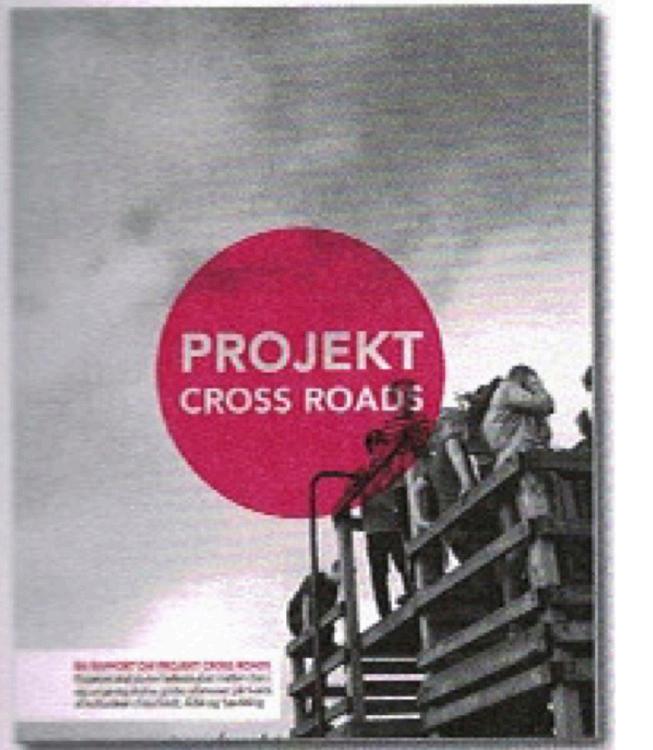
Cross Roads was launched against a concrete local ‘divide’: two residential areas separated by major roads, alongside a school restructuring/merger that brought young people together in new ways. The project sat inside Esbjerg Municipality’s broader areabased effort (‘Sædding and Ådalen at the Top’), and connected to a specific key government track focused on mental health and cohesion of young people.
Rather than producing yet another analysis (many already existed), the municipality’s request was action-oriented: create focused initiatives that help young people and adults ‘get started’, and establish community cultures that could last beyond the wider programme.
P3.2 Process: Action Research + Social Prototyping
The project followed an action research cycle, using design interventions as testable, real-world experiments.
Stage 1. Plan — Identify a real-world problem
• A structural change (school merger/reorganisation) created new cultural encounters and the risk of ‘us/them’ dynamics.
• The project treated the ‘road’ not only as infrastructure but as a symbolic boundary – a mental and social separation that shaped rumours, prejudices, and everyday belonging.
Stage 2. Act — Try out interventions (youth +
community)
The team ran multiple ‘social prototypes’ that used participatory formats and metaphors to unlock dialogue, agency, and shared ideas:
• Community kick-off (Sædding Centret): Residents and young people were invited to ‘dream wildly’ and generate ideas for
making the area a better place to be young (e.g. informal sports areas, parkour, shared events, and meeting places).
• ‘Prejudice machine’ workshop (6th grade): A gym hall was turned into a structured encounter where pupils from two schools worked together, surfaced expectations, and reduced rumours through direct collaboration.
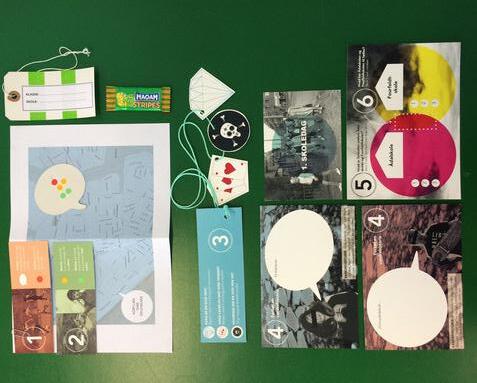
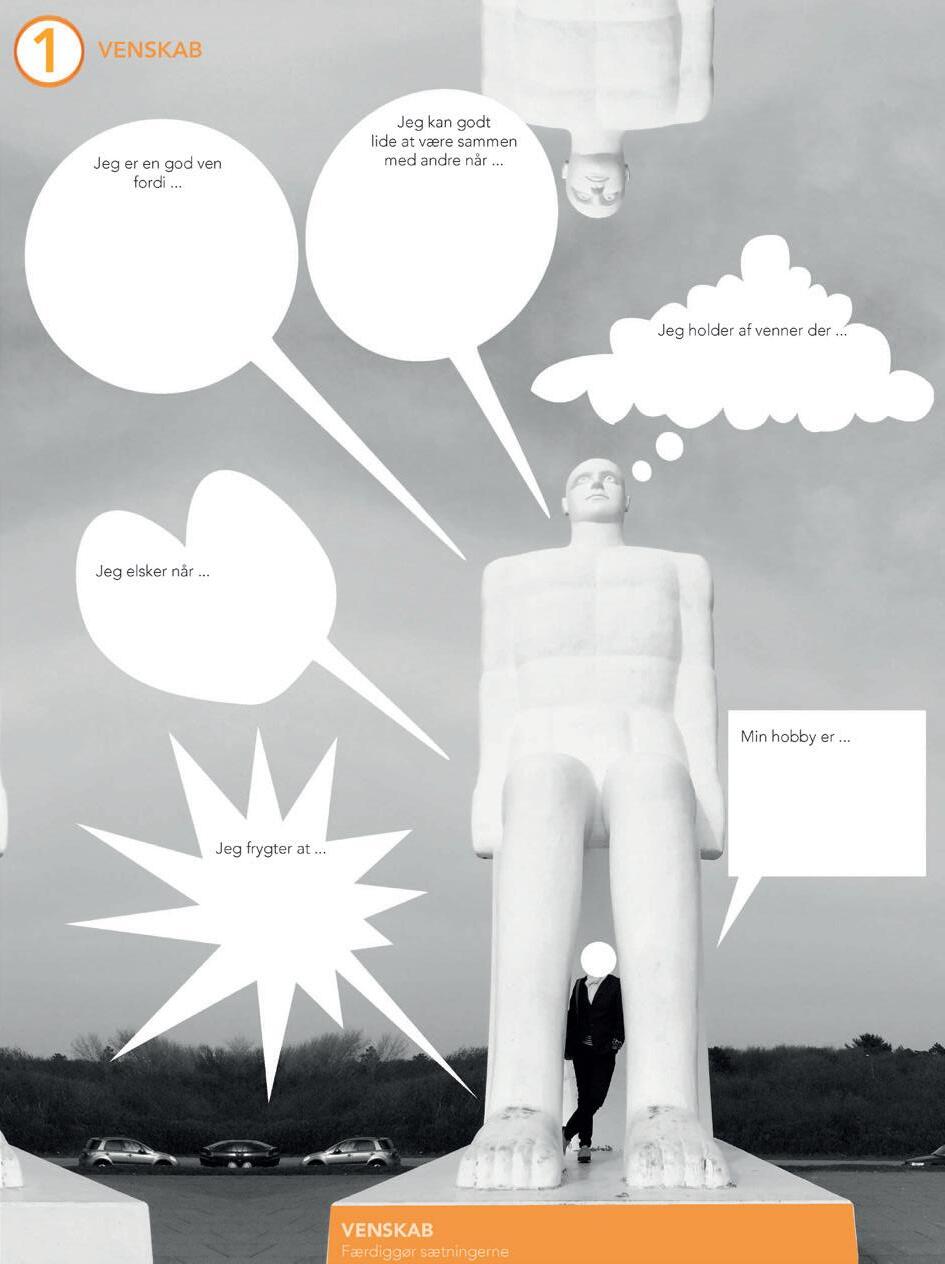
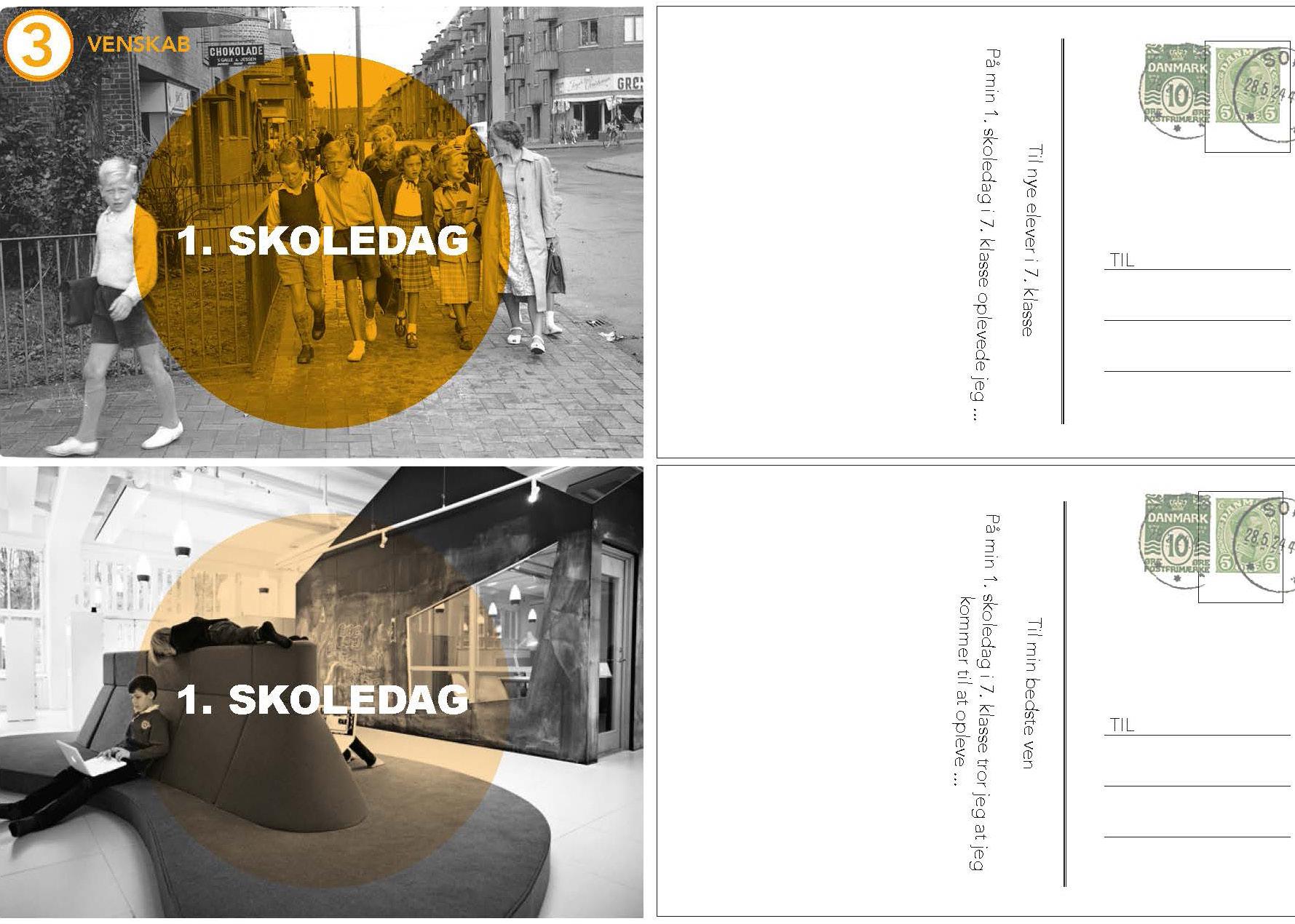
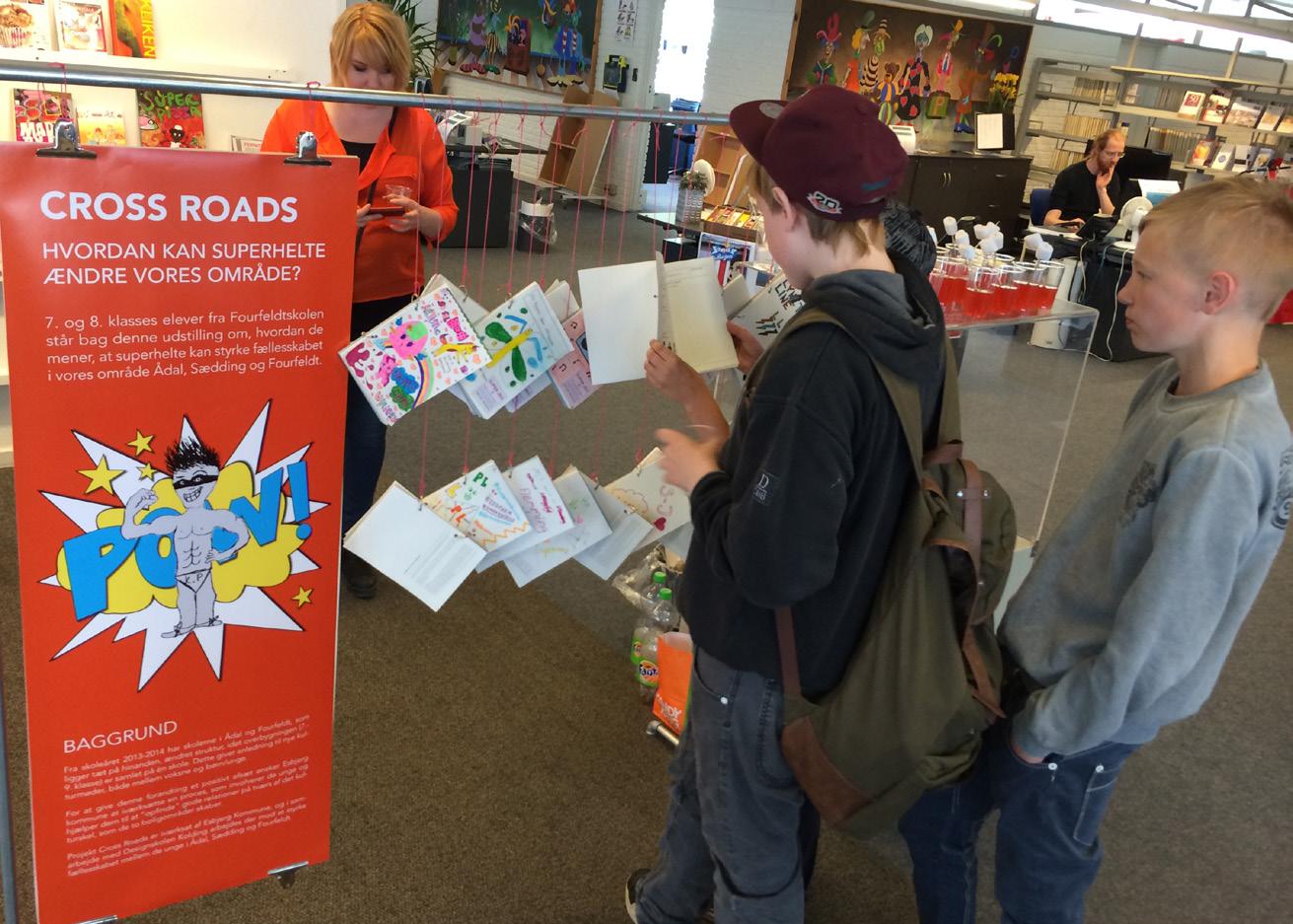
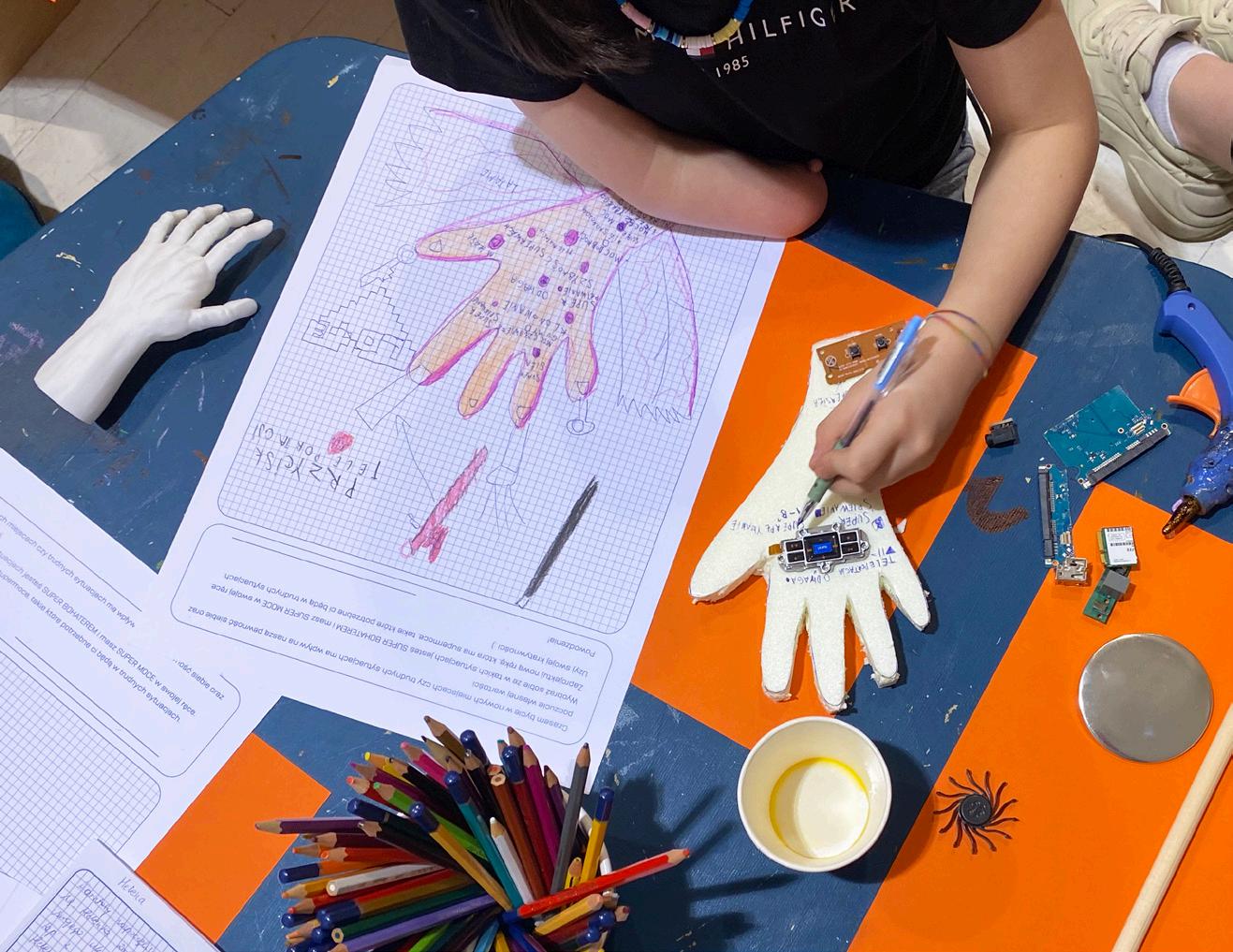
• Superhero + zine workshop (7th–8th grade): Students mapped their strengths/weaknesses through a superhero metaphor and produced zines that articulated what community means and proposed concepts for local cohesion – later shared publicly through a library exhibition.
Stage 3. Observe — Collect evidence of what happened
• In the ‘prejudice machine’, participants reported that prejudices decreased and that the day produced concrete proposals for new communities.
• Teachers described practical benefits: students got to know each other across groups, and staff gained a better foundation for forming new classes after the school change.
• In the zine process, students created tangible concepts (e.g. physical meeting spots like hangout zones, sports spaces, and shared activities) and opened the exhibition to broader community input.
Stage 4. Reflect — Analyse results and refine understanding
A clear design insight running through the documented initiatives is that cohesion work becomes easier when ‘community’ is made concrete:
• Metaphors (‘prejudice machine’, ‘superheroes’) created safe distance for discussing identity, rumours, and belonging –while still generating actionable ideas.
• Public-facing artefacts (zines + exhibition) helped shift the work from a one-off workshop into a shared civic conversation.
Stage 5. Repeat — Strengthen what works in the next cycle
Cross Roads explicitly asked the sustainability question: how do new cultures continue after the wider area programme ends? The documented initiatives can be read as repeatable ‘modules’ (kick-off formats, classroom collaboration designs, and public exhibitions) that Esbjerg Municipality and schools could rerun in new cohorts and contexts.
P3.3 Design Results and Impact
Cross Roads produced less of a single ‘product’ and more of a portfolio of formats + artefacts that schools/communities can reuse:
Engagement formats
• A kick-off method for turning ‘wishes’ into shared proposals (and surfacing funding/ownership thinking).
• A structured workshop concept (‘prejudice machine’) for accelerating contact and reducing rumours before/ through a merger.
Youth-made communication materials
• Zines (mixed media booklets) capturing student reflections and proposals for community-building.
• A library exhibition as a civic platform where others could add ideas and viewpoints.
A project report (publication)
DSKD’s Lab for Social Design compiled a report on Cross Roads, framing the project as strengthening community among children/young people across cultural divides in Fourfeldt, Ådal, and Sædding.
• Reduced prejudice/rumours and improved readiness for mixing cohorts, supported by teacher reflections and student experiences.
• Concrete, youth-generated ideas for activities and places that support belonging – and early steps toward shared ownership (‘we could do something ourselves’ not only ‘the municipality should fix it’).
• Visible public storytelling (zines + exhibition) that extended the work beyond the classroom into the local community.
references
Kolding School of Design Project page (EN): https://www. designskolenkolding.dk/en/research-development/projectspublications/cross-roads
Kolding School of Design Project page (DA): https://www. designskolenkolding.dk/en/research-development/projectspublications/cross-roads
Kolding School of Design Publication page: ‘Projekt Cross Roads’ (report reference). https://www.designskolenkolding.dk/en/ research-development/projects-publications/projekt-cross-roads
Kolding School of Design News article: ‘Boligområde i Esbjerg…’ (kick-off + community ideas). https://www.designskolenkolding. dk/skolen/nyheder/boligomraade-i-esbjerg-skal-blive-et-fedtsted-at-vaere-ung
Kolding School of Design News article: ‘En dag i fordomsmaskinen…’ (6th grade workshop + outcomes).https:// www.designskolenkolding.dk/skolen/nyheder/en-dag-ifordomsmaskinen-aflivede-en-masse-rygter
Kolding School of Design News article: ‘Børns tanker om superhelte…’ (zines + exhibition + youth empowerment framing). https://www.designskolenkolding.dk/skolen/nyheder/boernstanker-om-superhelte-og-faellesskaber-paa-saedding-bibliotek
Otter.ai. (2025, October 6). Zoom interview with Laila Grøn Truelsen [Audio transcript]. https://otter.ai/u/ kh4Ix5RRokGhE04baElwu38cHZw?utm_source=copy_url
The Nursing Home of the Future •
Lærke Thorst Balslev • Mette Mikkelsen • Joan Pedersen •
Laila Grøn Truelsen*in conversation with
Project 4
Year 2014–2015
Designing FOR Ageing Facilities
Where Birkelund Nursing Home (Plejecentret Birkelund), Aabenraa Municipality, Denmark
Awards Winner, KL Innovation Award 2013
P4.1 Project Background
For several years, Plejecentret Birkelund faced significant organisational, professional, and economic challenges. The project began at a moment when management and the municipality felt the home had progressed far enough in addressing these challenges to aim higher: Birkelund could become not only a strong local nursing home, but also a model for other care institutions.’
Aabenraa Municipality invited DSKD to apply its changemaking design experience – explicitly drawing on the participatory logic of Designing Relations (KL Innovation Award 2013) – to create methods and concepts that could inspire improvements at Birkelund and be transferable to other care settings.
Importantly, the project is framed as a starting point: it can only partly define ‘what the nursing home of the future should be’ and is positioned as a pilot / pre-project for a larger venture.
The challenge
• A care home under strain (organisation, professionalism, economy) needed improvement that was not only operational, but cultural and relational.
• ‘Future nursing home’ ambitions require alignment across residents, relatives, staff, leadership, and local community – not just new procedures.
The ambition
To develop concrete, reusable methods and concepts by summer 2015 that strengthen Birkelund’s everyday practice and culture, and inspire other nursing homes / care offerings. The project’s design brief centres on four values-based themes:
1. Decency in what we do and say (language/communication in speech and action)
Methodologically, it is explicitly forward-looking, starting from a positive inquiry: What might be? What are we dreaming about?
P4.2 Process: Action Research + Social Prototyping
Stage 1. Plan — Identify a real-world problem
The project sets out to understand Birkelund’s existing culture and locate development potential across employees, residents, relatives, and others.
Stage 2. Act — Try out interventions or changes
The work is structured around involving many stakeholders in development – mirroring the participatory approach used in earlier social design projects.
A documented early action is a large kick-off (‘nytårskur’) that gathered nearly 100 residents, relatives, neighbours, staff, and friends to generate input on what the nursing home of the future should prioritise.
Stage 3. Observe — Collect evidence about what happens
The project includes an explicit evaluation element: a measurement form tested with selected participants, focused on lived experience of participation and ownership (e.g. ability to contribute, influence, and sense of ownership of Birkelund’s development).
Early workshop documentation also captures what participants valued most – summarised as: good staff, good food, and experiences.
Stage 4. Reflect — Analyse results and refine understanding
A core reflection built into the brief is that ‘future scenarios’ must be meaningful at multiple time horizons – tomorrow, in a week, in a year – so change is grounded in daily practice, not distant vision.
Stage 5. Repeat — Improve the action and learning in the next cycle
The project is designed to generate a series of service/future scenarios, iterated with stakeholders, and then carried forward through internal structures that support implementation beyond the design intervention.
P4.3 Design Results and Impact
This project is oriented toward designing methods, concepts, and scenarios rather than a single product:
• A mapped understanding of culture + development potential at Birkelund,
• A portfolio of service scenarios / future scenarios for Birkelund ‘of the future’ (short-, mid-, and longer-term),
• A participant-centred measurement tool capturing influence, contribution, and ownership.
Governance and sustainability structures were also part of the design:
• Steering committee: Management teams from the municipality and partner institutions, plus representatives of relatives,
• Stakeholder group: Key actors and experts, including central administration, politicians, volunteer organisations, and others,
• Ambassador group (‘Narrators’ / Fortællere): Long-term carriers of the ideas, supporting continuity and uptake over time.
What’s explicitly stated in public project framing
• By summer 2015, the intended output was ‘several concrete methods and concepts’ to improve Birkelund and inspire other care options.
• The project is positioned as an initial project – a foundation for a larger effort rather than a final definition of ‘the nursing home of the future’.
Early engagement evidence shows broad stakeholder participation and clear priorities voiced by residents/relatives/community: staff quality, food, and experiences.
references
Kolding School of Design Project page (EN): The Nursing Home of the Future https://www.designskolenkolding.dk/en/researchdevelopment/projects-publications/fremtidens-plejehjem
Kolding School of Design Project page (DA): Fremtidens plejehjem https://www.designskolenkolding.dk/forskning-og-udvikling/ projekter-og-publikationer/fremtidens-plejehjem
Kolding School of Design Related news item (kick-off, Jan 12, 2015): stakeholder inputs and priorities https://www. designskolenkolding.dk/skolen/nyheder/personalet-oplevelser-oggod-mad-er-det-vigtigste-paa-et-plejehjem
Otter.ai. (2025, October 6). Zoom interview with Laila Grøn Truelsen [Audio transcript]. https://otter.ai/u/ kh4Ix5RRokGhE04baElwu38cHZw?utm_source=copy_url
• Liv Maria Henning • Mette Mikkelsen • Joan Pedersen*in conversation with • Laila Grøn Truelsen
Project 5
Year 2015
Designing FOR Ageing / Dementia Support in Home Settings
Collaborators Vejle Municipality’s dementia consultants (as ‘trainers’ and implementers)
Awards Winner, KL Innovation Award 2013
P5.1 Project Background
This project began from a grounded municipal reality: many people live with dementia at home, where everyday routines, safety, and relationships can become fragile – often shifting heavy responsibility onto relatives and frontline services. DSKD collaborated with Vejle Municipality’s dementia consultants to translate lived experience into practical support that could be used across cases and sustained after the designers left. A key emphasis in the project (as Joan Pedersen describes it) was capacity-building: the work was called ‘Teaching Design Methods’ because it was fundamentally a project for the dementia consultants, where designers taught them design methods through workshops and hands-on exercises.
This training-oriented framing helped consultants articulate needs differently e.g. the participants expressed, ‘you make us see things in new ways’ and help them to build confidence using creative workshop formats e.g. drawing instead of only writing.
The core output of the project was a catalogue of ‘41 recipes’ – concrete activity and support ideas that the municipality could adapt and implement. These recipes consist of simple, practical concepts designed to support and relieve people living with dementia and their relatives. The catalogue was then to be tested and refined by the municipality in real-life contexts. Pedersen describes them as a collection of ideas for what can be done together with people with dementia, emphasising shared activity rather than prescribed intervention.
This project addressed a practical and emotional reality: many people live with dementia in their own homes, where everyday routines, relationships, and safety can become fragile – often placing heavy responsibility on relatives and frontline municipal services.
DSKD collaborated with Vejle Municipality’s Health Service department to translate research and lived experience into concrete, actionable support. Dementia consultants were not only
stakeholders but active participants in research, analysis, and idea development through a series of workshops.
The challenge
• Dementia changes a person’s ability to navigate everyday life, social interaction, and routines – often gradually, unpredictably, and differently from person to person.
• Relatives may struggle to sustain meaningful connection and safe routines while coping with stress, guilt, and exhaustion.
• Municipal dementia consultants hold knowledge and access – but need repeatable tools that can be adapted locally and used confidently across cases.
The ambition
To create a practical bridge between insight and action: a set of tested, communicable ideas that the municipality can activate – supporting:
• social connection and belonging,
• understanding and communication,
• practical inventions that increase autonomy and safety, and dignity for the person with dementia and their close network,
• wellbeing for all living with dementia.
P5.2 Process: Action Research + Social Prototyping
Stage 1. Plan — Identify a real-world problem
The team framed the challenge from inside municipal practice: dementia consultants needed repeatable ways to understand what matters in home life, communicate across stakeholders, and support both citizens and relatives – without reducing dementia support to checklists or crisis response. The project design explicitly
positioned consultants as the main learners and future carriers of the approach (‘we taught them design methods’).
Stage
2. Act — Try out interventions or changes
The designers ran workshop-based training with dementia consultants and complemented it with fieldwork to gather concrete, situational insights. Pedersen points to extensive workshop documentation (photos, workshop material) and dissemination formats such as roll-ups used for dementia-related communication or a ‘small conference thing’.
The project began in May 2015. Trainers (dementia consultants) were introduced to the design process and core methods through a series of workshops. The DSKD team collected material through conversations, observations, and interviews with people living with dementia, their relatives, and care staff. Analysis of this material led to four themes: RELATIONSHIPS, UNDERSTANDING, INVENTIONS, and THE PERSON WITH DEMENTIA.
On Wednesday, 11 November, the design and research team invited both internal and external stakeholders – including trainers, relatives, and other experts – to help organise and interpret the four themes. A workshop was held at the authority’s offices. In the first session, participants supported idea generation; in the second, they prioritised two themes. Ideas emerged around social communities, dance events, and relief services, which the designers would continue to develop. While all four themes were seen as relevant – and often overlapping – the group ultimately selected RELATIONSHIPS and UNDERSTANDING as the most important.
Stage 3. Observe — Collect evidence about what happens
Field insight came from observing dementia in real homes and the municipal care ecology around it. In one example, a care worker visits a person with dementia in her own home, where the person uses knitting and written notes to stabilise identity and memory –e.g. writing reminders to herself such as ‘my memory, intelligence and physical state is like when I was young’.
Pedersen also references the digital documentation system that care workers use, where family narratives and uncertainty (‘we don’t know when it started…’) become part of the municipal picture of the case.
These kinds of observations functioned as action-research evidence: they show what people actually do to cope, what breaks down, and where support might be enabling rather than controlling.
Stage 4. Reflect — Analyse results and refine understanding
Workshop feedback from consultants became part of the reflective layer: the process itself was experienced as shifting perception (‘see things in new ways’) and legitimising alternative working modes (brainstorming, visual thinking, drawing).
The emerging recipe concepts therefore weren’t just ‘ideas’, but also a reframing of dementia support as something that can be creatively structured, communicated, and enacted by municipal professionals.
Stage 5. Repeat — Improve the action and learning in the next cycle
The recipes were designed to live beyond the project: a catalogue the municipality could test, adapt, and extend through practice. Joan Pedersen also notes a fragility common to public-sector innovation work: over time, project material can disappear from servers and not remain available in digital form.
This makes the ‘teach the method’ approach even more significant – because it leaves capability behind even when artefacts get lost.
P5.3 Design Results and Impact
Design Results
A structured, research-based catalogue of ‘41 recipes’ for municipal dementia work – designed to be tested, refined, and scaled by Vejle Municipality.
The central deliverable is a practical set of modular recipes for activities and support. Their value lies in implementability: dementia consultants can tailor each concept to different citizens, stages of dementia, and family situations.
The collection brings together 41 ideas, activities, and opportunities grounded in the needs of people living with dementia and their relatives. The recipes are informed by the designers’ field research in Vejle, including observations, interviews, co-creation workshops, and desk research. They are intentionally simpl– yet they call for courage and imagination in how they are applied.
Each recipe card includes a title and subtitle. The subtitle indicates one of six categories:
• Activity tool
• Social interaction tool
• Network tool
• Relief tool
• Information tool
• Team tool
On the front of each card, a small circular diagram (top right) indicates three levels of focus: personal, local, and systemic. Together, these rings show which levels are activated in the recipe and which actors it addresses. The reverse side provides a shared legend explaining the diagram, identical across all cards.
Design Impact – A strengthened municipal practice (training as design outcome)
A major impact was professional learning: dementia consultants gained shared methods for exploring needs, generating ideas, and translating insights into action. A major impact was professional learning: dementia consultants gained shared methods for exploring needs, generating ideas, and translating insights into action. Workshop participant feedback highlights the cultural shift
this enabled – a move away from habitual professional frames and into new ways of working. For example, stakeholder prioritisation identified a strong shared direction: focusing on RELATIONSHIPS and UNDERSTANDING as the urgent levers for quality of life at home. Showing a practical translation of complex dementia challenges into repeatable tools and small-scale interventions –spanning personal, local, and systemic levels.
Evidence-grounded empathy for home life
Fieldwork examples (e.g. self-made memory practices like notes, identity anchors like knitting, and the role of municipal documentation systems) grounded the project in everyday coping strategies rather than abstract ‘symptoms’.
P5.4 Appendix: Examples of ‘recipes’ (short summaries)
Recipe #3 — The D+ Symbol (Activity tool)
Idea: Mark existing sports/gym classes with a ‘D+’ symbol to indicate that people with mild dementia are explicitly welcome, supported by an additional assistant.
Value: Enables continuity of familiar leisure life and gives relatives short relief windows – without isolating citizens into separate ‘dementia-only’ activities.
Implementation: Municipality collaborates with local associations; dementia consultants guide citizens into suitable classes.
Recipe #6 — The Picto Routes (Activity tool)
Idea: Create clearly marked walking/running routes with highcontrast colors, pictograms, and frequent signage (similar to ‘Marguerite Routes’).
Value: Supports independence and routine in early stages; reduces anxiety from getting lost; expands freedom without requiring constant accompaniment.
Implementation: Municipality establishes routes and designs signage in collaboration with relevant experts.
Recipe #9 — The Give Box (Social interaction tool)
Idea: A box containing photos, letters, objects, and ‘conversation starters’ rooted in the person’s life world (music, hobbies, meaningful items).
Value: Makes conversation easier for relatives and staff; supports identity and recognition; travels with the person across settings (home – day services – care home).
Implementation: Introduced via dementia consultants; co-created with the family over time.
reference
Otter.ai. (2025, October 8). Zoom interviews with Joan Pedersen [Audio transcript].https://otter.ai/u/ vvMOwGnoUD3ORAaXKWs4bArnV3Y?utm_source=copy_url
purpose is to create relationships, to understand other professional groups, identify their challenges and together with them develop solutions that provide value for them in their daily lives…’
P6–14 •
Continuing to Design WITH / BY Others
•
2016 – 2020
A DSKD textile design graduate and later Head of Continuing Education, Egelund works at the intersection of healing environments and usercentred public-sector design, showing how design can create calm, dignity, and security in stressful contexts. This perspective underpins Section 2.2, where social design at DSKD is framed as strengthening relationships with professional partners and turning shared challenges into practical, everyday value.
Kerstin Bro Egelund expressed in Design School Kolding – 50 Years 50 Voices of Design (2017).
Shared Decision-Making •
Canan Akoglu • Kathrina Dankl •
Kerstin Bro Egelund*in conversation with •
Denise Dyrvig Jensen • Rikke
Colfach Karlsen • Joan Pedersen •
Laila Grøn Truelsen
Project 6
Year 2015–2017
Designing WITH Medical Experts and BY Patients Where Centre for Shared DecisionMaking at Lillebælt Hospital, Denmark Recognition Decision support tools –Decision Helper™ (Beslutningshjælper™)
P6.1 Project Background
This project used design as a co-creative change practice to embed shared decision-making into clinical consultations. The work began from a simple definition: shared decision-making is two worlds meeting – the clinician as expert in diagnosis and evidence, and the patient as expert in their own life, values, and capacities. The aim was not only to ‘inform’ patients but to make decisions together in ways that create greater security, clearer trade-offs, and betteraligned treatment choices.
Rather than producing a tool in isolation, the design team developed the Decision Helper™ with patients, relatives, and healthcare professionals through repeated cycles of co-creation.
The process itself supported the cultural shift required to implement new workflows. While at the same time generating a concrete decision aid that makes the ‘good conversation’ possible in busy hospital environments – through accessible questions, symbols, visualisations, and structured prompts.
The challenge
• Many treatment pathways (especially cancer and surgery) present multiple valid options with different implications for survival, side effects, daily functioning, and identity.
• Consultations are time-pressured and information-heavy; values can remain implicit or unspoken.
• Shared decision-making is not just a policy ideal – it requires shared language, shared structure, and shared ownership across patients and clinicians.
• the medical factual world (risk, evidence, prognosis), and
• the patient lifeworld (quality of life, family, work, fears, hopes), so that treatment choices reflect both ‘longest possible survival’ and ‘the best possible life’ while you have it.
P6.2 Process: Action Research + Social Prototyping
Stage 1. Plan — Identify the real-world problem together
The project framed decision-making as a relational practice that must work for both parties: clinicians need legitimate, usable support in their workflow, and patients need a way to voice what matters without feeling overwhelmed or passive. Shared decisionmaking was therefore treated as a ‘design space’ owned by everyone in the consultation.
Stage 2. Act — Co-create interventions and prototypes
The project was built around many co-creation workshops involving:
• patients,
• relatives, and
• clinicians (nurses + doctors).
These workshops didn’t just ‘collect feedback’ – they actively shaped the tool’s content and form: which questions belong in the room, how choices should be visualised, and what makes a consultation feel equal.
Stage 3. Observe — Test in real clinical environments
The Decision Helper™ and supporting materials were iteratively tested through:
• clinical ALPHA and BETA tests,
• steering committee and project group meetings,
• ‘Share and Care’ sessions,
• and large-scale poster/campaign testing in waiting-room contexts.
These tests captured not only usability but also adoption dynamics: what clinicians can realistically do, what patients actually understand, and what helps both sides stay in dialogue.
Stage 4. Reflect — Refine what supports an equal conversation
Insights from practice fed directly back into the tool’s design:
• where visuals reduce cognitive load,
• where symbols or colour logic clarify trade-offs,
• which prompts unlock values-based discussion, and
• how the tool can support both evidence and emotion without collapsing into either.
The design process also matured workflow change: co-creation functioned as training, alignment, and culture-building – not just production.
Stage 5. Repeat — Generalise and spread
While initially developed for specific patient groups, the project intentionally built generic elements that could be adapted to other conditions. The longer-term ambition included wider regional dissemination and an online platform enabling clinicians to build their own Decision Helpers™.
In 2025, an extended project on Decision Aid (Beslutningshjælperen) – a tool designed to strengthen shared decision-making in psychiatry.
P6.3 Design Results and Impact
Design Results
A) Decision Helpers™ for 5 clinical tracks
• Aftercare decisions after surgery for early breast cancer
• Lung changes with uncertain significance: shared decision on diagnostic assessment
• Ovarian cancer follow-up: PROM-based individual programme + shared decision-making
• Ovarian cancer genetics: opt-in / opt-out of BRCA testing
• Spine surgery consultation: decision support integrated into specialist appointments
B) Implementation package (to support culture + workflow change)
• Clinician video: shared decision-making + how to use Decision Helper™
• Clinician manual: guidance for developing/adapting tools
• Illustration package: shared visual language for clarity and reuse
C) Participation and reach
• 160 patients and relatives involved across the period (including repeat participants)
• 82 clinicians involved (nurses and doctors; including repeat participants)
• 709 people involved in poster testing
• Ongoing governance and learning through steering committees, project meetings, and Share and Care sessions.
Design Impact
A) The Centre for Shared Decision-Making has worked to spread shared decision-making beyond cancer, with the Region of Southern Denmark as a key target group, and has been developing an online platform so healthcare professionals can build their own Decision Helpers™
B) Academic publications and invited presentations to share findings:
1. Dankl, K. (2020). Shared Decision Making: Das Design eines neuen medizinischen Beziehungsgefüges. In Zwischenmenschliches Design: Sozialität und Soziabilität durch Dinge (pp. 47-68). Wiesbaden: Springer Fachmedien Wiesbaden.
2. Steffensen, K. D., Vinter, M., Crüger, D., Dankl, K., Coulter, A., Stuart, B., & Berry, L. L. (2018). Lessons in Integrating Shared Decision-Making into Cancer Care. Journal of oncology practice, 14(4), 229-235
3. Dankl, K. (2017) Teaching Healthcare Design: Methods for Empathy, Proceeding of the REDO Cumulus Conference 2017
4. Dankl, K. (2017) ‘Intuition, Reflection and Reflexivity: Social Design in Healthcare’, FormAkademisk.
5. Dankl, K., Dahl Steffensen, K. (2016) ‚ Empathic Encounters between Design and Healthcare, in Proceedings of the Design and Emotion conference 2016
6. Akoglu, C., & Dankl, K. (2021). Co-creation for empathy and mutual learning: a framework for design in health and social care. CoDesign, 17(3), 296-312.
7. Akoglu, C., Dankl, K. & Dahl Steffensen, K., (2018). A Designled Process for Disseminating the Concept of Shared Decision Making. Proceedings of the 5th International Conference on Design4Health. Christer, K., Craig, C. & Wolstenholme, D. (red.)
8. Akoglu, C., Dahl Steffensen, K. & Dankl, K., (2018). Design and healthcare collaboration: Developing a generic patient decision aid in a Danish hospital context. The 21st DMI: Academic Design Management Conference Proceedings: Next Wave. DMI, Design Management Institute, s. 1350-1360
9. Dankl, K., Akoglu, C. & Dahl Steffensen, K. (2017). Developing a General Decision Tool for Future Cancer Care: Getting Feedback from Users in Busy Hospital. Environments. 9th International Shared Decision-Making Conference.
10. Shared Medical Decision Making: Der Versuch Entscheidungen greifbar zu machen« Beziehungskisten – Sozialität und Soziabilität durch Dinge, Bauhaus-Universität Weimar, 11-12 November 2016, Commissioned Presentation
11. Developing a General Decision Aid for Future Cancer Care: Getting Feedback from Users in Busy Hospital Environments, ISDM 2017, with Canan Akoglu and Karina Dahl Steffensen, July 2017
12. Akoglu, C., Dankl, K., & Dahl Steffensen, K. (2019). A designled patient campaign development process for disseminating the concept of shared decision making. Design for Health Journal, 3(2), 305–323. https://doi.org/10.1080/24735 132.2019.1691417
references
Otter.ai. (2025, October 6). Zoom interview with Kerstin Bro Egelund [Audio transcript].
Designing WITH Medical Experts and BY Patients Where Kolding Municipality – Vonsild Have neighbourhood + Vesterled nursing home (one private, one municipal)
P7.1 Project Background
The challenge
The project responds to a well-known pressure point in later life: the move from one’s own home into a nursing home is often experienced as a long, stressful transition marked by uncertainty and insecurity – for both older people and their relatives. Settling in can take a long time (in some cases up to a year). A key factor for a successful move is collaboration between relatives and nursinghome staff, especially around role expectations and what everyday life at the nursing home looks like.
The ambition
Overall aim: make the relocation process as positive, safe, coherent, and manageable as possible, while strengthening cooperation and relationships among residents, relatives, and staff.
The project objective was to map the relocation journey from the first decision to move (mother/father) into a nursing home through to the point where the person is well settled, identify barriers before/during/after the move, and develop solutions that improve quality of life and enable more coordinated support.
P7.2 Process: Action Research + Social Prototyping
Stage 1. Plan — Map the real journey (end-to-end)
The project was structured around understanding relocation as a coherent process rather than a single event. The team set out to document what happens, who does what, and where uncertainty and breakdowns occur across phases.
Stage 2. Act — Fieldwork + co-creation across the care ecosystem
A qualitative needs analysis was conducted using: Observations, interviews (residents, relatives, staff, government officials), focus groups and two workshops.
This work generated four ‘options’ (scenarios/paths) outlining challenges before, during, and after moving into a nursing home. These options then became the backbone for designing interventions – one set of solutions per option.
Stage 3. Observe — Prototype and test with governance structures
The initial expected deliverable, the welcome packet, was revised –after a steering committee meeting – into a more process-oriented Relocation Package. A prototype relocation folder was presented to the steering committee later with strong positive reception.
Stage 4. Reflect — Reframe from ‘welcome’ to ‘relocation infrastructure’
The shift from a welcome packet to a Relocation Package signals a key learning: the problem isn’t only first impressions – it’s the clarity, timing, coordination, and shared expectations across the entire move.
Stage 5. Repeat — Phase 2 decision for development + implementation
A steering committee meeting on 21 November was set to decide what to include in Phase 2, focused on developing, testing, and implementing the final package.
P7.3 Design Results and Impact
Design Results
Primary design result: the Relocation Package (prototype to implementation path). The project’s core output is a structured Relocation Package that makes the process transparent and doable for everyone involved. It is designed to include:
1. A clear overview of the relocation process:
• what happens from decision-to-move through settling-in,
• what tasks need doing,
• who is responsible, and when tasks should happen.
2. A designed format for the resident’s life story. A practical way to capture the new resident’s life story to support:
• better mutual understanding,
• smoother cooperation between relatives and staff,
• and relationship-building that helps the resident feel recognised and ‘at home’.
3. Scenario-based solutions across the move. Because relocation is treated as a coherent journey, the package content is assembled from solutions developed for each of the four options describing key challenges before/during/after moving.
Design Impact
• A more coherent, predictable transition for residents and families (reduced uncertainty).
• Better cooperation and role clarity between relatives and staff (fewer expectation clashes).
• Improved quality of life through faster settling-in and more relational continuity (life story as a bridge).
• A shared foundation for practice across different nursinghome ownership models (private vs municipal).
references
Kolding School of Design Project source page: https://www. designskolenkolding.dk/en/research-development/projectspublications/den-gode-indflytning
Otter.ai. (2025, October 6). Zoom interview with Kerstin Bro Egelund [Audio transcript]. https://otter.ai/u/OqdQejKTaCeg8JCZh99a094OIs?utm_source=copy_url
The project addresses how people with back pain can end up in long, exhausting, cross-sector pathways involving many actors (GPs, private physios/chiropractors, Rygcenter Syddanmark, municipal rehab, job centres), often without a clear ‘red thread’ or shared overview.
The ambition
Map the needs/challenges of being a patient in a back-pain pathway and the collaboration challenges experienced by the involved actors – then use that mapping to develop solutions that (a) strengthen cross-sector knowledge sharing and (b) support and motivate patients to take a more active role in their own pathway.
The target group was 18–65-year-olds with low back pain (lænderygsmerter) referred from primary care to the spine centre and onward to municipal rehab.
P8.2 Process: Action Research + Social Prototyping
Stage 1. Plan — identify the real-world problem
Patients experience a fragmented pathway; professionals lack timely shared information and struggle to collaborate across sectors around the same patient.
Project 8
Year 2017
Designing WITH Care
Experts and BY Low Back Pain Patient
Where Rygcenter Syddanmark (Spine Center Southern Denmark), within the Sygehus Lillebælt collaboration area and ran as a cross-sector / cross-municipality initiative involving
Middelfart, Fredericia, Kolding, Vejle, Vejen, and Billund municipalities plus general practice.
The broader programme ran Phase 1 (2016–2017) to uncover barriers across sector transitions through interviews with patients and key actors, plus a cross-sector theme day.
Lab for Social Design joined later (Feb–Dec 2018) to help develop what was initially framed as a ‘knowledge catalogue’ (not a fixed product yet), and to co-shape six learning seminars – one in
each municipality – to build shared understanding, clarify roles, and generate comparable data for design development.
Stage 3. Observe — collect evidence
Designers worked with an existing qualitative dataset from 2016–2017 and added field exposure via observations and interviews at the spine centre, plus deeper patient interviews.
Learning seminars produced substantial comparable material: 12 patients, 101+ clinicians/municipal actors, 144 completed role cards, and 21 patient journeys.
Stage 4. Reflect — analyse and reframe
A key insight was that the patient is the only constant across the pathway – effectively the ‘knowledge carrier/coordination point’ – so the design challenge becomes: how do we equip patients to carry that role without it becoming an unfair burden?
Stage 5. Repeat — next-cycle logic
The report frames the prototype outputs as requiring broader testing and ownership from multiple actors (including GPs) before implementation – i.e. an explicit next cycle from prototype to realworld test in the full pathway.
P8.3 Design Results and Impact
Design Results (tangible outputs):
Prototype patient book: My back pathway (‘Mit rygforløb’) an A4 modular, patient-owned folder intended to help patients track treatments/contacts and create cross-sector continuity through the patient as the carrier. Information cards (paired languages): Cards written in patient language on one side and professional language on the other, designed to travel with the patient and support shared understanding between actors.
Design Impact - what changed/ what it enabled:
The work helped cross-sector groups make the complexity visible and articulate concrete breakdowns (e.g. missing feedback loops, unclear timing of job-centre involvement), while strengthening a shared language around roles and expectations. The transcript provided also characterises the project as primarily a facilitation + documentation effort that ‘ended in a report/booklet’.
Acknowledging it has limited downstream implementation impact compared to larger programmes – while still valuable as a case of cross-municipality workshop facilitation.
references
Kolding School of Design (2017) PROJEKT MERE HJEM – MINDRE
HOSPITAL: Et sammenhængende rygforløb (Rygcenter Syddanmark).
Otter.ai. (2025, October 6). Zoom interview with Kerstin Bro Egelund [Audio transcript]. https://otter.ai/u/OqdQejKTaCeg8JCZh99a094OIs?utm_source=copy_url
Everyone Plays a Role Designing Safe
Medication Administration
•
Sara Breitenbauch • Joan Pedersen*in conversation
with •
Laila Grøn Truelsen
P9.1 Project Background
The challenge
Aalborg Municipality launched the Safe Medication Management project to reduce unintended incidents in municipal care services – especially the recurring incident category ‘medication not given’. To address this, the municipality asked Kolding School of Design to map and investigate why ‘not given medication’ happens and to design at least one solution that could realistically work in everyday care practice.
A parallel objective was capacity-building: the design process was intentionally organised so that employees learned and practiced design methods while working on their own work environment and routines – creating a concrete ‘case’ for how design can support welfare-sector development.
The ambition
This Safe Medication Management Project aims to reduce the number of unintended incidents in Aalborg Municipality’s care services. The category ‘not given medication’ in particular plays a role in the statistics. On this basis, Aalborg Municipality asked Kolding School of Design to identify and investigate the category ‘not given medication’ with a view to designing at least one solution. At the same time, the design process was to be organized so that a number of employees learned to use design methods in addressing issues related to their work.
P9.2 Process: Action Research + Social Prototyping
Stage 1. Plan —Identify a real-world problem
The project started from incident reporting patterns: ‘medication not given’ was a dominant category among the item institutions were required to report. Primarily the municipality wanted to
understand what sits behind the high percentage and what could change it.
Stage 2. Act — Co-create interventions and changes
Designers ran workshops where staff were guided through design methods and asked to make the system visible – e.g. building timelines of the ‘pill journey’ through the nursing home and identifying breakdown points.
In the same process, staff were invited into developing solutions (not just commenting on them), so prototypes emerged with the people who would later implement them.
Stage 3. Observe — Test what actually works in practice
Testing revealed a key adoption insight: staff acceptance was strongly shaped by ownership. A prototype initially rejected when perceived as ‘designer-made’ was later rated as working ‘really well’ when staff experienced it as something they had developed and tested.
Observation also expanded ‘who counts’ in medication safety: the project highlighted that non-clinical roles (e.g. cleaning staff) can be crucial in noticing dropped/refused pills and ensuring incidents are reported and acted on.
Stage 4. Reflect — Reframe the problem as shared responsibility + system legibility
Insights shifted the design focus from ‘more rules’ toward making the system easier to see, coordinate, and take responsibility for –across roles. This led to a campaign-style prototype emphasising that everyone helps ‘take care of you and your medicine’, explicitly including roles often made invisible in care institutions.
Stage 5. Repeat — Iterate through practical, low-tech social prototypes
The team continued iterating prototypes that fit the existing context and were easy to trial – supporting change from concrete
practice details (storage, preparation, visibility) to cultural/ emotional aspects (ownership, responsibility).
P9.3 Design Results and Impact
Design Results (examples of social prototypes turned into workable practice changes):
• ‘Everyone Plays a Role’ responsibility campaign: a visible reminder that medication safety is shared across job functions, including staff who may be the first to notice pills left behind.
• Visibility + control at the point of taking medicine: residents struggled to see what they were given (white tray + transparent cup), so a simple black rubber surface with an edge was tested to make pills easier to see and keep in place – supporting residents’ ability to check their own tablets.
• Organisation of medication environments: the ‘medicine cupboards’ and preparation areas were treated as design sites – reorganised and made more legible to reduce errors and improve workflow.
• Mobile preparation support: staff tested a medicine cart/ table on wheels so counting and preparation could happen in a more appropriate, controlled setting (instead of improvised surfaces in resident spaces).
• Colour division + quick personalisation: a later iteration included colour-divided boxes and a simple personalisation layer so unfamiliar staff could quickly see how residents preferred their medication administered (e.g. mixed into yoghurt).
Design Impact (as described in the project framing):
The project aimed to reduce ‘not given medication’ incidents by addressing medication administration as a whole system – workflow, environment, communication, and culture – while
simultaneously building staff competence in design-led problem solving.
references
Kolding School of Design. Everyone Plays a Role: Designing Safe Medication Administration (project page). https:// www.designskolenkolding.dk/en/research-development/ projects-publications/alle-spiller-en-rolle-design-af-sikkermedicinadministration?utm_source=chatgpt.com
Kolding School of Design. Medication management: Social innovation project with Aalborg Municipality and nursing homes (project page). https://www.designskolenkolding.dk/forskningog-udvikling/projekter-og-publikationer/medicinhaandteringsocialt-innovationsprojekt-med-aalborg-kommune-ogplejehjemmene?utm_source=chatgpt.com
Otter.ai. (2025, October 8). Zoom interviews with Joan Pedersen [Audio transcript]. https://otter.ai/u/ vvMOwGnoUD3ORAaXKWs4bArnV3Y?utm_source=copy_url
Where Marielund School in Kolding (a special school for vulnerable children with socioemotional challenges)
Award Danish Design
Award 2018 - category
‘Better Learning’
P10.1 Project Background
TACTUS: ‘a visual and tactile tool’ (from tactus = ‘to touch’), designed for 1:1 conversations or group dialogues, and described as a means to start conversations. Tactus could enable staff to hear the child differently and act on that knowledge in new reflective processes together with the child.
Project TACTUS – Inclusion at Marielund School (Kolding) took place January–December 2017 and was published as a project report in December 2017, with the work supported by the VELUX Foundation. The project was grounded in a simple but high-stakes everyday challenge at the special school: children and young people with socio-emotional difficulties often struggled to make themselves understood – especially when emotions, bodily sensations, and conflicts were hard to verbalise. Both designers and school reframed the need as shifting from an adult practice of interpreting the child (‘detective’) to facilitating the child’s own expression, so the pupil can ‘come to voice’ in a nonconfrontational way.
The challenge
Many pupils needed better ways to express thoughts, feelings, and needs – so they could participate in everyday school life and be ‘heard’, rather than having adults interpret or speak for them. Its purpose was to develop practical tools and approaches that can help design relationships between children, relatives, and school staff. Longer term, to help embed child involvement into the school’s culture and routines – not as a one-off workshop outcome, but as something staff can keep using in daily life. The primary target group is explicitly both the pupils and the adults around them: the school’s 80 special-school pupils (aged 7–15) and 15 pre-school pupils (aged 5–6), alongside the teachers and pedagogues whose demanding schedules the tool must realistically fit into and strengthen. A further baseline premise is that to support the children well, the project must involve parents/relatives as
Project 10
Year 2017
Designing WITH/ BY children and youths with socioemotional problems
much as possible, because the child’s everyday support ecosystem is part of what makes participation possible.
The
ambition
Design intent (‘make ourselves redundant’): Build children’s agency by creating a practical, everyday model and tools that support child/youth involvement – designed to fit the school’s routines and work for both pupils and adults. The intended solution is a visual and tactile dialogue tool designed to help both children and adults talk about thoughts and feelings, and to help pupils describe their inner states (bodily, emotional, and cognitive) in ways they ‘haven’t been used to’ doing – thereby building reflective capacity and agency over time.
The project’s ambition to scale beyond one school is visible in how it is framed publicly and internally: Marielund’s deputy head teacher describes TACTUS as a tool that should be usable by many professional groups (teachers, pedagogues, resource staff, psychologists, social workers) precisely because it supports a nonconfrontational dialogue where the child can tell their own story.
P10.2 Process: Action Research + Social Prototyping
Stage 1. Plan — identify the real-world problem
The team framed inclusion as an everyday practice problem: pupils often struggled to verbalise emotions and reflections, which limited meaningful participation and co-determination in school life.
Stage 2. Act — co-create and prototype with the school community
Designers worked with pupils, parents, and staff through on-site observation and workshops, iterating toward a usable model plus tools that could ‘live’ in daily practice. Kerstin Bro Egelund describes the outcome as a ‘box of materials’ plus guidance on how to use the materials to start and structure dialogue.
Stage 3. Observe — test what actually supports dialogue
The tool concept centred on tactile/visual prompts that spark conversation, supporting children to talk about thoughts and feelings through concrete objects rather than abstract questions.
Stage 4. Reflect — refine for adoption and independence
The design emphasis stayed on transferability: staff needed something they could keep using without designers present – hence a structured tool + shared practice, rather than a oneoff intervention.
Stage 5. Repeat — embed, iterate, and extend the practice
TACTUS was designed to be used repeatedly, so the ‘dialogue moments’ could become part of everyday routines rather than a special event. Staff could run new sessions, learn from what worked (or didn’t) for different pupils, and adjust how they introduced the objects, framed questions, and followed up in class or at home. Over time, this repeated use strengthens pupils’ ability to express feelings and needs, while also helping staff refine a shared involvement practice that can be sustained and adapted across age groups, situations, and new cohorts – supporting ongoing inclusion even after the original project ends.
P10.3 Design Results and Impact
Design Results
TACTUS is described publicly as a dialogue tool consisting of two boxes with tactile objects that help children communicate about emotions by connecting bodily sensation and verbal reflection. In the interview transcript, Kerstin summarises it as a materials ‘box’ and a ‘set of how to use the tools, explicitly aimed at helping children learn and discuss thoughts and feelings’, because the materials themselves trigger the discussion.
The project/tool was recognised beyond the school context (e.g. appearing as a Danish Design Award nominee), highlighting its user-fit and the role of tactile qualities in supporting emotional communication.
By strengthening pupils’ ability to express feelings/needs and making involvement tools workable in everyday routines, the project aimed to shift participation from adult-led interpretation toward child-led expression – supporting agency, inclusion, and longer-term independence.
references
Kolding School of Design: ‘Hvordan gør vi os selv overflødige?
Børne- og ungeinddragelse på specialskolen Marielund.’ https:// www.designskolenkolding.dk/en/research-development/ projects-publications/hvordan-goer-vi-os-selv-overfloedigeboerne-og-ungeinddragelse-paa-specialskolen-marielund?utm_ source=chatgpt.com
Danish Design Award nominee page: ‘TACTUS.’ https:// danishdesignaward.com/nominee/tactus/?utm_source=chatgpt.com
DESIS Network PDF case: ‘Kolding School of Design – TACTUS.’ https://archive.desisnetwork.org/wp-content/uploads/2018/04/ Design-School-Kolding-Tactus.pdf?utm_source=chatgpt.comtt
Health, Culture and Nature • Bjørn Grummesgaard Hagensen •
Rikke Colfach Karlsen • Jesper
P11.1 Project Background
The challenge
FIF (‘Fællesskaber i Fokus’ / Communities in Focus) emerged from the regional initiative Health, Culture and Nature, led by Region Syddanmark in partnership with University of Southern Denmark (SDU), Institute of Sports Science and Biomechanics, and Kolding School of Design (Lab for Social Design). The overall ambition was to strengthen initiatives across health, culture, and nature to improve citizens’ physical and mental health.
Falck Legaard • Joan Pedersen*in conversation with Project 11 Year 2018–2020 Designing WITH Planners and BY Disabled Citizens Where Region of Southern Denmark (Region Syddanmark)
The ambition
The core challenge was not simply ‘getting people together’, but challenging the assumption that communities just happen. In the project framing, community needed to be treated as something that can be actively supported and strengthened through shared activities and roles, rather than left to chance.
P11.2 Process: Action Research + Social Prototyping
Stage 1. Plan — Identify a real-world problem
Partners identified a gap between the known value of belonging/ community for health and wellbeing and the lack of systematic practices for building sustainable communities in everyday settings.
FIF was developed with regional actors (Region Syddanmark + SDU + Design School Kolding) and with practice partners, including municipalities, associations, and educational contexts; the tool was developed through iterative collaboration and testing with multiple stakeholders.
Stage 3. Observe — Collect evidence from use in context
Testing highlighted the need for different formats depending on where the tool was used – e.g. a version suitable ‘for everybody’ and adaptations for other contexts (including a later youth-oriented direction and a more portable format).
Stage 4. Reflect — Refine the logic of ‘community-building’
A key learning was to shift the narrative from ‘forming community from scratch’ to strengthening existing communities by helping groups articulate what they do together and how shared activities sustain belonging.
Stage 5. Repeat — Iterate and scale through variants
The project output evolved into more than one ‘game/tool’ format, including a general version and a version aligned with youth contexts, supporting dissemination into multiple domains (education, associations, workplaces).
P11.3 Design Results and Impact
Design Results
The project’s central design outcome was FIF – fællesskab i fokus, described publicly as a tool/game developed to help build and sustain communities in practice settings such as teams, associations, educational institutions, and workplaces.
Structure and usability - public materials describe FIF as organised into six categories (presented in a hexagon format in the game version), intended to guide groups in systematically working with community-building.
Inclusivity and reach – In the interview material, FIF is described as designed to work broadly ‘for everybody… all ages’ (i.e. not limited by age or ability), with further adaptations developed for specific contexts.
Design Impact
By providing a repeatable structure for shared activities and participation, FIF aims to support stronger, more sustainable communities – and, through that, contribute to improved health and wellbeing at population level.
references
Kolding School of Design. ‘FIF – Fællesskaber i Fokus’ (project page). https://www.designskolenkolding.dk/forskning-og-udvikling/ projekter-og-publikationer/fif-faellesskaber-i-fokus?utm_ source=chatgpt.com
Region of Southern Denmark. ‘Health and wellbeing –Building community with the ‘fif’ tool’ (overview page). https:// regionsyddanmark.dk/regional-udvikling/sundhed-og-trivsel/ sundhed-og-trivsel?utm_source=chatgpt.com
Region of Southern Denmark. ‘FIF – Community in focus for young people’ (implementation page). https://regionsyddanmark. dk/regional-udvikling/uddannelse/unges-trivsel-og-sundhed/abcfor-mental-sundhed-pa-ungdomsuddannelser/materialer-til-dinundervisning-i-trivsel-og-abc-for-mental-sundhed/fif-faellesskab-ifokus-for-unge?utm_source=chatgpt.com
Fælleskommunal Sundhed. ‘Workshop/conference invite referencing results from ‘Health, Culture and Nature’ and the FIF tool.’ https://faelleskommunalsundhed.dk/temaer/invitation-tilworkshop-og-konference-omkring-faellesskaber-og-trivsel/?utm_ source=chatgpt.com
Otter.ai. (2025, October 8). Zoom interviews with Joan Pedersen [Audio transcript]. https://otter.ai/u/ vvMOwGnoUD3ORAaXKWs4bArnV3Y?utm_source=copy_url
Furniture Solitude: Enabling Privacy in Shared Hospital Rooms •
Stinne Vestergaard Bjerre • Kerstin
Bro Egelund • Helle Gråbæk • Joan
Pedersen*in conversation with • Laila G.
Truelsen • Katrine Worsøe
P12.1 Project Background
The challenge
Furniture Solitude grew out of user involvement in the Heart Medicine Department at Vejle Hospital (2017), where patient interviews/observations and staff input were used to understand what a good shared room should enable in practice.
Patients consistently described multi-bed rooms as emotionally supportive: being admitted could feel less isolating because you can talk with others, and for some – especially people who are alone in daily life – the social contact can even be experienced as a rare ‘high point’.
Several quotes also underline a clear preference for not being alone (‘I like lying in a multi-bed room… I don’t like lying alone’), and the analysis points to a recurring wish for three patients per room as a balance between company and manageability.
At the same time, the research revealed that the need for privacy spikes at specific moments – particularly in the evening/ night transition, when patients want to withdraw into a calm, protected micro-space that reduces light and sound – described almost like a ‘cave’ where the patients’ backs are covered and the ‘ceiling’ feels lower.
Patients voiced the tension very directly: shared rooms are fine during the day, but they wished they could ‘get a single room at night’ or otherwise retreat when trying to sleep.
The ambition
Project 12
Year 2018
Designing WITH Care
Experts and BY Patients
Where Lillebælt Hospital – Vejle is one of Denmark’s seven dedicated cancer centres and a recognised leader in integrated oncology and palliative care
Privacy was also highlighted as important around clinical routines (e.g. ward rounds), with the concept note suggesting that some sensitive interactions might be better moved to a separate space outside the room.
So the design challenge was not to replace togetherness with separation, but to make boundaries adjustable: enabling patients to signal and create solitude when needed – without removing the reassuring presence of others, and without compromising
care work. This had to be solved under tight spatial and clinical constraints: beds are fixed to wall panels, there must be working clearance around beds, and staff must still be able to access patients efficiently.
In parallel, the room environment itself created friction –curtains used for screening also block daylight, and staff noted practical issues like needing to switch on lights at night when helping someone, which can disturb others.
The project therefore framed ‘solitude’ as a flexible, bedside capability: privacy that can be unfolded when needed (sleep, vulnerability, examinations, hard conversations) and folded away to restore openness, daylight, and social contact.
P12.2 Process: Action Research + Social Prototyping
Stage 1. Plan - fieldwork + shared problem framing
The project was grounded in observation and dialogue in multibed settings, including the Vejle heart department where patient experiences of loneliness (in single rooms) and safety/community (in shared rooms) helped frame the problem as situational privacy rather than permanent separation.
Stage 2. Act - co-creation + early prototyping
The team moved quickly into sketching and concept development with hospital staff and patients; in a short workshop format, nurses and patients were shown sketches and asked to help choose which direction to develop further.
Stage 3. Observe - test feasibility in real constraints
Concepts were assessed against hospital realities: staff need visual access to patients, variation in room layouts across sites, and strict cost/maintenance constraints.
In parallel, room-scale ideas such as flexible walls (including partially transparent solutions that could ‘turn frosted’ via lighting) were explored as ways to balance openness and shielding.
Stage 4. Reflect - refine toward scalability
The development revealed that some spatial solutions were too expensive and too tied to specific room dimensions – pushing the team to shift from ‘room architecture’ toward a more generic, transferable intervention.
Stage 5. Repeat - social prototype to transferable tool
This led to a furniture-based logic: instead of redesigning every room, create a low-cost add-on attached to the hospital bed (a standardized element across sites) so patients can indicate ‘I want to be in my own space’ while staff can still maintain necessary oversight.
P12.3 Design Results and Impact
Design Results
Key design result: ‘bed-based solitude’ as an add-on. The core concept became a scalable furniture intervention: an attachment to the bed that allows a patient to signal and shape personal space in a shared room – designed to work across hospitals because beds are more standardized than rooms.
Participation mechanism: equal voice in concept choice. A notable process outcome was the explicit inclusion of both staff and patients in selecting which sketches to pursue via a voting step, reinforcing the idea that privacy and care quality are codefined in practice.
Design Impact
Feasibility learning (cost + implementation barriers). Early ‘joyful’ concepts (e.g. a preferred model) proved too costly to manufacture,
and the work remained at prototype stage; later development attempts were disrupted when COVID hit (2020), which effectively paused continuation. references
Kolding School of Design Report: Præsentation_ tavlemøde26092017.pdf (workshop framing: patient preference for multi-bed rooms; design question of flexible privacy).
Kolding School of Design Report: DEN FLEKSIBLE FLERSENGSSTUE HJERTEAFDELINGEN VEJLESYGEHUS 26_09_2017[1]. pdf (flexible-wall concepts; cost/room-constraint learning driving need for generic solutions).
Otter.ai. (2025, October 8). Zoom interviews with Joan Pedersen [Audio transcript]. https://otter.ai/u/ vvMOwGnoUD3ORAaXKWs4bArnV3Y?utm_source=copy_url
Corlin • Kerstin Bro Egelund*in conversation with • Anne-Line
Holdgaard Lunding
P13.1 Project Background
The challenge ‘Borgerens rejse i psykiatrien’ is a sub-project in the Psychiatry Partnership led by the Kolding School of Design together with municipal and psychiatric stakeholders.
The core challenge was that citizens with mental vulnerability often move between multiple systems (municipality + hospital/ psychiatry), where goals, language, and documentation don’t align – creating repeated retelling, conflicting expectations, and a fragmented view of the person.
The project therefore focused on strengthening cross-sector collaboration around the citizen and developing a practical ‘navigation + dialogue tool’ (Kompasset) that helps the citizen represent themselves more clearly and consistently across actors.
In the interview, Egelund described it as exploring what it feels like ‘to be a patient between these two areas’ (municipality and hospital) and designing for a more coherent journey.
The ambition
The team built the project on ongoing field insights during 2019 and structured workshops with professionals to surface strengths/ weaknesses of current practice and define what a ‘good pathway’ could look like. A key early activity was a persona workshop (June 2019) that explicitly used staff expertise about mentally vulnerable citizens to create personas for solution development across local –and social psychiatry.
Social prototyping (probes to tool): Next steps centred on citizens transforming a probe into a usable tool that helps them be ‘seen and heard’ and better ‘master meetings’ with authorities –e.g. communicating illness simply, reflecting needs through words/ images, tracking progression, and creating a more uniform picture across services.
Co-creation + iterative planning: The Dec 2019 plan describes ‘co-creation in close collaboration with citizens and employees
from the different instances’, with a prototype ready for testing in December 2019 and continued testing in spring 2020.
P13.2 Process: Action Research + Social Prototyping
Stage 1. Plan —Identify a real-world problem (shared framing)
Building on field insights and professional experience gathered during 2019, the team framed the core problem as a fragmented citizen journey across municipal and psychiatric services: citizens repeatedly have to explain themselves, while professionals work with partial views and different ‘languages’, making it difficult to create a coherent pathway and shared direction. The goal in this phase was to define what a ‘good pathway’ could look like and where the current practice breaks down.
Stage 2. Act — Try out an intervention (co-design formats with professionals and citizens)
An early action was a persona workshop (June 2019) that mobilised staff expertise about mentally vulnerable citizens to create personas that could be used as shared reference points for designing solutions across local psychiatry and social psychiatry. This created a concrete way for professionals to align around ‘who we are designing with/for’ before moving into concept development.
Stage 3. Observe — Collect evidence (what happens when the system is made visible)
Through workshops and collaborative mapping, the project collected evidence about where the journey becomes difficult –both for citizens and for staff trying to coordinate across ‘instances’. These activities surfaced strengths and weaknesses in existing practice and generated material to inform prototyping (i.e. what citizens struggle to communicate, and what professionals need to see in order to help).
Stage 4. Reflect — Analyse and refine the design direction (from insights to a ‘probe’
The team translated what they learned into a probe – a deliberately unfinished artefact meant to provoke reflection and reveal what kinds of support citizens actually need and how different services are provided by different staff, moving from probes to prototypes in meetings with authorities and care providers. Reflection in this phase clarified that the tool must help citizens be seen and heard, and support them to ‘master meetings’ by making it easier to: communicate illness simply, express needs through words/images, track progression over time, and create a more consistent picture of themselves across services.
Stage 5. Repeat — Improve through social prototyping (probe to prototype to test)
The December 2019 plan describes the next cycle as co-creation in close collaboration with citizens ready for testing, followed by further testing and refinement in spring 2020. This establishes an explicit repeat loop: prototype in practice, learn what works, adjust, and strengthen implementation conditions.
P13.3 Design Results and Impact
Design Results
‘Kompasset’ (navigation + dialogue tool). Kompasset is positioned as a set of methods that supports collaboration between citizen and staff by visualising competencies and challenges so they become easier to handle and act on.
The toolset includes elements such as Self-portrait (to build trust and positive focus on interests/dreams/relationships), Image/ Word/Thoughts overview (for ‘stuck’ situations and emotional visualisation), Timeline (making sense of what happened and reframing difficult experiences), and Goal/Plan (turning wishes into milestones and actions).
Service concept around the tool: ‘Livsmestring’ (Life Mastery experiment). The concept proposes a cross-disciplinary team model (3–4 people) with a front worker close to the citizen and a principle that the team spends the majority of time with the citizen (not administration), with resources front-loaded early in the course and gradually phased out as mastery grows.
It also emphasises spending resources on relationships and meaningful life activities (e.g. social activities, hobbies), and creating welcoming, non-clinical environments (including petfriendly areas) while recognising that the primary help happens at the citizen’s place.
Design Impact
Intended impact (Designing WITH/BY): Rather than designing for patients, the project structure makes the citizen’s own narratives, goals, and reflections the shared ‘infrastructure’ for cross-sector work – reducing mismatched interpretations across services and supporting more coherent pathways, because citizens and professionals co-create both the tool and the practices around it.
references
Summary and Concept Description. https://drive.google.com/ drive/folders/1A3U9VMVwfh1a2qNyT4SeL0yY2UD87vjb
Steering Group Meeting Minutes (2 July). Styregruppemøde d. 2 juli https://drive.google.com/drive/ folders/1A3U9VMVwfh1a2qNyT4SeL0yY2UD87vjb
Otter.ai. (2025, October 6). Zoom interview with Kerstin Bro Egelund [Audio transcript]. https://otter.ai/u/OqdQejKTaCeg8JCZh99a094OIs?utm_source=copy_url
Projekt Troldhedestien – Space for All (Rum for alle) is a collaboration where Kolding Municipality set out to transform an old railway line into an attractive nature offer for all citizens, including people with reduced mobility, visual impairments, mental vulnerability, and social disadvantage – with the explicit ambition that outdoor encounters could spark new communities across very different life situations.
The ambition
Kolding School of Design (Lab for Social Design) supported this ambition by designing with users and frontline staff, using the idea of ‘super users’ – selected citizens and staff from relevant areas/ institutions – so that local dreams, barriers, and opportunities could become a concrete input for the landscape architects’ proposals.
P14.2 Process: Action Research + Social Prototyping
Stage 1. Plan — Identify the real-world problem
The starting point was a gap in who benefits from local nature infrastructure: Troldhedestien existed, but several groups –mobility-impaired, low-vision, mentally vulnerable, socially disadvantaged – were less likely to use it. The municipality therefore framed the challenge as both access (can you physically participate?) and social inclusion (do you feel safe and welcome enough to go?).
Project 14
Year 2019–2020
Designing WITH vulnerable citizens
Where The project sits within the broader development of the nearly 10 km Troldhedestien stretch (from Fynsvej to Dybvadbro Station), where accessibility, communication/ storytelling, and new meeting places were central themes.
Stage 2. Act — Try out interventions or changes (co-creation + early concepts)
The project built its development work through user involvement (current and future users) to map needs and wishes along the route, treating citizens’ dreams as a foundation for design proposals. A
concrete strand of action became the Naturguide på Troldhedestien concept: a structured learning pathway intended to introduce citizens with special physical/psychological needs to basic outdoor skills (planning a trip, clothing, activities, making a fire, eating outdoors, noticing plants/animals) in safe, manageable settings.
Stage 3. Observe — Collect evidence about what happens
Observation and testing were embedded in the development of the nature-guide concept: citizens and pedagogues from social psychiatry, drop-in spaces, and municipal employment offers were involved in developing and testing activities and formats together with nature guides and other outdoor actors – surfacing what actually reduces uncertainty and increases participation.
Stage 4. Reflect — Analyse results and refine understanding
A key learning was that inclusion requires more than ‘good facilities’. Even with shelters/fire pits/lunch-house type infrastructure, many citizens still experience insecurity about being in nature, so the design focus expanded from places to supported participation – i.e. guidance, framing, and materials that make outdoor life feel doable.
Stage 5. Repeat — Improve the action in the next cycle (scale and transfer)
The concept was designed to travel: the teaching materials were made available for institutions, associations, and others working with citizens with special needs, so approaches developed in Kolding could be reused and adapted elsewhere.
The Troldhedestien development plan included new meeting places and activities, with early focus on Dybvadbro Station and
Bramdrupdam Dam, plus strengthened communication/storytelling and improved access conditions for people with walking difficulties and wheelchair users.
In the longer-term built programme (as described by project fund documentation), the former railway stretch was converted into a nature path supplemented with support areas and information screens at former station points to guide experiences along the route.
Service/participation results (nature guide training + communities). The Nature Guide on Troldhedestien reframed ‘access’ as capability and confidence-building: not only can you enter the landscape, but can you plan, cope, and participate without anxiety.
Design
Impact
By involving both citizens and the professionals who support them (e.g. pedagogues and social-psychiatry contexts), the project aimed to cultivate repeatable community-building activities – making shared outdoor life a platform for connection rather than a niche ‘special needs add-on’.
references
Kolding School of Design Project source page: https://www. designskolenkolding.dk/en/research-development/projectspublications/den-gode-indflytning
Otter.ai. (2025, October 6). Zoom interview with Kerstin Bro Egelund [Audio transcript]. https://otter.ai/u/OqdQejKTaCeg8JCZh99a094OIs?utm_source=copy_url
P15–18 • Exploring to Design AS People/ Humans • 2021 – 2025
Section 2.3 marks a shift from designing FOR or WITH others toward designing AS – as citizens, patients, students, educators, volunteers, and family members who are already inside the situations being shaped. Across 2021–2025, the projects here treat participation not as consultation but as a design stance: solutions emerge from lived roles and everyday transitions, and the aim is to strengthen people’s agency to navigate systems – housing, education, culture, and healthcare – on their own terms. Rather than assuming a single ‘user’, these projects foreground plural identities and lifeworlds (young adults moving into supported housing, fashion students designing for diverse bodies, young people creating belonging through culture, and cancer patients navigating treatment and supportive care). Together, they form a coherent exploration of what happens when design begins from the inside: when people are not represented by others, but supported to author their own futures.
The Good Move-in: Enhancing Voice and Participation in Transitions to Supported
Housing • Maria
Foverskov • Joan Pedersen*in conversation with • Line Gad Christiansen
Project 15
Year 2023–2024
Designing AS Younger Citizens Where Socialpedagogical supported housing and adult services in Kolding Municipality, Denmark.
P15.1 Project Background
The challenge
The Good Move-In Project has created new knowledge about how security, influence and self-determination are increased for adult citizens in connection with moving into a social educational housing facility run by Kolding Municipality.
The project investigates what it takes for home (and homeliness) to be created with adult residents when they move into municipally operated supported housing – rather than being ‘handled’ primarily by relatives and staff. The project starts from a practical but deeply personal set of questions: who decides where the furniture goes, who defines ‘cosiness’, and how do home and workplace collide in a residential setting that is also a staff work environment?
The ambition
Building on prior research that points to how moving-in and ‘homeliness’ often become an implicit task for relatives and employees, the project set out to strengthen residents’ influence and self-determination – especially for people with limited verbal communication. The report describes a recurring dynamic: good intentions, but a tendency for professionals and relatives to focus on logistics and care routines in ways that can unintentionally overshadow residents’ own wishes and experiences of home.
P15.2 Process: Action Research + Social Prototyping
Stage 1. Plan — Identify the real-world problem
The team mapped the move-in transition as a complex, emotionally loaded ‘system’ involving residents, relatives, caseworkers, and housing staff – where participation is the intention, but meaningful involvement is often hard to achieve in practice.
Stage 2. Act — Co-create and test ways of giving residents a stronger voice
Fieldwork and co-creative methods were developed and used with residents, relatives, staff, and municipal adult services, including: semi-structured interviews, relationship mapping, visual timelines, a photography prompt, and – critically – a construction task using miniature furniture and a layout board to help residents express preferences through tangible making.
Stage 3. Observe — Collect evidence about what happens
The project found that verbal interviews could be too abstract for some residents, while tangible prompts made it easier to express concrete wishes. In the construction task, residents consistently articulated needs (including the desire for space for guests/ overnight visitors) – a social dimension that staff and relatives had not necessarily planned to actively support.
Stage 4. Reflect — Reframe ‘home’ vs ‘workplace’ tensions
Data highlighted friction between institutional logics and residents’ lived experience – captured in staff language like ‘it’s a workplace’, and checklist-driven priorities (‘deposit, utilities – the basics’). The core reflection was that participation requires tools and facilitation that fit residents’ ways of communicating, otherwise resident perspectives disappear behind efficiency, care protocols, or adult-toadult negotiations.
Stage 5. Repeat — Consolidate into transferable tools (implementationready prototypes)
The project moved from insights to practical tool development: by mid-2024 it developed Citizen Journeys plus associated Inspiration Cards (for relatives) and Dialogue Cards (for staff), and presented a prototype to Kolding Municipality – then continued with customization and reporting.
P15.3 Design Results and Impact
Design Results (transferable tools for everyday practice)
Citizen Journeys for (1) residents, (2) relatives, and (3) employees –mapping the steps from first contact with adult counselling through moving-in and evaluation, so everyone can see ‘who does what, when’, and where resident involvement must be supported. Two card sets linked to the journey steps: ‘Inspiration Cards’ for relatives and ‘Dialogue Cards’ for employees – designed to surface wishes, dilemmas, and possibilities, and to prompt reflection and better dialogue with the resident at the centre.
A demonstrated method for participation: asking residents to build their future home using miniature furniture, showing how tactile making can unlock preferences that standard interviews may miss.
Design Impact
Intended practice change: shifting move-in conversations from ‘getting the practical done’ to jointly shaping home and belonging – so residents are not represented by others, but supported to express their own life priorities.
references
Kolding School of Design project page: ‘Den gode indflytning’ (The Good-Move-In). https://www.designskolenkolding.dk/ forskning-og-udvikling/projekter-og-publikationer/dengode-indflytning-2
Christiansen, L. G., & Pedersen, J. (2025). The Good Move-In: Enhancing Voice and Participation in Transitions to Supported Housing. In the proceedings of the International Association of Societies of Design Research (IASDR) conference, Taipei, Taiwan.
Otter.ai. (2025, October 8). Zoom interviews with Joan Pedersen [Audio transcript]. https://otter.ai/u/ vvMOwGnoUD3ORAaXKWs4bArnV3Y?utm_source=copy_url
ME-YOU-US: Building digital 3D competences in fashion education for diversity, inclusion, and a green transition • Christel Arnevik*in conversation with • Tiia Jaakkola • Ulla Ræbild
ME–YOU–US responds to a shift in fashion’s ‘new reality’: sustainability pressures, the need for broader inclusion and diversity, and accelerating digitalisation of design and production. The project’s core question is how fashion education can meaningfully integrate digital tools so students can design more sustainably and more inclusively – without losing the artistic, craftbased strengths of fashion and textile education.
The ambition
From the educational perspective, Christel Arnevik describes a drive to move beyond a narrow ‘traditional fashion’ model that tends to favour certain students and aesthetics, and to legitimise functional clothing and wider user needs as central design territory. The project also frames the programme shift through ‘four pillars of sustainability’ (environmental, social, cultural, financial) as a guiding structure for curriculum change.
P16.2 Process: Action Research + Social Prototyping
Stage 1. Plan — Reframe the educational problem
Project 16
Year 2022–2025
Designing AS Designers
Context A 3-year EUfunded collaboration across Kolding School of Design (DK), University of Ljubljana (SI), and Willem de Kooning Academy (NL).
Awards Best Research
Paper 2024 and Best Research on Innovation 2024 awards for their work on bodyscanning technologies and inclusive digital fashion development at the Global Fashion Conference 2024 in Bucharest, Romania.
The project builds on an explicit diagnosis: if students only meet ‘the user’ late – or only through abstract briefs – then inclusion and real-world fit become afterthoughts. The ME–YOU–US framing (ME–YOU–US) is used to scaffold learning from self-awareness and craft identity, to user-centred practice, to broader societal/ industry concerns.
Stage 2. Act — Develop and pilot educational interventions
Partners co-develop a library of course modules demonstrating digital tools (e.g. 3D virtual prototyping, body scanning, AI, VR/AR) for sustainable design practice in fashion education.
Stage 3. Observe — What happens in teaching when tools meet lived bodies
In DSKD’s ‘YOU’ teaching track, Arnevik describes piloting a course focused on Function–Form–Aesthetics, including collaboration with five young people with different disabilities (e.g. autism, blindness, wheelchair use), highlighting how quickly ‘standard bodies’ and aesthetic-first habits can break down when students must design for real fit and real lives.
Stage 4. Reflect — Identify friction and redesign participation
The pilot surfaced practical and relational learning: scanning and measurement are not just technical steps, but require time, care, and better support structures – especially when measuring seated bodies and coordinating inclusive encounters.
Stage 5. Repeat — Embed and spread
The project intent is not one-off experimentation but curriculumready modules that educators can reuse and adapt across contexts – supporting long-term capacity building in fashion education.
P16.3 Design Results and Impact
Design Results
A modular teaching library that operationalises digital tools (3D prototyping, scanning, AI/VR/AR, etc.) as pedagogical pathways toward greener and more inclusive design decisions. Curricular change logic (ME–YOU–US): a staged learning approach that helps students connect identity/values (‘me’), concrete user realities (‘you’), and systemic futures (‘us’) – reducing the ‘big jump’ to societal complexity by design.
Practice-level inclusion in studio teaching: early pilots show how working with body scans, fit, and measurement across diverse bodies pushes students from ‘aesthetic default’ toward function-led design reasoning and more equitable collaboration.
Design Impact
Sustainability is reframed as multi-dimensional: environmental concerns remain central, but are explicitly taught alongside social/cultural inclusion (and awareness of financial realities), shaping students’ understanding of what ‘responsible fashion’ can mean in practice.
references
Award-winning research project from Kolding School of Design highlights inclusion, diversity, and sustainability through digital tools in fashion education - https://www.designskolenkolding. dk/en/the-school/news/designskolen-modtager-internationaleh%C3%A6derspriser
Arnevik, C. & Herriott, R (2025) The Application of Universal Design & Digital Tools In Fashion Education. Conference: Learn x Design 2025At: University of Aveiro, Portugal
Kolding School of Design project page: ME–YOU–US (project overview and rationale). https://www.designskolenkolding.dk/en/ research-development/projects-publications/me-you-us-buildingdigital-3d-competences-in-fashion-education-for-diversityinclusion-and-a-green-transition
Otter.ai. (2025, Nov 5). Zoom interviews with Christel Arnevik [Audio transcript] https://otter.ai/u/ pnmzEA4MVJfPgk8K6XpoUxdBabA?utm_source=copy_url
Ræbild, U., Arnevik, C. & Jaakkola, T. (2024) Exploring Body-Scan for End-User Inclusion in 3D Digital Fashion Prototyping, Global Fashion Conference 2024, Rumania
Where Region of Southern Denmark and the Danish Cultural Analysis Institute (Kulturens Analyseinstitut)
Project FLUKS is a regional initiative in the Region of Southern Denmark that asks: How can cultural volunteering become more attractive, inclusive, and sustainable for young people (approx 15–30 years)? The project treats ‘culture’ broadly (music, art, literature, theatre/performance) and engages with varied cultural settings such as venues, festivals, creative workshops, museums, theatre groups, role-play associations, libraries/culture houses, and youth houses.
The ambition
Rather than designing ‘for’ young people, Project FLUKS frames the work as designing ‘as’ (and alongside) youth citizens – building forms of participation where young people can shape cultural communities and volunteer roles in ways that fit their lives and motivations, while also helping cultural actors host safer, more meaningful communities.
P17.2 Process: Action Research + Social Prototyping
Stage 1. Plan — Identify a real-world problem
The project begins by mapping the current landscape of youth cultural volunteering and clarifying barriers, needs, and potentials – grounded in both stakeholder dialogue and an evidence base. The Danish Cultural Analysis Institute’s role includes a structured knowledge review and early-stage mapping that informs the region’s next steps.
Stage 2. Act — Try out interventions or changes
Insights are translated into ideas, formats, and prototypes for volunteering and community-building. A key move is to develop possible new ways of organising and inviting youth engagement
in culture, and prepare these for real-world testing with cultural actors and young volunteers.
Stage 3. Observe — Collect evidence about what happens
The project explicitly tests concepts with cultural actors and young volunteers. In parallel, FLUKS shares ‘in-progress’ learnings through the SMUGKIG article series – using ongoing field insight as a way to see patterns (e.g. what supports safety, inclusion, belonging, and sustained participation).
Stage 4. Reflect — Analyse results and refine understanding
Findings from testing are used to adjust formats and the overall effort (including regional dialogue and sparring on ‘adaptation of initiatives and formats’). This reflection phase is designed to make outcomes more adoptable in everyday cultural practice – not just ‘good ideas’, but workable invitations, roles, and hosting practices.
Stage 5. Repeat — Improve the action and learning in the next cycle
The project structure is staged across time: early mapping and prototyping lead into iterative adaptation and consolidation, followed by broader anchoring and dissemination – culminating in an end conference (planned March 2026) to support uptake and scaling.
P17.3 Design Results and Impact
Design results (emerging + intended)
A tested set of formats/prototypes for strengthening youth volunteering communities in culture – developed through iterative research-to-prototype translation and real-world testing with cultural actors and young volunteers.
Knowledge outputs that guide practice, including a dedicated report compiling research/evaluation literature (2018–2023) on
youth volunteering, with implications for how cultural organisations can better match youth motivations and participation styles.
Public insight-sharing (‘SMUGKIG’) that makes the project’s learning legible for the field – e.g. how ‘safe/secure community’ conditions are created in cultural volunteering spaces, and what helps more young people feel able to join and stay.
Design Impact (what changes if FLUKS succeeds)
Cultural organisations gain clearer, evidence-informed ways to invite, host, and sustain youth volunteers (including more flexible, meaningful roles). Young people gain more accessible pathways into cultural communities where participation supports belonging, agency, and wellbeing, not just ‘helping out’.
references
Kolding School of Design. ‘FLUKS: Voluntarism and community in the cultural sector (Frivillighed og fællesskab på kulturområdet – FLUKS)’ https://www.designskolenkolding.dk/forskning-ogudvikling/projekter-og-publikationer/frivillighed-og-faellesskabpaa-kulturomraadet-fluks
Region of Southern Denmark. ‘FLUKS – Community, joy of life and development for young people in cultural togetherness’. https:// regionsyddanmark.dk/regional-udvikling/kultur/fluks-faellesskablivsglaede-og-udvikling-for-unge-i-kulturelt-samvaer
Danish Cultural Analysis Institute (Kulturens Analyseinstitut). ‘FLUKS – cultural volunteering and community for young people (project overview + timeline)’. https://kulturensanalyseinstitut.dk/ igangvaerende-og-kommende/frivillighed-og-faellesskab-paakulturomraadet/
Danish Cultural Analysis Institute (Kulturens Analyseinstitut).
‘New report: What do we know about young people and cultural volunteering?’ https://kulturensanalyseinstitut.dk/ny-rapport-hvadved-vi-om-unge-og-kulturfrivillighed/
FLUKS ‘SMUGKIG’ insight-serie (PDF): ‘PS: Spiser I sammen?’ https://files.designskolenkolding.dk/production/files/Smugkig_ Spiser-i-sammen.pdf?dm=1730978164
Where Vejle Hospital (work package focused on breast and prostate cancer patients and their clinical and upportive-care network).
Content https://4dpicture. eu, Funded by the European Union under Horizon Europe Work Programme 101057332. 2022-2027
Supported by Emilie Kamradt, Stine Selvejer and Kristoffer Bayer from Manyone, interns and student workers
Katharina Juul Eriksen, Asa River Jackson, Jiayue Chu (Joy) and Julie Vagner Holmene.
P18.1 Project Background
The challenge
4D Picture is a large European collaboration bringing together sixteen partners from nine countries across fields such as public health, medicine, design, ethics, and computer science. The healthcare innovation project illustrates a wider shift toward patient-centred care that values lived experience, co-creation, and shared decision-making. Kolding School of Design (DSKD) has led participatory design research to understand how breast and prostate cancer patients and their relatives experience supportive care. Working with patients, families, clinicians, and care staff, the team co-designed a redesigned care pathway to better meet patients’ needs alongside their medical treatment.
The ambition
4D PICTURE is an initiative aimed at improving the cancer patient journey by making treatment and supportive-care choices easier to understand, discuss, and act on – together with relatives and healthcare professionals. The DSKD team’s focus was on palliative breast and prostate cancer patients – people living with incurable cancer who are ‘in the system… until the end’, yet often do not identify as being ‘end of life’, because they are still living full lives alongside illness.
The starting point was a shared-decision-making ambition (‘patients + relatives more involved’), but the work quickly expanded into the wider reality of supportive care: patients may be offered access to psychologists, physiotherapy, and other services – yet navigating these options can be confusing, fragmented, and hard to prioritise within short consultations.
P18.2 Process: Action Research + Social Prototyping
Stage 1. Plan — identify the real-world problem
The team framed the core challenge as a gap between (a) the complex care pathway across many actors and (b) what patients and relatives can realistically understand, remember, and use in everyday life – especially when time in consultations is limited.
Stage 2. Act — fieldwork + co-creation with patients and the care ecosystem
Kremer, project research assistant, conducted extensive fieldwork with patients, relatives, clinicians, and supportive-care providers.
This included 12 interviews with patients and relatives, often carried out in patients’ homes, alongside interviews with key clinicians (oncologists for breast/prostate cancer, nurses including a coordinator) and a broad set of supportive-care stakeholders (e.g. psychologists, sexologists, municipality actors, priests).
Stage 3. Observe — map what happens and where support breaks down
Through interviews and mapping attempts, the team observed practical barriers: tools meant to help patients ‘map out the experience’ proved too complex to complete independently, requiring facilitation and shared sense-making.
They also documented recurring patterns: patients receiving large volumes of unsorted information (flyers/papers), uneven engagement with written materials, and limited consultation time to address supportive-care needs and life priorities.
Stage 4. Reflect — reframe ‘design’ so patients can author priorities
A deliberate ‘Designing AS Patients’ move was to separate power dynamics early: the first workshop invited only patients and relatives, so they could critique findings freely and set the agenda without clinical judgement in the room.
In that workshop, patients/relatives not only reacted – they selected what mattered most and began proposing solutions (e.g. clearer, always-available information; ideas for websites/flyers).
Stage 5. Repeat — iterate with professionals for feasibility and implementation
Two further workshops brought in oncologists, nurses, and supportive-care providers to develop and stress-test ideas so they could fit real workflows and responsibilities.
The process continued as iterative design: patients contributed early generative concepts; later phases shifted toward feedback (e.g. icons, colours, clarity), revealing both the potential – and the challenge – of sustaining ‘patients as designers’ throughout the full development arc.
P18.3 Design Results and Impact
Design Results
A series of communication interventions (described as flyers/ posters) created to address information overload and improve accessibility and navigation of supportive-care options.
A shared understanding of the pathway as a network of relationships and services, not only doctor–patient treatment decisions – grounded in mapping ‘everyone the patients might interact with’.
Design Impact
Testing/implementation began in October 2025, indicating a shift from concept to real world trial in clinical settings. The work surfaced ‘hidden’ priorities that matter to patients’ lived experience – especially the need for time and structures to discuss supportive care, plus the value of peer-to-peer support as part of coping and orientation.
(Top and bottom image). Co-design for feasibility: workshops with oncologists, nurses, and supportive-care stakeholders to refine concepts for workflow fit, role clarity, and implementation under clinical constraints.
A key cultural insight: while the system may label patients ‘palliative/end of life’, patients often frame themselves as living with cancer, not ‘dying’ – a perspective that should shape the tone, timing, and design of supportive-care offers.
references
Kolding School of Design project page: ‘4D PICTURE.’ https:// www.designskolenkolding.dk/en/research-development/projectspublications/4d-picture
Otter.ai. (2025, October 8). Zoom interview with Marie Kremer [audio transcript]. https://otter.ai/u/JS4A2CPHISDFdfpNrH8Eb6Tqao?utm_source=copy_url
Dankl, K., Aguado-González, L., Artigas, V., Akoglu, C., Frank, K., Kremer, M., Renedo-Illarregi, E., Romero, C., Sañudo, Y., & SierraPérez, J. (2025). Relational design in healthcare innovation: Exploring a multi-site context. In A. Morrison, A. Culén, & L. Habib (Eds.), Nordes 2025: Relational Design (6–8 August), Oslo, Norway. https://doi.org/10.21606/nordes.2025.48
Herriott, R., Kremer, M., Dankl, K., Christiansen, L. G., & Akoglu, C. (2025, May). Using design approaches for fine-grained policy design. In Doing It Again: Art Design Research Conference (AD-REC) 2025.
Kremer, M., Akoglu, C., & Dankl, K. (2025). Design and Healthcare Collaboration: Exploring the 4D Picture Project in the Danish Context. Kolding: Kolding School of Design. 40 pp.
Founded in 1967, Kolding School of Design (DSKD) is a public design institution in Kolding, Denmark. It offers undergraduate (BA) programmes in fashion, textiles, communication design, industrial design, and accessory design, as well as postgraduate (MA) programmes in Design for People, Design for Planet, and Design for Play.
From 2008 to 2019, Elsebeth Gerner Nielsen served as rector. Reflecting on DSKD’s outward-facing ethos, she observed:
‘At DSKD, we’ve gone into the field, listened to what companies and public institutions truly need, and built capacity, from new, practice-oriented workshops to collaborative projects, so that our students can learn by solving real problems for society. That’s what I mean by top-quality design education’.
Welfare Design Case: Redesigning Leg Prostheses
A representative example is ‘Redesigning Leg Prostheses’ by Patrick Johansen (BA Industrial Design, 2014). Johansen’s graduation project proposed personalised prostheses as expressive artefacts, enabling users to communicate identity, taste, and mood, moving beyond a medicalised focus on coping.
‘Amputees should be able to change prostheses like the rest of us change shoes… People who have lost a physical part of themselves should have better opportunities to express their
personality, just like other people express their personality through the way they choose new clothes and new shoes’.
The project featured three glass-fibre prostheses compatible with standard fittings yet distinct in aesthetic character, reflecting each user’s individuality (Wulff, 2014).
Mapping the Project to Design FOR / WITH / BY / AS
Step 1 — Design BY (genesis and motivation)
The project’s initial impetus was personal: a close friend of Johansen’s was severely injured while serving in Afghanistan, returning with both leg and arm amputations and significant hearing loss. While his friend accessed rehabilitation support in the United States, Johansen’s Danish test participants faced limited public funding and few customisation options. His design
response centred user authorship, treating personal expression as a legitimate component of functionality.
Step 2 — Design WITH (co-definition and expression)
Through outreach to the Facebook group ‘Active Young Amputees’, Johansen discovered widespread dissatisfaction with existing prostheses and a desire for individual choice. He then co-developed three aesthetic directions:
• Tina, born without the lower part of one leg / a prosthesis featuring tattoo motifs, resonating with her body art.
• Bo, amputated due to diabetes / a design with a treetop graphic, continuing imagery already meaningful to him.
• Jens, injured in a work accident / a yellow plastic prosthesis emphasising bold, personal visibility.
‘I have solely concentrated on design and stayed far away from tinkering with the technical part of creating leg prostheses, which might have created problems concerning who would pay if the prosthesis later broke’, Patrick Johansen (DSKD Annual Report, 2014).
Step 3 — Design FOR (impact and dissemination)
In November 2014, the project was exhibited at the New Thinking Entrepreneurship Award, after which the prototypes were returned to their users. Johansen prioritised impact over recognition: ‘The most important thing for me is that I can make a difference with my design, and, of course, that these individuals should be allowed to use the prostheses which they themselves have helped to design’. He hoped the work would inspire new production pathways for customisable prostheses, like changing shoes.
Reflection
When I mapped Johansen’s 2014 project, it became clear that it is important to involve people in design processes: designing FOR and WITH users are the visible, comprehensive steps, while BY represents a subtle starting point that has long existed but has not been openly discussed. This helps explain why DSKD chose to adopt MA Design for People alongside the two other design purposes: Planet and Play.
The ‘as’ mode, the most personal and inspirational dimension, similar to the ‘for’ mode, is rarely addressed explicitly. This is especially the case in debates centred around objectivity. These modes form the basis of DSKD’s social mission. As the cases in this section show, more students are now actively engaging with these ‘by’ and ‘as’ modes through their research and design process. With a marked increase over the past decade as students are supported and enabled to do so by teaching staff.
DSKD’s social mission underpins its partnership with the Bevica Foundation, placing Universal Design (UD) firmly on the agenda:
‘The aim is to give every student at the school the opportunity to learn how to design inclusively and for all people – no matter the ability’. Bevica’s ambition is to embed UD and the ‘Leave No One Behind’ agenda as guiding principles:
‘People with disabilities need to be able to live life on an equal footing with everyone else; to do so, our surroundings must be designed so that everyone can participate. The aim is that the value-based concept of Universal Design becomes a natural mindset for design students, and that they see it as a lever to help achieve the UN Sustainable Development Goals’.
This aligns closely with DSKD’s institutional values, strategy, and core narrative.
Mentoring and Recognising UD Practice
The partnership began in 2020. Alongside a doctoral fellowship and a visiting professorship, DSKD established a UD Team. Working with Richard Herriott and Line Gad Christiansen, I helped implement Bevica’s strategy to strengthen UD research and education. Together, we mentored students for the biannual Bevica Scholarship, and organised the DSKD Universal Design Awards (BA and MA), recognising exemplary UD practice across disciplines.
Ten Student Cases: UD Otherwise
This section presents ten student cases of UD Otherwise.
Participants, students and recent graduates who had been introduced or re-introduced to UD practice, joined 30-minute online conversations about the Design FOR / WITH / BY / AS framework and their design processes in relation to others. Five guiding questions were asked
1. How does your process map to Design FOR / WITH / BY / AS?
2. What is your project?
3. Why did you start it?
4. Who is included in your design process?
5. What impact are you aiming to achieve?
Each case includes two types of images: the final design outcome, and moments of user engagement e.g. co-creation, testing, reflection.
Through these cases, readers are invited to explore UD Otherwise and beyond: not merely designing ‘for’ people, but designing as part of the collective life-world we share.
references
Bevica Foundation. (n.d.). Partnership with Kolding School of Design. https://www.bevicafonden.dk/en/partnerskab/ designskolen-kolding
Kolding School of Design. (n.d.). Kolding School of Design (Wikipedia). https://en.wikipedia.org/wiki/Design_School_Kolding
Kolding School of Design. (n.d.). Official website. https://www. designskolenkolding.dk/
Kolding School of Design. (2014). Annual report 2014. Kolding School of Design.
Nielsen, E. G. (2014). Designing welfare and well-being in the 21st century. Kolding School of Design. https://issuu.com/designskolen_ kolding/docs/designing_welfare_and_well-being_in
Wulff, B. (2014). Interview with Patrick Johansen [Interview transcript]. In Annual report 2014 (pp. 18–19). Kolding School of Design.
A – J • Student Cases
A • Respex: Sex Education for All • Mudita Agarwal
B • Roleplaying Friendships • Samiah Bilal
C • Psychology in Fashion • Mirabel De Guzman
D • COLORIS AI: Inclusive Art through Data • Camilla Fuccelli
E • Inclusive Healthcare Technologies by All • Marie Ping Ping Mosegaard Holm
F • Identity in Glasses • Caroline Lehtonen Kildall
G • HANDSUP: Design For Children With CULA • Marek Kuźmiński
H • Sexual Pleasure Without Physical Effort • Tutte Murmann
I • Play and Education for All Children • Mariagiulia Sardu
J • NOTA KITCHEN : Inclusive Kitchen For All • Marco Sidoli
Respex: Sex Education for All • Mudita Agarwal
A.1
HOW: Mapping the Project to Design FOR / WITH / BY / AS
Step 1 - Design AS humans - Understanding Lived Realities
Mudita’s work began with deep immersion, not instruction: listening, observing, and questioning her own cultural assumptions.
Case A
Year 2024
Supervisors
Canan Akoglu and Laila Grøn Truelsen
Design Discipline MA Design for People / Communication Design
Awards Awarded Gudrun og Erik Kauffeldt’s Fond 2025, Recipient of the 2nd Bevica Scholarship
Programme Travel Grant (2024-2025)
Coming from India, she noted: ‘The conversations here start much younger… I didn’t grow up with this kind of sex education. Designing this tool meant confronting my own identity and cultural norms’.
This reflexivity, design ‘as’ people, allowed her to frame the project not as ‘fixing’ a problem but as taking part in a shared human topic/experience.
Step 2 - Design WITH Pedagogues and People with Disabilities
Early workshops explored expectations, taboos, and barriers. Pedagogues explained that they were eager to have these conversations, contrary to popular belief: ‘They’re completely open to talk about this. They just don’t have proper material. They want to do it well, but don’t have guidelines.’
In parallel, users with disabilities expressed curiosity and the desire for clarity, recognition: They wanted to understand relationships, know about consent and support around digital risks (messages, photos). Mudita and her collaborators translated these needs into game mechanics:
• Dice / randomised scenarios
• Cards / engaging learning formats ‘True/ False,’ ‘Did you know?’ ‘Dilemmas’ etc.
• Board pathways / collective conversation rather than right/ wrong answers.
Step 3 - Design FOR Pedagogues’ Facilitations
A key ‘aha moment’ arose when Mudita realised the primary users were not the individuals with disabilities, but the pedagogues who carry the trust of those individuals: ‘People with disabilities trust their pedagogues. They can’t always talk about these things at home… so it was essential to empower the pedagogues’. With this in mind, the tool was refined to:
• Give pedagogues structured prompts,
• Offer additional talking points,
• Reduce fear of ‘saying the wrong thing’,
• Help them manage digital-age challenges (images, social media, boundaries).
The final prototype was tested at an activity centre with older adults with disabilities who had never been part of the project, confirming the design’s inclusivity: ‘They played for over an hour…
the mechanism worked, and people shared things they had never shared before’.
A.2 WHAT
Mudita Agarwal is an MA communication designer. Her project was called Respex (Figure A1). For this she developed a dialogue-based board game that supports pedagogues in facilitating holistic sex education for individuals with cognitive and physical disabilities. The tool introduces themes such as body awareness, consent, friendship, sexual health, and digital behaviour, using game mechanics to transform difficult conversations into safe, inclusive, and structured interactions.
The tool is intentionally not a ‘special needs’ product. Instead, it is designed so that ‘the action of the tool is simple enough for everyone’ – tweens, teens, adults, and users with diverse abilities –while giving pedagogues enhanced prompts, guidance, and talking points to facilitate conversations responsibly.
A.3 WHY
Mudita entered the project with a personal desire to work in contexts that ‘create meaningful impact and support people through design’. She saw the topic as both a challenge and an opportunity:
‘I wanted to challenge myself as a designer… to work with stakeholders whose lived experiences are so different from mine, and see how I could support them’.
A request from Respex, a Danish organisation founded by sex counsellor Henrik Larsen and social worker Laura Kornholt, provided the opening. They wanted to create a sex education tool but they needed a designer who could structure a participatory process and translate lived experience into a tangible system.
(Top and bottom image).
Co-design workshops with pedagogues and participants: exploring expectations, taboos, and practical barriers, and translating lived insights into prompts, language, and facilitation structures. Photo
Prototype testing: residents and/or activity-centre participants using Respex in facilitated play, demonstrating inclusivity across ages and abilities and enabling participants to share experiences and questions.
Agarwal.
Respex: dialogue-based board game for holistic sex education, designed to support pedagogues in facilitating safe, inclusive conversations about body awareness, consent, relationships, sexual health, and digital behaviour. Photo
As Mudita explains: ‘They knew they needed a game but weren’t sure how to go about it. My role was to bring in a social design process that could make it contextual and grounded’.
A.4 WHO
Across the project Mudita engaged more than 100 stakeholders. These included teachers, pedagogues, sex counsellors, parents, municipal caseworkers, and people with disabilities aged 14–60. These engagements varied in depth. Some were short conversations; others involved multiple workshops and co-creation cycles. A core group of pedagogues and activity-centre staff stayed with the project from early framing to final prototype testing. Equally important were the users themselves: ‘I wanted to understand: how do they think about sex education? What questions do they have? Are they even thinking about these topics?’ What surprised her was not reluctance, but openness: ‘One of my assumptions was that people with disabilities would be shy to talk about sexuality… but it was the opposite. They shared so much, so openly’.
This insight shaped the project: the tool should not protect users from the topic, but create reliable, safe conditions for them to express what they already think, feel, and experience.
A.5 Summary
Mudita Agarwal’s Respex project offers a powerful example of what Universal Design (UD) Otherwise can look like when applied to complex, taboo, and emotionally sensitive domains such as sexuality, consent, and interpersonal relationships. Instead of treating sex education as a technical problem about the delivery of information, the project reframes it as a relational, social, and infrastructural challenge: how can design create the ‘conditions’ for trust, dignity, safety, and honest communication?
Mudita Garwal’s Bevica Scholarship proposal framed the project under UD, focusing on equal access to knowledge, self-expression, and social well-being. It demonstrates UD in action: design that begins from lived complexity, embraces diversity, and creates conditions for dignity, safety, and self-expression. It moves beyond ‘sex education for special needs’ toward sex education for all, grounded in equity, trust, and shared humanity.
Agarwal M. (2025). Respex - Dialogue-based game for holistic sex education (Student project page). Kolding School of Design. https://www.designskolenkolding.dk/en/the-school/studentprojects/mudita-agarwal
Otter.ai. (2025, October 22). Online interview with Mudita Agarwal [Audio transcript].https://otter.ai/u/z9jDequRPeF90N4lN01_xhBjaU?utm_source=copy_url
Roleplaying Friendships • Samiah Bilal
Friendships
B
Year 2025
Supervisors Line Gad
Christiansen and Helle
Marie Skovbjerg
Design Discipline MA Design for People / Communication Design
Awards Winner of DSKD Universal Design MA Award 2025
Roleplaying Friendships by Samiah Bilal (MA Design for People, 2025), mapped onto the Design FOR/WITH/BY/AS framework.
B.1 HOW: Mapping the Project to Design FOR / WITH / BY / AS
Step 1 - Design AS (embodied entry point)
Bilal’s own positionality as an introvert shaped how she entered the field. Rather than suppressing this identity, she drew on it to recognise hesitation, silence, and gradual engagement as meaningful forms of participation. Her sensitivity to discomfort and transition allowed her to attune to the classroom’s rhythms and avoid forcing interaction.
This is a clear example of ‘Design AS People’: designing from within shared vulnerability, rather than designing for perceived difference.
Step 2 - Design WITH (co-creation and translation)
The game world, characters, and scenarios emerged through drawing workshops and classroom observation. Teachers and psychologists helped translate institutional constraints and social challenges, while children contributed imaginative content and interaction styles.
Here, co-design was not a single workshop but an ongoing negotiation – what Bilal described as ‘slow immersion’.
Step 3 - Design BY (children as authors of meaning)
Children actively shaped the game’s mechanics by proposing ways to solve conflicts, defeat monsters, or help one another. Success depended on recognising peers’ strengths – creativity, storytelling, crafting, logic – allowing children to reframe one another not as obstacles, but as resources.
The game thus becomes a platform authored through use, not merely delivered as a finished artefact.
Step 4 - Design FOR (scaling and future impact)
While rooted in a specific classroom, the project is designed for wider application: mainstream schools, after-school clubs, and potentially adult or intercultural contexts. Bilal explicitly imagines adapting the game across cultures, including Pakistan, where access to long-term, strength-based interventions is often limited by cost and infrastructure.
B.2 WHAT
Roleplaying Friendships is a tabletop role-playing game designed to support friendship, collaboration, and empathy among children with neurodivergent profiles. Developed as Samiah Bilal’s MA graduation project, the game is set in a fantasy world – The Kingdom of Spectra – where players collaboratively journey across four islands, each inspired by children involved in the design process.
Rather than positioning neurodiversity as a deficit to be corrected, the game frames difference as a strength. Children work together to ‘heal’ the kingdom through kindness, imagination, and mutual support. Conflict is resolved not through competition or domination, but through cooperation, shared problem-solving, and recognition of one another’s abilities. Although initially developed in collaboration with a special-needs school in Berlin, the project is intentionally open-ended. As Bilal explains, it is:
‘made with children with neurodiversities, but meant for all kinds of children – especially in spaces where someone feels left out or out of place.’
B.3 WHY
Bilal’s motivation for the project is deeply personal. Growing up as an introverted child, she experienced how educational systems often emphasise what children lack – being ‘too quiet,’ ‘too reserved,’ or ‘not participating enough.’ Her early research therefore began not with neurodiversity, but with introversion and exclusion. ‘I wanted to highlight what children are capable of,’ she explained, rather than reinforcing deficit-based narratives.
What began as an exploration of introversion evolved through drawing workshops and school collaborations into a broader inquiry: how might design help children feel seen, valued, and connected – without forcing them to conform to dominant social norms? When Bilal connected with a special-needs school in Billund, the focus sharpened. Teachers described a classroom of three children whose differing interaction styles repeatedly clashed, making collaboration difficult. The project shifted from individual expression toward relational design: creating a shared structure in which children could recognise each other’s strengths and learn new ‘languages’ of kindness.
The project involved multiple layers of participation:
• Children (aged 8–10) in a Billund special-needs classroom, who contributed ideas, drawings, narratives, and play dynamics.
• Teachers and a school psychologist, who acted as gatekeepers, collaborators, and contextual interpreters.
• The designer herself, whose lived experience as an introvert became an implicit resource rather than an external bias.
Importantly, Bilal did not enter the classroom as an ‘expert’. She began by observing, gradually building trust, and often worked through shared interests – such as video games – to establish connection. One child diagnosed with autism, initially reluctant to speak, became the most enthusiastic participant once common ground was found. This slow, relational approach reflects a strength-based ethic rather than extractive user research.
B.5 Summary
Roleplaying Friendships exemplifies Universal Design Otherwise. By refusing deficit-based logics of intervention and treating neurodiversity as relational, not individual it privileges time, trust, and situated knowledge over efficiency.
Rather than offering a universal solution, the project proposes a ‘universal orientation’ – designing conditions for mutual recognition, collaboration, and care. The work demonstrates how Universal Design can move beyond accessibility as accommodation toward inclusion as shared meaning-making.
In this sense, the project does not merely design for children – it rehearses how children (and designers) might live, learn, and imagine with one another.
references
https://www.behance.net/samiahb
Bilal, S. (2024). Kind of a Story [Master’s thesis project]. Kolding School of Design https://www.designskolenkolding.dk/skolen/ studenter-projekter/samiah-bilal
Otter.ai. (2025, October 29). Zoom interview with Samiah Bilal [Audio transcript].https://otter.ai/u/11vnkCGP4Kp7LtLitAM2fVbJzdQ ?utm_source=copy_url
Psychology in Fashion • Mirabel De Guzman
Case C
Year 2020– ongoing. BA to MA continuation.
Supervisors
Canan Akoglu and Laila Grøn Truelsen
Design Discipline MA
Design for People / Fashion Design
Awards Shortlisted for the 2nd Bevica Scholarship
C.1 HOW: Mapping the Project to Design FOR / WITH / BY / AS
Step 1 — Design AS (Lived experience as research position)
At its core, Psychology in Fashion begins from design ‘as’: Beginning with her BA study, De Guzman designs from within mental health experience, using embodied knowledge to guide material choices, comfort strategies, and stigma-aware aesthetics. This collapses the distance between ‘designer’ and ‘user’, producing insights that can’t be accessed through empathy alone.
This position collapses the boundary between designer and ‘user’, allowing sensitivity to bodily fluctuation, shame, comfort, and agency to guide material decisions. The work exemplifies how
designing ‘as’ people can produce insights inaccessible through empathy alone.
Step 2 — Design FOR (Everyday support, without clinical aesthetics)
The garments are intentionally designed ‘for’ mental well-being, translating therapeutic principles into wearable form: CBT-inspired grounding through tactile engagement, sensory distraction via texture and movement and comfort through adaptive fit and breathable materials.
Here, fashion operates as an enabling infrastructure –supporting users during moments of distress without demanding disclosure or diagnosis.
Step 3 — Design WITH (Clinical collaboration + research testing)
While still in development, the project signals a clear move toward design through planned collaboration with psychiatrists and social workers (University of Michigan), patients and therapists and occupational therapy frameworks.
De Guzman recognises the challenge of translating between medical and design languages, yet sees this friction as productive: ‘I want to immerse myself in the medical world – not to replace it, but to understand the gaps and commonalities’. This marks a transition from personal insight to shared knowledge production.
Step 4 — Design BY (Wearer agency through modular, configurable supports)
As the project evolves, it gestures toward design ‘by’, shifting from fixed ‘solutions’ to configurable supports – tools and garment features that wearers can adapt to their own rhythms, triggers, and preferences. Agency becomes the outcome: people can build their own coping configurations over time, rather than being prescribed a single ‘correct’ way to wear support.
C.2 WHAT
Psychology in Fashion: How Psychotherapeutic Tools Can Be Incorporated into Fashion Design to Support Mental Health explores how clothing can function as both a product and a service – a wearable support system that complements psychotherapeutic practice in everyday life. Drawing on enclothed cognition (how clothing can influence psychological processes), De Guzman investigates whether garments designed with mental health in mind can actively support coping strategies and treatment.
Rather than producing ‘medical garments’, the project embeds discreet cognitive and sensorial tools into contemporary fashion aesthetics – so support can be present without stigma or disclosure. One proposed application is integrating sensorial prompts that support mindfulness practices often used alongside CBT and EMDR enabling grounding and self-regulation through touch, smell, and movement. A concrete example in the proposal is the ‘5-4-3-2-1’ grounding technique: garments could hold subtle elements to guide noticing what you can see, touch, hear, smell, and taste – redirecting attention to tangible cues during anxiety, panic, or stress.
C.3 WHY
The project responds to a growing mental health crisis, with the proposal citing that around 1 billion people live with mental, neurological, or substance-use disorders, and that nearly 1 million people in Denmark are affected. It also highlights Denmark-specific pressures: mental health-related challenges are increasingly visible among children and young people, and anxiety and depressive disorders are linked to significant societal costs such as sick leave, absence, and production loss.
De Guzman’s motivation is also deeply personal. She writes from lived experience of anxiety, describing how stigma shaped her schooling, self-esteem, and sense of belonging – fueling a design agenda that treats mental health support as ordinary, shareable,
and built into daily life, rather than quarantined within clinical contexts. As she explains:
‘I really love fashion, so I started wondering – how can clothes assist me? And then I realised this wasn’t just about me. Mental health ends up affecting everyone, whether they realise it or not.’
Initially developed as a niche project focused on professional women, the work expanded significantly during her MA at Kolding School of Design, where exposure to Universal Design (UD) reframed the project toward broader inclusion across age, gender, and life contexts.
UD allowed De Guzman to move from designing ‘for’ a specific group to designing ‘with’ variability itself – acknowledging fluctuating bodies, emotional states, and capacities as design premises rather than exceptions.
C.4 WHO
Instead of targeting a single ‘user group’, the proposal frames mental health as something that touches most people across a lifetime, while focusing the research on conditions with overlapping symptoms. It also expands its inclusion horizon: the work is intended as a foundation that could later support a wider range of conditions, neurodivergence, disabilities, and even physical disease contexts.
Primary stakeholders include: People experiencing anxiety, panic attacks, chronic stress, OCD, and PTSD, clinical and research collaborators (psychiatry, psychotherapy, occupational therapy), educators, peers, and future research participants contributing feedback and evaluation and also De Guzman herself as designerparticipant (making the project both design research and situated practice).
C.5 Summary
Psychology in Fashion exemplifies Universal Design Otherwise by refusing three dominant assumptions: 1) mental health support must be clinical, 2) assistive garments must look medical, 3) therapy is something done to the body, not with it. Instead, De Guzman positions clothing as a relational mediator –between body and mind, visibility and privacy, care and autonomy. The project reframes accessibility as cultural and embodied, not merely functional.
By embedding care into everyday objects, the work challenges ableist distinctions between ‘healthy’ and ‘ill’ bodies, proposing fluctuation as a universal condition in different ways: reduces stigma by integrating mental health support into everyday fashion, expands Universal Design into psycho-emotional domains, bridges fashion, occupational therapy, and design research and models design ‘as’ people as a legitimate research position.
As De Guzman notes, this is not a finished product but ‘a life’s work’ – one that grows through continued dialogue, embodiment, and practice.
references
Bevica Foundation. (n.d.). Mirabel De Guzman – Alumni Network. https://www.bevicafonden.dk/alumnetvaerket/mirabel-de-guzman
Otter.ai. (2025, October 29). Zoom interview with Mirabel De Guzman [Audio transcript].https://otter.ai/u/K74Zz_ biFsW08gpiigTLfBt9KSc?utm_source=copy_url
COLORIS AI: Inclusive Art through Data • Camilla Fuccelli
COLORIS AI
D.1 HOW: Mapping the Project to Design FOR / WITH / BY / AS
As the project is still in the planning/proposal stage, the mapping below outlines the intended approach across the four modes:
Step 1 — Design FOR (Structural Access & Equity)
Case D
Year 2024 –Ongoing (research-based graduation project)
Design Discipline MA Design for People / Industrial Design
Awards Shortlisted for the 2nd Bevica Scholarship
At the ‘for’ level, COLORIS AI addresses systemic exclusion from creative education. By framing artistic expression as part of educational, therapeutic, and cultural infrastructure, the project designs ‘for’ children by supporting access, fairness, and participation. This includes:
• Aligning AI development with Universal Design principles (rather than optimising for efficiency alone)
Step 2 — Design WITH (Collaborative Knowledge Building)
The project is developed ‘with’ interdisciplinary partners, including: NORA (Norwegian Artificial Intelligence Research Consortium), providing expertise in machine learning and responsible AI and potential collaboration with Human-Centered AI researchers.
Educators and disability specialists contribute contextual knowledge, ensuring the dataset remains grounded in lived realities rather than abstract classifications.
Step 3 — Design BY (Children as Knowledge Producers)
Children’s interactions with creative tools generate the project’s core knowledge. Their gestures, rhythms, preferences, and compositional tendencies are not measured against normative standards, but recognised as valid forms of expression. In this sense, children design ‘by’ participating – shaping recommendations that may later support others with similar profiles.
Step 4 — Design AS (Practising UD Otherwise)
COLORIS AI most strongly resonates with Design AS People. Fuccelli designs as someone embedded in care, ethics, and responsibility, resisting techno-solutionist narratives around AI. She frames technology as a means rather than an end – supporting what she calls ‘out-of-the-box personalities’, whose modes of expression often challenge canonical artistic norms.
Her inspiration from Emily Kame Kngwarreye reinforces this stance: creativity does not belong to a normed body or mind; it emerges through situated conditions, tools, and relationships.
D.2 WHAT
COLORIS AI investigates how data and deep learning can support inclusive artistic expression for children with mental disabilities under the age of 12. Rather than producing an AI interface or ‘creative app’, the project focuses on collecting, structuring, and analysing data about how children with different cognitive, motor, sensory, and relational characteristics interact with creative tools –such as pencils, brushes, chalks, markers, and stamps.
The core ambition is to recommend the most suitable creative tools and adaptive art exercises for individual children, ensuring that creative expression remains accessible, meaningful, and dignified. AI is positioned not as a replacement for creativity, but as an enabler – supporting educators and caregivers while reducing the gap between disabled and non-disabled children in access to artistic expression.
D.3 WHY
The inspiration for COLORIS AI stems from Fuccelli’s experimentation with Artificial Intelligence during her thesis, and from empathy for the life of Emily Kame Kngwarreye, an Australian Aboriginal artist who transformed her deep connection to land and culture into abstract, free, and powerfully expressive visual forms. Emily’s artistic practice began when she was nearly 70. Driven by the need to express herself, she initially turned to batik – a technique that proved physically challenging. As she said: ‘Eventually, I got bored… so I abandoned batik and switched to canvas: it was easier’.
In the last eight years of her life, Emily produced over 3,000 acrylic paintings. Fuccelli was struck by the idea that creative expression can emerge even without adhering to canonical codes – and that bodies and minds considered ‘on the fringe’ often reveal new, purer, less filtered visual languages. This reference becomes a conceptual anchor for COLORIS AI: to treat difference not as a
limitation to overcome, but as a source of artistic possibility –supported through tools, relations, and ethical use of technology.
Camilla Fuccelli’s motivation sits at the intersection of inclusive design, sustainability, and emerging technologies. She frames artistic expression as a fundamental human right – essential for communication, emotional wellbeing, and self-discovery –yet one that is frequently inaccessible to children with mental disabilities. As she explains in the interview and proposal:
‘(T)he problem is not a lack of creative tools, but a lack of knowledge about which tools work best for which abilities. Current educational and therapeutic practices often rely on intuition or standardisation, unintentionally reproducing ableist assumptions about the ‘average’ child. COLORIS AI challenges this by proposing a data-driven Universal Design approach, where diversity is not accommodated after the fact but becomes the starting point.’
D.4 WHO
The primary focus of COLORIS AI is children with disabilities, particularly those excluded from standard art activities due to physical or cognitive constraints. However, the project also implicates educators and workshop facilitators, parents and caregivers, AI and data specialists and art institutions and inclusive education settings.
Rather than positioning children as passive recipients of accommodation, the project treats their abilities as data-rich starting points for design decision-making.
D.5 Summary
COLORIS AI positions Universal Design not as a finished solution but as an evolving practice of care, interpretation, and collaboration. It offers a compelling example of how AI – when framed through
UD Otherwise – can support inclusive futures without reproducing ableist norms. Rather than asking children to adapt to tools, the project asks how tools, systems, and knowledge can adapt to children – designing not only for more people, but for more ways of being. The project exemplifies UD Otherwise in three key ways: refuse tool-based determinism, treat data as relational, not extractive and position creativity as a shared human condition.
In doing so, COLORIS AI extends Universal Design into the cultural domain of art and creativity – areas often overlooked in accessibility discourse. As an ongoing project, COLORIS AI aims to enable inclusive art education without stigma, support educators with adaptive, evidence-informed tool selection, expand UD into AI-supported, non-medical contexts and reframe sustainability as reuse and reconfiguration, not constant production.
Ultimately, the project argues that inclusion is not about sameness, but about creating conditions in which difference can flourish.
HOW: Mapping the Project to Design FOR / WITH / BY / AS
Case E
Year 2023 – Ongoing
Supervisors Helle Graabæk and Sofie Kinch
Design Discipline MA
Design for People / BA Textile Design
Awards Winner of DSKD Universal Design BA Award (2024) and
Shortlisted for the 2nd Bevica Scholarship
Step 1 — Design AS (embodied and material epistemology) Holm’s practice begins firmly in Design AS People. As a textile and material designer, she draws on embodied, tactile knowledge to critique visually dominant VR paradigms. Designing AS a sensory, relational being allows her to foreground questions of touch, trust, resonance, and emotional pacing – dimensions often marginalised in technology-driven healthcare innovation.
Step 2 — Design FOR (care, equity, and well-being)
The Care Support Scheme is explicitly designed ‘for’ children’s emotional well-being, reframing VR as supportive care rather than
mere distraction. Design decisions prioritise comfort, predictability, agency, and the mitigation of sensory overload – key concerns in paediatric and neurodiverse contexts.
Step 3 — Design WITH (participatory care ecosystems)
Holm works with hospital clowns, therapists, pedagogues, and parents, recognising them as co-experts in children’s lived experiences. Play-based workshops and anthropologically informed methods enable collaborative exploration without placing undue burden on children themselves.
Step 4 — Design BY (enabling agency and choice)
Elements such as the VR experience menu and personalised entry/ exit rituals enable children and caregivers to actively shape how and whether VR is used. In this way, agency is distributed – allowing participants to design BY themselves: opt in, opt out, and modulate their engagement according to emotional and bodily states.
E.2 WHAT
Marie Ping Ping Mosegaard Holm’s ongoing project of Tactile and Empathetic VR Experiences for Playful Paediatric Care investigates how tactile, sensory, and empathetic design interventions can support more inclusive and meaningful uses of virtual reality (VR) in paediatric hospital settings. Rather than treating VR as a standalone technological solution for distraction, Holm reframes it as part of a holistic care ecology, in which physical materials, rituals, and human relationships play a critical role.
The project proposes a Care Support Scheme for using VR in paediatric care, structured around three interconnected branches:
1. Sensory and Tactile Hardware Solutions – tangible, sensory covers and material interfaces for VR headsets, designed to externalise and soften the immersive experience.
2. Awareness and Education – an informational menu system that helps children and hospital staff understand, choose, and anticipate different VR experiences.
3. Entry and Exit Guidelines – designed rituals, objects, and scenarios (e.g. tickets, plush artefacts, and a ‘rope back to reality’) that support children’s emotional transition into and out of VR experiences.
Together, these elements reframe VR not as a technical add-on, but as a situated, relational, and caring practice embedded in everyday hospital life.
E.3 WHY
Holm’s motivation emerges from a critical awareness of the accelerated adoption of healthcare technologies and the risks this poses when sensory, emotional, and relational dimensions are overlooked. While existing research demonstrates that VR can reduce anxiety and support relaxation for hospitalised children (e.g. Bernaerts et al., 2022), Holm identifies a persistent gap between demonstrated potential and practical feasibility in hospital environments.
Her early conversations with the Danish Hospital Clown Association revealed deep concerns about VR being promoted as a ‘does-it-all’ solution – one that risks undermining existing care practices rather than complementing them. As one insight highlighted, the care interaction begins the moment a practitioner enters the room, much like a clown stepping onto a stage. VR, therefore, cannot be treated as neutral technology; it must be choreographed as part of a wider performative and emotional experience. Positioning herself critically within this landscape, Holm asks:
‘In what ways can tactile and sensory design interventions support more empathetic and equitable VR experiences for
hospitalised children – and how might this contribute to trust, emotional well-being, and meaningful connection?’
E.4 WHO
Rather than focusing solely on ‘end users’, Holm’s project engages a network of care actors, including: hospitalised children, parents and caregivers, hospital clowns, pedagogues, and therapists, healthcare staff and technology developers and Holm herself as designer–researcher.
Recognising the ethical limits of direct user involvement with vulnerable children, Holm adopts proxy and mediated participation, working closely with those embedded in children’s daily care practices.
E.5 Summary
Holm’s project exemplifies UD Otherwise by challenging three dominant assumptions in healthcare technology design:
• Technology-first logic / replaced by ‘care-first orchestration’
• Vision-centred interaction / expanded to tactile, sensory, and relational dimensions
• Efficiency as success / reframed as trust, resonance, and emotional safety
Drawing on Hartmut Rosa’s (2020) concept of resonance, Holm positions VR as a potential site for restoring meaningful human connection – only if it is carefully designed to remain responsive, interruptible, and relational.
Rather than offering a finished solution, the project functions as a provocation and framework, inviting hospitals to rethink how emerging technologies are introduced, framed, and governed within care environments.
As Holm concludes, this work is not about slowing innovation, but about reclaiming design’s responsibility to nurture human connection, dignity, and well-being in times of rapid technological change. references
Kolding School of Design, Holm, M. P. P. M. (2024). Rethinking Virtual Reality – beyond vision. BA thesis, Textile Design.https:// www.designskolenkolding.dk/en/the-school/student-projects/ materialitet-i-virtual-reality
Bevica Foundation. (n.d.). Marie Ping Ping Mosegaard Holm–Alumni Network.https://www.bevicafonden.dk/en/alumnetvaerket/ marie-ping-ping-mosegaard-holm
Otter.ai. (2025, October 29). Zoom interview with Marie Ping Ping Mosegaard Holm [Audio transcript].https://otter.ai/u/ woZvLCreqxCjB-94l1BRssPKqpQ?utm_source=copy_url
Awards 2024 Winner of DSKD Universal Design BA Award
At its foundation, the project addressed clear functional challenges: comfort, weight, acoustic interference with hearing aids, durability, and usability in everyday routines such as applying makeup or reading. Caroline deliberately avoided redesigning medical components themselves, focusing instead on form, materiality, and interface – where design could most meaningfully intervene without creating systemic barriers around cost or responsibility. This step reflects a classic design ‘for’ stance: design responsibly for users’ needs within existing infrastructures.
Caroline developed a series of probe kits, conversation cards, and wardrobe studies to support reflective dialogue rather than extractive research. In Kirsten’s home, they explored how glasses interacted with daily rituals, clothing, jewellery, and memories of past eyewear – what Caroline described as ‘years of her life in frames’. Two probe phases structured the collaboration:
• A broad probe kit used with multiple participants to identify shared themes
• A tailored probe kit developed specifically in response to Kirsten’s preferences (e.g. silver tones, layered styling, balance between visibility and subtlety)
Although time constraints limited deeper co-making, these interactions shaped scale, colour contrast, material choice, and form language, positioning Kirsten as an active interpretive partner rather than a passive informant.
Step 3 — Design BY (Everyday Creativity and Lived Ingenuity)
While Kirsten did not ‘design’ objects in a conventional sense, her everyday practices – styling, layering, knitting, choir singing, and former work as a senior fashion model – constituted a form of design ‘by’ living. Her choices revealed how identity is continuously produced through adaptation, taste, and self-presentation.
Caroline recognised that this lived creativity informed the collection as much as any formal design method. The final frames echo Kirsten’s meticulous attention to detail, her preference for silver materials, and her refusal to let age define her aesthetic horizon.
Step
4 — Design AS (Reflexive Identification)
Perhaps most powerfully, the project activated a Design AS People mode. Throughout the process, Caroline reflected on her own future ageing, questioning how society treats older adults – particularly
those without family support – and how design might carry dignity across a lifetime.
Rather than imagining herself ‘in the user’s place’ as a temporary exercise, she engaged in a deeper identification: recognising ageing as a shared, inevitable condition. This reflexive stance shaped her commitment to longevity, sustainability, and emotional durability – values carried forward into her current MA studies in Design for Planet.
F.2 WHAT
Identity in Glasses is a Bachelor graduation project that explores eyewear not merely as a functional medical aid, but as an intimate, identity-shaping artefact in later life. Working with people aged 60+, Caroline Lehtonen Kildall investigated how glasses operate simultaneously on practical, emotional, and symbolic levels –particularly for users who also rely on hearing aids. As her teacher, Liv Johanne Eskholm commented:
‘Based on the development of conversation cards focusing on everyday tasks and life expression; tactility kits and form kits, she involved users with empathy and care with the notion of how emotions are inherently in the material we are met with. In her process, she has collaborated ambitiously with users, opticians, and 3D printing experts in the field of eyewear, with the goal of designing glasses that support the user’s self-image positively but also accommodate challenges in the use of hearing aids, and emotionally in relation to self-image. The final prototype is a response to the insights from one of these users, as Caroline understood the need of personalisation in shape and material, while addressing the functional issues when wearing glasses in combination with hearing aids.’
The project resulted in a small collection of three eyewear prototypes, ranging from a ‘core’ everyday frame to more expressive
Wardrobe study: mapping style preferences, daily routines, and the role of glasses as an identity object.
Co-design tools: probe kits and conversation cards used to support reflective dialogue about everyday rituals, self-image, and the experience of wearing glasses with hearing aids.
variants, each developed through close engagement with one primary participant, Kirsten. The final prototype responds directly to her needs for personalisation in shape, material, weight, and colour, while also addressing functional challenges related to comfort, acoustics, and compatibility with hearing aids.
F.3 WHY
Caroline’s motivation stemmed from a desire to challenge agebased assumptions embedded in both eyewear design and broader consumer culture. As she explained during the interview, glasses sit ‘right on the face – it’s the first thing you see’, making them inseparable from self-image, dignity, and self-worth.
Rather than allowing age to define aesthetic limits, Caroline approached ageing as a continuation of identity rather than its reduction. Drawing on Universal Design and emotional design theory, she sought to demonstrate that accessibility does not require visual neutrality or aesthetic compromise. Instead, she framed glasses as expressive companions – objects that should evolve with a person’s life, style, and sense of self.
F.4 WHO
The project involved multiple layers of engagement:
• Primary user: Kirsten (80+), whose lifestyle, wardrobe, and personal history became central reference points
• Secondary participants: Four additional interviewees aged 60+
• Experts: Opticians, hearing specialists, eyewear manufacturers, and 3D-printing specialists
Caroline also distributed a questionnaire that gathered over 70 responses from people aged 60+, helping her establish broader patterns before narrowing the project focus. While Kirsten was not a long-term collaborator prior to the project, the relationship
developed through repeated, trust-based encounters that extended beyond formal interviews.
F.5 Summary
The final frames were manufactured in PA11, a lightweight, nylonbased, biodegradable material produced through 3D printing in collaboration with an eyewear manufacturer. This choice aligned functional needs (strength, comfort, acoustic performance) with environmental responsibility, demonstrating how Planet and People concerns can co-exist within a single artefact.
Identity in Glasses exemplifies Universal Design Otherwise by resisting the reduction of accessibility to technical compliance. Instead, it positions ageing, hearing loss, and assistive devices as sites of aesthetic, emotional, and cultural negotiation.
The project shows that: accessibility is inseparable from identity, emotional durability is as critical as functional performance and Universal Design benefits from slow, relational engagement –even within time-limited educational contexts.
Rather than designing ‘for’ older people as a category, Caroline designed ‘with’, ‘by’, and ultimately ‘as’ people – treating ageing not as a problem to solve, but as a shared future to design with care and dignity.
references
Otter.ai. (2025, October 29). Zoom interview with Caroline Lehtonen Kildall [Audio transcript]. https://otter.ai/u/sdbf74_ mRLjNeMxaRt8ZKRu5_o0?utm_source=copy_url
HANDSUP: Design For Children With CULA • Marek Kuźmiński
G.1 HOW: Mapping the Project to Design FOR / WITH / BY / AS
Step 1 — Design WITH (Relational Co-Design)
Case G
Year 2023
Supervisors
Canan Akoglu and Joan Pedersen
Design Discipline MA Design for People / Industrial Design
Awards Shortlisted for the 1st Bevica Scholarship | Danish Design Award, Finalist in the Young Ideas Category 2024 | Zlin Design Week
2024 (Czechia), 1st place in Best in Product & Industrial Design category, The Media Award, The Special Prize of MEP, The Best in Design 2024 award.
The project begins with design ‘with’ children and families, using art therapy principles, drawing, storytelling, and playful dialogue. Rather than asking children what they ‘lack’, Marek invited them to imagine what their hand could become – a bird, a claw, a wand.
This collaborative stance positions the designer as listener and facilitator, allowing children’s metaphors and emotions to guide form, colour, and function. The HANDSUP tool supports this process by translating imagination into tangible design parameters through material exploration and later VR experience. Both mediums enable a relatable design process for both children and engineers.
Step 2 — Design FOR (Care, Confidence, and Inclusion)
While deeply participatory, the project also carries a strong design ‘for’ orientation: it explicitly aims to support children’s psychological well-being, confidence, and sense of belonging. The ‘superpower’ metaphor functions as a protective and empowering narrative, helping children articulate discomfort, difference, and pride.
Rather than focusing narrowly on technical optimisation, the project designs conditions for confidence – supporting parents, educators, and peers in understanding disability through imagination rather than deficit.
Step 3 — Design BY (Children as Designers)
In the final phase, children actively design ‘by’ doing. VR was engaged as a solution to make the entire design process easier (for the engineers, children and parents). Potentially as a service which could be used in the future. Each child’s contribution is formally acknowledged with a certificate of design competence, symbolically recognising authorship and agency.
The process concludes with a carefully staged ‘surpriseand-delight’ delivery ritual, celebrating both the prosthesis and the child’s role in creating it. It was important to foreground the children’ s contribution – to give them ownership of creation, boost self-esteem and self-confidence, acknowledging their voice.
G.2 WHAT
HANDSUP is a design project that addresses the psychosocial and emotional dimensions of congenital upper limb amputation in early childhood. Rather than approaching prosthetics as corrective medical devices, the project reframes them as expressive, empowering artefacts, co-designed with children and their families. Marek Kuźmiński, fostering Empathy and Inclusivity through Universal Design:
‘My project aims to empower children with congenital upper limb differences (amputations) and reshape societal perceptions through inclusive design and education. Through participatory design I am engaging children, their parents and society in this transformative journey. My work seeks to enhance selfesteem, self-confidence, and psychological well-being in these remarkable young individuals. The journey begins with a focus on research through design, utilising methods like art therapy and child-centred design principles. My goal is not just to create change, but to have a global impact and break the stigma around disabilities, promoting inclusivity within universal design and social empathy across borders.’
The project centres on a design tool – HANDSUP – that enables children to imagine and shape their own prosthetic ‘superpowers’ through playful metaphors, art-based exploration, and real-time digital prototyping. To do this participatory design, child-centred methodologies, and immersive technologies such as VR and 3D scanning are combined. 3D printing also plays a crucial role in maintaining the accessibility and affordability of devices. This is especially crucial for children, who grow quickly and therefore need continual replacements. The project seeks to enhance self-esteem, agency, and well-being, while also challenging societal stigma around disability.
G.3 WHY
Marek’s motivation is both personal and societal. Between 2019 and 2023, Poland registered an unusually high number of children born with congenital upper limb differences – one of whom is a close family member. This proximity revealed not only gaps in prosthetic provision, but also the emotional burden placed on children and parents navigating early encounters with difference.
As Marek articulated in his Bevica proposal, the project aims to foster empathy and inclusivity through Universal Design,
Marek’s design partner – Bartosz (born in 2022) who was born with congenital upper limb amputation (CULA/CULD).
positioning children not as recipients of care but as active contributors to the design of their own bodies and identities. The ambition extends beyond individual outcomes, seeking to shift public perception and promote inclusive narratives across cultural and national boundaries.
G.4 WHO
At the heart of the project is Bartosz (born 2022), Marek’s design partner, whose imagination and participation fundamentally shaped the project’s direction and outcomes.
Additionally, the project engaged a broad constellation of participants, reflecting the complexity of designing with and for children with congenital upper limb differences. Marek conducted online interviews with 17 parents of children with upper limb amputation, using questions co-developed with a psychotherapist/pedagogue and two disability activists to ensure ethical sensitivity and relevance. To understand lived experience across the life course, he also interviewed two teenagers with limb differences, focusing on everyday challenges, identity formation, and adolescence.
Two disability rights experts, one adult with an upper limb amputation, and representatives from AutoMedPrint at the Technical University of Poznań offered insights into prosthetic technologies, legal considerations, and inclusive workshop design. In parallel, a wider societal perspective was gathered through a survey of 143 members of the wider community connected to people with upper limbs abnormalities and differences (parents of children with Congenital Upper Limbs Differences (CULD), Adults with CULD, and children with CULD, providing quantitative data on perceptions and awareness of upper limb amputation. Participants were engaged from a Facebook group ‘In our hands’ – an online space providing first contact support and a knowledge base for new parents of children with CULD.
In addition two workshops were held for Children with Congenital Upper Limbs Amputations and their parents. Here children cocreated their ‘super power’ hands; the children’s role was specialist while parents’ role was as an assistant of the specialist. After the workshops two children and their families were chosen to collaborate and co-create, together with AutoMedPrint biomedical engineers. In addition, at this stage, Bartosz’s family were consulted.
The project further engaged a small number of families in qualitative co-design practice. Three families (parents and children) undertook qualitative interviews that explored family dynamics and sibling relationships. In addition, four children aged 4–7 and six parents participated in co-design workshops. These workshops focused on children’s imaginative engagement with the ‘superpower’ metaphor, enabling playful exploration of identity, confidence, and difference.
G.5 Summary
HANDSUP exemplifies UD Otherwise by refusing the dominant narrative of prosthetics as corrective solutions. Instead, it positions disability as a site of creativity, agency, and identity formation. Key contributions include:
• Reframing assistive devices as expressive artefacts
• Embedding UD within child psychology and play
• Challenging ableist assumptions through metaphor and participation
• Demonstrating how design can intervene in stigma –not just function
By designing ‘with’ children, ‘for’ their confidence, and ‘by’ enabling their authorship, Marek’s project illustrates how UD can operate as a relational, imaginative, and socially transformative practice.
Bevica Foundation. (n.d.). Marek Kuźmiński – Alumni Network. https://www.bevicafonden.dk/alumnetvaerket/marek-kuzminski
Kolding School of Design. (2023). Winners of the Bevica Foundation Scholarship Grant.https://www.designskolenkolding. dk/en/the-school/news/winners-of-the-bevica-fondenscholarship-grant
Sexual Pleasure Without Physical Effort • Tutte Murmann
Case H
Year 2024
Supervisors Richard Herriott and Kathrina Dankl
Design Discipline MA Design for People / Industrial Design
Awards 2024 Winner of DSKD’s Universal Design MA Award
H.1 HOW: Mapping the Project to Design FOR / WITH / BY / AS
Step 1 — Design AS a Female Body (Situated Embodiment)
Working from their own embodied standpoint as a person with a female body, Murmann identified sex toys as an underdeveloped and often exclusionary design domain – particularly for users with reduced mobility. This situated position shaped the project’s ethical orientation, foregrounding autonomy, privacy, and embodied agency rather than performance or novelty. By designing from lived bodily experience, Murmann frames sexuality not as a niche or taboo concern but as an everyday dimension of well-being and dignity.
The final vibrator designed to minimise physical effort and support diverse bodies and situations (e.g. limited reach, pregnancy, fatigue).
Sexual Pleasure Without Physical Effort by Tutte Murmann (MA Design for People, Industrial Design, 2023), mapped onto the Design FOR/WITH/BY/AS framework.
Building on this embodied starting point, Murmann engaged women with disabilities through participatory design methods, including worksheets, material samples, geometry studies, and Likert-scale mappings. Together, they explored key parameters such as surface finish, grip, form, and interaction. Participants assessed prototypes using three criteria they collectively identified as essential: functionality, attractiveness, and curiosity or interest. These exchanges ensured that design decisions were grounded in lived experience rather than assumed need.
Step 3 — Design FOR Inclusive Use
The resulting design is a single vibrator that supports women with reduced upper-body mobility while also addressing shared needs experienced by many others – for example, users who wish to minimise physical effort, are pregnant, or have limited reach due to body size or positioning. Rather than producing a visibly ‘disabilityspecific’ object, Murmann deliberately pursued common ground across bodies and situations. This choice reflects an inclusive design ethic that resists differentiation through deficit and instead focuses on overlapping needs, positioning accessibility as a mainstream quality rather than a specialised add-on.
H.2 WHAT
Sexual Pleasure Without Physical Effort explores how inclusive design can support sexual autonomy for women with physical disabilities. Building on Murmann’s earlier BA research at Kolding School of Design (2021), the project addresses a persistent gap in both product design and cultural discourse: while sexual devices have entered mainstream culture since the sexual revolution of the 1960s, they remain largely designed for able-bodied users. Murmann’s project reframes sexual pleasure as a matter of universal welfare, dignity, and autonomy, rather than a taboo or niche concern. The outcome is an ‘inclusive’ vibrator designed to
enable intimacy independently – or with minimal assistance –while safeguarding privacy and self-determination.
In her 2021 BA project at Kolding School of Design, Tutte Murmann explored sex toys as objects marked by both design neglect and cultural potential. Murmann set out to challenge this by asking how women with disabilities might reclaim intimacy and autonomy through design.
H.3 WHY
Murmann identified that women with physical disabilities are rarely addressed as sexual subjects in design research or practice. Sexual pleasure is often omitted from healthcare and welfare contexts, despite being a significant component of well-being and quality of life. As Murmann observed through early interviews:
‘(M)any disabled women avoid involving personal assistants in intimate situations, resulting in compromised autonomy or exclusion altogether. The project responds to this gap by asking: How can design support sexual pleasure without requiring physical effort, dependency, or loss of privacy?’
H.4 WHO
The project was developed through close collaboration with women with physical disabilities, whose lived experiences shaped both the ethical framing and material outcomes of the work. Participants engaged through semi-structured interviews and focus groups, contributing reflections on intimacy, independence, embarrassment, safety, and desire.
Rather than positioning users as respondents, Murmann treated them as co-experts, ensuring that sensitive topics were addressed on participants’ terms and that preferences, boundaries, and emotional concerns were foregrounded throughout the process.
The project demonstrates how sexual pleasure – often excluded from disability discourse – can be reframed as a legitimate site for Universal Design. By embedding co-design and preference mapping into a sensitive design domain, Murmann expands the scope of inclusive practice beyond functionality toward intimacy, agency, and emotional well-being.
Importantly, this design ‘as’ position does not claim to represent all female or disabled experiences; instead, it acknowledges embodiment as a partial and situated source of insight. The designer’s own body becomes a point of entry rather than a universal model, keeping the project open to difference, variation, and dialogue – an approach that aligns with Universal Design principles and the practice of designing otherwise.
Their work was awarded the Universal Design MA Award at the Kolding School of Design in 2024, recognising its ethical clarity, methodological rigor, and contribution to rethinking welfare through design (Kolding School of Design, 2024a).
references
Kolding School of Design. (2021). Sexual Pleasure Without Physical Effort – Student Projects.https://www.designskolenkolding. dk/en/the-school/student-projects/seksuel-nydelse-udenfysisk-anstrengelse
Kolding School of Design (2024a). Master’s Projects 2023–2024. https://www.designskolenkolding.dk/forskning-og-udvikling/ projekter-og-publikationer/masters-projects-2023-2024
Play and Education for All Children • Mariagiulia Sardu
I.1 HOW: Mapping the Project to Design FOR / WITH / BY / AS
Step 1 - Design AS Tweens
Case I
Year 2023
Supervisors Helle Marie
Skovbjerg and Emillie
Bech Jespersen
Design Discipline MA for Play Design / Communication Design
Awards Shortlisted for the 1st Bevica Scholarship
Sardu embedded herself within the after-school environment, participating in activities and experiencing the social ecology from within. This design ‘as’ stance prioritised relational proximity over analytical distance, as Sardu expressed, ‘I just joined their activities to understand. I had no fixed outcome in mind. I needed to feel what the environment was like.’
Her own childhood experiences of peer support subtly informed her sensitivity to how advice, play, and trust circulate among tweens.
Play and Education for All Children—cover image featuring TWISER a digital platform that uses constructive play to support peer-to-peer advice and shared problem-solving among tweens.
Insights from children were paired with conversations with pedagogs and teachers, whose role in UD implementation is often overlooked.
• WITH tweens: observing play, testing prompts, and refining openended interactions.
• FOR teachers: designing a system that supports inclusive facilitation without increasing workload.
Her Bevica research highlighted that teacher training and longterm support are essential for sustainable inclusion.
Step 3 - Design BY Tweens
TWISER ultimately hands authorship to children. Tweens generate content, compose advice, and frame problems collectively. The design avoids fixed solutions, instead offering structured freedom: ‘If you give total freedom, it becomes chaos. But if you give a frame – icons, images – they create meaning themselves. They design the conversation.’
Here, children act as designers of their own social support systems, not passive users.
I.2 WHAT
Where do tweens go to seek advice? This deceptively simple question motivated play experience designer, Mariagiulia Sardu, to investigate how children navigate social, emotional, and learning challenges during the transition from childhood into early adolescence.
Her master’s graduation project, TWISER, is a digital platform that uses constructive play to support peer-to-peer advice, creative problem-solving, and mutual care. Rather than offering prescriptive answers, TWISER provides a playful framework of words, icons, and visual prompts that tweens can combine to express concerns,
reflect together, and co-create responses. The platform operates both as a tool for social support and as an open-ended play space that legitimises uncertainty, exploration, and shared meaning-making.
TWISER was developed in parallel with Sardu’s Bevica Scholarship study, Play and Education for All Children, which investigated how Universal Design (UD) and play-based learning can support inclusive education in schools. Although TWISER is not the direct output of the Bevica project, its theoretical framing and insights into children’s diverse ways of learning and interacting are refined by the scholarship’s fieldwork. As Sardu reflected:
‘My Bevica project was a study – no design outcome. But it completely shaped how I understood children’s needs, teachers’ roles, and how play can make learning inclusive.’
I.3 WHY
Sardu’s Bevica proposal addressed a fundamental educational challenge: how to ensure that all children – regardless of ability – can learn and play together within mainstream school environments. Her research started from the premise that schools often fail to accommodate different but equally valid ways of learning, leaving some children behind when uniform teaching methods dominate. The study explored three guiding questions:
• Can play be an effective approach to support learning for all children in schools?
• Which qualities of play best support inclusive learning across diverse needs?
• How can teachers be meaningfully involved and supported in play-based learning processes?
Through school visits, after-school programmes, observations of play-based engineering workshops (such as the Dream Networks
project) and conferences on play-based objects, Sardu found that play is most powerful when used across multiple phases of learning – introduction, exploration, creation, and reflection. Children engaged through multisensory tools (physical objects, drawings, digital interfaces) demonstrated sustained learning, collaboration, and inclusion, with no significant difference in participation between children with and without disabilities.
These insights directly confirmed TWISER’s design philosophy: learning and support do not need to be linear, verbal, or adult-led to be meaningful.
I.4 WHO
Sardu worked closely with children and teachers in Danish afterschool clubs, a context initially unfamiliar to her as an Italian designer. Rather than positioning herself as an external observer, she entered the setting slowly – joining games, sharing activities, and learning the social rhythms of the group, ‘We don’t have afterschool clubs in Italy. I had to enter their world slowly – play with them, observe them, understand what mattered socially.’
Over time, she identified recurring themes: peer reliance, shifting friendships, unspoken social tensions, and the need for a shared language to express everyday challenges. Teachers were also key participants – not as facilitators of TWISER itself, but as system actors whose constraints, training needs, and time pressures had to be acknowledged in any Universal Design proposal.
I.5 Summary
This case demonstrates UD Otherwise as a situated, relational, and play-based practice rather than a checklist or accommodation strategy. By embedding play into everyday learning and social interaction, Sardu’s work aligns directly with SDG4 (Quality Education) and SDG10 (Reduced Inequalities).
TWISER illustrates how inclusive learning environments can be designed from the outset to accommodate sensory, cognitive, emotional, and social diversity – reducing the need for individual adaptations and reinforcing the Leave No One Behind agenda. Teachers’ flexible micro-adjustments, children’s peer-led problemsolving, and open-ended digital tools together create a connected ecosystem of care and learning. Crucially, the project shows that inclusion is not achieved through exceptional interventions, but through everyday practices of play, participation, and shared authorship.
references
Kolding School of Design. (2024). Digital platform for creativity and problem-solving [Student project].https://www. designskolenkolding.dk/en/the-school/student-projects/digitalplatform-til-kreativitet-og-problemloesning
Kolding School of Design. (2025). Winners of the Bevica Foundation scholarship grant.https://www.designskolenkolding. dk/en/the-school/news/winners-of-the-bevica-fondenscholarship-grant
Sardu, M. (2024). TWISER: A playful advice builder for tweens. Behance.https://www.behance.net/gallery/182196583/TWISER-Aplayful-advice-builder-for-tweens
Otter.ai. (2025, October 22). Zoom interview with Mariagiulia Sardu. Transcript.https://otter.ai/u/w2-AbmRNYU6nMKX_ hMsOdTpPYVE?utm_source=copy_url
NOTA KITCHEN : Inclusive Kitchen
For All • Marco Sidoli
J.1 HOW: Mapping the Project to Design FOR / WITH / BY / AS
Step 1 — Design FOR All (Universality and Affordability)
Case J
Year 2023
Supervisors Richard Herriott and Gio Tirotto
Design Discipline MA
Design for People / Industrial Design
Awards Shortlisted for the 1st Bevica Scholarship
Sidoli’s initial ambition was explicitly universal. He sought to design a kitchen system that could accommodate diverse bodies, abilities, and life situations without resorting to segregation or specialised aesthetics. As he explains, ‘the modular kitchen I envision revolves around us. It changes along with our everevolving needs. My ambition is to create a kitchen that blends technology and traditional methods while keeping it affordable for a wider audience. This isn’t just about a kitchen; it’s a space where everyone can experience a sense of independence’ (Sidoli, 2023a).
NOTA KITCHEN: Inclusive Kitchen For All – hero render of the modular kitchen system designed to support independence through adaptable, reconfigurable elements.
Here, design ‘for’ is articulated through a commitment to shared accessibility and economic inclusivity. Independence is framed not as an exceptional condition, but as a collective right – available to all users across different stages of life.
Step 2 — Design WITH Disabled Users (Co-definition and Empowerment)
The project evolved through co-design engagement with disabled users, whose lived experiences informed spatial layout, modular logic, and interaction principles. This shift foregrounded participation as a design driver rather than a validation step. Reflecting on this collaborative process, Sidoli notes: ‘With our collective efforts, I am confident that we can create spaces that promote inclusivity and empowerment for all’ (Sidoli, 2023b).
This phase marks a clear move into design ‘with’, where disabled users are recognised as knowledge holders and co-authors of the design. The kitchen becomes not only technically accessible, but socially and experientially inclusive.
Step 3 — Design BY People (User Configuration and Ownership)
NOTA Kitchen reaches its fullest expression through its openended modular system, which allows users to configure, adapt, and reconfigure the kitchen over time. Sidoli explicitly invites users to pitch their own variations and future adaptations, shifting authorship away from the designer. As he reiterates: ‘The modular kitchen I envision revolves around us… It is not just about a kitchen; it’s a space where everyone can experience a sense of independence’ (Sidoli, 2023a).
Here, design ‘by’ people becomes central. Control is redistributed, and the designer’s role shifts from solution-maker to enabler of agency. Users are empowered to shape their environments in response to changing bodily, social, and domestic circumstances.
J.2 WHAT
NOTA Kitchen is a modular kitchen system developed by industrial designer Marco Sidoli as a response to the exclusionary norms embedded in conventional domestic environments. Framed explicitly through Universal Design (UD) principles, the project rethinks the kitchen not as a fixed object but as an adaptable infrastructure that evolves with its users over time.
Rather than treating accessibility as an add-on or specialist requirement, NOTA Kitchen positions adaptability, modularity, and affordability as core design values. The project traces a clear trajectory from design ‘for’ broad accessibility, through design ‘with’ disabled users, and toward design ‘by’ people – where users actively configure and redefine the system according to their own needs and aspirations.
J.3 WHY
Sidoli’s motivation emerged from a critical observation as he explained, ‘kitchens are often sites of exclusion, reinforcing assumptions about bodily norms, independence, and domestic roles. NOTA Kitchen responds by embedding independence, flexibility, and social participation directly into both the design process and the final outcome.’
The project exemplifies a move toward Design AS People, where UD is not limited to functional accessibility but extended to include agency, dignity, cultural relevance, and economic feasibility. In doing so, NOTA Kitchen demonstrates how UD can operate as a relational and evolving practice, rather than a static solution.
J.4 WHO
NOTA Kitchen was developed through an expanding circle of stakeholders, moving from a broad idea of ‘design for all’ toward more situated engagement and shared authorship.
First, the project addresses a wide range of domestic users whose kitchen needs shift over time – across ageing, injury, disability, caregiving responsibilities, and changing household structures. Sidoli frames this universality explicitly, describing a kitchen that ‘revolves around us’ and adapts with ‘ever-evolving needs,’ while remaining affordable for a wider audience (Sidoli, 2023a). This positions the kitchen as a shared infrastructure, rather than a specialist solution.
Second, the project foregrounds disabled users as central contributors to the design process. Through co-design engagement, lived experience informs what ‘independence’ and ‘usability’ mean in practice – not only in terms of reach, mobility, and access, but also in terms of confidence, dignity, and everyday agency. Sidoli describes this as a collective effort to create spaces that promote inclusion and empowerment (Sidoli, 2023b).
Third, the project expands participation by treating future users not only as consultees but as potential configurators and coauthors. The modular system invites ongoing adaptation, enabling individuals and households to rearrange the kitchen to fit their routines, preferences, and bodily needs over time. In this sense, NOTA Kitchen gestures toward design by people, where the designer sets conditions for user-led variation and long-term ownership (Sidoli, 2023a).
Together, these stakeholder relations position NOTA Kitchen as more than an inclusive product concept: it functions as a participatory platform for domestic independence, where Universal Design is enacted through evolving relationships between designer, disabled expertise, and everyday users.
J.5 Summary
NOTA Kitchen exemplifies Universal Design Otherwise by refusing the dominant logic of fixed standards and normative bodies. Instead, it proposes adaptability, participation, and affordability as ethical commitments, not technical constraints.
The project demonstrates how domestic design can move: from compliance to care, from accessibility as accommodation to access as agency, and from designer authority to shared authorship. By positioning the kitchen as a living system rather than a finished object, NOTA Kitchen aligns with Design AS People – where design is understood as an ongoing negotiation between bodies, spaces, technologies, and everyday life.
references
Sidoli, M. (2023a). NOTA Kitchen project description. Retrieved August 9, 2025, from https://www.marcosidoli.com/projects-6
Sidoli, M. (2023b). LinkedIn post on the Bevica Scholarship Programme. Retrieved August 9, 2025, from https://www.linkedin. com/posts/marco-sidoli-95bb34116_bevicascholarshipprogrammeuniversaldesign-activity-7124796970921009153
Kolding School of Design. (2023). Winners of the Bevica Fonden Scholarship Grant. Retrieved August 9, 2025, from https://www. designskolenkolding.dk/en/the-school/news/winners-of-thebevica-fonden-scholarship-grant
Design for Our Future Selves • Roger Coleman
Design for More and Beyond •
Jasmien Herssens • Janice Rieger
Design for Our Future Selves • Roger Coleman
Part 1 of the book’s conclusion distils two conversations with Professor Roger Coleman (August 2021; July 2022), read alongside his essay, But Will the Neighbours Be Jealous? (Coleman, 2015).
Across a career spanning art, activism, and research leadership at the Royal College of Art’s Helen Hamlyn Centre, Coleman rejects medicalised, purely functional responses. He argues for design grounded in aspiration, dignity, and social participation, principles that continue to shape contemporary debates and align with international frameworks such as the UN Convention on the Rights of Persons with Disabilities (United Nations, 2006) and the World Health Organization’s Decade of Healthy Ageing (2020–2030; see also United Nations, Department of Economic and Social Affairs, 2019).
The provocation of everyday aspirations Coleman often cites Rachel’s Kitchen as a turning point. The brief ceased to be merely ‘make it usable’ and became ‘make it enviable’.
As he recalls asking, ‘What’s most important to you, Rachel?’ Her reply was not about ergonomics: ‘I want the neighbours to be jealous.’ That, he says, was the lightbulb moment, disabled people want what everyone wants: to live well, with things that are cool, not clinical (Interview, 24 August 2021; see also Coleman, 2015, p.20). Before that exchange, his focus was the wheelchair’s constraints. Rachel reframed the goal: function is necessary but not sufficient, design must also express identity, status, and taste.
Scholarly critics have since warned against ‘designing down’ to deficits, urging attention to aesthetics, culture, and politics (Pullin, 2009; Waller et al., 2015).
In our 2021 dialogue, Coleman linked this to his longheld rejection of ‘special needs’ markets. Remarking that we should not segregate disabled consumers but instead treat their aspirations as mainstream ones. This anticipates a core argument in inclusive design: mainstreaming accessibility is both ethical and advantageous (Keates & Clarkson, 2003). Rachel’s request, envy, not pity, helped set a course where the wow factor matters as much as the checklist.
From Universal Design to Inclusive Design and beyond
Across our dialogues, Coleman reflected on the evolution, and contestation, of UD and ID. Although deeply involved in shaping
the UK’s inclusive design agenda in the 1990s–2000s, he has grown impatient with terminology debates that, in his view, distract from practice. On our 1st interview (August 2021), he expressed, ‘While you talk about, should it be inclusive design, or should it be universal design, you’re digging a hole. Get out of the hole. That’s my philosophy… you’ll make more progress talking about methods than abstractions and theories and words.’
In his chapter, But Will the Neighbours Be Jealous?, he shows how this stance positioned ageing as a driver of design innovation, shifting attention from compliance to opportunity. By focusing on methods, the ‘how’ of design, rather than the contested ‘what’ of labels, he occupies a translational space where ideas move fluidly between academia, professional practice, and communities: ‘Talk about the creative process of making things… a practical process which delivers something in the real world… Don’t waste your time messing about with the words.’
Coleman’s emphasis aligns with what I term Universal Design Otherwise (see Section 2): an approach that resists one-size-fits-all solutions in favour of adaptive, context-sensitive practice. Where traditional UD can flatten difference into an abstract ‘usable by all’ ideal, an Otherwise orientation foregrounds diverse experiences, acknowledges changing needs over time, and encourages designers to move fluidly between for/with/by/as modes. His call to build a ‘bag of methods’ encapsulates this dynamic ethos, designing as a generative, evolving process, not a fixed end-state. This way of looking at the issue is also implicitly anti-ableist, rejecting disability as only a matter of a deficit but rather embracing it as a valued dimension of human diversity. His assertion that ‘what disabled people want is the same as everyone else’ challenges design cultures that isolate or ‘other’ disabled people, an ethos echoed across DSKD student projects (see Section 3).
Designing for ageing in a changing demographic landscape
A recurring theme in Coleman’s written and spoken reflections is his insistence that ageing should be recognised as a central driver of mainstream innovation, not a marginal concern. He draws on demographic evidence to argue that the scale and diversity of older populations demand a fundamental rethinking of how designers and industries define audiences.
By 2050, the global population aged 60+ will reach 2.1 billion, more than double that of 2020 (United Nations, Department of Economic and Social Affairs, 2019). In the UK, those aged over 65 will comprise nearly a quarter of the population by the mid2040s (Office for National Statistics, 2021). For Coleman, these are not simply statistics but indicators of profound social and market transformation: ‘You can talk to people about opportunities and ageing in a way you can’t about disability… ageing was the entry point, and from there you could expand the conversation to disability and inclusion.’
His commitment to aspiration over accommodation gains particular force here. As Rachel’s Kitchen made clear, the goal is not merely to cope with ageing but to thrive, to live with style, pride, and social parity. Ageing thus becomes an arena for creative exploration, a proving ground for approaches that can scale across demographics: ‘What disabled people want is the same as everyone else. Older people want the same thing too, cool stuff, like everybody else.’
Legacies and futures
As our conversations drew to a close, Coleman returned to the question of legacy. This was not about preserving a fixed model, but ensuring the continuity of approach. His methodological emphasis, the ‘bag of methods’ adaptable across users and contexts,
is inherently resilient, capable of being reinterpreted without losing its grounding in collaboration and respect for lived experience.
In our 2022 discussion (Interview, 7 July 2022), I introduced emerging frameworks such as Design AS Disabled, where designers use embodied difference as a creative lens. Coleman’s response was pragmatic: such ideas, he argued, gain force when they materialise through practice, not theory.
‘If you can explain the practice, you can avoid all these other things [terminology debates]… What I’m doing is focusing on the way to do it, because that’s where you learn most, working with users.’ In But Will the Neighbours Be Jealous?, this pragmatism is evident in how he links Rachel’s Kitchen to a lifetime of design principles. These stories are not methods in themselves, but vehicles for transmitting values across generations, disciplines, and institutions.
From my perspective, Coleman’s legacy unfolds along two interrelated strands. Both are central to DSKD’s communitydriven research:
• Narrative transmissibility through action research: using humanscale stories to carry complex design principles into policy, industry, and the public imagination.
• Methodological adaptability through teaching and practice: translating inclusive, co-created methods across contexts, from ageing and disability to ecological and technological futures.
In today’s landscape, one marked by demographic urgency, technological acceleration, and ecological uncertainty, both strands remain vital. As design researchers, our task is not only to inherit from pioneers like Coleman but to pass it on, ensuring these principles evolve through teaching, practice, and collective reflection.
Designing ‘for’ ageing, then, is not simply about anticipating the needs of others. It is about recognising our own inevitable participation in those futures and committing, as Coleman has throughout his career, to shaping them with care, creativity, and mutual respect. In short, moving to designing ‘as’ people.
references
Coleman, R. (2015). But will the neighbours be jealous? In Y. Lee & P. Moore (Eds.), Ageing, ingenuity & design: International cases collection (pp. 20–29). DESIS Network.
Keates, S., & Clarkson, P. J. (2003). Countering design exclusion: An introduction to inclusive design. Springer.
Pullin, G. (2009). Design meets disability. MIT Press.
Waller, S., Bradley, M., Hosking, I., & Clarkson, P. J. (2015). Making the case for inclusive design. Applied Ergonomics, 46(Part B), 297–303. https://doi.org/10.1016/j.apergo.2013.03.012
Dialogue 2
Design for More and Beyond • Jasmien
Herssens • Janice Rieger
Coleman’s legacy, grounded in stories and methods, offers both a foundation and a provocation for what follows. If ‘Design for Our Future Selves’ reframed the moral and aesthetic ground of inclusion, the next generation has taken up that challenge by rethinking how UD is taught, practised, and lived.
In Part 2 of the conclusion, the dialogue with Jasmien Herssens and Janice Rieger moves from the universal to the situated. It shifts from designing ‘for’ our future selves to designing ‘with’, ‘by’, and ultimately ‘as’ people. Together, their reflections show how UD continues to evolve beyond ableism, towards what Herssens calls ‘Design for More’, an approach that is deeply human.
From Reflection to Transformation
On September 3, 2025, Jasmien Herssens (based in Belgium) and Janice Rieger (originally from Canada, now in Australia) and I met online to reflect on three decades of UD practice and education. We are all trained architects or architectural designers who fluidly navigate research, teaching, and practice, placing lived experience at the forefront as a form of expertise.
Our discussion underscored a critical realisation: designing ‘for’ our future selves is no longer sufficient. This early inclusive framework urged designers to envision themselves ageing into exclusion, while today’s challenge is to progress beyond selfempathy to embrace collective and relational responsibility.
We traced the evolution of UD terminology across regions, examined the limitations of compliance-driven approaches, and addressed the urgent pedagogical need to unlearn ableist assumptions in design education. We revisited Coleman’s critique of terminology, agreeing that our focus must extend beyond mere naming to encompass practice – finding ways to articulate what occurs on the ground. This aligns with the objectives of the Designing FOR/WITH/BY/AS framework.
Our discussion further emphasised that reflection alone is inadequate: knowledge production must be situated, and lived experiences should inform the classroom as co-teaching practices. Intergenerational contact, in particular, can transform abstract awareness into embodied understanding, though it risks diminishing without reinforcement. Thus, the future of ageinclusive and disability-universal design education necessitates structures of continuity that convert moments of encounter into long-term commitments to equity and care.
This orientation acknowledges that inclusion – and UD itself – must be sustained through reflective practice, evidence-informed pedagogy, and enduring community partnerships. It extends Coleman’s provocation by asserting that every design decision, however technical, shapes social futures.
Actions for Our Future
This conversation concludes a year-long reflection and can be articulated as a three-part pedagogical intervention with reinforcing actions:
1. Contemplative Exercises - Evolving Language
My own journey into the Inclusive Design (ID) domain in London began in 2000 through co-designing products and services with older individuals and rethinking ageing while both of them approach UD from place-specific trajectories. In our conversation, we revisited Herssens’ (2013) and Rieger’s (2016) emphasis on
how historical and contextual differences influence accessibility and inclusivity discourses.
We all encourage designers and design researchers to slow down, pay attention, and reflect on their own experiences and positions, employing contemplative exercises to explore and redefine practice. These reflective practices support a critical reexamination of the language and assumptions that underpin UD.
2. Knowledge-Building - Lived Experience as Method UD becomes truly impactful when lived experience is integrated at the core of the process rather than appended as an afterthought. This embodies the principle of designing ‘as’ people, where designers and participants collaborate as cocreators, rather than existing in separate roles of expert and user. It aligns with Rieger’s (2023) assertion that UD advances when disabled perspectives are prioritised as sources of innovation, rather than treated merely as accommodations. We advocate for knowledge-building processes that facilitate collective generation, sharing, and refining of insights across
disciplines and forms of expertise. This echoes Herssens’ suggestions in her PhD (2011), that lived experience is recognised as a primary methodological resource.
3. Intergenerational Contact - Embedding, Not Isolating
We reached a clear pedagogical stance: UD should be embedded across curricula, rather than confined to a single elective. This corresponds with Rieger’s (2023) description of museums as laboratories for accessibility, where designing for access serves as a means of reimagining institutional practice. Further, we position intergenerational contact as an embedded practice rather than an isolated event. Through structured interactions between younger and older participants, as well as between professionals and non-professionals, we aim to foster opportunities for mutual learning, empathy, and perspective exchange over time.
Conclusion: From Design for Our Future Selves to Design for MORE
Transitioning from ‘Design for Our Future Selves’ to ‘Design for More’ (Herssens, 2011, 2013) demands that designers and educators broaden both their ethical and methodological horizons.
As Herssens (2013) articulates, ‘Design(ing) for More’ transcends mere accommodation of more users; it encompasses cultivating a global design philosophy that embraces local and sensory methods. She argues that universality is not achieved through standardisation, but through sensitivity to difference, embodiment, and place.
In this framework, ‘Design for More’ becomes an iterative practice that connects global inclusion principles with local participation and meaning-making. Herssens’s call for holistic, haptic, and contextual awareness resonates with the pedagogical practices woven throughout this book, including reflective exercises,
intergenerational collaboration, and co-teaching grounded in lived experience. Each method translates the universal ideals of UD into local acts of care, negotiation, and relational engagement, which is the focus of Herssens’ company, FOURMIND.
Both Herssens and Rieger redefine UD from a prescriptive checklist into a situated ethics of practice – simultaneously global in aspiration and local in execution, such as co-curating an exhibition on UD artworks.
This plurality echoes what Dankl (see Section 1) describes as ‘colourful layers of meaning’ and what Ryhl (Bevica Research Hub) refers to as the ‘category of solutions’. This interpretation also extends Coleman’s provocation, reframing design not as a speculative projection of empathy, but as a collective rehearsal
of shared futures. We concur that accessibility is not merely functional – it is cultural and systemic, necessitating institutional transformation alongside individual reflection. As such, Design for More calls for unlearning the narrow conception of ‘designing for’ and nurturing new pedagogies that embed diversity, sensory intelligence, and relational accountability into every stage of practice.
Ultimately, to ‘Design for More’ is to design otherwise. It is to embrace the complexity of being human, to learn from lived experiences, and to act with humility and imagination. As the exhibition co-curated by Herssens and Rieger, it is clear by aligning global frameworks with local realities, we move beyond the rhetoric of inclusion toward practices that are truly interdependent, multisensory, and just. This means designing not only for more people, but for more ways of being.
references
Herssens, J. (2011). Designing architecture for more: A framework of haptic design parameters with the senses as a reference (PhD dissertation). Faculty of Architecture, KU Leuven, Belgium.
Herssens, J. (2013). Design(ing) for more: Towards a global design approach and local methods. Include Asia 2013 proceedings.
Rieger, J. (2016). Doing dis/ordered mapping/s: Embodying disability in the museum environment (PhD thesis). University of Alberta, Canada.
Rieger, J. (2023). Design, disability and embodiment: Spatial justice and perspectives of power (1st ed.). Routledge.
This book would not have been possible without the generosity, insight, and companionship of the many collaborators who have shaped the journey of Designing AS People.
I am deeply grateful to Kolding School of Design (DSKD), whose sustained belief in design’s impact – across the school’s three strands of Play / Planet / People – has enabled this work to grow and to connect practice with purpose. I also thank the Bevica Foundation for its visionary partnership and long-term support of socially responsible design research and education at DSKD.
My heartfelt thanks go to the staff of the Lab for Social Design at DSKD, and to the invited DSKD students whose names appear on the cover. Through their projects, presented here as case studies, I have been able to reintroduce Universal Design (UD) both as a catalyst for social change (beyond ableism) and as a pedagogical framework (UD Otherwise) – one that brings Danish and international perspectives on design for human diversity into dialogue.
Designing AS People is a call to action: to use design as a powerful force for inclusive, sustainable, and participatory futures. It asks not only how we design, but why, with whom, and to what end. The book’s visual language reflects this ethos thanks to Nanna Lundorff Jacobsen, whose graphic direction holds Universal Design principles alongside clarity and impact. Working closely with our copy editor, Claire Quinn, we formed a careful, detail-focused team to bring the manuscript to completion. My special thanks also go to the administrative team at DSKD – especially Lene Friis – for invaluable support, and to the UD team at DSKD, particularly Associate Professor Richard Herriott and design researchers Joan Pedersen (industrial designer) and Kerstin Bro Egelund (textile designer), for editorial guidance and proofreading.
I wish to acknowledge my conversations with former DSKD staff members Mette Mikkelsen, Professor Thomas Markussen, and Associate Professor Eva Knutz, whose leadership on pilot initiatives helped test and refine this framework; and with my long-term collaborator, Professor Eva Brandt, who invited me to join DSKD in 2021. I am also grateful to Professor Roger Coleman, whose reflections on ‘Design for Our Future Selves’ continue to illuminate what inclusive design can become when guided by empathy, humour, and critical optimism. I am equally indebted to Dr Jasmien Herssens and Professor Janice Rieger, whose work extends and challenges UD from within - bringing sensory awareness, accessibility, and pedagogy into new forms of critical practice. Their participation in the concluding dialogues exemplifies the intellectual generosity and friendship that sustain our field.
I am especially grateful to Professor Lorraine Gamman (Central Saint Martins) for conversations about authenticity and the implications of immersive methods in design – and for writing the book’s preface; to Dr Camilla Ryhl (Bevica Research Hub) for ‘walkand-talk’ exchanges that sharpened key ideas; and to Professor Sarah Teasley (RMIT; formerly RCA, London), whose reflections on design as creative practice helped bring the concept of designing ‘as’ into focus. I also thank the many colleagues and friends whose workshops, coffee catch-ups, and conference conversations have challenged and enriched this work.
Finally, to the people with disabilities who shared their stories, laughter, and frustrations with designers: thank you for reminding us that design is not only about making things, but about cultivating relationships. This book belongs to all of you – a collective portrait of how we continue to learn, make, and imagine AS people.
During the preparation of this book, I made selective use of ChatGPT (GPT-5.2 Thinking, OpenAI), primarily for copyediting, rephrasing, occasional paragraph drafting, and support in structuring ideas. All research design, empirical analysis, and interpretive decisions are my own.
Eva Brandt PhD • Docent in Design at Business Academy Copenhagen (EK), Denmark. With more than 25 years of practicebased design research, her work focuses on collaborative and participatory design, social design, and design anthropology through democratic design experiments, design labs, and living labs. From 2019 to 2023, she was Full Professor of Social Design at Kolding School of Design (DSKD).
Roger Coleman • Design activist, photographer, and Professor Emeritus at the Royal College of Art, London. He received the Ron Mace Designing for the 21st Century Award (2000), the Sir Misha Black Award for Innovation in Design Education (2001), and an honorary doctorate from KU Leuven (2012). He is also an adviser to the Helen Hamlyn Centre for Design, which he co-founded with Jeremy Myerson in 1999.
Jasmien Herssens PhD • Architect, researcher, and founder of FOURMIND. Her work explores the sensory and haptic dimensions of Universal Design. A dual-degree PhD graduate of KU Leuven and Hasselt University (Belgium), she developed the influential Designing for More framework, linking global principles of inclusion to situated design practice. She has served as a judge for the Bevica Scholarship Programme since 2023.
Eva Knutz PhD • Associate Professor in the Department of Design, Media and Educational Science, Faculty of Humanities, University of Southern Denmark, where she is project leader and co-founder of the Social Design Unit. Her research focuses on practice-based and participatory design methodologies in health and justice contexts. From 2011 to 2015, she was a postdoctoral researcher at Kolding School of Design (DSKD).
Thomas Markussen PhD • Full Professor of Design in the Department of Design, Media and Educational Science, Faculty of Humanities, University of Southern Denmark, and co-founder of the Social Design Research Unit. His work centres on social design as a practice-based research field in relation to social innovation, design activism, design fiction, and public-sector transformation. From 2011 to 2015, he was Associate Professor at Kolding School of Design (DSKD).
Mette Mikkelsen • Textile designer, founder of Studio 56NB, and former Vice Dean at Kolding School of Design (DSKD). Her work bridges textile craft and social innovation, championing design as a collaborative process that empowers people and fosters more inclusive, sustainable futures.
Janice Rieger PhD • Professor and Head of School (Architecture) at the University of Technology Sydney (UTS). Engaged in Universal Design since the 1990s, she works across museums, higher education, and public space, with a particular emphasis on accessibility as culture rather than mere compliance.
Ableism • Assumptions, norms, and systems that privilege certain bodies and minds as ‘normal’ or ‘able’, while marginalising or devaluing disabled people and those who move, sense, communicate, or think differently. It can be explicit or embedded in everyday decisions, environments, and culture.
Action Research • A collaborative approach that combines inquiry with practical change: identify a problem, try an intervention, observe, reflect, and iterate (plan / act / observe / reflect). It values shared learning, local relevance, and accountability to those affected.
Authenticity (Design) • The alignment of internal values with external actions. It prioritises material honesty, functional transparency, and ethical integrity, rejecting superficial trends to ensure form remains rooted in purpose.
Body Experience • The felt, situated experience of being in a body – movement, sensing, fatigue, pain/comfort, orientation, and emotional response to environments and objects. It is shaped by ability, age, health, and context, and can fluctuate over time.
Choices • Real, meaningful options people can act on – supported by accessible information and the ability to opt in, opt out, or change course. Choice implies agency: decisions are not pre-made on someone’s behalf.
Co-Design • Designing with those affected as active contributors to ideas, decisions, prototyping, and evaluation (not only consultation).
Co-design values lived expertise and shared authorship, while recognising that power must be actively negotiated.
Design Anthropology • A hybrid practice combining ethnographic attention to culture and everyday life with design’s intervention and prototyping. It uses field immersion, observation, interviews, and participatory making to co-create grounded alternatives.
Design Performing • Design as enactment: staging actions, artefacts, and interactions so they are experienced (not only discussed). It foregrounds embodied, relational, and time-based dimensions of design.
Design Rehearsing • Design as ‘practice before practice’: low-risk trials of roles, interactions, services, or futures through scenarios, enactments, and prototypes – surfacing tensions and building confidence before implementation.
Design Research • Inquiry that uses design to investigate and produce knowledge through studying practices, developing and testing prototypes, and reflecting through making. It often combines qualitative methods with iterative experimentation to explore what could be, not only what is.
Design Thinking • A widely used innovation approach emphasising problem framing, ideation, prototyping, and iteration (often via ‘empathy’). In social/disability contexts it must be paired with power analysis, ethical participation, and long-term responsibility.
Disability Studies • An interdisciplinary field examining disability as social, cultural, and political – not only medical. It analyses how barriers and norms produce exclusion and foreground rights, histories, identities, lived expertise, and critiques of ableism.
Empathy • The capacity to understand and connect with another’s experience. In design it can support responsiveness, but it is not a substitute for participation or lived expertise, and does not automatically address power imbalances.
Equality • Sameness of treatment or provision (e.g. giving everyone the same resources). Equality can still reproduce exclusion when barriers differ; this is why equity is often necessary.
Equity • Fairness in access, participation, and outcomes, recognising different starting points and barriers. Equity focuses on removing structural obstacles and redistributing resources, attention, and power so benefits are not limited to the already advantaged.
Immersive Practice • Close, situated engagement with everyday contexts - through shadowing, participation, role-play, livedexperience methods, or extended time in the field - to understand emotions, routines, power relations, and sensory conditions, and translate these into accountable design decisions.
Inclusive Design (ID) • Designing from the outset for human diversity to remove barriers and widen participation. It often uses co-design and iterative testing, and treats access as a core quality rather than an afterthought or add-on.
Ingenuity • Resourceful, inventive problem-solving – often developed through lived experience and everyday constraints. In inclusive and participatory design, ingenuity highlights the creative adaptations people make to navigate environments, tools, and systems, and treats these practices as valuable expertise rather than ‘workarounds’ to be ignored.
Leaving No One Behind • A principle associated with the UN 2030 Agenda/SDGs: prioritising those most likely to be excluded. In design and public services, it means identifying who is missing, where barriers are greatest, and reshaping systems so benefits reach everyone – not only the ‘average’ user.
Lived Experience • Knowledge gained from living through a condition, identity, or social position (e.g. disability, ageing,
mental distress, caregiving). It includes practical and relational expertise often overlooked by ‘objective’ accounts, and is central to participatory design.
Otherwise • A critical stance asking how design can be practised differently – beyond default norms, ableist assumptions, and ‘one-size-fits-all’ solutions. Here it signals Universal Design as an ongoing, situated practice attentive to power, culture, lived experience, and relational ethics.
Participatory Design (PD) • An approach that involves those affected – users, communities, and frontline workers – as active contributors throughout. Participation is both a method (cocreating) and an ethic (sharing power and accountability).
Situational Practice • Design as context-dependent and responsive to specific settings, relationships, and constraints. It adapts methods and outcomes to what is ethically and practically workable in a given time and place.
Social Design • Design oriented to societal challenges and public value, aiming to strengthen wellbeing, inclusion, care, and collective life. It typically works with communities and institutions, attends to ethics and power, and supports sustained change in practice.
Social Innovation • New or improved ideas, services, practices, or relationships that address social needs and create public value. Social innovation focuses on changing systems – not just introducing new products – by improving wellbeing, equity, and participation, often through collaboration across communities, institutions, and sectors.
Social Prototyping • Prototyping focused on relationships, roles, and real-world uptake – not only artefacts. It tests how concepts work in
practice and generates learning about implementation conditions, ethics, and sustainability.
Sympathy • Compassion from a position of distance (‘I feel sorry for you’). In design it can reinforce hierarchies (helper/helped) if it replaces collaboration, agency, or shared decision-making.
Theory of Change (ToC) • A structured explanation of how and why a project is expected to create change. It maps the pathway from activities to outputs, outcomes, and longer-term impact, and clarifies key assumptions, risks, and conditions so the logic can be tested, evaluated, and improved.
Transitional Design • A design approach focused on moments of change, when people move between places, roles, identities, or support systems (e.g. home / care home, hospital / home). It aims to make transitions safer, clearer, and more dignified by supporting continuity, agency, and emotional adjustment, using tools such as journey mapping, rituals, prompts, and service coordination.
Universal Design (UD) • A framework for creating products, environments, services, and systems usable by the widest range of people, to the greatest extent possible, without adaptation or specialised design. UD emphasises dignity and equitable participation, while recognising that ‘universal’ outcomes require ongoing negotiation and attention to context, culture, and power.
Vulnerability • Exposure to risk, harm, or dependency that is often situational (e.g. illness, crisis) rather than inherent. In design it calls for care, consent, safeguarding, and power-aware participation so involvement does not extract, overwhelm, or stigmatise.