The Design Museum Touring Programme
The programme was set up in 2002 with the aim of bringing design exhibitions to audiences around the UK and internationally. Since then, the museum has organised more than 170 tours to 137 venues in 38 countries worldwide.
The Design Museum’s touring exhibitions range in size from 150 to 1,000 square metres and cover all areas of design – architecture, fashion, furniture, graphics, product and more.
About the Design Museum
The Design Museum is the world’s leading museum devoted to architecture and design. Its work encompasses all elements of design, including fashion, product and graphic design. Since it opened its doors in 1989, the museum has displayed everything from an AK-47 to high heels designed by Christian Louboutin. It has staged over 100 exhibitions, welcomed over five million visitors and showcased the work of some of the world’s most celebrated designers and architects including Paul Smith, Zaha Hadid, Jonathan Ive, Miuccia Prada, Frank Gehry, Eileen Gray and Dieter Rams. On 24 November 2016, the Design Museum relocated to Kensington, West London. Architect John Pawson converted the interior of a 1960s modernist building to create a new home for the Design Museum, giving it three timesmore space in which to show a wider range of exhibitions and significantly extend its learning programme.
In May 2018, the Design Museum was awarded the title of European Museum of the Year.

4 Exhibition overview
6 What’s in the exhibition
10 Exhibition content
31 Terms and conditions
32 Contact

CURATOR
Priya Khanchandani
Exhibition Design
MUTT
Graphic Design
Sthuthi Ramesh
Venues
the Design Museum, London
19 May - 17 September 2023
Wereldmuseum, Amsterdam
12 April - 3 November 2024
Midlands Art Centre, Birmingham
28 June - 2 November 2025
Bunjil Place, Australia
22 March - 30 August 2026
Liverpool Powerhouse
7 November 2026 - 4 April 2027
Tour Availability from 2027
Exhibition overview
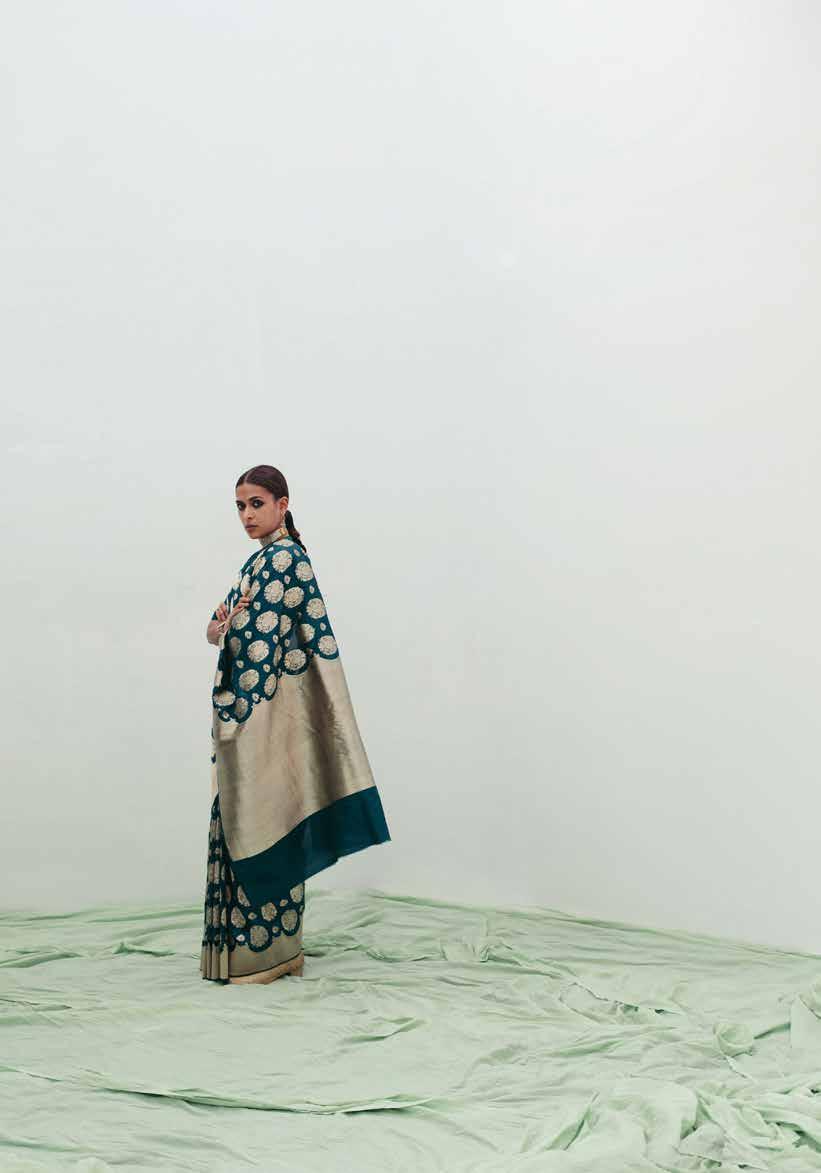
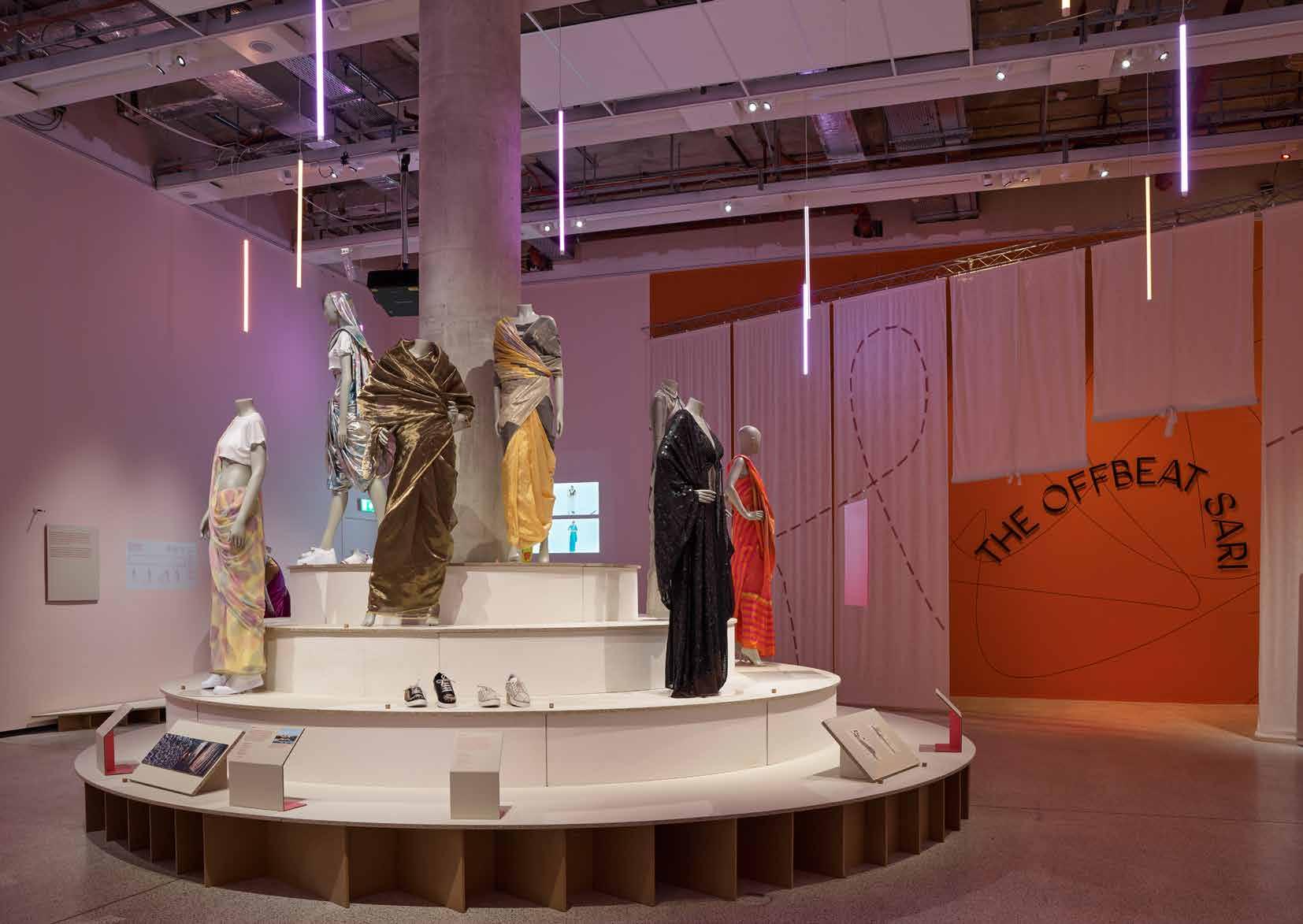
Worn as an everyday garment by some and considered by others to be contrived or uncomfortable, the definition of the sari has multiple subjectivities. Conventionally an unstitched drape wrapped around the body, which can be draped in multiple ways, its unfixed form has enabled it to morph and be absorbent of cultural influences.
In recent years the sari has been reinvented. The urban youth who previously associated the sari with formal wear can now be found wearing saris and sneakers on their commutes to work. Designers are experimenting with hybrid forms such as sari gowns and dresses, pre-draped saris and innovative materials such as steel.
Today the sari manifests as a garment subject to transformation, an expression of identity and resistance, and a crafted object with layers of cultural meanings.

What’s in the exhibition
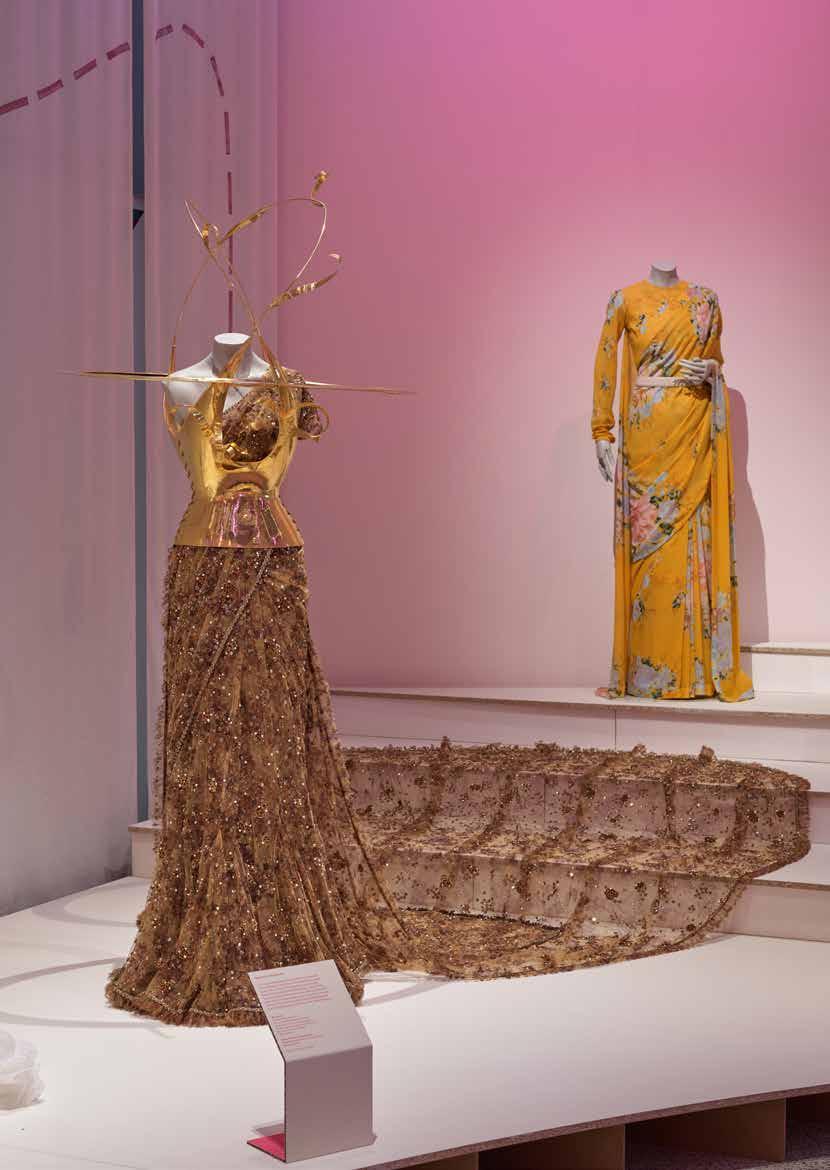
Over 50 cutting-edge contemporary saris from the past decade
A showcase of pioneering designers who have reimagined the sari for the 21st century
A video installation by Border & Fall documenting the hundreds of ways to drape a sari
Stories of protesters, activists, influencers, and musicians who use saris to express themselves and their messages
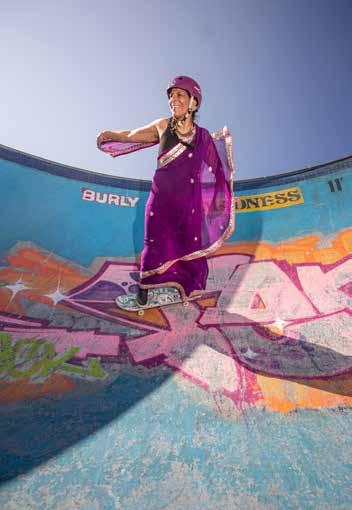
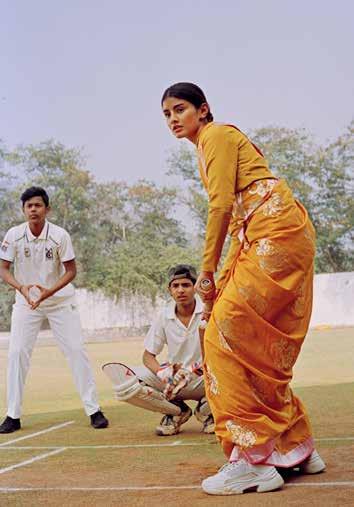
Saris worn by rock climbers, skateboarders, hula hoop dancers and cricketers
An AKAARO sari made from air pollution
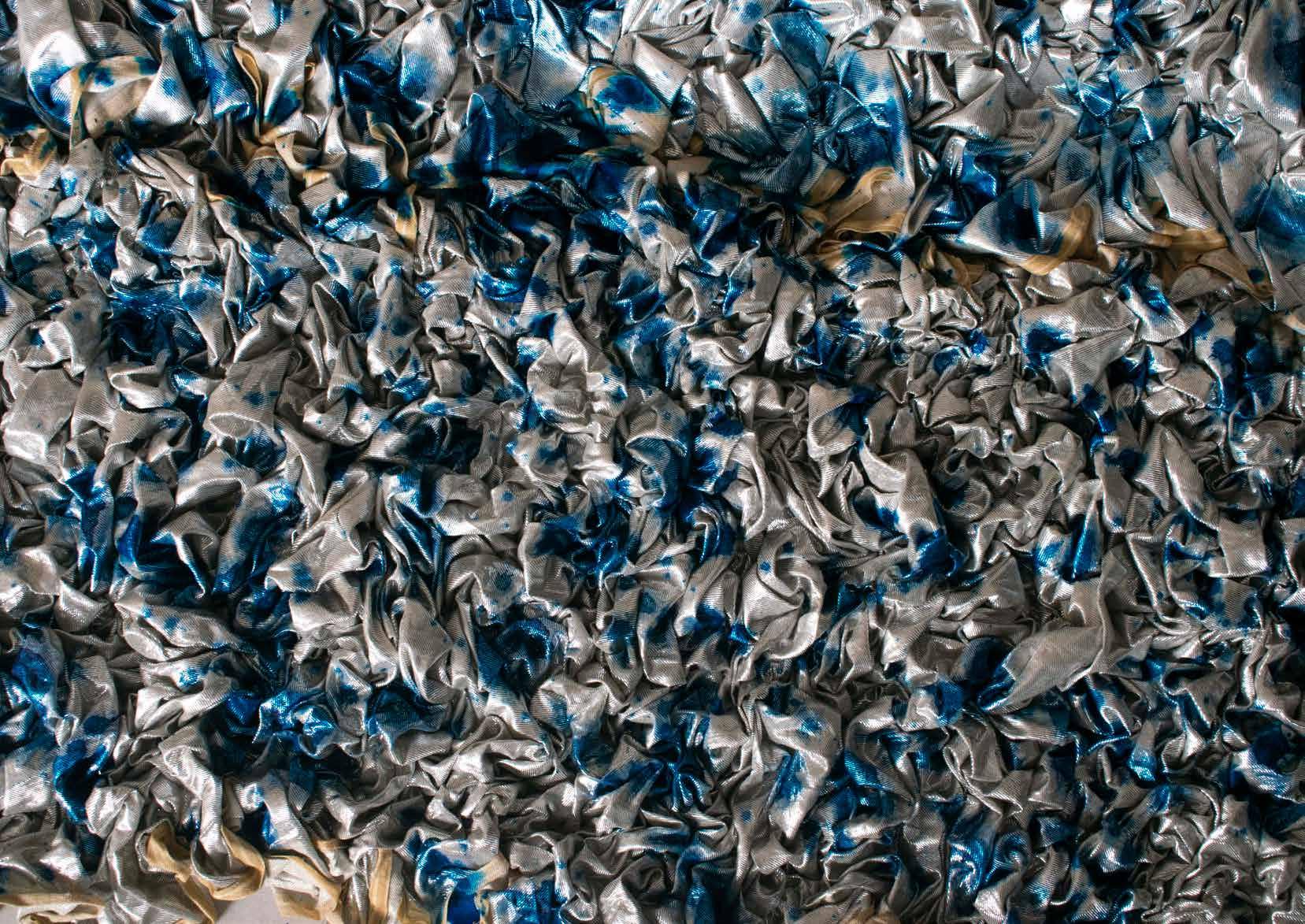
A sari by Rimzim Dadu made from steel
Behind-the-scenes process materials revealing the skill and intricacies of contemporary craft techniques
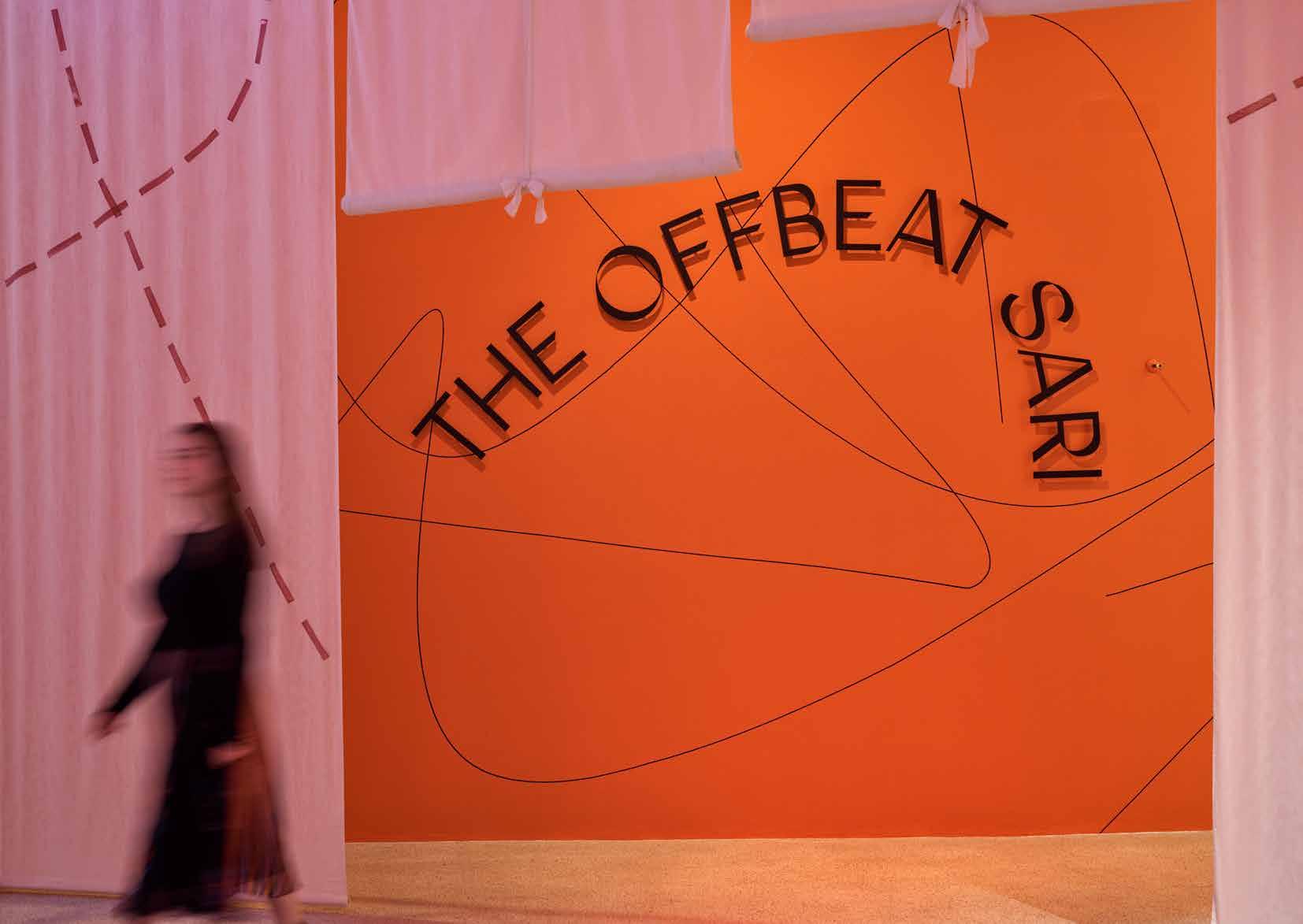
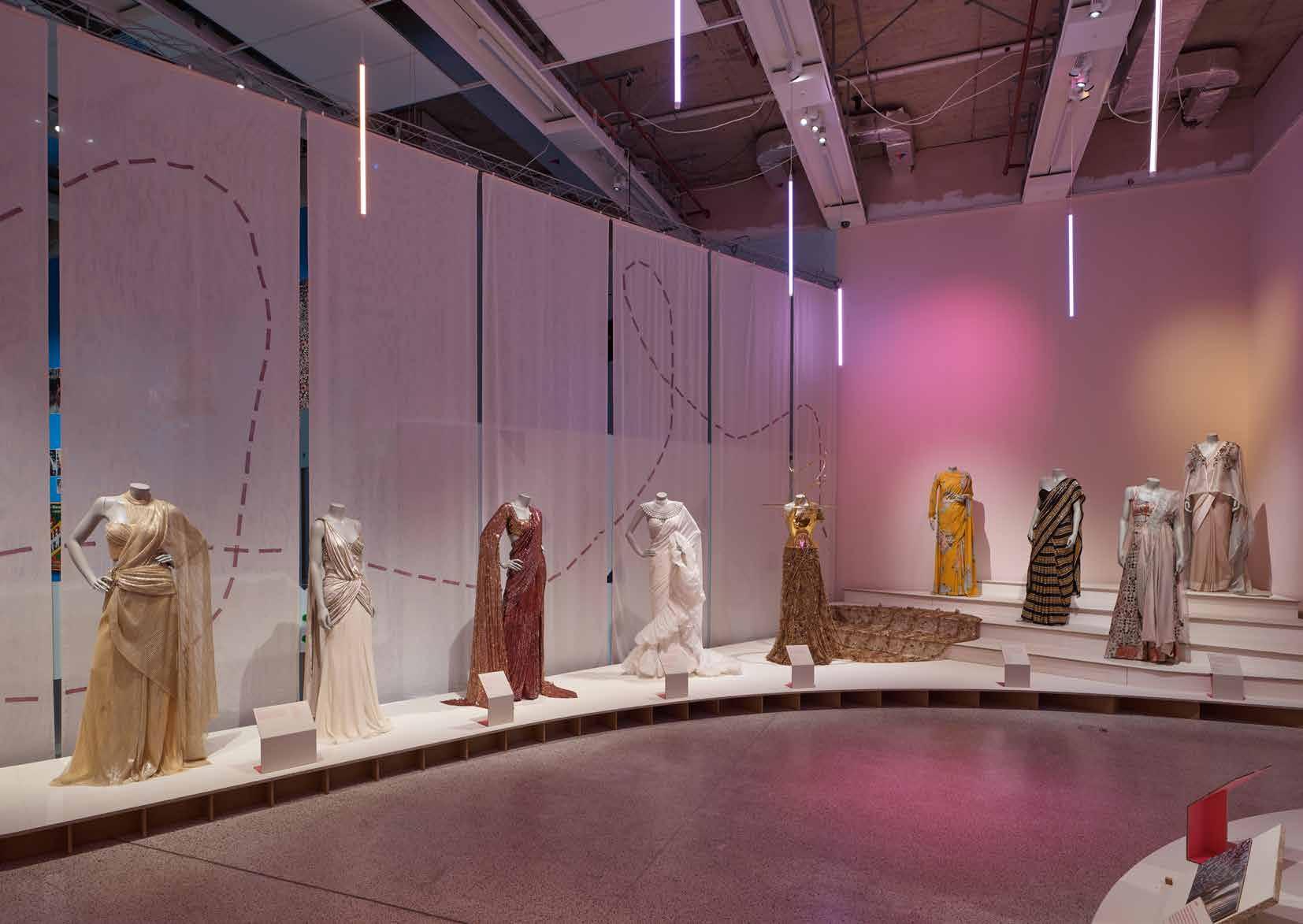
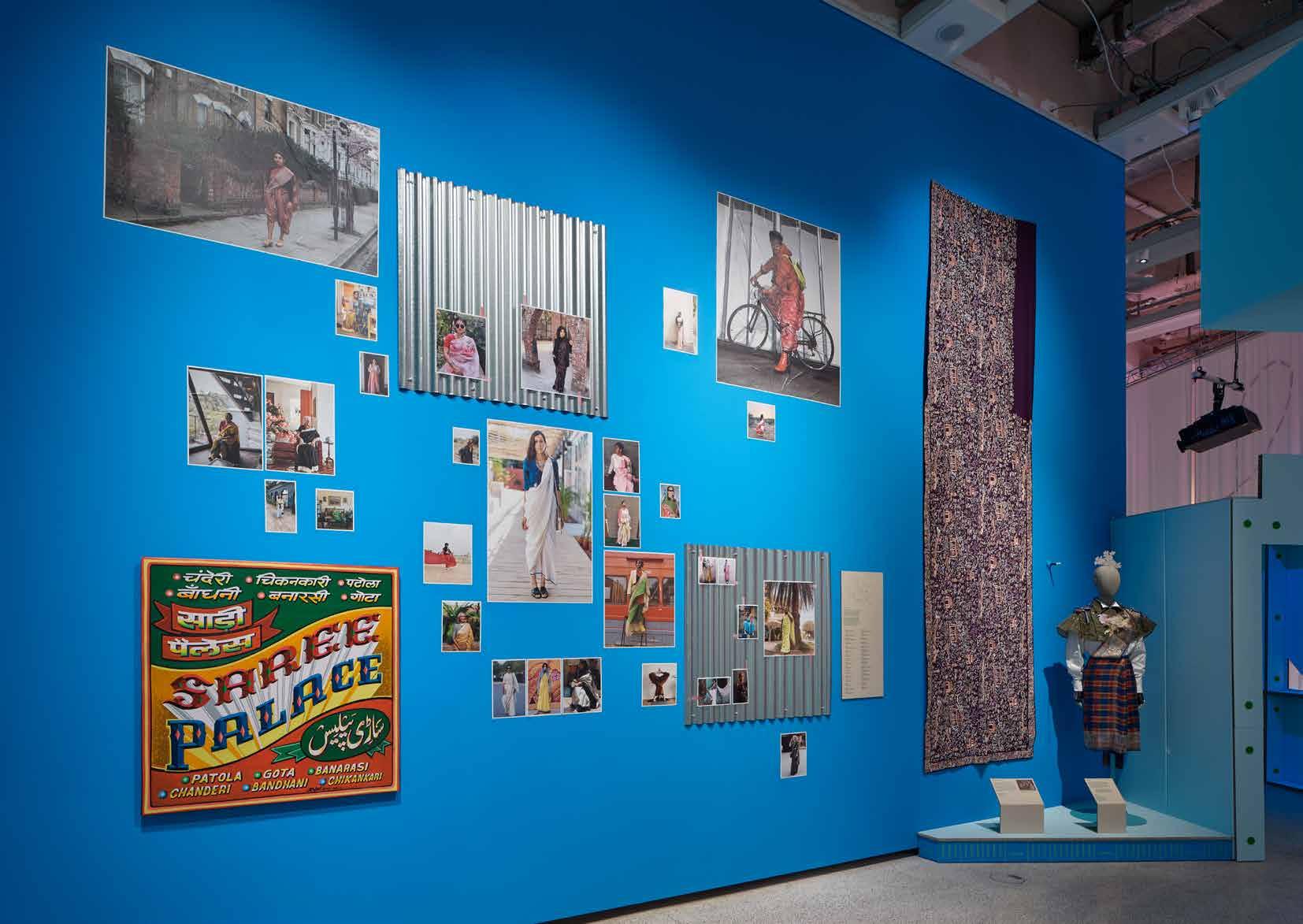
Exhibition view, the Design Museum, London.
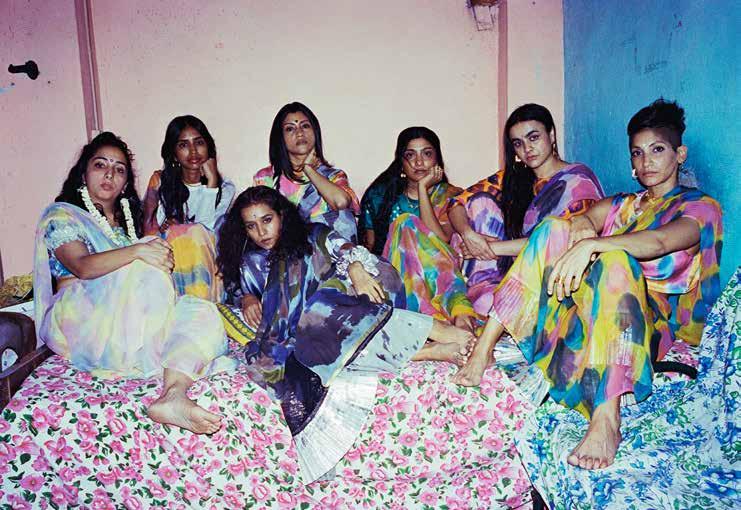
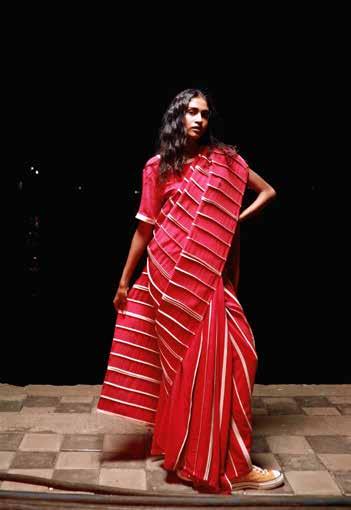
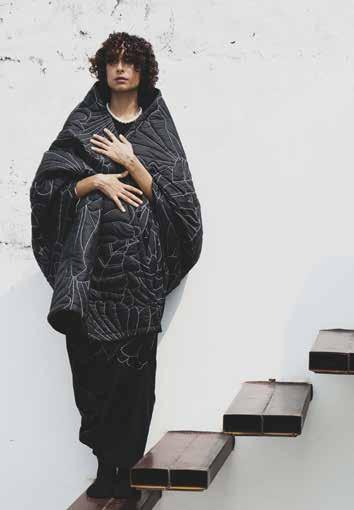
Transformations
In recent years the sari has become a site for design innovation and experimentation. This section of the exhibition analyses the work of designers who have been party to this trend and are pushing the boundaries of the sari, through the creation of new genres of sari that have influenced streetwear and enabled it to be an object of playful expression. It also explores the work of conceptual designers who have used the sari as their canvas and created innovative forms such as the stitched sari dress, which demonstrate the ways in which the garment has been open to hybrid cultural influences.
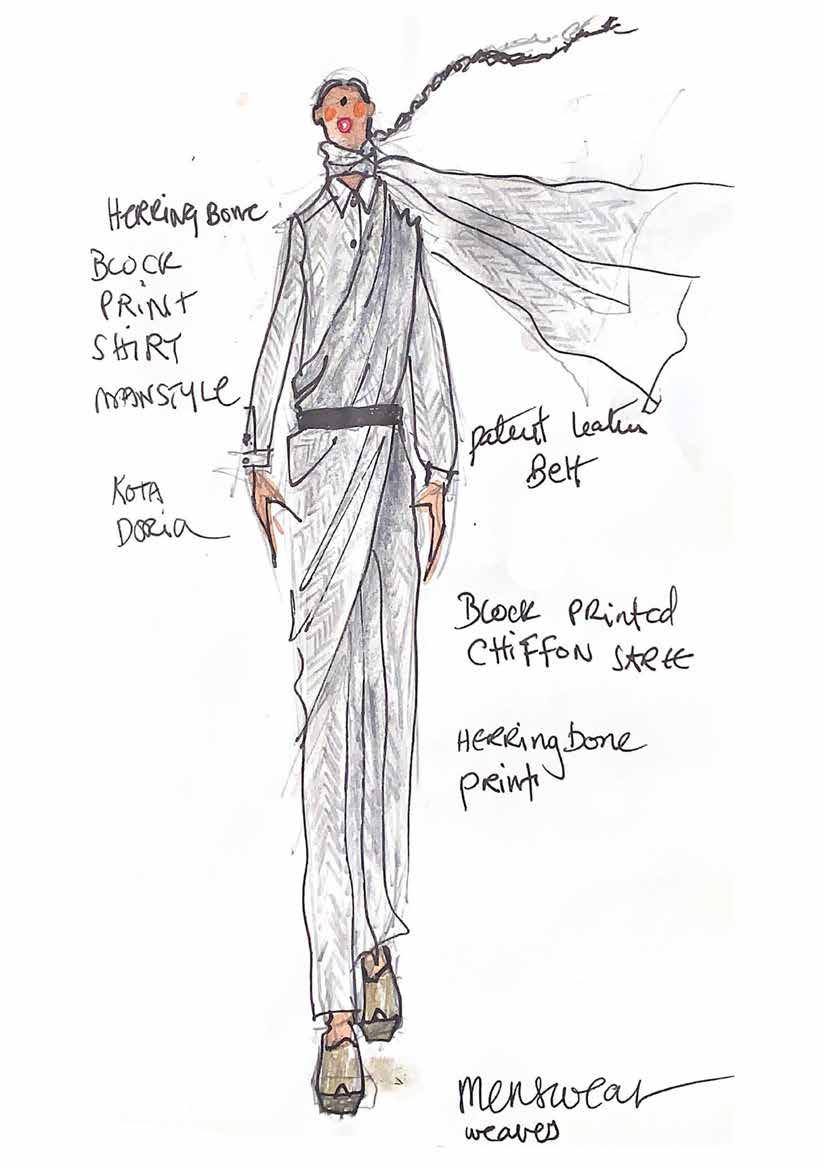
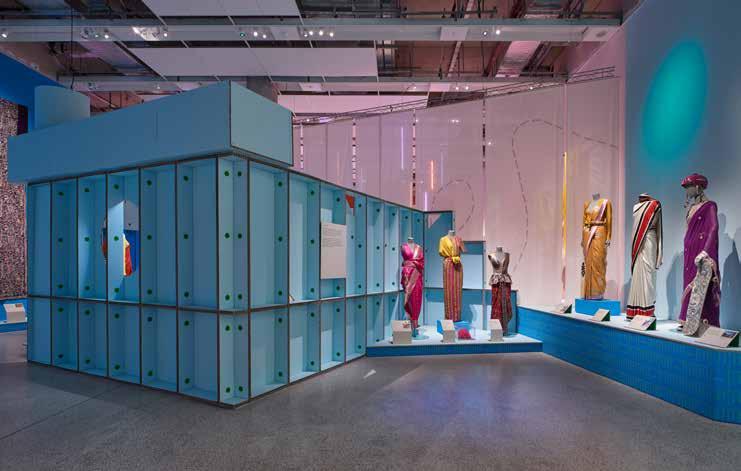
Contemporary fashion designers are reinventing the sari for today. In contrast to the earlier fashion for heavy embellishment, their saris are often less ornate, using shape, pattern and detailing to create distinctive, wearable designs for a younger market. In this section we showcase the work of designers such as Raw Mango and AKAARO who are at the cutting edge of this dynamic shift. Their saris are generally lightweight and hand woven, with a unique interpretation of traditional textiles. Initially coveted by young, culturally-engaged women, particularly writers and journalists in New Delhi, they now have wide appeal across India.
Opposite
1.NorBlack NorWhite, Holidaze, 2020
2. Bodice, Bodice Sari, 2019
3. HUEMIN, The Quilted Sari, 2017
Above
Raw Mango, Folia Sari, 2021
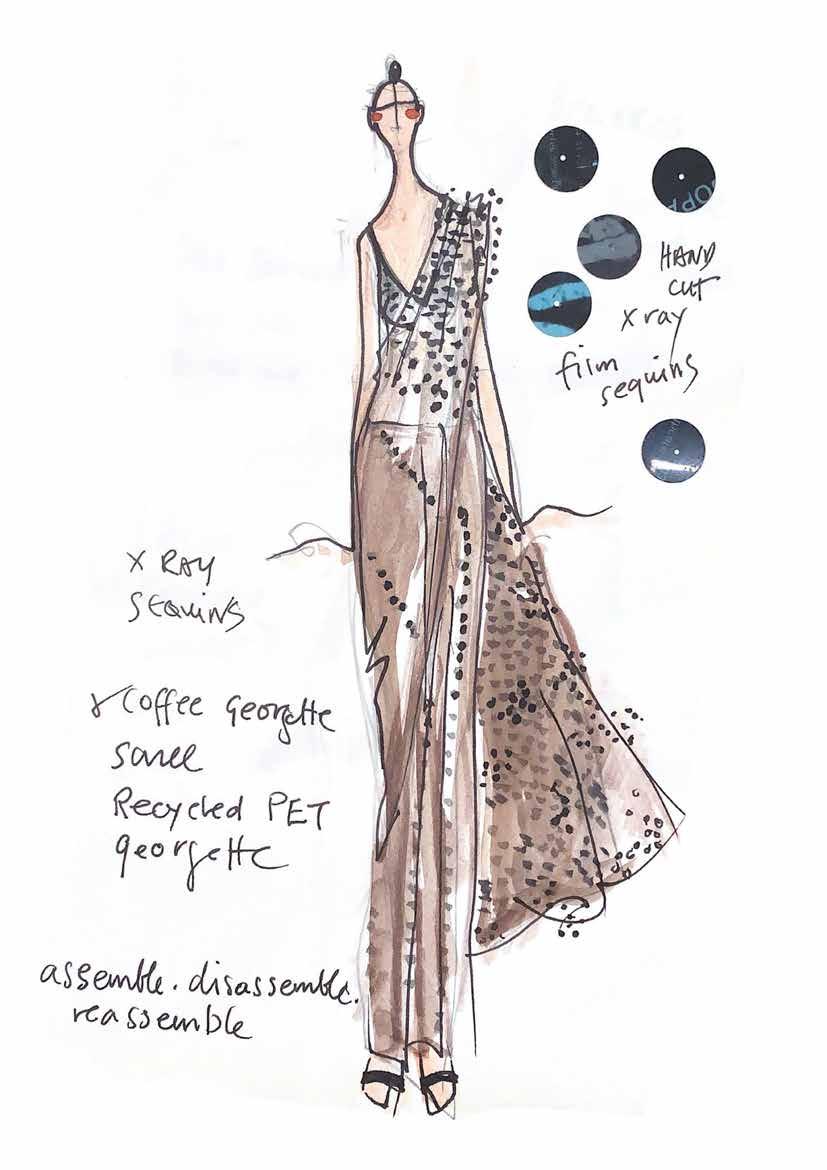
LIPSA HEMBRAM, SAI PIMPRIKAR, 2022
ABRAHAM
ABRAHAM & THAKORE, SILK GEORGETTE SARI WITH HERRINGBONE PRINT, 2011
Identity + Resistance
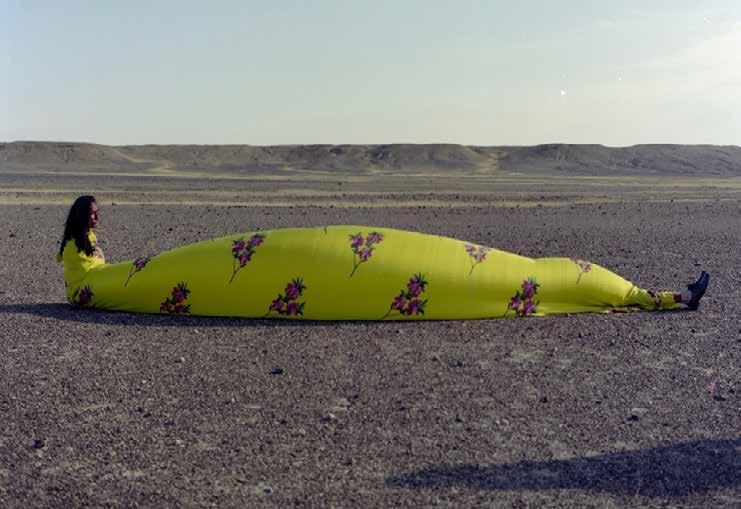
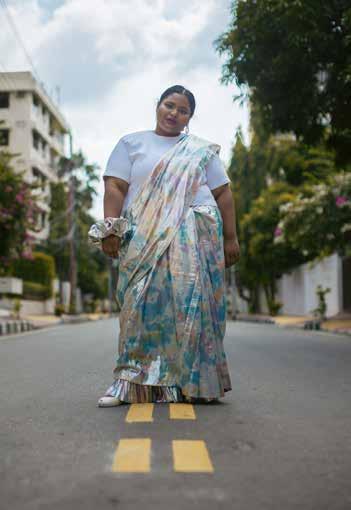
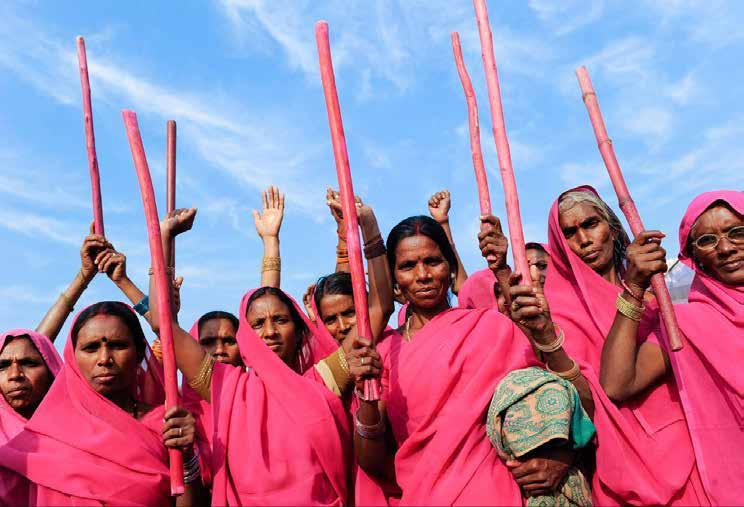
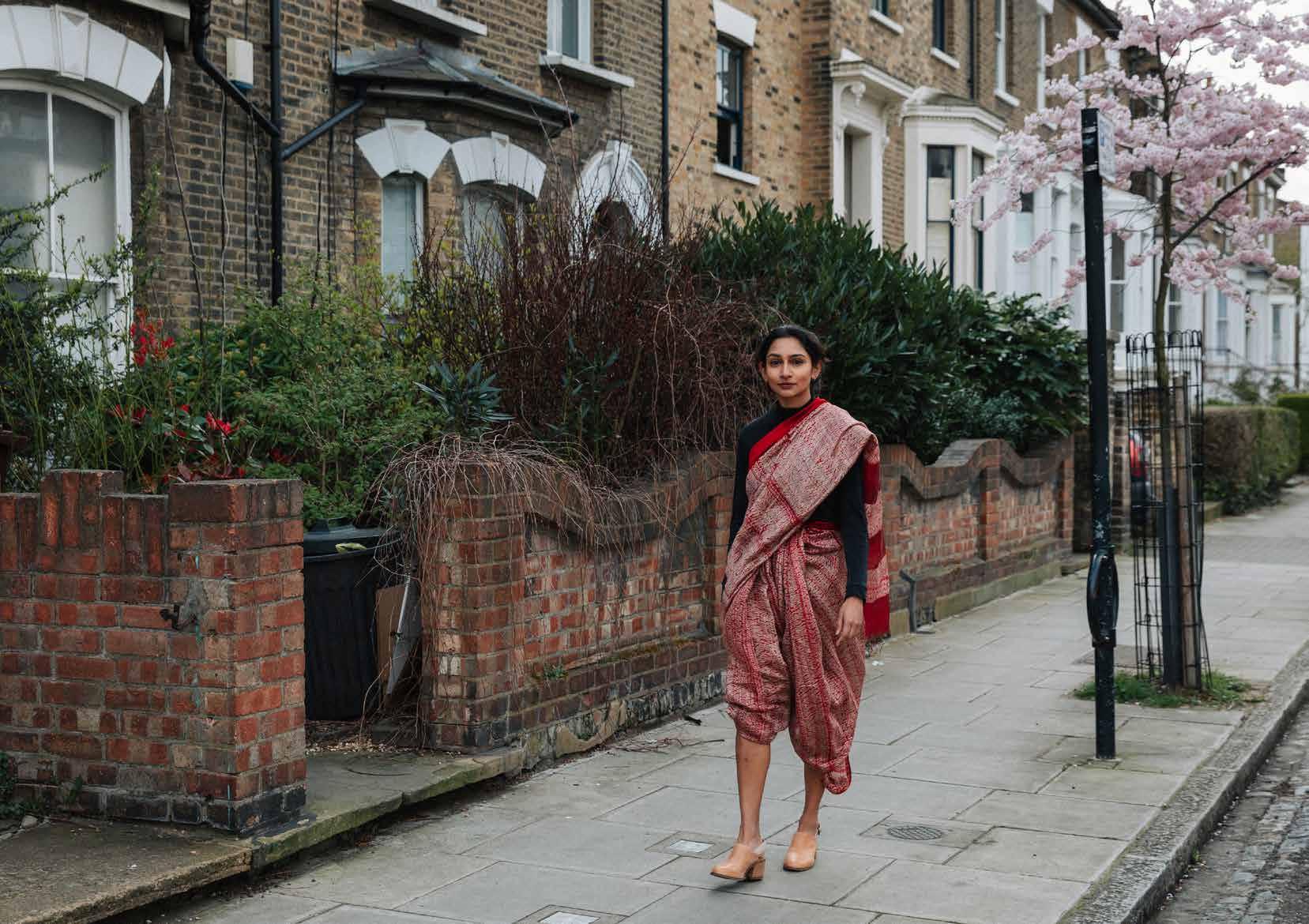
The sari transforms in meaning in the hands of its wearer and is a vessel for conveying individual identities, both within South Asia and among the diaspora. The sari today is a symbol of the intellectual urban woman, an expression of gender fluidity, and a canvas for celebrating under-represented bodies. This exhibition shows the immense capacity of the sari to reflect a diverse range of voices and personas and enable a variety of individual identities to flourish.
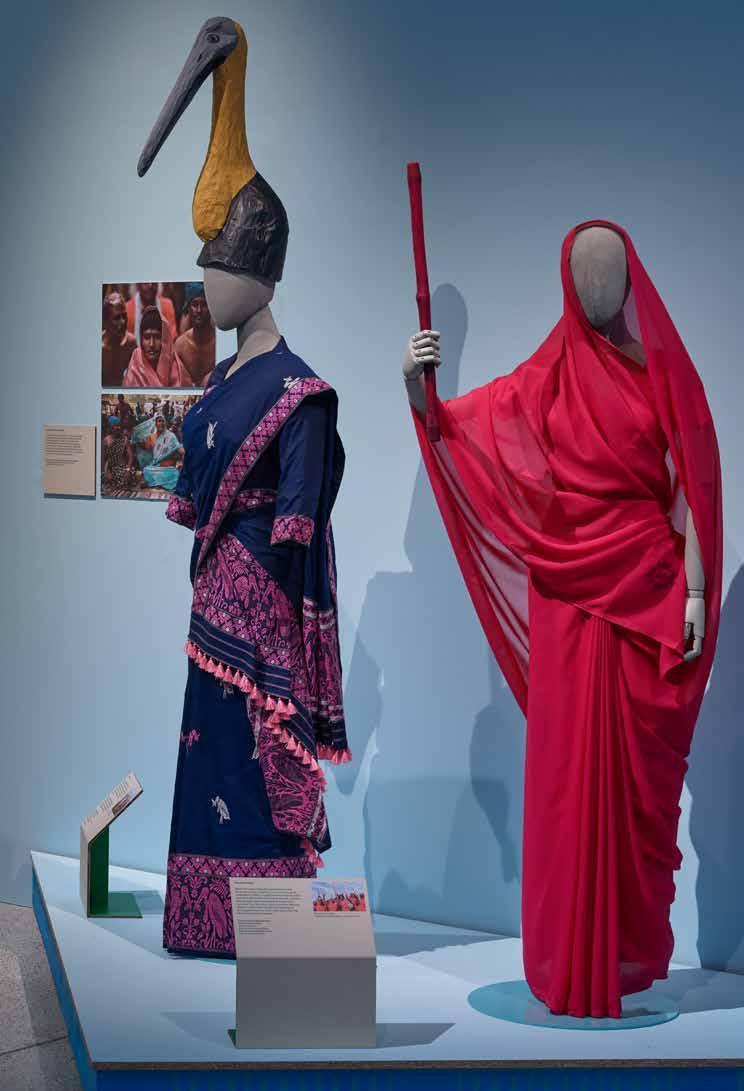
In the last decade, the sari has been liberated from its cultural boundaries and is being worn as an object of resistance in protest movements, as a symbol of unity and empowerment. It is also being worn in a way that empowers the female body through its embodiment by athletes, skateboarders and dancers. It will explore the use of the sari in protest movements as a symbol of unity and empowerment.
Opposite
1. SNorBlack NorWhite, Top: Monokrome, Sobia Ameen, 2021
2. Oorbee Roy (aka. Aunty Skates)
3. Ekaya x Masaba, Handwoven Mustard Silk Sari with Cherry Blossom Motif, 2019
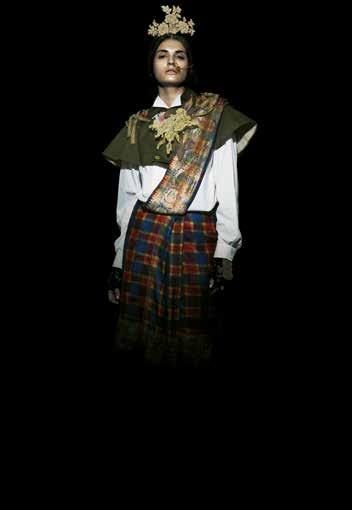
4. Shilpa Chavan / Little Shilpa, The Raj Kilt, 2014
Above Sampat Pal Devi, Gulabi Gang, 2009.
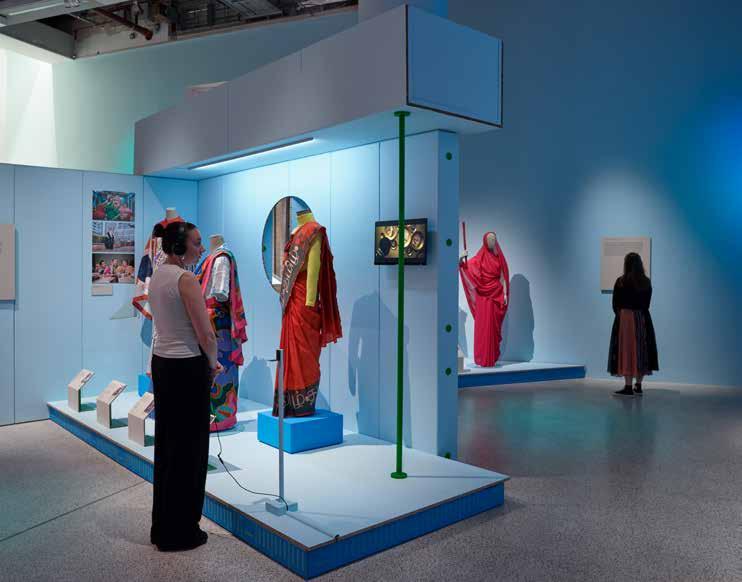
Exhibition view, the Design Museum, London.
Exhibition view, the Design Museum, London.
Exhibition view, the Design Museum, London.
New Materialities
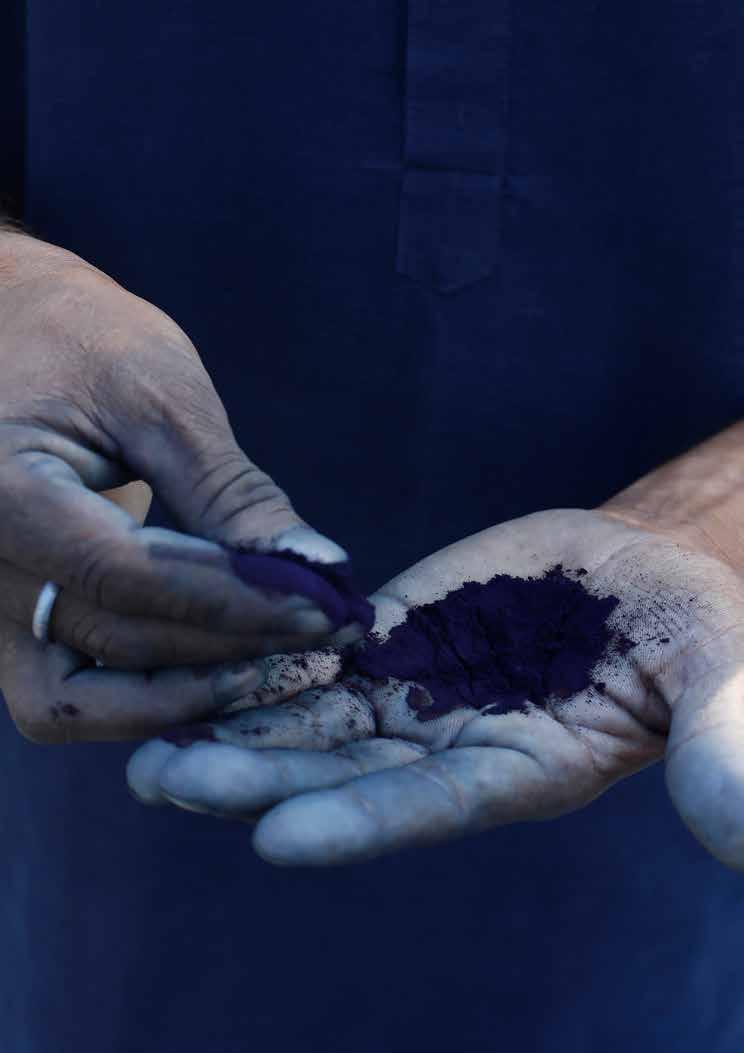
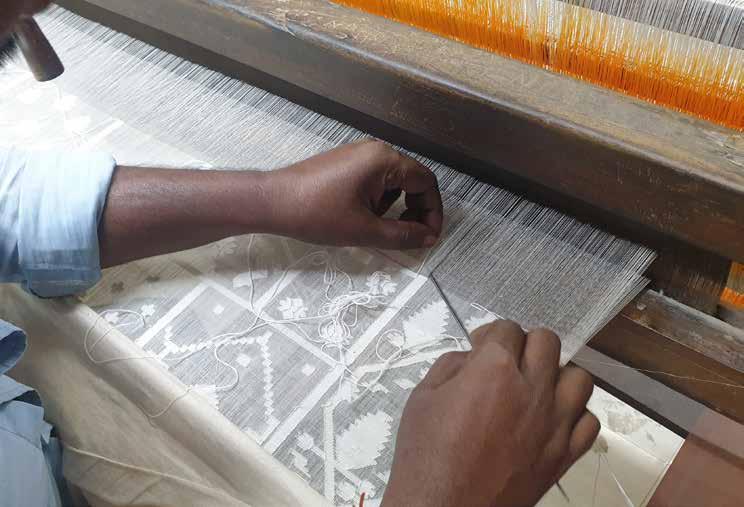
Contemporary Indian fashion is pushing the boundaries of traditional methods of craft resulting in new materialities that celebrate innovation in craft. India has a rich heritage of textile making, from the block prints of Gujarat to the brocades of Benaras, and designers are working with artisans to reinvent their practices for the 21st century creating a new relevance for their work.
The rise of natural dyes, handloom weaves and organic cottons, suggests an accelerating trend towards more sustainable ways of making through an appreciation for craftsmanship that is kinder to the planet and values traditional practices. The exhibition also showcases a handful of emerging techniques that break away from traditional craft and are forging a new future for sari materials.
Opposite NilaHOUSE, Indigo powder
Above Darshan Mekani Shah, Jamdani Pojagi Saree, 2023
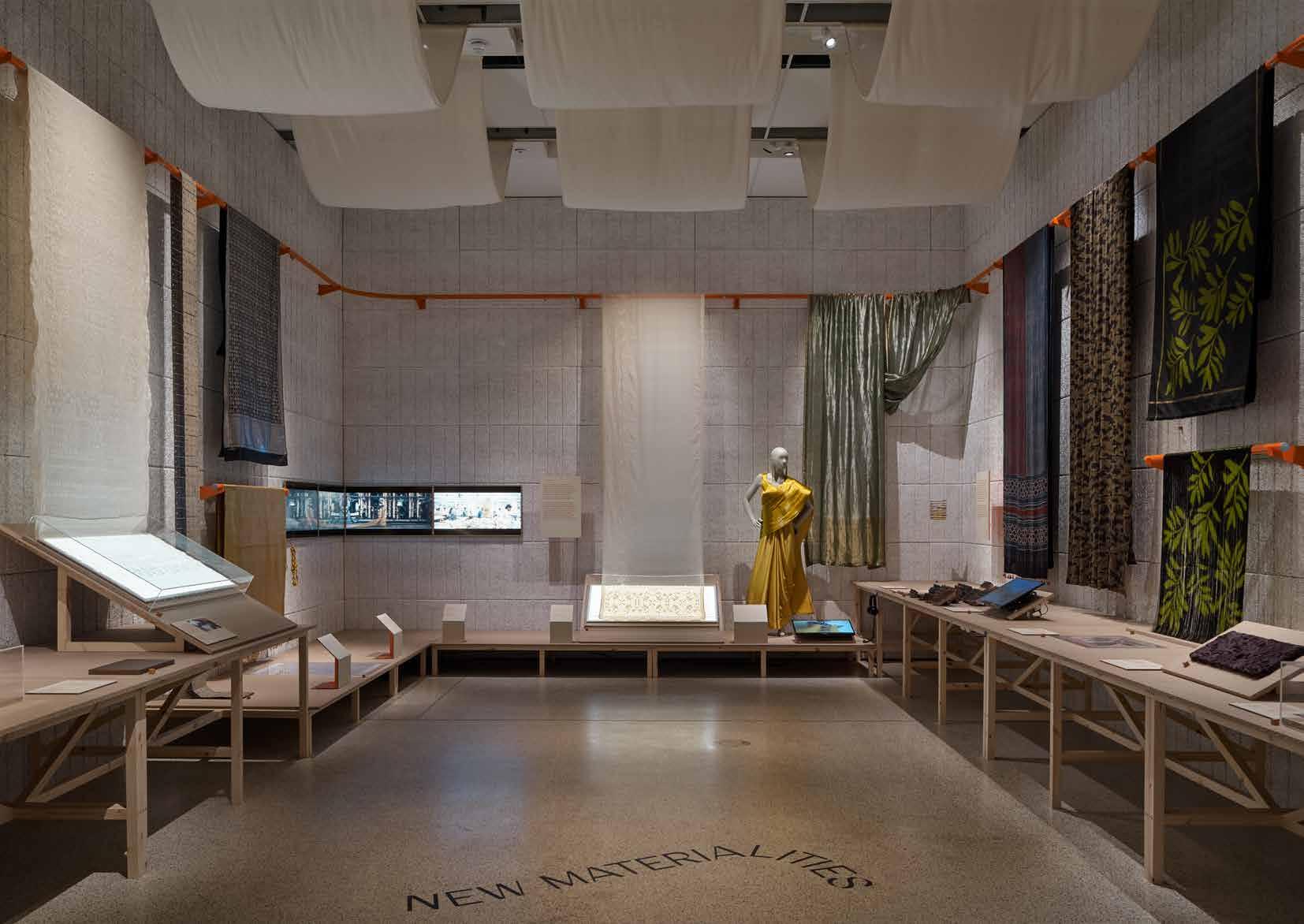
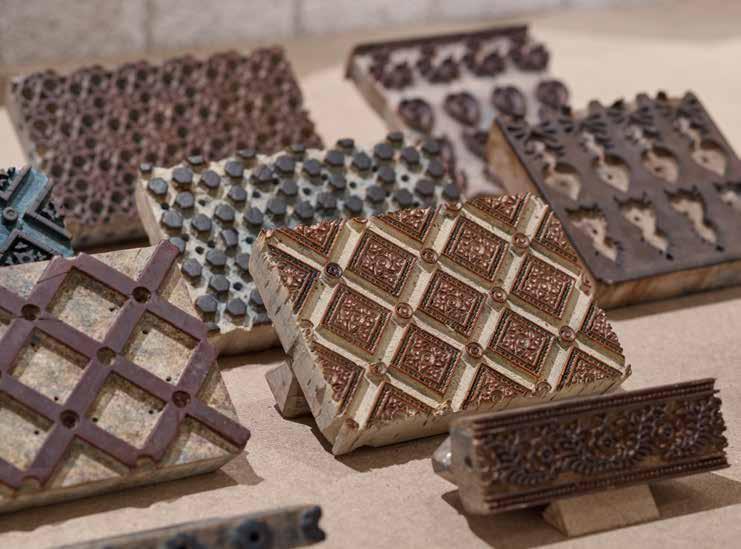
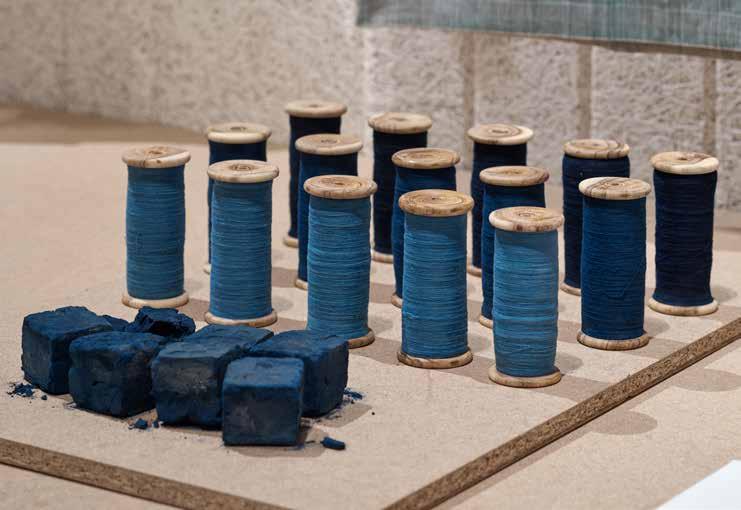
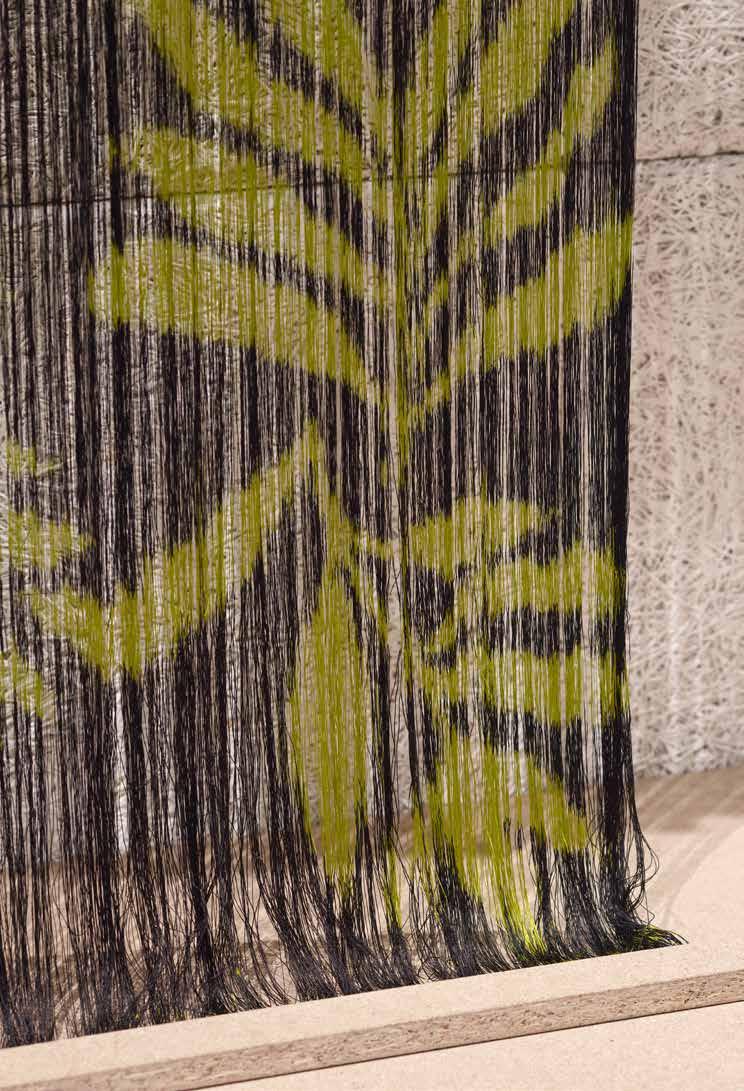
Exhibition view, the Design Museum, London.
Exhibition view, the Design Museum, London.
Exhibition view, the Design Museum, London.
Terms and conditions
Hire fee, on request, includes:
–Curation and exhibition concept
–Tour management by Design Museum staff
–Exhibits
–Images and films
–Exhibition text in English
–2D and 3D design concept
–Selected display kit
Costs payable by the venue:
–Hire fee, in instalments
–Exhibition and graphic design adaptation
–Share of transport and crating costs
–Storage of empty crates
–Nail-to-nail insurance
–All costs relating to exhibition production
–Installation and de-installation costs
–Marketing

Contact
To find out more about any of these exhibitions and other tours available from 2023 onwards, please contact:
Erika Batey
International Project Manager erika.batey@designmuseum.org
Bikramjit Bose, Bodice, Pankaj Dahalia; p.
Shubham Lodha; p. 11-12 Courtesy Reliance A&T Fashions Pvt. Ltd; p.13-14 Andy Stagg; p. 15 Syeda Mushda Ali, Oorbee Roy, Shilpa Chavan, Bikramjit Bose;
PICTURE CREDITS