ACADEMIC CATALOG
& STUDENT HANDBOOK

DEVOTED TO DESIGN
2026 – 2027
REVISED 03.16.2026

THE COLLEGE
Design Institute of San Diego (DI) was founded in 1977. Students enter DI with a great dedication to a particular interest – design. As a specialized institution, DI has always been able to focus all of its attention on the theory and practice of design, providing students with structured sequential curricula in a creative environment where personal attention enhances the educational life and development of each DI student.
Small classes, personalized support, and one-on-one feedback from faculty and staff, and opportunities to participate in creative hands-on projects and real-world experiences all ensure DI students receive rich opportunities for learning, experimentation and growth.
The faculty at DI includes practicing designers, architects, artists, historians, environmental psychologists, engineers, general education specialists, computer technologists, product and UX/UI designers, professional project managers, and business consultants; all are working professionals in their field who bring practical instruction based on current professional knowledge.
What stands out at DI is a strong sense of connection between the college, the student, the profession, and the community.
DI students enjoy consistently high job placement rates and DI alumni have gone on to build exceptional careers in almost every specialty, achieve notable design and business success, and create lasting impact on local and global communities.
The college is accredited by the WASC Senior College and University Commission (WSCUC) and its BFA ID program is accredited by the Council for Interior Design Accreditation (CIDA).

VISION STATEMENT
Design Institute of San Diego aspires to lead the field in design education, preparing innovative, environmentally and socially responsible citizens who positively impact the world.
MISSION STATEMENT
Design Institute of San Diego prepares students for careers in interior design and allied fields. Forward-thinking faculty, administration, and staff are committed to facilitating an understanding of human-centered design with a grounding in liberal arts traditions, values, and critical inquiry. Design Institute provides an inspiring, creative, collaborative, and student-centered environment while preparing responsible and thriving graduates who apply their knowledge, skills and abilities to enrich the profession, the environment, and the global community.
INSTITUTIONAL GOALS
- To provide students with a professional course of study that strives to meet the highest academic standards for design education
- To ensure students make connections within and across disciplines by offering them a creative arena in which to develop necessary skills
- To encourage students to consider design in the widest possible context while fostering a realistic understanding of their responsibility, role and potential as professionals who will improve their community, the nation, and the current and future condition of the world
- To bridge the gap between academia and industry by providing a range of opportunities to interact with professionals in interior design and allied fields
- To prepare well-rounded global citizens by cultivating and fostering service-learning and engagement in co-curricular activities that promote diversity, tolerance and real-world experience
INSTITUTIONAL LEARNING OUTCOMES (ILOS)
- Communication: Graduates communicate effectively in a variety of contexts through oral, written, and visual means
- Critical Thinking and Quantitative Reasoning: Graduates critically analyze, synthesize and interpret ideas, information, and quantitative data in a variety of contexts

- Information Literacy: Graduates recognize the value of information, strategically search for and access it, evaluate its authority and relevance, and use it ethically and effectively
- Creativity: Graduates demonstrate creativity in problem solving
- Global Context: Graduates appropriately incorporate multicultural and global perspectives in their work
OUR COMMITMENT TO BELONGING AND INCLUSION
Design Institute of San Diego is committed to creating an inclusive campus environment where every individual is welcomed, supported and valued. Students, faculty and staff thrive when there is a campuswide culture and climate of respect for a wide range of backgrounds and world views. This respect undergirds student success and institutional effectiveness.
Curricula at Design Institute include awareness and appreciation of all backgrounds while supporting collaboration so that graduates will make thoughtful and constructive contributions to their communities, the nation, and the current and future condition of the world. Graduates will possess an intellectual and social framework for working and collaborating with people from a multitude of cultures and points of view.
Embracing a campus culture that promotes belonging and inclusion is a shared responsibility. At Design Institute, belonging and inclusion are achieved by:
- Fostering a community that shares the respect and appreciation for people of different races, ethnicities, socioeconomic status, gender, religions, sexual orientations, and abilities. On campus and in the classrooms, we believe that honoring all life experiences and backgrounds allows students to generate even more creative ideas as well as effective solutions to problems.
- Creating opportunities for all students to excel, participate, contribute, and succeed in their degree programs. Each student will be honored and valued for their unique qualities and attributes.
- Supporting a campus environment where every student, faculty member, and staff member know and feel that they are an integral and valued member of the Design Institute community. This extends to all aspects of the school’s operations. All students, employees, and visitors should feel welcomed, supported, and have a sense of belonging.
BELONGING AND INCLUSION STATEMENT
Design Institute values all students, faculty, and staff and does not discriminate against individuals on the basis of race, ethnicity, gender, gender identity, sexual orientation, socioeconomic status, geographic region, religion, disabilities, age, veteran status, ancestry, or national origin. This non-discrimination policy applies to all aspects of the institute including instruction, administration, policies, admissions, employment, recruitment, financial aid programs, and other college-administered programs and activities.
TITLE IX
DI does not discriminate in its employment practices or in its educational programs or activities on the basis of sex/ gender. DI also prohibits retaliation against any person opposing discrimination or participating in any discrimination investigation or complaint process internally or externally. Reports of misconduct, questions regarding Title IX, and concerns about noncompliance should be directed to the Title IX Coordinator at TitleIX@disd.edu. For a complete copy of the policy or for more information, please contact the Title IX Coordinator at the email listed above or the Assistant Secretary of Education within the Office for Civil Rights (OCR) at https://www.hhs.gov/ocr/index.html.
ACCREDITATION AND APPROVALS
Accreditation is a status granted to an institution that meets or exceeds the stated criteria of educational quality. The purposes of accreditation are to assess and enhance the educational quality of an institution, to assure consistency in institutional operations, to promote institutional improvement, and to provide for public accountability.
INSTITUTIONAL ACCREDITATION
DESIGN INSTITUTE OF SAN DIEGO IS ACCREDITED BY THE WASC SENIOR COLLEGE AND UNIVERSITY COMMISSION (WSCUC), 985 ATLANTIC AVENUE, SUITE 100, ALAMEDA, CA 94501, (510) 748-9001.
WSCUC is a regional accrediting agency serving a diverse membership of public and private higher education institutions throughout California, Hawaii, and the Pacific as well as a limited number of institutions outside the U.S. Through its work of peer review, based on standards agreed to by the membership, the Commission encourages continuous institutional improvement and assures the membership and its constituencies, including the public, that accredited institutions are fulfilling their missions in service to their students and the public good. WSCUC is recognized by the U.S. Department of Education as certifying institutional eligibility for federal funding in a number of programs, including student access to federal financial aid.

STATE OF CALIFORNIA INSTITUTIONAL APPROVAL - BUREAU FOR PRIVATE POSTSECONDARY EDUCATION (BPPE)
Design Institute of San Diego is a private institution approved to operate as an Accredited Institution in the State of California by the Bureau for Private Postsecondary Education (BPPE) through February 28, 2032. Approval means compliance with state standards as set forth in the California Private Postsecondary Education Act of 2009.
As a prospective student, you are encouraged to review this catalog prior to signing an enrollment agreement. You are also encouraged to review the School Performance Fact Sheet, which must be provided to you prior to signing an enrollment agreement.
Any questions a student may have regarding this catalog that have not been satisfactorily answered by the institution may be directed to the Bureau for Private Postsecondary Education at 1747 N. Market Blvd, Suite 225, Sacramento, CA 95834, www.bppe.ca.gov, toll free telephone number (888) 370-7589 or by fax (916) 263-1897.
THE LOCATION
Situated geographically in Southern California just two hours south of neighboring Los Angeles, the City of San Diego provides a dynamic “classroom without walls” learning environment.
San Diego is alive with visual and cultural interest, from its gracious old missions to the bold excitement of downtown and the Gaslamp Quarter The natural beauty of Balboa Park, the houses designed by Irving Gill, Louis Kahn’s monumental Salk Institute, the Hotel del Coronado, and the vibrant colors of the buildings across the border in Mexico make San Diego an ideal city in which to live, learn and work.
Often called “America’s Finest City,” San Diego has an extraordinary climate. If you enjoy swimming, running, boating, surfing, hiking, biking, ballooning, windsurfing, hang-gliding, horseback riding, or just sitting on a great beach, all of these activities are available throughout the year in one of the most beautiful settings anywhere.
CAMPUS FACILITIES
Design Institute’s campus is located near the Pacific beaches of La Jolla and is convenient to freeways and services. Affordable housing, restaurants, theaters, and shopping are within close proximity to the school. The campus buildings are of contemporary design and include spacious classrooms, drafting studios, exhibition spaces, a library, computer labs, a lighting lab, a sample room, student lounges, faculty lounges, administrative offices, and free convenient parking.
Unless otherwise indicated, class sessions scheduled to be in person are held at the campus of Design Institute of San Diego located at 8555 Commerce Avenue, San Diego, CA 92121. Programs or courses offered fully online are accessed through Zoom. Course materials are provided through Canvas. Exceptions to these locations include externship and practicum hours, field trips, and community-based design projects.
LIBRARY
The DI Library has collections in art, architecture and design to support the design programs, as well as materials on anthropology, history, literature, science, and other subjects to support General Education courses and interdisciplinary research, and materials on teaching and learning to support the faculty. Physical holdings include approximately 6,000 books, 25 magazine and journal subscriptions, and 100 films. Current students and faculty also have access to online resources including article databases, e-book collections, tutorials, and research guides. The Librarians and library staff are available to help students and faculty find, evaluate and use information in academic and professional projects. Research assistance is available in person, over the phone, and by email. The DI Library also houses the Kravet Resource Center, where students may browse current sample books for Kravet textiles and other materials, and order free memo samples of these materials.
HOUSING
DI does not offer on-campus housing. Students may arrange for their own living accommodations close to the school or use personalized housing and roommate services provided as a courtesy to students. The current rent for housing near campus ranges from approximately $1850.00 - $2500.00 per month. Housing costs vary based on location, size of the housing, and the number of roommates. The Office of Admissions will gladly assist prospective students with questions regarding housing and roommate services; however, DI has no responsibility to assist a student in finding housing.

CREDIT HOUR POLICY
A credit hour at Design Institute of San Diego (DI) is the amount of work that reasonably approximates three to four hours of work per week for 15 instructional weeks, including (a) direct faculty instruction or class time, (b) homework (reading, research, studying, writing), (c) preparing for final projects and presentations, (d) instructor supervised studio time, and (e) Externship and Practicum field hours.
DI requires 45 clock hours per one (1) unit of credit. For the purpose of these calculations 50 minutes of class instruction counts as one hour and the 15-week semester includes the exam period.
The time spent in class depends on the allocation of credit as lecture, studio, seminar, externship or practicum. How students spend their time in onsite and online courses is directly related to the assignments, assessments, and other tasks given by instructors; therefore, faculty teaching courses designed for distance education focus on total time spent “on task” and must consider how much time they expect a typical student to dedicate each week to complete requirements for the course associated with traditional seat time and homework hours.
Consult the course description for allocation of credit. The credit unit/clock hour ratios for these courses are as follows:
LECTURE
1 unit of lecture credit = 1 hour of class lecture + 2 hours of outside preparation (reading, research, homework) per week x 15 weeks = 45 clock hours per semester
Example: 3-unit lecture courses require 3 hours in class and 6 additional hours of outside preparation each week = 9 clock hours per week
SEMINAR
1 unit of lecture credit = 1 hour of class lecture + 2 hours of outside preparation (reading, research, homework) per week x 15 weeks = 45 clock hours per semester
1 unit of seminar credit = 1 hour of class discussion, recitation or critique + 2 hours of outside preparation (completion of seminar assignments) per week x 15 weeks = 45 clock hours per semester
Example: 3-unit seminar courses (1 unit lecture, 2 units seminar) require 3 hours in class and 6 additional hours of outside preparation each week = 9 clock hours per week
STUDIO
1 unit of lecture credit = 1 hour of class lecture, recitation or critique + 2 hours of outside preparation (reading, research, homework) per week x 15 weeks = 45 clock hours per semester
1 unit of studio credit = 2 hours of supervised studio + 1 hour of outside preparation (completion of studio assignments) per week x 15 weeks = 45 clock hours per semester
Examples: 3-unit studio courses (2 units lecture, 1 unit studio) require 4 hours in class and 5 additional hours of outside preparation each week = 9 clock hours per week
4-unit studio courses (1 unit lecture, 2 units studio) require 5 hours in class and 7 additional hours of outside preparation each week = 12 clock hours per week
6-unit studio courses (4 units lecture, 2 units studio) require 8 hours in class and 10 additional hours of outside preparation each week = 18 clock hours per week
FIELD EXPERIENCE: BFA ID EXTERNSHIP
1 unit of BFA ID externship credit = 2.4 hours of work in the field per week x 15 weeks = 36 clock hours + 1 hour of class lecture + 2 hours of outside preparation (reading, research, homework) per week x 3 weeks = 27 clock hours
Example: 3-unit Externship Course requires 108 hours externship in the field, 9 hours in class and 18 additional hours of homework for a combined total of 135 clock hours
FIELD EXPERIENCE: MID PRACTICUM
1 unit of MID practicum credit = 3.4 hours of work in the field per week x 15 weeks = 51 clock hours per semester of field work + 1 hour of mentorship + 2 hours of outside preparation (reading, research, homework) per week x 3 weeks = 9 clock hours per semester of additional work = 60 clock hours per semester
Example: 3-unit Practicum requires 153 hours of work in the field, 9 hours of mentorship and 18 additional hours of outside preparation for a combined total of 180 clock hours per semester
DISTANCE EDUCATION
At DI, distance education shall be defined as a formal educational process in which the primary instructional interaction occurs when student and instructor are not in the same physical location. Such instruction may be synchronous or asynchronous and is conducted through the use of Canvas, a learning management system (LMS), and/or Zoom, a video communication system.
DI Course Modality definitions (FT) Face-to-Face Traditional
- 100% of class meetings on-site/in-person (traditional method)
- Students required to be on campus/local
(HY) Hybrid
- 20-50% of class meetings in person
- 50 - 80 % of class meetings online and may include some asynchronous content
- Students required to be on campus/local
(OS) Online Synchronous
- 100% of class meetings online with live sessions at specified times
- No requirement for students to be on campus/local
(OA) Online Asynchronous
- 100% of class meetings online with no mandatory live sessions
- No requirement for students to be on campus/local
(OM) Online Multimodal
- 100% of class time online with a blend of synchronous live sessions and asynchronous content
- 10 - 50 % of class time online synchronous
- 50 - 90 % of class time online asynchronous
- No requirement for students to be on campus/local
Regardless of course modality or type of learning activities, the total amount of student time “on task” for any DI course (whether it is offered on campus, online, hybrid, independent study, etc.) should total 45 clock hours per one (1) unit of credit. For a 3-credit course, this works out to 135 total hours.

PROGRAM MODALITIES
DI offers online coursework as an integral part of its academic programs. Online (distance education) program offerings provide students with the convenience of remote learning while maintaining the same academic rigor, learning outcomes, and instructional quality. For the on-site BFA ID and MID programs, courses offered in the distance education modality represent less than fifty (50) percent of any student’s program and may include required and elective courses.
Online coursework is part of each program’s curriculum and does not involve different admissions requirements. There are no special costs and/or fees associated with online coursework. Online coursework is conducted with Canvas, a learning management system (LMS), and/or Zoom, a video communication system.
DI expects reasonable response times from all instructors, including those teaching online courses. Responses or evaluations of written material, such as papers, assignments, projects, etc., will typically be sent within one week, and no later than two weeks, after receipt. All assignments in online courses shall be submitted and returned through Canvas, the institution’s LMS, unless requested to be submitted by mail.
Mailed responses or evaluations of written material will be sent no later than one week after receipt and shall be postmarked by the expected due date.
COURSE TIMEFRAME AND HOURS
DI courses are offered on a 15-instructional week, semesterbased schedule. Courses typically meet for three to eight hours weekly and adhere to the DI credit hour policy. Although schedules may vary based on program, track and modality, on-site classes are normally scheduled between 8:00 a.m. and 10:00 p.m. Monday through Friday.
SCHEDULING OF COURSES AND PROGRAM CONTENT
DI reserves the right to schedule courses in the order that best suits the overall master schedule and does not violate course prerequisites. DI reserves the right to cancel course offerings at its discretion when necessary to meet the objectives of the institution. Furthermore, DI also reserves the right to change program content providing the objectives of the program are not changed. Such changes are necessary from time to time to remain current with accreditation criteria and professional expectations.
STUDENT LIFE
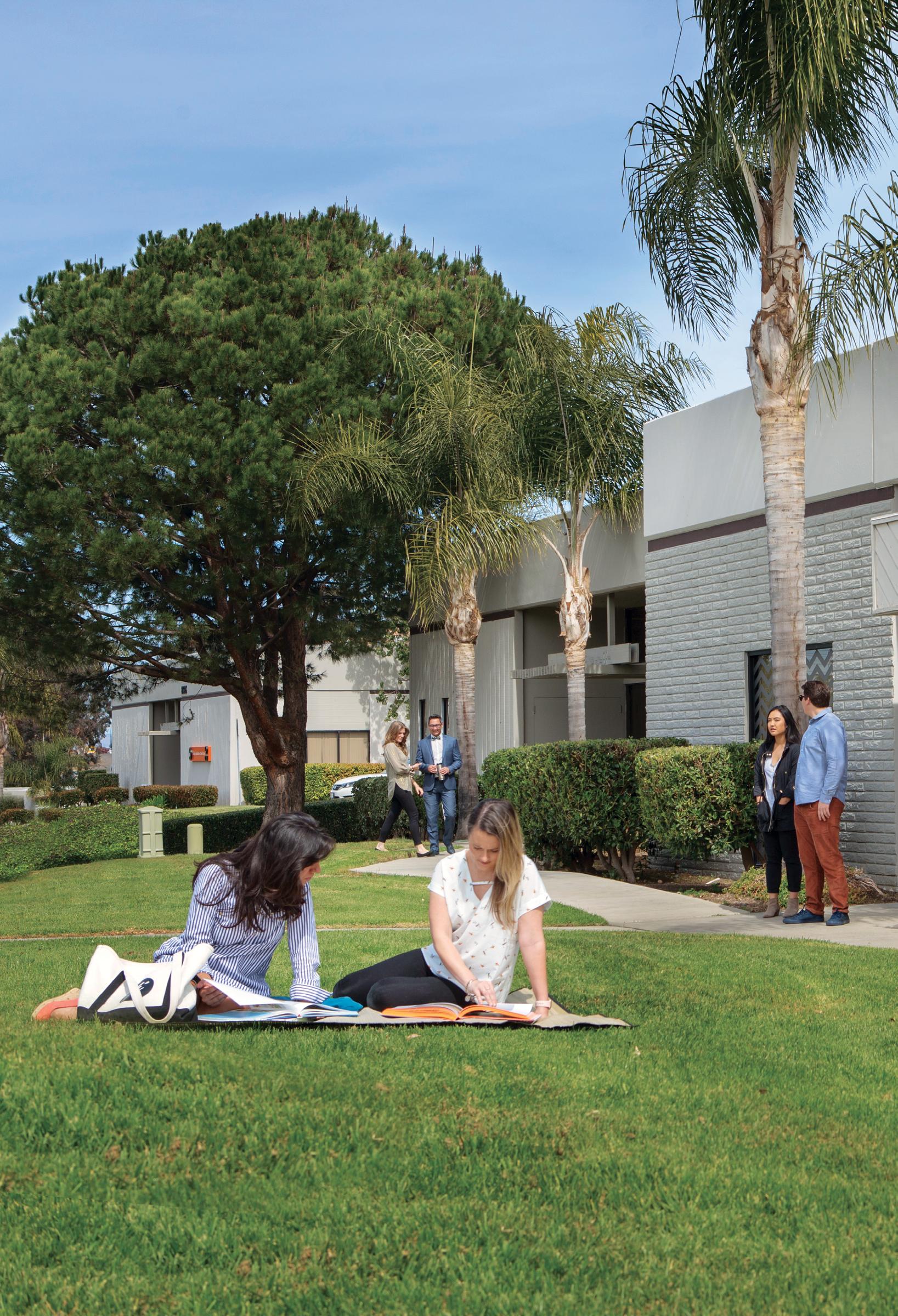
At DI, faculty and staff work together to ensure that students have the resources they need to succeed in rigorous programs and in their future careers.
Co-curricular programs and activities augment academic offerings with social events, workshops, guest speakers, professional networking, and more. This programming is supported by the Student Success Center, which also offers advisement for student groups and clubs.
STUDENT ORGANIZATIONS
Student contact with professional design practitioners offers insight into and understanding of professional standards and practices, enriching students’ educational experience and reinforcing classroom learning. DI Student Professional Associations Alliance (DISPAA) serves as a bridge between academic and professional learning. The DISPAA student board collaborates with professional chapter leaders and DI faculty advisors to coordinate student-centered events, career-focused meetings, presentations, and networking opportunities. DISPAA provides opportunities for students to engage with organizations such as American Society of Interior Designers (ASID), International Interior Design Association (IIDA), National Kitchen & Bath Association (NKBA), Interaction Design Association (IXDA), American Institute of Graphic Arts (AIGA), PMI student chapters, and others. Student organizations offer opportunities for students to meet up with fellow students who have similar interests. New clubs or organizations may also be formed upon request.
STUDENT LEADERSHIP
DI cultivates student leaders who strive to improve the profession, the environment, and our global community, providing them with a variety of options to develop their leadership skills through opportunities to serve as DI Student Professional Associations Alliance board members, DI Ambassadors, Tutors, and Graduate Teaching Assistants.
SUSTAINABILITY
Meaningful design practice requires adherence to the belief that all design professionals have a social and moral responsibility to the health, safety and welfare of their clients. This vital concern–now of utmost immediacy–must logically extend to future generations and, as such, must provide ongoing acknowledgment and support for perhaps the most consistent, supportive and venerable of long term “clients”: the planet earth.
In light of soaring energy costs, lessons learned and effects of the pandemic, heightened global warming, and substantial increases in natural disasters, Design Institute recognizes that it is imperative to educate critical thinkers, creative-minded designers who acknowledge that sustainability is not simply how to use and specify “green” materials and processes, but rather a holistic endeavor integrating the professional, social, regulatory, aesthetic, and economic issues that impact people and their environments.
UNDERGRADUATE PROGRAM OFFERINGS
Design Institute currently offers the following undergraduate programs:
• Bachelor of Fine Arts in Interior Design (BFA ID)
On-site with some online courses
• Bachelor of Science in Interaction and Experience Design (BS IXD) Online
• Bachelor of Science in Product Design and Management (BS PDM) Online
COURSE NUMBERING SYSTEM
100 - 260, lower division undergraduate credit
261 - 395, upper division undergraduate credit
ACADEMIC LEVEL
CREDIT UNITS COMPLETED 0-30 31-63 64-99 100-132
ACADEMIC LEVEL Freshman Sophomore Junior Senior
GENERAL EDUCATION
DI’s General Education (GE) curriculum is structured to provide students with fundamental concepts across broad areas of knowledge. Studies begin with foundational courses that build essential learning skills, including critical thinking, communication, quantitative reasoning, and information literacy. Students then progress to exploratory coursework spanning the natural sciences, arts, and humanities, allowing them to engage with multiple methods of inquiry while further strengthening these competencies. This coursework also develops key abilities such as clear communication, analytical problem-solving, collaborative leadership, and effective engagement within a culturally rich society that support success in any major or professional pathway. The curriculum culminates in upper-division GE courses that deepen interdisciplinary understanding and integrate knowledge across fields, preparing students to apply what they have learned thoughtfully in academic, professional, and community contexts.
General Education requirements are distributed among the following categories:
AREA A
English Language Communication and Critical Thinking
A1 Oral Communication
A2 Written Communication
A3 Critical Thinking
AREA B
GE 170: Oral Communication
GE 180: English Composition
GE 241: Critical Thinking
Scientific Inquiry and Quantitative Reasoning
B1 Physical Science
B2 Life Science
B4 Mathematics/Quantitative Reasoning
GE 306: Physical Geography
GE 330: Environmental Studies
GE 200: Introduction to Mathematical Concepts for Business
GE 270: Introduction to Statistics and Data Analysis
AREA C
Arts, Literature, Philosophy, and Languages Other Than English
C1 Arts
C2 Humanities
GE 268: History of Modern Art
GE 250: Philosophy + Values
GE 280: American Literature
GE 320: World Literature
GE 331: Mythology
GE 373: World Civilizations to 1500 C.E.*
AREA D
Social Sciences
D1 Anthropology & Archeology
D2 Economics
D6 History
D8 Political Science
D9 Psychology
GE 310: Cultural Anthropology
GE 290: Introduction to Economics Concepts and Principles
GE 248: American History: 1865 to the Present
GE 373: World Civilizations to 1500 C.E.
GE 370: World Politics
GE 375: Developmental Psychology
*GE 373 World Civilizations to 1500 C.E. can satisfy either a C2 or a D6; however, it can only be taken to satisfy one of the areas and not both.
AREA E
Lifelong Learning and Self-Development
E Lifelong Learning
GE 150: Learning with Technology
All undergraduate students must complete the General Education requirements as specified for their program of study. General education coursework should be taken concurrently with major program courses, unless otherwise indicated. Successful fulfillment of all General Education requirements is mandatory for graduation and will be evaluated as part of each student’s overall academic progress towards degree requirements.

BACHELOR OF FINE ARTS IN INTERIOR DESIGN (BFA ID)
OVERVIEW
The challenge of interior design education is to address the artistic, intellectual, technical, and practical considerations necessary to provide students with a solid foundation preparing them for entry into professional practice or an advanced study of interior design. If this foundation incorporates awareness of the total context out of which design emerges and of which it is a part, the student will be prepared to continue to develop as an artist, practitioner or scholar in the years to come.
The foundation of undergraduate study in interior design is similar to that of other disciplines in the visual arts. The curriculum includes the study of the principles and elements of two-dimensional and three-dimensional design, drawing and color. As the student develops an understanding of abstract design principles, design concepts are introduced, enabling the student to begin to apply abstract principles to concrete problems.
The creative aspects of interior design are part of an ongoing dialogue with society and culture. Students gain insight into the historical development of the built environment including cultural, economic and ecological contexts. These formal investigations into the past inform the design of today, which in its turn will influence the future.
The social, political and behavioral sciences have a profound influence on design. The individual needs, values, behavior patterns, perceptions, and responses of people are considered the basis on which to create environments for living and working. Students should be familiar with many aspects of psychology and sociology and develop research skills for gathering and organizing information related to the use of interior environments.
The design process requires more than aesthetic and social decisions. Knowledge of programming, structural principles, building codes and safety regulations, universal access, lighting technology, new methods of construction, materiality, and sustainability are all part of the vocabulary of today’s interior designer.
Business is one of the determining factors in the success of interior designers. Business practices such as proposals and contracts, bidding procedures, budgets, construction schedules, specifications, project administration, and professional ethics are studied within the curriculum.
The BFA ID curriculum is organized to introduce these concepts in logical sequence, continually layering and intersecting basic design principles and concepts as their levels of complexity increase, building in the student the ability to comprehend new information by relating it to an existing framework that is already understood. Interior design is a field of change. New trends, technologies, theories, and ways of practice are an essential part of the designer’s life. The designer whose education has provided a firm ground will be able to evaluate the relative importance of new trends and technologies and their validity to the practice of interior design.
College is just the beginning - the education of an interior designer is a lifelong endeavor that demands continuous artistic, intellectual, and technical refinement.
BFA ID PROGRAM MISSION
The Bachelor of Fine Arts in Interior Design (BFA ID) program seeks to educate and prepare students for professional interior design practice immediately following graduation. The content of the curriculum is organized sequentially in a manner that best addresses the development of the artistic, intellectual, technical and practical skills and knowledge necessary for effective interior design practice that enhances human experience and the environment. General education courses provide the student with a grounding in liberal arts traditions and values, and the interior design major offers a solid foundation of professional study for a career in interior design. The four-year program leads to the Bachelor of Fine Arts in Interior Design degree.
EXTERNSHIP – REQUIRED FIELD EXPERIENCE
An Externship formally integrates what has been learned in the classroom with “real world” work experience. Supervised by both the DI Externship Advisor and the Externship Field Supervisor, the Externship offers BFA ID students the opportunity to experience interior design practice, an environment in which to further develop technical skills on the job, and the chance to begin networking within their chosen profession. By working part-time as externs in a design or multidisciplinary firm, students are better able to evaluate their design and business skills, prepare a portfolio, and meet the challenge of finding employment.
COMPUTER COMPETENCY
All students must have basic computer competency. It is the student’s responsibility to meet this requirement.
PROGRAMMATIC ACCREDITATION FOR THE BACHELOR OF FINE ARTS IN INTERIOR DESIGN (BFA ID) PROGRAM
The Interior Design program leading to a BFA in Interior Design degree is a professional level program accredited by the Council for Interior Design Accreditation (CIDA). Established in 1970, CIDA has focused its efforts on the educational requirements necessary to prepare individuals for the practice of interior design. Through the constant analysis of the needs of the interior design profession and with input from both practitioners and educators, the CIDA standards address the skills and knowledge necessary to practice as an interior designer.
CIDA sets standards for postsecondary interior design education, evaluates college and university interior design programs, and publishes a list of accredited programs that meet the standards. CIDA is recognized as a reliable authority on interior design education by the Council for Higher Education Accreditation (CHEA).
CIDA’s mission is to provide the foundation for excellence in the interior design profession by setting standards for education and accrediting programs that meet those standards. Accreditation is a voluntary process. CIDA accreditation’s primary purpose is to provide quality assurance for protection of the public.
WHO IS THE PUBLIC THAT CIDA SERVES?
- CIDA serves students who are seeking or attending interior design programs by ensuring that baseline knowledge, skills, and educational credentials are acquired to ensure success in the profession.
- CIDA serves programs by maintaining up-to-date standards that reflect the requirements of employers and industry, thus providing a tool for continual development by which programs maintain currency with professional requirements.
- CIDA serves employers by ensuring that interior design education meets baseline requirements for preparation to practice.
- CIDA serves the profession by strengthening interior design education, the foundation upon which the profession is built.
INTERIOR DESIGN LEGISLATION, LICENSING AND CERTIFICATION
Approximately 40 U.S. states and Canadian provinces have some level of legislation in place related to the regulation of interior design. In some states, use of the term “interior designer” is limited to those professionals meeting the state’s requirements. In others, the state regulates the use of “Certified Interior Designer,” “Registered Interior Designer,” or another specified title.
Current California law does not require an interior designer to be licensed, registered or certified in order to practice interior design. Certification is not currently required for placement in the field.
BFA IN INTERIOR DESIGN PROGRAM GOALS
I. To promote intellectual inquiry, creative expression, and original work through a structured curriculum that balances theory and practice, experimentation and planning, creativity and logic, and art and technology, framed within a series of related investigations into language communications, critical thinking, the humanities, natural and social sciences, global awareness, and design history.
II. To encourage the development of visual and spatial fluency as well as the acquisition of essential knowledge and skills in the elements and principles of design, visual communication, current and emerging technologies including Computer Aided Design (CAD) and Building Information Modeling (BIM), interior space planning, materials and finishes, lighting, structures, surfaces, and codes specific to both residential and non-residential settings.
III. To define and encourage the dialogue and relationship between interior design and architecture by providing studies in architectural history, universal and inclusive design principles, spatial patterning and organization, and environmental sensitivity, as well as the essential need to restore and maintain the natural connection between people and architecture, interiors, and the environment.
IV. To introduce students to interior design business practices and professional ethics, market resources, and project management strategies and techniques used in the interior design profession as well as health, safety and welfare responsibilities that interior designers hold as they develop solutions with clients, rather than simply for clients.
V. To increase understanding of pressing social, cultural, economic and environmental concerns through the research and application of human factors, universal design solutions, and sustainable design strategies.
VI. To provide students with a range of opportunities to prepare for professional accomplishment in the field of interior design through a varied range of activities including portfolio development, student competitions, comprehensive externship experience, and placement services as well as opportunities to interact with professional designers and members of allied disciplines in juried projects and events, guest lectures, and professional associations at the local, national and international level.
VII. To explore and foster community partnerships with not-forprofit organizations through the Classroom Without Walls initiative, a way to bring awareness, diversity, tolerance, and real-world experience into the classroom while simultaneously creating a vehicle for giving back.
BFA ID PROGRAM LEARNING OUTCOMES (PLOS)
BFA ID Program Learning Outcomes have been adapted from CIDA Standards to ensure close alignment with programmatic accreditation.
PLO # 1. Global View - Graduates have a global view and consider social, cultural, economic, and ecological contexts in all aspects of their work.
PLO # 2. Collaboration - Graduates collaborate and also participate in interdisciplinary teams.
PLO # 3. Business Practices and Professionalism - Graduates understand the principles and processes that define the profession and the value of interior design to society.
PLO # 4. Human-Centered Design - Graduates apply knowledge of human experience and behavior to designing the built environment.
PLO # 5. Design Process - Graduates employ all aspects of the design process to creatively solve a design problem.
PLO # 6. Communication - Graduates are effective communicators.
PLO # 7. History and Theory - Graduates apply knowledge of history and theory of interiors, architecture, decorative arts, and arts when solving design problems.
PLO # 8. Design Elements and Principles - Graduates apply elements and principles of design.
PLO # 9. Light and Color - Graduates apply the principles and theories of light and color effectively in relation to environmental impact and human wellbeing.
PLO # 10. Products and Materials - Graduates complete design solutions that integrate furnishings, products, materials, and finishes.
PLO # 11. Environmental Systems and Comfort - Graduates use the principles of acoustics, thermal comfort, and indoor air quality in relation to environmental impact and human wellbeing.
PLO # 12. Construction - Graduates understand interior construction and its interrelationship with base building construction and systems.
PLO # 13. Regulations and Guidelines - Graduates apply laws, codes, standards, and guidelines that impact human experience of interior spaces.
LENGTH OF PROGRAM
The Interior Design program leading to the Bachelor of Fine Arts in Interior Design degree is a 132 semester-credit-unit curriculum, providing students with the skills and knowledge necessary to enter the interior design profession.
The program consists of 96 units in the interior design major and 36 units in general education.
The BFA ID program may be completed in four years by a traditional full-time student successfully completing 15-18 units per semester for eight semesters, fall and spring.
A student enrolled in the evening track and successfully completing 6-9 units per semester for 15 semesters may complete the program in five years. Evening track students attend classes three semesters per year, fall, spring and summer.
Fast track students may complete the program in two and one half to three years by successfully completing 15-18 units per semester for 8 consecutive semesters, fall, spring and summer.
Sample semester schedule based on traditional track full-time course load.
BFA
ID TRACKS AND CLASS HOURS
TRADITIONAL TRACK
Traditional track students attend the program during fall and spring semesters. The majority of the classes are scheduled Monday through Friday between 8:00 a.m. and 5:00 p.m. Evening course options may be scheduled Monday through Thursday between 6:00 p.m. and 10:00 p.m.
EVENING TRACK
The evening track is available to students who can only attend classes during the evening. Evening classes are scheduled between 6:00 p.m. and 10:00 p.m., Monday through Thursday.
FAST TRACK FOR TRANSFER STUDENTS
A limited number of students are accepted into the fast track each semester. Admission is selective and based on many factors, including but not limited to: the number of transfer classes the student has, GPA, and strength of academic record. The fast track is designed primarily for transfer students who want to attend classes year-round in order to graduate sooner.
Fast track students attend classes full-time year-round (fall, spring and summer) with a mixture of day and evening classes. Day classes are normally scheduled Monday through Friday between 8:00 a.m. and 5:00 p.m. Evening classes are normally scheduled Monday through Thursday between 6:00 p.m. and 10:00 p.m.
SEMESTER ONE 15 units
ID 101: Introduction to Interior Design I
DES 103: Design Elements
ID 108: History of the Built Environment I
ID 110: Drawing & Composition
GE 180: English Composition - A2
SEMESTER ONE 15 units
ID 150: Introduction to Interior Design II
ID 234: Visual Communication II
DES 216: Human Factors
ID 221: Perspective & Rendering
SEMESTER TWO 15 units
ID 134: Visual Communication I
ID 118: History of the Built Environment II
ID 115: Quick Sketching
ID 114: Color Theory & Application
GE 170: Oral Communication - A1
GE 241: Critical Thinking - A3 SEMESTER
ID 251: Commercial Interior Design I
ID 217: Building Codes & Standards
ID 253: Technology-Integrated Design I
ID 260: Materials & Applications
ID 112: Textiles
GE 250: Philosophy & Values - C2
SEMESTER ONE 18 units
ID 267: Residential Interior Design
ID 353: Technology-Integrated Design II
ID 258: Building Systems
ID 334: Visual Communication III
GE 330: Environmental Studies - B2
GE Elective: C1
SEMESTER TWO 18
ID 367: Commercial Interior Design II
ID 361: Externship
ID 266: Sustainable Environments
ID 363: Technology-Integrated Design III
GE 320: World Literature - C2
GE Elective: C1 or C2
SEMESTER ONE 18 units
ID 380: Institutional Interior Design
IE REQ: Interior Design Elective
ID 351: Lighting Design
ID 385: Ideas in Design of the Built Envr.
GE 310: Cultural Anthropology - D1
GE Elective: D
SEMESTER TWO 15
ID 395: Senior Project
ID 365: Business Practices
ID 345: Portfolio & Pres. Techniques
GE Elective: D
GE Elective: B1
COURSE CATEGORIES
Interior Design Major (ID)
Interior Design Elective (IE)
General Education (GE)
General Education Electives (GE)
Total minimum credit units required for the BFA ID
INTERIOR DESIGN ELECTIVES (IE)
Students are required to select at least one interior design elective course as a required component of the interior design major. Additional electives may be taken for credit and will add units to the minimum credit units required for the degree (132 credits). Additional electives do not substitute for required interior design courses in the major. Please consult Course Descriptions and the current semester schedule.
INTERIOR DESIGN ELECTIVES LIST (ID)
Course offerings are chosen each semester from the following list. Please consult Course Descriptions and the current semester schedule.
COURSES PREREQUISITES
IE 140
BFA ID GENERAL EDUCATION (GE) REQUIREMENTS
36 semester credit units
AREA A (3 COURSES, 9 UNITS)
English Language Communication and Critical Thinking
Required: GE 170, GE 180, GE 241
AREA B (2 COURSES, 6 UNITS)
Scientific Inquiry and Quantitative Reasoning
Required: GE 330, plus one B1 elective
AREA C (4 COURSES, 12 UNITS)
Arts, Literature, Philosophy, and Languages Other Than English
Required: GE Philosophy, GE Literature, plus one C1 elective and one C1 or C2 elective
AREA D (3 COURSES, 9 UNITS)
Social Sciences
Required: GE 310, plus two electives (courses must be from at least two areas)
Successful fulfillment of all 36 units of General Education requirements listed above is mandatory for graduation from BFA ID program and will be evaluated as part of each student’s overall academic progress towards degree requirements.
LICENSURE AND CERTIFICATION
The BFA ID program is not intended to prepare students for any specific professional license or certification. Admission into this program does not guarantee that a student will obtain a license or certificate. Licensure and certification requirements are determined by agencies not controlled by or affiliated with DI and may change at any time. DI has not determined whether this program meets educational or professional requirements for licensure or certification in states outside of California. Students planning to pursue licensure or certification in another state are responsible for researching the requirements in that state.
BACHELOR OF SCIENCE IN INTERACTION AND EXPERIENCE DESIGN (BS IXD)
BS IXD PROGRAM MISSION
The Bachelor of Science in Interaction and Experience Design (BS IXD) prepares students for careers at the intersection of design, technology, and emerging digital experiences.
Grounded in human-centered design, systems thinking, and creative inquiry, the program fosters the ability to address complex, real-world challenges through inclusive, intuitive, and evidence-informed design solutions. Blending design thinking, user research, and prototyping with technical fluency, the BS IXD program builds strong foundations in UX/UI design, digital product strategy, service design, and immersive environments. The curriculum emphasizes critical thinking, collaboration, and ethical practice, enabling graduates to make meaningful contributions in both professional and societal contexts.
Aligned with the mission of the Design Institute, the BS IXD program cultivates adaptable, collaborative, and forward-thinking designers ready to lead innovation in a rapidly evolving, interconnected world.
BS IXD PROGRAM GOALS
I. Prepare students to design inclusive, intuitive, and evidence-informed experiences that address diverse user needs across digital and physical environments.
II. Enable students to integrate design, technology, and systems thinking to develop innovative solutions within complex social, organizational, and technological contexts.
III. Develop students’ abilities to communicate effectively across media and audiences by clearly articulating design concepts, processes, and outcomes through visual, written, and verbal formats.
IV. Foster capacity to apply critical and creative thinking to analyze complex challenges, explore multiple perspectives, and generate original, iterative design solutions.
V. Prepare students to collaborate within interdisciplinary and cross-cultural contexts, demonstrating empathy, adaptability, and leadership in team-based design processes.
VI. Equip students with technical fluency in interaction design using digital tools, prototyping platforms, and emerging technologies to create and test interactive experiences.
VII. Instill ethical and responsible design values to ensure socially responsible and inclusive outcomes.
BS IXD PROGRAM LEARNING OUTCOMES (PLOS)
PLO # 1. Design Inclusive and Intuitive Experiences — graduates apply human-centered design principles to create accessible, engaging, and evidence-informed digital and physical experiences that address diverse user needs.
PLO # 2. Integrate Design, Technology, and Systems Thinking — graduates synthesize concepts from design, technology and business to develop strategic solutions in diverse professional contexts.
PLO # 3. Communicate Effectively Across Media and Audiences — graduates clearly articulate design concepts, processes and outcomes through visual, written and verbal communication tailored to diverse stakeholders.
PLO # 4. Think Critically and Creatively — graduates analyze complex problems, explore multiple perspectives, and generate original, iterative solutions through design thinking and creative inquiry.
PLO # 5. Collaborate in Interdisciplinary and Cross-Cultural Contexts — graduates work effectively in teams, demonstrating empathy, adaptability and leadership in collaborative design processes.
PLO # 6. Demonstrate Technical Fluency — graduates use digital tools and platforms including prototyping software, front-end technologies, and immersive media to design and test interactive experiences.
PLO # 7. Practice Ethical and Responsible Design — graduates apply ethical reasoning and sustainability principles to ensure that design solutions are socially responsible, inclusive, and aligned with user and community values.
PLO # 8. Lead Innovation in Emerging Digital Environments — graduates respond to evolving trends in digital experience design, demonstrating initiative, foresight, and a commitment to continuous learning.
PLO # 9. Build Multimodal and Emerging Interactions — graduates build interactions that move beyond the screen to design responsive, adaptive experiences.
PLO # 10. Lead the Full Design Process from Insight to Execution — graduates lead design projects end-to-end, framing problems, prototyping across media, and delivering high-impact solutions.
LENGTH OF PROGRAM
The Interaction and Experience Design program leading to the Bachelor of Science in Interaction and Experience Design degree is a 120 semester-credit-unit curriculum, providing students with the skills and knowledge necessary to enter the design profession.
The program consists of 81 units in the Interaction and Experience Design major and 39 units in general education.
The BS IXD program may be completed in four years by a traditional full-time student successfully completing 15-18 units per semester for eight semesters, fall and spring.
Fast track students may complete the program in two and one half to three years by successfully completing 15-18 units per semester for 8 consecutive semesters, fall, spring and summer.
BS IXD CURRICULUM OUTLINE (120 UNITS)
Sample
BS IXD GENERAL EDUCATION (GE) REQUIREMENTS
39 semester credit units
AREA A (3 COURSES, 9 UNITS)
English Language Communication and Critical Thinking
Required: GE 170, GE 180, GE 241
AREA B (2 COURSES, 6 UNITS)
Scientific Inquiry and Quantitative Reasoning
Required: GE 200, GE 270
AREA C (4 COURSES, 12 UNITS)
Arts, Literature, Philosophy, and Languages Other Than English
Required: two C1 electives and two C2 electives
AREA D (3 COURSES, 9 UNITS)
Social Sciences
Required: GE 290, GE 310, GE 375
AREA E (1 COURSE, 3 UNITS)
Lifelong Learning and Self-Development
Required: GE 150
Successful fulfillment of all 39 units of General Education requirements listed above is mandatory for graduation from BS IXD program and will be evaluated as part of each student’s overall academic progress towards degree requirements.
LICENSURE AND CERTIFICATION
The BS IXD program is not intended to prepare students for any specific professional license or certification. Admission into this program does not guarantee that a student will obtain a license or certificate. Licensure and certification requirements are determined by agencies not controlled by or affiliated with DI and may change at any time. DI has not determined whether this program meets educational or professional requirements for licensure or certification in states outside of California. Students planning to pursue licensure or certification in another state are responsible for researching the requirements in that state.
BACHELOR OF SCIENCE IN PRODUCT DESIGN AND MANAGMENT (BS PDM)
BS PDM PROGRAM MISSION
The Bachelor of Science in Product Design and Management (BS PDM) prepares students to lead at the intersection of design, technology and business. Rooted in design fundamentals and enriched by strategic thinking and management, this interdisciplinary degree empowers future leaders to create innovative, sustainable products and systems that make a lasting impact on people, communities, and the planet. Students build a strong foundation in general education, visual communication, human factors, and design history, then advance through hands-on learning in rapid prototyping, product development, and strategic design. Integrated business and management coursework equips graduates to lead cross-functional teams, launch meaningful products, and navigate the challenges of an interconnected global economy.
BS PDM PROGRAM GOALS
I. Prepare students to design inclusive, sustainable, and human-centered products and systems that address user needs and broader societal challenges.
II. Develop students’ ability to synthesize and integrate knowledge from design, technology and business and apply to strategic, interdisciplinary solutions across diverse industries.
III. Prepare students to communicate design concepts, processes and outcomes effectively through visual, written and verbal formats tailored to varied audiences.
IV. Encourage analytical reasoning and application of critical and creative thinking to complex problems while exploring multiple perspectives and generating innovative, evidence-informed solutions.
V. Prepare students to collaborate effectively in interdisciplinary teams, demonstrating leadership, empathy and adaptability in dynamic professional environments.
VI. Empower students to lead product development initiatives using business and product management tools and emerging technologies to bring meaningful products to market.
VII. Prepare students to practice ethical and responsible design by applying sustainability principles and evaluating the social, environmental and economic impacts of their work.
BS PDM PROGRAM LEARNING OUTCOMES (PLOS)
PLO # 1. Apply Human-Centered Design Principles — graduates design innovative, inclusive and sustainable products and systems that address user needs and societal challenges.
PLO # 2. Integrate Interdisciplinary Knowledge — graduates synthesize concepts from design, technology and business to develop strategic solutions in diverse professional contexts.
PLO # 3. Communicate Effectively — graduates articulate design concepts, processes and outcomes clearly and persuasively through visual, written and verbal communication tailored to diverse audiences.
PLO # 4. Think Critically and Creatively — graduates analyze complex problems, evaluate multiple perspectives, and generate original, evidence-informed solutions through iterative design processes.
PLO # 5. Collaborate Across Disciplines — graduates work effectively in cross-functional teams, demonstrating leadership, empathy and adaptability in collaborative environments.
PLO # 6. Demonstrate Quantitative and Analytical Reasoning — graduates use data, metrics, and analytical tools to inform design decisions, evaluate product performance, and support business strategies.
PLO # 7. Practice Ethical and Responsible Design — graduates apply ethical reasoning and sustainability principles in the design and management of products, considering social, environmental and economic impacts.
PLO # 8. Lead Product Development and Innovation — graduates manage the lifecycle of product development from ideation to market launch using project management tools, business acumen, and entrepreneurial thinking.
PLO # 9. Apply Strategic and Business Thinking — graduates use customer research, market analysis, pricing strategies, and positioning frameworks to guide product decisions and align with organizational goals.
PLO # 10. Prototype and Iterate Using Emerging Technologies — graduates use digital tools including AI to rapidly prototype, test and refine design solutions.L
LENGTH OF PROGRAM
The Product Design and Management program leading to the Bachelor of Science in Product Design and Management degree is a 120 semestercredit-unit curriculum, providing students with the skills and knowledge necessary to enter the design profession.
The program consists of 81 units in the Product Design and Management major and 39 units in general education.
The BS PDM program may be completed in four years by a traditional full-time student successfully completing 15-18 units per semester for eight semesters, fall and spring.
Fast track students may complete the program in two and one half to three years by successfully completing 15-18 units per semester for 8 consecutive semesters, fall, spring and summer.
BS PDM CURRICULUM OUTLINE (120 UNITS)
Sample semester schedule based on traditional track full-time course
1ST YEAR
DES 100: Careers in Design I – Overview 3 DES 105: History & Foundations of Design 3
GE 150: Learning with Technology (E) 3
GE 180: English Composition (A2) 3
GE 200: Introduction to Mathematical 3 Concepts for Business (B4)
270: Introduction to Statistics & Data 3 Analysis (B4)
3RD YEAR
ONE 15
205: Modern & Emerging 3 Design Movements
315: Understanding the Voice
of the Customer
310: Cultural Anthropology (D1)
BS PDM GENERAL EDUCATION (GE) REQUIREMENTS
39 semester credit units
AREA A (3 COURSES, 9 UNITS)
English Language Communication and Critical Thinking
Required: GE 170, GE 180, GE 241
AREA B (2 COURSES, 6 UNITS)
Scientific Inquiry and Quantitative Reasoning
Required: GE 200, GE 270
AREA C (4 COURSES, 12 UNITS)
Arts, Literature, Philosophy, and Languages Other Than English
Required: two C1 electives and two C2 electives
AREA D (3 COURSES, 9 UNITS)
Social Sciences
Required: GE 290, GE 310, GE 375
AREA E (1 COURSE, 3 UNITS)
Lifelong Learning and Self-Development
Required: GE 150
Successful fulfillment of all 39 units of General Education requirements listed above is mandatory for graduation from BS PDM program and will be evaluated as part of each student’s overall academic progress towards degree requirements.
LICENSURE AND CERTIFICATION
The BS PDM program is not intended to prepare students for any specific professional license or certification. Admission into this program does not guarantee that a student will obtain a license or certificate. Licensure and certification requirements are determined by agencies not controlled by or affiliated with DI and may change at any time. DI has not determined whether this program meets educational or professional requirements for licensure or certification in states outside of California. Students planning to pursue licensure or certification in another state are responsible for researching the requirements in that state.
GRADUATE PROGRAM
OFFERINGS
Design Institute currently offers the following graduate programs:
• Master of Interior Design (MID)
Online and On-site
• Master of Project Management (MPM)
Online
GRADUATE CULTURE
A holistic and engaged graduate culture is vital to student success. DI recognizes that graduate education goes far beyond the curriculum and is committed to fostering a collegial culture that supports innovative research and creative thinking among its students and faculty. Faculty mentors offer guidance and inspiration essential to students’ creative, scholarly and professional development. The institution encourages students to become part of the intellectual interior design community by providing grants, space and other resources to support scholarly, creative and research activities, and opportunities to share student research with the extended academic and professional design community.
MASTER OF INTERIOR DESIGN (MID)
The Master of Interior Design (MID) program offers advanced scholarship in interior design by engaging students in human-centered design research and innovative processes, preparing environmentally- and socially-responsible scholars, educators, and design practitioners.
The educational philosophy of the MID program is closely aligned with that of the BFA philosophy, grounded in fundamental Bauhausian principles associated with the reflexive relationship of design thinking and making, which is a hands-on approach to teaching and learning. A key component of this relationship is the idea that thinking about and doing design (including interior design) fosters an on-going, dynamic synthesis between abstract ideas and materiality. In addition to this core philosophy, our educational methodology incorporates, and seamlessly blends, evidence-based design (EBD) practices with artistic expression, a process in which research and theoretical discourse inform design solutions for the built environment. Students engage in individualized project-based studies aimed at solving real problems, which provide a bridge between critical inquiry and professional practice.
Our approach to curriculum development and design is rooted in a transformative learning paradigm. It borrows from learner-centered ideology that initiates with students’ own interests, builds on prior knowledge, fosters individual growth, and motivates students to become stewards of their own instruction.
MID pedagogical methods include individualized student instruction with an increased focus on student-initiated studies along with lectures, discussions, problem-solving exercises, project-based studio work, and research-based assignments. A studio-based approach remains the principal component of interior design education, and students have the autonomy appropriate to graduate-level studies.
MID PROGRAM MISSION
The Master of Interior Design (MID) program delivers a graduate-level education in interior design, adaptable to each student’s career goals and academic interests. The program’s curriculum prepares graduates to lead the field by advancing their analytical and creative problemsolving skills, honing professional knowledge and expertise reflective of today’s practice, fostering innovative and ethical use of technology, and emphasizing applied research, evidence-based design, and sustainability. With a focus on local, regional and global communities, humancentered design solutions, and interdisciplinary collaboration, the MID program equips its graduates to lead with integrity and enact positive transformations within the built environment.

MID PROGRAM GOALS
I. To provide opportunities for students to explore individual and collaborative areas of creative inquiry, grounded in the thoughtful application of research through critical reflection and iterative design processes in pursuit of design solutions that address human and societal needs within the built environment.
II. To foster innovative approaches to problem solving within a framework of ethical and sustainable professional practice, committed to values of human well-being, environmental responsibility, and advancement of the interior design body of knowledge.
III. To advance the acquisition of interior design knowledge, skills and use of integrated design processes, within the context of professional practice including evolving industry standards, regulatory frameworks, current and emerging technologies, and material innovation.
IV. To engage students in local, regional, and global design challenges, developing collaborative competencies and effective communication across disciplines and cultural contexts to lead transformative, contextually informed, and socially responsive design interventions.
MID PROGRAM LEARNING OUTCOMES (PLOS)
PLO # 1. Human-Centered Design: Graduates will incorporate deep knowledge of human experience and behavior into ethical and collaborative design strategies, employing current research and best practices within a variety of different contexts.
PLO # 2. Global Outlook: Graduates will critically assess and integrate social, cultural, economic, and ecological contexts and implications in all aspects of their work.
PLO # 3. Theory, Research and Methodology: Graduates will be able to contribute to the body of knowledge of the built environment through critical inquiry, synthesis, and development of original ideas and methods in design theory and research.
PLO # 4. Innovation and Creativity: Graduates will demonstrate an advanced level of problem-posing and problem-solving in the design of interior environments by proposing and developing alternatives to conventions in the practice of design through flexibility and fluency in original design solutions.
PLO # 5. Communication: Graduates will be able to communicate clearly and effectively in a variety of media, tailoring communication to audience and context. Graduates will be able to analyze, evaluate, contextualize, and create visual materials in both physical and digital formats with the conceptual, material and technological skills expected for professional practice.
PLO # 6. Professional Practice: Graduates will be able to leverage the principles and processes that define the profession, cognizant of current issues affecting interior design practice, to further advance the value of interior design to society.
PLO # 7. Materials and Process: Graduates will demonstrate an advanced and detailed knowledge of materials based on properties, maintenance and performance criteria, and will be able to integrate sustainable practice, material research, aesthetics, and changing technologies with building processes and innovative design solutions.
PROFESSIONAL PRACTICUM – FIELD EXPERIENCE
The Professional Practicum course, offered as a special topic elective, provides students with opportunities to make valuable connections within the field and develop substantive material for a portfolio or résumé through a supervised field experience. Built on three pillars: practice, mentoring and leadership, it offers graduate students a platform to apply their knowledge and skills in a particular area of study within professional or academic communities. Working under the direction of the supervising graduate faculty member and a qualified and approved field mentor gives students the opportunity to gain practical experience before graduation.
MID TRACKS
This program is intended for baccalaureate degree holders in interior design or a non-related field and offers the following tracks:
LENGTH OF PROGRAM
Typical completion time of the two-year MID track for students with design-related undergraduate degrees (45-unit curriculum) enrolled fulltime in at least 9 units each semester, including summer semester, is 5 semesters or 17 months.
Typical completion time of the three-year MID track for students with undergraduate degrees in non-related fields (45-unit curriculum + 36 units in qualifying graduate studies) enrolled full-time in 9-12 units each semester, including summer semester, is 8 semesters or 28 months.
TIMEFRAME OF COURSES AND COURSE LOAD
The MID program courses are offered on a 15-week, semester-based schedule that runs year-round. Courses are offered in traditional formats for graduate education with occasional weekend classes.
- Full-time status: a full-time graduate student is a student who is enrolled in at least 9 units each semester. Any variation from 9 or more credit units per semester must be on the student’s plan of study or approved by the Chief Academic Officer each term.
GRADUATE!
Two-year track for students with baccalaureate degrees in design-related fields, such as interior architecture, interior design, or architecture
GRADUATE!
Three-year track for students with baccalaureate degrees in any other discipline
- Part-time status: a part-time graduate student is a student who is enrolled in 6 to 8 units each semester. Enrolling in less than 6 credits per semester will not be permitted without a special approval form signed by the Chief Academic Officer.
MID CURRICULUM BY TRACK (45 TO 81 UNITS)
TWO-YEAR MID TRACK – 45 UNITS
Semester schedule based on full-time course load
SEMESTER ONE | 9 UNITS
ID 550: Design Thinking: Methods and Research
ID 555: Advanced Writing Techniques
Special Topics Elective
SEMESTER TWO | 9 UNITS
ID 560: Materials, Fabrication & Detailing
ID 565: Design Theory & Creative Perspectives
Special Topics Elective
SEMESTER THREE | 9 UNITS
ID 570: Phenomenology of Space
ID 575: Evidence-Based Design & Strategic Planning
ID 580: Directed Study
SEMESTER FOUR | 9 UNITS
ID 600 A: Thesis Project Research
Special Topics Elective
Special Topics Elective
SEMESTER FIVE | 9 UNITS
ID 600 B: Thesis Project Design & Presentation
ID 605: Professional Practice
Special Topics Elective
LICENSURE AND CERTIFICATION
The MID program is not intended to prepare students for any specific professional license or certification. Admission into this program does not guarantee that a student will obtain a license or certificate. Licensure and certification requirements are determined by agencies not controlled by or affiliated with DI and may change at any time. DI has not determined whether this program meets educational or professional requirements for licensure or certification in states outside of California. Students planning to pursue licensure or certification in another state are responsible for researching the requirements in that state.
THREE-YEAR
MID TRACK – 81 UNITS
Semester schedule based on full-time course load
PREPARATORY STUDIES
SEMESTER ONE | 12 UNITS
ID 500: Visual Communication Studies I
ID 501: Design Process
ID 502: History & Theory
ID 504: Visual Communication Studies II
SEMESTER THREE | 12 UNITS
ID 507: Building Codes and Systems
ID 520: Sustainable Environments & Practice
ID 530: Interior Design Studio B
SEMESTER TWO | 12 UNITS
ID 506: Visual Communication Studies III
ID 515: Light and Color
ID 510: Products & Materials
ID 511: Interior Design Studio A
ID 535: Contemporary Ideas in the Design of the Built Environment
CORE CURRICULUM
SEMESTER FOUR | 9 UNITS
ID 550: Design Thinking: Methods and Research
ID 555: Advanced Writing Techniques
Special Topics Elective
SEMESTER SIX | 9 UNITS
ID 570: Phenomenology of Space
ID 575: Evidence-Based Design & Strategic Planning
ID 580: Directed Study
SEMESTER EIGHT | 9 UNITS
ID 600 B: Thesis Project Design & Presentation
ID 605: Professional Practice
Special Topics Elective
SEMESTER FIVE | 9 UNITS
ID 560: Materials, Fabrication & Detailing
ID 565: Design Theory & Creative Perspectives
Special Topics Elective
SEMESTER SEVEN | 9 UNITS
ID 600 A: Thesis Project Research
Special Topics Elective
Special Topics Elective
MASTER OF PROJECT MANAGEMENT (MPM)
MPM PROGRAM MISSION
The Master of Project Management (MPM) program equips professionals from diverse undergraduate backgrounds such as interior design, architecture, business, and the liberal arts with the skills to plan and deliver projects that shape the built and virtual environments of the future. Grounded in practical project-planning methods and enriched by design thinking, sustainability, and stakeholder-centered practices, the degree prepares students to lead efforts in real estate development, construction, design, technology, services, and fabrication processes. Combining creative methods and management fundamentals, the MPM prepares graduates to collaborate across design-allied disciplines in creating purposeful environments serving local and global communities.
MPM PROGRAM GOALS
I. Prepare graduates to apply core project management principles to deliver successful outcomes across diverse sectors, including construction, technology, and professional services.
II. Foster collaboration and cultivate graduates’ ability to lead diverse, cross-functional teams using inclusive leadership, mentoring, and digital collaboration tools to align stakeholders and drive project success.
III. Promote sustainable and human-centered design practices that integrate design thinking, user-centered research, and sustainability strategies into project planning and execution to create resilient, equitable, and high-performing environments.
IV. Prepare students to apply innovative strategies and emerging technologies to enhance decision-making and optimize project delivery.
V. Instill ethical, business-savvy, and socially responsible practice values to ensure graduates can navigate business and contractual frameworks while upholding ethical standards, regulatory compliance, and social responsibility in service of long-term stakeholder value.
MPM PROGRAM LEARNING OUTCOMES (PLOS)
PLO # 1. Apply Core Project Management Practices: Graduates will plan, execute, monitor, and communicate status for projects using industry-standard scope, schedule, cost, quality, and risk frameworks to deliver predictable outcomes across construction, development, technology, and professional services contexts.
PLO # 2. Lead Interdisciplinary Teams: Graduates will apply strategies for interdisciplinary team formation by applying best practices in leadership, mentoring, and virtual collaboration platforms that unite project stakeholders around shared objectives, transparent communications, and adaptive workflows from project start-up through delivery.
PLO # 3. Leverage Emerging Technologies: Graduates will integrate proven and emerging technologies, including AI-assisted scheduling, BIM-enabled coordination, cloud analytics, and real-time digital twin simulations, to visualize alternatives and inform timely, high-stakes decisions to manage complexity across multiple projects, programs, and stakeholder environments.
PLO # 4. Incorporate Design Thinking and Sustainability: Graduates will apply design-thinking mindsets, user-centered research, and regenerative sustainability strategies to frame problems, generate iterative prototypes, and deliver project and program solutions that advance well-being, resilience, and circular-economy goals while satisfying functional and financial performance criteria.
PLO # 5. Navigate Business and Contractual Frameworks: Graduates will navigate complex business and contractual domains by evaluating delivery methods, revenue models, and risk-sharing provisions, demonstrating the ability to negotiate equitable agreements and establish governance structures that align project strategies with market opportunities, regulatory requirements, and long-term stakeholder value.
PLO # 6. Demonstrate Ethical and Social Responsibility: Graduates will model ethical, socially responsible practice by integrating compliance with codes and regulations, fostering community participation, and applying transparent environmental, social, and governance frameworks to planning and execution, ensuring projects deliver inclusive benefits, protect data privacy, and uphold public trust.
MPM CURRICULUM – 30 UNITS
Semester schedule based on full-time course load
SEMESTER ONE | 10 UNITS
PM 550: Project Scheduling and Time Management
PM 555: Project Budgeting and Cost Management
PM 560: Project Planning and Leadership
SEMESTER TWO | 10 UNITS
PM 565: Contracts and Procurement
PM 580: Directed Study
PM 570: Innovation in Program Management
SEMESTER THREE | 10 UNITS
PM 605: Professional Practice
PM 575: Risk Management and Quality Assurance
PM 600: Capstone Project — Applied
LICENSURE AND CERTIFICATION
The MPM program is not intended to prepare students for any specific professional license or certification. Admission into this program does not guarantee that a student will obtain a license or certificate. Licensure and certification requirements are determined by agencies not controlled by or affiliated with DI and may change at any time. DI has not determined whether this program meets educational or professional requirements for licensure or certification in states outside of California. Students planning to pursue licensure or certification in another state are responsible for researching the requirements in that state.
ADMISSION TO DESIGN INSTITUTE
Design Institute welcomes applications from candidates whose personal interest is directed toward a professional career and whose background indicates the potential to be successful. All admissions decisions are made based on a holistic review of each applicant and all materials submitted.
As a part of the admission procedure, applicants are encouraged to visit the school for an in-person tour or a virtual visit of the college or to connect with an Admissions Representative virtually to learn more about our on campus and online programs. During this visit or meeting the prospective student’s educational background, interests, and career goals are discussed. The student receives valuable information about the programs offered, and the student and Admissions Representative together evaluate the student’s potential for successful study.
Students are invited to call the Office of Admissions for more information. DI accepts applications for admission online or by mail.
All application materials can be accessed online at www.disd.edu/admissions/apply.

UNDERGRADUATE DEGREE ADMISSIONS
APPLICATION REQUIREMENTS
To be considered for admission into an undergraduate program an applicant must submit the following:
- Two (2) essays responding to the following prompts:
BFA ID Program:
• In 500-750 words, describe a place or environment where you are perfectly content. What do you do or experience there, and why is it meaningful to you?
• In 250-500 words, explain how DI can help you achieve your professional goals, and why you are a good candidate for the program.
BS IXD Program:
• In 500-750 words, describe a designed experience, physical, digital, or hybrid, that you find memorable. This could be a product, service, environment, or interaction. What makes it meaningful to you, and how does it influence your perspective on designing experiences for others?
• In 250-500 words, describe why you have chosen to apply to the BS IXD program at DI. How do the programs focus, learning environment, and approach to design education connect with your interests and career goals? Include how you see yourself contributing to the DI learning community.
BS PDM Program:
• In 500-750 words, describe your interest in design and management and why you believe DI’s BS PDM program is the right fit for you. How does this program align with your long-term professional goals? Include any relevant experiences that have shaped your interest in this field.
• In 250-500 words, describe a time when you identified a problem or opportunity and developed a creative solution. What was the outcome, and how did you work with others in the process?
- Proof of high school graduation or its equivalent, including but not limited to a High School Equivalency (HSE) credential, or proof of a previous degree from a university or college accredited by an agency recognized by the U.S. Department of Education or Council of Higher Education Accreditation (CHEA);
- Official transcripts from each institution attended by the applicant, which must be sent by the institution directly to the Design Institute Office of Admissions;
- Two (2) references from teachers, counselors and/or employers; and
- A $25.00 non-refundable application fee, which is applicable towards tuition.
In addition, an applicant must complete an Admissions Interview, which is scheduled after the application has been submitted, to discuss the application materials, the strength of the applicant’s previous academic record, and the applicant’s commitment to the program.
ACCEPTANCE
Applicants who have successfully completed all admission requirements and who have been accepted will be formally notified of the school’s decision in writing. A $75 non-refundable enrollment fee, applicable to tuition, is required upon acceptance.
UNDERGRADUATE TRANSFER ADMISSION
DI welcomes transfer students and is committed to providing an individualized transfer evaluation to enable a smooth transition. Applicants must submit official high school transcripts as well as official transcripts from each institution they attended. Official transcripts must be sent by colleges directly to the Design Institute Office of Admissions for credit evaluation and transfer. Transfer students may be awarded transfer credit for those courses completed at an institution accredited by agencies recognized by the U.S. Department of Education that are similar in content and purpose to courses offered at DI.
DI will accept credit units taken at other accredited institutions, if they were completed with a grade of “C” or better, and if they relate to the DI bachelor’s degree requirements. Courses are reviewed and evaluated by the Chief Academic Officer with relevant departmental faculty. At the discretion of the Chief Academic Officer, additional units in the major may be accepted for transfer.
The following number of credits will be considered:
BFA ID Program – up to 45 semester credit units in the major and up to 36 semester credit units in general education
BS IXD Program – up to 39 semester credit units in the major and up to 39 semester credit units in general education
BS PDM Program – up to 39 semester credit units in the major and up to 39 semester credit units in general education
Students who seek transfer credit for courses taken at other colleges may be asked to provide catalogs with course descriptions of classes from colleges from which transfer credit is sought, if such information is not available on the internet. In some cases it may be necessary for the transferring student to submit actual work for evaluation of courses in the major. For some courses, competency exams are available to demonstrate proficiency and ability to succeed in subsequent courses within the curriculum.
The Registrar is responsible for evaluating all transcripts to determine general education transfer credit appropriate to the degree. The final decision on the awarding of all transfer credit is made by the Chief Academic Officer.
Transfer units will be considered during the admissions process; therefore, it is essential that all previous college transcripts be presented for evaluation. Only courses taken prior to enrollment at DI will be considered for transfer. Concurrent enrollment is not permitted, unless the concurrent enrollment is part of a formal articulation or other approved agreement.
RECENCY REQUIREMENT
A five-year recency requirement will be applicable to all technical computer-related courses, and upper-division sequential studiobased courses unless approved by Chief Academic Officer. Capstone (undergraduate thesis) must be taken at DI and cannot be transfered in.
TRANSFER CREDIT FOR NON-TRADITIONAL EDUCATION
Transfer credit may be granted for non-traditional education that is equivalent in content and purpose to courses offered at DI. Veterans and service members from the Army, Marine Corps, Navy, and Coast Guard can access their Joint Services Transcript (JST) online, which includes American Council on Education (ACE) college credit recommendations for military training and standardized exams. Air Force personnel can obtain their transcripts through the Community College of the Air Force (CCAF) via Air University.
Acceptance of DANTES credit is also guided by the recommendations of the ACE. Credit may be awarded for the following:
- JST or Air University equivalent credit course – 3 semester credits
- Advanced Placement Examination (AP)
Minimum qualifying score – 3
- College-Level Examination Program (CLEP)
Minimum qualifying score – 50
- Defense Activity for Non-Traditional Education Support (DANTES)
Minimum qualifying score – 50
- International Baccalaureate (IB)
Minimum qualifying score – 4 (except Psychology – 5)
Official transcripts must be sent directly to the Design Institute Office of Admissions, for credit evaluation and transfer. For assistance ordering your AP, CLEP, DANTES, or IB transcript, please contact the Registrar.
TRANSFER EQUIVALENCY LISTS AND ARTICULATION AGREEMENTS
Transfer equivalency lists and articulation agreements are developed with other schools to facilitate the transfer of appropriate general education and major courses required for the bachelor’s degrees at DI. Transfer equivalency lists provide an informal guideline for students, and articulation agreements are formalized agreements between the two schools. Both methods are designed to enable students to receive credit for relevant courses they have already taken. Students are subject to the requirements outlined by the transfer equivalency or articulation agreement and DI’s catalog at the time the student is enrolled. Only credits that are applicable to the program curriculum will be transferred.
Currently DI has entered into formal articulation agreements with MiraCosta and Palomar Colleges.
The articulation agreement for the Interior Design Program at MiraCosta can be found at:
https://www.miracosta.edu/student-services/articulation/_docs/ DesignInstitute_InteriorDesignProgram.pdf
and the articulation agreement for General Education courses can be found at: www.miracosta.edu/student-services/articulation/_docs/ DesignInstituteofSanDiego-GEagreement.pdf
The articulation agreement with Palomar can be found at:
https://www.palomar.edu/articulation/articulation-agreements/privateuniversities/
AWARD OF CREDIT FOR PRIOR EXPERIENTIAL LEARNING
Design Institute of San Diego does not award credit for Prior Experiential Learning.
ABILITY TO BENEFIT STUDENTS
Design Institute of San Diego does not admit Ability to Benefit students.
TRANSFERABILITY OF CREDITS AND CREDENTIALS
EARNED AT DESIGN INSTITUTE OF SAN DIEGO
“NOTICE CONCERNING TRANSFERABILITY OF CREDITS AND CREDENTIALS
EARNED AT OUR INSTITUTION”
“The transferability of credits you earn at Design Institute of San Diego is at the complete discretion of an institution to which you may seek to transfer. Acceptance of the Bachelor of Fine Arts in Interior Design, the Bachelor of Science in Interaction and Experience Design, the Bachelor of Science in Product Design and Management, the Master of Interior Design, and the Master of Project Management degrees, you earn is also at the complete discretion of the institution to which you may seek to transfer. If the credits or degree that you earn at this institution are not accepted at the institution to which you seek to transfer, you may be required to repeat some or all of your coursework at that institution. For this reason, you should make certain that your attendance at this institution will meet your educational goals. This may include contacting an institution to which you may seek to transfer after attending Design Institute of San Diego to determine if your credits or degree will transfer.”

GRADUATE DEGREE ADMISSIONS
Applicants to DI graduate programs must possess and show evidence of a baccalaureate degree from a university or college accredited by an agency recognized by the U.S. Department of Education or Council of Higher Education Accreditation (CHEA).
MID PROGRAM ADMISSION REQUIREMENTS
The MID program offers two tracks to completion with different requirements depending on the applicant’s baccalaureate degree:
- Applicants to the two-year MID track must hold a baccalaureate degree in interior design or a related field.
- Applicants to the three-year MID track must hold a baccalaureate degree, which may be in any field. Applicants from a broad range of undergraduate and graduate-level disciplines will be considered.*
* Applicants with extensive undergraduate backgrounds that are related to interior design (e.g., pre-professional programs) may be considered for admission to the three-year MID track with advanced standing upon review of transcripts and portfolio. The applicant’s academic experience must demonstrate the requirements necessary to waive any courses from the preparatory study.
To be considered for admission into the Master of Interior Design program an applicant must submit the following:
- A completed application for admission to the MID program;
- Official transcripts for all undergraduate and graduate coursework showing a baccalaureate degree or its equivalent;
- A written statement of intent from the applicant, including details of the applicant’s personal, professional and educational history as well as aspirations and reasons for pursuing the MID program;
- TWO-YEAR TRACK ONLY: If the applicant’s baccalaureate degree is in interior design or related field, a portfolio of creative work as described under the “Portfolio Requirements” section;
- Three (3) letters of recommendation, including one from an academic source, which describe professional and academic abilities; and
- A $25.00 non-refundable application fee, which is applicable towards tuition.
Once all application materials are received, the applicant may be required to complete a personal interview with a member of the Graduate Program Faculty.
MID PORTFOLIO REQUIREMENTS
MID applicants with a baccalaureate degree in interior design or a related field are required to submit a portfolio of creative work. This portfolio must exhibit progression of maturity in design projects, demonstrating an advanced integration of prior knowledge, skills, and aptitudes. Portfolios should include the following:
- Applicant’s name and contact information
- Table of contents
- Academic, personal and/or professional projects
Each project should include:
- The project title and date
- If academic in purpose, the course title and number
- A description of the applicant’s individual contribution to any group or professional design projects
Portfolios may be submitted in either paper or electronic format.
Electronic portfolios must be sent as .pdf files.
Online portfolio links will NOT be accepted.
MPM PROGRAM ADMISSION REQUIREMENTS
To be considered for admission into the MPM program, an applicant must submit the following:
- A completed application for admission to the MPM program;
- Official transcripts for all undergraduate and graduate coursework showing a bachelor’s degree or its equivalent (NOTE: an undergraduate degree specifically in interior design is not required for admission; the program will consider applicants from a broad range of undergraduate and master’s level disciplines);
- A written statement of intent from the applicant, including details of the applicant’s personal, professional and educational history; as well as aspirations and reasons for pursuing the MPM program;
- Three letters of recommendation, including one from an academic source, which describe professional and academic abilities;
- A $25.00 non-refundable application fee, which is applicable towards tuition.
An applicant must also complete an admissions Interview, which is scheduled after the application has been submitted.
ACCEPTANCE
Applicants who have successfully completed all admission requirements and who have been accepted will be formally notified of the school’s decision in writing. A $75 non-refundable enrollment fee, applicable to tuition, is required upon acceptance.

GRADUATE TRANSFER ADMISSION
DI welcomes transfer students and is committed to providing an individualized transfer evaluation to enable a smooth transition. Applicants seeking transfer of credit must submit official graduate degree transcripts from each postsecondary institution attended. Official transcripts must be sent by colleges/universities directly to the Design Institute Office of Admissions for credit evaluation and transfer.
Credit must be indicated on the applicant’s transcript, cannot be more than five (5) years old for all technical computer-related courses or ten (10) years old for all other courses, and only courses with a grade “B” or above will be considered. Students may not transfer in credit for capstone, practicum or thesis courses. These requirements must be met through DI.
An evaluation of a previous master’s degree will be prepared once official transcripts and an application are received and must be completed prior to the beginning of the program. Transfer students may have a variety of credits, however, the studio placement will be established by prior courses taken and a portfolio review.
The final decision on the awarding of all transfer credit is made by the Chief Academic Officer.
MID TRANSFER ADMISSIONS
DI will grant applicants to the two-year MID track up to 12 graduate semester credit units for previous work completed at another accredited college or university, if such course work meets DI MID educational requirements or if comparable courses are included in the program curriculum.
DI will grant applicants to the three-year MID track up to 27 graduate semester credit units for previous work completed at another accredited college or university, if such course work meets DI MID program educational requirements or if comparable courses are included in the program curriculum.
MPM TRANSFER ADMISSIONS
DI will grant applicants up to 10 graduate semester credit units for previous work completed at another accredited college or university, if such course work meets DI MPM educational requirements or if comparable courses are included in the program curriculum.
VETERANS AFFAIRS (VA)
Veterans enrolled at DI may be eligible for educational benefits under the VA Educational Benefits Program. Veterans and dependents are required to comply with VA regulations regarding attendance and acceptable academic progress. Please also see the Financial Aid section of this catalog.
INTERNATIONAL STUDENTS
Design Institute welcomes applications from students from foreign countries. Proficiency in the English language must be demonstrated by at least one of the following:
- Transcript evidence of successful completion of coursework taken in the English language either at the elementary school level sufficient to indicate a command of the English language, or at the high school or university level;
- Residence in a country with English as the primary language; and/or
- Undergraduate: Evidence of a written TOEFL score of 500 or higher, a computerized TOEFL score of 173 or higher, an internet-based TOEFL score of 61 or higher, or an IELTS score of 6 or higher.
- Graduate: Evidence of an internet-based TOEFL score 79 or higher, or an IELTS composite score of at least 6.5 with a score of at least 6.5 in both reading and writing.
A face-to-face interview will be completed as part of the admission requirement.
International applicants must provide verification of educational credentials from an approved international credentials evaluation service. In addition, international applicants must provide a verification of financial status and all other materials required for admission.
Design Institute is authorized under federal law to enroll non-immigrant students. A Certificate of Eligibility Form (I-20) will be issued after the applicant has submitted all admissions materials and the tuition deposit has been accepted by DI.
Visa services and English language instruction are not provided. All courses at Design Institute of San Diego are taught in the English language.
DI will assist international applicants in the application process. All international applicants are encouraged to contact the Office of Admissions with questions regarding admissions, immigration advisement, and U.S. cultural or practical matters.
REGISTRATION OF NEW STUDENTS
Students accepted who have paid the enrollment fee and signed the Enrollment Agreement will be notified by email when to register for classes. Students are sent a class schedule, tuition sheet, calendar, and registration instructions.
NEW STUDENT VERIFICATION PROCESS
All students complete a one-time identity verification as part of the enrollment process.
NEW STUDENT ORIENTATION
All incoming students are required to participate in Orientation, which takes place at DI for on-site programs and on Zoom for online programs approximately one week prior to the beginning of classes. Orientation welcomes new students to DI, introduces them to administrative staff members and classmates, and provides an overview of DI policies, student rights and responsibilities, opportunities for career preparation, and other available student services and academic support. A technology orientation ensures that they are set up for success before their classes begin. Faculty members, student ambassadors, and student organization leaders may also be present to help welcome new students to the DI community.
To be eligible for STRF, you must be a California resident or enrolled in a residency program, have prepaid tuition, have paid or deemed to have paid the STRF assessment, and have suffered an economic loss as a result of any of the following:
FINANCIAL AID
Many students and their families seek financial help in paying for a college education. Design Institute of San Diego participates in all applicable federal and state financial aid programs and provides assistance to current and prospective students in determining eligibility for loans and grants. Financial aid is available for those who qualify. Complete details regarding financial aid are available through the Financial Aid Office, and prospective students are encouraged to meet with the Director of Financial Aid at any time. A free Estimated Financial Aid Award Letter will be provided to for anyone who has completed an application. This profile is an estimate of financial aid eligibility for grants and loans.
The role of the Financial Aid Office is to assist financial aid applicants in any way possible. Prospective students may apply for financial aid before being admitted to DI but must be accepted before financial aid can be awarded. An application for financial aid in no way affects a prospective student’s chances for admission. Applicants are advised to begin the financial aid application process early in order to meet filing requirements and deadlines.
WHO IS ELIGIBLE?
In order to receive financial assistance, a student must meet the following criteria and complete the Free Application for Federal Student Aid (FAFSA):
- Must be enrolled or accepted with the intent to obtain a Bachelor of Fine Arts, Bachelor of Science, Master of Interior Design, or Master of Project Management;
- Must be enrolled in at least 6 units to receive loans, although students enrolled in less than 6 units may be eligible for Pell Grants;
- Must be a U.S. citizen or an eligible non-citizen and have a valid Social Security number. International students (I-20 visa holders) are not eligible for financial aid at DI;
- Must maintain satisfactory progress standards (please refer to programspecific Satisfactory Academic Progress policies in this catalog);
- The student, if a male and between the ages of 18 and 25, must be registered with Selective Service;
- Must certify that they are not in default on any loans and do not owe a refund on a federal grant;
- Must not have a conviction for the possession or sale of illegal drugs that occurred while receiving federal student aid; and
- If the student has such a conviction, the student must complete the Student Aid Eligibility Worksheet to determine eligibility or partial eligibility for aid.
WHAT KIND OF FINANCIAL AID IS AVAILABLE?
Financial aid comes from the federal government, the State of California, and private scholarships and lenders. There are two types of aid: gift aid and selfhelp aid. Gift aid (grants, scholarships) does not have to be earned or repaid. Self-help aid must be repaid (loans) or earned (work-study). Students may be awarded a combination of these or a “package.” A summary of financial aid programs in which DI participates follows.
FEDERAL GRANTS
Grants are based upon need and do not require repayment. The following grants are available at DI.
FEDERAL PELL GRANTS
Pell grants are awarded to students with financial need who have not received their first bachelor’s degree. The amount of Federal Pell Grant funds received over a lifetime is limited by federal law to be the equivalent of six years. At the time of writing, awards ranged from $692.00-$6,895.00 per year. Current amounts are posted online at www.studentaid.gov.
FEDERAL SUPPLEMENTAL EDUCATIONAL OPPORTUNITY GRANTS (FSEOG)
These grants are based on exceptional need. They are awarded first to Pell Grant recipients with zero Expected Family Contribution (EFC) and have an average range of $100-$200. Students with a prior baccalaureate degree are ineligible.
CALIFORNIA STATE GRANTS (CAL GRANTS)
Cal Grants are awarded to students who are pursuing an undergraduate degree and have California State residency.
CAL GRANT A AND B ENTITLEMENT AWARD
Entitlement Awards are guaranteed for every high school graduate who has a GPA of at least 2.0, meets Cal Grant requirements, and applies by March 2nd of his or her senior year or the year following graduation. The guarantee extends to California high school graduates who enroll in a California Community College and who meet Cal Grant requirements when they’re ready to transfer to a four-year college.
CAL GRANT A AND B COMPETITIVE AWARDS
Competitive Awards are available to non-traditional students who are not graduating seniors or recent graduates. Awards are not guaranteed and only a limited number are available each year. Half are set aside for students who apply by the March 2nd deadline, and the other half for California Community College students who are transferring to a fouryear college and apply by the September 2nd application deadline.
Please be advised that any Cal Grant award offer is tentative and subject to the final annual approval of the State Budget Act and school approval.
FEDERAL WORK-STUDY (FWS)
FWS provides part-time jobs for undergraduate and graduate students with financial need in approved positions. Examples of positions at DI include Tutor, CAD Lab Monitor, Materials Lab Monitor, Receptionist, Library Aide, and Student Ambassador. Off-campus opportunities include Community Service and Literacy Volunteer. The salary range varies but is always minimum wage or higher. Most FWS students work between 4 and 15 hours per week while classes are in session. Employment is based on the individual financial aid award and employment may be continued beyond the financial award depending on the need for the position or school budget. FWS students must be enrolled in classes and maintain good academic standing to be eligible for a position.
LOANS
Loans provide students with the opportunity to defer a portion of their education costs. A loan is money you borrow and that you must pay back with interest. Student loans can come from the federal government and private sources such as a bank or financial institution. Student borrowers of federal student loans will be required to undergo entrance and exit counseling before receiving a loan and before graduation. This loan counseling is often provided through interactive websites in addition to an extensive exit interview workshop for graduating students that covers repayment options and strategies.
If a student obtains a loan to pay for their educational program, the student will be responsible for repaying the full amount of the loan plus interest, less the amount of any refund. Interest rates change annually. Obtain current rates at www.federalstudentaid.ed.gov
DIRECT SUBSIDIZED LOANS
Direct Subsidized Loans are loans made to eligible undergraduate students who demonstrate financial need. No interest is charged while the student is in school at least half-time, during the grace period, or during a deferment period. Repayment begins six months after graduation or if the student ceases to be enrolled in at least a half-time status. Loan limits range from $3,500-$5,500 per year.
DIRECT UNSUBSIDIZED LOANS
Direct Unsubsidized Loans are loans made to eligible undergraduate and graduate students and are not based on financial need. Interest is charged during all periods even while the student is in school. Regular repayment of principal and interest begins six months after graduation or if the student ceases to be enrolled in at least half-time status. Loan limits for undergraduate students range from $2,000 to $12,500 per year and for graduate students from $20,500.00 per year.
DIRECT PLUS LOANS
Direct Plus Loans are loans made to graduate students and parents of dependent undergraduate students. Eligibility is not based on financial need. A credit check is required, and borrowers who have an adverse credit history must meet additional requirements to qualify. Plus Loans allow parents and graduate students to borrow up to the total cost of education minus any other aid that is received. Interest is charged during all periods. Parents begin repayment 60 days after the loan is disbursed with the option of deferment until the student graduates or ceases to be enrolled in at least a half-time status. Graduate students begin repayment six months after graduation.
FEDERAL DIRECT CONSOLIDATION
Federal Direct Consolidation is designed to assist in repayment when multiple loans have been borrowed. The Direct Consolidation program consolidates multiple loans into a single loan to simplify repayment into a single monthly payment with extended repayment terms. The interest rate is a weighted average of the consolidated loans.
PRIVATE LOANS
Private Loans help bridge the gap between the actual cost of your education and the limited amount the government allows you to borrow. These loans are made privately through banks and other financial institutions. Eligibility for private student loans is subject to a credit check and often requires a co-signer. The repayment of private loans is based on individual lender terms.
INSTITUTIONAL SCHOLARSHIPS AND GRANTS
Design Institute offers several institutional scholarships and grants for new and continuing students. These awards do not need to be paid back. They are awarded to students who apply and who meet a combination of eligibility requirements, such as financial need, academic achievement, or other criteria.
For current scholarship and grant information, including application and eligibility requirements, please visit www.disd.edu/admissions/ financial-aid-and-scholarships/grants-and-scholarships.
DI communicates information about other relevant scholarships offered by third parties as it becomes available and encourages students to research scholarship information on the internet.
VETERANS BENEFITS AND THE GI BILL ®
GI Bill® is a registered trademark of the U.S. Department of Veterans Affairs (VA).
Veterans benefits are available to undergraduate and graduate students who currently serve or previously served in the armed forces based on individual eligibility. Veterans may also transfer their benefits to their child or spouse to utilize while attending DI so long as the transfer of benefits is complete prior to registration of classes.
Tuition and fees are disbursed directly to the college from the VA. The award year is from July 1 to June 30. Once the annual award limit is paid, eligible veterans will receive funding through the Yellow Ribbon program. Students not eligible for the Yellow Ribbon program will meet with the Financial Aid Office to discuss how the remaining tuition balance will be funded using private resources or financial aid for those who qualify.

While waiting for the arrival of their VA benefits, students entitled to VA benefits will not have fees or penalties imposed, including assessment of late fees, access to classes or to any of the college facilities, or having to borrow or pay for expenses.
The VA pays a book and supply allowance directly to the student entitled to VA benefits. Student supplies and course pack charges are billed to the student account until they receive the allowance from the VA. They will receive a statement of account after 30 days, giving them ample time to receive funding from the VA. Students who desire to utilize veteran benefits are encouraged to complete a Free Application for Federal Student Aid (FAFSA) to check if they are eligible for a Federal Pell Grant. If eligible, the Pell Grant will assist the student and their family with additional living expenses. All students meet with the Financial Aid Office to discuss all of their financial aid and scholarship options.
The Yellow Ribbon Program is a voluntary program where Design Institute contracts with the Department of Veterans Affairs to provide matching funds for undergraduate and graduate students who have veteran benefit eligibility under the Yellow Ribbon Program. Funds matched enable the qualified student to attend DI with no out-of-pocket tuition charges.
YELLOW RIBBON PROGRAM
TUITION, FEES AND CHARGES
Tuition information is to be found in the CATALOG INSERT/ TUITION at the end of this catalog.
Application fee
Registration fee, applicable to the tuition
New Students
Returning Students
Library and technology fee (per semester)
STRF fee enrolled on or after 4/1/2024 (non-refundable)
Graduation fee (includes application to graduate and diploma)
$25.00
$75.00
$100.00
$100.00
$0.00 per $1,000 of tuition
$100.00
Returned payment charge $30.00 Late payment charge (per occurrence)
Loss or damage of library or school materials Replacement cost + $10.00 service charge
Diploma replacement charge
Supplies, field trips, course packs (non-refundable)
$25.00
$358.00 average yearly cost Not required for all courses. See note below.
Note: Some courses may carry a course reader, lab, software, or field trip fee, which will be listed on the list of required books, supplies and software each semester. Purchase of supplies through DI is not mandatory. however. these items are available for purchase in the bookstore at the beginning of each semester. The actual cost of any field trips, software, or course packs will be reflected on the student account each semester. Course readers and supplies are not refundable after the cancellation period.
*STRF
The State of California established the Student Tuition Recovery Fund (STRF) to relieve or mitigate economic loss suffered by a student in an educational program at a qualifying institution, who is or was a California resident while enrolled, or was enrolled in a residency program, if the student enrolled in the institution, prepaid tuition, and suffered an economic loss. Unless relieved of the obligation to do so, you must pay the state imposed assessment for the STRF, or it must be paid on your behalf, if you are a student in an educational program, who is a California resident, or are enrolled in a residency program, and prepay all or part of your tuition.
(a) You are not eligible for protection from the STRF and you are not required to pay the STRF assessment, if you are not a California resident, or are not enrolled in a residency program.
(b) In addition to the statement required under subdivision (a) of this section, a qualifying institution shall include the following statement in its school catalog:
It is important that you keep copies of your enrollment agreement, financial aid documents, receipts, or any other information that documents the amount paid to the school. Questions regarding the STRF may be directed to the Bureau for Private Postsecondary Education, 1747 North Market, Suite 225, Sacramento, CA 95834, (916) 574-8900 or (888) 370-7589.
I. The institution, a location of the institution, or an educational program offered by the institution was closed or discontinued, and you did not choose to participate in a teach-out plan approved by the Bureau or did not complete a chosen teach-out plan approved by the Bureau.
II. You were enrolled at an institution or a location of the institution within the 120-day period before the closure of the institution or location of the institution, or were enrolled in an educational program within the 120day period before the program was discontinued.
III. You were enrolled at an institution or a location of the institution more than 120 days before the closure of the institution or location of the institution, in an educational program offered by the institution as to which the Bureau determined there was a significant decline in the quality or value of the program more than 120 days before closure.
IV. The institution has been ordered to pay a refund by the Bureau but has failed to do so.
V. The institution has failed to pay or reimburse loan proceeds under a federal student loan program as required by law or has failed to pay or reimburse proceeds received by the institution in excess of tuition and other costs.
VI. You have been awarded restitution, a refund, or other monetary award by an arbitrator or court, based on a violation of this chapter by an institution or representative of an institution, but have been unable to collect the award from the institution.
VII. You sought legal counsel that resulted in the cancellation of one or more of your student loans and have an invoice for services rendered and evidence of the cancellation of the student loan or loans.
VIII. To qualify for STRF reimbursement, the application must be received within four (4) years from the date of the action or event that made the student eligible for recovery from STRF.
A student whose loan is revived by a loan holder or debt collector after a period of noncollection may, at any time, file a written application for recovery from STRF for the debt that would have otherwise been eligible for recovery. If it has been more than four (4) years since the action or event that made the student eligible, the student must have filed a written application for recovery within the original four (4) year period, unless the period has been extended by another act of law. However, no claim can be paid to any student without a social security number or a taxpayer identification number.”
BOOKS AND SUPPLIES
The cost of books and supplies is dependent upon the courses taken by the student. Information about required books and supplies is provided to students at registration. All books, supplies, software, or other items listed as required on the course syllabus have been selected by the instructor and are required for satisfactory course completion.
Books are estimated at $400-$900 per year. Equipment and supplies for first-year students are estimated at $750.00. After the first year, supplies are estimated at $400-$600 per year. Books and supplies are not refundable after the cancellation period.
CANCELLATION AND REFUND POLICY
STUDENT’S RIGHT TO CANCEL
A student may cancel their enrollment agreement at any time without any penalty or obligations, through attendance at the first class session, or the seventh calendar day after enrollment, whichever is later. After the end of the cancellation period, a student also has the right to stop school at any time; and the student has the right to receive a pro-rata refund if they have completed sixty (60) percent or less of the scheduled days in the current payment period in the program through the last date of attendance.
Cancellation will occur when the student provides written notice of cancellation or by the student’s conduct, including, but not necessarily limited to, lack of attendance. Written notice can be done by mail, email or hand delivery. The written notice, if sent by mail, is effective on the date of postmark and should be sent to the Registrar at Design Institute of San Diego, 8555 Commerce Avenue, San Diego, CA 92121. A student subsequently requesting cancellation will be refunded all monies paid to the school minus the enrollment fee of $100 (returning students) or $75 (new students), within 45 days after notice of cancellation is received.
DI courses designated as (OA) Online Asynchronous are conducted 100% online and allow students to learn on their own schedule, within a certain timeframe. OA courses maintain the required number of hours as per the DI Credit Hour Policy and adhere to DI Credit Hour Equivalency Definitions and Guidelines. (OA) Online Asynchronous programs and/or courses taught at DI are subject to the following:
1. Where the instruction is not offered in real time, DI shall transmit the first lesson and any materials to any student within seven days after the institution accepts the student for admission into an asynchronous program or within seven days that a student registers for an asynchronous course, whichever should occur first.
2. Where the instruction is not offered in real time, the student shall have the right to cancel the enrollment agreement for an asynchronous program or cancel their registration for an asynchronous course and receive a full refund before the first lesson and materials are received. Cancellation is effective on the date written notice of cancellation is sent. The institution shall make the refund pursuant to section 71750 of the California Code of Regulation. If the institution sent the first lesson and materials before an effective cancellation notice was received, the institution shall make a refund within 45 days after the student’s return of the materials.
3. Where the instruction is not offered in real time, the enrollment agreement shall disclose that (1) An institution shall transmit all lessons and materials to the student if the student has fully paid for the educational program and, after having received the first lesson and initial materials, requests in writing that all of the material be sent. (2) If an institution transmits the balance of the material as the student requests, the institution shall remain obligated to provide the other educational services it agreed to provide, but shall not be obligated to pay any refund after all of the lessons and material are transmitted.
PRO-RATA REFUND FOR COMPLETE WITHDRAWAL
After the end of the cancellation period, a student has the right to withdraw from school at any time; and the student has a right to receive a pro-rata refund if they have completed sixty (60) percent or less of the program, minus the enrollment fee of $100 (returning students) or $75 (new students).
Students who withdraw before their first scheduled class will receive a full tuition refund minus the enrollment fee of $100 (returning students) or $75 (new students).
Refunds will be calculated from the date of the last class attended. For on ground and synchronous courses this is the last scheduled class that the student attended. For online asynchronous courses the last date of attendance is the last date of documented academic activity. Adjustments are based on the total semester tuition whether payment has been made in advance or on the Deferred Payment Plan.
The student may withdraw from the college after instruction has started and receive a pro-rata refund for the unused portion of the tuition and other refundable charges if the student has completed sixty (60) percent or less of the instruction. For example, if the student completes only 30 hours of a 90-hour course and paid $300 tuition, the student would receive a refund of $200. After sixty (60) percent of the semester has passed, there is no refund. If the school cancels a course, the school will make a full refund of all charges. Refunds due to the student will be made within 45 days from the date of the student’s withdrawal.
Federal Title IV financial aid or other tuition assistance is earned prorata up to sixty (60) percent, based on attendance. Any funds Design Institute of San Diego returns to the Title IV programs will result in the student owing DI for charges that were originally paid for by federal funds. Tuition refunds will be made in the following order:
A) Federal Direct Unsubsidized Loans,
B) Federal Direct Subsidized Loans,
C) Federal Direct Plus Loans,
D) Federal Pell Grants,
E) Federal Supplemental Educational Opportunity Grant (FSEOG),
F) Other Sources of Aid,
G) Student.
The student will be responsible for the repayment of any overpayment of monies disbursed to the student for non-tuition educational expenses. The repayment of such monies, if any, will be made by the student to the appropriate agency account or individual. The student is entitled to a refund of any monies not paid from federal student financial aid program funds.
60 clock hours of instruction paid for but not received 90 clock hours of instruction amount for which the student has paid
$300 paid for 90 clock hours of instruction = x $200 Refund
UNDERGRADUATE PARTIAL DROP TUITION CREDIT
NOT APPLICABLE TO THE GRADUATE PROGRAMS
Design Institute does not issue refunds for partial drops. Undergraduate students who drop one or more courses without fully withdrawing from the college will receive a Partial Drop Tuition Credit to be used the following semester only. Partial Drop Tuition Credits are determined from the date of written notification to the Registrar, and students will receive an 80% tuition credit for partial drops the first week of the semester through the third week of the semester.
No Tuition Credit is available for dropped courses after the third week of the semester.
No Tuition Credit will be issued for a drop from 15-12 units.
STUDENT SUCCESS
STUDENT RESPONSIBILITY
As a private college, Design Institute provides its students with personalized attention and a wide variety of support services. However, the college experience is interactive in nature, thereby creating responsibilities on the part of the student as well as the college. Students are encouraged to communicate through appropriate channels and seek advisement or help when it is needed, but they are also encouraged to develop self-understanding as they pursue their educational objectives.
A professional attitude is necessary for anyone pursuing a degree, and students should recognize the importance of a professional attitude while in school both in applying themselves to their studies and in working with others. Meeting course requirements, attending classes consistently, and maintaining a positive outlook will be helpful in proceeding toward the student’s academic goals.
A professional attitude also includes appropriate behavior in the classroom and on campus. Students, faculty and administrators all have the right to learn, teach and work in an environment where consideration of others is of great importance.
Each student at DI assumes responsibility for becoming familiar with and adhering to the information, policies and requirements contained in this Catalog and Student Handbook. Additionally, all students at DI are required to read, understand and sign the Student Code of Conduct upon registration at the College.
Any questions concerning the information contained in the Catalog and Student Handbook or any policies may be directed to the Director of Student Services.
Design Institute does not assume responsibility for misinterpretation by students of the policies and procedures presented in this catalog.
Every effort has been made to ensure the accuracy of catalog information. However, rules, laws, curricula, and policies may change over time and may alter the information as published here. When changes occur, they will be published in a CATALOG ADDENDUM OR CATALOG UPDATE NOTIFICATION
All questions regarding issues not contained in this catalog should be directed to the Student Services Office.
STUDENT SUPPORT
DI takes a keen interest in the individual needs and concerns of its students. DI values each student as an individual and recognizes that education occurs within the context of a student’s broader life. DI fosters a supportive environment where concerns can be addressed in a fair and professional manner.
The Student Success Team (SST) provides ongoing support throughout a student’s academic journey. Advising is grounded in DI policies and operational procedures to maintain consistency, accuracy, and equitable services to all students.
The Student Services Office engages with each student upon initial enrollment, serving as a primary point of contact for academic and administrative support and direction. The Student Services Office assists students in scheduling and registration, reviews degree completion plans, clarifies institutional policies and procedures, and provides awareness of resources available to help students succeed in their academic journey.
Advising on academic, career, financial, or personal matters is available year-round in person and through virtual appointments and online communications. Students receive individualized guidance in their coursework, support in setting and achieving career objectives, and access to placement assistance through the Student Success Center, Career Services, and other institutional resources.
ACADEMIC ADVISEMENT
Student questions of a purely academic nature should be directed to the Chief Academic Officer.
STUDENT SUCCESS CENTER
The Student Success Center (SSC) in Canvas provides a unified access point to academic and support services at DI. The SSC offers information on research, writing, wellness, community resources, upcoming events, tutoring hours, tech support, and more.
TUTORING SERVICES
DI provides free tutoring services in a variety of subjects including general education, technical skills, discipline-specific coursework, and graduate-level research. Additional subject areas may be offered based on demonstrated student need. The goal of tutoring is to strengthen student skills and support academic success. Tutoring may be offered one-on-one, in small groups, or through facilitated study sessions. Services are available both on-site and online via Zoom to accommodate students in all programs and modalities.
All tutors are recommended by faculty with expertise in the relevant subject area. Students are encouraged to seek tutoring at the first sign of difficulty in a course.
DI does not provide English language instruction or tutoring; information about that type of tutoring can be obtained through the Student Services Office.
TECHNOLOGY RESOURCES
A variety of software applications are utilized to deliver a consistent approach to technology-enhanced learning, student engagement, and records management.
All incoming students are required to attend a technology orientation that provides instruction on how to navigate Canvas, MyDI and Microsoft 365. This orientation also provides students with an overview of resources available.
Technology support is available to students in person and virtually, by phone, email, Zoom, and remote sessions. Additionally, the virtual Student Success Center includes video tutorials, instructions, and support documentation for required technology.
STUDENT WORKSTATION SPECIFICATIONS
Based on manufacturer recommendations for AutoCAD, Revit, Sketchup, Lumion & Enscape.
MINIMUM WORKSTATION SPECIFICATIONS
PROCESSOR
• CPU Speed: 3.0 Ghz or faster
• Intel: Core-i7-8600, Core-i9 or Xeon E2300 or higher
• AMD: Ryzen 7 Pro-5700 or higher
MEMORY (SYSTEM RAM)
• 32 GB or more
VIDEO CARD
• GPU (Video Adapter) with10 GB RAM
• Nvidia GeForce: RTX 3080 or better
• Nvidia Quadro RTX 5000 or better
• AMD Radeon RX6700 XT or better
FOR REMOTE LEARNING:
• Camera (includes a condenser mic)
• USB headset (earphone & mic)
OPERATING SYSTEM
• Windows 11
STORAGE
• Solid-State Drive (SSD) SATA3 or NVMe
• 100 GB Free space
• 1TB SSD Total Capacity
MONITOR
• QHD: 2560 x 1440 pixels
• 4K UHD: 3840 x 2160 pixels
• FHD: 1920x1080 pixels
(Note: more pixels requires more video RAM)
If you are unsure if your computer, or the one you are considering buying, meets these requirements, contact the IT Department at support@disd.edu to have us review the computer and make recommendations.
CAREER SERVICES AND PLACEMENT ASSISTANCE
Our students become familiar with career possibilities long before they graduate. Their faculty have been working professionals sharing knowledge and expertise in the classroom. Field trips and guest lecturers have taken them into the marketplace. They have been introduced to client relations experiences through initiatives such as “Classroom Without Walls” and service-based learning. Interacting with professional organizations has introduced them to their future colleagues and the required BFA ID externship and elective MID practicum have given students in those programs valuable job experience. All have served to make the transition from school to work as natural as possible.
Personalized career development and placement assistance is available to all students throughout their studies at DI, including assistance to students and graduates in finding professional positions. While DI does not guarantee employment, a sincere effort will be made to assist graduates in locating employment.
EMPLOYMENT REPORTING AND RESOURCES FOR GRADUATES
DI reports information about graduate employment to the United States Department of Labor under the job classification Standard Occupational Classification (SOC) code. For current Occupational and Employment wages please refer to the O*Net website www.onetonline.org and the programspecific codes below:
BFA ID – SOC code: 27-1025
BS IXD – SOC code: 15-1255.01
BS PDM – SOC code: 27-1021.00
MID – SOC code: 27-1025
MPM – SOC code: 13-1082.00
ACADEMIC CALENDAR AND SCHEDULE OF CLASSES
The academic calendar can be found at www.disd.edu/admissions/academic-calendar.
Design Institute operates on a semester basis (fall, spring, summer). Each semester is fifteen (15) instructional weeks. Final exams and projects are scheduled as part of the fifteen-week semester.
The academic year is measured on the school calendar regardless of the student’s enrollment status.
The academic year for full-time, traditional undergraduate students includes two semesters: Fall and Spring. It includes 30 weeks of instruction.
The academic year for undergraduate students in the evening and fast tracks, and for all graduate students, includes three semesters: Fall, Spring and Summer. It includes 45 weeks of instruction.
PREREQUISITES
All prerequisites for courses are listed under the program’s curriculum sections in the catalog and under course descriptions. Students must follow all prerequisites.
An established prerequisite can only be waived by the Chief Academic Officer. A signed waiver will be placed in the student’s file stating the reason(s) for the waiver.
REGISTRATION
Registration at DI takes place approximately six to eight weeks before classes begin. Students are sent a class schedule, tuition sheet, calendar, and registration instructions by email. Each registration meeting will include a review of degree progress, upcoming schedule and requirements, policy updates, and catalog addendum if applicable.
Students who are in good standing and do not have holds on their accounts can acknowledge their schedule and policy updates/catalog addendum if applicable via email.
Courses may not be added to a student’s schedule after the first week of class. The permission of the Registrar is required for late registration or to add a course.
Course or section changes may only be made by the Registrar. Class sizes are limited to numbers appropriate to the academic purpose of the course, and students may not be added to a class once the class limit is reached. If required, rescheduling may occur after the semester begins, at the discretion of the Registrar.
ACADEMIC POLICIES AND PROCEDURES
COPYRIGHT GUIDELINES
In an effort to assist faculty, students, and staff, DI has posted Copyright and Fair Use Guidelines at every copy machine. These guidelines do not offer protection. Each individual is responsible for learning the fundamentals of fair use in order to apply them in a way that respects the rights of copyright holders when printing or making photocopies of copyrighted materials for research and teaching purposes.
These guidelines are intended to provide information to DI faculty, students and staff on copyright issues pertaining to the use of print materials, particularly photocopies, handouts, and customized course packs used for purposes of research and instruction. The primary purpose of these guidelines is to increase awareness of compliance issues so that DI faculty, students and staff will use and share information in compliance with the law.
COPYRIGHT AND FAIR
USE POLICIES
No employee or student of Design Institute shall duplicate, in any manner, any printed copyrighted material in violation of copyright laws.
DI has expanded written policies regarding Copyright and Fair Use Guidelines, Acceptable Use, and Peer-to-Peer File Sharing. Full policies are available upon request and are distributed to all students at orientation.
ACADEMIC HONESTY POLICY
Students actively immersed in the educational process draw knowledge and experiences from many sources. Design-related degrees are creative and often include collaboration under faculty supervision, while still requiring that all work submitted be that of the individual student. Keeping this in mind, the following guidelines have been established and should be consulted when determining what constitutes an individual effort.
All assignments that are turned in for academic credit should be completed in a manner that does not raise questions of academic honesty. Examples of academic dishonesty or plagiarism include, but are not limited to, the following:
- All work, including papers, computer (CAD) projects, tests, design projects, etc., that are not a product of the student’s own effort.
- Turning in work that has previously been submitted for academic credit in any course, by any person, including yourself.
- Giving your work to another student to use for any purpose, including to convey a design idea or concept.
- Failure to cite the words or ideas of another taken from any source, including: generative AI, books, research materials, the Internet, members of the faculty, or another student. Quoted material requires quotation marks and the citation of its source.
- Representing as one’s own, the pattern of ideas, writing, images, or work of another or of generative AI.
Violations of academic honesty are cause for the lowering of a grade, failure of a course, academic warning, and/or administrative withdrawal. If a faculty member has reason to suspect academic dishonesty, they will notify the Director of Student Services for further investigation and action. All questions regarding academic honesty should be directed to the Director of Student Services.
ACADEMIC FREEDOM POLICY
Design Institute of San Diego (DI) is committed to academic freedom for all members of its academic community: faculty, students and staff. Academic freedom is one of the underlying principles (core values) of the institution’s mission, scholastic activities, and service to the larger academic community and the public. DI welcomes intellectual pluralism and encourages the free exchange of ideas for all members of its academic community.
DI recognizes that faculty, working within a system of shared governance, are academically and experientially prepared and competent to both teach the courses for which they have been contracted and professionally evaluate their colleagues’ teaching and scholarship.
The professional integrity of faculty is respected by the college and, therefore, the college grants reasonable latitude in the choice of course material and teaching methods so long as the learning outcomes specified for each course, vis-a-vis CIDA (regarding BFA ID programmatic accreditation) and WSCUC (regarding DI institutional accreditation) standards, are met.
Faculty, students and staff are allowed latitude with respect to their scholastic activities, discussions, and the positions they take; however, Design Institute also endorses the following portion of the American Council on Education’s Statement on Academic Rights and Responsibilities:
“The validity of academic ideas, theories, arguments and views should be measured against the intellectual standards of relevant academic and professional disciplines. Application of these intellectual standards does not mean that all ideas have equal merit. The responsibility to judge the merit of competing academic ideas rests with colleges and universities and is determined by reference to the standards of the academic profession.”
Under this policy, any member of the community can articulate or even advocate concepts or positions which may be controversial in nature without fear of reprisal so long as such articulation or advocacy does not result in a violation of the rights to a learning environment free of interference in the learning process and free from intimidation, harassment, mockery, or insult.
Academic freedom protects the faculty’s authority to make decisions regarding grades, so long as these decisions are based on considerations that are academically relevant to the subject matter and reflect true merit. No member of Design Institute’s academic community should be disadvantaged or evaluated on the basis of their political, religious or philosophical beliefs or opinions.
Design Institute shall not take adverse action based on a member’s exercise of academic freedom consistent with this policy. Any infringement of academic freedom will be immediately addressed and corrected.
Academic freedom guarantees that serious charges against a faculty member will be heard before a committee of his or her peers. It provides faculty members the right to due process, including the assumption that the burden of proof lies with those who brought the charges, and that faculty have the right to present counter-evidence, confront their accusers, and be assisted by an attorney in serious cases if they choose.
Published policies designed to address rights, grievances and appeals may be accessed by any member of the academic community who feels that they have suffered a violation of academic freedom.

Regular attendance and academic engagement are essential to student success and are required across all course modalities. At DI attendance is the student’s responsibility, and students are accountable for all coursework, regardless of delivery format. Students are expected to:
- Attend all scheduled class meetings
- Arrive on time and remain for the entire class session
- Communicate promptly with instructors and Student Services regarding any anticipated absences due to illness, injury, or emergency
Faculty maintain weekly attendance records. At the instructor’s discretion, a student who is absent from three class meetings (or approximately 20% of the course) may be withdrawn from the course. Late arrivals and early departures may, at the discretion of the instructor, be recorded as partial or full absences. A student who arrives more than 30 minutes late or leaves more than 30 minutes early without prior permission from the instructor may be considered absent for the session. Instructors may also count three tardies or early departures of less than thirty minutes as one absence. While attendance is not calculated as part of the final grade, repeated absences or patterns of disengagement may result in consequences to academic standing, including being dropped from the course. Full Attendance Policy can be viewed on the website under Policies and Disclosures.
AUDITING
Auditing courses is not permitted at Design Institute.
STUDENT WORK
Completed student projects are available for pick up during posted hours at the beginning of the subsequent semester. Unclaimed work will not be stored. DI reserves the right to keep work for accreditation purposes, college publications, or exhibitions. An effort is made to safeguard all student work. DI is not responsible for loss or damage of student work. It is strongly suggested that students photograph all work before turning it in.
GRADING POLICY
Design Institute uses a letter grade evaluation system based on a 4.0 grade point formula as follows:
A Excellent, 90-100, 4 grade points
B Good, 80-89, 3 grade points
C Average, 70-79, 2 grade points
D Below average, 60-69, 1 grade point
NCR No credit received, 0-59, 0 grade points
INC Incompletion of one course requirement: must be completed within 30 days of the last day of the course. If not completed by deadline, INC becomes zero points earned and the instructor will assign the appropriate grade for the course.
IP In Progress – students registered for ID 361: Externship or ID 610: Practicum may take two semesters to complete these courses. At the end of the first of two semesters, IP appears on the transcript and is not computed in the GPA. At the end of the second semester, the appropriate grade is posted and computed in the GPA.
W Course drop before end of seventh week (or 50%) – appears on transcript and is not computed in GPA.
WP Course drop “withdrew passing” – between end of seventh week (or 50%) and end of twelfth week (or 80%) – appears on the transcript and is not computed in GPA.
WF Course drop, “withdrew failing” – between end of seventh week (or 50%) and end of twelfth week (or 80%) – appears on transcript and is computed in GPA as zero grade points.
No course drops are granted after the end of the twelfth week (or 80%). A student will receive a grade deemed appropriate by the instructor, based upon the entire semester’s coursework.
STUDENT PERFORMANCE EVALUATION
Evaluation of student performance is based upon examination, projects, critiques, and other approved methods. Students will receive grades throughout the semester so that a student’s academic standing can always be determined.
GRADE POINT AVERAGE
The grade point average (GPA) is determined by dividing the total grade points earned by the number of credits attempted. A minimum cumulative GPA of 2.0 is required for graduation with an undergraduate degree and a minimum cumulative GPA of 3.0 is required for graduation with a graduate degree.
STUDENT PROGRESS REPORTS
Student Progress Reports may be used by an instructor at any time to inform students of their academic standing. The form is frequently used during mid-semester to inform students that their work needs to improve in order to pass the course. The form is filled out by the instructor and submitted to the Director of Student Services for distribution to students.
GRADES AND GRADE CHANGES
Grades are issued by the Registrar as soon as all grades have been received and processed, approximately three weeks after a semester ends. A grade is based upon the instructor’s evaluation of all coursework completed. After the last day of class, students may not submit additional work unless a prior arrangement with the instructor has been made. DI assumes that all grades assigned by an instructor have been carefully considered and are correct. Grades submitted to the Registrar become part of the student’s permanent record.
Students who believe they have received an inappropriate grade should attempt to resolve the matter informally with their instructor immediately after receiving the grade. It is the student’s responsibility to demonstrate specifically why the assigned grade is incorrect. If, after further evaluation by the instructor, an error has been made, the instructor will report the adjusted grade to the Registrar on a Grade Change Form.
If the matter cannot be resolved, the student should present the issues in writing to the Chief Academic Officer. If still unresolved, the student may fill out a Grade Appeal Form and make a formal appeal to the Grievance and Appeals Committee (comprised of two administrators and two faculty members). This appeal must be filed within the semester following the issuance of the grade.
ADD/DROP PROCEDURE
Add Procedure: Course additions may only be made during the first week of the semester with the Registrar’s permission.
The signature of the Director of Student Services on the Schedule Change Form is required, certifying that space is available in the class and that all prerequisites have been met. Students may not attend class until they are officially enrolled.
Financial aid recipients must notify the Financial Aid Office of any schedule change that affects the total number of units for which the student enrolled during that semester.
Drop Procedure: Students wishing to drop a class must notify the Director of Student Services and fill out a Drop Form.
INSTRUCTOR COURSE DROP
An instructor has the option of dropping any student who has been absent for twenty (20) percent of the class time or three (3) class meetings.
INCOMPLETES
An Incomplete may be requested by a student for incomplete coursework at the end of the semester. The student’s reason for not completing all work must, in the opinion of the instructor, be justifiable. It is suggested that the Incomplete only be given for one major project or exam, not for a series of projects missed during the semester. It is the responsibility of the student to obtain an Incomplete Request Form from the Student Services Office before the end of the fourteenth week of class, fill it out, and submit it to the instructor for approval before the end of the fifteenth week. The instructor will list the project missing as well as the conditions for removal of the Incomplete. The instructor will
submit the completed form to the Registrar. A copy will be provided to the instructor and to the student.
An Incomplete must be made up within 30 days of the last class. An INC is not used in calculating the GPA, but it is counted as credits attempted.
In unusual circumstances beyond the student’s control, such as poor health or family crisis, an extension may be granted by the Chief Academic Officer. To qualify for an extension, the student must submit a letter of explanation and attach third-party documentation, as appropriate.
The student must make arrangements with the instructor to turn in the missing project. The instructor will assign the appropriate grade. If the Incomplete is not made up within thirty (30) days after the end of the semester, the INC becomes zero points earned and the instructor will assign the appropriate grade for the course. A student must receive the written permission of the Chief Academic Officer to proceed in a subsequent design class when an Incomplete has been given in a course which is a prerequisite.
An Incomplete grade may place a student’s semester grades on hold until a grade is received.
COURSE REPETITION
Students may repeat courses for which they have received a D or NCR. The second attempt will replace the original grade and grade points earned. Both attempts will appear on the transcript, in order to show a true and complete academic history. Only the second attempt will be used to calculate the GPA.
Courses may be repeated once. A student who wants to repeat a course for the second time must have the permission of the Chief Academic Officer and must present convincing evidence before being allowed to proceed. Students who have failed a required course and repeated it twice must pass the course on the third attempt or be academically dismissed from the college.
TRANSCRIPTS
Official transcripts of student academic achievement will be sent upon request to other colleges and universities or official organizations which require them. They are mailed directly from Design Institute to the other institution and bear the official seal of the college.
Official transcripts from other schools or colleges received by DI become part of the student’s record and are not released. Students may obtain an unofficial copy of their Design Institute transcript from the Registrar or through the MyDI student portal. It does not bear an official seal and may not be used for transfer.
WITHDRAWAL FROM THE COLLEGE
PERMANENT OR COMPLETE WITHDRAWAL
A permanent or complete withdrawal is a formal process. Failure to attend class or giving notice to an instructor is not regarded as official notice. Students who withdraw from the college (all classes) must meet with the Student Services and Financial Aid offices to fill out the appropriate forms. A Withdrawal Form may be obtained from the Student Services Office.
Students who are on active and reserve military service and who must discontinue their studies due to deployment or other military-related obligations greater than fourteen (14) consecutive days will not be penalized for their withdrawal. The Student Services and Financial Aid offices will work with all active and reserve military members during their withdrawal to ensure a smooth transition.
Students seeking to take a temporary leave may be eligible to apply for a Leave of Absence.
LEAVES OF ABSENCE
Students who face particular circumstances that impact continued enrollment at Design Institute may file for, and at the institution’s discretion, be approved to take a Leave of Absence (LOA).
An LOA represents an approved temporary leave from the program of study. Requesting an LOA communicates to DI that the student will not be enrolling at DI for the upcoming term but plans to continue their studies in a future term. The LOA ensures that the student’s academic program of study and access to academic advising services remain active.
LOAs are only required if a student is scheduled to be in attendance in a future semester. LOAs cannot be approved for the sole reason of delaying the return of unearned Title IV Funding.
Please view the entire LOA policy on the website under Policies and Disclosures or contact the Student Services Office for further information and assistance.
ADMINISTRATIVE WITHDRAWAL
Students who are not registered and do not have an LOA on file by the end of the first week of any* semester will be withdrawn from the college. Continuing students who miss two consecutive weeks of all enrolled classes with no verbal or written notification will be withdrawn from the college. *This policy does not apply to students who have a planned semester off due to their program curriculum.
ADMINISTRATIVE DISMISSAL
Design Institute reserves the right to withdraw the privilege of enrollment from any student when that action is justified.
The following circumstances may lead to administrative dismissal:
Unacceptable behavior — Subject to the Student Code of Conduct Policy, found on the website under Policies and Disclosures
Financial circumstances
Academic dishonesty — Subject to the Academic Honesty Policy, found on the website under Policies and Disclosures
When Design Institute takes such action, the student will be notified in writing. Students who are administratively dismissed are not eligible to continue to attend classes or to receive grades for courses in which they were enrolled prior to being administratively dismissed.
Students who have been administratively dismissed should consult the Student Rights, Grievances and Appeals section of the Catalog and Student Handbook or contact student.services@disd.edu for more information.
SATISFACTORY ACADEMIC PROGRESS
All students enrolled in the undergraduate and graduate programs must maintain satisfactory academic progress (SAP) in order to continue their enrollment at Design Institute. Additionally, satisfactory academic progress must be maintained in order to remain eligible to receive federal financial aid.
UNDERGRADUATE SATISFACTORY ACADEMIC PROGRESS (SAP) POLICY
The primary components of SAP for undergraduate students include:
- A cumulative grade point average (CGPA) of 2.0 on a 4.0 scale;
- A maximum time frame (MTF) for completion of the program; and
- A minimum rate of progress toward graduation, indicated by a successful course completion percentage.
CUMULATIVE GRADE POINT AVERAGE (CGPA)
Undergraduate students are required to maintain a minimum CGPA of 2.0 throughout their enrollment at Design Institute. CGPA is measured at the end of each semester for compliance. All students must have a minimum CGPA of 2.0 in order to graduate.
MAXIMUM TIME FRAME (MTF)
The maximum time frame (MTF) to complete a degree program is 150% of the normal time to program completion, which is based on the number of credit hours required to complete the program.
The MTF for completion of of a bachelor’s degree program curriculum is measured in credit hours attempted: a period of time during which a student may attempt up to 150% (BFA ID: 198 credit hours, BS IXD/ BS PDM: 180 credit hours) of the number of credit hours required to complete the program (BFA ID: 132 credit hours, BS IXD/BS PDM: 120 credit hours). Progress toward completion is measured by dividing the MTF into equal evaluation periods known as increments. An increment is one semester. SAP is measured at the end of each semester for all students, full-time and part-time. The Undergraduate MTF Course Completion Chart shows a fixed percentage of attempted credits a student must successfully complete each semester.
If it is determined at any time by the Registrar that a student could not complete the program within the MTF, the student will be academically dismissed. In no case could a student exceed the maximum time for completion and receive a bachelor’s degree. All credit hours accepted for transfer by DI are considered credits attempted and will be deducted from the standard MTF (BFA ID: 198 credit hours, BS IXD/BS PDM: 180 credit hours). The MTF for transfer students will be recalculated and used to determine SAP. For example: Laura is a student in the BFA ID program and has transferred in 15 credit hours. Her recalculated MTF is 183 credit hours (198-15). UNDERGRADUATE
RATE OF PROGRESS REQUIREMENTS
In addition to CGPA requirements, a student must maintain a minimum rate of progress toward graduation (refer to the Undergraduate MTF Course Completion Chart), demonstrated by successful completion of a required minimum percentage of credit hours attempted.
While attempting the first 30 credit hours, a student must successfully complete at least 60 percent of the credit hours attempted.
After the first 30 credit hours attempted, a student must successfully complete at least 66.66 percent of the credit hours attempted.
Credit hours attempted are defined as any credits for which a student has enrolled and has incurred a financial obligation.
It is important to understand the significance of the term “credit hours attempted.” The following items are all credits attempted:
- Courses for which a grade is received
- Failed courses
- Repeated courses
- Withdrawals
- Incomplete grades
- Transfer credit (deducted, upon transfer credit acceptance, from the standard MTF of 198 or 180 credit hours)
A fixed course completion rate (60% or 66.66% of credits attempted) is required to meet a quantitative SAP standard just as a required CGPA measures a qualitative standard. The use of these two standards applies the same measurement to all students, full-time and part-time, in all tracks.
ACADEMIC YEAR
The academic year referred to in the SAP policy means “school year,” as measured by time on the school calendar regardless of the student’s enrollment status, full-time or part-time. The academic year for traditional students is two semesters, Fall and Spring. The academic year for evening and fast track students is three semesters, Fall, Spring and Summer.
The academic level (Freshman, Sophomore, Junior, Senior) is not used in the SAP measurement.
EVALUATION POINTS
Design Institute uses both qualitative (CGPA) and quantitative (course completion rate, MTF) standards to evaluate a student’s academic standing at specific increments. An increment is one semester. The evaluation point occurs at the end of each semester after grades are posted by the Registrar. SAP is calculated after each semester during the student’s enrollment.
A student will not be making SAP if, at any evaluation point shown in the following chart, the student’s CGPA is less than what is required at that evaluation point, or if the student has not successfully completed the required percentage of cumulative credit hours attempted at the evaluation point. Measurements include all semesters of the student’s enrollment.
UNDERGRADUATE SAP EVALUATION CHART
Traditional/Fast Track Students:
First Academic Year
First semester, Second Semester 2.0 60%
Traditional/Fast Track Students:
Second academic year
Third semester, fourth semester 2.0 0-30 credits attempted, 60% 31 or more credits attempted, 66.66%
Evening Students
First academic year
First, second, third semester 2.0 60%
Evening Students
Second academic year
Fourth, fifth, sixth semester 2.0 0-30 credits attempted, 60% 31 or more credits attempted, 66.66%
End of Second Academic Year 2.0 0-30 credits attempted, 60% 31 or more credits attempted, 66.66%
End of all subsequent semesters 2.0 0-30 credits attempted, 60% 31 or more credits attempted, 66.66%
The Undergraduate SAP Evaluation Chart applies equally to all students whether enrolled full-time or part-time. Naturally, a student enrolled part-time will not attempt as many credit hours in a semester as a student enrolled full-time. However, the CGPA requirements and the percentage of credit hours completed are comparable, regardless of enrollment status.
For example: Mark, a full-time traditional student, has attempted 60 credit hours at the end of their second academic year. Mia, a part-time traditional student, has attempted 24 credit hours at the end of their second academic year. Both students must meet the same CGPA and minimum course completion percentage standards indicated on the chart under “End of the second Academic Year.”
ACADEMIC PROBATION
A student who does not achieve SAP at the time of a required evaluation point will be placed on academic probation. The Registrar will inform the student of probation status by letter. Students may be on probation for two consecutive semesters, according to the following guidelines, before being academically dismissed.
A student will be placed on academic probation if their CGPA falls below 2.0. A student on probation whose semester GPA after the first semester on probation is at least 1.75 will be allowed to continue on probationary status for one more semester. At the end of the second semester on probation, a student must have achieved a CGPA of at least 2.0. Failure to achieve a CGPA of 2.0 after two semesters on probation will result in dismissal.
A student on probation who does not achieve at least a semester GPA of 1.75 in the first semester on probation will not be allowed to continue on probation and will be dismissed.
In addition to CGPA requirements, a student whose course completion rate does not meet requirements will be placed on academic probation. A student who does not bring the successful course completion rate up to meet the standard (60% for up to 30 credit hours attempted; 66.66% thereafter) in two semesters on probation will be dismissed.
Students on academic probation are eligible to continue to receive financial aid during their first semester on probation only. A student who remains on probation for a second semester is responsible for all costs incurred during this semester. Once a student has again achieved SAP, financial aid can be re-established.
Notice of probation will appear on the academic transcript.
NOTE: It is strongly recommended that all students placed on probation retake courses previously failed so that the CGPA will not continue to bear the burden of an unremediated course. The student who successfully completes previously-failed courses benefits from the recalculation of the CGPA and the course completion rate.
REMOVAL OF ACADEMIC PROBATION
In order to re-establish SAP, the student must increase the CGPA and/ or course completion rate to the minimum standard as shown on the SAP chart. When this occurs by the end of the probationary period, the student will be removed from academic probation.
EVALUATION AT THE END OF THE SECOND YEAR AND EVERY SEMESTER THEREAFTER
At the end of the second academic year (the end of the fourth semester for traditional and fast track students; the end of the sixth semester for evening track students) and every semester thereafter, the student must have a CGPA of 2.0 on a scale of 4.0.
A student receiving federal financial aid who does not meet this standard will be disqualified from receiving financial aid with no probationary period. Disqualified students will be notified in writing of their loss of eligibility.
A student who has been denied financial aid at the end of the second academic year must be academically dismissed unless they choose to continue as a cash student in order to resolve the deficiencies that led to financial aid ineligibility. The student will be allowed up to two semesters to regain SAP under the guidelines listed above, under Academic Probation. If the student’s CGPA and course completion rate meets the standards, financial aid will be reinstated.
If the student fails to meet the standards after two semesters, the student will be dismissed. If it is determined at any time by the Registrar that the student could not complete the program within the MTF, the student will be dismissed.
GRADUATE SATISFACTORY ACADEMIC PROGRESS (SAP) POLICY
The primary components of SAP for graduate students include:
- A cumulative grade point average (CGPA) of 3.0 on a 4.0 scale;
- A maximum time frame (MTF) for completion of the program
- A minimum rate of progress toward graduation, indicated by a successful course completion rate.
MAXIMUM TIME FRAME (MTF)
The maximum time frame (MTF) to complete a degree program is 150% of the normal time to program completion, which is based on the number of credit hours required to complete the program.
The MTF for completion of a graduate degree is measured in credit hours attempted: a period of time during which a student may attempt up to 150% (2-year MID: 67.5 credit hours, 3-year MID: 121.5 credit hours, MPM: 45 credit hours) of the number of credit hours required to complete the program (2-year MID: 45 credit hours, 3-year MID: 81 credit hours, MPM: 30 credit hours). Progress toward completion is measured by dividing the MTF into equal evaluation periods known as increments. An increment is one semester. SAP is measured at the end of each semester for all students, full-time and part-time. The Graduate MTF Course Completion Chart shows a fixed percentage of attempted credits a student must successfully complete each semester.
If it is determined at any time by the Registrar that a student could not complete the program within the MTF, the student will be academically dismissed. In no case could a student exceed the maximum time for completion and receive a degree. All credit hours accepted for transfer by DI are considered credits attempted and will be deducted from the standard MTF. The MTF for transfer students will be recalculated and used to determine SAP.
RATE OF PROGRESS REQUIREMENTS
In addition to CGPA requirements, a student must maintain a minimum rate of progress toward graduation (refer to the Graduate MTF Course Completion Chart), demonstrated by successful completion of a required minimum percentage of credit hours attempted.
While attempting the first 30 credit hours, a student must successfully complete at least 60 percent of the credit hours attempted.
After the first 30 credit hours attempted, a student must successfully complete at least 66.66 percent of the credit hours attempted.
Credit hours attempted are defined as any credits for which a student has enrolled and has incurred a financial obligation.
It is important to understand the significance of the term “credit hours attempted.” The following items are all credits attempted:
- Courses for which a grade is received
- Failed courses
- Repeated courses
- Withdrawals
- Incomplete grades
- Transfer credit (deducted, upon transfer credit acceptance, from the standard MTF of 198 or 180 credit hours)
A fixed course completion rate (60% or 66.66% of credits attempted) is required to meet a quantitative SAP standard just as a required CGPA measures a qualitative standard. The use of these two standards applies the same measurement to all students, full-time and part-time, in all tracks.
ACADEMIC YEAR
The academic year referred to in the SAP policy means “school year,” as measured by time on the school calendar regardless of the student’s enrollment status, full-time or part-time. The academic year for graduate students is three semesters, Fall, Spring and Summer
EVALUATION POINTS
Design Institute uses both qualitative (CGPA) and quantitative (course completion rate, MTF) standards to evaluate a student’s academic progress at specific increments. An increment is one semester. The evaluation point occurs at the end of each semester after grades are posted by the Registrar. SAP is calculated after each semester during the student’s enrollment.
A student will not be making SAP if, at any evaluation point shown in the following chart, the student’s CGPA is less than what is required at that evaluation point, or if the student has not successfully completed the required percentage of cumulative credit hours attempted at that evaluation point. Measurements include all semesters of the student’s enrollment.
GRADUATE SAP EVALUATION CHART
The Graduate SAP Evaluation Chart applies equally to all students whether enrolled full-time or part-time. Naturally, a student enrolled part-time will not attempt as many credit hours in a semester as a student enrolled full-time. The CGPA requirements and the percentage of credit hours completed are comparable, regardless of enrollment status.
ACADEMIC PROBATION
A student who does not achieve SAP at the time of a required evaluation point will be placed on academic probation. The Registrar will inform the student of probation status by letter. Students may be on probation for two consecutive semesters, according to the following guidelines, before being academically dismissed.
A student will be placed on academic probation if their CGPA falls below 3.0. A student on probation whose semester GPA after the first semester on probation is at least 2.75 will be allowed to continue on probationary status for one more semester. At the end of the second semester on probation, a student must have achieved a CGPA of at least 3.0. Failure to achieve a CGPA of 3.0 after two semesters on probation will result in dismissal.
A student on probation who does not achieve at least a semester GPA of 2.75 in the first semester on probation will not be allowed to continue on probation and will be dismissed.
In addition to CGPA requirements, a student whose course completion rate does not meet requirements will be placed on academic probation. A student who does not bring the successful course completion rate up to meet the standard (60% for the first two semesters, 66.66% thereafter) in two semesters on probation will be dismissed.
Students on academic probation are eligible to continue to receive financial aid during their first semester on probation only. A student who remains on probation for a second semester is responsible for all costs incurred during this semester. Once a student has again achieved SAP, financial aid can be re-established.
Notice of probation will appear on the academic transcript.
NOTE: It is strongly recommended that all students placed on probation retake courses previously failed so that the CGPA will not continue to bear the burden of an unremediated course. The student who successfully completes previously failed courses benefits from the recalculation of the CGPA and the course completion rate.
In order to re-establish SAP, the student must increase the CGPA and/or course completion rate to the minimum standard as shown on the SAP chart. When this occurs by the end of the probationary period, the student will be removed from academic probation.
EVALUATION AT THE MID-POINT AND EVERY SEMESTER THEREAFTER
At the mid-point of the program (the end of the fourth semester for the three-year track or the third semester for the two-year track), and every semester thereafter, the student must have a CGPA of 3.0 on a scale of 4.0.
A student receiving federal financial aid who does not meet this standard will be disqualified from receiving financial aid with no probationary period. Disqualified students will be notified in writing of their loss of eligibility.
A student who has been denied financial aid at the mid-point must be academically dismissed unless they choose to continue as a cash student in order to resolve the deficiencies that led to financial aid ineligibility. The student will be allowed up to two semesters to regain SAP under the guidelines listed above, under Academic Probation. If the student’s CGPA meets the standards, financial aid will be reinstated.
If the student fails to meet the standards after two semesters, the student will be dismissed. If it is determined at any time by the Registrar that the student could not complete the program within the MTF, the student will be dismissed.
EFFECT ON SAP OF COURSE OUTCOMES AND TRANSFER CREDITS
Course withdrawals, incompletes, courses in progress, transfer credits, and repeated courses affect SAP for all students, both undergraduate and graduate, as follows.
W (Withdrew) Students who withdraw from a course before the end of the seventh week (or 50%) receive no grade point penalty, but credit hours will be considered hours attempted for the purpose of determining the successful course completion rate.
WP (Withdrew Passing) Student receives no grade point penalty but credit hours will be considered hours attempted for the purpose of determining the successful course completion rate.
WF (Withdrew Failing) Student receives grade point penalty and credit hours will be considered hours attempted for the purpose of determining the successful course completion rate.
INC (Incomplete) The Incomplete is not included in the calculation of the CGPA, but credit hours will be considered hours attempted for the purpose of determining the successful course completion rate. Within 30 days after the end of the semester, a final grade will be determined and will replace the Incomplete.
IP (In Progress) In Progress is not included in the calculation of the CGPA, and credit hours will not be considered hours attempted for the purpose of determining the successful course completion rate. At the end of the second semester, the appropriate grade will replace the In Progress in the transcript and included in the calculation of the CGPA.
TC (Transfer Credit) Transfer credits count as credit hours toward graduation but are not included when calculating the CGPA or successful course completion rate. For transfer students, the MTF for completion of the degree is reduced by the number of transferable units accepted at matriculation.
R (Repeated Course) If a course is repeated, the second grade awarded replaces the first in calculating the CGPA. Each attempt is included when calculating the successful course completion rate. Design Institute does not offer non-credit courses, remedial courses, or pass/fail grades. REMOVAL
GRADING POLICY – APPLIED TO SAP
Design Institute uses a letter grade evaluation system based on a 4.0 grade point formula as follows:
D
“Incomplete” appears on the transcript but is not calculated until receipt of a grade.
“In Progress” appears on the transcript but is not calculated until receipt of a grade.
“Transfer Credit” is deducted from the MTF upon enrollment; reduced MTF used for SAP.
“Repeated Course” appears on the transcript. The credit hours attempted are calculated toward the MTF.
A student who has not met the CGPA standards or course completion standards may remain as an enrolled student who is eligible for federal financial aid if there are documented mitigating circumstances including:
- The student’s health or injury;
- Family difficulties such as death or illness;
- Interpersonal problems such as divorce; or
- Other circumstances resulting in undue hardship to the student.
Appeal forms may be obtained from and submitted to the Financial Aid Office. The student may file a mitigating circumstances appeal as soon as the situation occurs. All appeals will be reviewed by the Director of Financial Aid. If the student’s appeal for mitigating circumstances is granted, the student will be placed on probation and the student’s eligibility for financial aid will be reinstated.
A student on probation may receive federal financial aid funds for one semester. While a student is on probation, DI may require the student to fulfill specific terms and conditions such as taking a reduced course load or enrolling in specific courses. At the end of one semester on probation, the student must meet the institution’s SAP standards or meet the requirements of the academic plan developed by the institution and the student to qualify for further federal financial aid funds.
All credits attempted while on probation count toward the MTF. All grades are included in the CGPA.
If, after the period of probation, the student is not making satisfactory academic progress, the student will be academically dismissed.
SAP DISMISSAL APPEAL
An undergraduate or graduate student who wishes to appeal academic dismissal based on the application of these SAP standards must present a written SAP appeal to the Director of Student Services and the Registrar. An SAP Dismissal Appeal Form is available in the Student Services Office. The appeal must be presented within two weeks of the notification of dismissal. Documentation of all issues must be submitted with the SAP Dismissal Appeal Form. The student’s request may be discussed with appropriate members of the administration and faculty. The final decision is made by the Chief Academic Officer and may not be appealed.
READMISSION
READMISSION OF STUDENTS WHO LEFT IN GOOD ACADEMIC STANDING
Students who have previously attended Design Institute and who withdrew in good academic standing may request readmission to the college through the Student Services Office.
Former students who are readmitted after falling out of status will be readmitted under the academic degree requirements in effect at the time of readmission. Official transcripts of any college work completed in the intervening time must be submitted at the time of readmission. Course work previously completed at DI will be reviewed to determine recency, particularly pertaining to interior design studio courses, CAD, and industry-standard software applications. Such courses are subject to a five-year recency requirement unless approved by the Chief Academic Officer.
A student who left DI in good academic standing but was administratively dismissed must satisfy all requirements that led to the dismissal to be reconsidered for readmission. After at least one semester of non-attendance a letter may be submitted to the Director of Student Services. It should address how the student will attempt to improve the areas that led to dismissal. The letter will be discussed by all appropriate members of the administration. If approved, the student will be readmitted conditionally for one semester before being eligible for reinstatement under regular student status.
The Director of Student Services, the Registrar, and the Chief Academic Officer will review all applications for readmission to determine the student’s academic status related to SAP. The Director of Student Services will inform the student of readmission by letter.
READMISSION OF STUDENTS WHO WITHDREW ON PROBATION OR WERE ACADEMICALLY DISMISSED
Students who previously withdrew while on probation or who were academically dismissed must apply for readmission. Please refer to Readmission Under Extended Enrollment Status, in this section.
Students who withdrew on probation and want to be readmitted should notify the Director of Student Services that they want to be readmitted. The Director of Student Services will review the student’s file to determine the student’s academic status and course completion rate. If it is determined that the student could meet SAP standards, the student will be readmitted on probation.
READMISSION UNDER EXTENDED ENROLLMENT STATUS
Students who have been academically dismissed due to the failure to maintain the qualitative or quantitative minimums of SAP may apply to continue their studies at DI under Extended Enrollment Status. An Application for Readmission under Extended Enrollment may be obtained from and submitted to the Director of Student Services. The application should address how the student will attempt to improve the deficient areas that led to dismissal.
The Director of Student Services and the Chief Academic Officer will review the student’s appeal to determine whether the student has the academic ability and desire to successfully continue in the program. An Extended Enrollment Application is carefully considered and approval is not automatic. The student will be informed of the decision by mail. If approved, the student will be conditionally readmitted for up to two
semesters in order to meet CGPA and course completion rate requirements. During this time, the student is not eligible to receive federal financial aid and must attempt to improve the deficient areas that led to dismissal. The student will be responsible for all tuition and costs incurred during this period.
If a student under extended enrollment does not meet both the CGPA standards and the course completion standards, the student will be dismissed.
In no case can the student exceed the MTF for completion and receive a degree.
REINSTATEMENT AS A REGULAR STUDENT
At the completion of up to two semesters under Extended Enrollment Status, the student who has re-established satisfactory progress according to the SAP Policy may return to regular student status and reinstate eligibility for financial aid.

GRADUATION
Graduation is not automatic upon completion of the requirements. It is the responsibility of a student who is nearing graduation to file an Application to Graduate form when they are nearing successful completion of the required credit units for the program.
Applications to graduate are available from the Director of Student Services and the completed form must be on file at a minimum of three months prior to a commencement ceremony in order to participate in the ceremony.
Courses or coursework requirements may be changed by DI during the period of the student’s enrollment because of curriculum revisions. However, appropriate substitutions will be made and the number of credit units required for graduation will be the same as stated in the catalog at the time of the student’s enrollment. All requirements are designed to ensure that DI graduates acquire the breadth and depth of knowledge and critical skill sets needed to succeed in their chosen field and as global citizens.
UNDERGRADUATE GRADUATION CRITERIA
Bachelor’s degrees are awarded to students who meet the following criteria:
I. Complete all course credit requirements with a cumulative grade-point average of 2.0 or better
II. Complete the degree requirements within the time frame outlined under Satisfactory Academic Progress (SAP) in the catalog
III. File a formal Application to Graduate
IV. Complete a Financial Aid Exit Interview if the student received Financial Aid
V. Verify that all financial obligations to Design Institute have been met
Graduates also must earn program specific required credit units:
- BFA ID 132 credits
- BS IXD: 120 credits
- BS PDM: 120 credits
UNDERGRADUATE PROGRAM GRADUATION REQUIREMENTS
The following degree requirements must be met to earn a bachelor’s degree from Design Institute of San Diego.
GENERAL EDUCATION (GE) REQUIREMENT
DI is committed to the development of core competencies and the values across broad areas of knowledge. All undergraduate students must complete the General Education (GE) requirements as specified for their program of study. GE courses ensure breadth for all students in cultural and aesthetic, social and political, and scientific knowledge expected of educated persons.
- BFA ID GE requirement – 36 semester credit units
- BS IXD GE requirement – 39 semester credit units
- BS PDM GE requirement – 39 semester credit units
MAJOR REQUIREMENT
All undergraduates must complete the designated credit units for the major - see curriculum outline for each major. Major-specific courses focus on addressing and realizing the artistic, intellectual, technical, and practical needs of the student seeking to begin the practice in program-specific field. Satisfactory completion of a capstone project (undergraduate thesis) is required.
GPA REQUIREMENT
In order to earn a bachelor’s degree, a student must successfully complete all coursework in the curriculum with a cumulative grade point average (CGPA) of at least 2.0.
APPLICATION TO GRADUATE REQUIREMENT
The following bachelor’s degree candidates may file an Application to Graduate and be eligible to participate in commencement ceremonies:
- Traditional students whose successfully completed coursework brings them within 15 credit units of completing their program curriculum;
- Evening track students whose successfully completed coursework brings them within 18 credit units of completing their program curriculum; and
- Fast track students whose successfully completed coursework brings them within 30 credit units of completing their program curriculum.
Applications are available from the Director of Student Services. An Application to Graduate form must be on file three months prior to a commencement ceremony in order to participate in the ceremony.
GRADUATE PROGRAM GRADUATION CRITERIA
Master’s degrees are awarded to students who meet the following criteria:
I. Complete all course credit requirements with a cumulative grade-point average of 3.0 or better
II. Complete the degree requirements within the time frame outlined under Satisfactory Academic Progress (SAP) in the catalog
III. File a formal Application to Graduate
IV. Complete a Financial Aid Exit Interview if the student received Financial Aid
V. Verify that all financial obligations to Design Institute have been met
Graduates also must earn program-specific required semester credit units:
- MID - 45-81 units
- MPM - 30 units
MASTER OF INTERIOR DESIGN (MID) GRADUATION REQIREMENTS
The following requirements must be met to be eligible for graduation from the MID program:
- Program Requirements: A student must meet the course and total credit hour requirements specified in the catalog at the time that the student first enrolled in the program. Note: a minimum of 27 units must be completed in residence (at DI).
- Grade Point Average: DI requires a cumulative grade-point average (CGPA) of 3.0, or “B”, or better in all graduate work. No grade below “C” is acceptable for graduate credit or shall be applied toward the degree.
- Time to Degree Completion: DI awards full credit for graduate hours earned within a maximum time frame (MTF) for completion of the graduate degree program. An extension of time beyond the limit may be granted if warranted by individual circumstances.
- Advancement to Candidacy: MID students must apply for Advancement to Candidacy after successfully completing the first 27 units of the program and will need to be in continuous enrollment in a thesis project course until all requirements for the degree are completed.
- Thesis Project Exhibition and Defense: There will be an oral examination of each candidate by the graduate faculty. This examination will occur at the time of the candidate’s master’s exhibition and will involve an in-depth discussion of the candidate’s thesis project.
MASTER OF PROJECT MANAGEMENT (MPM) GRADUATION REQUIREMENTS
The following requirements must be met to be eligible for graduation from the MPM program:
- Program Requirements: A student must meet the course and total hour requirements specified in the catalog at the time that the student first enrolled in the program. Note: a minimum of 15 units must be completed in residence.
- Grade Point Average: DI requires a cumulative grade-point average of 3.00, or “B”, or better in all graduate work. No grade below “C” is acceptable for graduate credit.
- Time to Degree Completion: DI awards full credit for graduate hours earned within a maximum time frame (MTF) for completion of the graduate degree program. An extension of time beyond the limit may be granted if warranted by individual circumstances.
- Capstone Project Defense: There will be an oral examination of each candidate by the graduate faculty. This examination will occur at the time of the candidate’s capstone presentation and will involve an in-depth discussion of the candidate’s project.
APPLICATION TO GRADUATE REQUIREMENT
The following master’s degree candidates may file an Application to Graduate and be eligible to participate in commencement ceremonies:
- MID students whose successfully completed coursework brings them within 9 credit units of completing their program curriculum;
- MPM students whose successfully completed coursework brings them within 10 credit units of completing their program curriculum.
Applications are available from the Director of Student Services. An Application to Graduate form must be on file three months prior to a commencement ceremony in order to participate in the ceremony.
DEGREE DATES
Degrees for all programs are conferred three times a year (January, June and September) upon recommendation of the Chief Academic Officer and faculty to all students who have met the graduation requirements. Degrees may be released to graduates or may be sent by mail, if requested.
DI does not backdate degrees. The semester in which all requirements are completed is the semester in which the degree will be posted to the transcript. The only documents signifying graduation are the Bachelor of Fine Arts in Interior Design diploma, the Bachelor of Science in Interaction and Experience Design diploma, the Bachelor of Science in Product Design and Management diploma, the Master of Interior Design diploma or the Master of Project Management diploma.
No other documents are awarded.
COMMENCEMENT CEREMONIES
Commencement Ceremonies are held once a year in May, prior to the end of the spring semester, for bachelor’s and master’s degree candidates. Students who participate in the ceremony may still have coursework in progress at the time of the ceremony. Students must file an Application to Graduate three months prior to a commencement ceremony to participate in that ceremony.
All academic requirements, final grades, and financial obligations must be fulfilled before a degree is formally conferred and a student is considered a graduate. Being allowed to participate in the ceremony does not indicate graduation.
INSTITUTIONAL POLICIES AND PROCEDURES
All institutional policies and disclosures may be found on the DI website: www.disd.edu/policies-and-disclosures/
STUDENT RIGHTS, GRIEVANCES AND APPEALS
STUDENT RIGHTS
Design Institute adheres to the principle that all students should be able to progress through their enrollment at the college free of unjust or improper actions by any member of the college community. Any student who feels that they have been subject to unfair actions may file a grievance or appeal within the framework of school policy. All students who come into conflict with school policy have the right to due process.
STUDENT COMPLAINT PROCEDURES
WASC SENIOR COLLEGE AND UNIVERSITY COMMISSION (WSCUC) COMPLAINT PROCEDURE
A student may file a complaint with Design Institute’s accreditation body by contacting WSCUC (www.wscuc.org) and adhering to the Policy on Complaints and Third-Party Comments for the appropriate means of communicating comments and complaints.
CALIFORNIA BUREAU FOR PRIVATE POSTSECONDARY EDUCATION (BPPE) COMPLAINT PROCEDURE
A student or any member of the public may file a complaint about this institution with the Bureau for Private Postsecondary Education by calling (888) 370-7589 toll free or by completing a complaint form, which can be obtained on the Bureau’s website, www. bppe.ca.gov/enforcement/complaint.shtml.
The Office of Student Assistance and Relief is available to support prospective students, current students, or past students of private postsecondary educational institutions in making informed decisions, understanding their rights, and navigating available services and relief options. The office may be reached by calling (888) 370-7589, option #5, or by visiting osar.bppe.ca.gov.
GRIEVANCES
Every effort should be made by the student to solve problems informally with an instructor or administrator. If no satisfactory solution can be found, the student should complete and file a Grievance and Appeal Form with the Student Services Office. All issues are carefully reviewed and if necessary are brought before the Administrative Committee. If required, members of the faculty may be consulted. When deemed appropriate, further action will be taken and a response will be made in writing within two weeks of submission of the Grievance and Appeal Form.
For complaints of a serious nature such as those related to discipline, honesty, discrimination, or other improper conduct, the decision of the Administrative Committee may be appealed by completing and filing a written petition with full details of the student’s position to the Student Services Office. The petition will be presented to the Appeals Committee, composed of administrators and faculty. Decisions of the committee are binding.
APPEALS
Students may appeal the ruling of an instructor or administrator in the following areas: academic standing, reinstatement, tuition or fees, degree standing, extension of deadlines, and refunds. The student must present a written petition with full details of the student’s position to the Student Services Office. The petition will be presented to the Appeals Committee for a ruling.
Prior to making an appeal to the committee, the student must have made an attempt to solve the problem with the appropriate faculty member or administrator.
Decisions of the Appeals Committee (two faculty members, two administrators) are binding. The committee may rule to change a grade only if the instructor concurs with the committee’s decision.
CHANGES IN RULES AND POLICIES
Changes in rules and policies are presented to all students before Fall registration and as required, throughout the school year.
RECORD RETENTION AND CONFIDENTIALITY
All student records are maintained for a period of six (6) years from the last date of attendance. Student transcripts and ledger cards are maintained indefinitely. Design Institute respects the confidentiality of all student records and complies with the Federal Family Educational Rights and Privacy Act of 1974 as amended. The law provides students access to, and the right to inspect and review their educational records and prohibits the disclosure of private information maintained in student files. Students who have questions about the scope of the Privacy Act should contact the Student Services Office.
NOTICE FOR DIRECTORY INFORMATION
The Family Educational Rights and Privacy Act (FERPA), a federal law, requires that Design Institute of San Diego, with certain exceptions, obtain your written consent prior to the disclosure of personally identifiable information from your education records. However, DI may disclose appropriately designated “directory information” without written consent, unless you have advised the college to the contrary in accordance with college procedures. The primary purpose of directory information is to allow DI to include this type of information from your education records in certain publications.
Examples include:
- DI publications, including the website, blog, brochures, emails or other;
- Work displayed on campus;
- Publications and media from interior design organizations and potential employers;
- Photographs of students and student work;
- Honor roll or other recognition lists; and
- Graduation programs.
Directory information, which is information that is generally not considered harmful or an invasion of privacy if released, can also be disclosed to outside organizations without a student’s prior written consent. In addition, two federal laws require local educational agencies (LEAs) receiving assistance under the Elementary and Secondary Education Act of 1965 (ESEA) to provide military recruiters, upon request, with three directory information categories - names, addresses and telephone listings - unless students have advised the LEA that they do not want their information disclosed without their prior written consent.
If you do not want DI to disclose directory information from your education records without your prior written consent, you must notify the college in writing. Please complete the appropriate form available from the Registrar’s office. Design Institute of San Diego has designated the following information as directory information:
- Student’s name
- Participation in officially recognized activities
- Address
- Telephone listing
- Electronic mail address
- Photographs of student and/or student work
- Degrees, honors and awards received
- Date and place of birth
- Major field of study
- Dates of attendance
- Grade level
- The most recent educational agency or institution attended
DRUG FREE AWARENESS POLICY
In compliance with the Federal Drug-Free Schools and Communities Act of 1989, Design Institute prohibits the use, possession, sale or distribution of alcohol, narcotics, dangerous or illegal drugs, or other controlled substances on Design Institute property or at any school event sponsored by the DI.
The Design Institute Drug Free Awareness Statement is given to all students at orientation. Disciplinary measures up to and including dismissal will be taken against students, faculty or staff found to be in violation of the drug-free campus policy. Students may obtain information about health risks and effects related to alcohol and drugs as well as treatment and/or recovery programs by contacting the Student Services Office.
NON-DISCRIMINATION POLICY / TITLE IX
Design Institute of San Diego (DI) does not discriminate in its employment practices or in its educational programs or activities on the basis of sex/gender. Sex includes sex, sex stereotypes, gender identity, gender expression, sexual orientation, and pregnancy or parenting issues. DI also prohibits retaliation against any person opposing discrimination or participating in any discrimination investigation or complaint process internally or externally. Reports of misconduct, questions regarding Title IX, and concerns about noncompliance should be directed to the Title IX Coordinator at TitleIX@disd.edu. For a complete copy of the policy or for more information, please contact the Title IX Coordinator or the Assistant Secretary of Education within the Office for Civil Rights (OCR) at https://www.hhs.gov/ocr/index.html.
ACCOMMODATION FOR STUDENTS WITH DISABILITIES
Design Institute of San Diego provides reasonable accommodation to students with disabilities in compliance with state and federal legislation including Sections 504 and 508 of the Rehabilitation Act of 1973 and the Americans with Disabilities Act (ADA). Students who feel they qualify for accommodation should contact the Student Services Office for a full copy of the policy and for assistance in submitting the required written and professional documentation of a disability along with written and official professional documentation of required accommodations. All efforts are made to assist students in receiving reasonable accommodations and maintaining student confidentiality.
STUDENT GRIEVANCE PROCEDURE FOR COMPLAINTS OF DISCRIMINATION
This procedure shall be applicable to and utilized for all allegations of discrimination. Grievances of all other types shall be filed utilizing the general Grievance policy located in the catalog. This procedure applies to all DI students, faculty and staff. This procedure assists DI in carrying out its responsibilities in administering and enforcing applicable federal and state laws and DI policies related to non-discrimination and investigation of complaints. Any individual who feels that they are the victim of discrimination from a DI employee, student or third parties, should follow the complaint procedures outlined.
The Title IX Coordinator has been designated to investigate complaints and to coordinate compliance efforts regarding the non-discrimination policy.
FILING PROCESS
Complainants should file a complaint as soon as possible with the Title IX Coordinator, TitleIX@disd.edu , or the Chief Operating Officer, Jessyca Houchins, jhouchins@disd.edu, who are located in the main administrative building at 8555 Commerce Avenue, San Diego, CA 92121. Complainants will be given instructions to describe the alleged discrimination in writing. Assistance will be arranged, if needed, to complete the form. A complaint should be filed within 90 calendar days of the most recent incident of discrimination. DI will consider requests to extend this period when the complainant can show they need additional time.
The complainant will meet with the Title IX Coordinator to discuss options (informal, formal) for proceeding with resolution of the complaint. The complainant is not required to follow the informal procedure before filing a formal complaint. The respondent (the individual accused of discrimination) will be notified of the complaint within 10 working days after it is filed.
OPTIONS FOR PROCEEDING
Informal: The Title IX Coordinator may offer the complainant the opportunity to voluntarily discuss allegations and concerns and attempt to resolve the situation. The complainant is not required to do this to move forward with a formal complaint. The respondent will be reminded that DI expects all to adhere to our non-discrimination policies. The respondent will be put on notice that their behavior has been questioned, and informal resolution is sought, if possible. If informal attempts to resolve the situation are not successful, the complainant may at any time pursue a formal complaint.
Formal: If the complainant elects to file a formal complaint, a full, reliable, and impartial investigation is conducted by the Title IX Coordinator. Both the complainant and the respondent will have the opportunity to meet and discuss the allegations separately with the Title IX Coordinator and may offer any witnesses or other information in support of their position. The investigation shall normally be completed within 45 working days from the filing of a formal complaint, including written notification to the parties of the outcome of the investigation. In extraordinary circumstances, the Title IX Coordinator may extend this time for a reasonable period. All parties will be notified if such an extension is necessary. Many factors can interfere with an investigative fact-finder’s commitment to complete a determination promptly, including unavailability of witnesses or the complexity of the issues involved. The Title IX Coordinator will maintain contact with the complainant and respondent throughout the course of the investigation to keep them up to date on the process. If a violation is found, the Title IX Coordinator will recommend corrective actions. These may include a directive to stop any ongoing discrimination or retaliation; disciplinary or other corrective action against the respondent or others; relief for the complainant to remedy the effects of the discrimination or retaliation; and any other action considered necessary to ensure that the discrimination will not be repeated.
Hearings: In matters that involve the potential for serious discipline against a student, the Title IX Coordinator shall simultaneously inform both parties of their rights to a live hearing and will outline the hearing process once the investigative report is completed.
APPEAL
The findings of a formal complaint investigation may be appealed in writing to the Title IX Coordinator by the complainant or respondent within five (5) working days of receipt of the Title IX Coordinator’s determination. A party may appeal a decision based on discovery of new evidence previously unavailable or a significant irregularity in the procedural process which could affect the outcome of the finding. The appellant should be as specific as possible in setting out the basis for appeal; general dissatisfaction with the decision will not be sufficient. Notice will be given to the other party if an appeal is filed and a response should be filed within three (3) days of notice of the appeal. The appeal package along with the documentation, notes and written determination will then be sent to a designated third party for review and continued investigation if deemed necessary. The designated third party will be appropriately trained and qualified to fulfill this role. The written findings of the appeal normally will be concluded within ten (10) days from the date of submission of the appeal and response to the appeal, unless an extension is necessary. If an extension is necessary, all parties will be notified promptly. The determination of the designated third party will be final. At any time, prior to filing a complaint or while a proceeding is in progress, a complainant may file their complaint with an appropriate external agency. A complete list of agencies, with contact information, is available from the Title IX Coordinator, located at 8555 Commerce Avenue, San Diego, CA 92121, 858-566-1200.
RETALIATION AND CONFIDENTIALITY
Design Institute takes any allegation of discrimination, harassment, and/ or retaliation seriously and is committed to protecting the integrity of the investigation process including confidentiality and the due process rights of all individuals. Note that all those involved (the respondent, the complainant, and the witnesses) have privacy interests. Therefore, outside the scope of the investigation, all parties are cautioned not to publicize or divulge the nature of the proceedings, or the identity of those involved. In addition, retaliation against an individual who files a complaint or who participates in an investigation under this procedure is prohibited.
NOTICE OF POLICY
This policy will be included in campus publications, posted on the Design Institute website, and available in the office of the Title IX Coordinator.
CRIME AWARENESS AND CAMPUS SECURITY ACT OF 1990
Design Institute is in compliance with all aspects of the Crime Awareness and Campus Security Act of 1990. The Annual Security Report is given out to all students in the Spring and to all new students at Fall and Summer orientation. The report is also available for prospective students in the Office of Admissions. Immediate notification would be made in the event a criminal act should occur at DI.
SEXUAL VIOLENCE AND SEXUAL HARASSMENT POLICY
In compliance with The Higher Education Amendments of 1992, Federal Jeanne Clery Disclosure of Campus Security Policy, Campus Crime Statistics Act, Violence Against Women Act, and California’s SB-967 YesMeans-Yes Student Safety Act, Design Institute has developed a Policy on Sexual Violence and Sexual Harassment and a program to promote awareness of sex offenses. This policy is distributed to all students at orientation and is available on the campus website at www.disd.edu/ admissions/consumer-information.
DES 100: Careers in Design I - Overview
This seminar is an introduction to diverse careers within the design, technology, and business fields. Students engage in guided reflection, learn from guest speakers, and conduct informational interviews with design professionals to develop an understanding of various professional contexts and roles.
Early, intentional thinking about areas of focus for further academic and creative development is emphasized.
DES 101: Design Thinking and Human-Centered Innovation
Focused on understanding human needs as a starting point for innovation, this course introduces the principles and practices of design thinking. Students have an opportunity to learn how to frame problems and generate ideas through iterative feedback. Drawing on case studies and hands-on activities, the course leads students toward exploration of their own creativity and approach to inventive thinking. The course emphasizes how design thinking can be understood as a methodology for developing user-informed concepts for products and services. Students will also explore how empathy, curiosity, and experimentation contribute to the innovation process.
DES 103: Design Elements
This course introduces students to the basic principles and elements used in two- and three-dimensional design solutions. Coursework will offer students the opportunity to develop an aesthetic vocabulary, to build abstract and creative problem-solving skills, and to expand their ability to evaluate the design process independently and critically. Emphasis will be on the use of line, shape, pattern, rhythm, and the ordering principles used for organizing and defining the relationship of space and form.
3
1
Prerequisites
DES 105: History and Foundations of Design
3
1
Prerequisites
4
Prerequisites
This course introduces students to major movements, ideas, and figures that have shaped the field of design, from early craft traditions to the Bauhaus to contemporary design thinking. Through visual analysis and readings, students will explore how cultural, technological, and economic forces have influenced design evolution across time and disciplines. The course also examines foundational principles, such as form and function, that are central to design theory. The course fosters understanding of design’s historical trajectory, informing analysis of its potential future developments.
DES 110: Visual Communication in Design
This studio course introduces principles and tools of visual communication for effective design. Students will be introduced to the use of typography, layout, color, hierarchy, and visual systems such as icons, symbols, and grids to communicate ideas clearly and persuasively. Emphasis is placed on clarity, consistency, and aesthetics in the service of function. The course explores how visual communication influences product representation, user interface design, and team collaboration.
DES 205: Modern and Emerging Design Movements
This seminar is an advanced exploration of major modern and contemporary design movements and theories. Students examine the evolution of mid-century movements such as Bauhaus and Swiss Style graphic design along with current and emerging developments in sustainable and inclusive design. Through discussion and analysis, students will investigate how shifting technologies, social values, and economic forces influence design. The course aims to develop a richer visual and contextual vocabulary to inform design analysis and anticipate future directions in the field.
4
3
1
DES 216: Human Factors
This course introduces students to the complex relationships between people and the spaces they inhabit. Foundational environment-behavior theories concerning place-making, proxemics and wayfinding, along with cultural, generational and health-related issues will be examined as students study how people perceive and use space at home and in public. Students are introduced to evidence-based design theory. Emphasis will be placed on students’ ability to use research to generate humancentered, universal design solutions.
DES 300: Careers in Design II – Understanding Career Advancement Pathways
Building on foundational concepts introduced in Careers in Design I, this seminar delves into the evolving roles within the design profession. Through guest speakers, case studies, and guided self-reflection, students examine career pathways across fields such as product design, interaction design, experience design, service design, and design strategy. Topics include role progression, team structures, leadership development, and navigating transitions between roles or industries. The course aims to develop strategic thinking about future professional interests and strengths.
3 hours weekly 3-unit lecture
Prerequisites GE 170, GE 180
DES 310: AI-Powered Design Innovation
3 hours weekly 3-unit seminar
1 unit lecture, 2 units seminar
Prerequisites DES 100
This course explores how innovation is driven by users, particularly lead users, and how artificial intelligence (AI) influences the discovery of unmet needs, idea generation, and product development. Students will learn principles of user-driven innovation and apply the lead user method to identify emerging market trends. Emphasizing the intersection of human insight and AI tools, the course introduces methods such as pyramiding, pattern recognition, and AI-assisted discovery to develop product concepts. Through cases and assignments, students will have an opportunity to analyze how user communities and machine intelligence can inform innovation. 3 hours weekly
DES 350: Careers in Design III – Portfolio, Presentation, & Interviewing Techniques
This course supports students in developing professional communication and self-presentation. It is designed to help students develop a concrete package of tools and materials to present their academic and creative work. Students will refine portfolios, resumes, and cover letters, craft compelling narratives around their work, and practice presenting to diverse audiences, including peers. The course also covers interviewing techniques, personal branding, and strategies for professional exploration, fostering confidence and preparation for future engagements.
GE 150: Learning with Technology
This course explores how humans learn and how technology transforms learning. Students will engage with principles from the science of learning such as memory, attention, and metacognition while also examining how technology evolves in response to human needs and shapes society in return. Through hands-on use of AI tools and analysis of historical and contemporary case studies, students will develop critical, creative, and adaptive approaches to learning and design in a digital world.
GE 170: Oral Communication
This course will focus on the development of communication and presentation skills through a study of both contemporary communication theory and traditional approaches to public address. Students will frequently prepare and present speeches of informative or persuasive intent. Emphasis will be placed on the skills needed to effectively research, prepare and deliver presentations. The interpersonal skills of listening to, and critiquing, presentations will also be taught.
GE 180: English Composition
This course will focus on the various forms of academic writing. Emphasis will be on the organization and development of ideas in relation to the writer’s subject, purpose, and audience; principles of basic research; and the elements of style. Students will learn to use sources in their writing and make appropriate decisions about structure, cohesion, and rhetorical conventions. Students will be required to write a variety of critical papers, including a research paper.
3 hours weekly 3-unit lecture
Prerequisites none
GE 200: Introduction to Mathematical Concepts for Business
This course examines foundational mathematical concepts relevant to understanding quantitative problems. Students explore topics such as functions, linear equations, systems of equations, basic probability, and financial mathematics. Emphasis is placed on developing quantitative reasoning and applying mathematical thinking to analytical scenarios, including pricing strategies, break-even analysis, and forecasting models. The course encourages engagement with numbers as tools for informed decision-making.
3 hours weekly 3-unit lecture
Prerequisites none
GE 205: Introduction to Physical Sciences
This course introduces foundational concepts in physics, chemistry, and earth science through observation and analysis. Students will have an opportunity to identify natural phenomena, explain scientific principles, and analyze data to interpret how physical systems influence materials, processes, and technologies. The course emphasizes applying critical thinking and scientific reasoning to real-world challenges in design, technology, and innovation within natural and built environments.
3 hours weekly 3-unit lecture
Prerequisites none
GE 241: Critical Thinking
This course is an introduction to the elements and methods of critical thinking and its application through discussion, research and writing. Drawing on enduring principles, the course will focus on critical reading, logical reasoning and thinking, reflective judgment, and problem-solving skills that will lead to the ability to critically evaluate, analyze, interpret, and synthesize ideas and information.
GE
248:
American History: 1865 to the Present
This course traces the social, cultural, political, and economic development of the United States from the Reconstruction to the present. Students are required to think critically and analyze a variety of primary and secondary sources.
GE
250:
Philosophy and Values
This course is an introductory study of philosophy and philosophical inquiry focusing on values and their place in life. Philosophical orientations and the views of philosophers are drawn from classical and contemporary thinkers. Students are encouraged to formulate, analyze and evaluate their own beliefs and positions in the context of value theory and meaningful philosophical inquiry.
GE
268:
History of Modern Art
This course is an historical survey of art from the mid-19th century to the present. The art movements from Impressionism to Minimalism will be studied with reference to individual artists contextualized within the social, cultural and political events of the time.
GE
270:
Introduction to Statistics and Data Analysis
This course covers key concepts in statistics and data analysis, including data summarization, probability, distributions, and basic inference. Students engage in critical thinking with data and application of statistical tools across diverse disciplinary contexts including business, design, and social sciences. The course highlights the importance of data analysis for understanding user needs, product performance, and market dynamics, fostering skills in data-informed reasoning.
hours weekly
lecture
hours weekly
lecture
GE 280: American Literature
This course will explore works of American fiction from 1850 to the present. Students will critically analyze and discuss individual writers, thematic issues, and the influence of the cultural contexts in which the literature of the United States is written and interpreted.
GE 290: Introduction to Economic Concepts and Principles
hours weekly
lecture
hours weekly
lecture
This course introduces fundamental economic concepts such as supply and demand, market structures, incentives, and resource allocation. Students have an opportunity to analyze how economic forces influence decision-making at individual, organizational and societal levels. Understanding economic principles helps in evaluating market opportunities, pricing strategies, and competitive dynamics.
GE 306: Physical Geography
This course examines the physical environment of the planet earth, its structure, landforms, atmosphere, weather and climate, vegetation, soils, oceans, coastlines, and ecosystems, along with the appropriate use of maps and charts.
GE 310: Cultural Anthropology
This course is a comparative survey of world cultures and societies. Students will examine universal human behaviors developed and used throughout the world to meet various social, psychological, artistic, religious, and economic needs. Students will reflect on and critically analyze their own world views, assumptions, belief systems, and cultural biases.
GE 320: World Literature
This course explores world literature from 1500 B.C.E - 1600 C.E., including classic literature from Africa, the Americas, Asia, and Europe and modern reflections of those traditions. Students will read and discuss a variety of works from these regions, and address relevant social, cultural and religious issues. Students will critically analyze specific authors, works, themes, and other topics.
GE 330: Environmental Studies
This course examines global environmental issues and the impact of human intervention on the earth’s ecosystems. Topics include air and water pollution, finite and renewable energy sources, the impact of urbanization, climate change, and environmental theories, philosophies, movements, and politics. Emphasis will be placed on human population in the context of resource use, including food, water supplies, and energy resources, as well as environmental issues in California. Students will be encouraged to make connections between human impacts and potential solutions.
GE 331: Mythology
This course introduces students to mythic, symbolic and archetypal images and themes found in the various cultures of the world. By analyzing archetypal patterns, students will explore the unique motifs of these cultures and the commonality of mythic ideas, learning mythic modes of thinking and creativity.
GE 370: World Politics
This course explores selected problems and issues in current international relations and events through a comparative study of the cultural, historical, political, economic, and ideological world views of specific countries or social groups. Students will be required to critically evaluate, analyze, interpret, and synthesize ideas and information from a variety of sources.
GE 373: World Civilization to 1500 C.E.
This course examines the origins and development of Homo Sapiens and the formation of the major civilizations of the world from circa 3000 B.C.E. to the dawn of the modern era and the creation of a global community circa 1500 C.E. Emphasis will be placed on a comparative analysis of the institutions developed by various civilizations and on the interactions between them that were sometimes destructive, but other times mutually beneficial and enriching.
GE
375:
Developmental Psychology
This course is a study of the psychological development of humans in all their sociocultural diversity from conception to death. Emphasis will be placed on various areas of interest in the field of psychology including information processing, learning and memory, motivation, developmental processes, and personality.
ID 101: Introduction to Interior Design I
This course is an introduction to the profession of interior design. Students will be introduced to the design process, basic design vocabulary, and various presentation skills and techniques. Professional practices and responsibilities, trade resources, and the value of design organizations will be discussed. Through a series of projects and activities and an exploration of the work of notable interior designers and architects, students will begin to identify the various aspects of interior design to which they personally respond and consider design in a wide, global context.
ID 108: History of the Built Environment I
This course is part one of a two-part study of interiors, architecture, and decorative and visual arts. Students will develop an understanding of significant movements and traditions in interior design, architecture, and the arts.
Emphasis will be placed on the social, political, cultural, and physical influences that have affected the design of the built environment from Paleolithic time through the 18th century, allowing students to make connections within and across disciplines.
ID 110: Drawing and Composition
This course introduces students to various methods, techniques and media related to drawing and composition. Students will draw both figuratively and abstractly and will explore drawing as both a tool to communicate visual information and a means of self-expression. Course content provides the opportunity for the development of aesthetic and analytical skills, and a design vocabulary that allows for critical evaluation and discussion.
4
2
ID 112: Textiles
This course introduces students to the technical and aesthetic aspects of textiles and their use in interior design. Emphasis is placed on product knowledge, specifications, technology, safety, testing, and terminology. New textiles and fibers and their application and performance will be studied.
ID 114: Color Theory and Application
This course introduces students to the aesthetic, historical, perceptual, scientific, and psychological aspects of color and light and the implication of color principles and theories to interior design. Students will explore color through experimentation, observation and evaluation. Contemporary design projects will be analyzed for their use of color theory.
ID 115: Quick Sketching
This course is designed to teach students skills for developing and communicating ideas and concepts involving objects and interiors through quick freehand sketches in various media. Rapid visualization and perspective drawing techniques will be introduced and investigated in timed drawing exercises and sketchbook studies. The development of a personal style is encouraged.
Prerequisites
2
Prerequisites
ID 118: History of the Built Environment II
This course is part two of a two-part study of interiors, architecture, and decorative and visual arts. Students will continue the study of significant movements, traditions and theories in interior design, architecture, and the arts. Emphasis will be placed on the social, political and cultural influences that have affected the design of the built environment from the 18th century through the present, allowing students to make connections within and across disciplines.
ID 134: Visual Communication I
This course introduces the tools, techniques and skills necessary for architectural drafting. Emphasis will be placed on lettering, line weight, dimensioning systems, graphic standards, and the methods used to produce architectural drawings of floor plans, sections, elevations, and details.
ID 150: Introduction to Interior Design II
In this course students apply their skills, knowledge, and understanding of the design process to small-scale residential and commercial projects. Emphasis will be placed on the interrelationship of design elements and principles, spatial organization and sequencing, human anthropometrics, and conceptual problem-solving in threedimensional space. Students will be expected to present their design solutions through oral, written and visual means.
3 hours weekly 3-unit lecture
Prerequisites ID 108
ID 217: Building Codes and Standards
This course examines current building code requirements, life safety and environmental issues, occupancies and building classifications, exiting, and universal and barrierfree standards and requirements in both residential and non-residential structures. Students study code-mandated materials and methods of construction, sustainability guidelines, project liabilities, and state regulations.
ID 221: Perspective and Rendering
4 hours weekly 3-unit studio
2 units lecture, 1 unit studio
Prerequisites none
4 hours weekly 3-unit studio
2 units lecture, 1 unit studio
Prerequisites ID 101, ID 134
This course is designed to teach students to generate perspective drawings by mechanical construction. Color rendering techniques will be introduced as students continue to build on skills acquired in Drawing, Quick Sketching, and Visual Communication I. Various media will be demonstrated and applied to perspective drawings and floor plans.
ID 234: Visual Communication II
This course is a continuation of Visual Communication I. Students will study architectural drafting and illustration techniques for two- and three-dimensional interior drawings, using both manual and digital skills and media, as a means of communicating ideas, information, and quantitative data. Industry standard software, such as SketchUp, Lumion and Photoshop, are introduced.
4 hours weekly 3-unit studio
2 units lecture, 1 unit studio
Prerequisites computer competency, ID 134
ID 251: Commercial Interior Design I
This is the second studio in a sequential series of design courses. Students will be introduced to programming, specifications, code requirements, and the use of systems furniture as they relate to planning small commercial facilities. Emphasis is on the design process using space planning concepts and methods, problem solving, and application of design theory specific to commercial office environments. Students will be expected to effectively present their design solutions through oral, written and visual means.
ID 253: Technology-Integrated Design I
This course examines integration of technology in design solutions. The emphasis is placed on using computer-aided design software such as AutoCAD and collaboration tools in the context of the built environment. Students will learn to organize, synthesize, and communicate information digitally while exploring current and emerging software and technologies relevant to the field.
ID 258: Building Systems
This course explores the components of interior construction and building systems as they relate to the interior design professional. The course will emphasize the understanding of the structural and non-structural envelope and distribution systems, including power, mechanical, plumbing, HVAC, and data and voice communications, as they work individually and collectively with various control and security systems to define interior space.
4 hours weekly 3-unit studio
2 units lecture, 1 unit studio
Prerequisites ID 150, ID 234, ID 217 or concurrent, ID 221 or concurrent
ID 260: Materials and Applications
In this course students will examine non-textile materials, available resources, and methods of production, construction and installation. Through a study of current product applications, they will learn how to select, specify and apply appropriate materials and finishes on the basis of aesthetics, material cost, environmental impact, and performance.
ID 266: Sustainable Environments
4 hours weekly 3-unit studio
2 units lecture, 1 unit studio
Prerequisites ID 234, ID 251 or concurrent
This course examines the theories and practices that encourage thoughtful planning of interior spaces within the context of environmental consciousness. Major considerations that will be addressed include land use, indoor air and light quality, energy efficiency, and sustainable materials and resources. Evaluating built environments using LEED, WELL and LBC rating systems will be addressed and applied. Students will be expected to incorporate research into humancentered design solutions.
3 hours weekly 3-unit lecture
Prerequisites ID 217, ID 251
ID 267: Residential Interior Design
This is the third studio in a sequential series of design courses. Building on previously studied design concepts, students work to apply their knowledge and skills in the design of a living/working environment. Students will be expected to analyze building conditions, clients’ needs, and project budget to determine a rationale for appropriating space, furniture, and equipment. Emphasis will be placed on sound research and creative problem-solving appropriately incorporating multicultural and global perspectives, sustainability, and universal design. Students will be expected to effectively present their design solutions through oral, written and visual means.
4 hours weekly 3-unit studio
2 units lecture, 1 unit studio
Prerequisites ID 251, ID 260 or concurrent, ID 353 must be concurrent
ID 334: Visual Communication III
This course is a continuation of Visual Communication II. Students will advance their skills required to produce spatial visualizations using digital media. Techniques required to enhance virtual environments using geometry, light and shadow, and material application will be explored further. Emphasis will be placed on the advanced use of industry standard software, such as SketchUp, Photoshop, and Adobe InDesign, to effectively and creatively communicate ideas, information and data.
ID 345: Portfolio and Presentation Techniques
This course focuses on the organization and preparation of a portfolio showcasing a student’s creative work in preparation for employment in the field of interior design. Students will explore visual composition and organization, document assembly methods, and various reproduction and image management techniques. Computer photo editing and printing, paper and digital portfolio preparation, and the implications of using a portfolio in the interview process for employment will be emphasized.Students will be expected to present their design solutions through oral, written and visual means.
2
ID 351: Lighting Design
This course is an introduction to basic lighting design theory and the technical requirements related to residential and commercial lighting systems. Students will be given the opportunity to develop skills and knowledge in lighting design and the ability to create functional, code compliant, and aesthetically pleasing lighting solutions for various design projects.
ID 353: Technology-Integrated Design II
This course is an advanced study of Technology-Integrated Design I. Emphasizing industry standards and practical application, the course enables students to create accurate digital documentation while integrating input from various stakeholders. Students will further develop skills in reading, interpreting, and producing construction documentation for select project components.
ID 361: Externship
This course is an introduction to the interior design profession through directed coursework and practical work experience at participating design and multidisciplinary firms. Students will complete three scheduled classes in professional development (Lecture) and 108 hours of practical work experience (Externship) under the supervision of the Externship Advisor and the host organization. Students are allowed two semesters to complete the Externship.
ID 363: Technology-Integrated Design III
This course is an in-depth study that expands upon previous Technology-Integrated Design courses, focusing on advanced construction documentation techniques and the integration of collaboration tools, including shared Building Information Modeling (BIM) platforms such as Revit.
ID 365: Business Practices
This course explores standard business procedures commonly associated with the practice of interior design. Students will study various types of design practices, financial management and compensation, ethical practices, professional development, legal liability, and issues related to licensing and certification. The management of a typical interior design project will be studied, including writing proposals and contracts, specifications, bidding procedures, budgets, construction schedules, contractor negotiations and collaboration, and project administration.
ID 367: Commercial Interior Design II
This advanced studio course is focused on the design of a comprehensive hospitality project that appropriately incorporates multicultural and global perspectives. Emphasis will be placed on programming, creative problem-solving, and the application of third-party standards for sustainability. Students will be expected to work collaboratively to analyze site, building conditions, and users’ needs and effectively communicate their proposed design solutions through oral, written and visual means, including a variety of presentation formats ranging from preliminary schematics to a set of construction documents.
ID 380: Institutional Interior Design
This is the fifth studio in a sequential series of design courses. In this advanced design studio course for seniors, students will demonstrate their knowledge and skills acquired from previous courses by completing a large-scale institutional (e.g., healthcare, educational, government) design project. Emphasis will be placed on the students’ ability to creatively apply evidence-based research in the development of the physical site, to utilize ideation throughout concept development and to successfully communicate design solutions using a variety of oral, written, digital, and hand-rendered presentation techniques.
ID 385: Ideas in the Design of the Built Environment
This course is an advanced exploration of major global theories and movements in art, design and architecture that set the foundation for the contemporary practice of interior design and continue to inform current developments in the built environment of the 21st century. Students will be expected to conduct and communicate in-depth research.
Prerequisites
ID 395: Senior Project
This final studio in the sequential series of design courses honors and reflects design as a contextual “living in the world” tradition. Students will speak with a personal voice in the design of a complex thesis-based project that demonstrates the understanding that all design decisions are an essential part of a diverse framework encompassing a wide range of cultural, socio-economic, political, and environmental issues. Emphasis is placed on the student’s ability to create a project that successfully demonstrates all aspects of the design process, as well as the skills and knowledge they have learned to this point in their studies, in the presentation of an evidence-based creative solution to a self-defined issue or implication. Students are expected to utilize research methodology to organize and define their project thesis. An aspect of the project solution is the use of appropriate methods to effectively communicate research findings as well as effective presentation techniques used to express the proposed design concept. Senior project presentations are evaluated by a multi-disciplinary panel of jurors.
ID 500: Visual Communication Studies I
This course focuses on advancing hand-drawing and drafting skills and techniques for exploration and expression of design ideas. Topics include composition, quick sketching, traditional architectural drafting with an emphasis on orthographic projection, and analog perspective drawing.
ID 501: Design Process
This course addresses understanding and application of the design process through creative problem-solving. Emphasis is on the interrelationship of design elements and principles, spatial organization and sequencing, human factors, and conceptual problem-solving in three-dimensional space. Students will be expected to present their design solutions through oral, written and visual means.
ID 502: History and Theory
This course is an advanced survey of the history and theory of interiors, architecture, and decorative and visual arts. Students will develop an understanding of significant movements and traditions. Emphasis will be placed on the social, political, cultural, and physical influences that have affected the design of the built environment, allowing students to make connections within and across disciplines.
ID 503: Building Information Modeling (BIM)
This course offers students an opportunity to learn the essentials of Building Information Modeling (BIM) using Revit. Students will produce Building Information Models (abbreviated as BIMs), which define quantities and properties of the systems and components that go into constructing the building. Students will apply BIM tools to model climatic factors influencing building design on a specific site and develop passive design strategies to manage daylight, ventilation, and thermal transfer. The course will further equip students with skills in construction documentation and the integration of collaboration tools.
ID 504: Visual Communication Studies II
Students will study architectural drafting and illustration techniques for two- and three-dimensional interior drawings, using digital skills and media, as a means of communicating ideas, information, and quantitative data. Industry standard software such as SketchUp and Photoshop are introduced.
ID 506: Visual Communication Studies III
This course is an introduction to computer-aided drafting using software such as AutoCAD and Revit. Students learn to use software effectively to create computer-generated drawings that meet current industry standards.
ID 507: Building Codes and Systems
This course examines current building code requirements, life safety and environmental issues, occupancies and building classifications, exiting, and universal and barrierfree standards and requirements in both residential and non-residential structures. Students will study codemandated materials and methods of construction including the structural and non-structural envelope and distribution systems, sustainability guidelines, project liabilities, and state regulations.
ID 510: Products and Materials
In this course, students will examine interior materials (both textile and non-textile based), available resources, and methods of production, construction and installation. Through a study of current product applications, they will learn how to select, specify and apply appropriate products, materials and finishes on the basis of aesthetics, material cost, environmental impact, and performance.
4 hours weekly 3-unit
ID 511: Interior Design Studio A
Students will be introduced to programming, specifications, code requirements, and the use of systems furniture as they relate to planning small commercial facilities. Emphasis is on the design process using space planning concepts and methods, problem-solving, and application of design theory specific to commercial environments. Students will be expected to effectively present their design solutions through oral, written and visual means.
ID 515: Light and Color
This course is a study of lighting design and color theory and their applications to enhance the human experience of the built environment. Students will explore the aesthetic, historical, perceptual, scientific, and psychological aspects of light and color and their implications. Students will be given the opportunity to develop skills and knowledge to create functional, code compliant, and aesthetically pleasing lighting solutions for various design projects.
ID 520: Sustainable Environments and Practice
studio
2 units lecture, 1 unit studio
Prerequisites ID 501
weekly 3-unit lecture
Prerequisites
ID 501, ID 504, ID 506 or concurrent, ID 507 or concurrent
This course examines the theories and practices that encourage thoughtful planning of interior spaces within the context of environmental consciousness. Major considerations that will be addressed include land use, indoor air and light quality, energy efficiency, and sustainable materials and resources. Evaluating built environments using LEED, WELL and LBC rating systems will be addressed and applied. Students will be expected to incorporate research into human-centered design solutions.
4 hours weekly 3-unit studio
2 units lecture, 1 unit studio
Prerequisites ID 510, ID 511
ID 530: Interior Design Studio B
In this advanced design studio course students will demonstrate the knowledge and skills acquired from previous courses by completing a large-scale institutional (e.g., healthcare, educational, government) design project. Emphasis will be placed on the students’ ability to creatively apply evidence-based research in the development of the physical site, to utilize ideation throughout concept development, and to successfully communicate design solutions using a variety of oral, written, digital, and handrendered presentation techniques.
ID 535: Contemporary Ideas in the Design of the Built Environment
This course is an advanced exploration of major global theories and movements in art, design and architecture that set the foundation for the contemporary practice of interior design and continue to inform current developments in the built environment of the 21st century. Students will be expected to conduct and communicate in-depth research
ID 550: Design Thinking: Methods and Research
This course enables students to apply creative design and problem-solving methods, formulate balanced research plans to collect data, predict outcomes, and analyze results to develop human-centered design solutions. Students will build industry knowledge as a framework for their portfolios. Topics include a variety of theories and methods, qualitative and quantitative data types, sampling, pilot studies, and methods of data reduction, representation and analysis for design thinking.
2
Prerequisites
ID 551: Contemporary Designers in Context
This course inspires students by presenting them with an opportunity to interact with a variety of practitioners in the field of interior design and related creative ventures. In a lecture series format, working professionals will showcase their work, discuss their design processes, and respond to student questions in an open dialogue. These interactive presentations encourage students to explore the latest innovations in design and think critically and creatively about their own future professional endeavors.
ID 552: Creative Process
Prerequisites
This course explores techniques and methodologies to assist students in gaining self-confidence in harnessing their creative talents and skills along with examining personal roadblocks to attaining creative solutions. Students will be given design problems that they must solve through the five-step process of preparation, incubation, illumination, evaluation, and implementation.
ID 553: Design in Global Context
This course broadens the concerns of design to include culture-specific solutions on a global scale. It includes research into historical, contemporary, and cutting-edge design around the world with an emphasis on psychological and physical needs related to place and culture.
ID 554: Design Representation
This course reinforces visual communication of concepts, data, and design intent. Students will follow design workflow, explore alternative digital presentation methodologies, and use software for data visualization, design iteration, and production.
ID 555: Advanced Writing Techniques
This course advances students’ written communication abilities in creative, formal and technical writing for both scholarly and business applications. Students will review and dissect various academic and industry-specific writing formats such as white papers, research proposals, theses, and publications such as blogs, news articles, trade journals, etc.
ID 560: Materials, Fabrication and Detailing
Taking a global perspective on product sourcing, craft, and manufacturing processes, this course is an intensive research studio that explores traditional and contemporary application of materials, fabrication methods, and the processes used to create interior finishes, furnishings, and built-in components. Students will critically examine functionality, aesthetics and constructability using a handson approach. Emphasis is on the creative process from concept to completion, incorporating cost estimating, efficiency, and sustainable practices.
ID 561: Learning and Workplace Environments
This course traverses the design of educational facilities, such as classrooms and libraries, from the perspective of adapting the best aspects of high-end workplace design to the budgetary constraints of public schools and universities. Students will complete a relevant design project.
ID 562: Design and Law
From liability to professional negligence, this course covers a variety of topics including intellectual property, unfair competition, and employment, and lays the groundwork for students’ understanding of construction litigation. Students will become familiar with the legal points of view related to design, project management, and construction, as well as historic and current controversies surrounding how laws have been written and interpreted with regard to cases related to real estate, construction, architecture, and interior design.
ID 564: Design Representation II
This course is an advanced study of Design Representation with a focus on tailored visual communication of concepts, data, and design intent specific to students’ portfolios.
ID 565: Design Theory and Creative Perspectives
In this course students will evaluate current perspectives in interior design theory, considering social, cultural and historical context. Students will reflect on and discuss key works by influential theorists who critically examined interior design and proposed alternate strategies for designing interiors. Topics include ideas related to the body and sensory perception; identity and self; furniture and objects; light, color and texture; private versus public spaces; and theories that bridge the gap between art and science in related fields such as architecture, fashion, graphic design, landscape, and urban planning.
seminar 1 unit lecture, 2 units seminar
Prerequisites ID 555
ID 566: Sustainable Practices for Health and Wellness
This course focuses on the nexus between commercial design and sustainable practice, providing an in-depth exploration of strategies to enhance health, safety, and wellness in the built environment. Students will investigate how design elements impact human health, safety, and wellbeing and evaluate alternative design strategies for health through the lens of third-party certification standards.
ID 570: Phenomenology of Space
Exploring the value of phenomenology in environmentbehavior research, this course traverses the physiology and psychology behind the human experience of space. Students will examine physical stimuli and mechanics in a neuroscience approach to how the human brain and nervous system process information related to sensation, perception, and cognition (learning). Psychology of the built environment and people-environment relationships in their larger social, cultural, economic, political, and historical contexts that affect emotional response and behavior will also be addressed.
ID 575: Evidence-Based Design and Strategic Planning
This course builds on the problem-solving design methods introduced in ID 550 Design Thinking: Methods and Research. Application of research data to the design process in studio exercises will draw from a broad range of disciplines. Evidence will be used in programming exercises and will help inform design decisions in commercial and institutional settings. Students will apply principles of strategic planning to align spatial needs with client/user organizations’ missions and objectives. Students will learn how to connect research with client and user needs, how to conduct feasibility studies, and how to communicate the importance of design to stakeholders.
4 hours weekly
3-unit studio
2 units lecture, 1 unit studio
Prerequisites ID 550, ID 560 or concurrent
ID 580: Directed Study (cross
listed with PM 580)
This course supports students with their selected topic of study as it applies to their thesis research. Under faculty guidance, the student will engage in activities and projects as outlined in the plan developed by the student and the supervising faculty member. Upon successful completion of this course, students will have the ability to:
3 hours weekly
3-unit seminar
1 unit lecture, 2 units seminar
Prerequisites
ID 550, ID 555, ID 570 or concurrent, ID 575 must be concurrent
3 hours weekly 3-unit seminar
1 unit lecture, 2 units seminar
Prerequisites ID 550, ID 555
4 hours weekly 3-unit studio
2 units lecture, 1 unit studio
Prerequisites
ID 550, ID 555, ID 570 or concurrent, ID 580 must be concurrent
- Formulate an area of study and articulate a plan for knowledge building;
- Critically analyze key issues and implications related to the selected topic of study;
- Contextualize key issues and pose research questions related to the area of study; and
- Develop research (and in some cases, applied) skills, and gain expertise in the selected topic.
ID 600 A: Thesis Project Research
This research-based course serves as the foundation for an interior design thesis project to be executed in the following semester. Students will identify problems within the context of the built environment, develop a research plan based on individual thesis project proposals approved by the thesis advisory committee, and conduct significant research to inform their design. This course culminates in a substantiated written abstract that articulates the theoretical and practical contexts for a thesis project.
4 hours weekly 3-unit studio
2 units lecture, 1 unit studio
Prerequisites ID 580, completion of the review for candidacy
ID 600 B: Thesis Project Design and Presentation
This course is a continuation of ID 600 A. Students will continue their investigations into design solutions to self-identified problems within the context of the built environment through the remaining phases of design development, documentation, and presentation. Projects must represent design solutions of significant scope and complexity, must evidence originality of thought and creative problem-solving, and must show mature correlation between all phases of design and construction based on supportive research. This course culminates in the thesis project exhibition and formal oral defense and critique by a jury of faculty and professionals.
ID 601: The Teaching of Interior Design
This course offers students the opportunity to study the teaching of design from an academic point of view, ranging from curriculum design to course content, with particular focus on peer-reviewed literature on the pedagogy of design teaching.
ID 602: Exhibition Design
This course introduces students to the design and execution of temporary and permanent exhibition environments. Topics include creating a narrative, storytelling through planning and sequence, lighting design strategies, material selection, wayfinding, infographics, universal design, and other practices in contemporary exhibition spaces.
4 hours weekly
3-unit studio
2 units lecture, 1 unit studio
Prerequisites
ID 600 A, completion of the review for candidacy
ID 604: Beyond the Bauhaus: 100+ Years Of Furniture Design
With hands-on deconstruction, reconstruction and construction of furniture, this course goes beyond the visual to unify creative critical design thinking with materials. Collaboration, fabrication, and field trips allow students to explore the Bauhaus through its workshop ideals. Rethinking Bauhaus philosophy, inclusion, and lack of sustainable methods creates a path for future global design. Student exercises will include a written research component, drawings, a prototype, and other materials.
ID 605: Professional Practice
(cross listed with PM 605)
3-unit studio
3 hours weekly
3-unit seminar
1 unit lecture, 2 units seminar
Prerequisites
ID 555, ID 605 or concurrent
4 hours weekly 3-unit studio
2 units lecture, 1 unit studio
Prerequisites
ID 550, ID 555, ID 560 or concurrent
This course examines and analyzes current trends in interior design, interdisciplinary collaboration, and the ever-evolving role of a designer. Students will study various business models, contracts, procedures, and project management strategies as related to interior design. Topics include interviewing, branding, and marketing strategies for career preparation in professional practice or academia. Business ethics, professional values, social responsibility, and community engagement are also addressed.
2 units lecture, 1 unit studio
Prerequisites
ID 550, ID 555, ID 560 or concurrent
3 hours weekly
3-unit seminar
1 unit lecture, 2 units seminar
Prerequisites ID 580 4 hours weekly
ID 610: Professional Practicum
This course includes a supervised, mentored field experience related to the student’s professional goals. Students will engage in one hundred and fifty-three (153) hours of rigorous activities related to professional practice or teaching, allowing students to apply what they have learned while guided by a qualified and approved field supervising mentor. An additional twenty-seven (27) hours will be spent on preparatory work, logs, and reflection journals documenting the experience under the guidance of the supervising faculty member.
*Any graduate student in the on-site program who has completed the prerequisites can enroll in the Practicum course as a special topic elective. Online students please consult with Director of Graduate Programs to confirm eligibility.
IE 140: The Creative Process
Creative expression is a natural human function that will be explored in this course. Students will use Julia Cameron’s book, The Artist’s Way, as a text to unlock ideas and creativity.
IE 265: Kitchen and Bath Design
This course provides an in-depth look at the complex issues impacting the design of kitchens and bathrooms. Students will examine effective work center planning strategies, equipment and fixture specifications, storage and cabinetry needs, and the selection of surfaces and finishes for performance and visual impact.
2
Prerequisites
IE 318: Furniture Design
This course is an introduction to and overview of furniture and casegood design. Students will study construction techniques, design, and materials associated with casework, tables, and seating for commercial and residential interiors. Preparation of detailed working drawings, models, and presentation drawings are emphasized in this course.
IE 383: Intermediate Building Information Modeling (BIM)
This course is an advanced study of BIM using Revit that equips students with advanced skills in construction documentation techniques and the integration of collaboration tools.
IXD 100: Introduction to Interaction and Experience Design
This course supports the development of fluency in humancentered design by guiding students to describe foundational principles, examine user behaviors, and apply research and ideation techniques. Learners will investigate how people engage with products, services, and systems across digital and physical touchpoints. The course emphasizes systems thinking, accessibility, and ethical considerations, enabling learners to analyze interactions and synthesize insights toward inclusive and user-centered design solutions that respond effectively to diverse needs and real-world challenges.
IXD 215: Information Architecture and Navigation Design
This course enables learners to organize digital content and navigation frameworks that enhance clarity and usability. Applying systems thinking and human-centered design principles, learners analyze content ecosystems, construct taxonomies, and develop navigation schemes that support intuitive user pathways. The course emphasizes structuring information hierarchies to improve access and comprehension across websites, applications, and other interactive platforms. Learners also practice evaluating and refining their solutions through iterative testing to ensure effectiveness in diverse and complex digital environments.
IXD 220: User Experience Design
This studio course focuses on understanding customer behavior, needs and motivations, and translating those insights into informed design development decisions. Students will gain hands-on experience with both qualitative and quantitative research methods, including ethnographic interviews, user observation, journey mapping, and survey design. Emphasis is placed on discovering latent needs and identifying patterns that may be overlooked by traditional research, fostering a deeper understanding of customer perspectives.
IXD 250: UI/UX Design
This course introduces the foundational principles of User Interface (UI) and User Experience (UX) design, offering a comprehensive exploration of the UI/UX development process. Students will engage in key stages such as user research, project strategy, scope definition, information architecture, and prototype development. The skills gained are highly transferable and relevant across a range of industries and roles, including marketing, web design, and human-computer interaction. Emphasis is also placed on creating clear visual communication, crafting compelling narratives, and producing interaction patterns that support intuitive and inclusive digital experiences across various platforms and devices.
IXD 255: Fundamentals of AI-Enabled Interactions
This course provides an overview of core artificial intelligence (AI) concepts relevant to interaction and experience design. Students investigate AI models and algorithms, analyze the dynamics of human-AI interactions, and evaluate the ethical and societal implications of AI in everyday experiences. The course emphasizes responsible design frameworks and supports applying these frameworks to develop adaptive, intelligent interfaces. Through case studies and design exercises, learners have an opportunity to explore how to augment human capabilities and create AI-driven experiences that are intuitive, transparent and trustworthy.
IXD 290: Advanced Case Studies in Interaction and Experience Design
This course invites students to analyze, compare, and critique landmark and emerging projects in interaction and experience design. Through examining case studies, students practice evaluating aesthetic choices, ethical implications, and functional outcomes across diverse design contexts. The course emphasizes synthesizing insights from multiple perspectives and developing critical thinking skills to interpret trends, anticipate challenges, and articulate informed viewpoints. Students contextualize current practices within broader cultural, technological, and societal frameworks, strengthening their ability to assess design impact across industries.
IXD 320: Fundamentals of Motion Design
This course explores motion as a critical design element for enhancing interaction, guiding attention, and supporting narrative flow. Students practice designing, prototyping, and applying animations, transitions, and micro-interactions that communicate user intent and reinforce brand identity. The course emphasizes timing, pacing, and visual continuity, supporting the production of engaging, accessible, and responsive digital experiences. By analyzing motion in context and iterating on dynamic visual systems, learners strengthen their ability to deliver expressive, human-centered design solutions across platforms and devices.
IXD 335: Data, Metrics and Analytics for Design and Management
(cross listed with PDM 335)
This course is focused on strategic analysis of data in design and management contexts. Students will have the opportunity to identify meaningful metrics, interpret key performance indicators (KPIs), and analyze data analytics to assess product performance, inform decision-making, and drive continuous improvement. The course emphasizes data literacy as a core analytical skill.
IXD 345: Negotiations Philosophy, Techniques and
Strategies (cross listed with PDM 345)
Blending theory with practice, students will have the opportunity to explore key negotiation concepts such as BATNA, ZOPA, interest-based negotiation, and the differences between distributive and integrative approaches. The course emphasizes tactical skills such as preparation, framing, and managing concessions as well as philosophical questions about power, ethics, and value creation. 3 hours weekly
IXD 350: Designing Conversational AI Experiences
This course focuses on natural language interfaces, including chatbots, voice assistants, emerging AI-driven dialogue systems, and agents. Learners compose conversational flows, prototype multimodal interactions, and evaluate tone, context, and user intent. The course emphasizes inclusivity, ethical design, and real-world responsiveness, enabling learners to create conversational experiences that are natural, adaptive, and context focused. Through analyzing user behaviors and iterating dialogue structures, students strengthen their ability to design human-AI interactions that enhance usability and foster trust across diverse communication settings.
IXD 370: Prototyping AR/XR Worlds
This course engages students in designing and prototyping immersive experiences using virtual, augmented, and extended reality (VR/AR/XR) technologies. Students will have the opportunity to investigate spatial interaction, construct interactive 3D environments, and integrate elements such as narrative, gesture, and multisensory feedback. Emphasizing presence, embodiment, and ethical design, the course cultivates skills in conceptualizing, modeling and refining immersive experiences. Furthermore, the course invites students to explore user behavior in immersive contexts, apply iterative prototyping techniques, and evaluate usability to create inclusive, context-aware worlds that enhance interaction, engagement, and storytelling across emerging media platforms.
IXD 390: Capstone – Build and Test a Working Product
This culminating course guides students to integrate research, design, and prototyping skills to develop, test, and refine a functional digital product. Learners collaborate in teams to generate ideas, construct interactive prototypes, tell compelling stories, and evaluate performance through user testing and iterative improvement. The course emphasizes critical feedback, systems thinking, and effective communication, fostering the ability to produce polished, user-centered solutions that meet real-world standards. Final deliverables demonstrate readiness for professional practice or advanced study in interaction and experience design.
8 hours weekly 6-unit studio
4 units lecture, 2 units studio
Prerequisites IXD 290, IXD 350
PDM 115: Rapid Prototyping I
This studio course introduces students to rapid prototyping using no-code and low-code tools for efficient digital concept development. Students have opportunities to translate ideas into functional prototypes, test concepts, and iterate designs effectively. The course emphasizes the value of rapid iteration and its impact on design refinement. It explores how these tools can support innovation, early feedback, and communication by making ideas tangible during development and fostering skills in rapid concept validation.
PDM 215: Rapid Prototyping II
This studio course advances rapid prototyping skills by integrating programming with generative AI as a coding assistant. Students will learn to develop complex and customizable digital prototypes, using AI tools to enhance efficiency and creativity. The course emphasizes how programming can function as a design tool and a complementary skill for design and product development. Students will explore how coding fluency combined with AI support can enhance innovation and precision in development processes. 4 hours weekly
4 hours weekly 3-unit studio
2 units lecture, 1 unit studio
Prerequisites none
3 hours weekly 3-unit seminar
1 unit lecture,
PDM 315: Understanding the Voice of the Customer
This studio course focuses on understanding customer behavior, needs, and motivations, and translating those insights into informed product development decisions. Students will gain hands-on experience with both qualitative and quantitative research methods, including ethnographic interviews, user observation, journey mapping, and survey design. Emphasis is placed on discovering latent needs and identifying patterns that may be overlooked by traditional research, fostering a deeper understanding of customer perspectives.
PDM 316: Human Behavior, Design, and Management
This course examines how insights from human behavior drawn from psychology, behavioral economics, and social sciences inform analysis in design and management. Students explore how people think, feel, and act, and how those realities can be understood in product design, user experience, team dynamics, and organizational strategy. The course links behavioral understanding to practical outcomes, fostering students’ ability to analyze design with empathy and manage effectively. Case studies, frameworks, and exercises help students analyze theory in innovation and leadership contexts.
PDM 320: Succeeding in Modern Organizations
This course examines strategies to navigate and contribute to today’s fast-changing, cross-functional, and designaware organizations. Emphasis is placed on collaboration across disciplines, organizational structures and cultures, team dynamics and hierarchies, and adapting to the unique challenges of startup environments. Students examine strategies for analyzing influence, navigating ambiguity, and aligning work with broader business and organizational goals while building essential skills relevant to organizational contexts in design and related fields.
3 hours weekly 3-unit lecture
Prerequisites GE 310, DES 216
PDM 325: Product Management
This course challenges students to critically evaluate the principles, tools, and strategic responsibilities of product management in dynamic, technology-driven environments. Students will analyze and synthesize insights across the full product lifecycle from opportunity identification and customer research to iterative development, launch, and optimization. Emphasis is placed on the product manager’s role as a strategic liaison, bridging customer insights, organizational goals, and engineering capabilities to drive product outcomes. The course further examines the expanding role of artificial intelligence in shaping product strategy and decision-making, enabling students to evaluate and apply data-driven and AI-powered methodologies to enhance product discovery, design, and delivery. 3
PDM 335: Data, Metrics and Analytics for Design and Management
(cross listed with IXD 335)
3 hours weekly 3-unit lecture
Prerequisites PDM 315
This course is focused on strategic analysis of data in design and management contexts. Students will have the opportunity to identify meaningful metrics, interpret key performance indicators (KPIs), and analyze data analytics to assess product performance, inform decision-making, and drive continuous improvement. The course emphasizes data literacy as a core analytical skill.
3
PDM 340: Design at the Nexus of Products and Platforms Strategy
This course examines how design operates within and across both products and platforms, highlighting the distinct strategic demands of each. Students will have the opportunity to analyze platform design challenges such as network effects, multi-sided value creation, and ecosystem thinking, while deepening their understanding of product design as a usercentered process. Emphasis is placed on developing systemic thinking to understand how individual products contribute to broader platform strategies, and how design can create user value while strengthening platform ecosystems.
PDM 345: Negotiations Philosophy, Techniques
and Strategies (cross listed with IXD 345)
Blending theory with practice, students will have the opportunity to explore key negotiation concepts such as BATNA, ZOPA, interest-based negotiation, and the differences between distributive and integrative approaches. The course emphasizes tactical skills such as preparation, framing, and managing concessions as well as philosophical questions about power, ethics, and value creation.
3 hours weekly 3-unit lecture
Prerequisites
PDM 355: Learning to Market and Sell
3 hours weekly 3-unit lecture
Prerequisites PDM 335
This advanced course builds on foundational knowledge in human behavior, design and management, and customer/ market research to deepen students’ understanding of marketing and sales for design-driven products and services. Emphasizing the human side of marketing, the course explores how to position, communicate, and deliver value through strategic, audience-centered approaches. Students will have the opportunity to critically analyze customer insights, map complex buyer journeys from awareness to conversion, and apply advanced techniques in messaging and persuasion. Topics include consumer psychology, segmentation, value proposition design, channel strategy, brand storytelling, and consultative sales. Special attention is given to connecting authentically with target audiences in competitive markets.
PDM 390: Capstone I – Opportunity Exploration and Validation
This studio course is the first in a three-part capstone sequence. Students apply knowledge from the program to identify, explore, and validate a range of opportunities for design innovation. Working within an action learning framework, students use research, ideation, and early validation techniques to test assumptions and assess potential. The course emphasizes experimentation, reflection, and iteration as students begin filtering toward a single opportunity to pursue in Capstone II.
3 hours weekly 3-unit seminar
1 unit lecture, 2 units seminar
Prerequisites PDM 315
4 hours weekly 3-unit studio
2 units lecture, 1 unit studio
Prerequisites PDM 315
PDM 395: Capstone II – Developing a Robust Business Plan
Building on the opportunity identified and validated in Capstone I, students will focus on developing a compelling, well-researched, and realistic business plan concept. This includes refining the value proposition, identifying key customers and stakeholders, designing the offering, and building out the business model. Students are expected to apply skills from across the program that include research, design, communication, strategy, and analysis within an active learning environment. The course culminates in a written plan and a final presentation, fostering skills in strategic concept development.
PDM 400: Capstone III – Build and Test a Working Product
This studio course is the final part of the capstone sequence. Building on the business plan concept developed in Capstone II, students will explore the realization of a concept by developing and evaluating a functional product, service or experience prototype. The focus is on translating strategy into conceptual execution through iterative prototyping, feedback loops, and analytical evaluation. Students apply design, management, and technical skills developed throughout the program to develop a comprehensive solution. The course emphasizes teamwork, resourcefulness, and the ability to learn and adapt through iterative development.
4 hours weekly 3-unit studio
2 units lecture, 1 unit studio
Prerequisites PDM 390
PM 550: Project Scheduling and Time Management
This course equips students with techniques and digital tools for planning, analyzing, and controlling project timelines across multiple industries; from construction and real estate development to product design and other knowledge-based fields. Students will learn how to build and refine schedules using methods such as Gantt charts, Critical Path Method (CPM), PERT, and iterative frameworks. Emphasis is placed on identifying critical activities and dependencies, allocating limited resources, anticipating schedule risks, and using industry-standard projectmanagement software to create, track, and communicate realistic project calendars.
3 hours weekly
3-unit seminar
1 unit lecture, 2 units seminar
Prerequisites none
4 hours weekly 3-unit studio
2 units lecture, 1 unit studio
Prerequisites PDM 395
PM 555: Project Budgeting and Cost Management
Cost stewardship is essential to project success in fields such as construction, product design, real estate development, and professional services. This course equips students with the analytical frameworks and digital tools needed to estimate, budget, and control project finances. Topics include bottom-up estimating, earned-value and trend analysis, cost-of-delay and ROI calculations, funding and capitalization models, and methods of quantifying risk. Students will practice translating technical and business assumptions into realistic budgets, monitoring performance, and communicating financial insights that support time- and value-based decisions.
3 hours weekly
3-unit seminar
1 unit lecture, 2 units seminar
Prerequisites none
PM 560: Project Planning and Leadership
This course provides a comprehensive foundation in project planning, leadership, and team dynamics as it prepares students to initiate, organize, and direct successful project outcomes. Students will explore feasibility studies alongside leadership approaches, communication strategies, and collaborative tools for multidisciplinary teams. Emphasis is placed on aligning project goals with stakeholder needs, evaluating delivery methods, and navigating ethical and professional responsibilities throughout the project life cycle. Students will apply course concepts in a studio setting, collaboratively developing and iterating a full project plan that is critiqued in milestone reviews.
PM 565: Contracts and Procurement
This course introduces legal, contractual, and procurement frameworks that shape project delivery. Students will explore types of contracts and agreements for professional services consulting, intellectual property, construction services, and general procurement of goods. Students will understand limiting language for level-of-service and the role of dataprivacy clauses. Students will apply course concepts to contract administration and strategies for dispute resolution. Emphasis is placed on risk allocation, contract language, negotiation, conflict resolution, and effective management of contractual obligations.
5 hours weekly 4-unit studio
1 unit lecture, 2 units studio
Prerequisites none
PM 570: Innovation in Program Management
This course explores the distinction between project and program management, emphasizing the strategic role of program managers in aligning multiple related projects to achieve broader organizational goals. Students will gain practical skills in coordinating complex initiatives and will examine emerging technologies, such as artificial intelligence and digital twins, that enhance decision-making and outcome modeling in dynamic environments. A key component of the course is a term project in which students research and develop a case study centered on a selected program type, applying course concepts to real-world scenarios.
5 hours weekly
4-unit studio
1 unite lecture, 2 units studio
Prerequisites M 550, PM 555, PM 565
3 hours weekly 3-unit seminar
1 unit lecture, 2 units seminar
Prerequisites PM 550, 555
PM 575: Risk Management and Quality Assurance
This course examines how project risk and quality are managed throughout the project delivery process. Students will learn methods for identifying, analyzing, and responding to risks, and explore frameworks for quality control and assurance. Emphasis is placed on developing proactive strategies that support project success in safety, performance, and compliance.
3 hours weekly
3-unit seminar
1 unit lecture, 2 units seminar
Prerequisites
PM 570
PM 580: Directed Study
This course supports students with their selected topic of study as it applies to their thesis research. Under faculty guidance, the student will engage in activities and projects as outlined in the plan developed by the student and the supervising faculty member. Upon successful completion of this course, students will have the ability to:
- Formulate an area of study and articulate a plan for knowledge building;
- Critically analyze key issues and implications related to the selected topic of study;
- Contextualize key issues and pose research questions related to the area of study; and
- Develop research (and in some cases, applied) skills, and gain expertise in the selected topic.
PM 600: Capstone Project: Applied Project Management
This course integrates knowledge and skills developed throughout the program in a comprehensive, real-world project scenario. Students will research and develop a project plan for a specific typology in collaboration with industry or academic partners. Emphasis is placed on applied problem-solving, critical thinking, and professional communication.
1
Prerequisites
PM 605: Professional Practice (cross listed with ID 605)
This course explores the trends and professional standards essential for launching, managing, and scaling organizations in the built environment, technology, and hybrid sectors. Students examine business models, contracts, and project management strategies, and their impact on revenue, risk, and operations. Topics include business formation, branding, marketing, ethics, and social responsibility. The course culminates in a professional practice plan that aligns purpose, value creation, and community engagement.
Prerequisites
FACULTY LIST
Maryam Abhari, NCARB, LEED AP
Full-time faculty | Interim Chair BS IXD, BS PDM Programs
D Arch, University of Hawaii, Manoa
BS, Interior Design, University Sains Malaysia
BS, Computer Software Engineering, Mazandaran University of Science & Technology
Joe Bertucci
Part-time faculty | BFA ID, MID Programs | BIM Specialist
B Arch, Illinois Institute of Technology
Michele Brewster, PhD
Part-time faculty | BFA ID, BS IXD, BS PDM Programs | General Education Specialist
PhD, History, University of California, Irvine MTS
Harvard Divinity School
BA, History, University of California, Berkeley
Brindan Byrne
Part-time faculty | BFA ID, MID Programs | Designer
MFA, Rhode Island School of Design
Hessam Ghamari, PhD
Part-time faculty | BFA ID, BS IXD, BS PDM, MID Programs | Designer
PhD, Interior Environmental Design, Texas Tech University
MS, Environmental Design, Texas Tech University
M Arch, Technology Architecture, Iran University of Science and Technology
BS, Architecture Engineering, Iran University of Science and Technology
Arsalan Gharaveis, PhD, NCARB, EDAC
Part-time faculty | MID Program | Designer
PhD, Architecture, Texas A&M University
M Arch, Iran University of Science and Technology
B Arch, Art University of Isfahan
Crandon Gustafson, NCIDQ, NCARB, LEED AP
Full-time faculty | Director of Graduate Programs
M Arch, University of Colorado Denver
BS, Community Sciences, University of Wisconsin Green Bay
Richard Hess
Part-time faculty | BFA ID Program | Designer
M Arch, NewSchool of Architecture and Design
B Arch, BIA, Auburn University
Amanda Kazemi
Part-time faculty | BFA ID, BS IXD Programs | Artist
MFA, Laguna College of Art and Design
BFA, San Diego State University
Larry Kline
Part-time faculty | BFA ID, BS IXD, BS PDM, MID Programs | Artist
MFA, Painting, Maryland Institute College of Art
BFA, Painting, Herron School of Art, Indiana University
Amber Lacy
Part-time faculty | BFA ID, MID Programs | Interior Designer
MID, BFA, Interior Design, Design Institute of San Diego
Bernie Nofel
Part-time faculty | BFA ID, BS IXD, BS PDM Programs | General
Education Specialist
MA, Organizational Management, University of Phoenix
BS, Journalism, Kent State University
Christina Orange
Part-time faculty | BFA ID Program | Interior Designer
BFA, Interior Design, Design Institute of San Diego
Shannon Rice, NCIDQ
Part-time faculty | BFA ID Program | Interior Designer
BA, Applied Arts Interior Design, San Diego State University
Mairim Saavedra
Part-time faculty | BFA ID, MID Programs | Interior Designer
MID, Interior Design, Design Institute of San Diego
BA, Art, University of Massachusetts, Boston
Limia Shunia
Part-time faculty | MID, MPM Programs | Designer & Strategist
MDRS, Southern California Institute of Architecture, Los Angeles
B Arch, Design, University of Illinois, Chicago
Victoria Simmons, PhD
Part-time faculty | BFA ID, BS IXD, BS PDM Programs | General Education Specialist
PhD, MA, Folklore and Mythology, University of California, Los Angeles
BA, Foreign Languages, Anthropology, University of Memphis
Tatiana Sizonenko, PhD
Part-time faculty | BFA ID, BS IXD, BS PDM, MID Programs | Art Historian
PhD, Art History, Theory & Criticism, University of California, San Diego
MA, Museum Studies, John F. Kennedy University
BS, Physics, Saint Petersburg State University
Praluck Watson, NCIDQ
Part-time faculty | BFA ID, BS IXD, BS PDM, MID Programs | Interior, Product & Lighting Designer
MIA, California State Polytechnic University, Pomona BA, Chulalongkorn University, Thailand
Steven Weinert
Part-time faculty | BFA ID, BS IXD, BS PDM Programs | General Education Specialist
MA, BA, Psychology, San Diego State University
Angela West
Part-time faculty | BFA ID, BS IXD, BS PDM Programs | General Education Specialist
MA, BA, History, San Diego State University
CLAD Certificate, Chapman University

Kimberly Wolfe
Part-time faculty | BFA ID, BS IXD, BS PDM Programs | General Education Specialist
MA, BA, English, San Diego State University
Natalia Worden, NCIDQ
Full-time faculty | Chief Academic Officer
MFA, Interior Design, San Diego State University
M Arch, B Arch, Ural State Academy of Visual Arts and Architecture
Shawndee Yenche, WELL AP
Part-time faculty | BFA ID, MID Programs| Career Development, Externship, and Placement Advisor
MID, BFA, Interior Design, Design Institute of San Diego
Lauren Zarobinski
Part-time faculty | BFA ID Program | Interior Designer
MID, BFA, Interior Design, Design Institute of San Diego
ADMINISTRATION
EXECUTIVE LEADERSHIP
Margot Doucette, JD, BA – President
Dennis Doucette, JD, MA, BS – Chief Financial Officer and General Counsel
Jessyca Houchins, MA, BS – Chief Operating Officer
Natalia Worden, MFA, M Arch, B Arch – Chief Academic Officer
ADMINISTRATIVE LEADERSHIP
Adrienne Cota, BA – Director of Admissions and Outreach
Nicci D’Amico Howard, MBA, BA – Marketing Manager
Natalie Davies, BS – Registrar
Michelle Dewane – Director of Support Services, Placement Assistant
Jackie Gloria – Director of Financial Aid
Crandon Gustafson, M Arch, BS – Director of Graduate Programs
Taryn Hood, BA – Director of Student Services, Title IX Coordinator
Aya Kabbarah, BS – Marketing and Outreach Coordinator
Mike Krems, BA – Admissions Representative
Lisa Schattman, MLIS, BA – Library Director, Assessment Coordinator
Rebecca Wollner, MLIS, BA – Librarian, Technology Coordinator
Shawndee Yenche, MID, BFA – Career Development, Externship, and Placement Advisor
BOARD OF DIRECTORS
Julia Baikova
Joseph J. Baruffaldi, Jr.
Lisa Brockman
Robin Wilson Carrier
Daniel Devine
Dennis Doucette
Margot Doucette
Jane McAuliffe
Nuthan Seegehalli
Nicholas Willis
Natalia Worden
OFFICERS OF THE CORPORATION
Joseph J. Baruffaldi, Jr., Board Chair
Margot Doucette, President, CEO
Dennis Doucette, Chief Financial Officer, Secretary
Design Institute of San Diego is an independent coeducational college owned by Design Institute of San Diego, Inc., a privately-held California corporation.
Design Institute of San Diego has never filed for bankruptcy petition, operated as a debtor in possession or had a petition of bankruptcy filed against it under federal law
Graphic Design: HAPI
Text: Margot Doucette, Jessyca Houchins, Lisa Schattman, Natalia Worden
Catalog Addendum contains Tuition, Academic Calendar, program information, and any current additions to the catalog when applicable.
All information contained in the catalog is subject to change without notice.
This catalog covers the period from March 1, 2026 to December 31, 2027, and was last revised March 16, 2026.
The catalog and Addendum will be updated, at least annually, electronically. All rights reserved. No part of this catalog may be reproduced without the written permission of Design Institute of San Diego.
The Digital Catalog is available here: www.disd.edu/catalog
With grateful appreciation, Design Institute of San Diego wishes to thank the many students, faculty and staff whose efforts contribute to the creation of the catalog.
DESIGN INSTITUTE OF SAN DIEGO / CATALOG INSERT / TUITION
BACHELOR OF FINE ARTS IN INTERIOR DESIGN (BFA ID)
Tuition for period of attendance Summer 2026
TRADITIONAL / FAST TRACK STUDENTS
FULL TIME TUITION - (15 - 18 units per Summer 2026 semester, as per schedule offered)
$975.00 per credit unit
15 units = $14,625.00, 18 units = $17,550.00
PART TIME TUITION
Part Time Tuition (12 units or less) - $1191.00 per cred t unit
EVENING STUDENTS
FULL TIME TUITION - (9 units per Summer 2026 semester, as per schedule offered)
$975 per credit unit
9 units = $8,775.00
PART TIME TUITION
Part Time Tuition (3 or 6 un ts as per schedule offered) - $1191.00 per credit unit
ESTIMATED CHARGES FOR THE ENTIRE PROGRAM (132 Units)
$128,700.00 based on current full-time tuition rate of $975.00 per credit unit Financial Aid is available for those who qualify
EARLY DECISION APPLICATION DEADLINES
Fall 2026: Early Decision Application Deadline: 11:59 p m. PT, Monday, April 2 0 , 2026
Spring 2027: Early Decision Applica ion Deadline: 11:59 p.m. PT, Monday, September 2 8 , 2026
Fall 2027: Early Decision Application Deadline: 11:59 p.m. PT, Monday, April 19 2027
ACADEMIC CALENDAR 2026/2027
SUMMER 2026
May 6 New Online Student Orientation
May 11 Semester Begins
May 25 Memorial Day (Campus Closed)
June 19 Juneteenth (Campus Closed)
July 4 Independence Day (Saturday)
July 20 – August 13 Registration for Fall Semester - Continuing Students
July 27 – August 20 Registration for Fall Semester - New Students
August 21 Last Day of Classes
FALL 2026
August 25 New Online Student Orientation
August 26 New Undergraduate Student Orientation
August 27 New Graduate Student Orientation
August 31 Semester Begins
September 7 Labor Day (Campus Closed)
September 28 Spring 2027 Early Decision Deadline for New Undergraduate Students
November 9 – December 10 Registration for Spring Semester - Continuing Students
November 16 – December 17 Registration for Spring Semester - New Students
November 23 – 27 Thanksgiving Recess (Campus Closed)
December 18 Last Day of Classes
December 21 – January 10 Winter Break (Campus Closed Dec 21 – Jan 3)
SPRING 2027
January 4 New Online Student Orientation
January 5 New Undergraduate Student Orientation
January 6 New Graduate Orientation
January 18 Martin Luther King Jr. Day (Campus Closed)
February 15 Presidents' Day (Campus Closed)
March 22 – April 22 Registration for Summer Semester - Continuing Students
March 29 – April 2 Spring Break (Campus Closed)
April 5 – 29 Registration for Summer Semester - New Students
April 19 Fall 2027 Early Decision Deadline for New Undergraduate Students
April 30 Last Day of Classes
Disclosure
DESIGN INSTITUTE OF SAN DIEGO / CATALOG INSERT / TUITION MASTER OF INTERIOR DESIGN (MID)
Tuition for peri od of atten dance Summer 2026
MID STUDENTS
TWO YEAR TRACK TUITION –(9 units per Spring 2026
ESTIMATED CHARGES FOR THE ENTIRE PROGRAM (45 units)
$72,000.00 based on current ful -time tuition rate of $1,600.00 per credit unit
Financial Aid is avai able for those who qualify
ACADEMIC CALENDAR 2026/2027
SUMMER 2026
THREE YEAR TRACK TUITION –(12 units per Spring 2026 semester, as per schedule offered) $1,600.00 per credit unit, 12 units - $19,200, 9 units = $14,400
ESTIMATED CHARGES FOR THE ENTIRE PROGRAM (81 units)
$129,600.00 based on current ful -time tuition rate of $1,600.00 per credit unit
May 6 New Online Student Orientation
May 11
May 25
June 19
July 4
July 20 – August 13
July 27 – August 20
August 21
FALL 2026
August 25
August 26
August 27
August 31
September 7
September 28
November 9 – December 10
November 16 – December 17
November 23 – 27
December 18
December 21 – January 10
SPRING 2027
Semester Begins
Memorial Day (Campus Closed)
Juneteenth (Campus Closed)
Independence Day (Saturday)
Registration for Fall Semester - Continuing Students
Registration for Fall Semester - New Students
Last Day of Classes
New Online Student Orientation
New Undergraduate Student Orientation
New Graduate Student Orientation
Semester Begins
Labor Day (Campus Closed)
Spring 2027 Early Decision Deadline for New Undergraduate Students
Registration for Spring Semester - Continuing Students
Registration for Spring Semester - New Students
Thanksgiving Recess (Campus Closed)
Last Day of Classes
Winter Break (Campus Closed Dec 21 – Jan 3)
January 4 New Online Student Orientation
January 5
January 6
January 18
February 15
March 22 – April 22
New Undergraduate Student Orientation
New Graduate Orientation
Martin Luther King Jr. Day (Campus Closed)
Presidents' Day (Campus Closed)
Registration for Summer Semester - Continuing Students
March 29 – April 2 Spring Break (Campus Closed)
April 5 – 29
April 19
April 30
Registration for Summer Semester - New Students
Fall 2027 Early Decision Deadline for New Undergraduate Students
Last Day of Classes Disclosure Statement: The above nforma ion, while accurate on 3/17/26 , is sub ect to change in accordance wi h fu ure tuit on and calendar changes Tu tion effect ve July 1, 2024 www disd edu/consumer-info
DESIGN INSTITUTE OF SAN DIEGO / CATALOG INSERT / TUITION
MASTER OF PROJECT MANAGEMENT (MPM)
Tuition for peri od of atten dance Summer 20 26
MPM STUDENTS
TUITION –
(10 units per Summer 2026 semester, as per schedule offered) Tuition rate: $1,600.00 per credit unit 10 units = $16,000
ESTIMATED CHARGES FOR THE ENTIRE 30 Unit PROGRAM
$48,000.00 based on current full-time tuition rate of $1,600.00 per credit unit
Financial Aid is available for those who qualify
ACADEMIC CALENDAR 2026/2027
SUMMER 2026
May 6
New Online Student Orientation
May 11 Semester Begins
May 25
June 19
July 4
July 20 – August 13
July 27 – August 20
August 21
FALL 2026
August 25
August 26
August 27
Memorial Day (Campus Closed)
Juneteenth (Campus Closed)
Independence Day (Saturday)
Registration for Fall Semester - Continuing Students
Registration for Fall Semester - New Students
Last Day of Classes
New Online Student Orientation
New Undergraduate Student Orientation
New Graduate Student Orientation
August 31 Semester Begins
September 7
September 28
November 9 – December 10
November 16 – December 17
November 23 – 27
December 18
December 21 – January 10
SPRING 2027
January 4
January 5
January 6
January 18
February 15
March 22 – April 22
March 29 – April 2
April 5 – 29
April 19
April 30
Labor Day (Campus Closed)
Spring 2027 Early Decision Deadline for New Undergraduate Students
Registration for Spring Semester - Continuing Students
Registration for Spring Semester - New Students
Thanksgiving Recess (Campus Closed)
Last Day of Classes
Winter Break (Campus Closed Dec 21 – Jan 3)
New Online Student Orientation
New Undergraduate Student Orientation
New Graduate Orientation
Martin Luther King Jr. Day (Campus Closed)
Presidents' Day (Campus Closed)
Registration for Summer Semester - Continuing Students
Spring Break (Campus Closed)
Registration for Summer Semester - New Students
Fall 2027 Early Decision Deadline for New Undergraduate Students
Last Day of Classes Disclosure Statem