South Bend - Elkhart Regional Partnership
Taryn MacFarlane
Angela Workman
Designing Local, Ltd.
Anna Talarico
Gabrielle Smith
Andrew Eble
Erin Flannagan
Steering Committee
Ray Caldwell, Community Foundation of Elkhart County
Matthew Celmer, MoonTree Studios
Humberto Delgado, La Casa de Amistad
Griffin Eaton, Juke
Jon Hunsberger, Elkhart County Convention & Visitors Bureau
Jeff Jarnecke, Visit South Bend Mishawaka
Anna Keitzman, Heartland Arts Center
Dezha Moore, City of South Bend, Venues, Parks & Arts
Kayla Myers, Community Foundation of St. Joseph County
Jeff Nawrocki, Rocki Button & Individual Artist
Aaron Nichols, South Bend Civic Theatre
Trinity Robinson, Marshall County Community Foundation
Freddy Rodriguez, Individual Artist
Amanda Rose, eyed Art Creative
Studio, Goshen First Fridays & Events
December 2025
The planning team has developed a suite of recommendations that will take the South Bend - Elkhart region’s current arts and culture landscape forward, from great to exceptional. Any region, county, or city can provide well-designed public spaces, or purposeful facilities, but a region that is seeking uncompromising, world-class experiences must also consider how these spaces will elevate its ways of thinking, working, and engaging in order to enrich the larger community’s cultural fabric. The region has all the right ingredients to sustain its current arts and culture landscape, but this plan will enable the region to thrive.
The South Bend - Elkhart Regional Arts and Culture Plan goes beyond the surface to showcase the region’s capacity to be a national leader in the arts and culture landscape. This plan provides more than enough information about the region’s prime geographic location, its world-class arts and culture organizations, and its remarkable physical assets and facilities; beyond that, many individual organizations can provide ample data about its respective economic impact, outreach, visitorship, engagement, and beyond.
With so many resources and so much working well in the region, funders might overlook the South Bend - Elkhart region and instead distribute support to regions whose arts and culture landscape is not as well-stewarded. But with the region at the precipice of greatness, after decades of rebuilding and reconnecting with its heart and soul, this place is steps away from fully realizing its journey to become a thriving destination to live, work, play, and grow.
While this plan primarily reflects a unique set of technical recommendations and strategies for the region to act upon, it does so with a tailored understanding of the region’s tenacious character, commitment to excellence every day, and attitude that nothing is impossible when the community comes together.
So, the real question is, why not the South Bend - Elkhart region?
An arts & culture plan helps a city, county, or region plan for how it wants to support and expand its arts and cultural offerings, including public art, museums, performances, community festivals and events, and more. Such plans translate feedback from artists, community and arts organization leaders, and the general public into a series of action steps that advance their shared vision for art and culture.
Arts & culture plans address things like: What is the community’s vision for art and culture? What arts organizations already exist, and who is missing from the table? How easy is it for artists and creators to thrive in this place? What barriers do people face to self-expression here, and how can we eliminate or reduce them?
Thinking through questions like these helps make a community’s arts and cultural offerings more prevalent, exciting, representative, and accessible to all!
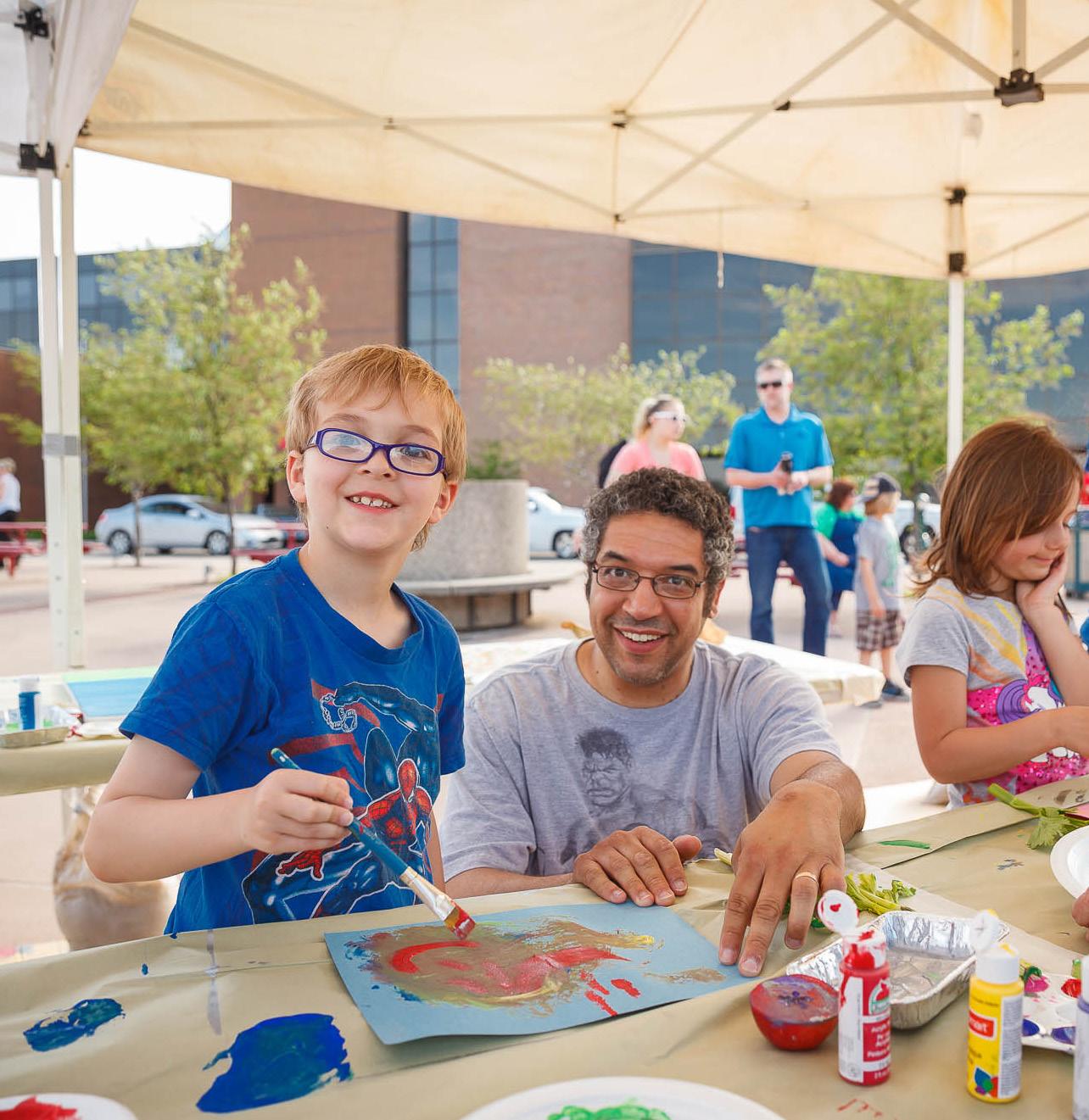
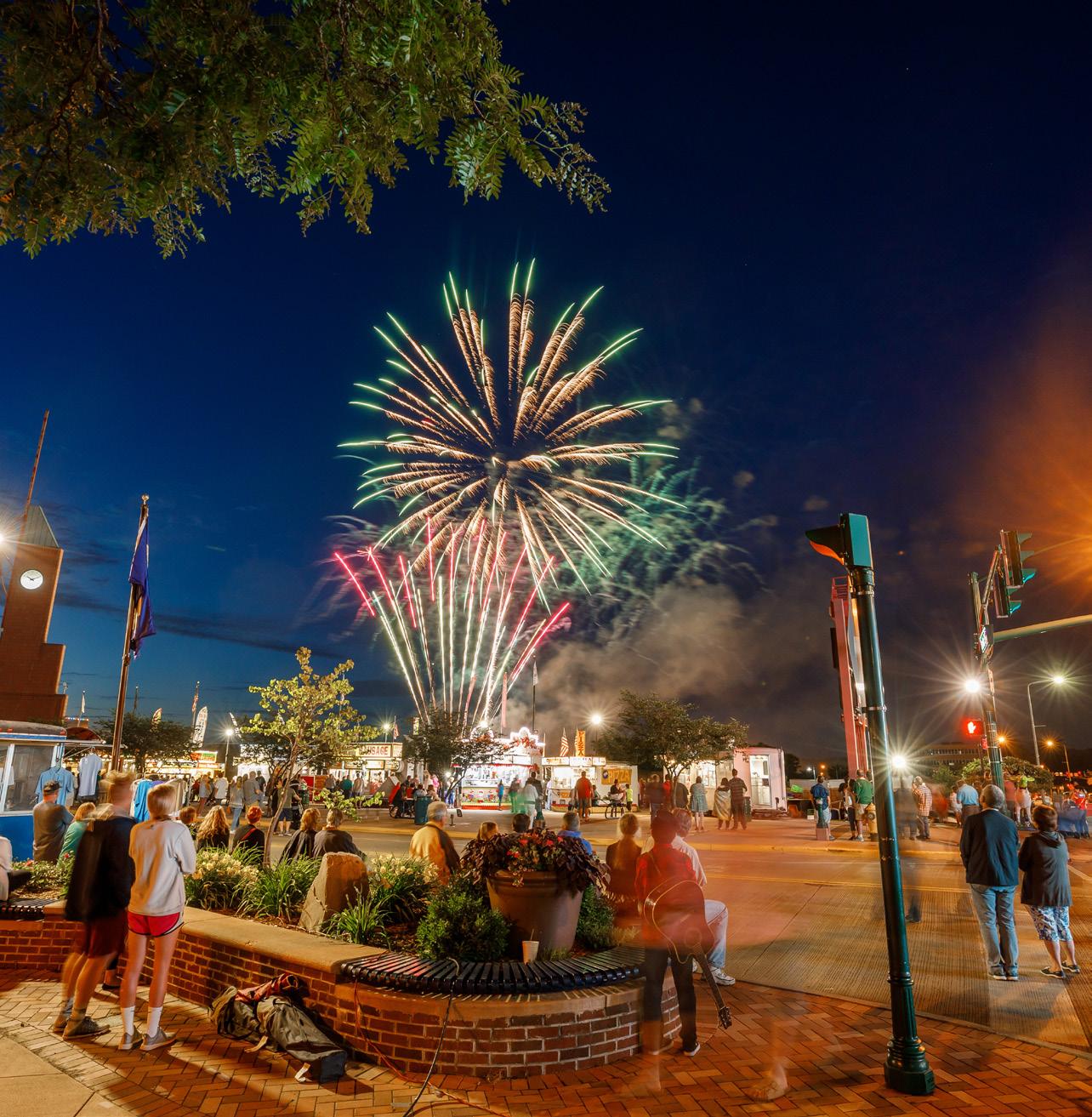
This plan was shaped by many communities and reveals a collective vision for regional growth through arts and culture experiences and economic activity. In order to fully execute the vision and goals of this plan, many organizations will need to work together across the region in various capacities. The following guide provides an overview of how regional, county, and local agencies and organizations will support the full potential of the South Bend - Elkhart regional arts and culture plan.
Through the broadest range of partnerships and services, regional organizations are advocates, connectors, and conduits for expanding arts and culture.
Higher Education Institutions: Both public and private higher education institutions in the South Bend - Elkhart region should approach this plan with an understanding of their own established funding resources (such as ongoing grant funds, endowments, etc.) and their assets (theatres, galleries, studios, etc.). As members of the region’s arts and culture landscape, higher education institutions have a responsibility to understand the larger priorities and goals across the region, and should seek partnership with appropriate entities to amplify local efforts to achieve the goals articulated in this plan.
Independent Artists and Collectives: Individual artists and collectives should seek grant funding for arts and culture activities and opportunities in alignment with their individual goals and creative practices. This plan may provide a strategic approach to transformational arts and culture opportunities at a regional scale, but the region’s artists and creative network define the region’s thriving cultural landscape. Independent artists and collectives should approach this plan as a tool to support their valuable advocacy efforts, as well as a roadmap for future professional development opportunities.
Non-Profit Organizations: The region is rich with legacy and emerging arts and cultural organizations, whose world-class offerings are treasured local assets. Every non-profit will approach this plan through a unique, missionfocused lens that is calibrated to its institutional goals. Many of this plan’s recommendations are geared toward non-profit organizations, who should collaborate internally to evaluate their candidacy for certain kinds of funding as they intersect with this plan’s recommendations. Above all else, any expansion or enhancement of a non-profit organization’s program should align with their foundational mission, vision, and values. While this plan cannot tailor grant seekers’ pursuit of project funding, this plan does contextualize the regional impact of projects on an organizational scale.
South Bend - Elkhart Regional Partnership (RP): As one of the region’s primary voices for expanding regional economic growth and opportunities, the RP can be a vital resource for facilitating a region-wide understanding of the benefits of arts and culture economic activities and their systemic impact in communities.
County organizations may have intergovernmental agreements or partnerships with local governments that can support efforts to implement more arts and culture experiences, streamline implementation complications, and amplify services and offerings at both local and regional levels.
Elkhart, Marshall, and St. Joseph
Through their respective charitable endowments, the region’s community foundations are grantmaking agencies that inspire local change with local dollars. This plan does not propose any specific recommendations for grantmaking programs or initiatives for these foundations; however, these organizations can be key players in supporting grantseeking efforts for arts and culture initiatives that can transform the region at the county level.
Each county’s elected officials hold ultimate administrative authority over decisions for county-wide partnerships, initiatives, and funding as they pertain to arts and culture. These elected officials are also advocates across local and state governments and agencies to further the goals of this plan.
County Parks and Recreation Departments: Where appropriate, county parks and recreation departments should partner with local and state agencies seeking to achieve the vision of this plan. These departments can support arts and culture efforts by providing resources in support of projects and initiatives, and regularly seek knowledge around and connections with those who are in the arts and culture landscape.
and
Each county’s respective tourism and visitor bureaus are essential resources for promoting local arts and culture events, programs, and offerings. This plan can foster their current and future understanding of regional assets, as well as support their marketing and cross-promotional efforts.
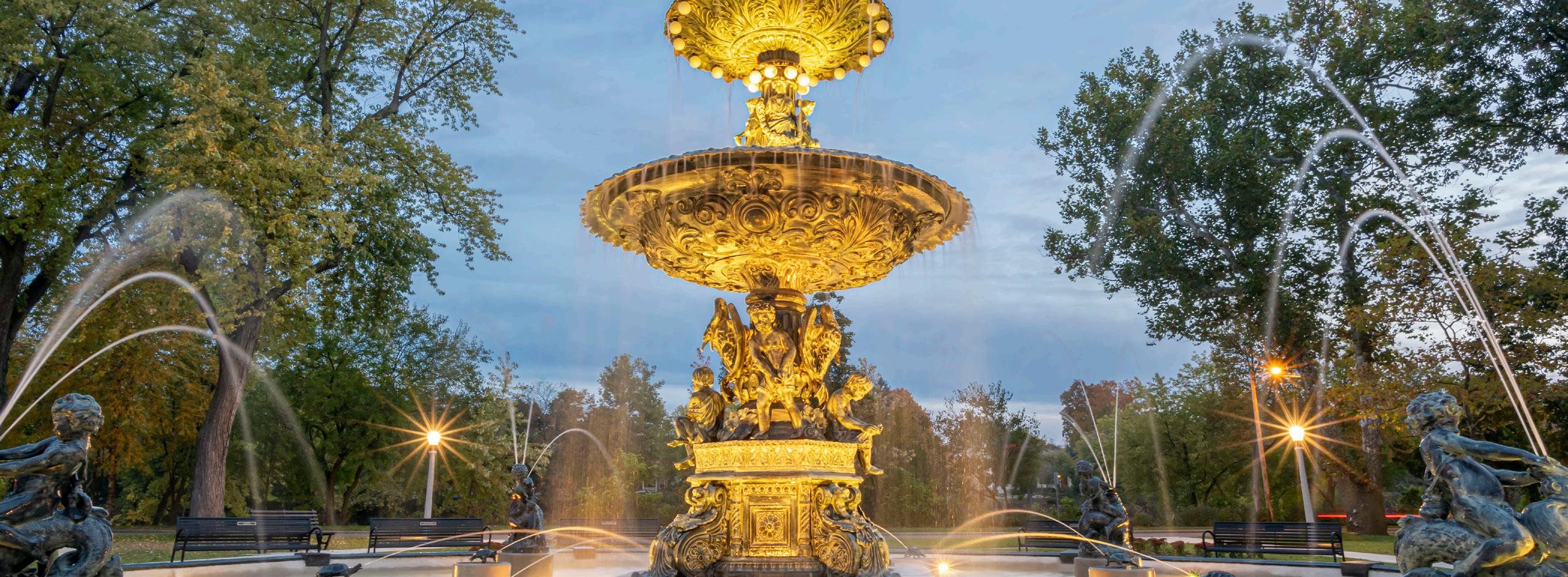
Every city in the South Bend - Elkhart region should feel inspired and empowered to define and implement their own respective vision for arts and culture with its community. Within the context of the South Bend - Elkhart Regional Arts and Culture Plan, municipalities and local-level organizations will have the greatest cultural and grassroots influence over this plan’s implementation.
Local Arts Councils: A vital resource across the region, local arts councils are responsible for championing the local vision for public art and arts and culture. These councils are also advocates for any initiatives that bring arts and culture to cities, and are responsible for stewarding public resources as they pertain to their duties. Within the context of this plan, municipal arts councils will serve as strong advocates for opportunities to support local artists and develop spaces for arts and culture enrichment.
Local Economic Development Departments and Downtown Bureaus: Working closely with the South BendElkhart Regional Partnership, local economic development departments and downtown bureaus should focus on strategies in this plan to increase visitorship, enhance walkability and downtown experiences, and boost local economies through arts and culture spending. By understanding the connection between economic impact and arts and culture offerings, local economic development departments and downtown bureaus will become strategic partners in supporting and amplifying these efforts and leveraging arts and culture to create local identity.
Local Government Elected Officials: As each city’s legislature, city council members and mayors are responsible for funding the activities and giving direction for arts and culture initiatives. City council members are also instrumental in shaping each city’s engagement with a public art program by encouraging their constituents to participate in any programs pertaining to arts and culture.
Local Parks and Recreation Departments: Festivals, outdoor activities, and opportunities to gather are often facilitated by parks and recreation departments, whose management of local facilities is an essential part of fostering the local arts and culture landscape. These departments should reflect on the user experience for their current process for facility and park rentals, and identify any barriers, opportunities, or complexities that place administrative burdens on organizations seeking to implement more arts and culture events at the local level. One of the most important outcomes of this plan is that it identifies opportunities to encourage gathering and outdoor experiences through arts and culture, and local parks and recreation departments may be inspired by transformative projects described in this plan.
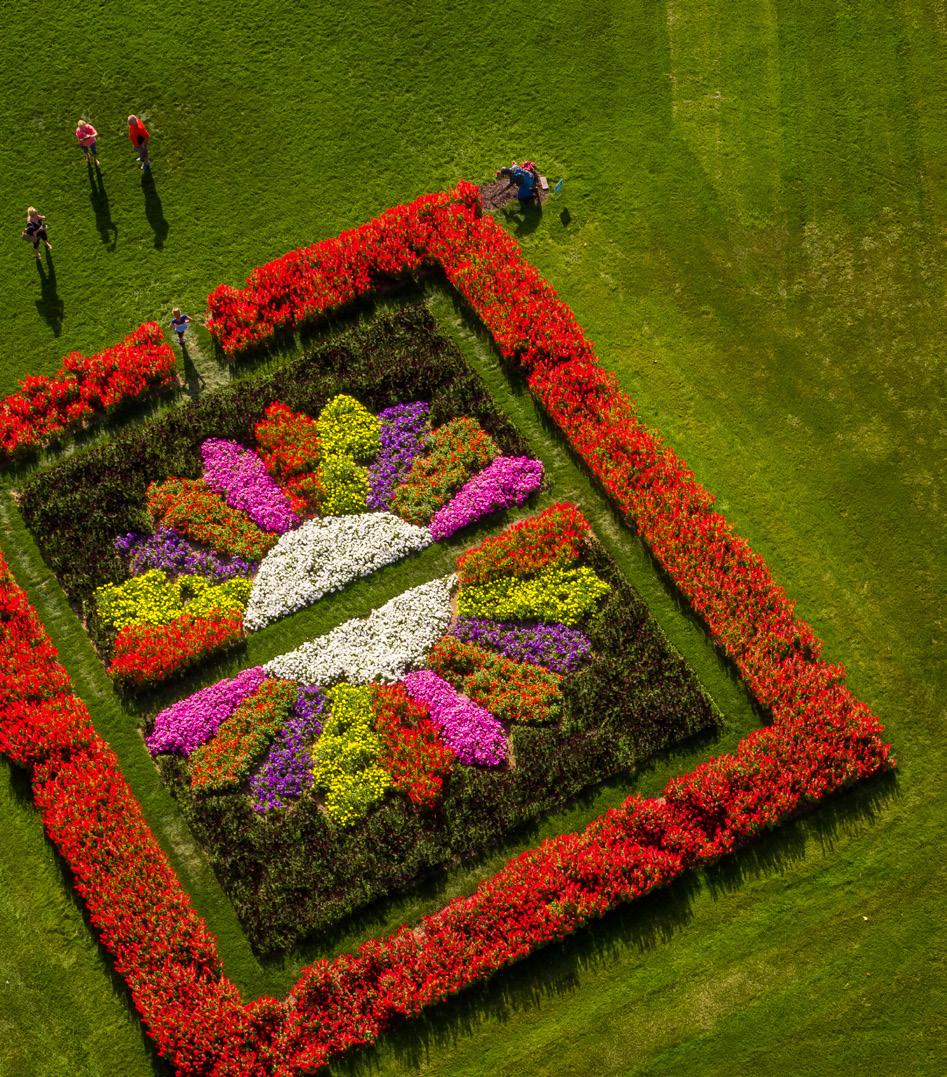
This plan is broken down into three sections:
1. Identity. This chapter reviews the region’s existing amenities and resources, including a list of arts and culture assets and festivals.
2. Vision for the Arts. This chapter reflects the process’s public engagement efforts and synthesizes them into the region’s vision, objectives, and values.
3. Strategies and Actions. This chapter provides a list of strategies and actions required for implementation, including information on timing, personnel requirements, impact, relative impact, and interested stakeholders.
Vision. The vision is the highest level description of the region’s desired future for arts and culture. It is the point that all objectives and strategies look to achieve.
Objectives. Objectives are topics that directly support the realization of the vision. They functionally serve to group strategies.
Values. The values are key elements that were identified as the region’s organic ways of working together. Multiple values are attributed to each strategy, supporting their creation and linking them directly to community-expressed needs.
Strategies. The strategies are specific project and program recommendations.
Actions. Actions are the specific steps that are required for the implementation of each strategy.
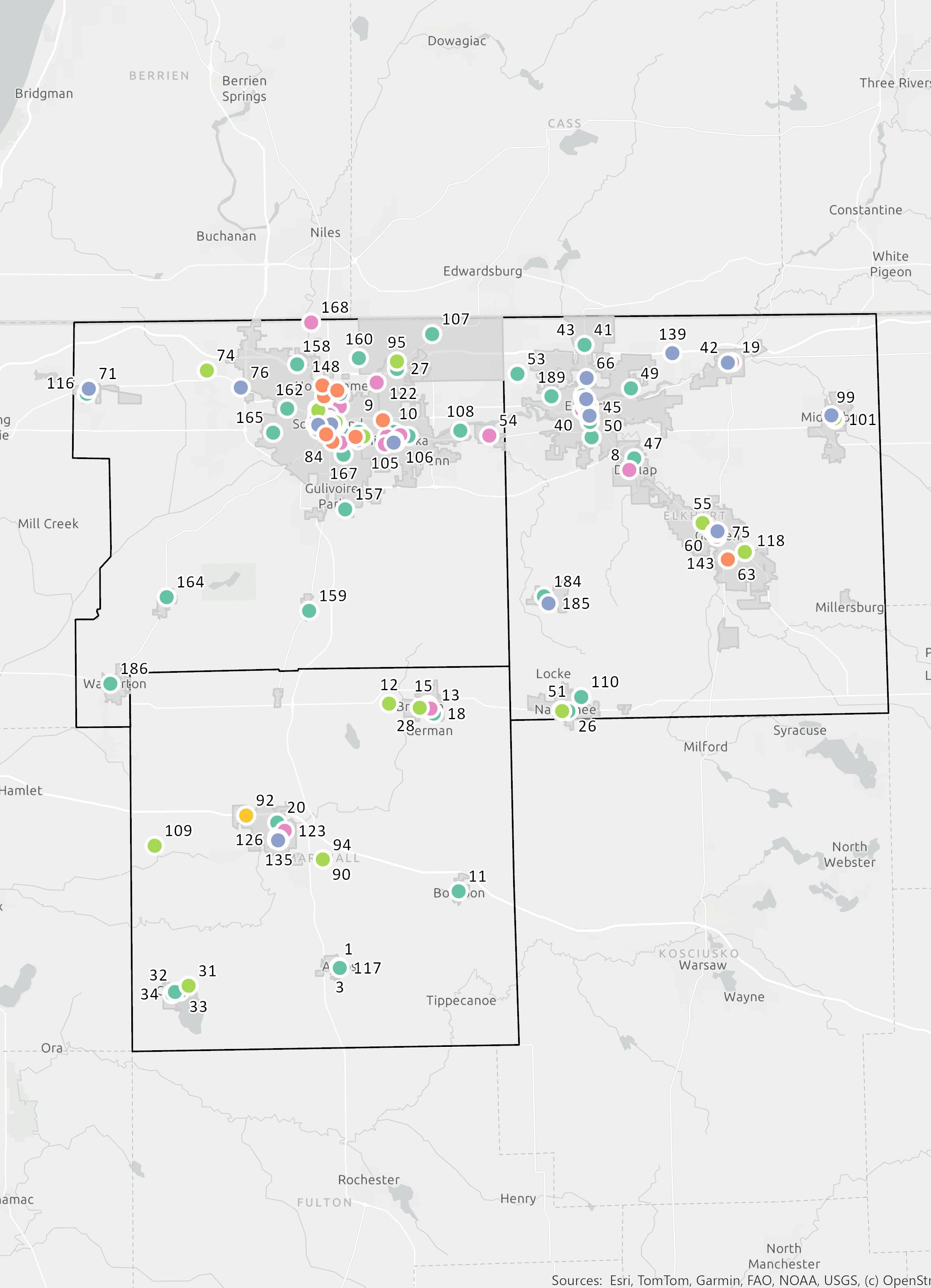
The South Bend - Elkhart region is made up of Elkhart, Marshall, and St. Joseph counties and is situated at the Michigan/ Indiana state border. The St. Joseph River cuts through Elkhart and St. Joseph counties, providing dynamic and thriving waterfronts across its major cities of South Bend and Elkhart. Likewise, the Yellow River flows through Marshall county’s seat, Plymouth. The three counties have similar land area, though their populations vary significantly. While much of the rural landscape is agricultural, many downtown areas provide hubs of arts and culture for residents in and around those areas.
Region Population: 526,054
Land Area: 1,364.6 m2
The Indiana Economic Development Corporation (IEDC) launched the Indiana Regional Economic Acceleration and Development Initiative (READI) in 2021 to promote strategic investments to position Indiana as a magnet for talent and economic growth statewide. In 2024, IEDC rolled out READI 2.0 with an additional funding round. Through the Lilly Endowment Inc.’s recent $250 million gift to the IEDC, the IEDC then launched an additional READI component - the Redevelopment & Arts Initiative - which includes elevating the vitality of Indiana’s arts and cultural community through regional investments, in collaboration with the Indiana Arts Commission (IAC).
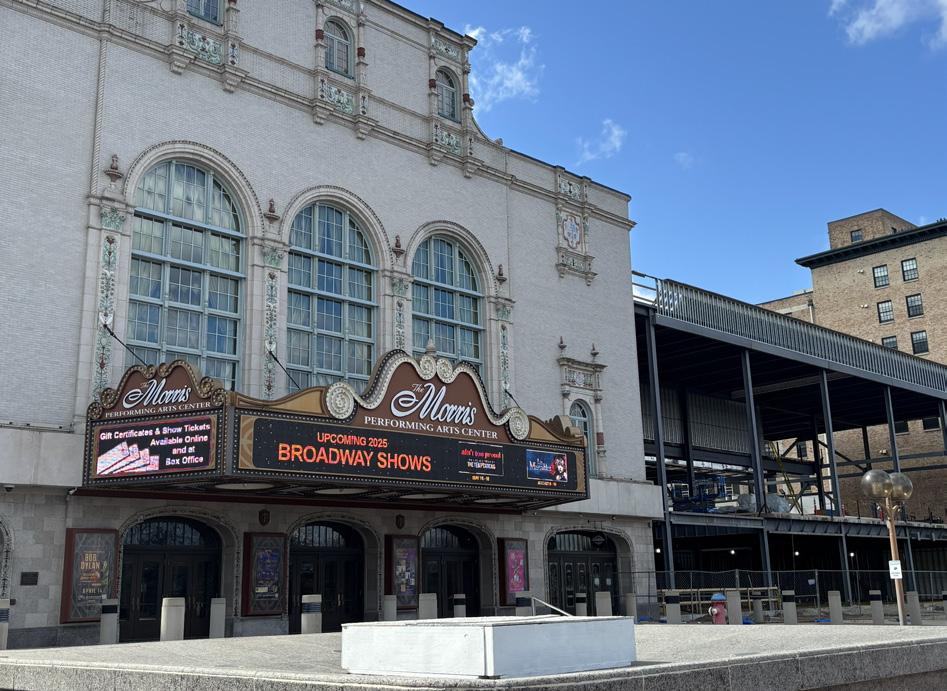
Since 2021, the SBE region has been stewarding and implementing quality of place projects across its communities through READI rounds one and two regional awards totaling $95M. In round one, several local investments into arts and culture assets - like the Morris Performing Arts Center in South Bend and the Tolson Center for Community Excellence in Elkhart- were made.
In late 2024, the region, with financial support from the IEDC, commissioned this arts and culture planning process. The plan illuminates opportunities for additional, complementary expenditures in arts and culture assets that enhance and amplify past, current, and planned quality of place investments. In 2026, IEDC and IAC intend to make available funds from the Arts Initiative to specific projects across the state, informed by regional planning
Portage Place Business
Potawatomi Park and Chris Wilson Pavilion
Potawatomi Zoo
River Park Square 145 Shiojiri Niwa Japanese Garden
South Bend Farmers Market 157 St. Joseph County Public Library - Centre Branch 156 St. Joseph County Public Library - Community Learning Center
160 St. Joseph County Public Library - Francis Branch
158 St. Joseph County Public Library - German Branch
159 St. Joseph County Public Library - Lakeville Branch 162 St. Joseph County Public Library - LaSalle Branch
St. Joseph County Public Library - Main Branch
St. Joseph County Public Library - North Liberty Branch
163 St. Joseph County Public Library - River Park Branch
166 St. Joseph County Public Library - Studio 304
167 St. Joseph County Public Library - Tutt Branch
165 St. Joseph County Public Library - Western Branch 178 Tolson Center for Community Excellence 192 Vested Interest 184 Wakarusa Farmer's Market*
186 Walkerton Lincoln
Botanic Gardens
(PBS)
(NPR)
Performing Arts
Elkhart Concord High School
Blues Review - WVPE*
Bremen Community and Performing Arts Center
Elkhart County Symphony Orchestra Association
Elkhart Municipal Band*
Everest Rohrer Chapel/ Fine Arts CenterAuditorium at Bethel University
Fern Hunsberger Park
Fischoff National Chamber Music Association
Goshen Community Chorale*
Goshen Theater, Inc 75 Ignition Music Garage
Island Park 80 J:Cubed - WVPE*
Juke Music*
Langlab
85 Louise E. Addicott and Yatish J. Joshi Performance Hall & Campus Auditorium at IUSB 86 Maple City Community Orchestra*
100 Merrimans' Playhouse, Inc.
105 Midway Tavern and Dancehall
Moreau Center for the Arts at Saint Mary's College 112 Morris Performing Arts Center and Lawn, and John Hunt Memorial Plaza
Music Mends* 115 New Horizons Band of Elkhart*
Patchwork Dance Company
Phoenix Performing Arts
Plymouth Community Schools Performing Arts Center
Poetry Den*
Premier Arts
Rocki Button
Salvation Army Kroc Center 143 Sauder Concert Hall at Goshen College Music Center
Seitz Park and Bandshell
of Orange*
Rose Moon
+ Elements
Bremen Arts Collective
Bunbury Gallery
Circa Arts
Cr8-UR-Canvas
Culver Academies Crisp Visual Art Center
Elkhart Art League
Evelyn Lehman Culp Heritage Collection at the Nappanee Center
Fire Arts
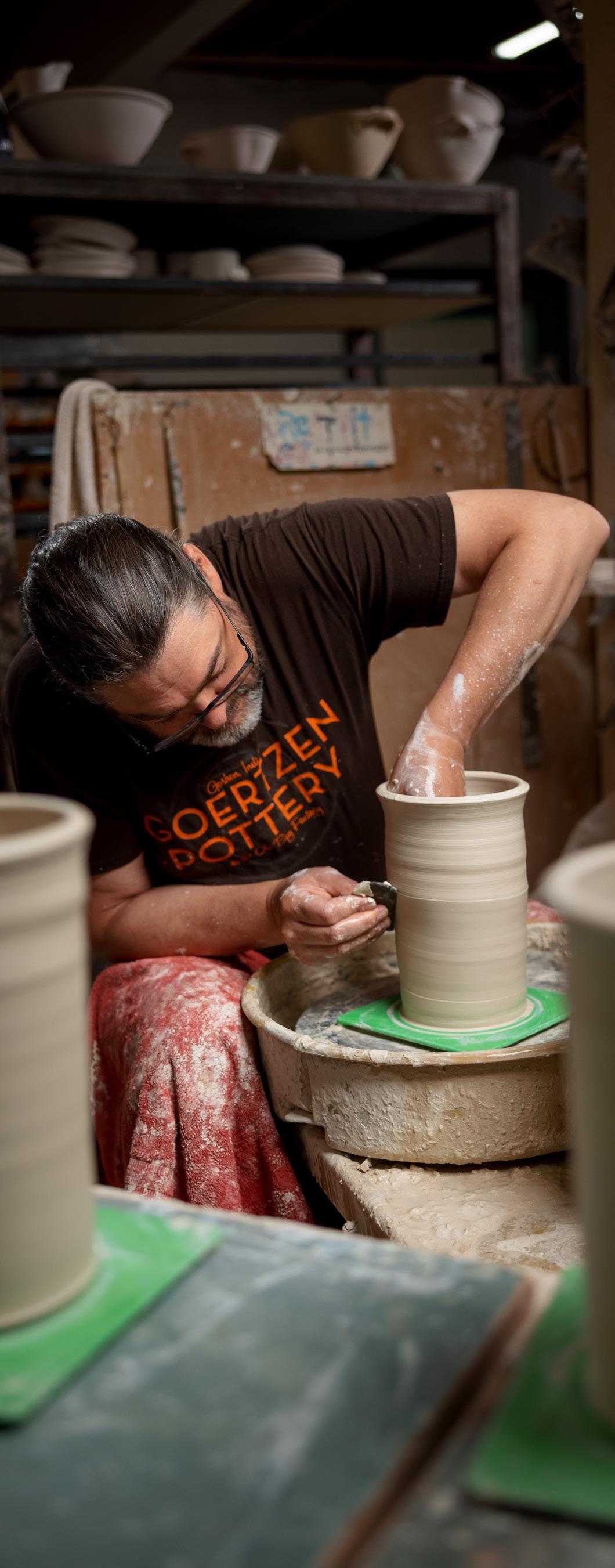
Goertzen Pottery and Gallery 58 Goshen Art House 69 Heartland Art Center 74 HeARTworks Art Studio 72 Highland Studio and Gallery 89 Make South Bend 90 Marshall County Barn Quilt Trail*
95 Max Black Fine Arts 98 Middlebury Arts Council* 109 MoonTree Studios 113 Nappanee Arts Council, Inc. and Center 118 Northern Indiana Clay Alliance
Piser Designs 128 Portage Collective 132 Red Bridge Art Studio 171 Studio II: Wood and Stone Sculptures
190 Young at Art
denotes organizations without a brick and mortar location
Land Area: 463.2 m2
County Population: 207,047
Population Growth: 4.8%
County Median Age: 36.3
County Median HHI: $67,188
# Employers: 5,057
Employment Rate: 63.6%
» Arts on the Millrace
» Bike Elkhart County Quilt Gardens Ride
» Bristol Corndog Festival
» Bristol Homecoming Festival
» Classic Car Cruise-ins
» Elkhart ArtWalk
» Elkhart Jazz Festival
» Elkhart Riverwalk Grand Prix
» Farmers Days (Millersberg)
» Goshen First Fridays
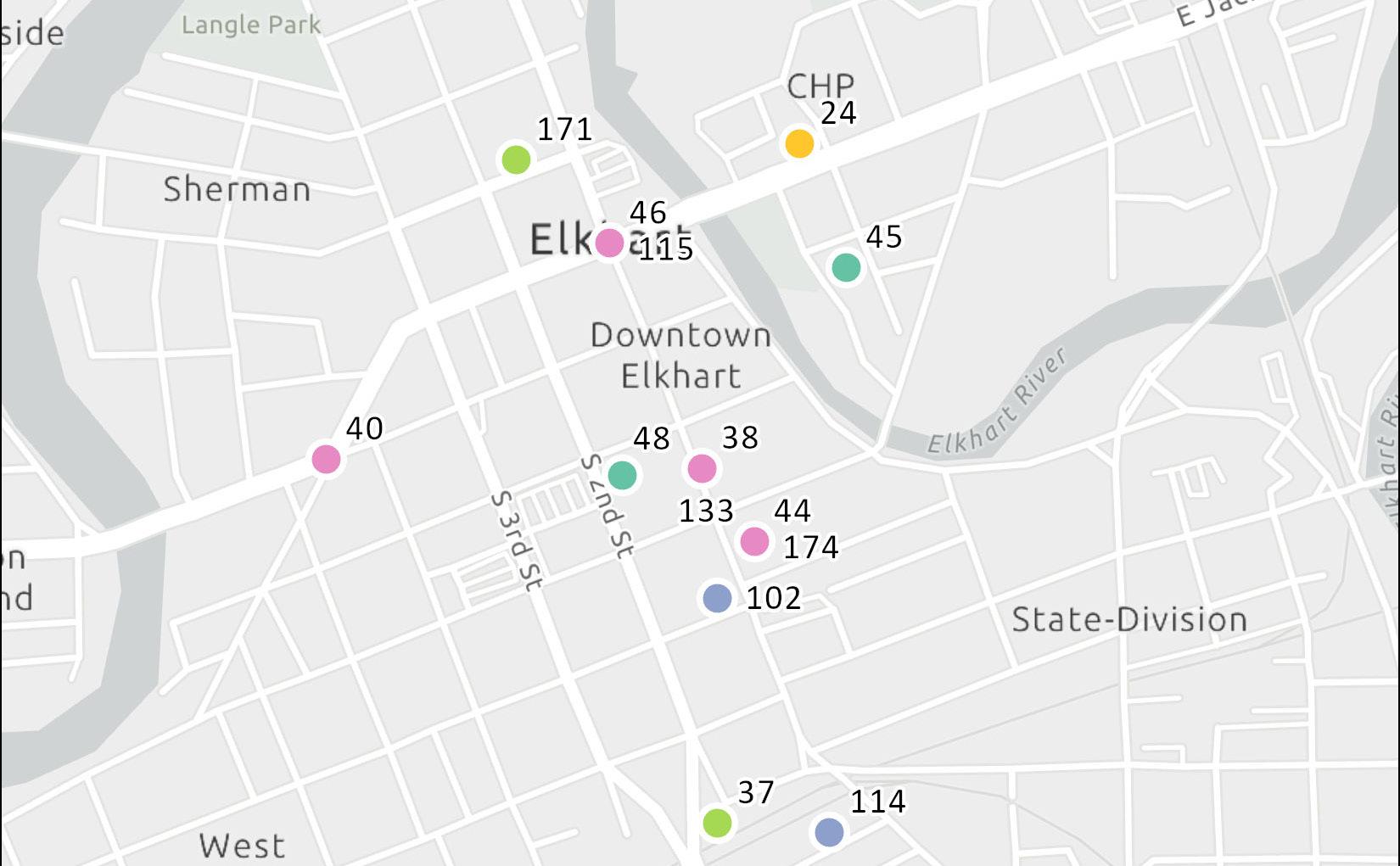
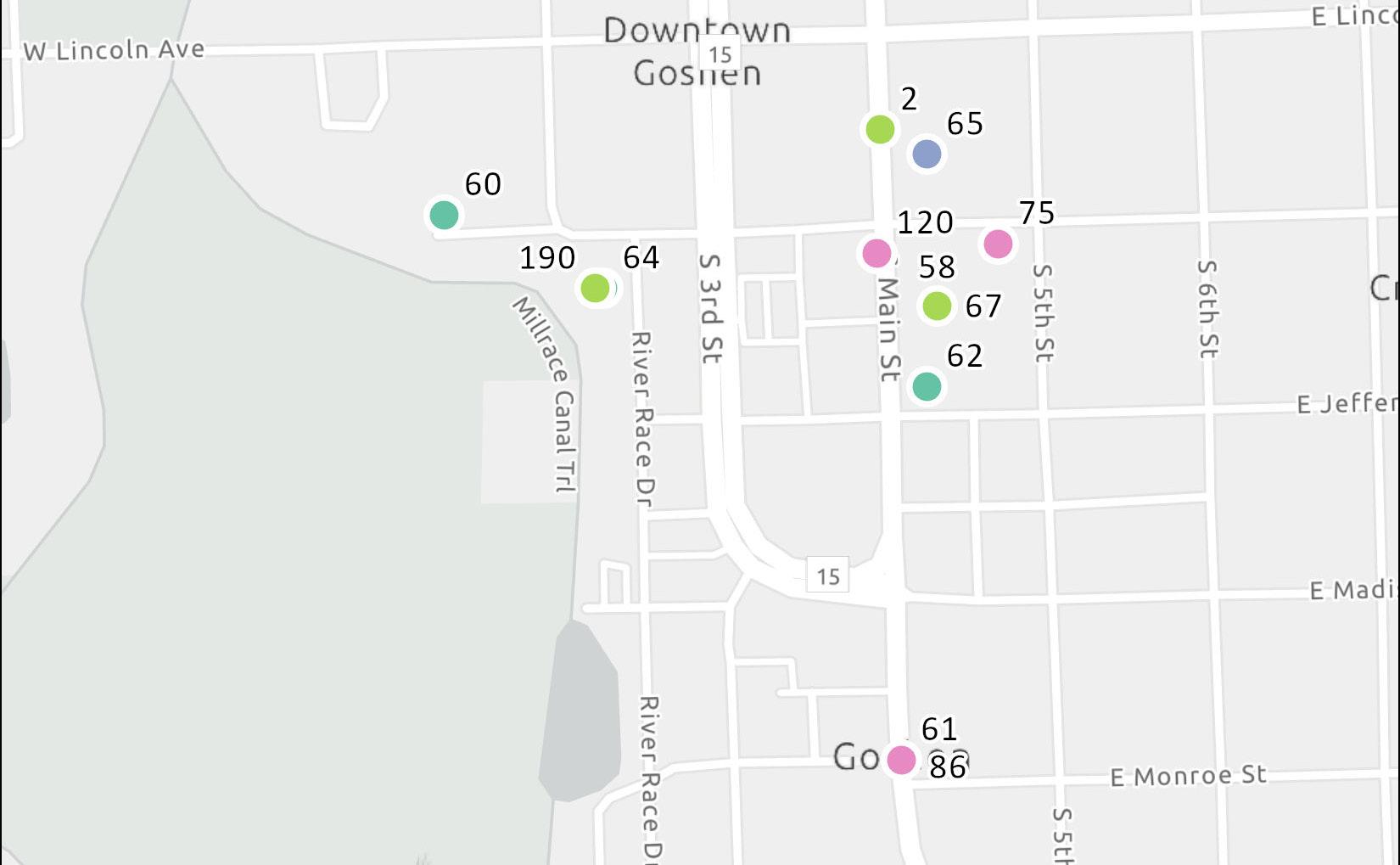
Elkhart County is located at the northeast corner of the region and is the second most populated county. The two largest cities in Elkhart County are Elkhart (pop. 53,923) and Goshen (county seat, pop. 34,517). Elkhart is positioned along the St. Joseph River and is home to the region’s popular Jazz Festival. Recent strategic planning processes have yielded many community-building assets, such as the new aquatic center, Elkhart Health and Aquatics. Goshen is in the center of the county, and its walkable historic downtown is home to a thriving arts community that is built on bringing people together and sharing culture.
» Hall of Heroes Comic Con
» Hispanic Heritage Festival
» Maple Syrup Festival
» Middlebury Fall Festival
» Middlebury Summer Festival
» Nappanee Apple Festival
» Nappanee Friday Fest series
» Pumpkinvine Bike Ride
» Quilt Gardens along the Heritage Trail
» Rhapsody Arts & Music Festival
» River Bend Film Festival
» Ruthmere Coffee on the Piazza
» Ruthmere Museums Campus Holiday Tours
» Wakarusa Maple Syrup Festival
» Wakarusa Pumpkin Tree
» Wellfield Holiday Lights
» Wellfield Taste of the Gardens
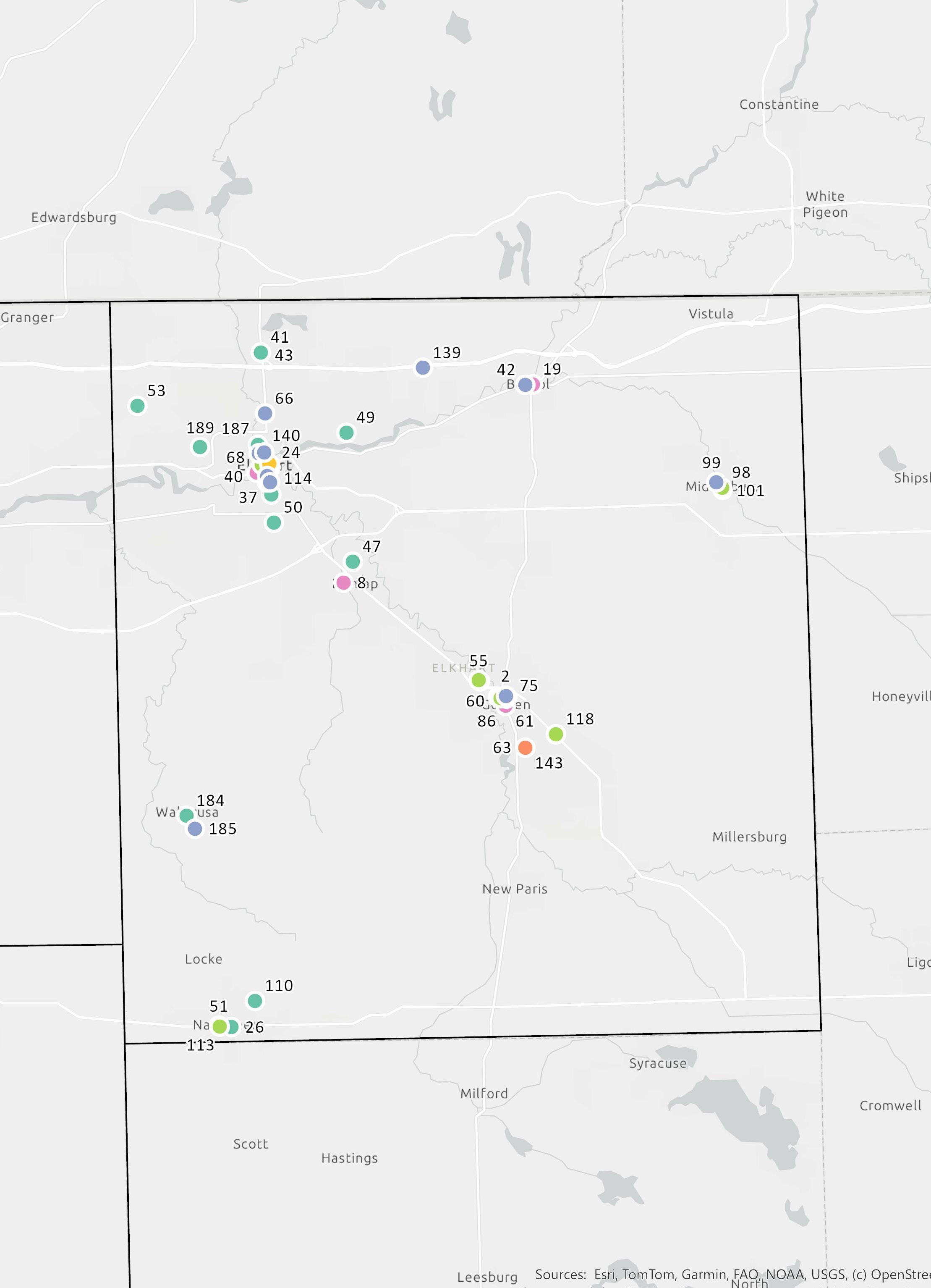
Inset maps show locations where assets overlap on the county-wide map.
143 Sauder Concert Hall at Goshen College Music Center
The Lerner Theatre
Art Alley
Elkhart Art League
Evelyn Lehman Culp Heritage Collection at the Nappanee Center
Goertzen Pottery and Gallery
Goshen Art House
Middlebury Arts Council*
Nappanee Arts Council, Inc. and Center
Northern Indiana Clay Alliance 171 Studio II: Wood and Stone Sculptures
Young at Art
organizations without a brick and mortar location
Land Area: 443.6 m2
County Population: 46,095
Population Growth: -2.0%
County Median Age: 39.6
County Median HHI: $68,041
# Employers: 1,092
Employment Rate: 60.5%
» Argos Summer Kickoff Festival
» ARTS in the Street Festival
» Blueberry Festival
» Bourbon Summerfest
» Bremen Fireman’s Festival
» Bremen Let’s Fiesta Latin Fest
» Bremen Oktoberfest
» Bremen Summer’s End Festival
» Culver Fall Fest
» Culver Lakefest
» Culver Paint Out
» Latino Festival (Plymouth)
» Mayor’s Summer of Music (Plymouth)
» Party at the Park (La Paz)
Marshall County is the southernmost county in the region. Without a large city, it is the least populated, with roughly 25% of the population of the other counties in the region. Its county seat, Plymouth (pop. 10,214) houses a blossoming arts scene that encourages creativity and community, with the Heartland Arts Center acting as a central hub that brings in artists from around the region.
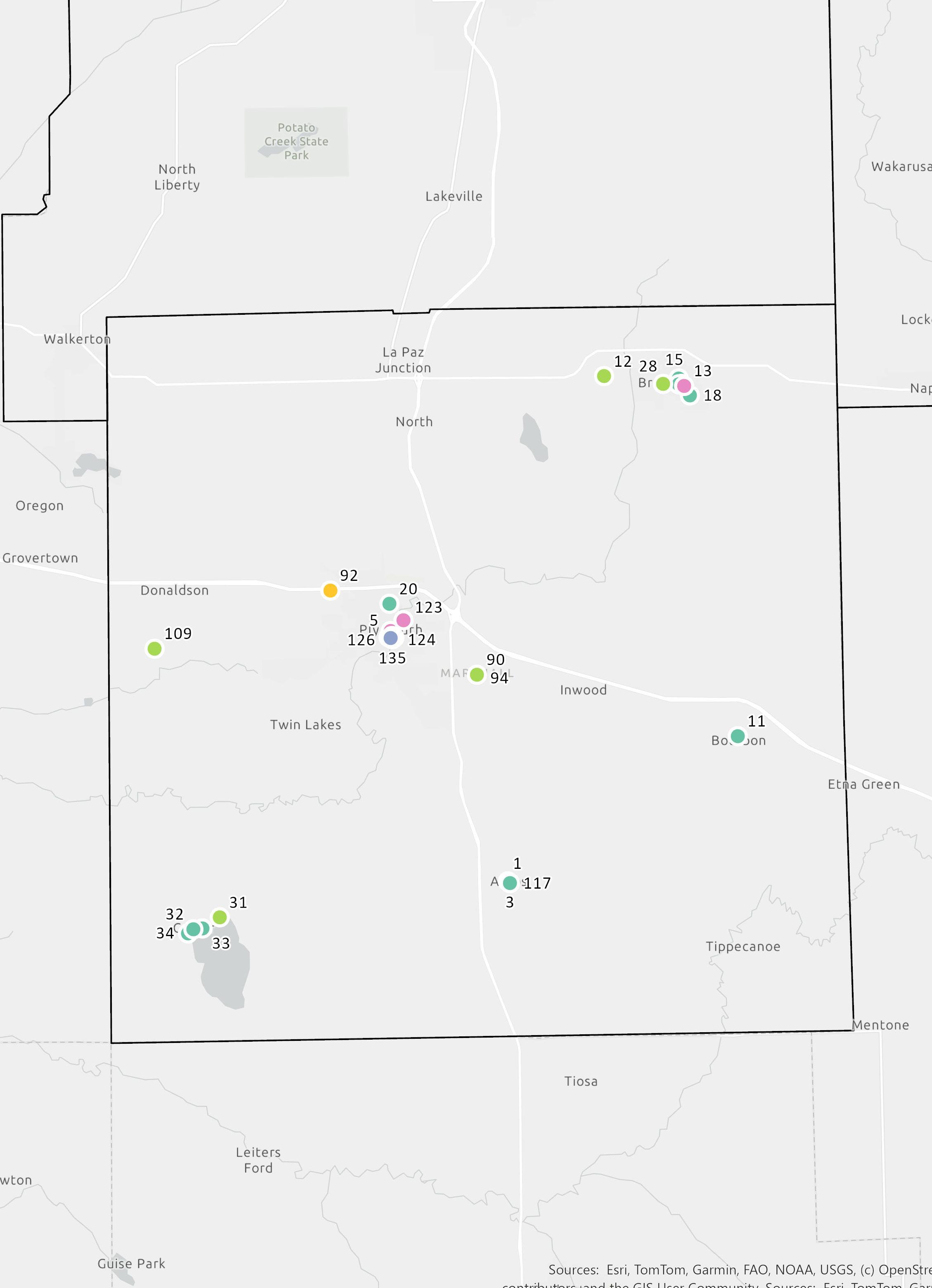
Inset maps show locations where assets overlap on the county-wide map.
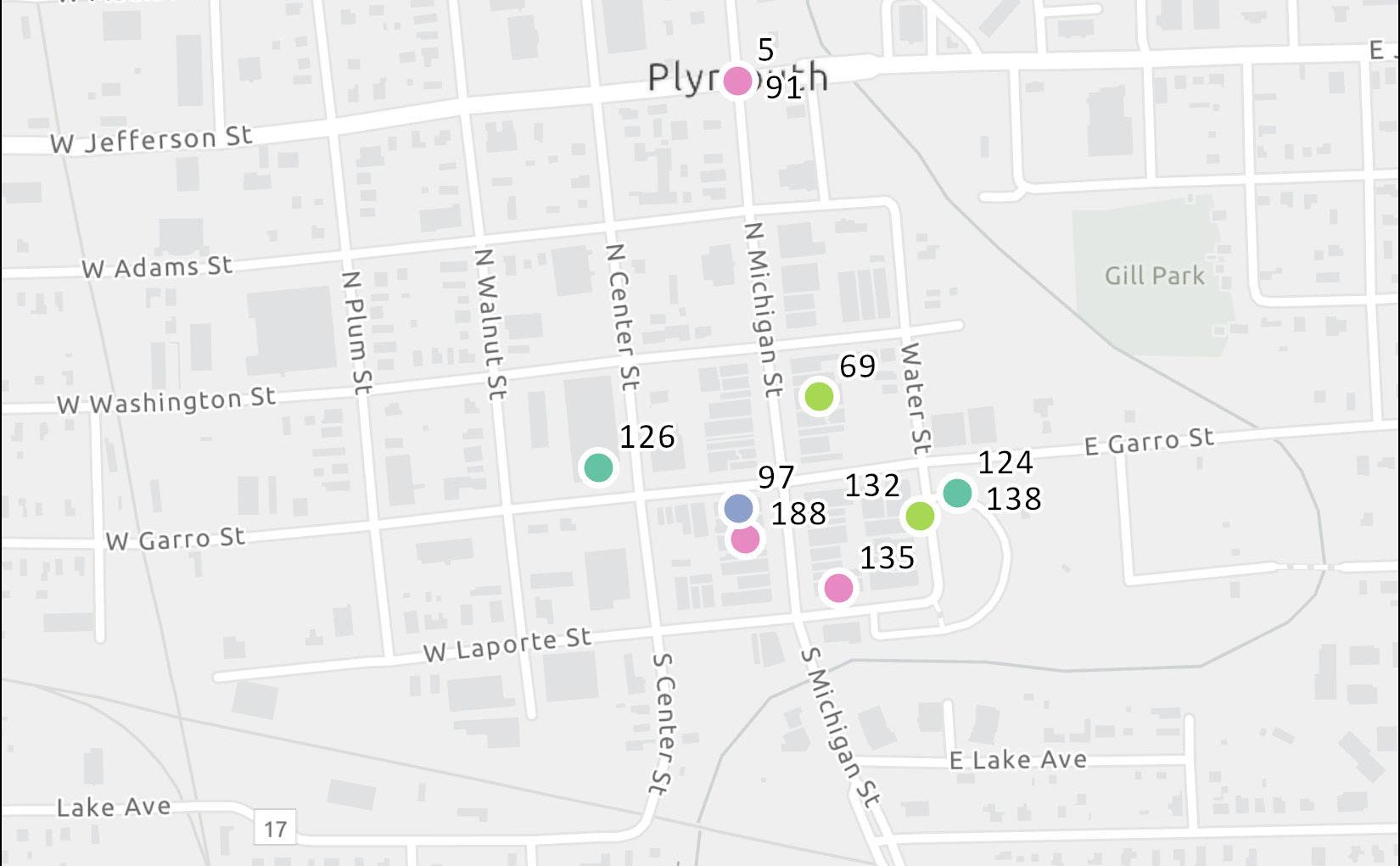
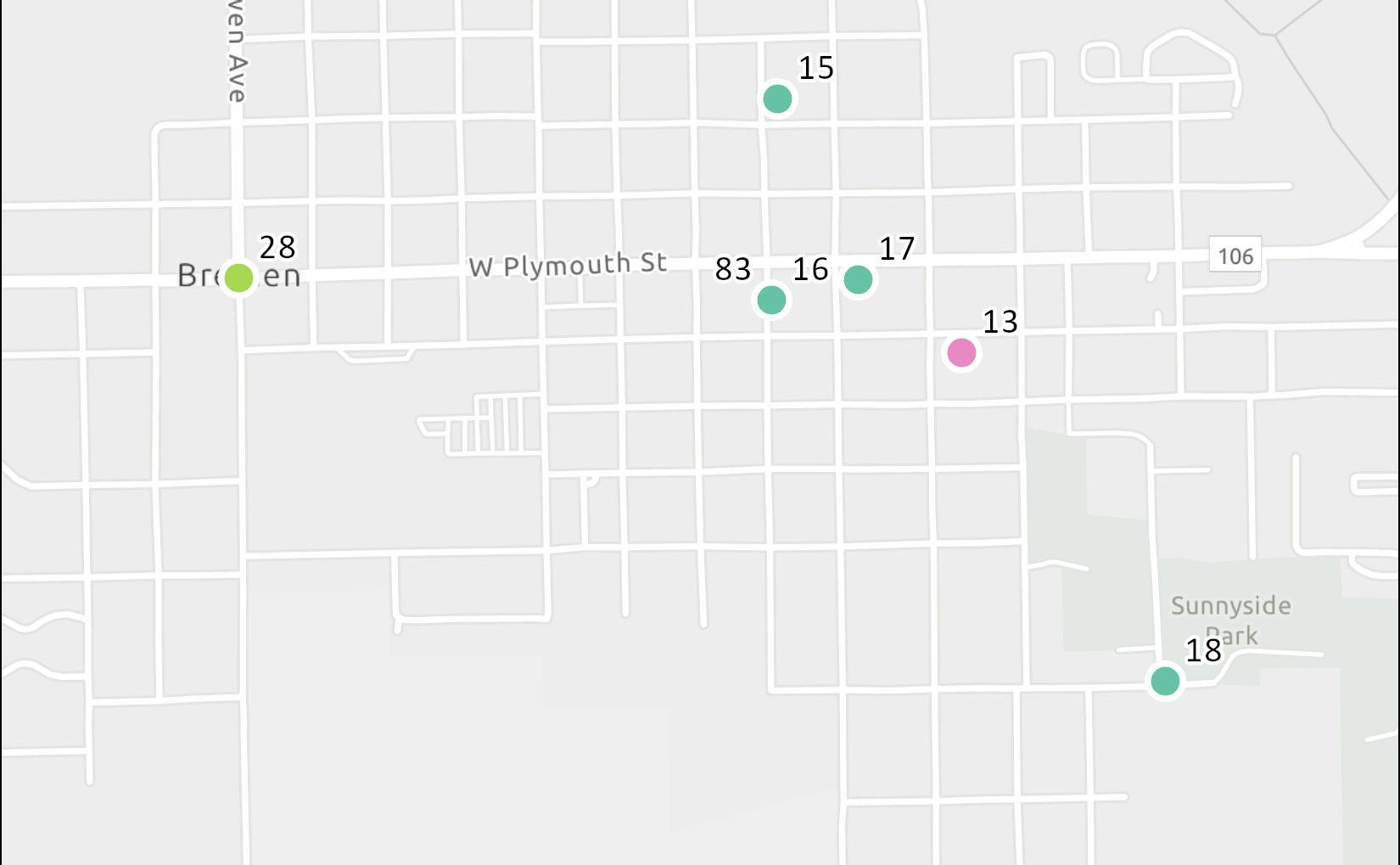
Land Area: 457.8 m2
County Population: 272,912
Population Growth: 2.2%
County Median Age: 36.8
County Median HHI: $65,751
# Employers: 5,917
Employment Rate: 60.7%
» Art Beat
» City of Mishawaka Summerfest
» Concours d’Elegance at Copshaholm
» Downtown South Bend First Fridays
» Firefighters Blues Festival
» Fridays by the Fountain
» Fusion Fest
» Juneteenth
» Kamm Island Festival
» Leeper Park Art Fair
» Michiana Renaissance Festival
» Mishawaka Retrofest
» Mishawaka Summer Concert Series
» Mishawaka Winterfest
St. Joseph County is located at the northwest corner of the region and is the most populated county. The city of South Bend is home to nearly 50% (pop. 103,453) of the county’s residents. South Bend is also home to the University of Notre Dame, a nationally recognized private research university that brings in roughly 13,000 students annually.
The South Bend Metro Area, which includes the city of Mishawaka (pop. 51,063), has a wide and varied collection of arts and culture offerings, from large-scale performing arts venues to locally owned galleries with an emphasis on attracting all audiences and providing unique experiences.
» New Carlisle Hometown Days
» Notre Dame Shakespeare Festival
» Osceola Music Festival
» Rebel Art Fest
» South Bend Mural Mania
» St. Patrick’s Day Parade and Greening of the River
» Vibes Music Festival
» Walkerton Falloween Fest & Carnival
» Yart South Bend
Joseph County Arts and Culture Assets
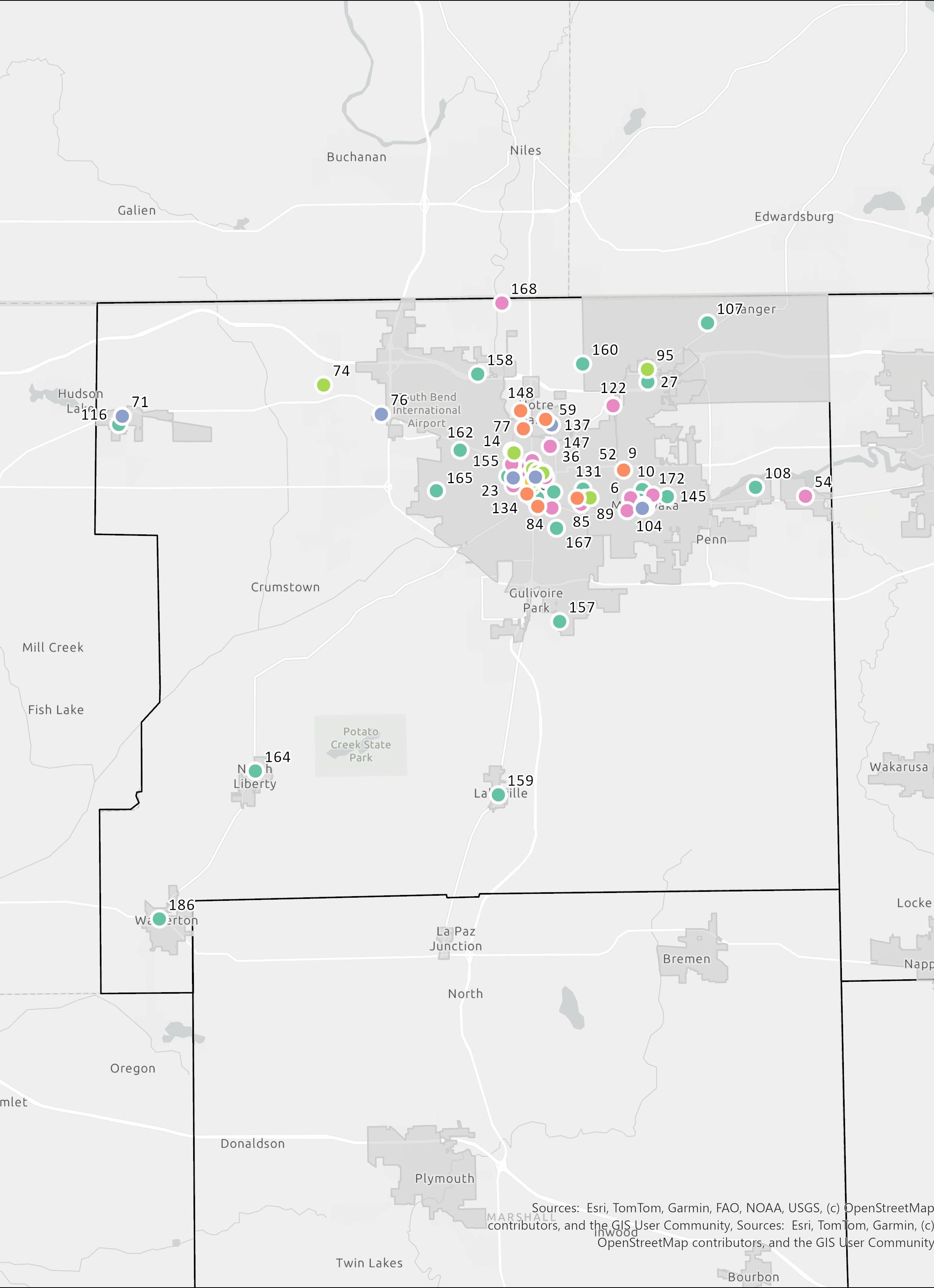
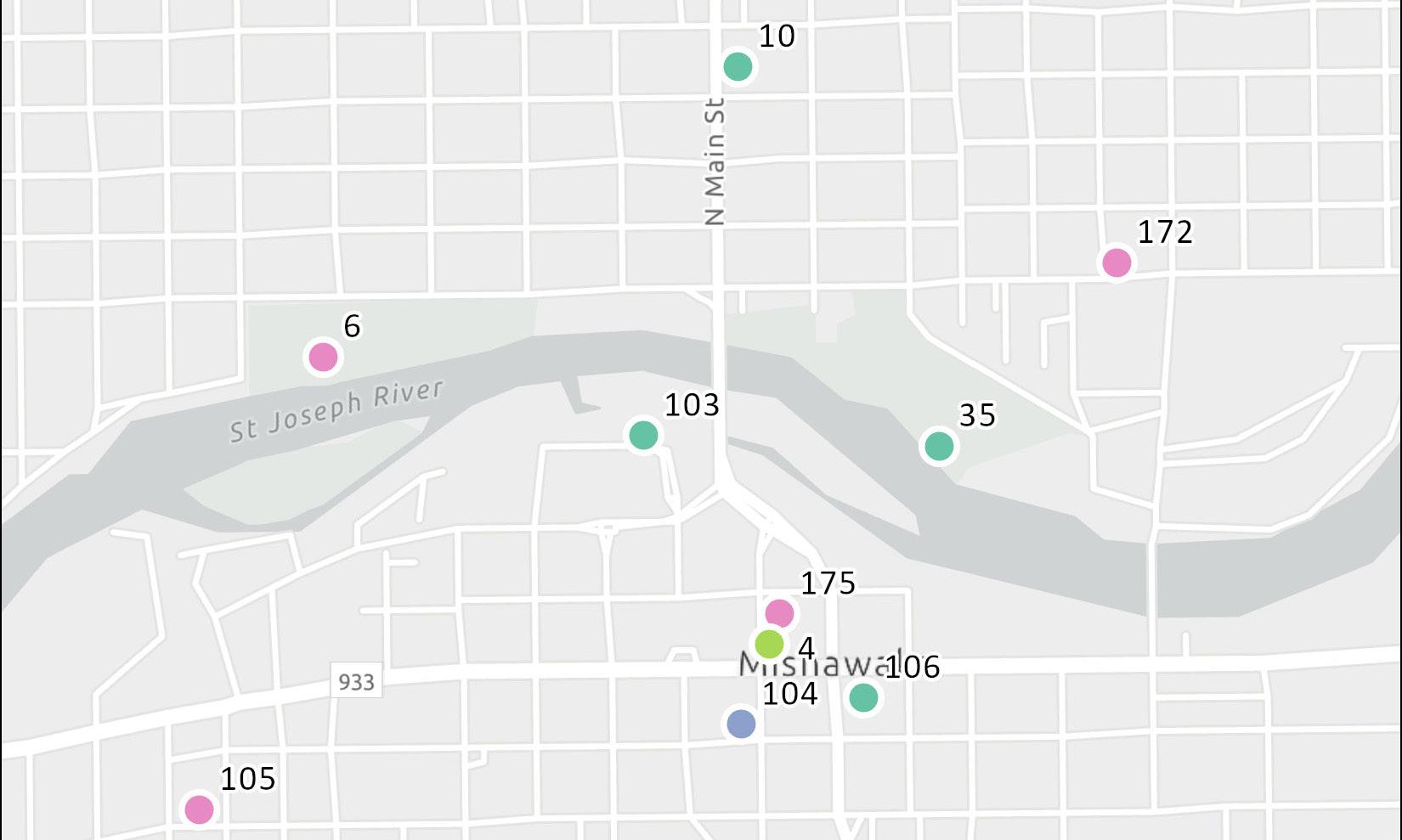
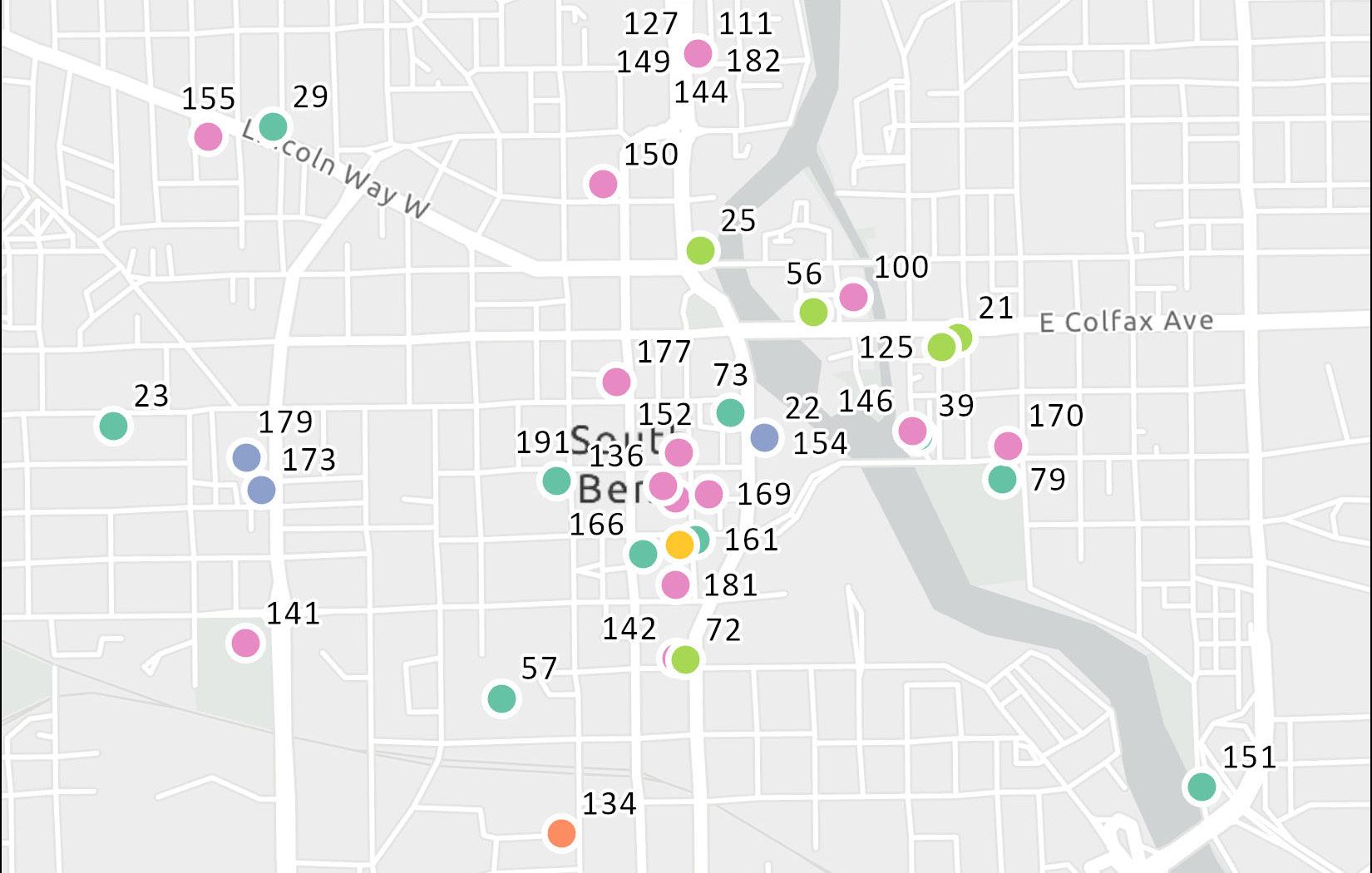
Inset maps show locations where assets overlap on the county-wide map.
Downtown Mishawaka
Downtown South Bend
Arts Supporting Org.
30 Community Foundation of St. Joseph County
Cultural Amenities
10 Battell Community Center
14 Brain Lair Books
22 Century Center
23 Civil Rights Heritage Center
29 Colfax Cultural Center
27 Corvilla Community Art Gallery
35 Downtown Mishawaka Riverwalk, Beutter Park, and Ironworks Plaza & Skating Ribbon
39 East Race Waterway
57 Four Winds Field
73 Gridiron
79 Howard Park and Ice Skating Ribbon
87 La Casa de Amistad
103 Mishawaka Market*
106 Mishawaka Penn-Harris Public Library
108 Mishawaka Penn-Harris Public Library-Bittersweet Branch
107 Mishawaka Penn-Harris Public Library-Harris Branch
116 New Carlisle Olive Township Public Library
129 Portage Place Business Accelerator/Incubator
130 Potawatomi Park and Chris Wilson Pavilion
131 Potawatomi Zoo
145 Shiojiri Niwa Japanese Garden
151 South Bend Farmers Market
157 St. Joseph County Public LibraryCentre Branch
156 St. Joseph County Public LibraryCommunity Learning Center
160 St. Joseph County Public LibraryFrancis Branch
158 St. Joseph County Public LibraryGerman Branch
159 St. Joseph County Public LibraryLakeville Branch
162 St. Joseph County Public LibraryLaSalle Branch
161 St. Joseph County Public LibraryMain Branch
164 St. Joseph County Public LibraryNorth Liberty Branch
163 St. Joseph County Public LibraryRiver Park Branch
166 St. Joseph County Public LibraryStudio 304
167 St. Joseph County Public LibraryTutt Branch
165 St. Joseph County Public LibraryWestern Branch
192 Vested Interest
186 Walkerton Lincoln Township Public Library
191 WNIT (PBS)
Higher Education Institution
9 Bethel University
77 Holy Cross College
78 Indiana University South Bend
84 Ivy Tech Community College
134 Purdue Polytechnic
148 Saint Mary's College
183 University of Notre Dame Museums
71 Historic New Carlisle Museum
76 Indiana Dinosaur Museum and South Bend Chocolate Factory
104 Mishawaka Historical Museum
137 Raclin Murphy Museum of Art
154 South Bend Museum of Art
173 Studebaker National Museum
179 The History Museum Performing Arts
6 Battell Bandshell
36 Debartolo Performing Arts Center
52 Everest Rohrer Chapel/Fine Arts Center-Auditorium at Bethel University
54 Fern Hunsberger Park
59 Fischoff National Chamber Music Association
82 Juke Music*
88 Langlab
85 Louise E. Addicott and Yatish J. Joshi Performance Hall & Campus Auditorium at IUSB
100 Merrimans' Playhouse, Inc.
105 Midway Tavern and Dancehall
121 Moreau Center for the Arts at Saint Mary's College
112 Morris Performing Arts Center and Lawn, and John Hunt Memorial Plaza
111 Music Mends*
122 Patchwork Dance Company
127 Poetry Den*
136 Red Table Plaza
142 Rocki Button
141 Salvation Army Kroc Center
146 Seitz Park and Bandshell
144 Shades of Orange*
147 Shakespeare at Notre Dame
150 South Bend Civic Theatre
149 South Bend Lyric Opera*
152 South Bend Symphony Orchestra
153 South Bend Youth Symphony Orchestras
155 Southold Dance Theater
168 St. Patrick's County Park Amphitheater Barn
169 State Theater
170 Stockroom East
172 The Acting Ensemble
177 The Drop Comedy Club
175 The Main Stage Inc
181 The Music Village
180 United Youth Theatre*
182 Uzima! Dance Company*
Visual Arts
4 Art + Elements
25 Bunbury Gallery
21 Circa Arts
56 Fire Arts
74 HeARTworks Art Studio
72
Highland Studio and Gallery
89 Make South Bend
95 Max Black Fine Arts
125 Piser Designs
128 Portage Collective
* denotes organizations without a brick and mortar location
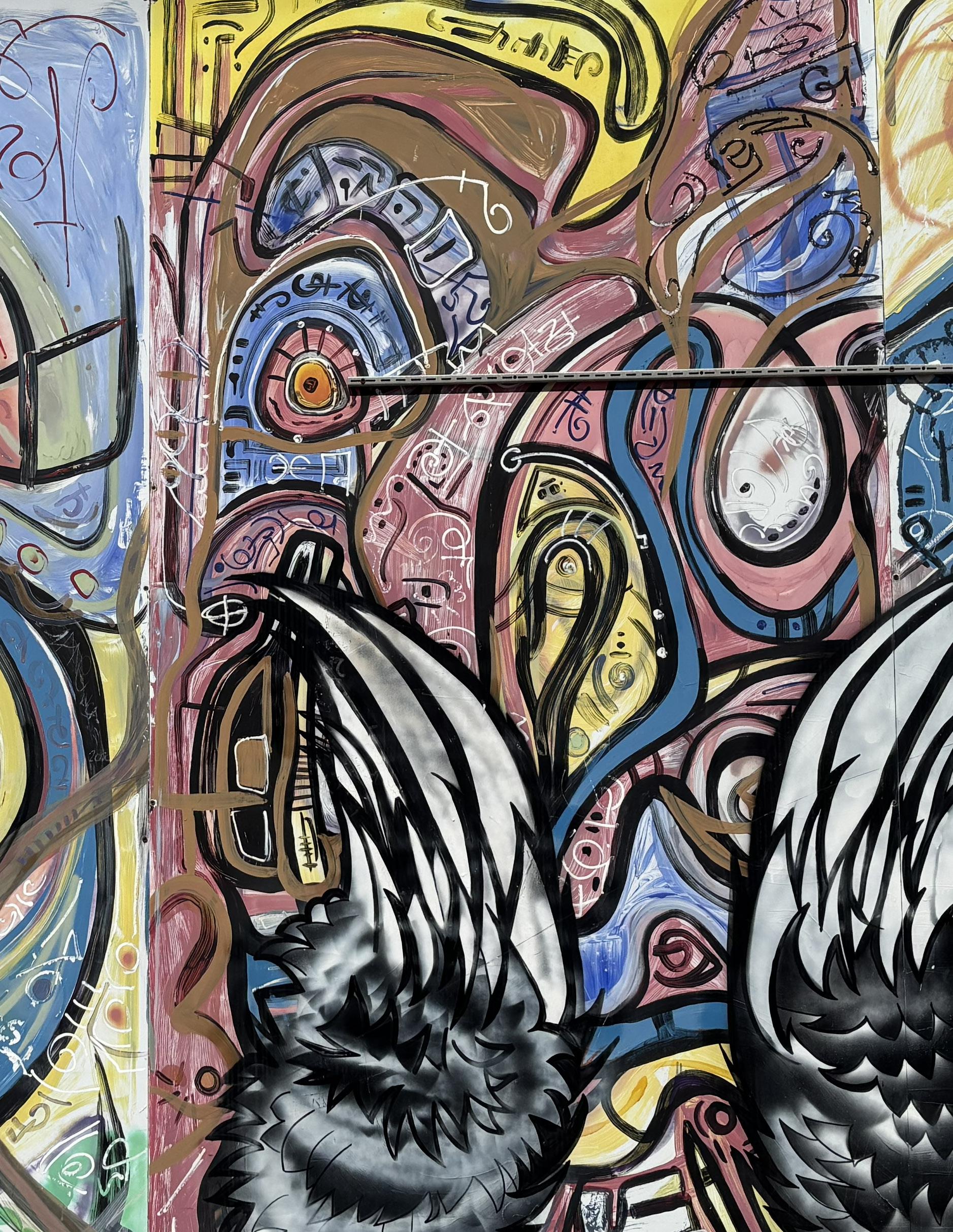
Throughout the planning process, engagement was conducted to help identify and assess existing resources and gaps and provide a foundation for transformative projects. Additional engagement was done to guide the plan’s direction and gather feedback on findings.
Engagement Methods
» Stakeholder Conversations
» Community Survey
» Regional Workshops
23 thirty-minute virtual conversations were conducted with members of the steering committee, business owners, elected and government officials, non-profits, artists, and educators from the region. Stakeholder conversations centered on three main areas, described below.
What are your favorite arts experiences in the region?
» Events showcasing local artists like “Girl Named Tom”
» GBCo
» Goshen Theater, Inc.
» Live music and performances
» Morris Performing Arts Center
» Museums and Historical societies i.e., Marshall County Museum and Historical Society
» Public art
» Raclin Murphy Museum of Art
» South Bend Civic Theater
» Theater productions
» Unique and emerging experiences
» Visual Arts
» Youth and educational programs i.e., South Bend High School Music Festival
» Festivals and large-scale events
• Art Beat
• Candlelight concerts
• Culver Military
• Dia de los Muertos concert
• Elkhart Jazz Festival
• First Fridays
• Float Fest
• Heartland Art Center
• Mayor’s Summer of Music
• River Bend Film Festival
• The Marshall County Blueberry Festival
• Vibes Music Festival
• YART
What are the big challenges that come with bringing arts to the community?
» Accessibility barriers (cost and transportation)
» Awareness and marketing deficiencies
» Community engagement and perception issues
» Funding limitations and resource scarcity
» Lack of collaboration and cohesion
» Lack of diverse and relatable programming
» Limited arts education support
» Maintaining community identity amidst development
» Support for local artists and organizations (infrastructure and resources)
» Volunteer burnout and capacity issues
What should arts and culture do for the community?
» Address social issues and reflect society
» Build community identity and pride
» Drive economic development and tourism
» Enhance quality of life and well-being
» Foster community engagement and connection
» Promote collaboration and cohesive storytelling
» Provide educational opportunities
» Revitalize and enhance public spaces
» Support local artists and organizations
10 focus groups were held virtually during this process. Focus groups engaged the following sectors:
» Artists/Arts Administrators
» Parks and Recreation
» General
Three focus groups were held with arts administrators and artists. The conversations largely centered around the kinds of resources that are needed to amplify their respective work and practices. Artists cited Art Beat, Yart, and the burgeoning Fusion Fest as among their favorite regional signature events, and local cultural institutions—such as the South Bend Museum of Art and the South Bend Civic Theatre—as pillars of the region’s arts and culture community. Many artists and administrators expressed desire for more funding opportunities and lack of unified resources and information sharing as opportunities for growth. South Bend was identified as an ideal community for emerging creatives and artists, given its small-town feel and proximity to Chicago and Indianapolis, as well as its diverse network of cultural assets.
Two focus groups were held with parks and recreation representatives from the three counties. The groups discussed developing an arts and culture plan for the region, emphasizing community engagement and addressing challenges in event promotion, timing, and pricing. Participants acknowledged a perceived lack of activities was due to unawareness rather than scarcity, highlighting the need for comprehensive marketing and more family-oriented and teen-focused programming. The groups stressed the importance of public art, diverse programming, and strong community support to foster a vibrant, inclusive arts scene year-round, advocating for collaboration and innovative event ideas to increase participation and cultural understanding.
General
Four focus groups were held to engage business owners, stakeholders, and other invested individuals. Discussions highlighted the need for better organization and promotion of local arts events, particularly to attract diverse audiences and younger demographics. Key challenges identified included limited funding, lack of centralized information, difficulties in securing suitable venues and rehearsal spaces, and transportation barriers. Participants emphasized the importance of fostering collaboration among arts organizations, establishing an arts council, and integrating public art into community development to enhance cultural identity, economic impact, and overall quality of life in the region.
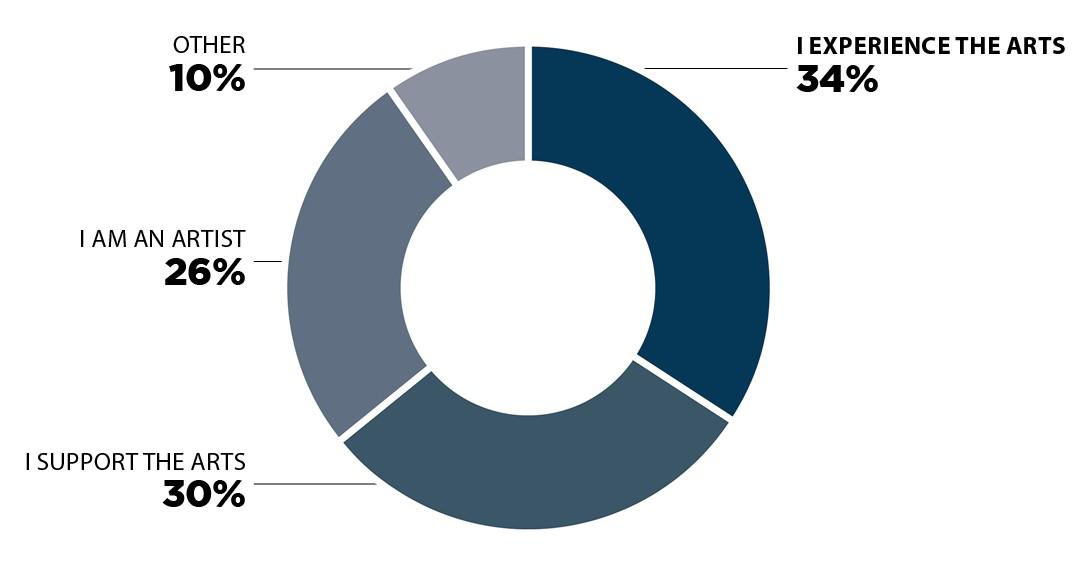
The South Bend - Elkhart region community survey was open from April-June 2025 and received 300+ survey responses from the public. This survey was posted on the planning website and promoted through the Regional Partnership’s social media as well as through stakeholder channels. The survey contained the following questions, which yielded the corresponding responses.
What big ideas do you have for Arts & Culture in the South Bend - Elkhart region?
Cultivate and Support Local Artists and Creative Spaces: A strong desire emerged for increased investment in the artistic community, focusing on providing direct support to artists (grants, mentorship, business education), creating affordable studio spaces, and fostering small, intimate venues as cultural centers. This includes ideas like a store selling only local creations, artist retreats/ workshops, and free classes for creators.
Establish Comprehensive Arts Hubs & Venues: Stakeholders seek dedicated, multi-faceted arts facilities. This includes revitalizing existing historic buildings (e.g., State Theater, St. Patrick’s Park Amphitheater, Colfax Cultural Center) into mid-size performance venues, art centers, or mixed-use cultural districts. The concept of a “filmmaker space/makerspace” and an “Arts Park” also falls into this category, aiming to provide spaces for creation, exhibition, and performance.
Develop Regional Arts & Cultural Trails/Corridors: A prominent idea is to physically and digitally connect the region’s cities and towns through curated art experiences. This involves establishing “Cultural Corridors & Art Walks” with rotating public art (murals, sculptures, interactive pieces), linking historical sites, and creating “Regional Arts Trails” that could be enhanced by augmented reality (AR) tours. The “lighted holiday river walk tour” is a specific example of this type of connective, large-scale experience.
Strategic Public Art Placement with a Focus on Placemaking: Beyond simply adding art, strategically integrating public art into everyday spaces and neighborhoods outside of downtown will enhance the region’s character and sense of place. This means murals, sculptures, light installations (especially in areas in which illumination could provide public safety or pedestrian-access benefit), and art that doubles as infrastructure (e.g., painted benches, mosaic sidewalks). There’s a strong emphasis on art that tells local stories, highlights specific cultures, and fosters neighborhood pride, rather than just being “trendy” or for social media.
Strengthen Collaboration and a Unified Arts Ecosystem: A critical overarching idea is to break down silos between arts organizations and create a more cohesive, collaborative network across the region. This includes forming a regional arts and culture council, a regional music guild, and fostering intentional partnerships between organizations, schools, and community centers to share resources, co-create programs, and collectively promote the arts. The goal is to move beyond competition towards a unified voice and strategy.
South Bend - Elkhart ARTS AND CULTURE PLAN
Arts & Culture in the South Bend - Elkhart region should feel…
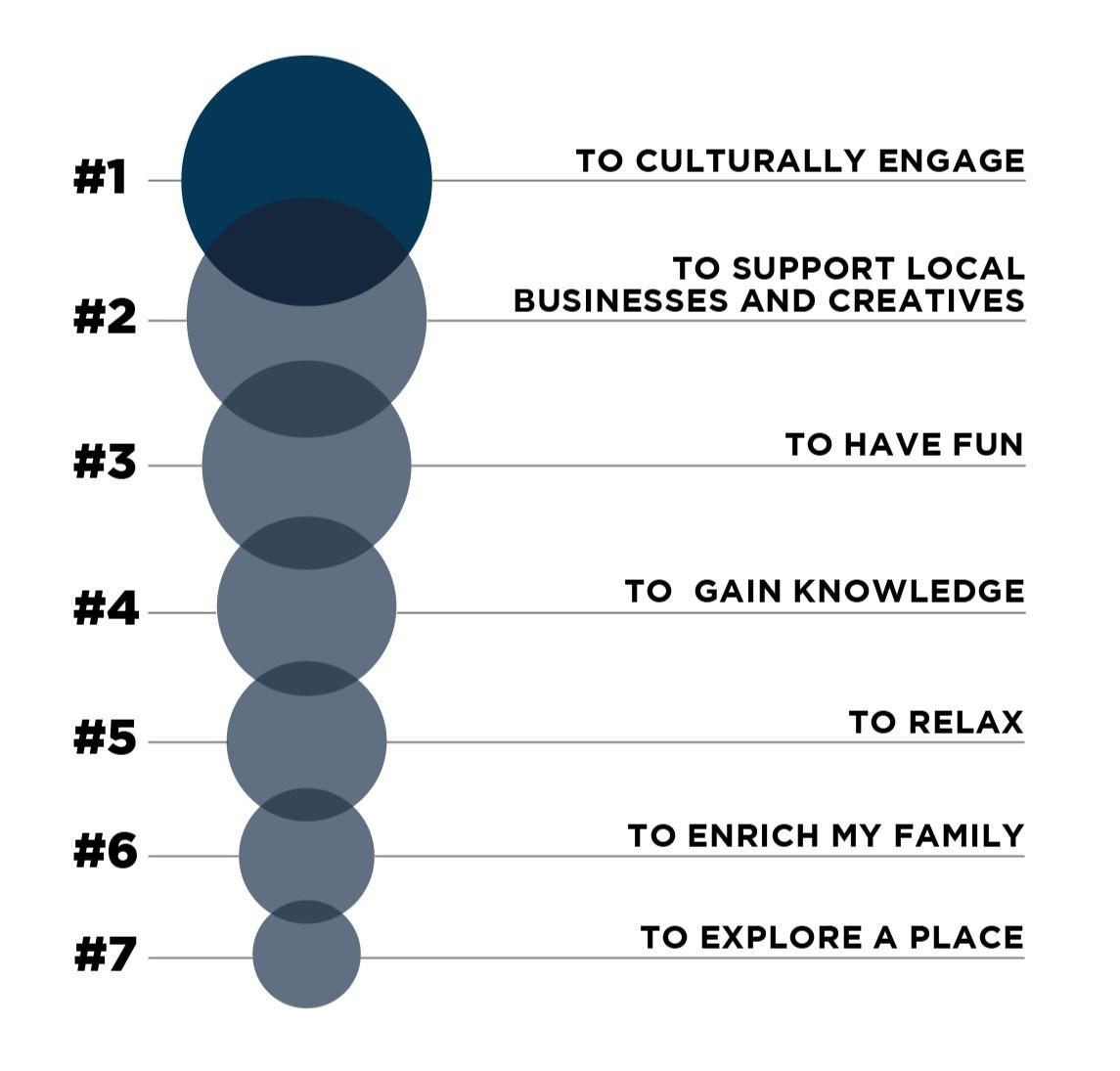
Which of these motivations for experiencing the Arts do you most strongly align with?
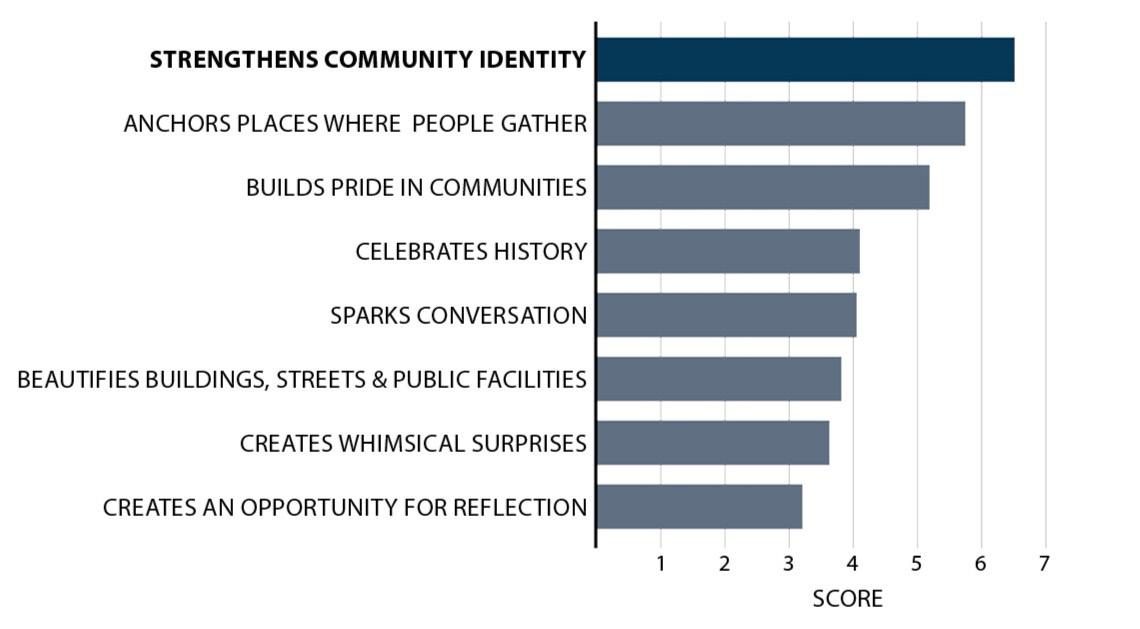
What impact should arts and culture have throughout the South Bend - Elkhart region?
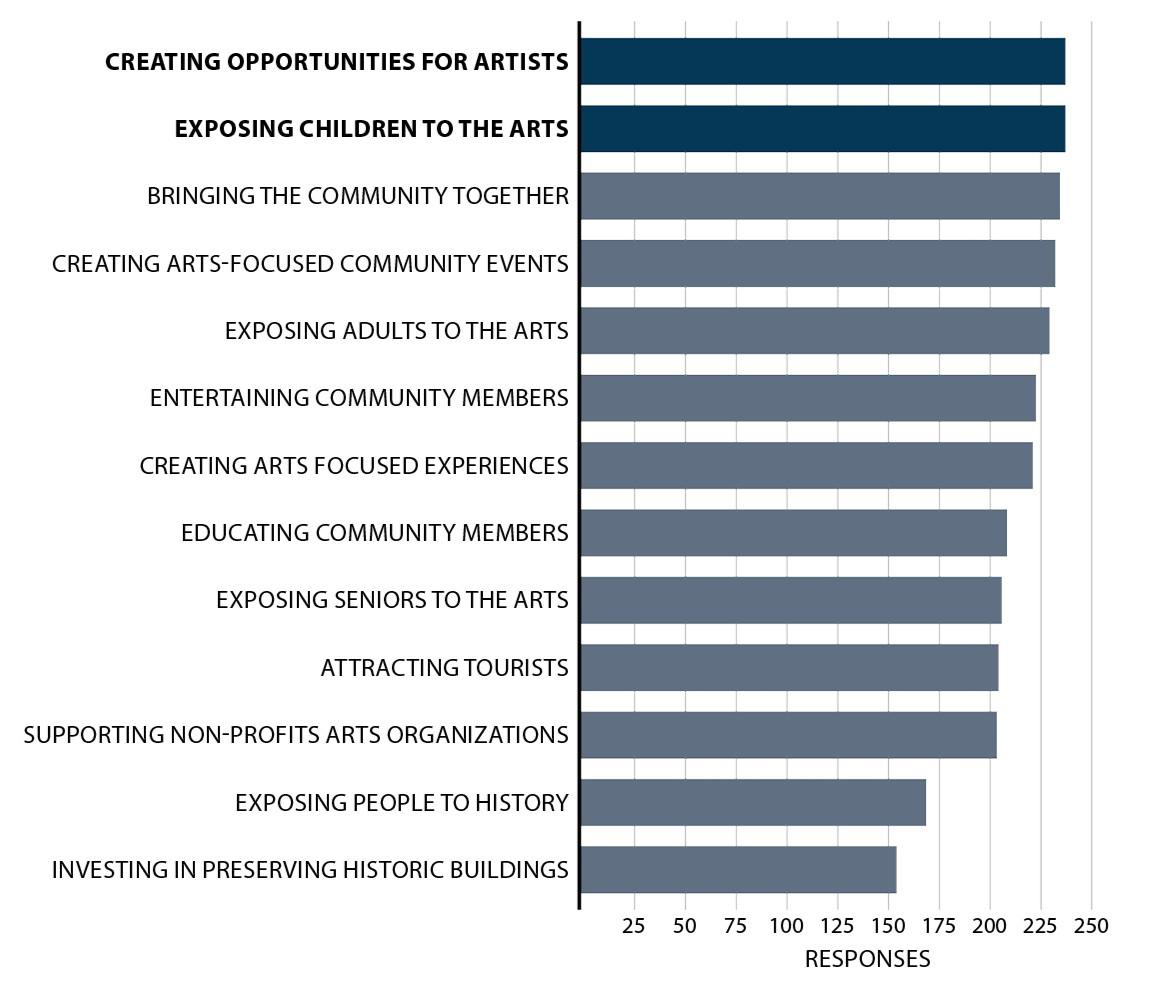
The Arts & Culture Plan for the South BendElkhart region should accomplish the goal of:
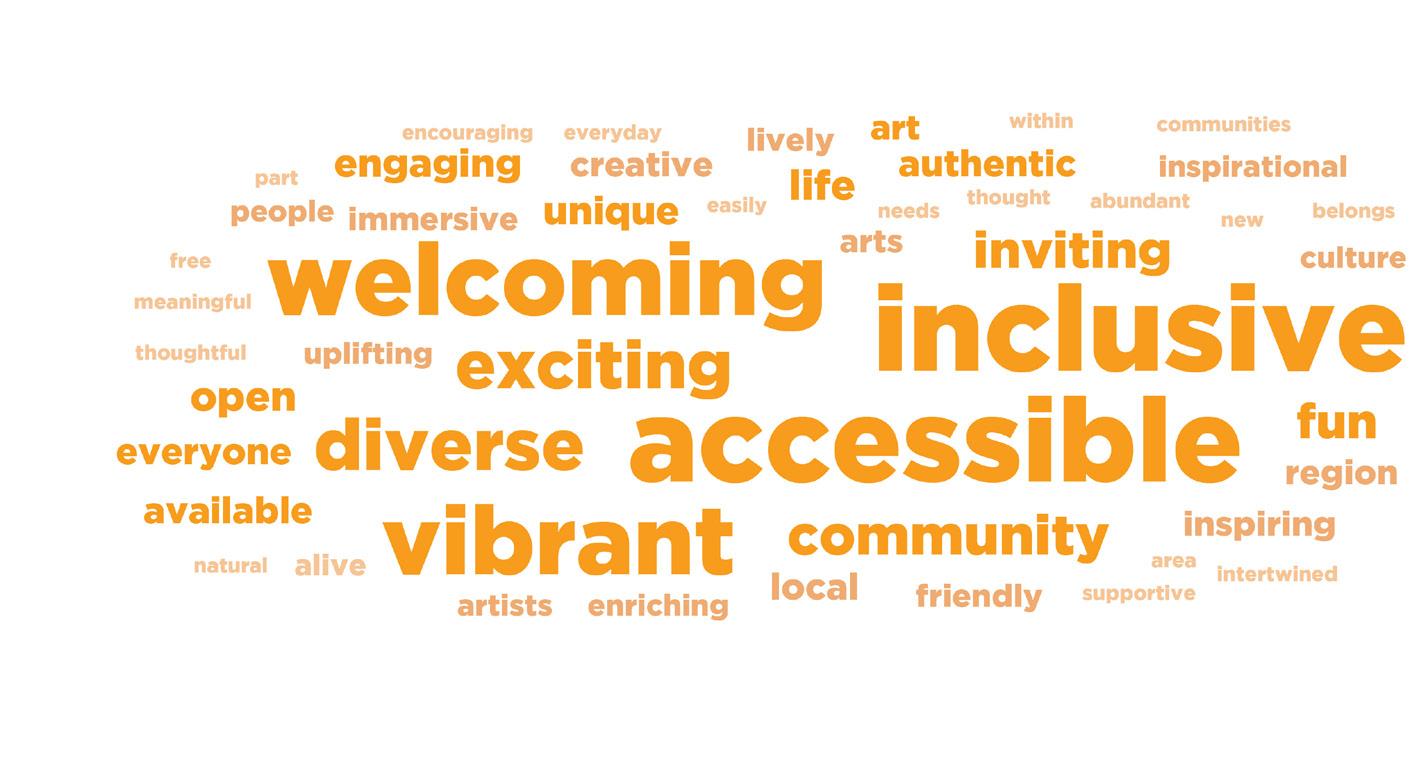
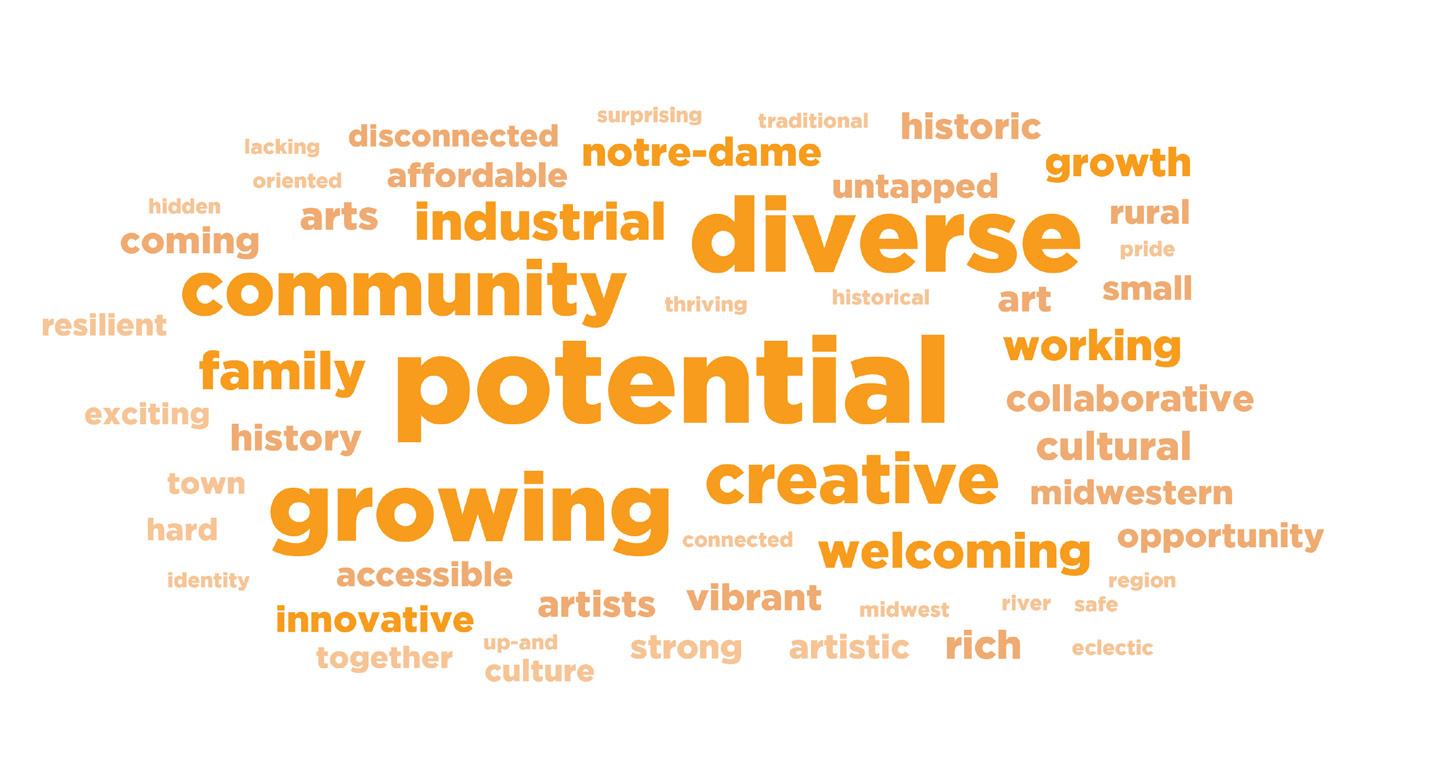
What three words or phrases would you use to describe the South Bend - Elkhart region?
What is your relationship with the Arts (visual, literary, performing, etc.) in the South Bend - Elkhart region?
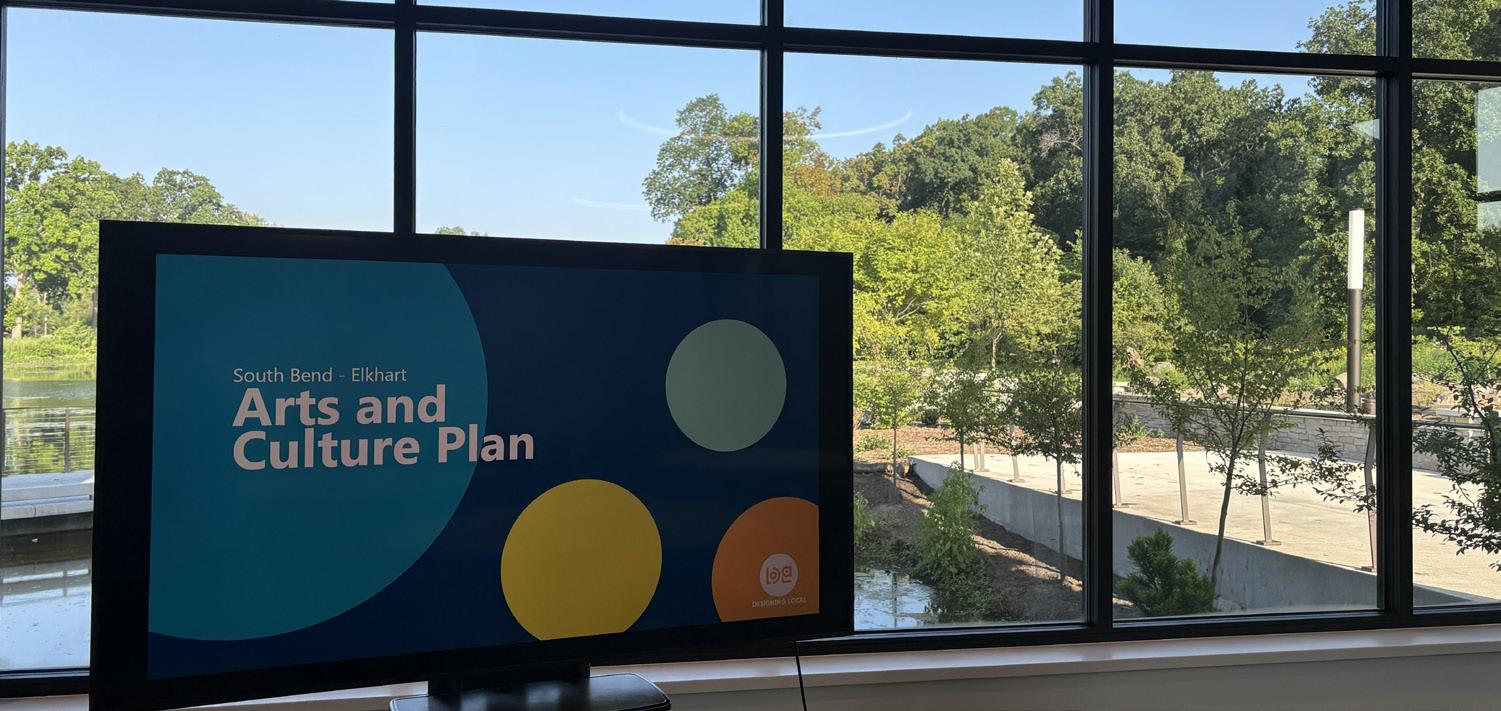
» Heartland Art Center, Plymouth
July 22, 2025
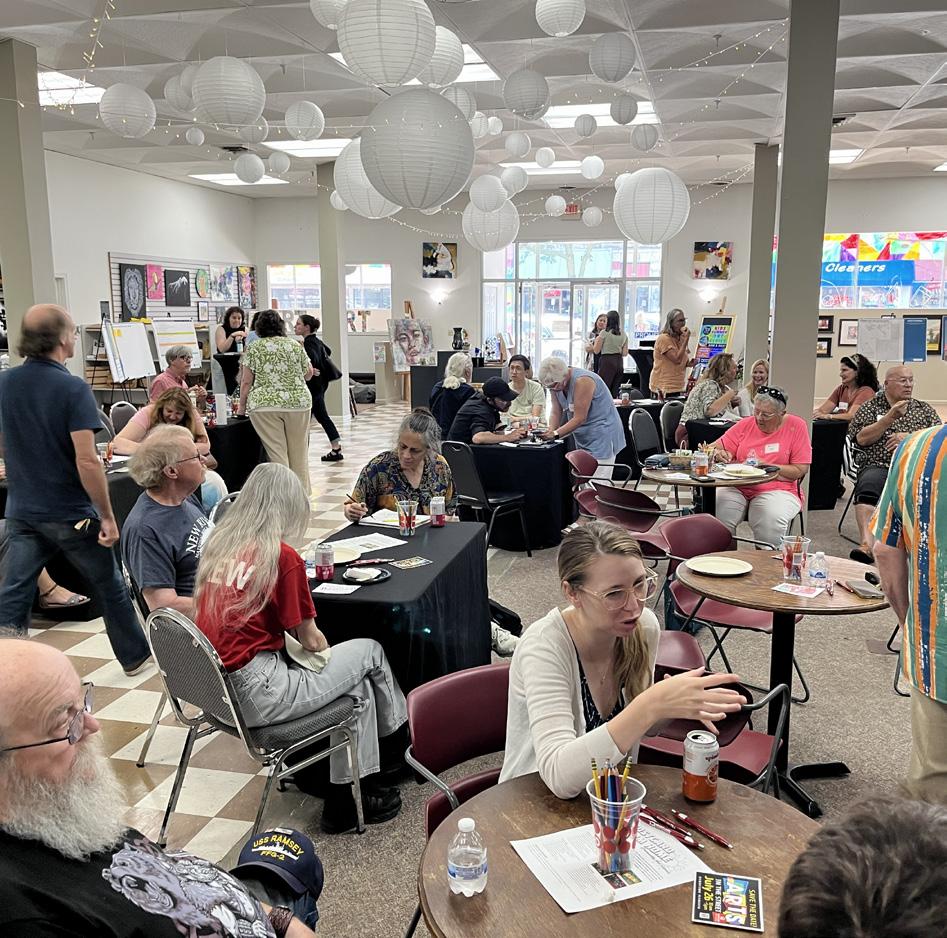
This event featured a “Postcard from Home” activity where participants designed postcards from around the region.
» Ironworks Event Center, Mishawaka
July 23, 2025
This event featured a talk with staff from the City of Mishawaka Parks about new and recent development in Mishawaka.
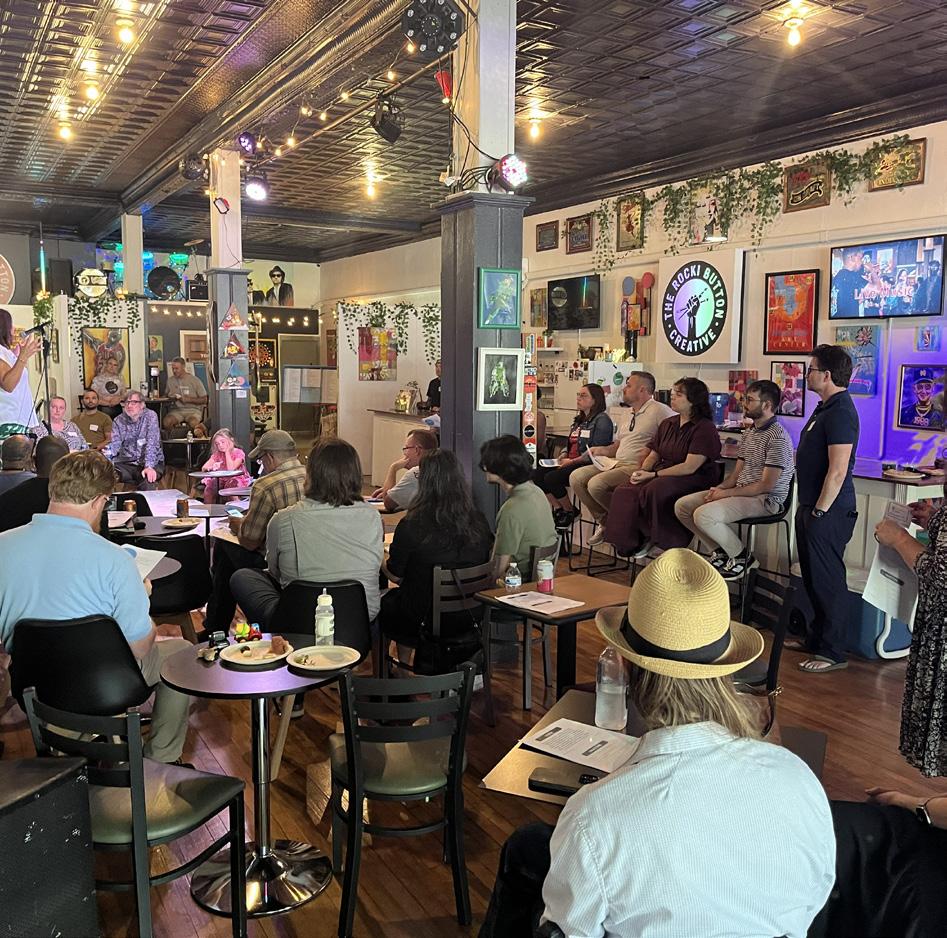
» Rocki Button, South Bend
July 23, 2025
This event featured live music from local guitarist Jason Richmond.
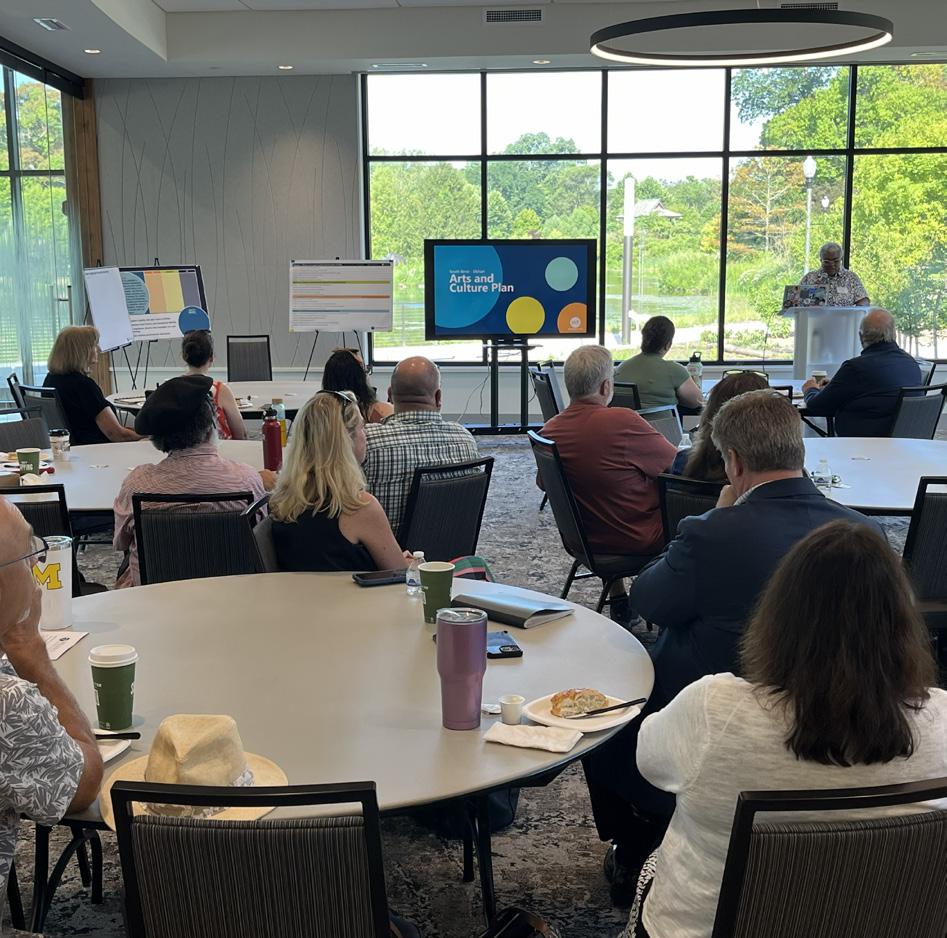
» Wellfield Botanic Gardens, Elkhart
July 24, 2025
This event featured spoken word from local artist Pam Blair from the Poetry Den.
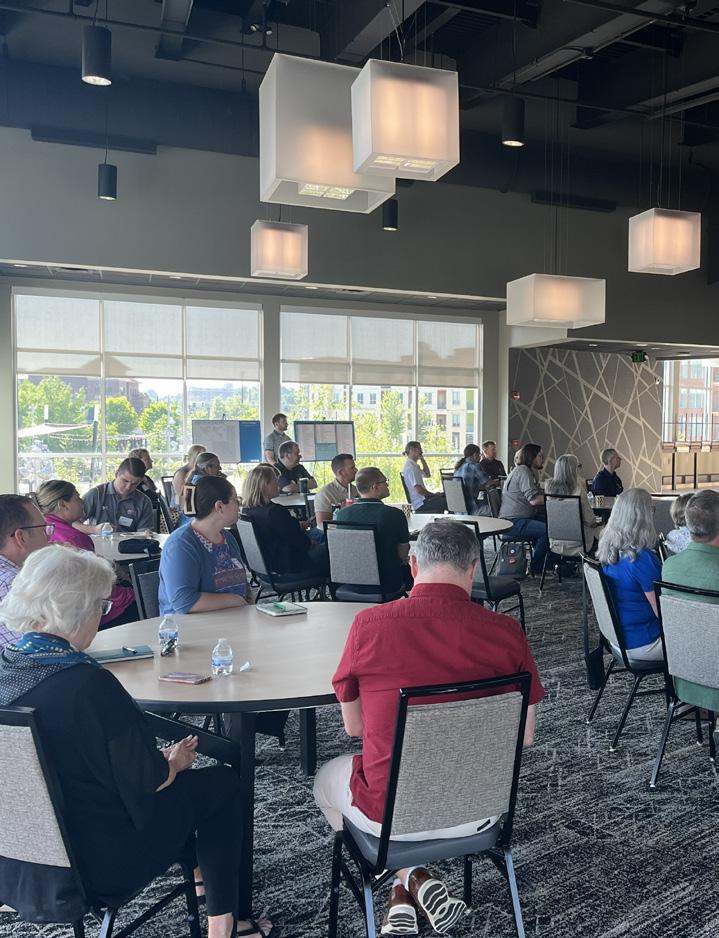
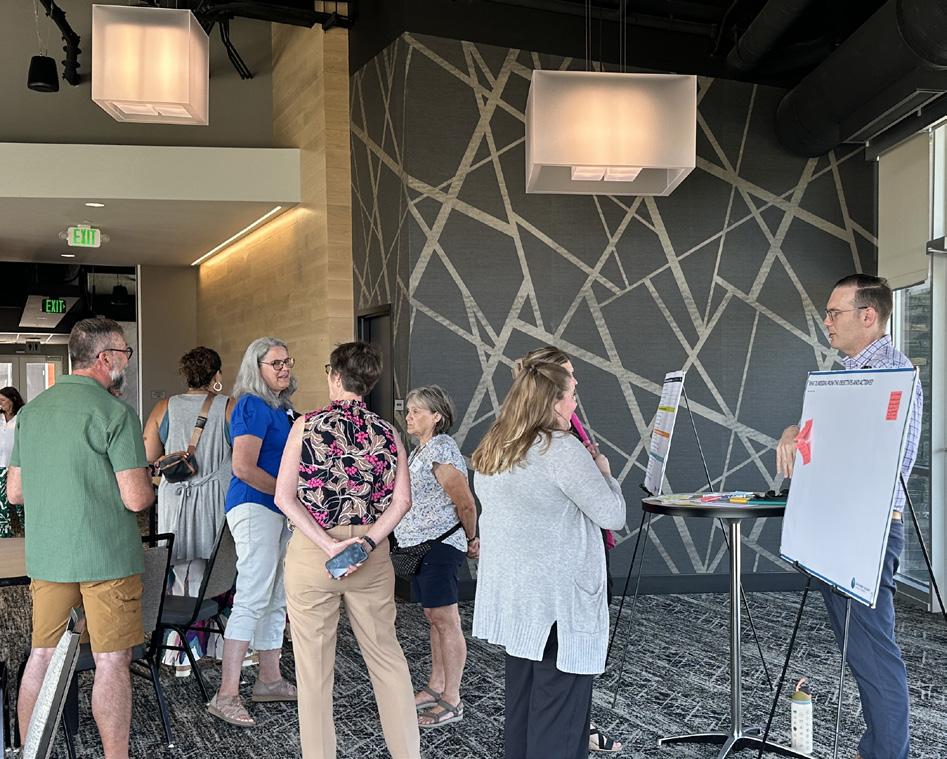
Participants had the opportunity to comment on the asset map and add things that were missing. Additionally, they were asked to review the plan’s draft objectives and share what they thought was missing from them, while also sharing which objectives would have the biggest impact, which were achievable quickest, and which they personally found to be the most exciting. In the two weeks following the meetings, the presentation was available online to be circulated and allow for more comments to be made.
The following identified objectives are listed in order of votes received. Everything with more than 5 votes is listed. Draft objectives presented/ voted on were reworked after these meetings, and they may not directly reflect final objectives.
1. Marketing Strategies
2. Heartland Arts Center Expansion
3. Regional Arts Council
4. Intentional Civic Spaces
5. Family-Centric Programming
6. Alley Activation
7. Affordable Artist Housing
Achievable
1. Extend Art Beat’s Schedule
2. Reduced/Free Admission
3. Regional Arts Council
4. Marketing Strategies
5. Additional Makerspace/Studio Space
1. Heartland Arts Center Expansion
2. Signature Winter Events
3. Juke’s Music Town
4. Affordable Artist Housing
5. Artist-in-Residency
6. Establish an Arts District
Through the meetings, common values emerged from participants, highlighting the most important aspects throughout the strategies. These values come together to create the unique identity of the South Bend - Elkhart region, which marks it as a center for arts and culture and a hub for investment.
320+ pieces of input
150+ attendees
4 workshops
With all the different organizations throughout the region, giving pathways for connections between artists, fostering relationships, and creating opportunities for collaboration were identified as vital aspects of building a successful arts and culture community. Strategies should create opportunities for this collaboration across the region.
Stakeholders believe that current organizations, programs, and facilities are able to live up to their full potential, through increasing the access to and reach of arts and cultural resources. Strategies should provide avenues for this increase, expanding what established organizations can achieve for their communities.
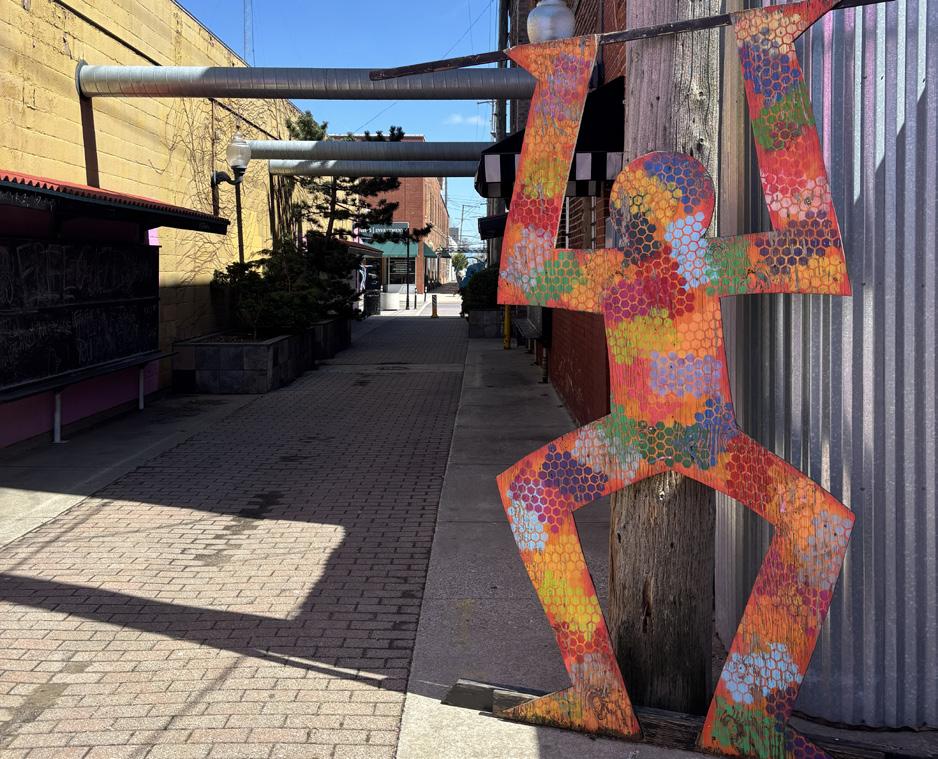
Local existing arts and culture institutions should be prioritized, with special attention paid to increasing opportunities and abilities for them to serve their communities. Strategies should encourage development of these local institutions, giving them more opportunities to create and grow.
The arts should be for everyone; it was identified as important that arts entities should be visible, accessible and effective in their communities, attracting wide audiences through affordable and engaging programming. Strategies should work to increase the ability of all people to experience the arts.
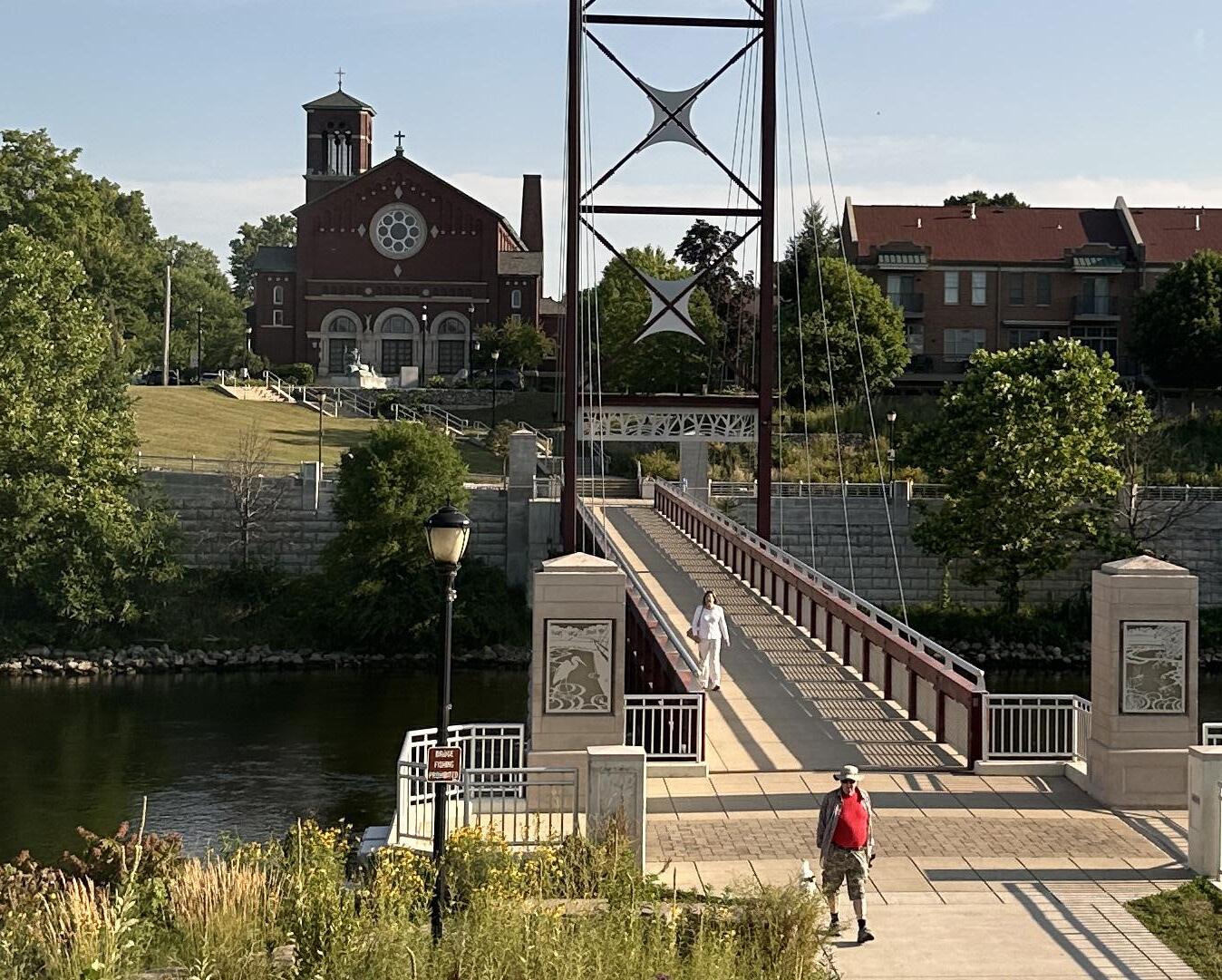
The South Bend - Elkhart region is home to inspiring spaces in authentic places, where all people can connect and thrive through arts and culture experiences.
Our vision is to cultivate a vibrant and inclusive community where exceptional arts and culture facilities thrive, local history and identity are celebrated, and diverse, accessible programming enriches every life. We aim to be a beacon for artistic expression, attracting and retaining talented artists and creative professionals, thereby fostering a dynamic cultural landscape that inspires, connects, and reflects the unique spirit of our region.
1. Foster nimble and wellequipped arts and culture facilities that meet community needs.
2. Amplify community identity through celebration of historic places and investment in community spaces.
3. Encourage and implement arts and culture programming that is inviting and enriching to all.
4. Cultivate livability and community for creative professionals and artists.
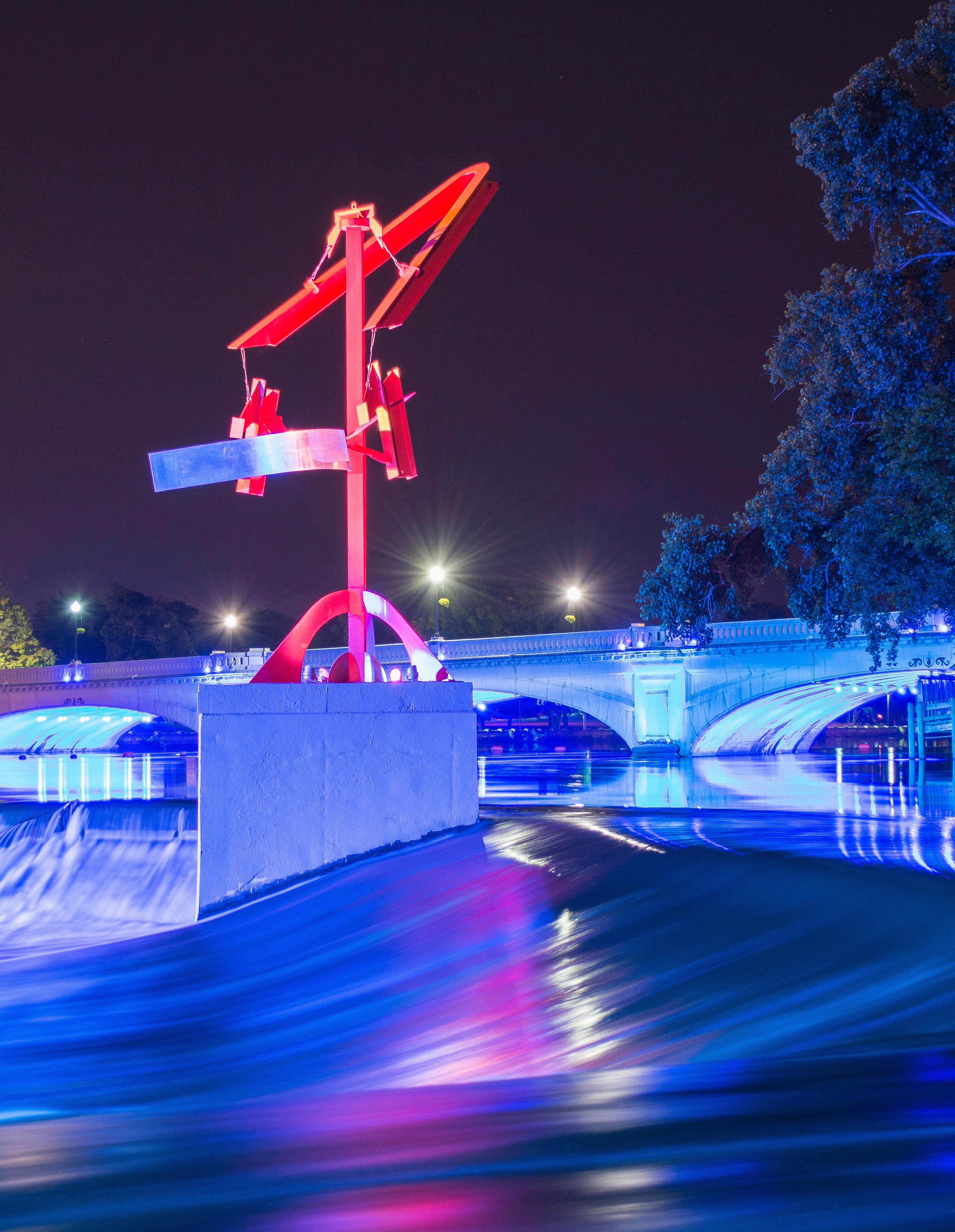
The flexibility provided in this framework creates opportunities for decision-makers to pursue diverse funding sources and pivot implementation priorities to take advantage of changes and growth in the local cultural ecosystem. It also allows the community to continue to dream big, yet places emphasis on actionable, momentum-building steps for growing local arts and culture assets and tackling them as additional funding and capacity becomes available.
Each objective is accompanied by strategies to support the objective, timing, personnel requirements, impact, and relative impact, when appropriate.
» Short: 0 to 3 years
» Mid: 3 to 5 years
» Long: 5+ years
» $: $0 to $250,000
» $$: $250,000 to $1 million
» $$$: $1 million+
» Foundational: Foundational impact strategies are essential to the long-term health and sustainability of the region’s cultural sector but may go unnoticed by the community-at-large.
» Targeted: Targeted impact strategies will improve the resident experience at the individual level.
» Transformational: Transformational impact strategies will fill a significant gap in the market; set the foundation for new programs, projects, or practices; or directly shift the general perception of the region as an arts and cultural community (e.g. through visible interventions like placemaking and public art).
» Primary Orgs.: Primary organizations are recommended parties that would champion and/ or lead strategy implementation
» Secondary Orgs.: Secondary organizations are parties whose involvement are necessary to successful project implementation through supporting the primary personnel.
Each strategy is marked with which value(s) it addresses.
» Fostering Connections
» Building Capacity
» Investing Local
» Creating Access
Strategies are marked to show top rated ideas during the community workshops.
» Biggest Impact
» Most Exciting
» Achievable Quickest
The listed organizations were entities who, throughout the planning process, expressed interest and/or investment in particular recommendations or strategies based on individual organizational needs or desires.
Strategies contain specific steps for implementation. While many strategies have regional sentiment, implementation may be up to an individual project owner/group. Action steps reflect pathways for completing strategies at the project-level.
Local and national benchmarks are offered, where applicable, to offer comparable examples of what can be achieved through the recommendations’ implementation.
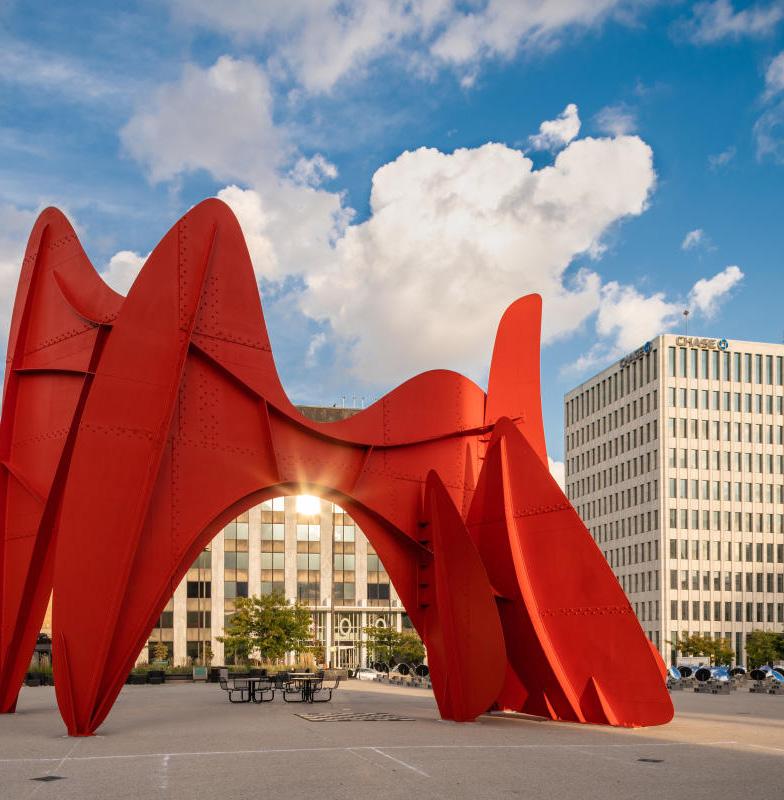
» Land area: 44.8 m^2
» Population: 198,917
Grand Rapids, Michigan is a vibrant hub of public art, cultural attractions, historical landmarks, performing arts and exciting events and festivals. Started in 2009, ArtPrize, an international arts competition and festival, served as a catalyst for arts and culture development in Grand Rapids, and since then, the arts and culture scene has erupted. The Arts and Culture Collective of Grand Rapids is made up of over 45 arts and culture nonprofits and organizations dedicated to enhancing, promoting, and advocating for the arts and culture sector in Grand Rapids. The Kendall College of Art & Design and the Grand Rapids Art Museum offer both professional and non-professional artists arts education opportunities. The creative energy present in Grand Rapids is supported by a strong artist community and a wealth of cultural institutions, such as the Frederik Meijer Gardens & Sculpture Park, making it a thriving arts and culture core.
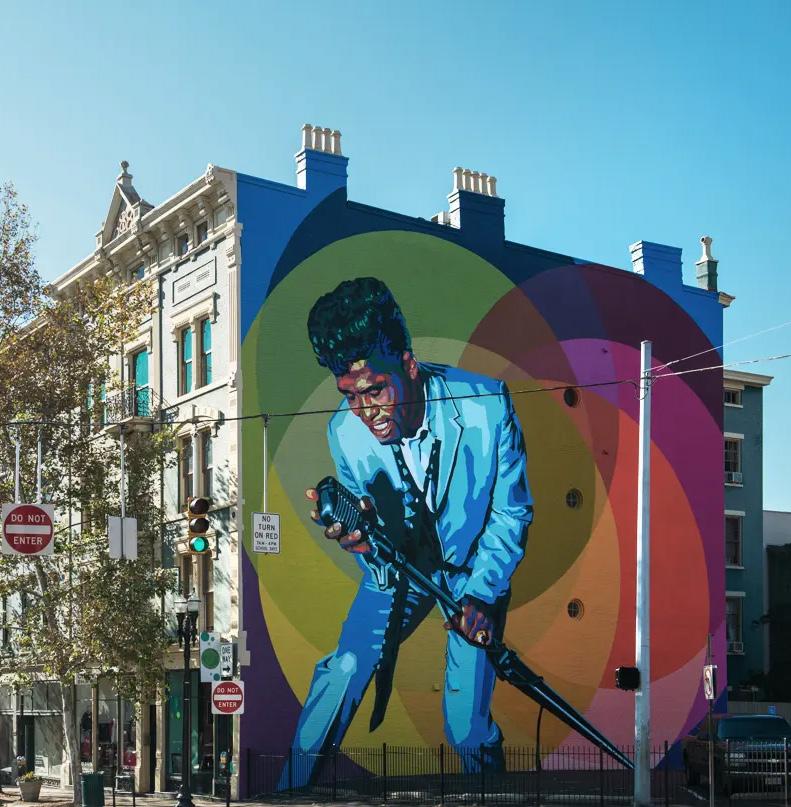
» Land Area: 77.8 m^2
» Population: 309,317
The city of Cincinnati’s arts and culture scene is a rich tapestry of history, heritage, and community. From the city’s iconic architecture to its robust public art, Cincinnati offers something for everyone. Blink, a biennial public art and light event, has become a signature of Cincinnati arts. ArtsWave is the nation’s first and largest community campaign for the arts and serves as the official arts council of the Cincinnati region and acts as the primary funder for arts in Cincinnati. The City is well-rounded in performing arts, featuring organizations such as the Cincinnati Ballet, Cincinnati Opera, and the Cincinnati Symphony Orchestra, who perform in historic venues like the Cincinnati Music Hall and the Arnoff Center for the Arts. Cincinnati’s arts and culture scene is a dynamic blend of classic and modern, making it a compelling destination for visitors.
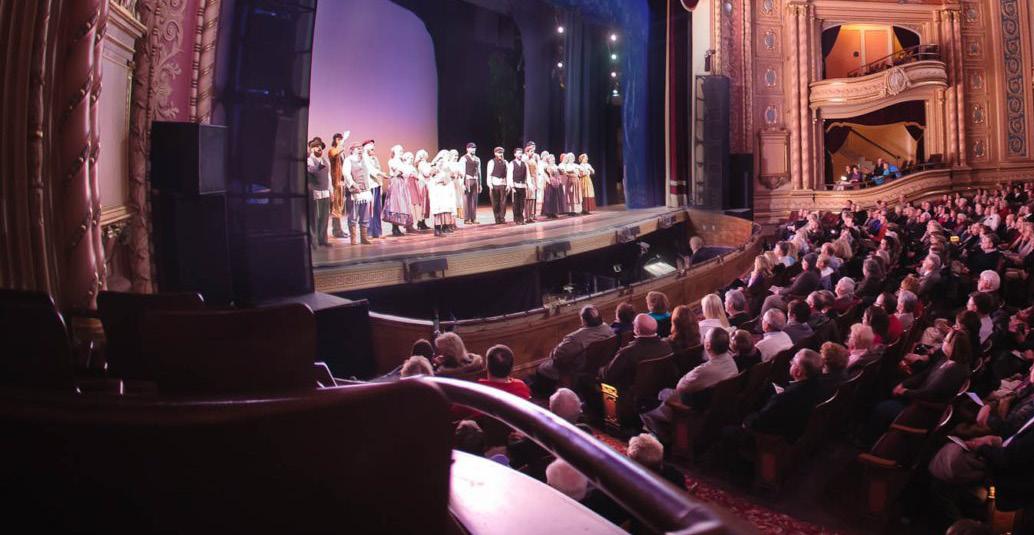
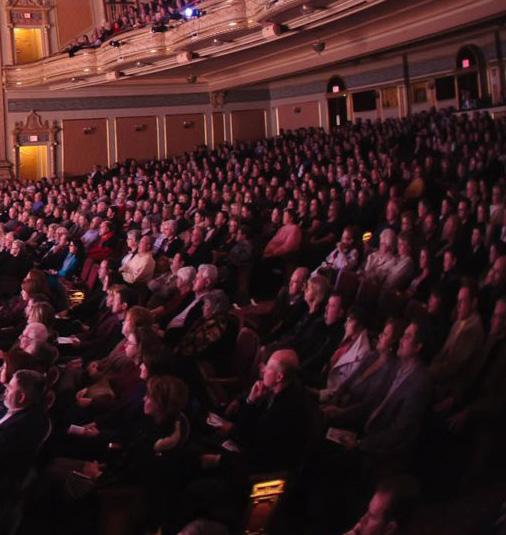
OBJECTIVE 1 Foster nimble and wellequipped arts and culture facilities that meet community needs.
South Bend - Elkhart ARTS AND CULTURE PLAN
Enhance visual arts spaces to act as education, studio, gallery, and community arts spaces.
The South Bend - Elkhart region is home to several exemplary maker spaces, artist studios, and collaborative places for creativity to flourish, but not every community has access to these amenities. In order to meet the needs of the region’s growing creative sector— and to foster new skills and interests across the community—the region’s cities should explore scenarios for implementing community art spaces at local and regional scales, impacting local usage while acting as a draw regionally. In addition, funding resources for established and thriving spaces should be recommitted and expanded for longer-term impact.
1. Assess capacity for expansion in programming and building space through a feasibility study
2. Raise funds for desired expansion
3. Identify additional funding sources for the development and operations of the new program space
4. Identify local partners for programming, education, and event promotion
Primary Orgs.
project managers / facility owners
Secondary Orgs.
regional arts council, local municipalities, and developers
LOCAL BENCHMARK
St. Joseph County Public Library
South Bend
The Main Library, located in downtown South Bend, houses many arts and culture programs, events, and spaces for the community to use, including the Community Learning Center and Studio 304. The combination of all its available resources makes it a prime destination for accessible creation, gathering, and learning.
• Bremen Arts Collective
• La Casa de Amistad
• Heartland Art Center
• MoonTree Studios
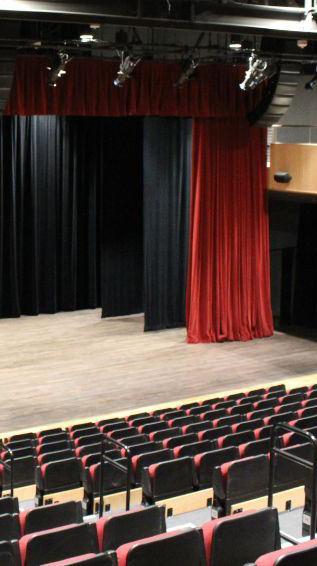
The Otis S. Johnson Cultural Arts Center Savannah, GA
Opened in 2019, The Otis S. Johnson Cultural Arts Center is a premiere venue for performing and visual arts and serves as a community gathering place in celebration of the arts for all ages. The Otis S. Johnson Cultural Arts Center consists of a performing arts wing housing two theaters and a visual arts wing housing a gallery space and working studios for local artists. Workshops, classes, and events are offered at the cultural center, ranging from adult hip hop to youth ceramics classes. The center is owned and operated by the City of Savannah, and the project was funded through the Special Purpose Local Option Sales Tax (SPLOST).
Project Cost: $18 million
Revenue/Impact: no data collected at this time
South Bend - Elkhart ARTS AND CULTURE PLAN
FOSTERING CONNECTIONS
BUILDING CAPACITY
INVESTING LOCAL
ACCESS
As existing arts and culture assets evolve to meet shifting community needs, established performing arts facilities can similarly expand their programming, build capacity to reach new audiences, and align their missions with new offerings. Partnering with a diverse network of local and regional organizations to achieve this goal can foster a collaborative regional presence and invite new methods for community outreach.
1. Assess capacity for expansion in programming and analysis of desired programming types through a feasibility study
2. Develop a plan for creating and promoting new programs
3. Work with local partners (i.e., community foundations) to fund affordable experiences
PROJECT LEADERS
Primary Orgs. project managers, and facility owners
Secondary Orgs. regional arts council, local municipalities, and community foundations
• The Lerner Theatre
• The Morris Performing Arts Center
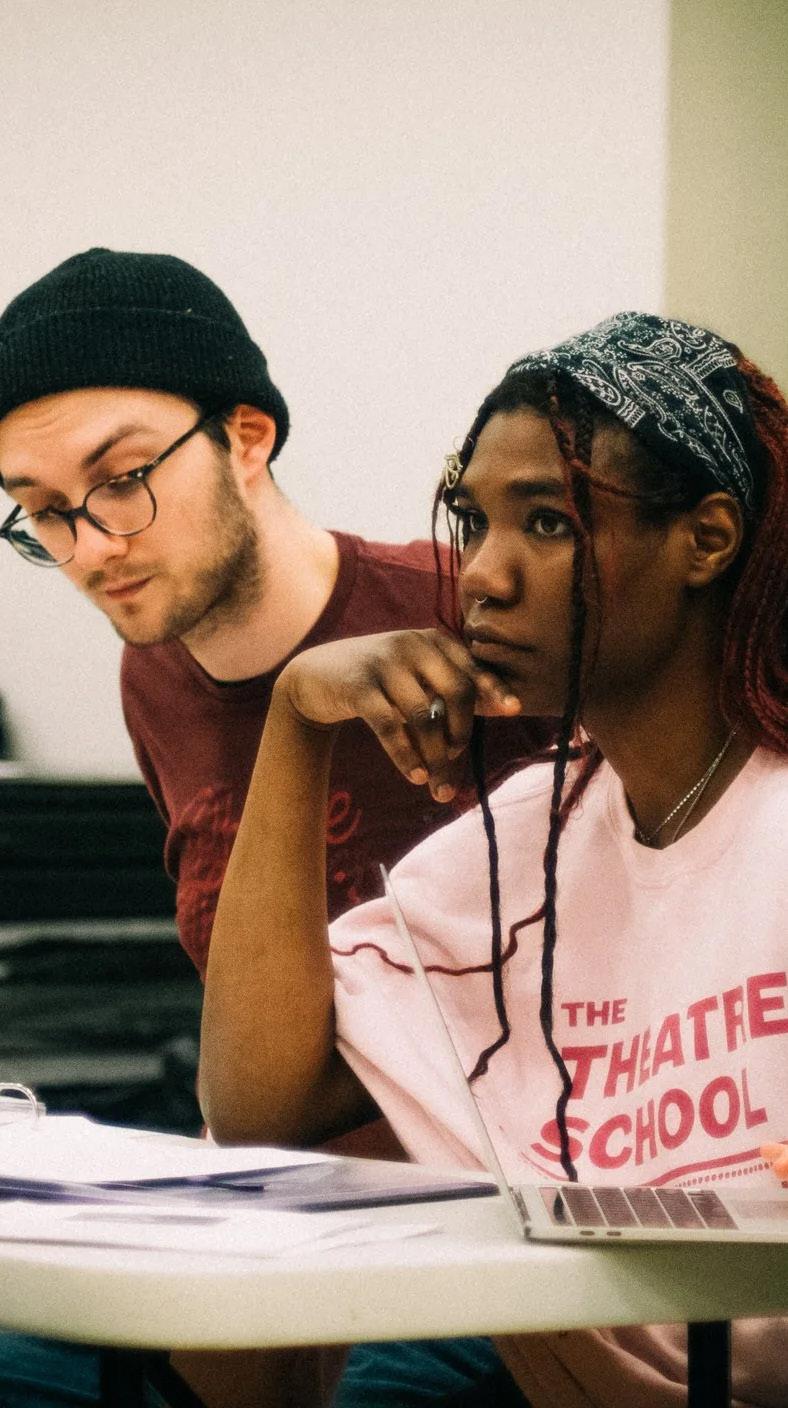
Sub Rosa Theatre Collective
Chicago, IL
Founded in 2023, The Sub Rosa Theatre Collective is a communityfirst theatre dedicated to embracing a community-based model that uplifts emerging artists. Sub Rosa Theatre provides opportunities for artists to develop their craft while being compensated, performs meaningful, politically and socially conscious plays, removes financial barriers for community members to experience the theater, and holds community-building events such as an artistry farmer’s market, poetry readings, and theatre
Revenue/Impact: no data collected at this time
In order to cultivate a dynamic performing arts landscape in the region, a range of dynamic venues must be available. Venues provide opportunities for education and community development, such as drama classes or workshops, where larger theaters might be unavailable or inaccessible.
Mid-size theaters (600-1000 cap) can be affordable options for local organizations that provide intimate yet sustainable audience sizes.
Outdoor Amphitheaters and Band Shells not only boost capacity for a wider range of performances—from concerts to theater— but also integrate seamlessly with seasonal programming in parks and civic areas.
Potential enhancements to existing facilities, including sound, lighting, and ticketing considerations should be implemented to assist in capacity-building to support local organizations’ needs. Using these enhanced facilities, the region can attract diverse artistic talent and ensure that local cultural infrastructure meets the community’s goals.
The region is already home to many different longstanding performance spaces, so any creation of new spaces should follow results from feasibility studies and/or outcomes from Strategy 1.4.
Primary Orgs. project managers and facility owners (civic theaters, symphonies, orchestras, etc) and/or local municipalities
Secondary Orgs. regional arts council, and developers
1. Conduct a feasibility study to determine priority locations and gaps/necessary improvements
2. If a new facility is required, determine facility owner/ day-to-day operations (public vs. private, etc.)
3. Conduct a capital campaign to support the project(s)
4. Assess staff needed to maintain the facility(ies)
5. Promote and program the space(s)
Senter Stage at River Park Square
Plymouth
River Park Square is a park in downtown Plymouth in Marshall County. This park is home to the Senter Stage amphitheater, a city-owned stage that hosts a variety of events, with several music series including The Mayor’s Summer of Music. The stage provides a platform for local acts and artists, as well as an accessible opportunity for residents to enjoy the arts.
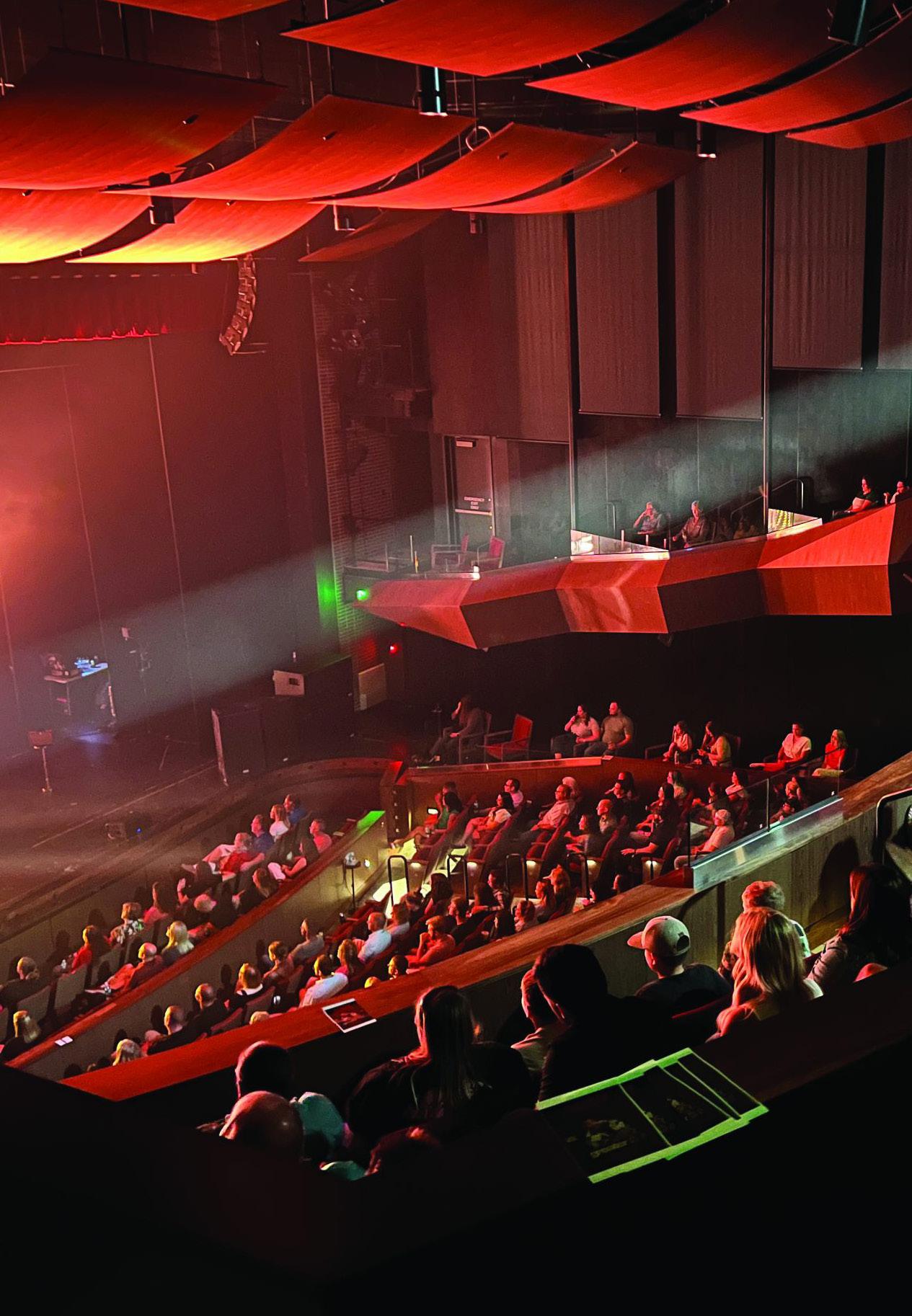
Hendrick’s Live! is a state-ofthe-art performing arts, gallery, and event space in West Central Indiana created in response to the Town of Plainfield’s Downtown Redevelopment Plan. In partnership with the Hendricks County Community Foundation and the Hendricks County Arts Council, the Town of Plainfield, Indiana, developed this facility to achieve its longterm, strategic goals of promoting tourism, enhancing the quality of life for residents, providing a professional home for local artists, and generating economic impact for the region. Hendricks Live! is managed and operated by Hendricks Live! a 501(c) (3) organization. The 606-seat proscenium theater hosts yearround local, regional, and national acts, from concerts and comedians to family shows and films.
Project Cost: $60 million
$7.1million (2024)
County Visitor Economy (2024): $370 million, up 5% from 2023
Financing for this project comes from the TIF district.
Create a facilities index to understand current offerings and opportunities.
The South Bend - Elkhart region’s rich index of existing arts and culture institutions is a regiondefining asset, yet many of these organizations are only known locally. A region-wide index of opportunities, offerings, and spaces can establish a baseline understanding of existing assets in the region, as well as generate data around visitorship, program timing, average ticket sales, and overall demand. The index could be performed by an outside consulting agency, or it could be more informally conducted through crowdsourcing measures.
1. Using this plan’s asset map as a starting point, an index of arts and culture facilities should consider:
• Capacity
• Cost recovery requirements by facility
• Geography (distance between facilities, locations, etc.)
• Programming schedules
• Ticket sales and event demand (if applicable)
2. Conduct an audit, to the extent possible, of private arts and culture classes in the region to identify trends and gaps.
3. Determine whether additional facilities are necessary to support community demand or if increased frequency within existing facilities would suffice.
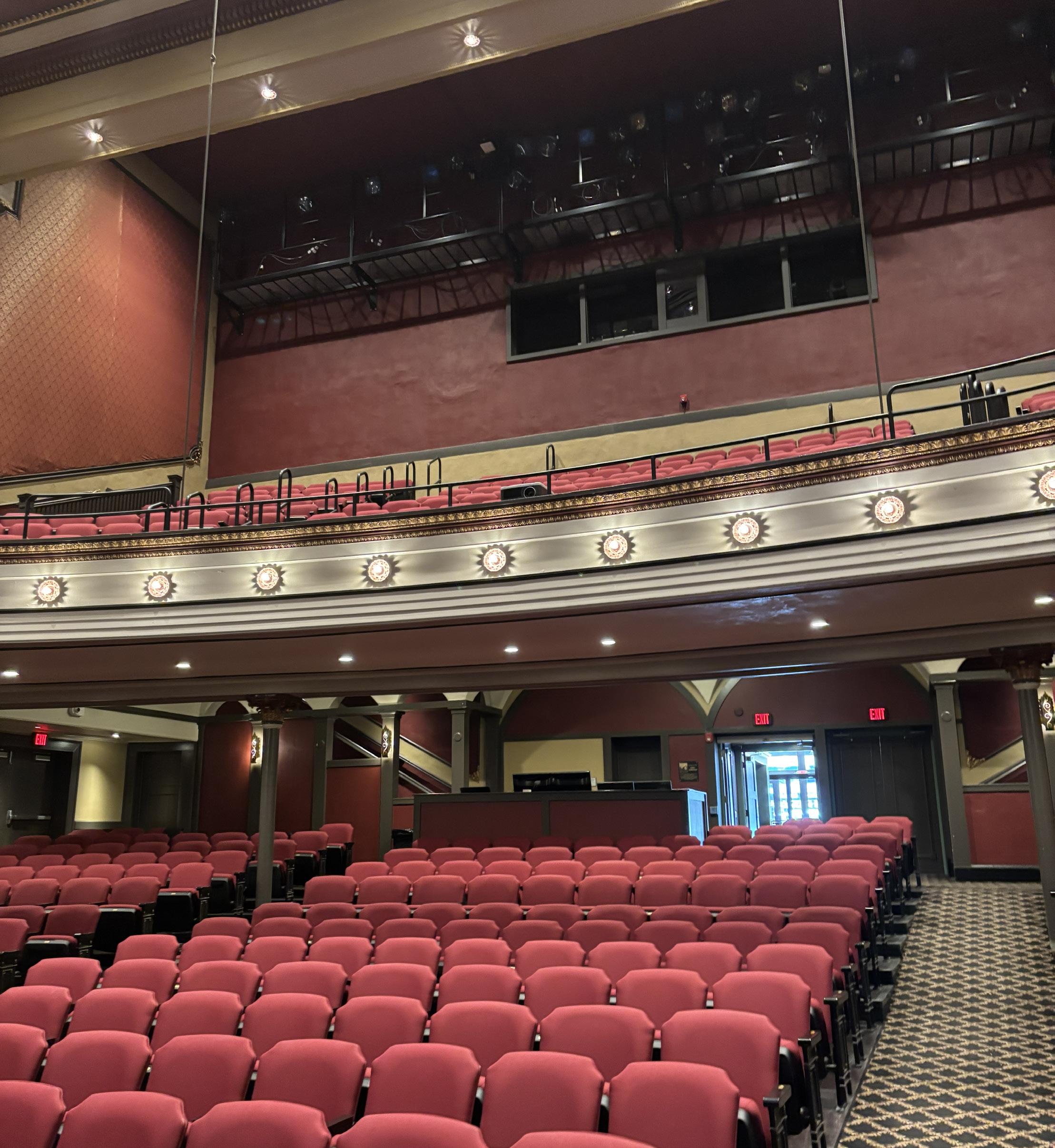
South Bend - Elkhart
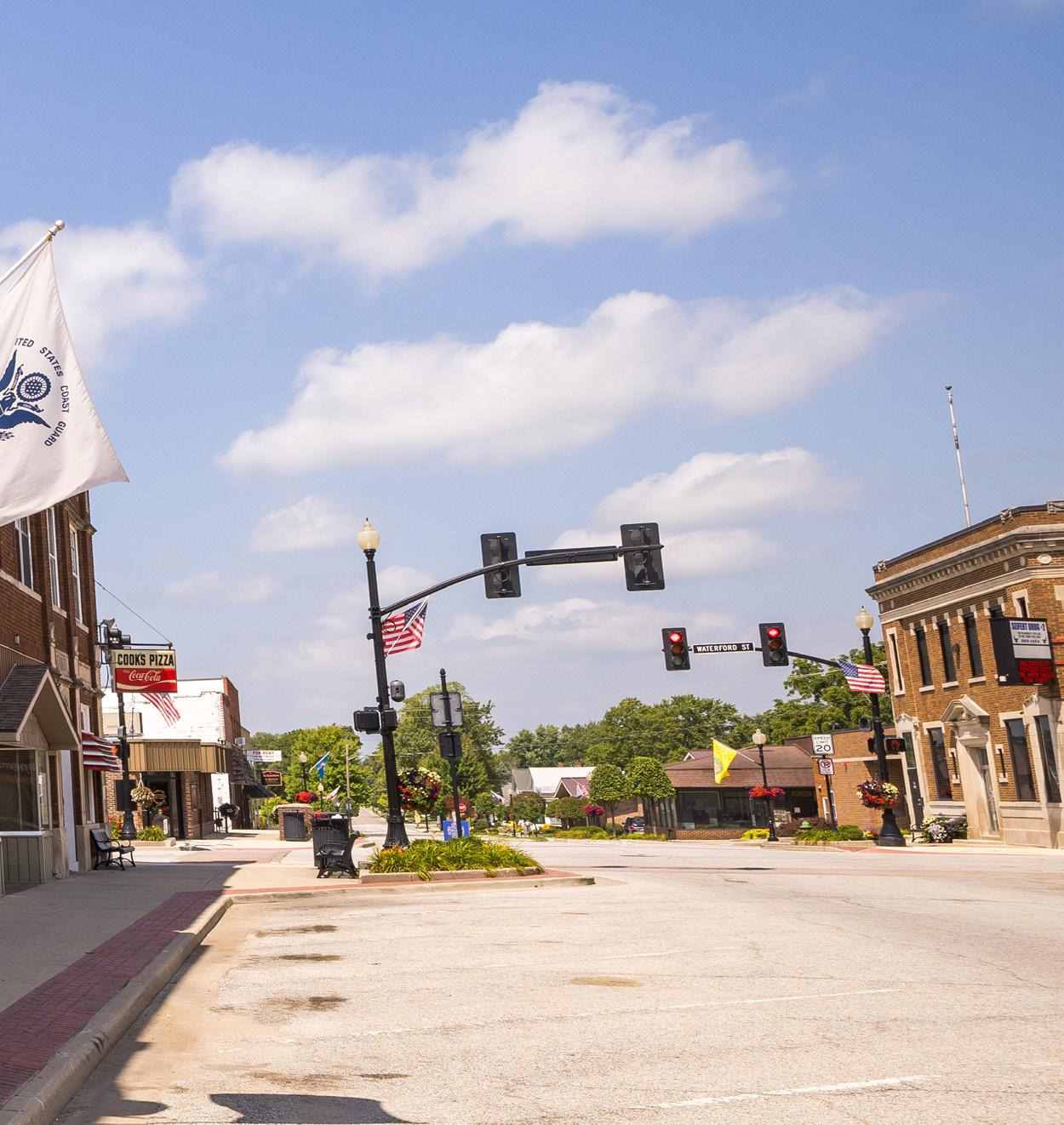
As downtowns become increasingly vital centers for community gathering, engagement, and programming, they should be updated and reconfigured to meet these growing needs. Intentionally planned civic space can feature seating elements, public art, utilities (electrical, water, etc.) for programming capacity, and landscaping that fosters a strong sense of place and belonging. Placemaking can also occur through pop-up programming, temporary displays, and beyond in order to activate and inspire communities in the heart of town.
1. Assess appropriate locations for reclaiming public space (i.e., underutilized street)
2. Conduct a capital campaign to support the project
3. Identify additional funding sources as needed
4. Work through the appropriate channels to secure permits for construction and programming
LOCAL BENCHMARK
Ironworks Plaza
Mishawaka
PROJECT LEADERS
A result of over a decade of intentional planning efforts from the City of Mishawaka, Ironworks Plaza inside Beutter Park has quickly become one of the top places for visitors and locals in Mishawaka to spend time. Hosting special events, live music performances, the Mishawaka Market, ice skating at the Ironworks ribbon, and a brewery and restaurant, the plaza is a year-round destination for its community.
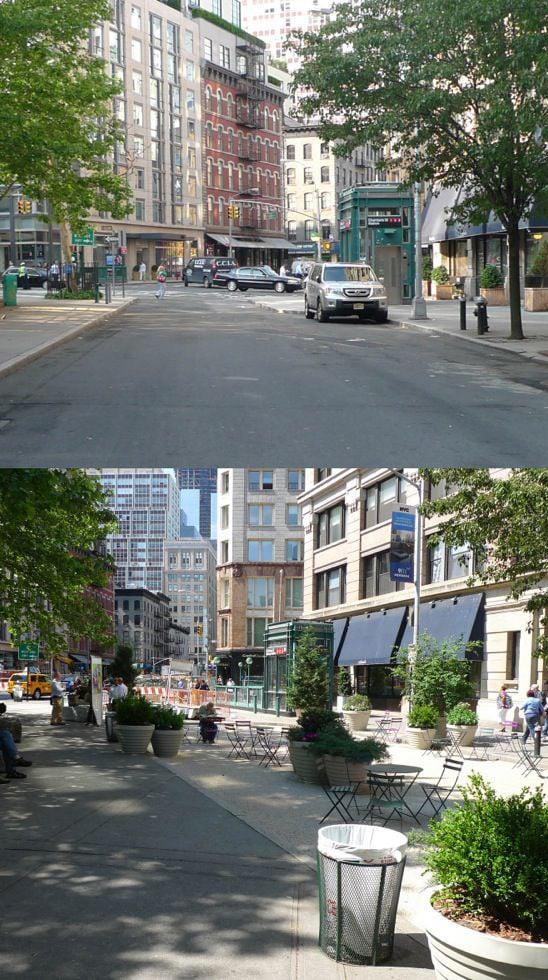
New York City Plaza Program
New York City, NY
The New York City Department of Transportation created a Plaza Program in 2008 aimed at transforming underutilized road space into neighborhood amenities through partnerships with local nonprofit organizations and community groups.
Community-based nonprofits submit plaza proposals through an annual application process. NYC DOT funds the plaza design and construction, while the nonprofit is responsible for community outreach, creating a funding plan, providing insurance for the plaza, ongoing maintenance, and programming the plaza to ensure it becomes an active, vibrant neighborhood space. Since its inception, the program has created 22 new public spaces for the community to enjoy.
Sustained, long-term funding for the Plaza Program was obtained through PlaNYC 2030, New York City’s 2007 strategic plan.
Pedestrian Impact increase in pedestrian pedestrian and motorist bus ridership in the
OBJECTIVE 2 Amplify community identity though celebration of historic places and investment in community spaces.
South Bend - Elkhart
CULTURE
FOSTERING
Strategy 2.1 Seek consulting services to create locally-scaled, community-focused public art plans. Timing short
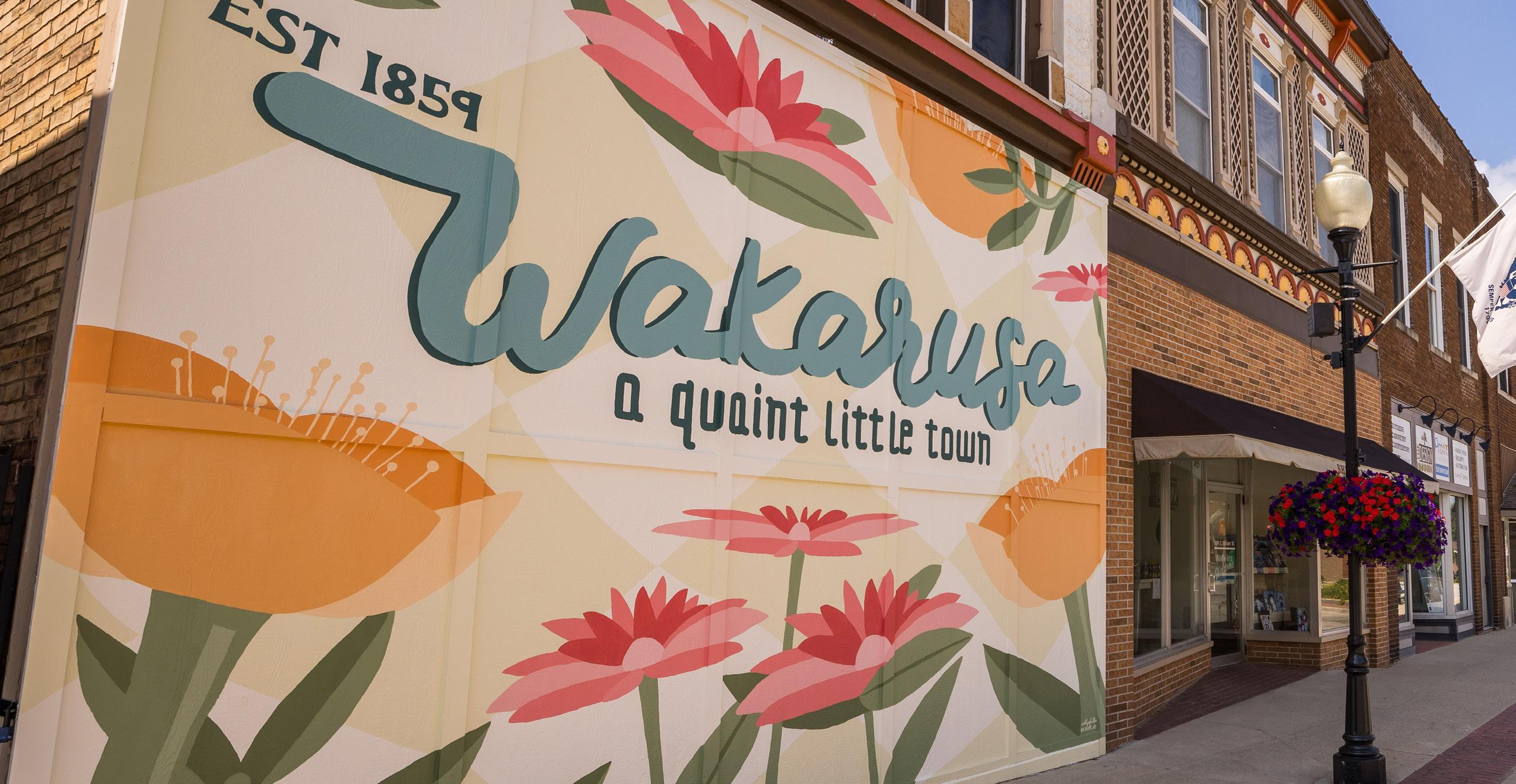
Public art in the South BendElkhart region can offer numerous benefits to both residents and visitors, but its success depends on a genuine connection to each community. A thoughtful, individualized planning process at the local level can ensure that public art authentically reflects its surroundings. Cities in the region may be interested in long-term public art strategies, policy development, and funding models based on community feedback. Investing in public art enhances quality of life, enlivens public spaces, and tells a community’s unique story.
1. Determine communities that would benefit from a defined direction for public art
2. Write and post an RFP from qualified public art planners
3. Facilitate and develop a public art plan
LOCAL BENCHMARK
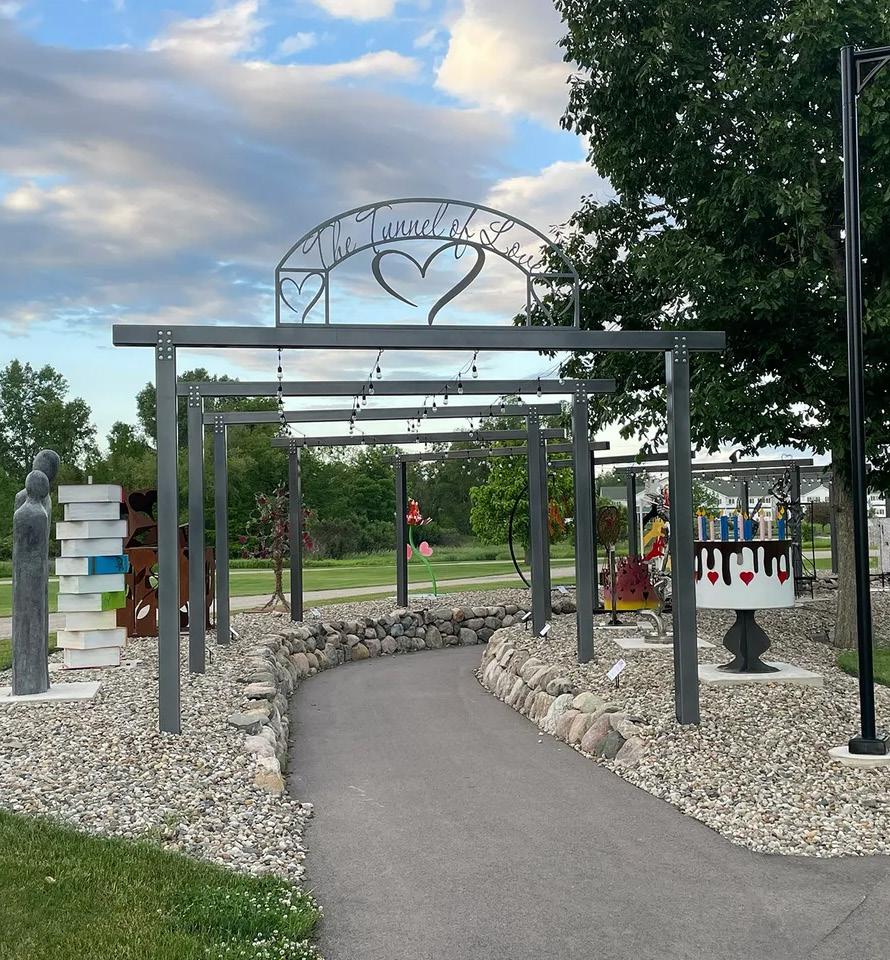
The Art Path Nappanee
PROJECT LEADERS
Primary Orgs. local municipalities
Secondary Orgs. regional arts council
The Nappanee Arts Council has been working to create unique art experiences in its city that are enriching to the community. One of these is the Art Path, which contains over 150 sculptures in seven differently themed locations along a paved and wooded nature trail. This trail provides an engaging experience for people to interact with high concentrations of local art. The Path is also home to Promenade on the Path, an annual event encouraging engagement with the arts.
South Bend - Elkhart ARTS AND CULTURE PLAN
FOSTERING CONNECTIONS
BUILDING CAPACITY
INVESTING LOCAL
CREATING ACCESS
Enhance downtown pedestrian areas through Alley Activation.
Alleys in historic downtowns are traditionally underutilized spaces that could be transformed by public art activations. With their blank walls and function as a pedestrian pass-through, alleys are a key opportunity to leverage their existing infrastructure as a platform for public art that expresses the city’s identity and welcomes visitors.
1. Undergo a Public Art Implementation Process (pg. 65)
LOCAL BENCHMARK
Art Alley in Downtown Goshen Goshen
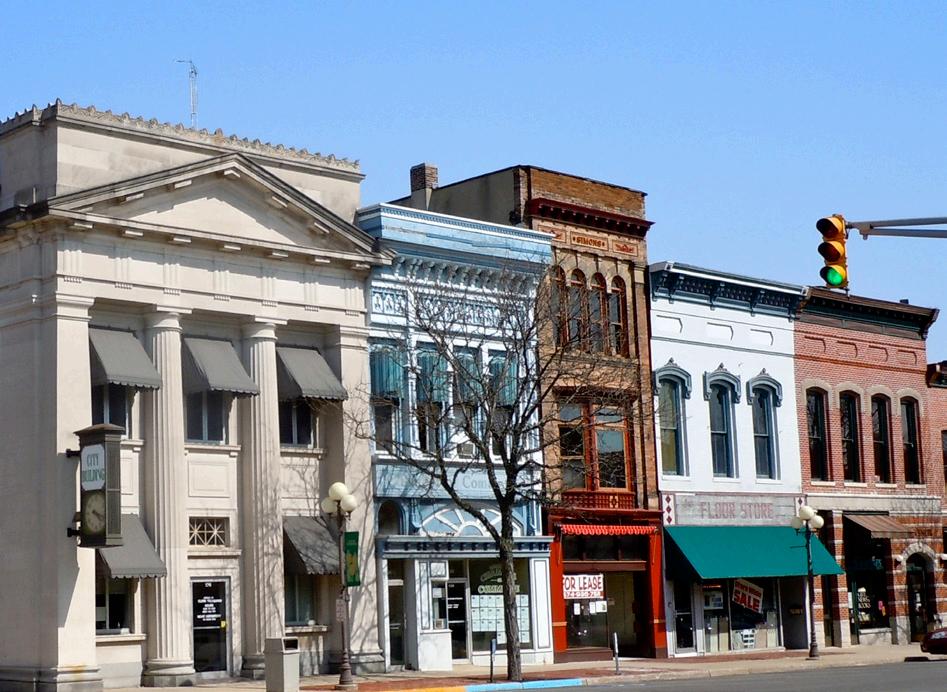
Nestled in downtown Goshen between Lincoln & Washington Aves, an art alley is positioned that leads pedestrians from a public parking lot to Main Street. This art alley consists of six rotating 8’x8’ murals done by local artists and curated by the City of Goshen. It continues on the western side of Main Street with sculptures, benches, and an interactive installation that invites community participation.
PROJECT LEADERS
Primary Orgs. mainstreet organizations, local municipalities, and building owners
Secondary Orgs. regional arts council, artists, and community foundations
• Goshen
• New Carlisle
Every public art project is unique, and some may be more administratively complex than others. This high-level guide to project implementation provides a basic framework for ensuring a successful project.
1. Plan, Ideate, and Envision: In this project phase, the planning team will want to establish clear goals and objectives for the project before any resources are committed.
a. Define the project’s vision and desired outcomes. Some helpful questions to ask during this phase are:
i. What is the purpose of this project?
ii. What should it feel like?
iii. Who is the audience?
b. Identify the site(s) where public art will be placed. Some helpful questions to ask about the site include:
i. Who owns the site?
ii. Will site improvements be required?
iii. What are the existing conditions?
iv. Is this site accessible to the greatest number of people?
2. Artist Selection: In this project phase, the planning team will determine how an artist will be procured.
a. Define Artist Criteria. Some helpful questions to support this step are:
i. Is this call limited to local artists?
ii. Will community engagement be required?
iii. What are the metrics for evaluating the artists who submit proposals?
b. Determine the Selection Process. It is critical in this phase to confirm:
i. Who will be selecting the artist
ii. How the Call to Artists will be solicited and shared
iii. How the selected proposal will be approved
3. Artwork Implementation: In this project phase, the project commissioner and selected artist will work closely to ensure the on-time, on-budget delivery of the artwork. The following steps and phases constitute this stage in the process:
a. Contracting, Permitting, and Insurance
b. Installation Oversight and Coordination
c. Anticipating maintenance needs
d. Project promotion and education
South Bend - Elkhart ARTS AND CULTURE PLAN FOSTERING
To encourage more murals in the region, cities should partner with regional and community foundations to launch a Matching Mural Grant Program, which has proven to be an effective mechanism to engage private businesses and philanthropies in local public art initiatives. This program would provide a one-to-one matching grant for murals on private property, offering up to $5,000 per project and capped at a certain allocation annually. In its pilot years, the program should undergo an annual review to ensure its effectiveness. Many current local mural programs, such as South Bend’s Mural Mania, the Elkhart Art Alley, and Goshen Arts & Culture District murals, would benefit from more sustainable funding sources and grant opportunities such as the matching mural grant program. While murals may not be the only typology that could be implemented through this program, they are the most cost effective and ensure the least amount of ongoing maintenance for the duration of the grant.
1. Confirm availability of resources through community foundations or other organizations
2. Establish application criteria and process
3. Promote and implement the program
Secondary Orgs. local municipalities and regional arts council
4. Assess and monitor impact, feasibility, and long-term sustainability
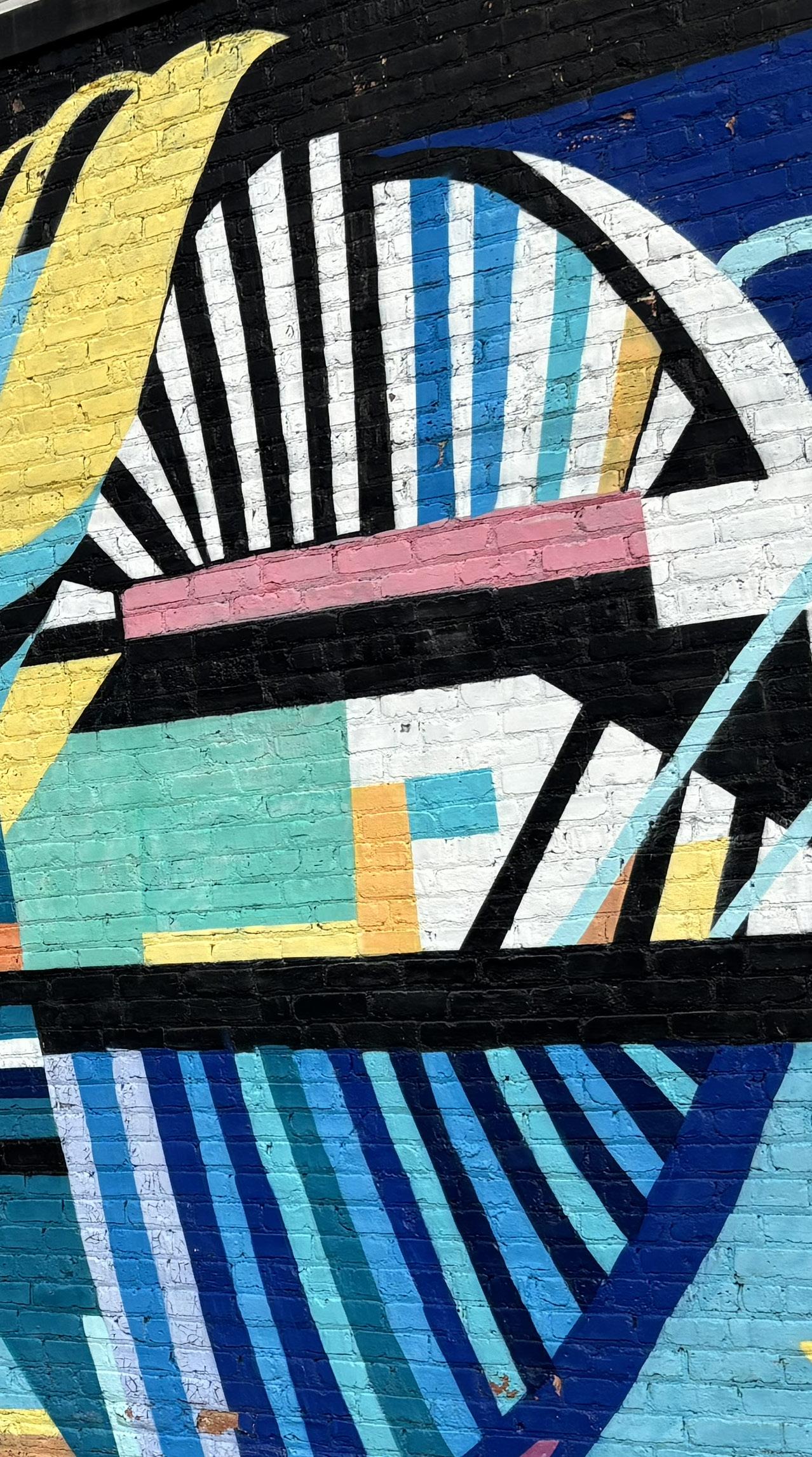
Beyond murals, this program could encourage similar partnerships for implementing other kinds of public art:
Artist-designed banners on utility poles
Painted benches
Temporary 2-dimensional
sidewalk interventions
Vinyl wrap on utility boxes
South Bend - Elkhart ARTS AND CULTURE PLAN FOSTERING
Strategy 2.4
Collaborate with existing historic preservation partners to explore the longterm benefits of commissioning local historic preservation surveys.
Historic preservation surveys are a beneficial planning tool to support a local understanding of historic places. Undertaking a historic resource survey is a crucial step for any community. It not only creates a detailed inventory of historic properties but also provides a deeper understanding of the area’s development. This information is essential for answering historical questions and establishing the precise boundaries of new historic districts.
1. Write and post an RFP from qualified historic preservationists
2. Conduct a preservation survey
LOCAL BENCHMARK
Local Historic Preservation Statewide
Timing mid
PROJECT LEADERS
Primary Orgs. local municipalities
Secondary Orgs.
community foundations and building owners
Local historic preservation organizations are nonprofit organizations and commissions working to preserve, study, and promote Indiana’s historic places. There are 20+ organizations and nonprofits identified throughout the region. View the full list and more details at IndianaLandmarks.org
Indiana Landmarks also offers many resources at the state level, including grants, technical information, preservation advice, and architectural surveys.
Strategy 2.5 Explore scenarios to revitalize historic, unused, and at-risk places.
Investing in the revitalization of at-risk buildings and places yields many positive community benefits, including increased property value, heritage tourism, affordable rents for local businesses, and an increased sense of local pride. While no two preservation projects unfold in the same manner, exploring various investment and use scenarios for underused, at-risk buildings can ensure that communities achieve their desired outcomes for their historic downtowns. Mixed-use buildings or communityfocused gathering spaces are aspirational project goals, depending on available funding and property size and location.
1. Conduct a feasibility study to determine the capacity of existing assets
2. Create options for potential redevelopment types/uses
3. Select the best option for your community
4. Conduct a capital campaign to support the project
5. Identify additional funding sources for the development and operations of the new program space
PROJECT LEADERS
Primary Orgs. community foundations, regional arts council, and building owners
Secondary Orgs. developers and local municipalities
• Downtown Goshen, Inc.
• State Theater
South Bend - Elkhart ARTS AND CULTURE PLAN
Encourage
implement
South Bend - Elkhart ARTS AND CULTURE PLAN
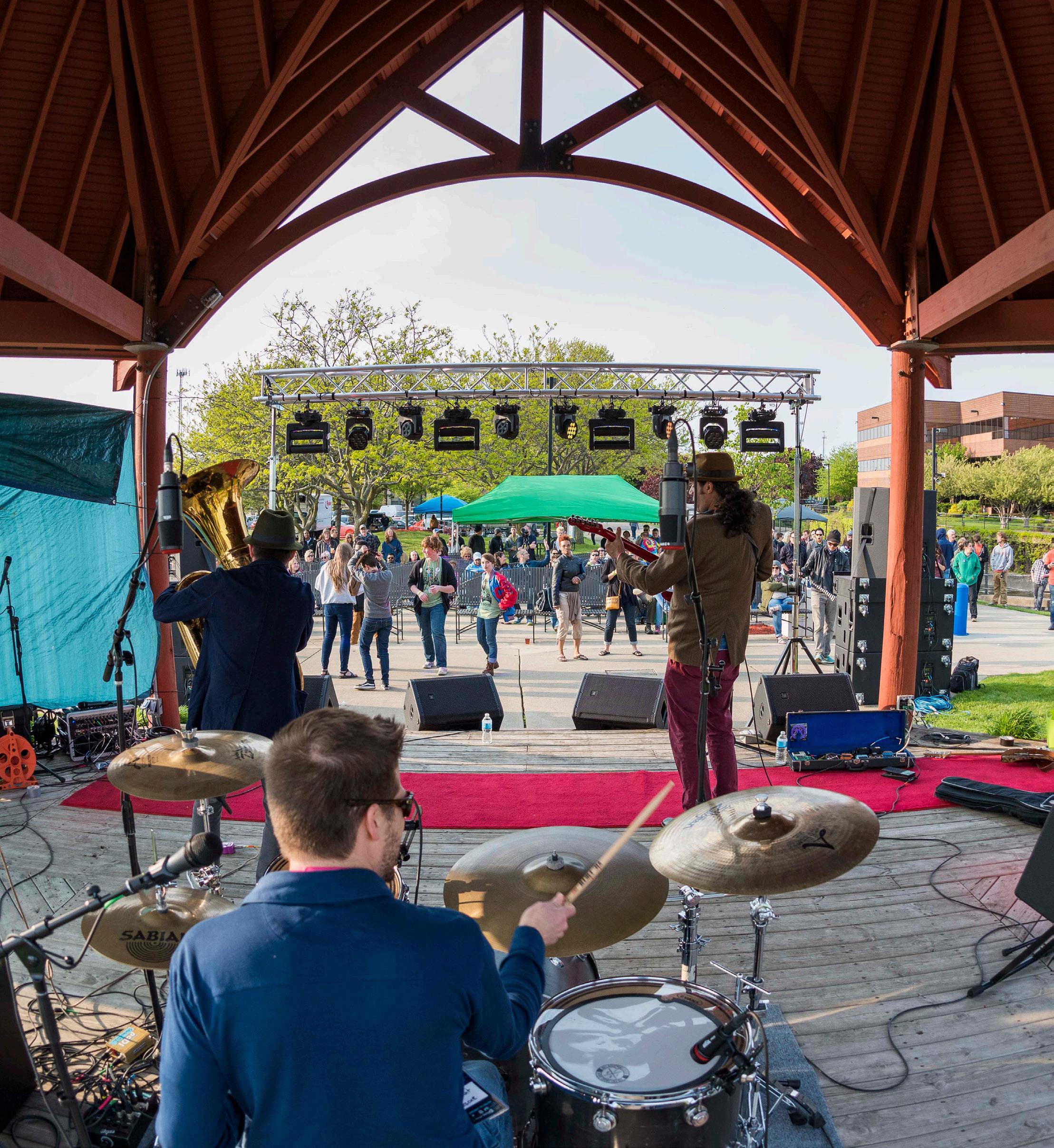
Strategy 3.1 Leverage live music to enhance access and regional identity.
Day-to-day arts and culture experiences can be challenging to navigate for the average resident who might not be aware of all of the opportunities in their own community. Live music, such as artists playing at restaurants or other smallscale concerts, is an accessible way to experience the performing arts locally. By adopting a strategic approach to economic growth through live music, the region can delight residents, support artists, and benefit venues alike with more events, diverse genres, and community feedback—positioning itself as a music destination.
1. Create an audit of calendar of shows to identify gaps (timing and music diversity)
2. Collaborate with local venues and promoters to expand programming
3. Work with local musicians to develop and promote accessible, interactive experiences
4. Enhance collaboration and programming among tourism agencies, parks departments, festival organizers, and venues to maximize show opportunities for local and out of town artists
PROJECT LEADERS
Primary Orgs. private organizations (restaurant associations, radio stations, business groups, record/music stores, etc.), and venue owners
Secondary Orgs. Main Street organizations, local municipalities, higher education institutions, and regional arts council
• City of Elkhart
• Juke’s Music Town
Strategy 3.2
Widen availability for signature programs and festivals.
Regional signature events are best known for providing weekend engagement and entertainment, but competing scheduling priorities, major events (such as college football games), and other barriers can impact visitorship. In order to widen the reach of these events for more audiences, coordinators of signature events should consider an expanded schedule and time offerings when possible. Alternatively, satellite and smaller-scale pop-up events throughout the year can spur interest and promote events to audiences who may not be as familiar with programs. At the local scale, tourism can be driven through programs similar to “restaurant week,” wherein arts and culture programs and organizations are highlighted in tandem for a limited period of time.
1. Extend one-day festivals to full weekends (Saturday and Sunday, Friday when feasible)
2. Look for opportunities to extend satellite festival programming in one-day/pop-up installations in other parts of the region and other times of the year
3. Work with local festivals to assess opportunities for future collaboration/sponsorship
South Bend - Elkhart ARTS AND CULTURE PLAN QUICKEST
PROJECT LEADERS
Primary Orgs. festival coordinators
Secondary Orgs. local municipalities, regional arts council, and community foundations
• Art Beat
• Elkhart Jazz Festival
• Fusion Fest
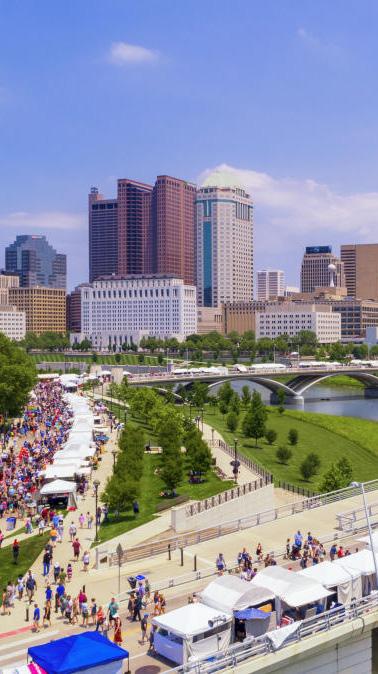
Columbus Arts Festival
Columbus, OH
The Columbus Arts Festival is a free, three-day celebration of the arts held in Downtown Columbus, OH, bringing in hundreds of thousands of visitors each year. The festival features over 250 visual artists from over 30 states, four performance stages, and dozens of local food vendors. Now in its 63rd year, the Columbus Arts Festival is run by the Greater Columbus Arts Council and is nationally recognized as one of the top arts festivals in the country. The festival originated as a smallscale showcase of local artists on the Ohio Statehouse lawn but has now transformed into a multiday event, spanning the entire downtown riverfront, drawing in artists and visitors from across the
500,000 (estimate)
$1.4 million in arts sales over one weekend
200+ Artists who generate on average $11,000
South Bend - Elkhart ARTS AND CULTURE PLAN
FOSTERING CONNECTIONS
BUILDING CAPACITY
Strategy 3.3 Encourage family-centric programming at existing cultural institutions.
INVESTING LOCAL CREATING ACCESS Timing short Investment $ Impact targeted
PROJECT LEADERS
Primary Orgs. existing organizations (local schools, higher education, etc.)
Secondary Orgs. regional arts council and community foundations
Although many regional arts and culture organizations have created robust family-centric programming, an expanded investment in these offerings will yield benefits across the region. In addition to program content that appeals to families with multiple generations, these programs could occur on days and at times most conducive to family schedules or in locations with family-friendly amenities. While shaping programming to meet the needs of families seems like a small step toward building a thriving arts and culture community, it will support larger efforts to enrich young minds, increase cultural competency, and build lifelong bonds with arts and culture institutions.
1. Assess organizations with capacity for familycentered programming
2. Work with the regional arts council to create opportunities for youth and family engagement
LOCAL BENCHMARK
Wellfield Botanic Gardens
Elkhart
The Wellfield Botanic Gardens are 36 acres of yearround gardens that can be enjoyed by all ages. In addition to having a garden designed specifically for children, the Gardens host many special events throughout the year for families to enjoy, including educational opportunities, a summer concert series, and winter wonderland holiday lights.
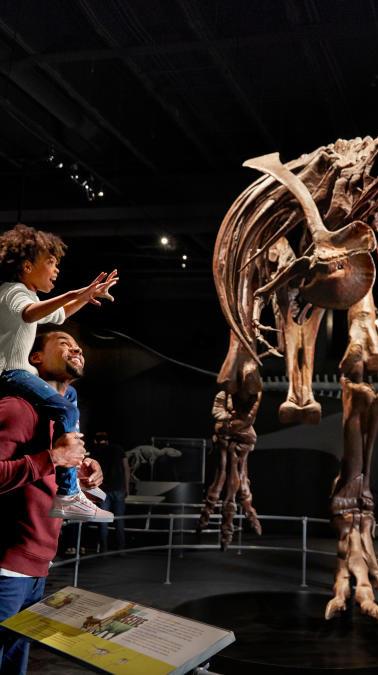
COSI: Center of Science and Industry
Columbus, OH
The Center for Science and Industry is a premiere science center and institution located in Columbus, OH, dedicated to piquing interest in science, technology, engineering, art, and mathematics, for all ages, backgrounds, and abilities. COSI takes an experiential, hands-on approach to learning and has become a highly valued asset for families, schools, and community groups. COSI programs, exhibits, and events tailored directly to families to inspire young learners interested in science, such as the Little Kidspace and the Big KidLab. COSI provides memberships specifically for families at discounted rates.
$125 million (1997) 1 million+ (annually)
$10-15 million (annually), accounting for approximately 75% of its funding; the other 25% is generated by grants, sponsorships, etc.
Encourage reduced rate/free admission days at cultural institutions, where appropriate.
In order to encourage visitorship and expand an organization’s reach, the region’s arts and culture institutions should consider seeking grants or subsidies to support reduced-rate or free admission days, as appropriate for their programming. These programs can fall into three categories:
1. Income-based programs, which offer discounted admission to families or individuals who receive federally funded income-based benefits.
2. Discounts through reciprocal memberships or affiliations, which offer reduced rates based on a visitor’s employer or status as a member with another local organization. Common affiliation-based discounts are available to students, military members, and seniors.
3. Community Days, which are predetermined, recurring days and times offering free admission to all visitors (i.e., the first Sunday of every month).
Local organizations should determine the structure that best serves their mission and offerings.
Organizations who primarily offer performances should consider dress rehearsal reduced rates or matinee rates and could collaborate with other organizations for reciprocal admission benefits.
PROJECT LEADERS Primary Orgs. existing organizations (museums, galleries, venues, etc)
Secondary Orgs. regional arts council, higher education institutions, and community foundations
Additionally, across the region, a wide-reaching cultural pass can provide even greater access to arts and culture assets. This could be facilitated through the proposed regional arts council, or at the county level through County Foundations.
This recommendation is an essential ingredient in building a multigenerational culture of arts engagement in the region. By widening access to institutions and resources through this nuanced benefit, the region can ensure that the impact of local arts and culture organizations can reach the greatest number of community members over decades.
1. Assess organizations with capacity for increased accessible programming
2. Work with the arts council and community foundations to create opportunities for reduced rate/free admission days
3. Utilize arts council to promote accessible program times/dates
LOCAL BENCHMARK
South Bend Museum of Art
South Bend
The South Bend Museum of Art has free admission. By not charging an entry fee, it hopes to make the museum more accessible to a wider range of people, and relies on donations and membership fees to provide its exhibitions and programming.
Local Cultural Passes
Many of the region’s libraries have cultural pass programs, where members are able to check out passes to local museums and cultural experiences. Some of these libraries include:
• Elkhart Public Library Experience Passes
• Goshen Public Library Experience Passes
• Mishawaka-Penn-Harris Public Library Discovery Passes
• St. Joe County Public Library Discover Passes
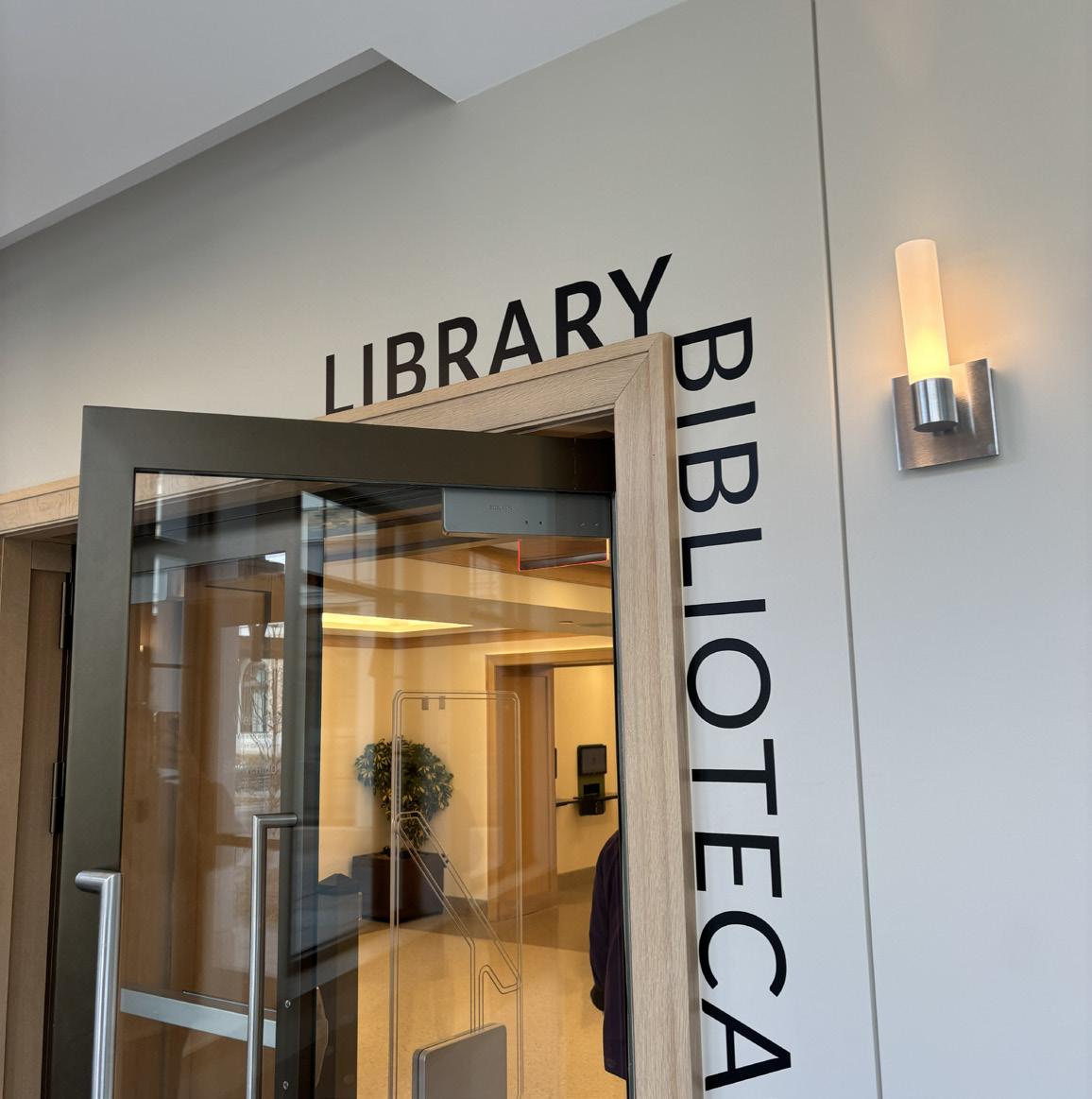
NATIONAL BENCHMARK
Culture Pass
Columbus, OH
Culture Passes are available for checkout at Columbus Metropolitan Libraries, granting admission to central Ohio arts and culture organizations, from Ballet Met performances to Columbus Crew games, free with a library card. The passes are for in-person checkout only and are nonreservable with limited supply. The Culture Pass enables library patrons to experience and engage with the rich cultural and artistic institutions central Ohio has to offer, without facing financial barriers. Each participating institution and organization decides which CML locations will offer their passes based on their targeted neighborhoods and communities. Further, each participating institution and organization offers their passes to CML for free and sets their own rules for how many individuals are covered under its passes, on which days the passes will be honored, and how many passes are allotted to each designated CML branch.
Revenue/Impact: no data collected at this time
South Bend - Elkhart ARTS AND CULTURE PLAN
FOSTERING CONNECTIONS
BUILDING CAPACITY
INVESTING LOCAL CREATING ACCESS
Strategy 3.5 Develop signature winter events across the region. Timing
The South Bend - Elkhart region is a thriving place to live, work, and play year-round, but its current arts and culture festival and event offerings tend to scale down from November to March. Collaborating with local organizations and municipalities to program experiences in the region during this period can encourage a fresh and consistent experience for the community. This approach also encourages tourism and increases foot traffic for local businesses, stimulating the economy and activating underutilized outdoor spaces.
1. Conduct an audit for priority locations/ markets in off-seasons
2. Develop programs in partnerships with local municipalities for permits, etc.
3. Identify additional funding sources for the development and operations of the festival/ event
PROJECT LEADERS Primary Orgs. regional arts council
Secondary Orgs. community foundations and local municipalities
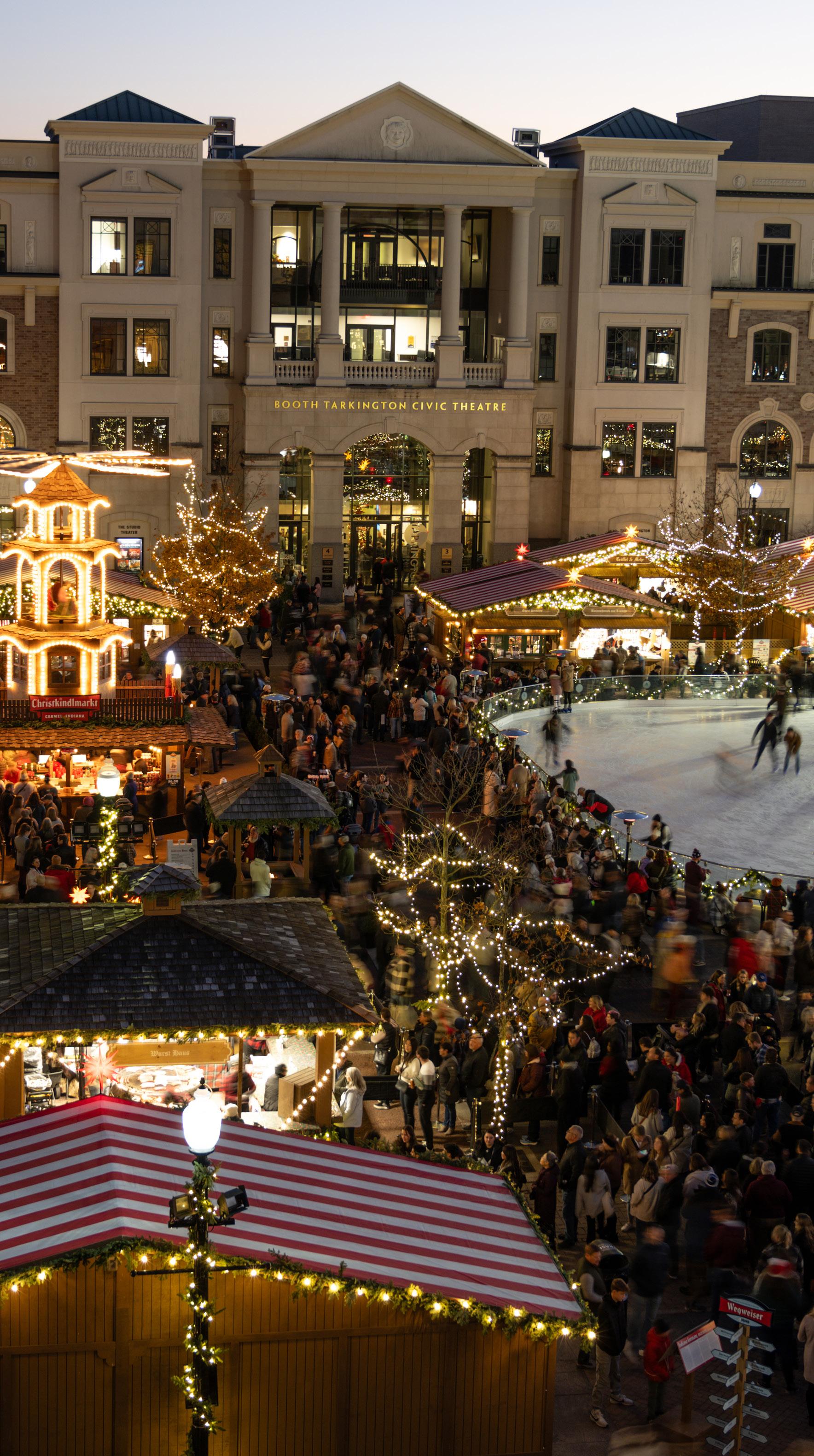
NATIONAL BENCHMARK
Christkindlmarkt
Carmel, IN
First created in 2017, Carmel Christkindlmarkt has flourished into a hallmark event, celebrated as one of the most authentic Germanic Christkindlmarkts in the United States, gaining national and international recognition. The nonprofit Carmel Christkindlmarkt, Inc., manages and operates the Carmel Christkindlmarkt on behalf of the City of Carmel. In addition to the festival, Carmel Christkindlmarkt, Inc. hosts year-round programming “that celebrates the rich heritage, traditions, and customs of Germanic cultures.” The Carmel Chriskindlmarkt is open from late November through Christmas Eve and features over 60 vendor stalls, live music, authentic food and beverages, German artisan creations, and ice skating.
10,000 (daily)
$9.6 million in sales Economic Impact: $47.4 million (combined 2023-2024)
Cultivate livability and community for creative professionals and artists.
Expand affordable housing definition to include artist housing in downtown areas and creative hubs.
Municipal zoning codes could be broadened to foster housing opportunities to meet the needs of artists and creatives through a number of interventions:
1. Live-Work Housing: This measure defines housing that is specifically designed to suit the unique working needs of creatives and can include stipulations for residential ceiling heights, workspaces in residential units, and permitted use of specialized materials in a residential building.
2. Developer Incentives: Two measures can be made available to developers to incentivize the construction of new artist-focused housing:
a. Inclusionary Zoning: Designating a certain percentage of affordable housing units in new development to be allocated to qualifying artists.
b. Density Bonuses: Cities could allow developers to build more units in a development project than would normally be permitted in the Zoning Code if those units are allocated to qualifying artists.
3. Overlay District: As mentioned later in Objective 4, a designated arts district could become subject to artistfriendly zoning requirements that would support the growth of affordable housing for artists and creatives.
While the goal of affordable housing for artists would support the local creative community immediately, the longterm benefit would ultimately provide more housing units and options for livability in the South Bend - Elkhart region.
1. Advocate for amendments to existing affordable housing policy and zoning regulations to explicitly include artist live–work spaces.
2. Explore incentives for developers to incorporate artist live/work spaces in their projects, such as density bonuses or property tax abatements.
3. Determine if there are strategic areas in the region where this expansion should be targeted.
4. Evaluate the effectiveness of the code change in encouraging this use in specific areas.
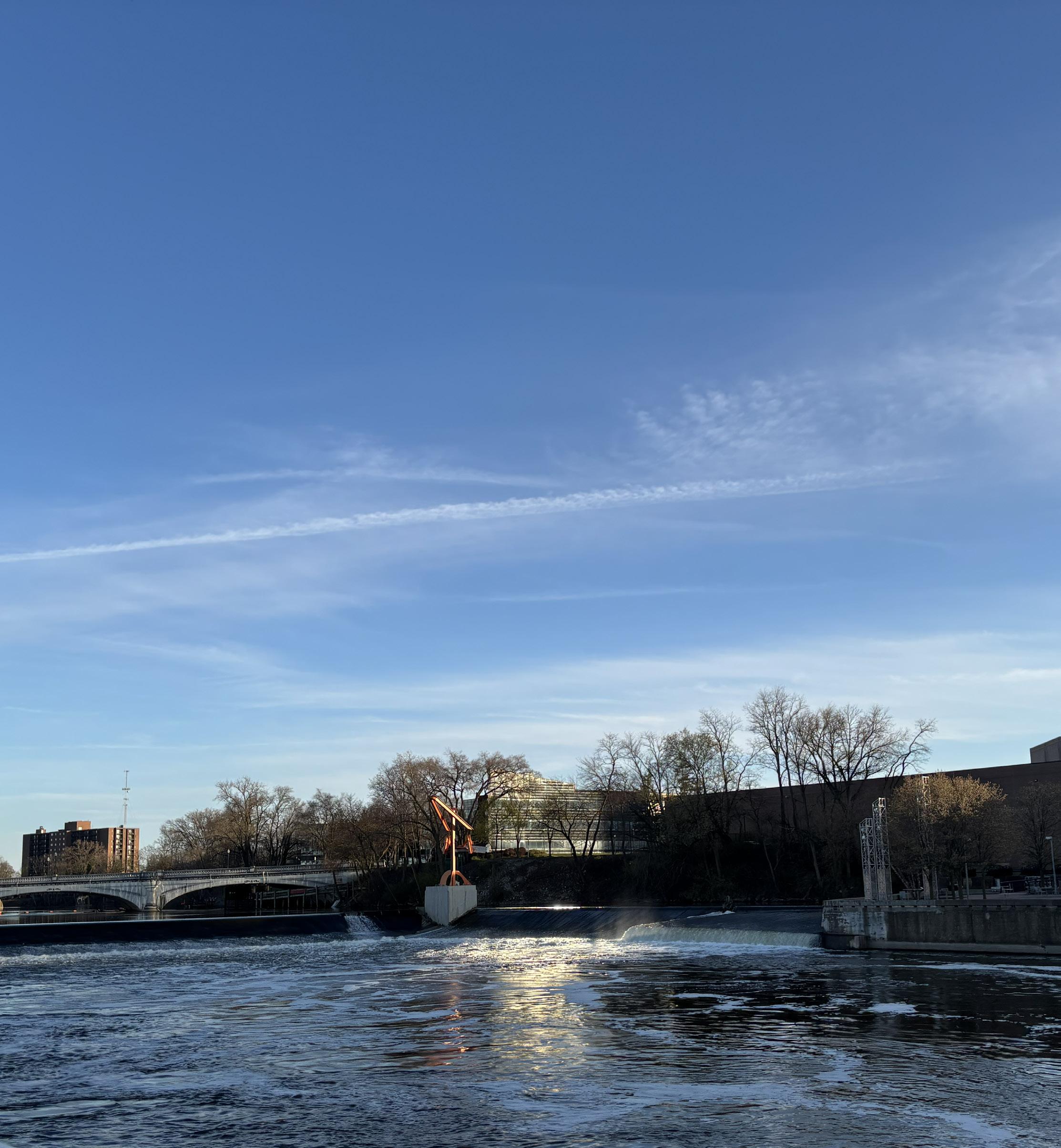
Establish crosssector artistin-residency opportunities.
Artist-in-residency opportunities offer creatives in all disciplines— art, music, dance, and beyond— an array of resources to expand their practice through a funded, temporary research experience. The structure of these short-term programs can range based on desired outcomes, funding streams, and thematic focus but ultimately result in a new body of work, artistic experience, or creative finding. The region’s diverse and well-established arts and culture assets can offer a rich environment for residency opportunities that could overlap with other industries and resources; for example, a visual arts-focused residency opportunity could intersect with a local agricultural organization to support an artist’s research desire to explore art and ecology through sitespecific study. Artist-in-residency opportunities are ideal creative outlets for practicing artists and creatives and yield exciting outcomes for communities.
1. Determine which department(s) or facility(ies) will host the artist-in-residency program.
2. Determine a budget for the program and anticipated deliverables.
PROJECT LEADERS
Primary Orgs. local municipalities and arts organizations
Secondary Orgs. business / industry organizations and regional arts council
3. Develop a call for artists and select residency program participants that both represent the community and bring in new experiences from beyond the region.
4. Each artist will create a temporary art event, presentation, or lasting piece of public art in the community to remain after the completion of the artist residency.
5. Provide the public with opportunities to experience the artist’s work, especially in collaboration with other municipal departments and community partners.
• MoonTree Studios
• Ruthmere Museum
MoonTree Studios
Marshall County
MoonTree Studios, a ministry of the Poor Handmaids of Jesus Christ, hosts an artist-in-residence program. The studios focus on the intersection of art, nature, and spirituality. In addition to hosting resident artists, the studio also features rotating exhibits from local and regional artists.
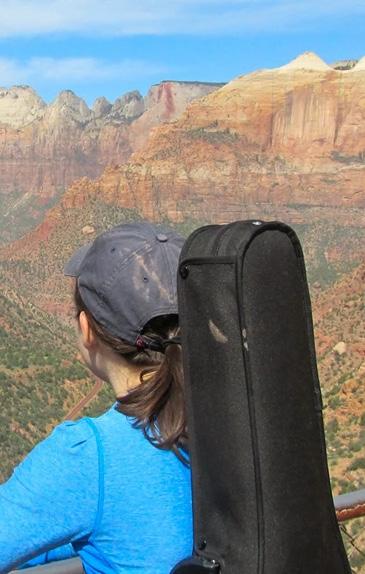
Arts in the Parks, Artistin-Residence
The National Parks Service supports more than 50 artist-in-residency programs across the country. The AIR programs offer cross-disciplinary opportunities for engagement between parks, artists, and park visitors. The National Park Service AIR program includes a variety of art disciplines and mediums, from textiles and beading to written word. The NPS AIR program openings are posted directly by individual National Park Service sites. While there is some variation site-tosite, residencies are typically two to four weeks in length, and housing is provided. The artists are also invited and encouraged to participate in park programs by sharing their work with park visitors. The National Parks Arts Foundation works directly with selected artists and the National Park Service to facilitate these artist-inresidency programs. Artists apply to the specific posting they are interested in, which typically includes an application form, an artist statement, and a portfolio of their work.
FOSTERING
Designating a community’s own unique arts district is an essential step to increasing economic activity, walkability, and vitality in commercial corridors and gathering nodes. Although pathways are available through the State of Indiana to formally designate areas as arts districts, this plan encourages cities to designate areas where a self-identified district could generate connections to local character and history. The vision for a local arts district could expand the region’s visibility as a thriving hub for creatives and artists, as well as promote local business opportunities.
If interested, communities can apply for an official Cultural District designation. With an arts district designation through the State of Indiana, the community-identified district would be eligible for funding sources and opportunities to improve the area’s safety, functionality, beauty, and livability.
For more information on the Cultural District designation, visit arts.in.gov.
1. Understand the viability of creating an arts district
2. Assess the organizing body of the district
3. Identify potential boundaries based on a combination of the following:
a. Geography
b. Historical Precedent
c. Density of Assets
4. Gain consensus for the designation from business owners, residents, and other related parties
a. Specific approval may need to be given from local governing bodies
5. Create an identifiable brand for the district
41|40 Arts & Culture District
Terre Haute, IN
Officially recognized by the Indiana Arts Commission in 2018, the 41/40 Arts and Cultural District in Terre Haute, Indiana, encompasses the historic downtown, the brewery district, and Indiana State University’s campus. The district consists of more than 50 public art pieces, seven local galleries, five museums, and five performance spaces, contributing to the rich, diverse cultural landscape of Terre Haute. Within walking distance of the Wabash River, the 41/40 District provides community members and visitors alike a vibrant blend of history, heritage, and art, celebrating all that Terre Haute has to offer.
$32.1 million in creative industry earnings for the district Non-profit Revenue: $3.5 million in arts and culture non-profit revenue in the district
646 creative jobs in the
South Bend - Elkhart
Create a regional arts council.
An independent, nonprofit arts council to support regional arts and culture initiatives would dramatically transform the region’s capacity to fund, advocate for, and promote the arts and culture work of local organizations and municipalities. As the link between local and county resources, a regional arts council has the ability to encourage collaboration; identify opportunities or partners for regular artist and creative convenings; explore opportunities for regional marketing strategies; and foster connections between prospective donors, patrons, and local organizations. The ultimate goal of such an organization is to strengthen the region’s existing ability to efficiently and effectively collaborate at varying scales across networks.
• Assist with public art resources
• Assist with regional arts marketing
• Develop arts education programs
• Organize regional artist mixers
• Provide and assist with grant funding for arts organizations
• Support cultural festivals
1. Cities and regions throughout Indiana have local arts councils that often provide direct funding, resources, and support for artists and arts organizations within their communities. The South Bend - Elkhart region should explore the creation of a regional arts council that could act as financial and operational support for municipal partners, local arts organizations, and artists. The Arts Council would be an invaluable resource for the local sector.
2. To establish the formal organizational and governance structures that will provide the framework for the regional arts councils’ operations, deep conversations will need to be conducted with stakeholders. Considerations should be made for the following types of governance structures:
• Nonprofit 501(c)(3)
• Local Arts Agency
• Fiscal Sponsorship Organization
Structure Type Key Characteristics Pros Cons
Non-Profit 501(c)(3) (Company Limited by Guarantee)
Legal identity, non-profit distributing, governed by board, public accounts
Public Entity/Local Arts Agency Department of local government or public-private partnership, integrated into civic planning
Fiscal Partnership Organization Project operates under an existing non-profit’s legal/ financial umbrella
Unincorporated Association Constitution and board, no separate legal identity
Enhanced credibility, broad funding access (grants, tax-exempt gifts,), tax exemptions
Direct municipal support, vital for extending federal funds (especially rural), inherent stability
Access to non-profit benefits without full incorporation, administrative support, capacity building
Simple to set up, minimal formalities
Compliance burden (records, returns, disclosure), restrictions on political activity, “excess benefits” avoidance
Subject to government bureaucracy, political shifts, potentially less flexible
Dependent on sponsor, potential for less autonomy, sponsor is legal applicant
Personal liability for individuals, limited credibility, restricted funding access
3. Following the structural decision, a governance structure will need to be created, creating distinct roles and responsibilities for the board of directors and any staff. The Arts Council should then create a strategic framework with which to work from that includes a mission, vision, core values, and strategic goals.
• Marshall County Arts & Culture Council
• MoonTree Studios
• Nappanee Arts Council
• other local arts councils
Founded in 1976, the Norman Arts Council supports the community’s artistic, cultural, and economic growth through public art, events, and arts education. The Norman Arts Council fosters new arts organizations and supports existing institutions through a grant program that funds programming, festivals, exhibitions, and educational opportunities that serve all members of the Norman community. The Norman Arts Council is made up of five staff members, six council officers, and 19 council board of directors. Early in the council’s history, the Arts and Humanities Roundtable was created, which is a network of 501(c)(3) arts and cultural organizations in Norman, allowing for collaboration and communication between arts organizations. Funding for the Norman Arts Council has come from the Oklahoma Arts Council, the National Endowment for the Arts, individual annual contributions, corporate sponsors, fundraising events, and the Norman Transient Guest Room Tax.
Attendees: programs/events reach 750,000 people (2022)
Revenue: $25 million in audience spending (2022)
Jobs: Supports 600 jobs (2022)
Economic Impact: $36 million (2022)
Visitor Reach: 215,861 visitors outside Cleveland County (2022)
*Norman Arts Council participated in AEP6 in 2022
Securing financial support for arts and culture initiatives in the South BendElkhart region requires a multi-pronged approach, exploring opportunities at the state, regional, and local levels, as well as from private sources. It should be noted that as national and state funding cuts impact available funding, local tools should be explored in the short term as the most viable solution for funding arts and culture initiatives.
The Indiana Arts Commission is the primary state agency for arts funding, and they offer several grant programs. The IAC works through Regional Arts Partners across the state to administer some of its programs and provide local guidance. Key opportunities include:
Arts Organization Support: This opportunity provides annual operating support to eligible arts nonprofits.
Arts Project Support: This opportunity provides funding to nonprofits, governments, and schools for specific arts-related projects, events, exhibitions, or workshops.
Arts Midwest is a regional organization that serves Indiana and other Midwestern states, offering grants and programs that support touring artists, creative projects, and community engagement with the arts.
Indiana Humanities often supports cultural programs with a humanities focus, including those that intersect with artistic expression and storytelling.
The Indiana Arts Commission (IAC) has several regional partners that promote and expand participation in the arts in Indiana. The partners provide broad local access to arts services and funding opportunities and provide services that include, but are not limited to, grant making and information and referral.
Community Foundation of St. Joseph County: Elkhart, Fulton, Kosciusko, Marshall, Starke, and St. Joseph Counties
Local municipal investment in arts and culture is crucial to realizing the community’s vision for the future. A diverse range of options is outlined below and should be considered by each municipal partner, as each proposed solution will not be a fit for every community. By leveraging direct appropriations, dedicated revenue streams, policy frameworks, and public-private partnerships, municipalities can generate substantial measurable funding streams and high-impact economic benefits.
One of the most common and fundamental ways municipalities participate in arts and culture funding is through direct allocations from their general operating budgets, which are then distributed as grants to support arts organizations and cultural programs. This approach typically involves a dedicated local arts agency or a specific department responsible for administering these funds. Local Arts Agencies generally receive funds directly from local government expenditures and are tasked with distributing these grants to artists and cultural organizations across their jurisdictions.
Percent for Art ordinances are municipal policies that legally mandate a specific percentage of the total budget for capital improvement projects to be set aside for public art. These policies ensure that art is integrated into the urban fabric and public spaces as a consistent feature of civic development.
The establishment of special tax districts represents a highly effective strategy for generating substantial and consistent funding for arts and culture. These districts typically impose a specified tax level, often for a fixed period, on particular goods and services within a defined geographic area. Such initiatives generally require authorization at the state level and, crucially, voter approval, which lends them significant public legitimacy and long-term stability. Once established, these districts are often administered by independent governing bodies, ensuring dedicated oversight and allocation of funds. These tax districts should be explored where there is significant community buy-in to the projects within each district and where there is economic advantage to a large number of small businesses and local partners.
Taxes are the primary revenue sources for local governments. The two largest tax types by revenue are property taxes and local income taxes. Although Indiana is a home rule state for ordinance enforcement, it is not a home rule state for taxation. Only taxes explicitly authorized by statute may be implemented by local governments.
There is no general statutory authority for food and beverage taxes. Each is created by a specific state statute for a specific county or municipality. They are usually set at 1% but there are some as high as 2%. They are charged on restaurants and collected as sales taxes. They are dedicated to specific projects or uses designated by the enabling statute, usually for specific economic development projects. All food and beverage taxes have a sunset of no more than 25 years.
Municipalities can issue general obligation bonds, debt backed by property taxes, to finance public projects. Units may levy additional property taxes outside of the normal levy limits to support their general obligation debt. The constitution and state statute limit the total amount of general obligation debt to 1/3 of 2% of the net assessed value in a jurisdiction.
Indiana code allows any county to adopt a lodging tax of up to 5 percent, with the tax being used for local tourism development and promotions. Some counties have a higher percent and they are either under their own legislation or have sought special dispensation from the Indiana General Assembly.
Authorized by a County Council, the uniform innkeepers tax code establishes a local tourism authority appointed by various entities within the county to oversee its usage. These tourism commissions are sworn representatives of the community and must act in good faith to use these appropriations as stipulated in the tax code.
Indiana currently sets local income taxes at the county level. A single county adopting body, either the county council or a local income tax council made of the county government and all of the municipalities in the county, determines the tax rate. The rate can be set up to 2.5% for expenditure rate, which generates additional revenue, and up to 1.25% for property tax relief, which funds property tax credits in the county.
Expenditure rate revenue is usually distributed to all of the taxing units in the county that levy property taxes other than schools proportionally based on each unit’s share of the tax levy. The exception to this is the public safety rate, which is distributed only to units that provide police or fire protection, and the county carveout rates for specific purposes like the 911 system, county hospitals, county jails, or county court services.
Starting in 2028, the Indiana local income tax system is changing so that all cities and towns with a population of 3,500 or higher can adopt their own local income tax rate only on their own citizens without county approval with the county council remaining the adopting body for the income tax rate for all other units in the county, including the municipalities with populations under 3,500.
There are several statutes where municipalities can collect payments in Lieu of Taxes, or PILOTs, as an additional revenue source. These are payments that are voluntarily agreed to by otherwise tax exempt property owners for up to what their property tax liability would have been but for their tax exempt status. The most common form of PILOT is on tax exempt municipal utility property, but other forms exist.
Property taxes are the largest revenue source for municipalities. Indiana’s property tax system is controlled by property tax levy. Each unit has a maximum permissible tax levy, set by a statutory formula, that it may levy on property in their jurisdiction. The levy is the amount of money to be collected and it creates the tax rate. The normal property tax rate formula is (Property Tax Levy)/(Net Assessed Value)*100. This amount will be reduced by applicable tax credits, especially the property tax caps and the supplemental homestead tax credit.
TIF is an economic development financing tool that allows municipalities to capture incremental property tax revenue generated by economic development projects to finance the debt that it paid for those projects and to reinvest it in new economic development projects. If an area is designated as a TIF allocation area, the existing property tax base continues to be allocated to all taxing units but all assessed value growth attributable to physical improvements or new personal property is only taxed by the municipality that created the TIF to finance the public improvements that made the development possible.
TIF is the most effective and flexible economic development tool for local governments and is used on most significant new developments throughout the state.
Counties and municipalities can adopt wheel and vehicle excise taxes to fund road projects in their jurisdictions. These taxes are collected on annual vehicle registration as renewal fees. The wheel tax is charged on commercial vehicles while the vehicle excise tax is charged on passenger vehicles, but they must be adopted concurrently.
The wheel tax can be set at between $5 and $40 for each different commercial vehicle class while the vehicle excise tax can be set at between $7.50 and $25 dollars for each passenger vehicle class.
Municipalities have home rule authority to charge many different fees for the services they provide and penalties for violating local ordinances.
Impact fees are charged on new development to help defray the cost of necessary public improvements, like road or parks, necessitated by the new development. Municipalities have broad home rule authority over the impact fee rates.
Municipalities may charge reasonable permit fees for municipally controlled permitted activities, like building permits or right-ofway access. They can also charge reasonable fees (with statutory maximums) for ordinance violations.
There are many user fees that can be charged for municipal services including trash fees, stormwater fees, park fees, etc. Municipalities have broad home rule authority over user fee rates.
The state government provides many transfers of funding from various revenue sources to local governments for specific purposes.
The commercial vehicle excise tax was taken over by the state many years ago and a portion of the revenue is still transferred to local governments.
The community crossings matching grant program is funded by gas sales taxes and supplemental vehicle registration fees. This is a matching grant program for specific road projects that can be applied for annually, up to $1M, with local matching requirements of between 20%-50% based on community size.
Financial institutions are exempt from ordinary business taxation and instead pay the financial institutions tax. Local governments receive a portion of the revenue.
The Motor Vehicle Highway (MVH) and Local Road and Street (LRS) funds are statewide road funding sources funded primarily by the gas tax and gas sales tax. Local units receive distributions from both of these funds earmarked specifically for road funding based on a combination of their population and center lane road miles.
There are other state grant programs and transfers available to local governments, but the major revenue sources are described above.
Despite the recognized value, rural communities often struggle to translate arts and culture plans into actionable initiatives due to inherent resource limitations. These areas frequently lack dedicated economic development organizations, cannot afford professional grant writers or lobbyists, and are disproportionately underserved by philanthropy. Technical assistance is therefore essential to bridge this implementation gap, providing the expertise, tools, and networks necessary for constituents to effectively execute their plans and access available resources.
Despite the challenges, rural communities possess inherent strengths that can be leveraged to foster vibrant arts and culture sectors.
Community Cohesion and Tight-Knit Networks: Rural communities are often characterized by strong social capital and tight-knit relationships. This inherent characteristic can be a powerful tool for increasing access to arts and arts education by fostering collaboration and shared purpose, as seen in successful community-focused practices.
Entrepreneurial Spirit: Arts and creativity foster the entrepreneurial spirit, which is crucial for rural communities to survive and thrive. Many small businesses are based on the arts, and many others rely upon the creative skills honed by arts and creativity, contributing to local economic diversification.
Unique Cultural Assets and Identity: Rural areas frequently boast distinct cultural heritage, traditions, and local stories. These unique assets can be celebrated and leveraged through arts initiatives, fostering a strong sense of pride of place and attracting visitors seeking authentic cultural experiences.
Direct capacity building focuses on equipping constituents with specific skills and knowledge needed to plan, fund, and implement arts and culture initiatives.
Mentorship and One-on-One Consulting: Providing tailored, individualized support is crucial for organizations that may lack in-house expertise or face unique, context-specific challenges. This direct, bespoke approach effectively addresses the identified capacity gap, offering practical solutions that are difficult to achieve through generalized resources. Examples include the Indiana Arts Commission's "Creative Convergence," which offers 50 hours of consulting support to rural communities for developing creative placemaking strategies.
Specialized Workshops and Training: Offering structured learning opportunities in critical areas will help build fundamental skills. The following key topics should be considered:
Financial Management and Diversifying Revenue: Training on earned income strategies, modern membership models, and building sustainable endowments, moving beyond sole reliance on traditional grants.
Grant Writing and Fundraising: Essential for navigating the complex funding landscape and overcoming rural funding disparities.
Impact Measurement and Evaluation: Developing frameworks to quantify social, educational, and economic contributions to strengthen funding cases and demonstrate value. Workshops should be designed for maximum accessibility, utilizing virtual formats where appropriate, offering sliding scale fees, and using clear, actionable language.
Legal Matters: Understanding business structures, contracts, copyright, and navigating municipal regulations specific to arts projects.
Marketing and Audience Development: Building brand identity, leveraging digital marketing tools, and effective community engagement strategies.
Project Management: Practical steps for defining, planning, organizing, and completing creative projects efficiently.
Fostering networks and peer learning environments is essential for sharing knowledge, building collective capacity, and addressing the isolation often experienced in more rural places.
Cross-sector convenings: Bringing together diverse stakeholders—including artists, arts organizations, community and economic development leaders, government officials, mental health professionals, and social service providers—is vital. This approach considers how the arts can be strategically leveraged as an interdisciplinary tool for broader community development. This meetup will also allow the identification, building, and sustaining of these cross-sector partnerships, aligning arts goals with other critical municipal and community priorities to achieve synergistic outcomes and unlock new resources.
Facilitating Regional Collaboratives and Peer Exchanges: Connecting leaders in creative communities enables them to learn from one another and leverage collective resources. This approach promotes sustainable growth by empowering local leaders to learn from and support one another.
National Benchmarks (in order of appearance)
The Otis S. Johnson Cultural Arts Center: https://www.wsav.com/news/local-news/culturalarts-center-tour-touts-artisan-amenities/
Hendricks Live!: https://www.ibj.com/articles/arts-organizations-will-have-a-home-athendricks-live-venue
New York City Plaza Program: https://www.leekuanyewworldcityprize.gov.sg/case-studies/ nyc-plaza-programme/
Columbus Arts Festival: 2024 Sponsor Prospectus, chrome-extension:// efaidnbmnnnibpcajpcglclefindmkaj/https://www.columbusartsfestival.org/wp-content/ uploads/2024/03/CAF24-Sponsor-Prospectus.pdf
COSI: Center of Science and Industry: https://cosi.org/zoo/item/important-statement-covid19
https://www.dispatch.com/story/news/2012/06/11/columbus-mileposts-june-111997/23636827007/?gnt-cfr=1&gca-cat=p&gca-uir=true&gca-epti=z114331d00---v114331b0048xxd004865&gca-ft=138&gca-ds=sophi
Christkindlmarkt: 2024 Annual Report, https://www.carmelchristkindlmarkt.com/our-market/ annual-report
Arts in the Parks, Artist-in-Residence Program: https://www.nps.gov/subjects/arts/air.htm
41|40 Arts & Culture District: https://www.in.gov/arts/programs-and-services/partners/ cultural-districts/terre-haute/
Norman Arts Council: https://normanarts.org/impact
South Bend - Elkhart