MARCH/APRIL 2026
MARCH/APRIL 2026
A 125-mile drive along the Waterpocket Fold
BECCA JORDAN
World-record wingsuit pilot and instructor Recipes
Scones, glazed chicken and citrus salad for spring +

Farmington, pg. 42
Salt Lake City, pg. 6, 7, 38
Granite, pg. 22
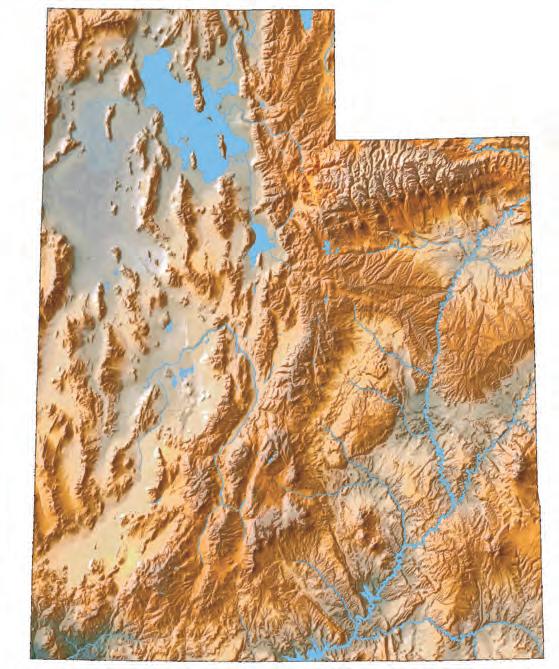
Bryce Canyon City, pg. 43
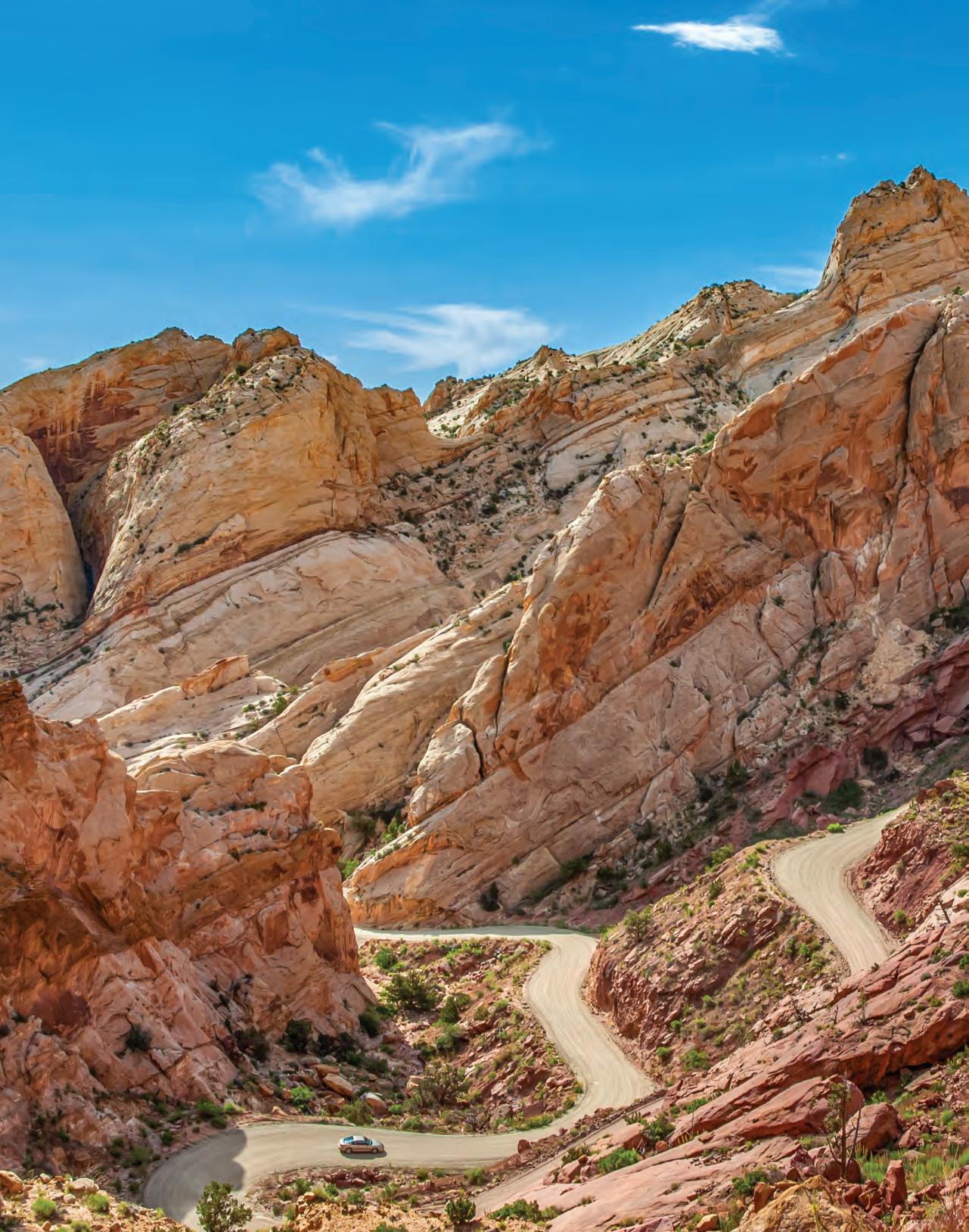
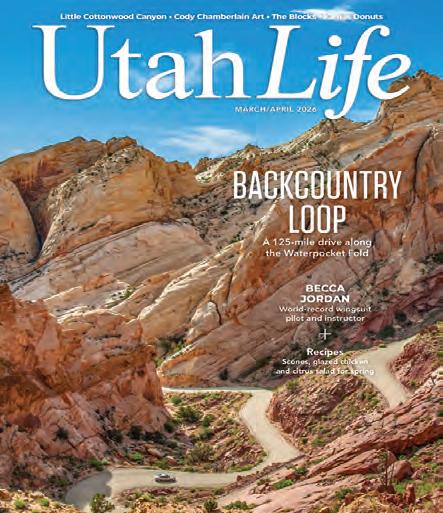
The Burr Trail switchbacks climb Capitol Reef’s Waterpocket Fold, a winding road through steep redrock. Story begins on page 14.
Photo by Dan Leeth.
Kamas, pg. 8
MARCH/APRIL 2026
Moab, pg. 36
Boulder, pg. 14
5 Editor’s Letter
Observations from Chris Amundson.
6 Honeycomb
The Blocks performances; Summum pyramid; Utah’s best donuts; North America’s smallest butterfly.
12 Trivia
Prove you know Utah’s biggest names. Answers on page 45.
30 Kitchens
Three light bites ready for spring.
34 Poetry
As the thaw begins, Old Man Winter loosens its grip. Spring arrives.
42 Explore Utah
Great Salt Lake Bird Festival; Bryce Canyon Astronomy Festival; plus 15 other events across the state.
46 Last Laugh
The laugh-out-loud on Utah’s masculinity and swapped gender roles.
A 125-mile backcountry drive takes adventurers through centuries of geologic activity in Capitol Reef’s Waterpocket Fold. story and photographs by Dan Leeth
In Little Cottonwood Canyon, a chorus of voices safeguards a beloved area of water, wildlife and wonder above Salt Lake City. story by Chris Amundson photographs by Howie Garber
Wingsuit pilot and world record holder Becca Jordan soars Moab skies. by Bianca Dumas 38 Painting
Ranger and artist Cody Chamberlain paints Utah’s high deserts, blending fieldwork into large-scale canvases as a call for stewardship. by Ariella Nardizzi
1 year – $30 | 2 years – $52

BY 10 A.M., the fritters at Mirror Lake Station in Kamas can be gone. That feels about right for spring in Utah: arrive late, and you miss something.
Some of what we miss is obvious – a turnoff, a storm window, the last raspberry fritter in the case. Some of it is small enough to land on the edge of a boot toe and pass for dust until its wings open.
The western pygmy-blue, North America’s smallest butterfly, lives close to the ground in Utah’s saltbush flats, dry washes, roadside edges and vacant lots. It doesn’t ask much of us. Just the willingness to look down once in a while.
I’ve learned to pay attention to things like that in Utah.
On the cover, the Burr Trail switchbacks climb Capitol Reef’s Waterpocket Fold, a road best approached with dry weather, a full tank and no heroic ideas about towing a trailer. Dan Leeth’s 125-mile loop around the Fold runs past ranchland, gravel roads, washboard turns, oyster shells in sandstone and the kind of switchbacks that once left his VW microbus smelling of brake pads.
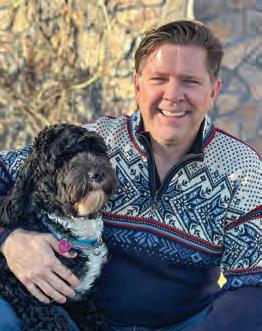
Little Cottonwood Canyon requires a slower kind of looking. Photographer Howie Garber pulled off near the Quarry Trail on his birthday and listened to the wind move through birch leaves. From there, his photographs helped gather a scientist, a mayor, a skier, a climber and advocates around a canyon that is water source, wildlife corridor, ski ground and public debateall at once.
Becca Jordan pays attention too, though at nearly 200 mph. Above Moab, she steps from a Cessna in a purple wingsuit and holds her body still enough to fly. At that speed, focus is the only way through. The door opens. The count begins. She leans into the air.
Cody Chamberlain walks for his subjects, carrying sketchpads and pencils miles into the desert before returning to his Salt Lake City studio. He visits the same places again and again, waiting to learn what the light does after rain, which birds cross overhead and how the desert changes when no one is hurrying through it.
Birders understand this better than most. Around the Great Salt Lake each spring, people stand in wind and mud with binoculars, waiting for a flicker of movement in the reeds. To anyone driving past, it can look like nothing is happening. Then a wing lifts, a flock turns and the whole shoreline changes.
Miss the morning in Kamas, and the fritters are gone. Miss the dust-colored butterfly at your feet, and the desert keeps its secret. Spring in Utah has a way of doing that. It offers switchbacks, thawing canyons, quick wings and empty roads – then asks whether we’re moving slowly enough to notice.
Take the long way when you can.
CHRIS AMUNDSON Publisher & Editor editor@utahlifemag.com
March/April 2026
Volume 9, Number 2
Publisher & Editor
Chris Amundson
Associate Publisher Angela Amundson
Editorial Assistant Savannah Dagupion
Design
Mark Del Rosario
Photo Coordinator Erik Makić
Staff Writer Ariella Nardizzi
Advertising Sales Sarah Smith
Subscriptions
Shiela Camay
Utah Life Magazine
c/o Subscriptions Dept. PO Box 270130
Fort Collins, CO 80527 (801) 921-4585
UtahLifeMag.com
Subscriptions are $30 for 6 issues and $52 for 12 issues. To subscribe and renew, visit UtahLifeMag.com or call (801) 921-4585. For group subscription rates, call or email publisher@utahlifemag.com.
CONTRIBUTE
Send us your letters to the editor, story and photo submissions, story tips, recipes and poems to editor@utahlifemag.com, or visit UtahLifeMag.com/contribute.
ADVERTISE
For rates, deadlines and position availability, call or email advertising@utahlifemag.com.
COPYRIGHT
All text, photography and artwork is copyright 2026 by Flagship Publishing, Inc. For reprint permission, please call or email publisher@utahlifemag.com.

by JACQUE GARCIA
In the middle of a downtown Salt Lake block sits the Eccles Theater, a Utah landmark that has hosted symphonies and Broadway productions since opening in 2016. Its stages have welcomed The Phantom of the Opera, Hamilton and artists including Yo-Yo Ma. The Blocks, a nonprofit amplifying arts programming in Downtown Salt Lake, is bringing more Utah performers to the theater.
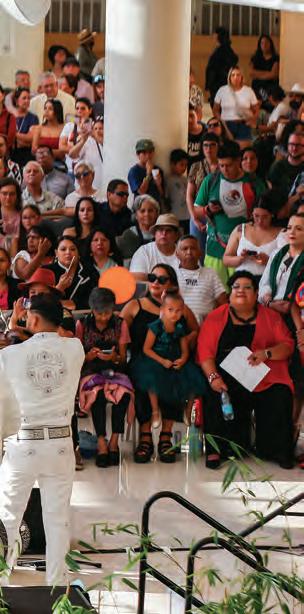
The Eccles lobby is airy and light-filled, with high ceilings and street-facing windows that usually frame patrons heading inside for the night. In 2024, those doors opened wider. The marble stairs became a stage for a mariachi festival produced by The Blocks. Organizers expected about 200 people. Instead, 1,700 came downtown.
That event helped grow a summer-long series called “Steppin’ on Main.” In 2025,
Friday evenings at Eccles featured slam poetry, folk music, jazz, Indigenous dance, Samba Fogo, the Main Street Fashion Show and the Mariachi Festival. Free and open to all ages, the series brought thousands to Main Street.
The program returns in 2026 as “Fridays on Main,” with Friday evening performances from June through September at Eccles Theater and two additional Main Street stages at Gallivan Center and Exchange Place. The free series is presented by Tin Angel, Eccles Presents, Salt Lake County Arts and Culture and The Blocks. Together, the stages extend the program beyond the lobby onto Main Street.
The Blocks wants more Utahns to see downtown Salt Lake as a place they can use, not just pass through. The name refers to the downtown corridor the organization covers: blocks of theaters, galleries, restaurants, sidewalks, parking garages and public spaces around Downtown. The
Blocks works with the city and private property owners to clean up vacant lots and turn them into safer arts spaces. Free admission and transportation options help keep the events accessible.
In 2023, The Blocks transformed the Exchange Place parking garage into a dance floor for mostly 18- to 20-yearolds, some dropped off by parents and others arriving by public transportation. Two hundred sets of headphones went out in the garage, and 200 heads bobbed under the lights. The event gave that age group a downtown night that did not depend on a bar door.
As “Fridays on Main” continues, Eccles’ steps, Main Street sidewalks and parking garages are doing more than moving people through downtown. From silent discos to samba fire to mariachi crowds, The Blocks is putting Salt Lake’s creativity center stage – one block at a time.
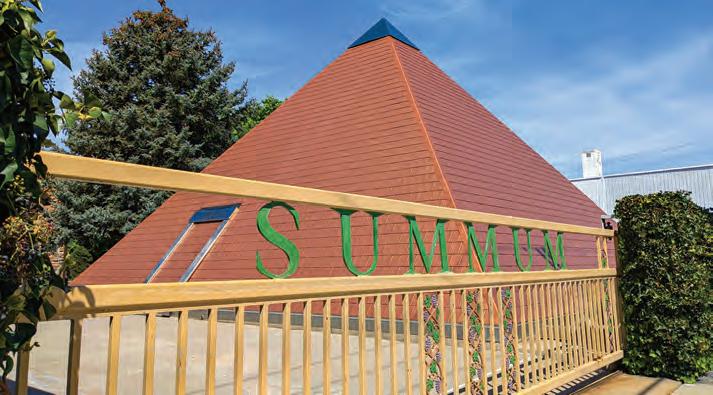
Located on an ordinary residential street in Salt Lake City, this pyramid is the focal point of the Summum religious community, which practices modern mummification.
by ALLIE WISNIEWSKI
Peach trees and colorful flowers line Genesee Avenue, a residential street on the west side of Salt Lake City. At the end of the road there’s a neighborhood coffee shop, more flowers – and a 26-foot-tall pyramid.
This impossible-to-miss landmark belongs to the Summum religious community. It may seem a curious gathering place, but since 1979 it has served as a venue for studying, meditating and mummifying.
After leading visitors through the beautifully manicured grounds, Summum President Su Menu asks them to remove their shoes before entering the pyramid. Those bold enough to step inside are immediately overtaken by a sense of mysticism. Cat statues, bouquets of peacock feathers (the grounds double as a peafowl sanctuary), candles and crystal chalices adorn the space. Celestial murals cover the ceiling. And adjacent to the altar that serves as the room’s focal point, a golden sarcophagus gazes out with painted eyes.
The sarcophagus is not just for show. Within it are the mummified remains of the religion’s founder, Corky Ra. Menu knew Ra, first hearing him speak at a lecture at the University of Utah. The Summum philosophy didn’t hit home with her
right away. “I must be honest and say that it sounded pretty wild to me – you know, mummification, beings that he’d had an encounter with,” Menu said. It was the philosophy’s take on meditation that first hit home with her.
These days, the pyramid is primarily used as a meditation and group study space, though the building is technically zoned as a winery. Summum members have been producing “Nectar Publications,” alcoholic beverages thought to enhance the meditative state, inside the pyramid since its construction.
Contrary to popular belief, though, Summum’s modern mummification occurs elsewhere, inside a neighboring building on the property. As licensed funeral directors, Summum counselors are free to carry out Ra’s unique mummification methods, on both humans and animals, without interference.
In the Summum view, mummification moves a departed soul forward in their personal evolution. While a person is being mummified, Summum members read a spiritual will that the person wrote while alive.
“The will says what they would like to have in their next life, what they feel their direction should be,” Menu said. “You hope that your soul will be guided.”


donuts and
by LEIGH WILSON
By midmorning in summer, the donut case at Mirror Lake Station in Kamas is often empty. On busy days, the last fritters are gone by 10 a.m., claimed by early risers and drivers headed toward Mirror Lake Highway. When they sell out, they sell out.
The Chevron station has served homemade donuts for decades. The exact start date is unclear, but the tradition predates current owners Kristin and David Wade by years. The couple purchased the station from David’s brother nine years ago and kept the bakery running as it always had:
up early, mixing from scratch, doors open at 5:45 a.m.
In summer, the bakery produces 100 to 120 dozen donuts and fritters each day. A steady local following sustains the business year-round, while warmer months bring visitors from Summit and Wasatch counties and beyond.
Mirror Lake Station is best known for its dinner-plate-sized fritters, priced at $5.25 and offered in apple, blueberry and raspberry. The fritters begin as scraps, leftover dough from the day’s donut production. Donut holes rarely appear on the menu; the excess dough goes into the fritters instead. The number available depends entirely on how much scrap the morning yields.
The Wades’ connection to the community runs deeper than the fryer. When a fire destroyed two family businesses in nearby Francis last summer, they donated
for
headed
one day’s proceeds – $10,000 – to help the affected family rebuild. Kristin, who grew up in Kamas, describes the early-morning regulars as her extended family.
In 2019, the station entered the first Utah Dough Show at Thanksgiving Point. Competing against bakeries from across the state, the Kamas gas station won the title of Utah’s Best Donut. The recognition drew new customers and extended the station’s reputation beyond its small-town base, followed by steady growth during the post-pandemic population surge in Summit and Wasatch counties.
Even in health-conscious Park City, a pink box from Mirror Lake Station rarely lasts long in an office break room.
For David Wade, the bakery defines the business.
“Without our donuts,” he says, “we’re just a gas station.”
by CHRIS AMUNDSON
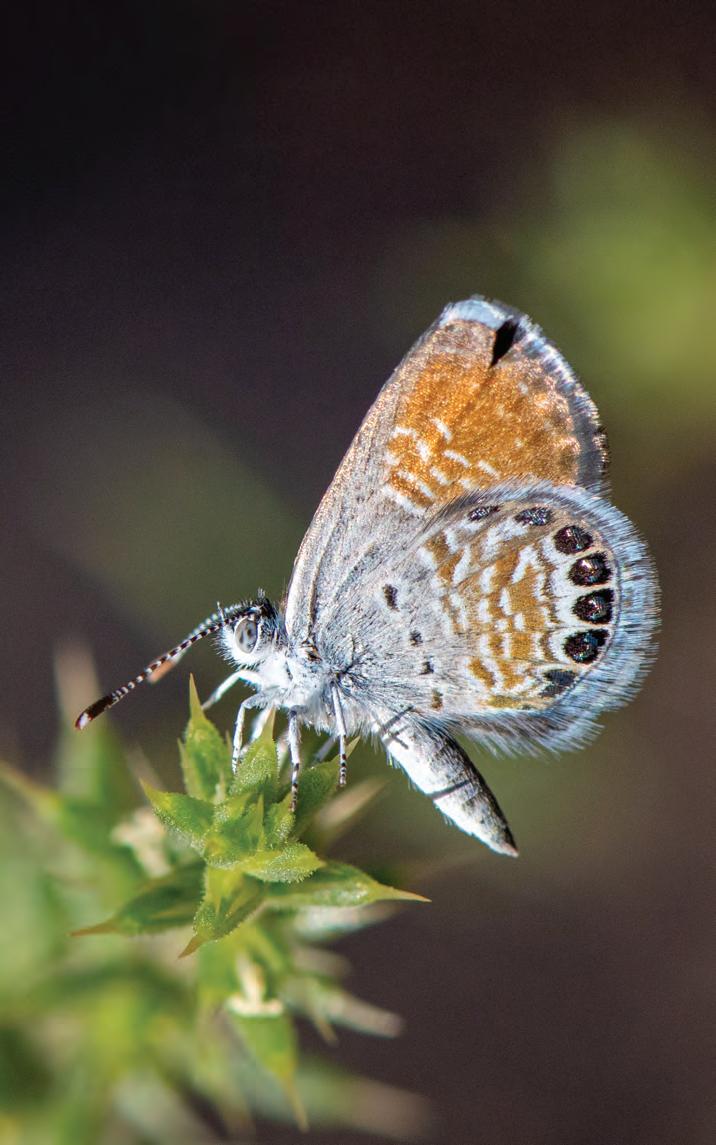
It lands on the edge of a boot toe and, for a moment, looks like nothing at all: a fleck of dust, a curl of dry leaf, a trick of light. Then it shifts. Wings open, no wider than a fingernail.
The western pygmy-blue (Brephidium exilis) is the smallest butterfly in North America, with a wingspan of about 1/2 to 3/4 inch. In Utah, the western pygmy-blue lives in alkaline flats, roadside edges, dry washes, vacant lots and saltbush flats –open, exposed ground where its host plants grow low to the soil.
Females lay eggs on saltbush and other plants in the goosefoot family. Caterpillars feed there, hidden in the green-gray growth. Chrysalids wait through winter. Another generation emerges from the scrub.
Its copper, gray and dull blue blend into dust and stone. It flies low, quick and uneven, easy to lose against the ground. Most days, it goes unnoticed, even when it is right there at your feet.
Look closer. In spring and summer, when the desert warms and the plants green just enough, the pygmy-blue appears again. Then another follows, low over the saltbush, and disappears into the pale ground.
Utah is famous for grandeur: towering cliffs, vast skies, long horizons. The western pygmy-blue offers a counterpoint. The state’s wildness isn’t measured only in miles or elevation, but also in inches – and sometimes, in fractions of one.





Test your knowledge on notable Utahns.
by BEN JENKINS


1 Robert LeRoy Parker was born in Beaver in 1866 and later took the name Butch Cassidy. Before that nickname became famous in outlaw lore, it came from a brief apprenticeship in what trade?
2 What actress and dancer, born in Orem, is a two-time winner of Dancing with the Stars, served as a judge on the show for four seasons and now co-hosts it with Alfonso Ribeiro in Los Angeles?
3
John Legend’s song “All of Me” was dedicated to what supermodel and TV personality, his wife, who was born in Delta in 1985? She later became a cookbook author and co-host of Lip Sync Battle.
4
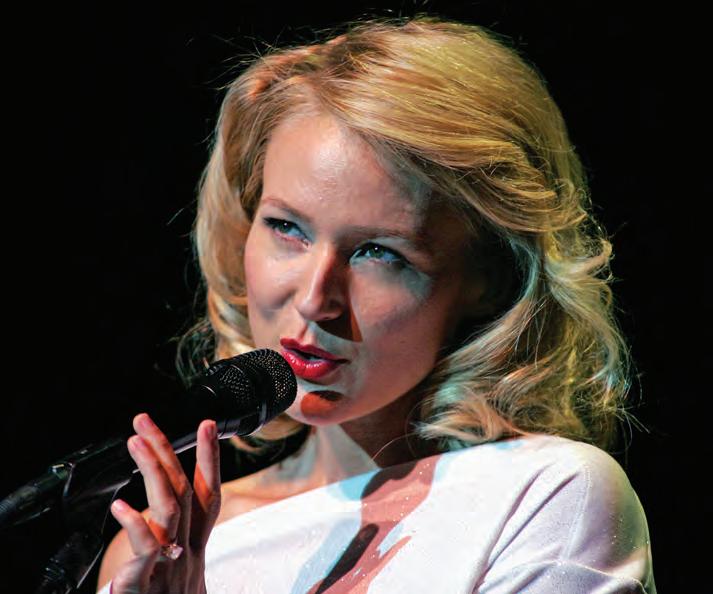
Singer-songwriter Jewel was born in Payson and released her debut album, Pieces of You, in 1995. She later appeared with her family on what Discovery Channel reality series about life on an Alaskan homestead?
5 Frank Zamboni, born in Eureka in 1901, invented the modern ice resurfacer in 1949. To create a clean new skating surface, the machine polishes the ice and adds what behind the blade?
6
Beaver-born Philo T. Farnsworth helped pioneer electronic television, but his big idea reportedly came while he was a teenager doing what farm chore?
a. Plowing a field
b. Milking cows
c. Shearing sheep
7
Known as a “megasavant,”
Salt Lake City native Kim Peek, who could read and remember an entire book in about an hour, helped inspire what Best Picturewinning movie?
a. Forrest Gump
b. One Flew Over the Cuckoo’s Nest
c. Rain Man
8
Salt Lake City-born quarterback Steve Young won three Super Bowls and entered the Pro Football Hall of Fame. He is also the great-great-greatgrandson of what early leader of The Church of Jesus Christ of Latter-day Saints?
a. Brigham Young
b. Heber C. Kimball
c. W ilford Woodruff
9
Born in St. George in 1987, Brendon Urie was the lead singer, frontman and only consistent member of what band from 2004 to 2023?
a. Fall Out Boy
b. Panic! At the Disco
c. The Killers
10
Most people know Donny, but which of these is NOT a member of the Osmonds, whose five main members were born in Ogden?
a. Merrill
b. Wayne
c. Joshua
No peeking, answers on page 45.
11
Actor Wilford Brimley, who was born in Salt Lake City and died in St. George in 2020, got his start in Hollywood shoeing horses on film sets.
12
Clearfield native Nolan Bushnell founded the pioneering video game company Atari and later created the Chuck E. Cheese restaurant chain.
13
In addition to winning a Nobel Prize, Logan-born astrophysicist Kip Thorne was a consultant on the sci-fi movie Interstellar.
14
Reed Smoot, who was born in Salt Lake City during the Civil War, is remembered today in part for helping worsen the Great Depression.
15
Ivy Baker Priest, who was born in Kimberly in 1905 and was heavily involved in Utah politics, was named by President Dwight D. Eisenhower as the first female U.S. secretary of the treasury.


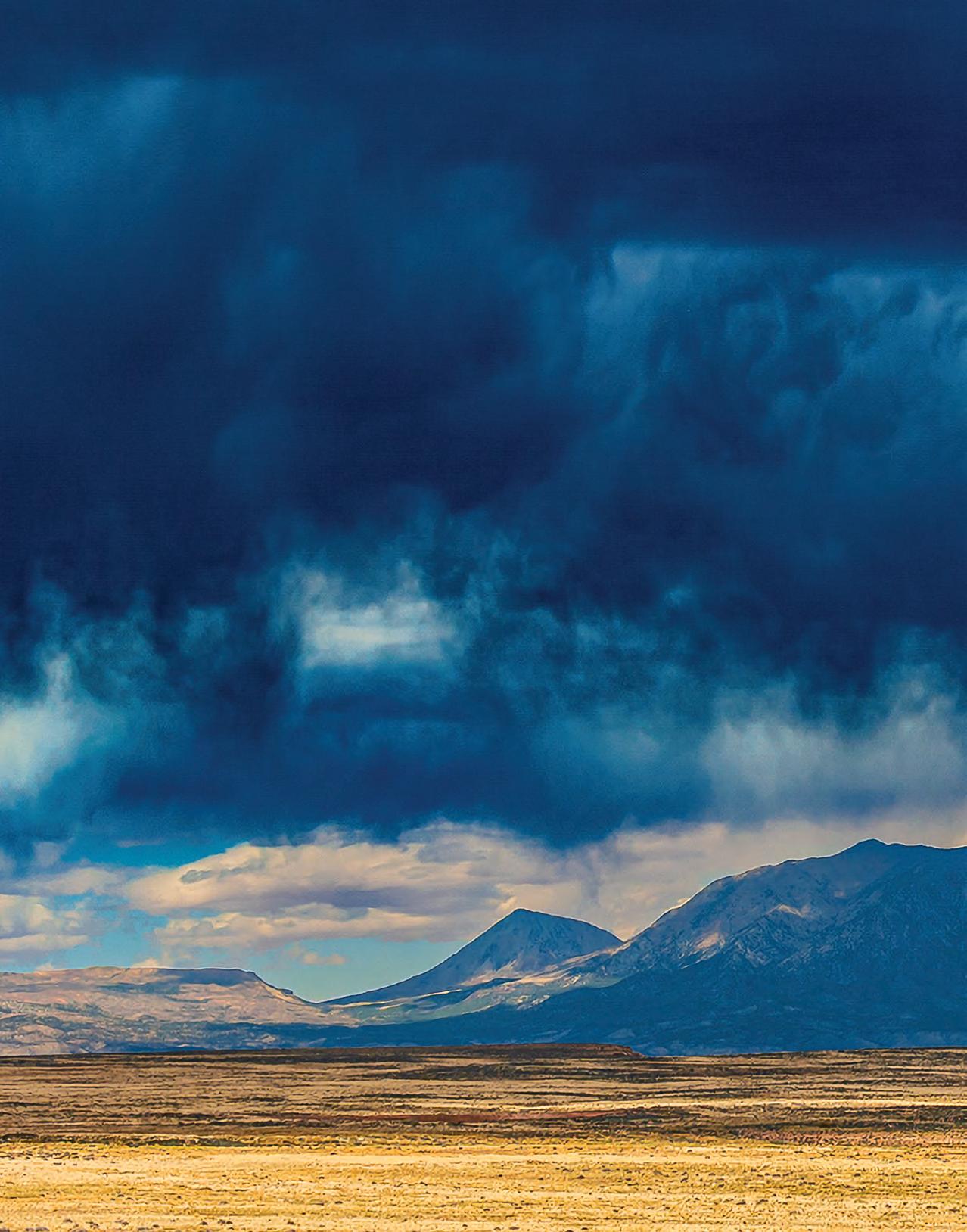
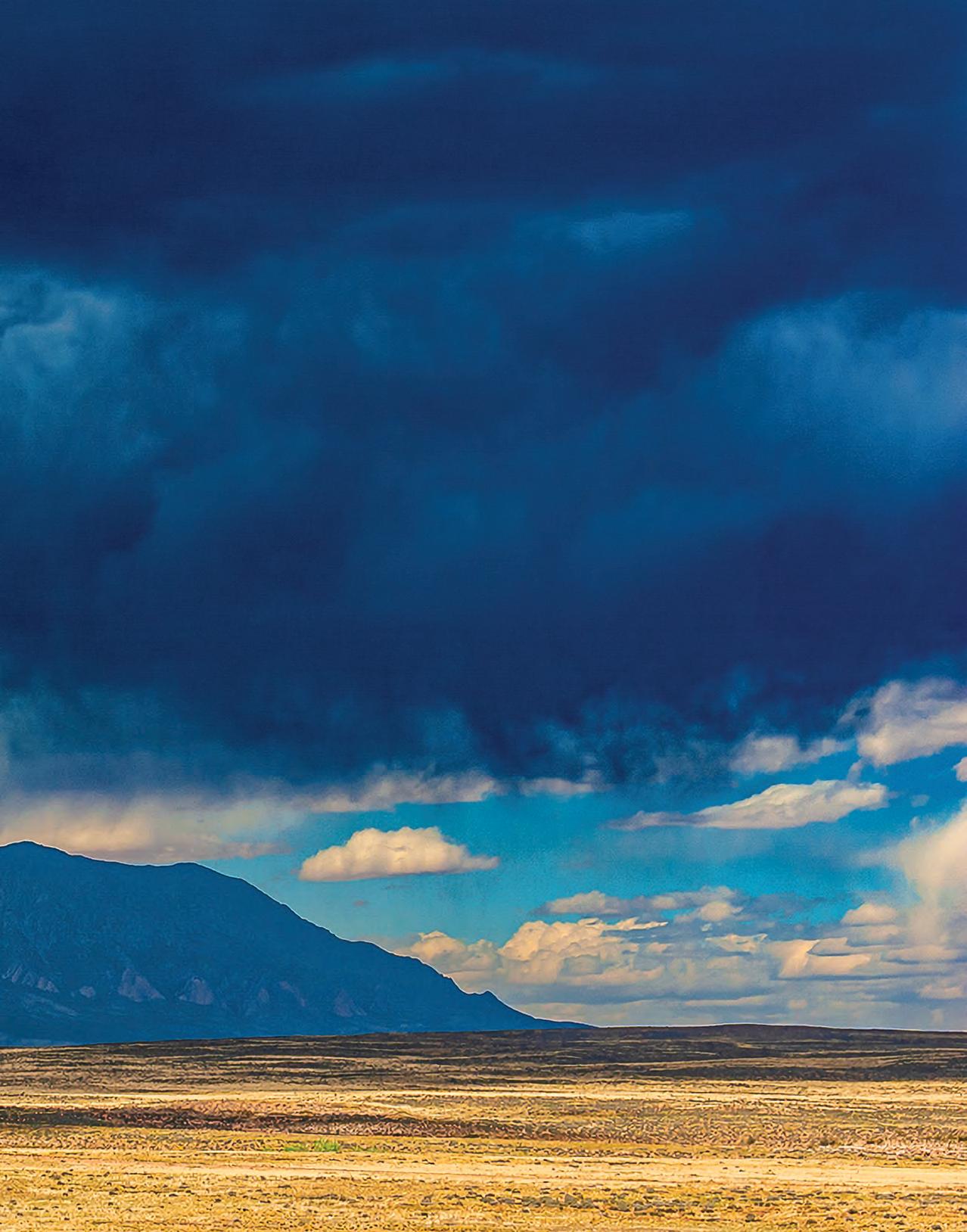
A backcountry drive around Capitol Reef’s Waterpocket Fold offers intimate views of this long wrinkle in the surface of southern Utah story and photographs by DAN
LEETH
AFEW YEARS AGO, I set out on a backcountry camping trip to Capitol Reef National Park. I planned to loop through the Waterpocket District south of the park’s main Fruita tourist area, but angry weather gods intervened. Greeted by howling winds and thunderheads that smothered the sky, I wisely scrapped my backcountry plans and checked into a nearby motel.
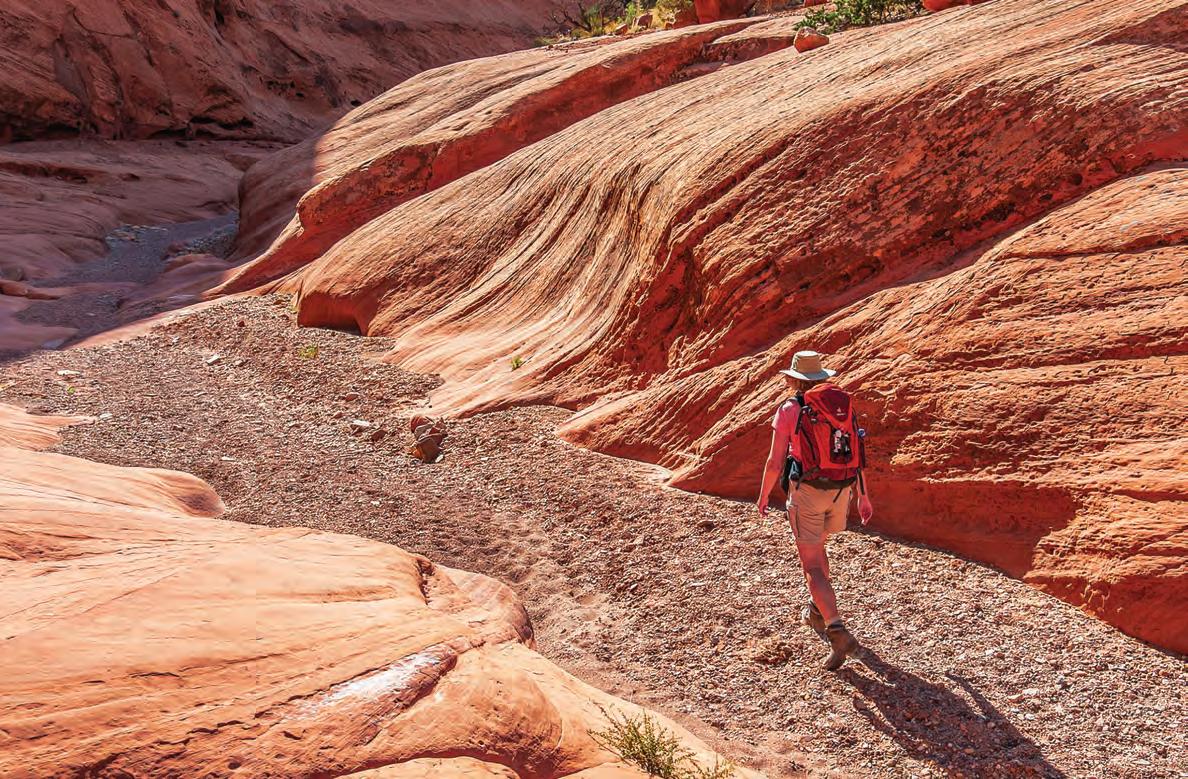
Now, with light winds and clear skies, I returned for a 125-mile loop around the southern portion of Capitol Reef’s Waterpocket Fold, one of North America’s largest exposed monoclines. This 100-mile-long warp in the earth resulted from tectonic forces that tilted and buckled layers of sandstone and shale. Erosion has sculpted the uplift into a panorama of peaks, knobs, buttes and buttresses, with slot canyons splitting the cliffs.
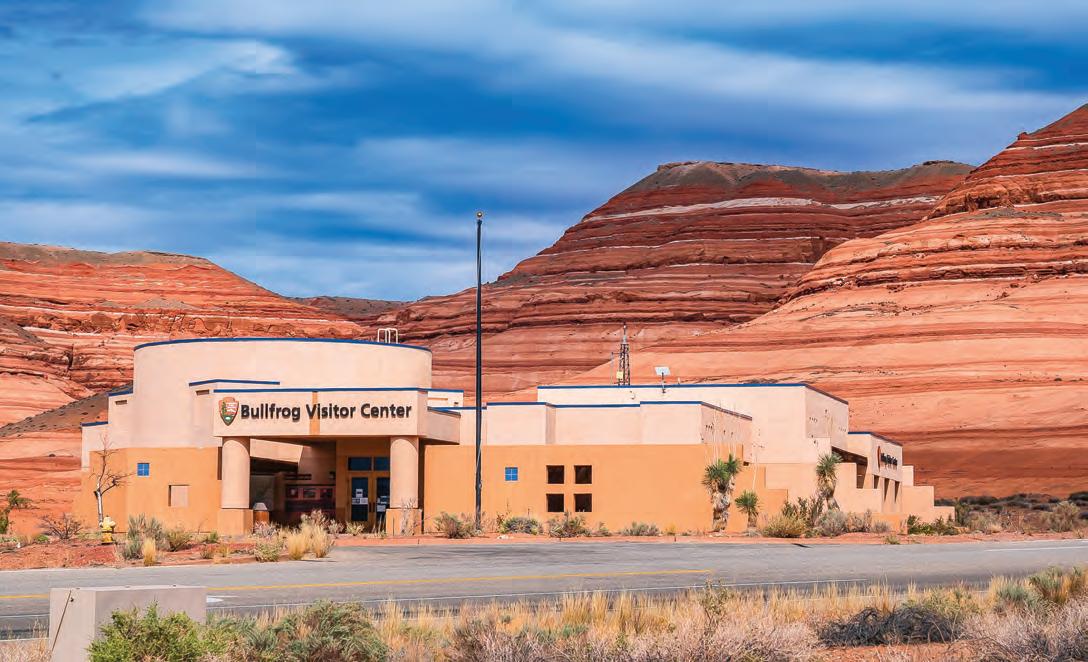
As with all Utah backcountry drives, I carried extra clothing, food, water and a full tank of gas. Even on blue-sky days, it’s smart to check road conditions at the visitor center first. In dry conditions, most passenger cars can handle the roads, but unless one’s brother-in-law is the local tow-truck driver, no one should attempt this drive in rain, snow or when roads are wet or icy.
The fold-looping drive begins nine miles east of the Capitol Reef Visitor Center with a turn onto paved Notom-Bullfrog Road. The first stretch, outside the park, crosses rolling ranchland dotted with corrals, irrigation sprinklers and side roads.
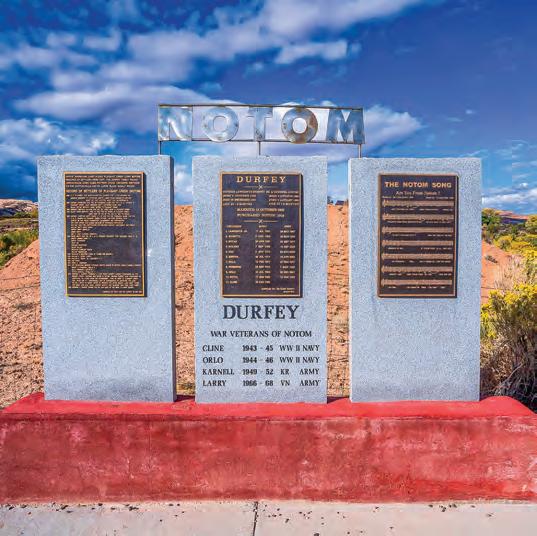
Four miles from the turnoff, the road reaches Notom, a bygone community first settled in 1883. The Durfey roadside monument features a timeline of settlement, a list of local Durfey war veterans and the
lyrics of the “Notom Song,” composed by Cline Durfey, who, with 10 siblings, grew up here during the Great Depression.
The paved road soon curves into a valley bordered by the knobs and cliffs of the Waterpocket Fold. To the east rise the Henry Mountains, the last range in the Lower 48 to be named. Explorer John Wesley Powell, who first called them the Unknown Mountains, later named the range for Joseph Henry, the first secretary of the Smithsonian.
After 16 miles, pavement ends and the road turns to graded gravel and dirt, usually rippled like a washboard. Cars with soft shocks and reasonable ground clearance can manage the route, but a few steep, dry wash crossings will cause serious trouble for anyone foolish enough to pull a trailer, drive a motorhome, chauffeur a limousine or race the family Ferrari down it.
THE GRADED ROAD soon enters Capitol Reef National Park, where roadside signs warn that ATVs are banned and visitors may camp only in designated areas. One of those, Cedar Mesa Campground, appears three miles later. It offers five sites with picnic tables and fire pits for campers willing to bring their own water and firewood. For Notom-Bullfrog motorists, the campground’s pit toilet is the only proper privy for miles.
Beyond Cedar Mesa, the road enters Strike Valley, where towering mesas rise in sharp ridges of Mancos shale. Beside the roadway stretches Oyster Shell Reef, an elongated outcrop of Dakota sandstone peppered with 100-million-year-old oyster shells.
About 32 miles from its start, Notom-Bullfrog Road meets the Burr Trail. From here, travelers can continue 33 miles south to Bullfrog Basin on the shores of Lake Powell, where a sprawling recreation complex offers lodging, campgrounds, restaurants, gas stations, a visitor center, an airfield, a marina and, if reservoir lev-
els rise enough, a ferry to Halls Crossing. From Bullfrog, drivers can return to Capitol Reef by taking the main highway to Hanksville and on to the park.
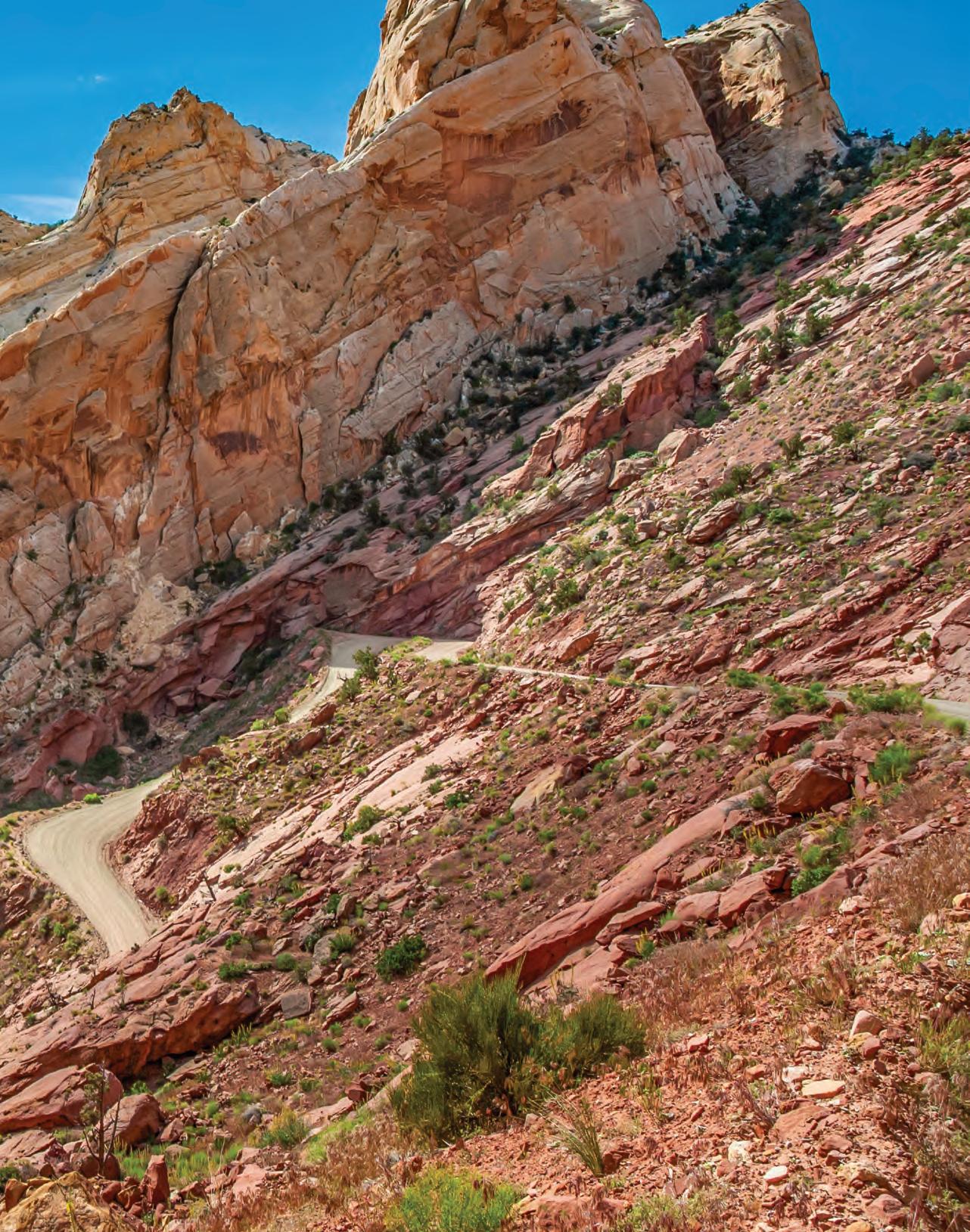
A more scenic option at Burr Trail Junction climbs the Burr Trail switchbacks up and over the Waterpocket Fold. This cliff-hugging route began in the mid1800s, when John Atlantic Burr needed a way to move livestock between summer and winter ranges. During the uranium boom of the mid-20th century, the Atomic Energy Commission bulldozed Burr’s rough cattle trail into today’s 12 percent grade, with hairpin turns, steep drop-offs and not a guardrail in sight. The Burr switchbacks are no place for RVs or anything towing a trailer. Flatlanders may go white-knuckled, but the road is reasonably wide and usually well maintained.
I first encountered these switchbacks decades ago from the opposite direction. I was driving a heavily loaded VW microbus camper equipped with old-fashioned drum brakes. Creeping downhill in low gear and barely touching the brake ped-
al, I reached the bottom with the smell of burning brake pads in the air. I prefer driving uphill.
Near the top of the switchbacks, side roads lead to Lower and Upper Muley Twist canyons, so named by settlers who claimed these sinuous chasms were twisted enough to turn a mule. They also open access to hikes such as Lower Muley Twist. The road soon exits the park and enters Grand Staircase-Escalante National Monument. Here, the dirt ends and blacktop begins.
Local politicians have long wanted to pave the entire 66-mile route from Boulder to Bullfrog, but environmentalists vehemently opposed the plan. Legal fights followed, and while lawyers collected fees, the courts allowed blacktop only to the national park boundary.
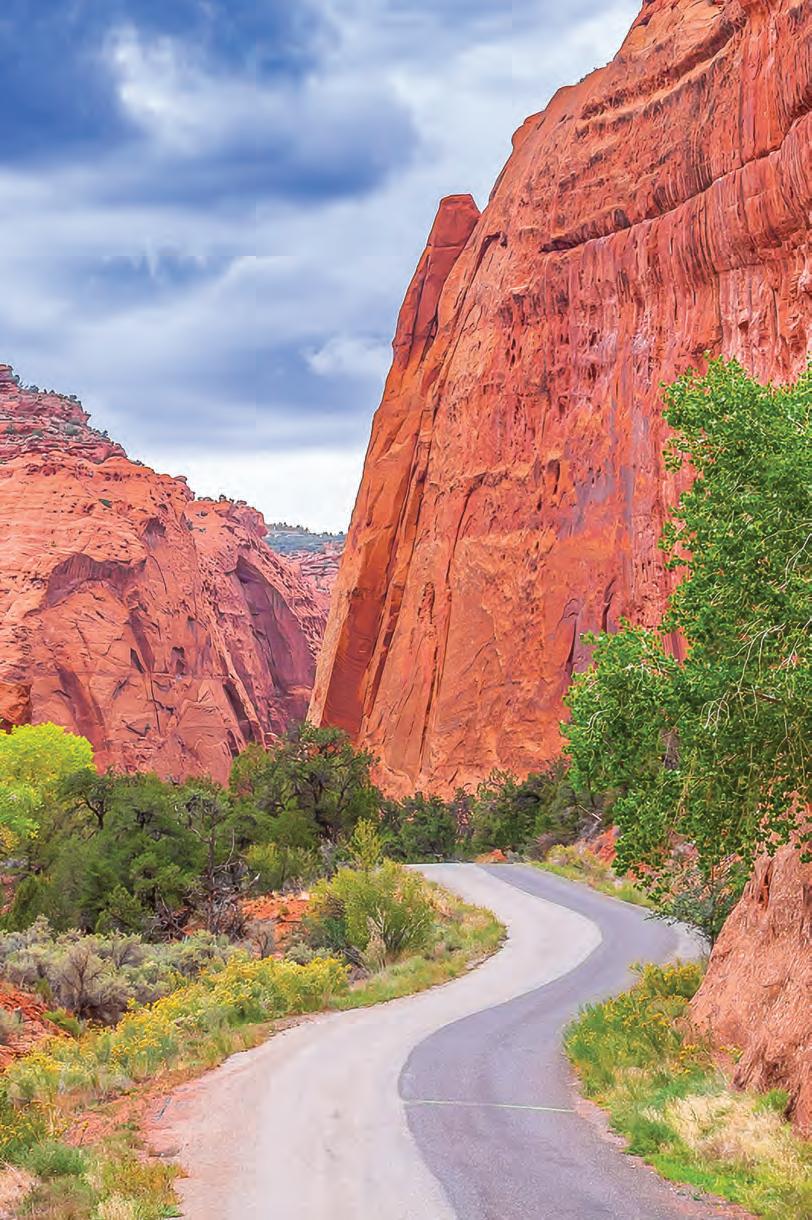
The road continues past the Studhorse Peaks, crosses White Canyon Flat and enters Long Canyon, where red-rock cliffs framing the roadway make it feel like motoring through a wide slot canyon. The road climbs, crests a hill and enters
Boulder, a town of about 400 on Utah Highway 12.
Here, Anasazi State Park Museum stands on the site of one of the largest Ancestral Puebloan communities west of the Colorado River. Visitors can see partially excavated ruins, tour a replica dwelling, view recovered artifacts and buy souvenir T-shirts.
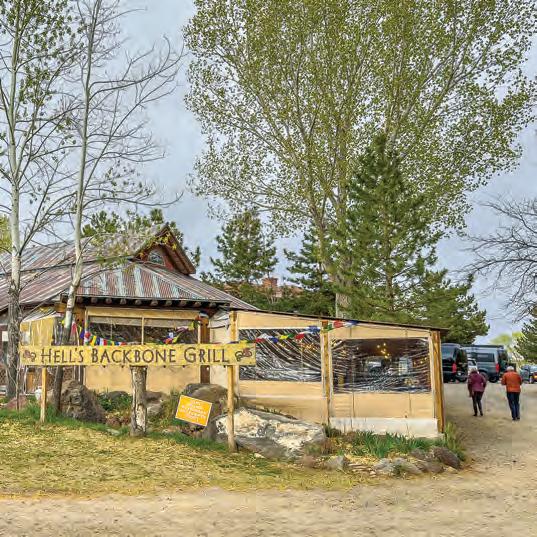
Boulder is also home to Hell’s Backbone Grill, a renowned restaurant that began a quarter century ago when two women decided to open a high-quality eatery in the middle of nowhere. The menu features organic, locally produced cuisine, with many ingredients grown on the restaurant’s six-acre farm. They sell T-shirts, too.
From Boulder, Utah Highway 12 offers a high-speed, washboard-free return to Capitol Reef, climbing above 9,600 feet in Dixie National Forest before dropping through Torrey and into the park. Farm fields, forests and wide-open vistas along the way provide a refreshing finish to a day spent bouncing around the Waterpocket Fold.
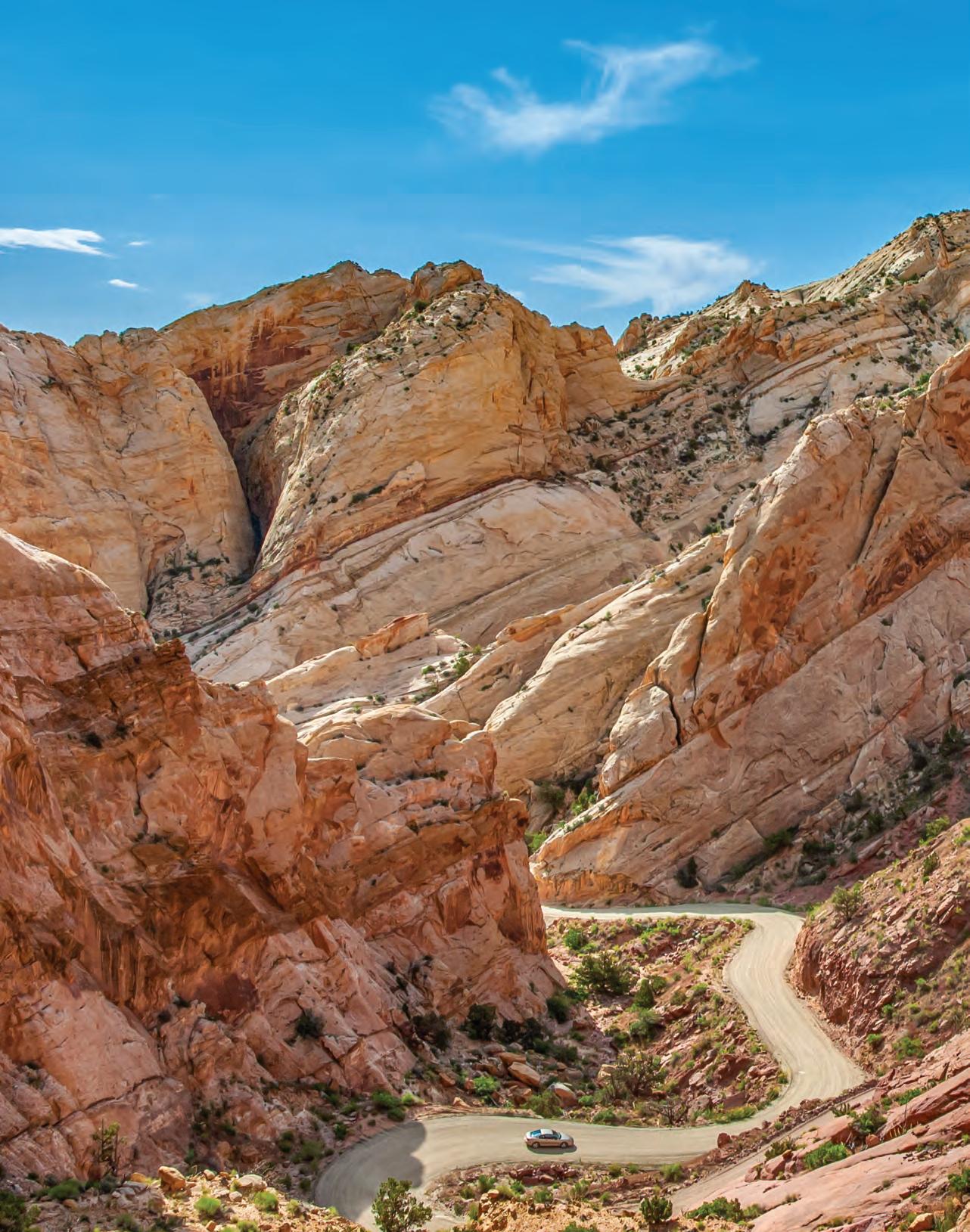
The Burr Trail switchbacks in Capitol Reef National Park climb a steep 12% grade up and over the Waterpocket Fold. The harrowing route was established in the mid-1800s as a way to move livestock.
From snow scientist to city mayor, a community joins photographer Howie Garber in honoring and defending the heart of the Wasatch
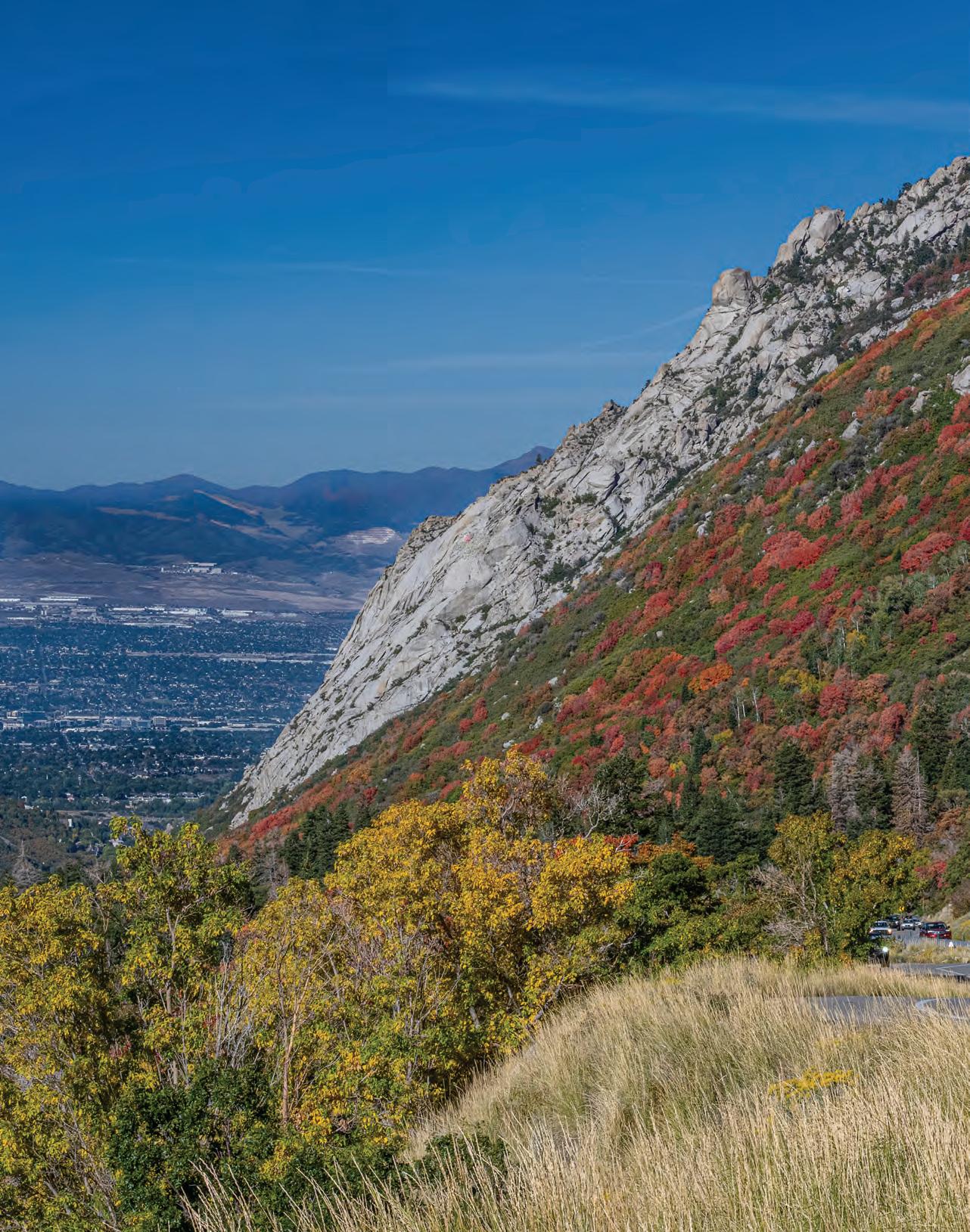
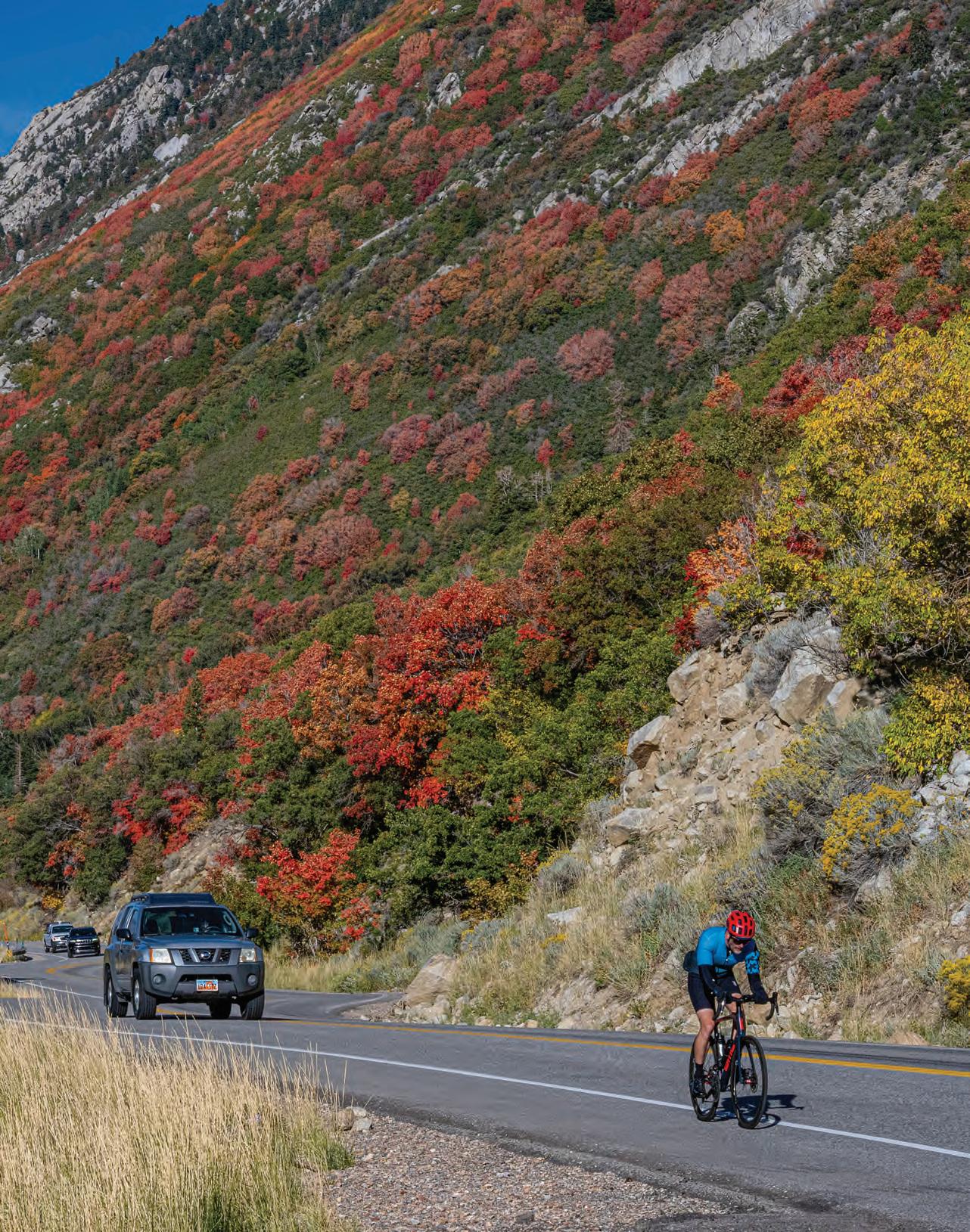
ON HIS BIRTHDAY, Howie Garber pulled off near the Quarry Trail and listened to Little Cottonwood Canyon. Wind moved through birch leaves. A cyclist passed with a child in tow. The canyon looked as it had in so many of his photographs – granite, water, autumn color – but this time Garber saw what might be lost.
He had photographed Little Cottonwood for decades. Now he wanted others to help speak for it.
Garber’s photographs anchor a collaborative book about Little Cottonwood Canyon, with work by 10 writers and 10 photographers. Scientists, skiers, conservationists and officials add essays and images that make a case for the canyon as watershed, wildlife corridor, recreation ground and contested public place at a moment when the proposed gondola has forced Utahns to weigh access against cost.
Just 25 minutes from Salt Lake City, Little Cottonwood Canyon climbs from sage
and stone into firs, snowfields and granite towers. It’s both watershed and playground – source of the city’s water, cradle of its skiing and one of Utah’s most beloved wild corridors. Here, granite flushes pink in morning light, waterfalls thread cliffs and each season changes the canyon’s light.
In Albion Basin, light turns pink as breath on glass. Garber waits, motionless, a doctor turned photographer tracing the pulse of a place he’s loved for 50 years.
“Experiencing powder skiing in a wilderness next to a city seemed miraculous,” he once wrote.
That September morning, the canyon was burning gold. Sunlight spilled through the maples, granite blushed with reflected fire. He drove slowly, camera beside him, each bend familiar, places he’d photographed for decades.
But the place looks different when you know what may be coming. Word came that the state had moved ahead with plans for a gondola, a billion-dollar project of
cable and steel cutting through the basin he’d spent half his life trying to honor. The 250-foot towers promised to ease traffic, yet to Garber they threatened to alter the scenery that drew people here.
“Love and outrage were my motivators,” he would later write. Photographs alone wouldn’t be enough. He would need other people who knew the canyon as he did and could speak for it before it changed.
Garber’s first call was to Friends of Alta, the nonprofit founded by Alta’s first mayor, Bill Levitt, to help protect the canyon and the town around it. The group helped bring Alta and Little Cottonwood Canyon: Jewel of the Wasatch Mountains to life, covering printing and graphic design and supporting the writers and photographers who contributed.
For Garber, it was the right fit: an organization rooted in Alta’s history and long engaged in the work of protecting Albion Basin, the watershed and the larger Little Cottonwood corridor.
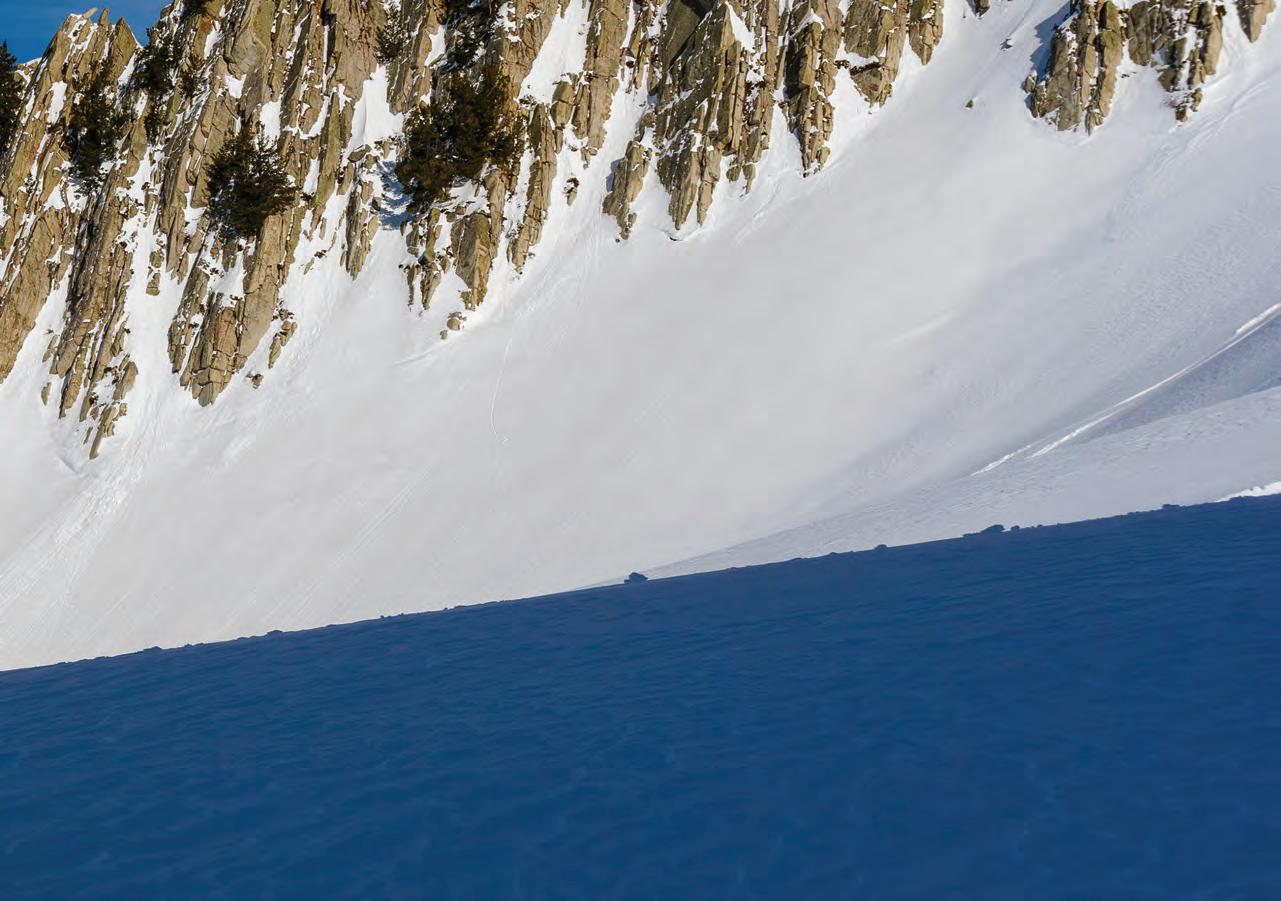
IN THE WEEKS THAT followed, Garber reached out across the Wasatch: a scientist, a mayor, a skier, a climber, a conservationist, each with a different understanding of what made the canyon irreplaceable. “If the canyon was to be defended,” he said, “it would take more than images. It would take testimony.”
Their words became a shared account of the canyon: the hydrologist tracing snowmelt to the city below, the avalanche forecaster reading weather and snowpack, the writer walking through memory with her grandfather, the advocate fighting to
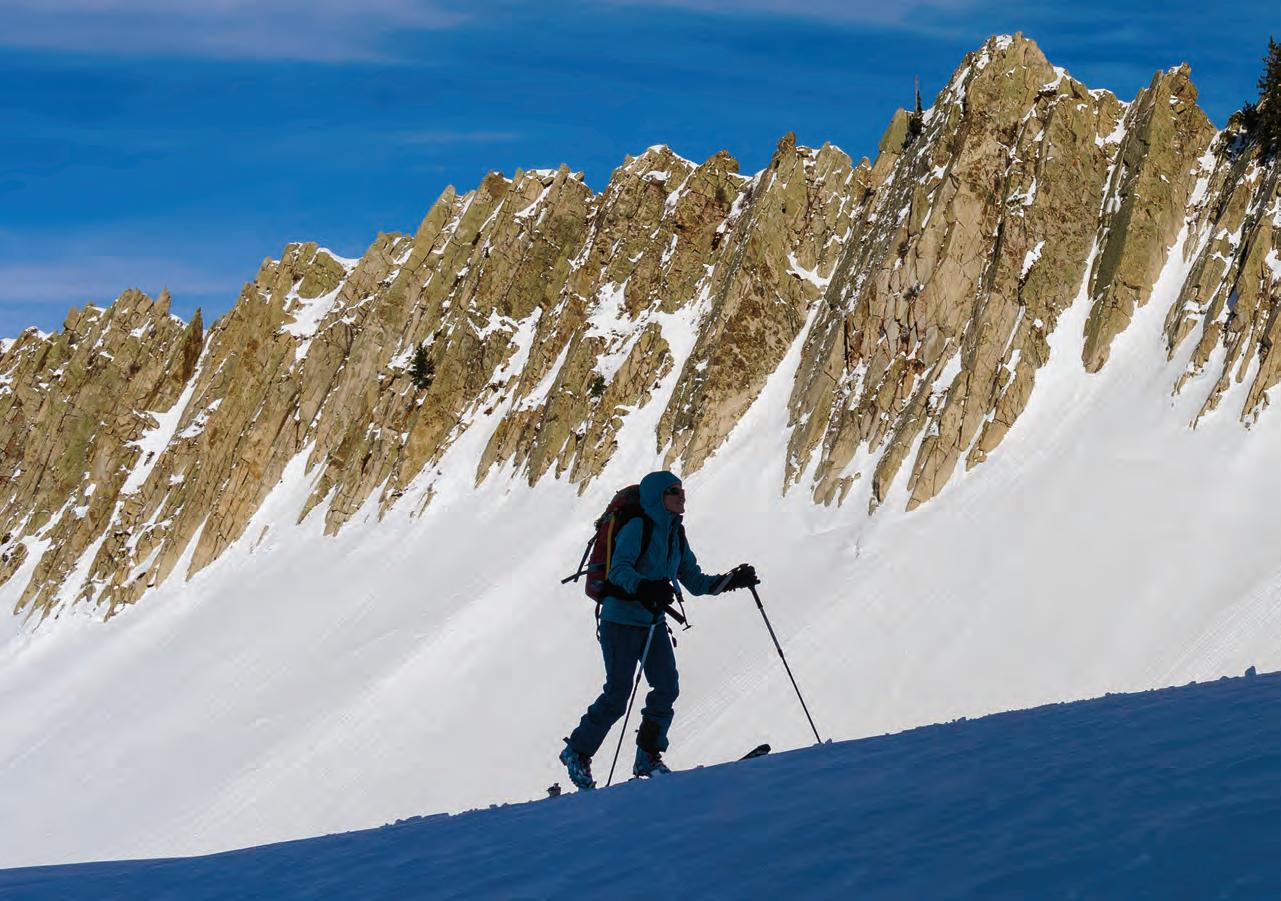
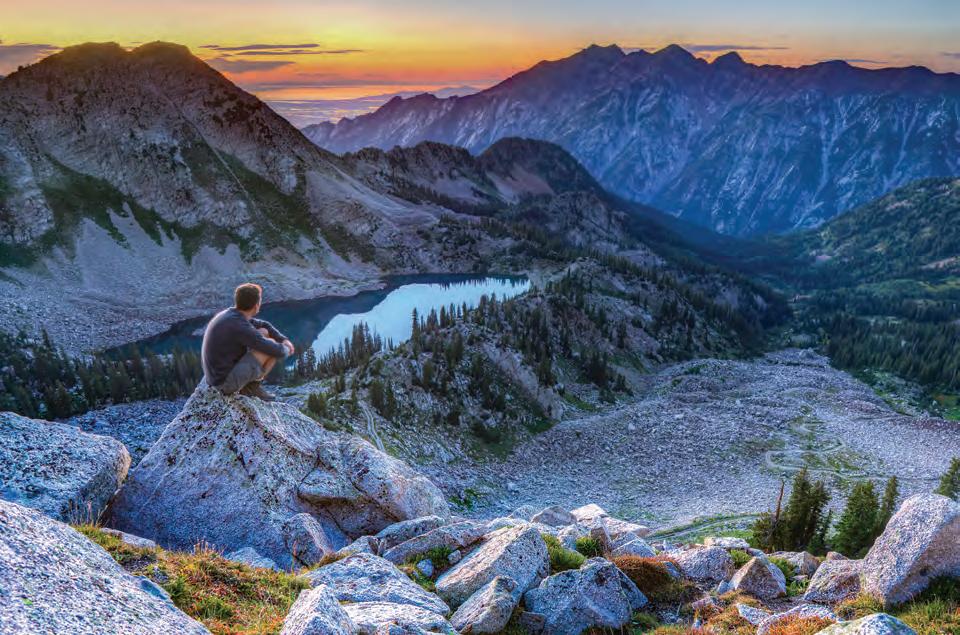
Little Cottonwood Canyon draws skiers and cyclists into the Wasatch while sending water toward Salt Lake City, only 25 minutes away. A proposed gondola has put the beloved recreation corridor and watershed at the center of a fight over access, growth and protection.
keep the ridgelines wild. Together, they described a canyon valued for more than lift tickets and traffic counts.
Downstream, the canyon turns to water. Snowmelt moves into the city’s water system. Every winter storm that piles high at Alta will, months later, rattle through a city pipe. Laura Briefer knows that better than anyone. As director of Salt Lake City Public Utilities, she thinks about the canyon in gallons, runoff and long-term consequences.
She first drove to Alta more than 20 years ago for a job interview with Mayor Bill Levitt. The drive up Little Cottonwood stunned her, cliffs rising without warning, light sliding through evergreens like breath. She never left. “Our well-being and the sustainment of the watershed are inseparable,” she says. “This canyon is our drinking water, our air, our refuge.”
Briefer’s work often happens far from the trailhead, in meeting rooms where the talk turns to pipes, growth and the next proposal for the canyon. She keeps the focus on water. Little Cottonwood is a working watershed, and what happens high above the valley can end up far downstream. Salt Lake City Public Utilities, the Metropolitan Water District of Salt Lake & Sandy, Sandy City, Save Our Canyons and Friends of Alta are now challenging UDOT’s gondola impact study in court. Her language is measured, but the stakes remain high.
Beneath the snow and water lies the canyon’s geologic record. Geologist Bill Parry calls Little Cottonwood “a gift from the ancient past.” At the canyon’s mouth, he points to 770-million-year-old shale layered beside granite formed deep underground, a visible record of time and heat.
He tells his students that the same granite hauled to build the Salt Lake Temple still glitters in the cliffs above the road, proof of endurance and of how much the canyon’s future now depends on human decisions.
Above Albion Basin, conservation biologist Allison Jones keeps her field notes among lupine and paintbrush blazing against lingering snowfields. Her notebook is a roll call of survival: elk, moose, pika, hummingbird. She calls the Wasatch “one of the most biodiverse
mountain ranges in North America,” a refuge for more than 1,000 species of plants and 250 animals.
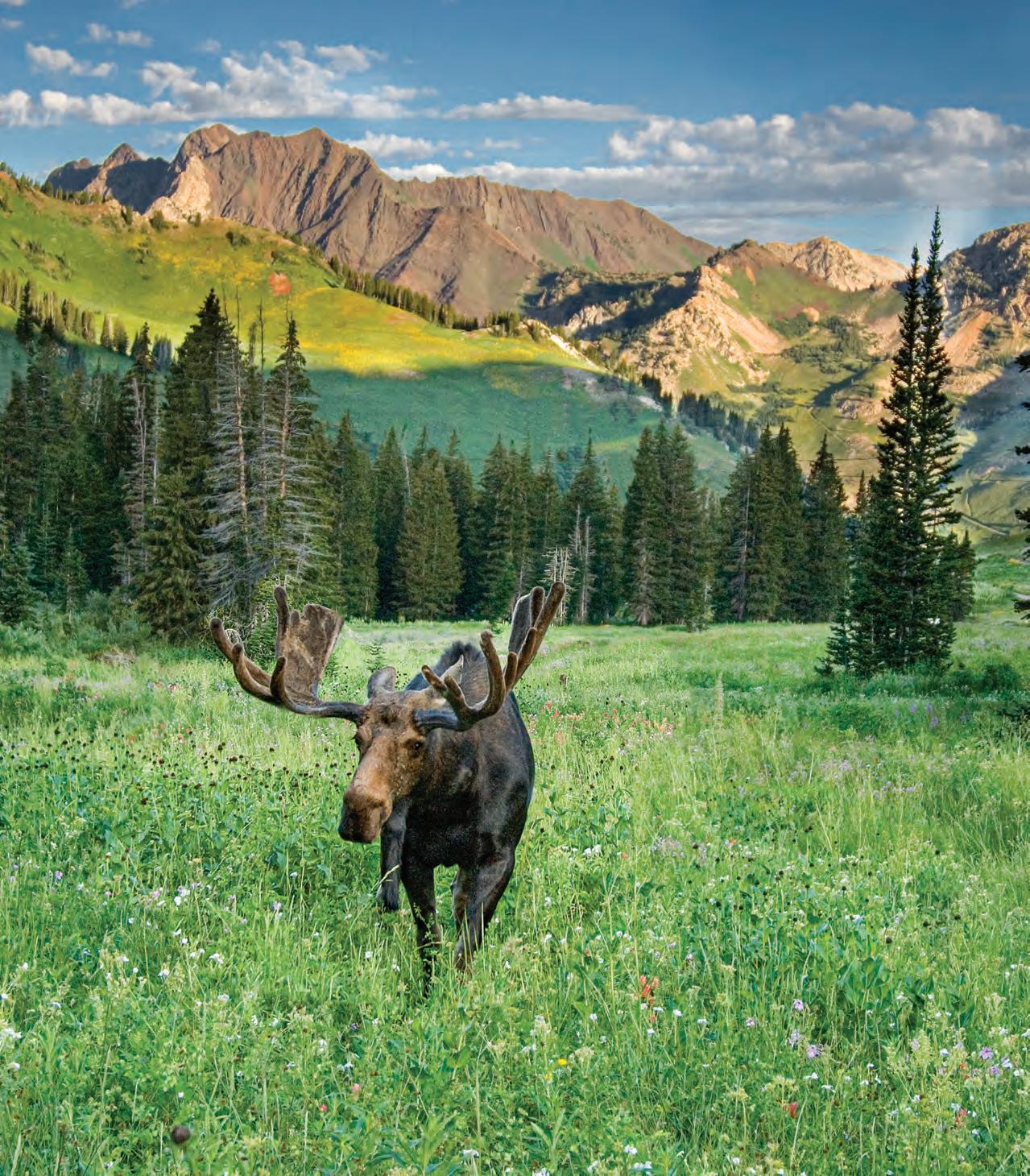
The scientist in her counts species; the neighbor in her still marvels. “When you understand the natural history of these canyons,” she says, “you want to protect them.” Even now, Jones hikes the same paths where Garber photographs moose at dawn, scanning talus slopes and wet meadows for signs of life.
IN SNOW SEASON, the canyon changes voices. What was quiet becomes kinetic. Wind sweeps the granite corridors, snowflakes turn to prisms and every sound – bootstep, shovel scrape, the thump of distant control work – feels amplified by the cold.
Bruce Tremper has spent much of his life studying that sound. As longtime director of the Utah Avalanche Center, he spent decades translating snow’s language for those who would venture into it. He calls Little Cottonwood “the bull’s-eye of the Wasatch,” a rare meeting of geography, snowfall and terrain. “It’s the Goldilocks zone,” he says, snow just heavy enough to float on and light enough to keep skiers coming back.
Before dawn, Tremper would climb from the Upper Guard Station with a shovel and snow saw, reading the storm history grain by grain. Each stratum told a story – warmth and wind, calm and cold, all pressed into a living archive. “Avalanches are easy,” he says. “People are hard.”
For him, skiing here begins with attention to snow, weather and terrain. Generations of skiers have returned for this snow, drawn by its consistency and depth. “The mountains will always have the last word,” he says, “but if you listen closely enough, they’ll tell you when to speak.”
Summer softens the canyon’s edges. The snow recedes, and wildflowers rise from runoff like smoke. On a warm August morn-
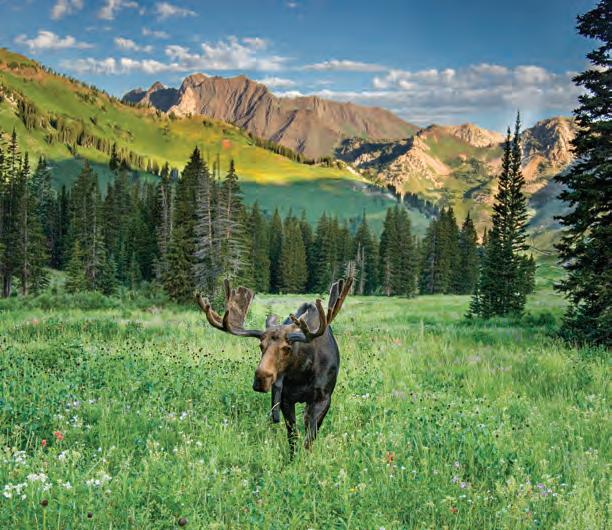
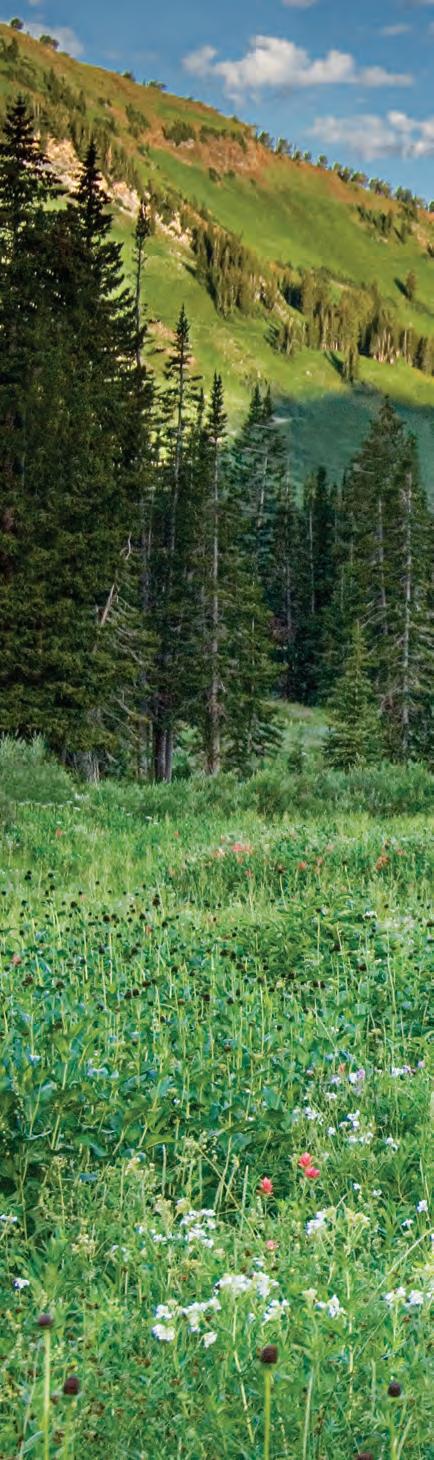
A bull crosses a meadow in Little Cottonwood Canyon, part of a system supporting more than 1,000 plant species and 250 animals. Water, habitat and recreation all overlap here.
ing, writer Ayja Bounous rides the Peruvian chairlift at Snowbird with her 100-year-old grandfather, Junior Bounous – the man who taught Utah to ski. Their feet dangle above the same terrain he once cut into runs and she now writes about as memory.
Through the Peruvian Tunnel, they pass photographs of the canyon’s past: miners, ski pioneers, a young Junior and his late wife carving the first figure 8s in powder. On the far side, sunlight floods the exit, wildflowers spilling across open Mineral Basin.
For Ayja, the hike down measures change across generations. Her grandfather’s generation watched wilderness become recreation; hers is watching recreation give way to development pressure.
“Every loss is permanent,” she writes, “and every victory temporary.” Walking beside Junior through Indian paintbrush and lupine, she sees how quickly a place can change and how long people carry a place once it gets into them.
NOT EVERYONE WHO loves Little Cottonwood comes here to ski or photograph. Some come to argue for its survival.
Grace Tyler has spent half her life at public hearings that stretch past midnight under fluorescent lights. As development director of Save Our Canyons, she carries the voices of those who can’t speak – the elk, the owl, the child not yet born who
might never see these peaks as they are today. When she escapes the city and hikes the ridge above Albion Basin, she moves slowly, letting the noise fall away. “The Wasatch,” she says, “is the cornerstone of our community.”
Former Salt Lake City Mayor Ralph Becker still calls these slopes his backyard. For decades, he has been the pragmatic optimist in the room, the one drawing lines between passion and policy. “Transit, not more cars, will save this canyon,” he says. To him, the gondola isn’t innovation – it’s amnesia. It forgets the scale and quiet that make this place sacred.
Together, Tyler and Becker make two versions of the case for protection, one rooted in advocacy, the other in policy. Both argue that the canyon’s water, habitat and scale matter more than convenience before the road changed. The debate continues in city halls and courtrooms, where citizens keep pressing the same point: once this canyon is built over, it does not go back.
Back at Alta, the peaks are sealed in white, and the air smells faintly of pine and snowlight. Garber sets his tripod near the bend where the creek widens, where the willows catch ice like lace. The gondola debate still roils below, but up here the only sound is wind brushing through fir and aspen.
He checks the light, breathes and waits. Waiting is what he does best. In a career that has taken him across seven continents, this narrow canyon has remained his compass point, the place that reminds him why beauty matters. “It’s an honor,” he says, “and the highest use of my imagery, to protect this unique and remarkable place.”
He presses the shutter. The click is nearly lost in the wind. The photograph will join thousands of others: moose in fog, wildflowers at dawn, ski tracks vanishing into storm, each one another record of what is at stake.
Below, Briefer’s water begins its long descent. Parry’s granite gleams under fresh snow. Jones’s pikas dart between boulders. Tremper’s snowpack thickens. Bounous’s wildflowers sleep beneath it. Tyler and Becker keep arguing the case.
As evening settles, the mountains fade to violet and the last light holds on the upper ridges before slipping off.
This story draws inspiration from Alta and Little Cottonwood Canyon: Jewel of the Wasatch Mountains, a book of essays and photographs edited by Howie Garber. The book can be purchased from FriendsofAlta.org and supports their ongoing efforts to protect the canyon’s watershed and wildlands.
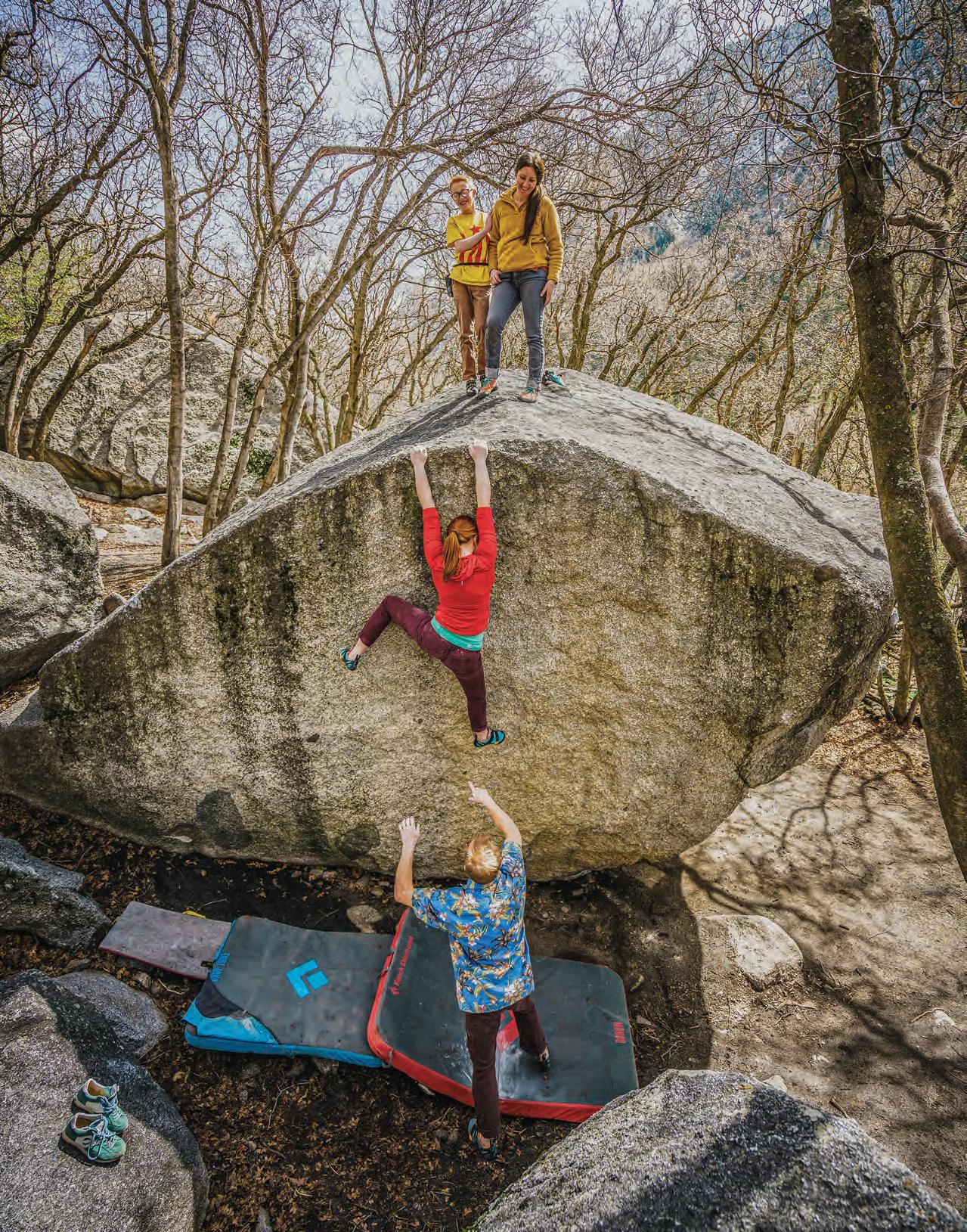

recipes by TONI THAYN photographs by KYLIE ELIZABETH
Last time Toni Thayn appeared in “Utah Kitchens” (September/October 2025), she and husband Bill were cooking from cast iron. This time, the Dutch oven champion from Price moves from skillet to sheet pan and salad bowl, with cheddar-herb scones, honey-Dijon chicken and a citrus salad built for crunch.
This chicken starts in a hot skillet, then roasts under a honey-Dijon glaze with garlic, thyme and soy sauce. Spoon the pan juices over the top before serving.
Preheat oven to 400°. In a small bowl, whisk honey, Dijon mustard, garlic, thyme, soy sauce, salt and pepper.
Heat olive oil in an ovenproof skillet over medium-high heat. Sear chicken 2-3 minutes per side, until golden. Brush chicken with honey glaze and transfer skillet to oven. Roast 20-25 minutes, brushing once more with pan glaze halfway through, until chicken reaches an internal temperature of 165°. Let rest 5 minutes. Spoon pan juices over chicken before serving.
4 boneless, skinless chicken breasts
1/4 cup honey
2 Tbsp Dijon mustard
2 garlic cloves, minced
1 tsp fresh thyme leaves
1 tsp soy sauce
1 Tbsp olive oil
Salt and pepper, to taste
Ser ves 4
Sharp white cheddar and fresh herbs give these baked scones their savory pull. Cold butter keeps the crumb tender, and a sprinkle of flaky salt or extra cheese on top adds a little finish before they go into the oven.
Preheat oven to 400°. Line a baking sheet with parchment paper. In a large bowl, whisk flour, baking powder, salt and pepper. Cut in butter with a pastry cutter or fingertips until mixture resembles coarse crumbs. Fold in cheese and herbs.
Add buttermilk and stir gently just until dough comes together; do not overmix. Turn dough onto a lightly floured surface and pat into a 1-inch-thick circle. Cut into 8 wedges and transfer to prepared baking sheet, spacing wedges slightly apart. Sprinkle tops with flaky sea salt or extra cheese, if desired.
Bake 18-22 minutes, until golden and set.
2 cups all-purpose flour
1 Tbsp baking powder
1/2 tsp kosher salt
1/2 tsp black pepper
1/2 cup cold unsalted butter, cubed
1 cup sharp white cheddar cheese, shredded
2 Tbsp fresh chives, finely sliced
1 Tbsp fresh parsley or thyme, chopped
3/4 cup cold buttermilk
Flaky sea salt, optional Additional shredded cheese, optional
Ser ves 8


6 cups mixed spring greens, such as baby spinach or arugula
1 large Cara Cara orange, segmented
1 small bunch radishes, thinly sliced
1/4 cup goat cheese, crumbled
1/4 cup candied pecans
3 Tbsp honey
2 Tbsp orange juice
1 Tbsp apple cider vinegar
1/4 cup olive oil
Salt and pepper, to taste
Ser ves 4
Cara Cara orange gives this salad its juice and color, while thin-sliced radishes bring a peppery snap. Goat cheese adds a creamy bite, and candied pecans add crunch. Toss the greens lightly with the honey-orange vinaigrette just before serving so everything stays crisp.
In a small bowl, whisk honey, orange juice and apple cider vinegar until the honey loosens. Slowly whisk in olive oil, then season with salt and pepper. Taste and adjust with more vinegar for sharpness or a little more honey for sweetness.
Place greens in a large serving bowl. Add orange segments, radishes, goat cheese and candied pecans. Drizzle with vinaigrette just before serving and toss gently, using just enough dressing to coat the greens. Serve immediately.
What’s in Your Recipe Box? The editors are interested in featuring your favorite family recipes. Send your recipes (and memories inspired by them) to editor@utahlifemag.com.

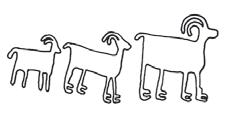
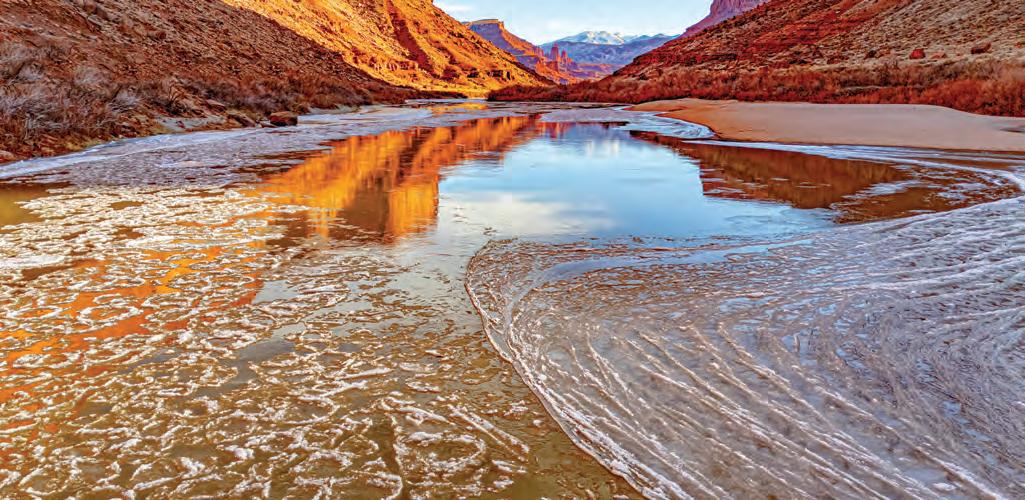
Across Utah’s canyons and high country, spring begins with small signs – melting ice, warming stone and the first hints of green beneath snow. These poems linger in that in-between season, when winter holds on and the land slowly turns toward renewal.
Melodie Ashley, South Jordan
Vaughn Neeld, Cañon City, Colorado
Thaw comes slowly in the hidden places. Red rocks warm in the feeble spring sun, but shadows hold tight to winter chill. Slowly, days grow brighter, warmth spreads. Hidden seeps began to drip snowmelt, which begins its journey to the sea. Today, I sit against a glowing, sun-warmed boulder, legs swinging above a chasm. I listen to the melting ice’s pinging song. Somewhere a bird chirps an accompaniment. I lean back, bask in the warmth, enjoy the concert.
Aspen eyes against snowy skies spot mountain lions’ jaguar nights.
Code Blue chill or killing fields, winter’s cracks slowly revealed.
Silence + sugar-coated feelings, equal compliance to the cold.
We hold our breath and wonder what futures will unfold.
Frozen hearts soon soften, as ice thaws into tears.
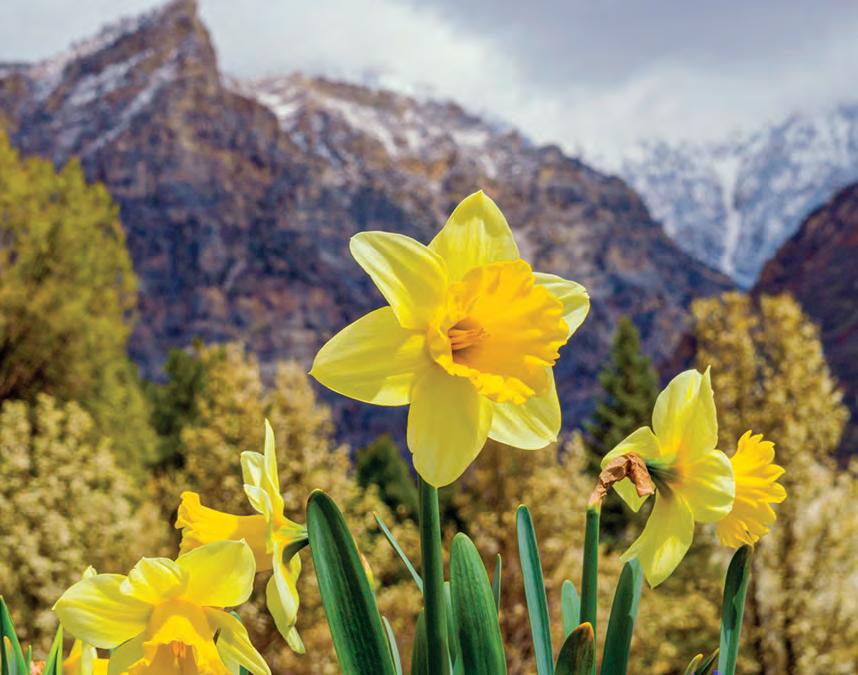
Bulbs begin to brighten, and daffodils draw near.
Resurrect a life divine, in this buoyant dream of mine.
When sacred sunshine fated spills, our wounded world may finally heal.

L.J. Christensen, Bountiful
Winter’s long grip, so shy to surrender, Largely comforts earth in a white blanket. Still waters and long nights are crucial to engender Shelter and preparation for the season to come. Cold, though it may be, its beauty is to remember.
The depth of winter’s miracle is profound. It signals sleep in some, flight by others. Though in it, hardships and dread can be found, It shall always come upon us as a gift, To renew the world as it rebounds.
Long winter’s night is the first to give edge, Then the soft blanket grows pockets and crystals. Lakes’ thinning ice heed warning to those on sleds And once again, we can hear water drip. These are indications of things that are pledged.
Then rivers run wild, and lakes do rise, Animals wake and harken to the season.
Mountains high still hold what some consider a prize, Offering bluebird days to the tenacious. One last turn, a day of glory; they are so wise.
Bursting with colors as new buds spring, Once again, handing promise that all is right. Thaw gives way to new gardens ready to sing, But all foretold, prepare for that May drop, When Winter says, “Thaw can be fickle; it tends to cling.”
Lorraine Jeffery, Orem
Just a blush of green on the slope, under the detritus of old snow. There’s ice in the veins of the soil and the hibiscus corpse. But hope pushes up – toward the light
Cindy Fowlkes, Orem
My teeth are chattering and my old bones are shaking.
With great anticipation I await the earth’s reawakening.
I watch for the signs with gratefulness and awe.
Let’s put Winter to bed and enjoy the Spring thaw!
My eyes are aching for the sight of something green.
For months now, it’s only been brown and white I have seen.
Give me some daffodils or tulips – heck, even a green weed!
From the icy grip of Winter I long to be freed.
Enough is enough! Let the leaves grow on the trees.
I want to bask in the warmth of a gentle Spring breeze.
Soon the soil will soften and warm with the sun.
Now... the hard work of the garden and yard has begun.
Send your poems on the theme “Alpine Hikes” for the July/August 2026 issue, deadline June 1 and “Golden Hours” for the September/October 2026 issue, deadline July 1. Email your poems to poetry@utahlifemag.com or mail to the address at the front of this magazine.
by BIANCA DUMAS
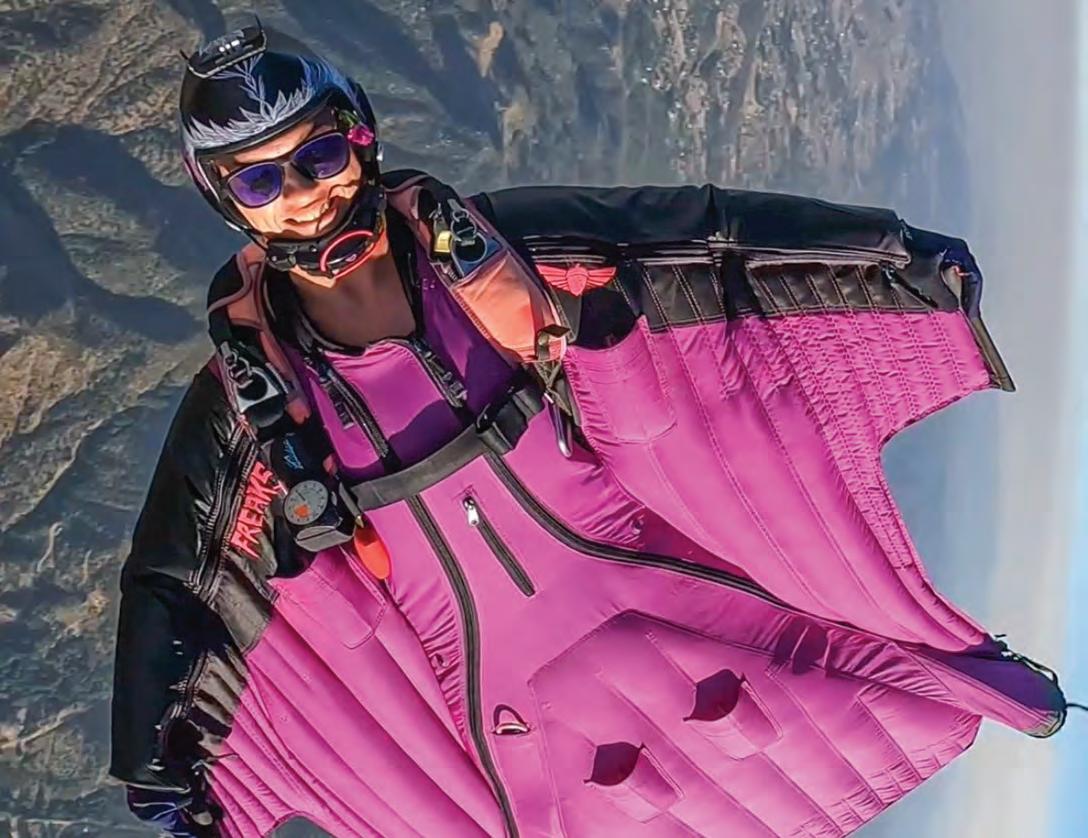
Becca Jordan flies over Moab with a world record to her name. At 27, she helped take an all-female acrobatic wingsuit team to the FAI World Cup.
BECCA JORDAN STEPS to the open door of a Cessna Super Caravan above Moab in a purple wingsuit, a black helmet and a chrysanthemum tucked behind one ear. She is 27, a Moab wingsuiting instructor and a world-record wingsuit pilot.
Her student waits beside her. Below them, redrock formations spread across the desert. Jordan grips the outside door bars, listens to her student’s count and leans into the air.
For the next two minutes, the two do not fall so much as fly – arms and legs held inside nylon wings, bodies angled forward before their parachutes open above the drop zone.
Jordan is part of an American acrobatic wingsuit team with Elizabeth Brott, 29, of Salt Lake City, and

camera flyer George Hargis. At the 2025 FAI World Cup of Wingsuit Flying in the Czech Republic, Jordan and Brott were among the first all-female teams to compete in acrobatic flying and set the world record for most “docks,” or hand grips, in a round. The record required them to meet in the air at the same speed 12 times without disrupting each other’s balance or control.
Wingsuiting is an advanced form of skydiving. After hundreds of regular parachute jumps, experienced pilots wear specialized suits that turn the body into a human airfoil, allowing them to fly at speeds near 200 mph. In acrobatic competition, two performers fly a sequence of grips and maneuvers while a camera flyer records the round for judging.
The speed, though, is not how Jordan describes the heart of the sport. “I remember thinking that skydiving would be this adrenaline-ridden sport,” Jordan said. “Of course the first time it was terrifying, but you face that fear and the fear diminishes and it be-
comes this place of comfort and focus.”
Jordan moved to Moab after doing a tandem jump with her mom. She soon got hired in the office at Skydive Moab, where the job came with skydiving privileges.
Jordan then earned a series of U.S. Parachute Association licenses. She has completed around 1,500 skydives, about 1,100 of them in a wingsuit, and has official permission to teach.
The idea of wingsuiting started for Jordan on a climbing trip in the Calanques of France. A friend, standing at the edge of one of the steep limestone cliffs, mentioned that some people fly off mountains in wingsuits like birds. The comment stayed with her.
“I remember getting out of high school, and I wasn’t ready for the standard progression through life,” Jordan said. She and her twin sister took a gap year to hike the Appalachian Trail from Georgia to Maine. There, another hiker gave them a piece of advice. “He said that in life we need to
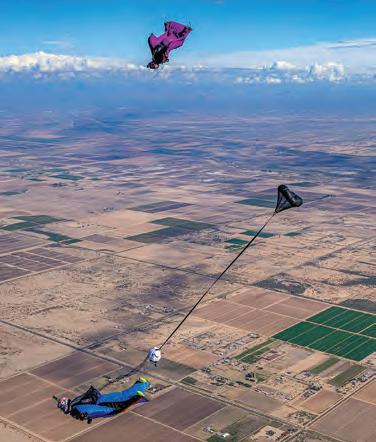
Acrobatic wingsuit pilots train for a discipline judged on grips, maneuvers and camera work. Becca Jordan competes in the event with teammate Elizabeth Brott and camera flyer George Hargis.
listen to things that resonate. Flying off mountains resonated for me,” Jordan said. “People pursuing things wildly out of their element with beauty and grace and focus.”
Keith Macbeth, owner of Skydive Moab, is well suited to assess the competitive skydivers who work for him. Macbeth is an airplane pilot, has done more than 13,000 skydives and comes from a family of skydiving experts. He believes Jordan’s quiet, calm demeanor makes her a better wingsuit athlete. Macbeth described Jordan and Brott as “quiet and nice people but not hey-look-at-me types, which makes them better skydivers.”
Jordan has considered wingsuiting the goal since she was a beginning skydiver. She said her parents, both military careerists, gave her the courage and grit to pursue big challenges.
“I think it’s important having the courage to pursue what deeply resonates with you no matter how silly it sounds in the moment,” she said. “It’s gonna pay off.”
GOne artist’s mission to protect Utah’s wild spaces
story by ARIELLA NARDIZZI
photographs by CODY CHAMBERLAIN
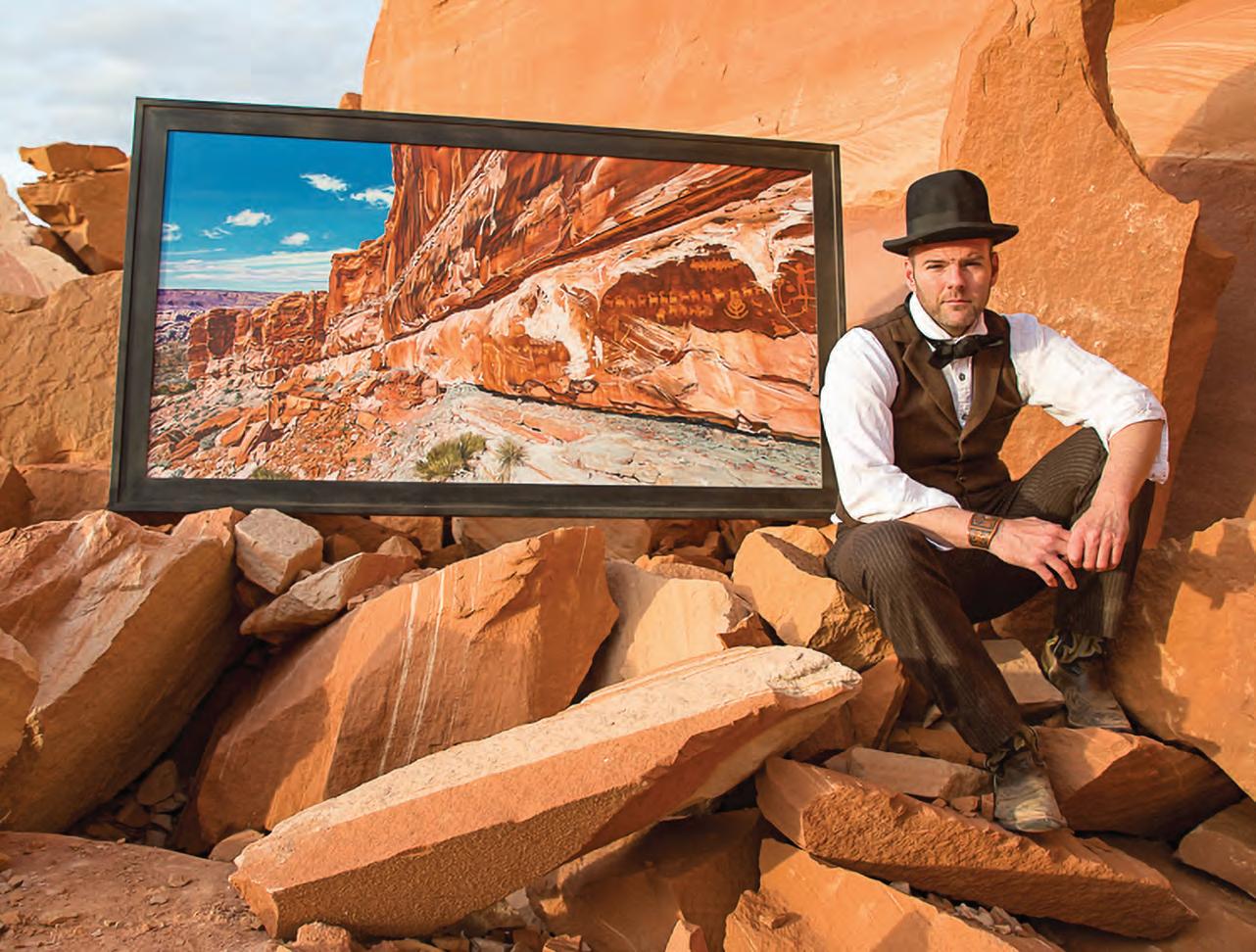
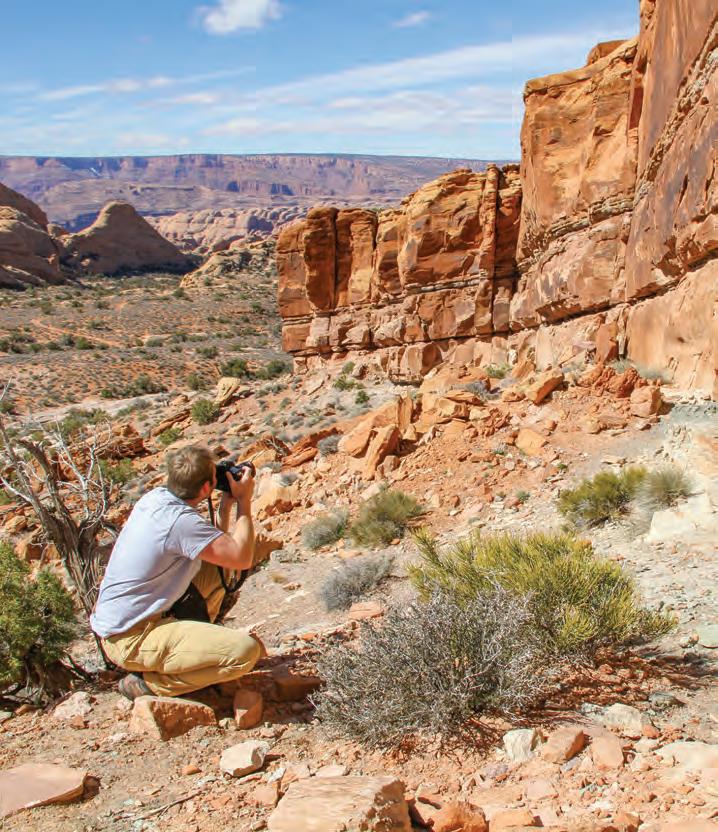
NARLED JUNIPERS CAST long shadows across the auburn sand of the Utah Desert. Miles from any road, Cody Chamberlain treks through sagebrush and silence as lizards skitter over sandstone bedrock. Though he wears a wide-brimmed hat and a breathable button-up hiking shirt, typical attire for a desert dweller, his rucksack is packed with sketchpads and pencils.
He searches for inspiration for his next painting to adorn the stretched linen of his canvas with textured oil paint that matches the terracotta hue beneath his leather boots – boots that have seen thousands of miles on trail.
Grounded and fervently passionate, Chamberlain approaches each painting with respect, exactness and an innate desire to protect what he loves. His art is advocacy, each painted portal inviting people
to care about the fragile landscapes of their home desert.
Just as trails in the High Desert and red rocks to the south lead to sweeping vistas only after a spell of hard work, Chamberlain’s painting process follows the same ambling journey. Much of it is spent outdoors. “Admittedly, because I can’t stay away,” he said with a laugh.
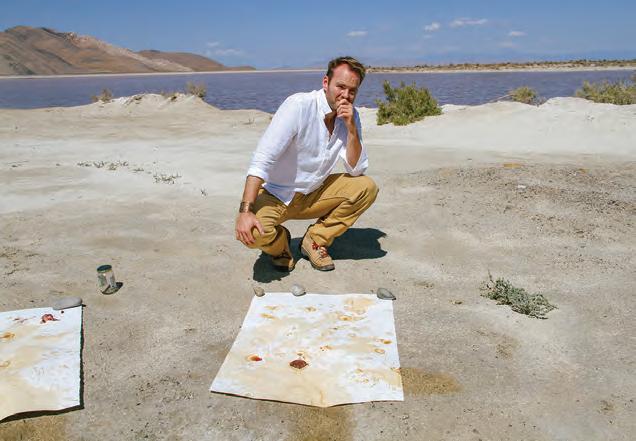
The artist often treks miles into the desert to scout inspiration for his next painting, but first without the heavy canvas. Rather than capturing a single moment, he visits a site multiple times throughout the year, for days on end, to learn a place intimately. “I want to know, ‘What does it smell like after a rain? What birds are flying above? What’s the light doing?’”
After sketching on location and taking extensive photographs, Chamberlain returns to his Salt Lake City studio to paint
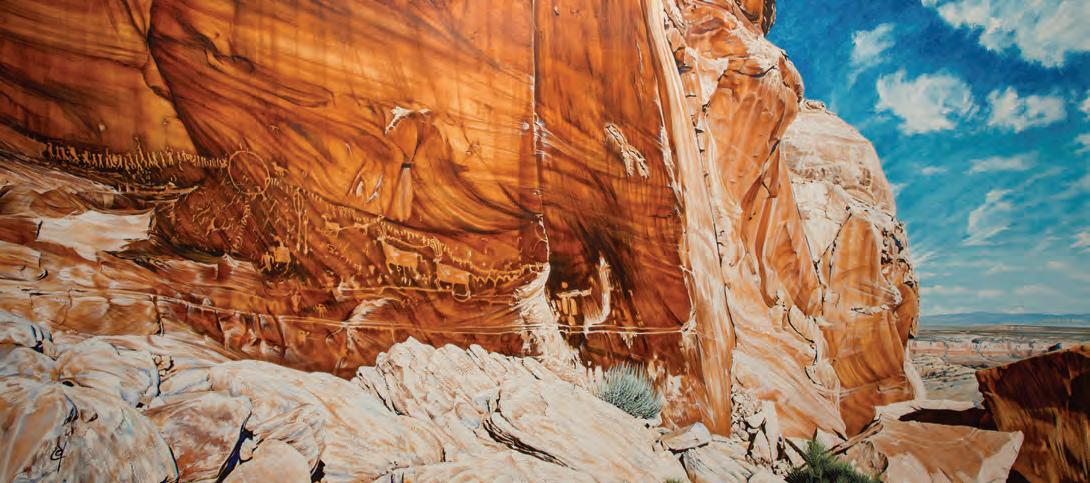
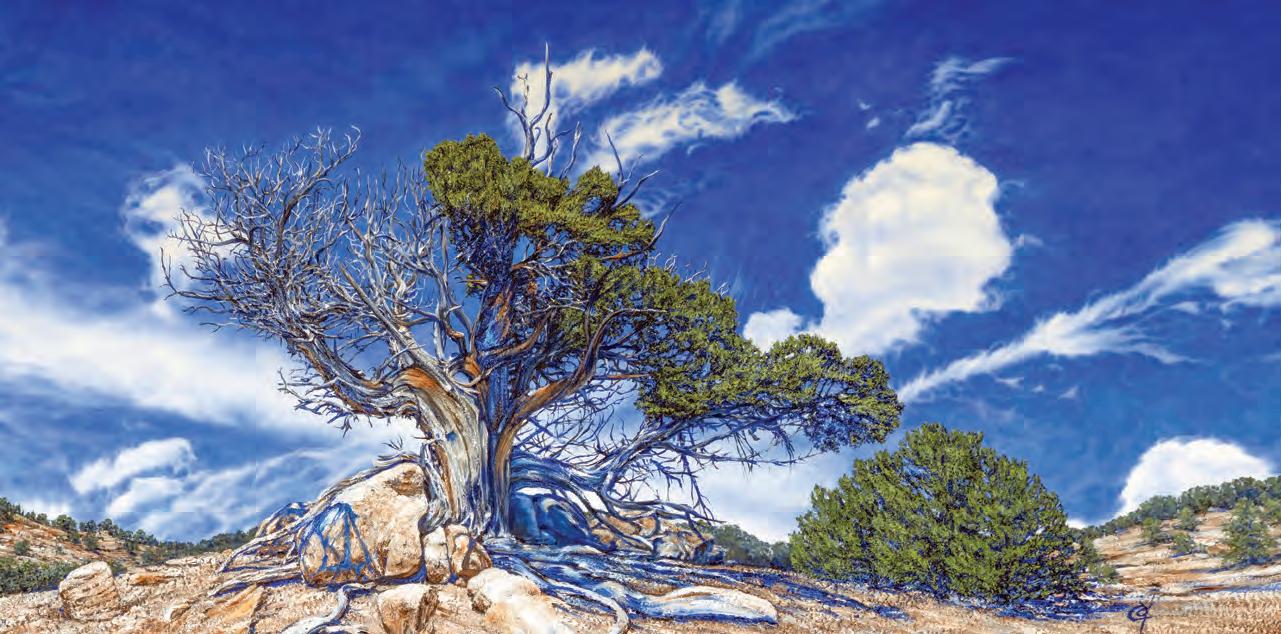
Cody Chamberlain paints to inspire stewardship through field sketches, photography and large-scale canvases. “Hidden Valley,” commissioned by the state, preserves a rock art panel in southern Utah (left). “Procession” documents prehistoric petroglyphs found in Bears Ears National Monument.
on homemade canvases, some up to 16 feet long. The panorama’s large scale allows him to portray the vastness of the landscape. The canvas-making process is an intentional, old-world craft using materials from the earth – Belgian linen aluminum panels and rabbit-skin glue. Building the painting surface by hand reveals subtle bumps, cracks and slight imperfections in the canvas that reflect the textured landscapes he paints. “If you make everything perfect and color in the lines, you rob life from the painting,” he said.
Once a painting is done, he reunites his art with its muse. Some spots are visible from a road. Others require hiking on trails for hours under a blazing sun to return to the destination he depicted. “I love bringing everything I’ve internalized through my painting process back to where it was born from,” Chamberlain said.
CHAMBERLAIN WAS always a child of the desert. He grew up in the small town of Cedar Fort, spending those formative years rooting around the hills, chasing lizards and falling in love with the silence and solitude of the West Desert.
He started out using crayons, pens and pencils at age three, and his parents – accomplished artists in their own right – encouraged his artistic nature. Art was his first language, and Chamberlain would often find himself scolded in grade school for doodling.
He eventually graduated from crayon scribbles to earn a bachelor’s degree in painting from Utah Valley University. Shortly after college, he began working for the U.S. Forest Service and later returned to school for a master’s degree in anthropology with an emphasis in archaeology, further uniting his desire to understand the landscapes, people and culture of his home.
This dual life of ranger and artist allowed Chamberlain to incorporate his naturalist expertise into educating people through art. As a lifelong advocate for public lands, he adamantly believes art is an entry point to stewardship. “I want to expose people who might not normally be exposed to wilderness ... get it into their psyche and get them attached to the land,” he said. “You can’t protect something you don’t love.”
It wasn’t until 2008 that he began to see art as a viable career. Yet despite being a professional painter for the last decade, Chamberlain still supplements his studio work with employment for the Forest Service, where he works on Northern Utah’s 2.2 million-acre Uinta-Wasatch-Cache National Forest, one of the busiest forests in the U.S.
This unique experience allows him to live in constant conversation with the land and the public that uses it. “We live in a paradise where I can slap on my boots, grab my easel, some paintbrushes and head right out to the desert,” he reflected. “No permission, no gates. Utah is special that way. Nowhere else in the world is like this.”
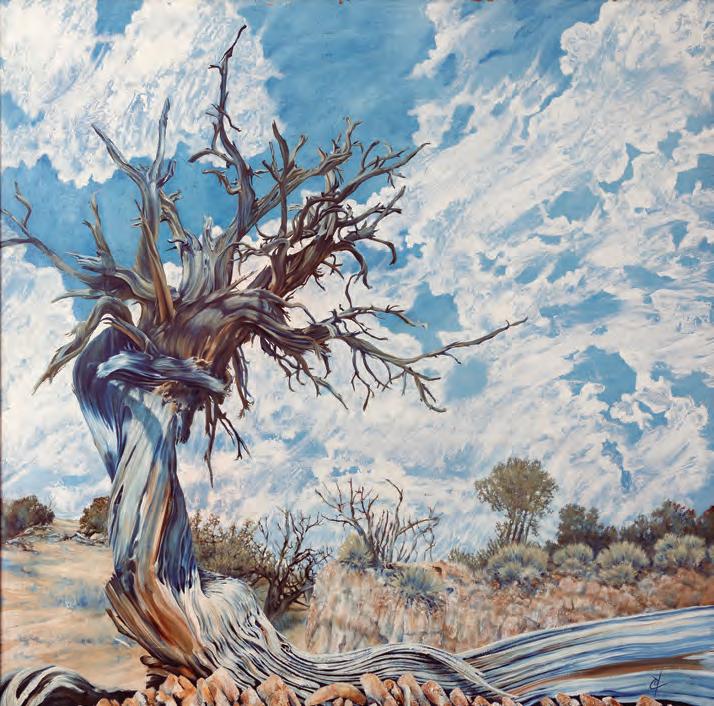
A large-scale oil painting titled “Juniper Sky” reflects the artist’s deep affinity for gnarled junipers. To Chamberlain, these fighters rooted in stone capture the desert’s resilience and enduring spirit. The original painting was displayed at the Utah Statewide Annual Exhibition.
WHILE HIS ranger job takes him to the pine forests of the Wasatch, Chamberlain’s heart will forever lie in the desert. His paintings frequently blend mauve, sunbaked orange and camel tones, and feature motifs such as weathered animal skulls, ancient rock art panels and junipers, a tree he has a deep affinity for.
“Some people have spirit animals. I guess mine’s a tree,” he laughed. “They’re fighters, those junipers. Their roots drilled through rock, twisted, gnarled, but alive. It sums up Utah’s desert perfectly.” His love affair with junipers can be found splayed across his canvases, from the large oil painting titled “Juniper Sky” to mixed media works.
Chamberlain also values the human connection his art has built upon. While
guiding a family in Bears Ears National Monument, they stumbled upon a rock art panel deep in the backcountry. A parade of prehistoric petroglyphs – bighorn sheep, human figures and geometric shapes – march across the chiseled sandstone.
The discovery moved the group so deeply that they later commissioned Chamberlain to document the memory in an oil painting titled “Procession.” The artwork won an award in the Utah Division of Arts & Museums Statewide Annual Exhibition, catching the attention of the State of Utah, which purchased photo rights to the private commission.
In 2023, the State of Utah then commissioned Chamberlain to create “Hidden Valley,” depicting another rock art panel
in southern Utah and preserving a cultural and institutional record of the state for its permanent art collection. For the artist whose life’s work is rooted in stewardship, this honor mirrored his mission. The places he loves would be formally enshrined in the state’s Art collection.
The canvas can be found in the Governor’s Office of Economics in Salt Lake City, while the remainder of Chamberlain’s artwork is showcased online at codychamberlainart.com, in frequent galleries and at TWIG Media Lab in Salt Lake City in 2027.
But if you’re looking for the heart of his work, he’ll point you away from the frame. “Just head out into the desert and find a juniper,” Chamberlain said. “That’s the real art.”
by ARIELLA NARDIZZI
MAY 14-17
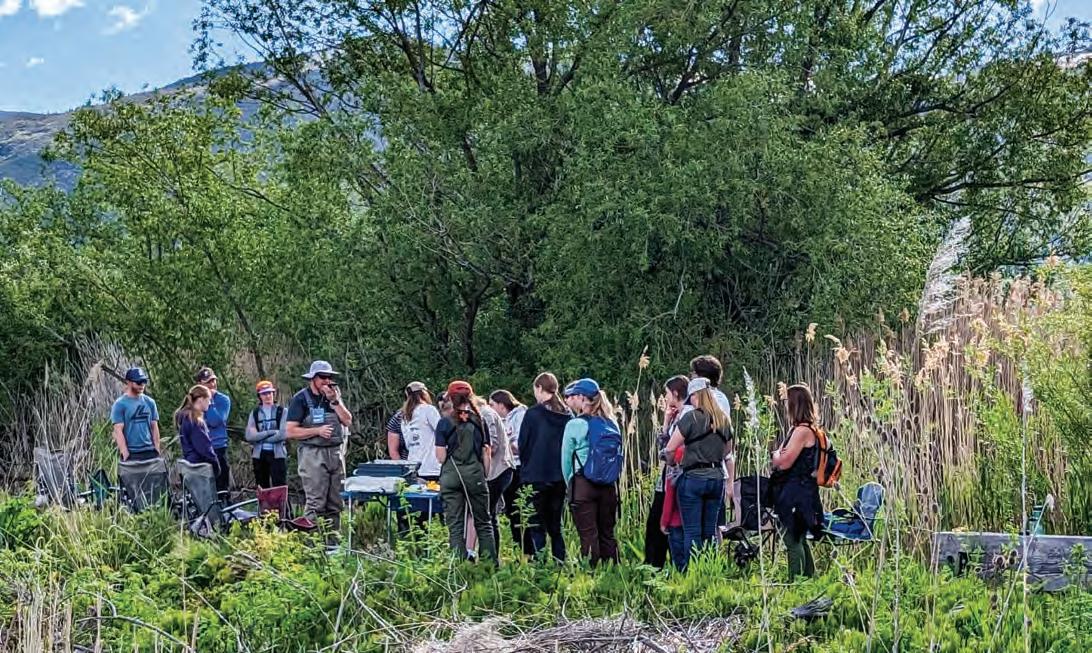
Coots stitch ripples across the Great Salt Lake while gulls lift from the marsh and cranes bugle somewhere beyond the horizon. Davis County sits along a major north-south migration corridor, a rest stop for more than 250 bird species. Each spring, hundreds of birders follow them there for four days at the 28th annual Great Salt Lake Bird Festival.
More than 75 field trips and a dozen workshops fan out across the Wasatch Front, including rare access to areas usually closed to the public. Past festival lists have filled with grebes, plovers, raptors and shorebirds – the kind of sightings that send binoculars up in a hurry.
Festival headquarters at Western Sports Park hums early as groups gather with scopes in hand before heading into the field. Transportation is provided for off-
site trips. Back at base, workshops range from owl pellet dissections to live raptor encounters. The Wings & Things Vendor Fair brings artisans and partners to the grounds May 15-16, and a free Family Day on May 16 opens the festival to beginners, young birders and the casually bird-curious. The May 17 keynote dinner features author and photographer Kevin Karlson, followed by National Audubon short film screenings.
Advance registration is available online, and many field trips and workshops fill quickly. Whether visitors arrive for a firstlight marsh outing, family programming or an evening talk, the festival gives Davis County’s birds their spring migration moment, with plenty of room for the people who chase them. greatsaltlakebirdfest.com, (801) 451-3286.
A 1930s speakeasy interior sets the mood for gourmet sandwiches, salads, pastries and breakfast. The Club House Massacre stacks shaved turkey, candied bacon and juniper Dijon aioli on toasted sourdough, while The Clyde pairs breaded chicken and mozzarella on an Italian hoagie. 905 Forbush Pl., (385) 381-7022.
SALT LAKE CITY
The RV resort offers pull-through sites and cabins just south of Farmington, plus bike rentals, an outdoor pool, board and lawn games, and a general store. Open year-round. 1012 Recreation Way, North Salt Lake, (801) 355-1550.
The 28th festival celebrates the 250 bird species that migrate through Davis County each spring.
JUNE 11-13 • BRYCE CANYON
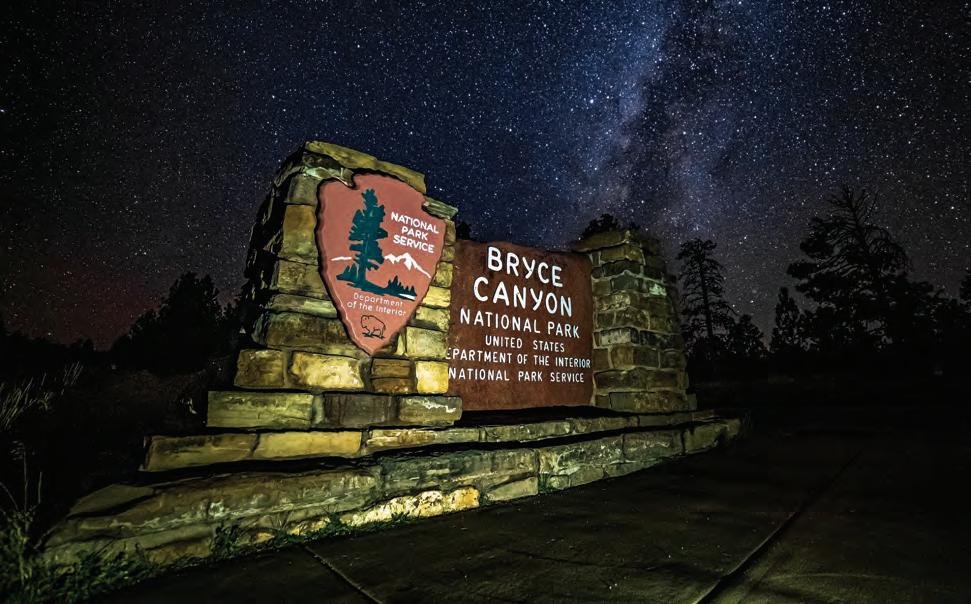
Daylight slips behind Bryce Canyon’s rust-colored hoodoos, and the park’s other show begins overhead. High elevation, clean air and distance from city lights make this International Dark Sky Park one of Utah’s best places to look up, especially during the annual Bryce Canyon Astronomy Festival.
Visitors can join ranger-led constellation tours, peer through powerful telescopes or try photographing the cosmos. Astrophotographer Don Riddle leads free small workshops, limited to 15 participants, with chances to shoot among the hoodoos in the Bryce Amphitheater. Sign ups are required in advance and can be made on the park’s website.
Evening programs begin at 8:30 and 9 p.m., with visual presentations, constel-
lation storytelling and telescope viewing across the festival schedule. Stan Honda opens Thursday night with “A Night in the Parks,” and Dr. Amy Sayle brings “Star Stories” to Saturday’s program. By 10 p.m., telescopes turn skyward for open stargazing sessions until midnight.
Daytime programming runs from 10 a.m.-4 p.m. with solar viewing, NASA experts and hands-on exhibits at the Visitor Center. The festival is free with park admission, though some programs require advance registration. Visitors are encouraged to ride the free Star Shuttle. For three days, Bryce Canyon gives night owls, camera fiddlers and constellation hunters plenty of reason to stay awake. nps.gov/brca/planyourvisit/astrofest.htm, (435) 834-5322.
BRYCE CANYON PINES RESTAURANT
Locals and visitors come for American fare and generous portions. The locally sourced elk burger and country fried steak provide plenty of hiking fuel before or after a day in the park. 2476 W. Hwy. 12, (435) 834-5441.
BRYCE CANYON LODGE
Wooden pillars greet guests at the park’s only overnight accommodations. The historic lodge’s 114 rooms sit near the rim of Bryce Canyon, with suites, motel rooms and cabins available. (855) 765-0255.
Crystal Festival
May 9-10 • Hurricane Rockhounds, jewelry makers and the crystal-curious can browse rare minerals, gemstones, fossils and metaphysical treasures at the Grafton Building in Washington County Legacy Park. The first 100 moms receive a Mother’s Day gift at the door. 10 a.m.-8 p.m. Free. 692 S. 5500 West, (801) 989-6926.
Rooted in Tradition
May 20 • Park City
Park City Museum hosts Darren Parry for a talk on Native American food sovereignty and his Shoshone heritage. The hourlong lecture brings seeds, stories and survival into the same conversation at the museum’s Education and Collections Center. 5-6 p.m. 2079 Sidewinder Dr., (435) 649-7457.
Heritage Days
May 23 • Spring City
Spring City’s preserved 19th-century Pioneer Village opens for historic home tours from 10 a.m.-4 p.m. Free concerts fill the LDS Meeting House while Main Street brings an art squared auction, craft fair and food trucks. Adults $15, youth $10. friendsofhistoricspringcity.org.
The Honor Project
May 23 • Blanding
Volunteers gather at Blanding City Cemetery to place commemorative tokens on the graves of fallen service members, say their names and learn their stories. The Travis Manion Foundation leads the Memorial Day weekend tribute beginning at 9 a.m. Free. 450 N. Hwy. 191.
Soldier Hollow Classic
May 22-25 • Midway
At Soldier Hollow Nordic Center, border collies crouch, sprint and stare down sheep while handlers whistle directions across the course. The championship also brings food, face painting, a petting zoo, sheep-shearing demonstrations and dog agility events. 2002 Soldier Hollow Ln., soldierhollowclassic.com.
Ogden Music Fest
May 29-31 • Ogden
The twang of bluegrass gets the crowd dancing at Fort Buenaventura, with a lineup that includes Yonder Mountain String Band, Sierra Hull, Mariachi Guzmán, Peter Rowan with Sam Grisman Project and more. 2450 A Ave., (385) 240-0994.
Utah Lake Festival
May 30 • Provo
Boat rides, kids’ activities and lake science share the shoreline at Utah Lake State Park during this free Saturday festival. Visitors can learn what is being done to improve the lake, wander through outdoor exhibits and pair the day with the Provo Farmers Market’s season opener. 10 a.m.-4 p.m. Free. 4400 W. Center St., utahlake.gov/utah-lake-festival.
Utah Asian Festival
June 6 • Salt Lake City
The 49th annual festival fills Utah State Fairpark with food vendors, artisans, Asian-owned businesses and a full day of music, dance, martial arts performances and lion dances to drumbeats. 11 a.m.-10 p.m. 155 N. 1000 West.
Oremfest
June 8-13 • Orem
Orem’s “Red, White, Blue & You” theme rolls through the city with a car show, pool party, grand parade, carnival, fireworks and sporting tournaments. At Orchard’s Jam, young entrepreneurs run the market tables themselves. Plus, music, games and hometown bustle. 300 E. Center St., (801) 229-7000.
Cache Valley Summer Kickoff
June 13 • Logan
More than 100 booths start summer with a bang at the Cache County Fairgrounds. The third annual event brings food trucks, local makers and a full day of browsing, snacking and neighbor-spotting. 10 a.m.-7 p.m. Free. 490 S. 500 West, (435) 512-0374.
Dirty Dino Gravel Race
June 13 • Vernal
Venture to Dinosaurland for this T-riffic bike race along winding gravel roads and beautiful High Uinta scenery. Riders can choose from one of three dino-mite courses spanning 27, 58 and 98 miles. Start times stagger from 7-8:30 a.m. 4250 N. 3500 West.
Eyes to the Sky Balloon Festival
June 19-21 • Salina
Salina looks up early as 25 hot-air balloons rise over the valley during the 19th annual Eyes to the Sky Balloon Festival. Main Street keeps the weekend moving with food trucks, vendors, live music, family activities and a balloon glow after dusk. Launches are weather-dependent. eyestotheskyballoonfestival.com.
Bike to End Alzheimer’s
June 20 • Tremonton
Pedal Box Elder County’s quiet roads while raising money for Alzheimer’s research. Riders can choose a shorter loop or stretch their legs on longer routes, with e-bikes welcome and a $50 suggested donation. The ride begins at 7 a.m. in Schuman Park. 200 N. Tremonton St.
Pine Valley Heritage Day
June 20 • Pine Valley
Ponderosa pines and subalpine firs surround this day of live music, booths, food and family activities at the Pine Valley Heritage Center. Stop in for forest maps and mountain-town chatter before wandering back outside. 132 E. Main St., (435) 772-3264.
Stars and Stripes Forever
June 26-July 8 • Cedar City
Cedar City marks America250 with festivities across town. June 26 brings the 10th anniversary of Southern Utah Museum of Art and the 65th anniversary of the Utah Shakespeare Festival. A time capsule placement follows July 1 at Cedar City Main Street Park. July 4 brings fireworks and a full slate of holiday events, and July 8 closes the run with a free Utah Symphony concert under the stars at Main Street Park. visitcedarcity.com.
1 Butcher
Questions on p 12-13
2 Julianne Hough
3 Chrissy Teigen
4 Alaska: The Last Frontier
5 A thin layer of hot water
6 a. Plowing a field
7 c. Rain Man
8 a. Brigham Young
9 b. Panic! At the Disco
10 c. Joshua, In descending age order, the Osmond brothers are Alan, Wayne, Merrill, Jay, Donny and Jimmy, the youngest, who joined later
11 True, Brimley had no formal acting training.
12 True 13 True 14 True, Smoot co-sponsored the SmootHawley Tariff Act, which is widely regarded as having worsened the Great Depression. 15 False, Priest was treasurer of the United States, which is different from secretary of the treasury, and she was not the first woman to hold the treasurer’s post.
Photographs
Page 12, Jewel Kilcher
Page 13, Nolan Bushnell

After a long day of exploring Moab, we invite you to enjoy a relaxing and flavorful meal with us. Offering nightly game specials and fresh fish options. Let us enchant you with an exquisitelyprepared meal to keep you coming back every season for years to come.

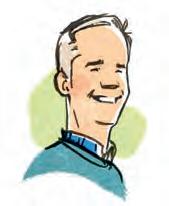
story by KERRY SOPER illustration by JOSH TALBOT
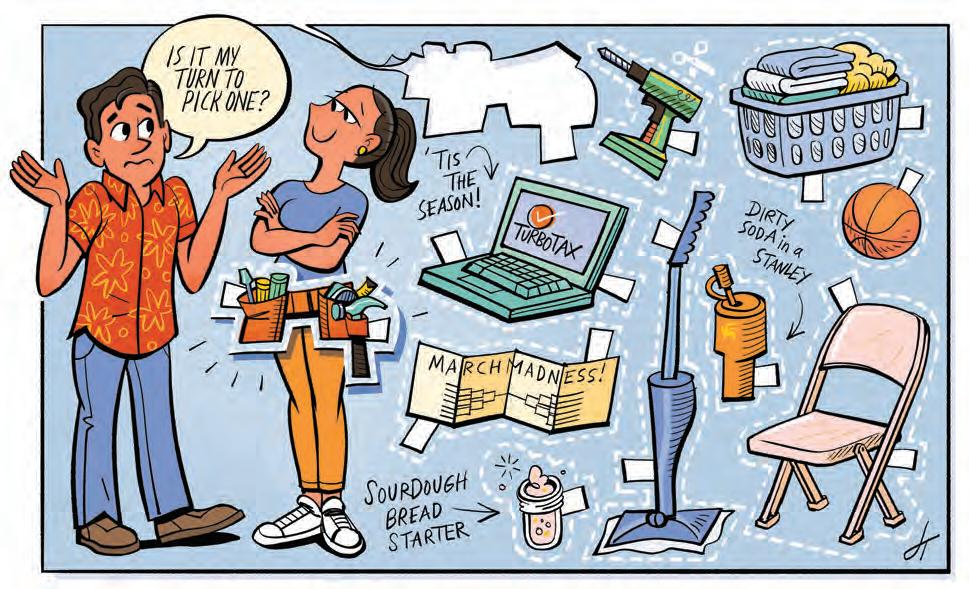
BECAUSE UTAH IS a traditional state, you might expect its men to fit the stereotypical American mold: emotionally stoic, handy, able to fix cars, John Wayne in a crisis. Reality is more complicated.
Sure, some Utah men fit that description – guys raised on farms, military veterans or boomers fanatical about Scouting, back when that was still a thing.
At the same time, there are plenty of sheepish beta males like me, raised in the suburbs and more likely to fantasize about competence – while playing Dungeons & Dragons, watching The Lord of the Rings or collecting Star Wars merchandise –than actually preparing for it.
The result is that many Utah women are married to guys who know pop culture trivia, dad jokes and sci-fi lore but are hopeless at basic home repairs.
I struggled to pass the basic test of Utah manhood: putting up and taking down metal folding chairs in a Church of Jesus
Christ of Latter-Day Saints cultural hall with masculine efficiency. I approached it lazily, always getting my fingers pinched and exasperating my young men’s leader, Brother Sorenson. I can still hear him, with his buzz cut and bolo ties, chewing me out: “C’mon Soper – press down with your foot and pull up with your hand!” or “Only wimps and liberals carry one chair at a time!”
Somehow, I made Eagle Scout without absorbing any actual merit-badge skills.
My mom, though, can still remember the requirements for each rank advancement. I can bring bitter tears to her eyes, and whispered cusswords to her lips, by mentioning the paperwork for my Eagle project. Was it cleaning playground equipment? A canned food drive? I can’t remember. You’ll have to ask her.
Finally, I showed little interest in cars. The first time I took my Subaru in for an oil change, as a college student in Logan, I misunderstood the burly mechanic’s basic question of “10-30?” – about oil weight, it
turns out – and confused him by saying, “Do you mind if I come back at 1:30 instead? I’m working on an art project.” Too bad there was no Google Translate from alpha to beta back then.
When my wife married me in our early 20s, she had to lower expectations. Early signs included the time I electrocuted myself attempting to replace a faulty plug, and the fact that I needed help from a nice older cashier at 7-Eleven to change a flat.
She also regretted asking me to rent a jackhammer to remove concrete from our front yard. For three months I complained that all my joints felt “kinda squishy.”
After I flooded our basement while attempting to repair the sprinkler system, my wife realized we might need to swap some traditional roles. Moving forward, she outsourced the big jobs to genuine professionals and began wearing the britches in our household, so to speak, when it came to smaller projects.
Our young kids watched in awe as she efficiently completed, with only the help of YouTube, one home repair after another, while garnering the skills, and the slightly cocky attitude, if we’re being honest, of a certified contractor.
STILL WANTING to carry an equal weight, I took over most of the laundry and cooking. I also helped my kids with the soft skills they’d need to get along in today’s digital world, like putting top spin on a serve in Wii Tennis, or not flying repeatedly off the edge of Rainbow Road in Mario Kart.
and Tonka trucks. Thus, he struggled with seeing his dad wear an apron and somehow, mysteriously, earn a living with only books and a computer.
While my wife and I happily settled into this gender-role switcheroo, I could tell that it made one of our kids – our younger son – a little anxious. He’d been deeply socialized, it turns out, by the trad-male propaganda of Bob the Builder
As a 4-year-old, he would regularly approach me and ask in a nervous voice, “Dad, are you really a ‘Worker Guy’?” My complicated answer never seemed to satisfy him, probably because I couldn’t point to any of the tools in his play sets. He got a little teary one time when our discussion in the kitchen, as I was working on a new pizza dough recipe, was drowned out by the sound of my wife doing heavy drilling in the background.
A year later, his anxiety reached a peak when we had to replace our oven. With limited funds, my wife hired the lone traditional macho guy in our neighborhood
– a buff, bearded, single fellow named Brent – to install it for us. My son looked on in admiration as Brent spent a full day in our kitchen acting competent.
His mom’s gushing reaction to this handyman’s suspiciously glitch-free installation made a deep impression too. A week later, I overheard him wistfully asking his older brother, “Do you think Mom wishes she married Brent?”
I’m happy to report that my wife has stuck with me, despite compelling alternatives. We’re still cheerfully swapping roles, though I wonder if she has the occasional regret. I recently mentioned that my doctor suggested testosterone supplements now that I’m in my 50s, and she got super interested, full of questions and encouragement.
Even the high cost didn’t dampen her enthusiasm. I told her I’d look into it as long as it doesn’t lead to me renting jackhammers again – or having to set up and take down any of those stupid church chairs.