JANUARY/FEBRUARY 2026
JANUARY/FEBRUARY 2026
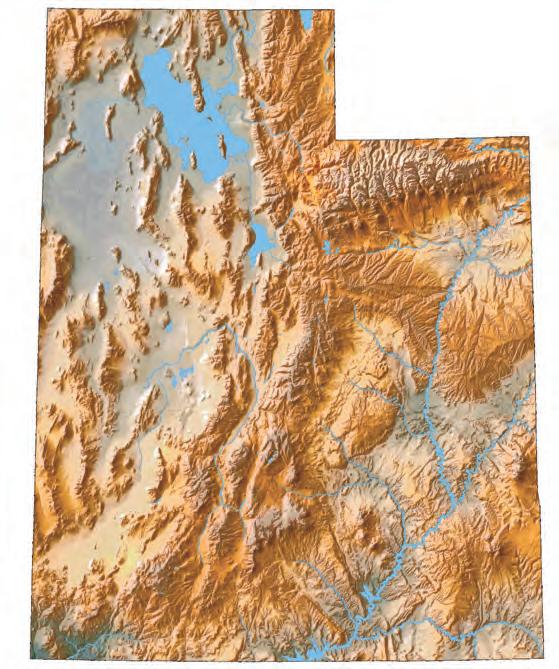
Salt Lake City, pg. 7, 9, 28, 43
JANUARY/FEBRUARY 2026
Fountain Green, pg. 12
Mount Carmel, pg. 36
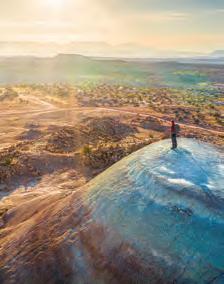
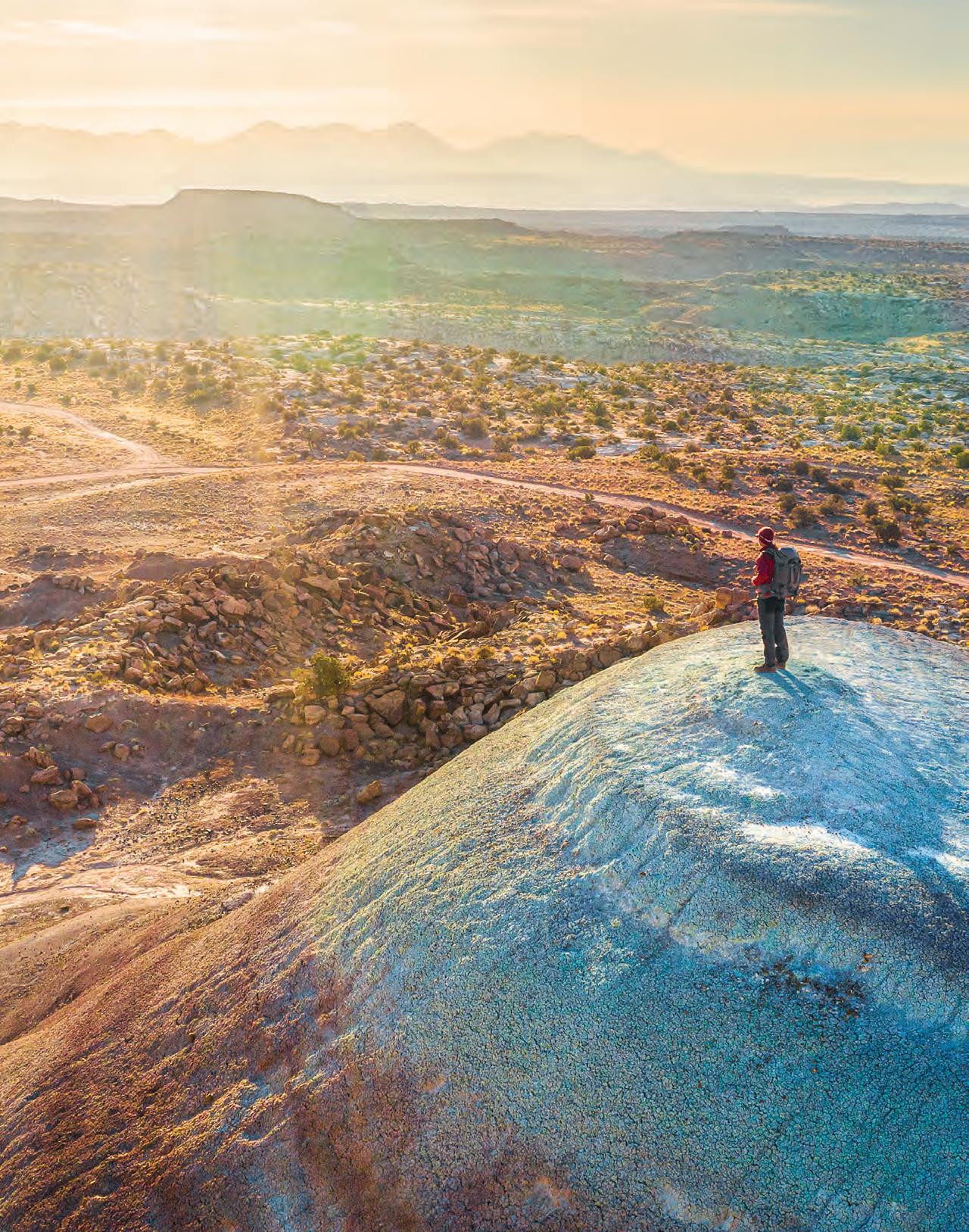
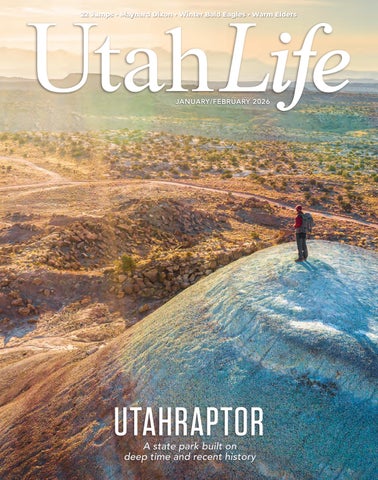
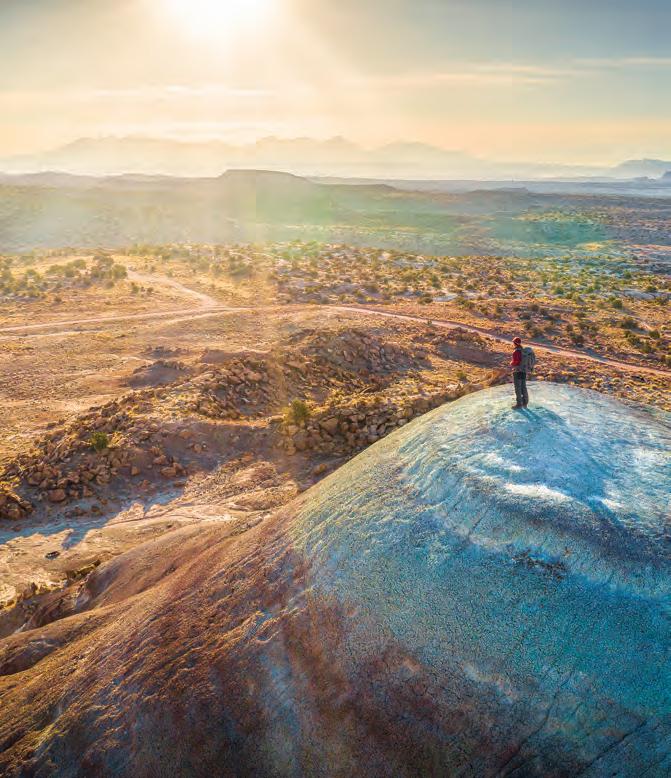
Photographer Whit Richardson stands atop a dome in Utahraptor State Park’s dinosaur quarry, surveying the wide desert and distant horizons.
Story begins on page 14.
Photo by Whit Richardson.
Park City, pg. 6
Moab, pg. 14, 20, 42
Red Mesa, pg. 8
5 Editor’s Letter Observations from Chris Amundson.
6 Honeycomb Fireside dining; Ski photography; Warm Elders program; Jim Bridger.
10 Trivia
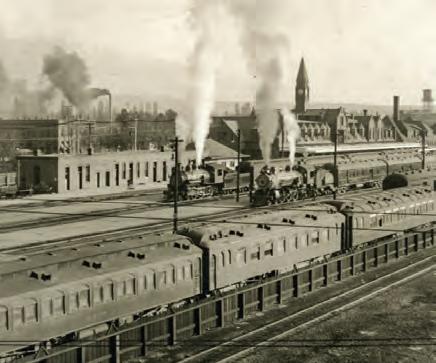
Think you know Utah trains and rails? Answers on page 45.
28 Uncommon Champions Conner Bailey, ice climbing champ.
30 Kitchens Warm winter coffeecakes.
34 Poetry Poets contemplate belonging.
42 Explore Utah Skinny Tire and Beltane festivals.
46 Last Laugh
Utah reality shows capture quirky local life with humor.
12
Encounters with bald eagles reveal migration routes and the fragile resilience behind America’s most iconic bird. by Heather Bergeson
14
At Utahraptor State Park, dinosaur fossils, a Civilian Conservation Corps camp and wartime isolation center share one desert site. by Dan Leeth
20
Through 22 Jumps, veterans confront fear through extreme sports to find renewed purpose, connection and healing together. by Rachel Fixsen
36
In Mount Carmel, Maynard Dixon’s restored home reveals how Utah’s landscapes shaped the final vision of a Western masterpiece. by Vanessa Zimmer

THE COVER OF this issue is a self-portrait.
Whit Richardson stands on a ridge at Utahraptor State Park, the newest addition to Utah’s state park system. He’s launched a drone above himself, lifting the camera high enough to catch both the ground beneath his boots and the sweep of country beyond. From that height, the landscape looks steady. Layered. Quiet.
At Utahraptor, you can stand over 135-million-year-old dinosaur bone and then walk a short distance to the concrete remains of the Moab Citizen Isolation Center. Prehistoric life and wartime fear share the same slope. The ridge doesn’t choose between them. It holds both. Though our lives are much shorter, they too are layered ground.
If you’ve lived long enough, you’ve stood on terrain you didn’t choose. A winter that lingered. A diagnosis that arrived without consultation. A loss that rearranged the horizon overnight. The hard things come the way gravity comes – without apology. They feel immovable.
But immovable doesn’t mean unapproachable.
This week I sat in a chapel and listened to children speak about their father. He was 50 years old. He went to sleep and didn’t wake up. The ground did not shift for his family. What his children praised wasn’t achievement, but attention – the hours he spent playing sports in the yard, the way he listened when they were worried, the principles he taught by living them at home. The life they described was full.
Time doesn’t slow because we wish it would. What remains is how we choose to spend the hours we’re given.
In Red Mesa and across the Navajo Nation, thousands of elders rely on firewood to keep warm. Volunteers cut, haul and stack wood so someone else’s house will hold heat through the night. The cold doesn’t negotiate. They show up anyway.
Outside Moab, veterans gather on sandstone cliffs and count backward from three. They breathe. They step. The canyon doesn’t soften for them. They change how they approach it.
A teenager in Salt Lake City trains on frozen walls, placing his tools carefully, again and again. Bald eagles return each winter to the same cottonwoods along the Sevier River. In Mount Carmel, Maynard Dixon spent his final years painting the desert as it was – spare, unsoftened, honest – because that was the work still in front of him.
None of them erase what’s hard. They add another layer.
This year, our family has learned that celebration and fear can share the same season. Graduation announcements and hospital bracelets can sit in the same drawer. Joy and hardship settle into the same soil.
We may not get to choose every layer that arrives in our lives. But we do choose what we build on it – how we love, how we serve, how we lean forward when the slope feels steep, how we take a hand when it’s offered.
From the air, the ridge at Utahraptor looks steady. From the ground, it feels uneven underfoot. Both are true. Perspective doesn’t remove the climb. It steadies the climber.
Though our lives are brief compared to the stone beneath us, they’re no less layered. And layer by layer, breath by breath, step by step, we decide how we will stand.
Sometimes, that is ascent enough.
CHRIS AMUNDSON Publisher & Editor editor@utahlifemag.com
January/February 2026
Volume 9, Number 1
Publisher & Editor
Chris Amundson
Associate Publisher Angela Amundson
Editorial Assistant Savannah Dagupion
Design
Mark Del Rosario
Photo Coordinator
Erik Makić
Staff Writer Ariella Nardizzi
Advertising Sales
Sarah Smith
Subscriptions Shiela Camay
Utah Life Magazine
c/o Subscriptions Dept. PO Box 270130 Fort Collins, CO 80527 (801) 921-4585
UtahLifeMag.com
SUBSCRIBE
Subscriptions are $30 for 6 issues and $52 for 12 issues. To subscribe and renew, visit UtahLifeMag.com or call (801) 921-4585. For group subscription rates, call or email publisher@utahlifemag.com.
CONTRIBUTE
Send us your letters to the editor, story and photo submissions, story tips, recipes and poems to editor@utahlifemag.com, or visit UtahLifeMag.com/contribute.
ADVERTISE
For rates, deadlines and position availability, call or email advertising@utahlifemag.com.
COPYRIGHT
All text, photography and artwork is copyright 2026 by Flagship Publishing, Inc. For reprint permission, please call or email publisher@utahlifemag.com.
A
by ARIELLA NARDIZZI
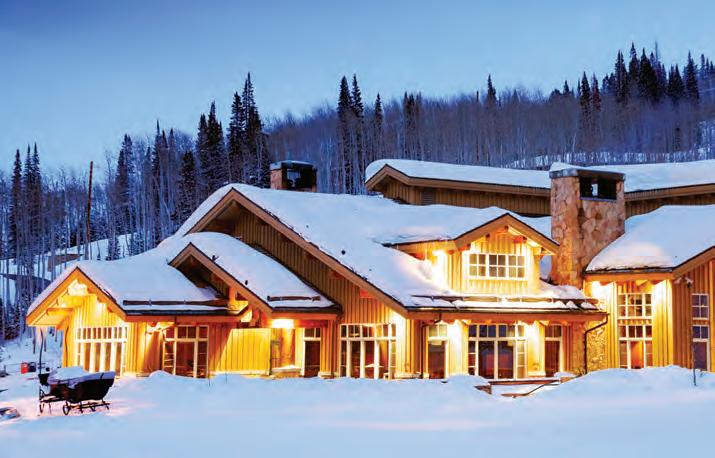
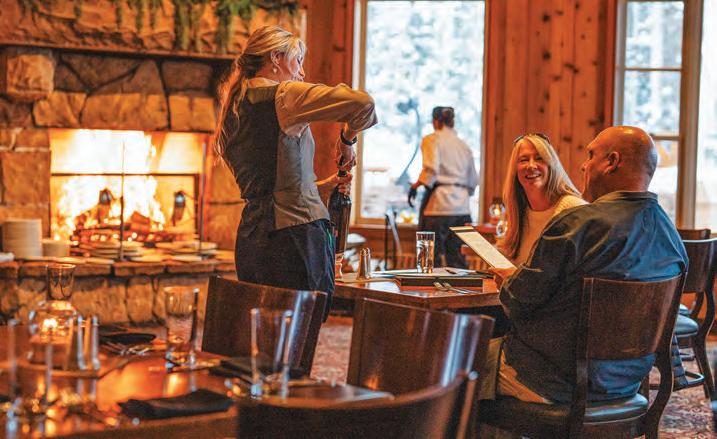
Inside Empire Canyon Lodge, a quartet of massive stone fireplaces flickers around hanging legs of lamb and wheels of raclette cheese. Wood smoke drifts through bare aspens outside as dusk settles into Park City’s high canyon.
Fireside Dining has been part of Deer Valley’s winter lineup for 25 years, built around a simple premise: let fire, not the clock, set the pace of dinner. Offered on winter evenings at the base of Daly Chutes, the meal replaces traditional seatings and coursed service with open hearths, self-guided stations and food designed to hold over heat.
The concept draws from European alpine lodges, particularly Swiss raclette houses, where dinner stretches long after the lifts close and guests return to the fire as they please. Instead of ordering from a menu, diners move through stations at their own pace, beginning with soups, salads and stews before returning for hearthcooked staples.
Raclette sits at the center of the format. Wheels of cheese melt slowly over the fire, scraped onto potatoes, bread and cured meats when ready rather than when a server arrives. The approach favors foods that benefit from heat and time – stews that deepen, cheeses that soften and carved meats that rest before slicing. A carving station anchors the room, with lamb and bison prepared to
After a day of skiing on the slopes of Deer Valley Resort in Park City, guests
of
for a
withstand the rhythm of open flames rather than a fixed service schedule.
According to Deer Valley, Fireside Dining began as a seasonal experiment inspired by alpine winter traditions and has remained intentionally consistent. The kitchen is currently overseen by Fireside Chef Aurora Macias, who has been involved with the program for 10 years. While menu details shift, the core structure – open fire, shared space and self-paced movement – has changed little.
Getting there is part of the evening. Depending on weather and appetite for cold, guests reach Empire Canyon by snowshoe, by horse-drawn carriage for an additional fee, or by car via Marsac Avenue. Dinner reservations are required and available Wednesday through Sunday from 5:30-10 p.m., booked online. The prix-fixe menu costs $124 per adult and $48 per child. At the end of the night, as the last plates are cleared and the flames curl low, the lodge settles into a quieter glow.

A global ski icon, a devoted photographer and 140 hours of work converge on a winter ridge in Little Cottonwood

Photographer Noah Wetzel captures Park City freeskier Tom Wallisch hitting a unique feature in the Alta backcountry. The photos are part of a larger effort, titled The Grizzly Column Project, which explores the athleticism and dedication that define adventure in Utah’s mountains.
by SAVANNAH DAGUPION photographs by NOAH WETZEL
Winter settles deep in Little Cottonwood Canyon, glazing granite walls with ice and shadow. Even as days lengthen, the high country above Alta stays winter-bound – one of North America’s storied ski corridors, where storms linger and the mountains set the terms. It drew photographer Noah Wetzel back in pursuit of creating art, chasing an image he pictured long before it existed.
Wetzel first photographed the ridge in 2020, drawn to the canyon’s spine and ski lines. A winter return, experimenting with nighttime lighting, sparked a bigger vision – a skier balanced on a hand-built snow column, lit from above against the frozen canyon.
Shooting in full darkness meant the light, the skier and the feature had to align
perfectly, with only seconds per run before batteries, cold and terrain ended the attempt. To bring that idea to life, Wetzel partnered with Park City freeskier Tom Wallisch, a contest champion and film mainstay, beginning a 140-hour creative push that stretched across freezing nights and long, snowbound days.
Together, they hauled packs through wintered-in terrain, shaped the feature by hand and returned night after night as Wetzel refined lighting – including a drone-mounted flash – while Wallisch hit the column in near darkness.
By the end, the column stood alone on the ridge, edges cut clean by hand and weather. When Wallisch dropped in, the light snapped on for seconds – long enough to frame the line before the canyon went dark again.
Watch the adventure in Wetzel’s short film, The Grizzly Column Project, on YouTube.
delivers free firewood and human connection to elders across Utah’s Navajo Nation
by ARIELLA NARDIZZI
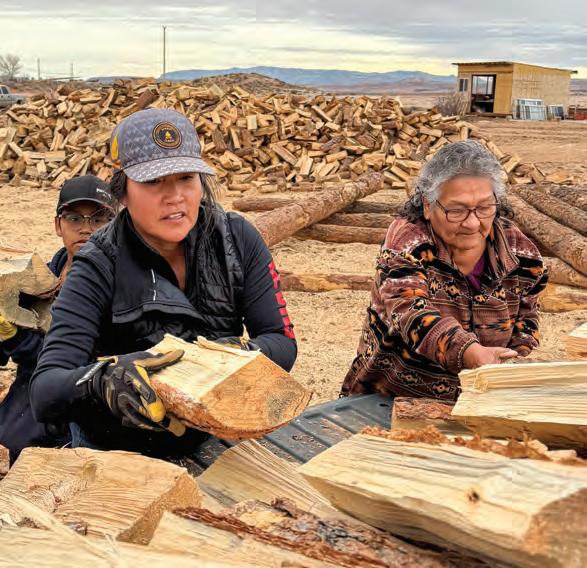
Chainsaws growl in the woodyard of Red Mesa as bark curls away in thick ribbons. Pine pitch hangs in the cold air, sharp and sweet. A pickup truck idles nearby, its bed stacked with short logs sized for wood stoves and fireplaces across the Utah side of the Navajo Nation. Warm Elders, a family-run nonprofit, grew from a simple idea: no one should face winter’s cold alone.
Nearly 10,000 families on the Navajo Nation rely on firewood for heat each winter. Gathering it is no small task. Many homes in the Four Corners region sit far from forests, and sourcing firewood often
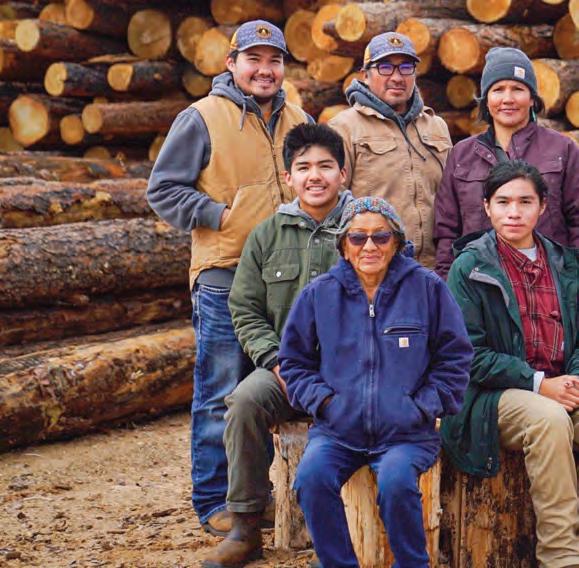
means driving long distances to the La Sals or San Juans. The work requires trucks, tools and the physical ability to cut and haul heavy timber. A pickup filled to the cab holds one cord of wood, yet families can burn up to 10 cords a season, especially in poorly insulated homes or when firewood also serves as a cooking source.
It’s a reality Herbert Stash grew up with on the reservation – a gap he hopes to mend with Warm Elders.
The nonprofit grew out of Stash’s own experience providing for family. In 2020, while caring for his mother in Red Mesa, he learned of neighbors who had no way to collect wood. “Taking care of elders is a big part of our culture,” Stash said. “They tell us of the weather changing or insects moving underground. Our job is to make sure they have enough firewood. They never explicitly ask. But we must listen.”
Many elders were homebound, managing medical issues and needing fires burning around the clock. At first, Stash and his family cut, hauled and delivered wood themselves, paying out of pocket. The need soon exceeded what one family could sustain. In 2024, he officially founded Warm Elders.
The nonprofit’s name reflects more than heat. “It’s that warm embrace from an elder who appreciates what you’re doing; you can’t duplicate that,” Stash said. “But this is the closest I can get to that feeling.”
Today, the organization delivers free firewood to more than 200 households each winter, prioritizing elders, veterans and people with disabilities. Families near Red Mesa can pick up wood, while volunteers deliver to those who can’t leave home, sometimes driving more than 50 miles to reach remote households.
The work is multigenerational. Stash’s three sons, brothers and mother all pitch in alongside neighbors and volunteers with varied skills. “There’s a job for everyone,” he said, from first-time helpers to sawyers, drivers, grant writers and organizers.
Education happens in the work itself. Stash learned these skills in his youth and now teaches his children and other young people on the reservation. They start by hauling branches and stacking logs before graduating to saw work.
“Some elders have lost the ability to use the body given to us,” Stash said. “I tell my kids, ‘You’re still walking, using your hands. Use them to help somebody.’”
Elders collects and delivers free firewood for more than 200 households around the Utah Navajo Nation, acting on the mission that no one should face the
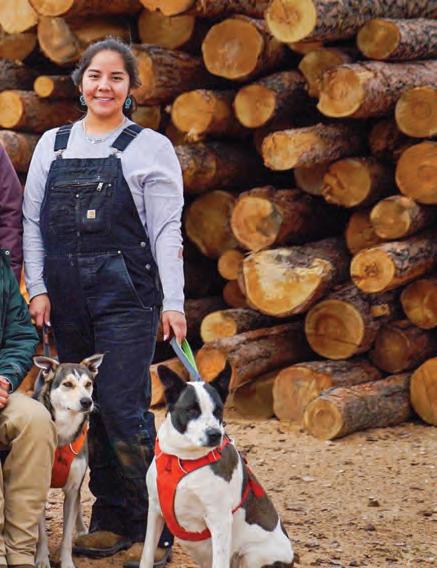
Able-bodied volunteers who don’t qualify can work in exchange for firewood.
Warm Elders has expanded beyond firewood, but everything it offers remains free. Stash hopes to help families access safer, more efficient stoves and build sheds to keep wood dry. His wife and mother coordinate clothing drives that provide thermals, jackets and blankets, extending protection through the coldest months.
The work depends on partnerships. The Wood For Life initiative, through the San Juan National Forest Foundation, redirects timber from forest restoration and fire prevention to Indigenous communities. Community donations and groups like Alliance for Green Heat help fund equipment.
The work follows long-held practices of respect for the land. “When we cut down a tree, we’re cutting down a spirit. If we take something from the mountains, we must pray or leave an offering,” Stash said.
Each morning before the saws start, Stash steps into the woodyard with his coffee. As the sun crests the horizon, he inhales the scent of bark and piñon pine. “We live in the desert, but that smell – it’s so refreshing,” he said. “If I can bring a little of that to the elders, that’s all I hope for.”
A fresh biography takes a closer look at the man behind the myth
by RON J. JACKSON JR.
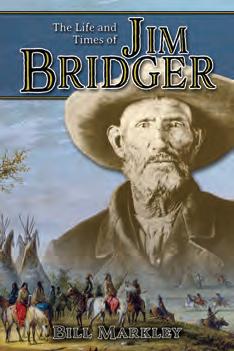
Legendary mountain man Jim Bridger could neither read nor write, leaving others to document his exploits across the American West. More than a century after his death in 1881, his life still fascinates historians and readers, his story passed down much as it once was, by word of mouth and colored by memory, myth and hard fact.
Bridger spent nearly seven decades on the frontier as a mountain man, trapper, U.S. Army scout and wilderness guide. Award-winning author Bill Markley is the latest historian to grapple with Bridger’s sprawling legacy in his book, The Life and Times of Jim Bridger. To do so, Markley sifted through the documented lives of Bridger’s business partners, companions and military associates, aiming to separate fact from folklore. He also builds on the work of earlier biographers J. Cecil Alter (Jim Bridger, 1950) and Jerry Enzler (Jim Bridger: Trailblazer of the American West, 2021), crediting them “for breaking the trail.”
dition’s keelboats, launching a career that would place him at the center of some of the West’s most formative moments.
Among the most enduring and controversial episodes is the 1823 grizzly bear mauling of fellow mountain man Hugh Glass. Later accounts claimed Glass was left for dead by two members of Ashley’s expedition, including a young man identified only as “Bridges.” Markley weighs those accounts against later testimony, including remarks from U.S. Geological Survey scientist James Stevenson, who worked closely with Bridger. When asked in 1886 whether Bridger deserted Glass, Stevenson replied, “Bridger told me the story of your Glass, but there was no desertion.”
No book about Bridger would be complete without examining his role as an early explorer and observer of the West’s most remarkable landscapes. U.S. Army Capt. John Gunnison once praised “Major Bridger” for his ground-breaking descriptions of the Yellowstone geothermal region, noting Bridger’s ability to sketch maps with a buffalo hide and charcoal and to describe geysers that “spout up seventy feet, with a terrible hissing noise,” and hot springs so intense that meat could be cooked in them.
In 1824, Bridger is also credited with another profound discovery. Breaking away alone from his fur-trapping party, he followed a river into a broad valley and encountered an immense body of water. When he tasted it, the water was salty.
“Jim Bridger loved the West, its landscapes, its wildlife, its peoples, and most of all its freedom,” Markley writes in the introduction. “Are you ready? Let’s enter the frontier world of Jim Bridger.”
The book traces key episodes of Bridger’s life, beginning with his 1822 journey up the Missouri River as part of Gen. William Ashley’s fur-trapping expedition. Just 18 years old, Bridger helped crew one of the expe-
Some believed he had reached the Pacific Ocean or the Gulf of California. Only later did explorers realize it was an inland lake with no outlet: the Great Salt Lake. As Markley emphasizes, it remains “the largest saltwater lake in the Western Hemisphere.”
The Life and Times of Jim Bridger
By Bill Markley Farcountry
Press 248 pages, paperback, $20

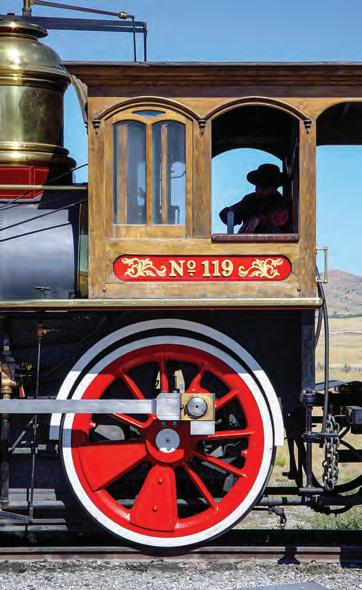
All aboard for Utah train trivia.
by BEN JENKINS
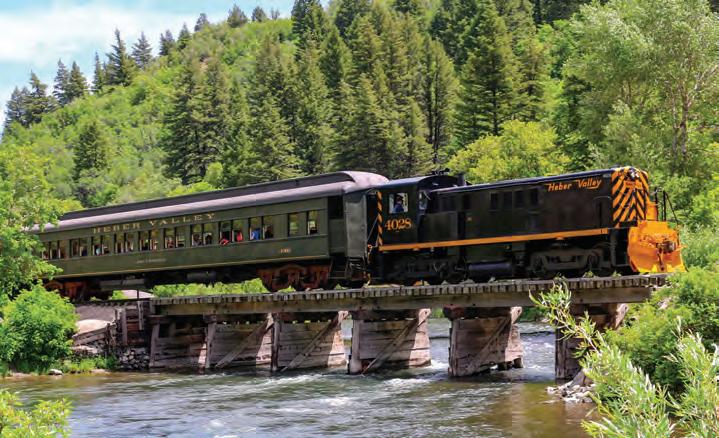
1 The final spike that completed America’s first transcontinental railroad was driven at Promontory Summit when Utah was still a territory. That spike was made mostly of what valuable element?
2 Most railroad trackage across Utah is controlled by what railroad company, which, along with BNSF, dominates freight lines west of the Mississippi River?
3 The Southern Pacific Railroad, which crossed northern Utah and stopped in Lucin, Ogden and Salt Lake City, also founded what telecommunications network that was acquired by T-Mobile in 2020?
4
Named after another state, what train is Amtrak’s longest daily route and the only one to pass through Utah, with stops in Green River, Helper, Provo and Salt Lake City?
5
Beginning later in 2026, Moab and Salt Lake City will become stops on the western end of the “Rockies to the Red Rocks” route on what new luxury train line, a sister rail experience to Rocky Mountaineer?
6
Today, Utah has roughly 1,375 miles of freight rail, but it once had far more. At its peak in the 1920s, how many miles of railroad covered the Beehive State?
a. 2,161 miles
b. 4,892 miles
c. 15,913 miles
7 Though it now operates as a heritage railway, records show that during the 1920s and 1930s the Heber Valley Railroad was at one point the nation’s largest shipper of what commodity?
a. Sugar beets
b. Sheep
c. Milk
8
What two railroads were joined at Promontory Summit in 1869, completing the final stretch of the first transcontinental railroad from Council Bluffs, Iowa, to San Francisco?
a. Oregon Short Line and Western Pacific
b. BNSF and Utah Central
c. Central Pacific and Union Pacific
9
Utah’s Frontrunner currently runs from Provo to Ogden. If planned expansions are completed, it will extend north to Brigham City. What city would become the line’s new southern terminus?
a. Payson
b. Nephi
c. Cedar City
10 The first Utah railroad after the transcontinental line was the Utah Central Railroad, which connected Salt Lake City to what place that is still nicknamed Junction City?
a. Logan
b. Provo
c. Ogden
11 Despite its name, the Piute County town of Junction has never had a train station.
12
Utah’s portion of Interstate 84 was completed in 1977, which is also the last year a new railroad was built in the state.
13
The Salt Lake, Garfield and Western Railway opened in 1891 to bring tourists to an attraction that no longer exists.
14 Though it was built to haul gilsonite, the Uintah Railway once transported dinosaur bones from its stop at the ghost town of Dragon.
15 Though commonly called TRAX, the official name of the Salt Lake Valley’s light-rail system is the UTA Transit Express.
No peeking, answers on page 45.

by HEATHER BERGESON
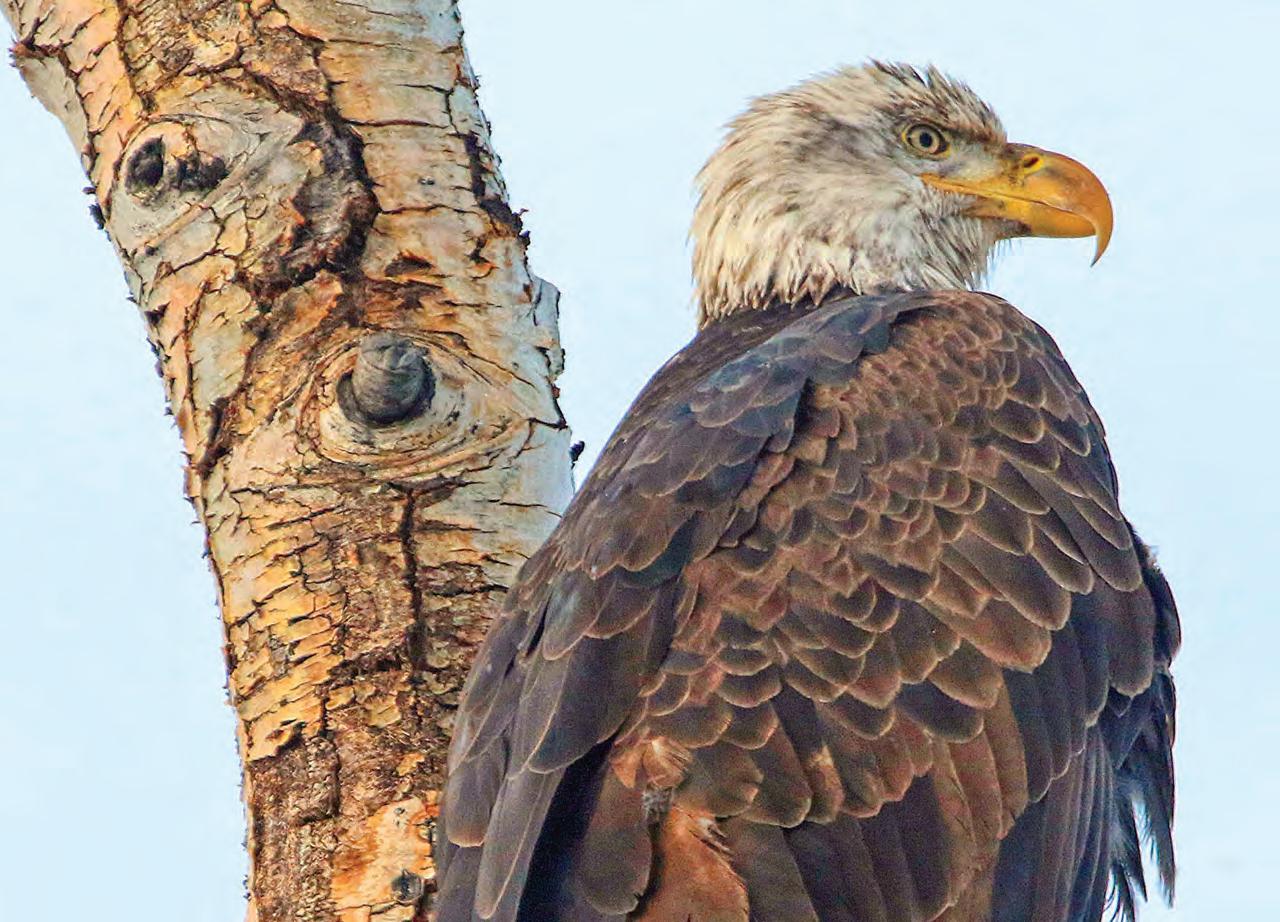
T WAS 6:30 a.m. on a frigid January morning when Ashley Kijowski came face to face with a bald eagle. She had just started as a coordinator at the George S. and Dolores Doré Eccles Wildlife Education Center and decided to experiment with her new camera on an early hike.
When she spotted the eagle – perched low on a branch, framed against the pale dawn sky – she quietly raised her camera, heart hammering. Then she realized she had forgotten to load an SD card.
“It’s never happened since,” Kijowski said, laughing. “I’ve never again had one sitting there, perfectly posed, right in front of me.”
That moment captures the fascination many Utahns feel for these birds. The bald eagle is more than America’s national symbol. It is a story of survival: a species that clawed its way back from near extinction to become an emblem of resilience. Each year, Utah becomes part of that story as bald eagles migrate south, following open
water and the promise of fish. Utah’s mix of shallow reservoirs, slow-moving rivers and winter tailwaters keeps fish accessible even when surrounding waters freeze.
Around 500 bald eagles typically spend the winter in Utah, congregating near reservoirs, rivers and wetlands. Fewer than 10 nesting pairs remain in the state yearround to breed. While winter numbers remain strong, the breeding population is limited by habitat availability and sensitivity to disturbance near nesting sites.
On frosty February days, visitors bundle up and gather at places like Farmington Bay to watch eagles glide over the marsh. Even in landscapes dotted with only a few scraggly trees, the birds seem to pick the same roosts year after year. Bald eagles favor tall, open-limbed trees near water that offer clear sightlines and minimal disturbance, often returning to the same roosts each season. Locals call them “eagle trees,” and once you spot a dozen hulking shapes

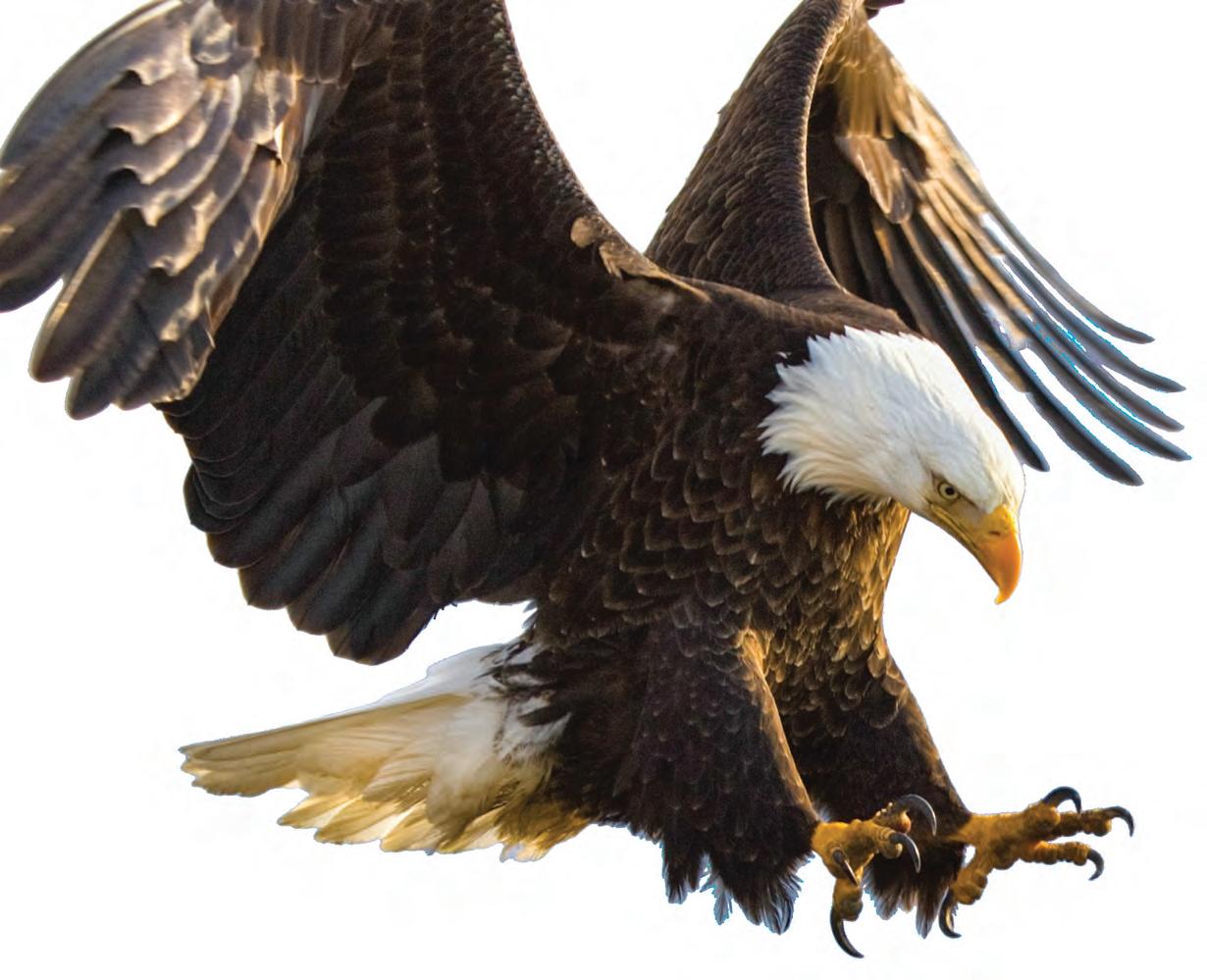
perched shoulder to shoulder in bare branches, you understand why.
In Fountain Green, the famous eagle tree does not even have a sign, just a set of GPS coordinates and a dirt pull-off along a quiet highway. But anyone who makes the drive is almost guaranteed a sighting. Some mornings, more than 25 eagles crowd the branches, their white heads bright against dark limbs.
For years, renowned birder Merrill Webb led vanloads of hopeful birders to Fountain Green. Webb fell in love with birding at age 14, when he unwrapped his first pair of binoculars. Decades later, he had logged sightings of more than 2,300 bird species and briefly held Utah’s record for most species seen in a single day.
His bald eagle trips began in the Bean Museum parking lot, where participants piled into a 16-passenger van for the hourlong drive south. Along the way, Webb handed out flyers detailing bald eagle habits and fielded questions as strangers bond-
ed over their “life lists,” the running tally of every species they had spotted.
When the van finally rumbled onto the shoulder near the eagle tree, travelers stepped out to see a line of bundled figures with binoculars pressed to their eyes or peering through scopes mounted on tripods. Wildlife managers encourage viewers to keep their distance, noting that repeated disturbance at roosts can cause eagles to abandon favored sites.
For Webb, the thrill never faded.
“When they come in, they’re calling to each other – this really high-pitched call,” Webb said. “It’s not at all what you expect. You expect something really big and masculine, you know? And instead, it’s just this high-pitched chirping.”
Even that thin, surprising call has the power to hush a crowd of bundled birders, all of them staring into bare branches, hoping for one more glimpse of America’s greatest comeback story.
Bald eagles typically arrive in Utah by late November, peak in January and February, and begin dispersing north again by early March. They gather near lakes and rivers where fishing is good and favored roost trees stand nearby.
Reliable viewing spots include Farmington Bay, Fountain Green, Ouray National Wildlife Refuge and Strawberry Reservoir.
For directions and details about eaglewatching events, visit wildlife.utah.gov
Utahraptor State Park connects a dinosaur quarry, a CCC camp and a World War II internment site along a historic desert route.
by DAN LEETH
IN THE LATE-1950S, reaching what was then Arches
National Monument required driving Willow Springs Road, 15 miles northwest of Moab off U.S. 191. While today’s paved entrance from Moab is safe enough for Grandma’s Buick, former park ranger and Desert Solitaire author Ed Abbey described the old Jeep trail into Arches as a little-used dirt track where visitors earn their experience. It has not improved much over the years.
No longer the main route into the park, the Willow Springs turnoff eventually became a popular spot for RV boondockers wanting to overnight for free. These tin-can campers found empty spots on relatively flat ground and parked hither and yon. With no semblance of order, the site looked like a homeless refugee camp.
This former camping area and the surrounding land are now Utahraptor State Park, which celebrated its grand opening in May 2025. Utah’s newest park is named for a species of carnivorous dinosaurs that measured about 2023 feet in length and weighed around 1,100 pounds. They dispatched prey with jaws lined with serrated teeth and killing claws on each toe. A Utahraptor skeleton stands on display in the park’s visitor center.
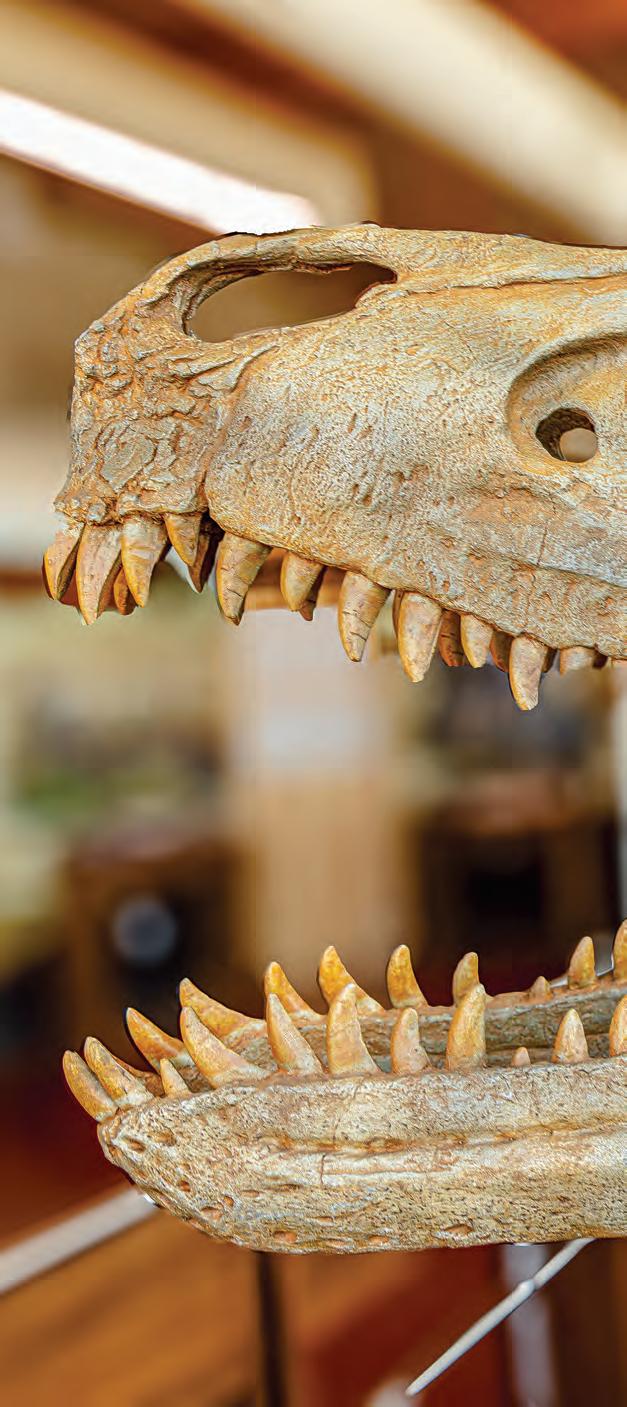
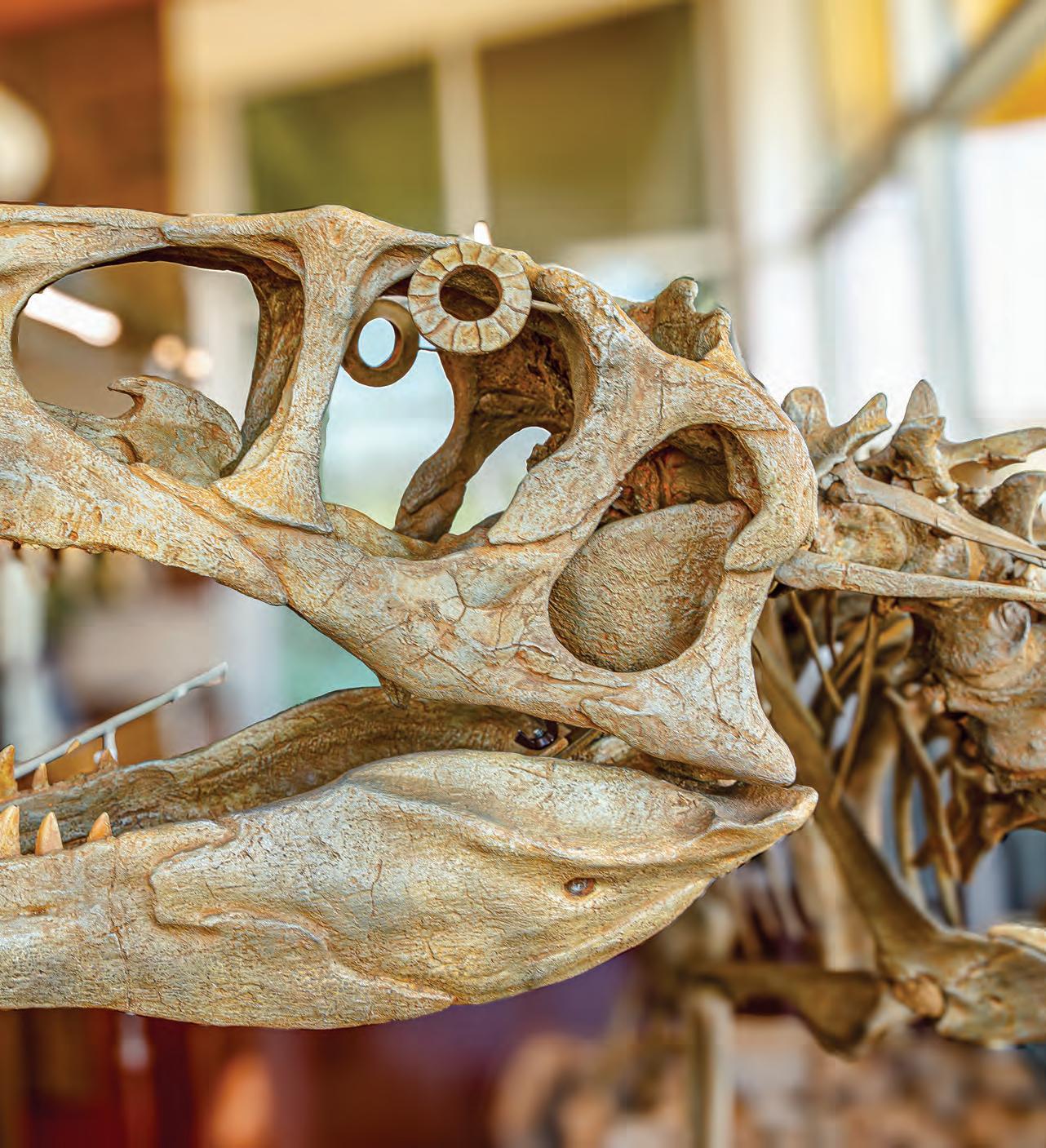
Named for a species of carnivorous dinosaurs, Utahraptor State Park ties this quiet desert landscape to one of the largest dinosaur
Bones of the Utahraptor, along with those of the locally named Moabosaurus, were first discovered at the Dalton Wells Quarry, now part of the new park. One of North America’s largest dinosaur beds, the site has yielded more than 5,500 bones from 10 species. The visitor center displays excavated bones from the quarry, and for a playful comparison there’s a movie-prop claw used in the original Jurassic Park film.
Visitors are welcome to reach the ridgetop quarry site, although getting there requires negotiating a dirt road across a sandy wash. Signs warn that four-wheel-drive is required. Beyond the wash, a well-graded road winds around turquoise-ribbed cliffs, picnic tables set near the base. A half-mile walk up an abandoned roadway with a few hundred feet of elevation gain leads to the quarry. While “quarry” might conjure an image of a pit, this one sits atop a ridge where, other than scraped ground, little visual evidence remains of past excavations.
Beyond dinosaur bones, Utahraptor State Park also preserves the site of the Dalton Wells Civilian Conservation Corps (CCC) camp. Established during the Great Depression, the CCC was a federal work-relief program that began in 1933.
Unemployed, unmarried young men conserved and developed natural resources on federal, state and local lands, receiving food, clothing and shelter plus a monthly wage of $30-$25 of which was sent home to their families. The program ended during World War II, when recruits traded shovels for rifles.
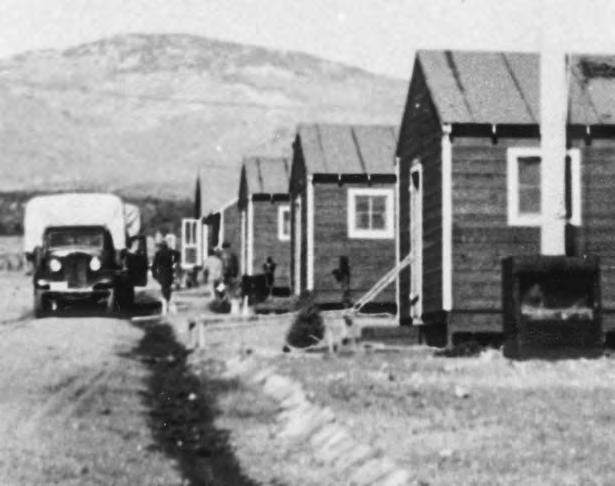
Construction of the Dalton Wells CCC camp began in the summer of 1935, and by late fall the first 200 enrollees had arrived. Campers slept in wooden barracks, 25 men to a unit. Heat came from coal-burning barrel stoves, and each unit shared a single radio.
Over its six-year life, more than 2,000 young men, mostly from eastern states, served six-month stints at Dalton Wells. They built reservoirs, ditches, watering troughs and erosion-control dams. In their free time, enrollees took classes in forestry, auto mechanics, welding, leatherwork, photography, business law and journalism. They played sports, hiked, camped and went to dances and movies in Moab. The camp closed in November 1941.
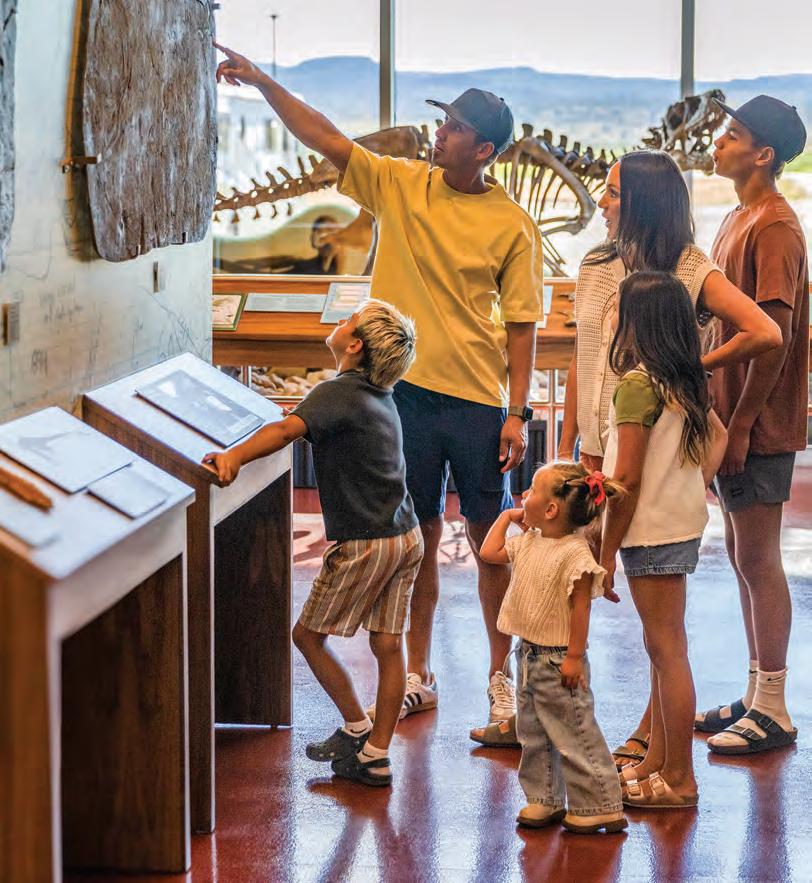
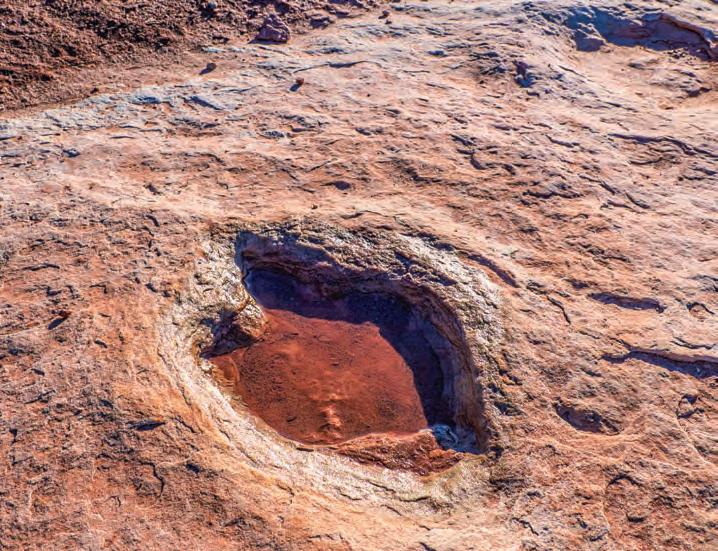
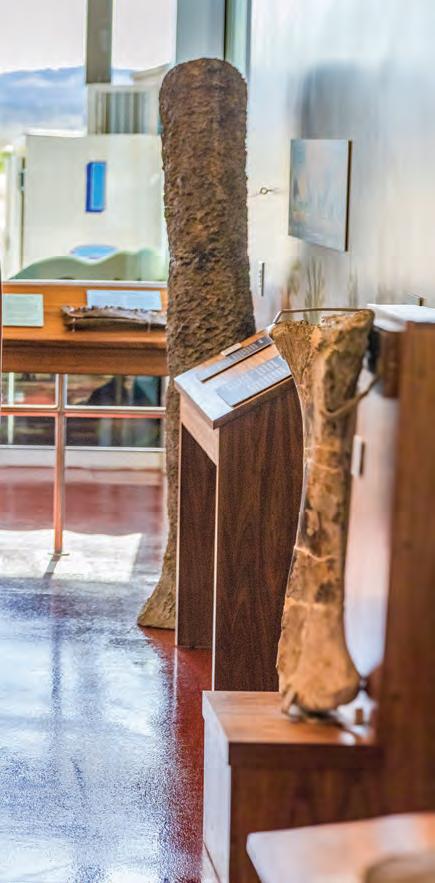
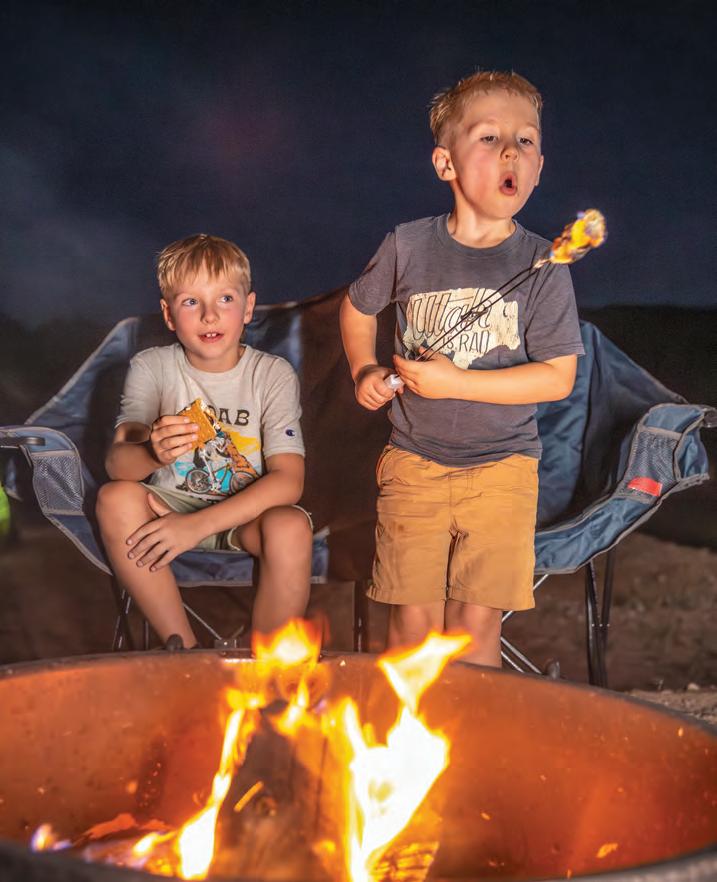
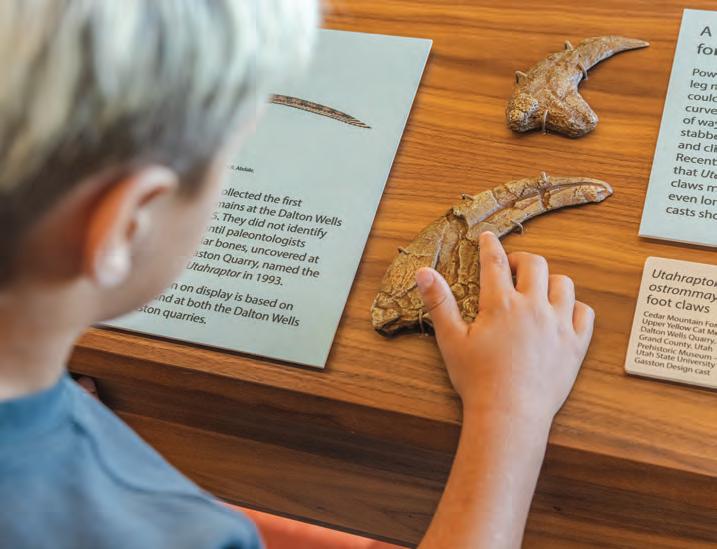
Inside the visitor center, families move through the past, wandering around dinosaur exhibits, following three-toed footprints in the ground and passing former bunkhouse sites on the historic walking trail. Days end at campsites where geology lessons give way to toasted marshmallows and stargazing.
During World War II, the War Relocation Authority rounded up American citizens of Japanese ancestry and sent them to internment camps such as Manzanar and Tule Lake in California, Heart Mountain in Wyoming and Gila River in Arizona.
Some incarcerated men challenged their detention, arguing that it violated constitutional rights. Federal officials labeled them security risks and transferred them to isolated facilities.
The empty Dalton Wells CCC camp was redesignated the Moab Citizen Isolation Center. Sixteen men accused of inciting violence at Manzanar arrived in January 1943, with several dozen more following over the next few months. In April 1943, the men were relocated to a larger facility on the Navajo Reservation in Arizona, and the Moab center closed.
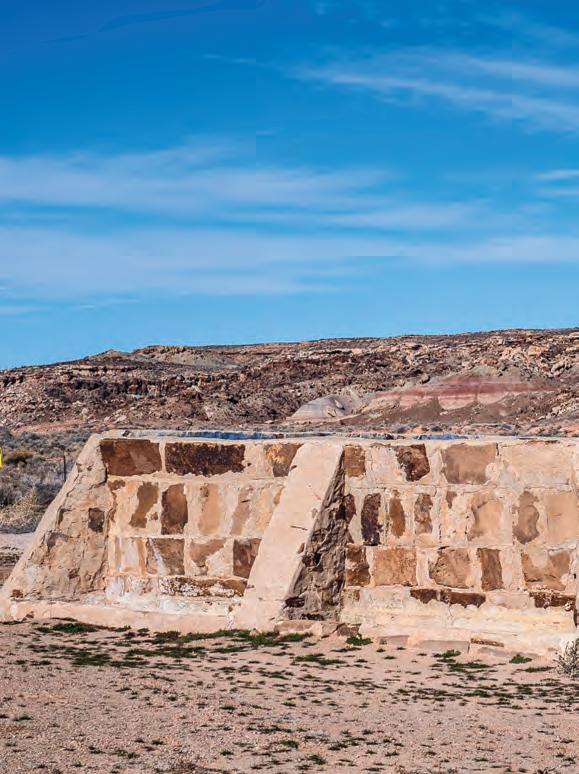
THE WIDE, half-mile Utahraptor Historic Walking Trail wanders past former bunkhouse sites where towering cottonwoods shade the ground. Little more than concrete floors remain. Interpretive signs tell the story, and a scattering of benches offers places to rest along the way.
As boondockers discovered years ago, the Utahraptor area provides a convenient base for visiting Canyonlands, Dead Horse Point and Moab. Camping is no longer free, but Utahraptor State Park offers two well-designed campgrounds. The Gastonia Campground features 61 paved RV sites that appear designed by someone who actually camps. Each site offers electric and water hookups, with many long pullthrough driveways. Restrooms feature hot showers and flush toilets in private rooms that feel like a home bathroom.
For tent campers – or those content with fewer amenities – Fossil Flats Campground offers 27 primitive sites with picnic tables and fire rings (bring your own firewood), plus pit toilets. From either campground, sunset views reflecting off Arches’ red rock and the distant La Sal Mountains can be striking.
Beyond the quarry and CCC site, visitors can explore miles of ATV and mountain biking trails. The Klonzo mountain biking system, managed by the BLM, covers 24 miles and offers varied terrain best suited for intermediate riders. The Sovereign Trail System provides roughly 50 miles of OHV and ATV routes, including slickrock, singletrack and connector roads.
Those craving more dinosaur action can visit the Willow Springs Dinosaur Tracksite just outside the park boundary. These
A ridge-top quarry and cistern of the former CCC camp mark a landscape layered with deep time and recent history.
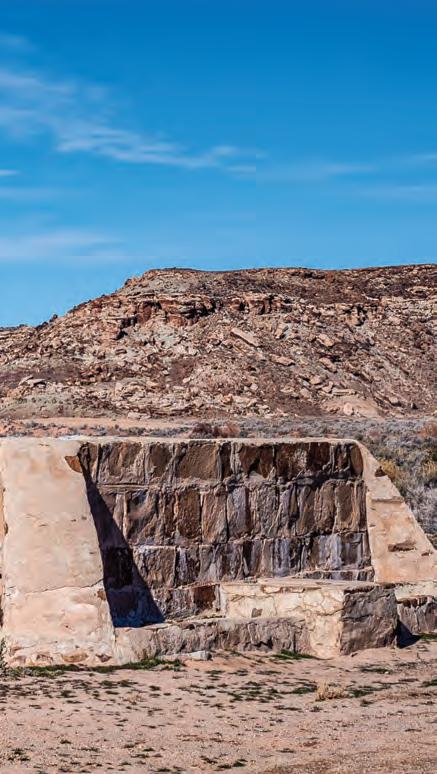
three-toed theropod tracks date back about 165 million years, when animals walked the tidelands of an inland sea. The drive is mostly on graded roads, but the final few hundred yards across Courthouse Wash require high clearance, with fourwheel-drive a helpful option. Drivers in low-clearance vehicles can park near the rim and walk to the tracks.
Adventurous visitors with a street-legal, high-clearance 4x4 can continue along Willow Springs Road all the way to Arches, just as travelers did in the 1950s when Ed Abbey served as a park ranger living in a government trailer at road’s end. Rough and rocky, this is not a route for firsttime four-wheelers or anyone convinced a Subaru can go anywhere. Drivers who choose this little-used track will, as Abbey warned, earn their experience.
IN JANUARY 1943, sixteen Japanese American men arrived at Dalton Wells under armed guard. The Civilian Conservation Corps camp northwest of Moab had been abandoned for more than a year. Barracks still stood. Concrete foundations remained. The site was remote, far from towns and rail lines, chosen for that reason.
The federal government redesignated the former CCC camp as the Moab Citizen Isolation Center.
The path to Moab began after the Japanese bombing of Pearl Harbor on Dec. 7, 1941, which led to the mass removal and incarceration of Japanese Americans from the West Coast. By 1942, more than 120,000 people were confined in camps nationwide. As unrest and protests emerged inside some of those facilities, federal officials created a separate tier of isolation centers to remove men they considered disruptive. Moab opened as one of those sites in January 1943.
The men sent there were not charged with crimes. They had already been incarcerated at larger camps such as Manzanar in California. Their offense, according to federal officials, was dissent – organizing protests, refusing orders, or challenging the legality of their confinement. They were separated from families who remained behind in other camps.
Several dozen more men followed. Life at the Moab center was spare. Guards patrolled the perimeter. Contact with the outside world was limited.
The facility operated for only a few months. In April 1943, the men were transferred to a larger isolation center at Leupp, Arizona, and the Moab site closed.
Today, a half-mile walking trail passes concrete slabs and interpretive signs inside Utahraptor State Park. The Moab Citizen Isolation Center is listed on the National Register of Historic Places, and the Moab Museum interprets the site through a small exhibit in town.
THREE, TWO, ONE,
Veterans take next step to healing with adventure sports in Moab
by RACHEL FIXSEN
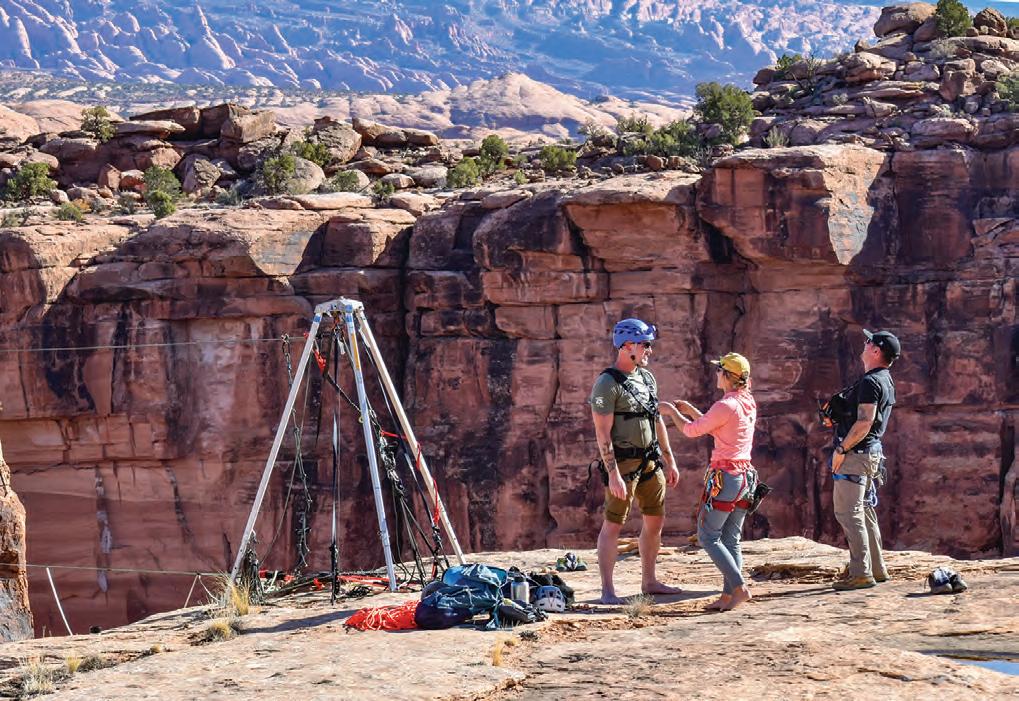
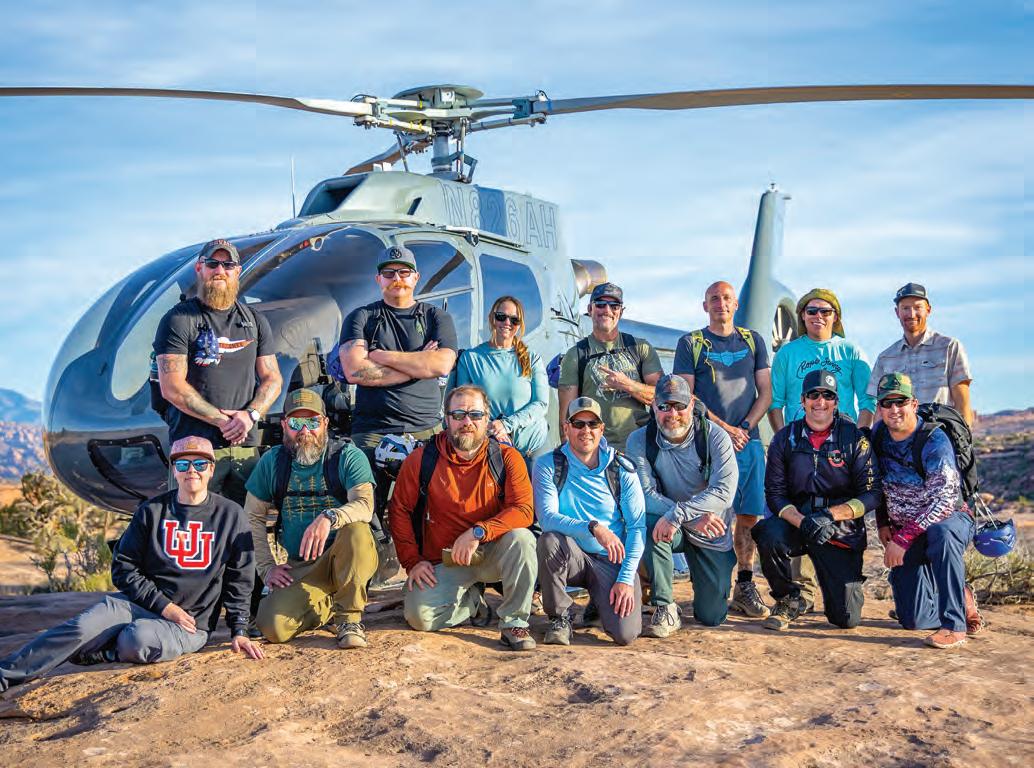
Veterans and first responders prepare to highline on a sandstone rim in Bureau of Land Management land outside Moab. The 22 Jumps retreat pairs adventure sports with courage and healing through activities like BASE jumping, canyoneering, skydiving and breathwork.
BRANDON GILBERT STOOD
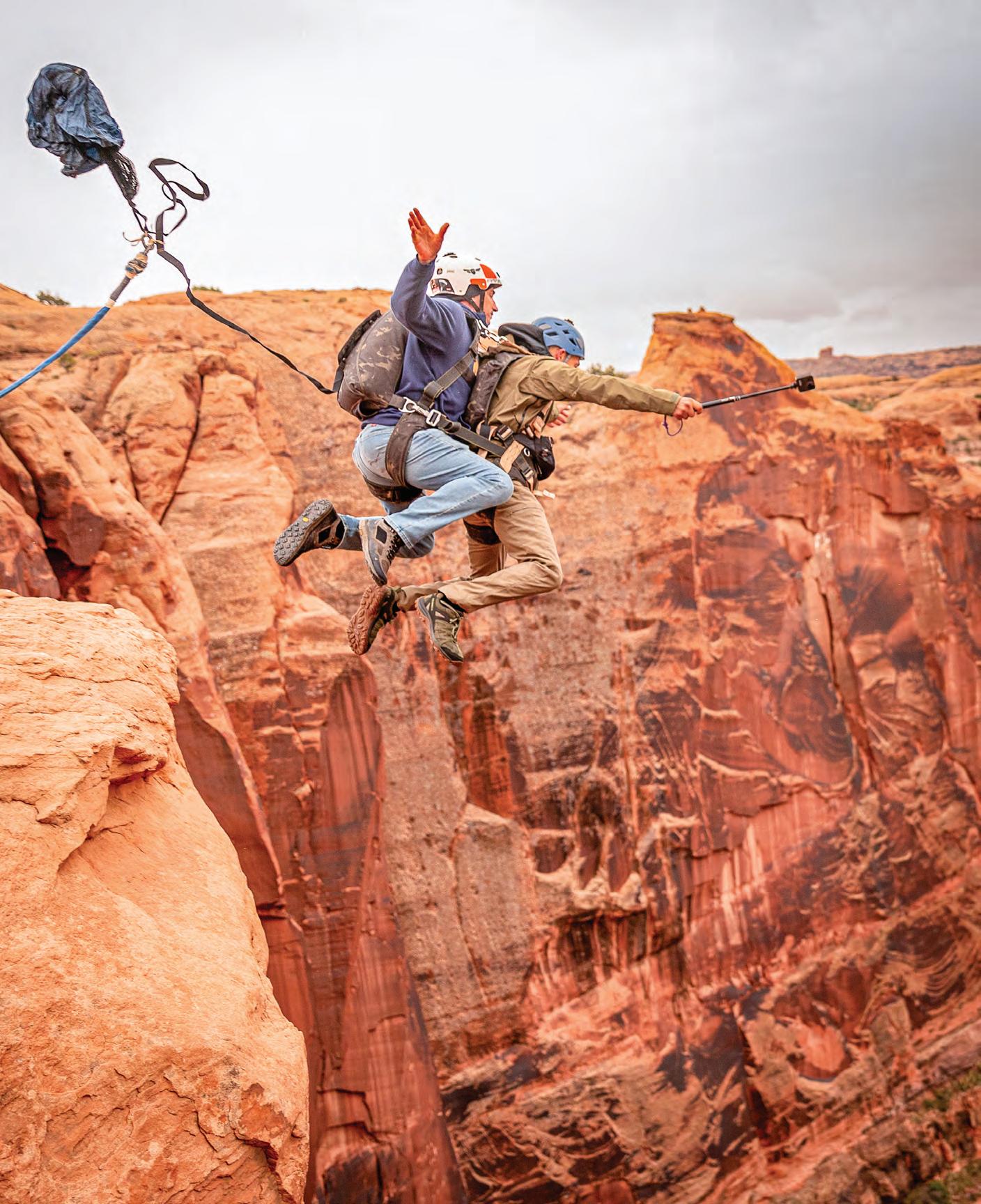
with his toes inches from the edge of a 400-foot sandstone cliff on a desert rim outside Moab, harnessed to a guide for his first tandem BASE jump.
“I’m shaking like a leaf,” Gilbert said.
“How’s the view, though?” the guide asked, sweeping an arm at the terrain, a labyrinth of cliffs, buttes and fins, fall-yellow cottonwoods along the creek below and a brilliant blue morning sky.
“It’s pretty good,” Gilbert said. The guide encouraged him to look down – he did for a fraction of a second before snapping his eyes back to the horizon.
On the countdown, they stepped off together, an awkward four-legged creature. Gilbert let out a bellow as they went over the cliff, the sound cut off as they dropped. Then the canopy opened with a sharp crack that echoed off the canyon walls, and
they drifted toward the sandy landing zone along Kane Creek Road.
Gilbert was one of 10 participants in a Veterans Day weekend retreat hosted by 22 Jumps, a nonprofit that funds traumatic brain injury research, supports military veterans and works to prevent veteran suicide. The name references a statistic from a 2012 Department of Veterans Affairs report estimating that 22 U.S. veterans take their own lives each day.
Founded by Marine Corps veteran Tristan Wimmer, 22 Jumps grew out of a single fundraiser in Arizona after Wimmer lost his brother, also a veteran, to suicide in 2015.
After years grappling with that loss, Wimmer organized an endurance day of BASE jumps in 2020 to raise awareness for traumatic brain injury and veteran suicide in his brother’s honor. The overwhelmingly pos-
itive response from donors surprised him. The one-day event grew into a nonprofit that now hosts events throughout the year.
The Moab retreat began in 2023, when Moab local Matt Lajeunesse, owner of Tandem Base Moab, reached out to Wimmer with the idea of hosting veterans. Other local businesses pitched in to make the retreat cost-free to participants – they cover only their travel to Moab. Volunteers and donors, particularly Moab businesses, contribute time, equipment, expertise, food and lodging. The group is deliberately small, around 10 participants.
22 Jumps partners with researchers, including at the University of Utah, studying adventure sports as treatment for traumatic brain injury, PTSD, anxiety and depression.
Wimmer has seen firsthand how these intense activities can be therapeutic for people who have lived through trauma.
“I did it for myself, to prove I could do it.”
– Michael Jennings
“They’re coming out the other side of that experience just high on life,” Wimmer said. But it’s not just the thrill. “It’s the skill-building and the community-building along the way that keeps people coming back.”
By the time they regrouped after their BASE jump, the shift was visible.
“That first step off was probably the scariest thing I’ve ever done,” said Cheyenne Rinehart, an Army veteran from Ohio. He finds skydiving relaxing, but BASE jumping was different.
“My stomach hit my throat. I don’t think I breathed for a good 10 seconds,” he said. “But once you realize, ‘OK, I’m not going to die,’ it’s like, ‘Oh, this is awesome. I want to do this again.’ ”
Friday afternoon, the group went canyoneering, rappelling through narrow notches. The next morning they rode the Moab Brand trail system, cycling a loop that opened onto long views toward Arches National Park.
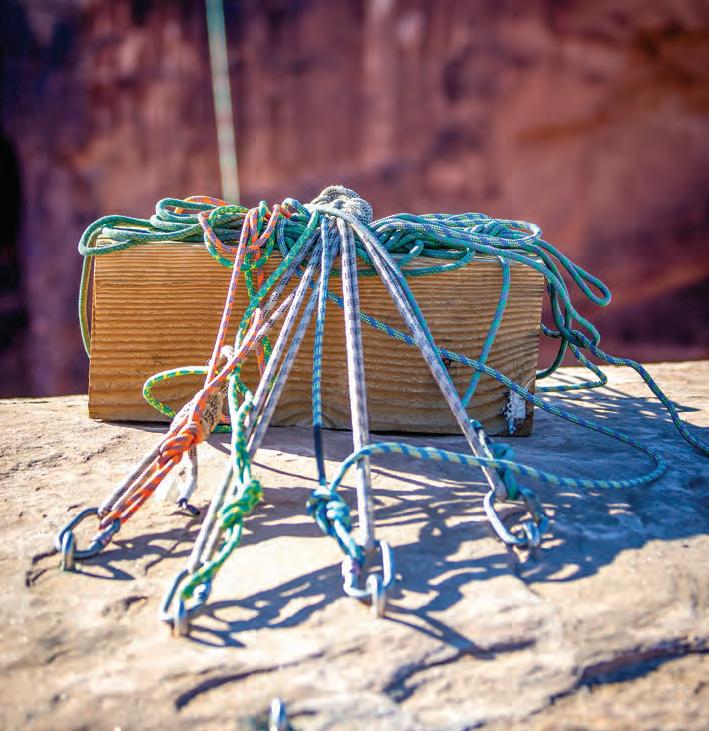
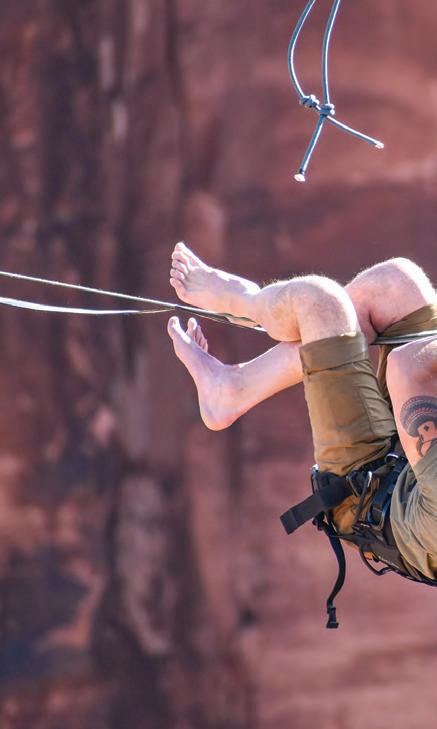
SATURDAY AFTERNOON brought another high-intensity challenge: the rope swing. Participants packed into an open Humvee, and a guide drove them up a steep, rocky road to the edge of a deep canyon. A taut line stretched across the chasm, a rope hanging from its center. One by one, participants jumped into the canyon, freefalling until the rope caught them, then were hauled back to the rim.
For some, it was the most intimidating activity of the weekend. Unlike the BASE jump, there was no experienced guide harnessed alongside them, and several felt mentally fatigued after confronting fear the day before.
Dane VanOosten volunteered to go first.
“I try to be the one who goes first, try to get everybody moving,” he said later. Years before, during a Marine Corps swim training exercise, when no one wanted to leap from a high dive, he did.
“My platoon commander pulled me aside and told me that showed real leadership,” VanOosten said.
At the rope swing, he flung himself into the canyon as the others cheered. When he was hauled back to the rim, he was grinning.
Michael Jennings, a Marine Corps veteran who traveled from Wyoming, upped the ante with a front flip. Later, he said he was terrified while waiting and watching others jump but convinced himself to face the challenge head-on.
“I did it for myself, to prove I could do it,” he said, “but also hoping that I would unlock something in somebody else.”
Meanwhile, Rinehart stood quietly in the staging area, staring at the jump point while he waited his turn.
“I am not happy,” he said. “My heart started beating faster as we got closer on the drive.” Jennings came over to offer tips and encouragement.
After a long moment at the edge, Rinehart stepped off, shouting a line that had become an inside joke over the previous days.
Back at the rim, all smiles, he joked, “Now not only do I look tough, but I feel tough.”
Sunday brought a different adventure. The group went skydiving, an experience many described as peaceful. Later, they rode in 4x4 Jeeps through the fins and canyons of the Sand Flats Recreation Area. That evening, they gathered for a guided breathwork session with coach Marissa Astill.
Astill led the group through a threepart breathing pattern. “Belly, chest, and all out through the mouth,” she instructed. A focused breathing session, she said, can bring strong physical and emotional responses to the surface.
Veterans and first responders are often trained to compartmentalize fear and grief, leaving little room to process those experiences in the moment. Those experiences can remain buried.
For some participants, the breathwork was the most powerful part of the retreat.
“That was a different experience I never have felt or done before,” said Ryan Cook, a Marine Corps veteran. After returning home to St. Louis, he signed up for more sessions. Others agreed it was profound, like being detached from their bodies.
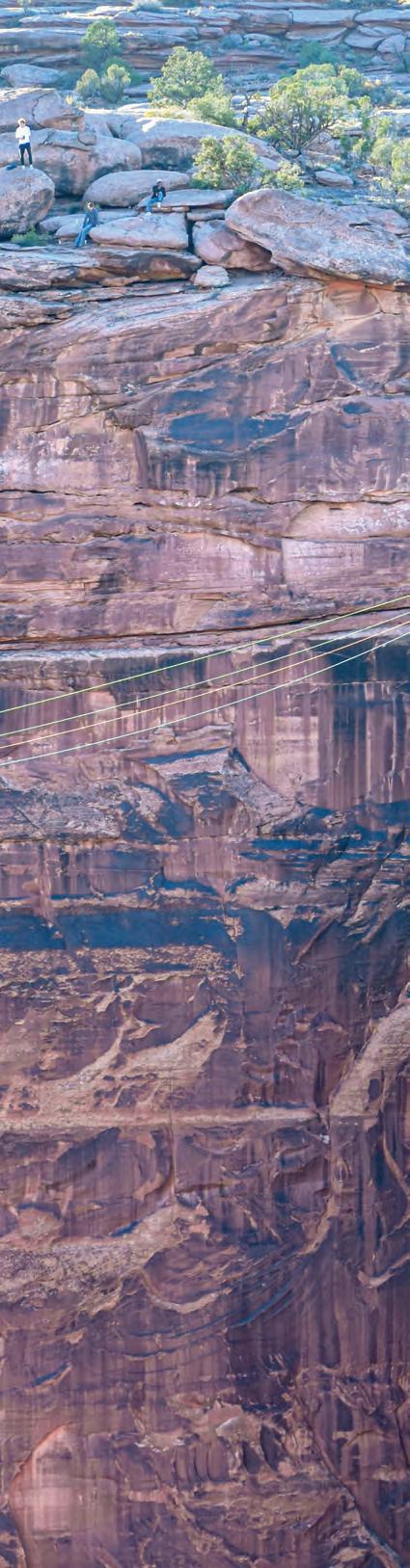
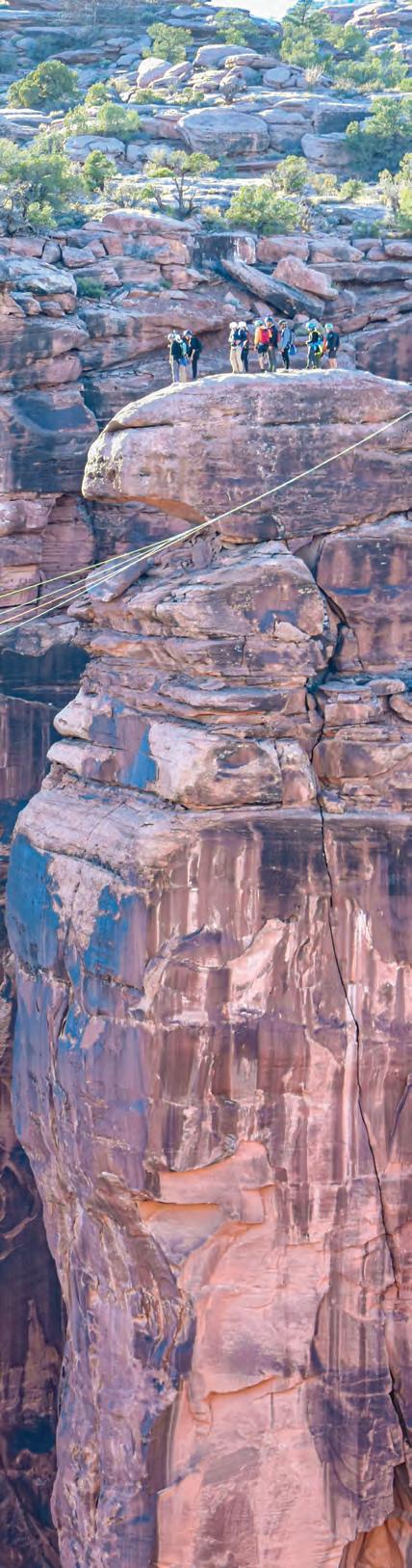
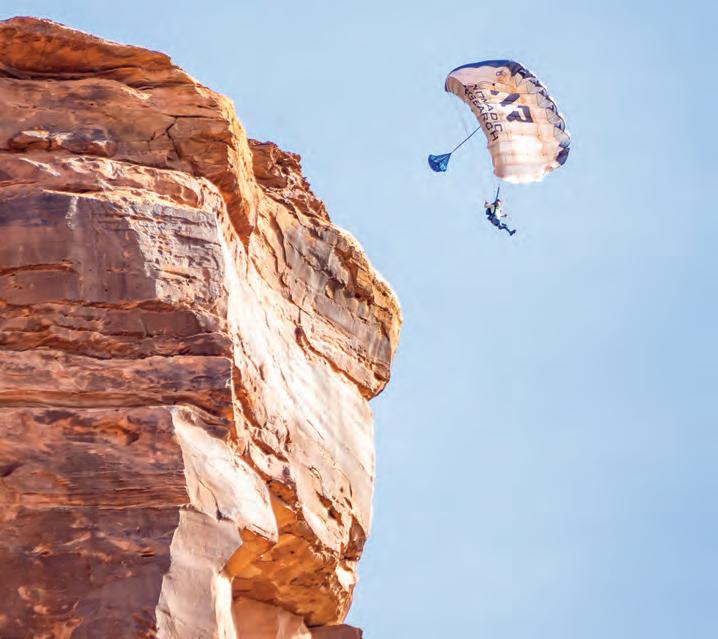
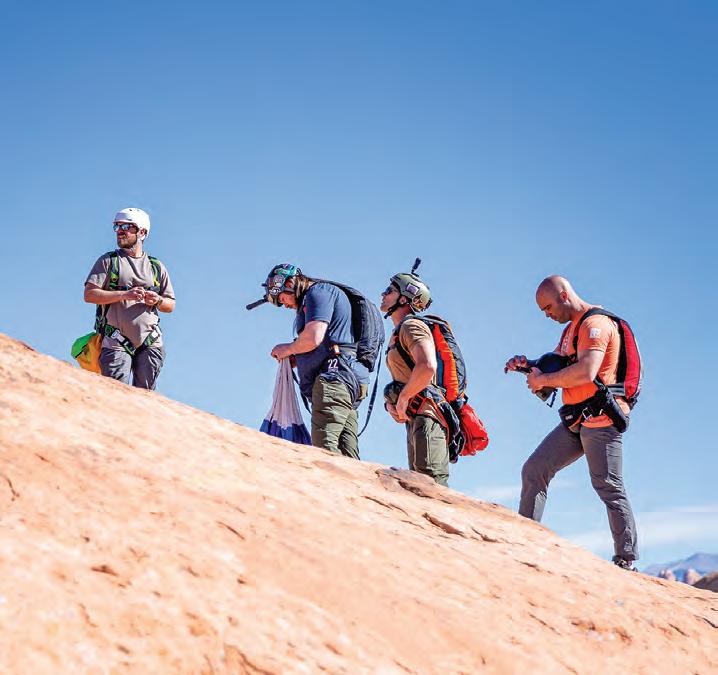
For many who attended the Veterans’ Day retreat, skydiving from above Moab’s desert landscape felt calm and meditative, while BASE jumping 400 feet from a sandstone cliff delivered an immediate surge of adrenaline, fear and total concentration.
THE QUIET didn’t last.
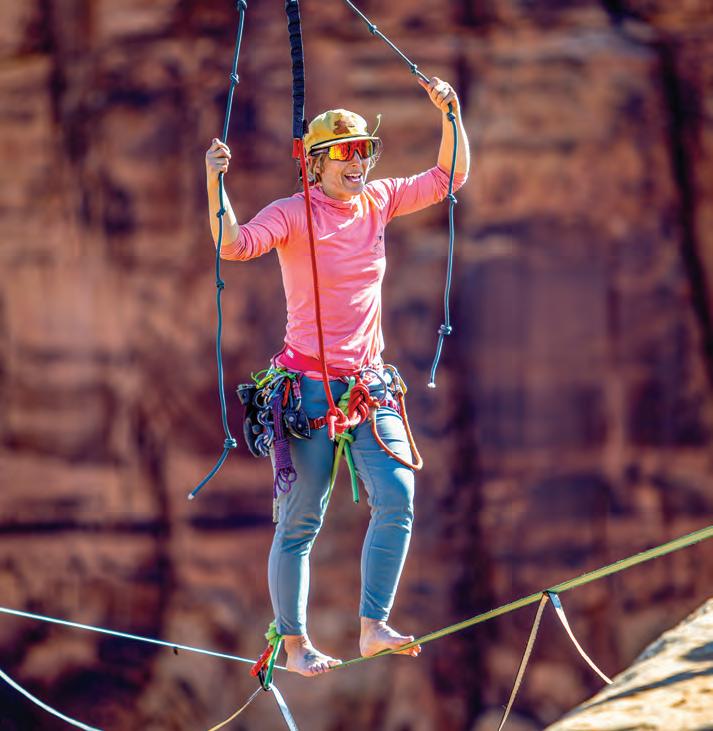
During the highline portion of the retreat, veterans cross an inch-wide strip of webbing stretched between gaping canyon walls. They confront fear inch by inch while learning balance, trust and focus – an exercise that left many feeling stronger, braver and more capable of facing challenges.
Monday marked the group’s last full day together. Early that morning, under another clear sky, they drove and hiked back to the rim of a deep canyon. World-renowned highliner and guide Faith Dickey had rigged a top-rope assisted highline across a narrow chasm between two rock fingers, with access from both sides.
The task was simple to describe and difficult to execute: walk across an inchwide strip of webbing stretched over open space, steadying yourself with handlines above. Participants were clipped in for safety, but missteps still meant dropping below the line and hanging suspended in the air above the canyon.
Dickey demonstrated first, moving with calm control on the line, then offered practical advice: Stay loose. Keep your knees soft. She also spoke directly about fear: Fear is your friend, not your enemy.
Be kind to it; it’s trying to keep you safe. Think of it as a passenger on the ship, not the captain – or like a small furry pet you carry in your pocket.
Jennings volunteered to go first.
Harnessed and barefoot, he stepped onto the line with tentative, wobbling strides, leaning too far forward as he tried to advance. He lost his balance and dropped below the webbing, hanging in space. After a pause, he pulled himself back up hand over hand, swung a leg over the line and turned to face forward as the rig swayed beneath him. He managed to stand, then fell again.
This time, he asked for Dickey’s help, and she brought him back to the cliff edge using her belay and haul system.
“That was the scariest thing I’ve ever done,” Jennings said afterward. Reflecting on the retreat weeks later, he said, “My strength and resolve failed, where poise would have been the successful thing.

That’s how I face things I fear – I just go in feet first like a bull in a china shop.”
When that approach didn’t work, he said, the support of the group and Dickey’s coaching made the difference.
“It’s okay to ask for help,” he said. “It doesn’t mean you’re weak.”
The Moab retreat was not their first time facing fear. Most had served in war zones and lost friends – coping strategies that worked there didn’t always translate home.
Cook said that during deployment, he and the Marines around him relied on deliberate detachment to function – pretending the worst had already happened, treating the present as unreal.
“If you think you’re already dead, you have nothing to worry about,” Cook said.
That mindset helped him get through deployment, but it lingered after he returned home. At the retreat, Cook recognized the same mental reflex surfacing
again at the canyon’s edge. This time, he noticed it for what it was and realized he no longer wanted to rely on it.
Cook left the retreat with renewed confidence, having shown himself that he still had “the guts to push myself physically and mentally.” Others described similar changes.
For some, the shift showed up in small ways, reframing everyday anxieties like speaking up at work. For Nathan Heidbreder, it prompted a larger change –seeking a new job.
“I needed to take a risk and move on with my life,” he said. “The retreat helped me be comfortable taking that risk.”
Some participants had skydived before, but few had experienced BASE jumping.
David Bartelt, a Marine Corps veteran from Illinois, had never done either before attending 22 Jumps. Weeks after the retreat, Bartelt said he felt more relaxed, not always compelled to be busy.
In the canyoneering portion, teams navigate a narrow canyon near Moab. They rappel through tight notches and scramble over rocks, discovering how teamwork, trust and togetherness can spark personal growth. Later, coach Marissa Astill leads them through a guided breathwork session.
“Up until the retreat, I was wound up tight,” Bartelt said. “And now I’m not.”
VanOosten said one appeal of these sports lies in how completely they pull you into the present.
“You’re in the moment when you’re falling out of the plane or doing the BASE jump,” he said.
That focus, he realized, doesn’t have to end there.
“I thought to myself, you can do that with everyday stuff. And you should. Like when my 6-year-old and I are coloring a picture, slow down and enjoy what you have and where you’re at.”
Several echoed a comment Rinehart made after the retreat: “People tell me I look happier, I sound happier, I look and sound more like myself.”
BEYOND THE JUMPS and highlines, every participant pointed to the same draw: camaraderie they once knew in the military and had struggled to find since.
Jennings reached for a familiar phrase – “blood is thicker than water” – but invoked the expanded version: “The blood of the covenant is thicker than the waters of the womb.”
“It means those who stand next to us are more important than family,” he said. “Those who shed blood next to us, those who face fear next to us and stand next to us under challenges.”
Others echoed that sentiment. Heidbreder said the most striking part of the weekend was the level of support – how consistently people worked to help one another, often without being asked. He
hadn’t seen that kind of atmosphere since his time in the military.
Heidbreder recognized in BASE jumpers an ethos of confidence built on tested skill, and that’s one of the reasons he plans to pursue the sport himself. Others from the retreat plan to jump again or earn skydive certifications.
The group members, most of them strangers before the retreat, have kept in touch. All expressed deep gratitude for the experience and applauded researchers studying adventure sports as therapy.
“With the work they’re doing there,” Jennings said, “one day maybe they’ll be able to rename it to 21 Jumps or 18 Jumps. I’d much rather people be jumping off cliffs to choose life than jumping off cliffs to choose death.”
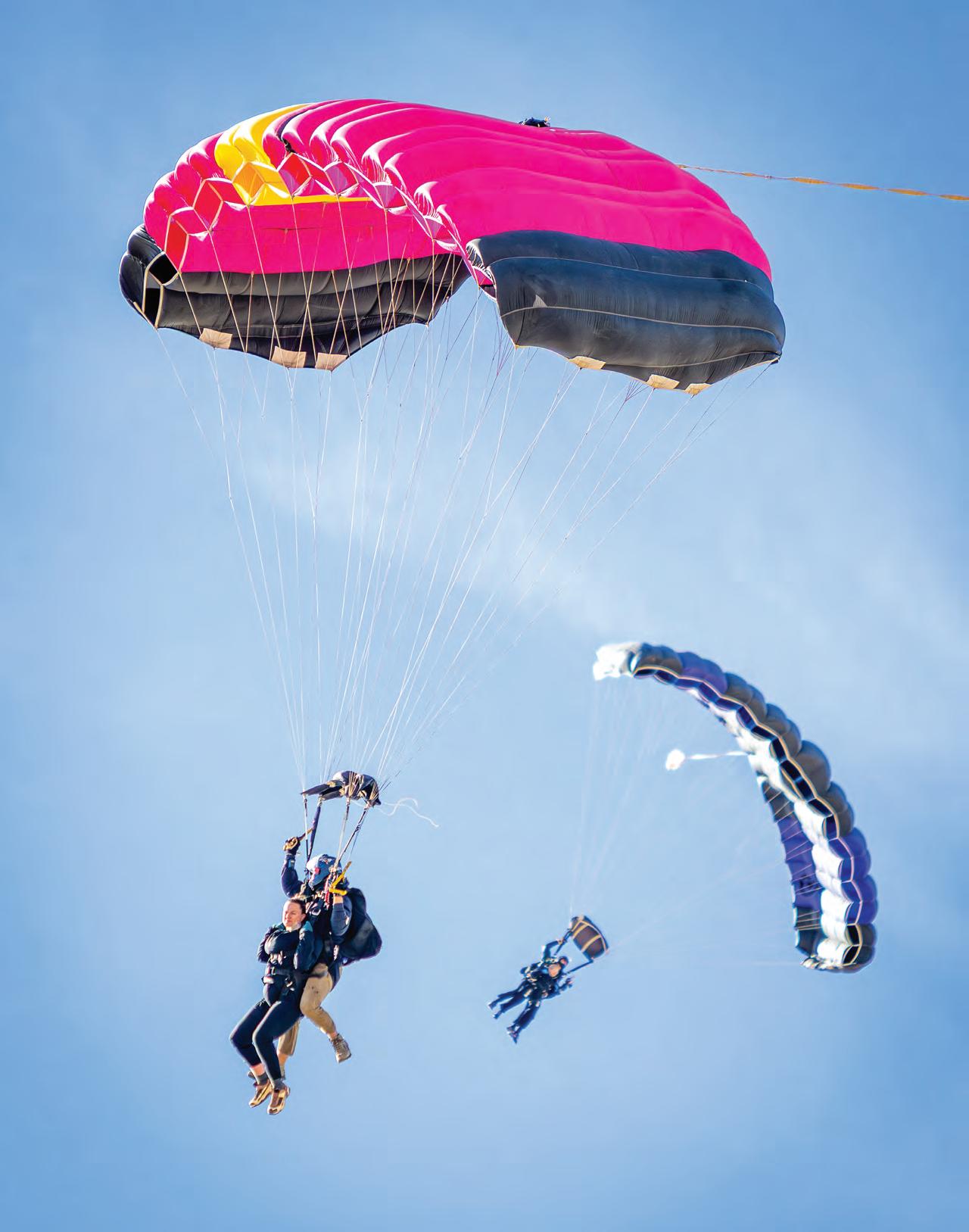
Veterans leave the retreat with stronger bonds, renewed confidence and purpose.
by BIANCA DUMAS
What began as physical therapy turned into a world title for 14-year-old Conner Bailey of Salt Lake City.
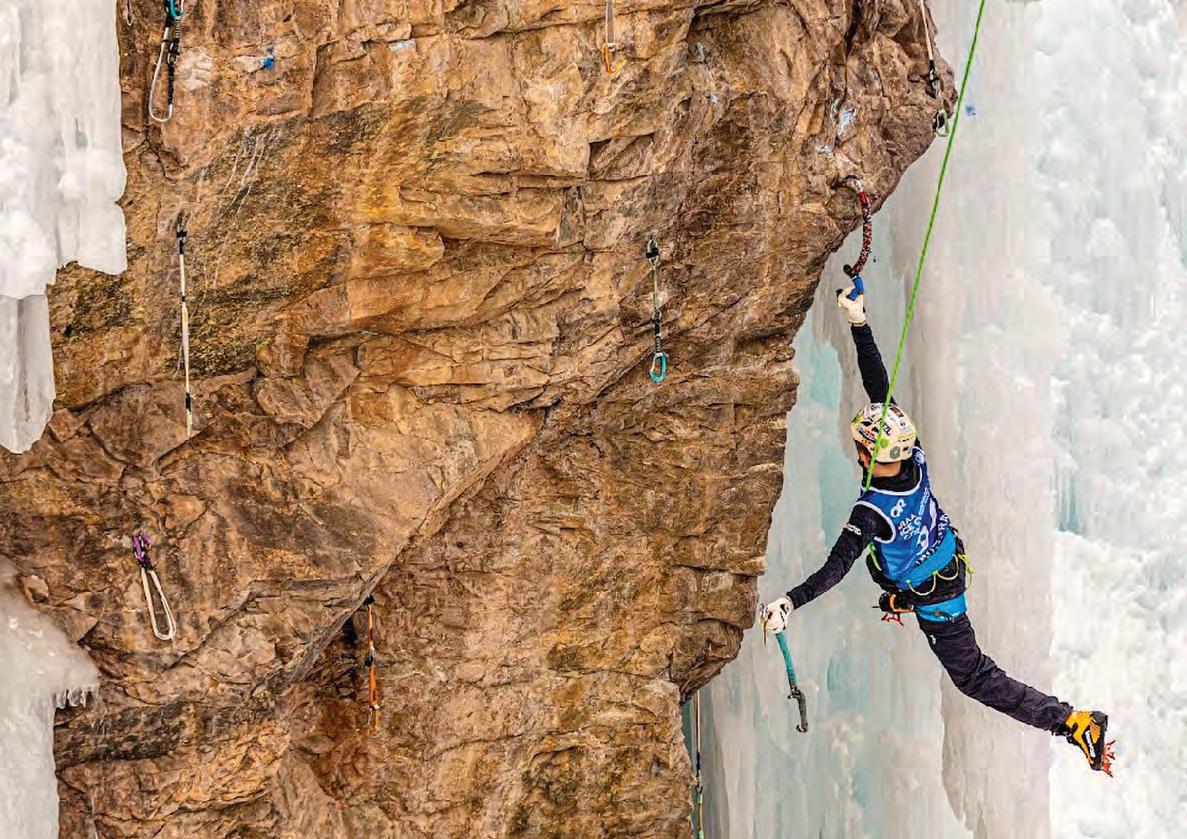
CONNER BAILEY HAS an ice axe in one hand and another gripped between his teeth. He reaches for an underhang, then swings an axe to hook a plastic climbing hold. Once it catches, he pulls the second axe from his mouth and sets it, driving the points of his boots into a plywood wall. There’s no ice in sight, but this is ice climbing. Bailey, 14, is a competitive ice climber and member of Team Scratchpad, the Salt Lake City-based youth program that feeds athletes to the USA Youth Ice Climbing Team. He recently returned from the World Ice Climbing Youth Championships in Liechtenstein as a world champion, taking first in Lead
and second in Speed. He also claimed gold at the Ouray Ice Festival and the European Youth Continental Cup.
Adopted at age two, Bailey had been born underweight and was failing to thrive. He also had a curvature of the spine that required careful monitoring. His mom, Tessie – an ice climber with a Ph.D. in special education – introduced him to climbing as a form of physical therapy.
Climbing demands balance, core strength and precise body control. For Bailey, it strengthened his back and improved his coordination. What began as therapy quickly became talent.
The family moved to Utah so Bailey could become a member of the national USA Climbing youth team, which trains at
the organization’s national training center in Salt Lake City. He also trains with Team Scratchpad at The Scratch Pad gym.
Ice climbers need a strong foundation in rock climbing – and Bailey already had it.
“I started working with Conner in 2021,” said Team Scratchpad head coach Dustin Lyons. “He already had the body position and strength from rock climbing. He took to ice tools right away.”
Bailey attends a virtual school designed for elite athletes, allowing him to train and compete internationally throughout the year.
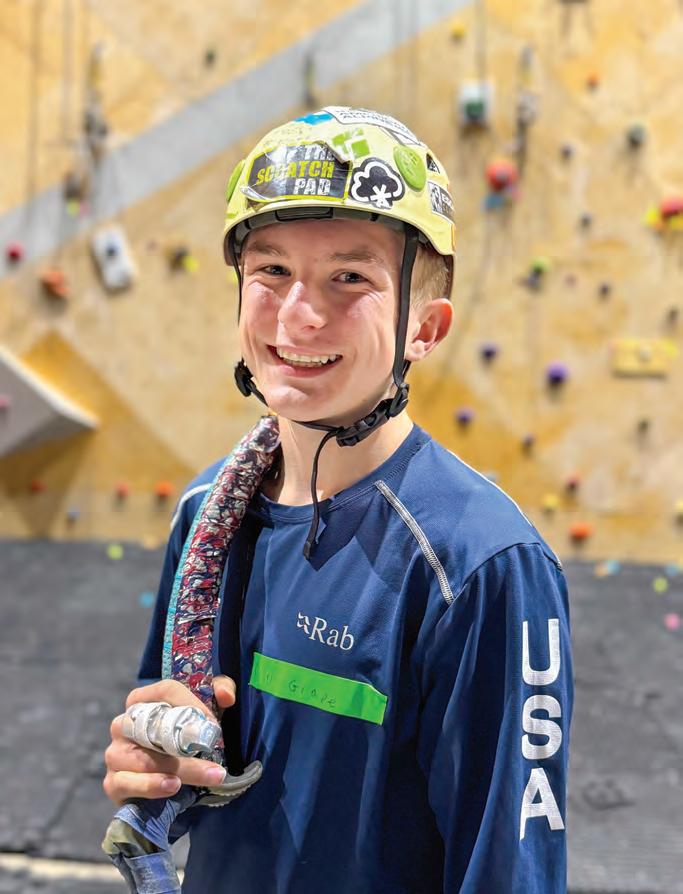
Much of Bailey’s training happens indoors in a discipline called dry tooling, where climbers hook plastic holds with ice tools. He trains daily at The Scratch Pad.

Fourteen-year-old ice climber Conner Bailey trains with drytooling gear at The Scratch Pad gym in Salt Lake City. The young climber is a national champion, chasing higher walls nation and worldwide with confidence beyond his years.
Bailey wasn’t exactly stoked his first time dry tooling.
“I guess it was scary because I have these pointy objects in my hands and on my feet,” he said. “I was suddenly scared to fall because I didn’t want to stab myself.” He has since built the muscle memory to fall safely – and to soar.
“Conner has been one of the top athletes on my team,” Lyons said. “He’s incredibly strong, with a solid rock climbing foundation.” Lyons also credited Bailey for his presence at competitions. “He’s one of the loudest voices at national events, always cheering everyone on. He’s got such an outgoing personality.”
Bailey climbs exactly where he wants to be – high above the ground.
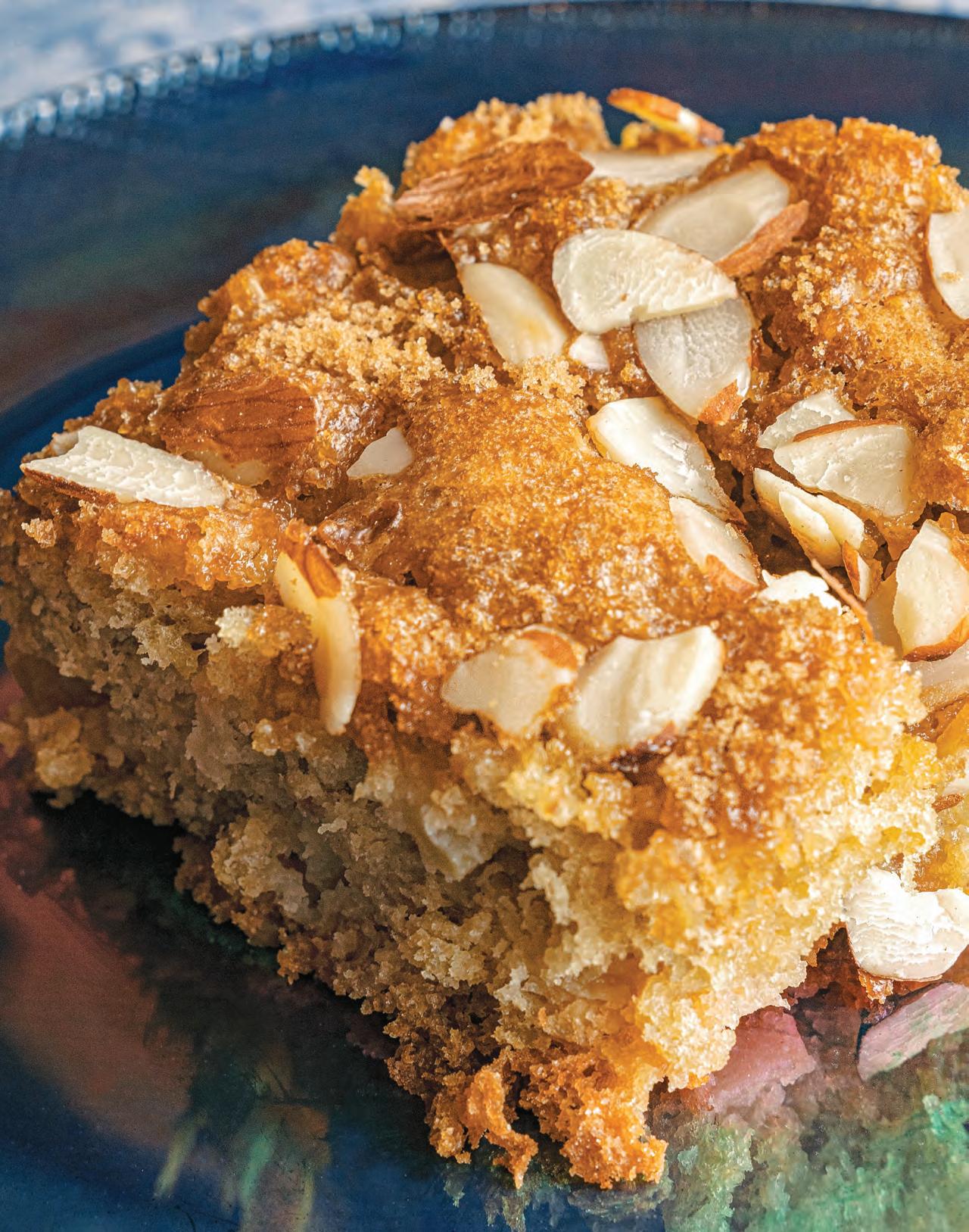
Whether you are a coffee lover or not, we all can agree that January and February in Utah call for hot drinks and coffeecake. Coffeecake is not made of coffee but pairs perfectly with the steaming hot cup of joe. Invite your friends over and make a cake to go with that coffee.
Nothing adds warmth to a Utah kitchen in winter like the aroma of baking apples. When combined with oats and vanilla, the pleasure is heaven-scent.
In medium bowl, mix sugar and butter until fluffy while slowly adding eggs and vanilla. In separate medium bowl combine oats, flour, baking soda and baking powder. Add to egg mixture, then add yogurt and beat until just combined. Fold in apples. Grease and flour a 9 x 13-inch cake pan. Pour batter into pan.
To make the topping, mix all ingredients and sprinkle over top of batter. Bake at 350° for 30 minutes.
2/3 cup sugar
1/2 cup butter, melted
2 eggs
1 tsp vanilla
1 ¼ cup quick oats
1 cup flour
1 tsp baking soda
1 tsp baking powder
8 oz plain vanilla yogurt
2 cups apples, chopped fine (with or without peel)
Topping
1/2 cup brown sugar
1/2 cup almonds, sliced
1 Tbsp butter, melted
Ser ves 10-12
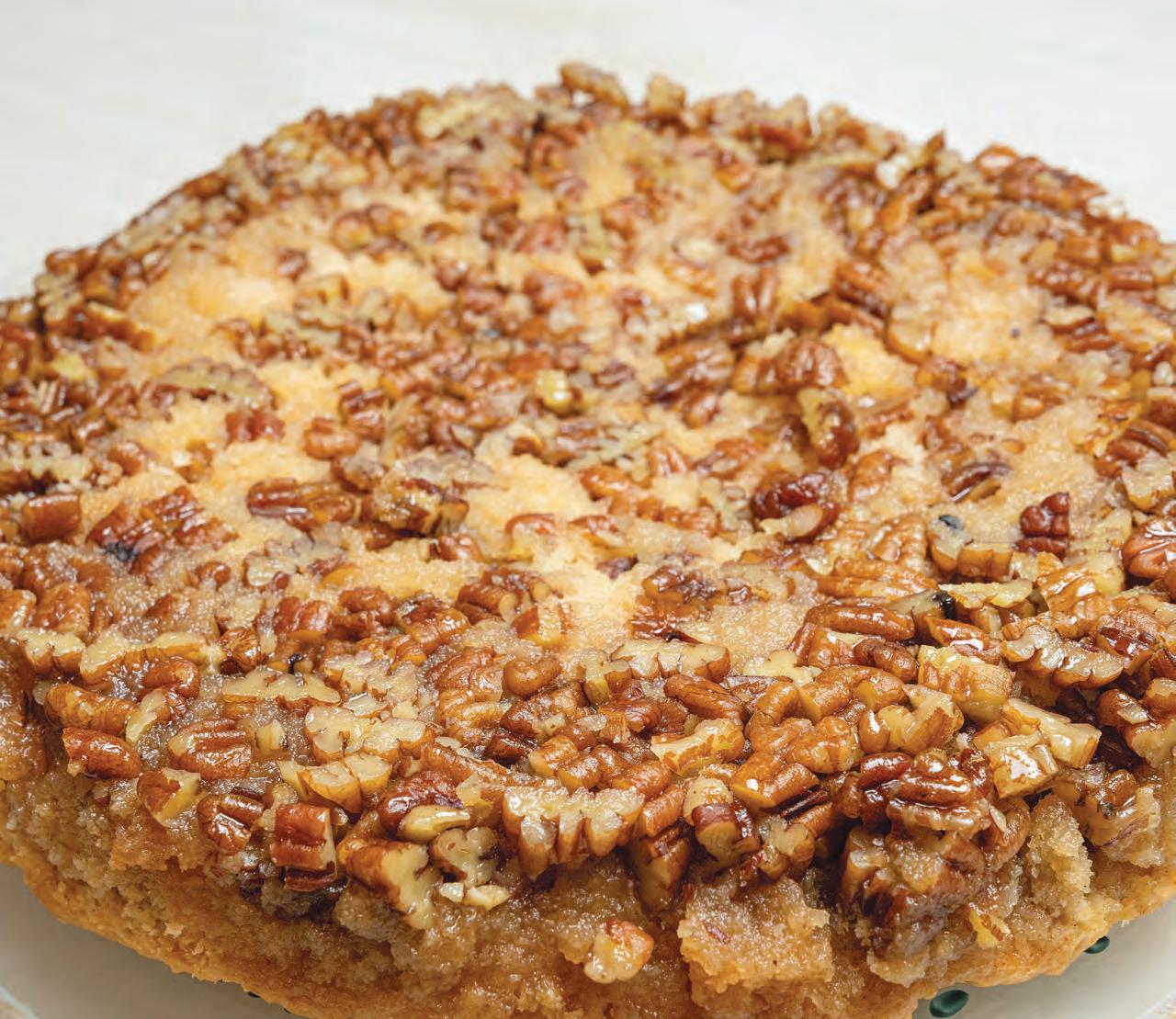
If the sweet nuttiness of this coffeecake reminds you of your friends, don’t you think they’d appreciate a taste?
Mix pecans, corn syrup and butter in an ungreased 9 x 1 ½-inch round cake pan. Spread to cover pan. Mix remaining ingredients in medium bowl and spread over pecan mixture. Bake at 350° for 30 minutes or until toothpick comes out clean. Run a knife along edge of pan as soon as it comes out of the oven. Invert cake onto plate.
1 cup chopped pecans
1/2 cup light or dark corn syrup
2 Tbsp butter
2 cups Bisquick baking mix
1/2 cup sugar
1/2 cup milk
1 tsp vanilla extract
1/2 cinnamon, ground
1 egg
Ser ves 10
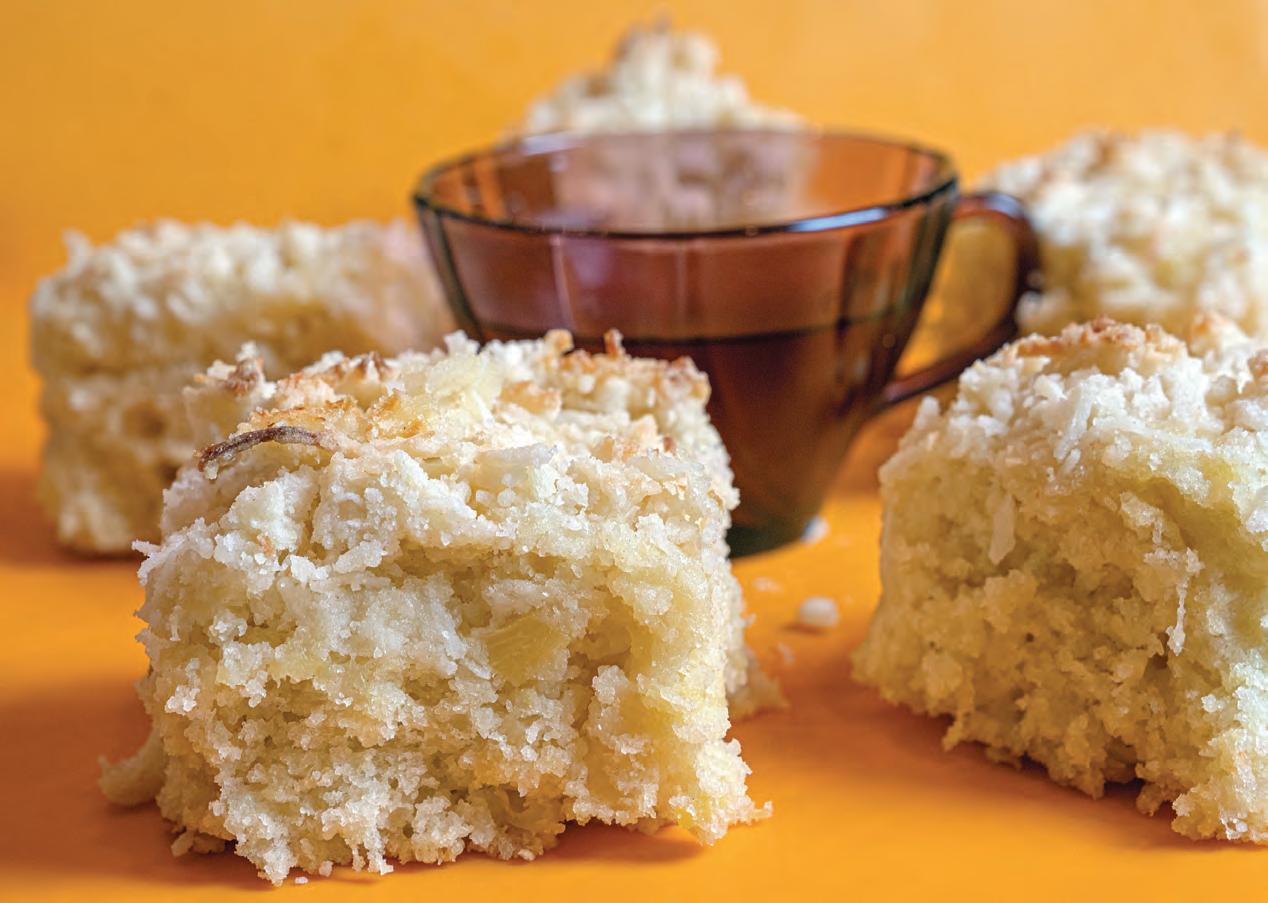
Winter in Utah can leave residents dreaming of tropical islands. With creamy butter, crushed pineapple and shredded coconut, this luscious recipe is a coffeecake-lover’s dream come true.
Sift together flour, baking powder, salt and sugar in medium bowl. In another medium bowl combine egg, crushed pineapple and melted butter. Combine all mixed ingredients and pour into 9 x 9-inch cake pan.
To make the topping, mix ingredients in small bowl and pour over top of batter mixture. Bake at 350° for 25 minutes or until toothpick comes out clean.
1 ½ cups flour
2 ½ tsp baking powder
1/2 tsp salt
1/2 cup sugar
1 egg, beaten
1 cup pineapple, crushed
1/4 cup butter, melted
Topping
1/2 cup coconut, shredded
4 Tbsp flour
4 Tbsp butter, melted
in featuring your favorite family recipes. Send your recipes (and memories inspired by your recipes) to editor@utahlifemag.com.

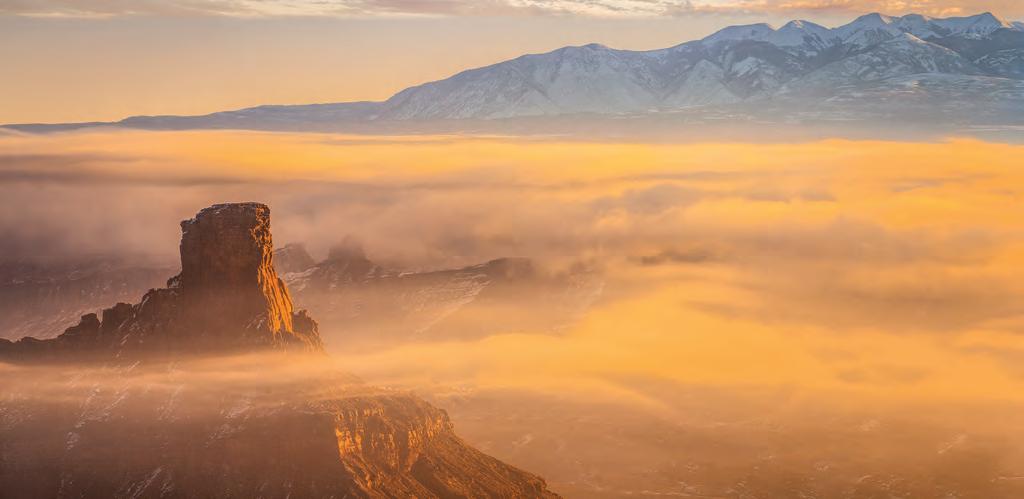
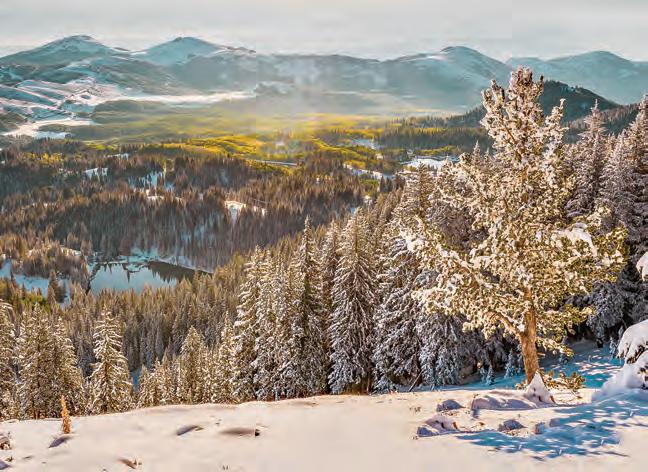
Across landscapes and lifetimes, we look for signs of where we began and how we belong. These poems move between ancestors and newborns, solitude and community, memory and discovery. Together, they trace the threads that connect people to place and to one another.
Erin Bektas, Forest Grove, Oregon
The lonesome canyon that keeps me company.
Red rocks blazing my soul, ancient and unbothered.
Running water flowing through my being, reminding me to keep moving.
Stillness that doesn’t ask anything of me except to breathe.
Tall cliffs rearranging my perspective, shrinking what I carried in with me.
Geology measured in patience, teaching me awe.
Utah is a place like no other. And nowhere else makes me feel this known.
Ellen Liebelt, South Jordan
Step along the path in pre-dawn pearly glow There is a reverent hush among the visitors Greeting with a smile, a nod, or a soft hello. Making their way to the scenic overlook Where anticipation races through the core.
As the magnificent view intensifies with the Sunrise lighting red peaks and golden domes Bringing highlights to a sleepy canyon scene. Not only awakening the wonders of nature but Those souls witnessing this moment of Peace and excitement combined as one.
As rays reach across the valley sweeping over Spires and into crevices signaling creatures to Once again get moving, one reflects how so Rejuvenating to the heart is watching as colors and fantastical shapes emerge in the Brightness and Promise of This New Day.

David Rosier, Spring
City
Utah’s sand lily is also called Utah Solitaire lily (though, in my observation, these plants are never completely alone, covered as they are with ants). Perhaps solitaire specifies the lily’s habit of growing quite separated, removed from other lilies, other shrubs, just as people could be solitary, introspective, absorbing Utah’s stifling deserts.
Lorraine Jeffery, Orem
From Galileo’s dark skies–Andromeda, Sombrero, Cartwheel; Zacharias Janssen’s microscope–mitochondria, atoms, subatomic particles.
We have glimpsed how much we don’t know.
I hold the greatest enigma of them all.
Sweet breathed bundle, seven helpless pounds.
Who are you?
Silk skin precious, eyes struggle open.
Who will you be?
Einstein, Beethoven, Gandhi, Hitler, Lincoln, Michelangelo?
We have glimpsed how much we don’t know.
Cindy Fowlkes, Orem
Standing on the canyon rim with a breeze softly drifting by.
Can you hear it? Or am I imagining the release of a gentle sigh?
This sacred moment is fleeting and I know it surely won’t last.
Could I be hearing quiet echoes coming from the past?
With silent meditation I allow my mind to soar free.
A spectral glimpse from days gone by I longingly wish to see.
The haunting note of a flute or chanting voices heard. The sounds of children’s laughter, maybe whispered murmurings of words.
Ethereal images of those working and moving through their daily life. Like us, solving problem and days filled with pleasures and strife. Could this mirage have something to offer – some lesson to lovingly spare?
I know I could surely use it, if the ancestors have some wisdom to share.
Send your poems on the theme “Creekside” for the May/June 2026 issue, deadline March 1 and “Alpine Hikes” for the July/August 2026 issue, deadline May 1. Email your poems to poetry@utahlifemag.com or mail to the address at the front of this magazine.
by VANESSA ZIMMER
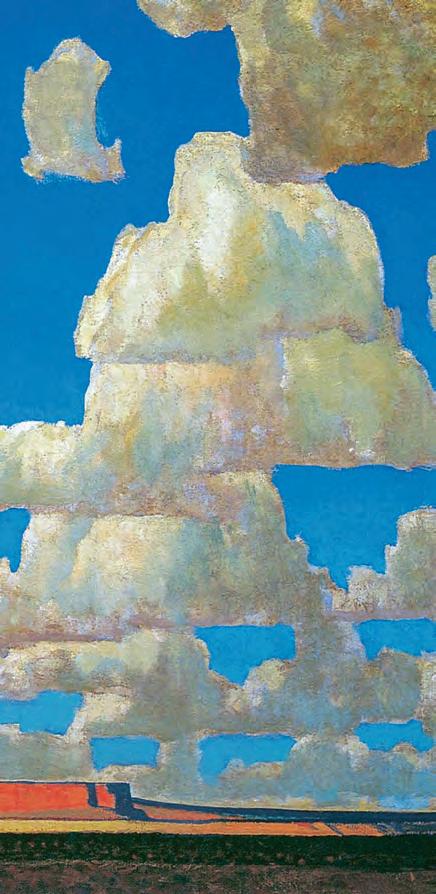
MAYNARD DIXON’S WEST is the one with the marching clouds and bold, angular shapes and shadows. It has gold and pink mesas, horses in motion, and the long horizontal lines and rhythms of the desert and its people – a West that Dixon loved before he ever walked it.
From the tip of Dixon’s brush, the paint is rarely so thick as to betray brushstrokes, and the detail is not obviously wrought. But neither is it lacking. The colors are vivid and muted, simultaneously. The light is sometimes quiet, sometimes not.
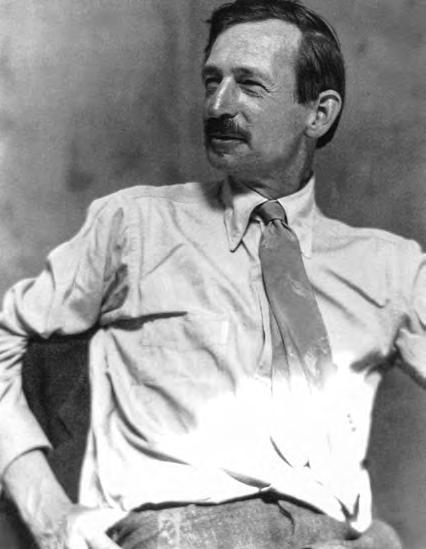
The paintings are like Dixon himself, a bit of an enigma, with two sides as opposite as light and shadow, among them being a San Francisco bohemian who settled among the Mormon farmers in Mount Carmel, Utah.
Now widely considered a premier artist of the Southwest, Dixon spent the summers in the early 1940s on an expanse of cottonwoods, cliffs and meadow east of Zion National Park. He and his artist wife Edie Hamlin designed the cabin that remains, a simple, sturdy log and stone structure, the logs hauled off Cedar Mountain, the chinking matching the sandstone hills, the doors painted red ocher and turquoise.
The buildings have been restored by art
dealers Paul and Susan Bingham, who offer tours and hold artist retreats here, and who live above the gallery they built on adjoining acreage.
This is where Dixon found peace in the final years of his life, away from the noise and crowds of the city. This is where he and Hamlin – “the light of his life,” according to Paul Bingham – could paint undisturbed. Dixon’s emphysemic lungs might struggle, but he would sit in his favorite chair and paint small oils, maybe 12-by-16-inch canvases. On better days, the two might head afield, to Zion or the Navajo lands.
Hamlin would say later these were happy years for the two of them, although poignant, too, because they both knew Dixon’s time was running out.
A PHOTOGRAPH OF Hamlin, taken by Ansel Adams, sits on a shelf in the cabin. A volume of Dixon’s poems – biographers say his poetry at times equaled the quality of his artwork – is open on a desk in the bedroom.
Dixon believed in men who kept their word and had integrity. He was a gregarious man who liked his friends around him. Fellow artists would gather in his San Francisco studio for Chinese takeout and robust discussions. Somewhere along
the way, Dixon and Ansel Adams became good friends.
“My father fit Ansel’s notion of what an artist should be – theatrical, he was principled, and he was faithful to himself,” said Dixon’s son Daniel in a 2006 PBS Utah documentary. “Also, they entertained each other. When they got together it was … a celebration of outrageous hilarity.”
And both Dixon and Adams revered the American landscape. Born in 1875 in California, Dixon felt a spiritual kinship with the Southwest long before he visited the area. He adopted the attire, dressing in cowboy hat, boots and bolo tie – a man out of place on the streets of San Francisco, said Ken Hartvigsen of the Brigham Young University Museum of Art.
Upon Dixon’s first trip to the Southwest, at age 25, he found it everything he expected: “So long had I dreamed of it that when I came there, it was not strange to me,” he was quoted in the PBS Utah documentary.
DIXON’S FIRST EXPOSURE to Utah appears to have been in 1933, when he and then-wife (and noted photographer) Dorothea Lange spent the summer exploring Zion National Park and its environs, camping or staying in the homes of local families. He reportedly painted 40 canvases during that time.
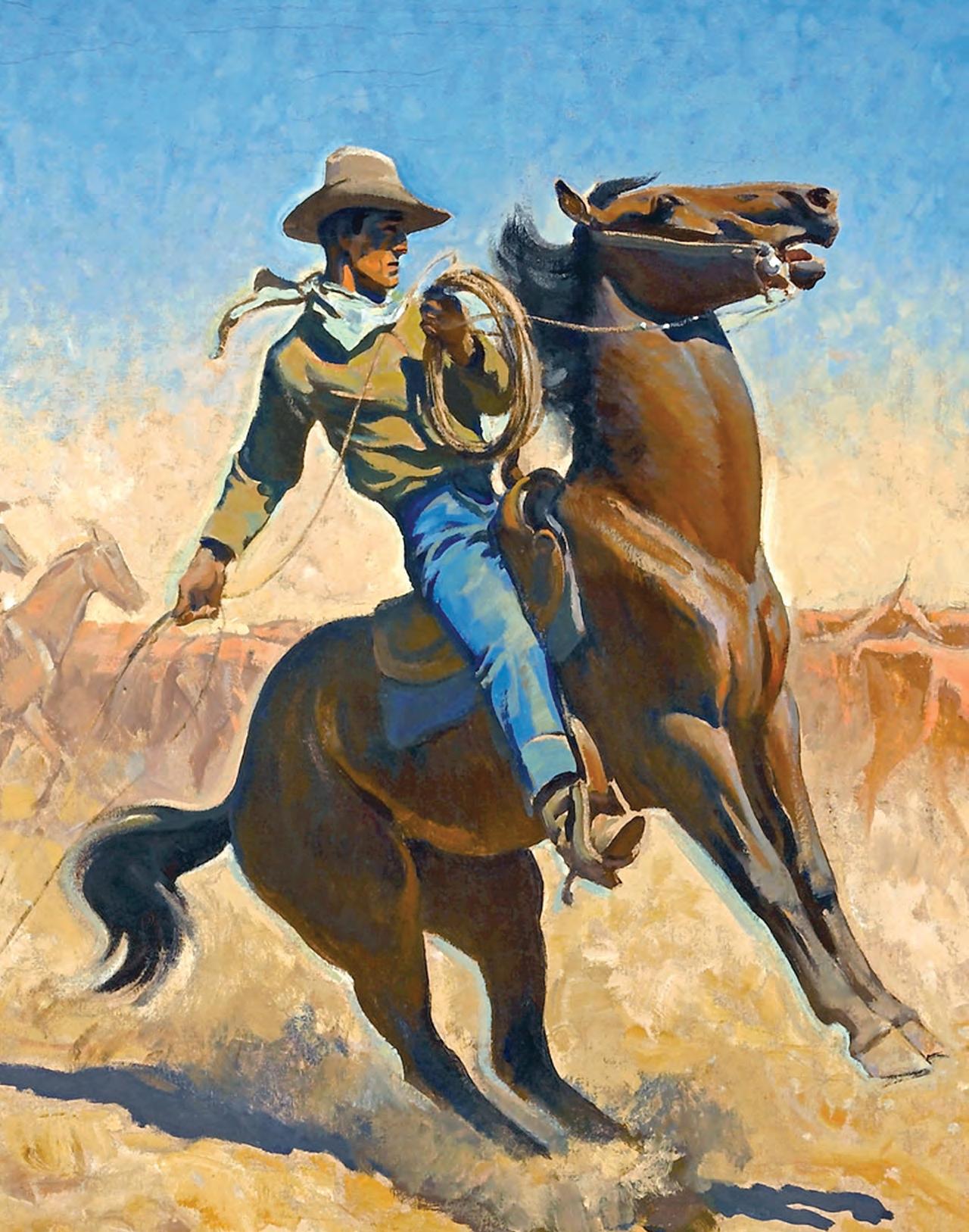
“Cowpuncher,” painted in 1927, is representative of Dixon’s illustrative work, which even in the early days of his career hinted at a minimalist approach and bold color selections.
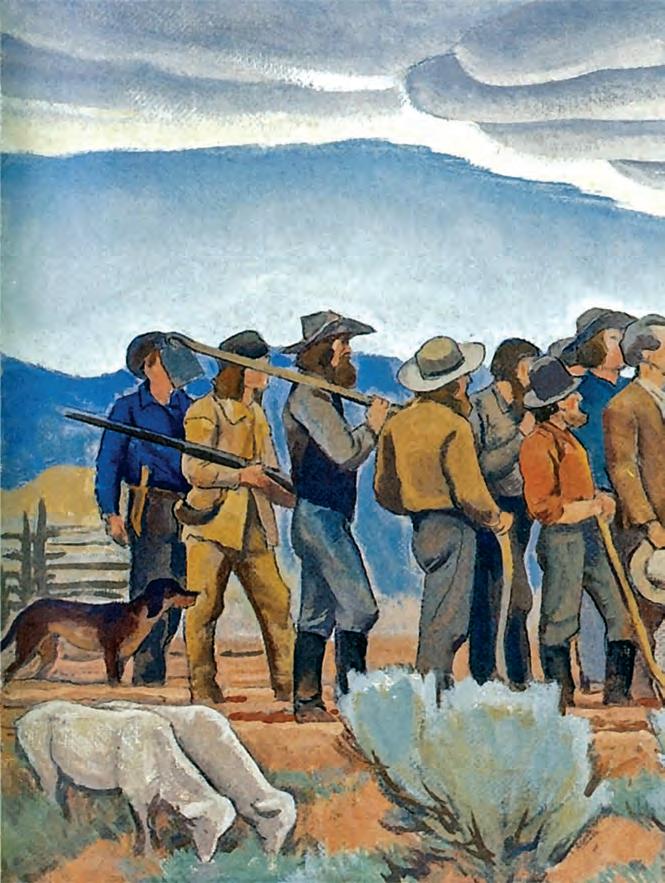
Although animated in the company of others, he also had a solitary side, prone to heading off to experience the country or alone to paint. He joked about being seen as a “wandering lunatic.”
Dixon (1875-1946) painted
“The Hand of God,” an oil on masonite, 21-by-39 1/8 inches, in 1940. The work is in the collection of the Brigham Young University Museum of Art in Provo.
Dixon didn’t come to live permanently in Utah until 1939 or ’40, on his third marriage and borrowed time. Dixon had been a sickly, asthmatic child, and the disease had developed into full-blown emphysema by 1935, cultivated by his affection for handrolled cigarettes.
Married in 1937, Dixon and Hamlin bought 20 acres in Mount Carmel, north of Kanab. They spent their winters in Tucson, Arizona, their summers in Utah.
“Mormons are simple honest farming people,” Dixon wrote. “We like them … Don’t know if we can make a living there, but take a gambler’s chance.”
Art came so naturally to Dixon that he never completed formal training. Lange marveled at the ease with which the lines and strokes flowed from his slender left hand. He was a working artist his entire life, making a living for years from magazines like Sunset, book illustrations and commissions for murals. He lived in New York City four years, but grew disenchanted with the big city and commercial work, complaining that he was portraying the West untruthfully, in an overly romanticized fashion. He cast off much of that work in 1912 in favor of the honesty of painting.
He was tired of perpetuating the image of a Wild West. He wanted to make art from the perspective of an inhabitant, an interpreter, one so drawn to the land that he puts a piece of himself in it. He said he felt compelled to capture the colors and
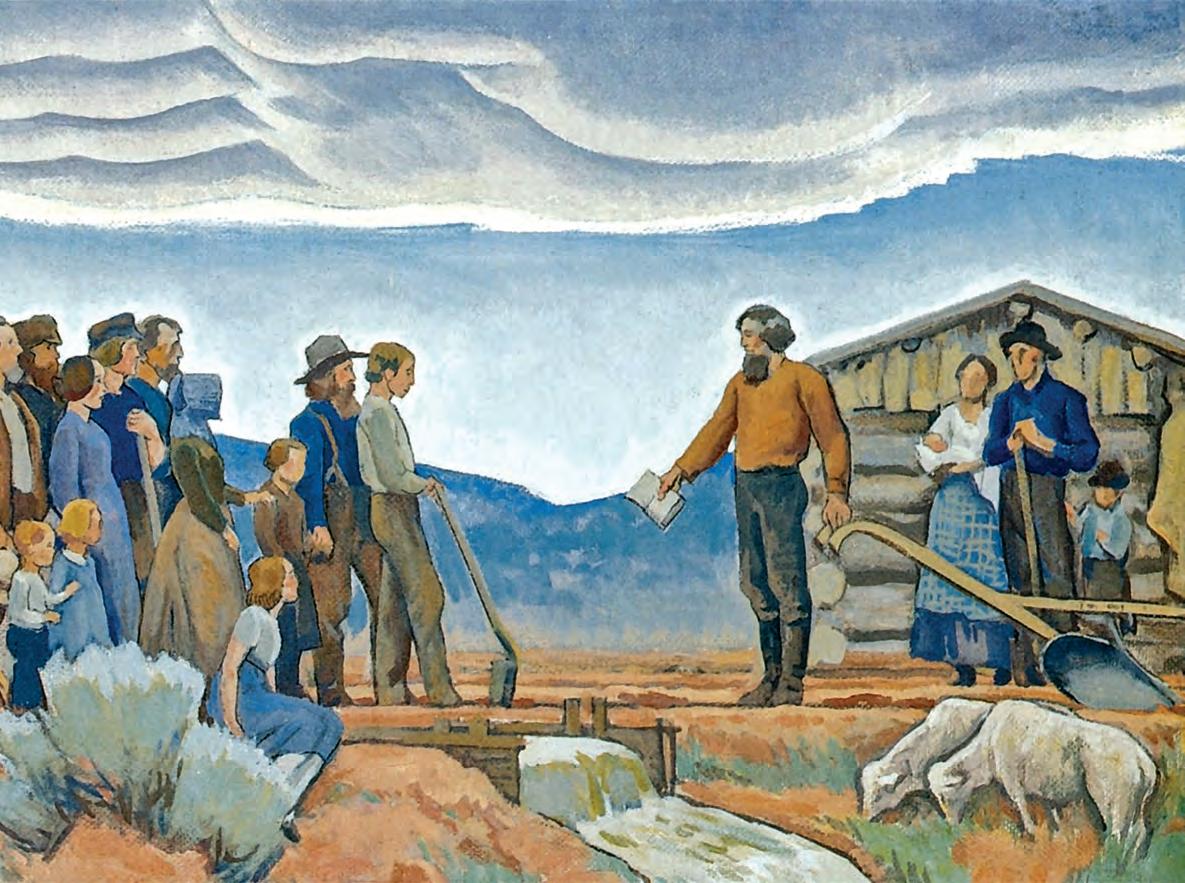
shapes so as to pass along his vision of it all, to convey the expanse, the freedom and the loneliness.
“To me, the wind of the wastelands has color; the opalescent ranges of the desert seem to me like music, and sometimes the giant clouds of storm, piled far above the mountains, take form as of lost and forgotten gods, serene and terrible,” he said.
By the time he came to Utah, World War II was raging, and artwork wasn’t at the top of most Americans’ shopping lists.
The couple tried renting out the bunkhouse on their Mount Carmel land to bring in some extra income, but that lasted only a single summer. They just weren’t suited to running a dude ranch, hosting young families, their kids running wild. Dixon called it the Brat House.
Still, they managed. By all accounts,
Dixon’s two sons from his marriage with Lange adored Hamlin. The country was a “renewing grace” for Dixon, said Hamlin. It fed his soul. Dixon, it seemed, had found that balance between the romantic and the literal in his painting, as well as in his life.
The family left Utah in 1945, as the 5,200-foot elevation became too much for his damaged lungs. Dixon died Nov. 13, 1946, in Tucson, just days after completing a mural of the Grand Canyon for the Los Angeles offices of the Santa Fe Railway.
Edie Hamlin promised she would take his ashes to Mount Carmel, and that’s what she did, when spring came.
Susan Bingham climbs the steep hill to the boulder where Dixon’s ashes are buried, stands for a minute, then sits on a smaller rock, her back turned to the memorial plate on the boulder. Before her, in
the distance, are the cedar and mountain juniper, the white and red sandstone cliffs. Extract some of the detail and replace it with inner vision, and it could be a Maynard Dixon painting. She recites Dixon’s 1935 poem “At Last”:
I shall give myself to the desert again, That I, in its golden dust, May be blown from a barren peak Broadcast over the sun-lands. If you should desire some news of me Go ask the little horned toad Whose home is the dust, Or seek it among the fragrant sage, Or question the mountain juniper, And they by their silence Will truly inform you.
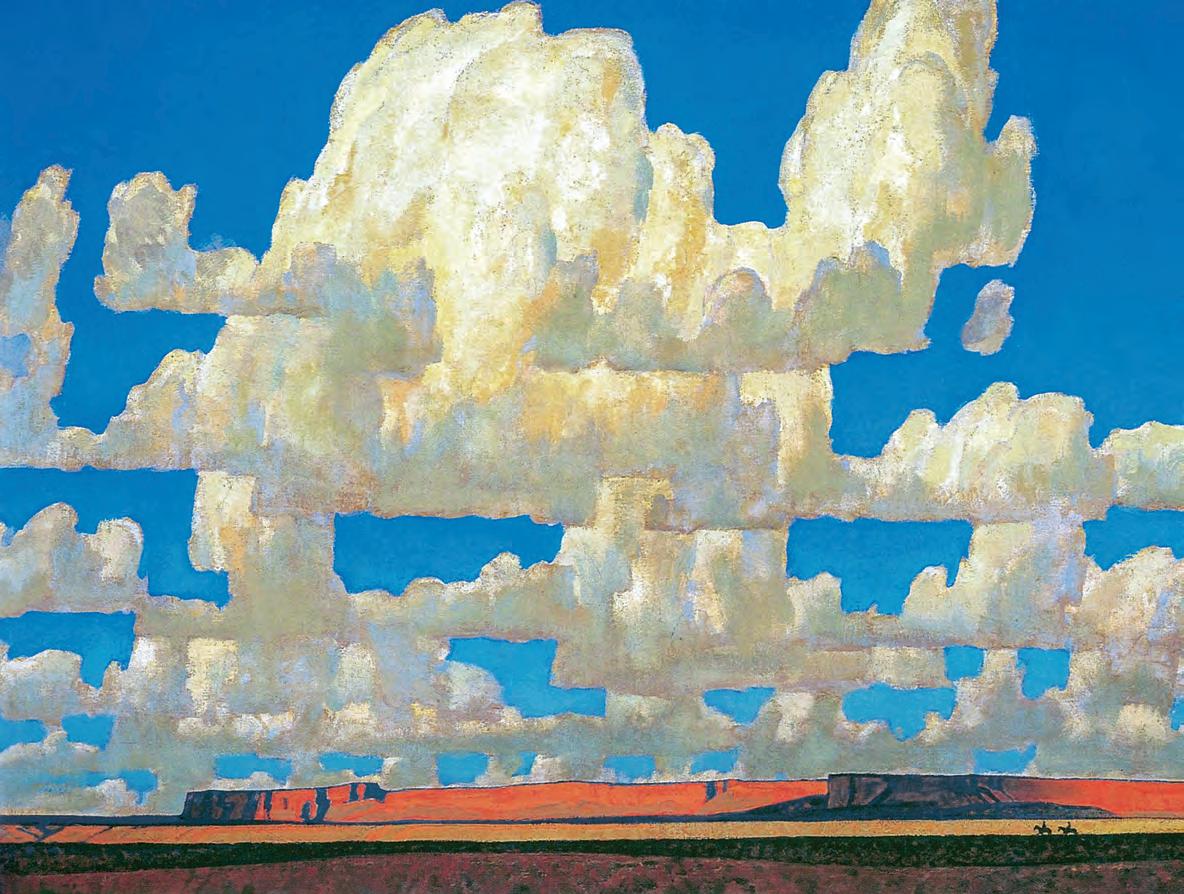
“Cloud World,” one of Maynard Dixon’s mostrecognized paintings, illustrates the artist’s famous “marching clouds” and modernistic style. Dixon painted this work in 1925.
THE GREAT DEPRESSION was the catalyst behind Brigham Young University’s ownership of the largest collection of Maynard Dixon art in the world.
In 1937, Herald R. Clark, dean of the BYU School of Commerce in Provo, offered to buy all the works in Dixon’s San Francisco studio for one set price. It was the Depression, so artwork wasn’t exactly flying off the walls.
BYU wound up acquiring 83 pieces, for a reported $3,700, including some drawings and sketches the university wanted as a teaching collection for art students, according to Clyda Ludlow, collections manager at the BYU Museum of Art in Provo. Clark and Dixon also became letter-writing friends. “I found him much bigger than anything he had created,” Clark was quoted in a 2006 PBS Utah documentary. “He was a … forceful, imaginative character, one who loved life and people.”
The university has since purchased or otherwise acquired additional Dixons, bringing its collection to 113. The paintings include a substantial number of Southwestern works, as well as Dixon’s Depression-era series. The latter works
were paintings of blank-faced men on city streets, probably the most recognized of which is “Forgotten Man.”
Dixon was married from 1920 to 1935 to photographer Dorothea Lange, who became famous for documenting human suffering during the Depression. Paul Bingham, co-owner of Dixon’s summer home in Mount Carmel, says Lange influenced the simplification of Dixon’s art in the 1920s as he moved toward the modernist, somewhat cubist style that would become his legacy.
Bingham considers Dixon’s Depression paintings derivative of Lange’s work – although Bingham’s wife, Susan, is quick to note the beauty of those paintings and their relevance even today.
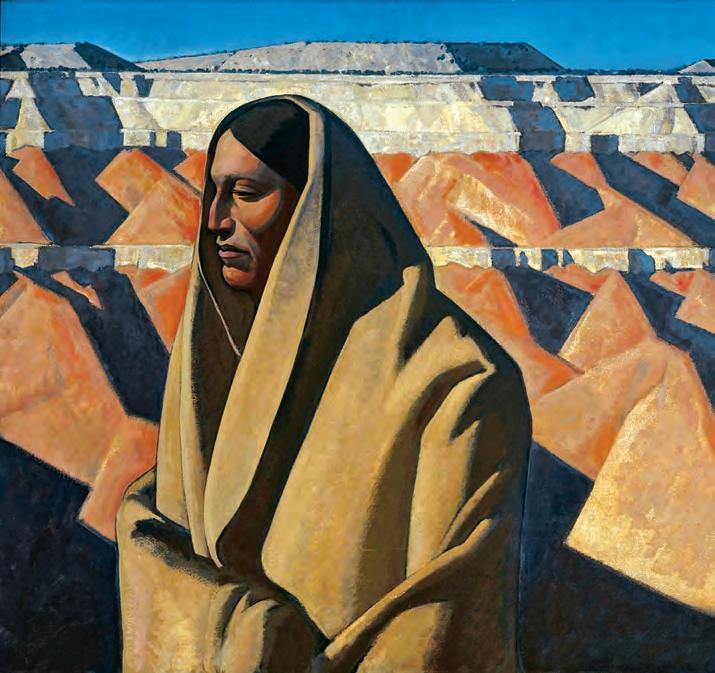
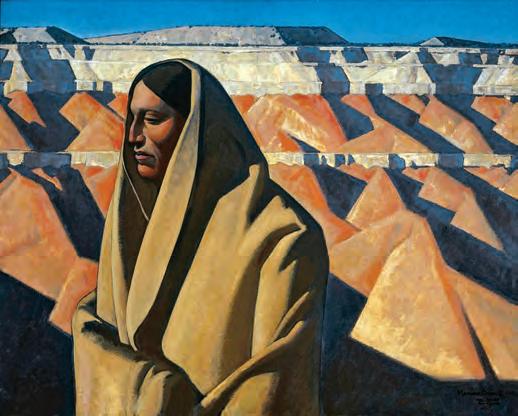
“Earth Knower,” painted in 1931, conveys Dixon’s sense of the Western landscape and its inhabitants.
WITHOUT PAUL and Susan Bingham, painter Maynard Dixon’s summer home in Southern Utah likely would not survive today.
The buildings on the 20 acres in Mount Carmel were deteriorating when the Binghams bought the property in 1998. They repaired and faithfully restored the home and other structures, preserving the original footprint and keeping as many of the original fixtures and furniture as possible. The restoration was meticulous enough to warrant a listing on the National Register of Historic Places.
The Binghams, who grew up in Utah but operated galleries in California for several years, are “art-diseased” (Paul’s description) individuals who believed strongly in preserving a piece of property that inspired an important artist. Art collectors who became art dealers, they had worked directly with Dixon’s widow, Edie Hamlin, in selling Dixon paintings after his death.
Hamlin sold the Mount Carmel property to Dixon’s friend and fellow artist, Milford Zornes, in 1963. Zornes sold it to the Binghams as he grew too old to maintain it.
The Binghams have continued Zornes’ practice of holding artist retreats there. They also support artists through their Thunderbird Foundation for the Arts and gallery on adjacent property. From mid-March through mid-November, they offer tours of the Dixon home and property.
by ARIELLA NARDIZZI
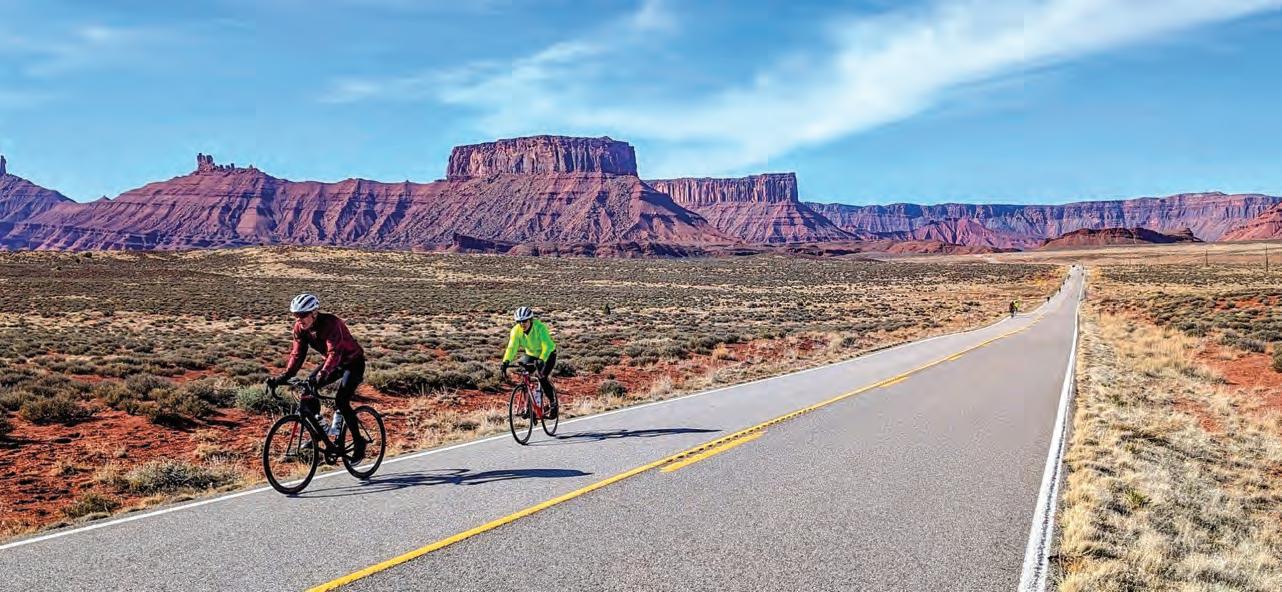
For 25 years, the Skinny Tire Spring Festival has drawn road cyclists to Moab’s sweeping pavement and red-rock scenery. The event links hundreds of miles of paved roads through Dead Horse Point State Park, the Colorado River corridor, Arches National Park and a scenic return along Potash Road.
Riders can choose a two-day option (Saturday-Sunday) or a four-day experience (Saturday-Tuesday). The festival opens with a 64-mile climb to Dead Horse Point, a demanding ascent rewarded with expansive views and a fast downhill.
Days two and four follow the Colorado River’s sandstone canyon, where riders settle into a steady cadence beneath sheer cliffs and cottonwood-lined stretches of pavement. Route lengths vary and include multiple elevation gains, offering options that accommodate both seasoned endurance cyclists and ambitious weekend riders.
The crown jewel is a ride through Arches National Park. The finale rolls along River Portal and Potash Road, where towering walls and ancient petroglyphs give way to a flat finish.
Each ride ends with post-ride festivities that give cyclists time to refuel and compare notes from the day’s miles. The twoday option is $245 and includes lunch, while the four-day ride is $335 and covers lunch for the first three days. The festival donates $15 from every registration to the Moab Cancer Treatment Center.
Fully supported routes include SAG vehicles, stocked aid stations and upbeat volunteers. Electronic route maps, daily start times and rider packets are provided in advance through the festival’s online welcome materials, allowing participants to review mileage, terrain and support locations before arriving in Moab. skinnytireevents. com, info@skinnytireevents.com.
Wood-fired pizzas highlight handstretched mozzarella, San Marzano tomato sauce and Neapolitan dough. Try the pistachio pizza with pesto, sausage and Pecorino Romano. 267 N. Main St., (435) 355-0167.
Cyclists, climbers and hikers feel at home at this outdoorsy basecamp, where rooms include pegboard organizers for hanging gear and bikes. 889 N. Main St., (435) 259-6899.
Roadside pullouts along the Colorado River corridor reveal panels of ancient rock art carved into canyon walls. A brief stop offers a closer look at petroglyphs etched into red sandstone. Accessible via Potash Road west of Moab. No fee.
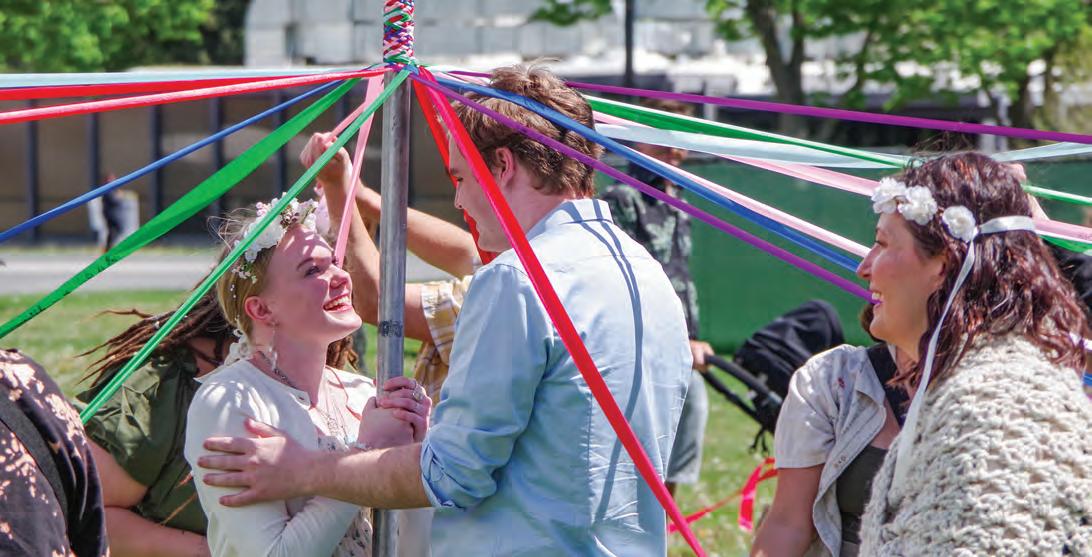
The annual Beltane Festival celebrates the turn of the season with ceremonies, costumes, dancing, music and art at the Utah State Fairpark. Highlights include rituals such as the maypole, a “jump the fire” custom, drum circles, sound baths and a parade.
APRIL 26 • SALT LAKE CITY
Firelight flickers against bright costumes as drums build and dancers spiral through the evening air. Each spring, the Beltane Festival marks the turning of the season with a celebration rooted in ancient European traditions welcoming warmth, fertility and renewal. Held outdoors at the Utah State Fairpark, the event blends ritual, performance and community gathering into a single, high-energy day that unfolds across open lawns and shaded vendor rows.
Beltane traces its origins to pre-Christian spring festivals once observed across Ireland, Scotland and parts of Europe. Today’s Utah celebration reinterprets those traditions through modern dance, music and art, inviting visitors to take part in an active, contemporary celebration grounded in long-standing traditions.
Organizers incorporate maypole dances,
seasonal ceremonies and costumed performers who weave through the grounds, creating moments that feel both theatrical and participatory.
Throughout the day, performers animate the fairpark grounds with live music, theatrical acts and interactive workshops. Musicians and storytellers rotate across stages while workshop leaders offer hands-on sessions in crafts, movement and folklore.
As dusk approaches, the celebration builds toward fire performances and a ceremonial procession that gathers attendees into a glowing circle of movement and sound. Food vendors, artisans and family-friendly activities keep the fairpark active from noon to 7 p.m., with shaded seating areas and open lawns for gathering.
Admission details at utahpaganmarket. com. 155 N. 1000 West. (801) 214-8482.
Fuel up before the festivities with award-winning Mexican cuisine known for rich sauces and bold flavors. The menu highlights house-made specialties, generous portions and a lively dining room near the fairpark. 736 W. North Temple, (801) 322-1489.
ASHER ADAMS, AUTOGRAPH COLLECTION
Housed in the restored 1909 Union Pacific Depot, this downtown hotel preserves vaulted ceilings, terrazzo floors and stained glass windows within a design-forward interior. Rail-era architecture anchors the public spaces, while modern guest rooms provide contemporary comfort. Minutes from the fairpark. 2 S. 400 West, (801) 895-3195.
Celebrate Bears Ears
March 6-8 • Bluff
Educational tours, speaker panels and community gatherings explore the cultural and environmental significance of the Bears Ears region. Hosted by the Bears Ears Partnership, the weekend emphasizes stewardship, collaboration and connection to place. Registration and schedule available online. (435) 414-0343, bearsearspartnership.org.
The Longest Day
March 8 • Salt Lake City
Lose an hour of sleep to daylight saving time, then gain it back on the mountain with skiing or riding at Solitude. The resort hosts a sock drop and donates to the Utah Food Bank. 8 a.m.-5 p.m. 12000 Big Cottonwood Canyon Rd., (801) 536-5786.
Cedar City Rock and Gem Show
March 6-8 • Cedar City
Gems, rocks, minerals, fossils and jewelry fill Diamond Z Arena. View exhibits under ultraviolet light, join interactive games and field trips, and enter raffles and a silent auction. Fri.-Sat. 10 a.m.-7 p.m.; Sun. 10 a.m.-5 p.m. Free. 11 S. Cross Hollow Dr.
Snoopy Carnival
March 18 • Vernal
Beaver Mountain Ski Resort transforms into a kid-friendly playground with a snow maze, races down Tiny Tim, balloons and a slippery luge. Costumes encouraged. 10:30 a.m.-2 p.m. 12400 E. 12900 North, (435) 946-3610.
Vernal Utah Storytelling Festival
March 18 • Vernal
Vernal Middle School’s auditorium fills with tales of faraway places during the annual festival. Storytellers Sam Payne and Jasmin Cardenas perform and share storytelling tips. 6:30-8:30 p.m. 721 W. 100 South.
Shred for Red
March 28 • Park City
Ski alongside Olympians and Paralympians at the eighth annual fundraiser sup-

porting blood cancer patients. Participants who meet fundraising minimums receive a lift ticket to Deer Valley Resort and access to the day’s events. 9:30 a.m.-5 p.m. 2250 Deer Valley Dr. South, (435) 649-1000.
Cedar Breaks Guided Snowshoe Tours
Thru March 28 • Cedar City
Rangers lead a 1-mile snowshoe loop at Cedar Breaks National Monument, sharing insight into the area’s history and ecology. Fridays and Saturdays, 10:30 a.m. 2390 W. Hwy. 56, Ste. 11, (435) 986-7120.
Festival of Colors
March 28-29 • Spanish Fork
Welcome spring at the annual Festival of Colors at the Sri Sri Radha Krishna Temple, inspired by the Hindu Holi tradition. The weekend features live music, yoga, cultural performances and the signature color-throwing celebration that fills the air with vibrant hues. Wear white clothing you don’t mind staining. 311 W. 8500 South, (801) 787-1510, festivalofcolorsusa.com.
“Touching Grass” Exhibition
April 1-May 2 • Salt Lake City
A new spring exhibition spotlights contemporary Utah artists at Urban Arts Gallery. The show celebrates Earth, nature and wildlife featuring multimedia works of vibrant landscapes and ecosystems. Gallery hours vary by day. 116 S. Rio Grande St., (801) 230-0820, urbanartsgallery.org.
Egg Scramble at Camp Floyd
April 4 • Fairfield
Children ages 12 and under hunt for eggs on the lawn at Camp Floyd State Park during this annual spring event. Families can explore historic buildings and enjoy a relaxed day outdoors. 1 p.m. Free with park admission. 18035 W. 1540 North., (801) 768-8932.
Calum Scott
April 6 • Salt Lake City
British singer-songwriter Calum Scott brings his soulful pop sound to The Union Event Center on The Avenoir Tour. Expect an intimate concert featuring chart-topping hits and new material. Show time 8 p.m.. 235 N. 500 West, (385) 831-7771.
Richfield Light Festival
April 10 • Richfield
Sevier County Fair Grounds glows with laser tag, inflatables, music and community activities celebrating the return of longer days. Lantern release is scheduled for dusk, as hundreds of lights glow in the sky. 6-9 p.m. 410 E. 200 South, (435) 252-3556.
Tulip Festival
April 11-May 16 • Lehi
More than 900,000 tulips bloom across the Ashton Gardens at Thanksgiving Point, filling the 50-acre landscape with spring color. Visitors stroll themed gardens, explore photo-worthy pathways and enjoy seasonal programming throughout the festival’s run. Timed tickets required. 3900 N. Garden Dr., (801) 768-2300, thanksgivingpoint.org.
Pond Skim
April (TBD) • Park City
Spring skiing takes a playful turn as costumed skiers and snowboarders attempt to skim across a frigid pond at Park City Mountain. Spectators line the course to cheer on splashy successes and spectacular wipeouts. Free to watch. Time TBA. 1345 Lowell Ave., (435) 649-8111.
Eddy Lover
April 17 • Salt Lake City
Latin pop artist Eddy Lover performs a late-night show at Ibiza SLC Ultra Lounge, blending romantic hits with dance-floor energy. Doors open at 9 p.m.. 180 W. 400 South, (385) 347-9076.
SpringFest
April 25 • West Valley City
The Utah Cultural Celebration Center welcomes spring with live music, cultural performances, local artisans and family-friendly activities. Food vendors and hands-on experiences highlight the center’s global focus. 4-7 p.m. Check online for schedule. 1355 W. 3100 South, (801) 965-5100, wvc-ut.gov.
Questions on p 10-11
1 Gold
2 Union Pacific
3 Sprint, Sprint’s name comes from the first letters in “Southern Pacific Railroad Internal Networking Telephony.
4 California Zephyr
5 Canyon Spirit
6 a. 2,161 miles
7 b. Sheep
8 c. Central Pacific and Union Pacific
9 a. Payson
10 c. Ogden
11 True, It was named for being a highway junction, not a railroad one.
12 False, In 2025, construction was completed on the new 11-mile shortline Savage Tooele Railroad, just to name one.
13 True, It was built to bring people to the Saltair Resort, which burned down twice, was abandoned, and is no longer in its original location anyway
14 True
15 True
Page 10, above Heber Valley Railroad
Page 10, below Union Station Depot in Ogden circa, 1900
Page 11, Union Pacific 119 steam locomotive replica at Golden Spike Historical Monument Trivia Photographs

story by KERRY SOPER illustration by JOSH TALBOT
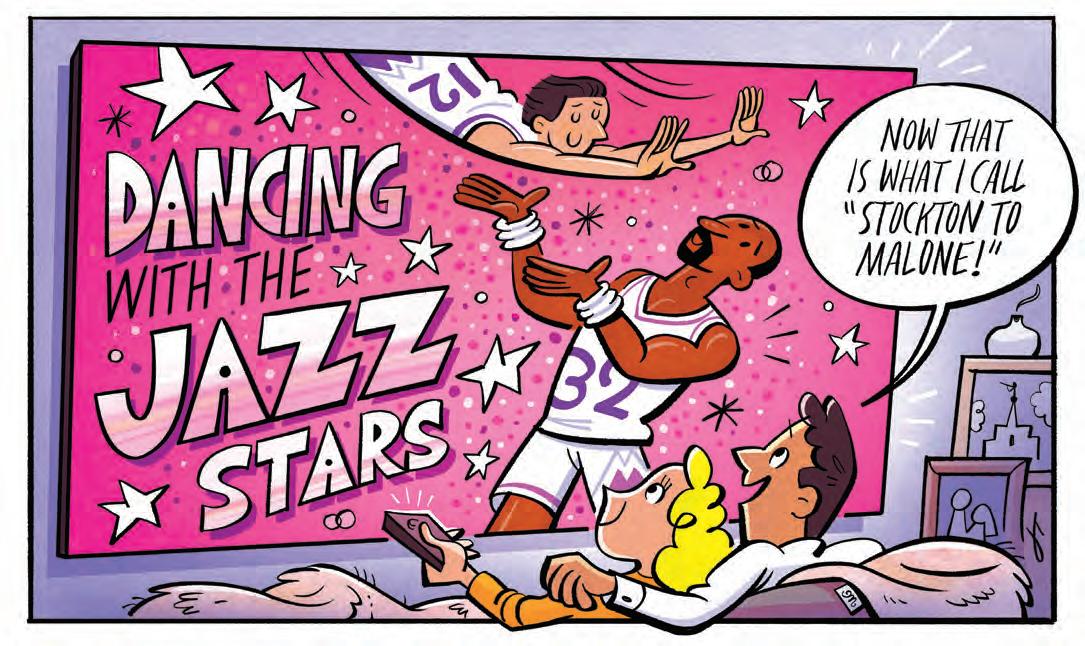
DEAR TV EXECUTIVES at Netflix, Hulu and Peacock, First of all, congrats on all the successful reality TV shows and documentaries featuring the people of our great state. Assuming that you’ll continue to exploit – er, I mean, explore – this rich vein of content, can I offer a few additional ideas?
For starters, you could do a Utah version of that popular show 90 Day Fiancé by simply turning loose a documentary crew in BYU-approved student housing. Production costs would be low, given the goofily cheap dates many young people pursue in Happy Valley – like thrift-store scavenger hunts or feeding moldy bread to ducks. Each season finale (and wedding reception) could take place in an LDS church cultural hall: a carpeted basketball court, décor from Hobby Lobby, 10 trays of lemon squares and an industrial-size dispenser of a red-dyecolored nonalcoholic drink.
Or how about a gritty reality show documenting how every other Utahn is trying – and usually failing – to find love through dating apps? Game of Phones might be an appropriate title, given the Machiavellian catfishing, ghosting and awkward texting that doom most digital dalliances. If you want to emphasize the typical long-term outcome, try a Beehive State version of Alone
Still on Utah’s weird dating scene, here’s another idea: Love on the Political Spectrum, featuring heart-deflating first dates that go wrong because the political views of Utah men and women are too divergent.
In a completely different vein, how about The Secret Lives of Cybertruck Guys? Peering past the tinted windows of those Minecraft mistakes, your camera crews could document the midlife crises of a tight group of Draper dudes.
One episode could focus on Danny’s addiction to collecting Star Wars-themed Legos; another on Trevor, who reminisc-
es, in unguarded moments behind the cyber wheel, about the vaguely unethical things he did in his 20s as a door-to-door pest-control sales bro.
Given the success of The Real Housewives of Salt Lake City, there’s got to be another variation you could develop here. What about The Fake Tradwives of Summit County?
The ballerina-farm beauty-pageant lady who cosplays as a humble homesteader, and her influencer friend with dark hair who speaks in a robotic monotone while making Honey Nut Cheerios from scratch for her entitled husband. (Wait, she might live in California. Scrap that.)
If you’re ready to create something more relatable – and more accurate to genuine Utah culture – how about The Real Soccer Moms of Utah Valley? There could be episodes devoted to impressively mundane dramas: Cindy losing it in the Chick-fil-A drive-thru and accidentally swearing in
front of her daughter’s U-11 soccer team; Brenda hurting her husband’s feelings again with passive-aggressive comments about his inept dishwasher-loading technique; or Kaylynn struggling with PFE (perfect family envy) as she scrolls Instagram in the orthodontist’s waiting room.
Here’s a show that could appeal to both women and men: Dancing with the Former Utah Jazz Stars. Picture Thurl Bailey attempting the foxtrot, Andre Kirilenko hip-checking his way through the tango, or Rudy Gobert in tights doing ironic jazz hands. The ultimate coup would be reuniting Karl Malone and John Stockton to see if they can rediscover their synchronized mind meld – this time as waltz partners.
ing each other out of a rural compound in Sanpete County. Jeff Probst could still host if he gains 50 pounds, wears grungy plaid and grows a weird beard. Each episode’s eating reward could feature food-storage items dating from the 1970s, and every immunity challenge could be staged as a zombie apocalypse. Dramatic storylines would emerge from each competitor’s willingness to believe increasingly outrageous conspiracy theories.
AUTHOR Kerry Soper writes and teaches satire,
I’ll bet a lot of people would enjoy Survivor: Utah Edition, with real survivalists vot-
Here’s another idea that makes me a little queasy: Utah’s Next Top (Re)Model – about the profitable but ethically hazy practice of flipping homes after applying a superficial splash of paint to cover chronic black mold or fractured foundations. You could also do a darkly comical version of House Hunters: Utah Millennials Edition, in which every episode ends in failure.
AS FAR AS FOOD shows go: The Great Beehive Bake Off (featuring weird Jell-O and casserole dishes from a typical Utah potluck); Top Chef: Cedar City (episode after episode of variations on ham and funeral potatoes); or Diners, Drive-Ins and Dirty Sodas, with Guy Fieri exclaiming things like, “This coconut-Dr Pepper-pomegranate combo is off the chain!”
Finally, I wonder if this would be too much of a stretch: RuPaul’s Flag Show. Instead of judging drag performances, RuPaul would give feedback to a series of alt-right alpha bros as they express their vaguely toxic masculinity and hard-right patriotism by decorating themselves – and their oversized pickup trucks – with loud T-shirts, hats, bumper stickers and flags.
Sort of a Utah version of Queer Eye for the Extra-Extra-Straight Guy. I don’t know. It’s probably a toss-up whether each episode ends in fistfights or hugs.
Give me a call, TV bosses, and let’s see where it goes.