Bellevue anchors Nebraska’s earliest days as America nears its 250th birthday
MARCH/APRIL 2026
Hilltop Antiques
Inside the North Plant collection that one woman and her family turned into a landmark
• $5 per play
• Win $1 Million a Year for Life • Drawings every day
Swedish Midsommar Festival Annual
June 19-21, 2026
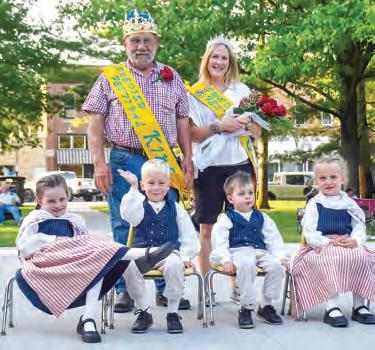
Stromsburg was settled in 1872. It became known as a Swedish settlement with quite a few original emigrants coming from Ockelbo, Sweden. The first Swedish Midsommar Festival started in 1953 and Governor Frank Morrison proclaimed Stromsburg as the “Swede Capital of Nebraska” in 1966.
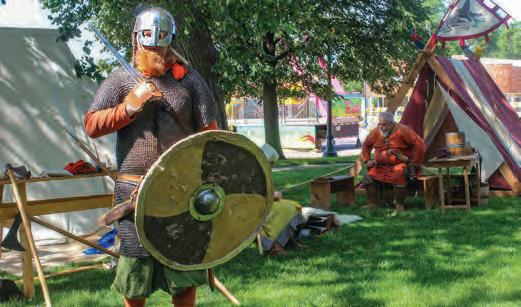
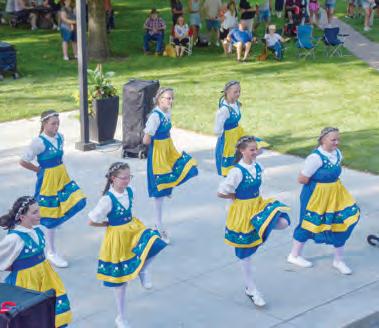
Guests of all ages are invited to share this Swedish heritage on THE THIRD WEEKEND IN JUNE. Come enjoy Swedish dancing by locals, crowning of a new king and queen, food, crafts, parade, car show, 3-on-3 basketball, fun run, volleyball tournament, a carnival and midway and MUCH MORE.
Free entertainment is held in the city square with other activities throughout the town. Viking re-enactment and a Swedish smorgasbord will also return this year. Plan to bring your lawn chairs and enjoy the weekend with us.
To learn about more events and details, Call 402-764-5265 or visit www.theswedishfestival.com
Friday, June 19
4:30-7 pm Chicken BBQ
5-9 pm Taste of Sweden, food
6:15 pm Swedish Dancers, local children
6:45 pm Crowning of the King and Queen
7:30 pm Entertainment: Paul Siebert
Saturday, June 20
7 am Swedish Pancakes, 2 locations
8 am 5K-10K-1M, Earl “Helge” Byleen Run/Walk
9 am-4 pm
Midsommar Market Arts & Crafts
9 am-4 pm Art on the Lawn at Konst Art Gallery
10:30 am-2 pm SWEDISH SMORGASBORD at Viking Center
11:15 am State Sanctioned Children’s Tractor Pull
10 am-2 pm
Edgerton Explorit Center from Aurora
Afternoon Glomesdal Vikings from Oklahoma
2-3 pm Library: History of the Downtown Square
4:30 pm Swedish Dancers, local children
4-7:30 pm Firemen serving BBQ & Brats
6 pm Parade “A Note-able Parade”
7:30 pm Entertainment: 1st Nebraska Brass Band
Sunday, June 21
11 am-4 pm Car, Motorcycle and Tractor Show
11 am-2 pm HAMBURGER MEAL by Sons of Legion
11 am-4 pm Anna Street Trolley, ice cream treats
MARCH/APRIL 2026
FEATURES
22 One Tree Hill
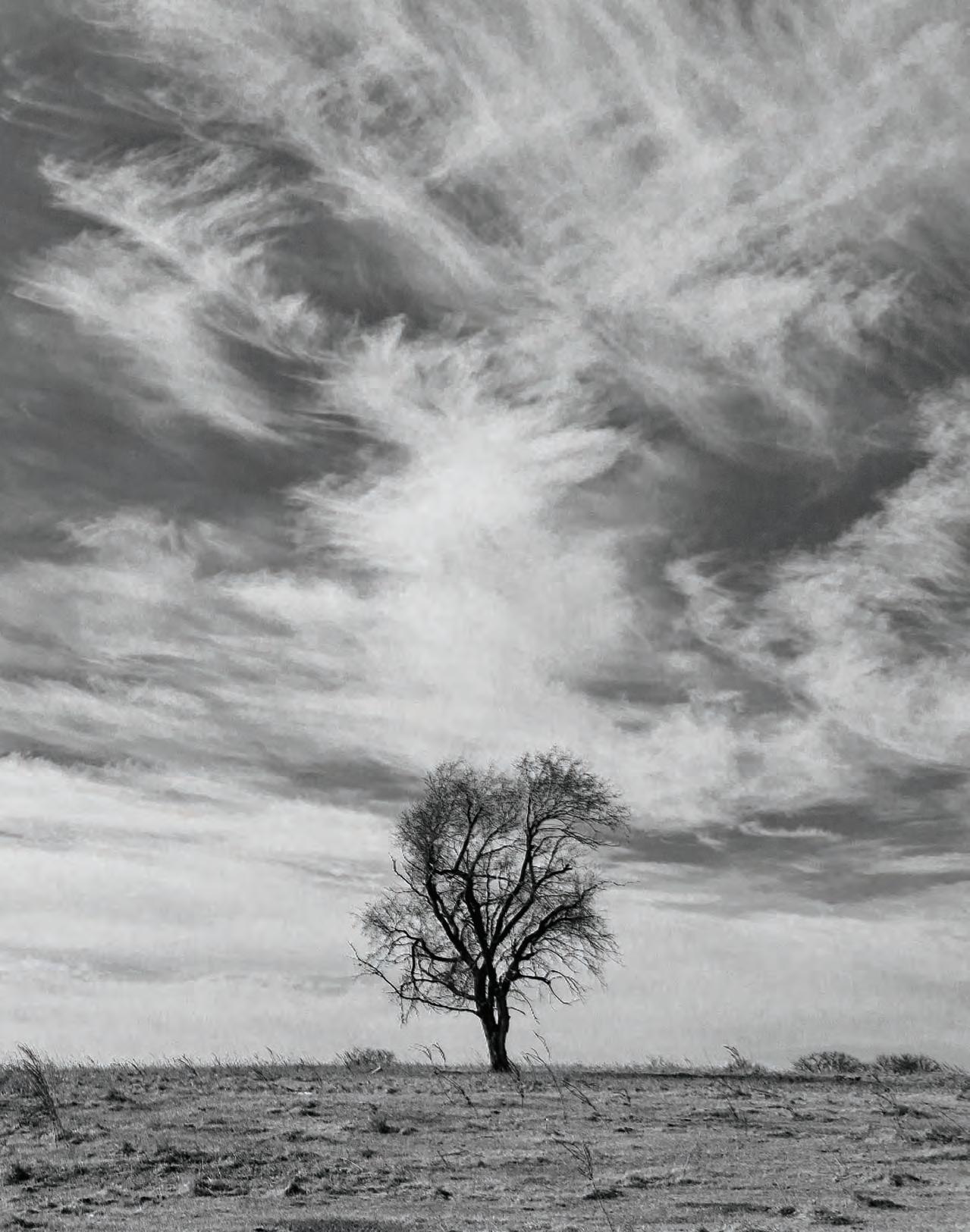
How a lone elm near Garland became a landmark of memory and loss, preserved through one photographer’s images after it disappears. story by Ariella Nardizzi photograph by Dillon Hardinger
24 Where Bellevue Began
One of Nebraska’s first communities was forged on a Missouri bluff, where fur trade, cultural exchange and early commerce converged. by Ron Soodalter with Chris Amundson
30 Pioneers on the Turf
Midland University’s women’s flag football takes root in Fremont as a young team recruits nationally, builds culture and proves the sport belongs. story by Brady Oltmans photographs by Jeremy Buss
36 Old Man Stirring
Winter’s harsh grip slowly yields to spring in Arthur. Snow melts, calves romp, sun warms and life stirs again. story and photographs by Ainslie Wilson
56 Grain Bin Antique Town
Near North Platte, Grain Bin Antique Town rises from canyon hills, where weathered bins, trinkets and Lori Clinch’s unmistakable touch still welcome visitors. story and photographs by Kristin Dahl
DEPARTMENTS
12 Mailbox
Letters, emails, posts and notes from our readers.
14 Editor’s Letter
A perspective from the desk of Chris Amundson.
Scottsbluff pg. 16
Valentine pg. 53
Arthur pg. 36
North Platte pg. 56
DEPARTMENTS
16 Flat Water News
Flyover Brewing supports local agriculture; Salt Creek tiger beetle; Alan J. Bartels’ secrets of the Sandhills; Archer King’s postcards.
20 Trivia
Branch out and test your Nebraska tree trivia. Answers on page 54.
42 Kitchens
These three air fryer favorites are crispy, quick and totally delicious.
46 Poetry
Poetry opens worlds through doorways, fields, seasons and lives.
48 Museums
Big or small, these museum advertising partners preserve Nebraska history and heritage for all to experience.
52 Traveler
Patriotic Productions unfurls the world’s largest American flag with the help of 600 volunteers across Memorial Day weekend, riders cycle across Nebraska for BRAN 44, plus 12 other events across the state.
62 Naturally Nebraska
Alan J. Bartels reflects on cranes’ migrations, finding wonder and memory in their annual flight.
Fremont pg. 30
Omaha pg. 52
Bellevue pg. 24
Garland pg. 22
Lincoln pg. 52
Lancaster County pg. 17
Table Rock pg. 19
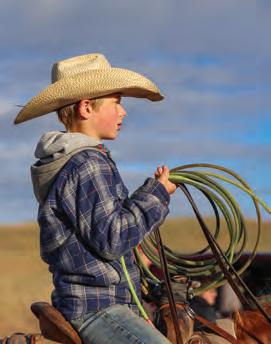
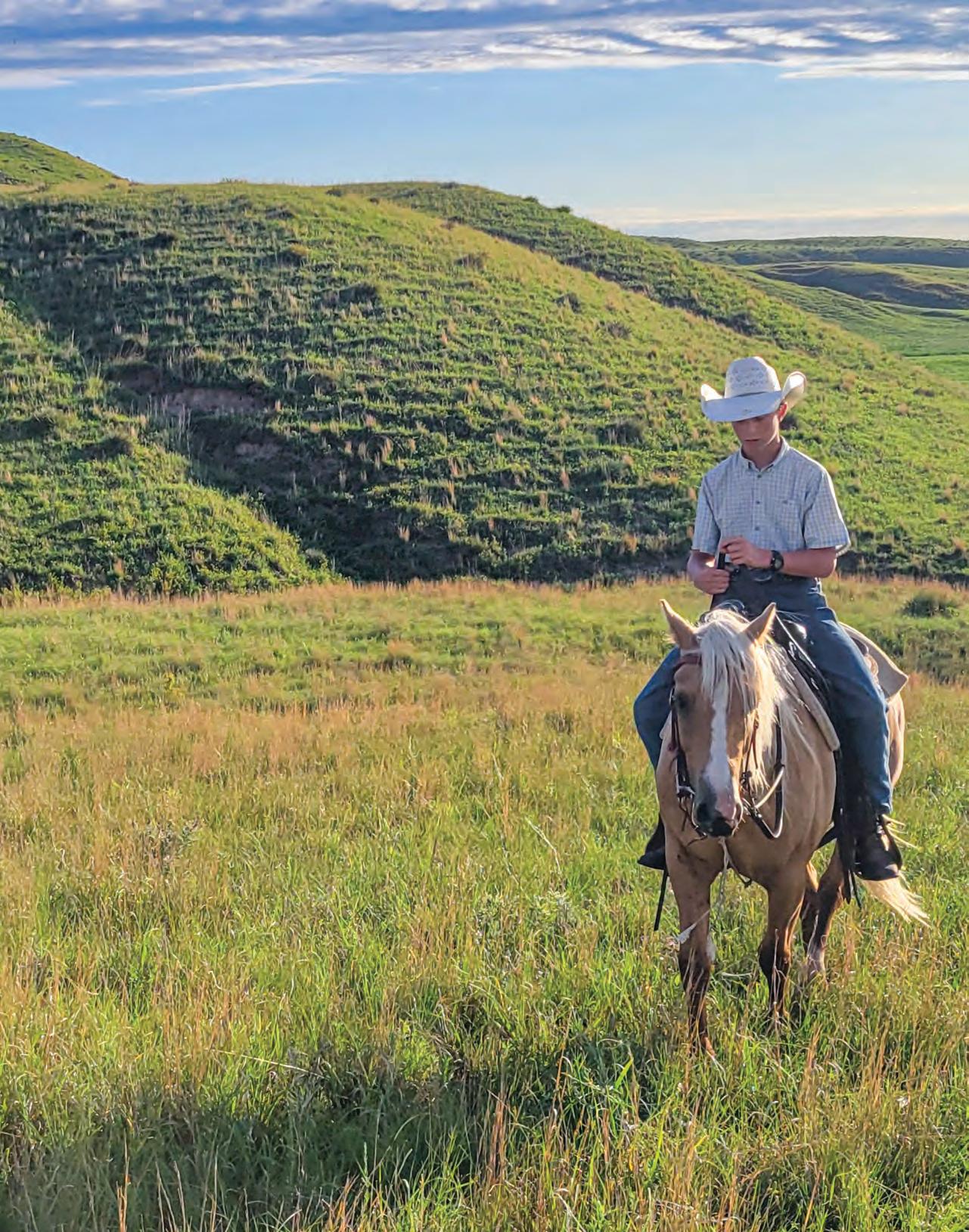
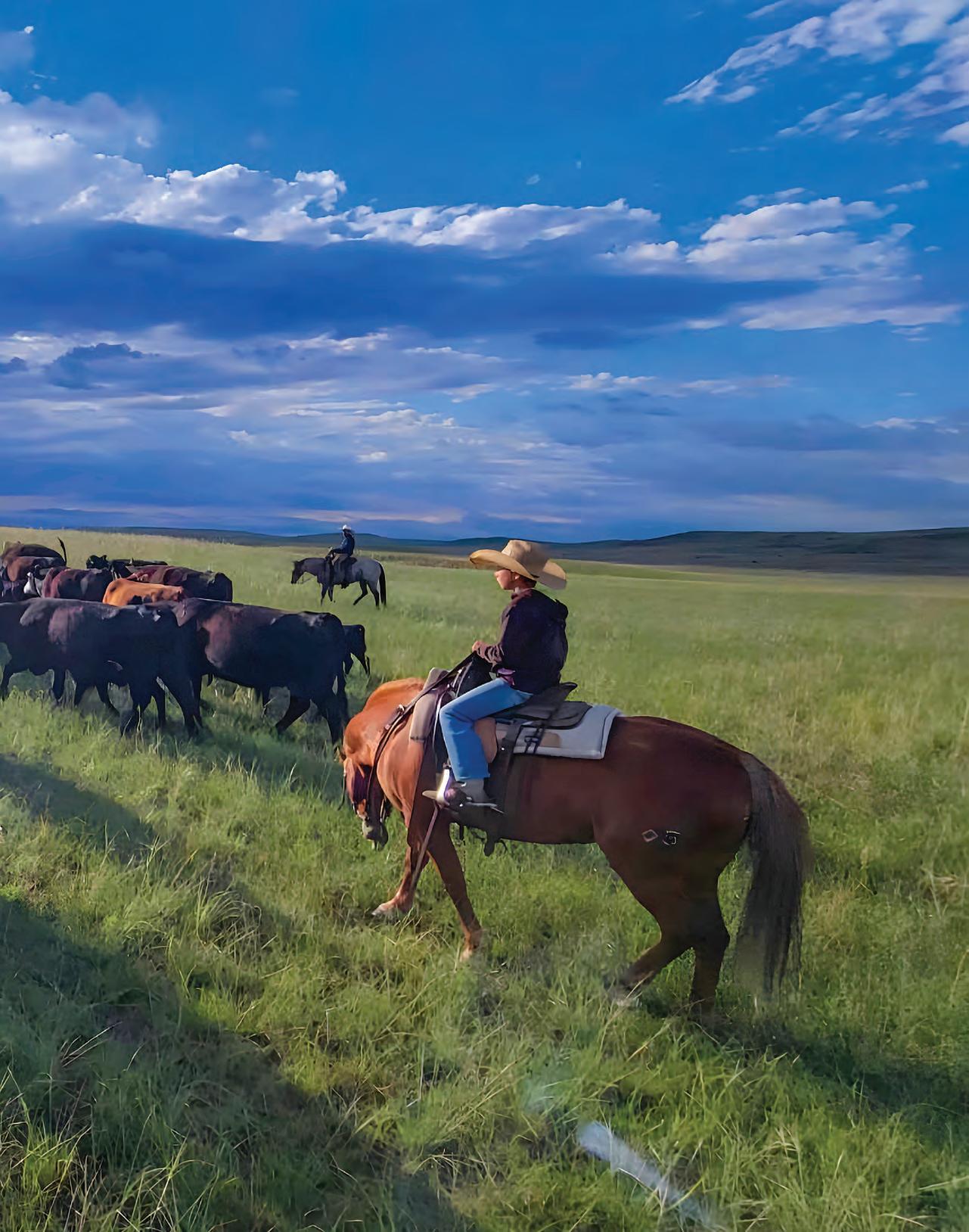
Rope in hand, Fletch rides across a Sandhills ranch near Arthur, taking on the work of the turn from winter to spring.
PHOTOGRAPH BY AINSLIE WILSON
Above: Danelle McCollum, Patriotic Productions
Page 9: Karl Bodmer; Jeremy Buss; Kristin Dahl
MAILBOX
Bale-mazement
I was mesmerized by the straw bales on page 14 (January/February 2026, Trivia). Straw bales? How could that be?
It brought back memories of 75 years ago when I lived on a Nebraska farm. Our neighbors had an Allis-Chalmers hay baler that discharged round bales. They were considerably smaller. We loaded them by hand onto a wagon. Today, the larger ones are loaded with hydraulic-powered equipment.
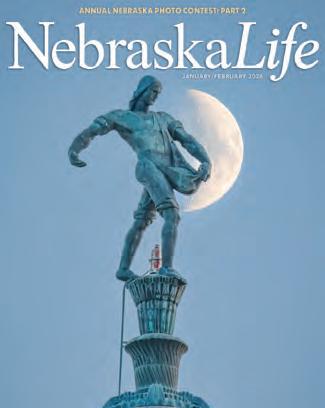
For me, the bales were an easy choice for the cover, but the Sower on the Capitol is highly respected and a strong favorite, too.
Salute to aviatrix
Thank you for publishing a meaningful issue. It was enjoyable, and it was a pleasure to read the request for letters (Editor Letter, “Close Enough to Notice”).
M. Lowell Broberg Puyallup, Washington
Hey! Hendley gets credit, too
Regarding your Trivia question on the origin of Kool-Aid (January/February 2026), I know that Hastings claims rights to the product after it was named Kool-Aid by its inventor, Edwin Perkins, but it had its humble beginnings in Hendley. Edwin Perkins first invented things in his mother’s kitchen. He was a chemist of sorts as a boy. His drink product back then was called Fruit Smack.
I didn’t grow up here, but I have lived here for a very long time. Every time a native hears that Kool-Aid was invented in Hastings, they get up in arms. The Perkins and Shoemaker names around here are connected to the original product as well as the town of Hendley. So, this is a little history before he moved to Hastings in 1920.
P.S. I love this magazine.
Marilyn Snodgrass Orleans
I loved the repeat article on Evelyn Sharp (“Extraordinary Wings”) in the November/December 2025 issue. My grandparents and parents lived in or near Ord for many years, and Evelyn Sharp is a wellknown figure to me.
My late aunt, Lorene (Hunt) Leighton, used to talk about seeing Evelyn at her school in Arcadia back in 1938 with her little Scottie dog. Lorene also got to ride with Evelyn’s instructor, Jack Jefford, and with her cousin Opal.
While working for the National Park Service at Homestead National Historical Park, I introduced the staff to the book “Sharpie” by Diane Ruth Armour Bartels, which they put in their store and later used for a commemorative banner of Evelyn. After I retired from the NPS, Diane worked with Amy Garrett at Homestead and put on a small air show at the park in memory of Nebraska’s most famous aviatrix.
Lynn Chelewsk Emporia, Kansas
Nebraska calling
I’ve subscribed to Nebraska Life for years and even order the magazine as Christmas gifts. Thank you for your leadership. I always enjoy reading your Editor Letter message in the January/February 2026 issue.
I fell in love with the cover, the iconic photograph of the Sower and the crescent moon captured so magically by Mark Coe. Bravo!
In May 2024, my husband, Mike Sturm, and I took a memorable road trip with his 87-year-old brother, Rex, who now lives near Miami. We traveled the roads toward the Sandhills. Rex had requested such a trip to bring back sweet memories of when he was 16 years old, living in Fairbury, and his grandparents drove him to the Sandhills. Years later, he wanted to re-create that trip, and we did.
We all fell in love with the Sandhills, and Rex still says that road trip was a highlight of his life. Beautiful Nebraska!
Hilde M. Dale Lincoln
SEND YOUR LETTER TO THE EDITOR
Please send us your letters and emails by May 1, 2026, for publication in the next issue. One lucky winner selected at random will receive a free 1-year subscription renewal. This issue’s winner is Linda Brink of Liberty, Missouri. Email editor@nebraskalife.com or write by mail to the address at the front of this magazine. Thanks for reading and subscribing!
Never forget Margraten
Our friends Bill and Mary gave my husband and me a subscription to Nebraska Life, and I am delighted when each issue arrives. Thank you for the thoughtful story about the Netherlands American Cemetery at Margraten (“An Eagle’s Lasting Flight,” November/December 2025).
The pilgrimage that Omaha Central High School teacher Scott Wilson has decided to take with his students is a history lesson these teenagers will never forget. What better classroom is there for students today to remember the past? A big shoutout to the Dutch gravestone adopters, who are remembering our hometown heroes whether we know it or not. What a wonderful way to teach that lesson.
Cheryl Butler Waco, Texas
Dutch pen pal
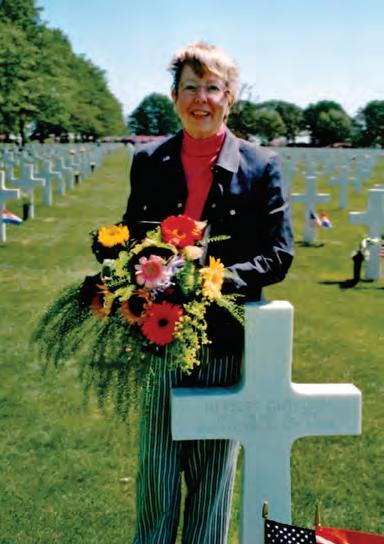
I enjoyed the article about the Central High students who visited the Netherlands American Cemetery at Margraten. Enclosed is a photo of my pen pal since 1954 as she decorated her assigned grave at Margraten. She is very proud and has written to the family of her honored American. I have also been to the cemetery with her. Also, coincidentally, I graduated from Central High in 1958.
Thank you for this memorable article.
Linda Brink Liberty, Missouri
MARCH/APRIL 2026
Volume 30, Number 2
Publisher & Editor
Chris Amundson
Associate Publisher Angela Amundson
Editorial Assistant
Savannah Dagupion
Design
Mark Del Rosario
Photo Coordinator Erik Makić
Staff Writer Ariella Nardizzi
Advertising Sales
Sarah Smith
Subscriptions
Shiela Camay
Nebraska Life Magazine
c/o Subscriptions Dept. PO Box 270130
Fort Collins, CO 80527 1-800-777-6159
NebraskaLife.com
SUBSCRIBE
Subscriptions are 1-yr (6 issues) for $30 or 2-yrs (12 issues) for $52. Please call, visit NebraskaLife.com or return a subscription card from this issue. For fundraising and group subscription rates, call or email subscriptions@nebraskalife.com.
ADVERTISE
Advertising deadlines are three months prior to publication dates. For rates and position availability, please call or email advertising@nebraskalife.com.
CONTRIBUTE
Send us your letters, stories, photos and story tips by writing to us, emailing editor@nebraskalife.com or visiting NebraskaLife.com/contribute.
COPYRIGHT
All text, photography and artwork are copyright 2026 by Flagship Publishing, Inc. For reprint permission, please call or email publisher@nebraskalife.com.
The Trees We Know
BEFORE I WAS born, my grandfather planted some of the first trees I would know. South of Norfolk, in a housing development he built, he planted willows by the pond, cottonwoods by the road, elms in the backyard and a sycamore in the front yard.
By the time I came along, those trees were just part of the neighborhood. The neighbor kids and I climbed them every chance we got. We knew which branches would hold and which would not. We knew which tree got you high enough to see over a fence or down the street.
In a state with this much open country, you notice trees. A shelterbelt between corn and beans. Cottonwoods where there’s water. A row of trees around a farmstead. One tall tree standing by itself.
As Willa Cather wrote in My Ántonia, “Trees were so rare in that country, and they had to make such a hard fight to grow, that we used to feel anxious about them, and visit them as if they were persons.”
Thirty years ago, flying as an ag pilot, I learned to read Nebraska trees from the cockpit. Windbreaks ran in dark lines between fields. Cottonwoods rose above the rest, sometimes 100 feet tall. I would dive the airplane to get into a field as quickly as possible, lay down the spray, then pull up over the trees at the far end of the field. You learned where they stood and how the air moved around them.
In “One Tree Hill,” photographer Dillon Hardinger remembers a lone elm near Garland that marked the way home. He grew up down the road from it and rode past it on the school bus. Later he came back to photograph it in every season, sometimes at night. When it was cut down, the hill stood bare. For him, the elm had become a landmark, the familiar shape on the horizon.
We aren’t the most forested state in the country. In fact, only about 3.1 percent of Nebraska is forested. In Nebraska, we remember a single tree. We watch it grow. And we notice when it is gone.
This spring, wildfires burned across Nebraska, scorching hundreds of thousands of acres and destroying grassland, structures and trees. PlantNebraska responded by launching a disaster recovery fund to help replace trees. Nebraska has done that work before. After the 1989 wildfires, Scouts spent 25 years helping replant Fort Robinson State Park.
A new tree is a beginning. It takes time before it can shade a house, line a street or stand at the edge of a yard the way the old one did. Still, somebody plants the next one.
A willow by a pond. A row of cottonwoods by a road. One elm on a rise above the prairie. Or just a tree somebody planted, and years later other people are still living in its shade.
CHRIS AMUNDSON Publisher & Editor editor@nebraskalife.com
From Beet Fields to Pint Glasses
Scottsbluff brewery taps regional character in beer lineup, menu
BY ARIELLA NARDIZZI
Noteworthy news, entertaining nonsense
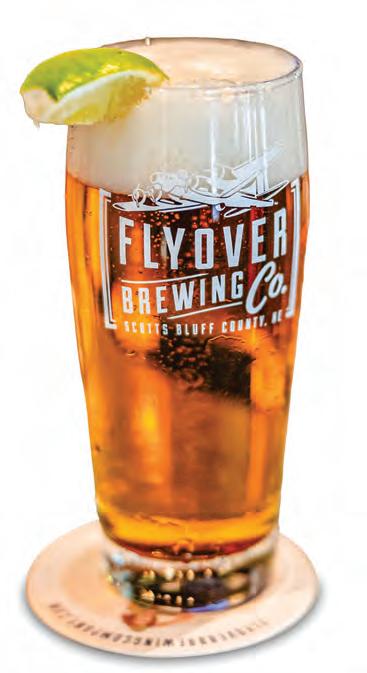
Off Broadway in downtown Scottsbluff, the hum of conversation mingles with the clink of pint glasses. Inside Flyover Brewing Company, an authentic World War II Navy fighter wing hangs above the bar. The centerpiece suits a place named for both aviation and the wide-open country of western Nebraska.
In 2018, owners Joe and Andrea Margheim opened Flyover Brewing Company, giving the Nebraska Panhandle a craft brewery with a name that turns a familiar slight on its head. Joe and his business partner were pilots, and when people called the region “flyover country,” they decided to claim it. “I figured if people want to call it that, we’ll own it,” Joe said.
Before Flyover opened, Joe spent years homebrewing and experimenting with sugar beets, a crop tied closely to west-
ern Nebraska agriculture. Ninety percent of Nebraska’s sugar beet crop is grown in the Panhandle. During harvest season, the earthy, caramelized scent drifts across the valley. Andrea, who grew up in Michigan, remembers it differently. “Like burnt peanut butter cookies,” she said.
Joe worked sugar beets into his brewing, but the early batches missed the mark. “It tasted like root vegetables and dirt,” he said. After Flyover opened, he partnered with a brewer and refined the process, building a German-style lager and adding sugar beets to the mash.
That experimentation became CAMPAIGN!, a seasonal amber lager released each fall during beet harvest, or campaign season. Portions are also aged in bourbon barrels, giving the beer a rich, molasses-like sweetness. Each January, it returns as Rehaul – a nod to the local term for hauling in the year’s final beets.
Flyover’s beer program leans into traditional German styles. Its lagers reflect the region’s agricultural roots and preference for clean, approachable beer, with 18 taps pouring beers including Hellcat Helles, a bestseller. A Mexican lager brewed for Scottsbluff’s annual Cinco de Mayo celebration proved popular enough to earn a permanent place on tap.
That spirit of experimentation now rests with head brewer Dan Warburton, who spent 27 years as a bricklayer and helped construct parts of the brewery before trading masonry tools for mash paddles.
“Brewing reminds me of building fireplaces and ovens,” he said. “There’s a scientific way to build them so that they work correctly – you can’t break those rules. But sometimes, you use your artistic ability to make it more palatable.”
Flyover works with a family farm in the Midwest to custom grow and malt grain. In
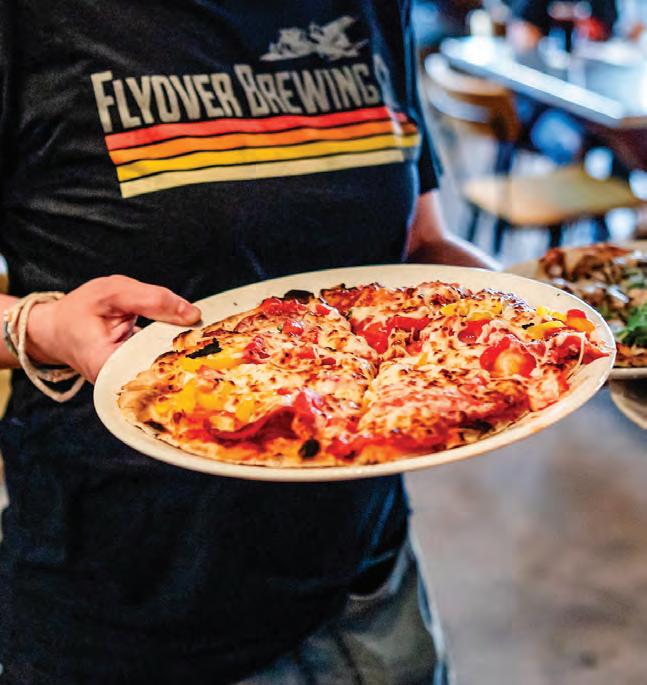
Beet-based beers and wood-fired pizzas anchor a local restaurant that reclaims “flyover country” as a point of pride in western Nebraska.
the kitchen, that same regional bent shows up in wood-fired pizzas, wings and desserts with regional ingredients. The Margheims source hydroponic greens from Aurora, peaches from Colorado, pumpkins from Bayard, and lavender, honey, barbecue sauce and produce from the High Plains. Community ties extend beyond food and drink. Local high school shop students built the brewery’s industrial tables and chairs. Live music fills the patio on many summer weekends and, at times, in winter. Flyover has expanded with a taproom in Potter called Hangar 39.
Earlier this year, Flyover helped launch Nebraska West Fest at Papa Moon Headquarters, bringing breweries, distilleries and cideries from across the region to celebrate western Nebraska’s craft beverage scene. In Scottsbluff, Flyover has made a local identity out of what others once dismissed from 30,000 feet.
FLAT WATER
Thin Ground
The endangered Salt Creek tiger beetle survives in Lancaster County’s fragile wetlands
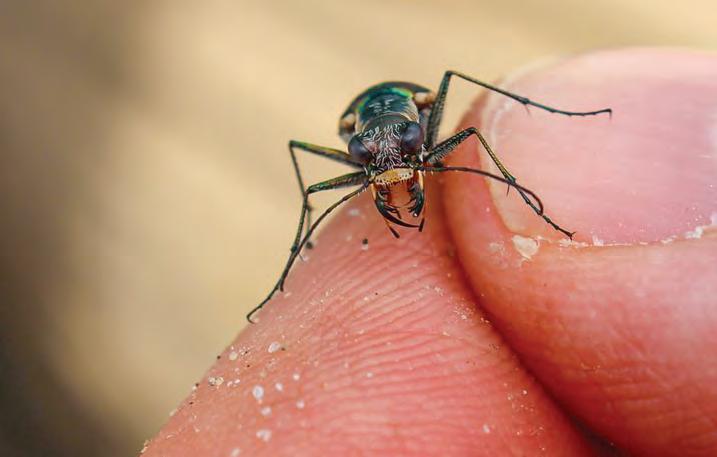
About half an inch long, the Salt Creek tiger beetle – found only in Nebraska – depends on a rapidly shrinking habitat, with fewer than 15 acres remaining.
BY SAVANNAH DAGUPION
By early summer, a flash of metallic brown and green skims the edge of the mud in Lancaster County’s saline wetlands. About half an inch long, the Salt Creek tiger beetle hunts by sight and speed, chasing flies, ants and spiders.
For most of its life, though, it waits underground. After hatching, it becomes a larva and builds a narrow burrow in damp soil, holding just below the surface until something passes overhead. Then it strikes, pulls its prey underground and disappears again. It lives this way for about two years before emerging for roughly six weeks as an adult.
That brief window depends on an equally specific landscape. The beetle needs moist, muddy ground along stream edges and saline mud flats where water lingers near the surface. Less than 15 acres of suitable habitat remain. Because the beetle can survive only in intact saline wetlands, its
decline reflects what is happening to one of Nebraska’s rarest landscapes. Its biggest threat is stream channelization – the straightening and deepening of waterways – which speeds the flow and lowers the stream bed, draining nearby wetlands. The mud dries, burrows collapse and the narrow strip of habitat disappears.
The Salt Creek tiger beetle is federally and state listed as endangered. Today it survives only along portions of Little Salt Creek and adjacent remnant saline wetlands in Lancaster County. Current estimates put the wild population at roughly 275 adults.
Biologists work to protect what remains. Some raise beetles in captivity and release them into wetlands with the moist, exposed ground the species needs. Even the larvae are adapted to brief flooding and low-oxygen conditions in these wet soils. Each summer, adults mate, and females may lay about 50 eggs in moist soil, beginning the cycle again in the same narrow strip of habitat.
Mackenzie Westphal (both)
Arthur Jones/Nebraska Public Media News
Hidden in the Sandhills
A new book explores the folklore, oddities and overlooked history of the Nebraska Sandhills.
Through photographs and short entries, Alan J. Bartels’ latest book maps a vast, sparsely populated region where generous residents hold both the land and its stories close.
BY ARIELLA NARDIZZI
The Nebraska Sandhills have long guarded their stories. Spanning roughly 20,000 square miles of dunes, river valleys and wetlands, the region remains one of North America’s most intact prairie ecosystems. Its sheer scale helps explain why so many stories still cling to it – the human population averages one person per square mile. As Alan J. Bartels writes in Secret Nebraska Sandhills: A Guide to the Weird, Wonderful, and Obscure, “there are likely lots of secrets in the Nebraska Sandhills.”
Bartels, a photographer, friend and contributor to Nebraska Life, first explored the region in 100 Things to Do in the Nebraska Sandhills Before You Die. In his second book about the Sandhills region, he digs deeper into its wild acreage. “But these topics are not advertised on billboards,” he wrote in the introduction. “I stumbled on many while researching something else. Others required digging after hearing a tantalizing bit of folklore.”
Secret Nebraska Sandhills unfolds as a
series of short, two-page entries with 166 accompanying photographs that range across geography and time. Some focus on natural features: unusual craters, canyons “so deep that they never receive direct sunlight,” and waterways that shaped settlement. Others highlight places like Mariaville and Angora, where traces of earlier eras still linger even as the towns themselves fade. Through each entry, Bartels shows a landscape shaped by settlement, rumor and long local memory.
He also embraces the region’s eccentric side. Near Walgren Lake, warnings persist of a serpentine lake creature fondly known as Nebraska’s Loch Ness Monster. Elsewhere, a mile-wide depression near Merna hints at cosmic origins. Some scientists argue that “parsimony of interpretation favors an origin by an extraterrestrial body.” Cryptids, outlaw stories and strange roadside monuments, including the Sandhills Monkey and Ringgold’s unlikely tunnels. The accounts are presented as part of the Sandhills’ oral tradition, with stories still told across the region.
A respect for Sandhillers underlies each entry, and Bartels makes clear that his work depends on firsthand accounts. “I talked to real humans for each feature in this book,” he wrote. The generosity of those residents, including ranchers, historians and lifelong locals, forms the narrative’s foundation.
“It is my hope,” Bartels wrote, “that by writing about places like Mariaville and Angora and bringing things like the Sandhills Monkey and Ringgold’s unlikely tunnels to light, they remain the stuff of Sandhills stories even after all physical traces – if they ever existed at all – have faded from this most beautiful place.”
Secret Nebraska Sandhills: A Guide to the Weird, Wonderful, & Obscure
By Alan J. Bartels
192 pages, paperback, $27 Available online at reedypress.com
Alan J. Bartels (all)
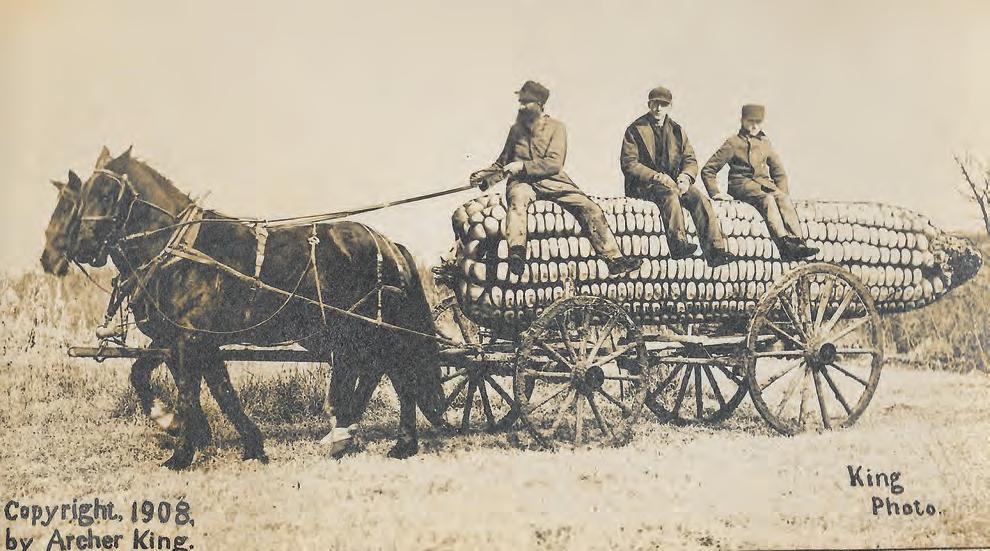
Archer King’s Big Nebraska Pitch
Through exaggerated scenes of outsized crops and livestock, postcards helped sell Nebraska – using humor and illusion to draw attention, spark curiosity and invite people west with the promise of abundance and opportunity.
BY NEBRASKA LIFE STAFF
In the years just before World War I, Archer King was making Nebraska look larger than life.
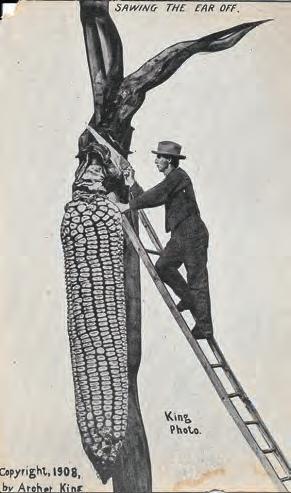
From his base in Table Rock, King produced exaggeration postcards. These staged photographic scenes showed ears of corn taller than men, livestock outsized beyond belief and farm abundance pushed to the edge of fantasy. They were meant to amuse, but they also carried a quieter purpose: selling Nebraska.
Around 1907 and 1908, King copyrighted dozens of these images while working as a photographer in southeast Nebraska. His process was simple and effective. Multiple photographs were cut, layered and re-photographed into a single image, creating a believable illusion of impossible scale. The result was a postcard
that looked photographic and therefore trustworthy, even when the subject clearly was not.
Most of King’s cards did not name a town. That omission was deliberate. Seed dealers, farm implement sellers and merchants across rural Nebraska could add their own stamp or message, turning one image into many local advertisements. A postcard mailed east carried humor, optimism and a suggestion of opportunity, all in a few square inches.
King was more than a postcard man. He farmed, raised cattle, built his own home and, according to local accounts, even constructed a homemade automobile to distribute his cards across the region.
The postcards were jokes. From Table Rock, they also became invitations, promising that in Nebraska everything had room to grow.
Archer King (both)
Nebraska Trees
Test your knowledge of Nebraska’s biggest tree stories. questions by BEN JENKINS
1
Just edging out a rival from Kansas, an 88-foot tree near Beatrice is the national champion for what species, which is also Nebraska’s official state tree?
2 What tree found in southeastern Nebraska produces the pawpaw, the largest native tree fruit in North America?
3
Before cottonwood took its place in 1972, what tree was Nebraska’s original state tree until Dutch elm disease devastated it?
4
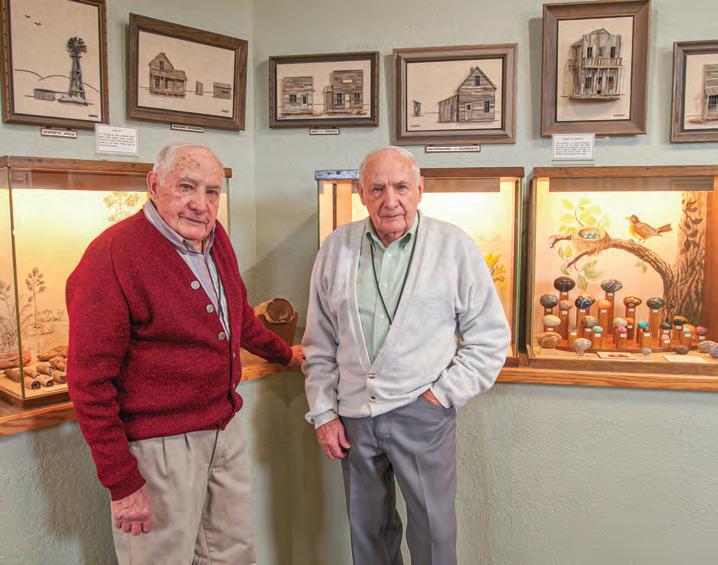
Ogallala is home to a gallery displaying the Kenfield brothers’ collection of what fossilized plant material, billed as “A Story Set in Stone”?
5
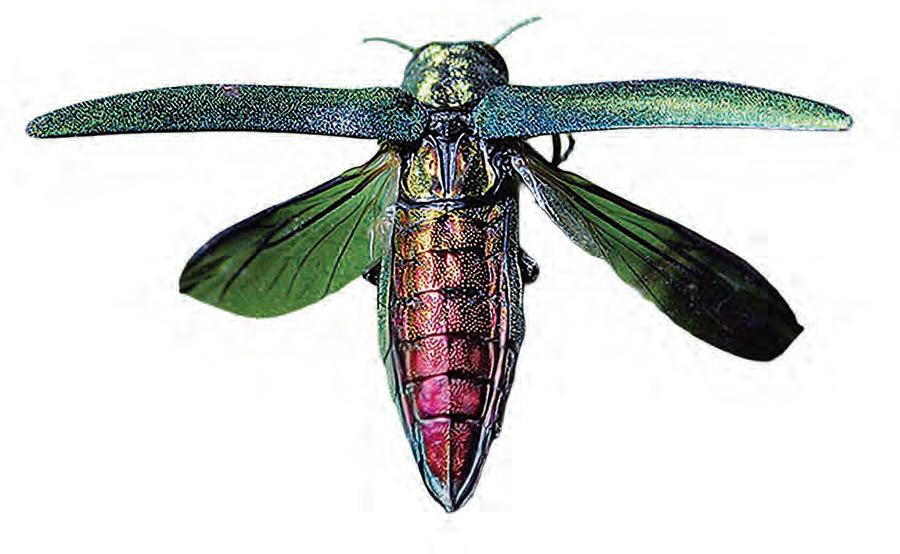
What kind of tree is targeted by emerald ash borer, the invasive beetle found in Nebraska counties including Lancaster, Douglas, Platte and Lincoln?
No peeking, answers on page 54.
Josh Hardin; USDA (below)
6
A granite monument near Central City marks the site of a solitary tree that guided Mormon Trail travelers and served as a camping spot in the 1800s. What was the tree’s name, which was also Central City’s original name?
a. Lone Tree
b. Tall Trunk
c. Great Oak
7
Why is the 20,000-acre Nebraska National Forest one of the strangest forests in the country?
a. It’s completely treeless
b. It has no animals
c. It was planted by people
8 A juniper discovered in 1978 was named for what tiny Loup County seat?
a. Taylor
b. Cody
c. Inman
9 In 2025, Ponca State Park’s Old Wolf Oak – one of Nebraska’s oldest trees – was killed by a deadly fungus. According to scientists’ best estimates, how old was it?
a. 88 years old
b. 146 years old
c. 382 years old
10 Every year on the second weekend of September, Gordon holds a festival named for what tree, which served as a landmark along the Gordon Trail in the 1800s?
a. Dogwood Tree
b. Willow Tree
c. Hawthorn Tree
11 Native to Kimball County, limber pine branches are flexible enough to be tied into knots.
12 After the 1989 wildfires, Boy Scouts spent 25 years helping replant Fort Robinson State Park.
13 Nebraska’s tallest tree, a champion pin oak, is taller than the Nebraska State Capitol.
14
Only one state has a smaller percentage of forested land than Nebraska.
15 A cultivar known as the Marshall Seedless Green Ash was developed in Arlington at a nursery founded by the Marshall brothers.
iStock/zrfphoto
How a lone elm near Garland came to stand for home, memory and loss
story by ARIELLA NARDIZZI
photograph by DILLON HARDINGER
JUST OUTSIDE GARLAND, where Branched Oak Road meets Ridge Road, a lone elm once stood on a rise above the prairie. To most passersby, it was simply a tree on a hill – neither the biggest nor the tallest. To Dillon Hardinger, it was home in view.
“I’ve known this tree since I was a kid,” he said. “Over time, it became a little landmark in my life.” Hardinger grew up down the road, riding past it on the school bus each day. He later moved to Lincoln and built a career in social media and photography with Restore Muscle Cars, but the tree remained fixed in his memory.
He watched it through rain, snow, storms and clear days in every season – dusted white in winter, budding green in spring, casting a lone shadow across summer grass and turning russet in fall. Nebraska wind bent its branches into a shape he could recognize at a glance. “It always stood its ground on that old hill,” he said.
Cattle grazed the surrounding hills, clipping the grass short. The open ground only made the elm more distinct, framed by prairie, shrubs and scattered trees in the Bohemian Alps. On summer nights, far from city lights, Hardinger often pointed his camera toward the hill and let the tree hold the center of the frame.
His favorite image is a Milky Way shot. “I love how it connects the tree to time and the universe,” he said. “But there’s nothing like a simple black-and-white shot. Stripped of color, the composition speaks for itself – the shape, the balance, the presence.”
Then, in the summer of 2025, it was gone. The tree had been cut down, and the hill Hardinger had photographed for years stood bare. The first time he came down the gravel road after it disappeared, the emptiness hit hard.
For Hardinger, and for others who knew the spot, it had become more than an elm on a rise. It marked the turn toward home, the familiar shape on the horizon, the thing you expected to still be there. “Slow down. Appreciate nature and life while you can. It’s good for the soul,” he said.
Photography gave him a way to hold on to it. His pictures preserve the tree as it stood – through starry nights, changing seasons and the years before the hill went bare.
“Maybe in 100 or 200 years, someone will see my photos and think, ‘That guy captured something special about his time,’ ” he said. “Maybe by then, the house will be gone and a new tree will have grown there. But thanks to photography, this one won’t be forgotten.”
ONE TREE HILL
Where Bellevue Began
A bluff-top trading post on the Missouri became Nebraska’s earliest permanent community.
by RON SOODALTER with CHRIS AMUNDSON
AS THE NATION approaches its 250th year, Bellevue still looks out from the bluff where trade and travel once converged.
The 1803 Louisiana Purchase placed the Missouri Valley within the nation’s expanding reach. When Lewis and Clark traveled this corridor in 1804, they helped fix national attention on a route that traders would soon use to push commerce farther west.
In late 1822, Joshua Pilcher built a trading house on a bluff above the Missouri River a few miles north of the Platte. From that bluff, traders could move goods north on the Missouri River and send them west toward the Platte Valley and the country beyond. Head of the Missouri Fur Company, he chose the site as a way station, supply depot and working center where furs could be dried, beaten, sorted and weighed before shipment to St. Louis, a major center of the western fur trade.
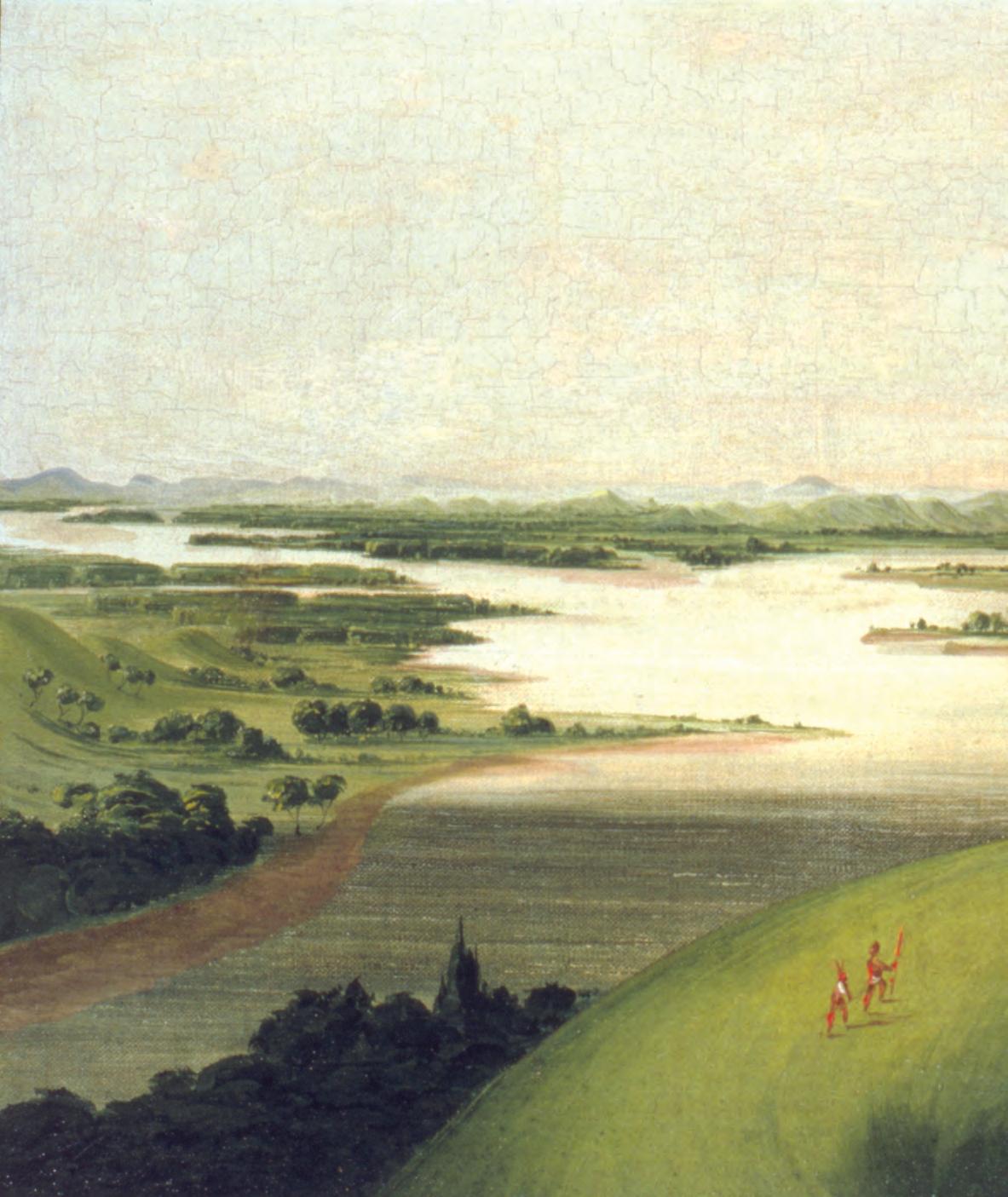
George Catlin’s “The Mouth of the Platte River” captures the Missouri River landscape that drew traders to Bellevue in the 1820s, when a bluff-top fur post became Nebraska’s earliest permanent community.
George Catlin
Traders, interpreters, company men and Native hunters moved through Bellevue as goods came upriver from St. Louis and headed west toward the Platte Valley. Otoes, Omahas and Pawnees traded hides and furs for beads, blankets, food and flintlock rifles. Pelts moved back downriver, making Bellevue an exchange point on the Missouri.
Bellevue began as a bluff-top fur-trade post and grew into Nebraska’s earliest permanent community, linking St. Louis commerce to overland routes leading toward the Platte Valley, the Rockies and the fur country beyond.
Beaver Built The Business
Trade on the Missouri long predated Bellevue. Native nations had exchanged goods along the river and its tributaries for generations before Anglo merchants moved in and redirected that commerce. As reports from the Upper Missouri reached St. Louis, fur companies moved quickly to establish posts and compete for access to the trade.
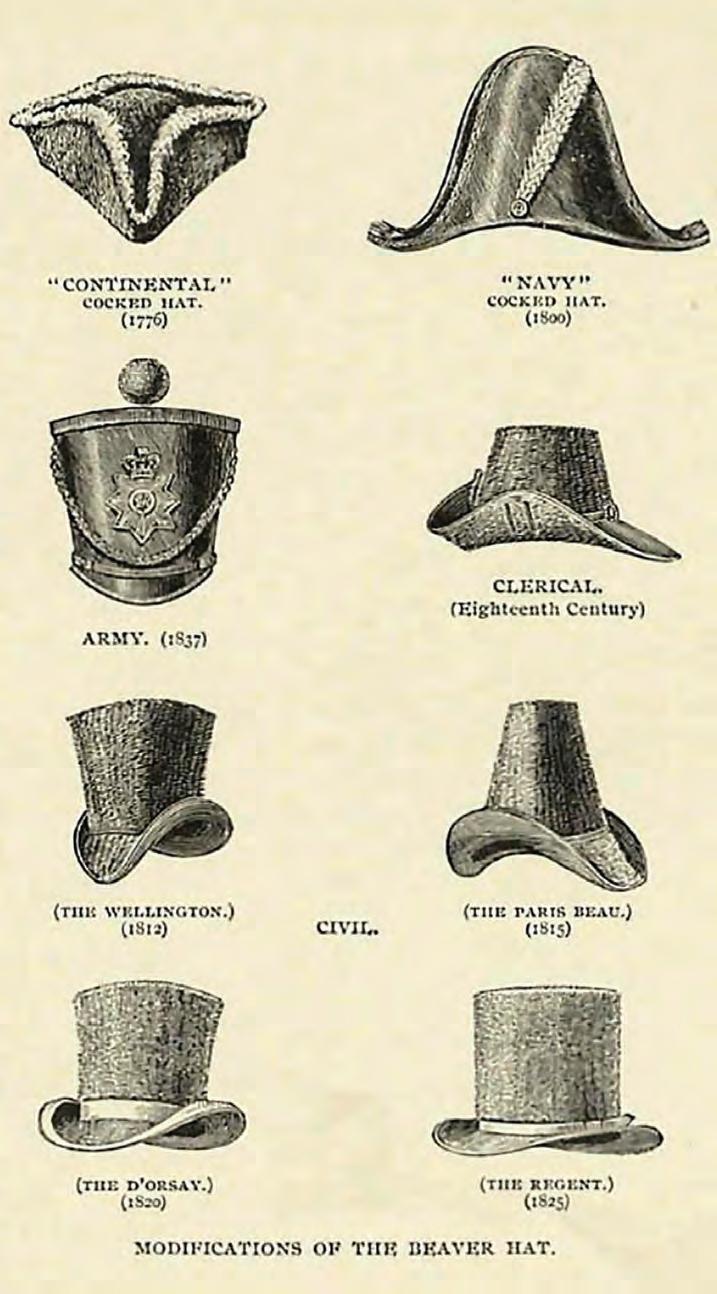
Beaver drove that trade. Its fur was durable, weather-resistant and well suited to felt hats, making it highly prized on both sides of the Atlantic. By the early 19th century, European beaver had been trapped so heavily that North America became the new center of the market. Demand for pelts kept outposts like Bellevue in business.
The Missouri carried traders and supplies north in keelboats in the 1820s. As the trade pushed farther west into the Rockies, the Platte Valley became the best overland route. Bellevue’s access to that corridor made it a practical staging point, receiving goods from St. Louis and sending them west by wagon.
Each summer, company representatives met trappers at a prearranged site, bought the year’s furs, sold supplies and headed back east with the pelts. These annual gatherings, known as rendezvous, let trappers restock and rejoin the trade after months in the mountains. What happened in the Rockies still ran through places like
Bellevue. Jim Beckwourth remembered the gatherings as full of “mirth, songs, dancing, shouting, trading, running, jumping, singing, racing, target-shooting, yarns, frolic.”
Bellevue helped keep the trade moving. Pelts, supplies, credit and news all passed through the post between St. Louis and the mountain country.
Risk On The River
The trade was dangerous. Men died of exposure, starvation, accidents and attacks, and companies lost horses, equipment, furs and sometimes entire brigades. Much of that danger grew from the fact that traders and trappers were moving through lands already occupied and used by Native nations, where commerce, diplomacy and conflict were all part of the frontier economy.
Bellevue operated within a trade that could turn violent quickly. In 1823, an Arikara attack on William Henry Ashley’s men showed how exposed the Missouri River trade could be. The attack took place along the Missouri in what is now central South Dakota, where Arikara warriors struck Ashley’s party after bad weather left some of his men and horses exposed on shore. Fourteen men were killed and 11 wounded.
Pilcher learned the same lesson firsthand. In 1823, he sent a brigade of 28 men into the Rockies. Near Pryor’s Fork on the Yellowstone River, a Blackfeet war party ambushed the expedition, killing seven men and taking goods, pelts, horses and traps. Pilcher put the loss at more than $15,000, roughly $467,000 today. The blow helped cripple the Missouri Fur Company. Pilcher dissolved it the following year, though the business limped along under his name for several more years.
Becoming A Town
Pilcher’s company faltered, but the site did not lose its value. In 1828, experienced trappers and partners Lucien Fontenelle and Andrew Dripps bought the Bellevue post and kept the enterprise going.
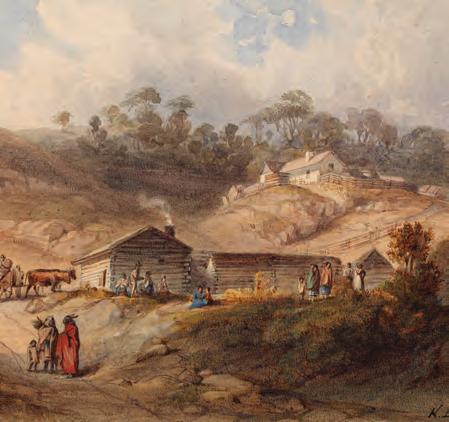
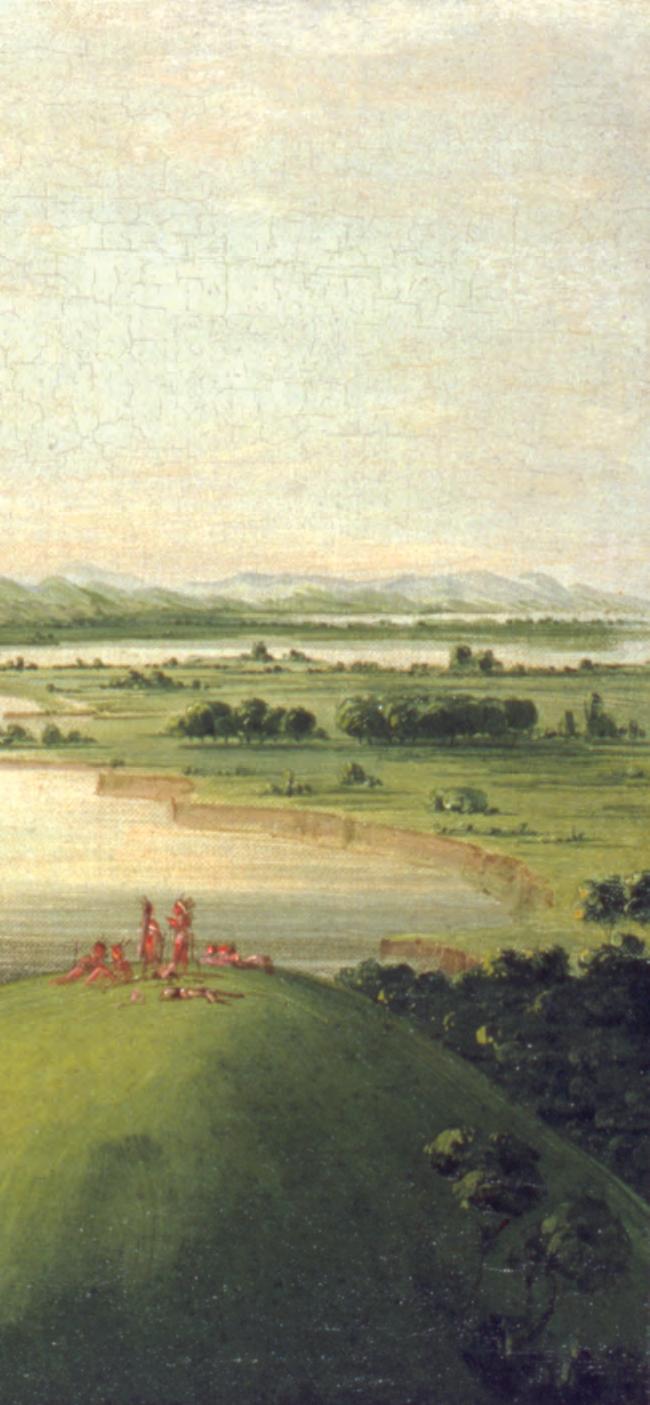
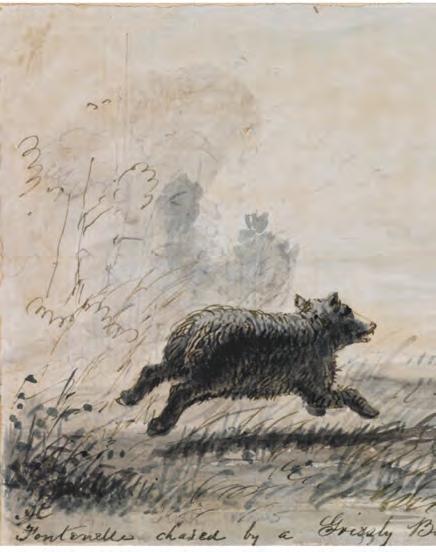
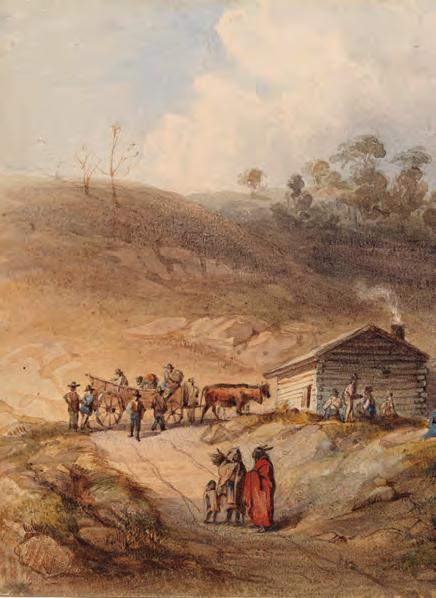
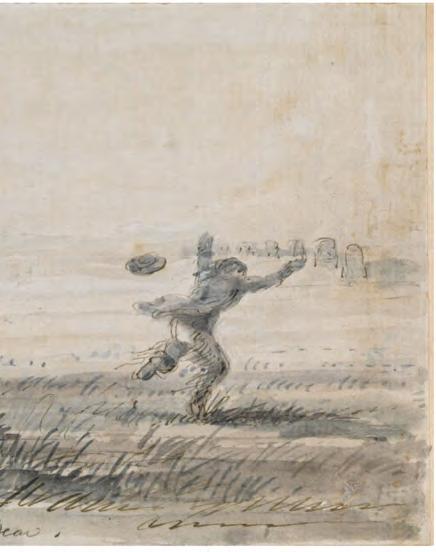
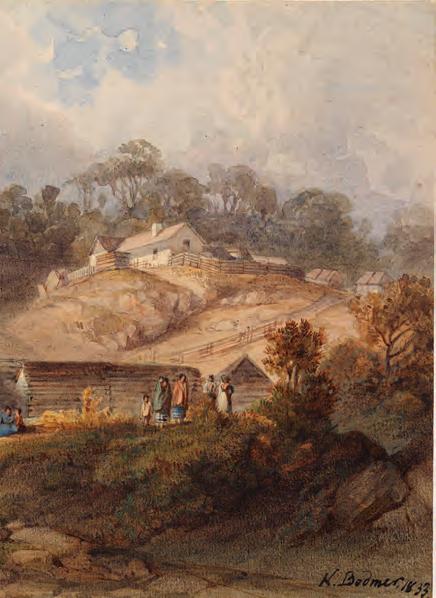
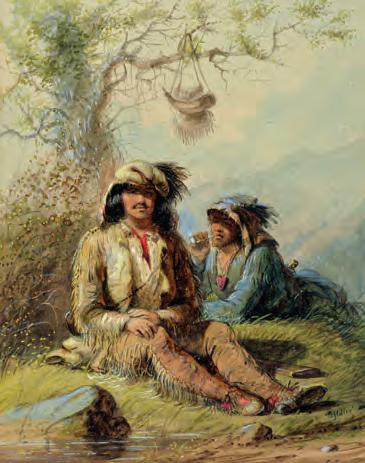
Clockwise from top: Alfred Jacob Miller’s image of Logan Fontenelle chased by a bear reflects the dangers of frontier travel. Felt beaver hats drove a far-reaching trade. Karl Bodmer’s view of Bellevue shows a Missouri River post shaped by commerce.
Karl Bodmer
Alfred Jacob Miller
By then Bellevue had grown beyond a single trading house. It included a main house, smith’s shops, houses for the Otoes and Omahas, a council house and an interpreter’s residence. Trade, smith’s work, council meetings and translation all took place within that small cluster of buildings on the bluff. The post was no longer just moving goods. It was beginning to hold institutions.
Fontenelle and Dripps later sold the post to the federal government for $1,000. Bellevue entered a new phase. It became the site of the Upper Missouri Indian Agency under Maj. John Dougherty.
By the late 1830s, the era of the mountain men and smaller fur companies was fading. Beaver had been heavily trapped, silk hats cut demand for beaver felt and larger firms squeezed out smaller competitors. Bellevue was already becoming more than a fur post.
The old post still held strategic value on the river, but it now housed the agency and, soon after, mission activity as well. A Presbyterian mission took root there, followed by a Baptist mission. A boarding school for Native children was established,
River trade, overland routes and settlement came together on the bluff where Bellevue began.
and a marker east of Warren Street recalls the school today.
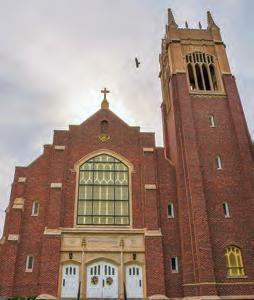
By 1850, Bellevue was home to the first Presbyterian church in Nebraska. Bellevue was officially incorporated in 1855. The church, built in 1856, is the oldest surviving church building in the state, and an early territorial newspaper followed in 1857. By then, the old fur-trade post had become a town.
The same years that brought agencies, missions, churches and schools also carried a cost. They brought a steady reduction of Native land. As non-Native settlement spread across Nebraska, Native nations were pushed onto reservations and treaty lands were narrowed or broken apart.
Through Artists’ Eyes
Artists traveling the Missouri also left a record of Bellevue, and each saw the place from a different angle.
George Catlin came first. By the time he reached Maj. John Dougherty’s agency in 1832, he had already spent weeks traveling up the river and sketching Native life on the plains. What he found at Bellevue was more than a rough outpost. He described a cultivated place with cornfields, potatoes, fruit trees, pigs, poultry and cattle, and with a welcome table waiting. He also painted “The Mouth of the Platte River,” preserving a view of the area as it looked in those years.
A year later came Karl Bodmer, the Swiss-French artist traveling with Maximilian, Prince of Wied, on a scientific journey up the Missouri. He left a rare visual record of the post and its occupants. Maximilian described the little community as “quite prettily situated on a hilltop,” with huts near the water and, above them, the agency building, the blacksmith’s dwelling and other structures.
Then came Alfred Jacob Miller in 1837, traveling west in the company of a wealthy
Bellevue University
Bellevue has evolved from a fur-trade post into Nebraska’s oldest continuously inhabited community, but its origins are still visible in places like Bellevue University and Fontenelle Forest, where the institutions and landscape reflect the town’s layered history.
Scottish sportsman bound for the Rocky Mountain rendezvous. Miller would become the first artist to document that world firsthand. One Bellevue-linked work, “Fontenelle Being Chased by a Grizzly,” adds a note of danger to a place otherwise remembered through river views, buildings and cultivated ground.
Together, their paintings and descriptions fixed Bellevue in view: huts near the water, official buildings above, a cultivated settlement taking shape on the bluff. The bluff above the Missouri still marks where Bellevue began.
Along The Bluff Today
The original trading post is gone. Archaeologists explored the 1822 post site in the mid-1970s. East of Warren Street, the marker for the boarding school fixes another part of the town’s early history on the landscape.
The Sarpy County Historical Society preserves Bellevue’s history in collections spanning fur traders, missionaries, early farm life and Fort Crook, the military post that later became Offutt Air Force
Base. The former museum building is now closed as plans take shape for a new heritage center.
A few minutes away, Fontenelle Forest spreads across more than 1,500 acres, with 17 miles of trails through forest, prairie and wetlands. The bluff-and-river landscape that first shaped Bellevue is easier to understand there than on a map.
Bellevue itself has long since spread beyond the old post. Nearly 65,000 people live in Bellevue now. The city’s historic sites include the 1856 Presbyterian church, the 1869 Omaha and Southern Railroad Depot, the 1856 Fontenelle Bank, the 1830s log cabin and Pioneer Cemetery.
The Missouri has never left the story. It brought trade to Bellevue in the 1820s. In 2019, flooding damaged homes in the city and affected nearby Offutt. The river below the bluff remains part of daily life in Bellevue, as it has been since the town began.
Stand above the Missouri in Bellevue and the geography comes clear. The river runs below, the route west opens beyond it, and the bluff marks the place where a trading post became a town and then a city.
When Cholera Changed the Jury
TAME AS IT had become, Bellevue retained some rougher edges well into the 19th century, as the case of Charles Henry suggests. A physician and land speculator, Henry quarreled in April 1855 with George Hollister over the property line between two town lots and shot him dead. It looked like an open-and-shut case. Henry was seized and confined in the town blacksmith shop, where guards shielded him from a growing lynch mob. Then cholera broke out. Still manacled and escorted by the sheriff, Henry was taken out to treat the sick with cholera. He moved from house to house under guard, tending the very people who had expected to see him tried for murder. By the time his case came to trial, several of the men seated on the jury had been among those he had treated. The defense also brought in townspeople as character witnesses, and Henry was acquitted.
He soon moved to Omaha, where he became a prominent citizen and reportedly “greatly helped the Union cause during the Civil War.”
In a town ready to see him hanged, disease and gratitude changed the ending.
Alfred Jacob Miller
Fontenelle Forest
PIONEERS ON THE TURF
Midland University’s women’s flag football team builds a new legacy in Nebraska, one play at a time.
story by brADy oLtMANs photogrAphs by JErEMy bUss
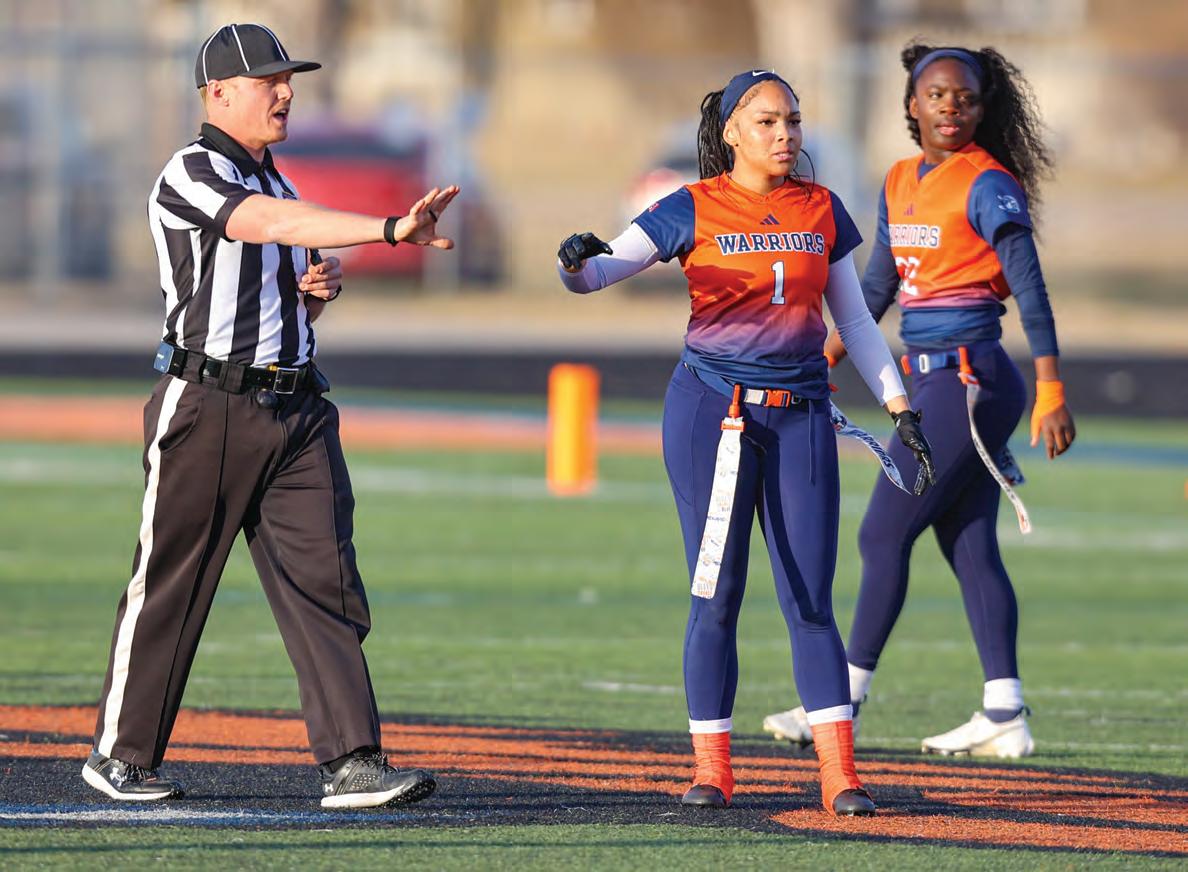
At Midland University’s Heedum Field, players from across the country are coming together around the fast-growing sport of women’s flag football. In Nebraska, where the pipeline is still thin, sustaining a program depends on national recruiting and strong team culture.
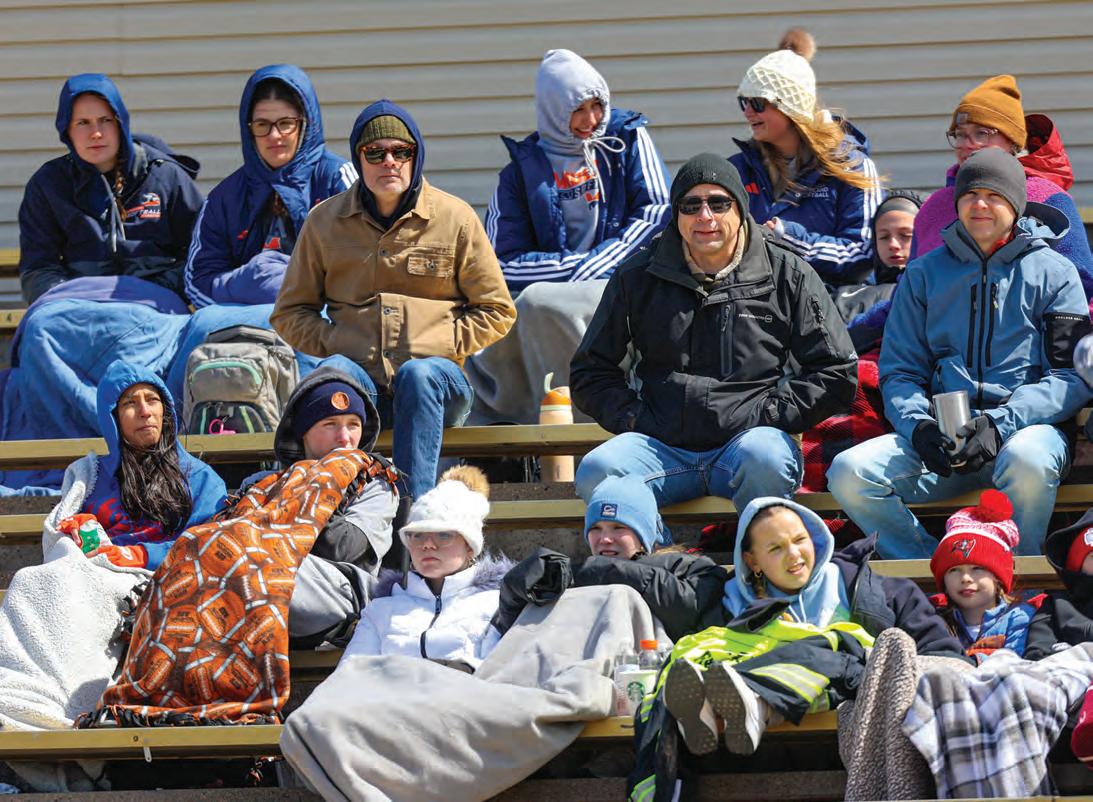
THE COLD SETTLED over Fremont like a dare. A stiff spring wind swept across Heedum Field at Midland University and rattled the metal bleachers. But for the young women in leggings and long sleeves – Nebraska’s first collegiate flag football players – the weather changed nothing. This was football weather, no matter what the calendar said.
On that gray afternoon in March 2024, two dozen friends and family huddled under blankets to watch more than a game. They were watching a new chapter in Nebraska sports take shape.
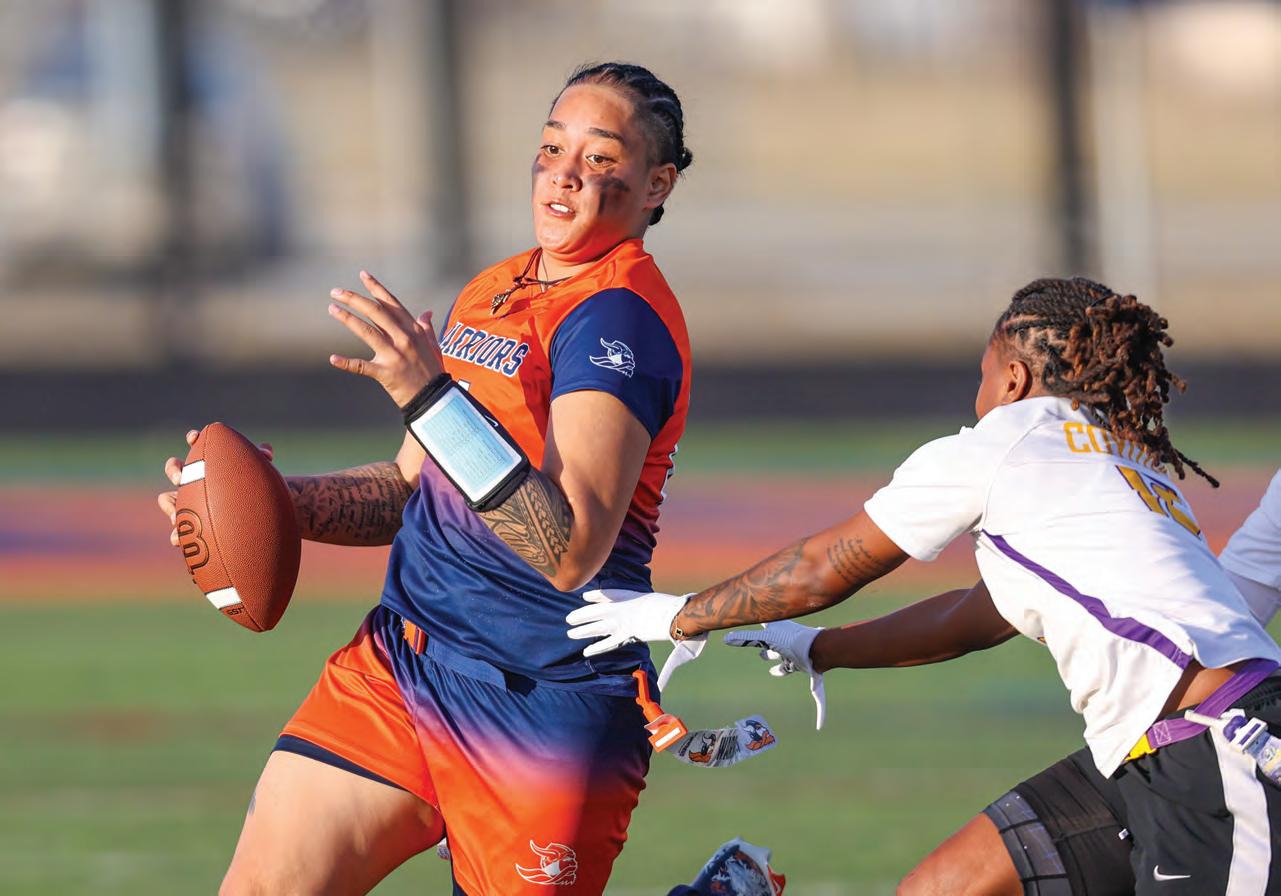
The Warriors led Southwestern College of Winfield, Kansas, by a touchdown late in the first half. Angel Ioane Kaio, the quarterback whose path had taken her from Hawaiʻi to Alaska to Midland, pulled off her winter coat and jogged to the huddle. The snap smacked into her frozen fingers. She looked over the middle, found Morgan Kalisek and let it go.
Kalisek – the first athlete to sign with Midland’s young program, a Fremont native who had starred in softball and basketball at the high school down the road – made the catch and moved the chains
in the final home game of her career. Her friends and family, bundled in coats on the grandstand, rose with the play.
For Kalisek, Allaya Livingston, Ioane Kaio and their teammates, this was more than a Saturday game. It was a chance to prove that football had room for them, too.
WOMEN’S FLAG FOOTBALL has grown fast. In 2002, Florida became the first state to sanction girls high school flag football. Since then, participation has surged. NFHS reporting said about 500,000 girls ages 6-17 played in 2023, up 63 percent
from 2019. The sport is also set for its Olympic debut at the 2028 Los Angeles Games.
Under head coach James Kerwin, Midland’s program has taken shape through a balance of structure and player input. The result is a team built on trust and ownership.
The wave has only grown since Midland launched the program. Seventeen state associations have sanctioned girls flag football, with more weighing the move and others running pilot or independent programs. At the college level, the NAIA said the 2025-26 season would include 35 women’s flag football programs. Midland was early to the sport. In 2022, the university said it had added women’s flag football through an NFL partnership and was among a small first group of colleges offering it.
Flag football is played with seven players a side on an 80-yard field. Instead of tackling, defenders stop a ball carrier by pulling a flag from her waist. The game moves quickly and rewards timing, precision and pursuit.
That growth helped make Midland’s launch in 2020 more than a campus addition. It gave Nebraska a foothold in a sport that was already moving faster in Arizona, Texas, Georgia and Florida than it was on the Plains.
Midland’s first head coach, Jaison Jones, came from youth, high school and semi-pro football. He led the program to a 15-7 record over three seasons before stepping down. That left athletic director Courtney Thomsen looking for a coach on short notice.
Her hire was James Kerwin, a veteran football coach whose background ranged from NFL camps to semi-pro leagues. He had never coached women, and he had never coached flag football.
The season opened against Ottawa University, a national power stacked with Olympic-caliber talent. Midland trailed 39-0 in the fourth quarter.
A few days later, the Warriors nearly upset Kansas Wesleyan. Down 18-14 late, they needed 66 yards to win. They got 40 before time ran out. It was a loss, but not the kind that left a team discouraged. From there, something shifted.
Midland won seven straight games. Three times, the Warriors pitched a shutout. They finished 11-9, and Kerwin stayed on as permanent head coach. Then came the next challenge: convincing top players from around the country to choose a small college in eastern Nebraska.
He also inherited a team that felt unsteady. Some players were considering transferring. Kerwin believed the only way forward was to build a culture strong enough to hold them together.
He said the players were direct from the start. If something felt off, they said so. He took that as a good sign. Rather than
forcing a system onto them, he asked what they liked, what they trusted and where they thought the team could improve. Defensive ideas came from player input. Offensive wrinkles did, too. Over time, doubt gave way to belief.
Thomsen said trust mattered most. Experience in flag football was hard to find, but she wanted someone who understood how to build relationships and steady a young program. The NFL partnership had helped prove there was enough interest to start, but the team still needed the right person to carry it forward.
Thomsen had once imagined a life in athletics herself, playing soccer at the University of Arizona before injuries forced her in another direction. Creating opportunities for women became part of her work. When the job reopened just weeks before the 2024 season, she moved quickly.
The games unfold through timing and precision – quick releases, clean routes and receivers finding space. Big plays come from turning short gains into open field.
Kerwin and Thomsen knew where to look: Arizona, Texas, Georgia and Florida, where girls were already growing up with flag football as part of the athletic landscape. In Nebraska, the pipeline was still thin, so Midland recruited heavily at national tournaments and showcases. None of the players signed after Kerwin’s arrival were native Nebraskans, but they came for the chance to play and to shape a young program.
BACK AT HEEDUM FIELD
the first half against Southwestern was closing fast.
Midland still held a narrow lead in the second quarter when the defense forced an interception and gave Ioane Kaio another chance. She took the snap, dropped back and saw Livingston streaking up the sideline. The pass was out before the defender could recover.
Livingston had come to Midland from
Houston’s Legacy School of Sports Sciences. A late showcase had earned her five scholarship offers. She had once planned on the Air Force. Then flag football opened another lane.
She caught the ball in stride and crossed the goal line. Later, she added an interception of her own. By halftime, Midland led 20-6. In the second half, the Warriors added two more touchdowns and pulled away for a 33-6 win. Afterward, players drifted to a parent’s tailgate in the parking lot for sandwiches and chips, a small-college celebration with the wind still whipping across campus.
Two weeks later, the team traveled to Lincoln for an exhibition at Memorial Stadium as part of the Husker Games. For players who had grown up watching Nebraska from the stands or on television, the setting felt outsized. Midland beat a
UNL alumni team 60-0, but the score was beside the point. The memory was walking into Memorial Stadium in uniform and feeling, for an afternoon, how large the sport might become.
For Midland, each game became both competition and demonstration: proof that women’s flag football could draw talent, hold a roster together and build a following in a state still catching up to the sport.
On that same cold Saturday in Fremont, as Midland beat Southwestern a few blocks away, children played flag football outside Fremont Middle School. Girls and boys ran across the grass on three fields, flags flying behind them, while parents watched from folding chairs.
Maybe one day one of those girls will pull on cleats at Heedum Field and see the path more clearly because Midland’s players got there first.
Family and friends line the bleachers, bracing against the wind to watch a team that has pushed through the early years of a new program. That support, paired with the players’ persistence, is helping steady the foundation and making the path clearer for those coming next.
Old Man Stirring
On a Sandhills ranch, winter loosens its grip as calving season, saddle work and spring arrive together.
AINSLIE WILSON
story and photographs by
ISIT ON THE veranda in the summer sun, the lawn shaded by great cottonwoods planted generations ago, and listen to the meadowlark trill and the dove’s mournful coo. Wildflowers move in the grass on the hill above the house. For some reason, I find myself thinking of winter.
Of snow-covered hills and valleys buried deep. Of wild winds sweeping through, battering everything in their path. Of drifts so endless it was a constant battle to put one foot in front of the other, toes frozen, hands numb, breath shallow.
So many times this winter, I stood at the big kitchen window with a cuppa tea and watched the storms move in from the west, winds howling through the trees, snow swirling in a dance of its very own, and dreamt of summer.
Of waking in the morning and walking outside in shorts and a T-shirt, barefoot, to greet the new day. To hear the birds sing in
the treetops and feel the fresh green grass underfoot and know the coveralls, mittens and muck boots were safely tucked away. At least for now.
In the days of frigid, below-freezing temperatures, dreams of summer got me through winter.
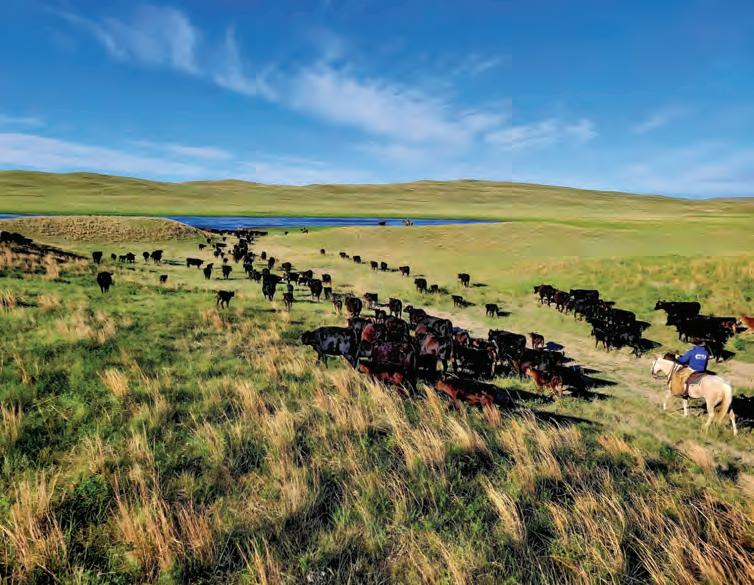
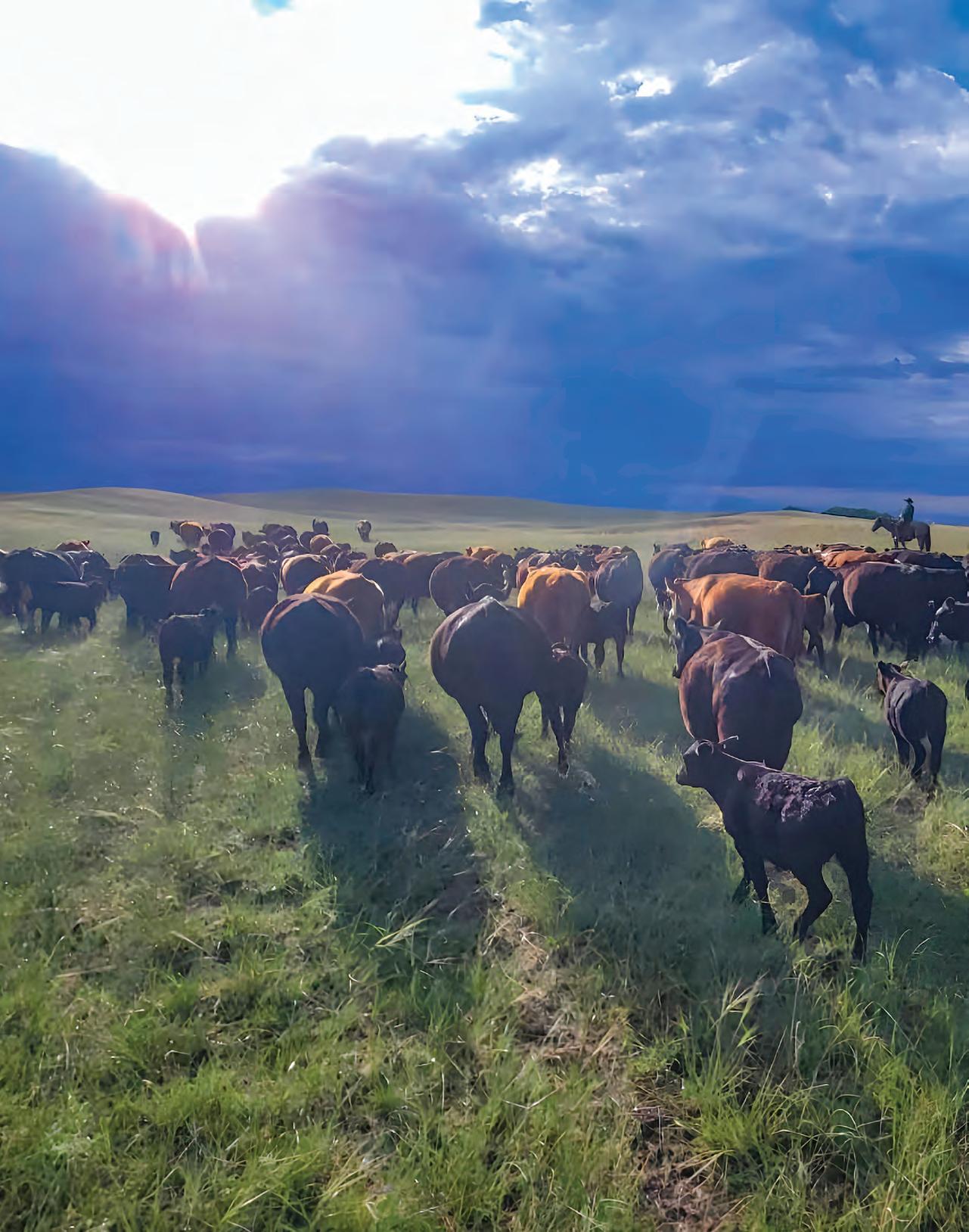
Now cows that were dull and woolly, standing with their backs to the bitter February winds, are so fat and lazy they chew their cud and swat flies as you ride by, not bothering to move, hulky teenage calves by their side.
The horses that huddled by the barn and humped up under the saddle are now slick and shiny in the sun, occasionally delivering a nip or pinning an ear, but only just. Because they couldn’t be bothered, really.
In the winter months I’d dream of waking at first light to revel in the cool morning air and having to decide between enjoying a few minutes under a blanket that it was too hot for last night, or getting out
to the barn to catch and saddle horses, to rope before it got hot.
Up it is. I’d hate to waste a minute.
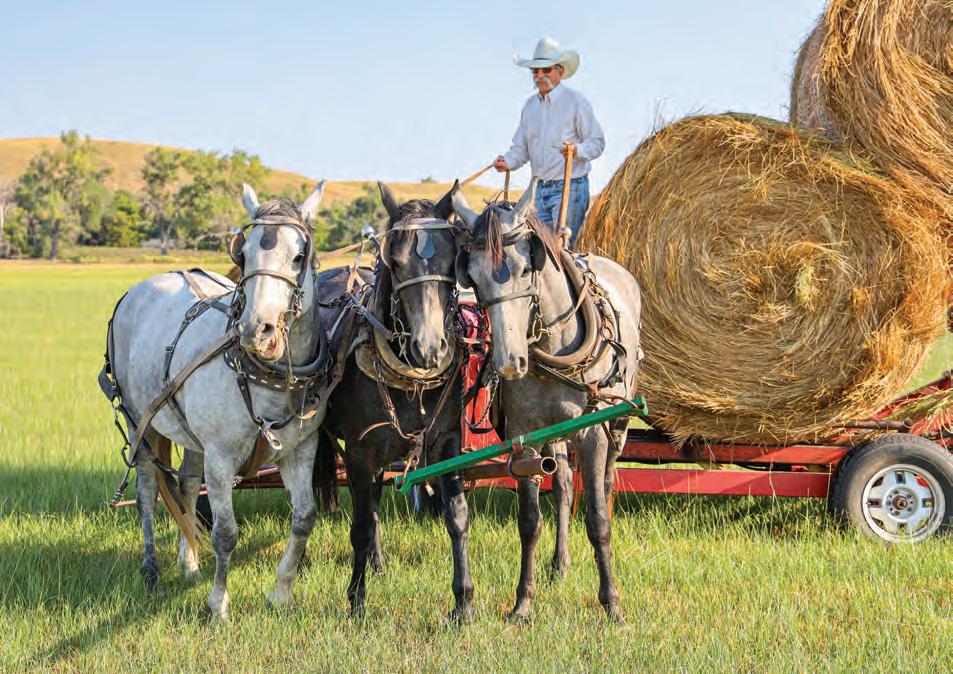
Brad loves winter. The deep snow, the impassable roads, the challenge of getting all the cows fed. He looks forward to harnessing the teams, loading the wagon and hauling hay.
I remember the struggle. He remembers getting it done. I remember how cold I was, how deep the snow was, how many times I had to walk. He remembers how well the horses worked, the loads they pulled and how many bales they fed.
Not that he complained when it warmed up.
There’s a raw beauty to winter here, unlike anything I’ve ever seen. It can discourage even the toughest souls. I’ve learned to enjoy the fresh snow, the days without wind and the moonlit starry nights.
But there’s nothing quite like coming out of winter.
Writer and photographer Ainslie Wilson muses on the turn from winter to spring on a Sandhills ranch near Arthur – the sound of wild winds giving way to birdsong, woolly cattle turning lazy and hard work easing as the weather warms.
I can hear the birds trilling their chorus in the trees over the clang of the tugs as the team trots down the road to the Homestead.
If I listen hard enough, I can hear the earth soften, see the grass unfurl and smell the warmth of the sun. The trees wake from their slumber to look around and stretch their branches toward the sun and sigh with delight. I’m right there with them.
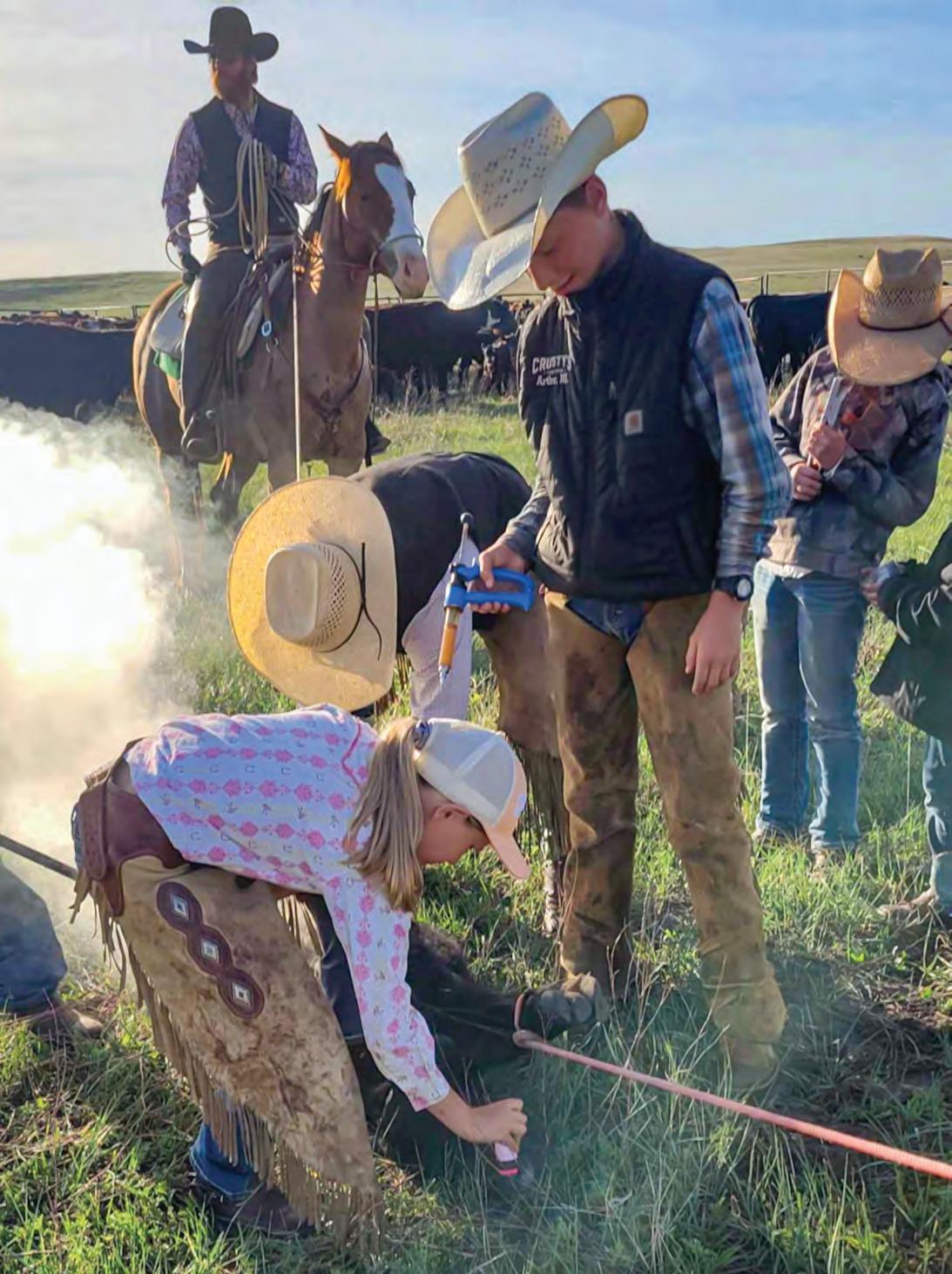
It also means I smell like a goat, the dog is eating afterbirth, and there’s a dead cow on 17. The Polaris won’t start until after 11 a.m., and there’s mutiny in the household when Fletch realizes it means he has to carry the buckets of grain from the barn to the horses over the road.
Buck wants more sleep and for people to stop stealing his secret stash of Caramello Koalas.
“You still have Koalas?”
Jake goes on the hunt. Buck hands me the bag, and we find a new hiding spot.
The newest calves are tagged, the heifers all have one each, and only one, and are all in agreement as to which one that should be. The weather’s so nice right now that we turn them out, hoping they all come back
in at the end of the day with the same calf they left with.
The mornings are crisp and Stella pins her ears as I tighten the cinch. I have to remember to keep my mouth shut or I’ll be gagging on horsehair for the rest of the day. The sun’s barely up, hiding behind low clouds of the darkest blue that make me think of snow.
“Ride through the heifers. I’ll take the kids to school and feed at the Frye.”
He left out the bit about stopping at the store for a coffee.
Stella’s hooves ring out on the still-frozen ground as we trot around the north side of the hill. This warmer weather brings out the best in the horses. They can’t decide whether they want to buck, suck back or run off. Today Stella wants to buck. She spends an inordinate amount of time looking for something to spook at, this time an old roll of barbed wire. She skitters across the ice in her haste to get away from it and slides down the hill. When she comes to a stop, it takes a minute for my heart rate to return to normal and my legs to not feel like jelly.
By afternoon the snow is melting and running in rivulets down the road. The
tanks are no longer ice, which, if you’ve been hacking at them all winter with whatever you can find in the back of the pickup, is a moment of true joy.
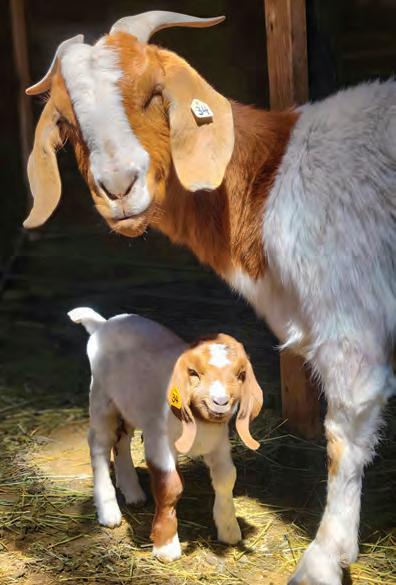
Along with all this re-affirmation of life stuff, and being able to drive the team in gloves instead of mittens, comes dead things, sadly. Like the cow on 17, now a pile of bones. And there will be calves that don’t make it. There’s a deceased chook in the chicken house that’s been frozen to the ground all winter, that I’ll have to get rid of before things warm up, and one of the nannies has lost twins.
But it’s impossible to feel down for long as the earth awakens, like an old man stirring from his winter-long nap, to be greeted by the lovely smile of Mother Nature.
“Well, hello,” he says, delighted to see such a wonder. “How was winter?”
“Ohhh,” she says with a cheeky grin, “I had lots of fun…”
About the Author
Ainslie Wilson grew up on a ranch in Victoria, Australia, and now lives in Arthur, where she writes and photographs from life in the Nebraska Sandhills.
With the earth softening, the grass unfurling and the trees stretching their branches comes a new crop of calves to tag, goats to tend, a dog nosing afterbirth and a frozen chicken to clear from the coop.
Spring is like an old man stirring from a long nap – bringing new life alongside what winter leaves behind.
Air Fryer Favorites
LIGHT AND CRISPY TASTES FOR ALL OCCASIONS
recipes and PHOTOGRAPHS BY DANELLE McCOLLUM
THE AIR FRYER has gone from novelty to necessity in record time. By frying food in circulated hot air in lieu of hot oil, the kitchen device allows cooks to prepare hot and crispy food without getting greasy. Here are some of our favorite air fryer creations for sides, entrées and desserts.
Asian Sesame Broccoli
This crispy broccoli side dish bursts with the flavors of ginger, garlic and soy sauce, while honey adds a hint of sweetness. Toasted sesame seeds make a simple finishing touch.
Heat air fryer to 400°. Place broccoli in large bowl. Add olive oil, sesame oil, soy sauce, honey, garlic powder, ginger, red pepper flakes, and salt and pepper to taste. Toss to coat well.
Transfer broccoli to air fryer basket and cook 8-10 minutes, shaking basket halfway through cooking. Transfer broccoli to serving bowl and sprinkle with toasted sesame seeds before serving.
2 cups broccoli florets
1 Tbsp olive oil
1 tsp sesame oil
2 Tbsp soy sauce
1 tsp honey
1/2 tsp garlic powder
1/4 tsp ground ginger
Pinch of red pepper flakes
Salt and pepper, to taste
1 Tbsp toasted sesame seeds, for garnish
Ser ves 6-8
Chicken Chimichangas
Stuffed with shredded chicken and pepper jack cheese, these chimichangas deliver a crispy tortilla exterior without the extra calories of deep frying.
In medium bowl, combine chicken, lime juice, cheese, salsa verde, diced chiles, cumin, and salt and pepper to taste. Mix well. Place about 1/2 cup of filling on bottom 1/3 of tortilla. Wrap tortilla around the filling, folding edges in toward center as you roll. Place seam side down on parchment-lined baking sheet. Repeat with remaining tortillas and filling. Heat air fryer to 400°. Spray chimichangas with cooking spray. Add 2-3 chimichangas to air fryer, seam side down. Cook about 8 minutes, turning once halfway through cooking, until crisp and golden brown. Repeat with remaining chimichangas. Serve with lettuce, avocado, salsa, sour cream, etc. and other favorite taco toppings.
3 cups cooked shredded chicken
1 Tbsp lime juice
1 cup shredded pepper jack cheese
1/4 cup salsa verde (green salsa)
1 4-oz can diced green chiles
1/2 tsp cumin
Salt and pepper, to taste
6 8-inch flour tortillas
Non-stick cooking spray
Lettuce, avocado, salsa, sour cream or other toppings, if desired
Ser ves 6
Molten Choco Cakes
Ready about 20 minutes after prep begins, this rich dessert for two has a soft, gooey center. Serve the cakes warm with whipped cream, berries or ice cream.
Butter two 6-oz ramekins and dust with granulated sugar. In medium saucepan, heat butter, chocolate and cream over medium-low heat, stirring often, until chocolate is melted and smooth. Remove from heat and stir in vanilla. Whisk in flour until mixture is smooth.
In small bowl, whisk sugar, egg and egg yolk until thick and pale. Fold egg mixture, 1/3 at a time, into chocolate mixture until well combined. Divide batter between prepared ramekins. Heat air fryer to 300°. Cook for 8-10 minutes, or until edges are firm but centers are just set. Transfer to wire rack and cool for 5 minutes. Top with whipped cream, ice cream or fresh berries, if desired.
1/4 cup butter, plus more for greasing ramekins
2 Tbsp sugar, plus more for dusting ramekins
2 oz semisweet chocolate, chopped (or chocolate chips)
2 Tbsp heavy cream
1/4 tsp vanilla extract
2 Tbsp flour
1 egg, room temperature
1 egg yolk, room temperature Whipped cream or other toppings, if desired
Ser ves 2
WE’RE RAVENOUS TO taste (and publish) your favorite family recipes and stories that accompany them. Send recipes and stories to kitchens@nebraskalife.com or to the address at the front of this magazine.
An open door can offer welcome, memory or a way into the world beyond. Across kitchens, barns and prairie landscapes, these poems pause at the threshold, where voices, weather, work and family life move in and out, carrying the textures of home with them.
The Welcome
Vaughn Neeld, Cañon City, Colorado
As the school bus rounds the corner and starts up the hill, I take off my shoes. When the doors open, I hop down. The earth feels cool beneath my tender winter feet. I dash to the house, grab the handle of the sagging screen door, dance across the worn linoleum, toss my shoes into the closet. The back door stands open, welcoming the warm spring breeze. It’s the last day of school.
Revolving and Resolving
Elaine
Jedlicka Heath, Omaha
In her Schuyler farm home, My Mother had revolving doors, Wouldn’t have it any other way!
Bring in your baby to wash his hands, Come in! I’ll give you a pint of sugar, Gosh. Too hot outside; it’s cool inside!
Hello, come on in for lunch, Hi there, join us for a hot supper, I’ll resolve the problem. Come on in!
Need to make a call? Walk in, Sure, come on in for coffee, Too cold in this blizzard. Come in!
Walk in and taste a fresh kolache, Walk this way – get out of the rain, Way too cold – come in to warm up!
Quiet
Dennis Radil, Comstock
The front door now is missing It beckons all inside; The hollow sounds and empty rooms Speak loud of other times.
When family members young and old Once filled these rooms with laughter; Now crumbling plaster fills the floor Leaving bare and silent rafters.
I climb the stairs to second floor And think of all that was; Of family living room by room A place once full of cause.
When life once there was happy And laughter filled the air; Today the walls are quiet Sounds echo what is bare.
Ken Smith
Higher Towards the Haymow Door
Laura Hilkemann, Firth
Under the pointed, protruding crow’s beak
Of grandpa’s moss-splotched barn roof, (But above the open haymow door
Where swallows swoop through
To shape their mud-mouthful nests),
A gray, splintery-wood beam juts out
Like an outreached arm clutching
A rusted pulley-wheel dangling
A robust hook from a frayed rope
Which is definitely not for hoisting
A dented, metal washtub with handles
Found in the forgotten henhouse
Higher and higher into the air
With your little sister sitting inside.
Even if we were taking turns.
Home
Angie Ulrich, Crete
An open door means come right in ...
From the cold world
From the stress
From the noise
Pull up a seat
With a warm drink in your hands
Share some laughs and unload some cares
Warm lights shining through the door’s window panes ...
Beckoning extended family home
Welcoming friends
Sharing a neighbor’s need
The door to the farmhouse kitchen opens to the place where most gather
Warmth comes from the stove, but the majority from those around the table
Reminisced memories shared and tales that grow bigger each time they are recounted
A spread of homemade goodies laden the counters, summoning people back through the kitchen’s door
The kitchen is the heart of the home, with its glow and love beckoning you back to where you belong!
Open the Door
Duane Anderson, Olathe, Kansas
Grab hold of the doorknob and open the door before you to a world ready to be explored.
Walk outside to mother nature, a world of rivers and streams, crops growing in farmers’ fields,
trees and bushes in bloom, birds flying, and animals roaming, blue skies and white clouds,
the sun, the moon, the stars. Yes, open the door to a world full of life.
SEND YOUR POEMS on the theme “On the River” for the July/August 2026 issue, deadline May 1, and “Prairie Light” for the September/October 2026 issue, deadline July 1. Email your poems to poetry@nebraskalife.com or mail to the address at the front of this magazine .
Elizabeth Hilkemann
BAYARD
Chimney Rock Museum, p 50
FREMONT
Louis E. May Museum, p 51
GRAND ISLAND
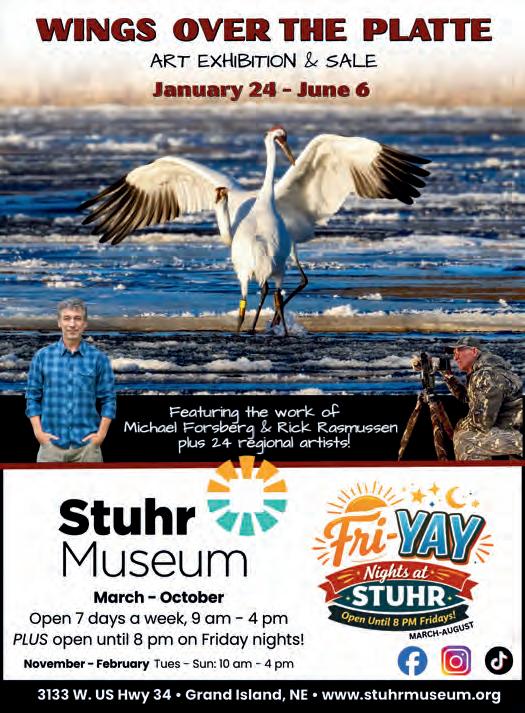
Stuhr Museum of the Prairie Pioneer, p 49
HENDERSON
Henderson Mennonite Heritage Park and History Museum, p 50
KEARNEY
Museum of Nebraska Art, p 49
Kearney Area Children’s Museum, p 49
LA VISTA
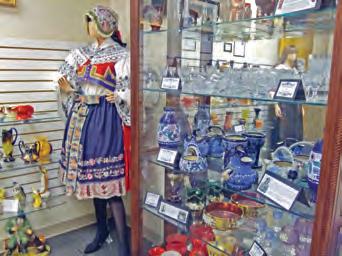
Czech and Slovak Educational Center and Cultural Museum, p 50
OMAHA Durham Museum, p 48
SEWARD
Nebraska National Guard Museum, p 50
YORK
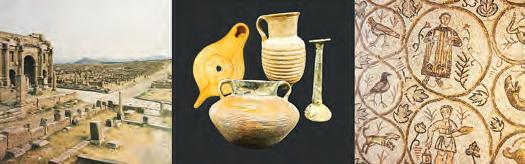
Clayton Museum of Ancient History, p 49
Bricks at The Durham
Explore Dodge County's
Georgian Architecture
TAKING TO THE ROAD FOR FOOD, FUN AND FESTIVITIES
by ARIELLA NARDIZZI
COMMUNITY MEMORIAL DAY WEEKEND
MAY
22, 24,
25 • OMAHA, LINCOLN
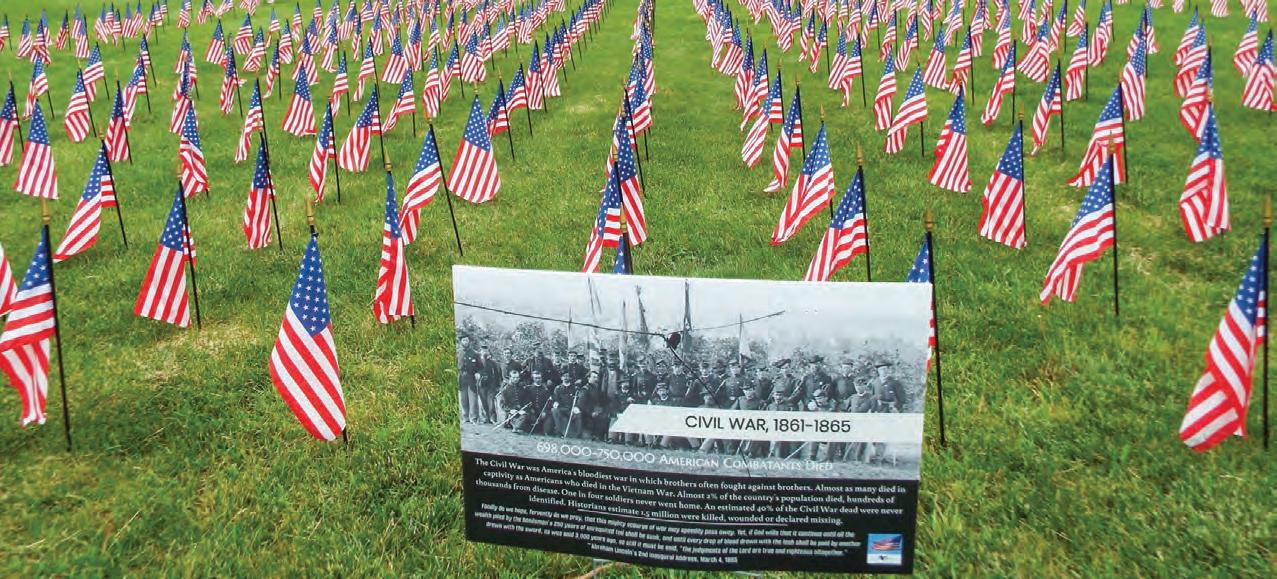
More than 600 volunteers are needed to raise and unfurl a 250-by-505-foot American flag during Memorial Day weekend events in Omaha and Lincoln celebrating America250. Bill Williams, president of Patriotic Productions, says the flag spans 126,000 square feet, weighs 3,000 pounds and requires 650 people to unfurl.
The first event is Friday, May 22, at Memorial Park in Omaha. Volunteer training begins at 6 p.m., with entertainment and food at 6:30. A Benjamin Franklin reenactor appears at 8 p.m., followed by a Fantasy Drone Show at 9 p.m. and the flag unfurling. Irish tenor Dr. Ronan Tynan is the special guest for the Omaha program.
A second event follows Sunday, May 24, at Sandhills Global Event Center in Lincoln. It includes volunteer training at 6 p.m., food trucks including Falk’s Ice Cream, entertainment, skydivers bringing in the colors at 7:30 p.m., a Benjamin
Franklin reenactor at 8 p.m. and a 9 p.m. drone show before the flag is unfurled.
The weekend concludes Monday, May 25, at Memorial Park in Omaha with the 2nd Memorial Day Ceremony hosted by Patriotic Productions. Free pancakes and served by Anchor Corps volunteers are served from 8-9:30 a.m. Skydivers arrive at 9:50, and a 10 a.m. ceremony features reenactors portraying real individuals who died in the nation’s wars.
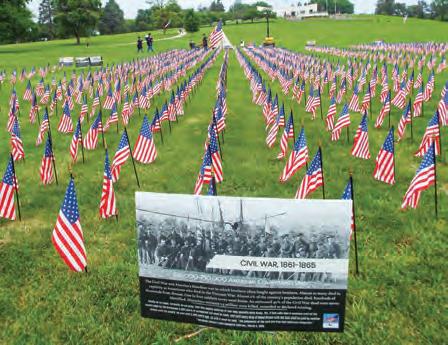
Throughout the weekend, Memorial Park will also host the National Remembering Our Fallen Memorial, with military and personal photos of 5,500 post-9/11 service members, the Flanders Field of Flags, a half-size replica of the Tomb of the Unknown Soldier, military vehicles and exhibits, and a 24-foot Purple Heart balloon.
Church groups, families and civic clubs are invited to help unfurl the flag during the weekend events. patrioticproductions. org. (402) 612-0210.
WHERE TO EAT OOH DE LALLY
This nonprofit restaurant offers workforce opportunities for formerly incarcerated people. Menu favorites include Mark’s Signature Mac and Cheese, a Chicken Sando, crab and sweet corn croquettes, and whiskey bread pudding. 4916 Underwood Ave. (402) 698-8333.
WHERE TO STAY HOTEL DECO
1930s Art Deco style and modern amenities meet at this historic downtown hotel. 1504 Harney St. (866) 475-3326.
WHERE TO GO MEMORIAL PARK
Monuments honor those lost in World War II, Korea and Vietnam, and a rose garden sits nearby. 6005 Underwood Ave. (402) 444-5900.
Memorial Day weekend events in Omaha and Lincoln bring together volunteers, reenactors and large-scale displays to honor service and sacrifice as part of the America250 commemoration.
Patriotic Productions
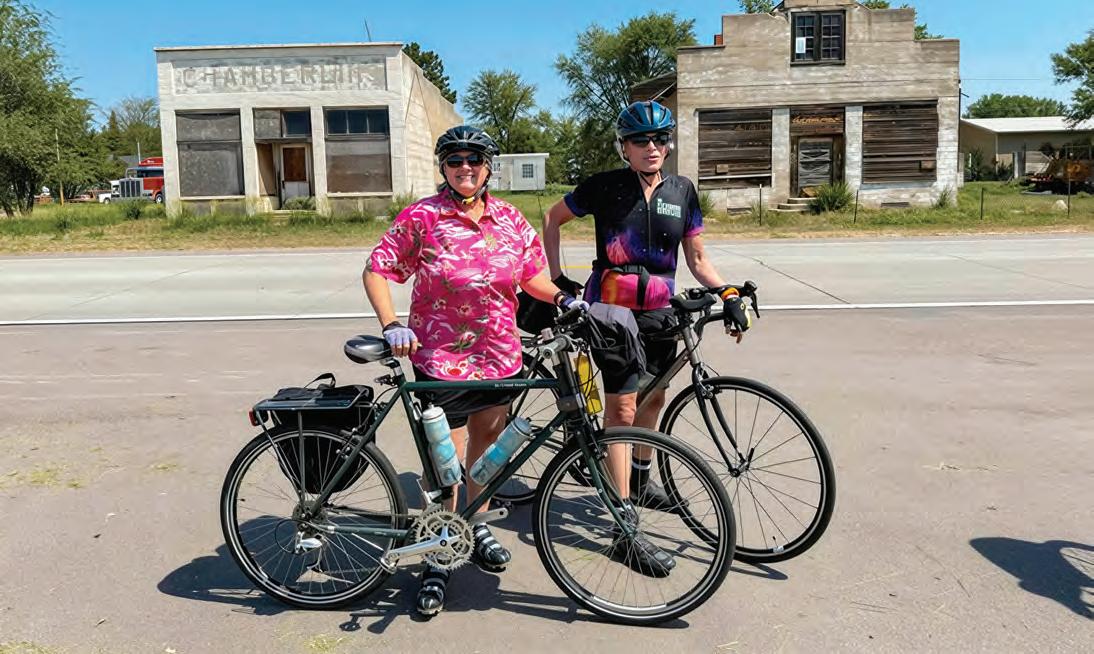
Cyclists cross Nebraska one mile at a time during Bicycle Ride Across Nebraska, traveling through small towns, river valleys and open stretches of prairie along the Outlaw Region. Overnight stops bring meals, landmarks and camaraderie to the weeklong ride.
CYCLING
BICYCLE RIDE ACROSS NEBRASKA
JUNE 7-13 • VALENTINE
Cyclists roll out of Valentine with the Sandhills opening in front of them and a week of Nebraska road ahead. BRAN 44, this year’s Bicycle Ride Across Nebraska, follows Nebraska’s Outlaw Trail region, carrying riders through small towns, river country and open range.
This year’s route arcs northeast and east, with riders choosing a three-, four- or seven-day tour. The overnight stops run from Valentine to Springview, Spencer, Verdigre, Crofton, Wayne and Oakland, before the ride finishes in Arlington. At each stop come church suppers, greetings along Main Street and stories traded after the bikes are parked for the night.
The route carries riders past river valleys and long stretches of prairie highway, with
side trips to Smith Falls State Park, Fort Niobrara National Wildlife Refuge, Monowi, Ashfall Fossil Beds, the Meridian Bridge and the John G. Neihardt State Historic Site. There are pastries in Verdigre, billed as the “Kolache Capital of the World,” and long Nebraska stretches best measured by the turn of the pedals.
Volunteer crews keep the weeklong ride moving with baggage handling, hot showers, camping space and other rider support. Registration proceeds fund scholarships for high school students pursuing higher education. Fees, add-ons and registration information are available at bran-inc.org. By the time riders reach Arlington, they will have crossed the state one town, one meal stop and one hard-earned mile at a time.
WHERE TO EAT GRITTY COFFEE CO
On Main Street in Valentine, this local coffee shop leans into Sandhills grit, serving house coffee and drinks such as the Land Man, a honey-vanilla latte, and the Rancher’s Wife, a white chocolate americano. 227 N. Main St. (402) 376-2000.
WHERE TO STAY TRADE WINDS MOTEL
Simple rooms, an outdoor pool, 32 single and double rooms, open Sandhills views and easy highway access make this a practical Valentine stop before the ride begins or after riders arrive in town. 1009 E. Hwy. 20. (402) 376-1600.
WHERE TO GO NIOBRARA VALLEY VINEYARDS
Near Nenzel, this Sandhills vineyard grows on an “island of grapes in an ocean of grass.” Its tasting room and wines make it an easy detour before or after the ride. 90254 State Spur 16F, Nenzel. (402) 823-4131.
Bicycle Ride Across Nebraska
OTHER EVENTS YOU MAY ENJOY MAY
Junkstock
May 1-3, 8-10 • Waterloo
Sycamore Farm gets groovy for two weekends of vintage finds, live music, themed photo ops, food trucks and signature Bloody Marys. With hundreds of vendors spread across the farm, the modern-day Woodstock pays homage with a Saturday night concert May 2. 1150 River Road Dr.
Celebrating Mother’s Day
May 1-17 • Nebraska City Arbor Lodge Mansion turns the spotlight on the Morton family mothers and the nation’s Founding Mothers with photographs, historical material and a closer look at Caroline Morton’s many talents. 11 a.m.-5 p.m. 2600 Arbor Ave. (402) 873-8733.
Monster Jam
May 2-3 • Lincoln
Twelve-thousand-pound monster trucks thunder through Pinnacle Bank Arena for racing, two-wheel skills and freestyle competition. A Pit Party gives fans a closer look before the weekend’s engines fire up. 400 Pinnacle Arena Dr. (402) 904-4444.
M5 The Mexican Brass
May 11 • Kearney
M5 brings two decades of brass firepower to the Merryman Performing Arts Center for a 7:30 p.m. performance, blending virtuosity with the high-energy showmanship that has made the quintet a draw for 20 years. 225 W. 22nd St. (308) 698-8297.
Northwest Nebraska Volksmarch
May 16 • Crawford
The 4th annual Volksmarch heads to the Bison Trail, a scenic route between Hudson-Meng Bison Bonebed and Toadstool
Geologic Park. The walk crosses a rugged sweep of the Oglala National Grassland, with ancient formations and wide-open country along the way. Admission is $4. 1811 Meng Dr. (308) 432-4401.
The Wakefield Party
May 30 • Wakefield
Country music takes over the brick streets of downtown Wakefield as Allie Colleen, Taylor Hunnicutt and Alyssia Dominguez headline the 6th annual festival. $20. 6 p.m. 316 Main St. (402) 287-8022.
JUNE
Willa Cather Spring Conference
June 4-6 • Red Cloud
The 71st annual conference, “Memory, Myth, and Meaning: Cather in Dialogue with America 250,” centers on the centenary of My Mortal Enemy and explores how personal and national stories are remembered. The program includes keynote speaker Rebecca Romney, scholarly plenaries and a mixed-media exhibit by Susan Hart. 413 N. Webster St. (402) 746-2653.
Cattleman’s Ball
June 5-6 • Cozad
Since 1998, the Cattlemen’s Ball of Nebraska has raised more than $20 million for cancer research. This year the event returns to the Benjamin family pasture north of Cozad, where Dawson County hospitality meets one of the state’s signature fundraisers and a Saturday night concert by Aaron Watson. 77120 Road 621.
Buffalo Commons Storytelling
June 12-14 • McCook
The 29th annual Buffalo Commons Storytelling & Music Festival returns to McCook with cowboy storytelling, trail songs and history programming shaped by the people and places of the High Plains. Events unfold across the city, with nationally known storytellers and musicians, plus ticketed experiences tied to regional history. buffalocommons.org.
KANEKO Creative Camps
June 15-July 24 • Omaha
Grades 6-12 head to KANEKO for weeklong camps built around making, experimenting and creative problem-solving. This summer’s lineup includes sessions with The Nature Conservancy, Football for the World, RDG Planning & Design, Jeff Koterba and HDR. 9 a.m.-4 p.m. 1111 Jones St. (402) 341-3800.
Great American Comedy Fest
June 17-20 • Norfolk
Johnny Carson’s hometown lines up four days of laughs, a comedy magic show, improv and a late-night set at the District Event Center. Charlie Berens headlines Saturday at the Johnny Carson Theatre. greatamericancomedyfestival.com.
Potter CarBowl
June 26-27 • Potter
Classics, exotics, pickups and roadsters roll into downtown Potter for a weekend of chrome, barbecue, live music, a chili cook-off, beer garden and duckpin bowling. 322 Chestnut St. (308) 879-4451.
TRIVIA ANSWERS
Questions on p 20-21
1 Eastern cottonwood
– The champion tree is 88 feet tall.
2 Pawpaw
3 American elm –Dutch elm disease wiped out thousands.
4 Petrified Wood
5 Ash – EAB is emerald ash borer.
6 a. Lone Tree
7 c. It was planted by people
8 a. Taylor
9 c. 382 years old
10 b. Willow Tree
11 True
12 True – Scouts replanted for 25 years.
13 False – The tree is 115 feet; the Capitol is 400.
14 About 3.1 percent of Nebraska is forested. Only North Dakota has less.
15 True
Page 21, Limber pine (Pinus flexilis) Trivia Photographs
Page 20, Top Twin brothers Howard and Harvey Kenfield at their Petrified Wood Gallery, prior to their passing in 2023. Page 20, Bottom Emerald ash borer
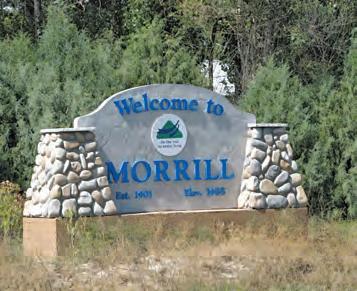
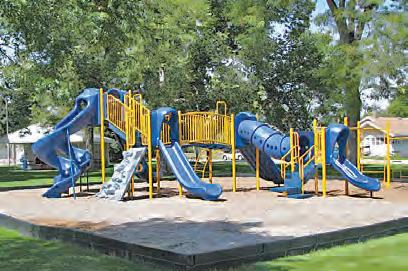
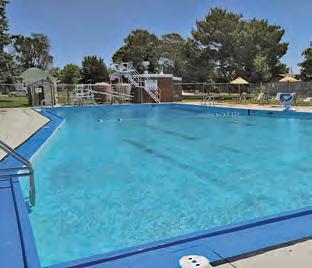
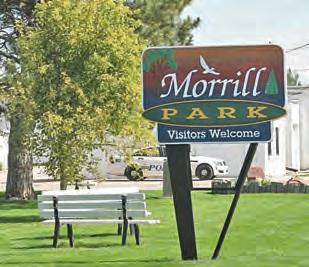
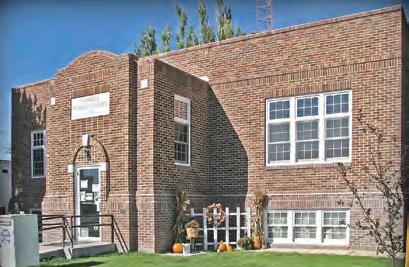
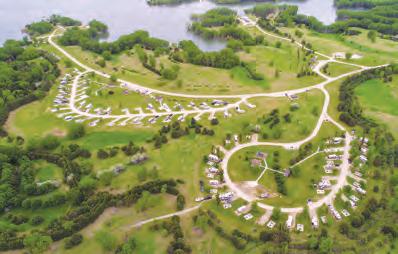
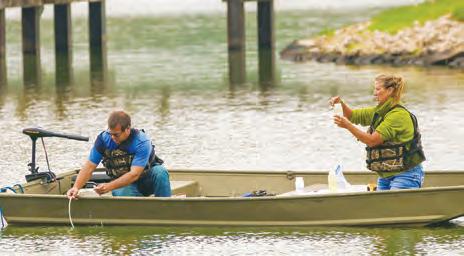
Morrill Village has everything a family vacation needs. Just 20 minutes from the bustle of Scottsbluff, you can hit the range at the public 9-hole golf course, go for a dip at the community swimming pool, stroll through the city park or enjoy a game of pickleball. And don’t forget to pack your tackle box and poles for some fishing at the sand pit ponds!
story and photographs by KRISTIN DAHL
THE LIVING LEGACY OF LORI CLINCH AT GRAIN BIN ANTIQUE TOWN
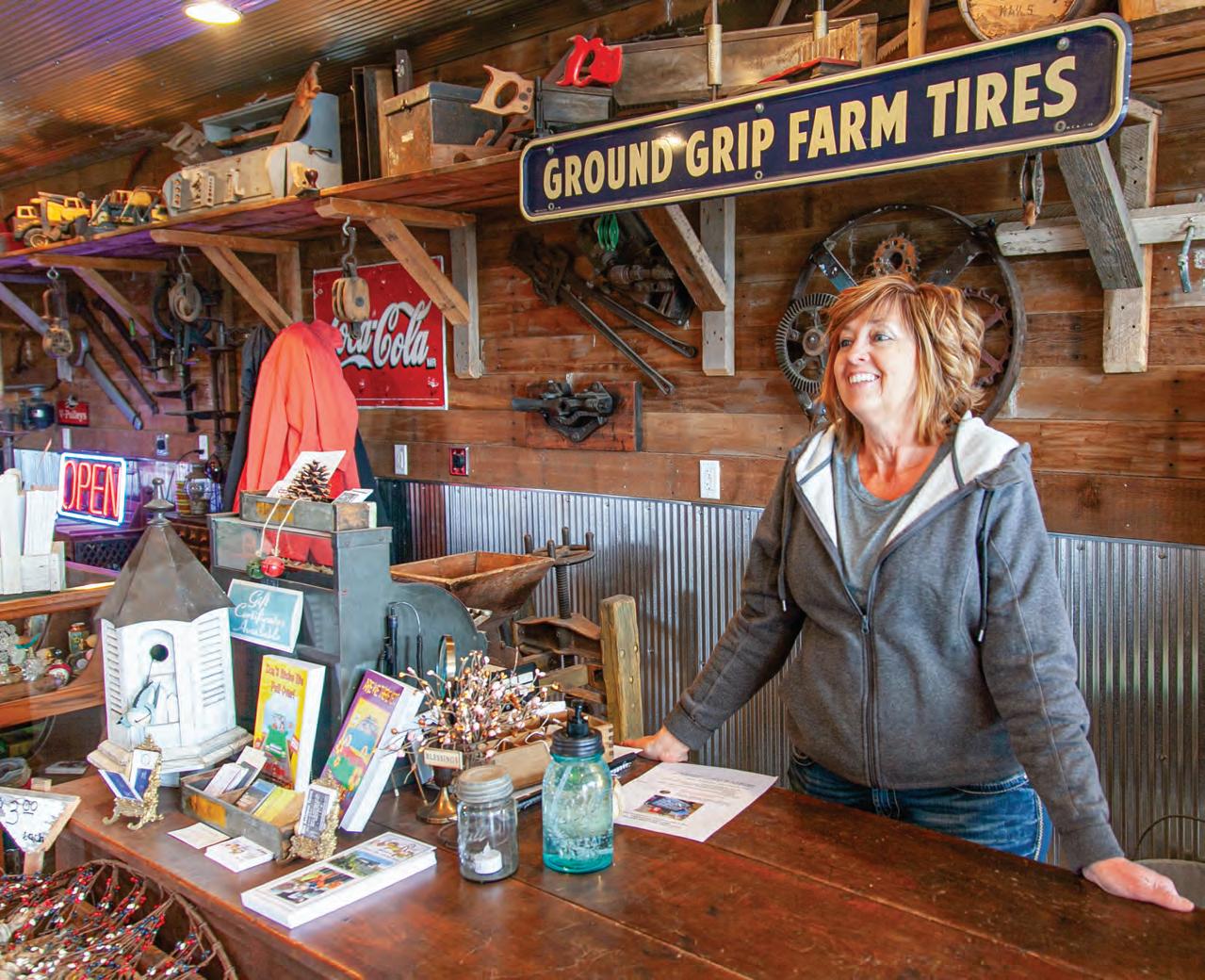
After passing in 2022, Lori Clinch left behind more than a business. Weathered grain bins and an array of trinkets stand as markers of her love for antiques and stories. Her imagination, humor and warmth are still felt throughout the property near North Platte.
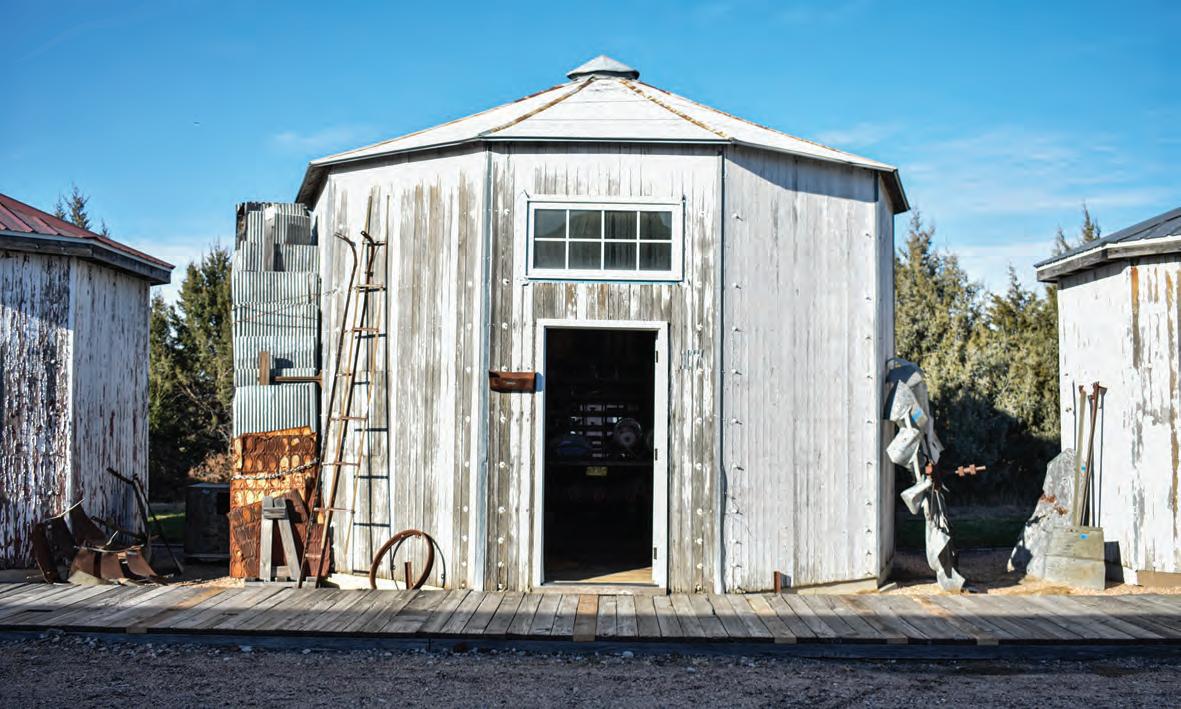
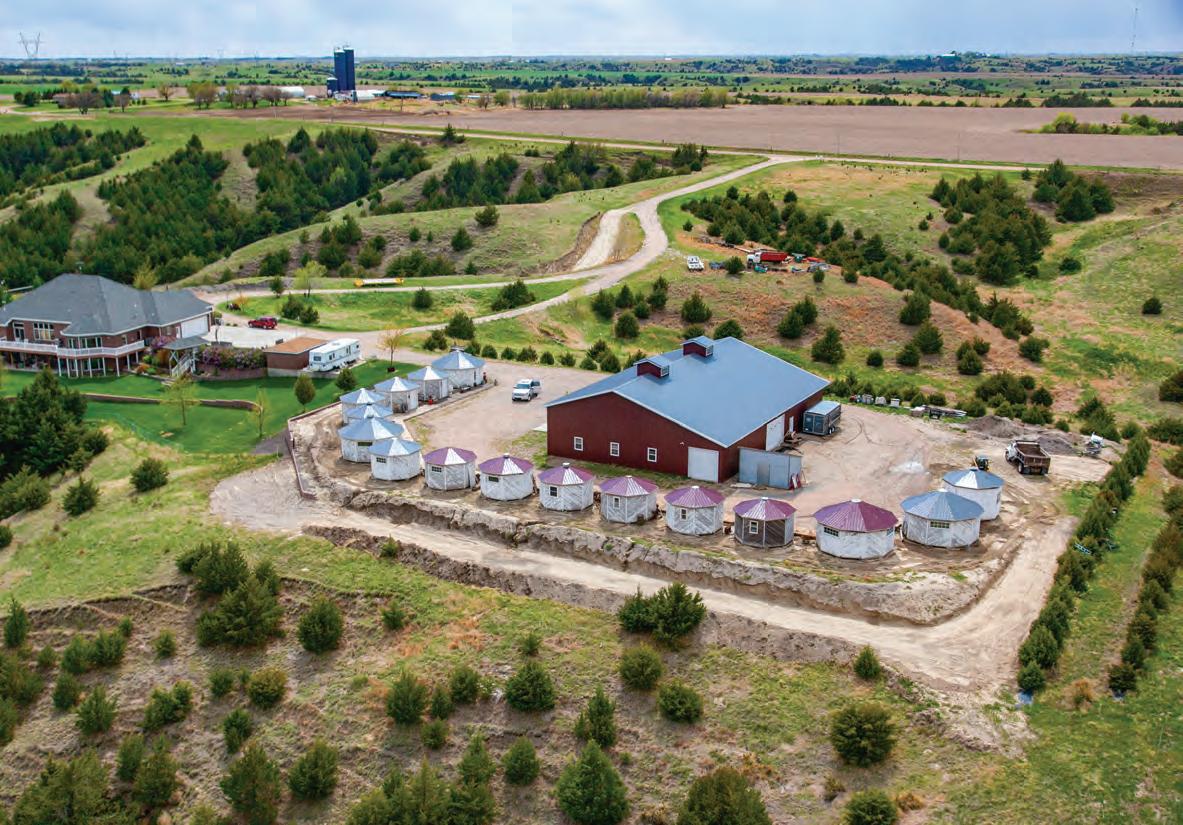
ON A HILL in the canyons of Lincoln County near North Platte, 20 wooden grain bins and a massive barn stand above Interstate 80, forming one of Nebraska’s most unusual antique destinations.
Lori’s husband Pat, who still tends the shelves and greets visitors, helped build the Antique Town after the couple saw potential in an old grain bin near Paxton in 2010, turning it into an evening retreat. They eventually brought home more bins and antiques to fill them.
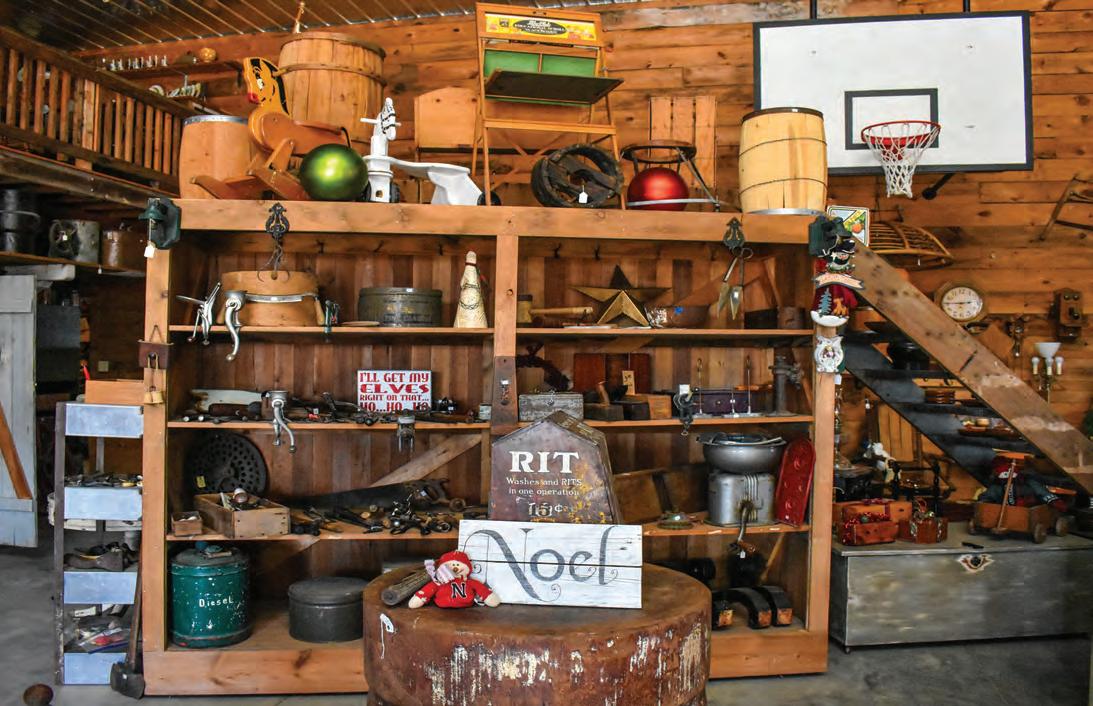
Each octagonal bin wears a steel roof, its white boards weathered by decades of Nebraska wind and sun, worn thin enough in places to show streaks of natural wood underneath. A boardwalk passes numbered doorways, giving the place the feel of a small town. Inside, each room is arranged with the kind of care that makes it feel recently left.
Much of what visitors see there was shaped by Lori Clinch, whose work helped build Grain Bin Antique Town and whose death in February 2022 left a quiet ache across the property and the North Platte community. She was 57.
“She always said this was her dream job,”
her husband, Pat Clinch, said. “She loved people, and she loved antiques. She had a passion for decorating. She could make anything look good.”
The place still reflects the way Lori and Pat built it – one idea, one haul and one display at a time.
It started in 2010 with a single grain bin the couple found near Paxton. The structure had outlived its original use, but Lori saw something else in it. She turned it into a retreat where she and Pat could talk and unwind after long days raising four boys.
“We’d go out there in the evenings and just sit,” Pat said. “It was a little getaway. She made it cozy.”
Then, during a Sunday drive, they found 14 more bins on a farm in southwest Nebraska. The wooden structures dated to the years after World War II, when farmers were encouraged to store grain on their own land instead of relying on centralized
elevators. Shipped in kits from Wahoo, the bins were once common across the Plains but are now nearly gone.
The farmer who owned them said he had been thinking about burning them.
Lori wrote him a letter, and it worked. Instead of losing the bins to a burn pile, the Clinches set about moving them. It was not simple work. The roads were narrow, the canyon walls close. Lori drove a flatbed with one bin while Pat hauled two on his own truck.
Before long, they were hauling the bins home, sometimes scraping canyon walls as they worked through the narrow roads.
“Lori was part of the moving crew,” Pat said. “She’d have one on her flatbed, and I’d haul two on mine.”
BY 2012, GRAIN Bin Antique Town was open. It quickly became a destination for travelers from across the country and
overseas. Some came for the rare architecture. Others came for the welcome waiting inside.
The bins became the place where Lori did the work she did best: arranging, joking, welcoming and turning old objects into small scenes people wanted to linger in. She knew how to make a room feel finished without making it feel precious. A crock, a lamp, a weathered sign or a stack of enamelware could become part of a display that felt both playful and lived-in.
Lori had grown up around antiques. She graduated from North Platte High School in 1982, earned her LPN degree from MidPlains Community College and worked as a surgical nurse at Great Plains Health before devoting herself to raising the couple’s boys. She married Pat in May 1991 and soon began writing a weekly humor column for the North Platte Telegraph, a role she held for two decades.
Every shelf reflects a life lived at full speed. Lori was a nurse, mother, humor columnist, author and bookkeeper, and she poured the rest of her energy into the Antique Town. Her handwriting still appears on tags and some displays remain exactly as she arranged them.
From above, the bins gather like a small wooden village on a hilltop in the scenic canyons of Lincoln County. Visitors and local customers come to explore the restored structures and enjoy discoving the curated selecton of antiques.
Her stories were eventually syndicated in more than two dozen newspapers nationwide. She also published two books, Don’t Make Me Pull Over and Are We There Yet?, collections of family stories drawn from everyday life.
She handled the bookkeeping for Pat Clinch Construction, helped run a rental business and poured herself into Grain Bin Antique Town.
Her close friend and co-worker, Terrie Mooney, remembers when the business had only a handful of bins. Lori invited her to help for “a few days.” Mooney stayed more than six years.
Laughter followed Lori everywhere. She was animated and expressive, quick with a joke and quick to bring other people
into it. She and Mooney became known for Facebook videos inspired by duos like Carol Burnett and Tim Conway, Laverne & Shirley and the Blues Brothers.
“She was my defibrillator,” Mooney said. “She made me laugh all day for almost seven years.”
Together, they cleaned barns thick with dust, emptied sheds full of forgotten heirlooms and uncovered surprises, including a Civil War-era saddle still marked with medallions. When rustic décor surged in popularity, Pinterest-minded brides arrived looking for bed springs, beakers and other pieces for centerpieces and displays.
Even the hardest days felt lighter with Lori around. She could turn any chore into a performance.
“She never stopped,” Mooney said. “Physically, mentally, emotionally – she worked harder than anyone I’ve ever known.”
At Grain Bin Antique Town, Lori greeted customers by name when she knew them and made easy conversation when she didn’t.
When she died, help came from several directions. The Clinches’ sons – Jestin, Micki, Joseph and Cory – stepped in to help. Tourism groups, fellow antique sellers, friends and customers reached out in whatever ways they could.
“You can’t argue with God when he says, ‘I want to listen to some of Lori’s jokes now,’” Mooney said. “You just have to hold onto her memory.”
Today, the grain bins are still open Fri-
days and Saturdays, filled with antiques Lori would have loved. Her handwriting remains on some labels. Her books sit near the checkout counter. Some displays are still arranged exactly as she left them. Visitors still move through the bins, stopping at labels, displays and rooms she arranged.
For Mooney, Lori’s presence still feels close. On her first visit back after Lori’s death, she caught her foot on a raised board and fell straight through it. Sitting there, she laughed.
“You ornery woman,” she said aloud. “I know that was you.”
Grain Bin Antique Town still draws visitors with its rare bins, weathered boards and hilltop setting. For many, Lori remains part of what they find there..
Known for her animated and expressive spirit, Lori brought a sense of joy and energy to everyone around her. Photographed here in 2014, her personality was as much a part of the shop as the antiques and the restored grain bins.
Chris Amundson (both)
NATURALLY NEBRASKA
March of the Cranes
River, birds and people remain with author long after migration
by ALAN J. BARTELS
AFARMER FROM GIBBON was among the visitors assigned to my blind one afternoon. He boldly announced that he was only there because his wife made him and that he’d seen sandhill cranes on his farm every spring of his life.
During two decades as a volunteer Crane Season tour guide, I learned that you don’t have to be a bird nerd, feathered friend or craniac to appreciate the springtime sandhill crane migration through the Platte River Valley.
While guiding early morning and evening tours in March and April, I met thousands of people from around the world. I remember a native Nebraskan who had lived the last half century in Iowa. She was terminally ill, and the last thing she wanted to experience was seeing multitudes of sandhill cranes alighting onto Platte River sandbars at sunset. I was honored to help provide that experience. She died several days later.
Another memorable visitor – a man from New York City – said something I’ll never forget. After watching cranes return to their evening river roost, he told me how he and his 81-year-old mother had just returned from the Alaskan adventure of a lifetime.
He described floating on the ocean with snowcapped peaks towering in the distance, bald eagles swirling overhead and whales breaching near their small boat. He described it with such emotion that I felt there could be nothing more magnificent. Then he told me what he and his mother
The annual sandhill crane migration gave Alan lasting memories – and unforgettable reactions from visitors worldwide.
had just witnessed from the south bank of the Platte River was every bit as magical.
Over the years, I saw again and again that what happens along the Platte River in spring stays with people. Some came from far away. Some were seeing it for the first time in their own home state. But whether they arrived with a lifelong dream or simple curiosity, many left feeling they had witnessed something far bigger than they expected.
I understand how Nebraskans could take the migration for granted. After all, the cranes return every spring for six to eight weeks. And the only view many people have of it is while driving down the road at 65 mph and seeing the birds feed in roadside fields and meadows. There is so much more to see along the river.
We settled into the blind, and the descending sun slowly brushed the sky in shades of pink, amber and hues I can’t accurately convey with words. Cranes began crisscrossing the sky, settling far downstream of our blind.
One visitor quietly asked me, “Will any land by us?” All I could tell her was, “I honestly don’t know.”
Soon the birds that landed downstream began marching upstream. Not flying, they were steadily walking. Flock after flock quietly joined them. Over the course of an hour or so, the shallowest portions of the river gradually filled in with sandhill cranes for as far as we could see up and downstream. I remember the cacophony of their calls reverberating in my chest.
Later, back in the parking lot under a cold black March sky, the farmer cornered me. The misty-eyed man hugged me, thanked me and said he’d never seen anything like that in all his years.
I don’t get down to the Platte River during spring as often as I used to. But that braided stream coursing through the heart of Nebraska, the same stream that nourishes the birds and draws people from around the world, will always be with me – just like the annual march of the cranes.