In Mitchell, the Wells family’s Brown Sheep Company spins, dyes and weaves wool into thousands of colorful skeins, 45 years strong. story by Ariella Nardizzi photographs by Hawk Buckman
Annual Photo Contest: Part 2
The second installment of Nebraska Life’s photo contest spotlights six categories including intimate portraits, hometown pride, detailed architecture and names the long-awaited Photographer of the Year.
Timeless Tastes
Five classic Nebraska eateries preserve nostalgia, family recipes and retro charm across generations. by Ariella Nardizzi
DEPARTMENTS
A perspective from the desk of Chris Amundson.
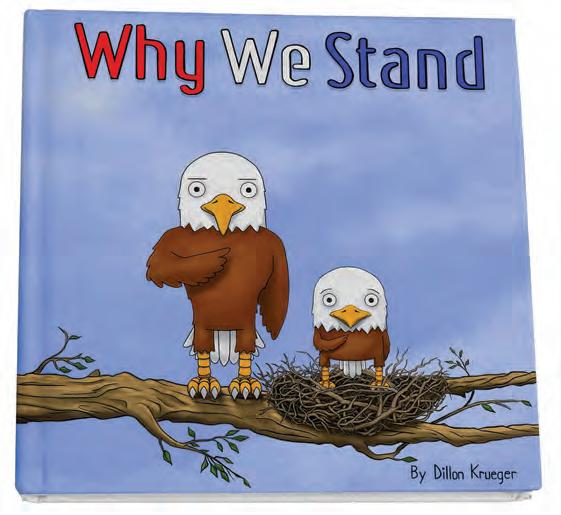
Army veteran Dillon Krueger paints his patriotism in murals and children’s books; Snyder’s legendary macaroni salad; a literary pilgrimage to the Sandoz Homestead.
Scientific discoveries that put Nebraska on the map. Answers on page 60.
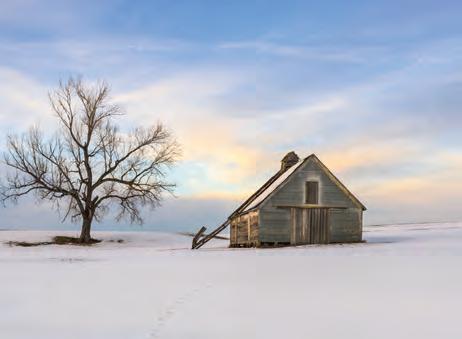
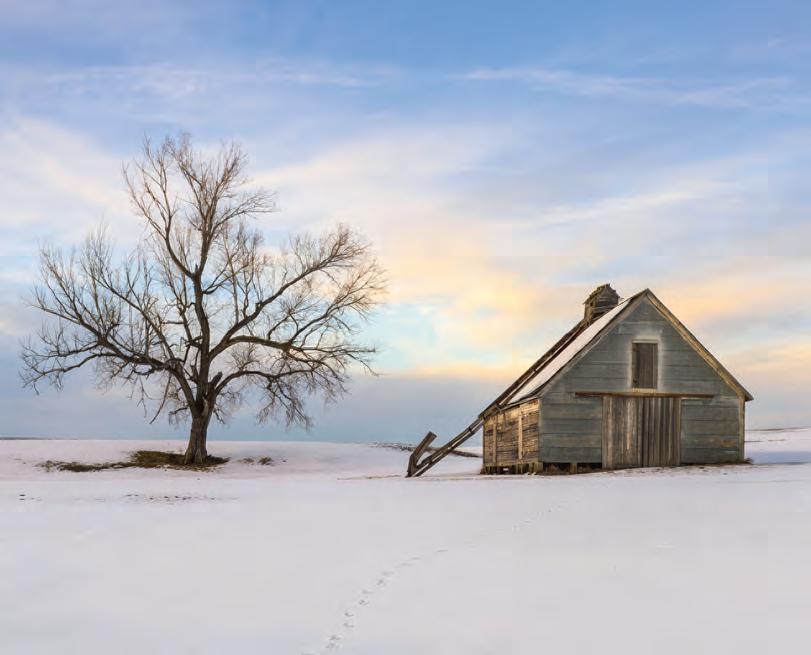
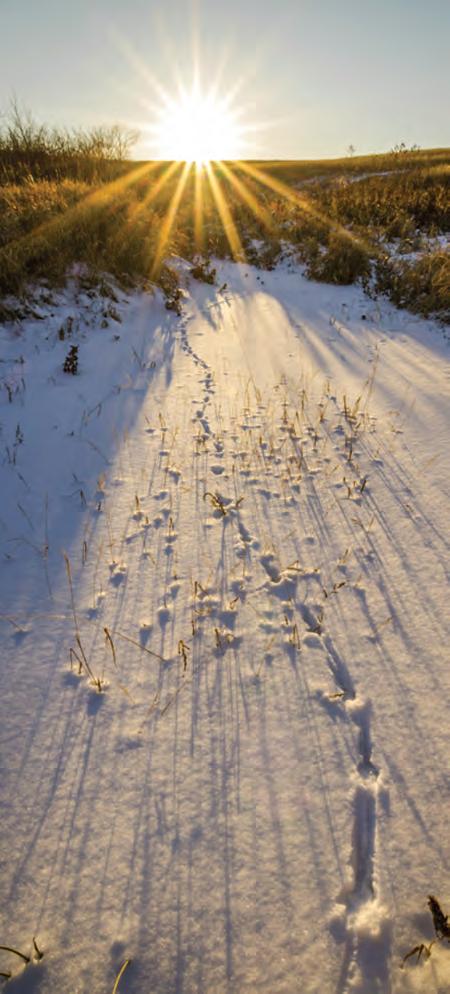
Tracing poetry through winter’s fleeting white, where tracks appear, linger and quietly disappear.
Gordon pg. 13
Mitchell pg. 16
Scottsbluff pg. 55
Sidney pg. 26
Valentine pg. 58
Whitman pg. 24
Arthur County pg. 25
McCook pg. 54
DEPARTMENTS
42 Kitchens
Norfolk pg. 52
Snyder pg. 12
Columbus pg. 10
Giltner pg. 35
Kearney pg. 34
Republican City pg. 27
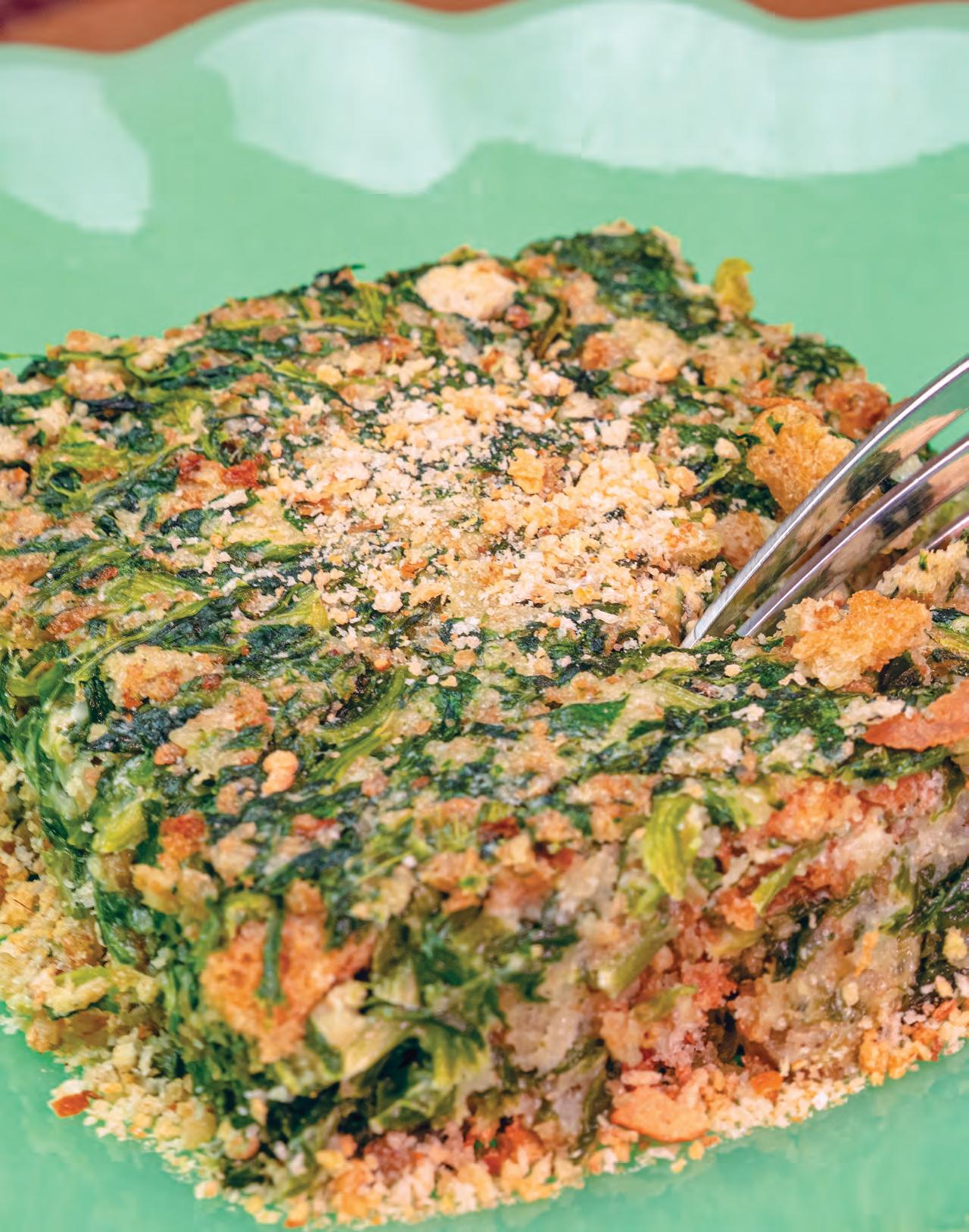
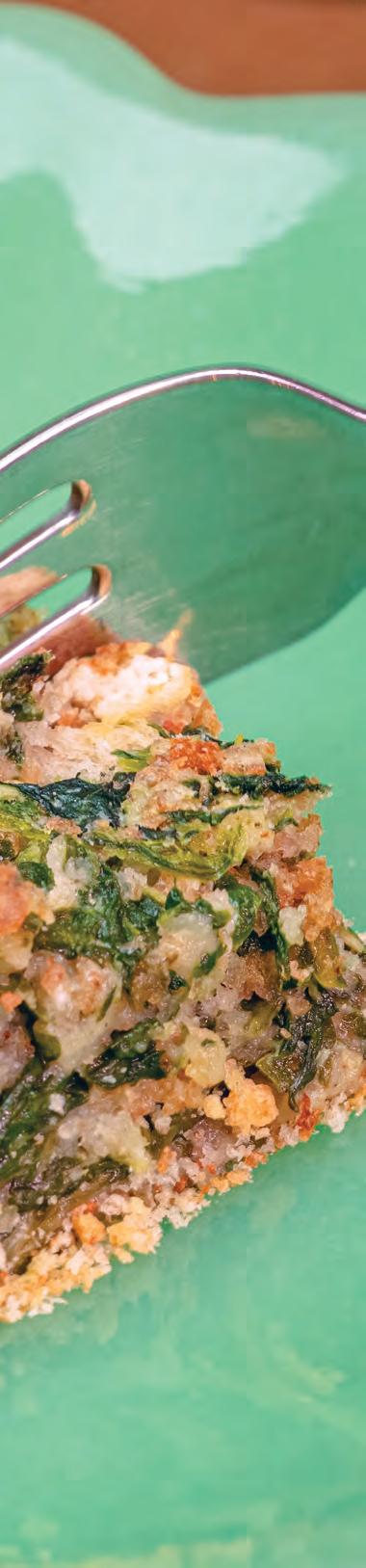
Three recipes chock-full of healthy spinach bring colorful greenery to winter plates.
56 Museums
Big or small, these museum advertising partners preserve Nebraska history and heritage for all to experience.
58 Traveler
Cattle shut down Main Street in Valentine for the Heart City Bull Bash; a two-day conference welcomes women in STEM to La Vista.
62 Naturally Nebraska
In a gun safety course, Alan J. Bartels rediscovers how good hunting habits are learned.
Omaha pg. 25, 29, 33, 50
La Vista pg. 59
Utica pg. 31
Lincoln pg. 27, 28, 29, 31, 48
Ashland pg. 30, 36
Otoe County pg. 32
Richardson County pg. 33
Pawnee City pg. 35
ON OUR COVER
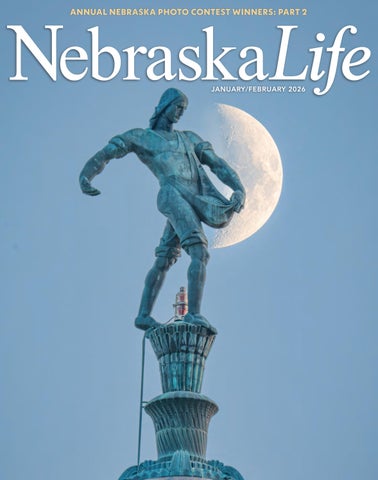
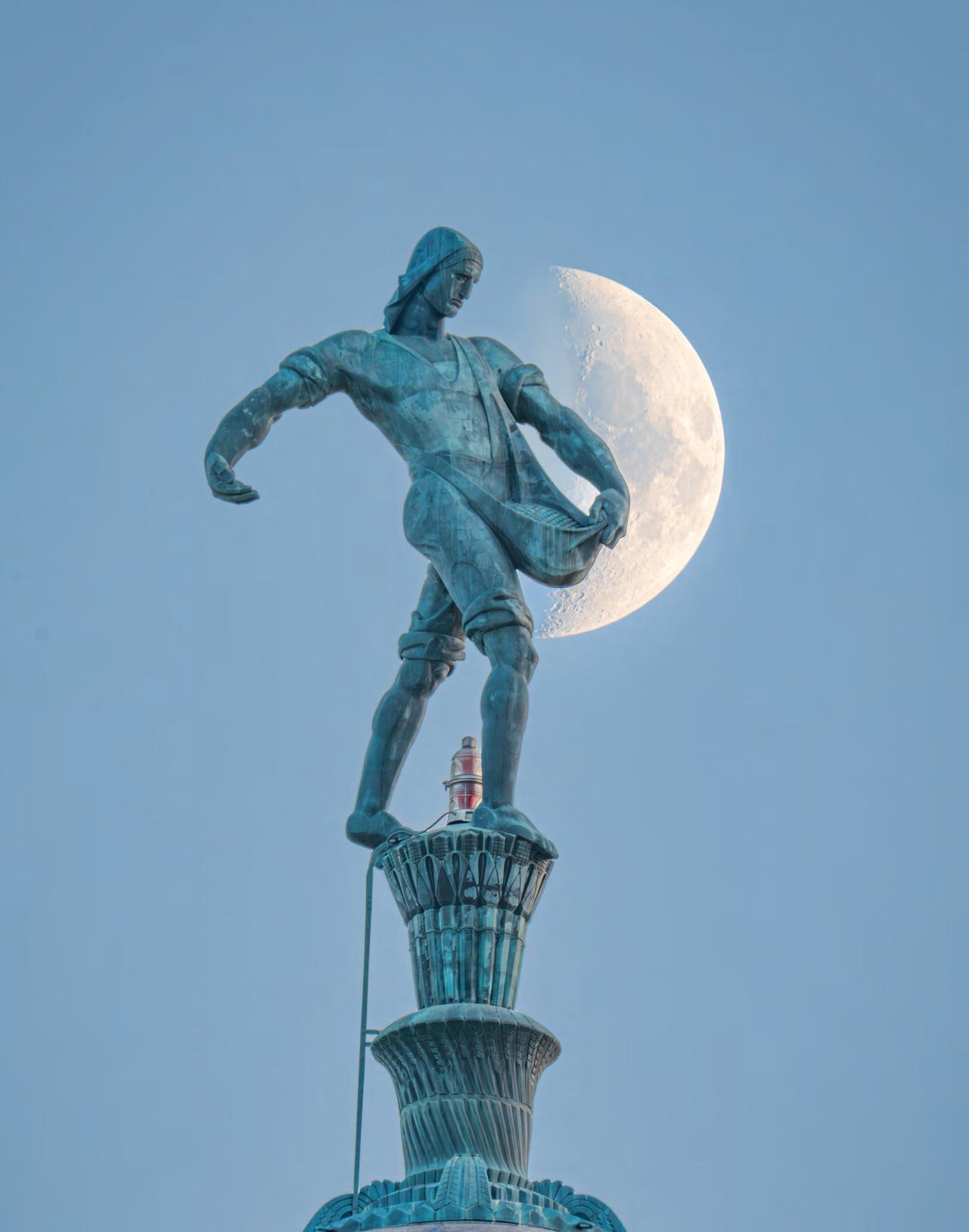
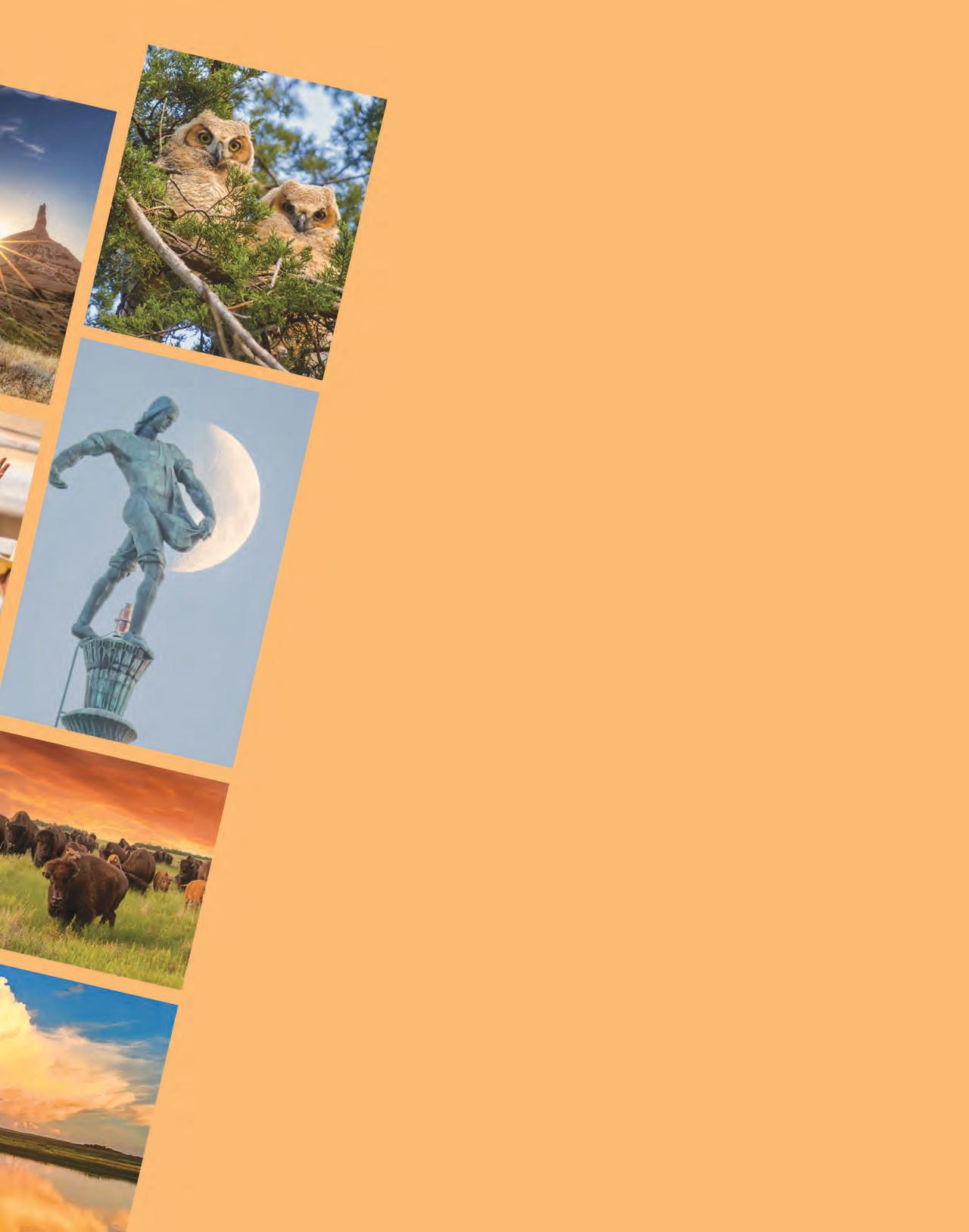
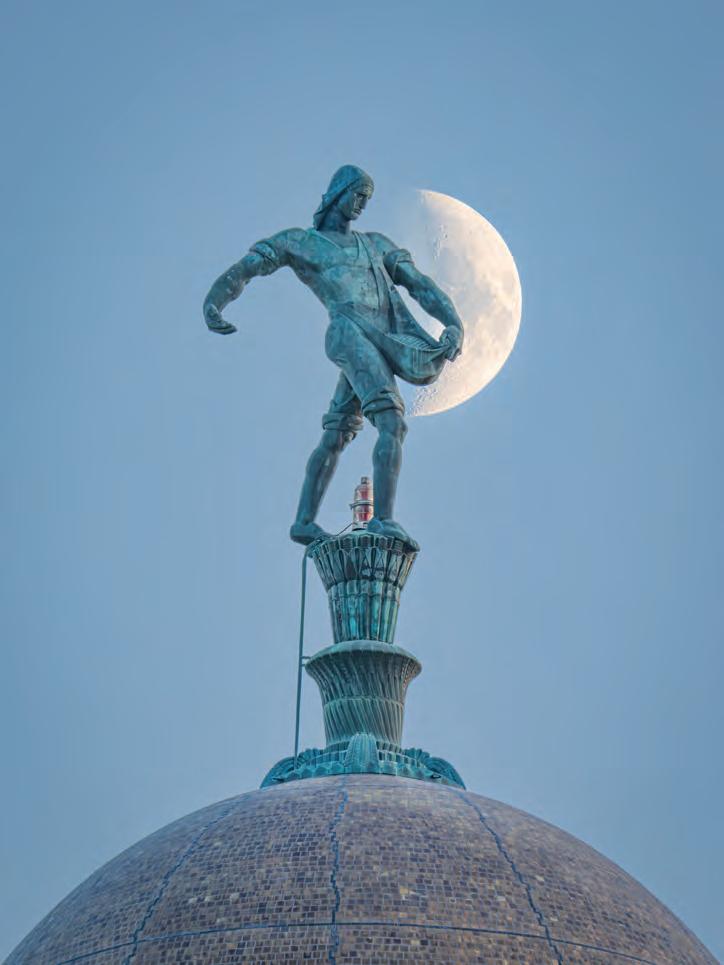
A crescent moon rises behind the 19-foot bronze Sower atop the Nebraska State Capitol in Lincoln. The image was selected as a winner in Nebraska Life’s “Spirit of Nebraska” Photo Contest. Story begins on page 22.
PHOTOGRAPH BY MARK COE
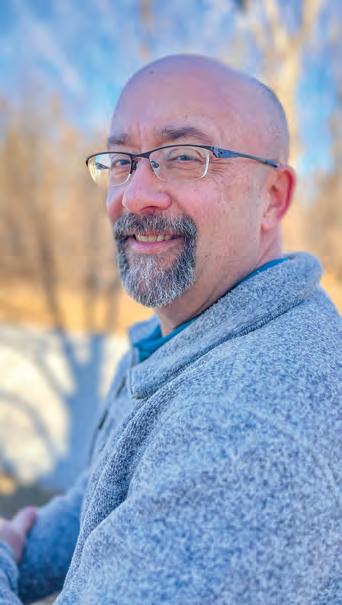
Above: Erick Johnson, Chris Amundson, Laura Vroman
Page 5: Hawk Buckman; Roger Richters; Corey Rourke
JANUARY/FEBRUARY 2026
Volume 30, Number 1
Publisher & Editor
Chris Amundson
Associate Publisher
Angela Amundson
Editorial Assistant
Savannah Dagupion
Design
Mark Del Rosario
Photo Coordinator Erik Makić
Staff Writer Ariella Nardizzi
Advertising Sales
Sarah Smith
Subscriptions
Shiela Camay
Nebraska Life Magazine
c/o Subscriptions Dept. PO Box 270130
Fort Collins, CO 80527 1-800-777-6159
NebraskaLife.com
SUBSCRIBE
Subscriptions are 1-yr (6 issues) for $30 or 2-yrs (12 issues) for $52. Please call, visit NebraskaLife.com or return a subscription card from this issue. For fundraising and group subscription rates, call or email subscriptions@nebraskalife.com.
ADVERTISE
Advertising deadlines are three months prior to publication dates. For rates and position availability, please call or email advertising@nebraskalife.com.
CONTRIBUTE
Send us your letters, stories, photos and story tips by writing to us, emailing editor@nebraskalife.com or visiting NebraskaLife.com/contribute.
COPYRIGHT
All text, photography and artwork are copyright 2026 by Flagship Publishing, Inc. For reprint permission, please call or email publisher@nebraskalife.com.
TClose Enough to Notice
HE COVER OF this issue asks you to slow down.
A waxing moon rises behind the Sower atop the Nebraska State Capitol in Lincoln. The image, by Omaha photographer Mark Coe, was made on Oct. 9, 2024, at 6:42 p.m., timed to a 41.8% waxing crescent during a rare low point in the moon’s 18.6year cycle. The photograph is sharp, patient and a little impossible – the kind of timing you don’t stumble into. You plan for it. You wait.
That waiting is familiar to anyone who’s lived here. I grew up here in Norfolk. Living here teaches you to watch the sky, read weather in the distance and measure time by what the land is doing, not what a calendar says. This issue is built around that same attention.
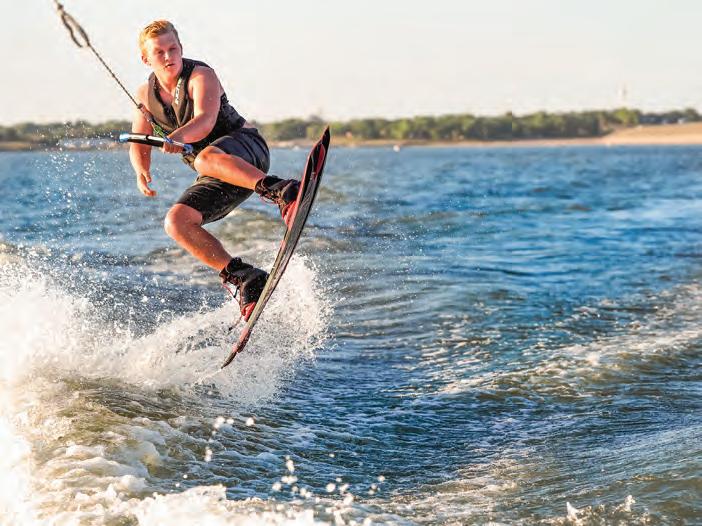
It’s Part 2 of our inaugural “Spirit of Nebraska” Photo Contest, and the categories turn the lens closer to home: Portrait, Sports, Architecture, Hometown Pride, Macro and Water. Our Photographer of the Year put it simply: “I like to take an idea and make it my own,” he said, “to surprise people with something familiar, seen differently.”
It’s a reminder of the talent working across this state – photographers, writers and artists making sense of Nebraska life and culture in their own way. You’ll see that same Nebraska steadiness in our features, too: a family-run yarn mill in Mitchell that turns wool into color, generation after generation. You’ll find it in the booths and counter stools of classic eateries that have outlasted trends because they got the ritual right.
We’re beginning the magazine’s last year in our 20s. Next year will bring the big 3-0. That’s less a victory lap than a moment to notice time – issue by issue, story by story – and how much care it takes to create something honest and useful for as long as this magazine has been around.
Milestones aside, the work is in the details. From recent subscriber correspondence: In “State of the Art” (May/June 2025), the Museum of Nebraska Art’s builder should have been identified as Whiting-Turner of Omaha. In the Photo Contest (November/December 2025), “Eclipse Church” was taken in Tryon. And in the answers for the Trivia section of the same issue, Eli and Max should be included in three-letter Nebraska towns.
I enjoy hearing from our readers all across Nebraska and around the world, even when you’re writing in to correct us. That back-and-forth is part of how this magazine stays grounded. It’s also why, starting next issue, we’re bringing back Mailbox – home to our Letters to the Editor, which have been on vacation since March/April 2025.
Consider this a nudge. Write us about what you noticed – a memory, a place you’d forgotten, a person you miss. A few prompts, straight from the letters we love to publish: What stopped you? A photo, line or story in this issue that wouldn’t let you move on –where did it take you?
What would you add? A memory, detail or voice that belongs alongside a story you just read.
What needs fixing? A name, date or detail you know well that we missed. What’s your Nebraska story? What do you notice about our state?
If something in these pages feels familiar, don’t rush past it.
Those are the moments worth sharing.
That’s where the letters begin.
CHRIS AMUNDSON Publisher & Editor editor@nebraskalife.com
Noteworthy news, entertaining nonsense
Patriotic Brushstrokes & Bedtime Stories
BY KRISTIN DAHL
The morning sun glared off the brick as Dillon Krueger climbed a scaffold in Genoa, the smell of fresh paint thick in the air. He balanced a bucket at his feet, then swept the brush in long, confident strokes of red. White followed, then blue, until the stars and stripes stretched the length of the building – a flag not made of cloth, but of paint and precision.
“It was one of my best experiences,” Krueger said. “So many people stopped to talk to me. Being able to share my work with them is part of the reason why it’s so meaningful to me.”
Krueger, a Columbus native and Army veteran, works in two seasons. When the weather cooperates, he’s on ladders and lifts painting murals on public walls in towns such as Genoa and Columbus – flags, ea-
and Colum-
gles and Husker scenes meant to live where people eat, drink and gather. When winter pushes him indoors, he shifts to children’s books he writes and illustrates through his company, Real Patriot Publishing, inspired by reading to his sons.
Long before he had lifts and ladders, Krueger was the kid sketching cartoons at home.
“Mom would always hang up any of my paintings or drawings that I did at school,” he said. “My family was really supportive from the beginning.”
That interest continued into high school, and after graduation, Krueger enlisted in the Army. He trained at Fort Benning, then served with the infantry overseas, including assignments in Germany and a 2011 deployment to Afghanistan during Operation Enduring Freedom.
Even in uniform, his art followed him.
Gina Borer
Army veteran
bus native Dillon Krueger painted the mural at Reg’s 7 Mile Steakhouse honoring Husker legend, his first major public project.
Near the end of basic training, he was sketching tattoo designs for others in his unit when drill sergeants turned it into a competition. He painted a big skull with a sword and a snake wrapped around it, and his painting was selected as the winner.
That painting led to more requests. Commanders asked him to paint murals inside company and battalion buildings, work that demanded precision, speed and the ability to finish under watchful eyes.
When his service ended, Krueger brought those habits home with him.
Back in Columbus, Krueger split his time between bartending and studying graphic design. A local restaurant, Reg’s 7 Mile Steakhouse, commissioned a large mural honoring Husker legend, his first major public project in Nebraska.
More commissions followed. He painted the American Legion in Columbus, then
When he’s not coating walls, Krueger illustrates children’s books, carrying the same sense of pride and purpose from his murals.
Micek’s Bar, followed by projects in Rising City, Genoa, Silver Creek and Schuyler.
Today, his summer work plays out in public. Flags ripple across storefronts. Bald eagles spread their wings against Nebraska skies. Football players are frozen mid-stride. The murals become part of the everyday backdrop in the towns that commission them.
In winter, the scale changes. Krueger trades scaffolds for a desk and turns his attention to children’s books shaped by evenings reading to his three sons. His books are sold directly through PatrioticKidsBooks.com and through retailers including Amazon, Target and Walmart.
In Why We Stand, a bald eagle guides a young boy across the country, introducing the history behind the national anthem. Why We Pledge Allegiance focuses on the words children recite in school, explaining
the pledge’s origins and the symbolism of the American flag.
“One night I was reading to my boys, looking at the illustrations, and I realized this was something I was capable of doing,” Krueger said.
After that realization, he taught himself digital illustration and built the characters around his own family, bringing his sons to life on the page.
The same patience and discipline he relies on while painting large public murals carries over to the smaller, quieter work done at a desk.
Krueger’s murals are more than decoration. They reflect the discipline and pride shaped by years of military service.
Whether the work stretches across brick walls or fits between book covers, the message stays the same: pride, tradition and service.
Gina Borer
Snyder’s Famous Macaroni Salad
Guarded recipe and simple cracker keep comfort food legendary
BY KRISTIN DAHL
On a Saturday in Snyder – population 242 – Main Street fills with parked pickups and neighbors pausing to talk. Across from the post office, a brick building with weathered shingles carries a fresh sign: The 664. Inside, burgers sizzle, ’80s music hums, and behind the bar, Shayla Risch braces for the lunch rush.
The stained-glass windows still read Adie’s Bar. Regulars know what that means.
The name The 664 nods to Snyder’s ZIP code, 68664, and roots the place squarely where it’s always been. Since 1956, the bar and grill has served as a gathering spot where meals and local news traveled together. In 2023, that legacy passed to Shayla, a mother of eight from nearby Wisner who left a 25-year nursing career in longterm care after the COVID-19 pandemic.
“I mentioned it to him, and he thought it was a joke at first,” she said of Rick Marsoun, whose family ran Adie’s for decades.
It wasn’t a joke. Shayla and her husband, Dustin, bought the restaurant, closed briefly to freshen the space, reopened with a new name and added a few menu touches of their own. One thing didn’t change.
The macaroni salad stayed.
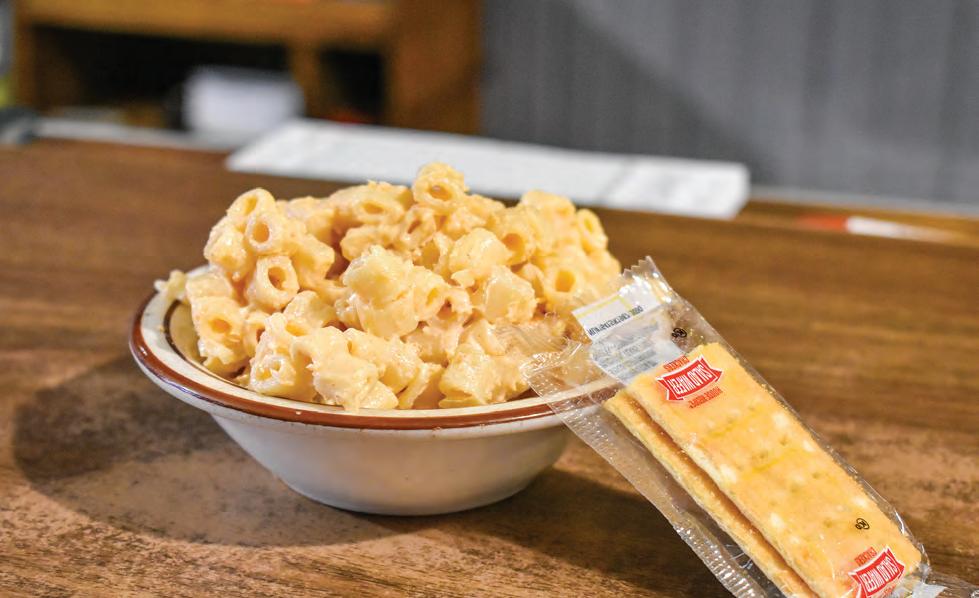
That zesty, mayo-based side dish – still made by Rick himself – remains the star. The recipe, created by his mother, Marion, has never been written down. “People try to mimic it, but it’s just not the same,” Shayla said.
Made in five-gallon batches, the smooth orange dressing coats ditalini pasta and arrives with a simple Club cracker. Tangy, faintly sweet and instantly familiar, it’s the kind of food people remember long after they leave town.
Speculation about the secret ingredient runs high. Some suspect a famous Nebraska dressing. Rick isn’t saying.
What’s certain is how far it travels. “People from Florida, Kansas, everywhere, stop in just to pick some up,” Shayla said.
Gallon tubs leave the bar headed for family tables well beyond northeast Nebraska.
The 664 serves more than mac salad. Prime rib dinners anchor weekends. Lunch specials draw regulars. Shayla’s crab salad has found a following at the bar, where Jell-O and Oreo fluff round out the menu.
She relies on a small, steady staff, especially longtime waitress Pat Svehla. “She’s the go-to girl when you want to know something,” Shayla said. “She keeps things running.”
The shift from nursing to restaurant ownership was steep, Shayla said, but not unfamiliar. “Cooking, cleaning, helping with homework, bedtime, and doing it all again – that prepared me,” she said.
In the center of Snyder, The 664 continues its role as a place to gather. Neighbors catch up. Travelers detour. And somewhere between the burger basket and the cracker-topped scoop of macaroni salad, a small-town institution keeps doing what it always has.
Macaroni salad at The 664 arrives just as it has for decades: a guarded family recipe, served with a simple Club cracker at Snyder’s longtime bar and grill.
Kristin Dahl
A Visit to the Sandoz Place
BY MARY ANN VINTON
My husband and I were returning from a cousin’s wedding, traveling on Nebraska Highway 27 between Ellsworth and Gordon. The road extended mile after mile over the shaggy, grass-covered dunes of the Nebraska Sandhills. No cars – only wind, sand and sky, with the occasional sign pointing to a ranch headquarters miles off the highway.
I spotted a weathered gray board propped against a fence post: Mari Sandoz Museum.
As a girl in the Sandhills, reading Old Jules in my two-room country school, I marveled at the fact that Mari Sandoz grew up on a homestead at the edge of the Sandhills and became a celebrated author and historian of the American West.
“That’s odd,” I said to my husband.
I expected a museum in Gordon or Chadron. Her work is honored at the Mari Sandoz High Plains Heritage Center in Chadron, but in the late 1990s, a
museum also stood here, on this ranch.
We turned up a sandy gravel road toward a ranch house. It was a hot, windy July day, and not a soul was about. We sat in the car for a while before walking to the front door and knocking. We were nearly ready to give up when she opened the door after a long moment.
I said hello and told her we were interested in seeing the Mari Sandoz Museum. She smiled and said, “I’m Caroline, Mari’s sister,” and that she’d be happy to show us around.
I introduced myself and explained my interest. When I said my family name, she looked at me over her glasses. “I share miles of fence line with the Vintons,” she said. “I know all about them.”
My own family had ranched about 100 miles to the southwest, in the central Sandhills. We quickly fall into easy conversation, and I note Caroline’s piercing yet personal way of seeing people and place.
Talking about the Kinkaid Act, which expanded homestead acreage in western Nebraska, she said, “People couldn’t even figure out how to starve on 160 acres, but they figured it out just fine with 640.”
Caroline kept files of Sandhills newspaper clippings in gunmetal-gray cabinets
lining her dining room, many organized by family name. With a triumphant flourish, she pulled a Vinton file. Inside were my graduation and wedding announcements from the Grant County News. Before we left, she showed us a basement display of Mari’s belongings, and I was surprised at how small and fashionable Mari’s clothes were. Caroline affirmed Mari’s fashion sense, drily observing, “she was particular about the fit.”
Finally, I asked why Mari would write a book about their father, Old Jules, who could be brutal to his wife and children. Caroline looked at me over the top of her glasses. “It was the best story that Mari knew,” she said.
Caroline knew many stories – even some of mine. I had left the Sandhills long ago, untethered – or so I thought – from this place of grass and sky. She had been keeping track of me, and of many others.
Caroline died in 2012 in a Gordon nursing home. Her obituary notes that she moved to town only when her health required it.
The collections she so carefully curated live on at the Mari Sandoz High Plains Heritage Center in Chadron, where they form part of the permanent collection.
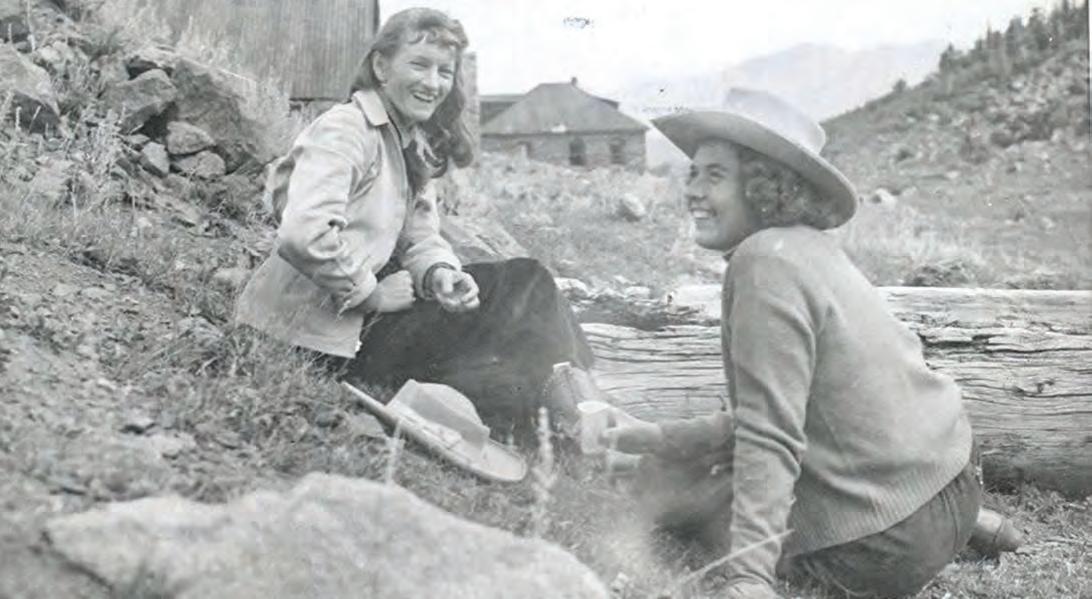
At the Sandoz family homestead in the Sandhills, Caroline Sandoz (right) preserved the stories, people and history that shaped her sister Mari’s legacy.
Mari Sandoz High Plains Heritage Center
Nourish your skin with all natural sheep’s milk products. Select scents from kids options, unscented Native Nebraska fragrances and more.
Special Occasion shipped anywhere in the U.S.
SCIENCE
1
For his pioneering work on crossbreeding, hybrids and crop improvement, University of Nebraska Agronomy Professor Theodore Kiesselbach was given the nickname “Mr. ___”. What crop fills in the blank?
2 In 1892, Hugh Luebben from Sutton invented the first version of what now common farm machine that takes in plant matter and produces cylinders?
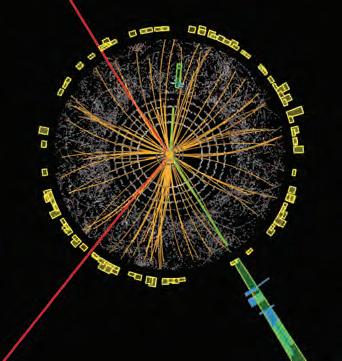
3 In 2025, a trio of physicists from UNL were part of a team that received the 2025 Breakthrough Prize in Fundamental Physics for their work making detailed measurements of what elementary particle, often called the “God particle”?
4
Researchers at the University of Nebraska Medical Center have recently used LASER ART strategies and CRISPR technology to cure mice of what virus, which can lead to AIDS?
5 The University of Nebraska State Museum is home to a large portion of what extinct, Mesozoic Era, oceanic reptile, which lived during the age of the dinosaurs and was discovered in the Santee Sioux Nation?
iStock/A-Tom
MULTIPLE CHOICE
6
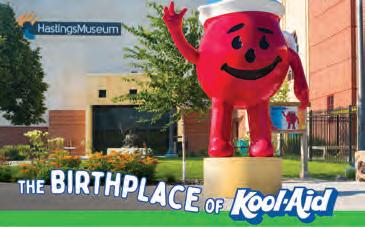
Kool-Aid was invented in Hastings by food manufacturer Edwin Perkins in 1927 and came in six original flavors. Which of these was NOT one of those flavors?
a. Raspberry
b. Peach
c. Grape
7 In 2024, MIRA, a robotic-assisted surgery device developed at the University of Nebraska-Lincoln, performed the first surgical simulation ever done in what distant location?
a. The Bottom of the Mariana Trench
b. The Summit of Mount Everest
c. The International Space Station
8 The University of NebraskaLincoln is widely considered to be the birthplace of what scientific discipline, which was formalized with the 1929 publication of a book by botany professor John E. Weaver?
a. Ecology
b. Biology
c. Meteorology
TRUE OR FALSE
11
In 2024, element 119 on the Periodic Table, previously named “Ununnonium”, was given the official name “Nebraskium” due to its discovery in Omaha.
9 In the early 2000s, high schoolers across Nebraska helped manage arrays of scintillation counters to detect what kinds of particles, in a research project known as CROP?
a. Cosmic Rays
b. Neutrinos
c. Tachyons
10 In the name University of Nebraska-Lincoln’s pioneering EQUATE project, the E stands for “Emergent” and the ATE stands for “And Technologies”. What does the QU stand for?
a. Quasars
b. Quarks
c. Quantum Materials
12
Scientists from the University of Nebraska heavily contributed to the storm science behind the 2024 movie “Twisters”.
13
Despite having very few ski resorts in the state, the world’s first chairlift was invented in Nebraska.
14
The United States first successful full brain transplant was completed by a surgical team at University of Nebraska Medical Center in 2025.
15
”Nebraska” means “flat water,” and “Nebraska ice” is when water freezes after getting flattened by extreme pressure from one direction.
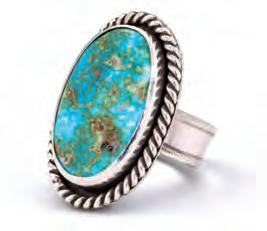
Sonoran Turquoise Ring by Gary Glandon
iStock/NoDerog
story by ARIELLA NARDIZZI
photographs by HAWK BUCKMAN
inSpun the Family
How wool and color have shaped the work in a Nebraska mill for decades.
INSIDE THE BUZZING
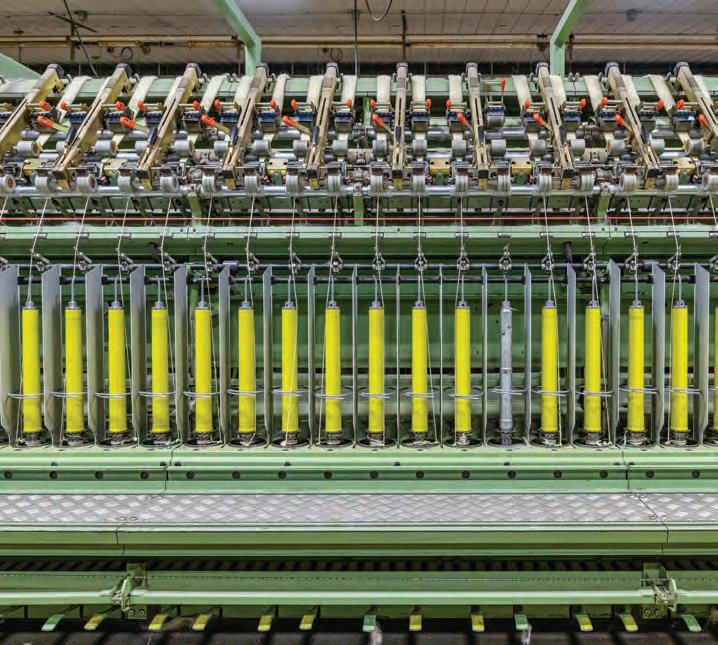
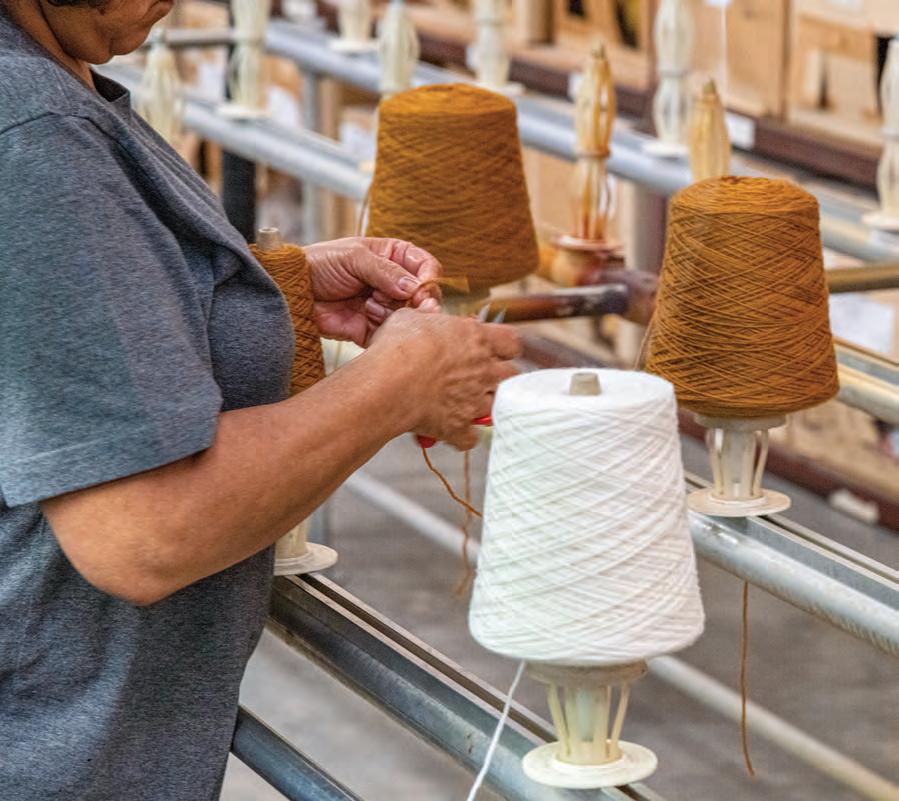
Brown Sheep Company mill in Mitchell, skeins of wool line the walls in a rippling tapestry: blueberry pie, prairie fire, lotus pink, spicy mustard and every hue of home and hearth. The scent of lanolin and dye hangs in the air. A fine mist hovers in the cavernous warehouse, softening the dry North Platte River Valley air. Carding machines hum steadily as fibers twist and wind into tight coils. Here, amid the clang of spindles and the familiar hum, clink, whirr of looms, a rainbow is spun every day.
For the Wells family, that machinery music is a familiar refrain. They have been at it for 45 years. Third-generation owners Andrew and Brittany Wells walk the mill floor, trading updates with longtime employees, checking dye lots and pausing to admire a dried batch of lime green Burly Spun, Andrew’s favorite since childhood.
“He told us on the tour that his favorite yarn color was, and still is, lime green,” Brittany said. She met Andrew during a mill tour in 2015. “I never forgot that.”
Brown Sheep Company still sits on the same land where the story began more than a century ago. Edwin Brown, who went by E.W., first purchased
acreage along the North Platte River to raise sheep in its pastures. His son, Harlan, continued the work until the mid-1970s. Then lamb markets dipped, and the family farm faced an uncertain future.
Rather than sell, Harlan took a gamble. He purchased a truckload of used spinning equipment with no instruction manuals and set out to learn the wool business on his own. On July 4, 1980, “Farmer Brown” spun his first ball of yarn – Independence Day indeed.
At the time, few believed a yarn mill could thrive in western Nebraska, hundreds of miles from major shipping hubs. But Harlan’s self-taught determination and rural resourcefulness became the thread of the company’s identity. He carried over the original name of his sheep farm to the new business.
“That’s just how we do things in Nebraska,” Harlan’s daughter, Peggy Jo, said. “We find a way.”
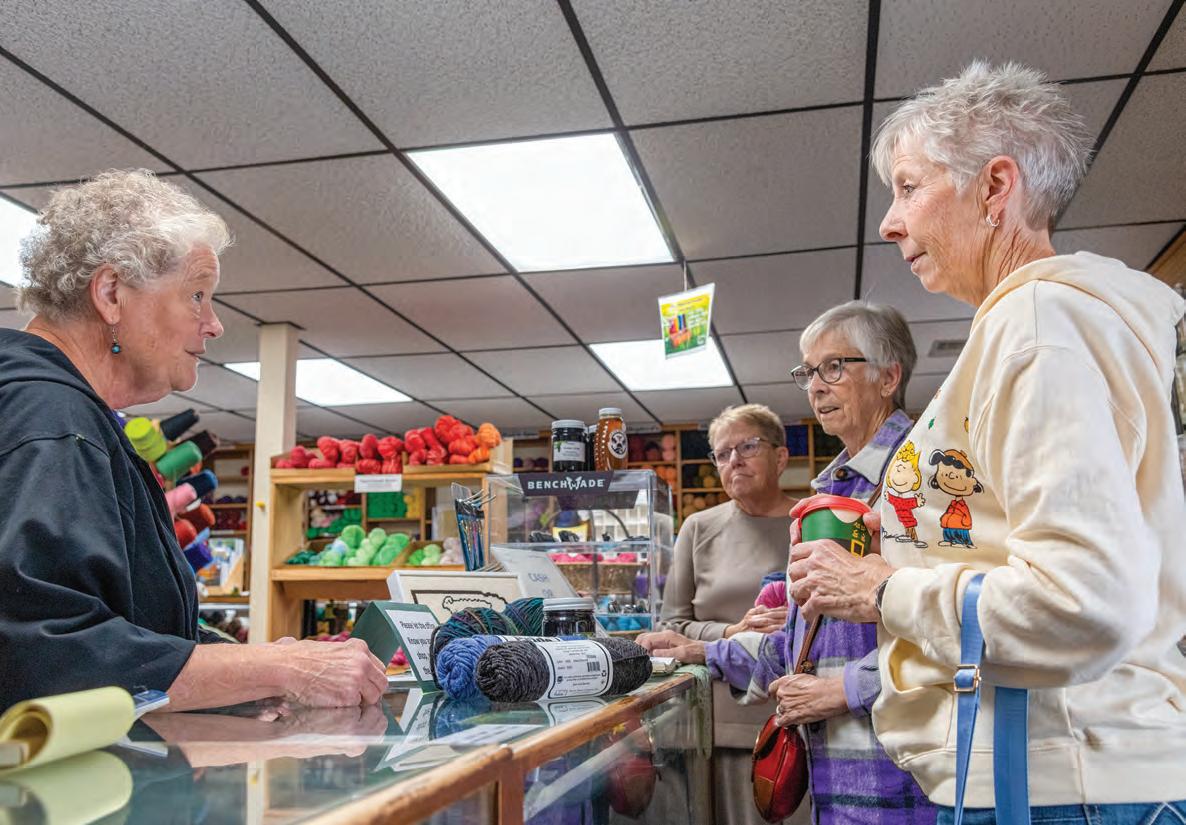
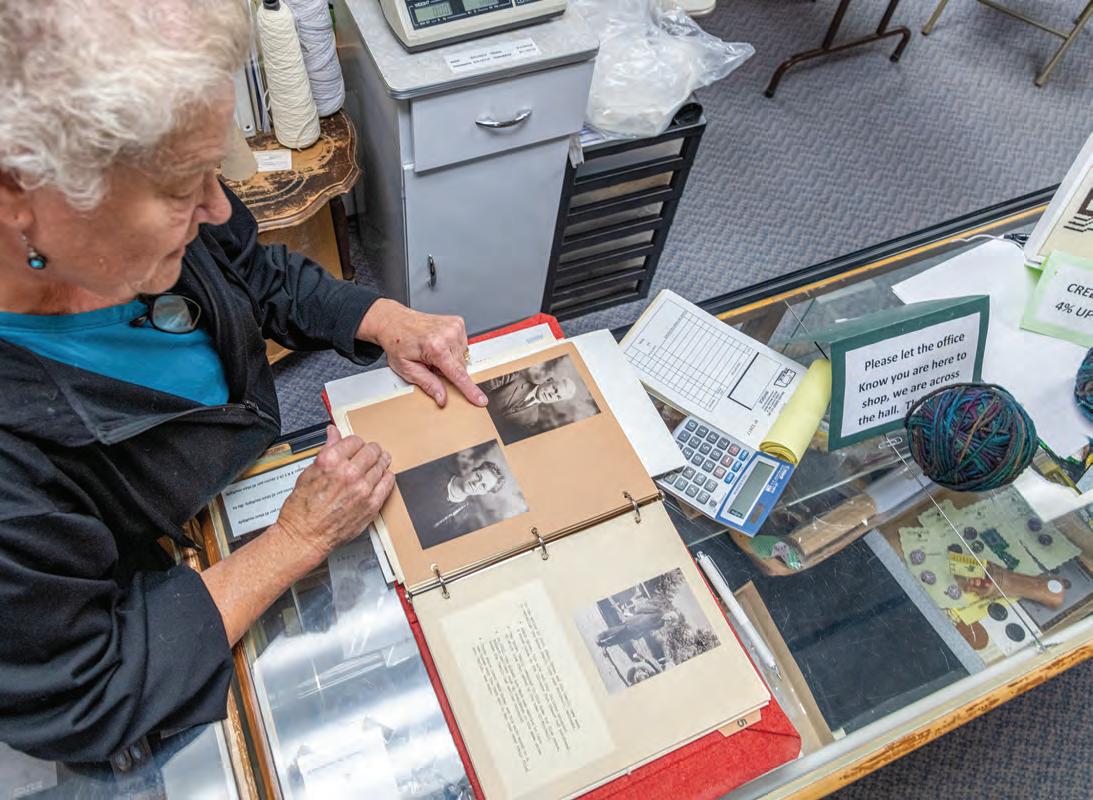
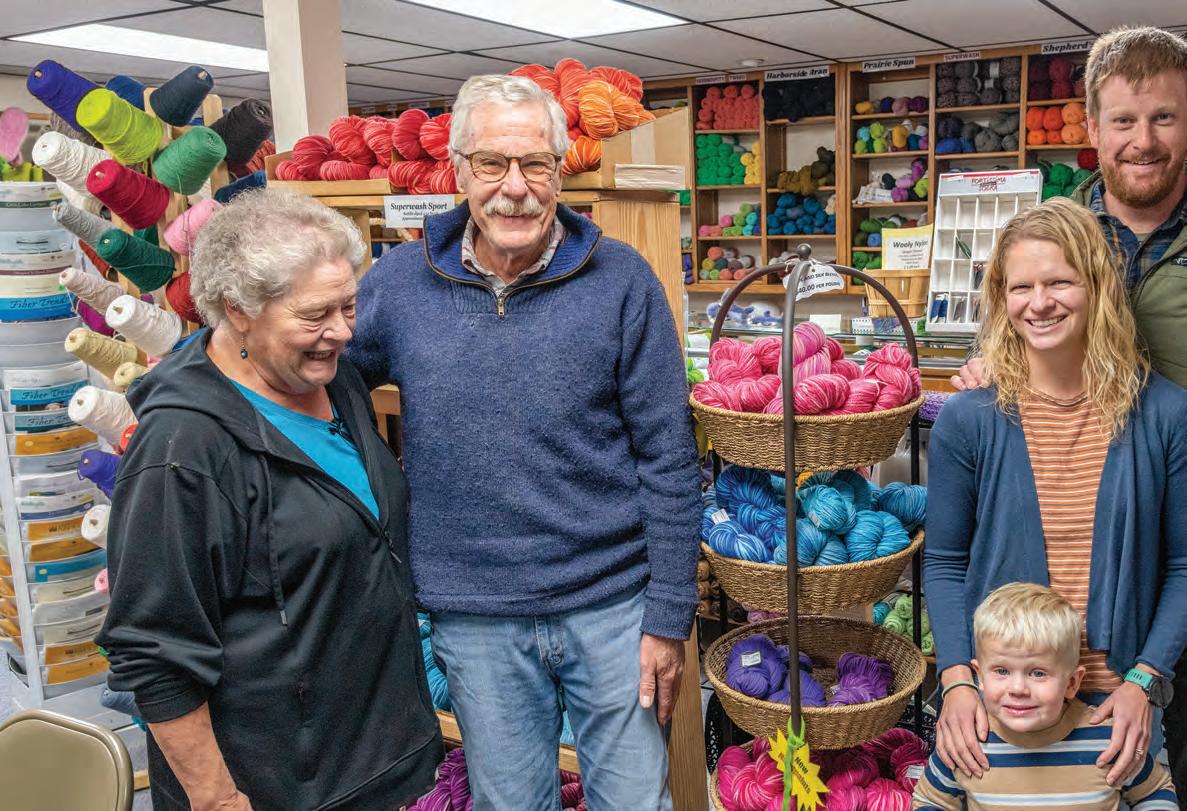
Peggy Jo Wells helps customers choose yarn inside Brown Sheep Company’s outlet store in Mitchell. Family-run for 45 years, the western Nebraska mill produces wellknown lines like Lamb’s Pride and Nature Spun, which are staples for knitters and weavers across the country.
By the late 1990s, Peggy Jo and her husband, Robert Wells, joined the company. They modernized operations and equipment while continuing to run limited production on machinery sized for small dye lots. Robert developed an eco-friendly water recycling system that recaptures and reuses more than half the mill’s wastewater. The process is crucial in a droughtprone area without municipal treatment facilities nearby.
The Wells also upgraded spinning frames and expanded product lines to include everything from lofty wool roving to fingering-weight blends used by knitters and weavers across the country. Although there are no brown sheep to be found on the family’s rolling hills, the Wells source from family ranches in Colorado and Wyoming that raise soft, high-quality fiber from Corriedale, Rambouillet and Columbian sheep.
Today, the company handles about 2,500 pounds of raw wool each month.
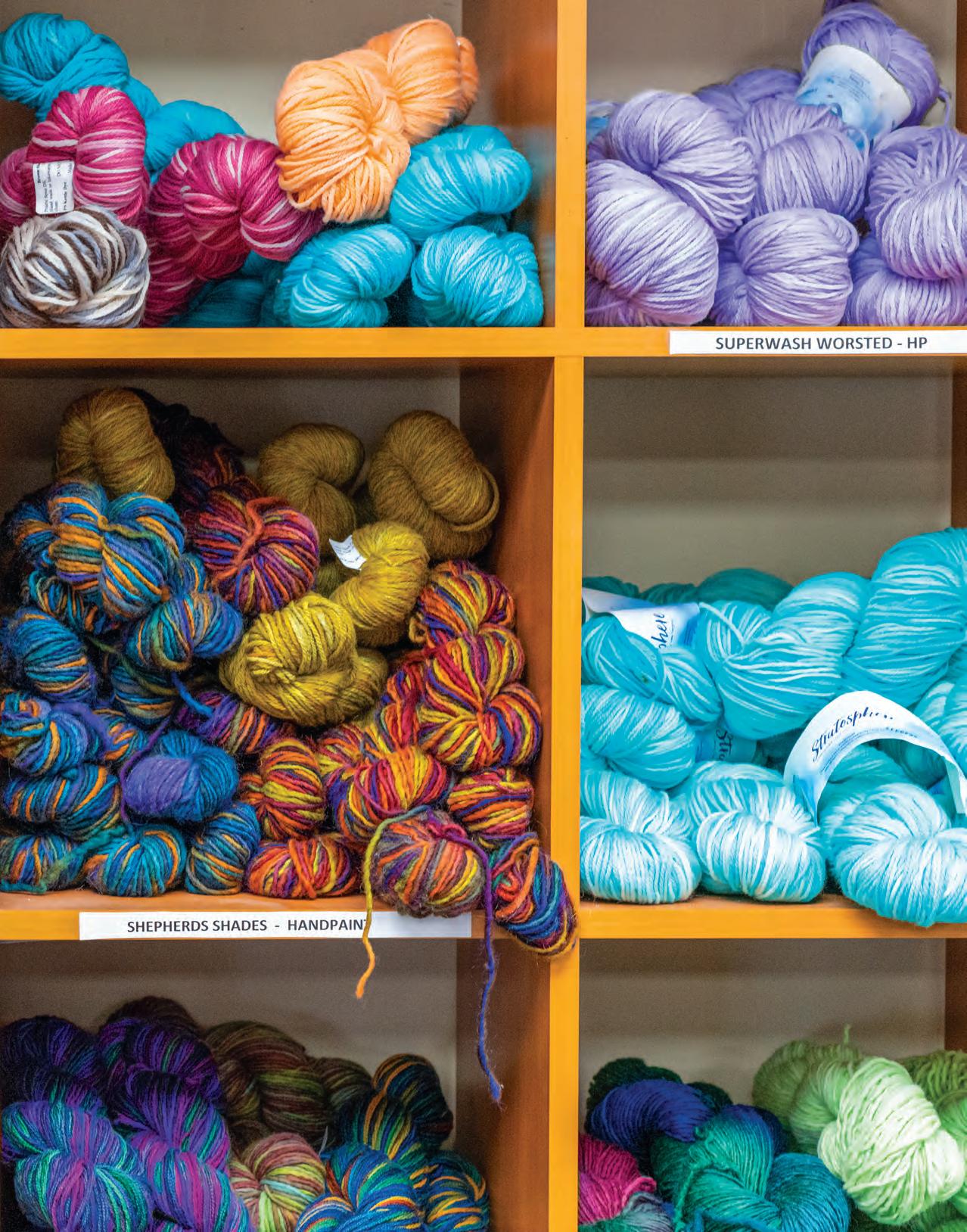
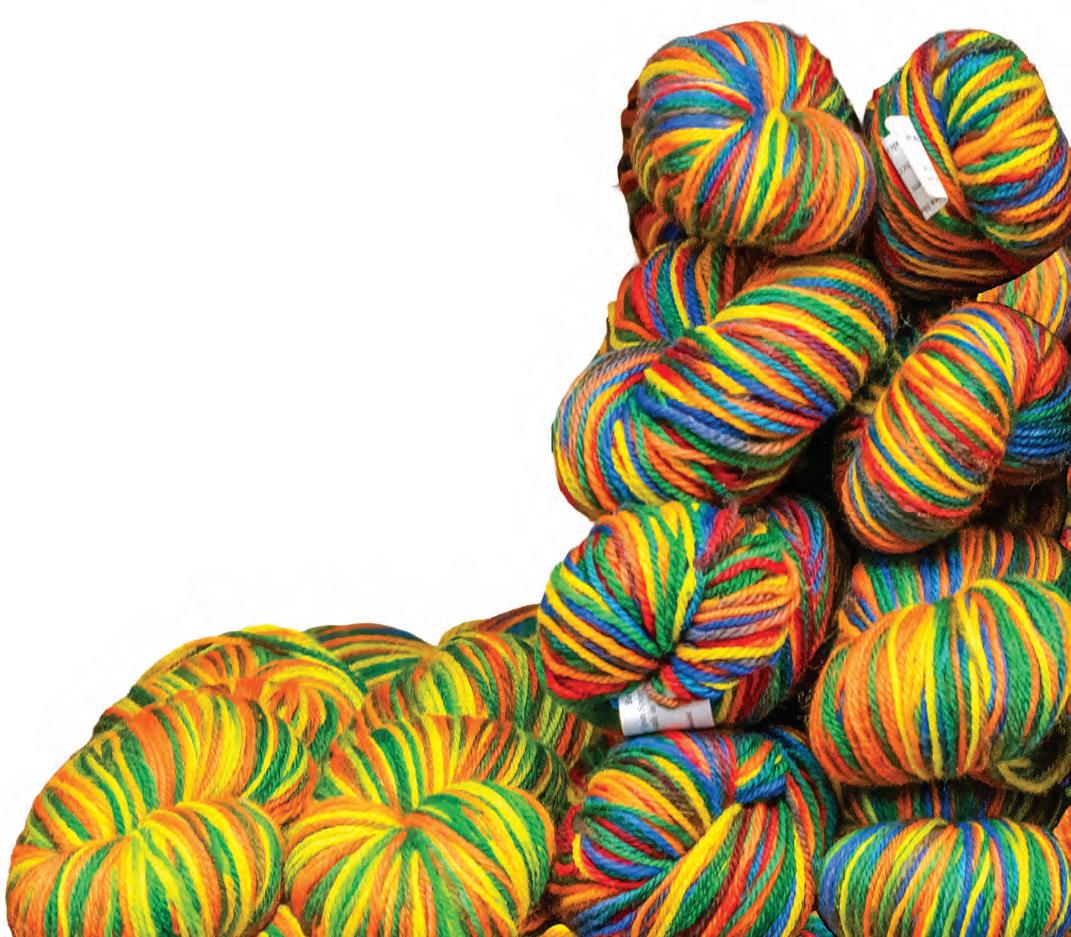
That volume eventually turns into 10,000 skeins, or enough yarn to make roughly 1,000 sweaters. Once the wool arrives in Mitchell, it is scoured, carded, dyed and spun into more than 1,000 colorways, a painter’s palette rendered in fiber.
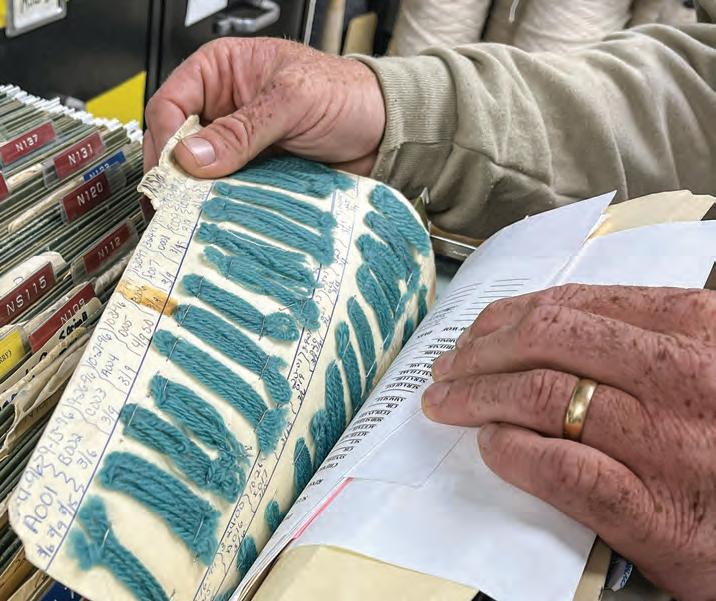
On the floor, steam billows above jewel-toned dye vats. Neutral, natural shades in particular have become a standout, outselling other colors year after year. Workers lower hanks of undyed wool into the swirling color bath, timing each batch for consistency. The water is filtered and cooled, then runs back through the system for reuse. Nearby, a technician tests color against sample cards to ensure shades like Warm Caramel match previous runs exactly. A sweater finished months later must match its first skein, stitch for stitch.
For crafters, Brown Sheep is a household name. The mill’s best-known lines, including Lamb’s Pride, Nature Spun and Cotton Fleece, are staples for knitters and crocheters who speak the language of plies
Peggy Jo traces the company’s origins a century back to her grandfather’s sheep ranch on the North Platte River. Inside the mill, industrial machinery processes 2,500 pounds of wool monthly, supported by an eco-friendly system that recaptures and reuses more than half its wastewater.
and gauges. Handweavers rely on the even spin and rich tones for blankets and tapestries.
Second-generation owners Peggy Jo and Robert passed on operations to Andrew and Brittany, who are teaching their young sons the family trade. Every step of the process is completed at the company’s mill, where wool is carded, spun, dyed and woven into more than 1,000 colors of yarn.
The mill’s small outlet store on County Road 16 sits catty-corner to the Wells family home, drawing visitors from across the plains. Inside, retirees browse seconds and young makers clutch color cards as they search for a match amid a thousand hues. Many linger, soft skeins squeezed in their palms.
Customers often comment on the yarn’s breathability, resilience, vibrancy and warmth, but just as often on the time staff members take to help them navigate colors, weights and projects.
Among Brown Sheep’s earliest loyal customers were traditional Diné (Navajo) weavers in the Southwest. To this day, they still order thousands of pounds of Nebraska yarn.
The company’s yarn also ships worldwide and is stocked in independent shops from coast to coast. From those threads come sweaters, scarves and stories that
stretch far beyond the region, even to the 2014 Winter Olympics, where Ralph Lauren used Brown Sheep yarn in U.S. team designs.
Forty years later, the Wells family marks its third generation in the mill and fifth generation on the land. Peggy Jo and Robert’s son Andrew, who once declared at age 6 that he would “just skip school and go right into business,” returned to the family trade after college in 2015. He met Brittany while leading mill tours. Together, they help guide the company into the future while honoring its roots.
Running a yarn mill in western Nebraska is not without challenges. Shipping raw wool in and finished skeins out takes coordination. Winter storms can snarl freight lines. Droughts strain water resources.
The family adapts to each situation with grace, just as Farmer Brown once did a century prior. Mistakes during the dyeing or spinning process either create new, unexpected products or fill the shelves of the outlet’s “seconds” store.
Recently, a machine operator error resulted in 1,000 pounds of yarn spun in the wrong thickness. The Wells family instead crafted a new, extra-heavy yarn – perfect for winter – by twisting the erroneous strands together into a unique product.
“These fields used to feed my greatgrandfather’s sheep. Now they nurture our business in a different way,” Peggy Jo said.
Through the years, she has learned that, perhaps, family is the strongest fiber of all. “It’s as good as it gets when your children and grandchildren live across the drive from your office,” she said.
She and Robert now watch with pride as Andrew and Brittany raise their sons, Walter and Lester, the fourth generation. Andrew and Brittany oversee dye schedules and production runs as the factory carries on day-to-day.
Threads pass from hand to hand, generation to generation, as the family business continues much as it always has. The mill hums on.
Ariella Nardizzi
PART TWO I
N OUR LAST November/December issue, Nebraska Life introduced the first half of our “Spirit of Nebraska” Photo Contest – a celebration of our home state’s vast skies, wild landscapes and the people who call it home.
The response was extraordinary. Through thousands of submissions, readers revealed Nebraska as more than a place – as a feeling, a rhythm and a way of life seen through their own unique lenses.
Now, in Part Two, we continue that story with six new categories that zoom the focus closer to home: Portrait, Sports, Architecture, Hometown Pride, Macro and Water. These images capture the intimacy of Nebraska life. The faces and places that define us, the small details often overlooked and the moments of motion, grit and grace that make up everyday life on the plains.
We also honor our esteemed Photographer of the Year – a storyteller whose work embodies Nebraska’s enduring ideals of resilience, beauty and community.
Thank you immensely to everyone who shared their vision of the Good Life with us. Keep your cameras ready; entries for next year’s contest will open this summer. Together, through your images and our pages, we will continue telling the story of Nebraska as only Nebraskans can.
PORTRAIT
FIRST PLACE
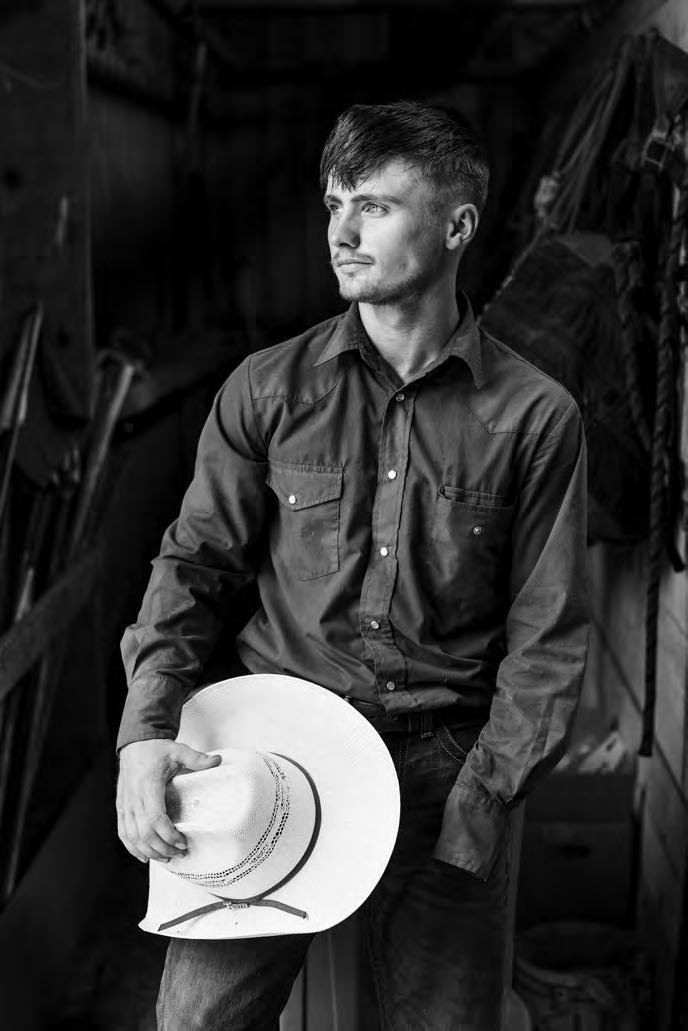
“WYATT”
SWAN LAKE RANCH, WHITMAN
BY JENNA ROSE
Portrait photography captures more than a face. It reveals a story. For Jenna Rose, that story began on her family’s ancestral land in the Nebraska Sandhills. While camping at Swan Lake Ranch near Whitman, she photographed ranch hand Wyatt, whose quiet strength endures after losing his hand in an accident.
The two discovered a family connection from the early 1900s – a meeting that Rose could only describe as a continuation of a story begun generations ago. She positioned him by open barn doors, using soft natural side light to trace the textures of his work and resolve. Rendered in black and white, the portrait feels intimate, raw and timeless.
SECOND PLACE
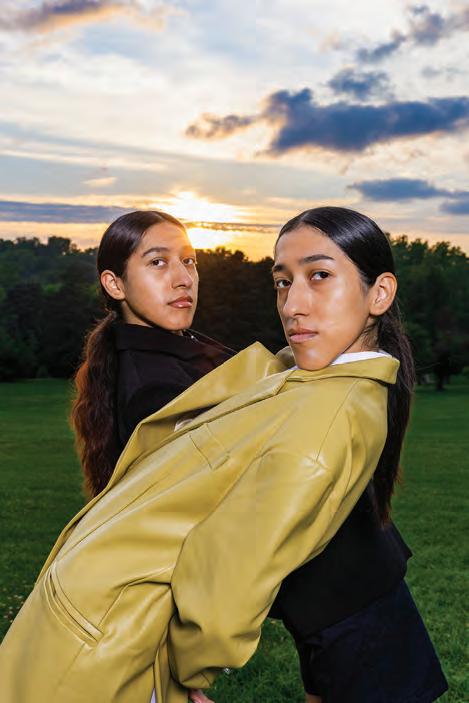
“MIRRORED”
MEMORIAL
PARK, OMAHA
BY JULIUS OWUSU AFRIYIE
THIRD PLACE
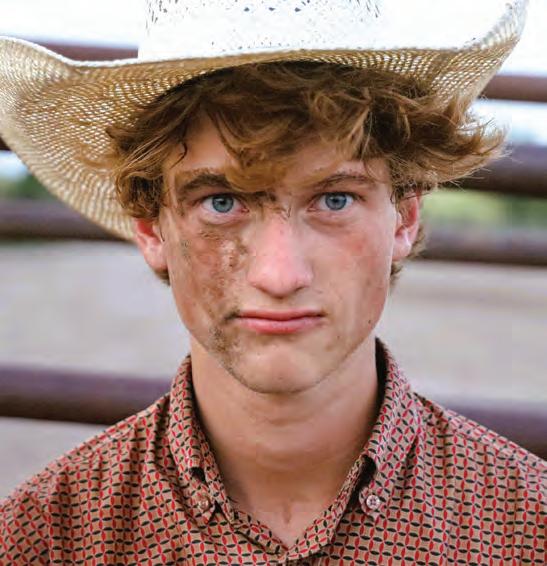
“JAKE” ARTHUR COUNTY BY AINSLIE WILSON
CHEYENNE
SPORTS
FIRST PLACE
“HOLD ON COWBOY”
COUNTY FAIR & RODEO, SIDNEY BY JEFF PHELPS
In rodeo photography, timing is everything – and Jeff Phelps of Sidney captures it down to the millisecond. His image from the Cheyenne County Fair and Rodeo freezes a bareback rider at full extension, focus dialed. Horse and cowboy suspend midair in a blur of muscle, grit and dust.
A fast shutter speed preserves every airborne speck of dirt and dust, while soft golden hour light outlines the rider’s focus and form. The result is cinematic.
Unlike many rodeo shots that chase action from afar, Phelps’ photo pulls viewers right into the right itself. Here, power meets precision and the fleeting rhythm of a short-lived ride endures forever.
SECOND PLACE
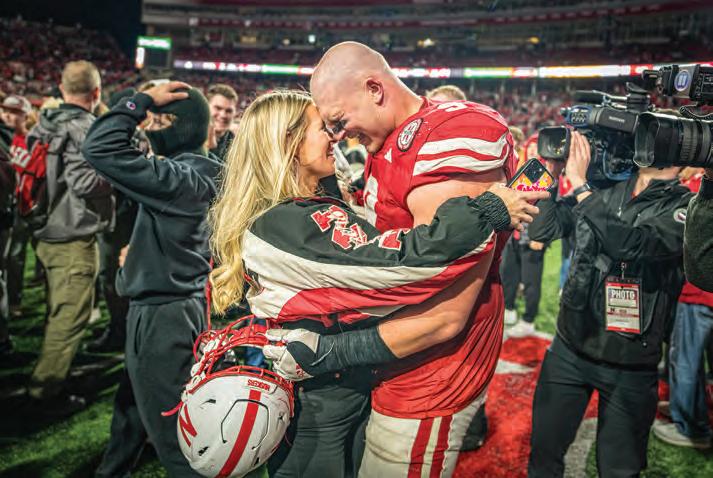
“A
CELEBRATION FOR A HUSKER SENIOR”
MEMORIAL STADIUM, LINCOLN
BY JEFFREY Z. CARNEY
THIRD PLACE
“HANG TIME”
HARLAN COUNTY LAKE, REPUBLICAN CITY BY NICHOLE SHAVER
ARCHITECTURE
FIRST PLACE
“CRESCENT SOWER”
NEBRASKA STATE CAPITOL, LINCOLN
BY MARK COE
At moonrise, Mark Coe, an Omaha photographer, waited patiently for the perfect moment: crescent moon in orbit and Capitol Building in view. Through his camera lens from his vantage point below the building in Lincoln, he aligned the moon just above the Sower atop the 400-foot Capitol. The feat required careful calculation and planning.
Then, using tools like PhotoPills, MoonCalc and Google Earth, Coe mapped the moon’s path, measured the Sower statue’s height and triangulated the ideal spot for his shot. The precise result marries math, science and art into a breathtaking photograph that celebrates Nebraska architecture.
SECOND PLACE
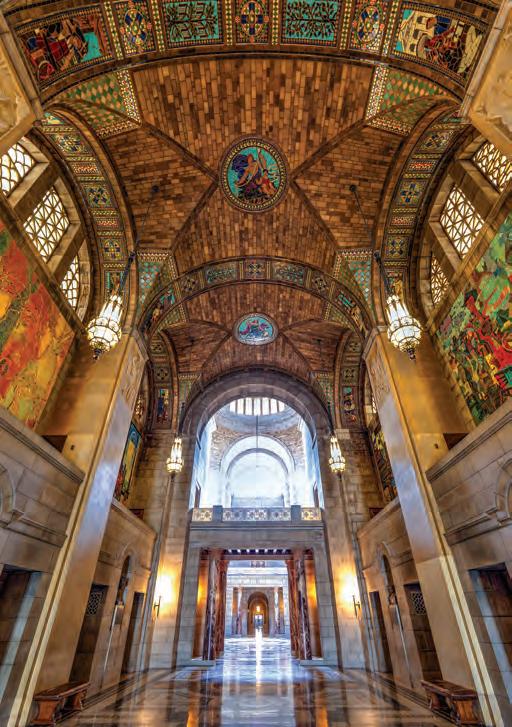
“WALKWAY THROUGH HISTORY”
NEBRASKA STATE CAPITOL, LINCOLN BY KEN SMITH
THIRD PLACE
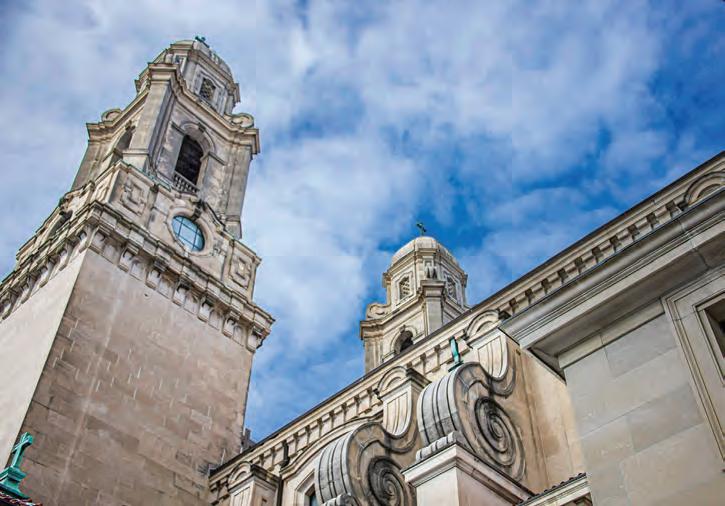
“ST. CECILIA CATHEDRAL ABSTRACT II” ST. CECILIA CATHEDRAL, OMAHA BY SHEILA M GLENCER
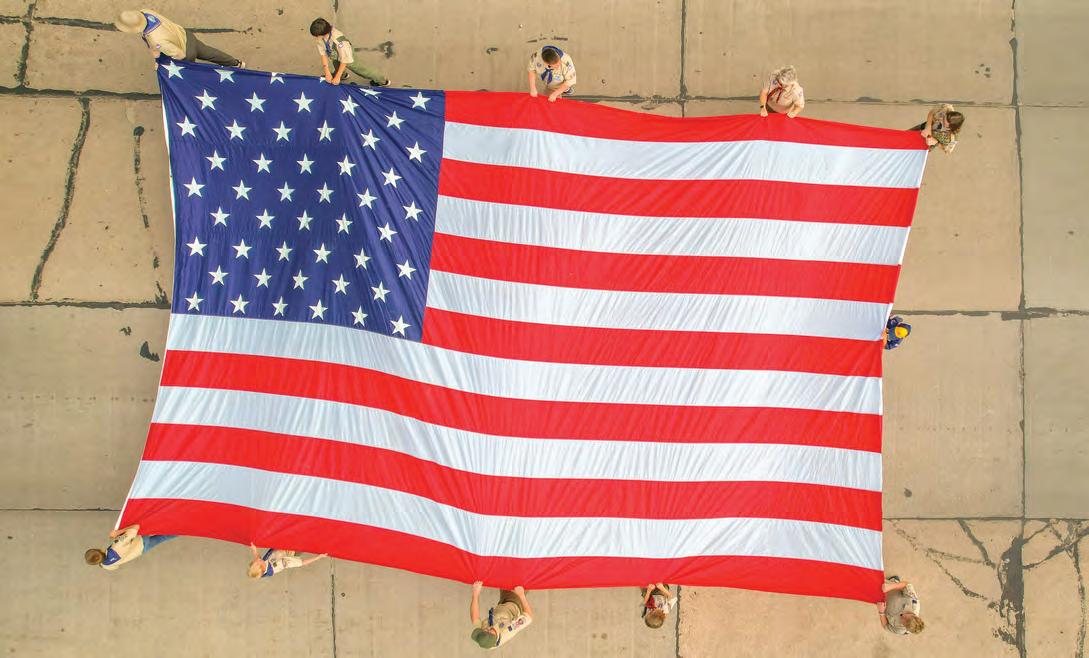
As seen from above, Ashland photographer Jeffrey Z. Carney’s image transforms a familiar Nebraska parade into something profoundly moving.
HOMETOWN PRIDE
FIRST PLACE
“MEMORIAL DAY OBSERVANCE”
MEMORIAL DAY, ASHLAND
BY JEFFREY Z. CARNEY
Boy Scouts march down Main Street in Ashland, gripping the edges of a massive, sweeping American flag that ripples like water against the cracked asphalt below. From Carney’s high vantage, every fold of fabric and shadowed line of the street becomes part of the composition in honoring the country’s fallen.
The aerial perspective flattens distance, but deepens emotion, revealing how Nebraska’s patriotism lives in the steady hands of its youth carrying honor through the heart of their hometown.
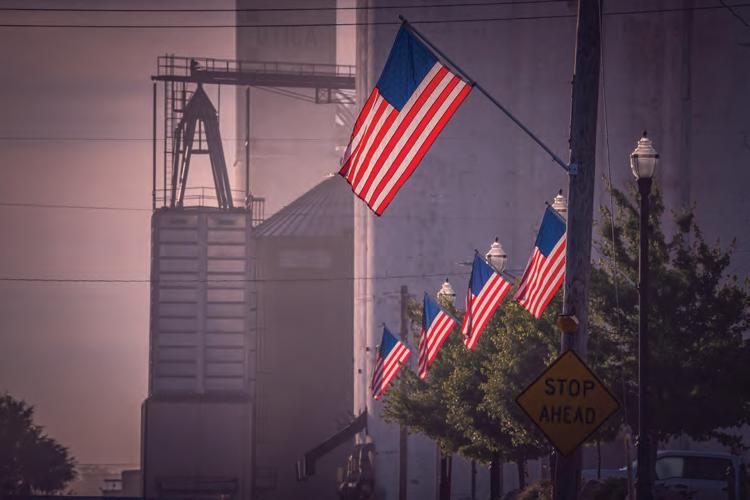
SECOND PLACE
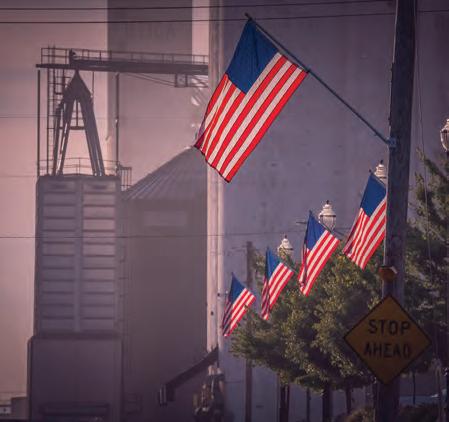
“HOMETOWN PRIDE” UTICA BY ROGER RICHTERS
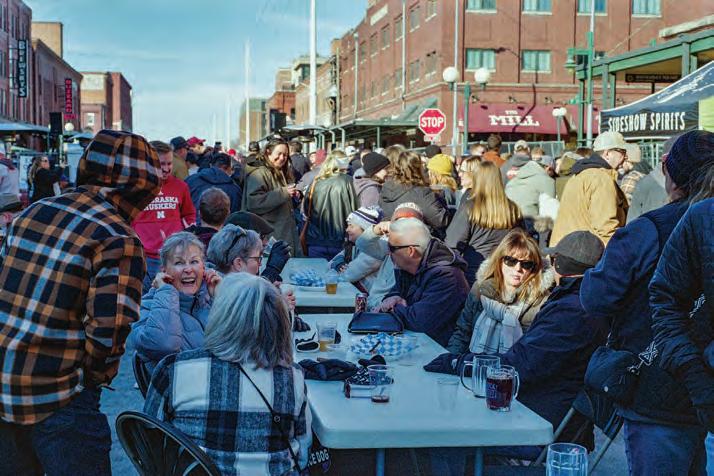
THIRD PLACE
“BUSTLING BOCKFEST” HISTORIC HAYMARKET, LINCOLN BY GORDON TUOMIKOSKI
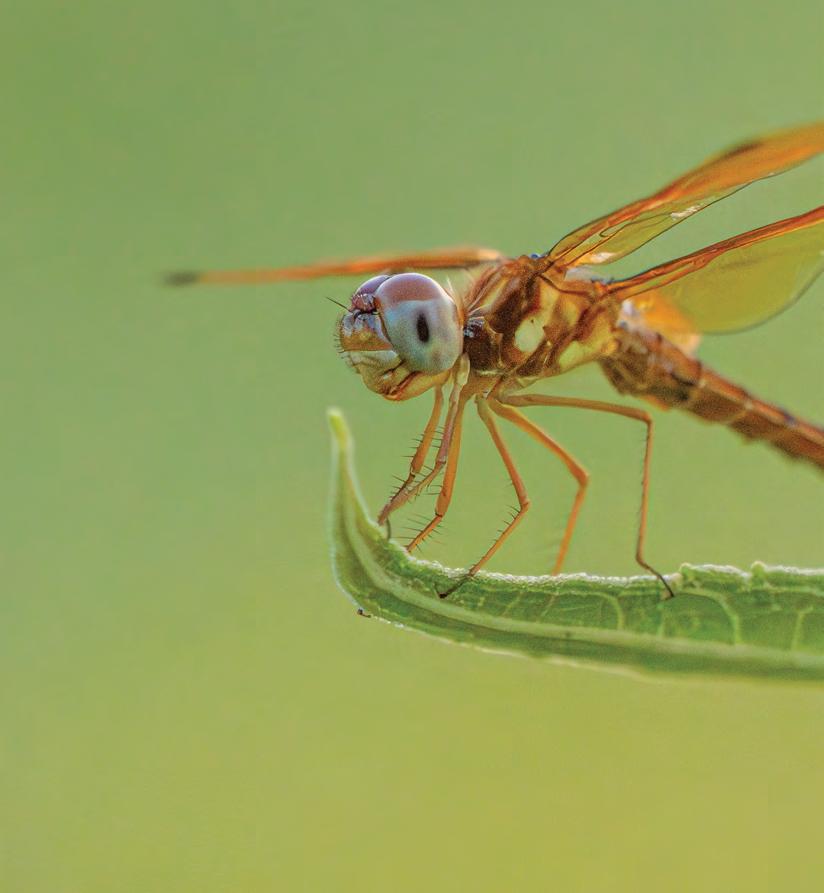
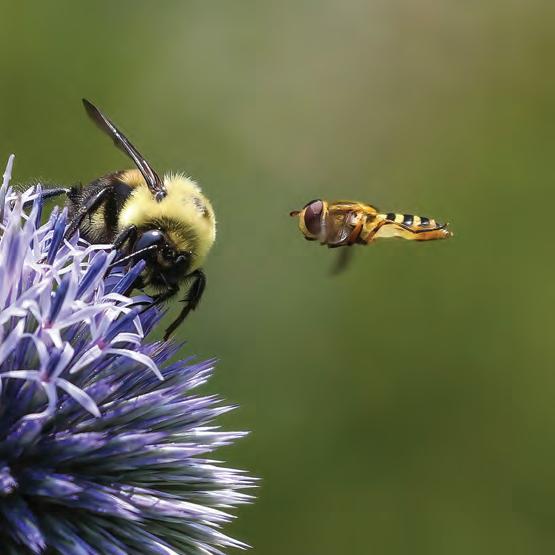
Macro photography demands patience, precision and a steady hand – and Ashlee Richardson of Omaha brings all three to her striking image of an Eastern Amberwing dragonfly in Otoe County.
MACRO
FIRST PLACE
“SMILIN’ FOR THE CAMERA” OTOE COUNTY
BY ASHLEE RICHARDSON
Working at close range, she balanced focus, depth and light to render every microscopic detail: the shimmer of translucent wings, the fine hairs adorning its legs and the curvature of its immense eye.
By controlling aperture and distance, Richardson achieved the shallow depth of field to let the dragonfly pop against an ombre wash of green and gold.
The finished product is a technical triumph – an insect portrait, crisp and composed.
SECOND PLACE
“READY TO ROB” RICHARDSON COUNTY BY ELLEN HANZLICEK
THIRD PLACE
“BUZZ OFF” HERON HAVEN NATURE CENTER, OMAHA BY CONNIE RATHBUN
WATER
FIRST PLACE
“FUN TIMES ON THE PLATTE” PLATTE RIVER, KEARNEY
BY WAYNE BESTOL
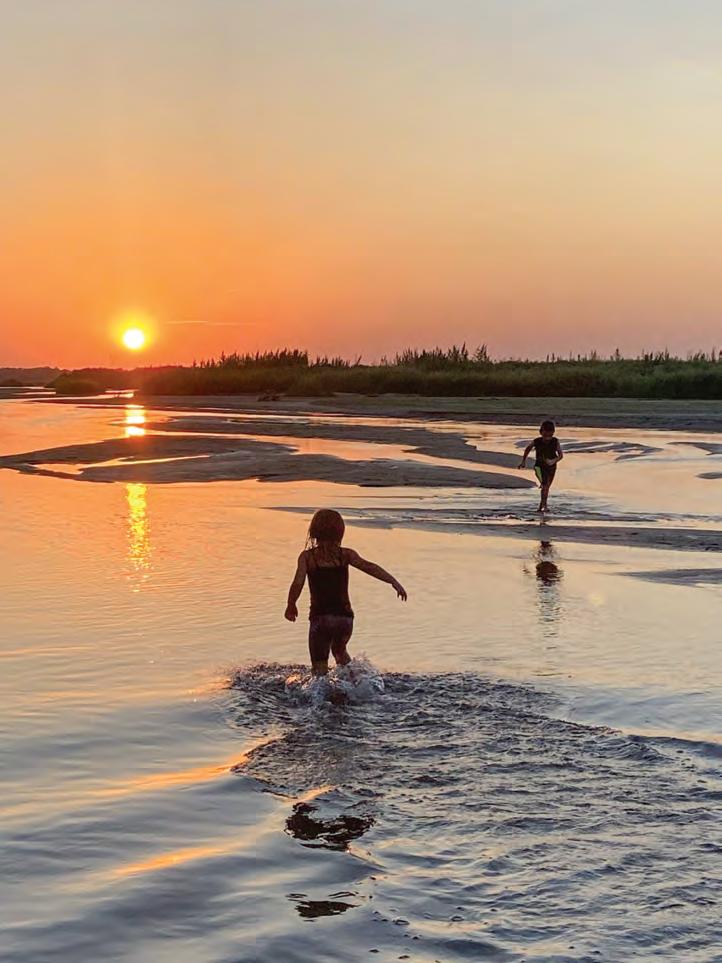
Wayne Bestol captures a joyful summer moment on the Platte River near Fort Kearney State Recreation Area. Using only his smartphone, Bestol freezeframes the laughter and movement of children playing in the water, proving that photography doesn’t require expensive equipment – just an eye for timing, light and a core childhood memory.
The ripples, splashes and motion invite viewers to relive the simple pleasures of a summer day. Bestol’s work celebrates accessibility in photography, showcasing that anyone can interpret their surroundings and preserve fleeting moments. It’s a reminder that the heart of a great image lies in vision, not gear.
SECOND PLACE
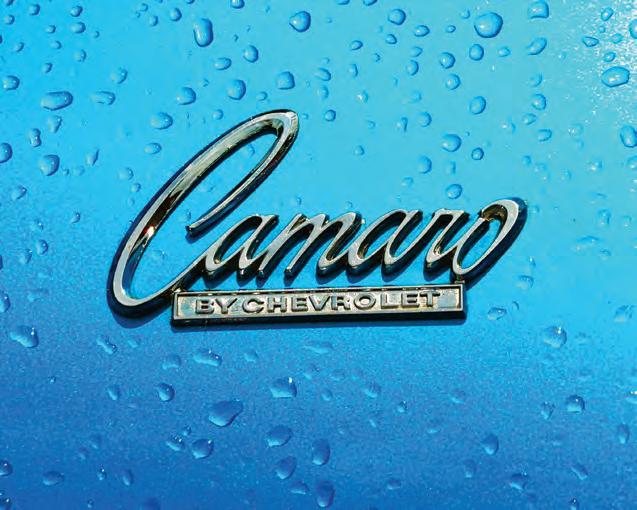
“CAMARO SHINES AFTER THE RAIN” GILTNER DAZE CAR SHOW, GILTNER BY MINDI KRING
THIRD PLACE
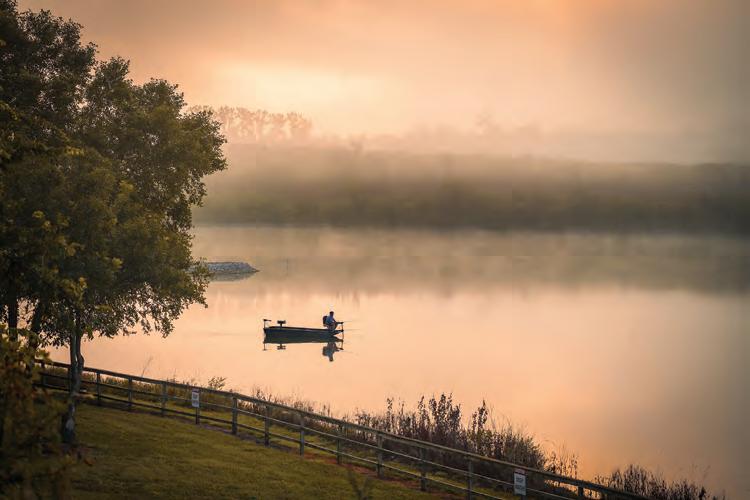
“A FISHERMAN’S SOLITUDE” IRON HORSE TRAIL LAKE, PAWNEE CITY BY ELLEN HANZLICEK
PHOTOGRAPHER OF THE YEAR
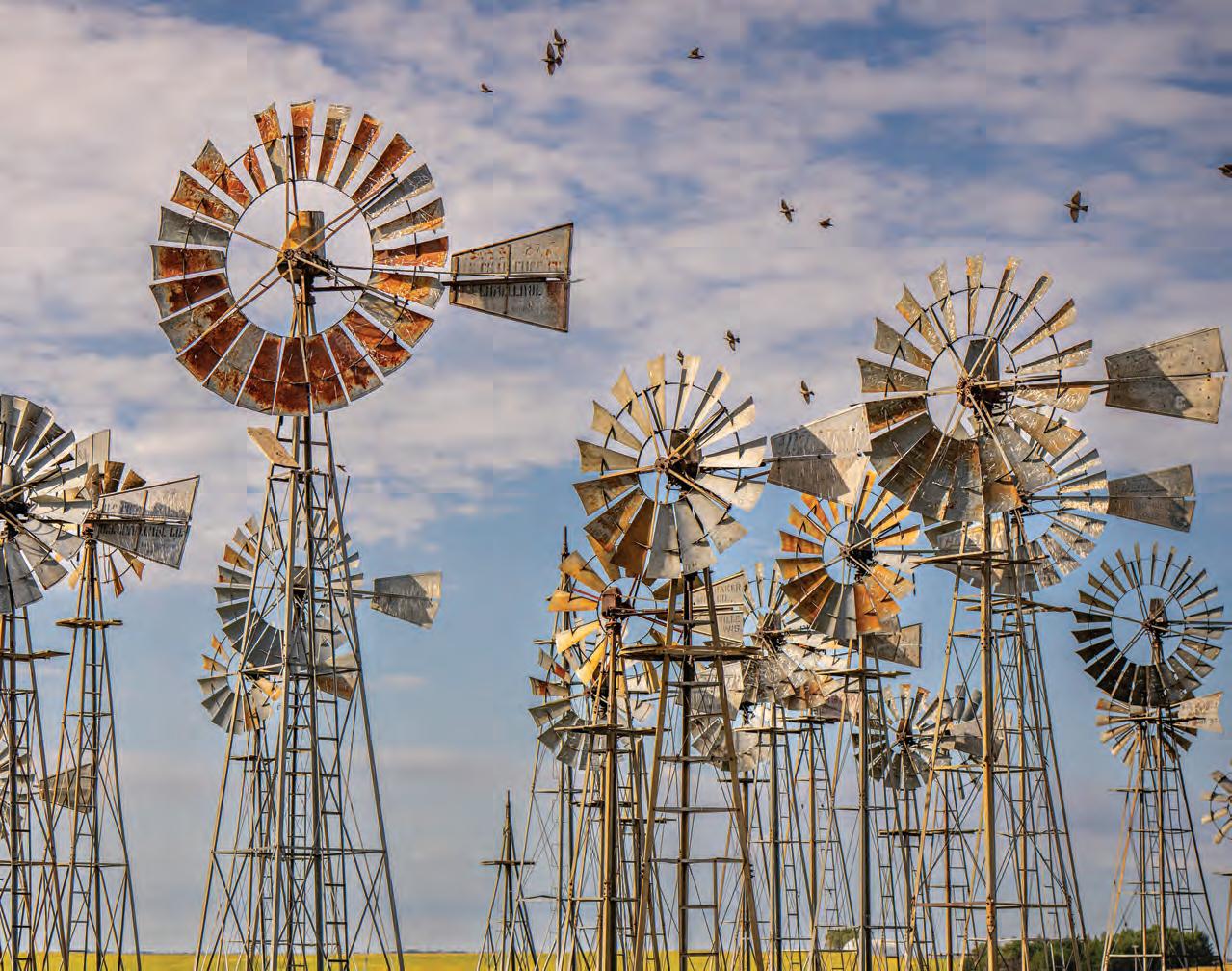
“WINDMILLS IN THE NEBRASKA SANDHILLS” NEBRASKA HWY. 2
BY JEFFREY Z. CARNEY
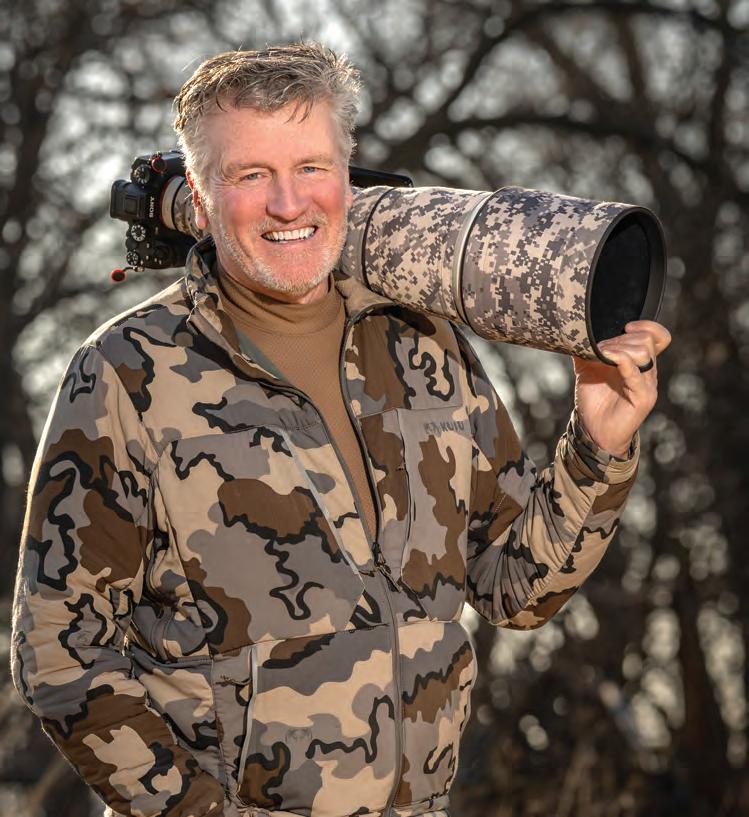
For Jeffrey Z. Carney of Ashland, photography is both a homecoming and a calling. After decades in photojournalism – from the Associated Press to the Omaha World-Herald – he returned to photographing the people, wildlife and wild-open spaces of his beloved native Nebraska.
Carney’s images reflect a photojournalist’s instinct for truth and a conservationsist’s reverence for place, whether he’s capturing the sweep of Sandhills light or the pulse of cranes along the Platte in conjunction with the Crane Trust through annual migration photography workshops.
“I like to take an idea and make it my own,” he said, “to surprise people with something familiar, seen differently.”
Tracks in the snow briefly stitch stories into the white stillness of winter. As they fade, they make room for new paths and new beginnings. In these poems, winter becomes a season of both record and renewal.
Snow Stripes
Laura Hilkemann, Firth
Withered, overgrazed prairie grasses
Hidden by loud, outlaw blizzards
Escaping the Dakotas to the high hills
Scarred with scratches of cattle trails
Children’s colorful, knitted mittens off Briefly to tie a saddle knot in stiff
Leather on a sturdy, black ranch mare With a thick, wind-twisted mane
Red sleds tethered by rawhide ropes
Following deep, uphill hoofprints
Before being liberated to jubilantly
Scribble descending stripes in snow
Tracks
Dennis Radil, Comstock
Outside the snow is falling Neighbors’ lights I cannot see; The woodstove crackles lightly Giving welcomed warmth for we.
The blanket that now covers All that is seen outside; Is one that’s dearly welcomed Beneath, the resting land yawns wide.
A time of rest that’s needed For both outside and here; The quiet falling snowflakes From grey skies now appear.
Snowdrifts are slowly forming Each huddles in their place; For some the snow’s a good thing Much easier now do footprints trace.
A path that shows so clearly What’s moving and to where; Fresh scents add their own story Pursuers track out there
For now the hunt is plainer Tracks show the trail chosen; The hungry mountain lion Now hunts over ground that’s frozen.
A coyote’s track, a bunny’s leap All show so very clear; Another winter’s snowfall Has changed our world out here
Untracked Snow
Nancy Galloway Hamar, Pleasant Hill, Missouri
Step by step I place my footprints on untracked snow; Never mind that they will soon drift full, For this moment I have left my mark in time
Erick Johnson (both)
Heavy Hand of Winter
Carla Ward, Grand Island
The heavy hand of winter paints generous strokes of ice adding to dead branches a frozen layer of skin, translucent and light bending.
Limbs of dangerous beauty hang lower and lower brandishing frozen blades, threatening to cut power.
The wind calls dead arms wave, answering back too brittle to hold.
Talons scrape and plummet, snapping cables, killing voltage. A neighborhood blinks before succumbing to dark and cold.
Whispers in the Snow
Enid Hansen, Kearney
A crystalline carpet lay beneath the midnight blue sky. Only trees and buildings stand starkly in the silent scene. But, true to nature, life begins to stir.
A rabbit ventures into the solitude, leaving dotted tracks in the snow that give away its presence. As the sun begins to peek across the solitude, lacy bird tracks become visible and mar the snowy perfection beneath trees.
A light breeze stirs the powdery crystals, and the imperfections in the snowy carpet fill in and disappear.
Further, the solitude and the pristine sense of the scene evaporate as humanity enters the scene, creating pronounced tracks in the snow –Tracks that gradually morph into distorted shapes. As the sun slowly climbs into the now azure sky, the crystalline grandeur succumbs to its power, and the tracks in the snow melt into nothingness. But that doesn’t mean they weren’t there.
Such is life.
Though now unseen. Whether mundane or beautiful, those tracks in the snow whispered the reality that life and time move on.
SEND YOUR POEMS on the theme “Breaking Ground” for the May/June 2026 issue, deadline March 1, and “On the River” for the July/August 2026 issue, deadline May 1. Email your poems to poetry@nebraskalife.com or mail to the address at the front of this magazine.
Green Winter Grazing
Spinach adds color to winter
NEBRASKANS ENJOY THE great outdoors, but when it gets cold, we still need a good dose of vitamins. So, break out the spinach and get cookin’. Spinach is a nutritional source of vitamins, minerals and roughage. Good for you, whether baked, sautéed or served cold, here are a few spinach recipe suggestions to give you energy during Nebraska’s cold winter days.
Spinach Casserole
If warm casseroles are the ultimate Nebraska comfort food, this spinach version could leave other states green with envy.
Boil spinach 3-5 minutes or until tender. Drain. While spinach is hot, add cream cheese and half of the butter. Mix well. Melt remaining butter and mix with stuffing mix in medium bowl. Add the spinach mixture and mix well. Add to 9 x 9-inch baking pan and bake at 350° for 30 minutes. Freezes well.
20 oz chopped frozen spinach
8 oz cream cheese
1/2 cup butter, divided 6 oz stuffing
Ser ves 6-8
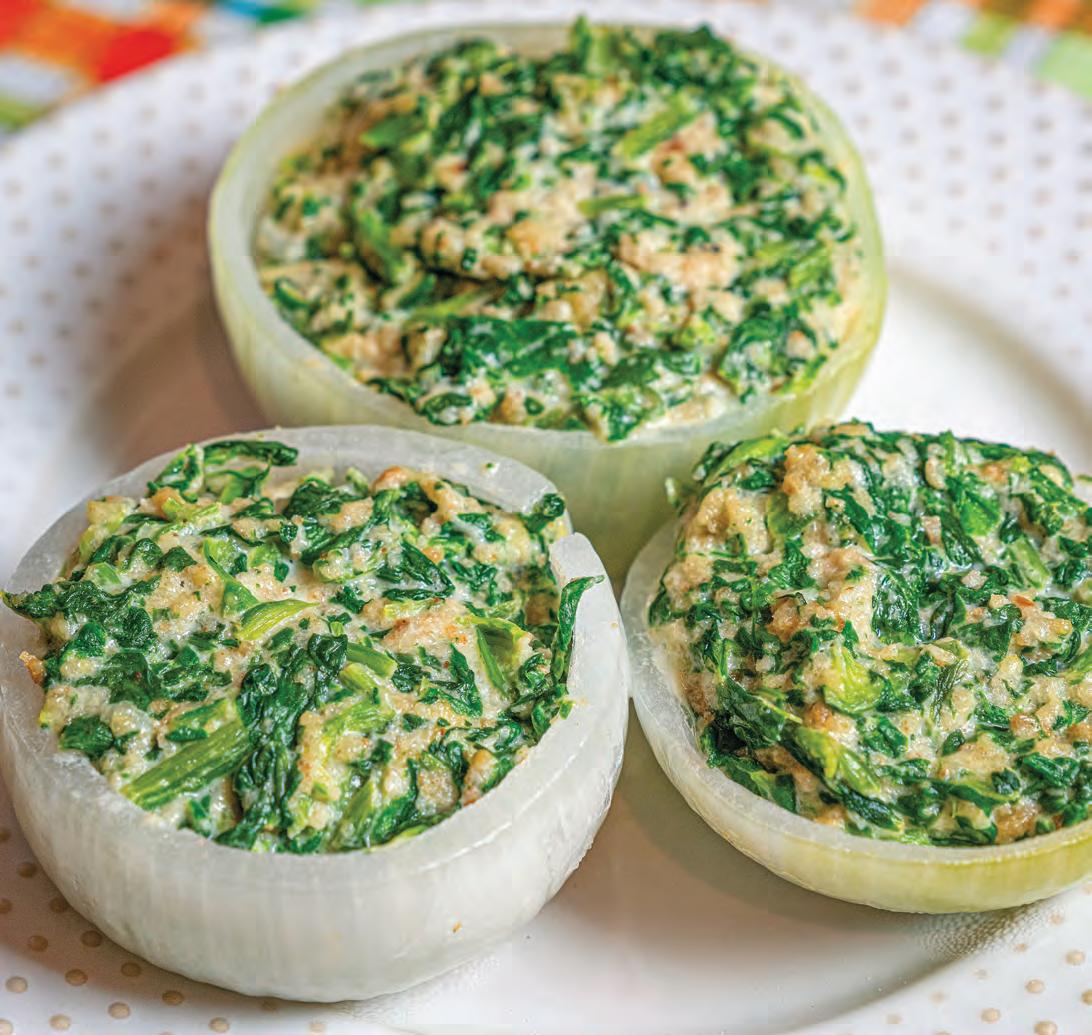
Stuffed Spinach Onions
The single cut made to the onion in this recipe probably won’t have your eyes watering, but with the intense flavors of onions, Parmesan cheese and spinach wafting out of the oven and through your kitchen, we wouldn’t be surprised if a single tear of joy rolled down your cheek.
Boil spinach 3-5 minutes or until tender. Drain. In medium bowl, beat cream cheese with egg. Add everything but spinach and onion and mix well. Stir in spinach. Cut onion in half crosswise and separate layers to form shells. Line a 9 x 9-inch baking dish with aluminum foil and place onion shells within. Use ice cream scoop to fill onion shells with spinach mixture. Cover with foil and bake at 350° for 35-40 minutes or until set.
20 oz chopped frozen spinach
3 oz cream cheese
1 egg
1/2 cup bread crumbs
1/4 cup Parmesan cheese
1/4 cup milk
1/4 tsp salt
Pepper to taste
1 large white onion
Ser ves 4
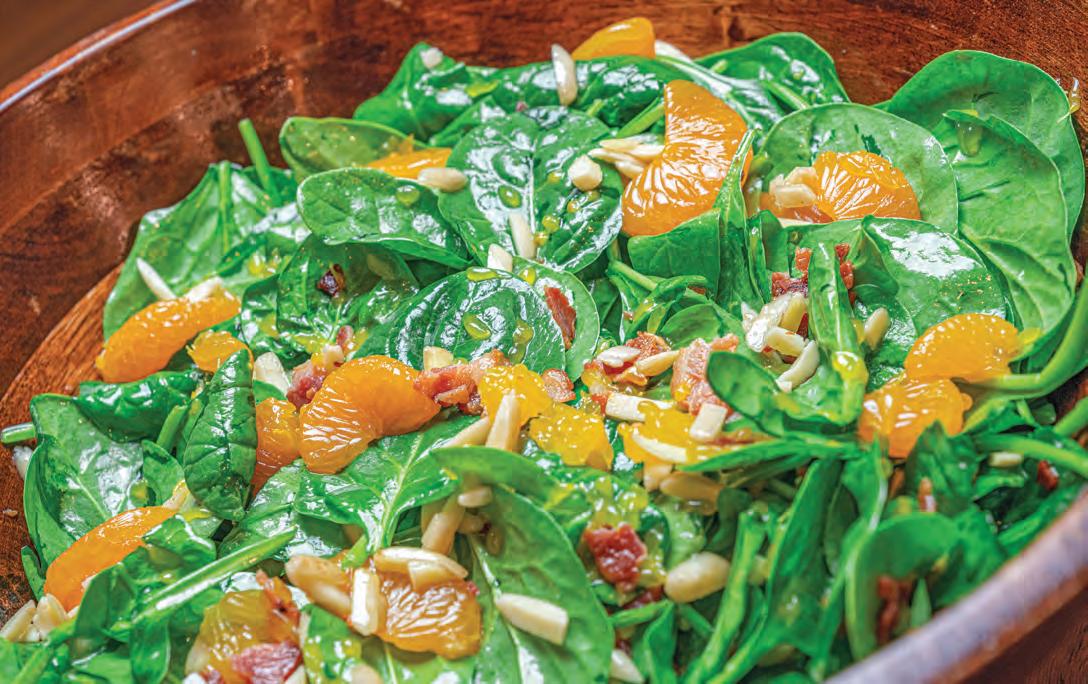
Mandarin Spinach Salad
Tangy mandarin oranges and savory bacon combine to wake up winter appetites with this flavorful fruit salad.
Wash spinach, tear into bite-sized pieces and set aside. Melt butter and mix in almonds. Layer bacon and almond mixture on bottom of salad bowl. Add mandarin oranges, spinach and then onions on top.
To make the dressing, mix all ingredients in small bowl. Drizzle half the dressing over the salad, gently toss and serve. Refrigerate remaining dressing or set it out to serve on the side.
16 oz fresh spinach
2 Tbsp butter
2 oz almonds, slivered
8 pieces bacon, fried and broken
1 11-oz can mandarin oranges, drained
1/4 onion, diced fine
Dressing
1/4 cup white wine vinegar
3/4 cup sugar
2 tsp salt
1 Tbsp Worcestershire sauce
1 cup olive oil
Ser ves 4
WE’RE RAVENOUS TO taste (and publish) your favorite family recipes and stories that accompany them. Send recipes and stories to kitchens@nebraskalife.com or to the address at the front of this magazine.
Timeless
Tastes
Serving Nostalgia: 5 Classic Eateries
by ARIELLA NARDIZZI
NEBRASKA HAS plenty of places to eat. But a handful of restaurants do something else, too – they keep the state’s memories on the table.
They’re where first dates lingered over fries, where Little League teams packed into smooth-worn booths and where a single sandwich became shorthand for hometown pride. Chains arrive, chains leave. These places hold.
From Omaha to Scottsbluff, the stories of Johnny’s, Lee’s, Tastee Treet, Mac’s and Scotty’s are stitched into the landscape like landmarks you don’t need a GPS to find. Together, they show what happens when a place gets the ritual right: it can outlast decades and still taste like the Nebraska you remember.
LEE’S CHICKEN RESTAURANT
Lincoln kicks off the story in a dining room that’s been running on fried chicken and tradition for generations.
“People call us retro now, when we’re really just old,” manager Dennis Kann said.
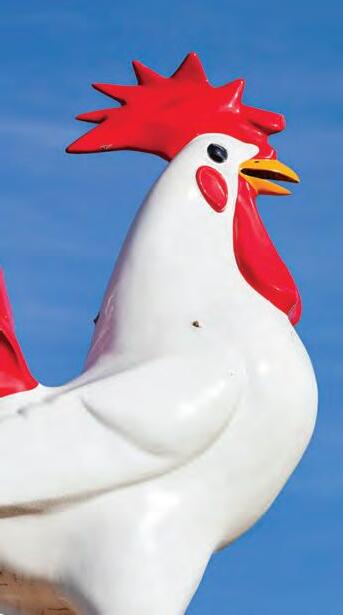
On West Van Dorn Street, it’s hard to miss the sight: a 20-foot plastic chicken towering above the lot. Inside the pale-yellow farmhouse with red trim, the smell of peanut oil frying crisp chicken permeates the air and booths fill with generations of loyal Nebraskans.
Lee’s has served the community since 1945 and bills itself as Lincoln’s longest-running full-service restaurant. Live music fills the dining room Wednesday through Sunday, which is just part of their routine, not a reinvention.
Before it became a chicken institution, the address began as a humble burger shack in the 1930s, serving hamburgers and beer to post-Prohibition golfers. Orig-
inal owners Al and Elizabeth Remaly set the stage, and by 1940, Philip and Dorothy Dreith expanded a space that originally seated 12 and had no running water.
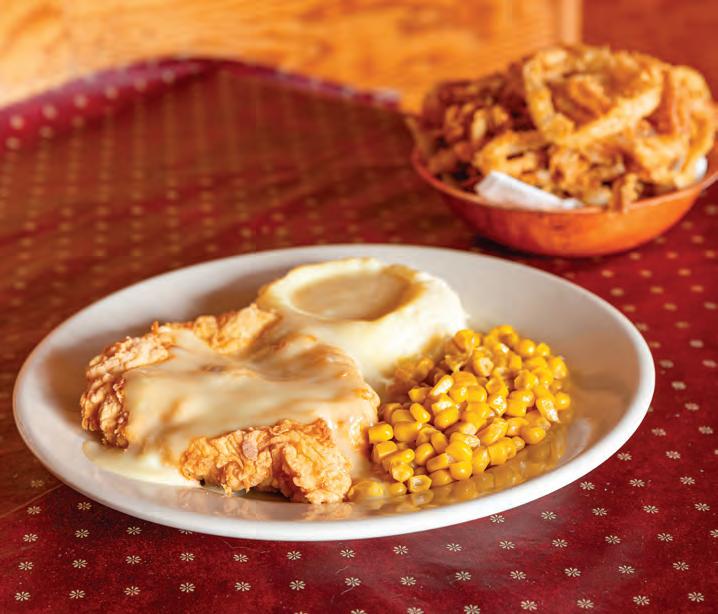
But it was Lee and Alice Franks who gave the restaurant its soul. After hearing about the effects peanut oil could have on French fries, Alice bought a tabletop deep fryer. One day, a customer asked for fried chicken. Alice walked out back, butchered a bird from the yard, dredged it in her Louisiana family recipe and dropped it into peanut oil. The result? A new Lincoln legend.
Lee was an innovator, too, providing air conditioning, television viewing in the bar, takeout and catering in the 1940s, back before it was the norm. From there, the building grew – 13 additions in 25 years –yet the heart stayed the same.
Longtime managers Ozzie and Janice Wilcoxen took ownership in 1970, maintaining Alice’s recipes and Lee’s innovative
Corey Rourke
Corey Rourke
Lincoln’s longest-running full-service restaurant, Lee’s Chicken, has been serving peanut-oil fried
since
vations and recipes of Lee and Alice Franks, the restaurant pairs Pioneer Pete, a towering plastic chicken outside, with
creating a space where authenticity and community thrive.
spirit. “We’ve got that longevity and authenticity that keeps our customers coming back,” Kann said.
That authenticity shows in everything from the Hammond B3 organ that’s been cranking out tunes for decades to the worn wooden booths and counter stools. Wooden booths and counter stools remain, worn but welcoming.
The menu still embraces the whole bird – whether you order a classic chicken sandwich the way Alice first served it, or venture into gizzards, livers or giblets, all battered in Lee’s secret recipe.
Then there’s Pioneer Pete. The chicken statue has perched outside the restaurant for half a century, serving as both mascot and local landmark. He’s been stolen twice, but somehow he always returns home – much like the customers who keep coming back, making Lee’s a family tradition for generations.
chicken
1945. Shaped by the inno-
live music inside,
Corey Rourke (left); Lee’s Chicken
Corey Rourke
JOHNNY’S CAFE
The front door at Johnny’s does not swing. It yields. Heavy and handcrafted, the kind of entry that makes you slow down before you cross the threshold.
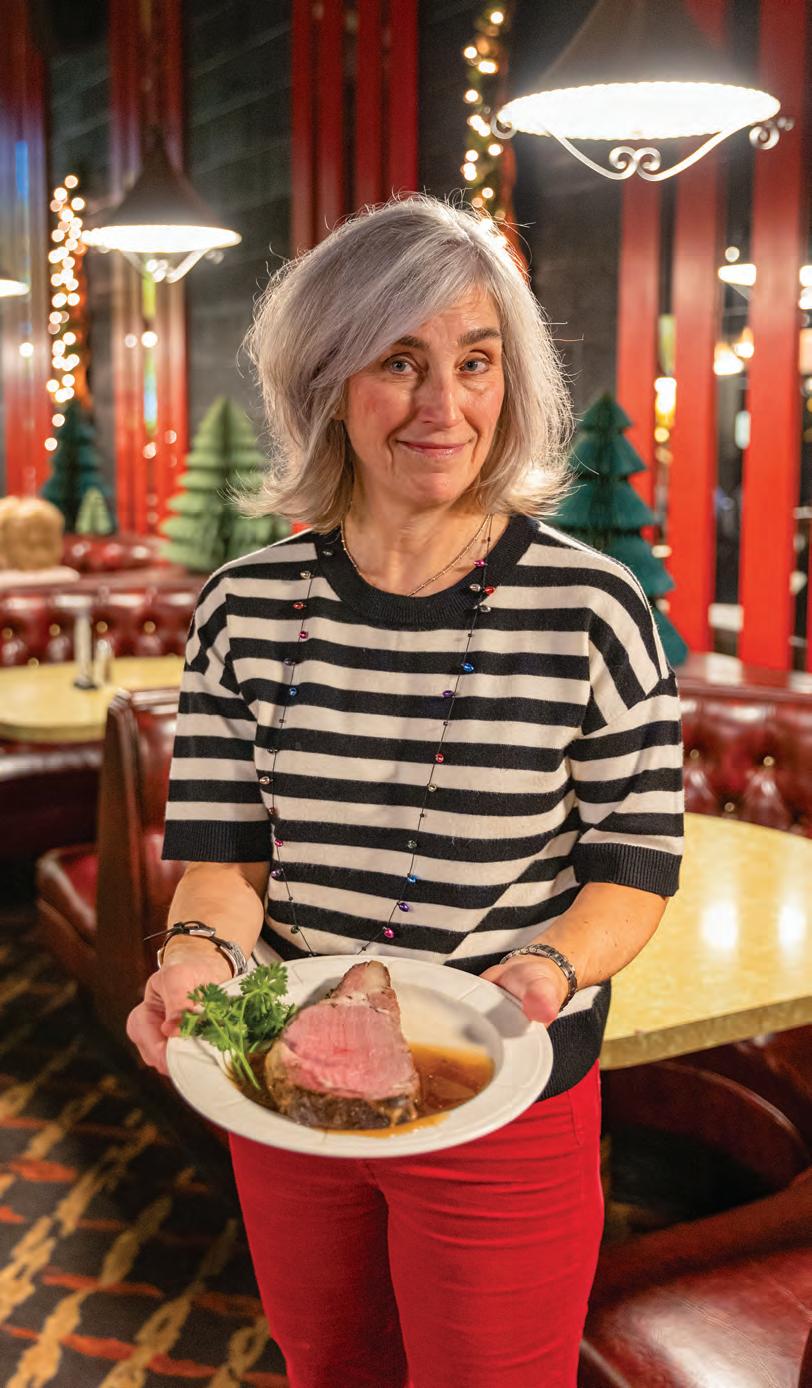
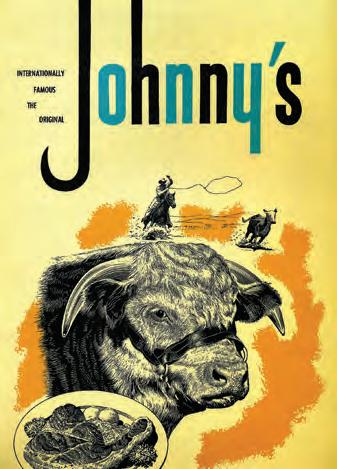
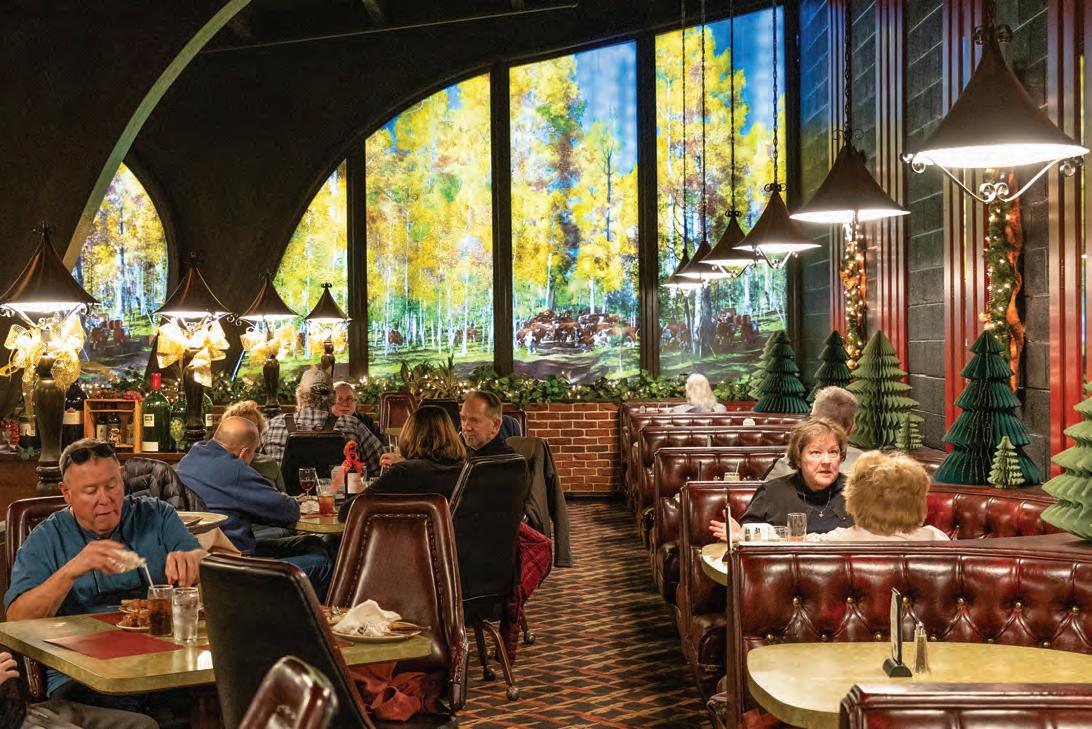
Inside, Omaha’s cattle-country past holds its posture: mahogany walls, red leather-backed chairs, a bull’s head watching the bar. Even the building’s support columns lean into the motif, shaped like T-bones. It’s classic Western kitsch, sure, but it’s continuity you can sit down inside.
For 104 years, Johnny’s Cafe has served prime rib and Midwestern hospitality on the corner of 27th and L Street, a South Omaha institution kept in the family since the beginning. In 1922, Polish immigrant Frank Kawa bought a small bar with five tables. As legend goes, he couldn’t afford to repaint the sign from the previous owner, so Johnny’s stayed, and the nickname stuck. He even signed his name Frank Johnny Kawa.
As the Union Stockyards grew, so did the restaurant. By the 1950s, the stockyards had become the largest in the world, and Johnny’s ran on the schedule of the cattle trade, open from 6 a.m. to 1 a.m. Sawdust covered the floor from workers’ boots. “Anyone who has ties to the cattle industry in Nebraska has come through Johnny’s, whether with their grandparents, parents or own kids,” Sally Kawa said.
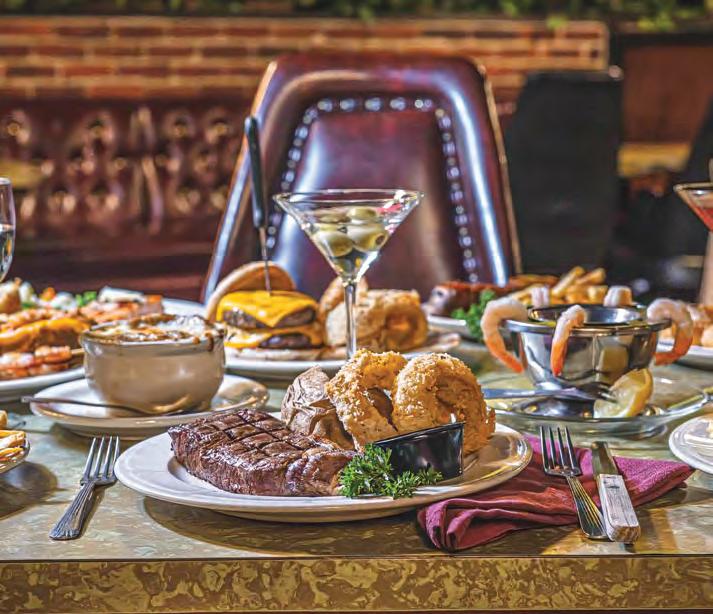
A South Omaha landmark for over a century, Johnny’s Cafe pairs handcrafted prime rib with a decor that celebrates the city’s cattle-country past. Generations of families have made this corner their own, where tradition is as carefully prepared as the food.
Corey Rourke
Frank eventually passed ownership to his sons in the 1960s. Today, third-generation owners and sisters Kari Kawa Harding and Sally Kawa run the business, welcoming diners who order with the confidence of people who’ve been practicing for years.
Corn-fed Midwestern beef still anchors the menu. It’s aged and hand-cut in-house by Johnny’s butchers. “We’re old school in a good way,” Kawa said. “We still make everything – soups, dressings, gravies –from scratch because people can taste the difference.”
Some of Kawa’s fondest memories aren’t of the dining room at all, but the kitchen, when the restaurant seemed to run nearly around-the-clock. “We knew where the hot rolls were, where the tubs of frosting were hidden. I don’t know how much of a help we were,” she said, “but we thought we were.”
Now it’s her turn to hold the line. The booths are still filled with grandparents and grandkids, the same orders repeating across generations. At Johnny’s, tradition is the house specialty.
Corey Rourke
Johnny’s Cafe
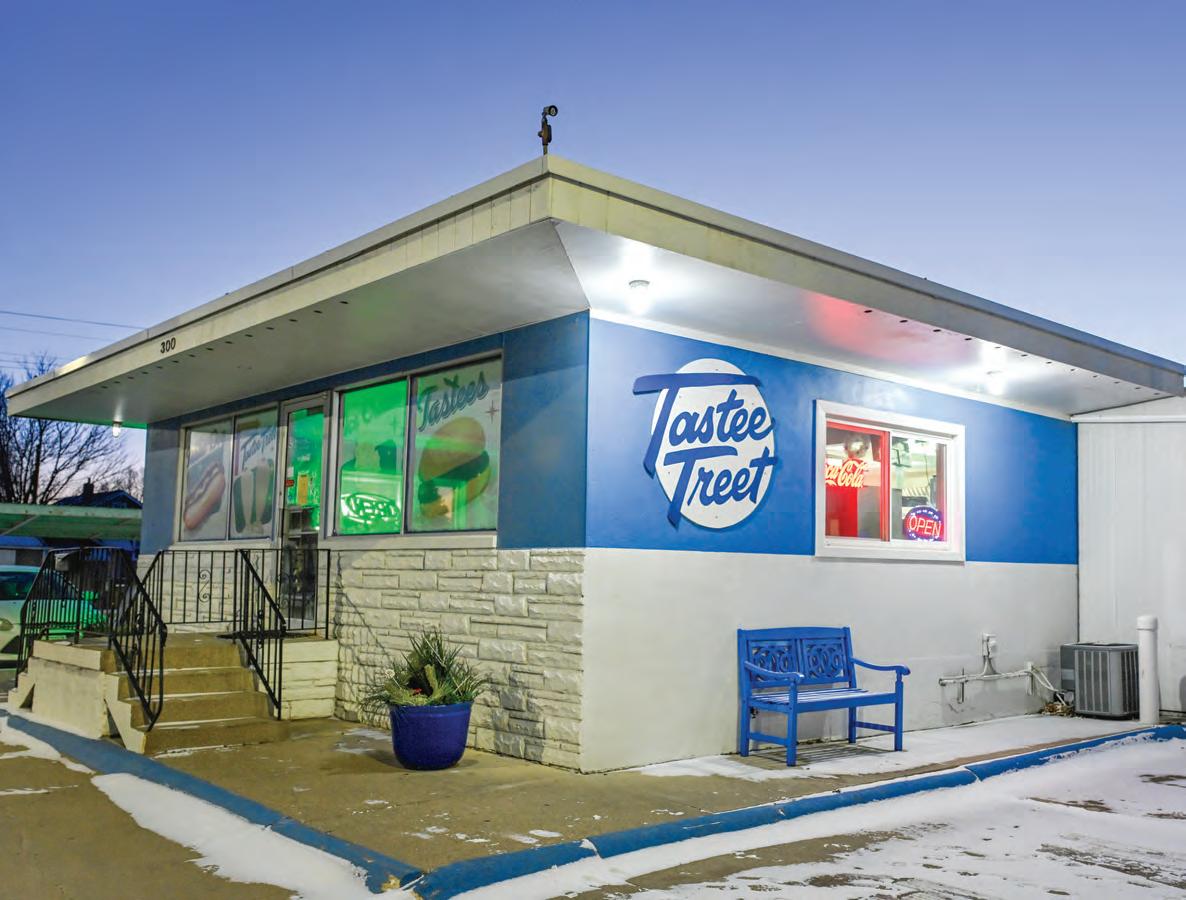
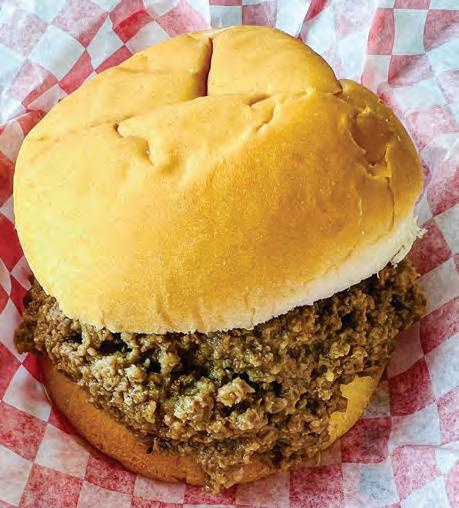
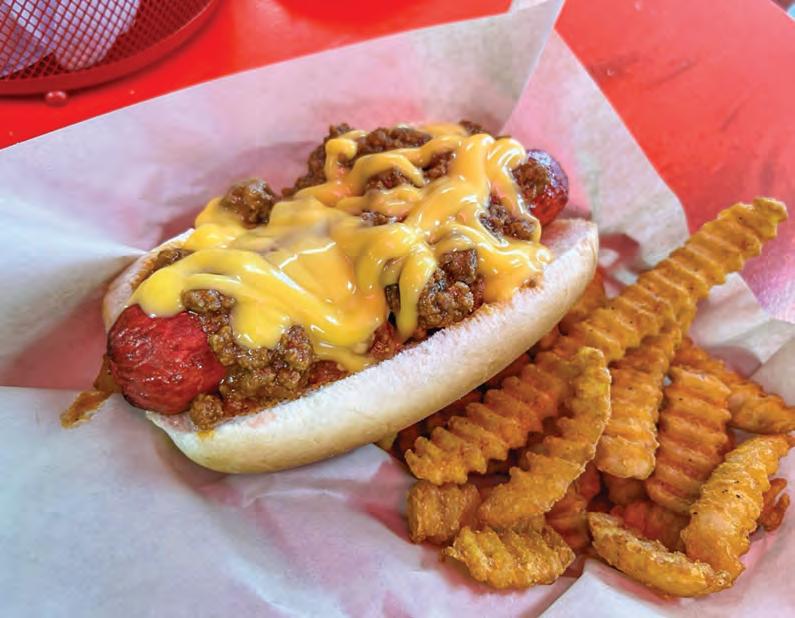
The Tastee Beef sandwich has been the heart of Tastee Treet since 1949, paired with hot dogs, fries and sweet treats like churro sundaes and funnel cake fries. Classic flavors and new favorites coexist, keeping locals coming back for generations in Norfolk.
Darin Epperly
Tastee Treet (both)
TASTEE TREET
On the menu at Tastee Treet, past and present share the same board.
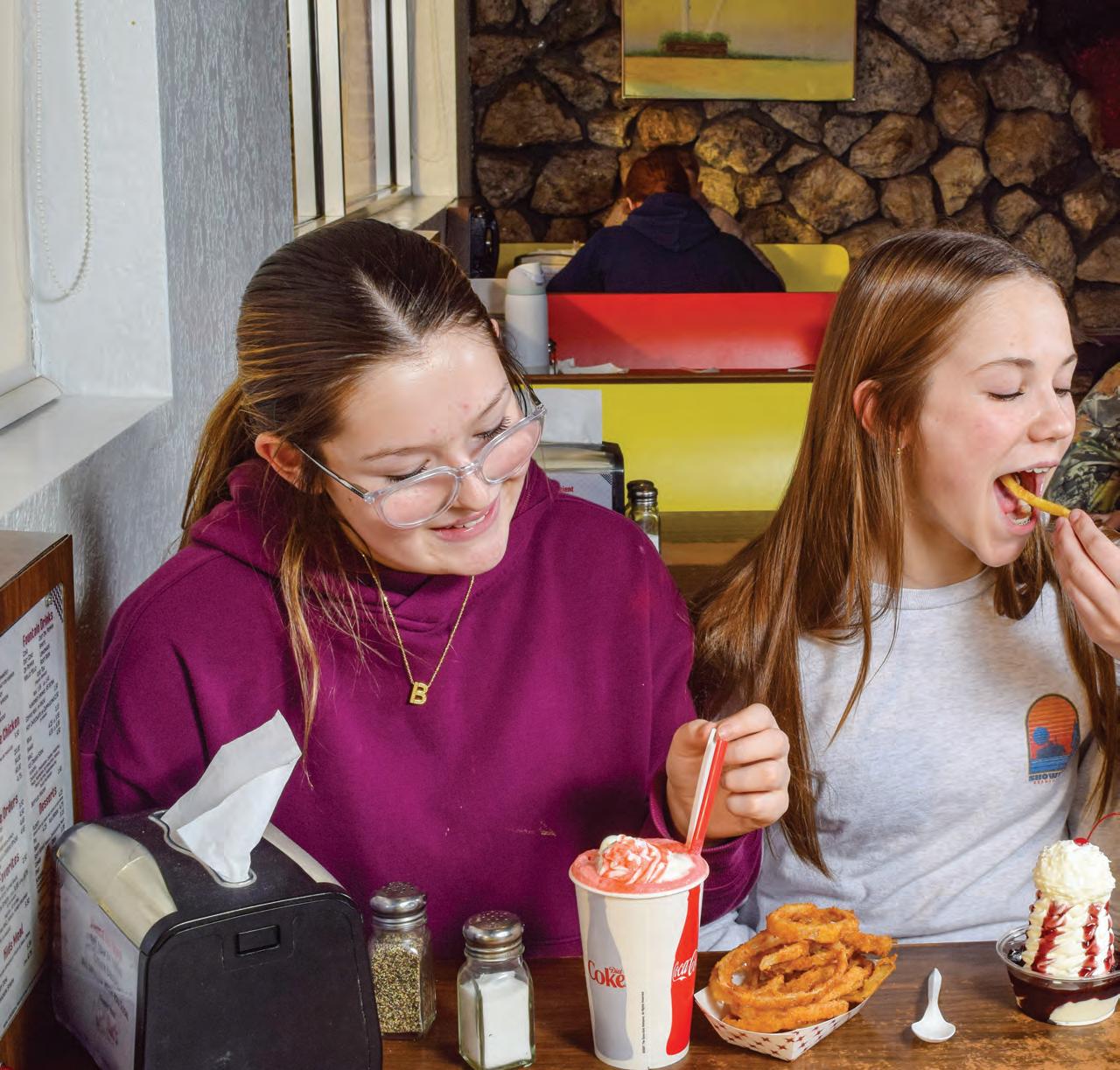
There’s the Tastee Beef Sandwich – an anchor locals talk about like it’s a birthright – and there are newer arrivals, too: churro sundaes, funnel cake fries, boba pearls and Dole Whip. The combination could read like an identity crisis. In Norfolk, it’s simple: keep the classic, add a few new treats.
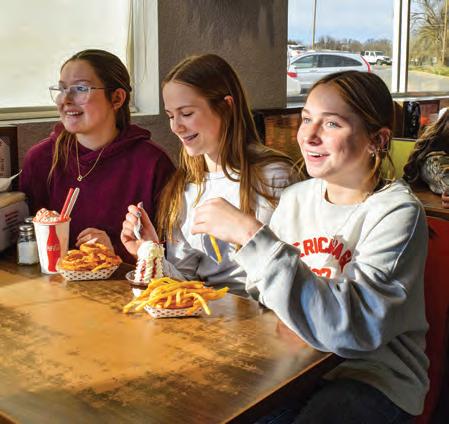
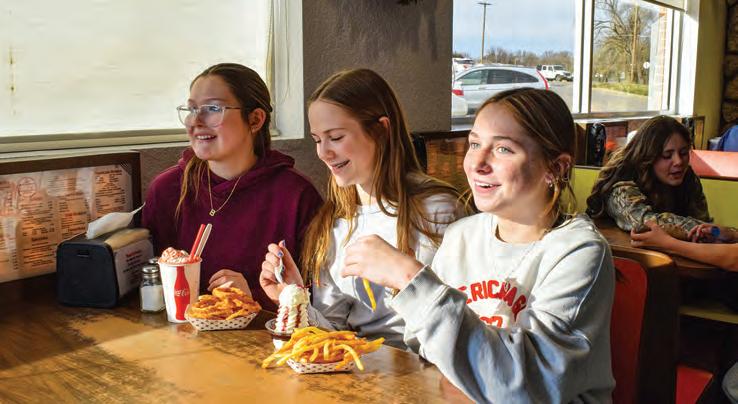
At the blue and white brick building on South 1st Street, orange booths and swivel stools welcome kids wide-eyed for a sundae, just as they did in 1949. Outside, cars line up at the drive-thru where carhops once dotted the lot with trays of hot dogs and fries.
Tastee Treet began life as Brogren’s Dairy Treet, an ice cream stand that opened in March of 1949. By the next spring, owner Louis Brogren bought into the Tastee Treet franchise and added sandwiches, hot dogs and fries to the list of treats.
Families came to cool off in summer, first at the counter and later from car windows. Tastee Treet was one of Norfolk’s first restaurants to use carhops to serve customers. Through the decades, the drive-in survived remodels, ownership changes and the end of carhop service, but the constant has been the food – especially the signature Tastee Beef.
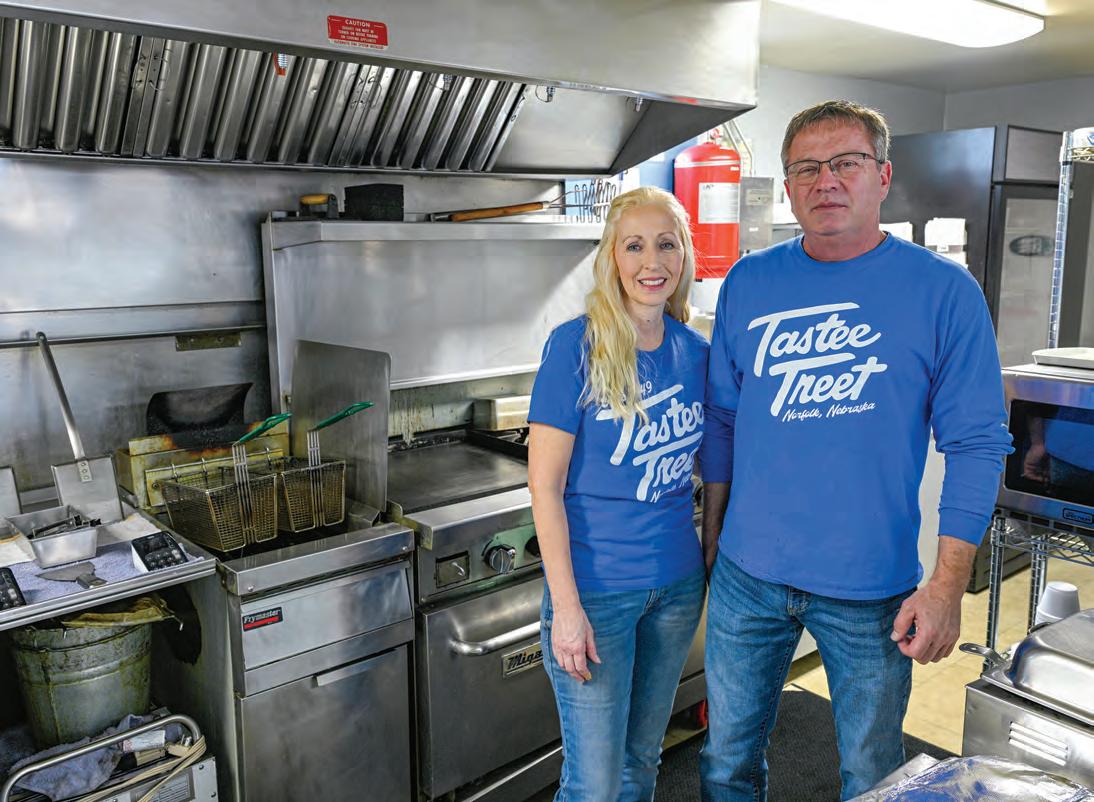
When locals Jerry and Andrea Aschoff bought the restaurant in 2020, they weren’t just stepping into a new business. They were stepping back into a Norfolk classic. “We wanted to make sure Tastee Treet stayed a family-owned restaurant,” Jerry Aschoff said. “We treat every customer like family.”
The menu has expanded, but the Tastee Beef still runs the place, a recipe locals insist hasn’t changed since 1949. Ask Aschoff what keeps the doors open after all these years and his answer is simple: “Tastee food, amazing quality and friendly smiles with every order,” he said.
Originally Brogren’s Dairy Treet, Tastee Treet became part of a franchise in 1950 and has remained a family-owned Norfolk landmark. Jerry and Andrea Aschoff, the current owners, continue the tradition of treating every customer like family, preserving the restaurant’s midcentury charm.
Darin Epperly
MAC’S DRIVE-IN
Before he could even reach the sink, Dave McCarty was elbows-deep in dishwashing suds at Mac’s Diner on B Street in McCook – perched on milk crates and soaking up the family business alongside his brother, Chris. At 4 years old, he already knew the routine.
“Grandpa would give us change. We’d go clean tables, jiggle our coins. Boy, we raked in the money at just four years old,” McCarty said.
That was in the 1960s. But the story of Mac’s goes back further. In 1939, McCarty’s grandparents, Rea and Pearl McCarty, opened a tiny lunch counter with seven stools in McCook. In 1945, they launched the Coffee Cup and by 1949, they’d moved up the hill and coined the name Mac’s Drive-In.
A decade later, they built the current Mac’s Drive-In from the ground up. Since then, the McCartys have served fresh burger patties and hand-cut fries to a community that hasn’t stopped coming back.
Four generations of McCartys have left their mark on the beloved diner. McCarty met his wife, Angela, while she worked as a carhop in 1976 – and she never left. Their daughter now manages the diner and 8-yearold grandson Quinn clears plates every Saturday. “Just like Grandpa,” Angela McCarty said. “Many days, half our force is family.”
The love between the McCartys and Mc-
Cook goes both ways. “There’s people who have eaten the same thing here every day since we opened,” McCarty said. “Our customers knew me as a kid. Now I’m the owner and they still come back.”
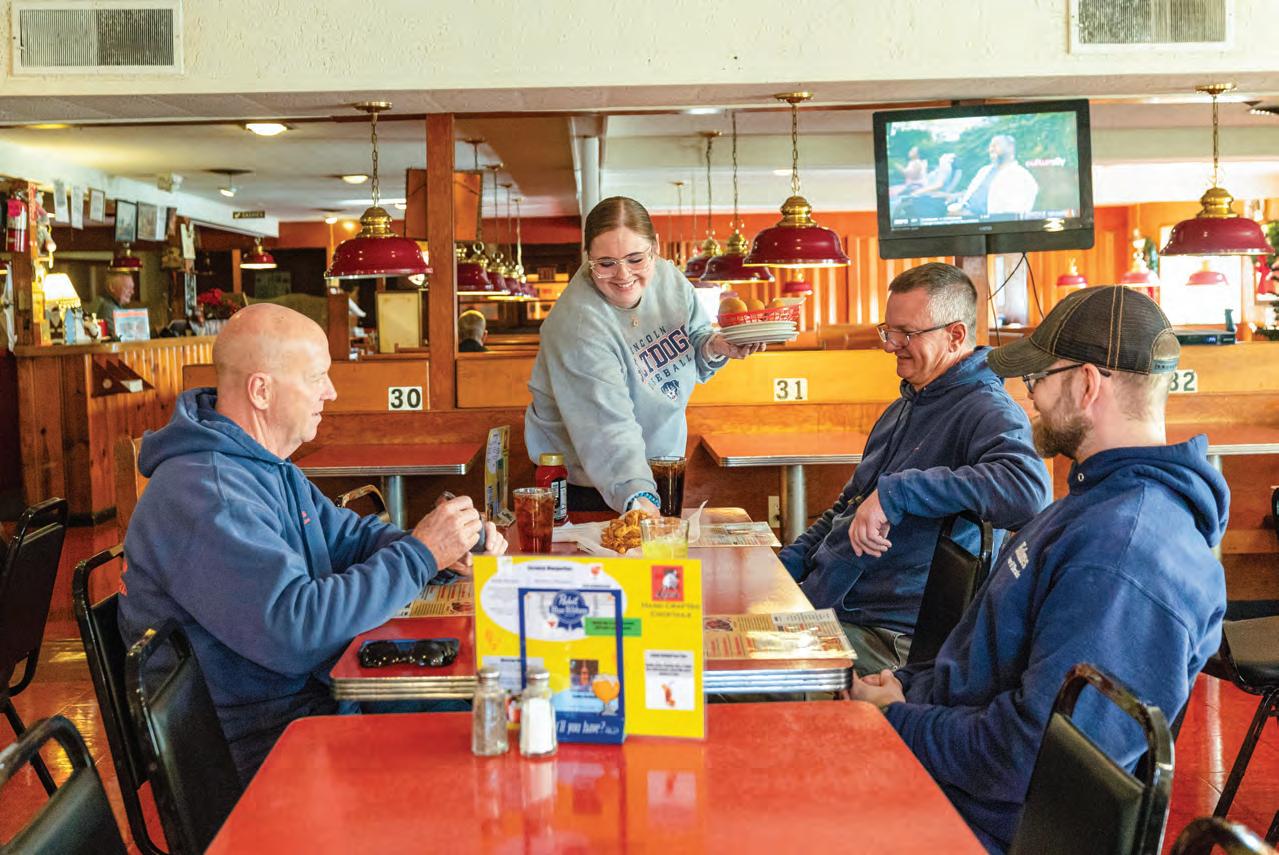
In its heyday, waitresses tended to drive-in carhops on roller skates, balancing trays piled high with fresh burgers. Customers can still pull into a carhop stall or slip into a retro neon booth in the main dining room, dial up the tableside telephone and order. Though the family has updated machinery and expanded seating, not much else has changed.
“Mac’s is a McCook staple. Each time
we’ve talked about renovating, we come back to the fact that everything here is a part of history,” Angela McCarty said. “Can’t change all that nostalgia,” Dave McCarty added.
Mac’s serves hand-ground burgers and pizza burgers, fresh-cut fries, ribeye steaks and breaded onion rings – nothing frozen, ever. At one point, the restaurant used to go through 2,000 pounds of potatoes a week.
The next chapter? A food truck, helmed by their son, bringing Mac’s signature flavor to small-town events – a modern spin on their drive-in roots.
After all, when you’ve served 6 million burgers, what’s a few more?
Mac’s Drive-In is a four-generation family tradition in McCook, where hand-ground burgers and fresh-cut fries are served alongside time-worn booths and carhop nostalgia.
Marc Burgess (both)
SCOTTY’S DRIVE-IN
One summer Saturday in 1963, the smell of sizzling burgers wafted through Scottsbluff as a new drive-in opened its doors on East 27th Street. O. Charles “Chuck” Hodge had heard about a promising hamburger chain called Scott’s Drive-In and jumped on the idea, opening his own spot on June 29.
Hamburgers were 15 cents apiece, or – if you had a dollar in your pocket – eight for a buck. Cars lined up 30 deep at its peak, a chorus of honking horns and hungry locals fueling the frenzy.
Scotty’s was once part of a larger Midwest chain, which boasted 17 locations in six states by 1966. But when the company dissolved two years later, the Scottsbluff restaurant didn’t miss a beat. Hodge sold to his bread delivery man, Mike Merkel, in 1969. Merkel knew the place had potential and he also knew how to stir up competition.
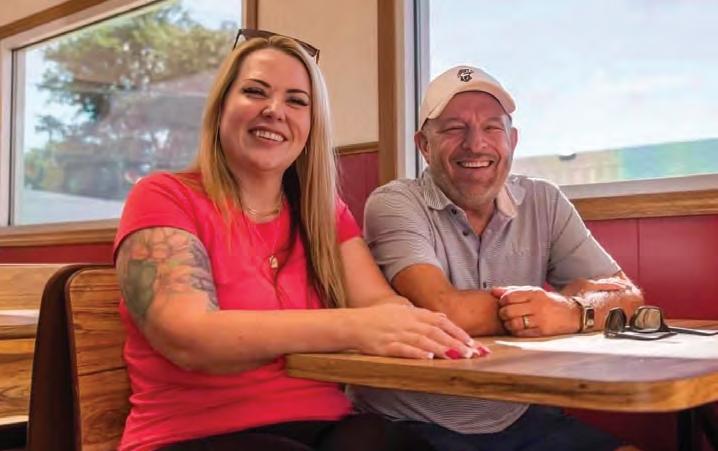
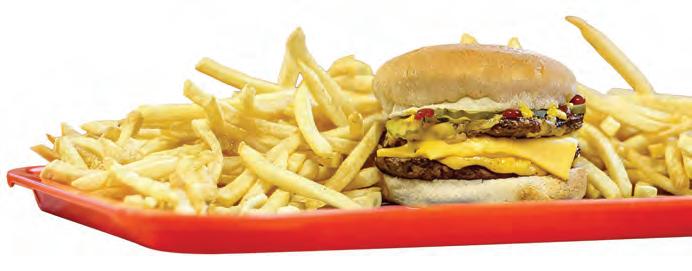
Across town, Tom & Jerry’s was famous for a sloppy joe-style sandwich called the Tastey. Merkel decided to put his own version on the menu, and the “Tastee Tavern” was born. What followed was a classic food fight, with locals swearing allegiance to one diner or the other. Scotty’s won, dropped “Tavern” from the name and cemented the Tastee as western Nebraska’s reigning sandwich.
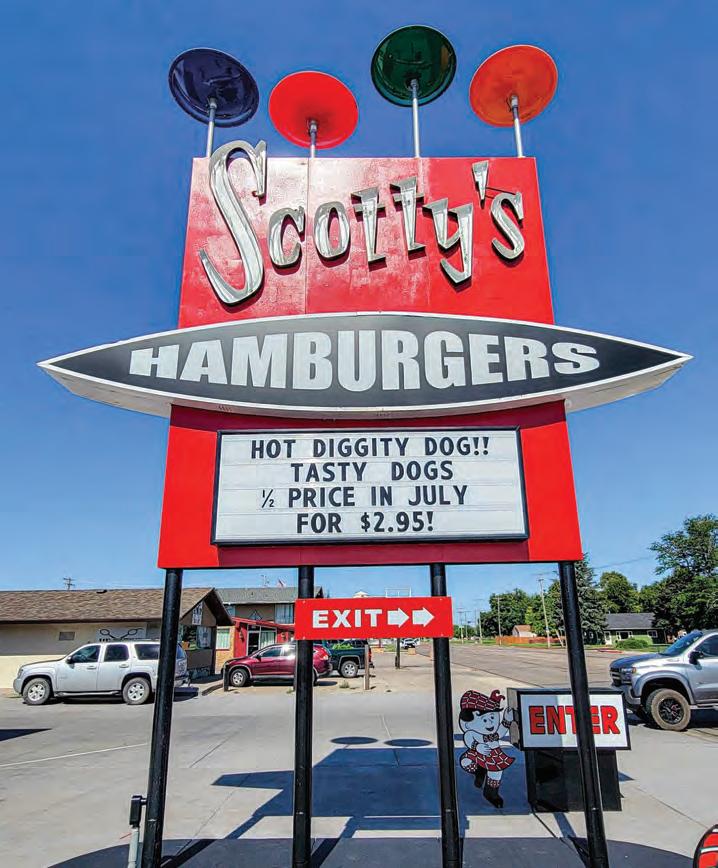
Brightly painted saucers still decorate Scotty’s roof, a splash of Jetsons-era whimsy against the High Plains sky. The menu sticks to the classics: burgers, malts, shakes and, of course, the legendary Tastee.
It’s all served in the same retro-style drive-in that’s been a local landmark for more than 60 years, now under the management of Scottsbluff native Jennifer Heggem. One bite of the Tastee is enough. The sandwich comes wrapped for the drive, messy and familiar, the kind of hometown order you remember by feel.
Since 1963, Scotty’s has been western Nebraska’s go-to for burg ers, shakes and the legendary Tastee sandwich. Its saucer-shaped roof and retro drive-in vibe make it a beloved local spot.
Scotty’s Drive-In (all)
FREMONT
Louis E. May Museum, p 57
GRAND ISLAND
Stuhr Museum of the Prairie Pioneer, p 56
KEARNEY
Museum of Nebraska Art, p 57
Kearney Area Children’s Museum, p 57
WYMORE
Great Plains Welsh Heritage Centre, p 57
YORK
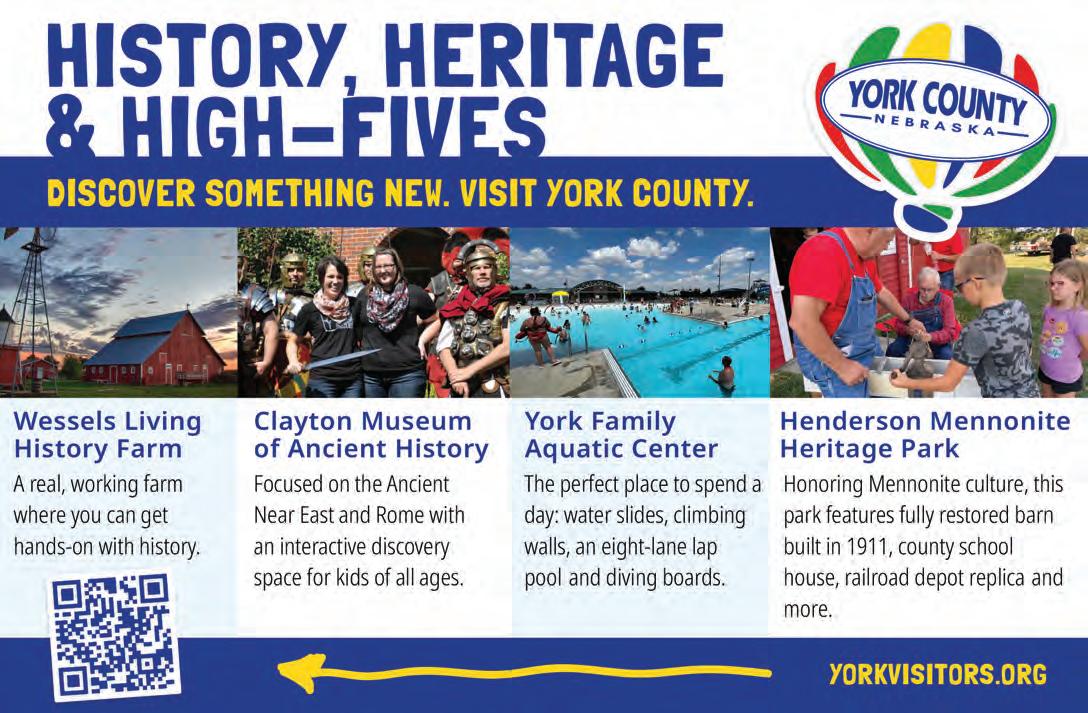
Clayton Museum of Ancient History at York University, p 56
Check
TAKING TO THE ROAD FOR FOOD, FUN AND FESTIVITIES
by ARIELLA NARDIZZI
RANCHING
HEART CITY BULL BASH
FEB. 14 • VALENTINE
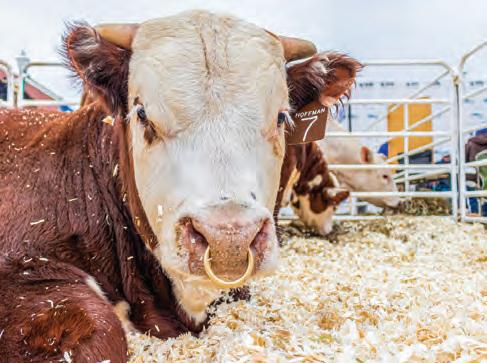
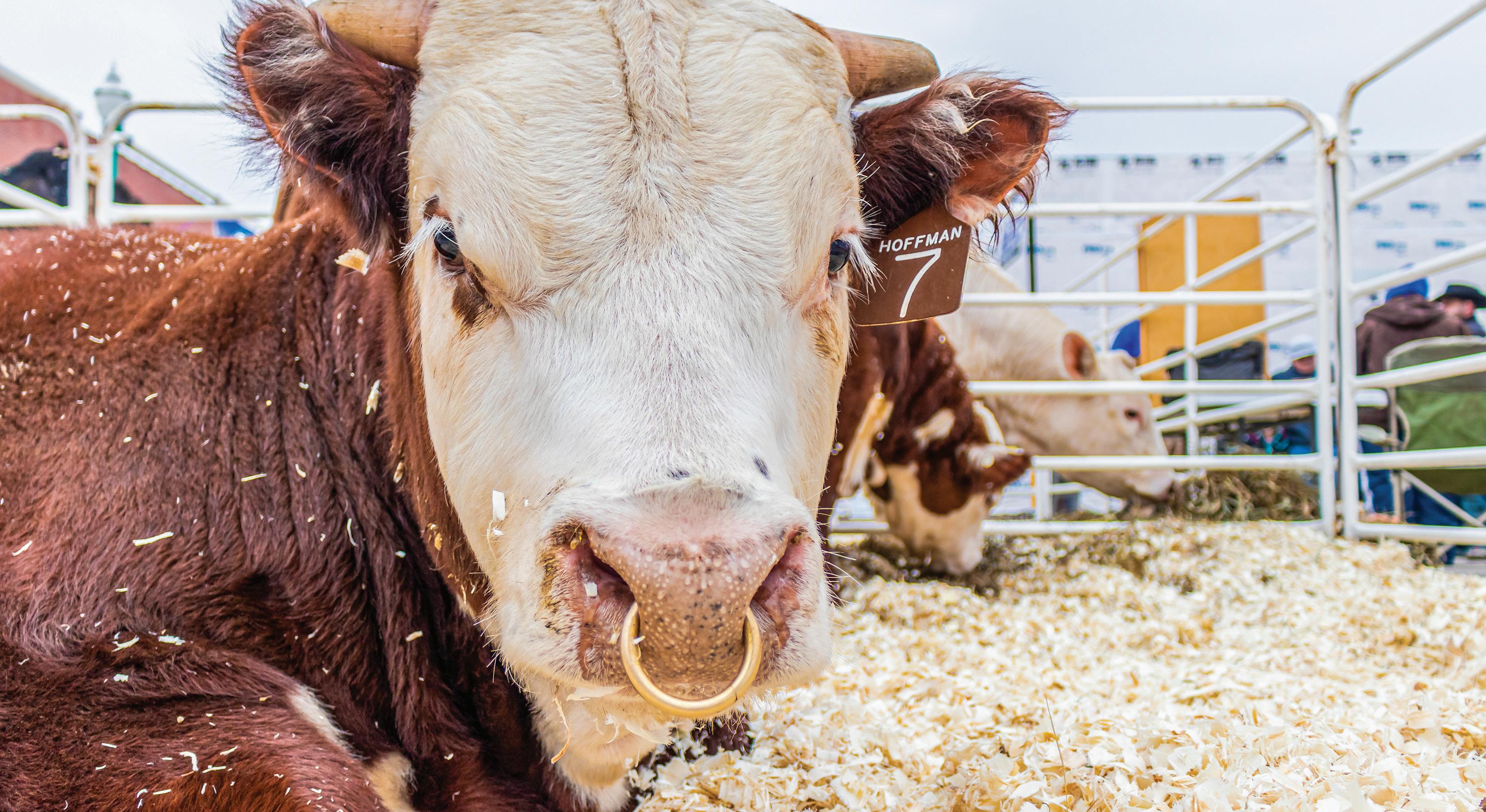
It’s often said cattle outnumber people across the grazed, rolling dunes of the Sandhills. At the Heart City Bull Bash, that feels especially true. Each February, those same cattle shut down Main Street in Valentine to celebrate the region’s beating heart: ranching.
More than 20 years ago, locals had a simple idea. They wanted to showcase top-quality bulls, strengthen local herds and turn winter’s quiet lull into a reason to gather. The result was the festival’s signature sight –a street full of pens and producers – which quickly grew into a must-attend showcase for exhibitors across the region.
Each year, bulls and heifers stand proudly in pens along the paved stretch of Main Street, the industry on full display. In 2024, nearly 100 competitors entered the Livestock Judging Contest, drawing 4-H youth,
FFA members and collegiate teams from across the Midwest.
It’s no bull run in Pamplona, but the Running with the Bulls 5K brings its own jolt of adrenaline – minus the horns. The race starts at 11 a.m., with $15 registration and a commemorative T-shirt for runners who sign up by Jan. 31. Dummy roping and a stick-horse barrel relay keep kids ages 3-13 busy from 11 a.m.-2 p.m.
Inside the Vet’s Club Annex, about 30 vendors sell local wares while the Hog Trough smokes meat all day. Visitors can sample regional wines, admire handcrafted quilts and support the annual 4-H “Luck of the Draw” fundraiser.
In a place where cattle famously outnumber people, the herd isn’t just bigger. It’s the heart of the whole Valentine community. bullbash.net, (402) 376-5831.
WHERE TO EAT BUNKHOUSE RESTAURANT AND SALOON
Just off the main drag, the saloon leans into hearty fare. Thick cuts of meat anchor the menu, with the hot beef sandwich smothered in gravy, a chicken Philly and crowd-pleasing cheese curds that earn repeat orders. 109 Hwy. 20, (402) 376-1609.
WHERE TO STAY NIOBRARA LODGE
Centrally located, this 61-room lodge puts guests close to the Heart City action. Amenities include an indoor pool and spa, a complimentary breakfast buffet and a backyard patio for unwinding after a winter day outside. 803 E. Hwy. 20, (402) 376-3000.
WHERE TO GO VALENTINE NATIONAL WILDLIFE REFUGE
Long, cold winters and clear Sandhills lakes set the stage for ice fishing across the refuge. Check ice thickness and conditions before heading out. 39679 Pony Lake Rd., (402) 376-1889.
The Heart City Bull Bash fills Valentine’s Main Street with pens of top-quality cattle. Visitors can also partake in livestock judging, a 5K race, dummy roping and more.
SCIENCE WOMEN IN STEM CONFERENCE
MARCH
26-27
• LA VISTA
In a world where innovation moves fast, the Nebraska Women in STEM Conference invites attendees to do the same. Now in its fourth year, the event rallies around a fitting theme – “Move. Lead. Inspire.” – and offers women across Nebraska a chance to sharpen their skills, strengthen their careers and build networks that last far beyond the conference hall.
The two-day conference begins at noon March 26 at the Embassy Suites by Hilton Omaha La Vista Hotel & Conference Center.
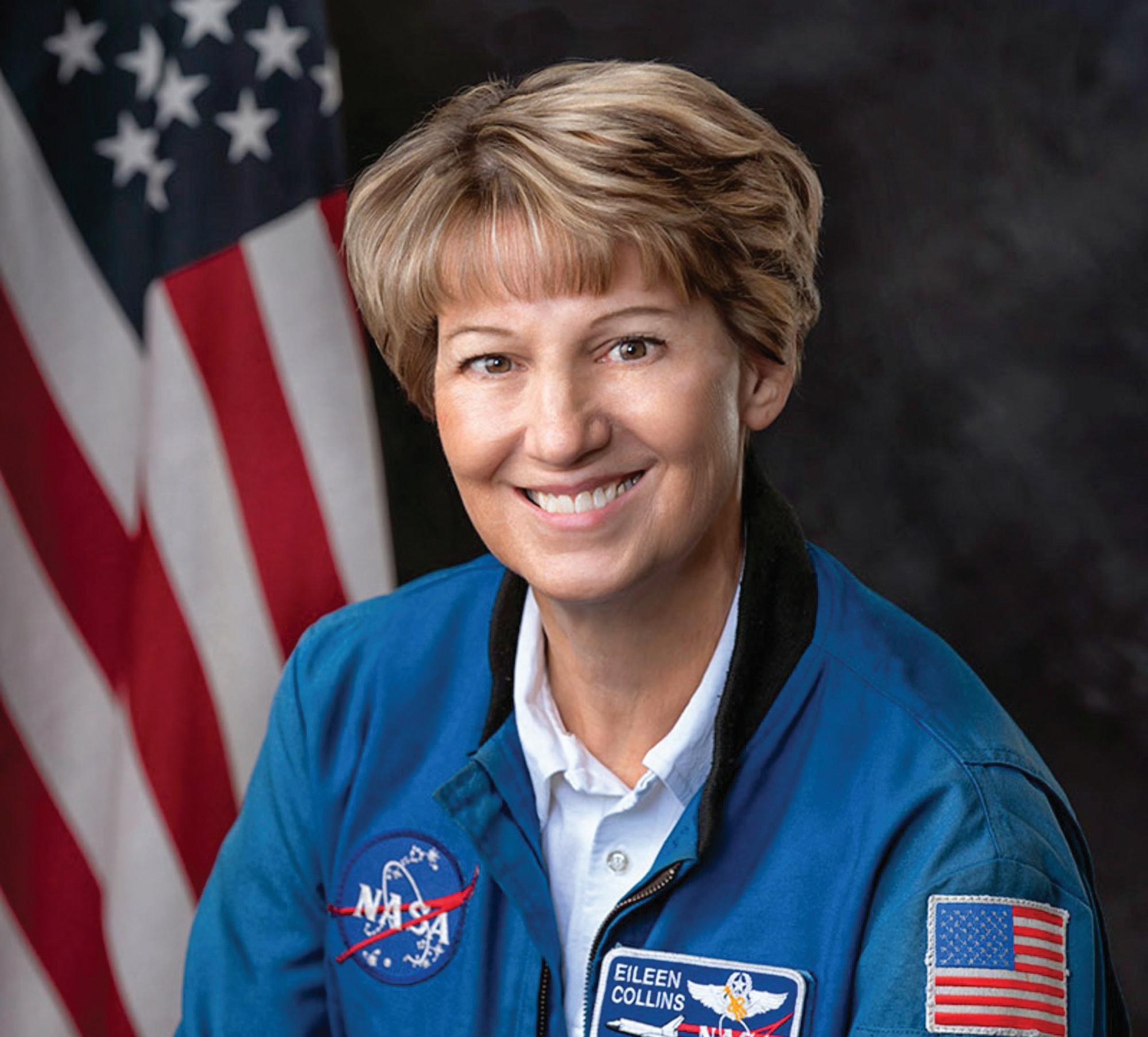
After registration and a welcome session, attendees dive into a full slate of panels focused on self-growth, workplace bias, leadership and career advancement. At 3:15 p.m., keynote speaker Eileen Collins, the first woman to pilot and later command a Space Shuttle mission, takes the stage. Day one concludes with a reception designed for easy conversation and meaningful connection.
March 27 opens at 8 a.m. with breakfast and networking, followed by a gentle yoga session at 8:30 a.m. Additional panels and conversations continue throughout the day, including dedicated networking time at
11:25 a.m. The conference wraps up after final sessions at 3:30 p.m.
For anyone craving new ideas or a spark of inspiration, this conference is one way to reach new heights. nebraskawomeninstem.com.
WHERE TO EAT
OSAKA STEAKHOUSE AND SUSHI BAR
This Japanese restaurant serves a wide-ranging menu, from Husker and Ichiban sushi rolls to hibachi favorites, bento boxes and a sashimi dinner. 12746 Westport Pkwy., Ste. 2G, La Vista (402) 800-2168.
WHERE TO STAY
KIMPTON COTTONWOOD HOTEL
Housed in the former Blackstone Hotel, once a storied stopover between San Francisco and Chicago, this renovated Omaha landmark offers 205 guest rooms, a cocktail lounge, two ballrooms and an outdoor terrace. 302 S. 36th St., Omaha, (402) 810-9500.
OTHER EVENTS YOU MAY ENJOY
FEBRUARY
Kearney Area Storytelling Festival
Feb. 3-7 • Kearney
National storytellers have shared oral traditions with audiences in schools, libraries and churches around Kearney since 1988. This year’s featured tellers are Lyn Ford and Paul Strickland. Free; donations accepted. kearneystorytellingfestival.org.
Lifestyle and Outdoor Living Expo
Feb. 7 • York
Exhibitor booths fill the Holthus Convention Center with home and garden products and services. Nonperishable food items for YC3 Little Pantries serve as admission. 8 a.m.-3 p.m. 3130 Holen Ave., (402) 362-5531.
Mardi Gras
Feb. 14 • Chadron
St. Patrick Catholic Church hosts its annual Mardi Gras fundraiser with hors d’oeuvres, dancing, flowers and a flower for every lady. 5:30-11 p.m. Tickets $50. 340 Cedar St., (308) 432-2626.
Valentine’s Day 5K
Feb. 14 • Waterloo
Runners tackle a flat 1.5-mile loop at Two Rivers State Recreation Area during the Winter Fitness Series’ Valentine’s Day race. The course favors steady pacing, making it approachable for first-timers and competitive runners alike, and includes chip timing toward series standings. 27606 F St.
Creighton’s Stadium Photo Exhibition
Thru Feb. 15 • Omaha
Before Creighton University became synonymous with basketball, a group of boys made football history. Graduate Emily Gaddy tells that story through archival photographs at the Durham Museum. 801 S. 10th St., (402) 444-5071.
Leo Bird
Feb. 17-March 29 • Alliance
Colorful, high-energy canvases by artist Leo Bird fill the Carnegie Arts Center, exploring childhood, identity and belonging. 10 a.m.-4 p.m. 204 W. 4th St., (308) 762-4571.
Marvelous Maples
Feb. 21-March 7 • Nebraska City
Visitors tap trees, learn syrup-making basics and sample fresh maple syrup around a campfire at Arbor Day Farm. 1-2 p.m. $24 per person. 2611 Arbor Ave., (402) 873-8717.
MARCH
Cindy Weil: Only Wool
Thru March 8 • Kearney
Omaha artist Cindy Weil transforms felted wool into large-scale sculptures examining memory, labor and place at the Museum of Nebraska Art. Free. 2401 Central Ave., (308) 865-8559.
St. Patrick’s Day Celebration
March 11-14 • O’Neill
Nebraska’s Irish Capital celebrates with four days of parades, Irish music and dance, and the ceremonial painting of the World’s Largest Shamrock on downtown streets. The Irish Walk of Fame honors local stewards of O’Neill’s heritage. oneillchamber.com, (402) 336-5533.
Ogallala During the Texas Trail
March 12 • Ogallala
Historian Tomás England teaches about the characters, saloons and lifestyles that earned Ogallala their reputation as the “Gomorrah of the Cattle Trail.” MidPlains Community College. 6 p.m. $12. 512 E. B St. South, (308) 284-9830.
Shamrock Shuffle
March 14 • Fairbury
Run, walk or crawl a 5K in leprechaun attire. Pre-run party at Tooley’s Bar begins at 10 a.m.; post-race food by Totally Smoked BBQ. Race starts 11 a.m. $35. 321 D St., (402) 729-3000.
Game of Gnomes
March 17-May 3 • Nebraska City
Twenty-four gnomes hide among the trees at Tree Adventure at Arbor Day Farm in a self-guided scavenger hunt. 2611 Arbor Ave., (402) 873-8717.
Under the Skin / Jun Kaneko
Thru March 22 • Omaha
Two concurrent exhibitions share the galleries at KANEKO. Under the Skin examines the human form through works drawn from private collections, while Jun Kaneko: Paintings & Prints highlights the artist’s bold color, scale and mark-making. Free. 1111 Jones St., (402) 341-3800.
‘A Midsummer Night’s Dream’
March 26-April 12 • Lincoln
Nebraska Wesleyan University Theatre stages Shakespeare’s comedy at the Miller Lab Theatre. Fridays and Saturdays 7:30 p.m., Sundays 2 p.m. 5100 Huntington Ave., (402) 465-2384. Welcome to BROKEN BOW
TRIVIA ANSWERS
“Center Of It All” on scenic Highway 2, along the Sandhills Journey National Scenic Byway.
Broken Bow has something for everyone.
• 126 total acres of parks
• Aquatic center
• Fishing pond
• Picnic and camping facilities
• Numerous playgrounds
• Visit our downtown merchants
• Custer County Historical Society
• Restaurants & brewery
The roots are deep. The roots are strong. But they don’t keep us earthbound. They keep us growing.
BOW. ROOTED, BUT NOT STANDING STILL.
NATURALLY NEBRASKA
On Target
Volunteers aim youth toward safe foundation outdoors
by ALAN J. BARTELS
THE ELBA COMMUNITY
Center was full of teenagers when I walked in, and for the first time in a long while, I wasn’t the one driving them there. I took a seat at a folding table, dug a pencil out of my pocket, and tried to look like I belonged. A 12-year-old boy looked over, studied me for a moment, and asked, “Sir, which class are you teaching?”
I smiled and told him I was a student. That answer earned me a long look, the kind reserved for adults who clearly know better. Truth was, I probably should have known better myself. I’d come to take Firearm Hunter Safety, something I’d always assumed I’d already done.
Some friends and I were spit balling hunting trip ideas when I learned that neighboring states require out-of-state hunters to be Hunter Safety certified. Since I was born before Jan. 1, 1977, I don’t need that certification to hunt in Nebraska. I guess age has its privileges. But if I wanted to tag along on a hunt beyond state lines, I’d need proof that I’d taken the course.
So I contacted the Nebraska Game and Parks Commission to track down my certification number and learned I was in the system, just without any record of ever having taken Hunter Safety.
That caught me off guard. I remembered learning how to cross a fence safely while hunting, the importance of keeping a firearm pointed in a safe direction, and always knowing what was beyond the target. Surely I’d taken the course at some point. Or maybe those lessons came from shooting BB guns with my dad near Macy in the mid-1970s. Or perhaps the Army helped turn safe firearm handling into second nature later on.
A Hunter Safety course reminded Alan J. Bartels how patience, focus and careful habits are taught by selfless mentors.
Several years ago, I even drove a neighbor kid to Hunter Safety classes and sat through them with him and his classmates, three evening sessions and half a Saturday. If I’d known then that I wasn’t certified, I would have taken the test with those kids. Now I was facing the possibility of being the odd man out if my hunting buddies headed beyond Nebraska. But I knew a guy.
My friend Tony Morrow has been teaching
Firearm Hunter Safety for 28 years and Bow Hunter Safety for 30. In that time, he’s led nearly 1,000 people, mostly youth, through the ins and outs of safe hunting practices.
I texted Tony and wasn’t surprised to learn he had a course coming up. I registered online and showed up in Elba for the next class.
After the pointed question from that pre-teen boy, Tony and his volunteers got down to business. Over several evenings, I watched timid youngsters grow into confident, budding hunters excited about the final test and the field day.
Each student had the opportunity to use archery equipment and firearms in a controlled but fun and educational environment. The next-oldest student was 40 years younger than me, but I don’t think anyone was more excited to be there than I was. My appreciation for volunteers like Tony, who give up evenings and weekends year after year to provide a safe hunting foundation for Nebraska’s youth, grew with every session.
The written test came at the end, and I’m happy to report I passed and even outshot all those kids (that’s my story, and Tony ain’t talking).
What mattered more was watching those young hunters walk out with confidence that hadn’t been there a few evenings earlier. They’d learned not just how to shoot, but how to slow down, pay attention, and think about the people around them.
I went to Elba thinking I was there to take a class. Turns out I was mostly there to be reminded that good habits don’t appear by accident – they’re taught, one evening at a time, by people willing to give a little of themselves so others can carry it forward.