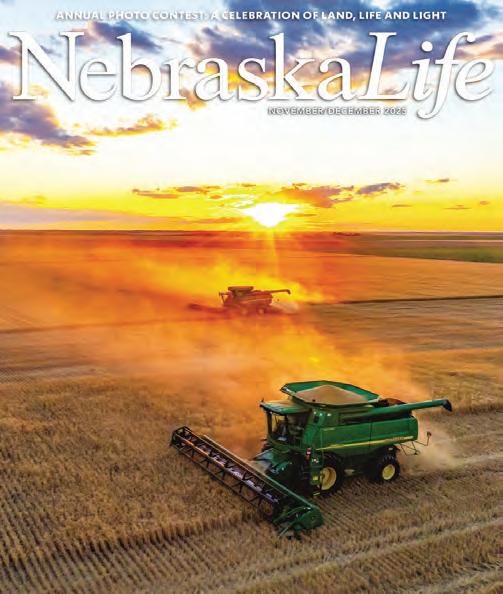
ANNUAL PHOTO CONTEST: A CELEBRATION OF LAND, LIFE AND LIGHT
NOVEMBER/DECEMBER 2025





ANNUAL PHOTO CONTEST: A CELEBRATION OF LAND, LIFE AND LIGHT
NOVEMBER/DECEMBER 2025
20 Crazy Horse: Beyond Reach
A mystery endures, tracing Crazy Horse’s spirit and the untold journey of his secret grave. by Ron J. Jackson, Jr.
26 Annual Photo Contest: Part 1
Celebrating Nebraska’s spirit through stunning photos, from professionals to hobbyists, who captured the heart of The Good Life.
44 Five Prairie Preserves
Savor the season with homegrown Nebraska gifts of local honey, wine, jams and pies – made from the heart.
by Ariella Nardizzi
62 Ex traordinary Wings
The world’s youngest aviatrix Evelyn Sharp soared skies, inspired Nebraskans and made history in flight. by Sheryl Schmeckpeper
11 Editor’s Letter
A perspective from the desk of Chris Amundson. 12 Flat Water News
Omaha Central students honor fallen World War II alumni; Goldenrod Pastries is a Lincoln favorite; 3B Homestead tells nativity story with barnyard animals. 18 Trivia
Small towns with big character, all just 4-5 letters long. Answers on page 60. 48 Kitchens
Easy-to-make holiday breads that make every meal memorable.

Valentine pg. 41
Crawford pg. 20
Ellsworth pg. 40
Mitchell pg. 59
Bayard pg. 29
Arthur County pg. 33
Potter pg. 31
Cheyenne County pg. 28, 33
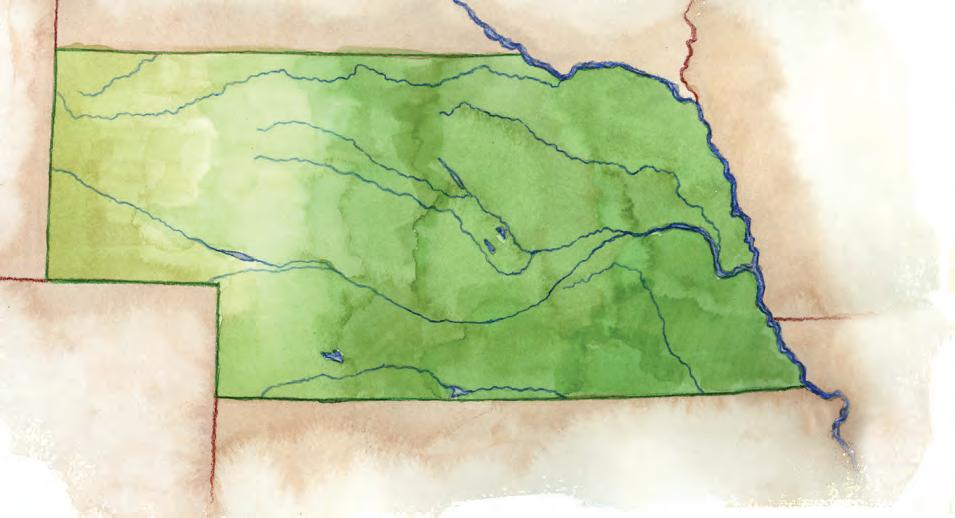
Ord pg. 62
Tyron pg. 29
Paxton pg. 46
Fremont pg. 35
Saunders County pg. 32
Raymond pg. 45
Polk County pg. 37
Central City pg. 31
Grand Island pg. 44
Wood River pg. 39, 41
Minden pg. 58
52 Poetry
Poems that simmer with warmth, love and season’s greetings.
54 Museums
Big or small, these museum advertising partners preserve Nebraska history and heritage for all to experience.
58 Traveler
Minden, the official Christmas City of Nebraska; Young ranchers show cattle at New Year’s Beef Bash in Mitchell.
66 Naturally Nebraska
Amid holiday chaos, Alan J. Bartels finds peace, friendship and gratitude in nature – life’s simple gifts.
Lincoln pg. 14
Fairbury pg. 37
Valley pg. 35
Omaha pg. 12, 38, 39
Ashland pg. 30, 34
Union pg. 47
Murdock pg. 16
Plymouth pg. 46
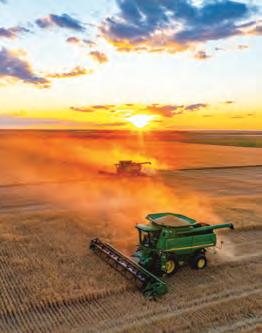
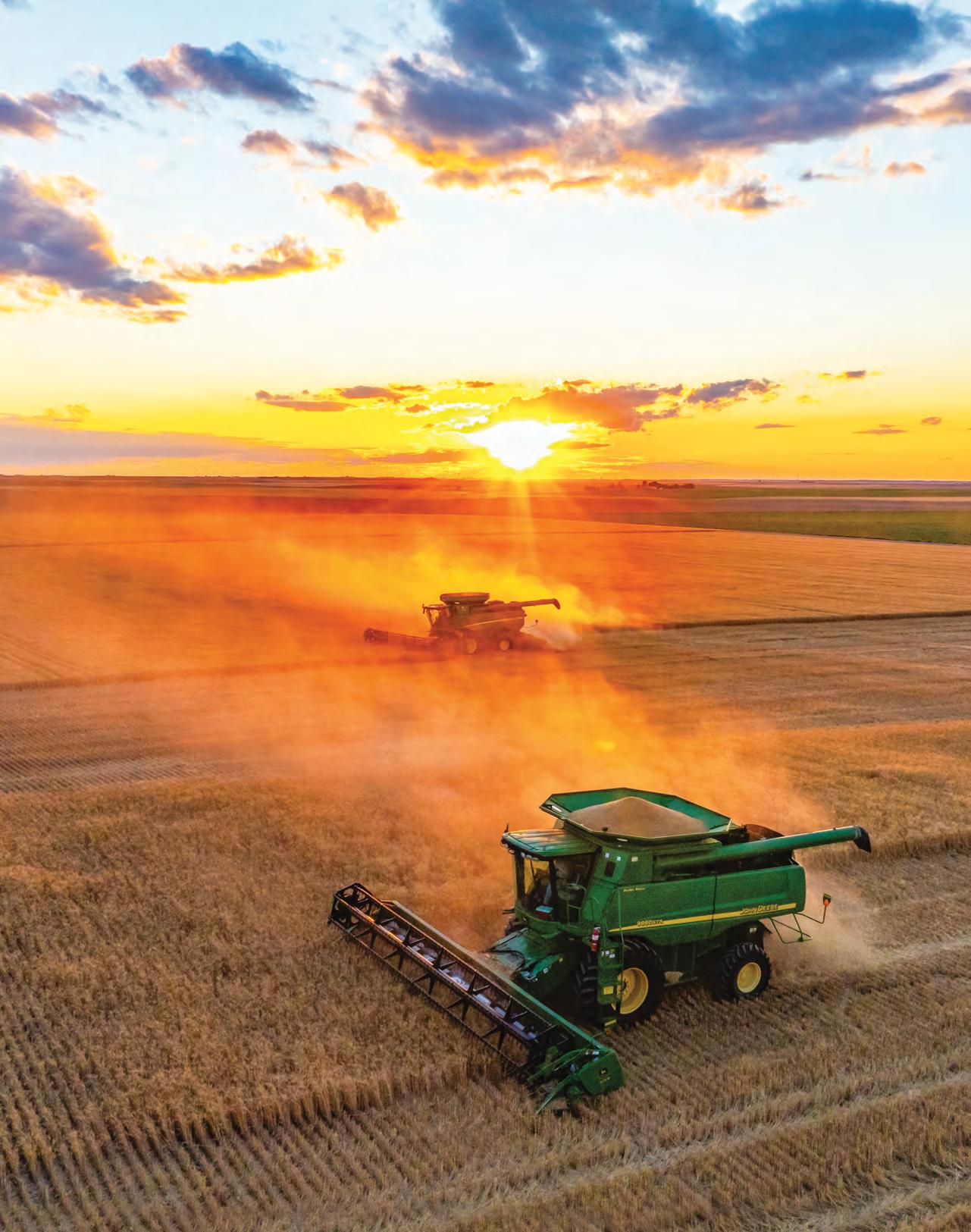
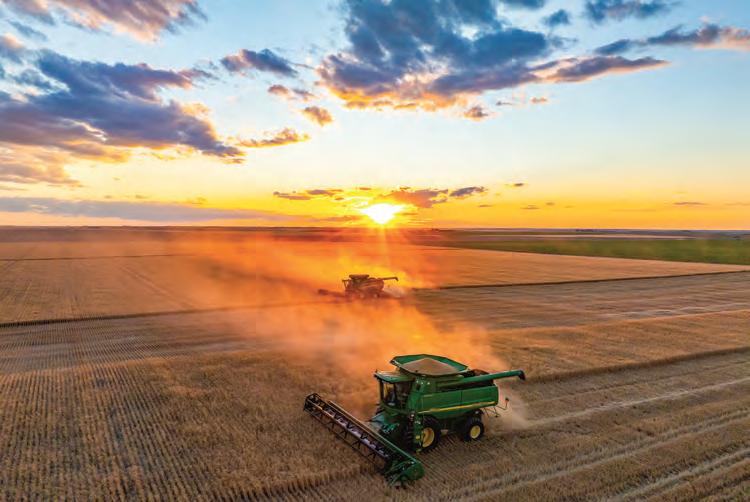
A drone captures the golden dusk settling over Cheyenne County, southeast of Sidney, as combines harvest wheat into the evening.








NOVEMBER/DECEMBER 2025
Volume 29, Number 6
Publisher & Editor Chris Amundson
Associate Publisher Angela Amundson
Editorial Assistant Savannah Dagupion
Design Mark Del Rosario
Photo Coordinator Erik Makić
Staff Writer Ariella Nardizzi
Advertising Sales Sarah Smith
Subscriptions Shiela Camay
Nebraska Life Magazine
c/o Subscriptions Dept. PO Box 270130 Fort Collins, CO 80527 1-800-777-6159 NebraskaLife.com
SUBSCRIBE
Subscriptions are 1-yr (6 issues) for $30 or 2-yrs (12 issues) for $52. Please call, visit NebraskaLife.com or return a subscription card from this issue. For fundraising and group subscription rates, call or email subscriptions@nebraskalife.com.
ADVERTISE
Advertising deadlines are three months prior to publication dates. For rates and position availability, please call or email advertising@nebraskalife.com.
CONTRIBUTE
Send us your letters, stories, photos and story tips by writing to us, emailing editor@nebraskalife.com or visiting NebraskaLife.com/contribute.
COPYRIGHT
All text, photography and artwork are copyright 2025 by Flagship Publishing, Inc. For reprint permission, please call or email publisher@nebraskalife.com.

WE EXPECTED OUR inaugural “Spirit of Nebraska” Photo Contest to draw a few hundred submissions, maybe a thousand if we were lucky. What arrived instead were more than 1,500 glimpses of Nebraska, each one distinct and heartfelt. It confirmed what we’ve long known: Nebraska’s beauty is as varied as the people who call it home.
Our inbox filled with sunrise skies, windswept prairies, wildlife peering from the grass and families gathered at small-town celebrations. Together, they flooded our screens, our hearts, and now, 16 pages of this issue.
Choosing winners wasn’t easy. Editors debated late into the night over which image best captured the spirit of the Cornhusker State. The truth is, so many did. We saw farm kids walking fencelines at dusk, storms breaking gold over the plains, and a self-portrait paying homage to Nebraska pioneers. Every photo carried pride.
That’s what makes this contest special. Photography – the kind that stirs emotion and memory – isn’t about expensive gear or perfect timing. Some of this year’s winning shots, like Jeffrey Carney’s golden field west of Ashland, reveal art in everyday labor and the way light bends between cornhusks at harvest. Others, like Nicole Louden’s serene Sandhills sunset mirrored in still water, turn a fleeting sky into something eternal. Whether taken with a drone, a DSLR or a phone pulled from a pocket, each image reflects a shared affection for this place we call home.
In these pages you’ll find the winning images across seven categories: Landscape, Aerial & Drone, Agriculture, Celebration, History, Wildlife and Photograph of the Year. The remaining categories will appear in our January/February issue, including Photographer of the Year. Together they tell a story of a place that’s both vast and familiar – an ever-changing reflection of who we are.
To everyone who shared a piece of Nebraska through your lens this year, thank you. You reminded us that the state’s spirit isn’t found in any one landscape or season; it lives in the people who keep looking closer.
We’re also grateful to Rockbrook Camera for supporting this contest with prizes for our first-place winners – gift cards redeemable for cameras, lenses, accessories and photo services at their Nebraska stores in Omaha and Lincoln, or through online ordering at rockbrookcamera.com.
I hope these images inspire you to look closer at your own corner of the state – walking a dirt road at dawn, through a busy city street or across a quiet porch at sunset. Keep your eyes open, your camera ready and your sense of wonder intact.
Every frame tells a story, and next year I hope to see yours among them.
CHRIS AMUNDSON Publisher & Editor editor@nebraskalife.com
STORY BY NEBRASKA LIFE STAFF
PHOTOGRAPHS BY SCOTT WILSON
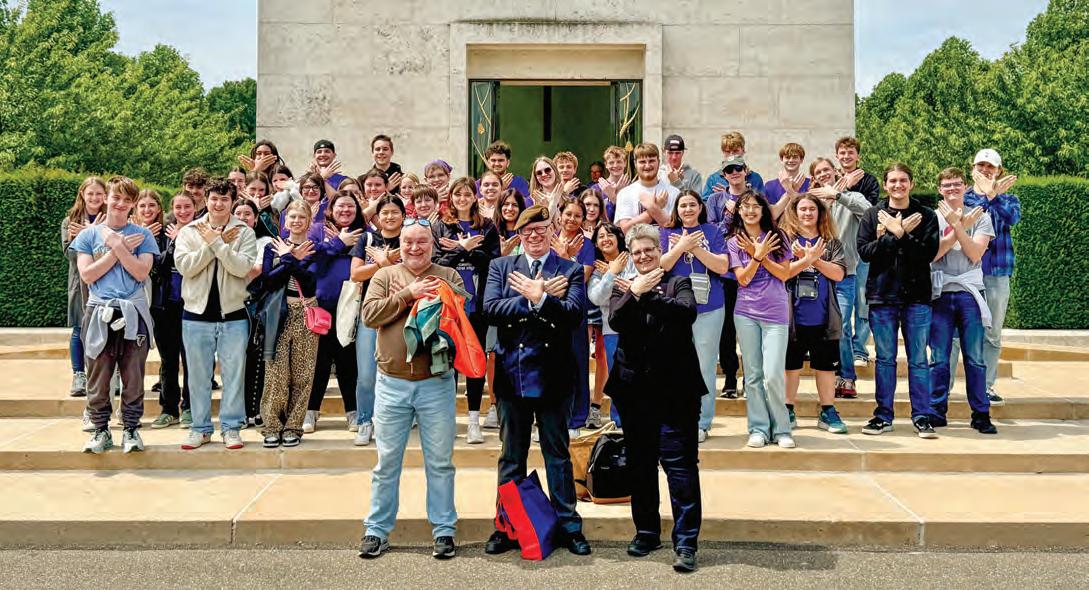
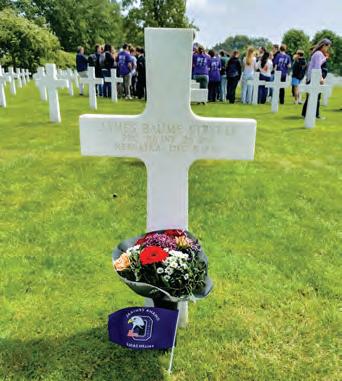
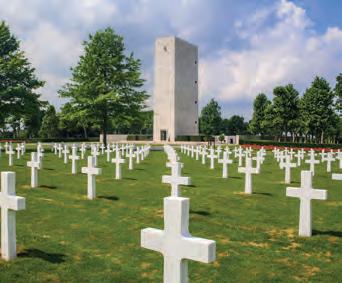
The sound of footsteps fell silent as purple-clad teenagers from Omaha Central High School filed between endless rows of white crosses. At the Netherlands American Cemetery in Margraten, they stopped at one marker etched with a familiar name: George R. Herrell. A student knelt, pressed a small purple flag with Central’s eagle logo into the soil, and for a moment, eight decades collapsed into one.
Herrell had left Central in 1938, joined the Army and was killed in action in March 1945 – just weeks before Germany’s surrender. He was 24 when he died, leaving behind a wife and two young sons.
He is one of six Central alumni remembered here. Alongside him are Capt. Philip E. Horan Jr., Capt. Gordon Shotwell, Pfc. James Baume Stryker, Pfc. John P.
Cottingham and 2nd Lt. Robert Clausen, whose name is etched on the Wall of the Missing after his plane vanished over the North Sea.
Cottingham’s story especially resonates with students. A 1943 graduate, he was sports editor of the school paper, a JROTC leader and known for his wit. He enlisted the day before his 18th birthday and was killed on April 25, 1945 – just 12 days before the end of the war in Europe. For decades, Dutch adopters have tended his grave. One woman, Gertje, first visited Margraten as a child with her parents. Later she and her grandson, Mark, promised “never to leave John Cottingham so that he would never be alone and without family again.”
The adoption program began soon after U.S. troops liberated the Netherlands in 1945. Local families, grateful for their freedom, pledged to care for the Americans who had died securing it. They bring
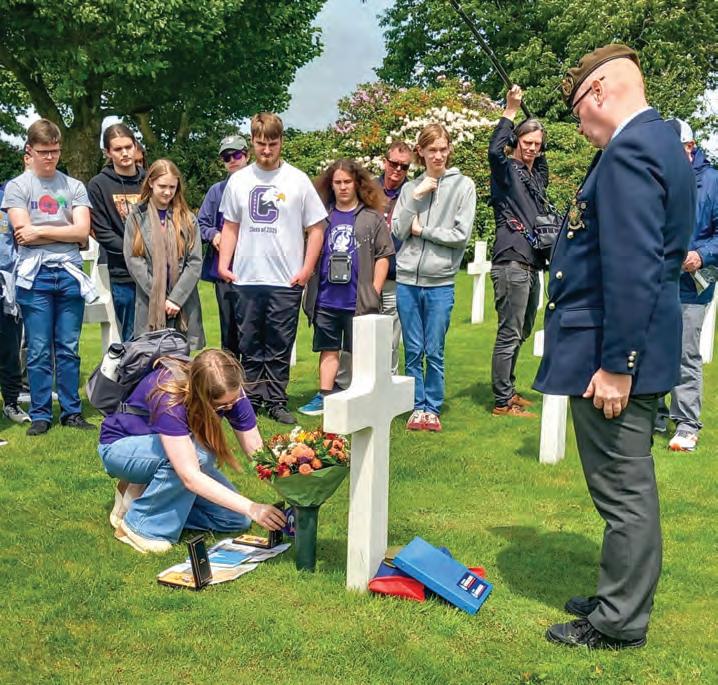
flowers on birthdays and anniversaries, research the men’s lives and pass the responsibility from generation to generation. Demand was so great that the waiting lists eventually had to close.
Central history teacher Scott Wilson first visited Margraten in 2007. He discovered that five of his school’s alumni were buried there, and one more was listed on the Wall of the Missing. Eight years later, he returned with students, bringing research packets about the men to share with the Dutch families who adopted their graves. June 2025 marked his third trip.
This time, Wilson’s group joined Dutch students from the local Sophianum school in Gulpen. Together they walked among the crosses, learning that history is not just distant battles but the faces of young men who once walked Central’s halls.
Seventeen-year-old Scout Dollison said she had studied these names in Wilson’s
classes, but seeing them in stone changed everything. “Here’s a part of our school that we are giving back to this person,” she said. “On top of all the love and care that had already been put into these graves by the people of Margraten.”
The adopters’ stories touched her deeply. One woman explained how she carried on her parents’ tradition of tending a soldier’s grave. A man said the responsibility gave him purpose during a difficult time. For Scout, those moments revealed “a whole other side of the consequences of World War II.”
As the students turned to leave, the purple flags they planted fluttered among the white crosses. For the Dutch caretakers who have tended them for generations and the Central students who carried the stories home, those markers are no longer anonymous. They are Eagles. They are family. And, on both sides of the Atlantic, they will not be forgotten.
At the Netherlands
American Cemetery in Margraten, Omaha Central High School students honor alumni lost in World War II, joining Dutch families who have tended the graves for generations. Their journey across the Atlantic links today’s students to the sacrifice of past Eagles, ensuring the names endure beyond stone.
How one Lincoln baker turned a food allergy into a sweet Nebraska revolution
BY OLIVIA THOMAS
The scent of sugar and spice drifts down the sidewalk at 48th and Prescott in Lincoln, drawing passersby into a pink-walled corner bakery where the pastry case gleams like a jewelry display. This is Goldenrod Pastries, a gluten-free, dairy-free vegan bakery with a national following and Nebraska roots baked deep.
Owner Angela Garbacz opened the College View shop in 2015 with one clear direction for her contractors: Make it cute.
“This is a strategic business decision,” she told them. They laughed. She didn’t. It worked. The cheerful décor draws people in but it’s the food that keeps them coming back.
Regulars swear by the dense banana bread that practically falls apart under its own weight. Each winter, fans count down to the holiday cookie box, a merry assortment of limited-edition treats. And when it’s time to celebrate, the confetti cake with its cloud of vanilla buttercream is the go-to dessert.
But the true star? The crumble bun, a soft pastry with fillings that change with the season: cranberry in fall, lemon in spring, always topped with coconut-oil crumble and vanilla glaze.
Garbacz started baking at 5, flipping through cookbooks and racing from Food Network shows to her family’s kitchen to try whatever Emeril Lagasse just yelled “Bam!” about. Her path led from grocery-store bakeries in Lincoln to food science classes at the University of Nebraska-Lincoln, then to culinary school in New York City.
That’s where she hit a wall of skepticism.

“What makes you think somebody from Nebraska can stand up in front of 20 New Yorkers and be successful?” a shop owner asked.
The comment stuck. “It became a mission to put Nebraska on the map for something different,” Garbacz said. “To show that creativity lives here too.”
Around that time she discovered her own dairy allergy and began re-engineering recipes with plant-based ingredients. What started as kitchen experiments became a blog, Goldenrod Pastries, launched in 2014 to help others bake without compromise.
Requests poured in: birthday cakes for lactose-intolerant kids, donuts for adults who hadn’t had one in decades. By year’s end she’d leased a storefront, quit her marketing job and by May 2015, opened her new bakery.
Ten years later, Goldenrod Pastries’ team of a dozen keeps the ovens humming. The shop earned national attention but Garbacz said staying rooted in Lincoln mattered most. “Nebraska isn’t just a flyover
state,” she said. “People here were hungry for something new.”
Some of her best sellers trace back to her Polish heritage. The beloved peach coffee cake, the bakery’s only other year-round staple, was a dairy-free spin on her grandmother’s recipe. More kuchen than coffee cake, it’s layers of dough, canned peaches and crumble. Her Baba baked it only for special occasions.
Other pastries come from her team’s creativity. On Sundays, bakers head to the nearby farmer’s market for whatever’s fresh – zucchini, berries, herbs – then turn their haul into small-batch experiments. “That’s what I loved about this neighborhood,” Garbacz said. “It’s full of people who show up for small businesses.”
Garbacz took pride in serving those often overlooked by traditional bakeries – people with allergies, dietary limits or simply a desire to eat with care.
“I didn’t want to make food that was just good for gluten-free,” she said. “I wanted to make food that was just plain good, the kind that makes people happy.”



BY ARIELLA NARDIZZI
A century-old barn glows with faith, farm life and the spirit of the season
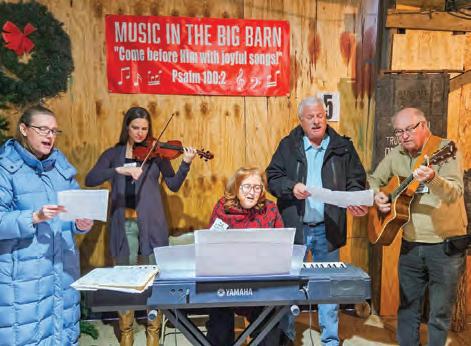
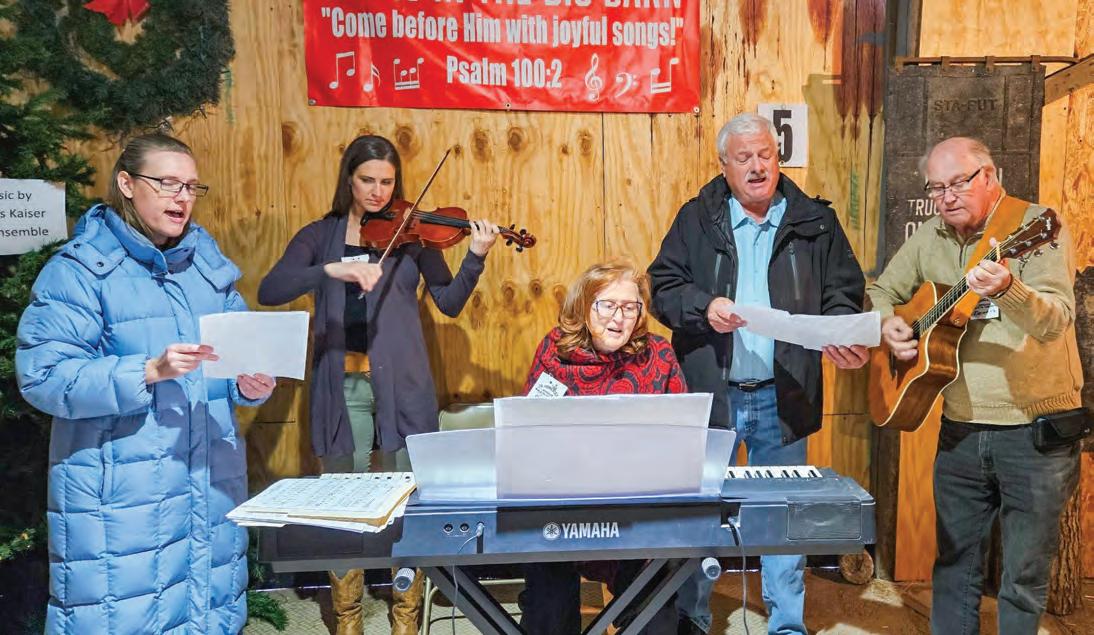
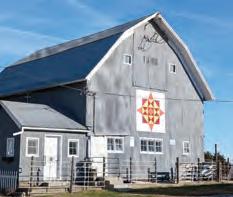
Each December, lantern light spills from the old barn at 3B Homestead as music drifts through the cold air and families follow the glow down Highway 1 between Murdock and Elmwood. Inside, the Buell family’s 1888 barn becomes Bethlehem for a night, inviting visitors to step into the story of Jesus Christ’s birth.
For the past decade, Mark and Sondra Buell have welcomed guests for the Living Nativity, blending their backgrounds in teaching, agriculture and ministry into a one-of-a-kind holiday tradition.
Visitors move through 12 interactive stations where volunteers share the nativity story alongside farm animals great and small. Jacob sheep, Myotonic fainting goats, miniature donkeys, rabbits, cattle, poultry, turkeys, peacocks, doves, ewes and horses all play their part. Guests are encouraged to pet the Buells’ barnyard animals – most raised on the farm itself. “It’s not your typical static nativity
scene,” Sondra said. “It’s an interactive experience in a working barn that smells, feels and looks like a farm.”
For the Buells, the Living Nativity is more than a holiday display – it’s their contribution to spreading the Gospel. “We thought we were done working after retiring from our day jobs, but this felt like a true higher calling,” Sondra said. “We use the resources we were given by God to help share the story of Christ’s birth.”
The Buells also weave in lessons about Nebraska agriculture. Afterwards, cocoa, candy canes, live music and the Stable Store round out the experience. The Living Nativity is free and open to the public every weekend from Nov. 30-Dec. 21, 2-5 p.m., with private visits available by appointment on Mondays.
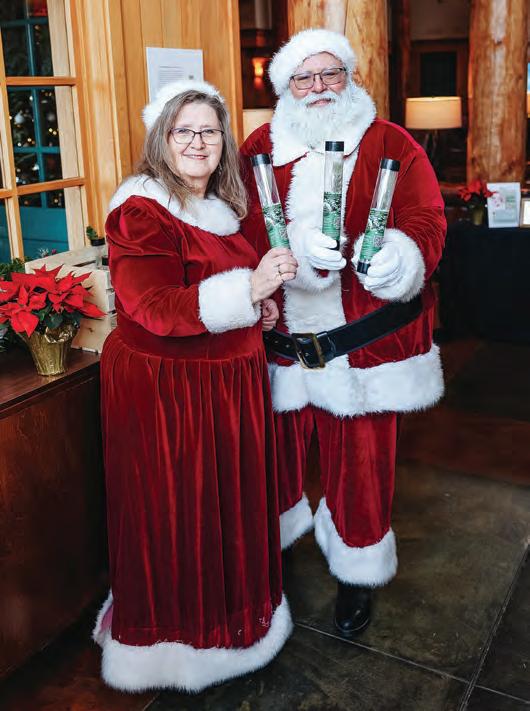
Each evening ends with the lighting of a massive star mounted atop the barn. As neighbors gather and voices rise together in song, visitors carry home a small glow-inthe-dark star – a reminder of the light that began in Bethlehem.
Experience the wonder of the season at Arbor Day Farm, where the holidays truly come to life. From a traditional Thanksgiving buffet to a sparkling tree lighting during Kick-Off to Christmas, and from Brunch & Santa to live music on New Year’s Eve, every moment is crafted for memory-making.
Visit arbordayfarm.org to start your new holiday traditions.
2700 Sylvan Road | Nebraska City, NE @arbordayfarm



At the homestead, walk through a grand, old 1888 working barn and witness an amazing presentation of the real reason we celebrate Christmas. Farm animals fill the stalls and help volunteers tell the beautiful Christmas Story from Luke 2 in a unique and meaningful way. In addition to interacting with the animals, live music, cocoa, a nativity star, new features in the barn and a gift shop called The Stable Store will add to the fun as we celebrate the 10th year of this one-of-a-kind special event.
The Living Nativity event is free and open to the public on Nov 30, Dec 6 & 7, 13 & 14, 20 & 21 from 2 - 5 pm. Prescheduled private visits can be made on Dec 1, 8, 15, & 22 by contacting Mark and Sondra Buell at the number below. Bring your parents, kids, grandkids, and friends and make some wonderful memories.

ACTIVITIES
Private land hunting lodge
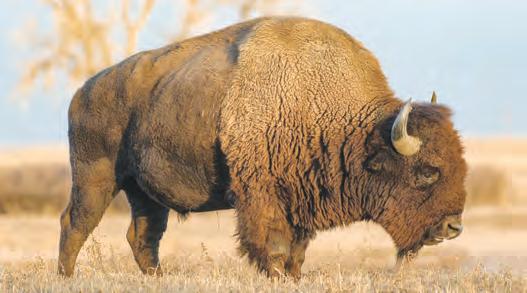
No tag required for bison and elk
On-site lodge
Custom dining
Top-tier hospitality
Copper Bison Tasting Room

Rd 457 • Sargent, NE | 402-200-8473 | ReWildRanch.com


1 For most of the late 1990s, “The Late Show” with David Letterman’s famous Top Ten Lists were said to be sourced from their “home office” in what fun-sounding, five-letter Nebraska city?


2 What flamboyant, charismatic and good-looking member of the Professional Wrestling Hall of Fame was born in Butte in 1915 with the name George Raymond Wagner?
3
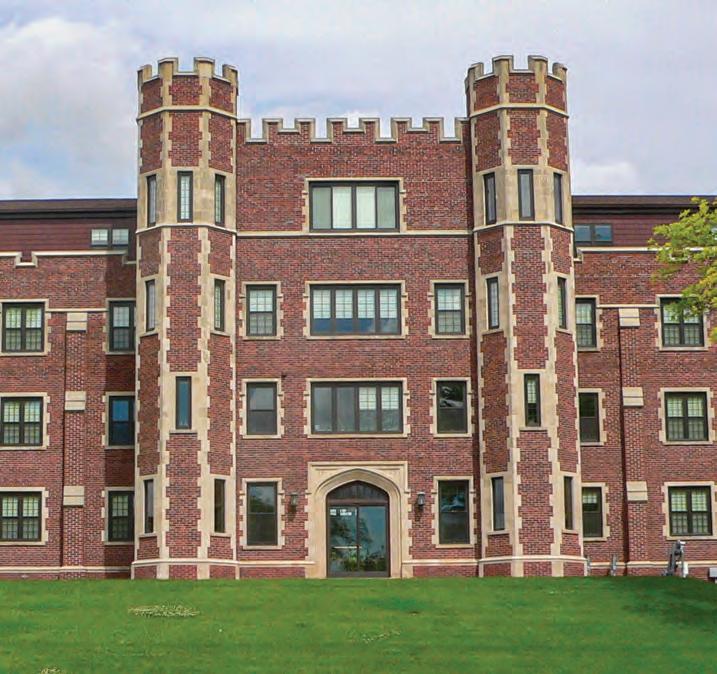
Since 1872, Crete has been the hometown of what school, the oldest private university in the state? Coincidentally, it also has a five-letter name.
4 Luxor Drive, Giza Avenue, Nile Street and Sahara Drive are among the many thematic roads in what fiveletter Nebraska town, which has a statue of a camel near its pyramid-shaped welcome sign?
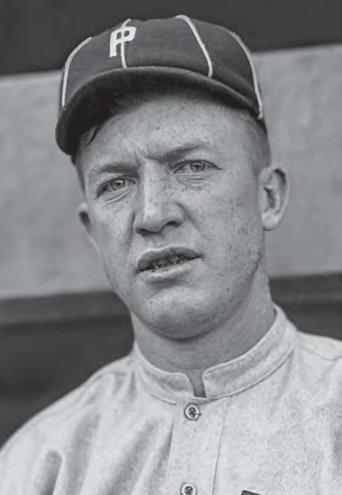
5 In 1887 the small town of Elba became the birthplace of what star Major League Baseball pitcher who was named after a president and was among the first 20 inductions into the Baseball Hall of Fame?
6
Named for a town in Illinois, which itself is named after the Incan word for wealth, which of these countries of the world lends its name to a real town in Nebraska?
a. Chile
b. Cuba
c. Peru
7 York is home to Lee’s Legendary Marbles and Collectables, which has been recognized as the world’s largest collection of marbles. Approximately how many marbles are in Lee’s collection?
a. 1,000,000
b. 400,000
c. 38,000
8 Nebraska has towns called Pierce, Monroe, Arthur and Lincoln, all of which were named after presidents. However, which of these tiny-named towns was NOT named after the president with the same name?
a. Grant
b. Polk
c. Adams
9 In 2024, 137 years after it was first founded in 1887, the residents of Lamar (population 28) voted almost unanimously to take what uncommon action?
a. Secede from Nebraska
b. Unincorporate
c. Rename the town
10 Though it was named after an early settler, not the music genre, which of these is the name of a real village in Phelps County?
a. Jazz
b. Funk
c. Soul
11 Of the more than 500 municipalities across the state, 57 of them have five-letter names and 19 have four-letter names, but that’s as short as it goes. Nebraska has no three-letter towns.
12
According to official U.S. Census estimates for 2024, by population, Omaha is the largest city in the United States with a five-letter name.
13 The village of Otoe was originally named Berlin but was changed during World War I in a wave of anti-German sentiment.
14 In 2005, the town of Royal was briefly invaded by a small group of chimpanzees who escaped from a local zoo.
15 Colon got its name due to a typographical error. An early census-worker misread an errant “:” as the town’s name and officially entered it instead of the town’s actual name, Saunders.
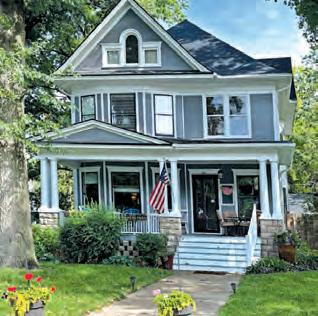
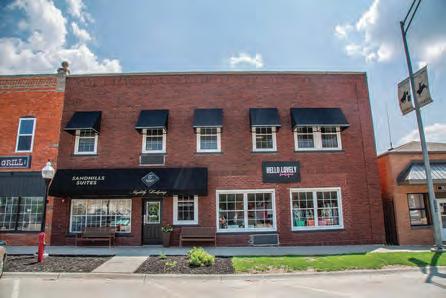
Set amidst the quiet, small town of York, each light-filled guest room has a private bath and comfortable furnishings. A personal lodging experience tailored just for you.



Book your stay today!
Nearly 150 years after his death, the burial location of legendary
remains one of the Great Plains’ biggest mysteries.
In 1877, sorrow swept the Nebraska plains as the story of a warrior passed into legend.
By RON J. JACKSON, JR.
LANTERNS FLICKERED against the dark hills of northwestern Nebraska the night of Sept. 6, 1877. From the Lakota camps along Beaver Creek came the steady pulse of drums and the cries of mourners. On a bluff above Camp Sheridan, Old Man Crazy Horse sat beside the coffin of his son – the Oglala warrior whose courage had carried his people through the Great Sioux War of 1876 and 1877, the final struggle between the Lakota and the United States Army. Below the slope, the soldiers’ post lay silent under a rising moon, the prairie wind rustling through cottonwoods as if echoing the sorrow of the camps.
That night marked not only the end of a life but the beginning of a mystery that would outlast generations.
Nearly a century and a half later, no one knows where Crazy Horse lies. The man who fought without war paint, who never allowed his likeness to be drawn, vanished in death as he had lived – beyond reach.
CRAZY HORSE was born around 1840 at the foot of Bear Butte in what is now South Dakota, in a year his people remembered as the time they “stole one hundred horses.” He grew up among the Oglala Lakota, one of seven bands of the Lakota people,
the western branch of the greater Sioux Nation – a name given by French traders to a confederation of allied tribes who called themselves Lakota, Dakota and Nakota – whose homelands stretched from the Black Hills into what became Nebraska and Wyoming.
From the beginning, he stood apart. Lighter-skinned than most, with sandy-brown hair and hazel eyes, he was quiet, almost shy. He spoke little in councils, preferring to listen. Yet when battle came, he transformed – riding at the front of every charge, dismounting under fire to take careful aim, counting coup in the smoke and chaos. His courage inspired those around him. “When he came on the field of battle,” remembered his friend He Dog, “he made everybody brave.”
Among his people, it was said that Crazy Horse possessed wakan, a spiritual power that made him untouchable. He fought without decoration, painted only a lightning bolt on his cheek and a hailstone on his horse. Some believed no bullet could kill him. That faith would carry him through a decade of war against a nation determined to erase his way of life.
In 1866, he lured Capt. William Fetterman’s command into an ambush near Fort Phil Kearny in northern Wyoming
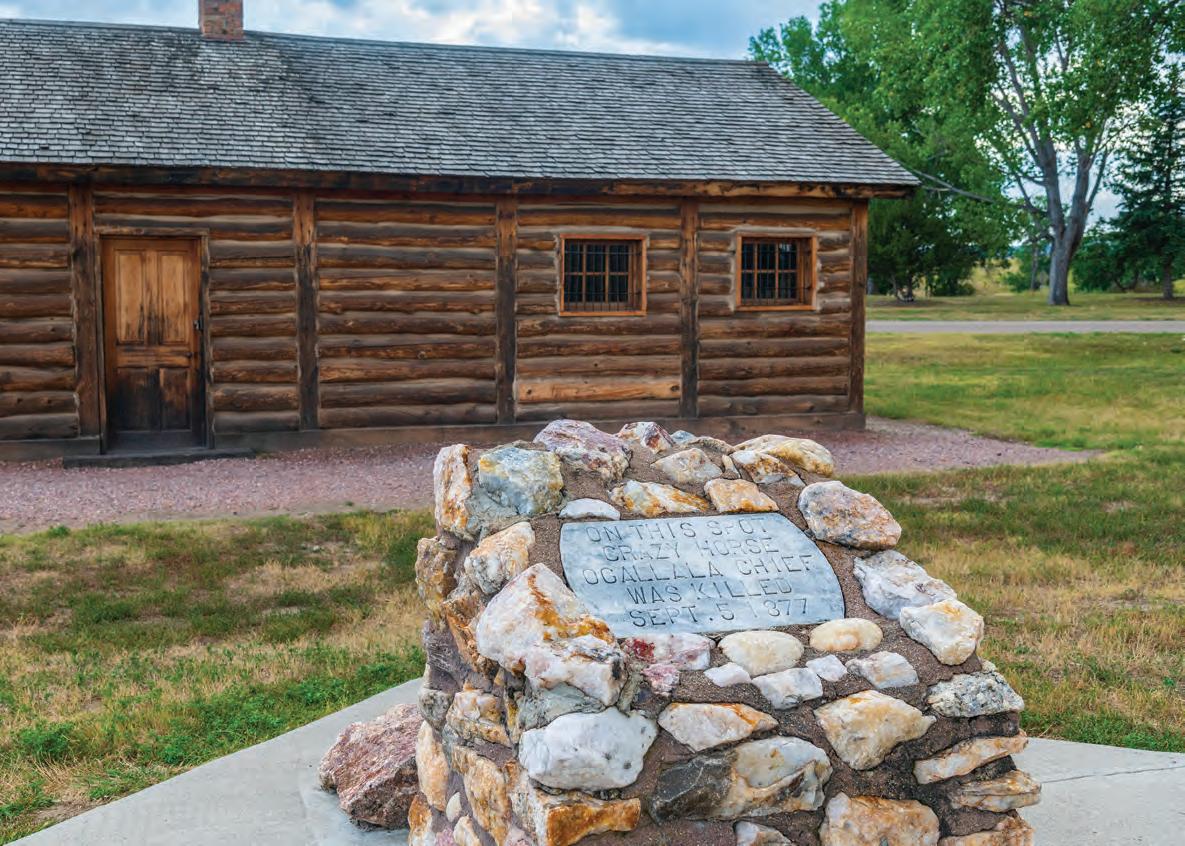
1877 at
resisting
– a defeat so complete the Lakota called it “the Hundred in the Hand.” Ten years later, he led hundreds of warriors against Gen. George Crook along Rosebud Creek, forcing the Army’s retreat. Eight days later, he charged again at the Little Bighorn, helping to encircle and destroy Custer’s Seventh Cavalry.
Those victories brought the Army’s fury. In the months that followed, federal forces swept the northern plains, burning villages, slaughtering buffalo and driving the Lakota toward starvation. Crazy Horse and his followers held out through the winter, but by the spring of 1877, hunger had done what no army could. He agreed to surrender at the Red Cloud Agency near Camp Robinson in western Nebraska, believing the promises of officers who swore his people could live near their northern hunting grounds in peace.
But peace was fragile.
That summer, as rations dwindled and mistrust deepened, rumors spread that
Crazy Horse planned to leave the reservation and renew the fight. Some of those stories came from rival Lakota leaders seeking favor with the Army; others from officers uneasy with the warrior’s influence. Word reached Gen. George Crook, who ordered his arrest.
On the morning of Sept. 5, 1877, soldiers persuaded Crazy Horse to come to Camp Robinson, saying the general merely wished to talk. By evening, deception turned to betrayal.
When he realized he was being placed under arrest, Crazy Horse pulled away from the four Lakota guards sent to restrain him. A scuffle broke out outside the post guardhouse. In the confusion, Pvt. William Gentles lunged with his bayonet. The blade pierced Crazy Horse’s side, cutting deep through both kidneys.
The wounded chief was carried to the adjutant’s office, a small building just off the parade ground. Dr. Valentine McGillycuddy tried to save him, but the wound
was mortal. Through the night, Old Man Crazy Horse waited outside until soldiers allowed him in.
“Son, I am here,” the elder said.
“I am hurt bad,” Crazy Horse whispered. “I am going to die. Tell the people they cannot depend on me anymore.”
He died before dawn. His friend Touch the Clouds, a Miniconjou chief, stood beside him and said softly, “It is good. He has looked for death, and it has come.”
AT SUNRISE, a small procession left Camp Robinson. Old Man Crazy Horse had been allowed to take his son’s body east to the Spotted Tail Agency near Camp Sheridan, about 40 miles away. They wrapped the fallen warrior in a red blanket, placed him in a wooden coffin and lashed it to a travois pulled by a pony. Twenty-three relatives and close followers traveled with him, including his widow, Black Shawl Woman, and his cousin and spiritual advisor, Horn Chips.
They moved slowly across the rolling prairie, mourning songs rising and falling in the wind. That night, on a bluff overlooking Camp Sheridan and the valley of Beaver Creek, they laid him to rest. The coffin was placed among the branches of a small tree and enclosed with rough planks to keep wolves away.
“The grave was left in charge of the chief mourners,” a reporter for the New York Sun wrote, “without food or drink, naked and hideously blackened, eight figures lying around the corpse and howling.”
Old Man Crazy Horse kept vigil there for nearly five weeks, his face blackened in grief, his body gaunt from fasting. Red Feather, brother of Crazy Horse’s widow, later told that a war-eagle walked upon the coffin each night but did nothing – a sign, they believed, that the warrior’s spirit had gone on.
When the Army ordered the Lakota bands to move north later that fall, the old man joined them. Among the wagons and travois he carried the remains of his
son. Lt. William P. Clark, Crook’s chief of scouts, wrote to Washington that Crazy Horse’s father was “hauling along his dead son.” To Clark, even the name carried danger. “Even as a dead chief,” he warned, “he exercises an influence for evil.”
That letter is the last confirmed record of the warrior’s body. From that moment, the trail fades into silence.
OVER THE YEARS that followed, stories multiplied. Some said the elder buried his son’s remains once more along Beaver Creek, sealing the grave with rocks to hide it forever. Others have long believed the first resting place along Beaver Creek was also the last, hidden beneath the same bluffs where his father kept vigil. Others said he carried the coffin north into South Dakota, reinterring it near the White River, or perhaps at Wounded Knee.
Horn Chips, the cousin and holy man who had walked beside Crazy Horse since childhood, told historian Walter Camp in
“I am hurt bad, I am going to die. Tell the people they cannot depend on me anymore.” – Crazy Horse
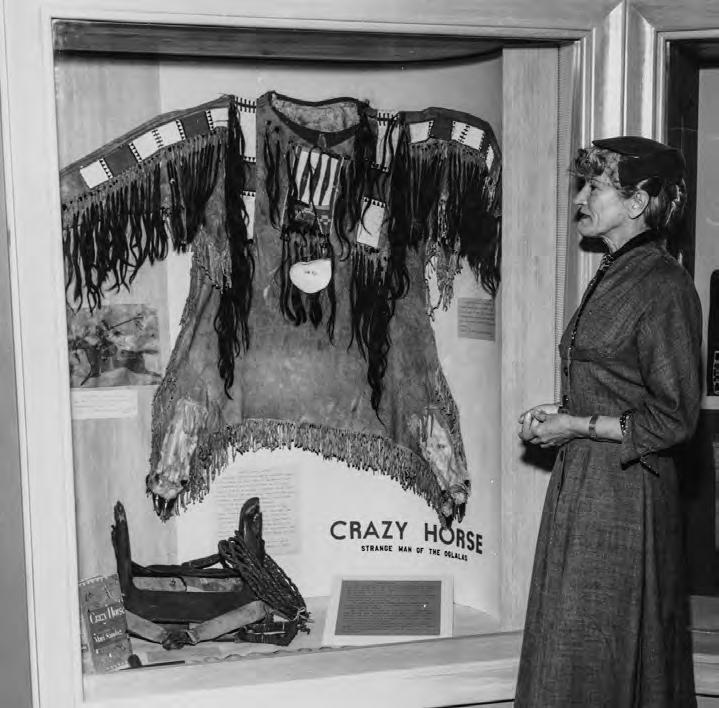
Author Mari Sandoz, who devoted much of her career to chronicling Crazy Horse’s life and legacy, admires the Crazy Horse exhibit at the Nebraska State Historical Society in 1954.
1910 that he had been present at five burials – first “on the Beaver by cliffs,” then along White Clay Creek, White Horse Creek, in a cave high above the cliffs, and finally at Wounded Knee. Each reburial, he said, was meant to keep the remains safe from desecration.
Kills Plenty, another elder, remembered that Old Man Crazy Horse once arrived at Rosebud under cover of darkness dragging a wicker cage tied to a travois. Those who came to look inside found only rags. Whether the bones had been hidden elsewhere or carried on, no one knew. “It was the secret of Crazy Horse’s family,” he said.
Victoria Conroy, niece of Old Man Crazy Horse, wrote in 1934 that her mother helped bury the warrior “secretly between the Porcupine and Wounded Knee creeks,” adding that “many who claimed to know where Crazy Horse is buried … died years ago.”
A final story – part of an oral tradition
“The grave was left in charge of the chief mourners,” a reporter for the New York Sun wrote, “without food or drink, naked and hideously blackened, eight figures lying around the corpse and howling.”
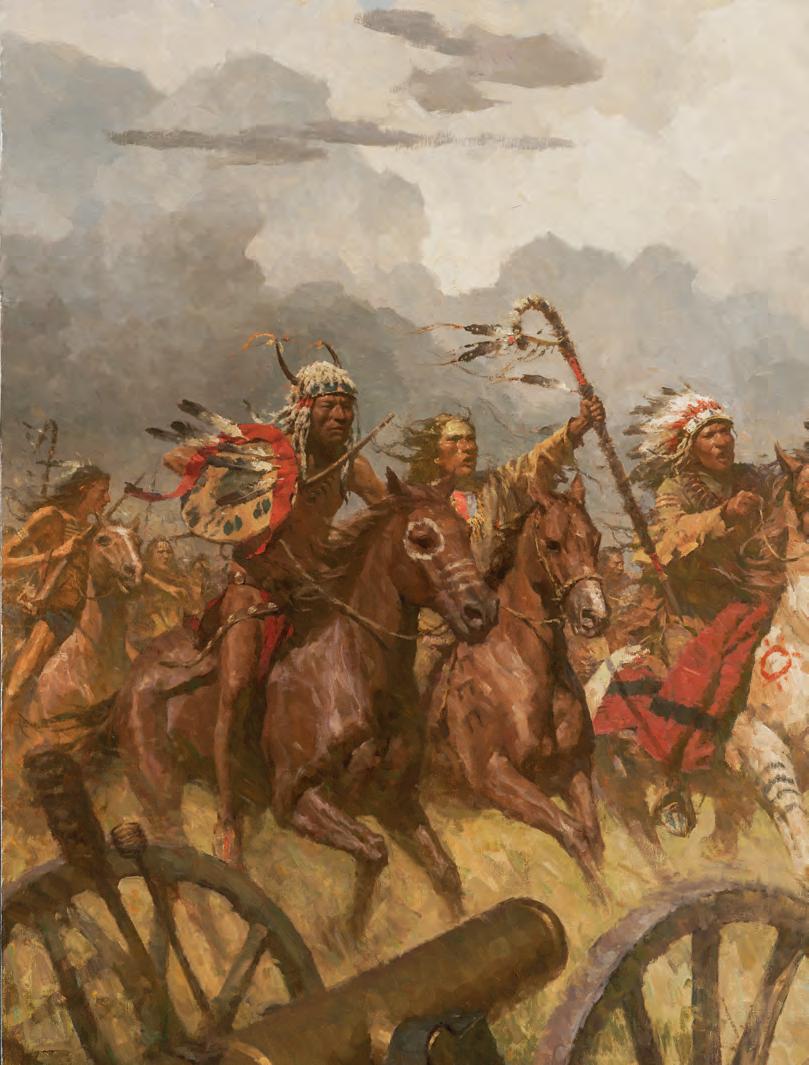
“The
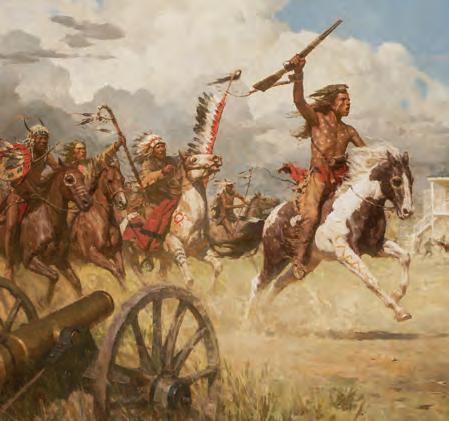
In his 2013 painting
“The Charge of Crazy Horse on Fort Laramie, 1864,” artist Z.S. Liang captures the Lakota leader driving his warriors into battle – a moment of fierce resistance brought vividly to life.
preserved in the Mari Sandoz Collection at the University of Nebraska – tells of a trapper who found a skull near the Porcupine and Wounded Knee creeks in the early 1880s. Lakota women who saw it recognized the scars left by a bullet that had once passed through Crazy Horse’s face, fired years earlier by No Water, the jealous husband of a woman he had taken during her husband’s absence.
One of those women, Louise Pourier, a relative of the fallen warrior, took the skull home, wrapped it in a blue wool blanket and crushed it with an axe before burying the fragments near Rockyford, South Dakota. “So no one would ever disturb him again,” her family later said.
THE TRUTH MAY lie buried somewhere between Beaver Creek and Wounded Knee, hidden beneath generations of wind and grass, or perhaps it was scattered long ago. What remains is the silence – the same wind that bent the grass on that September night still moves through the hills where his journey ended.
For the Lakota, graves were not meant to mark possession but to protect the spirit’s passage. To reveal one was to break a sacred promise. Perhaps that is why no one has ever found him.
Crazy Horse defied every power that sought to contain him in life. In death, he remains free – unclaimed, unbound beyond reach.
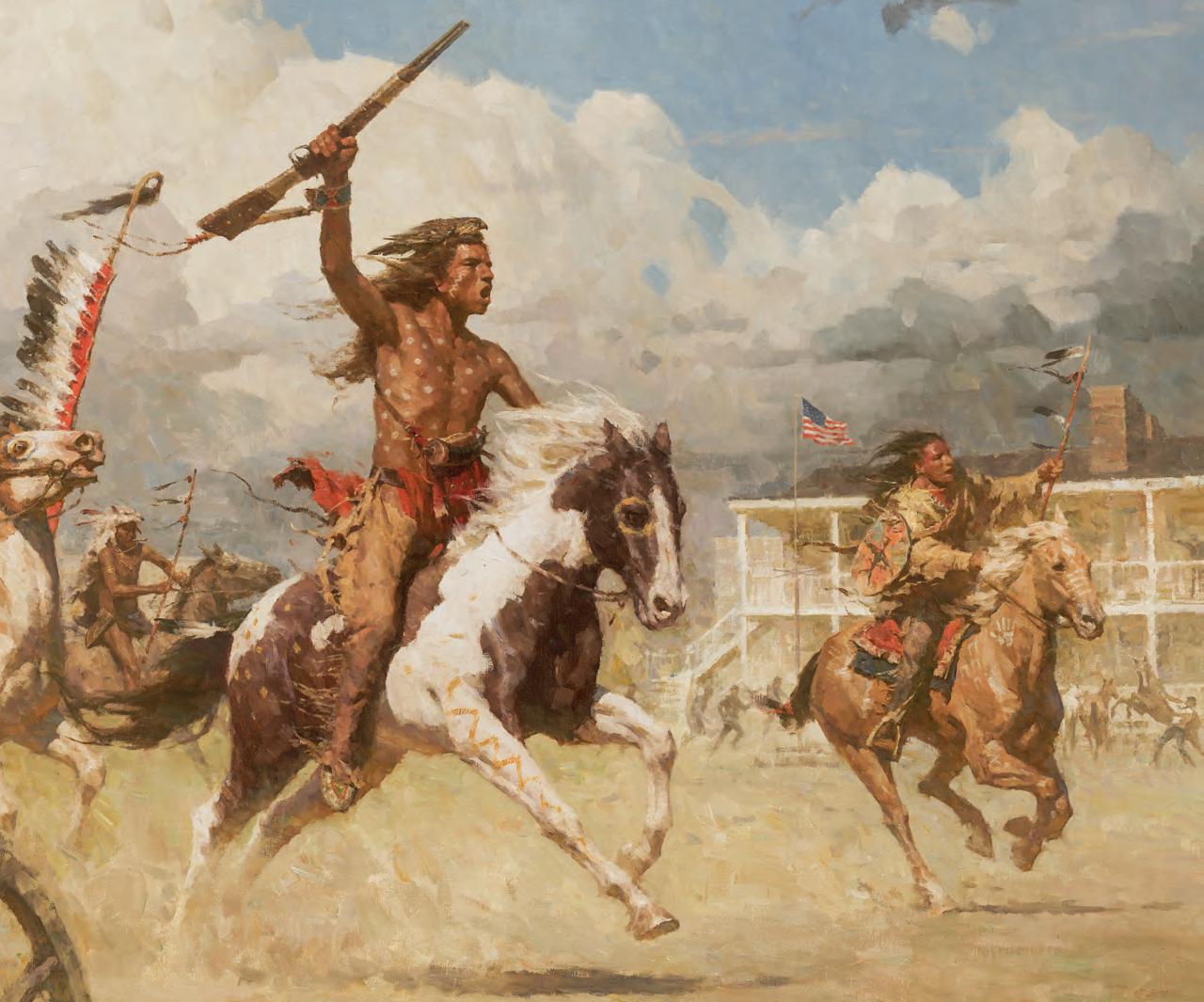
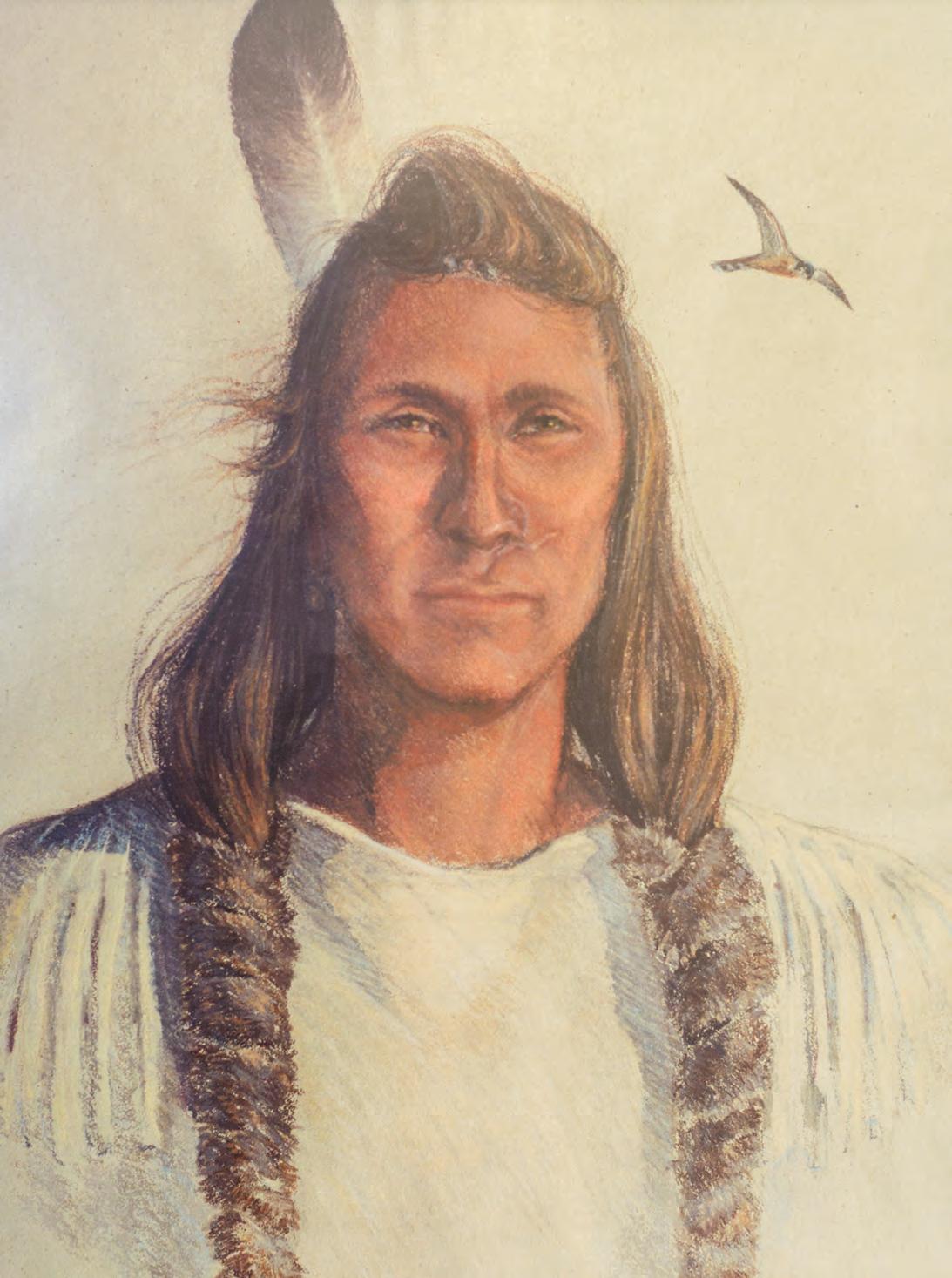
NO VERIFIED PHOTOGRAPH of Crazy Horse exists. The Oglala Lakota leader refused to be photographed, believing that an image could capture part of the spirit. What endures are the words of those who knew him and the interpretations inspired by them.
Friends and soldiers described him as light-skinned, with sandy-brown hair, hazel eyes and a quiet presence that commanded respect. He was small and slight – no more than five and a half feet tall –but his calm and courage made him seem larger than life. A faint scar crossed his cheek, left by a jealous husband’s bullet years before his death.
Nebraska author Mari Sandoz gathered
those accounts for her 1942 biography Crazy Horse: The Strange Man of the Oglalas. Based on her descriptions, artist Mary Bryan Forsyth painted a portrait for Sandoz – a face imagined from memory and reverence rather than likeness. For years, the painting hung in Sandoz’s New York apartment. It is now housed at the University of Nebraska-Lincoln’s Love Library.
Though inspired by history, the painting has come to stand for something larger than likeness – a symbol of how Crazy Horse’s spirit continues to elude capture.
More than an image, the portrait represents what words could only suggest: a man whose presence was felt more than seen – quiet, watchful and free.


FOR 30 YEARS Nebraska Life has told this state’s story through words and pictures. This year, we invited readers to help tell it too in our first “Spirit of Nebraska” Photo Contest.
From the air and from the ground, from lightning over the prairie to the stillness of a Sandhills pond, these photographs reveal Nebraska in all its moods – the sweep of open skies, the laughter of community, the grace of wildlife, and the quiet pride of those who work the land. Each image reflects a Nebraska moment – real, familiar and full of life.
This issue’s feature opens a two-part showcase of winners across 14 categories, beginning with Aerial & Drone, Wildlife, Landscape, Agriculture, History and Celebration, and culminating with Photo of the Year. The next seven, including Photographer of the Year, will appear in our January/February issue.
Presented in partnership with Rockbrook Camera, whose dedication to Nebraska photographers helps bring these stories to life, this photo contest builds on Nebraska Life’s long tradition of celebrating the people and places that make our state extraordinary.
We hope it inspires everyone to keep photographing Nebraska – whether you’re an aspiring shutterbug or seasoned pro. Dive in and experience the remarkable ways photographers captured the spirit, landscapes and life of our state.
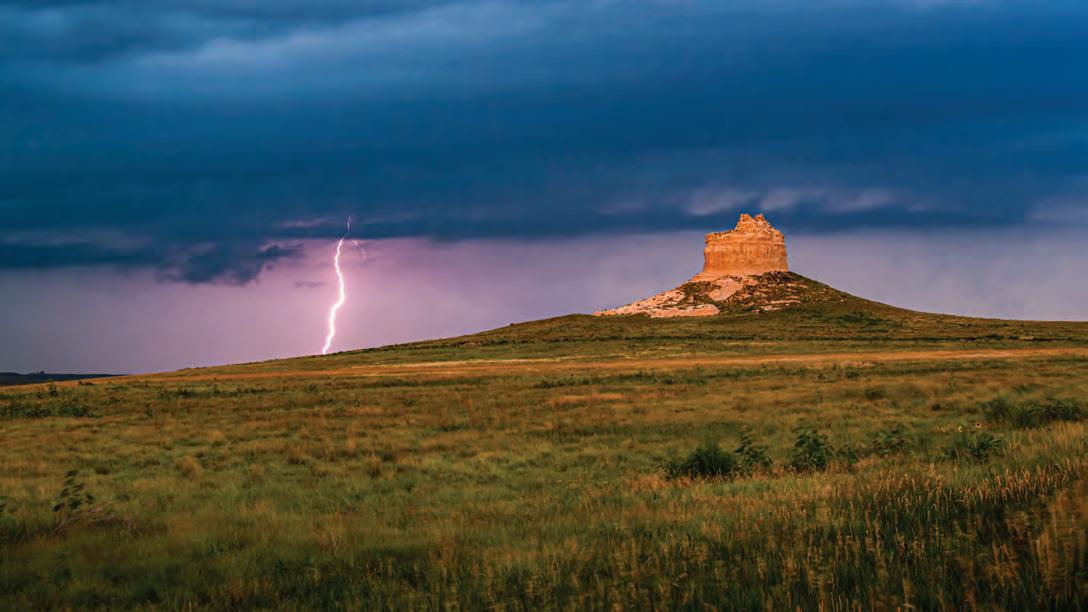
“POWER ON THE PRAIRIE”
CHEYENNE COUNTY
BY JEFF PHELPS
Jeff Phelps of Sidney demonstrates extraordinary control over light in a striking Cheyenne County shot. At Rattlesnake Knob, he balanced the brooding, stormy sky with the illuminated prairie below, carefully exposing for both highlights and shadows.
Timing was critical. A sharp pink lightning strike aligned parallel to the rock formation, captured through precise shutter speed, a steady tripod and anticipation. As a licensed pilot and drone photographer, Phelps leverages aerial perspective to find angles impossible from the ground. His technical expertise of blending exposure, timing and vantage point transforms this scene into an electrifying landscape.
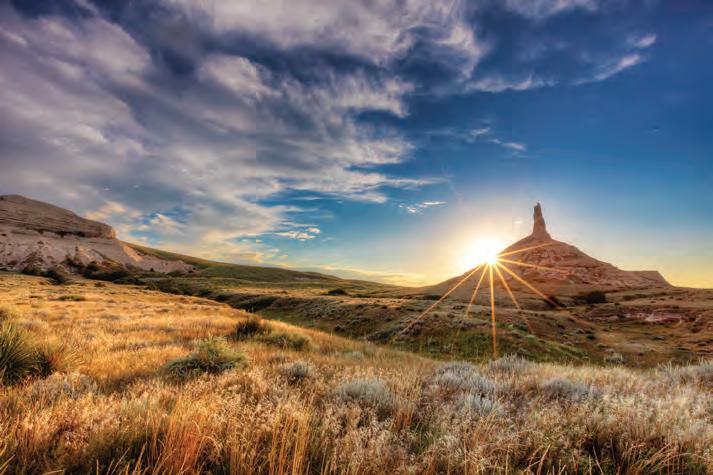
“ODE TO PIONEER DAYS”
CHIMNEY ROCK, BAYARD BY KEN SMITH
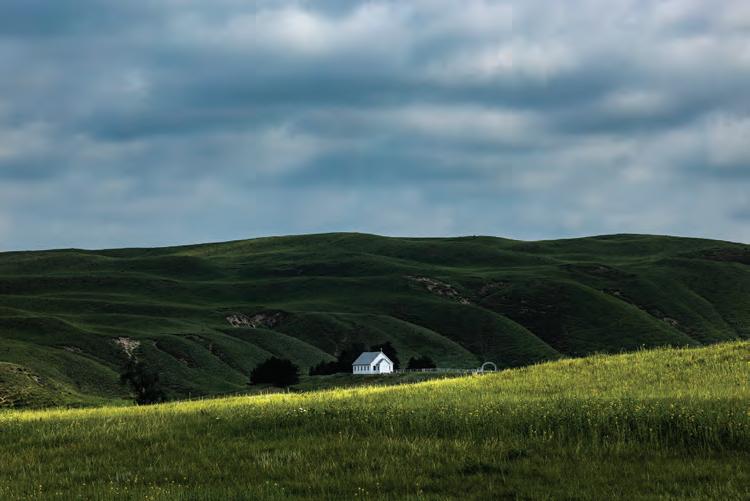
“ECLIPSE CHURCH” ECLIPSE CHURCH, TYRON BY JENNA ROSE

“WATER FUN BEFORE WORK BEGINS” SANDY POINTE LAKE, ASHLAND
BY JEFFREY CARNEY
Aerial and drone photography invites new ways to interpret familiar, everyday scenes. Jeffrey Carney of Ashland put this approach to work at a sandpit lake north of town, documenting Omaha Westview High School’s football team during a lake day. Each summer, the team enjoys respite from the heat at Saunders County Lake before the challenges of fall camp.
The bright teal mat anchors the frame as players scramble, wrestle and climb, creating a dynamic composition that balances action and color from above. Carney’s careful framing and eye for symmetry transforms a playful pre-camp tradition into a compelling aerial work of art displaying teamwork and motion.
“SUNSET AT THE POINT” POINT OF ROCKS, POTTER BY JEFF PHELPS
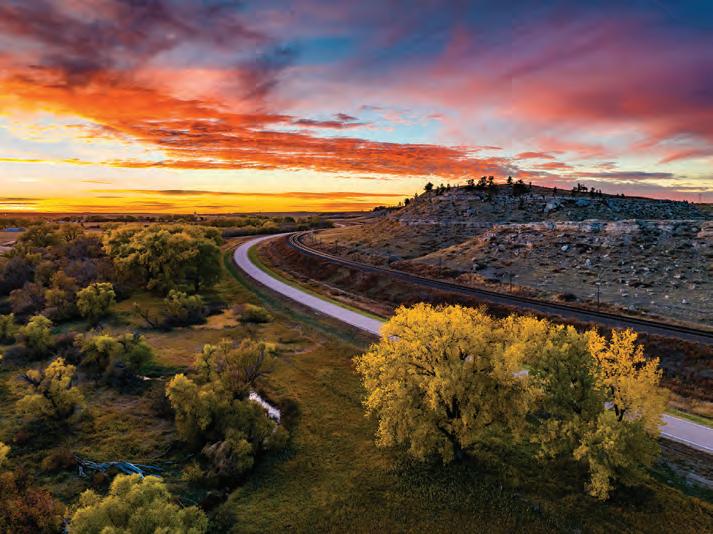
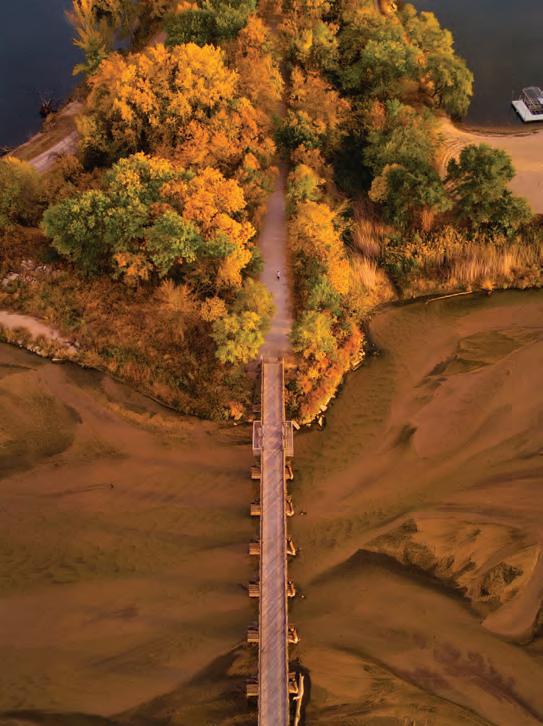
“INTO THE WOODS” DARK ISLAND TRAIL, CENTRAL CITY BY TIARA BROWN
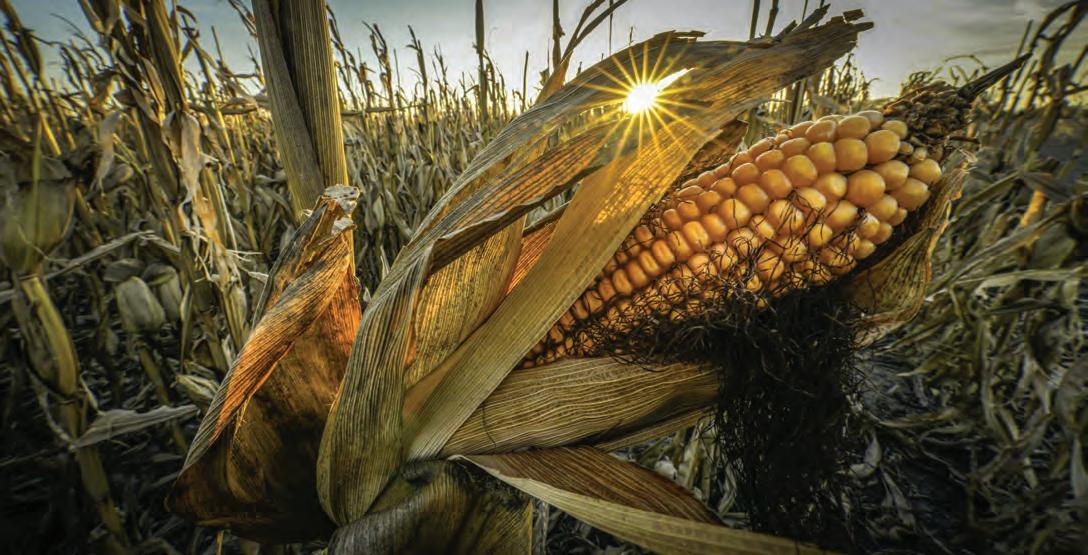
Shot in a field west of Ashland at sunset, Jeffrey Carney captures each black silk and curve of the corn husk in razor-sharp focus while the surrounding landscape melts softly into a haze of gold.
“GOLDEN HARVEST HOUR” SAUNDERS COUNTY BY
JEFFREY CARNEY
A former photojournalist who now lives along the Platte River north of Ashland, Carney sought a fresh take on Nebraska’s familiar fall harvest. Agriculture photography often leans wide to show scale, but Carney turns inward, revealing the artistry in a single ear of corn. His technical precision with depth of field draws the viewer’s eye straight to the corn’s glowing texture and the sunburst framed perfectly between husks – a study in light, detail and timing.
“GOLDEN
GLOW OF HARVEST”
CHEYENNE
JEFF PHELPS
COUNTY BY
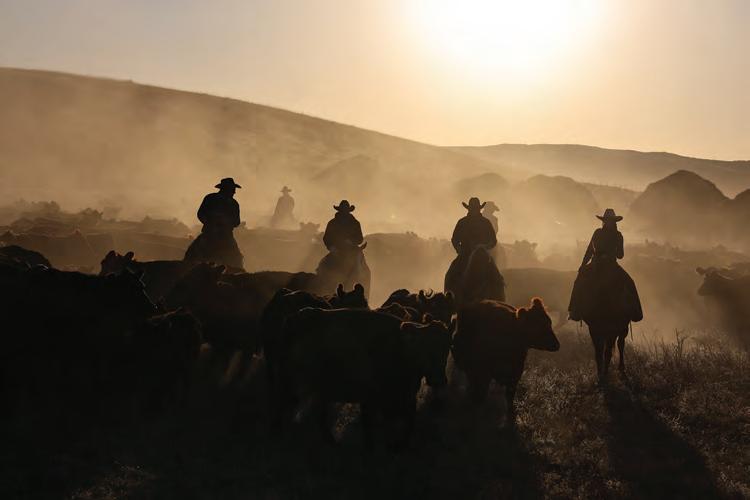
“WEANING IN THE FALL” HAWKINS RANCH, ARTHUR COUNTY BY AINSLIE WILSON

“SUMMER WATERSLIDE FUN” STIR-UP DAYS, ASHLAND
BY JEFFREY CARNEY
In downtown Ashland, Jeffrey Carney captures a perfect slice of summer life at Stir-Up Days. With temperatures soaring past 100 degrees that day, a father sends his son flying down a waterslide, both grinning ear to ear.
Using fast shutter precision, Carney freezes every sparkling droplet of water mid-air, keeping both father and child sharply in focus while conveying the motion and joy of the event. A former photojournalist, he knows just how to anticipate the moment of action. The image celebrates life in Nebraska, the simple pleasures of community and the fleeting moments that define summer.
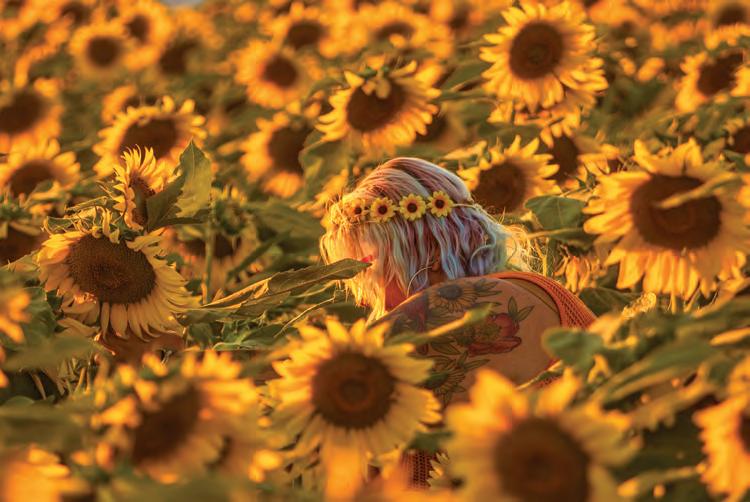
“SUNFLOWERS GALORE”
NELSON PRODUCE FARM, VALLEY BY TIARA BROWN
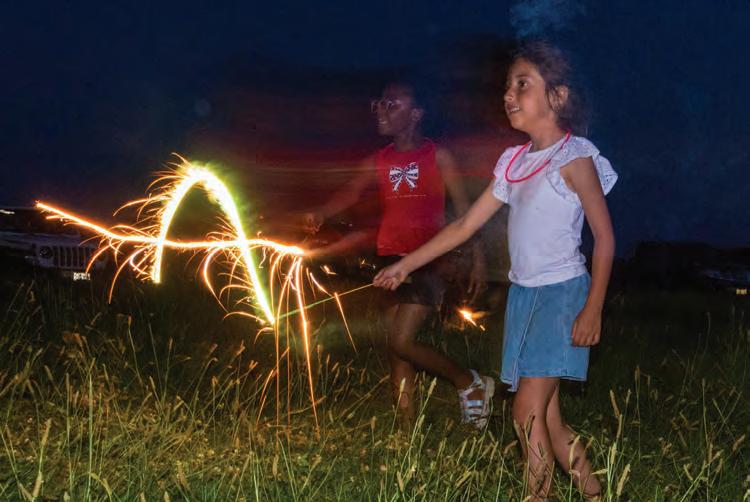
“SPARKLERS” LIFE GATE CHURCH, FREMONT BY BRIAN WEBER
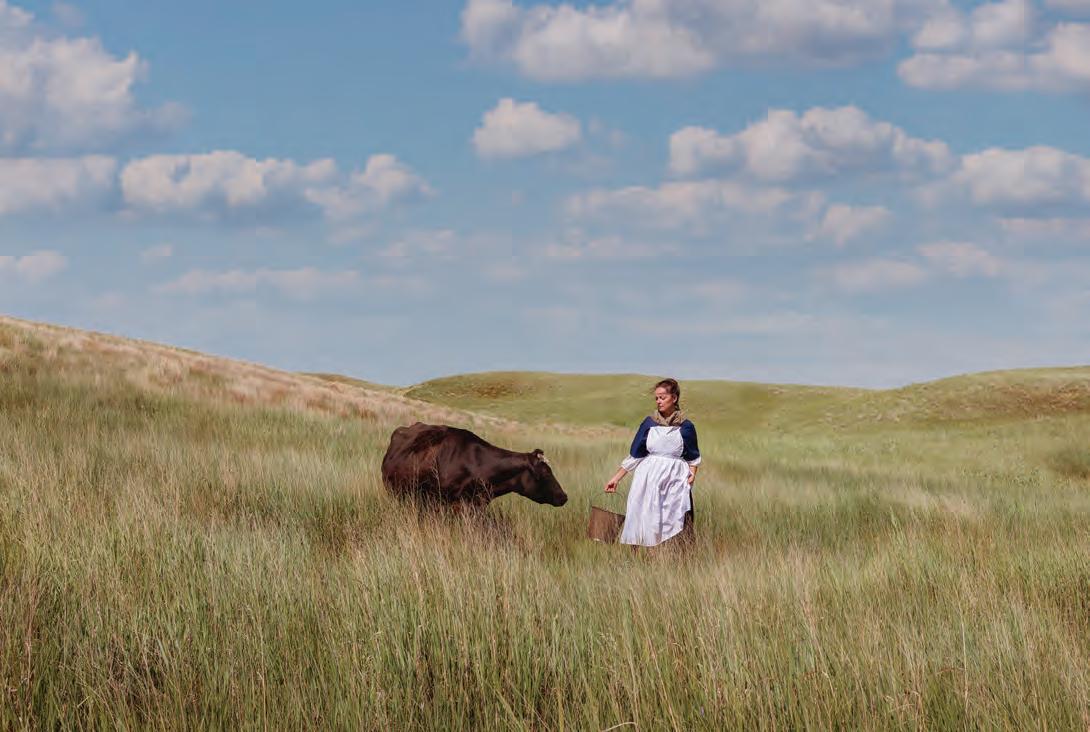
“WHERE THE HILLS WHISPER” A PASTURE ON THE ARTIST’S FAMILY RANCH
BY AUDREY POWLES
History photography often honors the people, traditions and landscapes that shape our past. Audrey Powles of the Nebraska Sandhills captures that legacy in a self-portrait with her favorite cow, Debbie, set against the rolling summer pastures of her beloved family’s ranchland.
The image pays homage to the settlers and generations who built Nebraska’s ranching heritage, blending pastoral serenity with a contemporary vision. Using intentional Photoshop techniques of color correction and subtle dodge-and-burn, Powles adds depth, atmosphere and nuance. The result is a modern study in rural grace and the quiet bond between rancher and livestock.
“TIMELESS JOURNEY”
ROCK ISLAND RAILROAD DEPOT MUSEUM, FAIRBURY BY ELLEN HANZLICEK
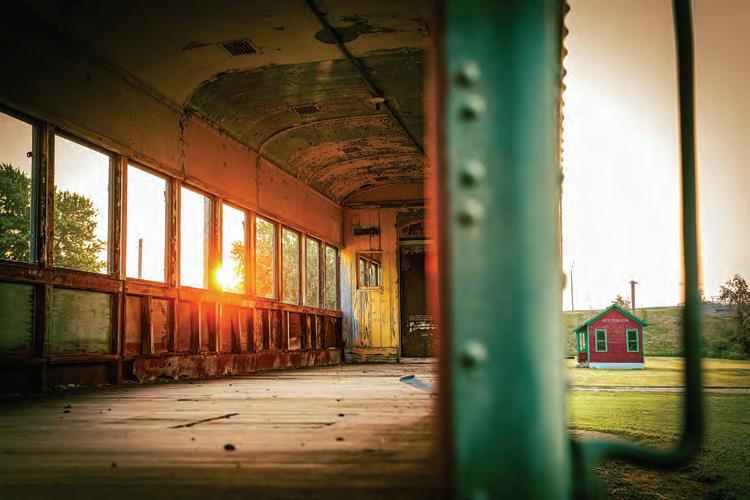
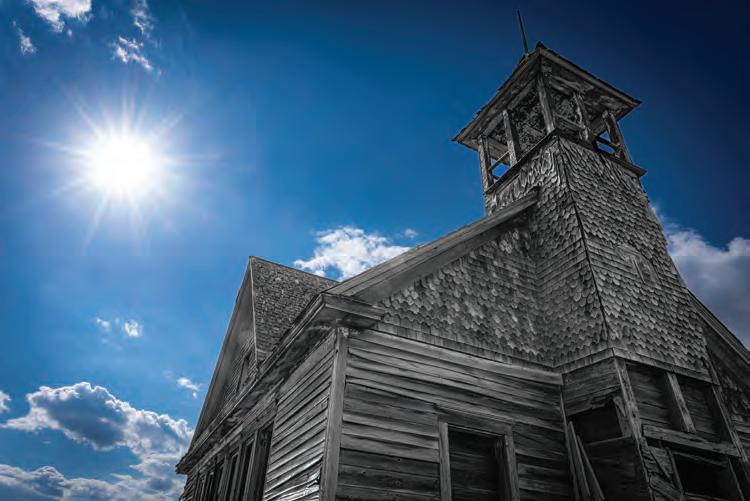
“A VIEW TO THE PAST” POLK COUNTY BY ROGER RICHTERS

“SPRING OWLET SIBLINGS”
WALNUT GROVE PARK, OMAHA
BY TIARA BROWN
Wildlife photography captures the fleeting, intimate moments of the natural world. In a quiet corner of Walnut Grove Park in Omaha, great horned owlets huddle together in their tree nest, peeking through branches as they await a returning parent.
Photographer Tiara Brown of Omaha waits with them. Every ruffled feather and delicate curl of down is rendered in exquisite detail, giving the scene a tactile intimacy – the viewer can almost feel their softness through the page.
With careful control of focus and depth of field, Brown brings this hidden moment to life, revealing the warmth and curiosity of these young owls.
“RUBY-THROATED
HUMMINGBIRD”
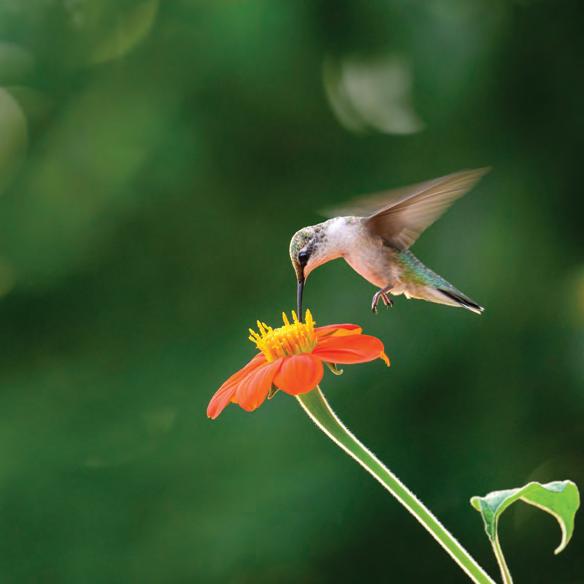
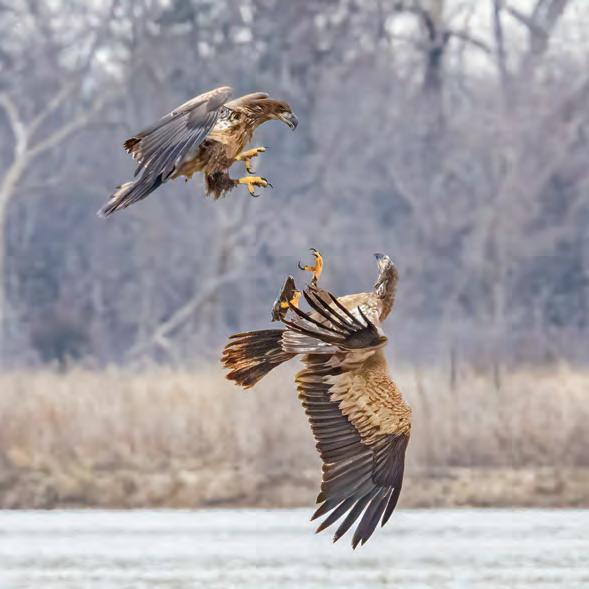
“PLAYFUL WINGS” CRANE TRUST, WOOD RIVER BY TAMARA RIMPLEY
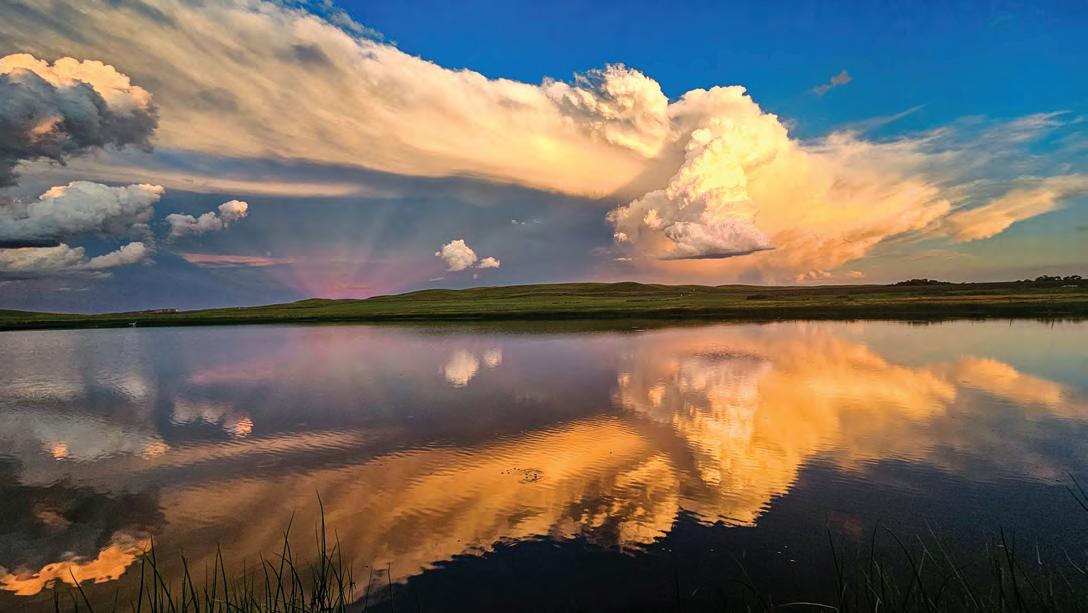
Nebraska’s Sandhills are a canvas for light, and Nicole Louden, a ranch wife and photographer near Ellsworth, captures it with remarkable eye for balance in Photograph of the Year.
“SUNSET
STUNNER” ELLSWORTH
BY NICOLE LOUDEN
One summer evening, with only her phone in hand, she framed a rare phenomenon of anticrepscular rays converging opposite a sunset and thunderstorm retreating in the eastern sky. Still water mirrored the sky, doubling the impact of color and form in a harmonious reflection.
Louden’s mastery of composition symmetry celebrates Nebraska’s natural beauty and the photographer’s patient, deliberate artistry.
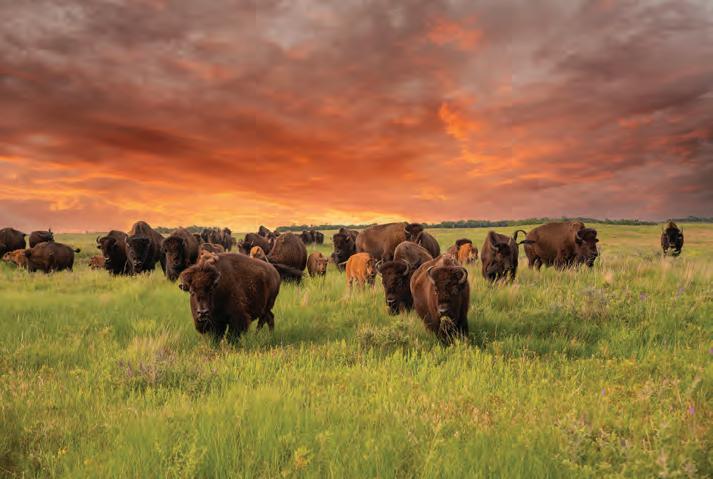
“WHERE THE BUFFALO ROAM” VALENTINE BY ANGELA CARROLL
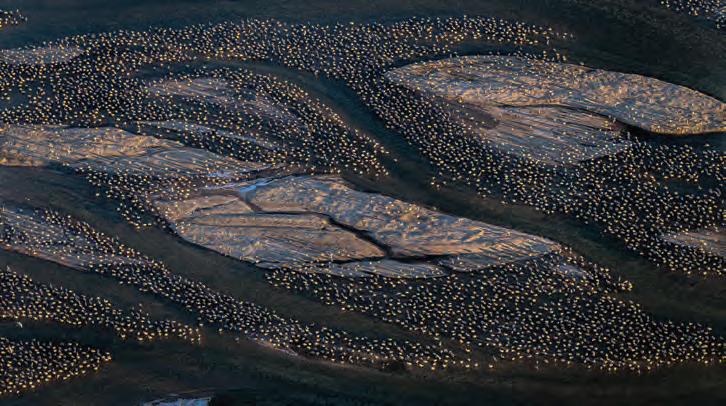
BY JEFFREY CARNEY






Shop small and savor local. Wrap up a taste of Nebraska this holiday season.
by ARIELLA NARDIZZI
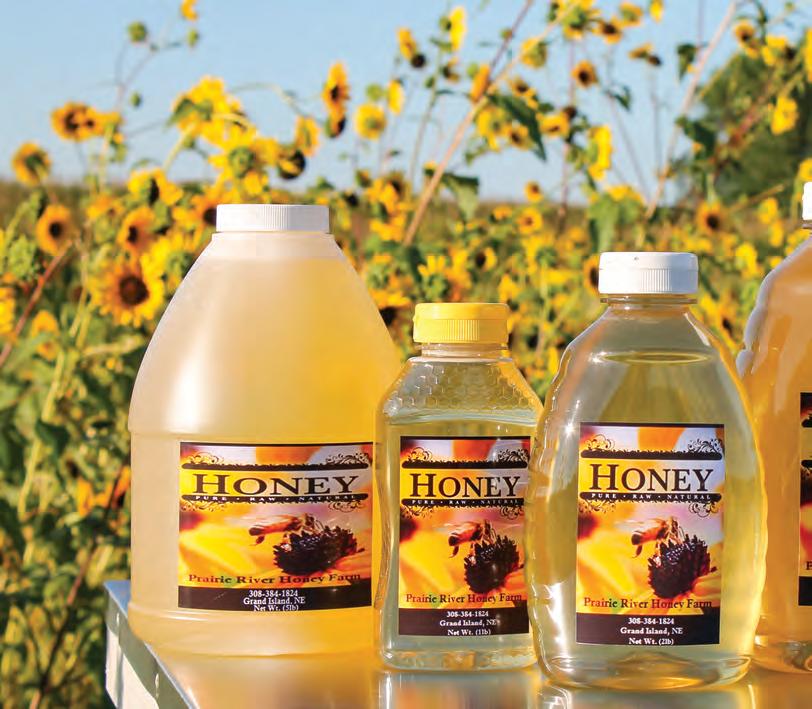
WINTER SETTLES GENTLY over orchards, vineyards, prairies and farms – but inside kitchens and country markets, something sweet is always stirring. Prairie River Honey Farm in Grand Island bottles jars of golden raw honey, while flaky pies and savory soups stock the shelves at Union Orchard in Union.
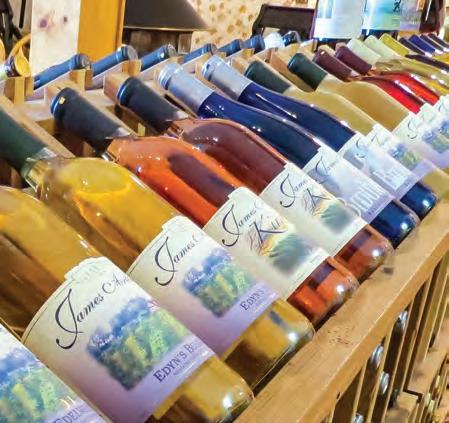
In Raymond, James Arthur Vineyards pours holiday cheer by the glass, while West End Farm in Plymouth bundles up its bounty through homemade granola and jam. To the west in Paxton, Rafter 7S stirs chokecherry jellies and wild plums that taste like pure Sandhills sunshine. This holiday season, give a gift that’s grown, bottled and baked close to home.
Prairie River Honey Farm Grand Island prairieriverhoneyfarm.com (308) 384-1824
THE AIR HUMS with wings along the Loup River, where thousands of bees drift over wildflowers and prairie grass. Inside Prairie River Honey Farm’s small bottling shed, golden honey pours into jars – the sweet reward of Brody Emery’s 14-year experiment in family, patience and place.
For Emery, the fascination began with curiosity – and a few white hive boxes spotted along Nebraska’s backroads. After earning a business degree in 2011, he took a beekeeping class through the University of Nebraska-Lincoln Extension, bought two hives and set them up behind his parents’ house. That first year his bees produced 200 bottles of honey, which sold out in two months.
This backyard experiment became the foundation for a thriving family business run by Brody and his parents, Greg and Charlene. Together they care for hives along the Loup River in central Nebraska on protected USDA Pollinator Habitat land.
Each season brings its own rhythm –spring splits, summer nectar flows and fall harvests that keep the family busy year-round. Beekeeping, for Brody, is both business and meditation. “It’s a Zen moment when you’re working with the bees,” he said. “Hundreds of thousands of bees are flying around you. It’s peaceful and exhilarating at the same time.”
Their bees forage on more than 40 varieties of native wildflowers – penstemons, prairie clovers, milkweed, wild bergamot, sunflowers, goldenrod and asters. The result is raw honey that carries the flavor of the land itself: lightly sweet and lingering.
Every jar comes straight from the hive –unheated, unprocessed and hand-bottled to preserve natural enzymes, antioxidants, vitamins and pollens. Brody calls it “nature’s immunization shot,” since raw honey introduces trace amounts of local pollen that help the body build up immunity to regional allergies.
Prairie River also sells bee pollen, royal jelly, honeycomb, beeswax and flavored honey sticks, all available online or at Nebraska retailers like Hy-Vee.
Pure, golden and straight from the source – you best bee-lieve it.

James Arthur Vineyards
Raymond jamesarthurvineyards.com (402) 783-5255
ON A SUN-DRENCHED hillside near Raymond, rows of 12,000 grapevines ripple in the breeze. They’re a testament to one family’s 28-year experiment that began as a hobby and blossomed into Nebraska’s largest winery.
In 1996, James Arthur Jeffers purchased land north of Lincoln for his family to enjoy, as animals roamed the acreage and aspirations pointed toward planting an apple orchard. But when his son-in-law, Jim Ballard, planted the idea of, well, planting a few grapevines, Jeffers decided to see it through.
Jim, his wife Barb and the family planted the first hundred vines by hand. As their grapes grew, so did the idea of turning the family’s hobby into a business. A pioneer in Midwest wine production, James Arthur Vineyards opened its doors as Nebraska’s second winery in 1997.
Three generations and nearly three de-
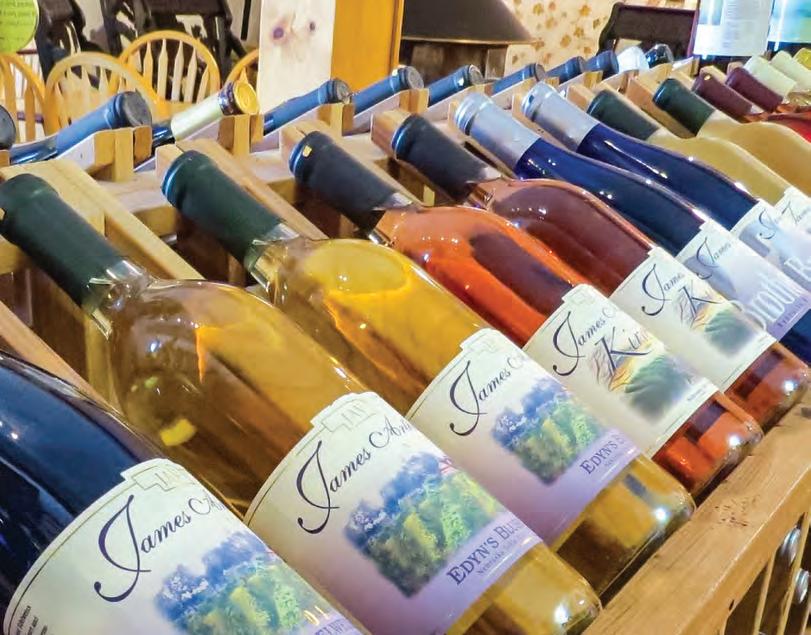
cades later, the vineyard has grown into Nebraska’s largest with 20 acres of pristine landscaping, 12,000 vines and other fruit crops. Ballard specializes in hybrid varietals that are winter hardy, accustomed to shorter growing seasons and Nebraska’s 20-below temperatures, such as Edelweiss, LaCrosse, St. Croix and Vignoles grapes.
Each JAV bottle contains 100% Nebraska wine. The family sees production through from start to finish – from planting and pruning to harvesting, crushing, fermenting and bottling. They also work with 20 local growers to produce additional grapes needed for each year’s supply, ensuring every crushed grape was grown on Nebraska soil.
“We pride ourselves on the fact that we’ve created a Nebraska product that authentically represents our state,” Ballard said. “It’s something Nebraskans can be proud of too.”
Ballard, a former broadcast journalist, dove headfirst into the learning curve of winemaking when the vineyard first opened. “I love creating – the mixing, the matching, the blending. Winemaking is 50% science and 50% art.”
That art has culminated in an impressive
lineup of wines, from sweet dessert wines to dry oaky reds, 10-year-old aged port wines and even meads. The award-winning Edelweiss, a semi-sweet white bursting with green apple tartness, remains a top seller.
But for Ballard, his favorite wines come from their family series, each honoring their rich history. Edyn’s Blush, a light citrusy wine, honors his only daughter –who’s known around the winery as Peach.
A semi-sweet wine made from free-run juice called 2 Brothers ensures no favoritism among his sons, Beau and Benjamin. Sweet Charlotte is named for his mom, Bossy Sister for his sister, and Kira after his beloved yellow lab.
Each wine tells a story – not just about pure Nebraska grapes, but about the family themselves. To taste the fruits of their labor, stop by the serene vineyard for the full experience, visit their downtown tasting room, From Nebraska Gift Shop, in Lincoln’s Haymarket, or find a bottle at a local retailer.
However you find it, each glass circles back to the land where it all began – a handful of vines, a wild idea and a family whose little hobby grew into something extraordinary.
3
West End Farm
Plymouth westendfarmne.com (402) 239-9822
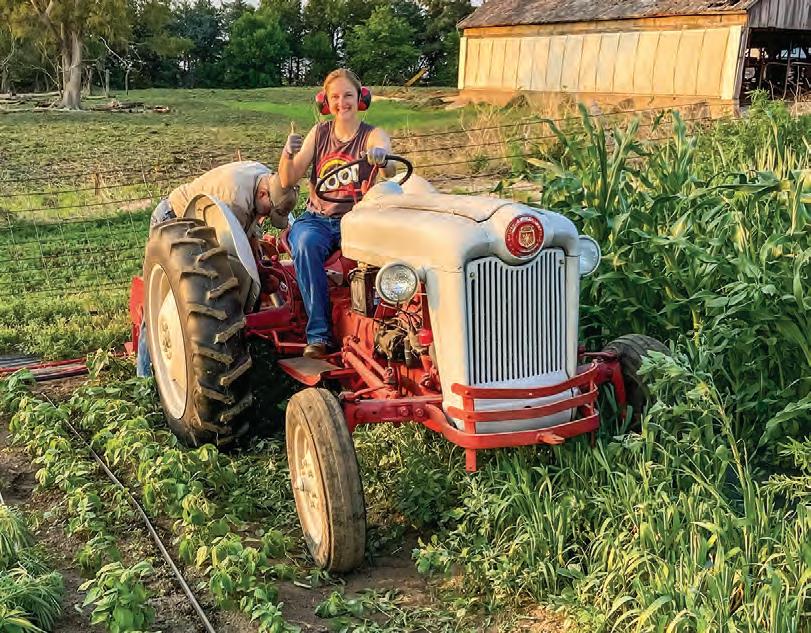
ON LAND HER family bought more than a century ago, Katie Jantzen is reimagining what it means to farm in Nebraska. At West End Farm in Plymouth, she grows dozens of crops on a single acre – and cultivates community with every harvest.
Jantzen is a fifth-generation steward of the soil, her roots sunk deep into the same ground first purchased in 1891. The family once ran a dairy but sold their cattle 15 years ago. Still, Jantzen grew up exploring the farm, curious about what the land could provide. “I was always experimental. One year I tried planting a row of cotton in my mom’s garden and it actually grew,” she said. “I liked to wander out and snack on bell peppers and green onions.”
Jantzen moved east and spent her formative years in college and beyond learning more about specialty crops and local food systems, developing a community garden program and working on a pro-
duce farm. She then brought home everything she’d learned, determined to make her family’s farm thrive.
Today she grows more than 50 crops on one acre – vegetables, herbs, melons and berries – and introduces unusual varieties such as yellow watermelons and purple peppers. Beehives provide honey, and she turns fruit into jams. The farm operates on a Community Supported Agriculture (CSA) model, where consumers purchase a 20-week subscription to receive produce from June to mid-October.
“I love sparking a childhood memory of radish sandwiches or seeing kids light up when they try multicolored cherry tomatoes. It’s fun to help people discover how good fresh food tastes,” Jantzen said.
For locals who love to cook, value healthy eating or prefer experiences over things, Jantzen recommends a CSA subscription. The farm also makes gift-worthy products – beeswax hexagons, honey and gingerbread granola – available at farmers markets in Beatrice and Lincoln or online.
More than a century after her family first put down roots in Nebraska, Jantzen is still cultivating connection – just with a few more colors on the vine.
4
Rafter 7S Paxton
buynebraska.com/collections/rafter-7s (308) 726-2319
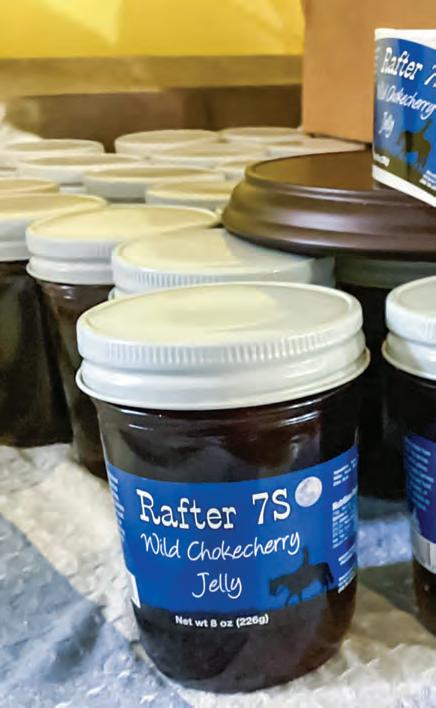
IN THE HEART of the Sandhills, jars of crimson jelly line the shelves at Rafter 7S. The Seifers’ small kitchen fills with the smell of wild plums and chokecherries as each batch is stirred by hand – sweet and simple as the land around them.
The fruits of their labor are gathered close to home. The Seifers forage for wild chokecherries and Sandhill plums together and grow the peppers used in their popular pepper jellies. Sherri searches for fruit in the same shelterbelts of trees where her children once played, and every batch carries the flavor of the land that raised them.
Sherri and Dean Seifer started Rafter 7S in 1997 so Sherri could stay home with their three kids while helping on the family ranch. What began as a few jars for friends soon grew into a small-batch business rooted as deeply in the prairie as the fruit that flavors its jars.
In those early days, they sold jellies and
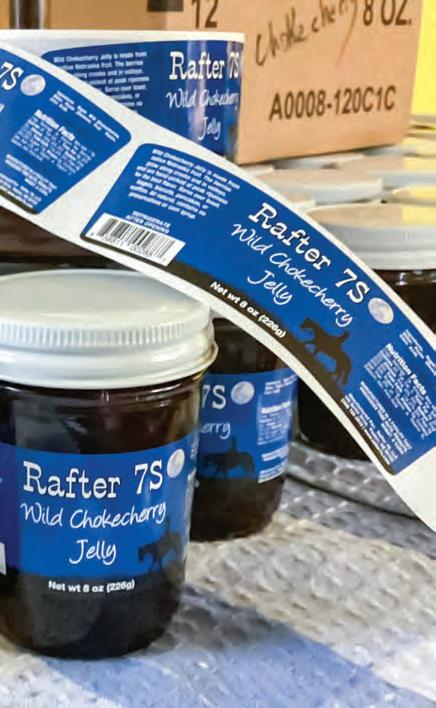
baked goods at the local farmers market. Customers returned each weekend, drawn by the taste and the story behind every jar. Sherri and her kids Kate, Mara and Clay handpicked each berry along creeks and fence lines, stirring them slow and steady in small pots with no preservatives or shortcuts.
By 2004, the Seifers built a commercial kitchen, and Rafter 7S became a Sandhills staple. The name comes from a cattle brand that’s been in Dean’s family for generations, tying their jelly craft to the same heritage that’s shaped their ranching life on Dean’s family ranch. Today, their products appear in shops across Nebraska through Grow Nebraska and other retailers.
Come the holidays, jars find their way into stockings across Nebraska. Their Holiday Habanero Jelly, with bright cranberry heat, has become a December favorite. Sherri recommends spooning some over cream cheese and serving with crackers.
“Jelly is a good gift for those hard-to-buyfor people,” Sherri said. “I hear from customers who gift a jar of Wild Chokecherry jelly and it brings a smile to their face.”
At Rafter 7S, every jar is a story of family, land and the sweetness that comes from preserving both.
Wostrel Family’s Union Orchard Union unionorchard.com (402) 263-4845
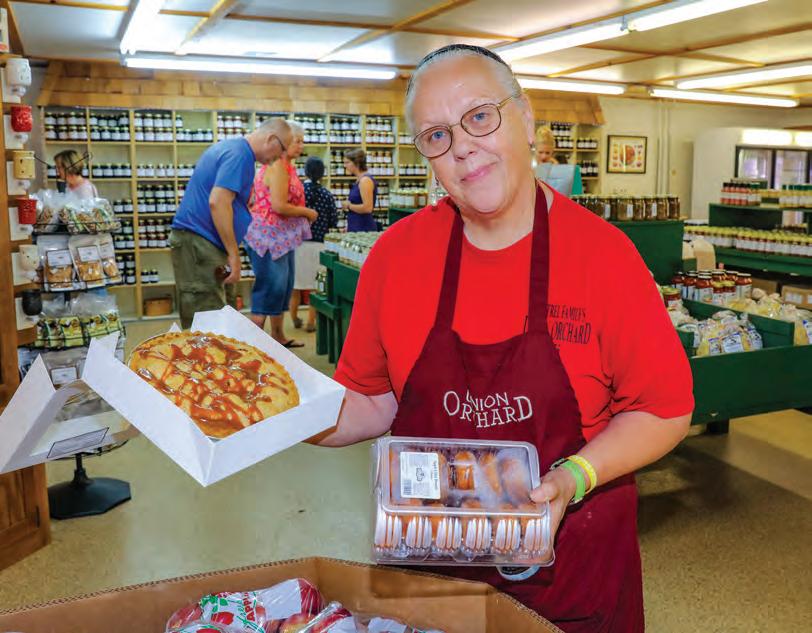
WINTER DRIFTS SOFTLY over Union Orchard, but inside the Country Store the air is alive with warmth. Cinnamon, butter and baked apples fill the kitchen as golden pies emerge from the oven and shelves brim with jams, pickles and honey.
Outside, the trees rest; inside, it’s soup season – quarts of potato leek and ham, sausage gumbo, chicken corn chowder and butternut squash are frozen and sold to-go for those craving Nebraska comfort.
Nestled along the Otoe-Cass County line, Union Orchard has been a fixture of Nebraska’s Apple Country for more than a century. In 1917, the University of Nebraska purchased 80 acres to establish a demonstration fruit farm. To prove the region’s southeastern hills could support commercial orchards, researchers planted 40 acres of apple, cherry, peach, pear and plum trees, along with berry plots.
The University Fruit Farm changed hands
thrice – to the Rings in 1961, the Lechners in 1991, then in 2011 to Terry and Carla Wostrel. Carla and her late husband once bought apples here, long before imagining they’d own the land. “It was serendipitous,” Carla said. After raising three kids, the couple set out to revive the orchard.
They replanted 30 acres with apples, peaches and pears – more than 10,000 trees across 18 apple varieties. In summer, the grounds burst with berries, pumpkins, asparagus and heirloom squash. Come fall, the spotlight shifts to what’s baked and bottled: pies, turnovers, smoked sausage and St. Vincent wine from the orchard’s own grapes – a semi-dry red that pairs well with sharp cheese and holiday roasts.
“Our philosophy is if we can’t use our own products, we keep everything as local as possible,” Carla said. “We want to represent our local communities.” The Country Market is open daily, 9 a.m.-5 p.m., yearround, taking pre-orders for holiday pies.
At Union Orchard, there’s a taste of homegrown goodness in every pie crust and soup jar. As the holiday season reaches the orchard, the scent of cinnamon and apples reminds visitors that Nebraska’s harvest never truly ends.
recipes by ANGELA AMUNDSON photographs by CHRIS AMUNDSON
WHEREVER THERE’S a turkey, ham or holiday roast, a basket of dinner rolls is usually nearby. While the bread accompanying holiday meals often feels perfunctory and forgettable, there’s no rule saying it can’t be flavorful – or even one of the favorite parts of the meal. These muffins and breads offer an array of flavors that pair well with main courses. They’re also great on their own as a snack or quick, on-the-go meal.
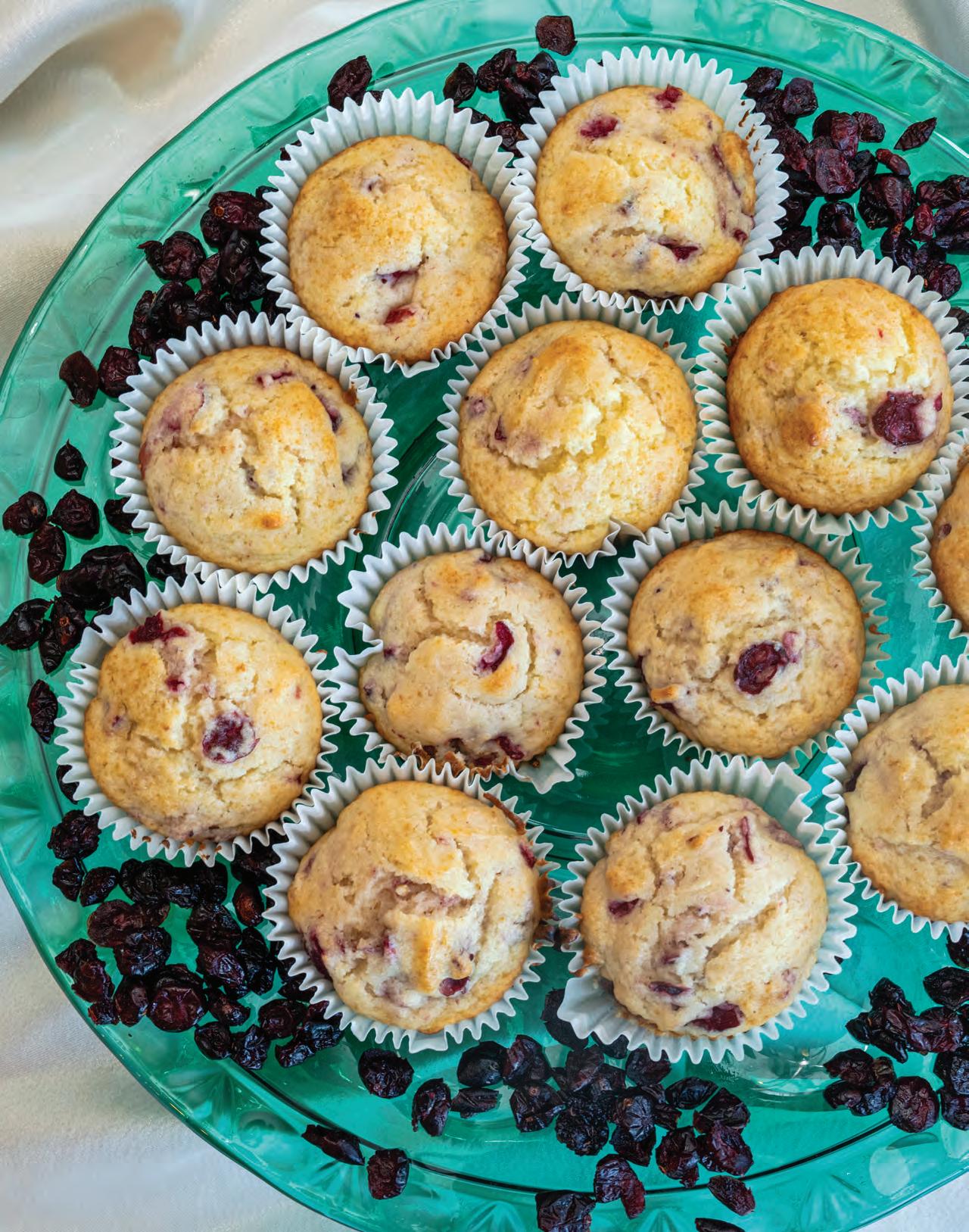
The holidays are cranberry season. The cranberries in these muffins nicely complement cranberry sauce at holiday meals. For families with young kids who hesitate to try this flavor profile, the muffins can also be a delicious way to introduce them to the flavor.
Mix dry ingredients well. Add egg, vegetable oil and water. Batter should be smooth. Gently fold in orange rind and cranberries. Grease 12-cup muffin tin or a bread tin. Bake at 400° for 15-20 minutes for muffins, or 20-25 minutes for loaf, until toothpick inserted into center comes out clean.
2 cups flour
1/2 tsp salt
1 ½ tsp baking powder
1/2 tsp baking soda
1 cup sugar
1 egg
2 Tbsp vegetable oil
1 Tbsp orange rind
1 cup dried cranberries or whole cranberries cut in half
2 tsp hot water
Makes 12 muffins
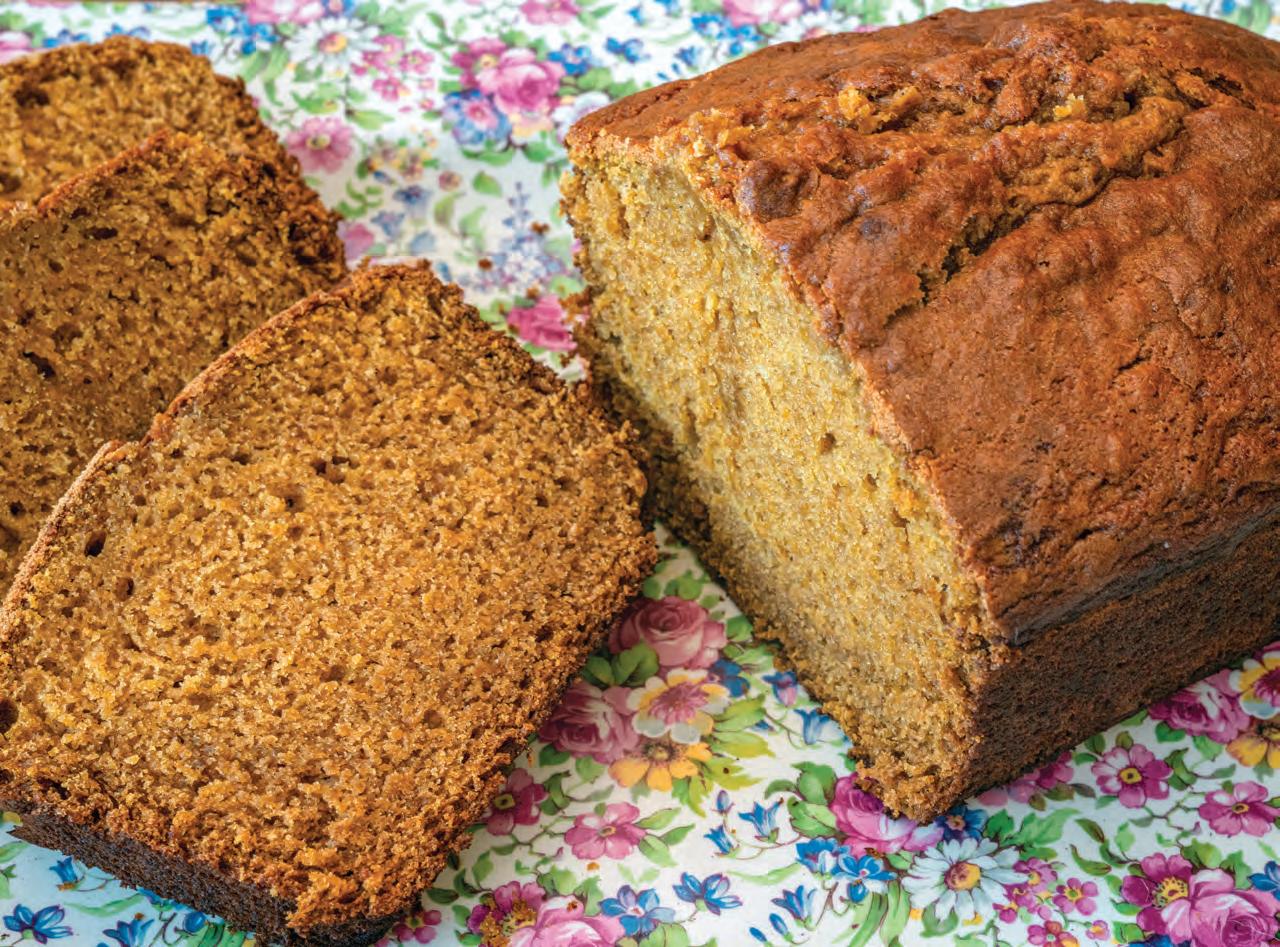
The easy pumpkin pie mix brings a foundation of traditional pumpkin pie spices, while the added cinnamon and cloves takes the flavor to another level. This bread tastes great on its own as a snack, or paired with coffee or a meal.
Mix wet ingredients first, then incorporate baking soda and flour last. Grease loaf pan. Bake at 400° for 30 minutes, then turn down to 350° for another 30-40 minutes, until toothpick inserted into center comes out clean. Let cool 30 minutes.
1/2 cup butter
2 eggs
1 ½ cup sugar
1 15 oz can easy pumpkin pie mix
1 tsp cinnamon
1/2 tsp cloves
1/3 cup lukewarm water
1 tsp baking soda
2 cups flour
Ser ves 8-10
These muffins break with tradition in tasty style. Not only are they savory treats in a typically sweet genre, they pair pepperoni with cheddar rather than its normal partner, mozzarella. The versatile muffins go well as a side with dinner or as a standalone breakfast.
Cut pepperoni into small pieces and cook on stovetop until somewhat crispy. Remove from heat and drain on paper towels to remove excess grease. Let cool. Mix egg, milk, sugar and oil. Then add flour, baking powder and salt.
Once ingredients are mixed well, add cheese and pepperoni bits by folding gently. Grease 12-cup muffin tin and pour each cup 3/4 full. Bake at 350° for 15 to 20 minutes, until toothpick inserted into center comes out clean.
3 oz pepperoni
1 egg
3/4 cup milk
1/4 cup sugar
1/3 cup vegetable oil
1/4 tsp salt
2 ½ tsp baking powder
1 ¾ cup flour
1 cup shredded cheddar cheese
1 tsp garlic powder
Makes 12 muffins

WE’RE RAVENOUS TO taste (and publish) your favorite family recipes and stories that accompany them. Send recipes and stories to kitchens@nebraskalife.com or to the address at the front of this magazine.

In the kitchen, warmth rises not just from the stove but from the people who gather there. It’s where love is folded into dough, laughter mingles with the scent of cinnamon and memory lingers like steam on a winter morning.
Rich Yost, Bellevue
The oven was heated, and ready to cook. On the counter, pages wide open, was grandma’s recipe book.
It was always grandpa’s favorite, that Dutch apple pie. He’d watch her prepare it with a twinkle in his eye.
Made from apples which were picked just outside, from the bent over tree next to the swingset, with the rickety old slide.
Chopping and mixing, and finally rolling out dough, the process to create, always seemed to go slow.
Finally perfection! Into the oven it went, soon to fill the house with its heavenly scent.
The counter was dusted in cinnamon, nutmeg, and flour alongside one big oven glove, but the most important ingredient in that pie had always been grandma’s love.
Larry Jirsák, Fremont
Mrs. Kucera’s kitchen a simple farm house room. Cloth’d in sepia It matched the autumn hue.
Cob burning stove, Counters mostly bare, With shelves the same, Table draped with care.
Her warm worn eyes
Smiled on her little guest, You hungry, dítě?
Yes, I guess.
Blue old bowl
Corn yellow flakes Floated in Carnation milk Such can memory make.
Memory’s tied to taste, Milk warm on the tongue Seven decades can’t erase. Yes, kindness is that strong.
Alivia Ulrich, Crete
Laughter overflows from the kitchen, wafting across the house along with the tantalizing aroma of delicacies, spiced with cinnamon that tickles my nose. Stepping into the room that is bathed in gentle light, wrapping me up in a comforting embrace, I breath in deeply and scan the kitchen with eager eyes. Powdered with flour and littered with measuring cups and spoons, the table that has been a silent witness to our prayers and laughter and a few tears, displays the pans of home baked goods –cookies and rolls, all baked with a sprinkling of love in this holiday season. Sliding a glance to the cook, whose back is turned toward me, I dart for a cookie with a skilled hand, unable to hide a grin as I bite into the warm, chewy dessert and exit the kitchen, knowing I will be back.
Julie Roach, Kearney
The newspaper article predicted technology will Control kitchens
AI power for
Smart phones
Recipe collections
Air fryers
Microwaves
Ice Makers
Coffee Mills
Dishwashers
High-end Appliances
Refrigerators
Sporting touch screens that
Check the weather
Add items to a grocery list
Alert when foods are about to expire
Offer instant inventory
Plan meals for the week
View contents without opening the door
Ovens
Providing connection with one’s phone
Showing cooking times and temperatures
Storing recipes
Adding steam options to convection ovens
Monitoring meat temperatures with roast probes
Preparing eggs, hard cooked or soft cooked
Preheating the oven with voice commands
Manage dinner with a WI-FI signal
While sipping wine or sitting by the pool
Will appliances in the kitchen
Be my friend or foe?
Not to worry
AI will let me know
SEND YOUR POEMS on the theme “Open Doors” for the March/April 2026 issue, deadline Jan.1, and “Breaking Ground” for the May/June 2026 issue, deadline March 1. Email your poems to poetry@nebraskalife.com or mail to the address at the front of this magazine.
Steven M. Lukas, Minneapolis, Minnesota
Dad was the first up despite the howl of blizzard mornings, driven by demands of relentless chores or paternal caring love. He’d cross the burning cold of hardwood floors to bank the old iron kitchen stove that was the beating heart for warmth in our small farmhouse in Saunders County. Cobs, wood, coal, all combustible when soaked with kerosene, would push icy fingers back through uninsulated walls. Slowly rising warmth still battled frost on single-paned windows when we finally arose to take our places at the Formica table. Plastic covered chairs could scar diamonds until softened by small bodies and expanding heat. All too soon it was time to follow Dad’s deepening footsteps in the driving snow.
BROKEN BOW
Custer County Museum, p 57
FREMONT
Louis E. May Museum, p 55
GRAND ISLAND
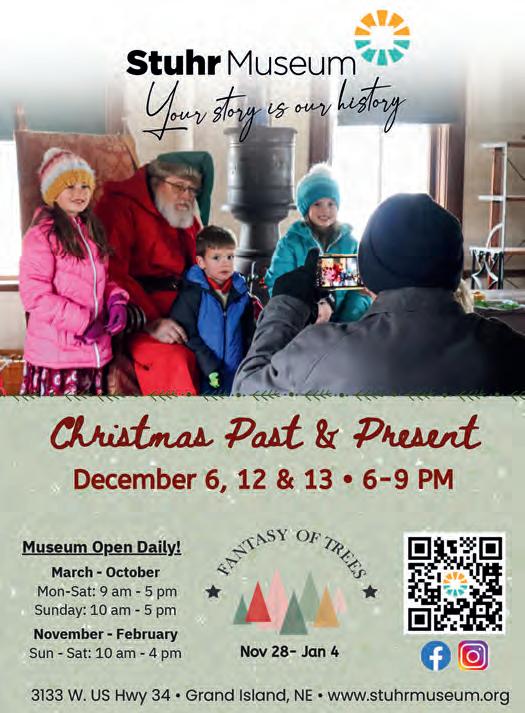
Stuhr Museum of the Prairie Pioneer, p 55
KEARNEY
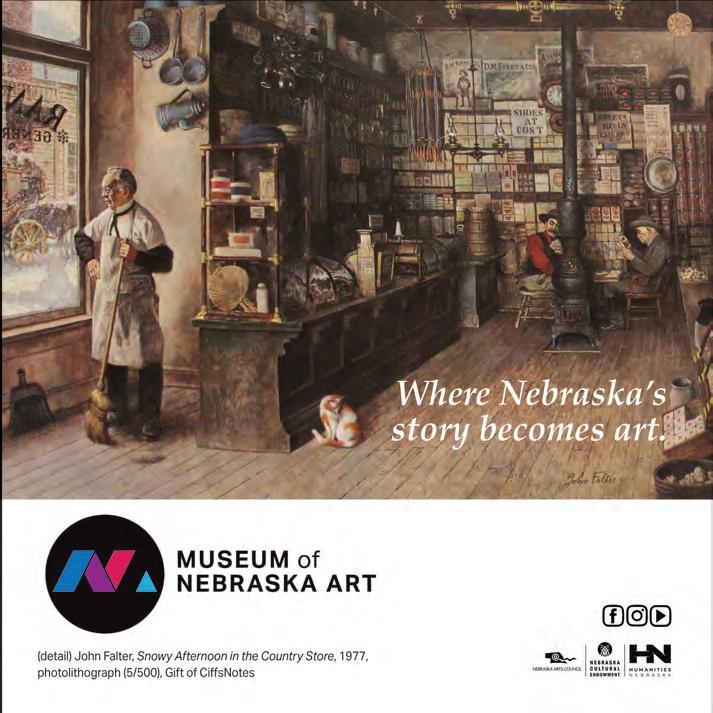
Museum of Nebraska Art, p 55
Kearney Area Children’s Museum, p 56
G.W. Frank Museum of History and Culture, p 56
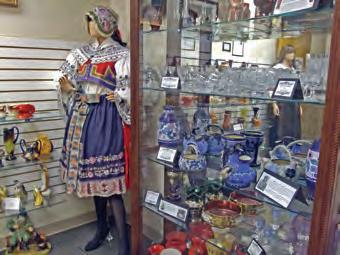
Czech and Slovak
Educational Center and Cultural Museum, p 56
OMAHA
Durham Museum, p 54


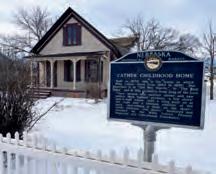
National Willa Cather Center, p 56
WYMORE
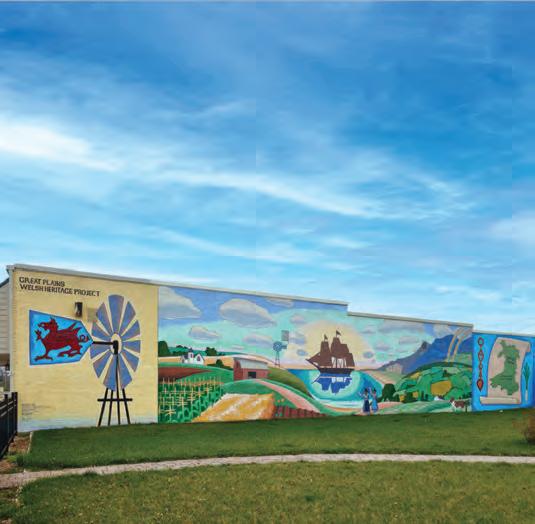
Great Plains Welsh Heritage Centre, p 56
YORK
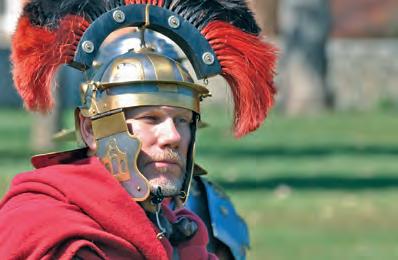
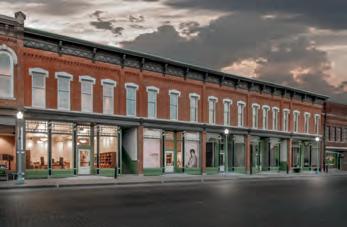
Clayton Museum of Ancient History, p 55

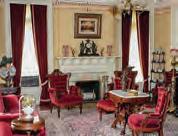
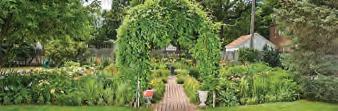





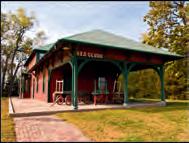



“Center Of It All” on scenic Highway 2, along the Sandhills Journey National Scenic Byway.
Broken Bow has something for everyone.
• 126 total acres of parks
• Aquatic center
• Fishing pond
• Picnic and camping facilities
• Numerous playgrounds
• Visit our downtown merchants
• Custer County Historical Society
• Restaurants & brewery
The roots are deep. The roots are strong. But they don’t keep us earthbound. They keep us growing.
For more info: brokenbow-ne.com
BROKEN BOW. ROOTED, BUT NOT STANDING STILL.




by ARIELLA NARDIZZI
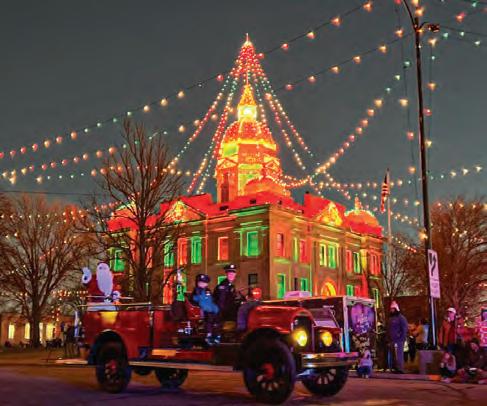
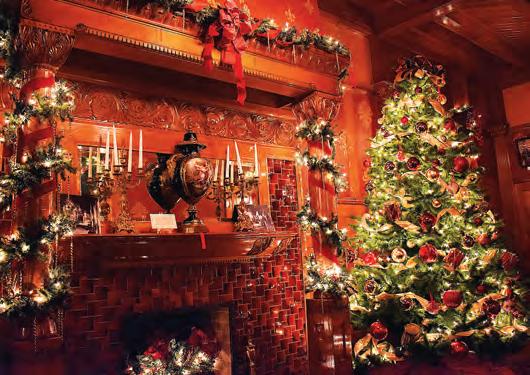
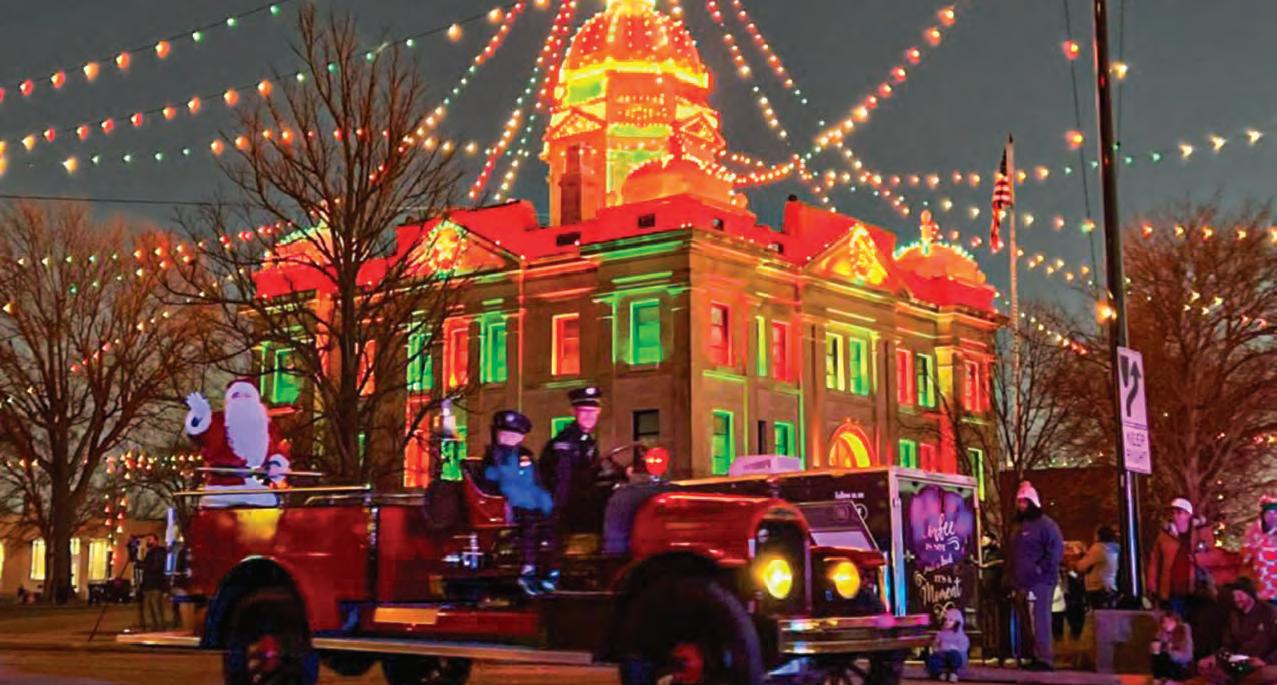
Each winter, more than 12,000 bulbs illuminate the Kearney County Courthouse, casting Minden in a warm, nostalgic glow that’s earned it the title “Nebraska’s Christmas City” since 1923. The annual display draws visitors from across the region to the downtown square and adds a festive cheer to the entire community.
The tradition began in 1915 when CityLight Commissioner J. C. Haws strung lights from the railroad depot to the courthouse square to impress visitors at a state convention. By then, Minden was already known for its electric sparkle – one of the first towns in central Nebraska to hang lights for the 1911 county fair.
Passenger trains once slowed as they ap-
proached town, riders catching sight of the courthouse shining from miles away. The celebration peaks with the “Light of the World Pageant,” first staged in 1946. Beginning Nov. 29, the courthouse darkens at 6:30 p.m. as a narrator tells the Christmas story, ending in red and green lights bursting across the sky.
Festivities run from mid-November through December, including a vintage Christmas Market on Nov. 22, the Miss Christmas City Pageant and a 5K run on Nov. 29, plus hayrack rides and breakfast with Santa Dec. 6-7.
In Minden, Christmas remains a century-old promise to keep the lights burning bright. mindenne.org, (308) 832-1811.
Comfort fills the kitchen at this casual spot. Try the fried chicken, bread pudding or fluffy waffles. 517 S. Brown Ave., (308) 832-1471.
Built in 1886, this country inn offers cozy respite. Each room is named after one of the Burchell children. 1578 30 Rd., (308) 832-1323.
Catch a show at the historic 1891 opera house – and don’t miss the handpainted ceiling mural and its star-lit fiber-optic sky installation. 322 E. 5th St., (308) 832-0588.
Minden, “Nebraska’s Christmas City,” hosts a plethora of seasonal activities through December. The tradition began with holiday lights in 1911 – a novelty at the time.
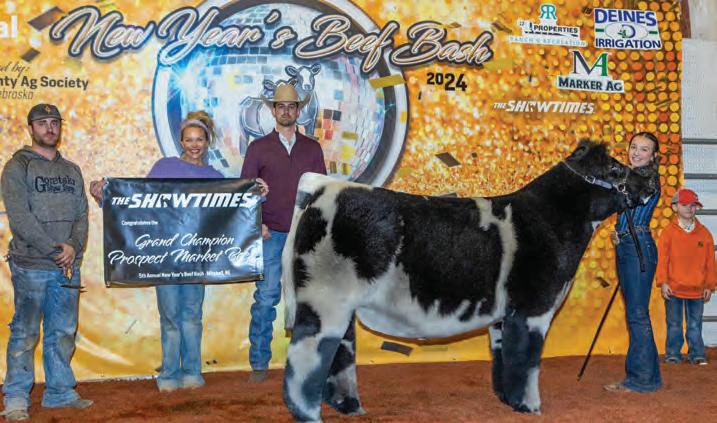
As the year winds down in Mitchell, the Scotts Bluff County Fairgrounds come alive with the sound of lowing cattle and the steady hum of blowers and clippers at the sixth annual New Year’s Beef Bash. The prospect livestock show, hosted by the Scotts Bluff County Ag Society, kicks off a fresh year for young producers from across Nebraska and neighboring states.
From seasoned show families to firsttime competitors, hundreds of exhibitors bring their best cattle to the ring to vie for ribbons, recognition and a jump-start on the 2026 show season. The western Nebraska event also gives youth a chance to hone their skills and prepare their projects for upcoming county and state fairs, celebrating the values at the heart of rural life: hard work, community and pride in a well-turned steer.
The four-day lineup begins Thursday, Jan. 1, with barns opening at 9 a.m. Friday evening’s showmanship round starts at 5 p.m., followed by the market show at 10 a.m. Saturday, Jan. 3, and the breeding show at 10 a.m. Sunday, Jan. 4. Top finishers in each division earn payouts and prizes, while the fairgrounds buzz with Western vendors, hearty food and friendly rivalry all weekend. Exhibitors and families often camp onsite, adding to the camaraderie that defines this close-knit circuit.
By the time the last class clears the ring, what lingers is the spirit of the next generation, already gearing up for another year in the show barn. scottsbluffcountyfairgrounds.com, (308) 367-6732.
This gourmet, chef-owned restaurant serves curated, wild-foraged brunch and dinner, from sourdough pancakes to confit pork belly with hatch green chili. 1344 Center Ave., (308) 430-0638.
Book an elegant stay in nearby Gering. The hotel offers rooms from single to large family suites and a modern steakhouse next door. 2605 10th St., Ste. #3, (308) 633-5795.
Step back into 1939 and enjoy movie magic from plush red seats beneath a glowing Art Deco marquee restored to its original brilliance. 7:30 p.m. nightly shows and 4 p.m. Sunday matinees. 1433 Center Ave., (308) 623-2727.
High Plains Christmas
Dec. 2 • Gering
Ride a hayrack, send Santa a letter via the Pony Express and enjoy live music, homemade soup and hot chocolate at Legacy of the Plains Museum. Lights glow across the museum grounds throughout the evening. 2930 Old Oregon Trail, (308) 436-1989.
Archery on Fire
Dec. 6 • Louisville
Take aim in multiple disciplines at Platte River State Park. Equipment is provided for balloon, aerial and 3-D archery, plus crossbows, atlatl, tomahawk throwing, slingshots and more outdoor skills. Events take place near the park’s stone lodge and wooded trails. 14421 346th St., (402) 234-2217.
Deck the Halls
Dec. 7 • Lincoln
Led by conductor Lucas Waldin, Lincoln’s Symphony Orchestra fills the hall with holiday cheer alongside Bell-issimo handbell choir, Lincoln Suzuki Studios and the adaptive dance company Dancing Beyond Limits. 301 N. 12th St., (402) 476-2211.
Jingle and Mingle Holiday Festival
Dec. 13 • Duncan
Duncan hosts its first annual holiday celebration. Enjoy a pancake breakfast, Festival of Trees, craft vendors, carriage rides, scavenger hunt, cocoa and cookies, chili dinner and a lighted evening parade through town. (402) 897-5285.
Christmas Bird Count for Kids
Dec. 29 • Gretna
Join the 126th Audubon Christmas Bird Count – the nation’s longest community science project. Hike to the Platte River and record the birds that make this region their winter home. 21502 W. Hwy 31, (402) 332-5022.
Nebraska State Thespian Festival
Jan. 8-10 • Omaha
High school troupes stage their best work during this weekend at the Holland Performing Arts Center. Shows include improv, one-act plays and complex designs. Workshops and performances run through Saturday afternoon with audiences from across the state. 1200 Douglas St.
Nebraska Deer and Game Expo
Jan. 16-18 • Lincoln Hunters, fishers and outdoors enthusiasts gather for a weekend of trophy mounts, seminars, blind giveaways, 3-D shootouts, Big Buck and Monster Shed contests, and more. Admission $12. 4100 N. 84th St., (308) 293-7475.
Woven With History: Timeless
Textiles from the Ak-Sar-Ben Collection
Thru Jan. 11 • Omaha
The Durham Museum highlights glamorous gowns from the annual Ak-Sar-
Ben coronation ball. The exhibit spans 1910s–2010s and showcases the preservation of these intricate, century-old textiles displayed with care and elegance. 801 S. 10th St., (402) 444-5071.
The Brothers Doobie
Jan. 22 • Kearney
Tribute band The Brothers Doobie performs classic hits from The Doobie Brothers. Sing along to rock favorites like “Listen to the Music,” “Blackwater” and “What a Fool Believes.” Merryman Performing Arts Center, 225 W. 22nd St., (308) 698-8297.
Wings Over the Platte
Jan. 24-June 6 • Grand Island Stuhr Museum honors the waterways, wildlife and artists of the Platte River Valley. The juried exhibition features painting, photography, sculpture and other works celebrating prairie life and community across the central plains. 3133 W. Hwy 34, (308) 385-5316.
In each issue you will find breathtaking outdoor adventure, mouthwatering recipes, stunning photography, captivating stories and humor from every corner of Nebraska. Whether you’re a longtime resident, newcomer or distant admirer – if you love Nebraska, then this magazine is meant for you.
False, there are
Ord, Dix, Bee, Ayr, Oak and Ong.
is right on its tail, though!
Colon is named after Colon, Michigan, which actually is named after the “:”, but by choice, not typographical error.

U.S.
1.) Title: Nebraska Life. (2.) Publication #91764. (3.) Date of filing: Oct 9, 2025 (4.) Frequency: Bi-monthly. (5.) No. of issues published: 6 per year (6.) Annual sub. price: $30. (7.)
Flagship Publishing, Inc., Christopher Amundson, President. (11.) Known bondholders, mortgages and other security holders: None. (12.) For completion by nonprofit organizations authorized to mail at special rates (section 23.12 DDM only). The purpose, function and non-profit status of this organization and the exempt status for federal income tax purposes: Has not changed during preceding 12 months. (13.) Publication Title: Nebraska Life (14.) Issue Date for Circulation Data Below: Nov/Dec 2024-Sept/Oct 2025. (15.) Extent and nature of circulation: First column: Average no. copies each issue during preceding 12 months. Second column: Actual no. copies of single issue published nearest to filing date.
A. Total no. copies (net press run)
B. Paid and/or requested circulation
1. Paid/requested outside-county mail subscriptions.
2. Paid in-county subscriptions.
3. Sales through dealers and carriers, street vendors and counter sales.
4. Other classes mailed through USPS
C. Total paid and/or requested circulation (sum of 15b. 1, 2, 3 and 4)
D. Free distribution by mail, carrier or other means, samples, complimentary, and other free copies.
1. Free distribution outside county.
E. Total free distribution.
F. Total distribution (Sum of C and E).
G. Copies not distributed.
H. Total sum of F and G.
I. Percent paid and/or requested circulation (15c. divided by 15f. times 100). (16.)
A. Paid electronic copies
B. Total paid print copies (15c.) plus paid electronic copies (16a.)
C. Total print distribution (15f.) plus paid electronic copies (16a.)
D. Percent paid both print and electronic copies (16b.) divided by 16c .times 100).
(17.) I certify that the statements made by me above are correct and complete. Angela Amundson Associate Publisher
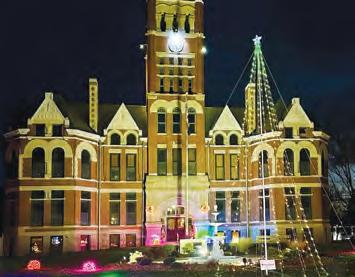
NOVEMBER 16, SUNDAY
• Geneva’s Holiday Open Houses, 12 - 4 pm
NOVEMBER 29, SATURDAY
• Small Business Saturday
NOVEMBER 30, SUNDAY
• Geneva Senior Center’s Soup Supper, fundraiser for the Sr. Center, 4 - 7 pm
• Residential Christmas Light Judging Contest!
• Light Up the Holidays parade - 6 pm, Downtown Geneva Santa visits Eddie’s Gas Station following the parade.
DECEMBER 12, FRIDAY
• Cookie Exchange, 9 am - 6 pm Heartland Bank Conference Center
DECEMBER 14, SUNDAY
• “Sip N Shop” at participating businesses, 12 - 4 pm
• Santa visits Eddies’s Gas Station, 3 pm
• Horse & Carriage rides - 3 pm, Eddie’s Gas Station
DECEMBER 18, THURSDAY
• Story Time at the Library, 5 pm - 5:30 pm (Stories)
5:30 pm - 6:30 pm (Crafts & Santa)
DECEMBER 22-23 Businesses open til 6 pm
DECEMBER 24 Businesses open (Check business’ websites for hours)


by SHERYL SCHMECKPEPER
THE CROWD LOOKED on with anticipation as the Curtiss Robin airplane taxied across the picked corn field near Lexington. As much as for show as necessity, Evelyn Sharp of Ord – a month shy of her twentieth birthday – turned the airplane into the wind and throttled up her barnstorming machine. The engine, which had been running poorly, roared to life, and although the passengers paid to take the ride of their lives that day, none of them, including their teenaged pilot, expected what happened next.
A soft spot slowed the accelerating airplane, and the breeze that would have provided lift, died. Without enough speed to take off, and with the plane approaching an irrigation ditch, Sharp nudged her machine skyward only briefly before sinking and dragging through a weedy field to a rough stop. The incident on Aug. 31, 1939, left Sharp’s airplane slightly damaged but everyone walked away. Unfortunately, a close call less than five years later would ultimately prove too close.
At a time when men such as Charles Lindbergh, Orville and Wilbur Wright, and Nebraska’s Savidge brothers were aviation royalty, women – if they left the ground at all – were typically in the passenger seat. With big dreams supported by fellow Ord resi-
dents, Evelyn Sharp took to the sky to become known as the “World’s Youngest Aviatrix.” When her flying skills were needed during World War II, Sharp made the ultimate sacrifice and tragically soared into history.
Evelyn Sharp lived a hard-scrabble life near the Sandhills in Ord. Her parents’ cafe and boarding house failed during the Great Depression, and when her father, John Sharp, plead guilty to bootlegging, the $10 fine he paid was money the family could not afford to lose.
Although the nation was suffering economically, people still yearned for entertainment, and few entertainers offered more thrills than barnstormers, those aerial acrobats who defied death each time they climbed into the cockpit. After seeing a Curtiss JN-4 “Jenny” biplane overhead at age 3, Evelyn declared that she wanted to “drive an airplane.” When the opportunity presented itself when Sharp was a teenager, Ord residents became her cheering section. They even helped her buy an airplane.
Before ever leaving the ground, she rode over it on her horse, Chalky. Hitching the animal to a cart, she sold ice cream from her father’s Home Ice Cream Factory in downtown Ord’s former Ravenna Creamery. A nickel bought two scoops. After finishing her ice cream route, Sharp, her friends and the horse would frolic in the North Loup
River where she was a lifeguard. Sharp participated in the Ord High School glee club, band and thespian group, and the local Campfire Girls troop. Sharp’s classmates named her “best girl athlete.”
While Sharp was loving life, the Depression was gnawing away at Nebraska and the United States. Farmers lost livelihoods, businesses failed and rain clouds dissipated into dry air. Her desire to fly never wavered.
Evelyn’s lofty dream became reality when a down-on-his-luck pilot named Jack Jefford made John Sharp an offer. Jefford had flown into Ord hoping to sell flying lessons, but it was a luxury few could afford. Faced with an overdue bill at Sharp’s cafe and boarding house, Jefford offered to give Evelyn flying lessons as payment. John Sharp agreed, and his 15-year-old daughter first took to the skies from the Gregory farm, 6 miles north of Ord, on Feb. 4, 1935.
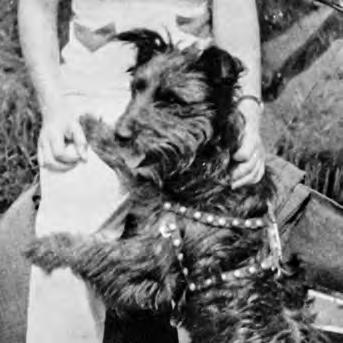
The following spring, she flew solo over the frozen North Loup River Valley. The private flying license she earned five months later allowed her to fly passengers, the first of whom was her mother, Mary. Evelyn’s dog, Scottie, often rode along.
Evelyn’s aerial antics caught the attention of admirers who read about the young aviator in newspapers. She received letters from fans nationwide – some of them young men who sent poetry or requested photographs
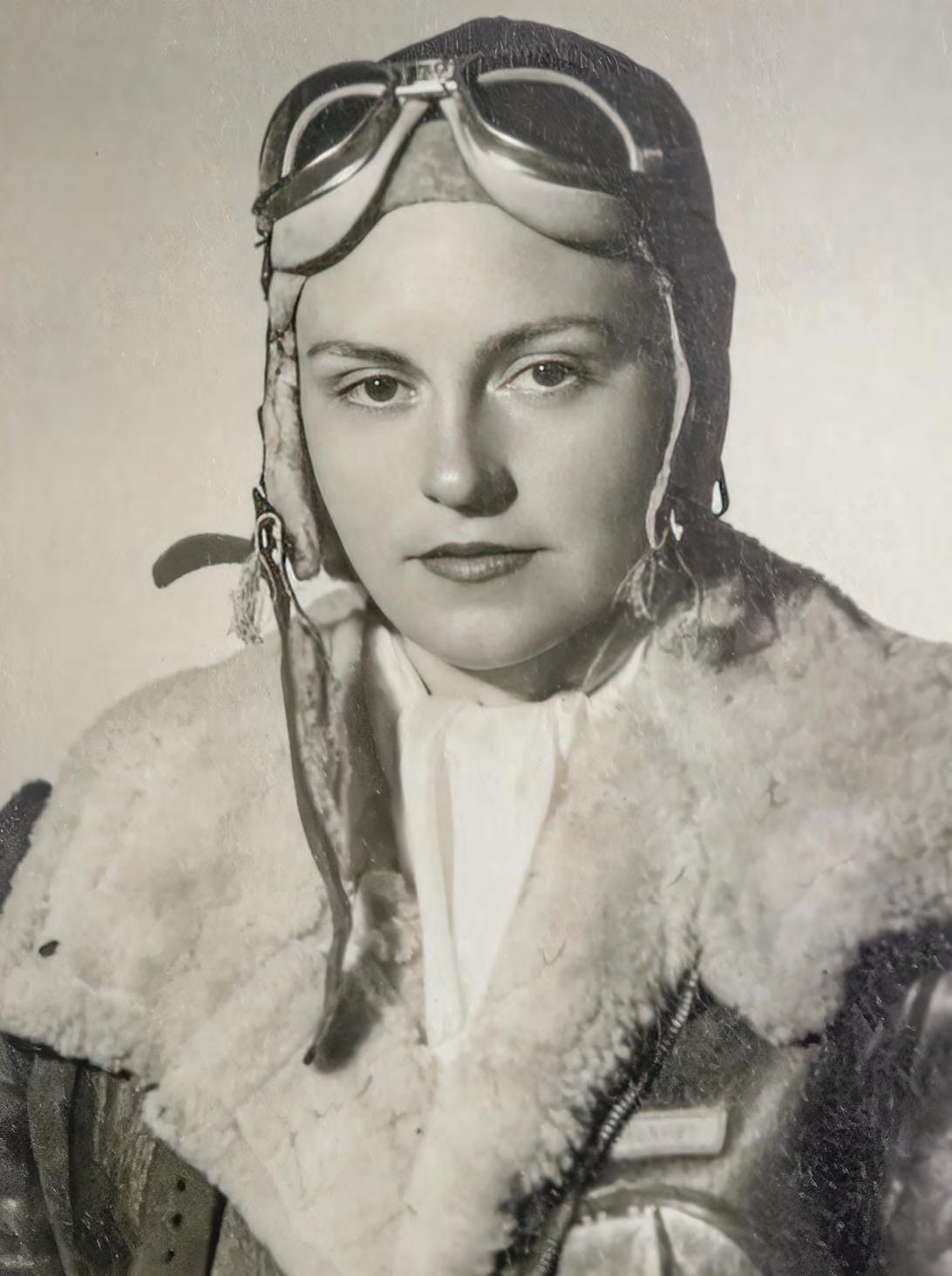
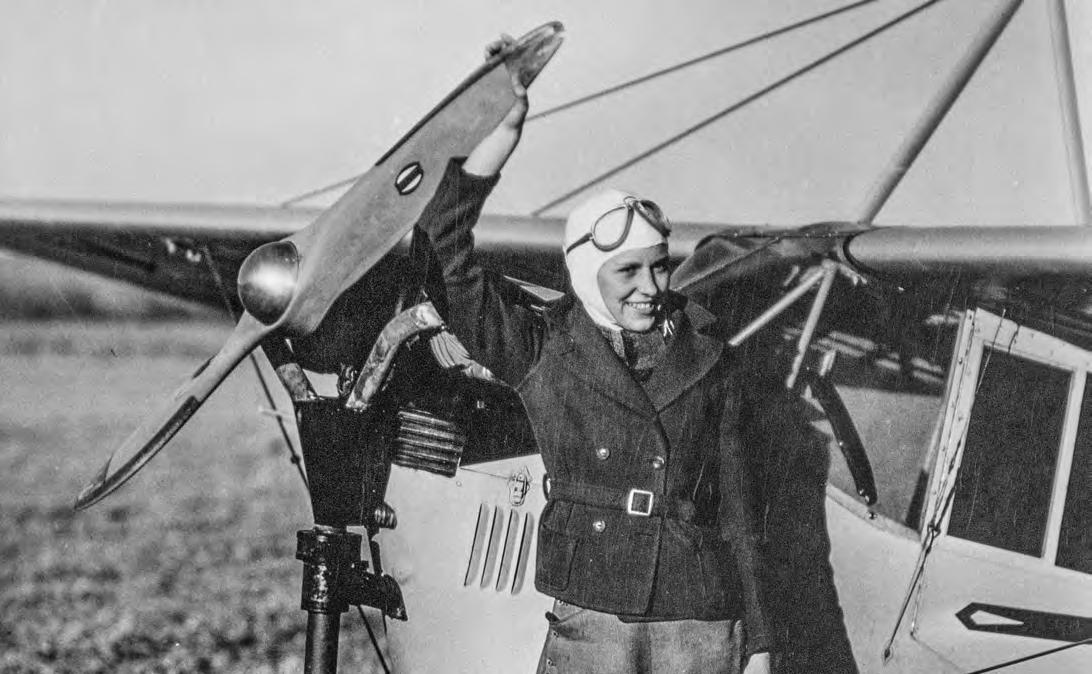
– but also young girls who looked up to the pioneering female pilot. The Ord Quiz newspaper reported, “Ordites are … watching, waiting and admiring, knowing that here is a little girl who really is going places.”
She piloted the first airplane to land at Grand Island’s new Arrasmith Field where she autographed postcards bearing her photo. Unfortunately, notoriety doesn’t buy airplanes. By the time Sharp graduated from high school in 1937, Jefford had flown the coop. Luckily for Sharp, local optometrist Glen Auble recognized her abilities and had a vision of her potential promotional appeal.
Already known widely as “Sharpie,” if Auble could persuade fellow Ord businessmen to take her under their wing by providing a down payment on an airplane, the attractive and popular girl with an enthusiastic following could put Ord on the map. Auble accomplished his mission, and Sharp obtained a Taylor Cub, a simple, affordable aircraft. She spent the next two weeks flying 80 passengers including businessmen, classmates and, of course, Scottie.
Grateful for the community support, Sharp named her airplane “The Ord.” In a
presentation to the Ord Rotary Club, she said she hoped to bring fame to the city by her aviation achievements. She needed a transport license before she could charge for rides and repay her investors. With Jefford gone, Sharp failed her test. Unable to make the payments on the airplane, it had to be returned.
Ord residents came to the rescue again by hosting a benefit dance. A 14-piece band performed, a stage show play entertained and the Auble Brothers Jewelry Store provided an expensive ring as a door prize. Sharp greeted every guest.
Proceeds provided tuition to Lincoln Airplane and Flying School, the same Nebraska institution where aviator Charles Lindbergh learned to fly. In 1938, Sharp obtained her transport license and a Curtiss Robin OX-5 which she used to barnstorm around Nebraska. That summer she flew up to 90 passengers a day.
Her popularity soared, too. The determined and engaging girl-pilot received telegrams and letters from celebrities such as Clark Gable and Eleanor Roosevelt. Fan letters piled up at the Ord Post Office, which is fitting considering that red, white and
blue envelopes showing Sharp’s face and declaring “FIRST AIR MAIL FLIGHT, Ord, Nebraska, carried by Evelyn Sharp, World’s Youngest Aviatrix,” remain cherished possessions of Valley County families today.
In July 1938, the young flier met a woman her mother called Aunt Elsie. She had never heard of the woman, but something about her seemed familiar, and they stayed in touch.
INTO the world in October 1919, born to a 27-year-old woman in Melstone, Montana, with a soft smile and abundant brown hair. The woman was not Mary Sharp.
When her husband abandoned his responsibilities, the woman worked as a housekeeper until she gave birth. She had little education and even less means to raise a child.
John and Mary Sharp may not have had the means either, but they had the desire. On Dec. 22, 1919, Lois Genevie Crouse became Evelyn Genevieve Sharp.
The couple tried business ventures in Montana before moving to Nebraska, first to Hastings, then a ranch near Ericson, and eventually Ord.
“Everybody gravitated toward Evelyn because she had so much personality,” said Dorothy Andreesen, caretaker of the Evelyn Sharp exhibit at Valley County Museum in Ord. “I think every young man who was ever nearby fell in love with her.”
Newspapers had a heyday when Sharp became a flight instructor with the Civilian Pilot Training Program in South Dakota in June 1940. Because she was still a minor, her father had to sign the employment contract.
Headlines read, “AGAIN YOUNGEST,” “Evelyn Sharp is believed to be the youngest woman flying instructor in the country,” “pretty, 20-year-old, brown eyes, 5 feet 4,” and “Civilian pilot training is likely to be more popular at Mitchell … than most other places.”
While there she taught more than 350 men to fly. Most of them would use those skills while serving during World War II.
Sharp was training pilots on Dec. 7, 1941, when Pearl Harbor was attacked. Earlier that year, when asked by the Bakersfield Californian newspaper if she’d volunteer if war broke out, the patriotic Nebraskan said, “Certainly! I’ll do everything I can.”
She suited-up for the Women’s Auxiliary Ferrying Squadron, an elite group of female aviators who ferried military airplanes from manufacturing plants to shipping points. In 1943 the group became part of the Women Airforce Service Pilots, or WASP.
During a stop in New York City in January 1943, Sharp met with Aunt Elsie, who told a story about a young woman, abandoned by her husband, who gave up her baby because she didn’t have the means to care for it.
The woman was Elsie Crouse; the baby was Evelyn.
In a letter to Crouse days later, Sharp wrote, “I always thought I was adopted but had never found out for sure. I resemble no one in our family, and I could also never get mother to say anything about my birth. So you see, I really wasn’t surprised. What surprised me was who my real mother was.”
Evelyn supposedly never talked to John and Mary Sharp about her parentage, but she must have wondered about her biological father.
From her headquarters at Long Beach Army Air Base in California, Sharp delivered military aircraft to installations across
the United States. She became certified to fly North American Aviation’s P-51 “Mustang” in June 1943.
“Wowie, can you imagine me in a pursuit plane, and the fastest one in the world at that,” Sharp wrote to a friend.
While working toward her instrument card, which would allow her to fly at night and during inclement weather, Sharpie successfully piloted a Douglas C-47 transport plane with the cockpit windows completely taped over.
1944, Sharp, by then a WASP squadron commander, received orders to fly a Lockheed P-38 “Lightning” fighter from California to New Jersey. Encountering inclement conditions near New Cumberland, Pennsylvania, Sharpie landed. Though she had earned her instrument rating, military regulations required her to land when the weather turned bad. No such restrictions existed for male pilots.
She spent the unscheduled layover on April 2, 1944, catching up on letter writing to friends in Ord and looking forward to her next assignment. Upon her return from New Jersey, Sharp was scheduled to fly a bomber into Great Falls, Montana where she planned to see her biological father, Orla Crouse, for the first time.
Father and daughter would never meet.
Liftoff the following morning did not go as planned. Like that close call in Nebraska years earlier, there was not enough power to properly take off, and not enough runway to abort. A farmer who heard the malfunctioning airplane stepped outside and saw smoke billowing from the plane’s left engine. Other witnesses reported Sharp trying to turn the machine when it crashed on a grassy knoll near the edge of a ravine. A pilot in the air reported seeing Evelyn waving from near the wreckage, but when the farmer arrived moments later, all he could do was carry her lifeless body away from the burning airplane. At 24, Ord’s famous aviatrix was dead.
John and Mary Sharp, and Aunt Elsie, met the train carrying their daughter back to the Nebraska valley where she first took to the skies. Hundreds of people attended her funeral at Ord Cemetery. The list of items transported with her body, and that Mary
Sharp signed for, included a diamond ring. Was Sharp engaged at the time of her death? The secret of who gifted the ring to Evelyn died with her.
Decades later, David Peiffer – the owner of the land where Sharp perished – heard a snippet of her tragic tale and wanted to know more. After finding the book Sharpie: The Life Story of Evelyn Sharp, Nebraska’s Aviatrix, he tracked down the author, Lincoln writer and pilot Diane Bartels.
When Peiffer told Bartels that he wanted to erect a monument to Sharp, Bartels provided the wording for the plaque and solicited donors for the project. “Mr. Peiffer didn’t know much about Evelyn Sharp, but he wanted to make sure she wasn’t forgotten,” Bartels said.
In 2018, nearly three quarters of a century after Sharp’s death, the memorial to the aviatrix was dedicated in the Pennsylvania field where her life ended. Propeller blades from a P-38 point to the sky in honor of the courageous Nebraska woman who flew for town and country.
Back in Ord, Sharp’s memory lives on thanks to people like Andreesen, who hopes the community will revive its annual Evelyn Sharp Days celebration; and former elementary school teacher Rich Cecetka. During his 43-year teaching career, Cecetka shared Sharp’s story with students, read her biography in his classes and took sixth graders to decorate her grave. Although retired from teaching, Cecetka still maintains the gravesite, and organizes an observance on Sharp’s birthday.
Records indicate Sharp’s birthdate as Oct. 20, 1919. She grew up believing she was born on Oct. 1 of that year, and that is the date on her headstone. A bronze plate commemorates Sharp’s government service, an American flag waves.
“When it comes to our heroes, it’s been said that we shouldn’t be sad that they died but be thankful that they lived.” Cecetka said. “Heroes are only gone when they are forgotten. I never knew Evelyn Sharp, but I’ll never forget her. I hope Ord and Nebraska never do either.”
Editor Note – This story, a fan favorite, originally appeared in the November/December 2019 issue of Nebraska Life.
by ALAN J. BARTELS
EVERY YEAR THE holiday season brings its share of stress, but in Nebraska I’ve learned that peace comes easiest outdoors, where God’s creation quiets the noise and clears the mind.
I first felt the natural world’s quiet power while in high school in Greeley. Being the new kid wasn’t easy. I barely knew the town or its hardworking people, and before classes even began I already felt like an outsider. By the first day of school, I was nervous, nearly overwhelmed trying to learn names, meet teachers and make a few friends.
On my first or second day of freshman year, one of the kids in my class – there were only eight of us – started giving me a hard time. At least I thought he was. By the final bell I’d had enough. I followed him out the door, through the schoolyard and onto his bus, ready to settle the score.
He was a good 18 inches shorter than me, but instead of backing away he just laughed. There was no pushing or shoving, no fight at all. His name was Shane, and he’d only been trying to help me fit in. That’s how our friendship began.
Soon Shane and I, along with our friends Jamie and Kurt, were fishing Lake Ericson, Pibel Lake and the mighty Cedar River, or chasing pheasants and rabbits in thickets and woodlots where we almost always had permission to be there. Many other hours were spent listening to Cornhusker football games while cruising backroads or otherwise exploring the outdoor world around us near the eastern edge of the Nebraska Sandhills.
Those outdoor experiences helped me endure the challenging times – the weight
of trying to get good grades in tough courses like business math and algebra, classes I was sure I’d never need – and the long Nebraska winters that seemed to last forever.
Greeley and Wheeler counties felt like a big world until we graduated. Shane and I signed up for the Army on the same day and then went our separate ways. I don’t know if Shane was scared, but I was. I soon learned how enormous the planet really is, and how not all of it is as welcoming as Greeley, Nebraska.
Families, failures, successes and loss have filled the years since then. I still haven’t needed to figure the square root of anything (sorry, Mrs. Williams), but I’m thankful for everything I learned in Greeley that helped shape who I am today. That includes time spent outdoors with friends.
Even though life got in the way for a while,
Shane’s retirement from the Army has allowed us to spend more time together. We recently took a five-day fishing and pheasant-hunting trip that included each of us snagging our first paddlefish. On the way home from that epic adventure below Gavins Point Dam on the Missouri River between South Dakota and Nebraska, we realized we’ve been friends for 40 years.
In recent years I’ve reconnected with Jamie and Kurt, too, and Shane and I are already planning more Nebraska adventures. As autumn gives way to the holiday season and the rush for shopping lists begins, I’m reminded how lucky I am that some friendships never fade. I followed Shane onto that bus a long time ago, and somehow we’re still chasing birds and fish together after all these years, and that feels like the greatest gift of all.