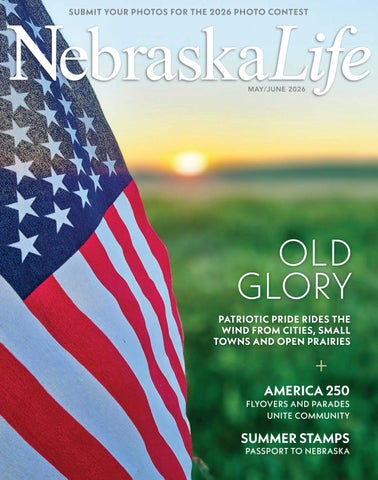
PATRIOTIC PRIDE RIDES THE WIND FROM CITIES, SMALL TOWNS AND OPEN PRAIRIES
FLYOVERS AND PARADES UNITE COMMUNITY
STAMPS PASSPORT TO NEBRASKA
COTTONMILL PARK
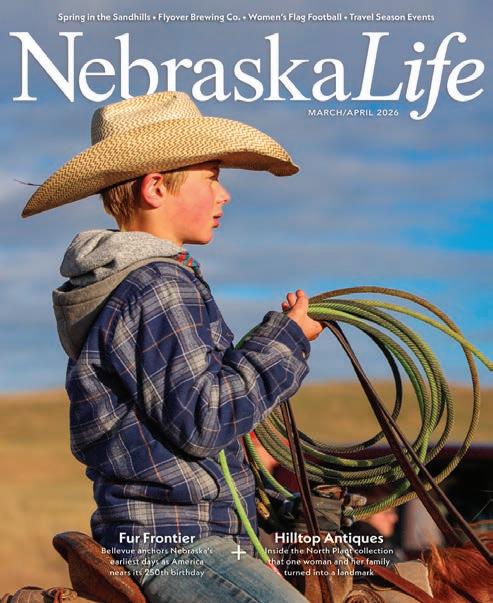
MAY/JUNE 2026
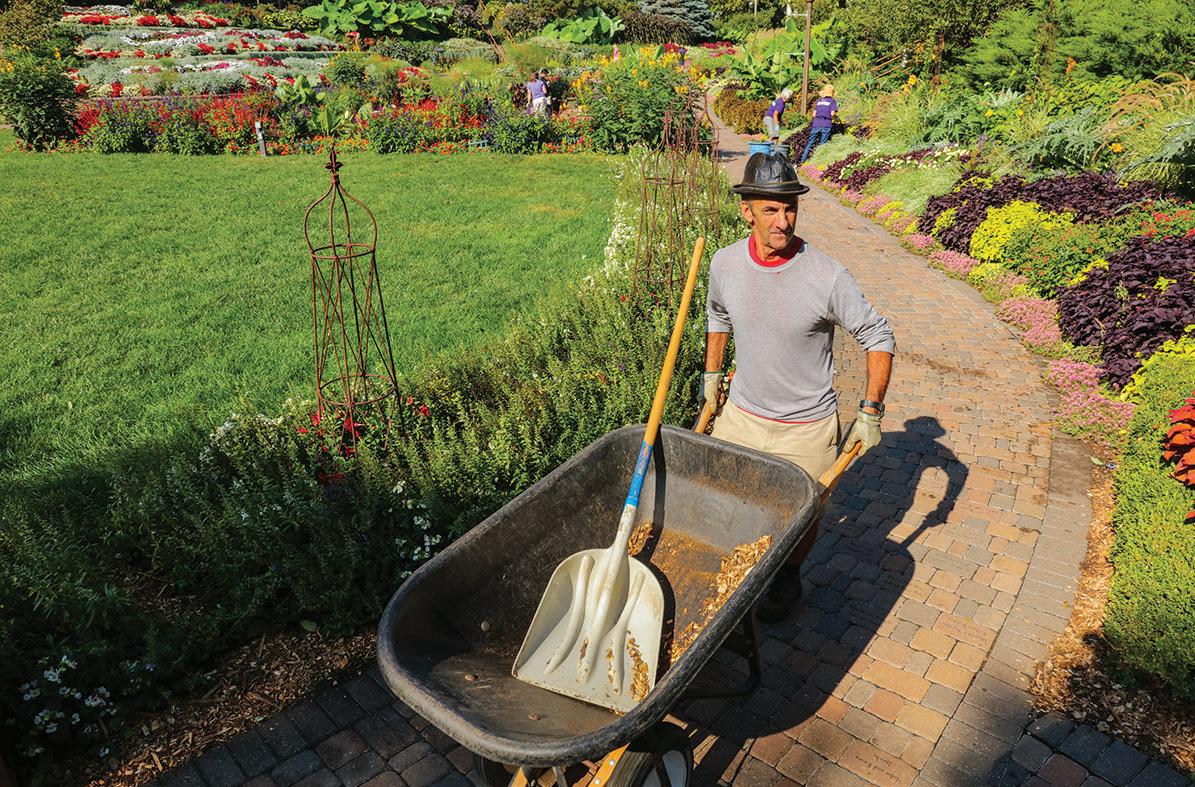
At Ashfall Fossil Beds State Historical Park, the Hubbard Rhino Barn shelters a Miocene mass grave uncovered bone by bone. story by Kristin Dahl photographs by Jeremy Buss 28 Under the Same Flag
From homesteads to highways and memorials, the American flag waves in the Nebraska wind – a proud symbol of the nation’s independence. by Chris Amundson
Passport to Summer
Seventy stops, themed routes and stamp collecting turn summer into a scavenger hunt with the annual Nebraska Passport program. by Ariella Nardizzi 46 Nebraska’s Nod to the Nation’s 250th Flyovers, museum exhibits, trails and rodeos mark America’s 250th anniversary, tracing celebrations in small towns, big cities and everywhere in between. by Ariella Nardizzi
DEPARTMENTS
TOP-TIER RELIABILITY.
Nebraska’s energy infrastructure consistently ranks among the nation’s best. WHY? Customers’ dollars get reinvested back into the system that serves them, not into the pockets of shareholders. That’s the value of Nebraska’s consumer-owned public power systems.
To learn more about the benefits of public power in Nebraska, visit publicpowered.com.
Source: U.S. Department
DEPARTMENTS
16 Flat Water News
Schuetzenfest celebrates Bow Valley’s German heritage; Art festival transforms Carhenge; A look back at the I-80 sculptures; Entries open for The Nebraska Life Photo Contest.
20 Trivia
Heartland hits the big screen. Answers on page 58.
Prose rooted in planting, tending and beginning again.
52 Museums
Big or small, these museum advertising partners preserve Nebraska history and heritage for all to experience.
56 Traveler
Step back in time with Gering’s Oregon Trail Days; 50 Mile March from Lincoln to Omaha honors veterans; plus 16 other events across the state.
62 Naturally Nebraska
Alan J. Bartels reflects on fishing, patience and effort – even if the catch never comes.
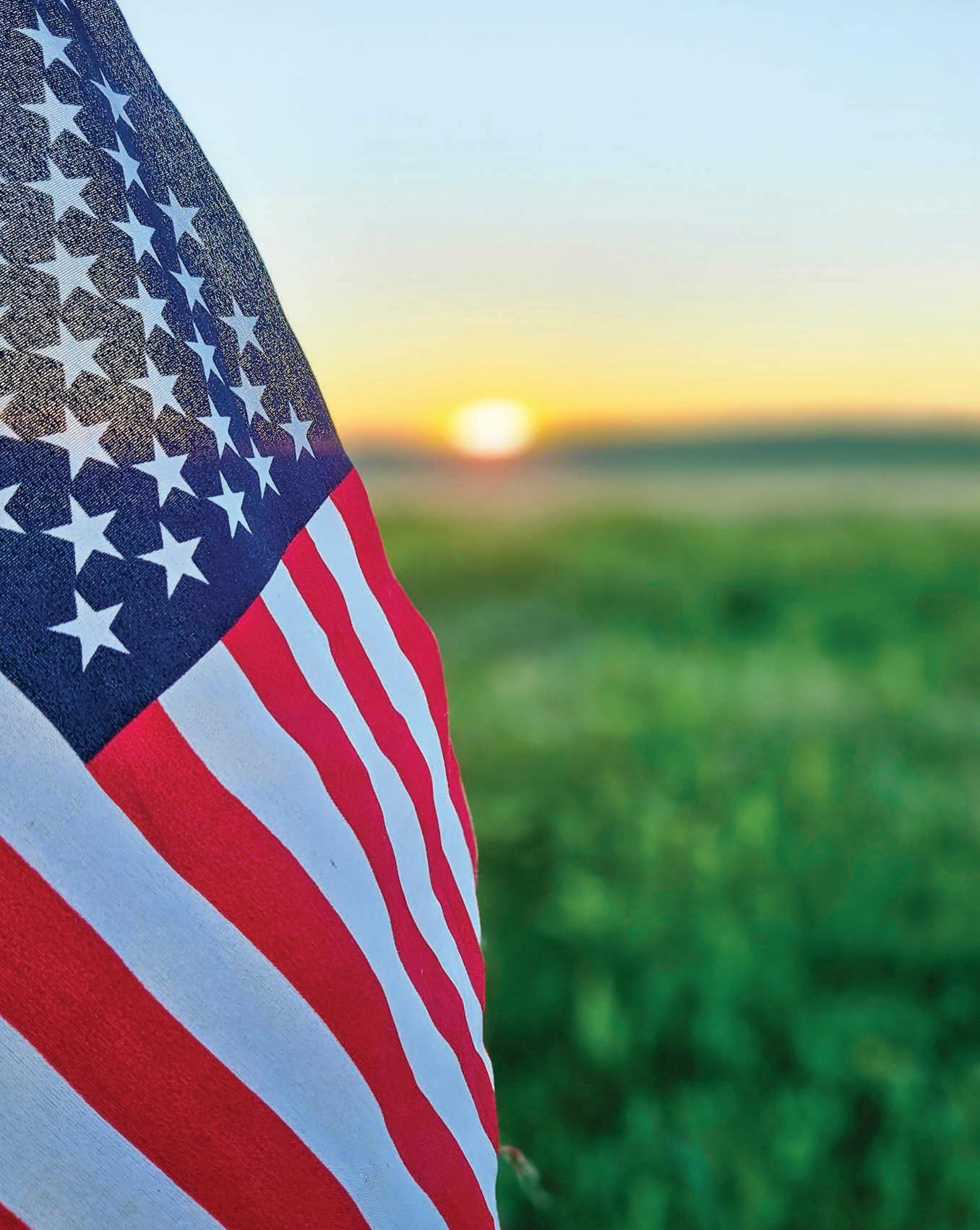
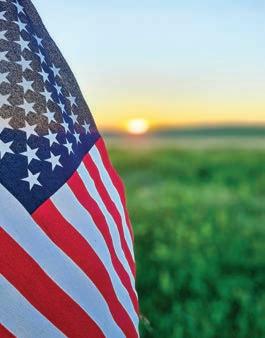
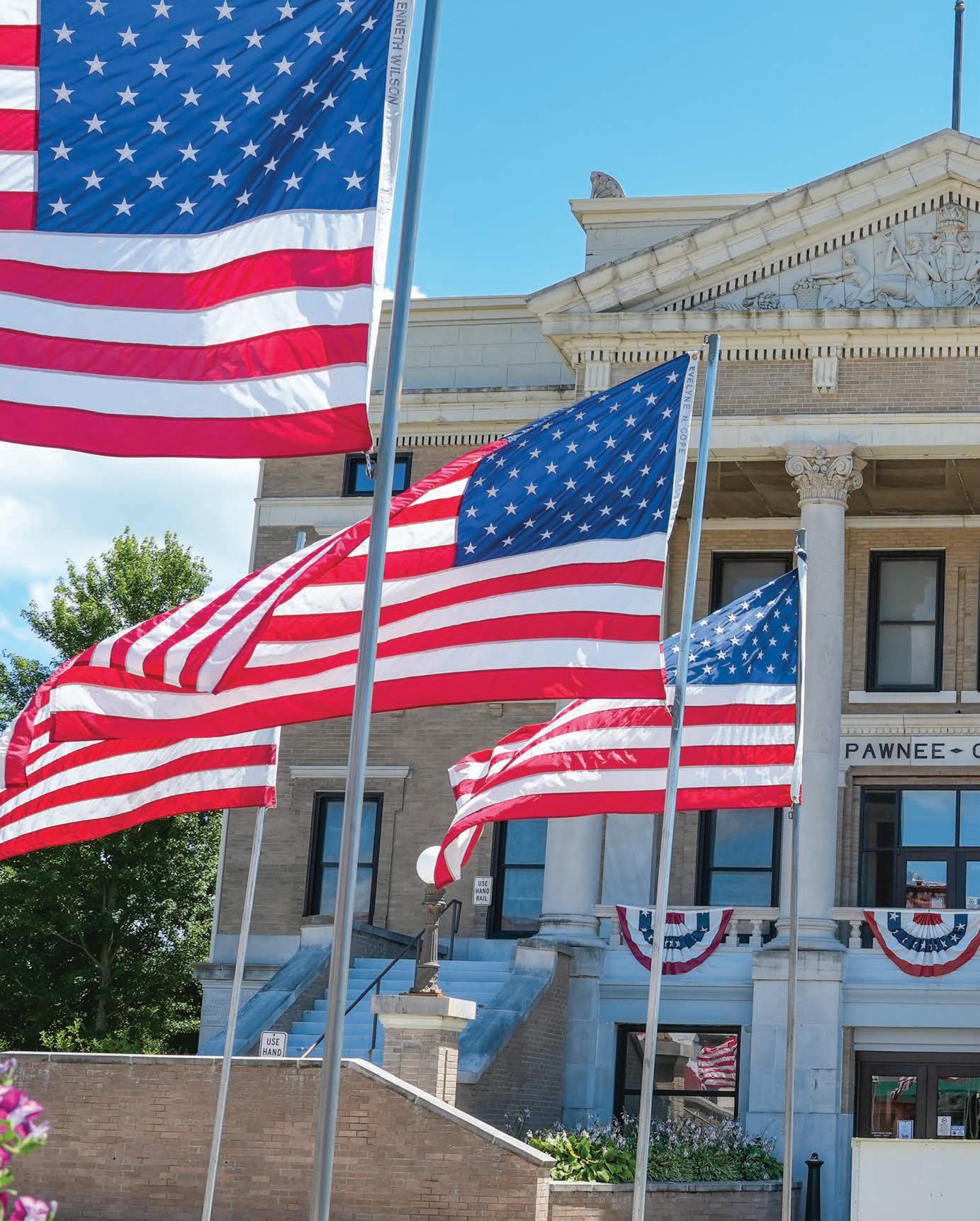
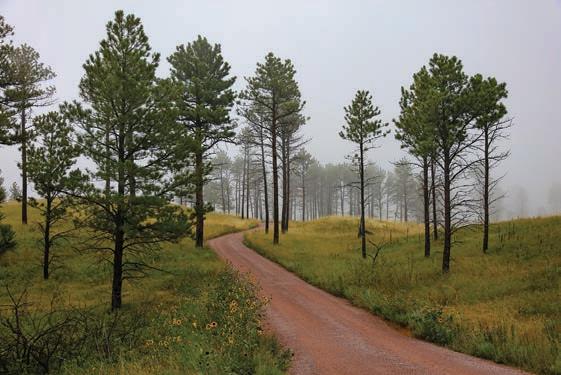
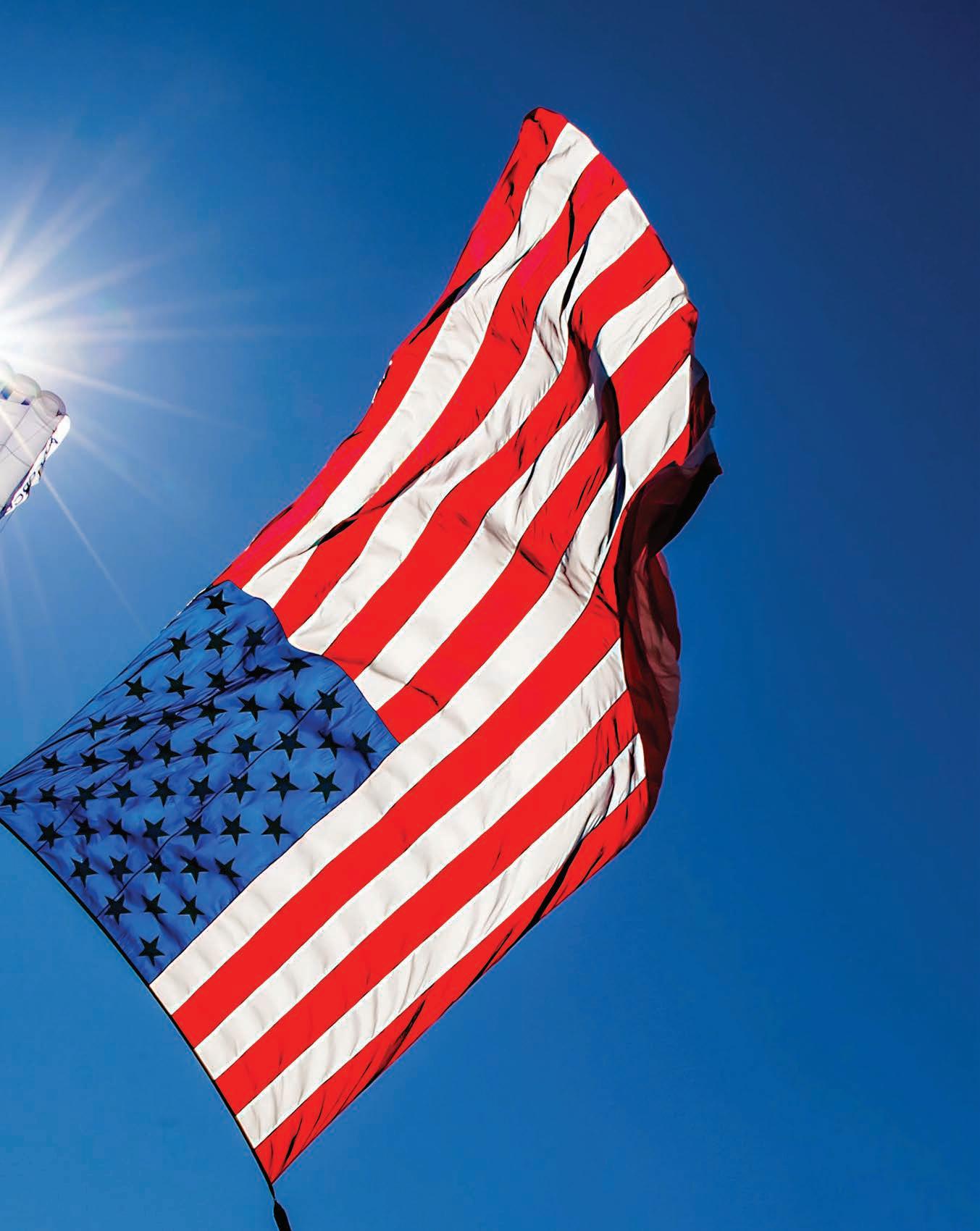
The American flag greets a new day in the Sandhills, reflecting strength and resilience found in parades, small towns and everyday patriotism. Story begins on page 28.
BY
PHOTOGRAPH
NICOLE LOUDEN
Crawford pg. 46
Royal pg. 22
Bow Valley pg. 16
Alliance pg. 18
Bellevue pg. 46
Gering pg. 56
Omaha pg. 57
Seward pg. 46
Grand Island pg. 46
Lincoln pg. 57
Above: Dennis Schulte, Chris Amundson
Page 9: Jeremy Buss, Ellen Hanzlicek, Offutt AFB
MAY/JUNE 2026
Volume 30, Number 3
Publisher & Editor
Chris Amundson
Associate Publisher Angela Amundson
Editorial Assistant
Savannah Dagupion
Photo Coordinator Erik Makić
Staff Writer Ariella Nardizzi
Design Rasa Velicka, Michelle Halcomb
Advertising Sales
Robert Schonlau
Subscriptions Shiela Camay
Nebraska Life Magazine
c/o Subscriptions Dept. PO Box 270130 Fort Collins, CO 80527 1-800-777-6159 NebraskaLife.com
SUBSCRIBE
Subscriptions are 1-yr (6 issues) for $30 or 2-yrs (12 issues) for $52. Please call, visit NebraskaLife.com or return a subscription card from this issue. For fundraising and group subscription rates, call or email subscriptions@nebraskalife.com.
ADVERTISE
Advertising deadlines are three months prior to publication dates. For rates and position availability, please call or email advertising@nebraskalife.com.
CONTRIBUTE
Send us your letters, stories, photos and story tips by writing to us, emailing editor@nebraskalife.com or visiting NebraskaLife.com/contribute.
COPYRIGHT
All text, photography and artwork are copyright 2026 by Flagship Publishing, Inc. For reprint permission, please call or email publisher@nebraskalife.com.
Pull Over When You Can
ON DRIVES ACROSS Nebraska when our kids were young, I learned this much: stop before the back seat mutinies.
One of those stops was Fort Cody Trading Post in North Platte, now run by third-generation owners Nick and Marcia Henline. On our early trips, we knew it as Chuck and Leigh Henline’s Fort Cody: a two-headed calf, Buffalo Bill’s Miniature Wild West Show and enough souvenirs to make a child believe five dollars could solve everything.
Our children posed in the covered wagon out back, looking more ready for westward migration than the next hundred miles. Angela and I gave them a few dollars, then let the gift shop do the rest.
Ten minutes out of the car can do what another bag of pretzels can’t.
I still think about that stop when I pass a hand-painted sign or an exit I hadn’t planned to take. Along Interstate 80, rest areas near Grand Island, York and Kearney still hold Nebraska’s 1976 bicentennial sculptures. Nebraska also gave travelers steel, limestone, sharp angles and a public art argument that has lasted five decades.
The 2026 Nebraska Passport offers 70 reasons to stop, nudging travelers toward bakeries, bookstores, museums, oddball outposts and main streets they might otherwise pass. Bobbie and Craig Connolly of Lincoln have their own ritual: Bobbie researches each stop, paints a small rock inspired by it and leaves it behind.
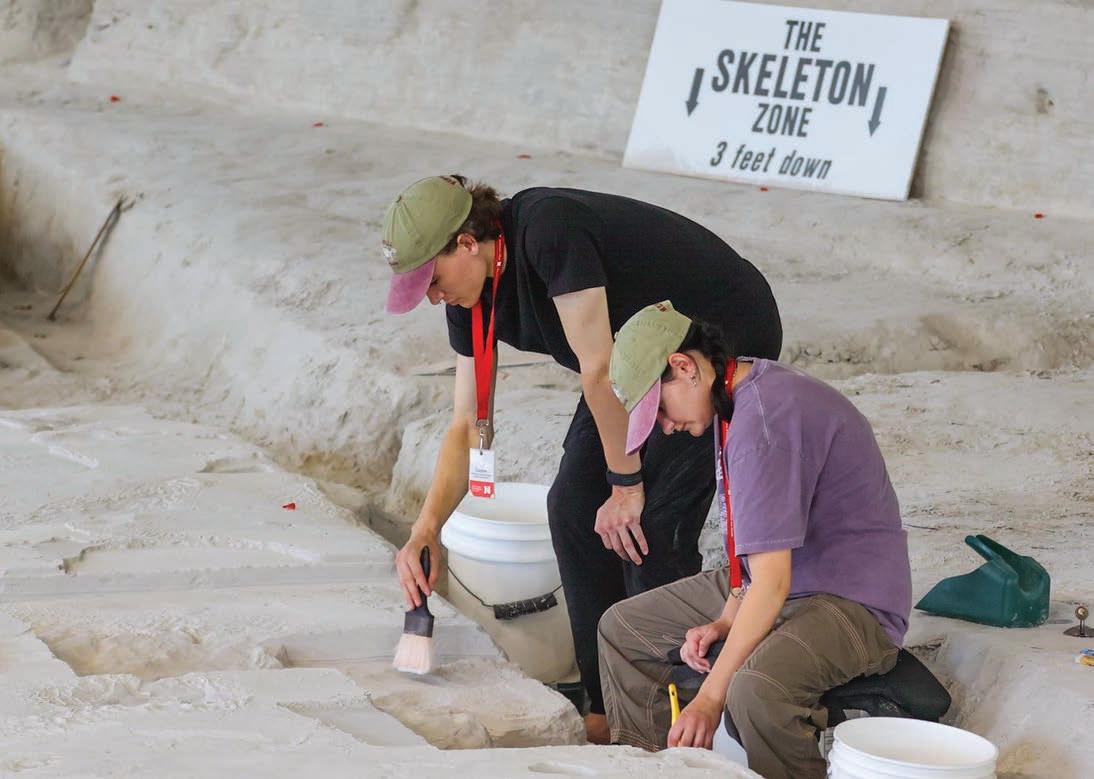
At Ashfall Fossil Beds near Royal, visitors look down from the Hubbard Rhino Barn at rhino skeletons still resting in volcanic ash from an eruption tied to the Yellowstone hotspot. Interns work with brushes, children peer into microscopes and a fossilized dog track marks an animal’s path long before roads crossed Nebraska.
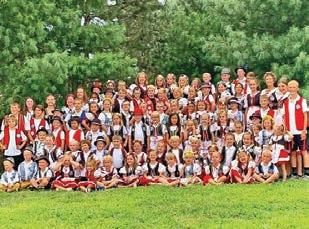
In Cedar County is Bow Valley, where Schuetzenfest, held every five years, celebrates 130 years of German heritage with white uniforms, rifles, music, food and a wooden bird 30 feet in the air. When the bird comes down, somebody wins the crown and a child carries home a splinter.
So now we want to hear from you.
What Nebraska roadside stop still earns your brake lights? What place did your parents make you visit that you now take your children or grandchildren to see? What bakery, small museum, mural, overlook or local oddity belongs in your family’s roadtrip stories?
Send us a note at editor@nebraskalife.com. Send a photo if you have one. We may share reader favorites in an upcoming issue.
Nebraska trips rarely stay as straight as the map suggests. They have detours, bathroom breaks, public art arguments and children in covered wagons.
Pull over when you can.
CHRIS AMUNDSON Publisher & Editor editor@nebraskalife.com
MAILBOX
Name in trees
A few years ago, your magazine published several letters about the trees planted on a hillside visible from Highway 2 and what they spelled. There never seemed to be any clarification as to what it actually said.
I grew up in Thedford, 17 miles west of Halsey, in the 1940s and was very familiar with that hillside when the trees had been recently planted. I have no doubts about what they spelled. The trees were planted by a young man whose property adjoined the National Forest. His last name was Besley, and that was the pattern of the trees he planted. I can remember it being clearly obvious. Only as the trees matured did the letters become less distinct.
Driving by now, since the recent fire, it is difficult to discern which hill is the one with the letters. Your comments in “Close Enough to Notice” (Editor Letter, January/February 2026) prompted me to finally write.
Dee R. Hickman Kearney
Prairie return
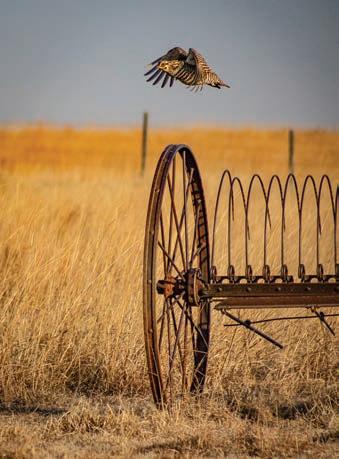
I recently had the joy of coming back to Nebraska to visit family and attend the prairie chicken observation north of Kearney. Living in Nevada, I have seen many greater sage grouse leks through the years, but these birds were so much fun to watch – the same, yet very different.
My mom is a Nebraska native and encouraged me to send this photo.
Lori remembered
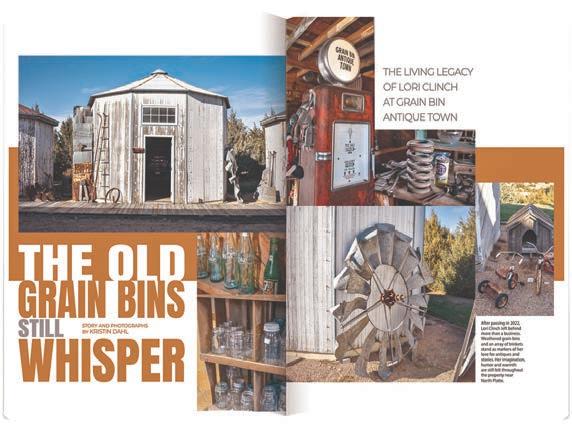
Lori Clinch left an indelible impression on everyone she met (“The Old Grain Bins Still Whisper,” March/April 2026). She always left us smiling. Her humor and genuine love for people will always be a treasure.
Pat is still hammering away at the Bins. You all need to visit if you haven’t already – and if it’s been a while, it’s about time you go again.
Sherry
Weatherly via Facebook
Back to Grain Bin
My sister and I have been traveling from Wyoming to Nebraska for nine years to hunt for antique treasures. Lori was always so friendly and welcoming, and she remembered us each year.
We still visit and are looking forward to another trip this summer. Lori is truly missed.
Regina Carey via Facebook
Family in print
Sydney Martinez Reno, Nevada
I have enjoyed the historical, social, natural, geographical content and the photography of Nebraska Life over the years. One can only imagine my delight to see my daughter’s poem and my granddaughter’s photo in the Poetry section of the March/April 2026 issue. Keep up the good work.
Clint
Whitwer Eagle
SEND YOUR LETTER TO THE EDITOR
Please send us your letters and emails by Aug. 1, 2026, for publication in the next issue. One lucky winner selected at random will receive a free 1-year subscription renewal. This issue’s winner is Dee R. Hickman of Kearney. Email editor@nebraskalife.com or write by mail to the address at the front of this magazine. Thanks for reading and subscribing!
Cottonwood corrected
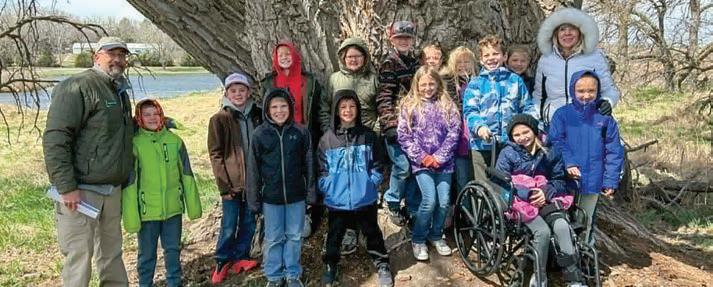
I’m enjoying the March/April 2026 issue, but I want to point out that Question No. 1 in “Trivia” is incorrect. The national champion eastern cottonwood tree is not at Beatrice.
That tree, which had held the title since 2013, was replaced in 2025 by a larger eastern cottonwood at the Lower Loup NRD’s Pibel Lake Recreation Area in southern Wheeler County. Nebraska Life chronicled the coronation in “Cottonwood Crowned King” (March/April 2025).
This beautiful tree is 85 feet tall and has a canopy spread of 120 feet. The tree gains extra points for being a single-trunk cottonwood.
That trunk measures 37.2 feet around, and I know from leading field trips to this tree that it takes 14 fourth graders linking hands to give it a proper hug (see photo).
This tree’s trunk is more than 12 feet larger in circumference than Canada’s largest eastern cottonwood, which means that this towering example of Nebraska’s state
tree is the largest known eastern cottonwood tree on earth!
We invite everyone to visit. Park at the northwest corner of the lake, head east over the pedestrian bridge crossing the north end of the lake, and follow the mowed path to this true Nebraska and national treasure.
I’ve been leading some field trips over to that big old tree. The kids love that tree!
Alan J. Bartels Ord
There that day
I worked in the grounds maintenance department at Fort Robinson during the summers of 1975, 1976, 1977, 1979, 1980, 1981 and 1982.
I was there on the 100th anniversary of Crazy Horse’s death (“Crazy Horse: Beyond Reach,” November/December 2025).
The scenic beauty of that country is unforgettable.
Ben Eicher Rapid City, South Dakota
Noteworthy news, entertaining nonsense
Shooting for the Crown Bow
Valley’s Schuetzenfest marks 130 years of German heritage
BY ARIELLA NARDIZZI
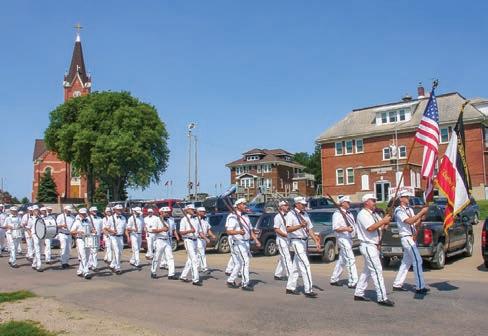
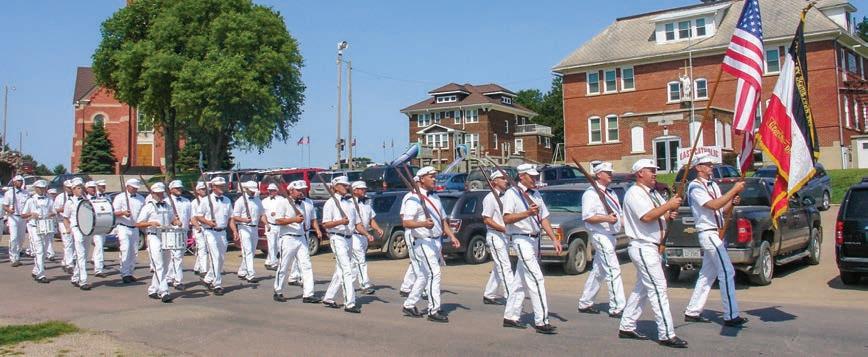
A wooden bird waits at the top of a pole, 30 feet above the field outside Bow Valley Hall. Men in crisp white uniforms line up with high-powered rifles. The crowd watches as the bird splinters piece by piece until one shot brings it down, and children dash into the field to claim the largest piece.
This is Schuetzenfest, Bow Valley’s traditional German marksman’s festival. On Aug. 1-2, the Bow Valley Park Association will host the community’s 130th anniversary celebration, continuing a tradition that began in Cedar County in 1896.
Schuetzenfest means “marksman’s festival.” In Germany, Schützenvereine, or marksmen’s clubs, began centuries ago as citizen militias. Over time, they evolved into civic celebrations built around parades, music, food, dancing and shooting competitions.
Bow Valley’s celebration is one of only a dozen Schuetzenfests in the United States, drawing several thousand attendees from surrounding states and sister villages in Germany.
The tradition came to Bow Valley with German settlers who immigrated to Cedar County in the 19th century. By 2015, nearly 70% of the population could trace its lineage to Germany. Many families trace their roots to the Sauerland region of North Rhine-Westphalia.
Sauerland emigrants John Noecker Jr. and Willibald Schulte organized Bow Valley’s first Schuetzenfest in 1896. The local association, first known as the Bow Valley Schützenverein, has carried the tradition forward through generations of families whose German roots remain visible in the community’s surnames, food, music and festival customs.
Dennis Schulte traced those connections by traveling to Germany to attend a Schuetzenfest in the Old Country. “Bow Valley is representative of the memories those immigrants brought with them from their homeland upon coming to Nebraska,” he said. “I hope the next generation gains an appreciation for the huge challenges and sacrifices their ancestors made to settle here.”
Bow Valley holds the festival every five years with Mass, a parade, auction,
dancing, beer steins, authentic German fare and other activities. The signature moment is the “shooting of the bird.” Marksmen in white uniforms, militia hats and bow ties aim from about 40 yards at a carved wooden bird mounted 30 feet high. Some years, it takes hours and a few hundred shots. Other years, a skilled marksman brings it down quickly.
The winner is crowned Schuetzenfest King and reigns until the next festival.
Matt Potts, the current Schuetzenfest King, remembers the commotion after his winning shot in 2021. “What a rush. I felt like a herd of cattle after I won, being shuttled around to speak with everyone in town,” he said. His own godchild collected one of the largest pieces of the bird, adding another memory to the family’s Schuetzenfest history.
Potts will compete for the fourth time this year, but he is ready for a new king to take the title. “I want to pass the baton on and let someone else experience this wonderful tradition of our German heritage,” he said.
In Bow Valley, the next king will take aim at a wooden bird and a tradition 130 years in the making.
Dennis Schulte
Marksmen participate in a “shooting of the bird” competition at Bow Valley’s Schuetzenfest, a tradition celebrating the region’s German heritage. The festival includes Mass, a parade, dancing and music.
Art for the Open Road
Nebraska rededicates the 1970s sculptures along I-80
BY ARIELLA NARDIZZI
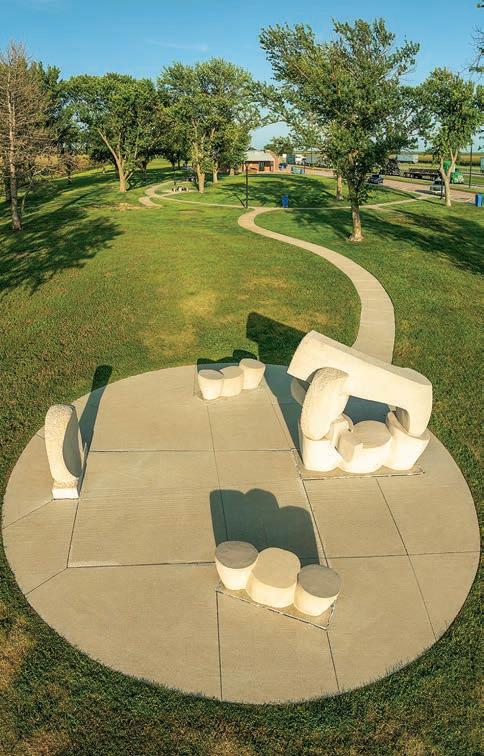
At 75 mph, most drivers on Interstate 80 see rest areas as quick stops. Travelers who pull off near Grand Island, York, Kearney and other points along the corridor find something more lasting: large abstract sculptures rising from the grass.
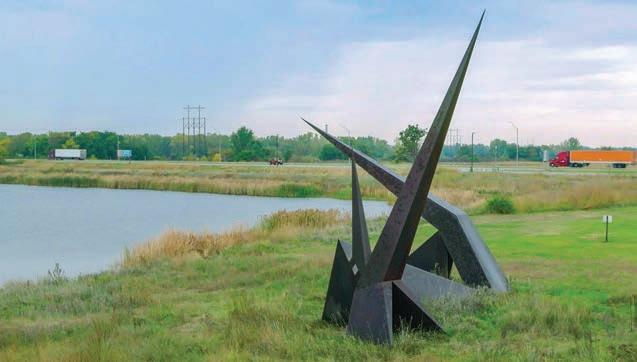
At the Platte River Rest Area eastbound near Grand Island, steel cuts hard angles against the sky. At the York Rest Area westbound, limestone from the same quarry that supplied the Nebraska State Capitol anchors another work. Elsewhere along the highway, forms bend, arc and turn in the wind, making rest areas part of an outdoor gallery.
The sculptures arrived in 1976, when Nebraska marked the nation’s bicentennial with a public art project at I-80 rest areas. The interstate follows part of the same corridor as historic migration routes across the state, including the Oregon, California and Mormon trails. State planners saw the rest areas as places to put contemporary art in front of travelers rather than inside museums.
The project, which follows a theme of Horizons ’76, drew more than 100 artists. The finished works leaned modern: steel, stone, abstraction, sharp lines and open space. Selected artists lived in Nebraska communities during the project, led workshops and met with residents.
Not everyone welcomed the results. Nebraskans questioned the cost, the look and the meaning of the sculptures. Some wanted public art that more directly reflected pioneer history. Others objected that Nebraska and Midwestern artists had not been represented among the selected sculptors.
The most debated piece was “Erma’s Desire,” John Raimondi’s weathering steel sculpture at Grand Island. Its title and ab-
stract shape made it a flashpoint for arguments over public art and public money.
Five decades later, seven of the sculptures remain along the corridor. Richard Field’s “Memorial to the American Bandshell” still stands at the Ashland Rest Area eastbound. George Baker’s “Nebraska Wind,” designed to move across a pond at the Kearney Rest Area westbound, incorporated weather as part of the work.
This summer, communities along I-80 will revisit the project with rededication ceremonies in the days before the Fourth of July, part of the buildup to America’s 250th anniversary in 2026. Artist John Raimondi will also host artist talks. Nebraska Public Media revisits the sculptures in a seven-episode digital series for its YouTube channel, pairing archival footage with present-day reflections.
The rest areas still serve the road. The sculptures do, too, giving travelers a reason to leave the interstate for a few minutes and look again.
Communities along I-80 host rededication ceremonies for the controversial abstract sculptures at rest stops along the highway, such as “Erma’s Desire” by John Raimondi in Grand Island and “Crossing the Plains” by Bradford Graves in York.
Nebraska Public Media (above); Bill Ganzel/ The Committee for the Preservation of the I-80 Bicentennial Sculptures (top)
Carhenge Canvases
Artists make their mark in Alliance for second mural festival
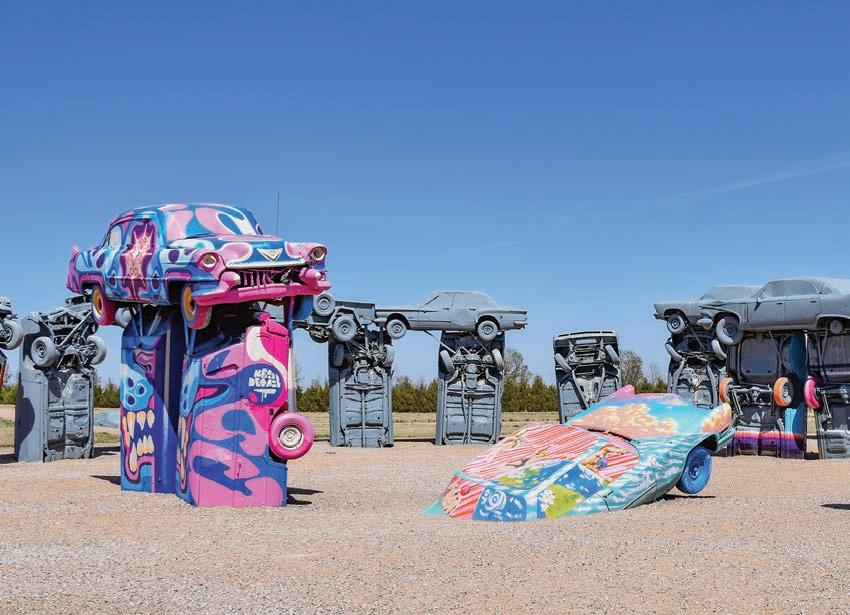
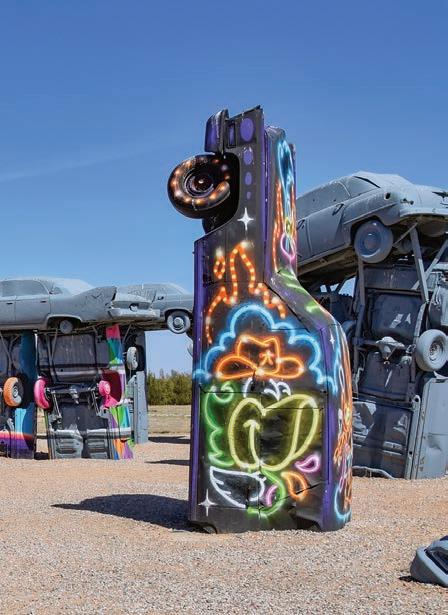
Last year’s inaugural art festival painted a splash of color on the gray vintage cars of Alliance’s Carhenge, where artists lived and worked in the community.
BY ARIELLA NARDIZZI
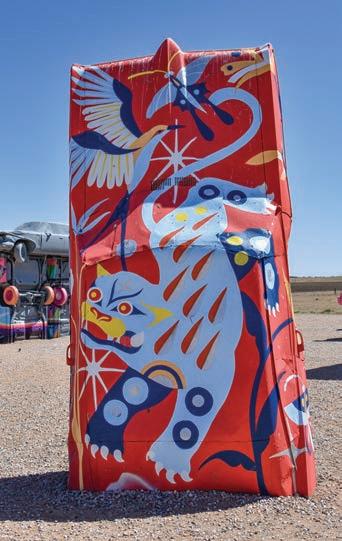
On the prairie edge of Alliance, Carhenge’s old gray cars are gaining color one mural at a time. Geometric rainbows climb over hoods and roofs. Chinese cultural motifs glow against red. A surreal beast sprawls across stacked wagons and a 1954 Cadillac. Where visitors once saw only battleship gray, they now find an outdoor gallery.
The transformation continues Aug. 5-10 when the Alliance Creative District hosts the 2026 Carhenge Mural Festival. Eight artists will each paint a designated car, adding a second round of work to the murals
created during last year’s inaugural festival. Carhenge will remain open while the artists work, and a public reception and reveal is planned for Aug. 10.
Unlike the prehistoric monument that inspired it, Carhenge keeps no mystery about its maker. Jim Reinders, who studied Stonehenge while living in England, built the roadside landmark in 1987 with about 35 family members. The memorial to his father uses 39 American automobiles set to match Stonehenge’s proportions. Some cars stand trunk down in pits; others are welded across the tops to form arches.
For decades, gray paint helped sell the illusion of stone. The mural festival has be-
gun changing that without erasing the joke. Last year’s artists – Artez, Chanate, Anna Charney, Fat Cap Sprays, Key Detail, The Obanoth, Paul Monsters and Stevie Shao – brought realism, geometry, mythic imagery, cartoon energy and folk-art color to the cars. Key Detail’s “Starborn Beast” covered two Ford wagons and a 1954 Cadillac.
During their residency, artists were also welcomed into the community with open arms. They visited a local ranch for a dark sky experience and chats around the campfire, showcasing genuine Nebraska hospitality.
Carhenge, at 2151 County Road 59, is open dawn to dusk year-round, free to the public.
Ariella Nardizzi
Show Us the Heart of Nebraska Nebraska Life opens its second annual photo contest
BY ARIELLA NARDIZZI
Last year, Nebraska Life launched its first photo contest and received thousands of images from across the state.
The winning photographs and finalists filled more than 30 pages of the magazine. Entries included a moonrise over the Sower statue atop the Nebraska State Capitol, cowboys moving cattle through Sandhills dust and Main Street celebrations blurred by motion and color. Nicole Louden’s “Sunset Stunner” was named Photograph of the Year, and Jeffrey Z. Carney was named peer-nominated Photographer of the Year.
This year, the contest returns with a new theme: Heart of Nebraska.
The assignment is broad, but not vague. We want photographs that show the people, places, work, weather, wildlife, history and daily life of Nebraska. That might mean a county fair, a basketball game, a branding, a storm front, a family portrait, a storefront, a river, a night sky or a road you know by memory.
The 2026 categories are Community, Aerial & Drone, Wildlife, Macro, Sports, Portrait, Architecture, History, Water, Agriculture, Night Sky and Landscape. Community combines last year’s Hometown Pride and Celebration categories, making room for parades, festivals, school events, main streets, reunions and the gatherings that bring Nebraskans together. Night Sky is new this year for stars, moonlight, the Milky Way and dark skies above the plains.
Along with each photo, include the county, nearest town and a short note about what was happening when the image was taken.
The 2026 Nebraska Life Photo Contest is accepting submissions through Sept. 28 at nebraskalife.com/photo-contest. Winning photographs will receive a $250 Rockbrook gift certificate and finalists will be published in our November/December 2026 and January/February 2027 issues.
Show us the Heart of Nebraska.
Ariella Nardizzi
The Alliance Creative District
Eight new muralists from around the world will make their mark on the roadside attraction this August.
THE HEART OF NEBRASKA
NEBRASKA LIFE MAGAZINE
THE BIG PICTURE
Nebraska takes its turn on camera. questions by BEN JENKINS
1
Set in the fictional Nebraska town of Beacontown, what 1985 movie follows a bad basketball player whose game improves after he develops lycanthropy and confidence on the court?
2
In Up in the Air, what Nebraska city is headquarters for the career-transition firm where George Clooney and Anna Kendrick’s characters work between flights and layoffs?
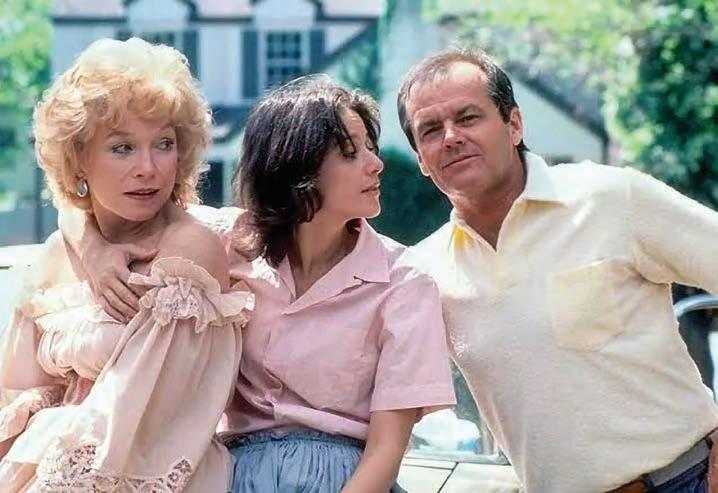
3 Emma Greenway-Horton dies of cancer at Lincoln General Hospital after one final motherdaughter scene in what 1983 Best Picture winner starring Debra Winger and Shirley MacLaine as a complicated pair?
4
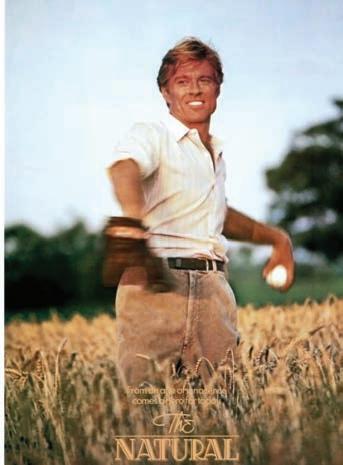
“A Nebraska farm boy, blazing left-handed speed” faces Roy Hobbs at the plate during the climax of what 1984 Robert Redford movie?
5
The TV movies
My Ántonia and O Pioneers! adapt two books in Willa Cather’s Prairie Trilogy. What third Cather novel completes the trio?
No peeking, answers on page 58.
Paramount Pictures
MULTIPLE CHOICE
6
A 2017 horror movie set in Hemingford Home was based on a Stephen King novella and starred Thomas Jane as a man who murders his wife. What year is the movie set in, which is also its title?
a. 1890
b. 1922
c. 1971
7
Eighteen years after Charlie’s Angels, what actress played the title character in the 1994 TV movie The Substitute Wife, set during Nebraska’s pioneer years?
a. Farrah Fawcett
b. Kate Jackson
c. Jaclyn Smith
8 The 1953 Columbia Pictures western The Nebraskan reached theaters with what now-uncommon special feature for moviegoers wearing cardboard glasses?
a. Vibrating seats
b. Smell-O-Vision
c. Stereoscopic 3-D
9
Which of these is not the real subtitle of a movie in the Children of the Corn franchise, originally set in the fictional Nebraska town of Gatlin?
a. Ears of Blood
b. Urban Harvest
c. Fields of Terror
10 The climax of the 2013 movie Nebraska takes place – spoiler alert – in Nebraska. What city is Woody, played by Bruce Dern, trying to reach to claim his million-dollar sweepstakes prize?
a. Norfolk
b. Lincoln
c. North Platte
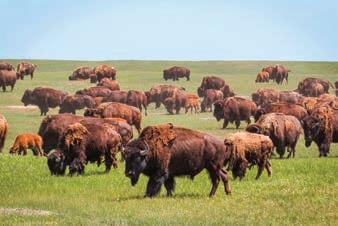
In Broken Bow, NE
The scenery is spectacular. And how often do you get to see a herd of Bison grazing peacefully like that?
11
In Snack Shack, Nebraska City’s poolside concession stand loses money for its high school-aged owners and causes conflict.
12
In Yes Man, when Allison, played by Zooey Deschanel, asks Carl, played by Jim Carrey, to move in with her during their trip to Lincoln, Carl fulfills the movie’s title and says yes.
13
In Election, despite meddling by her civics teacher, Reese Witherspoon’s character wins the title contest and becomes student body president of Omaha’s fictional Carver High School.
14
In the 2012 movie Hope Springs, an unhappy Omaha couple played by Meryl Streep and Tommy Lee Jones end their relationship in an amicable divorce.
15
To save money and help prevent climate change, the main characters of Downsizing shrink to the size of bacteria instead of changing their habits.
with all natural sheep’s milk products. Select scents from kids options, unscented Native Nebraska fragrances and more.
Occasion
Pictorial Press Ltd / Alamy
Nourish your skin
St rai gh tArrowB i son .c om
STILL LIFE IN ASH
THE HUBBARD RHINO BARN SHELTERS A MASS GRAVE AND A LIVING DIG, BONE BY CAREFUL BONE
story by KRISTIN DAHL
photographs by JEREMY BUSS
THE HUBBARD RHINO
Barn was quiet except for the steady hum of fans running to keep air moving through the building.
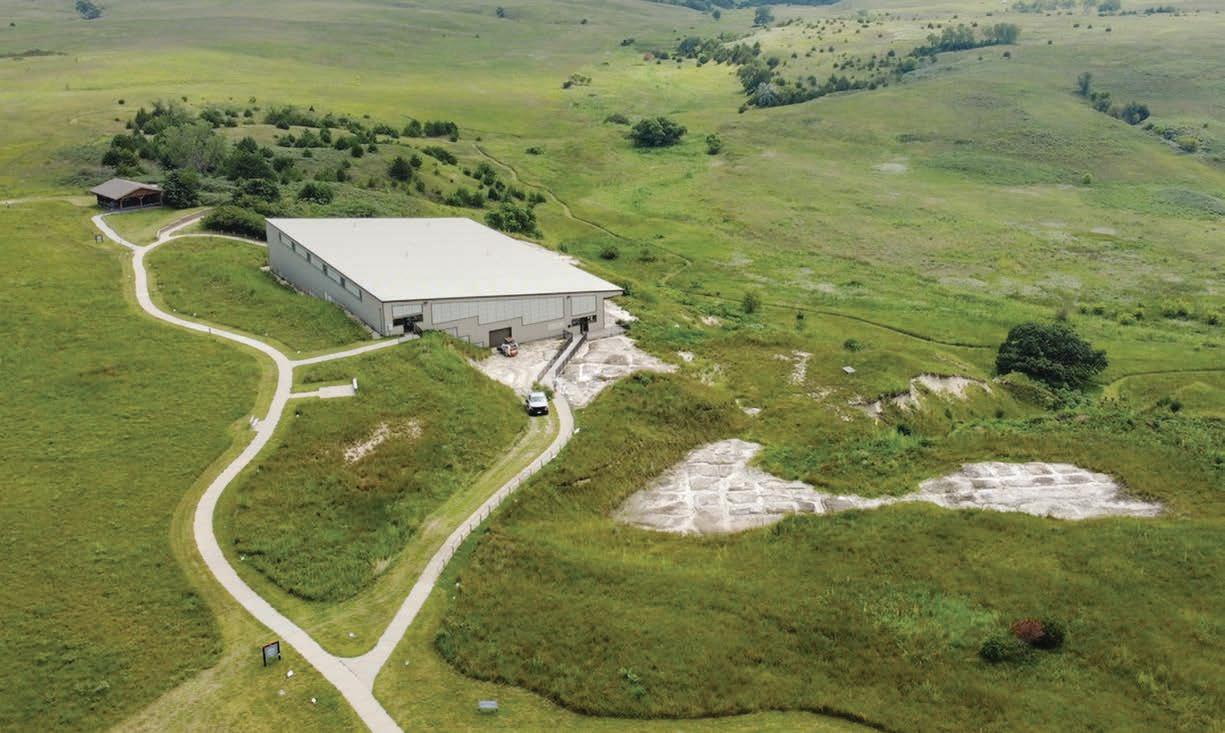
Even when Nebraska’s sun bakes the hills of Antelope County, there’s a hush inside this steel structure 2 miles west and 6 miles north of Royal. Visitors lean on the railing and lower their voices as they look down into soft gray earth.
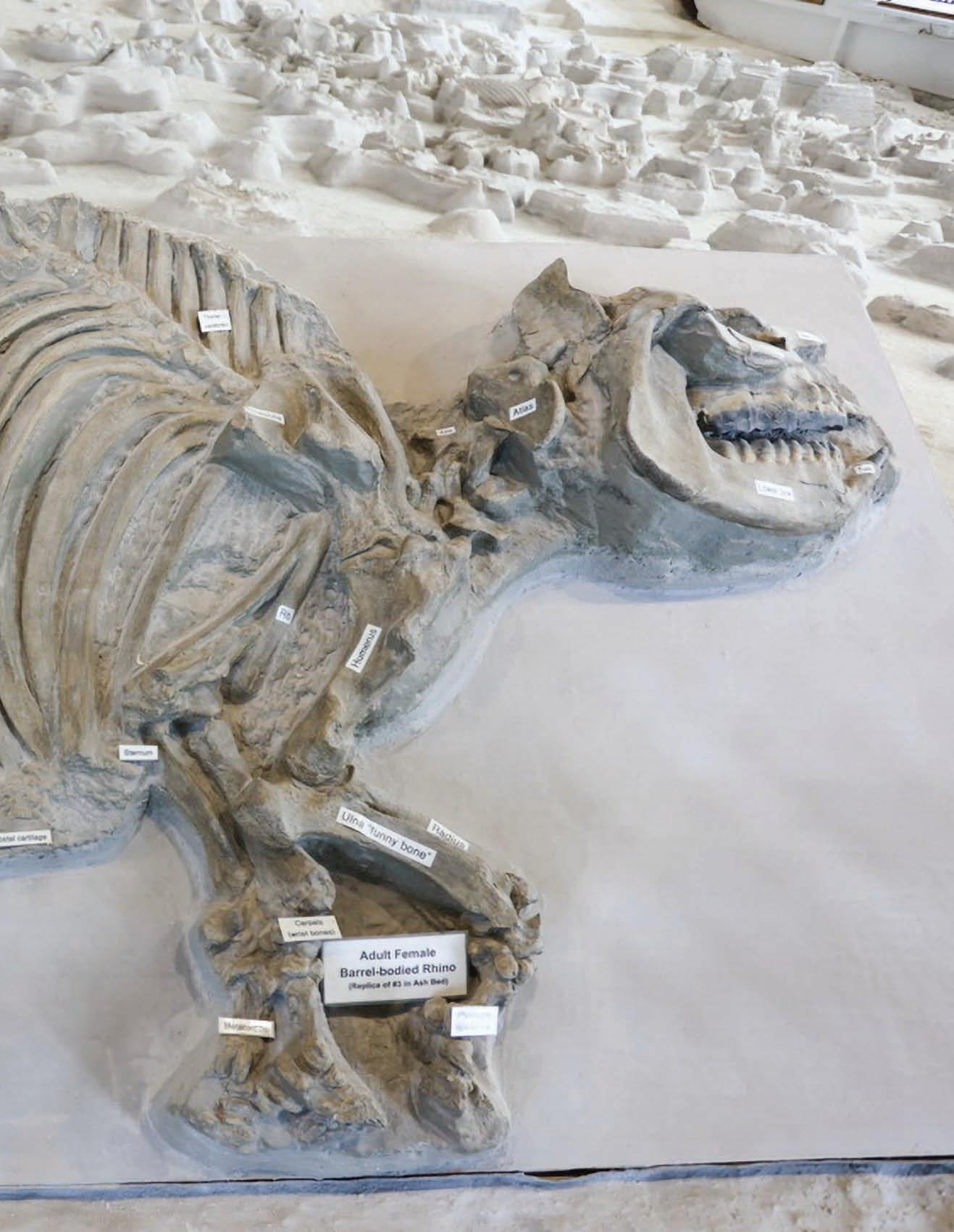
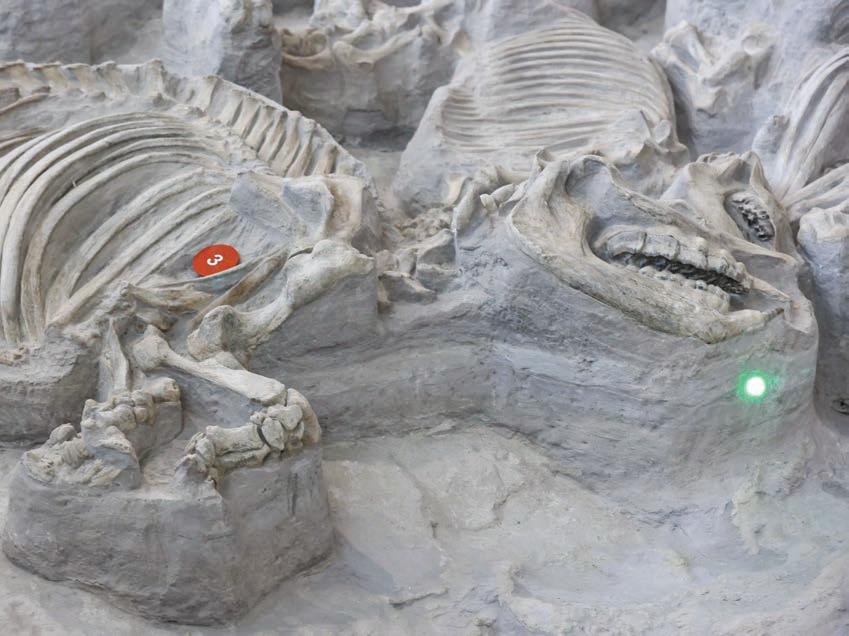
Six feet below the boardwalk, the outline of a rhinoceros emerges. Its legs are folded beneath it, ribs rising gently from the ash, skull intact and unmoved. Around it, other bones cluster close, as if caught in a moment frozen by time.
And that’s just it. They were.
About 11.93 million years ago, during the Miocene Epoch, a massive volcanic eruption in what is now southwestern
Idaho threw ash high into the sky. The eruption happened along the hotspot track tied to Yellowstone. Winds carried the ash east, across the Great Plains, into the sediments that geologists call the Ash Hollow Formation.
It didn’t have to be hot to be dangerous. At Ashfall, the particles included tiny shards of volcanic glass, small enough to be inhaled deep into the lungs.
Back then, this was grassland and animals came to a shallow watering hole. Across much of the region, the ash layer is about a foot thick. Here, a low basin caught it and built up 8-10 feet deep. The proof of water shows up in pond turtles, reed-like stems and diatoms. What’s missing matters, too: no fish fossils, which suggests water that came and went. They didn’t all die at once.
At Ashfall Fossil Beds State Historical Park, visitors gently brush away fine gray sediment to reveal both a mass grave and living excavation, where volcanic dust drifting east from an ancient eruption quietly preserved animals at the moment of life’s unraveling.
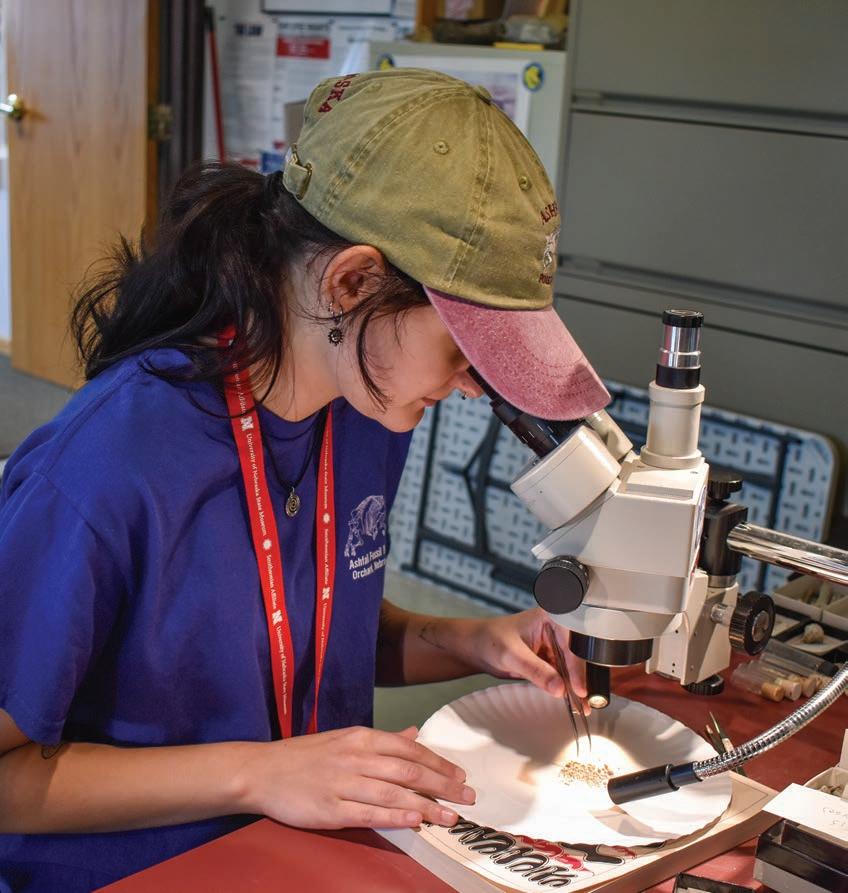
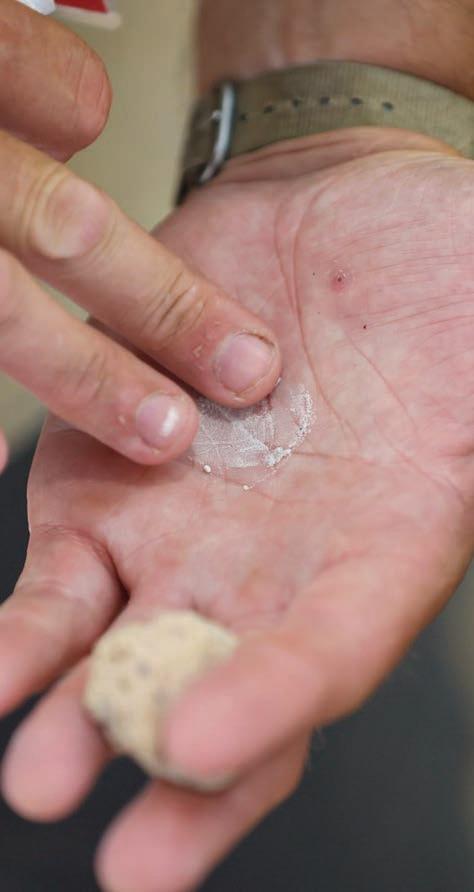
Under the microscope, the ash tells its own story. Tiny shards of volcanic glass, plant remains and mineral traces help scientists reconstruct the Miocene landscape and confirm that the animals here died over days and weeks, not all at once.
Over days and weeks, the ash dust irritated lungs, weakened bodies and brought animals down one by one. Smaller animals died first. Medium-sized animals followed. The largest stayed longest, collapsing near the water’s edge and near each other, then slowly disappearing beneath continuing ash.
National Geographic has called Ashfall Fossil Beds State Historical Park the “Pompeii of prehistoric animals.” Its rare, vivid preservation captivates visitors and scientists alike. The site is managed by the University of Nebraska State Museum, which oversees both research and public access.
University of Nebraska State Museum paleontologist Dr. Mike Voorhies discovered the site in 1971 when recent rainfall exposed a thick layer of volcanic ash high on the side of a steep ravine. Closer investigation revealed an intact baby rhino skull
and lower jaw eroding out of the ash.
From that first skull came a deeper reveal: full skeletons of prehistoric rhinos, horses, camels, deer and more.
SINCE THE PARK opened in 1991, it has grown from a small building on the prairie into a working research site open to the public, with hands-on digs for kids who want to try it for themselves.
Spanning 17,500 square feet, the Hubbard Rhino Barn shelters ongoing excavations. From boardwalks above the bed, visitors watch interns and scientists uncover bones inch by inch.
Superintendent Sam Matson, who returned to the park more than 20 years after completing an internship there and then pursuing graduate studies elsewhere, recalled his early fascination with the fossil beds.
“I first came here as a fifth grader when
Kristin Dahl
it opened,” he said. “I was just blown away that something like this could be so close to where I grew up. It sparked my interest and set me on a path toward paleontology.”
Matson’s predecessor, Rick Otto, who recently retired, shaped much of what Ashfall Fossil Beds is today. “Rick wore many hats: from paleontology to carpentry, groundskeeping to marketing,” Matson said. “He left big shoes to fill.”
Most fossil sites are closed off once the digging starts. At Ashfall, you can watch it happen.
“It’s not just about the bones or the science,” Matson said. “It’s about communicating science in a way that resonates with everyone, whether it’s a four-year-old or a visiting professor.”
One of the interns in the ash is Cannon Dunker, a University of Nebraska at Omaha student from near Blair. Dunker’s jour-
ney began young as well. “The first time I came here, I was six years old,” he said. “I even brought my dad’s hand pick, thinking I could dig fossils myself.”
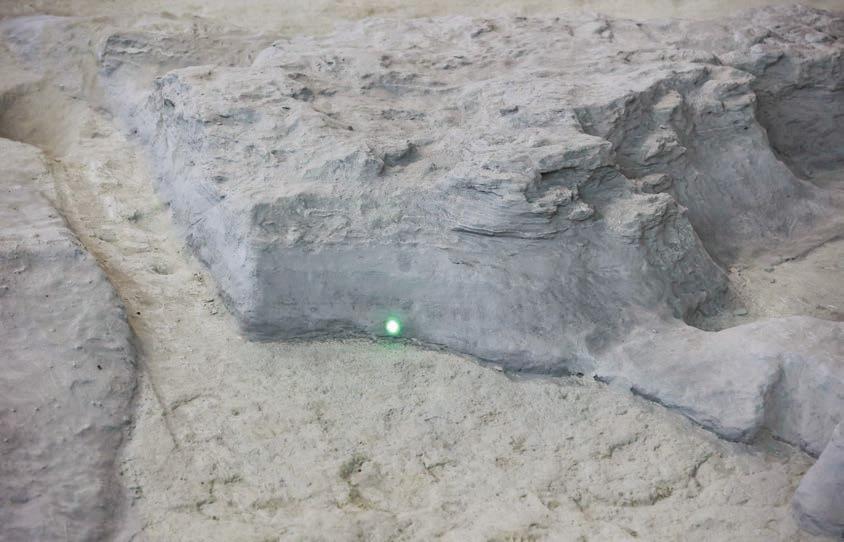
Over time, his curiosity evolved into an intense interest in vertebrate paleontology. On a typical day, Dunker works inside a small rectangle of the fossil bed, patiently lifting ash layer by layer with scalpels, trowels and brushes.
“Each layer tells a unique story,” he said. “We find subtle features such as desiccation cracks – mosaic or mud-crack-like patterns indicating that water once covered this area – as well as insect burrows, ripple marks, even traces of algal mats that helped cement the ash into these thicker layers.”
Recently, Dunker and his fellow interns uncovered a fossilized dog track preserved in one of those algal mats.
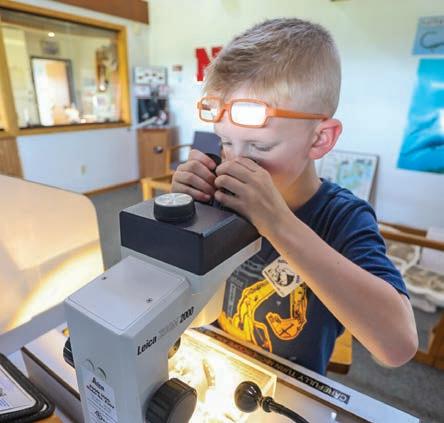
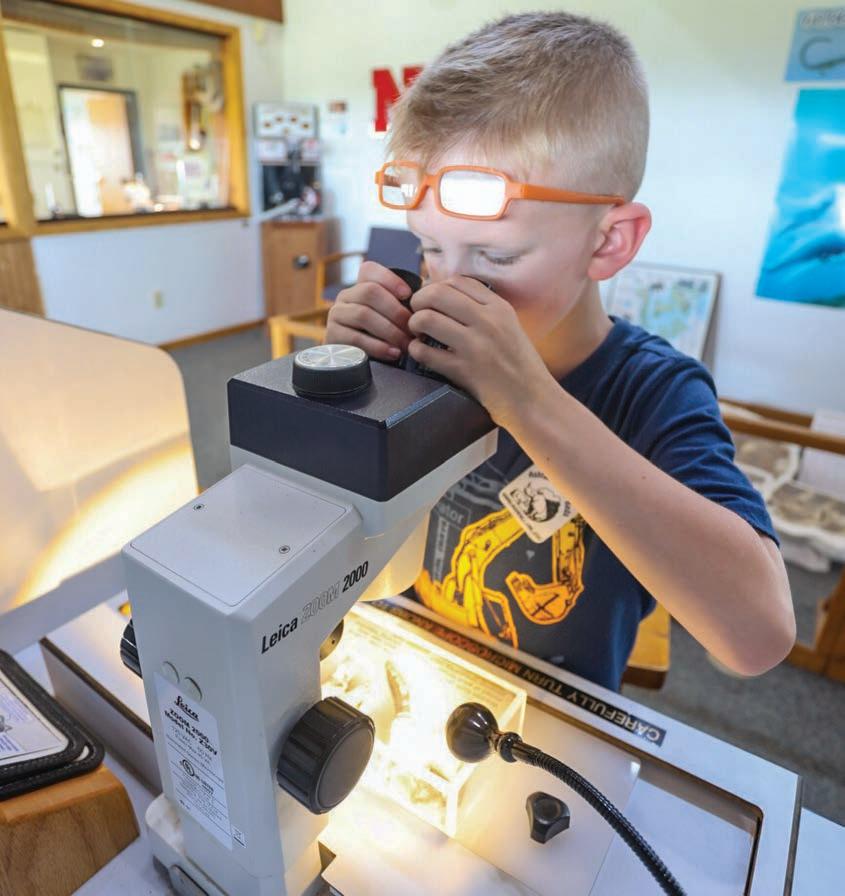
For many visitors, discovery begins at eye level. Children peer into microscopes at Ashfall Fossil Beds, connecting hands-on curiosity with deep time – an early introduction to science in a place where questions are still being uncovered, one layer at a time.
“These are likely from extinct bone-crushing dogs,” he said. “We haven’t found their bones here yet, but discovering their footprints is exciting – they tell us that these animals were present at this site.”
Matson shared that excitement.
Today’s rolling prairie once held a thriving Miocene savanna. This low basin in Antelope County captured volcanic ash deeper than anywhere else in the region, preserving one of the most complete fossil assemblages in the world.
“The bone-crushing dogs, or borophagines, were predators roaming this landscape millions of years ago. We found their tracks, but no full skeletons yet. Those footprints are a direct link to the predators that shaped the ecosystem. It’s rare to find evidence like this preserved so clearly.”
The footprints do what bones can’t: they suggest movement. Something crossed this surface on purpose, long before it became a graveyard. “It makes the ancient world feel more real,” Dunker said.
In the barn, signs of pregnancy are preserved, too, including a rhino with unborn young. It’s all part of a snapshot of life during the Miocene Epoch.
THE HEADLINER is the barrel-bodied rhino Teleoceras major, found here in remarkable numbers. With that many individuals in one place, scientists can look beyond a single specimen and ask bigger questions about herd structure, movement and why this basin became a mass grave.
Under the volcanic ash lie older fossils preserved in sandstone, showing animals that lived here over many years before the ashfall. Those remains are scattered, weathered and chewed, a contrast to the articulated skeletons captured in the ash.
The deaths of these animals weren’t sudden. The layering of the skeletons shows that smaller creatures died first, followed by medium-sized and then larger animals. Matson explained that many skeletons bear evidence of Marie’s disease – also known as hypertrophic osteopathy – a pattern of abnormal bone growth associated with extensive lung damage.
“The animals likely came to the water-
hole sick, seeking relief, but eventually succumbed,” he said.
Researchers are still pulling stories from teeth. In a 2025 Scientific Reports study of Teleoceras major, Clark T. Ward and co-authors used isotopes in fossil tooth enamel and found evidence consistent with limited mobility. In other words, these rhinos likely stayed local instead of wandering long distances. The same chemistry can also hint at what they ate and what the climate felt like.
Matson sees Ashfall as more than a fossil site. He sees a place where big Earth forces become readable at ground level. The park’s restored mixed-grass prairie echoes the savanna that once stretched here.
Looking ahead, Matson dreams of expanding the park’s educational programs, hosting camps and field classes that bring geoscience alive for students. “We’re close enough to civilization to be accessible, but remote enough for adventure,” he said. “That sense of discovery is vital.”
Despite decades of study, much of the ash bed remains unexcavated. There are countless fossils and stories still buried beneath Nebraska soil.
As Dunker reflected on his time in the ash, he summed it up simply.
“This place is one of a kind. The Earth is always changing, so finding a site like Ashfall Fossil Beds is incredibly rare. Being here and uncovering the changes that transpired over millions of years in this part of the country – it’s the experience of a lifetime.”
For visitors willing to listen, Ashfall tells stories written in dust and bone, of ancient herds, vanished landscapes and the enduring pulse of life beneath the Nebraska sky.
PLAN YOUR VISIT
Ashfall Fossil Beds State Historical Park is open seasonally, typically May 1 through mid-October, and is closed from mid-October through April 30. Check current hours before you go.
During the annual winter closure, Nebraska Public Media’s free virtual tour offers a way to explore the Hubbard Rhino Barn and visitor center from home: nebraskapublicmedia.org/webxr/ashfallfossilbeds/
Bones emerge slowly from the ash, still arranged as they fell. Articulated skeletons, folded limbs and intact skulls remain frozen in place, a reminder that beneath Nebraska soil lies a rare and enduring record of loss, survival and the persistence of earth’s deep history.
Ellen Hanzlicek
Under Same Flag the
by CHRIS AMUNDSON
AS EVENING SETTLES
across the plains, the day’s last light catches the edge of a flag above a small-town street. Traffic thins. Storefront lights come on. Beyond town, fields stretch toward the horizon. The flag moves steadily in the wind against the evening sky.
In Nebraska, scenes like this play out every day.
The United States marks its 250th anniversary in 2026. Nebraska entered that story later. The territory was established in 1854, and statehood followed in 1867. Nebraska became the nation’s 37th state that year. On July 4, 1867, a 37-star American flag became the nation’s official flag. It remained official until July 3, 1877, when Colorado’s admission brought a 38th star.
The flag already flew above military posts such as Fort Kearny, government buildings and settlements spreading west across the plains. Railroad crews carried it. Homesteaders raised it. In the decades that followed, immigrant families arriving from
Europe settled in places such as Columbus, Seward and Wilber.
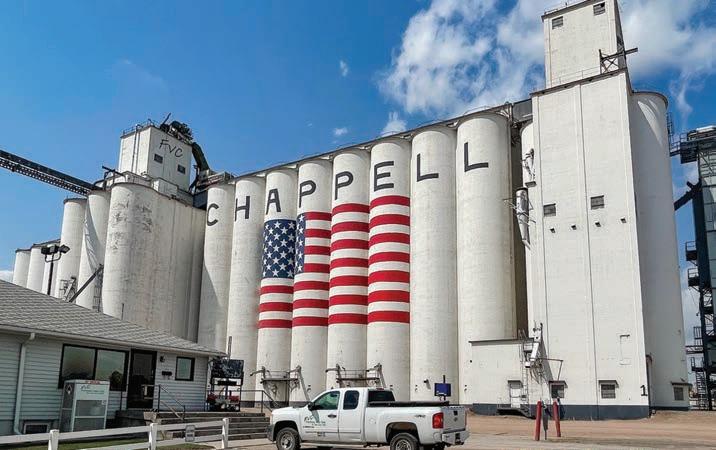
Today, some of Nebraska’s most recognizable flags serve as landmarks in their own right. Near Chappell in western Nebraska, a massive American flag flies atop the Farmers Cooperative grain elevator along Interstate 80, visible for miles across the Lodgepole Valley. Farther east, giant flags fly at several Sapp Bros. Travel Centers along Nebraska’s interstate corridors, where towering flagpoles and oversized American flags greet truck drivers and motorists day and night.
In many parts of the country, the flag competes with skylines, forests or mountains. Here, it stands against open sky. Along county roads, flags fly above ranch entrances, volunteer fire halls and rural cemeteries. In the Sandhills near Valentine and Thedford, they mark isolated homes surrounded by miles of grassland. Across the Platte Valley, they rise above grain elevators and courthouse lawns from North Platte to Grand Island.
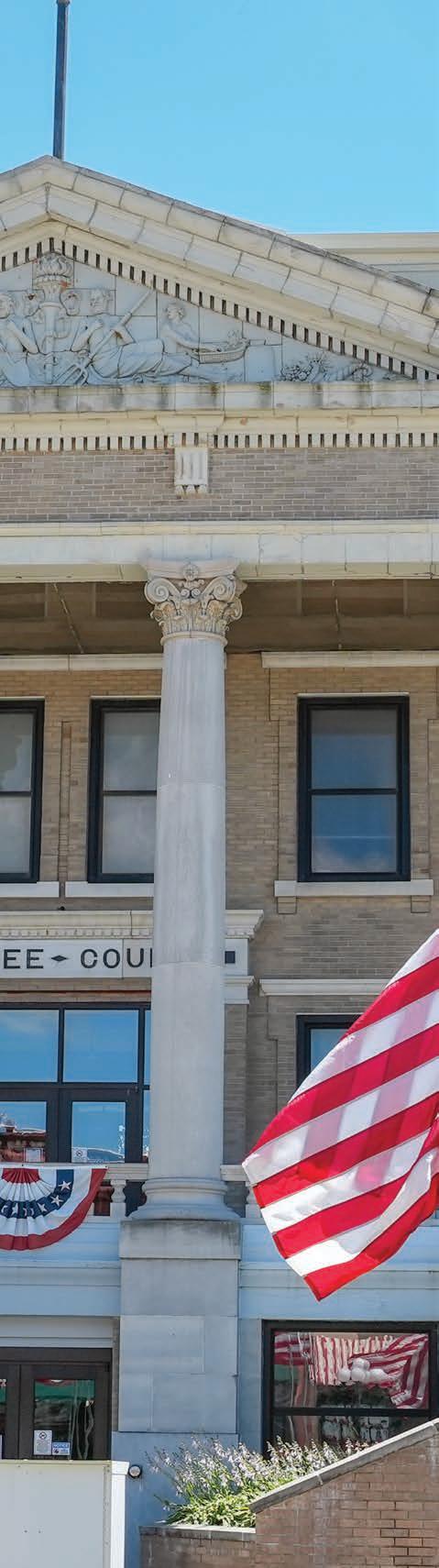
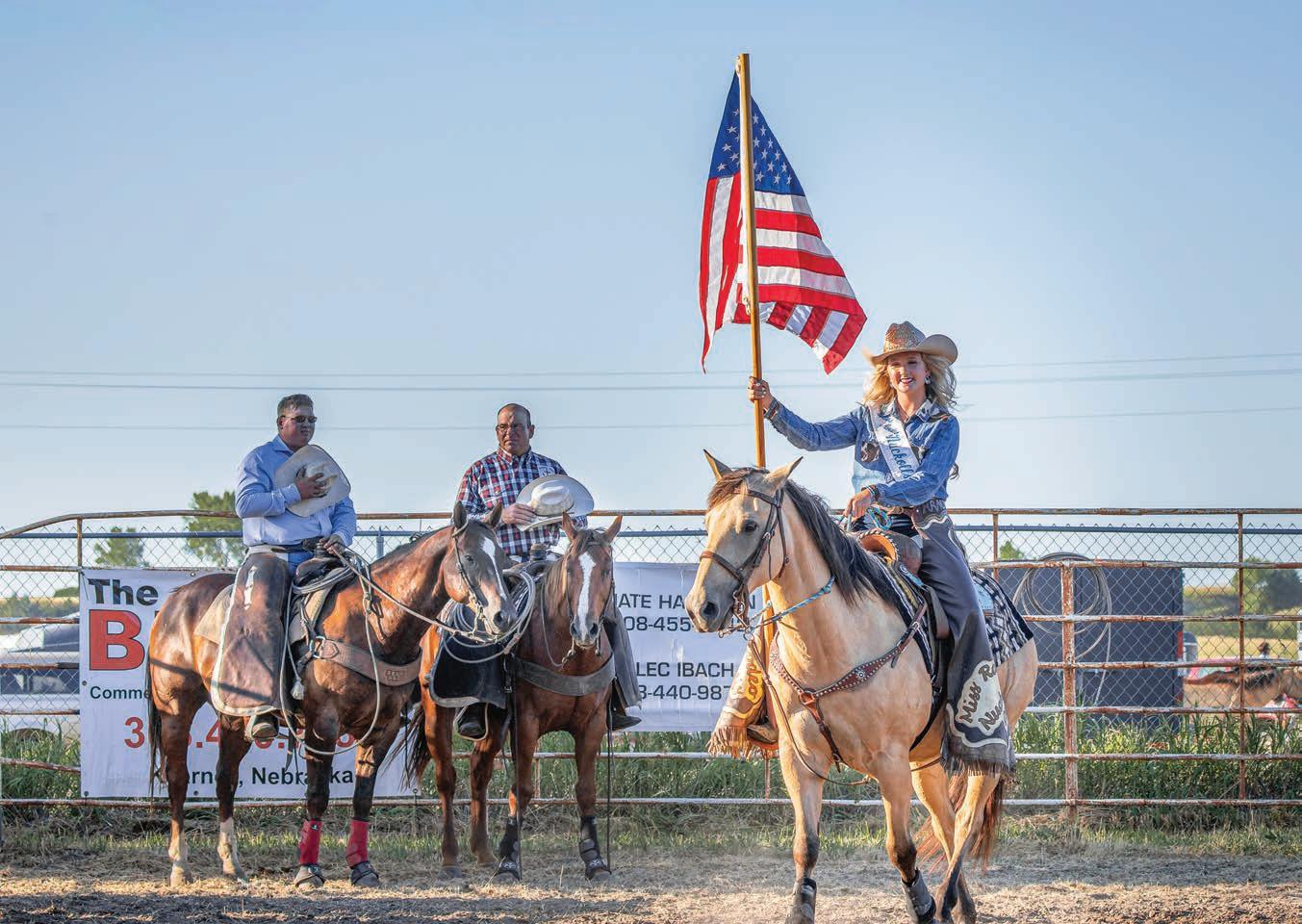
From manicured lawns to dusty arenas, the American flag is a familiar symbol in both daily life and ceremony. At the Pawnee County Courthouse, flags line the walkway to the seat of local government. In Sumner, Miss Burwell Rodeo proudly carries the flag on horseback. Others sing the national anthem, hands over hearts.
A large ceremonial display flies at Omaha’s Memorial Park, where thousands gather each Memorial Day. Another prominent display stands outside Omaha’s CHI Health Center, where a large American flag is visible near the convention and arena district. At Strategic Air Command Memorial Park near Ashland, a prominent American flag stands beside exhibits interpreting Nebraska’s role in the Cold War. Wind is a constant companion. Few Nebraska flags hang still for long.
Some of Nebraska’s most familiar flags stand beside memorials. The Nebraska State Capitol grounds in Lincoln display American flags alongside military memorials honoring veterans from multiple conflicts. Just east of the Capitol, the Nebraska Veterans Memorial features rows of flags during commemorative events.
Courthouse squares contain monuments listing local residents who served in the Civil War, World Wars I and II, Korea,
Vietnam and more recent conflicts. At Fort McPherson National Cemetery south of Maxwell, rows of white headstones stretch across the prairie beneath American flags placed during commemorative observances. Farther west, the Nebraska Veterans Cemetery at Alliance honors veterans on the grounds of the former Alliance Army Airfield. Small-town cemeteries display rows of flags on Memorial Day. Veterans organizations place them beside headstones, often one name at a time. In communities with only a few hundred residents, those names are rarely anonymous.
Yet most encounters with the American flag in Nebraska happen far from memorials. It appears at county fairs and rodeos, where it is carried into arenas before competitions begin, from Burwell’s Nebraska’s Big Rodeo to county fairgrounds across the state. It flies over football fields on Friday nights and school grounds during the academic year. It hangs from storefronts along
Tamara Rimpley
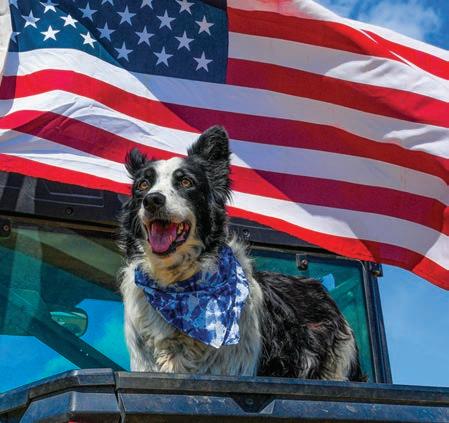
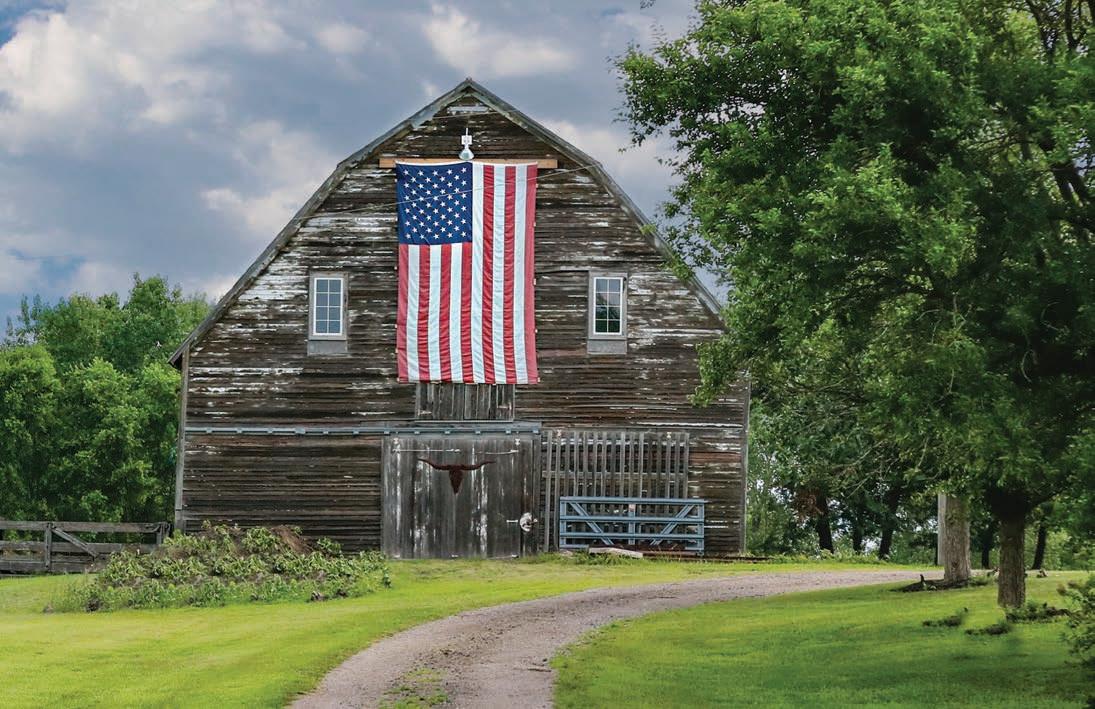
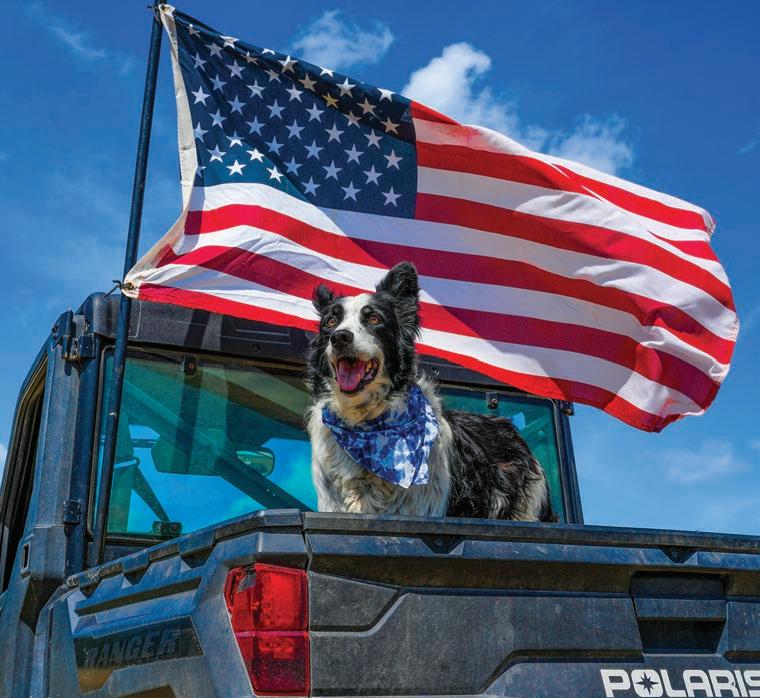
The flag drapes a working barn in Valley, proudly showing American pride in the Heartland. Elsewhere in southeast Nebraska, man’s best friend perches in the back of a 4x4 while patrolling her farmland. Red, white and blue fly above the open road on a summer day.
Ellen Hanzlicek
Kathy Chase
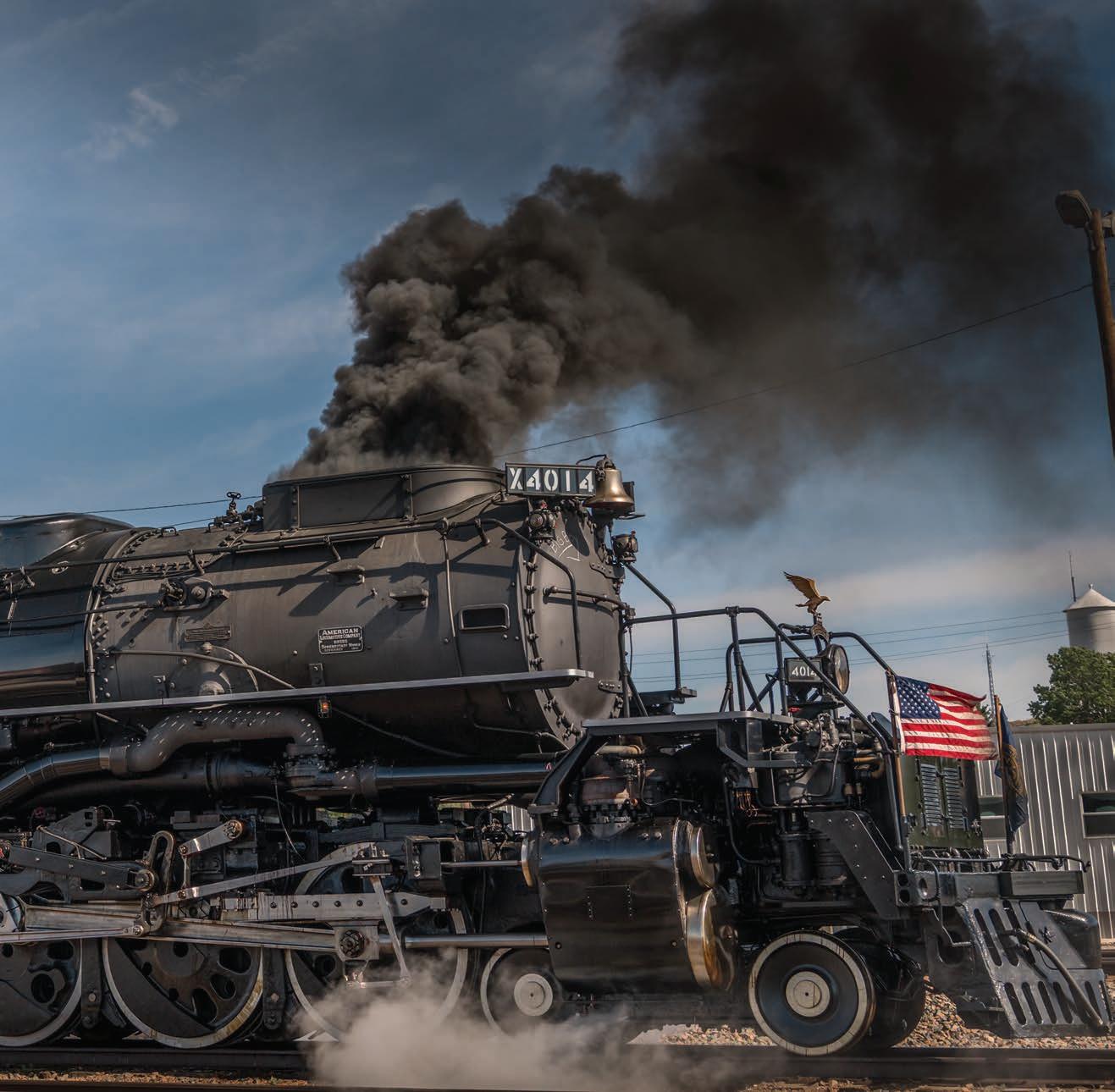
Stars and stripes lead the way through Sidney on the front of Union Pacific Big Boy, the world’s largest operating steam locomotive.
Steve Hruby
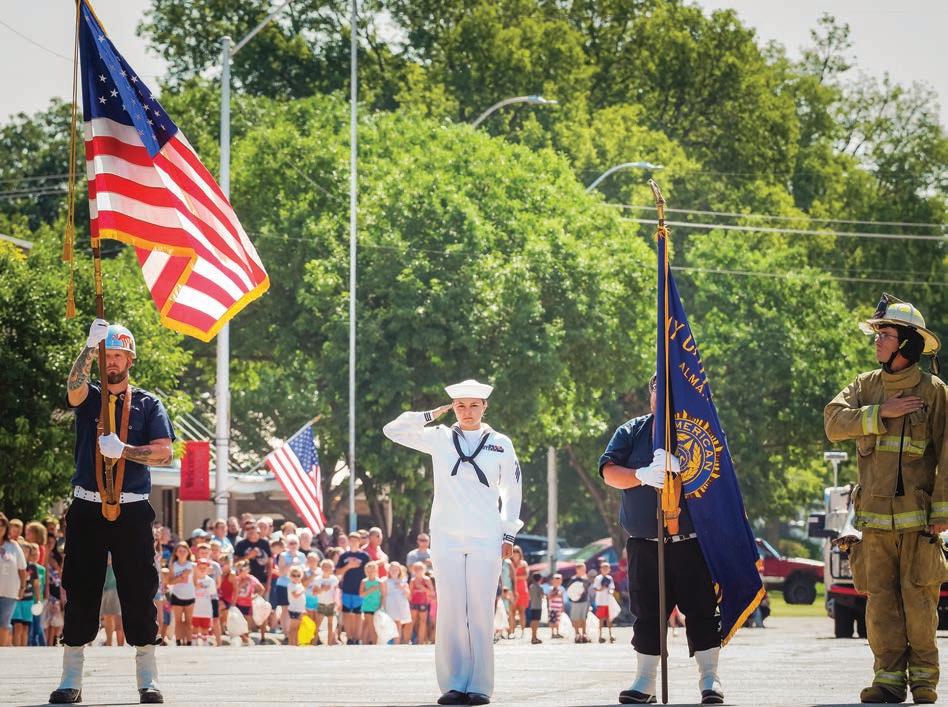
Alma’s Fourth of July parade,
communities all
Main Streets in towns such as McCook and Wayne and from porches in neighborhoods built decades apart. During the College World Series in Omaha, American flags appear throughout the ballpark district, while communities across the state line streets with flags during Independence Day celebrations.
Some flags are new. Others have faded after years of sun, wind and weather.
Nebraska has changed dramatically since statehood. Horse-drawn wagons gave way to highways. Prairie settlements became regional centers. New generations arrived.
Through those changes, the flag remained a common sight in public life.
Whether flying above a landmark, a public gathering place or a family farm, the flag remains where it has been all day, moving in the same Nebraska wind.
During
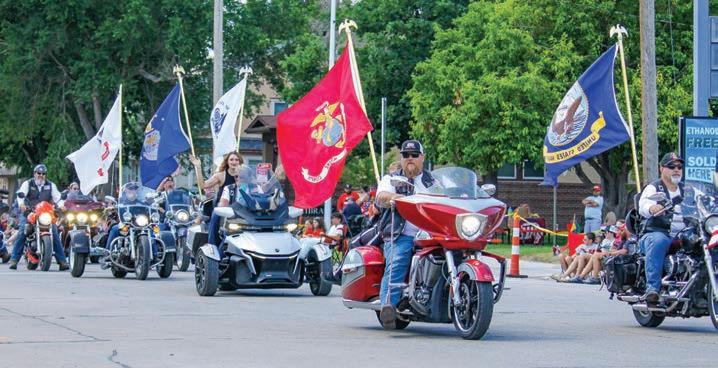
a Navy sailor salutes as firefighters and fellow service members stand in tribute along the route. In
across the state, moments like these carry the weight of service for one’s country.
Painted across a grain elevator near Chappell, the American flag rises above the Lodgepole Valley, visible for miles along Interstate 80. In the open country, even working landmarks carry the flag. Everyday structures mark their place and patriotism on the plains.
Nichole Shaver (above); Seth Varner (below)
by ARIELLA NARDIZZI
THE 2026 Nebraska Passport program features 70 stops organized into 10 themed tours. Each category guides participants toward a different kind of Nebraska experience, from historic landmarks and outdoor adventures to bakeries, boutiques and quirky roadside attractions.
“It’s designed specifically to encourage Nebraskans to explore their own backyard, to take a day trip, try somewhere new and support the small businesses and communities that make this state special,” said Jenn Gjerde, executive director of Visit Nebraska.
The themed tours are a roadmap for summer. History buffs can celebrate the nation’s 250th birthday through “Party Like It’s 1776,” a tour of historical sites across the state. “Adventure Algorithm” points travelers toward active stops that get visitors moving outdoors. Families will find kid-friendly fun along “Little Lad,” while readers and art lovers can explore galleries, theaters and bookstores through “Book It & Look It.”
“Downtown Charm Alarm” highlights businesses along picturesque main streets and historic districts. Food-focused travelers can follow their cravings through “Heartland Eats” and “Flour Power,” while caffeine and craft-beverage fans can enjoy “Sip Trip.” Shoppers can browse local goods through “Shopportunity,” and those who appreciate the wonderfully weird will find plenty to love in “Oddball Outposts.”
Visitors collect stamps in a physical booklet or through the Nebraska Passport app to win prizes. In 2025, 46,600 Passport booklets were requested, 147,700 app stamps were collected and Visit Nebraska named 1,128 Passport Champions, participants who visited all 70 stops.
PASSPORT TO SUMMER
The 2026 Nebraska Passport turns road trips into a statewide scavenger hunt
Since 2020, Bobbie and Craig Connolly of Lincoln have added their own artistic twist. The couple thoroughly researches each attraction, then Bobbie paints a small rock inspired by the stop. A caricature, scene or phrase captures the spirit of the place. When they arrive, she gives the rock to the business as a keepsake of their visit.
“It’s such a special connection with people who would otherwise be strangers,” Bobbie said. “I want each rock to spread kindness and put a smile on their face.”
The tiny artworks have become unexpected souvenirs of the journey for other travelers, too. Fellow Passporters have shared their own
delight when they stumble across a new destination and its matching rock artwork from Connolly and her husband.
“This program has really shown us a whole new world in Nebraska. It’s a gold mine of incredible places and people,” Bobbie said.
This year, she is especially excited to visit –and paint – Little Scandinavia in Elkhorn. The “Oddball Outposts” stop houses a collection of Swedish Tomte figurines that remind her of ones she used to collect.
Whether travelers take on the full crossstate road trip or a quick afternoon detour, the Passport turns every stamp into a small celebration of Nebraska.
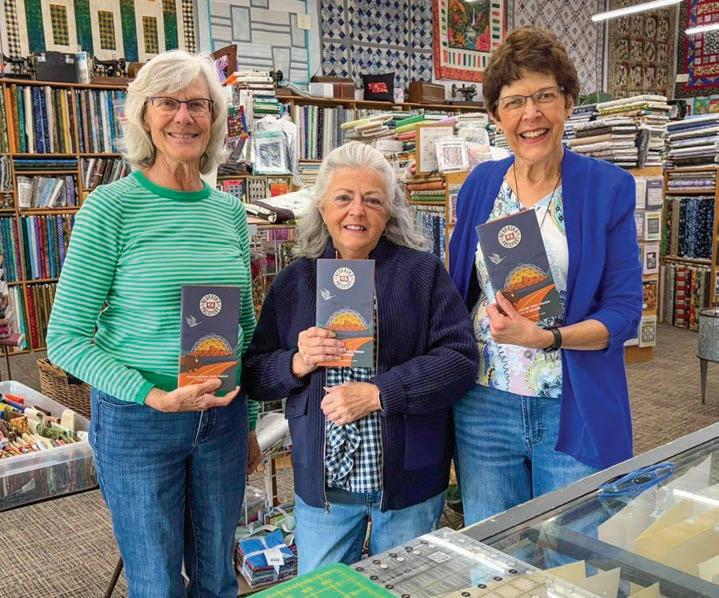
The Quilt Shop operates inside a historic building on Main Street in Wakefield. As the state's largest quilt store, customers can peruse more than 8,000 bolts of fabric.
The Quilt Shop
Passport Theme Legend
Adventure Algorithm
Book It & Look It
Downtown Charm
Alarm
Flour Power
Heartland Eats
ALLIANCE
Dirty Pop 816 Flack Ave. (308) 458-7963
ANSELMO
The Market and Mill 110 N. Dorr St. (308) 749-2263
ARAPAHOE
Lee’s Crossroads Cafe 656 Chestnut St. (308) 962-7979
ASHLAND
Little Lad Oddball Outposts
Party Like It’s 1776
Shopportunity
Sip Trip
Ashland Brewing Company 810 S. 9th Ave. (402) 944-2739
SAC Aerospace Museum 28210 W. Park Hwy. (402) 944-3100
ATKINSON
Something Special by Marilyn 204 S. Main St., Ste. 2 (402) 925-2754
AURORA
The Old Homestead Mkt and Floral 1211 M St. (402) 694-3400
BATTLE CREEK
Black Magic Coffee
506 N. 4th St. (402) 370-5004
BERTRAND
Jeremy Hansen Gallery at the Herald 615 Minor Ave. (308) 991-1372
BROADWATER
Lazy U Roadside Market 201 E. Guthrie St./Hwy. 26 (308) 262-5544
BROKEN BOW
Howdy Coffee Co.
2845 S. 28th St. (308) 767-2800
CHADRON
The New Leaf/Apricot Lane
1002 E. 3rd St. (308) 432-5561
CLARKSON
The Clarkson Bakery 113 Pine St. (402) 892-3131
COLUMBUS
Batter & Beyond 2816 12th St. (402) 606-3051
Columbus Fieldhouse 3912 38th St., Ste. F (402) 562-4900
Andrew Jackson Higgins National Memorial and Freedom Park 2001 A J Higgins Road (402) 639-1720
CRETE
Isis Theatre 139 W. 13th St. (531) 291-5093
CROFTON
Lewis and Clark State Rec. Area 54731 897 Road (402) 388-4169
DAVID CITY
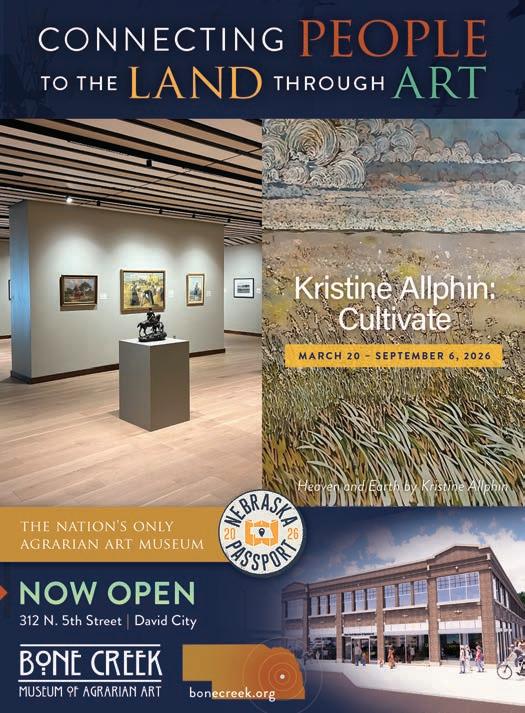
Bone Creek Museum of Agrarian Art 312 N. 5th St. (402) 367-4488
ELKHORN
Jukes Ale Works 20560 Elkhorn Drive (402) 779-8496
Little Scandinavia 2619 N. Main St. (402) 289-2307
FAIRBURY
J&R’s Cones and Coffee 506 C St. (402) 729-6477
FORT CALHOUN
Fort Atkinson State Historical Park
201 S. 7th St. (402) 468-5611
GIBBON
Rowe Sanctuary 44450 Elm Island Road (308) 468-5282
GORDON
Covered Wagon Drive-In 327 N. Main St. (308) 282-0120
GRAND ISLAND
Beverly Cake Shop
311 E. 4th St. (308) 675-2269
Grand Island Casino Resort
777 E. Fonner Park Road (308) 675-5600
GREENWOOD
Yoder’s Amish Furniture
648 Main St. (402) 789-5111
GRETNA
Prime Time H2O Zone, Gretna YMCA 12358 S. 208th Ave. (531) 283-5420
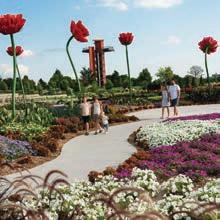
Columbus Fieldhouse offers mini golf, turf fields and plenty of family fun year-round.
Columbus Fieldhouse
HARRISON
Longhorn Saloon & Whiteaker’s 168 Main St. (308) 668-2112
Sioux Co. Historical Society Museum 142 Main St. (308) 668-2110
HASTINGS
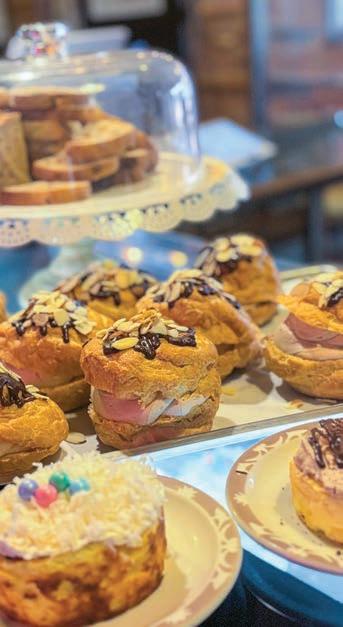
Back Alley Bakery & Café 609 W. 2nd St. (402) 460-5056
KEARNEY
Stagecoach Gifts
310 3rd Ave. (308) 234-3313
Suite Child Boutique
2304 Central Ave. (308) 237-3044
The World Theatre
2318 Central Ave. (308) 234-8046
LA VISTA
Happy Mango Bakery 9635 Giles Road (531) 867-3914
The Pen & Dagger 7861 Main St., Ste. C (531) 359-2845
LEXINGTON
Heartland Museum of Military Vehicles
606 Heartland Road (308) 324-6329
LINCOLN
High Society Cheesecake 3900 Yankee Hill Road, Ste. 101 (402) 328-2343
Museum of American Speed 599 Oak Creek Drive (402) 323-3166
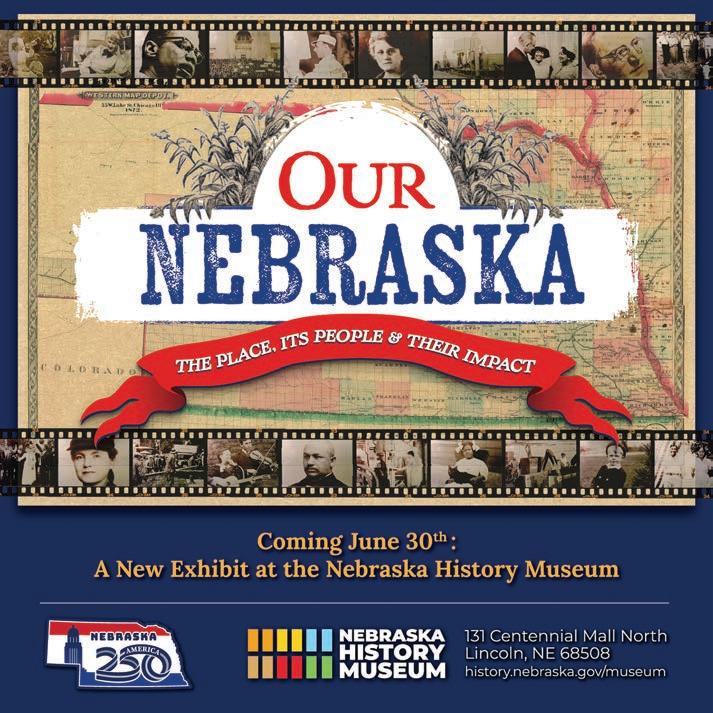
Nebraska History Museum 131 Centennial Mall North (402) 471-4782
Back Alley Bakery
Nebraska State Capitol Gift Shop 1445 K St., Room 1417 (402) 471-9406
Robidoux Inc. 455 W. South St. (402) 435-7203
Rose Cat Coffee Company
5600 S. 48th St., Ste. 120 (531) 310-5742
MANLEY
The Lofte Community Theatre 15841 Manley Road (402) 234-2553
MARQUETTE
Scotty’s Bar & Grill
416 Marquis Ave. (402) 854-2009
NEBRASKA CITY
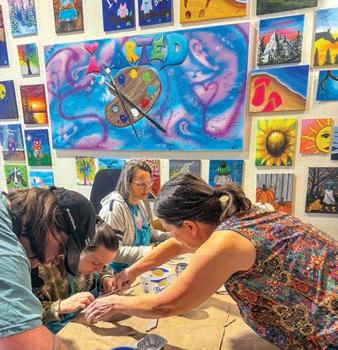
Self Expressions Gallery
819 Central Ave. (402) 209-7917
NENZEL
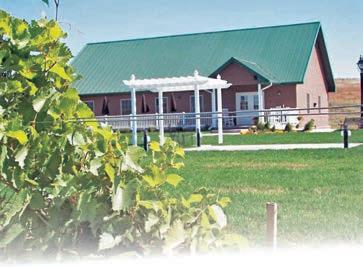
Niobrara Valley Vineyards 90254 State Spur 16F (402) 823-4131
NORFOLK
North Fork Outfitting’s Riverpoint Surf Shop 205 N. 2nd St. (402) 316-0157
Sixpence
416 W. Norfolk Ave. (402) 379-2120
NORTH PLATTE
Crystal Cave & Falls Adventure Mini Golf
805 Halligan Drive (308) 539-2247
The Coffee Bin
1800 E. 12th St. (308) 534-4645
OMAHA
Exist Green
4914 Underwood Ave. (402) 502-0080
Fat Brain Toys
16909 Burke St., Ste. 131 (402) 504-6218
North Omaha Visitors Center & Martha’s Coffee Shop
2205 N. 24th St. (531) 466-5047
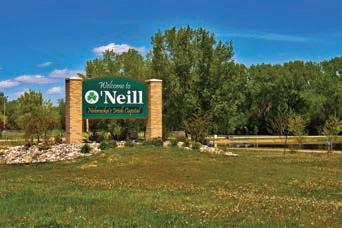
O’NEILL
Wildflour Grocer
112 S. 4th St. (402) 336-8988
ORD
Burdette’s Custom Meats
47544 Sargent-Ord Road (402) 218-1453
OVERTON
Creek’s Bend Family Farm
44436 County Road 754 (308) 708-8883
PAPILLION
The Book Nook Bookstores
114 N. Washington St. (531) 999-1827
SCOTTSBLUFF
Flyover Brewing Company 1824 Broadway (308) 575-0335
101 U.S. 83 (Cowboy Trail & Main St.) (402) 282-8700
WAKEFIELD
The Quilt Shop
314 Main St. (402) 287-2325
WALTHILL
Dr. Susan La Flesche Picotte Center 503 Matthewson St. (531) 254-0625
WAUNETA
Meadowlark Lane Coffee & Floral 116 N. Tecumseh Ave. (308) 394-5144
WAYNE
HIS Baking Co. 309 Main St. (531) 519-6728
The Wild Nettle
111 Main St. (308) 390-3154
YORK
Clayton Museum of Ancient History 1125 E. 8th St. (402) 363-5748
The 2026 Nebraska Passport Program runs through September 30. For more information about each stop, visit nebraskapassport.com.
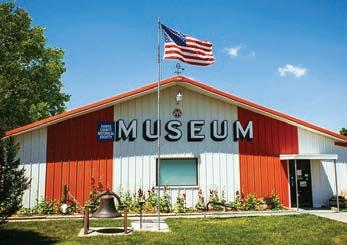
MUSEUM
Whip it! Whip it!
Creamy whipped topping is crème de la crème of favorite foods
recipes by ANGELA AMUNDSON photographs by CHRIS AMUNDSON
THERE IS NOTHING quite like a dollop of whipped cream to add an extra layer of lusciousness to fruit salads. OK, two dollops. Whether Nebraska cooks are stirring up dishes with candy bars, apples or other fruit, whipped cream is a smooth operator.
Raspberry Fluff Salad
Nebraska cooks get their daily doses of fruit and sweetness with this sugary and creamy salad that doubles as dessert. Eating healthy has never tasted so good.
In microwave safe bowl, microwave frozen raspberries until thawed. Add 1/2 cup sugar and cook 2-3 minutes. Remove from microwave and stir to make sauce.
Place remaining fruit in large bowl. Add raspberry sauce and mix well. Allow to cool in refrigerator for 3 hours. In medium bowl, whip heavy whipping cream, vanilla extract and remaining sugar until peaks form. Just before serving, fold the whipped cream mixture into chilled fruit mixture.
6 oz frozen raspberries
1/2 cup + 1 tsp sugar
1 apple, washed, cored and cubed
1 can mandarin oranges, drained
1 pear, washed, cored and cubed
1 cup green grapes, washed and halved
2 cups heavy whipping cream
1 tsp vanilla extract
Ser ves 6
Fruit Eyed Salad
Whipped cream fans might raise an eyebrow at the thought of tossing pasta into their light and fluffy favorite. After trying this flavorful salad, spoons will rise for another heaping taste.
Cook acini de pepe pasta according to directions on package. In saucepan, combine sugar, flour, salt, pineapple juice and egg and cook over medium heat until thickened. Cool sauce mixture and add lemon juice and pasta. Cover and chill one hour. Stir in oranges, cherries, pineapple, marshmallows and whipped topping. Chill an additional hour before serving.
1 cup acini de pepe pasta
3/4 cup sugar
1 Tbsp flour
1/2 tsp salt
2/3 cup pineapple juice
1 egg, beaten
2 tsp lemon juice
16 oz mandarin oranges, drained
8 oz maraschino cherries
20 oz pineapple tidbits, drained
1 cup miniature marshmallows
8 oz nondair y whipped topping
Ser ves 6
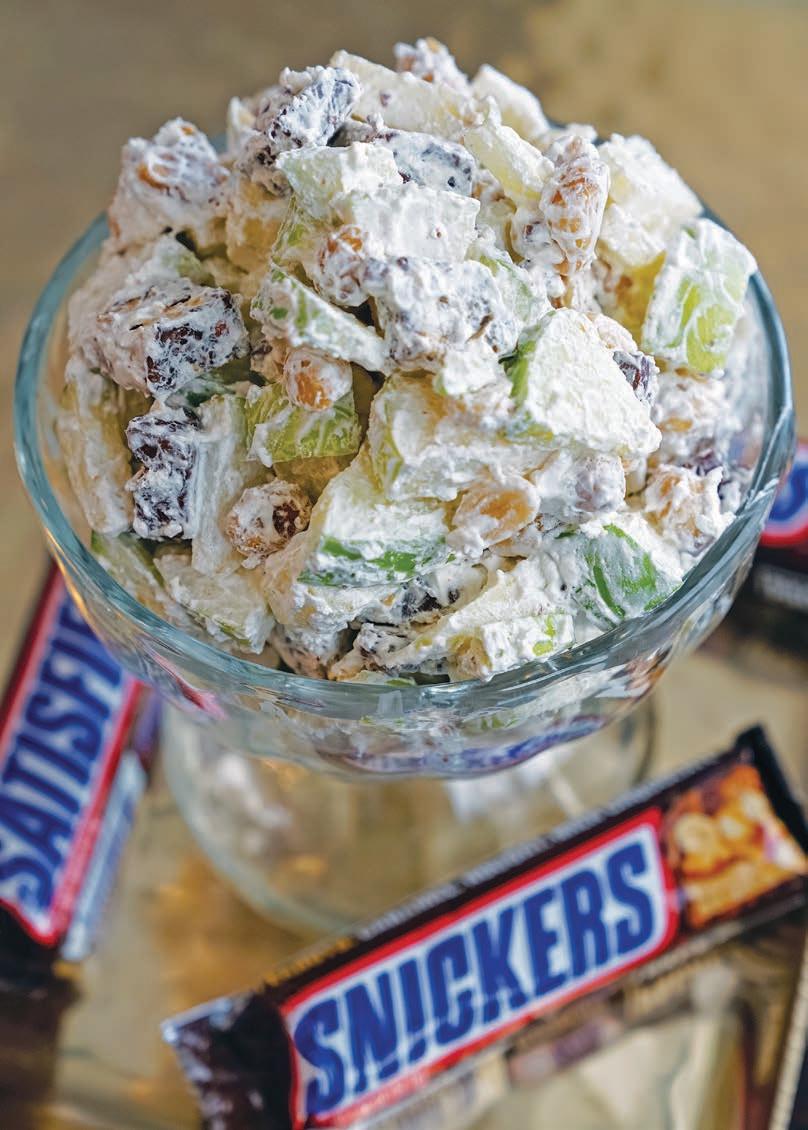
Apple Snickers Salad
Candy bars and apples go good together in this recipe combining both treats with a velvety and sweet helping of whipped cream. Don’t snicker.
In large bowl, mix apples, lemon juice, peanuts and candy bars. Fold in the whipped topping. Refrigerate minimum of 30 minutes before serving.
4 Granny Smith apples, washed, cored and diced
2 tsp lemon juice
1 cup roasted peanuts
4 full-size Snickers original single candy bars (1.86 oz each), chopped in chunks
8 oz nondair y whipped topping or homemade whipped cream
Ser ves 6
WE’RE RAVENOUS TO taste (and publish) your favorite family recipes and stories that accompany them. Send recipes and stories to kitchens@nebraskalife.com or to the address at the front of this magazine.
Breaking ground is both an act of labor and hope. From garden rows to prairie fields, these poems consider what it means to plant, tend and begin again – and how time, care and the land itself shape what grows.
My elderly neighbor cleans out her yard
Jeff Lacey, Gretna
in a beige sun hat and new green gloves. Peeling back the leaves of old hostas and combing clean the rectangle where new tomatoes belong she is confident that this is the day the work should be done, and, without warning, my heart agrees! I follow her into her joy; I read wildly the scripture of the sky; I am a bullfrog centered squarely on the lily leaf of time.
New Flowers
Duane Anderson, Olathe, Kansas
Words of a poem on the tip of your tongue, little flowers pushing through the ground,
entering a world of sunlight and water, growing and growing, touching each of us.
Sunflowers in an Abandoned Plow
Laura Hilkemann, Firth
The plow abandoned on grassy ground
Ripped many miles of prairie sod
Before its archaic tractor broke down
When all replacement parts were gone.
Now native sunflowers tower tall
Among the still, dull discs and shares
Which for the flowers are a shield
That flakes red paint upon the field.
The Gravedigger
Julie Roach, Kearney
As I walk through the cemetery
I hear a deafening, then a muffled sound
Not from the dead surrounding me
It’s the grave digger breaking ground
I wonder what he thinks while Excavating clay, dirt and soil
Speed, smoothness, backfill his job
Is undertaking a joy of his toil?
I taste the coffee I carry with me
Its bitterness keeps me awake
Once again I hear his backhoe
I muse whose destiny, whose deceased fate
I tentatively touch a headstone
Buried beneath lies someone I love
Sensing a calm closeness around me
I feel an earthiness from above
I end my slow burial ground walk
Leaves fall, sun sparkles its light
I deadpan wave to the departing gravedigger
As his burial bucket leaves my sight
AJ Dahm
I Remember Planting this Apple Tree
Judy Lorenzen, Central City
It’s May, and look at this grand apple tree, from pink blossoms to baby green apples. I remember when we planted it –the boys were seedlings themselves. I remember breaking ground and how excited their little hands were to pat the dirt down around it once the tiny tree was in the soil. Every day we watered it and checked the cotyledons as they converted sunlight into energy, developing true leaves. The root system was delicate, on its way to maturing, but so dependent on moisture and protection from environmental stressors, and the boys grew with that seedling turned sapling, which became rigid, woody stemmed and stood without support. I remember when the boys began to increase in size and height and branch out.
I knew the day would come they’d leave home –like autumn winds that take away the leaves and apples –but at that time, I never envisioned this beautiful canopy of verdant leaves and small apples soon to be round, red, and ready for piemaking or applesauce. I didn’t see the reward that comes with time, perseverance, and patient caretaking –roots that go deep into the land, strong, or the abundant fruit that is a repeated blessing every year.
Wind and Stone
J.E. Winter,
Omaha
The wind rushes through the pines like it has somewhere to be. Offering ancient secrets that no one understands but the white-rumped mule deer.
See her twitch and tilt an ear at nothing? We can stop and observe for a while.
Look – that sapling below us, dusted in snow, its slender frame emerging from a boulder. Today it looks so weak.
But just out of sight its roots are powerful enough to break stone and move mountains.
Soon enough it will tear that boulder asunder and claim its place on this mountainside.
Then it, too, will become a messenger of the wind.
SEND YOUR POEMS on the theme “Prairie Light” for the September/October 2026 issue, deadline August 1, and “By the Fire” for the November/December 2026 issue, deadline September 1. Email your poems to poetry@nebraskalife.com or mail to the address at the front of this magazine.
AJ Dahm
nod to the ation’s 250th N ebraska’s N
From trail miles to flyovers, museum streets and rodeo arenas, Nebraska marks America’s birthday in its own way.
story by ARIELLA NARDIZZI
AS THE COUNTRY marks 250 years since the signing of the Declaration of Independence, Nebraska celebrates the Fourth of July – and beyond – with events across the state. The Nebraska Semiquincentennial Commission serves as the state’s America250 hub, connecting communities, agencies and residents with celebrations and volunteer opportunities throughout 2026.
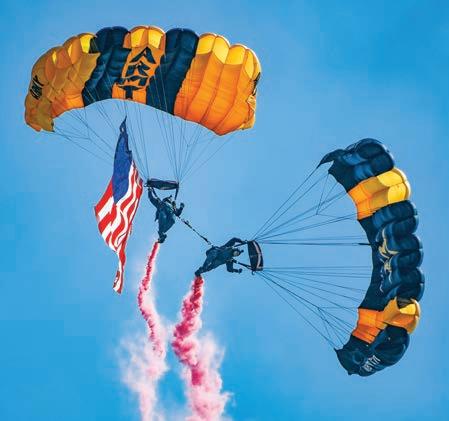
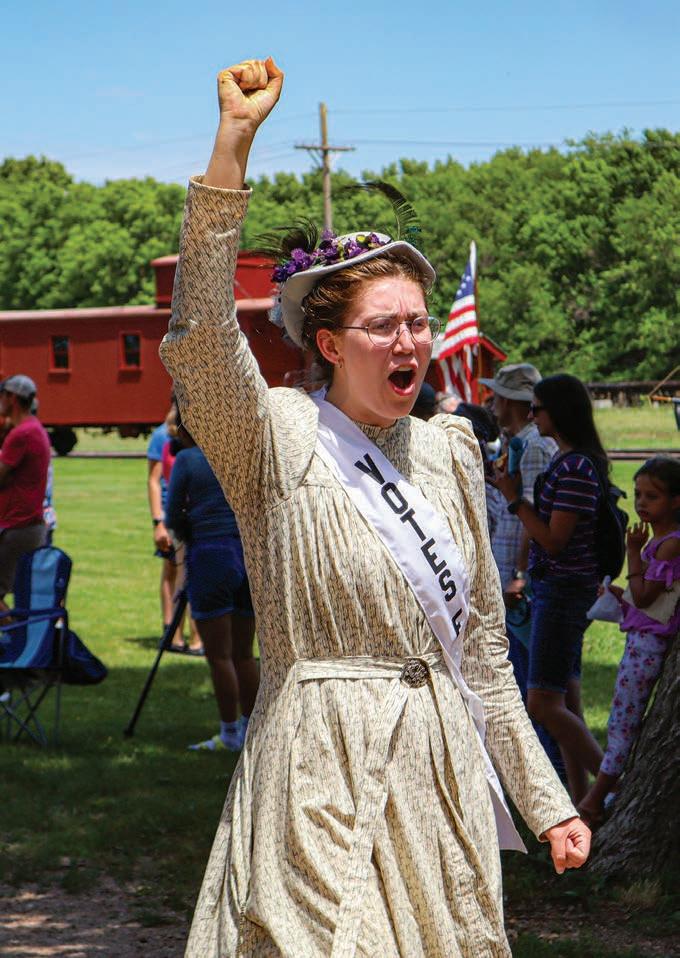
The Outdoor Nebraska 250-Mile Challenge encourages residents to log miles on trails, rivers and in state parks. The Defenders of Freedom Air & Space Show at Offutt Air Force Base brings military flight demonstrations to the skies above Bellevue. Seward, the state’s Official Fourth of July City, continues a tradition dating to 1868, Grand Island’s Stuhr Museum transforms Railroad Town into a living history celebration and Crawford leans into its frontier roots with rodeo nights.
Together, these gatherings celebrate America’s birthday in a distinctly Nebraska way: outside, in town squares, on museum streets and under rodeo lights.
Outdoor Nebraska 250-Mile Challenge
Statewide
In honor of America’s semiquincentennial, the Outdoor Nebraska 250-Mile Challenge invites Nebraskans to log 250 miles across the state in 2026. The Nebraska Game and Parks Commission hopes the final tally climbs far higher, whether participants paddle the Niobrara River, ride horseback along the Cowboy Trail or walk Fontenelle Forest’s boardwalk beneath oak leaves.
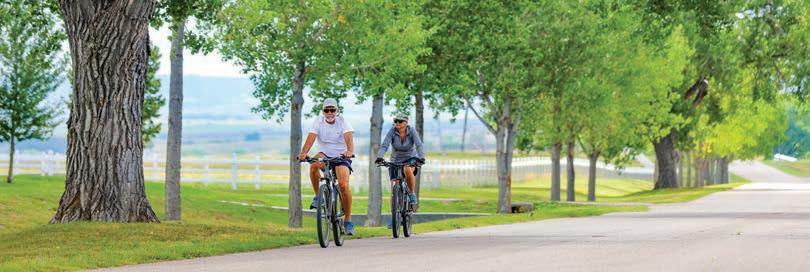
The free, year-long initiative encourages use of trails in more than 70 state parks, recreation areas and historical parks. Participants can count miles by hiking, swimming, kayaking, horseback riding, biking, running and more. Miles can be tracked anywhere in Nebraska.
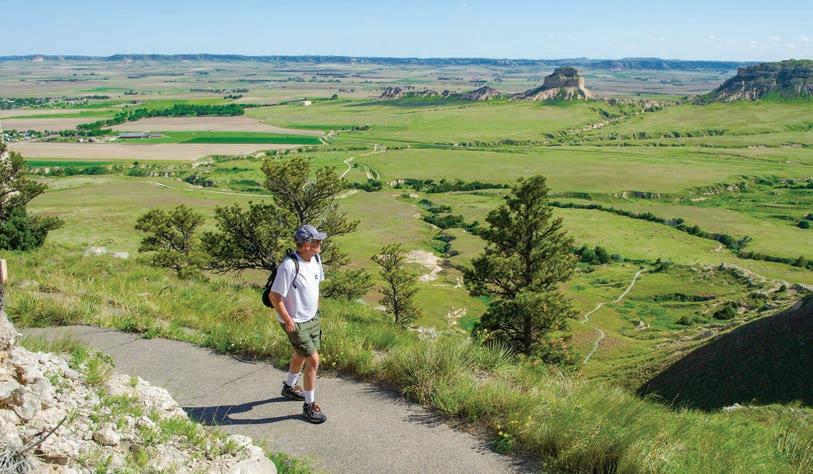
The challenge may send some participants to new corners of the state, but Jim Craig hopes it also gives people incentive to continue what they already do: get outside. Craig, a trail builder and Army veteran, worked with the Nebraska Game and Parks Commission to develop the initiative. “Get out of the house,” he said. “You don’t need to buy anything or go far. Do what you’re already doing – maybe it’ll even lead to a routine of being outside more.”
Craig himself has already logged 250 miles and expects to top 1,000 by year’s end. Many of those miles came from biking around Wagon Train State Recreation Area, a favorite because of its proximity to his Panama home. He hopes the miles Nebraskans compile will show state lawmakers how popular the state’s recreation areas are.
Finishers receive a commemorative sticker and are entered to win prizes, including a free stay in a state park cabin and a 2027 state park permit. By year’s end, the challenge will have moved well past its 250-mile mark, showing how far Nebraska can take you – if you let it. outdoornebraska.gov.
Offutt AFB Defenders of Freedom Air & Space Show
Bellevue
Aircraft climb above Offutt Air Force Base south of Omaha, cut across open sky and turn back toward the flight line, drawing gasps and cheers from the crowd below. The Defenders of Freedom Air & Space
In honor of America’s 250th anniversary, Nebraska Game and Parks Commission challenges residents to explore 250 miles of trails across the state by foot, bike, horse and watercraft.
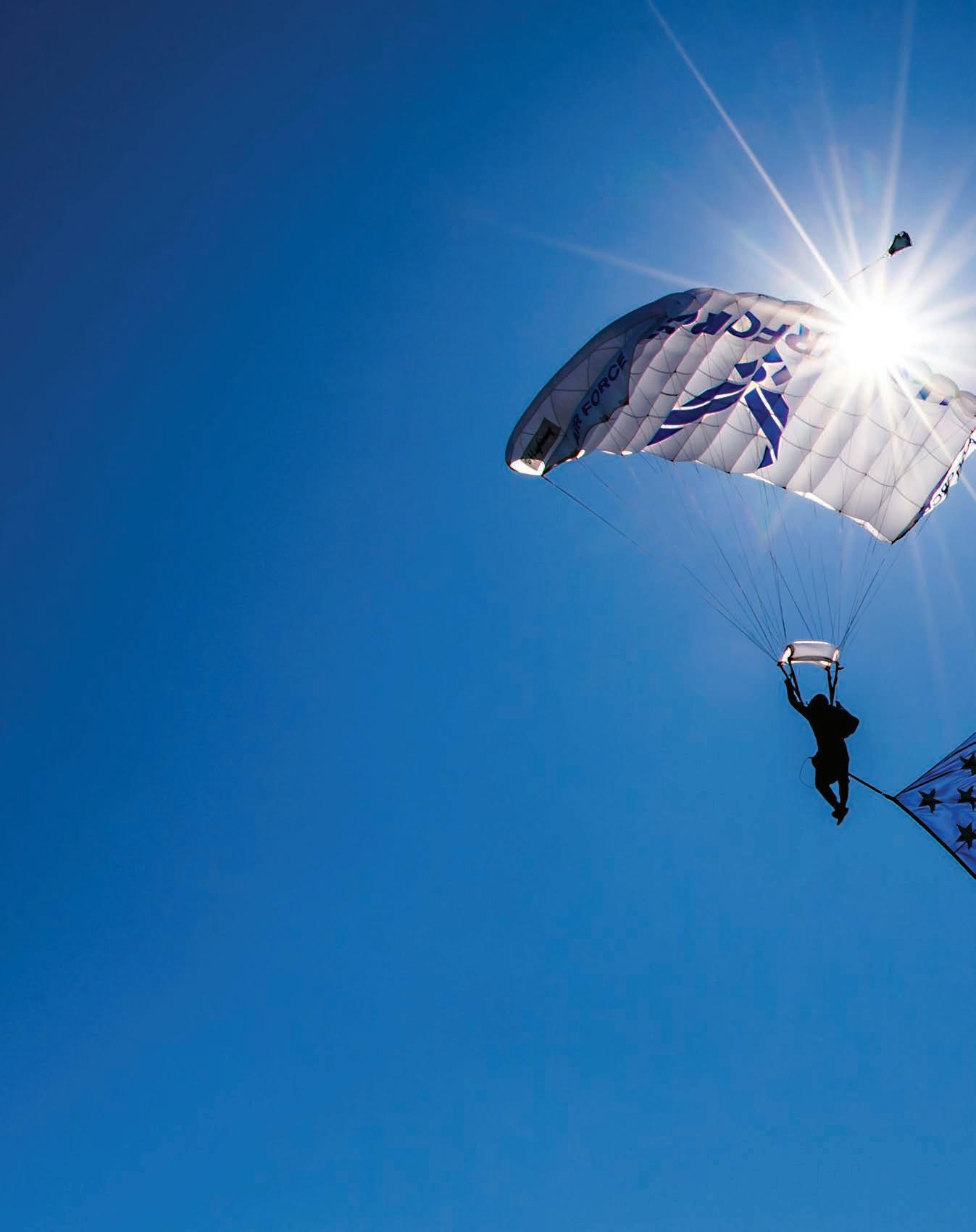
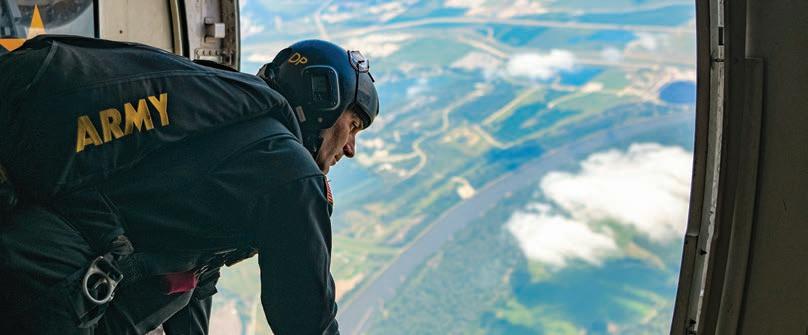
South of Omaha, all eyes turn to the skies for the Defenders of Freedom Air & Space Show at Offutt AFB as the U.S. Air Force F-35A Demo Team and parachuters display their skills.
Show, set for Aug. 8-9, packs two days with that same adrenaline.
The free showcase celebrates American airpower, innovation, and the men and women who defend the nation. A full schedule will be released closer to the event, but the base is preparing to welcome crowds for a weekend of aircraft demonstrations and family programming. This year’s event headliner will be the U.S. Air Force F-35A Demo Team.
All eyes will remain on the sky as aircraft turn the base into an exciting public stage for speed, precision and military skill. On the ground, families can learn more about the aircraft, technology and service members that shape Offutt Air Force Base’s mission.
Across the flight line, tens of thousands gather in anticipation for the annual free event. It’s an air show fit for 250 years of freedom. offutt.af.mil.
Barbara Johnston (top); AJ Dahm
Offutt AFB
Fourth of July City Seward
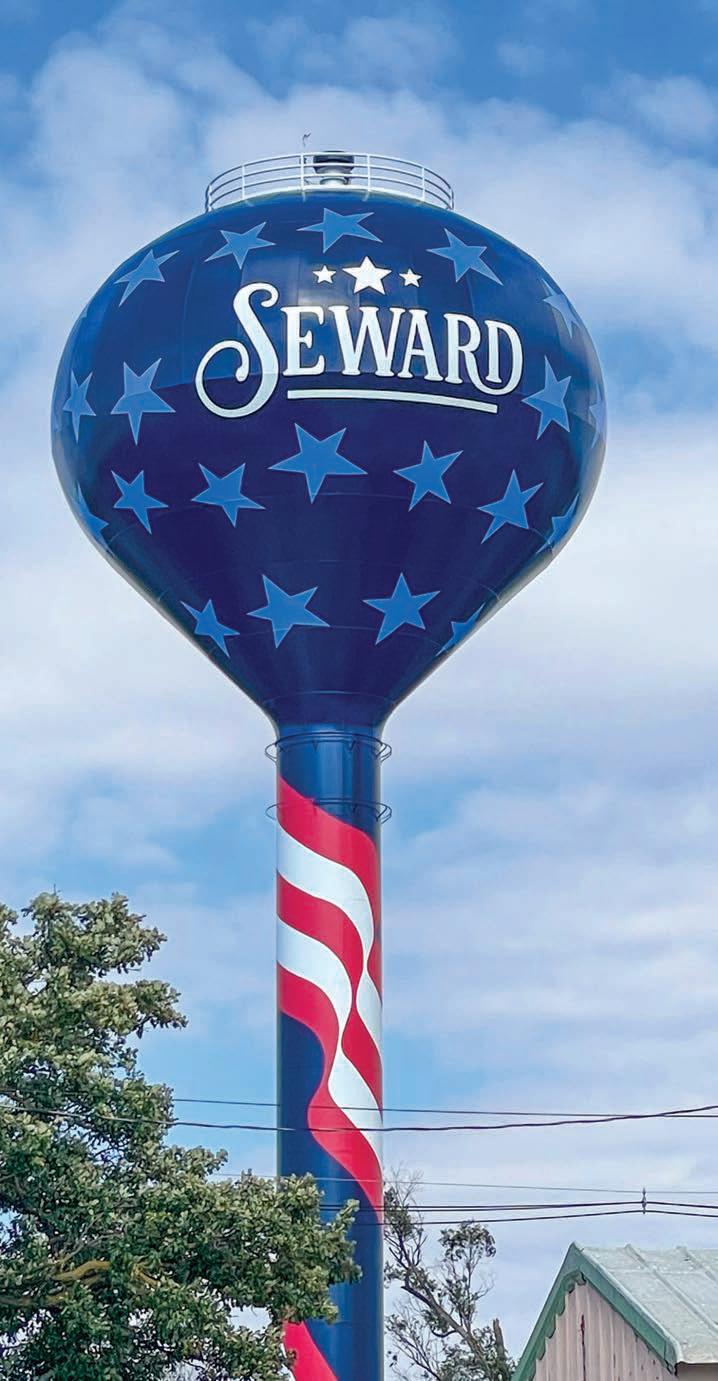
In Seward, the Fourth of July is more than an event. It is a yearly claim the town has made since 1868, when the men dug a well, the women sewed an American flag and a tradition began that would lead to Seward’s proud title as “Nebraska’s Official Fourth of July City.”
The town was founded near the confluence of the Big Blue River, Plum Creek and Lincoln Creek, drawing eastern farmers and German and Czech families.
By the early 20th century, trains carried visitors into town for Independence Day festivities. In 1973, Gov. J. James Exon formally designated Seward as Nebraska’s Fourth of July City, and in 1976 Seward hosted the state’s bicentennial celebration.
Though new activities are added, one thing remains constant: year after year, Seward residents celebrate America.
“We bleed red, white and blue 24/7, 365 days a year.”
–
Clark Kolterman Seward Fourth of July Committee
“We might be removed from the Revolutionary War geographically, but not spirit-wise,” said Clark Kolterman, who has chaired the event for 57 years. “We bleed red, white and blue 24/7, 365 days a year.”
That consistency turned a celebration into tradition, and tradition into identity. This year’s celebration carries the legacy forward under the theme “One Nation – Many Stories,” featuring more than 50 events over two days. The festivities begin July 3 with an anvil firing and Chautauqua performances portraying George Washington, Thomas Jefferson, Abraham Lincoln and Theodore Roosevelt at the Nebraska National Guard Museum.
The afternoon brings a First Ladies Tea, an exhibit of authentic Revolutionary War uniforms and an evening concert by the 43rd National Guard Army Band. “Remembering Our Fallen” honors service members lost since 9/11 with more than
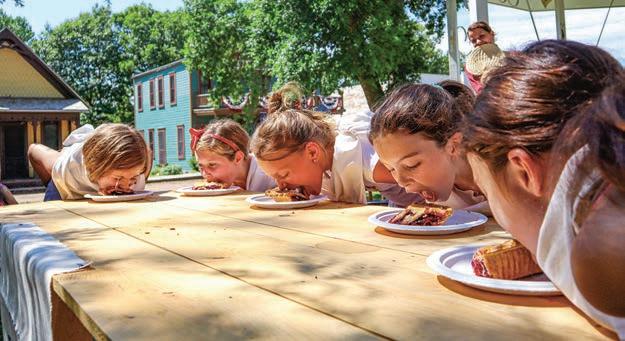
Seward, Nebraska’s Fourth of July City, hosts its 158th celebration of the nation. The weekend festivities include an apple pie eating contest, historical reenactments and much more.
Joanie Brecka
5,500 photos displayed on 34 towers along Jackson Avenue.
On July 4, the city of fewer than 8,000 residents swells to 40,000. Runners take off in the 10K or 2-mile Freedom Run. Artisans line the courthouse lawn for Crafts on the Square, while music spills from the Seward Bandshell and revelers gobble homemade apple pie. The grand parade of tractors, cowboys, horses and floats rolls through downtown, drawing shoulder-to-shoulder crowds before fireworks close the evening over Plum Creek Park. In the same square where Seward has gathered for more than a century, the community gathers again for its nation. julyfourthseward.com.
Crawford Fourth of July
Crawford
Dust kicks up in the Old West Trail Rodeo Arena before the sun drops beneath the horizon. Boots trample worn bleachers and the smell of barbecue wafts from town.
It’s the kind of start to Independence Day that only feels right in Crawford.
The celebration runs July 2-4, nodding to the high plains’ frontier roots. The Western & Wildlife Art Show at Fort Robinson State Park captures rural life in silver, paintings, photography, leatherwork, sculpture, fine jewelry and other mediums. Younger artists get their turn in the spotlight, too.
The Children’s Wall of Art Contest on July 3 highlights bright interpretations of the West from children ages 2-18.
The following morning, runners trace river bends and gravel paths from Fort Robinson to Crawford during the White River 5K. Many are clad head to toe in red, white and blue – best dressed wins prizes. Back in town, Fourth of July spirits run high with a parade and park activities.
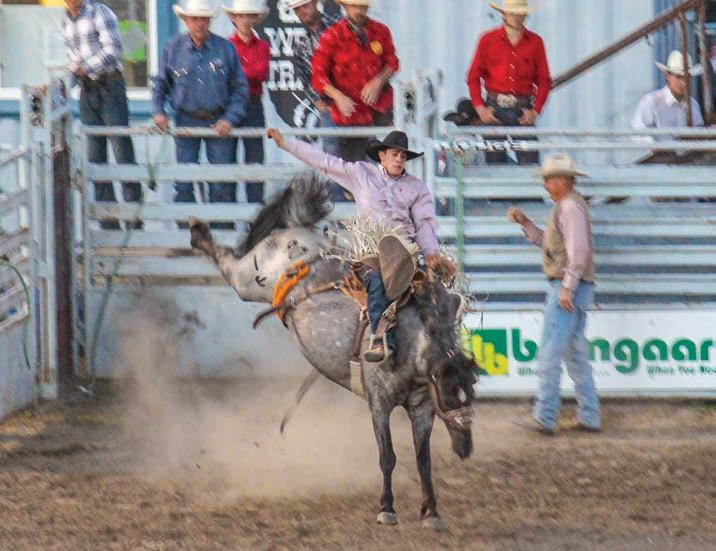
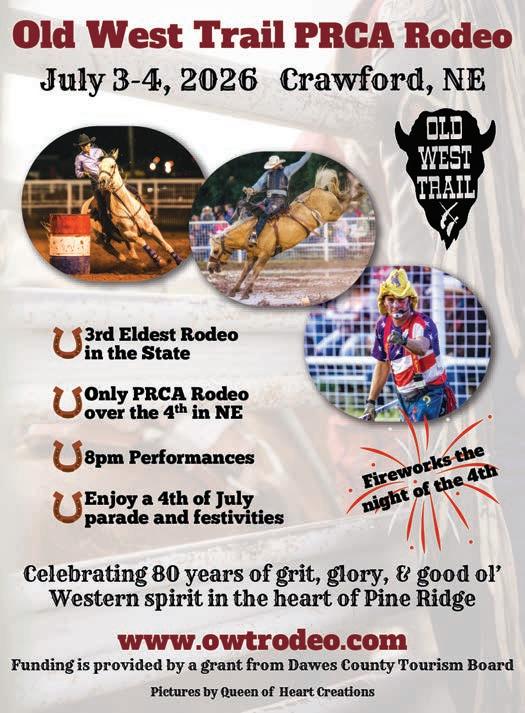
But the heartbeat of the weekend comes when the gates swing open for the Old West Trail Rodeo on July 3 and 4 at 8 p.m. In an arena on the outskirts of town, PRCA competitors ride, buck and holler under
a wide Nebraska sky. As the announcer’s voice crackles over the speakers, a chute slams and suddenly everything is in motion. Hooves tear into dirt. A rider holds on for eight seconds that feels like eternity. No matter the outcome, the crowd cheers for one of its own.
When the final ride ends July 4, the lights dim for a fireworks show that brightens the horizon. Even after the dust settles, Crawford holds onto its Fourth of July pride. crawfordnebraska.info/4th-of-julycelebration
‘United We Celebrate’ Festival
Grand Island
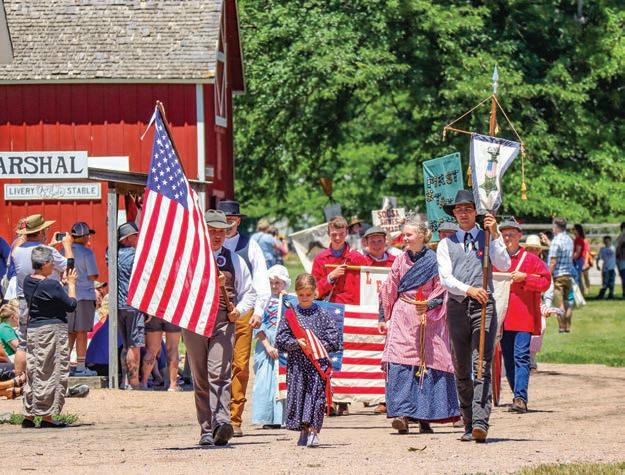
At Stuhr Museum, Railroad Town puts history within arm’s reach. Storefronts in the 1890s-era replica town dress in red, white and blue period decor. The brassy tones of the Silver Cornet Band rise from a street corner, leading a parade through town. Here, independence feels newly won and freshly celebrated.
Stuhr Museum steps back in time to an 1890s-era Independence Day in Grand Island with parades, exhibits and fireworks.
Stuhr Museum
ALSO ON NEBRASKA’S 250 CALENDAR
Big Bang Boom
July 3-4 • Norfolk
Norfolk’s fireworks festival marks its 50th anniversary at Skyview Lake with two nights of music, food vendors, a Freedom Point dedication and a July 4 fireworks show.
Re-Dedication of the I-80 Bicentennial Sculptures
July 4 • Blue River Rest Area
A 2 p.m. ceremony at the I-80 eastbound rest area near Seward returns attention to Nebraska’s iconic 1976 Bicentennial roadside sculpture project.
Founders’ Museum Exhibit
Thru Aug. 31 • Lincoln
The Nebraska State Capitol displays panels on Revolutionary War events, influential women of the Revolution and the 56 signers of the Declaration of Independence.
American Discovery 250 Relay Sept. 15-24 • Statewide
The nationwide 6,800-mile coastto-coast relay crosses Nebraska from Martin Bay to North Platte. Participants can walk, run or bike.
How We Celebrate
On July 4, 2026, that same scene widens into the museum’s festival celebrating America’s 250th anniversary. Cultural, musical and interpretive performances, demonstrations, craft booths, food trucks and family activities round out the day.
A Chautauqua gathering hosts influential figures from Hall County’s past, while patriotic speeches echo the rhetoric of early Independence Day celebrations.
The Nebraska Muzzle Loading Rifle Association and military vehicles will be on site. Music welcomes guests from many backgrounds: a polka band, a mariachi ensemble, a ’90s cover band and performances from Native American, Latin American, Sudanese and Filipino groups.
Temporary exhibits commemorating America’s 250th line Stuhr Museum’s indoor galleries. The year-long “Our Amer-
ican Dreams,” on display into January 2027, represents variations of the American Dream through different mediums. “You Are From Where You Grow” illuminates the stories of nine immigrant experiences in Grand Island.
Additional exhibits include a women’s history commemoration and “A Life in the Wild” from Grand Island native Thomas D. Mangelsen. Fireworks close the evening at 10 p.m. above the Grand Island skyline.
Admission is free for Stuhr and Hastings Museum members and $2.50 for the general public. Admission is free for the fireworks show after 8 p.m. As the last notes of brass drift through Railroad Town and fireworks fade above Grand Island, Stuhr’s celebration links one Fourth of July to the next. stuhrmuseum.org.
Thru Sept. 26 • Beatrice
Gage County Museum’s special summer exhibit looks at patriotism, parades and milestones across generations in honor of America250. Admission is free.
Party Like It’s 1776 Passport Tour
Thru Sept. 30 • Statewide
Seven Nebraska Passport stops receive a special 250 stamp, including Fort Atkinson State Historical Park, the Andrew Jackson Higgins National Memorial and Freedom Park, Nebraska State Capitol Gift Shop and the Dr. Susan La Flesche Picotte Center.
Find the full Nebraska America250 calendar at america250.nebraska.gov.
The Old West Trail Rodeo anchors Crawford’s wild, wild West festivities on July 4th, along with the Western & Wildlife Art Show, patriotic run, parade, park activities and fireworks.
Clayton Museum of Ancient History at York University, p 55
BAYARD
Chimney Rock Museum, p 53
CHADRON
Dawes County Historical Museum, p 39 Museum of the Fur Trade, p 53
DAVID CITY
Bone Creek Museum of Agrarian Art, p 38
HENDERSON
Henderson Mennonite Heritage Park, p 54
LA VISTA
Czech and Slovak Educational Center and Cultural Museum, p 53
OMAHA
Durham Museum, p 52
RED CLOUD
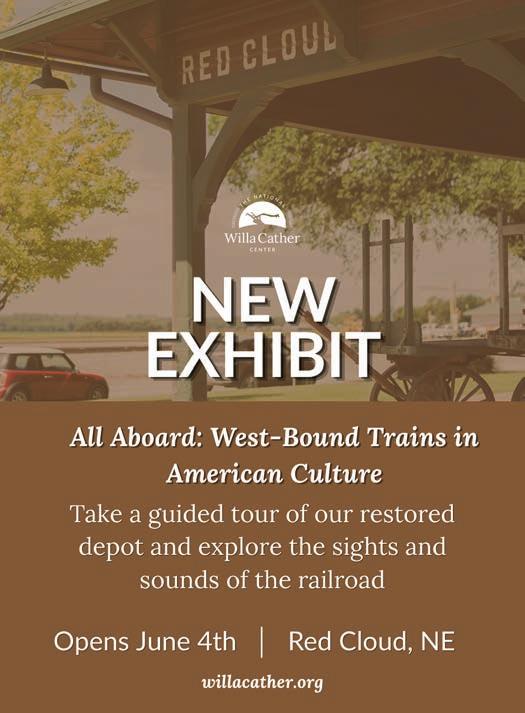
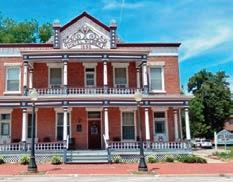
National Willa Cather Center, p 55
WILBER
Wilber Czech Museum, p 55
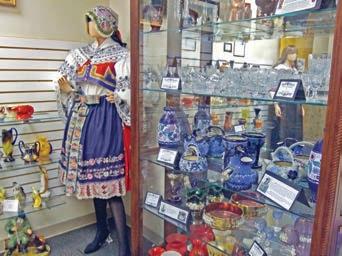
Visit this unique cultural experience in LaVista!
Our exhibits highlight the Czech & Slovak rich history and culture. Our displays include an Immigration Room, a Sokol Room and a Music Room, with a wall of accordions!
Our gift shop offers beautiful garnet and Moldavite jewelry, Czech Christmas ornaments, crystal, cookbooks, plus so much more!”
UNIQUE ITEMS TO VIEW!
John Kinzie’s gun
HBC officer’s sword
Brass handle cartouche knife
William Clark fabric samples
Chief’s coat
Kit Fox Society lance
Russian American Co. note Oldest dated trap 1755
Parchment HBC officers certificate
Andrew Henry’s leggings
MENNONITE
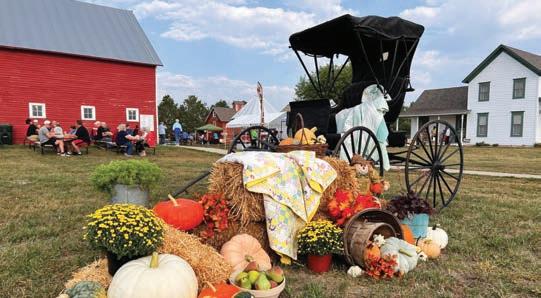
our 8 1/2 acre site with its turn-of-the-century farmstead, depot, country church, and school, where stories of Henderson’s Mennonite immigrants come to life!
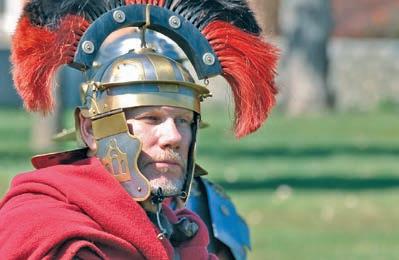
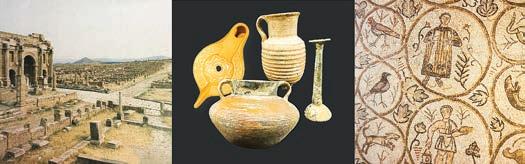
Explore ancient Rome, the Near East, and more. Includes a children’s interactive play area. Come see our new exhibit, “Ancient Stones, New Light: Rome, Christianity, & North Africa,” which highlights the art and architecture of Mediterranean Byzantine Africa.
r group t our s.
Join us to celebrate the 65th Annual Czech Festival • July 31, August 1-2, 2026
Enjoy continuous FREE indoor and outdoor entertainment including three parades, dancing, music, food, vendors and a carnival. Home to the Miss Czech-Slovak U.S. Pageant with contestants from all over the U.S.
Festival Activities: Three Parades • Czech Demonstrations • 50 bands • Czech Historical Pageant • 150 Czech Dancers • 170 Member Alumni Band • Accordion Jamboree • Authentic Czech Foods • Kolaces • Bohemian Tractor Pull • Art Show • Quilt Show • Craft Show • Sports Events • Car Show • Carnival
Also enjoy year-round: Czech Museum • Czech Craft Shop • Historic Hotel Wilber • Outdoor Theatre • Guided Tours • Dvoracek Library • Heritage Room • Old County Sausages • Czech Baked Goods • Authentic Baked Meals • Garnet Jewelry • Czech Costumes
TAKING TO THE ROAD FOR FOOD, FUN AND FESTIVITIES
by ARIELLA NARDIZZI
HISTORY OREGON TRAIL DAYS
JULY
9-12
• GERING
Gering has gathered for Oregon Trail Days since 1921, making the four-day festival one of Nebraska’s longest-running community celebrations. More than a century later, the town still turns its trail history into a July weekend of parade floats, carnival rides, chili, music, food and friendly competition.
The Frazier Shows Carnival runs at Five Rocks Amphitheater throughout the weekend with rides and games. On July 9, smoke from the barbecue leads visitors to Gering Plaza, where the City Band plays at 7:30 p.m. and gives the celebration its first full evening downtown. The schedule on July 10 is set for a food fair and car show downtown.
The parade steps off July 11 at 10 a.m. along 10th Street. This year’s theme, “Stars, Stripes and Cornfields,” salutes the region’s farming heritage with a nod to America250. After the floats pass, the heat moves from pavement to chili pot. At noon, the 38th
annual Nebraska State Chili Championship brings cooks together for a spicy showdown and a steady line of tasters.
The weekend also includes a five-mile run, mud volleyball, art and quilt shows, a rod and custom car show and an Eagles tribute band concert. The mix lets visitors build their own route through town: a morning run, a climb near the bluffs, an afternoon in the show tents and a night back downtown with music in the air. A free drone show colors the night sky in red, white and blue.
Visitors can also split the day between trail landmarks and festival stops, with Scotts Bluff rising nearby as a reminder of the emigrants who passed through this valley on the 2,100-mile Oregon Trail. For more than a century, Oregon Trail Days has given Gering a way to honor that past while filling July streets with neighbors, music and summer dust. oregontraildays.com. (308) 436-4457.
WHERE TO EAT
SWANY’S UNION BAR
This local spot traces its Union Bar name to Prohibition days in 1928. The menu includes drinks, house-smoked prime rib and pulled pork nachos. 1403 10th St. (308) 436-7741.
WHERE TO STAY HOTEL 21 AND CO.
Gilded walls, velvet upholstery and polished rooms give this Gering hotel a dressed-up western feel. Guests will also find an upscale saloon and bar. 2605 N. 10th St. (308) 633-5795.
WHERE TO GO
LEGACY OF THE PLAINS MUSEUM
Pioneer artifacts, historic structures, antique tractors and an 80-acre working farm tell the story of life on the High Plains. 2930 Old Oregon Trail. (308) 436-1989.
Kacie Clark
COMMUNITY
50 MILE MARCH
AUG. 22-23 • LINCOLN,
OMAHA
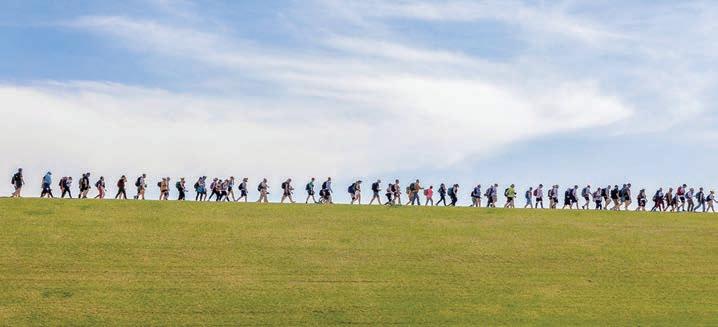
Boots strike pavement outside the Nebraska State Capitol before dawn. From there, more than 150 walkers head northeast, covering 50 miles from Lincoln to Omaha in support of Nebraska veterans.
The march began in 2020 with six participants and has grown into a twoday effort for veteran mental health, PTSD awareness and homelessness prevention. Walkers move through long stretches of gravel road and smalltown stops, with local businesses offering water, encouragement and places to rest. The route asks something of
OTHER EVENTS YOU MAY ENJOY
- America250 Events
JULY
Prairie Pioneer Days
July 1-4 • Arapahoe
Arapahoe fills Independence Day week with sidewalk chalk contests, Steers and Beers, yoga in the park and a free community meal. On July 4, runners take on the Firecracker 5K before cardboard boats race, the grand parade rolls and fireworks close the night. arapahoe-ne.com.
everyone who takes it: sore feet, long hours and a steady commitment to keep moving.
Each participant raises funds for local nonprofits and the Community of Hope in Bellevue, a planned campus offering resources, shelter and support for veterans and their families in the Omaha metro area. The project keeps the march tied to a visible goal: a place where help can be found after the cheering, blisters and roadside miles are over.
The miles are the point. No one reaches Omaha quickly, and no one walks alone. Step by step, the 50 Mile March turns a hard road into public support for those who served. 50milemarch.org. (402) 677-8062.
Freedom Fest
July 3-4 • Norfolk
Norfolk’s Freedom Fest lights up Skyview
Lake with what organizers bill as Nebraska’s largest fireworks show at 9:45 p.m. on July 4.
Legion Riders escort a bus from the Norfolk Veterans Home for a flag dedication, and the two-day celebration includes live music, food vendors and inflatables. 1900 W. Maple Ave. (402) 841-2000.
Buffalo County Celebration
July 4 • Kearney
Buffalo County Fairgrounds marks the 250th anniversary of the United States with a free evening celebration from 5 p.m. to midnight. Visitors will find a live band, beer garden, food trucks and a fireworks display choreographed to music. 3807 Ave. North. (308) 237-3178.
Golden Spike Days Photo Exhibition
Thru July 5 • Omaha
In 1939, Omaha staged Golden Spike
WHERE TO EAT LEADBELLY
This veteran-owned Haymarket restaurant serves creative comfort food, including the Rise ’N Shine burger and Philly egg rolls with ribeye and queso. 301 N. 8th St., Ste. 100. (402) 261-8849.
WHERE TO STAY THE SCARLET HOTEL
This 154-room Lincoln hotel draws design inspiration from towns across Nebraska. On-site options include Well & Good Restaurant, Barred Owl Rooftop Bar and Good Life Coffee Shop. 2101 Transformation Dr. (531) 300-6300.
WHERE TO GO VETERANS MEMORIAL GARDEN
More than 21 memorials and 5,000 donated Bricks of Remembrance honor veterans of World Wars I and II, Korea, Vietnam, Pearl Harbor, Airborne, Air Force, Coast Guard, POWs, K-9 Corps, China-Burma-India, Medical, Seabees and more. 1650 Memorial Dr. (402) 441-7847.
Days for the premiere of Cecil B. DeMille’s Union Pacific. The Durham Museum’s photo archive revisits the four-day celebration, when residents dressed storefronts and costumes to resemble life in 1869. 801 S. 10th St. (402) 444-5071.
Art in the Park
July 11 • Kearney
More than 70 artists bring their work to Harmon Park for the 55th annual Art in the Park, presented by the Kearney Artist Guild. Visitors can browse local art, join an open art table and bring kids for henna and face painting. 9 a.m.-5 p.m. 3100 5th Ave. (308) 371-3070.
Pastures & Pistons Car Show
July 18 • York
Wessels Living History Farm trades horsepower of one kind for another as cars, motorcycles and vintage vehicles
Doug Thomsen
roll in for Pastures & Pistons. The show runs 10 a.m.-2 p.m. 5520 S. Lincoln Ave. (402) 710-0682.
Nebraska’s Big Rodeo
July 22-25 • Burwell
Burwell’s historic rodeo arena has kicked up dust since 1921. Crowds return for saddle broncs, wild horse races, Canadian chuck wagon races and more, along with a tractor pull, beer garden, 4-H show and Catholic Mass. 46710 L St. (308) 346-5010.
Kites and Castles
July 25 • Lemoyne
Castles, moats and sculptures rise from the white sand at Lake McConaughy for this beach-building contest. Sculpting begins at noon, judging starts at 4 p.m. and awards follow. Event is free, but a state park permit is required. 1475 Hwy. 61N. (800) 658-4390.
Wilber Czech Festival
July 31-Aug. 2 • Wilber
Wilber, the Czech Capital of the U.S.A., celebrates with dancers, polka bands, kolaches, costume exhibits, quilt and art shows, tractor pulls and parades. nebraskaczechsofwilber.com.
AUGUST
Celebrating American Heritage: Family Traditions
Aug. 1-30 • Nebraska City
Arbor Lodge Mansion displays 20 years of quilting by sisters Linda Hug, Delta Budt and Donna Budt. Each year, the trio creates a quilt from the same pattern, and the exhibit also draws connections to Morton family traditions. 11 a.m.-5 p.m. 2600 Arbor Ave. (402) 873-7222.
Hispanic Festival
Aug. 2 • Lincoln
Lancaster County Super Fair hosts music, dance and food traditions at Sandhills Global Event Center, with folklórico dancers, live bands, DJ Toons, and taco and pupusa eating contests. 4100 N. 84th St. superfair.org.
Old West Balloon Fest
Aug. 10-15 • Scotts Bluff County
More than 50 balloons rise over Scotts Bluff County during this weeklong festival in Scottsbluff, Mitchell and Gering. Morning launches, night glows, a wiener dog race and vendor fair lead into the U.S. National Hot Air Balloon Championship, where pilots test their precision over targets and landing zones. theoldwestballoonfest.com.
Kool-Aid Days
Aug. 14-16 • Hastings Hastings celebrates the powdered drink Edwin Perkins invented there in 1927. Older Kool-Aid fans gather Friday for bingo, cookies and a smaller version of the world’s largest Kool-Aid stand, while the Kool-Aid Man appears at a barbecue dinner and Saturday’s grand parade. 947 S. Baltimore Ave. (402) 462-3247.
Ice Cream Social
Aug. 16 • Elmwood
The Fremont TriTones sing music from the 1940s, ’50s and ’60s while guests enjoy ice cream at this summer fundraiser. Proceeds support the Elmwood G.A.R. Hall Veterans Museum. 6:30-8:30 p.m. 124 E. D St. (402) 994-5315.
Signers of the Declaration of Independence State Capitol Exhibit
Thru Aug. 31 • Lincoln
The Nebraska State Capitol marks America250 with portraits of the 56 signers of the Declaration of Independence, six Ladies of the Revolution and information about 20 events that led to independence. The exhibit is on the first floor and open during building hours. 1445 K St. (402) 471-6691.
‘A More Perfect Union’ Timeline Exhibition
Ongoing • Aurora
Banners throughout the Plainsman Museum trace major events in U.S. and Hamilton County history. Stories feature pioneers, veterans, inventors and local figures, with a movie theater exhibit adding another stop in the museum. 210 16th St. (402) 694-6531.
Page 20, Top Shirley MacLaine, Debra Winger and Jack Nicholson in Terms of Endearment
Page 20, Bottom Robert Redford in The Natural Page 21 Meryl Streep and Tommy Lee Jones in Hope Springs
Aug. 21-23, 2026
HAY DAYS
Join us for a weekend of fun! Enjoy riblets, burgers, and an escape room, plus $2 bowling on Friday. On Saturday, join us for a parade, arts and crafts, bounce houses, a car show, ranch rodeo, free swimming and a golf tournament. End the weekend with a pancake breakfast and barbecue! Don’t miss this FREE event weekend!
AtkinsonHayDays.org
• 126 total acres of parks
• Aquatic center
• Fishing pond
• Picnic and camping facilities
The roots are deep. The roots are strong. But they don’t keep us earthbound. They keep us growing.
NATURALLY NEBRASKA
What the Line Brings Back
A turtle, a sunfish and a lifetime of fishing memories
by ALAN J. BARTELS
CASTING A BAITED hook into the water is part question, part surrender. Sometimes the answer comes with fins. Sometimes it does not come at all. You can buy the best rods and reels, the flashiest lures, the fastest boat and the fattest nightcrawlers on the planet, and Mother Nature can still send you home skunked.
That is part of the fun. Fishing takes effort. We cast, wait, reel, rebait and cast again, working for every hookup. Still, fishing is not golf. I have never been upset over not catching fish.
I was a serious fisherman for many years. In my 20s and 30s, I regularly went fishing for a few hours after work two or three times a week in spring, summer and early fall. Weekends meant longer excursions with my fishing buddies.
We caught a lot of fish, and I kept a lot of fish. My family ate many meals of channel catfish and crappie back then. I was young, and times were lean. Fishing equipment, permits and gasoline were not free, so keeping fish helped justify the investment of money and time in my hobby.
One of my favorite fishing memories did not include fish at all.
My family and I were fishing at a sandpit along the Platte River near Odessa. On a previous trip, a friend of mine had reeled in a couple of nice catfish. We did not have a scale, but each probably weighed 15-20 pounds – and that is no fish story. Those fish were enough to send us back with big hopes.
We were still setting up lawn chairs when the tip of the rod on my daughter Becky’s Johnson Century 225 spinning combo began twitching. Then it lunged toward the water. Like I had taught her, Becky grabbed the rig and arched back with a hookset that would have put any
in a fish that day, the trip still added another memory to a lifetime spent
of those famous TV anglers to shame.
The fight was on.
Soon that reel was screaming as line ripped from the spool. We were screaming and laughing, too, as Becky gained a few yards on the unknown animal before it swam off again. The epic battle probably lasted barely two minutes, but it felt like 10.
I was standing in water up to my knees when that little girl finally reeled in the catch of her lifetime, at least up to that point: a monster-sized spiny softshell turtle, not at all happy about being removed from its murky lake-bottom lair. I think Becky and I were both exhausted after I unhooked that reptile and we watched it disappear back into the depths.
My days as a serious angler fizzled out a couple decades ago, right about the same time I began busying myself with writing and photography. Don’t get me wrong, I
still enjoy fishing. In recent months I have fished from Chadron to Halsey, from the Nebraska-South Dakota border to central Minnesota and even one afternoon on the Potomac River while visiting Washington, D.C., back in April. I had a few hours to fish for blue catfish there. I did not catch any fish that afternoon, either, but just like on Nebraska waters, the memory still came home with me.
I have caught thousands of fish since I reeled in my first one nearly 50 years ago at Plum Creek Park in Lexington. I still remember it – a green sunfish, or maybe it was a bluegill.
I do not go fishing nearly as often as I used to, and we almost never keep fish anymore. But when I cast out a line or two, whether anything is biting or not, I always come back home with a stringer full of Nebraska fishing memories.
Author Alan J. Bartels (right) and fellow Nebraskans Kevin Gustafson (left) and Tylr Naprstek (center) share a catch during a fishing trip on the Potomac River in Washington D.C. Though Bartels didn’t reel
casting lines.
RV Campgrounds at Davis Creek Recreation Area
Water Quality sampling at Pibel Lake Recreation Area
Machine tree planting
$8.95
Nebraska’s energy infrastructure consistently ranks among the nation’s best. WHY? Customers’ dollars get reinvested back into the system that serves them, not into the pockets of shareholders. That’s the value of Nebraska’s consumer-owned public power systems.