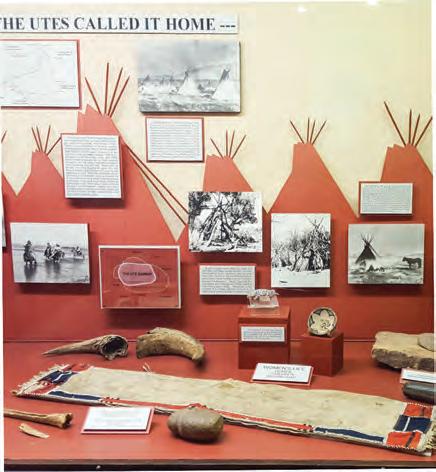
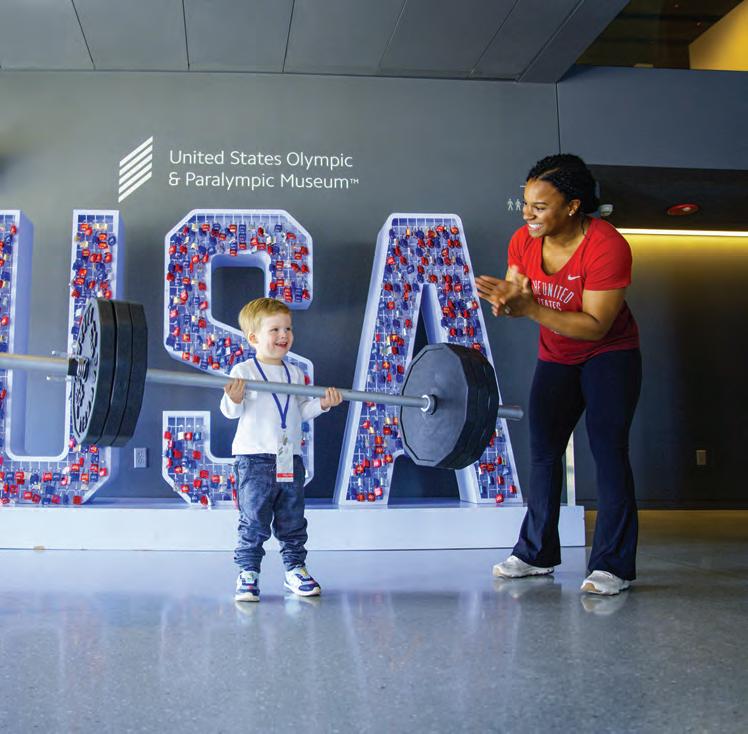
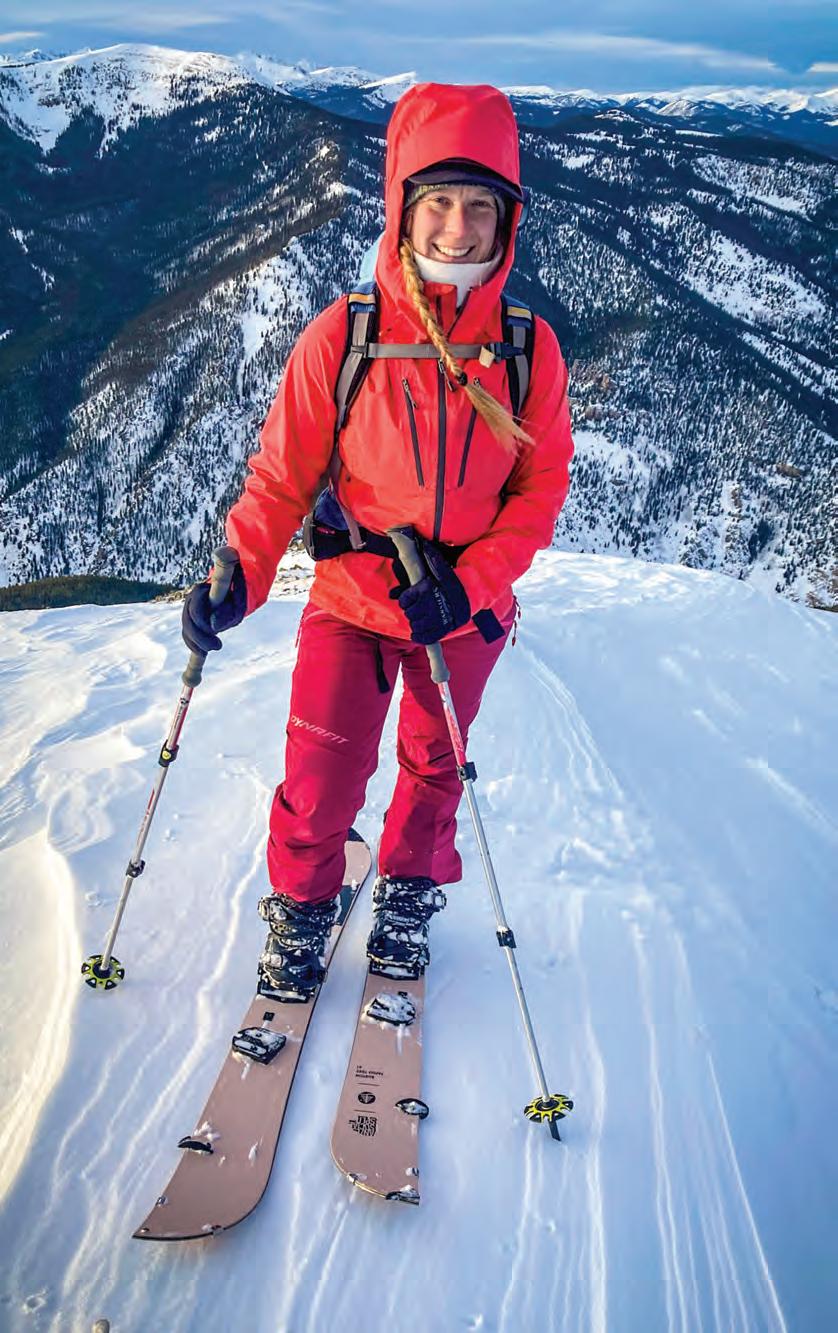
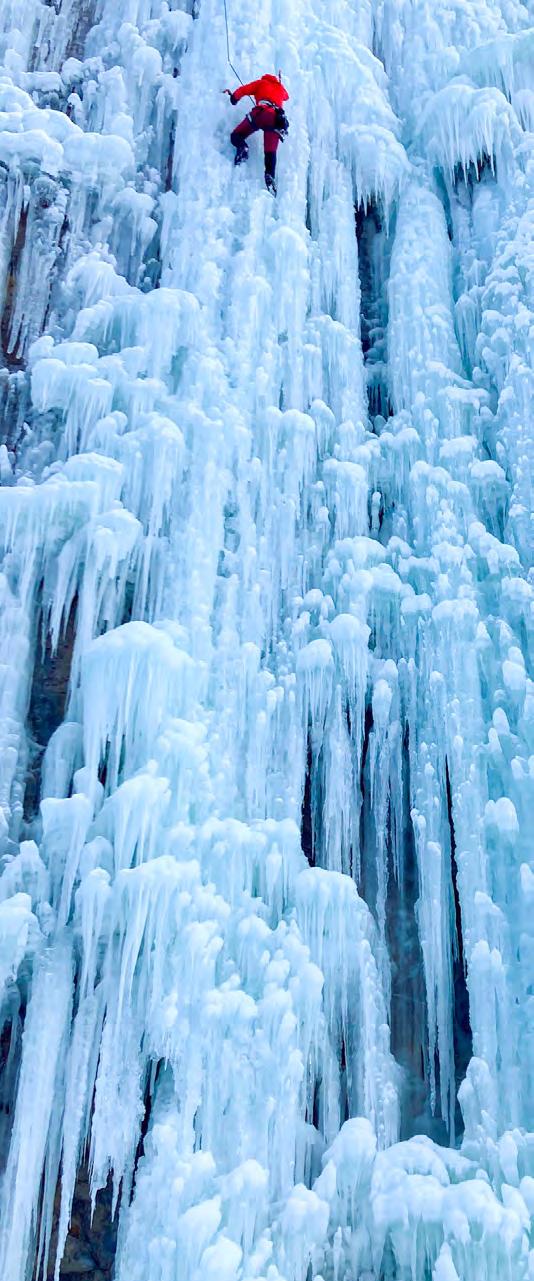
At the U.S. Olympic and Paralympic Museum in Colorado Springs, interactive exhibits and heroic athlete stories celebrate perseverance and the power of sport.
by Peter Moore
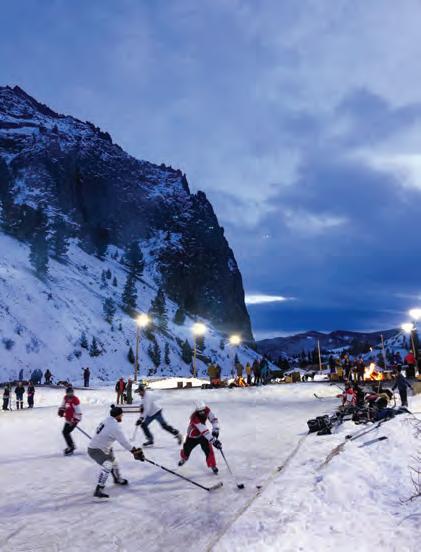
20 Chasing Wild Ice
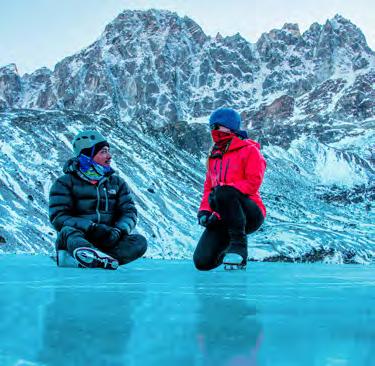
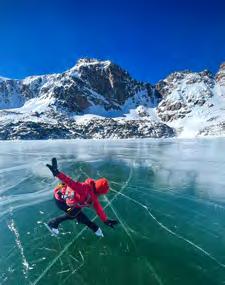
Wild ice skater Laura Kottlowski explores frozen alpine lakes, while teaching others to read, test and navigate the risks of winter skating. by
Ariella Nardizzi
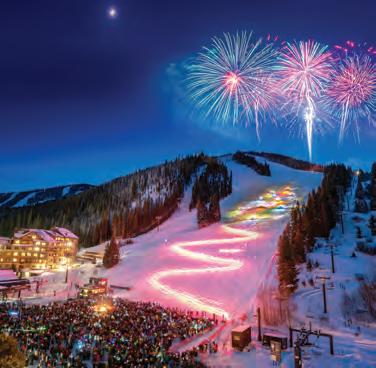
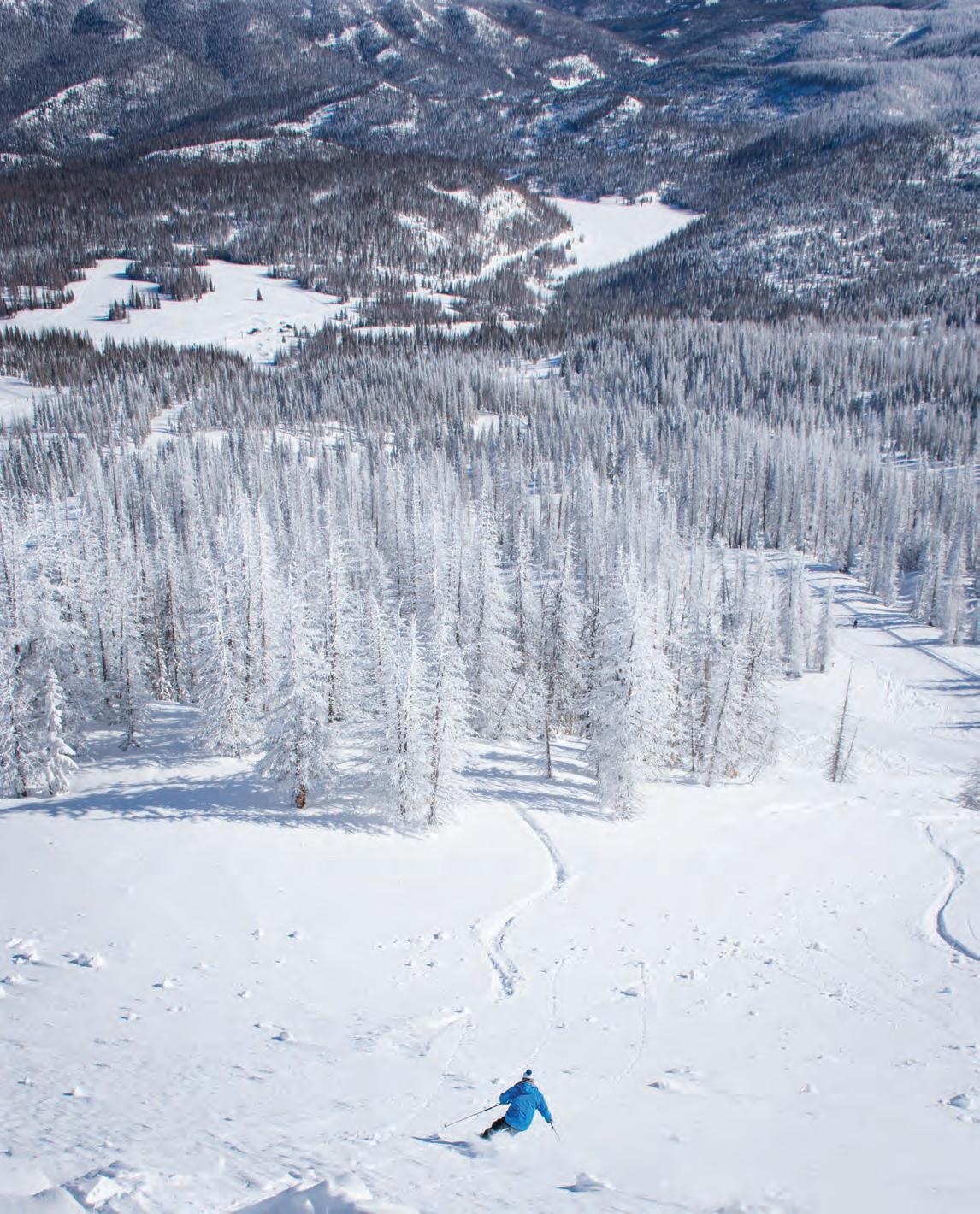
28 The Local’s Mountain
At Winter Park Resort, early risers, fearless mogul skiers and dedicated patrollers keep the mountain alive for an unpolished, hard-earned tradition like no other. by Ariella Nardizzi
48 The Saga of Snippy
FEATURES IN EVERY ISSUE
Snippy’s skeletal afterlife anchors the San Luis Valley in UFO lore, skepticism and an enduring unanswered Colorado question. by Eric Peterson
7 Editor’s Letter
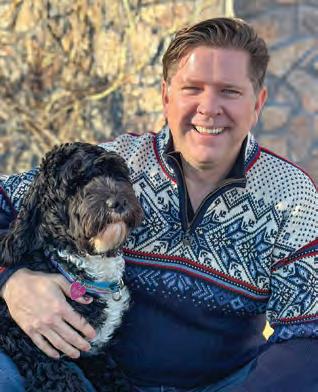
Chris Amundson shares stories from life in Colorado.
8 Sluice Box
Healing mineral waters steep in history at Wiesbaden Hot Springs; Inside a refuge for wolf dogs in Red Feather Lakes; Thousands lock their love in the Sweetheart City.
12 Trivia
Put your book smarts to this Colorado author test. Answers on page 44.
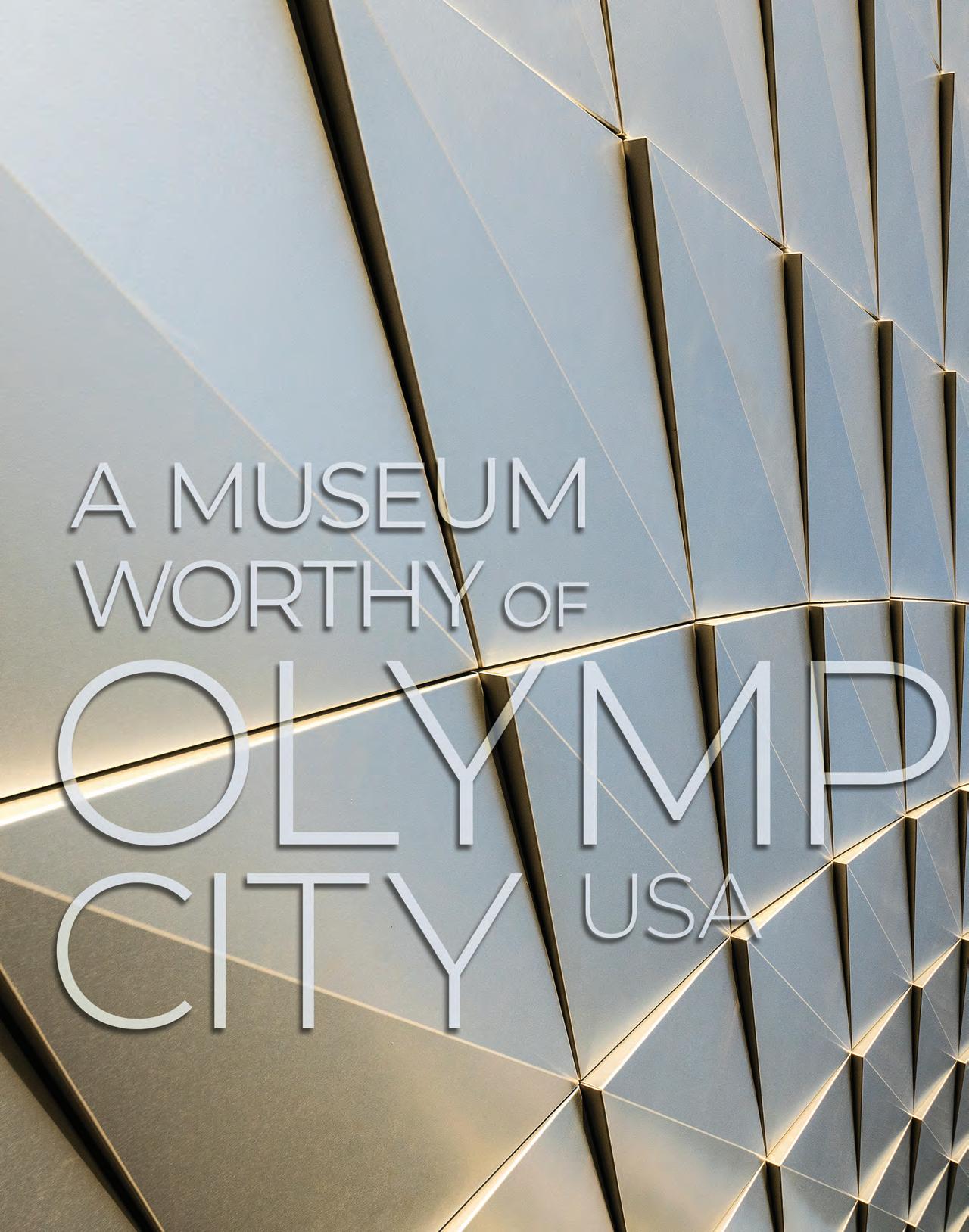
A Museum Worthy of Olympic City USA, p 14
Hot Sulphur Springs is...
• nestled in the Rocky Mountains waiting to be explored pioneer, railroad & Native American history
• the county seat & oldest town in the of Grand County
• on the Colorado River
• named for the historic hot springs
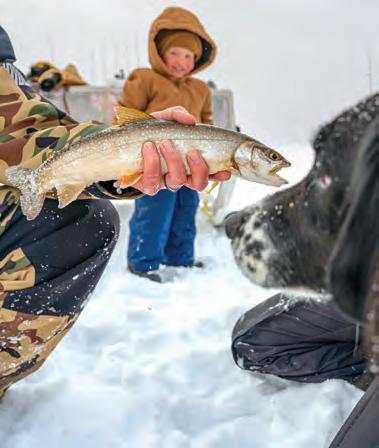
Ice Fishing at Williams Fork Reservoir
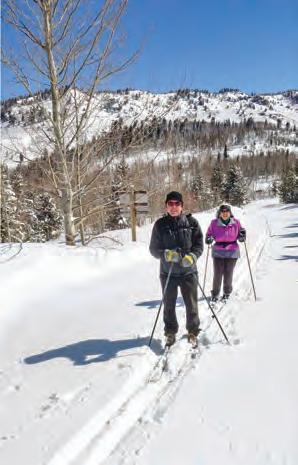
Cross-Country Skiing
Pioneer Village Museum
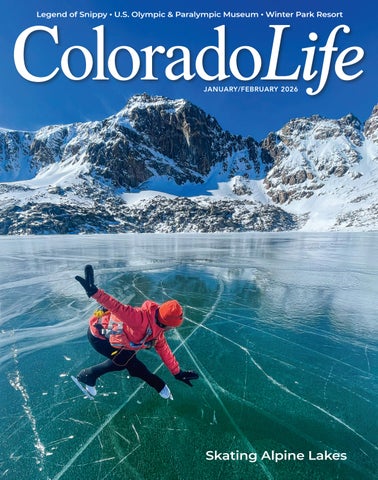
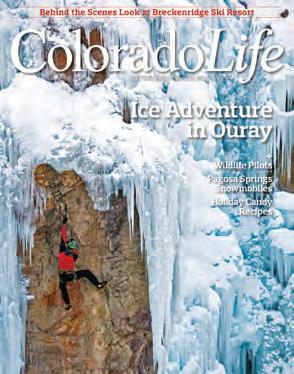
ON THE COVER
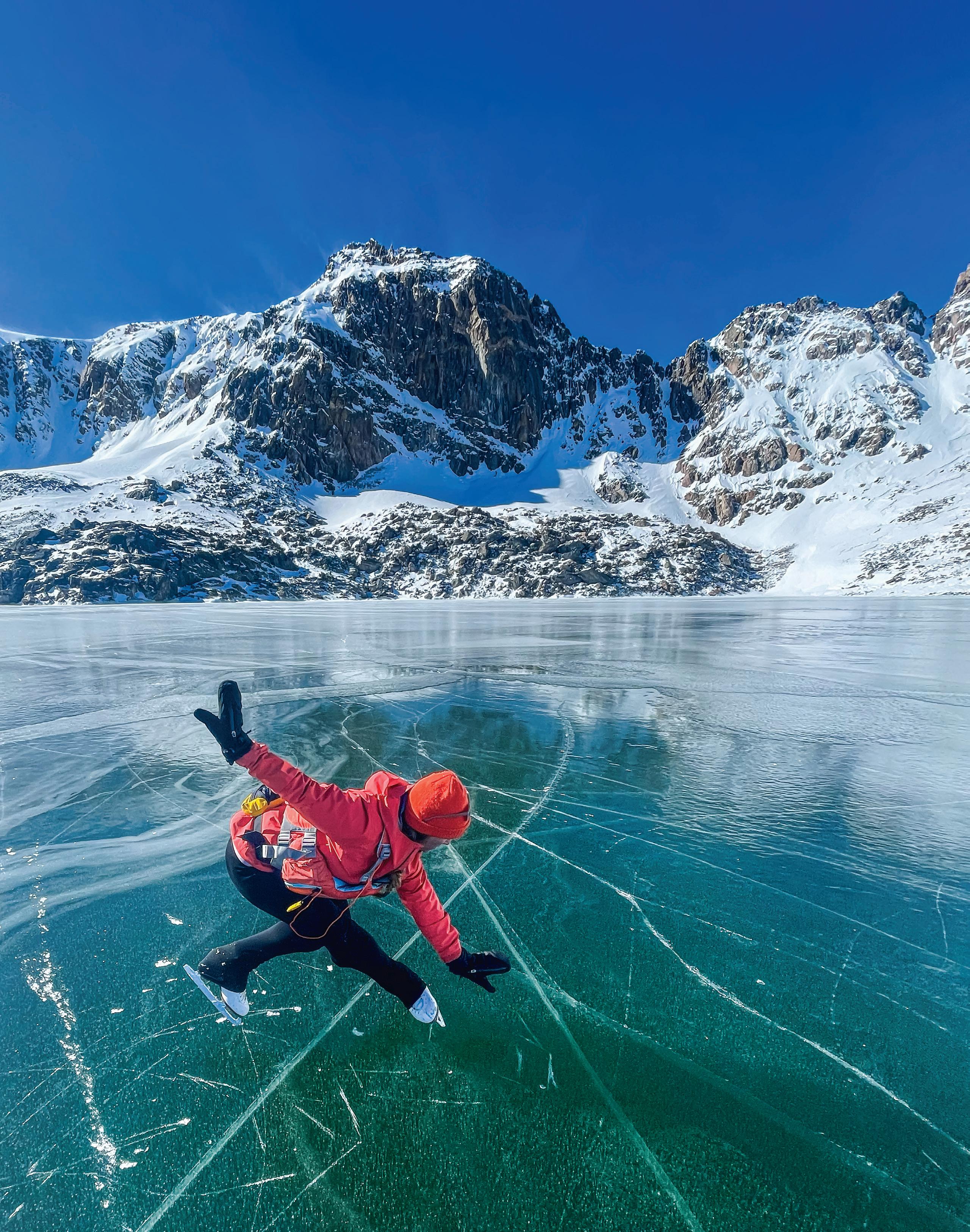
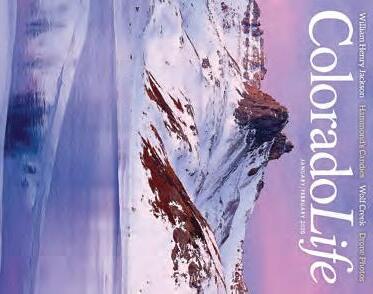
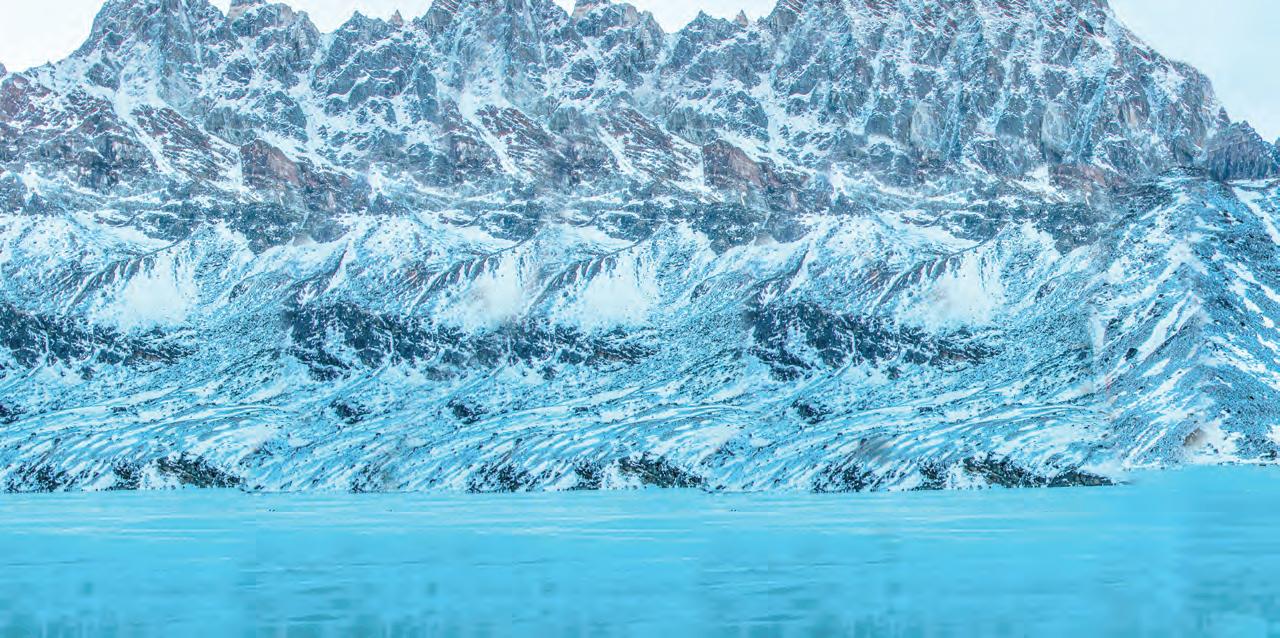
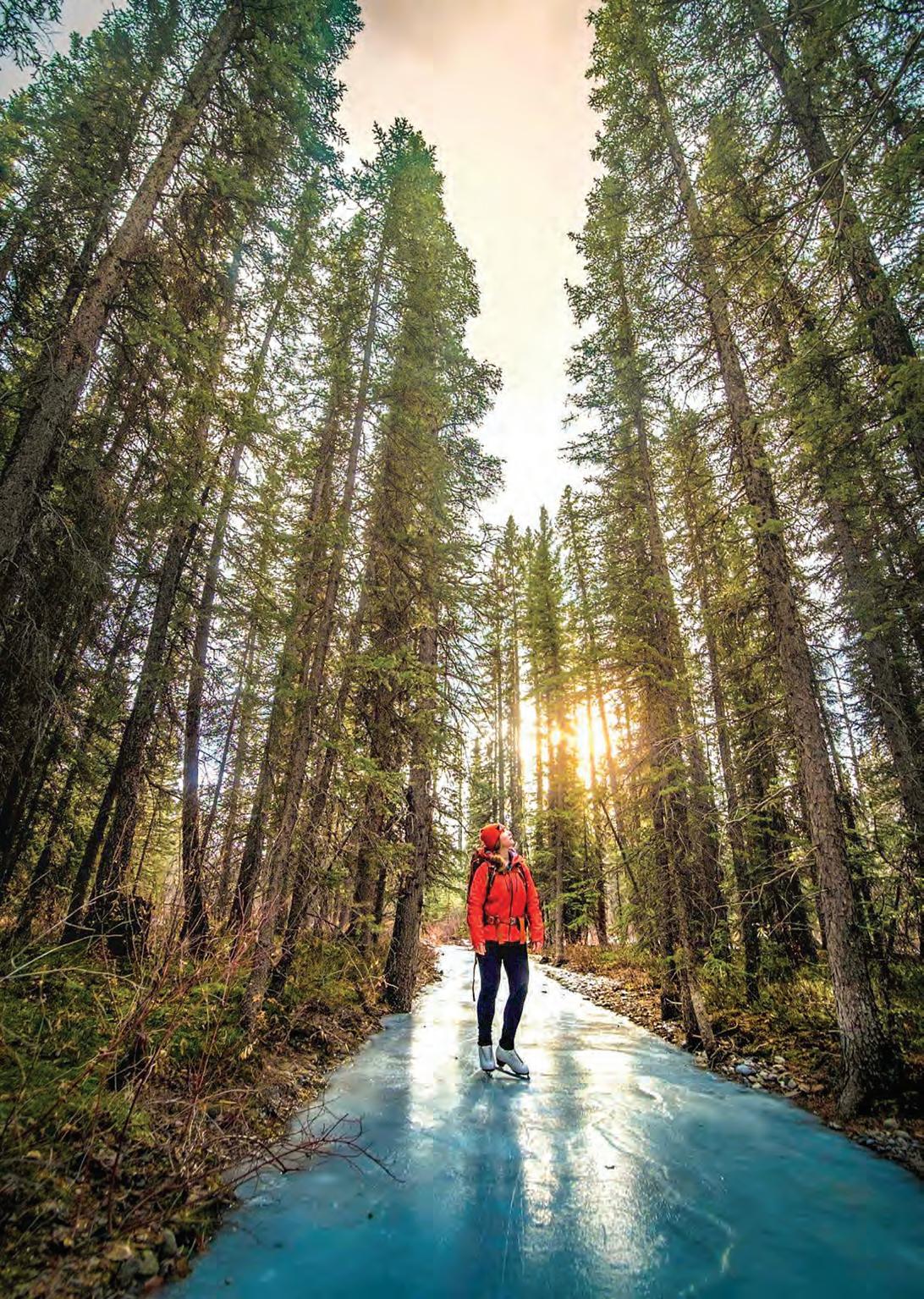
Wild ice skater Laura Kottlowski gracefully dances on a frozen Lake Dorothy in the Indian Peaks Wilderness. Story begins on page 20. PHOTOGRAPH BY MICHAEL RYAN CLARK
IN EVERY ISSUE
Poems that dwell in the quiet spaces of stillness, solitude and reflection.
Kitchens
Set it and forget it with three slow-cooked meals to warm up those frigid winter nights.
Go.See.Do.
Grand Lake transforms into a snowy racetrack for three days of skijoring; Frozen Dead Guy Days returns to The Stanley Hotel.
Camping
Camping, cowboys and quiet lakes reveal Steamboat’s ranching roots beyond its ski-resort reputation.
Peak Pixels
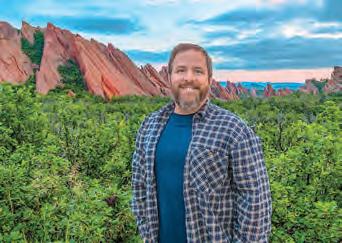
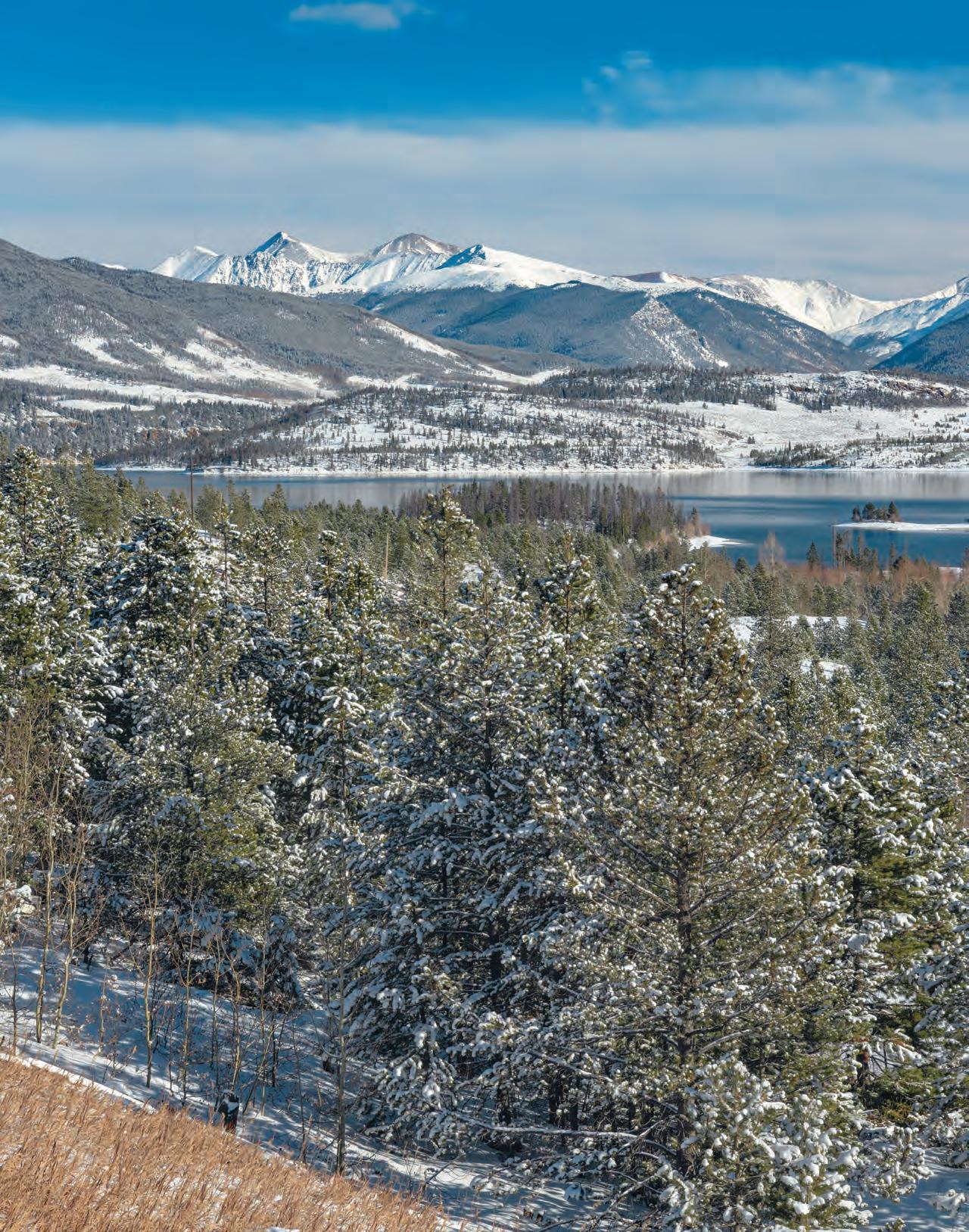
Joshua Hardin explores I-70’s grandeur, historic towns and engineering marvels in a photographic pursuit along the interstate.
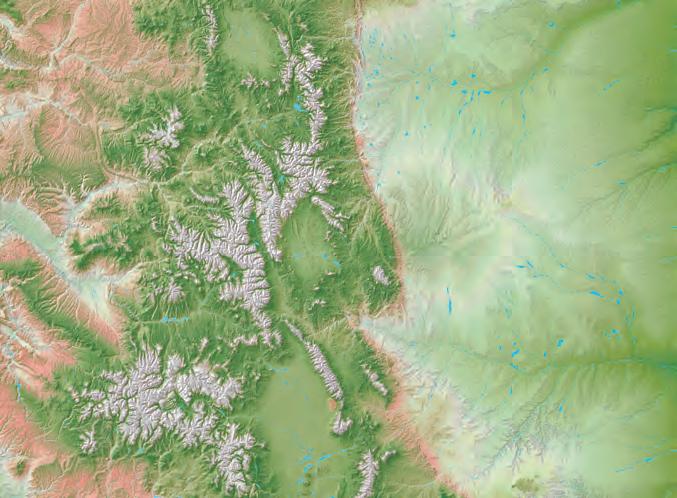
Map by Raven Maps & Images
Above: Danelle McCollum, Dan Leeth
Page 3: United States Olympic & Paralympic Museum, Nicholas Kalisz, Winter Park Resort
Photo: Courtesy of Grand Mesa Nordic Council
JANUARY/FEBRUARY 2026
Volume 15, Number 1
Publisher & Editor
Chris Amundson
Associate Publisher
Angela Amundson
Editorial Assistant
Savannah Dagupion
Design
Mark Del Rosario
Photo Coordinator
Erik Maki
Staff Writer
Ariella Nardizzi
Advertising Sales
Sarah Smith
Subscriptions
Shiela Camay
Colorado Life Magazine
c/o Subscriptions Dept. PO Box 270130
Fort Collins, CO 80527
970-480-0148
ColoradoLifeMag.com
SUBSCRIBE
Subscriptions are 1-yr (6 issues) for $30 or 2-yrs (12 issues) for $52. Please call, visit ColoradoLifeMag.com or return a subscription card from this issue. For fundraising and group subscription rates, call or email subscriptions@coloradolifemag.com.
ADVERTISE
Advertising deadlines are three months prior to publication dates. For rates and position availability, please call or email advertising@coloradolifemag.com.
CONTRIBUTE
Send us your letters, stories, photos and story tips by writing to us, emailing editor@coloradolifemag.com or visiting ColoradoLifeMagazine.com/contribute.
COPYRIGHT
All text, photography and artwork are copyright 2026 by Flagship Publishing, Inc. For reprint permission, please call or email publisher@coloradolifemag.com.
BWinter Is a Skill
Y JANUARY, COLORADO winter stops being scenery and starts running on rules. The air turns sharp enough to wake you up on the first breath. Roads demand patience. Trails demand preparation. Even the prettiest days come with conditions: wind, shade, thaw and refreeze. Small variables that decide whether winter feels like a gift or a lesson.
When I was younger, my winter strategy was simple: point a snowboard downhill and negotiate the details later. I barreled down runs like gravity owed me a favor, taking tumbles along the way and popping up with snow in my collar and a grin that said, again .
These days, I still chase that joy – but I do it with a little more respect for momentum, a little more interest in staying upright, and a strong preference for walking away with the same joints intact as when I arrived. Age doesn’t steal the fun; it just makes you appreciate earning it.
That Colorado zest for winter runs through this issue. You see it in the frozen-alpine calculus of “Chasing Wild Ice,” where Laura Kottlowski explores how to read, test and respect wild places, and at Winter Park Resort, where “The Local’s Mountain” captures a winter culture built on early starts, hard-earned traditions and the people doing the quiet work that keeps a mountain running.
Every Olympic cycle reminds the world what winter excellence looks like. Here in Colorado, that kind of preparation is often part of ordinary life – shaped by altitude, cold and repetition. For our state’s home-grow Olympians, it’s learned before work, after school, and far from bright lights. The United States Olympic & Paralympic Museum in Colorado Springs tells the story of passion and work eithic, and we’re grateful it’s part of our state.
And because Colorado winter isn’t only about motion, we also follow the places that help you reset – mineral water, warm food and a slower pace, along with the kinds of local stories that stick around long after the snow melts.
Winter also sharpens the eye. Anyone who’s crested Vail Pass on I-70 after a storm knows the urge to pull over, camera in hand, just to try to hold onto the light for a second longer. “The Saga of Snippy” is one of those: a San Luis Valley mystery that refuses to settle neatly, even under scrutiny.
Winter gives a lot here. It also asks for competence first. Read the conditions. Respect the work. Then go enjoy the cleanest season we have.
Chris Amundson Publisher & Editor editor@coloradolifemag.com
NUGGETS AND OBSERVATIONS
ABOUT LIFE IN COLORADO
Sacred Springs
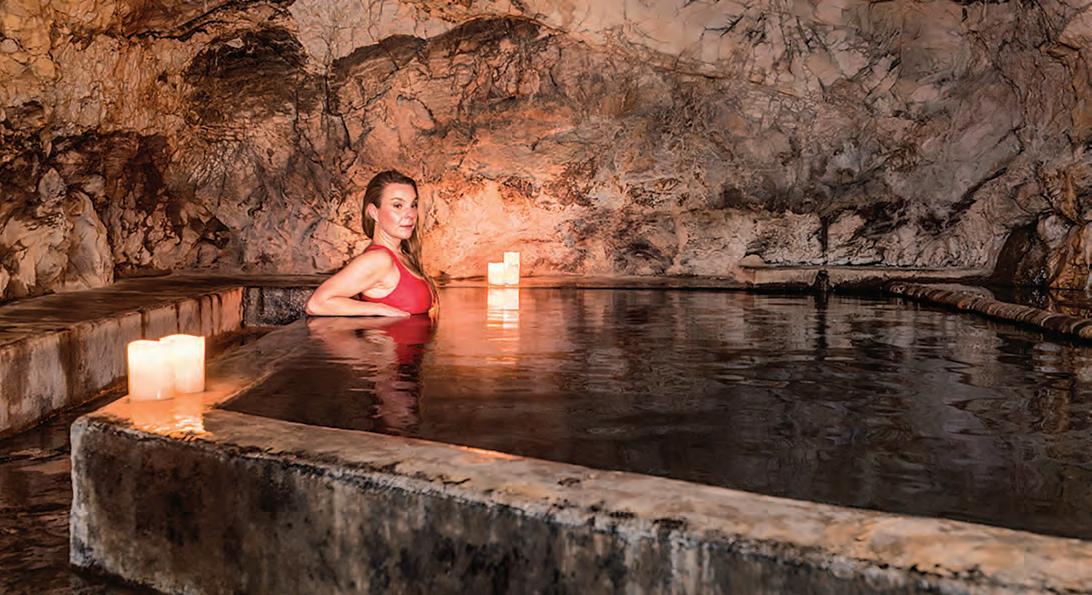
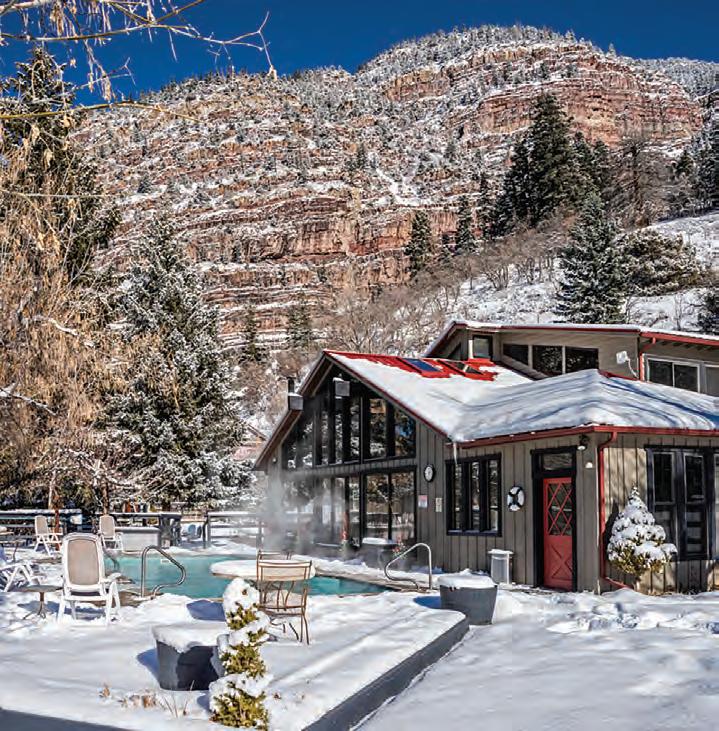
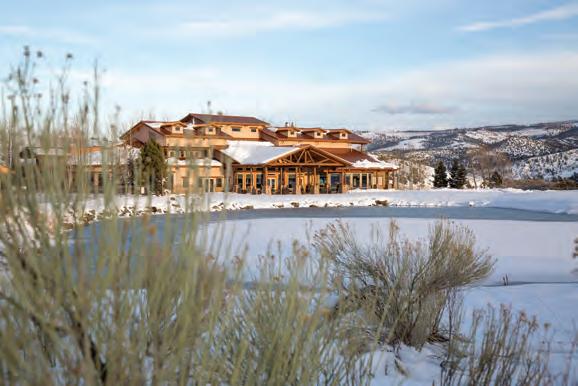
The private Wiesbaden Hot Springs’ history dates to 1879. Its most popular feature is the underground Vapor Cave – once blasted from the rock by miners in search of gold.
The healing powers and rich past of a Ouray hot springs
by ARIELLA NARDIZZI
Steam fills a cave carved by miners more than a century ago, clinging to stone walls and rising in slow breaths from the mountain itself. The chamber is dark and quiet except for water dripping back into the rock. This is the Vapor Cave at Wiesbaden Hot Springs, an accidental sanctuary blasted in the late 1800s and still in use today.
Delinda Austin keeps watch over Wiesbaden Hot Springs. For nearly 30 years on and off, she has tended the springs, worked every job on the property and cared for a place that has drawn people for relief long before Ouray took shape as a town.
Founded in 1879 as Mother Buchanan’s
Bath House, Wiesbaden is one of four hot springs properties in Ouray. It remains shaped by steam, stone and daily care.
Over the years, Austin moved from cleaning to maintenance to the front desk, learning Wiesbaden by labor and repetition. Later she stepped into the manager’s role, a title that captures only part of the reality of listening to the water rise and fall while tending a property that requires attention at all hours.
With silver hair and a deep familiarity with the place, she lives on the lodge’s airy top floor, where afternoon light spills across high ceilings and windows look out toward the canyon walls. Close enough to hear the water move, Austin’s days and
nights are shaped by its constancy.
“What keeps me here? The look of awe on every guest’s face,” she said. “People need respite. I love the before and after –they arrive tense and leave a completely different person.”
Austin comes after generations who were drawn to these waters. The first bathhouse served miners who soaked sore muscles after days of hard labor. In the late 1800s, miners searching for gold blasted into the hillside and created the hollow that would eventually become today’s Vapor Cave – a sauna-like chamber that hovers around 108 degrees.
In 1920, Dr. C.V. Bates opened the Bates Hospital and Sanitarium over the springs
and treated patients’ ailments with mineral water and rest. He even planned a tunnel through bedrock to move patients between buildings, though it was never built. Drawings of the tunnel remain at the Ouray County Courthouse.
By 1978, owner Linda Wright-Minter and her family lovingly cared for the intimate, European-style retreat it is today, with glass, stone and narrow paths perched beneath towering cliffs. Its name is borrowed from a German spa town, a nod to Old World bathing traditions carried west. Behind the lodge, vegetation gives way to canyon walls braided with waterfalls. Wildlife is part of daily life here, moving through the property on its own terms. One summer morning, Austin discovered a bear crawling through her open kitchen window after she had cooked fresh trout. “We’re really one with the wilderness up here,” she said.
In addition to the Vapor Cave, a springfed pool ranges from 101 to 106 degrees, and a private soaking tub called the Lorelai sits beneath a gushing waterfall. The springs flow naturally and untreated, straight from the source. “The springs are a temple,” Austin said. “The water bubbles up from underground, holds place to fill it with gratitude, and then leaves the cave and flows down to the river.”
Long before any bathhouse was built, the springs were used by Native tribes who traveled days to reach the steam. The remains of a hunting adobe belonging to Chief Ouray, the town’s namesake, were found above the main lodge, a reminder that the story here began long before settlement or lodging.
Today, the Vapor Cave is used for ceremonial purposes by Roland McCook, a great-great-grandson of Chief Ouray, a member of the Uncompahgre Band of the Ute Tribe and a former chair of the Northern Ute Tribe. In the darkness and steam, McCook leads ceremonies, offers prayers and shares oral histories passed down through generations.
From Ute tradition to bathhouses to lodging, Wiesbaden has long been a place people come to set down strain and worry. And for nearly 50 years, Wright-Minter and family have helped keep that peace, tending not just to the water, but to the wonder it brings.
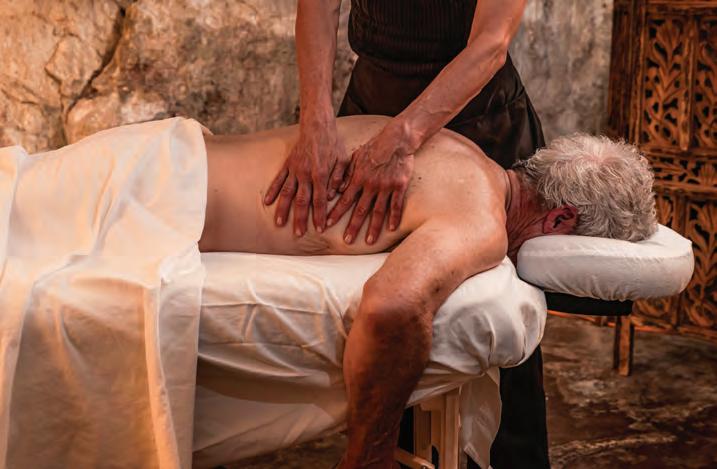
In addition to the hot springs, Wiesbaden offers therapeutic massages. The spa blends Swedish and sports techniques, with optional enhancements like CBD oil, deep tissue work and algae face masks to extend relaxation beyond the mineral pools.
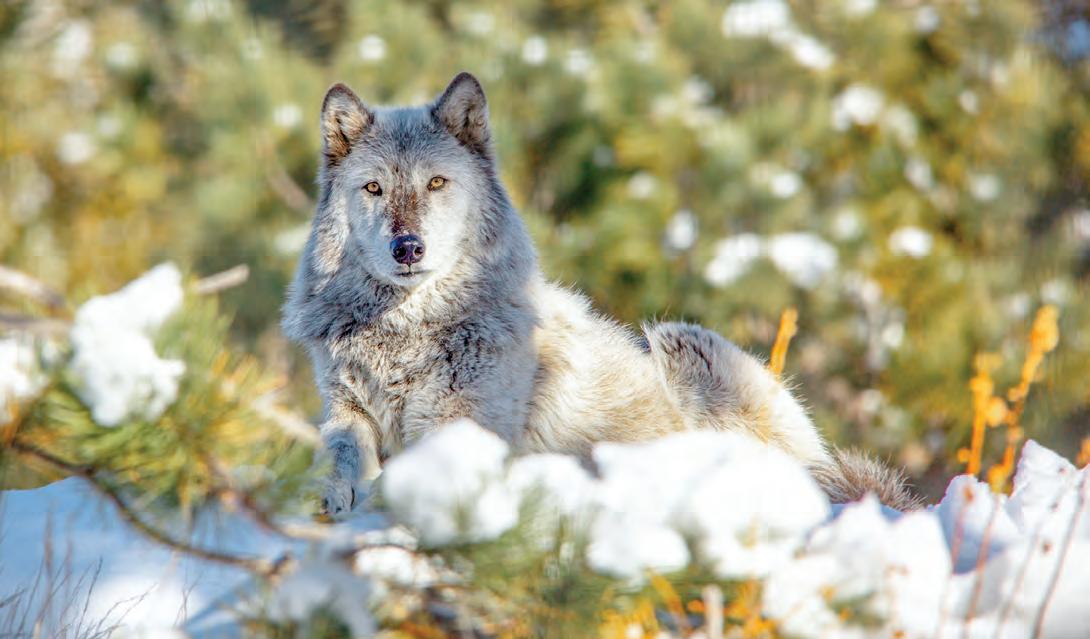
Caretakers at the Red Feather Lakes sanctuary give up to 30 wolf dogs a second chance at life, while educating the public about their rescue mission.
Voices of the Wild
Near Red Feather Lakes, rescued wolf-dogs find sanctuary at W.O.L.F.
by ARIELLA NARDIZZI
On quiet evenings near Red Feather Lakes, a rolling chorus of howls drifts across the mountain valley. This music comes not from wild creatures, but from animals who have finally found peace: rescued wolfdogs living out their days in safety at the W.O.L.F. (Wolves Offered Life and Friendship) Sanctuary.
The sanctuary provides lifelong care for wolf-dogs – bred from captive wolves and domestic dogs – that can’t be released into the wild or cared for by their former owners. As Colorado moves forward with gray wolf reintroduction, the wolf-dog residents at W.O.L.F. are not candidates for release.
Founded in 1995, W.O.L.F. Sanctuary’s work centers on care for its animals, public
education and facilitating rescues across the country. Some residents were bred in captivity; others arrived from neglect or the exotic pet trade. Together, each animal highlights that wolves belong to the wild, not the backyard.
For years, W.O.L.F. operated at a remote, off-grid site in Rist Canyon near Fort Collins. In 2023, the sanctuary relocated to a new home near Red Feather Lakes, where residents now look out to the Mummy Range from habitats of boulders and open sky. Enclosures built for bonded pairs give them room for running, playing and, when the mood strikes, singing to the forest.
Executive Director Shelley Coldiron knows each of them by name and temperament. Before joining W.O.L.F., she worked as a biotech entrepreneur, but her lifelong devotion to animals eventually led her here. She began volunteering in 2010, joined the board the following year and helped evacuate animals to her home in Loveland during the devastating High Park Fire in 2012. Once she stepped in as interim director, Coldiron never left.
Now she oversees the sanctuary that cares for these wolf dogs, each paired thoughtfully based on age and personality. “We like to joke that we play Cupid,” she said. “The females are the ones in charge – they’re the boss. We could learn a
lot from a pack of wolves.”
Kira, for example, is known as the sanctuary’s best digger. “She could dig to China if she wanted to,” Coldiron said, with a laugh. “She’s always smiling and makes our caretakers laugh.” Castiel, rescued from Los Angeles in 2016, was named after an angel on the show Supernatural – a nod to his second chance at life. His best friend, Trigger, rarely leaves his side. Then there’s Zoey, a striking white wolf-dog with a mischievous streak; she spends her days stealing gloves, basking in the sun and splashing in her water trough before dinnertime.
While sanctuary life is peaceful, W.O.L.F.’s mission reaches far beyond its fences. Through school visits and community programs, they educate the public about unregulated breeding, the sale of wolf-dogs and wolves’ role in healthy ecosystems.
Ambassador animals occasionally travel to classrooms, offering students a rare, respectful encounter with the wild. The sanctuary relies almost entirely on public donations to continue providing this care and education. “Watching our residents blossom and thrive, seeing them live out their lives without a care in the world … that’s the biggest reward,” Coldiron said.
As twilight deepens over Red Feather Lakes, the chorus begins again – rising, cresting, then fading into the timberline.
W.O.L.F. Sanctuary
Love Locked
The Sweetheart City’s steel sculptures display love stories from around the world
by ARIELLA NARDIZZI
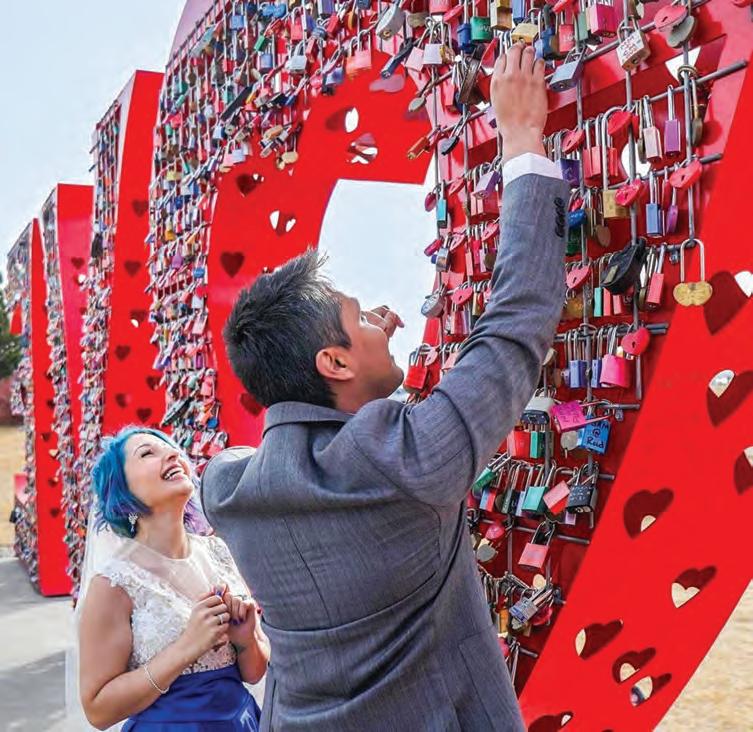
Octogenarians Jerry Helfrich and Arlene Brock didn’t want a grand ceremony for their December wedding, just a place that felt right. On a bluebird winter day at the East Gateway Visitors Center in Loveland, surrounded by family and the Rockies as their witness, the pair stood before a towering red sculpture spelling L-O-V-E. After exchanging vows, they sealed their promise with a kiss.
They chose Loveland for a reason. Hugged against the foothills, the city has long embraced its nickname, the Sweetheart City. Around town, sunlight glints
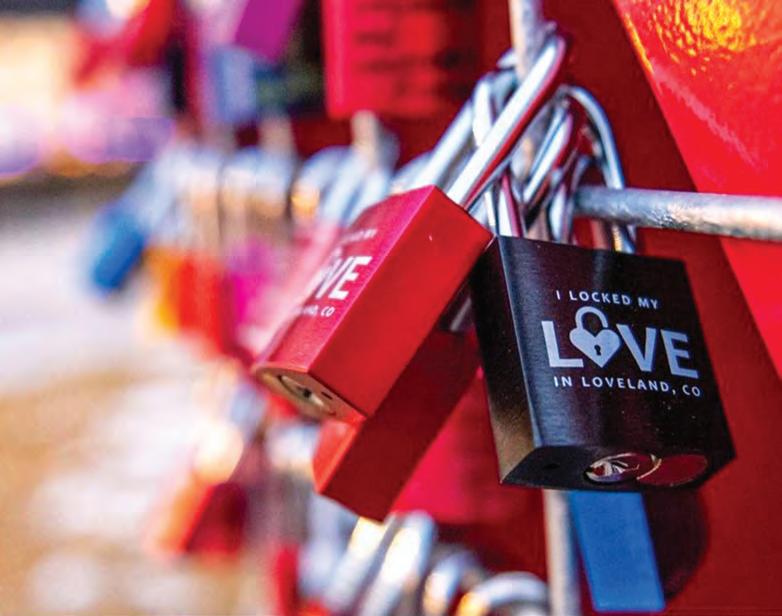
off thousands of steel padlocks dangling from bright red sculptures. Visitors snap photos, tracing engraved names and painted hearts. Couples, families and friends make the trip to leave a small piece of their story behind.
In 2019, Loveland unveiled its first love lock sculpture during the annual Sweetheart Festival, a collaboration between Visit Loveland and the Loveland Chamber of Commerce. Held each Feb. 14, the festival draws roughly 10,000 visitors. Downtown fills with live ice sculpting, fire and art demonstrations, a Little Miss Valentine and Mr. Cupid contest, a 4-mile race and celebration.
Today, the city hosts four lock sculptures. The original rises beside the Visitors Center at Stone Creek Circle, beckoning travelers off Interstate 25 and Highway 34. The 10-foot-tall statue spells L-O-V-E and weighs 24,000 pounds. Its back is lined with thousands of locks bearing heartfelt messages. A second heart-shaped structure, more than 12 feet tall, stands at the southeast corner of Lake Loveland on Eisenhower Boulevard and Lake Drive, framing the Rockies in a picture-perfect backdrop.
In 2025, as the original structures began to overflow, the city added two additional sculptures on the southwest side of the Loveland Museum on Lincoln Avenue. Forty red steel hearts form a larger heart with a grid built for padlocks.
Visitors can purchase a lock for $20 at the Visitors Center and paint or engrave the metal. Manager Tanya Bartow provides free engraving tools and watches as she shares a small part in each love story. She’s seen couples commemorate anniversaries, announce baby genders with lock colors and memorialize loved ones who have passed.
Berthoud residents Jerry and Arlene, who met two years ago at a senior dance in Northern Colorado, now count themselves among those stories.
“Arlene picked this location for the emotion that arises when looking at the love statue, wishing it will bring more joy and peace into this world,” said Sue Helfrich, Jerry’s daughter-in-law. “And Jerry? He’ll give Arlene anything her heart desires.”
Now their lock hangs among thousands, a small, shining promise in Loveland’s red steel heart.
Molly Cross (left); Sarah Morehead (inset)
AUTHORS
Test your book smarts on Colorado’s literary legends. by BEN JENKINS
1
What author of Fourth Wing, Iron Flame and Onyx Storm wrote the Empyrean series while at her home in Colorado Springs?
2 Emergence: Labeled Autistic and Animals in Translation: Using the Mysteries of Autism to Decode Animal Behavior are two of the many books written by what woman, an animal sciences professor at Colorado State University?
3 Referencing the state’s official nickname, what was the title of James Michener’s massive novel about the history of Colorado, from its prehistory until the 1970s?
4 Though much of her work is based in Nebraska, what author’s 1915 novel The Song of the Lark was set in the fictional town of Moonstone?
5 Starship Troopers and Stranger in a Strange Land were both written by what author, during the time he lived in his eclectic Colorado Springs home?
Colorado State University
MULTIPLE CHOICE
6
The movie The Dog Stars, directed by Ridley Scott, is set to be released in 2026 and is based on the novel of the same name by what Denver-based member of the Colorado Authors Hall of Fame?
a. Peter Heller
b. Jim Butcher
c. Daniel Tyler
7 Historian of the American West, CU Boulder is where she’s professed. What writer of note has books that she wrote, including The Legacy of Conquest?
a. Sandra Dallas
b. Penny Rafferty Hamilton
c. Patricia Nelson Limerick
8 Starting with Privileged Information in 1991, the Boulder-set Alan Gregory series by Dr. Stephen White follows a crime solving detective with what helpful day job?
a. Psychologist
b. Surgeon
c. Lawyer
9
LA resident of the Colorado Rockies, Kevin J. Anderson has contributed books to many major sci-fi universes, but which of these has he NOT written for?
a. Star Trek
b. Dune
c. Star Wars
10
Living in the Rockies near Routt National Forest, what three-letter author wrote the Newbery Medal-winning children’s novel Crispin: The Cross of Lead?
a. Una
b. Boz
c. Avi
TRUE OR FALSE
11
Despite his last name, writing one of the state’s official songs and being named its poet laureate in 1974, John Denver never actually lived in Colorado.
12
Denver-based sci-fi author Connie Willis has won more Nebula Awards and Hugo Awards for fiction than any other writer.
13
Adventure novelist Clive Cussler opened the Cussler Museum in Arvada not for his literary works, but to display his classic car collection.
14
The town of Holt, the setting of the novel trilogy of Plainsong, Eventide and Benediction, by Pueblo-born author Kent Haruf, is not a real place.
15
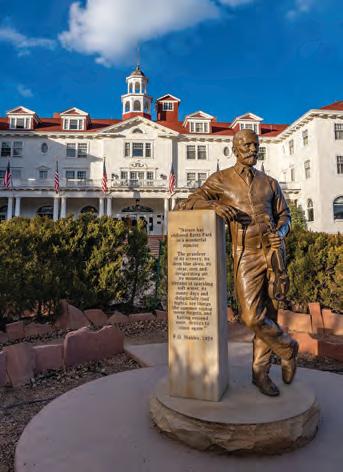
The evil Overlook Hotel in Stephen King’s The Shining is based on a real hotel King stayed at in Estes Park.
No peeking, answers on page 44.
Erik Makić
by PETER MOORE
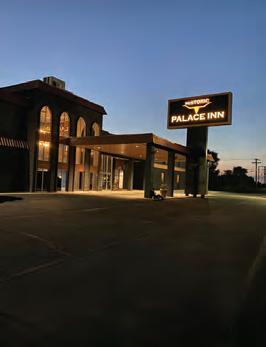
The United States Olympic & Paralympic Museum invites visitors to step into the stories behind the medals.
IDIDN’T KNOW what to expect as I approached the shimmering facade of the United States Olympic & Paralympic Museum in Colorado Springs. But I didn’t expect to cry. It turns out my relationship with the Games runs deeper than I realized. With the Winter Olympics approaching in Italy, I may need a fresh box of tissues near the television. The triumph of the human spirit still gets me every time.
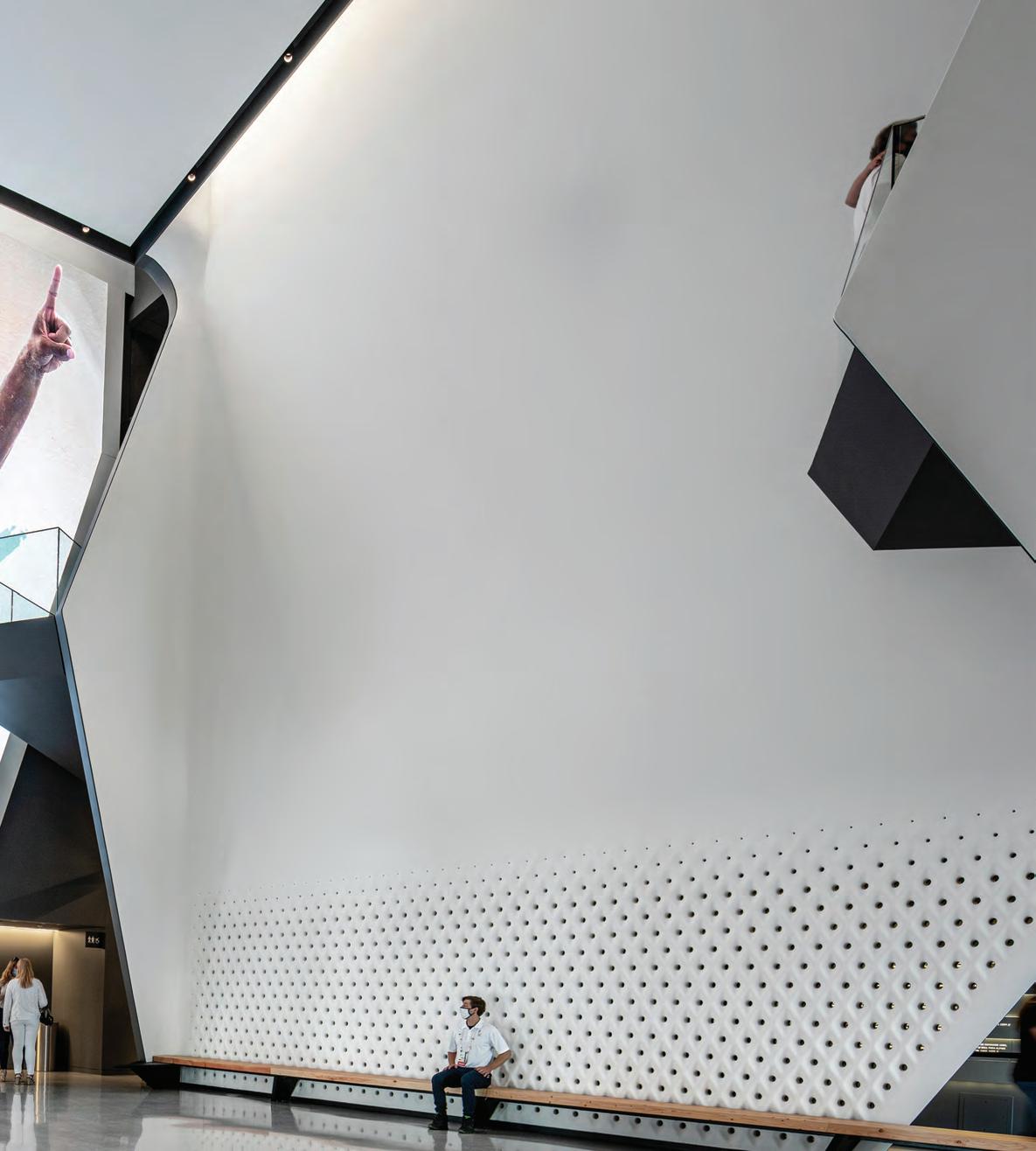
That feeling hit me, again, when I stepped into the soaring lobby of the USOPM, which USA Today recently declared to be one of the top 10 attractions for sports fans in the U.S. With three floors and a dozen galleries of exhilarating interactive exhibits, it deserves a medal itself. And Coloradans can visit for just $10 on Saturdays, starting at 3 p.m.
through Memorial Day.
Colorado Springs isn’t a random home for this museum. For nearly half a century, the city has been the center of the U.S. Olympic and Paralympic movement. The ruling athletic powers relocated their headquarters here in 1978, drawn by altitude, geography and a city eager to anchor itself to sport. Over time, an ecosystem grew: a flagship training center, dozens of national governing bodies and generations of athletes passing through on their way to the world’s biggest stages. The city’s exclusive right to call itself Olympic City USA reflects that history.
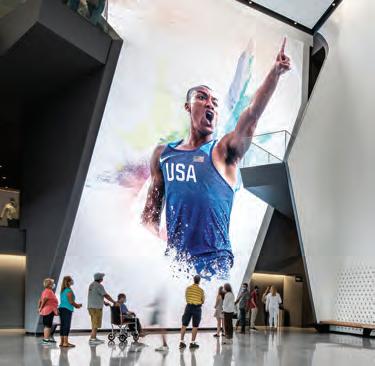
A towering, 40-foot screen dominates the entrance, flashing larger-than-life images of Olympians and Paralympians. The footage has been processed through
what the museum calls the “Neimanizer,” a program that renders images in the expressive style of artist LeRoy Neiman, who captured five Summer Games on canvas. When a small, airborne figure appeared, rotating and defying gravity, I recognized her instantly. Nobody else moves quite like Simone Biles.
Moments later, another athlete appeared, one I hadn’t known by name. Oksana Masters’ head and torso filled the screen as the camera slowly pulled back, revealing her poling toward a silver medal at the 2014 Sochi Paralympics. Masters, a double amputee, was born in Ukraine near the time of the Chernobyl nuclear disaster and adopted by her American mother as a child. After years of surgeries and treatment, she went on to become one of the most decorated Paralympians in history, winning medals in rowing, cycling and skiing.
That story alone would justify the museum’s existence.
The exhibits don’t rush past moments like that. They let visitors sit with them. And if inspiration strikes closer to home, there’s a photo booth where guests can have themselves “Neimanized” in the sport of their choice.
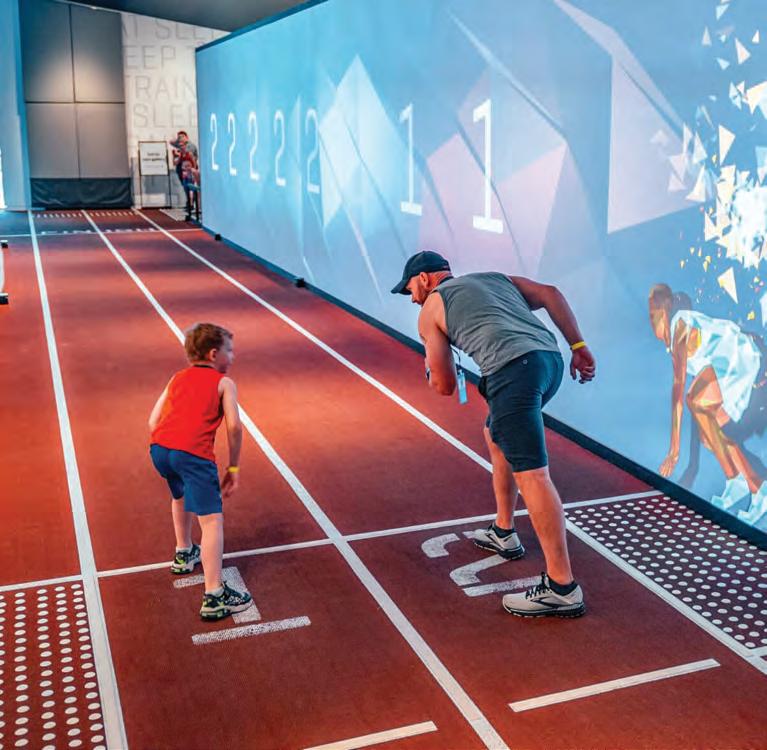
Elsewhere, the museum invites a more humbling kind of participation. One gallery features a 20-yard sprint track designed to give visitors a sense of just how fast elite athletes really are. An RFID-enabled credential, issued at the front desk, recognizes visitors by name and tracks their interactions. I chose to race Carmelita Jeter, the 2012 Olympic silver medalist once known as the “fastest woman alive.” What was I thinking?
After a 3-2-1 countdown, the video image of Carmelita burst from the starting blocks next to me, and I duck-waddled after her to the finish line in 15.29 seconds. Jeter’s time: 3.21 seconds.
How is that even possible?
You’ll find out how they do it in other galleries, which detail Olympic history, training regimens and technology. One section explores the Games’ cultural impact, including Jesse Owens’ four gold medals at the 1936 Berlin Olympics, a powerful rebuke to the ideology of Aryan supremacy. Nearby, an entire wall of Wheaties boxes honors Olympic champions who once stared out from breakfast tables across the country.
Michelle Dusserre Farrell understands
United States Olympic & Paralympic Museum (all)
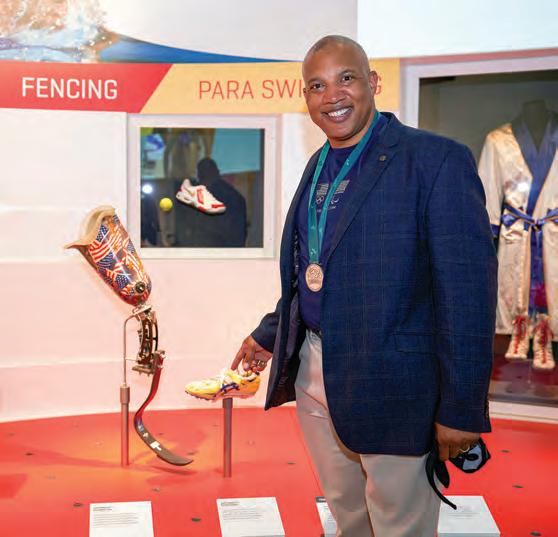
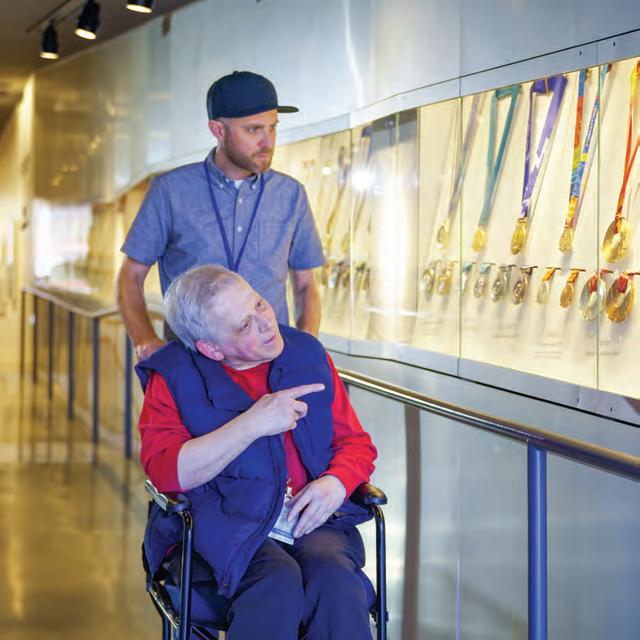
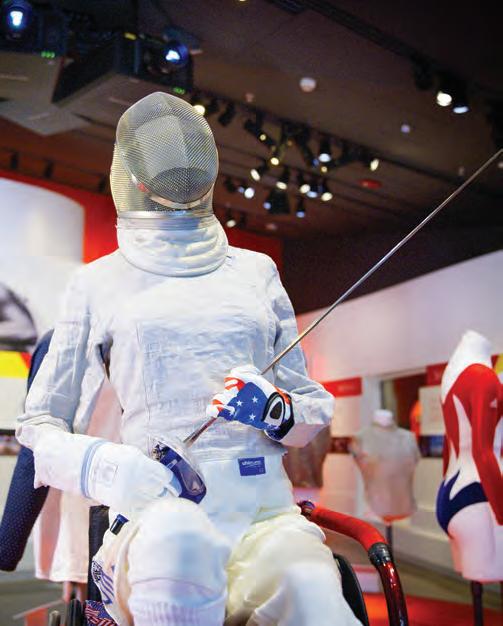
History and human triumphs intersect across three floors and dozens of exhibits inside the United States Olympic & Paralympic Museum in Colorado Springs. Olympic artifacts sit alongside exhilarating, immersive exhibits. Visitors encounter athletes “Neimanized” in larger-than-life projections and linger with inspirational stories that prove excellence, resilience and possibility extend far beyond the Olympic Games.
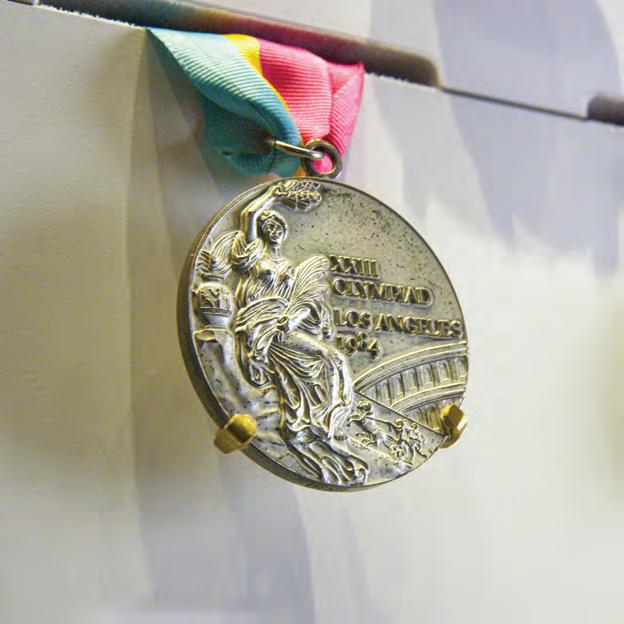
that power firsthand. She competed on the U.S. gymnastics team at the 1984 Los Angeles Olympics, earning a silver medal in the team competition. While Mary Lou Retton captured headlines, Dusserre Farrell served as the team’s leadoff competitor, setting a tone that helped carry her teammates.
“I was proud to represent my country,” she said, “and compete on the same level as my idol, Nadia Comaneci. I knew I had an opportunity to make my mark.”
She later helped shape the museum itself, joining the planning process in 2015 and 2016. Her role involved working with athletes to collect stories and artifacts – from Eric Heiden’s speed skates to uniforms, medals and equipment that carry personal histories alongside national ones.
Few objects carry more emotional weight than the scoreboard from the Lake Placid hockey rink, preserved from the 1980 “Miracle on Ice.” This is the one – the scoreboard that nearly 200 million Americans stared at as the final seconds ticked
down on a 4-3 victory over the heavily favored Soviet team. In the exhibit, footage from those last moments loops continuously, and with it comes Al Michaels’ call, etched into sports history: “Do you believe in miracles?” The moment resonates decades later even for visitors like me who don’t follow hockey. It’s a reminder of how deeply these events lodge themselves in collective memory.
For Dusserre Farrell, another gallery hits even closer to home. A wraparound exhibit recreates the opening ceremony, giving visitors the experience of the parade of nations. “When you get there with athletes from other sports and other countries,” she said, “you realize you’re just a speck on the map of what this really means.”
Before the Tokyo Games, a mother wrote to the museum about her 3-year-old son, born with spina bifida. Visiting the museum, she said, changed her sense of what might be possible for him.
“Her note was almost like reading my
own life,” Dusserre Farrell said. She has an older daughter with spina bifida and invited the family to visit. “It gave her hope,” she said. “That’s why we have this museum. You leave walking on air.”
The final galleries return to innovation: speed skating suits, Paralympic prosthetics and, improbably, the hand-sewn dress Peggy Fleming wore when she won gold in 1968. A group of wheelchair athletes navigated the space alongside me, studying the engineering with focused attention. The message was unmistakable: human potential takes many forms.
By the time I reached the parking lot, the feeling lingered. In a city that formally calls itself Olympic City USA, it made sense. Excellence has been part of the local weather here for decades. The museum doesn’t just commemorate past victories. It invites visitors to reconsider what excellence, perseverance and possibility look like, then sends them back out into the world a little lighter than when they arrived.
United States Olympic & Paralympic Museum (all)
Dozens of interactive exhibits invite visitors to test perspective as much as speed. Guests sprint down a 20-yard track against virtual Olympic champion Carmelita Jeter. They also explore Paralympic sport through hands-on challenges that foreground adaptation and innovation. A wraparound exhibit recreates the opening ceremony, centering visitors in the parade of nations. Rather than watch greatness from a distance, the museum asks people to rethink what elite performance, access and possibility mean in their own lives.
Chasing WILD ICE
A skater’s daring dance on Colorado’s frozen alpine lakes.
by ARIELLA NARDIZZI
Jarrett Luttrell
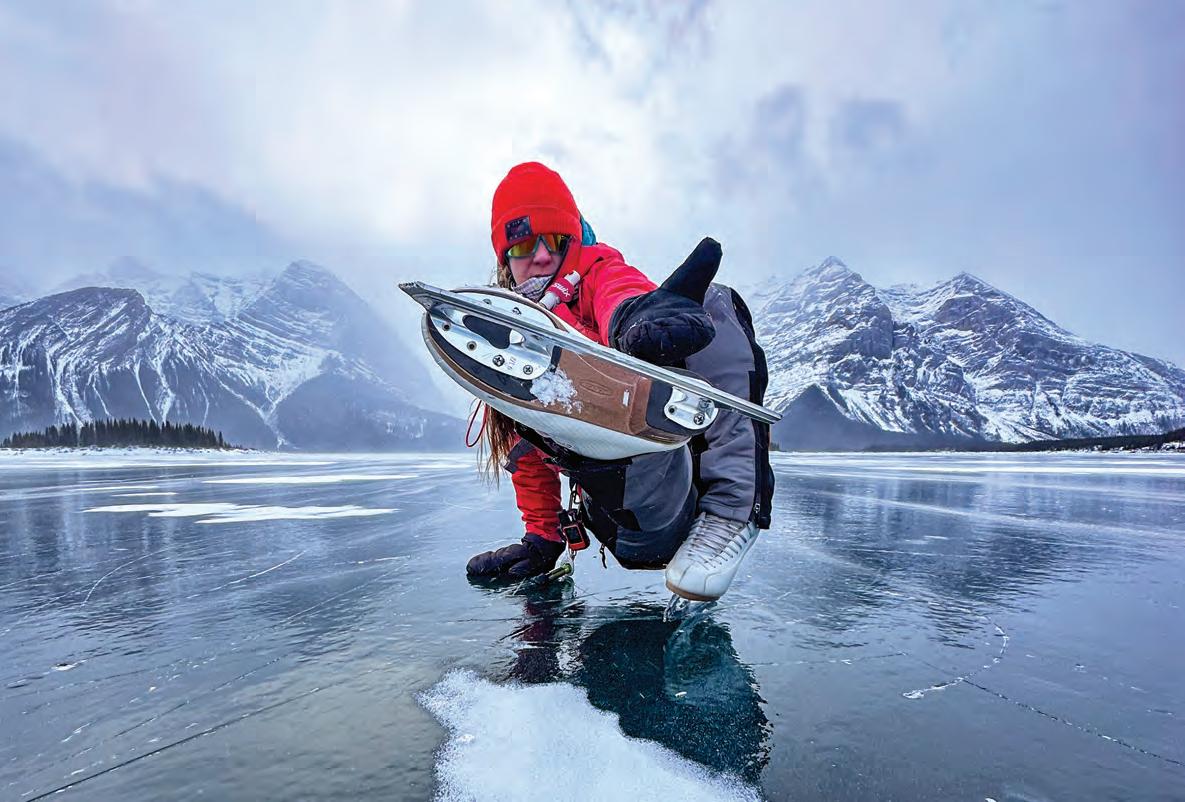
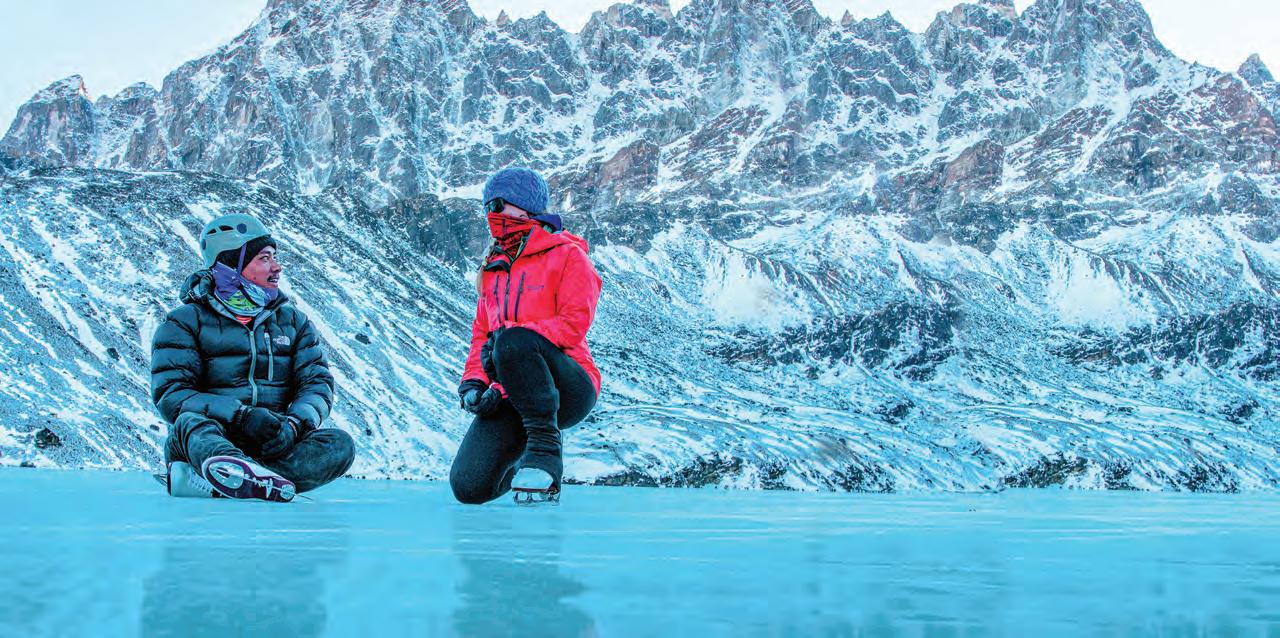
TLaura Kottlowski glides on thin metal blades across newly formed ice in subzero temperatures. A lifelong figure skater, she has spent decades translating technical precision into wild ice – seeking beauty, freedom and understanding while navigating environments as risky as they are serene.
HE TEMPERATURE, MINUS six degrees, bites at Eleven Mile Reservoir, a frozen man-made body of water near Lake George. The sun cuts through the crisp morning air just after 7 a.m., casting a pale gold glow across the smooth expanse of ice.
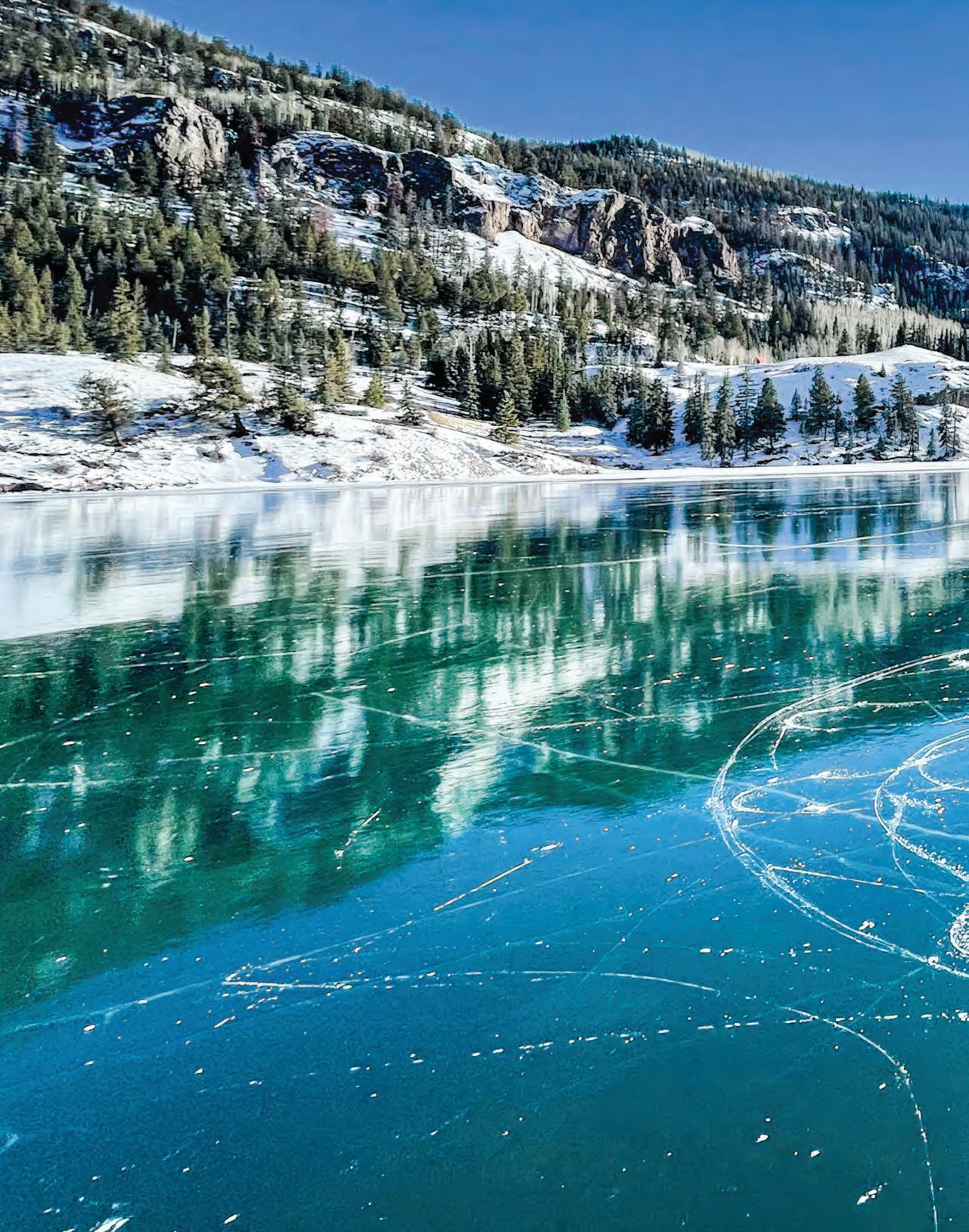
Wispy ice crystals, called frost flowers, pepper the reservoir’s frozen surface. These bouquets of icy flowers, about an inch high, grow in clusters, adding to the lake’s ethereal beauty.
Every few seconds, the ice creaks and moans like a haunting whale song, shattering into the sonic blast of a Hollywood laser. To Laura Kottlowski, it’s a familiar tune. The ice is alive deep beneath the surface, and she feels at peace here.
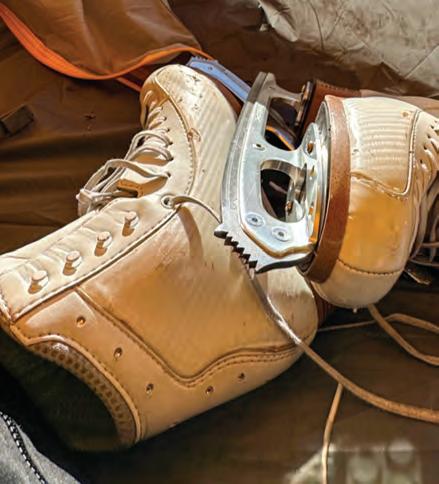
Kottlowski is bundled in a bright red life vest, winter jacket, down skirt, ski racing pants and white skates, chipped from years of wear. Her long blonde ponytail whips behind her like a flag in the wind, while a coat of frost frames the hairs in front of her face.
She’s a tiny dancer on a stage of ice, six inches deep. On one leg, she balances in a sit spin – one of her favorite moves – rotating in a tight circle. Skating on thin, metal blades comes as naturally to Kottlowski as breathing. She glides across the glassy surface with fluid grace.
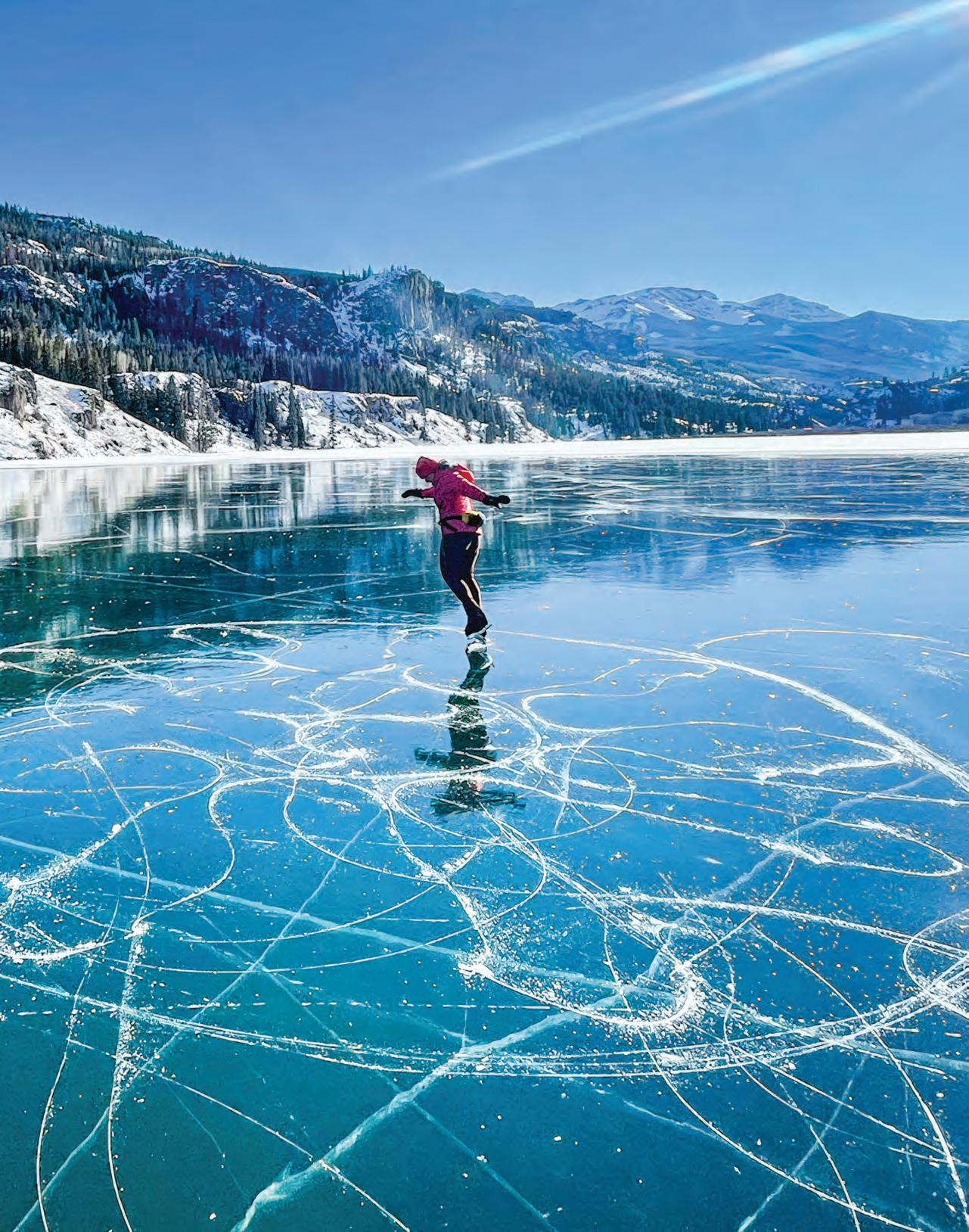
It’s a solitary ballet – just her, the ice and the sky. Her sharp blades carve delicate, swirling patterns across the frozen landscape. The metal slices the surface, an echoing dialogue between Kottlowski’s skates and the ice.
What makes Kottlowski’s relationship with ice so captivating isn’t just her skill –it’s her understanding of the ever-changing, untamed surface beneath her. Colorado’s frozen lakes can be as dangerous as they are beautiful. For Kottlowski, each journey across wild ice is a dance with calculated risk – one she takes pride in helping others navigate safely.
A resident of Idaho Springs, Kottlowski’s
Laura Kottlowski
journey on ice began 34 years ago. She first laced up her figure skates at age 6 in Pennsylvania, twirling and gliding across the Zamboni-smoothed ice of an indoor rink.
As a competitive figure skater for Penn State University, she honed technical precision that would one day serve her on the vast, unpredictable frozen lakes in Colorado.
In 2007, Kottlowski moved to Colorado, and a year later, she stumbled upon Lost Lake during a snowshoe hike in the Never Summer Wilderness. Though she hadn’t packed her skates, the glistening, untouched surface was a siren call she couldn’t ignore.
Later that season, she got her first taste of wild ice at Emerald Lake in Rocky Mountain National Park. The moment her blades met the glassy surface, she felt an electrifying pull – one that would never let go.
Over the next few years, Kottlowski trekked across remote mountain trails in Colorado to explore new lakes to skate. In 2017, she became the first known person to skate on Pacific Tarn, the highest named lake in the United States at 13,420 feet above sea level in Tenmile Range near Crystal Peak, southeast of Breckenridge.
“I’m on the search for the most beautiful lake to skate in the world,” Kottlowski said. “To me, those are the high mountain lakes and natural arenas within a bowl at the top of a mountain.”
Fortunately for Kottlowski, Colorado is home to more than 2,000 alpine lakes that fit that description.
While she often seeks picturesque scenery, she’s also drawn to the challenge. Alpine lakes, categorized by their high elevation, require rugged, mountaineering approaches often involving miles of trekking through deep snow.
Larger bodies of water, like Eleven Mile Reservoir, Grand Lake and Blue Mesa Reservoir, offer a different kind of thrill. On these expansive sheets, she explores with a fervent, childlike wonder, gliding over ice that reveals drifting carp below and mesmerizing bubbles and icicle formations from uneven freezing cycles.
She calls herself an “ice nerd” for the way she studies ice. “It’s just part of the fun of wild ice skating. There are so many unknowns, and I get to see and assess it all firsthand.”
Marisa Jarae
Jarrett Luttrell (above and right)
The wild ice season is fleeting. High-elevation lakes typically freeze over by October and remain skateable through spring. Kottlowski skates nearly every day in the winter. On a good day, she averages 26 miles – a “marathon day” – skating from sunup to sundown.
Compared to rink skating, Kottlowski describes wild ice skating as “freeing,” allowing her to test her limits in speed and endurance.
Her favorite conditions are fresh, black ice – the kind that’s clear, glassy and pristine. The sweet spot is ice that has been frozen for three days – solid enough to support her but not yet rippled by wind or obscured by snow.
Fresh ice is 2 to 2.5 inches thick – enough to hold a person’s body weight but risky for novices. Four-inch-thick ice is standard for safety, though it’s often rougher due to exposure to the elements.
“Sometimes, nature makes better ice than a Zamboni ever could,” she said.
Kottlowski follows strict safety protocols. She tests ice thickness by throwing a 3-pound rock high in the air – a solid thud with a bounce means the ice is safe.
She also drills into the ice with a 4-inch ice screw and watches for water spewing from the hole. Finally, she taps the ice with a Nordic pole, gauging its strength with each strike.
Despite her experience, wild ice has surprised her.
On Feb. 5, 2022, she was skating with seven others on California’s Stampede Reservoir. The ice was 4 inches thick – typically considered safe.
As the group skated, they noticed the ice had taken on a spongy, crunchy texture, like skating on Rice Krispies. Sensing danger, she picked up speed toward the shore.
In an instant, four skaters behind her broke through the ice into the frigid water. Kottlowski was the only skater wearing a life vest.
Her training kicked in. She tossed a rescue rope to a friend but then felt the ice collapse beneath her, plunging her into the freezing depths. Buoyed by her life vest, she calmed her breathing and jabbed her ice picks into the surface. With the ice not supportive, she bashed through 50 feet to assist three friends out of the water.
Another skater broke through 200 feet
For Kottlowski, skating is as much about place as movement. From expansive reservoirs to remote alpine terrain, she’s in search of the most beautiful lake to skate in Colorado. To her, those are the high mountain lakes and natural arenas within a bowl at the top of a mountain. Her favorite conditions are pristine black ice.
Nicholas Kalisz (above); Laura Kottlowski (right)
A deadly accident reinforced Kottlowski’s approach to wild ice. She is a skater defined by science, safety and respect for the unpredictable.
Marisa Jarae
of ice before Kottlowski could help her onto firm ground. Seven skaters made it to shore, though not unscathed – most suffered cuts and bruises, and one woman dislocated her shoulder. By the time a rescue helicopter arrived, the skaters had already changed into dry clothes.
One skater, a 72-year-old man, did not survive. An experienced wild ice skater, he likely suffered a cardiac event from the cold water before anyone could reach him.
This tragedy compelled Kottlowski to study the science of ice – how it thaws, freezes and changes under fluctuating temperatures and sunlight. She also vowed to only skate with partners who wore safety gear and knew how to use it.
Drawing from her background as a figure skating instructor, she created a firstof-its-kind course – akin to an avalanche safety class but for wild ice skating. As part of her healing process, she launched “Learn to Skate Outside” later that year.
Now considered a pioneer in wild ice safety, Kottlowski continues exploring while teaching others how to navigate unpredictable conditions. “Learn to Skate Outside” remains the only course of its kind in the U.S.
In her indoor classes at Apex Center Ice Arena in Arvada, students learn to test ice with rocks and ice screws, interpret cracks and analyze snow and weather patterns. They also practice self-rescue techniques before venturing outdoors.
Beyond in-person workshops, Kottlowski shares her expertise with over 700,000 social media followers. Since posting her first video in 2020, she has built an extensive online library of safety tips, historical insights and real-time discoveries.
Her training extends beyond technical skating to continuously refine her rescue skills. She submerges herself in frozen creeks and ice baths, fully clothed with skates on, practicing cold-water breathing exercises.
Since the accident, Kottlowski has only fallen through the ice once more – but this time, her training had her out in seconds. The experience has only strengthened her resolve to skate smarter and safer. Though wild ice holds an inherent risk, Kottlowski’s passion for it remains unshaken.
Using her blades, Kottlowski loops, hops and carves artistic figures into the ice on a lake in Creede. She balances grace with assessing safety and ice conditions.
Jarrett Luttrell
THE LOCAL’S MOUNTAIN
How Mary Jane, ski patrol and the people who show up before dawn define Winter Park Resort
by ARIELLA NARDIZZI
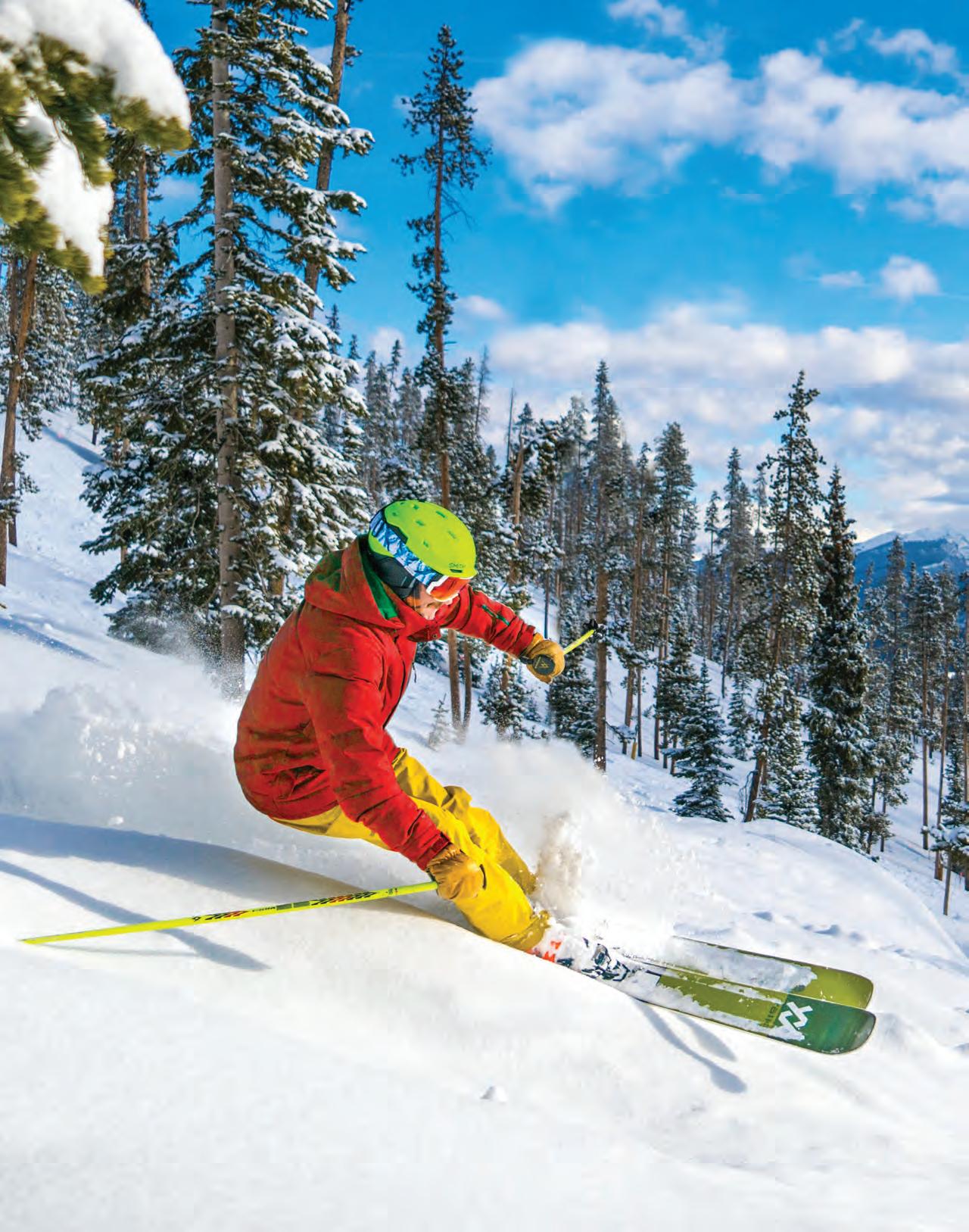
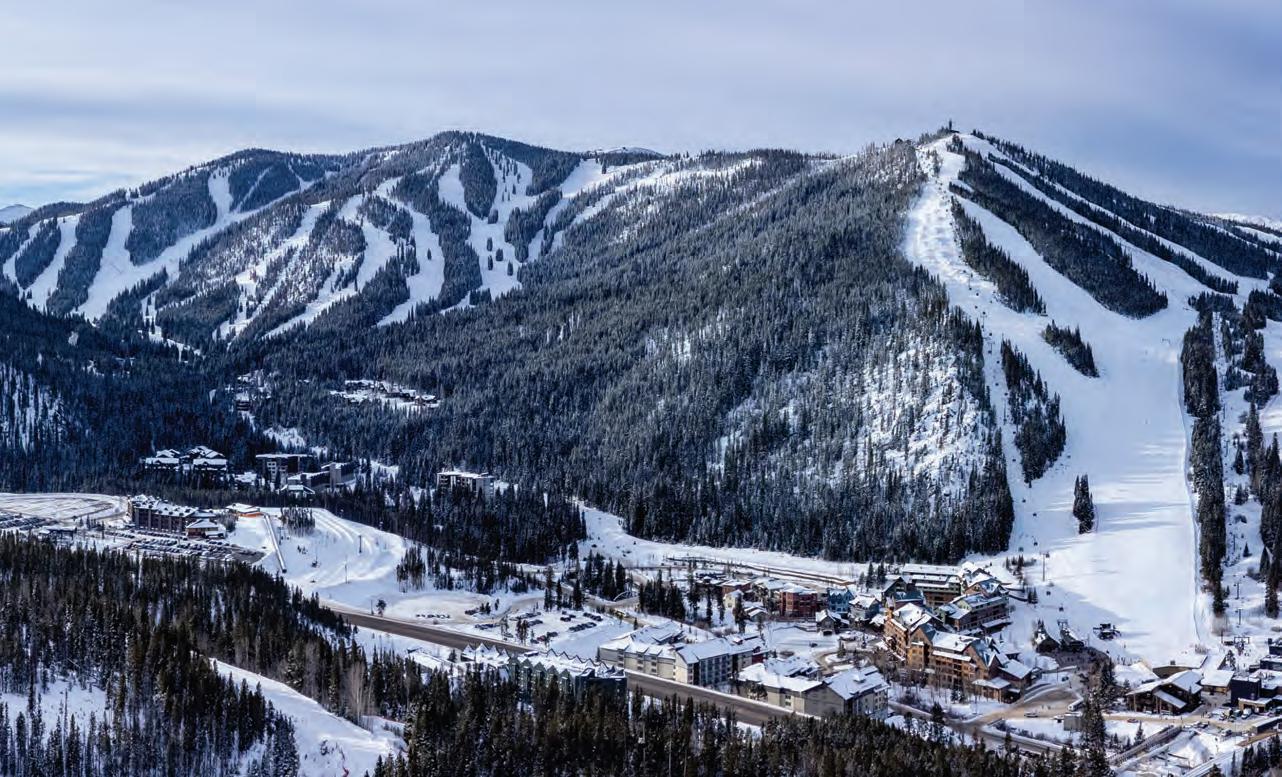
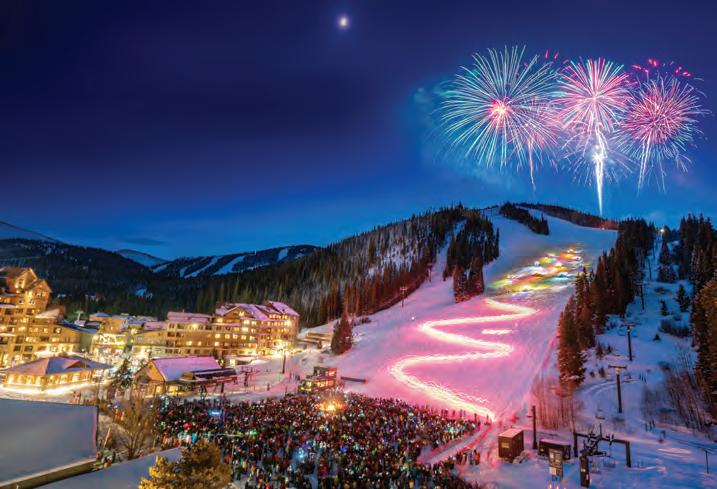
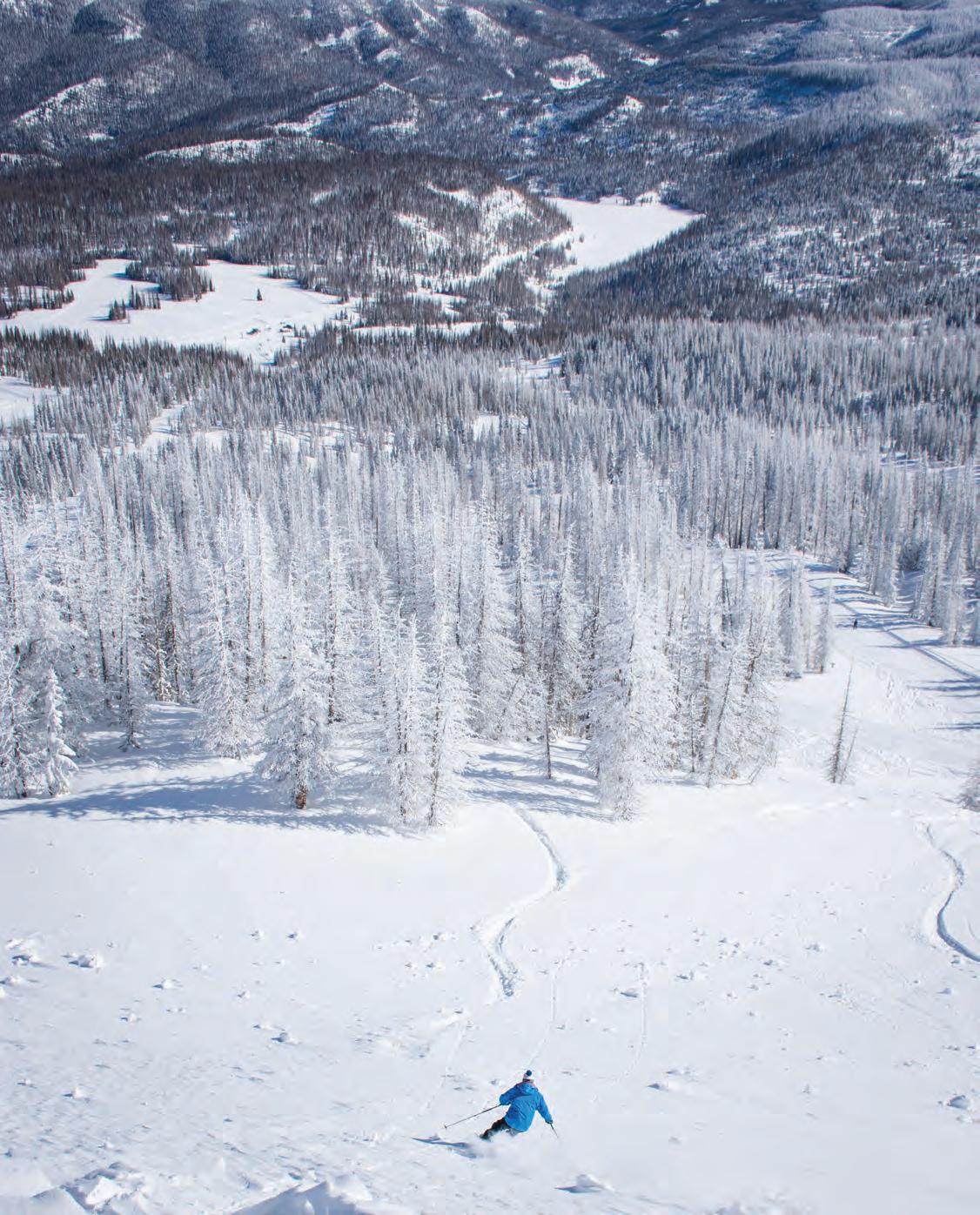
BAcross Winter Park Resort’s 3,000 acres and seven unique territories, broad alpine faces, rail yards and punishing moguls share space with tailgates and tradition. From first turns to last chair, the locals’ mountain is shaped by access for all.
Y DAWN AT Mary Jane, engines idle and grills hiss. Pickup tailgates drop. Pancakes flip. Someone cracks a frosty beer despite the cold. Locals jockey for parking spots like they’re claiming beachfront property, laying claim to asphalt with ski-in, ski-out access. Music drifts across the lot as frost lifts from windshields and breath hangs in the air.
This is the Jane vibe. It isn’t polished. It isn’t quiet. It’s a subculture built on shared stoke, strong legs and the understanding that nothing here comes easy.
Winter Park Resort’s reputation as Colorado’s locals’ mountain grew from the ground up. Challenging terrain, a plainspoken culture and the steady presence of people who return year after year have shaped a place defined by consistency. Guided by public ownership, geography and snow, the resort developed deliberately over time, becoming what it is through use rather than design.
Winter Park Resort opened in 1940 after the City of Denver purchased land at the edge of the Fraser Valley to create a
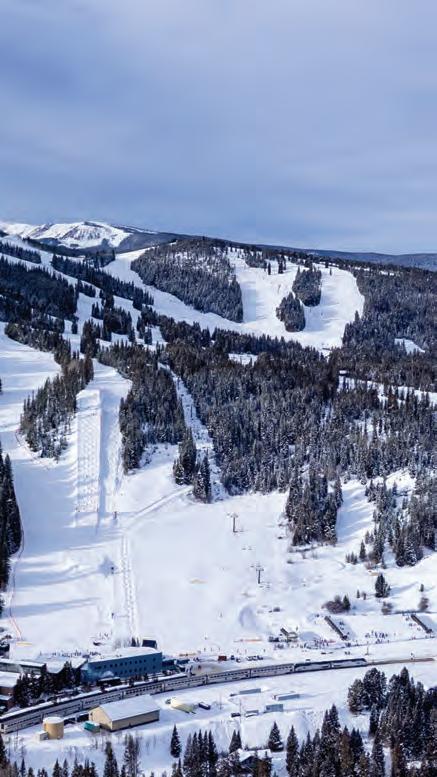
public winter sports park. It remains Colorado’s oldest continuously operating ski resort, located 67 miles west of Denver. The concept was simple: access. George Cranmer of Denver Parks and Recreation envisioned a mountain reachable by rail, and the ski train soon began carrying city residents through the Moffat Tunnel to a small stop called West Portal. A single J-bar rope tow hauled skiers uphill for a dollar a day.
For decades, Winter Park was owned and operated by the City and County of Denver, an outlier among major ski resorts. While other mountains invested in Bavarian villages and champagne bars, Winter Park’s character took shape around rugged edges and access – both geographic and economic. Families boarded the train or crammed into station wagons for the white-knuckle drive over Berthoud Pass, knowing they’d find an honest skier’s mountain on the other side.
Today, while the City of Denver still owns the land, Alterra Mountain Company manages operations through a pub-
lic-private partnership. The arrangement allows the resort to grow without shedding its roots, balancing modern infrastructure with a culture that still rewards showing up early and skiing hard.
That identity of accessibility is reinforced by programs like the National Sports Center for the Disabled, one of the largest adaptive ski programs in the world. On any given day, sit-skis, mono-skis and outriggers move fluidly alongside traditional gear.
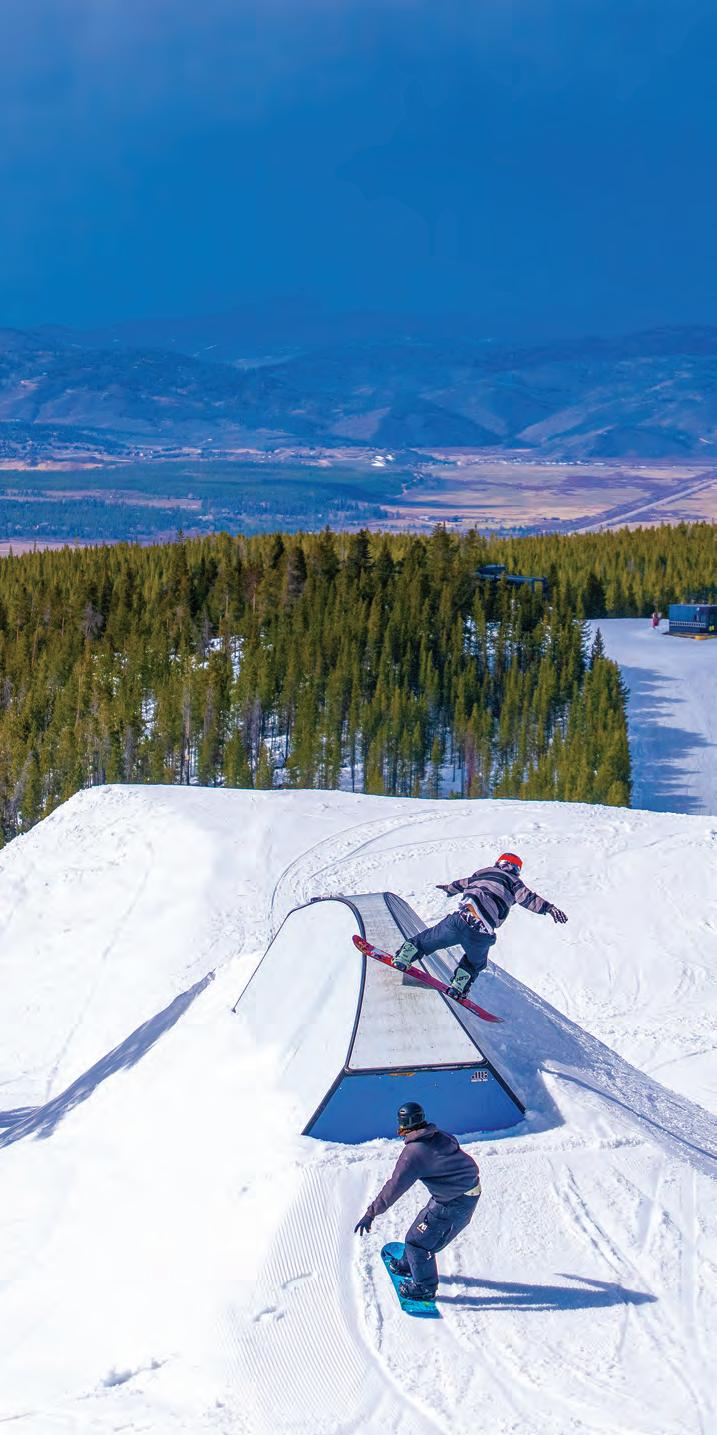
Spread across more than 3,000 acres and divided into seven distinct territories, the mountain offers something for nearly every kind of skier. The namesake Winter Park area delivers classic groomers and family-friendly terrain. Parsenn Bowl rises above treeline with wide-open alpine skiing. Vasquez Ridge holds quiet powder stashes. Eagle Wind protects off-piste terrain within resort boundaries. The Cirque challenges the bold with cliffs, couloirs and ungroomed steeps, while the terrain parks draw the next generation of freestyle athletes.
And then, there’s Mary Jane.
Erik Makić
THIS SEASON MARKS the 50th anniversary of the territory locals speak of with near-religious reverence. To understand its pull, you don’t start with trail maps or lift stats. You start with who shows up to ski from first to last chair – and why they keep coming back.
Mary Jane officially opened in 1976, adding 18 trails and 350 acres of rugged terrain that doubled the resort’s footprint. But her story reaches further back, wrapped in railtown lore and local memory.
Legend has it Mary Jane was a “lady of the evening” in the 1800s railroad town of Arrow, three miles up the line. Whether she earned the land beneath the territory through wages or received it from clients remains unclear, but her name endured. When the resort christened the new ter-
rain with her moniker, the irony wasn’t lost – a woman once dismissed for her profession became the namesake of Colorado’s most demanding mogul haven.
With sustained pitches of 25-30 degrees, runs like Drunken Frenchman, Hole in the Wall Chute and Cannonball burn thighs and test resolve. Moguls here are left intact by design, forcing skiers to absorb every turn and mistake with their own bodies. “No Pain, No Jane” isn’t just a bumper-sticker slogan. It’s a rite of passage. Skiers who master these troughs earn their stripes on the resort’s eastern boundary.
When rumors surfaced in the mid1990s that the bumps might be groomed, locals pushed back hard. They organized, protested and won. Today, the terrain remains defiantly ungroomed. That fight
cemented Mary Jane’s place in the resort’s identity.
Trail names echo the valley’s railroad past – Golden Spike, Derailer, Pony Express – but Mary Jane herself still outshines them all. Five decades in, she remains the proving ground.
BEFORE THE LIFTS spin each morning, Winter Park Resort’s ski patrollers roar up the mountain on snowmobiles. Inside dispatch huts at Sunspot and Lunch Rock, coffee steams on the counter. Radios crackle. Boots clomp across wood floors as the mountain wakes under a rising sun. Then a voice cuts through the radio: “Patrol, we’ve got a call.”
Jackets zip. Tones drop. The redcoats are out the door in seconds.
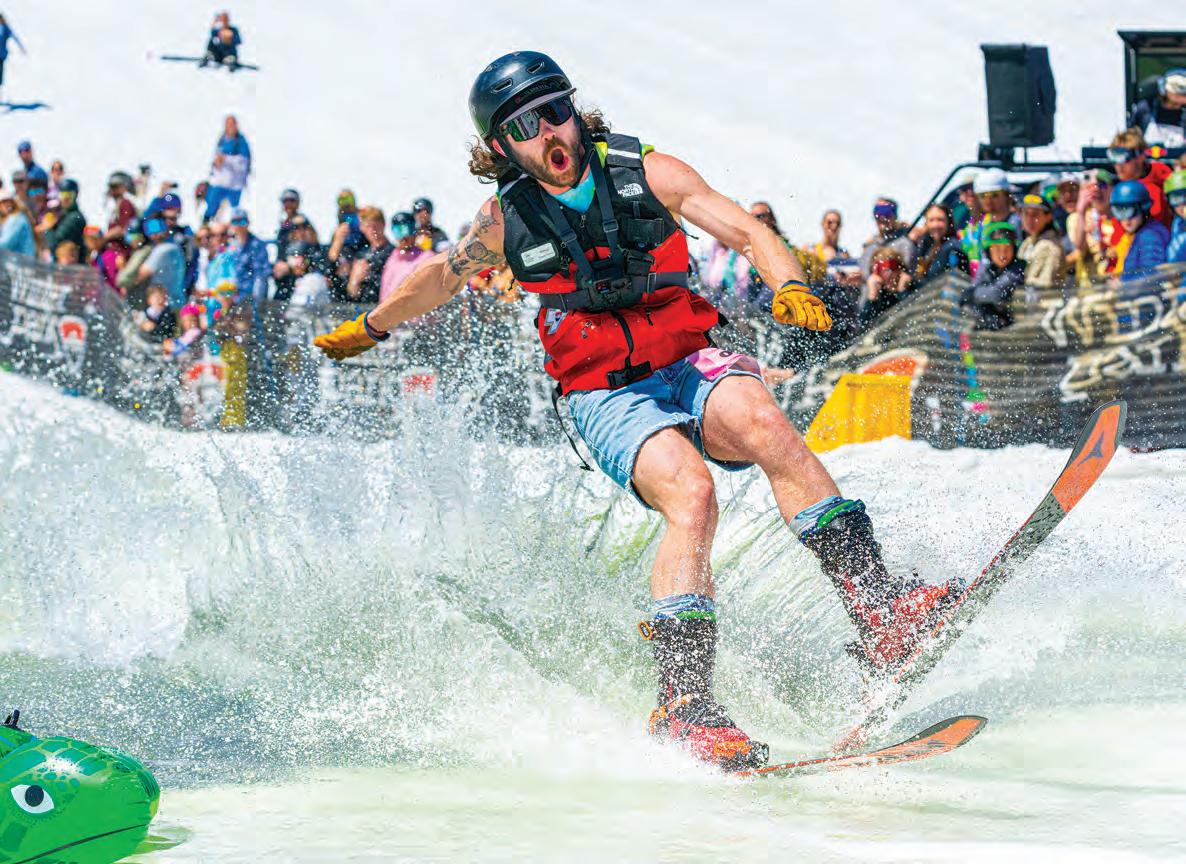
A skier skims a frigid pond near the Winter Park base, a spring ritual rooted in the mountain’s locals-first culture. At Winter Park Resort, showing up early, skiing hard and celebrating snow matters just as much as the terrain, history or polish.
Winter Park Resort
Winter Park’s patrol includes 91 professional patrollers and 130 volunteers. Their work spans first aid, rope evacuations, avalanche mitigation and mountain maintenance. Training begins with volunteering, followed by classroom instruction and years in the field.
“I came here for the skiing,” said Colin MacDonald, a third-year patroller from Winter Park, “but I stayed because I discovered just how much I love helping people.”
Among the patrol’s most specialized members are the avalanche dogs. Rico LaRocca co-founded the resort’s program with patroller Nate Bash more than a decade ago, training his border collie, Biskit, from puppyhood. On her first mission, she rode zipped inside his jacket during a 20-below blizzard. Now seven years old, Biskit is a certified Colorado Rapid Avalanche Deployment dog, part of a team that responds to slides from Berthoud Pass to Rocky Mountain National Park.
Dogs like Biskit can search roughly 2 1/2 acres in 30 minutes – work that would otherwise take dozens of human hours. Training relies on reward, not food. Toys tap into primal instinct. Timing matters. For humans trapped in an avalanche, survival rates drop sharply after the first 15 minutes.
During drills, Biskit explodes into motion at the command to search, reading scent, snow density and airflow while LaRocca interprets her cues. For the patrol, the resort’s team of five dogs are both mascot and teammate – all business on the slopes, curled contentedly on snowmobiles between calls.
“It’s hard work,” LaRocca said. “But it’s important work.”
LONG BEFORE CHAIR lifts, snowmobiles and patrol radios, this mountain was shaped by older systems of knowledge and survival. The Cheyenne, Ute and Arapaho tribes lived on and moved through this land for generations. Snow here was not recreation, but sustenance.
“There Is Snow On The Ground,” a four-part installation developed with NativesOutdoors, takes its name from the Arapaho word heniiniini’. It frames snow as a source of continuity – something that feeds people, water and life far beyond the ski season.
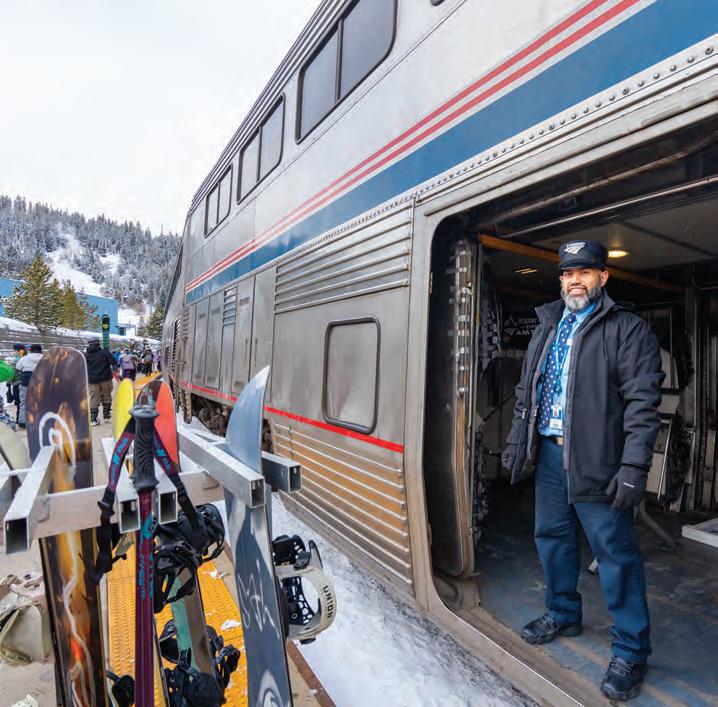
Skiers ride the Amtrak from downtown Denver straight to the Winter Park base, passing through Moffat Tunnel. The resort itself is owned by the city, where rail access has helped to forge an authentic mountain experience.
Winter Park Resort (inset); Erik Makić
Winter Park Resort
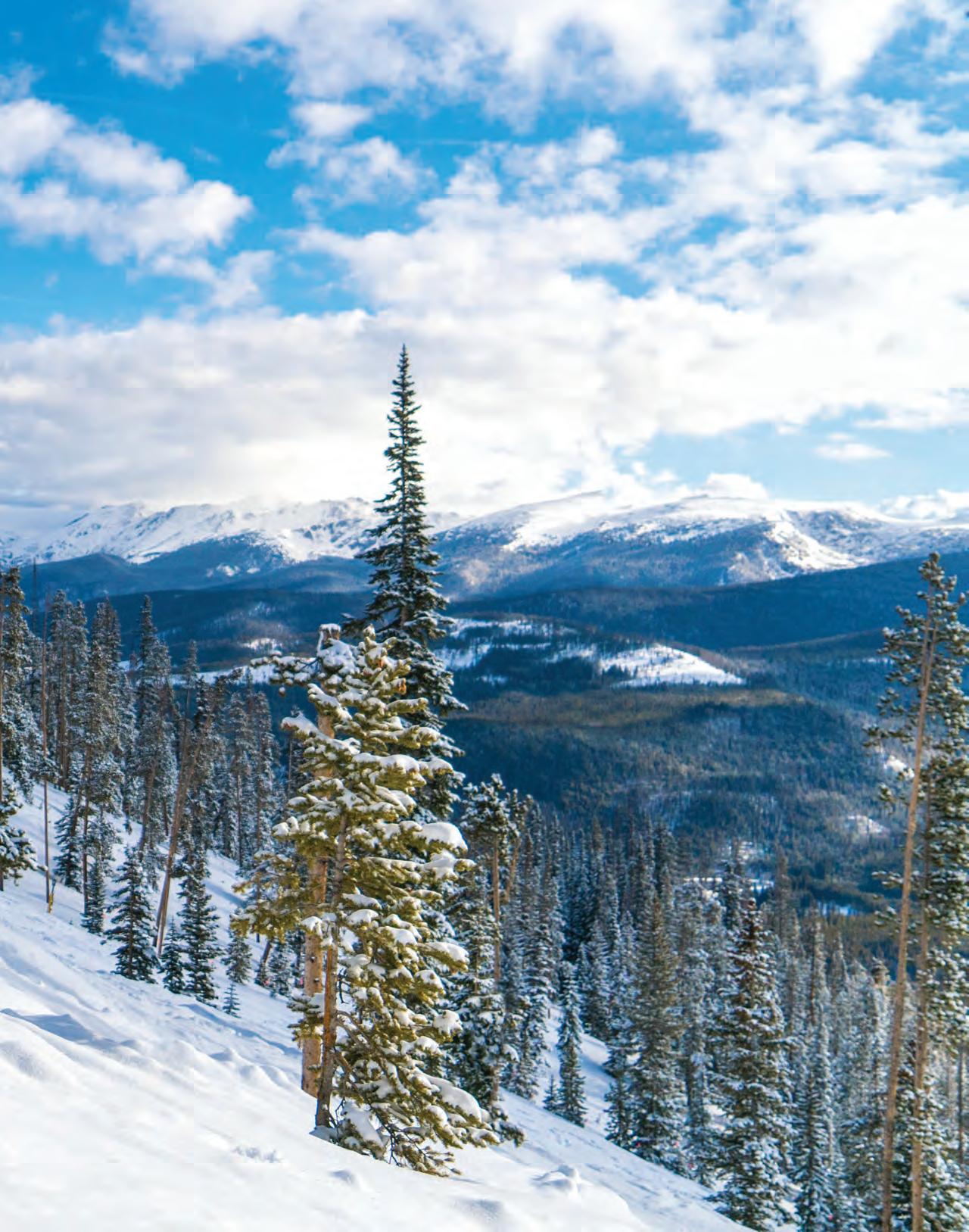
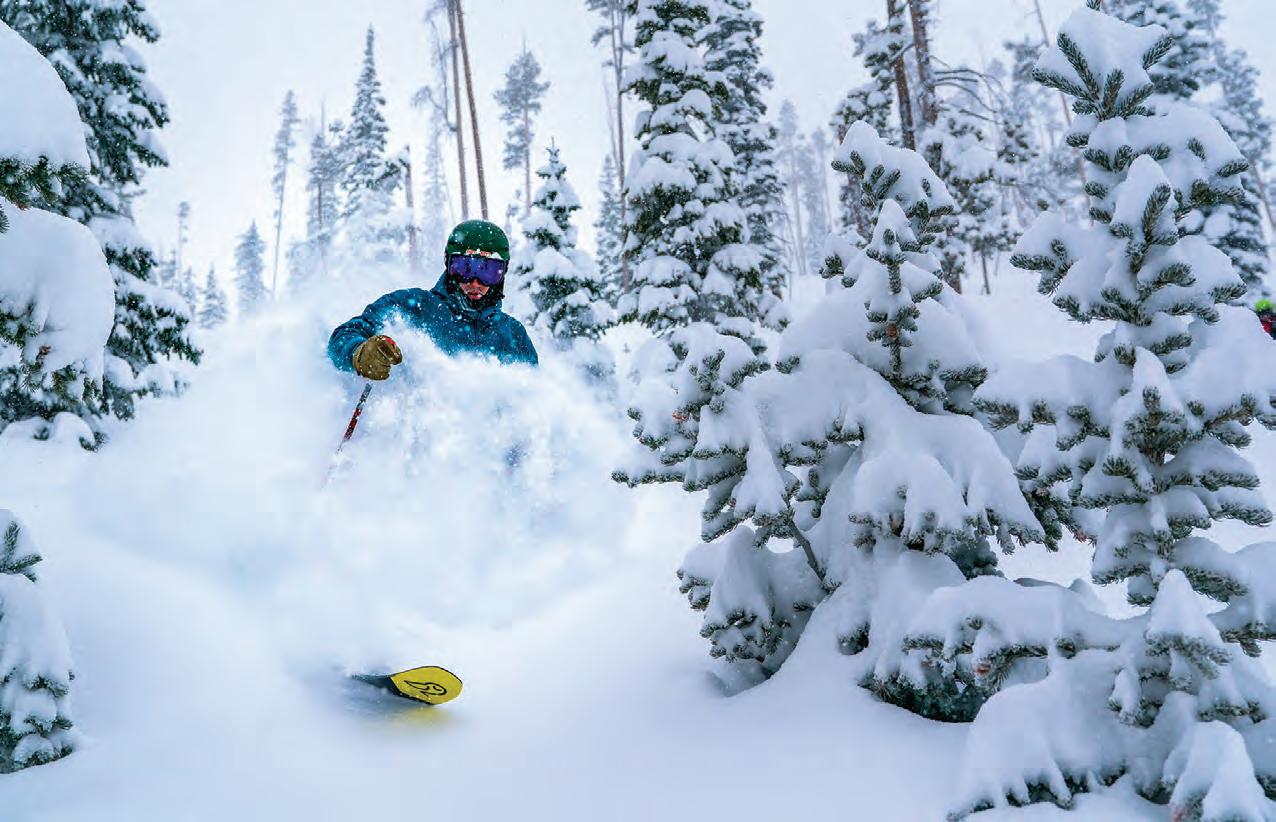
Winter Park receieves nearly 350 inches of fresh snow each year. With 166 trails and vast off-piste terrain, from Vasquez Cirque to glades, the terrain rewards those who answer the call, embrace the hard days and return each season for the simple, enduring joy of sliding on snow.
Winter Park sits at the headwaters of the Colorado River, where snowmelt from the resort’s slopes moves downstream for more than 1,450 miles. Near Sunspot Mountaintop Lodge, an installation marks four peaks in the cardinal directions –Longs Peak, Parry Peak, Mount Blue Sky and Byers Peak – linked by a river motif that irrigates native plantings through the summer months. Nearby, the snow stake used to measure daily accumulation carries patterns designed by Indigenous artists Jordan Craig and Vernan Kee.
Across the resort, trail markers and signage reflect older place names, including Eagle Wind, whose name comes from the original Arapaho term for the area. The markers don’t ask for attention. They place the mountain within a much longer timeline shaped by snow, water and survival.
Each winter, roughly 1 million skiers and riders pass through Winter Park. Some come once. Others stay for a weekend. Lift lines fill and empty. Seasons turn.
Most names are never known, and most days fade together.
Yet for all the machinery, training and coordination it takes to keep Winter Park running, the mountain is ultimately measured one skier at a time.
At 88 years old, “Paisley” has skied every day the lifts have run at Winter Park Resort for the past 13 years. She does it quietly, without audience or occasion.
What began as a 75th birthday challenge grew into more than 2,000 days on skis – rain or shine. Paisley, who goes by her first name only, moved to the town of Winter Park in 2010.
Raised in Chicago and later Evergreen, she spent years waiting at the bottom of the hill while her children skied. She started skiing in her 40s. One day, she clicked into bindings herself and never looked back.
Of all the bluebird days on the mountain, Paisley prefers inclement weather. “It’s Mother Nature at her best, giving us a challenge,” she said.
And while perfectly groomed trails have their pull, her favorite terrain is moguls. Every day, she squeezes them in. “It gives you a place to turn,” she said. “You can get into a flow and find your line.”
She doesn’t own a couch or a television set. In the off-season, she bikes thousands of miles and plants trees throughout the Fraser Valley. She plans to ski into her 90s, though she shrugs off the idea that her routine is remarkable, even for a Coloradan
“I could sit at home,” she said. “But what’s the value in that?”
Each winter, she pulls on her goggles and heads downhill again.
“Life is a race,” she said. “I’m just here to have fun.”
Winter Park Resort spans thousands of acres and decades of history, but its character is defined less by size than by who shows up before dawn, who answers the radio call and who keeps clicking into bindings when the weather turns ugly.
On this mountain, winter belongs to the people who show up.
Winter Park Resort
URBAN TURNS
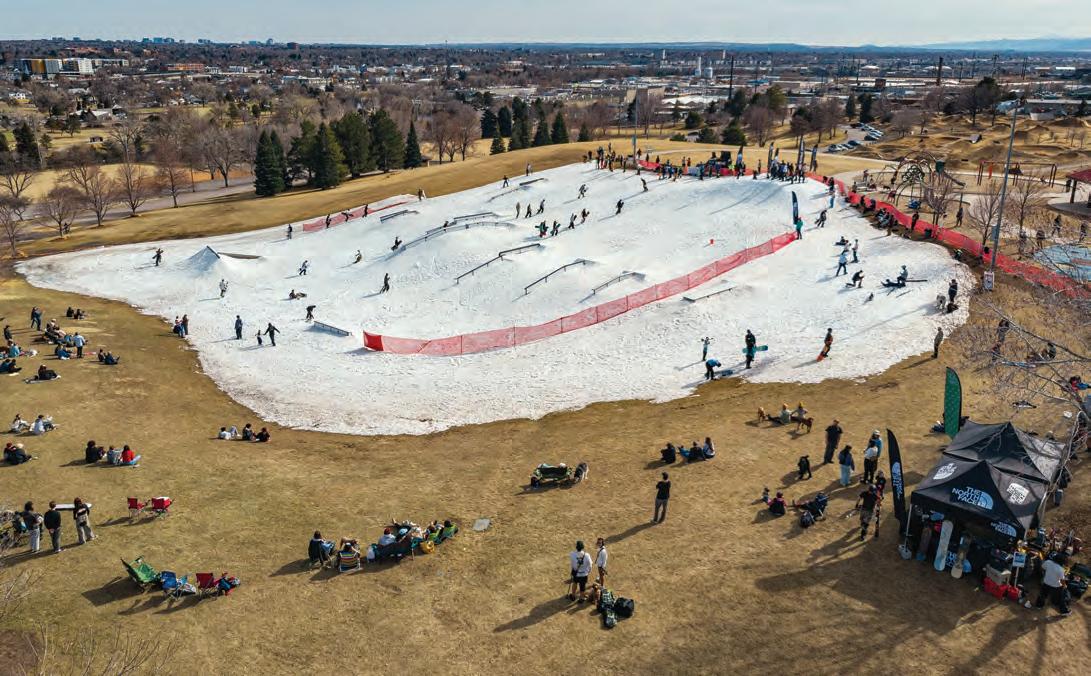
On winter evenings in Denver, the lights at Ruby Hill Park click on, washing a short, steep slope above the South Platte River in white. For most of the year, it’s just grass. Come January, it becomes the Ruby Hill Rail Yard – America’s first free urban terrain park.
The Rail Yard began in 2007, when then-Mayor John Hickenlooper went looking for ways to expand access to snow sports for young people without easy entry to the mountains. Bob Holme, now director of mountain maintenance at Winter Park Resort, answered the call. He brought snowmaking equipment and a snowcat down from the high country, and by Jan. 9, volunteers from Winter Park and Denver Parks and Recreation had shaped the park’s first line of boxes, rails and small jumps.
The model stuck. Each winter, Win-
ter Park crews return to build a one-acre snowpack. Once it’s set, Denver staff take over daily maintenance.
Here, riders don’t buy lift tickets or sit in traffic. They walk up and drop in. Those without gear can borrow equipment, lowering the barrier even further – a rarity in a sport often defined by distance and cost. The park is open daily from January through March, with night riding under city lights.
The slope occupies just a corner of the 88-acre park, named for the garnet-colored stones once pulled from the nearby river. Its reach extends far beyond that footprint. For many Denver residents, Ruby Hill is a first turn, a first rail and a first sense that snow sports might belong to them, too – proof that the culture of the mountains doesn’t have to start in the mountains at all.
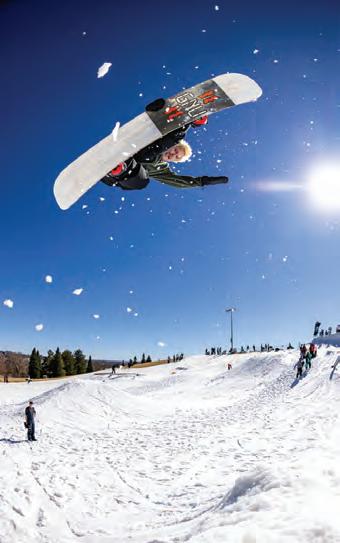
Ruby Hill Rail Yard transforms a small South Denver hill into America’s first free urban terrain park, giving young riders a first taste of snowboarding and skiing. Each winter, volunteers and Winter Park crews expand access and bring mountain culture into the heart of the city.
Phil McKenzie
Phil McKenzie
OUR STATE THROUGH THE WORDS OF OUR POETS
Stillness arrives in many forms – in the hush after sunset, the pause between sounds, the quiet work of being alone with one’s thoughts. These poems linger in moments when the world softens and attention deepens, reminding us that stillness is not emptiness, but a space for healing, reflection and quiet connection.
Humming
Marina J. Ashworth, Denver
Outdoor places lose rumpus
All the more when folks are mum As city fauna Day Trippers Head home with the setting sun
When the ebbing so passes Lake waters now soft harmonize When winds go pacific to rest Is when stillness closes its eyes
In the woods be plains or high have sounds of stillness at night Even though we are not there Its tune still hums with delight
Woodpecker
Ann Thacker, Lakewood
I lived alone, inside myself, like sap within a tree; protected, proud, indifferent, a soul no one could see.
I hid there many seasons, frigid as the frost; free, neglected, fallow, never knowing I was lost. You found me accidentally, pecking at my plight; secluded, silent, suffering, scurrying out of sight.
Tenacious tapping –I’ve been exposed, thawing in your glow; bashful, bold, bewildered, endeavoring to grow
Stillness
J. Craig Hill, Grand Junction
There’s an early morning moment When the crickets stop their chirping And the birds are still asleep And the night surveillance helicopter Has made its final round.
In the stillness of that moment Time itself slows down And I find a sense of peace that is Both silent and profound.
Dawn Wilson
Untitled
Laura Hobbs, Lakewood
Like salve to a wound
Stillness heals my troubled mind
Sought in forest deep
Tranquility
Robert Basinger, Rifle
Splitting wood
With a rusty ax
Sitting in silence
My only task
Traveling solo
Just little ol’ me
I’ll call this campsite
Tran’quil’ity.
The air will grow chilly
Stars will come out
I’ll get some good sleep
There’s little doubt
In the morning I’ll wake up
To a world that’s so still I could spend a whole lifetime
And not get my fill.
Wintering
Sandy Morgan, Colorado Springs
During the daylight I follow the sun through my rooms –from couch, to table, to studio. I park myself wherever its rays curl up on my lap.
And when it slinks behind the kitchen window, I capture some warmth in a cup of cocoa, turn on fairy lights, crawl under a comforter and wait for the moon to come and share her secrets with a silent smile.
Send Your Poems on the theme “Unfolding” for the May/June 2026 issue, deadline March 1, and “The Longest Light” for the July/August 2026 issue, deadline May 1. Email your poems to poetry@coloradolifemagazine.com or mail to the address at the front of this magazine.
Joshua Hardin
Slow-cooked meals
WARMING UP THE WINTER
recipes and photographs by DANELLE McCOLLUM
COMING HOME TO the aroma of dinner simmering in the slow cooker, hot and ready to eat, is one of life’s simple pleasures – especially when the winter weather gets seriously cold. These rib-sticking recipes bring warmth and spice to help defrost on chilly days.
Tex-Mex Cheesy Chicken
Chicken is cooked with beans, corn and southwest seasonings, then combined with cheese, rice and taco toppings. A topping of Fritos adds the perfect salty crunch.
Spray slow cooker with cooking spray. In small bowl, mix taco seasoning, cumin, salt and pepper. Sprinkle both sides of chicken with seasoning mixture and add to slow cooker. Pour Rotel tomatoes, beans and corn over chicken in slow cooker. Cover and cook on low for 4 hours, or until chicken is cooked through. Remove chicken from slow cooker and shred with two forks.
Turn slow cooker to high. Add Velveeta and cheddar cheese to sauce in slow cooker and cook for 15 minutes. Beat with whisk until cheeses are melted and smooth. Add rice to slow cooker, along with shredded chicken; stir to combine. Cover and cook 10-15 minutes more. Stir in green onions and cilantro just before serving. Can be topped with Fritos or other desired topping.
4-5 boneless, skinless chicken breasts
1 package taco seasoning
1/2 tsp cumin
1/2 tsp salt
1/4 tsp pepper
1 10-oz can Rotel tomatoes
1 15-oz can black beans, rinsed and drained
1 cup frozen corn
4 oz Velveeta cheese, cubed
2 cups shredded cheddar cheese
4 cups cooked rice
2-3 green onions, chopped
1/4 cup chopped fresh cilantro Fritos for topping, plus any additional desired toppings
Ser ves 6
Slow Cooker Red Beans
This hearty take on classic red beans and rice has twice as much andouille sausage as traditional recipes. Don’t forget to boil the beans before putting them in the slow cooker –otherwise, they will take forever to cook.
Rinse and drain beans. Place in medium saucepan and cover with water by 2 inches. Bring beans to boil on stove. Remove from heat. Cover and let stand one hour. Place remaining ingredients, except rice and green onions, in slow cooker. Cover and turn to high.
When the beans have soaked one hour, drain and add to slow cooker. Continue cooking on high for 7-8 hours, or until beans are tender. Serve over rice. Garnish with green onions.
1 lb dried red beans
1 ½-2 lbs andouille sausage, sliced
6 cups chicken broth
1 medium onion, diced
1 small jalapeño, seeded and diced (optional)
3-4 cloves garlic, minced
1 6-oz can tomato paste
1 tsp salt
1/2 tsp black pepper
1/4 tsp cayenne pepper
1 tsp dried thyme
1 tsp dried oregano Hot cooked rice, for serving Green onions, for garnish
Ser ves 8
Slow Cooker Thai Peanut Pork
A sweet and spicy Thai peanut sauce brings rich flavor to slow-cooked pork and vegetables. Though the dish isn’t excessively spicy, those worried about the heat may choose to halve the chili sauce. The chopped peanuts and lime wedges, however, are essential.
Lightly grease slow cooker with non-stick cooking spray. Place pork loin in slow cooker. In medium bowl, stir together teriyaki sauce, rice vinegar, chili sauce, ginger and garlic. Pour teriyaki mixture over pork loin. Cover and cook on low for 4-5 hours.
Remove pork from slow cooker and shred with two forks. Whisk peanut butter into juices in slow cooker. Return pork to slow cooker, along with sliced peppers and snow peas; cook for 30-60 minutes more, until vegetables are tender but still crisp. Serve over rice or noodles with green onions, peanuts and lime wedges to garnish.
2 lbs pork loin
1 cup low-sodium teriyaki sauce
4 Tbsp rice vinegar
2 tsp chili sauce
1/2 tsp ground ginger
3-4 cloves garlic, minced
1 red bell pepper, seeded and sliced
1 yellow bell pepper, seeded and sliced
2 cups snow peas
2/3 cup creamy peanut butter
1 cup chopped green onions
1/2 cup chopped roasted peanuts
2-3 limes, cut into wedges
Cooked rice or rice noodles
Ser ves 6
What’s in Your Recipe Box?
The editors are interested in featuring your favorite family recipes. Send your recipes (and memories inspired by your recipes) to editor@coloradolifemag.com or mail to the address at the front of this magazine.
COLORADO’S CALENDAR OF EVENTS
by ARIELLA NARDIZZI
SPORTS
GRAND LAKE SKIJORING
FEB 27-MARCH 1 • GRAND LAKE
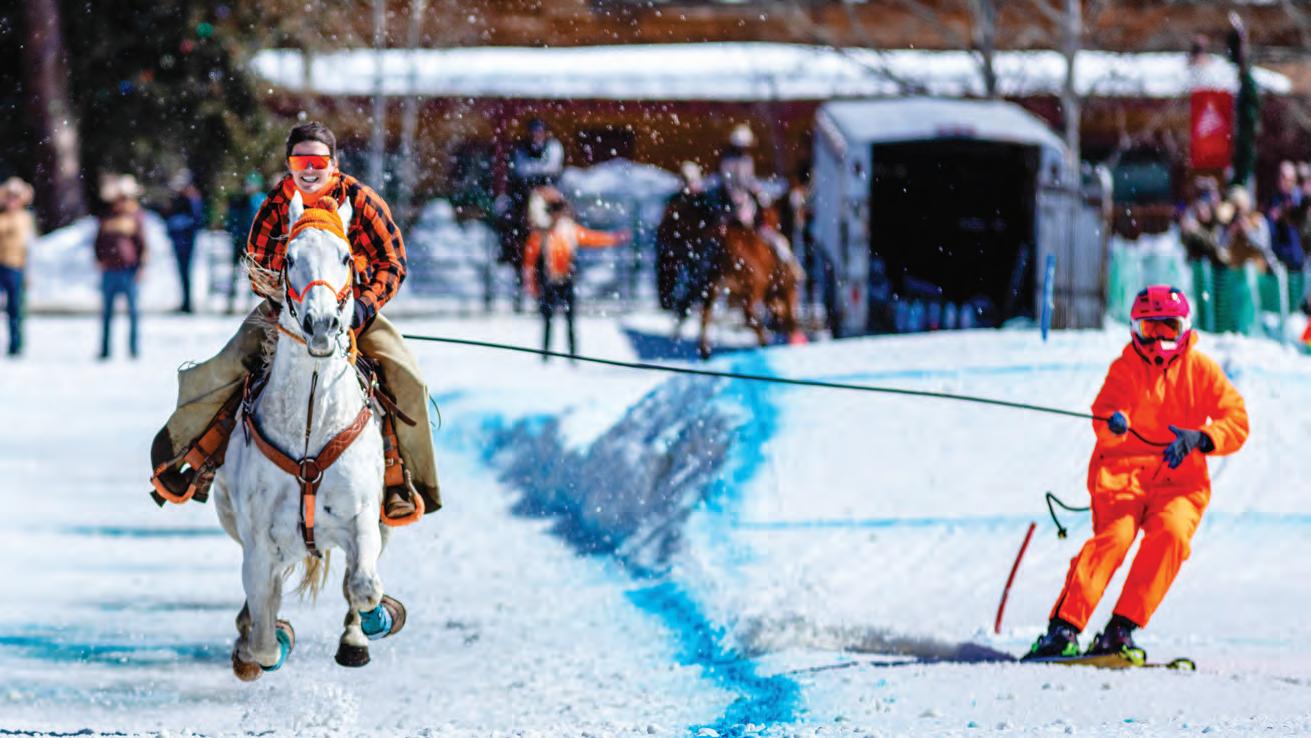
On a winter morning on Grand Avenue, the snow is packed hard into jumps and ramps in the street between Hancock and Vine. The sound of hooves echoes off brick and timber. A skier catapults off a jump and snags a neon ring. The crowd roars. For the second year running, downtown Grand Lake turns itself into a racetrack.
The Grand Lake Skijoring event unfolds over three days, beginning Friday, Feb. 27 with race day for the Novice Division competition. Teams are each made up of a horse, rider and skier. Check in begins early, and by 11 a.m., the novice racers are flying down the course. The top eight novice teams earn a ticket to the weekend’s Sport Division, with awards wrapping up the evening before live music carries on at
Charlie’s Bar and Grill.
Saturday and Sunday bring the full spectacle. Opening ceremonies kick off each morning before Youth, Snowboard, Sport and Open divisions take to the course. From pint-sized skiers pulled by seasoned horses to advanced teams clearing multiple gap jumps, the progression of skill is thrilling. Each horse is carefully managed, underscoring the sport’s deep respect for the animal and human partnership.
Awards, a lively Calcutta at the Community Hall and nightly after-parties round out the weekend. But the real draw is the energy on the street each day: cowbells ringing, skis carving and steam puffed from horses’ noses in the frigid air. grandlakeskijor.com, (970) 389-9112.
WHERE TO EAT ONE LOVE RUM KITCHEN
Caribbean flavors transport taste buds to paradise, with specialties like coconut rum chicken and an octopus curry wrap. Wash it down with rum-infused cocktails. 928 Grand Ave., (970) 660-6714.
WHERE TO STAY SPIRIT LAKE LODGE
The family-owned destination offers cozy suites with fireplaces, a hot tub and central access. 829 Grand Ave., (970) 627-3344.
WHERE TO GO GRAND LAKE NORDIC CENTER
Glide across 35 kilometers of groomed classic and skate skiing trails.
The Nordic Center also offers rentals, lessons, snowshoeing access and a tubing hill. 1415 County Road 48, (970) 627-8008.
Each winter, downtown Grand Lake transforms into a snowy race course for three days of skijoring excitement featuring teams of horse, rider and skier.
Dave Camara
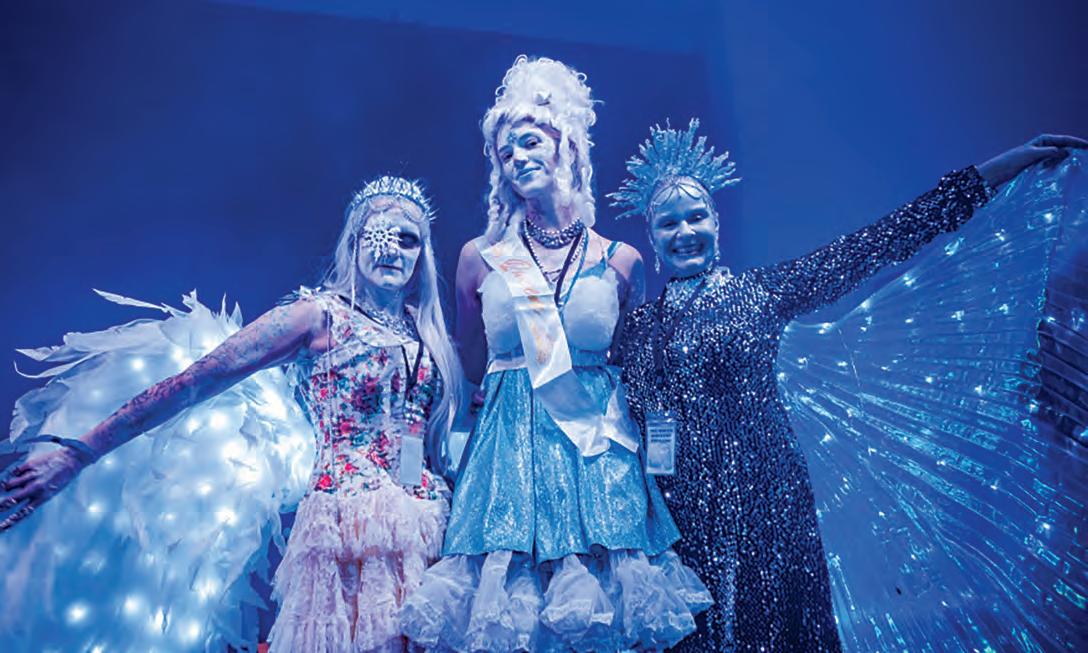
One of Colorado’s quirkiest traditions stems from a cryonically-frozen body in Nederland that gained worldwide attention. Frozen Dead Guy Days celebrates their icon at The Stanley Hotel with bar crawls, a dance party, coffin races, a polar plunge and three days of revelry.
FESTIVAL
FROZEN DEAD GUY DAYS
MARCH 27-29 • ESTES PARK
Frozen Dead Guy Days may be one of Colorado’s strangest winter traditions, but its quirky backstory stretches from Norway to California. After Bredo Morstoel died in 1989, his cryonics-frozen body spent years tucked away in a family shed outside Nederland. Visa issues and a town ordinance made him an international curiosity – and the only frozen person legally allowed to remain in town, “grandfathered in.”
By 2023, Morstoel’s fame moved him to Estes Park, where The Stanley Hotel’s old icehouse become the world’s only cryonics museum. Today, the legacy fuels one eccentric festival. Kicking off Friday, March 27 at 2 p.m., revelers can roam the Frozen Dead Bar Crawl, sampling themed cock-
tails and snacks at dozens of Estes Park taverns. Free shuttles available. That same night at 7 p.m., the Royal Blue Ball at The Stanley sets the tone with outlandish outfits and a dance floor fit for the undead. Costume contest at 10 p.m.
Saturday, March 28 brings the Cryogenic Cannibal Chase 8k from 10:30 a.m.-noon, as the festival grounds pack with coffin races and live music.
On Sunday, March 29, brave souls take the Polar Plunge at The Stanley before warming up with Bands & Bloody’s Brunch around town.
In Estes Park, the best way to honor a frozen Norwegian grandpa is with one seriously lively weekend. frozendeadguydays.com.
WHERE TO EAT THE HIVE AT ESTES PARK BREWERY
The laid-back brewery pairs craft beers with pizza, burgers and sandwiches. Pair the elk burger with the Redrum Ale for a dinner of Rocky Mountain perfection. 470 Prospect Village Dr., (970) 586-5421.
WHERE TO STAY THE ESTES PARK RESORT
On the shores of Lake Estes, spacious suites and cabins offer prime wildlife viewing opportunities from the warmth of the indoors. The resort also features a spa, a fine dining restaurant and firepits. 1700 Colorado Peaks Dr., (970) 577-6400.
WHERE TO GO ESTES PARK MUSEUM
Learn about the region’s rich history from trapping and hunting to the town’s Indigenous tribes, homesteaders and entrepreneurs as told by 25,000 exhibited artifacts. 200 4th St., (970) 586-6256.
Frozen Dead Guy Days
OTHER EVENTS YOU MAY ENJOY
FEBRUARY
Telluride Comedy Festival
Feb. 12-15 • Telluride
Laughter emanates from the halls of the historic Sheridan Opera House as the industry’s best comedians crack jokes all weekend at the 26th annual comedy festival. 8 p.m. 110 N. Oak St., (970)-728-6363.
Ice Festival
Feb. 14-22 • Cripple Creek
Ice carvers go head-to-head to chisel intricate sculptures from ice blocks on Saturdays at noon, 1:30 and 3. Visitors can meander down Bennett Avenue for prime viewings of their frozen masterpieces, accompanied by vendors and activities. Free. (719) 689 2502.
Audi Power of Four Mountaineering
Feb. 21 • Aspen
Teams battle for glory on a grueling ski mountaineering course that travels more than 25 miles and 11,000 feet of vertical gain across Buttermilk, Aspen Highlands, Highland Bowl and Aspen Mountain. Race starts 6 a.m. 110 Carriage Way, (800) 290-1326.
Women’s Adventure Film Tour
Feb. 24 • Ridgway
Female athletes push boundaries in the outdoors, with films featuring ultrarunning, biking, skiing and travel writing. 6:30-8:30. $12 advance tickets, $15 at door. The Sherbino, 604 Clinton St., (970) 318-0892.
WinterWonderGrass
Feb. 27-March 1 • Steamboat Springs
The 13th annual bluegrass and roots music festival takes over Steamboat Springs Resort. Prolific pickers and artists include The Devil Makes Three, Leftover Salmon, Stringdusters, Elephant Revival and more. Tickets available online. 2305 Mt. Werner Cir.
Apres Beats Happy Hour
Feb. 28 • Dillon
DJ Drake plays live music while adrenaline-filled ski and snowboard films fill the big screen at Warren Station. Happy hour deals available at the bar. Event runs 5:30-8:30. $10-$12. 140 Ida Belle Dr., Unit F4, (970) 423-8994.
Uncle Clyde’s Run and Slide
Feb. 28 • Durango
Tag-team the tubing hill at Purgatory Resort. Run up and tube down as many laps as possible in 60 or 90 minutes. Races begin at 11 a.m. and 12 p.m. 1 Skier Place, (970) 247-9000.
MARCH
303 Day
March 3 • Denver
Every March 3rd, Denverites celebrate the town’s 303 area code with festivities around the entire city. Vendors around the city host themed deals and local radio stations host concerts to encourage supporting local Colorado businesses.
Northern Colorado Home and Garden Show
March 6-8 • Greeley
More than 200 vendors and 5,000 consumers gather at Island Grove Regional Park to share resources on transforming their home and shopping local at the 43rd event. Friday 12-5, Saturday 10-4 and Sunday 10-3. Free. 501 N. 14th Ave., (970) 392-4442.
Monte Vista Crane Festival
March 6-8 • Monte Vista
Thousands of Sandhill cranes, ducks, geese, raptors and owls flock to the San Luis Valley during the annual migration. The 43rd festival celebrates with viewing parties, tours, workshops, a craft and nature fair, educational panels and a film festival. (719) 490-8006.
Pints with Patrol
March 12 • Keystone
Spend an evening with Keystone Ski Patrol at Warren Station Center for the Arts. The redcoats give an insider scoop into snow conditions, avalanche awareness briefings and backcountry safety. Attendees can participate in a Q&A panel, and enter to win raffles and giveaways. Free admission. 164 Ida Belle Dr., (970) 423-8994.
Denver March Powwow
March 20-22 • Denver
One of the largest American Indian heritage celebrations in the country returns to Denver for its 50th year. The powwow features traditional dancing, blessings, drumming, arts and crafts, storytelling and frybread concessions at the Denver Coliseum. $7 per day or $20 for three days. 4600 N. Humboldt St., (303) 934-8045.
The She Gees
March 28 • Lamar
Female-led tribute band to the Bee Gees takes center stage at Lamar High School. Groove along to hits like “Stayin’ Alive” and “Night Fever.” Tickets available at door, $20. 7 p.m. 1900 S. 11th St., (719) 336-3488.
TRIVIA ANSWERS
Questions on pages 12-13
1 Rebecca Yarros
2 Temple Grandin
3 Centennial
4 Willa Cather
5 Robert Heinlein
6 a. Peter Heller
7 c. Patricia
Trivia Photographs
Page 12, Top Temple Grandin
Page 12, Bottom Starship Troopers and Stranger in a Strange Land
Waterfront campsites, working ranches frame Steamboat Lake State Park camping
BEFORE IT BECAME an internationally renowned ski destination, the land around Steamboat Springs was cattle country. Northwest of today’s “Ski Town U.S.A.,” the Elk River Valley still supports an array of ranches, both working and dude.
The first time I overnighted there was on a New Year’s weekend a decade or two ago. My wife and I were bunking with friends in cabins at the Glen Eden Resort, and on New Year’s Eve we headed to a local tavern where a DJ played dance tunes.
As expected, the bar was filled with Stetson-topped cowboys and their calico-clad dates. For those wranglers in their Wranglers, the disk jockey tracked an assort-
ment of twangy country tunes, but to no avail. The cowpokes and their lady friends just sat back, sipping their beer-flavored beverages.
Finally, spotting our flock of Front Range city-slickers, the DJ spun a vintage, hard-rock tune. Immediately, those Tony Lama-booted cowpokes and their dates raced to join us Nike-clad pencil pushers on the dance floor. The DJ stopped playing Waylon and Willie, and we brought in the new year sharing the dance floor with these hard-rocking Colorado cowpokes.
While those cabins were warm in the winter, come summertime we tow our trailer up the Elk River Valley and camp at Steamboat Lake State Park. The park offers 182 campsites scattered along the shores of the 1,100-acre reservoir, some with electric hookups and water and sewer available at the dump station. For friends who neither RV nor tent camp, the park also offers 10 camper cabins equipped with refrigerators, electric heat and bringyour-own-bedding bunks.
story and photographs by DAN LEETH
Steamboat Lake campers can enjoy fishing, hiking and birding–sandhill cranes nest nearby-along with motor boating, water skiing, paddleboarding and kayaking. For those of us not bringing our own, Steamboat Lake Marina rents watercraft, including pontoon boats complete with propane grills on the stern, perfect for grilling lunchtime weenies on the water.
Near the park, campers will find a small grocery market, a liquor store and several restaurants, one of which features Caribbean-worthy Jamaican Red Stripe beer and jerked chicken wraps. Teenage offspring will appreciate that the park offers reasonably decent cell coverage via a tower discreetly hidden on the side of nearby Hahns Peak. The block-like structure atop the rocky summit is an abandoned forest fire lookout.
As an April Fools’ Day joke, the Steamboat Springs newspaper once announced that Starbucks had obtained the lookout and would be opening a coffee shop at the summit. According to the article, baristas would be dropped off by helicopter. Rangers at the park’s visitor center say they still get questions about the 3.7-mile hike and 1,407-foot vertical ascent to the “summit Starbucks.” My wife and I have climbed Hahns Peak, and I can assure you there was not an espresso macchiato to be found–though the view was spectacular.
The “Trails in the Steamboat Lake Area”
brochure, available at the park visitor center, lists numerous hiking options, many of them open to mountain biking. For hikers and horseback riders seeking quieter routes, dozens of bicycle-free trails lie a short drive away in the Mount Zirkel Wilderness Area.
One benefit of camping at Steamboat Lake is proximity to town: Steamboat Springs lies less than 30 miles away. A few favorite stops include F.M. Light & Sons, the western wear store that traces its roots to Steamboat’s ranching days. Its yellow roadside signs still mark highways leading into town.
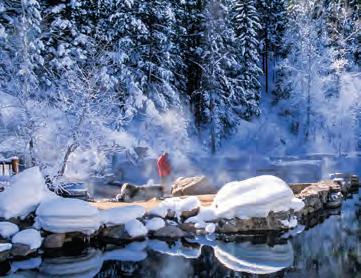
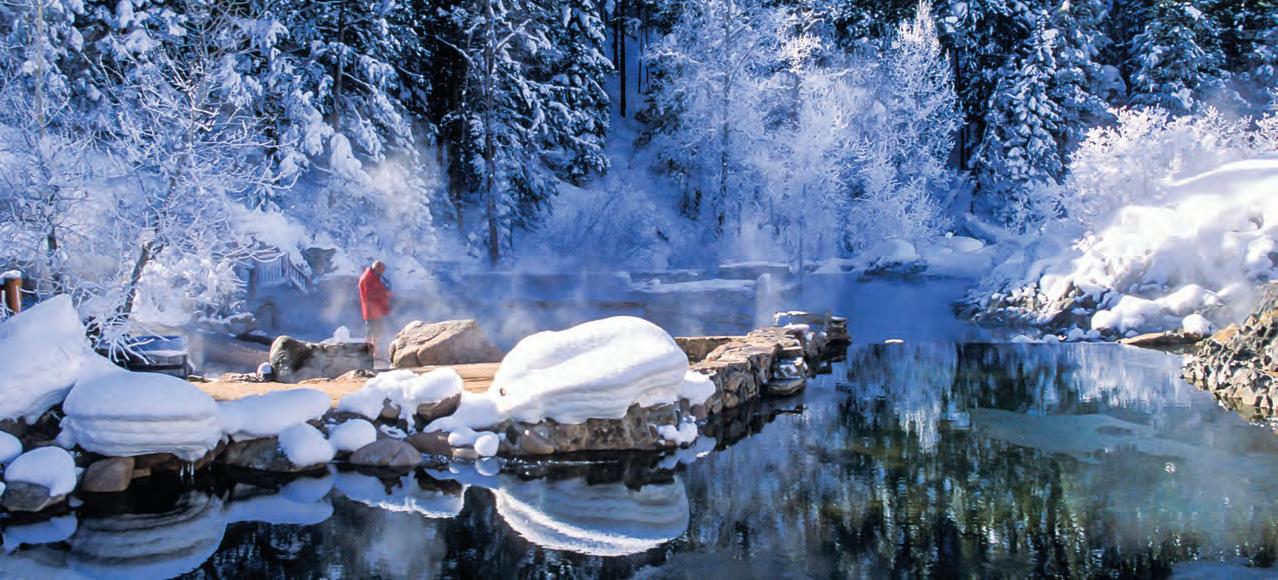
Another pleasant afternoon option is soaking in one of the area’s hot springs. My favorite is Strawberry Park, tucked into the hills north of town. When I first visited, it was an undeveloped, hippie haven populated by bathers wearing birthday suits rather than swimsuits. Today, it’s a thoughtfully designed, nature-inspired retreat where geothermal water warms a series of rock-lined pools beside a small creek. The atmosphere is peaceful and serene, with genuine bathing attire required during daytime hours.
Finally, for those of us who regret not getting an espresso macchiato atop Hahn’s Peak, there are at least three Starbucks drive-up locations in Steamboat Springs. All come staffed with baristas who don’t have to take a whirlybird to work.
Pearl Lake State Park offers quieter camping, where a small, no-wake lake sets the pace. Paddling, fishing and birding unfold in near silence, and nights are guided by starlight.
A Quieter Camp at Pearl Lake
Five miles southeast of Steamboat Lake lies Pearl Lake State Park, which offers 34 basic, no-hookup campsites and two yurts surrounding a small, 167-acre, no-wake lake. With nary a motorboat churning the surface, Pearl Lake is ideal for quietly paddling a canoe, kayak, raft or stand-up paddleboard across forest-framed waters. Limited rentals are available for those without their own craft.
Anglers using flies or lures can target native cutthroat trout, cutbow trout and Arctic grayling. Birders may spot more than 200 species over the course of the year, including ospreys, sandhill cranes and flammulated owls. For hikers and cyclists, the Pearl Lake Connector Trail crosses the dam and continues several miles into the Routt National Forest.
Where Steamboat Lake conveys open grandeur, Pearl Lake offers intimacy and quiet – a rustic campground that recalls earlier camping days, when evenings were spent watching stars instead of satellite TV screens.
Open year-round, Steamboat Lake
State Park lies off Elk River Road (County Road 129), 25 miles north of U.S. 40. Campsite and cabin reservations must be made through Colorado Parks and Wildlife (800-244-5613, cpwshop.com) up to six months in advance.
Summer rates range from $24–$32, plus a $12 daily entry fee for those without a valid park pass. Cabins and watercraft rentals are available through the Steamboat Lake Marina (970-8797019, steamboatlakemarina.com).
In downtown Steamboat Springs, F.M. Light & Sons is at 830 Lincoln Ave.; next door, Lyon’s Corner Drug features an old-fashioned ice cream bar and soda fountain.
Strawberry Park Hot Springs is open year-round and requires reservations (970-879-7019, strawberryhotsprings. com/pool-reservation). Entry is $20 cash per person. From November through April, 4WD with snow tires or chains is required.
SNIPPY THE SAGA OF
by ERIC PETERSON & CHRIS AMUNDSON
SNIPPY
DIDN’T BECOME a legend because no one investigated her death. She became a legend because everyone did.
In 1967, a horse’s death set off a wave of headlines, theories, and conversation that still echoes across the San Luis Valley.
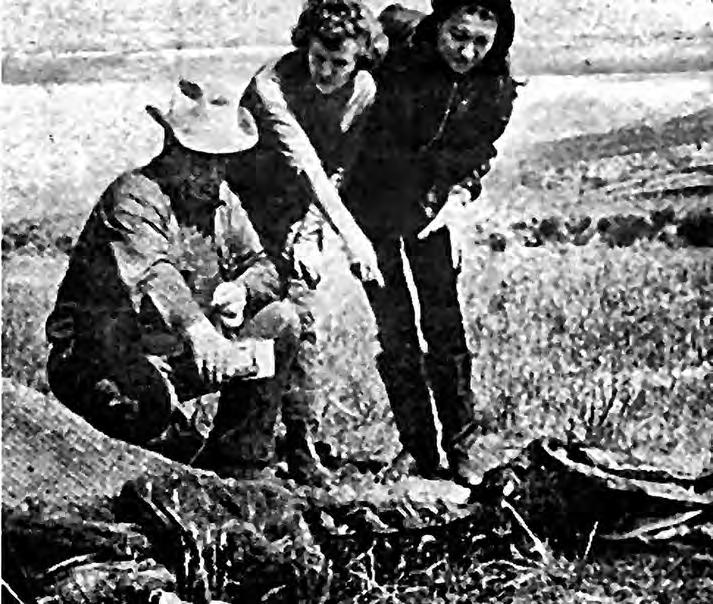
In the summer of 1967, the San Luis Valley was a wide, quiet place where news traveled by word of mouth and wire copy, where distances were long and answers often slower than questions. Ranchers counted animals by habit. Neighbors noticed when something was missing. So when an Appaloosa mare failed to come home outside Alamosa, people noticed. When she was found days later, they talked.
Originally named Lady, the horse belonged to Nellie Lewis of Alamosa. She had spent three peaceful years on Lewis’ brother’s ranch, chomping on treats and roaming the high desert prairie under the big blue sky. Horses wandered in the Valley. The land gave them room.
Her disappearance did not immediately raise alarm. What followed did.
Lady’s mutilated remains were discov-
ered on a property near Alamosa. The skin and flesh on her head and shoulders were gone. Her bones appeared bleached. There were no hoofprints or blood anywhere near the site. Ranchers familiar with predators, weather, and death said this did not look like what they knew. The precise and surgical nature of the injuries catalyzed rumors of extraterrestrial involvement – and the nickname Snippy.
Reporters arrived quickly. So did law enforcement. Explanations followed close behind.
Authorities suggested lightning, or perhaps the handiwork of local kids with too much time on, and a few rifles in, their hands. Others pointed to vultures, coyotes and carrion-loving blowflies. A pathologist later reported “no unearthly causes” for the injuries. The sheriff said there was nothing to indicate a flying saucer had landed in a Valley pasture.
Those statements ran alongside very different headlines.
Michael Hawkins
Snippy went viral long before the age of the internet. Newspapers across the country ran with suggestive titles, “Flying Saucer Horse Slayer?” chief among them, and the story leapt the Valley’s borders almost overnight. In a place accustomed to quiet and distance, the attention was jarring. Elsewhere, it was irresistible.
The late 1960s were thick with Cold War unease. Rockets launched elsewhere. Jets crossed Western skies. Americans were learning to live with new words: radiation, fallout, unidentified. When uncertainty appeared close to home, it arrived already shaped by national anxiety.
The talk spread faster than the facts.
Snippy became the flashpoint in what would later be called unexplained animal deaths, or UADs. Reports of cattle mutilations followed in Colorado and neighboring states, fertilizing more theories, many involving butchers from outer space.
Paranormal investigator Chuck Zukowski later said that while unexplained animal deaths had been reported before, Snippy was the first to go “nationwide, worldwide, through the media.” Based in Boerne, Texas, Zukowski has investigated more than 100 such incidents, including several in the San Luis Valley.
“The common denominator is the void of blood,” he said. “The pieces I’ve taken to the Colorado Veterinary Lab at Colorado State University show no sign of hemorrhaging.”
Others remained unconvinced. Skeptics returned to predators, disease and decomposition. Officials reiterated that nothing pointed beyond Earth. Evidence accumulated, but certainty did not. By the time one explanation arrived, another had already taken hold.
Then another detail surfaced.
After Snippy’s death, her owners donated the remains to Alamosa veterinarian Wallace Leary. As Leary cleaned and mounted the horse’s bones on a metal platform, he reportedly discovered two bullet holes. The finding complicated the story without settling it. To some, it was explanation enough. To others, it became another contradiction folded into a case already defined by them.
Snippy’s skeleton went on display, first at a local museum and then at the cham-
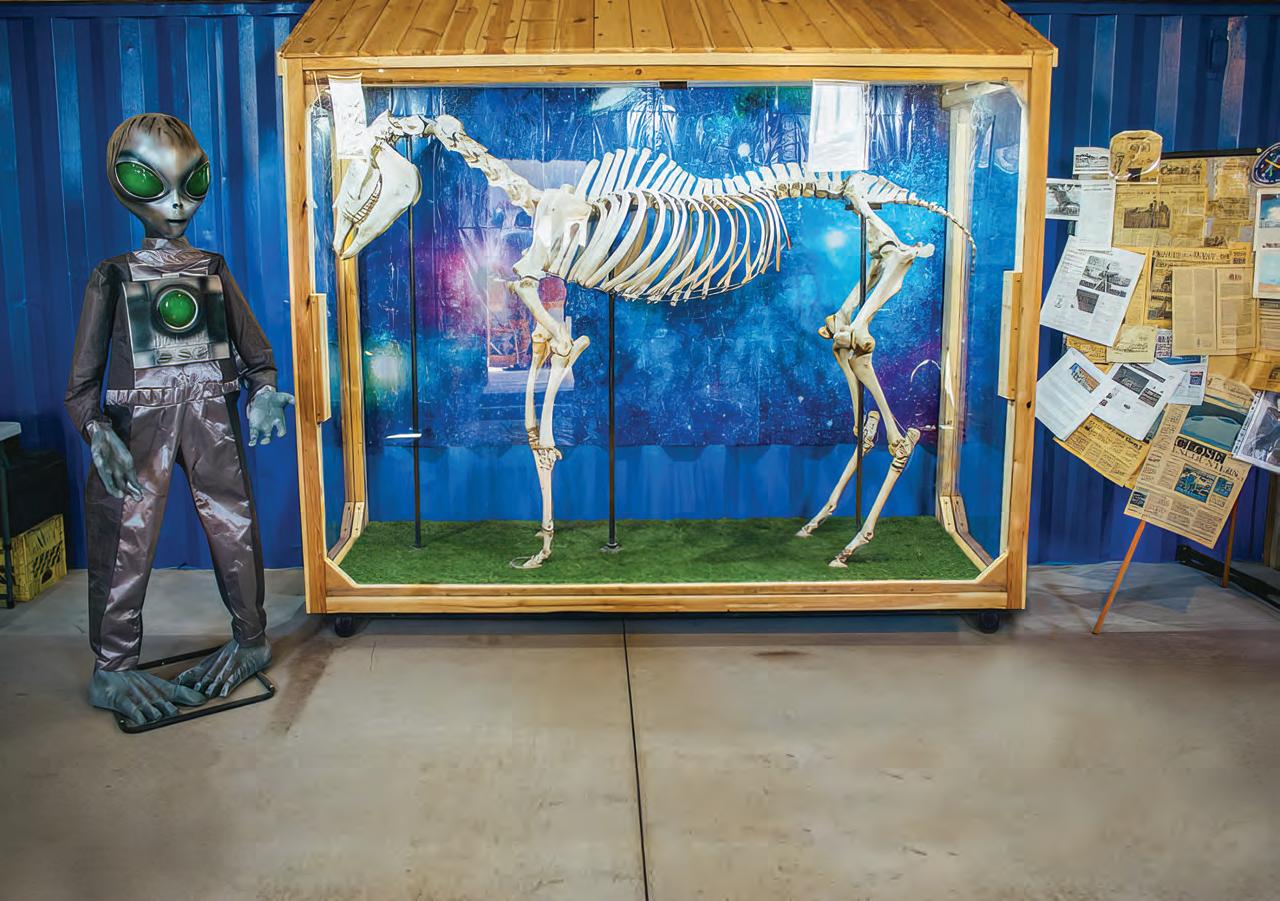
ber of commerce. Adams State College later took possession of it, displaying the bones for a time before stowing them away in an old boxcar. The Valley moved on. The story receded.
The bones waited.
Years later, after the boxcar was auctioned off, Snippy reemerged. In the early 2000s, an heir attempted to sell the skeleton on eBay, setting a minimum bid of $50,000. There were no takers. Another decade passed before the phone rang again.
“Two years ago, his wife called me and she said, ‘Do you still want that horse?’ ” recalled Judy Messoline, proprietor of the UFO Watchtower near Hooper. “She and I came to an agreement on the price, and I bought her. We built a room just for her, and she seems to be happy there.”
Messoline said Jay Young, owner of the nearby Colorado Gators Reptile Park, spent nearly a year restoring the skeleton.
At the Watchtower, Snippy keeps the conversation alive.
“I figured it needed to be here,” Messo-
line said. “It should be discussed if we’re still curious what happened, right?”
Messoline herself said she’s seen 30 UFOs in her lifetime, though she added, “I’m not out looking anymore. I’m getting old. I go to bed at eight o’clock.”
That blend of certainty, humor, skepticism and acceptance has always been part of the Snippy story and part of the San Luis Valley itself. For a time in 1967, the Valley talked about little else. Ranchers, reporters, scientists, skeptics and believers all arrived at the same carcass with different tools and left with different answers.
What killed Snippy was argued over. What Snippy meant was not.
She became a marker of a moment, a mood and a place caught between old rhythms and new fears. Evidence arrived. So did doubt. Neither erased the other.
Today, her bones stand assembled beneath the Valley sky, where facts and folklore sit side by side.
Not solved. Not dismissed. Just left standing.
Snippy, the Appaloosa mare whose mysterious 1967 death fueled UFO lore, now rests at the UFO Watchtower near Hooper. Her restored skeleton anchors the San Luis Valley’s debate over unexplained animal deaths.
Berl Lewis /USFWS/Alamosa Sheriff/Condon/Altshuler/Don Richmond APRO
Winter photo stops from Denver to Grand Junction on I-70
by JOSHUA HARDIN
INSPIRED BY THE EFFICIENCY of Germany’s Autobahn, President Dwight D. Eisenhower authorized the largest public works project in United States history – the creation of the Interstate Highway System. Built from the mid-20th century to today, the roads facilitated fast transport while allowing motorists to reach landscapes once separated by days of travel.
Colorado’s segment of Interstate 70 from Denver to Grand Junction rivals the grandeur of some of the Autobahn’s alpine transits and may be the most scenic stretch of interstate in the U.S. Here, Old West nostalgia mixes with modern convenience through steep grades, exposed valleys and high passes cutting directly through the Rocky Mountains.
Though interstate highways are designed for high speeds, traveling I-70 in winter can require slower velocities and ample time. Notorious for ski traffic and hazardous icy surfaces during snowstorms, I-70 isn’t at the top of most Coloradans’ lists of pleasurable drives. When conditions are favorable, however, it can be rewarding for those willing to make a few stops.
One of the first glimpses of Western heritage comes at Genesee. Visitors can safely view an American bison herd managed by Denver Mountain Parks from behind a strong wire fence with gaps wide enough for small camera lenses. The national mammal of the United States can hardly look more majestic than when draped under a backdrop of Continental Divide peaks.
In cold conditions, snow hugs the animals’ thick fur and their breath drapes the air in a swirling fog. Photographing here rewards patience and restraint: a longer focal length helps isolate an animal from visual clutter, and a few steps to either side can make fence wires disappear behind a shoulder or horn.
As the highway climbs toward the Continental Divide, winter shows up first in details. Plow berms carve bright edges into the shoulder, wind sculpts drifts into repeating forms and tire tracks arc through fresh snow before disappearing around a bend. When clouds flatten the sky and distant peaks fade, these details give the frame structure. Building a composition from the foreground – texture first, horizon second – often produces a stronger image than waiting for scenery to reappear.
The Eisenhower-Edwin C. Johnson Memorial Tunnel, named for President Eisenhower and a U.S. senator from Colorado, marks the highest point of any interstate. Shortly after passing through, the route descends into Summit County, where views of the Front Range give way to the pointed peaks of the Tenmile Range.
This column’s featured photo depicts Lake Dillon from the scenic overlook east of Frisco along I-70. Taken the morning after a snowstorm when the highway was freshly plowed, the scene includes Grays and Torreys Peaks, the lake and trees sprinkled white with lingering precipitation. Accessible viewpoints reward patience when weather reshapes the scene. The difference comes from committing to the frame: layering foreground, middle ground and background deliberately,
then exposing carefully for bright snow so highlights stay clean and darker water and trees provide contrast.
Farther west, I-70 threads through Glenwood Canyon, a stretch built with careful attention to the fragile environment. In winter, the Colorado River runs dark beneath pale rock walls rimmed with ice, compressing the scene into a narrow corridor defined by river bends, canyon walls and bridge decks. Harsh sun can fracture the canyon into glare and shadow, but overcast days and open shade preserve detail across both water and stone. Using the river as a visual thread simplifies composition, while patience determines whether passing vehicles belong in the frame or are allowed to clear.
East of Grand Junction, the route reunites with the Colorado River below the Book Cliffs. Here, snow stops defining the scene. Low-angle light instead reveals the wrinkled texture of pale cliffs and long river bends. Tightening the frame and isolating repeating shapes often produces stronger images than trying to capture the entire scene at once.
For most motorists, the horsepower of modern engines instead of ponies makes accessing the storied landscapes along I-70 possible. That doesn’t mean winter travelers have to be in a hurry. Exits to breathe the high-altitude air, witness wildlife and remember rich history make driving I-70 in Western Colorado perhaps the most fitting tribute to Eisenhower’s forward-thinking imagination.
Josh shot this photo with a Nikon D800e camera and Nikon 24-70mm lens at 70mm, exposed at f/11, 1/200, ISO 200.