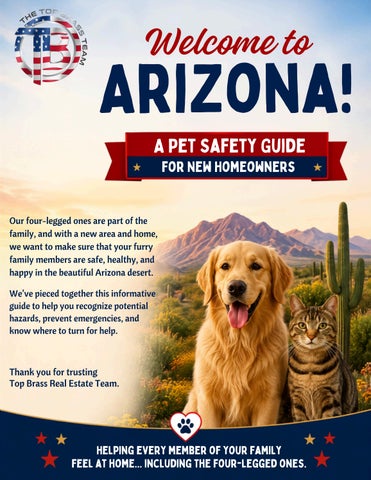
Welcome to
Arizona! A Pet Safety Guide for New Homeowners
Our four-legged ones are part of the family, and with a new area and home, we want to make sure that your furry family members are safe, healthy, and happy in the beautiful Arizona desert. We’ve pieced together this informative guide to help you recognize potential hazards, prevent emergencies, and know where to turn for help.
Thank you for trusting Top Brass Real Estate Team.
Helping every member of your family feel at home... including the four-legged ones.
Top Arizona Dangers for Pets Be aware. Be prepared. Keep them safe.
Poisonous Toads The Colorado River (Sonoran Desert) Toad secretes a toxic substance when stressed or touched. SIGNS: Excessive drooling, foaming, red gums, vomiting, pacing, agitation, seizures, collapse. WHAT TO DO: Rinse mouth with running water for 10–15 minutes and get to an emergency vet IMEDIATELY.
Arizona Bark Scorpions Stings are painful and can be serious, especially for small pets. SIGNS: Limping, swelling, excessive licking, tremors, restlessness, facial twitching. WHERE: Shoes, wood piles, clutter, rocks, garages, block walls.
Rattlesnakes Arizona has more species of rattlesnakes than any other state. SIGNS OF BITE: Swelling, severe pain, weakness, bleeding, collapse.
WHAT TO DO: Stay calm, restrict activity, and get to an emergency vet IMEDIATELY. DO NOT cut the wound or apply a tourniquet.
When in doubt, call your veterinarian or an emergency hospital right away.
Toxic Plants in Arizona Highly Toxic
Sago Palm
(all parts, especially seeds)
Oleander
Desert Rose
Castor Bean (Ricin)
Autumn Crocus
Lilies
(very dangerous for cats)
May cause mild to moderate illness
Aloe Vera
Agave
Jade Plant
Signs of Plant Poisoning: Vomiting
Loss of appetite
Diarrhea
Lethargy
Drooling
Tremors or seizures
Bird of Paradise
Elephant Ear (Colocasia)
Lantana
If you suspect your pet ingested a toxic plant, call your veterinarian or a poison control hotline immediately.
When landscaping, choose pet-safe plants.
Heat, Sun & Hot Surfaces Safety Keep your pet cool, comfortable & safe all summer long!
Sun Safety
Heat stroke can be deadly
🐾 Use pet-safe sunscreen on light
Pets can’t cool down like humans. They pant to release heat, but in extreme heat, it’s not enough.
colored noses, ears & thinly haired areas
🐾 Provide shade & lots of fresh water 🐾 Avoid peak sun hours (10am-4pm)
Warning signs Heavy panting Bright red tongue or gums Vomiting Weakness or wobbliness Collapse Confusion
HOW TO COOL YOUR PET
Move to shade or air conditioning immediately.
Offer small amounts of cool water often.
NEVER LEAVE PETS IN A CAR! Use a cool, wet towel on paws, belly & neck.
Consider a pet cooling mat or vest.
If your pet shows signs of heat stroke, call your veterinarian or an emergency hospital IMMEDIATELY.
HOT PAVEMENT CAN BURN PAWS If it’s too hot for your hand, it’s too hot for your pet’s paws!
Air Temp
Pavement temp*
77°F
125°F
86°F
135°F
87°F
143°F
Place the back of your hand on the pavement for 7 seconds. If it’s too hot for you, it’s too hot for your pet.
Even in the shade, the temperature inside a car can rise rapidly and become fatal within minutes.
OUTSIDE TEMP INSIDE CAR TEMP* 70°F
89°F
75°F
104°F
80°F
119°F
85°F
134°F
90°F
149°F
95°F
164°F
*After only 10 minutes
SUMMER SAFETY REMINDERS
🐾 Walk early morning or after sunset 🐾 Always bring water on walks 🐾 Know the signs of overheating 🐾 When in doubt, cool them out!
Wildlife
in Your Neighborhood Wildlife is a natural part of Arizona.
Keep pets leashed, supervised & safe!
SAFETY TIPS
Coyotes Common in neighborhoods. Keep pets leashed, especially at dawn & dusk. Do not let small pets outside unattended.
Keep pets close & leashed Do not feed wildlife Secure trash & food sources Never approach or run from wildlife
Javelinas (Peccaries)
BE AWARE
They travel in groups. Keep pets away and do not try to chase them off. They can be aggressive if threatened.
Give them space Keep dogs leashed Do not leave pet food outside
Bobcats
KEEP CATS SAFE
Usually active at night. Keep cats indoors for their safety.
Keep cats indoors Provide a safe, enriched indoor environment Supervise outdoor time
Birds of Prey
PREVENT ACCIDENTS
Hawks & owls may see small pets as prey. Do not leave small pets unattended outdoors.
Supervise pets outdoors Avoid open areas at dusk & dawn Keep small pets close to you
KEEP PETS LEASHED & SUPERVISED OUTDOORS. RESPECT WILDLIFE, NEVER APPROACH OR FEED WILD ANIMALS. WHAT TO DO IF YOU ENCOUNTER WILDLIFE Stay Calm Keep your distance and do not run.
Make Noise
Speak firmly, clap hands or bang objects to scare wildlife away.
Watch Your Pet Keep pets leashed and close to you.
Report Sightings
Report aggressive or injured wildlife to local animal control.
A LITTLE PREVENTION KEEPS YOUR PET SAFE & YOUR WILDLIFE WILD.
other common hazards Protect Your Pets. Know the Risks. Household Foods Toxic to Pets
What to do:
Chocolate, grapes/raisins, onions, garlic, xylitol (sugar-free gum, candy, peanut butter), macadamia nuts, alcohol, caffeine, raw bread dough.
Rodent Poison Many rat & mouse poisons are extremely toxic. Symptoms may not appear for days. Call your vet immediately if ingestion is suspected.
Antifreeze (Ethylene Glycol)
If you suspect your pet ate something toxic, call your veterinarian or a poison control hotline immediately.
Sweet taste is attractive to pets but even small amounts can be fatal. Store all chemicals securely.
Fertilizers, Weed Killers & Pesticides Can cause poisoning, burns, or organ failure. Keep pets off treated areas until completely dry.
Spiders Black Widow & Brown Recluse spiders can cause pain, swelling, redness, or more serious symptoms. Vet care if bite occurs.
Bees, Wasps & Africanized Bees Stings can cause severe reactions. Seek immediate care for facial swelling, breathing difficulty, or collapse.
Prevention Tips Store all medications, chemicals & hazardous items out of reach.
Supervise pets outdoors.
Secure trash cans & clean up spills immediately.
Know which plants are safe or toxic to pets.
Mosquitoes & Heartworms Mosquitoes can transmit heartworms. Year-round prevention is recommended in Arizona.
When in doubt, call your veterinarian or a pet poison hotline.
Keep up with preventative care, vaccines & parasite protection.
Monsoon, Hiking & Outdoor
Safety
Arizona adventures are better when your pets are safe.
Monsoon Safety
Hiking with Your Pet
Hiking can be a great way to bond with your pet. Follow these tips for a safe adventure.
Rain is a welcome relief, but monsoon storms can be dangerous for pets.
Check the Trail
Choose pet-friendly trails and check for closures or extreme heat warnings.
Never leave pets outside during storms. Keep pets away from flooded areas, arroyos & washes.
Bring Plenty of Water Pack enough for both you and your pet. Offer water often.
Flash floods can happen quickly—Turn Around, Don’t Drown.
Hike Early or Late Avoid peak heat. Early mornings & evenings are safe.
Be aware of hail, lightning & high winds. Keep a safe, quiet space indoors for anxious pets.
Watch the Terrain Hot rocks, sharp plants & loose gravel can injure paws.
Wipe mud & debris from paws to prevent irritation.
Keep Pets Leashed Protect wildlife, other hikers & your pet. Know Your Pet’s Limits Take breaks, watch signs of overheating & turn back if needed.
Signs of Overheating Act fast. Heatstroke can be lifethreatening.
Heavy Panting
If you suspect heatstroke:
Excessive Drooling
Weakness or Lethargy
Bright Red Tongue or Gums
Disorientation or Stumbling
Rapid Heartbeat or Collapse
Get your pet to a cool area, offer small amounts of water, apply cool (not ice-cold) water to paws, belly & armpits, and contact your veterinarian immediately.
General Outdoor Safety Tips Check the Surface Temp
Pavement, rocks & sand can get dangerous hot. If it’s too hot for your hand, it’s too hot for your paws.
Be Plant Smart Avoid toxic parts like sago palm, oleand & desert milkweed. When in doubt, look it up! Pack the Essentials Water, collapsible bowl, leash, waste bags, first aid supplies & pet ID. ID Tags & Microchips Make sure your pet’s ID is up to date in case you get separated. Know Before You Go Check trail rules, weather & pet policies at parks, lodges & outdoor events.
Emergency Preparedness Be Ready. Keep Them Safe.
Disasters can happen anytime. A plan today can save their life tomorrow.
Pet Emergency Go Kit
Make a Pet Emergency Plan
Be Prepared. Pack Ahead.
Know Your Risks
Water & Bowls
Identify emergencies common in your area (heat waves, wildfires, floods, storms).
At least 3 days’ supply
Food
Plan Ahead
At least 3 days’ supply
Know where you will go and which pet-friendly hotels, shelters, or friends/family you can rely on.
Medications Extra supply & prescriptions
First Aid Kit
Practice & Review
Include pet-safe supplies
Review your plan regularly and make sure everyone in your household knows what to do.
Leash, Harness & Carrier Easy & safe transport
Keep Important Numbers Handy
Important Documents
Veterinarian, emergency vet, poison control, animal shelters, and local emergency services.
Vaccination records, ID, recent photos
Cleaning Supplies Waste bags, paper towels, disinfectant
Comfort Items
Evacuation Checklist
Favorite toy, blanket, or bed
Flashlight & Batteries For safety during power outages
Keep pets leashed or in a carrier.
Never leave pets behind. Take only what you can safely carry. Follow evacuation routes & instructions. Check in with your emergency contacts once you are safe.
After an Emergency
Check for Hazards
Watch for Stress
Contact Your Veterinarian
Update & Adjust Your Plan
Ensure your home is safe before allowing pets back.
Pets may be scared or disoriented. Be patient & gentle.
If your pet is injured, sick, or showing signs of distress.
Review what worked and what didn’t be even more prepared.
VETERINARIAN:
important contaCTS
EMERGENCY VET: PET POISON HOTLINE: LOCAL ANIMAL SHELTER: EMERGENCY SERVICES:
HELPFUL
Resources & Services
We’re all in this together - here to help you & your pet
Emergency Contacts 24/7 Pet Poison Hotline (855) 764-7661
Available 24 hours a day, 365 days a year
Aspca Animal Poison Control Center
(888) 426-4435 24/7 Pet Poison Helpline
Animal Cruelty Hotline 602-506-7387
Maricopa County Animal Care & Control
In Case of Emergency
LOCAL ANIMAL SHELTERS & RESCUES
PET FRIENDLY PLACES & SERVICES
Maricopa County Animal Care & Control (602) 506-7387 www.maricopa.gov/animalcare
Pet-Friendly Parks
Pet-Friendly Hotels
Arizona Humane Society (602) 997-7585 www.azhumane.org
BringFido.com GoPetFriendly.com
Halo Animal Rescue (602) 971-9222 www.halorescue.org
Pet-Friendly Businesses
Lost Our Home Pet Rescue
Mobile Veterinary Services Ask your vet for local mobile clinic options.
Visit Local First Arizona: www.localfirstaz.com
(602) 445-7387 www.lostourhome.org
Call 911
Find dog parks & trails at: www.maricopa.gov/parks
FIND A VETERINARIAN Regular vet care keeps pets healthy and helps catch issues early. Vaccinations Wellness Exams Dental Care Spay & Neuter Services
PET SAFETY EDUCATION & RESOURCES PETMD.COM Reliable pet health & safety information. READY.GOV | PETS
Great tips for diaster preparedness with your pets.
THE AMERICAN KENNEL CLUB (AKC) www.akc.com | Training & safety tips for every stage.
LOCAL PET GROUPS Join neighborhood Facebook Groups or NextDoor for local advice & alerts.
Find a trusted veterinarian near you: AVMA.org | Vet Locator BringFido.com | Vet Directory Ask friends, neighbors or your pet community for recommendations.
COMMUNITY SUPPORT NEIGHBORS HELPING NEIGHBORS In a crisis, your community can be your biggest support system.
CHECK ON YOUR NEIGHBORS Especially during extreme weather. Look out for pets, too.
STAY INFORMED Sign up for local alerts: www.AlertMaricopa.org
emergency contacts KEEP THIS PAGE HANDY AND SAVE THESE NUMBERS IN YOUR PHONE. LIFE-THREATENING EMERGENCIES
LOCAL ANIMAL SERVICES
IN CASE OF EMERGENCY
MARICOPA COUNTY ANIMAL CARE & CONTROL
For immediate life-threatening situations.
www.maricopa.gov/animalcare
CALL 911
24/7 PET POISON HELPLINE (855) 213-6880 Available 24 hours a day, 365 days a year. ASPCA ANIMAL POISON CONTROL CENTER (888) 426-4435 24/7 Pet Poison Helpline
IMPORTANT VETERINARY CONTACTS PRIMARY VETERINARIAN Name: Phone: Address: EMERGENCY VETERINARY HOSPITAL Name: Phone: Address: PET SPECIALIST (IF APPLICABLE) Name: Phone: Address:
(602) 506-7387
ARIZONA HUMANE SOCIETY (602) 997-7585 www.azhumane.org HALO ANIMAL RESCUE (602) 971-9222 www.halorescue.org
LOST OUR HOME PET RESCUE (603) 445-7387 www.lostourhome.org
OTHER HELPFUL CONTACTS LOCAL ANIMAL SHELTER Name: Phone: PET SITTER / DOG WALKER Name: Phone: NEIGHBOR / FRIEND Name: Phone: PET-FRIENDLY HOTEL Name: Phone: PET INSURANCE PROVIDER Phone: Policy #:
New Pet Owner CHECKLIST
A GUIDE TO HELP YOU & YOUR PET THRIVE TOGHETHER Bringing a pet into your home is an exciting adventure! Use this checklist to make sure you have everything you need to keep your new best friend happy, healthy & safe.
ESSENTIAL SUPPLIES Food & Water Bowls High-Quality Pet Food Fresh Water (Always!) Collar with ID Tag Leash & Harness Comfortable Bed Crate or Carrier Toys (Chew, Puzzle, Interactive) Waste Bags & Litter Box (If applicable) Grooming Supplies (Brush, Nail Clippers, Shampoo) Pet-Safe Cleaning Products
SAFETY FIRST Pet-Proof Your Home Secure Fences & Gates Remove Toxic Plants & Hazardous Items
HEALTH & WELLNESS
TRAINING & BEHAVIOR
Schedule a Vet Visit
Basic Obedience Training
Vaccinations Up to Date
House Training Plan
Flea, Tick & Heartworm Prevention Spay/Neuter (If not already done)
Socialication with People and Other Pets
Microchip & Registration
Positive Reinforcement
Pet Insurance (Consider!)
Set Boundaries & Rules
First Aid Kit for Pets
Patience & Consistency
Know the Signs of Illness
Identify Triggers & Manage Problem Behaviors
Regular Dental Care
DAILY CARE ROUTINE
BUILD YOUR SUPPORT TEAM
Grooming / Brushing
Choose a Primary Veterinarian Find an Emergency Vet Clinic Locate Pet-Friendly Businesses (Stores, Groomers, Daycare) Connect with Local Pet Groups & Communities Ask Friends & Neighbors for
Evening Walk / Wind Down
Recommendations
Lots of Love & Attention
Keep Important Contacts in One Place
Morning Walk / Playtime Seeding Schedule Fresh Water Check Potty Breaks
Keep Small Objects Out of reach Use Pet Seatbelt or Carrier When Traveling
Play & Mental Stimulation
Never Leave Pets Unattended in Cars
IMPORTANT REMINDERS GIVE THEM TIME
SHOW THEM LOVE
KEEP LEARNING
ENJOY THE JOURNEY
Adjustment takes time. Be patient and let your pet settle in at their own pace.
Love, patience, and consistency build trust and a lifelong bond.
Every pet is unique. Keep learning and adapting to their individual needs.
The litte moments today create a lifetime of memories together.