DEREK JOSEPH IOVINO
derekiovino@gmail.com
177 East 75th St, New York, NY 10021
THE WALL OF WALDORF, 2025
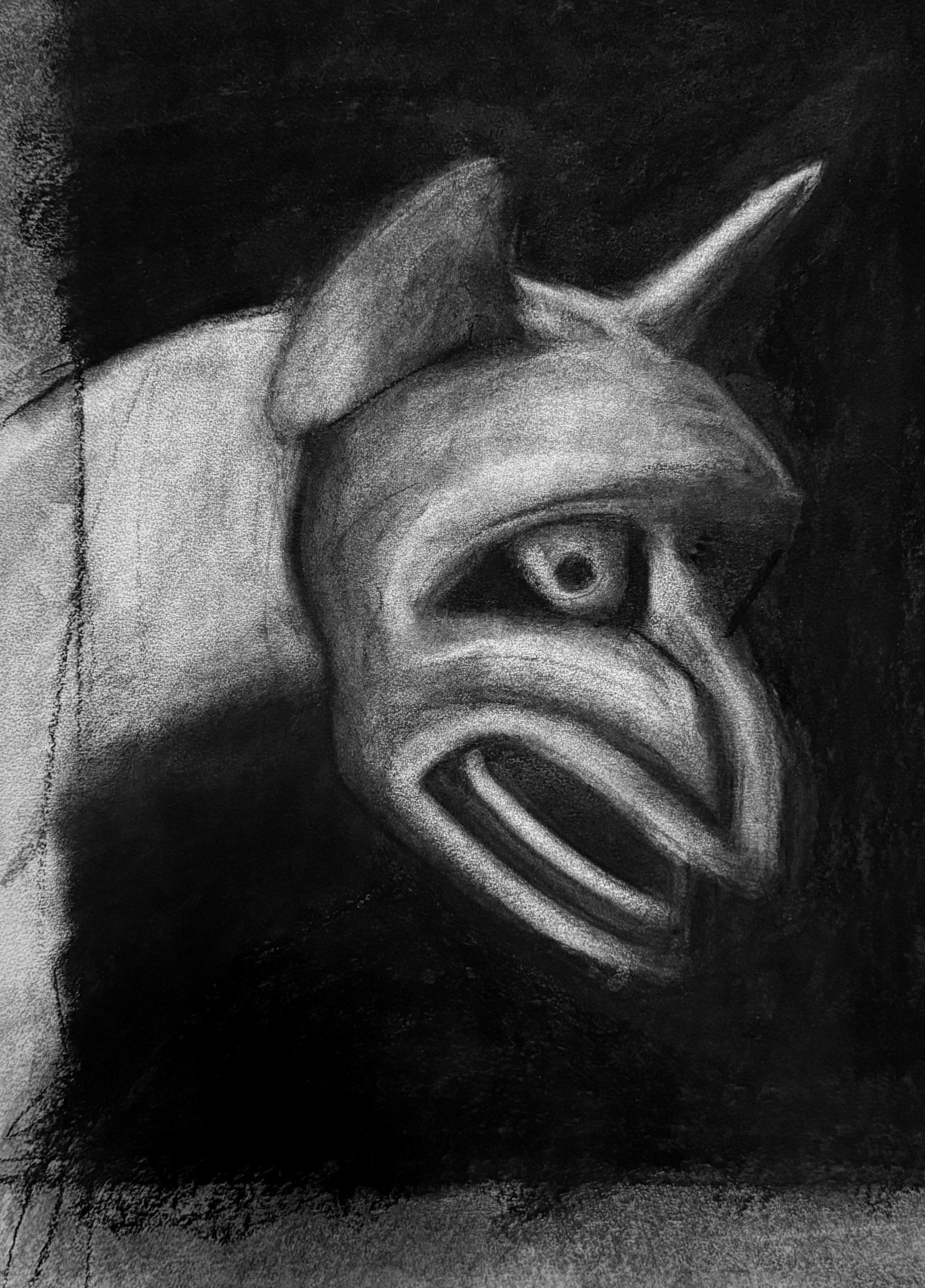
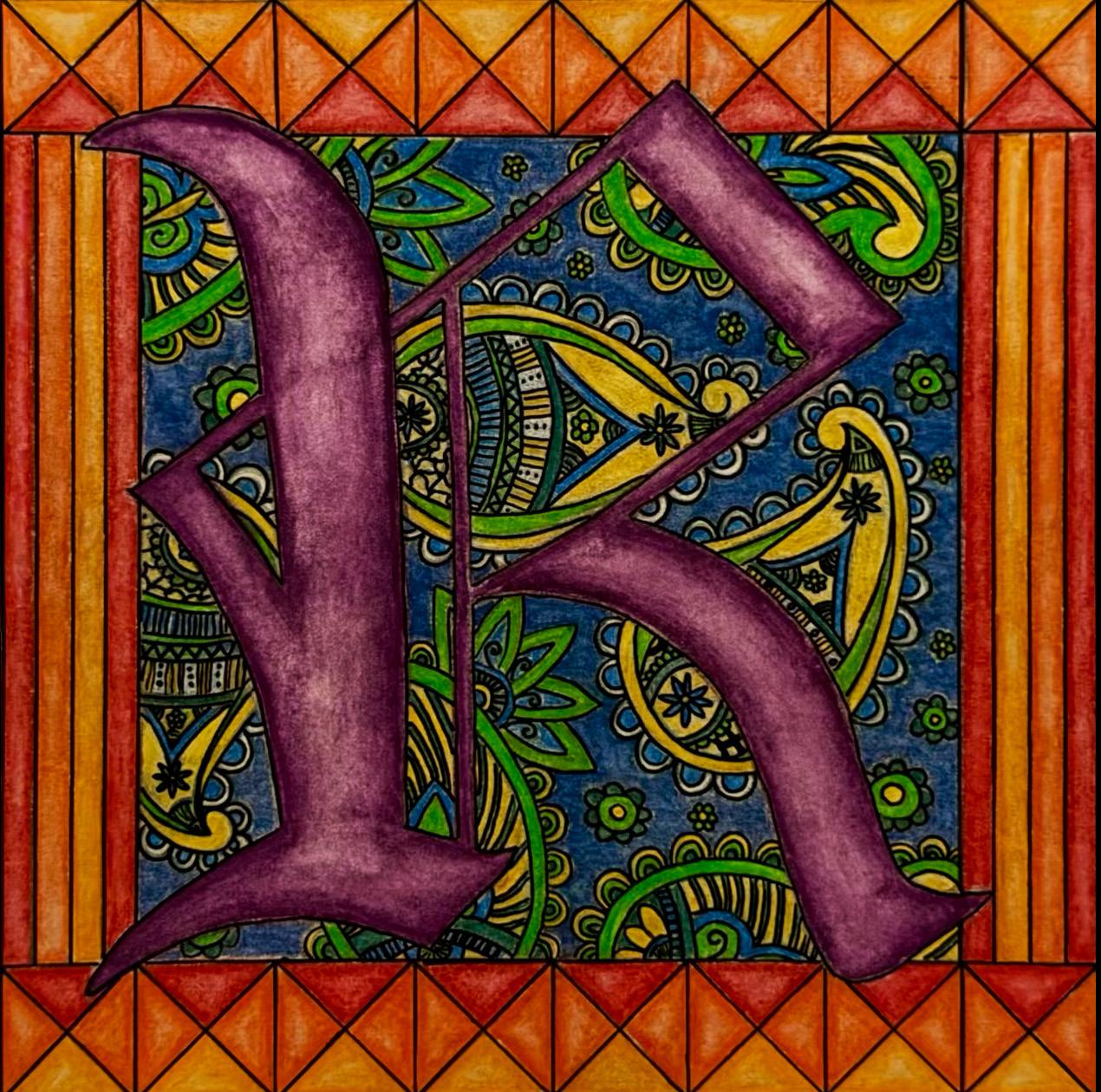
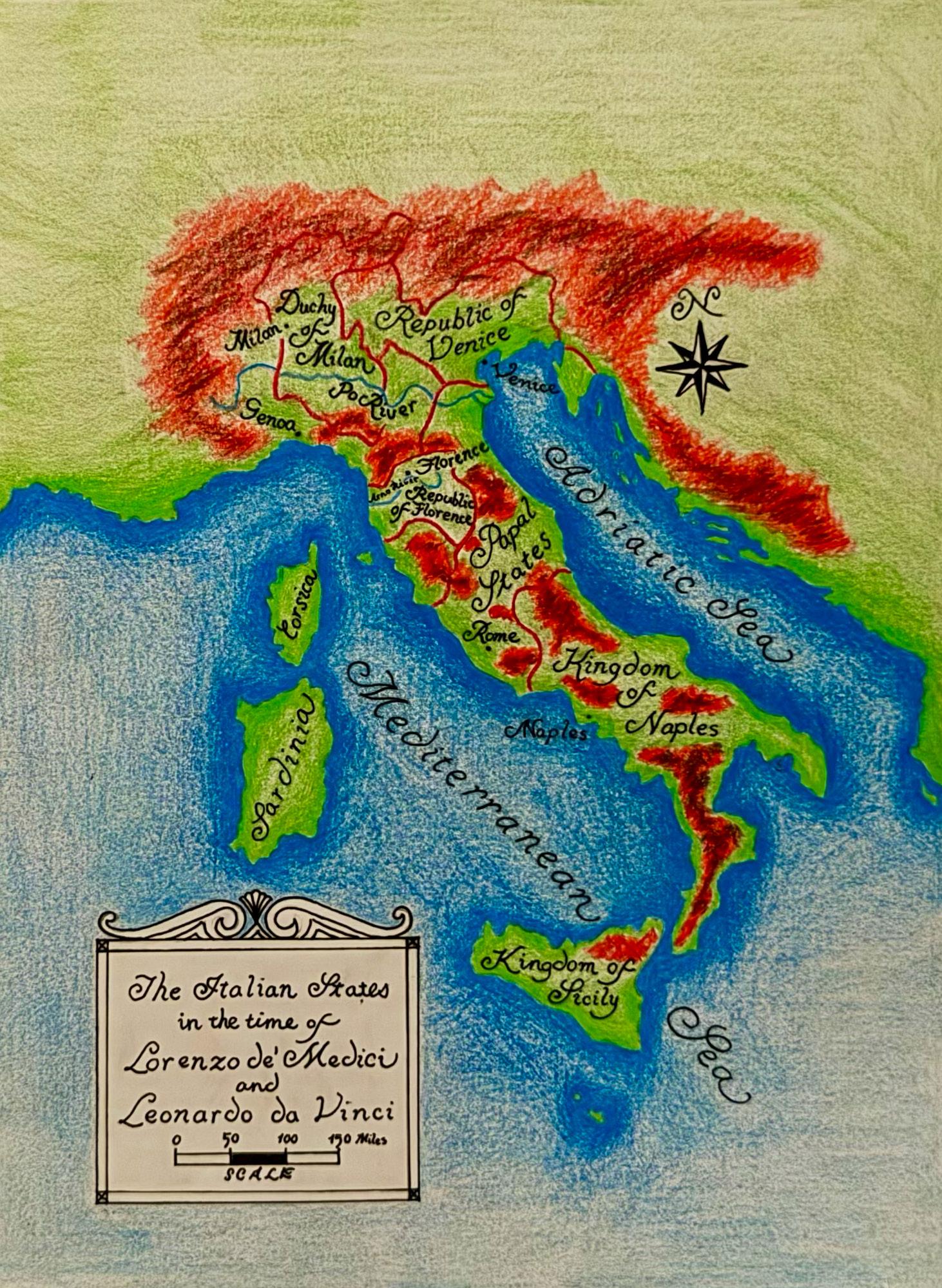
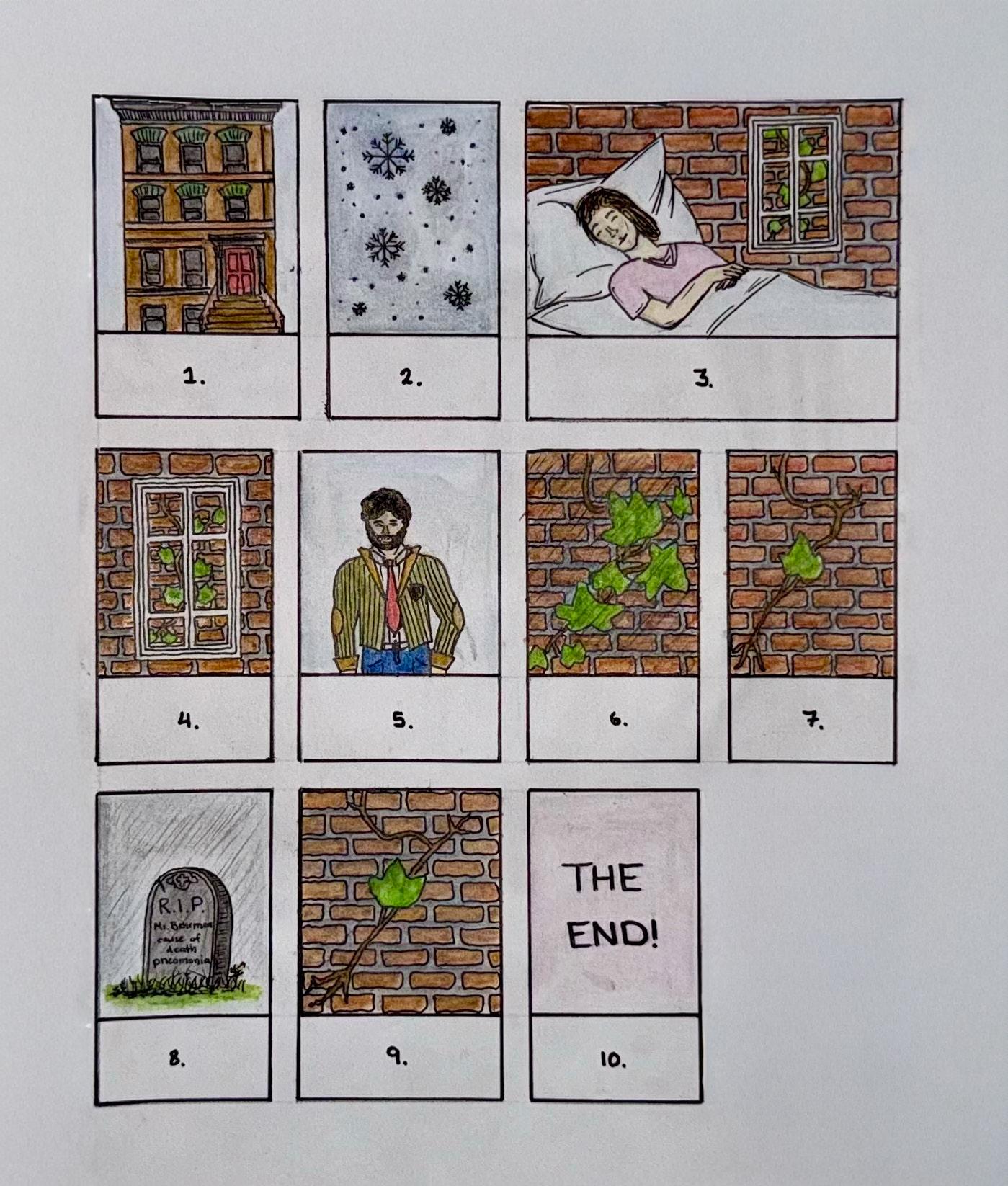
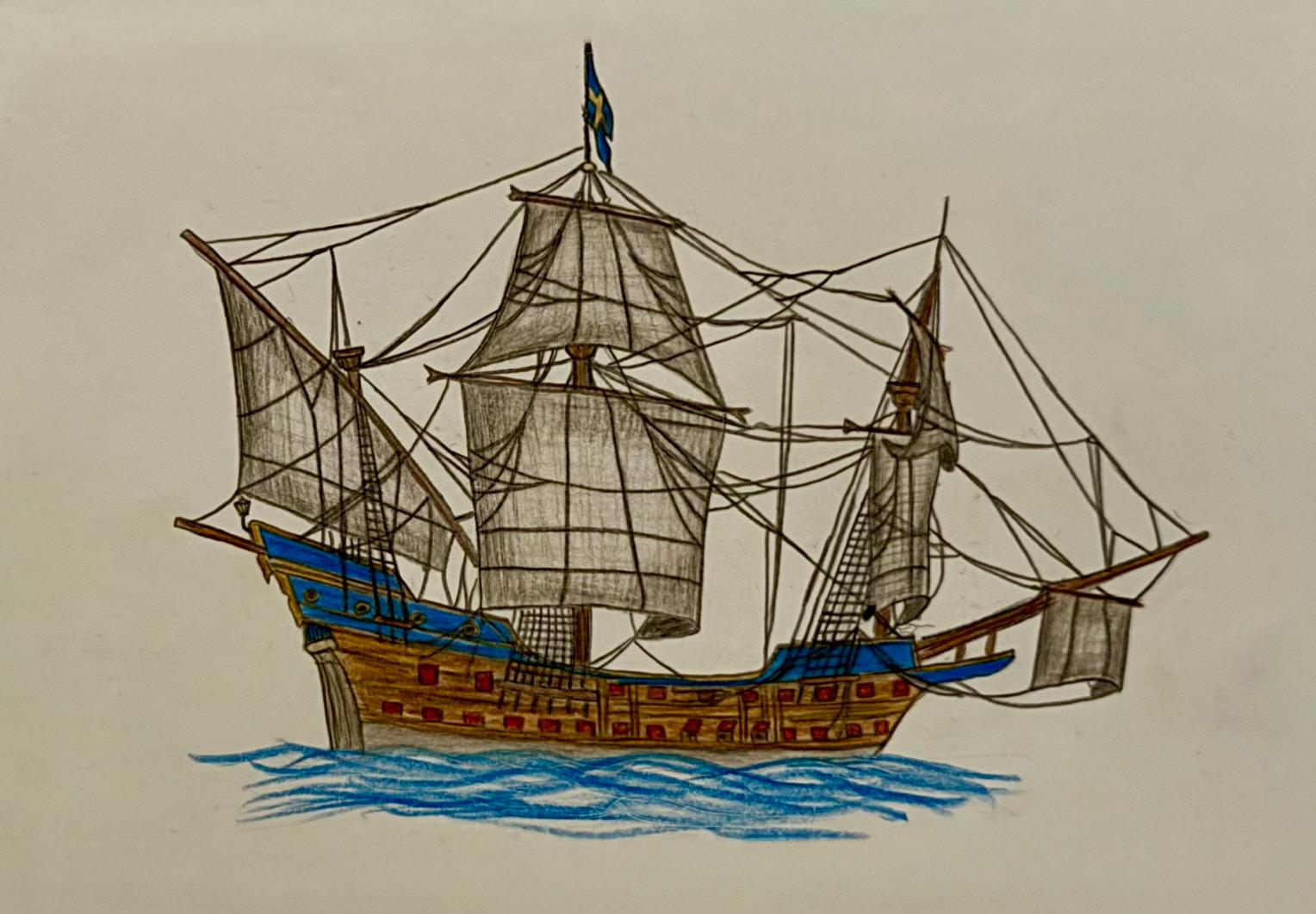
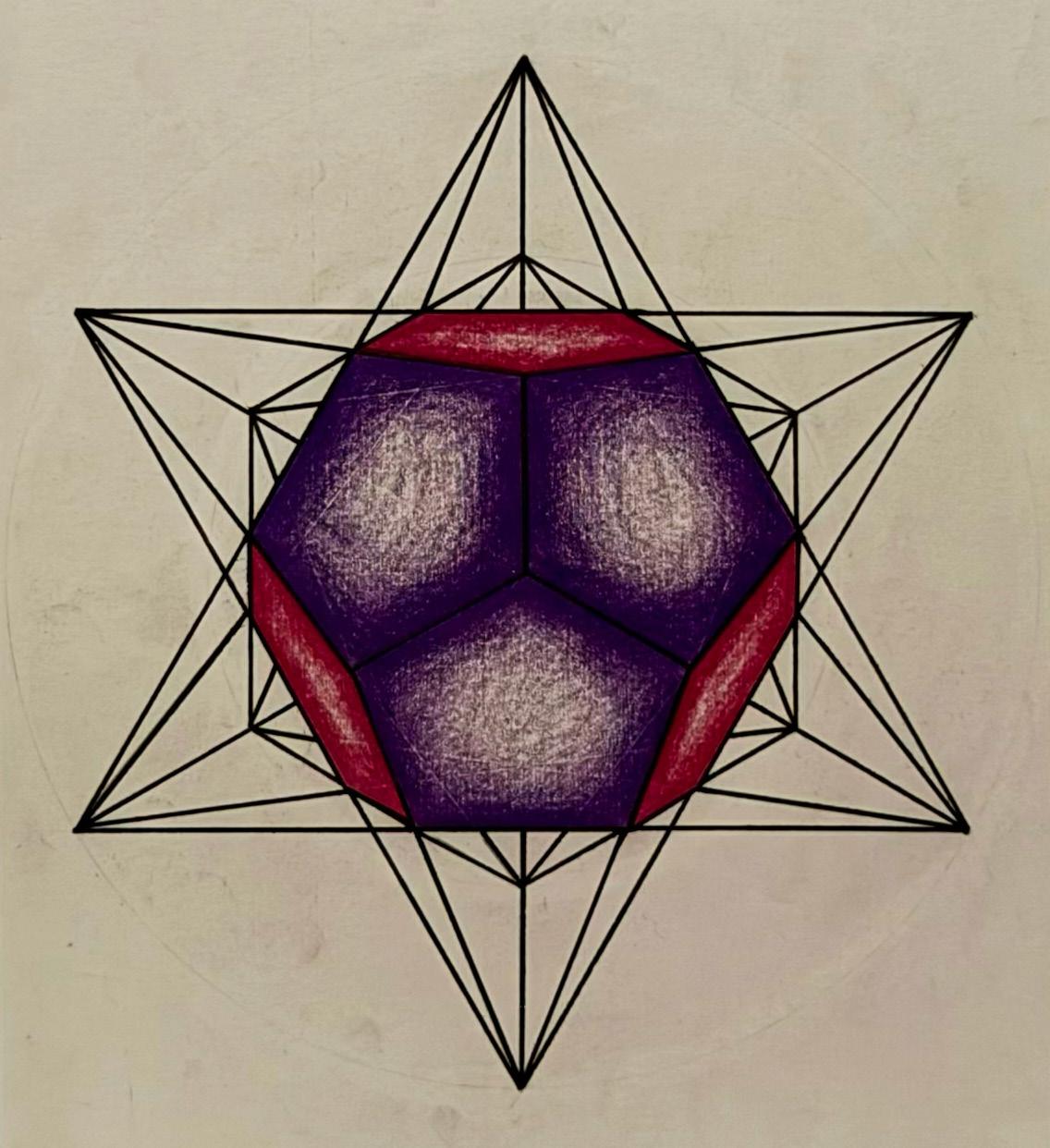
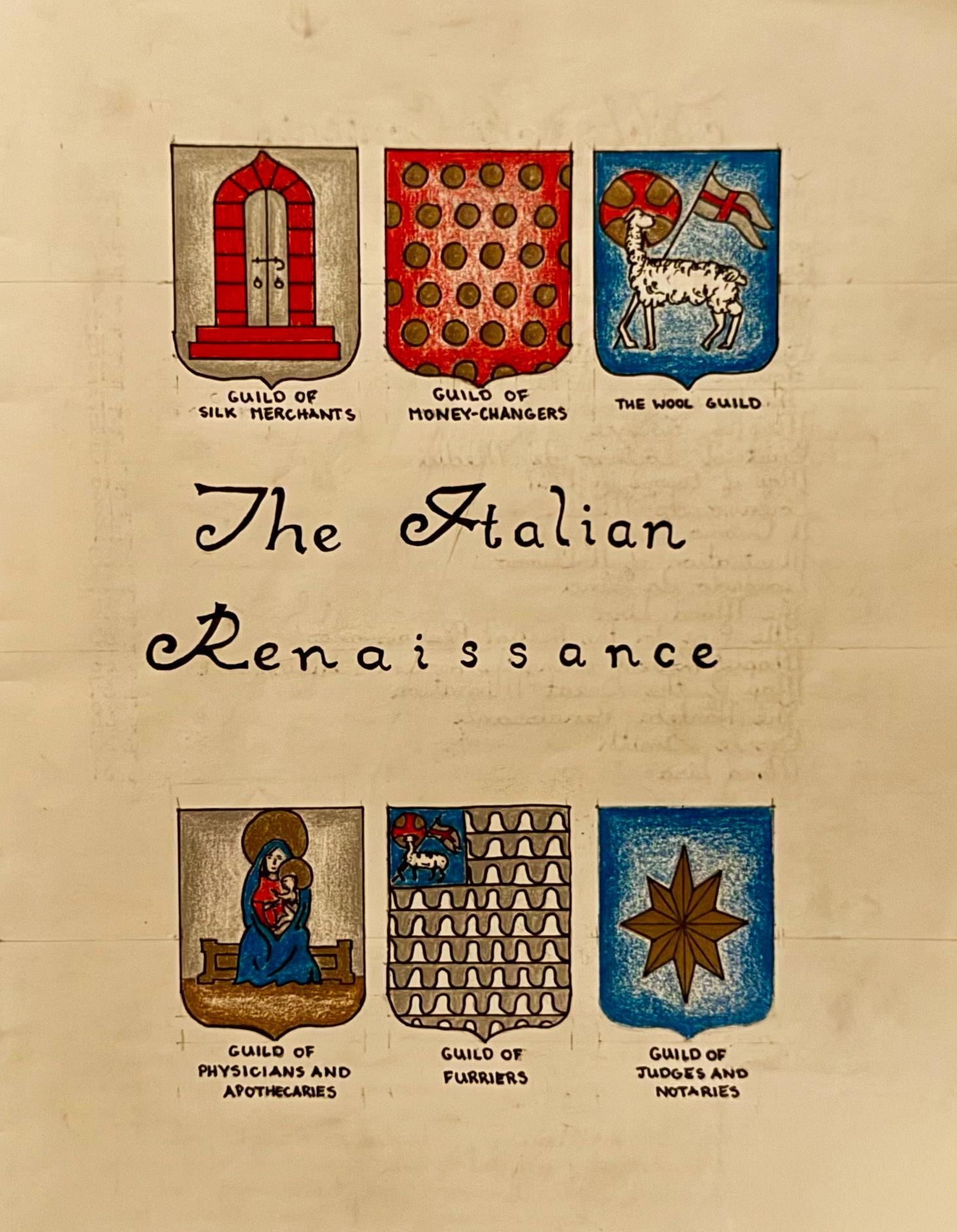
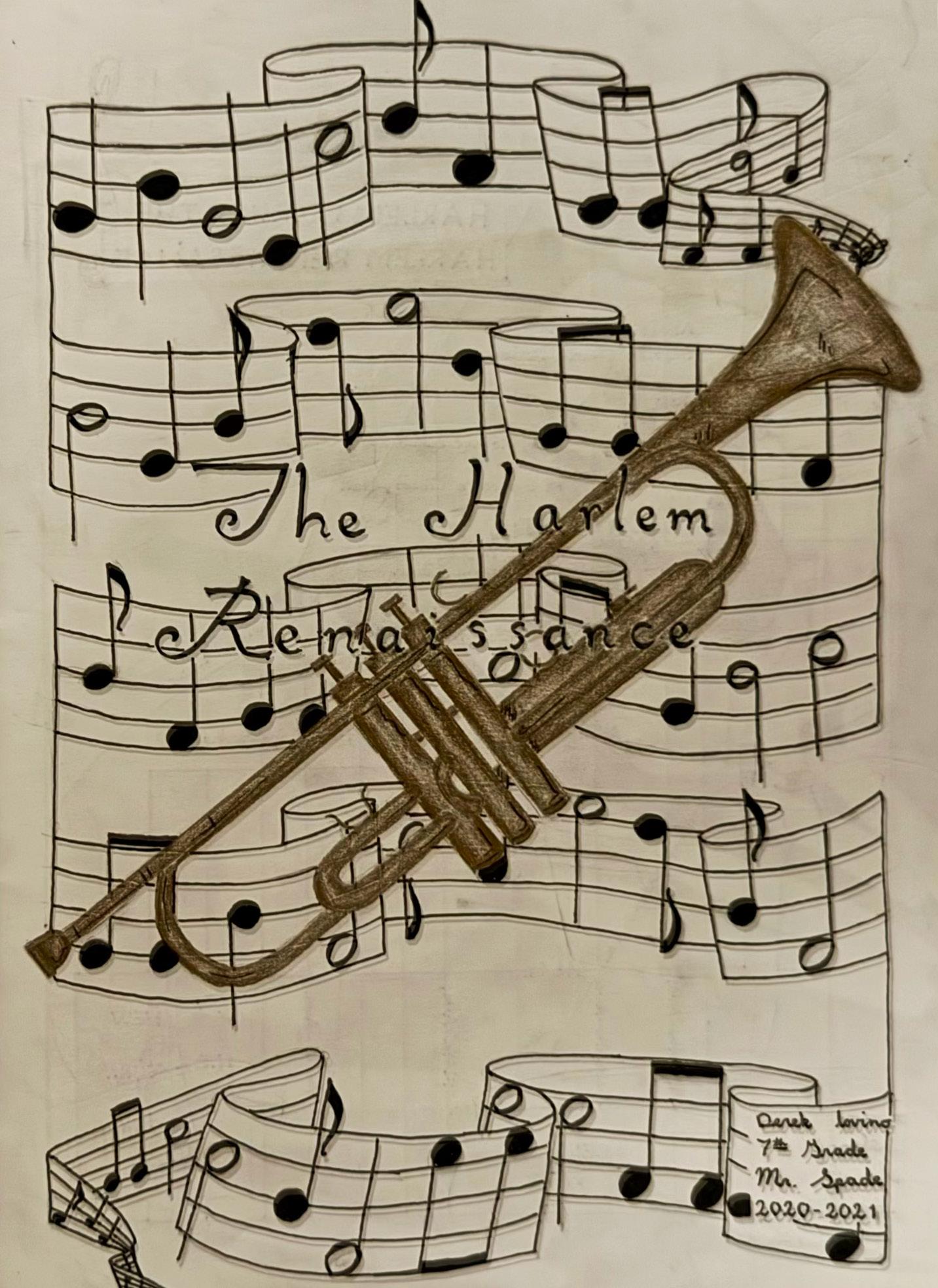
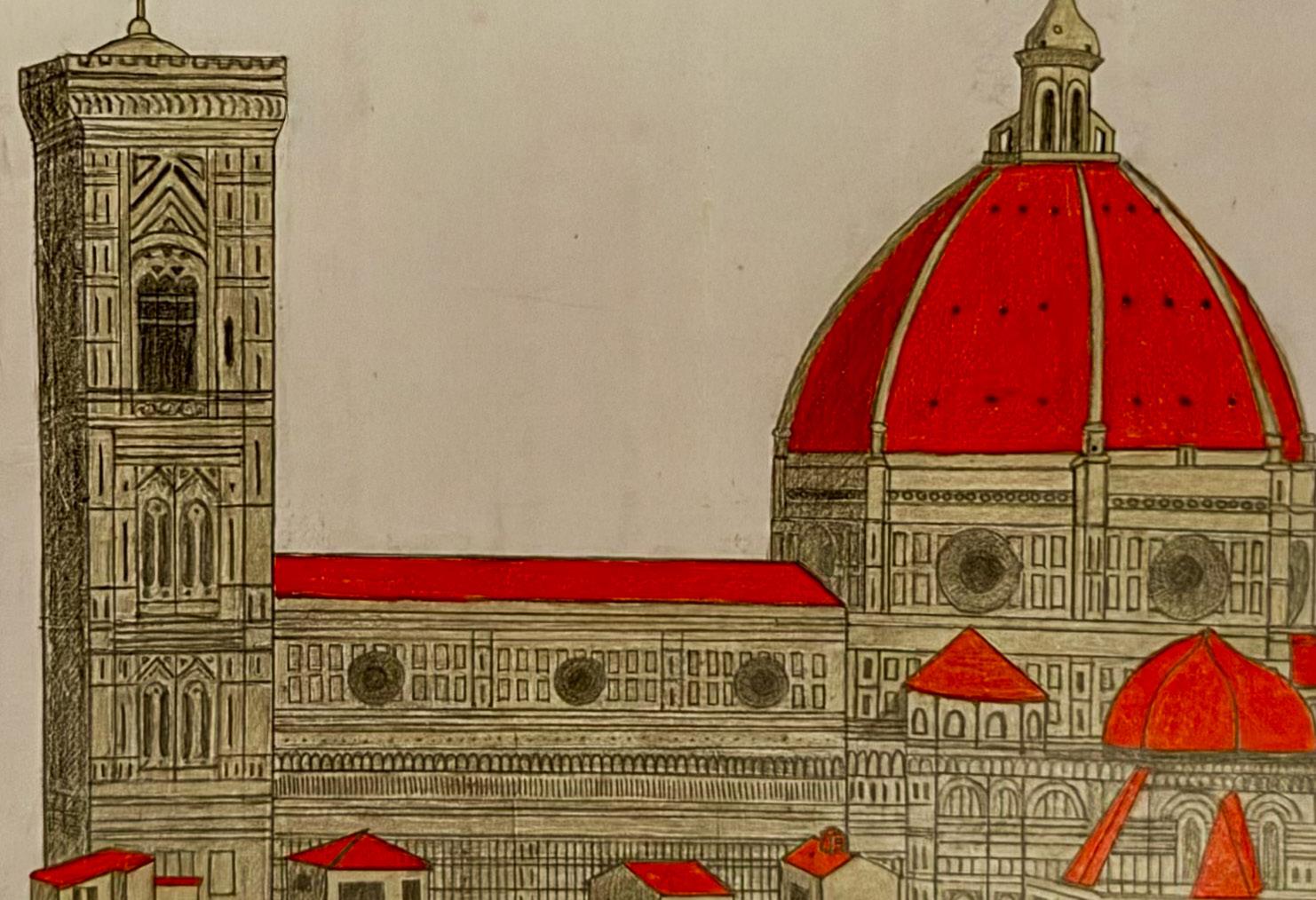
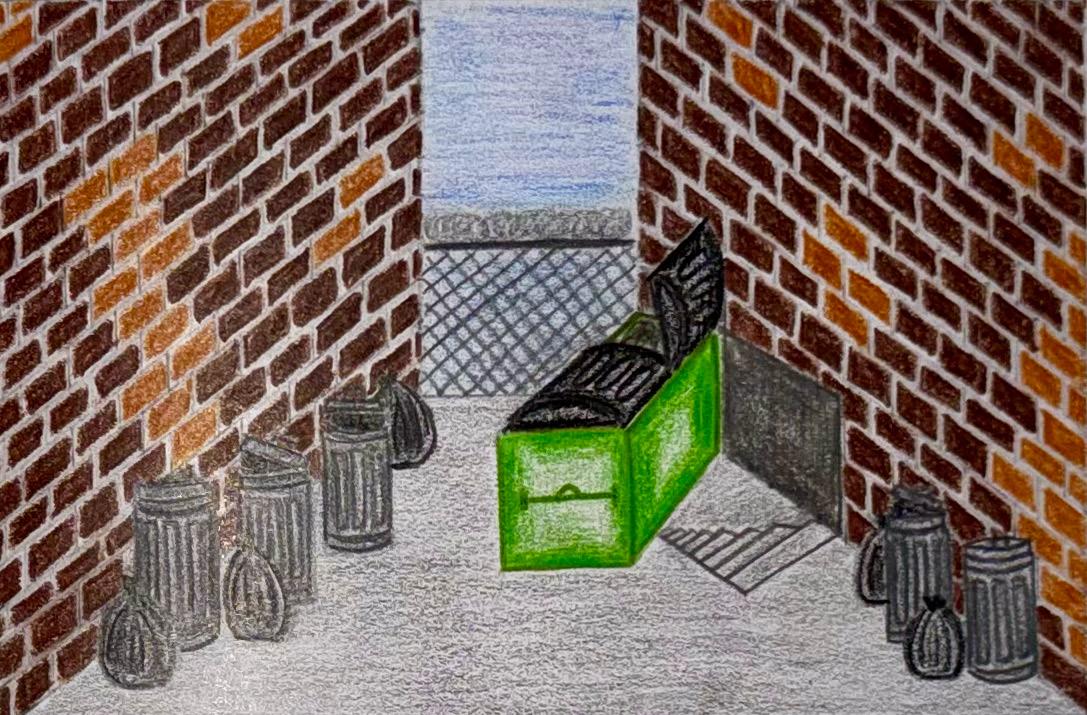
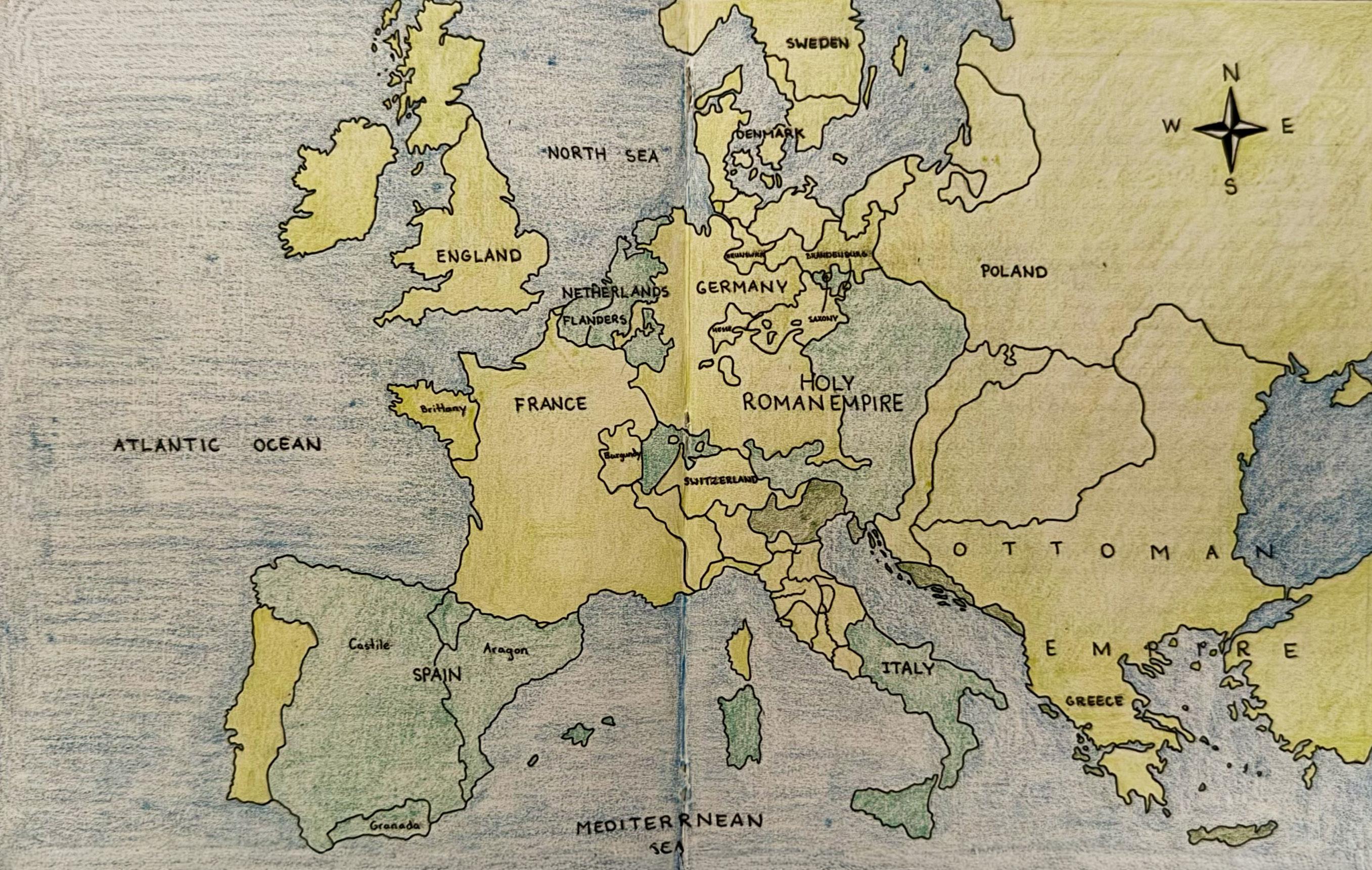
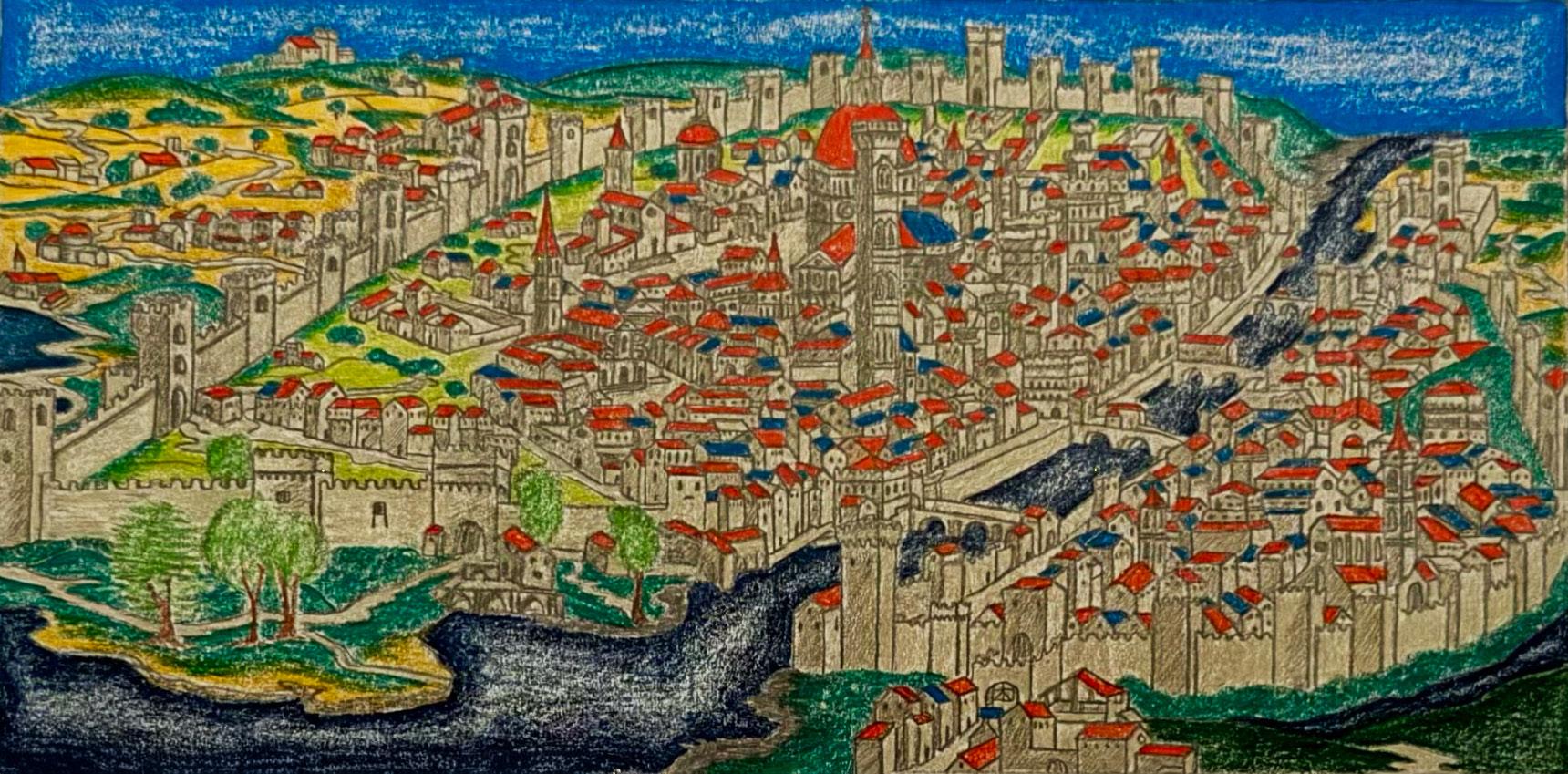
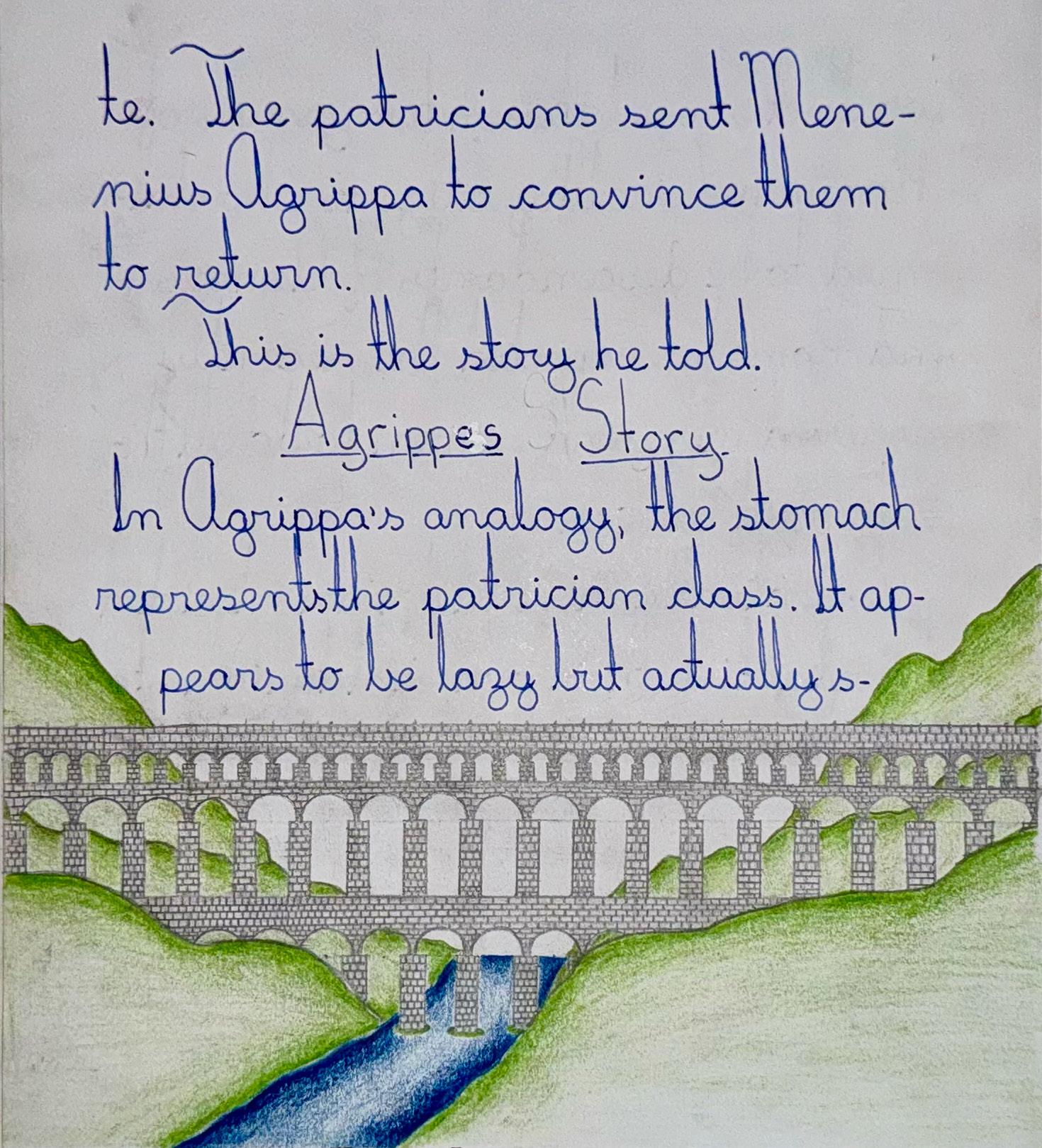
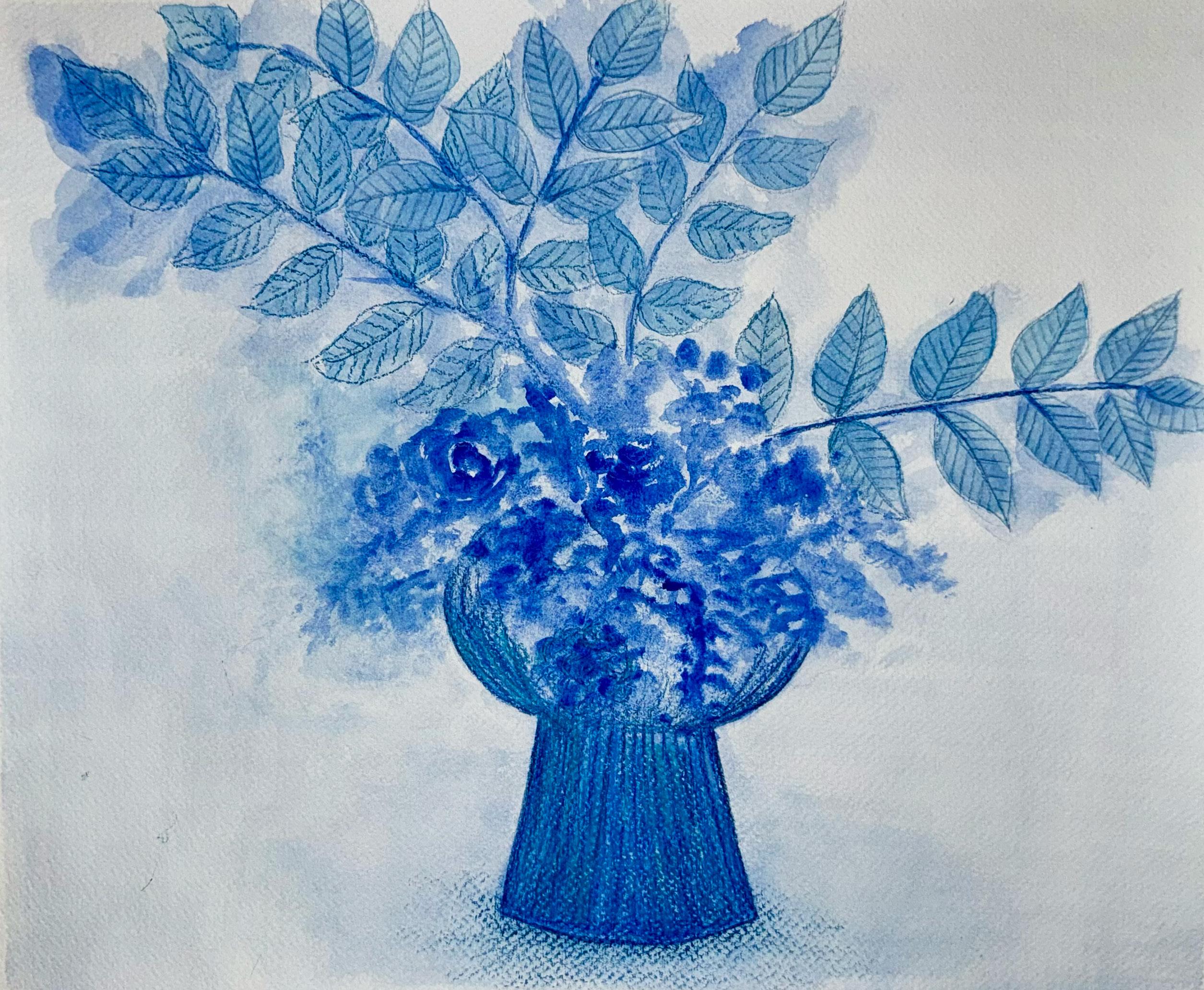
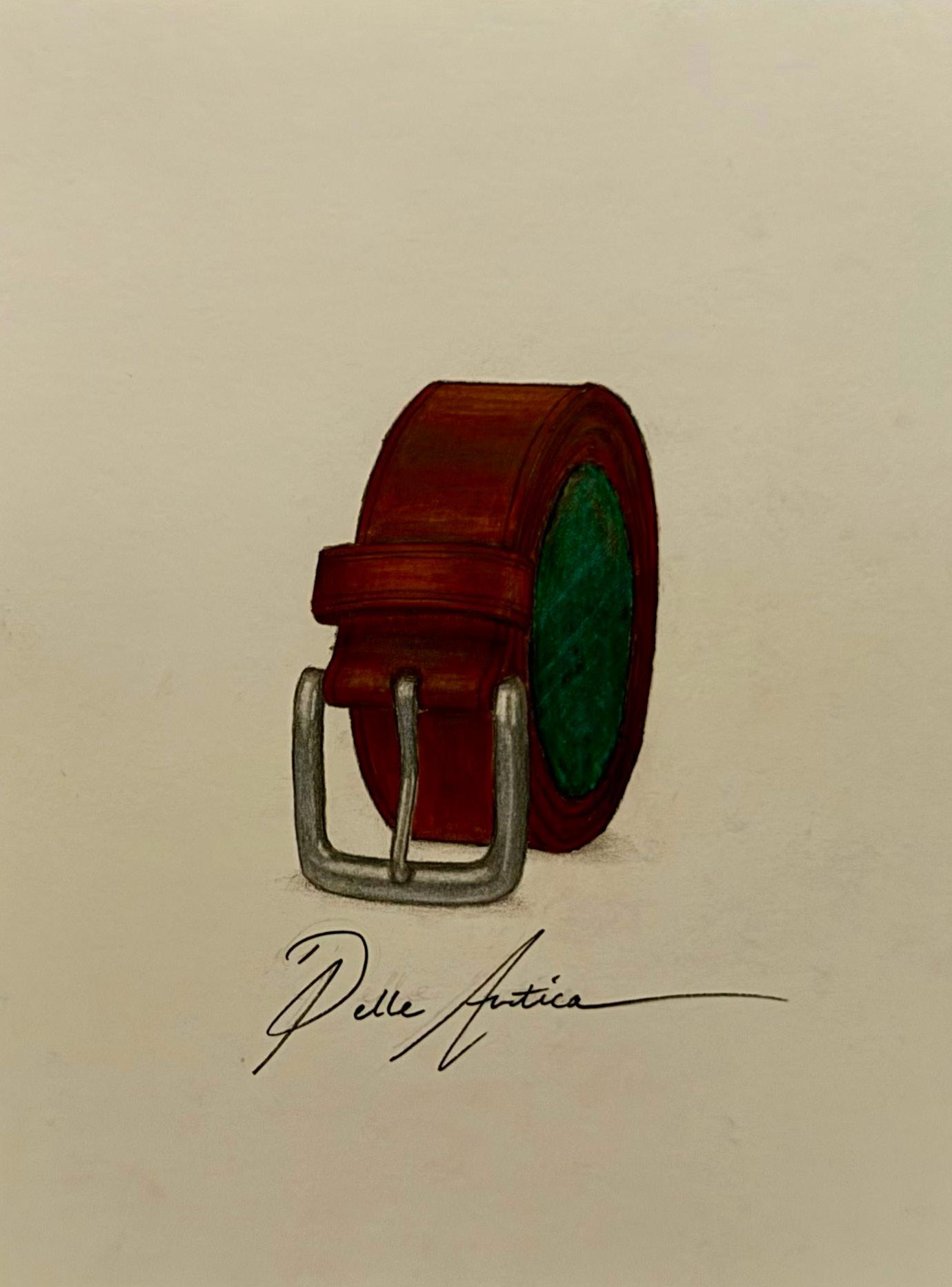
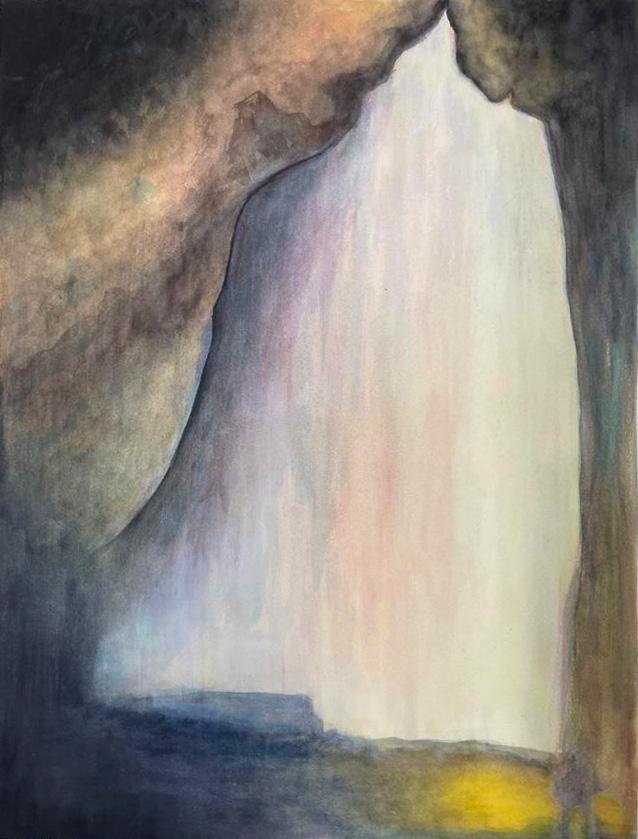
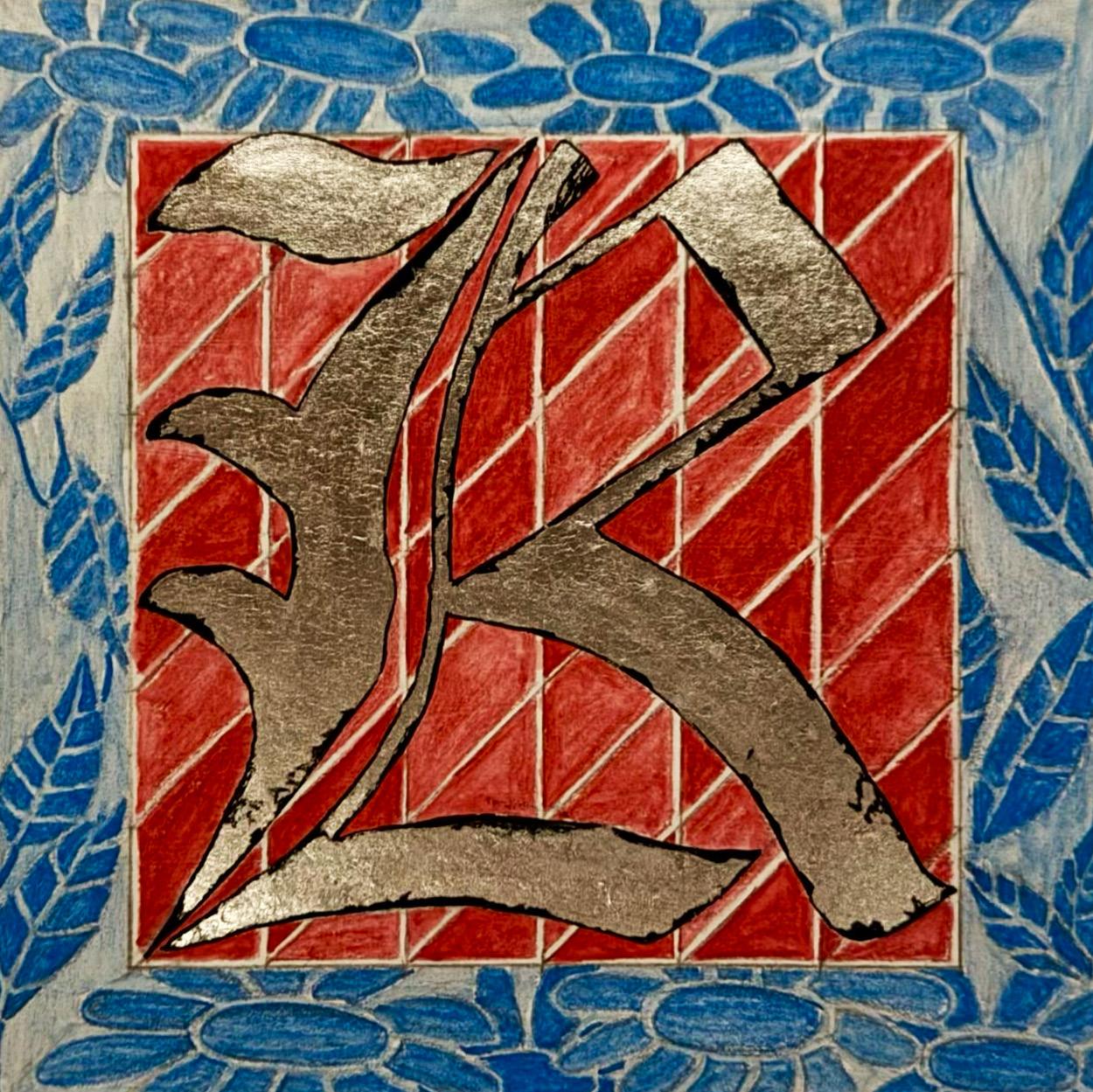
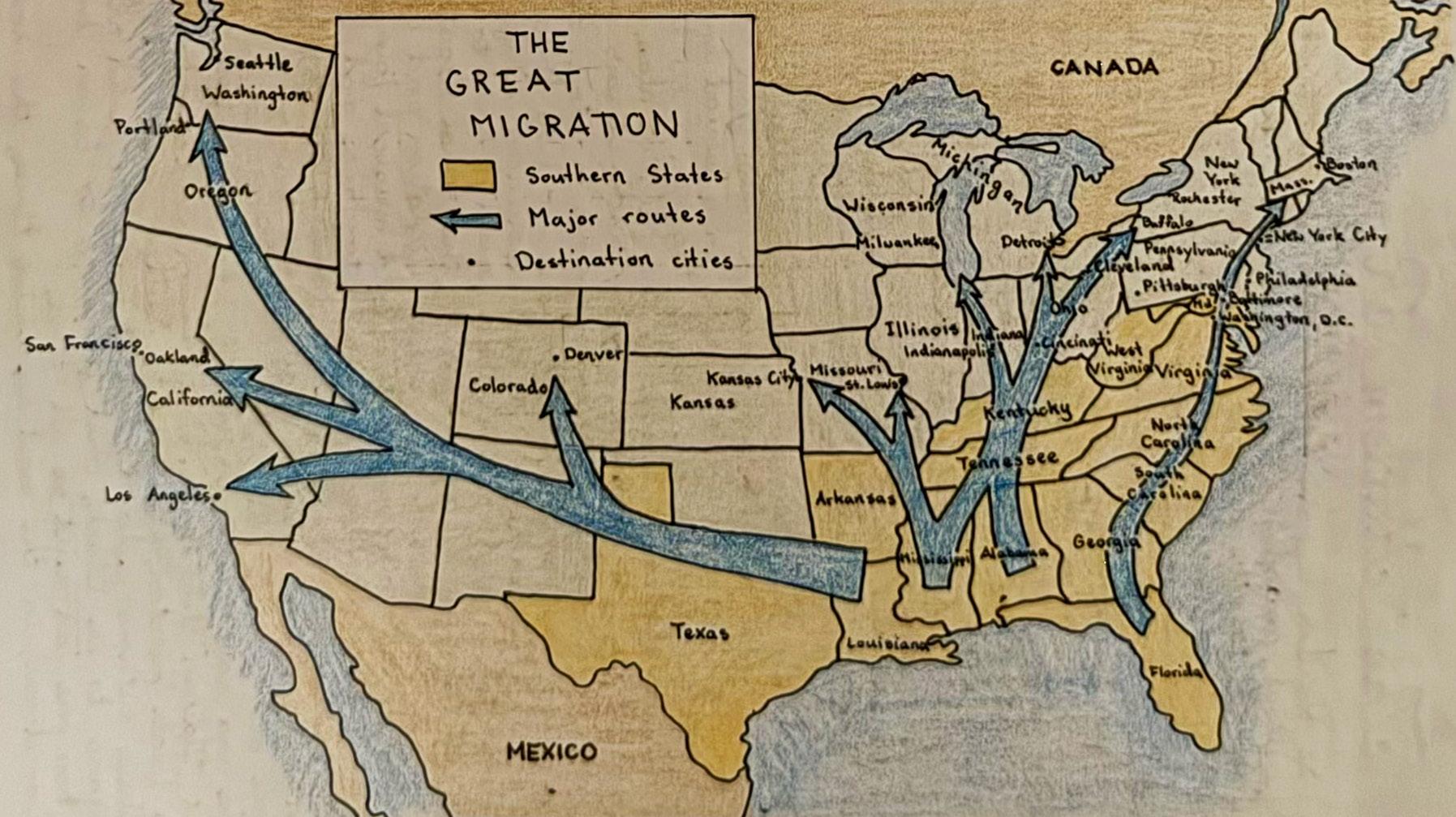
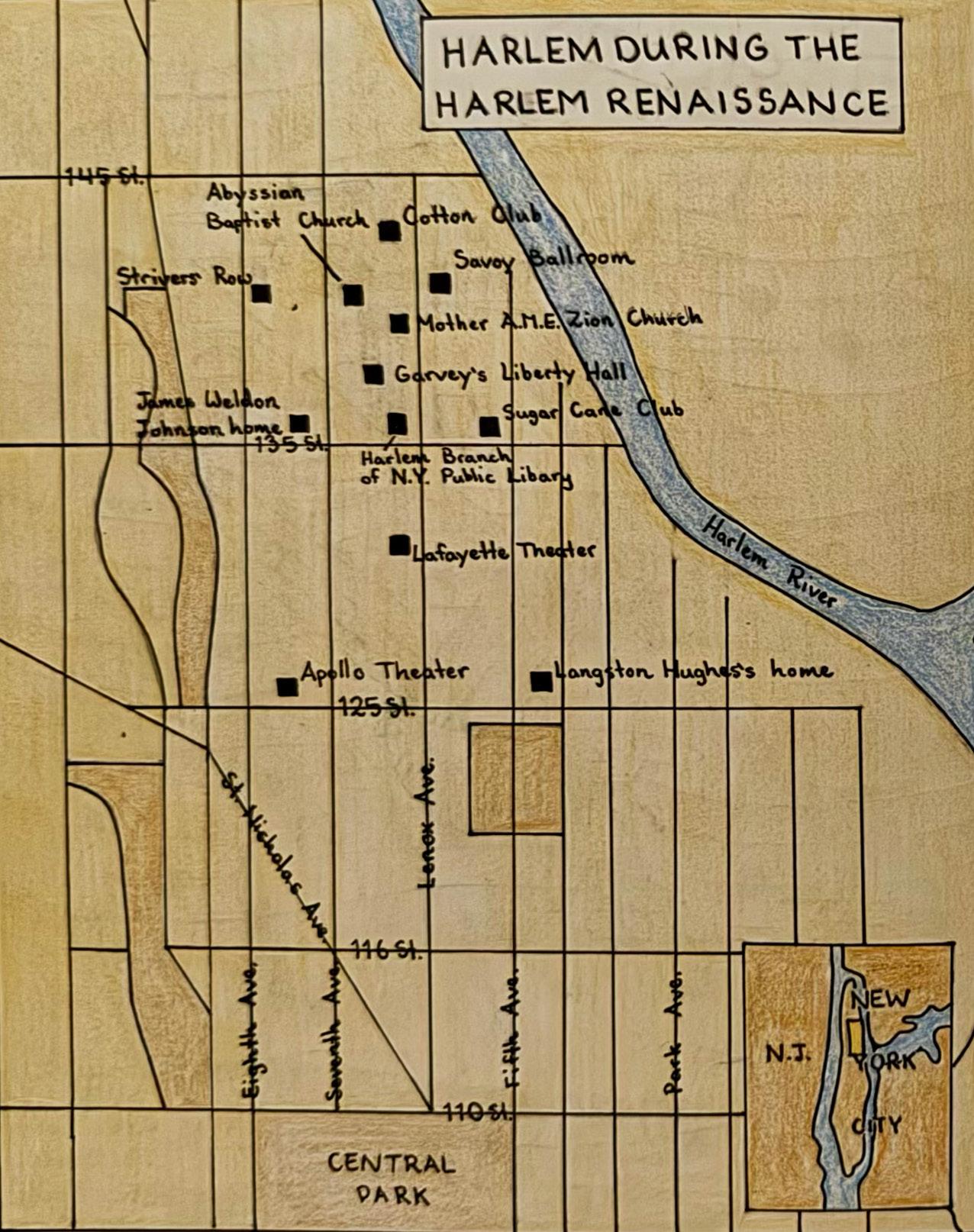
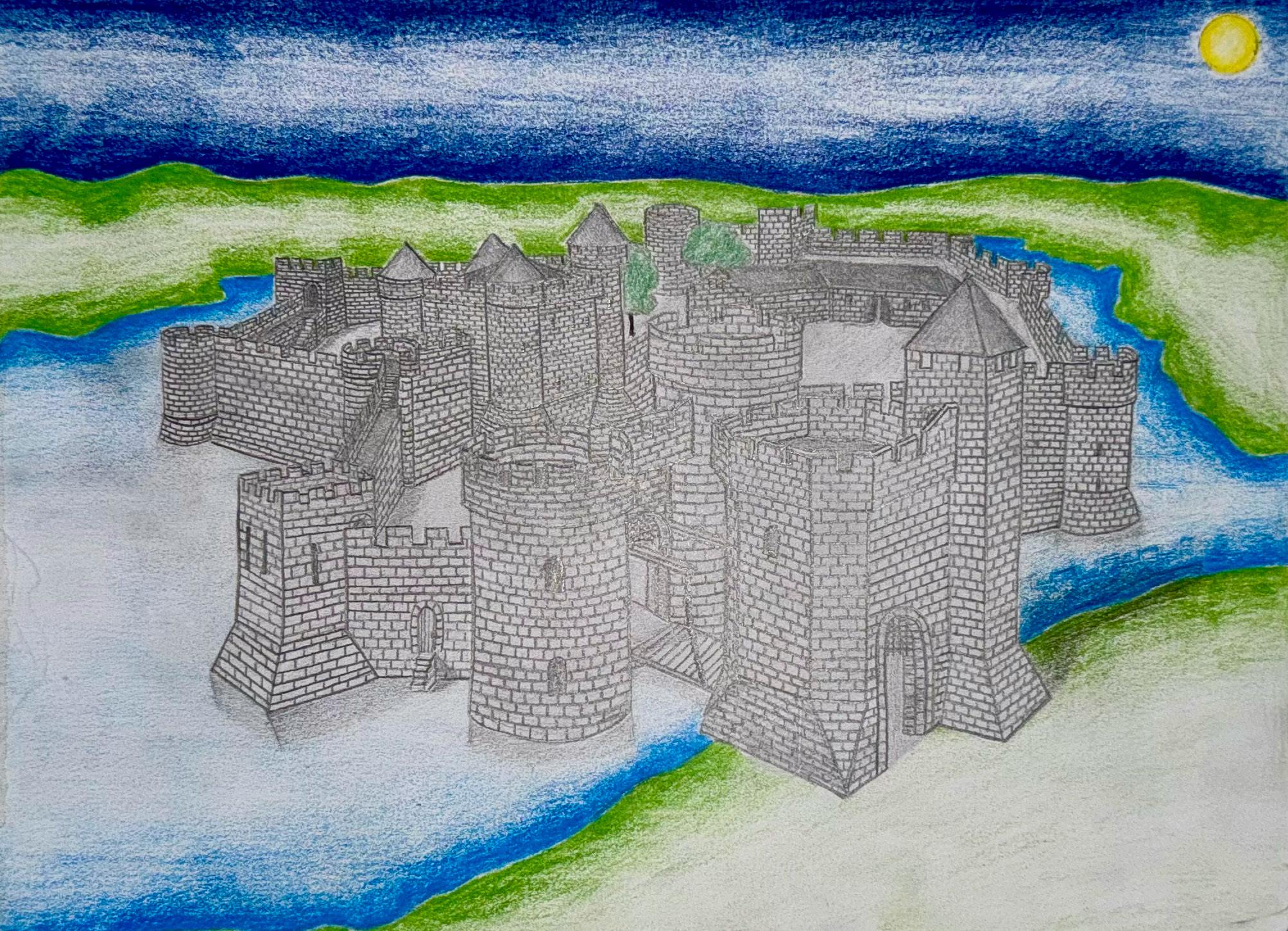
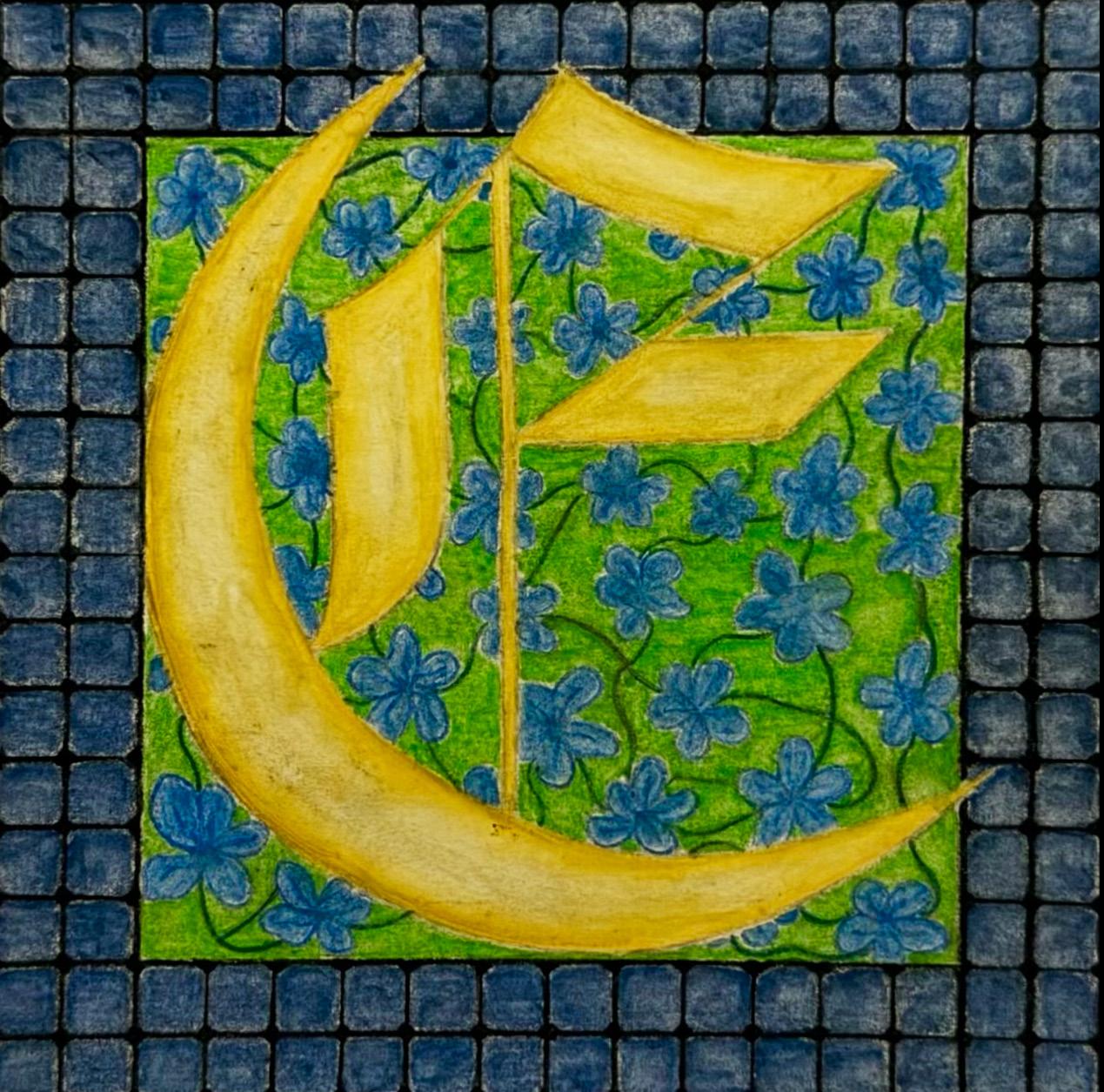
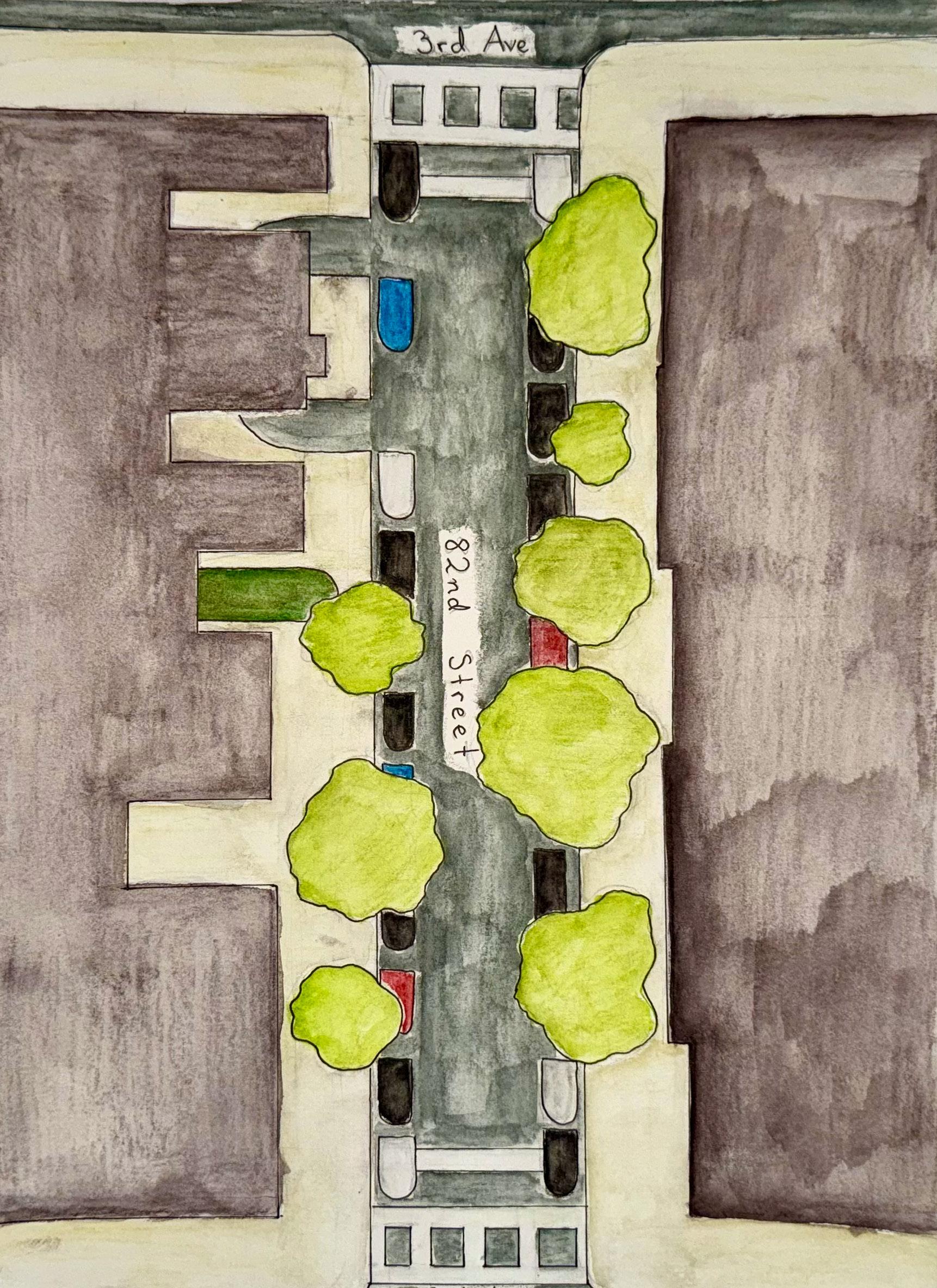
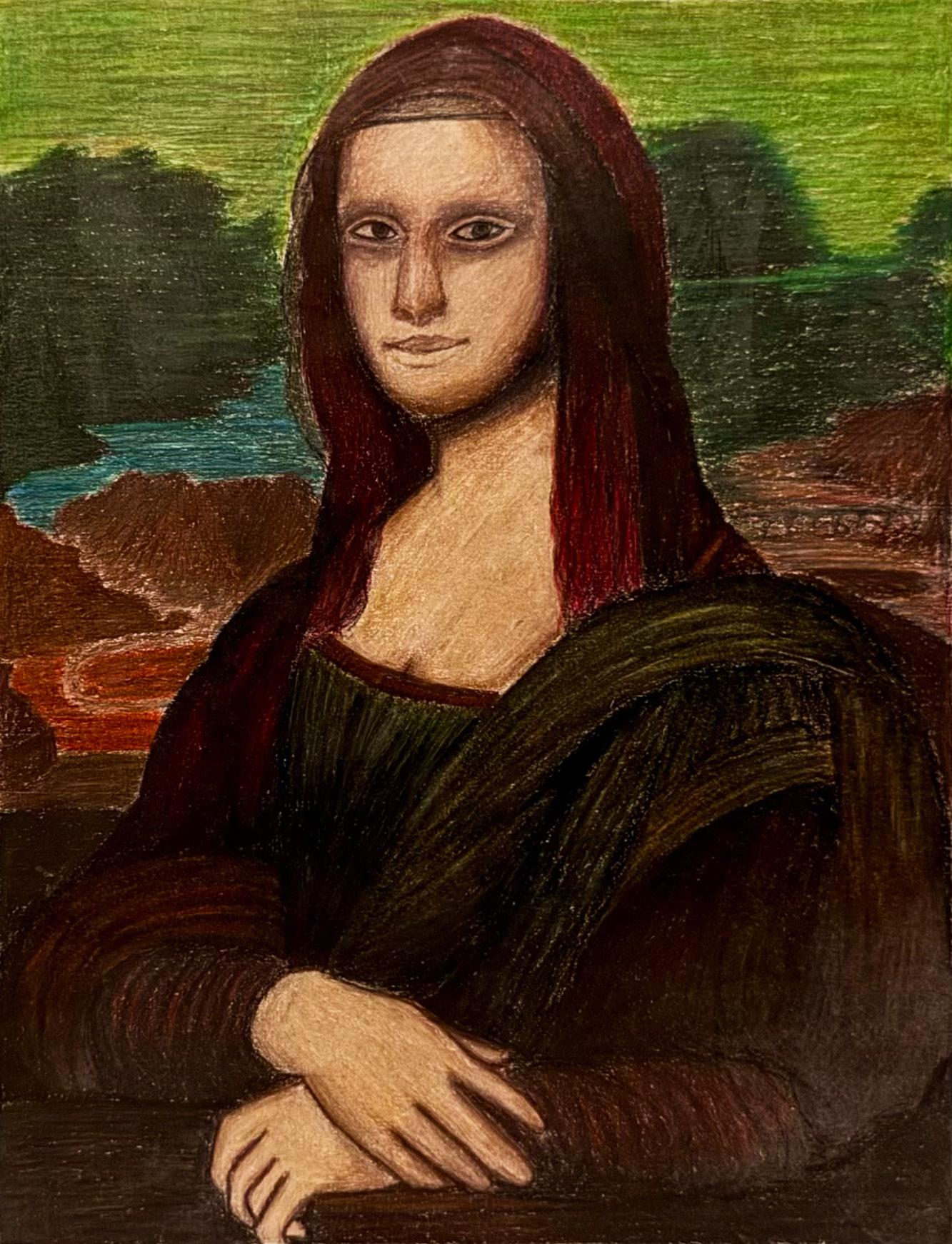
The Wall of Waldorf is a showcase of a select set of pieces that I created as a student at The Rudolf Steiner School. Because the Waldorf educational philosophy especially emphasizes craft and artistic skills, I have had opportunities to work with a wide range of media. The works I have selected include watercolor, charcoal, pastel, pen, color pencil, graphite, crayon, gold leaf, and oil paint.
The collage is meant not only to display my works, but also to show where my time and effort have been aimed and how my craftsmanship has developed over the years. From the beginning of my journey as an artist to now, I have pushed myself to experiment with a variety of materials and techniques.
Taken as a whole, these works portray an artistic foundation that I hope to continue building on in college.
The Wall of Waldorf, 2025 Monochrome Mixed-Media Digitized Collage Photographs: Derek Iovino

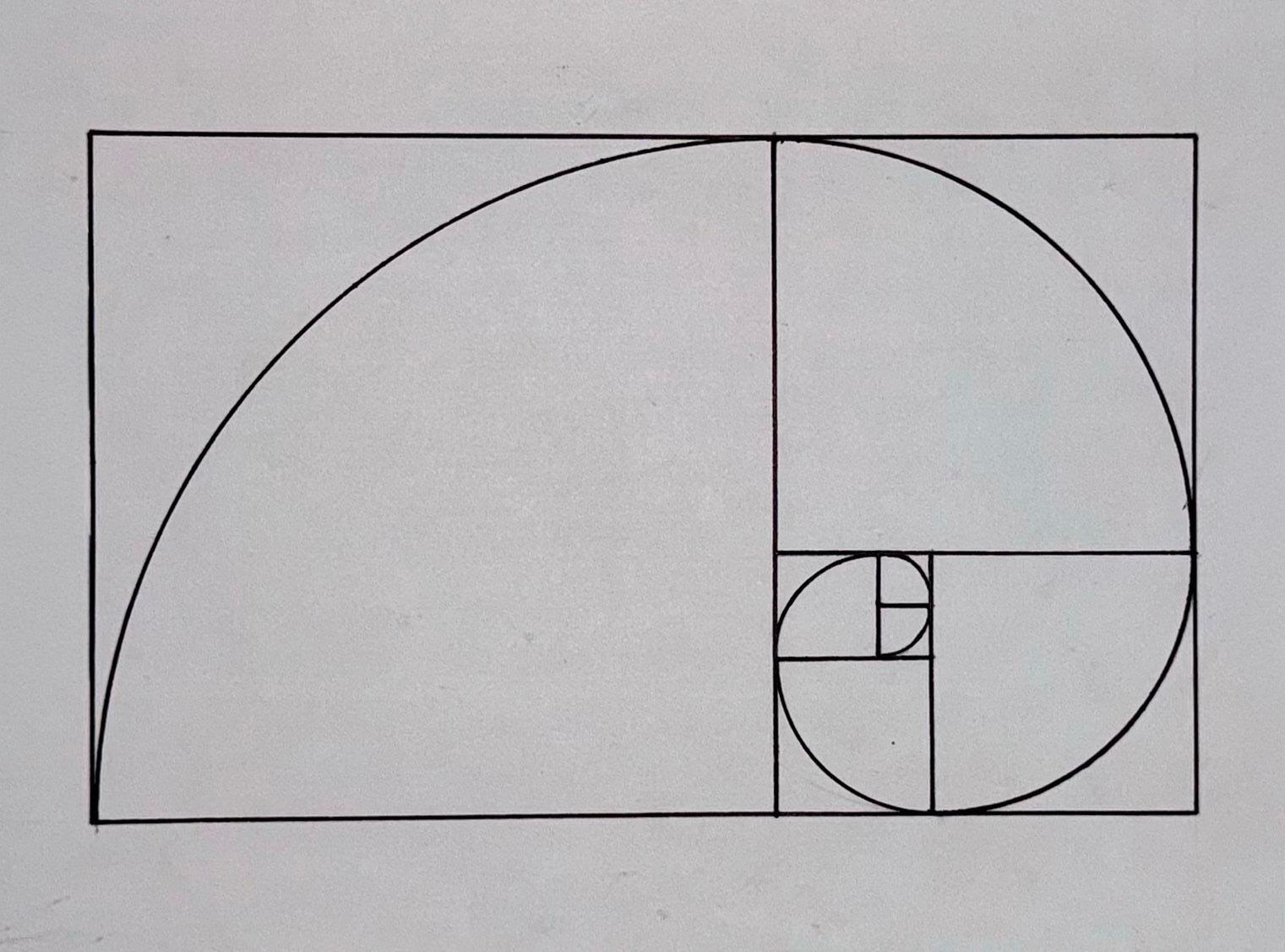
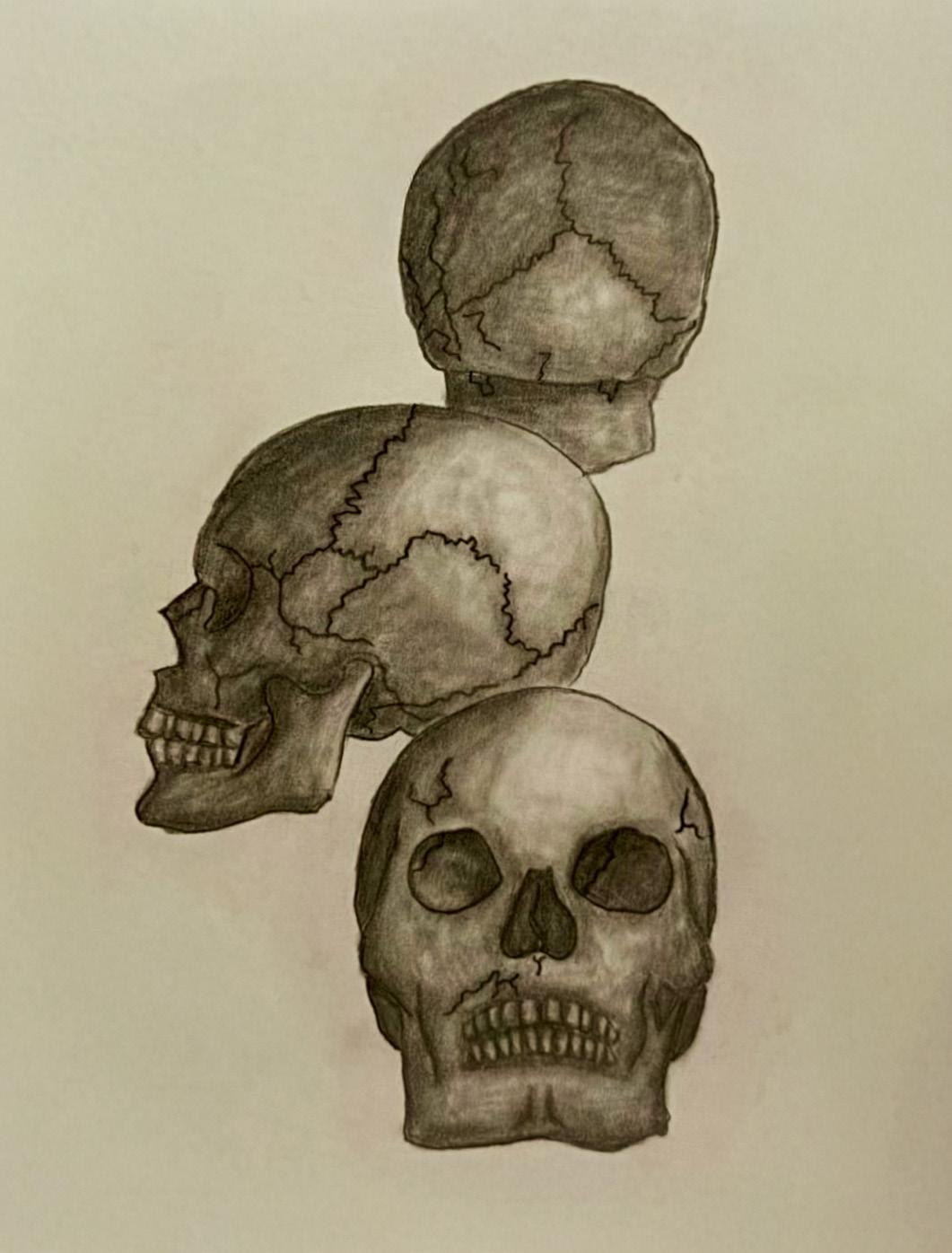
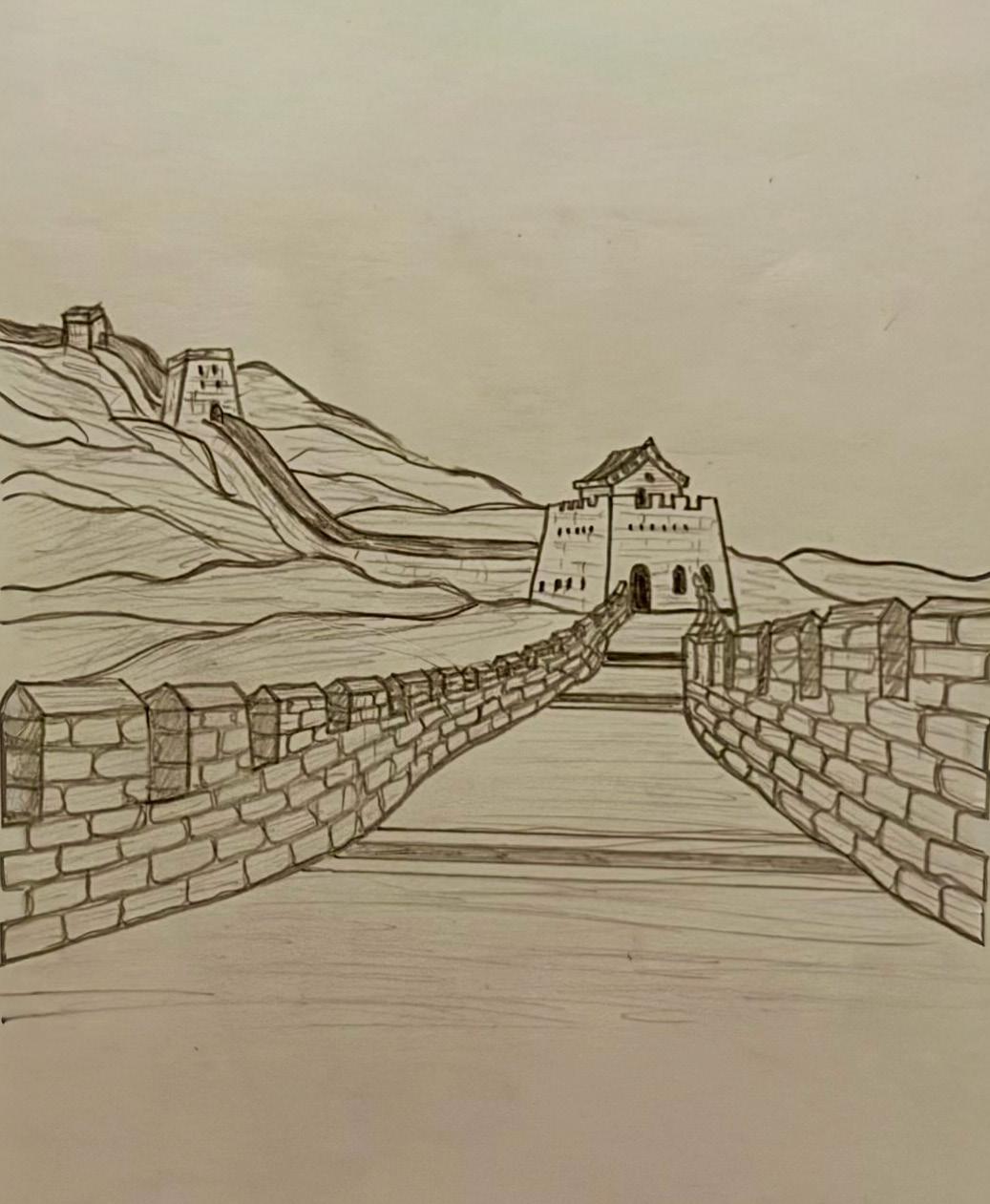
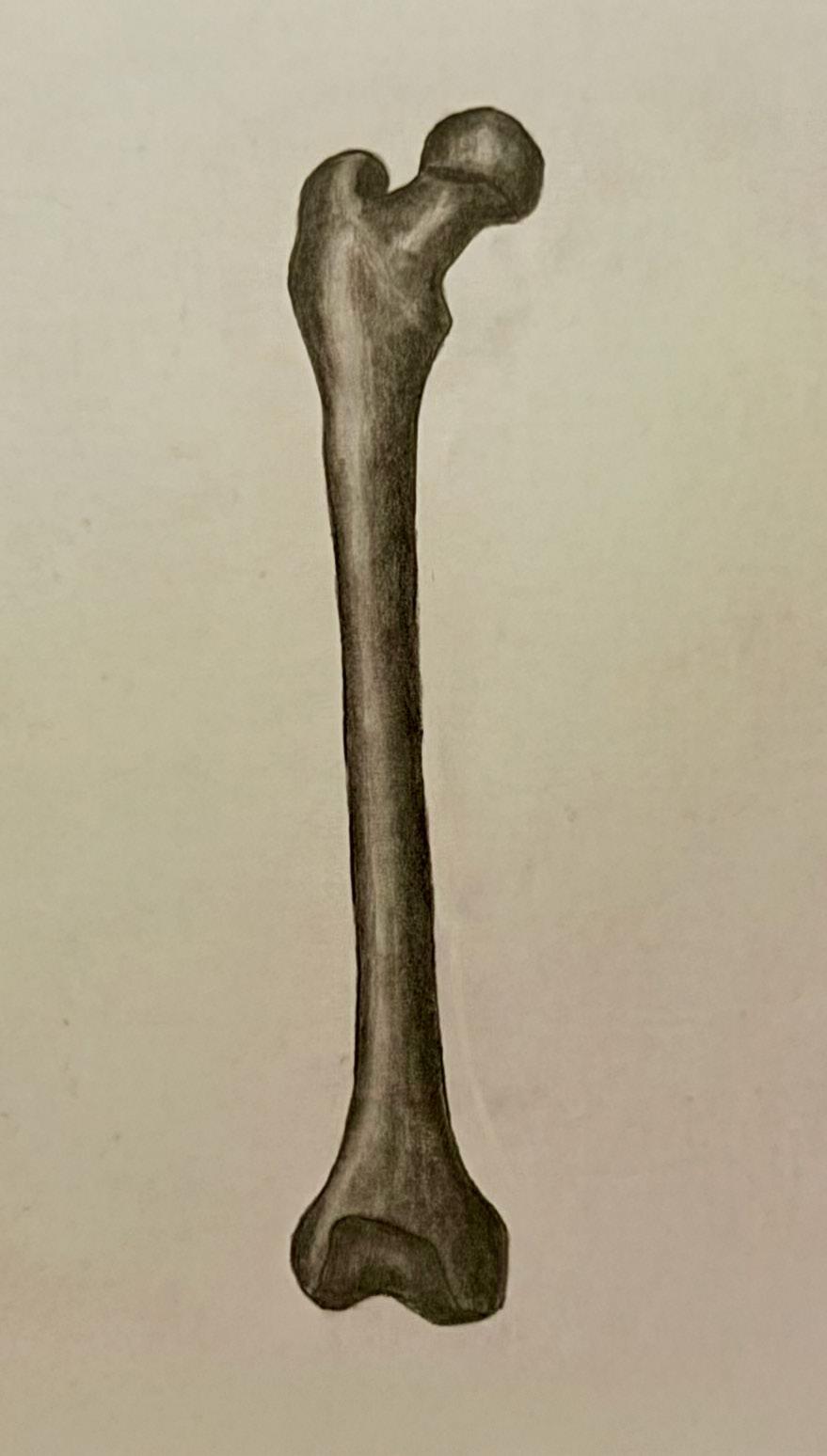
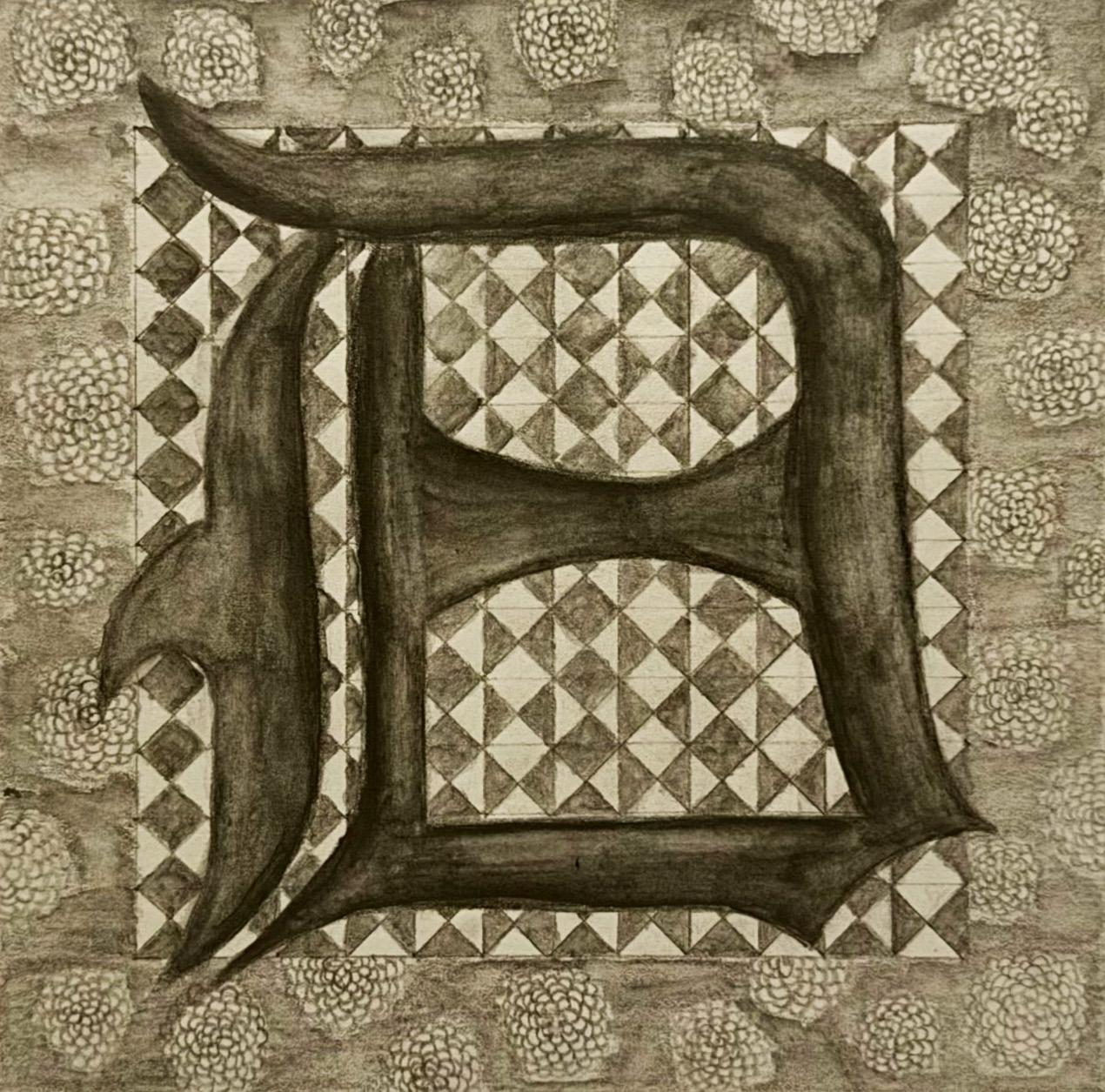
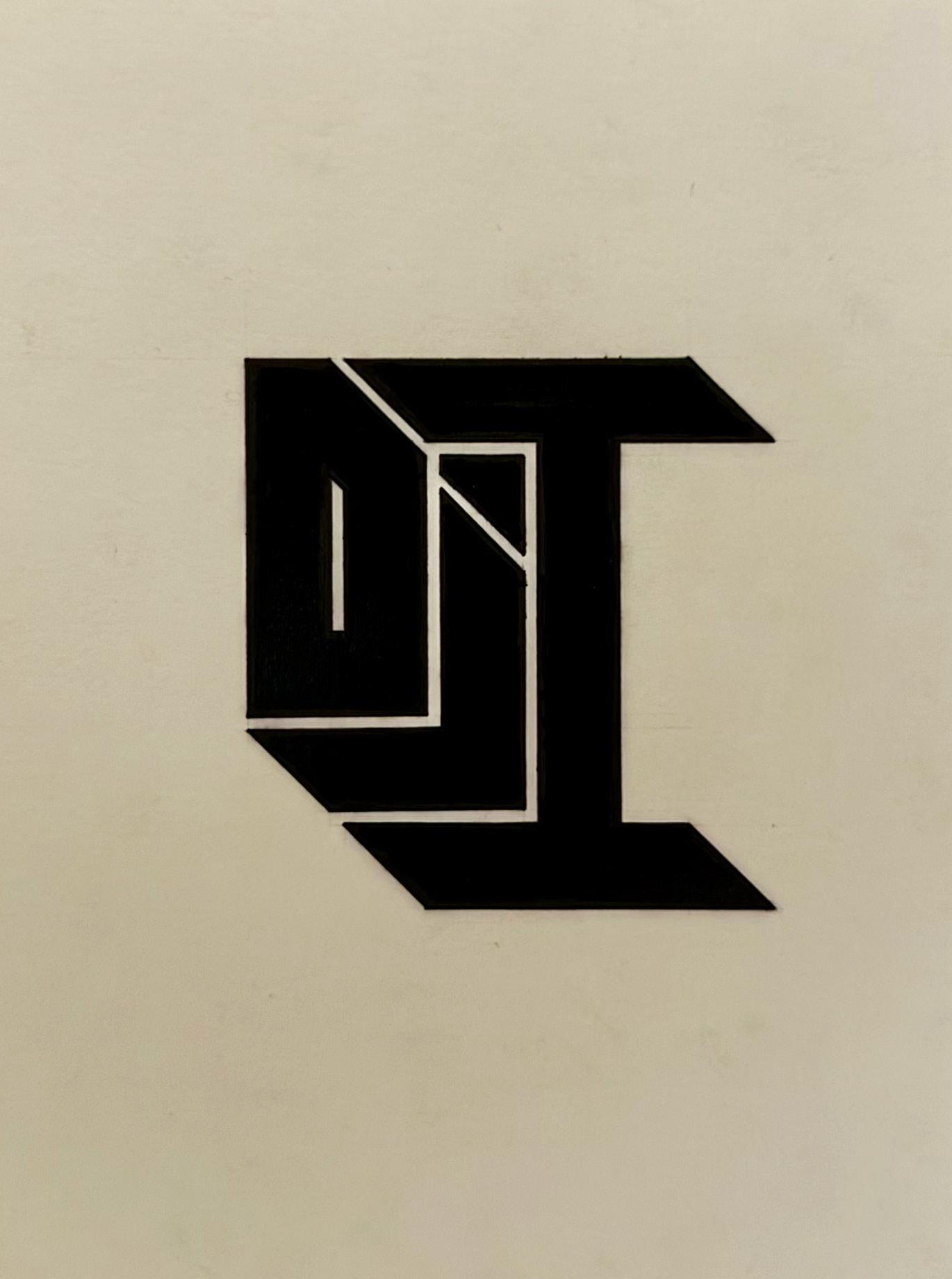

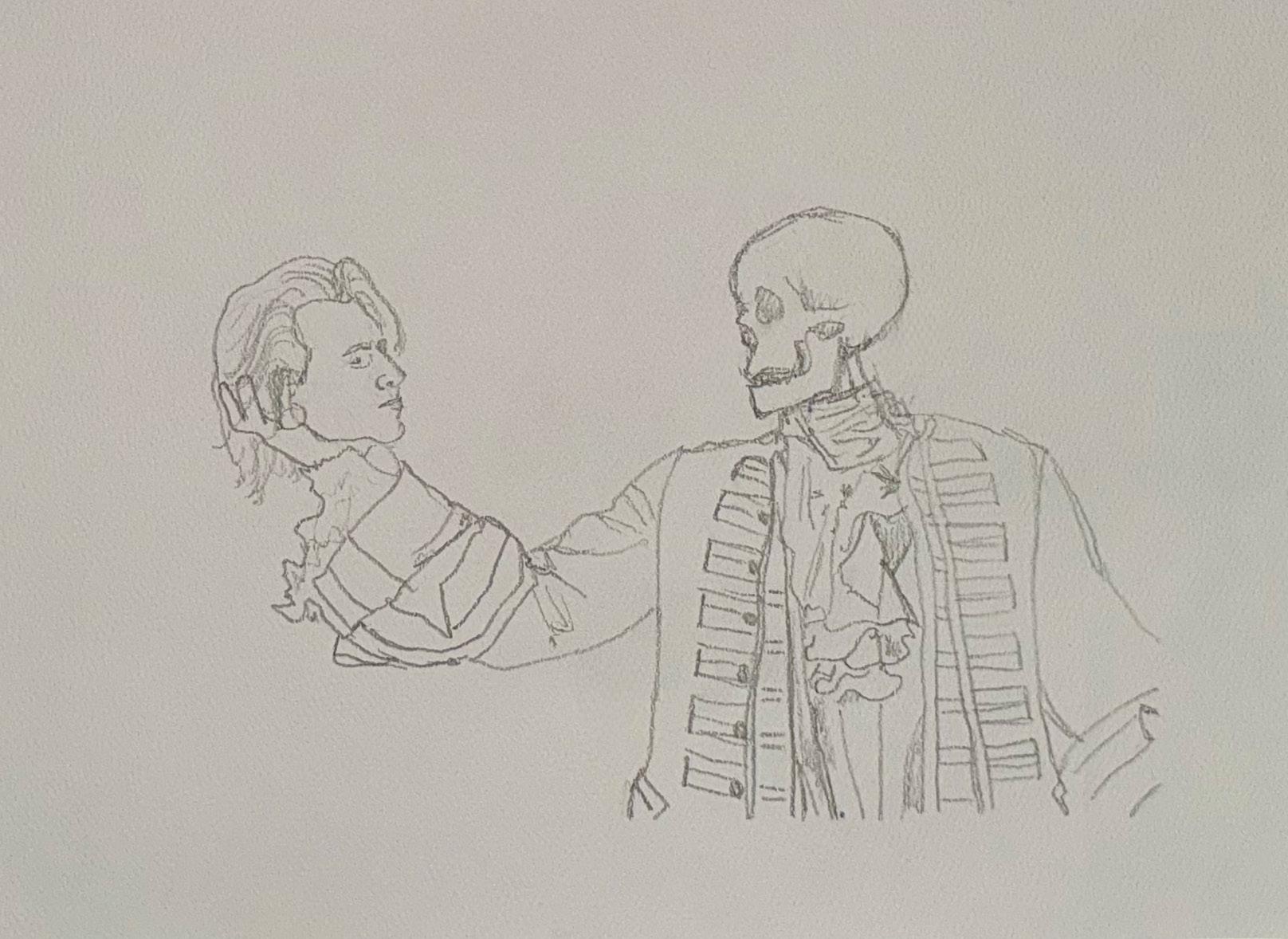
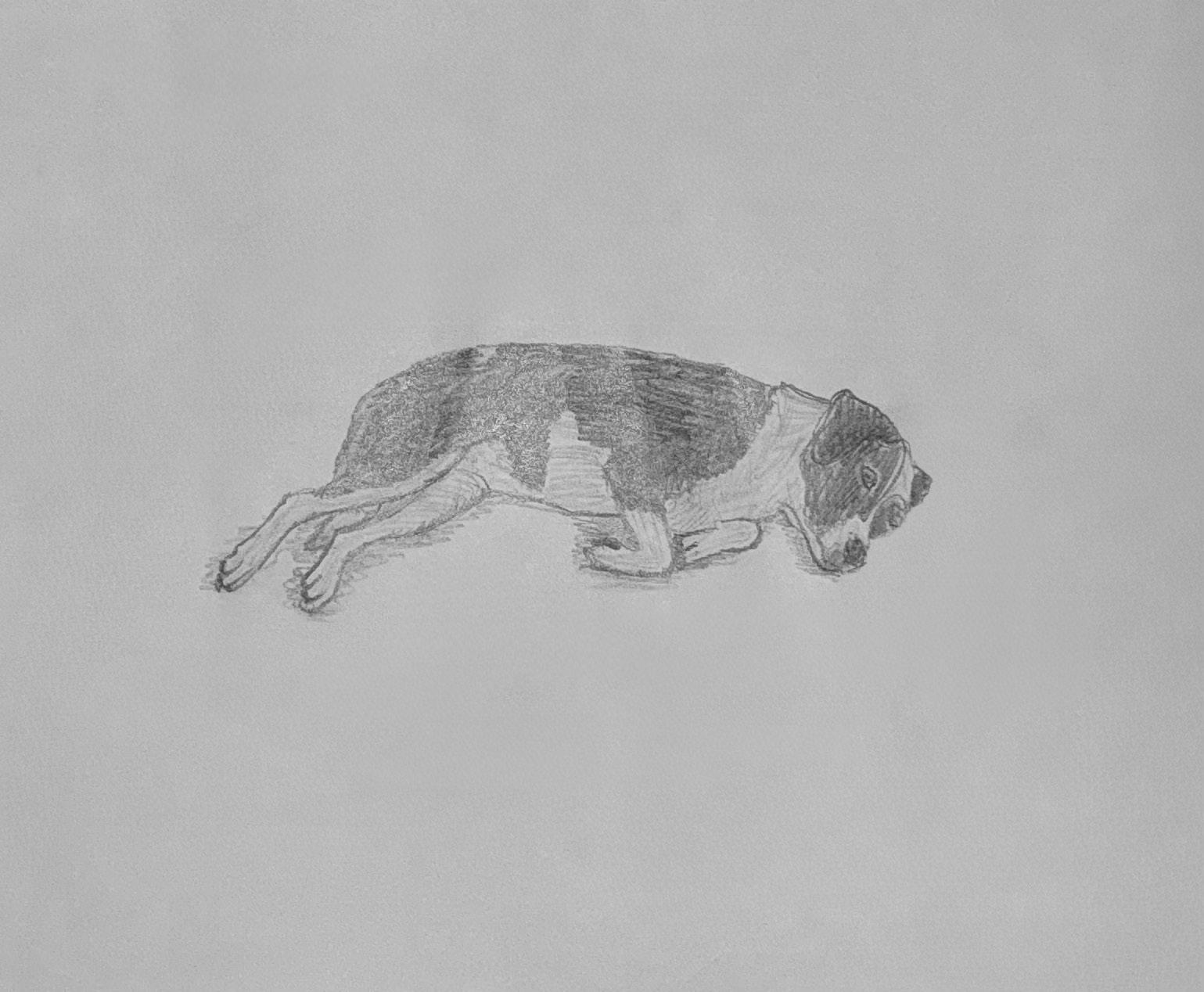
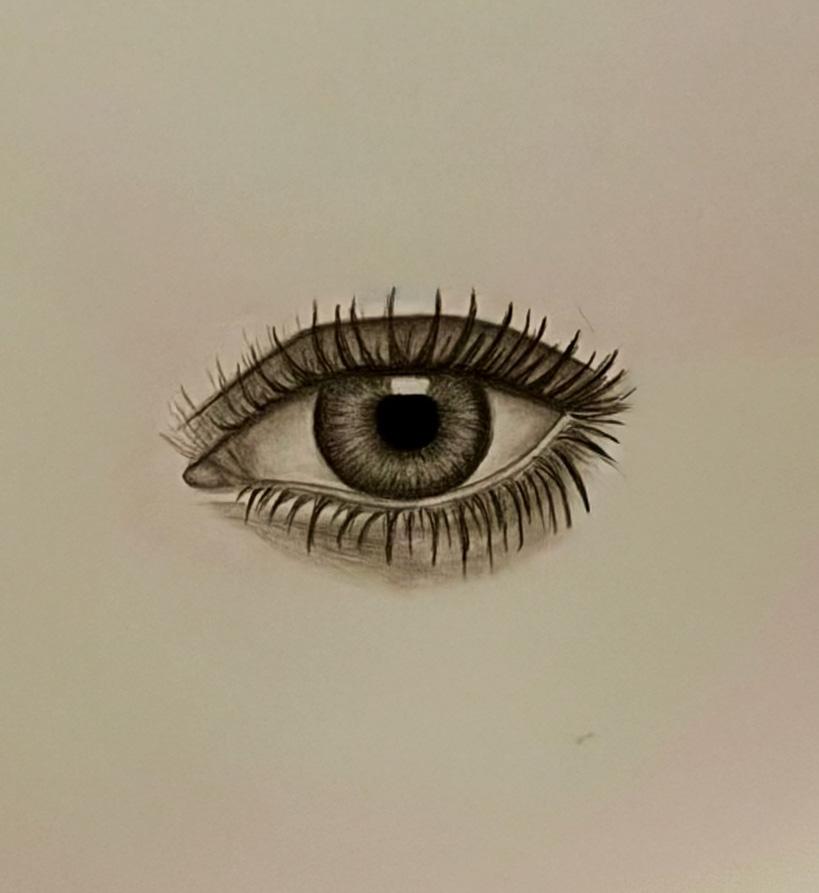
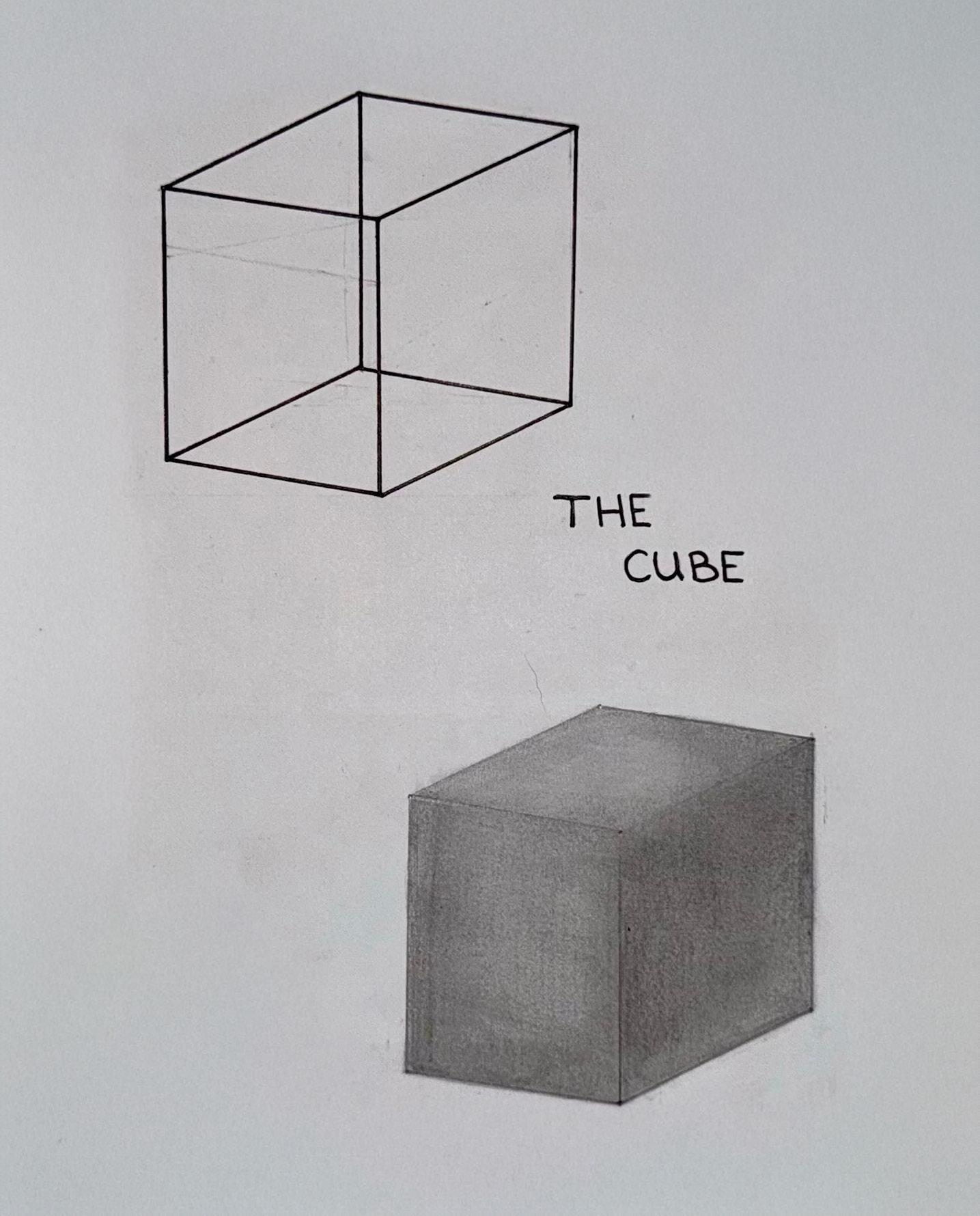
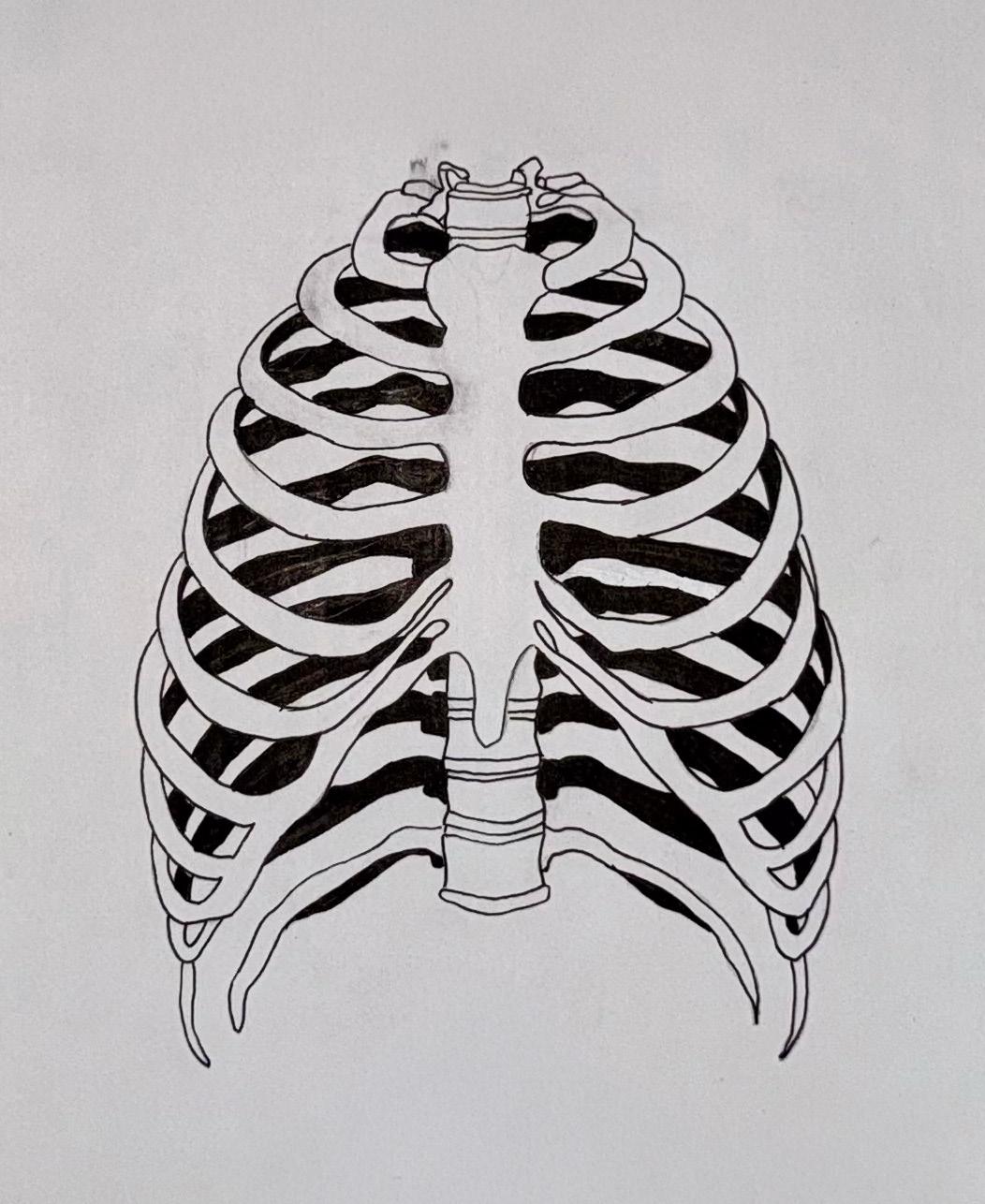
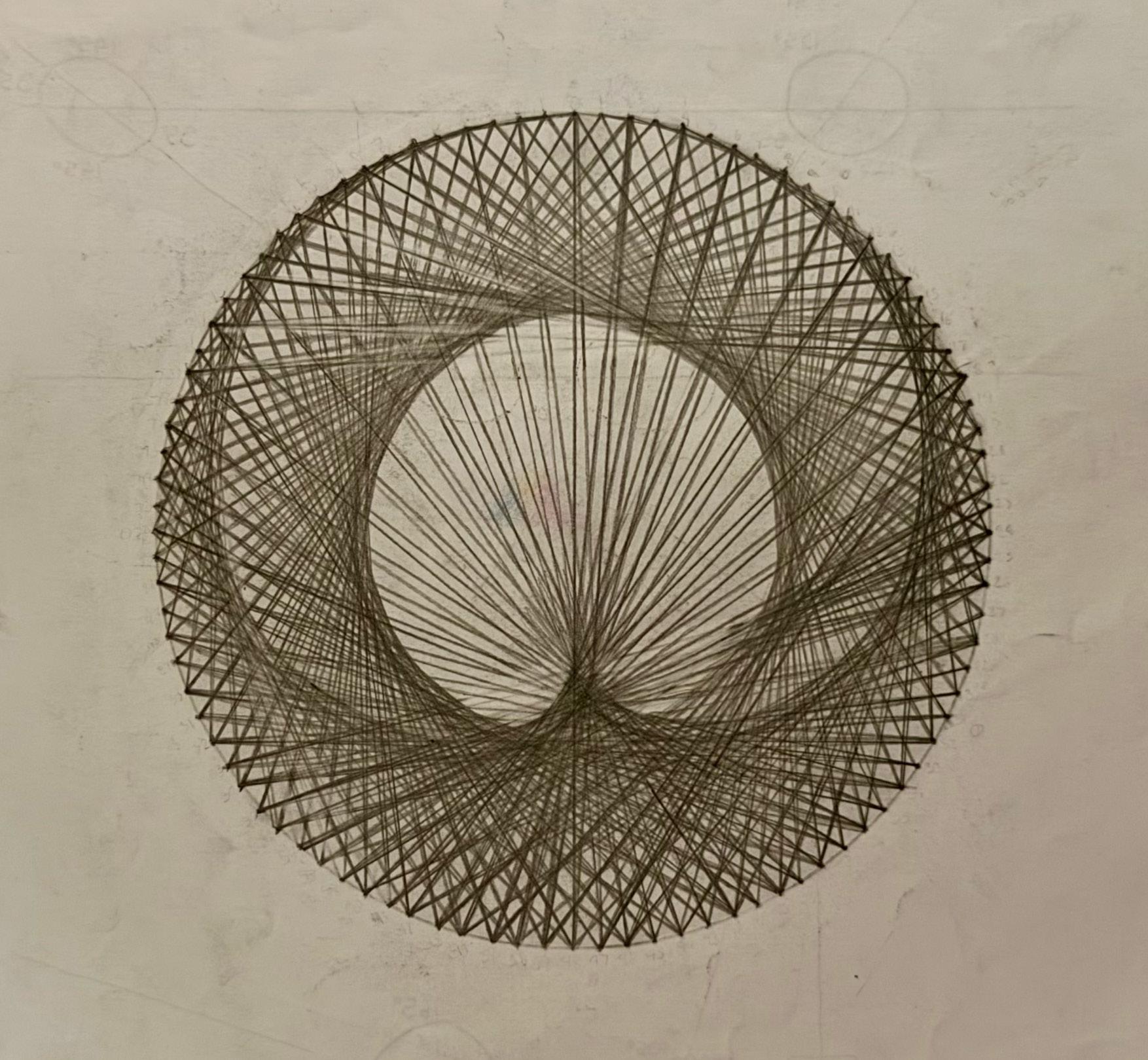
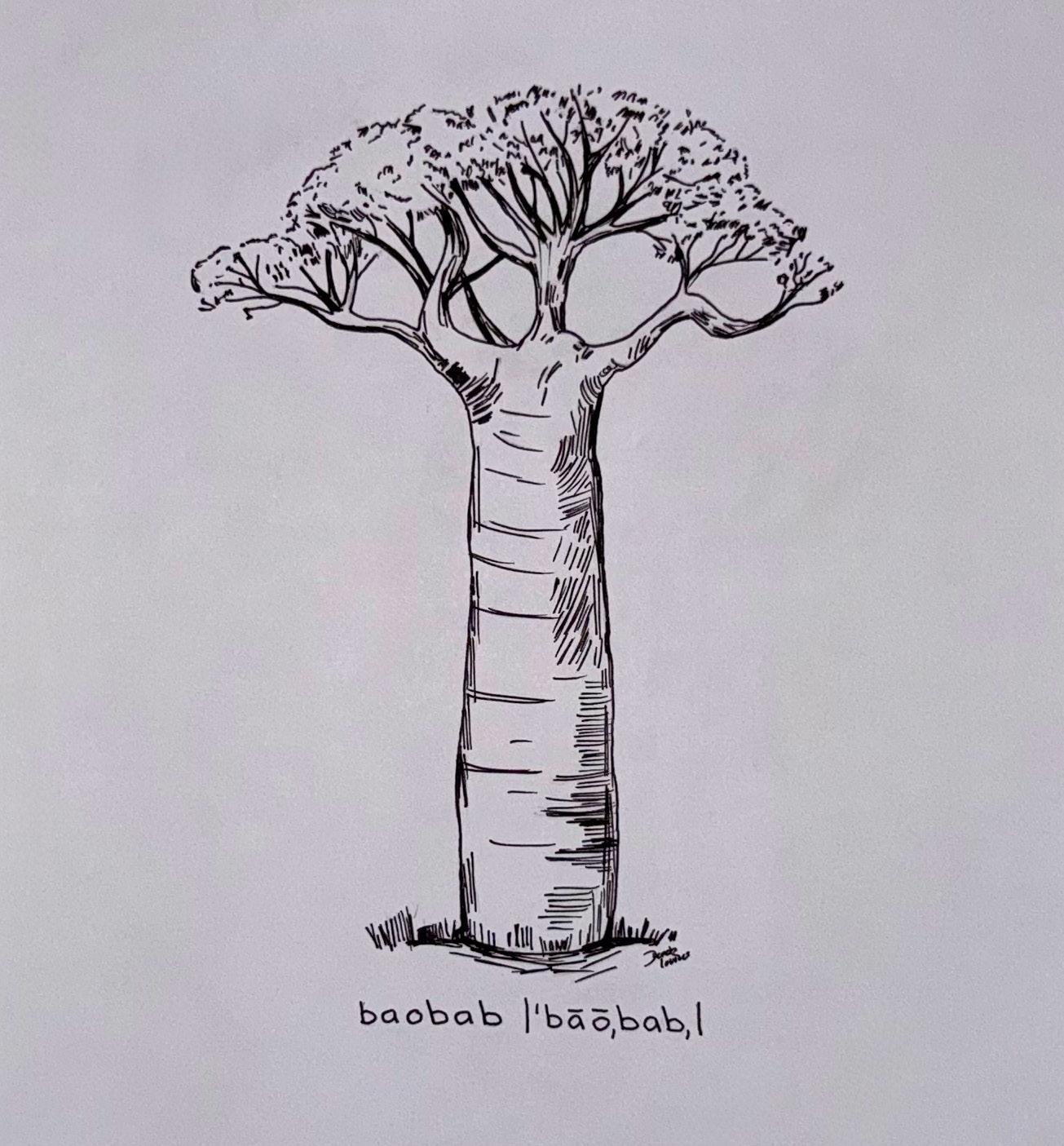
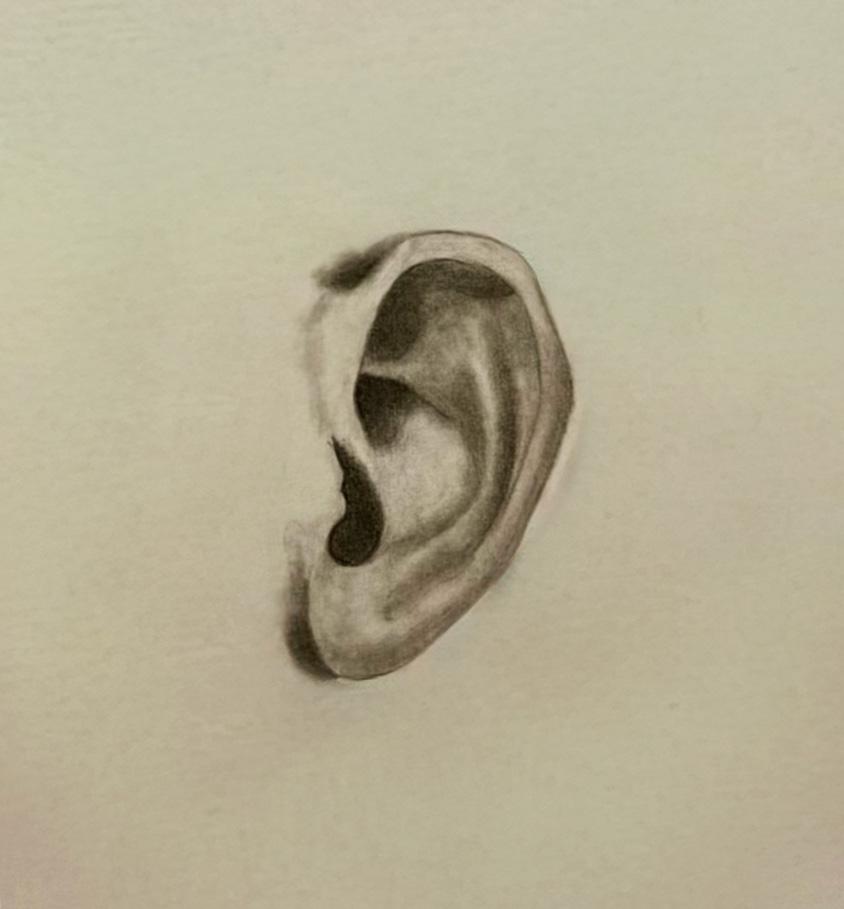
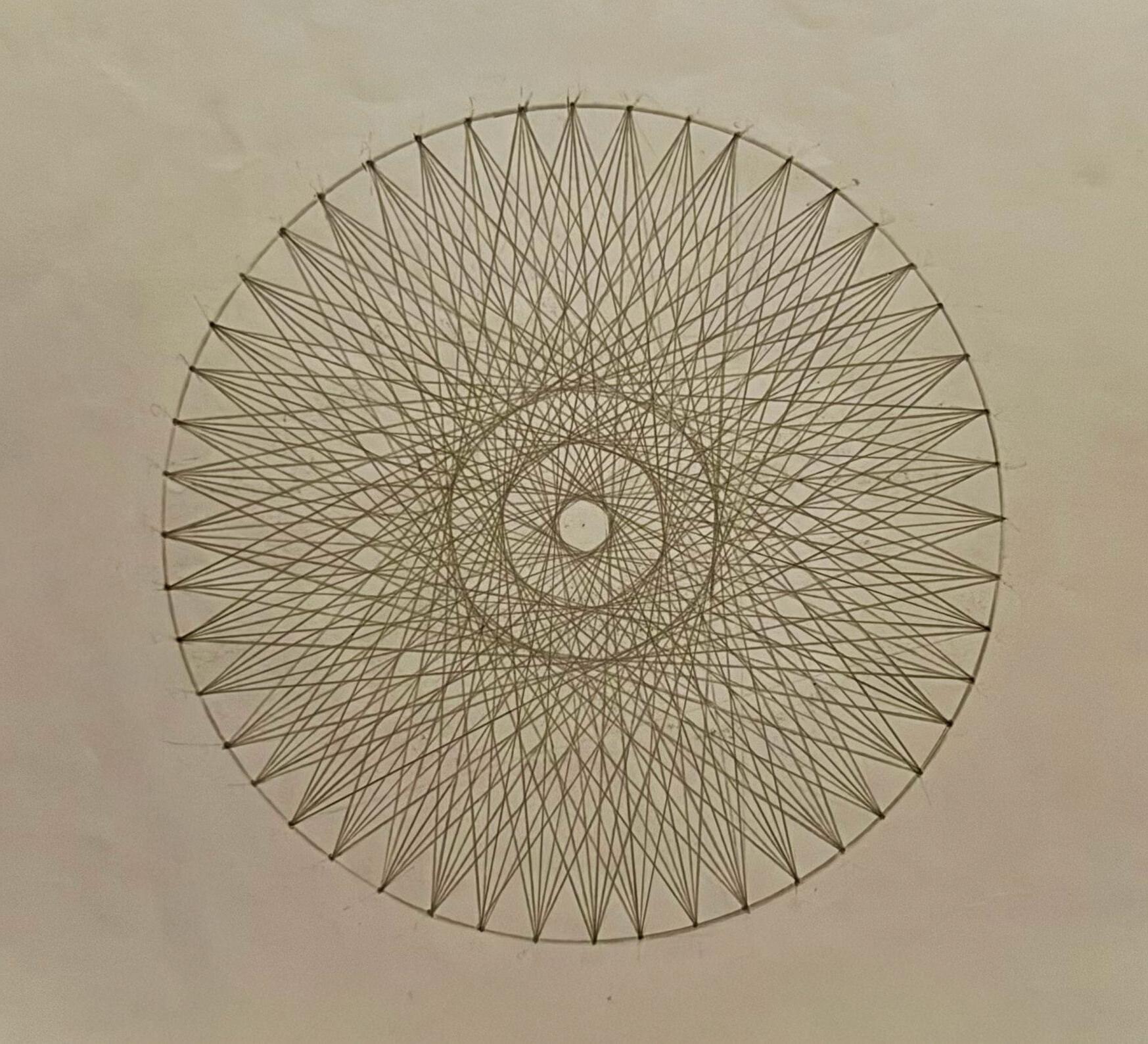

Mixed-Media Digitized Collage
The Wall of Waldorf, 2025
Photographs: Derek Iovino
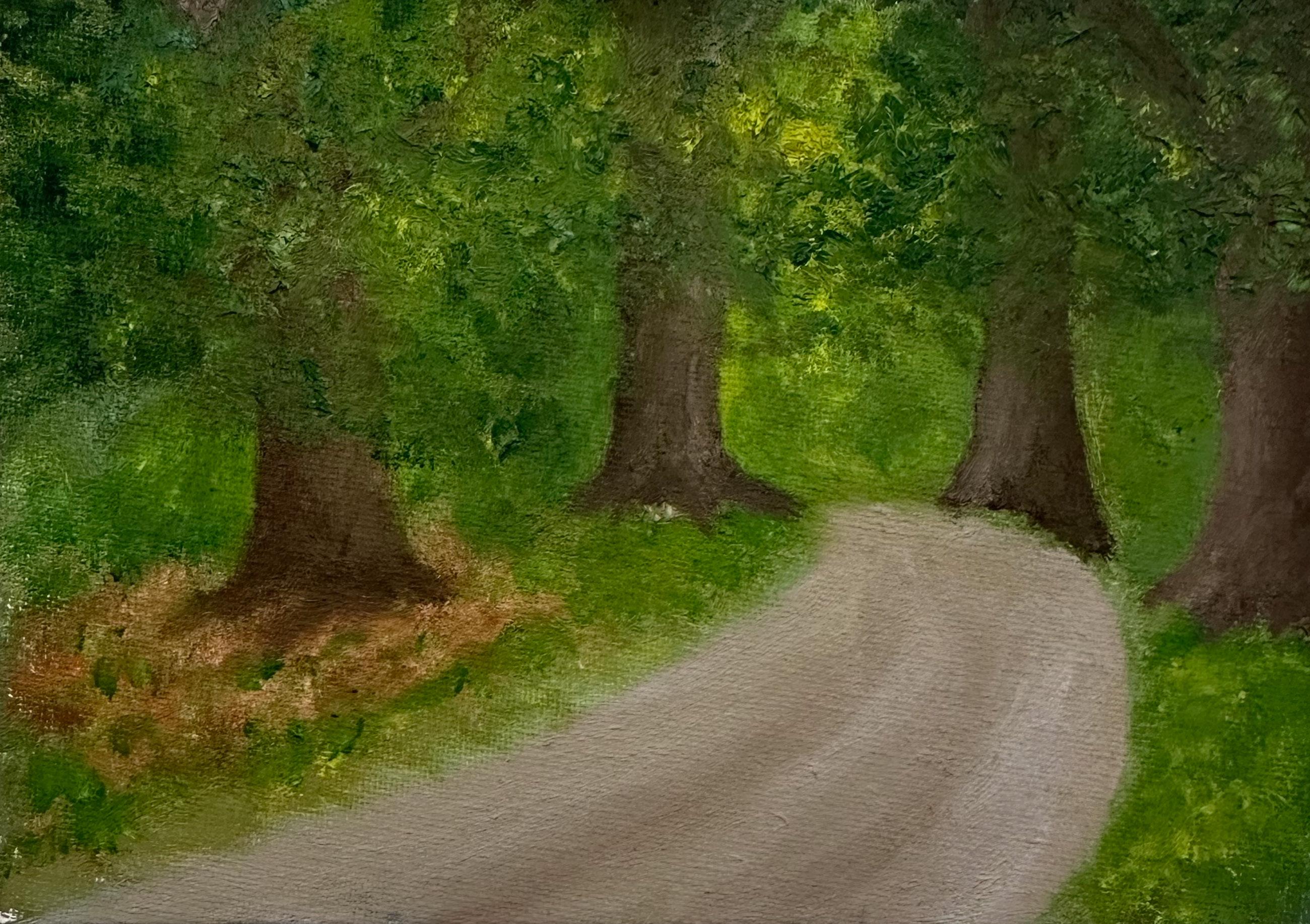
THE ABCs OF EURYTHMY, 2025
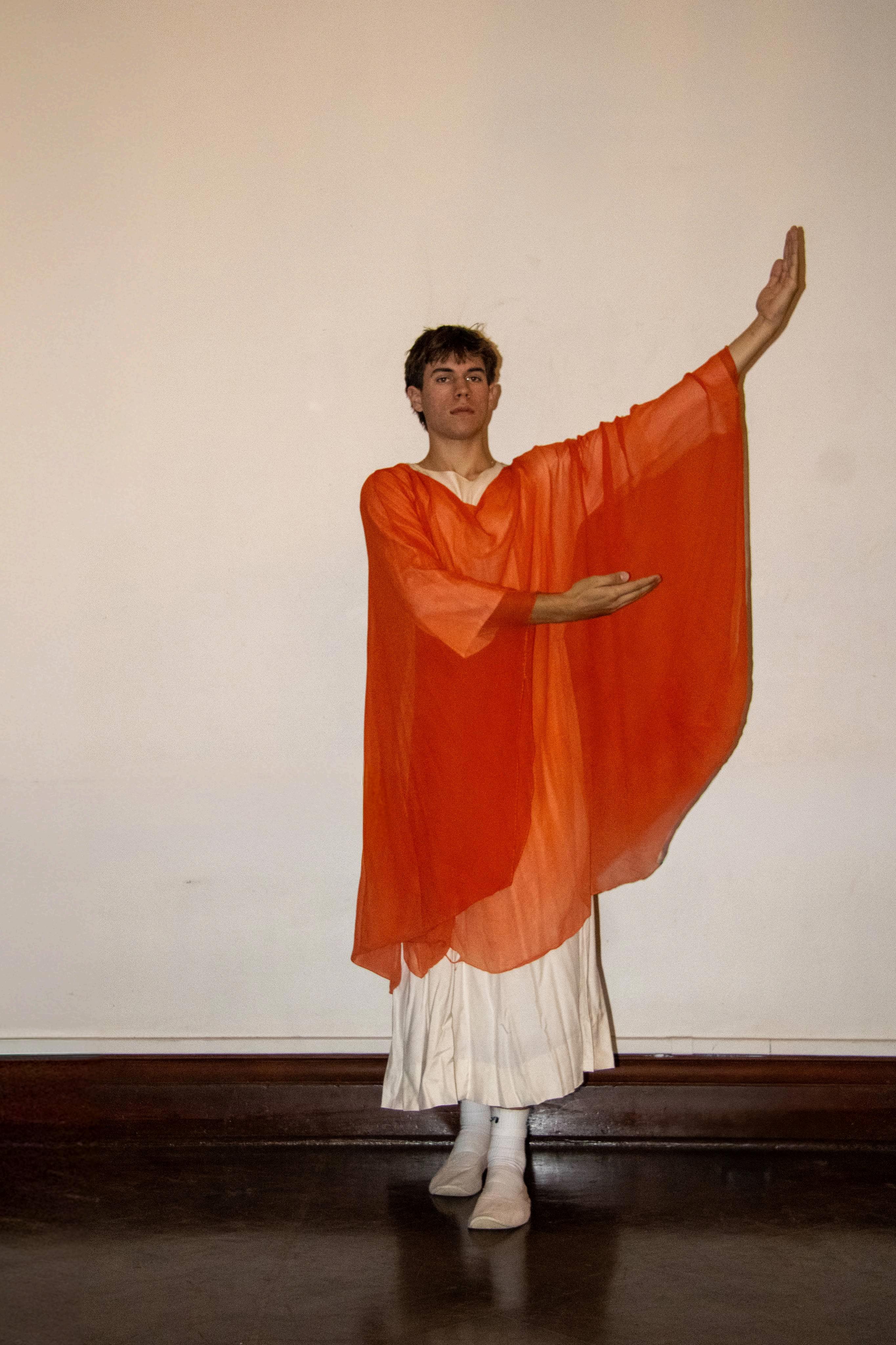
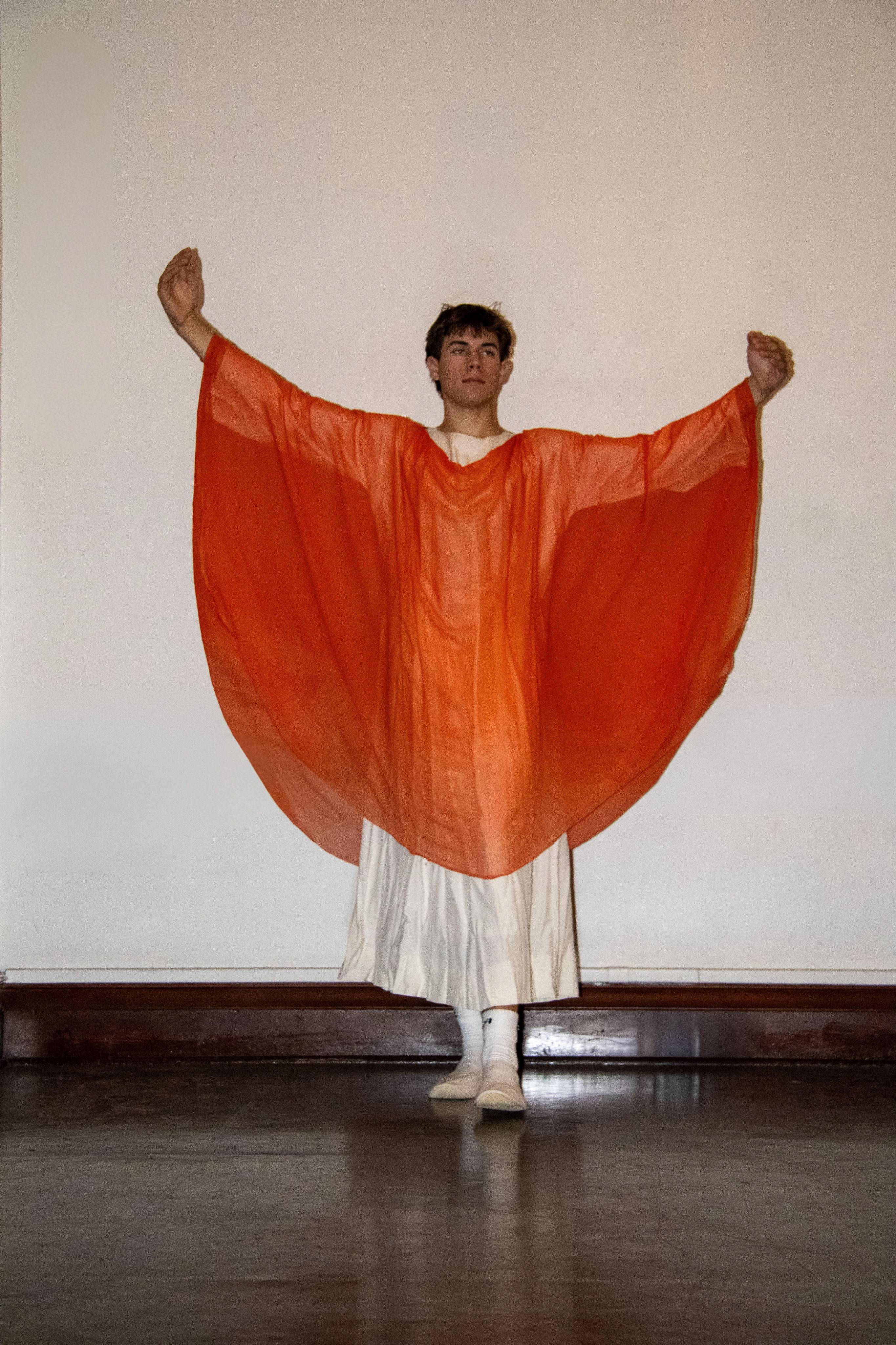
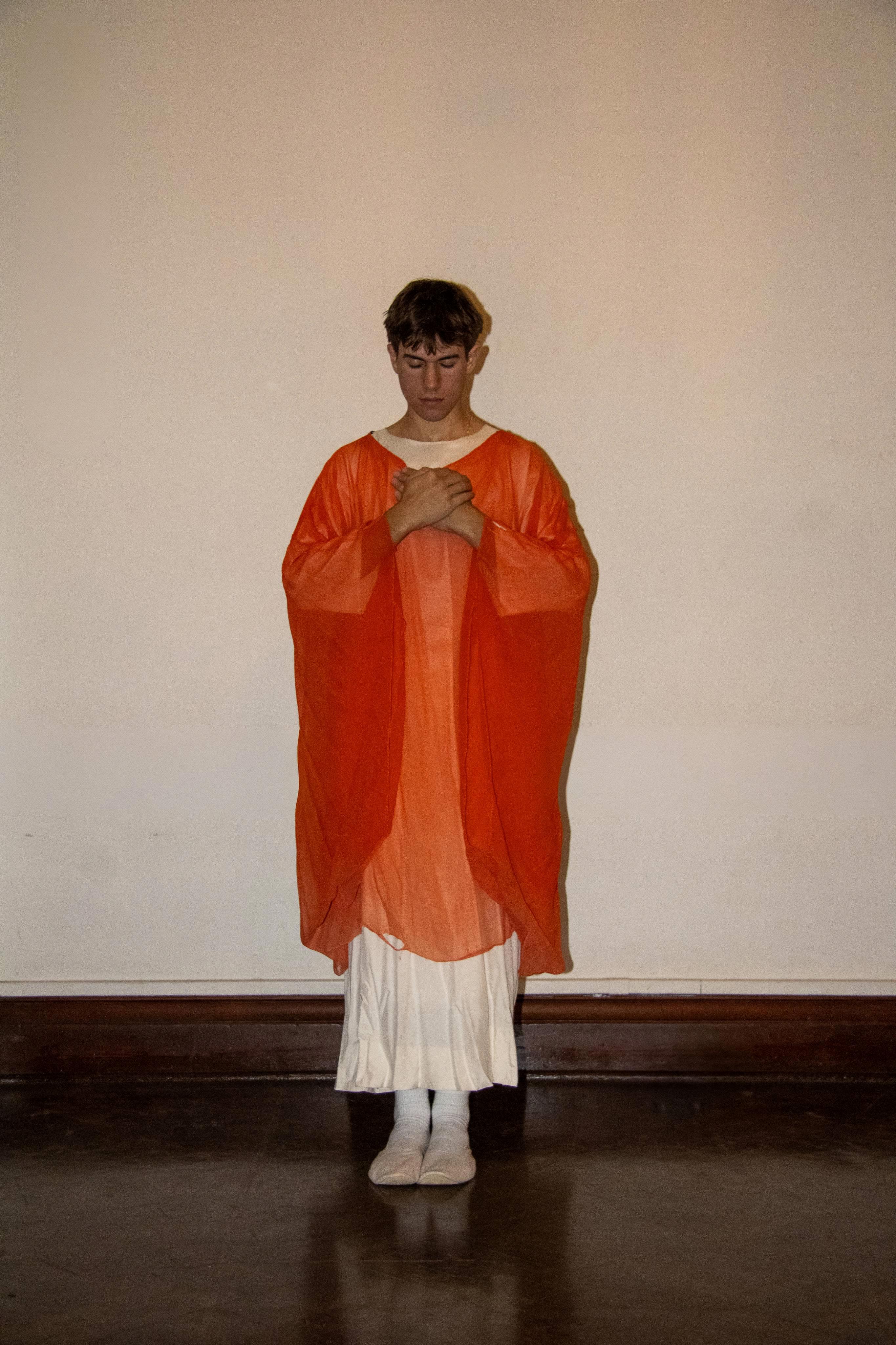
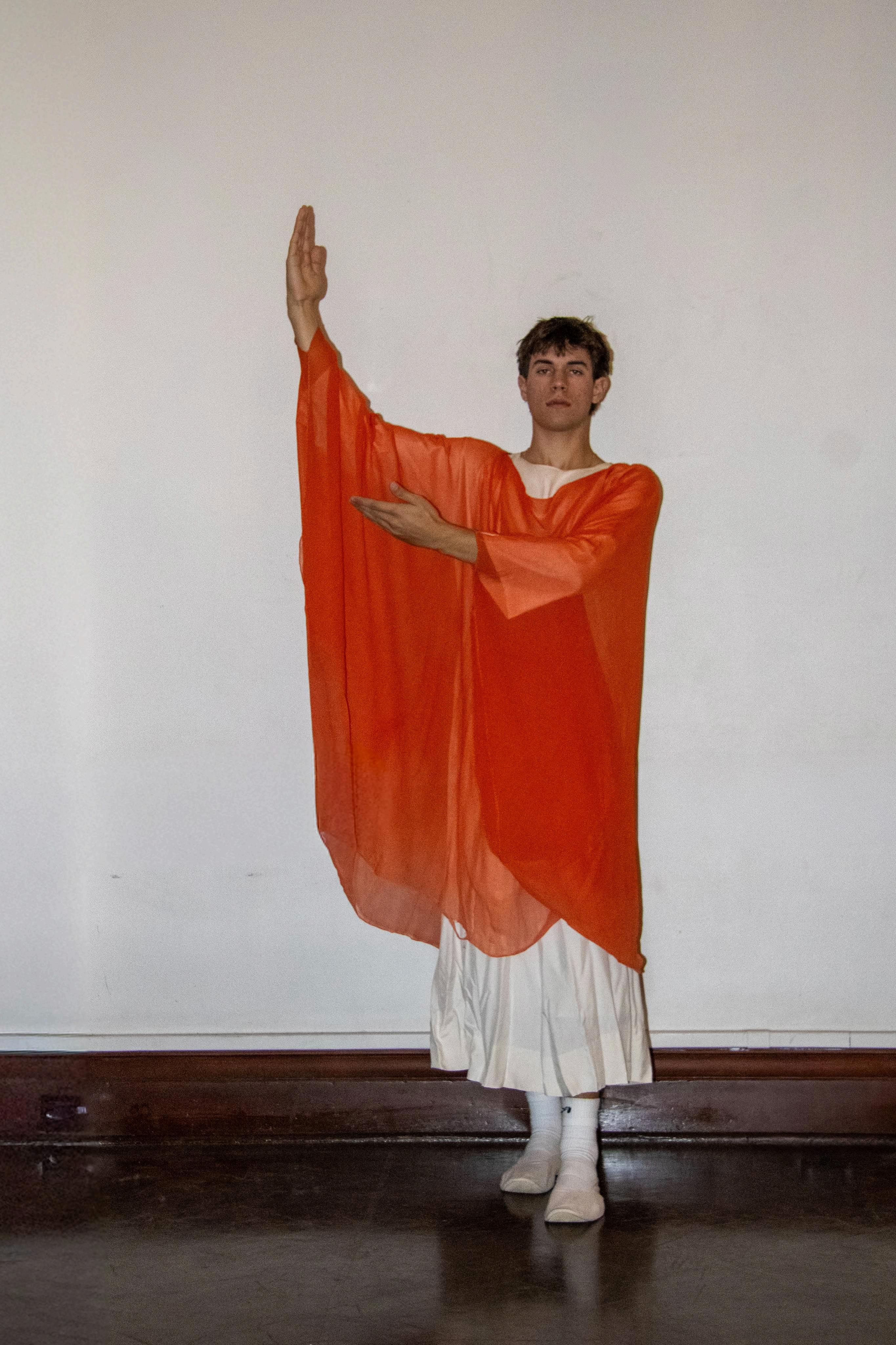
In a world where we constantly attempt to further digitize our communication with one another, I wanted to share an alternative way of in-person, physical communication: Eurythmy.
Developed by Rudolf Steiner, the founder of the Waldorf educational philosophy, Eurythmy is a performance and therapeutic movement art that expresses sounds, speech, and music, through flowing, intentional gestures. It essentially uses the whole body to create letters through movements. I have been doing Eurythmy since I was three, as it is a core part of the curriculum at the Waldorf school I attend.
Here, wearing the veil (orange silk) that represents the feeling quality of the sound, I performed and documented the embodiment of each letter in the alphabet. With this alphabet, anyone can begin to learn to practice Eurythmy. By combining these movements in whatever orders we choose, we are free to communicate in a way that actively engages our bodies, and thus is uniquely human.

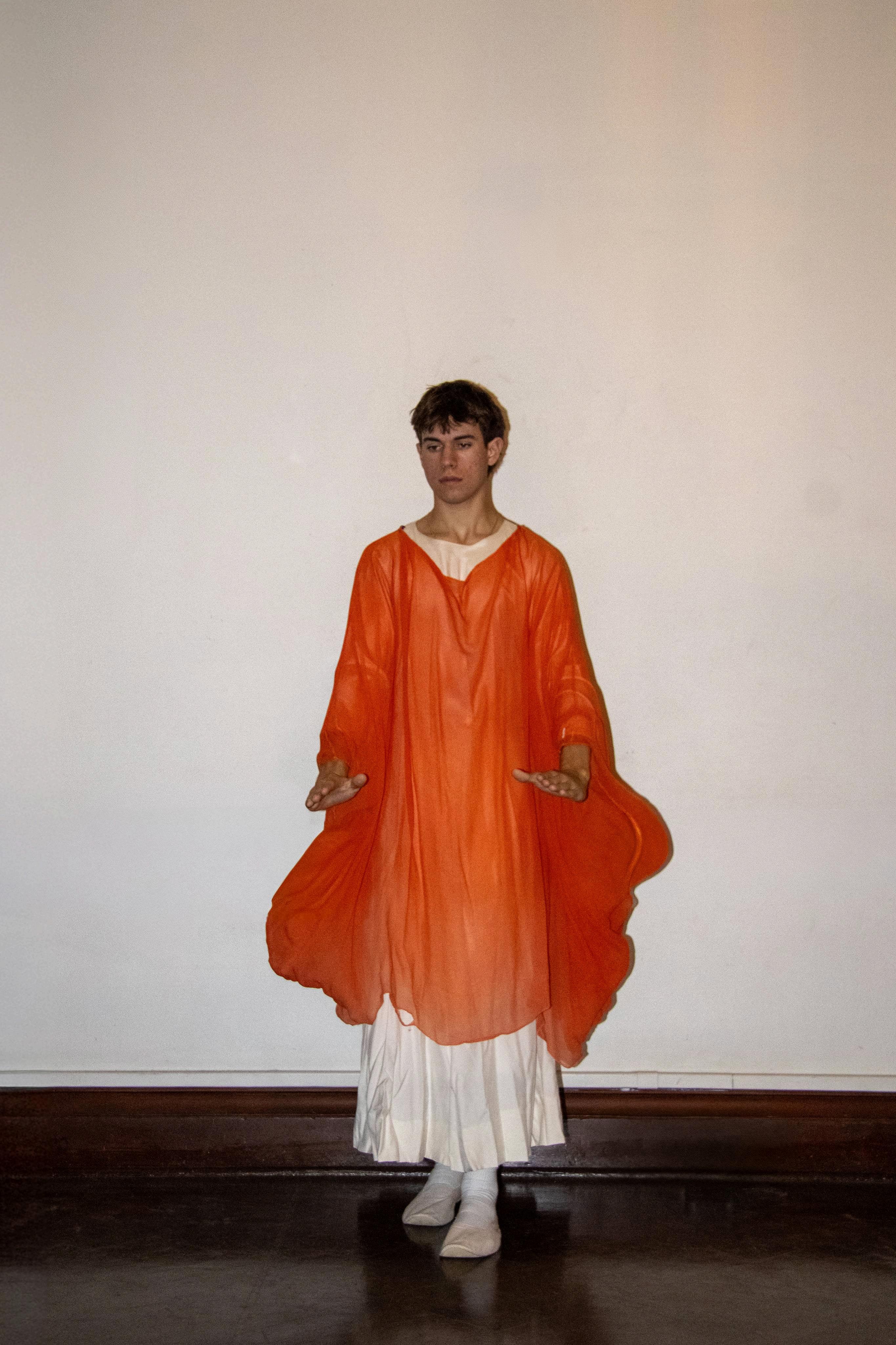
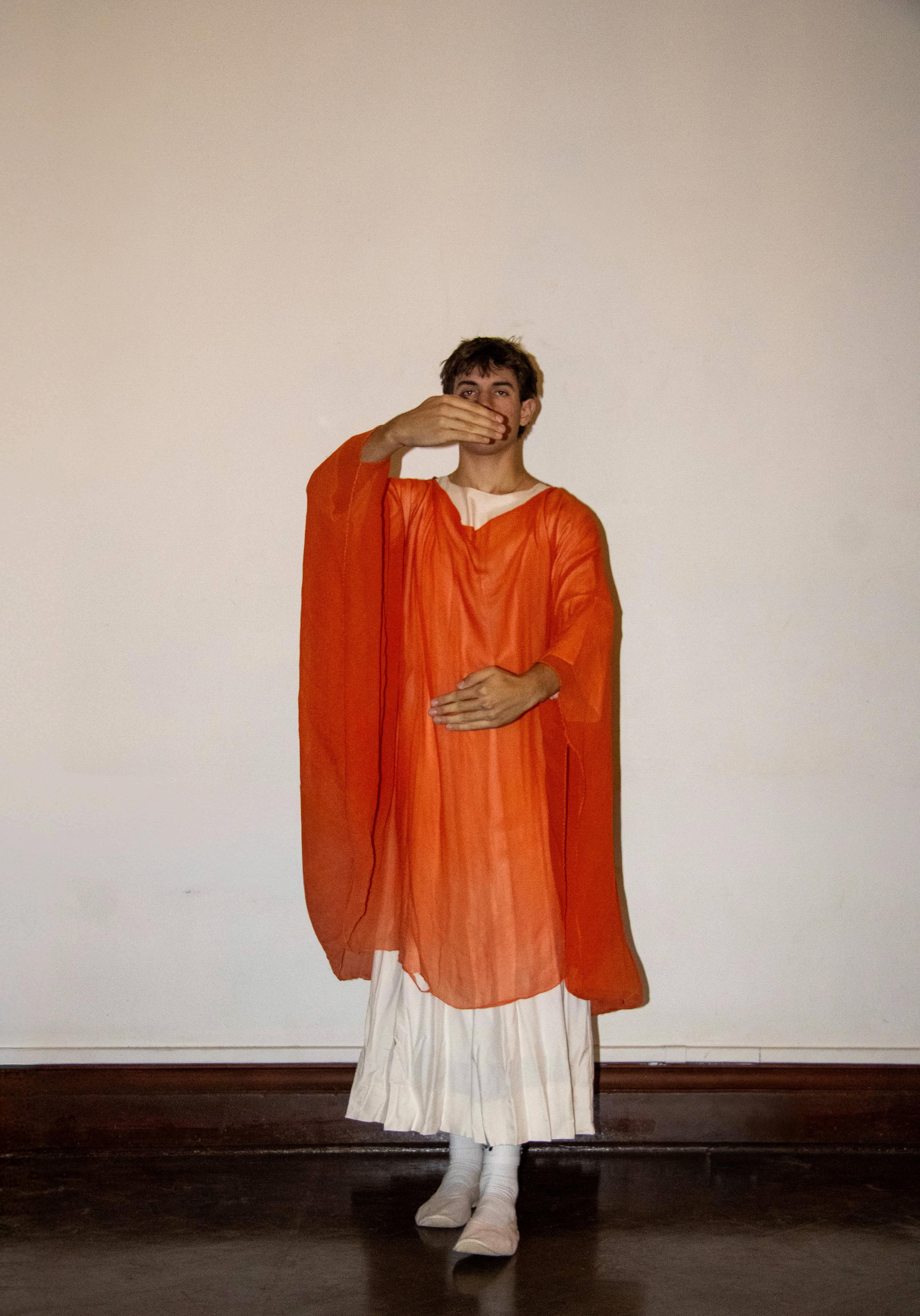
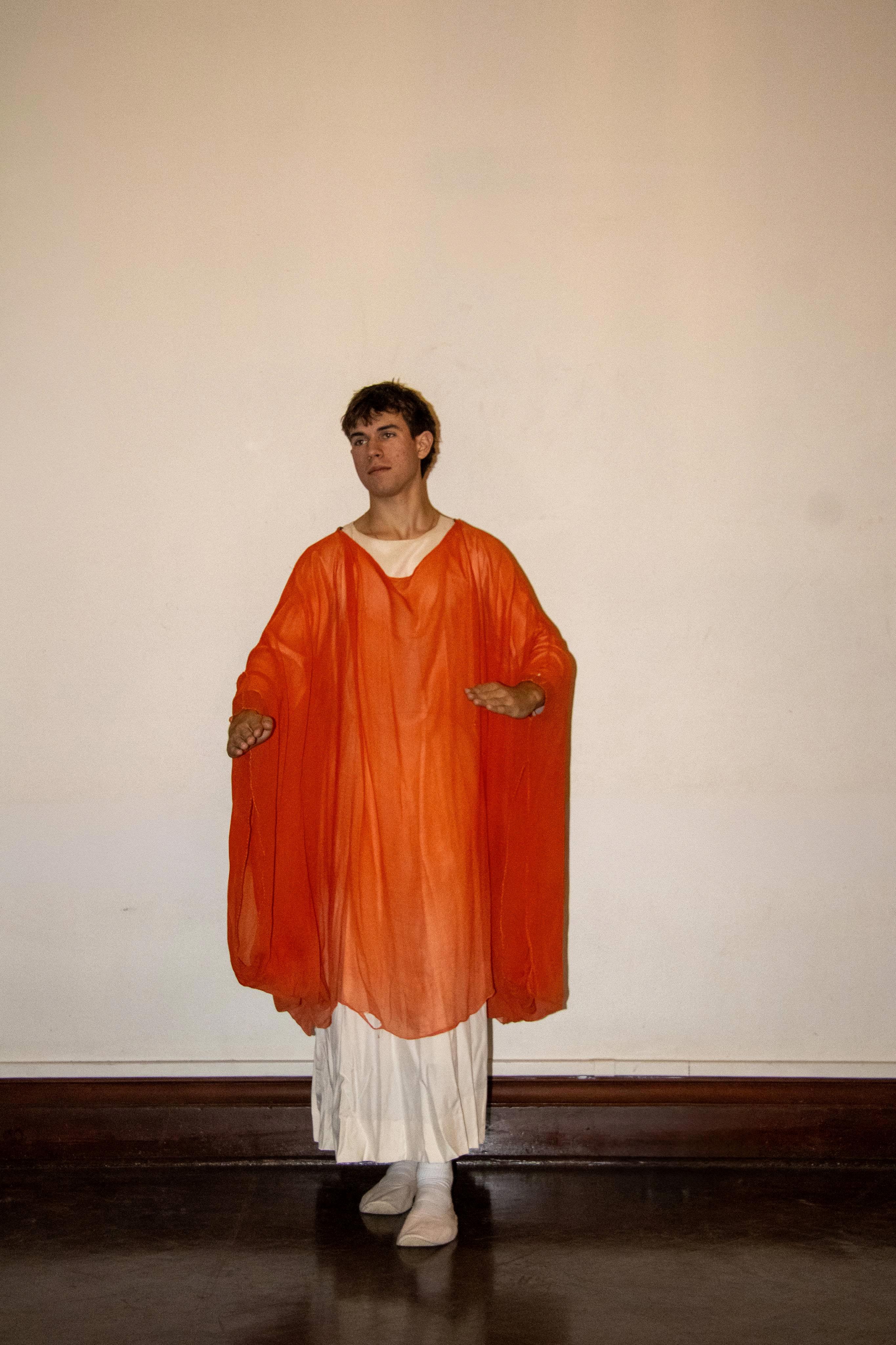
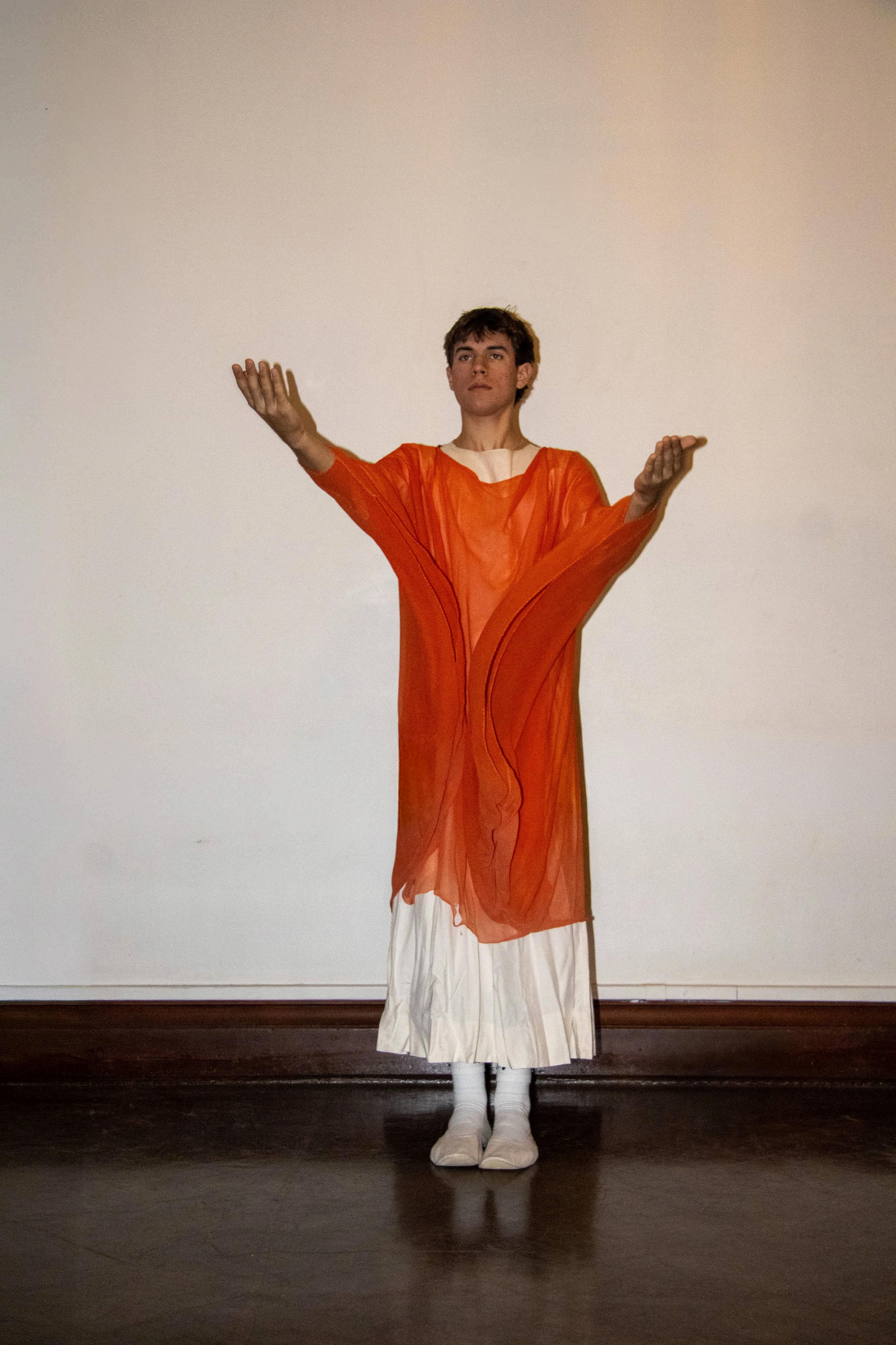
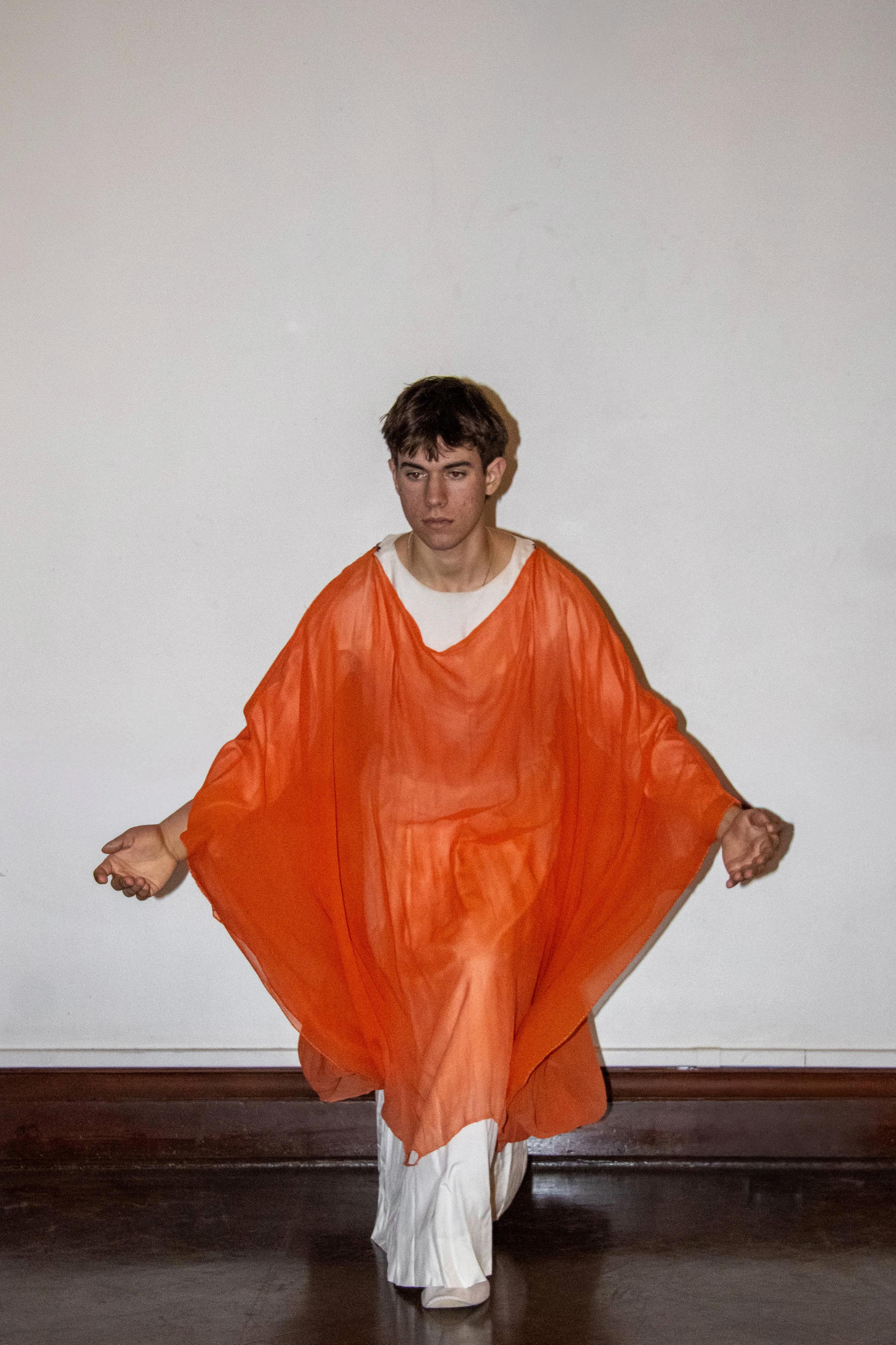
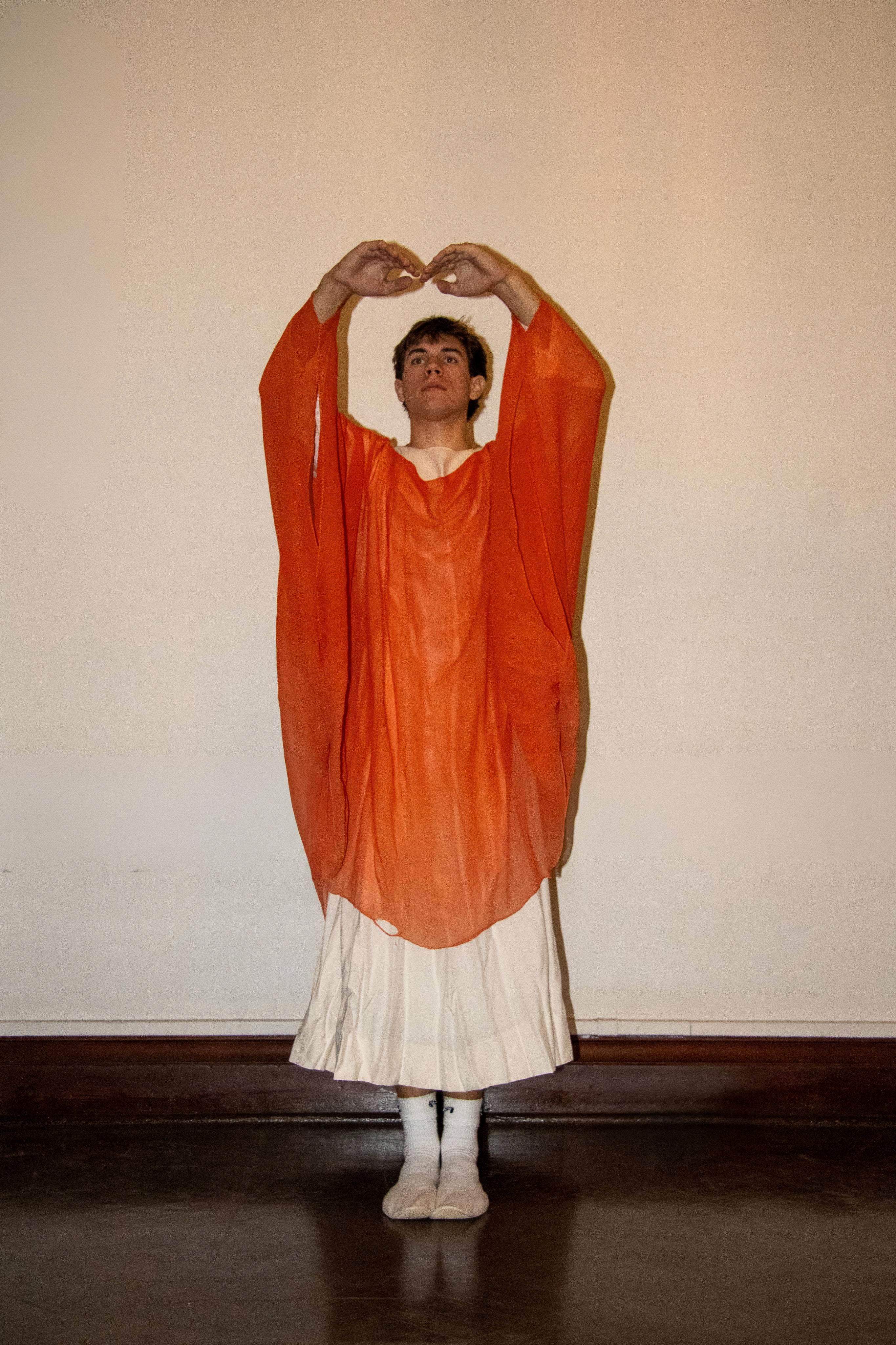
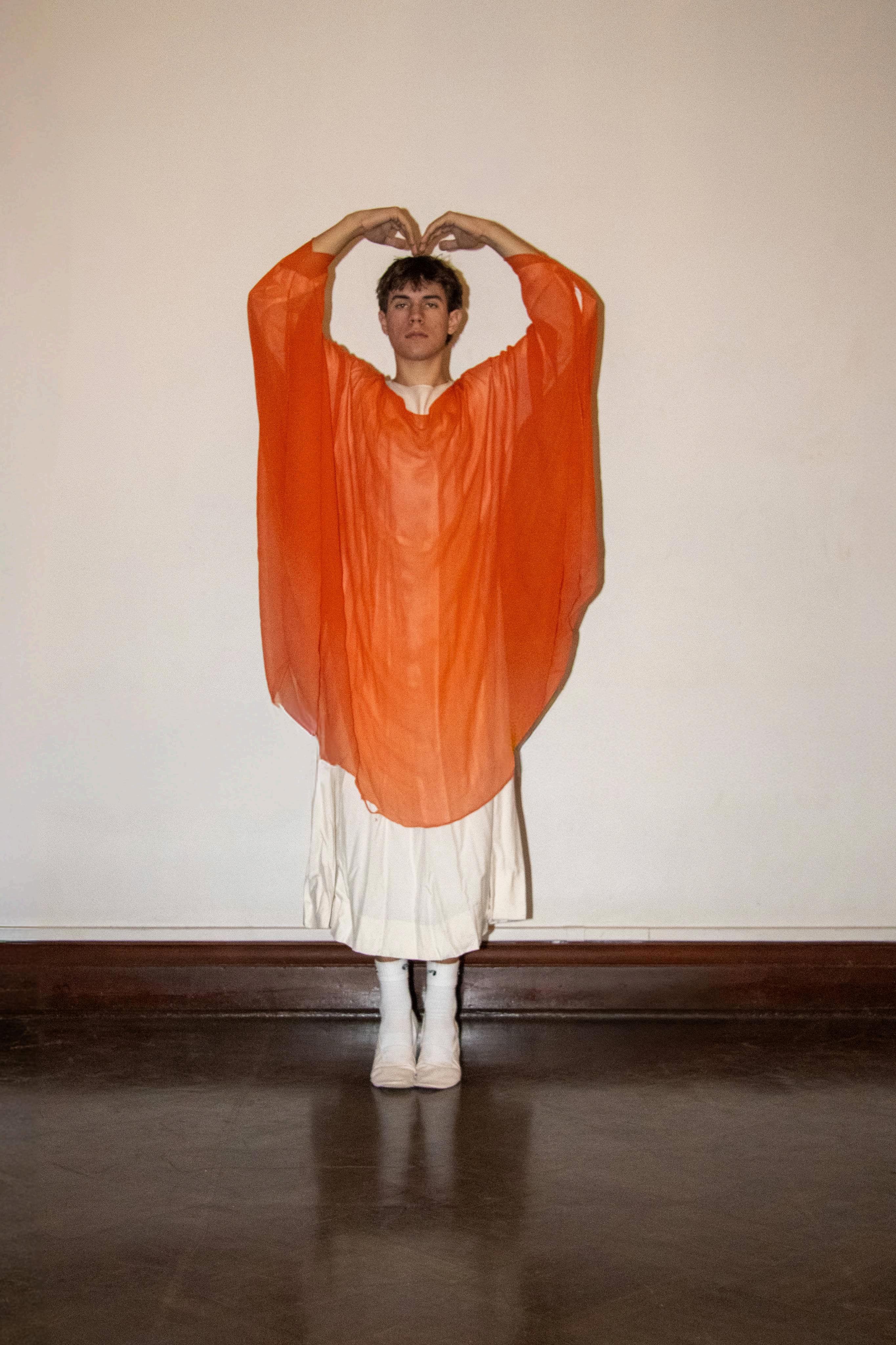
The ABCs of Eurythmy, 2025
Performance
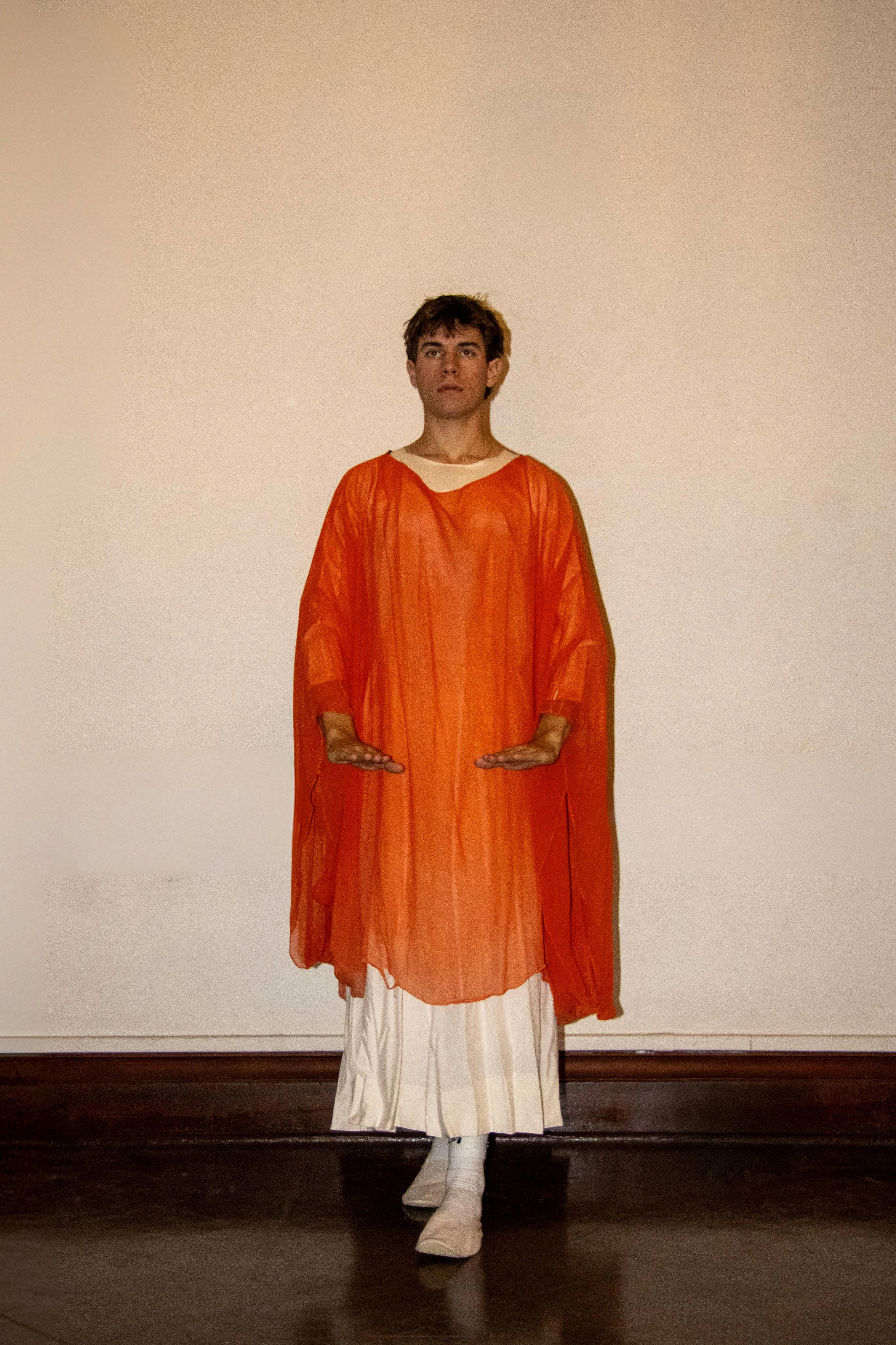
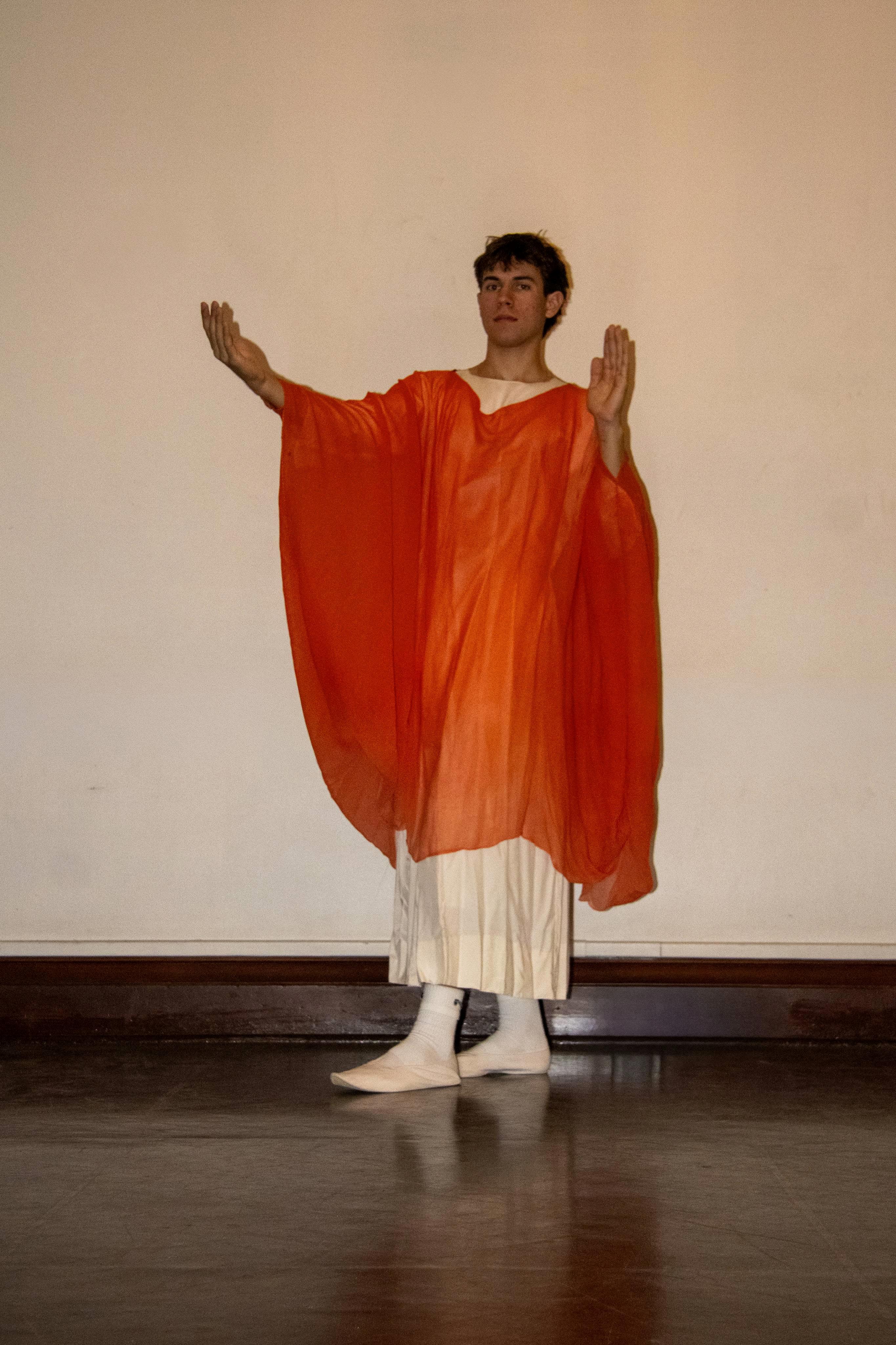
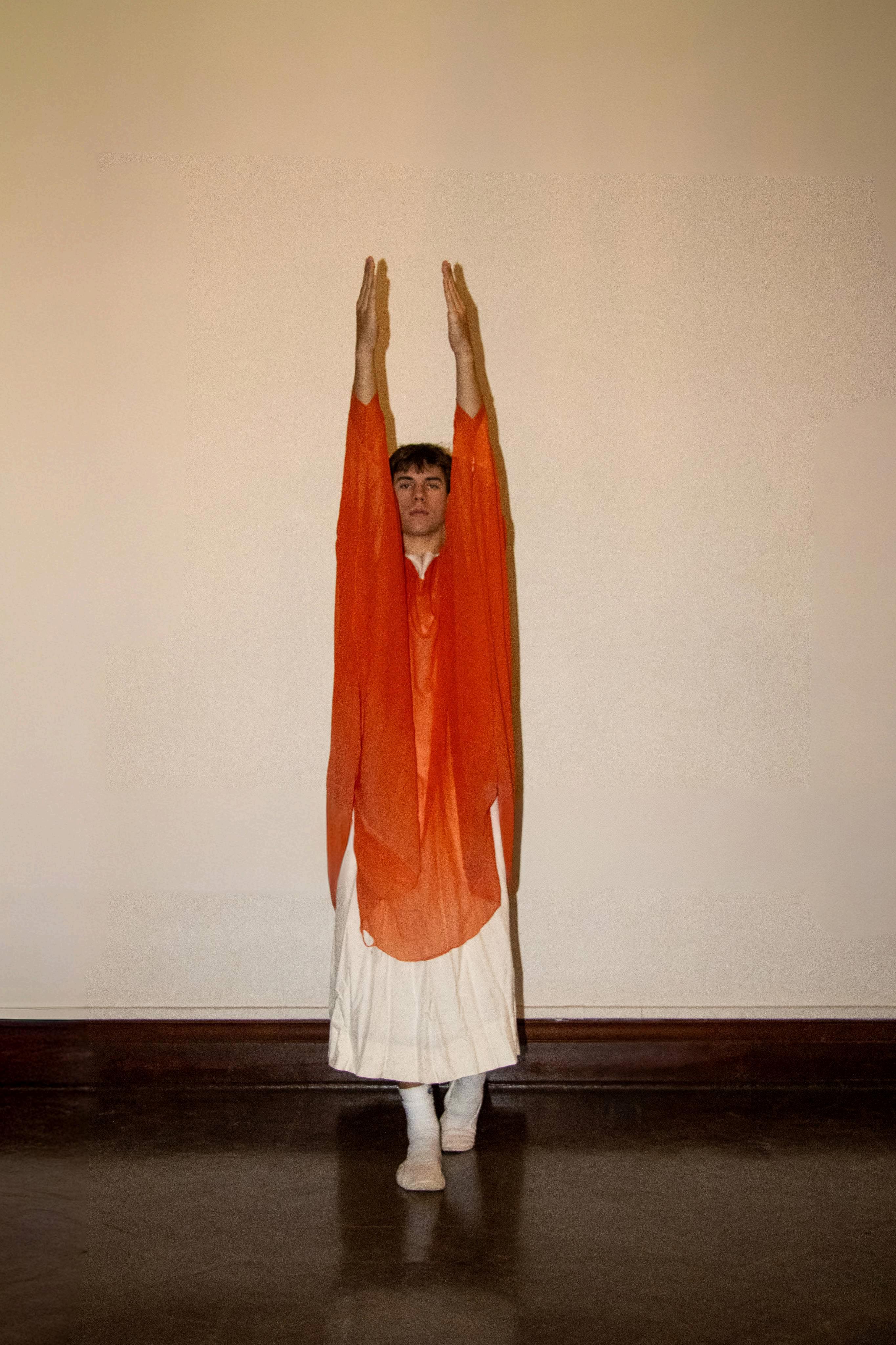
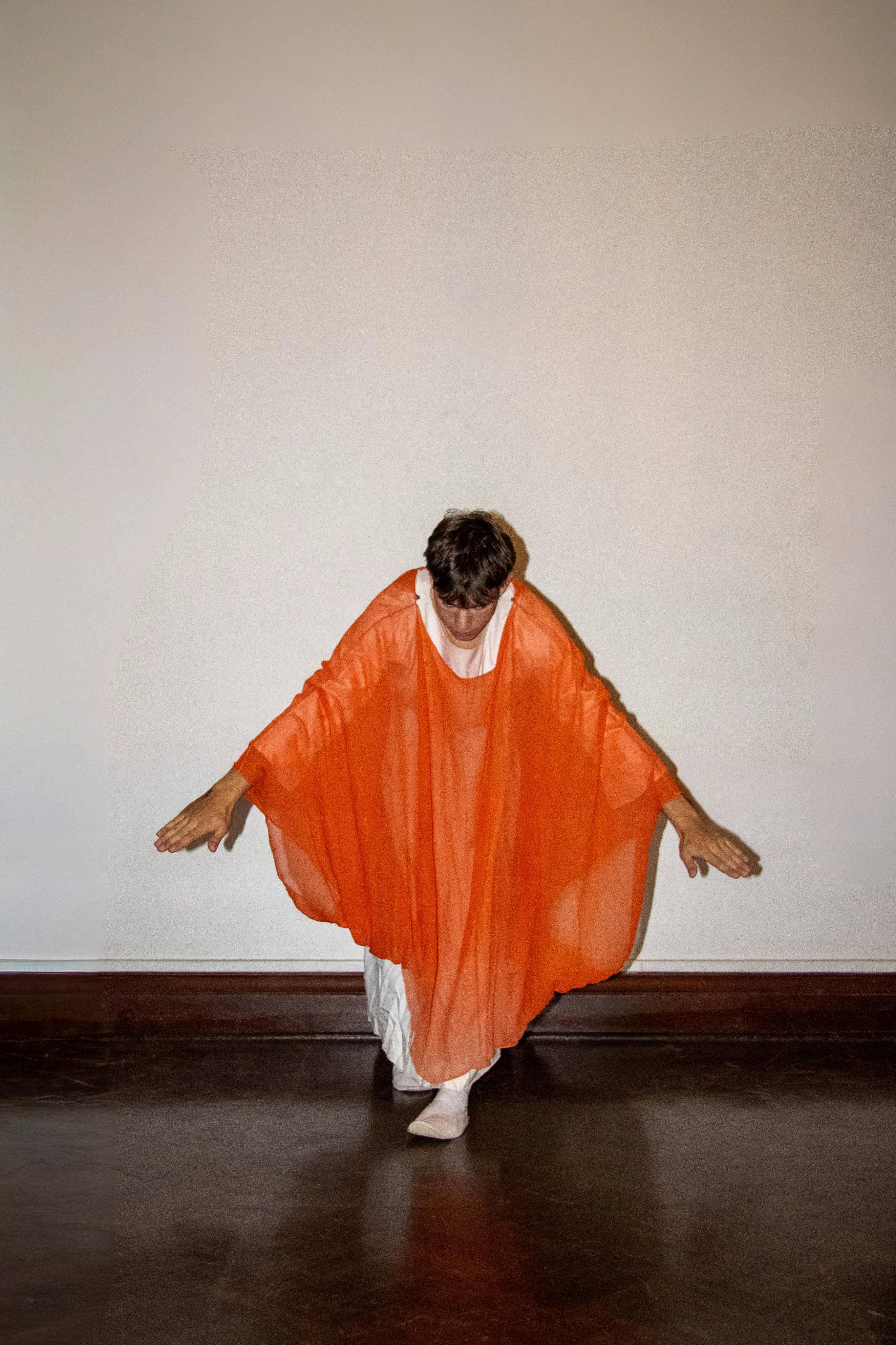
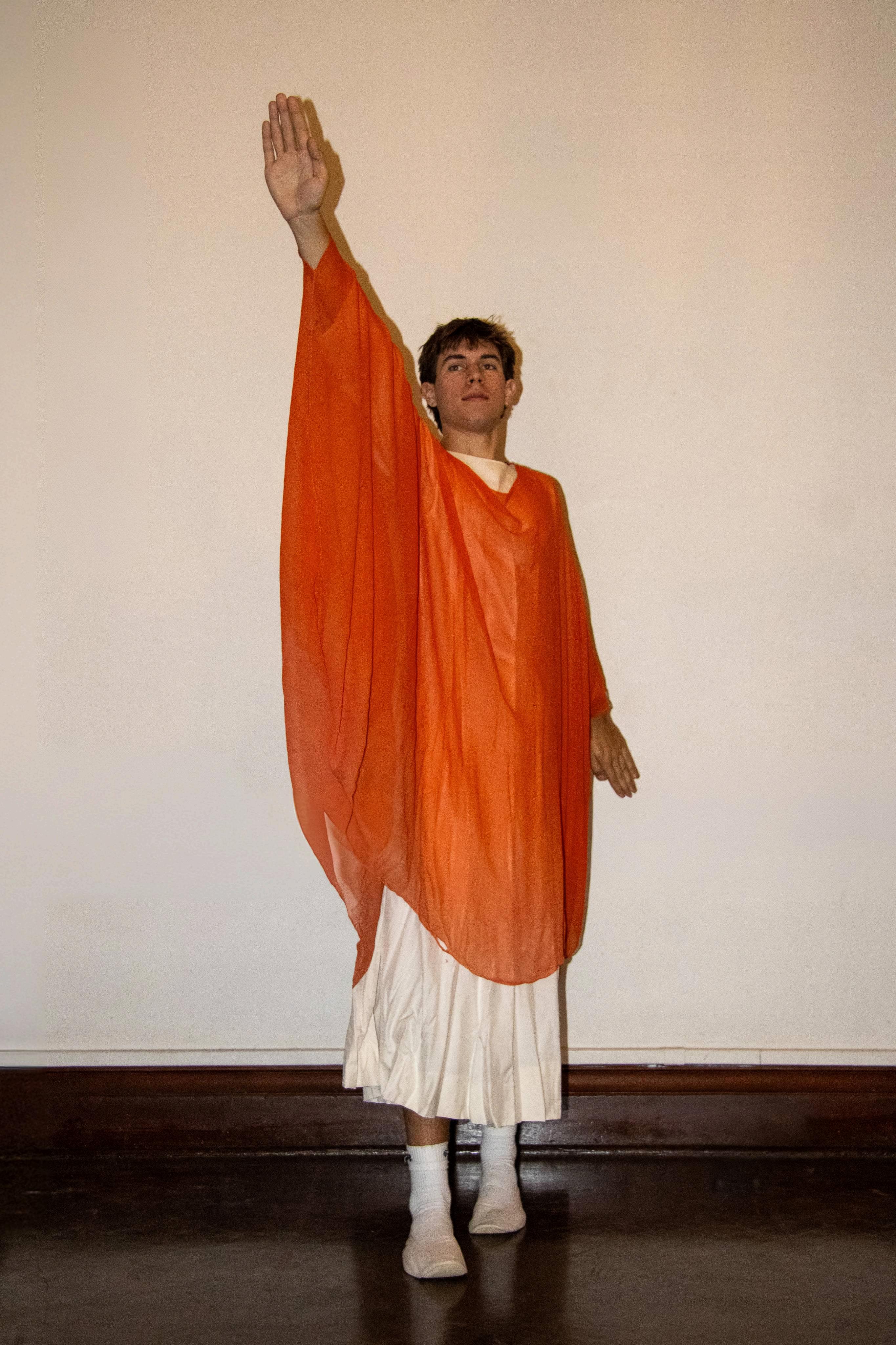
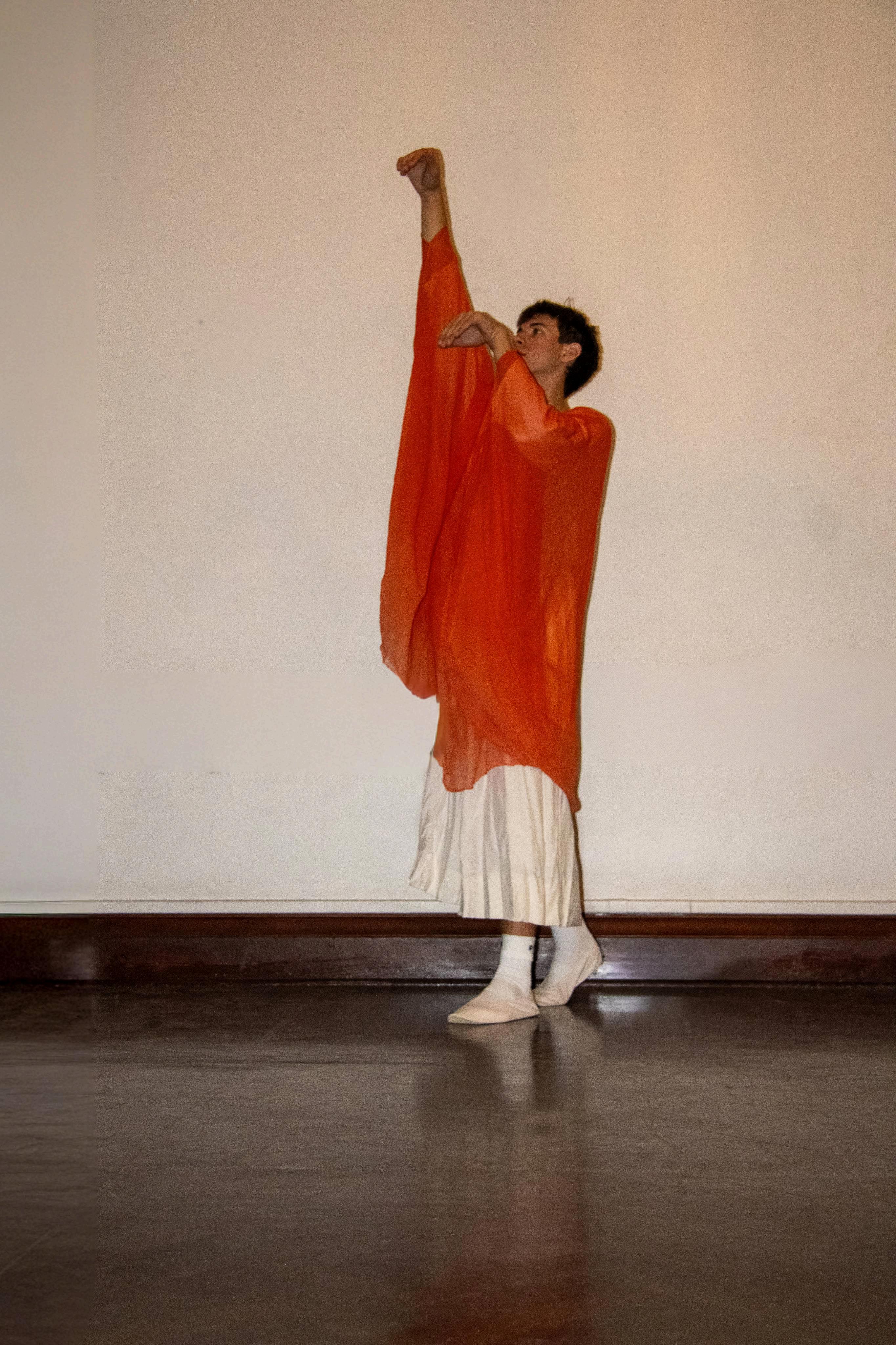
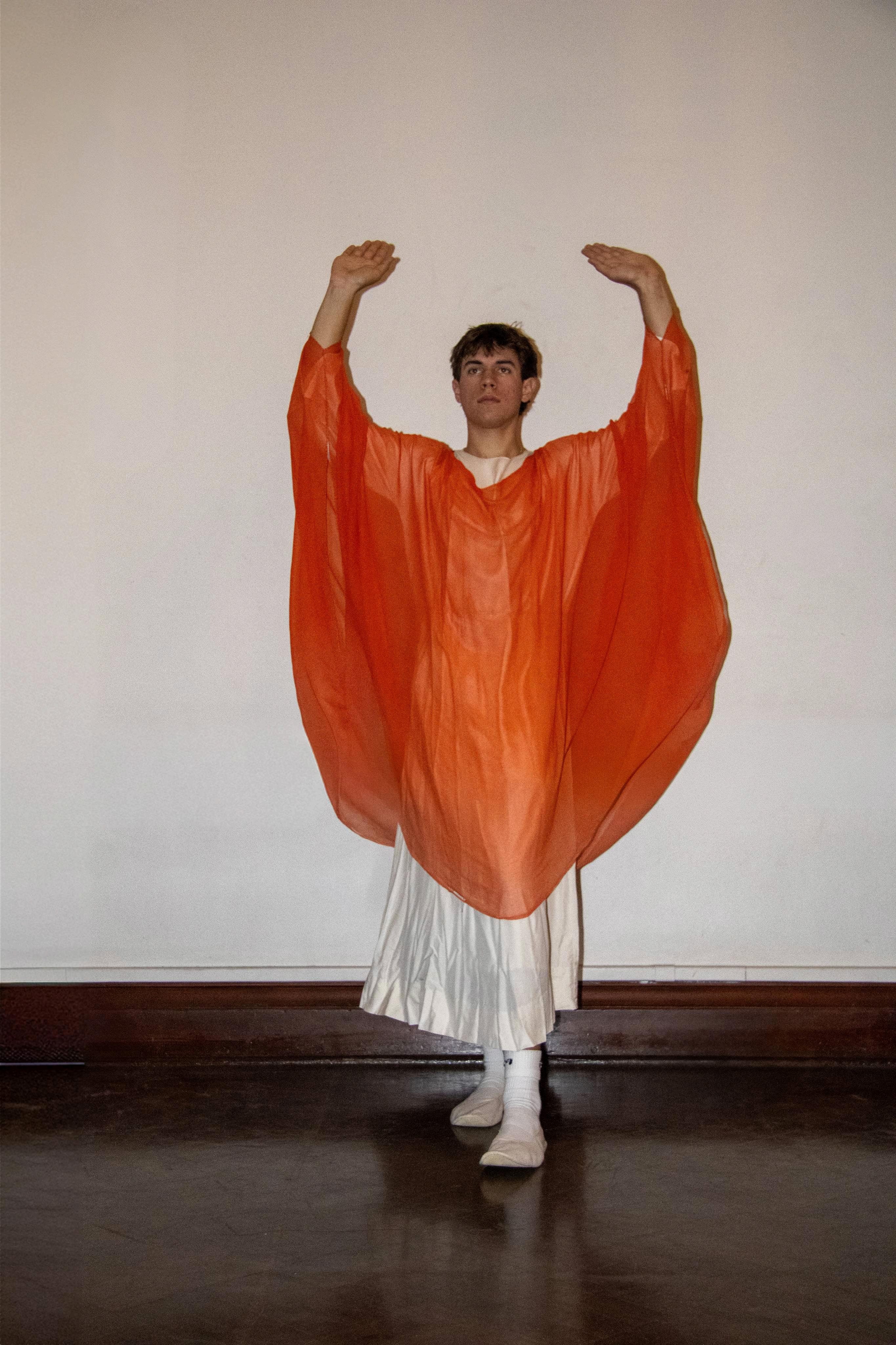
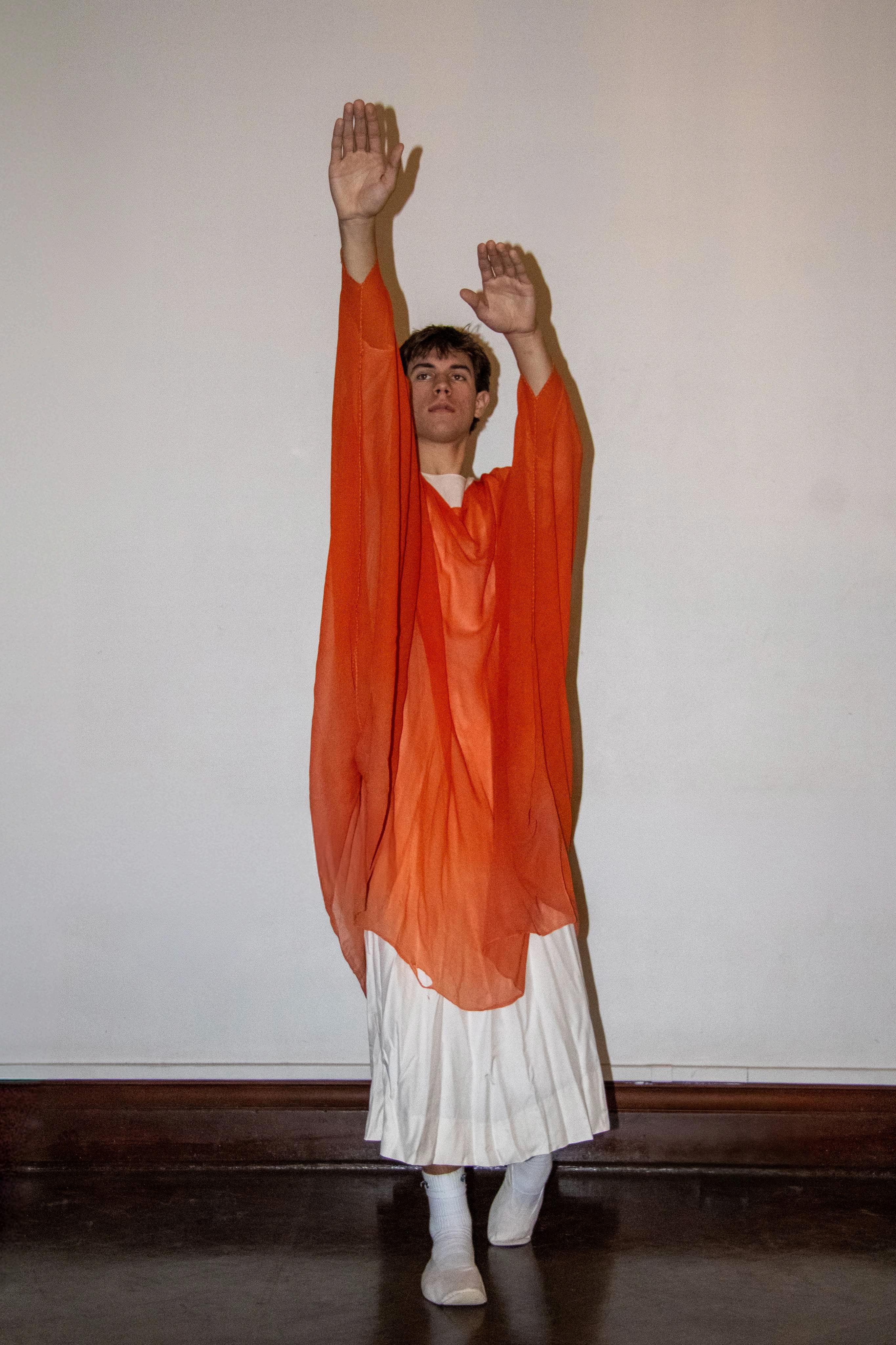
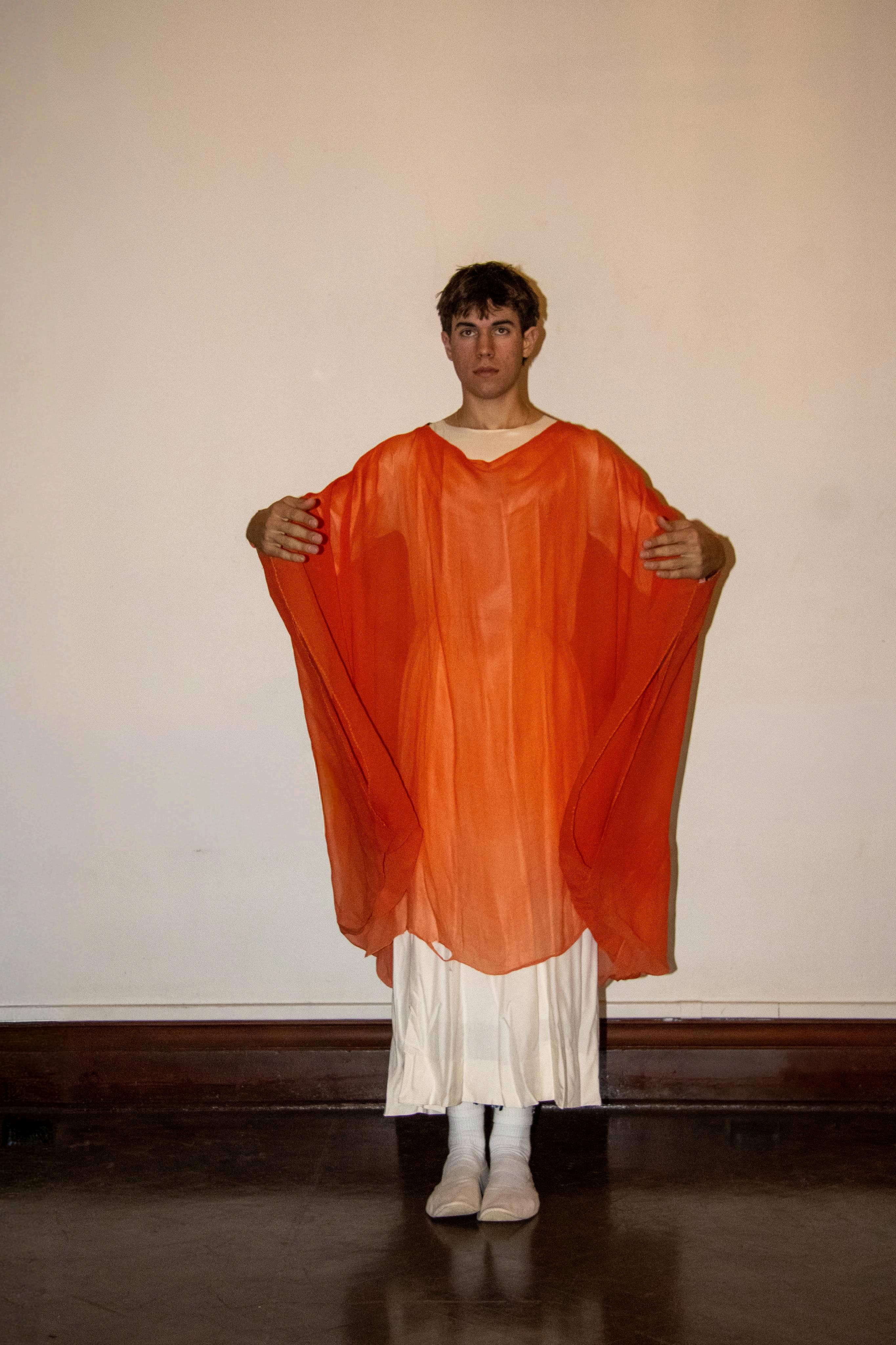
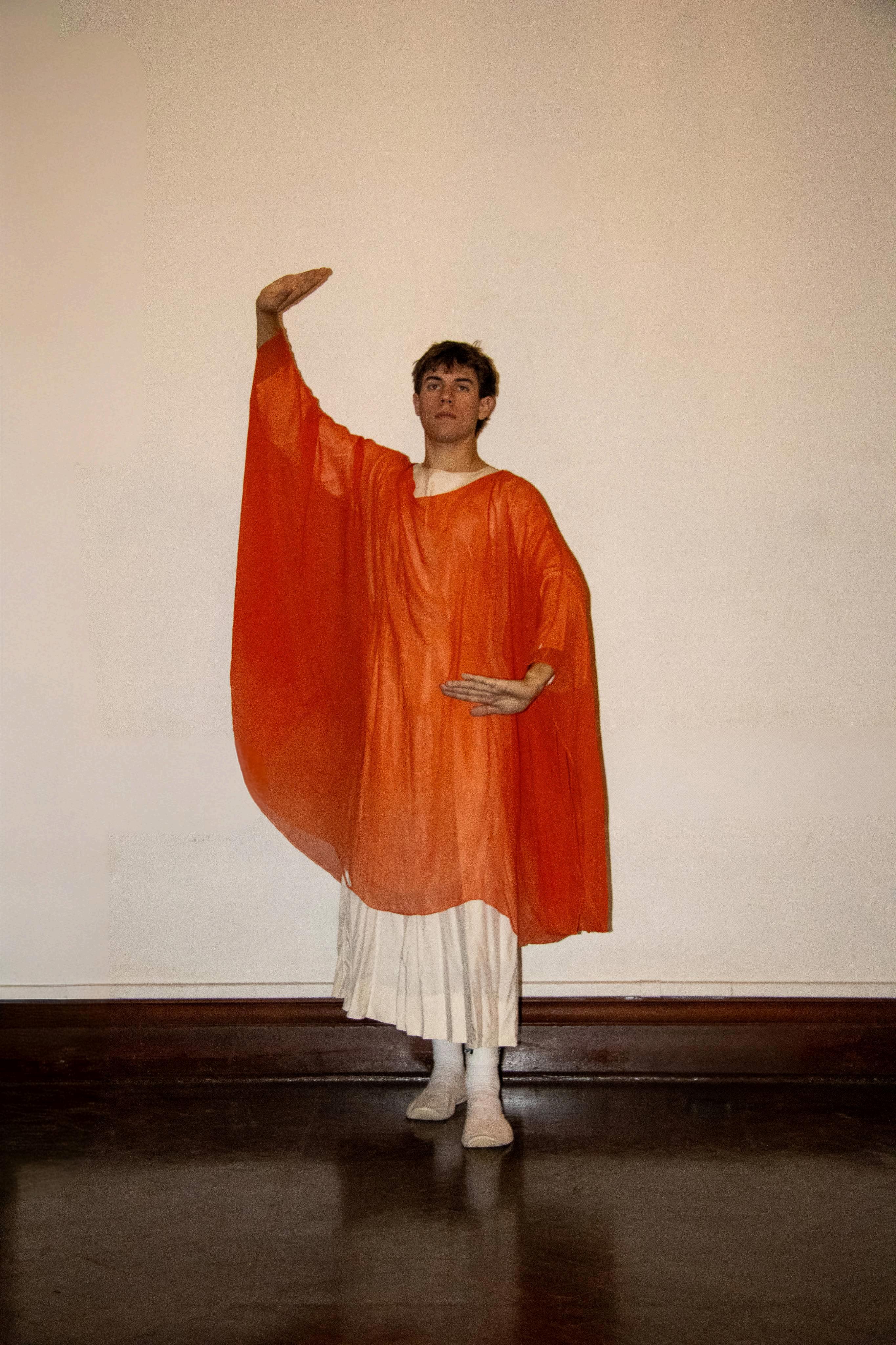
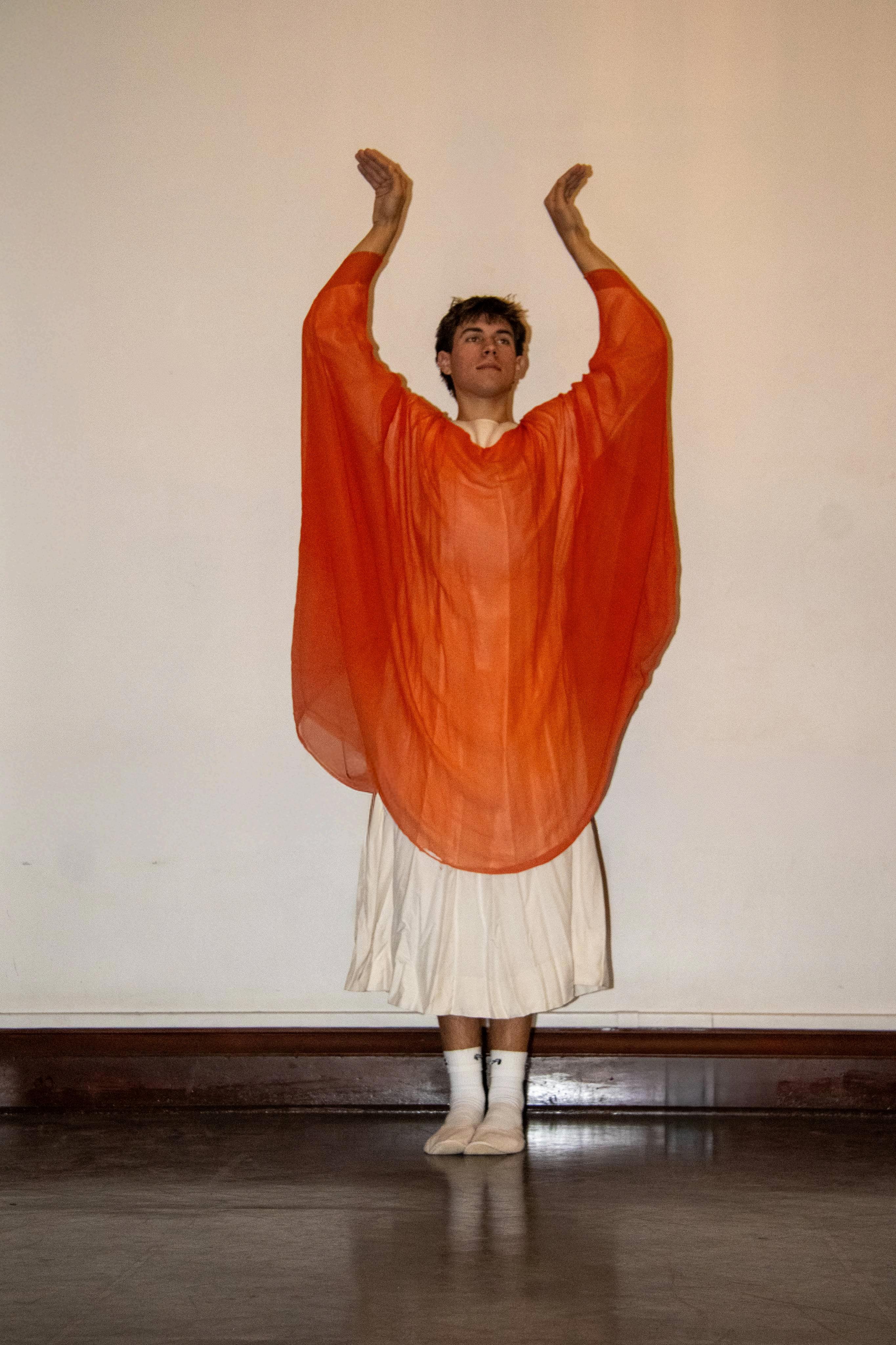
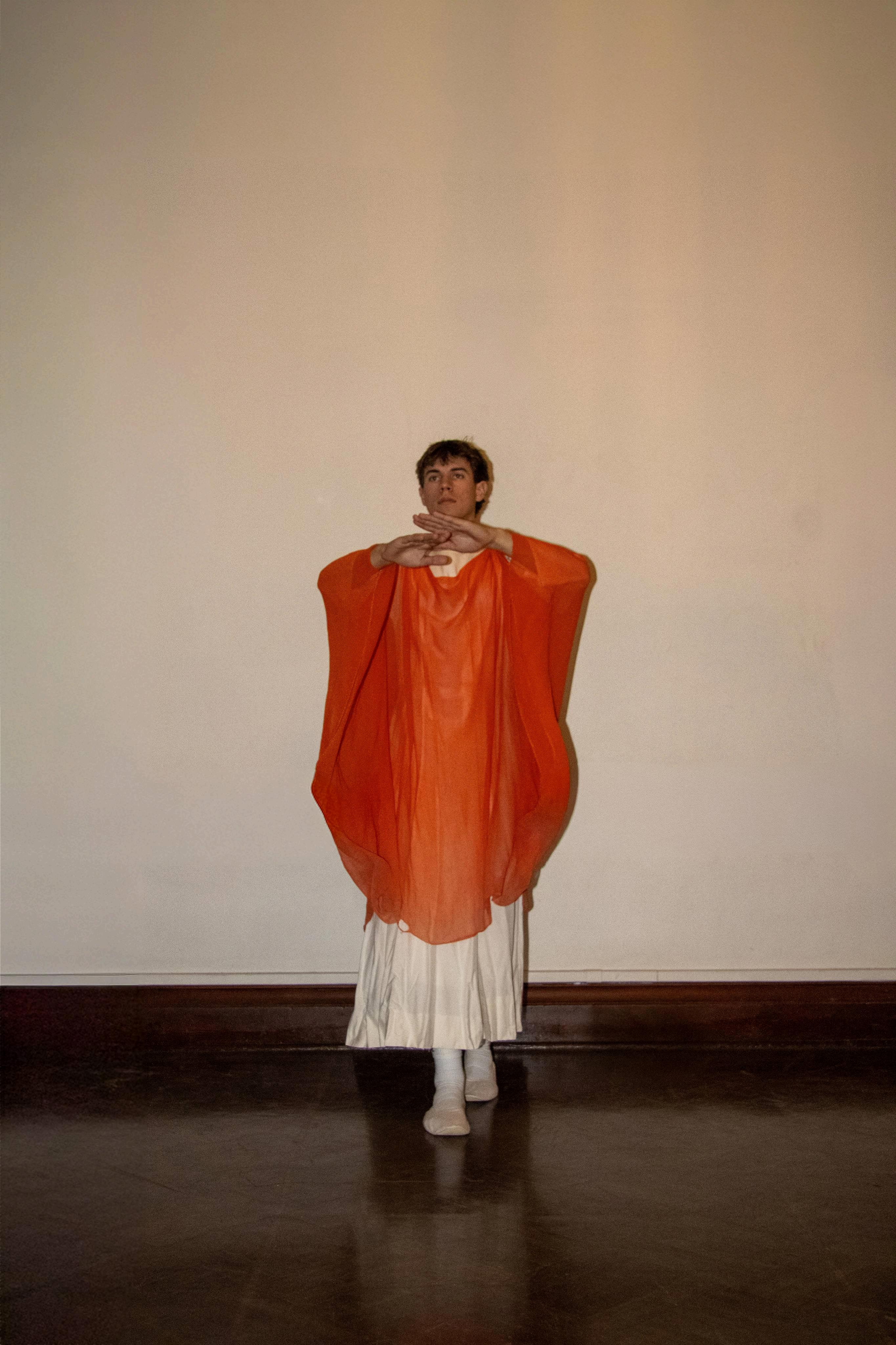
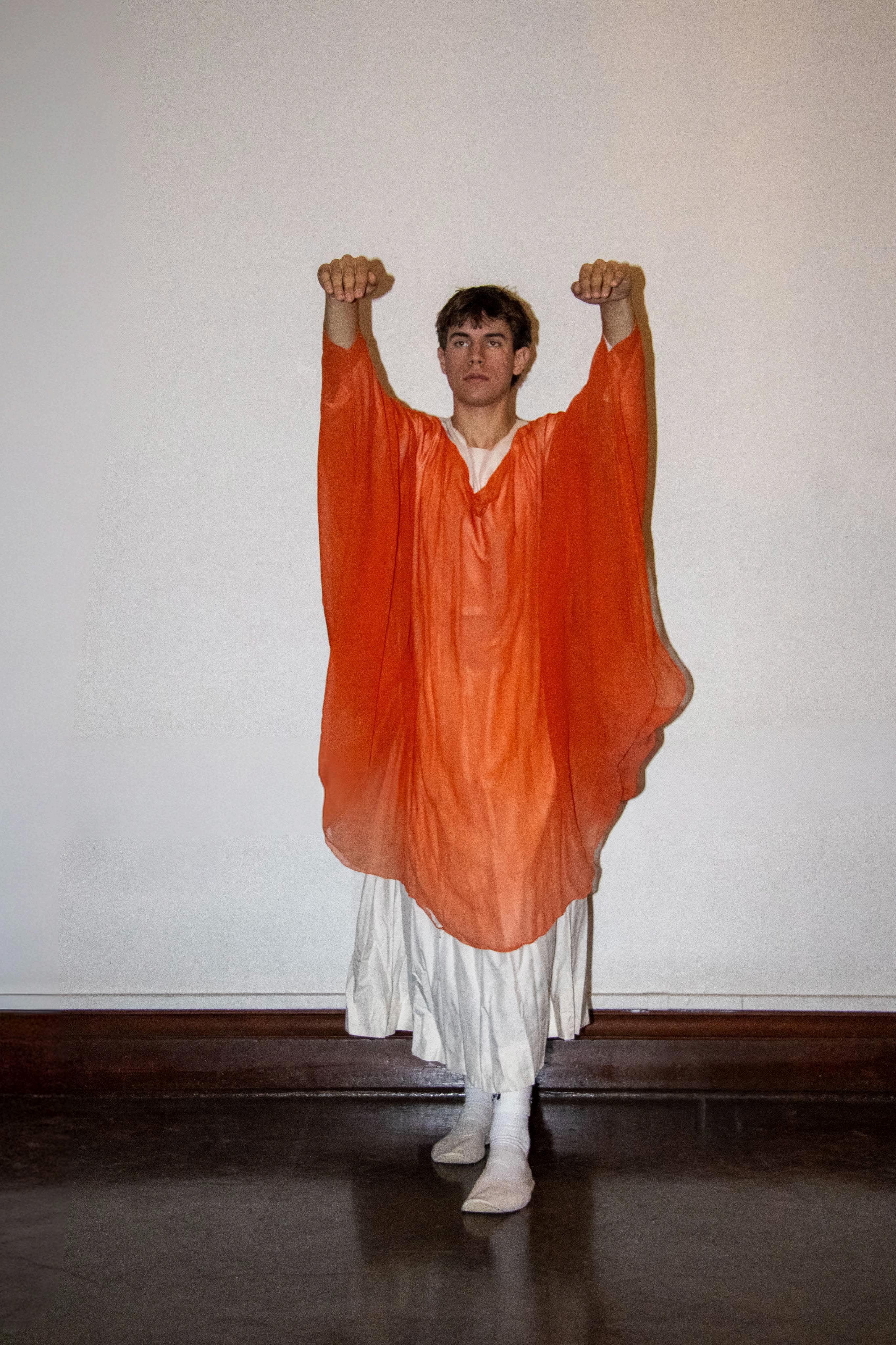
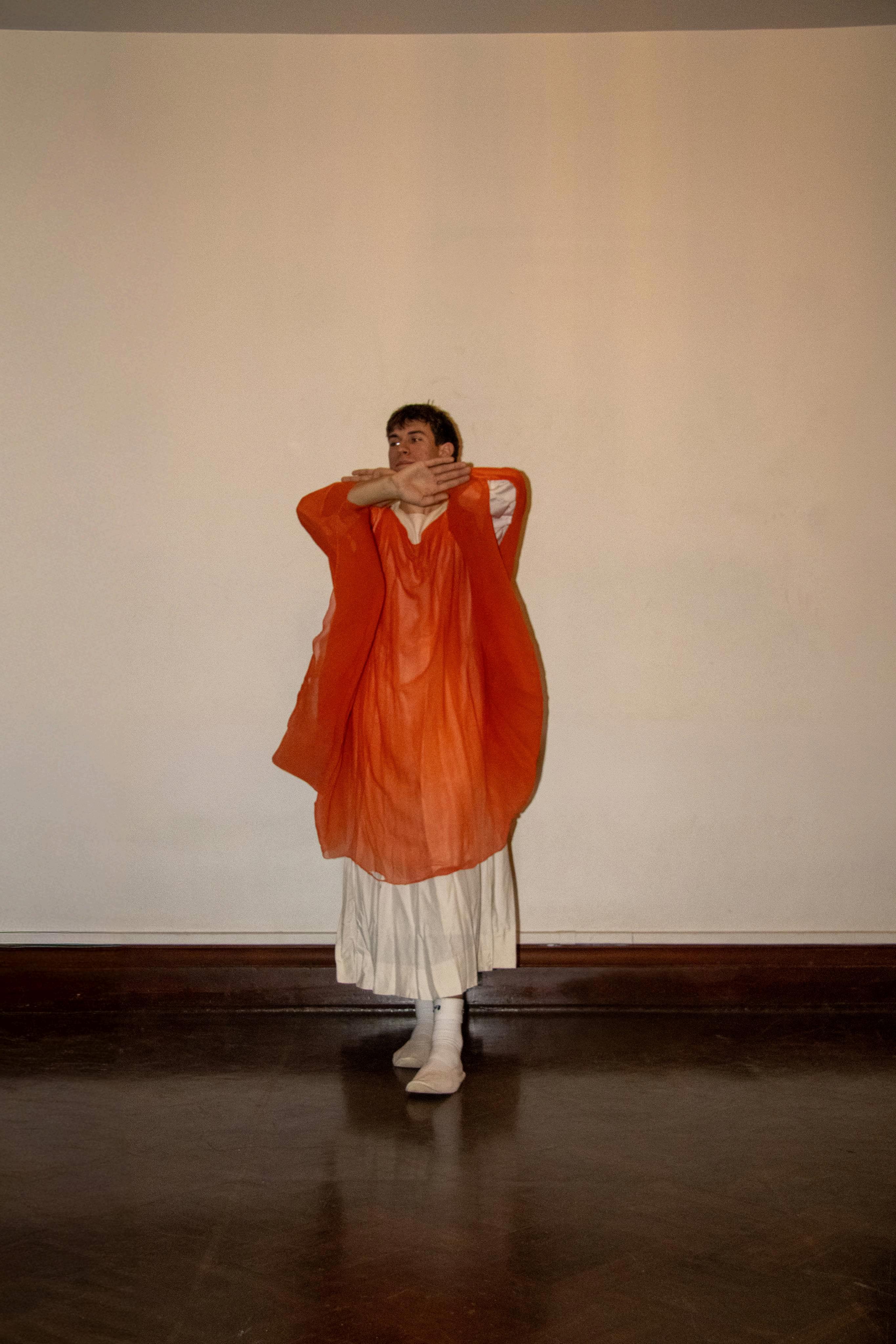
Photographs: Lorenzo De La Barra
INTO THE WOODS, 2025
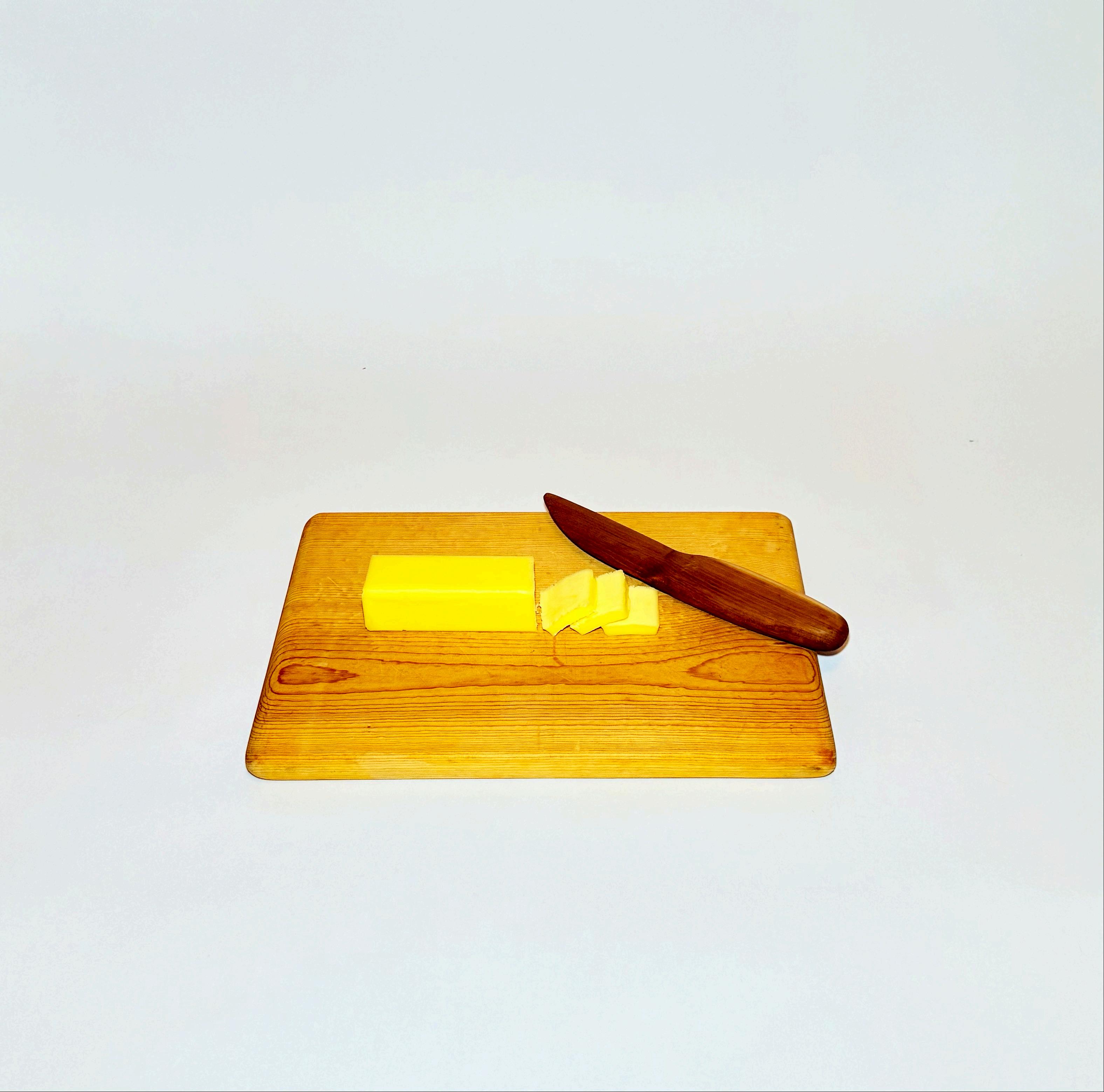
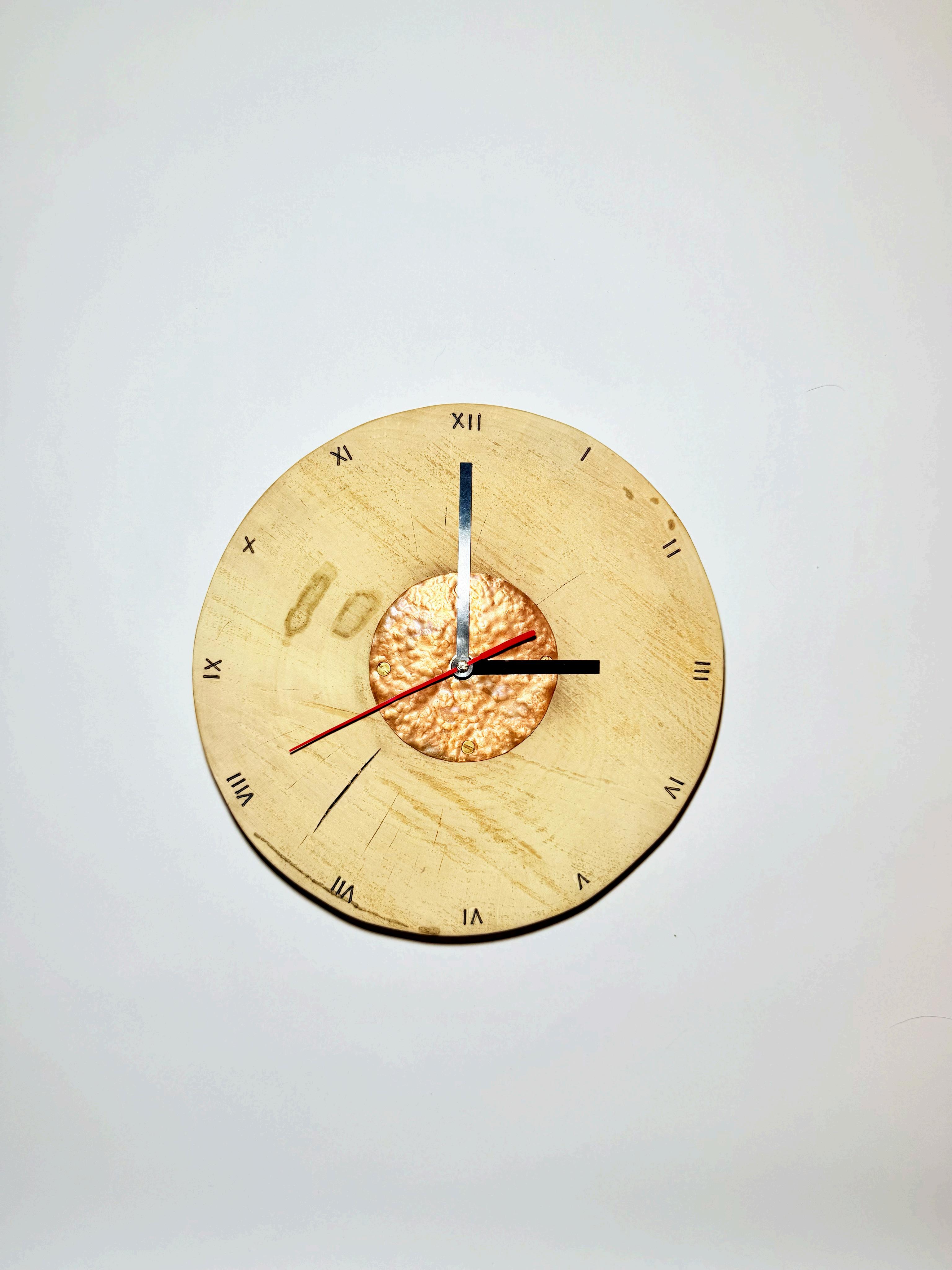
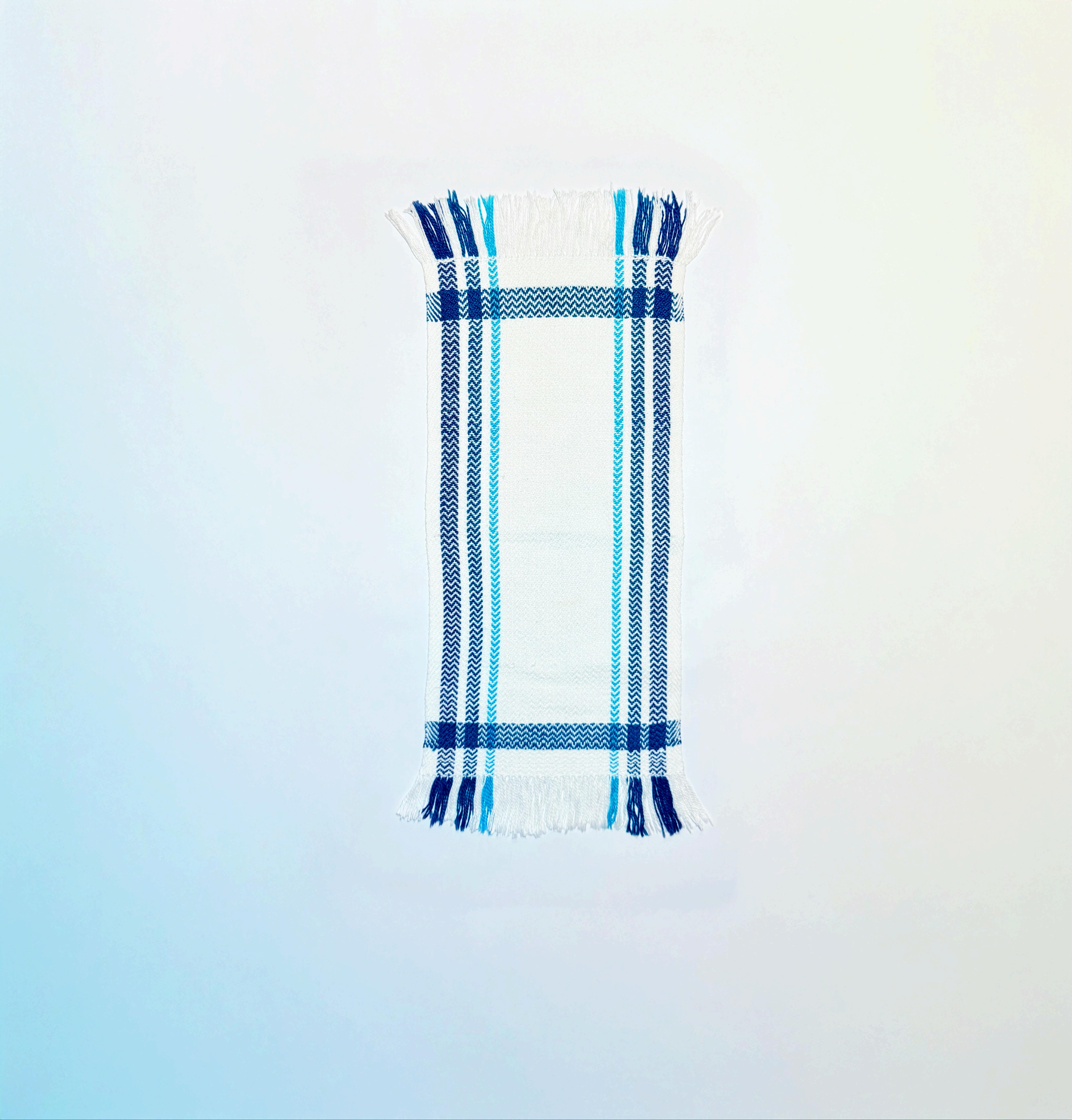
This collection of works is an extension of The Waldorf Wall, but the works here were done in mediums that break out of the 2-D limitations of paper and into 3-D space. The works include sculpture, weaving, woodwork, carving, felting, sowing, and cross stitch. I spent months conceptualizing, designing, and hand crafting each piece.
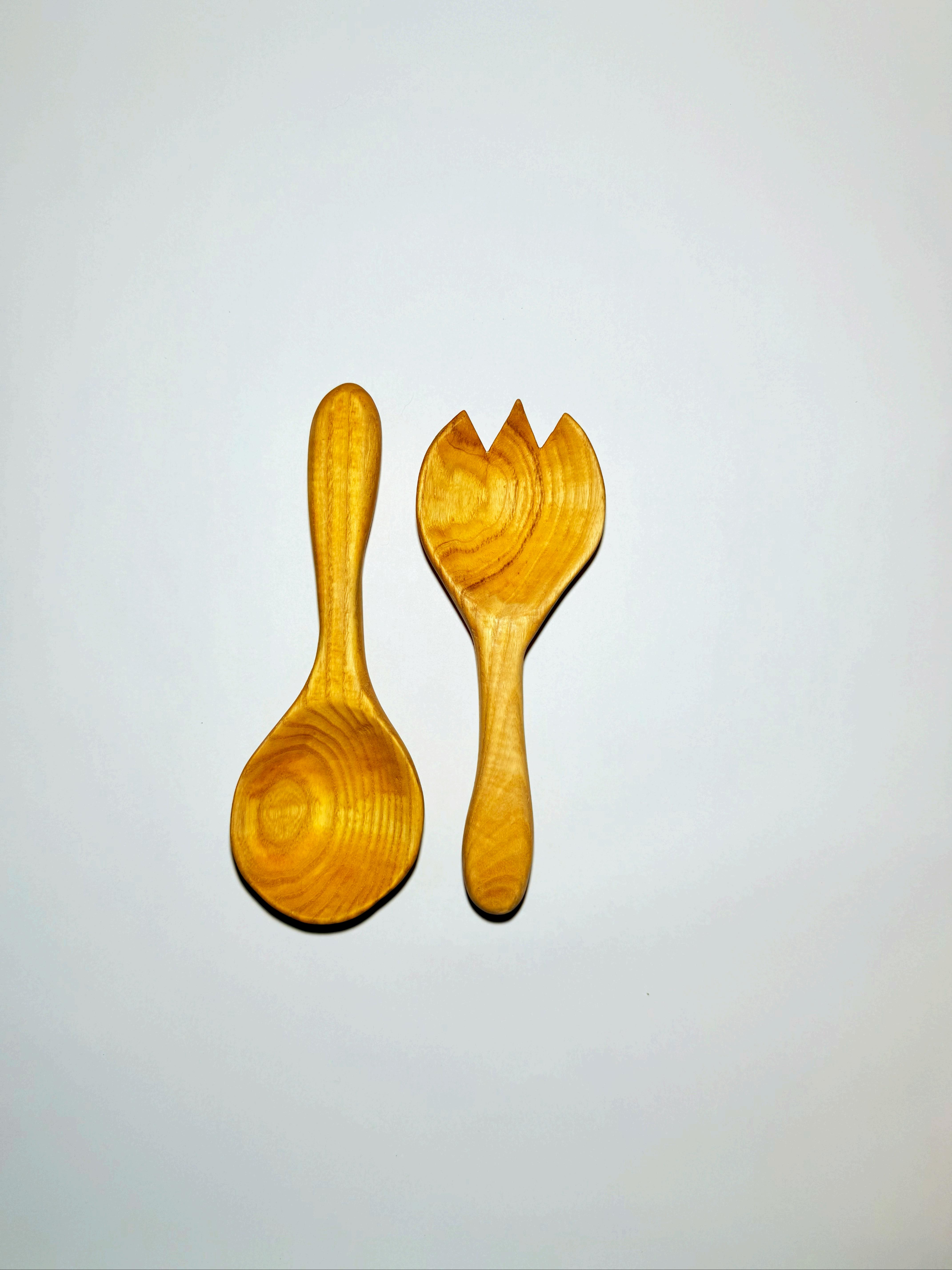
The Wall of Waldorf, 2025 Mixed-Media
Photographs: Derek Iovino
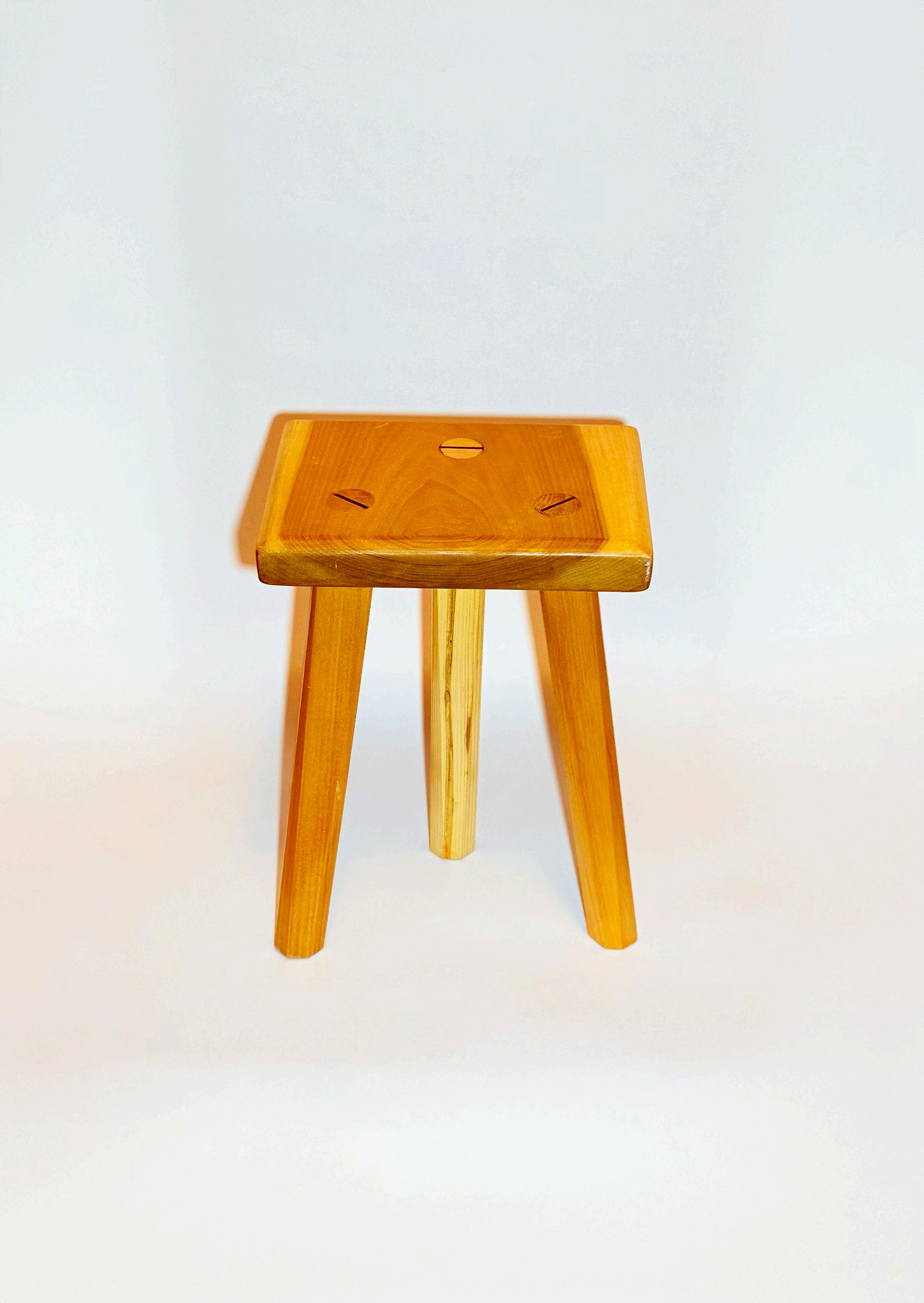

stool cutting board and knife
cutlery
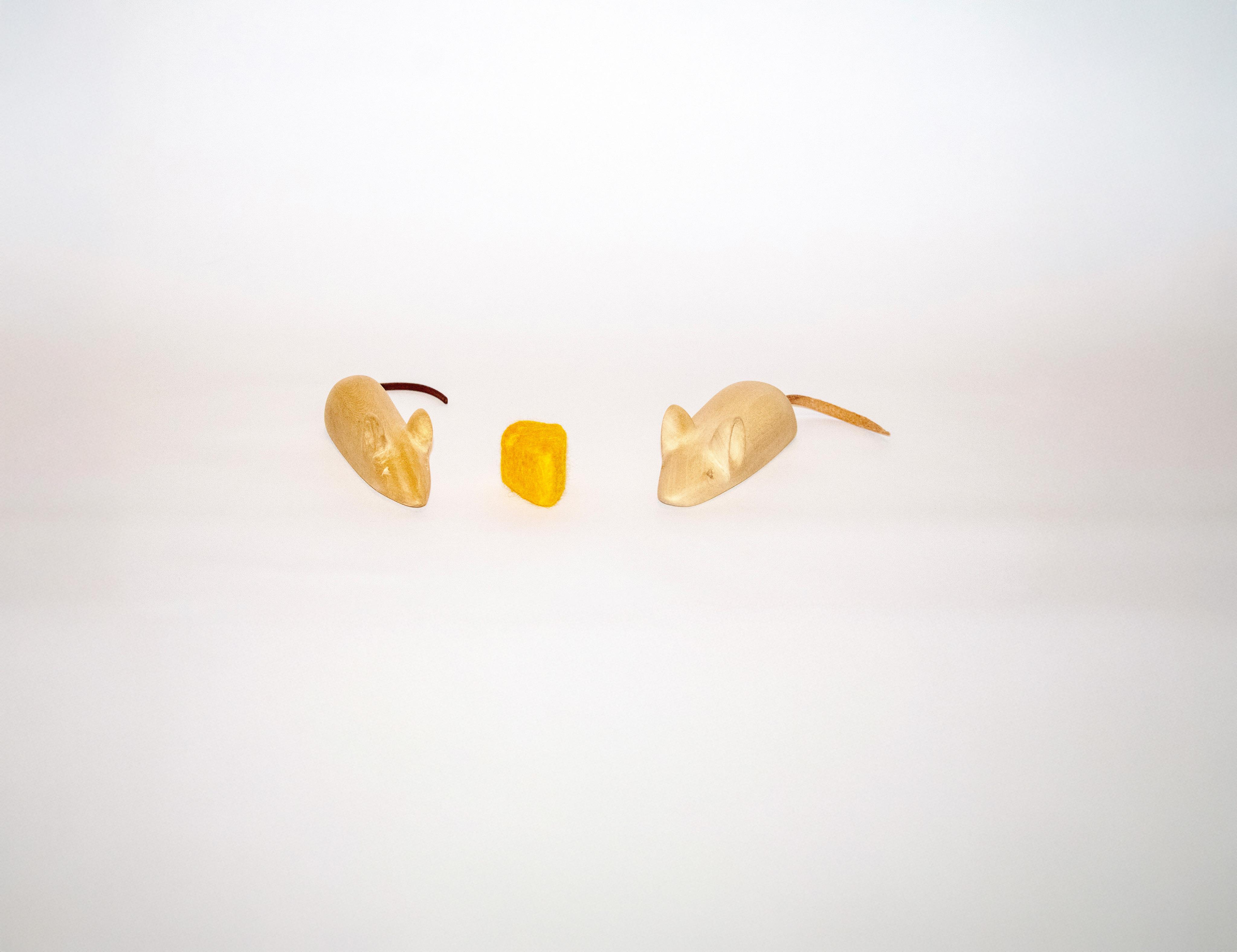
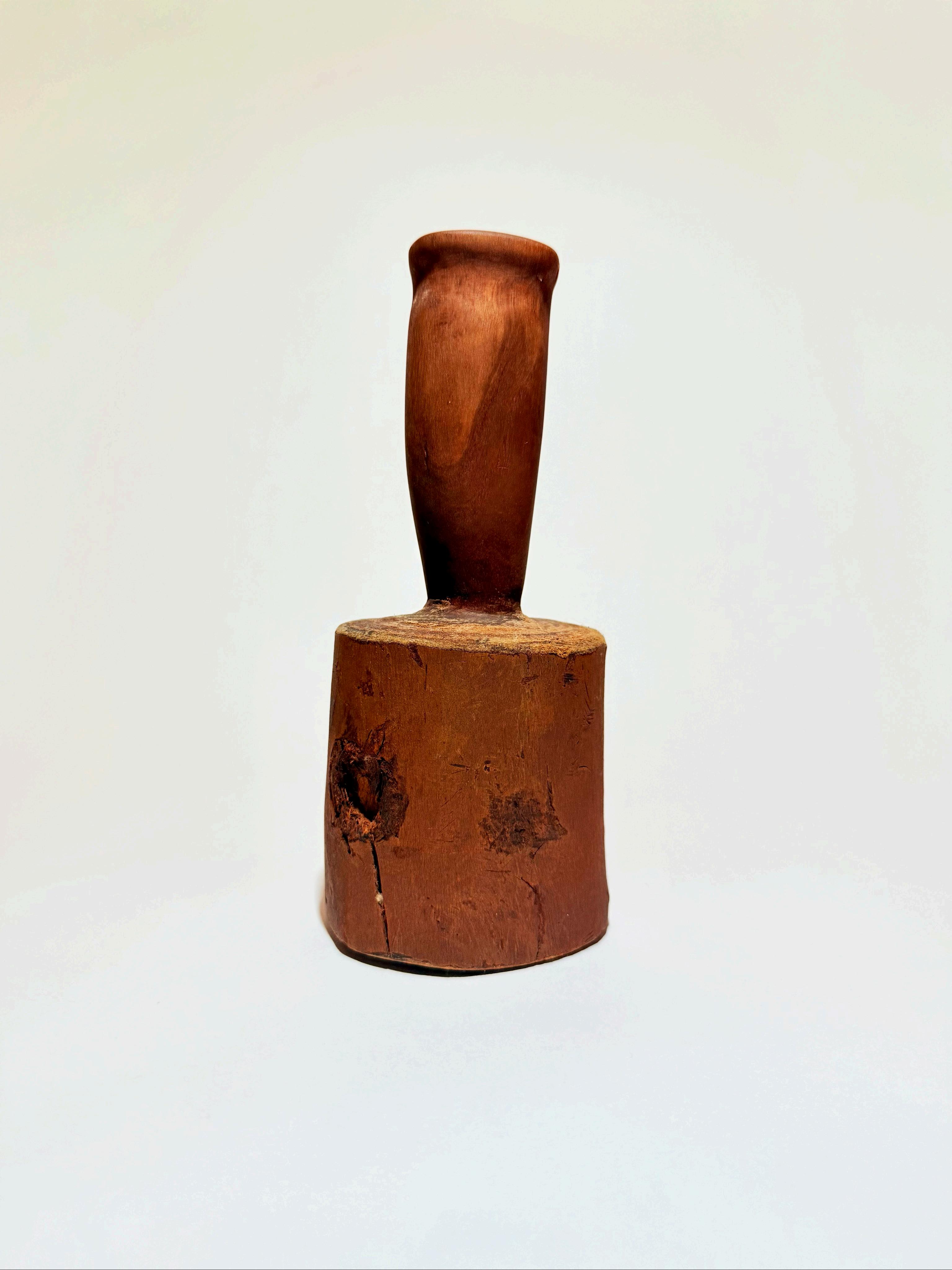
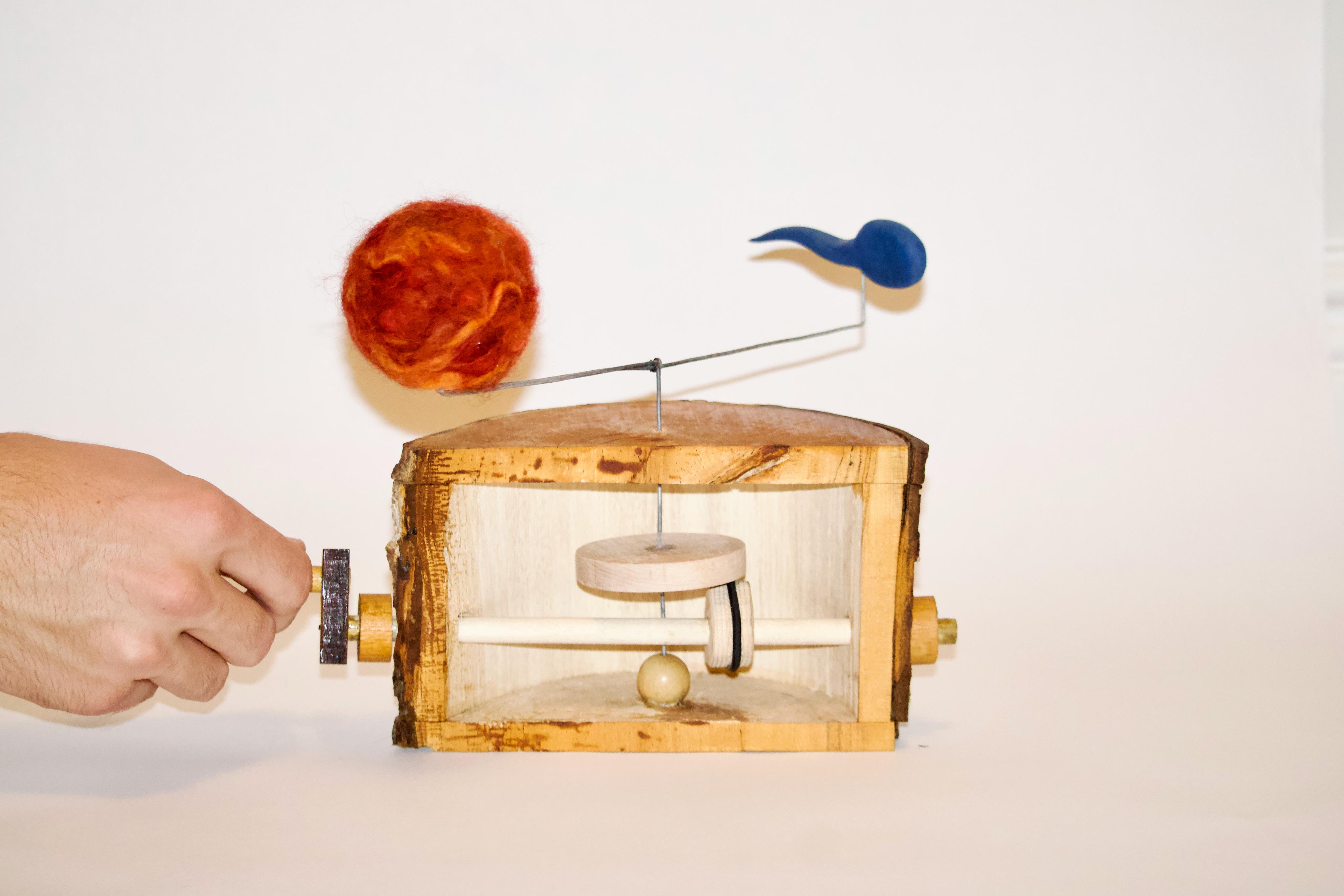
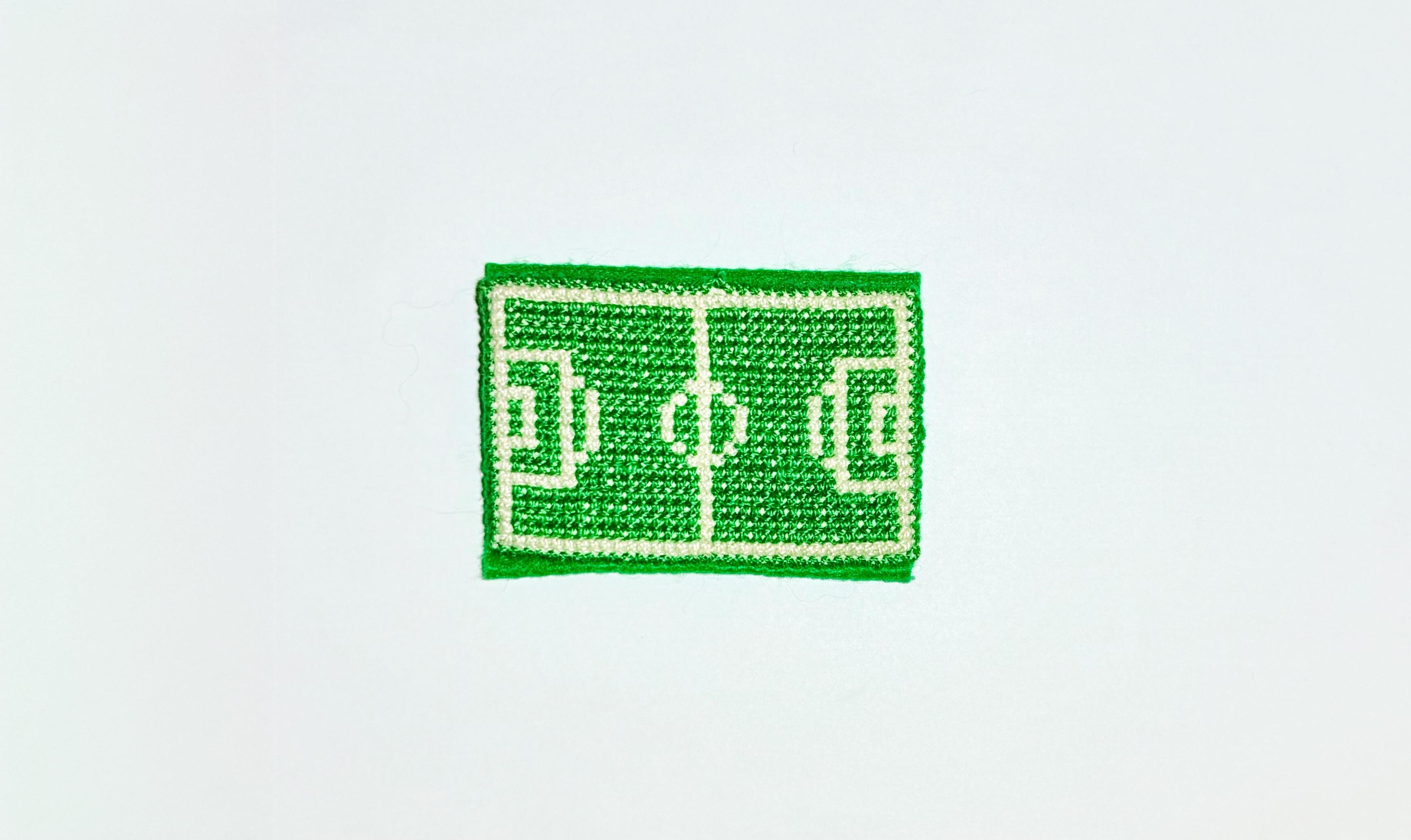
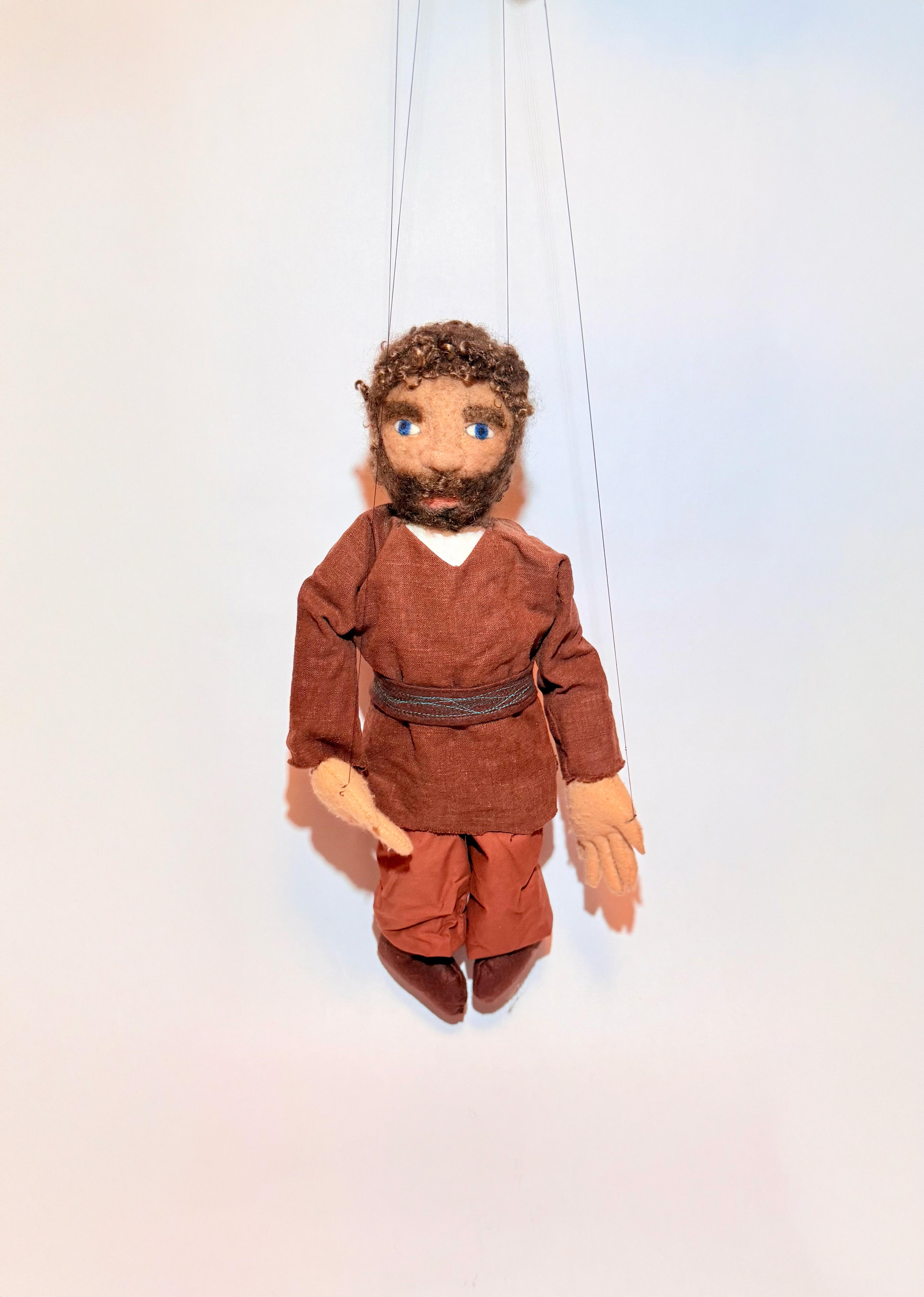
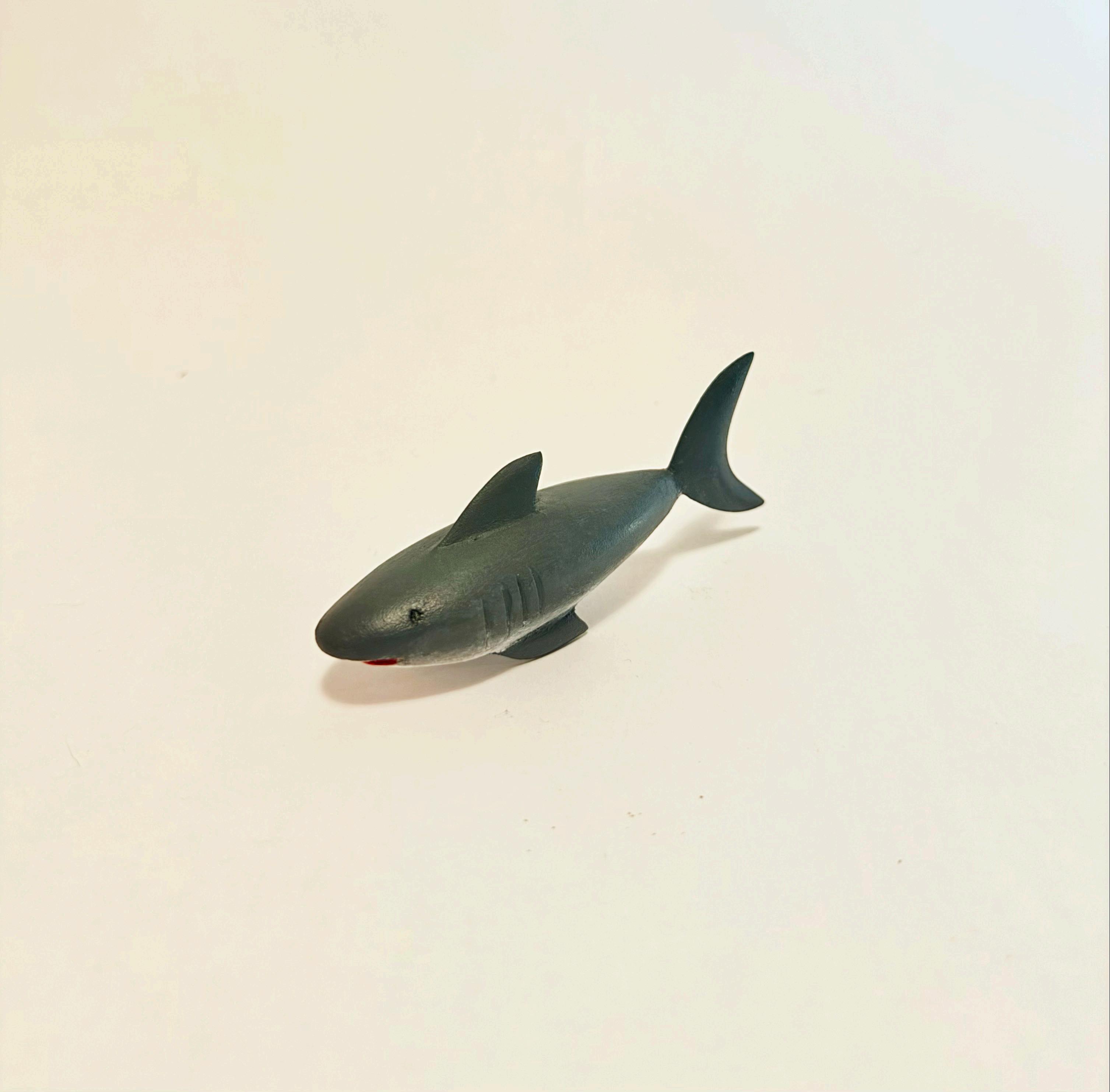
mice and cheese shark
towel
soccer pitch
puppet
mallet
clock
TINTIN IN THE LAND OF ROMANTICISM, 2025
In a seminar on Romantic Poetry that I took in school, I wrote 3 poems in the style of a major poet from the period and was tasked with illustrating them in a creative way. Considering that the Romantics used their poetry to illuminate the natural world all around them, I decided to connect my poems with newspapers (writings that report on the happenings of the world, or current events) and the character of Tintin from the comics by Hergé. I grew up reading The Adventures of Tintin, always thrilled to be taken on adventures in far off lands with the protagonist and his trusty companion Snowy; so, I thought it was a natural way for me to include the theme of exotic beauty that is present in the poems. The use of a character from a comic book for my own pieces is also something that I borrowed from some of the pop and street artists I admire, such as Jean-Michael Basquiat and Keith Haring.
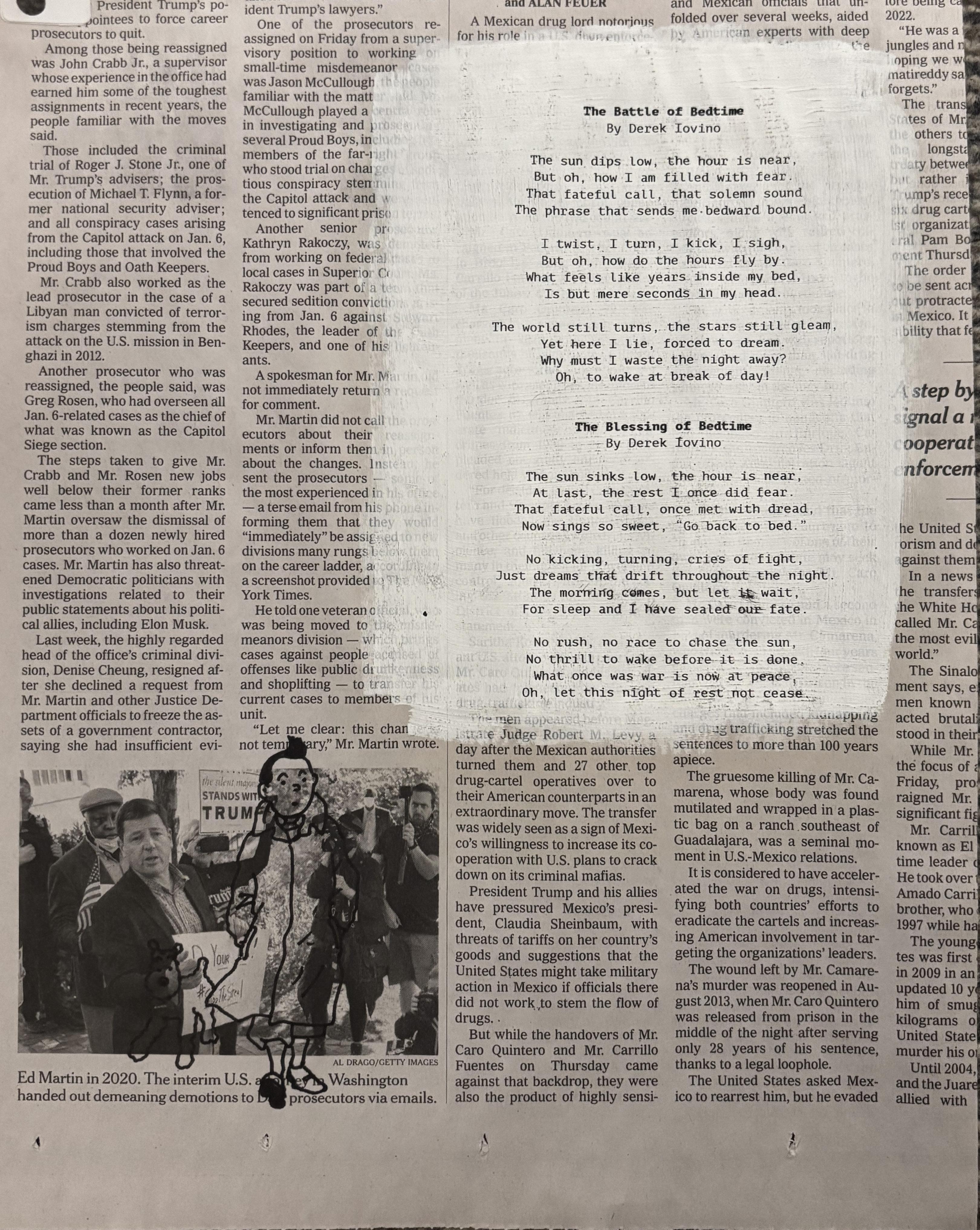
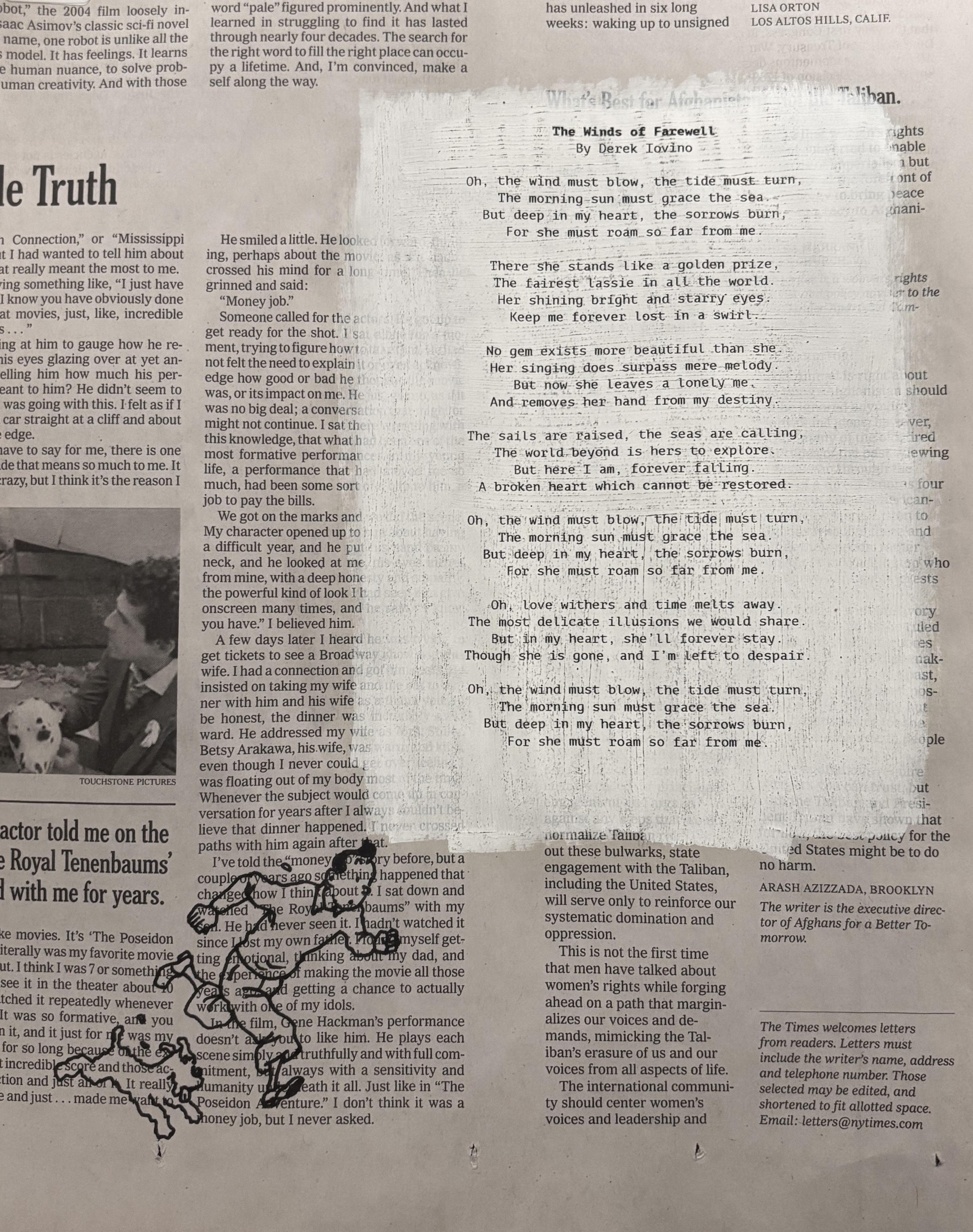
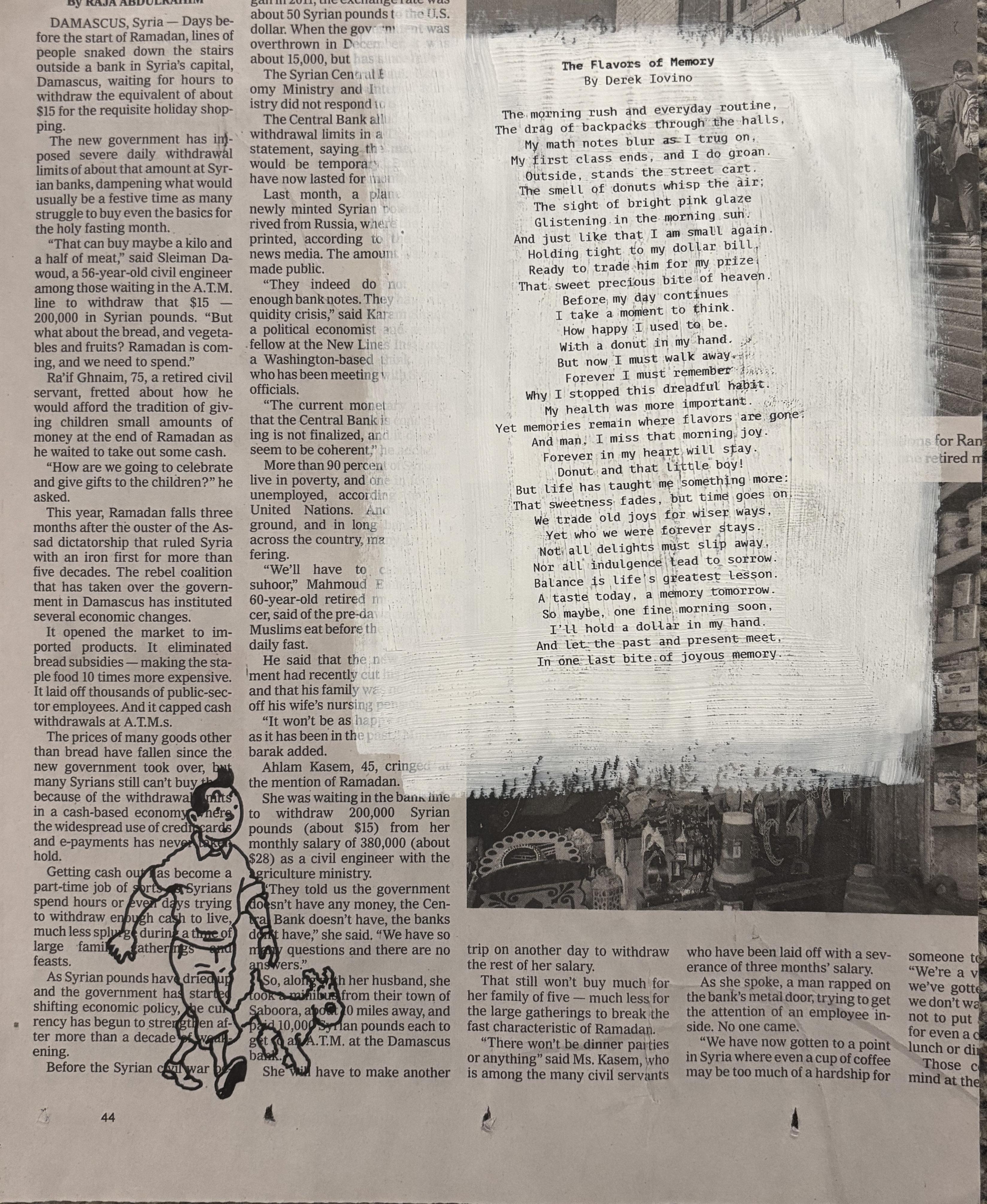
Tintin in the Land of Romanticism, 2025 Pen on Newspaper
8.5 x 11 inches
(UN-)STILL LIFE, 2025
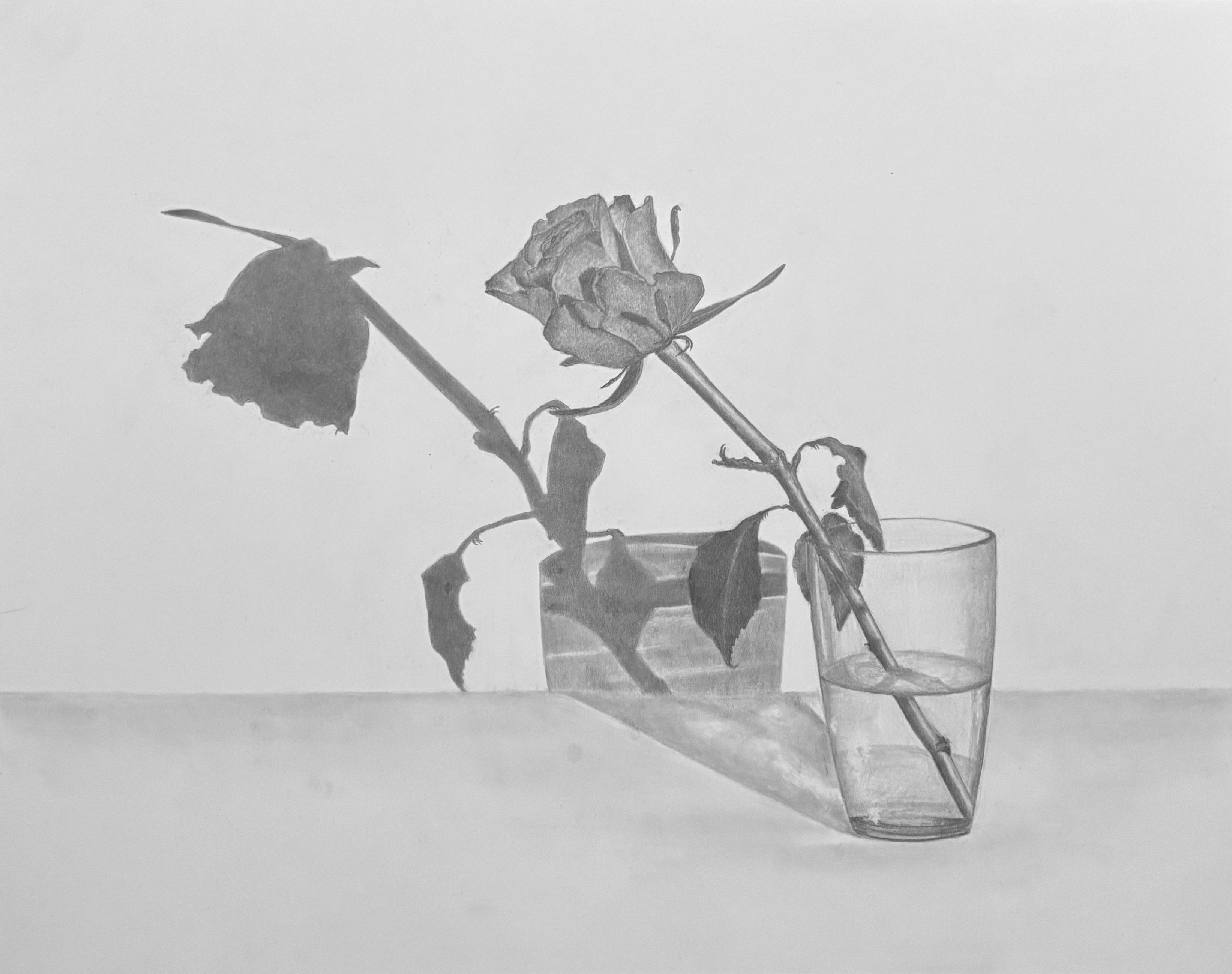
Drawing a still life is a way to capture an instant in time. Yet, unlike taking a photograph, the process of drawing is not instantaneous. As a result, there is a curious relationship between time and a still life. Perhaps, then, a still life can reflect more than just one moment.
With this still life of a rose, for example, it took time to observe the subject, create a composition, calibrate the values, and finally flesh out the details on the paper. And during that time, though the subject did not go anywhere, the conditions around the subject did change. The natural lighting gradually diminished, the shadows cast by the subject shifted, and after a whole day the rose itself began to wither and wilt.
Instead of rushing against the clock and fighting these changes caused by the passing of time, I decided to incorporate them into the still life. As a result, in the drawing the shape of the shadow does not match the shape of the rose. That disconnect, then, connects these two moments in time within the composition.
(Un-)Still Life, 2025 Pencil on Paper 11 x 14 inches
OBSERVATIONAL DRAWING, 2025
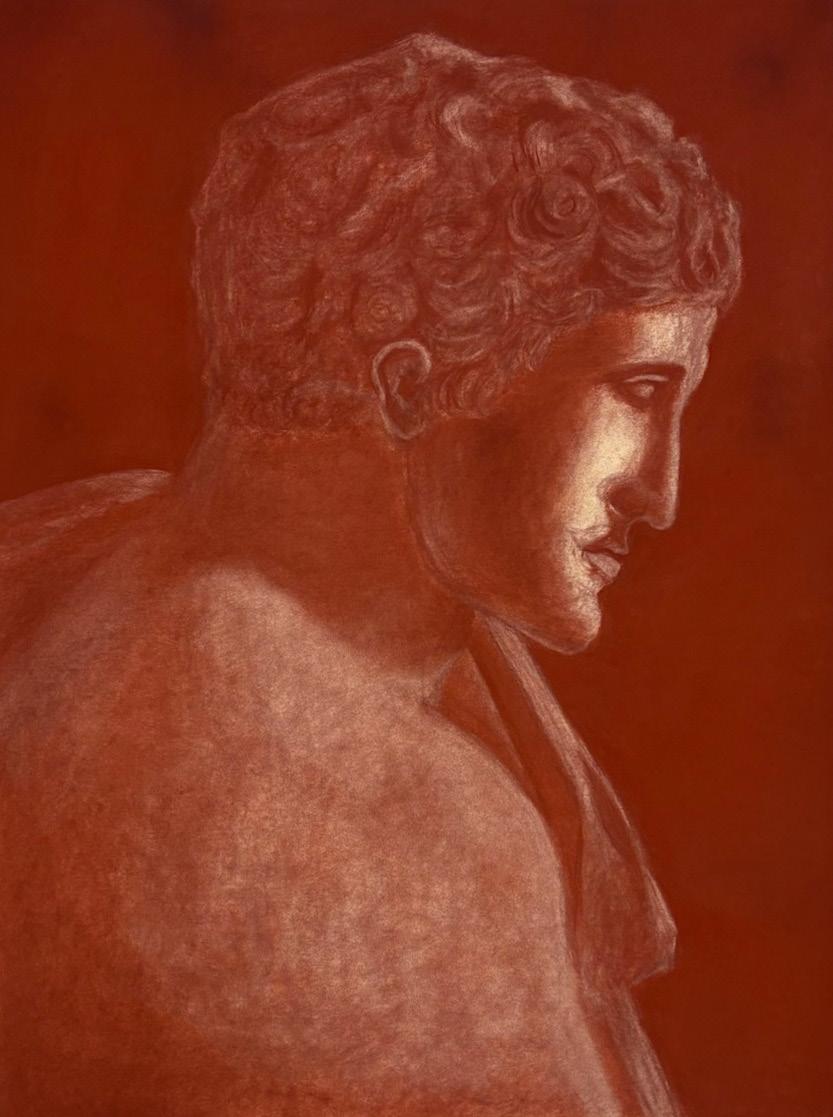
Art class assignment: Section drawing of a classical sculpture, study of values and texture. I chose this subject to improve my observational skills and better understand how light defines form through subtle value changes in the drapery.
Observational Drawing, 2025
18 x 24 inches

Charcoal on Paper
WIRE-WIND, 2025
As a New Yorker I am lucky to visit the MoMA, Museum of Modern Art, many times since I was a kid. There I saw the iconic wire sculptures by the artists Gego and Ruth Asawa, they inspired me to make a “line drawing without paper” using only wire. I have also played the saxophone since I was 8 years old. Running my hands across my instrument every time I play, I am able to recognize every key of its complex system and every inch of its looped shape with my eyes closed. So, taking inspiration from these two artists and honoring my music passion, I started bending, twisting, and coiling the wire with my fingers and pliers. The result is a life-sized wire woodwind that hangs over the ceiling and creates very interesting floating shadow play on the wall as it moves.
6 x 19 x 30 inches
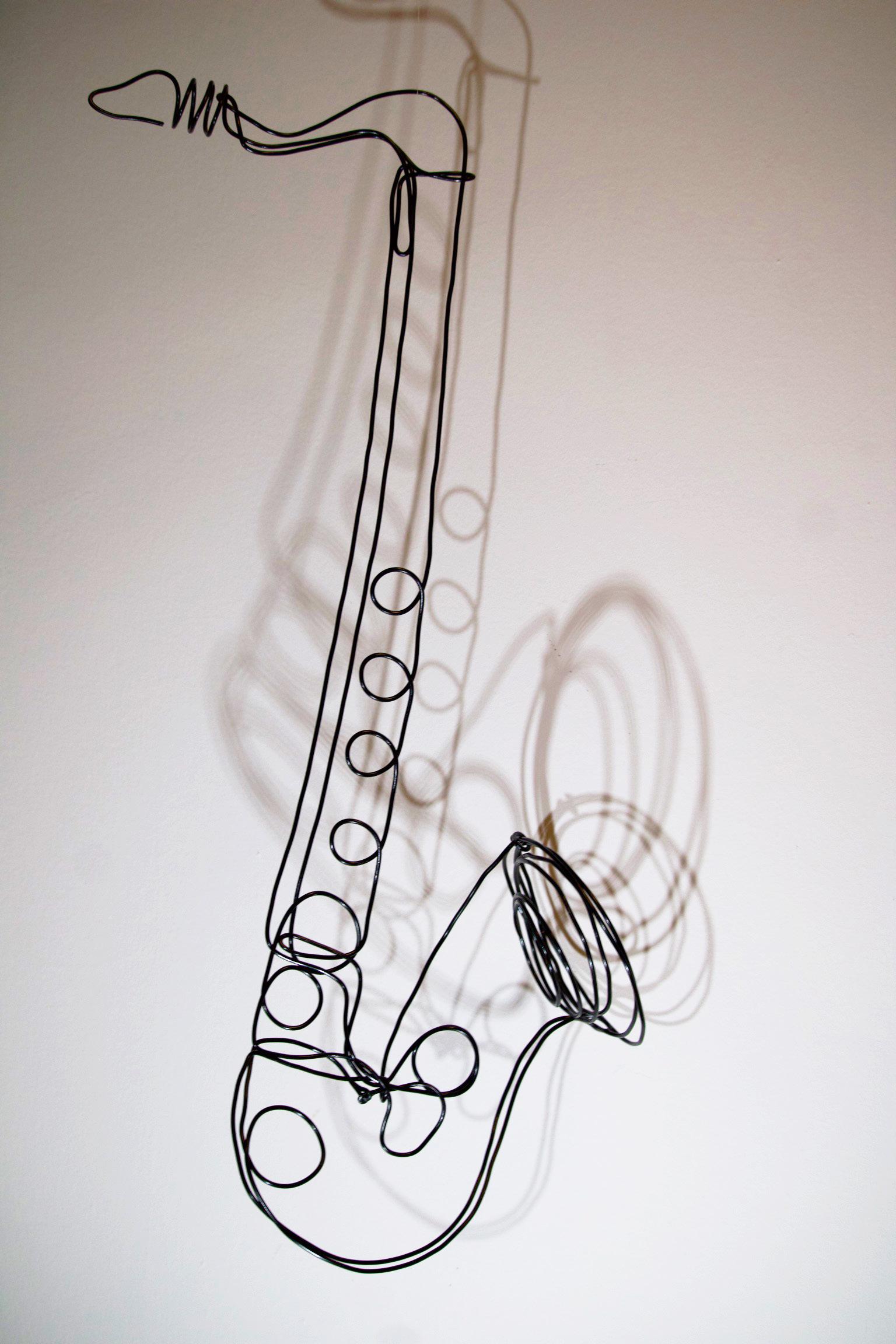
Wire-Wind, 2025
Metal Wire
MODERN TIMES TOO, 2025
In a “History through Technology" seminar that I took in my junior year of high school, I learned that during the later part of the industrial revolution, many people were scared of how their lives would be impacted by the rapidly advancing technologies of the time. We watched a clip from “Modern Times” (1936), a film by Charlie Chaplin, that depicted this “tyranny of the machine.”
This black and white scene from the silent film era made an imprint in my memory. Nowadays even though the world looks much different, people are having very similar fears, but this time because of the development of AI that is increasing the productivity and efficiency of humans all over.
Taking inspiration from Chaplin’s film and combining it with the street-art style of Banksy, which I’m drawn to, I recreated and adapted a sequence from the film in which Chaplin’s character is swallowed by a machine and pushed through its system of churning gears. In this short film, I am the one who enters the machine making contorted physical movement like crawling and twisting on the pavement.
Chaplin was making a comment on how machinery is consuming people’s lives. Now, almost a century later, I wonder: are we being consumed by machines too?
Modern Times Too, 2025
Duration: 17 seconds
Chalk (on Asphalt), Stop-Motion Video
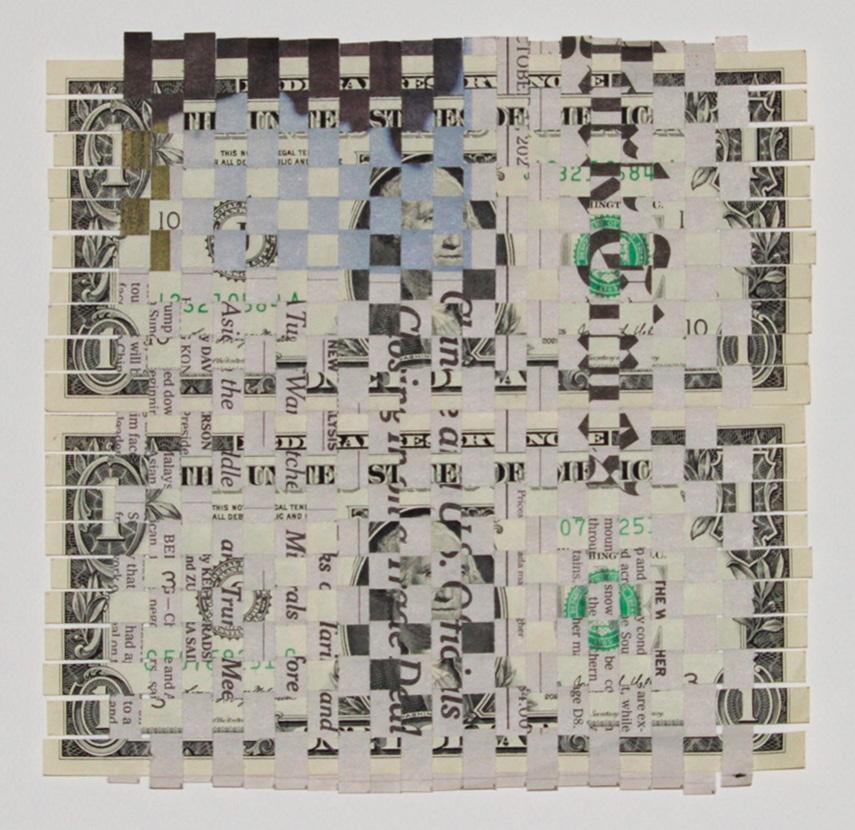
“Time is money" is a famous idiom credited to Benjamin Franklin that highlights the reciprocal value between time and currency. Both are valuable resources; however, time is finite, and money eventually could be regained.
The inspiration for this work stems from my art and crafts foundation as well as my early finance education.
At school I took a band weaving course, in which I spent 6 months weaving a hand towel. For this work I decided to interweave a dollar bill with a scrap of The New York Times newspaper (“The Times”) to create a symbolic, visual representation of this concept. Here, money and time are intertwined.
Time is Money, 2025
Newspaper and USD
6.25 x 6.25 inches
CLIMATE CLOCK, 2025
As our carbon footprint grows, the climate gets ever closer to irreversible damage. Among deforestation and industry, man-made innovations in transport to shorten distances and save time, such as cars or planes, ironically have become what might make the planet run out of time in terms of climate impact.
Reflecting on this urgent reality, I decided to make an oil painting of the Climate Clock on the Metronome building in New York City, which counts down years, days, hours, minutes, and seconds until certain climate effects are irreversible. As I was painting the clock the numbers were rapidly changing, racing against my slow strokes. Time seemed to freeze on my canvas, but the clock kept moving. At that moment I grasped the idea that I captured an instant in time, but time refuses to be captured. It is crucial that I take action now, the clock is ticking away…
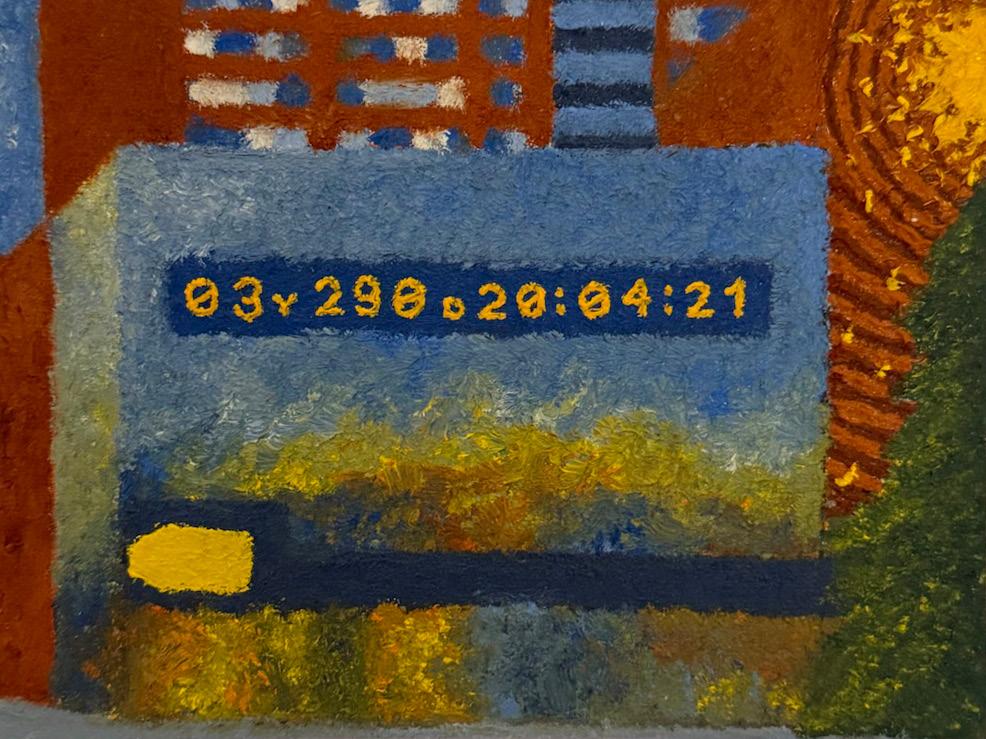
Climate Clock, 2025
Oil Paint on Canvas
6 x 8 inches
TIME ON MY HANDS, 2025
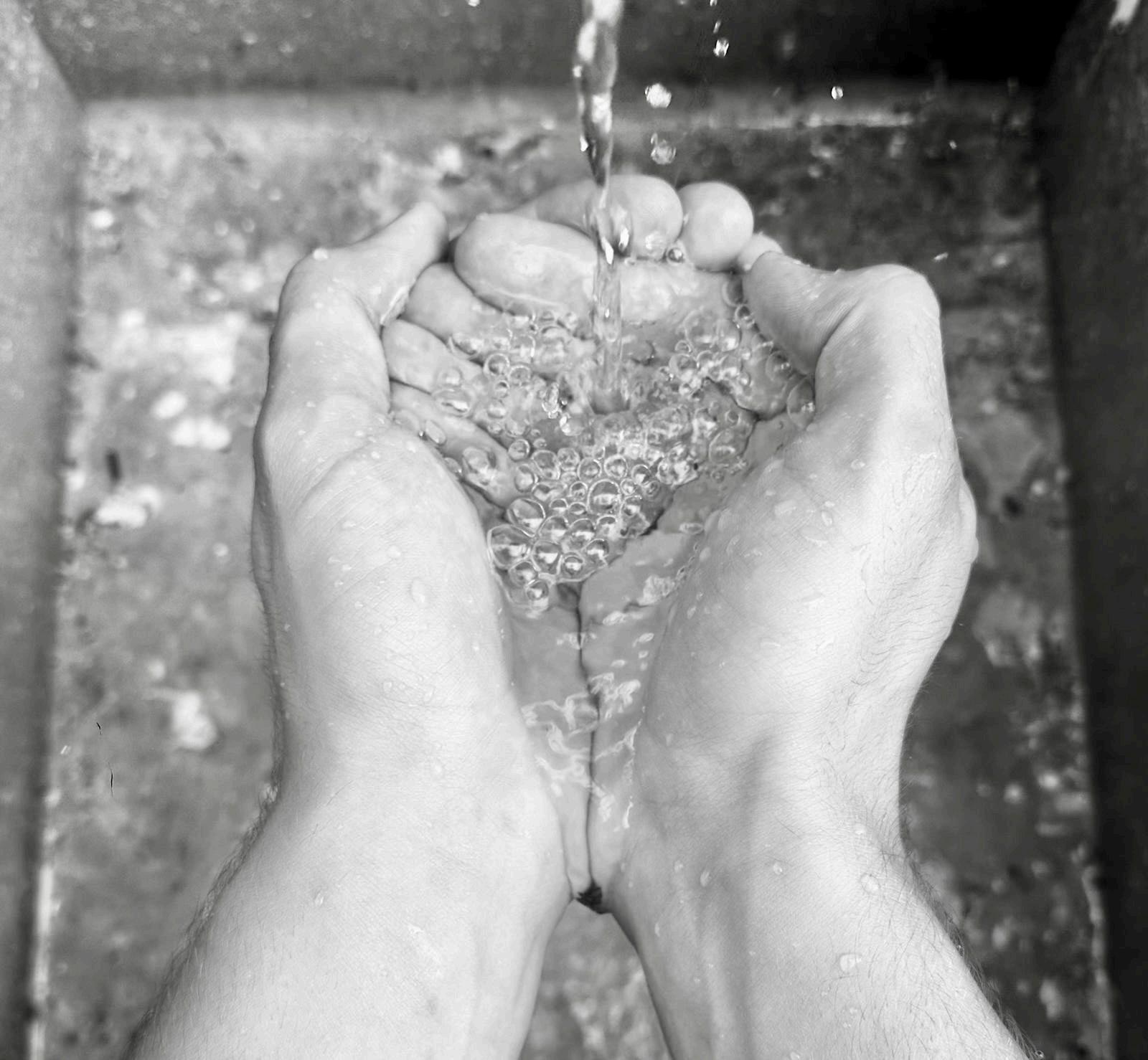
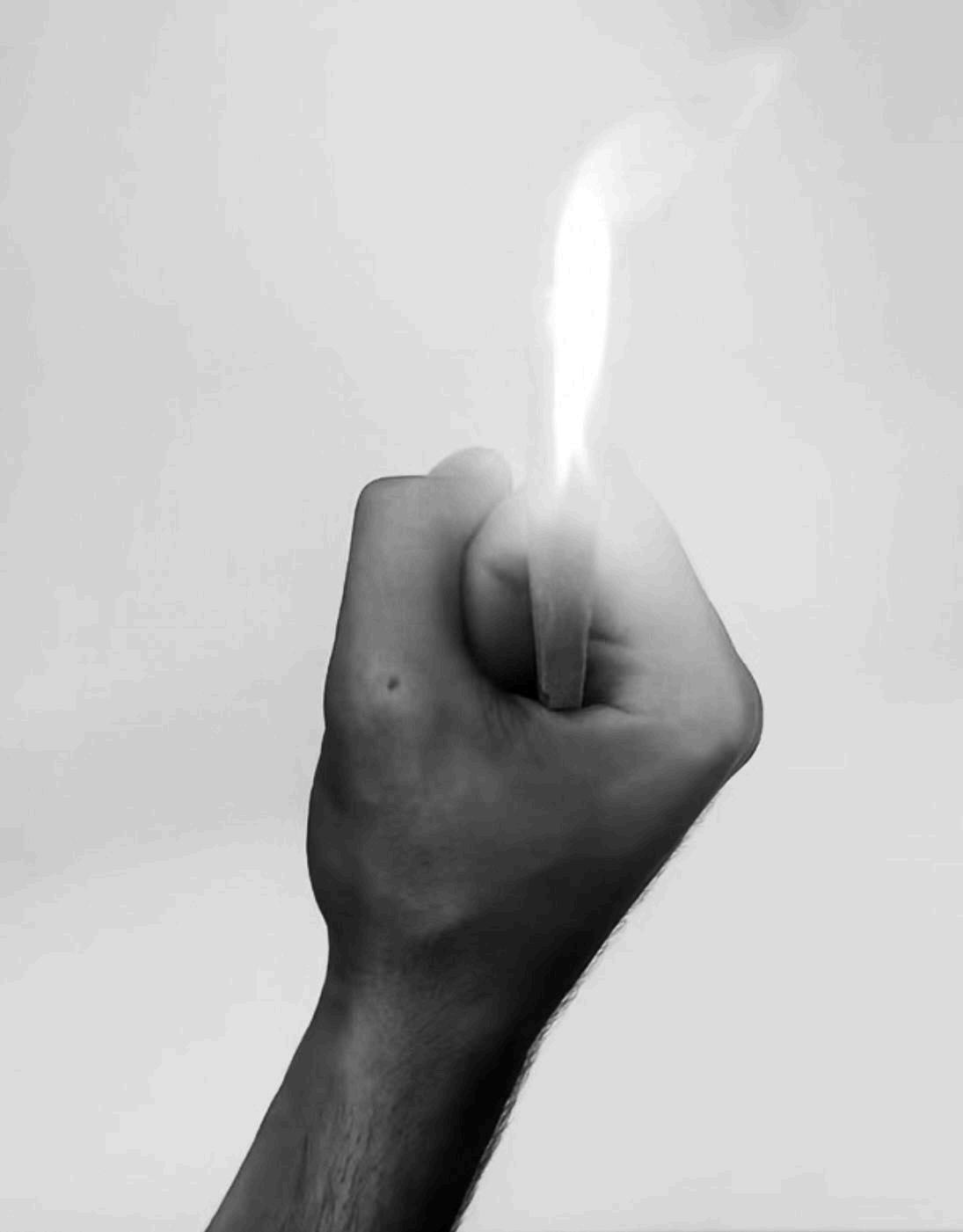
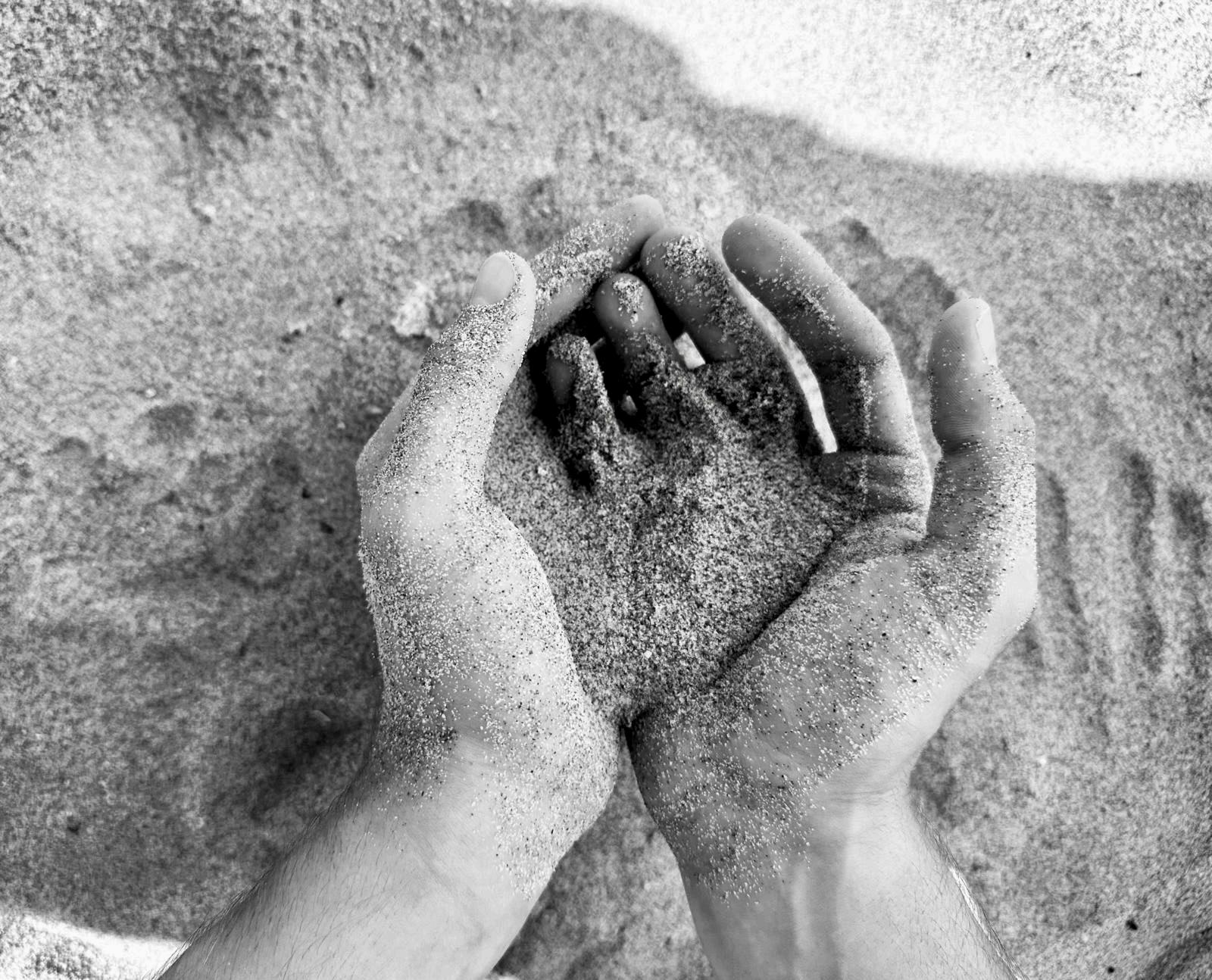
Looking ahead at this next summer, after graduating high school and before beginning my college journey, I am going to have some time on my hands. Yet there are other ways that I often have time “on our hands.” For example, whenever I check the time on my phone, I also, in a way, have time on my hands. The same could be said for when I wear a wristwatch.
This project continues to play with this idea, providing two additional interpretations of the idiom of “having time on my hands.” The first one is a more literal representation of the saying, in which a clock, the device with which we use to keep time, has been drawn on to my hand using the palmar flexión creases as the hands of the clock. The second calls back to alternative ways to keep time, involving the concept that underlies the technology of the hourglass, with time being tracked by the flow of a natural element (sand, water, and sun).
Though I may try to hold on to the finite resource of time, just like the sand slipping through my fingers, it gets away. If this is so, then I will do my best to make the most out of the time that I do have.
Time On My Hands, 2025
Mixed-Media
Photographs: Gina Iovino

TO CHATGPT OR NOT TO CHATGPT?, 2025
These works were inspired by the "reading" of Hamlet and my concern of how I use my time.
In 11th grade, working against a school assignment’s deadline, I confronted the dilemma of choosing between a bad grade for a Hamlet seminar or using ChatGPT to shortcut the reading and complete the assignment on time. I wondered: What’s the difference? Who would realize? Would it even be considered cheating?
Like Hamlet, I was struggling with a heavy question that was weighing on my mind. Except my question was: to ChatGPT or not to ChatGPT? How would these two different options affect the time it would take to complete the assignment?
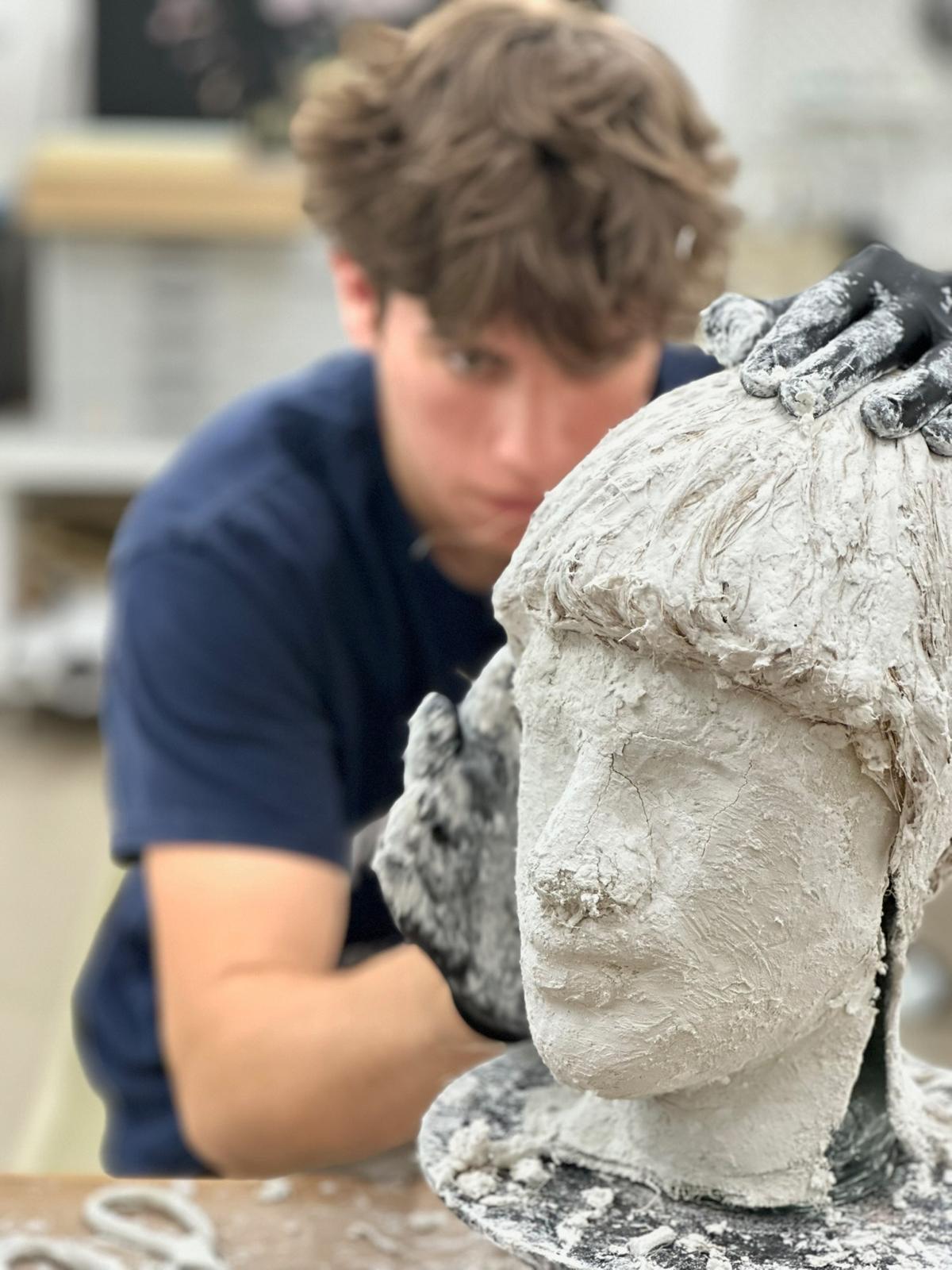
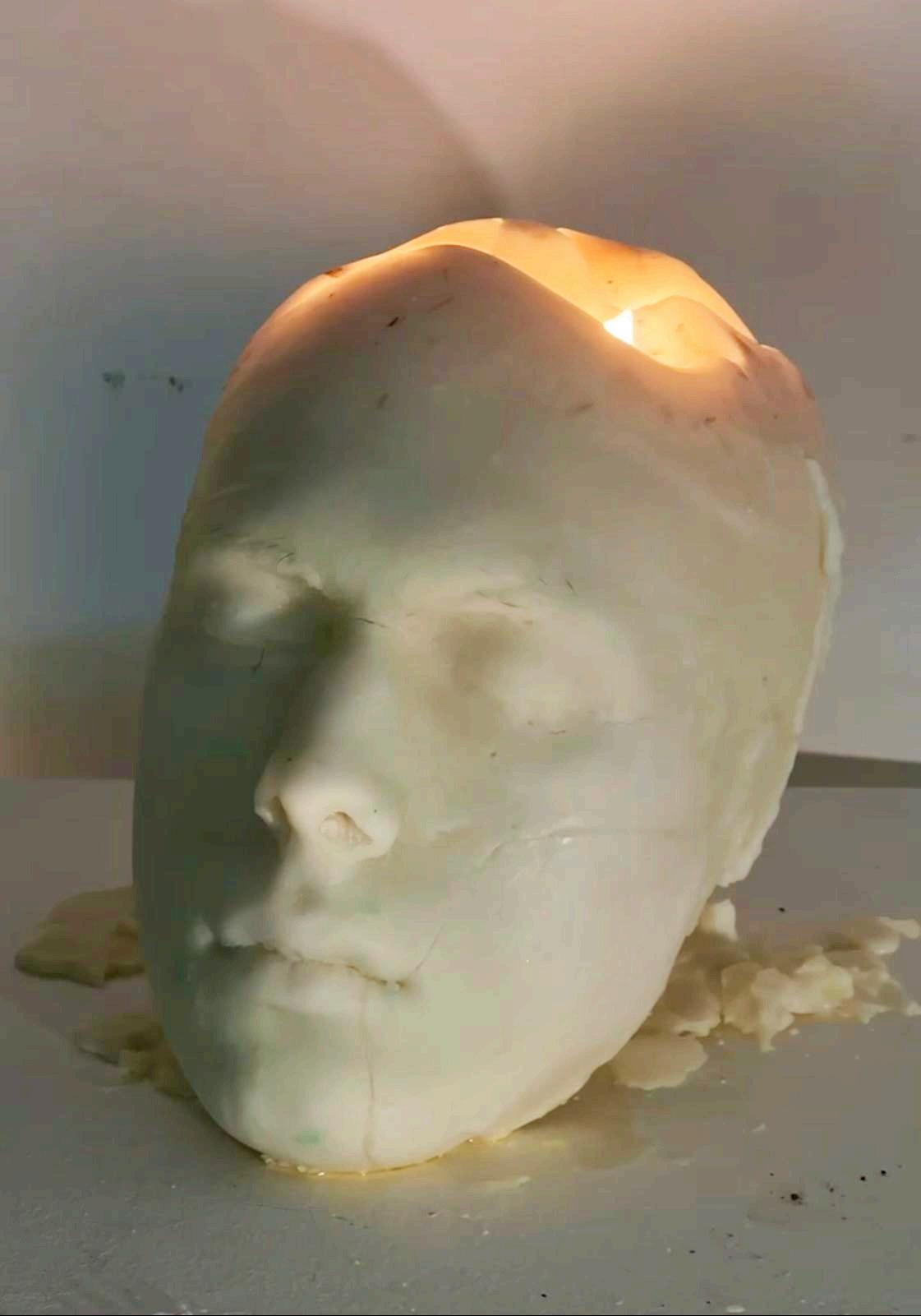
In casting my head in wax, chocolate, and ice, I am using each material as a metaphor for the passing of time and using my portrait to present myself as the protagonist of this ethical dilemma. Will I let time consume me, or will I consume it responsibly? The candle burns slowly with purpose; the chocolate is devoured, representing time being consumed by indulging in desserts; and the ice melts as the Arctic glaciers do.
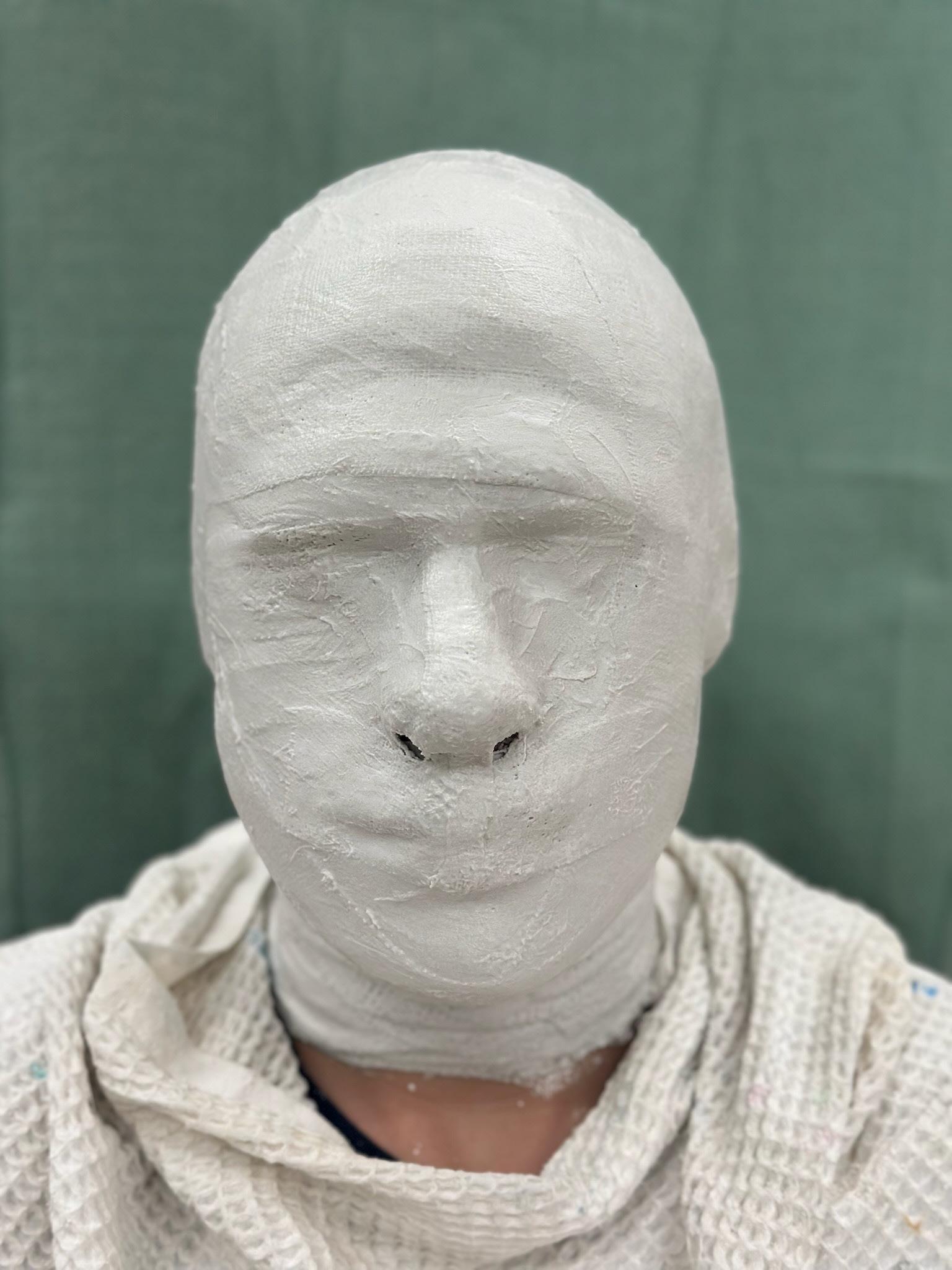
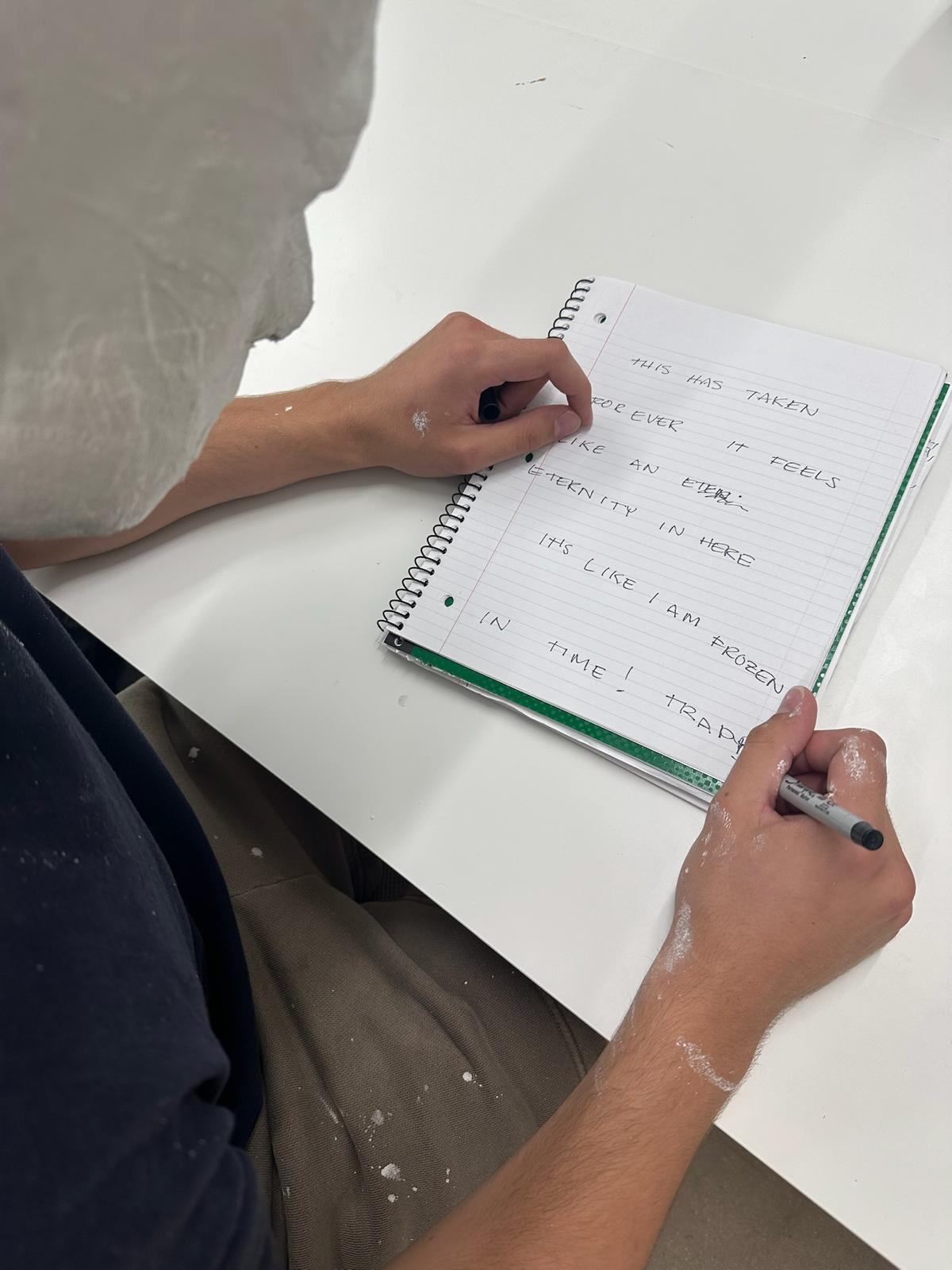
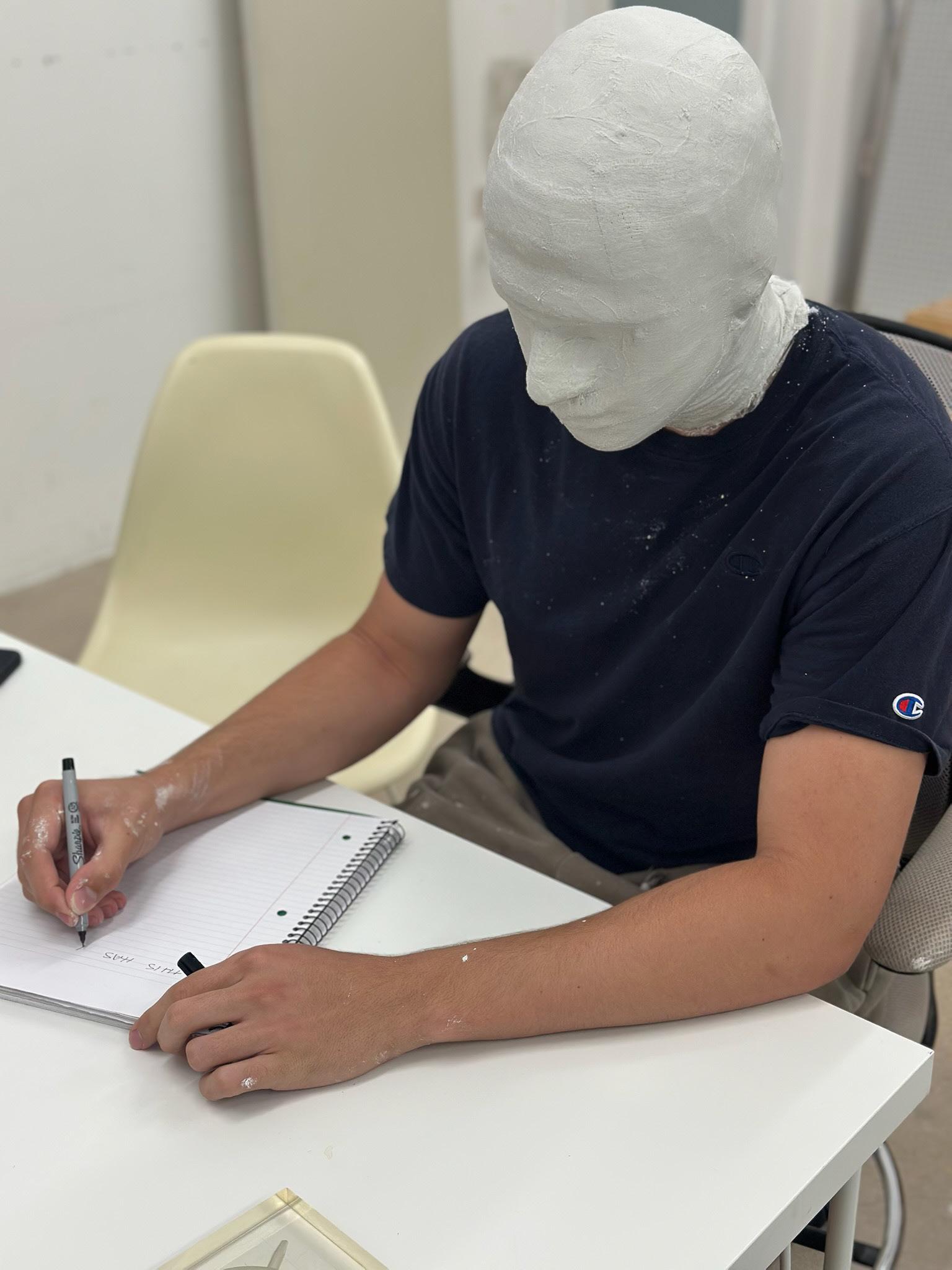
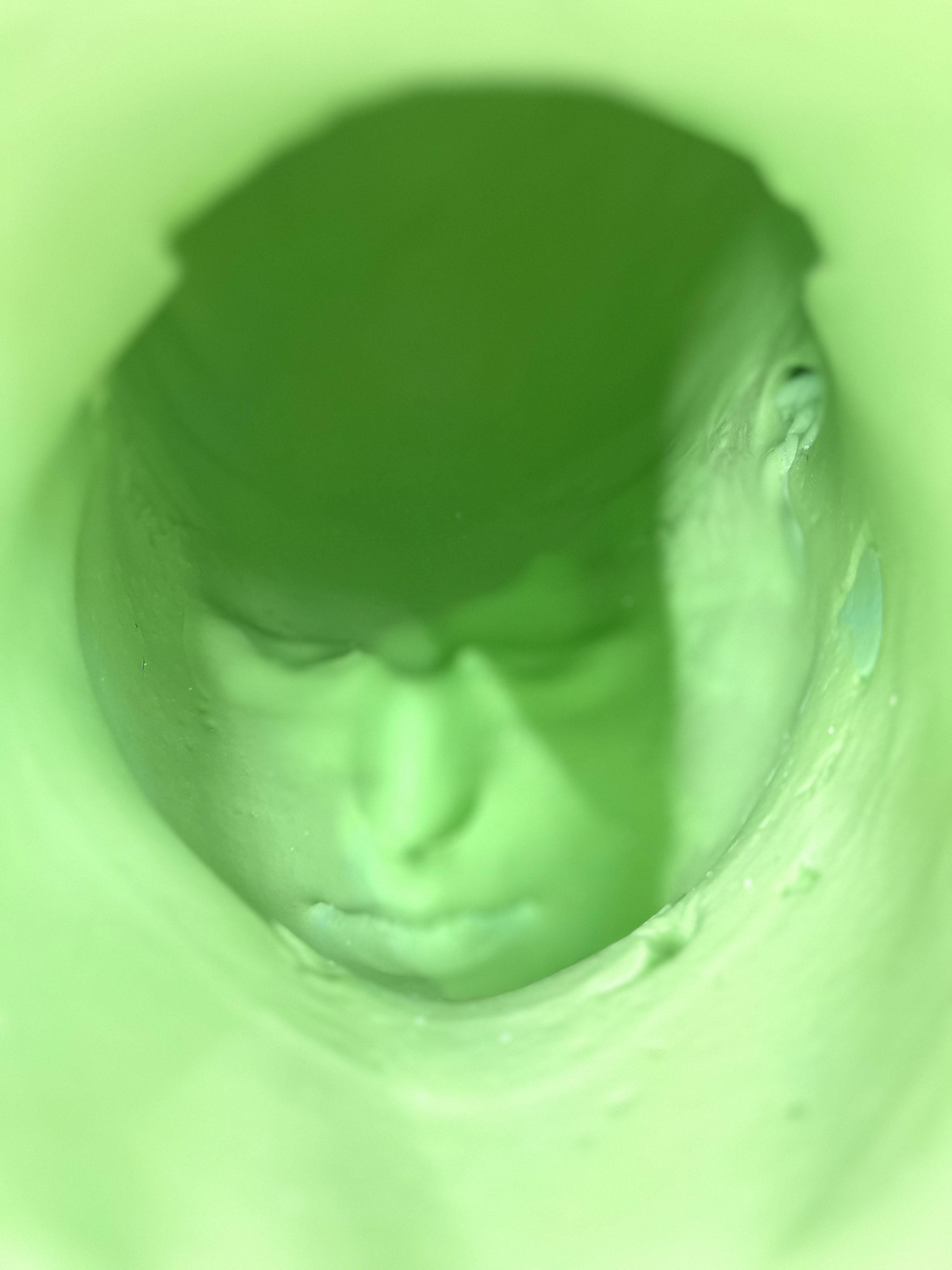
The process involved was complex and challenging. This was the first time I experimented with molding and casting techniques, so after researching and watching a lot of tutorials I convinced my uneasy mom. With her help we wrapped the plaster and a silicon mold around my head, leaving only breathing holes for my nostrils. Our first and second attempts resulted in failure, but I persevered and in the third try was able to do it successfully. I was in the mold for almost two hours, but inside it felt like an eternity for me.
Though I could have done this project faster and easier with a 3D printer or Photoshop, I instead decided to literally use my head and learn something new. In the end it was a much richer experience and was time well spent.
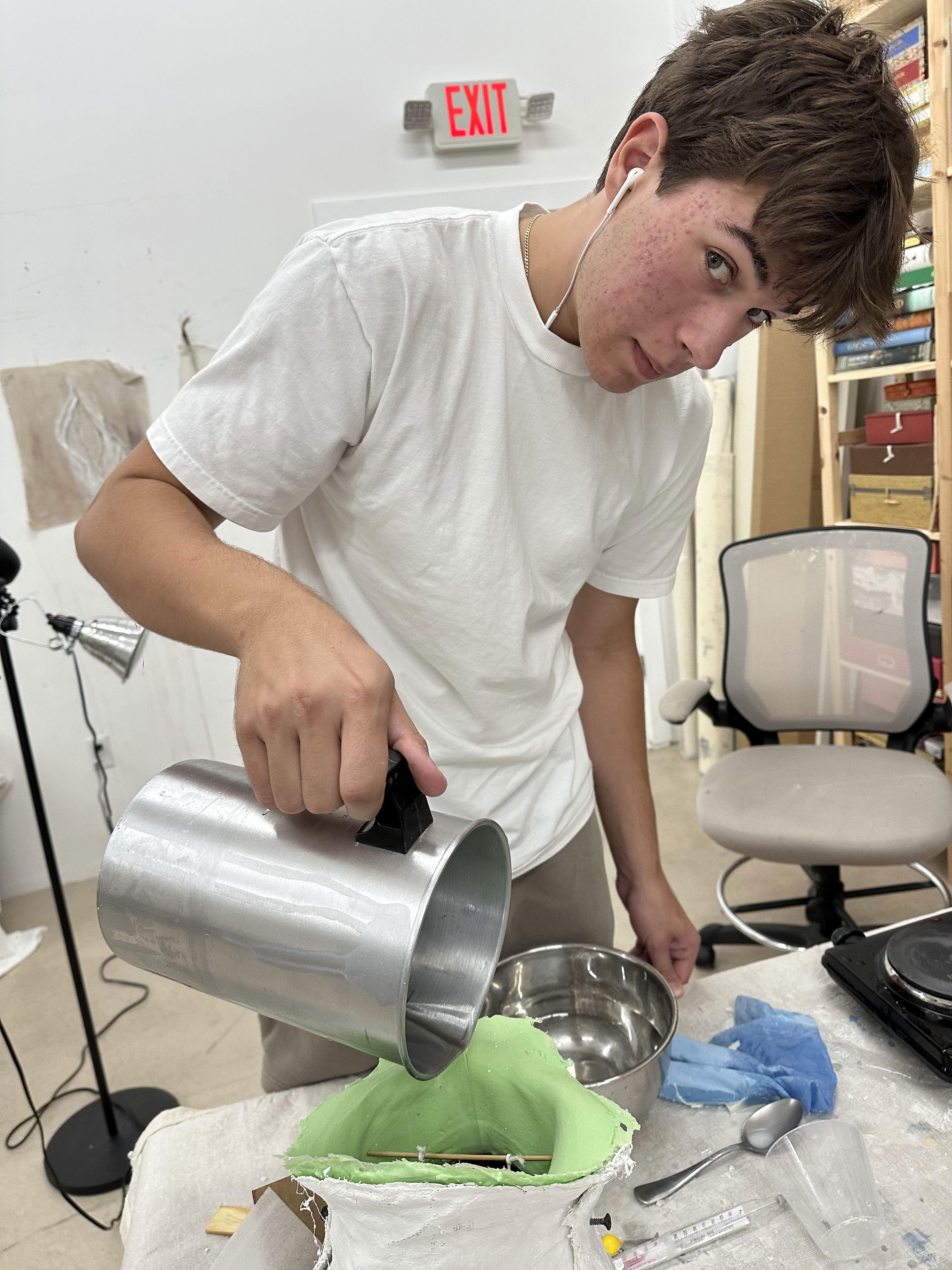
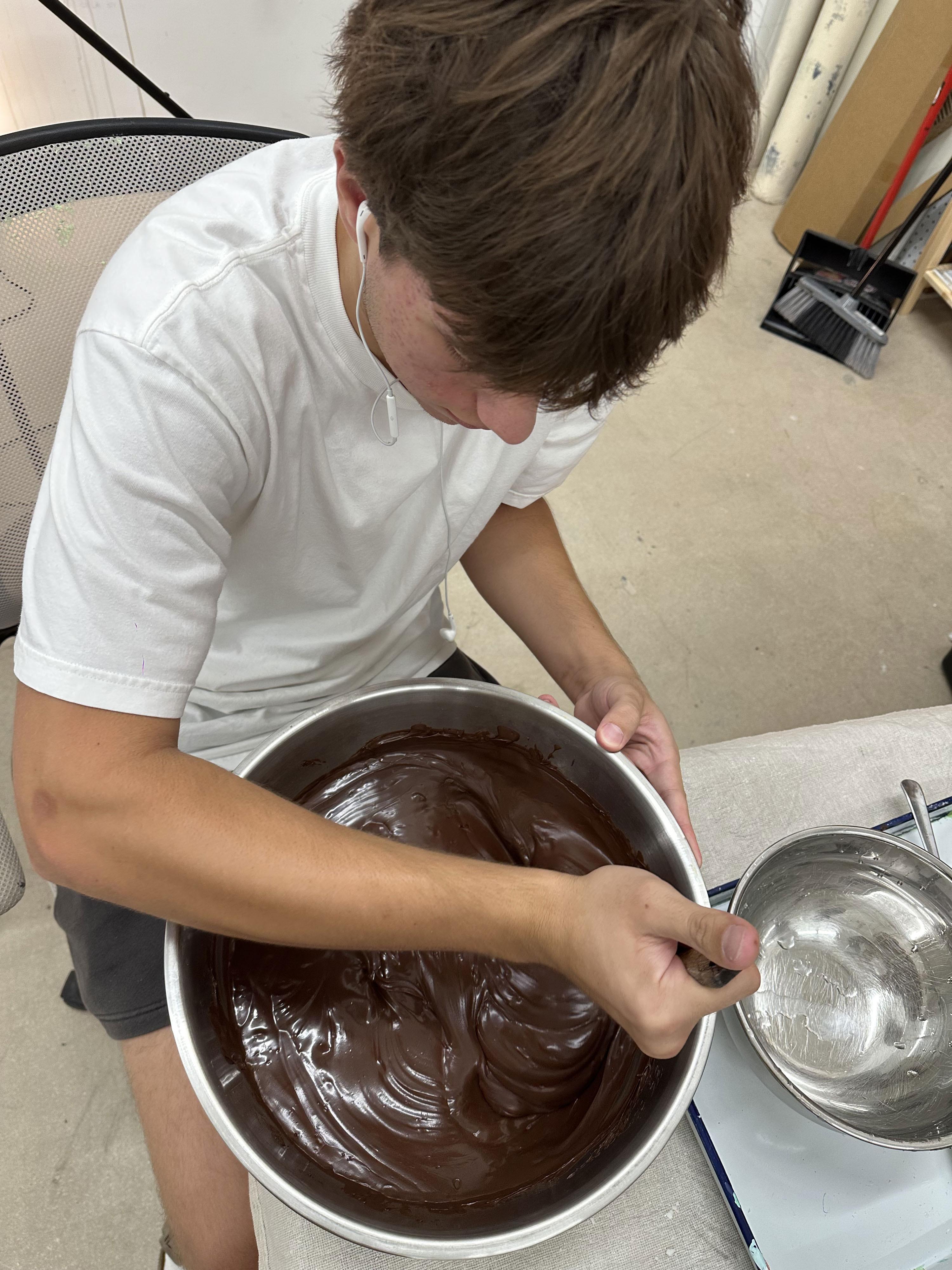
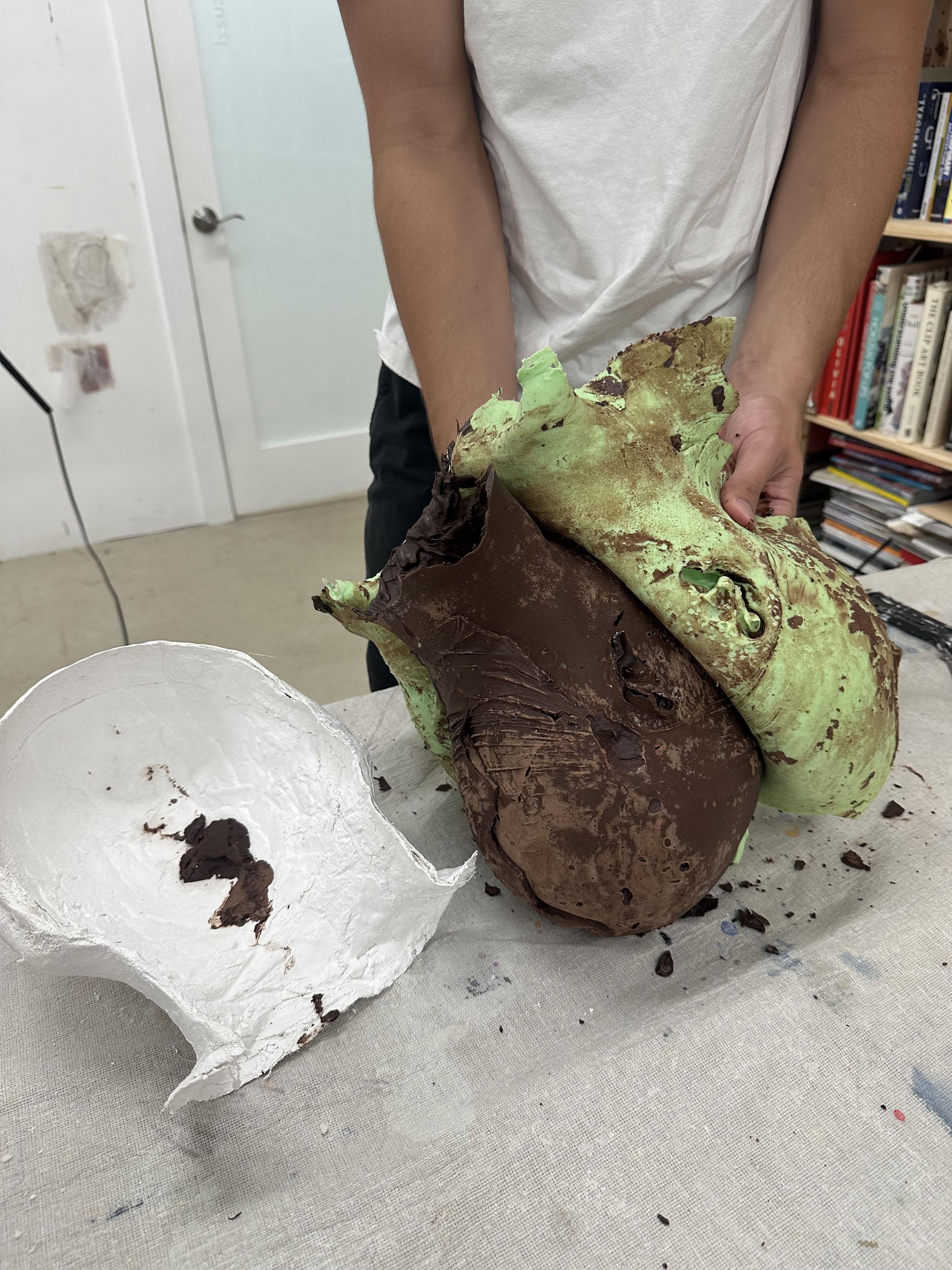

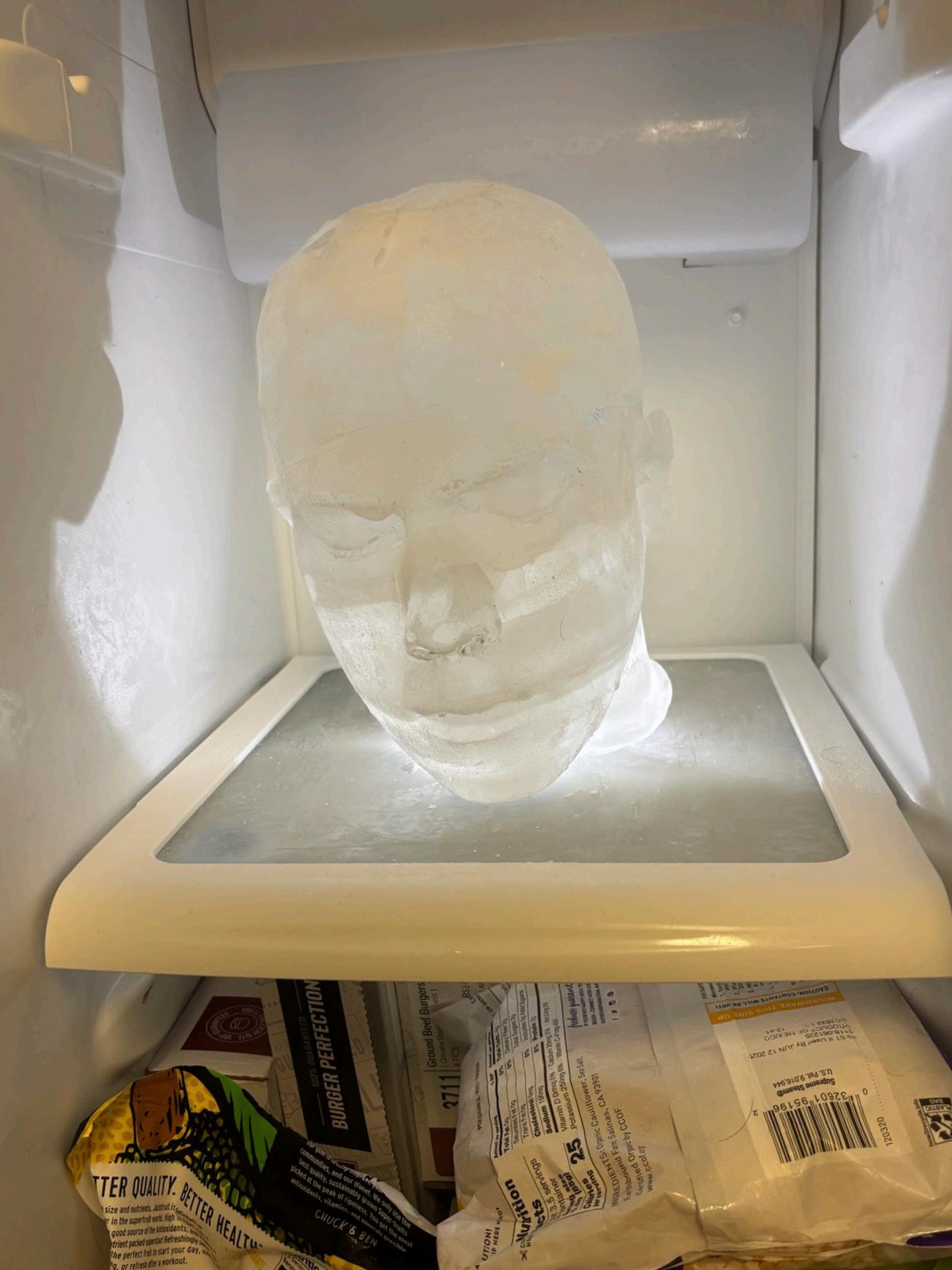
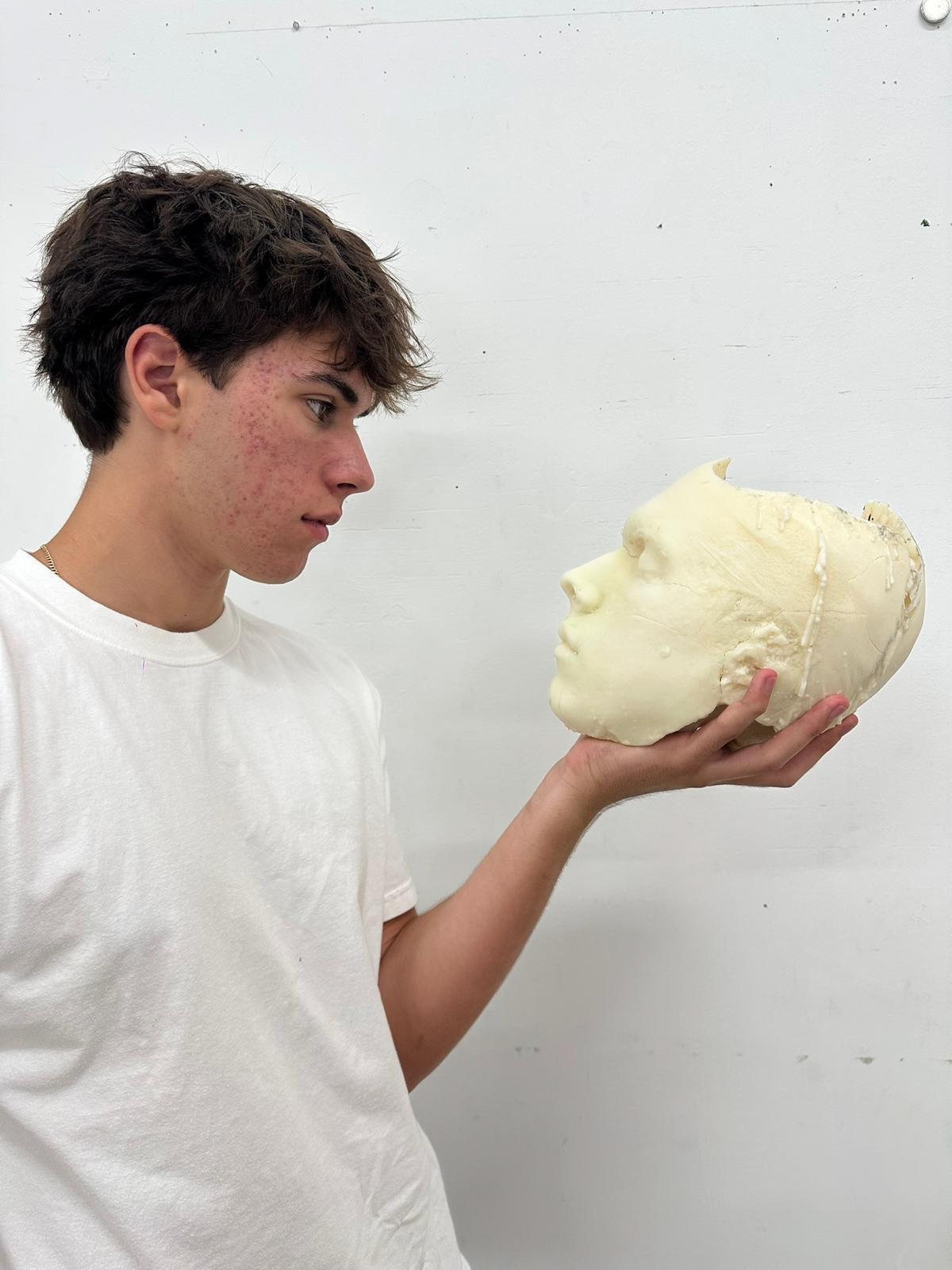
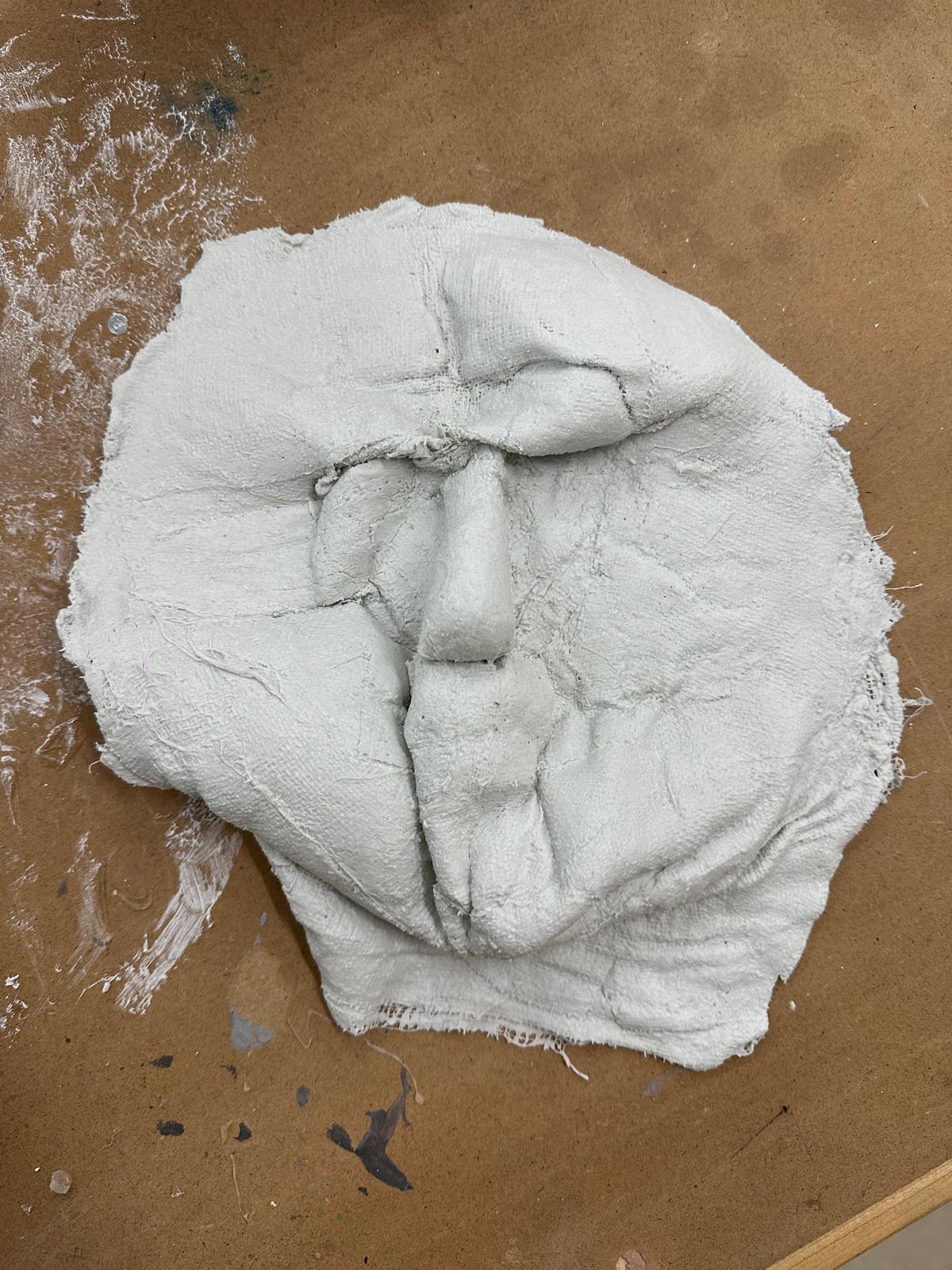
To ChatGPT or Not to ChatGPT, 2025
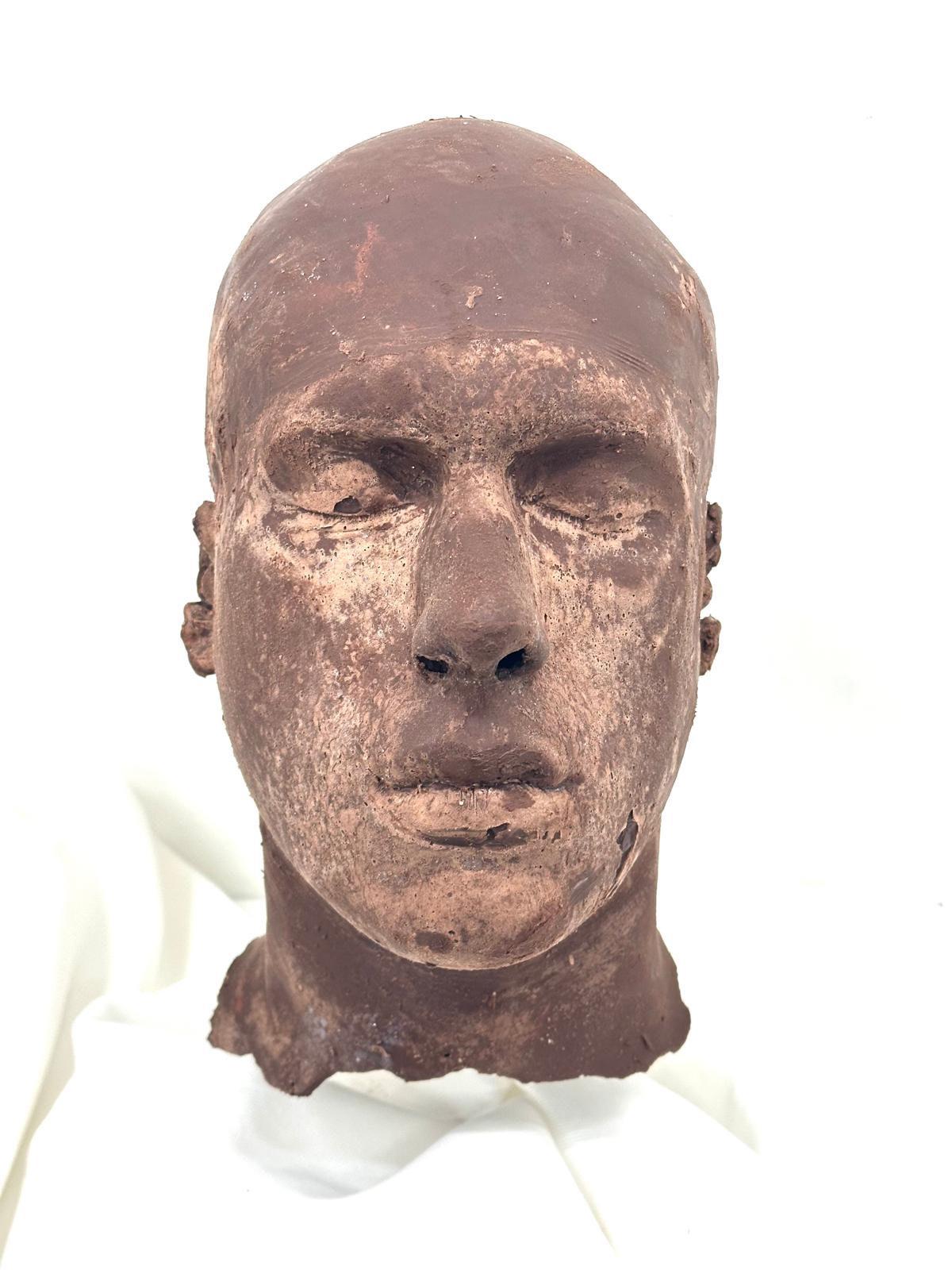
Self Portrait Head Casted out of Chocolate
7 x 10 x 10 inches
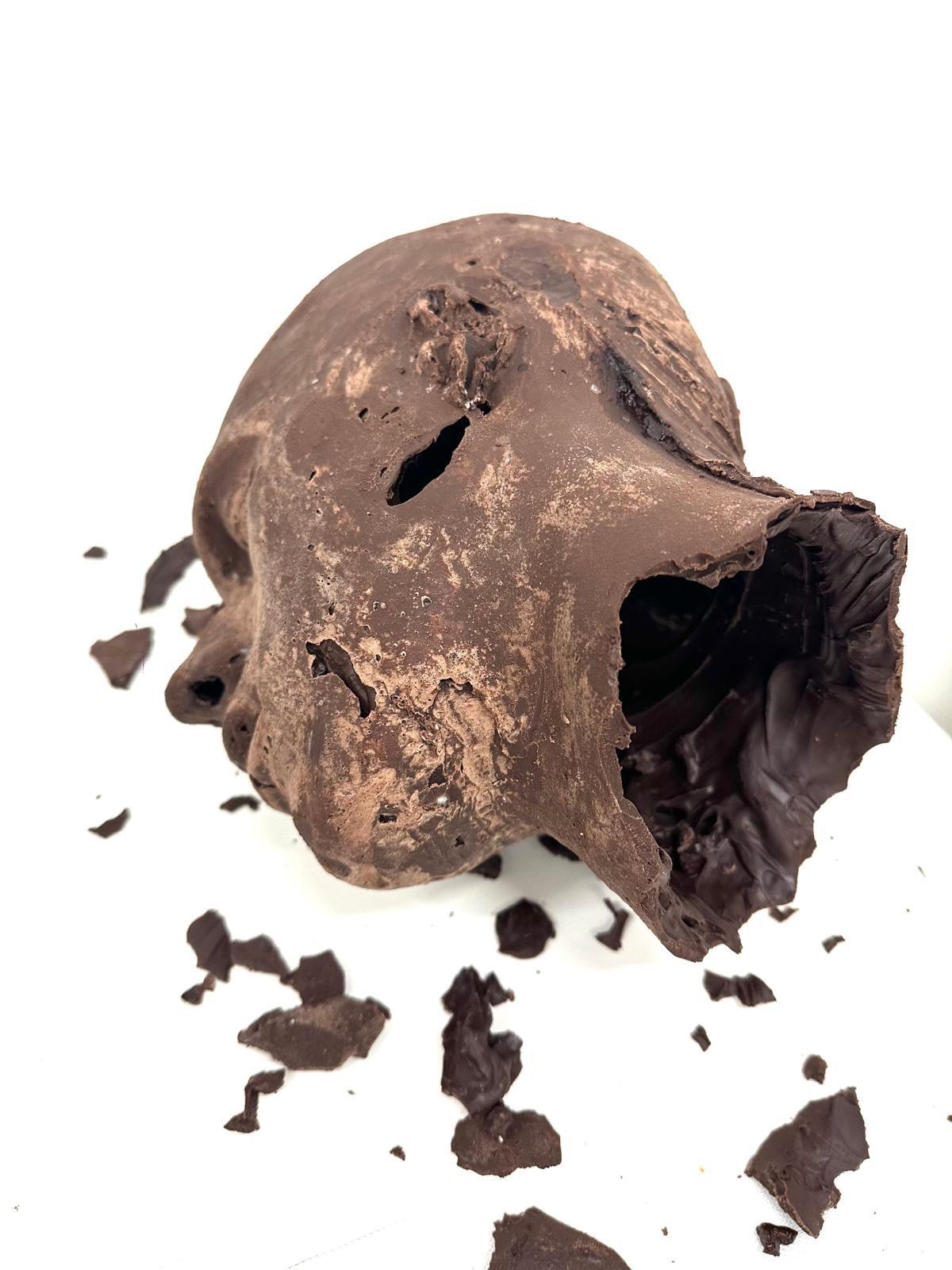

To ChatGPT or Not to ChatGPT, 2025
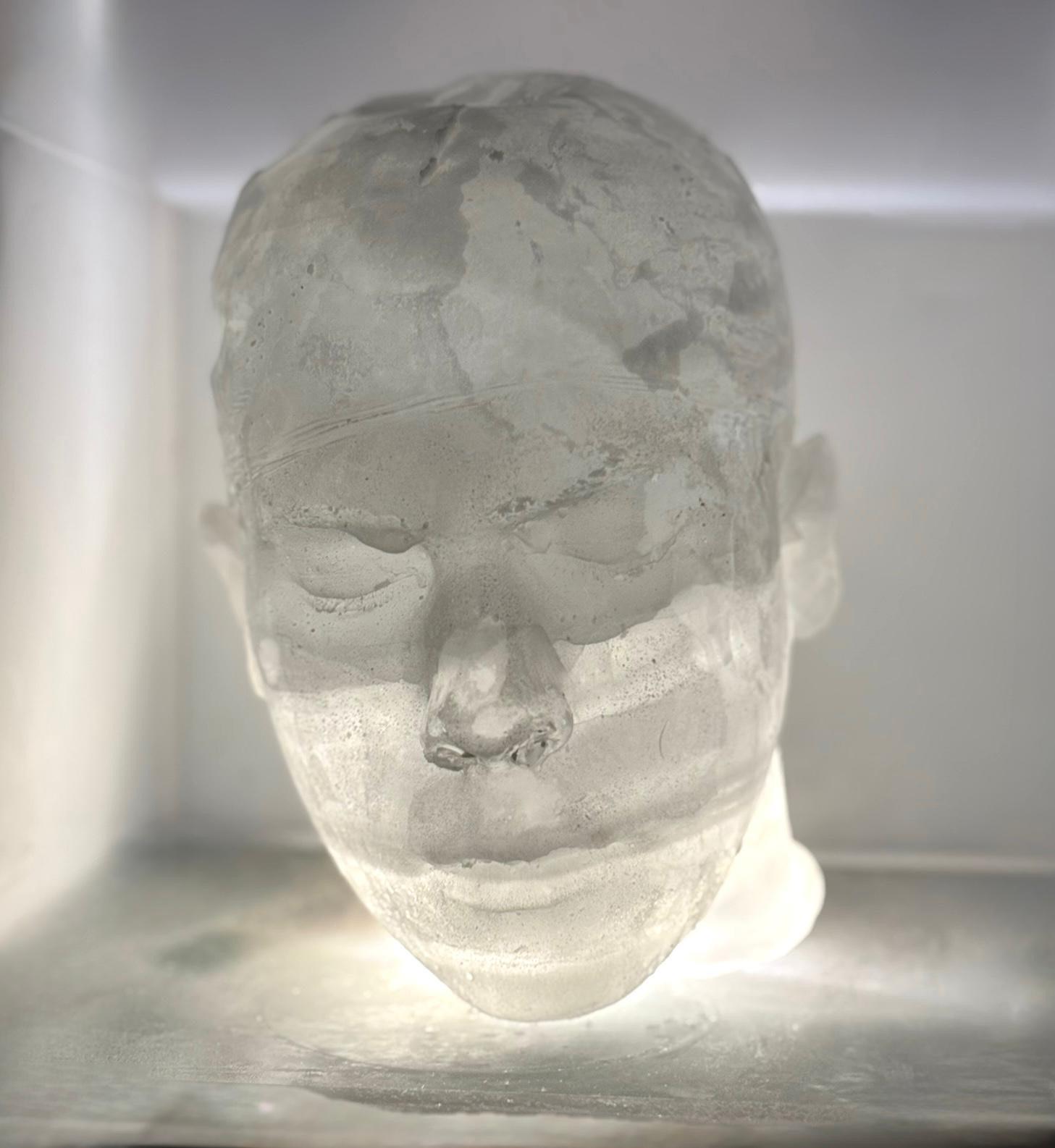
Self Portrait Head Casted out of Ice
7 x 10 x 10 inches

To ChatGPT or Not to ChatGPT, 2025
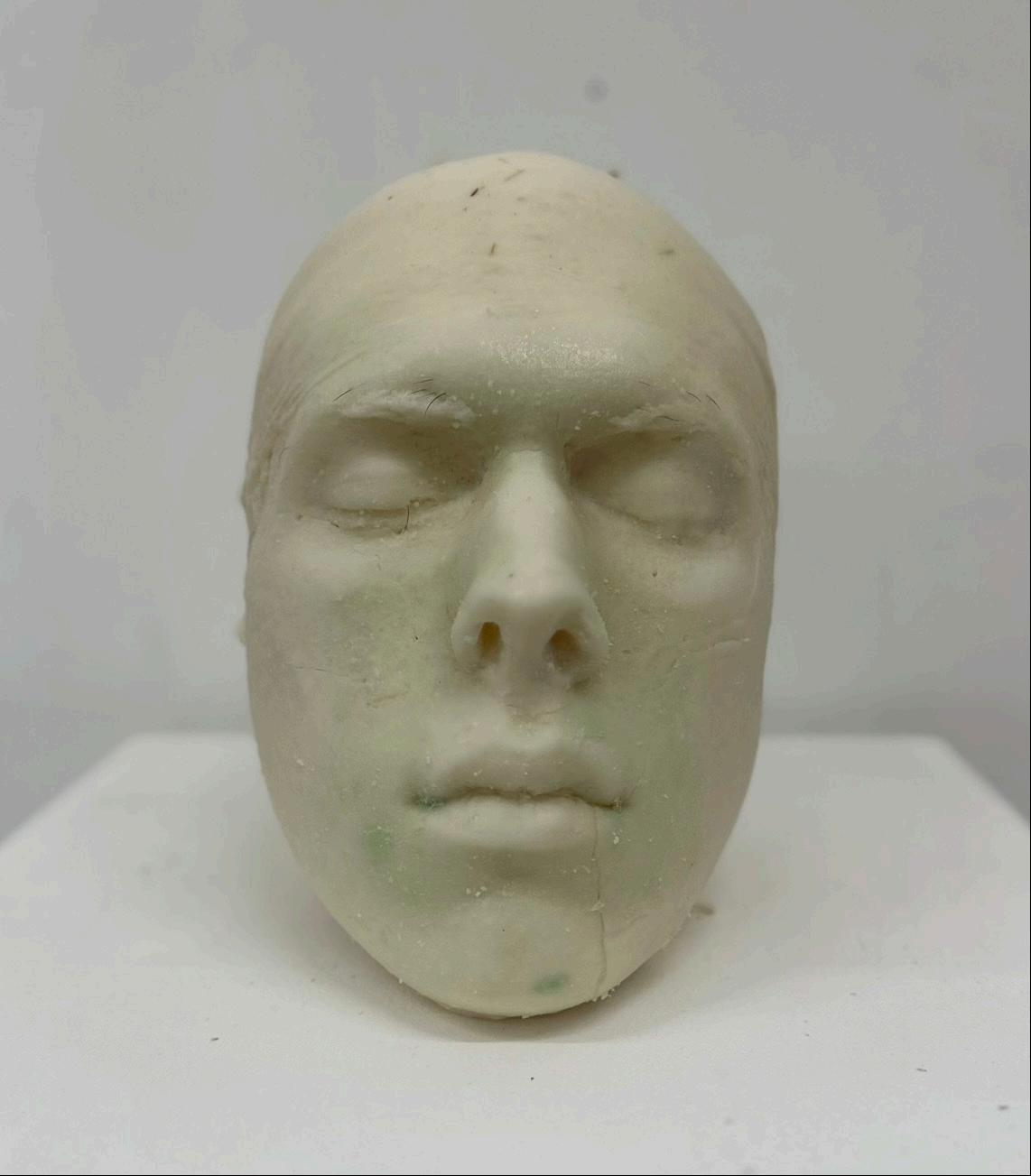
Self Portrait Head Casted out of Wax
7 x 10 x 10 inches
Are we as humans truly aware of how we spend our time? Through my work, I hope to prompt reflection, and because how I choose to spend my own time is deeply important to me, I look forward to using it intentionally as I continue to develop these ideas in college, growing as both a thinker and a maker.