Derek Pei
Landscape Architecture Portfolio
January 2026



Introduction

Derek is a fourth-year landscape architecture student at Penn State, where he has developed a strong interest in the intersection of environmental design and human health. His work explores how thoughtfully shaped outdoor spaces can support healing, resilience, and ecological function. He is particularly drawn to therapeutic landscapes and the restoration of urban meadows as a models for reconnecting people with nature.
Guided by environments that offer a sense of sanctuary and refuge, Derek approaches design with a quiet intentionality- seeking places that feel grounded, restorative, and alive.
Education
Experience
Pennsylvania State University
Masters of Science of Landscape Architecture
Pennsylvania State University
Bachelor’s of Landscape Architecture
• Bonn, Germany Study Abroad
University of Massachusetts
Lowell
BS Public Health
2025-2027
Qingyuan Engineering Intern Summer 2024
• Contributed to the strategic design and development of campsites in Tanzania
2022-2026 Spring 2026
2020-2022
• Conducted client analyses and delivered recommendations to optimize site-planning and execution strategies
• Used Photoshop to produce detailed renderings of proposed vegetation layouts and elevate the quality of design presentations
• Created initial campsite concepts using the Adobe Suite and produced high-quality visual drafts to support design development
Skills
Adobe Suite: Photoshop, Indesign, Illustrator
Rendering: Twinmotion & Lumion
Drafting: AutoCAD & Hand-drawing
3D Modeling: Rhino & SketchUP
Geospatial Mapping: ArcGIS Pro
Project List
01 02 03 04 05
Integrating Urban Habitats With Therapeutic Gardens
Toftrees, PA, Spring 2024
Re-Imaging Marsh Island
New Bedford, MA, Spring 2025
Scholar’s Meadow
University Park, PA, Fall 2024 Philadelphia, PA, Fall 2023
Re-Designing the Delaware Waterfront Treed Plaza
University Park, PA, Fall 2024
Integrating Urban Habitats With Therapeutic Gardens
Semester Four- Spring 2024
Location: Toftrees, PA
This proposal advances the integration of therapeutic gardens into urban environments, establishing a network of restorative spaces that enrich the community’s fabric.
By prioritizing spatial seclusion, sensory softness, and a sanctuary-like quality, the design promotes emotional well-being and moments of peaceful respite within otherwise demanding urban conditions.
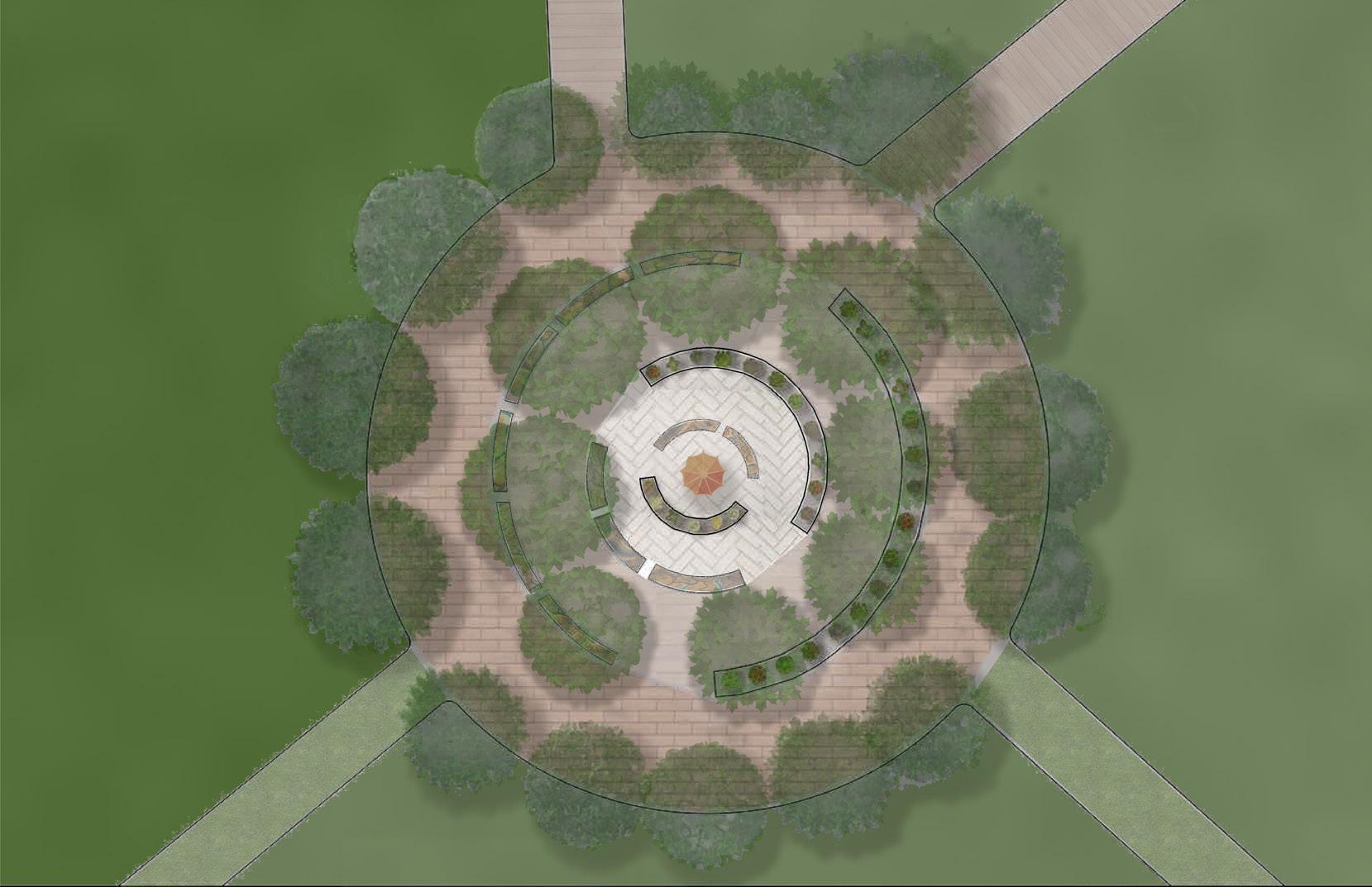
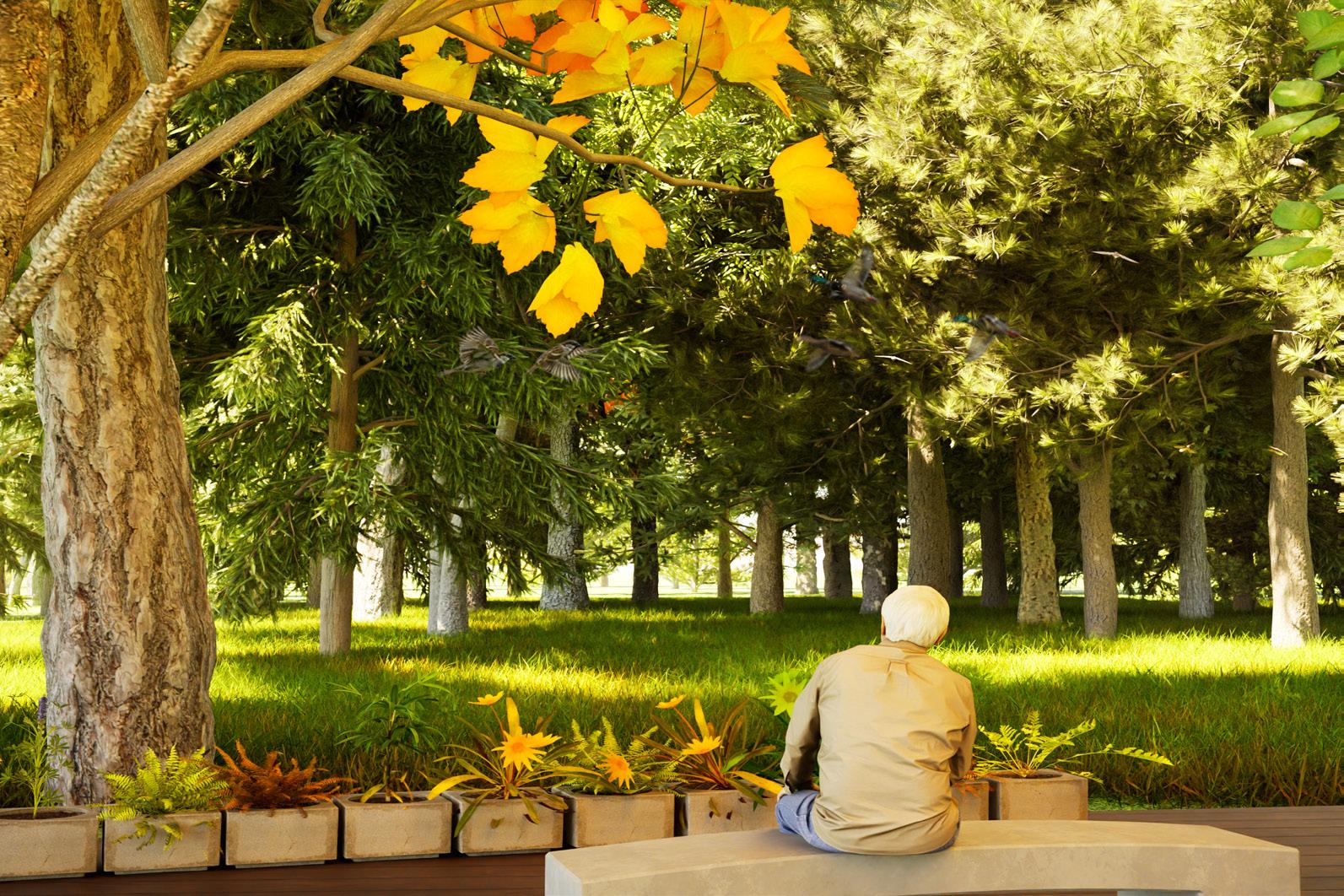
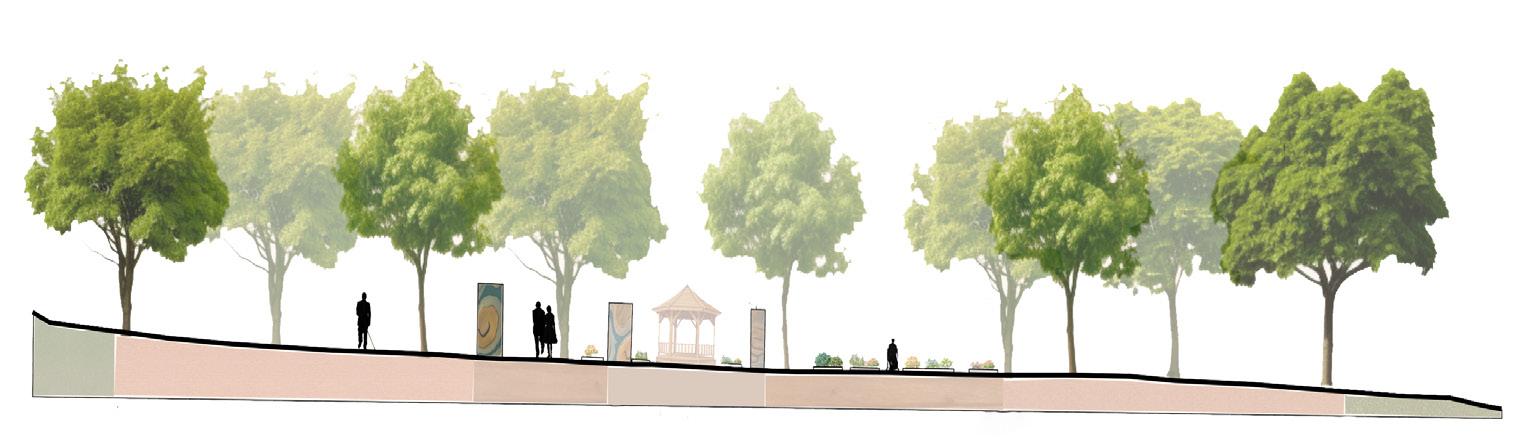
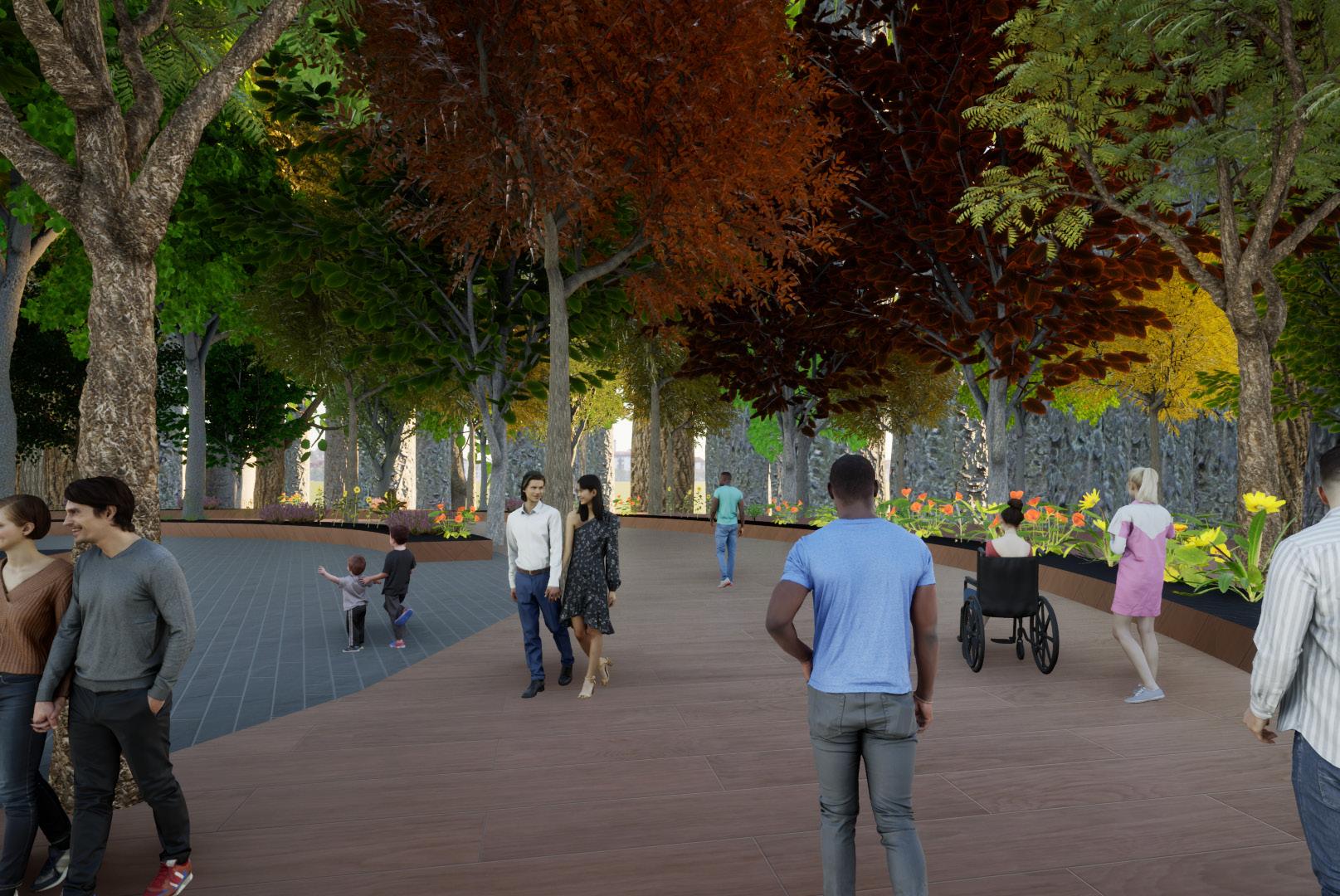
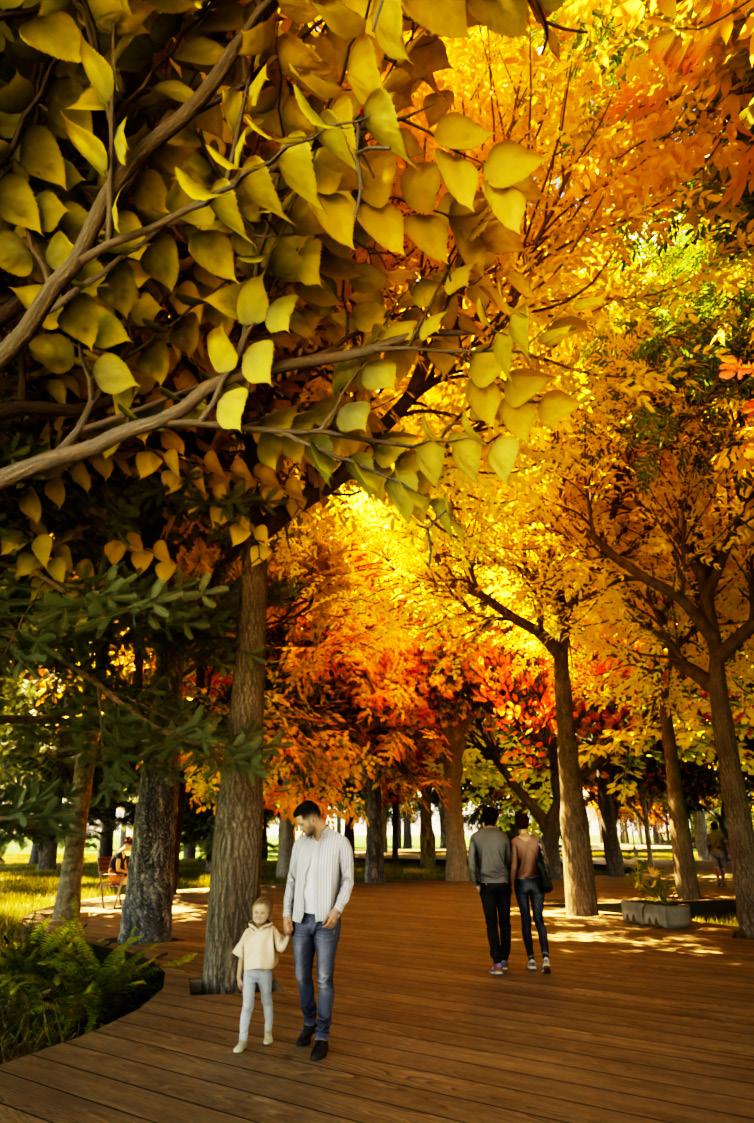
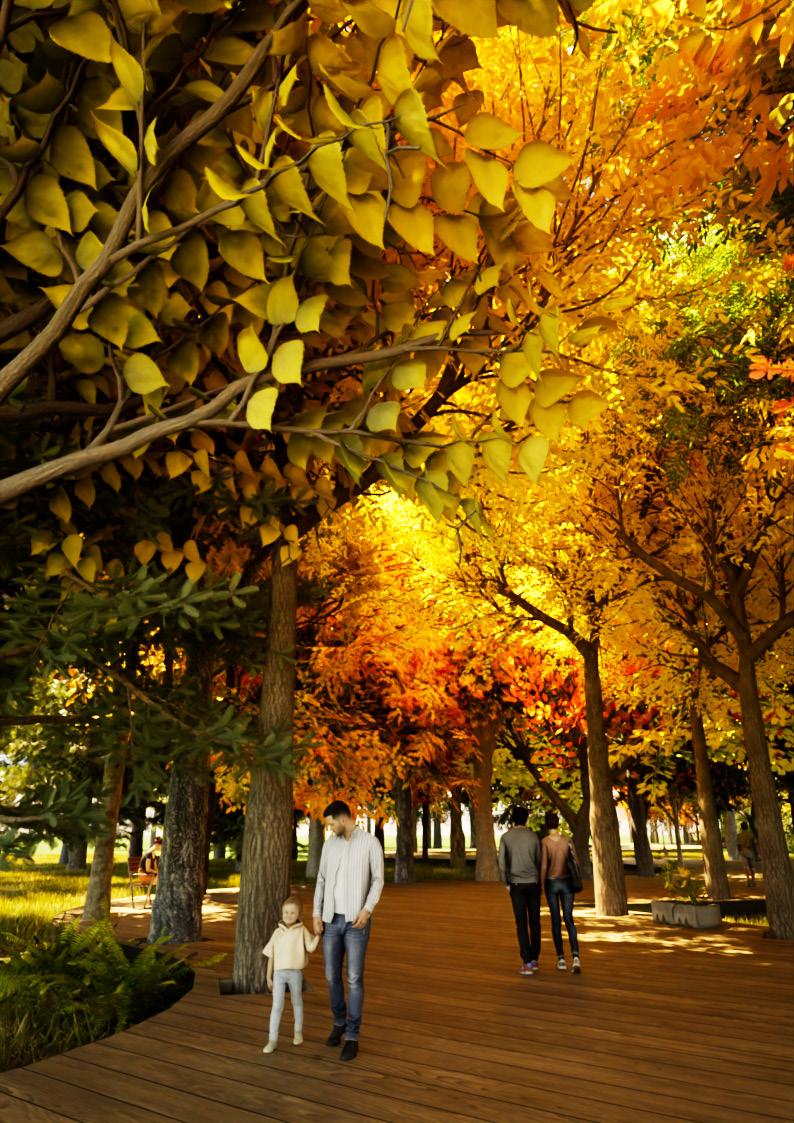
Under the Green Hall: Traveling through the Green Hall offers complete immersion, with the canopy creating a refuge-
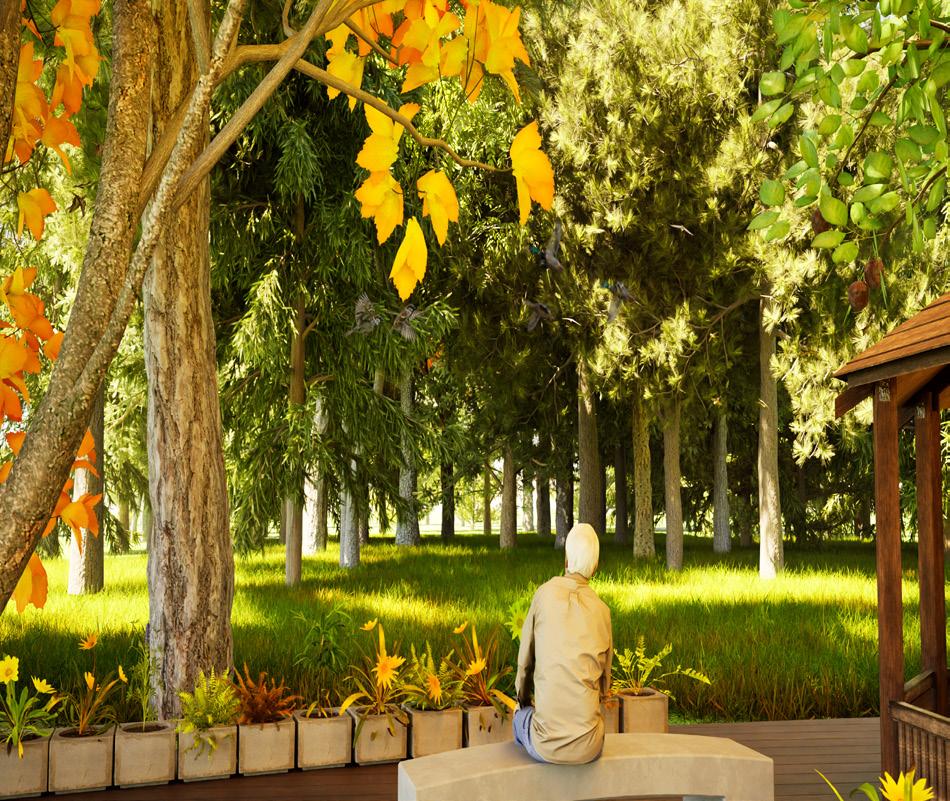
Watching the Birds: A secluded sanctuary where visitors observe birds and immerse themselves in the natural sounds of the environment.
Walking Through the Garden: As visitors move through the garden, layered perennials and the enclosing canopy create a dynamic sensory experience, with shifting textures and evolving fragrances.
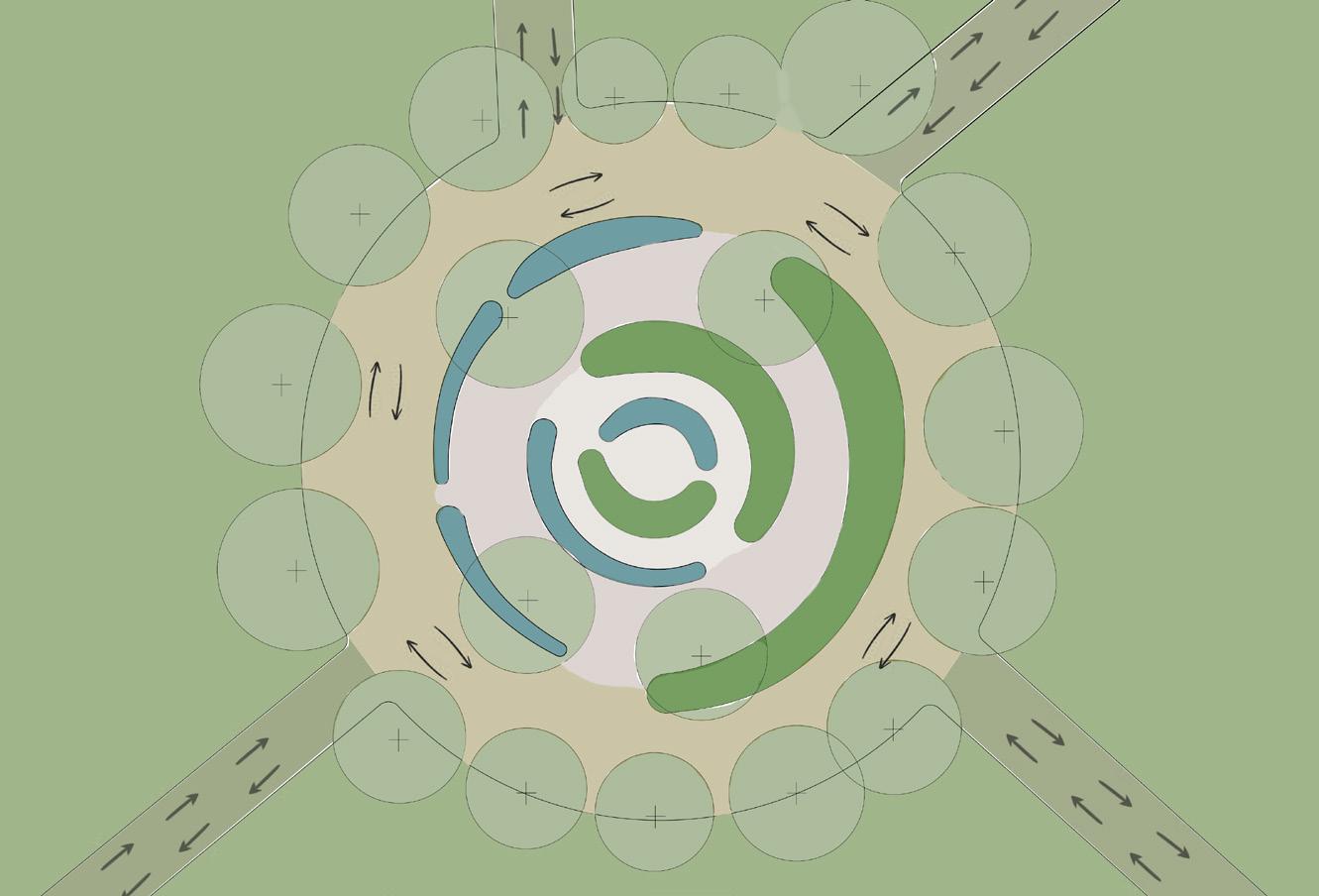
Concept Plan of Spatial Elements
Re-Imagining Marsh Island
Semester Six- Spring 2025
Location: New Bedford, MA
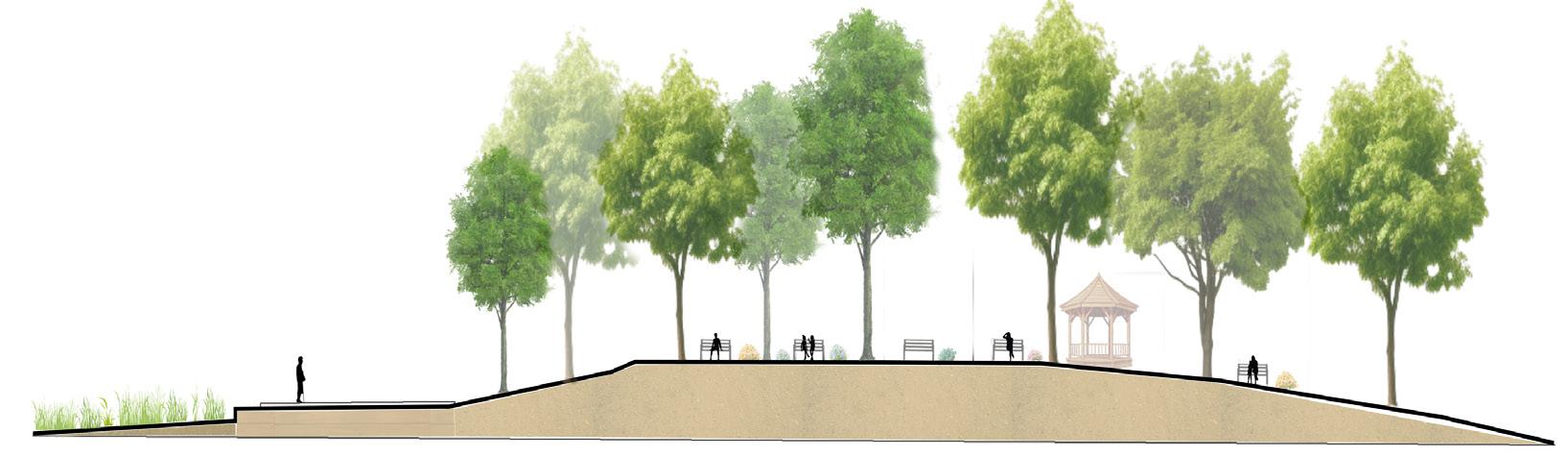
This proposal restores the site’s ecological function by introducing inviting gathering spaces that meaningfully reconnect people to a landscape long disrupted by dredging.
These spaces become dynamic anchors for habitat recovery and native plant regeneration, supporting cultural renewal and enabling the site to flourish as both an ecological system in repair and a reinvigorated community landscape.
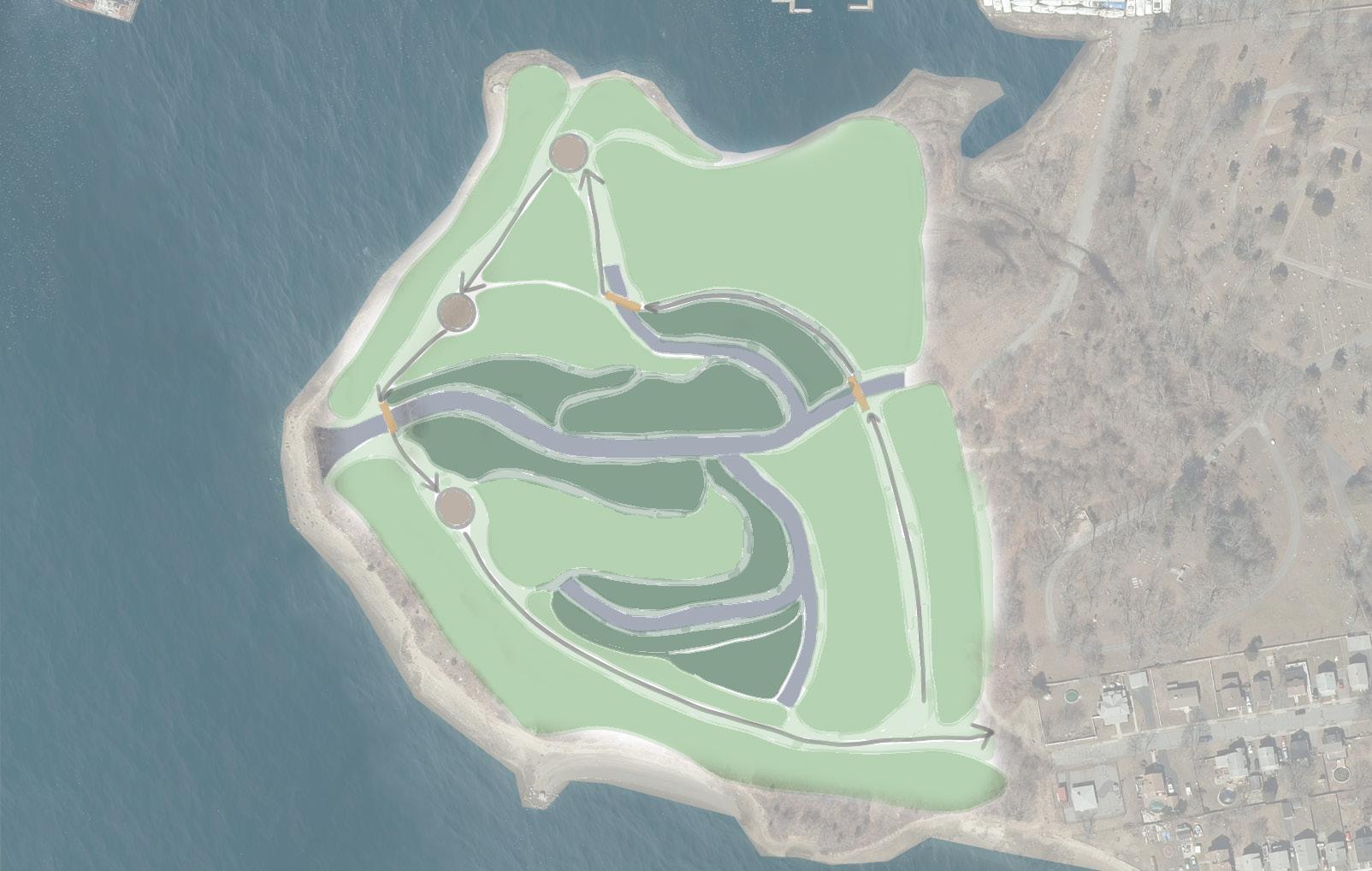
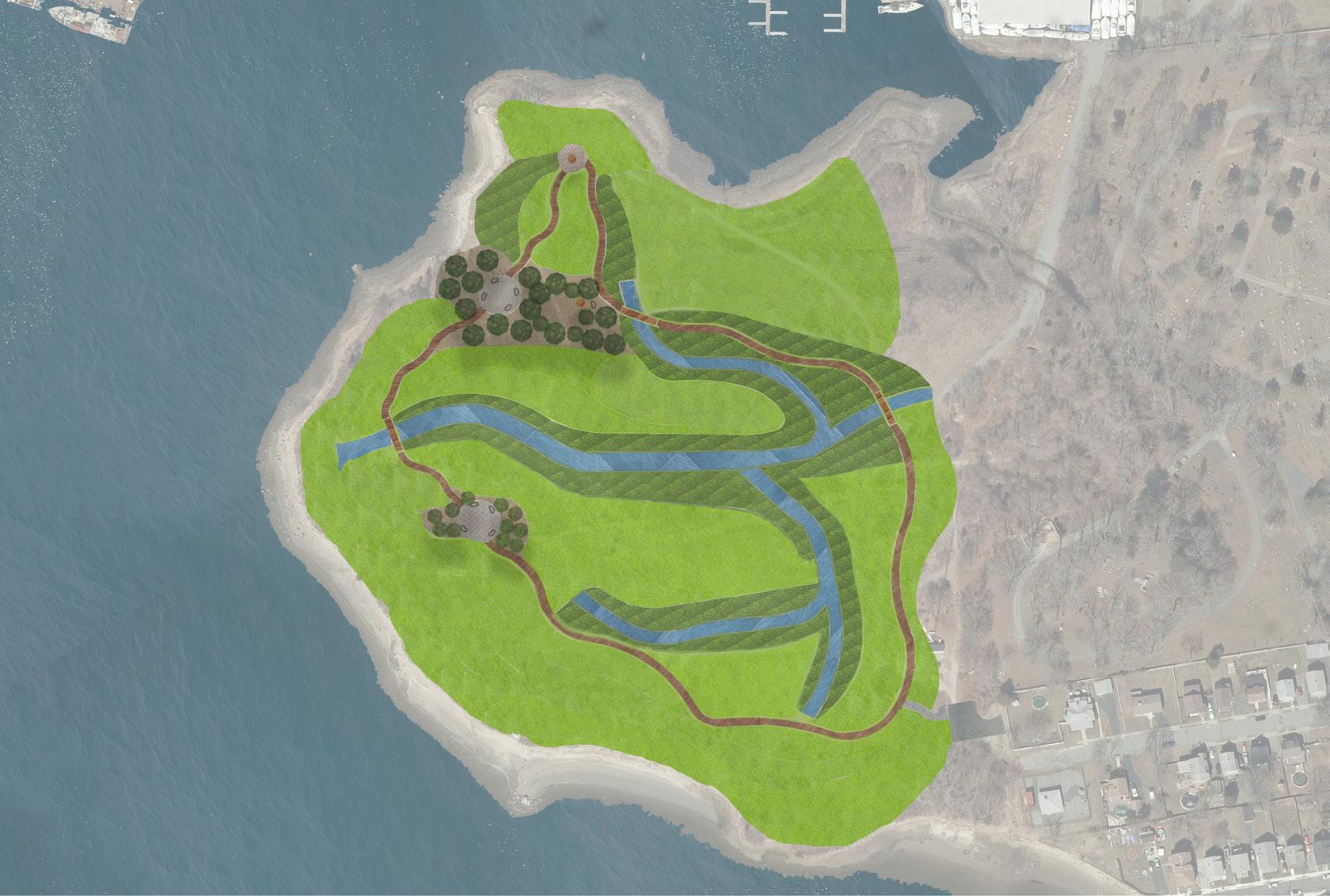
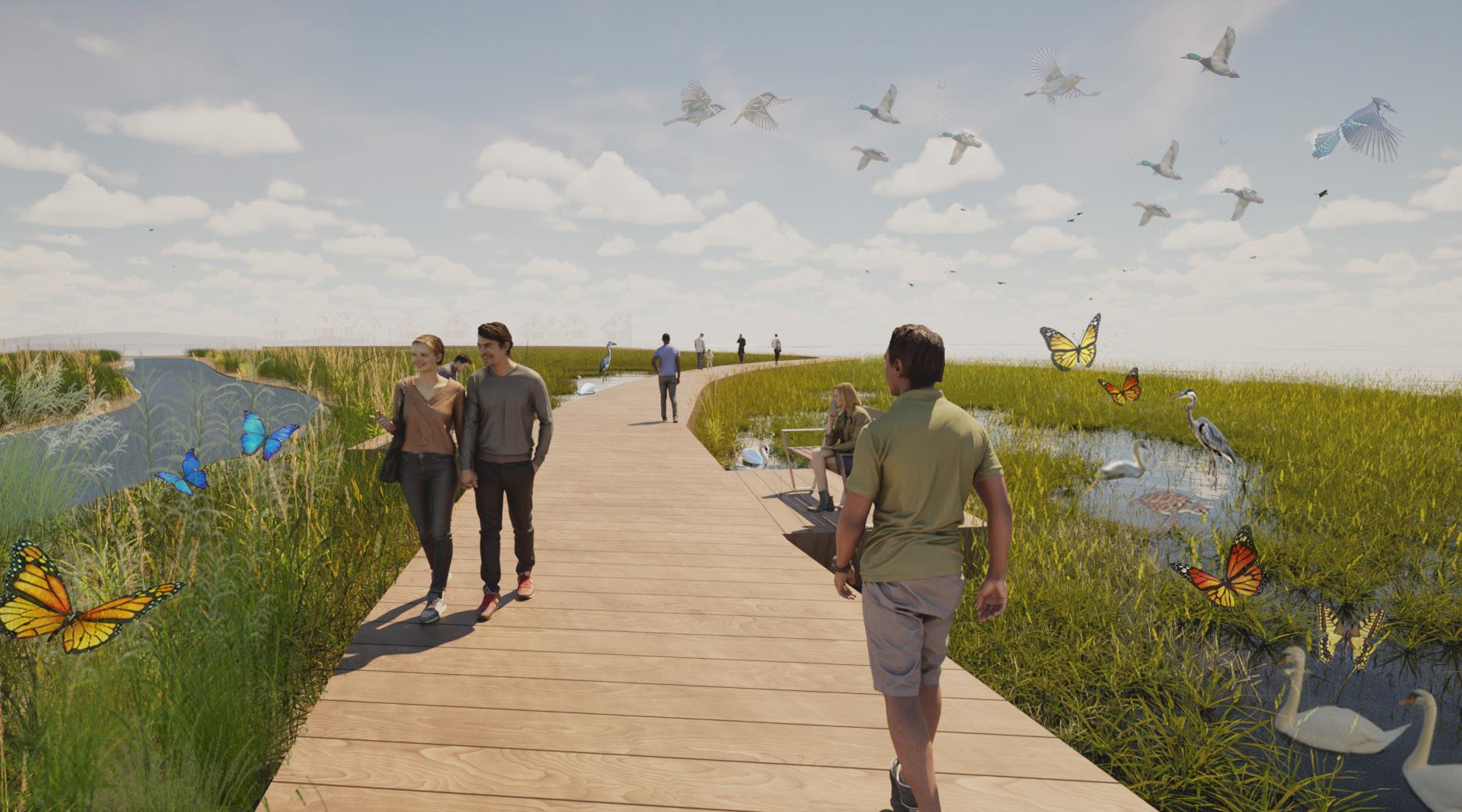
Marsh Island Master Plan
Concept Plan of Marsh Island
Scholar’s Meadow
Semester Five- Fall 2024
Location: University Park,
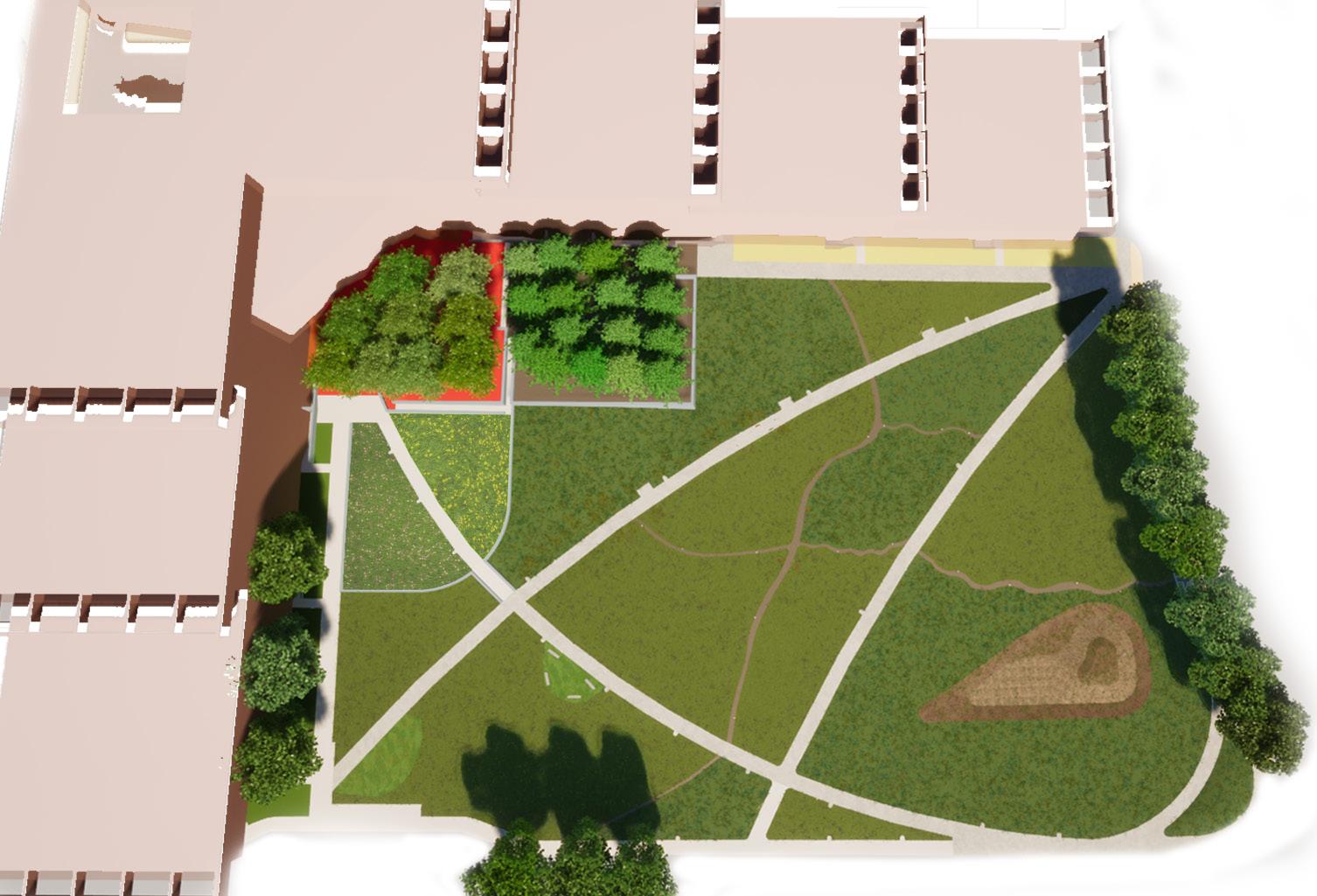
The Scholar’s Meadow at Penn State’s Millennium Science Complex leads visitors through meandering paths that reveal dynamic layers of diverse, ecologically rich plantings. A quiet study node offers a restorative pause, encouraging meaningful engagement with the living landscape.
Immersion in these biodiverse environments strengthens focus and cognitive performance, making the meadow a valuable educational resource as well as a calming, rejuvenating setting.
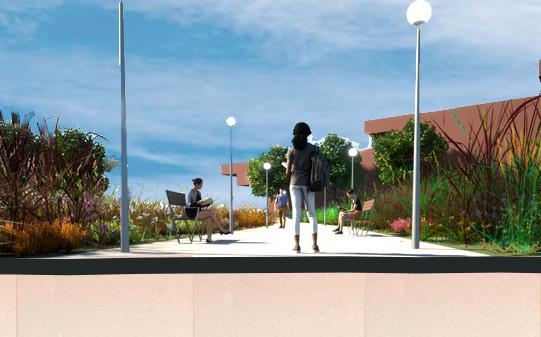
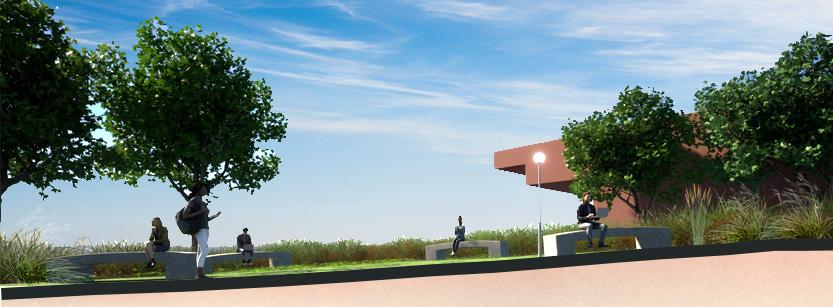
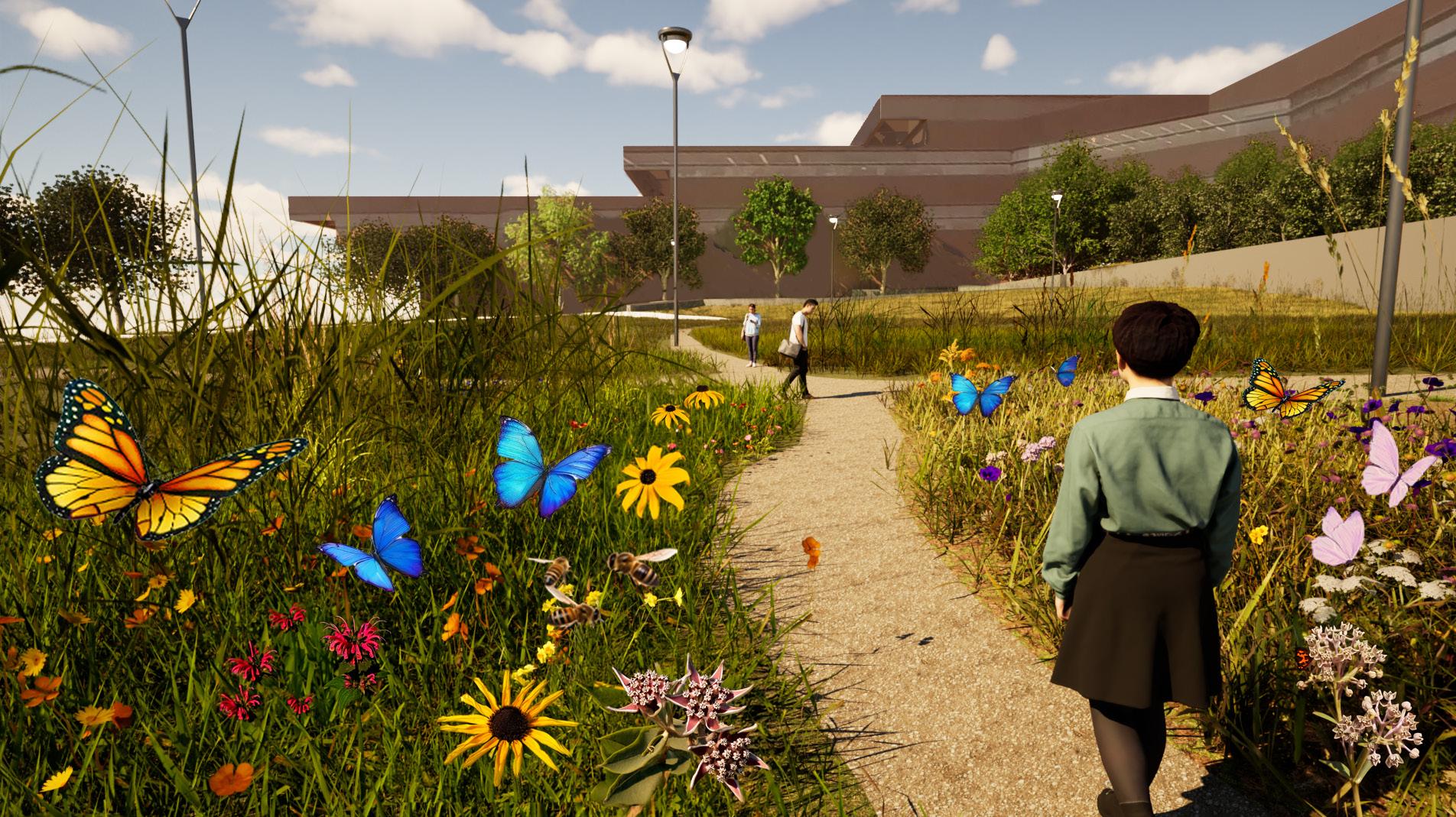
In the Meadows: Immersion in herbaceous perennials creates a layered sensory experience, enclosed by surrounding grasses
Re-Designing the Delaware Waterfront
Semester Three- Fall 2023
Location: Philadelphia, PA
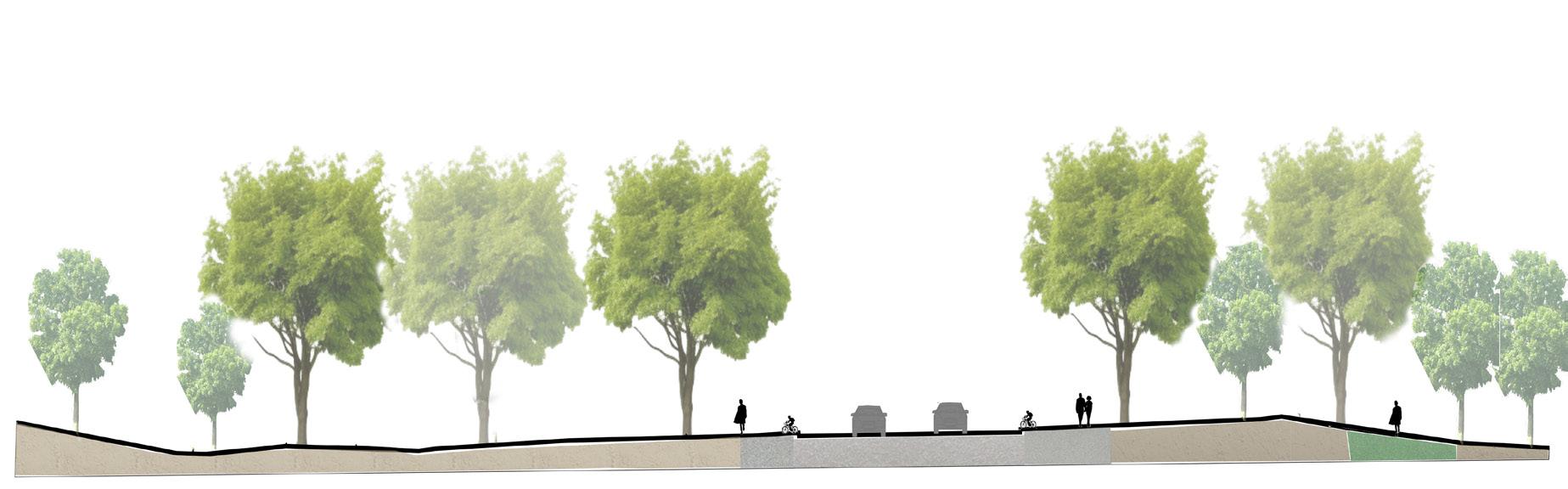
This project extends the Delaware River Trail north to Port Richmond, connecting piers, the Richmond Industrial Trail, and the Lehigh Viaduct into a resilient ecological corridor.
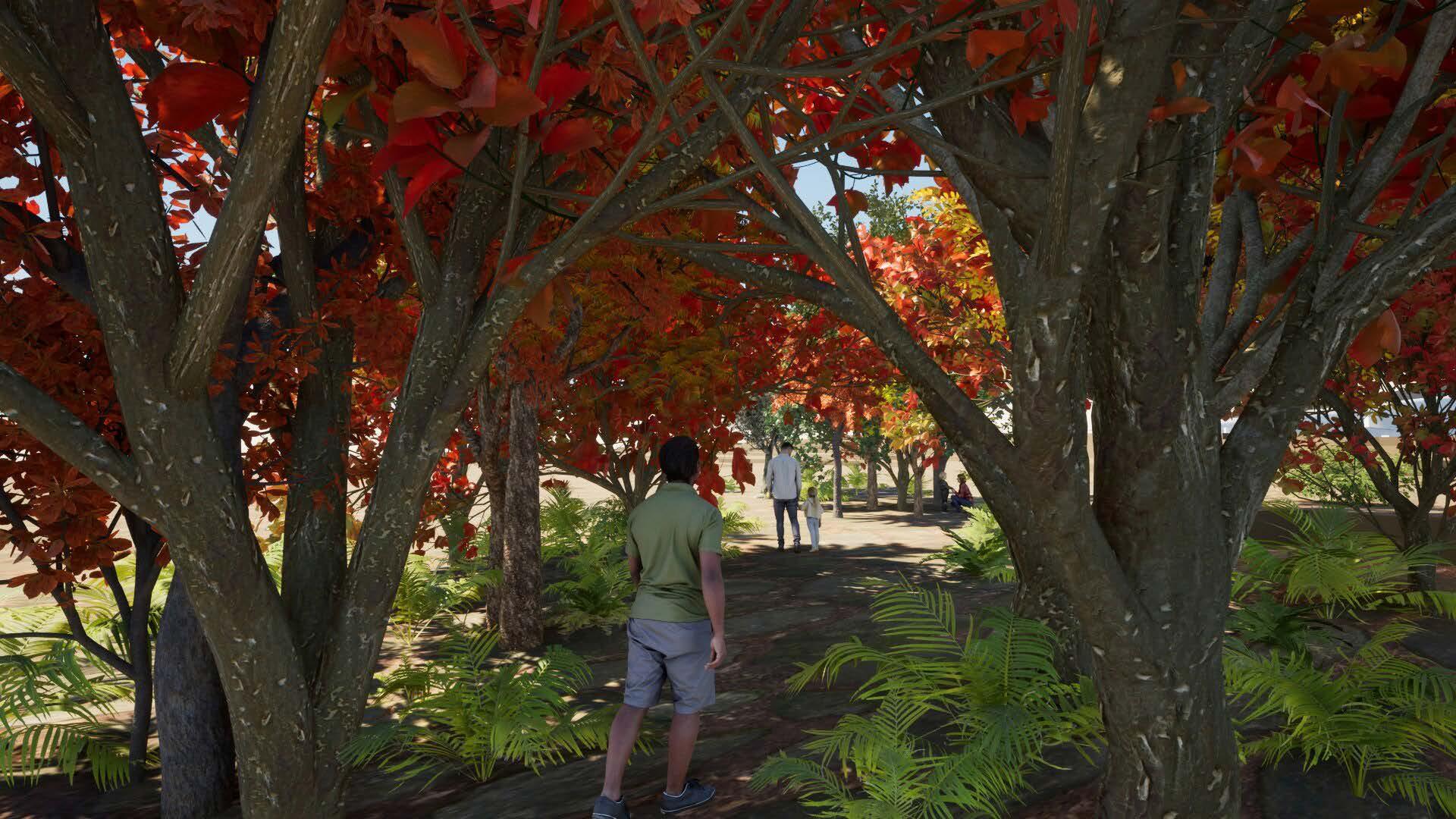
The proposal envisions a future “urban jungle,” using dense, climate-adaptive planting to meet projected Everglades-like conditions and create a lush, restorative escape within the city.
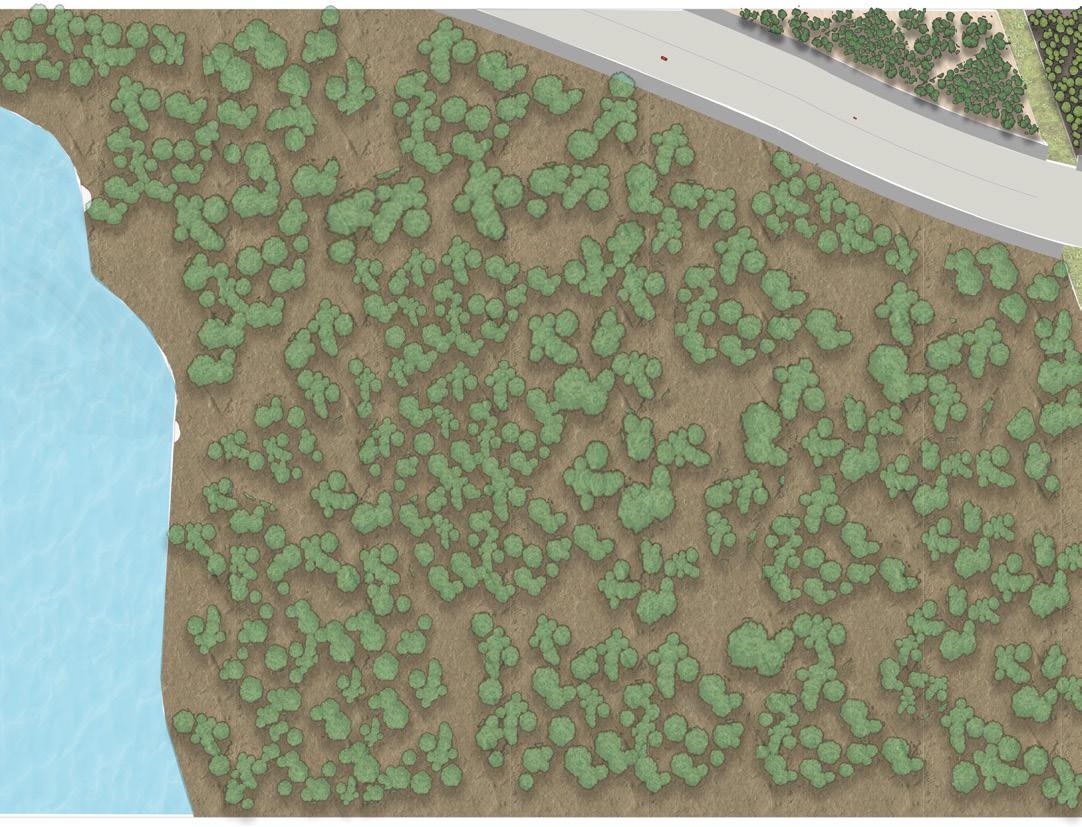
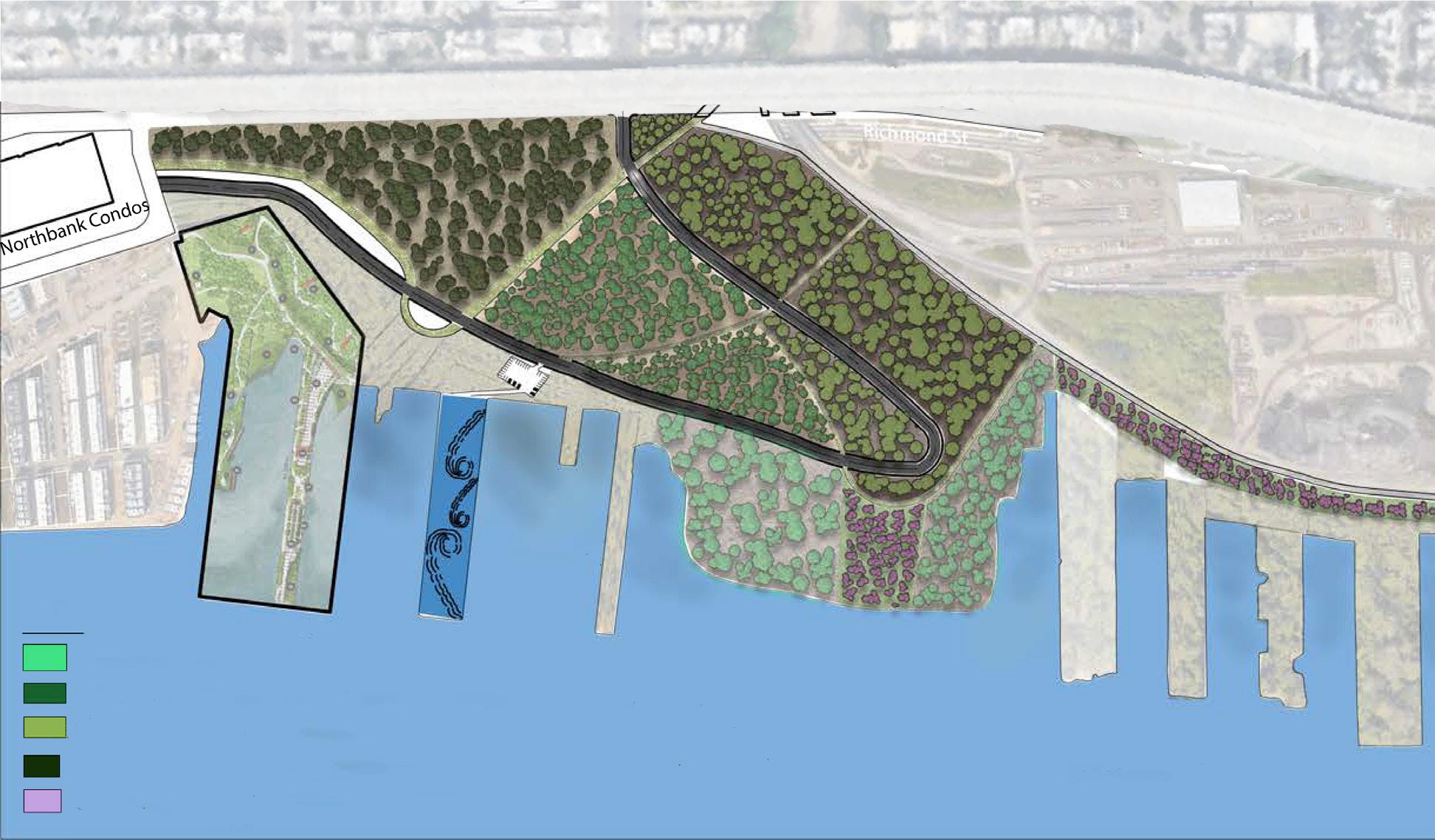
Illustrative Plan of the Jungle
Walking Through the Jungle: Traveling through the jungle evokes a sense of escape, with the enclosing canopy creating a sheltered retreat.
Treed Plaza
Semester Five- Fall 2024
Location: University Park, PA
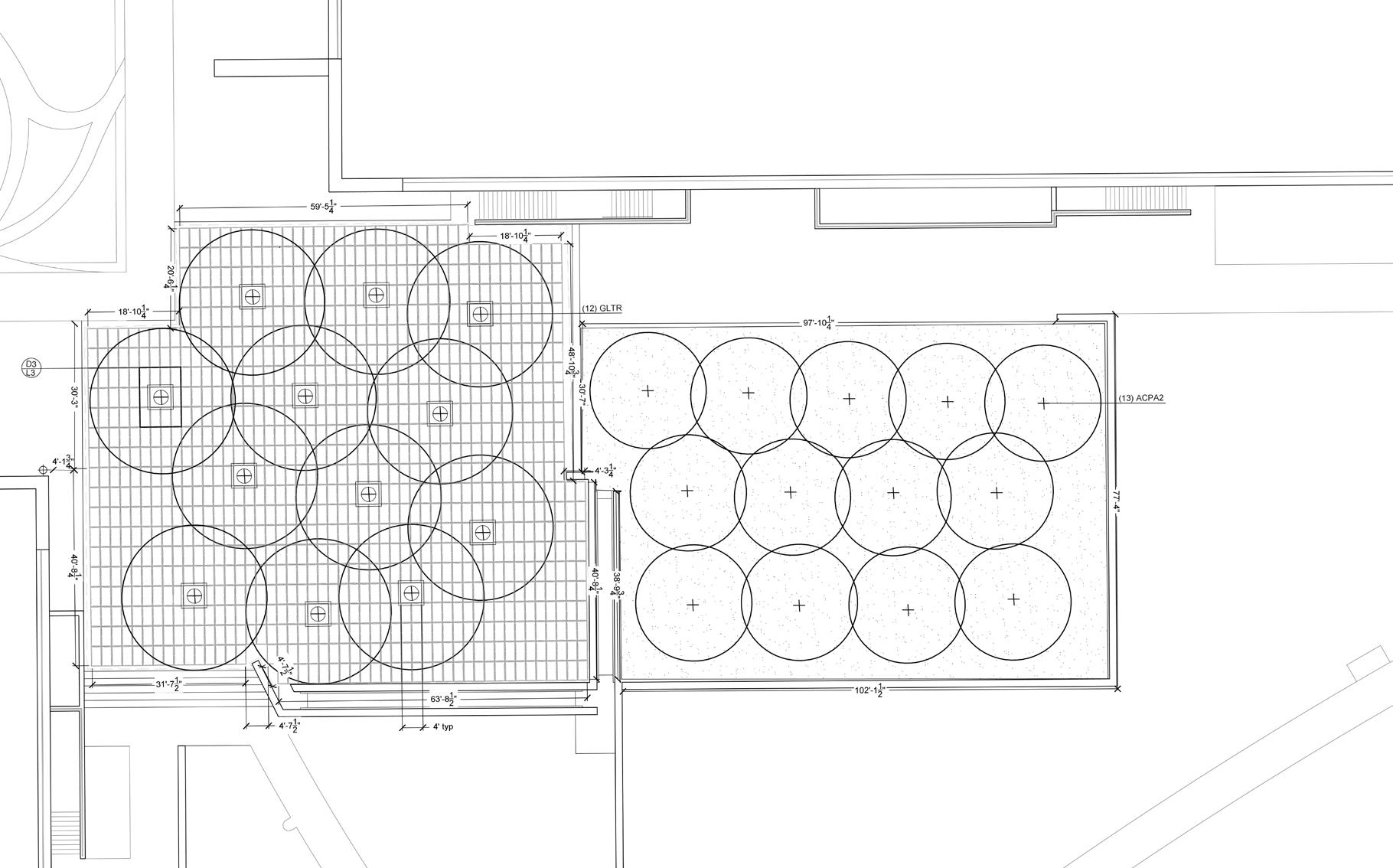
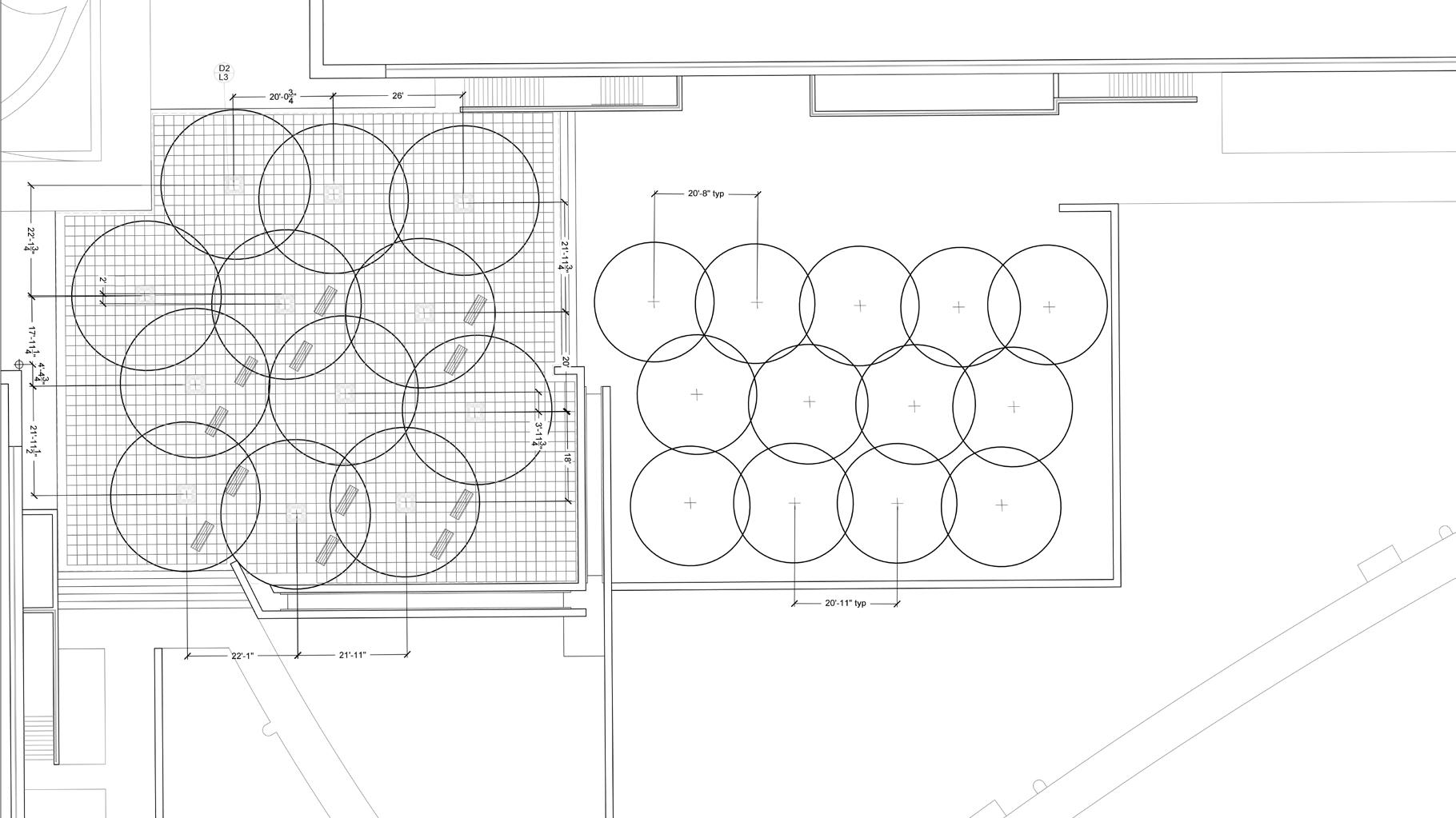
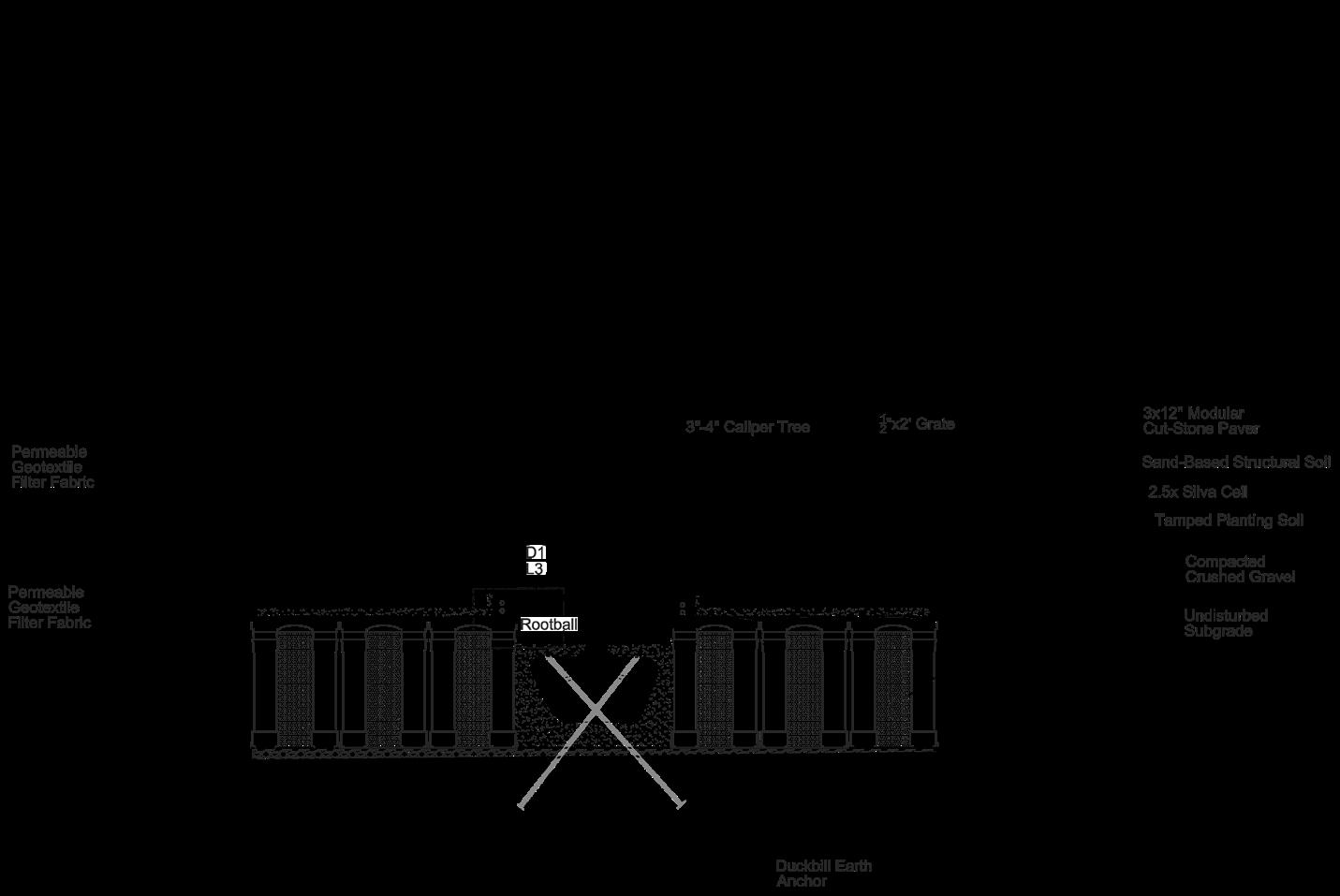
The Treed Plaza is a phase of the Millenium Science Complex redesign. The Upper Plaza features a Stratavault Silva Cell, which are plastic modules that are designed to preserve root growth in urban environments.
The Lower Plaza has a sand-based structural soil and both plazas are covered in permeable pavers.
1. TAKE OUT ALL AGGREGATE FROM TREE FLAIR
2. DISPLAY TRUNK FLAIR; HAVE 2"-3" FROM TRUNK FLAIR OPEN OF SAND
3. ANCHORS SHALL BE 4"-6" BELOW SUBGRADE
4. TAKE OUT A MINIMUM OF SEVENTY PERCENT OF WIRE, TWINE AND BURLAP FROM THE ROOTBALL BEFORE STARTING TO PLANT
Below Ground Plan
Modular Silva Cell Plan
Modular
Cell Section
Engineered Soil Section