DePaulia The
The DePaulia is the official student-run newspaper of DePaul University and may not necessarily reflect the views of college administrators, faculty or staff.
EDITOR-IN-CHIEF LILI JARVENPA LJARVE@DEPAULIAONLINE.COM
DIGITAL MANAGING | SABRINA CASTLE SCASTL@DEPAULIAONLINE.COM
CONTENT MANAGING | BRIELLE KOHLBECK BKOHLB@DEPAULIAONLINE.COM
DIRECTOR OF PHOTO & MULTIMEDIA | JEREMY BATTLE JBATTL@DEPAULIAONLINE.COM
NEWS EDITOR | SADIE SPRINGER SSPRIN@DEPAULIAONLINE.COM
ASST. NEWS EDITOR | KHADIJA MUJAHID KMUJAH@DEPAULIAONLINE.COM
OPINIONS EDITOR ANNA BARTH ABARTH@DEPAULIAONLINE.COM
ARTS & LIFE EDITOR | ANNIE KOZIEL AKOZIE@DEPAULIAONLINE.COM
ASST. ARTS & LIFE EDITOR | LINDSAY FREIBERGER LFREIB@DEPAULIAONLINE.COM
SPORTS EDITOR | PEYTON HOPP PHOPP@DEPAULIAONLINE.COM
ASST. SPORTS EDITOR LAURA VÁZQUEZ DAVID LVAZQU@DEPAULIAONLINE.COM
ILLUSTRATION EDITOR | PRECIOSA RIOS PRIOS@DEPAULIAONLINE.COM
ASST. ILLUSTRATION EDITOR MARA LOGAN MLOGAN@DEPAULIAONLINE.COM
DESIGN EDITOR | GENESIS COFFEY GCOFFE @DEPAULIAONLINE.COM
ASST. DESIGN EDITOR JAVEN OSWALD JOSWAL@DEPAULIAONLINE.COM
PHOTO EDITOR | GIACOMO CAIN GCAIN@DEPAULIAONLINE.COM
ASST. PHOTO EDITOR ZOEY DUCHENE ZDUCHE@DEPAULIAONLINE.COM
MULTIMEDIA EDITOR GRACE LOGAN GLOGAN@DEPAULIAONLINE.COM
ASST. MULTIMEDIA EDITOR | RILEY SOMMERS RSOMME@DEPAULIAONLINE.COM
COPY & NEWSLETTER EDITOR AMBER CORKEY ACORKE@DEPAULIAONLINE.COM
ASST. COPY EDITOR ISABELLA RUSSOMANNO IRUSSO@DEPAULIAONLINE.COM
SOCIAL MEDIA EDITOR | RILEY MOULTON RMOULT@DEPAULIAONLINE.COM
COMMUNITY ENGAGEMENT COORDINATOR | LAINE WYATT LWYATT@DEPAULIAONLINE.COM
MARKETING COORDINATOR SYDNEY MANTEI SMANTE@DEPAULIAONLINE.COM
EDITORIAL BUSINESS MANAGER | AIKO TAI ATAI@DEPAULIAONLINE.COM
AD SALES BUSINESS MANAGER SAGE SLESSOR SSLESS@DEPAULIAONLINE.COM
FACULTY ADVISER | MARTHA IRVINE MIRVINE5@DEPAUL.EDU

La DePaulia es el noticiero oficial estudiantil en español de la Universidad DePaul, enfocado en proveer una voz para la comunidad latinx. Nuestras opiniones no necesariamente reflejan las opiniones de la administración, facultad o personal de la universidad.
EDITORA EN JEFE | SOFIA JOSEPH SJOSEP@DEPAULIAONLINE.COM
EDITORA DE CONTENIDO | LAURA VÁZQUEZ DAVID LVAZQU@DEPAULIAONLINE.COM
EDITORA DE NOTICIAS | IZZY SIEMASZKO ISIEMA@DEPAULIAONLINE.COM
EDITOR DE REDES SOCIALES CRIS SALAS CSALAS@DEPAULIAONLINE.COM
MENTOR DE LA DEPAULIA | ARTURO FERNÁNDEZ AFERNÁ@DEPAULIAONLINE.COM
Letter From the Editor: A window into our paper
By Jeremy Battle Director of Photography & Multimedia
Ithink I was destined to become a journalist because I’ve always been insane. Perhaps a kinder word is neurotic.
I’ve been writing for as long as I can remember and telling stories for even longer. I always had an active imagination, but the world really opened up for me when I found out how many real stories were sitting right in front of me. I picked up a camera when I found out how many weren’t being told.
This time a year ago, I halted a meeting to raise concerns about our lack of Black History Month coverage. At a time when a new wave of
ICE agents had come to Chicago, we had diverted our attention from Latine and Black stories in favor of an exhaustive list of Valentine’s Day ones.
I was and still am one of two Black editors at our publication. The other is Genesis Coffey, our design editor. Between us, we have our fingers on the pulse of the visuals you see every week, but not always on the stories you read.
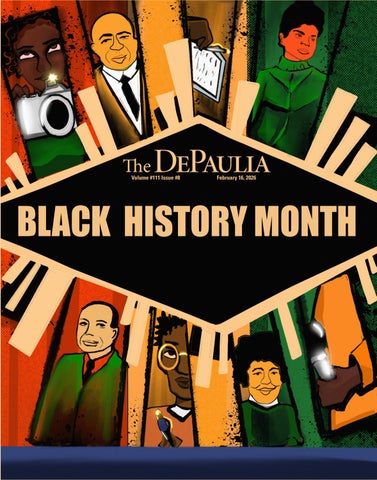
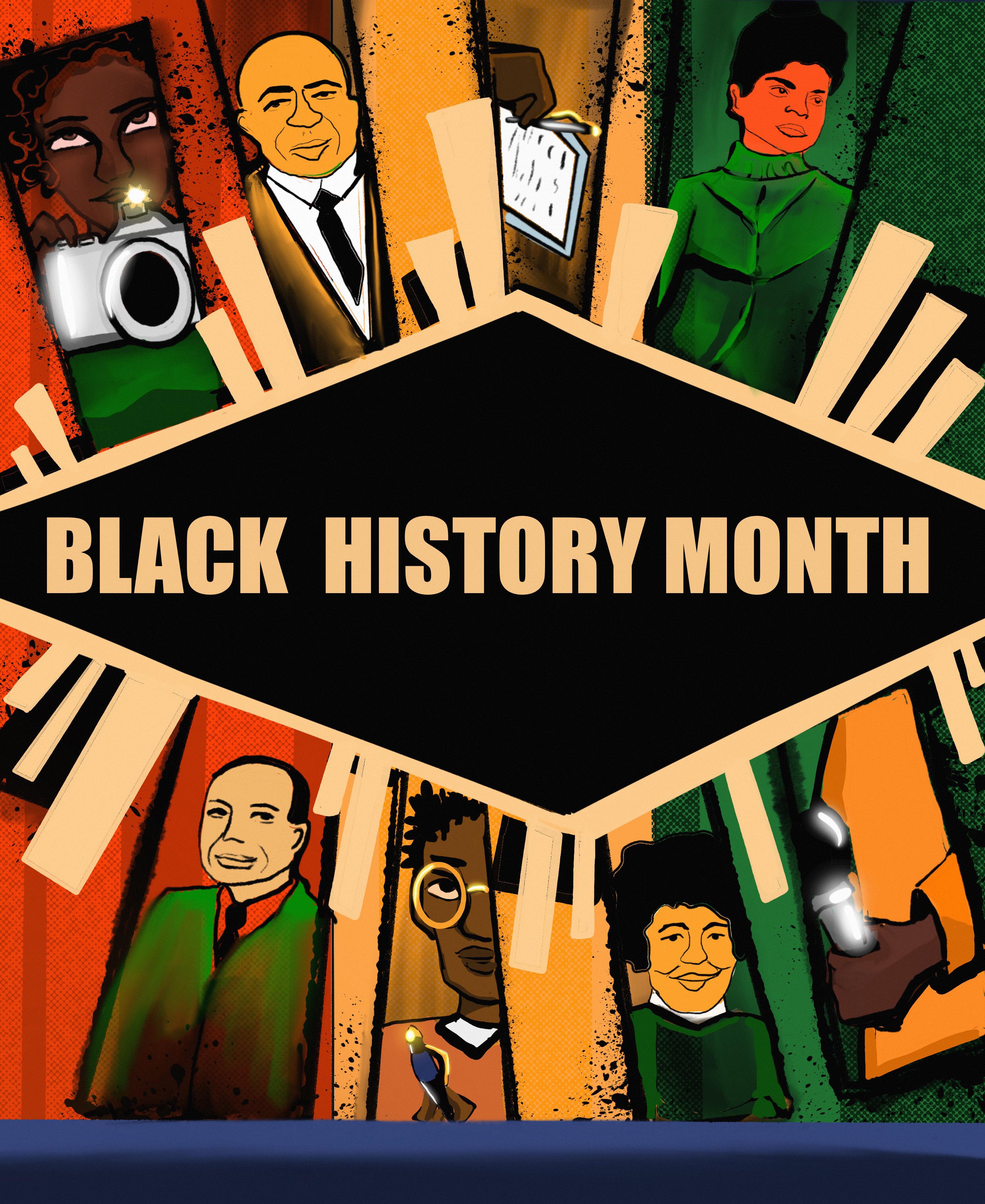
Across The DePaulia’s 103-year history, this is our first ever special editon Black History Month issue. It’s been a long time to overlook a community so large. With this issue, we want to renew our investment in telling Black stories, regardless of what month of the year it is.
THE BLACK HISTORY
The burden of a newspaper is to deliver consistent news and stories that appeal to the heart of our community. It’s not a goal that we can accomplish in one go; it’s something we work towards day in and day out.
Everyone at The DePaulia does this work because we care. We care about telling community stories, we care about making inroads, and we care about educating our readers. Our paper is always growing. With ever-evolving coverage like our Black History Month issue and many others, I hope it continues to grow in a way that reflects the diversity of DePaul’s community.


Are Black journalists under attack?
By Jeremy Battle Director of Photography & Multimedia
In the weeks following the arrests of reporters Don Lemon and Georgia Fort, a wave of First Amendment concerns have been at the forefront of journalist’s minds.
On Jan. 29, Lemon and Fort were detained by Department of Homeland Security agents after livestreaming anti-ICE protests at Cities Church in St. Paul, Minnesota.
DHS alleges the two journalists participated in the “mob” intimidating and threatening the congregation and pastor. Lemon and Fort face charges of violating the Freedom of Access to Clinic Entrances Act, which prohibits the use of force to interfere with religious practice and conspiracy to violate someone’s constitutional rights.
Lemon, who pleaded not guilty and has maintained his position as a reporter, was heard on the stream saying, “I’m just here photographing, I’m not part of the group … I’m a journalist.”
The situation has sparked national discussion and headlines, but for many this is not new.
Brandon Pope, president of the
Chicago chapter of National Association of Black Journalists, sees it as a reality deeply tied to this country.
“Black journalists are often restricted, discouraged or even punished for shedding light on race in this country,” Pope said. “The institutional silencing of voices has been long standing.”
Pope, who has worked in the industry for over a decade, has seen many journalists face similar restrictions.
“I remember when Omar Jimenez was arrested during the George Floyd protests and even further back when Wesley Lowery was,” Pope said.
In both cases, those journalists had their rights infringed while trying to report on public outcry. For Chicagoans, this is a reality that goes all the way back to figures like Ethel Payne, who was assaulted by Chicago police after defending loiterers who were being arrested.
“Think about the godmother of the Black press, Ethel Payne, think about Ida B. Wells, The Chicago Defender, The Chicago Crusader and how pivotal they were,” Pope said. “They were pivotal in telling our story when our people didn’t have out -
lets to hear them.”
Olivia Obineme, a multimedia journalist and founder of Third Nook, says it’s especially important to protect Black women in this space.
“I started Third Nook as a kind of olive branch for other Black women and femmes in this field,” Obineme said. “So often I’m hearing from other Black women that they’re lost or that they just got laid off or they can’t find a foothold in the industry.”
This month, The Washington Post laid off over 300 people. In the past two years, The Post has been reduced by roughly a third of its staff size.
Through Third Nook, Obineme provides services and guidance to other Black women, free of charge. She aims to provide security not just from outside forces but also from industry pressures.
For Obineme, journalism is a crucial public service at the intersection of art, innovation and storytelling. In recent years, though, the industry hasn’t always fulfilled its mission.
“I remember I had an issue at one of my first news jobs and I had to complain to HR about my boss,” Obineme said. “I was promised confidentiality, only to get scolded by my
boss, who happened to be white.”
Both Pope and Obineme feel the industry doesn’t do enough to protect Black voices.
“In the wake of George Floyd, when everybody was posting their black squares, we saw newsrooms hire reporters and form news units dedicated to telling Black stories,” Pope said. “Within four years we saw so many of those units laid off and shuttered. That’s demoralizing.”
This is a national trend across industries, as many of the diversity officers hired in 2020 were out of jobs by early 2023.
Though it is unclear exactly what the future holds, services like Third Nook will continue to hold space for Black voices, and Pope says NABJ Chicago is working on offering legal services.
“I think it’s important that we do the most to empower Black journalists to tell these stories and protect their First Amendment rights,” Pope said. “It’s especially important we encourage the next generation of Black journalists and ensure the story doesn’t end with you or me,” Pope said.
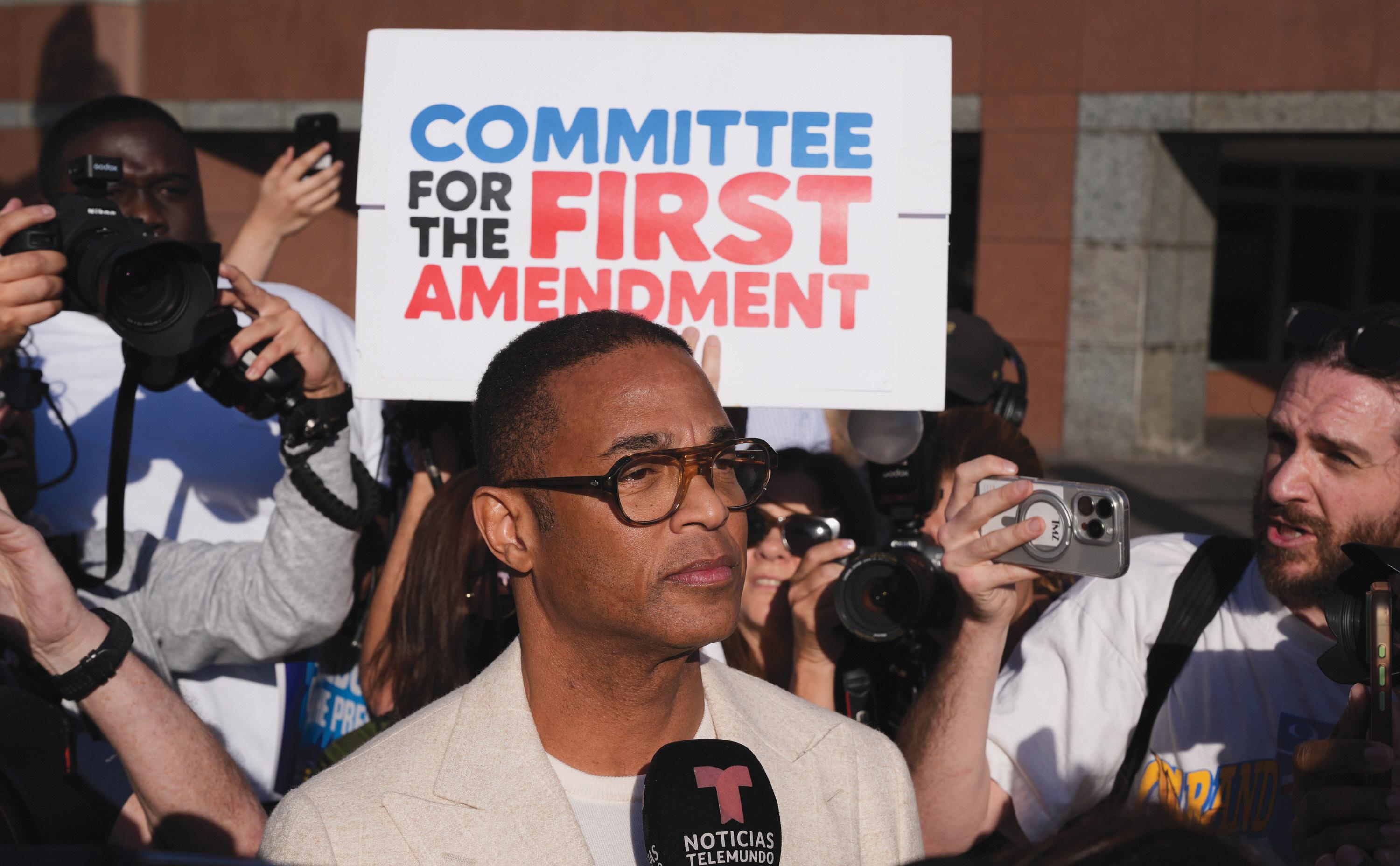
DAMIAN DOVARGANES / AP
Journalist Don Lemon, talks to the media after a hearing at the Edward R. Roybal Federal Building in Los Angeles on Friday, Jan. 30, 2026.
Black Media Arts Club prepares for Black Professionals Panel
By Khadija Mujahid Asst. News Editor
DePaul’s Black Media Arts Club will be hosting a Black Professionals Panel to prepare students for the professional world on Thursday, Feb. 19. The panel will take place in the Schmitt Academic Center from 6 to 9 p.m. and will feature DePaul faculty in the CDM department.
“I think that’s so important because a lot of times you have students that graduate and they’re trying to still figure it out,” said Jordan Rivers, the club’s advisor and panel moderator. “And so I want to just make sure I’m asking those questions … what they did, how they networked, and pitfalls to avoid when just trying to get in the industry or working in general.”
Mikayla Plant, one of the club’s co-presidents, said that she wanted the panel to assist the club’s many upperclassmen looking for career opportunities.
“We just wanted to make sure that people felt well-prepared, once they graduated, to enter professional spaces, especially being a part of a marginalized community, but also being a part of creative fields because a lot of times it can be harder to find jobs within those creative fields upon graduation,” Plant said.
The club, which began in 2022, has hosted a wide variety of events for Black History
Month over the years, such as art showcases, trivia nights and competitions.
Byron Guzman, co-president of the club, said it is helpful for Black students to have Black role models in a predominantly white institution like DePaul.
“When I was in my first year at the commuter, I had difficulty finding other people who looked like myself, who wanted to work in film and music and writing, all that jazz,” said Guzman, who is a film and television major. “So being able to join this club was kind of the gateway to doing that.”
Panelists include dean of the Theatre School at DePaul Martine Green, postdoctoral fellow Taurean J. Webb and other DePaul faculty. The club will also be inviting Kristina Thomas and Naeema Torres from the School of Cinematic Arts.
“I’m very big on the phrase, if you see it, you can believe it. And these people are very much established,” said Guzman. “And they give us hope and opportunity in terms of working your way around that industry, of being creative, how to fend for yourself in that industry, especially when you’re looked down upon.”
Rivers, who studied creative writing, said the panel could have helped her when she was a college student.
“I think it would have been beneficial because when I was in undergrad, the last thing that was on my mind was getting an
internship or job until senior year, like three months before graduation. So I’m proud that they’re thinking ahead of time,” she said.
Guzman said he hoped the club would be able to host more events and collaborations with other groups in the future.
“In the past, it was us reaching out to them, seeing how we can target this audience
or this person, and now they’re coming to us and seeing what we’re doing and how they can bring us in on that event,” Guzman said. “It gets overwhelming at a time in terms of, okay, how do we fit this in our schedule when we have this plan? But I wouldn’t have it any other way. These are good problems to have.”
Black Student Union to host Casino Night gala
By Alexa Bermudez Contributing Writer
The Black Student Union at DePaul University will transform the Student Center into a casino-style celebration on Feb. 27, aiming to bring Black students together for an evening of connection, community and Black History Month celebration.
The event will take place from 6:30 to 8:30 p.m. in Student Center 120 A/B. The gala is being held in collaboration with the DePaul Activities Board.
“For Black History Month, we’re really just about making sure that the community feels like they have a place to just be themselves,” said Janiya Garner, president of BSU. “We’ve been trying to make sure that we are catering toward the community and making sure people’s wants and needs are being met.”
Garner emphasized the role of campus partnerships in making the event possible.
“We’re very grateful for the DePaul Activities Board and their collaboration,” Garner said. “Their support has helped us bring this event to life in the way we envisioned it.”
Garner said the gala has become a winter quarter tradition. The event first launched in 2023 following the Covid-19 pandemic and has continued annually.
Planning for the event began in late October. The executive board first narrowed down theme ideas before presenting three options for the general body to choose from. This year’s “Casino Night” theme was selected through a voting process that included both the executive board and general body members.
“As BSU president, I wanted us to be more collaborative within the board and within our general body,” Garner said. “We made a Canva with inspiration pictures for the themes we wanted, and then we voted on the top three for the general body to pick from.”
Other preparations include coordinating food, decorations, a DJ, and completing funding paperwork and sourcing materials.
“The harder part was figuring out funding forms and making sure we were on top of everything,” Garner said. “We were look-
ing everywhere trying to figure out where to get what we needed for the best price.”
In addition to students, BSU is inviting Black staff and faculty to attend.
“Sometimes, especially as a Black student, it’s hard to make those connections,” Garner said. “Having Black staff and faculty there is something I really wanted so we can all feel represented and feel that community.”
For student leaders and members, BSU plays a broader role in shaping their campus experience as Black students.
“I wanted to get more involved with
Black people on campus, because this is a predominantly white institution,” said Imani Hill, secretary of BSU. “I thought I would take initiative with being on a board.”
Hill said general body meetings include a segment called “shameless plugs,” where students promote businesses, creative work or campus involvement.
“You get to find out all of the people who are involved in the community,” Hill said. “You can support Black students.”
Omari Brooks, BSU’s membership and outreach coordinator, said he joined the organization to help strengthen the presence of Black student voices at a predominantly white institution and connect students to campus spaces.
“I wanted to be a part of the community and also help the community,” Brooks said. “Since this is a PWI and we have a small number of Black students, I wanted to inspire those who might not know about BSU or haven’t attended events.”
Brooks said BSU was one of the first spaces where he felt comfortable as a freshman.
“We played games, introduced ourselves and built connections,” Brooks said.
Leaders said they hope Casino Night strengthens students’ sense of belonging. Additional information about the event and BSU is available through the organization’s social media pages.
“DePaul is a commuter school, so it’s always difficult to make friends and get to know people,” Garner said. “I want the gala to feel like, at least for those couple hours, we’re all one. We are community here.”
PEYTON PRYOR / THE DEPAULIA
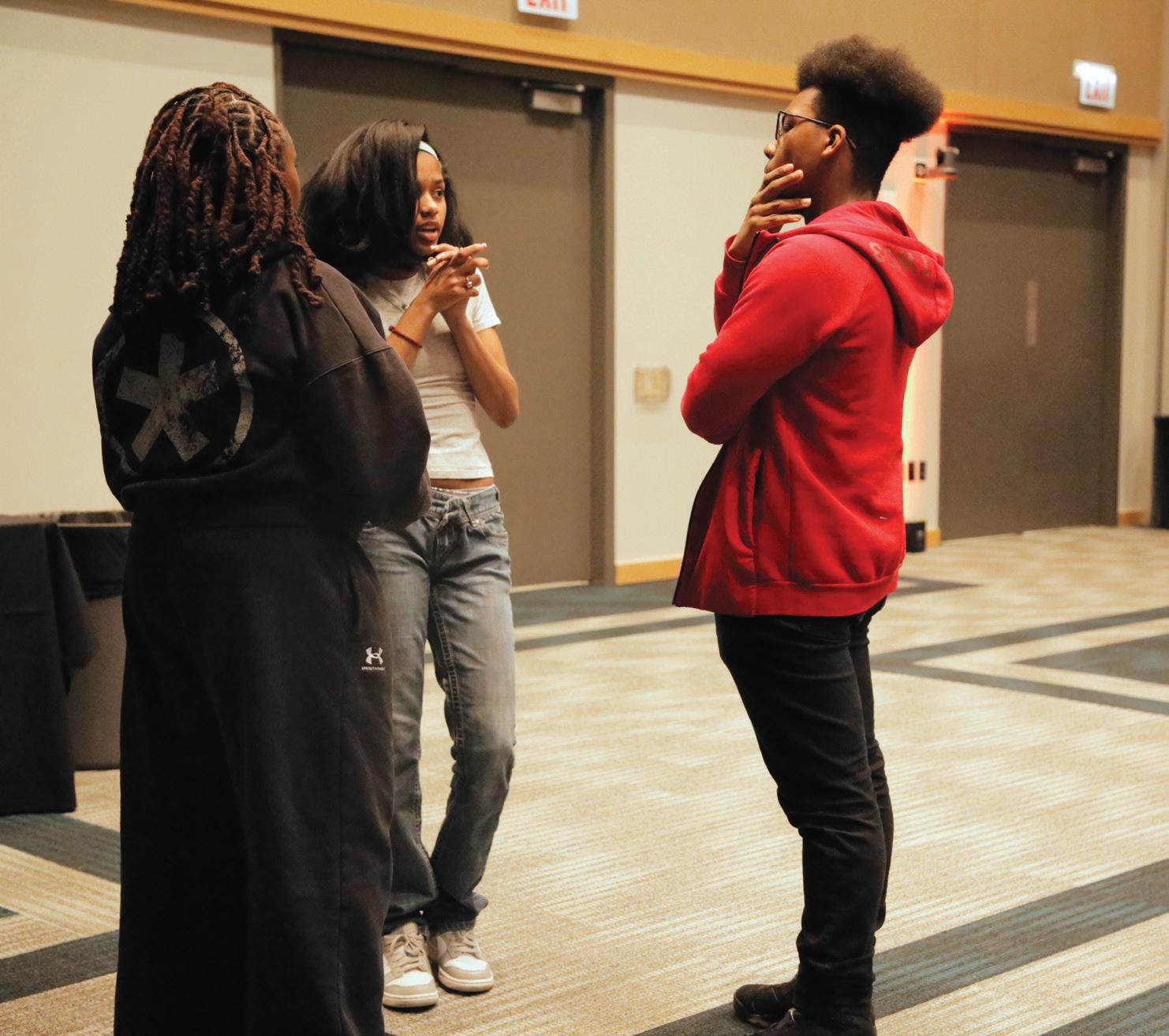
Members of DePaul’s Black Media Arts Club stand in the Student Center during their Art Showcase on Monday, Feb. 9, 2026. The club is holding a professional’s panel on Thursday, Feb. 19.
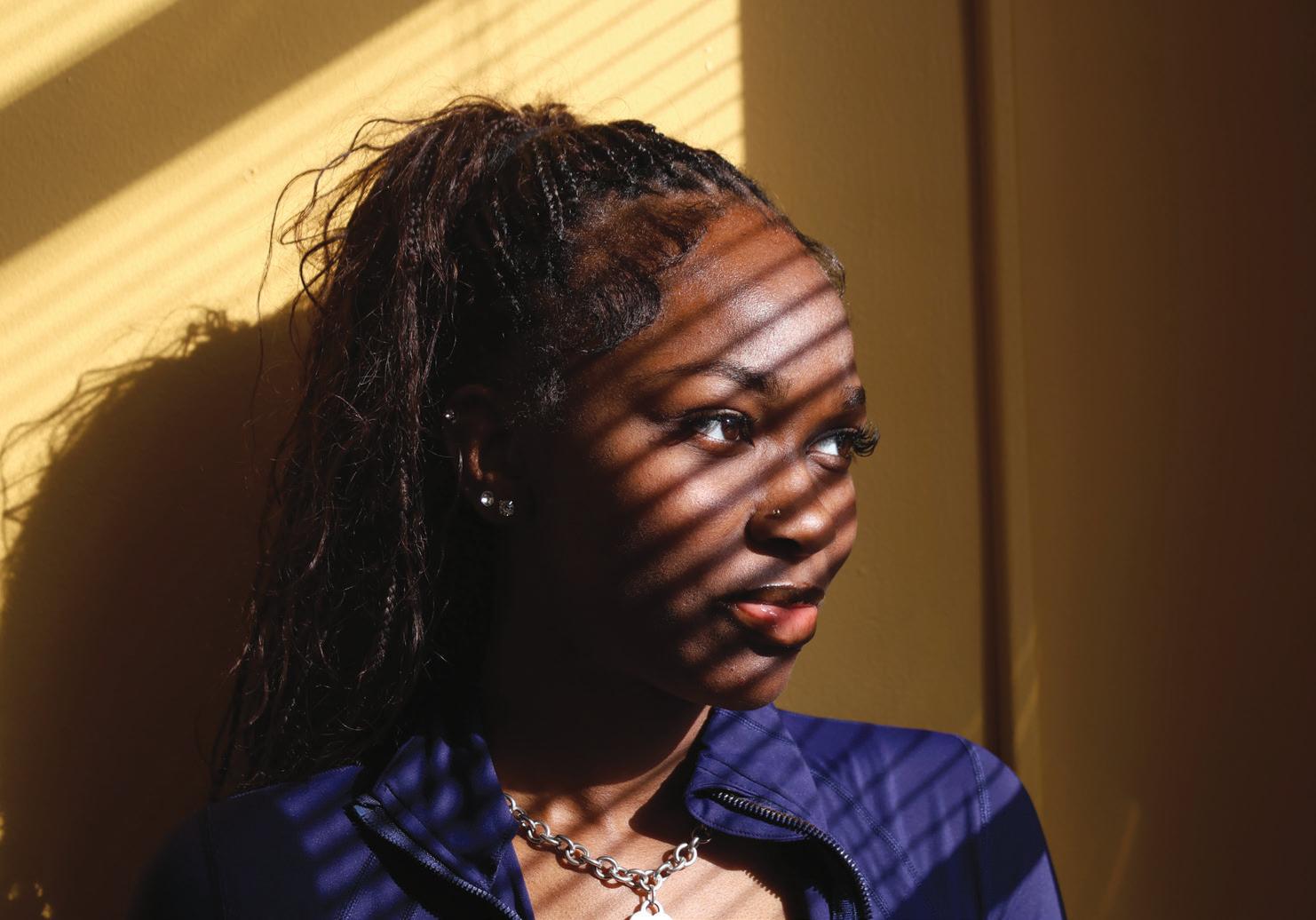
Black Student Union secretary Imani Hill stands in DePaul’s Center of Black Diaspora in the Schmitt Academic Center on Friday, Feb. 14, 2026. The gala will be held in the student center on Feb. 27.
GIACOMO CAIN / THE DEPAULIA
The Center for Black Diaspora to feature Yvonne Chireau
By Skylah Martinez Contributing Writer
The Center for Black Diaspora is welcoming the DePaul community to join them for a conversation with Yvonne Chireau on Feb. 20 from 4 to 6 p.m. at the Lincoln Park Student Center, room 314 AB. During this discussion, Chireau will talk about the history of African spiritual resilience and apply it to the practice of hoodoo and ancestralism.
This event is part of an annual series where the Center for Black Diaspora invites guest speakers to lead a discussion on a new theme each year such as health, healing and film. The theme for this year’s conversation is Black imagination, discussing the intersection of blackness, music, magic and creativity.
“Creaitivity and the imagination connects people to their ancestors, connects people to one another and community,” said Francesca Royster, the director of the center. She said that Chireau’s work ties directly to this theme.
Royster is in charge of programming and creating a welcoming space at the center for students, faculty and staff interested in learning about Black history and culture. The Center for Black Diaspora has been at DePaul for 30 years and was the product of student protest for Black spaces for conversation at the university.
This year marks Royster’s 26th year at DePaul and first year as the director. She encourages DePaul members to visit, enjoy their reading room and explore the neighboring centers. Royster is looking forward to Chireau’s visit because of her respected scholarly work in African and Black diaspora studies.
Chireau has a doctorate in religious studies and recently retired from her professor role at Swarthmore College in the Department of Religion. Her book “Black Magic: African American Religion and the Conjuring Tradition” analyzes the divide between magic and religion specifically among the Black community.
“Religions sort of push away this idea of magic, and magic becomes the religion of the other,” Chireau said.
Chireau questioned what would happen when you bring magic and religion together to talk about African American religion. This led her to extensive work with hoodoo, not to be mistaken for voodoo, which is one of her focus points to speak about at the upcoming event along with how history applies to modern practices of magic.
In the film “Sinners,” directed by Ryan Coogler, Chireau worked closely with the representation of root work used by the
character Annie. She’s found that people are curious about the character’s use of magic. “That’s what people want to know, but what I want them to know is yes, hoodoo is a real tradition … and this is what history can tell us about it.”
Royster is excited to hear hoodoo be talked about at DePaul.
“This is something that I think people would be really excited to hear about,” she said.
Paul Mireles, the graduate assistant for the cultural and resource centers, is a practitioner of several spiritual practices. Mireles works closely with both the Latin and Black cultural centers. He recently began organizing discussions where other practitioners talk about their specific practice of root work or magic called “Bridging Ancestral Wisdom with Modern Practices.”
When he came across the event with Chireau, whose book he owns and recently began reading, he believed it was no coincidence. He is looking forward to attending the event and hopes practitioners who he’s collaborated with in his project will join him.
“These practices are about serving community and serving our people. ... It’s good to see these concepts broken down and decolonized,” Mireles said.
He said having these kinds of conversations about practices that are often looked at as witchcraft and demonized is important to break those misconceptions.
Mireles also emphasized how many of these practices are not written down but mostly passed down and taught by elders. It is important to him to see a scholar come to a Catholic higher education institution and not expose or appropriate the culture.
As the rhetoric around magic versus religion begins to shift, there is an optimism that both Chireau and Mireles share
for a development in healthy conversations about spirituality and spiritual pluralism.
The center will be offering another discussion on Feb. 25 with Corey J. Miles who will apply this year’s theme to music, in reference to his book “Vibe.”
“I think it’s a powerful book because
he’s talking about an area of music and hip-hop that sometimes is dismissed or criminalized,” Royster said, relating it to how people negatively react to magic.
The upcoming events give people the opportunity to learn more about magic, music and creativity. Registration can be found on DeHub.

GRACE LOGAN / THE DEPAULIA
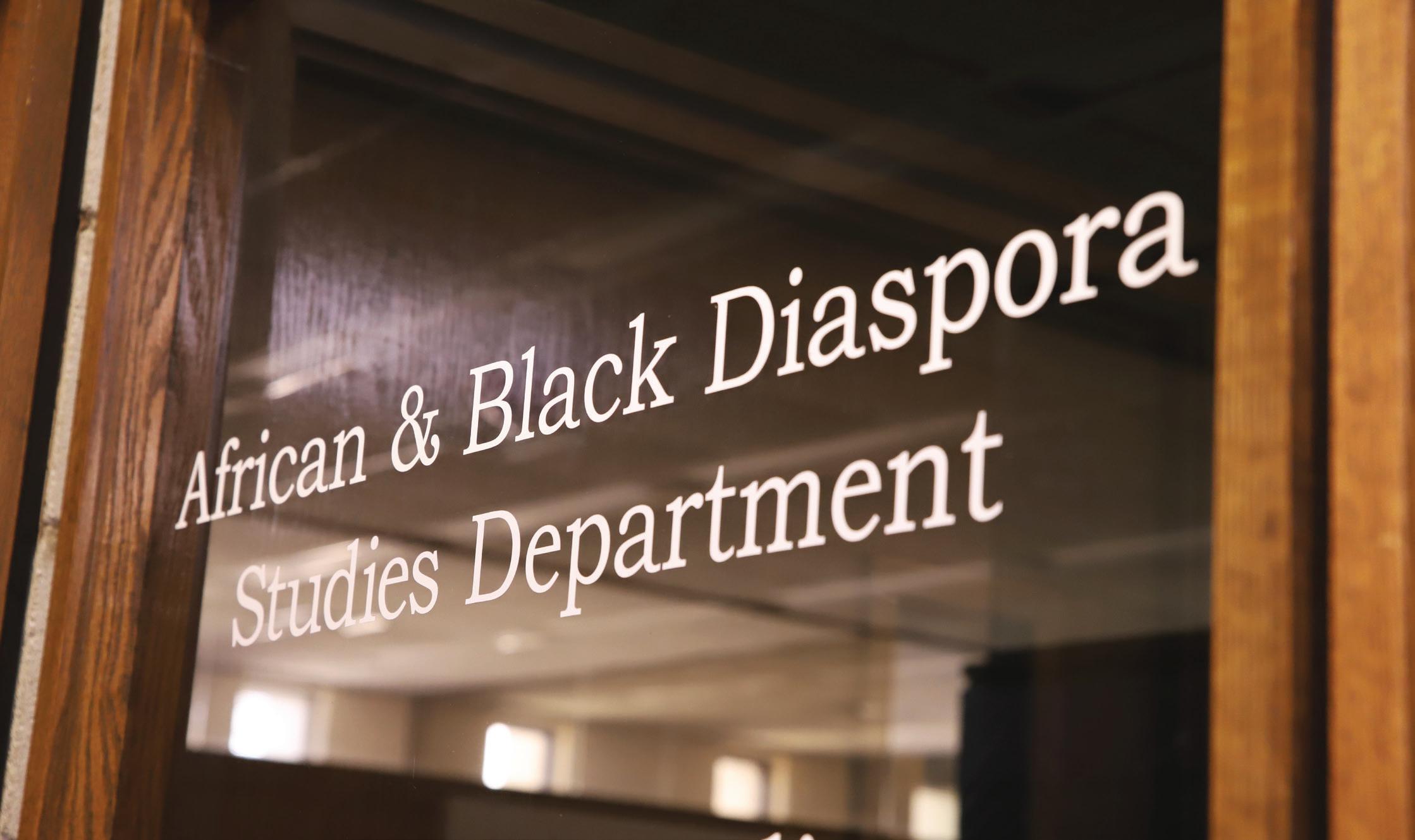
The African and Black Diaspora Studies center sits inside the Schmidt Academic Center on Saturday, Feb. 14, 2026. The center is hosting Yvonne Chireau on Friday, Feb. 20.
Opinions

Exploring films and artists that highlight Black culture
By Ashley Sadat Contributing Writer
I remember the first time my mom and I agreed on a movie for our monthly mother-daughter night. I like horror and gothic movies, while my mom likes romance and drama. But we settled on “Sinners.”
“Sinners,” directed by Ryan Coogler, is a Southern supernatural horror film and a fantastic watch. The story grabbed my mom’s attention quickly, making us feel like we were transported into that world.
Although the movie is fictional and includes bloodsucking vampires, it takes inspiration from real historical context. It’s set in Mississippi in 1932, during the Jim Crow era. The movie follows Sammie, a young Black man who wants to chase the blues instead of following his family’s religious roots. His twin cousins Smoke and Stack return home after opening a juke joint in Chicago, aiming to create a space of freedom and community.
Even the music bleeds symbolism. It isn’t just background noise. It drives the plot. It represents pain and resilience.
The vampires aren’t just monsters. They are colonizers in disguise, stealing culture and using it for their own gain.
“Sinners” comments on culture, religion, race, art and history, making it a meaningful watch during Black History Month.
There are so many great media options and genres for Black History Month and beyond, making it impossible to choose just a few.
Jonathan Perry, a 27-year-old Chicagoan, recommends watching “Star Trek: The Original Series” and “The Boondocks.”
The iconic “Star Trek” series premiered in 1966 with a diverse cast. Considered to be way ahead of its time, the original series featured positive and nonstereotypical representations. Black characters held leading and heroic roles, like Lt. Nyota, who was played by Nichelle Nichols. It also had the first interracial kiss on TV.
“Lt. Nyota is the best character, and she was a crucial part of the crew,” Perry said.
Perry also recommends “The Boondocks,” an adult cartoon influenced by Japanese anime with unique and fun characters that are easy to connect with.
Perry explained that at first glance, “The Boondocks” may look like a generic comedy with cheap jokes about Black stereotypes. But he feels the show has so much more to offer.
“It’s a fun watch party,” Perry said. “Each character represents an aspect of the Black community.”
Alexa Bermudez, a DePaul sophomore, also recommends the show.
“It’s so funny and educational,” Bermudez said. “You learn a lot of Black history and Black culture.”
Omari Brooks, a DePaul majoring in art, said he really likes the 2000 film “Love and Basketball.”
“It’s a really good romance story,” Brooks said.
Though the character and the events in “Love and Basketball” are fictional, the struggles it depicts of Black female athletes in a male-dominated sport are real.
The movie is about two people chasing after the same dream. The main characters grow up together, fall in love and then drift away and reconnect all through basketball. It portrays love in a tender way, including a lot of conflict and character growth, making it a must-watch this month.
A movie that I plan on rewatching this month is “White Chicks.”
“White Chicks” may not be an obvious pick for Black History Month, but for me it is. “White Chicks” is a comedy about two FBI agents who go undercover as wealthy white sisters using makeup, wigs and pros-
thetics.
The two men are forced to navigate high society, rivals and romance all the while completing a federal investigation and trying not to blow up their identities. The movie is chaotic in all the best ways, poking fun at stereotypes and beauty standards.
“White Chicks” is over the top, but that’s the point. It is a comedy that reverses the stereotypes, getting viewers to think about how two Black men have to handle their newfound privilege as rich white girls. The film uses absurdity to comment on ridiculous social expectations and identity.
The movie received backlash online from conservative critics comparing the movie’s use of “whiteface” to historical portrayals of blackface in the media. “White Chicks” actor Marlon Wayans pushed back against these critics who frame the movie as offensive, arguing that comedy is a way to make social commentary.
While I do think critics have the right to express their opinions about the movie, doing whiteface and blackface are not the same thing. Blackface has roots in oppression and racism while whiteface does not have the same implications. The media often uses whiteface as satire, while blackface is viewed as offensive because of the historical injus-
tices faced by Black communities.
Music is also a great way to engage with Black culture this month.
“A must-follow Black artist would be Doechii,” said Mia Colon, a DePaul student majoring in business management. “I absolutely love her music.”
Bermudez also suggested listening to Monaleo, a 24-year-old American singer and rapper, because she creates music that helps her and others be more confident in their identity.
Monaleo gained popularity with her viral hit “Beating Down Yo Block.” She creates music that centers on themes of empowerment and resilience for Black women.
“A lot of her songs praise where we come from and who we are,” Bermudez said.
A new singer I can’t stop recommending is Tyla. This South African artist has a fresh sound, and she is helping shape mainstream music while still connecting to her culture.
Brooks also encourages people to educate themselves by reading books, watching films and supporting Black artists.
“A lot of people from different cultures do not know about all of the history,” Brooks said. “As a Black artist myself, definitely invest in Black art.”
LUCY BREWSTER / THE DEPAULIA
Taking up space in PR
By Zarah Cacho Contributing Writer
Growing up, public relations was something I’d heard all over the media in every entertainment news cycle and celebrity scandal. Whenever a celebrity slipped up in the public eye, commentators would declare how they could’ve “managed their PR better.” I never knew what PR meant or that it was a legitimate career that I could pursue. PR felt unattainable because I had the idea that you had to be a certain type of person to work in that field.
Yet in many ways, PR is still exclusive and inaccessible. The industry lacks diversity and remains predominantly white, with only 9.9% to 13.4% being Black, according to the Bureau of Labor Statistics. Connections and networks are the true determinants of who gets their foot in the door rather than their actual capabilities. So, I paid this career path no mind throughout my academic career.
I focused on what felt natural and authentic to me. I focused on the things I genuinely excelled at and the skills I wanted to develop further: writing, art, and community engagement. There was something so satisfying about channeling and expressing myself through
the written word and through my paintings and drawings.
My imagination expanded as I got older, and I knew I wanted to nurture and preserve those traits that defined me. Additionally, I’ve always been a people person. So, being able to center community in my career became important to me. These things weren’t just hobbies but were fundamental parts of who I was — it was my life path.
When I started applying to colleges, I approached the process with one clear goal. I knew I wanted to keep those traits alive by refining and deepening my understanding of them. So, I took the natural path and applied to the journalism major. For a while, I was committed to this path because writing is something I am passionate about. It was the way I made sense of the world. I envisioned myself as someone who could share important stories and use my platform to amplify the voices of those who didn’t have one.
As I thought more seriously about my future, I started to consider other paths. College is an investment, and I wanted to be true to myself by investing in myself and my education. Success is what we are chasing, but what is success if you’re not truly fulfilled and satis-

fied with the path you chose?
It was during this period of reflection that I began researching different fields with intention. I wanted to understand what different careers will look like in practice and how I fit in those spaces. That is when I finally understood what public relations entailed; it was much more than the celebrity damage control I heard about. I was allowed to write, just like I always wanted. I would be allowed to remain creative in ad campaigns

and projects. I engage with the community via brand building, storytelling and strategic communication. That was when I realized that PR was all my passions rolled into one professional major.
We are often motivated and pressured to choose practicality over passion. There is always the safer option, but that comes at the cost of losing your spirit. And when you see that you are from a background that isn’t reflected in agencies’ pages, it could be discouraging
for some, but I see it as more of a motivator to take up space. These social barriers don’t have to be permanent, and someone must be willing to take up space where it hasn’t been made. Choosing PR wasn’t settling; it was a matter of alignment for me. My voice, my perspective and my presence matter precisely because they are not the norm in this industry.

NICO RODRIGUEZ / THE DEPAULIA
La DePaulia
Del Mundo
Jamz: Artistas afro latinos
que deberías estar escuchando
Por Sofia Joseph Editora en Jefe de La DePaulia
Los artistas afro latine han dado forma en gran medida a géneros musicales como el reggaetón, el pop y el rap. Este es el Mes de la Historia Negra, celebremos a los músicos que continúan cambiando las reglas del juego mientras abrazan su herencia.
“Taboo” por Don Omar
El artista puertorriqueño Don Omar es conocido por éxitos como “Danza Kuduro”, “Dile” y “Salió El Sol”, entre otros. Su canción de 2011 “Taboo” rápidamente se convirtió en una de mis favoritas cuando era más joven por sus ritmos enérgicos y su pegajoso gancho. Es una readaptación de “Llorando se fue”, una canción del grupo boliviano Los Kjarkas.
“Llorando se fue” ha sido sampleada en muchas otras canciones populares, incluyendo “On the Floor” de Jennifer Lopez y “Pam Pam” del dúo puertorriqueño Wisin & Yandel. También influyó en “Lambada”, canción de 1989 del grupo franco-brasileño Kaoma. “Lambada” encabezó las listas en Europa y ayudó a popularizar el baile de la lambada a principios de los años noventa.
Don Omar, cuyo nombre real es William Omar Landrón Rivera, recientemente agradeció en Instagram a Bad Bunny por levantar la cultura puertorriqueña y a la comunidad latine en general durante su reciente presentación en el espectáculo de medio tiempo del Super tazón. También compartió un mensaje sobre su identidad y orgullo puertorriqueño mientras apoyaba a Kamala Harris como presidenta en 2024.

“I Like It” por Cardi B
“I Like It” es una de mis canciones favoritas de la rapera Cardi B. El cantante colombiano J Balvin y el rapero puertorriqueño Bad Bunny se unen con Cardi B en esta canción para formar un trío. La canción de 2018 incorpora y presenta una recreación sampleada de la canción de 1967 “I Like It Like That” de Pete Rodriguez. Se convirtió en un éxito del verano, alcanzando el primer puesto en la lista Billboard Hot 100 en julio de 2018. Que una canción interpretada tanto en español como en inglés alcanzara ese nivel de popularidad en Estados Unidos llenó de alegría a Cardi B, según un artículo de Billboard.
Cardi B, cuyo nombre real es Belcalis Merlenis Almanzar, es de ascendencia trinitense y dominicana y ha sido abierta sobre su orgullo cultural desde el inicio de su carrera musical. Ella explica con frecuencia que las personas latine no son un grupo homogéneo y que su ascendencia negra no debe ser borrada.
“What a Bam Bam” por Amara La Negra
Amara La Negra es una cantante dominicano-estadounidense y estrella de telerrealidad. Nacida como Dana Danelys De Los Santos, habla abiertamente sobre su identidad afro-latina. En una entrevista con Charlie Travers en la serie “On Location” de la Academia de la Grabación, habló sobre cómo, de niña, fue tratada de manera diferente a otros niños latine debido a sus rasgos, lo que la llevó a seguir abordando el tema en su vida adulta. Su nombre artístico se traduce como “ama a la mujer negra” en inglés.
Graba música en ambos español e inglés, y generalmente está fusionando con R&B, hip-hop y elementos caribeños. Su canción de 2021 “What a Bam Bam” es uno de sus temas más populares, con más de 5 millones de reproducciones en Spotify. La canción samplea el tema reggae de 1982 “Bam Bam” de Sister Nancy para crear una fusión enérgica de pop latino y dembow.
“De
Donde Vengo Yo” por ChocQuibTown
ChocQuibTown es un trío colombiano de hip-hop. Son conocidos por mezclar hip-hop con jazz afro-latino en su música. Sus miembros del grupo son Carlos “Tostao” Valencia, Gloria “Goyo” Martínez y Miguel “Slow” Martínez. Aparecieron en el evento Tiny Desk Meets AFROPUNK de NPR en 2021, que destacó a artistas en los géneros afrolatinos o afrocaribeños que honran sus hogares y herencia a través de la música. El grupo ganó un Latin Grammy a Mejor Canción Alternativa por “De Donde Vengo Yo” en 2010. En 2015, ganaron otro Latin Grammy en la categoría de Mejor Álbum de Fusión Tropical por su álbum “El Mismo.”
Su canción “De Donde Vengo Yo” resalta la desigualdad, la resiliencia y el orgullo cultural.
El inicio dice así: “De donde vengo yo / La cosa no es fácil, pero siempre igual sobrevivimos / Vengo yo / De tanto luchar siempre con la nuestra nos salimos / Vengo yo / Y aquí se habla mal, pero todo está mucho mejor”.
NOEMI ROMERO / THE DEPAULIA
“Vieron en mí más de lo que yo vi en mí mismo”: Programa de Chicago ayuda a jóvenes afroamericanos a superar los desafíos del crecimiento
Por Kailee Roman Escritora Colaboradora
Los estudiantes muchas veces enfrentan desafíos al adaptarse a nuevos entornos escolares, encontrar un lugar al que pertenecer y comprender su propio impacto. Los programas comunitarios, como el programa Becoming a Man (BAM, por sus siglas en inglés), podrían estar aliviando algunas de esas dificultades entre los jóvenes.
Youth Guidance, una organización sin fines lucrativos basada en Chicago, se dirige a ayudar a los jóvenes a enfocarse en su educación y superar los obstáculos que vienen con el crecimiento. Fue nombrada ganadora en una competencia comunitaria en 2018 a través de la iniciativa My Brother’s Keeper Alliance, iniciada por el expresidente Barack Obama, convirtiéndose en un modelo para ampliar iniciativas basadas en evidencia que mejoren las oportunidades y la vida de los jóvenes negros. También fue una de las 10 “Comunidades de Impacto Nacional” ganadoras a lo largo de 10 estados y Puerto Rico.
Becoming a Man es un programa de consejería escolar de Youth Guidance que atiende a jóvenes de séptimo a duodécimo grado. En el momento de la competencia, la organización atendía a más de 12,000 estudiantes en escuelas de Chicago, y aproximadamente el 95%
de esos estudiantes se identificaban como afroamericanos o latine, según la Fundación Obama. Becoming a Man amplió sus servicios a más de 75 escuelas en Chicago, y cuatro de ellas cuentan con el apoyo del premio My Brother ‘s Keeper Impact.
El sistema de escuelas públicas de Chicago (CPS, por sus siglas en inglés) ha incluido Becoming a Man en su oferta de programas grupales a través de su oficina de aprendizaje social y emocional. CPS anima a los padres a preguntar si el programa está disponible para su estudiante en su escuela.
Estudios iniciales realizados por la Universidad de Chicago mostraron que Becoming a Man redujo casi a la mitad los arrestos por delitos violentos entre los jóvenes y aumentó las tasas de graduación de secundaria de los participantes en aproximadamente un 20%.
Anthony Williams se unió a Becoming a Man en 2014. Dijo que su consejero del programa lo ayudó durante toda la secundaria y que pudo formar una hermandad donde los participantes se apoyaban mutuamente.
“Mi consejero siempre vio lo mejor de mí y mi potencial. A veces sentía que veían en mí más de lo que yo veo en mí mismo”, dijo Williams. Ahora trabaja como administrador de investigación en la Universidad Northwestern.
Becoming a Man desarrolla lecciones basadas en situaciones de la
vida real, juegos de roles y ejercicios grupales para ayudar a los miembros a practicar el control de impulsos y la autorregulación emocional, mientras fortalece la responsabilidad, la integridad y sus aspiraciones futuras.
Tedros Mekonen, graduado de Becoming a Man en 2024, dijo que Youth Guidance lo apoyó económicamente y le enseñó sobre la responsabilidad y cómo conseguir prácticas profesionales.
“Aprendí lo que significa ser un hombre y un proveedor para mi familia”, dijo Mekonen.
Youth Guidance fue fundada en 1924 como The Church Mission of Help para asistir a niñas necesitadas con necesidades básicas como refugio, ropa y atención médica. En 2001, se fundó el programa Becoming a Man bajo Youth Guidance. Diez años después, su programa paralelo, Working On Womanhood, fue iniciado en Chicago.
Fomentar el respeto hacia la hermandad es un valor central del currículo de Becoming a Man. Los estudiantes tienen la tarea de aprender habilidades de comunicación positiva para aumentar su apreciación por las mujeres. El programa pone énfasis en la integridad, responsabilidad, autodeterminación, establecimiento de metas con visión de futuro y expresión positiva de la ira.
Jermaine Hawkins, graduado de la clase de 2014 de DePaul, buscaba car-
reras en defensa de la juventud poco después de obtener su licenciatura en estudios de paz y resolución de conflictos.
“Simplemente me topé con BAM y quería reducir los antecedentes penales en los jóvenes”, dijo Hawkins.
Hawkins se convirtió en consejero de Becoming a Man en 2017 y trabajó en la Escuela Secundaria Foreman en Portage Park durante ocho años.
“Es bueno ver a muchos hombres negros convirtiéndose en consejeros, ya que yo era uno de los pocos. Muchos educadores son blancos y sus lecciones se aplican a una cultura específica”, dijo Hawkins. “Las lecciones de un educador blanco no se aplican a la cultura negra; es como el aceite y el agua.”
Como consejero, Hawkins busca ayudar a las personas a romper ciclos generacionales de violencia y superar los efectos negativos de su entorno.
La Mental Health Foundation, basada en el Reino Unido, adoptó Becoming a Man en 2020. El programa, estratégicamente ubicado en comunidades de bajos ingresos y con pocos recursos, ha apoyado a cientos de jóvenes en tres escuelas del norte de Londres.
“Es hermoso ver la mejora de Youth Guidance a lo largo de los años”, dijo Williams. “Demuestra lo importantes que son estos programas para los jóvenes y cuánto los necesitan.”
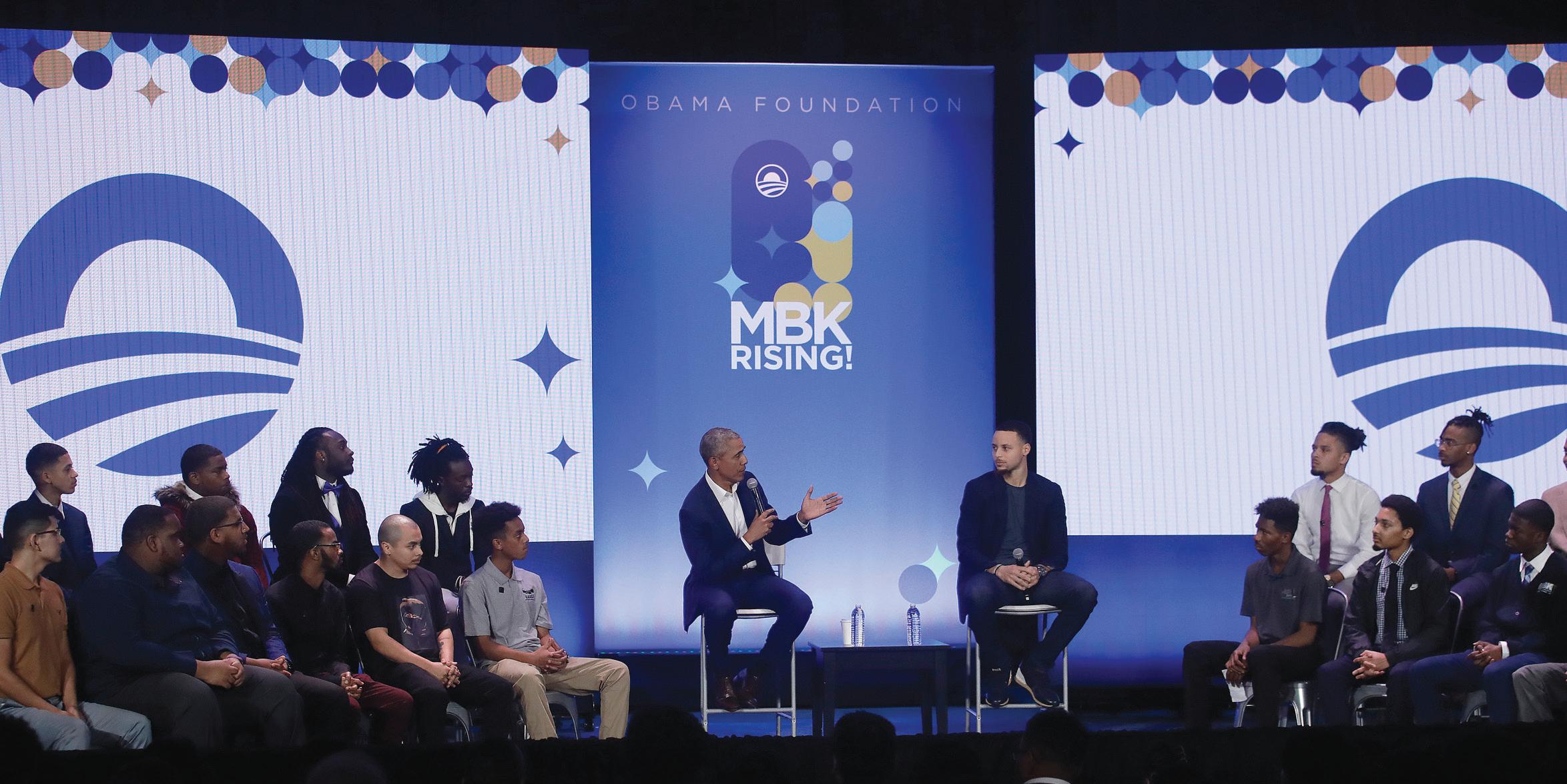
El expresidente Barack Obama, al centro a la izquierda, hace un gesto junto al jugador de baloncesto de los Golden State Warriors Stephen Curry mientras habla en la Cumbre de
My Brother’s Keeper Alliance en Oakland, California, el martes 19 de febrero de 2019.
JEFF CHIU / AP
Arts & Life
Riding Horses on the South Side: These are Chicago’s urban cowboys
By Kieran Stover Contributing Writer
Daniel Johnson, 16, arrived at the riding center in Chicago’s south suburbs during a Sunday afternoon blizzard. Despite the adverse weather, he wasted no time.
He guided Django, a paint gelding, to the side of the pen and methodically brushed the horse from forehead to heel. He draped a blanket over Django’s back before diligently clipping the straps around the horse. Murdock, his riding coach, watched over Johnson’s every move.
“This is something I’ve been blessed with,” Murdock said. “I share that with people that I try to teach how to ride or compete in the rodeos.”
When Murdock, who only uses one name, returned from serving in the Vietnam War in 1967, he vowed to bring horseback riding back to his hometown of Chicago, including to Black residents. Last month, the 77-yearold retired police officer celebrated the 37th anniversary of the Broken Arrow Horseback Riding Club, which he founded and continues to lead.
Despite a rich history of Black cowboys in both Chicago and the U.S., Murdock said horseback riding is a sport that Black people often don’t do.
“They just don’t have that opportunity,” he said, adding that many still express curiosity. He said his goal has always been to expand the sport to make it more accessible.
On this particular Sunday, Johnson and his parents had filed into the arena and gathered around Murdock. Bursts of laughter cut through the hissing of a propane tank. Above the tank, a red hot lamp illuminated the vapor of their breath in the frigid January evening.
Darrell and RaMeka Johnson, Daniel’s parents, said they have been taking Daniel to lessons with Murdock for four years. Darrell Johnson said Murdock is like a grandfather to their son, one who can teach him things they themselves don’t know how to do.
RaMeka Johnson agreed: “It feels like an extended family.”
That is exactly what Murdock is going for. Building an urban riding community, he said, is important to him.
“We don’t have that many out-

lets, locally, to do things,” Murdock said. Consequently, Murdock has since created several events for Chicago horseback riders.
The club hosts three main events every summer: The Speed & Action Rodeo Horse Show, a Juneteenth ride through the South Side of Chicago and a High Noon Ride & Picnic.
During previous High Noon Ride & Picnic events, over 225 horses paraded through Washington Park — where Murdock learned how to ride — ending on the shore of Lake Michigan. Riders, dressed in denim and western button-up shirts, trotted down the Chicago streets that once carried thousands of horses each day.
“Horseback riding is essential for a lot of people,” Murdock said. These events help keep the heritage alive.
Chicago has a rich tradition of horseback riding. On weekends, the lakefront used to be filled with recreational riders utilizing Chicago’s bridle paths. In the 1960s, Chicago’s stables closed their doors as equestrianism retreated to the suburbs.
Murdock described how police officers would give riders a hard time for riding in Chicago when he first started the club in 1989. The Municipal Code of Chicago, however, states that an
equestrian on a bridle path has the right of way. Despite challenges from local law enforcement, the club works to preserve the right and tradition to ride in Chicago.
“We’re still here,” Murdock said.
Access to a strong horseback riding community isn’t the only benefit of the club. Exposure to the sport helps unlock opportunities for new experiences, especially for the youth.
Taking the horses to schools, parks and parades fulfills Murdock’s desire to share his passion for horseback riding with other people, he said.
Despite being one of Chicago’s only multicultural riding clubs, Murdock is mostly concerned with how his members perform. “We try to set aside who we are, what we are and what we can do,” he said.
Part of Murdock’s appreciation for horseback riding is grounded in its therapeutic attributes. The sport forces the rider and horse to work together through a language of physical and audible signals, like smooching and “ch-ch” sounds.
“There’s a sense of calmness,” he said. “It takes your mind off a lot of things because you’re dealing with another mind, so to speak.”
Tiffany Gray, a registered behavioral technician who works with students with special needs, shared the Sunday lesson with Daniel. She adjusted the final strap of the reins for Calypso, her chocolate and white gelding, and pushed a leather boot — its panels scaled like a snake’s skin — into the wooden stirrup hanging from the horse’s saddle. She then swung her leg over the horse’s back, towering over everyone.
With leather straps softly squeaking as the horses strode forward, she and Daniel and their horses trotted around the arena. Murdock emerged, a whip in hand, and the horses lined up.
“Now, get behind! Get behind and stay there,” Murdock said, his whip cracking and his voice booming off the walls.
While his coaching is occasionally stern, Gray said Murdock’s style always serves a purpose.
“You’ve gotta have tough skin,” she said, adding that she has never met a better coach for horseback riding. “He does not give up on you.”
Murdock said it’s also important for riders to gain confidence around the horses because they can sense when riders are tense, angry or scared.
“When you’re in that saddle,
they can feel all of it,” he said. So learning how to control emotions and communicate with the horse is central to the learning process.
Murdock raised his whip in the air and snapped his wrist to the side. The cracker popped against the ground at Calypso’s hoof. Neither Gray nor her horse flinched.
Learning how to control a horse benefits students beyond the arena. Gray said it helps her when working in her job with children. “That definitely requires a great amount of patience,” she said.
As the lesson ended, Daniel guided Django to the arena’s exit and stepped off the saddle. Faint steam shimmered off the horse’s flank as he quietly removed gear from the horse before leading it back to its stall.
Although Murdock has won several awards in recent months for his leadership, seeing his students grow is the real reward for him. Witnessing Tiffany develop her work ethic and Daniel his quiet discipline helps Murdock sleep at night.
While Murdock acknowledges that the honor of leading the club is hard, he marvels at what he has built in the last three and a half decades.
“It’s very rewarding,” he said. SEE MORE VISUALS ONLINE
RILEY SOMMERS / THE DEPAULIA
Tiffany Gray passes a riding crop to fellow club member Jada while practicing their rodeo relay on Sunday, Jan. 25, 2026. Members of Murdock’s Broken Arrow Horseback Riding Club often participate in club events under his guidance.
Paul Tazewell’s Chicago exhibit highlights the craft behind a costume
By Brielle Kohlbeck
Content Managing Editor
Sketches, photos and costumes flood the East Pavilion in Chicago’s Griffin Museum of Science and Industry. “Crafting Character: The Costumes of Paul Tazewell” is a complete multimedia experience guided by Tazewell himself, with the displays of his work accompanied by his narration and behind-the-scenes video.
The Museum of Science and Industry is now hosting the first exhibit showcasing the work of award-winning costume designer Tazewell. The exhibit, which opened Jan. 19, brings a variety of Tazewell’s work to Chicago hosted in the museum’s newest space, the Griffin Studio.
“This exhibition is one of the best explanations of the costume design process that I’ve seen,” said Maggie Hofmann, the head of costume technology at The Theatre School at DePaul University.
Hofmann attended the exhibit with some of her students when it first opened.
The exhibit features Tazewell’s process, from childhood sketches to the creation of costumes in his largest projects such as Broadway’s “Hamilton” and the film adaptations of “Wicked” and “West Side Story.”
Jackie Acosta, a wig and makeup design & technology major at DePaul’s theater school, says that as a Latina, she looks up to Tazewell and admires the work he’s done.
“He serves as an inspiration,” Acosta said. “Seeing all of the backstage work and everything that it took to get one piece together is crazy.”
She especially admires his work in “Wicked,” loving the embroidery in Elphaba’s wardrobe. Acosta re-
spects “all the work” that goes into every piece he designs.
Tazewell attended Buchtel High School in Akron, Ohio, where at 16 years old, he worked on the high school’s performance of “The Wiz,” a retelling of “The Wizard of Oz” with an African American cast. In 2025, he became the first Black man to win an Oscar in costume design for his work on Jon M. Chu’s “Wicked,” bringing his experience in the Oz universe full circle.
When accepting his award, Tazewell said it was the pinnacle of his career, and he felt humbled to inspire other Black men hoping to become costume designers.
Arianna Franklin, a junior costume design major at DePaul, admits she isn’t the biggest fan of Tazewell’s work. She mostly attributes this to the differences between costumes in theater and film, often preferring the latter. She specifically disliked his main character work in “Hamilton.” Despite that, she continues to respect him and the strides he has made in the costume design community.
“Even though I don’t necessarily like Paul Tazewell’s work, I do think that there is a lot of things that I enjoy and that I resonate to in just him paving the way for other designers, Black and minorities,” Franklin said. “I myself am a Black costume designer, so I will always support Black costume designers.”
“If somebody else talks trash about him, I cannot stand for that.”
Franklin says that she knows Tazewell is very seasoned in his craft and is well liked by his peers. She also takes note of the community he contributes to as a Black designer, especially in his friendship with one of her favorites, Ruth E. Carter. Carter was the first Black woman to win
Destigmatizing Haitian culture through art
By Zoey Duchene Assistant Photo Editor
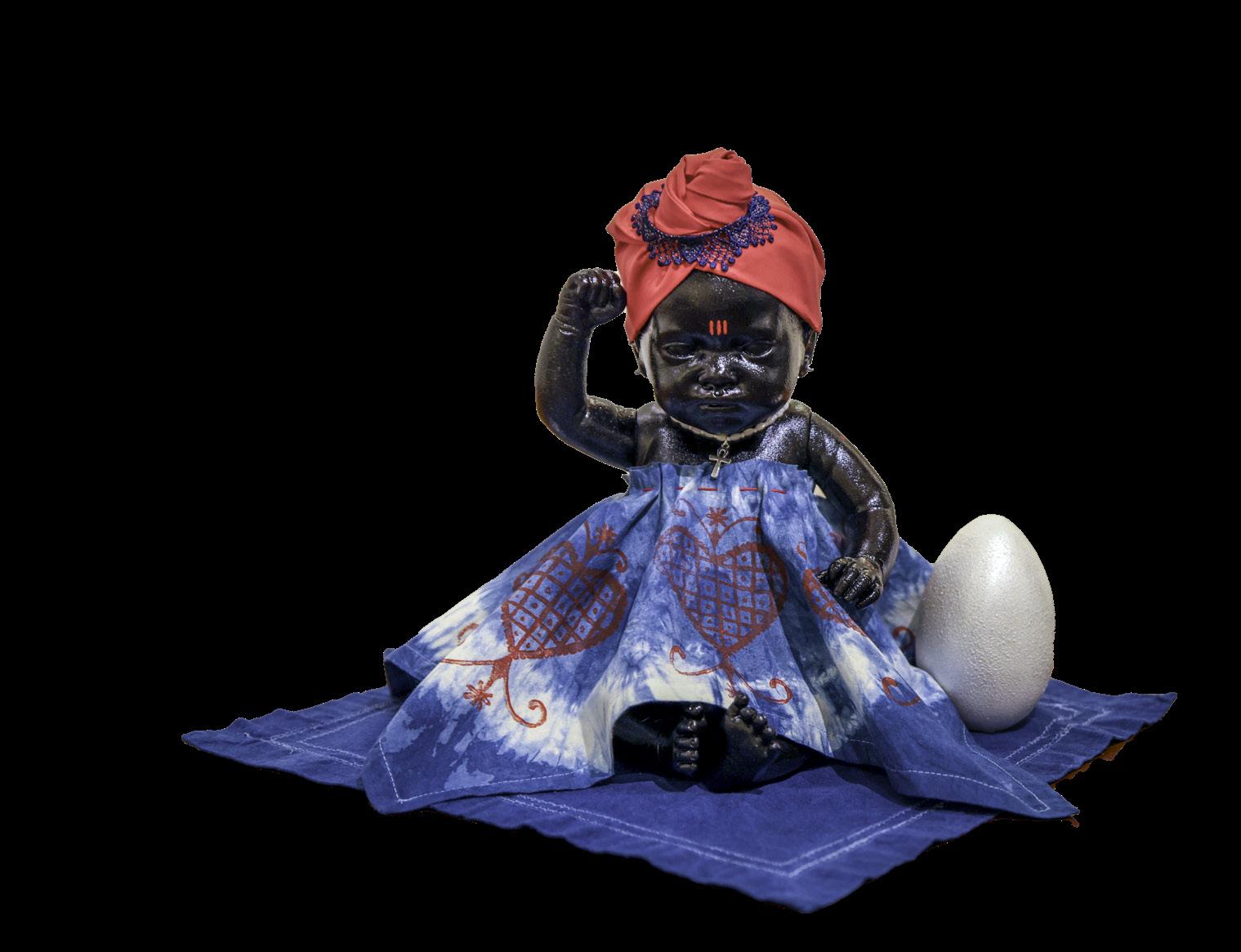
Black History Month encapsulates cultures from all over the world, many of which have a large francophone influence. To showcase this, the Alliance Française of Chicago created a gallery for Haitian-American artist Ameera Pernebsati Lys as part of Black History Month titled “Roots of Resilience,” which opened Thursday, Feb. 5.
Lys specializes in indigo textiles and mixed media. Along with this work, Lys explores many more techniques such as Japanese Shibori, collage, stamping, painting, ink, sculpture, quilting, jewelry design, photography and graphic design.
the Oscar for costume design and is someone Franklin admires deeply.
Tazewell and Carter met as interns at the Santa Fe Opera House. Franklin thinks back to their bond before they were as famous as they are now.
“They were the only two Black people there. They had a community even before they were oh-so-famous,” she said. “The world is very very small, especially for the costume design industry.”
Hofmann also noted how tight this industry is and thought the exhibit highlighted that concept well.
“Mr. Tazewell also explains how his process includes sometimes hundreds of other artisans who help bring his designs to life,” Hofmann said. “Costume design is a community sport.”
The exhibit ran alongside work in the Black Creativity program at the museum, which “celebrates the history of Black innovation.” Tazewell’s exhibit debuted with the “Black Creativity Juried Art Exhibition,” which is showcasing Black artwork from around the country through April 19.
Tazewell’s installation is open through Sept. 7, and no addition al ticket purchase is required to see the exhibit. Upcoming free days for Illinois residents at the museum are Feb. 17-19 and 23-26.
Franklin hasn’t been to the ex hibit, but she says she would love to see more designers featured in the future. She’s a strong advocate that people should get to know all mi nority costume designers, not only because the industry is sometimes overlooked but also to highlight cre ators for what they are.
“I would love to see something that wasn’t necessarily because they’re Black, but because they’re talented,” Franklin said.
his household that he and his wife identify with, but also that his kids can look at and see themselves in.
“Storytelling is the thing that connects all of us … there are stories that transcend culture, there is music that transcends culture, and there is art that transcends culture,” Simmons said.
Storytelling is another theme central to the exhibit. Lys focuses on Haiti’s story and how she grew up experiencing the culture as a Haitian woman, which is where the exhibit’s title, “Roots of Resilience” comes from.
The main focus of Lys’ work is to show off her Haitian culture as well as her identity as a Black woman. Many of her pieces depict Vodou symbols, also called “vèvès,” of femininity such as the deity Erzulie Freda and the deity La Sirène, according to Lys.
“It’s important that I use those symbols in my work, because I want to destigmatize vodou. I think voudou and a lot of other indigenous traditions have been demonized and stigmatised,” Lys said.
Beyond the different symbols shown throughout Lys’ work, she is also very intentional with her practice of using indigo. Indigo textile is fabric that is dyed using a synthetic blue pigment in a vat that reduces the pigment to be soluble, which is then applied to the fabric and oxidized in the air to turn from a green shade to the indigo blue shade. Lys also teaches indigo textile workshops around Chicago to open the art style to more people who previously have had no way of exploring that medium.
“It’s much more of a dialogue between what you’ve done to the fabric and once it’s in the indigo
“So tonight, there’s some struggle in the pieces, because that’s just a part of the fabric. But what I want you to learn about Ameera is how she takes all of that and brings joy,” Simmons said.
The ability to showcase different francophone cultures at the Alliance is one of the highlights for Ryan Waldron, the director of culture programs at the organization.
“I don’t care how tenuous the connection is,” Waldron said. “If we’re able to explore art and culture, we’re going to do it as long as there’s some kind of connection to the French language.”
Partnerships are imperative to setting up events such as working with organizations like the Haitian American Museum.
This helps the Alliance to show their community of primarily francophiles, people who are very fond of France and French culture, other important French cultures that are historically underrepresented, according to Waldron.
One of the main takeaways Lys wants patrons to get from the exhibit is that it adds to the story of Haiti and Haitian women specifically.
“There are many layers to it. There’s always room for transformation, there’s always room for growth, there’s always room to keep
ZOEY DUCHENE / THE DEPAULIA
ZOEY DUCHENE / THE DEPAULIA
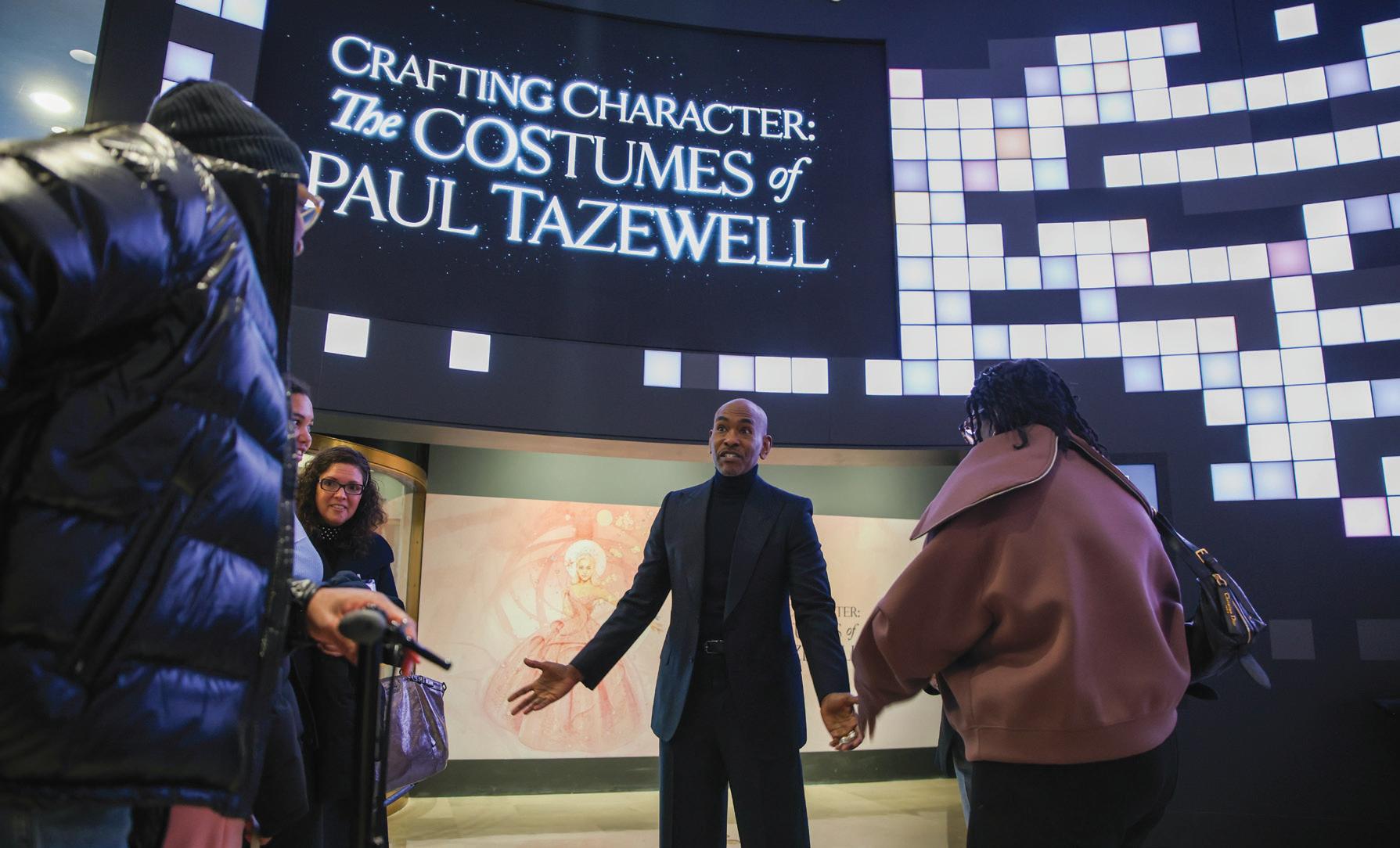
Paul Tazewell talks to patrons of the Museum of Science and Industry about his new exhibit opening on Monday, Jan. 19, 2026. The exhibition features work from the “Wicked” movie, “Hamilton” and red carpet looks.
St.Vincent’s
D e JAMZ
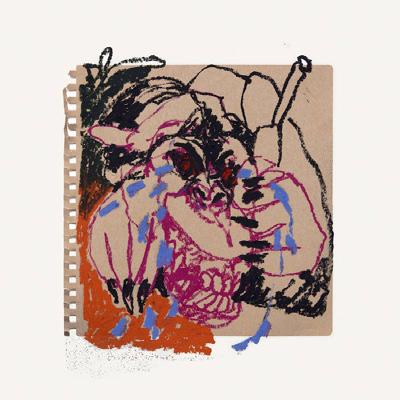
“Spinning freSh beatS Since 1581”
By Jeremy Battle Director of Photography & Multimedia
It’s easy to get lost in the hustle of blockbuster album releases and music icons, but this week, let’s slow it down a little. The industry has a way of amplifying the same Black artists over and over again, so I wanted to highlight some you may have never heard of. Every artist featured in this week’s DeJamz has under a million monthly listeners on Spotify.
“HIGH” BY PARTYOF 2
Working in descending order, we start with PARTYOF2, who just barely qualified with 953,213 monthly listeners. I was first exposed to this group when they went by the name grouptherapy and was drawn to the concept of the members Jadagrace and Coy Stewart being former child
actors who make alternative hiphop. Though Tyrel Jackson Williams has left the group, PARTYOF2 has maintained their smooth melodies and rounded off a lot of rough edges.
“HIGH” is a confident and smooth track with neo soul influence that always livens up my morning routine.
“SWEETIE” BY KOKOROKO
It’s a travesty that Kokoroko isn’t more popular. This London-based jazz band blends Afrobeats and funky basslines into every track they make.
“Sweetie” is no exception, and no matter how many times I hear the objectively repetitive chorus, I never want to stop listening.
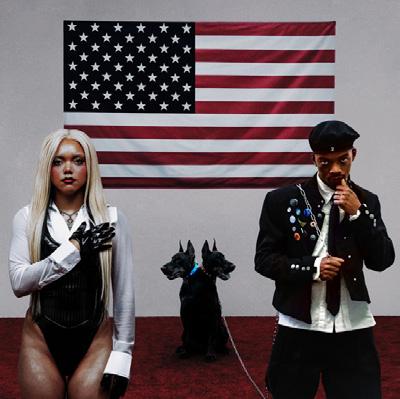
“IPARI PARK” BY MIKE
Last year, a couple of white teenagers went viral for playing chess in the middle of a mosh pit at a MIKE concert. The image of a man rapping about his struggles and institutional violence while the crowd goofs off is nothing new, but that moment stuck with me. I think MIKE’s casual delivery and endlessly unique samples make him one of the most interesting voices in modern hip hop.
“SLOPPY JOE” BY SLAYR
I doubt slayr will still be under a million monthly listeners by the end of the year. His lyrics are perhaps a little vapid, but listeners will have a hard time resisting the frenetic pro -

duction. Try listening to “Sloppy Joe” without bobbing your head a little. You can’t. This one has a strong future in the world of TikTok edits and NBA highlights.
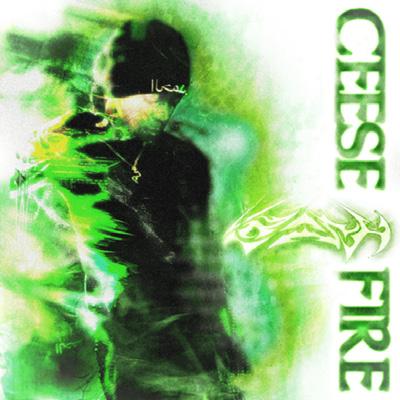
“CAUGHT N MY SURF” BY CEESEFIRE
I genuinely don’t remember the course of events that led me to finding Ceesefire, an artist with 712 monthly listeners, but I swear his music is hard! At a certain point, you hit niche diminishing returns, where the artist is so unknown it implies things about the quality of the music. This is not one of those cases.


Harold Washington: Examining the legacy of Chicago’s first Black mayor
By Annie Koziel Arts & Life Editor
Harold Washington’s name is synonymous with the city of Chicago. There is a library, a park, a cultural center and a college, all named in his honor. His historic mayoral run and tenure as the first Black mayor of Chicago shaped the city and the nation. His legacy continues to do so today.
“When you look at, contemporarily, what … it looks like to organize for Black political candidates, the epitome … is Harold Washington in this city,” said Richard Benson, associate professor of the Black radical tradition in education at the University of Pittsburgh.
A campaign to remember
Washington’s 1983 mayoral campaign brought together a coalition of voters who’d previously been ignored in one of the most segregated cities in the nation. The former lawyer-turned-state-senator and then U.S. congressman was often called the “People’s Mayor.” He campaigned for government transparency and equitable distribution of city services and steps toward ending racial division in Chicago.
When Washington ran for mayor in 1983, he was running against the “Daley Machine”: a deeply entrenched part of Chicago politics that made it difficult for non-machine Democrats to have any chance of winning as Richard J. Daley served as Chicago’s mayor from 1955 to 1976 and his son Richard M. Daley eventually held mayoral office from 1989 to 2011.
When Washington first ran, it had only
been 13 years since Martin Luther King, Jr. and the Freedom Movement had visited Chicago. According to Benson, the people who had been involved in that movement in their youth now had the organizing skills to put Washington in office.
“It’s almost like, ‘Oh, OK, well, we’ve been here before,’” Benson said. “‘We know what to do.’ They’re veterans at this time.”
Opposition in office
Even so, Washington’s run and electoral win were met with fierce opposition, including from other members of local government. Much of what he tried to accomplish as mayor was blocked, often by a 29-alderman coalition that voted against anything Washington tried to accomplish.
“Washington is entering into the type of city that is pretty much divided racially (and) ethnically,’ Benson said, adding that while the North was largely white, “West is Black. South is Black.”
According to Benson, “white flight” to the suburbs also added to this phenomenon and created an even more divided Chicago for Washington to inherit.
Still, during his time as mayor, some say Washington united the coalitions and groups of people who voted for him. Daniel López, president of Harold Washington College, said that as a Latino man he feels the impact that Washington left.
“It is very special for me to be able to serve at a college that is my alma mater, but also that bears his name,” López said. “Because of all the things he did in terms of uniting Latinos and the Black community
here in Chicago. We lived it.”
López said he and the university community work to uphold Washington’s legacy through “showcasing and educating folks on his work.”
Art and education
A 40-foot mural of Washington welcomes visitors to the college’s lobby, which López said speaks to Washington’s work here in Chicago and on a broader scale.
“We’re very proud of that work here,” he said. “Our students … get to learn about Harold and the contributions he made to Chicago and specifically to city colleges.”
Members of the college engage with Washington’s legacy through coursework, events and collaborations with other organizations like the downtown Harold Washington Library Center, which has a museum with a number of historical documents and photographs from Washington’s time in office.
Every year, the college community also celebrates Washington’s April 15 birthday in collaboration with the Mayor Harold Washington Legacy Committee, a nonprofit organization that includes many former members of Washington’s administration and campaign staff. Festivities include a breakfast, cake and yearly showing of Joe Winston and Raymond Lambert’s documentary “Punch 9 for Harold Washington.”
López called the celebration “an opportunity for us to educate folks on this contribution, especially the younger generations that may not know much about him.”
Legacy in the city
In addition to the college, which aims to honor Washington’s commitment to education, the Harold Washington Cultural Center provides opportunities for artistic and media education in the Bronzeville neighborhood. According to Jimalita Tillman, a DePaul alum who is the cultural center’s global director, the center’s programming serves to “deter at-risk behavior in youth and young adults through media, performing and visual arts.”
With three dance studios, a thousand-seat theater, a recording studio and a podcast lab, the center helps keep Washington’s “legacy alive through the arts,” Tillman said.
The DuSable Black History Museum and Education Center offers an exhibit on Washington that features his animatronic likeness. The exhibit chronicles Washington’s activism, his political career and the work he did in office and beyond.
Benson said Washington’s time in Chicago marked a change in the political landscape for good, bringing grassroots organizing to the area to mobilize a new voter base. But, he added, the legacy of Harold Washington, the man, continues to impact the people of Chicago and the nation.
“The symbolism was not unique to or relegated to just Chicago,” Benson said. “It held a ubiquitous spirit of inspiration nationally.”
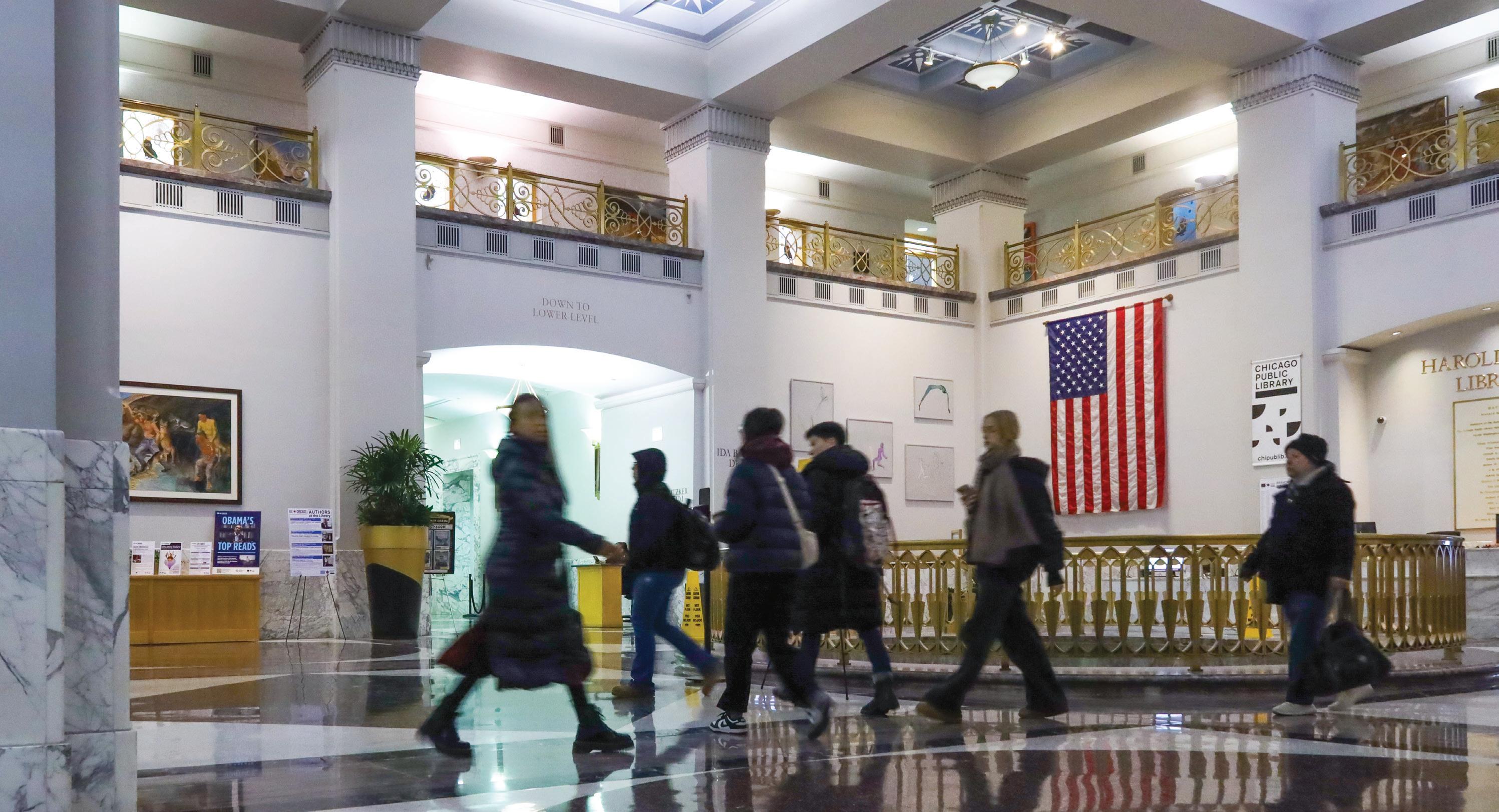
Patrons walk through the Harold Washington Library lobby on Tuesday, Feb. 10, 2026. The lobby features a major 1991 ceramic tile mosaic by renowned artist Jacob Lawrence. NORA SMITH / THE DEPAULIA
Evan F. Moore, writer and a mentor, on giving back to community
Liza Eliseeva Contributing Writer
Evan F. Moore started writing about South Side communities long before his journalism career began.
Growing up on the South Side of Chicago, both of his parents were public school teachers who had summers off. When the family traveled, Moore remembers being the only Black family in some of the places they visited.
In eighth grade, a teacher enrolled him in a writing competition. Moore decided to write about his neighborhood, his experiences and the people there. Despite not taking it seriously at first, Moore won his first writing award with the story.
Later, he started blogging, and one of his posts was published in a bilingual community newspaper. That’s when writing became a permanent part of Moore’s life.
“You just have the moments in your life where you’re born to be somewhere, or you just have to be in a place, and it all gets put together,” Moore said. “So that’s kind of what happened.”
For nearly 10 years, Moore has helped aspiring journalists create those moments in their own lives. When he started teaching at DePaul in 2016, he said he was one of the few Black professors at the university — and for some students, maybe the first Black male professor
they’d seen there.
Moore continues to encourage students to explore subjects that matter to people and give them big-picture context. In his current sports communication class, he asks students to study sports as a social subject rather than routine entertainment.
Amy Merrick, senior professional lecturer in DePaul’s College of Communication
and adviser for DePaul’s online magazine 14 East, saw Moore’s dedication to digging more deeply when they co-taught a class called Chicago Undercover. That class looked at how the South and West sides of Chicago were both “undercovered and often covered unfairly,” Merrick said.
Merrick said Moore pushes students to ask, “What is the real impact that sports has on our politics and culture?” She added that Moore “really shows that sports goes well beyond some kind of the narrow ways that we typically define its role.”
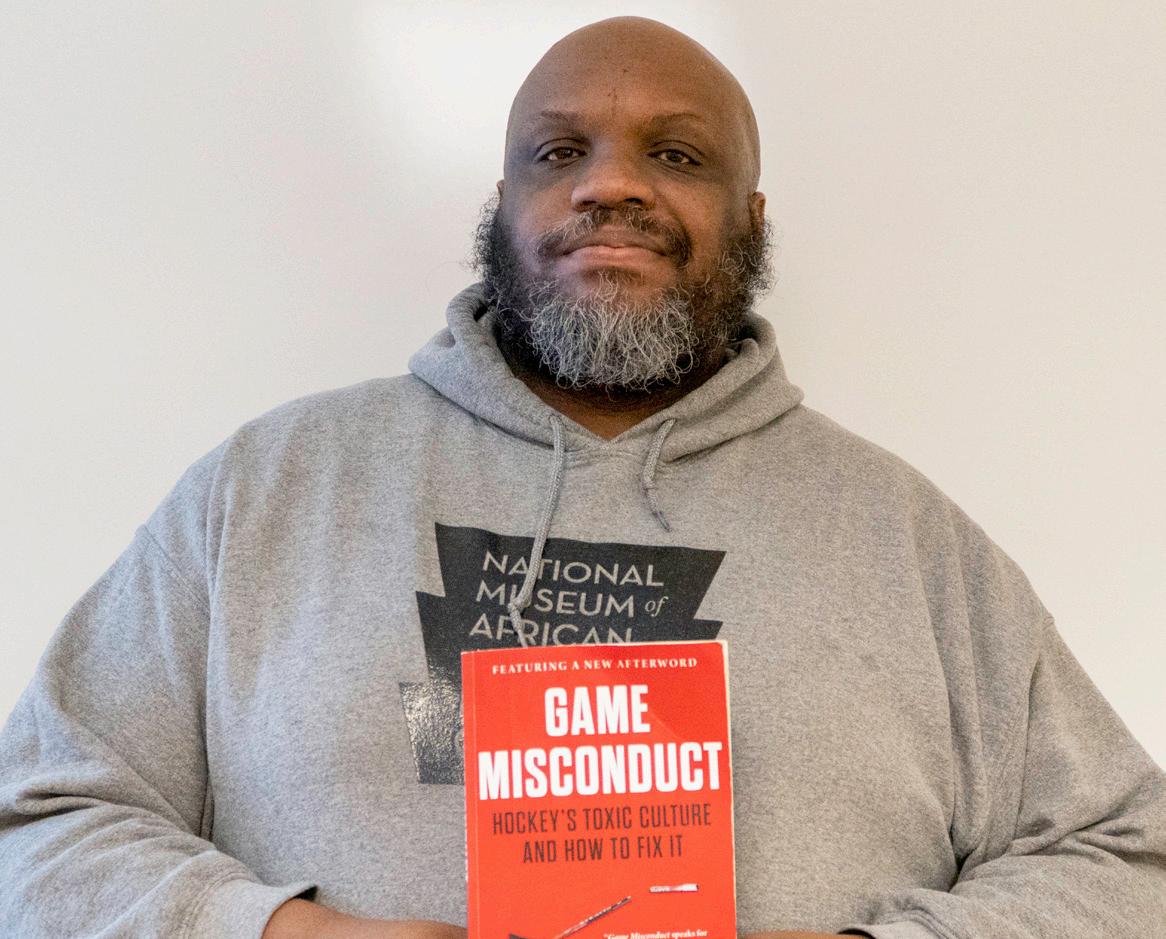
Moore’s class is based on his co-authored book, “Game Misconduct: Hockey’s Toxic Culture and How to Fix It,” which explores racism, homophobia, sexism, xenophobia and violence as systematic issues in hockey. Moore has always been interested in hockey, and seeing how cruel the sport is for athletes inspired him to examine its inner workings and search for a solution.
“The culture that’s in that sport was not changing and also keeping certain folks out,” Moore said.
As a journalist, Moore’s work
has been featured in publications such as Rolling Stone, Chicago Magazine and Chicago Reader. For about four years since 2018, he was an entertainment reporter at the Chicago Sun-Times.
After leaving the Chicago Sun-Times, Moore joined Chicago Public Schools as a press secretary, a job he still holds. He said he values the opportunity to take care of the people in his city.
“I always wanted to see how the city works, in terms of who does what and where,” Moore said. “That job puts you … right in the middle of that.”
After experiencing the instability of journalism, with all its buyouts and layoffs, Moore said he wanted more control over his career. But he also did not want to leave journalism behind and has continued to write a sports column for the Chicago Defender and book reviews for South Side Weekly.
Jacqueline Serrato, a former editor in chief of South Side Weekly, says that while Moore has often written for the paper’s South Side audience, his work has had a greater influence in and outside Chicago.
“He reminded Chicagoans
that the South Side has a deep history that is often overlooked, or forgotten, or perhaps ignored, or just left out of the narrative,” Serrato said.
“He made sure to rescue a lot of that history, simply by revisiting the themes, the topics that are important to Black communities in Chicago, specifically South Side, of course.”
Moore said one of the most meaningful moments of his career happened in 2014, when a story he wrote led to the discovery of a missing 14-year-old girl from Calumet City. When it came to missing black girls and women, there was not much help and hope. Someone recognized her after reading Moore’s article in a local newspaper.
“That was my ‘journalism works’ moment,” Moore said.
Helping people is Moore’s biggest motivation. Whether it’s teaching, writing, working for CPS or even helping find a missing person, he finds different ways to give back to the community:
“At the heart, you are helping someone,” Moore said.
HOLDEN HALL / THE DEPAULIA
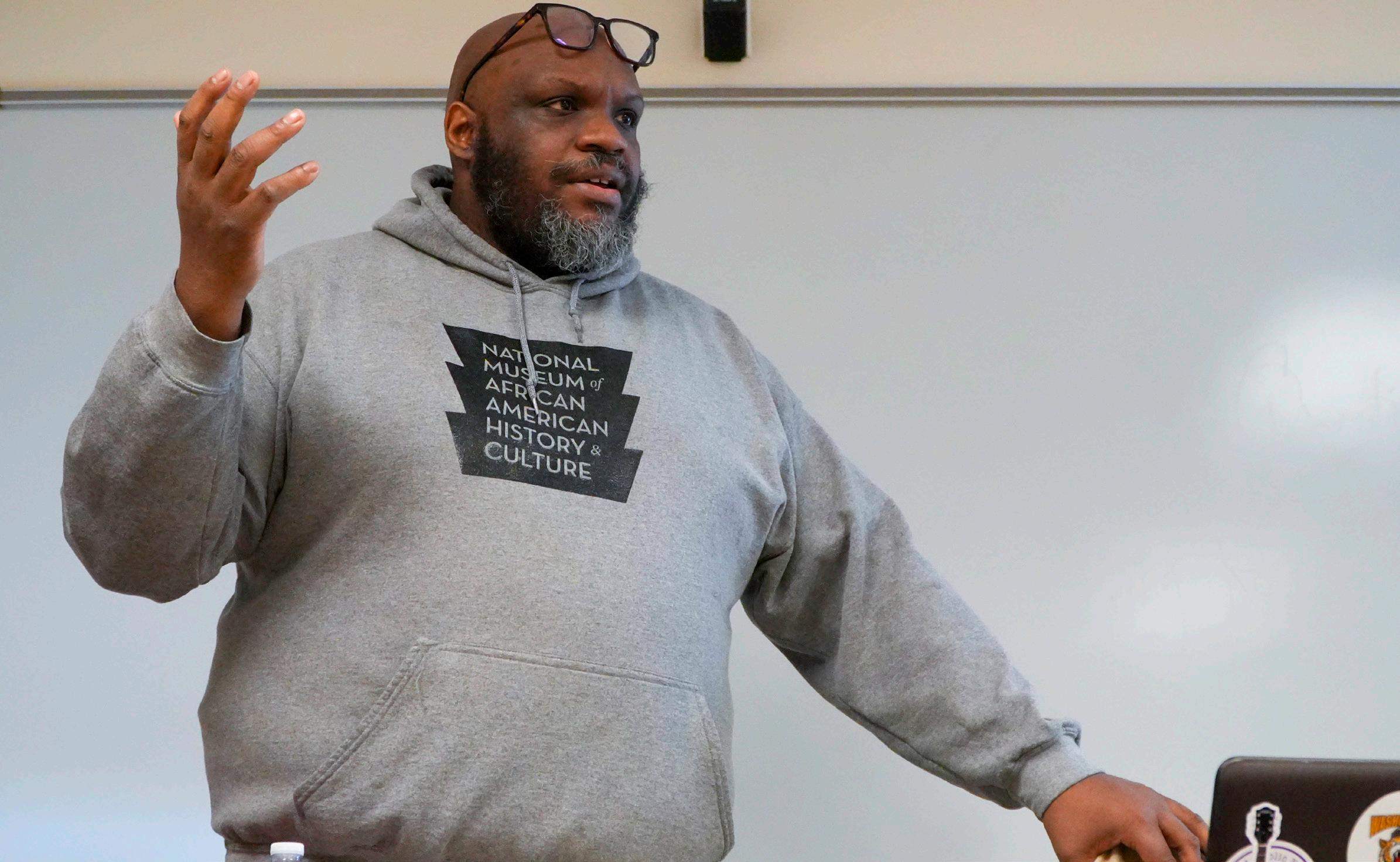
Adjunct faculty member Evan Moore talks to his class on Wednesday, Feb. 11, 2026. He teaches a class at DePaul called “Sports and Culture.”
HOLDEN HALL / THE DEPAULIA
Evan Moore poses for a photo on Wednesday, Feb. 11, 2026. He wrote a book called “Game Misconduct: Hockey’s Toxic Culture and How to Fix It.”
‘Whatever it takes’: How Brandon Maclin defied expectations
mom, who helped him through them. He also said he talked to his dad and one of his older brothers.
up against Creighton guard Austin Swartz, who had the ball, Benson said that Maclin was telling him he “better guard.”
While Brandon Maclin is receiving praise now, that was not always the case. He has had his share of doubters on social media.
“He’s small.”
“He can’t shoot.”
But the doubters never really bothered Maclin.
“It is what it is. Everybody is going to have an opinion …,” said Maclin, now a senior guard for the DePaul men’s basketball team. “I’m not going to make everybody happy. I understand that.”
After high school, Maclin attended Florida Coastal Prep Sports Academy to get one year of postgrad experience. He then played his freshman and sophomore seasons of college at Odessa College, a junior college, before breaking into Division I men’s basketball at Radford his junior season.
On his basketball journey, it was not about proving people wrong, but rather showing himself he was right.
“I may have been overlooked, may have been underrecruited. But in my mind, I felt like I belonged on this level,” Maclin said.
He never gave up.
The key to believing in himself despite closed doors was setting out to achieve the dreams he first had as a child.
“Throughout my past, sometimes it may not seem like the dream is actually going anywhere,” he said. “But I just said, ‘Hey, I’m here, and I’m going to play as long as I’m allowed to play.’”
During tough days at Odessa College, Maclin said he would call home and talk to his
“They just always told me, ‘Hey, keep going. There’s always light at the end of the tunnel. You may not see it now, but your work doesn’t go unnoticed,”’ Maclin said.
Now, he finds himself at DePaul, which he said was his only true high-major option out of the transfer portal. He was more than ready to test himself in the Big East conference.
Senior guard CJ Gunn is calling Maclin the Blue Demons’ “glue guy,” as he did in the postgame press conference following the team’s home win against Xavier in early January.
“He brings that energy, he brings that fight, and as an older guy, he’s one of our leaders,” Gunn said. “So we look up to him to make the right play and to come out and give out what he does.”
That was Maclin’s plan. As an older player, he wanted to help the team win. He attributes his leadership to “the love of the game.”
“I feel like I’ve been in many situations where the team didn’t have a leader, and someone stepped up too late,” Maclin said. “... I wanted to step up from day one and help lead the team.”
When the game ends, it’s simple: Maclin wants more points than the opponent.
“So whatever it takes — whether that’s scoring 15 points, whether that’s getting 11 rebounds, whether that’s getting eight assists — whatever it takes to win,” he said.
“That is my mindset, no matter what.”
Against Creighton on Feb. 11, the Blue Demons faced a one-point deficit with 1:03 left in the game and needed a defensive stop.
When senior forward NJ Benson matched
Benson got the stop and Maclin secured the defensive rebound.
Out of the Blue Demons’ timeout at the 12-second mark, junior guard Layden Blocker inbounded the ball to Maclin. With seven seconds left in the game, Maclin made a layup to put DePaul up by one point.
The layup — and one more defensive stop — gave the Blue Demons the victory, snapping their four-game losing streak.
“I love him, man,” Benson said in the postgame presser about Maclin. “He’s like a ball of fire. He never stops. … It means a lot to him, and I think the coaching staff and all the players know that. I feel like he’s the heart
of our team.”
Maclin traces his approach towards winning back to his high school coach, who insisted he put the team first.
“It was my sophomore year, and he felt like I was playing selfish,” Maclin said. “And he told me, like, ‘One day you’re going to need your teammates. You’re not going to be able to do it yourself forever.’
“So that’s when it changed my mind quick, and I became more of a team player.”
Having been underrated at the start, Maclin said he has nothing to lose by playing his hardest and best.
Those closed doors created a Blue Demon who will not back down on the court.
JAYDI VASQUEZ / THE DEPAULIA
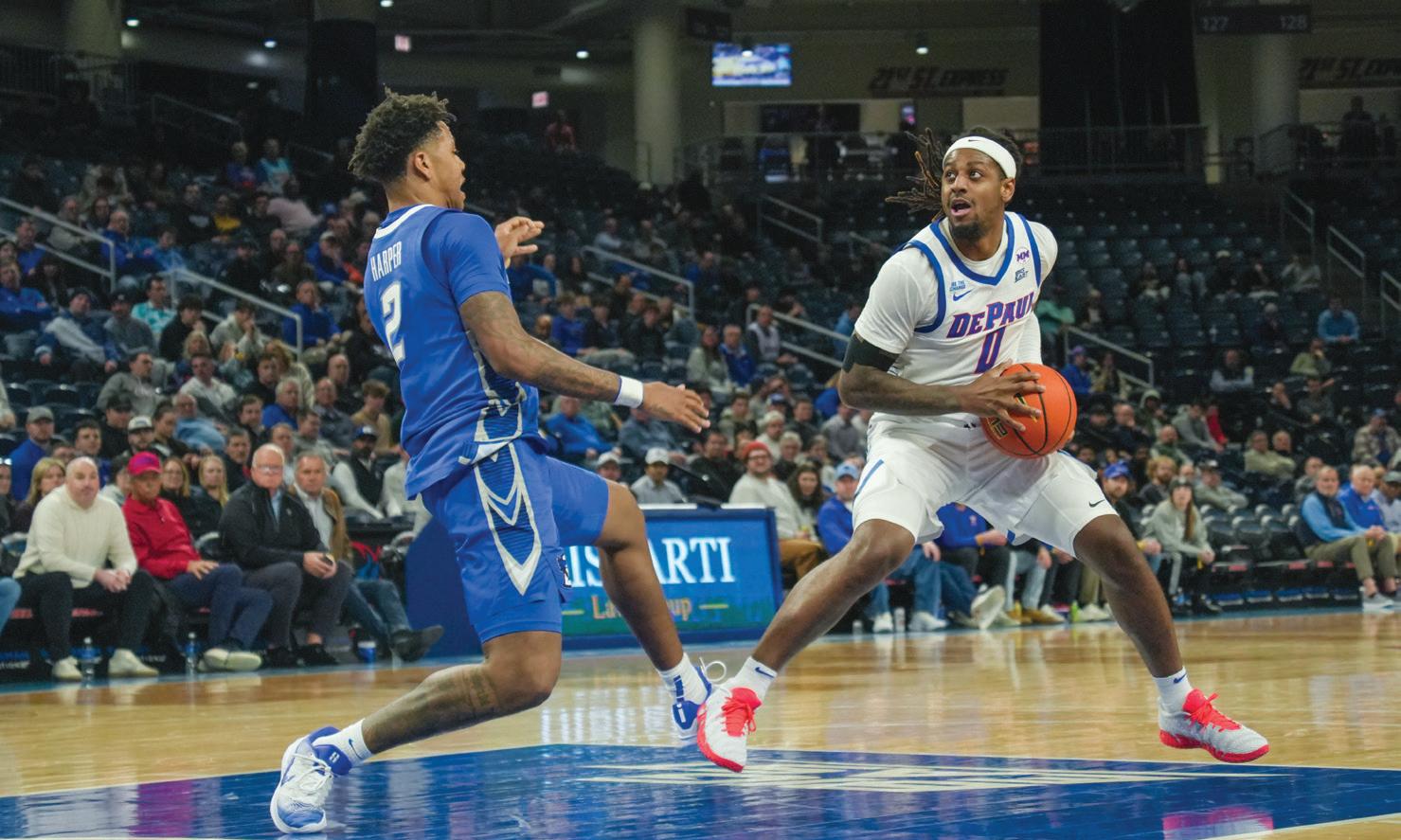
DePaul guard Brandon Maclin battles Creighton defenders at Wintrust Arena on Wednesday, Feb. 11, 2026. Maclin currently averages 8.9 points per game.
ZOEY DUCHENE / THE DEPAULIA
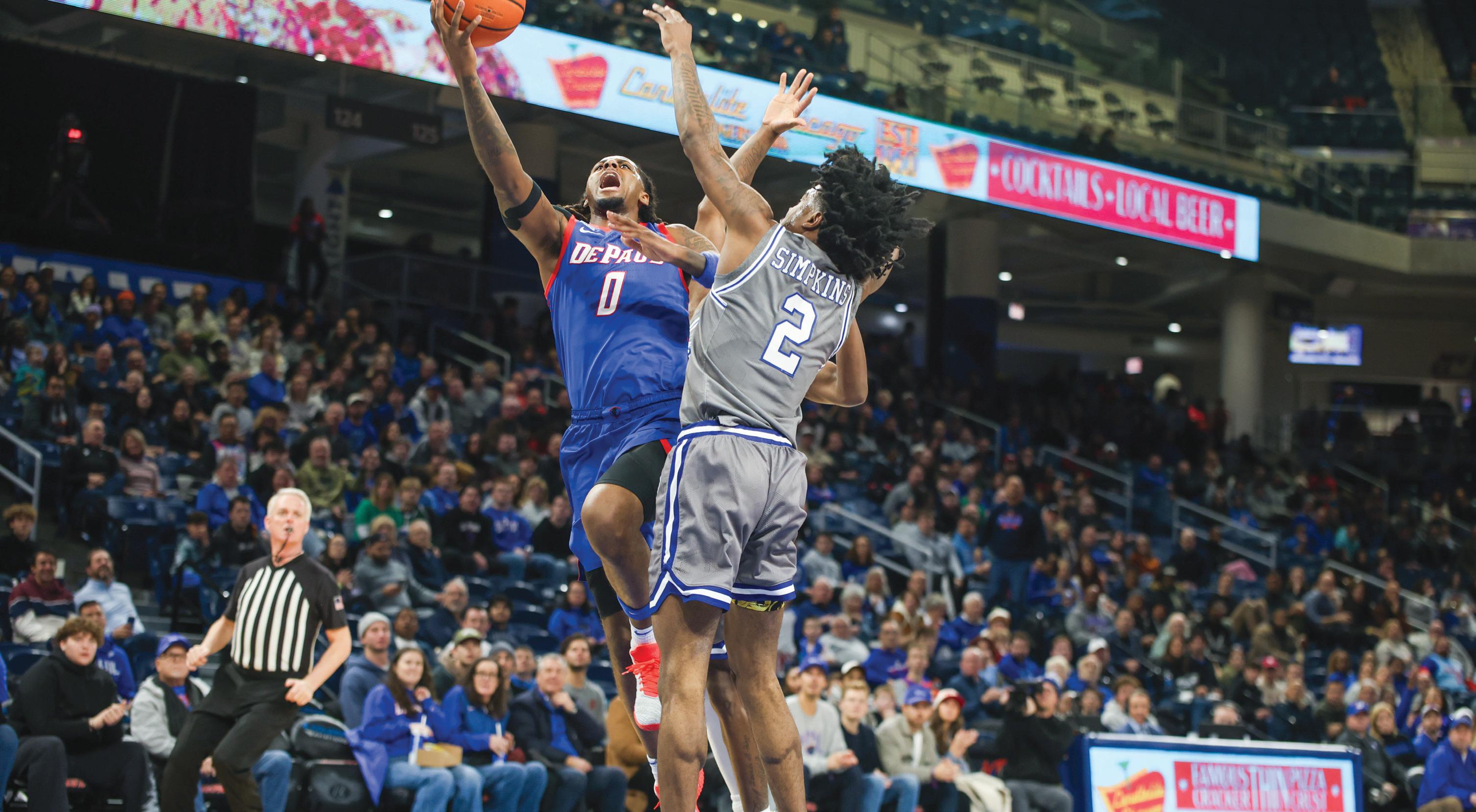
DePaul guard Brandon Maclin tries to make a shot against Seton Hall at Wintrust Arena on Saturday, Jan. 24, 2026. This is Maclin’s first year with DePaul.
Ashley Mezewich
Men’s Basketball Beat Writer
Who do DePaul students think is the greatest NBA player of all time?
Graham Anderson Contributing Writer
In the 79-year history of the NBA, who is the greatest player to ever set foot on the court?
It is a question that has gripped basketball fans for years on end. Anyone who even slightly cares about the sport can get heated over who they think deserves to be called the greatest of all time, or the “GOAT”. And DePaul students are no exception. Perhaps unsurprisingly, many students of the Chicago-based university favor Michael Jordan in the debate. But for some, like junior film student Charlie Shroyer, the question has less to do with athletic ability than it does with cultural presence.
For Jordan, this includes his status in the 1990s as one of the world’s biggest celebrities and his signature shoe brand. At the same time, Lebron James’ cultural resume includes his domination of today’s sports world and his lifetime deal with Nike.
“I feel inclined to say LeBron, but I just think Michael just had more impact,” said Shroyer, who is from California. “I think he had the biggest impact on the sport and his logo is literally everywhere.”
In comparing Jordan’s cultural achievements to James’, Shroyer noted how both players have starred in “Space Jam” movies,
DePaul track and field celebrates seniors in Blue Demon Alumni Classic
By Peyton Hopp Sports Editor
Gately Indoor Track Center erupted with cheers every time the starting pistol went off during DePaul’s fourth annual Blue Demon Alumni Classic. There were many events happening at the same time, from shot put to long jump to sprints. Alongside a special recognition for track and field alum Darius Brown, DePaul honored their fourteen seniors for senior day. “The years flew by,” senior Jaiah Hopf said. “I never really thought I’d really even be doing college track. But here we are, you know?”
Hopf finished in second place in women’s long jump, with a jump of 5.88 meters.
“When people watch it, it just looks hard,” Hopf said. “It looks cool, but it looks hard. So, like, being able to do that, that a lot of people can’t, it just makes me feel like, I mean, I’m special.” On Tuesday, Feb. 10, she was named the Big East women’s field athlete of the week, marking the fifth time in her career she has earned the honor.
She earned the title after scoring first place in the long jump at the Badger

with Jordan in the first 1996 film and James in the 2021 remake.
Though Shroyer based his answer on Jordan’s cultural accolades, senior sports communications major Owen Kelly kept it strictly on the court, focusing on Jordan’s athletic awards and achievements.
“He won the national championship at North Carolina, so all he knew was winning in college,” he said. Along with winning six NBA championships, Kelly said this is a “pretty clean resume.”
Like many with opinions in this debate, Kelly believes the question comes down primarily to Jordan’s six NBA titles
to James’ four.
“If he were to get that fifth, especially in the year that he’s in right now, I think you could argue it so much better. But as long as he has four, I think MJ’s got it,” he said. Though Jordan seems to have the edge among DePaul students, James is certainly not without supporters on campus.
Freshman accounting major Luke Altman cited longevity as the reason for his belief in James’ superiority. “He’s been the best for the longest amount of time,” he said. “Michael Jordan didn’t play long enough — only a few years. Longevity is important.” Altman also considered that James
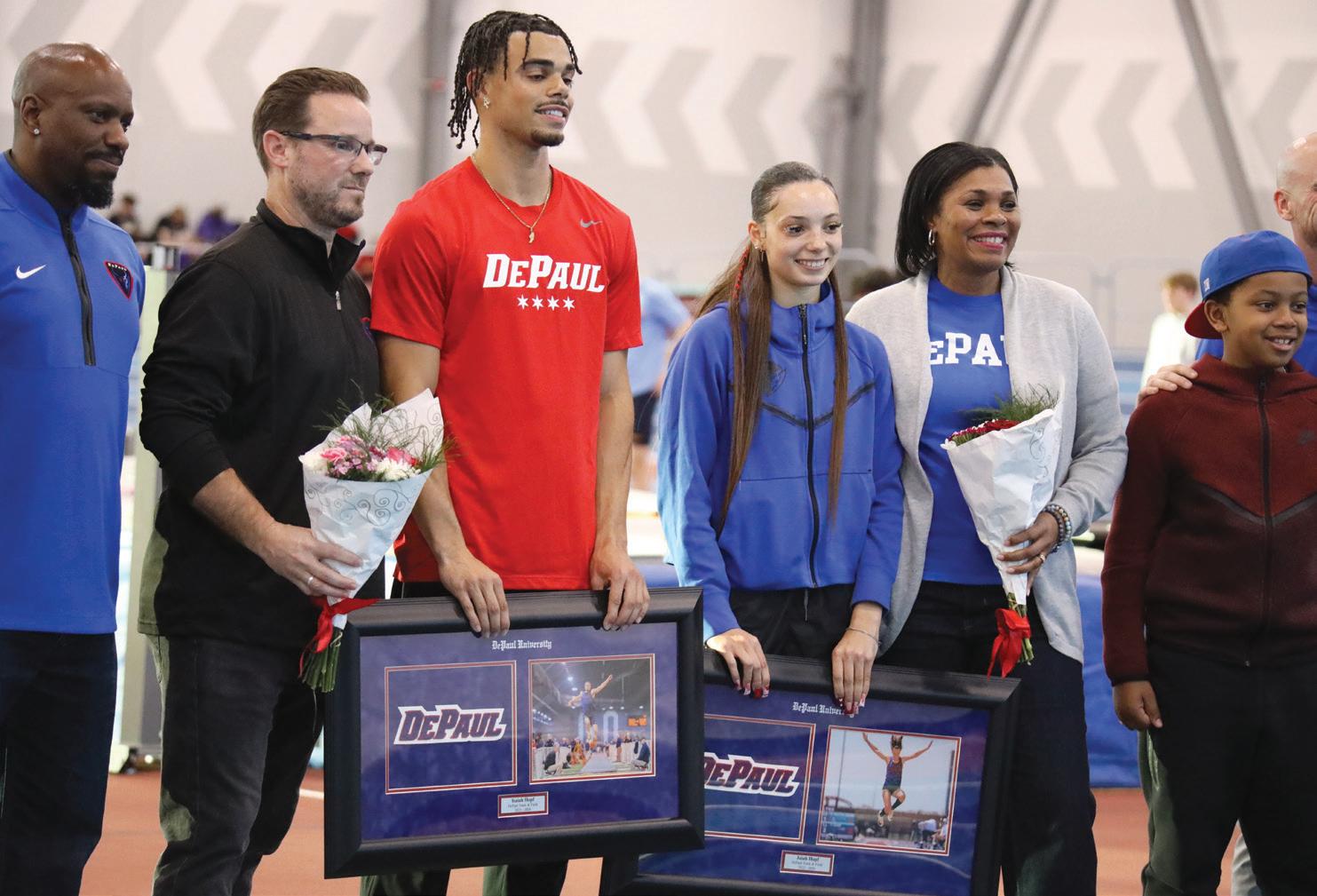
Windy City Invitational in early February. She later earned third place in the triple jump at 12.45 meters, which currently ranks second in the Big East this season.
Hopf was honored during senior day with her brother, Isaiah Hopf, who also participates in long jump and triple jump. He secured first place in the triple jump, hitting 14.88 meters. Hopf also walked with her boyfriend Demetrius Rolle when he was honored as a senior.
“It’s a good feeling to be loved and respected,” Rolle said. “It goes a long way
that your coaches show you appreciation. I’m grateful to be a part of DePaul as it’s on the up and up, but it’s been a fun two years.”
Rolle started the day off strong, securing first place and breaking a previous DePaul record he set in the men’s preliminaries 60-meter dash, which was 6.70. He beat it by one-hundredth of a second. A few hours later, he participated in the 200-meter dash but suffered an injury and wasn’t able to finish the race.
“The injury that I got today is an injury I’ve been nursing regardless,” Rolle
won championships with multiple different teams and teammates.
“Michael Jordan had Scottie Pippen and Dennis Rodman. LeBron’s done it with Cleveland, with Miami, with LA,” he said. “Maybe Michael had the better peak, but he’s been … better for longer, and that’s more important.” Junior film major Erin Hartnett said, “I think him winning championships on multiple teams compared to Jordan speaks volumes of how good his talent is because he was able to bring it to so many different schemes, so many different teams.”
Hartnett also alluded that answers to the question are influenced by age.
“I talk to my parents a lot about this. They’re just like, ‘You don’t know Jordan because you weren’t alive,’” she said. “I think just looking at what I know, I’ve got to say it’s LeBron.” Plenty of students have strong opinions on who the greatest player of all time may be, but the case is by no means closed.
The debate is sure to go on just as it has in homes, bars and social media threads across the country. Just as one viewpoint seems to take the upper hand, another is there to claim it right back. Shroyer put it succinctly. “I think this is a debate that’s going to be had forever,” he said.
said. “… So I’m not really disappointed in myself, I’m happy to come out today with a dub in the 60.” Senior Nadja Moll has mixed feelings after being recognized during senior day.
“I feel great,” Moll said. “I’m also kind of sad because that means it’s my last year. Obviously, I had a great time here, and I wish I had a little more time.”She finished 10th in the women’s 400-meter dash with a time of 56.51 seconds. At some points, there were as many as five events going on at the same time. Even though it might seem chaotic, Rolle said he makes sure to keep a good mindset when he’s competing.
“Just come in and have fun with it,” Rolle said. “… Go out, compete, try to be the best in the race, try to win the meet most of the time. But whatever happens that day, at least I have fun.”
Moll said she plans to keep running as a hobby once she graduates. Hopf, on the other hand, said she isn’t sure if she will continue doing track and field.
“I would love to, but I’m not sure if my body could even handle anything,” Hopf said. “I don’t know how many more years I got.”
Now the Blue Demons look onto the Big East Indoor Championships Feb. 2728, which will be held at Gately Indoor Track Center. Shortly after that, they will prepare for the NCAA Indoor National Championships on March 13-14, which will be held at Randal Tyson Track Center in Fayetteville, Arkansas.
THAI JACKSON / THE DEPAULIA
Isaiah Hopf (left) and Jaiah Hopf (right) pose for a photo as they were honored during senior day at Gately Indoor Track Center on Friday, Feb. 13, 2026. Isaiah and Jaiah both compete in long jump and triple jump.
ISABELLA RUSSOMANNO / THE DEPAULIA