Dental Lifestyles is published quarterly by Dental Lifestyles Publishing Group. Advertisers may sponsor some articles and/or content. Opinions expressed in articles or advertisements do not necessarily reflect the publisher’s opinion. Dental Lifestyles is not responsible for omissions or information misrepresented to the magazine. Advertisers and their agencies assume all liability for advertising content. No part of this publication may be reproduced or transmitted without written permission from the publisher.
Publisher’s Note
FroThe Future of Dental Events: It’s No Longer About Information. It’s About Experience................
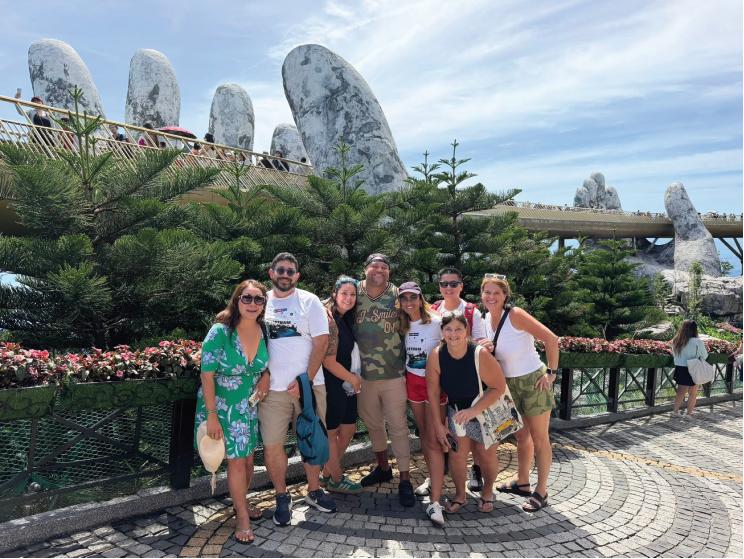
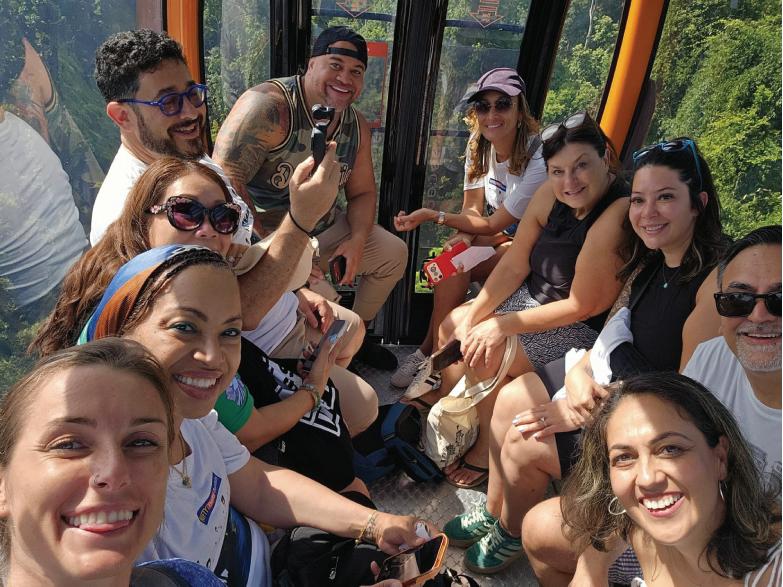
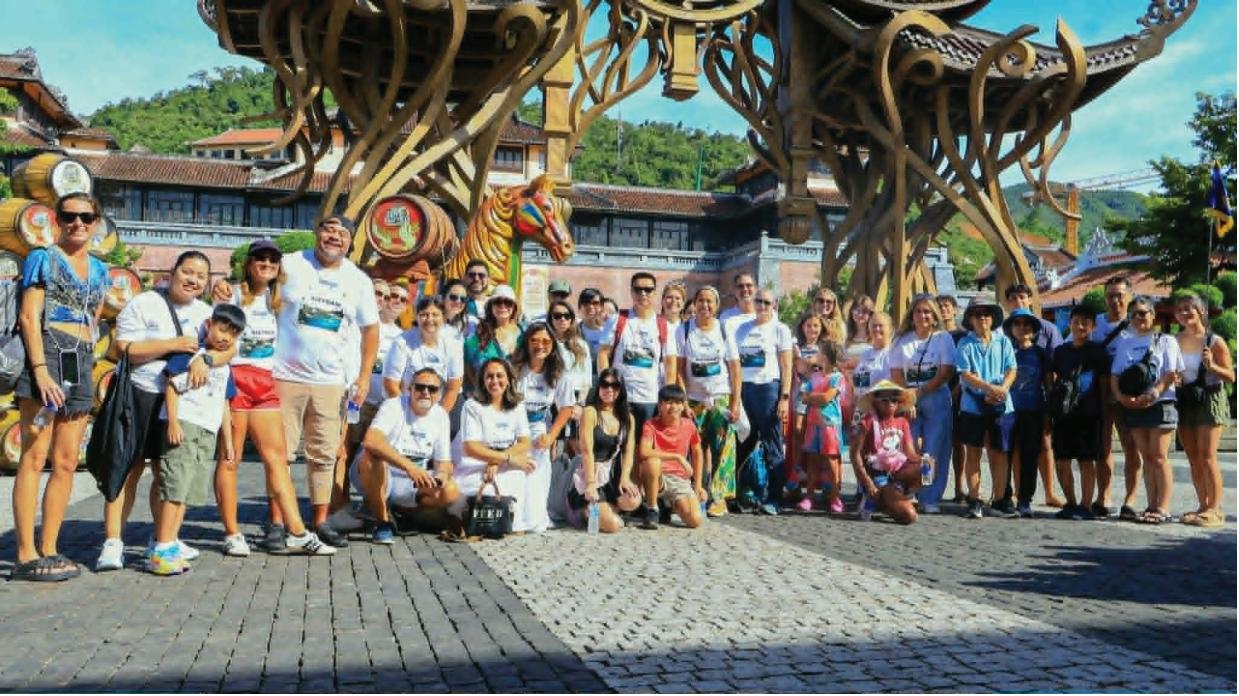
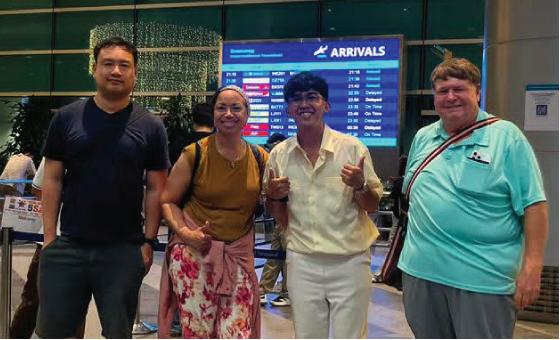
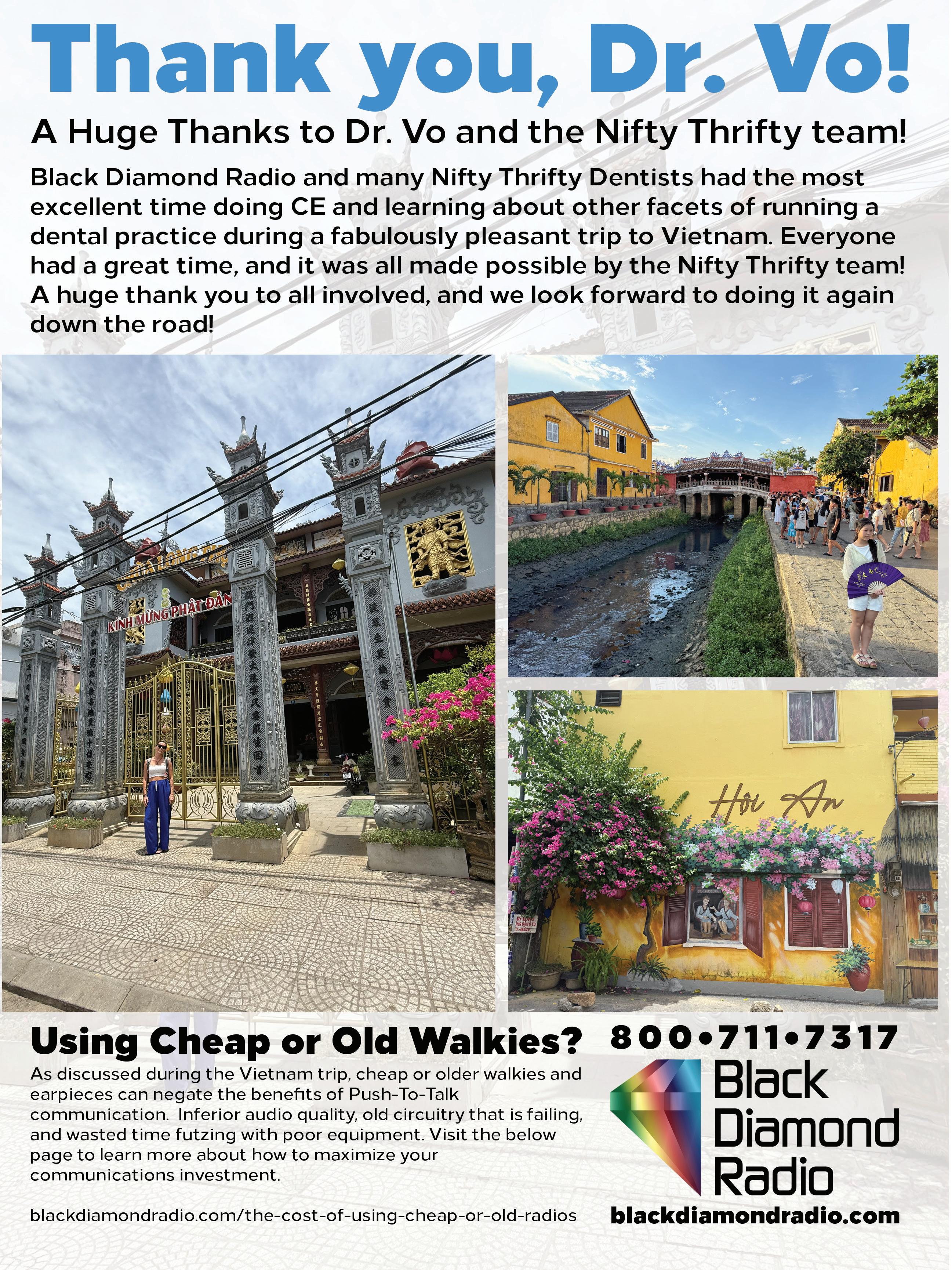
Conference Life Nifty Thrifty Dentists: Vietnam CE Recap...........................................
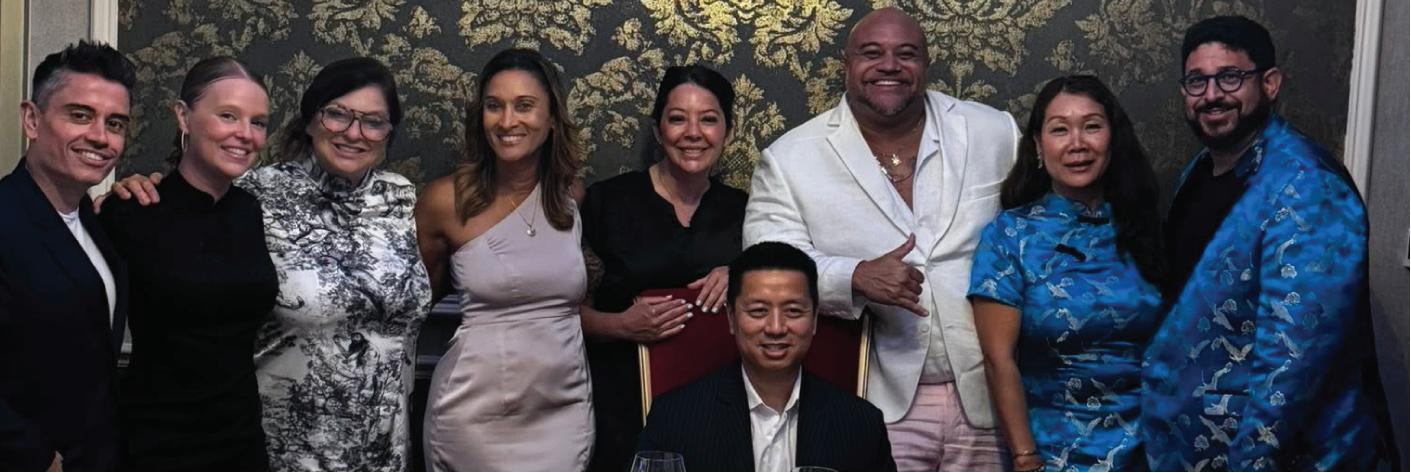
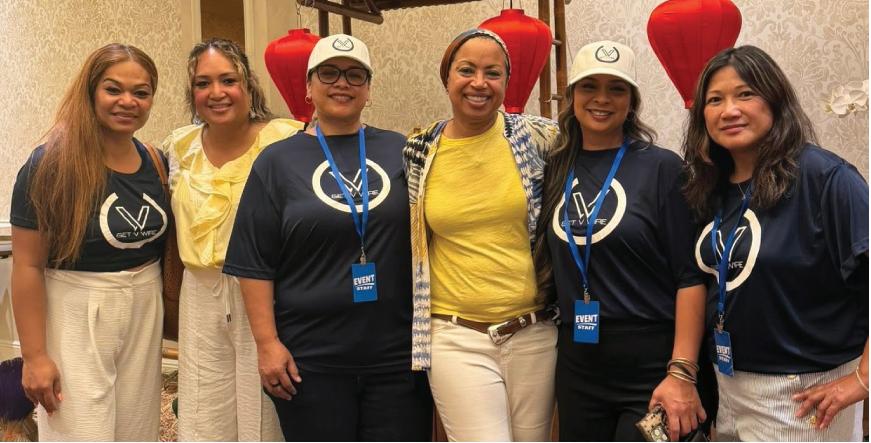
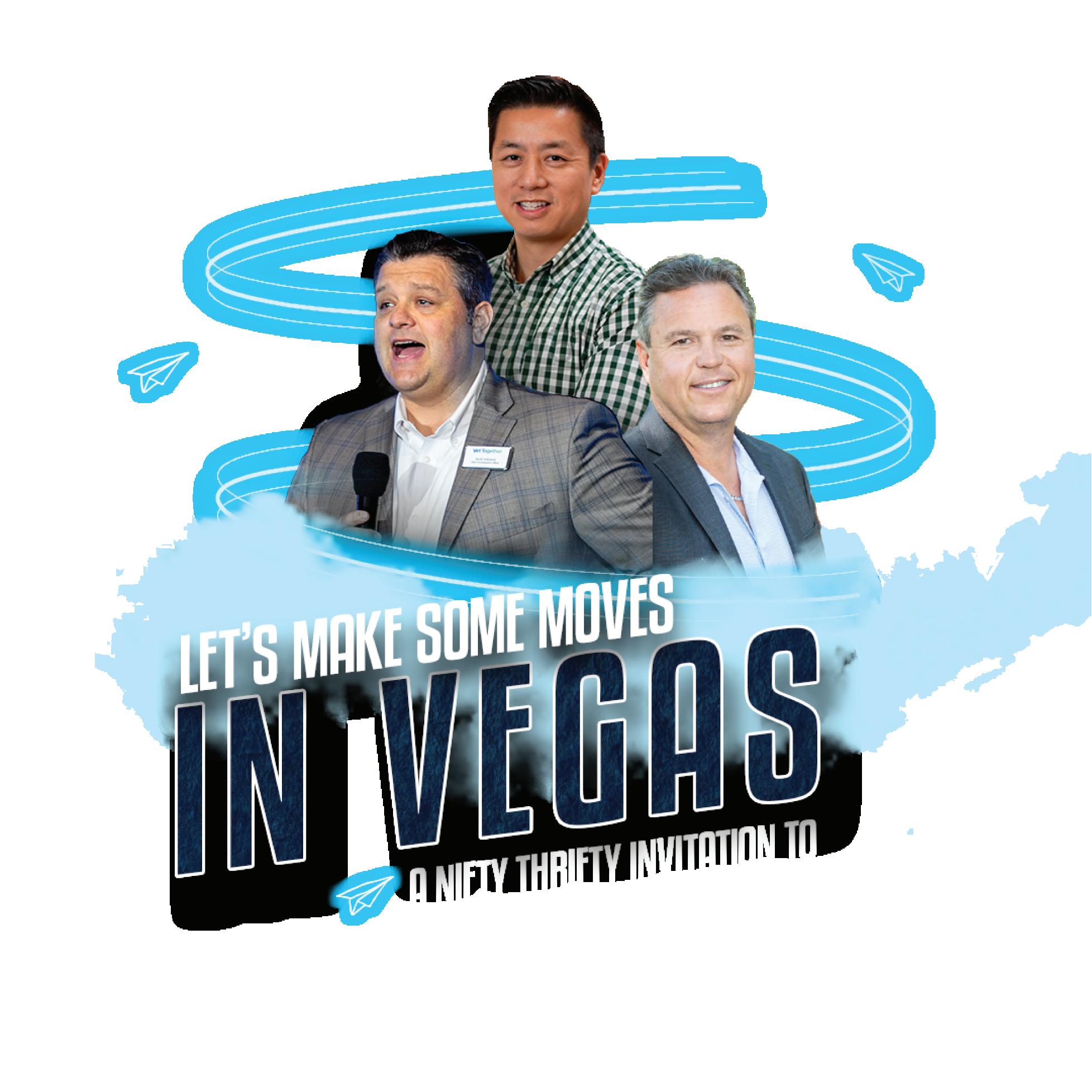
Let’s Make Some Moves in Vegas...........................................
Business Life The Cost of Using Cheap or Old Radios..........................................
Beyond Brokerage: Dr. Michael Njo’s Whole-Person Approach to Practice Transitions..............
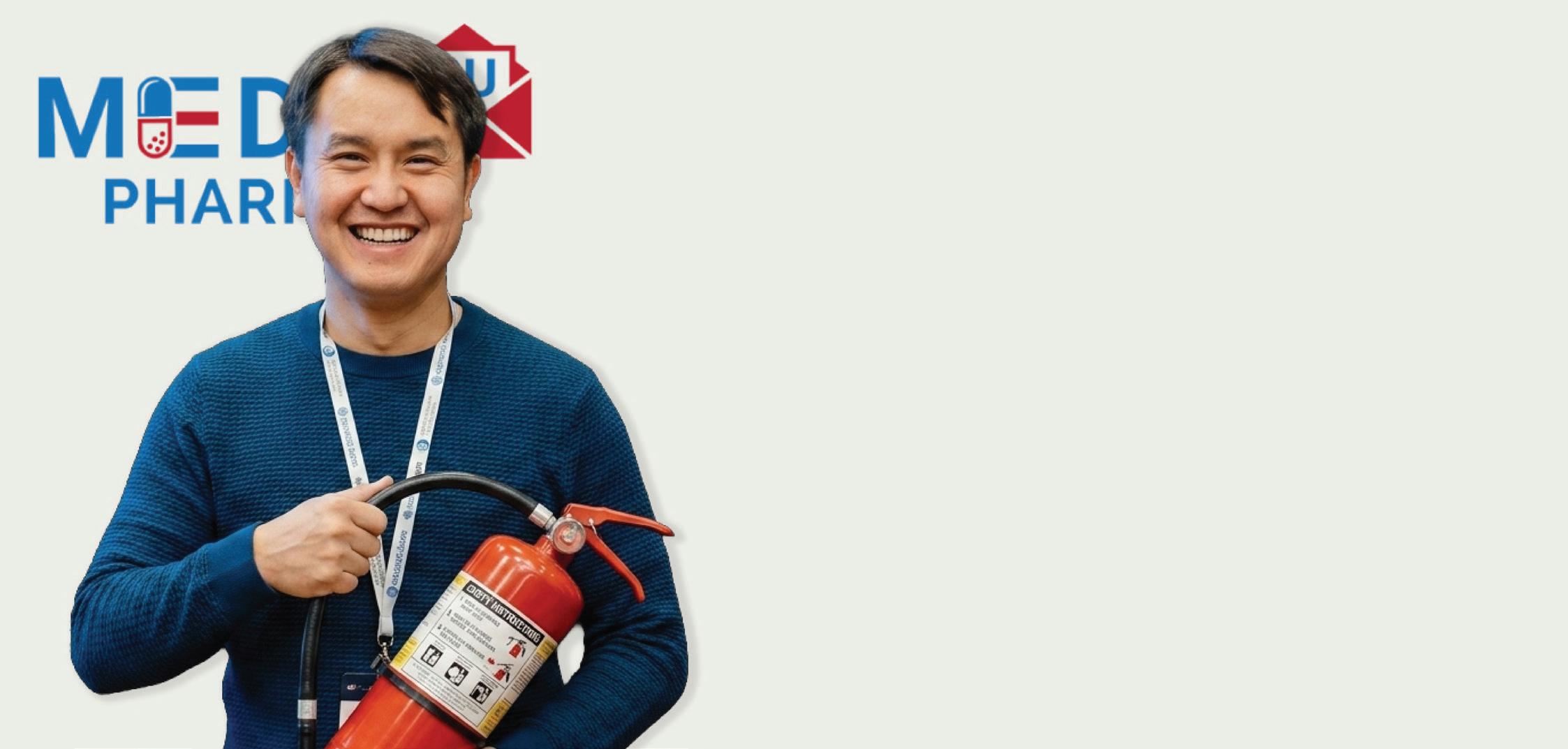
The Fire Extinguisher You Hope You Never Use: How Meds2U Keeps Your
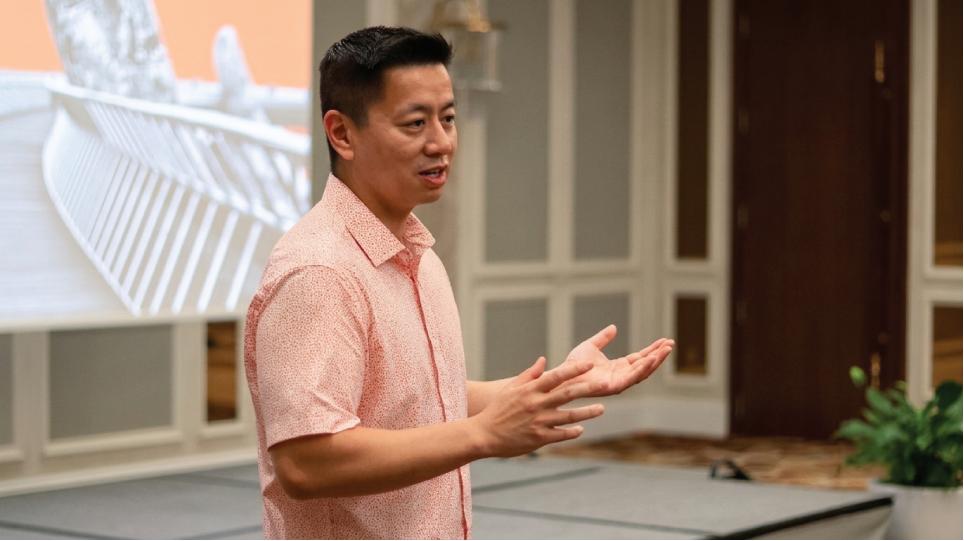
The Future of Dental Events: It’s No Longer About Information. It’s About Experience.
Artificial intelligence is changing education forever.
Today, AI can summarize an hour-long lecture in seconds. It can answer clinical questions instantly, create treatment plans, explain new technologies, and even personalize learning for every dentist. Information has never been more accessible.
So that raises an important question.
If information is becoming a commodity, why will dentists continue to travel across the country, or even across the world, to attend live events?
I believe the answer is simple.
The future of dental events isn’t about delivering more information. It’s about creating experiences that can’t be replicated online.
For years, conferences competed on the number of CE hours they offered or the caliber of their speakers. Those things still matter, but they’re no longer enough. The events that will continue to grow are the ones that understand people are looking for something much bigger than education.
They’re looking for connection. They’re looking for community.
They’re looking for experiences that change the way they think. I’ve had the opportunity to
attend and host some incredible events over the past few years, and while each one has a completely different format, the best all share one thing in common. They’ve stopped thinking like conferences and started thinking like experience creators.
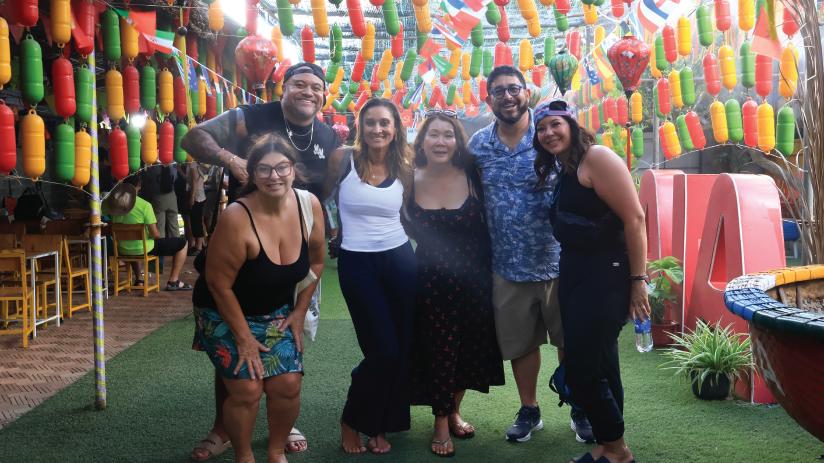
Take our Nifty Thrifty Dentists event in Vietnam.
Yes, attendees earn continuing education. But the lectures are only part of the experience.
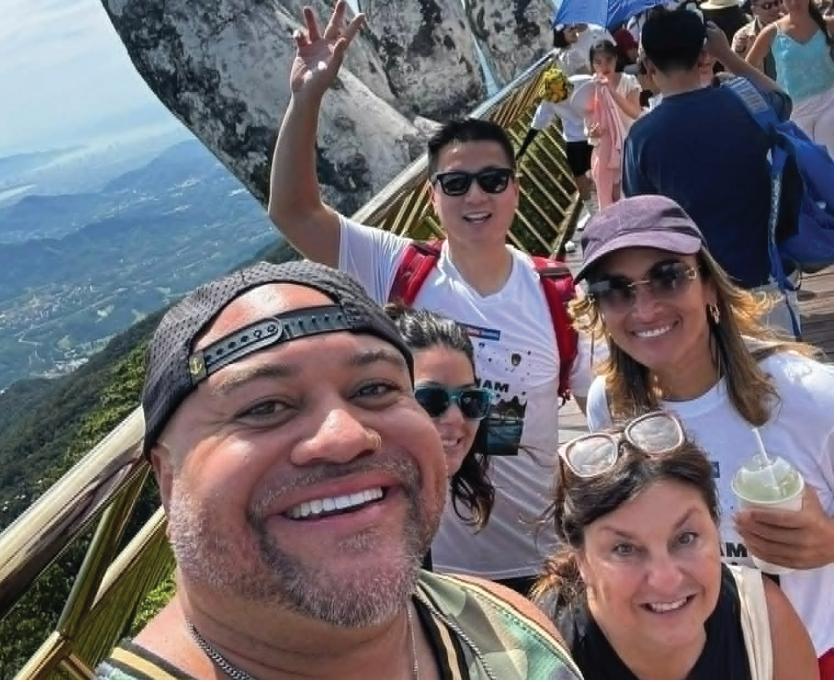
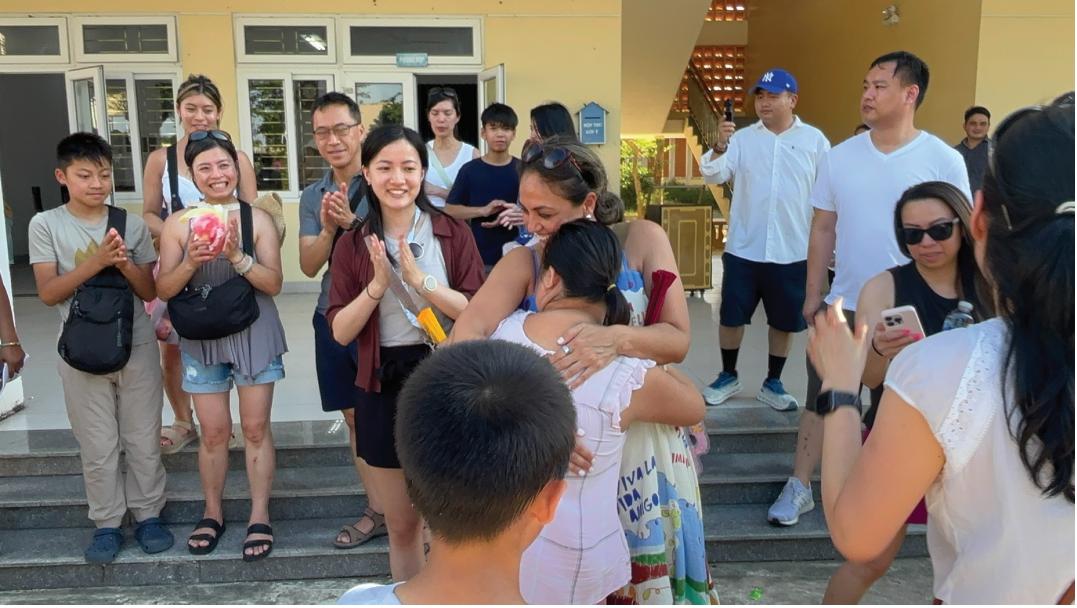
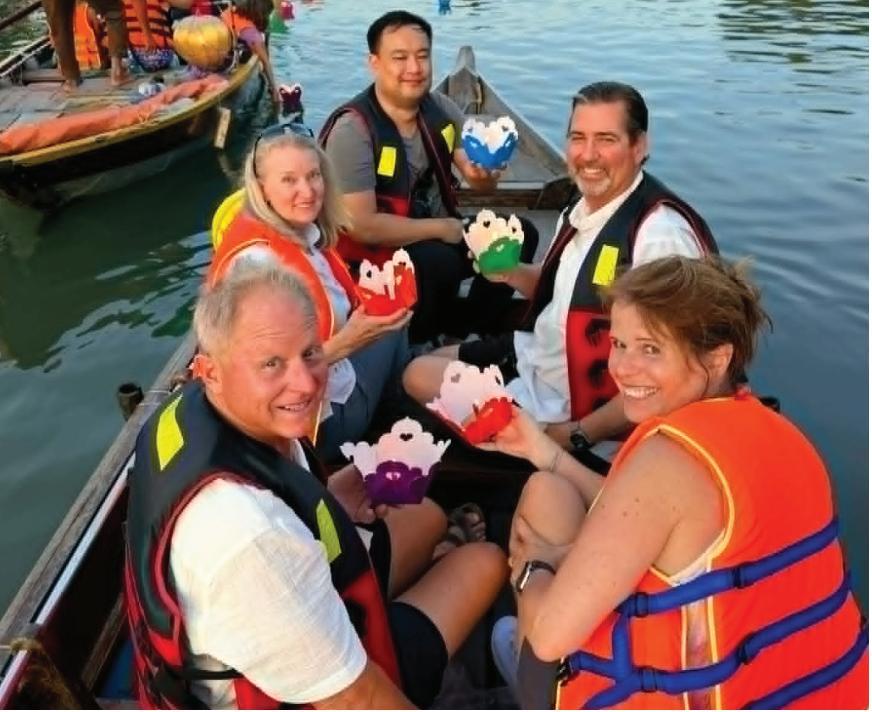
They ride basket boats through the coconut forest, walk the ancient streets of Hoi An, visit Ba Na Hills and the Golden Bridge, release lanterns on the river, and spend time serving at an orphanage and an elderly center. Those moments create conversations, friendships, and memories that simply don’t happen in a ballroom.
We also made a conscious decision to integrate our sponsors into the experience. Instead of standing behind exhibit booths waiting for foot traffic, they travel alongside attendees, share meals, participate in tours, and build authentic relationships. The result is simple. Business becomes a byproduct of trust instead of a product of salesmanship.
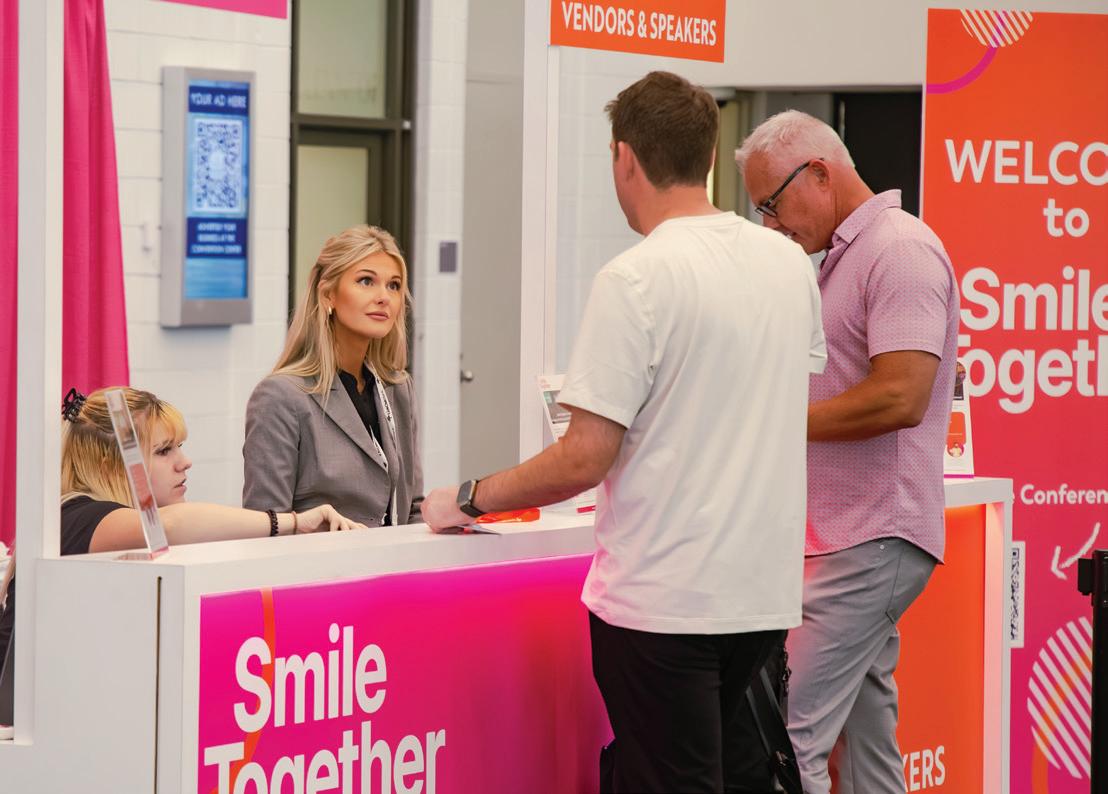
Smile Together approached the problem from an entirely different angle by removing one of the biggest barriers to attending conferences: cost. Through a hosted-attendee model supported by vendor partnerships, many dentists can attend with most of their major expenses covered. That creates a nearly frictionless experience for qualified attendees while giving vendors meaningful face-to-face time with practice owners who genuinely want to meet them. It’s a win for everyone involved because every conversation has purpose.
Archy’s Future Proof took anoth-
er innovative approach. Rather than trying to be the biggest conference, it focused on being one of the most relevant. The event’s unique layout encourages conversation instead of simply filling seats. Speakers spend time answering questions, collaborating with attendees, and learning from one another. The heavy emphasis on technology, artificial intelligence, and preparing practices for what’s coming next makes the event feel less like a conference and more like a glimpse into the future of dentistry. It’s one of the few events intentionally helping dentists future proof their practices before change forces them to.
Then there’s the Florida Dental Convention.
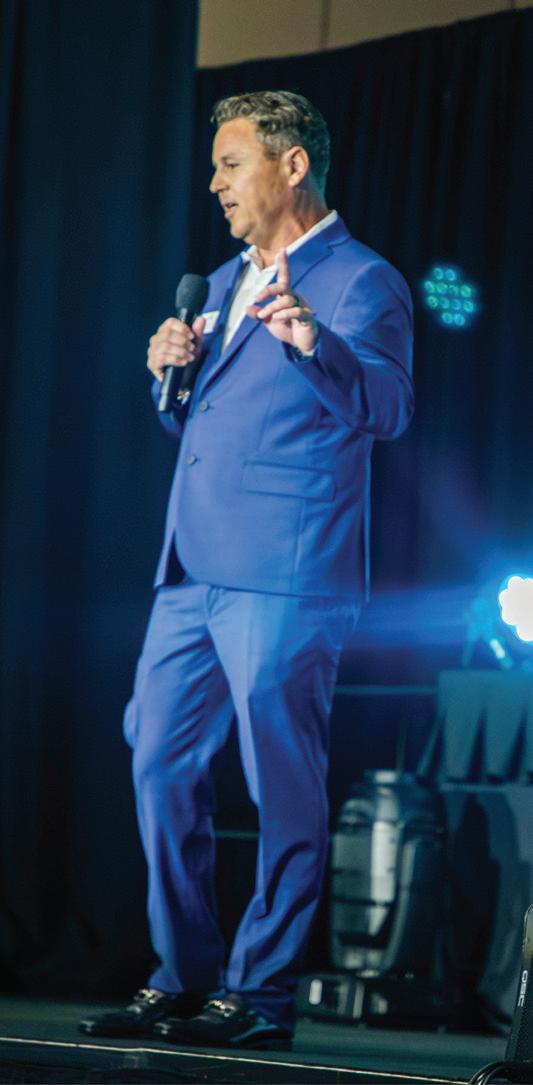
I had the privilege of speaking there this year, and I came away incredibly impressed. From the way the Florida Dental Association cared for its speakers to the experience they created for attendees, every detail reflected excellence. With more than 150 CE courses, hundreds of exhibitors, and education designed for every member of the dental team, there truly was something for everyone. Hosting the convention at the Gaylord Palms made an enormous difference as well. It became a place where attendees could stay, learn, network, and enjoy time together without constantly leaving the property. It transformed continuing education into a true team experience.
Smiles at Sea proves there’s another way to rethink dental education. By taking learning onto a cruise ship, the conference removes people from their normal routines and creates an environment where relationships naturally deepen over several days. Some of the best conversations don’t happen in the lecture hall. They happen over dinner, during an excursion, or while watching the sun-
set with colleagues who quickly become lifelong friends. That’s an experience no webinar can recreate.
Although each of these events looks completely different, they’re all solving the same challenge.
How do we create something people can’t get from a screen?
That’s the question every conference organizer should be asking.
People don’t remember lectures.
They remember how you made them feel.
They remember the colleague they met who became a business partner.
They remember the conversation that gave them the confidence to buy their first practice.
They remember traveling with their team, serving alongside friends, discovering a new culture, or finding a mentor who changed the trajectory of their career.
Those are the moments that create lasting impact.
My prediction is that the most successful dental events over the next decade won’t necessarily have the biggest keynote speakers or the largest exhibit halls. They’ll be the ones that build the strongest communities, create the most meaningful experiences, and leave attendees feeling inspired long after the CE credits have been recorded.
Dr. Glenn Vo Dental Lifestyles Magazine
Vietnam CE
Day 1
COCONUT FOREST & BASKET BOAT EXPERIENCE
A peaceful water coconut forest in Hoi An, once used as a hiding place during the Vietnam War. Today, it is known for its traditional round basket boat rides.
TOWN
A historic trading port famous for its old yellow buildings, lantern-lit streets, and riverside charm.
Day 2
A famous landmark in Ba Na Hills, known for its giant stone hands holding a golden walkway. It offers beautiful mountain views and has become one of Vietnam’s most iconic photo spots.
A mountaintop resort near Da Nang with French-inspired architecture,
HOI AN ANCIENT
NIFTY THRIFTY DENTISTS CE EVENT
BA NA HILLS
gardens, and scenic views.
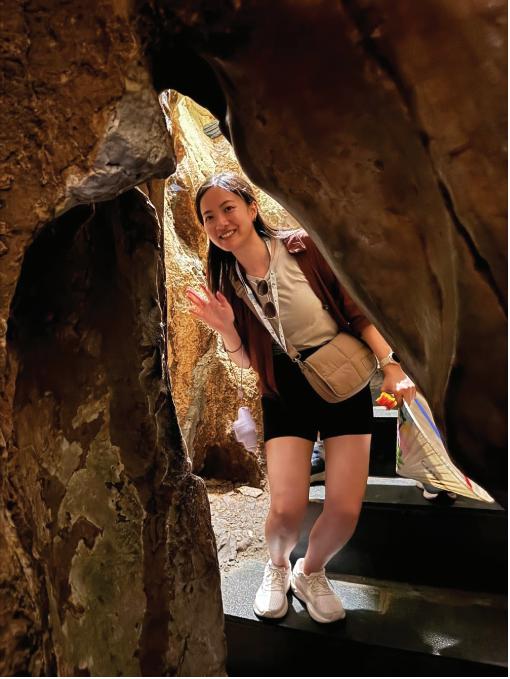
AM PHU CAVE
Located within Marble Mountains, Am Phu Cave is known for its dramatic Buddhist-inspired scenes of heaven and hell. It offers a unique look into Vietnamese spiritual beliefs and symbolism.
MARBLE MOUNTAINS
A famous cluster of limestone and marble hills in Da Nang, known for caves, pagodas, and beautiful viewpoints. The mountains are also an important spiritual and cultural site in Vietnam.
QUANG NAM SOCIAL SUPPORT CENTER FOR THE ELDERLY AND CHILDREN
A meaningful visit where the group spent time with elderly residents and children supported by the center. It was a special moment of giving back and connecting with the local community.
Thank You To Our Sponsors And Speakers
Quality does not have to be expensive!
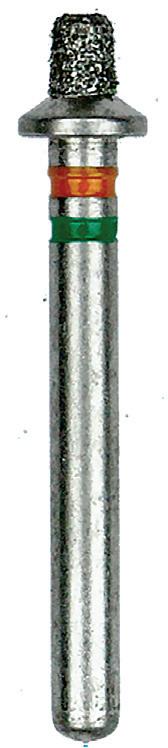
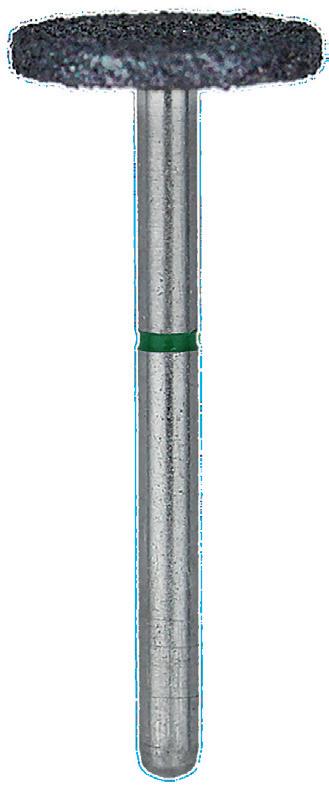
Dentalree is the home of Crosstech #1 rated diamond burs and the exclusive North America distributor for all Crosstech products. Crosstech diamond burs are made with Swiss-patented multi-diamond layers, with special natural diamond powder. During cutting, this natural diamond crystal does not break off; instead, it chips, creating additional sharp edges which increase efficiency and bur life.
Surgical Diamond ( 30mm)
Crosstech Multi-Use
Fast Cutting Diamond Zirconia Cutting Diamond
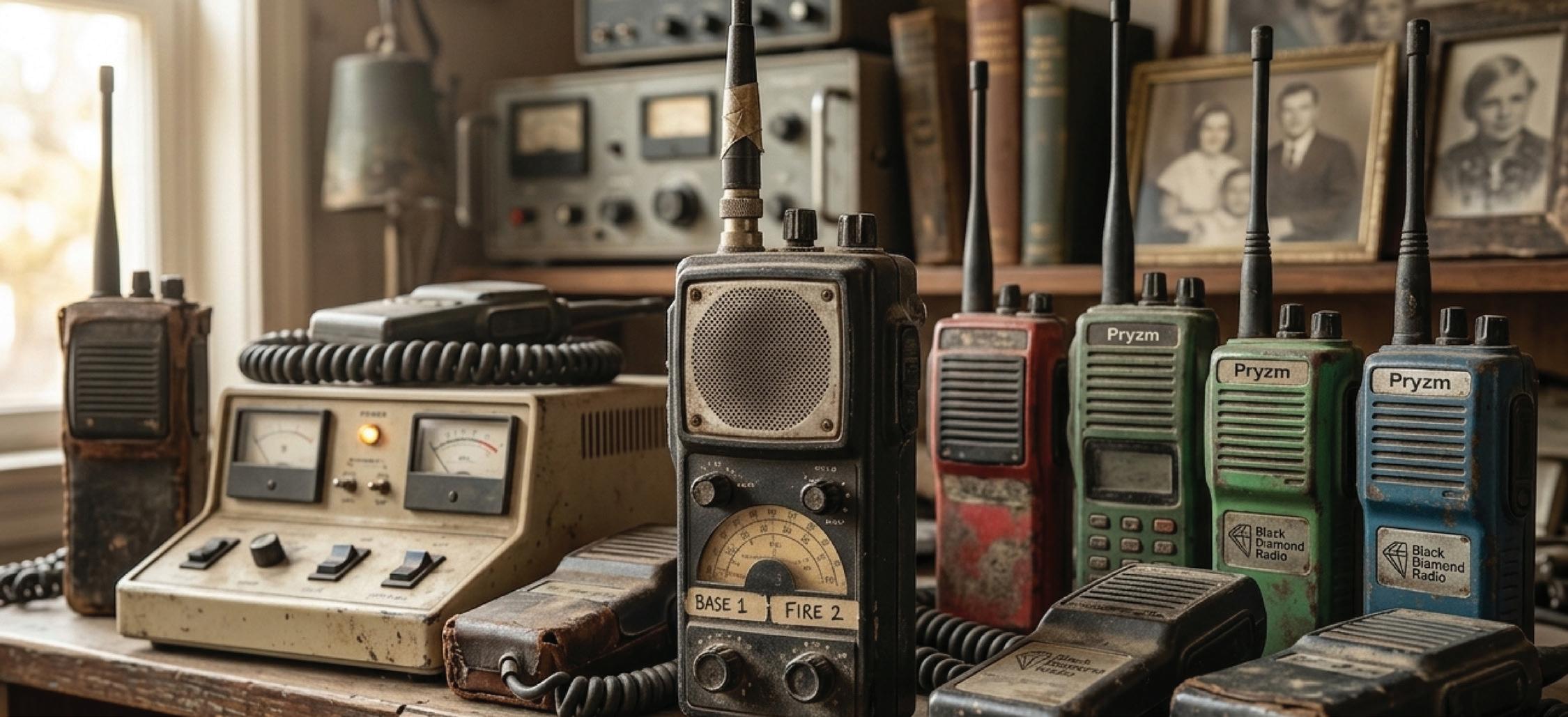
The Cost of Using Cheap or Old Radios
By
When most people think of two-way radios, they think of emergency services, construction workers, and security guards. What many don’t know is that walkie-talkies are used daily in grocery stores, hotels, medical offices, car washes, restaurants, schools, animal hospitals, and many other industries. You’re here because you’ve already made this discovery. You had the savvy to see the potential in your team using two-way radios to communicate instantly, leading to gains in productivity and efficiency, and you transformed your facility’s workflow for the better.
What many folks don’t figure out as they go is that using consumer walkies instead of industrial units, or holding on to old, worn-out radios, can silently negate the time and money these devices save.
Cheap Radios from That Massive Online Retailer
We’re not going to invoke their name, but you know who we’re referring to. It’s a great marketplace with tons of cool stuff at reasonable prices and fast shipping. We all use it, and there’s nothing wrong
with that; they’ve got some good stuff in their warehouses. What they don’t have is a good two-way radio. The brands available there are great for the frugal-minded individual who needs radios to talk to their buddies at the concert, or the ham-radio geek who needs a set of cost-effective units to futz around with. What they are not so great for is use in a business. Like with many things, you get what you pay for, and professional gear is rarely “cheap.” These consumer devices cost next to nothing to manufacture, which is why they are so inexpensive to you. You’re running a professional business—why equip it with what amounts to a kid’s toy?
Audio Quality
Audio quality in consumer radios is abysmal at best: tinny, ear-piercing, and often hard to understand. Many users have complained about having to constantly repeat themselves, which is fine on a rare occasion but can become taxing if you’re doing it every other call, day in and day out. Business-class radios eliminate 99 percent of this issue; rarely does a user repeat themselves on a busi-
ness-class walkie. That simple fact alone makes consumer radios not worth the small price they charge, because you’re not getting what you’re after: saved time. You’re not buying radios; you’re buying efficiency and productivity. The goal is to buy time at a heavily discounted price. If you must repeat yourself, you might as well drop everything you’re doing and physically track down the person you’re talking to.
Dr. Glenn Vo, Editor-in-Chief of Dental Lifestyles Magazine, knows this firsthand:
“I was one of those Docs that used the cheap radios to save money. What ended up happening was that I was wasting time asking people to repeat themselves over and over again and constantly replacing the radios. Once I switched to Black Diamond Radios, it was as if my team and I removed ear plugs from our ears. We were able to hear each other more consistently but also communicate more effectively.”
Budget Earpieces
Consumer earpieces don’t just sound bad; they break very eas-
ily. They use wires that are not designed for longevity, lacking the strength and durability required to last. They’re built to function and make a sale; what happens after that is not the manufacturer’s concern unless it costs them money. Sadly, the lion’s share of customers say, “This is junk,” throw it in the trash, and eat the $10 loss, so the most cost-effective thing for many manufacturers to do is to ignore the needs of the customer beyond the sale.
Industrial-quality earpieces will sound great, offer maximum comfort, and have stapled strain relief, and top-level models will employ Kevlar-reinforced wiring. You can go through ten $10 earpieces in a year and burn through $100— spinning your wheels replacing them and waiting for them to arrive—or you can spend half that on one earpiece that will last for years.
Privacy and Legal Compliance
Consumer radios tend to use common frequencies and quiet tones, known as FRS and GMRS frequencies, that are illegal to use for business and are
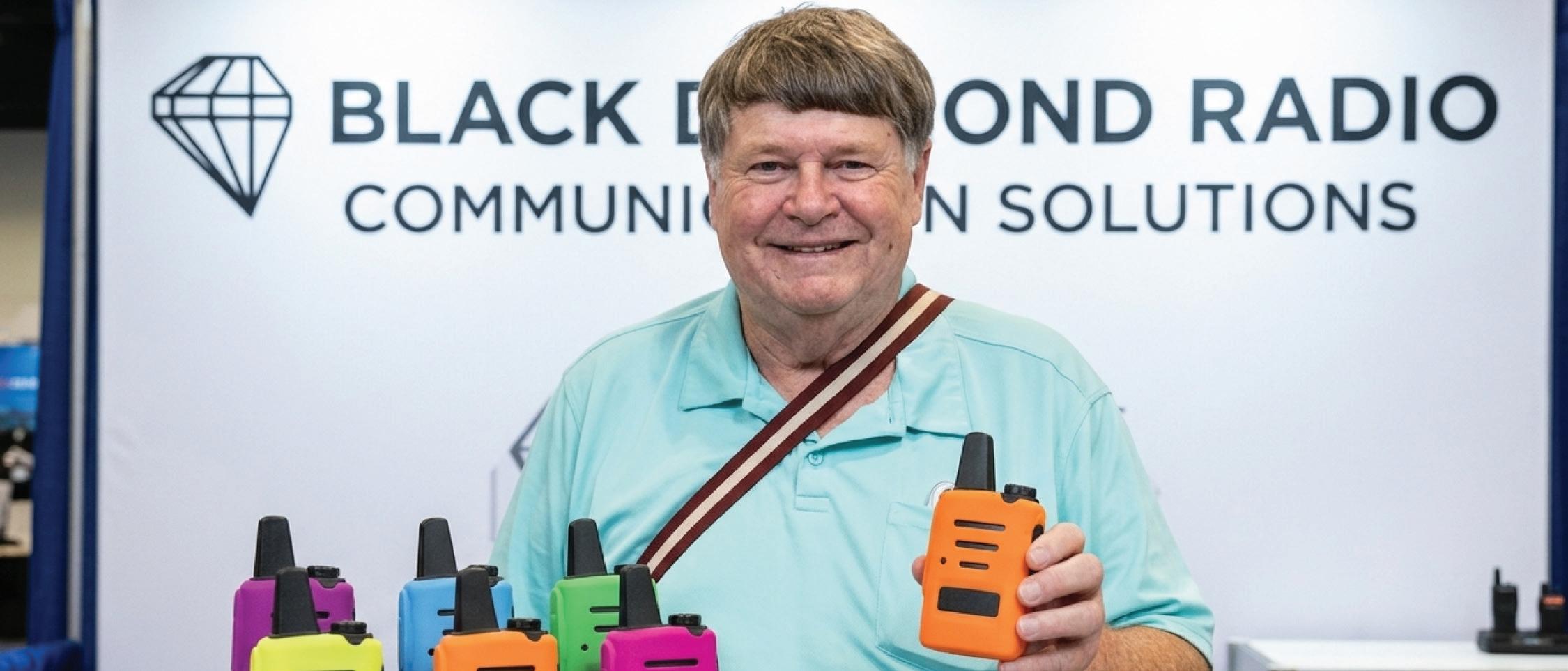
Dave Eames & Roman Phillips, Co-Founders of Black Diamond Radio
reserved by the FCC for the average citizen out hiking or on a family outing. Anyone can buy the same or similar radios you have and sit outside listening and cutting in. You’ll have better privacy and fewer interruptions with a business-class unit.
Digital radios, which are not offered on the marketplace above, are nearly impossible to listen to or cut in on. Most businesses want their communication to be private (or must comply with HIPAA!), and no one wants random transmissions when they’re trying to work and communicate. Business-class radios solve these problems.
Range
All FRS radios put out half a watt and will not properly cover a reasonably sized office or facility. Many consumer walkies advertise two or more watts, but in the realm of budget, that does not always indicate good range. The radio merely has to output two watts of power for the manufacturer to make that claim. It does not necessarily mean the radio has been optimized to make the most of those two watts. You’ll often find that a $20 two-watt radio cannot compete with the range of a $200 two-watt radio. Maybe the radio has a two-watt transmitter, but what receiver is it using? That two-watt
transmitter isn’t terribly useful if the receiver at the other end is the cheapest one they could source. Lower-quality antennas, lower-quality circuitry—many factors affect range, not just power.
With industrial units, you can count on a proper receiver that maximizes the functionality of the two-watt transmitter, backed by circuitry built to support that goal. Professional walkie manufacturers tend to have a reputation to uphold, because they’ve served specific industries for decades, and the quality of their gear speaks for the brand and builds customer loyalty.
Durability
If the radios are not durable, you’re going to be replacing them faster than you can get any real productivity out of them. Businesses are very hard on walkies. They’re used eight to twelve hours a day, five to seven days a week. Consumer radios were not designed for that; they’re built for a few hours at the zoo or an occasional single-day hiking excursion.
Remember the earpieces? These are designed to make a sale and nothing beyond that. No one on the development
team, no one on the design team, and no one on the manufacturing floor ever thought about whether their customers would still be using them three years after purchase. The only thing they thought about was, “How can we make this as absolutely cheap as possible yet still functional?” The radios likely come with a one- or two-year warranty that covers defects, but you’ll never actually be able to prove any defects or issues are their fault—another sales tactic.
Durability extends beyond “toughness,” too. What capacitors were used? What resistors were used? Where did they source their audio jacks? If the internal parts aren’t durable in addition to the chassis, the radio will quickly fail from basic, normal use.
Old Radios That You Hesitate to Replace
In everyday life, we stretch the life of equipment to save money, but for a business using walkies in a professional setting, this can be frowned upon by customers, clients, or patients, and it can negatively affect your daily communication. It can also lead to costly errors and slow everyone down, reducing productivity.
“But it still works!”
Unnoticed Performance Decay
Circuitry begins to fail with time. Capacitors don’t hold the charge they used to. Dust gets inside and slowly accumulates, resulting in more heat and less efficiency. Resistors start exhibiting resistance drift due to age. Knobs wear out, become crackly, or barely work well enough to justify keeping the radio in service—all of which slows the user down.
Five to seven years is the maximum recommended life span of a two-way radio in a business setting. It’s around that mark that returns diminish due to slowly dying circuitry, and dealing with walkie issues eats up all the time the radios had previously been saving. Many of these issues are practically invisible, and because they happen so slowly over time, they go unnoticed. Almost never do radios get replaced because someone made a smart decision; it usually happens when a radio fails on a super busy day. Avoid that bad day and replace the radio before it becomes a problem.
Long-Term Battery Life
Sadly, batteries don’t last forever. As time goes on, the battery holds less of a charge, until it eventually holds none.
Batteries generally cost about one-quarter as much as a replacement walkie. Replacing them once is fine, but if you replace the battery a second time, you’ve now spent half of what it would cost to just replace the radio. If you replace the batteries four times, you’ve paid for a new radio—with allnew circuitry—that you never got to use. The sweet spot is to replace the battery one time and then replace the walkie when that battery dies. Batteries should last at least a year, but two to three years is not unheard of. On a good radio, that adds up to four to six years of solid service, and since five to seven years is the mark for recommended replacement, the failure of the second battery is the perfect reminder that it’s time to replace the walkie.
Structural/Mechanical Weaknesses
A radio with a durable aluminum chassis will hold up for a
long time, but eventually the plastics and other materials used in the manufacturing process become weaker and easier to break or wear out. The plastics in the knobs, antenna, and housing aren’t as durable as they were when the radio was purchased. The mechanical parts, such as the knob internals, become weaker, and the “wear and tear” begins to accelerate. The walkie’s returns begin to silently diminish, completely unnoticed. It’s best to replace it before that point— before it starts creating more problems than it solves.
Silent Hardware and Firmware Revisions
Manufacturers often make small, unannounced changes to a product to improve it, especially in electronics. They might switch to higher-quality capacitors, or find that one transmitter works better than another and swap it in, or catch a minor, hardly noticeable fault
in the firmware and correct it. Production electronics change regularly without our knowing, and the only way to tell is to take a unit apart or dissect the information saved on its chips. When users decide to replace a unit, they often get improvements they may not even know about and might never notice. Sometimes users will say a certain unit seems better than the others but can’t explain why. Tiny, incremental improvements happen that the team may sense but not consciously notice.
Now You Know!
As you can see, there is a hidden cost to using budget radios or trying to stretch old ones beyond their limit. Think of the time consumed solving issues, the time lost repeating yourself or futzing with a unit to get it working, and the money lost on replacement radios and earpieces. How about the time you called John at the other
end of the building and he didn’t answer—because your radio no longer transmits, he never heard you, and you had no idea he didn’t? Time wasted. Implementing common-sense practices for replacing old units—and keeping consumer walkies out of your business— will position your company to maximize the true benefits of wireless push-to-talk communication! Scan to Visit
More Than a Name:
How One Phone Call Became Smile Together
By Dr. Glenn Vo, Editor-in-Chief of Dental Lifestyles Magazine
Aar Pugh
“We’ve
always believed opportunity arrives disguised as hard work,”
If you’ve been in dentistry as long as I have, you’ve probably felt it too. That little sigh when another conference invite lands in your inbox. Don’t get me wrong, I love our industry’s events. But somewhere along the way, a lot of them started to blur together. You fly in, you walk a crowded exhibit hall, you collect a tote bag full of brochures, and you fly home wondering whether any of it actually moved your practice forward.
I’ve had a front-row seat to this from a slightly different angle. Running the Nifty Thrifty Dentists community, with more than 60,000 dental professionals, I spend a lot of my time watching two groups try to find each other. On one side you’ve got practice owners who need better solutions. On the other you’ve got companies with great products who can’t seem to get in front of the right people. And too often, the traditional conference model leaves both sides a little frustrated.
So when I first heard about Smile Together, I was curious. Then I sat down with the two people behind it, Aaron Pugh and Scott Johnson, and I realized this wasn’t another conference at all. It was a real attempt to fix something the rest of us had quietly accepted as normal.
Here’s their story, because I think it’s one worth telling.
It started with a phone call.
Most companies can trace their beginning to a business plan. Together Media started with a phone call.
It was an ordinary day in St. Joseph, Missouri, when Scott Johnson’s cell phone rang. On the other end was Aaron Pugh, a longtime friend he hadn’t talked to in months. Scott knew Aaron had recently left Veterinary Growth Partners (the veterinary purchasing organization he’d helped build into one of the largest in the country), and was taking some time in Hawaii to think about his next move. When Aaron’s name popped up on the screen, Scott figured he was calling to ask for sponsorship on some new venture.
That’s not where the conversation went. Aaron had stumbled onto a conference model that had transformed other industries but had never been brought to veterinary medicine or dentistry. The more they talked, the more Scott realized Aaron wasn’t looking for a sponsor. He was looking for a partner. By the end of the call, Aaron asked him a simple
question: “Would you consider helping me build this?” That question became Together Media.
They set out to fix a problem everyone had learned to accept.
For years, Aaron and Scott had been looking at conferences from opposite sides of the same room. Aaron had spent his career leading Veterinary Growth Partners, working alongside manufacturers who were pouring heaps of cash into reaching decision-makers and still struggling to have a meaningful conversation with anyone who could actually say yes.
Scott had spent more than twenty years representing pharmaceutical and medical manufacturers, many of them innovative companies with terrific products and small sales teams. After COVID, he watched it get even harder. Gatekeepers multiplied, calendars tightened, and trade shows kept producing the same thing: crowded aisles full of people who weren’t in a position to buy anything.
Neither of them thought the industry needed another “conference.” What it needed was a better way to get the right people in the same room. That
belief became the foundation of everything they built. Instead of hoping the right conversations would happen by chance, they decided to engineer them through curated one-on-one meetings between carefully matched practices and partners. And to knock down the biggest barrier that keeps busy owners at home, they’d cover the airfare, hotel, meals, and continuing education for the hosted practices. The point was never to sell anybody anything. It was to create space for conversations that might otherwise never happen.
Then they burned the boats.
“Ambitious” might be too gentle of a word for that endeavor. Building a brand-new conference in an industry full of events that had been around for thirty-plus years was risky, to say the least. Both of these guys had real careers, families, reputations, and security. Walking away from that to launch a startup meant there was no safety net. “There was no Plan B,” Scott told me. “Once we committed, we’d burned the boats.”
From concept to their first event, they had four months. You read that right: four months. They called in every favor they’d earned over two decades, and the companies that signed on first weren’t buying into a proven event, because there wasn’t one yet. They were buying into two people they trusted.
“The first year, people believed in us before they believed in the concept,” Scott said. “They knew our character. They knew we’d do everything possible to deliver on our promises.” That trust became the company’s first real asset.
conference. They’d created a new model.
Why dentistry was the natural next step.
A lot of the partners who served the veterinary world also served dentistry, and Aaron and Scott kept noticing how much the two fields have in common. Both are relationship-driven. Both are full of entrepreneurial practice owners juggling patient care with running a business. Both live and die by trusted partnerships.
The people behind the mission.
Aaron and Scott are the faces most people recognize, but Together Media has always been a team whose strengths fill in each other’s gaps.
The moment they knew it was working.
When the first Vet Together opened its doors, nobody really knew what would happen. Aaron and Scott welcomed everyone, explained how the one-on-one meetings would run, and then stepped back and hoped.
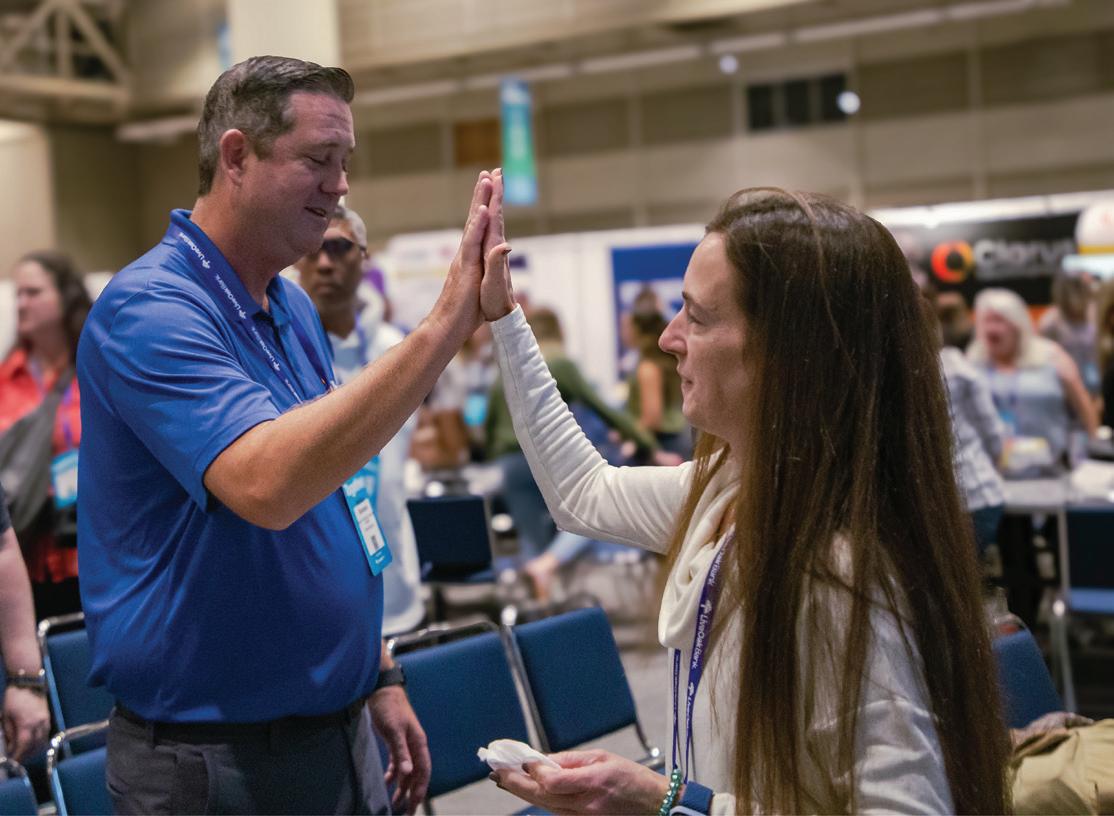
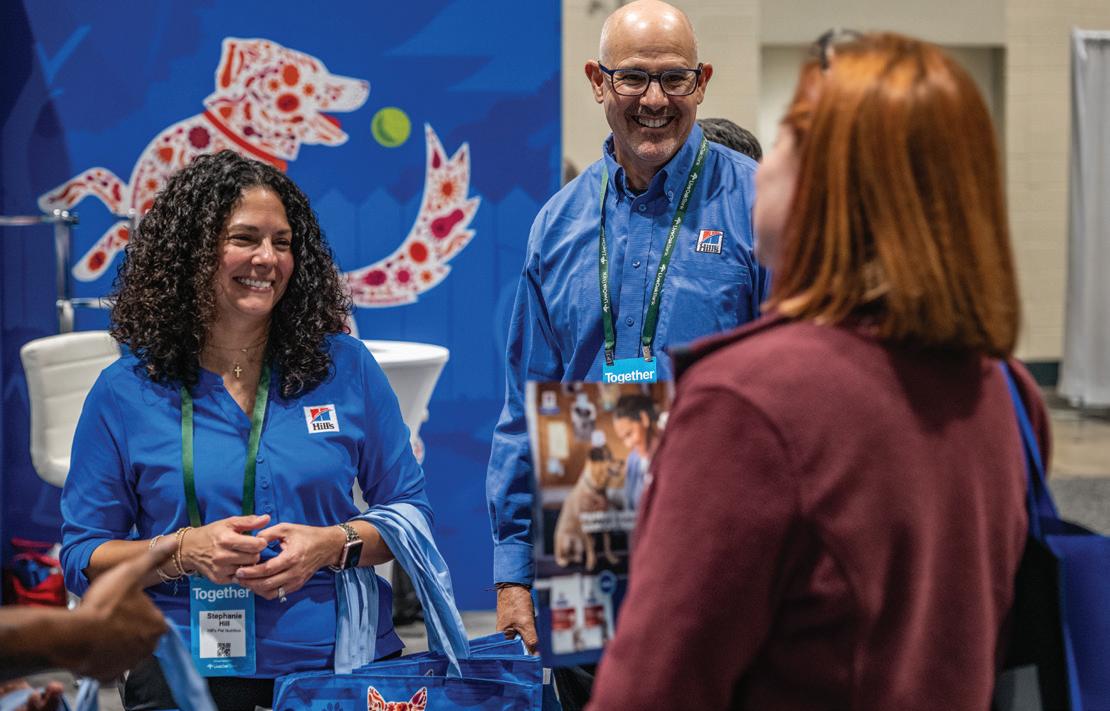
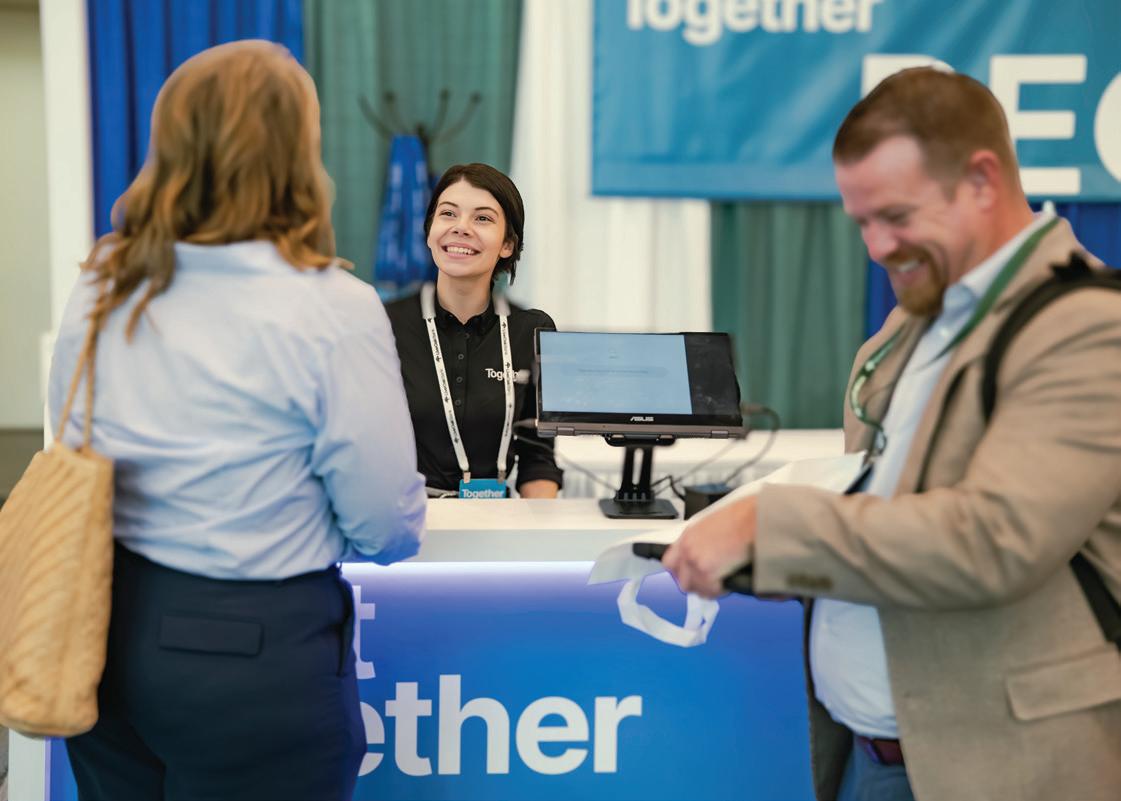
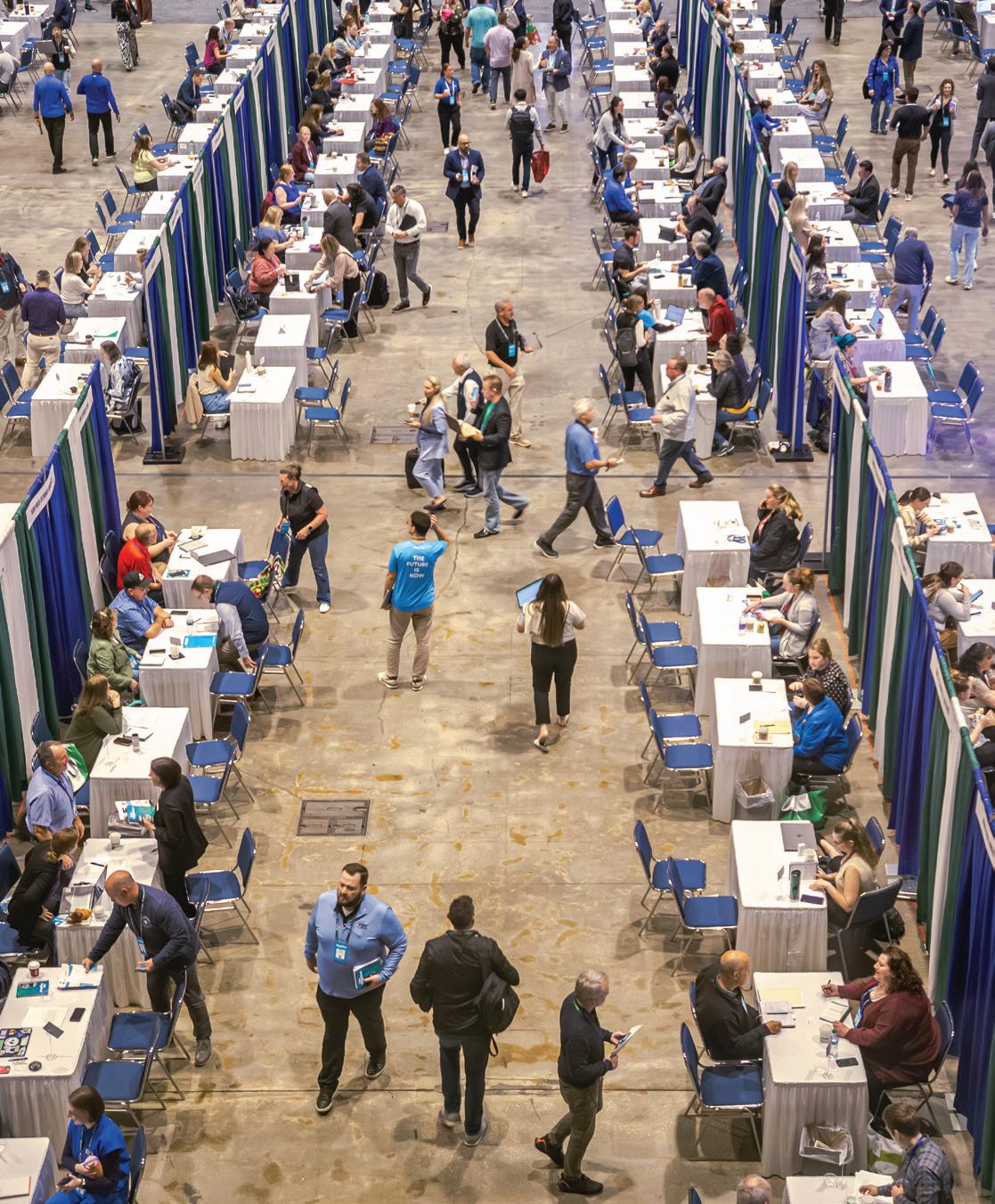
When the announcement came that the first appointments would start in two minutes, hundreds of attendees took their seats. And then, the way Scott tells it, the room came alive. Instead of wandering the aisles hoping to bump into the right person, decision-makers and solution providers were already sitting across the table from one another. Hundreds of real conversations kicked off at the same moment, and you could feel the energy shift. What had lived only on paper was suddenly working exactly the way they’d drawn it up.
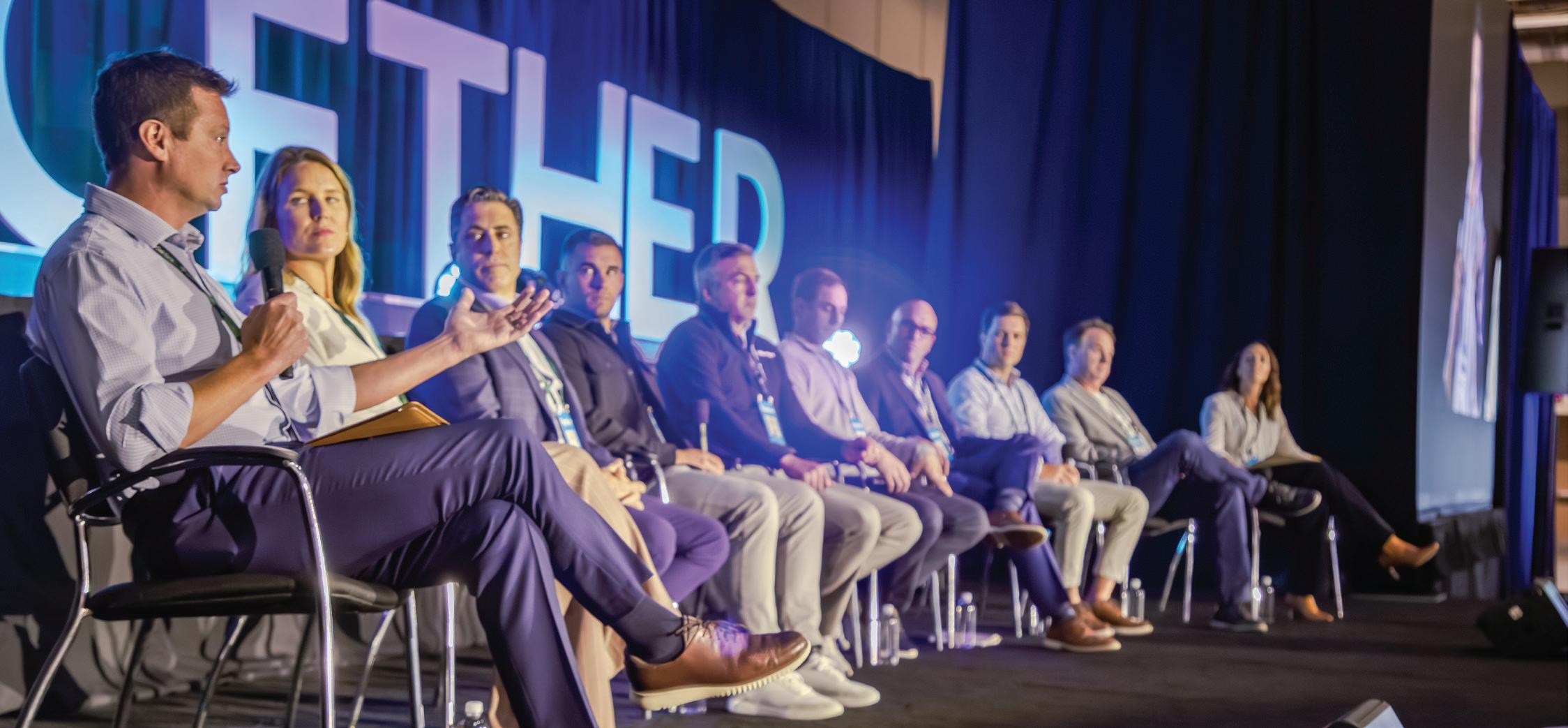
Later that day, one of the most respected leaders in the veterinary world, Animalytix CEO Chris Ragland, pulled them aside. After a career of attending just about every event there is, he told them he’d never seen anything like what was happening on that floor. That was the moment Aaron and Scott knew they weren’t hosting another
So dentistry had always been part of the plan. They just didn’t expect it to arrive so fast. After Vet Together took off, demand outran their timeline. They sold out their original space months ahead of sched-
Aaron is the visionary. He has that uncommon knack for seeing what something can become long before anyone else does, and his optimism and integrity are a big part of why people sign on for the ride. Scott brings the relationships, the brand strategy, and the creative side, built on a career of putting people first. He’s also the first to admit he’s wired for the chaos of building something new. “My wife says I’m not happy unless my hair is on fire,” he told me, laughing.
ule, picked up additional room at the New Orleans convention center, and suddenly faced a choice: pump the brakes, or go all in. With Nicole Kidman confirmed as a keynote speaker and momentum on their side, they went all in and launched Smile Together nearly three years earlier than they’d ever projected.
“We’ve always believed opportunity arrives disguised as hard work,” Aaron said. “Sometimes growth forces you to make decisions sooner than you expected.”
Behind the two of them is a silent business partner who brought the hosted-buyer model over from the hospitality industry, where it had already proven itself, and helped them adapt it for veterinary medicine and dentistry. When it came time to move into dental, they brought on Ben Pate, who’d built careers in both veterinary medicine and dentistry and understood the relationships that would make or break their credibility with a new audience. He became the bridge into the dental community. And the events themselves run on operations, led by Starla Pugh and Julia Behr, who between them keep thousands of moving
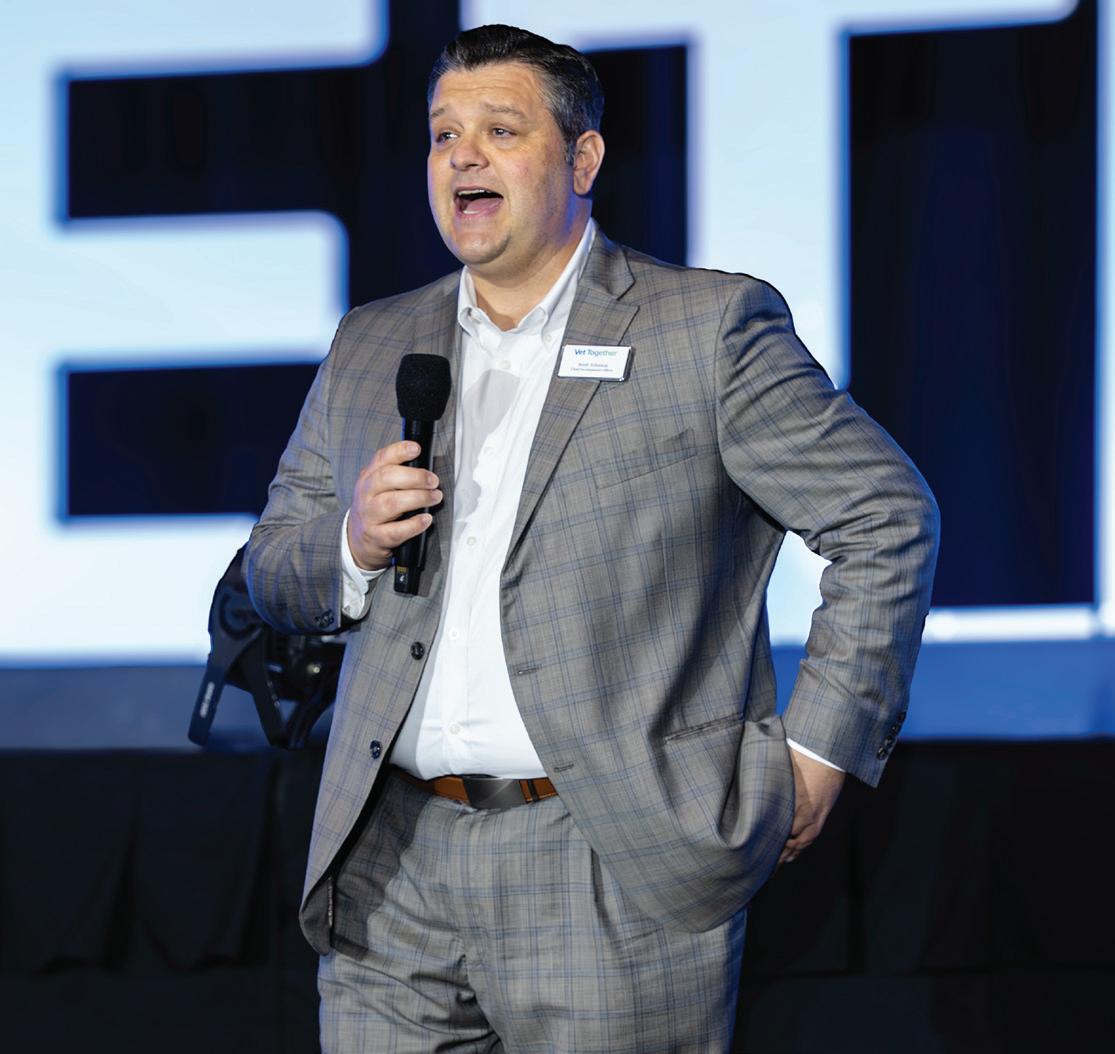
Scott Johnson, Chief Development Officer of Smile Together
pieces from ever showing the seams. Different strengths, one shared belief: relationships come first.
So what’s the catch?
That’s the question almost everyone asks. When dentists hear that airfare, hotel, meals, continuing education, and networking are all covered for qualified hosted attendees, the reflex is to go looking for the fine print.
There isn’t any. The whole thing is built around protecting the one resource none of us can make more of: time. Instead of spending six months chasing individual meetings across the country, a hosted attendee can knock out what amounts to half a year’s worth of productive conversations in three days.
“It’s a smarter way to step away from your practice,” Scott said. “Our goal isn’t to fill your calendar. It’s to make every hour away from your patients worthwhile.” As a practice owner myself, that lands. Every day out of the operatory has a cost. An event that respects that math instead of ignoring it is a genuinely different proposition.
The proof is in the room.
After the first Smile Together, the feedback told them they were onto something. A dentist who’d been going to conferences for years told the team it was unlike anything he’d attended, and that the format created real value for buyers and sellers alike.
“I’ve attended meetings for years, and this model is the future,” he said. “It creates tremendous value for both buyers and sellers.”
For Aaron and Scott, that kind of comment matters more than any attendance number. They’re not measuring success by how many badges they print. They’re measuring it by the conversations that keep going long after everyone flies home, and the partnerships that simply wouldn’t exist otherwise.
More than a conference. A movement.
The longer I talked with Scott, the clearer it got that these two don’t really think of themselves as being in the conference business. They talk about changing conversations, not events.
“This is a movement,” Scott said. “When you bring the right people together at the right
time, everyone benefits. Better relationships lead to better businesses. Better businesses create better patient care. That’s why we exist.”
Even the company’s name carries that idea. Together Media isn’t called that because people show up to conferences together. It’s called that because, in Aaron and Scott’s view, no meaningful success happens alone. You go farther, faster, together.
Ask them where they want all this to be in ten years, and the answer isn’t about being the biggest conference company in dentistry. “We don’t measure success by revenue alone,” Scott said. “We measure it by outcomes. By the conversations that continue long after the event ends. By practices that
discover new solutions. By partnerships that never would have happened otherwise.”
What he hopes people remember, he told me, isn’t the founders at all. “I hope people look at Together Media and say they challenged the way our industries thought about conferences. They took a leap of faith, built something different, and created a place where everyone truly had a seat at the table.”
That’s a mission I can get behind. As the team heads to Las Vegas this October, they’re carrying a pretty simple idea with them, one I think our whole industry could stand to hear more often. Better conversations lead to better care. Everything else is just logistics.
I don’t hype up many events, so pay attention when I tell you to clear three days this fall. From October 1 through 3, Smile Together is taking over Resorts World in Las Vegas, and I’ll be there myself, on stage as one of the speakers. I want to see as many Nifty Thrifty members in that room as I possibly can.
Elsewhere in this issue, I told you the story of how Aaron Pugh, Scott Johnson, and their team built Smile Together. This is the part where I tell you why you should actually go, and how our community gets in on a deal you won’t find anywhere else.
Why this one’s actually different.
You already know the drill with most conferences. You show up, you walk a packed exhibit hall, and you hope you happen to
bump into the handful of companies that are actually a fit for your practice. Smile Together flips that on its head.
As a hosted practice, you don’t work the room hoping to get lucky. The team pre-schedules your one-on-one meetings, up to 30 of them, with vendors matched to what your practice actually needs. Every meeting is intentional, and every hour counts. When you think about it, time is the one thing none of us can make more of, and this whole event is built to respect yours.
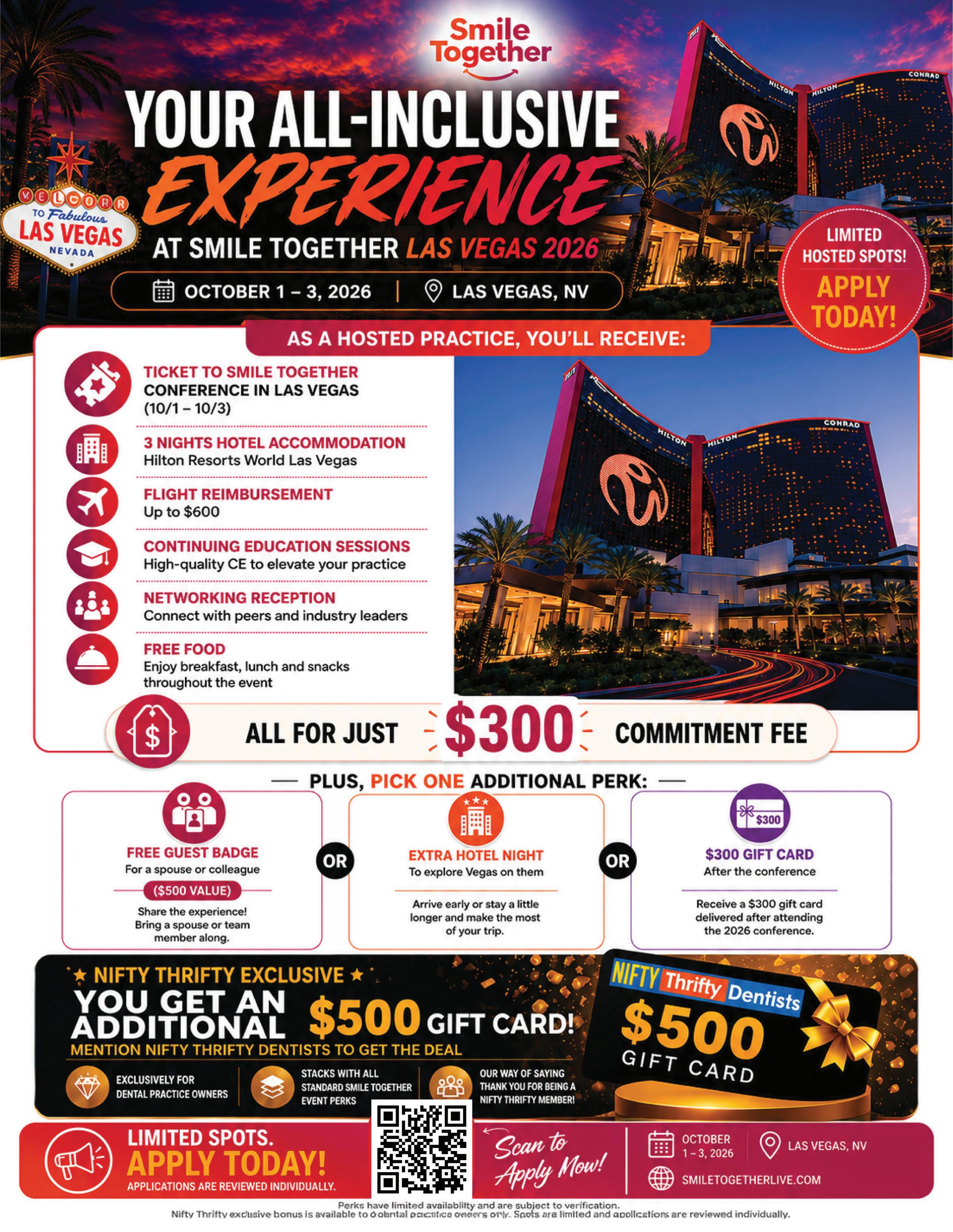
For hosted attendees, the big stuff is covered: your hotel at Resorts World, your travel, your meals, and your continuing education. When folks hear that, the first question is always “what’s the catch?” Having gotten to know this team, I can tell you the honest answer is that there isn’t one. They’d rather invest in getting the right peo-
By Dr. Glenn Vo, Editor-in-Chief of Dental Lifestyles Magazine
ple in the room than sell you a booth pass.
Why you have to be there in person.
You can’t do this one from your laptop. The whole point of Smile Together is the stuff that only happens face-to-face. Trust gets built across a table,
not through a screen, and the best partnerships, ideas, and friendships in our field almost always start with a single real conversation.
Over three days, you’ll get that time, plus CE that’s worth your while, an exhibit hall, and a networking reception where the connections keep going long af-
ter the meetings wrap. They’re even putting up $50,000 in prizes, because why not have a little fun with it. It’s Vegas, after all.
I’ll be there speaking, and I plan to spend as much time as I can with our Nifty Thrifty crew. Let’s show up and show out together.
Now for the Nifty part.
Here’s where our community gets treated right. If you’re a Nifty Thrifty Dentists member, register by July 20, 2026, and enter the code NIFTY, and you’ll get to pick your perk. Option one is a complimentary guest badge, a $500 value, so you can bring a colleague or your spouse along to experi-
ence it with you. Option two is a $500 gift card that lands after you attend and complete your meetings. One code, your choice.
Stack that on top of the covered travel, hotel, meals, and CE, and the math starts to look a little ridiculous in your favor. You’re basically getting paid to go learn, connect, and grow your practice. Just know these hosted spots are reserved for practice owners and go through a quick application, and they’re offered first-qualified, firstserved, so the earlier you get in, the better your odds.
Come make some moves with us.
To register, or just to learn more first, head to smiletogetherlive.com/hosted-practices and use code NIFTY before July 20, 2026. Come hang, come learn, and let’s make some moves in Vegas. See you there.
Beyond Brokerage: Dr. Michael Njo’s Whole-Person Approach to Dental Practice Transitions
By Dr. Glenn Vo, Editor-in-Chief of Dental Lifestyles Magazine
As a dentist and practice owner, I’ve come to accept a simple truth about our profession: every one of us will eventually face a transition. Whether we’re buying our first practice, bringing on a partner, or finally handing over the keys after decades in the operatory, there’s a moment when the clinical skills we spent years perfecting suddenly aren’t the ones we need most.
And here’s the uncomfortable part. Most of us walk into that moment completely unprepared. Dental school taught us how to restore a molar, not how to value a business, structure a deal, or transfer the goodwill we’ve spent a career building. As Dr. Michael Njo likes to put it, “You don’t know what you don’t know.” For a decision this big, that gap can cost a dentist hundreds of thousands of dollars, and sometimes a whole lot more.
I recently had the chance to talk with Michael about why so many transitions go sideways, and how he’s spent the last 23 years making sure they don’t. What I found was a story that started with the end of one career and became the founda-
tion for helping thousands of dentists protect theirs.
When one career ended, another began.
Michael’s path into consulting didn’t start with a business plan. It started with a diagnosis.
Years into a thriving clinical career, he suffered a herniated C6-C7 disc. Then came the words from his neurologist that he still remembers clearly: “Dr. Njo, you will no longer be able to practice clinical dentistry.” In an instant, the identity he’d built as a dentist was gone. “It was one of the most difficult days of my professional career,” he told me. “In many ways, it felt like the end of the identity I had built as a dentist.”
Like a lot of dentists facing a major life change, he had to reinvent himself. So he returned to the people and institutions that had shaped him, including the University of the Pacific Arthur A. Dugoni School of Dentistry and the Pride Institute, the first consulting company he’d ever hired for his own practice. What happened next surprised him. Friends, colleagues, and industry leaders reached out with encourage-
ment, and he realized that even during his years in practice, he’d quietly become someone people turned to for advice. Today we’d call that a Key Opinion Leader. Back then, he just enjoyed helping his colleagues succeed.
During his recovery, he kept mentoring dentists, and at first he refused to take a dime for it. Then the thank-you notes started arriving, and some of them had checks tucked inside. “That was when I realized I could continue serving dentistry in a different capacity,” he said. That realization became Dental Strategies. The conversation with his neurologist happened 23 years ago, and every client relationship since has come through referral, something he considers one of the greatest honors of his career.
One company became four, each born from a client’s question.
Here’s something I love about Michael’s story: he never set out to build a consulting empire. Each of his organizations grew out of a real need a client brought to him.
Dental Strategies came first,
built around three pillars: practice transitions, practice management, and legal strategy. As it grew, clients started asking whether he could help friends and colleagues outside of dentistry too. When one asked if he could help someone open a juice bar or a salon, Business Strategies was born. When physicians, podiatrists, and plastic surgeons came looking for the same guidance, he launched HealthcareStrategiesMD.
The fourth, Practice Transitions Institute, filled an educational gap that had bothered him for years. After the Pride Institute was acquired, Michael was encouraged to keep teaching dentists about transitions. As he reminded me, buying or selling a practice is one of the biggest financial and personal decisions a dentist will ever make, yet almost no one receives formal training on how to do it well.
Today these four organizations work together to help professionals navigate growth, leadership, ownership, transitions, and reinvention. And Michael’s philosophy threads through all of them. “I am pro-quality of life, pro-family, and pro-work-life balance,” he said. While plenty of consultants
chase production and profitability alone, Michael is just as focused on helping clients avoid burnout, strengthen their relationships, and build a life they actually enjoy. “Success in dentistry is never just about dentistry,” he told me. “It is about building a life that supports and enhances the practice—not sacrificing life for the practice.”
For Michael, the work goes “beyond brokerage.”
If there’s a phrase that captures how Michael sees his role, it’s “beyond brokerage.” He’s quick to point out that he’s never viewed himself as someone who simply helps a dentist buy or sell. “A transaction has a beginning and an end,” he said. “A relationship does not.” That’s why his clients tend to describe him as a trusted advisor, mentor, and friend rather than a broker.
“The true value is rarely found in the transaction,” he explained. “It is found in the years before and after it.” Many of his client relationships span decades precisely because he invests the time to understand their goals, their families, their leadership styles, and their personal definitions of success. As he put it, “At the end of the day, people don’t care how much you know until they know how much you care.”
That same conviction is what pushed him to write a book. While advising the Dugoni Business Club at his alma mater, Michael went looking for a practical, real-world textbook to walk students through buying, selling, and transitioning a practice. He couldn’t find one, so he wrote it himself. The result, the Dental Practice Transitions Handbook, does exactly what its title promises: it gives dentists a straightforward blueprint for one of the most significant events of their professional lives.
The difference between a sale and a transition: one story.
To understand what Michael means, consider a story he shared with me. Several years ago, a dentist came to him after spending nearly a year trying to sell his practice on his own. On paper, it looked perfect. He had a successful office, a loyal patient base, and a strong reputation. He’d even found a buyer, agreed on a price, and started drafting documents. Everyone thought the deal was done.
But the important parts had never been addressed. Buyer and seller had very different expectations about patient retention, staff integration, transition support, and what the seller’s role would look like afterward. Financial assumptions hadn’t been vetted. Communication broke down, trust eroded, and just weeks before closing, the whole thing collapsed. The seller was devastated. He’d mentally retired and told his family he was done. The buyer had poured time and money into the deal. Both walked away frustrated. That’s when Michael was asked to step in.
Instead of trying to rescue a deal that had already failed, he started over. He ran a full assessment of the practice, the seller’s goals, and the kind of buyer who’d actually be the right long-term fit. Then he rebuilt the strategy from the ground up, looking at culture, leadership compatibility, patient continuity, team retention, and the transfer of goodwill, not just the numbers. Within months, he found a different buyer whose vision and values genuinely aligned with the seller’s.
The difference was night and day. Instead of negotiating against each other, the two doctors collaborated. The seller became a mentor. The buyer became a trusted successor. The team embraced the change, patients stayed, and revenue held steady. Years later, the two
still keep in touch. “A successful transition is never just about finding a buyer,” Michael said. “It is about finding the right buyer.” Or, as he summed it up, that’s the difference between a practice being sold and a practice being successfully transitioned.
Great advisors and great teams: a lesson from his father.
Michael traces a lot of his thinking back to advice his father gave him early on: “Surround yourself with great advisors and great teams.” He followed it as a practitioner, and now he helps his clients do the same. Too often, he says, practices lose sight of the fundamentals that actually hold everything together, things like team culture, leadership, work-life balance, and family, because they’re so consumed by production numbers and daily pressure.
He’s candid about how demanding his approach can be. “Be careful what you wish for,” he likes to tell clients, “because I’ll help you achieve it.”
But before any of that, he asks a lot of questions, especially why. That’s the part many consultants skip, and it’s the part Michael believes makes transformation possible instead of just temporary improvement. The proof is in the longevity. Some of his clients have stayed with him for 10, 18, even 23 years. As he sees it, that says less about consulting and more about trust.
Why he keeps showing up for the next generation.
For all his work with seasoned practice owners, Michael has a real soft spot for early-career dentists, and a sense of responsibility toward them. The business side of dentistry still isn’t taught in most dental schools, he points out, yet the financial decisions young dentists make right out of the gate can shape their entire careers. Today’s graduates are walking into rising debt, higher overhead,
shifting ownership models, and more competition than ever. “If I can help a young dentist avoid a costly mistake or accelerate their path to success,” he said, “that impact can last an entire career.”
He’s also keeping a close eye on where the profession is headed. Over the next several years, Michael expects consolidation, artificial intelligence, technology integration, workforce challenges, and practice culture to reshape how dentistry works. His takeaway for the dentists reading this is straightforward: technical excellence alone won’t be enough anymore. The practitioners who thrive will be the ones who pair clinical skill with real business and leadership ability.
A different way to measure success.
After 23 years, Michael keeps coming back to the same idea. Success, he believes, isn’t measured by production, collections, or even practice value. “It is measured by quality of life, fulfillment, family, and the impact we make on others.” And if there’s one thing he hopes dentists take away, it’s that the profession can give you an incredible life when you approach it with the right strategy, support, and perspective.
That’s a philosophy I can get behind. In a field full of consultants who can quote you a valuation multiple in their sleep, Michael Njo is playing a longer, more human game, and decades of loyal clients suggest it’s working.
If you’d like to start a conversation with Michael, you can reach him directly at michael@ dental-strategies.com. You can also learn more about his work and read testimonials from the dentists he’s served at MichaelNjoDDS.com and practicetransitionsinstitute.com.
Ask any dentist about their emergency kit, and you’ll usually get the same sheepish look I used to give. You know it’s back there somewhere. You’re pretty sure most of it is still good. And you really, really hope you never have to find out.
I get it. On a normal day, that kit just sits in a drawer doing nothing. But dentistry deals in the unexpected, and every so often a routine appointment turns into a medical emergency, sometimes with the patient and sometimes with whoever came with them. When that happens, you’ve got seconds, not minutes, and what’s in that kit suddenly matters more than anything else in the building.
To get a clearer picture of what a practice really needs, I sat down with William “Bill” Huynh of Meds2U, a company that’s become a familiar name in the Nifty Thrifty Dentists community for taking the guesswork out of emergency preparedness. Here’s what I learned.
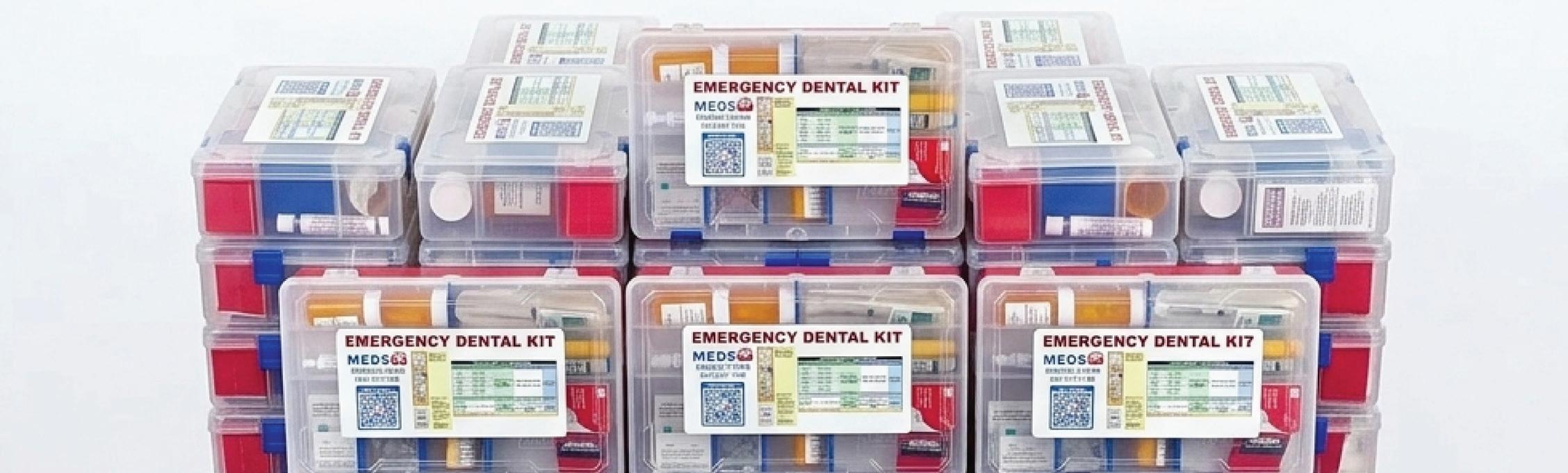
So what exactly is a dental emergency kit?
Bill put it simply. A dental emergency kit is essentially a first-aid kit built for the medical situations that can happen in a dental office, the ones a traditional first-aid kit was nev-
The Fire Extinguisher You Hope You Never Use: How Meds2U Keeps Your Emergency Kit Ready
By Dr. Glenn Vo, Editor-in-Chief of Dental Lifestyles Magazine
er designed to handle. It gives your team the medications they’d need to respond while they’re treating a patient.
Unfortunately, many practices don’t realize that dental emergency kits aren’t optional. Plenty of states and insurance carriers require these items to be on hand, largely to minimize liability and malpractice exposure. Insurers and practice auditors will actually check that your kit is stocked and, just as importantly, that everything in it is still in date.
“You hope you never have to use it,” he told me, “but if an emergency happens, your practice is prepared.” Think of it as the fire extinguisher of your office.
The core medications every practice should have.
So what belongs in a solid baseline kit? Bill walked me through the essentials, each one tied to a specific emergency.
Epinephrine for anaphylaxis. Diphenhydramine for allergic reactions. Nitroglycerin and aspirin for a heart attack. Glucose for low blood sugar. Ammonia inhalants for syncope, the fainting episodes that are more common than you’d think. And albuterol for shortness of breath.
That combination covers the vast majority of what a general practice might face. If your kit is missing any of them, that’s the first gap to close.
Your kit should match your practice.
Those core medications are the minimum for everyone, but Bill was quick to point out that the right kit depends on what you actually do. Practices offering oral conscious sedation almost always add flumazenil. If there’s any chance a patient walks in having already taken opioids, naloxone (Narcan) is a smart addition. And if you’re doing oral surgery, the list grows considerably, with IV medications like atropine, labetalol, steroids, ephedrine, ondansetron, amiodarone, and lidocaine, among others. Meds2U can supply all of it.
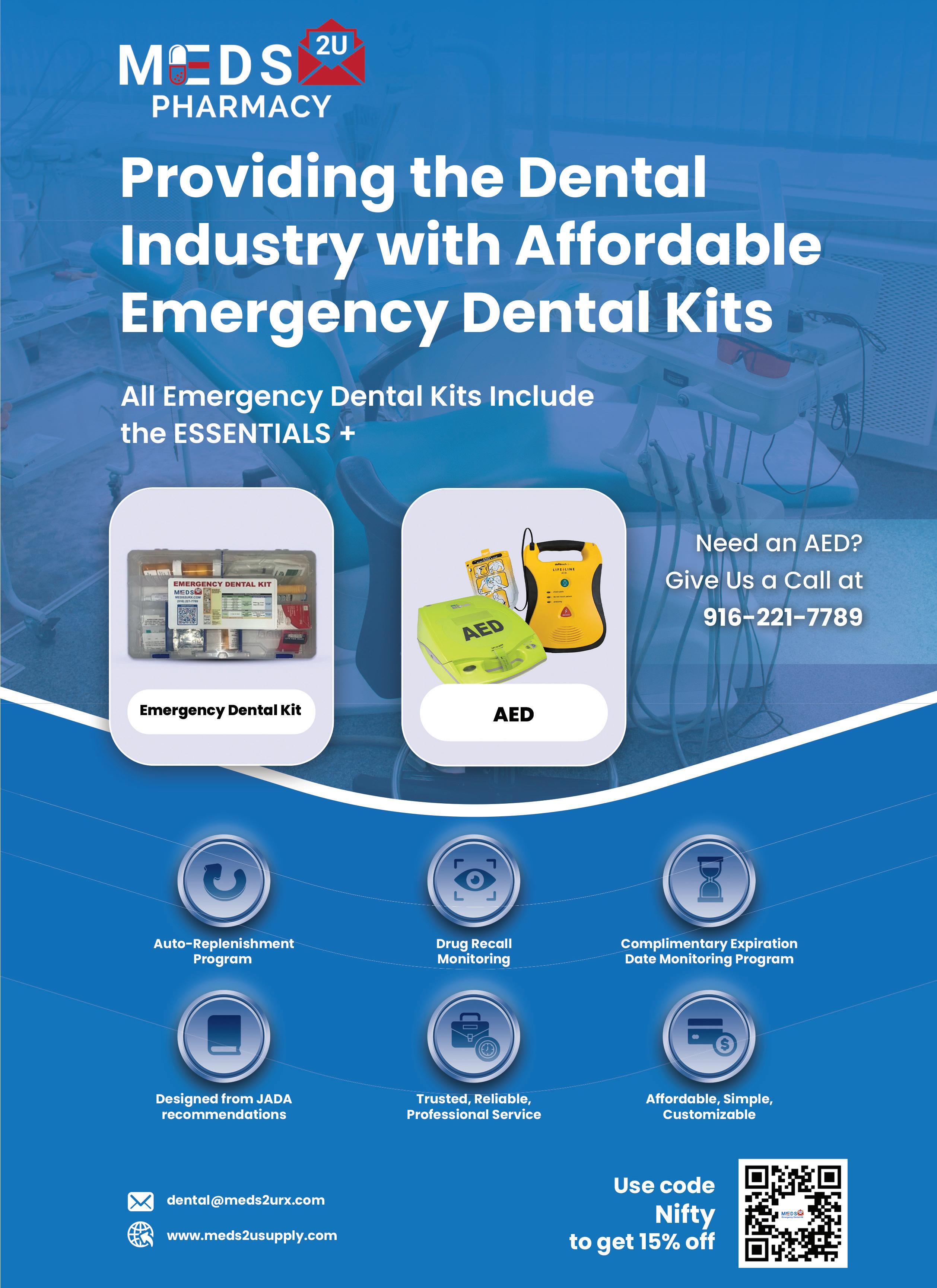
One piece of equipment worth a mention is the AED. It isn’t required everywhere, though some states and certain service types do mandate it. Bill’s take is that every office should at least consider one. They’re simple to use, and in the moments before EMS arrives, an AED can be the difference between a good outcome and a tragic one.
The emergencies you’re actually most likely to see.
Here’s a detail I found fascinating. When I asked Bill which items get used most, his answer wasn’t about dramatic, high-acuity events. The most common emergencies, he said, often involve not the patient but the people who came with them, the nervous spouse or parent out in the waiting room. The two most-used items across his offices are ammonia inhalants for fainting and glucose for low blood sugar. Every now and then someone reaches for an inhaler when shortness of breath comes up, but he told me that’s rare. In other words, preparedness usually looks a lot less like a TV drama and a lot more like helping someone who got lightheaded.
The biggest mistake practices make.
If there’s one trap Bill sees over and over, it’s letting items expire. Sometimes it’s simple oversight. Other times a practice tries to save a few dollars by stretching an expiration date, figuring they’ll reorder in a month or two. That gamble can cost you. The nightmare scenario is an actual emergency where you reach for an expired medication, and then have that
expiration surface later in a malpractice claim.
The fix isn’t complicated. Kits should be checked monthly, and a recurring calendar reminder goes a long way. Better yet, you can hand the job off entirely. That’s exactly the gap an automatic replenishment program is built to fill.
How Meds2U makes it easy.
This is where Bill’s company earns its keep. You can order a fresh kit directly at meds2usupply.com, and if you already have one that’s in date, Meds2U can monitor it for you through the “Monitor My Current Kit” tab on their site. About 70 percent of their offices go a step further and enroll in automatic annual replenishment, where Meds2U tracks every expiration date, ships replacements before things lapse, and quietly keeps
the whole kit compliant so you never have to think about it.
The result is one less thing on your team’s plate and, usually, some money saved along the way. And because Meds2U works with our community, Nifty Thrifty members can use the code NIFTY for 15 percent off an order.
Prepared, and hoping you never need it.
None of us got into dentistry because we love restocking supply drawers. But an emergency kit is one of those quiet responsibilities that protects your patients, your team, and your practice all at once. Get it stocked, keep it current, and then, like any good fire extinguisher, hope you never need it. If you’d like a hand getting there, Bill and the Meds2U team are a good place to start.