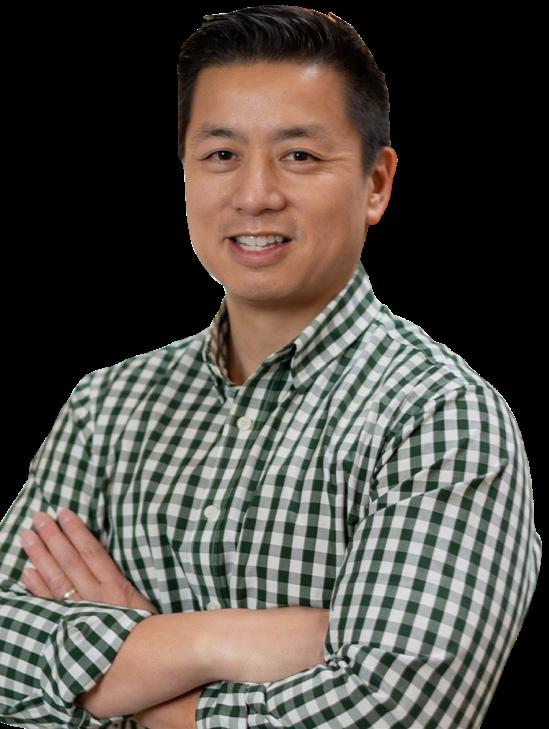
Publisher & Editor
Glenn L. Vo, DDS CEO, Dental Lifestyles
Publishing
Managing Editor
Ethan Webb
Project Manager
Hanna Garcia
Art Director
Jess Beltran
Editorial Board
Elijah Desmond
Dr. Brittany Vo
Nick Pavlidis
Kyle Summerford
Contributors
Dr. Glenn Vo
Ethan Webb
Advertising Inquiries info@dentallifestyles.com
Send Any Correspondence to: Dental Lifestyles Publishing 2450 Lakeside Pkwy Suite 150-107 Flower Mound, Texas 75022

Dental Lifestyles is published quarterly by Dental Lifestyles Publishing Group. Advertisers may sponsor some articles and/or content. Opinions expressed in articles or advertisements do not necessarily reflect the publisher’s opinion. Dental Lifestyles is not responsible for omissions or information misrepresented to the magazine. Advertisers and their agencies assume all liability for advertising content. No part of this publication may be reproduced or transmitted without written permission from the publisher.
Publisher’s Note
From Paper Charts to AI: Dentistry’s Next Big Evolution ..
Mindset Life
Getting Out of Your Own Way: How Executive Coach Thomas Passalacqua Is Helping Dental Professionals Lead with Clarity..
Marketing Life
The Ex-Googler Fixing Dental Marketing: How Michael Lyjak and Efficiency Marketing Make Every Ad Dollar Count..........................
Business Life
From Paper Checks to Paperless: How Sam Rockwood and Woods Are Modernizing the Dental Payment Mess.............................
The Insurance Whisperer: How Benjamin Tuinei Helps Dentists Get Paid What They’re Worth...
Dental is Rethinking the Staffing Crisis in
Dentistry has always evolved with technology. The practices that thrive are usually the ones willing to adapt before everyone else catches up. We’ve seen it happen repeatedly in our industry. Paper charts became digital charts. Practice management software moved from servers in the back office to the cloud. Traditional x-ray film gave way to digital radiography.
At one point, every one of those changes felt unfamiliar and unnecessary to some dentists. Today, they’re simply the standard.
Artificial Intelligence is the next evolution in dentistry.
A lot of dentists hear the term “AI” and immediately think about robots replacing doctors or computers making decisions for them. That’s not what’s happening. AI is becoming more like an intelligent assistant that helps practices operate more efficiently, communicate better, and support clinical decision-making.
The easiest way to understand AI is to compare it to transitions dentistry has already gone through.
Years ago, practices relied entirely on paper charts. Everything was handwritten and stored in filing cabinets. Finding information took time, notes could be-
come inconsistent, and systems depended heavily on individual team members. When digital charting arrived, many practices resisted it because it felt complicated and disruptive.
Now imagine trying to run a modern dental office without digital records.
The same thing happened with digital x-rays. There was a time when every office used traditional film. Developing x-rays took time, images were inconsistent, and storing records became cumbersome. Digital radiography changed everything. Images became clearer, diagnostics became faster, and patient communication improved dramatically.
AI is simply the next chapter in that same story.
One of the biggest areas where AI is already making an impact is diagnostics. Companies like Pearl and Overjet are helping dentists identify potential decay, bone loss, and pathology directly from radiographs. These platforms are not replacing the dentist’s judgment. They’re providing another layer of support and consistency.
That matters because even experienced clinicians can occasionally miss something small during a busy day. AI also improves patient communication. When patients can visually see highlighted findings on a screen, treatment conversations become easier and trust often increases.
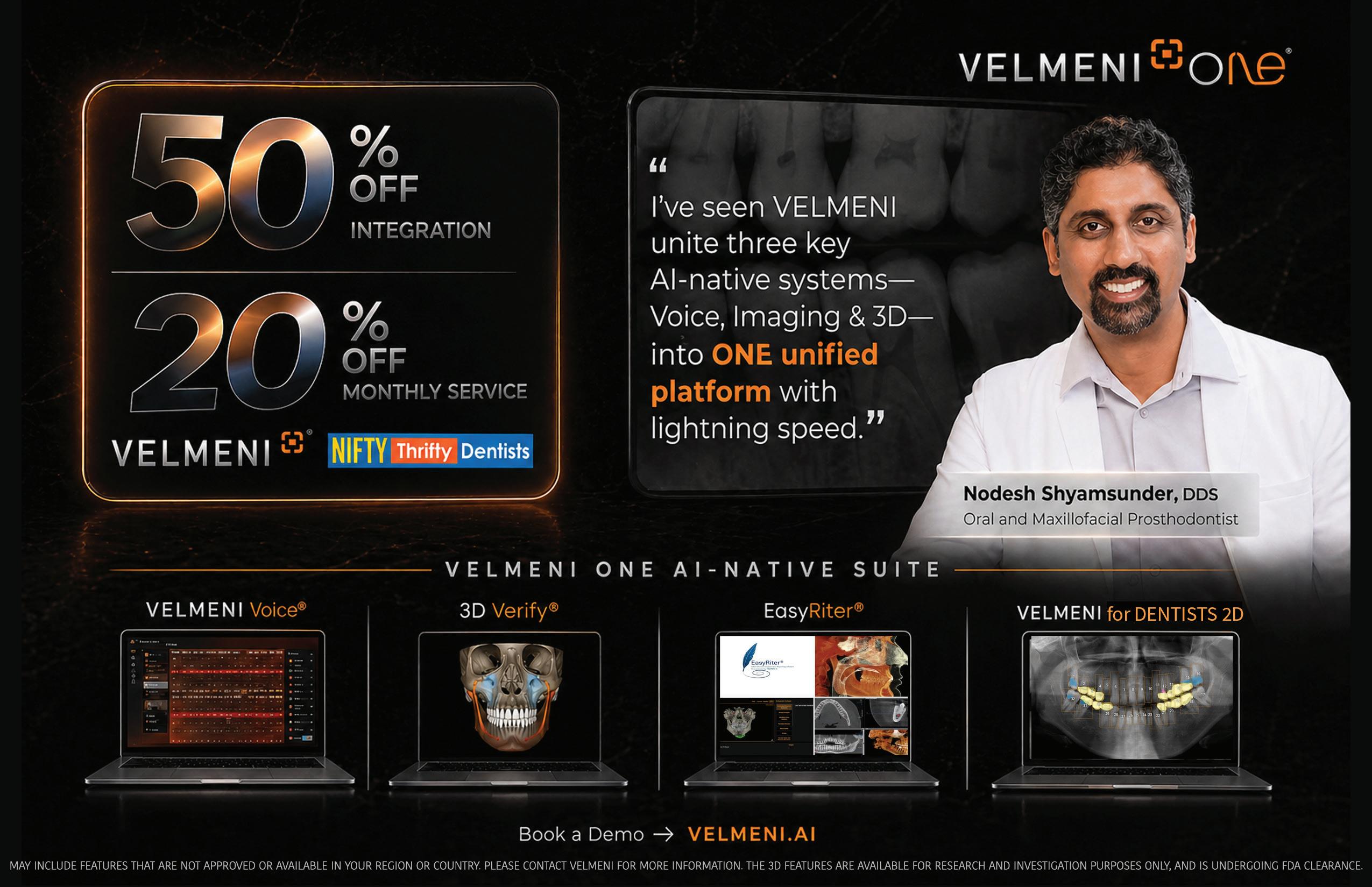
Companies like Velmeni are also helping practices implement smarter AI-driven workflows that improve efficiency and organization across the office.
And AI is not just helping clinically.
Training and team development are evolving too. Companies like Traynar AI are helping practices create more consistent onboarding and team education systems.
One of the biggest struggles in dentistry has always been training new employees while still managing a busy office. AI-powered training tools can help teams learn faster and stay aligned with office systems and expectations.
The reality is that most dental practices are already using some form of AI whether they realize it or not. Scheduling software, automated reminders, analytics dashboards, and patient communication systems increasingly rely on AI behind the scenes.
But here’s the important part. Practice owners cannot afford to simply use AI without understanding it.
That would be like adopting digital imaging without understanding how to interpret the images. Dentists need to educate themselves on what AI is, how it works, and where it creates value.
The good news is that AI can help with much more than diagnostics.
Practice owners can use tools like ChatGPT to create SOPs, onboarding systems, marketing content, spreadsheets, and operational workflows in minutes instead of hours.
For example:
“Create a detailed SOP for handling new patient phone calls at a dental office including scripting, insurance questions, and scheduling steps.”
Or:
“Create a spreadsheet for tracking dental KPIs including production, collections, treatment acceptance, and hygiene reappointment rates.”
AI can also help with team development:
“Create a 30-day onboarding
checklist for a new dental front office coordinator including training goals, daily responsibilities, and communication expectations.”
And even marketing:
“Create five Instagram post ideas for a cosmetic dental office focused on smile makeovers.”
These are real-world situations dental owners deal with every day. AI helps save time while giving owners a starting point instead of staring at a blank screen.
The dentists who get the most value from AI will not necessarily be the most tech-savvy. They’ll be the ones curious enough to learn how to use it.
Because AI is not slowing down.
Patients are becoming more technology-aware. Teams expect more efficient systems. Competitors are adopting tools that improve operations, communication, and patient experience. The practices that completely ignore AI risk falling behind the same way practices once fell behind by resisting digital charts or digital x-rays.
At the end of the day, dentistry is still about people. It’s about trust, relationships, and clinical expertise. AI will never replace the connection between a dentist and a patient.
But it absolutely can enhance it.

By Dr. Glenn Vo, Editor-in-Chief of Dental Lifestyles Magazine
As the founder of the Nifty Thrifty Dentists community, I hear a lot from practice owners who are running on fumes. Not just physically, but mentally. They got into dentistry to take care of patients, and somewhere along the way, they ended up buried under the weight of running a business, managing a team, and trying to make smart decisions while the noise inside their own heads gets louder and louder.
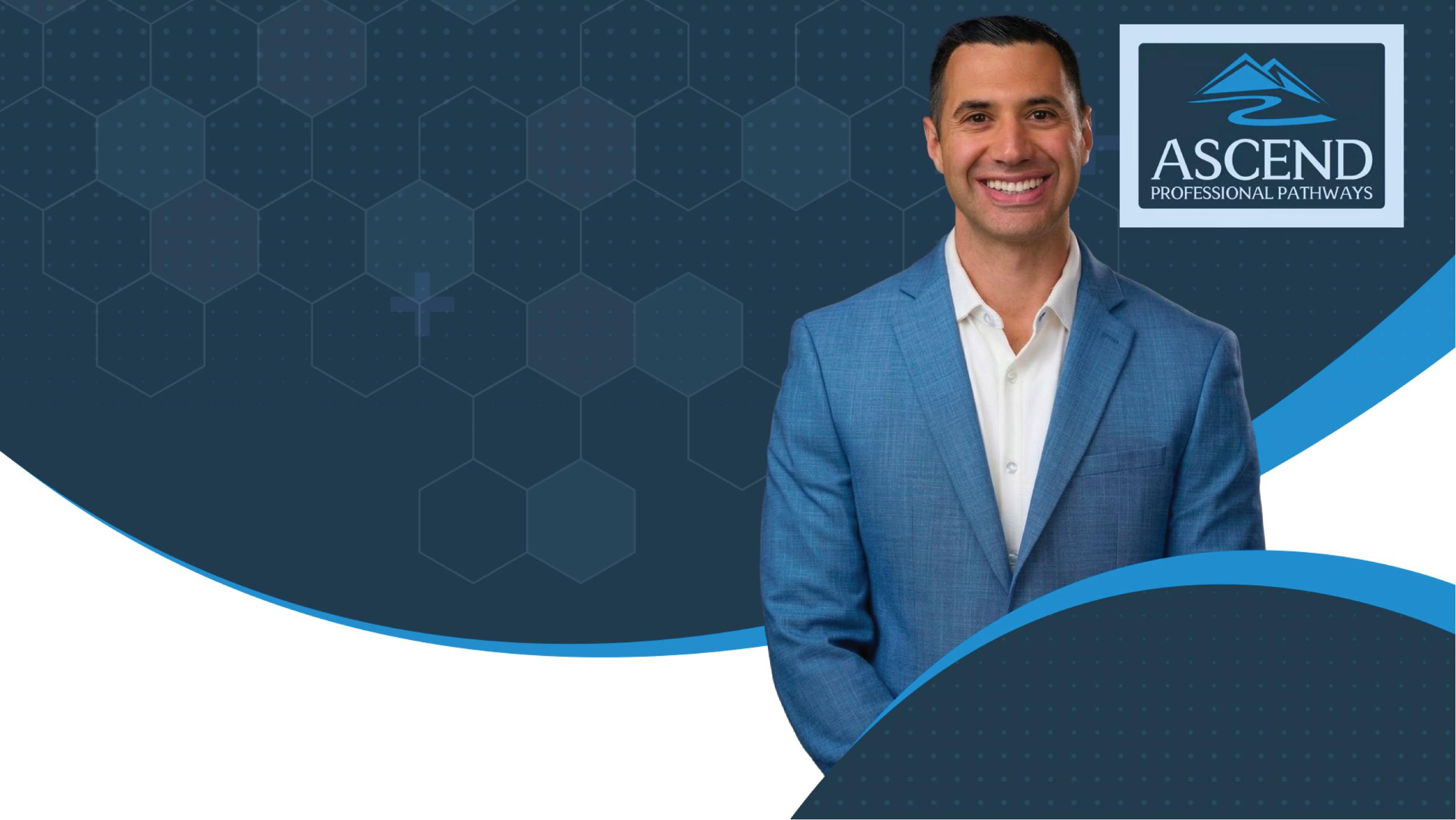
If that sounds familiar, you’re not alone. It’s one of the most common things I hear from dentists at every stage of their careers. I recently sat down with Thomas Passalacqua, founder of Ascend Professional Pathways and a certified executive coach, to talk about exactly that. What he shared was one of the more honest, practical conversations I’ve had in a while about what it actually means to lead.
A journey built on helping people grow.
Thomas’s path to executive coaching isn’t a straight line, and that’s actually a big part of what makes him so effective. He started his career as an educator, teaching throughout New York City and serving as a founding faculty member at three charter schools. That meant walking into a brand-new building and constructing a school from scratch: designing curriculum, creating programs, and figuring out how
to engage a completely new student body. It was demanding, formative work.
From there, he made a move that surprised even him at the time: dental manufacturing sales at Voco America, covering the New York City territory. He became one of the company’s top-performing reps, earning President’s Club honors multiple years running. What he discovered along the way was that his teaching background wasn’t a liability in sales. It was a superpower. “I came at sales from the perspective of an educator,” he told me. “My job was to educate my customers, not sell to them.” That shift in approach, he said, changed everything.
After thriving in that role, Thomas moved into DSO business development with a growing group practice in the Northeast, leading sales and marketing for mergers and acquisitions. When he joined, the organization had about 40 locations. When he left, they had 115. He was part of the team that drove that growth, and he got a frontrow view of what it takes to scale a multi-million-dollar dental organization. But even with all of that success, something kept pulling him back to his original calling: helping people directly. So he got certified as an executive coach and launched Ascend Professional Pathways.
The doubt that almost held him back.
Certified Executive Coach Ascend Professional Pathways
What he sees in the people he coaches.
What makes Thomas’s coaching so credible is that he’s lived the same struggle he now helps others navigate. Every major transition in his career came with a loud internal voice telling him he wasn’t ready. When he thought about leaving teaching, he convinced himself it was the only thing he could ever do. When he was thriving in dental sales and felt the itch to do something more, he told himself he’d run out of runway. When the idea for his own business came along, the self-doubt hit harder than ever.
“I finally hit a breaking point,” Thomas said. “I was tired of making excuses for myself. I kept ending up in the same mental space, and I had to ask myself why.” That question forced him to get intentional. He built systems and frameworks to work through doubt objectively rather than emotionally, and what followed was proof that most of the limits he’d believed in were ones he’d built himself. “Where I am today is somewhere I genuinely never believed I could be,” he said. “I proved myself wrong, more than once.”
When I asked Thomas what patterns come up most often in the dental professionals and business leaders who come to him, he didn’t hesitate. The first is overthinking. Getting too deep into hypothetical worstcase scenarios, letting the emotional side of things steer the ship. “You’re breathing life into situations that aren’t likely to happen,” he said. “And it steers you in completely the wrong direction.” His antidote to that is learning to lead with an objective mindset rather than an emotional one: looking at facts, identifying what you can actually control, and making strategic decisions from that foundation rather than from fear.
The second pattern is a matter of perspective. Most people, when they size up their situation, focus on what they’re missing rather than what they have. Thomas consistently reframes that question for his clients, because the resources and capabilities are almost always already there. They just need to be surfaced.
He’s also careful to point out that the goal isn’t to steamroll those difficult emotions. “You have to acknowledge what you’re feeling,” he told me. “You can’t just force yourself to correct course.” The real work is in not letting those emotions take full control. Hear them out, understand where they’re coming from, and then choose to move forward anyway.
One of the things I found most refreshing about Thomas is that his primary framework is something he discovered rather than invented. As he was looking back at his own evolution and working with a coach himself, he recognized a cycle that had repeated throughout every successful transition he’d made. He named it the Ascend Clarity Process.
It starts with identifying a goal, whether broad and ambitious or narrow and immediate. From there, the work is in naming
what stands in the way: self-limiting beliefs, knowledge gaps, resource constraints, or any number of real hurdles. Then comes the part Thomas emphasizes most: pairing a specific action to each obstacle. Not analyzing the obstacle indefinitely, but doing something about it. “No matter how small the action, it’s still action,” he said. “It gives you something concrete you can actually control.”
After taking action, the process calls for honest reflection: what worked, what didn’t, and where to put more energy going forward. Then you repeat the cycle at the next level. Over time, it builds a new habit of achievement. The things that once felt paralyzing start to lose their grip, because you’ve accumulated real evidence that you can do hard things.
What Thomas wants you to know.
I closed our conversation by asking Thomas what he most
wants dental professionals to walk away believing about themselves. His answer was simple: “There’s always something you can do. There’s always an action you can take, a decision you can make, a more optimistic view you can choose.” And on top of that: “You’re more resourceful than you believe you are.”
I’ve said it before, and I’ll keep saying it: the skills that make someone a great dentist and the skills that make someone a great practice owner are two very different things. Most of us were never taught the second set. Thomas has built an entire coaching practice around closing that gap, and what he brings to the table is rare: real business experience at every level, a genuine talent for helping people see themselves clearly, and a personal story that makes every bit of it credible. As he puts it, “We all have the resources and capabilities to accomplish our goals. We just need to uncover them and get out of our own way.”
If any of what Thomas shared here resonates with you, I’d encourage you to reach out. Visit ascendpropathways.com or connect with him on LinkedIn at linkedin.com/in/thomaspassalacqua. And if you’re ready to get on his calendar directly, scan the QR code below to book a free consultation call.

By Ethan Webb, Managing Editor of Dental Lifestyles Magazine
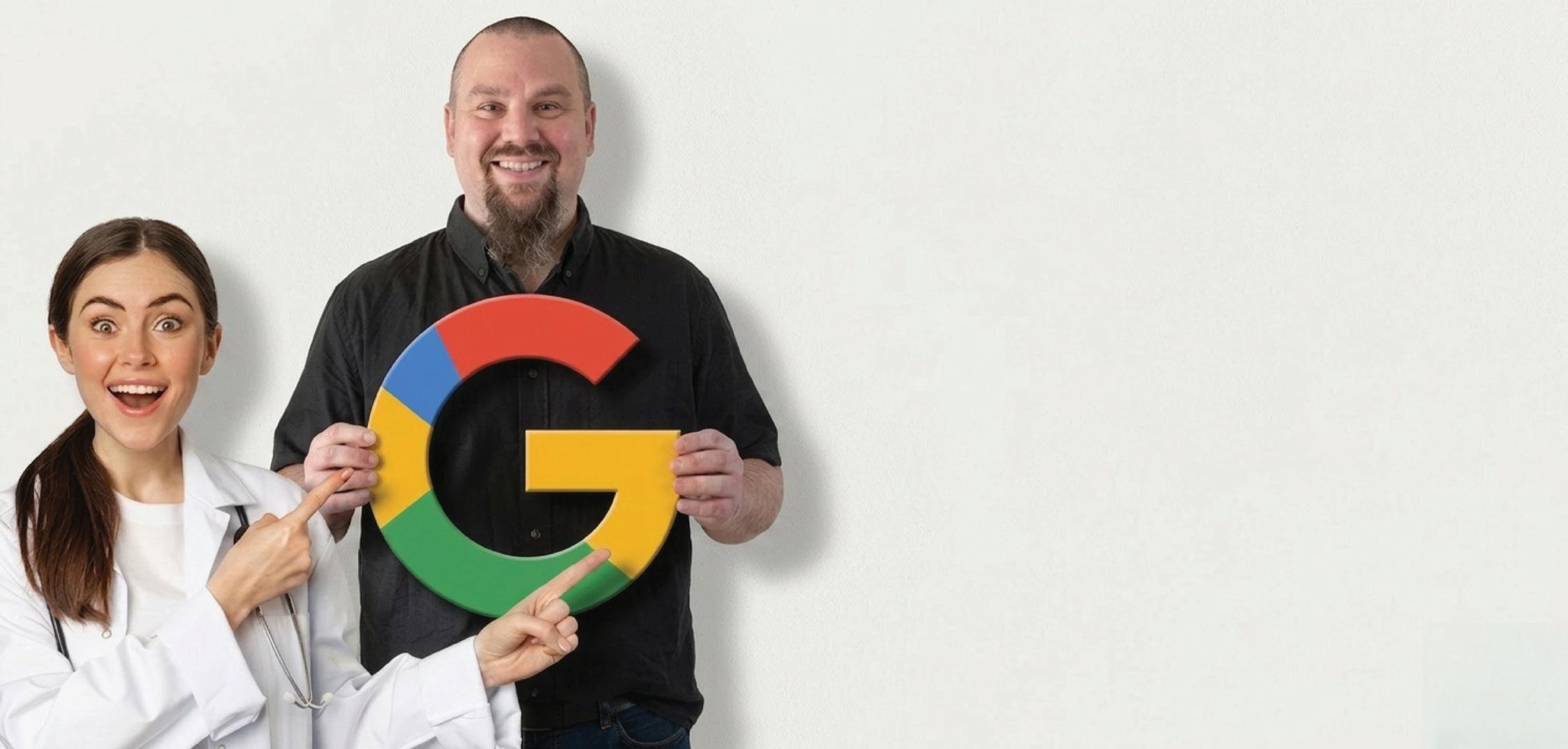
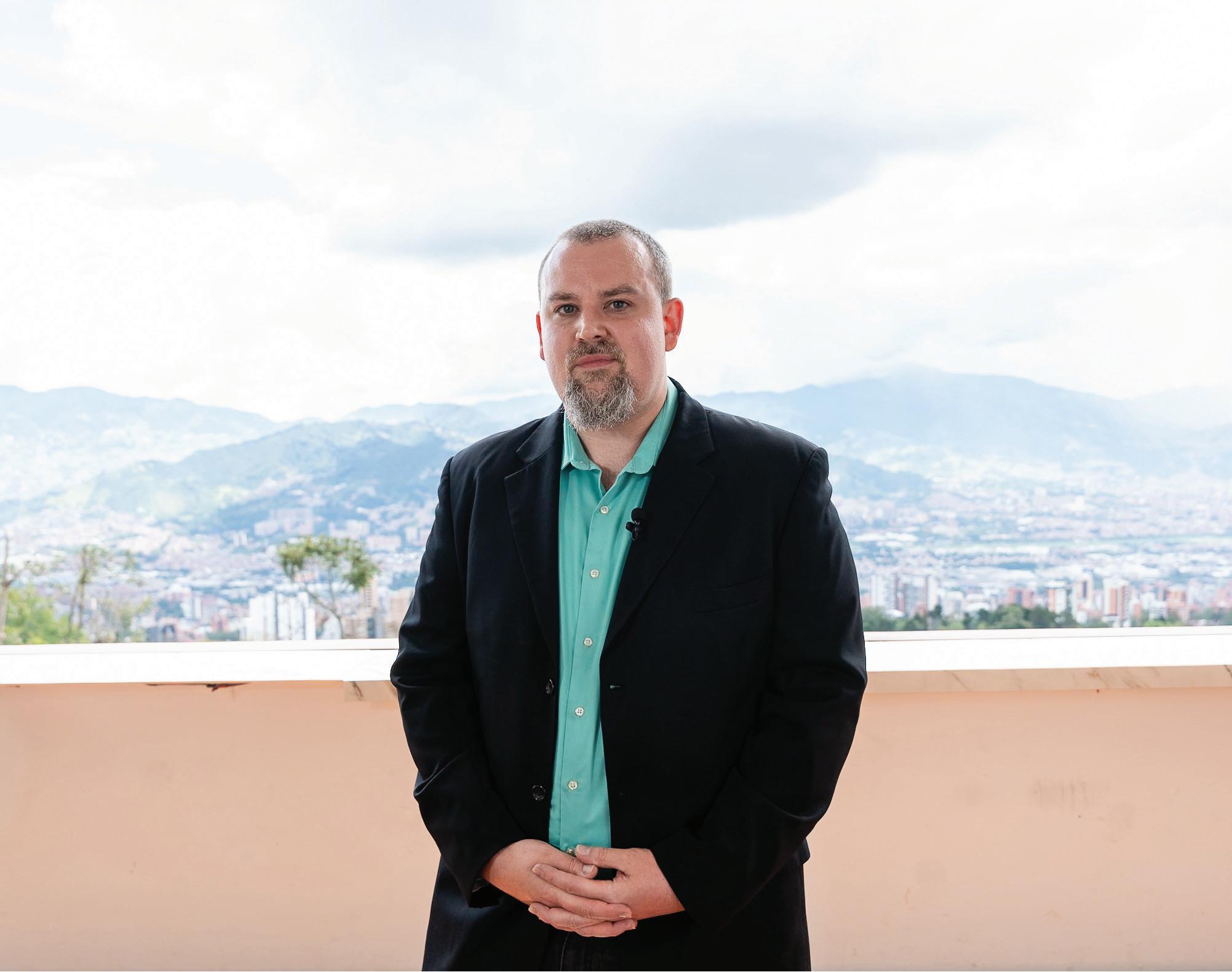
For this edition’s feature, I had the chance to sit down with Michael Lyjak, founder of Efficiency Marketing and one of the few people in dental marketing who can honestly say he learned the game from the inside of Google itself.
If you’ve ever handed over a few thousand dollars a month to a marketing agency and quietly wondered if you were getting your money’s worth, this conversation will hit close to home.
Michael started at Google back in 2014 as an account strategist and worked his way up to senior manager, then to trainer for new hires on Google’s North America team for small and medium-sized businesses. In other words, he was the guy teaching Google’s own people how AdWords actually works.
In 2017, when Michael found out he was going to be a dad, something shifted. He realized he couldn’t work for “the man” forever. So he started consulting through Upwork in 2018, and by 2019 he had landed in the dental niche by helping another dental marketing agency grow from 23 clients to over 90.
Today, roughly 80 to 90% of Efficiency Marketing’s clientele is dental. The firm manages over $20 million in annual ad spend, holds Google Partner certification, and backs their work with a guarantee: if they don’t improve your paid media performance in the first 30 days, they’ll pay you $500.
Why Most Dental Marketing Agencies Miss the Mark
One of the first things I wanted to know is something every practice owner has wondered at least once. Why do so many marketing agencies over-promise and under-deliver?
Michael’s answer comes down to a single word. Relevance.
“Google founded everything with one core concept in mind, which is relevance,” he explained. “The website, the landing pages, the ad copy, the ads. Everything ties back to that. When somebody searches for something, the most relevant answer should show up and solve their need.”
Here’s where most agencies fall short. They run campaigns where the landing pages and content aren’t structured to meet Google’s ranking signals.
When your relevance scores are low, you pay more for every click. More for every click means fewer leads for the same spend, and a higher cost per lead across the board.
Translation? You’re burning ad dollars before your first prospect ever picks up the phone.
One thing I appreciated about Michael is that he didn’t just talk about the problem. He walked me through concrete tips any practice owner can apply starting today.
“A lot of times, the conversation is anchored around a fixed budget,” Michael said. “The person says, ‘I have $3,000 a month, and you just need to make it work.’ It’s not really anchored in data or logic. It’s just what they feel they have to have.”
The problem is that your local market doesn’t care what you feel comfortable spending. If your market requires a $5,000 monthly spend to compete, a $3,000 budget is going to deliver $3,000 worth of results. The first step is having a trusted
partner who can tell you, based on real data, what it actually takes to win in your zip code.
2. Expand Your Ad Hours Beyond Business Hours
This one surprised me. Most dental offices only run their ads during business hours, thinking they can only convert leads when the front desk is there to answer the phone. Michael’s data says that’s a mistake.
“Even during the day, offices still miss calls. They still miss leads. And business hours are usually the most competitive and most expensive time to run ads,” he said.
The solution? Open up your ad windows to after hours, weekends, and evenings. Clicks during these off-peak times are often significantly cheaper. Combine that with a solid lead filtration system on the back end (automated text responses, chatbots, or AI-powered scheduling), and you can capture leads at a fraction of the cost while your competitors sleep.
3.
Your ad spend from last year isn’t going to get you the same results this year. “Around February or March of 2025, there
was a shift in how things were matching on the back end of Google as they integrated more AI components into the algorithm,” Michael said. “Offices that had been consistent for years started to see rising lead costs.”
His advice? Treat your marketing budget the way you treat your payroll. You give your team a pay raise every year to account for inflation. Do the same for your ad spend. Otherwise, you’re falling behind by standing still.
Most agencies treat paid marketing as a “set it and forget it” service. Efficiency Marketing doesn’t.
“A lot of agencies use a template,” Michael said. “They’ve found successful stuff over the years, put it into a template, and now they use it for every new onboarding. That’s not going to work the same way for a dentist in a different region with a different competitive mix.”
Efficiency Marketing’s approach is dynamic. They look at the full stack. The tools you’re using. How your office follows up with leads. What’s happening in your specific market. And they stay in constant communication with the office to understand lead quality, because that changes month to month.
Michael also emphasized something that doesn’t get talked about enough. Not all dental services are created equal. An office focused on full-arch or implants has a very different cost-per-lead target than one doing mostly hygiene and emergency work.
“Knowing the value of your services and the average value of a new patient is critical to knowing how much you can spend,” he said. “We have data anchored in millions of ad spend put toward dental-related terms over the past seven years. An agency that works with a few dental clients on the side isn’t going to know the difference between a filling and an implant when setting budget targets. We do.”
Most practice owners aren’t getting bad results from paid ads because paid ads don’t work. They’re getting bad results because their agency is running a template, not a strategy. The budget is based on feelings instead of data. The ads run during the most expensive hours of the day. And nobody is following up on what happens after the click.
Efficiency Marketing’s edge is that Michael and his team came from inside Google. They know what moves the algorithm, they understand the dental industry at a granular level, and they stay actively involved in every account they manage. No templates. No guesswork. Just data-driven strategy that treats your ad spend like the investment it is.
The AI Piece: What’s Coming Next
No conversation about marketing in 2026 can skip AI. Michael is watching the shift closely, particularly the rise of what’s now being called GEO, or generative engine optimization. Essentially, SEO for AI tools like ChatGPT and Claude.
“When somebody asks ChatGPT, ‘What’s the best place near me to get a cleaning?’ your content needs to be structured to answer those types of questions,” Michael said. “That’s how you show up in those referrals.”
Michael is also developing a voice and chat AI system specifically designed to help dental offices capture after-hours leads. Imagine a prospect calls your office at 9 PM on a Saturday. Instead of reaching voicemail, they’re greeted by an AI scheduling assistant that can answer basic questions and book them directly into your practice management software.
To learn more about Efficiency Marketing or get a free consultation on your current paid media performance, scan the QR code below. And remember their guarantee: if they don’t improve your paid media campaigns in the first 30 days, they’ll pay you $500. That kind of confidence is exactly what you want from the people handling your marketing dollars.


By Ethan Webb, Managing Editor of
Lifestyles Magazine
If you’ve ever had a team member chasing down EOBs, manually posting payments into your practice software, or quietly paying 2% fees to a middleman you didn’t even know existed, this feature is for you.
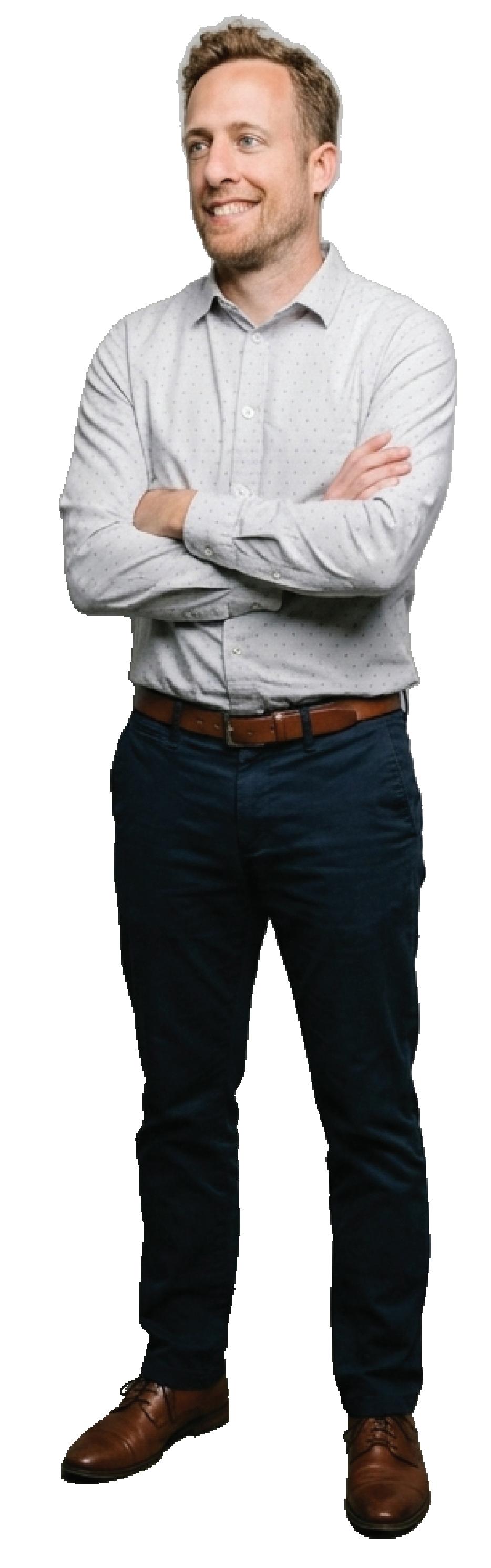
I recently sat down with Sam Rockwood, CEO and founder of Woods, a dental payments platform tackling one of the most overlooked and most expensive problems in our industry. Getting paid.
Sam is a former actuary who spent years inside the insurance world, rose through the ranks at Delta Dental, and eventually decided that the way dental practices receive payments was too broken to ignore. What he built is now helping offices get paid faster, more efficiently, and without the paperwork headache so many of us have just accepted as the cost of doing business.
Sam’s path into dentistry started in a spreadsheet. After graduating from Brigham Young University with a math degree, he worked as an actuary at Humana, Blue Shield of California, and eventually Delta Dental, where he reported directly to the Chief Actuary.
In 2019, Sam felt the itch for something bigger. He got a call from the CEO of a startup called Level that was modernizing employee benefits. Their first product was a dental benefit, which is why they needed Sam’s expertise. He took the leap, moved to New York, and spent the next five years helping build
Level from the ground up. The experience gave him something no job description could: a deep understanding of payments, startups, and the dental insurance ecosystem.
The Idea That Became Woods
While Sam was interviewing f or other insurance jobs, he and a friend started talking about how dental offices actually get paid. And the more they dug in, the more bizarre it seemed.
“Most of the time, dental offices are getting paid by check,” Sam explained. “Sometimes virtual credit card. They rarely get paid electronically. It just seemed backwards to me.”
So Sam did what actuaries do. He started gathering data. He called dental offices. He asked questions. What he kept hearing was this: dental teams knew electronic payments were better, but getting enrolled in EFT with 15 or 20 different insurance companies was such a pain that most offices just gave up. And even when they did get paid electronically, they still had to hunt down the EOB from each insurance company’s portal to reconcile the payment.
“That’s where Woods came in,” Sam said. “We take 30 minutes from the office, handle all the enrollment, and provide a web application where all the EOBs are in one place.”
The Hidden Fees Most Offices Don’t Even Know They’re Paying
One of the most eye-opening parts of my conversation with Sam was hearing about the
invisible fees that so many dental offices are paying without realizing it.
“We just onboarded an office last week that was paying up to $2,000 a month because of EFT fees,” Sam told me. “They thought they were getting paid EFT. They were happy. But they didn’t realize the company they were using was taking 2% on every single payment.”
Here’s what most practice owners don’t know. HIPAA law actually requires every insurance company to offer a free version of EFT, but the provider has to ask for it. If you don’t know the magic words, here’s what happens: you call MetLife, say you want to switch to EFT, and they route you to their payment partner, Zelis. Zelis sets you up with EFT and takes 2% of every payment forever. But if you ask the right way, saying “I want the free EFT,” MetLife will route you to a different portal where you get paid directly with no fees.
Dentistry is high revenue. When you’re talking about a root canal or an implant, a 2% fee isn’t pennies. It adds up to real money. Because Woods has navigated this enrollment process hundreds of times, they know exactly how to ask. They handle the paperwork, the hoops, and the phone calls so your office doesn’t have to.
At its core, Woods is a platform that simplifies and automates dental insurance payments. Their web application aggregates every EOB from every payer into one place while also helping practices migrate away from paper checks and virtual credit cards toward EFT payments.
The Woods platform integrates directly with most practice management software. When a payment comes in, a single click writes it into the ledger. No more manual data entry. No more reconciliation headaches. Additionally, the platform serves as an information portal where all the payment data lives in one searchable place.
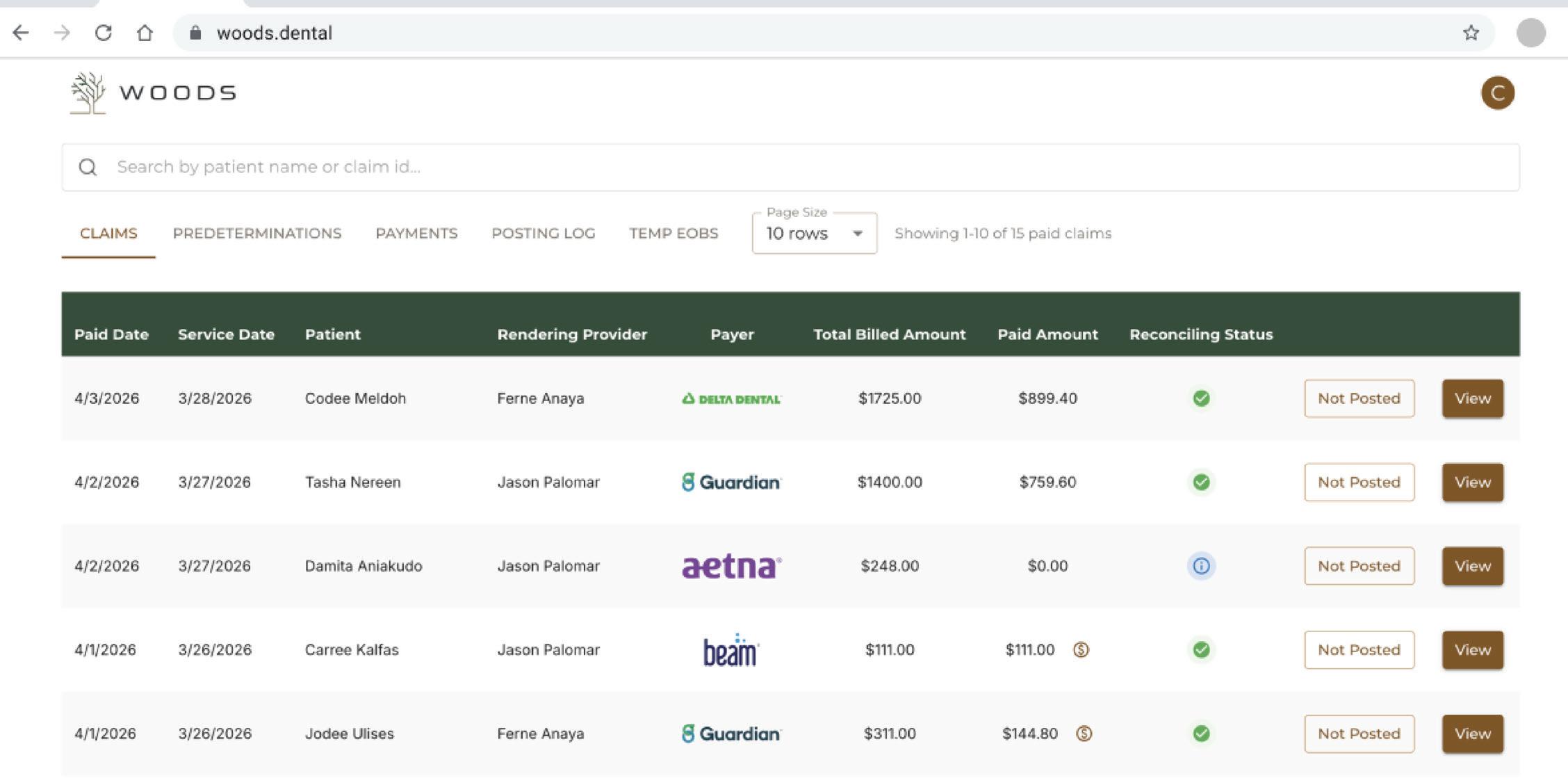
“I tell my team that we need to be the experts on insurance payments,” Sam said. “An office manager does a thousand different things. They don’t have the capacity to know all the nuances. If they can hand it off to us and trust that we know what we’re doing, that just helps them.”
The entire industry is shifting toward digital, and the offices that don’t get on board are going to fall behind.
“Almost every office sends claims to the insurance company electronically,” Sam pointed out. “So why is everybody okay with receiving payment and information back from the insurance company in the mail?”
Once AI enters the equation (which it already is), digital becomes non-negotiable. Paper EOBs can’t be read by a large language model. Manual workflows can’t be optimized by an algorithm.
Here’s the part I really liked. Sam isn’t trying to replace your front desk with a robot. He’s making the argument that AI and automation should stay out of patient interactions altogether.
“When the patient comes in, a fully AI experience is not the greatest experience,” he said. “Your humans should be focused on helping the patient. The stuff that doesn’t touch the patient? That’s where you automate.”
That’s a refreshing perspective in an industry that’s often too quick to hand over the human touch to software.
Looking ahead, Sam sees huge opportunity in leveraging Woods’ data to help offices with more than just payments. He envisions a future where Woods can help practices understand how their reimbursement rates and fees compare to peer offices. Right now, most dentists are negotiating with carriers with one hand tied behind their back because they simply don’t have the data. Woods has the potential to change that.
One of the things I appreciated about Woods is how low-friction it is to get started. They charge a flat dollar amount per insurance company you enroll with, which means you can try the platform
with just one or two payers before rolling it out fully. There’s no contract, and you can cancel anytime.
Compared to the 2% fees that services like Zelis charge, Woods typically costs a third or less for the average office. And for practices that are in-network with Guardian or Cigna, Woods offers discounted onboarding through their network rewards programs.
Dental insurance has become one of those parts of running a practice that we’ve all just accepted as a necessary evil. The paper checks. The chasing down EOBs. The fees we don’t fully understand. The hours our teams burn on data entry every week.
But it doesn’t have to be that way. Sam and his team at Woods have built something that saves offices real time, real money, and real headaches. And they’ve done it by focusing on something most vendors ignore: the boring middle of the workflow, where the money actually moves.
How to Connect with Sam and Woods
To learn more or book a free consultation, visit woods.dental. Note the URL: woods.dental it’s, not woods.com. You can also find Woods Insurance Payments on Facebook and LinkedIn.
Sam’s team will do a free audit of how you’re currently getting paid, identify any hidden fees you might be eating, and show you exactly what Woods can do for your practice. It’s 30 minutes that could save your office thousands of dollars a year.

By Ethan Webb, Managing Editor of Dental Lifestyles Magazine
If you’ve been in dentistry for any length of time, you already know the feeling. You produce great work, your team hustles, your patients leave happy, and yet somewhere between the chair and the bank account, money quietly slips away. PPO write-offs, denied claims, downcoded procedures, fee schedules that haven’t budged in years. It adds up fast, and most of us were never trained to fight back.
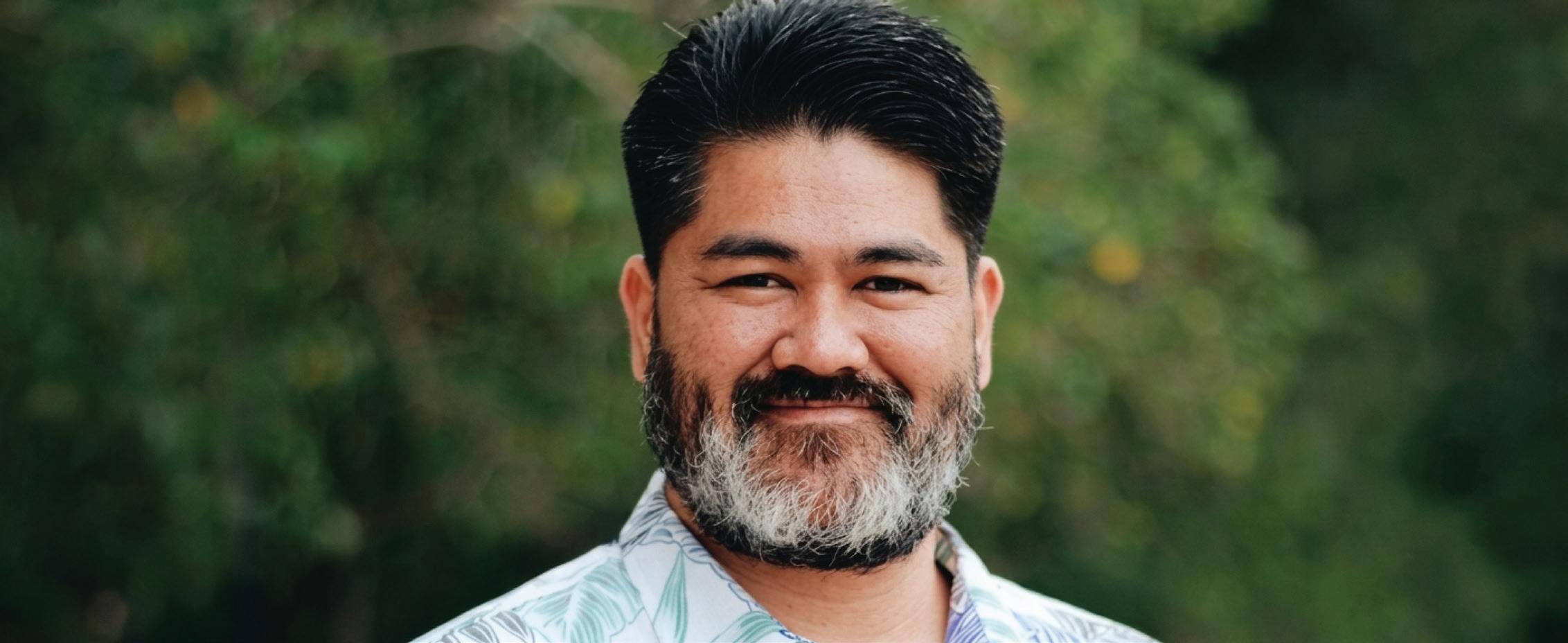
That’s why I wanted to sit down with Benjamin Tuinei for this edition. Ben has been called “The Authority” on PPO strategies and fee negotiating, and the title isn’t hype. He’s influenced more than $5 billion in newly negotiated revenue for dental clients, worked with over 9,000 dentists across the country, and built a career out of recovering money that practice owners didn’t even realize they were leaving on the table.
What I appreciate most about Ben is that he doesn’t talk like a consultant. He talks like someone who has actually been in the trenches, because he has. Here’s what he shared with me.
Ben’s entry into dental insurance back in 2007 wasn’t through a textbook or a seminar. It was through real operational pressure. He was brought into a 10-location group practice in Phoenix that had a serious collections problem. The practice was producing dentistry at a high level, but the revenue was getting trapped in the system. Claims were aging, follow-up was inconsistent, write-offs were happening too casually, and nobody had full visibility into where the money was leaking.
So Ben rebuilt the billing department from the ground up. He created accountability systems, claim aging protocols, denial management workflows, and KPI tracking. He trained the team to think like revenue protectors instead of data entry staff. Over time, collections went from roughly 65% to 98%.
That experience shaped everything he teaches today. “Most practices do not have a production problem,” Ben told me. “They have a systems problem.
Revenue is often lost through preventable inefficiencies, weak payer oversight, and lack of process discipline.”
He also walked away with a hard truth about the other side of the table. Insurance companies are highly organized. If dental practices want to win, they have to become equally organized. That insight became the foundation for the rest of his career.
Building Optimum, joining Veritas, and earning trust the hard way
In 2009, Ben founded Optimum Dental Solutions. At the time, dentists were getting squeezed by shrinking reimbursements and rising administrative burdens, and most consultants were focused on marketing or production. Very few were focused on helping practices optimize what they were already earning through insurance. Ben saw the gap and stepped into it.
In 2015, Optimum was acquired by Veritas Dental Resources, where Ben now serves as President and Managing Partner. The acquisition gave the team
the infrastructure to scale nationally, but Ben is quick to point out that growth didn’t come from infrastructure alone. It came from results.
“Dentists talk to each other,” he said. “If you help one practice recover six figures in lost revenue or dramatically improve profitability without adding clinical days, word spreads quickly.”
That word-of-mouth engine, combined with relentless refinement of the team’s systems and a stubborn focus on staying ahead of payer behavior, is how Veritas has grown to serve thousands of dentists. Ben told me he never takes that trust lightly, and after talking with him, I believe it.
The next chapter: AI meets the front office
In March, Ben was announced as Co-Founder of Elite Dental Force, where he’s bringing his expertise into AI-powered dental billing and insurance infrastructure. When I asked what drew him to this next chapter, his answer was straightforward: timing and necessity.
Front offices are overwhelmed. Eligibility checks, billing complexity, staffing shortages, payer inconsistency, administrative burnout. These aren’t hypothetical problems. They’re showing up in practices every single day, and Ben believes practice owners need real leverage to deal with them.
Elite Dental Force is building intelligent systems designed to reduce friction in insurance verification, billing workflows, and reimbursement processes. Ben’s role is to make sure the technology actually reflects real-world insurance realities, not just software theory.
And in case you’re worried about what AI means for your team, Ben put it plainly: “AI will not replace great team members. But AI will absolutely empower great teams. The practices that combine strong people with smart systems will have a major competitive advantage over the next decade.”
The biggest PPO mistake practices are making right now
Ben’s reputation was built on PPO strategy, so I had to ask him directly: what’s the biggest mistake practices are making with their PPO relationships today?
His answer was passive participation. Too many practices sign PPO agreements and then treat reimbursement rates as fixed forever. They never renegotiate. They never audit contracts. They never review umbrella network leasing arrangements. They never challenge underpayments. The agreement gets filed in a drawer, and the leaks just continue.
“The biggest opportunity,” Ben told me, “is realizing that PPO participation should be managed like any other business asset. Contracts can often be renegotiated. Fee schedules can be improved. Bad network arrangements can be corrected. Participation mix can be optimized.”
This is the part that always gets me. Many practices spend years trying to grind out more production while ignoring hundreds of thousands of dollars already sitting inside their current reimbursement structure. Sometimes the fastest path to growth isn’t producing more. It’s getting paid properly for what you’re already doing.
What it actually looks like when a practice gets serious
Numbers are great, but I always want to know what real outcomes look like. Ben shared two stories with me that I think every practice owner should hear.
The first is a group story. Ben coaches a mini-association of more than 500 independent dentists in the state of Utah, and over the years his team has successfully negotiated with most major PPO plans impacting that market. Across that group, the most common outcome from proper PPO optimization is a revenue increase equal to roughly 7% to 13% of total annual collections. That’s not a one-off. That’s a repeatable benchmark when practices take contracting, reimbursement strategy, and payer relationships seriously.
The second is more personal. Ben told me about a dentist in Southern California who was only earning about $50,000 annually despite working hard and delivering quality care. The issue was never clinical ability. It was a broken reimbursement model and weak revenue cycle systems. Ben’s team renegotiated the PPO fee schedules, restructured the insurance workflows, improved collections protocols, and rebuilt the financial foundation of the practice. As those changes took hold, the doctor was able to transition from surviving to earning a true professional income again.
That second story stuck with me. We don’t talk enough in this industry about the dentists who are quietly drowning, not
because they’re bad clinicians, but because the business model around them is failing. Sometimes PPO optimization creates six-figure growth in an already successful office. Other times, as Ben put it, it rescues a good dentist from a system that was quietly failing them.
With more than $5 billion in newly negotiated revenue under his belt, Ben could easily lean on tactics and technique. But when I asked about his philosophy, the answer wasn’t about strategy at all.
“Dentists deserve advocates too,” he told me. “Insurance companies negotiate every day. Most dentists were never trained to do that. They were trained to diagnose, treat, and care for patients.”
That’s the gap his team fills. They bring strategy, leverage, persistence, and experience into an arena where many practice owners feel outmatched or ignored. And Ben thinks the reason it resonates is simple. Dentists know when someone genuinely cares about their future. He’s not selling theory. He’s stepping into the trenches with practice owners and helping them protect what they’ve built.
As someone who has built and sold practices myself, that line about understanding both the numbers and the emotional weight of ownership hit home.
Ben sits on the boards of several dental organizations, co-founded and co-hosts The Navigating Dental Insurance Podcast, and has been speaking to dental audiences for nearly two decades. So when he says investing in the broader dental community is a responsibility he takes seriously, I believe him. If he can help a dentist avoid costly mistakes, improve
profitability, reduce stress, or see a bigger future, that matters to him.
I asked him what trends practice owners should be watching most closely. He pointed to several. Payers are rapidly increasing their use of AI and automation to process, deny, and downcode claims. Consolidation continues to put pressure on independent practices. Network leasing and third-party PPO structures are getting more complex, not less. Administrative costs in the front office keep climbing. And the need for data-driven contracting decisions is greater than ever.
His takeaway was sharp. The future belongs to practices that become smarter operators, not just better clinicians.
A final word from Ben
As we wrapped up, Ben left me with a thought that I think every reader should sit with for a minute. “Dentistry is hard enough without giving away revenue unnecessarily,” he said. “Protect your time, protect your margins, protect your team, and never assume the current way is the best way. Some of the biggest breakthroughs in a practice come not from working harder, but from working wiser.”
That’s the through-line of everything Ben does. Whether he’s rebuilding a billing department, renegotiating a fee schedule, or helping launch the next generation of AI-powered insurance tools, the goal is the same. Help dentists keep more of what they’ve already earned, so they can focus on the reason they got into this profession in the first place.
If you want to connect with Ben and the Veritas team, you can find them at VeritasDentalResources.com, call 888-8084513, or email Ben directly at ben@veritasdentalresources. com. Whether you’re leaving money on the table or just want a second opinion on your reimbursement structure, it’s worth a conversation.

By Dr. Glenn Vo, Editor-in-Chief of Dental Lifestyles Magazine

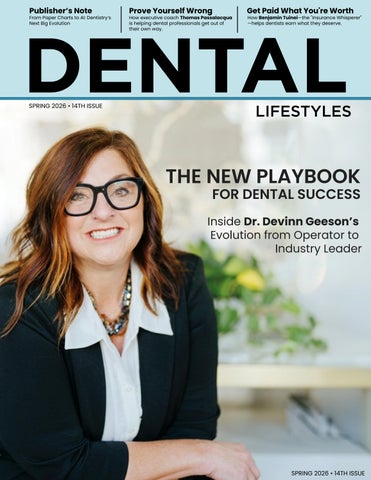
When I sat down with Dr. Devinn Geeson for this edition’s cover feature, I’ll admit I expected a typical success story. The kind I’ve heard dozens of times in this industry. Humble beginnings, a lucky break, a big exit.
What I got instead was something different. Something that stopped me in my tracks and made me think about my own life, my own practices, and the way so many of us in dentistry keep putting off the things that matter most.
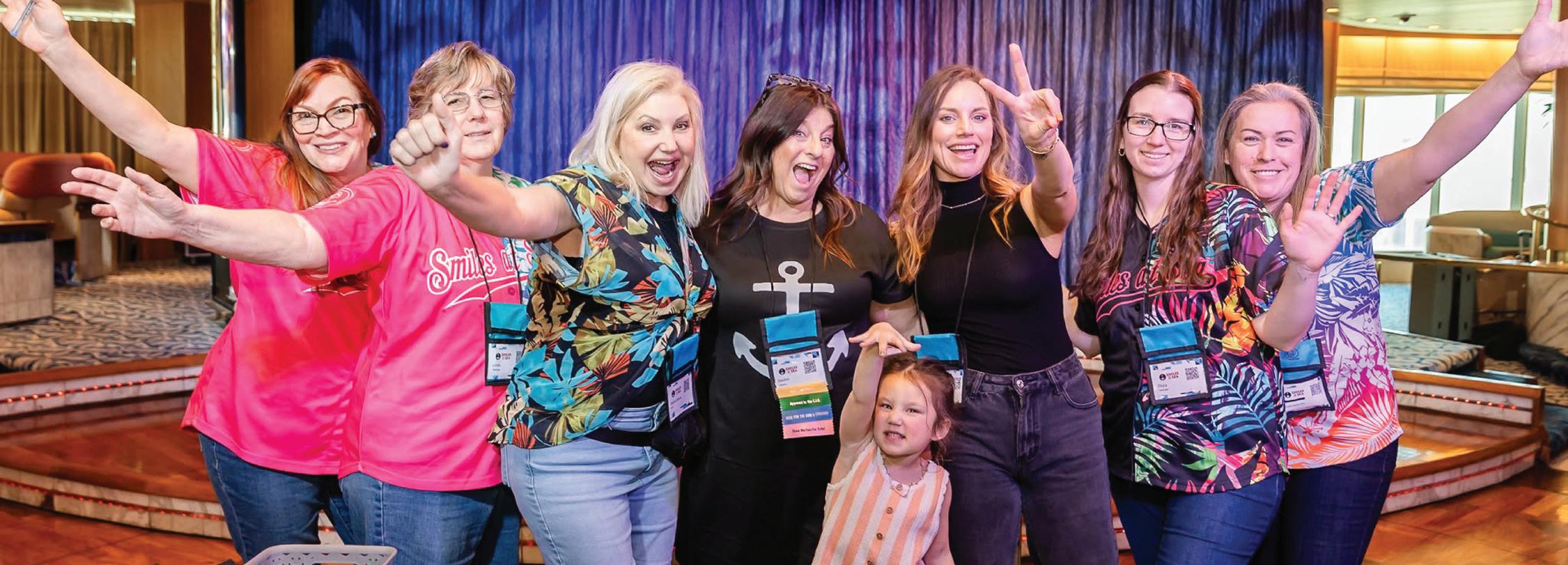
Dr. Devinn Geeson, affectionately known as “Dr. G, the Pep-Talk Doc,” is the newly minted CEO and Chief Evolutions Officer of Smiles at Sea, The Dental Festival, and Hype Events. She built and sold three dental practices in under five years at an 8.5x multiple. She’s a coach, a speaker, a mentor, and by her own admission, a work in progress.
But more than any of that, she’s a woman who has been dealt a hand most of us couldn’t imagine and still managed to build something remarkable. And now, she’s on a mission to make sure the rest of us don’t waste our one shot at this.
Devinn knew she wanted to be a dentist by eighth grade. She had spent plenty of time in the dental chair as a kid (her parents, she tells me with a laugh, loved her “a lot” and gave her all the candy she wanted). Sitting across from her school counselor, a pre-teen Devinn confidently shared her plan to go to dental school.
The counselor took off her glasses, set them on the desk, and told Devinn she wasn’t strong enough in science and math. That music or art might be a better fit.
Devinn went home devastated. But her mom had a different take. “She said, ‘Well, did they measure the size of your heart?’” Devinn remembered. “And she said, ‘I know that you will work hard for whatever it is that you want.’”
That conversation turned out to be one of the most important of Devinn’s life. Just a month later, she lost her mother to complications from diabetes. And a few years after that, her senior year of high school, she lost her father too.
“I was out there alone in the world,” Devinn told me. “I thought, I can’t go to college. I was mad at the world. Mad at everything and everybody.”
One day, driving through Akron, Ohio, she spotted a dental assisting school on the side of the road. She pulled in. She enrolled. She graduated number one in her class. And just like that, the girl who was told she wasn’t strong enough had taken her first step into dentistry.
Devinn’s path took her to Tucson, where she worked as an assistant and eventually an office manager. Then came marriage to a military husband and a move to Germany, where she discovered that military spouses couldn’t work on base and her German vocabulary (limited to ordering beer and paying electric bills) wasn’t going to cut it.
So she took a job with the Army and Air Force Exchange Service. Within eight or nine years, she had become the youngest manager in the entire Europe division to oversee the number of people and volume of dollars she was responsible for.
“I was mad at the world again, because I wasn’t in dentistry,” Devinn said. “But very soon after graduating dental school, I realized that was one of the best things that ever happened to me. I learned about staffing, HR, inventory. I learned how to run a business. I learned about profit and loss. I learned all the things that 99.999% of dentists struggle with when they open their practice.”
She doesn’t just do a job. She excels at it. At the time, she thought she was just trying to take care of her two young kids. Looking back, she was laying the foundation for an empire.
Hygiene School, Dental School, and the Refusal to Quit
When Devinn came back to the States, she started taking prerequisite classes at night while still running retail and food facilities on base. She applied to dental hygiene school and got in after a few students dropped out. She was so excited when they called to tell her, she jumped up and down, rolled her ankle, and broke her foot.
Right before school started, tragedy struck her family again. She nearly quit. “There was just something inside me that said, you can’t stop,” Devinn told me.

So she went. She cried on the drive to school every morning, dried her tears before walking in, and cried again on the drive home. Then she wiped her face, fed her kids, gave them their baths, and tucked them in. She graduated near the top of her class and received the community dentistry award for her work with nursing homes, daycares, and preschools.
After 10 years as a hygienist, Devinn was ready to push further. She met another mom her age who was applying to veterinary school, and that sparked something in her. She realized she wasn’t too old. She applied to dental school, didn’t get in the first year, spent that year in UNC’s medical education development program, then got into both ECU and UNC. UNC offered her a 50% tuition scholarship.
She walked into dental school with a thirst for knowledge and, unlike most of her classmates, a deep understanding of how a dental practice actually runs. She had worn every hat. Assistant. Hygienist. Office manager.
Devinn doubled its revenue and eventually sold it for $786,000. Why? Systems. “You can be successful in Medicaid,” she told me. “You just have to have systems. You have to stick to them. And you have to treat people with dignity, humility, and humanity.”
Using the capital from that sale, she funded her third practice. At one point, she had four to five associates, a 50-person staff, and three practices within 20 to 30 minutes of each other, all serving a region that had just seen an influx of 66,000 new residents.
But here’s what set her apart. It wasn’t the clinical skills. It wasn’t even the business acumen. It was the brand. It was the experience. It was what Devinn calls Mojo.
The Identity Crisis No One Talks About
Here’s where Devinn’s story takes a turn that every practice owner needs to hear. After selling her practices, she hit a wall. An identity crisis. She had spent a decade building her empire, sacrificing relationships, her health, time with her kids, and her peace of mind. Then suddenly, the thing that defined her wasn’t hers anymore.
“I was like, I’m a dentist. I don’t know what else I am,” Devinn told me. “I struggled with who am I? What’s my purpose? What’s my legacy?”
She knew exactly what she was going to do the minute she graduated.
After dental school, Devinn didn’t waste time. She opened her first practice, a de novo startup. In its first year, on just 22 clinical hours per week, that practice did $1.2 million in revenue.
Let me pause on that for a second. Twenty-two clinical hours. One-point-two million.
“We kept our overhead lean and mean,” Devinn explained. By December of that same year, she had already acquired a second practice about an hour away. She worked both offices simultaneously for 15 or 16 months, starting at 7 AM at the startup, driving an hour to the other practice for the day, then driving back for evening hours. Fridays and Saturdays too.
The second practice was supposed to be a Medicaid office. Most dentists avoid Medicaid.
“I went home super grouchy one weekend,” she told me, “and I came back and I was like, our mission is Mojo. Make a difference, offer an exceptional experience, just go the extra smile, and outdo the competition.”
Her front desk wasn’t allowed to let the phone ring more than three times. She told her team to “pump sunshine through the phone.” Patients got sunglasses before the light came on. A comfy pillow. A blanket. Music. Tea. A minty rinse after every procedure. Every interaction was engineered to make you say “holy Moses” on the way out.
And each year, if the team hit their numbers, Devinn took them on a cruise. Cuba. Cozumel. For team members who had never been on an airplane or out of the county, those trips weren’t just rewards. They were life-changing.
“When they came home, they were on another level,” she said. “If I could bottle that and sell it, I’d be a millionaire 10 times over.”
Turns out, she kind of did. Those three practices sold for an 8.5x multiple.
She went to a retreat. She started reconnecting with the parts of herself she had buried under the weight of building her business. She’s a mom. She’s a grandma (she goes by “DG”). She’s a mentor. She’s a coach. She’s all of those things, and she doesn’t have to be defined by any single one.
That realization didn’t just change her life. It became her platform.
Live Your Today. Stop Rescheduling Joy.
Devinn now travels the country with a message she calls #LiveYourToday, built on the refusal to let anyone else go through what she went through.
“Dentistry is full of ‘I’ll be happy when,’” she said. “School, then graduation, then the practice, then more practices, then the sale, then retirement. Always chasing the next milestone and pushing joy further down the road.”
Think about it. The average American lifespan is 78. If you’re working until 65 or 70, you’re getting maybe eight good years to enjoy the life you worked your whole career to build. Eight years, when your knees and back are talking to you more than your kids. Eight years, when, as Devinn puts
it, “you’re talking more to the Lord in fitness class than you are on Sunday.”
Her advice to burned out practice owners? Audit your week like a P&L. Ask what gives you energy and what drains it. Then eliminate, automate, or delegate the rest. Stop working five or six days a week when three will do. Schedule time for yourself the way you schedule patients.
“Success without fulfillment is just a more sophisticated version of burnout,” she said.
And the hardest truth of all, the one that hit me square in the chest: “You may find that you spend your life waiting for a moment that has already passed you by.”
Which brings us to the next chapter of Devinn’s story. In early 2026, she acquired Smiles at Sea, The Dental Festival, and Hype Events from founder Elijah Desmond, becoming the CEO and Chief Evolutions Officer of all three brands.
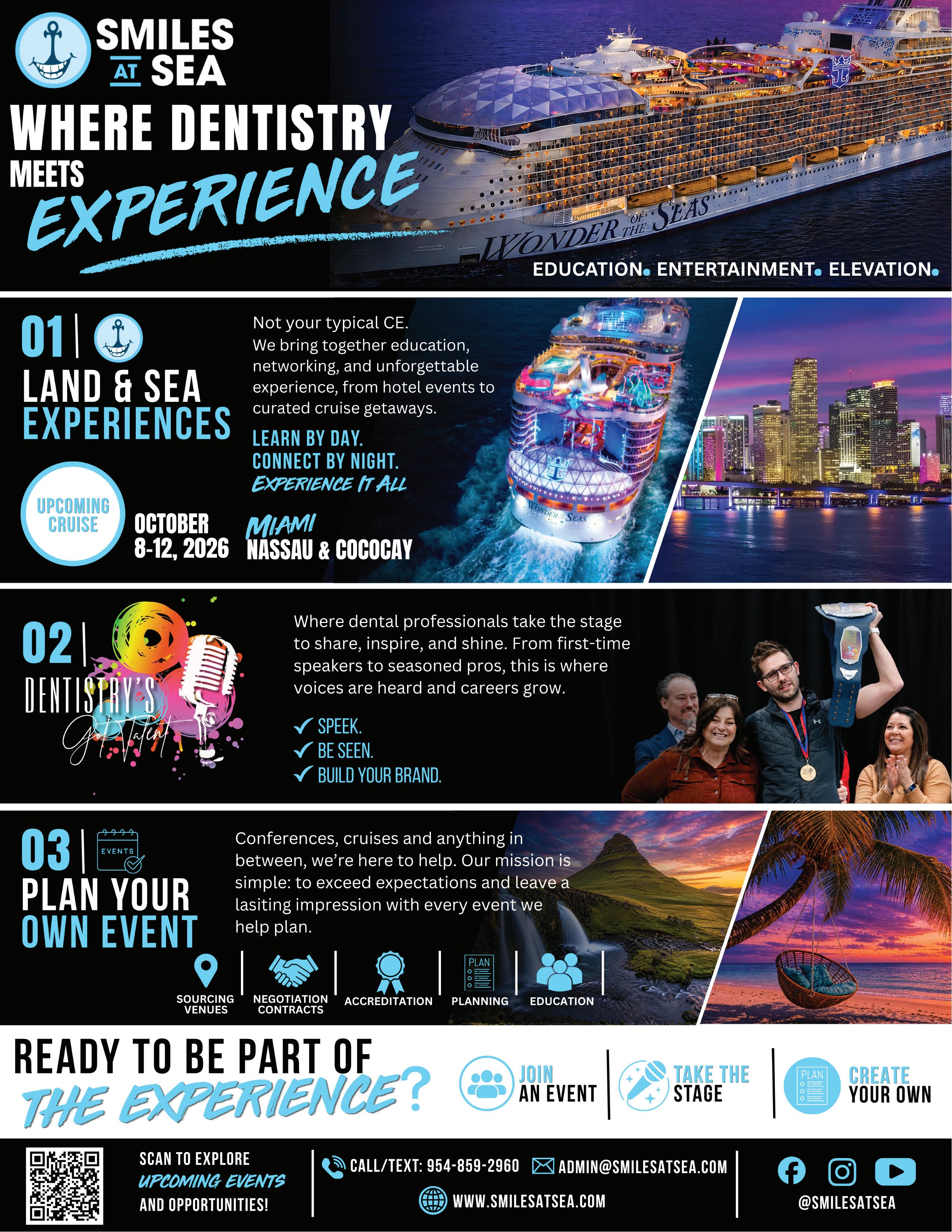
For those not familiar, Smiles at Sea pioneered dental CE cruises back in 2015. The Dental Festival brought that same energy to land. And Hype Events rounded out the portfolio with live, interactive experiences.
“I didn’t see just events,” Devinn told me. “I saw legacy. Elijah built something special. Energy, experience, community. But I saw the opportunity to elevate the entire ecosystem. To create a platform that lifts speakers, connects teams, and gives vendors real ROI, not just booth space.”
Elijah is staying on as Chief Fun Officer, which Devinn describes as strategic, not a perk. “We didn’t want to replace the magic. We wanted to multiply it.”
I’ll add that I’m proud to be part of that multiplication myself. Nifty Thrifty Dentists has officially partnered with Devinn to support Smiles at Sea, and I couldn’t be more excited about what we’re building together. When Devinn talks about lifting speakers, connecting teams, and giving vendors real ROI, that aligns perfectly with what we’ve been doing in the Nifty Thrifty community for years. Joining forces was a no-brainer, and I think the dental community is going to feel the difference.
And that title of hers? Chief Evolutions Officer? It’s not just a play on words. CE, in her mind, shouldn’t just transfer knowledge. It should change behavior. It should be immersive. It should deliver measurable outcomes. It should be what she calls “edutainment,” education that actually engages.
“Destination CE was step one,” she said. “Behavior-driven transformation is step two.”
When I asked Devinn what’s on the horizon, she didn’t hesitate. Bigger events. Deeper experiences. Tighter integration between education, vendors, and real outcomes. And new platforms like UnidentIQ, which aims to bring daily behavior, accountability, and intelligence into practices.
“Not just impact a few times a year,” she said. “Impact every single day.”
I’ve talked to a lot of successful dental entrepreneurs over the years. Most of them have a playbook. Devinn can offer all of that too.
But what struck me most about this conversation wasn’t the practices she built or the multiple she sold them at. It was her refusal to let anyone else fall into the same trap she did. The trap of rescheduling joy. Of building a life you’re too exhausted to actually live.
She told me about the dental assistants she trained in her practices, young women who had been working at a drivethrough gas station, who went on to become hygienists and, in a few cases, are now pursuing dental school. “That’s a legacy I
was really proud of,” she said.
That’s the thread running through all of it. The assistant who refused to quit. The single mom who cried her way through hygiene school. The dentist who made $1.2 million on 22 clinical hours because she built a brand that mattered. The CEO who’s now reshaping how the entire dental industry learns and connects.
Devinn’s legacy isn’t the 8.5x multiple. It’s the people she’s pulling up alongside her.
Where to Find Dr. Devinn Geeson
If you want to experience what Devinn is building, start with one of the events. Smiles at Sea is the flagship cruise experience. The Dental Festival is the land-based version. Hype Events hosts live, interactive experiences throughout the year.
You can find Smiles at Sea at smilesatsea.com, The Dental Festival at thedentalfestival. com, and Dr. Devinn Geeson’s coaching at drdevinngeeson. com.
As she signed off at the end of our conversation: “Exchange boardrooms for sunshine, community, collaboration, and the best CE there is. Hope to sea you soon. Dr. G.”
I couldn’t have said it better myself.
By Dr. Glenn Vo, Editor-in-Chief of Dental Lifestyles Magazine
If you’ve owned a dental practice for more than five minutes, you’ve probably experienced this scenario: a hygienist calls out sick at 6:30 in the morning, the schedule instantly falls apart, production disappears for the day, and your front desk team goes into panic mode trying to find coverage.
Staffing has quietly become one of the biggest operational problems in dentistry.
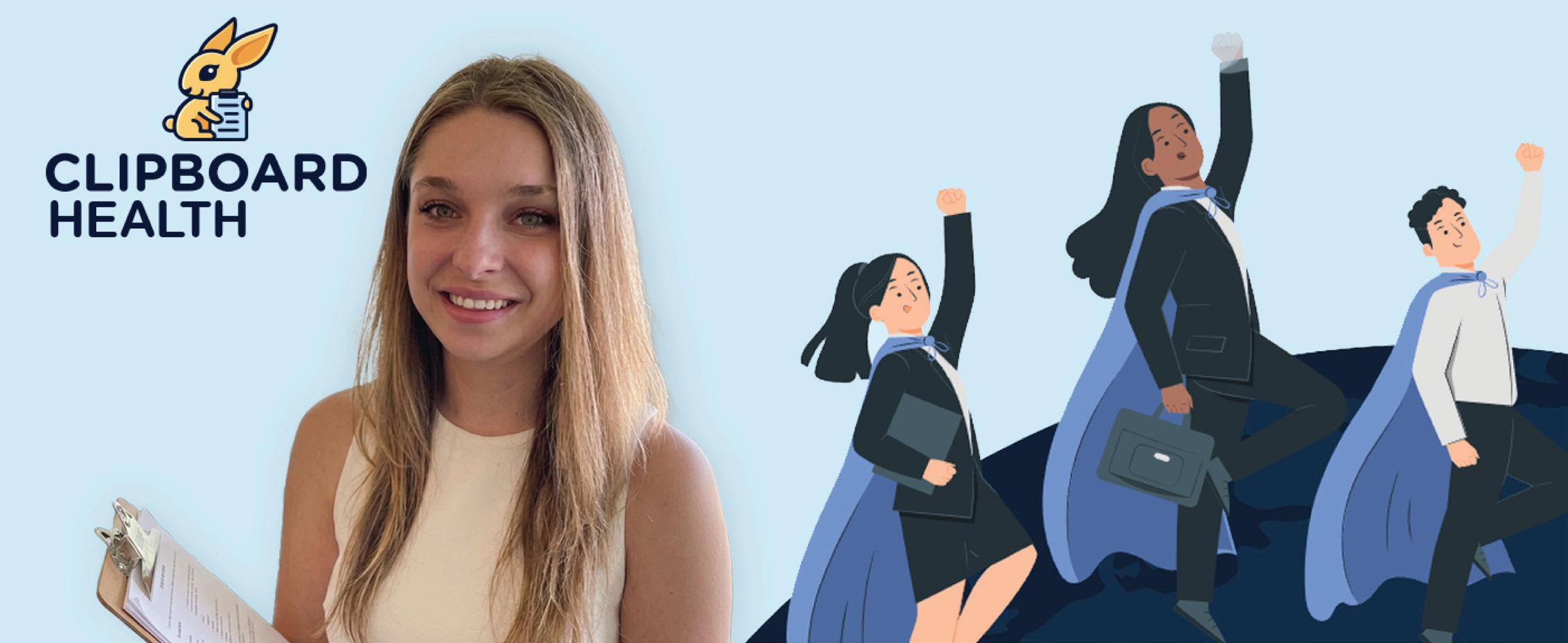
I recently sat down with Maria Vaysman, VP of Strategy and Operations at Clipboard Health, to talk about how Clipboard Dental is approaching one of the most painful bottlenecks in dentistry and why the future of staffing may look a lot more flexible than most practice owners expect.
According to Maria, the issue isn’t simply that there aren’t enough hygienists or assistants. It’s that the way the industry thinks about staffing hasn’t caught up with the way people actually want to work anymore.
Maria didn’t come into dentistry through the traditional route. Before joining Clipboard, she spent nearly a decade in private equity investing in healthcare and technology companies. But during that time, one issue kept surfacing again and again: the workforce impacts everything else.
“Patient care, financial performance, talent retention, whether the business can even function day-to-day,” Maria explained.
What frustrated her was how disconnected most decision-makers were from the actual staffing problems practices faced. “When you’re sitting in an investor’s seat, you’re pretty removed from all of that,” she said. “I kept finding myself wanting to get close to the actual problem and build something that could help.”
That eventually led her to Clipboard, a company that originally built its reputation in long-term care staffing before
expanding into dentistry. And oddly enough, Maria says the transition into dental wasn’t as different as it looked from the outside.
“Practices are deeply dependent on their clinical staff,” she told me. “When a hygienist or assistant doesn’t show up, the whole day can fall apart. Patients don’t get seen, revenue walks out the door, and everyone else is scrambling to pick up the slack.”
One of the things that stood out to me during our conversation was that Clipboard didn’t start in dentistry. The company spent years operating inside long-term care facilities, nursing homes, and assisted living environments before ever touching dental staffing.
And according to Maria, that experience shaped the company’s entire philosophy.
“Long-term care was a tough industry to start in,” she said. “But I think that’s exactly why it set us up so well.”
In that world, staffing shortages aren’t just frustrating. They can trigger regulatory penalties or even threaten a facility’s ability to operate. A shift needed to be filled, and it needed to stay filled, with someone who was actually qualified and showed up on time.
That operational mindset carried directly into dentistry. What Clipboard learned early was that staffing isn’t just a marketplace problem where you throw listings online and hope somebody responds. It’s an operational reliability problem.
You can build the prettiest app in the world, but if nobody shows up for the shift, none of the technology matters.
Maria believes the staffing shortage is being caused by several different forces hitting dentistry at the same time. First, the obvious issue: demand for dental care remains high, while hygiene and assisting programs simply aren’t producing enough graduates to keep up. But she says the larger shift is cultural.
“A lot of hygienists and assistants aren’t gone from the profession,” Maria explained. “They’re just done with the traditional model of full-time, one office, same schedule every week.”
Some want flexibility around family schedules. Others want to work in multiple offices. Some are burned out from rigid schedules and want more control over their time. In other words, the workforce still exists. It just no longer behaves the way traditional hiring systems expect it to.
And that’s where Maria believes job boards and traditional staffing agencies have fallen behind.
“A job posting assumes someone wants a permanent role at your specific location on your exact schedule,” she said. “But that’s not how a lot of people want to work anymore.”
At its core, Clipboard Dental functions as a staffing platform that connects dental practices with hygienists, assistants, and front office professionals looking for flexible work opportunities.
But Maria emphasized that the company is much more handson than a simple job board.
When a practice signs up, they work with a dedicated account manager who learns the office’s workflows, staffing needs, and preferences. From there, practices can post shifts ranging from emergency next-day coverage to planned scheduling needs weeks in advance.
Behind the scenes, Clipboard actively matches offices with professionals who fit the practice environment, have strong reliability histories, and ideally already have experience working in similar offices.
“It’s not just an open marketplace where you post something and hope for the best,” Maria told me.
On the clinician side, hygienists and assistants go through license verification, credential checks, and background screening before gaining access to available shifts in their area.
What I found particularly interesting is that Clipboard is designed to evolve beyond one-time temp coverage. If a practice likes working with a particular hygienist or assistant, they can continuously rebook the same person over time. Eventually, what starts as temporary coverage can begin to feel like a part-time permanent team member.
During our podcast conversation, Maria mentioned something that genuinely surprised me: Clipboard doesn’t charge placement fees if a practice decides to hire someone full-time.
That is extremely uncommon in staffing.
Most traditional staffing firms make a significant portion of their revenue charging buyout fees when an employer wants to permanently hire somebody they originally met through the platform. Clipboard intentionally avoids that model.
“The way we see it, charging a placement fee creates friction at exactly the wrong moment,” Maria explained.
And honestly, her reasoning makes sense. If both sides already know they work well together, why punish the relationship with a giant fee?
Instead, Clipboard views permanent hiring as a success story rather than a lost customer. Practices continue needing staffing help even after making a hire. Clinicians may still want occasional flexible shifts elsewhere. The relationship doesn’t necessarily end just because somebody accepts a permanent role.
One of the biggest concerns any dentist has with temporary staffing is obvious: how do you trust someone you’ve never met with your patients?
Maria says Clipboard approaches trust from several angles. Every professional undergoes credential verification, background checks, and license screening before joining the platform. But she was quick to point out that paperwork alone doesn’t tell the whole story.
“We track attendance and reliability across every shift,” she explained. “Late arrivals, cancellations, feedback from practices. If someone isn’t holding up their end, they stop getting opportunities.”
Clipboard also uses ongoing feedback and relationship management to better understand which professionals work well in particular environments.
And honestly, I think the smartest part of the system is something very simple: practices get to experience working with someone before making any long-term commitment.
Instead of hiring after one interview and hoping for the best, offices can see how somebody interacts with patients, communicates with the team, and fits the office culture over several shifts first. That’s a much lower-risk way to evaluate talent.
Looking ahead into 2026, Maria says the focus is simple: growth.
Clipboard Dental is already operating across 30 states and major metropolitan markets, but much of its growth so far has happened organically through word of mouth.
“Dentists telling other dentists, office managers mentioning us to peers, hygienists recom-
mending us to friends,” Maria explained. “Most of the time that’s happening unprompted, which honestly is the best signal you can get.”
Now the company’s goal is broader awareness inside the dental community.
Because according to Maria, the infrastructure is already there. The product works. The customer base is loyal. The staffing demand certainly isn’t going away anytime soon.
The bigger challenge is simply making sure practices know there are new options available.
For years, dentistry has treated staffing shortages like temporary emergencies instead of structural operational problems.
But the reality is that the workforce itself has changed. People want flexibility, autonomy, and more control over how they work. Practices still need consistency, reliability, and patient continuity.
Clipboard Dental is trying to bridge those two realities.
And what impressed me most wasn’t necessarily the technology. It was the mindset behind it.
Maria and her team don’t seem interested in treating staffing like a cold transaction. They’re trying to create long-term relationships between practices and professionals that actually hold together over time.
In an industry where one missing hygienist can derail an entire day, that’s a problem worth solving.