
Final MArch Thesis
Team
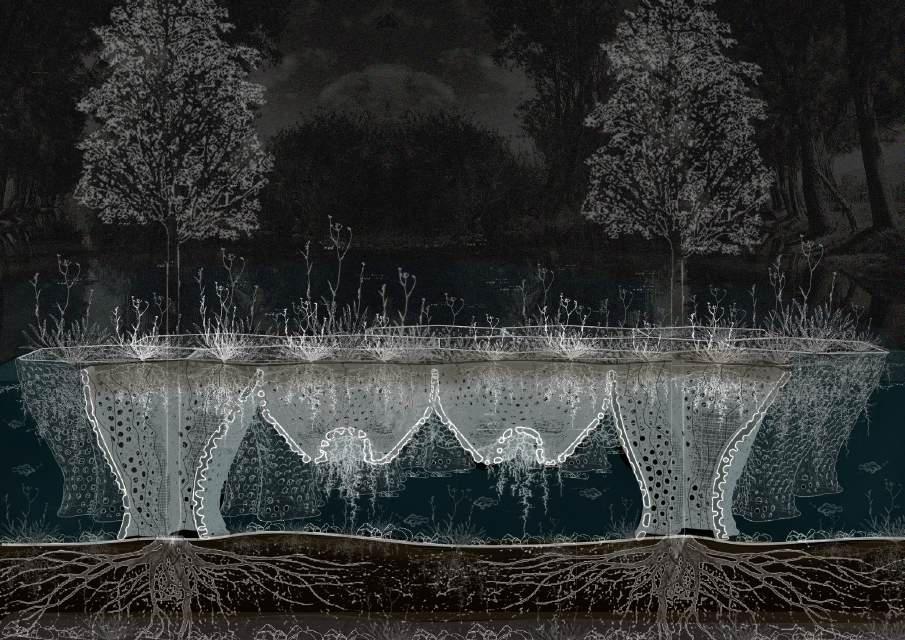
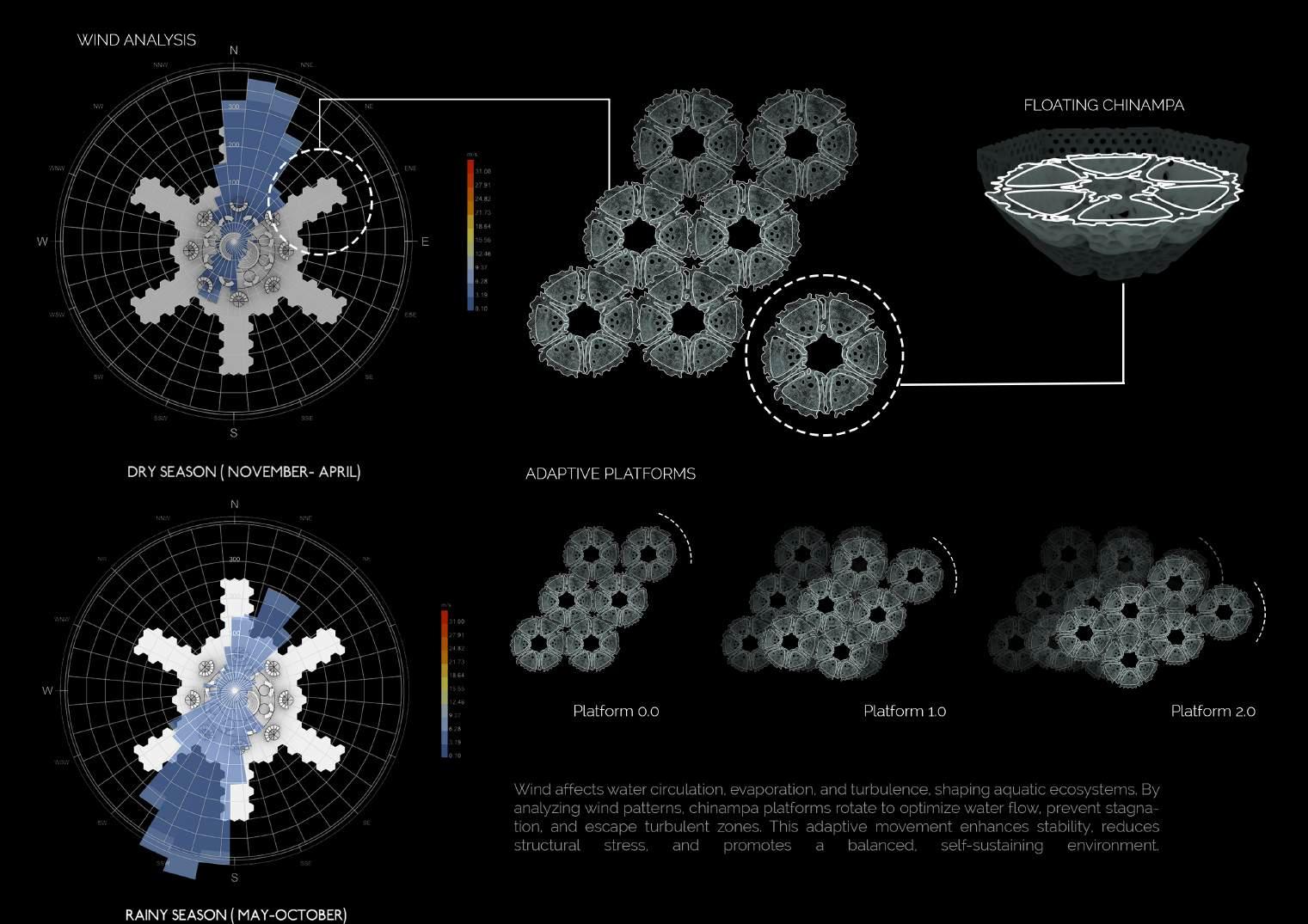
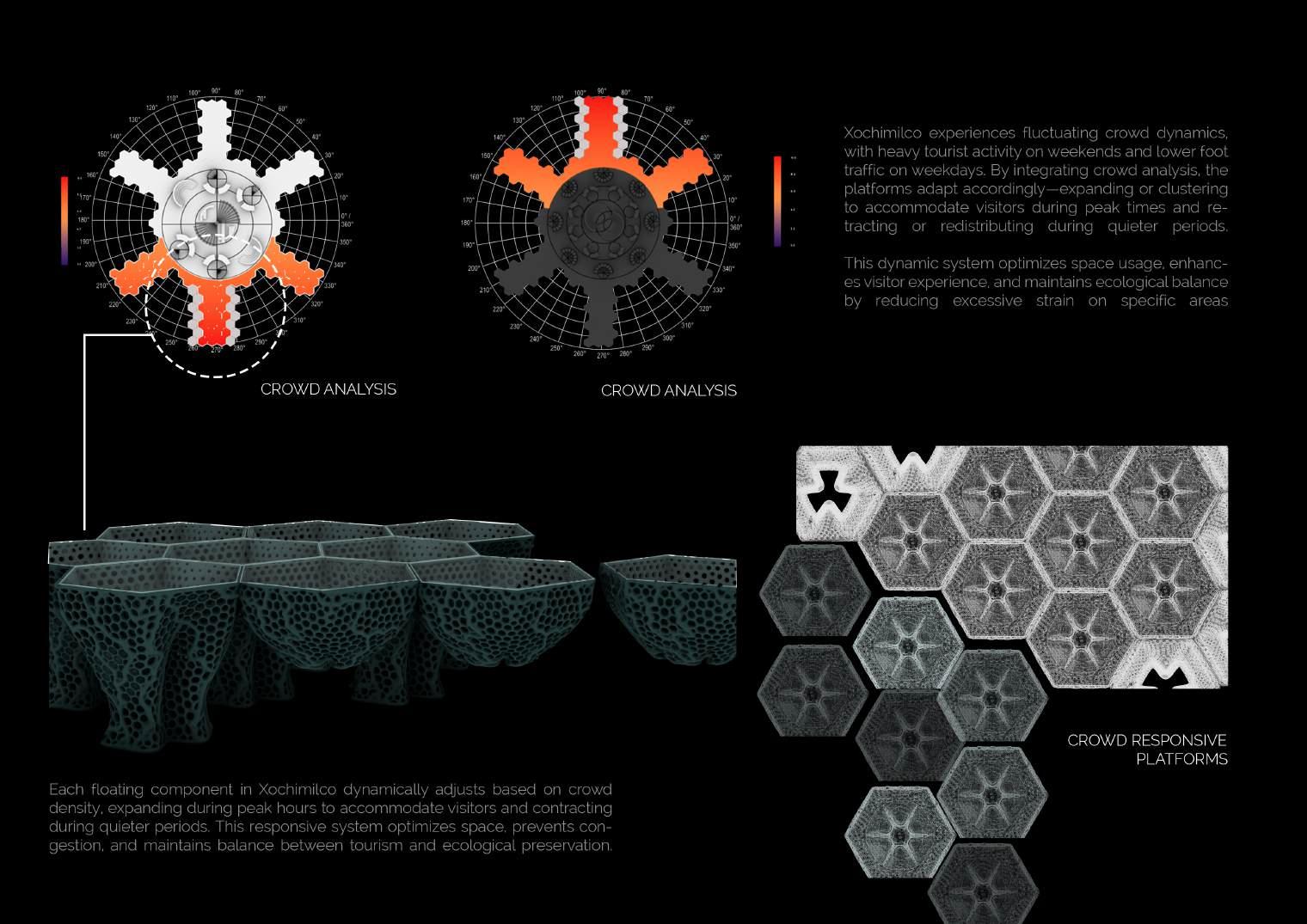
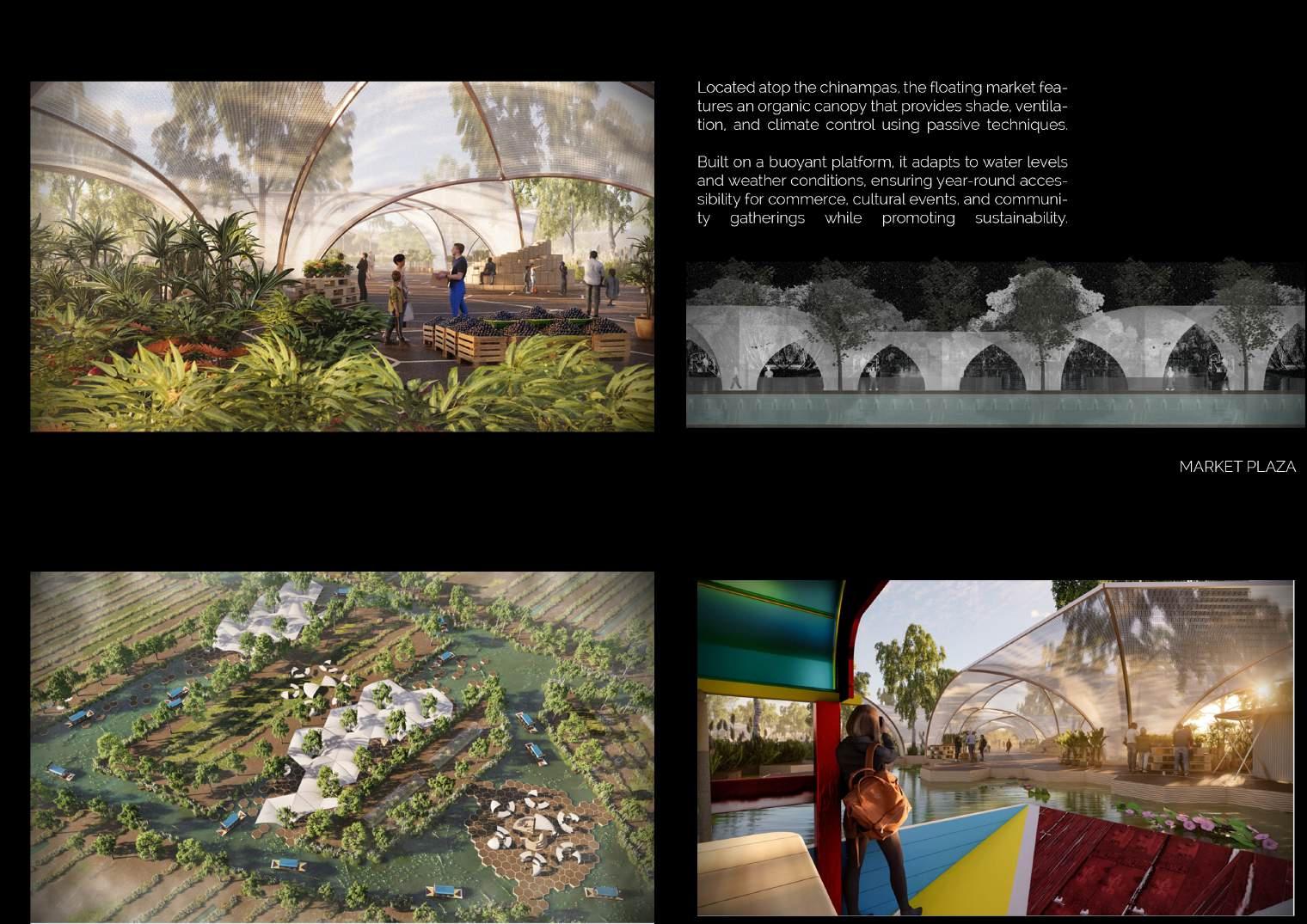
This research restores Xochimilco’s degraded chinampa system by integrating water management, mobility, and urban-aquatic connectivity. It introduces biofilters, bioswales, and canal restructuring to enhance water quality and flow while incorporating adaptive pathways and a modular Unity Hub for cultural and social engagement.
A modular aqua-fabric system, built with sustainable materials and oxygenating plants, boosts biodiversity and ecological resilience. By combining traditional agricultural techniques with innovative environmental strategies, the project offers a replicable model for sustainable water management and urban resilience.
Grasshopper
SimScale
Rhinoceros 3D
Space Syntax
Ladybug
Photoshop
Wallecei Evolutionary Algorithm
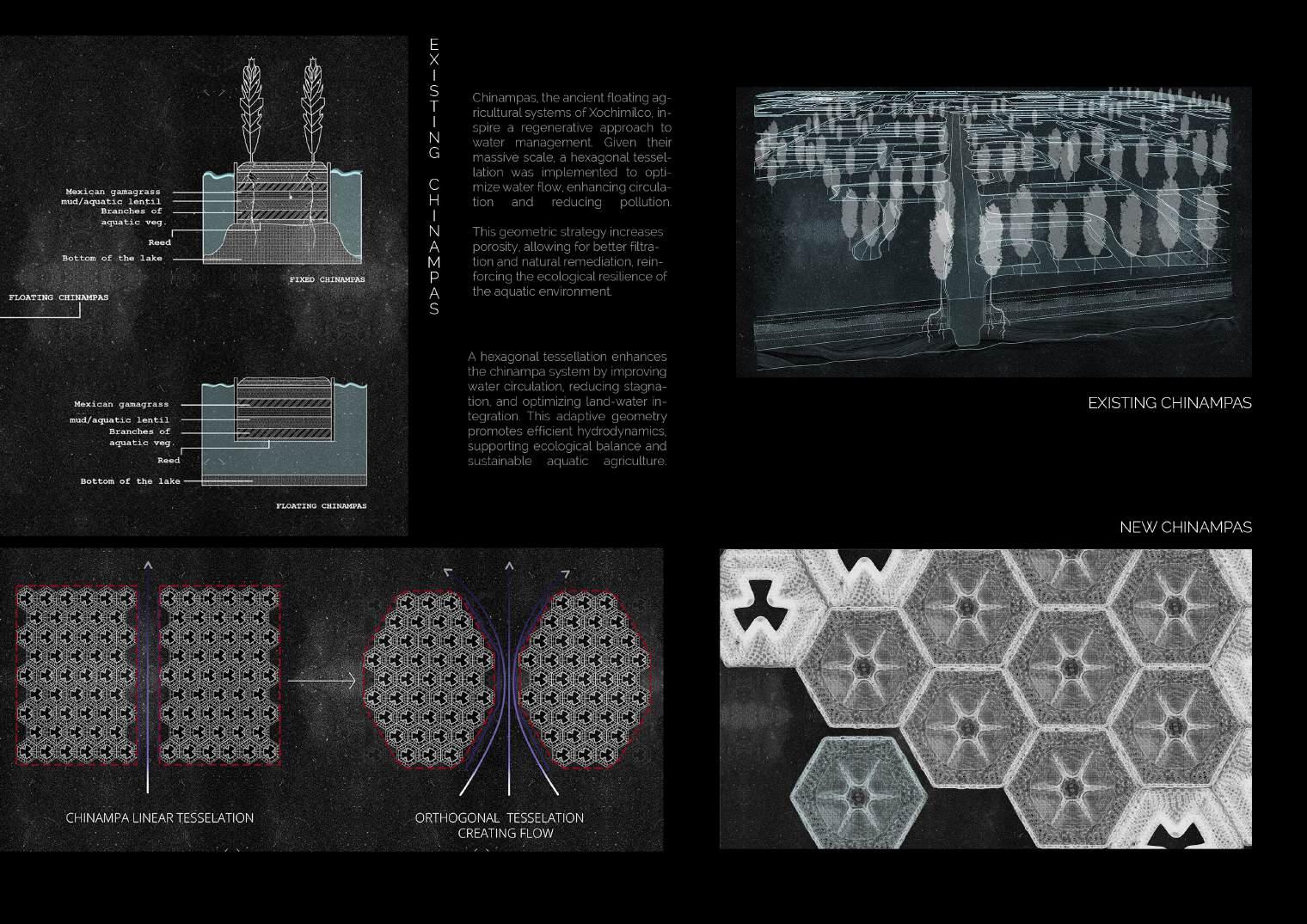
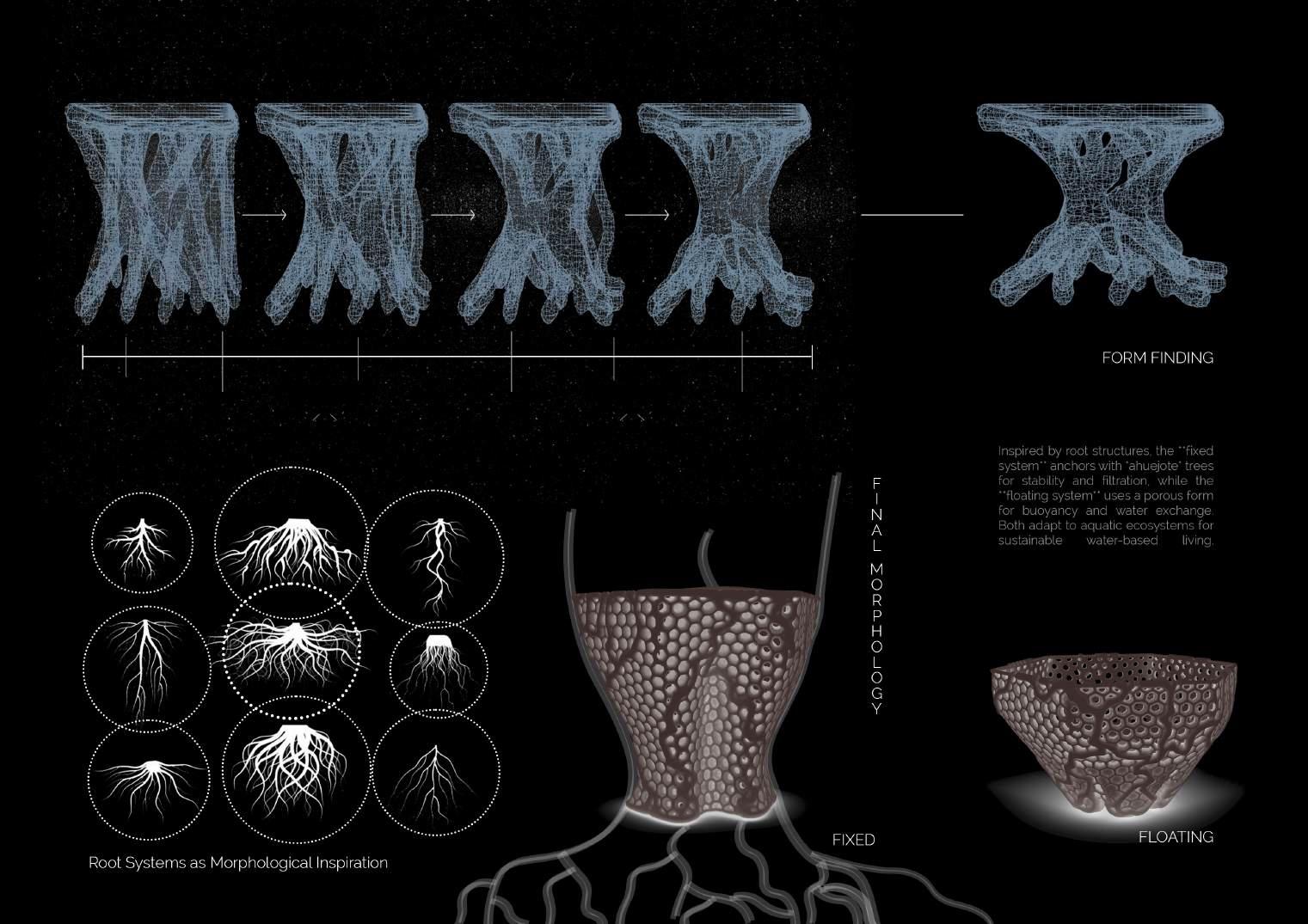
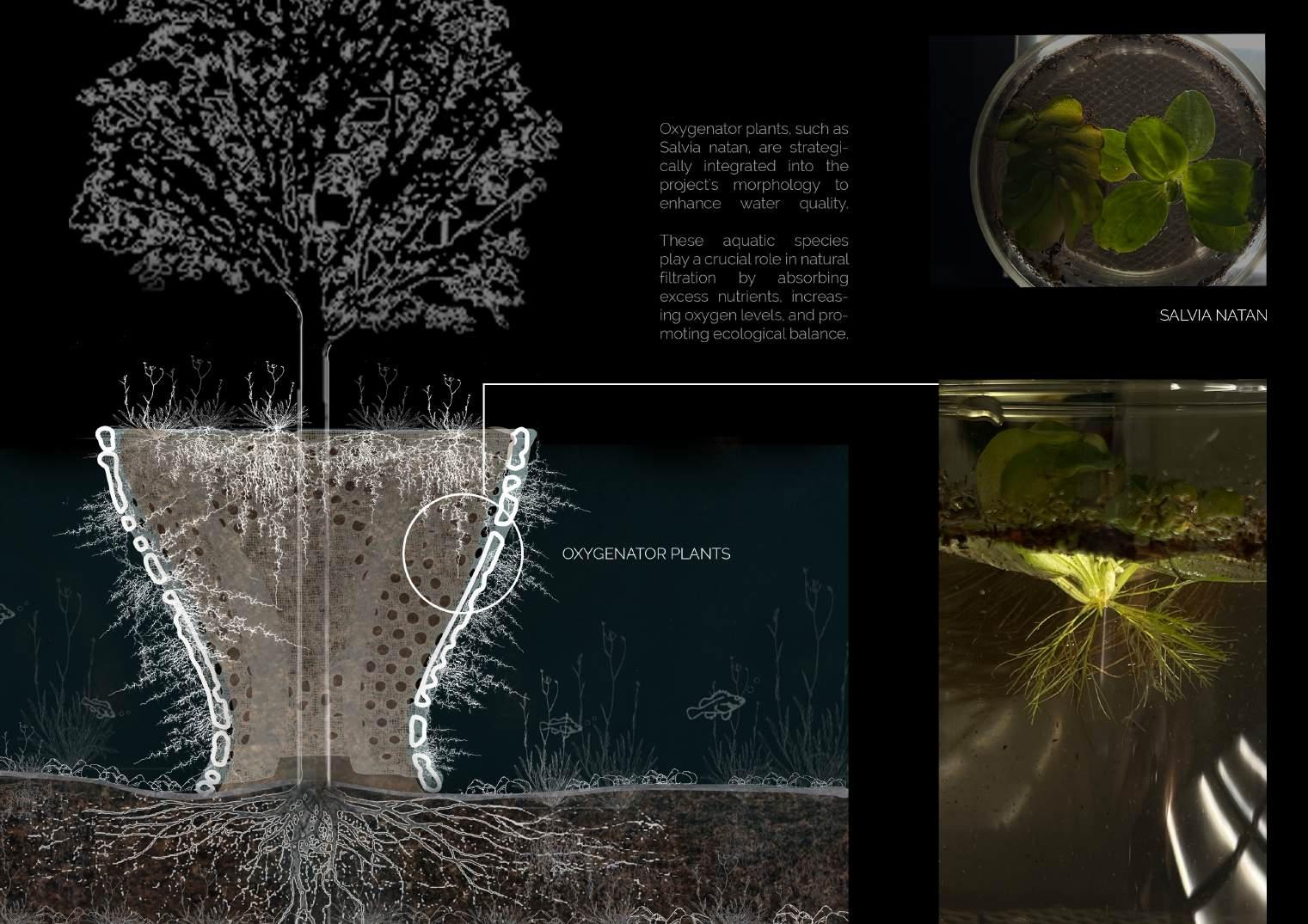
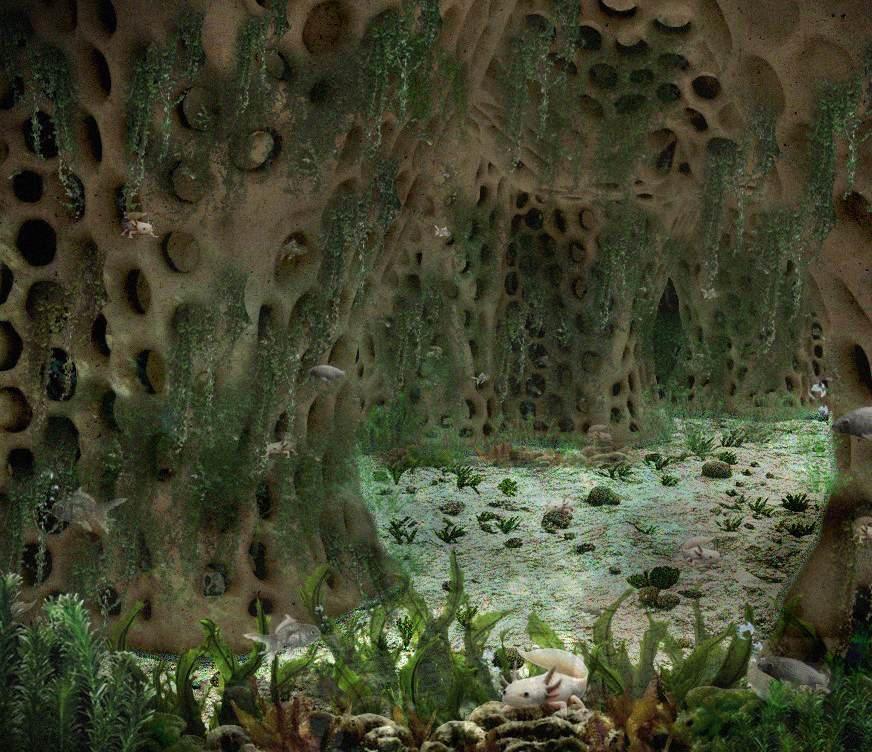
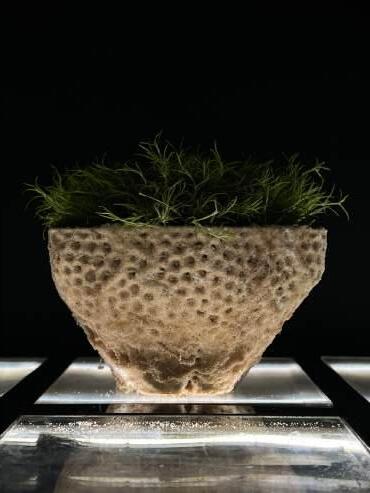
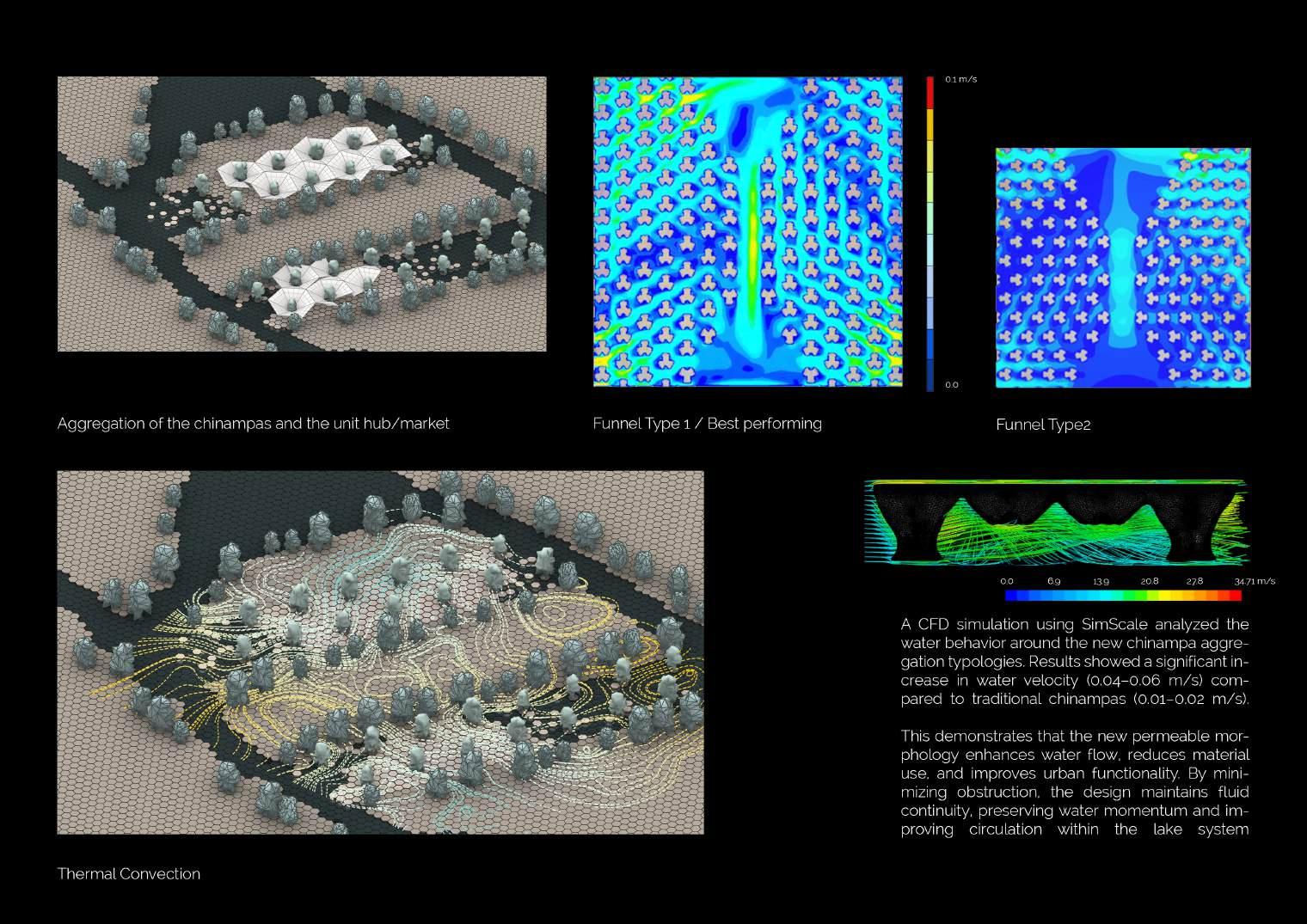
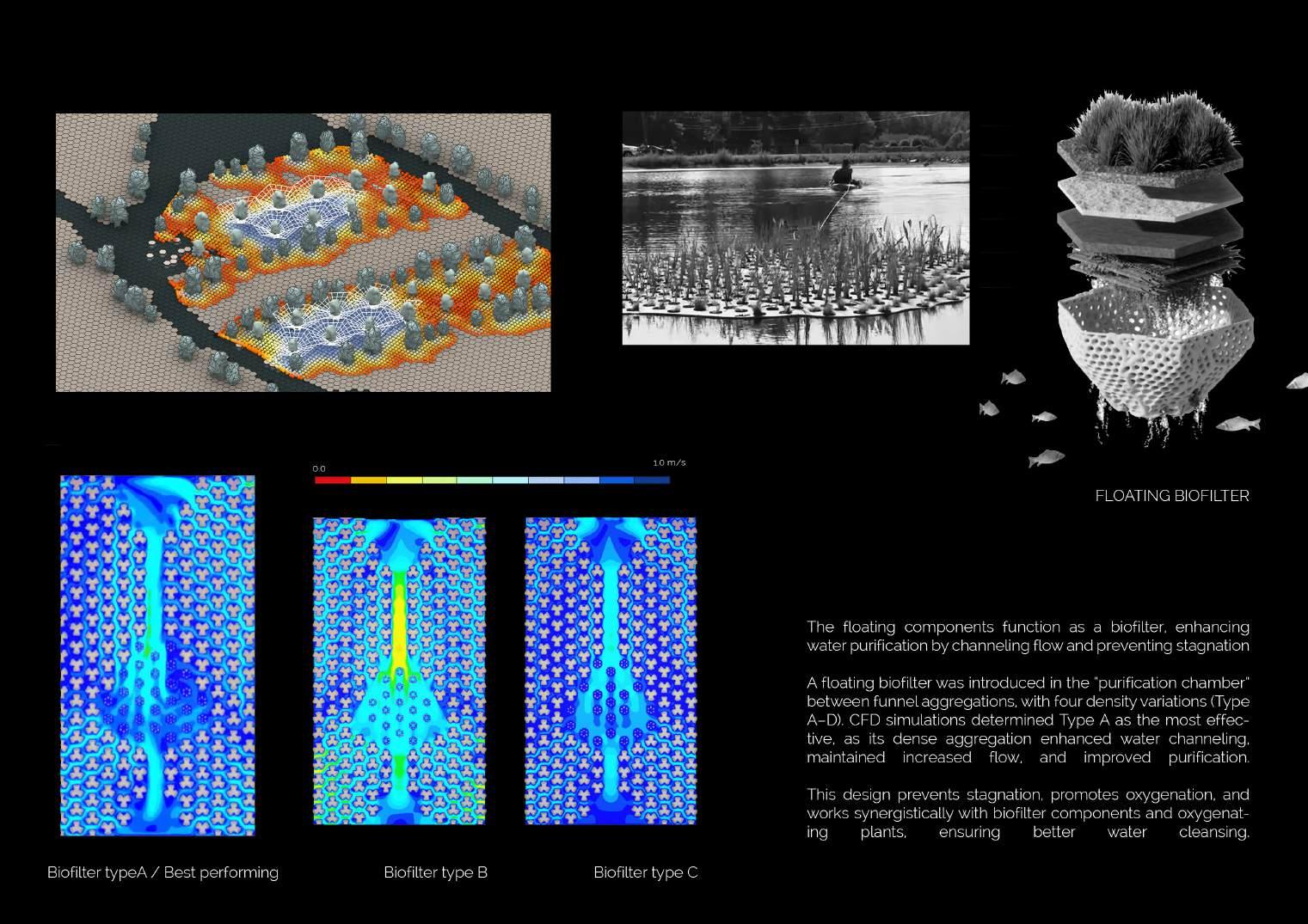
The new chinampa design integrates oxygenating plants within its porous structure, enhancing both surface and underwater habitats. Each cavity hosts aquatic vegetation, promoting water filtration, aeration, and biodiversity. This adaptive system sustains life above while fostering a thriving ecosystem below, redefining water-based resilience.
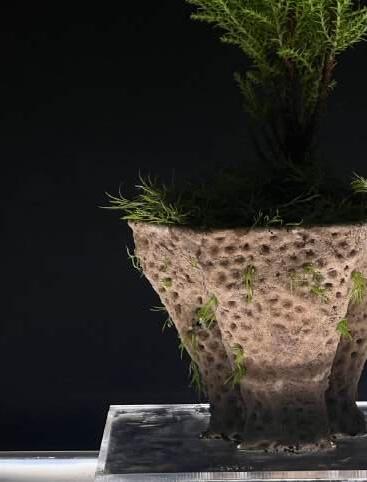
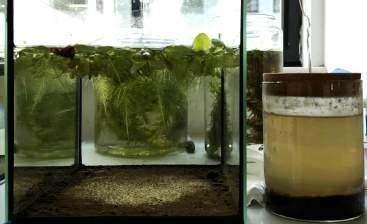
The new chinampa design integrates oxygenating plants within its porous structure, enhancing both surface and underwater habitats. Each cavity hosts aquatic vegetation, promoting water filtration, aeration, and biodiversity. This adaptive system sustains life above while fostering a thriving ecosystem below, redefining water-based resilience.
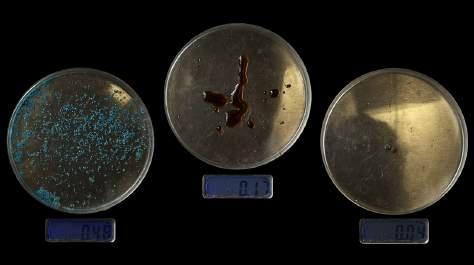
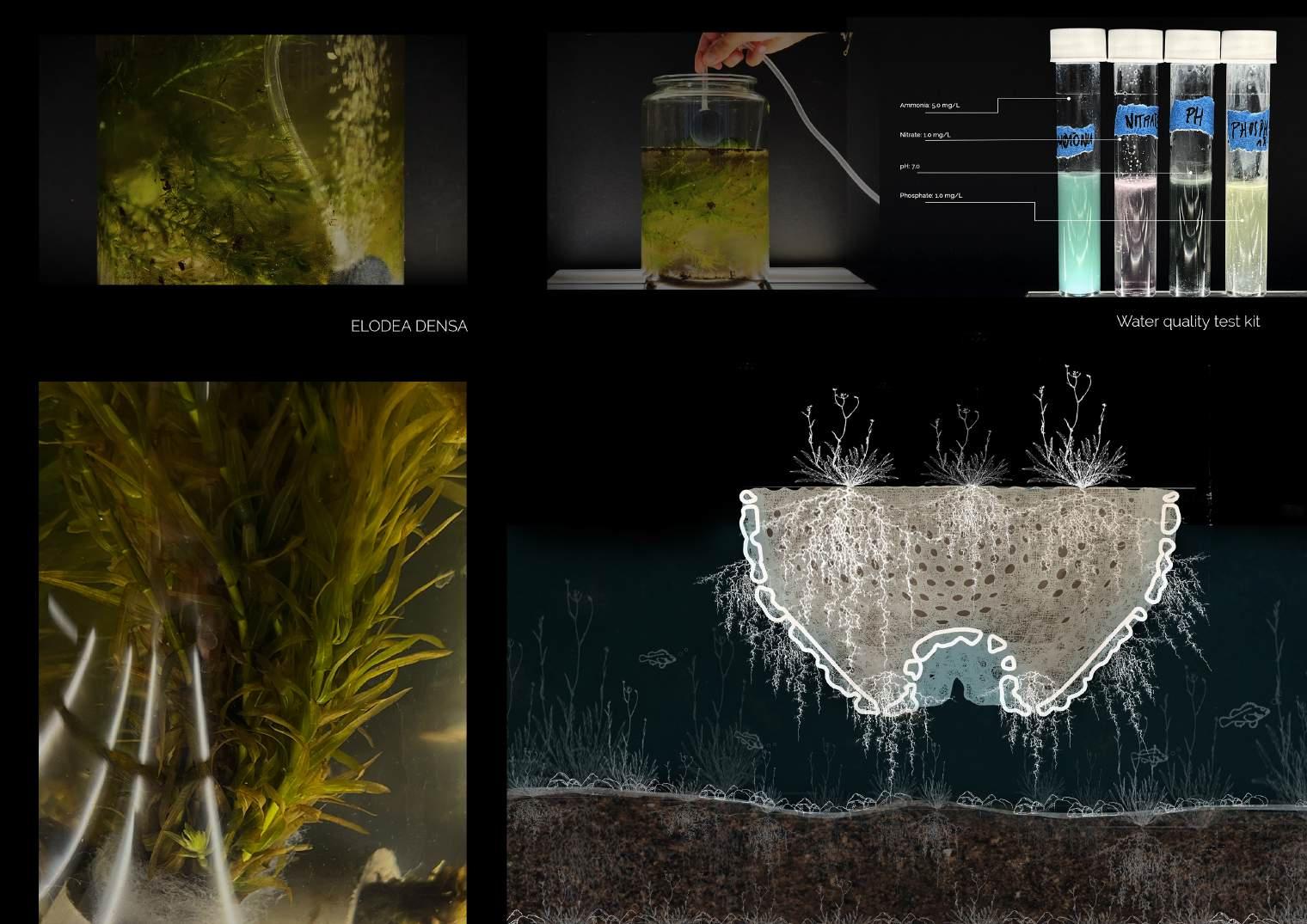
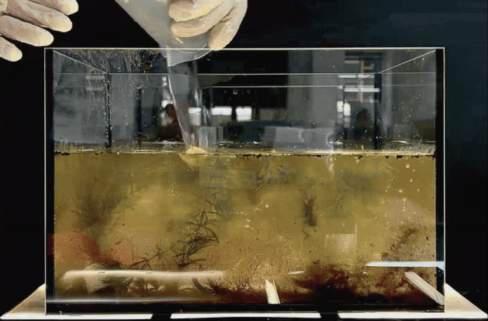
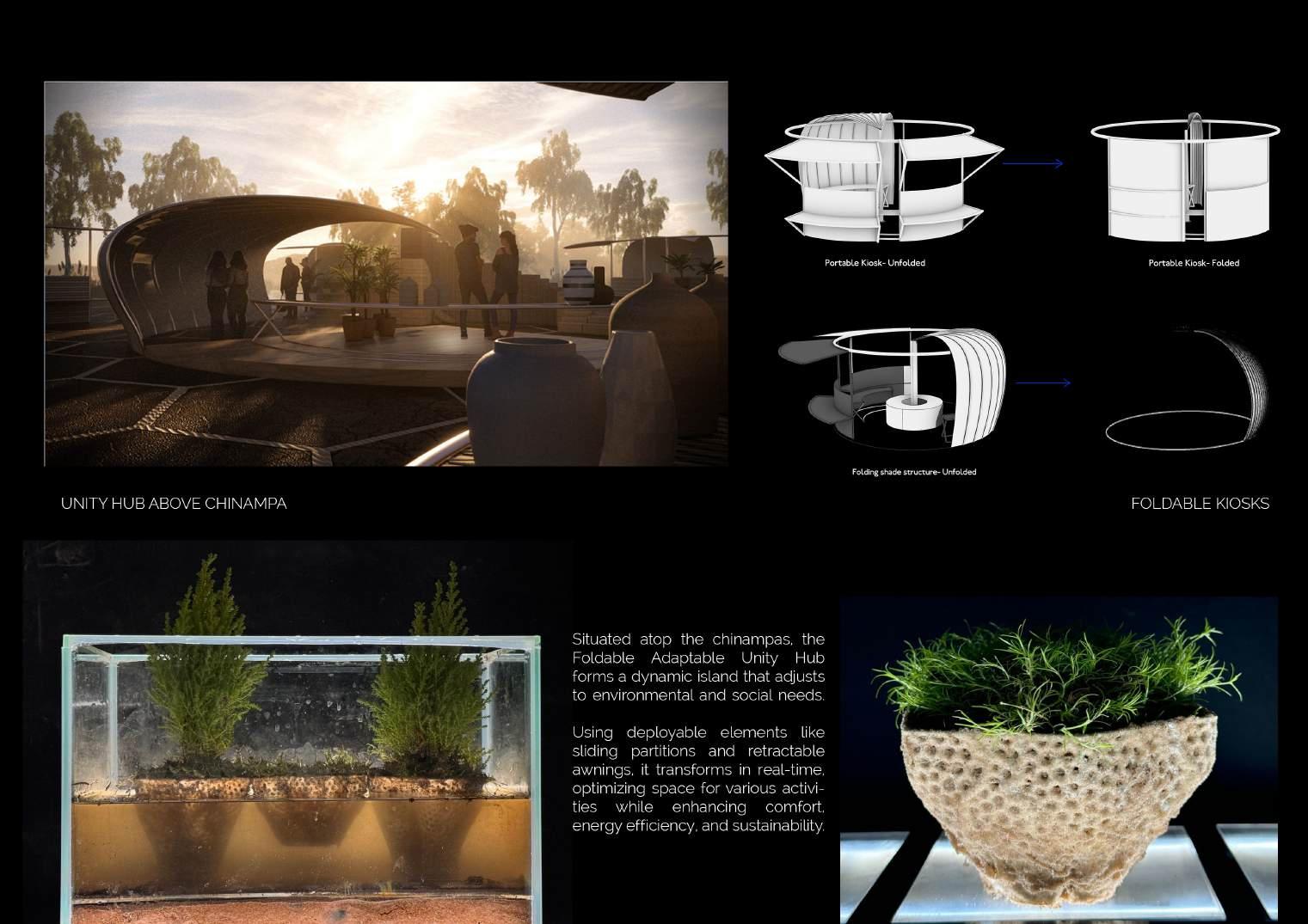
To evaluate the effectiveness of the new morphology, Xochimilco’s soil conditions were mimicked and intentionally polluted. This experiment tested the role of oxygenating plants in water purification within the redesigned system.
Design II
Team
Deniz Uluköy
Syeda Mushda Ali
Rutuja Rode
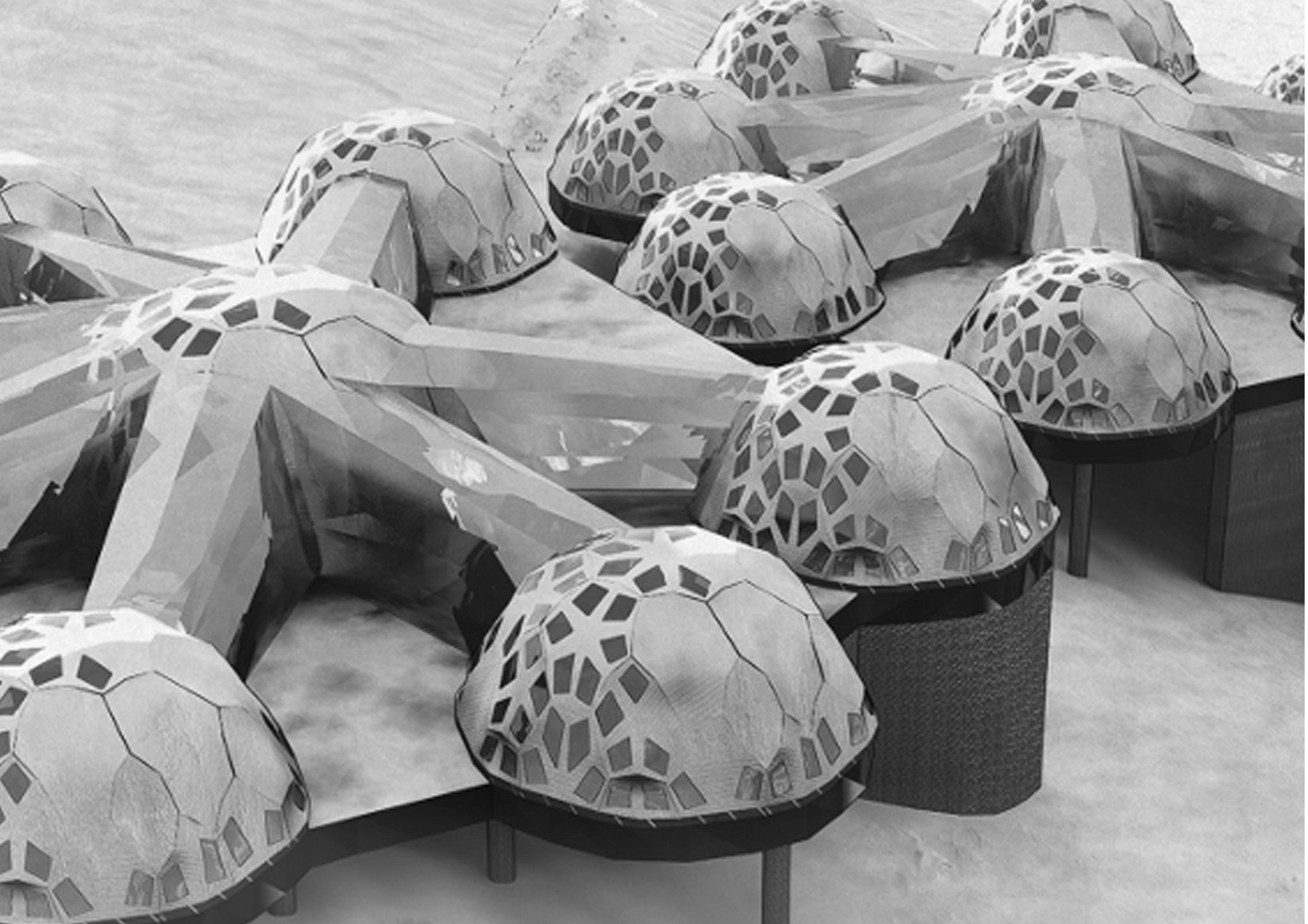
. The team undertook a comprehensive analysis of Ilulissat’s climatic conditions, cultural dynamics, and urban framework to establish the design parameters. Research encompassed microclimatic variables, permafrost vulnerability due to climatic shifts, and strategic site selection aligned with municipal development plans.
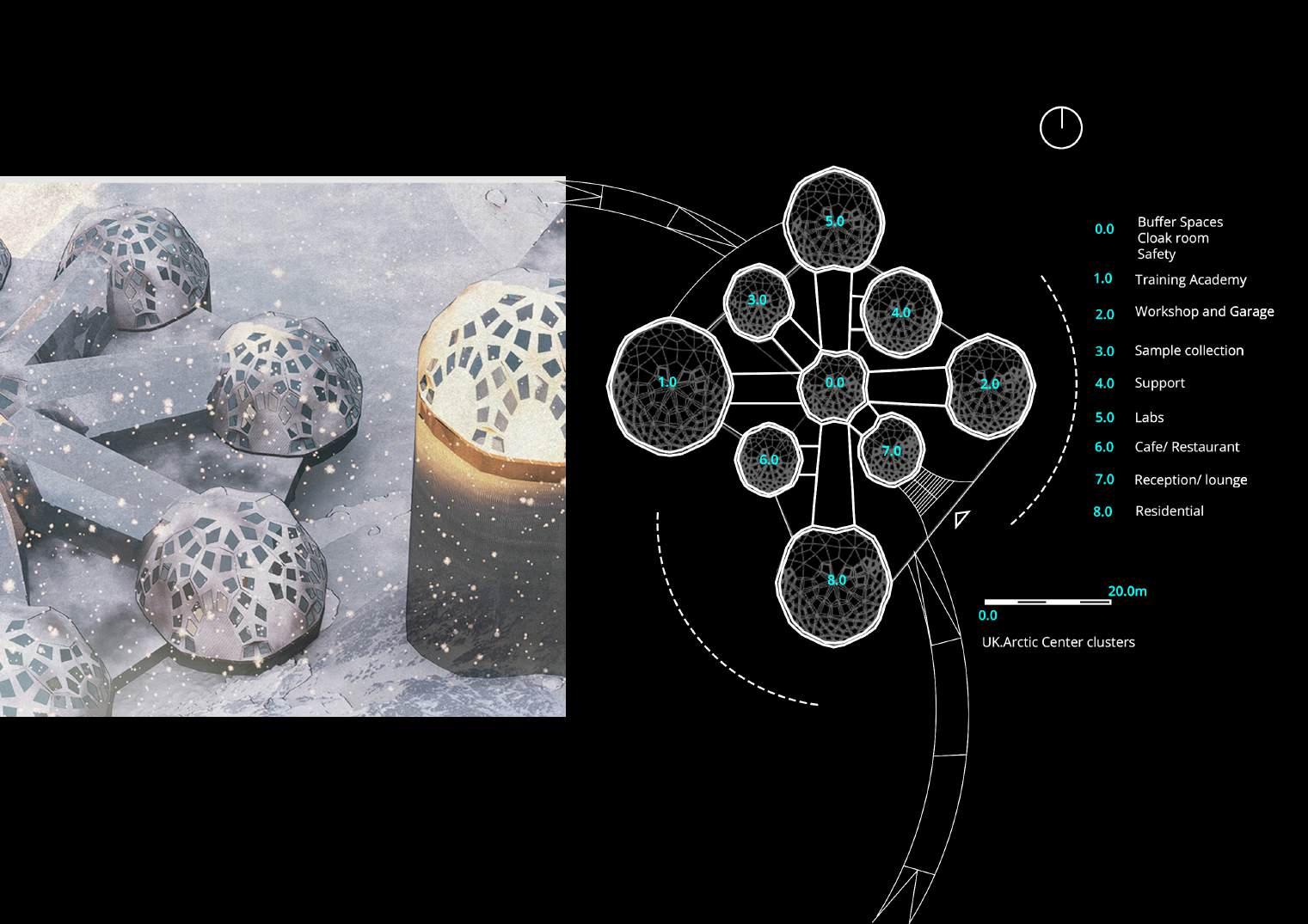
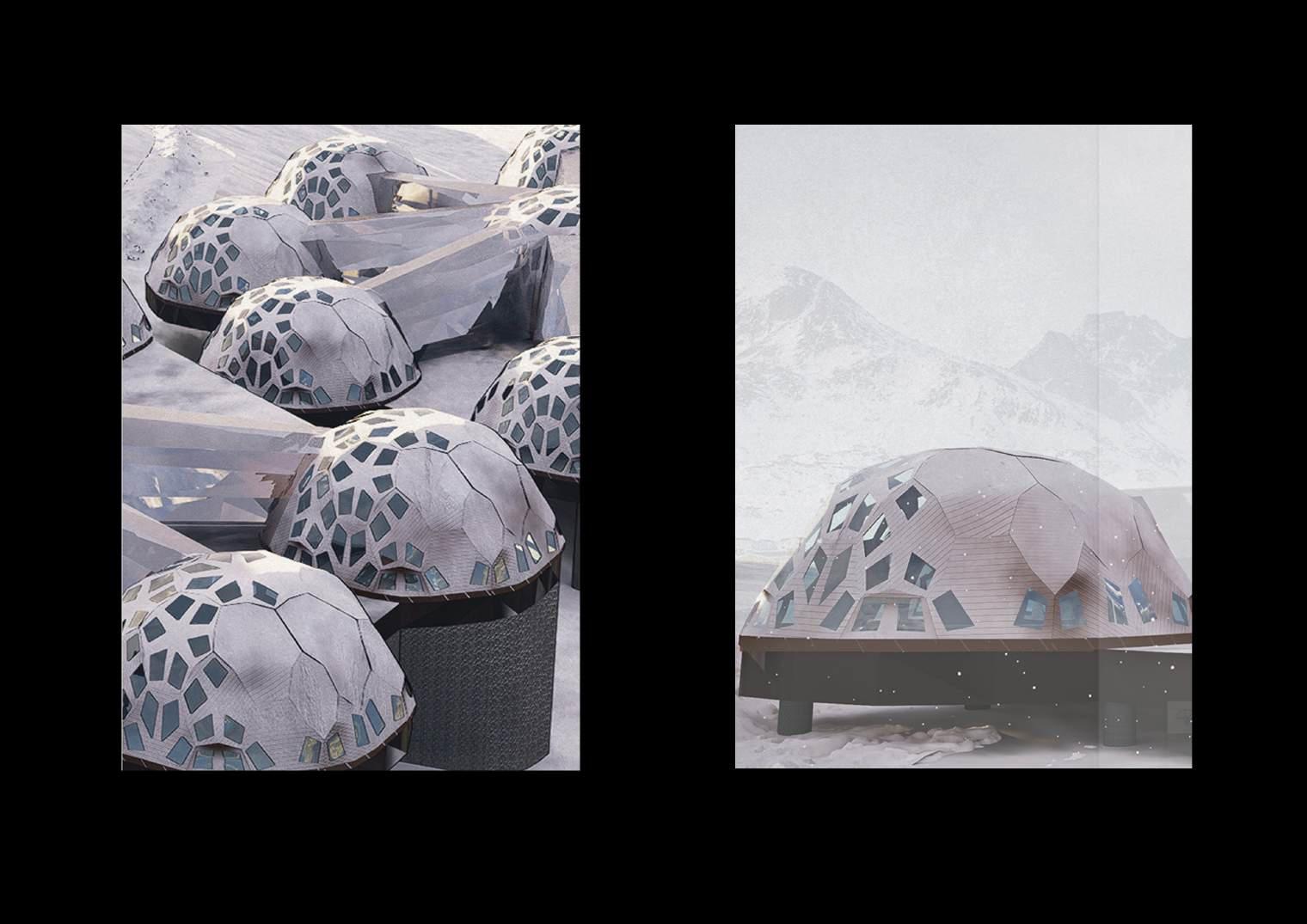
Emphasizing biomimetic principles and environmental responsiveness, the project integrated an Arctic research center and a new settlement for 1,000 inhabitants. The design approach prioritized resilience, sustainability, and seamless integration with the existing urban fabric, fostering community expansion while ensuring longterm ecological and infrastructural viability.
Grasshopper
SimScale
Rhinoceros 3D
Space Syntax
Ladybug
Photoshop
Wallecei Evolutionary Algorithm
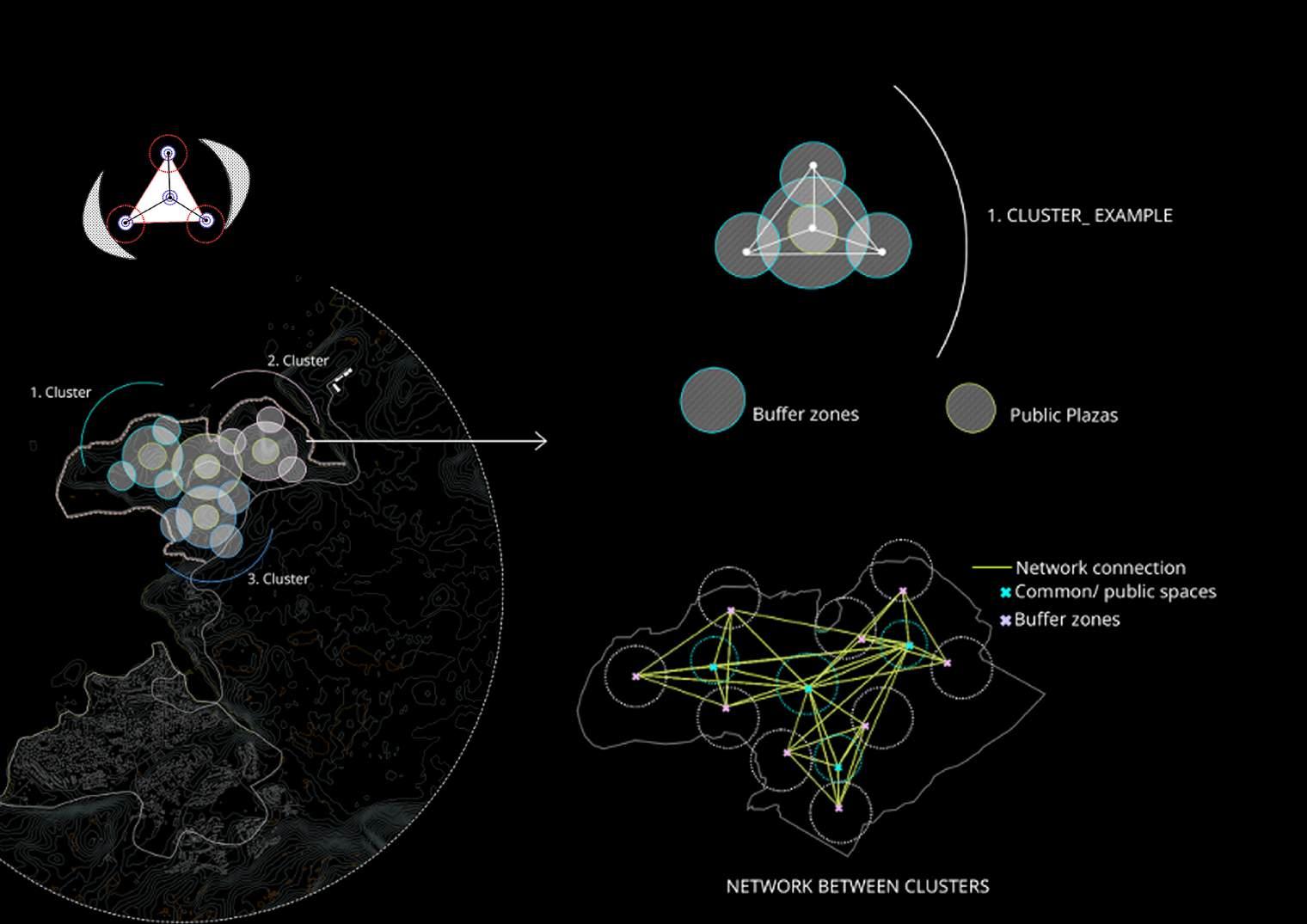
The experiment employs the Diffusion-Limited Aggregation (DLA) method to simulate complex network growth using random walk and diffusion principles. It is divided into two parts, analyzing network hierarchies at regional and local scales.
At the regional scale, three center points generate interconnected nodes, while similar logic is applied locally to explore network variations.
The resulting connections are refined through an environmental and design-focused approach to enhance spatial understanding.
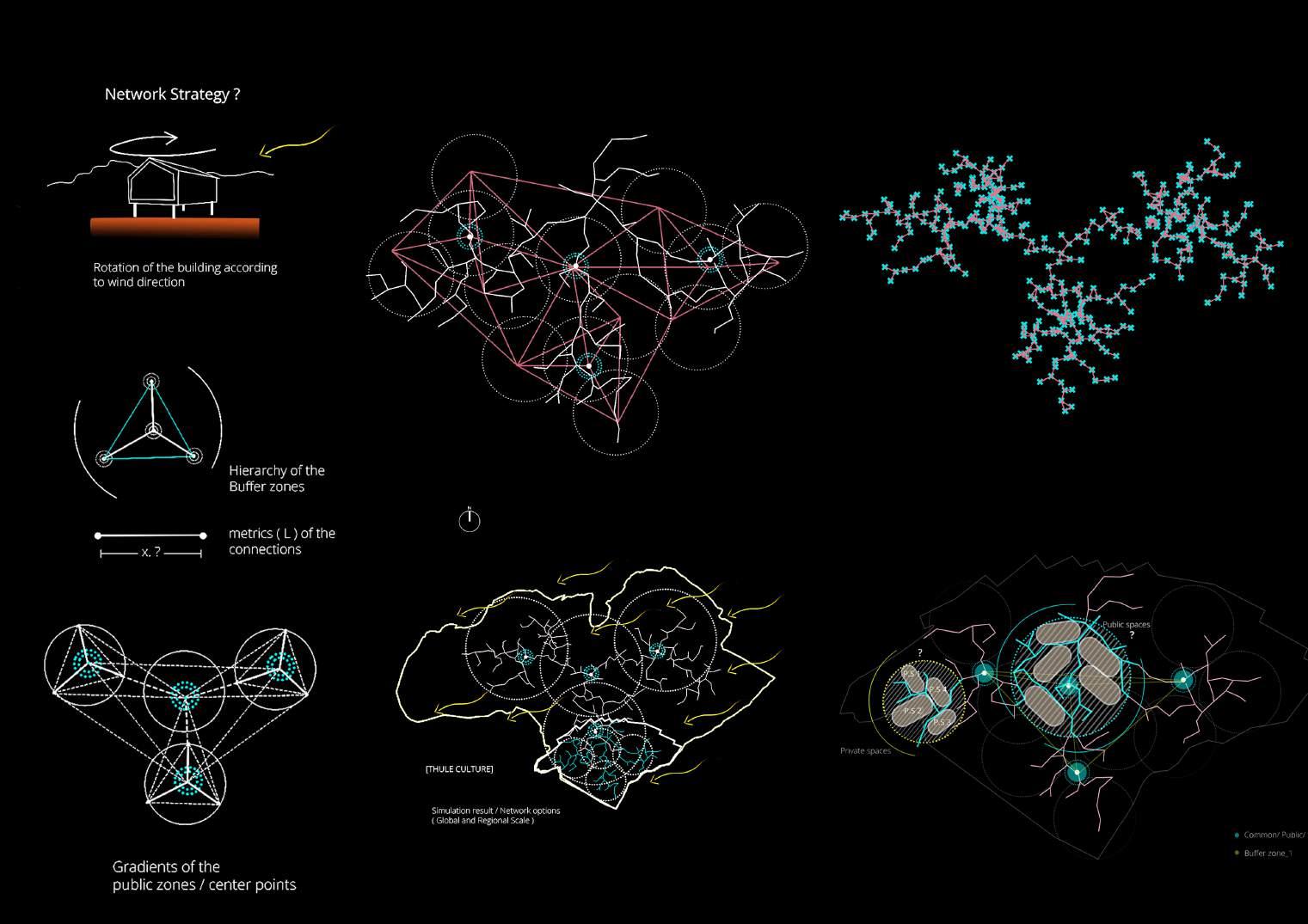
The first simulation focused on a larger scale to analyze the hierarchy of different connection options across multiple scales. The initial result, shown on the top right, produced varying gradients and multiple branching patterns, making analysis challenging. To address this, the network was redefined by simplifying the previous result, creating a clearer and more structured road system.
The study employs evolutionary algorithms to optimize morphology for heat retention, wind resistance, and spatial efficiency. Three fitness objectives guide the process: minimizing surface area-to-volume ratio (FO-01), enhancing aerodynamics by softening sharp corners (FO-02), and ensuring compact structures based on a predefined area program (FO-03).
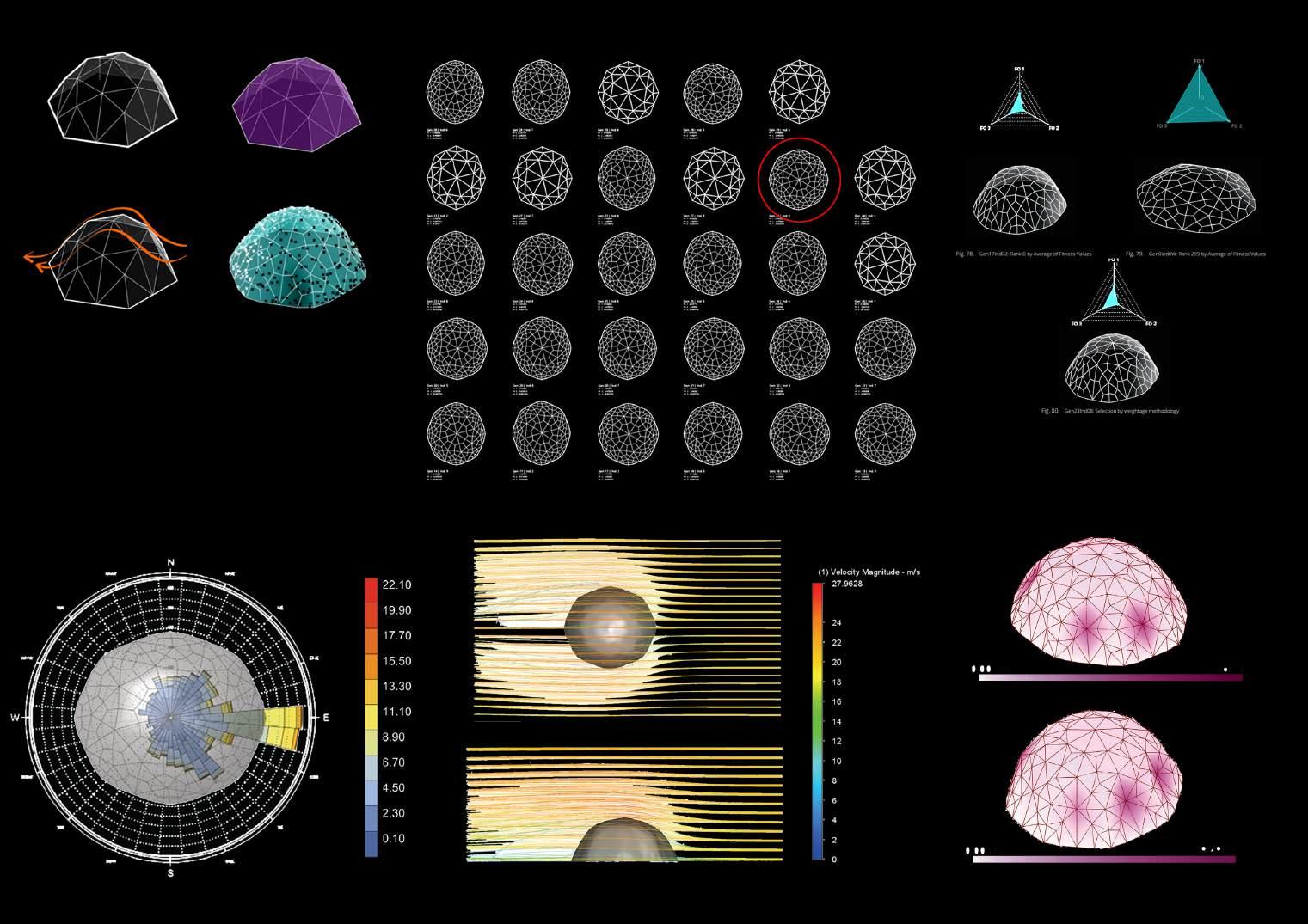
Using the Wallacei plugin in Grasshopper, 300 phenotypes were generated over 30 generations, resulting in 29 Pareto fronts. The simulation revealed a predominant octagonal central polygon, with most phenotypes smoothing to meet fitness criteria, though some retained sharper edges.
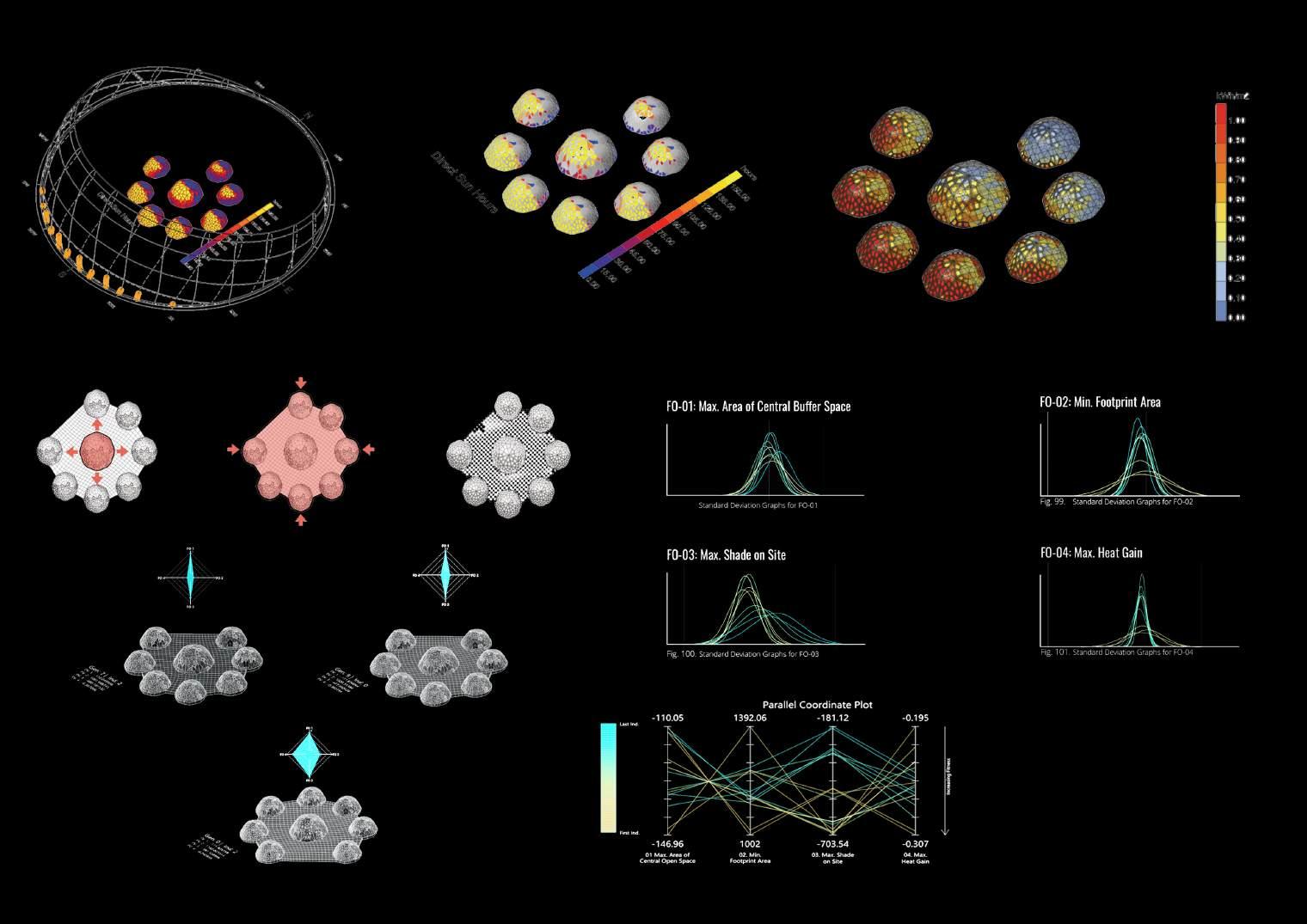
The Standard Deviation Graphs for FO02 and FO-03 indicate an improvement in performance across generations, while FO-01 and FO-04 show a slight decline.
However, fitness values exhibit variations across all objectives, as further confirmed by the Parallel Coordinate Plot. The opposing nature of FO-01 and FO-02 contributes to this variance, highlighting the tradeoffs between objectives in the optimization process.
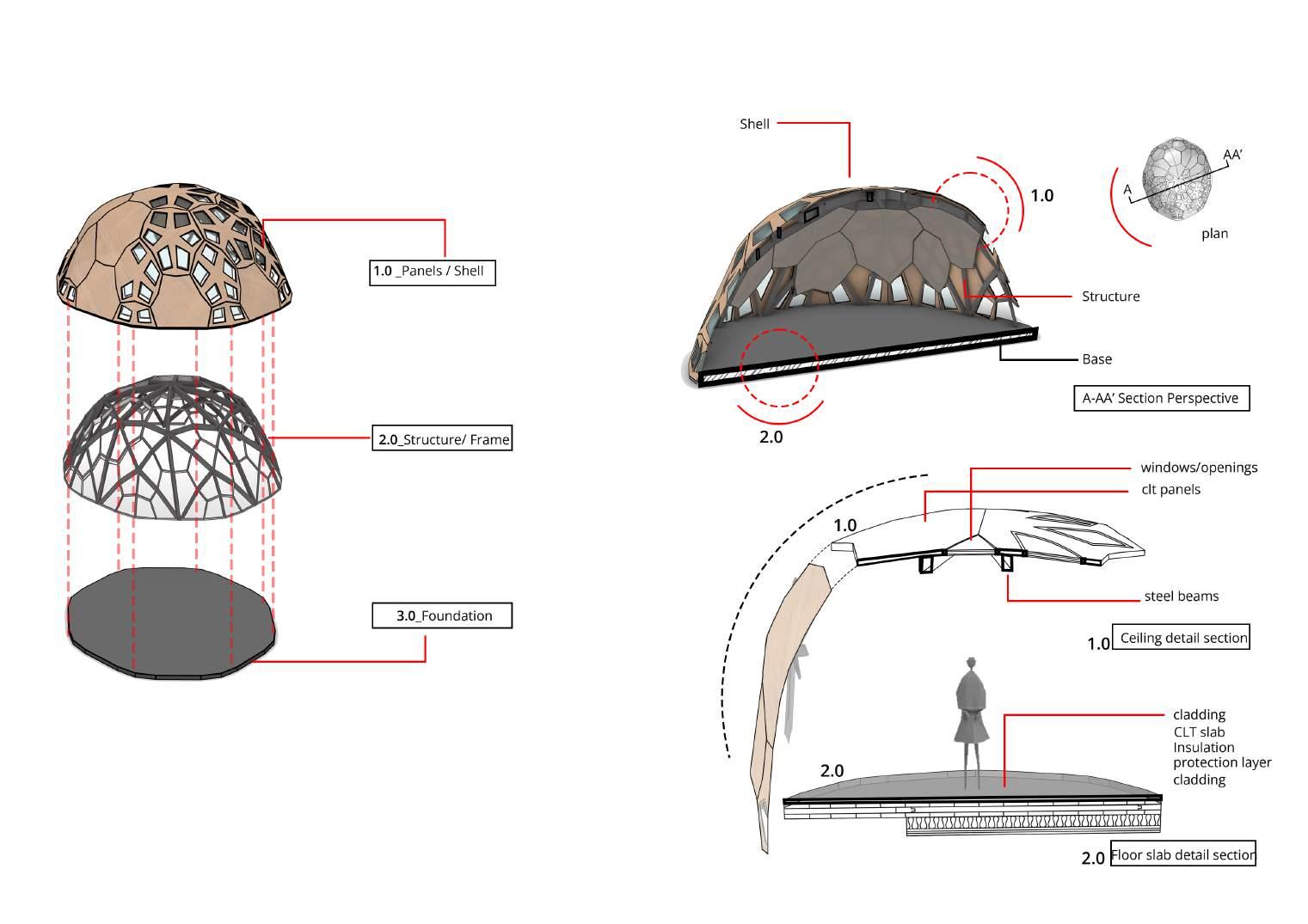
The diagram illustrates the hierarchical composition and construction details of a dome structure. The exploded view categorizes it into three main components: Panels/Shell (1.0) with integrated openings, a Structural Frame (2.0) for load-bearing support, and the Foundation (3.0) for stability.
The sectional perspective (A-AA) highlights the shell, structural framework, and base, while detailed sections showcase the ceiling assembly (windows, CLT panels, steel beams) and the floor slab composition (CLT slab, insulation, protection layers, and cladding), emphasizing structural integrity and thermal efficiency.
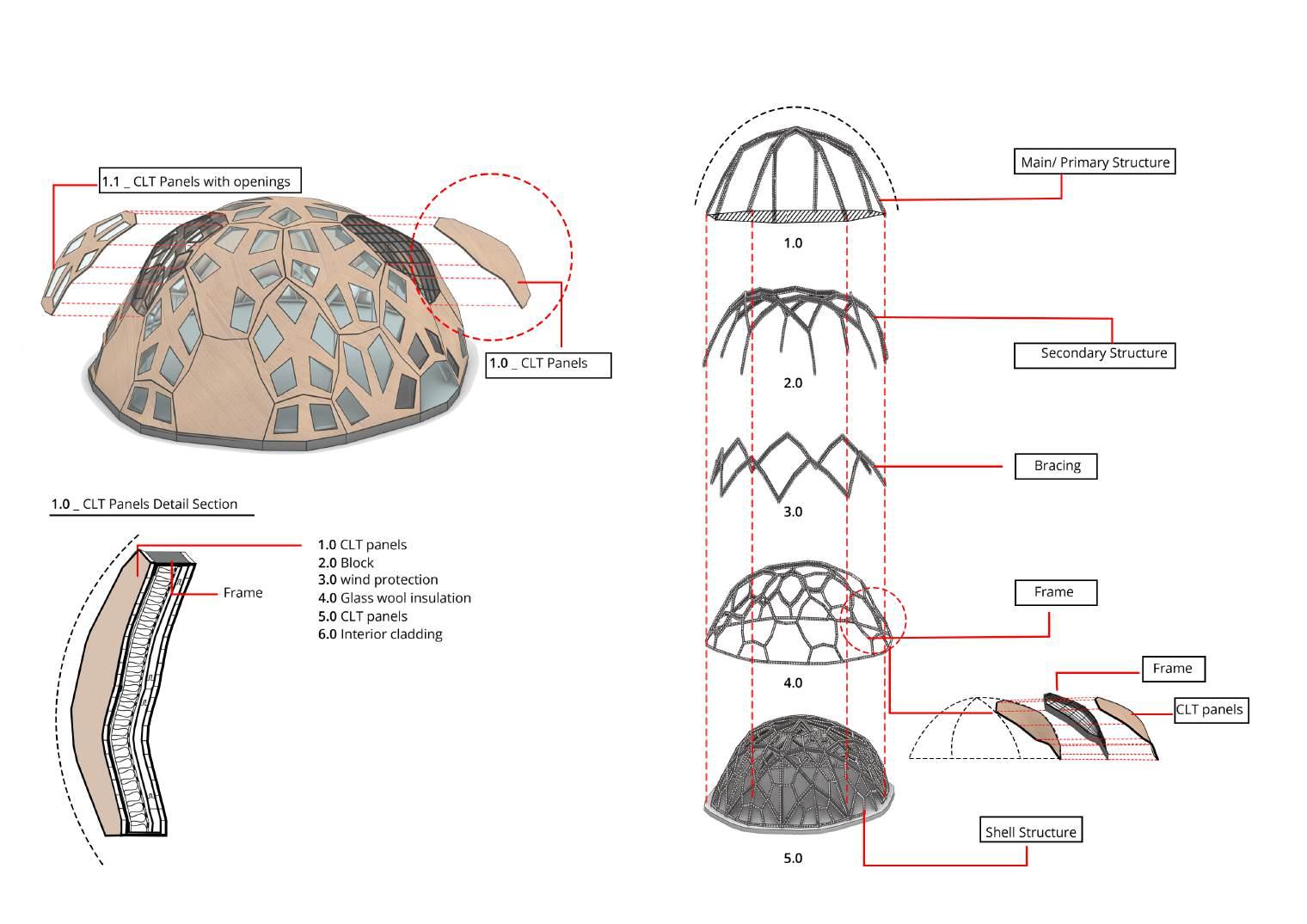
This exploded axonometric diagram illustrates the hierarchical assembly of a dome structure, detailing its key components from primary framework to final enclosure. The structure is composed of multiple layers: the Main/Primary Structure (1.0) forming the fundamental load-bearing framework, followed by a Secondary Structure (2.0) for additional support. Bracing elements (3.0) reinforce the integrity of the dome, ensuring stability.
A Frame system (4.0) integrates the structural network, supporting the final Shell Structure (5.0) composed of CLT (Cross-Laminated Timber) panels. This layered approach optimizes structural performance, enhances load distribution, and contributes to the overall resilience of the architectural form.
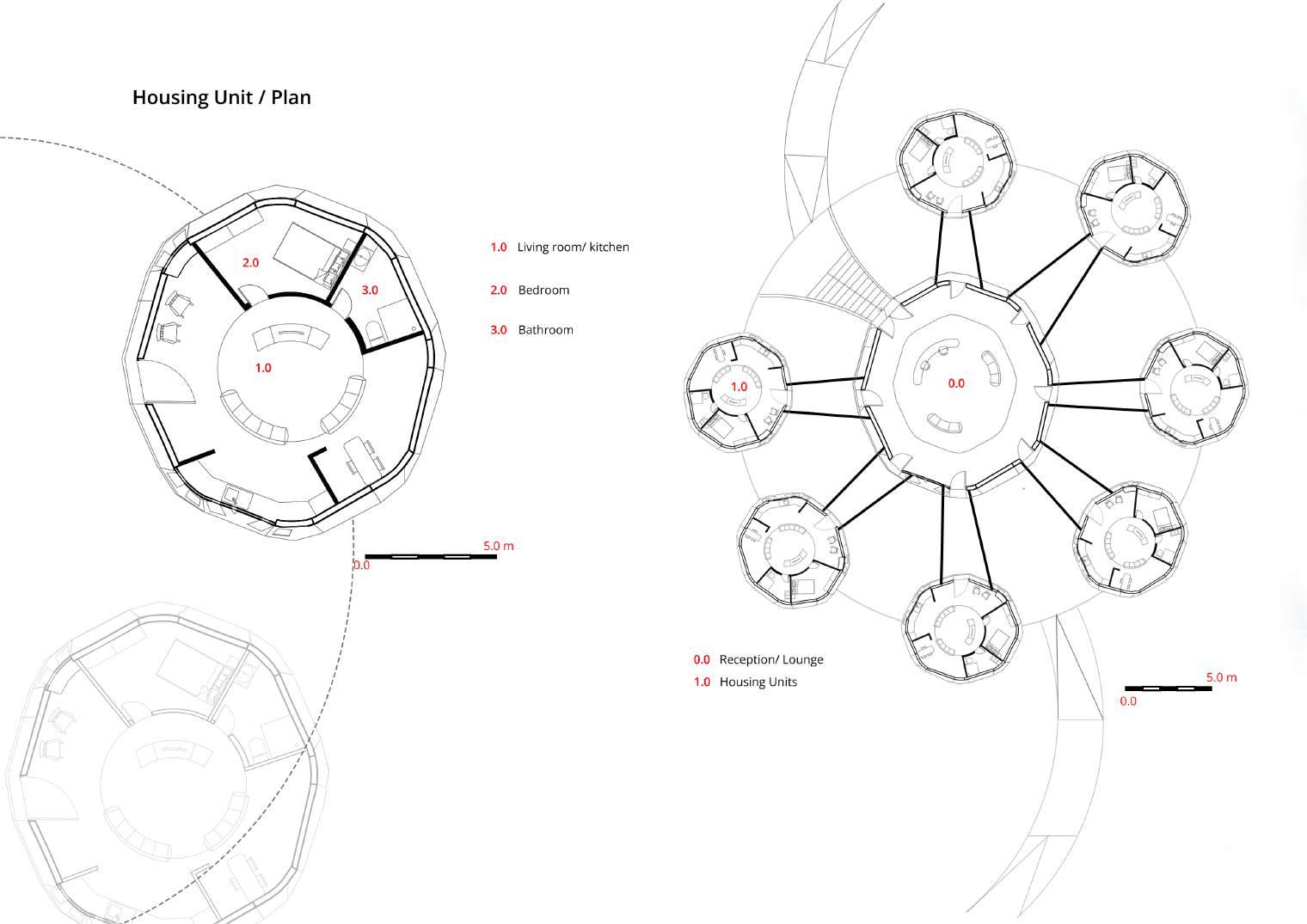
The single housing unit features a one-bedroom open-plan layout, designed with the flexibility to accommodate an additional bedroom in the future. Private functions are arranged around a central living space, allowing the openings in the morphology to serve as the primary light source.
The units are strategically oriented around a central octagonal structure, all connected on a shared raised platform, ensuring spatial cohesion and structural integration.
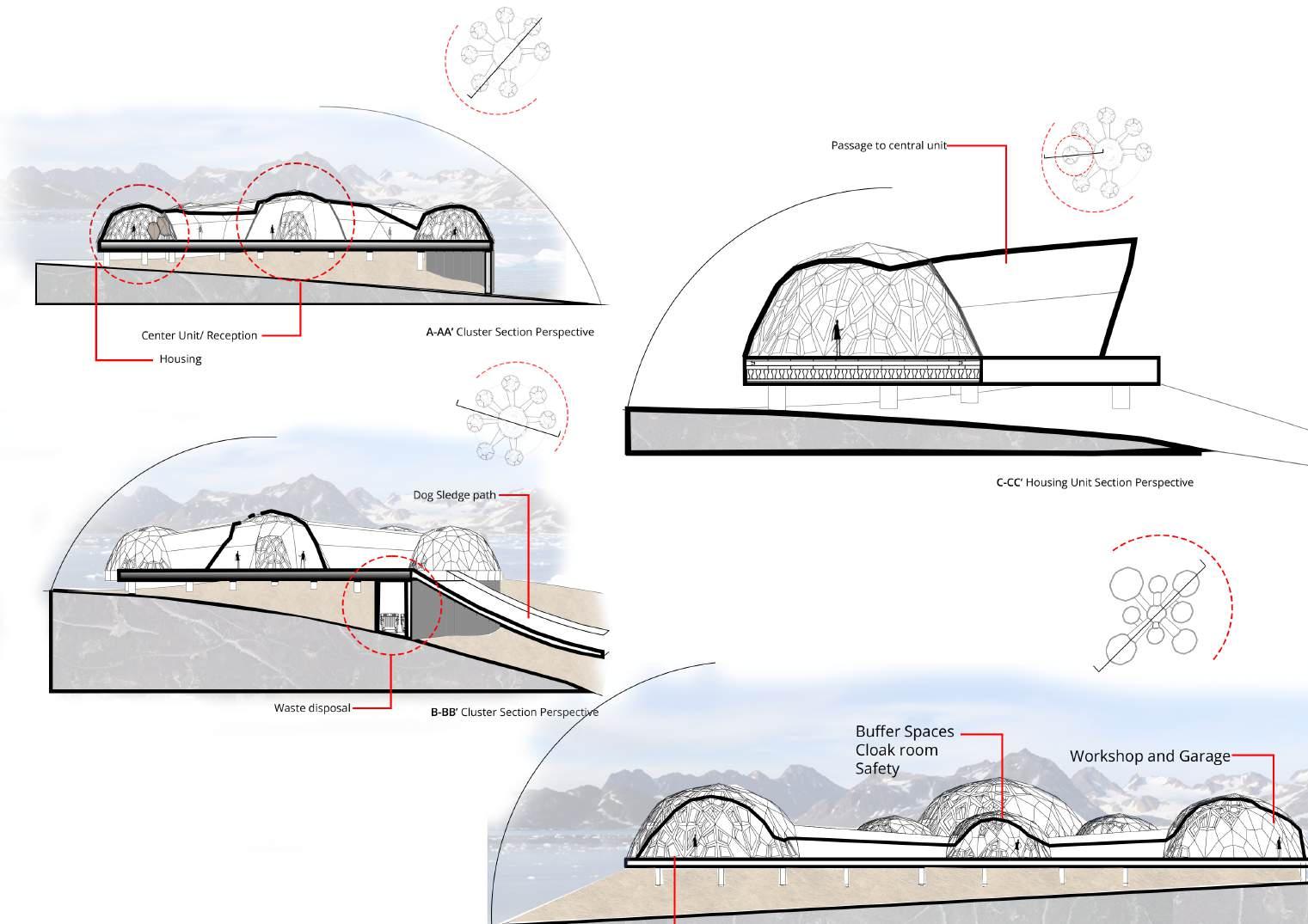
The housing units are arranged around a central unit, which functions as a communal space for the cluster. As shown in the section, the central shell is taller than the surrounding housing units, emphasizing its shared purpose.
The raised platform not only provides structural elevation but also creates usable space underneath, which can be utilized for service areas, garages, and storage for vehicles and dog sledges, enhancing functionality and adaptability.
MEF University
ARC 401 Project
Team
Deniz Uluköy
Polen Yurtan
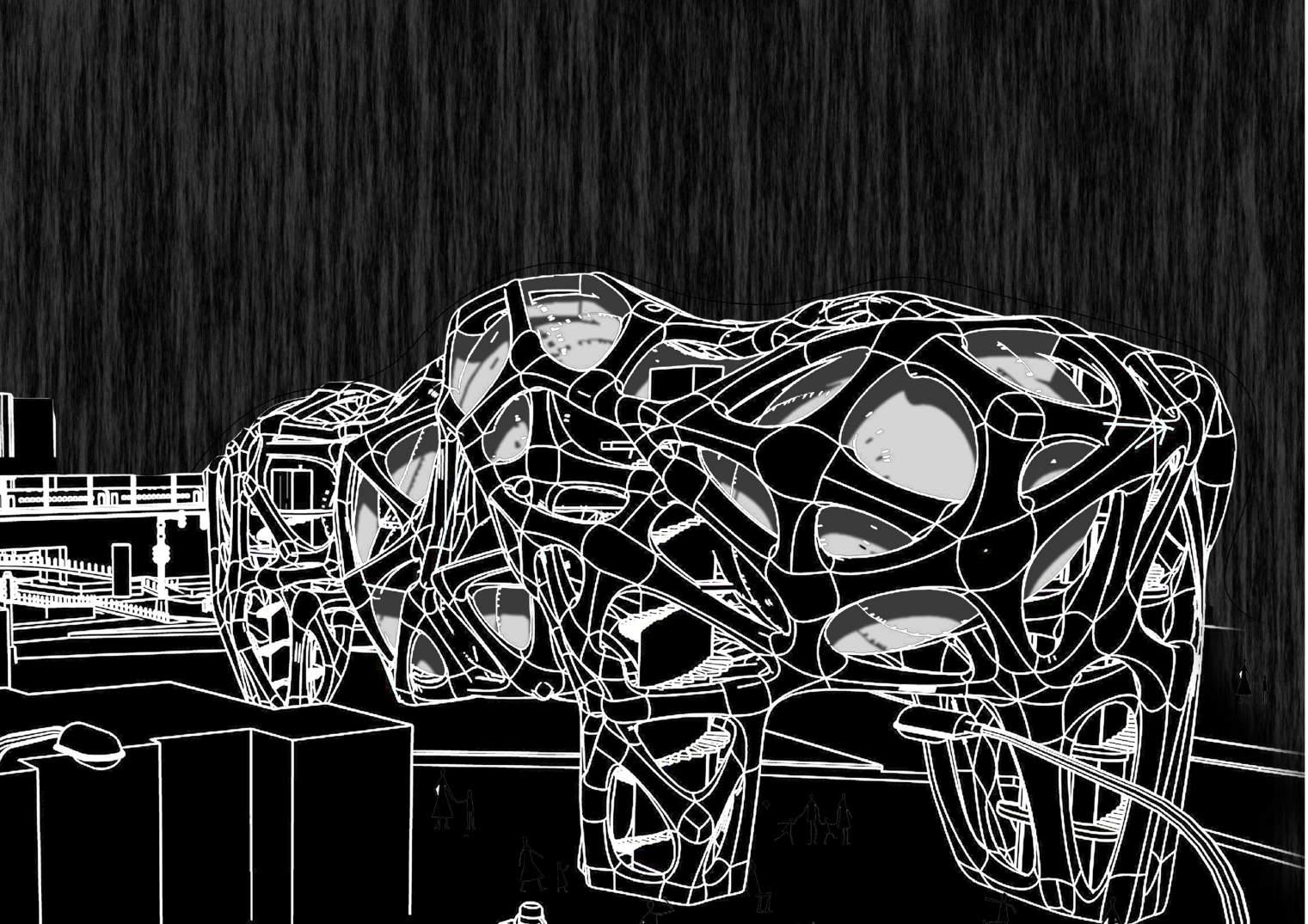
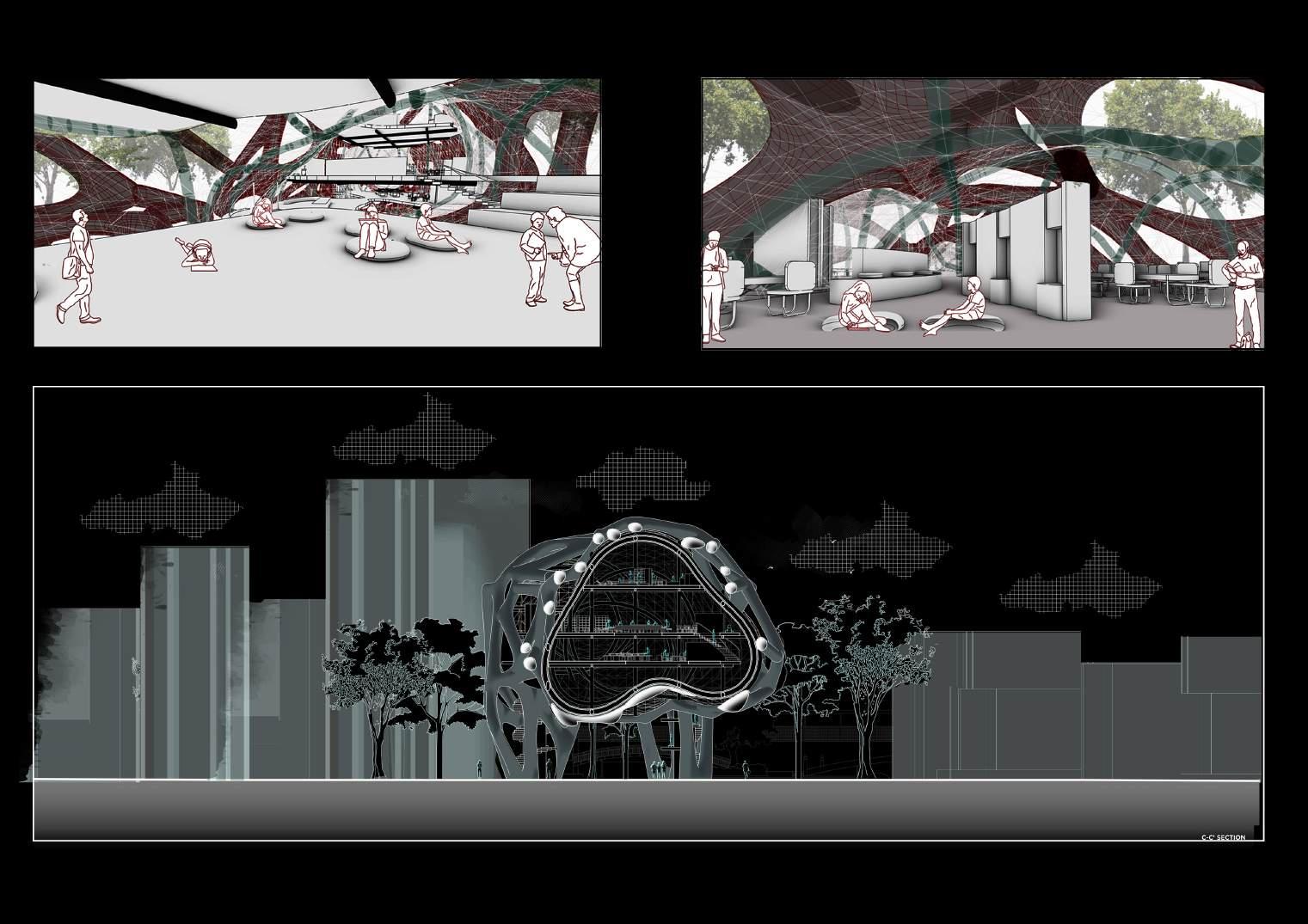
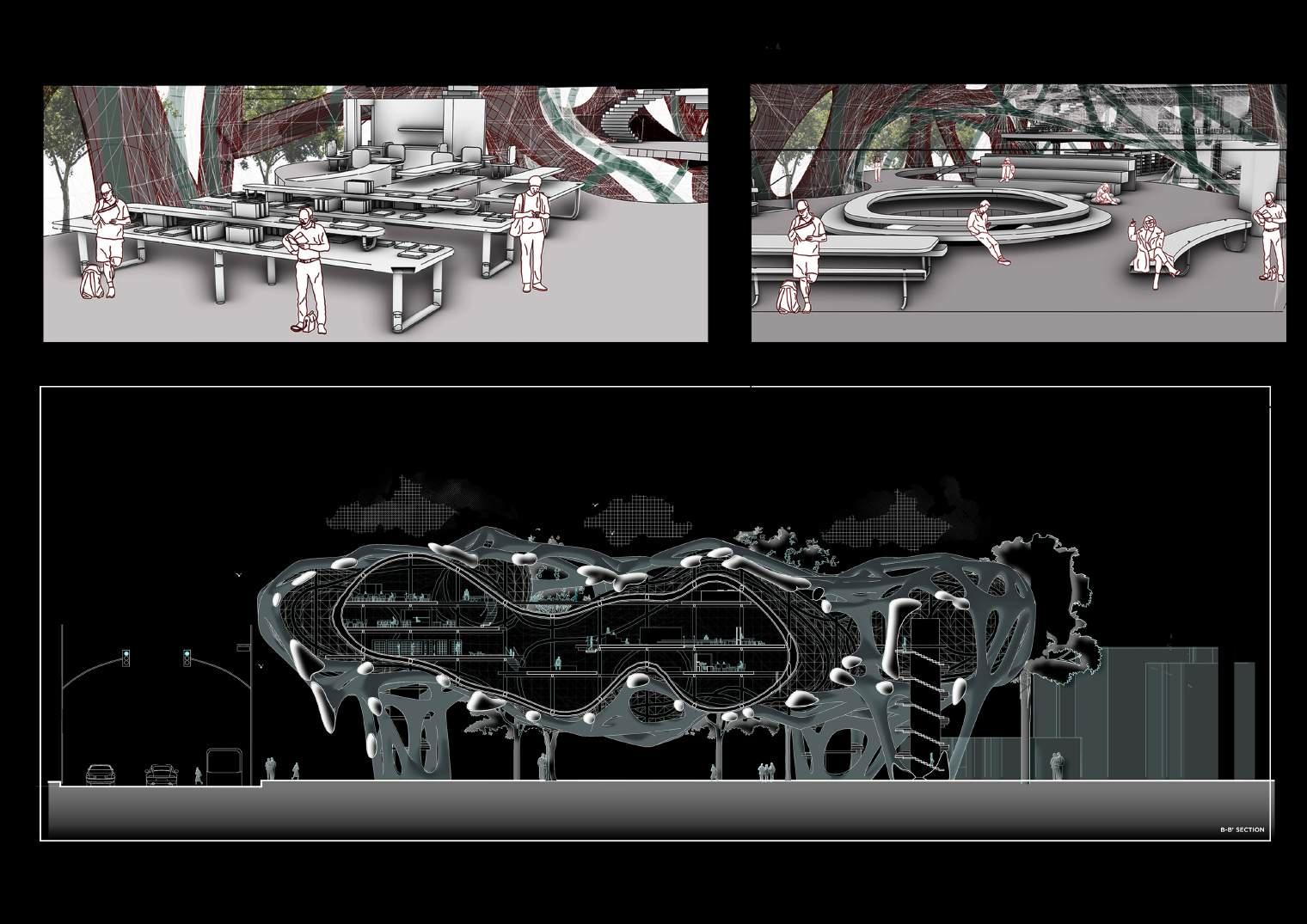
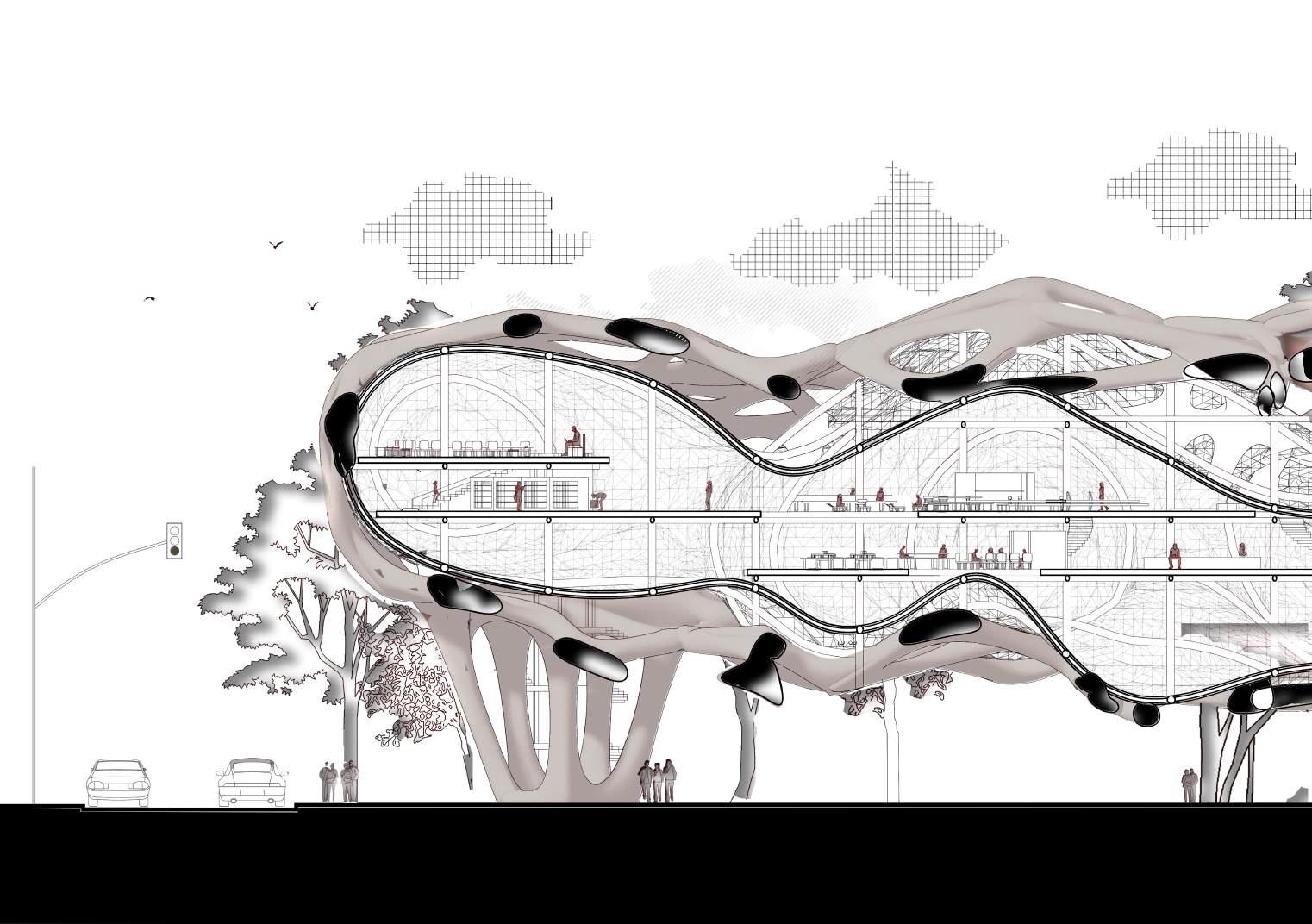
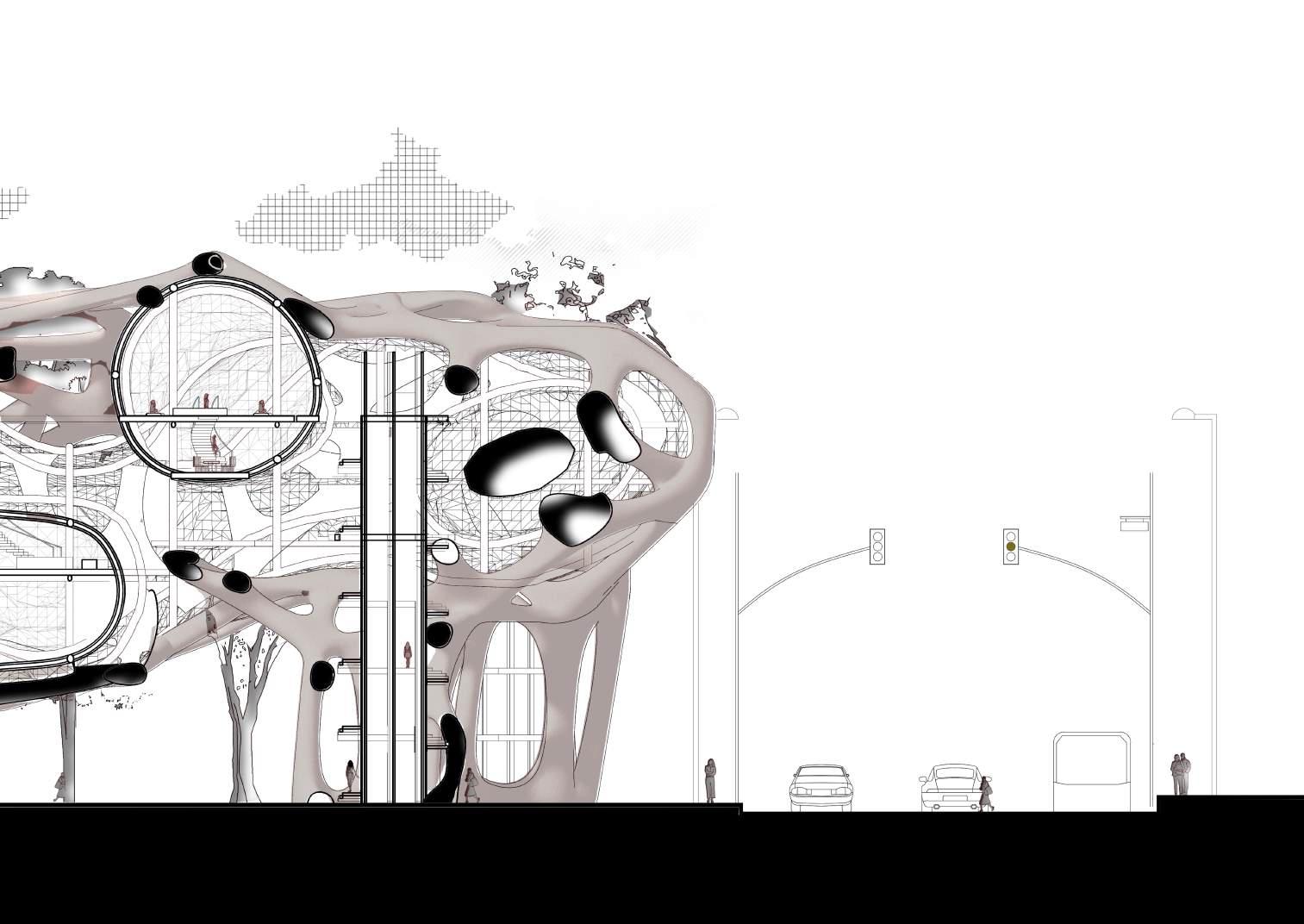
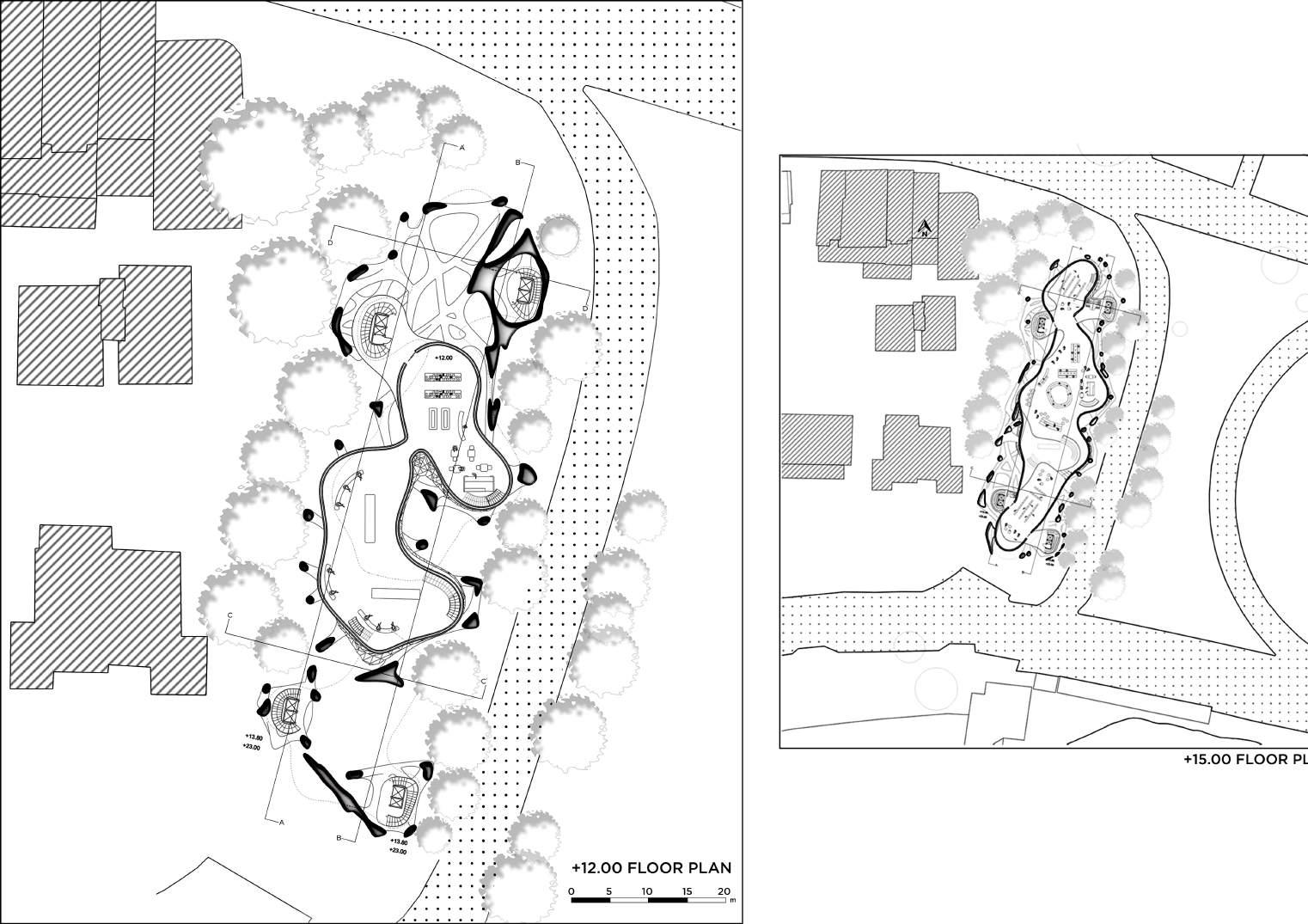
The project, ‘Urban Pulse’, located between Bostancı train station and Bostancı beach, is a structure that accommodates various public needs (library, study areas, cafe, collective spaces). The project responds to changing and transforming situations in the context of space-time and motion. The situations that occur in the city over time are reflected in the building as materials and spatial solutions. “Urban Pulse” is built with the work and system of tetrahedral robots.
These robots are tools that keep the pulse of the city and an interface that translates the city. which work with artificial intelligence, work with an algorithm that allows them to detect every changing situation in the city.
Main Tools & Softwares
Grasshopper
Rhinoceros 3D
Photoshop
AutoCAD
Illustrator
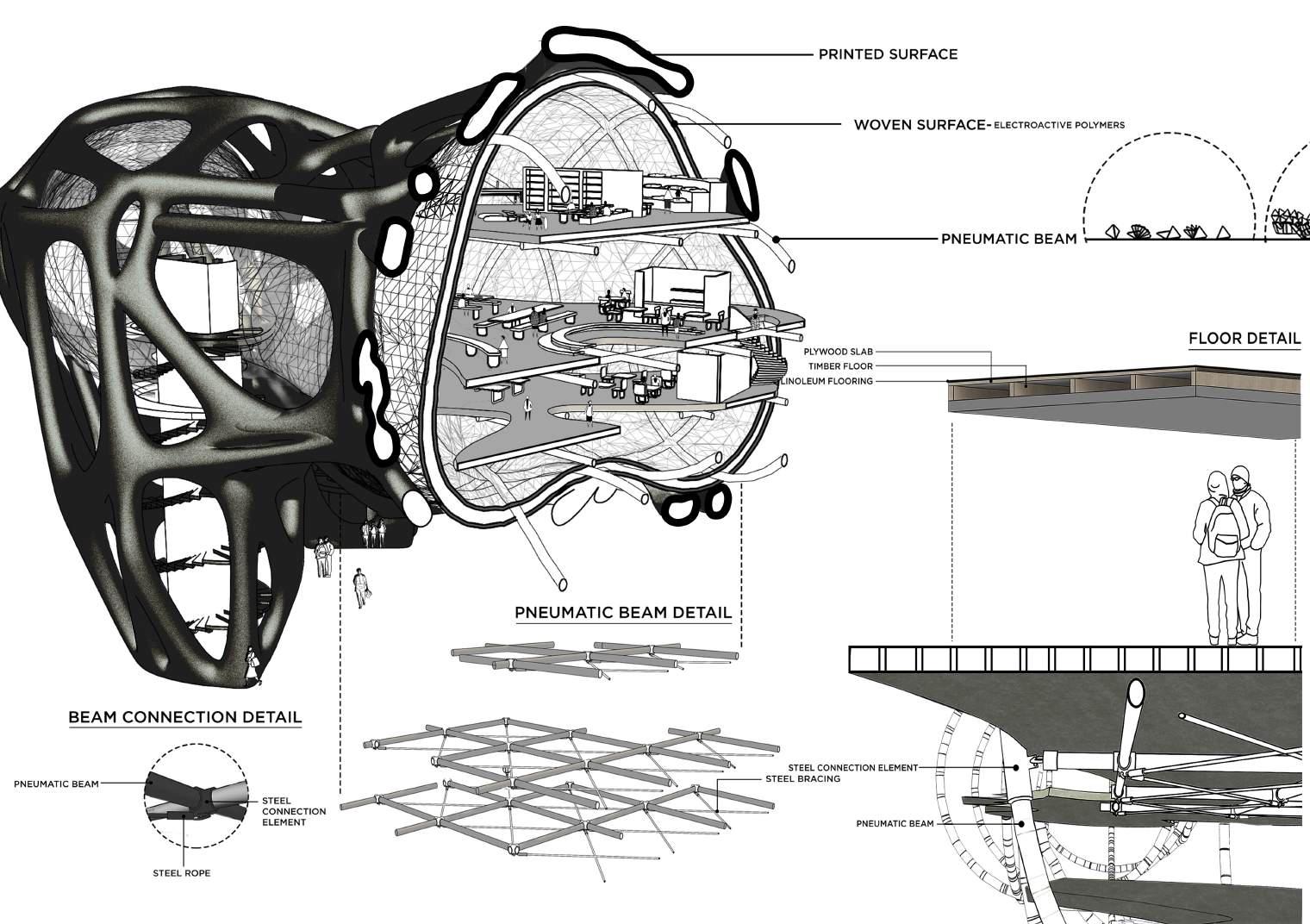
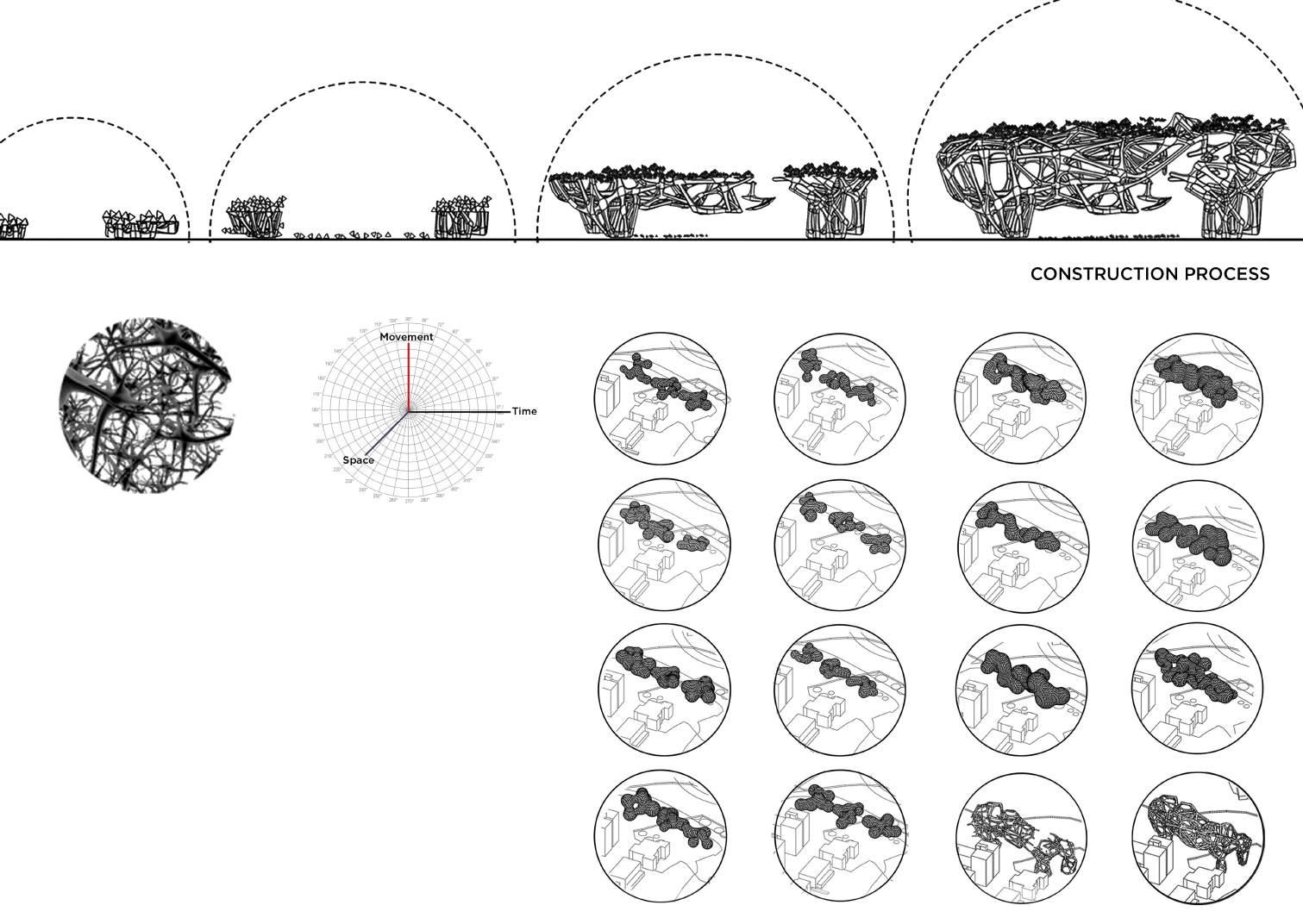
Spaces are no longer static; they evolve dynamically in response to time and movement. Inflatable structures breathe, expanding and contracting like living organisms, adapting to environmental conditions and human activity.
Woven by autonomous robots, these spaces continuously reshape themselves, forming intricate, flexible habitats that respond to shifting needs.
As they expand, they create openness and permeability; as they shrink, they provide enclosure and intimacy. This fluid architecture blurs the boundaries between permanence and ephemerality, offering a new paradigm where built environments are in constant dialogue with their surroundings.
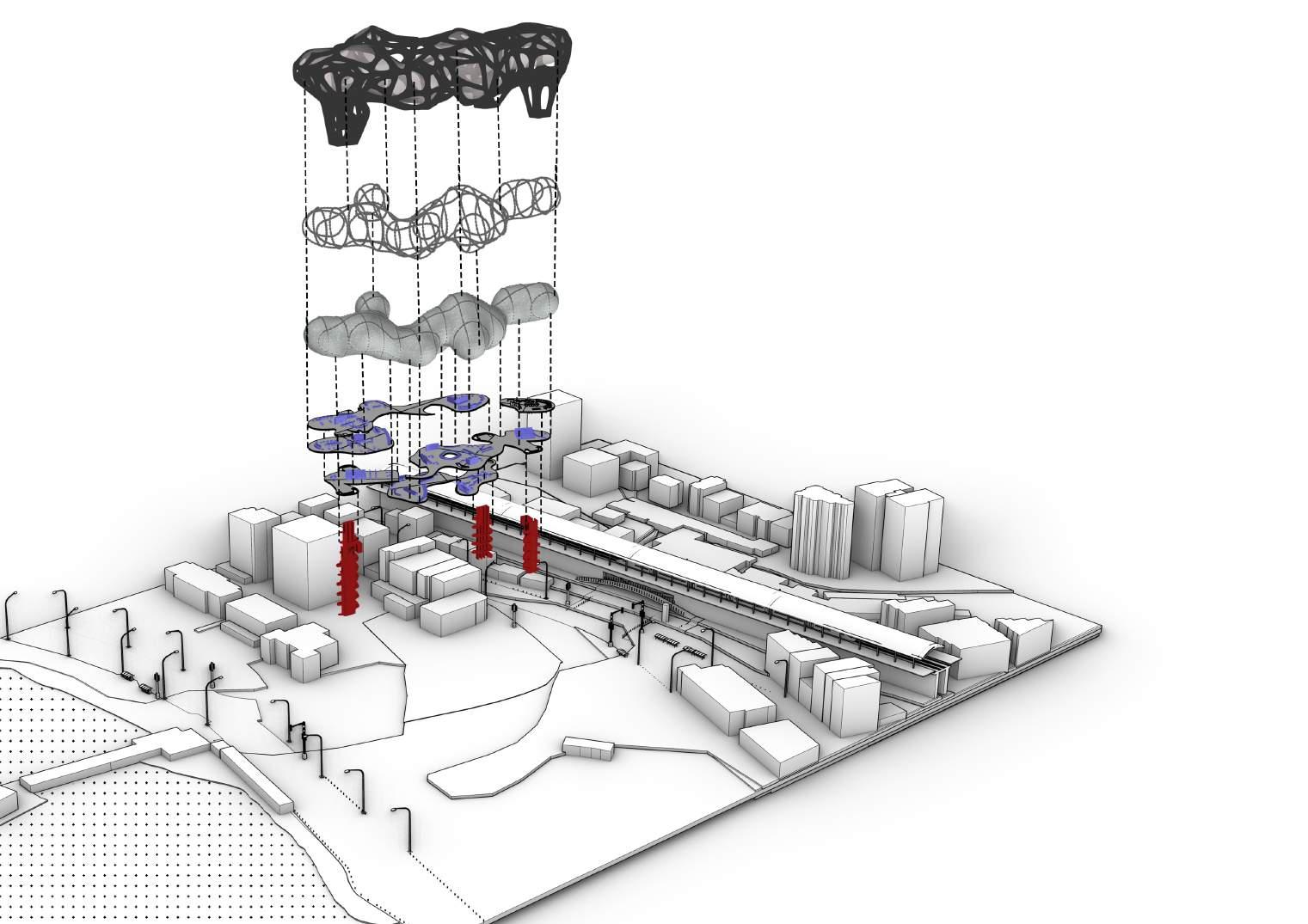
This exploded diagram breaks down the layers of the structure, showing how it connects to the existing urban context. The main volume is suspended above, supported by vertical elements that seem to act as circulation or structural anchors.
The layers help clarify the organization—starting from the woven, organic shell on top, then moving down through structural frameworks and interior spaces. The red vertical elements stand out, marking key points where the structure meets the lower levels.
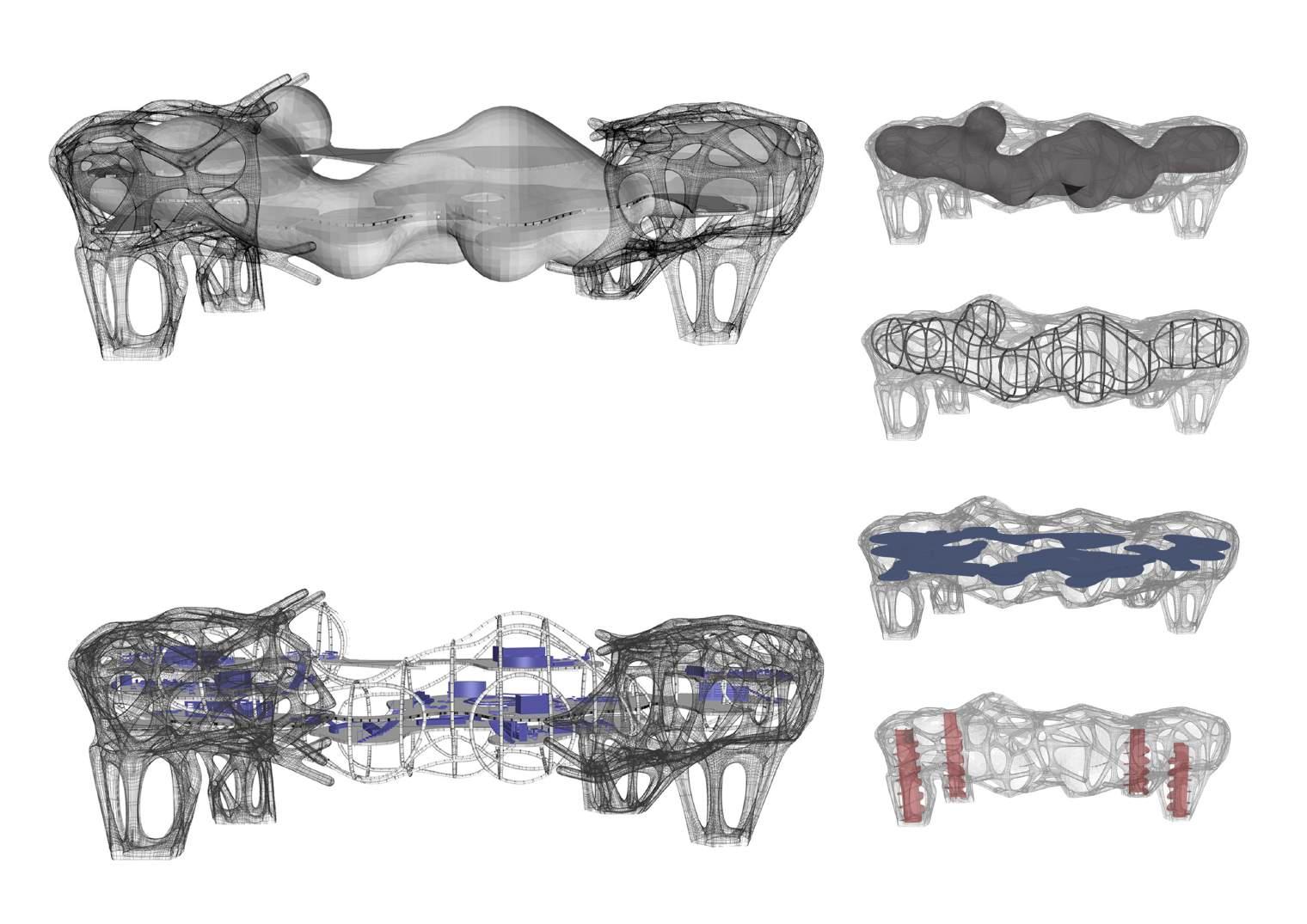
The primary diagram highlights a woven surface, suggesting a lightweight, flexible enclosure that integrates with a pneumatic beam system for structural support. The breakdown of elements includes an inner shell and its structural framework, illustrating a layered construction method.
Additionally, the diagrams delineate circulation pathways and designated working spaces, emphasizing the functional aspects within the enclosed environment. The overall design approach reflects a biomorphic and adaptive system

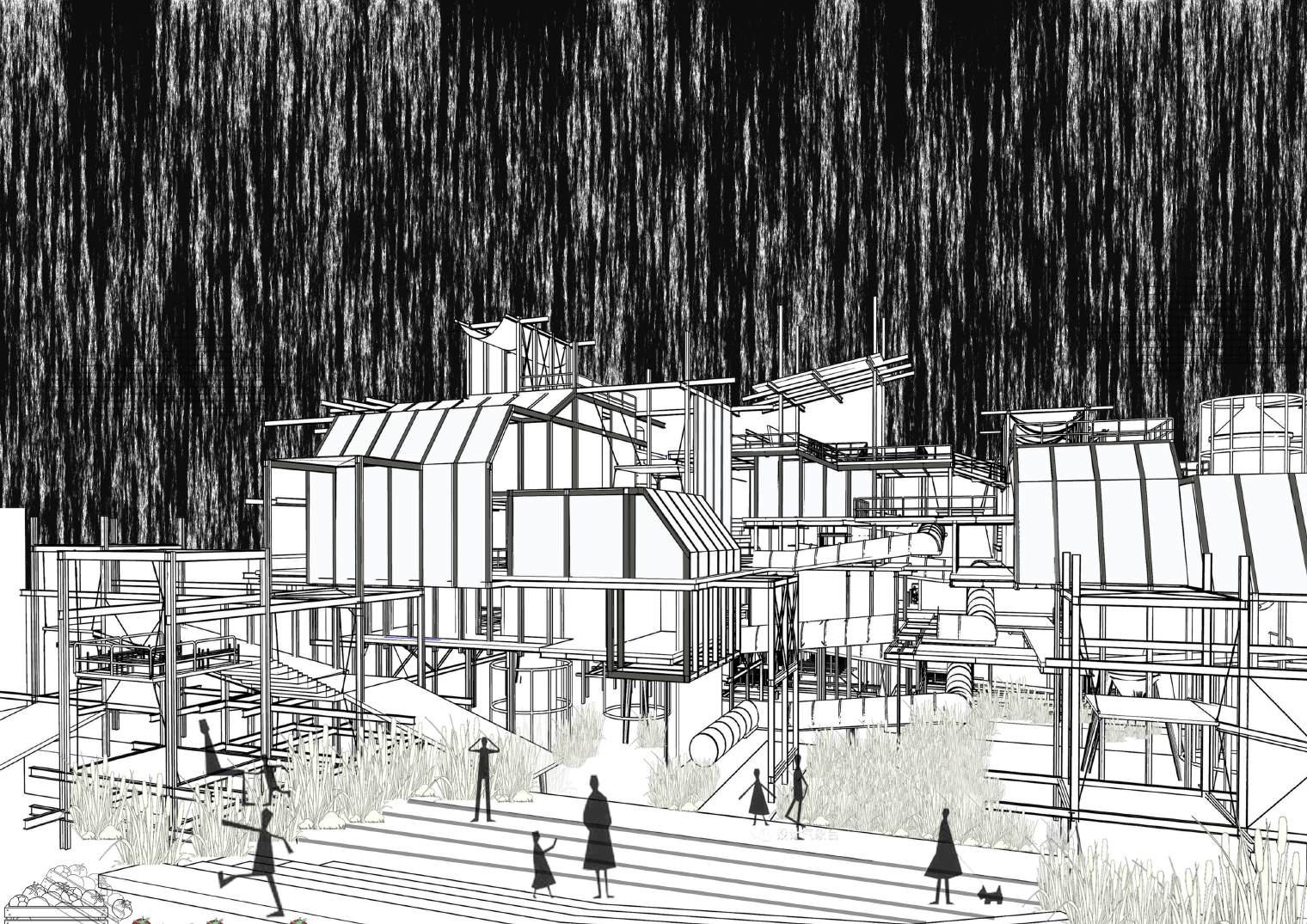
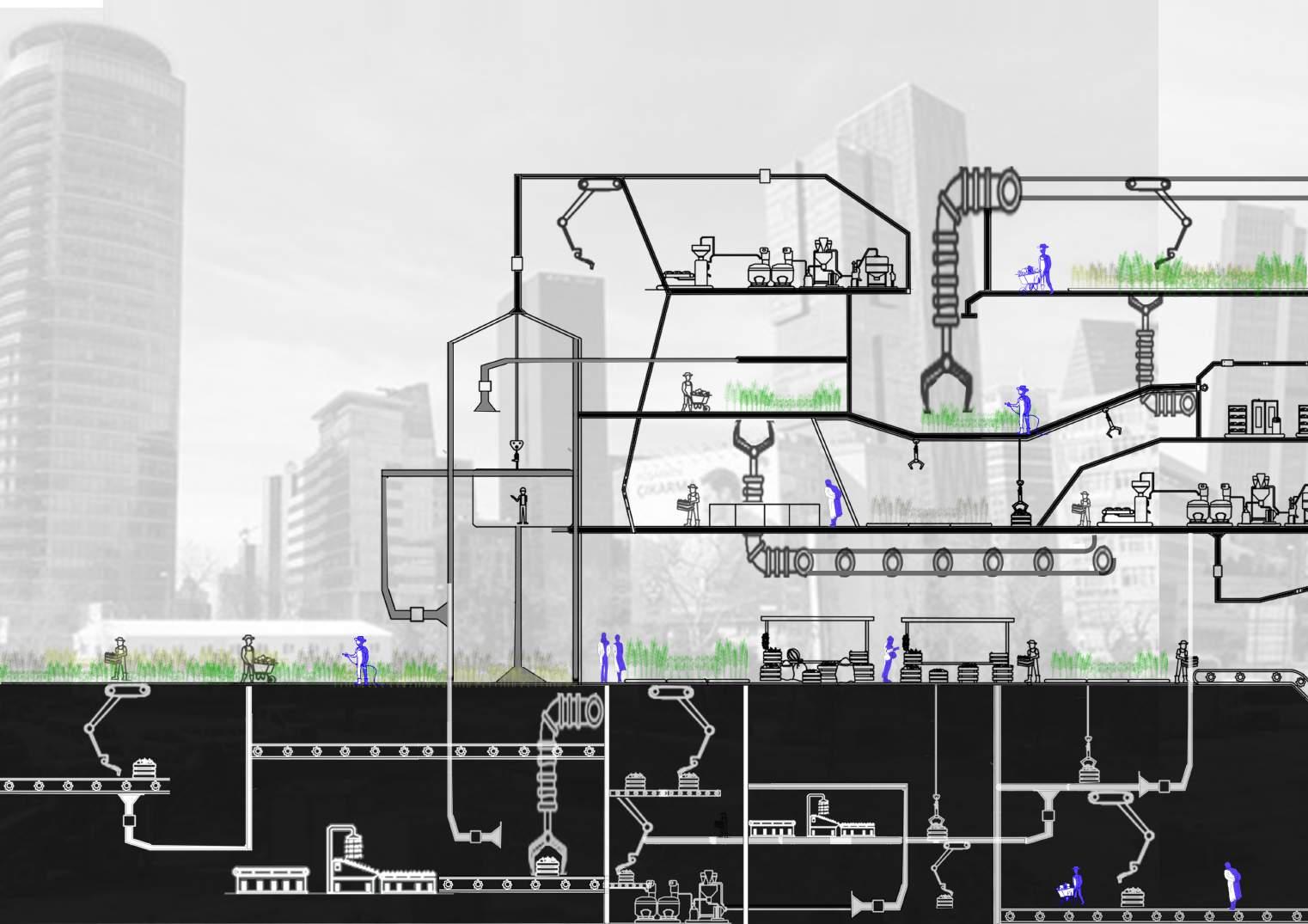
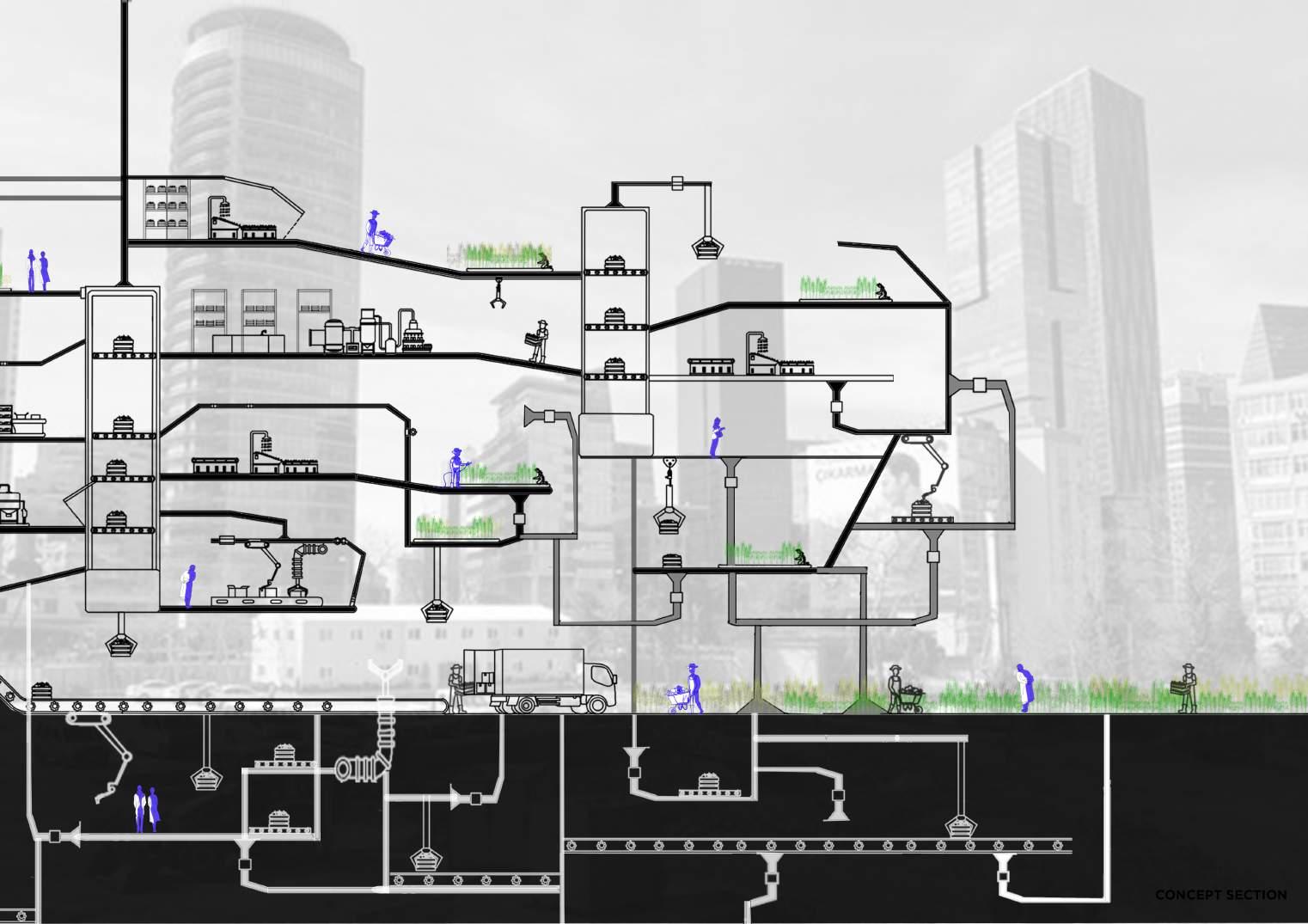
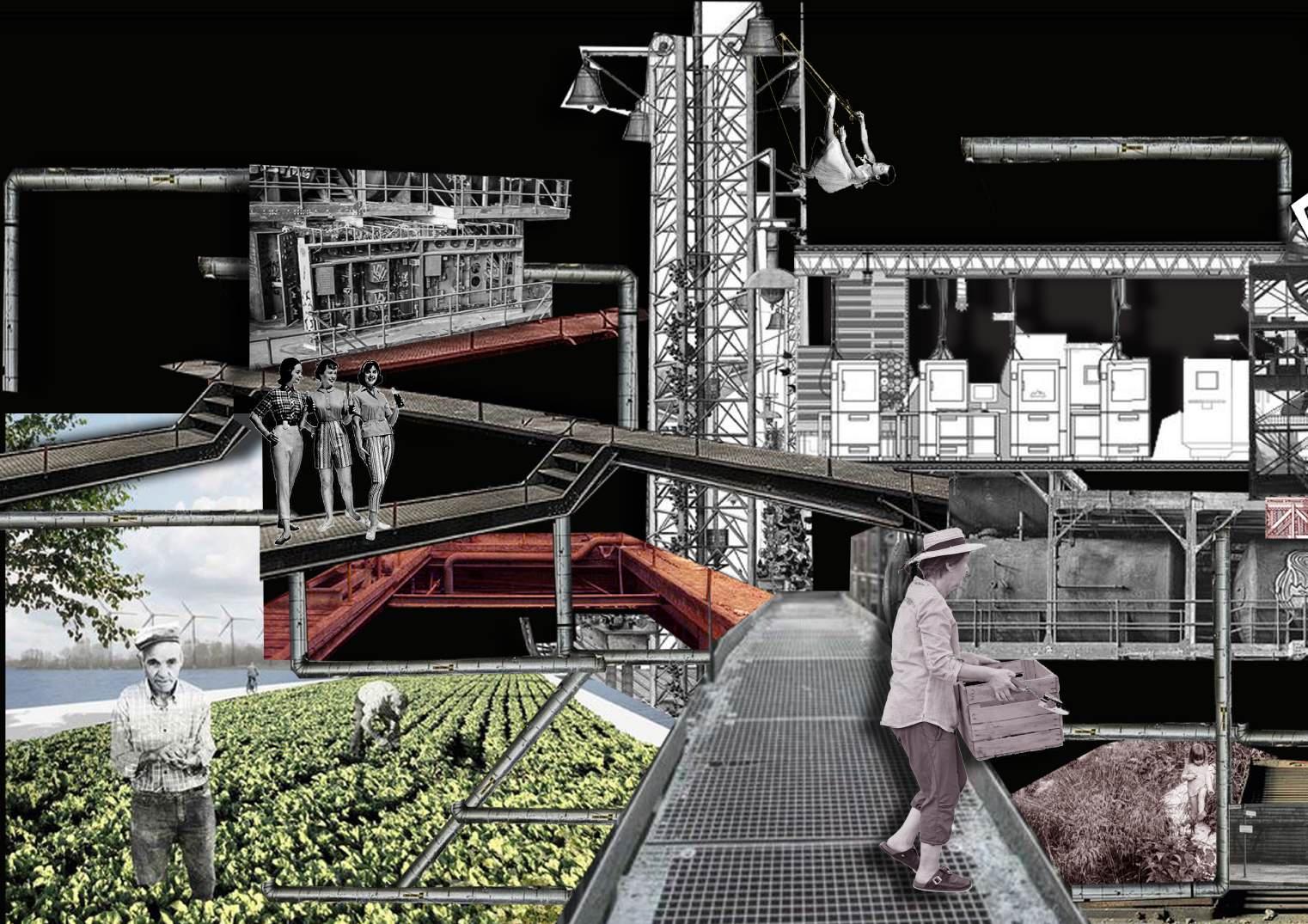
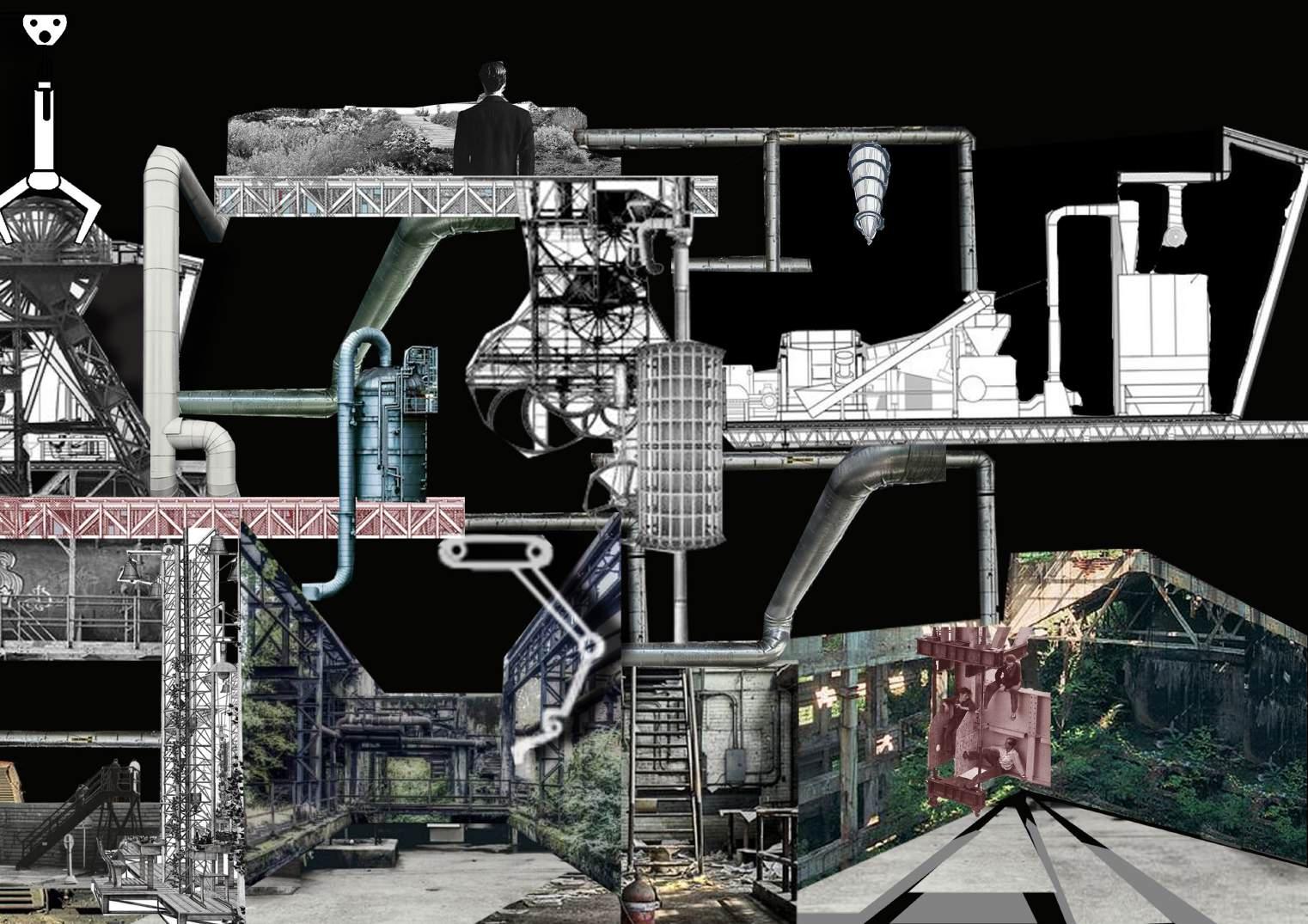
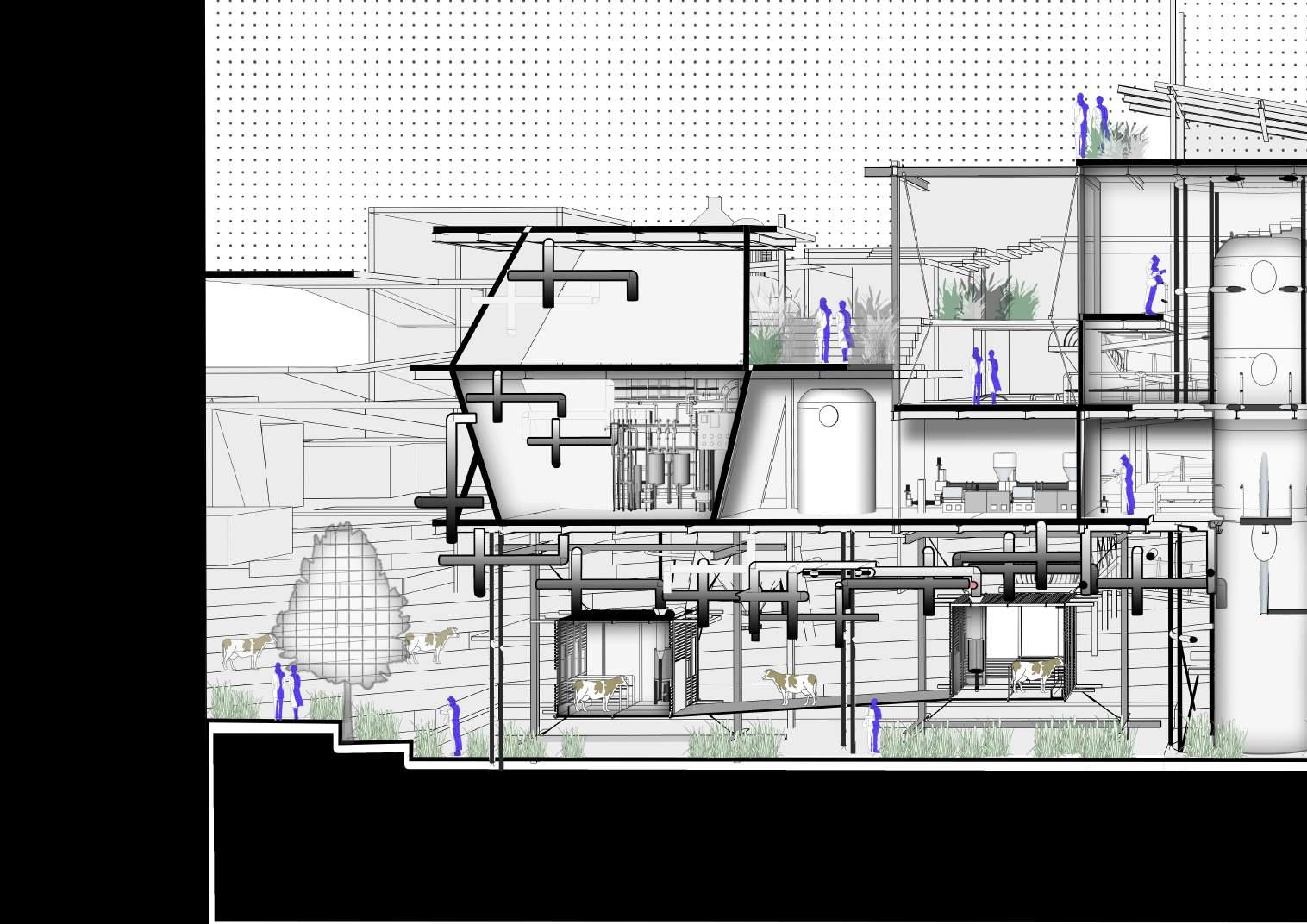
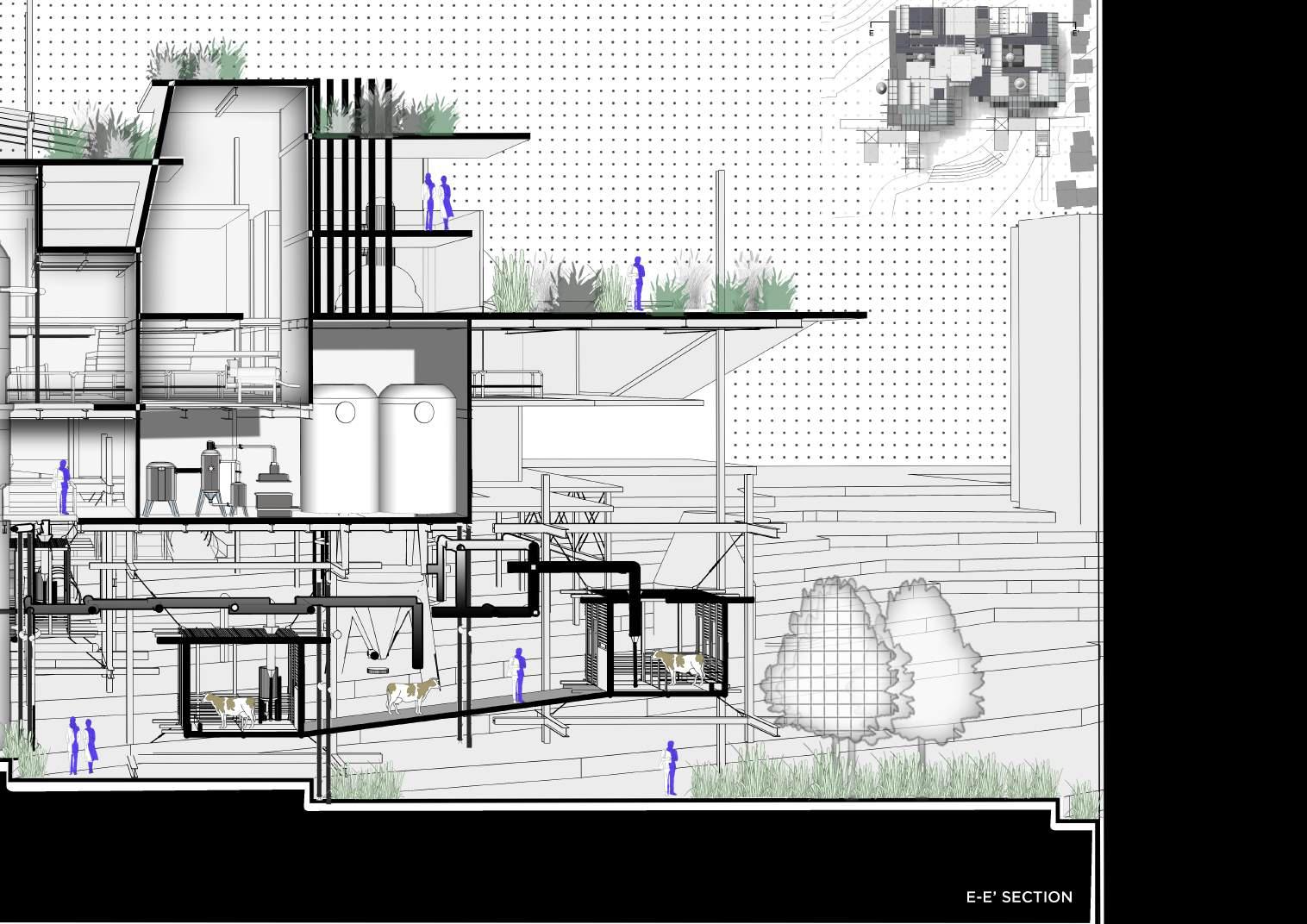
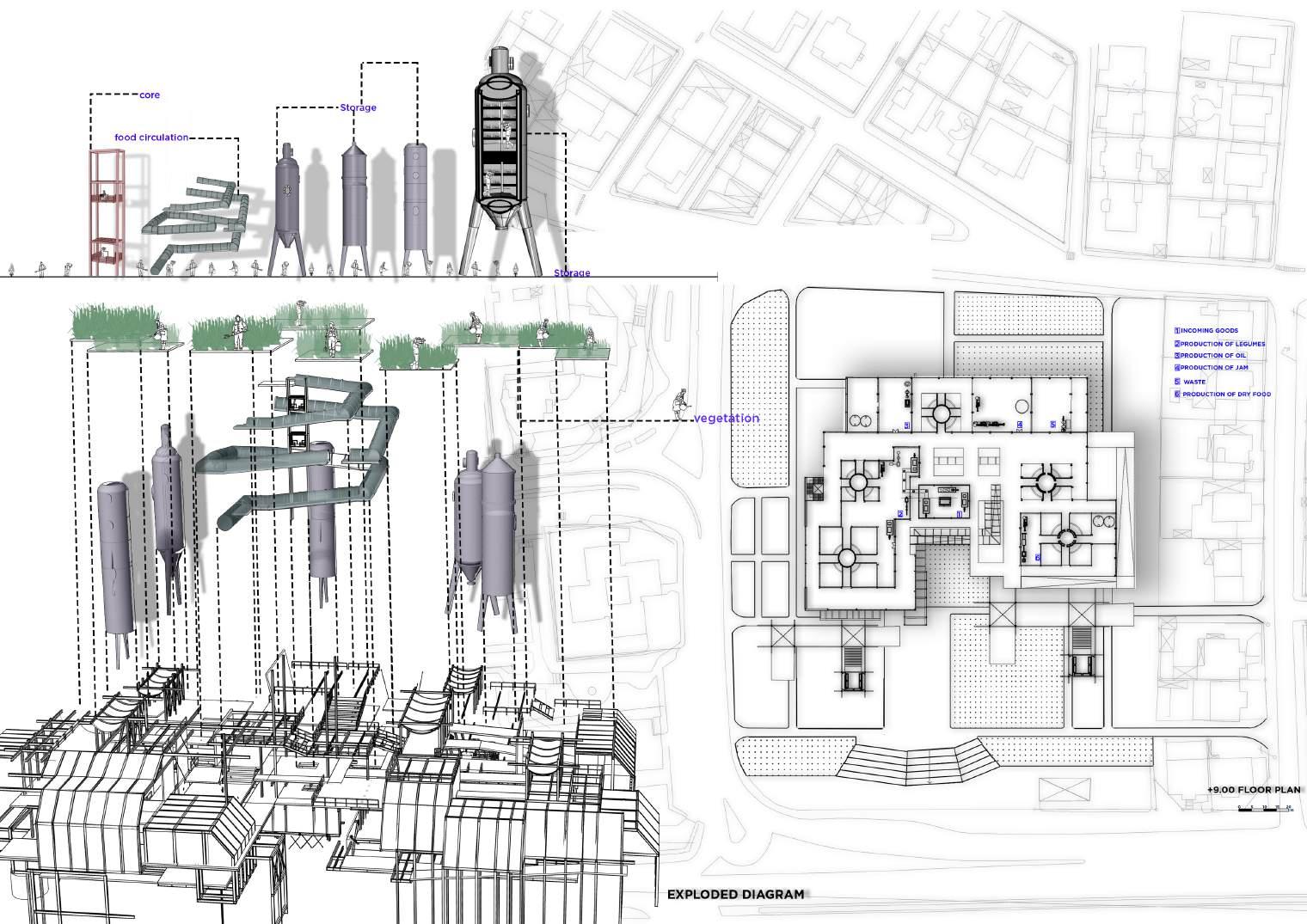
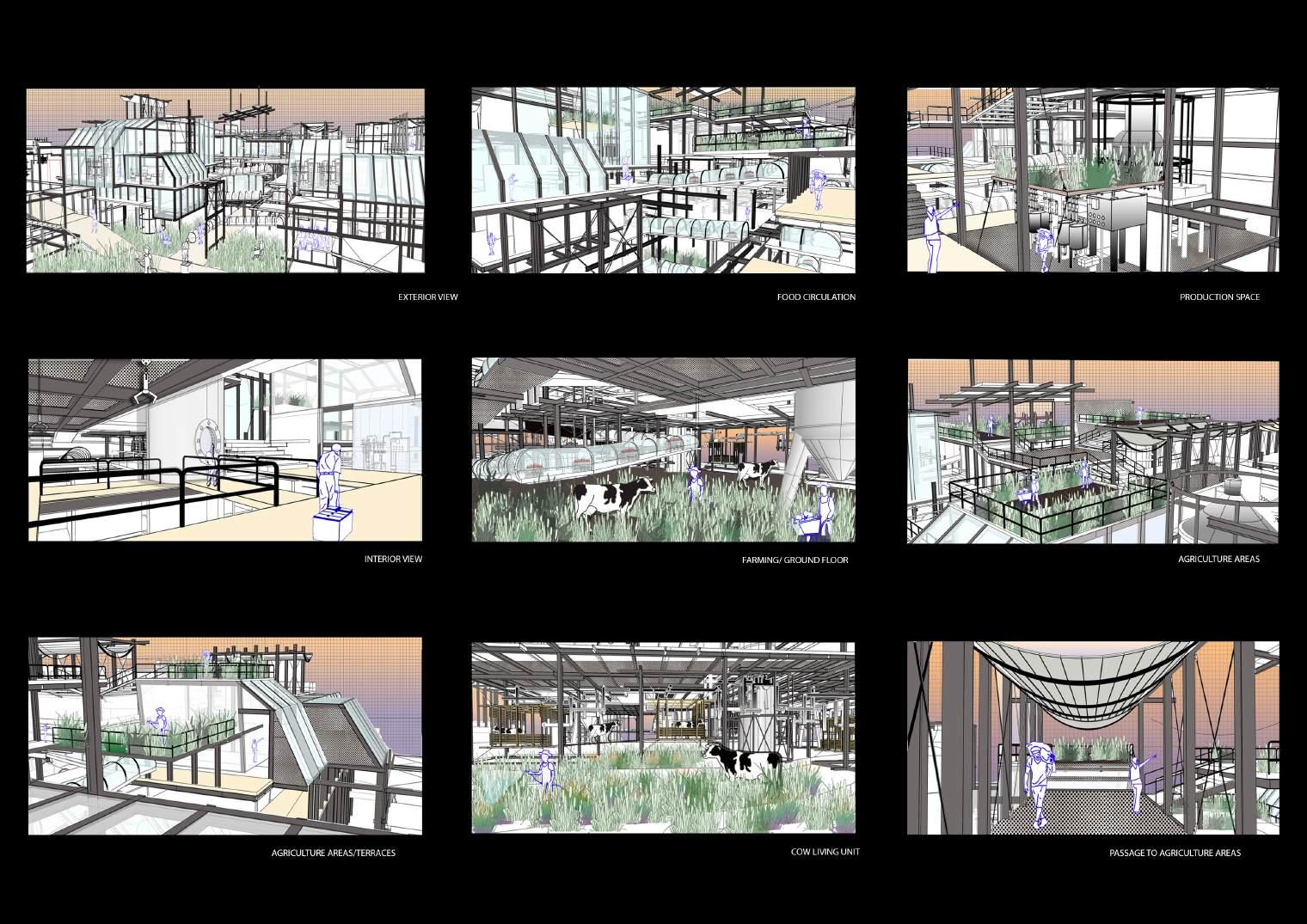
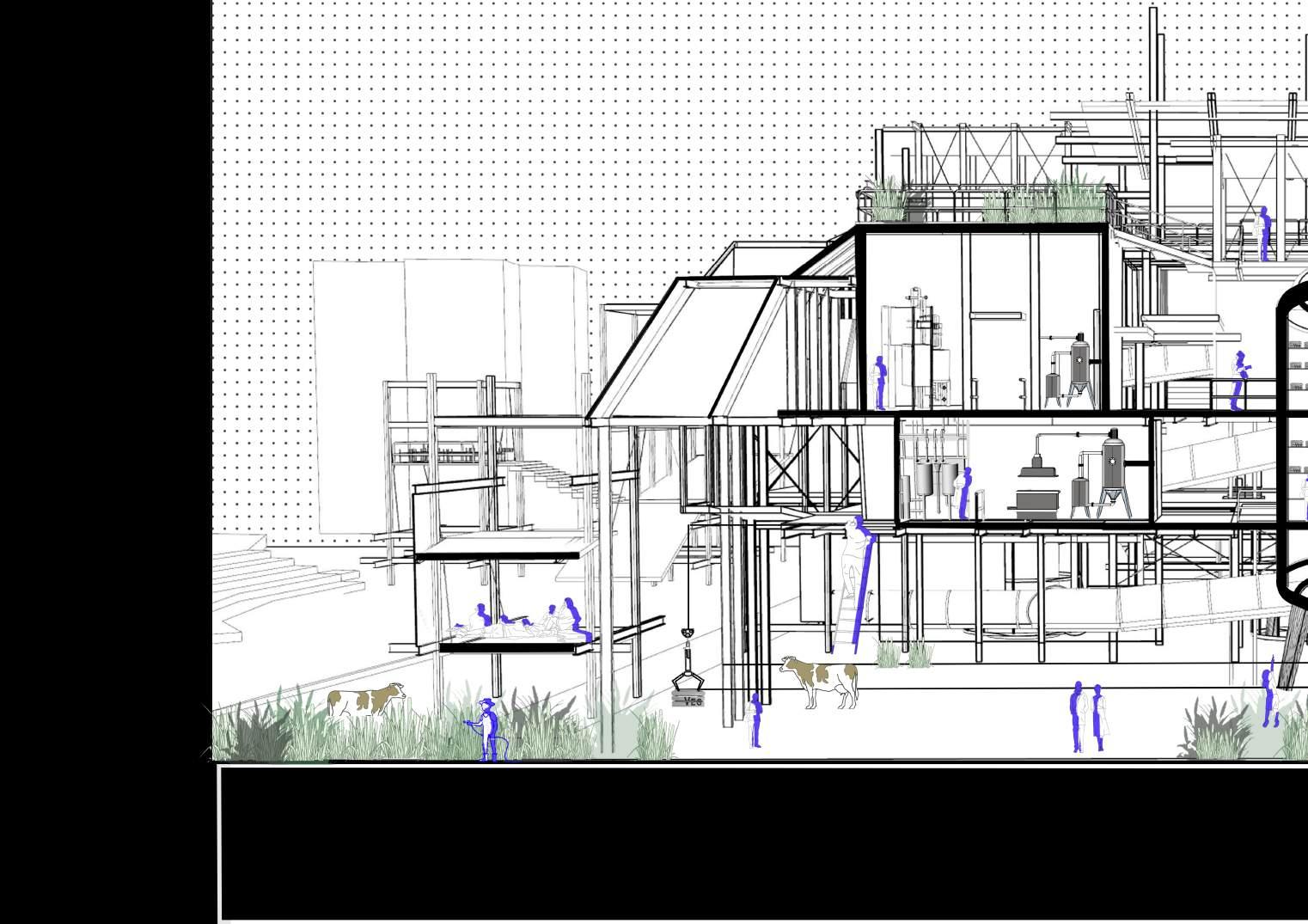
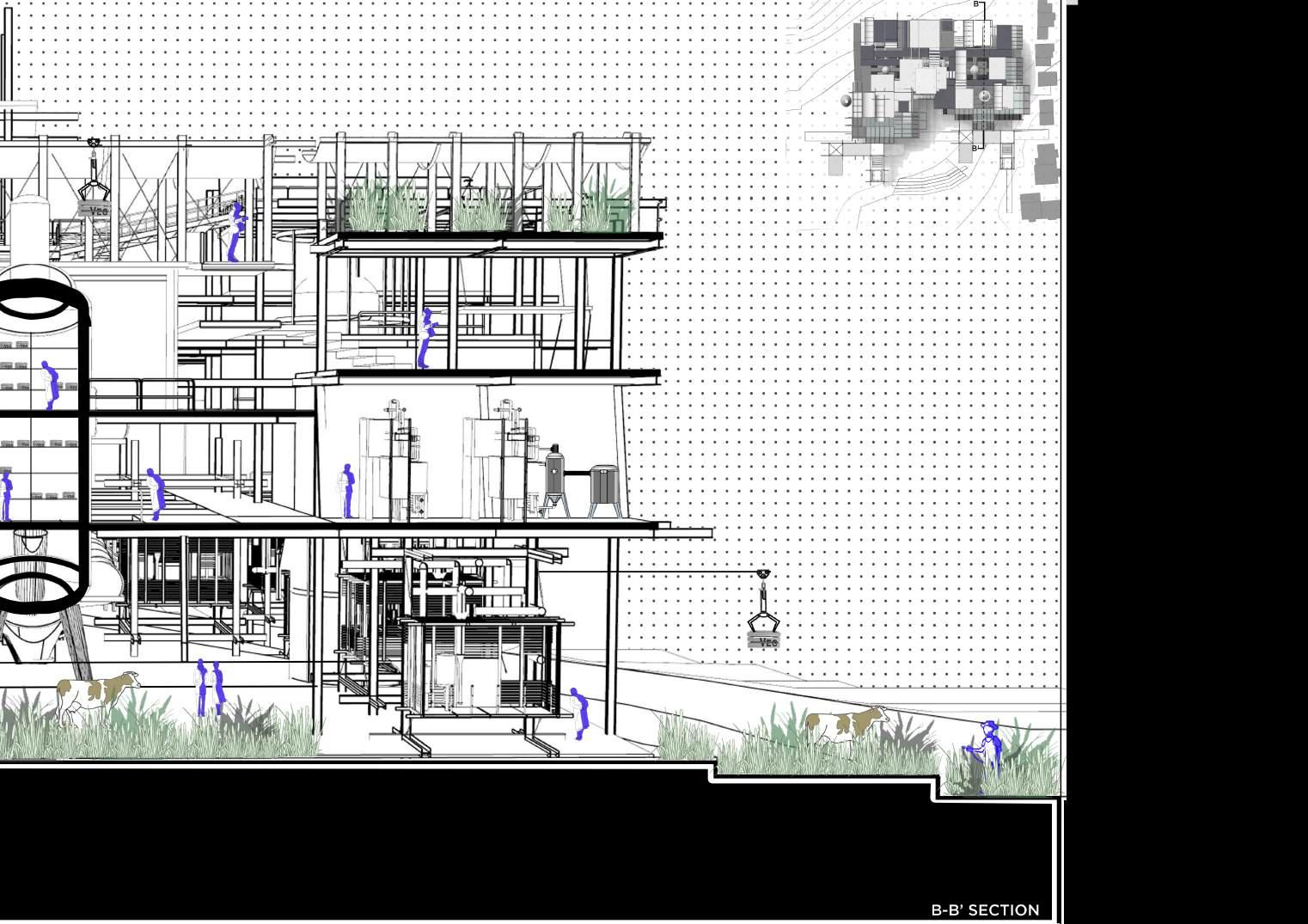
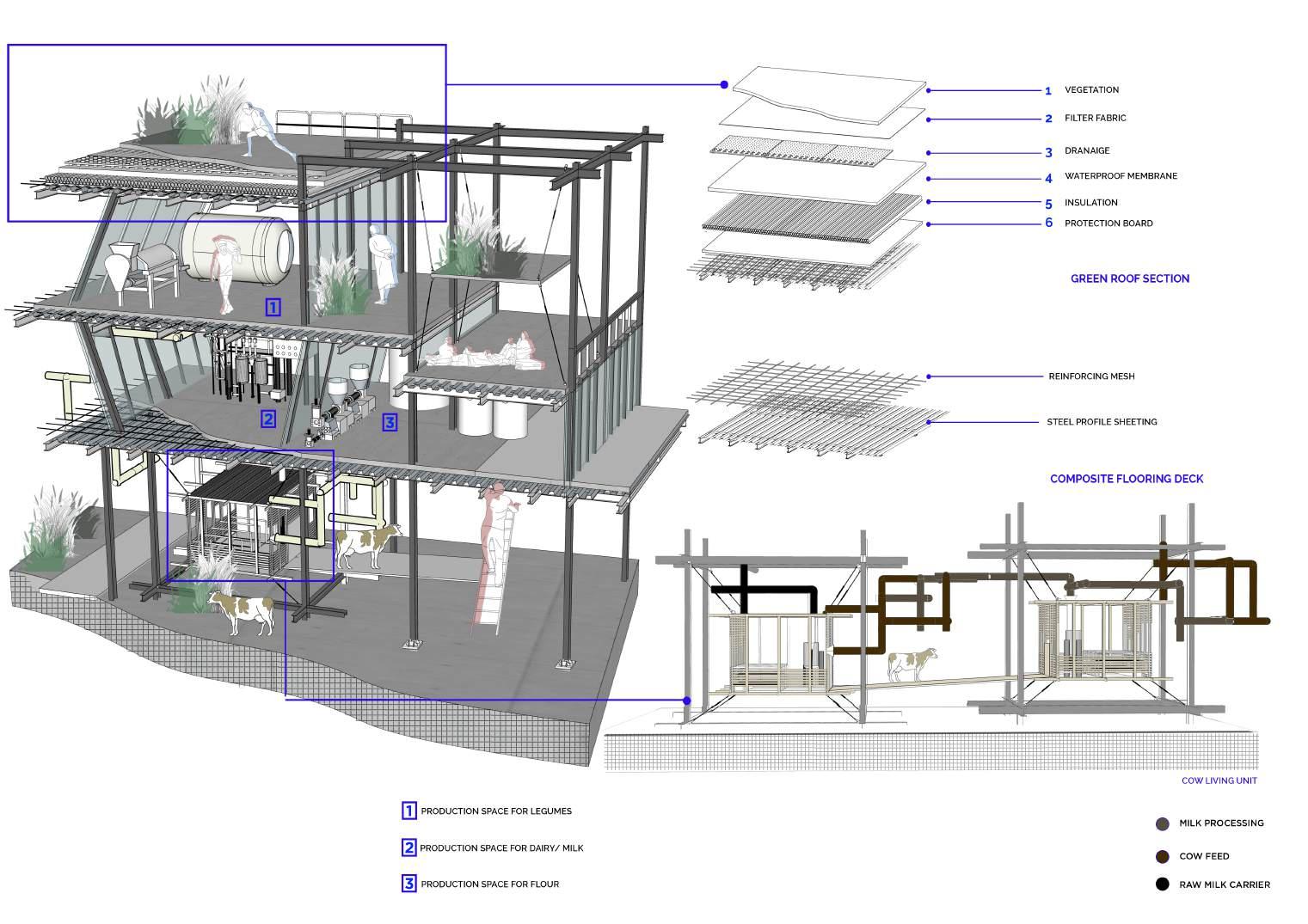
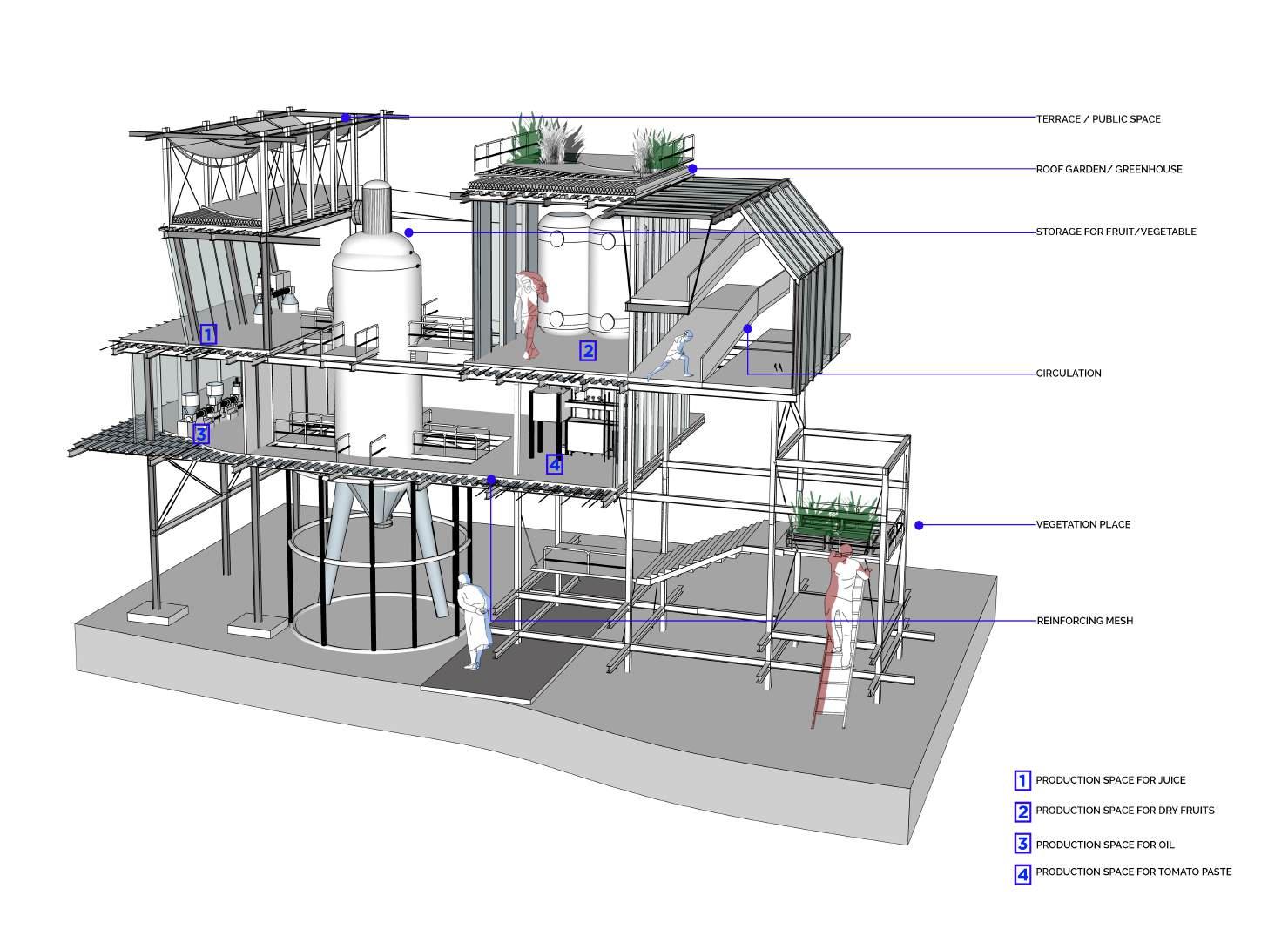
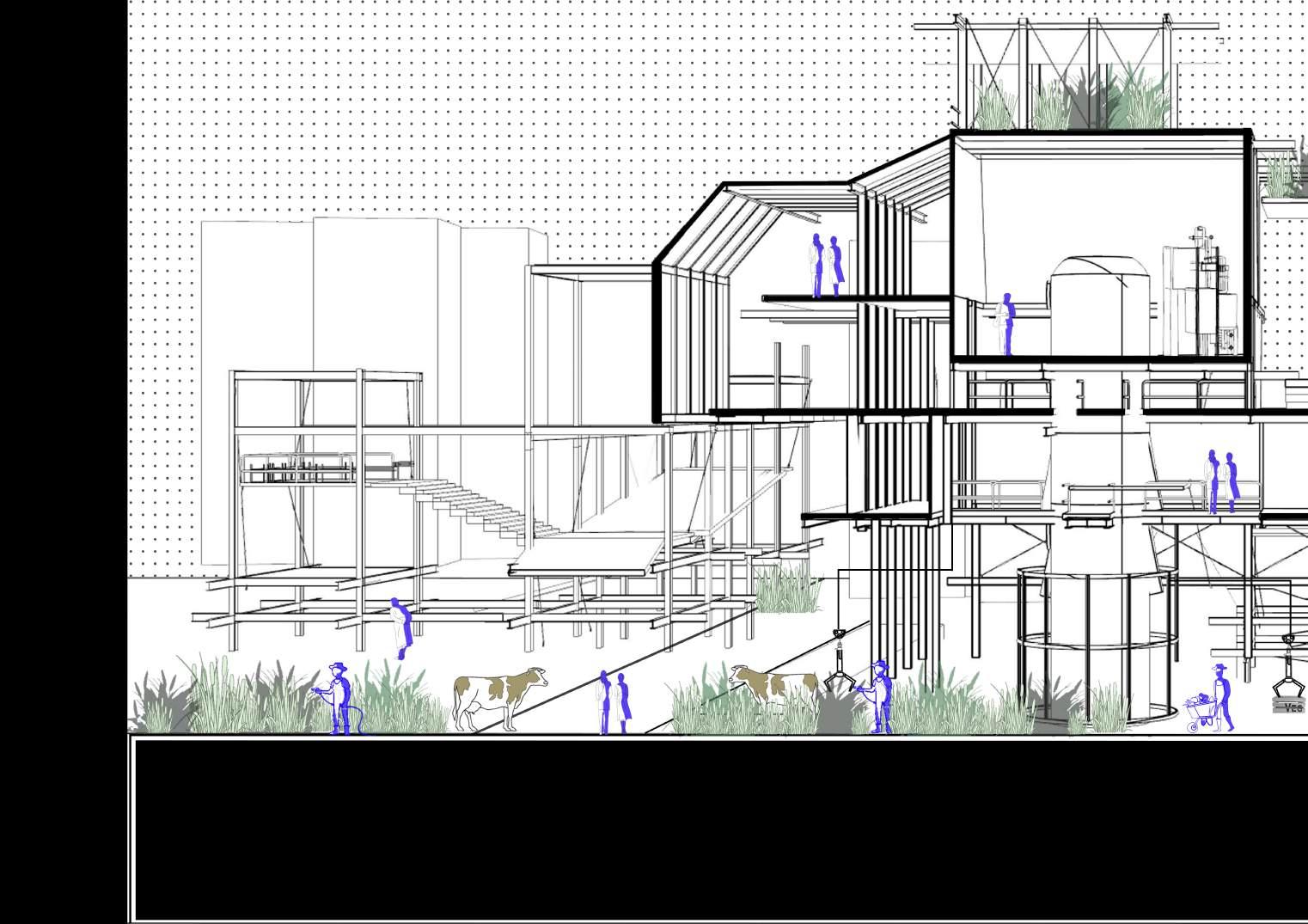
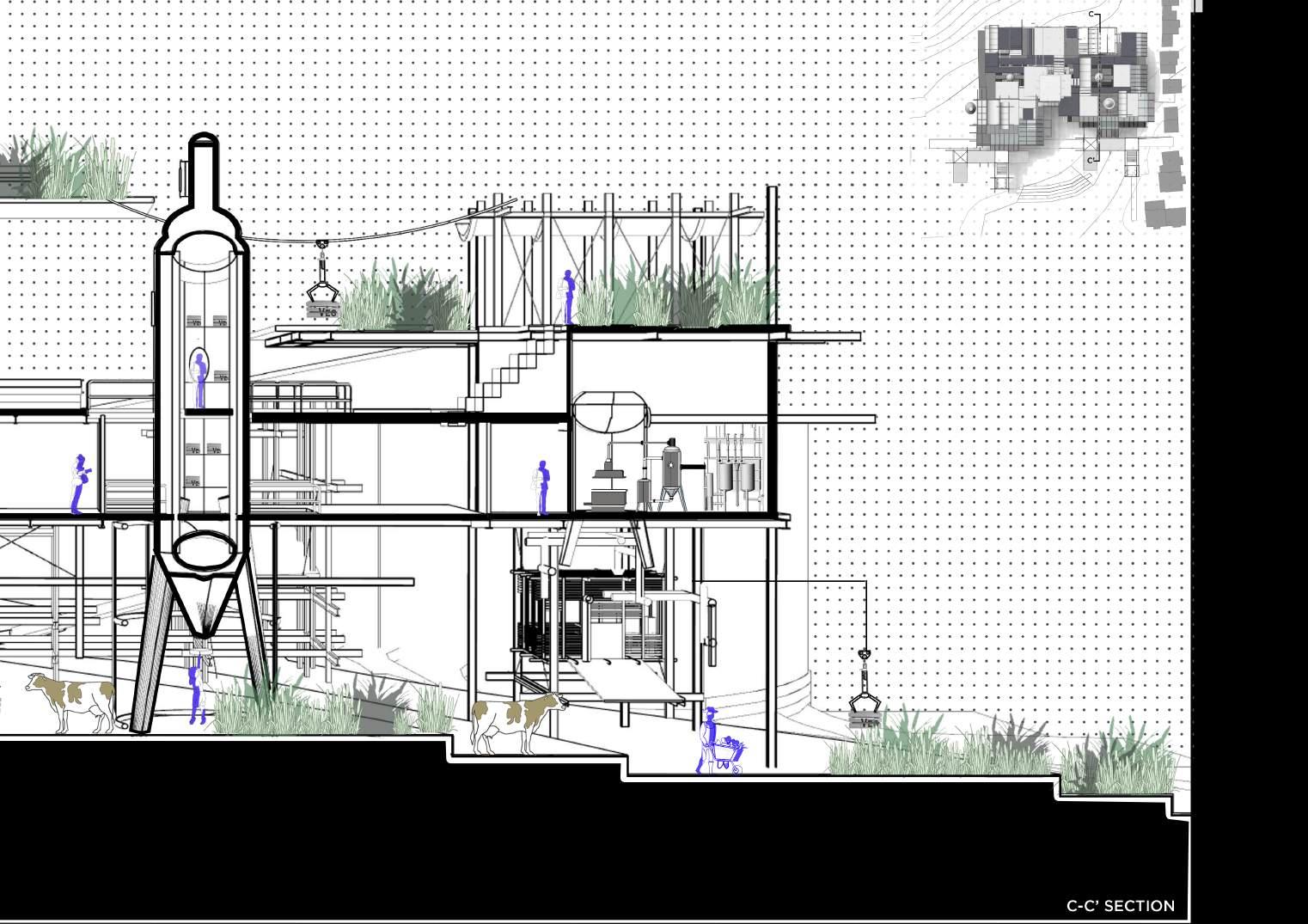
The Food Hub in Levent, Istanbul, is a public building designed to integrate urban agriculture with food production, storage, and sales. In response to increasing urbanization and the displacement of agricultural areas, the building promotes direct food transfer from producer to consumer, reducing the carbon footprint associated with transportation.
It features public agricultural spaces on the ground floor and roof, where locals can grow and harvest produce. A central product elevator facilitates efficient transfer to production areas. The glass facade enhances transparency, allowing consumers to observe the food production process. Additionally, the food storage area serves as both a functional and experiential space.
During my one-year internship, I worked across various design scales, ranging from product design to competition projects and office-based architectural developments. I was fullyinvolved in the concept development and design process, contributing to the creation of innovative and functional solutions.
Engaging in projects at different stages, from ideation to execution, allowed me to refine my design thinking, problem-solving skills, and adaptability.
This experience not only strengthened my technical proficiency but also deepened my understanding of how design can respond to different contexts and scales.
Odile Decq
Project Head Project Manager
Anas Koubaiti
Main Tools & Softwares
AutoCAD
Rhinoceros 3D
Illustrator
Photoshop
ArchiCAD
Grasshopper
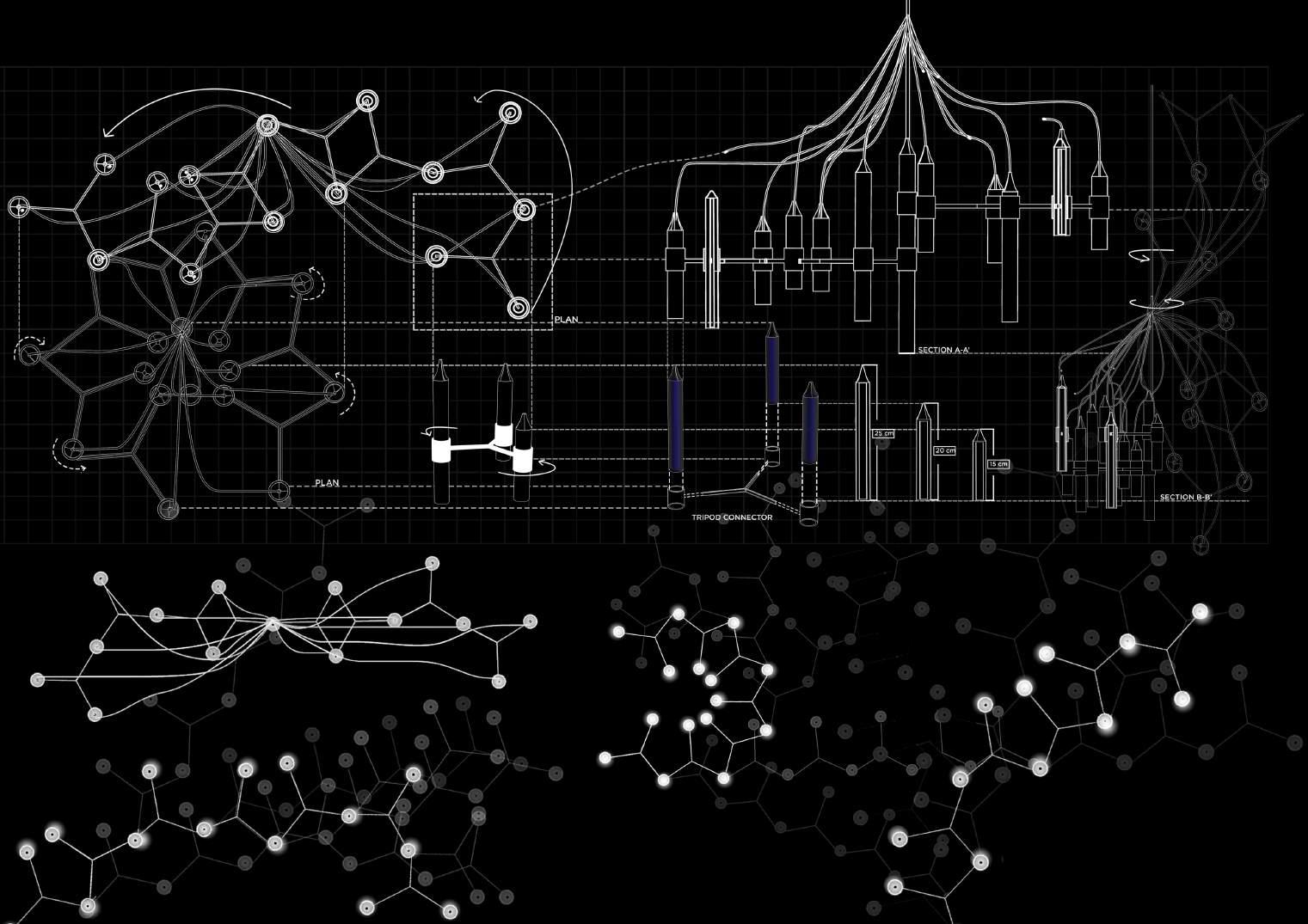

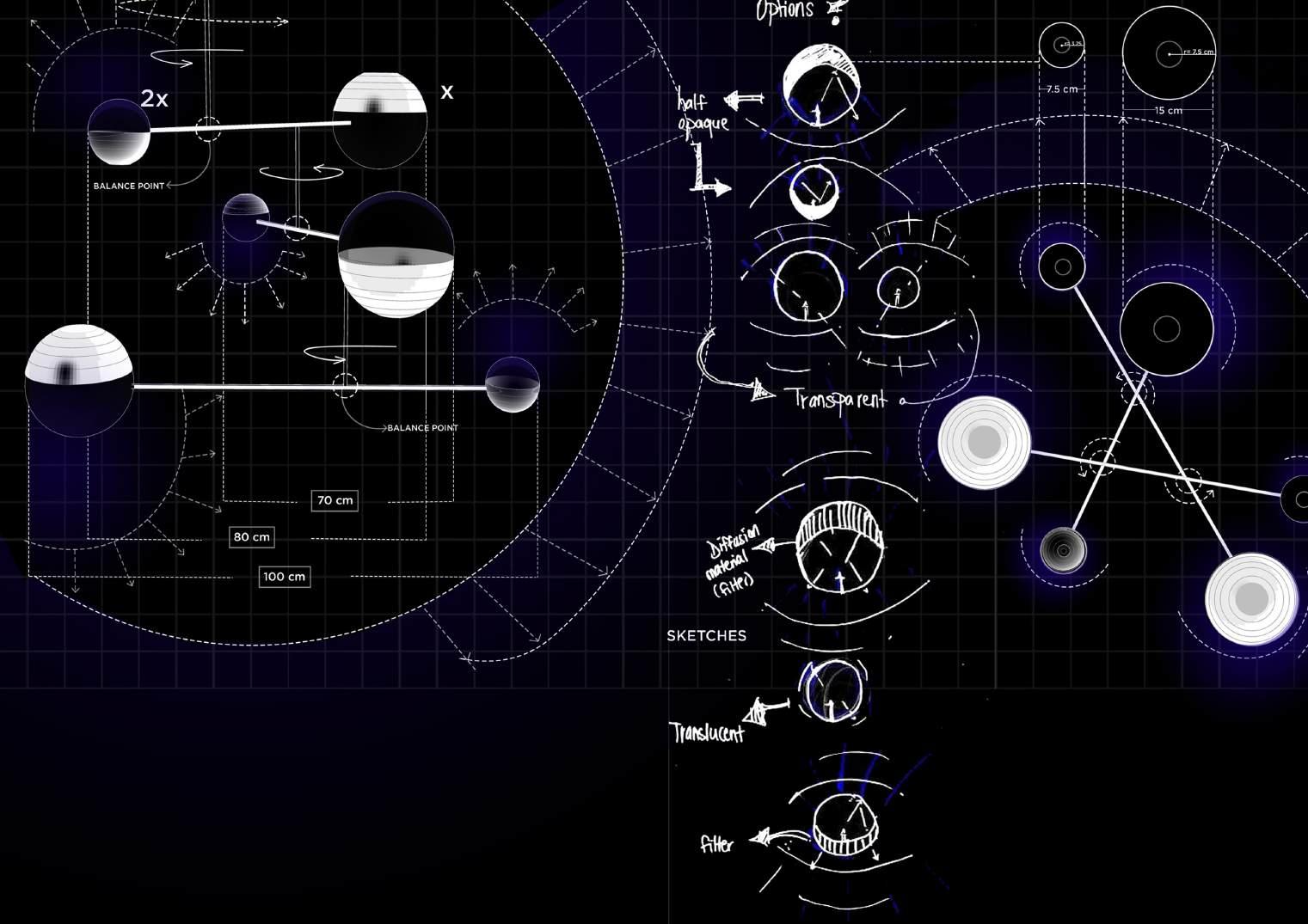
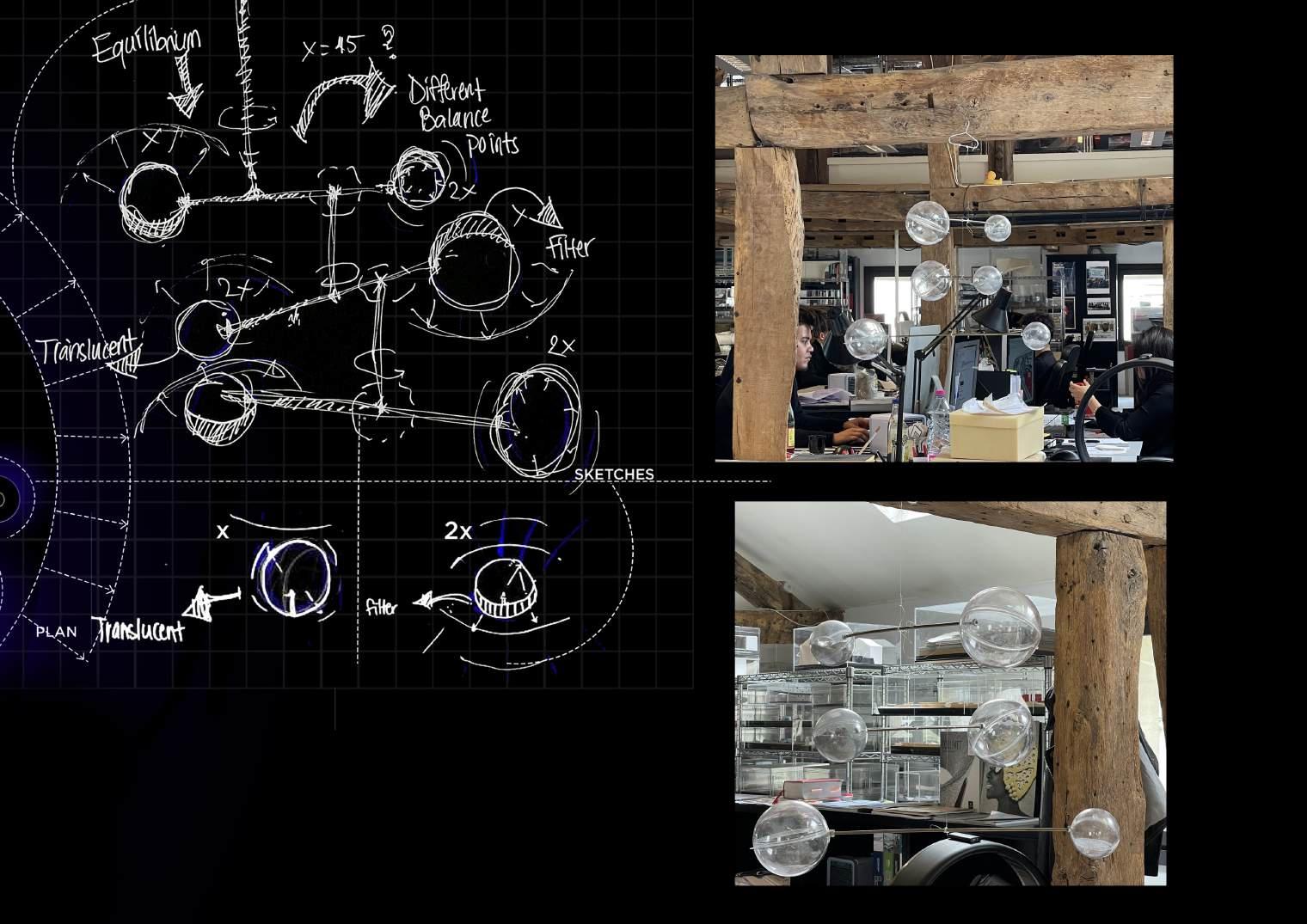
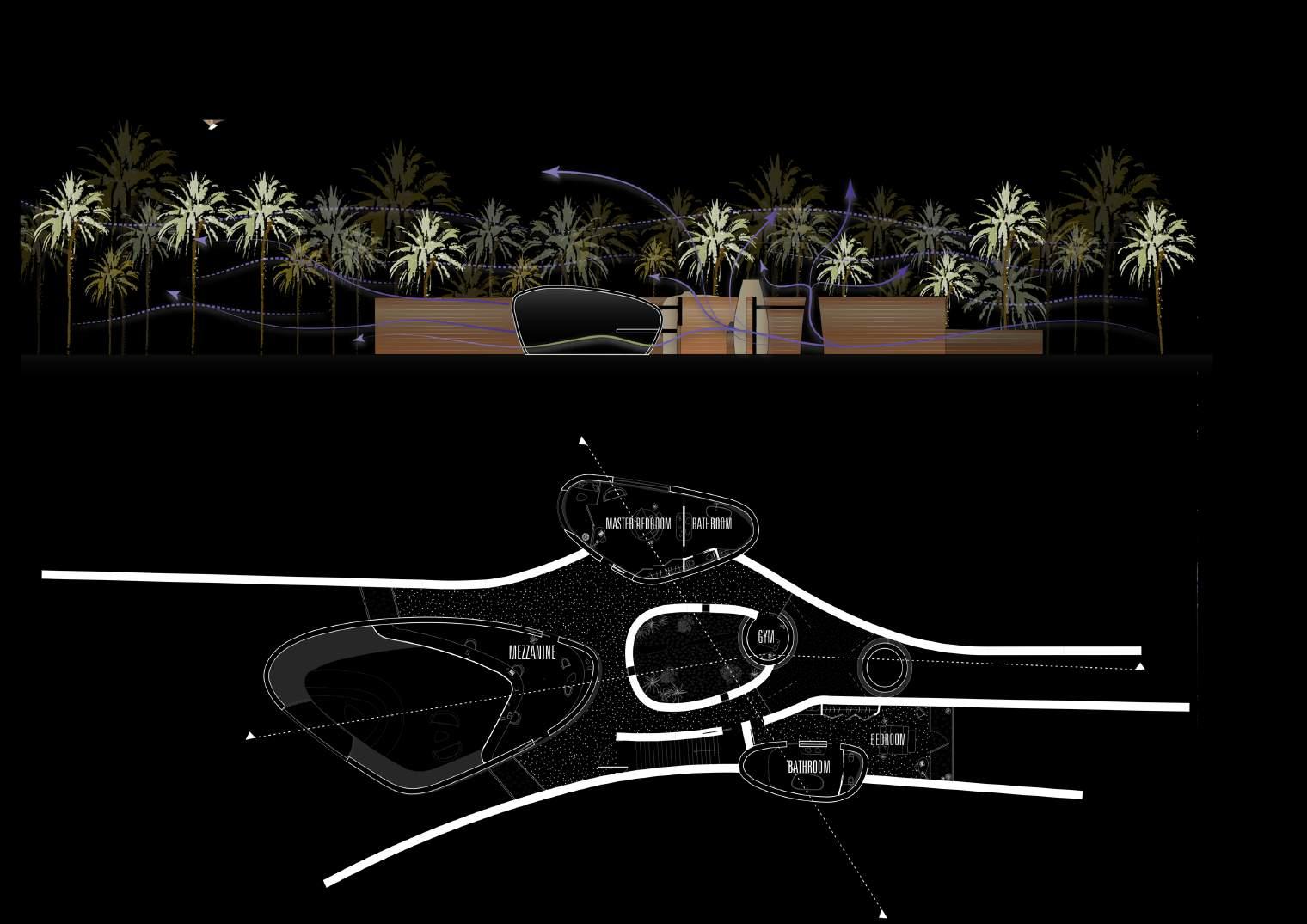
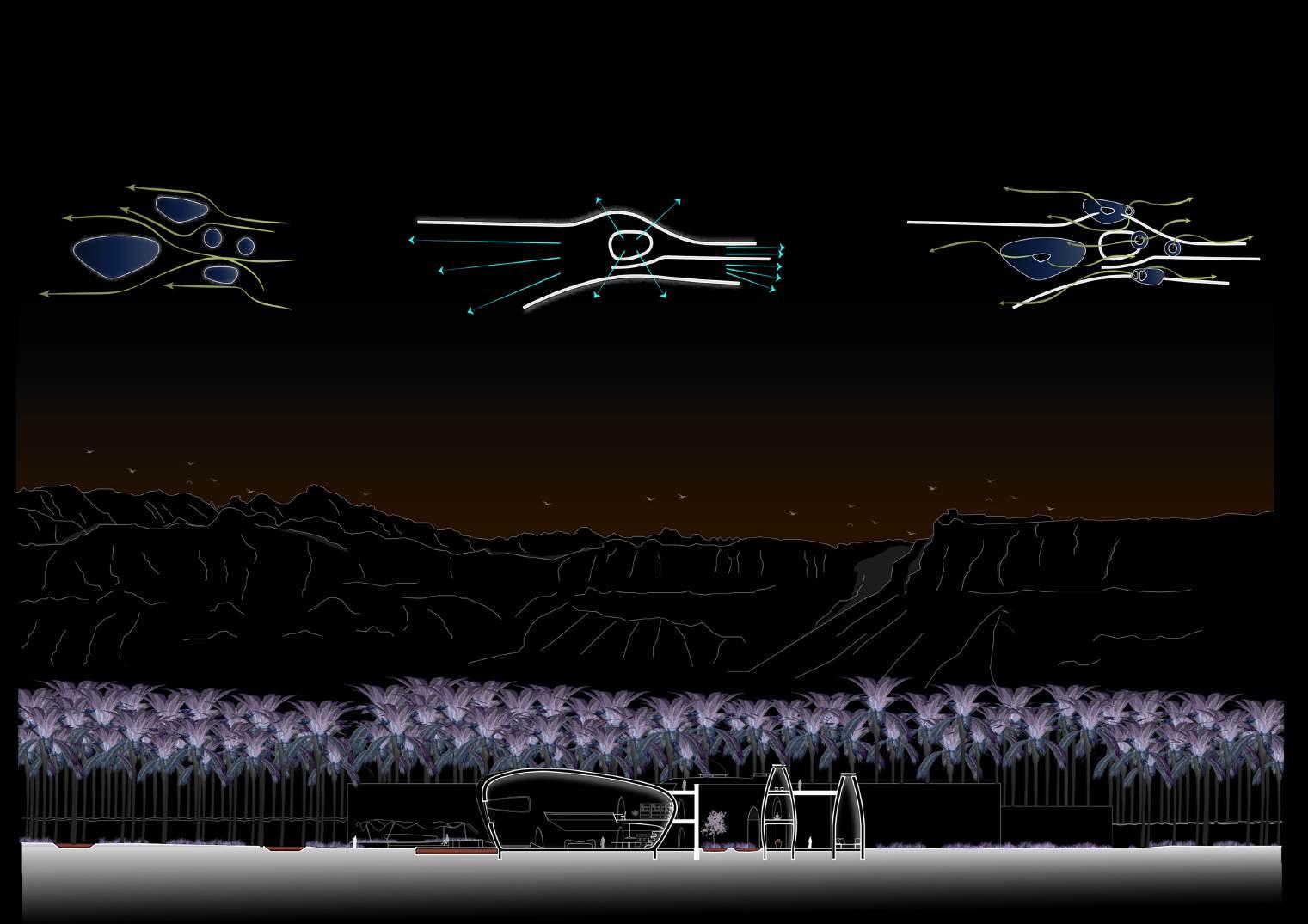
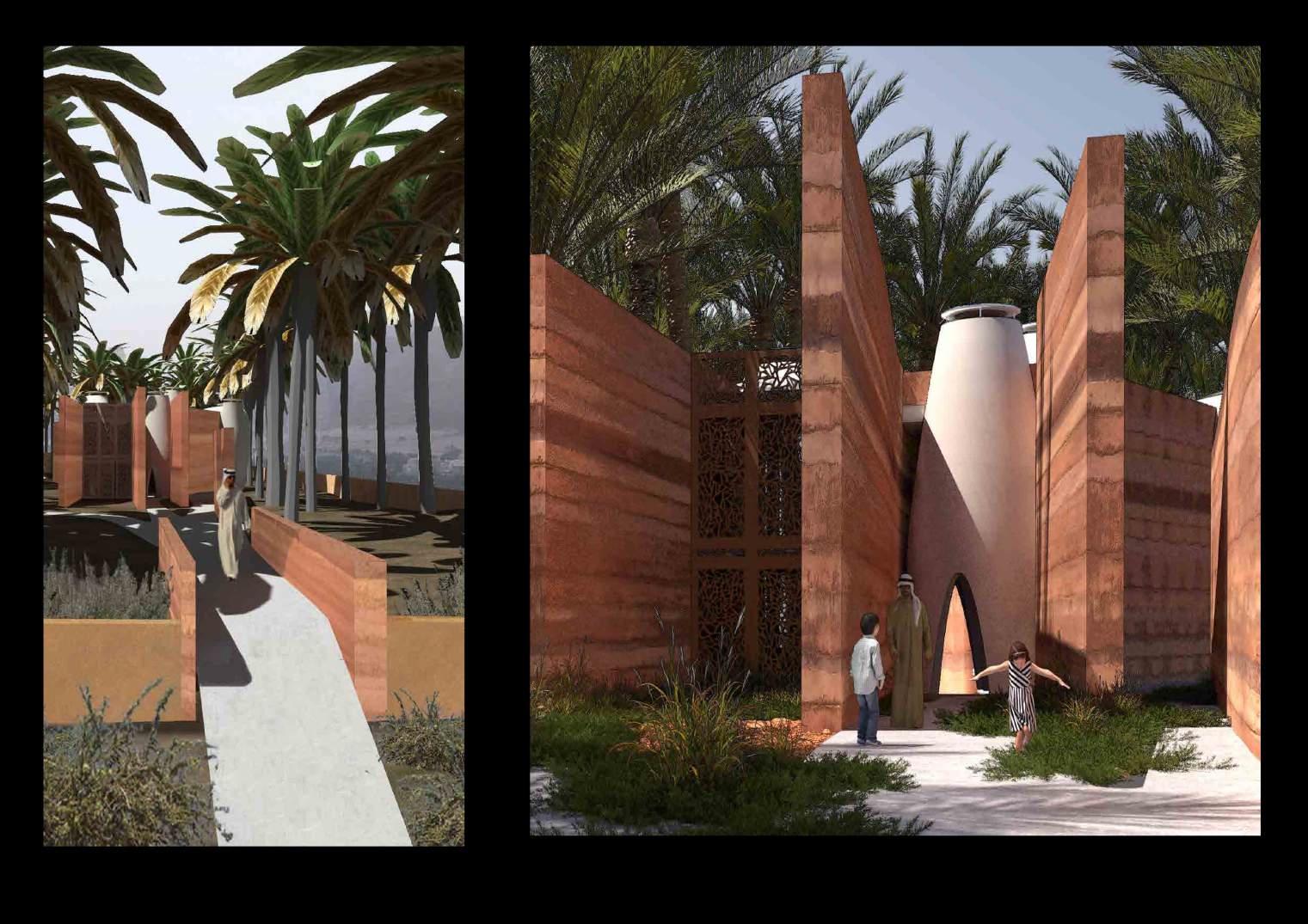
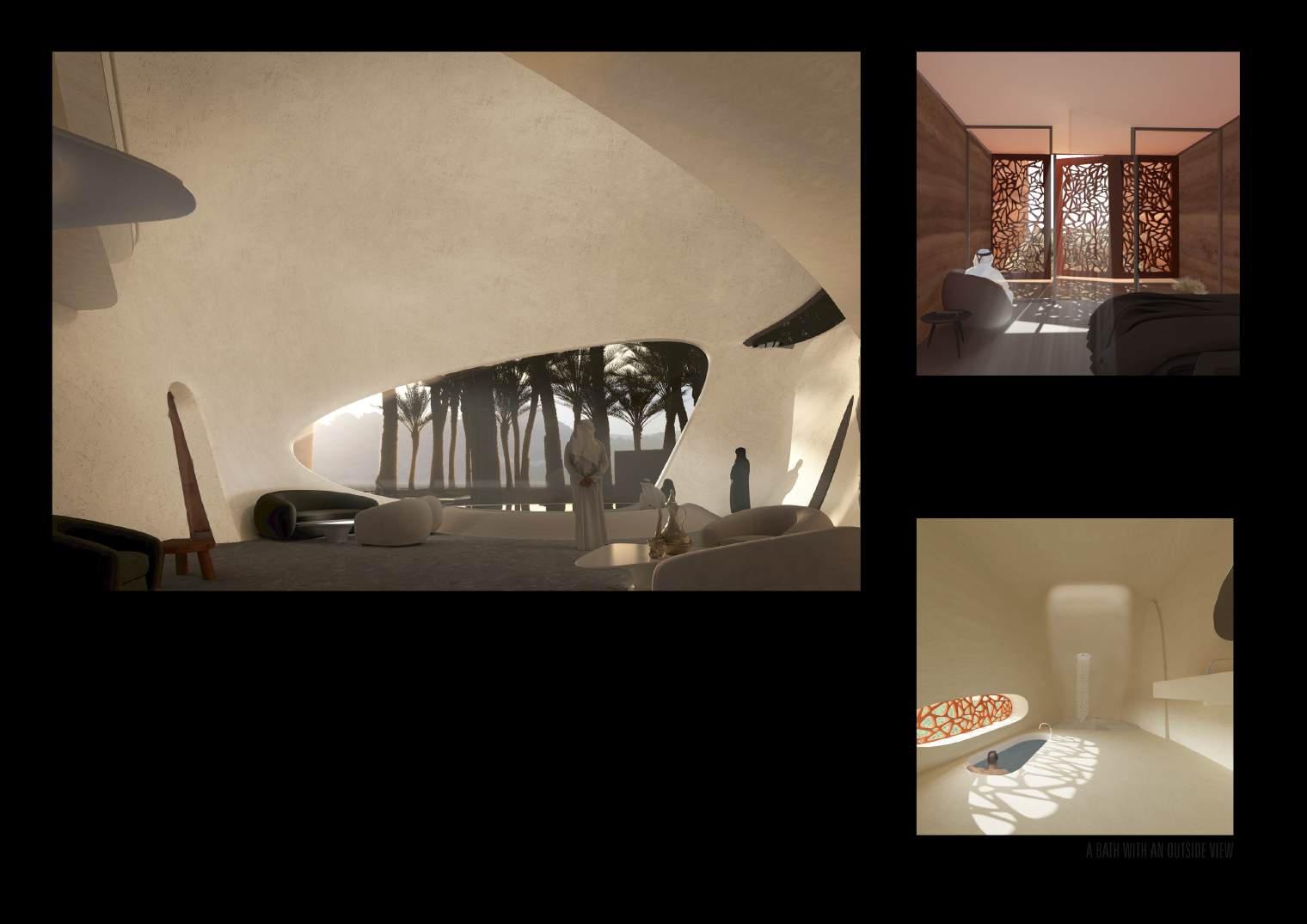
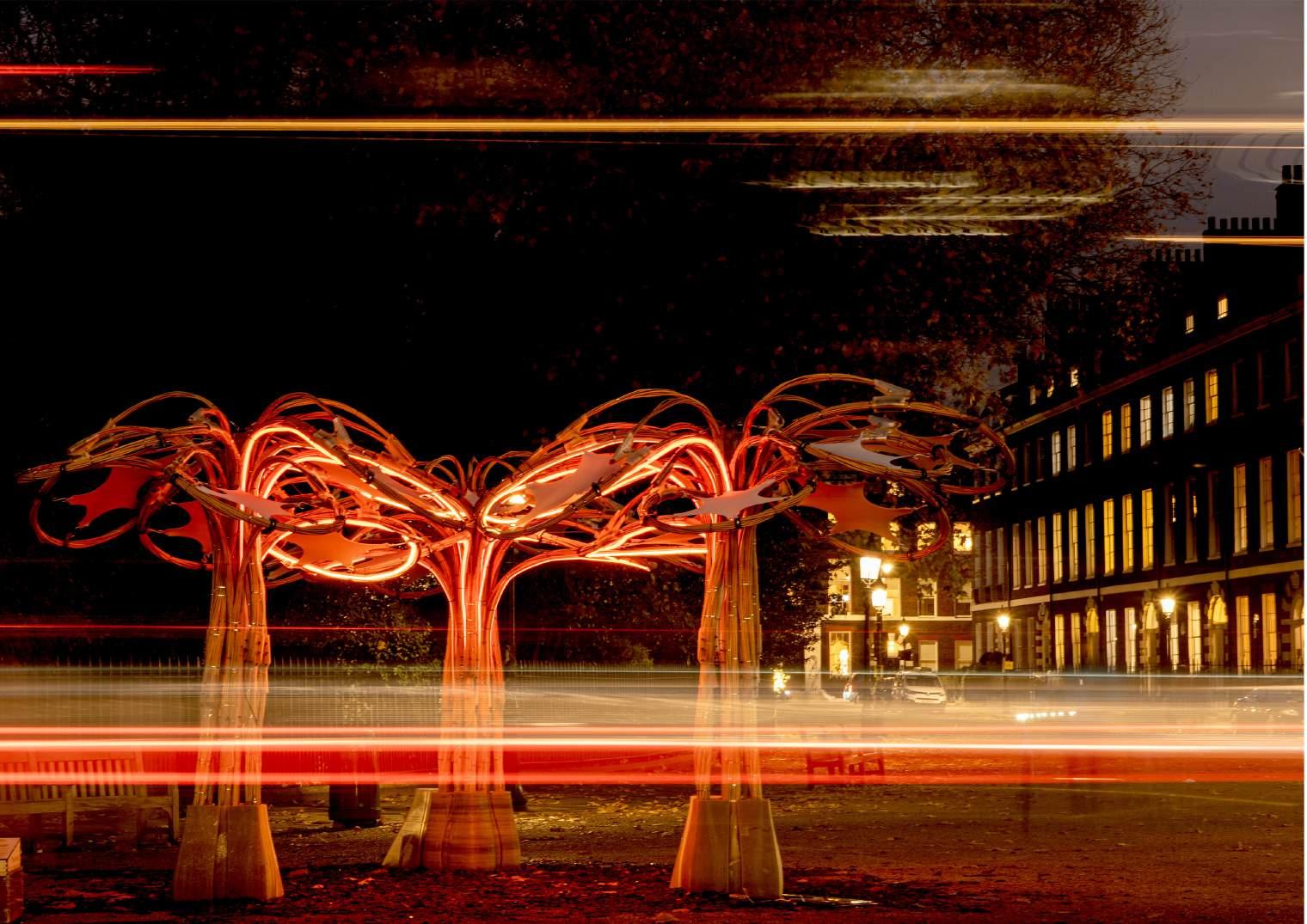
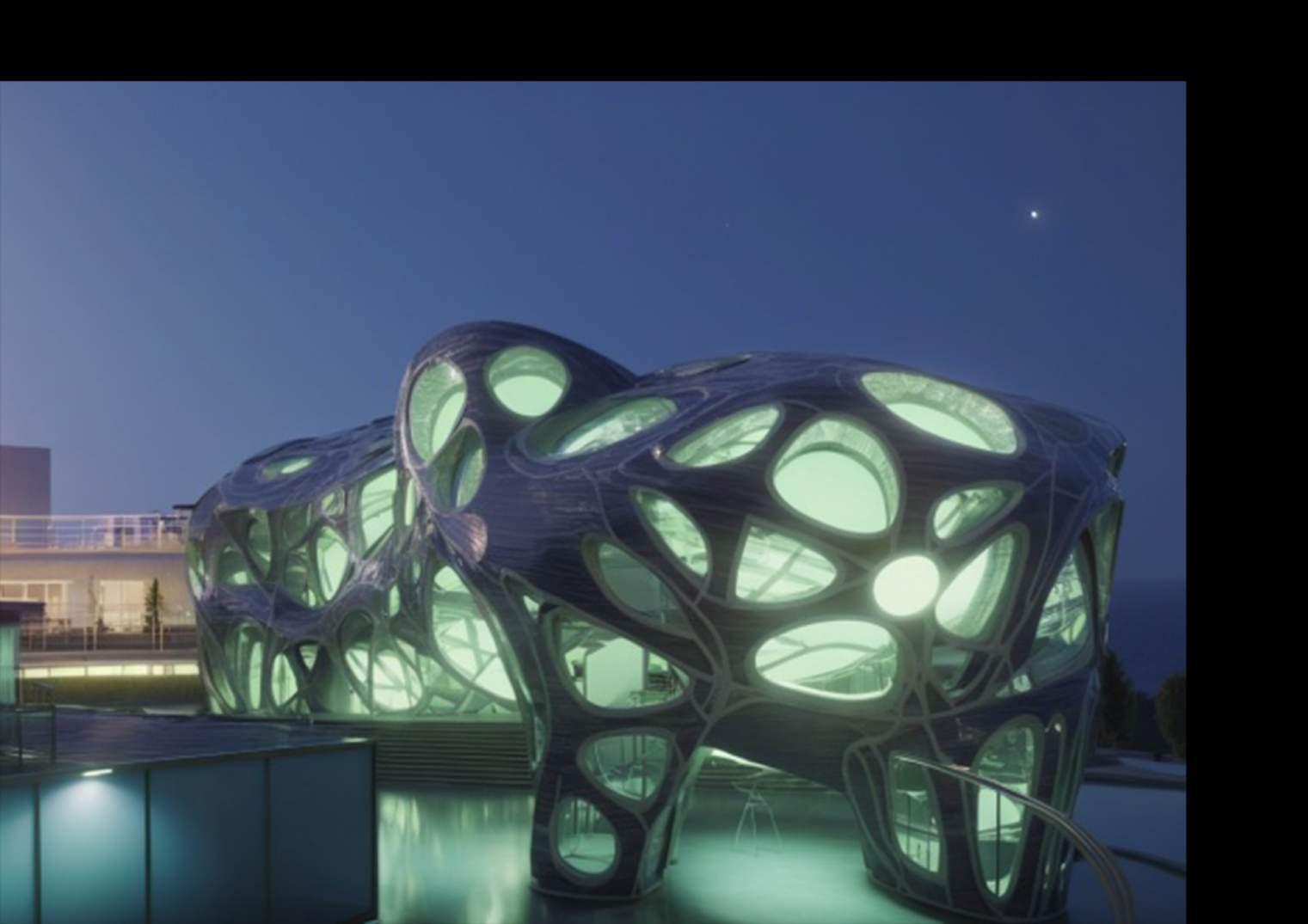
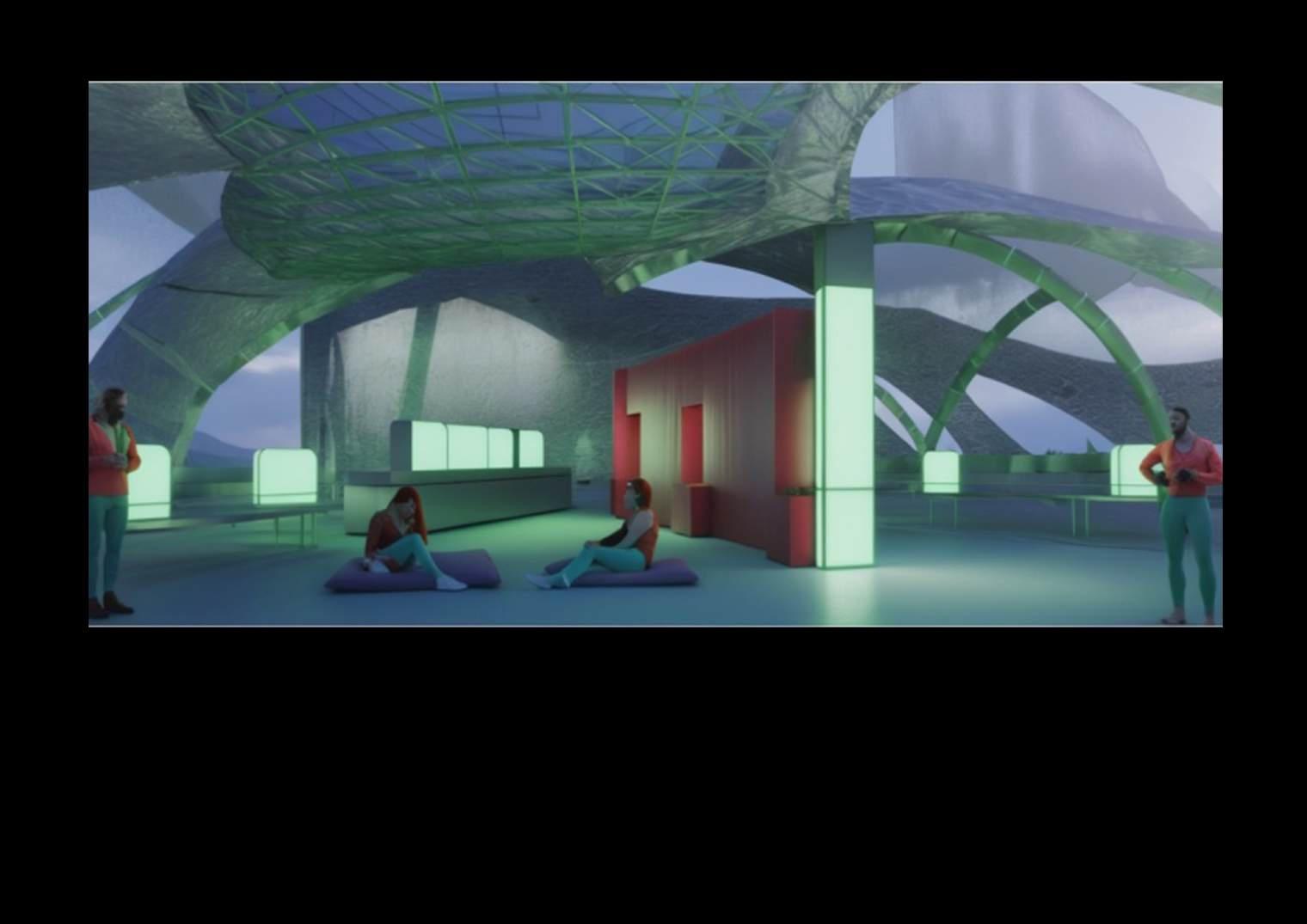
EmTech x Populous Collaboration explores the intersection of biomimetic design, ecology, and architecture, integrating advanced computational methodologies with natural growth patterns.
This collaboration investigates densified ecological systems, translating principles of adaptive vegetation and dynamic growth into architectural and urban strategies.
Leveraging Emergent Technologies (EmTech) expertise and Populous’ design innovation, the project envisions responsive, high-performance environments that foster ecological resilience and spatial efficiency
MEF University
Team
Deniz Uluköy
Elif Alnıak
İrem Koşalay
Zeki Küçüksarı
Ayşe Nur Naçar
Talha Uçar
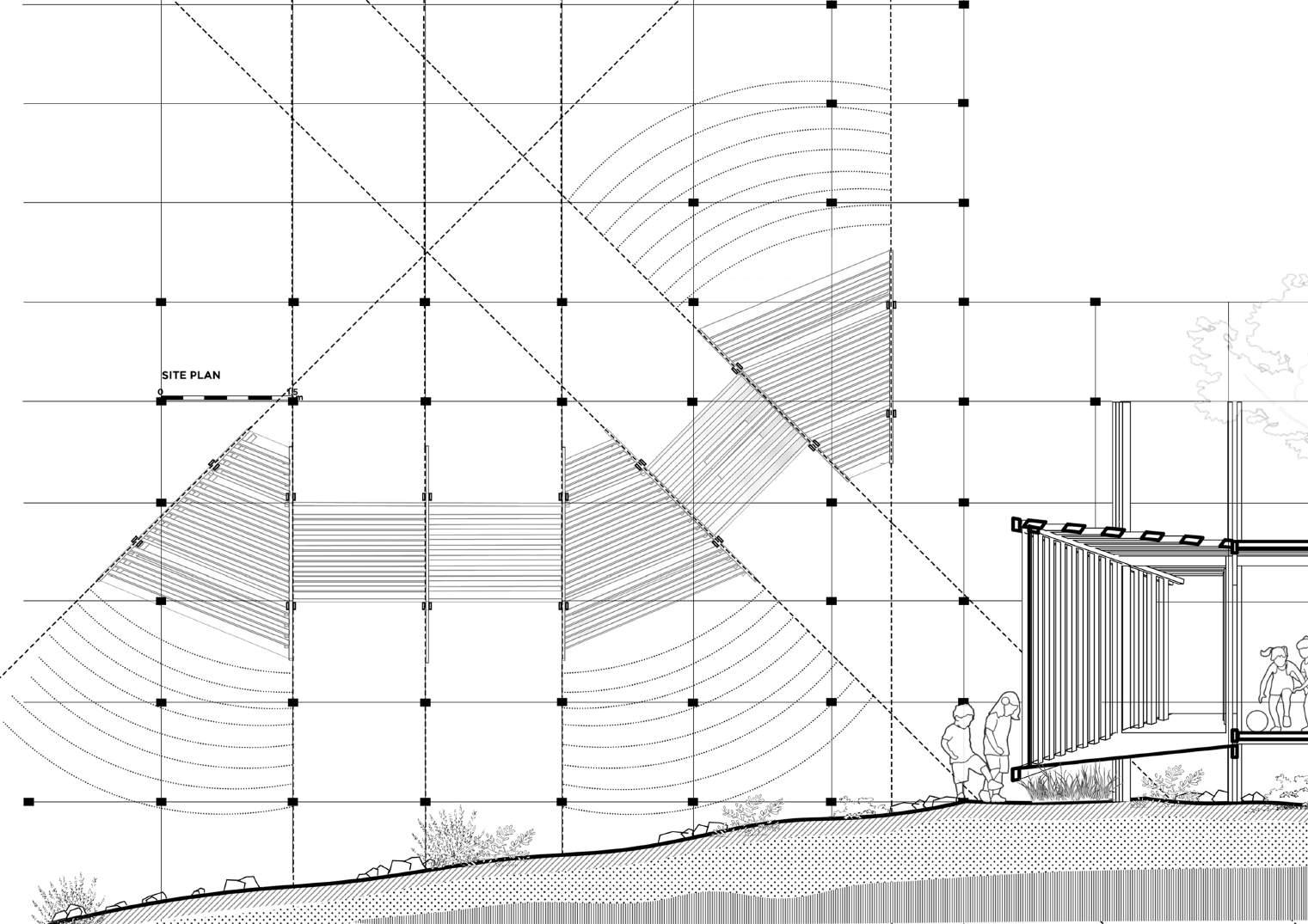
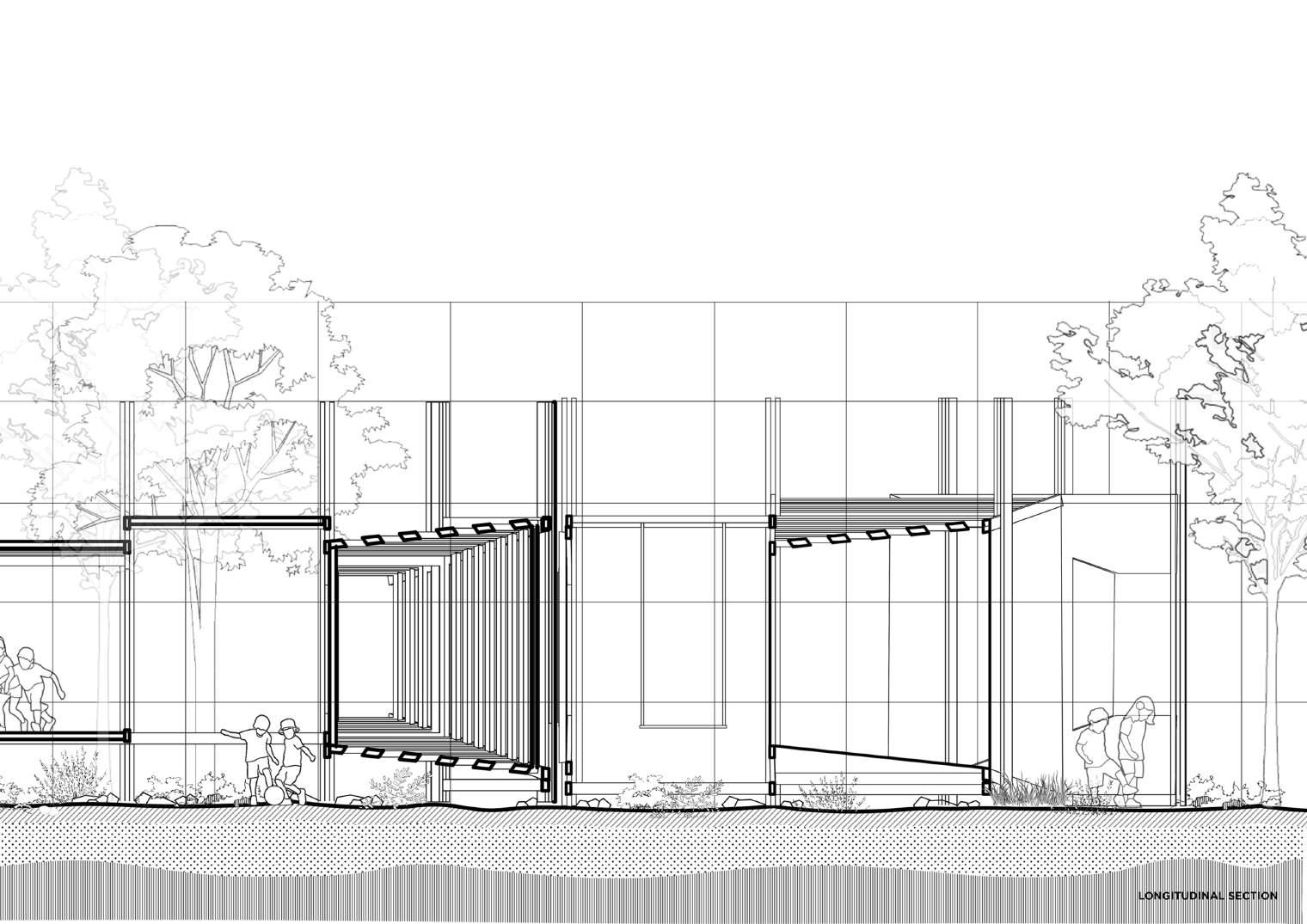
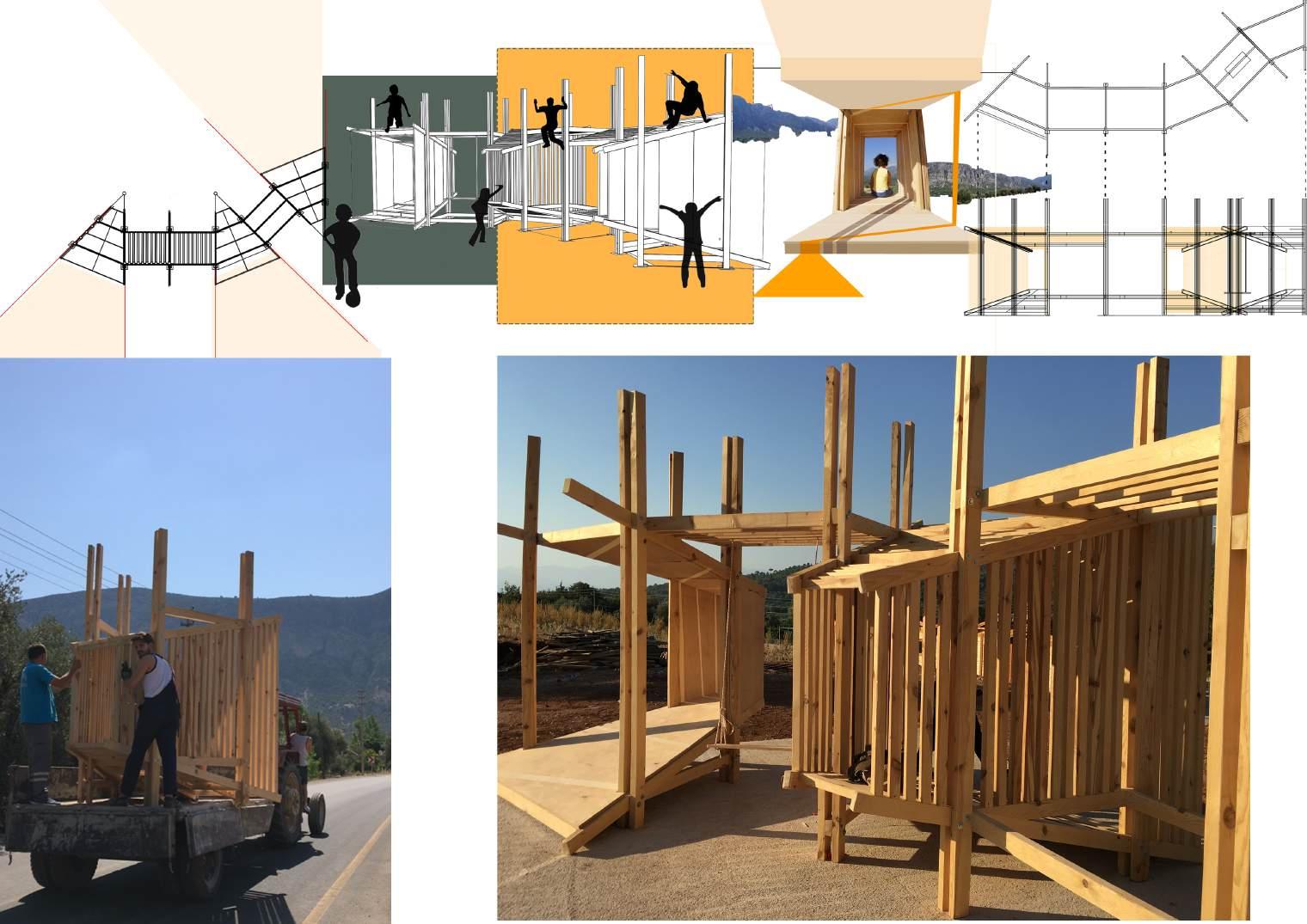
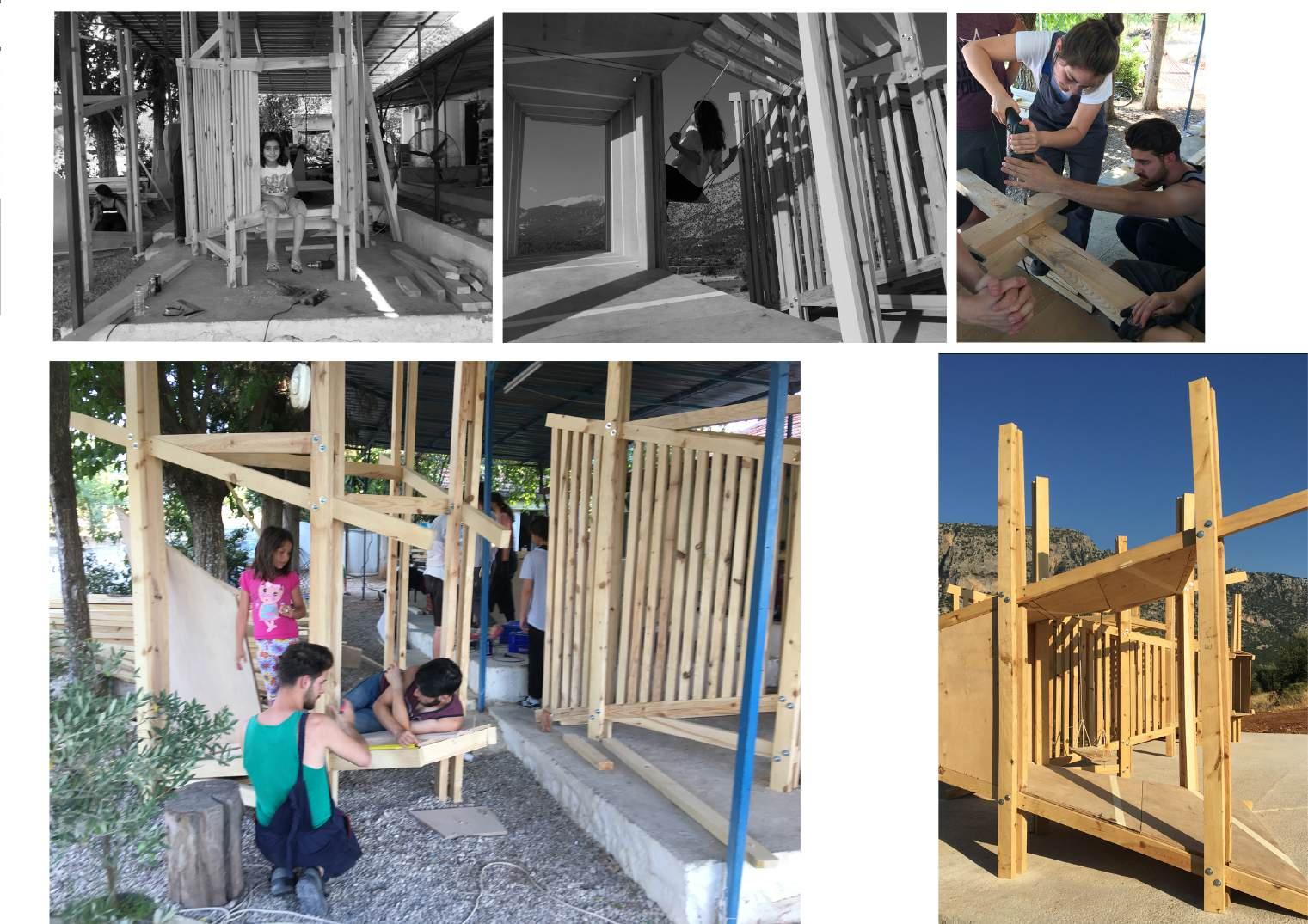
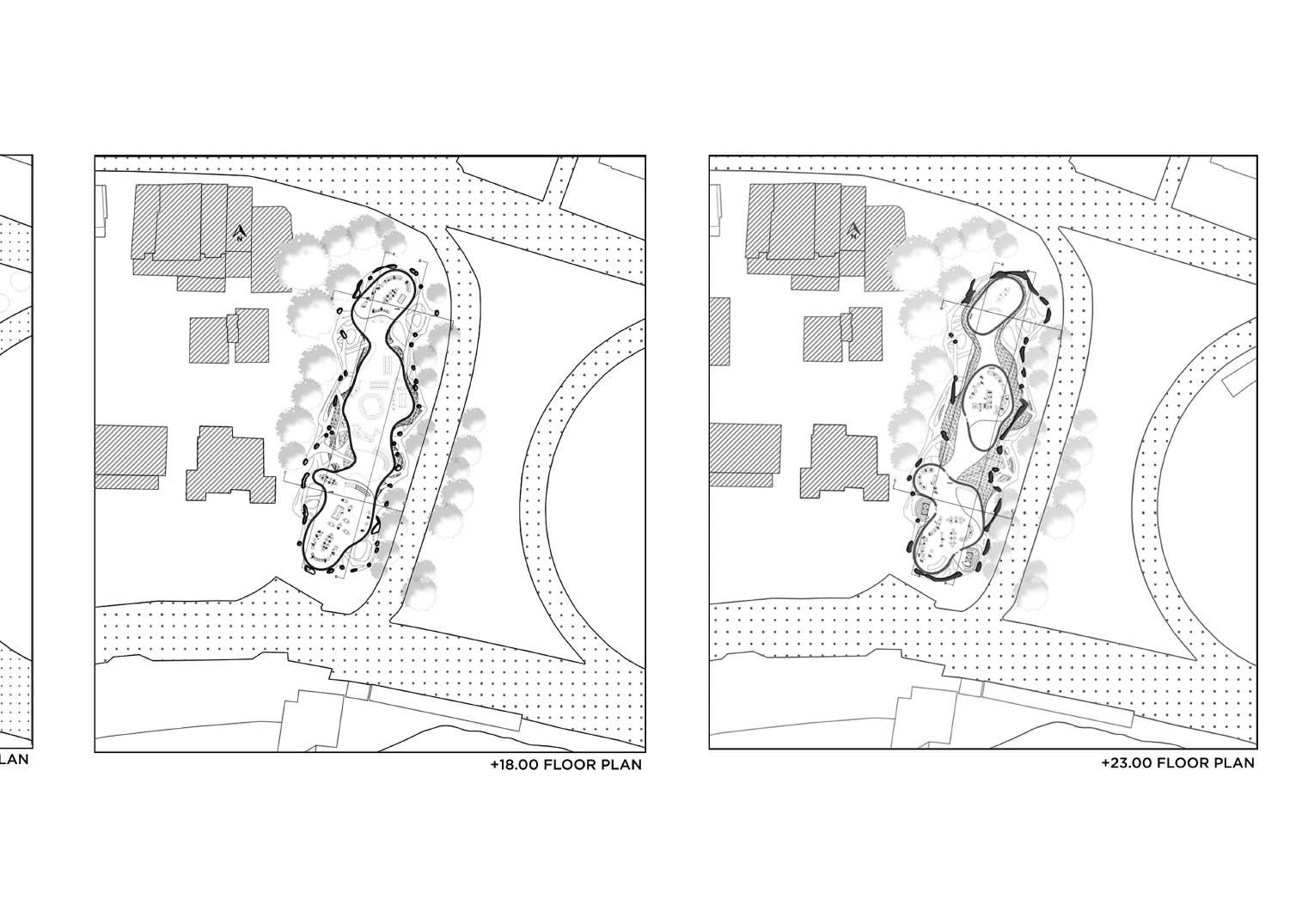
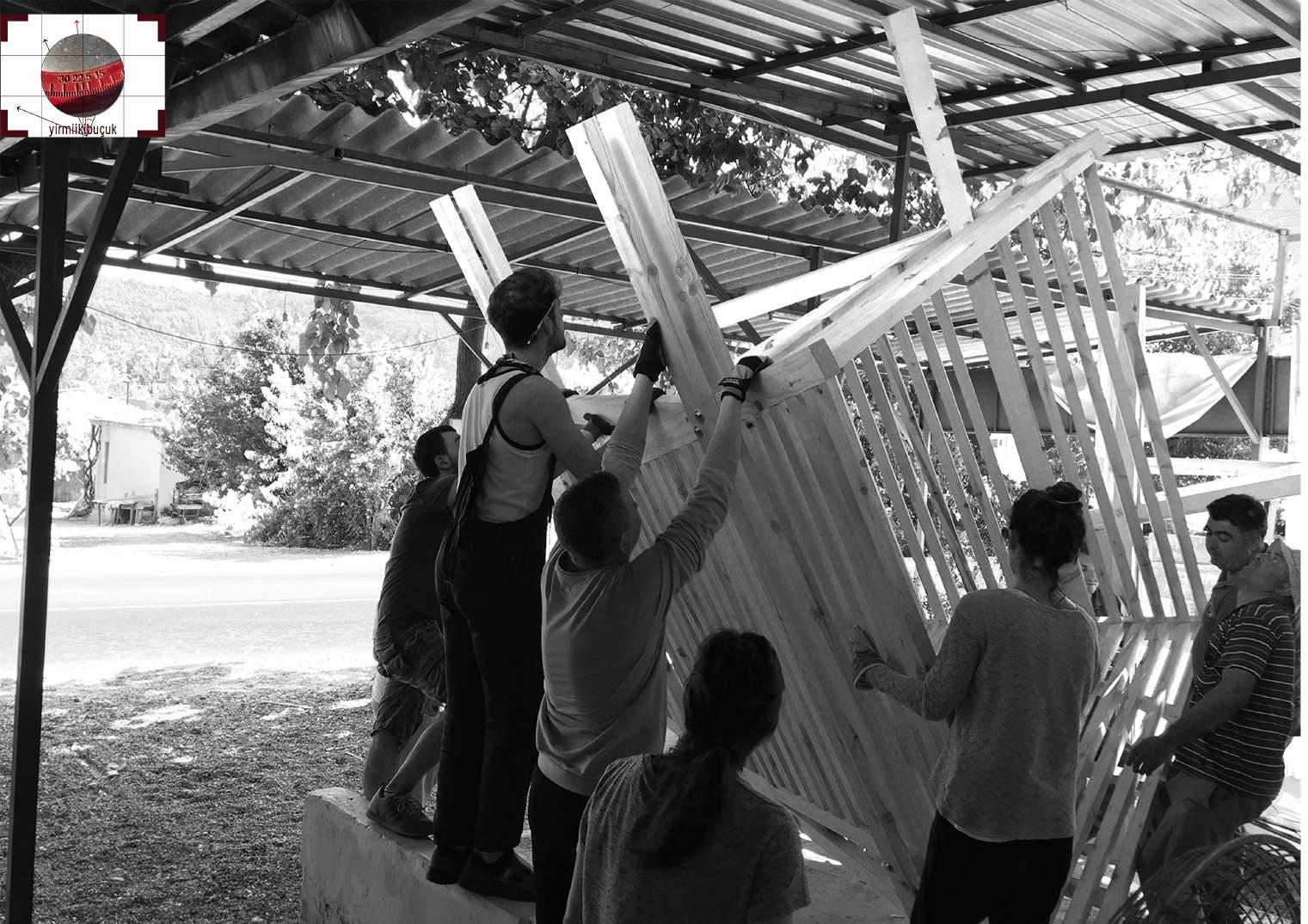
Twentytwopointfive is a project designed to bring children together in Seydikemer, Fethiye, where urban settlements are dispersed. Developed over two weeks by incorporating local needs, the project aims to encourage free, creative play, breaking away from conventional norms.
The design consists of non-defined modular units that are articulated and oriented toward the landscape, integrating children with nature. Amphitheater-like performance spaces frame specific landscape views, while the flexible layout allows independent use at any time. Though initially designed for children, the adaptable nature of the modules makes the space inclusive for all users.