Best HR Masters Programs – Student Guide
Human Resource Management plays a crucial role in building strong organizations by managing talent, culture, and employee performance. Pursuing one of the best HR master’s programs helps students gain advanced knowledge, leadership skills, and global career opportunities in human resources. This student guide explains top HR master’s programs, eligibility, career options, and future scope.
What is an HR Master’s Program?
An HR master’s program focuses on managing people, organizational behavior, labor laws, compensation, training, and strategic human resource planning. These programs prepare students to become HR leaders who can align workforce strategies with business goals.
Why Choose a Master’s in Human Resources?
Students choose HR master’s programs for many reasons:
Growing demand for skilled HR professionals
Opportunities across industries and global companies
Strong career growth and leadership roles
Competitive salary packages
People-focused and impactful career path
Best HR Masters Programs
Students can select from different HR-focused master’s degrees based on career goals.
Popular HR Master’s Degrees
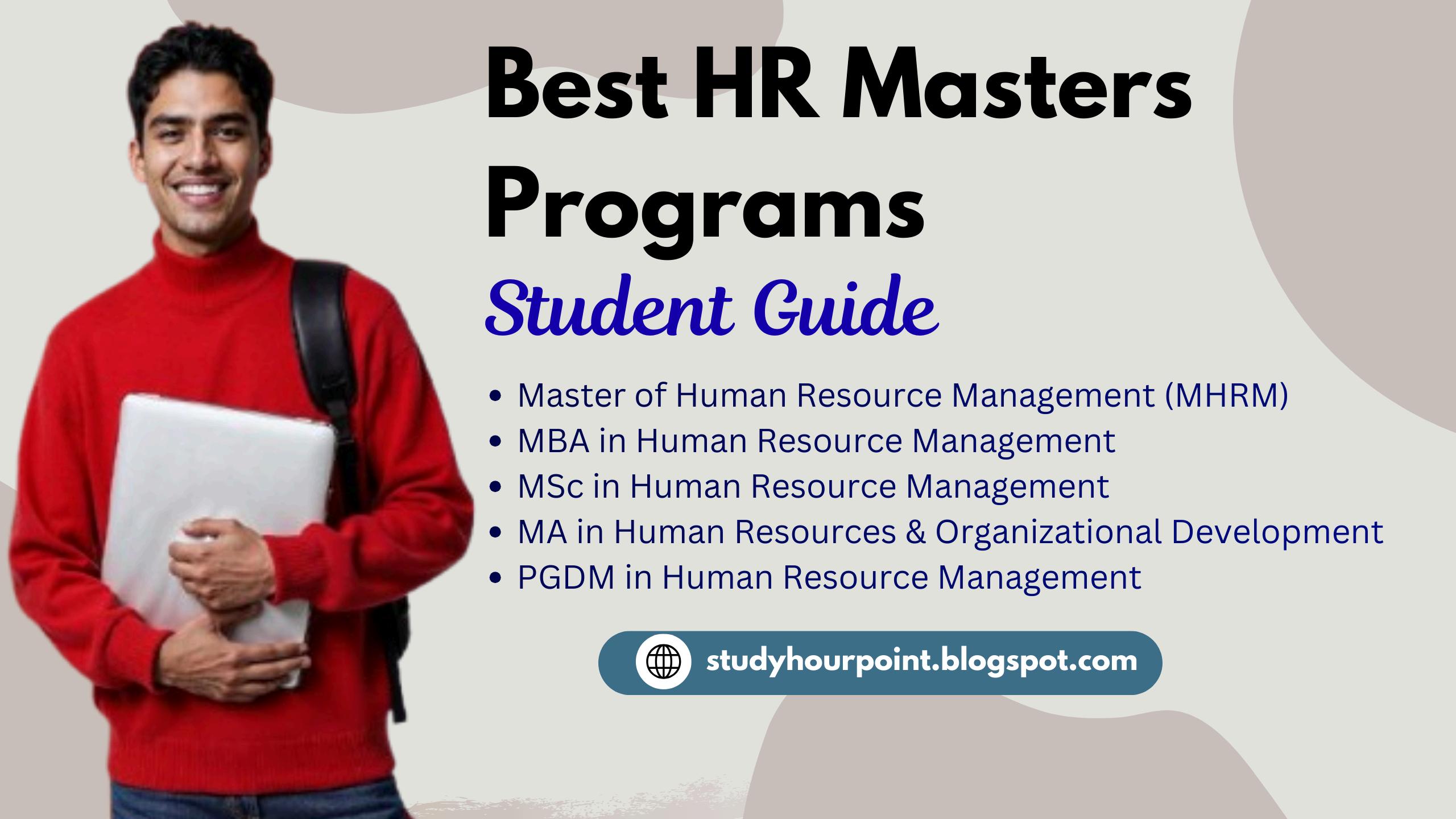
Master of Human Resource Management (MHRM)
MBA in Human Resource Management
MSc in Human Resource Management
MA in Human Resources & Organizational Development
PGDM in Human Resource Management
Key Subjects Covered
HR master’s programs combine theory with practical learning.
Human Resource Planning
Recruitment & Talent Acquisition
Training & Development
Compensation & Benefits Management
Performance Management Systems
Labor Laws & Industrial Relations
Organizational Behavior
HR Analytics & Digital HR
Leadership & Change Management
Top Institutions Offering HR Masters Programs
XLRI – Xavier School of Management
International Institute of Business Studies (IIBS)
Indian Institute of Management (IIMs – HR electives)
NMIMS University
Symbiosis Institute of Business Management
Eligibility Criteria
Bachelor’s degree in any discipline
Minimum 50% aggregate marks (varies by institution)
Entrance exams such as CAT, XAT, GMAT, or university-specific tests
Personal interview and group discussion (for some colleges)
Career Opportunities After an HR Master’s
HR graduates are employed across all industries
Popular Job Roles
Human Resource Manager
Talent Acquisition Specialist
Learning & Development Manager
Compensation & Benefits Manager
Employee Relations Manager
HR Analyst
Salary Scope
Entry-level: ₹4 – 7 LPA
Mid-level: ₹8 – 15 LPA
Senior roles: ₹18 LPA and above
Salaries depend on institution, role, experience, and location.
Skills Required for HR Professionals
Strong communication and interpersonal skills
Leadership and conflict-resolution abilities
Knowledge of labor laws and compliance
Analytical and problem-solving skills
Understanding of HR technology and analytics
Future Scope of HR Careers
With the rise of HR analytics, AI-based recruitment, remote work, and employee experience management, HR careers are evolving rapidly. Organizations increasingly value strategic HR leaders who drive culture, performance, and innovation.
Conclusion
The masters degree hr management provide students with the knowledge, skills, and exposure needed to build successful careers in human resource management. With diverse job roles, global opportunities, and long-term growth, HR remains a strong and rewarding career choice .