The rule of law — along with the norms, institutions, and guardrails that sustain democracy — has declined and is under extraordinary strain.
Over the past year, the TrumpVance administration has waged a systematic campaign to dismantle government, intimidate the courts, silence the free press, restrict voting access, and consolidate executive power at the expense of the American people. These are not isolated actions — they are the hallmarks of a coordinated assault on the rights, freedoms, and wellbeing of people, families, and communities across the country.
Democracy in the United States is in crisis. But the story of this moment is not only one of crisis.
It is also one of courage.
People across the nation are playing a key role in stopping the administration’s attempts to consolidate king-like power. This report documents both the alarming attacks on foundational democratic values, and the resilience of the people and communities who are fighting to defend them.
Organized by issue area, it offers an illustrative record of what is at stake — and what is possible when people take action, pursue accountability, and refuse to cede the promise of our democracy.
Democracy is not a given. Democracy is a choice. And, we must keep choosing it.
Democracy Under Pressure
Democracy in the United States extends to more than elections; it includes the protection of individual rights, the rule of law, and the ability of people to thrive and build a shared future. These foundations have been under threat for some time in the United States and have intensified over the past year, resulting in a troubling shift toward autocracy.
The Trump-Vance administration and its allies in Congress, in state governments, and in far right policy circles continue to advance a vision of government that too often excludes and polarizes rather than represents and unites. This vision of government follows a concerning pattern around the world, as a number of autocratic leaders direct the machinery of government away from the people it is meant to serve, targeting communities and dismantling institutions in order to consolidate power.
As threats to democracy in the United States intensify, so too does the resolve of the American people.
*Map adapted from analysis by the Carnegie Endowment for International Peace (data reflected as of 2021). A range of policy and research organizations have tracked these trends over time, with the United States featuring prominently as a backslider in several assessments from approximately 2016 through the present.
Current State: Crisis & Guardrails
Democracy in the United States is in crisis. This report offers a representative, non-exhaustive assessment of the state of democracy in the United States today across 15 issue areas.
While the Trump-Vance administration has dismantled democratic norms, they have not yet fully consolidated power. Across each issue area, this report highlights not only the threats, but also the resilience and resistance of the American people taking shape nationwide.
From historic legal challenges to mass peaceful mobilizations, people are showing up for one another, demanding accountability, and pushing back against extremism — demonstrating that even in a period of democratic decline, collective action remains a powerful force for renewal.
This collective commitment to our democracy must grow given the grave threats the nation faces.
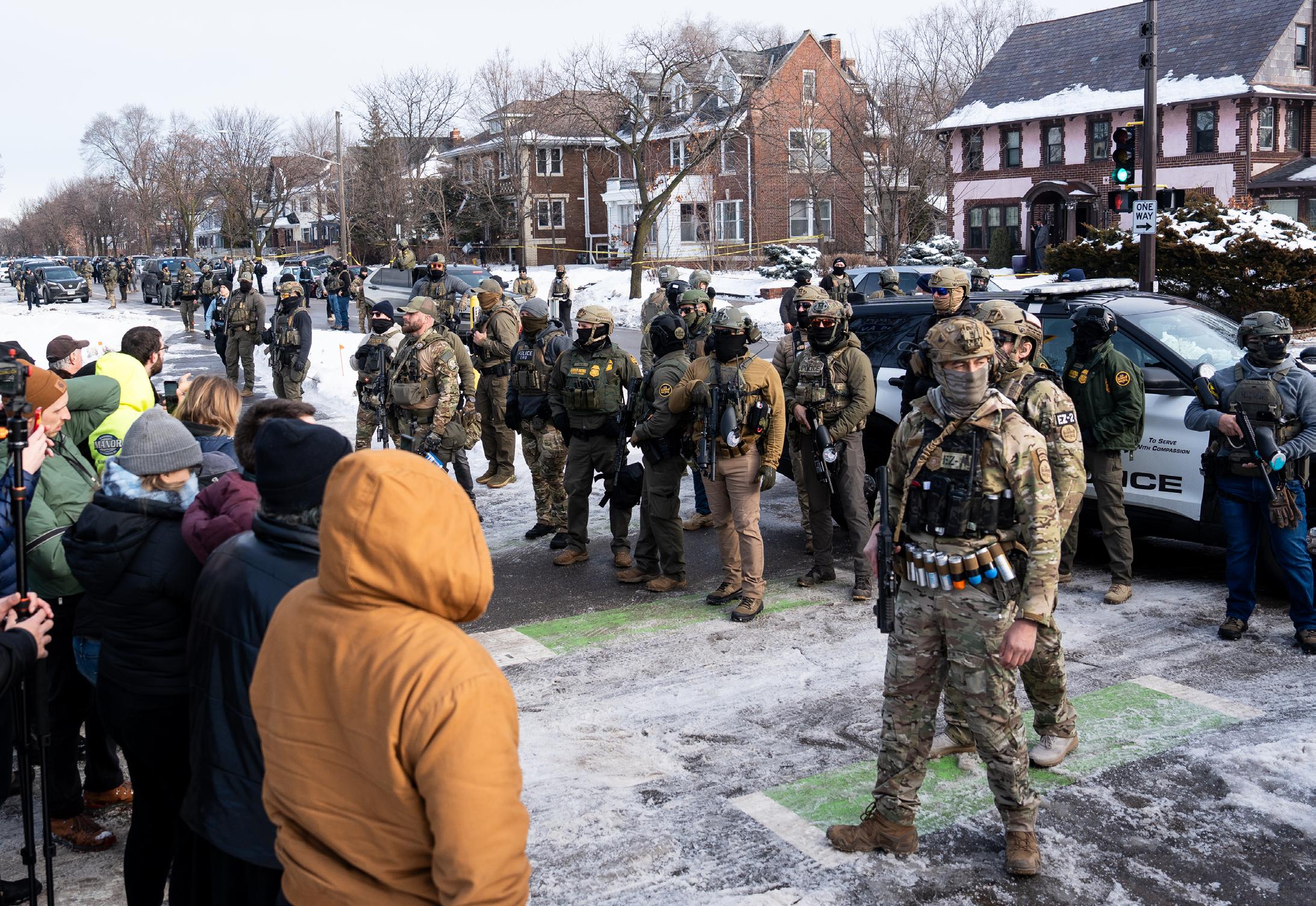
MINNEAPOLIS, MN - JANUARY 7, 2026: ICE agents and bystanders after the fatal shooting of Renée Good
(Credit: Chad Davis, Creative Commons)
01 Rule of Law
Rule of Law in Crisis:
The Constitution establishes clear limits on executive power and guarantees due process, judicial independence, and equal protection under law. Instead, this administration and its allies are:
• Arresting and detaining citizens and residents without due process
The Trump-Vance administration has sought to undermine the rule of law, subordinating legal institutions to political interests. Rather than respecting the independence of judges, the courts, or the authority of court orders, this administration has threatened judges and lawyers. It has openly signaled its intent to use government power to target perceived political opponents, critics, and disfavored communities. It has weakened norms of impartial justice, eroded public trust in legal institutions, and normalized political retribution rather than governance grounded in the rule of law.
• Threatening the suspension of habeas corpus
• Seeking to conduct unprecedented surveillance of civilians, and baseless categorization of political opponents as “domestic terrorists”
• Attacking judicial independence and threatening judges
• Seeking to skirt compliance with court orders
• Committing acts of war without congressional approval and violating the laws of war without consequence
• Directing U.S. Department of Justice (DOJ) to target political opponents, threatening them with prison for lawful, constitutionally protected activity
• Pardoning dozens of individuals involved in financial crimes, as well as Jan. 6 insurrectionists and anti-abortion protesters
• Defying legal deadlines and obligations to disclose all records relating to the Epstein files
Trump offers longpromised pardons to some 1,500 January 6 rioters
• Threatening the Federal Reserve’s independence and launching investigations into its chair in an effort to pressure the central bank to prop up an economy weakened by the president’s own policies, and to encourage him to step down
• Freezing funding or imposing unlawful conditions on groups whose views the administration disfavors, in retaliation for speech, in violation of the First Amendment
• Manufacturing “collusive settlements” with friendly right-wing organizations and states to achieve policy wins that neither can achieve through the legislative or rulemaking process states to comply
The Resilience of People and Communities:
Courts:
Federal courts are ruling against the administration’s unlawful conduct, including judges of all ideological backgrounds and those appointed by President Trump himself
Federal courts have been willing to compel compliance with their orders when the government seeks to violate them and has ordered discovery into the government’s false statements to courts
Every court to consider the president’s executive orders against law firms struck down the orders as unlawful
A grand jury refused to indict six lawmakers involved in a video urging military members to refuse illegal orders — adding to a string of high-profile losses in front of grand juries (Comey, James)
A federal court restored federal funding for American Bar Association (ABA) programs supporting domestic and sexual violence survivors, ruling the cancellations were likely retaliatory
People:
Career prosecutors resigned after being placed in untenable positions due to political pressure or conflicting directives
More than 4,300 lawyers from across the political spectrum sent a letter urging Attorney General Pam Bondi to defend the American legal system amid escalating attacks from the administration
02 Separation of Powers
The administration seeks to concentrate power in the executive branch and treats congressional oversight, independent agencies, and judicial review as obstacles rather than checks and balances. Dismantling agencies and programs that Congress authorized and impounding appropriated funding represents extreme executive overreach, reduces transparency, and erodes the capacity of democratic institutions to hold power accountable and protect the rights of the people.
Separation of Powers in Crisis:
The administration and its allies have expanded executive power and weakened constitutional checks and balances by:
• Issuing more executive orders in President Trump’s second term than in his first — using orders and emergency declarations to bypass legislation and redirect funds without clear congressional authorization
• Governing through manufactured crises, including the longest government shutdown in U.S. history and repeated shutdown threats used to force policy concessions and destabilize public services
• Invoking emergency authorities to impose tariffs without congressional approval, injecting uncertainty into global trade and undercutting previously negotiated agreements and norms
• Dismantling congressionally mandated agencies, funding, and programs
• Engaging in acts of war without congressional approval or oversight
Recent polling shows voters are concerned about presidential power and strongly support constitutional checks and balances, with about 78% agreeing that congressional oversight strengthens the political system.
The
Resilience
of People and Communities:
Courts:
A raft of litigation was filed — much of which was successful — to challenge executive orders
The Supreme Court denied the administration’s attempt to establish tariffs far beyond congressional limitations, issuing a ruling which will require the administration to explicitly seek congressional authority before establishing tariffs that could dramatically impact the American economy
State and Local Leadership:
Governors, attorneys general, and mayors have challenged federal actions in court and advanced policies that preserve checks and balances where federal safeguards have been weakened.
Congress:
Limited congressional oversight emerging around the Epstein files, with hearings and subpoenas focused on uncovering the administration’s handling of the case
Trump fires
2 Democrats on the Federal Trade Commission, seeking more control over regulators
People:
Mobilization and education efforts like the 10 Steps Campaign give Americans the framework to understand what’s happening to our democracy, and the tools to respond
Tens of thousands of Americans have signed the 250 pledge sponsored by We Hold These Truths affirming the separation of powers
03 Good Government
Good Government in Crisis:
• The Trump family has reportedly made almost $4 billion “off of the presidency” in just a year
• Accepted a $400 million jet from Qatar, weeks before announcing a Qatari golf resort deal with The Trump Organization
The Trump-Vance administration has presided over a level of corruption unprecedented in scale, marked by the routine use of the presidency for personal gain through regulatory, enforcement, and foreign policy decisions, pardons, lavish gifts, and privileged access to the White House — violating the Emoluments
Clauses of the Constitution and anticorruption norms core to democracy. Senior officials and advisers have faced allegations of bribery and payto-play access. These abuses have hollowed out ethical safeguards, normalized self-dealing, and helped drive the U.S. to its worstever ranking on a trusted global corruption index.
• Seeking $230 million from the DOJ over investigations into conduct during the first term
• The president is suing the IRS for $10 billion of taxpayer money for his leaked tax returns
• Following an autocratic playbook, the president is attempting to reshape public institutions in his image, sometimes directly tied to the release of billions in federal funds, including the U.S. Institute of Peace, the Kennedy Center, Dulles Airport, Penn Station, and other public assets, including the White House
• Releasing convicted criminal and former Congressman George Santos, after he pocketed campaign funds for personal gain, lied on government forms, and stole the identities and financial information of elderly campaign donors, because he “always vote[d] Republican”
• White House border czar Tom Homan was reported to have accepted a $50,000 cash payment, though the DOJ shut down the investigation
Trump would like the government he leads to pay him
The Resilience of People and Communities:
Courts:
National Trust for Historic Preservation suing over President Trump’s proclaimed authority to proceed with the construction of a $400-million White House ballroom
Congresswoman Joyce Beatty suing to stop the renaming of the John F. Kennedy Center
A university faculty group filed a lawsuit challenging the Trump administration’s “gold card” program allowing permanent residency in the U.S. in exchange for a $1 million payment
Former IRS, DOJ, and government ethics officials have filed a friend-of-the-court brief urging the court to reject President Trump’s attempt to pay himself $10 billion from his lawsuit against his own IRS
People:
Multiple investigations under the Freedom of Information Act have been filed seeking recordings that reportedly capture border czar Tom Homan accepting a payment from undercover FBI agents, and information regarding $230 million President Trump has demanded from the DOJ, and other corruption schemes
04 Voting & Elections
Free and fair elections are the cornerstone of a functioning democracy. Yet the Trump-Vance administration is pursuing a deliberate effort to subvert and weaken them by seeking to restrict ballot access, interfering with election administration, threatening militarization of polls, blurring constitutional boundaries between federal and state authority, diminishing confidence in electoral outcomes, and weakening safeguards. Many of these actions are out of step with the will of the people.
Voting and Elections in Crisis:
The administration and its allies are taking the following actions to undermine free and fair elections:
• Threatening to federalize elections, voter ID mandates, and controlling polls in certain locations
• Aggressively seeking to advance federal voter suppression policies
• Attempting to create national databases of voter data, including the misappropriation of personal data by thirdparty actors to undermine safe and secure elections
• Threatening to deploy federal immigration agents and the military to voting sites to intimidate voters
• Launching baseless criminal investigations against state and county election officials and using this pretext to seize ballots
• Congressional leadership refusing and / or delaying seating elected officials
• Demanding state voter rolls, including using the deployment of federal agents (or their withdrawal) to attempt to coerce states to comply
2026 MIDTERMS
Elections will be held on Tuesday, November 3, 2026
Voters will choose all 435 members of the U.S. House of Representatives, 35 U.S. Senate seats, 39 governors, and numerous state and local elected officials.
Register to vote or check your registration status: vote.gov
The Resilience of People and Communities:
Courts:
With elections rapidly approaching, the League of Women Voters, along with three individual plaintiffs, challenged the administration’s unlawful creation of massive government databases consolidating sensitive and legally protected personal information on millions of people in America to unlawfully open investigations and purge voter rolls
Courts have blocked major portions of the president’s executive order seeking to federalize election administration
No court has found a basis for the DOJ to obtain sensitive voter data from the states, siding with California, Oregon, and Michigan
People:
Communities across the country are mobilizing and coordinating at unprecedented levels to counter voter suppression and election sabotage, share and publish resources to support election officials, and educate voters
Historic turnouts across the country in 2025 elections, with Maine voters rejecting voter ID and absentee ballot voting limits
State and Local Leadership:
Many states are strengthening voting rights by codifying anti-discrimination safeguards in state law through State Voting Rights Acts
05 Civil Rights & Civil Liberties
Civil Rights & Civil Liberties in Crisis:
The administration and its allies have systematically targeted civil rights enforcement and constitutional protections, including:
The Trump-Vance administration has run roughshod over the First Amendment and personal freedoms — threatening peaceful protesters, pursuing a coordinated campaign to dismantle diversity, equity, inclusion, and accessibility initiatives across the public and private sectors, and weaponizing both federal funding and civil rights enforcement against the institutions it opposes. These sweeping actions harm communities, undermine democratic principles, and seek to rewrite history, by targeting unions, law firms, nonprofits, the media, and institutions of higher education — many of which have responded with resilience and a commitment to lawful, democratic resistance.
• Undermining federal civil rights enforcement by abandoning longstanding cases and pursuing politically motivated priorities, including the shutdown of meritorious cases and redirection of the Justice Department’s Civil Rights Division away from policing, housing, education, and voting rights enforcement
• Attacking First Amendment rights by arresting and indicting protesters, journalists, and academics — including Minneapolis and on campuses — while deploying increasingly militarized tactics to suppress speech and peaceful protest
• Systematically restricting the rights of transgender people (passports, military, health care access, bathrooms, sports bans) and coercing institutions to drop gender-affirming health care services for fear of defunding and retaliation
• Privileging certain worshipers while assailing the rights of the majority of people of faith
• Directing the EEOC to prioritize complaints from white employees, redirecting civil rights enforcement away from people and communities historically protected under anti-discrimination law
• Urging the Supreme Court to adopt positions that would make it harder for people to vindicate their rights in court
The IRS Is Building a Vast System to Share Millions of Taxpayers’ Data With ICE
The Trump-Vance administration has dismantled longstanding civil rights enforcement norms at the Department of Justice and repeatedly violated First Amendment protections. But the Constitution and federal law endure — and continue to protect the rights of people in America.
The Resilience of People and Communities:
Courts:
Administration abandoned its anti-DEIA
“Dear Colleague Letter”
EEOC abandoned law firm data demands
Federal courts struck down First Amendment violations
Volumes of legal challenges have been filed and are pending, including:
• Challenging the wrongful termination of Black senior officials in government
• Challenging the National Guard’s policy barring transgender federal employees from using restrooms aligned with their gender
• Challenging unlawful Religious Liberty Commission for violating FACA and biased viewpoints assembled for the panel
• Challenging censorship and erasure of history and science at national parks through the removal of exhibits that cover slavery, civil rights, treatment of Indigenous peoples, science, etc.
People:
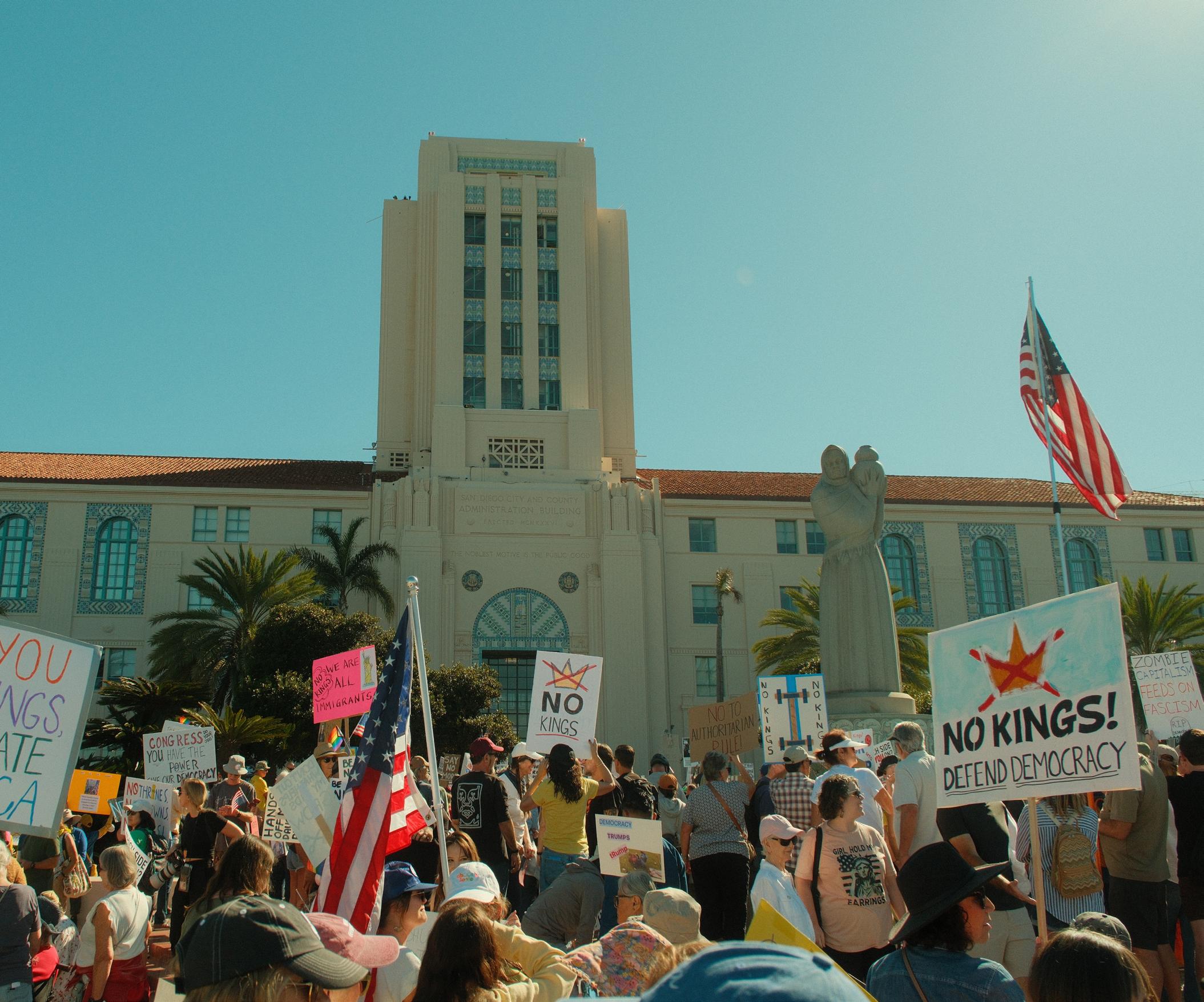
The largest single day of peaceful protests and mobilization in U.S. history (No Kings), despite threats of prosecution
Nationwide Target boycott erased $12 billion in company value
Red Line for Civil Rights will provide greater accountability and oversight
Congress:
Congressional Black Caucus and civil rights leaders are countering the administration’s agenda, including with a new documentary, The Conscience of the Congress
06 Affordability & Economy
President Trump promised a golden age of affordability, but inflation remains elevated and the cost of housing, food, and health care continue to strain household budgets. Tariffs and other economic policies that are a priority for the administration function as hidden taxes costing many Americans thousands of dollars each year. Efforts to diminish the independence of the Federal Reserve, manipulate economic data, and dismantle the Consumer Financial Protection Bureau (CFPB) have weakened protections by tilting economic policy away from the public interest and toward powerful special interests.
Affordability & Economy in Crisis:
The administration and its allies have contributed to the following attacks on affordability and economic stability:
• Rising costs associated with tariffs, inflation, and economic uncertainty
• Weakening job market — Bureau of Labor Statistics revised estimates show that job growth was far weaker than previously believed
• Trump’s key legislative policies in the “One Big Beautiful Bill” will increase our national deficit by $3.4 trillion over ten years
• Hobbled and trying to eliminate the CFPB, an agency set up after the 2008 financial crisis to protect consumers and that has returned over $20B to victims of scams
• Cutting and threatening to cut billions in anti-poverty funding to states, including child care and family assistance programs, in a pattern of targeting communities based on political affiliation
• Targeting nutrition assistance by undermining SNAP benefits through new restrictions and administrative barriers, putting food access at risk for millions of families
Since inauguration 2025, the price of several staple grocery items — including bacon, ground beef, orange juice, bread, and chicken — has increased significantly, evidencing the growing affordability and economic crisis for people and communities.
The Resilience of People and Communities:
Courts:
The Supreme Court struck down the president’s tariffs, following an unprecedented surge of lawsuits from corporate America and industry groups challenging the administration’s tariffs
Litigation brought by CFPB employees, unions, and partner organizations has, to date, prevented the administration from dismantling the CFPB and stripping its funding and enforcement authorities
Litigation on behalf of unions and small businesses to halt the politically motivated freeze of funding for child care and family assistance in the “blue” states has resulted in a court order that will keep the funding in place for now
Despite Trump’s Claims, Grocery Prices Are Rising
Litigation blocked federal efforts to deny access to food assistance, preserving appropriated funding for SNAP benefits for over 42 million people during the 2025 government shutdown
People:
Economic blackouts — often brief strikes or boycotts — have increasingly been organized locally and nationally to connect economic choices with political accountability in response to administration policies
07 Civil Service
Our nation’s career civil servants are the backbone of our federal government, contributing their impartial expertise, experience, and hard work to further their agencies’ missions and serve the American people across presidential administrations. The Trump-Vance administration has engaged in unprecedented attacks on federal civil service — made up of more than two million dedicated, nonpartisan employees who live and work in every state. Efforts to dismantle and politicize this workforce threaten not only those who served or continue to serve in government, but the capacity, responsiveness, and fairness of the government itself — compromising democratic accountability and the public’s trust in institutions meant to serve the people, not those in power.
Civil Service in Crisis:
As a result of the administration’s attacks on the nonpartisan civil service:
• Drove more than 350,000 civil servants from federal service in 2025, creating major gaps in services provided to the American people and resulting in an estimated four million years of lost institutional knowledge and expertise
• Politicized and weakened the civil service, threatening a return to a “spoils system” where federal workers are hired and rewarded based on loyalty to the president and ideological agenda, not competence, including through:
• carrying out wide-scale terminations of civil servants across federal agencies
• intimidating and pressuring nonpartisan career civil servants to resign
• weakening workplace protections and due process rights
• politicizing hiring, easing termination standards, and creating a “Schedule G” category to bypass merit-based rules
• Cuts have undermined the staffing and expertise needed for effective federal response and recovery, degrading the quality and speed of public services across agencies
WASHINGTON, D.C. - SEPTEMBER 30, 2025:
President
Americans overwhelmingly agree that a functioning federal government and a competent civil service are foundational to a vibrant democracy — 90% say effective government is essential, 91% say the same of a competent civil service, and 95% support a merit-based, nonpartisan system.
The Resilience of People
and Communities:
Courts:
Legal challenges have been brought by former civil servants unions, and communities that rely on a civil service and include:
• challenging unconstitutional government reorganization and mass Reduction in Force (RIF)
• opposing the return of politicized hiring
• challenging coercive buyout schemes
• challenging the abandonment of worker protections
• challenging the administration’s efforts to undermine independent agencies
People:
Several clap-out events were organized as a show of solidarity for departing public servants from the Education Department, State Department, USAID, and the CDC
Initiatives have emerged to protect and support the civil service, including:
• Civil Service Strong
• Rise Up: Federal Workers Legal Defense Network
• You Are Not Alone Project
• Democracy Works 250
• Civil Service Fellowship Program
Congress:
Members of Congress have formed a bipartisan, bicameral Federal Workforce Caucus dedicated to supporting civil servants
Democracy Forward highlights
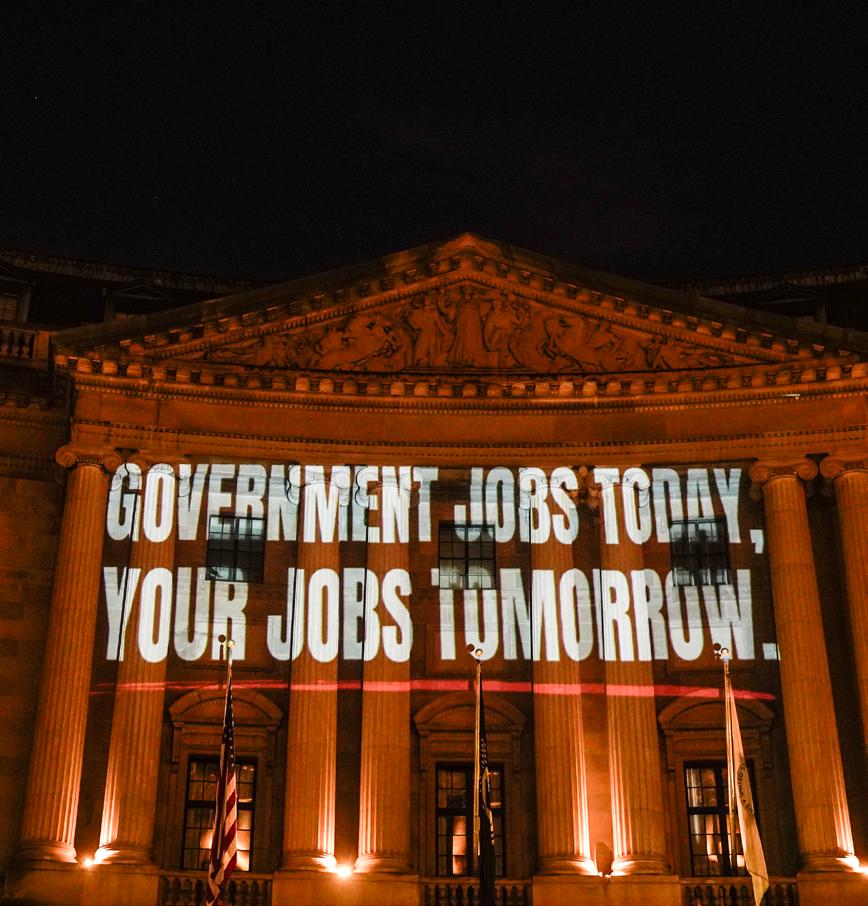
Trump’s firing of federal workers via a projection on the Ronald Reagan Building (Credit: Leigh Vogel / Getty Images)
08 Labor & Workers’ Rights
This administration has trampled on workers and their rights, including by attempting to strip federal workers of collective bargaining protections and pursuing sweeping workforce reductions that have degraded the government’s ability to deliver services effectively. At the same time, the administration is dismantling the independent federal agencies that Congress established to protect workers. The administration is weakening workers’ voices and amplifying corporate power, contributing to the fact that it is harder for American families to make ends meet.
Labor & Workers’ Rights in
Crisis:
The administration and its allies have weakened protections for workers and undermined the institutions designed to safeguard fair wages, workplace safety, and collective bargaining by:
• Proposing rules that would remove minimum and overtime wage protections for home care workers
• Attacking labor unions and workers’ right to engage in collective action
• Undermining the independence of the agencies that protect workers, including the Merit Systems Protection Board, the Office of Special Counsel, and the Federal Labor Relations Authority
• Weaponizing the Equal Employment Opportunity Commission (EEOC) against marginalized groups
• Unlawfully removing the Chair of the National Labor Relations Board and making it harder for workers to organize, leaving workers vulnerable to political interference
Removing workplace protections and harming workers, including:
• Reconsidering a rule that would protect people from exposure to silica in their lungs
• The Federal Trade Commission has reversed course on its ban of noncompete agreements
• The NLRB last year saw a massive drop in its duty to oversee union elections
is the biggest unionbuster in U.S. history In 2025, about 10% of U.S. wage and salary workers belonged to a labor union — roughly 16.5 million people — the highest union membership level in more than 15 years.
The Resilience of People and Communities:
Courts:
Numerous unions are challenging administration actions that weaken the civil service and unlawfully target working people
Former EEOC Commissioner Jocelyn Samuels has challenged her removal without cause from the EEOC
Legal challenges have been filed against the Office of Special Counsel because of their refusal to protect probationary employees from unlawful terminations
People:
Union representation rose to 16.5 million workers in 2025 — reflecting workers’ growing resolve to organize and build power despite hostile labor policies
Thousands of comments were submitted opposing the Department of Labor’s unlawful and harmful attempt to strip overtime wage protections from home care workers
09 Education
Education is foundational to a healthy democracy. It can fundamentally alter lives — shaping who has access to opportunity and who is able to participate fully in civic and economic life. The administration’s approach to education, from K–12 through higher education, has been marked by unusually aggressive efforts to exert control over schools and universities and to exclude vulnerable communities. These actions harm students, parents, teachers, universities, and our entire country.
Education in Crisis:
The administration and its allies have destabilized public education and academic institutions nationwide, including:
• Dismantling the U.S. Department of Education and withholding billions in funding, putting schools and communities at risk nationwide — including many in red states — and using public dollars as a political weapon
• Seeking to eliminate diversity, equity, inclusion, and accessibility programming while deploying enforcement tools to challenge inclusive policies and equity initiatives
• Attempting to “shake down” a number of colleges and universities for their commitment to equity, academic freedom, and the free exchange of ideas
• Encouraging programming that erases US history and teaches nationalism
• Threatening deportation, detention and other uses of immigration enforcement to punish and target student protesters and foreign scholars
• Targeting schools for ICE enforcement, reversing three decades of policy that protected schools as a sensitive location
• Seeking to advance private school voucher schemes through agency action and implementation, diverting resources away from public education
The administration has launched more than 100 investigations into schools and universities, including dozens targeting colleges, frequently accompanied by threats to cut federal funding.
The Resilience of People and Communities:
Courts and People:
Litigation challenges to efforts to dismantle the U.S. Department of Education resulted in court orders finding the administration’s actions unlawful. While this order has been paused by the Supreme Court, public push back and separate litigation successfully reversed the withholding of $6 billion in public education funds for K-12 education
Courts:
Litigation led to a court order rejecting the U.S. Department of Education’s unlawful “Dear Colleague Letter” that threatened to withhold federal funding from institutions teaching critical history, sociology, or lessons addressing race. The administration has abandoned its defense of these measures
Courts have blocked attempts to withhold federal research funding from universities, including Harvard and the University of California system
Trump administration expands efforts to dismantle the Education Department
People:
Protests on campuses across the country have been mobilized in response to the White House’s proposed “Compact for Academic Excellence,” and no major university that was initially invited has publicly signed the agreement
The new Alliance for Higher Education has been formed to protect colleges and universities from political and ideological interference by the government, citing the importance of academic freedom, democratic norms, and access to higher education
10 Health Care
Democracies are linked to higher levels of health care access than autocracies. Health care access is essential for a thriving, engaged citizenry, and to the protection of human rights. The Trump-Vance administration has made health care less accessible and increased health related costs for millions of Americans while prioritizing deregulation and deep cuts to the Affordable Care Act (ACA) and Medicaid, weakening consumer protections, and increasing the number of uninsured. The administration and their allies have also politicized science and public health institutions, reduced support for prevention and preparedness efforts, attacked gender affirming care and reproductive rights, and continues to shift costs and risks onto states, providers, and families, particularly in low-income and rural communities.
Health Care in Crisis:
This administration and their allies have overseen an upheaval in health care and public health services, including:
• Advancing legislative proposals that cut more than $1 trillion from Medicaid and Affordable Care Act coverage
• Allowed enhanced ACA subsidies to expire, increasing health care costs by thousands — and in some cases tens of thousands — of dollars for millions of Americans
• Advancing an anti-science agenda — from the appointment of anti-vaccine activist Robert F. Kennedy Jr. to lead the Department of Health and Human Services (HHS), to rolling back childhood vaccine guidance, and promoting misinformation and skepticism about COVID-19 and vaccine safety. These actions have contributed to a decline in public trust and a rise in vaccinepreventable disease outbreaks like measles
• Attacking reproductive freedom and access to health care related funding has included seeking to eliminate medically necessary, sometimes life-saving, gender-affirming care for youth and adolescents
• Hindering U.S. capacity to manage public health threats, such as severe funding and staff cuts at Centers for Disease Control and Prevention and the National Institutes of Health, in addition to withdrawing from the World Health Organization for the second time
The Resilience of People and Communities:
Courts:
Volumes of litigation filed by medical societies, community advocates, state attorneys general, and other organizations have enabled reversals of unlawful actions, including the protection of:
• health care access for 2.2 million Americans
• $2 billion in addiction and mental health funding, and a number of health care-related grants
• funding for infectious disease protection and pandemics
Nonprofits, public health leaders, and small businesses united to file suit a week after the inauguration to block the Office of Management and Budget’s attempt to halt essential services for individuals more vulnerable to health issues, disabilities, and social isolation
Working with coalition partners, practitioners, and health experts to submit public comments and file friend-of-thecourt briefs explaining the importance of comprehensive care and the unlawfulness of the administration’s campaigns against safe, reliable health care for all
People:
HHS revoked layoff notices of National Institute for Occupational Safety and Health staff after sustained pressure
State and Local Leadership:
Governors, attorneys general, and state and local health departments have resisted federal rollbacks by maintaining public health protections, issuing independent guidance, and filling gaps in funding and services
11 Immigration
Immigration in Crisis:
The administration and its allies have transformed immigration policy in ways that inflict harm and erode legal protections, including:
The Trump-Vance administration’s immigration agenda seeks to demonize and harm immigrants, especially non-white immigrants, to consolidate its power and drive an autocratic agenda. The Department of Homeland Security (DHS) continues to embrace brutality with aggressive, militaristic enforcement actions that rely on violence, surveillance, and intimidation, targeting immigrants, communities of color, and those who observe or protest U.S. Immigration and Customs Enforcement (ICE). These tactics have enabled racial profiling, expanded the use of secretive detention facilities, and weakened due process — eroding civil rights and protections, harming citizens and non-citizens alike.
• Militarizing DHS deployments in major cities, including mass warrantless arrests, racial profiling, tear gas and other force, and violence against immigrants, nonwhite residents, observers and protesters
• Massively expanding immigration detention — including of children and families — resulting in record populations, deaths in custody, limited access to counsel, and hundreds of millions spent converting warehouses into detention centers
• Ending the refugee program except for white South Africans based on discredited far-right claims, re-vetting and attempting to deport recently arrived refugees, terminating status without notice, and detaining individuals without cause
• Detaining thousands of noncitizens based on a new, unfounded theory on mandatory detention, and violating habeas orders from federal courts to release detainees
• Attempting to revoke birthright citizenship
• Attempting to use the Alien Enemies Act, “terrorism” designations and justifications, third-country removals, and questionable national security invocations as pretexts to bypass immigration law and due process
• Stoking fear through aggressive ICE deployments, causing immigrant communities to stop going to work, school, and seeking medical care
“’They are circling our schools,’ superintendent says after 5-year-old detained by ICE”
At least 32 people died in ICE custody in 2025, making it the agency’s deadliest year in more than two decades, as detention surged to record levels. In 2026, at least six people have died in ICE custody, alongside at least two fatal shootings.
The Resilience of People and Communities:
People:
Peaceful mass protests and student walkouts across the country have slowed the administration’s harmful immigration agenda in cities
Courts:
Courts have blocked the president’s attempt to revoke birthright citizenship (Supreme Court will hear argument April 1)
Courts have ruled that the president had no legal basis to deploy the National Guard in a number of cities (Supreme Court let a critical ruling stand)
A broad coalition of religious groups have won two federal court orders blocking ICE authorities from enforcement actions in sacred spaces
Courts have also:
• rejected Alien Enemies Act invocation
• restored the right of certain individual members of Congress to conduct oversight at ICE facilities
• rejected attempts to deprive noncitizens of access to lawyers
Multiple lawsuits are challenging:
• the legality of warrantless immigration arrests and racial profiling
• efforts to dismantle protections, including attempts to revoke Temporary Protected Status and restrict asylum and refugee programs
• detention practices through thousands of habeas petitions, lawyers have secured release in most cases
12 Global Leadership
The Trump-Vance administration’s foreign policy has been defined by nationalist, transactional, and unilateral approaches that depart from traditional U.S. global leadership. It has taken a wrecking ball to critical levers of U.S. soft power — withdrawing from or undermining international agreements, sidelining multilateral institutions, relying heavily on coercive sanctions, and sharply reducing commitments to human rights, democracy promotion, and foreign assistance. In practice, this approach has produced destabilizing actions toward longstanding U.S. allies, Ukraine, Greenland, Venezuela, Iran, while weakening alliances that have underpinned global stability for decades. At the same time, the administration’s posture has emboldened other authoritarian leaders and eroded U.S. credibility abroad.
Global Leadership in Crisis:
The administration and its allies have taken a number of dangerous and unprecedented foreign policy actions, including:
• Dismantling of USAID and humanitarian aid amid worsening crises in Gaza, Sudan, Haiti and beyond, with funding cuts linked to 600,000 deaths in 2025
• Greatly reduced the size of the State Department bureau focused on democracy, and announced that it would no longer comment on the fairness, integrity, or legitimacy of foreign elections
• Announced plans to significantly shrink our national intelligence apparatus and removed experienced career diplomats
• Detaining and indicting Venezuelan leader Nicolás Maduro, conducting lethal boat strikes of disputed legality, and prioritizing U.S. oil interests over supporting democratic transition
• Proposed and continues to reference annexing Canada as the 51st state
• Implementing coercive economic policies, including threatening or implementing tariffs if Europe did not “sell” Greenland to the U.S., and if China, Mexico, and Canada did not do more to stop migrants and fentanyl from reaching the U.S. and applying global tariffs
• Advocating for and often enabling far right-wing nationalist leaders abroad
The Resilience of People and Communities:
Confidence in U.S. global leadership is declining.
In
19
nations surveyed,
a majority of respondents expressed little or no confidence in President Trump’s ability to handle major international issues.
One year on from dismantling of USAID, study projects that global aid cuts could lead to 9.4 million deaths by 2030
Courts:
There are challenges to the administration’s efforts to undermine global institutions, including lawsuits to protect USAID programs and defend Voice of America from political interference
Congress:
Congress voted to continue funding the National Endowment for Democracy and Voice of America, over the administration’s objections
People:
Investigating the Trump-Vance administration’s military actions in Venezuela, including whether there was any coordination with oil companies
International protests and global resistance are accelerating — protests in Copenhagen, Nuuk, London, and Mexico City focused on Greenland, Department of Government Efficiency (DOGE), and tariffs; while leaders at Davos, Munich, and other global convenings are challenging a U.S. defined international order and unwillingness to attend G7
Canadians have boycotted U.S. products and travel, contributing to billions in lost revenue and economic uncertainty, especially in northern border states
Some organizations have stepped up efforts to raise millions in private funds to fill some of the gaps left by the shuttering of USAID and other U.S. government foreign aid cuts
13 Data Integrity & Technology
Data Integrity & Technology in Crisis:
The Trump-Vance administration has weakened transparency, accountability, privacy protections, and information integrity while accelerating the unchecked use of technology, including Artificial Intelligence (AI), in ways that threaten democratic governance and civil liberties. It has given DOGE and others unlawful access to sensitive data, arranged cross-agency data transfers, and set up technical systems to allow for rapid, large-scale crossreferencing and sharing of data sets, resisted Freedom of Information Act compliance, politicized advisory bodies, and deployed insecure, AI-driven systems without safeguards — putting personal information at risk, eroding public trust, weakening oversight, and concentrating informational power in the executive branch.
The administration and its allies have compromised data integrity and expanded the use of technology without oversight or accountability, including:
• Endangering the American people’s data by failing to properly maintain government records in line with statutory requirements
• Endangering our national security through relying on ephemeral messaging, like Signal, for official business
• Enhancing surveillance on Americans through prioritizing large-scale, crossgovernment data aggregation and expanding the use of AI-driven surveillance tools — including facial recognition, social media monitoring, and predictive analytics. With an aim of linking previously siloed datasets, raising serious concerns about privacy, accuracy, mission creep, and civil rights
• Disrupting long-term data sets, research, and statistical independence — the administration fired the head of the Bureau of Labor Statistics following unfavorable jobs reports, undermining long-standing norms that protect economic data from political and ideological interference
• Using AI to accelerate mass deregulation while disregarding accuracy and public safety, including relying on automated systems to draft rules deemed merely “good enough”
President Trump’s War on ‘Information Silos’ Is Bad News for Your Personal Data Worried about surveillance, states
The Resilience of People and Communities:
Courts:
Litigation has been filed by a number of communities and organizations to address unlawful data transfers and other Privacy Act violations, including cases concerning: IRS data sharing, DHS SAVE system, SSA DOGE data access (and other DOGE access cases)
Dozens of FOIA investigations and lawsuits shed light on the federal government’s use of AI
People:
Public comments have been submitted to urge agencies to disclose their use of AI in rulemaking
Reporting on government facialrecognition contracts has led companies to pause their involvement
Tech workers have protested their employers’ work with ICE enforcement and other enforcement agencies
Congress:
Congressman Larson and others introduced a resolution of inquiry into “DOGE’s” election interference scheme with Social Security data
14 Climate & Environment
The Trump-Vance administration has rejected climate science and rolled back core environmental protections in ways that threaten public health, economic stability, and environmental justice. It has curtailed enforcement by the Environmental Protection Agency (EPA) and the DOJ, discounted public-health harms from pollution, and sought to prop up coal plants while attempting to block renewable energy projects. By sidelining science, disregarding legal constraints, interfering with state authority, and withdrawing from international agreement, the administration has eroded evidencebased policymaking, weakened public accountability, and is failing to protect a sustainable future.
Climate
& Environment in Crisis:
The administration and its allies are rolling back decades of progress in science and environmental protections, including:
• Revoking the “endangerment finding,” the administration stripped the EPA of its authority to regulate climate pollution and weakened the federal government’s ability to address climate change
• Actively rejecting climate science, President Trump called green energy a scam and said climate science is from ‘Stupid People’ at an address before the United Nations
• Ignoring international protection frameworks — no U.S. delegation was at COP30, the U.S. exited the Paris Agreement, and the United Nations Framework Convention on Climate Change
• Federal enforcement of laws meant to protect public health and our environment have collapsed to record lows
• Closed the EPA’s Office of Environmental Justice and External Civil Rights
Trump to World: Green Energy Is a Scam and Climate Science Is From ‘Stupid People’
The Resilience of People and Communities:
Courts:
Restoring renewable energy construction: A federal court blocked the Department of the Interior’s attempt to halt Dominion Energy’s Coastal Virginia Offshore Wind Project, part of a series of rulings stopping the Trump-Vance administration from freezing offshore wind projects in Virginia, New York, Rhode Island, and Connecticut
Court-ordered relief returning billions in natural disaster preparedness funds to the states
State and Local Leadership:
Governors, attorneys general, state legislators, and mayors advance cleanenergy standards, emissions limits, and climate resilience policies independent of federal action
People:
Market and investor pressure have contributed to companies, utilities, and investors committing to net-zero targets, renewable procurement, and climate risk disclosures, countering federal backsliding
ANACORTES, WA: Dark smoke from oil refinery rising towards sky (Credit: Mint_Images)
15 Emerging Threats
Emerging Threats Crisis:
The administration and its allies have amplified instability and eroded trust in core institutions, with signs of further escalation ahead, including by:
• Rising political violence, harassment, and escalating a climate of rising political violence, harassment, and intimidation targeting public officials and communities
Concentrated political influence is contributing to democratic backsliding, particularly as emerging tech like AI and space-based infrastructure expand faster than existing oversight frameworks. Weakened transparency and accountability measures can exacerbate risks tied to domestic extremism and enable policy agendas that centralize power and undermine democratic checks. And while many of the administration’s threats to democracy are deliberate and targeted, the response is not new — the pro-democracy community was prepared and remains ready to defend democratic institutions.
• Amplifying incendiary and political content including deepfake-style posts that advance their political messaging through the White House and the president’s social media channels
• Advancing plans to test a citizenship question for the 2030 Census, reviving a proposal blocked in 2019 as part of a broader effort to reshape who gets counted — potentially shifting electoral maps and the distribution of $2.8 trillion in federal funds
• Growing role of private firms and defense contracting to influence space governance and dual-use space-based tech
• Obscuring the release of Epstein-related records involving potential large-scale financial networks and facilitation of human trafficking — undermining public trust in institutional accountability
• Releasing Project 2026: A new publication from the Heritage Foundation that builds on Project 2025 and prioritizes China, elections, education, immigration, religious policy implementation, and deregulation
After initiating more than half of Project 2025’s domestic agenda in its first year, the administration is now escalating efforts to weaken elections and target civil society institutions.
Trump’s use of AI images further erodes public trust, experts say
The Resilience of People and Communities:
Courts:
Despite swift enactment of Project 2025 plans, the pro-democracy community has answered the call through collaboration, organizing, and preparation of more than 600 federal legal cases have been filed over the past year, winning 70-80% of the time with less than 5% going to the Supreme Court
Democracy 2025 and the coalition of 675+ organizations are proactively collaborating, issuing resources, and hosting briefings to respond to new and emerging legal threats posed by this administration
Demanding more information about the Epstein-related file coverup through litigation, FOIA, and other legal tools
People:
Spearheading an initiative to track the administration’s deregulatory efforts and support pro-democracy organizations to engage in public comment
Voter outrage generally about the lack of response to the administration’s actions was on the rise at 2025 town halls for some members of Congress from both sides of the aisle
As of February, 45% of Americans identify as politically independent — a record high — particularly among young voters who increasingly decline to affiliate with either major party
Where you see wrong or inequality or injustice, speak out, because this is your country.
This is your democracy. Make it. Protect it. Pass it on.
THURGOOD MARSHALL CIVIL RIGHTS LAWYER
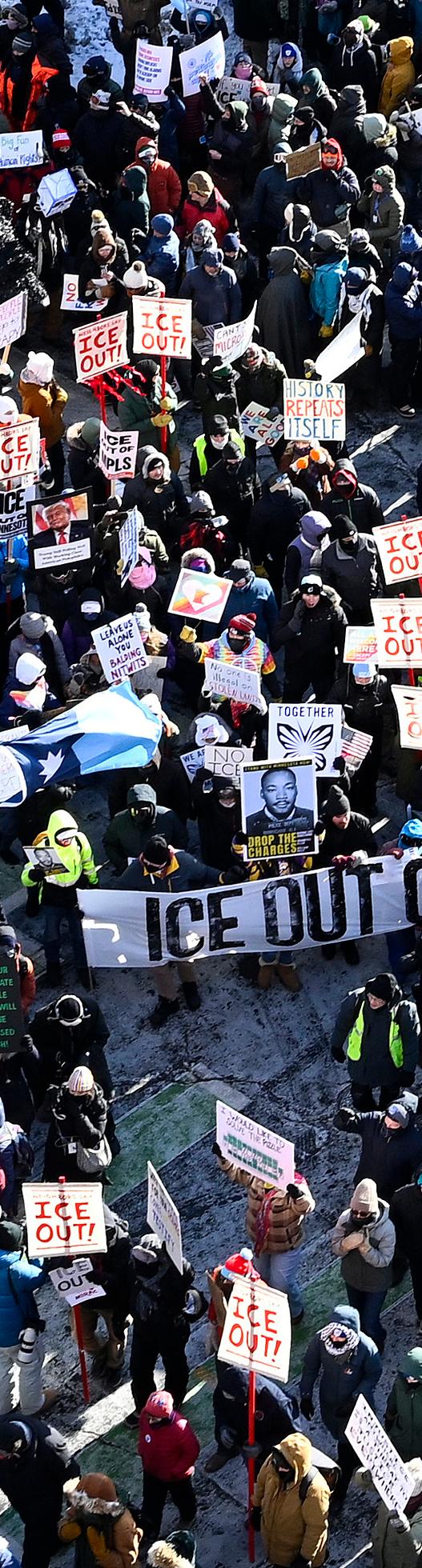
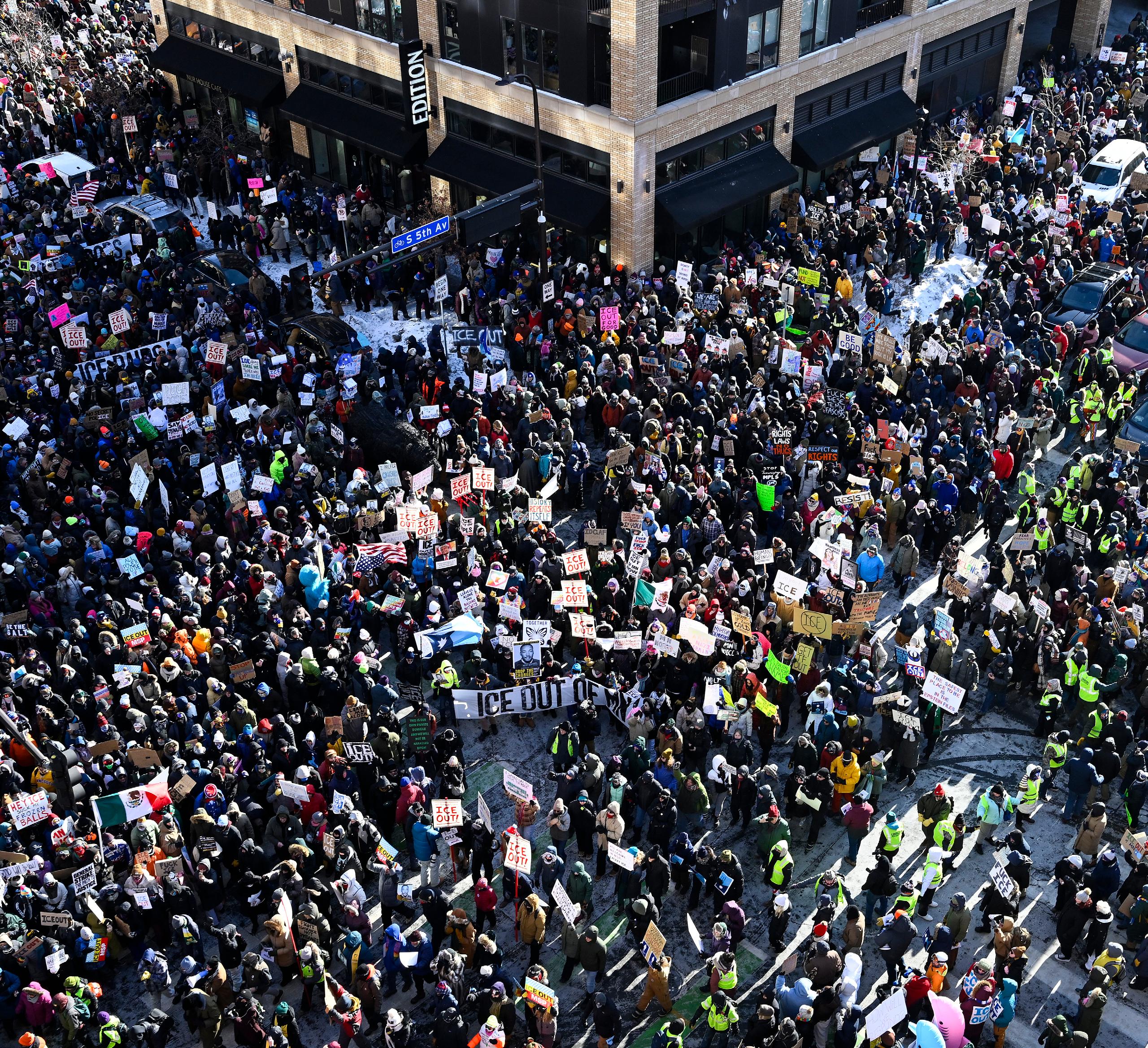
MINNEAPOLIS, MN - JANUARY 23, 2026: Demonstrators participate in a rally and march during an “ICE Out” day of protest.
(Credit: Stephen Maturen)
The Work to Rebuild
Moments of crisis can also serve as catalysts for change. Democracy is neither self-executing nor self-sustaining — it depends on the will of the people.
SAN DIEGO, CA - OCTOBER 18, 2025: No Kings Protest. (Credit: sarah_xie7)
As the Trump-Vance administration escalates its attacks and the nation continues its backslide, we must find ways to use this crisis as a catalyst for change. The coalitions that are forming at this moment are building bridges between and among communities who are united in a commitment to defeat incursions on our rights and our democracy.
Across the country, people are organizing, showing up, and refusing to accept democratic backsliding as inevitable. In the courts, brave plaintiffs are asserting their rights and seeking justice as evidence continues to mount. The prodemocracy community will continue to use every legal tool available to protect our democracy, but this crisis can’t be addressed in the courtroom alone. It will take all of us to demand accountability. From defending the right to vote to resisting abuses of power, people are exercising their collective strength and demanding a government that works for the people, not just the powerful.
The stakes are high and the work is complex. It demands new ideas, forward-looking legal strategies, institutions that are agile and people-centered, and narratives that expand what people believe is possible. The damage is profound, and its consequences will be felt for generations.
In 2025 alone, 352,000 federal employees separated from service, resulting in an estimated four million years of lost institutional knowledge and expertise.
Yet even in this disruption lies possibility. The moment demands not only defense, but design — an opportunity to lay the foundations to build a government that actually works for the people — a government that people want to serve in, one that works better, is more equitable, and earns authentic public trust.
The Imperative to Reimagine
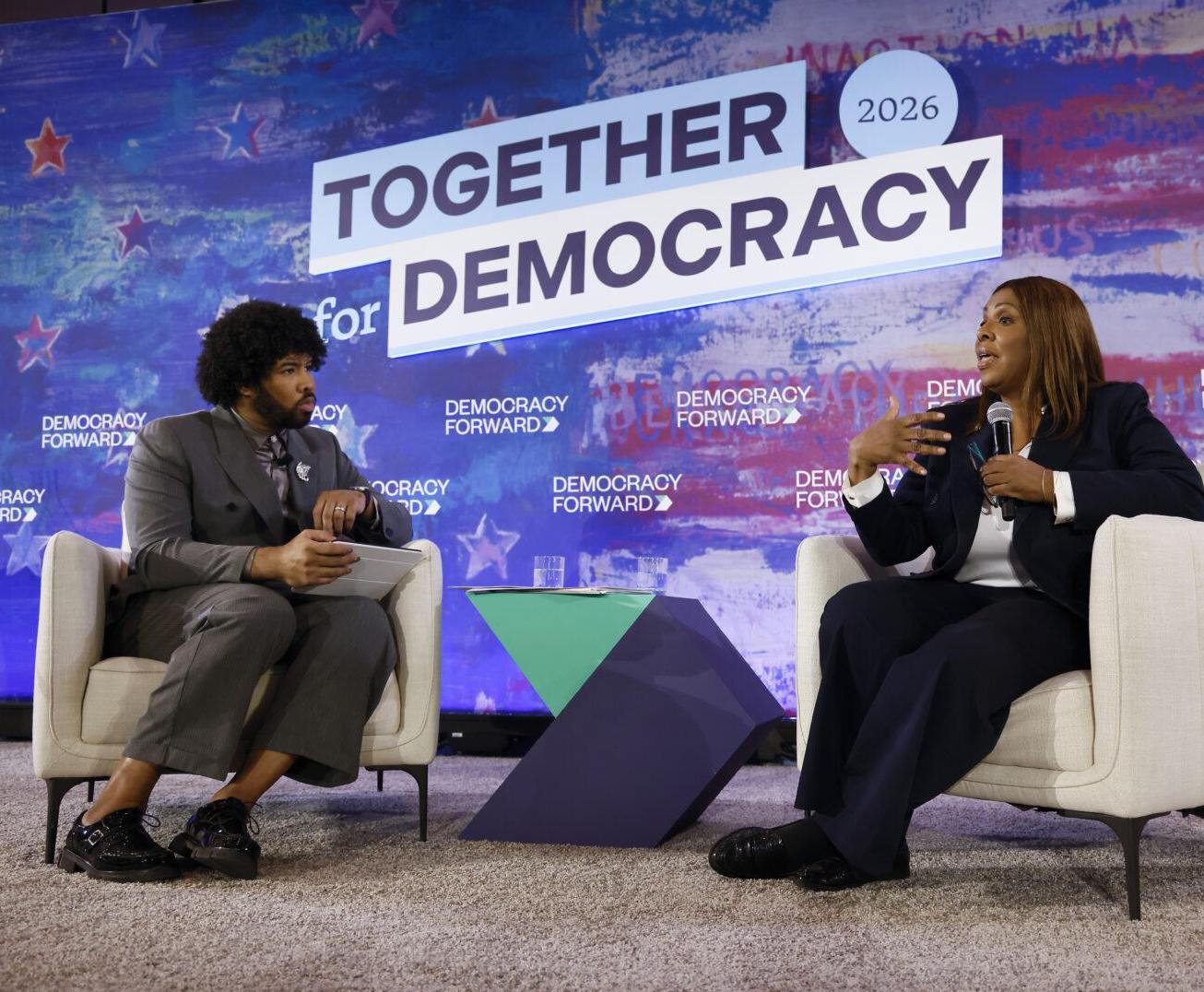
WASHINGTON, D.C. - JANUARY 29, 2026 New York Attorney General
Letitia James and Eugene Daniels, host of The Weekend and senior Washington correspondent with MS NOW, in conversation on “What Resistance Means Now” at Together for Democracy.
As we confront democratic backsliding, reimagining calls us to think beyond restoration — beyond rebuilding with the same blueprints, beyond returning to some version of “before.”
It calls on us to build a country designed to hold all of us, one that confronts not only autocratic threats, but also the deeper structural injustices and constraints on human freedom that have persisted since our nation’s founding 250 years ago. We must proactively build a democracy that is more inclusive, more accountable, and more capable of delivering for people and communities.
Momentum matters.
Momentum must be sustained, expanded, and transformed into lasting change to reimagine a democracy that works for everyone.
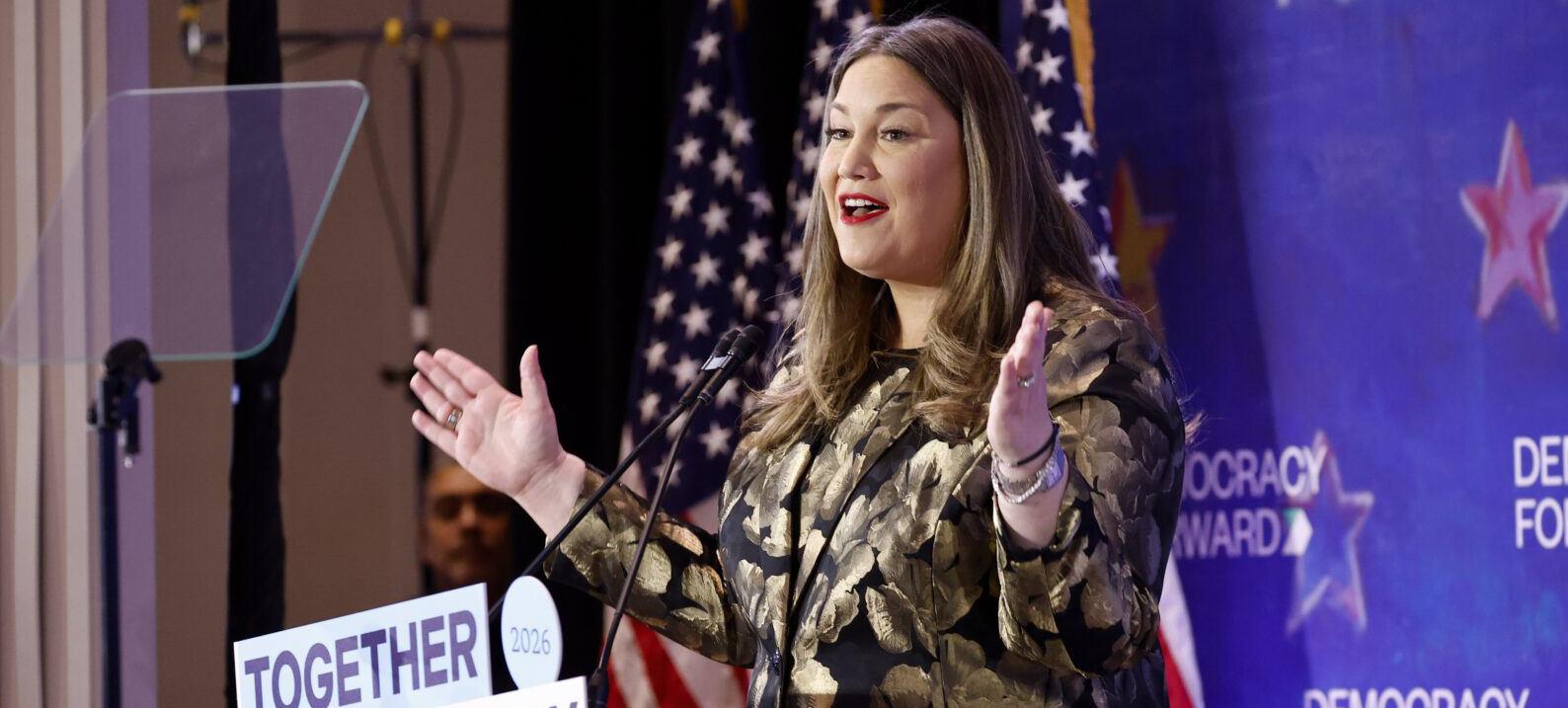
WASHINGTON, D.C. - JANUARY 29, 2026 “It turns out, despite what the White House says, Americans still don’t want to be governed by a king. And, it also turns out they don’t actually like fascism,” Skye Perryman told the packed audience at Together for Democracy.
There are many ways to join this work.
Democracy Forward’s initiatives invite collaborators, partners, volunteers, and hosts to take action — building community, demonstrating courage, and strengthening our collective resolve.
Learn About Democracy 2025
Democracy 2025 is a strategic legal network of 675+ organizations that has been credited with coordinating the largest and most effective strategy against unlawful administrative action in modern history.
democracy2025.org
Reimagine a Government That Works For All
Democracy Works 250 is rebuilding the people-centered foundations of democracy by listening to public servants, redesigning the systems, teams, and policies they work within, and building a bench of talent empowered to deliver for all Americans.
democracyworks250.org
Support Our Civil Servants
Learn more about our Civil Service Strong initiative — a collaborative effort of people, organizations, and communities across the country who are joining together in support of our civil servants.
civilservicestrong.org
Sign the We Hold These Truths Pledge
We Hold These Truths unites Americans across communities, professional sectors, and political parties to share accessible principles and civic values that are increasingly under threat today. weholdtruths.org
Track the Changes with Red Line for Civil Rights
Launched by former career Department of Justice officials, this initiative advances accountability and oversight by developing a fact-based record of how the administration has dismantled and politicized civil rights enforcement. redlinecivilrights.org
Host a Dinner for Democracy or Coffee for Change
Inspired by our annual Together for Democracy conference, Dinners for Democracy and Coffees for Change bring together friends, neighbors, and coworkers to spark dialogue and action in communities nationwide. democracyforward.org/community
Rise Up: Federal Workers Legal Defense Network
Rise Up provides free legal support to federal workers whose rights have been violated, including those illegally fired. Nearly 1,200 trained lawyers offer consultations. Rise Up also advances advocacy and research. workerslegaldefense.org