Democracy is not self-sustaining. It requires constant defense in courtrooms, in legislatures, in the streets, and at the ballot box.
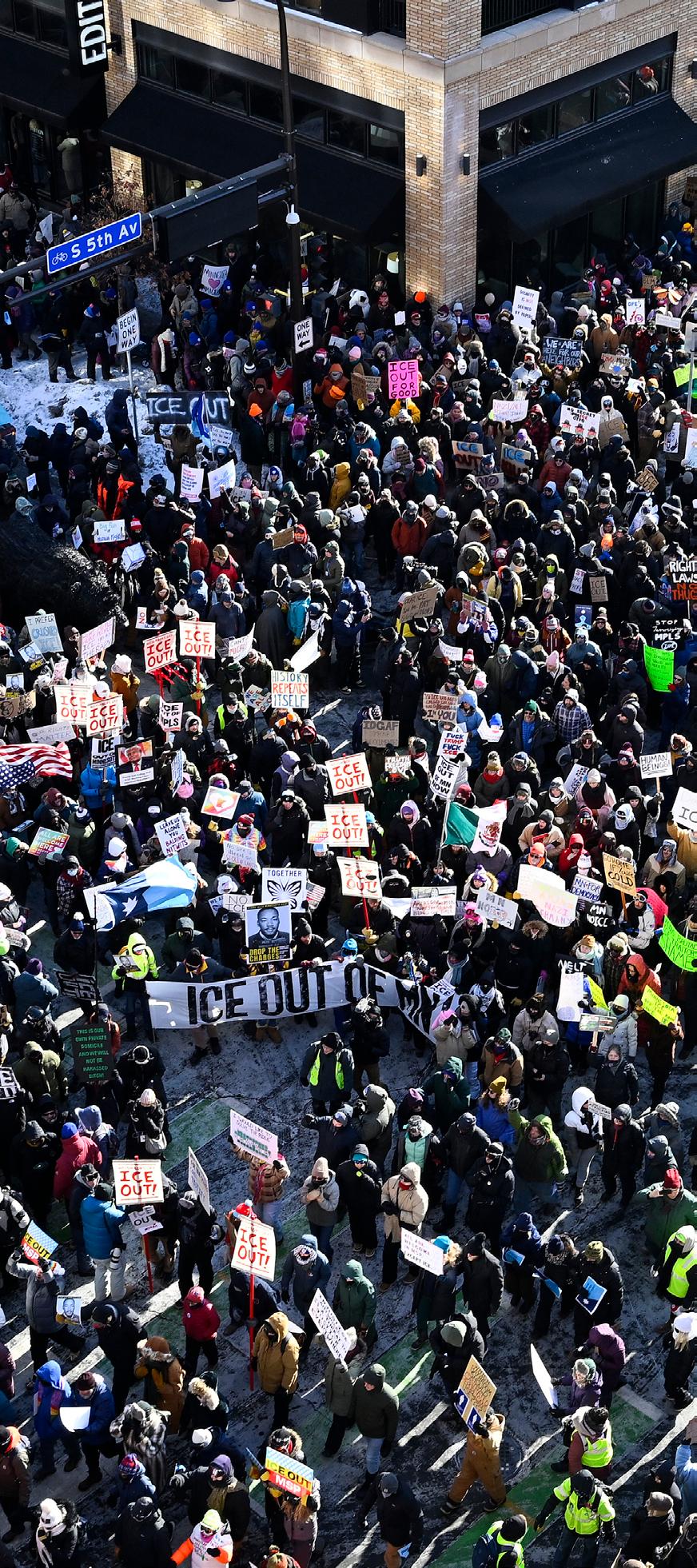
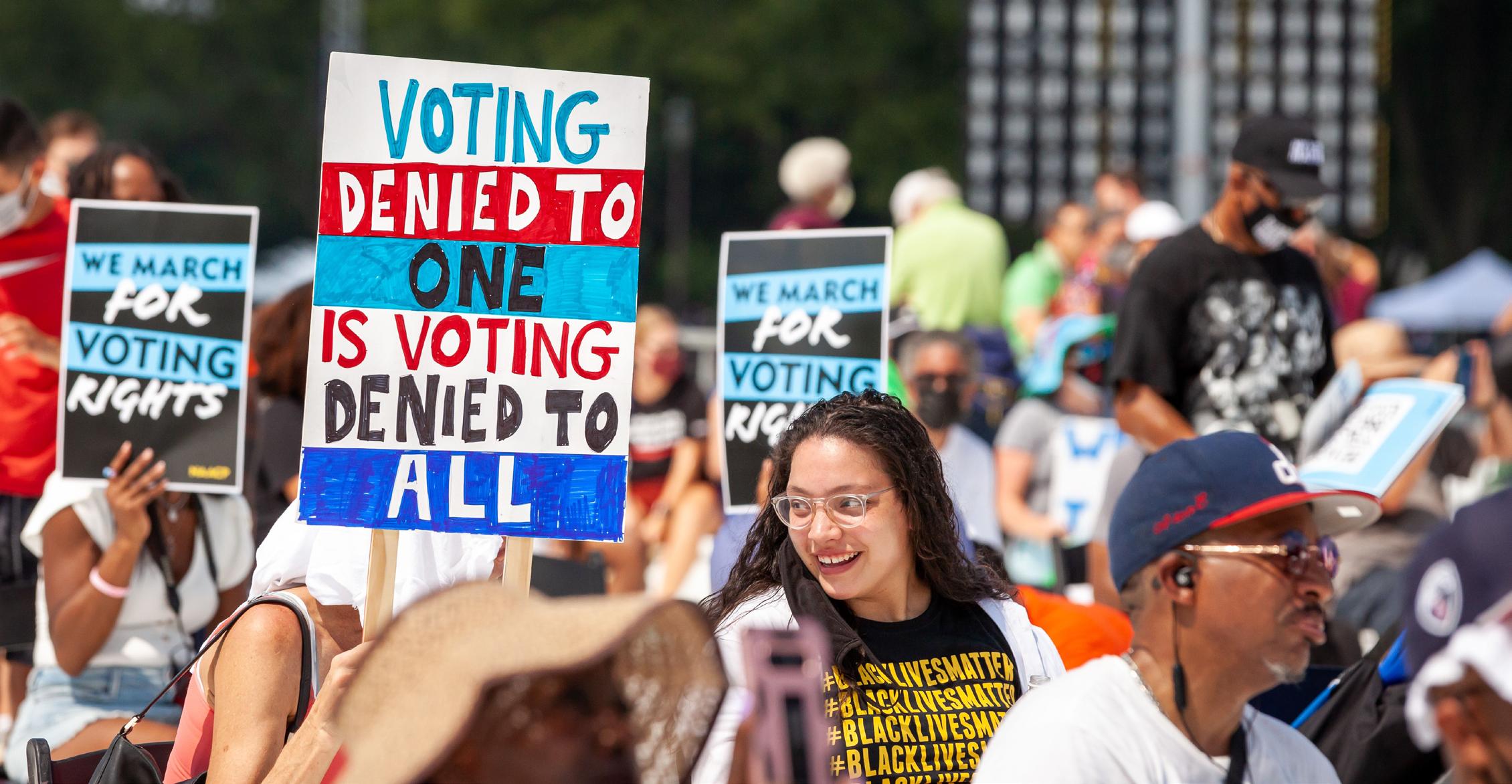
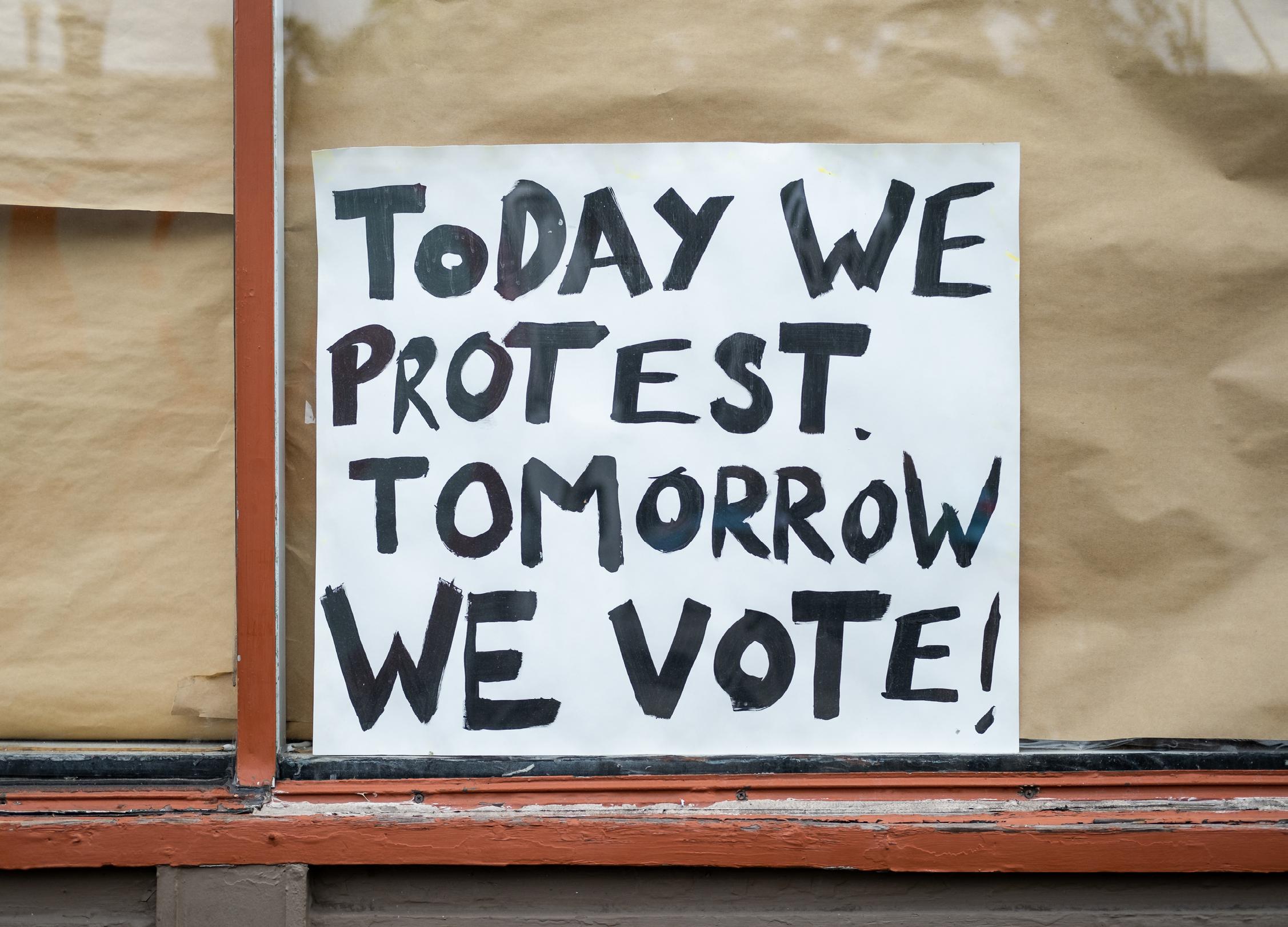
MINNEAPOLIS, MN - JANUARY 23,
(Credit: Stephen Maturen)
The right to vote, often described as the foundation of American democracy, was never freely given. It was won over generations by Americans who challenged exclusion based on race, gender, and class—and marched, organized, and faced violence and legal barriers to secure it. This work remains, to this day, unfinished.
The 2026 midterm elections are a moment of heightened pressure on that foundation. Efforts to restrict voting access, gerrymander, spread misinformation and sow doubt about election integrity, and expand federal control over state election systems are testing the resilience of democratic institutions. At the same time, advocates in court and millions of ordinary citizens are pushing back—and winning.
Earlier this year, Skye Perryman, Democracy Forward’s President and CEO, testified on Capitol Hill on the fifth anniversary of the January 6 insurrection, warning that it was not an isolated attack. January 6 marked a pivotal point in an ongoing crisis, one now playing out through executive overreach, the weaponization of government, and the erosion of constitutional rights.
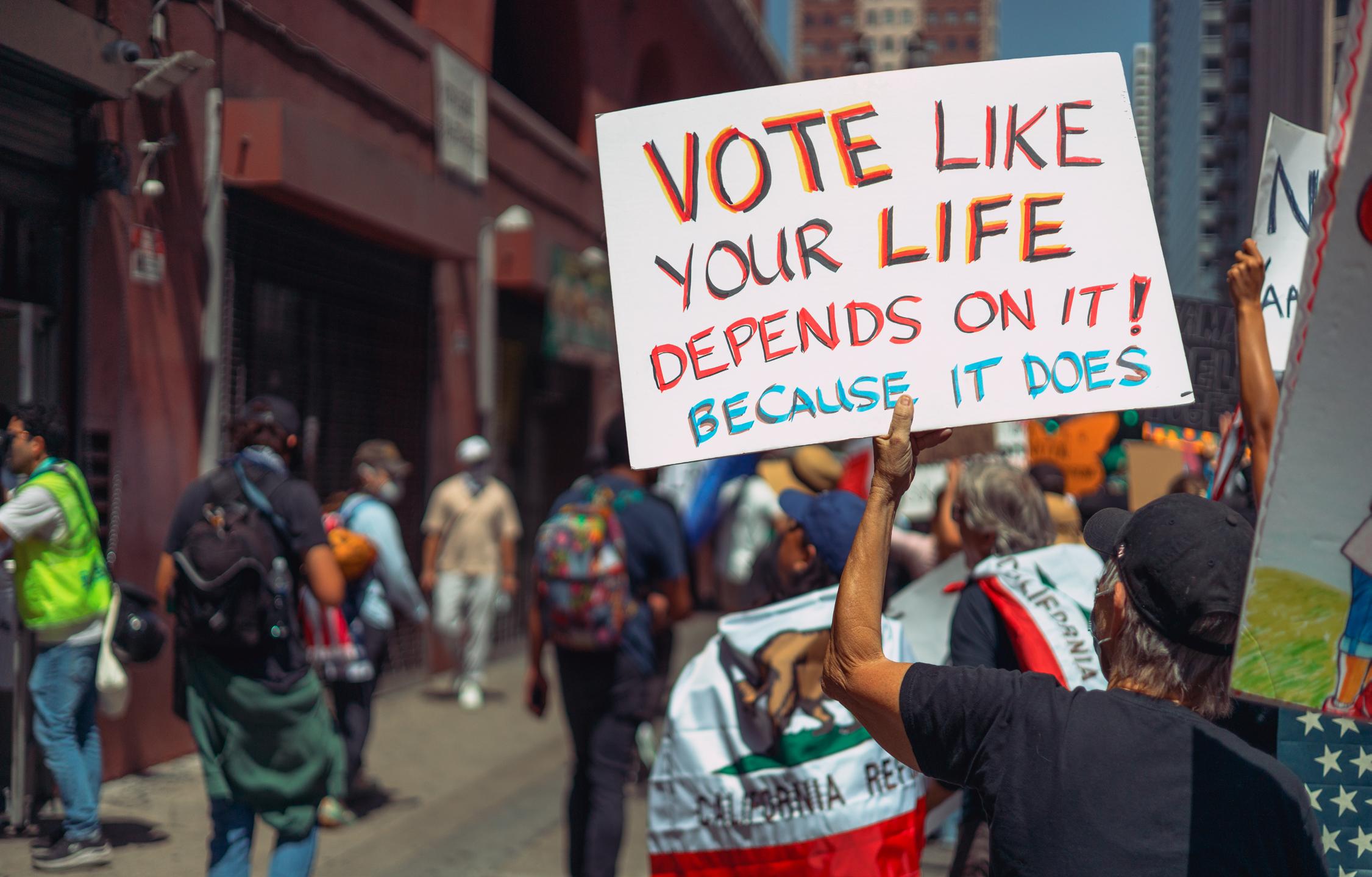
2026: Demonstrators participate in a rally and march during an “ICE Out” day of protest.
Meeting the Moment
While some powerful institutions have yielded to intimidation, the people have risen to meet this moment. This People’s Guide to Voting Rights is part of Democracy Forward’s effort not only to defend people in court, but to help communities understand, assert, and protect their power and their rights.
This guide covers the voting landscape of the 2026 midterm elections and informs voters about their rights and options. It also examines the most pressing threats to free and fair elections, and provides trusted resources for every step of the process. It is designed for all voters, regardless of party, and includes information for election workers and volunteers.
In this charged election year, most Americans share more in common than extremists often suggest, including a commitment to fair and equal participation in democracy. Our voice is too important to give up. An informed voter is a more powerful voter. This guide is one part of the ongoing work to ensure every voter can participate fully and equally in our democracy.
This guide builds on voting resources developed by our partner pro-democracy and civil rights organizations and is intended for informational and educational purposes only.
It is not legal advice and should not be relied upon for legal advice. It offers non-partisan education and information on voting rights and election access. It does not contain information on specific candidates or races.
2026 Midterm Elections
Tuesday, November 3, 2026, will mark the first time in 132 years that Americans vote in midterm elections during a president’s nonconsecutive second term.
The 2026 Midterm Elections
U.S. Senate Seats
U.S. House Seats
Governors
Primary voting began in March, with contests in Texas, Arkansas, North Carolina, Mississippi, and Illinois. By the time the final primary ballots are counted in Delaware on September 15, millions of voters across all 50 states, the District of Columbia, and territories will have chosen nominees for thousands of public offices. 35 435 36 33
State Attorneys General
In addition to major state and federal contests, there are thousands of state and local races on the 2026 ballot, including elections for state legislatures, mayoral offices, judicial seats, and ballot measures. These races are consequential and will shape policy decisions for years to come.
Although President Donald Trump is not on the ballot in 2026, midterm elections are often viewed as a referendum on a president’s leadership and the direction of the country. In 2018, the midterm election held during President Trump’s first term, voter turnout reached roughly 50% of eligible voters, the highest level of participation in a midterm election in more than a century.
That momentum has continued into the 2026 primaries, with states and counties across the country reporting strong and, in some cases, record-breaking turnout.
Your Right to Vote
Eligibility to vote in U.S. elections depends largely on state law, but most citizens can vote in federal, state, and local elections if they meet the following requirements:
You are a U.S. citizen. This includes many citizens living abroad, dual citizens, and some people born outside the United States to U.S. citizen parents. In a small number of jurisdictions, lawfully present noncitizens may also be permitted to vote in certain local elections.
You meet your state’s residency rules. A permanent address is not always required, and people without stable housing may still be eligible to register and vote.
You are at least 18 years old by Election Day. Many states allow people to register before turning 18, and some permit 17-year-olds to participate in primary elections if they will be 18 by the general election.
You register to vote before your state’s deadline. If your state or locality requires advance registration to vote—most do—you must be registered by the deadline. Deadlines vary by state
Know Your Rights as a Voter
You have the right to be treated equally. All voters have the right to be treated equally regardless of race, color, ethnicity, gender, and physical or language ability.
You have the right to keep your vote private. While whether you voted is public information, how you voted is private. You are never required to disclose your vote to anyone.
You have the right to vote free from intimidation or coercion. It is illegal to stop a qualified and registered voter from voting through intimidation, coercion, or other threatening activities. You may report such experiences to the nonpartisan Election Protection Hotline (866-687-8683).
You have the right to receive in-person assistance at the polls. If you have a disability or have difficulties reading or writing in English, you have the right to have someone help you vote. The helper must respect your privacy. Refer to election rules in your state and locality to see if language assistance is offered.
You have the right to request a new ballot if you made a mistake. If you make a mistake, ask for a new ballot to correct your vote before casting the ballot that contains the error, regardless of whether you are voting in-person or by mail.
You have the right to cast a provisional ballot if your eligibility cannot be verified.
If election officials can’t confirm your voting eligibility at the polls, you have the right to request a provisional ballot, which will be counted after your eligibility is verified.
You have the right to vote from anywhere in the world. U.S. citizens living, working, studying, or traveling abroad, as well as active duty service members, military spouses, and eligible family members stationed outside their home jurisdiction, retain the right to vote. You can request your ballot through the Center for U.S. Voters Abroad, or the U.S. Vote Foundation. Both organizations help ensure your vote is counted no matter where you are. KNOW YOUR RIGHTS AS A VOTER
You have the right to vote by mail, where allowed by local law. You can cast your ballot by mail for a variety of reasons, such as serving in the military overseas or not being able to take off from work, among others. Processes and requirements for requesting and returning your ballot vary by state, so check your state’s requirements and deadlines using VOTE411’s interactive map.
You may have the right to vote after a felony conviction. Most people with past felony convictions can vote. The process to restore your right to vote varies by state.
What Not to Do
Don’t leave the line when the polls close.
If you are in line to vote prior to polls closing, you have the right to cast your ballot if you stay in line.
Don’t spread false or unverified election information. If you’re unsure about any election information you have seen, verify it with your state or local election office.
Don’t campaign inside a polling place. Most states prohibit campaigning, wearing campaign gear, or trying to influence voters within a certain distance of the polling location. This protects everyone’s right to vote without pressure. Check with your state or local election office for specific rules.
Sidebar
In 2020, two right-wing conspiracy theorists orchestrated a campaign of robocalls targeting Black voters in Illinois, Ohio, Michigan, New York, and Pennsylvania with false and intimidating information about the November 2020 election, including threats of consequences for voting. These robocalls falsely stated that “if you vote by mail your personal information . . . will be used . . . to track down old warrants and . . . collect outstanding debts” and may be used “to track people for mandatory vaccines.”
Because voter intimidation is unlawful under multiple federal and state laws, the perpetrators were indicted on criminal charges in Ohio and Michigan and ultimately pleaded guilty in both states. They also faced a civil suit in New York, where the court required them to make new robocalls informing people who received the original call of its disinformation and held that they violated numerous federal and state laws. They ultimately agreed to a consent decree forbidding them from undertaking similar actions for a period of time and requiring them to pay damages.
Trusted Resources
Register to vote or verify your registration status at Vote.org, or Vote411.
Enter your address in ballotpedia.org to see elections on your ballot.
Know Your Rights: Voting Rights
American Civil Liberties Union
Know Your Voting Rights
Voto Latino
Resources for Protecting Voters
And I Still Vote Campaign, The Leadership Conference on Civil and Human Rights
Resource for High School Students
The Civics Center
Why it matters:
This case underscores both the harms of voter intimidation and the legal tools available to address it.
Your Election Bill of Rights: What Every Voter Should Know
League of Women Voters
Defending Free and Fair Elections
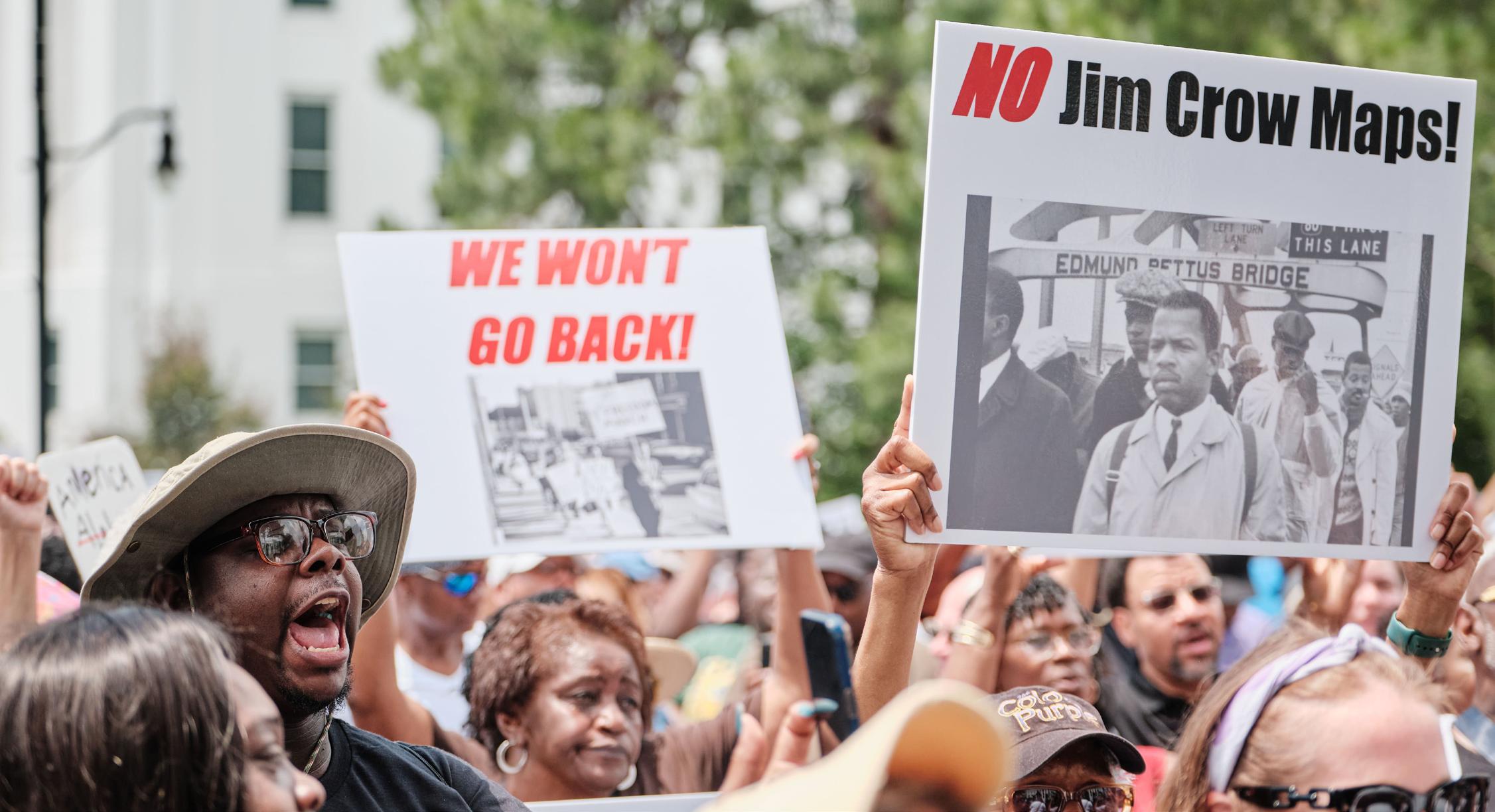
MONTGOMERY, AL - MAY 16, 2026: National Day of Action for Voting Rights
(Credit: Dan Anderson/ZUMA Press Wire/Shutterstock)
Your Voting Rights Are Under Attack
President Trump and his allies have repeatedly spread false claims about election fraud, threatened federal interference into state and local election administration, and encouraged gerrymandering to reduce Black and Brown electoral power. These efforts have raised concerns about intimidation, political interference, and public trust in the democratic process, while intensifying broader battles over voting access and the rules governing our American elections.
Since returning to office, President Trump has issued two executive orders on federal election administration, both of which have been challenged in court in multiple lawsuits. Both orders are unlawful and exceed presidential authority. The Constitution assigns responsibility for election administration to state and local governments.
LOS ANGELES, CA, USA - June 14, 2025 “No Kings” Protest (Credit: Shutterstock)
The Anti-Voting Executive Orders
1
The first executive order, signed in March 2025, sought to interfere with state regulation of voter eligibility, including directing the independent Election Assistance Commission (EAC) to revise the federal voter registration form to require documentary proof of U.S. citizenship.
There are multiple cases challenging provisions of this order:
LULAC v. Executive Office of the President (consolidated with DNC v. Trump and League of Women Voters v. Trump), California v. Trump, and Washington v. Trump, all of which are proceeding at various stages in federal courts and involve dozens of states, pro-democracy advocates, and partners.
Federal courts permanently blocked implementation of most parts of the executive order, including its requirement that voters show documentary proof of citizenship when registering to vote.
2
A second executive order was issued in March 2026 and instructed the U.S. Department of Homeland Security to create a voter registry based on Social Security data, and the U.S. Postal Service to create additional requirements for mail-in voting procedures.
Again, multiple lawsuits have been filed challenging this order:
LULAC v. Executive Office of the President II (consolidated with DSCC v. Trump & NAACP v. Trump), League of Women Voters of MA v. Trump, and California v. Trump
As with the first executive order, all of these are proceeding at various stages in federal courts and involve dozens of partners.
In June, a federal court blocked key parts of this order as related to mail-in voting. The executive order has not affected mail-in voting in this year’s midterm primary elections.
These executive orders are part of a broader push by President Trump and his far-right allies to restrict voting rights and access around the country. The pro-democracy movement has already been fighting back and is escalating that effort through litigation and nonviolent, people-led action.
Additional new threats to election integrity from this administration and their allies include:
• Repeatedly urging Congress to pass the SAVE Act, legislation that would impose, among other flawed provisions, documentary proof-of-citizenship requirements for voter registration. The legislation has faced significant opposition from nonpartisan voter advocacy groups and members of both parties and is unlikely to advance through the legislative process. If passed, it has the potential to disenfranchise millions of Americans from voting.
• Attempting to create flawed national databases of voter data, demanding state voter data to create this database, and potentially improperly sharing voters’ personal data with third parties.
• Threatening to unlawfully deploy federal immigration agents and the military to voting sites to intimidate voters.
• Attempting to unlawfully allocate nearly $1.8 billion in federal funds to compensate their political allies, including Jan. 6 insurrectionists, financially fueling them to engage in further efforts to disrupt or overturn elections. This is the subject of ongoing litigation, including a case by Democracy Forward Foundation as well as three other lawsuits, and is currently under a preliminary injunction, blocking the slush fund while the case proceeds on the merits.
• Launching baseless criminal investigations against state and county election officials and using this pretext to seize ballots.
• Weaponizing law enforcement investigations through overzealous FBI raids on a pro-democracy organization, the Ohio Organizing Collaborative, that has a 20-year history of ensuring that Ohioans can vote. These overly aggressive raids were widely understood as an effort to chill Black and Brown voter participation, and the organizations that aim to support voting and voting rights.
Collectively, these actions represent coordinated partisan efforts to restrict the hard-won right to vote and influence election outcomes ahead of the 2026 midterm elections.
These attacks on voting and elections aren’t isolated incidents; they are a part of a longer national struggle over who has access to the ballot and how elections are administered. Current concerns echo earlier fights over voter suppression, racial discrimination, and equal access to political participation that have shaped American democracy for generations.
But, the civil rights community and the entire pro-democracy movement are already fighting back—and are ready for the increased threats in 2026.
Selma and the Unfinished Fight for Voting Rights
On March 7, 1965, a day now known as “Bloody Sunday,” Alabama state troopers violently attacked peaceful civil rights demonstrators crossing the Edmund Pettus Bridge in Selma. The national outrage that followed helped lead to passage of the Voting Rights Act of 1965, a landmark law that transformed American democracy by prohibiting racial discrimination in voting. Recently, key parts of the law have been weakened by rulings from the U.S. Supreme Court, including decisions that limited federal oversight of changes to voting laws in states with histories of discrimination. These rulings have made it easier for states to pass voting restrictions or gerrymandered maps that disproportionately affect communities of color.
AND THE UNFINISHED FIGHT FOR VOTING RIGHTS
The Court’s recent decision in Louisiana v. Callais has spurred some states to attempt to rapidly redistrict before the 2026 midterms in an effort to reduce Black and Brown political representation and disregard laws and principles designed to avoid voter confusion and protect democratic representation. The Court has made it harder to prove racial gerrymandering and approved partisan gains as a legitimate goal for redistricting, which together threaten to shut out the power of minority voters in areas like the South where race and political party remain closely correlated.
The Selma marches helped secure one of the most significant civil rights victories in U.S. history. Sixty years later, voting rights remain contested as courts and lawmakers continue to weaken some of those hard-won protections. In May of 2026, thousands gathered in Alabama for “All Roads Lead to the South,” a national day of action, organized by a broad coalition of civil rights, voting rights, faith, and community organizations. The event highlighted ongoing efforts to protect equal access to the ballot and push back against voter suppression. Whether through rallies, local solidarity actions, or community organizing, people across the country are defending the principle that every eligible voter deserves a fair and equal voice in our democracy.
SELMA
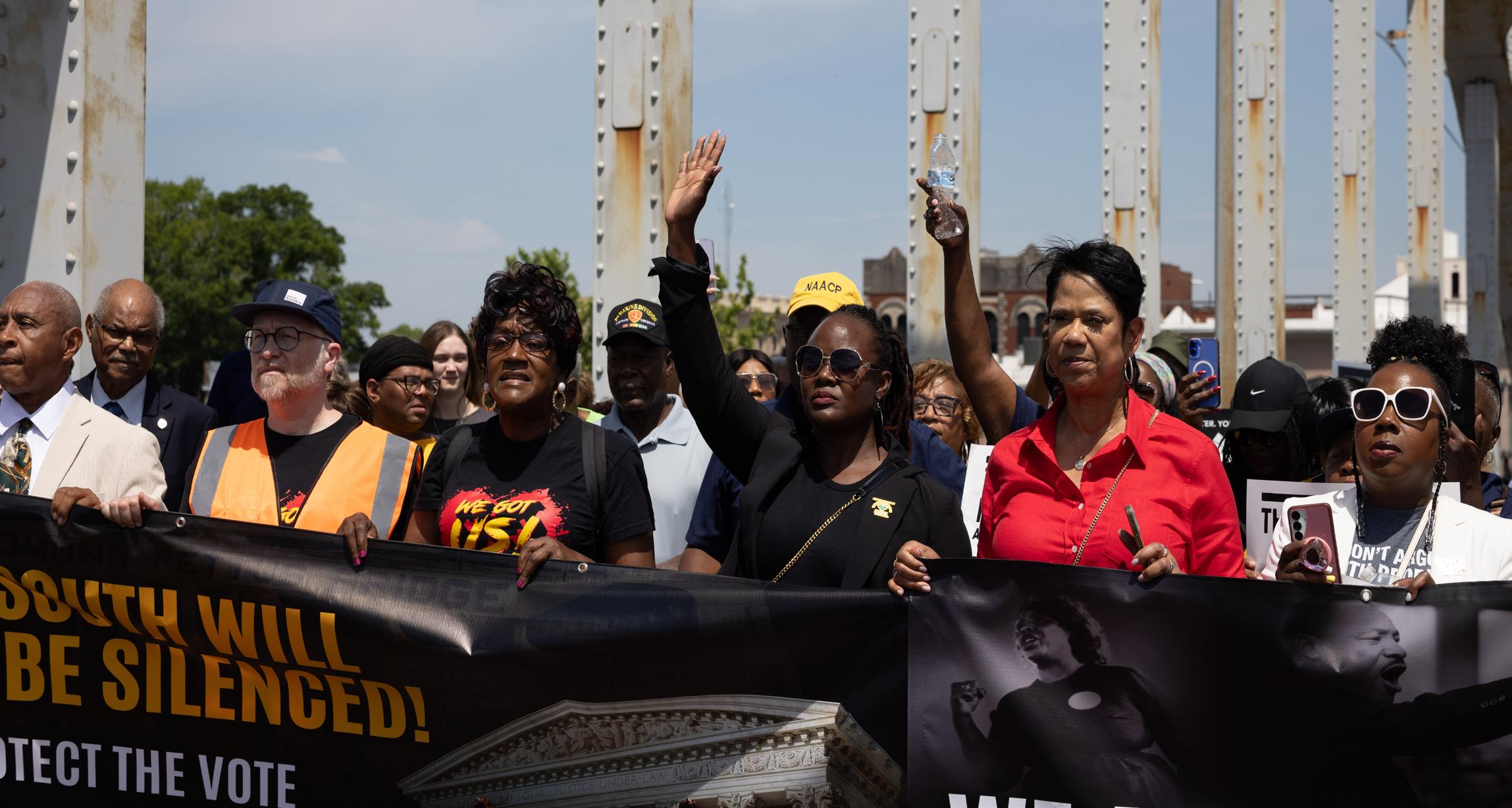
SELMA, AL - MAY 16, 2026: Demonstrators march over Edmund Pettus Bridge on the National Day of Action for Voting Rights (Credit: Melissa Bender/NurPhoto/Shutterstock)
The debate over voting rights today also extends beyond ballot access and redistricting. The Court has also shaped elections through rulings involving campaign finance and financial disclosure requirements.
Since the Citizens United decision in 2010, American elections have been inundated with billions of dollars of undisclosed political spending. Dozens of states have passed or considered bills requiring greater disclosure—efforts that some conservative legal networks actively oppose.
As campaign spending is expected to reach record levels during the 2026 midterms, concerns about money in politics remain widespread across party lines.
The Supreme Court recently struck down federal limits on how much political parties can spend in coordination with candidates. The ruling removes an important safeguard against corruption and further expands the influence of wealthy donors and money in elections.
72% of Americans said there is too much money in politics, while only 5% disagreed.
The
2026
With many unknowns this election season, voting rights groups and election officials continue to urge voters to make a plan to vote and verify election information through trusted sources. The power rests with the people, and that is why some will try to confuse, intimidate, or discourage voters. Our partners in Democracy 2025 and our research teams are tracking election-related activity and will continue to monitor actions, threats, and litigation across the country.
POLITICO Poll, April
SELMA AND THE UNFINISHED FIGHT FOR VOTING RIGHTS
Challenging Baseless Attacks and Threats to Election Administration
Armed Agents at Polling Locations
Since the Civil War, federal law has barred armed federal law enforcement and military from polling places during elections. However, President Trump, key government officials, and administration allies haven’t ruled out the possibility of sending armed agents to midterm polling locations.
Recently, when asked whether he was considering deploying Immigration & Customs Enforcement (ICE) agents or National Guard troops to polling locations, President Trump said he would “do anything necessary to make sure we have honest elections.”
The law is on the side of democracy. Sending ICE or other armed federal agents to polling places is unlawful under federal law restricting federal and military interference in elections. Federal law specifically prohibits deploying troops and armed federal personnel “any place where a general or special election is held.”
Intimidation is illegal. Voter intimidation by any actor, including federal agents, is illegal under federal and state law.
Mixed signals from the federal government. In February, the then-acting head of ICE told Congress that there’s “no reason” ICE should be at polling places. That point was reinforced by Heather Honey of the U.S. Department of Homeland Security on a call with state election officials. However, the White House press secretary Karoline Leavitt said in a press conference that she “can’t guarantee” ICE agents wouldn’t be near voting places.
CHALLENGING BASELESS ATTACKS AND THREATS TO ELECTION ADMINISTRATION
Threats to Mail-In Voting
President Trump has repeatedly falsely criticized mail-in voting as insecure and prone to fraud, while often distinguishing it from absentee voting, which he has described more favorably.
Election officials note that absentee and mail ballots are processed through the same systems and security procedures, offer significant accessibility benefits to voters, and that Trump himself has voted by mail in some elections.
Voting by mail is safe and secure. It creates no greater risk of fraud than in-person voting.
• Mail-in ballots that meet eligibility and validity requirements are counted in every election. Before counting, election officials carefully verify each mail-in ballot submission.
• The risk of voter fraud overall is infinitesimally small—numerous expert analyses have found that there are only a handful of fraudulent votes cast each cycle out of millions of ballots cast.
• The very small number of ballots suspected of fraud is set aside for further review and, when appropriate, referred to law enforcement for investigation and prosecution.
• Twenty-eight states allow voters to vote by mail without needing to provide an excuse.
• Eight states and Washington, D.C. automatically send ballots to every registered voter, with five of those states holding their elections almost entirely by mail.
• The Supreme Court recently affirmed that lawfully cast mail-in ballots should be counted according to state and federal laws, including laws that allow for a grace period for mail delays.
CHALLENGING BASELESS ATTACKS AND THREATS TO ELECTION ADMINISTRATION
Legal Action: Blocked Federal Effort to Purge Voter Rolls
Democracy Forward Foundation, Citizens for Responsibility and Ethics in Washington, and the Fair Elections Center, on behalf of the League of Women Voters (LWV), LWV of Virginia, LWV of Louisiana, LWV of Texas, and Electronic Privacy Information Center, blocked federal efforts to repurpose Americans’ sensitive personal information to build an unlawful and error-prone national database to support efforts to purge voter rolls.
The lawsuit alleges the Trump-Vance administration unlawfully merged sensitive and often outdated information about U.S. citizens across agencies— violating longstanding federal privacy law—and is sending this unreliable information to states to investigate and remove eligible voters.
The district court entered summary judgment in favor of the plaintiffs on June 22, 2026, ruling that the system is unlawful. The case is ongoing.
Why it matters:
The case highlights the ways in which inaccurate data and unlawful data-sharing and consolidation undermine citizens’ privacy rights and can lead to disenfranchisement of eligible voters and undermine free and fair elections at a critical moment.
Legal Action: Lawsuit Seeks Release of SSA Records on Voter Data Agreement
Democracy Forward Foundation is suing the Social Security Administration (SSA) for records about the so-called Department of Government Efficiency’s (DOGE) improper use of the sensitive personal social security information of millions of people.
The government admitted in a separate case that a DOGE staffer executed a Voter Data Transfer Agreement with an outside group seeking to overturn state election results. This case seeks the records related to that Voter Data Transfer Agreement.
So far, SSA has produced records showing whistleblower complaints concerning the Agreement, as well as email correspondence among DOGE, Homeland Security Investigations (HSI), and Department of Labor officials related to individuals’ data.
Why it matters:
If federal agencies are illegally sharing Americans’ personal data with outside groups so they can investigate so-called “voter fraud,” eligible voters could be wrongly targeted for removal from voter rolls ahead of a major election and subjected to intimidation or other targeting.
CHALLENGING BASELESS ATTACKS AND THREATS TO ELECTION ADMINISTRATION
Legal Action: Courts Block DOJ Requests for Voter Data
Every court that has considered the issue has found there is no legal basis for the U.S. Department of Justice (DOJ) to obtain sensitive voter data from states in recent disputes.
In cases involving multiple states, including Arizona, California, Maine, Maryland, Massachusetts, Michigan, Oregon, Rhode Island, and Wisconsin, courts blocked such requests. The first appellate court to consider the issue, the Sixth Circuit, reached the same conclusion.
Why it matters:
The rulings underscore ongoing legal limits on federal access to state voter information and highlight the value of pushing back on federal overreach.
Legal Action: FBI Seizes 2020 Ballots in Fulton County
Earlier this year, the FBI raided the election operations center in Fulton County, Georgia. The FBI seized approximately 700 boxes of ballots and records from the 2020 election.
Fulton County, which includes Atlanta and its suburbs and is home to a large and racially diverse population, voted for President Biden by wide margins and since then has been the focus of far-right conspiracy theories.
Numerous expert analyses have demonstrated that the 2020 election was free and fair in Georgia and nationwide. However, the affidavit that the FBI used to obtain a warrant for the raid relied heavily on these debunked allegations.
In response, Fulton County sued the FBI and DOJ challenging the warrant and
seeking to have the ballots returned. The district court and appellate court ultimately sided with DOJ, allowing the federal government to keep the seized ballots, although the district court noted numerous “irregularities.”
Through litigation, DOJ was required to unseal the affidavit that served as the basis for the warrant, allowing public scrutiny of the thin reasoning, and revealing a timeline of its investigation showing abnormal procedures by DOJ.
Democracy Forward Foundation filed a lawsuit seeking the communications of officials likely involved in this investigation, after the DOJ didn’t respond to a Freedom of Information Act (FOIA) request.
The case is ongoing.
Why it matters: The FBI’s 2026 seizure in Georgia marks an unprecedented federal seizure of state election records, raising serious concerns about the independence of local election administration, the weaponization of law enforcement, and whether the federal government will attempt to interfere with accurately counting ballots in the 2026 midterm elections. Election deniers are increasingly using the seizure of ballots and materials as a tool to undermine public confidence in elections. This year, there have been related attempts in California and Arizona where ballots and other election records from past elections have been sought by law enforcement officials.
Sidebar: State Voting Rights Acts
In response to the weakening of federal voting rights protections, many states have moved to strengthen voting rights by codifying anti-discrimination safeguards through state-level protections. Several states have adopted or are considering State Voting Rights Acts, which are designed to expand anti-discrimination measures, improve language access, protect communities of color from voter dilution, and make it easier to challenge discriminatory election practices in court.
These laws are often modeled in part on the protections once provided by the Voting Rights Act of 1965 before key provisions were limited by the U.S. Supreme Court. Ten states have adopted their own versions of voting rights acts, and 13 more, including several in the South, have introduced legislation aimed at protecting voters amid the weakening of federal voting protections.
Why it matters:
State-level protections are increasingly important as battles over voting access shift to state legislatures and local election administration. As national debates over voting rights continue, many states are the central battlegrounds for ballot access, election rules, and protections against discrimination.
Sidebar: Conservative Legal Networks and the Fight Over Elections
Conservative legal and advocacy networks are playing an increasingly influential role in shaping debates over voting rights, campaign finance, and election administration.
Figures such as Leonard Leo and Cleta Mitchell have become central players in broader efforts to restrict voting rights and reshape election law at both the state and federal levels. Although Leo’s relationship with President Trump has grown more complicated, reporting has linked political networks associated with Leo to a lawsuit challenging a successful Maine ballot initiative that capped donations to super PACs. The voter-approved law was blocked by a federal court, which ruled that the limits violated First Amendment protections for political spending. The case reflects broader national battles over campaign finance rules and the influence of large political donors. Mitchell, a conservative election lawyer and ally of President Trump, is a leading figure in the far-right efforts to advance fears of voter fraud and correspondingly restrict voting rights. She leads the Only Citizens Vote Coalition, which advocates for stricter voting rules aimed at preventing non-citizen participation, despite no evidence of widespread noncitizen voting in U.S. elections.
Why it matters:
These extremist legal networks are trying to reshape election law. Understanding who is driving these efforts, and why, is essential to understanding the 2026 landscape.
Trusted Resources
Election Protection: Know your Rights as a Voter Vote.org
“Election Oversight Group” Allegations About the 2020 Election in Fulton County, Georgia States United Democracy Center
How widespread is election fraud in the United States? Not very.
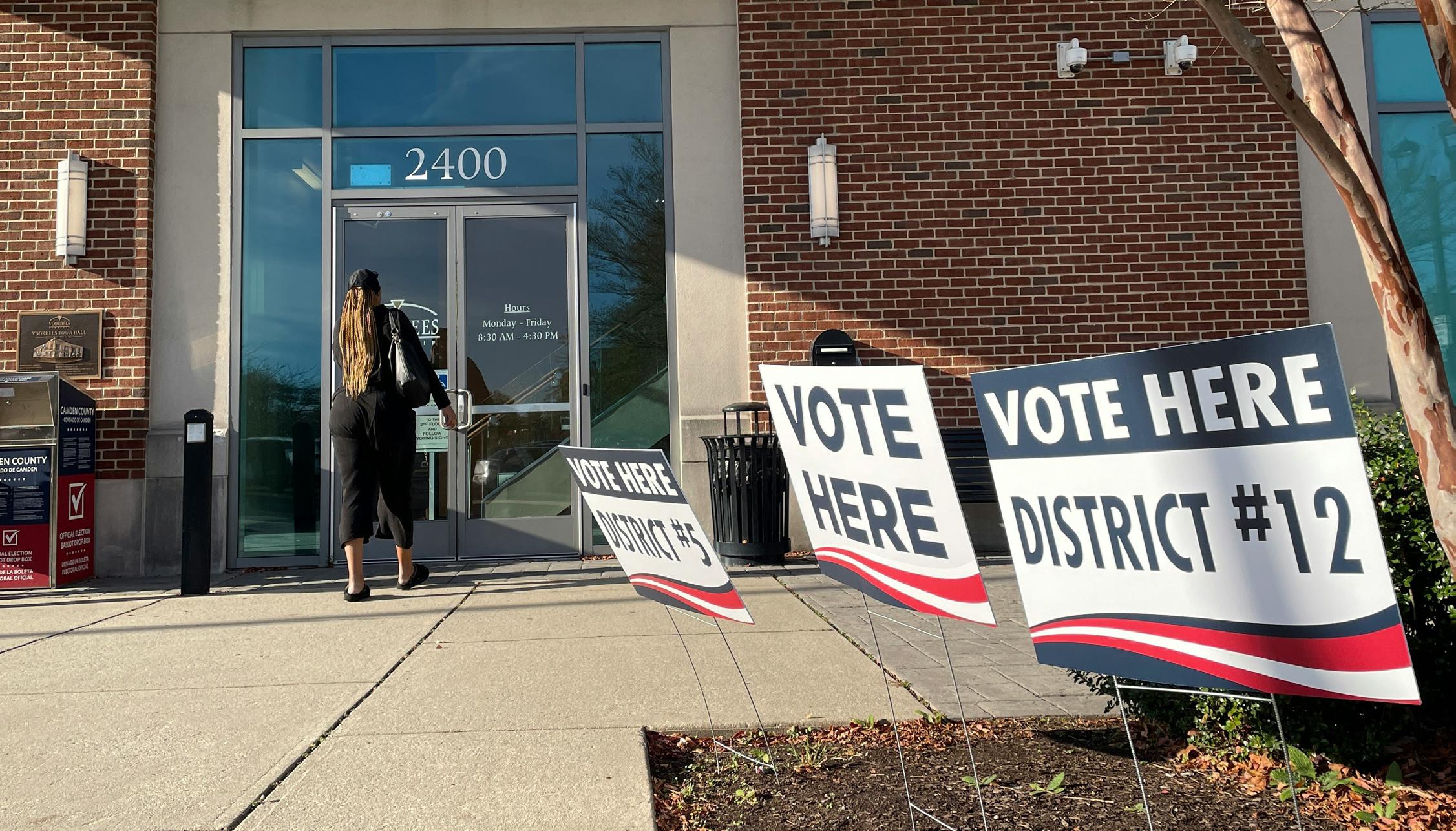
VOORHEES TOWNSHIP, NJ - NOVEMBER 8, 2022: Woman enters a polling location to cast a ballot in the midterm elections. (Credit: Unsplash)
Poll Workers & Election Officials
State and local poll workers and election officials oversee elections and operate polling sites. Elections for federal, state, and local offices are all administered at the state and local level. Officials manage year-round tasks such as maintaining voter rolls, preparing ballots, securing equipment, recruiting temporary poll workers, and ensuring accurate ballot tabulation.
Roles and requirements vary by state and county, but all play a critical role in ensuring secure elections and enabling eligible citizens to vote. In a year marked by heightened concern and expected high turnout, election officials have been preparing for a wide range of scenarios, from rerouting ballot deliveries and replacing malfunctioning machines to safeguarding ballots during events like floods or fires, often in coordination with police, fire departments, and emergency management teams. They are also preparing for emerging challenges, including potential election interference during the midterms.
Learn how to serve as a poll worker.
What Poll Workers and Election Officials Should Know
All voters have the right to be treated equally. All voters have the right to be treated equally regardless of race, color, ethnicity, gender, and physical or language ability.
Voter intimidation is illegal. Election officials should be aware that voter intimidation, even from poll workers, is illegal. This includes inappropriate questioning of someone’s voting history or personal information. Officials at the polls should report any incidents of threats or intimidation to the nonpartisan Election Protection Hotline (866-687-8683).
Voters may receive in-person assistance at the polls. Voters may bring someone to assist them at the polls or they may ask a poll worker to assist them. Providing reasonable accommodation, including for language barriers or disabilities, during the voting process is required by law, although the specific requirements may vary by location.
If a voter requests assistance, they are still entitled to vote privately and independently; the individual assisting the voter should avoid looking at the voter’s ballot, unless asked specifically to do so by the voter.
Be aware of your state’s gun and open carry laws at election locations. Some states have passed laws prohibiting guns at polling locations or locations where votes are being counted.
Do not take actions that interfere with election processes. Free and fair elections depend on having enough qualified and trained poll workers from across the political spectrum. State and local officials must ensure that poll workers are prepared to follow the law and comply with lawful instructions during elections.
Take Action:
Make a Plan to Vote
Be prepared.
Be informed.
Vote with confidence.
Voting is one of the most powerful ways to make your voice heard.
While the process can feel unfamiliar or complicated—especially for first-time voters— a simple voting plan can make the experience easier.
Taking a few steps now can help ensure you are prepared to cast your ballot and have it counted.
01
Register to vote or verify your registration status.
02
03 Review your options for voting early, by mail, or in person.
Make a plan for when and how you will vote in the midterms.
Register or Verify Your Registration Status
Registering to vote typically takes less than two minutes.
All voters should confirm their voter registration status well in advance of their state’s registration deadline, which can be as early as 30 days before an election.
Voter registration rules vary by state, but checking early gives you time to update your information or re-register if needed.
Casting a Ballot
In-Person Voting
In-person voting typically takes place at a polling place on Election Day, but voters may have the option to vote before Election Day at a polling location, vote center, or elections office.
Voters should consult their local election office for detailed information regarding election dates, polling hours, and available voting options.
Early Voting
Early voting allows voters to cast their ballot in person before Election Day. In states that offer no-excuse early voting, voters do not need to provide a reason for voting before Election Day.
Early voting is conducted at local election offices, designated satellite locations, or assigned polling places, depending on the state or jurisdiction.
Hours may differ from Election Day voting and often include expanded options such as evening or weekend availability, providing additional flexibility for voters.
Voting By Mail
Voting by mail is another way voters can participate in an election without voting in person at a polling place. This process is sometimes called absentee voting. Each state and locality has its own rules for voting by mail.
Some states require voters to provide a reason, or excuse, to vote by mail, while others automatically send ballots to all registered voters before an election. Common reasons may include illness, injury, disability, travel outside the voter’s jurisdiction on Election Day, attending college away from home, or military service.
Voters should check their state or local election office website for specific vote by mail rules and deadlines.
Take Action:
Be a Poll Worker Find Community with Together for Democracy
Poll workers are critical to the success of elections. By signing up to be a poll worker this election season, you can help ensure voting is a smooth and accessible process for all voters.
For more information about the specific requirements, hours, training, and pay in your jurisdiction, you can use this look-up tool.
Dinners for Democracy and Coffees for Change, programs in our Together for Democracy initiative, are designed to create space and opportunity for people across the country to build community and engage in the work to protect and advance our democracy and the rights of people.
Gather friends, neighbors, or co-workers for an inperson or virtual coffee or dinner and make your voting plans together.
Sign-up for a free tool-kit that includes conversation starters, action items to advance democracy, a prodemocracy reading list, and more. These resources can be printed for your event to help facilitate discussion, encourage action, and build community.
We are seeking hundreds of thousands of supporters of the 250 Pledge in 2026 through the We Hold These Truths campaign. As our nation celebrates 250 years since the Declaration of Independence, this pledge reaffirms the fact that in this moment, it will take all of us to protect people, defend rights, and safeguard our shared future. Join a nationwide movement committed to the non-negotiables of freedom, equality, and democracy. It’s about principle, not party.
Democracy is not a spectacle to observe. It is a system that requires participation to survive.
The 2026 midterm elections arrive at a pivotal moment, when the rules governing who can vote, how easily, and whether that vote is counted are being actively contested. The threats are real, but so are the tools available to fight back: the courts, community organizing, and above all, the ballot itself.
Nearly 7 in 10
Americans say voting is an effective way to have a voice in government.
Economist/YouGov Poll, May 2026
Every section of this guide reflects a simple belief: An informed voter is a more powerful voter.
Knowing your rights before you arrive at the polls, understanding the safeguards that protect your ballot, and recognizing the tactics used to discourage participation are not just civic lessons. They are forms of self-defense in a democracy under pressure.
No matter your party, your background, or where you live, your vote belongs to you.
Make a plan to cast your vote. Share this guide with someone who needs it. Host a conversation in your community. Sign up to be a poll worker.
The fights that shaped this country’s voting rights, from Seneca Falls to Selma, from the Constitutional Convention to the courts of today, were won by people who refused to be sidelined.
The work continues.
This People’s Guide is a starting point.
This guide is for informational and educational purposes only. It is not intended to be legal advice and should not be relied upon as such.
There are additional resources online: the Democracy 2025 Know Your Rights Hub offers practical information, printable materials, and multilingual tools from expert organizations.
To learn more about how Democracy Forward is addressing these and other challenges while working to strengthen democracy, visit democracyforward.org