
The Delta Police Department (DPD) acknowledges that we are located on the traditional territory of the Tsawwassen and Musqueam First Nations and of all the Hun’qumi’num speaking people who have been stewards of this land since time immemorial.

In October 2023, the pictured house post was unveiled at DPD Headquarters, recognizing the relationship between Tsawwassen First Nation (TFN) and DPD.
It was carved by TFN artist Karl Morgan, with participation from DPD staff and local students.










On behalf of the Delta Police Board (Board), I am proud to present the 2026–2030 Strategic Plan (Plan). The Board’s role is to provide civilian governance and oversight of the Delta Police Department (DPD). Under the B C Police Act, one of our core responsibilities is to set the priorities, goals, and objectives for policing in Delta, in consultation with the Chief Constable This Plan fulfills that responsibility, ensuring that policing in our community remains both accountable and responsive to community needs
We recognize that policing today is increasingly complex, shaped by rapid technological change, social and public health issues, and rising expectations of transparency In this context, the Board has focused on identifying priorities that will both sustain what makes the DPD unique and prepare the Department for challenges ahead.
Developed together with Chief Constable Harj Sidhu, the Plan is informed by data, operational insights, the voices of our community, partners, and the priorities of both City Council and the Minister of Public Safety Engagement with Tsawwassen First Nation, community organizations, and residents has also been central to ensuring the Plan reflects the values and expectations of those we serve.
The Board has identified three areas of focus that matter most to our growing and diverse community: sustaining the No Call Too Small service model, strengthening community safety and trust, and supporting the people who make this work possible These priorities set the direction for the DPD over the next five years
As a Board, we look forward to working with the Chief to deliver this Plan’s priorities and to receive regular progress updates. We recognize that community safety is a shared responsibility. While the Chief and his team are responsible for delivery, success also depends on strong partnerships and the trust and engagement of the community we serve This Plan will ensure Delta remains one of the safest communities in British Columbia, and we invite our community and partners to stay engaged as we move forward together.


I am proud of our team's dedication, which is the foundation of our strength, and I am grateful for the trust our community places in us.
I am honoured to share the Delta Police Department’s (DPD) 2026–2030 Strategic Plan. Much has changed since the DPD first began serving Delta more than 135 years ago, yet our commitment to a safe and secure community has remained constant The environment we work in is increasingly complex, shaped by social change, rapid technological advances, economic pressures, public health issues, and rising community expectations This complexity makes policing more demanding than ever, requiring us to adapt, innovate, and remain focused. Together, as a community and as a team, we will find new ways to work, build partnerships, and keep pace with change.
Sustaining our No Call Too Small approach remains essential and continues to set us apart By responding early even to community safety concerns that may seem minor we prevent escalation, build trust, and help ensure that our community remains one of the safest in British Columbia. Our operational model, the Delta Service Enhancement Plan (DSEP), remains a key enabler of our frontline policing services delivery model. Moving forward, it will be updated as needed to ensure alignment with this Plan.
To continue delivering the service our community expects, our focus is on three interconnected priorities: Sustain our service delivery model to preserve No Call Too Small.
Strengthen community safety and trust as Delta grows and diversifies, through evidence-based strategies, collaboration, and a focus on those who are most vulnerable. Invest in the growth and resiliency of our people, because none of this can be achieved without our talented team
The challenges ahead are real, but so are the opportunities; and our collective strength will ensure we are ready for both I am proud of our team's dedication, which is the foundation of our strength, and I am grateful for the trust our community places in us In collaboration with the Delta Police Board, our community, and our partners, our team will deliver on the priorities of this Plan Together, we are working toward our vision of a safer and better community through excellence in policing.

Harj Sidhu, M O M Chief Constable
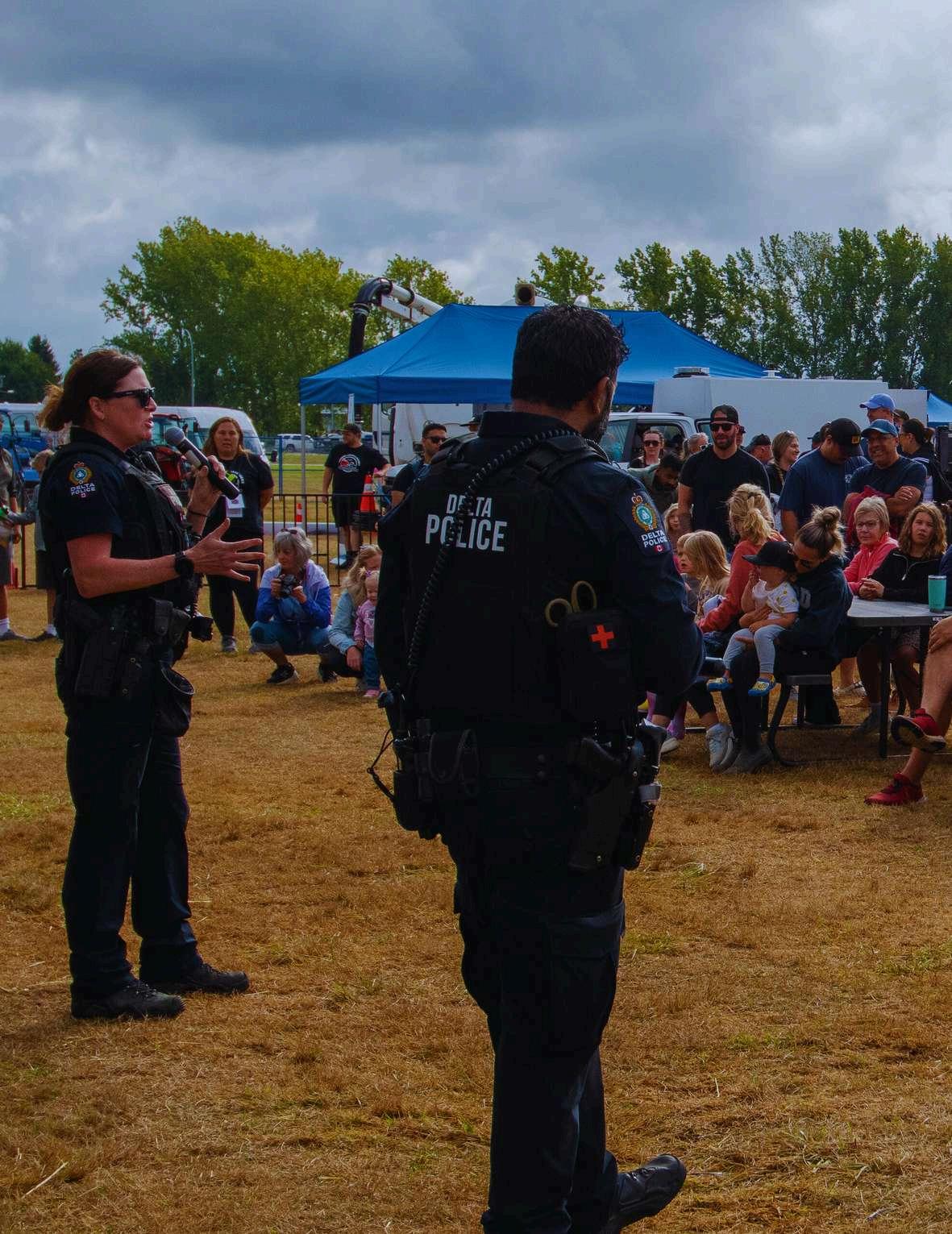
The Delta Police Department (DPD) has served our community since 1888, growing alongside Delta as it evolved from a farming and fishing village into a thriving city.
Today, we take an evidence-based and service-driven approach to policing, focused on keeping Delta one of the safest communities in Canada, as reflected in the Crime Index (CSI), a national measure of community safety.

The Delta Police Board provides civilian oversight of the DPD, as required under the B.C. Police Act. The Board includes seven provincially appointed community members, one City of Delta Council member, and one community representative appointed by Council. In addition to other governance responsibilities as outlined in the Police Act, the Board is responsible for setting the Department’s priorities, objectives, and goals in consultation with the Chief Constable.
Our Vision, Mission, and Core Values form the foundation of our identity. They guide our decisions, actions, and partnerships as we work to keep our community safe and build lasting trust with the people who call Delta home.
Delta, a Safer and Better Community through Excellence in Policing VISION
We lead by example, serving with respect and professionalism to uphold the trust placed in us by our community. HONOUR
We act decisively in the face of danger, risk and adversity to uphold justice and keep our community safe. COURAGE
Committed to a Safe and Secure Community MISSION
We do what is right and hold ourselves to the highest professional and ethical standards. INTEGRITY
We build confidence through fairness, transparency, and consistent action, earning trust with every interaction, with our community and with each other. TRUST
(2025)
24,571
CALLS FOR SERVICE (2024)
SUSPICIOUS
The Delta Service Enhancement Plan (DSEP) is our frontline operational deployment model. Developed through a comprehensive operational review and grounded in evidence-based strategies, its purpose is to ensure that resources are deployed strategically and consistently to meet community needs.
DSEP forms the foundation of how we deliver frontline policing services every day. It empowers our frontline teams to:
INCREASE VISIBILITY CREATE OWNERSHIP APPLY INNOVATIVE PROBLEM SOLVING CONDUCT ENFORCEMENT ENHANCE ENGAGEMENT
DSEP is a key enabler of this Plan, translating frontline priorities into day-to-day policing. Alongside Annual Business Plans (ABPs), DSEP helps guide broader implementation of the Strategic Plan.
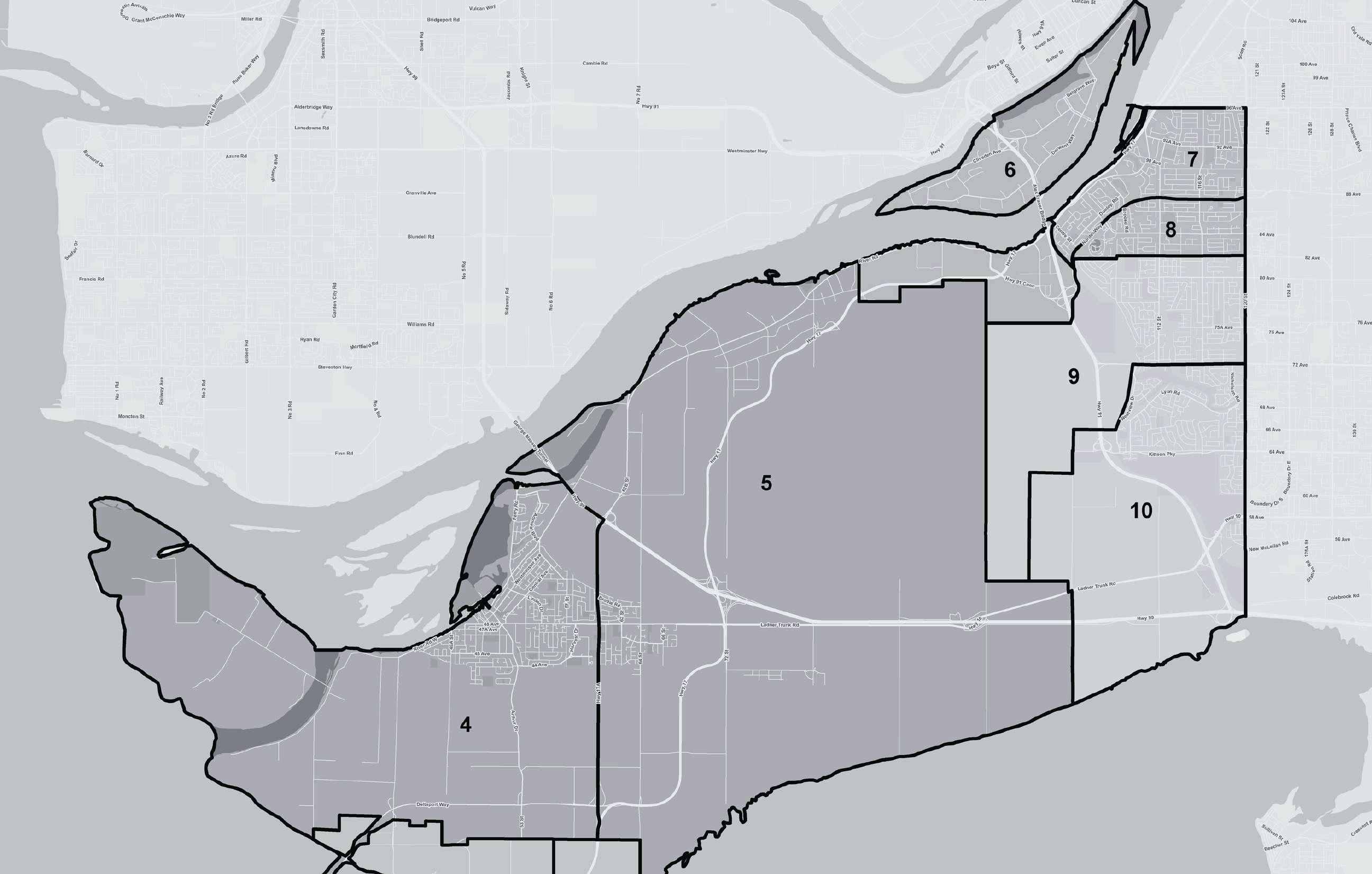
Using the most recent available date - including the 2021 Census, the City of Delta 2024 Annual Report, and BC Stats 2024 estimates - this snapshot highlights the community we serve today. Delta continues to evolve as a vibrant, diverse, and growing community, shaping how we deliver responsive, community-based policing.
125,165 POPULATION
1 IN 3
RESIDENTS BORN OUTSIDE CANADA
900 PER YEAR NEWCOMERS ARRIVE IN DELTA NEARLY 1 IN 2
RESIDENTS IDENTIFY AS MEMBERS OF RACIALIZED COMMUNITIES

44,479
ACRES OF LAND AREA
> Spans urban, industrial, rural, coastal and port environments.
> Serves as a major transportation and trade hub linking the Lower Mainland to the rest of British Columbia and the United States.
In 2024, we conducted a Community Survey to measure public perceptions of policing services and overall satisfaction, including how community members view policing today and their priorities for the future. This survey was part of our ongoing commitment to transparency and community engagement.
Top 5 areas our community want us to focus on
*% indicates area rated important or very important
Top 3 areas our community believes will shape policing in the coming years
GROWING POPULATION
GREATER TRAFFIC LEVELS
TECHNOLOGY/ INTERNET SCAMS
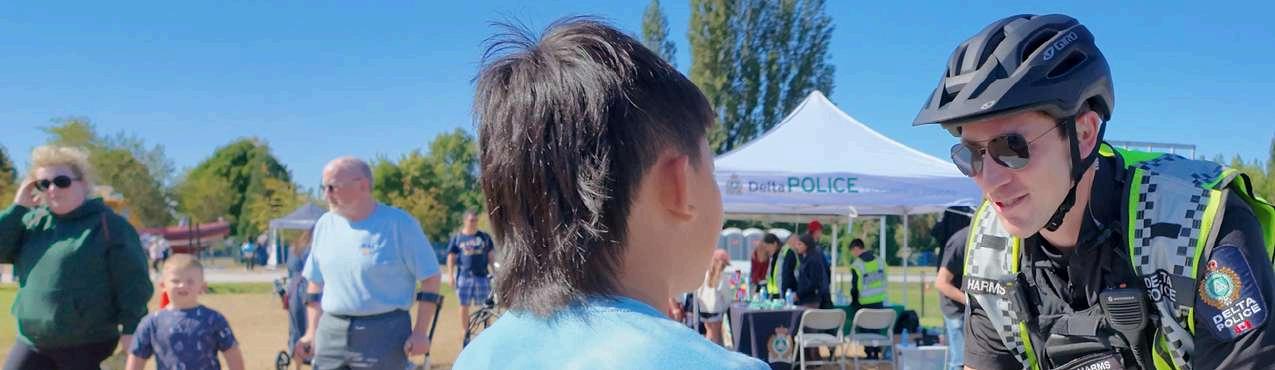
80% OF OUR COMMUNITY RATES OUR PERFORMANCE AS GOOD/EXCELLENT
This Plan was developed by the Delta Police Board, in consultation with the Chief Constable, as required under Section 26(4) of the B.C. Police Act. Grounded in evidence and shaped through meaningful engagement, the Plan reflects the Board’s governance role and the Chief's operational expertise, aligning the DPD’s work with community priorities, operational realities, and legislative requirements.
Our planning process drew on multiple sources of insight and evidence.
employee engagement
Environmental scan and analysis of DPD operational data and performance trends
Consideration of City of Delta Council and Minister of Public Safety priorities
Review of media coverage and public sentiment (traditional and social)
Scan of broader policing landscape including emerging regional, provincial, and national trends
Community input from the 2024 DPD and City of Delta Community Surveys
Engagement sessions with more than 30 partners, including City of Delta, Delta School District, and agencies across health, social services, and community sectors
Consultation with Tsawwassen First Nation
Employee engagement survey with sworn members and police staff
Leadership team discussions and feedback sessions
DPD Strategic Plan Working Group
The DPD is grateful for the contributions of our community, our team, and our partners, whose voices and perspectives shaped the priorities of policing in Delta for the next five years.
This Plan is built around three interconnected priorities that set our direction for the next five years. Together, they guide how we deliver policing services, what we do to strengthen community safety and trust, and support the people who make our work possible.
Our People
Sustain No Call Too Small Be an Employer of Choice
Safety & Trust with a Growing, Diverse Community Our Service Delivery
Our Community
Each priority is supported by clear goals and measurable indicators that track progress across the Plan as a whole. Implementation of the Plan will be guided by an Annual Business Planning process. Our approach to measurement and reporting is described on pages 18 and 19.

Our Goals
Our Goals
Streamline administrative workload to enhance proactive policing and response to calls for service
Streamline administrative workload to enhance proactive policing and response to calls for service
Facilitate appropriate responses to calls for health, social and bylaw concerns
Facilitate appropriate responses to calls for health, social and bylaw concerns
Deploy technology and staff to improve responsiveness to calls for service
Deploy technology and staff to improve responsiveness to calls for service
How we deliver policing services is at the core of who we are. Our No Call Too Small approach sets us apart and anchors our service delivery model Responding to minor community safety concerns before they escalate has helped us build trust, strengthen relationships, and maintain a safe community It is one of the reasons our community consistently reports higher satisfaction with local policing than many others.
As we look ahead, this approach is under pressure. Our community is growing, crime is becoming more complex and calls for service continue to rise Community feedback shows that timely response to calls remains a top priority
At the same time, legal and administrative requirements along with a rising number of social and healthrelated calls place greater demands on officer time.
To sustain what sets us apart, we will continue strengthening the processes and partnerships that help us serve our community effectively. This means finding innovative ways to manage administrative workload, coordinating with the right responders for social and public health calls, and using technology to free officer capacity for proactive policing.
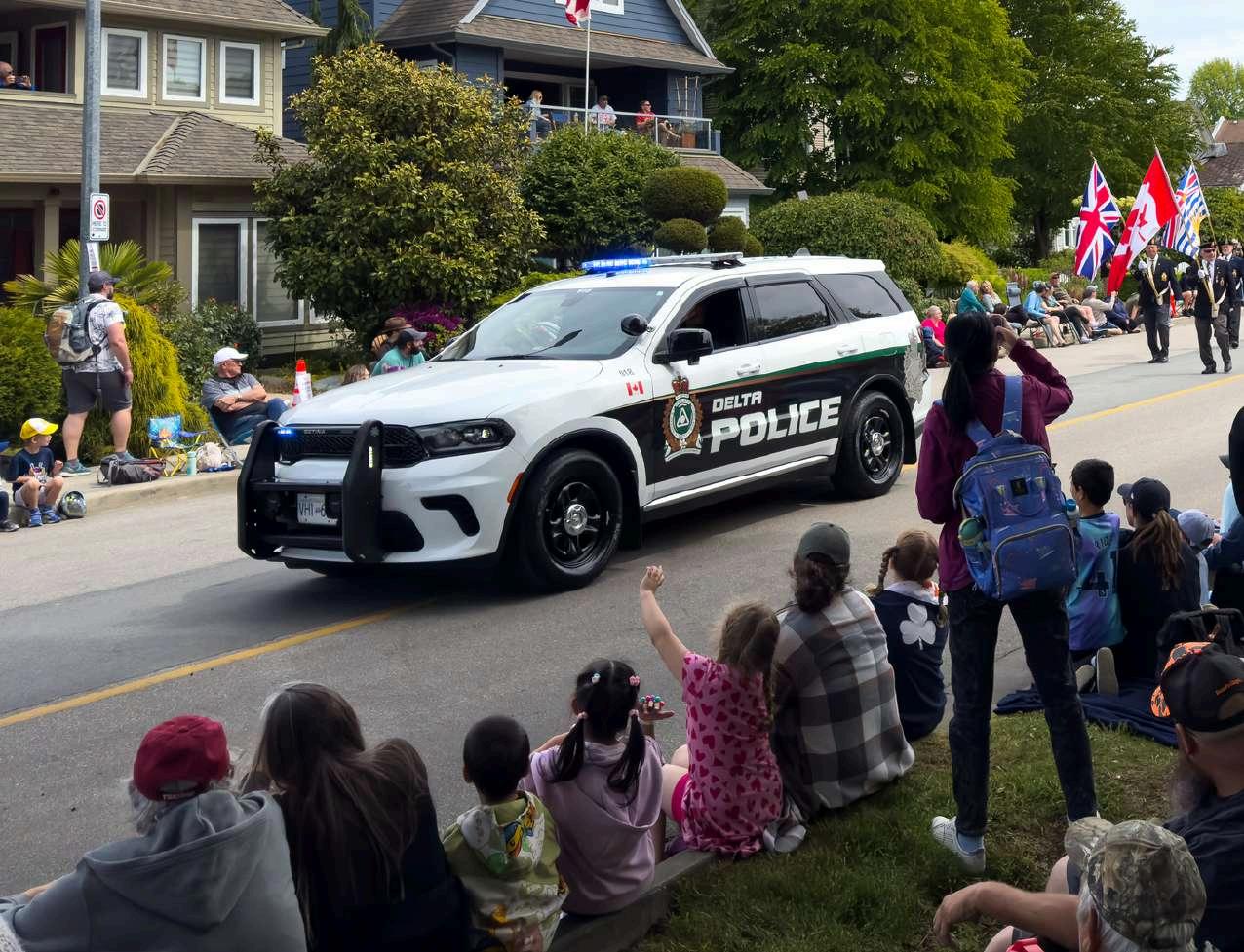
Increase public awareness of crime prevention and trends
Enhance partnerships and apply evidence-based approaches to address person and property crimes
Build stronger relationships with culturally diverse communities
Apply coordinated and datafocused approaches to address road safety and congestion
Community safety is at the core of our mission. Community feedback shows that property and persons crimes continue to be top concerns, even when reported incidents decline This means we must address not only crime itself but also perceptions of safety through stronger communication, visibility, and prevention
At the same time, community feedback highlights new pressures ahead. Population growth, increased traffic and road safety issues, and the rise of cybercrime are expected to have the biggest impact on policing in the years ahead Across Canada, research confirms these are among the fastest-growing challenges facing police services Technology provides powerful tools to prevent and investigate crime, but it also enables more complex criminal activity.
Underlying all of this is the importance of public trust and confidence in policing. We are fortunate to have built that trust, reflected in high satisfaction ratings and a complaint rate of less than 1% of all recorded interactions However, community feedback reminds us that perceptions are shaped not only by personal experience but also by wider narratives, including those outside our community.
As our community grows and becomes more diverse, we will adapt how we strengthen safety and trust so that everyone feels safe, supported, and connected to our team We will do this by applying evidence-based strategies to address crime, collaborating with partners on complex challenges, and engaging with our community.
Improve availability and continuity of TFNST
Enhance DPD’s understanding of TFN community, history, values, laws, protocols, staff, and resources
Uphold trauma-informed and relationship-centered policing
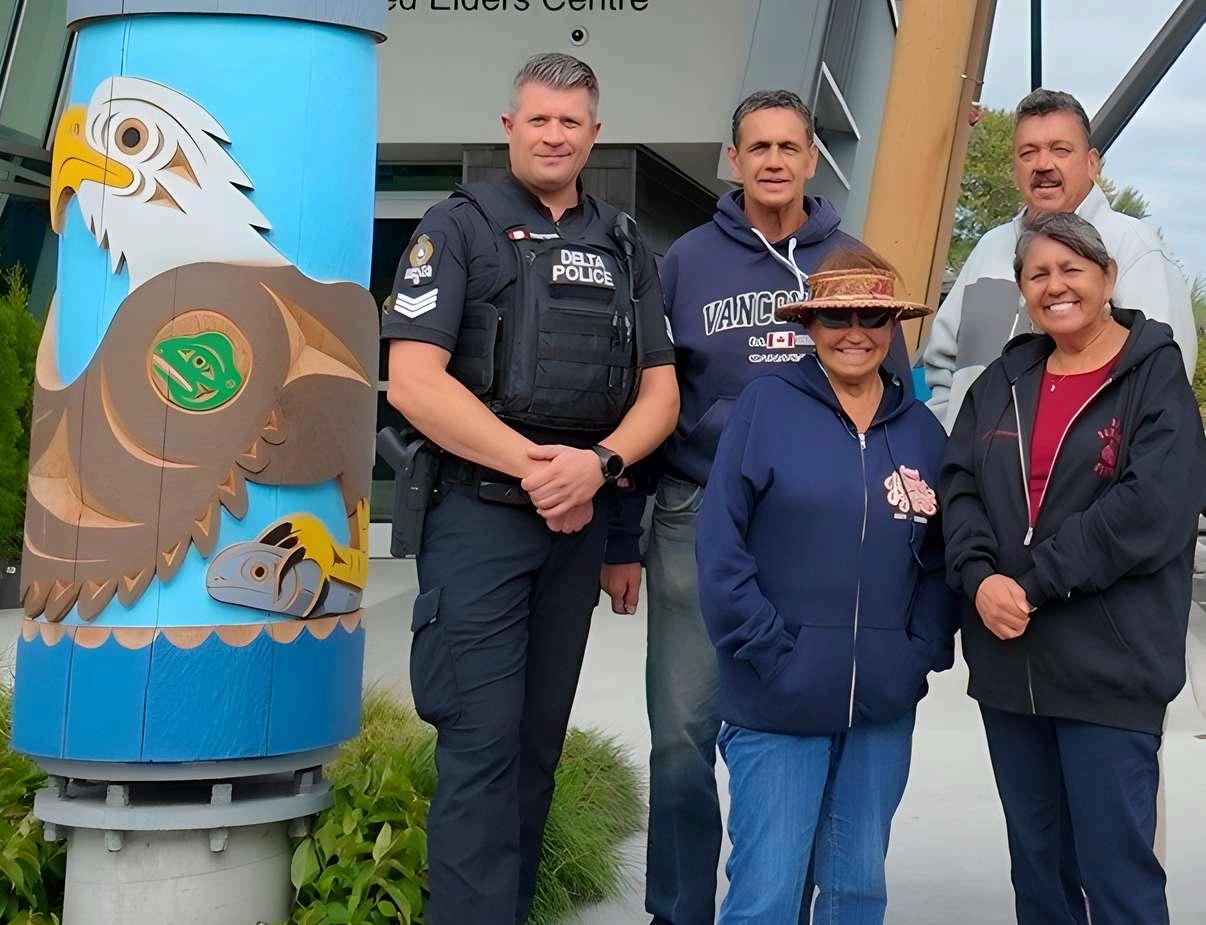
Priorities 1 and 2 are also central to our work with Tsawwassen First Nation (TFN).

Since 2006, we have provided policing services on TFN lands under a dedicated contract Over the past two decades, we have built a model grounded in trust, cultural awareness, and ongoing partnership with TFN leadership, staff and community.
In 2018, we strengthened this commitment with the creation of the Tsawwassen First Nation Service Team (TFNST), supported by a TFN Liaison Officer from the DPD, who ensures consistent connection, informationsharing, and coordination between TFN and the DPD.
This model has been recognized nationally as a leading example of community-based and culturally responsive policing Its strength depends on continuity, strong engagement with TFN leadership, and a clear understanding of TFN’s history, values, and protocols
We remain committed to strengthening our partnership with TFN through consistent service delivery, cultural learning, and respectful, trauma-informed policing. By working together, we will continue to support a model of community safety that reflects TFN’s values, priorities, and vision for the future
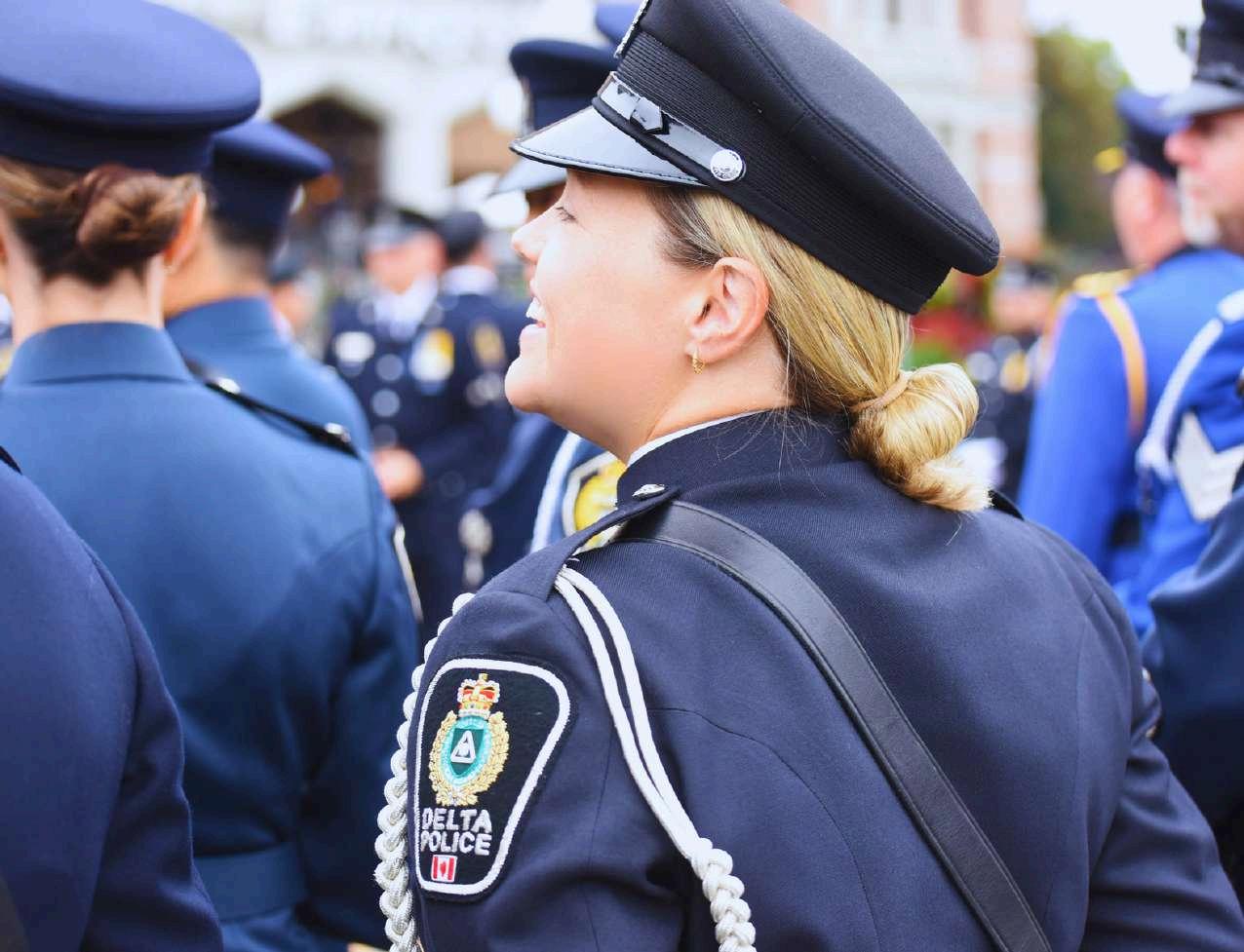
Proactively support structured career pathways and growth opportunities for all employees
Advance programs for health and resiliency of the team
Modernize spaces to support the growing team’s development and wellness
This Plan depends on a resilient team. To sustain our No Call Too Small approach and ensure community safety and trust, we need a strong, engaged, and supported team
Our community tells us that a range of abilities, knowledge of multiple languages, and a mix of ages are among the top diversity elements they value in their police service. At the same time, our team has shared that career development, meaningful opportunities to grow, and reducing administrative workload are important for their job satisfaction
In a competitive landscape, recruiting and retaining skilled people is a challenge across policing in the province. Being an employer of choice means creating a workplace where people want to join, stay, and grow. It is about equipping and supporting our members so they can bring their best every day.
Looking ahead, we will continue to invest in development, wellness, and resiliency so we can attract, retain, and empower the talented people who deliver on our mission now and into the future.

This Plan will be implemented through the Annual Business Planning (ABP) process Each year, the ABP will identify specific initiatives that advance the Plan’s priorities and goals, turning long-term direction into focused annual action.
The process is collaborative, engaging our team and drawing on insights from community feedback, partners, and operational data to ensure our priorities remain responsive to emerging needs, evolving challenges and available resources
Organizational performance will be monitored through a set of strategic indicators that track outcomes across all priorities.
These indicators provide a clear and connected view of how our collective efforts contribute to achieving the priorities of this Plan, showing how progress in one area supports others rather than serving as isolated measures.
Progress on the implementation of this Plan will be reported semi-annually to the Police Board and the community, providing updates on strategic indicators and the Annual Business Plan
This approach ensures transparency, demonstrates accountability, and keeps the community informed of how we are delivering on our commitments.
PROACTIVE TIME
Portion of officer time dedicated to proactive policing activities
Average time to respond to emergency calls for service. PRIORITY 1 RESPONSE TIME
COLLABORATIVE PARTNERSHIPS AND REFERRALS
Participation in joint initiatives and referrals that ensure the right response.
Cost of policing per resident compared to the BC municipal average. COST PER CAPITA
Overall seriousness and volume of reported crime compared to BC average. CRIME SEVERITY INDEX (CSI)
Opportunities supporting staff learning and development. EMPLOYEE GROWTH AND DEVELOPMENT OPPORTUNITIES
INTRODUCTIO
COMMUNITY PERCEPTION OF DPD PERFORMANCE
Community rating of overall police performance as good or excellent.
INTRODUCTIO
COMMUNITY ENGAGEMENT
Participation and reach across community in-person and through digital platforms.
INTRODUCTIO
TOTAL COLLISIONS
Year-over-year trends in traffic collisions.
Proportion of sworn positions filled relative to authorized strength AUTHORIZED STRENGTH FILLED
Proportion of public complaints compared to total recorded police interactions. ADMISSIBLE PUBLIC COMPLAINTS

Committed
Engagé à assurer une communauté sûre et sécurisée