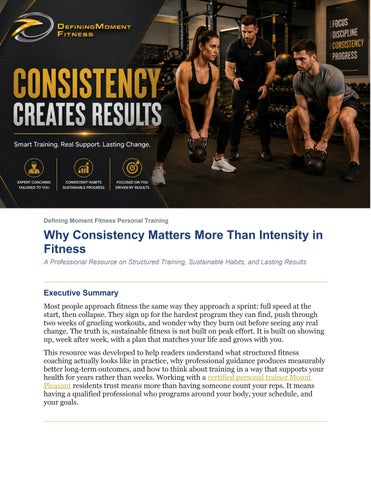
Understanding the Challenge
The fitness industry does not have a motivation problem. It has a consistency problem. According to research on exercise adherence, the majority of people who start a new fitness routine abandon it within the first three months. The reasons vary, but the pattern is remarkably consistent: too much too soon, no clear structure, and no external accountability.
Starting an exercise habit feels straightforward on paper. Wake up earlier. Go to the gym. Eat better. But in real life, work schedules shift, energy fluctuates, soreness sets in, and the initial excitement fades fast. Without a system in place, most people revert to their old habits by default, not because they are lazy but because the program they were following never accounted for the realities of their life.
Structured training solves this problem by replacing guesswork with a framework. Instead of choosing today's workout based on how motivated you feel, a well-designed program tells you exactly what to do, why you are doing it, and how it builds toward something meaningful. That structure is the difference between training and just exercising.
Why Personalized Coaching Matters
Generic fitness content has its place. Free workouts on YouTube and downloadable programs can introduce people to movement and build baseline habits. But they cannot account for you specifically. Your movement history, injury background, current fitness level, lifestyle constraints, and long-term goals are all variables that shape what kind of program will actually work for your body.
A qualified coach assesses these variables before writing a single exercise. They screen for movement limitations, identify muscular imbalances, and build a program that challenges you appropriately without pushing you into injury territory. That calibration matters more than most people realize, especially in the first few months when the body is adapting and the risk of overuse injury is highest.
Beyond programming, coaching provides the relational accountability that self-directed training cannot replicate. When you have a scheduled session, a coach who tracks your progress, and someone who notices when you are off your game, you are far less likely to skip workouts or cut corners. That external structure is not a crutch. It is a tool used by professional athletes, executives, and everyday people who want to take their health seriously.
The return on investment from working with a coach also extends well beyond the gym. Clients who train with professional guidance tend to sleep better, manage stress more effectively, and make more consistent nutritional choices. Those downstream benefits compound over time in ways that are difficult to replicate through solo effort alone.
Strength Training Fundamentals
Strength training is one of the most evidence-supported forms of exercise available. Regular resistance training improves bone density, increases resting metabolic rate, supports joint health, and reduces the risk of chronic conditions including type 2 diabetes and cardiovascular disease. Despite this, many people avoid it out of fear of injury or unfamiliarity with proper technique.
Several principles should guide any sound strength training program:
• Progressive overload: The body adapts to stress. For training to produce results over time, the demands placed on it must increase gradually. This does not mean lifting heavier every single session, but it does mean tracking performance and creating intentional progression through load, volume, or exercise complexity.
• Movement quality before load: Technique should always precede weight. A coach who allows clients to add load on top of poor movement patterns is not doing them any favors. The foundational movements including squats, hinges, pushes, pulls, and carries should be executed cleanly before progression.
• Adequate recovery: Muscle is built during rest, not during the workout itself. Training frequency should be matched to recovery capacity, which varies significantly from person to person based on age, sleep quality, nutrition, and stress levels.
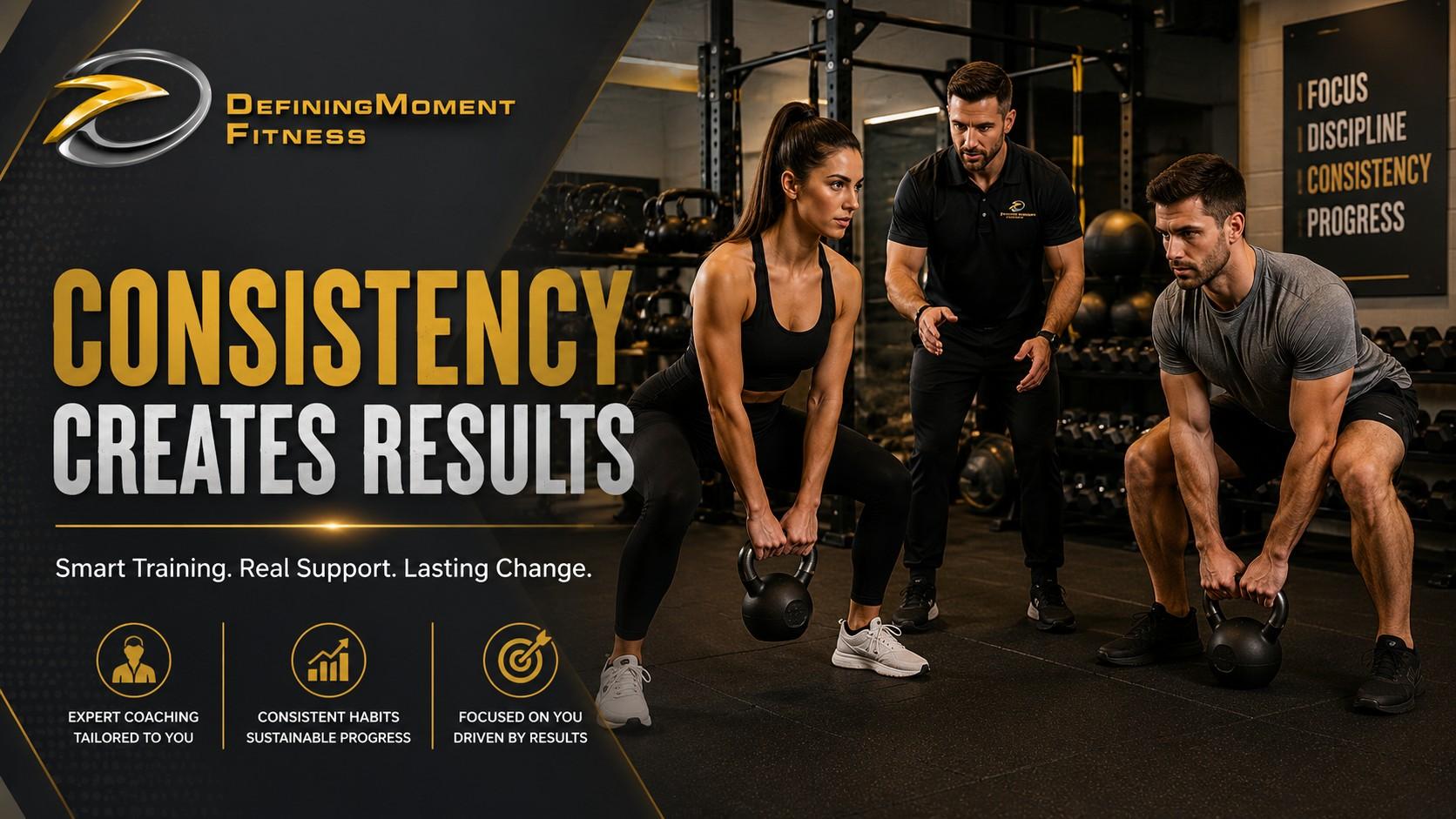
• Consistency over intensity: Three solid sessions per week performed consistently over months will always outperform sporadic bursts of extreme effort. The athletes and clients who see the best long-term results are rarely the ones who push hardest on any given day. They are the ones who show up most reliably.
Strength training is also highly adaptable. Whether someone is 25 or 65, training around a shoulder limitation or recovering from a sedentary decade, a competent coach can design an effective program that meets them where they are.
Weight Loss and Sustainable Habits
Weight management is one of the most misunderstood areas in fitness. The conversation is often dominated by extreme caloric restriction, rapid transformation timelines, and programs that treat the body as a math equation rather than a complex biological system. A more grounded approach focuses on building the habits that support a healthy body composition over years, not weeks.
Sustainable fat loss generally occurs when three things align: a consistent but moderate caloric deficit, sufficient protein intake to preserve lean muscle mass, and a training program that supports metabolic health. None of these elements require perfection. They require consistency.
Working with a weight loss personal trainer Mount Pleasant SC residents turn to means getting a program built around realistic behavior change rather than white-knuckle willpower. Effective trainers understand that nutrition and training habits need to fit a client's actual schedule, preferences, and stress load. A plan that works on paper but falls apart in real life is not a good plan.
Progress tracking also plays a meaningful role. When clients monitor their strength performance, energy levels, sleep quality, and body measurements rather than fixating solely on the scale, they develop a more accurate picture of what is actually improving. That broader view of progress keeps motivation alive during the inevitable plateaus that occur in any sound program.
Online Coaching Versus In-Person Training
The rise of digital fitness platforms has expanded access to professional coaching in meaningful ways. Both in-person and online training offer distinct advantages, and the right choice depends on individual lifestyle, goals, and how much direct supervision a client needs.
In-person training provides several clear benefits:
• Real-time form correction and immediate feedback on movement quality.
• Physical spotting and hands-on cueing for complex lifts.
• A dedicated training environment that removes everyday distractions.
• Strong interpersonal rapport that can significantly enhance accountability.
Online coaching, while different, is not a lesser option. It is a different delivery model with its own strengths:
• Flexibility to train on your schedule and in your preferred location.
• Access to qualified coaches regardless of geographic proximity.
• Often more cost-effective while still delivering personalized programming.
• Ongoing communication via video check-ins, app-based tracking, and regular program updates.
The online strength training coaching program offered through Defining Moment Fitness is designed for clients who want professional-grade programming with the flexibility to train on their own timeline. This model works particularly well for experienced exercisers who understand basic movement patterns and want structured progression without the geographic constraints of in-person sessions.
For beginners or clients with significant movement limitations, starting in-person and transitioning to online once foundational skills are established is a practical and increasingly common approach.
Common Fitness Mistakes
Even motivated, well-intentioned people make the same training errors repeatedly. Understanding these patterns helps in avoiding them.
• Prioritizing soreness over quality: Muscle soreness is not a reliable indicator of an effective workout. A good training session should challenge you appropriately, not leave you unable to walk for three days. Chronic excessive soreness is often a sign of poor program design or inadequate recovery.
• Skipping the warm-up: A five to ten minute movement preparation sequence primes the nervous system, increases tissue temperature, and significantly reduces injury risk. It is not optional for serious training.
• Changing programs too frequently: Program-hopping is one of the most common reasons people fail to progress. Strength and conditioning adaptations take weeks to develop. Switching programs before allowing adequate time for adaptation means perpetually starting over.
• Ignoring sleep and recovery: No training program overcomes chronically poor sleep. Recovery is when adaptation occurs. Clients who invest in sleep quality and stress management consistently outperform those who train harder but recover poorly.
• Setting outcome goals without process goals: Wanting to lose twenty pounds or run a 5K is a fine starting point. But without defined process goals, such as training four days per week and preparing meals on Sundays, there is no reliable path to the outcome.
Frequently Asked Questions
Question 1: How long does it typically take to see results from a structured training program?
Most people notice measurable improvements in strength and energy within four to six weeks of consistent training. Visible body composition changes generally require eight to twelve weeks of adherence to both training and nutritional habits. The timeline varies significantly based on starting fitness level, sleep quality, diet, and training frequency. Coaches who promise dramatic results in shorter windows are overstating what the body can realistically accomplish safely.
Question 2: Is strength training safe for older adults or people with prior injuries?
Yes, when programmed appropriately. Strength training is actually one of the most recommended interventions for older adults because it preserves bone density, supports joint stability, and reduces fall risk. For clients with prior injuries, a qualified coach works within movement tolerances and often collaborates with physical therapists to ensure training supports rather than compromises recovery.
Question 3: How is online coaching different from just following a fitness app?
Fitness apps deliver generic programming to large audiences. Online coaching delivers a program designed specifically for your body, your goals, and your current fitness level. A coach reviews your progress data, adjusts your program as you advance, communicates with you regularly, and provides accountability that no algorithm can replicate. The personalization and human connection are the primary differentiators.
Question 4: How important is nutrition in a strength training or weight loss program?
Nutrition and training are both important, and neither fully compensates for a deficit in the other. That said, coaches who practice within their scope of expertise typically provide general nutritional guidance rather than specific meal plans, unless they hold a separate nutrition credential. The focus is usually on adequate protein intake, appropriate caloric balance, and eating habits that support recovery and performance rather than prescriptive dieting.
Key Takeaways
The most important concepts from this resource at a glance:
1. Consistency over time produces far better outcomes than occasional bursts of extreme effort.
2. Personalized coaching accounts for individual variables that generic programs cannot address.
3. Strength training is safe and beneficial across all fitness levels and age groups when properly programmed.
4. Sustainable weight loss requires a realistic caloric approach, adequate protein, and behavioral habits that fit real life.
5. Both in-person and online coaching can produce excellent results; the right choice depends on individual needs and lifestyle.
6. Common training mistakes, including program-hopping, ignoring recovery, and chasing soreness, undermine long-term progress.
7. Accountability structures, whether through a coach, a training partner, or a structured program, significantly improve adherence.
Conclusion
Fitness is not complicated, but it is also not as simple as working harder or wanting it more. The clients who achieve meaningful, lasting results share a few common traits:
they follow a program designed for their specific situation, they train consistently rather than heroically, and they have some form of accountability built into their routine.
Professional coaching provides all three of those elements in one place. It replaces the paralysis of too many choices with a clear, structured path forward. It replaces the motivation cycle with a relationship and a schedule. And it replaces guesswork with evidence-informed programming developed by someone who understands how the body adapts to training over time.
Whether the goal is building functional strength, improving body composition, preparing for an event, or simply building a health practice that lasts well into the future, working with a qualified fitness professional is one of the highest-leverage investments a person can make in their long-term wellbeing.
Ready to Learn More?
Defining Moment Fitness Personal Training works with clients who are ready to approach fitness with intention and structure. Whether you are exploring in-person sessions or a flexible online program, their team is available to help you understand which coaching model fits your goals and lifestyle. Visit www.definingmomentfitness.com to explore professional coaching options and take the first step toward a training practice built to last.