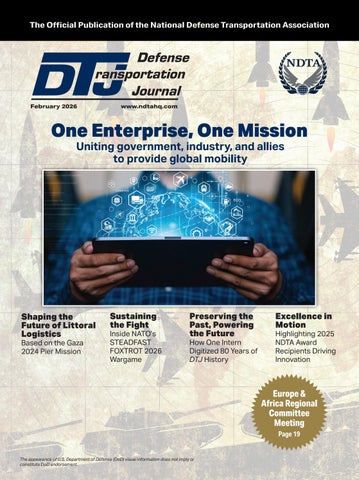

One Enterprise, One Mission


NDTA FOUNDATION HALL OF FAME
The National Defense Transportation Association Foundation recognizes our most special donors for their gracious financial support to academic scholarships supporting our future logistics and transportation leaders.
VISIONARY SOCIETY
Contribution over $100K
PATHFINDER SOCIETY
Contribution $25K - $49,999


As the Foundation is funded by voluntary donations, with your support, the Foundation will be empowered to help students for decades to come. Please consider making a tax-deductible contribution to help our future professionals have a future. Visit https://www.ndtahq.com/foundation/ to find out more. GIVE HAPPY - The NDTA Foundation is now a vetted charity listed in Combined Federal Campaign! CFC charity code #94212
THE LANDSTAR ADVANTAGE


• One of the industry’s largest van and platform selections with over 78,000 truck capacity providers in network

• Expedited cargo vans, straight trucks and tractor-trailers
• More than 17,600 pieces of trailing equipment


• 9,600 owner-operators leased to Landstar with over 1,200 stepdecks and 960+ flatbed trailers
• Drop and hook services


• Secure, dedicated government services with more than 350 AA&E secret cleared teams

• Specialty trailers ranging from beam, blade and Schnabels to double drop, stretch and multi-axles


• Hazmat certified owner-operators
• Unit moves with on-site carrier representative


February 2026 • Vol 82, No. 1
PUBLISHER
VADM William A. Brown, USN (Ret.)
MANAGING EDITOR
Barbara Parus | bparus@ndtahq.com
CIRCULATION MANAGER
Leah Ashe | leah@ndtahq.com
PUBLISHING OFFICE NDTA
50 South Pickett Street, Suite 220 Alexandria, VA 22304-7296 703-751-5011 • F 703-823-8761
GRAPHIC DESIGN & PRODUCTION MANAGER
Susan Hill
ADVERTISING SALES DIRECTOR Bob Schotta bschotta@cjp.com
ADVERTISING & PRODUCTION
Carden Jennings Publishing Co., Ltd. Custom Publishing Division 375 Greenbrier Drive, Suite 100 Charlottesville, VA 22901 434-817-2000 x330 • F 434-817-2020


Defense Transportation Journal (ISSN 0011-7625) is published bimonthly by the National Defense Transportation Association (NDTA), a non-profit research and educational organization; 50 South Pickett Street, Suite 220, Alexandria, VA 22304-7296, 703-751-5011. Copyright by NDTA. Periodicals postage paid at Alexandria, Virginia, and at additional mailing offices.
SUBSCRIPTION RATES: One year (six issues) $40. Two years, $60. Three years, $75. To foreign post offices, $45. Single copies, $6 plus postage. The DTJ is free to members. For details on membership, visit www.ndtahq.com.
POSTMASTER: Send address changes to:
South Pickett Street, Suite 220 Alexandria, VA 22304-7296

Dear NDTA Team,
A Call for Unity and Purpose!
VADM William A. Brown, USN (Ret.) NDTA President & CEO
The new year opens with a call for unity and purpose across the entire defense transportation and logistics enterprise. The NDTA 2026 Theme is “Strengthening the Fourth Component: Industry Ready, Nation Secure.” Our mission is clear: to align the capabilities, technologies, and needs of the Department of War (DoW) with U.S. commercial industry capabilities to sustain readiness, agility, and global reach across every mode and domain.
The synergy between the DoW and the commercial sector is not just a strategic advantage; it is a requirement.
Integrating innovative technologies. The rapid pace of technological advancement offers incredible potential, from AIdriven logistics platforms to autonomous

The current geopolitical landscape, with intense near-peer competition for influence and mobility access, highlights the critical importance of trusted commercial partnerships for deploying forces and sustaining them. With this background in mind, our 2026 focus will be:
Leveraging commercial partnerships to enhance military mobility. The synergy between the DoW and the commercial sector is not just a strategic advantage; it is a requirement. By connecting commercial capacity and innovation, we significantly enhance power projection and maintain a responsive force.
WELCOME NEW CORPORATE MEMBERS
As of February 1, 2026
PRESIDENT'S CIRCLE
• C5MI (Upgrade)
• Fluor
• SeaCube Containers (Upgrade)
SUSTAINING
• Nexen Air LLC
Global relationships are a logistics necessity and build deterrence. In an interconnected world, the strength of our alliances and commercial integration is paramount. These relationships bring a deterrence effect which our adversaries recognize.

vehicles. Our challenge and focus are the seamless integration of these innovations to improve efficiency and effectiveness without compromising current operations. A notable example will be the implementation of USTRANSCOM’s Joint Transportation Management System (JTMS).
Supporting the Defense Industrial Base as a force enabler. A robust, resilient, and flexible defense industrial base is critical to our national security. Industry, the "Fourth Component," supports the Joint Deployment and Distribution Enterprise, as well as supporting the economic engine of our nation.
Education regarding these focus areas is paramount as we seek to provide government with a stronger, more resilient, and ready industry partner. Our members at NDTA are actively advancing our collective knowledge through attendance at key events, such as GovTravels, the Surface Force Projection Meeting (SFPM), the Transportation Advisory Board (TAB), and the annual NDTA-USTRANSCOM Fall Meeting.
These national-level meetings are crucial for improving industry readiness and cultivating the next generation of logistics and transportation leaders. As we look forward to the opportunities and challenges of 2026, please remain committed, as you have in the past. Our combined strength — DoW, industry, and our global partners — is the ultimate guarantee of our nation’s security and global reach.
Thank you very much, NDTA team. Let’s have a great 2026 — a year of engagement!
W.A. Brown DTJ

End-to-End Multi-Modal Logistics
Bulk Fuel Operations
DoD Trusted, ISO-Certified Solutions

Veteran-led Teams, Dedicated Account Management
Vessel Management
crowley.com/government
Global Reach with Resilient, Rapid Response Including in Austere Environments

Vehicle recovery (April 2023): US Army Vessel Fort McHenry conducts bare-beach landings during Balikatan 2023 in Casiguran, Philippines. Sharp angle for vehicle offload resulted in Marine vehicles flooding and becoming swamped in the surf zone. Marines and Soldiers coordinate to recover the vehicle. (Credit: CPT Jared McCully 3rd Transportation Brigade Expeditionary - USAR)
Rebuilding Littoral Logistics:
Lessons from Gaza 2024 and How to Shape the Watercraft Problem
By CPT Jared McCully, USAR, and CW5 (Ret.) Abdelkader “Abe” Hosni, USA
Asingle pier can fail, but a network endures. The 2024 Gaza maritime corridor, enabled by the Army’s Modular Causeway System (MCS), represented an opportunity to employ Joint Logistics Over-the-Shore (JLOTS) for humanitarian access within a politically constrained battlespace. Unlike the controlled conditions typical of annual training exercises or episodic disaster-relief operations, Gaza functioned as a real-world stress test. That stress test exposed the fragility of existing causeway systems, the limitations of current governance models, and the growing mismatch between legacy littoral connectors and contemporary operational conditions.
While multiple Inspector General reports from the U.S. Agency for International Development (USAID) and the Department of War (DoW) provide comprehensive assessments and near-term corrective actions addressing challenges observed in 2024, the broader Joint Staff and national security community must confront the more immediate strategic risk posed by a limited littoral connector capacity. Unless a coordinated capabilities review reframes JLOTS as a commercial–military network, rather than a finite collection of modular “Lego-set” causeway components, the United States will continue to assume unacceptable operational risk in future crises.

Stratlift – Exercise Talisman
Gaza 2024: A Case Study in Over-Extended Assumptions
The USAID Office of Inspector General’s evaluation of the Gaza maritime corridor documents a mission shaped by persistent weather disruptions, security constraints, and coordination friction among the DoW, USAID, the Israel Defense Forces, and the United Nations. Sea conditions repeatedly forced the temporary pier to be detached and relocated to the safe haven of Ashdod. Sustained Sea State 3-plus conditions, compounded by deadlined lighterage vessels, disrupted offload timelines and left thousands of pallets stranded at intermediate marshalling areas. While more than 8,000 metric tons of humanitarian aid moved across the pier demonstrating a relative throughput advantage over airlift sustainment, volumes fell well short of initial public expectations and were achieved at significant cost in personnel injuries, damaged equipment, and degraded readiness.
Subsequent reporting from the DoW’s Inspector General’s review of Operation Neptune Solace identified systemic issues, including insufficient joint training, equipment incompatibilities between Army and Navy elements, and a JLOTS capability that had been under-resourced and under-exercised for years. These findings reflect a structural mismatch between
Sabre (July 2023): USNS Bob Hope conducts an in-stream assembly of the Army Modular Causeway System (MCS) off the coast of Bowen, Australia. Pictured are ideal condi- tions of calm seas conducive for MCS assembly and operation. The JLOTS experienced perusal delays due to increased Sea States exceeding Sea State 3 and 20+ knot winds, confirming the nickname of "Blowin Bowen.” (Credit: Australian Defense Forces Corporal Jacob Joseph)
An exercise intended to showcase the joint force’s ability to overcome the tyranny of distance instead revealed a scenario in which entire equipment sets remained afloat, unable to transition ashore within required timelines.
current JLOTS capabilities and the environments in which they are now being employed.
Notably, the Gaza operation occurred largely absent sustained kinetic attack. A more capable adversary observing Gaza 2024 was presented, nevertheless, with a clear set of exploitable seams: narrow weather windows, extended assembly timelines, predictable chokepoints, and fixed causeway configurations that can be surveilled, modeled, and pre-targeted.
JLOTS at the Edge: Exercises as Warning Signs
Gaza should not be viewed as an anomaly. Instead, it represents a manifestation of trends long observed in major joint exercises. JLOTS has been a recurring feature of operations such as Talisman Sabre, Balikatan, and Operation Deep Freeze,
where Army watercraft and causeway units rehearse ship-to-shore movement in austere environments. During Talisman Sabre 2023 in Bowen, Australia, weather conditions demonstrated how rapidly a planned theater-opening corridor can become a critical chokepoint when a causeway pier cannot be established. An exercise intended to showcase the joint force’s ability to overcome the tyranny of distance instead revealed a scenario in which entire equipment sets remained afloat, unable to transition ashore within required timelines.
Annual exercises routinely surface the same constraints: extended assembly timelines, heavy reliance on tugs, narrow weather tolerances, and labor-intensive operations. These challenges are consistently documented in unit-level and USTRANSCOM after-action reviews, yet they persist as accepted risk rather than resolved deficiencies.
The Government Accountability Office’s (GAO) 2024 report on Army watercraft describes a “small, but critical fleet” struggling with aging platforms, constrained shipyard capacity, and availability rates insufficient to meet global demand. A substantial share of Landing Craft Utility and Logistics Support Vessel taskings are tied to Indo-Pacific missions, including JLOTS support, even as modernization delays and manning shortfalls persist. Programs such as the Maneuver Support Vessel–Light and additional landing craft concepts proposed across the Army, Navy, and Marine Corps demonstrate a shared recognition of the shore-connector problem. However, lim-
operations. Large, static assembly areas are increasingly vulnerable during both humanitarian response and large-scale combat operations. Supremacy in the air and space domains cannot be assumed, as demonstrated by the Russian failure at the Siverskyi Donets River, where Ukrainian fires disrupted wet-gap crossings through concentrated effects against predictable timelines and locations. This case study has resonated across the ribbon bridging community, a key enabler of maneuver operations.
Compounding these challenges is a shrinking mariner workforce and an aging fleet. Reliance on platforms operat-
Combatant commands should have access to pre-competed, agile contracting vehicles capable of rapidly onboarding local and regional carriers during crises, particularly in semi-contested environments.
ited progress, fragmented ownership, and the absence of a coordinated mass fielding raise fundamental questions regarding enterprise accountability and integration.
Design Versus Reality in the Littorals
At its core, JLOTS was designed for a different operational world. Legacy causeway systems and associated watercraft were optimized for permissive shorelines, modest sea states, and uncontested assembly areas. Original planning assumptions accepted 10- to 14-day build timelines, concentrated labor forces, and relatively stable environmental conditions to enable steady throughput.
The contemporary littoral environment no longer conforms to these assumptions. Climate volatility is driving higher baseline sea states and more frequent severeweather events during periods historically considered benign. Operational planning must now account for scenarios in which wave heights exceeding five feet persist for weeks rather than days.
Advances in adversary sensing, surveillance, and fires further complicate littoral
ing beyond their intended service lives, combined with depleted Army and Navy watercraft force structure, reduces tolerance for maintenance delays and manning shortfalls. These realities necessitate greater consideration of alternative labor sourcing, allied contributions, and commercial augmentation.
Combat Maneuver Versus Sustainment Reality
A credible future watercraft strategy must clearly distinguish between the requirements of combat maneuver and those of sustainment. Combat maneuver demands rapid, opportunistic, multi-node access to shorelines, often in irregular or partially developed littorals, enabling forces to pulse and converge from multiple directions. Causeways that can only be established at a limited number of locations, under narrow environmental conditions, do not support this concept. While landing craft capable of inter- and intra-theater lift contribute to maneuver, they must be available in sufficient quantity and responsiveness to support dispersed distribution requirements, the current fleet struggles to meet.
Sustainment, by contrast, prioritizes durability, endurance, and low signature. Platforms and causeways must survive prolonged exposure to harsh marine environments, operate reliably in higher sea states, and function with reduced crew demands while remaining integrated with joint protection and fires. The existing construct, one Modular Causeway Company, supported by a shrinking inventory of LCUs and LSVs tasked globally, is misaligned with Indo-Pacific distances and scales. Regional partners, such as Australia, the Philippines, South Korea, and Japan, possess substantial maritime and commercial capacity that remains underutilized within current sustainment planning frameworks.
From a policy perspective, conflating maneuver and sustainment requirements ensures that neither mission is optimally resourced. From a mariner’s perspective, it results in a single fragile system being tasked simultaneously as a maneuver enabler and a sustainment backbone. No current platform is tailored for this dual role. While the Maneuver Support Vessel–Light offers incremental improvement, its scale and economic efficiency remain limited.
The Commercial–Military Network That Does Not Yet Exist
The most significant gap in the current JLOTS construct is the absence of a true commercial–military maritime network for contested logistics. Programs, such as the Voluntary Intermodal Sealift Agreement demonstrate that commercial carriers can be integrated into national defense planning, but they were not designed for high-threat littoral sustainment or for the smaller vessels typically required in JLOTS scenarios.
A reimagined model would treat JLOTS as one node within a distributed network of commercial and allied hulls, including smaller regional carriers, and make this integration routine rather than conceptual. It would institutionalize pulse-and-converge logistics, aggregating combat power, and sustainment at the last feasible moment instead of concentrating throughput at a single pier. Such a model would also reembrace irregular logistics approaches,
Gaza Beach (May 2024): Army Modular Warping Tug from the Causeway, beached in Gaza during Operation Neptune Solace. Army Mariners were evacuated as the MCS suffered severe damage and broke apart during severe weather events while conducting JLOTS operations. (Credit - Anonymous, Opensource)


Gaza Broken Flexors (May 2024): Sections of the MCS indicated broken flexors, resulting from extreme damage incurred during severe weather. Flexors and additional connection hardware have been a difficult and expensive component to source for Army watercraft units.

LSV BK 25 (April 2025): LSV-7 US Army Vessel SSGT Robert T. Kuroda conducts a bare beach landing with the experimental SUBMAT on the beaches of Dingalan for CJLOTS exercises in Dingalan, Philippines. The vessel offloads Marines and equipment on a rare bare beach landing for a vessel this size. The Balikatan 2025 Exercise comprised a joint force, including Active and Reserve units from the Army, Marines, Navy, and Coast Guard. (Credit: CPT Jared McCully 3rd Transportation Brigade Expeditionary - USAR)

Pontoon Sections 2025):(August
The Modular Causeway System at Fort Eustis Virginia sits in a Non-Mission Capable (NMC) state. Numerous sections were severely damaged during the Gaza Humanitarian operation in the prior year.
recognizing that many modern littoral challenges mirror geographic and environmental constraints encountered during earlier maritime campaigns.
Central to this model is the principle that “cargo is king.” Without a viable business case, small and mid-tier carriers will not invest in hull forms, routes, or readiness postures that support contested logistics. This approach does not seek to transform commercial masters into combat
rals. Concurrently, Army and Navy landing craft modernization must align with measurable availability and performance metrics. Allowing niche systems to persist in isolated development silos has contributed directly to interoperability gaps and readiness degradation over the past two decades.
The Gaza experience illustrates the consequences of misaligned governance, authorities, and risk frameworks. If tasked
The Gaza experience illustrates the consequences of misaligned governance, authorities, and risk frameworks.
mariners; rather, it aims to design routes, contracts, and equipment interfaces that allow commercial hulls to integrate with JLOTS-like nodes under clearly defined risk and compensation frameworks.
Governance, Authorities, and Readiness Alignment
Congressional direction following Gaza prompted renewed Department of War Inspector General evaluation of JLOTS capabilities, highlighting governance and integration challenges across the enterprise. Responsibility for JLOTS planning and execution remains diffused among USTRANSCOM, geographic combatant commands, the Military Services, and interagency partners.
A modern governance model should centralize standards and certification under USTRANSCOM, or a designated joint authority, for commercial hulls, modular causeways, and autonomous surface platforms employed in JLOTS roles. Combatant commands should have access to pre-competed, agile contracting vehicles capable of rapidly onboarding local and regional carriers during crises, particularly in semi-contested environments.
Embedded data-sharing and threatassessment mechanisms are essential to ensure commercial partners understand operational risk and compensation frameworks prior to operating in contested litto-
today, it remains uncertain whether a JLOTS task force, Theater Sustainment Command, or geographic combatant commander could confidently deliver promised throughput in an Indo-Pacific contingency within 30 days using existing capabilities.
Deterrence Through Networks, Not Icons
The Gaza pier became a visible symbol of American resolve, yet visibility carries vulnerability. Icons are easy to target — politically, informationally, and kinetically. A resilient JLOTS architecture should prioritize distributed networks over singular constructs.
Deterrence in the littorals increasingly derives from adversary uncertainty regarding where convergence will occur, how sustainment will flow, and which nodes matter most. Targeting a distributed web of allied, commercial, and autonomous assets is significantly more complex than disrupting a single steel causeway. The ability to activate alternative nodes rapidly under pre-negotiated commercial frameworks further complicates adversary calculations.
Strategic Negligence Is a Choice
Gaza 2024 and subsequent GAO and Inspector General findings do not rep-
resent the final verdict on JLOTS, but they serve as a clear warning. The JLOTS community sits at a critical intersection where policy reform, commercial incentives, and technical innovation must converge to produce a viable model of littoral sustainment. Crews and platforms cannot be expected to overcome physics and outdated design assumptions indefinitely. Capability renewal, network integration, and governance reform are no longer discretionary.
If JLOTS is to remain relevant in future humanitarian operations or high-end conflict, Gaza must be treated as a baseline rather than an anomaly. History offers ample precedent for the consequences of ignoring this problem set. Failure to act within the current window of opportunity risks not merely inefficiency, but strategic negligence. DTJ
ABOUT THE AUTHORS

CPT Jared McCully is a U.S. Army Reserve logistics officer and former 7th Transportation Brigade (Expeditionary) JLOTS planner with operational experience across JLOTS, Balikatan, Talisman Sabre, and Operation Deep Freeze. He currently works in military-focused innovation and maritime engineering, advancing next-generation logistics solutions for contested and climate-impacted littorals, with concentration in the Indo-Pacific region.

CW5 (Ret.) Abdelkader “Abe” Hosni served as a senior Army Maritime Advisor and Vessel Master with decades of experience across CENTCOM and USARPAC. He recently supported Exercise African Lion, Operation Neptune Solace (Gaza 2024), and demonstrated autonomous littoral causeway solutions with USARPAC at xTech Pacific 2025. He has contributed extensively to Army watercraft modernization, including SLEP programs and future vessel design.


CONNECTING THE WORLD TO ALASKA THROUGH SURFACE, AIR, AND
OCEAN
Reliable, Sustainable, and Safe!


A Sustainment

Allied Joint Support and Enabling Command (JSEC) conducts the Enablement specific exercise Steadfast Foxtrot (STFX) annually. In 2026, it will include a Sustainment Wargame, as well as a Medical Wargame and a Rehearsal of Concept on a Reinforcement by Forces and Sustainment Flow plan.
The coordinated force deployment of 32 Allied nations is challenging, especially bearing in mind NATO’s tiered New Force Model — a task for which JSEC was established. But that is not the end of the work. Besides the necessity of always having a plan B and being prepared to cope with the “fog of war,” deployed forces require sustainment until they are redeployed to their home bases, regardless of where they come from.

THE RIGHT FORCES ARE AT THE RIGHT PLACE AT THE RIGHT TIME
STFX will be conducted from March 17 to 26, 2026, as the annual testbed to exercise agreed procedures, verify information used in various plans, and identify areas for improvement. JSEC's mission, in short, is to ensure that the right forces are at the right place at the right time to become effective. This requires information from all Allied Nations as depicted endeavour is data centric, just like JSEC’s work. The exercise also puts the robustness of the established Reinforcement by Forces and Sustainment Network (RSN) to the test, which is required to ensure the projection of combat power, as well as the sustainment of forces, to where it is needed.
The RSN is driven by the demands originating from NATO’s Family of Plans across the domains and regional focuses. In times of crisis and conflict, the network will be congested and contested. With this understanding, a resilient and robust network is required to ensure an uninterrupted sustainment flow. Already today we observe threats to our networks, be it rail networks, logistic chains, or cyber networks. Being aware of these challenges, the sustainment flow for deployed military forces must be pre-planned, tested, and revised while in parallel nations try to keep everyday life going as normally as possible. One challenge is that the network can’t be planned as a fixed construct. It must allow for flexible use and alternatives. From a logistics perspective, the network must ensure the flow of personnel and materials but also storage – including pre-positioning – and distribution of required classes of supply, most prominently fuel, ammunition, and military equipment. To
support this approach, exercise series STFX contributes to enhance the readiness of Allied forces, including their sustainment to compensate reduction of capacities and loss of parts of the network caused by attacks.
In March 2026, STFX will see a Sustainment wargame, which, for the first time, feeds the iterative process of further developing the RSN. Stakeholders will get to interact and play in a safe to fail environment and generate findings that will benefit processes and procedures to become much more familiar with complex settings whenever needed.
The coordination of all identified stakeholders, including civilian ones, is a complex endeavour, which requires constant training to be better prepared and achieve enhanced readiness. A wargame offers the attendees the possibility to practice their decision making while the gaming mechanics introduce frictions. Based on profound interactions, the wargame then provides feedback on the decisions made. Furthermore, regular exercises, like STFX, enhance the interaction between all participating military headquarters from strategic, operational, and tactical level, as well as with civilian stakeholders; for instance, when delivering services or offering contractor support to operations.
One might say logistics cannot win wars, but, as a matter of fact, logistics is not simply a “behind the scenes effort” to ensure military action in a conflict. JSEC’s main effort is already taking place in peacetime with the preparation of the theatre. By doing so, JSEC enables NATO’s efforts to deter any aggression, and to defend Allied territory if required. Sustainment is an essential part

of the enablement of the Supreme Allied Commander Europe’s (SACEUR) Area of Responsibility and does include proper stockpiles and sound chains of supply.
While JSEC is not responsible for national sustainment efforts, it is responsible for the sustainment flow through the Alliancewide RSN. That said, it is of utmost importance to understand the national plans prior to the coordination of the sustainment flow across the entire Allied territory.
The STFX26 Sustainment wargame is an important, milestone to enhance readiness, gain better understanding of the Allied logistics situation, and advance the preparation for the exercise Steadfast Defender in 2027. DTJ

ABOUT THE AUTHOR

Colonel (GS) Mario Karnstedt is Branch Head Services and Supply in the J4 Division of NATO’s Allied Joint Support and Enabling Command’s (JSEC) Support Directorate. Having served in the German Armed Forces for more than 30 years, and as an Army logistician, he has over 15 years of experience in the international environment and held positions at the Federal Ministry of Defence level related to international armaments affairs. In addition to his work at NATO International Military Staff, he has also worked in different functions at JSEC in Ulm over the last years.
JSEC Fact Sheet
The Allied Joint Support and Enabling Command (JSEC) is an operational-level NATO headquarters, located in Ulm, Germany. It coordinates the enablement of the Supreme Allied Commander Europe’s (SACEUR) Area of Responsibility, which spans from North America’s East Coast over to the Baltic States in Europe’s Northeast, from Poland and Romania in Eastern Europe to Türkiye and Greece in the South. JSEC also synchronizes the Reinforcement by Forces, and the sustainment flow, along its motto: Enable – Deploy – Sustain. A central synchronizing authority is essential, especially in a collective defence scenario where up to one million NATO soldiers could move across Europe. NATO’s deterrence and defence posture is underpinned by the ability to reinforce and sustain at speed and at scale. JSEC, established in 2018, is commanded by German Army Lieutenant General Kai Rohrschneider.
JSEC is not a traditional headquarters, since it is not responsible for an area/battlespace; neither does it command troops. It is a functional command and responsible for Enablement coordination. JSEC does have a traditional structure with three main directorates (Operations, Support and Plans) to facilitate interaction with other NATO headquarters and Allied nations. The key focus is to deconflict, synchronize and sequence with the Allied nations, considering also that Enablement involves many civilian stakeholders.
The Reinforcement and Sustainment Network (RSN) is JSEC’s main effort. It consists of a physical layer — the infrastructure and a functional layer — all the rules, regulations and contracts that allow military movement. To build up the RSN, existing capacities are used, where possible, and further developed by all nations in a whole-of government approach. JSEC tailors and manages the network through a continuous dialogue with Allies.

In the Spotlight…
2026 Europe & Africa Regional Committee Meeting
Building Trust and Collaboration: Fostering Partnerships for Sustainable Impact
By Jason Trubenbach, NDTA Chair, Europe & Africa Regional Committee
More than 70 government, military, and industry leaders gathered for the National Defense Transportation Association (NDTA) Europe & Africa Regional Committee Meeting in Sembach Kaserne, Germany, on January 20-21, 2026. What emerged over two days of focused discussion was not simply another professional convening, but a clear inflection point: a regional committee moving decisively from dialogue to delivery.
NDTA continues to foster critical civilmilitary collaboration to solve global logistics and transportation challenges.
Four regional subcommittees focused on building trust, opening communication, and aligning industry capabilities with the strategic needs of Combatant Commands, particularly in navigating contested environments and emerging technologies.
SESSION HIGHLIGHTS
• Air / Airlift Subcommittee: Focused on enhancing air mobility and tactical airlift coordination, with a specific
emphasis on integrating autonomous systems and drone-testing site data into strategic scheduling.
• Surface / Land Transport Subcommittee: Prioritized cross-border movement and inland transport integration, specifically addressing the modernization of rail infrastructure and the transition of veterans into commercial CDL roles.
• Sealift & Ports / Sea & Port Operations Subcommittee: Addressed port throughput and maritime “last mile” issues, while reviewing the impact of the recent regulatory shift in deepwater port licensing to the Maritime Administration.
• Passenger Travel Subcommittee: Explored cost-control strategies and the implementation of touchless security pilots to streamline government and military travel policies across the region.
Additionally, the Committee focused on implementing the new “Cybersecurity
Risk Management Construct” to ensure real-time defense of transportation networks against evolving ransomware threats.
For more details about the Europe & Africa Regional Committee Meeting, including award presentations, valuable insights, and key takeaways, please check out the April 2026 issue of DTJ.
ABOUT THE AUTHOR

Jason Trubenbach, NDTA Chair, Europe & Africa Regional Committee, is Director of Trailer Bridge Europe, GmbH, and a seasoned logistics and supply chain professional with extensive experience in freight forwarding, international trade, and transportation strategy. Connect with Jason at https://www.linkedin.com/in/jason-trubenbach/

Preserving the Record:
Digitizing 80 Years of DTJ History
By Daniel Shelton, George Washington University
Ibegan my internship with the National Defense Transportation Association (NDTA) in November 2024, as the organization was concluding its annual Fall Meeting. Over the course of the winter and spring, I became increasingly familiar with NDTA’s mission, structure, and history. Prior to my internship, I had been aware of NDTA through my work as a Junior Fellow for the Center for American Studies at Christopher Newport University, where I helped plan and execute the annual Surface Force Projection Conference. It was not until I began working at NDTA headquarters, however, that I fully realized the breadth of the organization’s work. From hosting annual conferences and professional meetings to supporting numerous chapters and committees, NDTA serves as a critical forum for cooperation among government, military, and private industry professionals. As my internship continued into the summer, COL Craig B. Hymes, USA (Ret.), NDTA’s Senior Vice President of Operations, assigned me a substantial and complex project: completing the digitization of the organization’s complete collection of Defense Transportation Journals (DTJ), spanning more than 60 years of its 80-year history.
The objective of this project was straightforward but ambitious. I was tasked with transforming the physical archive of the DTJ into a comprehensive digital archive that would be freely accessible on the NDTA website, ideally by the end of the summer. Digitizing the full collection would ensure the long-term preservation of the journals beyond the limitations and vulnerability of physical copies. I worked in an office that housed the entire physical archive, consisting of a wall of bookshelves containing every issue of the DTJ dating back to 1945, when the publication was originally titled


the Army Transportation Journal.
From the outset, it was clear that this project required careful planning. I could not simply begin scanning journals and hope the process would work itself out. Completing the project on time — and to the professional standard expected by NDTA — required a deliberate and methodical approach. One of the most important considerations was preserving as much of the journals’ original quality as possible during the transition to a digital format.
A critical early step involved removing the spines from the journals so they could be scanned efficiently and evenly. This required clean, uniform cuts to avoid damaging pages or compromising scan quality. Unfortunately, the paper guillotine available in the office was dull and incapable of cutting more than three sheets of paper at a time. I later learned that the machine had been in use for more than two decades! After a brief discussion with COL Hymes, it became clear that an equipment upgrade was necessary. NDTA subsequently purchased a heavy-duty guillotine capable of cutting up to 300 sheets at once, dramatically improving both the speed and consistency of the digitization process.
As the summer progressed, I refined the technical workflow of the project. By the time I reached the DTJ editions from the 1980s, my efficiency had increased significantly. The process began with gathering one year’s worth of journals, typically consisting of six individual issues. I would flip through each journal and mark miscellaneous items — such as coupons, posters, or mailing list forms — with sticky notes, as these materials could jam the scanner or interfere with image alignment. Then, I stacked the journals, carefully aligned their spines, and used the high-capacity guillotine to remove them.
After confirming that the cut was clean and even, I removed all marked materials and prepared the journals for scanning. Using the office scanner, I scanned each set of journals and uploaded the files to my iPad. From there, I transferred the scans to OneDrive, allowing them to be accessed on my office desktop computer. Once uploaded, I used Adobe Acrobat to trim margins, align pages, and separate individual journal issues. After final edits, each journal was uploaded to Issuu, where I added appropriate titles and publication dates. The completed files were then organized and uploaded to their designated locations on the NDTA website within the DTJ Archive.
Throughout the summer, I encountered several challenges that required adjustment and problem-solving to keep the project on schedule. Early in the process, I scanned only one journal at a time. It quickly became apparent that this approach would
be far too slow to complete the project by the end of the summer, given that more than 370 journals required scanning, editing, organization, and uploading. At the same time, scanning too many journals at once posed risks. Issues such as paper jams, misaligned scans, or incomplete images could render an entire batch unusable. Ultimately, I determined that scanning one year’s worth of journals at a time provided the optimal balance between efficiency and quality control. This approach also simplified file labeling and organization during the upload process.
Another significant challenge involved handling the oldest journals in the archive. Because NDTA has continuously published the DTJ since 1945, some of the materials were more than 80 years old. These older journals required additional care to prevent damage during spine removal and scanning. In several cases, only a single physical copy of a journal remained in the archive, making accuracy and caution especially critical.
By the end of the summer, I had successfully digitized and uploaded the complete DTJ archive to the NDTA website. Reflecting on the project, I am proud to have been able to plan and execute such a largescale initiative despite having minimal prior experience in archival digitization. The project strengthened my long-term planning and time management skills while also providing hands-on experience in digital archiving, document processing, and website organization. Although I worked on additional projects during my internship, digitizing the DTJ archive remains one of the most memorable and meaningful experiences of my time at NDTA.
Beyond its technical demands, the project offered a rare opportunity to engage directly with decades of professional history. As I worked through the journals, I encountered articles, photographs, and advertisements that reflected how NDTA responded to major historical events, including the Vietnam War, the Apollo 11 mission, and the attacks of September 11, 2001. Across these moments of crisis and change, NDTA consistently served as a stable and trusted forum for collaboration among government, military, and industry leaders.
Through this experience, I gained a deeper appreciation for the significance of the DTJ as a historical resource. The journals provide insight into how defense

Between VE-Day and VJ-Day, the Transportation Corps conducted a large-scale redeployment of equipment from Europe to Japan.

The Apollo 11 mission expanded transportation planning beyond Earth.
transportation professionals understood and addressed emerging challenges as history unfolded around them. At the same time, the archive demonstrates NDTA’s enduring role in fostering dialogue and cooperation across sectors. By making the complete DTJ archive freely available online, NDTA strengthens its commitment to transparency, historical preservation, and professional education. I am grateful for the opportunity to contribute to this effort and hope that historians and defense professionals alike will use the digital archive to better understand the evolution and impact of NDTA’s work. The full archive is available on the NDTA website under the “DTJ Archives” section within the Publications tab. DTJ

The Atomic Age posed new challenges for logistics professionals, including planning for large-scale evacuations.

The September 11 attacks marked a lasting shift in transportation operations and security practices.
ABOUT THE AUTHOR

Daniel Shelton is a graduate student at George Washington University pursuing an MA in International Affairs with a concentration in U.S. foreign policy. He was a recipient of NDTA’s University Scholarship from 2022 to 2024 while an undergraduate at Christopher Newport University. Daniel interned at NDTA headquarters from November 2024 to December 2025 and plans to apply the experience gained toward a future career in the U.S. Foreign Service.


Enterprise Founder Jack Taylor
Visit https://www.ndtahq.com/events/sfpc for more details.

May 18-21, 2026
Christopher Newport University • Newport News, Virginia
“Projecting Power in a Globally Contested Environment –Ideas into Action!”
The 2026 SFPM will feature:
• Meetings and Breakout Sessions – Meet, network, and join the discussion with government and industry leaders covering topics on seaport readiness, port activations, threats, Joint Transportation Management System (JTMS); deployment operations; and freight booking systems
• Keynote Speakers – Listen and engage with our five senior government, military, and industry keynote speakers as they discuss strategic deployment concepts and policy; resilient deployment operations; surface mobility; maritime topics; and government and industry partnerships.
• Panels – Learn from our three panels as their moderators guide the discussion on Turbo Fusion lessons learned; infrastructure resilience; and technology enablers for future mobility.
Please join the NDTA and the CAS, along with the NDTA Surface Transportation Committee and Ports Subcommittee, as we team with USTRANSCOM’s Army Transportation Command (ARTRANS), Military Sealift Command (MSC), U.S. Department of Transportation’s Maritime Administration (MARAD), the U.S. Coast Guard, the logistics and transportation industry, and academia.
Together, we can build relationships, identify challenges, discuss solutions, and find ways to improve readiness and capacity.
Let’s work together to build and enhance deployment readiness!
Honoring the 2025 NDTA Award Winners for Exceptional Service and Achievement
Compiled by Barbara Parus, Managing Editor, DTJ
Each year, the National Defense Transportation Association (NDTA) recognizes the individuals, military units, and organizations whose leadership and professionalism sustain the nation’s defense transportation and logistics enterprise. Through its annual awards program, NDTA highlights excellence, innovation, and service in support of national defense and global mobility.
A TRADITION OF RECOGNITION
Since their introduction in 1966, NDTA’s awards have been a cornerstone of the Annual Forum and are presented during the NDTA Annual Membership Meeting & Award Ceremony held during the NDTA-USTRANSCOM Fall Meeting. Here, NDTA honors outstanding military units demonstrating exceptional and sustained performance in transportation, logistics and passenger travel in support of the warfighter and the nation, as well as in-

2025 NDTA FOUNDATION AWARD
Beyond the core awards, CSX Transportation received the NDTA Foundation Award for its continued support for education and professional development. NDTA Foundation donors were acknowledged in the October 2025 issue of DTJ for their generous support of academic scholarships in 2025.
Recognized donors included American Roll-On Roll-Off Carrier Group Inc., Enterprise Mobility, FedEx, Maersk Line, Limited, Matson, and National Air Cargo, Inc.

structors, ROTC cadets, individual members, corporate partners, chapters, and association leaders.
Although the 2025 NDTA–USTRANSCOM Fall Meeting and NDTA Annual Membership Meeting & Awards Ceremony were cancelled due to the U.S. federal government shutdown in October 2025, NDTA ensured that these achievements were formally recognized through the Defense Transportation Journal, in-person presentations, and official announcements. In doing so, the association upheld its longstanding commitment to honoring performance and leadership, even in the face of unforeseen challenges.
PICTURES WORTH A THOUSAND WORDS
As a further mark of distinction, NDTA offered award recipients an opportunity to submit their own photographs celebrating their achievements for this commemorative section in DTJ
2025 NDTA PRESIDENT’S AWARD
The 2025 NDTA President’s Award was presented to Charlie Ward for exemplary leadership and service to the association.


2025 JOSEPH TORSANI MEMORIAL AWARD
Joseph Torsani Memorial Award: Daren Baker (center)
NDTA President’s Award: Carl Wlotzko (center)
NDTA Foundation Award: CSX Transportation
NDTA President’s Award: Charlie Ward
The 2025 NDTA Distinguished Service Award was presented to AAT Carriers, while Hilton (not pictured) received the 2025 NDTA Appreciation Award. Corporate and organizational excellence was recognized through several prestigious awards. American Presidents Line,


LLC, and Matson were honored with the 2025 NDTA Corporate Award, reflecting their longstanding partnership and operational excellence.


MITRE received the NDTA Innovative Logistics Service Award for their efforts to improve U.S. strategic seaport readiness and resiliency.

NDTA Corporate Distinguished Service Award: Matson
NDTA Corporate Distinguished Service Award: American Presidents Line, LLC
NDTA Corporate Distinguished Service Award: TOTE Group
NDTA Corporate Distinguished Service Award: SeaCube Containers
NDTA Corporate Distinguished Service Award: Liberty Global Logistics
NDTA Corporate Distinguished Service Award: AAT Carriers
NDTA Corporate Distinguished Service Award: Port Corpus Christi
NDTA Innovative Logistics Service Award: MITRE
2025 NDTA INNOVATIVE LOGISTICS SERVICE AWARD
The 627th Transportation Detachment was recognized with the 2025 NDTA Military Unit of the Year Award (Army Active Duty) for its outstanding operational performance and sustained mission support.
Fleet Logistics Center (FLC) Sigonella was honored with the 2025 NDTA Military Unit of the Year Award (Navy Active Duty) Award Presentation.


The 2025 NDTA Instructor of the Year Award was presented to Staff Sgt. Cesar Espinoza-Alvarez, USMC, Premier Instructor, Distribution Management, Instruction Company (DMIC), Group Supply School, Marine Corps Combat Center,
Marine Corporate Combat Service Support Schools (MCCSSS), Camp Lejeune, NC. Mr. Tyler Ward, Instructor: Transportation of Hazardous Materials, Navy Supply Corps School (NCSC), Newport, RI, received the Instructor of the Year Award.

NDTA Military Unit of the Year Award (Army Active Duty): The 627th Transportation Detachment

LOOKING AHEAD
While the formal ceremony could not be convened, the spirit of recognition and gratitude that defines NDTA’s awards program remained undiminished. Through virtual engagement, continued professional dialogue, and initiatives such as the webinar Technology’s Role in Modern Irregular Warfare, NDTA ensured ongoing collaboration and knowledgesharing across its membership.
As NDTA looks ahead to future gatherings — including the 2026 NDTA–USTRANSCOM Fall Meeting at the Gaylord Texan Resort & Convention Center — it reaffirms its commitment to honoring those who move the mission forward. DTJ
NDTA Military Unit of the Year Award (Navy Active Duty): Fleet Logistics Center (FLC) Sigonella
NDTA Instructor of the Year Award (Navy): Tyler Ward
NDTA Instructor of the Year Award (Marine Corps): Staff Sgt. Cesar Espinoza-Alvarez, USMC
1. Office of Inspector General, U.S. Agency for International Development, USAID’s Gaza Response: External Factors Impaired Distribution of Humanitarian Assistance Through the JLOTS Maritime Corridor, Report E-000-24-004-M, August 27, 2024 (https://oig.usaid.gov).
2. Office of Inspector General, U.S. Department of Defense, Evaluation of the DoD’s Capabilities to Effectively Carry out Joint Logistics Overthe-Shore Operations and Exercises, Report No. DODIG-2025-091, May 2, 2025 (https://www. dodig.mil).
3. Ronald Ti, Sustaining an Indo-Pacific Fight: The Contested Logistics Triad, Modern War Institute, June 4, 2025 (https://mwi.westpoint.edu/sustainingan-indo-pacific-fight-the-contested-logistics-triad/)
4. M. F. Harake, Joint Logistics Over the Shore in Times of War: Lessons Learned from Gaza’s
Trident Pier, PM World Journal, Vol. XIII, Issue IX, September 2024 (https://www.pmworldjournal. com).
5. Department of the Army, ATP 4-15 / FM 55-50, Army Water Transport Operations, July 2022, Headquarters, Department of the Army, Washington, DC.
6. Department of Defense, OPNAVINST 3501.98D, Maritime Prepositioning Force (MPF) Operations, Chief of Naval Operations, April 26, 2019, Department of the Navy, Washington, DC.
7. CPT Kelsey E. Hofmann, Applying Commercial Solutions and Best Practices to Army Logistics, Army.mil, November 25, 2025 (https://www.army. mil/article/288989/applying_commercial_solutions_ and_best_practices_to_army_logistics).
MAKE AN IMPACT WITH NDTA

CHAIRMAN’S CIRCLE
These corporations are a distinctive group of NDTA Members who, through their generous support of the Association, have dedicated themselves to supporting an expansion of NDTA programs to benefit our members and defense transportation preparedness.
AAT Carriers
ADTRAV Travel Management
Agility Defense & Government Services
AIR ONE
Air Space Intelligence (ASI)
Air Transport Services Group (ATSG)
AIT Worldwide Logistics, Inc.
Amazon
American President Lines, LLC
American Roll-On Roll-Off Carrier
Atlas Air Worldwide
Bennett Family of Companies
BLG Logistics Group AG & Co. KG
BRW
CACI International Inc.
Carlile Transportation Systems, LLC
Chapman Freeborn International Ltd.
Corporate Travel Management (CTM)
Crowley Deloitte
DHL Express
Enterprise Mobility
Fairwater
Federated Maritime, LLC
FedEx
Freeman Holdings Group
Gartner, Inc.
Hapag-Lloyd USA, LLC
AEG Fuels
International Auto Logistics, LLC
JET Infrastructure
Kalitta Air, LLC
KGL
KWIK Equipment Sales LLC
Landstar System, Inc.
Liberty Global Logistics LLC
Maersk Line, Limited
ManTech
Matson, Inc.
Naniq Government Services, LLC
National Air Cargo, Inc.
Omni Air International, LLC
The Pasha Group
Patriot Maritime
Port of Corpus Christi Authority
SAP Public Services
Sealift, Inc.
SEKO Government, Space and Defense
Sikich
SIXT Rent A Car LLC
Southwest Airlines
TOTE Group
Tri-State Motor Transit Co.
United Airlines
UPS
US Marine Management
US Ocean
PRESIDENT’S CIRCLE
Air Charter Service
Anew Solutions
Berry Aviation, Inc.
BNSF Railway
Boeing Company
C5MI
Cervello Global Corporation
Choice Hotels International
CSX Transportation
CWTSatoTravel
Echo Global Logistics
Fluor
Geodis Transportation Solutions
Global Logistics Providers
GMR Transport LLC
ICAT Logistics
National Air Carrier Association
Norfolk Southern Corporation
Ocean Shipholdings, Inc.
PayCargo LLC
The Port of Virginia
SAP Concur
Schuyler Line Navigation Company LLC
SeaCube Containers
Transportation Institute
U.S. Bank
Western Global Airlines
Wyndham Hotels & Resorts, Inc.
HONOR ROLL OF SUSTAINING MEMBERS AND REGIONAL PATRONS
ALL OF THESE FIRMS SUPPORT THE PURPOSES AND OBJECTIVES OF NDTA
SUSTAINING MEMBERS
3Sixty
Able Freight
Accenture Federal Services
Admiral Merchants Motor Freight, Inc.
Aimbridge Hospitality
All Aboard America Holdings
ALTA Group
American Bureau of Shipping
American Maritime Officers
American Trucking Associations
Applied Research Associates (ARA)
ArcBest
Army & Air Force Exchange Service
Arven Services, LLC
ATS Secure
Avis Budget Group
Baggett Transportation Company
Bear Cognition
Beltway Transportation Service
Benchmarking Partners, Inc.
Blue Yonder Defense Solutions
Boyle Transportation
Bridgeway Connects, Inc.
Bristol Associates
BTX Global Logistics
BWH Hotels
C5T Corporation
Casepoint + mLINQS
CGI Federal
Coleman Worldwide Moving
Connected Logistics
Construction Helicopters, Inc. (d/b/a CHI Aviation)
Cypress International, Inc.
D&G Solutions
Dash Point Distributing, LLC
Delta Air Lines
DeSpir Logistics Network
Drury Hotels Company, LLC
EMS Shipping & Trading GmbH
Europcar Mobility Group
Evans Transportation
Everts Air Cargo
REGIONAL PATRONS
Amyx
Apex Logistics International Inc.
CakeBoxx Technologies, LLC
Cartwright International
Dalko Resources, Inc.
Delaware River Stevedores, Inc.
Enterprise Management Systems
Expedited Transport, LLC
Extended Stay America Hotels
FlexCold
Global Secure Shipping
Green Motion International
Green Valley Transportation Corp.
The Hertz Corporation
Hilton Worldwide
Hyatt Hotels
Hylant
IHG | IHG Army Hotels
Intermodal Association of North America (IANA)
International Association of Movers
Interstate Moving | Relocation | Logistics
Intramotev
ISAAC Instruments LLC
Island Hospitality Management
Jacksonville Port Authority (JAXPORT)
Keystone Shipping Co.
Kinedyne Defend
Lansdowne Coach LLC
Leidos
Lion Shipping & Chartering
LMI
Marine Engineers' Beneficial Association
Mayflower Transit
McCollister's Global Services, Inc.
Mercer Transportation Company
The MITRE Corporation
My Place Hotels of America
National Van Lines, Inc.
Nexen Air LLC
Nika Corporate Housing
Northern Air Cargo, LLC
NorTranss International Transportation
Omega World Travel
ORBCOMM
Patriot Global Lodging
Paxton Van Lines
Perfect Logistics, LLC
Perimeter Global Logistics
Placemakr
PODS Enterprises LLC
Port of Beaumont
Port of San Diego
Gridiron Forwarding Co., Inc.
JAS Forwarding
Langowski Logistics
Lineage
LMJ International Logistics, LLC
Lynden, Inc.
Move One
NorSea Denmark A/S
Overdrive Logistics, Inc.
Prestera Trucking, Inc.
Priority Worldwide
Prosponsive Logistics
PTS Worldwide
Radiant Global Logistics
Ramar Transportation, Inc.
Red Roof Inn
The Rock-It Company
Sabre
SAIC
Savi
Sea Express America Corporation
Seafarers International Union of NA, AGLIW
Sealink International Inc.
Selsi International Inc
Signature Transportation Group
SilverDoor
Sonesta International Hotels
Specialized Power Logistics
SSA Marine
St. Louis Union Station Hotel a Curio Hotel Collection by Hilton
StarForce National Corporation
Steam Logistics, LLC
Stevens Global Logistics, Inc.
The Suddath Companies thinklogical
TMM, Inc.
Toll Group
Trailer Bridge
Transglobal
Travelport
Triton Container International Limited
TTX Company
Uber for Business
UNCOMN
Union Pacific Railroad
United Van Lines, Inc.
US1 Logistics
Women In Trucking Association, Inc.
World Fuel – A World Kinect Company
XLG Transportation Inc.
Xwing Air, Inc.
PITT OHIO
Port Canaveral
Port of Port Arthur
Trans Global Logistics Europe GmbH
UNIVERSITIES
Christopher Newport University
John D. Odegard School of Aerospace Sciences
Maine Maritime Academy
McKendree University
NC State University
Purdue University
Saint Louis University
SUNY Maritime College
University of Missouri - St. Louis
University of St. Thomas
| SNA *AEX | *CWF |**FOE |**HSA | *LBB **MWH | *MFR |**NYL | *RIV |**RME *SFB |**SGU | *SYR | *VCV |**PHJR
**ABI | *ARA | *ESF | LCH |**PUB | *SYR


U . S . - fl a g t r a n s p o r t a t i o n &
l o g i s t i c s s e r v i c e s f r o m A m e r i c a ’ s
l e a d i n g R o - R o c a r r i e r
