







SEC boycott call bigger than NAACP
TheNAACP’scallforBlackathletesto boycott SEC schools carries a profound historicalweight Inthe1960s,K-12studentsandFreedomRidersdidn’tjustrisk life-changing money—they risked their literal lives, inspiring global resistance from Birmingham to South Africa
Today’s Black athletes aren’t being asked to make the ultimate sacrifice ElitetalentcansecureNILdealsatother universities. While a unified shift to HBCUs would beautifully redirect TV revenue, the immediate goal is to stop enrichingpoliticiansingerrymandered,formerConfederatestates(Alabama,Georgia,Louisiana,Mississippi,South Carolina,Tennessee,Texas,andVirginia)thatactivelystrip away Black voting power.
Theideaof“changingthesystemfromwithin”isamyth Thoughgroomedfrommiddleschoolto“shutupanddribble,” Black athletes hold immense leverage Martin Luther King Jr championed “redistributing the pain” by hitting oppressorsinthewallet—astrategythatbuilttheveryplatform today’s players profit from
We still harvest the spiritual residue of the 1960s sacrifices. To endorse silence in 2026 by using the same justifications used by folks in the 60s who stood on the sidelines during the civil rights era, yet profited from other people’s sacrifices all the same, is hypocritical. And on brand. Ultimately, how much is NIL money worth if you and your family lose voting rights and legal protections? We must stop financing our own demise
Red states bloodiest, most dangerous by far
Every election cycle, Republicans champion “law and order,” painting Blue cities as hotbeds of crime—rhetoric often used to justify mass incarceration However, actual datacompletelyflipsthisnarrative:America’sRedstatesare statistically the most dangerous places to live.
Political analyst @doss.discourse notes, “There is no placeintheUnitedStatesofAmericamoredangerousthan astatethathasbeenhistoricallyrunbyRepublicanpolicies and Republican leadership.” In fact, Blue state residents liveanaverageof9.6yearslongerthanthoseinRedstates ThislifeexpectancygapisfueledbyRepublicangovernors denyinghealthcareaccess,leadingtoseveredisparities;Red
statesencompassnineofthe10worststates for maternal mortality and lead the nation in infant mortality.
Furthermore, the 10 poorest U.S. states areallRepublican-led Thissystemicpoverty directlydrivesviolence,resultinginahomicideratethatis23%higherinRedstatesthan Blueones.Meanwhile,progressiveinitiatives inBluecitieslikeBaltimoreandChicagohave successfully achieved record crime reductions—evenaftertheTrumpadministration cut vital community violence intervention funds.RedstatesremainAmerica’sleastsaferealities,regardless of Republicans running every election campaign since the 60s on the issue of safety, and law and order.
Planned as a grand celebration of the country’s 250th anniversary,the“America250”blowoutisquintessentially American—a propaganda initiative birthed to celebrate a whitewashed history on stolen land Mirroring historical exploitation, organizers sought to profit off Black talent (singersandmusicians)withoutdisclosingtheevent’strue purpose: exalting Donald Trump’s ego and a political legacy marked by voter suppression, eroded civil rights, and billionaire-fattening policies.
Once entertainers discovered these ugly foundations, they escaped to freedom by refusing to participate. True totheAmericanplaybook,Trumpattemptedtorewritethe historical narrative. He launched social media rampages, labelingthedepartingmusicians“ungratefullowlifes”while claiminghisownstarpowerwouldsufficetomakeAmerica 250 great again. It hasn’t
Now, Trump wants to “cancel” the event entirely Yet, claimingthepowertocanceloppressivesystemsisstraight cultural appropriation (which is quintessentially American). Because canceling white nationalism has been the history of Blackfolk. We’ve worked to cancel slavery, Jim Crow,segregation,redlining,massincarceration,andnow TrumpCrow Cancelingoppressivesystemsiswhatwedo, not Trump, and definitely not America.
On the web
• Signsyou’resurviving,notthriving,intheHoustonheat
• America-first policy deadly for Houston, globe.
• Five Black travel safety tips.
ByTannisthaSinha
Itisbudgetseason,andtheCityCouncil isabouttovoteonHouston’sspendingplan inJune Thedocumentwillaffecteveryresident, especially their daily necessities and the government services they use daily.
InearlyMay,MayorJohnWhitmireproposeda$7.5billionbudgetfortheupcoming fiscal year This year, as with the Whitmire administration’sprevioustwobudgetcycles, Houstonwillnotseeapropertytaxincrease
While Whitmire calls it a “transformative financialplan,”CityControllerChrisHollins calls it a “gimmick.”
The right solution, as council member and Budget and Fiscal Affairs Committee Chair Sallie Alcorn said, lies somewhere between the two financial models The committee hears both sides and concludes the City Council votes.
Whitmire argues that Houston operates underself-imposedconstraintsthatnoother cityaccepts.Formorethanadecade,Houston has operated under dual revenue caps thatforcedanearly20%reductioninthetax ratewhiledemandforservicekeptgrowing, per the Whitmire administration.
“This budget corrects that,” Whitmire said
Houston has not charged a solid waste fee so far. It has not collected a standard right-of-way rental fee from its utility system,whileothermajorTexascitiesdoboth, often at higher rates.
Per his administration’s proposal, solid waste services are being moved into the Houston Public Works Combined Utility System, and a $5 utility fee will be charged tohouseholds,generatinganestimated$116 million in General Fund relief
Second,anewright-of-wayrentalfee,or 5%ofutilitygrossrevenues,willtransferan additional $104 million annually from the waterandsewersystemtotheGeneralFund Together, these two methods are projected to deliver $220 million in combined relief
Meanwhile, Hollins is not persuaded. He took his grievances with the budget to Houstonians, conducting a “reality check” tour, saying the budget in its current form ismisleadingandraidsthecity’swaterinfrastructure reserves
His concern centers on the Combined Utility System (CUS), Houston’s water and sewerfundthatholds$1.5billion.Theminimumreserverequiredundercitypolicyand existing bond covenants is $1.36 billion,
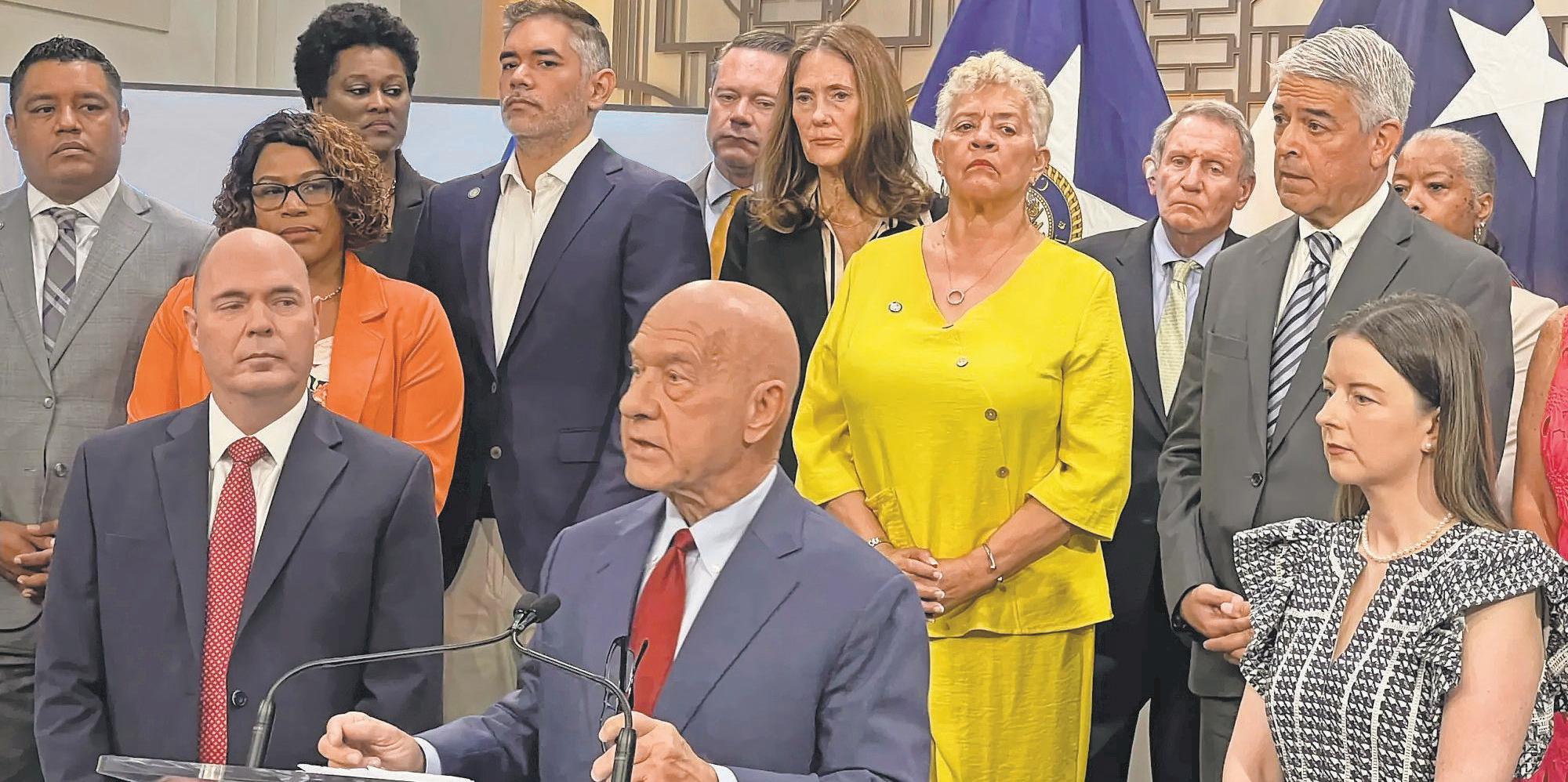
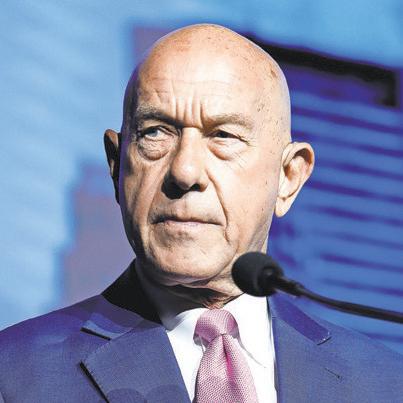
For years, Houston operated under constraints that put us at a disadvantage without dedicated funding for solid waste, without standard right-of-way charges, and under dual revenue caps This budget begins correcting that imbalance.”
MAYOR JOHN WHITMIRE
leaving $140 million available.
Drawing more than $200 million from thatfundsimultaneouslythroughthetrash transition and the right-of-way fee would obliteratethatbufferentirely,Hollinsargues
Meanwhile, the city faces a federally mandated consent decree requiring roughly $9 billion in wastewater system upgrades over the next decade, infrastructure obligations that depend on those reserves remaining intact
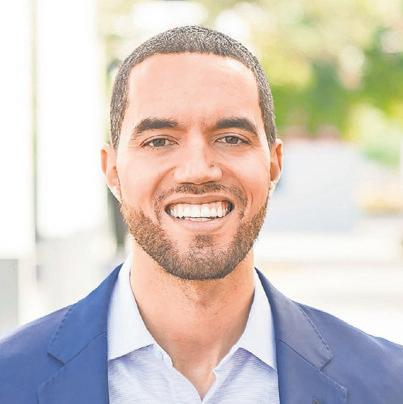
We are going to pay tens of millions of dollars, if not more than $100 million, for the privilege of robbing ourselves.”
CHRIS HOLLINS
Hollinsalsopointedoutthattheright-ofwaytransferwouldcostthecitymillionsto obtain the permit to carry it out.
“We are going to pay tens of millions of dollars, if not more than $100 million, for the privilege of robbing ourselves,” he told a town hall audience
Hollins calls the $5 “administrative fee” a garbage fee, arguing that a city-commissioned Burns & McDonald study found that the true cost of solid waste service is approximately $32 per household today and is projected to reach $46 by 2031
Alcorn occupies a position in between, as chair of the Budget and Fiscal Affairs Committee.
In a conversation with the Defender, she saidsheisnotdismissingHollins’concerns, butsheisnotreadytosidewiththeadministration either
“It’stheadministration’sbudget,”shesaid “We work with the administration, since theycreatedthebudget,tobetterunderstand thebudget Thecontrollerweighsin,too,but our review is independent. We call in each department…and discern the information that’s presented in the budget.”
Alcorn noted that Randy Macchi, Houston Public Works director, expressed confidence in the CUS drawdown and assured the council it would not affect infrastructureprojectsorrequireawaterrateincrease, directly countering Hollins’ warnings
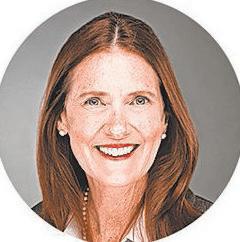
On the $5 admin fee, Alcorn acknowledged the regressive natureofflatfeesbutdefended thestartingpointasmanageable, noting a fee increase would require a council vote. She framed it as a bridge to a more sustainable outcome that would generate revenues to cover pensions,retireehealthbenefits, and union contracts with the police and fire departments, as well as municipal workers.
By Aswad Walker
Houston has a long history of environmental racism. More specifically,Houston’sBlackcommunitieshavelongenduredtheshort end of that stick.
In fact, the founder of the fight againstenvironmentalracism,Dr Robert Bullard, first battled those forces in the Bayou City in 1979, when Jimmy Carter was in the White House.
Fifth Ward and Pleasantville are no strangers to the ravages of environmental racism, enduring someoftheworstairqualityinthe region,andthehigherincidenceof diseases and maladies associated with it
“Environmentalracismhassignificantly impacted both the Fifth WardandPleasantvillecommunitieswiththeplacementofharmful industrial facilities, rail lines, and switching rail yards, diesel truck traffic, and highway impacts that have even led to flooding in the areas, ” said Dr Denae King, associate director of the Bullard CenterforEnvironmentalandClimate Justice at Texas Southern University “Theairemissionsfromthese harmful sources of pollution have affected health and well-being for families in these historic Black communities for generations.”
Recently, these communities experienced what some are framing as an environmental justice “win.” But even the most optimistic observers recognize that true victory—air quality suitable for human beings and all members of their ecosystem—demands far more.
Recently,FifthWardandnearby Pleasantville won the right to receivestate-leveldataonthequality of their air and what exactly is in it
Residents already know the air qualityisbad.Theycantellitfrom the smell and the levels of illness and disease they endure at rates higherthanthoseinotherHouston

neighborhoods.Still,theairmonitorsthatwerelongfoughtforwill giveresidentsspecificinformation about what they’re breathing.
It’s an essential step to protect public health, and is celebrated as remarkable win for long-time local advocates at a time when African Americans stand to face the greatest health risks from the rollbacks of bedrock pollution protectionsatthefederallevel.
And in light of policies unleashed by the current White House administration, the victory could be viewed as a minor miracle

“The air monitoring network in Pleasantville became the first community-led air monitoring network in the state of Texas, so tohaveaccesstoregulatorydatais awinforthehealthofPleasantville residents,” shared Bridgette Murray,founderandexecutivedirector for Achieving Community Tasks Successfully, during an interview with King
Since returning to power last January, the Trump administration has rolledbackessential environmentalprotections that keep all of us safe from the harms of pollution and extreme weather fueled by climate change. It has closed the agency’s environmental justice offices and clawed back millions of dollarsintendedtoimprovethehealth and well-being of people most harmed by pollution.
Kingassertsthattherecentwin is not just symbolic, but rather, substantial on multiple levels
“Community leaders in Fifth Ward and Pleasantville neighborhoods have been longtime advocates for healthy communities, safer environments, and reductionsinpoorairquality,”shesaid “Their advocacy led to the establishment of networks of low-cost air monitors designed to measure
particulate matter and volatile organic compounds.”
Next steps
Along with the grassroots organizing victory highlighted by King, she added that the air monitors are community-owned and maintained,andprovideresidents with important data on potential sources of contamination.
“The installation of
reference-grade air monitors by TCEQwillonlyenhancethecommunity leaders’ understanding of air quality in the area,” added King “Thecommunityleaderscan combinetheirairmonitoringdata with the new reference monitors’ publicly available data to educate residents about potential health impacts and advocate for stricter enforcement of nearby industries and other sources of pollution.” VOLUME 95, NUMBER 33 - JUNE













By TerranceHarris
Prairie View football coach
TremaineJacksonwillbethefirst totellyouheisanNAACPguy
HegrewupintheAcresHomes area here in Houston, watching hisgrandmotherbeapartofthe National Associationfor theAdvancementof ColoredPeople,fightingforvotingrights,Civil Rights,andjustdecencyforBlackpeople
So Jacksonsupportsthe NAACP. Butthe HBCU coachisdrawing thelinewheni comestothe nation’s oldestBlackCivilRights organization’s askof Blackcollegeathletesto boycottSEC schoolsin states wheregerrymandering,redistricting andredrawing maps to dilutetheBlackvoteare beingembraced.
TheNAACP has brandedthe movement asOutofBounds.JacksonbelievestheNAACP is theone that has steppedoutofbounds
“I thinktheyare trying to do what the NAACPdoes, whichis fightwrong things for coloredpeople,”Jacksonsaidrecentlytothe Defender.“Byusingthis, youareusingsomething that hasnothing to do with…You’retryingto take acommodity that youthinkyouhaveand makeitpolitical.”
a6-3 decision in theLouisiana v. Callaiscase. Blackprofessionalathletesand many talking headsimmediatelysuggestedthatBlackathletes boycottplayingforthenation’smostpowerful conferenceinthenationinthestatesthateither areorwillpracticegerrymandering.
It wasn’t long before theNAACP joined in anddominatedtheconversation.
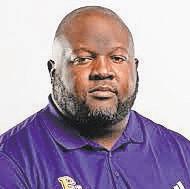
It sounds good,but really, to me it don’t even sound good.Itsoundslikethey hada meetingand they reachedonsomething Let’sget collegeathletes to do X, Y, andZ.These arekidsyou don’teven talk to.Theydon’t even know what your letters standfor.Let’s be honest, people getthe NAACP andthe NCAA confused Notalot of kids today know what that is, andthat’sour faultas parents. It’s our fault.”
That’swhenthe pushback came,asmany questioned thenotionofanorganization that some believehasn’tbeenrelevanttoyounger generationsand asks so much of student-athletes.Inthiscurrentcollege athleticsenvironment student-athletescompetinginfootballand basketballinthe SECcan makehundredsofthousandsofdollars andinto themillions becauseof name,image,and likeness (NIL)deals,plusthe revenuesharingofuniversities intheSEC,BigTen,ACC, andBig 12. In addition othersmaller conferences arenow required to share withtheathletes.
The naturalquestionis whethertheaskofturning down that type of money is realisticorfairtostudent-athletesand their families?
Apparently,theNAACP thinks so,and so does HoustonNAACP PresidentBishopJamesDixon
This allbecamea hot-buttontopiclastmonthwhentheSupreme
Courtruled that race maynot be considered when drawingcongressional district maps, in
“The moneytheyare guaranteed,theycan receive moneythrough theportalfromother colleges,”Dixonsaid.“Idon’tthinkanyoneunderestimatesthe sacrificial effortthathas been requested.Buttherewillbeasacrifice.


“Ourchallengeiswehavelivedonthesacrificesofothersinpreviousgenerations.Wehave nothad to paythose prices.Now we areina placewhere it’s real;the fight is real.I promise that others aremakingsacrifices,and it’s costly.”
The goal of theNAACP’s proposalisthatbyBlack athletes choosing to take theirtalents to theBig Ten, ACC, andBig 12 schools, as well as non-gerrymanderingSECstateslikeArkansas,Kentucky,andMissouri,the gerrymandering states will feel thepressurefromthelossoftop Blacktalentstakingtheirsports talentselsewhere.ThestateswheretheNAACP is targeting gerrymanderingand redistricting includeAlabama,Florida,Georgia,Louisiana Mississippi, SouthCarolina, Tennessee, and Texas,wheretheUniversityofTexasandTexas A&MaremembersoftheSEC Whilemostofthe states arenow actively redrawingmapstodilutetheBlackvote,Texas GovernorGregAbbottannouncedlastyearthat thestate wasredrawing itsdistrictmapsafter
PresidentDonaldTrumpaskedhimtofindfive additional seatsahead of the2026 mid-term elections.

“Youhavetodowhat’surgent,andstatesare theonescausing theseracistactivations at thestate level,”Dixon said.“Andby theway,Texas ledthisbeforethe SupremeCourt reachedthe decision.I’msurprisedwehaven’tbeen moreaggressivewithinourstate.” Whilethe NAACPand even theCongressional BlackCaucus have strongly urgedBlack athletestoconsidersigning with schoolsoutside theoffending SECstates, therehas also been acallforthoseathletestoconsidertakingtheir talentstoHBCUs.
Jacksonsaysthatwould be great, butitisn’t realistic.
“I just thinktheyshouldn’t askkidstodo that.Therehas to be abetterway,” said Jackson, whoisthe reigning SWAC Coachofthe Year after guidingthe Panthers to theSWAC Championship anda berthinthe Celebration Bowlduringhisfirstseasonatthehelm.“There
hasgot to be amoreeducational waythatwe canget ourpoint acrossand fight.But as we see,Blackpeoplearen’tevenvotingontheleve that we used to vote.Let’s attack that.Let’s not askthese17and18-year-oldswhocangetthis life-changingmoney
“And if youare goingtodothat, then why don’tyou fund some Blackcolleges to be able to competeinthe financial race.But we ain’t talkingaboutthat.”
BillyHawkins,a notedprofessor in the Department of Health andHuman Performanceatthe University of Houston, says he understandsthe NAACP’sintentbehindthe OutofBoundsmovement, buthas concernsaboutitsexecution
“I thoughtitwas alofty idea initially,”Hawkins said.“Ithink it’s agood efforttodrawsome attention. The implementation lacksfooting.Whenyou think of what’s goingonpolitically economically,intheeraofcollege athleticsnow…the60swasthelast strongmovementbyathletes,anda littlebitwiththeColinKaepernick

movement andthe LeBron Jamesmovement.Butnothingofthismagnitude “Somebelieveyoushouldn’taska 17or18-year-oldtodothat.It’slike what we sawinthe CivilRights Movement when we hadyoung individualsonthe frontline. It’s totallydifferentnow.”
say, `This ain’tright, andweneedtodo this ”Caliparisaidto theDefender. “You havetheseRepublican institutionsthatmake ithard
“I haven’tthought awhole lotabout it, andI’m happyour statewasn’tone of them.I’m happywe weren’tinthatmix Butmymainconcern is goingforward,that this doesn’tbecomea yearly thing. Getting things back to being rightwouldbeokay,let’sjustdothat.”
ButDixon isn’tabout leavinganythingto chance.HebelievesBlack people,particularly Blackathletes,mustactnowtohelpinthisvotingrightsfight.
“Thestatesthatareimposingtheseegregious policiesthatareracistandareapplyingforAfricanAmericansmustfeelthepainimmediately,” hesaid.“BlackathletesshouldnotbecontributingtothecoffersofthosewhoarefundingwhatI calltheplantationplan.Thereareplentyofplans that stripusofall rights andall freedoms that returnAfricanAmericanstoplantationstatus
“Inorder to disruptthe plantation plan, we’vegottodiscontinueaddingfinancialfueltotheireffort.”

University of Arkansas basketballcoach John Calipari has paid attentiontothe NAACP movement andissympathetic to thecause.Calipari, whoalso coachedatKentucky,wherehedevelopedmany playerswhoenteredtheNBA,hopesthat allstateswillrevertoncethepolitical powershifts.
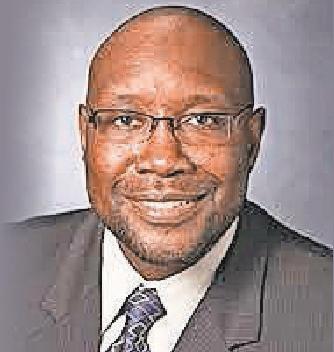
Apparently,the SECisconcernedenoughaboutthepotentialimpactofthemovementthat ithashiredveterancrisismanager Jarvis Stewart, whoisBlack,to pushbackagainsttheNAACPand theCongressionalBlackCaucus “Igetwhattheyaresaying,and Idon’t blamethemfor trying to
Still,Jacksonstruggleswiththe NAACP’sask andmethodology. Jacksonbelievesthatinstead of askingstudentathletestoboycott SECschools,the NAACPshould equipthemwiththeknowledge to usetheir platformstobring aboutchangeatthose state schools.
Whilenot campaigningto leavePrairie View,Jackson used himselfasan exampleofhow he wouldhandleitifanSEC schoolcamecallingforhiscoachingservices.
“IfMississippiStatecalledTremaineJackson to come be theheadfootballcoach,I’m not goingtogo?I’mgoing,”Jacksonsaid.“I’mgoing, andI’mgoingtotrytoeffectchangewhileI’m in thechair becauseI understandthatchange needstobemade.Somebodyhasgottogofirst.
“Soinstead of trying to stop people from goingsomewhere,why don’twegivethem some toolssowhentheygo, they canhelp affectchange?They canuse theirplatformto
SECrunning
affect change andnot lose their livelihoodsor somethinglikethatbecauseain’tnobodyfrom theNAACPlosingtheirlivelihoods. “Meat42years old, Iknowabout those things,but if MississippiState called me or SouthernMiss,I’mgoingtogobecausefinanciallyI’vegotafamilyI’vegottotakecareof.”
By Laura Onyeneho
Houston’stechnologysectorisgrowing, major employers are already integrating artificialintelligenceintodailyoperations, and the demand for AI-literate workers is outpacing supply
Thequestionfacingthecity’scollegesand K-12 schools is no longer whether AI will reshapeHouston’sworkforce Italreadyhas. ThequestioniswhetherHouston’sstudents will be positioned to benefit
Right now, the answer is uncertain, and the window to act is narrowing.
Accordingtothe2025HigherEducation PolicyInstituteandKortextStudentGenerativeAISurvey,88%ofcollegestudentsnow use generative AI for coursework, up from 53%justoneyearprior.Yetmorethanhalf attendinstitutionsthatformallydiscourage orprohibitit Thatdisconnectiscreatinga policy vacuum that students are filling on theirown,withoutguidanceonhowtouse these tools responsibly or effectively.
ForHoustontoproducegraduates,especially Black students, who are competitive intheAIeconomy,expertssaythreethings must happen simultaneously Institutions must close the policy gap, educators must betrainedfirst,andthecity’sexistingmodels for responsible AI integration must be scaled
Harmony Public Schools was recently namedaTexasStateChampioninthePresidential AI Challenge for its Human Core Initiative
BurakYilmaz,Ed.D.,directorofinstruction at Harmony Public Schools, said the framework was built around the idea that unguided AI use is already doing harm “IfweignoreAI,ourstudentswilljustfigureouthowtouseitontheirown,andthat maynotbethehealthiestapproach,”Yilmaz
Institutions must close the policy gap.
Educators must be trained first
The city's existing models for responsible AI integration must be scaled.

Credit:ChatGPT
said “Rightnow,whenit’sunguided,AIis beingusedbyyoungpeopleinawaythatis essentially to cheat the system.”
Harmony’s “pedagogical reversal” requires students to lead every AI interaction with their own thinking, use AI to expand on those ideas, and then critically audit the output. Through a partnership with MagicSchool AI, the school deploys teacher-controlledenvironmentswherethe AIrespondswithSocraticquestionsrather than direct answers.
Sinceitslaunch,Harmonyhasrecorded 66% overall student growth across assessments, with students in special education and emergent bilingual programs each reaching 70% growth, outpacing general education peers. This fall, the school launchesmandatoryAIliteracycoursework foralleighthgraders,withplanstoexpand it systemwide
“Those high-need student groups aren’t just keeping up,” Yilmaz said “They are outpacing the general population’s growth rate.”
What Houston universities should consider
Attheuniversitylevel,AminAlipour,an associate professor of computer science at the University of Houston who researches AI in education, said the most urgent step is not technology, it is people.
“We need to start training instructors right now, ” he said “AI is very vague to a lotofpeople Theyshouldknowwhatthese systems are and what they do They are not magic.”
Alipoursaidfacultyliteracyisthepreconditionforeverythingelse Withouteducators who understand how these tools work and wheretheyfail,coherentAIpolicyisimpossible. The University of Houston has taken initial steps, providing faculty and students withaccesstoGoogle’sGeminiplatformand hosting curriculum-integration seminars, but Alipour said the pace must increase HealsocautionedagainstframingAIfluencyasastandaloneadvantage.Thestudents Houston needs are not just those who can use AI; they are those who know their field
well enough to know when AI is wrong.
“Subject matter expertise becomes more important with AI because people need to verifyAIoutputs,”hesaid “Andthatrequires knowing your field.”
ResearchshowstheAIliteracygapalready tracks along racial and economic lines. Without deliberate intervention, Houston’s Black graduates risk falling further behind before they begin.
“The people who are more AI-literate, whohaveaccess,whohavebetternetworks, they can spot opportunities faster,” he said “Others that don’t have that background aregoingtoloseout.It’sgoingtowidenthe already existing gap in the economy. ”
The opportunity, he added, cuts both ways. AI has real potential to open industries that were previously inaccessible to people without technical backgrounds or elite resources.
“AI can let more people build tools we didn’t have the means to build before,” Alipoursaid “Butonlyiftheyhaveaccessand the skills to use it.”



By Laura Onyeneho
When Jaylin Vinson fell in love with music at six years old, it didn’t begin in a concert hall or a conservatory; it began in the Black church
Growing up in Oklahoma City, he was surrounded by gospel music. His mother directed the choir, his brother on drums, and a community united through song
“There was always this sense of musicality within my family that felt ordinary, that felt like it was every day,” Vinson recalls. “It was something that we did, not because we wantedto,butbecausewehadto Itwaslike inevitable.”
That foundation in gospel music with its blendofindividualvirtuosityandcollective communion would become the bedrock of Vinson’sapproachtoclassicalcomposition NowbasedinHoustonandarecentgraduate of Rice University’s Shepherd School of Music,theyoungcomposerispartofanew generation redefining what contemporary classical music can sound and feel like WhenVinsonpickeduptheviolinat11, he nearly quit when things got difficult, as mostkidsdo Butsomethingmadehimhold on Byhisteens,hediscoveredthathistrue
passionwascreating Compositionbecame theultimateformofcollaboration,awayto build community through sound.
“Inevergetusedtothatfeelingofcreating a new work with new people,” he says. “It’s just such an exhilarating experience.”
Vinson describes his music as embodying “unadulterated joy.” Even when a piece doesn’t sound overtly optimistic, there’s always hope emerging from within it, a reflection of who he is. His work draws fromtherhythmsandrealitiesofBlacklife, blendingclassicaltrainingwithgospelroots, hip-hopsensibilities,andwhathecalls“cultural memory.”
That signature sound was on full display at Performing Arts Houston’s New/Now in MarchattheWorthamTheaterCenter His piece, “Dark Matter,” created in collaboration with Kinetic Ensemble and acclaimed flutistTylerMartin,isinspiredbytheliterary imaginationofsciencefictionwriterOctavia ButlerandexploresthemesofAfrofuturism, imagining Black futures through art.
AustinLewellen,whoworkswithKinetic Ensemble,Houston’sunaccompaniedstring orchestra committed to amplifying diverse and newly composed classical music, has
witnessedVinson’screativeprocessupclose. The two have been in each other’s orbit for yearsthroughRice’smusiccommunity,but their collaboration deepened about a year agowhenVinsonapproachedtheensemble with his vision for “Dark Matter.”
“Hecameinwithareallyclearvision.He’s a really diligent writer He thinks along so manydifferentangles,”Lewellensays.“Having the chance to see sketches and hear works-in-development has left Lewellen increasingly excited. “I can tell that this is going to be a really special collaboration for us.”
The piece tackles profound questions about change, humanity, and our relationship to the environment. The opening movement,“TerrestrialSpace,”wrestleswith aquotefromButler’s“ParableoftheSower”: “Everything you touch, you change Everything you change changes you. ”
“We’ve had a pretty intense Midas touch on the environment with climate change,” Vinsonexplains “Butironically,eventhough we’ve sped up the change of our environment, we’ve become resistant to changing our own behavior.” That tension between constant change and stubborn resistance
drives the musical conflict in the piece.
Being a Black composer in classical music means confronting an uncomfortable truth that representation in this space remains scarce But Vinson wants people toknowthatBlackcomposershavealways been here
“The stories get told a certain way that makesusfeelinvisiblebecausethat’salmost intentional,” he says, citing pioneers like Florence Price and contemporary composerslikeHouston’sownJoelThompson,part of the “Black Nificent Seven” collective
“Thereisawell-knownlackofdiversityin classical music,” Lewellen says. “For someone like Jaylin to have such a high-profile performancelikethis,bringingvisibilityand creatingrepresentationthatpeoplecanpoint to and say, ‘Look, this is something that I could do It’s just huge.”
Vinsonenvisionsaclassicalmusicworld where diversity is about expanding what greatness can be
“Thewindowinwhichweconsidergreatness has always been narrow,” he says. “It doesn’t mean we have to lower the bar. It just means we have to make the bar a little bit wider.”
By TerranceHarris
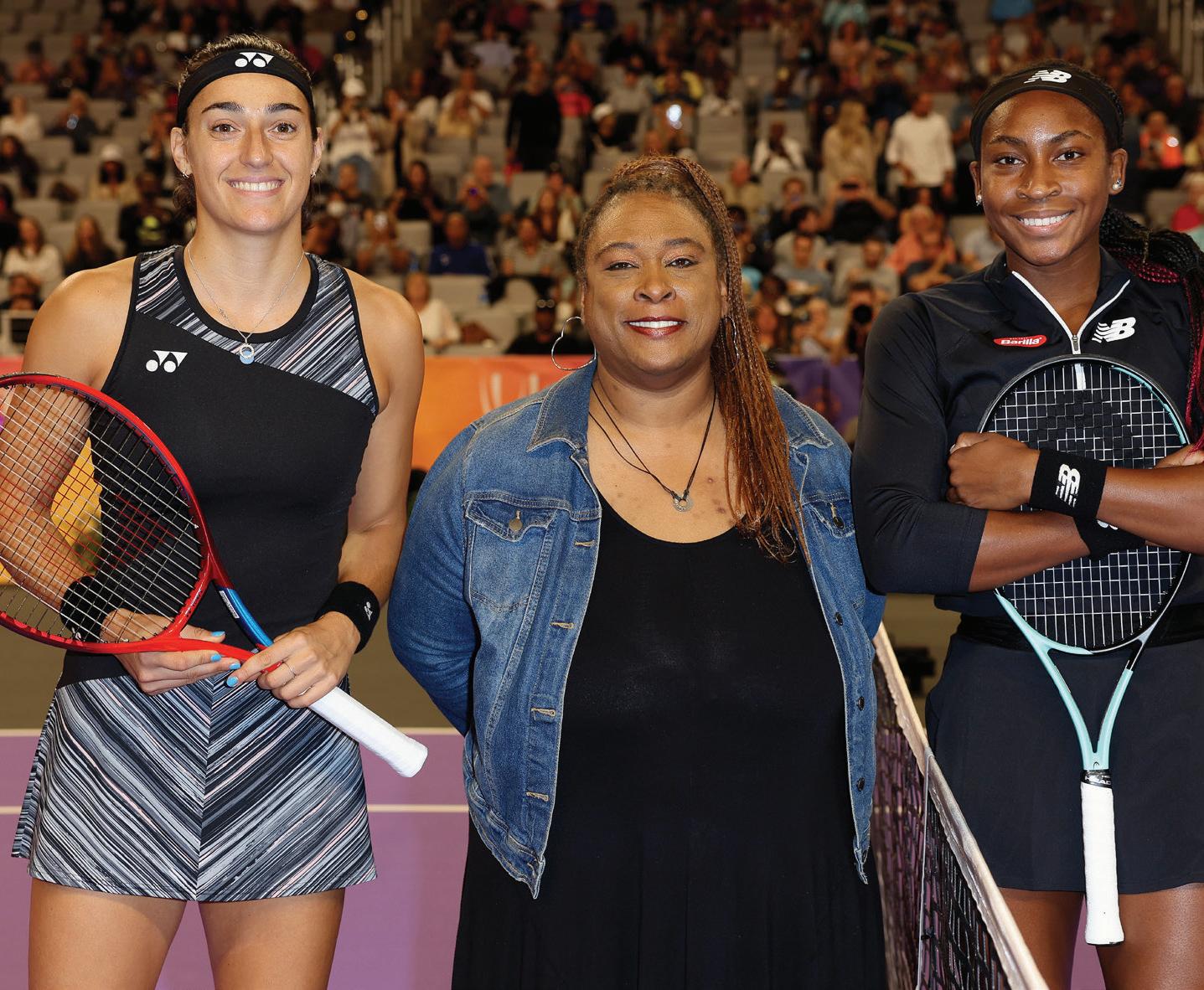
BeforetherewereVenusandSerenaWilliams, therewas Zina Garrison outthere, swingingthatracketandmakingnoiseona levelinprofessionaltennisthathadn’tbeen seen by aBlack womaninnearly30 years.
Thereisanargumentthat,hadGarrison notaccomplishedwhatshe didas a young tennis star in the1980s andearly 1990s, theremight be no Williams sisters, Coco Gauff,NaomiOsaka,orTaylorTownsend.
Butuntilrecently,thenativeHoustonian admits shedidn’tthink much abouther impactandlegacyalongsideAltheaGibson in women’s professional tennis
“AsIget older,Ido,”Garrisonsaid. “Serenasaidthistomebefore; shecalledme a ‘Hidden Figure.’Iwas like,what?
“Butitmadesense.Shesaid,‘Alotofpeopledon’t know your story.’”
Indeed,manypeoplemaynotknowGarrison’sstory.They should.
InasportthathasnevertrulybeeninvitingoracceptingofBlackpeople,theSterling High School productwho honedher skills at MacGregorParkunder legendarycoach John WilkersongaveBlack America somethingtobeproud of during herrun to the 1990WimbledonFinals,theUSOpenFinals in1988and1989,andherexemplaryplayat the1988 SeoulOlympics.
What an inspirationGarrisonwas,and continuestobe,asshestillimpactsthesport andthe people she loves.
Hereyeslight up when shetalks about theyouth gardeningproject sheispartof at MacGregorPark, thanks to adonation fromEllenDeGeneresincollaborationwith herZGA Foundation.Garrisonisalsostill involved in variouswayswithintroducing tennisand growingthe sportamong kids, whichisabig part of herjob as theyouth programmanager forthe City of HoustonParks andRecreationDepartment (HPARD).
“Ijustreallywanttohavemoreactivities forthe youngkidstodo,”Garrisonsaid. “Right now, it’s just astressful timeinour lives. Kids stilldon’t have theopportunities to just be kids foraminute.”
Shealsowants kids andyoung people interestedintennistohavethebestavailable knowledgeout there, whichiswhy she put on theHPARD Tennis ExclusiveCoaching Summitatthe communitycenteratHermann Park,where coachesaroundthe city were invitedtocomeinand pick up tips aboutstrengthandconditioning,nutrition, mental health,and communication.
Thentheywereintroducedtoa tennis
simulatormachinefromFastTrackTennis, whichGarrisonistruly passionate about.
“Thefactthatinfiveminutesyoucanhit almost 100 balls. Like literallythe ball just keepscomingbackoverandoverandover,” Garrisonsaid.“Theballcomesbackatacertainspot,soyoucanspeedupaccordingto whatyouneedtodoasyoustartmovingup.
“For most kids,the hardestthing to do is when theball is bouncing, andtheyare tryingtomoveortryingtohit.Thefactthat youcan learnastrokeoverand over again, that’s what caught my eyeagain.”
Next thingyou know,Garrisoncalled Fast Track, whereCEO andfounder John Daveypickedup. Both were surprisedfor
different reasons. Garrison wassurprised thatthenumberwasadirectconnectionto thefounder.Davey couldn’t believe Garrison wasreachingout to h
im
“She is a legend,” Davey aid “And if you ’ ve got omeone like her who elieves in what you re doing, then you an’t argue with hat There are a ot of people who ay try to give e advice or may ry to give people
Ijustreallywanttohavemore forthe youngkidstodo. Right it’s just astressful time in our lives. Kids stilldon’t have theopportunities to just be kids foraminute.”
ZINA GARRISON
advice,but shehas been to thetop of themountain. Youcan’t question her tenniscred.”
Youalsocan’tquestionherlovefortennis, as sheremains an outspokenambassador forthe sport.
“Idefinitelythinkithasgrown,”Garrison said.“Venusand Serena forsureput it on themap.Butalotofmyfriendstellme,‘You andLori(McNeil)didaswell,’atMacGregor Park.Youshowedthekidsatthatage.Venus andSerenagot to theWimbledon finalsor semifinals. So they took it to anotherlevel
“PeoplelookeduptoVenus andSerena, andthenyou have Coco,Naomi,Taylor Townsend…Ithinkit’sagreatopportunity forthe sporttomoveforward.WhatIlove morethananythingisthatit’snotjustBlack kids,but it’s allkids.”
Garrisonwillberemindedofthepartshe playedinthatthisfallwhenthemini-documentaryhighlightingherascentintennisis released.Whilemaybealittlenervousabout theprojectatfirst,Garrisonisexcitedforits releaseinOctober
SerenaWilliamsistheexecutiveproducer of thedocumentary
“I didn’t want to seeitwhenthe lady wasmakingit,soIfinallysawitacoupleof weeksago,”Garrisonsaid.“Itwasinteresting becauseyou hadBillieJeanKinginit, you hadCarlLewis,Clyde Drexler, Serena,JackieJoyner-Ker-
, J J y see All of these people are my friends
They know me, know me
“But to even talk about me wasreallykind of interesting Iwaslike,ahh, I really have touchedpeople’s lives”

activities now, r


Kashmere returns only four from its 2025 team (from left to right): Kevin Joe Jr, Kyjuan Cook, Kyon Cook, and Chase Robertson. Cred JimmieAggison/ Defender

By Jimmie Aggison
With a sub-.500 record in 4A Region III
District 20 and the season now over, Kashmere’s baseball team learned far more than winsandlossesthisspring
While most high school programs build fundamentals years before opening day, at Kashmere,playerswerepickinguptherules and rhythm of the game in real time With only four returning players and a roster full ofnewcomers,theRamsweren’tjusttryingto win games; they were laying the foundation foraprogram,onepitchatatime
“I usually start building from the catcher position and work up to the pitchers, then go up the middle with a shortstop, second baseman,andcenterfielder,”saidheadcoach James Laster. “But I knew coming into this yearitwouldbeachallengenothavingmany players with the skill set to compete at a highlevel.”
With few youth baseball programs in the area, Laster faces an uphill battle For many players, their first real exposure to the sport doesn’tcomeuntilhighschool
“Because of this, most of our kids lean toward basketball and football rather than baseball,”saidLaster.
Senior shortstop Kyon Cook admitted he had early doubts after realizing how many teammateswerenewtothegame
“I was a little skeptical about how this season would play out,” said Cook “But I had faith in them I felt that if we practiced enough, we would improve and become a
betterteamoverall.”
Therealchallengeshoweduponthefield, where even the basics couldn’t be taken for granted and mistakes became opportunities forgrowth
“I call it Baseball 101,” said Laster “It’s aboutteachingtherulesofthegameandthe fundamentals every day, including fielding, hand-eye coordination, hitting, bunting, and situational play You have to put more time into the basics to get them ready for gameplay.”
Senior left fielder Mario Moncada said stayingresilientwasoneofthetoughestparts.
“Evenwhentheteamfeltdiscouraged,we pushed ourselves to stay positive, keep our headsup,andfinisheverygamewithpride,” saidMoncada.“Oneofthebiggestchallenges for me was learning to play the outfield and knowing when to come up or stay back on fly balls. But through consistent practice, I improvedalot.”
As the learning curve steepened, leadershipbecamecritical
“I’ve taken on a leadership role with my teammates,” said Cook, the only returning starter. “Since many of them are new to the game, I try to teach them their positions in a way they can understand and grow from, whilealsohelpingthemstayconfident,even whentheymakemistakes.”
Senior centerfielder Kevin Joe Jr emphasizedkeepingtheteamfocused.
“After tough losses, I kept my teammates motivated by focusing on our growth and
Success for this team goes beyond the scoreboard. It’s about all four seniors being accepted to a university and continuing their education.”
JAMES LASTER
Kashmere HS baseball head coach
what we needed to improve rather than the result,” said Joe. “I reminded them that mistakes are part of learning I stayed positive by highlighting what we did well and led by exampletokeepourenergyup.”
Kashmere’s challenges extend beyond experience A lack of youth baseball programs,combinedwiththedemandsofbeing a smaller 4A school, forces many athletes to splittimeacrossmultiplesports
“The lack of youth baseball puts a lot on thecoach,”saidLaster.“We’rebuildingplayersfromscratchratherthandevelopingkids withsomeexperience Bythetimetheygain theskillsandunderstandingofthegame,it’s usually their junior or senior year, and then they’regone.”
That reality makes it difficult to build continuity, especially when off-season
developmentislimited Moncada balanced baseball, soccer, andband
“Between soccer and band, I barely had timeforanythingelse,”saidMoncada.“Iwas constantlyjugglingpractices,makingithard tofullycommittobaseball.”
Joefacedasimilarchallengewhileparticipatinginfootball,wrestling,andtrack.
“Footballandwrestlingdidn’tinterfereas much,”saidJoe.“Trackoverlappedwithbaseball,soIhadtomanagemytimecarefully.”
Despitetheobstacles,playerskeptshowing up,oftendrivenbymorethanthescoreboard
“Iwantedtojointhebaseballteambecause of my girlfriend,” said Moncada. “She plays softball and used to ask me to practice with hereverydayafterschool.Oneday,shesuggested I try out. I was hesitant, but I gave it ashot.”
“What kept me coming back, through the toughest parts of the season, were my friends,” he added. “No matter the score, we wereunitedinourgoaltoproveourselvesas greatstudent-athletes.”
For Kashmere baseball, success isn’t defined by wins and losses It’s measured by growth,effort,andopportunity.
“Success for this team goes beyond the scoreboard,” said Laster “It’s about all four seniors being accepted to a university and continuing their education. Winning in sportsisgreat,butwinninginlifecomesfrom earning a degree and being able to take care ofyourselfandyourfamily.”

By AswadWalker
In most conversationsabout jazz and thecitiescentral to itsbirth andevolution, Houstonistreatedlikeanafterthought.The usualsuspects—New Orleans, NewYork, Chicago, even St.Louis—are praisedas sacredground.Meanwhile,theBayouCity, withitsdeepwelloftalentandhistory,istoo often left off thelist.
Thatomissionisbothanoversight and adistortion. June is BlackMusic Month, so it’stheperfecttimetocorrecttherecordand give Houston’sjazz scenethe kind of reverence onefeels when hearing John Coltrane’s classic, ALove Supreme.
TierneyMalone, recently nameda2026 Jazz Hero by the Jazz Foundation of America, doesn’t mincewords
“You can’ttalkabout jazz in America…without talking aboutHouston,” said Malone, hostofthelong-runningKPFT showHouston Jazz Spotlight.
Hisresearchreveals astartlingpattern Houstonmusicianshavebeenembeddedin theDNA of thegenre,oftenserving as the rhythmicbackboneformajorfiguresinthe jazz canon.
“There’snotamajorjazzmusician…that doesn’thaveaHouston musician in their rhythmsectionatsomepoint,”Malonesaid “That’s just howserious thecatsare from Houston.”
Part of that storyisgeographic. Texasis large,anditsmusicaloutputreflectsthat.But Houston’scontributionisnotjustaboutvolume; it’s aboutinfluence. The city hasproducedasteadystreamofartistswhoshaped thesound,feel, anddirection of jazz.
Andthenthere’s theculturalinfrastructure.Duringsegregation,Houston wasa critical stop on theChitlin’Circuit,with theEldorado Ballroom servingasa central hub.AsformerProjectRowHousesexecutivedirectorEurekaGilkeyexplained,while mainstream venues hosted performances, “thisiswhere therealparty happened.”
LegendslikeDizzyGillespie andLouis Armstronggracedthatstage,alongside Houston’sown Arnett Cobb,Jewel Brown,and others.Itwas aspace of Blackexpressionina countrydetermined to suppress it—a reminder that jazz, like Blacklifeitself, hasalwaysthrived under pressure
Architects of asound
Houstondidn’tjusthostgreatness;itproducedit.NameslikeArnettCobb,JoeSample, andConrad“Prof”Johnsonarefoundational. Johnson, in particular,standsasa towering
figureinmusiceducation.Throughprograms at Kashmere High School andbeyond, he cultivated generationsofmusicians.But as notedbytheConradJohnsonRegionalYouth Orchestra(CJRYO)directorArtieOnayemi, Johnsonwasmorethanabandleader.
“Hewas awriter, poet,teacher,and respectedmusicianwho turned down performingonthe road with thejazz greats to dedicatehimselftoteachingyoungergenerations of musicianshereinHouston,” said Onayemi.
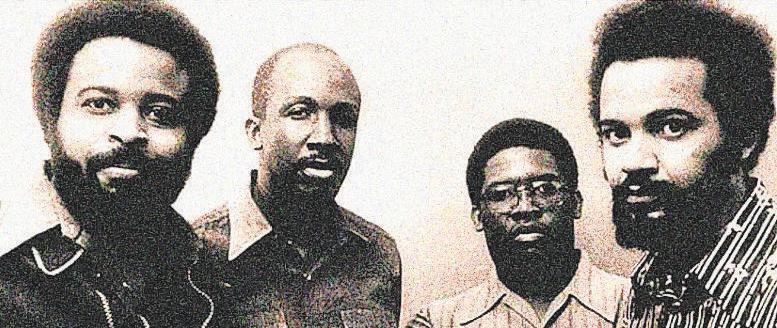
ThecityalsogaverisetotheJazzCrusaders—JoeSample,WiltonFelder, WayneHenderson,and Stix Hooper—a groupofWheatleyHighSchoolfriends that fusedjazzwithsouland funk, expandingthe genre’sreach FlutistHubertLaws, amember ofHouston’s“FirstFamilyofJazz (saxophonistRonnieandvocalists Debraand Eloise), wasan originalmemberoftheCrusaders,wholeftthegroupearlyon.
Nick Sample,Joe Sample’s son, describes Houston’ssound as deeply rooted in the GulfSouth.
“Ithas averyeffective rhythm…more rhythmic andblues-based…there’s just this groove that is different,” said Sample,who played bass in hisfather’sbandfor 12 years. He ties that soundtothe region’s history,

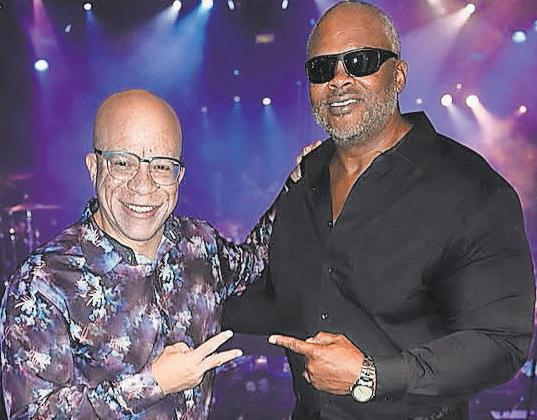
includingitsbayous,itsproximitytoLouisiana,anditsentanglementwithbothcultural richnessandracialoppression.
Sample said that outofthatoppression, theCrusaders,other jazz artists, andBlack peopleingeneral,producedbeauty
Aliving, breathing scene
IfHouston’sjazzhistoryisunderappreciated,its presentisequally overlooked
“I’mexcitedtoseetherejuvenationofthe Houstonjazzscene,” said JoeCarmouche. “There arenumerousvenues…enough offerings to keep veterans…and thenew generation…busy.”
From Doc’sJazzCluband ScottGertner’sRhythmRoom, to RedCat Jazz Cafe andEmmitt’s, thecityoffersjazz sevennightsaweek—if youknowwhere to look
Malone highlights both establishedand emerging spaces,including performances at theEldoradoBallroomthrough DaCamera’s programming.
“Yougettheopportunitytoseecatswho will be legendstomorrow,”hesaid.
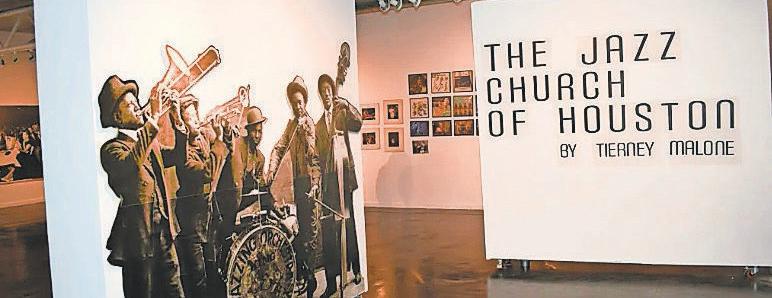
Still, challenges remain.Malonepoints to theabsence of adedicated jazz museum andthe lack of aworld-class jazz club as gapsinthecity’sculturalinfrastructure.His 2022 “JazzChurchofHouston”exhibit at theHoustonMuseumofAfricanAmerican Culturewas,inpart,anattempttoaddress thoseshortcomings
If jazz is to survive, it must be taught, notjustasmusic,but as history, discipline, andidentity. AndHouston is doing that work.
Programs like theCJRYO andthe Jazz HoustonYouth Orchestraare cultivatingyoung talent whilegrounding them in thelegacyofjazz. VincentGardner of Jazz at LincolnCenterrecognized Houston’spotential when he andhis wife,Belinda Munro-Gardner, helped establishJazzHouston,which now runs oneofthe nation’s most respected youthprograms.