DEC Turkey-Syria Final Report January 2026

Page 1


Progress Repor t Reporting back

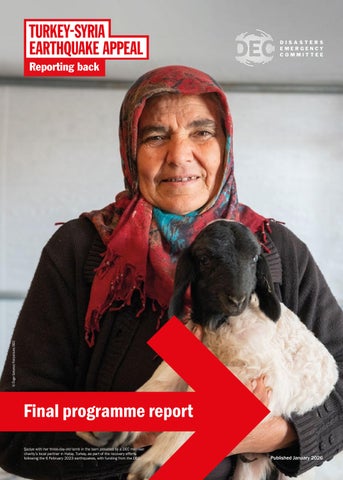
Şaziye with her three-day-old lamb in the barn provided by a DEC member charity’s local partner in Hatay. Turkey, as part of the recovery efforts following the 6 February 2023 earthquakes, with funding from the DEC.

FOREWORD

Final programme report: February 2023 – July 2025

On 6 February 2023, two powerful earthquakes struck Turkey (now known as Türkiye). They were the largest the country had seen in the past 100 years, with a magnitude of 7.8 and 7.6 on the Richter scale. The damage reached across southern Turkey and into north-west Syria, destroying homes, roads, businesses and critical infrastructure. Tens of thousands of people lost their lives.

It was quickly clear that this was a disaster on an enormous scale. Around 300,000 buildings were destroyed across the two countries, leaving over 17 million people in need of urgent humanitarian support.

The Disasters Emergency Committee (DEC) launched the TurkeySyria Earthquake Appeal on 9 February 2023. Following significant media coverage of the disaster and the launch of the DEC’s appeal, the UK public responded with extraordinary generosity.

The Turkey-Syria Earthquake Appeal is the third largest in the DEC’s history, having raised an incredible £163.8 million in total, including £5 million matched by the UK Government. A hundred million pounds was raised in the first two weeks alone.

It was inspiring to see so many people across the country coming together to raise money in the aftermath of such a devastating disaster, with fundraising taking place in train stations, restaurants, festivals and even through video games. Their Majesties The King and Queen and The Prince and Princess of Wales were among those who made generous donations.

Thanks to this incredible support, DEC charities and their local partners provided desperately needed emergency aid in the six months following the earthquakes - the first phase of their response. They delivered essentials including cash, food, water, sanitation, shelter and medical care to help meet families’ most urgent needs.

The remainder of the DEC response until July 2025 focussed on longer term recovery, supporting livelihoods and helping people to earn an income again as they began to rebuild their lives. Following the political changes in Syria at the end of 2024, appeal programmes were extended by a further six months to give DEC charities and their partners time to adapt to the changing context.

In total, more than 4.6 million people received support across Turkey and Syria. I was fortunate enough to see first-hand the impact it was making when I visited Turkey in July 2023, a few months after the earthquakes. I met with families who had lost their homes as they began to piece their lives back together.

They told me how much the aid programmes were helping them, providing access to water and sanitation facilities in camps, kitchen supplies so they could cook food for themselves, or centres for children to have somewhere to play and learn.

This report shows how DEC member charities and their local partners responded to the earthquakes in Turkey and Syria. It highlights how during Phase 2 of the response DEC funding helped to support people on the long road to recovery.

On behalf of the DEC, our member charities and their local partners, I would like to extend my deepest gratitude to everyone who has supported the Turkey-Syria Earthquake Appeal. Your generosity has made a huge difference to people impacted by this devastating disaster.

Thank you,

Osmaniye, southern Turkey.
© Bradley Secker/British Red Cross

OVERVIEW

HUMANITARIAN CONTEXT AT APPEAL LAUNCH

On 6 February 2023 Turkey (now known as Türkiye) and Syria experienced two of the most devastating earthquakes in the region’s recent history, a few hours apart. The first earthquake had a magnitude of 7.8 and the second one had a magnitude of 7.6. Due to the powerful tremors and aftershocks, the earthquakes resulted in the deaths of at least 56,000 people in Turkey and Syria, as well as the widespread destruction of homes and buildings. Over three million people were displaced, with hundreds of thousands of buildings either destroyed or severely damaged. 9.1 million people were affected in Turkey and 8.8 million in Syria.

In addition to the tragic human toll, critical infrastructures such as roads, bridges, and public services were heavily impacted.

Number of local/ national partners

The destruction or damage of schools and healthcare facilities reduced access to essential services, and the lack of clean water, sanitation, and medical care posed serious health risks, especially for displaced families living in temporary shelters.

The destruction of assets, local markets and agricultural areas also led to a severe disruption of livelihoods, pushing millions in both countries further into poverty and food insecurity.

The Disasters Emergency Committee (DEC) launched the TurkeySyria Earthquake Appeal in February 2023. Fourteen member charities2 responded instantly, working with local, national and international partners to provide life-saving assistance and recovery support across the affected regions.

million

THE DEC RESPONSE

DEC responses are split into two phases. The first six months (Phase 1) focuses on emergency relief for affected communities and immediate response activities. The second phase (Phase 2), a further 18 months (and sometimes up to 30 months), focuses on recovery and resilience of the communities.

Following the devastating earthquake in Turkey and Syria, Phase 1 (February to July 2023) of the DEC funded response delivered urgent support such as search and rescue, provision of medical care to those with injuries, emergency shelter, clean water, and food.

From August 2023 to July 2025, Phase 2 has focused on supporting families to restore their livelihoods, strengthening healthcare facilities, and preparing communities to withstand future disasters. As a result of the fall of the former Syrian government in December 2024, the appeal was extended by six months to better meet the needs of the population during this challenging transitional period.

Thanks to the incredible generosity of the UK public, the appeal raised over £163.8 million — including £5 million matched by the UK Government and £48.3 million received directly by member charities. In total, £115.5 million went directly to the DEC, reaching more than 4.6 million people affected by the earthquake.

This report provides an overview of DEC’s response, highlighting progress made in Phase 2, the challenges faced, and key lessons for the future. A six-month progress report is also available for further information about Phase 13

A CRISIS WITHIN A CRISIS

DEC member charities and their partners delivered an effective response in supporting affected communities, despite facing significant challenges as the 2023 earthquakes in Turkey and Syria compounded a pre-existing crisis and deepened humanitarian challenges.

Before the 2023 earthquake, Syria’s prolonged conflict had already devastated the country, causing mass displacement and pushing over three million refugees into Turkey, particularly in quake-hit provinces like Gaziantep and Hatay. Following the earthquake, insecurity persisted in Syria, with continued airstrikes and conflict rendering some areas inaccessible. With the change of government in December 2024, volatility remained a major concern, marked by renewed violence, particularly in Latakia in March 2025 and in Sweida in July 2025. This unstable environment resulted in member charities needing to frequently adapt their programmes, relocate services, and strengthen security measures for staff.

In Turkey, competition for scarce aid and housing heightened tensions between Turkish citizens and refugees, many of whom lived in the worst-hit provinces. Government relief efforts largely prioritized nationals, leaving refugees facing barriers to assistance. Rising anti-refugee sentiment in 2023 led to protests and temporary suspension of some humanitarian activities. DEC member charities filled gaps by delivering inclusive aid, promoting social cohesion, and collaborating with local authorities to reduce tensions.

© Huseyin Aldemir/Fairpicture
Hatay in Turkey, where DEC member charities are providing support to survivors, is one of the regions worst affected by the devastating earthquakes.
© Hasan Belal/Fairpicture/DEC Wael* (51) with his children Hafsa* (right), Adil* (left) and young Marya.* The family received cash support after the earthquake through a DEC member charity’s local partner in Syria.

TIMELINE OF EVENTS

2023-2024:

Ongoing conflict in Syria although major front-line conflict had lessened in some areas. In 2025, violence against civilians, explosions/IEDs, and insecurity remained a serious concern.

Feb-July 2023: Phase 1

Turkey

6 Feb 2023: Catastrophic twin earthquakes measuring 7.8 and 7.6 in magnitude hit Turkey and Syria.

May/June 2023 Presidential elections in Turkey.

August 2023: Beginning of Phase 2.

31st March 2024: Local/Municipal elections.

8 December 2024: Fall of the former Syrian government. DEC granted a 6 month extension in response to upheaval caused by the transition government.

February 2025: Two years on – 560,000 internally displaced persons still residing in container cities. Syria

9 Feb 2023: Launch of the DEC appeal.

20 Feb 2023:

Two aftershocks with a magnitude of 6.4 and 5.8 were reported.

Beginning January 2025: New transitional government.

End of July 2025: End of Phase 2 Reconstruction continues but full recovery remains years away.

August 2023-July 2025: Phase 2
Ramia (34) walks with Zuleika* (79) between the tents during the field tour conducted by the case management worker to see the needs of the older people for a local partner project.

FUNDRAISING

The DEC Turkey-Syria Earthquake Appeal was launched on 9 February 2023 with TV broadcasts on the BBC presented by Tamsin Greig, and on ITV, Channel 4, Channel 5, and Sky presented by Daniel Craig airing after the evening news.

The BBC also aired radio appeals presented by Jo Whiley, Rev Richard Coles, Reece Parkinson, Ankur Desai and Gideon Coe. Commercial radio appeals were voiced by Sir Michael Palin. The appeal was announced at an online press conference ,including aid workers on the ground, that was carried live on BBC News and Sky News.

The launch of the appeal was featured on the front page of the Metro newspaper, BBC Radio 4’s Today Programme, BBC Breakfast, ITV’s Good Morning Britain, ITV News, Press Association and many more. Over £32 million was raised within 24 hours of the appeal being launched.

As well as receiving £5 million in UK Aid Match funding from the UK Government, £500,000 was donated by the Scottish Government and £300,000 from the Welsh Government. Their Majesties The King and Queen and The Prince and Princess of Wales were among those who made generous donations.

The Prince and Princess of Wales also met community fundraisers supporting the appeal in March 2023. A variety of community fundraising events were organised around the UK, including collections at the Leicester Comedy Festival, a ukulele festival in Belfast, a ‘Skippathon’ at Charing Cross station in London, and a chain of restaurants adding £1 to diners’ bills to pass on to the appeal. Transport for London staff held collections raising over £10,000. Over £800,000 was donated to the appeal through Post Office branches.

A number of partnerships launched, including a match-giving campaign by the Big Give that raised £2.2 million to the appeal. Corporate support for the appeal was also strong, with partners in the financial sector raising over

£7 million, including NatWest Group, who added a notification on their banking app. Barclays, The Co-operative Bank, and Revolut all launched fundraising campaigns which attracted strong support from their customer bases. The Premier League donated £1 million, and the video game Football Manager added an in-game advert for the appeal, reaching over 20 million people around the world.

There was also strong support from BT Sport viewers (now TNT Sports) who raised over £109,000 by texting to donate. British Airways colleagues and customers raised £194,000 through on-flight collections and the donation of Avios points. The out of home advertising industry donated substantial billboard space to help publicise the appeal.

On 24 February 2023, ITV, Channel 4, Channel 5, Sky, STV, UKTV, Warner Bros and Ocean Outdoor took part in an ad break takeover, showing the appeal with Daniel Craig. By the end of the two-week campaign, over £100 million had been raised by the DEC and its member charities. By February 2025, when donations closed, this had risen to £163.8 million (with £115.5 million coming directly to the DEC and £48.3 million raised by the member charities) making the appeal the third largest in the DEC’s 62-year history.

The Prince and Princess of Wales meet fundraisers at an event at Hayes Muslim Centre, London, on 9 March 2023 to support the DEC Turkey-Syria Earthquake Appeal.
© Andrew Aitchison
Bottom: A community fundraising event for the DEC Turkey-Syria Earthquake Appeal at St Stephen’s Church of England Primary School in Twickenham.
© Hannah Maule-ffinch/DEC

HOW THE DEC IS HELPING

Thanks to the generosity of the UK public, the Turkey-Syria Earthquake Appeal raised over £163.8 million, including £5 million from UK Aid Match funding. Of this, £115.5 million was raised by the DEC. The remaining £48.3 million was raised by DEC member charities using DEC co-branding.

Since the launch of the appeal, the DEC has been working directly and alongside 14 member charities and 57 local/ national partners to use these funds to meet the needs of over 4.6 million of people in Turkey and Syria.

During the first six months of the appeal (February to July 2023), DEC member charities and their local partners addressed the urgent and emergency needs of vulnerable families in earthquake-affected areas of Turkey and Syria. They provided cash assistance, clean water, hygiene kits, temporary shelter, food parcels, healthcare support through mobile clinics and mental health counselling. These efforts helped communities access essential supplies and services with a focus on dignity, protection, and the restoration of basic services in crisis-affected areas. For more details on Phase 1 of the response, please refer to the January 2024 progress report4

4 https://www.dec.org.uk/turkey-syria-earthquake-appeal-progress-report

From August 2023 to July 2025, the focus of support shifted from emergency response and assistance to recovery and resilience support in the worst-affected areas. Member charities and their local partners helped communities to rebuild their livelihoods and engage in income-generating activities. They also restored essential water and sanitation infrastructure and strengthened community resilience through long-term recovery initiatives.

In Turkey, the government’s robust centralised response meant that DEC member charities and local partners could focus their resources on Syrian refugees and remote areas where unmet needs were identified.

In Syria, a key focus of the response was to ensure local inclusive leadership. DEC members and partners worked closely with local authorities, community-based organisations and local committees and cooperatives that put vulnerable groups, such as women, young people, people with disabilities and older people at the core of the response. This ensured that specific needs were taken into consideration, that activities were shaped by community consultation, and resilience strengthening of these groups was prioritised.

KEY ACHIEVEMENTS

1.9 million

people were provided with access to safe drinking water

904,000

people accessed basic health services including maternity services and mobile clinics

233,000

people received from cash assistance provided to them or their family members to meet their basic needs

137,000

people were provided practical support to restore their livelihoods or the livelihood of their family, through training, small business grants and agricultural items

91,000

people benefitted from hygiene kits provided to individuals and families, containing items such as soap, towels, combs, and menstrual hygiene products

78,000

people accessed mental health and psychosocial support

The local partner of a DEC member charity was able to provide essential items to earthquakeaffected families in Jindires (Aleppo), Harim and Salqin (Idlib) on 16 February 2023.

WHY MORE MONEY HAS BEEN SPENT IN SYRIA THAN TURKEY

The earthquakes caused catastrophic destruction across both Turkey and Syria, but the aftermath and recovery in each country differed considerably. In Turkey, the Disaster and Emergency Management Authority (AFAD) coordinated a swift and organised national response, providing temporary shelters, food distribution, and essential relief to affected communities.

In contrast, Syria’s response was hindered by more than a decade of conflict, with no national coordination mechanism in place and limited resources. Syria’s preexisting humanitarian crisis was severely worsened by the earthquakes. Many displaced Syrians, who had been living in camps before the disaster, faced even harsher conditions and exacerbated humanitarian needs.

Given the immense scale of need in both countries, DEC member charities relied on assessments to determine priorities on the ground, ensuring that aid was effectively targeted and reached the most vulnerable

TOTAL APPEAL EXPENDITURE BY COUNTRY

Hilal (40), teaching the children at one of the schools rehabilitated by a DEC member charity in Aleppo in 2023.
© Hasan Belal/Fairpicture/DEC

TURKEY

CONTEXT

The two earthquakes of February 2023 devastated 11 provinces in Turkey, killing more than 50,000 people, injuring over 100,000, and displacing more than 3 million. Vast areas were left without homes, schools, or functioning health facilities. Vulnerable groups such as refugees, women, children, and the elderly faced particularly severe risks, such as pre-existing challenges and inequalities. The Disaster and Emergency Management Authority (AFAD), Turkey’s national disaster response agency, led a strong centralised operation, rapidly mobilising rescue teams and resources. However, the unprecedented scale of the disaster exposed several gaps, such as delays in reaching remote regions, limited coordination with local actors, and restricted support for marginalised populations, particularly Syrian refugees.

The Turkish government’s response prioritised Turkish citizens, leaving refugees struggling to access aid due to legal, linguistic,

and bureaucratic barriers. Many Syrian refugees continue to live in overcrowded, unsafe shelters with inadequate access to essential services and employment opportunities. To address these disparities, DEC member charities and their local partners collaborated with national, provincial, and local authorities to deliver inclusive assistance, through improving water and sanitation in refugee camps, supporting livelihoods in cities, providing psychosocial care to the most vulnerable, and assisting rural farmers.

The sections below describe the achievements of DEC member charities and their local partners from August 2003 to July 2025 in Turkey (Phase 2 of the response). All activities delivered from February to July 2023 are available in the Progress Report5

5 https://www.dec.org.uk/turkey-syria-earthquake-appeal-progress-report

©
Rumeysa,

HOW WE HELPED: LIVELIHOODS

After the earthquakes in Turkey, livelihoods were severely disrupted, with over 25% of affected communities losing income sources. Employment in key sectors like textiles and agriculture declined sharply due to infrastructure damage and production losses.

Moving from emergency to recovery stage, member charities and their partners focused on livelihoods activities targeting cooperatives, small businesses, and farmers that have more permanent and sustainable impact on communities than cash assistance.

One member charity provided cash transfers to 420 small businesses and to 1,278 farmers to support with fodder, fertiliser, livestock, and vet packages. Another member charity rehabilitated three marketplaces, benefiting 400 business-owners. In total more than 20 women-led cooperatives, supported by grants and technical support, have revived local economies and created sustainable livelihoods. for example, one cooperative established a delicatessen shop and café, empowering 21 women to produce local products and challenge long established gender norms.

This livelihoods support provided a critical response in addressing the material loss of the farmers, cooperatives and small-scale business owners, in addition to enhancing the employability and entrepreneurship skills of women and youth, offering long term gains, strengthening local markets, and ultimately reducing dependency on external aid.

KEY ACHIEVEMENTS

943

small businesses supported

24,000 people were provided practical support to restore their livelihoods or the livelihood of their family, through training, small business grants and agricultural items.

CASE STUDY

Food security and livelihoods

“We are currently working with women who, for the first time in their lives, have money in their pockets.”

Seray* is a passionate advocate for community empowerment and women’s involvement in local production. In 2019, she founded a cooperative that welcomes farmers and local women, particularly housewives, to contribute to the production process.

The cooperative focuses on preserving traditional recipes and innovating new ones such as their famous “Love Jam’’ made from the geographically certified Samandağ pepper.

As part of the Food Security and Livelihoods Programme, farmers have been provided with training and cash grants to implement the knowledge they have gained and to replace equipment damaged by the earthquake.

“In a time when access to safe food is so difficult, producing safe food and delivering it to the market through the hands of women, especially housewives, is a special feeling for us.’’

“We are working with women who, for the first time, are receiving the rewards of their production. And we are very happy to see the joy they express about this.’’

We are working with women who, for the first time, are receiving the rewards of their production. And we are very happy to see the joy they express about this.
Seray*
Ali with his animals near the barn provided by a DEC member charity’s local partner in Hatay, Turkey, as part of the recovery efforts following the earthquakes, with funding from the DEC.
© Özge Sebzeci/Fairpicture/DEC
Seray* (second from right) runs a women’s cooperative where local farmers can contribute to food production in Hatay, Turkey. DEC funds helped to provide training, cash grants and support to replace equipment damaged by the earthquake.

HOW WE HELPED: EDUCATION

After the earthquake, education faced severe disruption in the most affected areas. Many schools were destroyed or damaged, and classrooms were turned into shelters for displaced families. Syrian refugee children, already affected by years of instability, were among the most impacted, as economic hardship and displacement made it difficult to prioritise schooling. Language barriers, lack of learning materials, and discrimination further limited access to education.

Member charities and their local partners stepped in to fill these gaps by setting up 23 temporary learning centres, offering catch-up classes, and providing psychosocial support. They also worked to promote inclusion and reduce tensions between refugee and host communities. The response also improved access to quality learning environments through the rehabilitation of 13 schools, in addition to training teachers on psychosocial support.

KEY ACHIEVEMENTS

10,000

children supported with educational services such as temporary learning spaces

8,600

children who received education/ stationary kits

HOW WE HELPED: MULTI-PURPOSE CASH ASSISTANCE (MPCA)

Post distribution monitoring surveys found that families utilised multi-purpose cash to purchase food, electricity, medical expenses, hygiene products, clothing, debt repayment and education. In terms of feedback, cash assistance emerged as one of the most impactful interventions for vulnerable populations. This was consistently highlighted through project participant interviews, where individuals expressed that financial support was critical in helping them meet essential needs.

After the earthquake, many communities struggled to meet basic needs such as food, healthcare, and other essentials due to disrupted livelihoods. In response, multi-purpose cash assistance became a key component of DEC’s response, helping households cover urgent expenses while stimulating local markets and maintaining dignity by empowering people to prioritize spending based on their individual needs. The assistance mostly targeted families with moderately or severely damaged homes, femaleheaded households, and elderly people with limited incomes. Transfer amounts were aligned with market surveys such as the Minimum Expenditure Basket set by the Cash Working Group to account for rising living costs.

Post-distribution monitoring showed that families used the cash primarily for food, utilities, medical care, hygiene, clothing, debt repayment, and education. Project participant feedback consistently highlighted cash assistance as one of the most effective interventions, providing vital flexibility and autonomy.

With low operational costs, cash assistance delivered strong value for money while providing vital financial support and satisfaction to vulnerable families affected by the earthquakes.

KEY ACHIEVEMENTS

74,000 people received cash assistance provided to them or their family members to meet their basic needs.

© Özge Sebzeci/Fairpicture/DEC
Açelya* greets DEC members in front of her container. Açelya received multi-purpose cash which she spends on the things she most needed sometimes for her own needs like medicines, and sometimes for her grandchildren – including on school books.
Women and children’s centre in a container camp in Hatay, Turkey.

HOW WE HELPED: PROTECTION AND PSYCHOSOCIAL SUPPORT

Significant protection and mental health needs persist in Turkey following the earthquakes. Many survivors still face trauma, displacement, and inadequate access to services. Vulnerable groups, especially women, children, older people, persons with disabilities and refugees, remain at risk. In response, member charities and their partners established safe spaces, psychosocial support, legal aid, and child protection services while promoting gender supportive environments.

Six DEC member charities and their local partners organised mental health and psychosocial support sessions which fostered emotional resilience and helped communities cope with trauma, stress, and anxiety. These sessions used creative art activities, role-playing, and interactive activities to provide children and adults with a safe space to express their emotions, develop problem-solving skills, and build peer relationships. More than 43,000 people participated in these sessions. The majority of those who were reached were women and children, as the participation of men in these types of activities remained a challenge due to cultural norms and work obligations.

During these sessions, member charities and partners also identified children and adults who required specialised counselling and provided referrals for those dealing with

severe emotional distress, depression, trauma-related fears and other specific needs. Following these sessions, more than 6,000 recipients received individual protection assistance such as transportation costs, food assistance, hygiene kits, medical referrals, gender based violence support, legal services and cash transfers.

KEY ACHIEVEMENTS

31,000 people accessed mental health and psychosocial support

6,100

people provided with protection support such as protection kits, case management, referral services

CASE STUDY

Safe spaces

Sevda*, a 24-year-old mother of two and a Syrian refugee who is now a Turkish citizen, lives in a container camp in Hatay, southern Turkey, where the Women and Children’s Centre, run by the local partner of a DEC member charity, has transformed her life.

The centre aims to improve the living conditions of women and children in container cities by providing a safe space with activities and education for both women and children.

Children can enjoy playrooms and borrow toys from a toy library, while mothers can participate in workshops, training, and awareness & capacity building sessions. These programmes help women build confidence, raise awareness about gender equality, and provide opportunities for socialisation and earning a livelihood, all contributing to their healing and empowerment.

” It has changed our lives. Like I said, when I first came here, we were wondering how time would pass, what we would do, and where we would go because everything is far away...

Sevda*

Sevda*, her daughter and an aid worker (right) outside the Women and Children’s centre, Hatay, Turkey.
Zeliha with her husband in front of their house. They received psychosocial support from IDA’s mobile health clinic after the earthquake.
© Özge Sebzeci/Fairpicture/DEC

HOW WE HELPED: HEALTH

After the February 2023 earthquakes in Turkey, health services faced massive disruption, as 42 hospital buildings suffered severe or moderate damage leading to patient transfers to other cities. The Turkish Ministry of Health, with the support of humanitarian actors, set up mobile medical units and primary-health services to provide medical care to the injured while also providing support to damaged health-facilities and restoring essential care. In Phase 2, DEC member charities and their partners focussed on maternal and child health, nutrition and physiotherapy services.

One member and its partner established two mother and baby friendly spaces, offering sessions on nutrition, breastfeeding, food vouchers, and counselling, reaching 2,200 women. Community leaders received training on nutrition and psychosocial support to sustain these spaces. Another member charity distributed hygiene and nutrition kits to 926 women and trained 34 “leader mothers” to run peer groups. The programme strengthened women’s leadership and nutritional knowledge. A key achievement was the re-lactation counselling component. Of 200 mothers who had stopped breastfeeding after the earthquake, 178 then resumed after the support was provided.

Another DEC member charity delivered 3,350 mobile physiotherapy sessions and 761 assistive devices such as wheelchairs, walkers and crutches were distributed, enhancing mobility and independence for those in need. They also provided cash-for-health assistance to 414 people. These efforts greatly improved access to essential rehabilitation and healthcare services within the affected communities.

KEY ACHIEVEMENTS

7,300

mothers received nutrition support such as infant feeding support

CASE STUDY

Medical treatment plan

M.A., a 51-year-old teacher, was trapped under rubble for hours during the earthquake, suffering a vertebral fracture. Recovery was challenging—she experienced severe pain, muscle weakness, and difficulty walking, climbing stairs, or standing for long periods, leaving her unable to teach. Seeking help, she visited one member charity clinic, where a physiotherapist designed a personalised treatment plan. Over 22 physical therapy sessions, she received exercises to improve strength, balance, and flexibility, along with crutch training and mobility support. Gradually, her pain eased, her mobility returned, and she regained independence. M.A. has since fully recovered and resumed teaching confidently.

Ubeyde participates in a drawing activity with her daughter Melike” after a session about motherhood at a mother and baby space in a container camp in Hatay, Turkey.
© Ozge Sebzeci/Fairpicture/DEC
M.A receiving physiotherapy
Families queuing for food distribution on the grounds of a former carpark at a theme park, now used as a camp to house some of the tens of thousands of people displaced by the earthquakes in Osmaniye, southern Turkey.
© Bradley Secker/British Red Cross

HOW WE HELPED: SHELTER, NON-FOOD ITEMS (NFIS) AND REHABILITATION

One of the most devastating impacts of the earthquakes was on the housing sector. 518,000 individual housing units either collapsed completely or sustained such severe damage that they became unsafe for habitation. Despite the significant reconstruction efforts from Turkish authorities, progress continues to be slow. In February 2025, two years after the earthquake, around 540,000 people were still living in temporary container shelters. These shelters are unsuitable for summer and winter conditions due to poor insulation. In 2024, the shelter coordination group in Turkey noted that container maintenance and repairs are a top priority including efforts to adapt containers for cold winter with insulation and roof improvements. One member responded to this need by providing 3,141 winterisation kits including thermal insulation, heaters, blankets, duvets, solar lamps and torches. In terms of rehabilitation, another member charity rehabilitated four health centres, five school facilities and two sports halls.

KEY ACHIEVEMENTS

71,500 people benefited from infrastructure rehabilitation

14,000

people received items for shelter provided to individuals and families including heaters, solar lamps, thermal insulation, fire extinguishers or electric fans

HOW WE HELPED: WATER, SANITATION, AND HYGIENE (WASH)

After the February 2023 earthquakes in southern Turkey, water and sanitation infrastructure was severely damaged with a total cost of the damage to the potable water and sewer utilities estimated by the Turkish government to be around $793.5 million, leaving many families without access to safe water, toilets, or hygiene facilities. In several areas, overcrowded Syrian refugee camps with poor sanitation conditions further increased the risk of disease. In Phase 2, member charities gradually shifted their efforts from emergency water provision to repairing municipal systems and developing sustainable water, sanitation, and hygiene (WASH) services for both refugee and host communities.

Their activities focused on restoring hygiene and public health through the installation and renovation of latrines and showers in camps, hygiene promotion sessions, distribution of hygiene kits, and the rehabilitation of water supply systems. One member charity rehabilitated three boreholes in Hatay Province and provided water filters to eight neighbourhoods, ensuring clean water for around 41,000 people. Another DEC member charity and their local partner built and operated three laundries in Syrian refugee camps for families to use, alongside hygiene promotion sessions and hygiene kit distributions containing laundry and dishwashing detergents, toothbrushes, toothpaste, soap bars, shampoo and jerry cans. Additionally, one member supported the restoration of a central wastewater treatment facility in Malatya province, returning it to full functionality and reached 238,943 people in the community.

KEY ACHIEVEMENTS

111,000 people were provided with access to safe drinking water

29,000 people received hygiene kits provided to individuals and families, containing items such as soap, detergents, shampoo and jerry cans

7,900 people reached with awareness raising campaigns on water and sanitation

This container camp in Hatay, Turkey, is home to Syrian families. The containers lack basic facilities like cooking or toilet facilities. A DEC member charity’s local partner provides some essential services at a Mother and Baby Friendly Space here, with funding from the DEC. © Özge Sebzeci/Fairpicture/DEC
An

SYRIA

CONTEXT

Since the beginning of the DEC funded response in February 2023, the political and humanitarian landscape in Syria, particularly in the earthquake-affected northwest, has experienced significant changes due to escalating violence, political shifts, and complex access challenges. Before December 2024, Northwest Syria (Idlib and northern Aleppo) remained mostly held by opposition forces, while the South was controlled by the former government. Following a series of offensives, the former government collapsed in December 2024, leading to the formation of a transitional government in early 2025. This shift created both opportunity and volatility. While some areas saw improved access and localised recovery, others experienced renewed violence, displacement, and greater needs.

Since December 2024, approximately 746,360 Syrians have returned from neighbouring countries and 1,582,542 internally displaced persons (IDPs) have returned home, many to destroyed or looted properties. These returns have strained already fragile basic services, including healthcare and water systems, requiring rapid reassessment of needs and resources.

While Syria has entered a new transition, the expected benefits remain limited for vulnerable communities. Ongoing insecurity, economic collapse, and service shortages continue to compound humanitarian challenges, leaving the country’s stability and recovery highly uncertain.

This section describes the achievements of members and their partners in assisting populations affected by earthquakes and beyond from August 2023 to July 2025 in Syria (Phase 2 of the programme).

HOW WE HELPED: MULTI-PURPOSE CASH ASSISTANCE (MPCA)

A total of nine members provided cash assistance in Syria, enabling the most vulnerable households to meet their basic needs with dignity and choice. One member’s evaluation of the response identified cash assistance as the most impactful intervention for vulnerable populations, particularly older people. This was consistently highlighted in interviews with affected communities, in which individuals said that the financial support was crucial in helping them purchase essential items, such as food, medication and household goods, especially given the severe economic hardship they were experiencing.

Cash assistance can be used as an emergency response tool to provide short-term relief, but it is also a powerful mechanism to stimulate recovery and support long-term resilience. During the response, cash assistance:

helped reduce the use of damaging coping strategies like taking children out of school, halting medical treatment, and increasing debt – contributing to household and community protection and wellbeing.

helped households with limited income to allocate their earnings to other expenses such as shelter rehabilitation, and to pay debts.

injected liquidity into local markets, having an indirect benefit on local small businesses and vendors and contributing to economic early recovery efforts.

introduced many people to formal financial systems, laying the groundwork for future financial inclusion and access to services.

KEY ACHIEVEMENTS

159,000 people received cash assistance provided to them or their family members to meet their basic needs

HOW WE HELPED: SHELTER AND NON-FOOD ITEMS (NFIS)

During the past 2 winters in Syria during the DEC funded response, internally displaced persons have endured freezing temperatures, flooding, and poor shelter conditions in the camps. Many lack heating and warm clothing while damaged tents increase vulnerability to illness, especially among children, women, and the elderly. Member charities and their local partners distributed cash or kits to meet immediate winter-related needs in some camps in northwest Syria, providing warm clothing, blankets, mattresses or heating materials. Camps were selected in coordination with local councils and the Shelter/ NFI Cluster, to avoid duplication with other humanitarian actors.

One DEC member rehabilitated 370 houses/apartments affected by the earthquake. Rehabilitation works in these apartments included demolition and debris removal, concrete works, wall repairs, door and window repairs or replacements, water supply, plumbing and electrical installations.

The response prioritised households affected by the earthquake and those who had not received assistance from any other organisation. Specific vulnerable groups were given preference, including widowed or single women headed households, elderly women or those caring for dependents.

KEY ACHIEVEMENTS

72,000 people received non-food item kits provided to individuals and families, containing items such as winter clothing, blankets, heaters, heating material, mattresses or solar panels

2,400 people provided with shelter/housing rehabilitation

Ramya* in front of her tent. A local partner of a DEC member charity is working to distribute cash vouchers to families affected by the earthquake, each worth $150, allocated to purchase winterization items such as heaters, fuel, blankets, winter clothes, and non-food aid.
© Ali Haj Suleiman/Fairpicture/DEC

HOW WE HELPED: WATER, SANITATION, AND HYGIENE (WASH)

The earthquakes coupled with the ongoing conflict in northern Syria , leaving around 14.6 million people without reliable access to safe water. Internally displaced persons (IDPs) are particularly affected, as they struggle to afford clean water and lack functional sanitation facilities, heightening health risks and the spread of infectious diseases.

In response, member charities and their partners undertook extensive rehabilitation of water networks. The repair of the Bab Al-Nayrab water pumping station restored safe water for about 292,000 people, reducing dependence on costly trucked water. Similarly, one member charity improved access for more than 400,000 people across Aleppo, Hama, and Latakia by rehabilitating networks, repairing pumping stations, and installing solar-powered systems. These solar installations have proven to be sustainable and cost-effective, providing a reliable and environmentally friendly energy source while reducing operational expenses.

KEY ACHIEVEMENTS

1,808,000

people were provided with access to safe drinking water

100,000

people reached with awareness raising campaigns on water and sanitation

62,000

people benefitted from hygiene kits provided to individuals and families, containing items such as soap, chlorine and jerry cans

U Phyu, a resident of an earthquake-affected village in the Inle Lake region, receives multipurpose cash assistance from a DEC charity partner organisation.

CASE STUDY

Rehabilitated water stations

The local partner of a DEC member charity rehabilitated water stations, including the installation of solar energy systems. These improvements ensured a continuous and safe water supply to households transitioning to solar power and significantly reduced the dependency on fuel and electricity, which had previously been unreliable and expensive. This shift not only made water supply more sustainable but also lifted a financial burden off families who no longer had to contribute toward electricity costs for water pumping.

Sanitation infrastructure was also strengthened through sewage network repairs, lowering public health risks for tens of thousands. Community-based hygiene promotion campaigns reached nearly 100,000 people, addressing topics such as personal hygiene, disease prevention, and waste disposal. Around 40,000 individuals also received hygiene kits containing essential supplies like soap, sanitary pads, and chlorine.

Beyond infrastructure, the response prioritised capacity strengthening for local authorities and partners through training, mentoring, and technical workshops. These efforts enhanced their ability to manage, maintain, and monitor water and sanitation systems while conducting hygiene promotion independently. Collectively, these initiatives improved living conditions, public health, and long-term resilience across affected communities in Syria.

Mounir* 48, was supported by the water programme run by a DEC member charity. He lives in a shelter with nine family members. Here he is fixing the sewage system of the buildings that were damaged during the earthquake.
© Hasan Belal/Fairpicture/DEC

HOW WE HELPED: LIVELIHOODS

As of late 2024, nearly 70% of Syrians were estimated to be people in need, either food insecure or at risk of food insecurity. Infrastructure and markets were heavily damaged by the earthquakes, especially in Aleppo and Idlib. Inflation, rising fuel and food prices, and destroyed farmland deepened poverty. In response to this, DEC member charities and their partners have implemented extensive livelihood projects to restore income opportunities, strengthen resilience, and promote long-term self-reliance.

Cash for Work (CFW) programmes provided a vital bridge between emergency relief and sustainable employment by offering shortterm income while strengthening participants’ skills, experience, and professional networks. CFW activities included rehabilitation of schools and health centres, improving access to education and healthcare while fostering local employment opportunities. 2,832 workers were involved in CFW activities.

In the agricultural sector, farmers received training on climateresilient and sustainable farming methods, including irrigation techniques, organic pest management, and crop diversification. Additional activities included distributing seeds and livestock, rehabilitating greenhouses and barns, and providing veterinary services, supporting more than 14,700 farmers and vaccinating more than 300,000 animals.

KEY ACHIEVEMENTS

106,000

people were provided practical support to restore their livelihoods or the livelihood of their family, through training, small business grants and agricultural items

1,500

people received vocational training

997

small businesses received support such as grant and/or coaching

Vocational training empowered 1,500 individuals with new technical and entrepreneurial skills in areas such as solar energy repair, mobile maintenance, pastrymaking, and digital business. One member charity enhanced digital literacy among 151 women and girls improving their access to online education and digital entrepreneurship. This has expanded their employment prospects and fostered their economic and social inclusion.

Micro-grants and business support programmes helped individuals, particularly women, to launch or expand income-generating activities, restoring financial independence and stability. 997 small business owners received grants to create a new business or rebuild their enterprises, revitalising local markets and community services.

Collectively, these initiatives provided impactful livelihood recovery, created employment, and improved household incomes.

CASE STUDY

Livelihood support

Abu Muhammad lives on the Syrian-Turkish border.

More than 250 buildings collapsed in his village and more than 400 people died. The residents of this region depend on agriculture and livestock raising to provide a living. After the earthquake, agriculture stopped as they lost the ability to buy wheat seeds and agricultural supplies. A DEC member charity provided seeds, fertilisers, and agricultural medicines and conducted training for farmers through engineers specialized in the agricultural field.

This support gave us the opportunity to start again and cultivate our land. I hope that the agricultural season will bring me good production this year, so that I can renovate my house and provide food and a living for my family.

A DEC member charity provides seeds, fertiliser and agricultural training for Syrian farmers affected by the earthquakes.
Basma*, Dana*, Nuha* and Orwa* (left to right) live in the shelter supported by a DEC member charity. They carry out weaving tasks to help towards the cost of living in Aleppo.

HOW WE HELPED: HEALTH

After the February 2023 earthquakes, Syria’s already fragile health system faced severe disruption. At least, 240 health facilities were damaged or destroyed, with critical shortages of staff, medicines, and equipment. Member charities and their partners have ensured continued access to maternal and child health services, and treatment for chronic illnesses, mobile clinics and provided medical supply to 23 health centres. Free and accessible healthcare has reduced financial barriers, particularly supporting women through safe maternal and reproductive health services.

Capacity strengthening initiatives for medical professionals have enhanced service quality, while the response to public health emergencies, including seasonal illnesses and disease outbreaks, has reinforced community health resilience through preventive care, outreach activities, and awareness sessions.

A member charity trained 40 female community health workers (CHWs), who conducted monthly door-to-door visits to provide health education and screen children under five and pregnant or breastfeeding women for malnutrition.

A total of 1,773 children and 550 women were screened, and over 50 cases of moderate acute malnutrition were referred for treatment.

Despite these achievements, the healthcare system in Syria remains overstretched, with many hospitals and health centres still struggling to provide essential services. There is still a need for continued medical supplies and support to facilities serving large populations including returnees from across Syria.

KEY ACHIEVEMENTS

903,000

people received access to basic health services including maternity services and mobile clinics.

CASE STUDY

Community health workers

Community Health Workers (CHWs) are volunteers from their local communities, nominated by local leaders such as mayors, heads of municipalities, or school principals. These volunteers attend comprehensive training, covering essential topics like malnutrition surveillance, Mid-Upper Arm Circumference (MUAC) measuring, communicable diseases, basics of mental health and psychosocial support, reproductive health basics, care for the elderly, and key health messages from the Ministry of Health (MoH).

Upon completing their training, CHWs were equipped to conduct door-to-door visits within their communities. They perform medical awareness sessions, measure MUAC for children under five, pregnant women, and lactating mothers, and refer individuals suffering from malnutrition to the nearest health centre for appropriate treatment.

“Even though we didn’t study medicine, we can guide people with the information we received during the training. We felt internal happiness and pride when we identified and referred malnutrition cases to the centre and saw them recover. Upon following up with the children after a few months, we noticed improvements in their health.”

There is no greater feeling than helping others, especially a child. We also felt happy seeing the community engage and show interest in the information we provided. “ ”
A doctor, in the mobile clinic, listens to Hakim’s* heart and lungs in Jindires, Syria. The mobile clinic in the camp is run by a DEC member charity’s local partner.
© Karam Al-Masri/DEC
Rima is a Reproductive Health Awareness Worker at a DEC member charity-funded hospital. She runs awareness sessions at the hospital to help other women understand what to expect in the different stages of pregnancy, childbirth and the postpartum period. She provides advice on breastfeeding, infant nutrition and vaccinations and encourages women to attend appointments.

HOW WE HELPED: PROTECTION

After a decade of conflict, the 2023 earthquakes brought further displacement, trauma, and loss that increased psychosocial distress with limited access to mental health support services. Member charities and their partners played a crucial role through the provision of community-based psychosocial support, individual counselling, group therapy and care centres. A total of 46,700 People received culturally sensitive mental health and psychosocial support such as recreational activities, peer-to-peer support, case management and referrals to additional services.

One DEC member charity and their local partner provided cash assistance to 200 vulnerable families referred during case management sessions. This cash assistance for protection intervention aimed to reduce children’s exposure to risks such as child labour and early marriage, driven by poverty and economic hardship.

Community awareness initiatives were also carried out, focusing on gender equality, Gender-Based Violence (GBV) and risk mitigation. Referral pathways were reinforced through coordination with healthcare providers, local authorities, and legal aid services from local NGOs. This helped ensure that GBV survivors and at-risk individuals had timely access to case management, legal support, and mental health services. More than 500 women received legal support covering a wide range of issues, including marriage and

children registration, inheritance rights, divorce cases, violence against women, and issuing identification documents for women whose husbands had died, gone missing, or were detained.

These activities helped strengthen emotional resilience among children, women, caregivers, and people affected by displacement and trauma.

KEY ACHIEVEMENTS

78,000 people reached with awareness raising campaigns on protection

46,000 people accessed mental health and psychosocial support

CASE STUDY

Protection to help people with recovery

Case Management worker Ramia works on the project to support the victims of the earthquake from the very beginning, providing health, psychological, and livelihood support, particularly for the elderly.

She works on the project to support the victims of the earthquake from the very beginning, providing health, psychological, and livelihood support, particularly for the elderly.

“Organisations started humanitarian work in the field of protection to help people with recovery. Through coordination with hospitals and preparing medical staff, we worked a bit on the mental health issues. There were follow-ups for cases affected by the earthquake, health-wise, psychologically, and socially. They were followed up until they reached the required stage of recovery.”

Since the beginning of the project, the elderly have been integrated into small project grants and livelihoods projects, along with case management services and mobility aids. Therefore, we have been able to achieve a balanced living, psychological, and health status for many elderly people.

© Ali Haj Suleiman/Fairpicture/DEC
Aid worker Ramia visits displaced people living in camps to learn about their needs.
A DEC member charity’s local partner provides psychosocial counselling and emotional support to children through mobile units. This includes puppet shows and play, led by specialist teams.

HOW WE HELPED: DISASTER RISK REDUCTION (DRR) AND REHABILITATION

Disaster Risk Reduction (DRR) strengthens community resilience by minimising the impact of future disasters through preparedness, mitigation, early warning systems and stronger local response capacities. DRR is particularly relevant and crucial in Syria, a country that is highly vulnerable to both natural disasters, such as floods, droughts and earthquakes, and conflict. After over a decade of conflict, much of Syria’s infrastructure, including housing, roads, water systems and public facilities, has been severely damaged. The 2023 earthquakes further exposed the fragility of these systems, causing additional destruction and displacement. Therefore, implementing DRR projects was essential to strengthening community resilience against future shocks.

One DEC member charity rehabilitated seven civil protection centres coordinating emergency response, rescue, and civilian protection during crises and equipped 65 with ropes, rescue climbing kits, diving kits and firehose fittings. This equipment is vital to maintain the readiness of the search and rescue teams for crisis response including earthquakes.

A member charity and its partner installed five climate forecast data devices and systems in Atma, Harim, Daret Azza, Sahl Arruj and Azaz to promote and enable preparedness and response

to climate shocks. Information gathered from these devices is shared with the partner team, enabling them to prepare for potential rainfall, snowstorms or high wind speeds. This information is also shared directly with local communities via social media platforms, along with recommended precautionary measures to mitigate risks and ensure safety and preparedness.

In addition a consortium of three DEC member charities and four responding partners set up a multi-activity DRR project. By facilitating training, community-led needs assessments and interventions by the member agencies, the project addressed the unique needs and challenges identified by local communities. To build the resilience of local communities to withstand any potential future shocks and disasters, the consortium worked with communities to create a better understanding of the nature and extent of any potential risks faced and implement strategies to reduce these. Additionally based on the information shared by local partners and communities, member charities led on building back stronger, by rehabilitating drainage and sewage systems, distributing 2,025 water tanks, and providing new solid waste containers.

These efforts not only reduce the immediate impact of disasters but also contribute to long-term recovery and stability. By integrating DRR into humanitarian programming, Syria can transition from a state of constant crisis response towards sustainable resilience, protecting vulnerable communities from recurring losses.

Major rehabilitation/construction of infrastructure has also been undertaken by DEC member charities and their partners such as:

Rehabilitation of 12 water systems including installation of solar energy systems in some water stations to reduce reliance on electricity.

Construction of a 4,630 metre main water line to support the city’s urban expansion.

Rehabilitation of 2950 metres of road.

Regional initiative

A regional initiative on humanitarian technical capacity strengthening, leadership and convening programming have created impact among various target groups such as local NGOs, frontline workers, and youth leaders. This initiative utilised training, workshop and research to capacity strengthen and empower local humanitarian organisations. It built skills, created connections, and offered fresh ideas to young humanitarian professionals in terms of ability to respond effectively to a crisis. for example, the Young Humanitarian Internship Program (YHIP) was launched to equip young professionals with practical experience in the humanitarian sector. It forms part of a wider youth focused programme in Turkey and Syria which also included a leadership training program. Participating organisations reported increased awareness, inclusive programming, and improved risk analysis in project design and humanitarian response.

The research highlighted structural issues affecting Syrian refugees—particularly labour exploitation and marginalisation— providing data and frameworks to inform more just and effective humanitarian practices.

This initiative has laid groundwork for more locally driven responses in future crises.

© White Helmets
Local aid workers install and operate a climate forecast data device.
© Hasan Belal/Fairpicture /DEC
Abdul Kareem, aid worker doing his daily routine activities and working with the manager of the school, Amira. They work together on a solar electricity project supported by a DEC member charity in November 2023.

CHALLENGES

The humanitarian response to the February 2023 earthquakes in Turkey and Syria was hindered by political challenges, economic instability, and shrinking international aid budgets. Despite these constraints, DEC member charities reached more than 4.6 million recipients during the two phases of the response, demonstrating the resilience of their teams, local partners, and the communities in which they operate.

Political challenges

The Turkish government’s Disaster and Emergency Management Authority (AFAD) led and coordinated the response in Turkey. This national structure required central approval for coordination, which in some areas hindered coordination at provincial and local levels. Some humanitarian actors and volunteer groups also reported to the DEC that they had faced difficulties collaborating with this centralised structure and integrating into official operations. More generally, the political tensions in Turkey increased uncertainty for Syrian refugees, with increased anti-refugee sentiments, risks of forced deportation and family separation, and misinformation about return processes.

Local elections in March 2024 also led to a shift in the political leadership of some of the Turkish municipalities affected by the earthquake. This election disrupted local coordination bodies. Consequently, some field activities were paused for four weeks as municipal staff focused on election-related duties and security measures. Once the political transitions were completed, project activities resumed as planned

In Syria, the crisis was even more politically charged. More than a decade of conflict had left the country territorially fragmented. In some earthquake areas some member charities had to collaborate with multiple authorities and faced delays obtaining permissions, securing safe zones, and planning re-construction from the legal authorities.

The collapse of the former government in December 2024 led to a temporary suspension of some operations in project target areas. Activities resumed at the end of December 2024 but required time to fully restart due to the establishment of new coordination structures and new approval lines by the incoming authorities. This transition introduced a period of intense institutional fragility and uncertainty but offers hope for recovery and stability.

Throughout the entire response period, member charities and their partners monitored closely the political risks and contingency plans were developed. During these transitions, they worked closely with the new authorities in order to initiate new lines of coordination at local, provincial and national level. Staff were also trained to quickly adapt to regulatory changes. Member charities and their partners were also strengthening the civil society and community-based networks to ensure that some essential services continue to reach people and communities despite the changes of authorities.

In December 2024, the DEC decided to extend the response period by six months to facilitate the political transition in Syria.

Funding and humanitarian budget cuts

The global humanitarian system was already under strain when the earthquakes struck. Multiple simultaneous crises— including the war in Ukraine, drought in the Horn of Africa, and global economic instability—had reduced donor flexibility. In addition, the 2025 reduction in the international aid budget, including the dissolution of USAID, has limited the capacity of many humanitarian actors to respond to the growing need. In Syria the dissolution of USAID has resulted in the abrupt shutdown of health clinics, livelihood programs, and WASH services in camps leaving thousands of families exposed to the harsh winter conditions, deepening their suffering and increasing their vulnerability to disease, malnutrition, and economic hardship. The United Nations “Syria Humanitarian Response Priorities” for January to June 2025 was severely underfunded, with only 16 per cent of the $2 billion total requirements secured in July 2025. The shortfall also slowed medium-term recovery programs such as livelihood restoration and school reconstruction, prolonging dependence on humanitarian aid.

Due to the generosity of the UK public, both in Turkey and Syria, member charities were able to use DEC funding to bridge some of these gaps by extending project activities and ensuring continuity of intervention in earthquake affected areas.

Additional constraints:

Logistical challenges: In both countries, the earthquakes damaged roads, bridges, and warehouses, severely limiting the ability to move rescue equipment and supplies during the first six months of the response. In Syria, already fragile infrastructure and international sanctions against the former government exacerbated bottlenecks, while in Turkey, bottlenecks arose from the sheer scale of needs and centralized decision-making that slowed coordination between central, provincial and local levels. Member charities had to anticipate delays and planned advanced ordering and buffer stocking ensuring materials were available when needed.

Unexploded ordnance (UXO): In Syria, the increase in incidents involving UXOs was a major concern, especially for farmers and children. Between December 2023 and January 2025, 198 explosive incidents resulted in 141 deaths and 265 injuries. These also made it dangerous for humanitarian workers, disrupted logistics and could interrupt service delivery. To address this, member charities coordinated with specialised clearance teams to ensure safe delivery routes for aid and some of their partners included risk education sessions in their activities to help communities understand and avoid these dangers.

Air pollution: After Turkey’s 2023 earthquakes, debris removal released toxic dust containing asbestos, heavy metals, and silica, threatening air quality and public health. In some areas, humanitarian workers wore protective gear to prevent contamination.

Local aid worker Muhammed works with an earthquake-affected community in Syria to ensure their opinions and ideas regarding the DEC-funded cash voucher distribution project are taken on board.
© Ali Haj Suleiman/DEC
Families on the grounds of a former carpark at a theme park, used as a camp to house some of the tens of thousands of people displaced by the earthquakes in Osmaniye, southern Turkey.
© Bradley Secker/British Red Cross

HOW THE DEC IMPROVED HUMANITARIAN PROGRAMME

DELIVERY

The DEC remains firmly committed to continuous learning from emergency responses to ensure that all resources are used responsibly and that programmes consistently meet the highest humanitarian standards. By analysing what worked — and what didn’t — during recent appeals, the DEC has strengthened its capacity to better address the evolving needs of affected populations. In Turkey and Syria, these lessons have been systematically applied to enhance programme quality, accountability, and overall effectiveness.

The following sections outline the best practices and key improvements adopted by the DEC as part of its ongoing commitment to excellence, transparency, and impact in humanitarian response.

Being accountable to communities

The perspectives, needs, and voices of affected populations were integral to the design and implementation of the response ensuring project activities and overall objectives address relevant needs of the earthquake affected population. Through focus group discussions, community meetings, and participatory assessments,

affected populations contributed to identifying challenges and shaping solutions. This collaborative approach enhanced the effectiveness, relevance, and sustainability of this response, empowering communities to play an active role in their own recovery and resilience.

Safe, confidential and inclusive feedback channels including WhatsApp, suggestion boxes, in-person interactions allowed recipients to share their views freely, helping to hold partners and member charities accountable for their actions. Details about the feedback channels were shared regularly through awareness sessions, brochures, flyers, and local committees, emphasizing community participation and ensuring feedback confidentiality.

Member charities also enhanced accountability by providing recipients with timely, accurate information about projects, goals, selection criteria, participation opportunities, and timelines.

Strong Monitoring and Evaluation frameworks including perception surveys, Focus Group Discussion with recipients, Post Distribution Monitoring surveys ensured that the perspectives of different groups were captured and integrated.

Including vulnerable people

Emergencies such as earthquakes hit the most vulnerable hardest — including older people, people with disabilities, children and women. During crisis, they experience heightened risks of abuse, discrimination, and exclusion from essential services, as physical, social, and institutional barriers limit their access to protection, education, and healthcare. Ensuring their inclusion is essential to building a stronger, more resilient recovery.

All member charities and their partners established clear targeting criteria to prioritise earthquake affected families with low incomes, damaged homes, or losses in livelihood. Within these groups, special attention was given to female-headed households, older individuals living alone, people with disabilities, and minority communities.

Older people were actively consulted, and targeted interventions were designed to meet their specific needs. Some member charities and their partners were prioritised in different activities such as the Mobile Medical Teams (MMTs) providing proximity of services, distribution of walking aids, and age sensitive case management.

Persons with disabilities benefitted from disability-friendly infrastructure improvements. Rehabilitation of sanitation systems and schools included ramps and accessible WASH facilities. Thirtyfive apartments were specifically upgraded to enhance accessibility for persons with disabilities. These targeted adaptations included the installation of steel handrails and specialized plumbing, such as accessible hand wash sinks, tailored to meet their specific needs.

Protection activities and case management played a critical role in identifying and addressing the specific needs of older people and persons with disabilities. Through tailored support, referrals, and regular follow-up, many vulnerable recipients were able to access essential services, improve their psychosocial well-being, and regain a sense of dignity and protection.

One member charity provided physical therapy sessions for both children and adults, as well as the distribution of medical in-kind assistance for persons with disabilities.

At community level, member charities and local partners promoted a culture of disability inclusion by engaging in ongoing discussions with the community in the earthquake affected areas, promoting awareness and understanding of the importance of including individuals with disabilities in all activities.

Member charities also prioritised gender-responsive programming, working with local organisations, schools, health structures and communities to build awareness and strengthen capacities. Gender in Emergencies training has been organised for local partners and school staff, enabling them to mainstream gender in programmes and disaster preparedness. More than 13,400 community members participated in gender-based violence awareness sessions and received gender-responsive kits, promoting safer and more inclusive environments.

Gender-sensitive measures were applied, including separate sessions for girls and boys where needed, and safe spaces for women in Parenting Awareness and Mother-to-Mother Support Group sessions. Distribution of menstrual hygiene kits and awareness activities empowered schoolgirls, improved attendance, and reduced financial strain on families.

In Syria, one member charity organised workshops aimed at educating and empowering women about their legal rights focusing on two critical topics: marriage and paternity laws and rights. These workshops were designed to address the legal issues women face in the areas of family law, with particular emphasis on marriage contracts, divorce rights, inheritance, and the legal process for establishing paternity, which are vital aspects of personal status law.

In Livelihoods and Economic Recovery activities, women were empowered through income-generating opportunities, support for women-led business, flexible working hours, and communitybased training locations.

Participants affected by the earthquakes in Hatay attend an entrepreneurship class provided by a DEC member charity with funding from the DEC.
© Özge Sebzeci/Fairpicture/DEC
Suleiman/DEC/Fairpicture
Muayad*, a health care worker specialising in older people, conducts a health examination for Halima* in the temporary shelter where she is living.

Supporting a locally led response

Member charities prioritised a locally led approach by working in close partnership with a total of 57 local/national partners (14 in Turkey, 34 in Syria, 6 for collective initiatives and 3 for regional initiatives). Throughout both phases of the project, local and national partners played a pivotal role in co-designing and implementing activities alongside member charities and affected communities. All key decisions related to project implementation, adaptations and budget revisions were taken jointly, following consultations between partners and member charities, to maximise humanitarian impact.

Thanks to local partners’ strong community connections and understanding of local dynamics, partners effectively navigated complex challenges, including insecurity, political tensions, and economic constraints. The members charities have focused on increasing this flexibility by increasing and strengthening local partnerships, particularly with grassroots organisations, and shifting towards community-driven approaches to ensure sustainability and continued impact. By maintaining agility and strong communication with local actors, the members charities aimed to ensure that the project continued to reach the most vulnerable communities in both Syria and Turkey despite the shifting political and economic environments.

The leadership of local partners on informing response priorities led not only to increasingly impactful programming but also ensured collaborative and creative approaches to appeal-wide challenges. A group of DEC member charities and local partners collaborated on a collective initiative, resulting in the development of an open tool which provides local organisations with accurate and accessible information on International Humanitarian Law and International Human Rights Law. Through DEC-led workshops this tool was introduced to and validated by humanitarian workers across the region and beyond.

This locally led approach also improved the transition at the end of the DEC-funded response period, encouraging longterm sustainability and resilience in communities. Not only are recipients and communities assisted during the emergency phase, they are also equipped with the tools and resources needed to recover more effectively from future disasters.

In total, £32.9 million—representing 33% of the total budget— was channelled through member charities to national and local partners, exceeding the Grand Bargain5 target of 25 per cent.

Coordination

CASE STUDY

When a group of humanitarian actors gathered for a training on palliative care, there was a clear sense that this topic—often overlooked in emergency health responses—needed more attention. The session was more than a knowledge exchange; it sparked conversations, reflections, and a shared commitment to do more.

Following the training, the Ministry of Health requested guides on the topic of healthy ageing to prepare an internal learning document. The following documents were prepared by the Age Inclusion Specialist and delivered to them: The Guideline targets health workers to employ a holistic approach considering health and social needs of older people. The Guideline advises implementing a full spectrum of health services including prevention, promotion, treatment, rehabilitation, palliative care and end-of-life care.

At the same time, the conversation around palliative care found a broader stage. A DEC member charity’s health advisor contributed to a powerful article published in The Lancet Global Health, titled “A Call for Global Accountability: Syria’s Humanitarian Crisis Must Not Be Forgotten.” June 2025. The article served as both a moral and scientific appeal, reminding the world that Syria’s crisis is far from over—and that solutions must include care for those at the margins, including those in need of palliative services.

What began as a training session has now evolved into a growing network of committed actors and a shared advocacy agenda. As awareness continues to grow, so does the hope that palliative care will no longer be seen as an afterthought in Syria—but as a vital part of a dignified, people-centered response.

Hasna* pushes Samar* her mother, in a wheelchair at a camp in northwest Syria in 2023. As part of a DEC member charity’s response to the Turkey-Syria earthquake, their local partner carried out the second round of multipurpose cash assistance distribution which aims to enable people affected by the earthquake and living in camps and temporary shelters to meet their immediate basic needs.
DEC funded projects in southern Turkey, which are continuing to help people recover nearly a year on from the devastating earthquakes. Women are waiting in line for hygiene kits in Kahramanmaraş camp which is part of a DEC member charity’s hygiene and sanitation project funded by the DEC.
Success Story: From training to action – a new chapter for palliative care in Syria
5 The Grand Bargain is an agreement between humanitarian donors and aid organisations to improve the effectiveness and efficiency of humanitarian aid delivery. It was launched at the World Humanitarian Summit in May 2016.
© Özge Sebzeci/Fairpicture/DEC

Extract from the post review

Strengthening partnerships was a key outcome of the DEC response, deepening appreciation for strong, equitable collaboration—especially in navigating challenges like procurement and fund transfers to Syria-based partners. While some DEC member agencies had previous experience and technical knowhow on partnerships with local NGOs, many credited DEC’s flexible approach with enabling more locally led responses. This flexibility was actively communicated to local partners which enabled them to meet emerging needs and adapt to a rapidly evolving context. Through this, trust was further enhanced as local partners demonstrated exceptional agility and timely response, even while their own staff were directly affected by the crisis. For example, one local partner reported that one of the unintended outcomes of the rapid deployment of health and cash assistance was the increased community trust to them, including from groups previously underserved or sceptical of external support. This not only reinforced belief in their capacity but also contributed to stronger, more trusted partnerships moving forward.

To ensure aid reached those most in need and to prevent duplication, DEC member charities and their partners maintained close coordination throughout the 30-month earthquake response. Regular informationsharing, joint planning, and coordination meetings at district, provincial, and national levels helped agencies to learn from each other and deliver targeted support based on local needs without duplication.

In Turkey and Syria, DEC member charities and their partners actively participated in sectorial cluster mechanisms. Some partners co-chaired these structures at the national and local levels.

In Turkey, some members’ partners collaborated closely with the National Disaster and Emergency Management Authority (AFAD) to incorporate cash assistance for families affected by the earthquake into national recovery efforts. By aligning with existing systems rather than creating parallel structures, the programme reduced overlap, improved efficiency and maximised the impact of limited humanitarian resources.

In Turkey, member charities and their partners relied on strong relationships with various national, provincial and district authorities, including AFAD, the Province and District Governorates, Camp Management, the local offices of various ministries, municipalities and water works authorities to ensure the secure and sustainable implementation of projects.

Before the fall of the former government in Syria, both “Governmentcontrolled areas” and “opposition-controlled areas” in northwest Syria had separate coordination structures given access, project approvals, border crossing authorisations for each area. Despite humanitarian coordination already existing through response sectors in both areas, member charities and their partners faced bureaucratic constraints in negotiations with government/ project registration.

Following the fall of the former government, some member charities and their partners noted improved collaboration under the transitional government, with stronger engagement from ministries — particularly those responsible for health, water and education. The transitional government also extended the role and responsibility of the Humanitarian Action Coordination (HAC) office who is now responsible for coordinating humanitarian efforts in all of Syria. This expanded coordination framework has significantly improved information sharing, intervention alignment, and joint planning with relevant authorities and humanitarian actors across sectors.

However, the change of government, coupled with the replacement of numerous government office managers has also resulted in additional delays due to new approval processes and requests for additional documentation for the registration of new and existing projects.

To mitigate this, member charities and their partners focused more on co-ordinating with local authorities and continued to engage with communities and local leaders to ensure that all interventions remain community-led and locally-ownedto enable smoother implementation and timely responses to community needs.

DEC member charities have robust safeguarding policies, procedures and mechanisms in place to protect the people with whom they work,

that uphold these safeguarding standards. Each charity runs a comprehensive safeguarding induction for staff, volunteers, consultants, and partners—sharing clear guidance on protecting vulnerable people and ensuring all stakeholders commit to safeguarding policies.

To strengthen member charities’ safeguarding policies and practices, the DEC supported the Resource and Support Hub (RSH) in expanding national safeguarding hubs in Syria and Turkey, delivering online resources, training sessions, and coaching to local and international humanitarian organisations.

All DEC members and their partners also have whistleblowing policies in place, offering safe and confidential ways /channels such as hotline, WhatsApp chatbot, printed materials, SMS, suggestion boxes, feedback forms, face-to-face interactions to report and investigate any unacceptable behaviour.

As part of their humanitarian work, member charities and local partners make sure communities are informed about safeguarding at each step of their projects. At the start of every activity, children and adults were provided with safeguarding briefings, including information on member charities and partner staff roles and responsibilities, as well as various reporting and feedback channels to ensure participants knew how to raise concerns or incidents safely. When distributing food or non-food items such as clothes and hygiene kits, they also include information leaflets, so people know how to raise concerns or report issues within their community.

Regular training workshops and review sessions ensure staff and partners continue to build their skills and knowledge in safeguarding.

Expectant mothers during a health awareness session led by trained staff from
© Sonya Al Ali Maara/Action Aid
Below: DEC CEO Saleh Saeed and staff from a DEC member charity are distributing aid to locals in an earthquake-impacted village , Turkey on 27 July 2023. The box contains kitchen kits for a family of 5, also hygiene kits that last 1-2 months.

remained flexible—regularly adjusting their interventions based on context analysis and community feedback—ensuring their activities remain relevant, effective, and responsive to emerging needs despite unpredictable events. for example:

During heavy shelling member charities and their local partners maintained operations under strict security plans.

Additional support was provided to new internally displaced persons (IDPs), including cash assistance and the distribution of non-food items. The same type of support was provided following flooding or fires in the camp. More than 13,000 new internal displaced people received such assistance.

Some child protection interventions were reshaped for temporary shelter settings by introducing mobile safe spaces that could operate effectively across different displacement contexts.

New hygiene promotion activities were introduced to address contextual hygiene concerns, especially due to the confirmed cases of scabies and lice in some camps.

In North West Syria, shifting winterisation support from inkind to cash-based assistance in response to feedback from families allowed people to purchase clothing and items suited to their cultural needs and personal priorities.

In Turkey, many adaptations were required to provide more efficient support to the earthquake affected population, too. In response to community feedback highlighting the need for greater access to mental health resources and legal support, some members and their local partners introduced additional activities focusing on raising awareness of rights, preventing gender-based violence and helping people to cope with stress and trauma. 2,962 women received legal assistance and/or oneto-one gender-based violence case management. As part of the nutrition programme, the way breastfeeding support was provided was adapted to address the challenges of feeding in tents and container settlements. Mobile counselling services were set up to provide direct assistance to families in refugee camps.

Under education, the initial plan was only to rehabilitate schools to ensure a safe educational environment for children. However, in villages where schools had been demolished following the earthquake, children were sent to schools far from home, which created safety risks, as well as economic and physical hardships, given that public transport was limited and the roads were damaged. In response to this, one of the member charities established temporary learning spaces in areas of extensive devastation providing children with access to education while they wait for their schools to be repaired. In terms of vocational

training and economic opportunities, a significant adjustment was made to modify activities to better align with market demands and employment opportunities. Based on assessments and participant feedback, additional digital skills training was introduced to improve beneficiaries’ chances of securing sustainable livelihoods. One partner, for example, organised unplanned, interactive ‘Digital Marketing and E-Commerce’ training sessions to support women’s cooperatives that were struggling to sell their products in the local market. These example of adaptations increased the effectiveness of the response as it ensured that delivered programmes were suitable to meet changing needs and contexts.

Collective Initiative

In the appeal, the DEC put aside funding for Collective Initiatives. These are joint projects where member agencies work together to address challenges or gaps in the response. This could be achieved through a set of activities, a study, an event or piloting a new way of working. Collective Initiatives aim to have a wider benefit beyond just the member agencies and partners involved.

In order to receive funding. member agencies need to submit a joint application outlining the proposed approach, the objectives, and a rationale for why the funding is needed. This application is then reviewed by the secretariat and independent subject matter experts.

Following this selection process, in the Turkey-Syria Earthquake Appeal, the DEC funded six Collective Initiatives focused on issues such as local leadership, capacity strengthening, disaster risk reduction, and safeguarding. These projects ran alongside members’ other programming.

Learning and improving

The appeal presented several opportunities for learning and improvement. Many of these were captured by the team who carried out the recently completed Post-Appeal Review. This is a learning and reflection piece that forms part of the DEC’s Accountability Framework and is designed to understand what changes DEC members have contributed towards in the response and help to ensure that any lessons are captured and carried forward in future appeals.

The lessons gathered in the Post Appeal Review covered a range of different topics including the flexibility of DEC funding, cash programming, community participation, partnerships with local organisations, and environmental considerations. Over the coming months, the DEC will be working with member agencies to make sure that these lessons are understood and can be applied to future work.

Shahinaz* receives cash support from staff members at a distribution centre in a camp in north-west Syria in June 2023. As part of a DEC member charity’s response to the earthquake, cash assistance is distributed to displaced families living in camps and temporary shelters to meet their immediate basic needs.
© Özge Sebzeci/DEC/Fairpicture
Şaziye (left) and Aliye (right) with their three-day-old lambs in the barn provided by a DEC member charity’s local partner in Hatay, Turkey as part of the recovery efforts following the earthquakes.
© Özge Sebzeci/Fairpicture/DEC

LOOKING AHEAD

In July 2025, the Turkey-Syria Earthquake Appeal response came to an end. Over two and a half years, DEC member charities and their partners reached more than 4.6 million people, providing life-saving assistance such as clean water, shelter, food, protection, and healthcare. They also supported longterm recovery through initiatives including income-generating activities, rehabilitation of health facilities, and disaster risk management.

Nearly three years after the earthquake, communities in Turkey and Syria continue to rebuild. While needs remain substantial— particularly in Syria, where millions still face severe humanitarian and reconstruction challenges—this report demonstrates that the DEC’s response has significantly improved living conditions for millions of people affected by the disaster. The collective efforts of DEC member charities have not only addressed urgent needs but also helped lay the foundations for long-term recovery.

An exit and transition strategy was integrated into the response design to ensure sustainability beyond the project period. To further strengthen this approach, the DEC convened two days of workshops in Gaziantep in June 2024, bringing together member charities and their partners operating in the region. These sessions facilitated collaboration, enhanced communication, and enabled the exchange of best practices on exit planning, transition, and programme sustainability strategies.

These strategies focused on three key areas: empowering community members’ resilience, building the capacity of local and national partners, and securing continued funding.

In Turkey, member charities focused on ensuring the sustainability of the response by building local capacities and promoting longterm resilience. A key element of the strategy was empowering local partners and local authorities to take full ownership of programme activities, ensuring essential services continued beyond the project’s end through targeted capacity-building— covering financial management, monitoring and evaluation, and technical training—local organizations gained the skills and resources needed to operate independently. More than 1,000 humanitarian workers were trained during the response in Turkey. Education facilities were handed over to local authorities and partners, guaranteeing continued access to safe learning spaces. For example, a DEC-funded community centre was transferred to Antakya Municipality to continue hosting educational activities.

In the water and sanitation sector, 21 chlorination systems were donated to the Adıyaman Directorate of Public Health Services, and 10 water purification systems were handed over to AFAD and local muhtars (elected village or neighbourhood heads) in Hatay for ongoing use. Income-generating and vocational training initiatives created sustainable livelihoods. Emphasis on business and marketing skills, financial literacy, and networking allowed

participants—especially women and youth—to transition into self-employment or sustainable employment, contributing to reduced dependency on external aid.

In Syria, while this phase of the response has concluded, the humanitarian crisis continues. The DEC’s exit/transition strategy was therefore designed to reduce dependency and strengthen local systems and resilience. Integrated support across livelihoods, protection, and education led to lasting improvements in well-being and community capacity.

Member charities deepened partnerships with local and grassroots organizations, promoting community-driven approaches that enhanced sustainability despite ongoing political and economic challenges.

The rehabilitation of health facilities, schools, and water stations—including the installation of solar energy systems—and the training of frontline workers have had a lasting impact on essential services. More than 1,000 humanitarian staff and 500 professionals, including teachers, nurses and engineers were trained during the response in Syria. All infrastructure projects were handed over to the relevant local authorities, while capacity-building initiatives with government departments and community committees ensure these services continue to benefit local populations.

Livelihood recovery efforts further reinforced sustainability. Through vocational training, small business grants, and agricultural support, families regained stable incomes and strengthened local markets, contributing to the long-term recovery and resilience of earthquake-affected communities.

Nearly three years after the devastating 2023 earthquake, millions in Syria continue to face severe humanitarian

and reconstruction challenges. While DEC’s emergency response provided life-saving assistance and recovery support to millions, urgent needs persist, with many families still lacking safe housing and access to essential services. The potential return of Syrian refugees remains limited, as returnees face major challenges including damaged infrastructure, limited livelihoods and inadequate basic services such as healthcare and education

The change of government in Syria in late 2024 brought renewed hope: a transitional authority was established, steps toward constitutional reform began, and avenues for rebuilding the economy and lifting sanctions opened up— signalling a new chapter for Syrians. However, aid reductions during this transitional period could significantly worsen humanitarian conditions. Reduced access to healthcare, education, and livelihoods would slow recovery, hinder reconstruction, and limit refugee returns. Vulnerable populations and local institutions may face increased strain, undermining long-term resilience and stability in affected communities. Continued engagement and collaboration with the new governing authorities are needed to sustain recovery and stability.

The support already extended to the earthquake affected people in Turkey and Syria has been remarkable. Now, renewed commitment, funding, and coordinated action are needed to transform early relief into lasting recovery, stability, and hope for the future. The DEC’s appeal is now closed, but some member charities continue their work in Turkey and Syria using funding from other sources. Further information on how to support our members’ work is available on their websites.

Reconstruction in Antakya, Turkey, following the 2023 earthquakes.
© Özge Sebzeci/Fairpicture/DEC
Lama* 45, supported by a DEC member charity’s shelter rehabilitation programme, is preparing tomato paste in Aleppo in November 2023.
© Hasan Belal /Fairpicture /DEC

Turn static files into dynamic content formats.

Create a flipbook
Issuu converts static files into: digital portfolios, online yearbooks, online catalogs, digital photo albums and more. Sign up and create your flipbook.