Strengthening Professional Growth by Managing Self-Doubt Through Lifelong Learning for Debra Bailey PHD

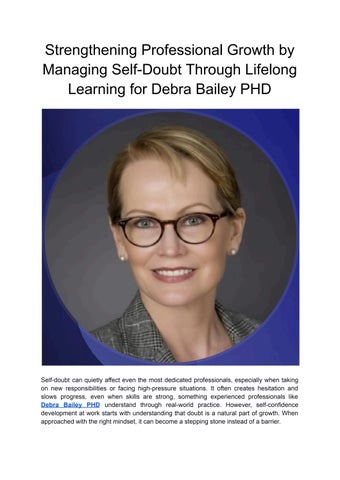
Self-doubt can quietly affect even the most dedicated professionals, especially when taking on new responsibilities or facing high-pressure situations. It often creates hesitation and slows progress, even when skills are strong, something experienced professionals like Debra Bailey PHD understand through real-world practice However, self-confidence development at work starts with understanding that doubt is a natural part of growth. When approached with the right mindset, it can become a stepping stone instead of a barrier
In professional practice, self-doubt usually comes from uncertainty When people feel they lack knowledge or experience, they begin to question their abilities. This is especially true in fields like psychology, where decisions carry real impact. Lifelong learning helps reduce this uncertainty by providing a steady flow of new knowledge and skills As professionals learn more, they begin to feel more prepared and capable
Learning builds a strong foundation When individuals stay up to date with new ideas and methods, they gain a clearer understanding of their work This clarity makes it easier to make decisions and handle challenges For example, learning a new technique and applying it successfully can create a sense of achievement. These small wins help replace doubt with confidence over time
Another important aspect is action. Confidence does not come from waiting until everything feels perfect It grows when people take steps forward, even when they feel unsure Applying knowledge in real situations helps professionals see their abilities in action Each experience adds to their confidence and reduces hesitation in future tasks
Feedback also plays a major role in overcoming self-doubt Constructive input from mentors or colleagues helps identify both strengths and areas for improvement Instead of viewing feedback as criticism, it can be seen as guidance. This shift in thinking allows professionals to grow without feeling discouraged. Over time, feedback becomes a valuable tool for development
Comparison is another factor that often increases self-doubt. Many professionals look at others and feel they are not doing enough This can create unnecessary pressure Lifelong learning encourages individuals to focus on their own journey Progress becomes personal rather than competitive This mindset helps reduce negative thoughts and supports steady growth.
Practice is essential for building confidence Repeating tasks, handling different situations, and learning from each experience help strengthen skills. The more professionals engage in their work, the more comfortable they become. This comfort reduces fear and builds a sense of control Over time, practice turns uncertainty into familiarity
It is also important to accept that doubt may still appear from time to time. Even experienced professionals face moments of uncertainty The key is learning how to respond With strong knowledge and experience, it becomes easier to move forward despite these feelings Doubt no longer controls decisions; it simply becomes part of the process
Reflection is another powerful tool Taking time to review experiences helps professionals understand what they have learned It highlights progress and shows areas of improvement This awareness creates a balanced view of growth. It reminds individuals that they are moving forward, even if progress feels slow